59th International Conference on Analytical
Sciences and Spectroscopy(ICASS)
Nakkiran Arulmozhi
Electrochemistry and Electrocatalysis Laboratory
Department of Chemistry
Queen’s University
1
Motivation
2
“Electro-oxidation of COchem on Pt
Nanosurfaces: Solution of the Peak
Multiplicity Puzzle” - Langmuir, 2012, 28
(7), pp 3658–3663
 Electrocatalyst crystal surface is
heterogeneous in nature
 Structure-reactivity relationship is
key factor
 Rational solution – studies on well
defined structure
 Oxide growth and Electrodissolution
studies
 Need for improved single crystal lab
3
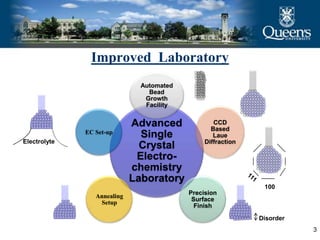
Improved Laboratory
Advanced
Single
Crystal
Electro-
chemistry
Laboratory
Automated
Bead
Growth
Facility
CCD
Based
Laue
Diffraction
Precision
Surface
Finish
Annealing
Setup
EC Set-up
Electrolyte
100
Disorder
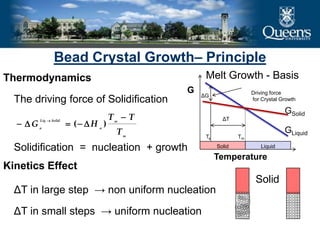
Bead Crystal Growth– Principle
Melt Growth - Basis
Kinetics Effect
Solidification = nucleation + growth
Temperature
G
GSolid
GLiquid
Tm
Solid Liquid
Ts
ΔT
ΔG
Driving force
for Crystal GrowthThe driving force of Solidification
m
m
a
SolidLiq
a
T
TT
HG



)(
Thermodynamics
ΔT in small steps → uniform nucleation
ΔT in large step → non uniform nucleation
Solid
5
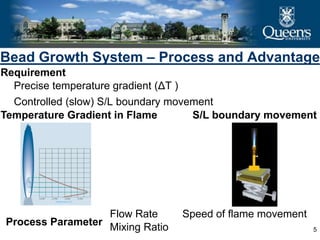
Bead Growth System – Process and Advantage
Temperature Gradient in Flame
Process Parameter
Flow Rate
Mixing Ratio
Speed of flame movement
S/L boundary movement
Controlled (slow) S/L boundary movement
Precise temperature gradient (ΔT )
Requirement
6
Bead Growth System – Improved Design
Set-Up Advantage
• Fully automated
• Min step size (sub
micron)
• Min speed (0.9
micron/sec)
• Precise flow rate
and mixing ratio
control
• Completely stable
and safe
7
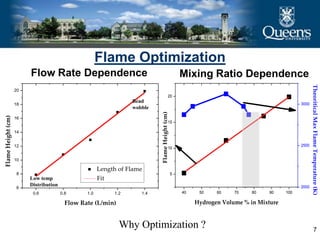
Flame Optimization
Flow Rate Dependence Mixing Ratio Dependence
Why Optimization ?
0.6 0.8 1.0 1.2 1.4
6
8
10
12
14
16
18
20
Length of Flame
Fit
FlameHeight(cm)
Flow Rate (L/min)
40 50 60 70 80 90 100
5
10
15
20
Hydrogen Volume % in Mixture
FlameHeight(cm)
2000
2500
3000
TheoriticalMaxFlameTemperature(K)
Bead
wobble
Low temp
Distribution
8
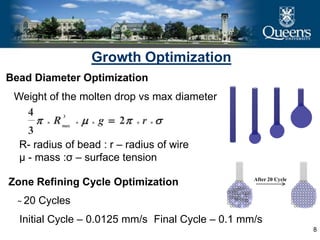
Growth Optimization
Bead Diameter Optimization
Weight of the molten drop vs max diameter
   rgR 2
3
4 3
max
R- radius of bead : r – radius of wire
µ - mass :σ – surface tension
Zone Refining Cycle Optimization After 20 Cycle
̴ 20 Cycles
Initial Cycle – 0.0125 mm/s Final Cycle – 0.1 mm/s
9
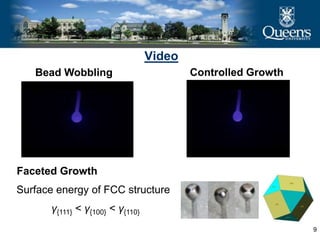
Video
Faceted Growth
Surface energy of FCC structure
γ{111} < γ{100} < γ{110}
Bead Wobbling Controlled Growth
10
Cost Analysis and Conclusion
Commercial Pt single crystal – more than 1500$
Quick and complete Safe
Physical Understanding
Process Parameter Optimization
No skill requirement (fully automated)
Highly consistent and efficient (optimized process parameter)
11
Acklowdegement
& our research group

Towards an Improved Bead Single Crystal Electrochemistry And Electrocatalysis Laboratory

  • 1.
    59th International Conferenceon Analytical Sciences and Spectroscopy(ICASS) Nakkiran Arulmozhi Electrochemistry and Electrocatalysis Laboratory Department of Chemistry Queen’s University 1
  • 2.
    Motivation 2 “Electro-oxidation of COchemon Pt Nanosurfaces: Solution of the Peak Multiplicity Puzzle” - Langmuir, 2012, 28 (7), pp 3658–3663  Electrocatalyst crystal surface is heterogeneous in nature  Structure-reactivity relationship is key factor  Rational solution – studies on well defined structure  Oxide growth and Electrodissolution studies  Need for improved single crystal lab
  • 3.
  • 4.
    Bead Crystal Growth–Principle Melt Growth - Basis Kinetics Effect Solidification = nucleation + growth Temperature G GSolid GLiquid Tm Solid Liquid Ts ΔT ΔG Driving force for Crystal GrowthThe driving force of Solidification m m a SolidLiq a T TT HG    )( Thermodynamics ΔT in small steps → uniform nucleation ΔT in large step → non uniform nucleation Solid
  • 5.
    5 Bead Growth System– Process and Advantage Temperature Gradient in Flame Process Parameter Flow Rate Mixing Ratio Speed of flame movement S/L boundary movement Controlled (slow) S/L boundary movement Precise temperature gradient (ΔT ) Requirement
  • 6.
    6 Bead Growth System– Improved Design Set-Up Advantage • Fully automated • Min step size (sub micron) • Min speed (0.9 micron/sec) • Precise flow rate and mixing ratio control • Completely stable and safe
  • 7.
    7 Flame Optimization Flow RateDependence Mixing Ratio Dependence Why Optimization ? 0.6 0.8 1.0 1.2 1.4 6 8 10 12 14 16 18 20 Length of Flame Fit FlameHeight(cm) Flow Rate (L/min) 40 50 60 70 80 90 100 5 10 15 20 Hydrogen Volume % in Mixture FlameHeight(cm) 2000 2500 3000 TheoriticalMaxFlameTemperature(K) Bead wobble Low temp Distribution
  • 8.
    8 Growth Optimization Bead DiameterOptimization Weight of the molten drop vs max diameter    rgR 2 3 4 3 max R- radius of bead : r – radius of wire µ - mass :σ – surface tension Zone Refining Cycle Optimization After 20 Cycle ̴ 20 Cycles Initial Cycle – 0.0125 mm/s Final Cycle – 0.1 mm/s
  • 9.
    9 Video Faceted Growth Surface energyof FCC structure γ{111} < γ{100} < γ{110} Bead Wobbling Controlled Growth
  • 10.
    10 Cost Analysis andConclusion Commercial Pt single crystal – more than 1500$ Quick and complete Safe Physical Understanding Process Parameter Optimization No skill requirement (fully automated) Highly consistent and efficient (optimized process parameter)
  • 11.