Infrastructure Blue Ribbon Commission 
 
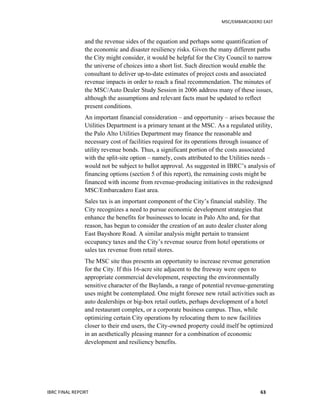
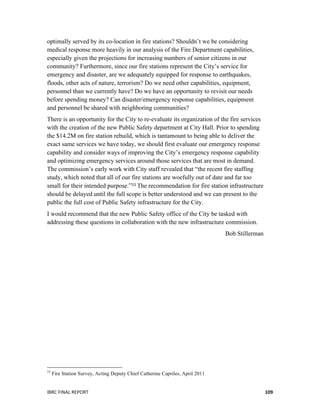
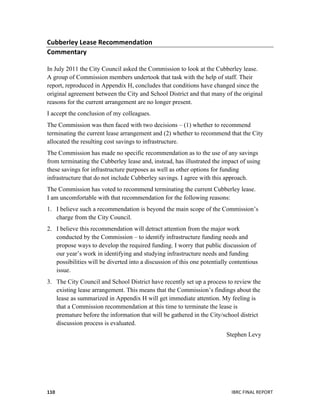
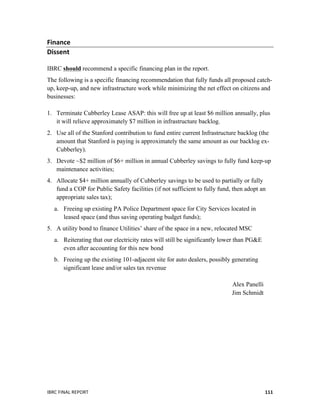
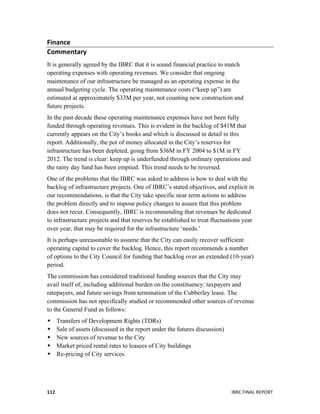
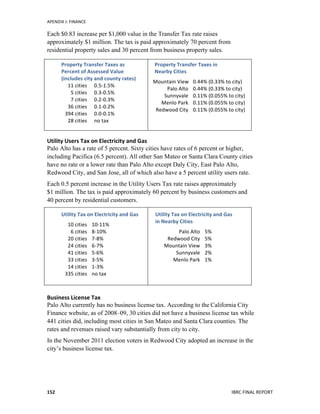
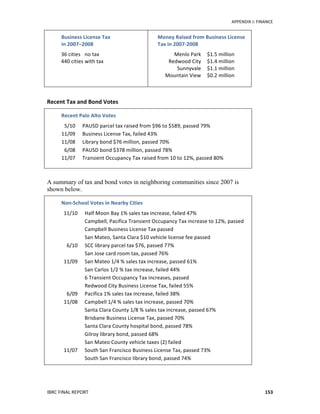
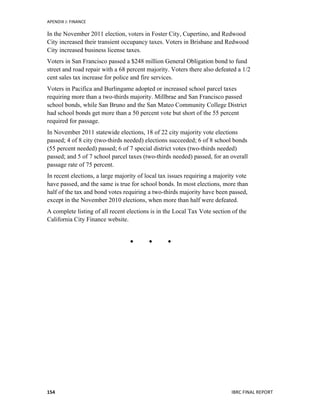
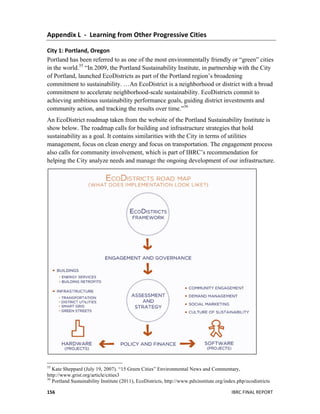
Final Report 
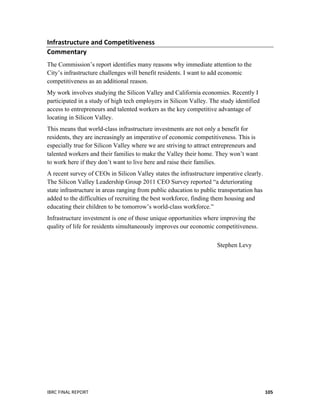
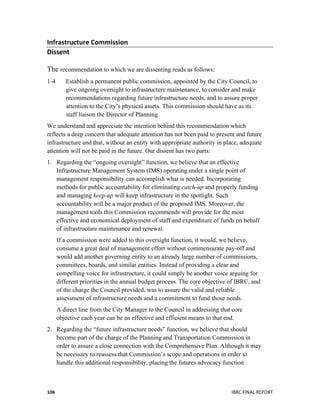
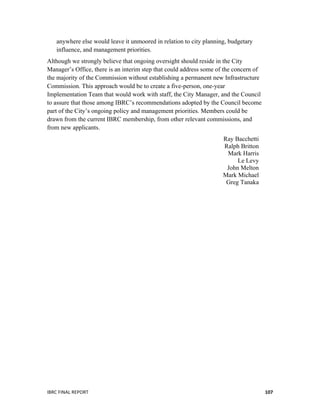
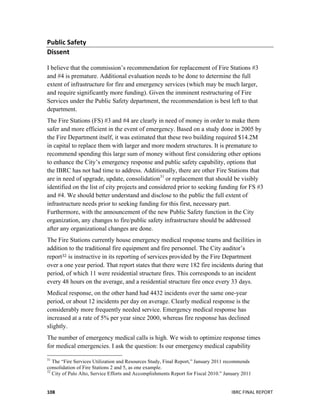
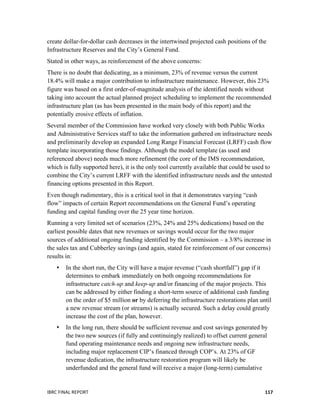
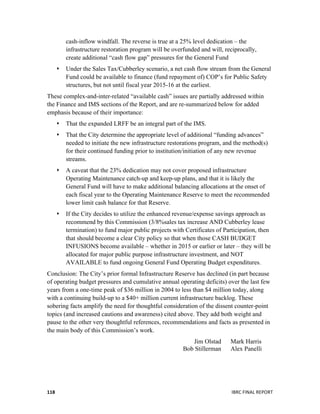
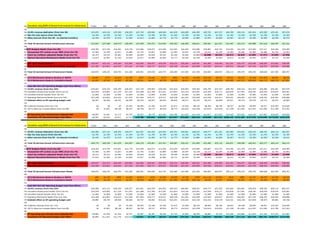
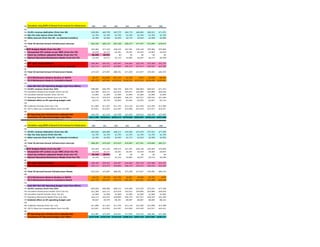
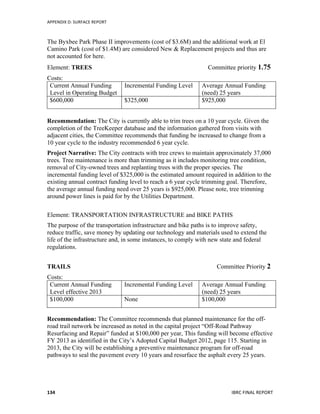
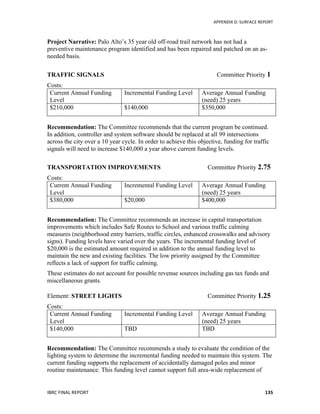
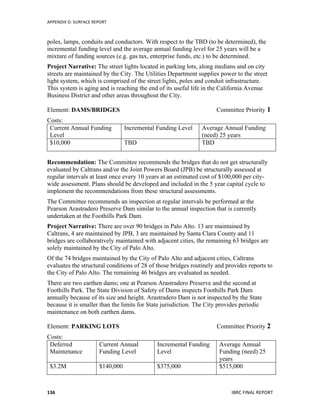
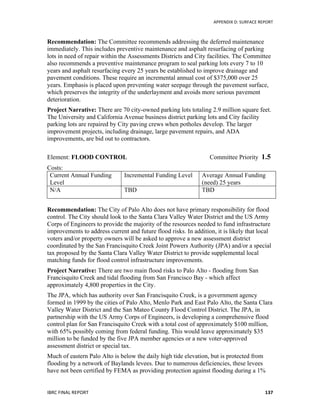
Palo Alto’s Infrastructure: 
Catching Up, Keeping Up, and Moving Ahead 
 
December 22, 2011 
 
 
Palo	
  Alto’s	
  Infrastructure	
  
Catching	
  Up,	
  Keeping	
  Up,	
  and	
  Moving	
  Ahead	


INFRASTRUCTURE	
  BLUE	
  RIBBON	
  COMMISSION	
  
Final	
  Report	


December	
  22,	
  2011	
   	
  
IBRC	
  FINAL	
  REPORT	
  ii	
  
Acknowledgments	
  	
  
Seventeen commissioners participated in the Infrastructure Blue Ribbon Commission (IBRC), with
staff liaisons assigned to each committee. The participation and efforts of all and their commitment
to our community has been extraordinary.
IBRC	
  Co-­‐chairs	
   Leland Levy, Ray Bacchetti Staff liaisons Steve Emslie, Richard Hackmann
Above	
  Ground	
  Committee	
  
Mark Michael, chair	
  
David Bower
Brent Butler
Bob Stillerman
Gary Wetzel
Staff liaisons Steve Emslie,
Phil Bobel	
  
Finance	
  Committee	
  
Mark Harris, chair
Stephen Levy
John Melton
Jim Olstad
Alex Panelli
Greg Tanaka
Staff liaisons Lalo Perez,
Joe Saccio	
  	
  
Surface	
  Committee	
  
James Schmidt, chair
Marc Berman
Ralph Britton
Patricia Markevitch
Staff liaisons Mike Sartor,
Elizabeth Ames	


Infrastructure	
  Management	
  
Working	
  Group	
  
Ralph Britton, chair
Leland Levy
Stephen Levy
Jim Olstad
Alex Panelli
Bob Stillerman
Staff liaison Phil Bobel
Public	
  Safety	
  Working	
  Group	
  
Ray Bacchetti, co-chair
Mark Harris, co-chair
David Bower
Brent Butler
James Schmidt
Staff liaisons Mike Sartor,
Elizabeth Ames
MSC/Embarcadero	
  East	
  	
  
Working	
  Group	
  
Mark Michael, chair	
  
Marc Berman
Patricia Markevitch
John Melton
Greg Tanaka
Gary Wetzel
Staff liaison Matt Raschke	
  	
  
Finance	
  Working	
  Group	
  
Stephen Levy, co-chair
Jim Olstad, co-chair
Mark Harris
John Melton
Staff liaisons Lalo Perez,
Joe Saccio
Futures	
  Working	
  Group	
  
Bob Stillerman, chair
Mark Michael
Alex Panelli
Greg Tanaka
Gary Wetzel
Staff liaison Steve Emslie	
  
And with gratitude for the
additional support of these
staff members:
Karol Galucci
Nancy Nagel
Lisa Navarett
Danille Rice
	
  
Many other staff members contributed significantly to this effort:
Daren Anderson, Greg Betts, Holly Boyd, Matt Brunnings, Dennis Burns, Catherine Capriles,
Miguel Chacon, Charles Cullen, Kenneth Dueker, Valerie Fong, Pete Hazarian, Dennis Huebner,
Judge Luckey, Tarun Narayan, Murdo Nicolson, Tatiana Pham, Jaime Rodriguez, Cara Silver, Joe
Teresi, Steven Turner, Curtis Williams, Mike Wong.
While all have done great service, we wish especially to acknowledge:
Beverly Cory, our editor who, at a late date, waded into a mountain of prose and numbers
and helped bring order, accuracy, look, tone, and as much narrative style as a document with
17 authors will permit.
Phil Bobel, our link to the Public Works department who was with us every inch and dollar
of the way explaining, listening, and affirming the significance of our work.
Richard Hackmann, liaison to the co-chairs and our mainstay from the City Manager’s
office who did everything we asked of him with intelligence, grace, and a commitment to
this 14-month effort.
 
IBRC	
  FINAL	
  REPORT	
   iii	
  
Contents	
   	
  
Executive Summary .................................................................. 1
Introduction ............................................................................. 19
1. Infrastructure Management ................................................ 25
2. The Cost of Catch-up and Keep-up..................................... 32
3. Public Safety Facilities ....................................................... 40
4. Municipal Services Center/Embarcadero East Corridor ..... 51
5. Finance ................................................................................68
6. The Future ...........................................................................93
Commentaries and Dissents ...................................................105
Appendices	


A. City of Palo Alto: Civic Infrastructure............................ 121
B. City Council Charge to IBRC......................................... 123
C. Description of Infrastructure Database........................... 124
D. Report of the Surface Committee ................................... 125
E. MSC Area Usage by Department ................................... 139
F. Sea Level Rise Projection............................................... 140
G. Freeway-Visible Auto Dealerships................................. 141
H. Working Paper on Cubberley Site .................................. 142
I. Other Long-Term Funding Alternatives......................... 149
J. Comparison of Tax Rates and Recent Election Results 151
K. List of City Structures and Their Age............................. 155
L. Learning from Other Progressive Cities ......................... 156
M. Technology Considerations ............................................ 159
N. Future Ideas for Consideration........................................ 162
O. Summary: Futures Working Group ................................ 164


IBRC	
  FINAL	
  REPORT	
  iv	


IBRC	
  FINAL	
  REPORT	
  	
   1	
  
Executive	
  Summary	


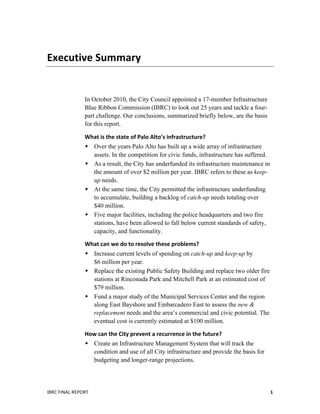
In October 2010, the City Council appointed a 17-member Infrastructure
Blue Ribbon Commission (IBRC) to look out 25 years and tackle a four-
part challenge. Our conclusions, summarized briefly below, are the basis
for this report.
What	
  is	
  the	
  state	
  of	
  Palo	
  Alto’s	
  infrastructure?
 Over the years Palo Alto has built up a wide array of infrastructure
assets. In the competition for civic funds, infrastructure has suffered.
 As a result, the City has underfunded its infrastructure maintenance in
the amount of over $2 million per year. IBRC refers to these as keep-
up needs.
 At the same time, the City permitted the infrastructure underfunding
to accumulate, building a backlog of catch-up needs totaling over
$40 million.
 Five major facilities, including the police headquarters and two fire
stations, have been allowed to fall below current standards of safety,
capacity, and functionality.
What	
  can	
  we	
  do	
  to	
  resolve	
  these	
  problems?	
  
 Increase current levels of spending on catch-up and keep-up by
$6 million per year.
 Replace the existing Public Safety Building and replace two older fire
stations at Rinconada Park and Mitchell Park at an estimated cost of
$79 million.
 Fund a major study of the Municipal Services Center and the region
along East Bayshore and Embarcadero East to assess the new &
replacement needs and the area’s commercial and civic potential. The
eventual cost is currently estimated at $100 million.
How	
  can	
  the	
  City	
  prevent	
  a	
  recurrence	
  in	
  the	
  future?	
  
 Create an Infrastructure Management System that will track the
condition and use of all City infrastructure and provide the basis for
budgeting and longer-range projections.
EXECUTIVE	
  SUMMARY	
  
IBRC	
  FINAL	
  REPORT	
  	
  2	
  
 Create a single point of responsibility for infrastructure assessment,
management, budgeting, and accountability.
 Implement policies and practices that assure accountability for
eliminating catch-up, maintaining keep-up, and planning ahead for the
kind of infrastructure the community needs and expects.
How	
  will	
  it	
  be	
  paid	
  for?	


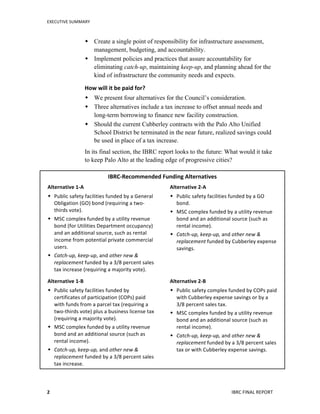
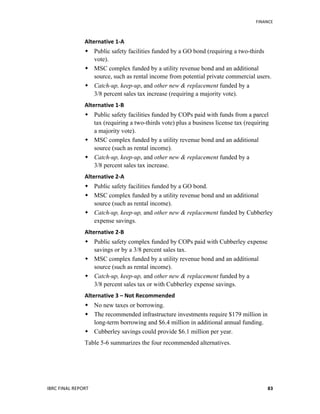
 We present four alternatives for the Council’s consideration.
 Three alternatives include a tax increase to offset annual needs and
long-term borrowing to finance new facility construction.
 Should the current Cubberley contracts with the Palo Alto Unified
School District be terminated in the near future, realized savings could
be used in place of a tax increase.
In its final section, the IBRC report looks to the future: What would it take
to keep Palo Alto at the leading edge of progressive cities?
IBRC-­‐Recommended	
  Funding	
  Alternatives	
  
Alternative	
  1-­‐A	
  	
  
 Public	
  safety	
  facilities	
  funded	
  by	
  a	
  General	
  
Obligation	
  (GO)	
  bond	
  (requiring	
  a	
  two-­‐
thirds	
  vote).	
  
 MSC	
  complex	
  funded	
  by	
  a	
  utility	
  revenue	
  
bond	
  (for	
  Utilities	
  Department	
  occupancy)	
  
and	
  an	
  additional	
  source,	
  such	
  as	
  rental	
  
income	
  from	
  potential	
  private	
  commercial	
  
users.	
  	
  
 Catch-­‐up,	
  keep-­‐up,	
  and	
  other	
  new	
  &	
  
replacement	
  funded	
  by	
  a	
  3/8	
  percent	
  sales	
  
tax	
  increase	
  (requiring	
  a	
  majority	
  vote).	
  
Alternative	
  2-­‐A	
  	
  
 Public	
  safety	
  facilities	
  funded	
  by	
  a	
  GO	
  
bond.	
  
 MSC	
  complex	
  funded	
  by	
  a	
  utility	
  revenue	
  
bond	
  and	
  an	
  additional	
  source	
  (such	
  as	
  
rental	
  income).	
  
 Catch-­‐up,	
  keep-­‐up,	
  and	
  other	
  new	
  &	
  
replacement	
  funded	
  by	
  Cubberley	
  expense	
  
savings.	


Alternative	
  1-­‐B	
  	
  
 Public	
  safety	
  facilities	
  funded	
  by	
  
certificates	
  of	
  participation	
  (COPs)	
  paid	
  
with	
  funds	
  from	
  a	
  parcel	
  tax	
  (requiring	
  a	
  
two-­‐thirds	
  vote)	
  plus	
  a	
  business	
  license	
  tax	
  
(requiring	
  a	
  majority	
  vote).	
  
 MSC	
  complex	
  funded	
  by	
  a	
  utility	
  revenue	
  
bond	
  and	
  an	
  additional	
  source	
  (such	
  as	
  
rental	
  income).	
  
 Catch-­‐up,	
  keep-­‐up,	
  and	
  other	
  new	
  &	
  
replacement	
  funded	
  by	
  a	
  3/8	
  percent	
  sales	
  
tax	
  increase.	
  
Alternative	
  2-­‐B	
  	
  
 Public	
  safety	
  complex	
  funded	
  by	
  COPs	
  paid	
  
with	
  Cubberley	
  expense	
  savings	
  or	
  by	
  a	
  
3/8	
  percent	
  sales	
  tax.	
  	
  
 MSC	
  complex	
  funded	
  by	
  a	
  utility	
  revenue	
  
bond	
  and	
  an	
  additional	
  source	
  (such	
  as	
  
rental	
  income).	
  
 Catch-­‐up,	
  keep-­‐up,	
  and	
  other	
  new	
  &	
  
replacement	
  funded	
  by	
  a	
  3/8	
  percent	
  sales	
  
tax	
  or	
  with	
  Cubberley	
  expense	
  savings.	


   EXECUTIVE	
  SUMMARY	
  
IBRC	
  FINAL	
  REPORT	
  	
   3	
  
The	
  Commission’s	
  Approach	
  
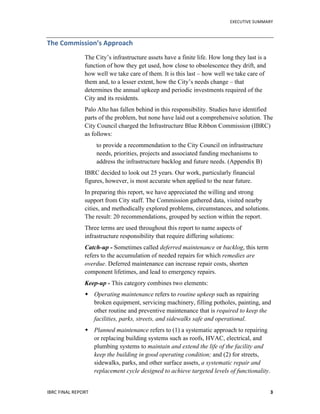
The City’s infrastructure assets have a finite life. How long they last is a
function of how they get used, how close to obsolescence they drift, and
how well we take care of them. It is this last – how well we take care of
them and, to a lesser extent, how the City’s needs change – that
determines the annual upkeep and periodic investments required of the
City and its residents.
Palo Alto has fallen behind in this responsibility. Studies have identified
parts of the problem, but none have laid out a comprehensive solution. The
City Council charged the Infrastructure Blue Ribbon Commission (IBRC)
as follows:
to provide a recommendation to the City Council on infrastructure
needs, priorities, projects and associated funding mechanisms to
address the infrastructure backlog and future needs. (Appendix B)
IBRC decided to look out 25 years. Our work, particularly financial
figures, however, is most accurate when applied to the near future.
In preparing this report, we have appreciated the willing and strong
support from City staff. The Commission gathered data, visited nearby
cities, and methodically explored problems, circumstances, and solutions.
The result: 20 recommendations, grouped by section within the report.
Three terms are used throughout this report to name aspects of
infrastructure responsibility that require differing solutions:
Catch-up - Sometimes called deferred maintenance or backlog, this term
refers to the accumulation of needed repairs for which remedies are
overdue. Deferred maintenance can increase repair costs, shorten
component lifetimes, and lead to emergency repairs.
Keep-up - This category combines two elements:
 Operating maintenance refers to routine upkeep such as repairing
broken equipment, servicing machinery, filling potholes, painting, and
other routine and preventive maintenance that is required to keep the
facilities, parks, streets, and sidewalks safe and operational.
 Planned maintenance refers to (1) a systematic approach to repairing
or replacing building systems such as roofs, HVAC, electrical, and
plumbing systems to maintain and extend the life of the facility and
keep the building in good operating condition; and (2) for streets,
sidewalks, parks, and other surface assets, a systematic repair and
replacement cycle designed to achieve targeted levels of functionality.
EXECUTIVE	
  SUMMARY	
  
IBRC	
  FINAL	
  REPORT	
  	
  4	
  
New & replacement - This category refers to rehabilitating or
reconstructing substandard buildings as well as to building new facilities
to either replace existing ones or expand the City’s capital assets.
In assessing and projecting costs and revenues, the Commission has used
constant 2011 dollars throughout. As the City proceeds with efforts to
resolve its budget challenges, budget projections and inflation rates will
change. Timing is another variable. When can various elements in our
recommendations reasonably move forward? In the sections on
Infrastructure Management and Finance, we propose tools for dealing with
these key variables and for adjusting future projections.
We define infrastructure as just about everything the City owns and
maintains that does not move, with the exception of equipment and
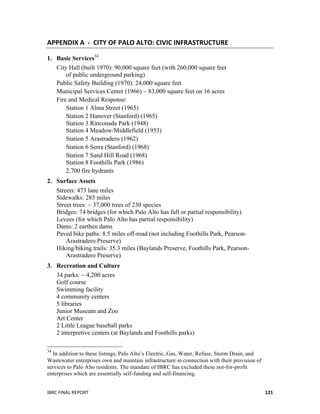
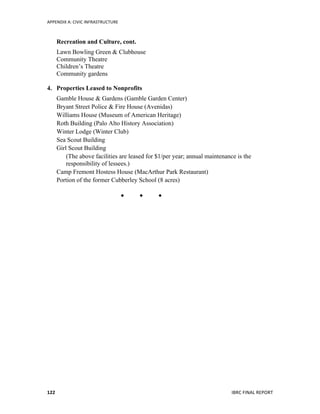
supplies. A summary list can be found in Appendix A.1
IBRC has seen its task as both quantitative – to assess the extent of our
community’s infrastructure and its annual and long-term cost – and
qualitative – to honor the role infrastructure plays in sustaining a
community in which people want to live, work, raise a family, transact
business, enjoy themselves, and retire.
Section	
  1:	
  Infrastructure	
  Management	
  
Problem	
  Identification	
  and	
  Findings	
  
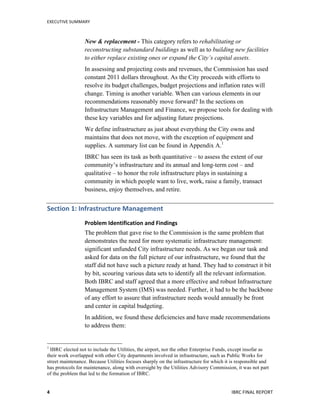
The problem that gave rise to the Commission is the same problem that
demonstrates the need for more systematic infrastructure management:
significant unfunded City infrastructure needs. As we began our task and
asked for data on the full picture of our infrastructure, we found that the
staff did not have such a picture ready at hand. They had to construct it bit
by bit, scouring various data sets to identify all the relevant information.
Both IBRC and staff agreed that a more effective and robust Infrastructure
Management System (IMS) was needed. Further, it had to be the backbone
of any effort to assure that infrastructure needs would annually be front
and center in capital budgeting.
In addition, we found these deficiencies and have made recommendations
to address them:


1
IBRC elected not to include the Utilities, the airport, nor the other Enterprise Funds, except insofar as
their work overlapped with other City departments involved in infrastructure, such as Public Works for
street maintenance. Because Utilities focuses sharply on the infrastructure for which it is responsible and
has protocols for maintenance, along with oversight by the Utilities Advisory Commission, it was not part
of the problem that led to the formation of IBRC.
  	
   EXECUTIVE	
  SUMMARY	
  
IBRC	
  FINAL	
  REPORT	
  	
   5	
  
 Infrastructure funding lacks an imperative priority in the annual City
budgeting process.
 There is no single point of responsibility for infrastructure
management, funding, and accountability.
 Dedicated funding would better match the continuing cost of
infrastructure keep-up than does annual budget competition.
 Software for the IMS must link easily to the City’s other management
software systems.
Recommendations	
  
The demands of infrastructure maintenance cannot be ignored. They do
not go away. Collectively they represent an enormous investment, and the
stewardship of that investment is one of the primary responsibilities of the
City Council and City management. To strengthen this management,
IBRC makes seven recommendations:
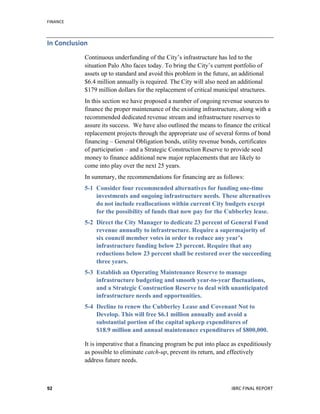
1-1 Establish an Infrastructure Management System (IMS) to
maintain an up-to-date inventory of the City’s infrastructure, its
catch-up and keep-up needs, and available funding. Such a
management tool will support ongoing staff and Council
attention to infrastructure budgeting, planning, and
accountability. This system should integrate with programs the
City now uses to manage infrastructure and finance.
The Commission has outlined in Appendix C the elements of an IMS it
believes are necessary.
1-2 Establish a single point of responsibility, at a high level, for
infrastructure management. This position should be within the
City Manager’s office.
In IBRC findings, diffuse responsibility was a common thread. Creating a
senior position in the City Manager’s office is one key way to focus
responsibility.
1-3 Require that an IMS summary report be presented to the City
Council as the lead element in each year’s General Fund Budget
review, and that it highlight any gaps in infrastructure funding.
Because infrastructure includes the bulk of the City’s capital assets, a
report on the status of those assets and the resources required to maintain
them should be plainly and transparently put forth at the start of each
budget cycle.
EXECUTIVE	
  SUMMARY	
  
IBRC	
  FINAL	
  REPORT	
  	
  6	
  
1-4 Establish a permanent public commission, appointed by the City
Council, to give ongoing oversight to infrastructure maintenance,
to consider and make recommendations regarding future
infrastructure needs, and to assure proper attention to the City’s
physical assets. This commission should have as its staff liaison
the Director of Planning.
Another way to focus responsibility is to provide a voice for infrastructure
at the level of a Council-appointed commission, charged with assuring the
proper upkeep, development, and stewardship of the City’s capital assets.
1-5 Establish a policy that the City Manager, in coordination with
the public commission on infrastructure, report to the City
Council at least twice a year on infrastructure.
With a working IMS and more stringent infrastructure management, the
Council should expect focused reports on how well that system is
functioning and what problems still exist.
1-6 Dedicate sufficient funding to infrastructure on a long-term
basis.
Dedicated funding is the partner of good management and the right
policies.
1-7 Mandate periodic audits of infrastructure maintenance by the
City Auditor.
IBRC was impressed by the City Auditor’s Infrastructure Report Card
(2008). We believe that reports similar in scope and depth will help keep
infrastructure stewardship front and center.
Section	
  2:	
  The	
  Cost	
  of	
  Catch-­‐up	
  and	
  Keep-­‐up	
  
Problem	
  Identification	
  and	
  Findings	
  
Though assembling data in spreadsheet form was arduous and time-
consuming, staff produced extensive tabulations on the magnitude of the
catch-up and keep-up obligations. IBRC members, working with staff,
evaluated these numbers. Through a collaborative process, we reduced
totals where feasible and increased them where necessary. The resulting
numbers represent IBRC’s best judgment. This section of the report
identifies the revenue required – specific investments for those needs that
are one-time in nature, and continuing funding for those that are ongoing.
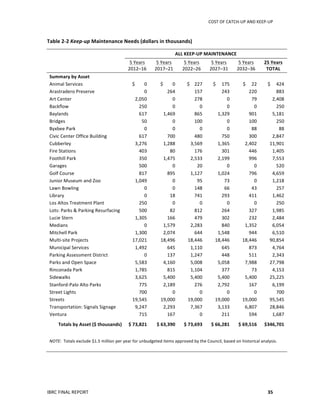
Catch-up or deferred maintenance. The annual shortfall in keep-up has
led to a deferred maintenance backlog that now amounts to $41.5 million.
  	
   EXECUTIVE	
  SUMMARY	
  
IBRC	
  FINAL	
  REPORT	
  	
   7	
  
If unattended, this backlog will result in increased maintenance costs,
shortened component lives, and increased emergency repairs. A complete
list of catch-up items appears in section 2. IBRC recommends that the
catch-up needs be addressed at approximately $4.2 million per year over
the next ten years. Thereafter, this same amount should be devoted to the
other new & replacement needs that are anticipated.
Keep-up or annual maintenance. The 2011–12 budget allocates
$30.0 million to operating maintenance and the CIP (Capital Improvement
Projects). Commission-assembled data, however, indicates that to truly
“keep up,” the total should be $32.2 million per year. At 2012 funding
rates, this results in an estimated annual shortfall of $2.2 million into the
foreseeable future.
The keep-up need includes an average of $1.5 million in “pop-up” items
introduced in the midst of each average budget year which take funding
from planned projects and create more catch-up. This figure is derived
from staff analysis of several years of budgeting and spending; on average,
$1.5 million a year has been allocated for projects not initially budgeted.
New & replacement. IBRC recommends five facilities for upgrade or
replacement: the Public Safety Building, Fire Stations 3 (Rinconada)
and 4 (Mitchell Park), the Municipal Services Center, and the Animal
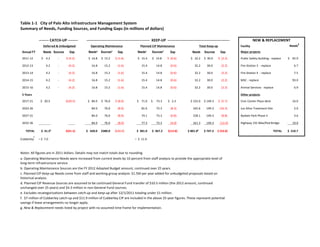
Services Center. These facilities are listed as “major projects” in table 1-1
and are discussed in sections 3 and 4 of this report. Table 1-1 also lists
“other projects” for action after 2021.
Recommendations	
  
Recommendations for financing these needs are found in section 5.
 
Table	
  1-­‐1	
  	
  	
  City	
  of	
  Palo	
  Alto	
  Infrastructure	
  Management	
  System	
  	
  
Summary	
  of	
  Needs,	
  Funding	
  Sources,	
  and	
  Funding	
  Gaps	
  (in	
  millions	
  of	
  dollars)	


   -­‐-­‐-­‐-­‐-­‐-­‐-­‐-­‐	
  CATCH-­‐UP	
  -­‐-­‐-­‐-­‐-­‐-­‐-­‐-­‐	
   	
  -­‐-­‐-­‐-­‐-­‐-­‐-­‐-­‐-­‐-­‐-­‐-­‐-­‐-­‐-­‐-­‐-­‐-­‐-­‐-­‐-­‐-­‐-­‐-­‐-­‐-­‐-­‐-­‐-­‐-­‐-­‐-­‐-­‐-­‐-­‐-­‐-­‐-­‐-­‐-­‐-­‐-­‐-­‐-­‐-­‐-­‐-­‐-­‐-­‐-­‐-­‐	
  	
  KEEP-­‐UP	
  	
  -­‐-­‐-­‐-­‐-­‐-­‐-­‐-­‐-­‐-­‐-­‐-­‐-­‐-­‐-­‐-­‐-­‐-­‐-­‐-­‐-­‐-­‐-­‐-­‐-­‐-­‐-­‐-­‐-­‐-­‐-­‐-­‐-­‐-­‐-­‐-­‐-­‐-­‐-­‐-­‐-­‐-­‐-­‐-­‐-­‐-­‐-­‐-­‐-­‐-­‐	
   	
   NEW	
  &	
  REPLACEMENT	
  
	
   Deferred	
  &	
  Unbudgeted	
   Operating	
  Maintenance	
   Planned	
  CIP	
  Maintenance	
   Total	
  Keep-­‐up	
   	
   Facility	
   Needs
g
	
  
Annual FY Needs Sources Gap Needsa Sourcesb Gap Needsc Sourcesd Gap Needs Sources Gap
	
  
Major	
  projects	
   	
  
2011-­‐12	
   $	


  4.2	
   -­‐	
   $	
  (4.2)	


  $	
  	
  16.8	
  	
   	
  $	
  	
  15.2	
   $	
  (1.6)	
   	
  	
  $	
  	
  	
  15.4	
   	
  $	
  	
  	
  14.8	
   $	
  	
  (0.6)	


  $	
  	
  	
  32.2	
   	
  	
  $	
  	
  30.0	
   	
  $	
  	
  (2.2)	


Public	
  Safety	
  Building	
  -­‐	
  replace	
   $	


  65.0	
  
2012-­‐13	
   	
  4.2	
   -­‐	
   (4.2)	


  16.8	


  15.2	
   (1.6)	


  15.4	


  14.8	


  (0.6)	


  32.2	


  30.0	


  (2.2)	


Fire	
  Station	
  3	
  	
  -­‐	
  replace	
   6.7	
  
2013-­‐14	
   4.2	
   -­‐	
   (4.2)	


  16.8	


  15.2	
   	
  	
  (1.6)	


  15.4	


  14.8	
   	
  	
  (0.6)	


  32.2	


  30.0	


  (2.2)	


Fire	
  Station	
  4	
  	
  -­‐	
  replace	
   7.5	
  
2014-­‐15	
   4.2	
   -­‐	
   (4.2)	


  16.8	


  15.2	


  (1.6)	


  15.4	


  14.8	


  (0.6)	


  32.2	


  30.0	


  (2.2)	


MSC	
  -­‐	
  replace	
   93.0	


2015-­‐16	
   4.2	
   -­‐	
   (4.2)	


  16.8	


  15.2	


  (1.6)	


  15.4	


  14.8	


  (0.6)	


  32.2	


  30.0	


  (2.2)	


Animal	
  Services	
  -­‐	
  replace	
   6.9	
  
5	
  Years	


Other	
  projects	
   	
  
2017-­‐21	
   $	
  	
  	
  20.5	
   	
   $(20.5)	


  $	
  	
  	
  84.0	
   $	
  	
  76.0	
   $	
  (8.0)	
   $	


  71.0	
   $	


  73.3	
   $	
  	
  	
  2.3	
   $	
  155.0	
   $	
  149.3	
   	
  	
  $	
  	
  (5.7)	


Civic	
  Center	
  Plaza	
  deck	
   16.0	
  
2022-­‐26	


  84.0	


  76.0	


  (8.0)	


  81.6	


  73.3	
   	
  	
  (8.3)	


  165.6	


  149.3	


  (16.3)	


Los	
  Altos	
  Treatment	
  SIte	
  	
  	
   2.0	
  
2027-­‐31	


  84.0	


  76.0	
   	
  	
  (8.0)	


  74.1	


  73.3	


  (0.8)	


  158.1	


  149.3	


  (8.8)	


Byxbee	
  Park	
  Phase	
  II	
   3.6	
  
2032-­‐36	


  84.0	


  76.0	


  (8.0)	


  77.3	


  73.3	


  (4.0)	


  161.3	


  149.3	
   	
  	
  (12.0)	


Highway	
  101	
  Bike/Ped	
  Bridge	


  10.0	
  
TOTAL	
   $	
  	
  41.5e	
   	
   $(41.5)	
   	
  	
  $	
  	
  	
  420.0	
   	
  	
  $380.0	
   $(40.0)	
   $	
  	
  381.0	
   	
  	
  $	
  	
  367.2	
   $(13.8)	
   $	
  801.0e	
   $	
  747.2	
   	
  $	
  (53.8)	


TOTAL	
   $	
  	
  210.7	


Cubberley
f	
  
–	
  $	
  	
  7.0
	
  
–	
  	
  $	
  	
  11.9


Notes:	
  All	
  figures	
  are	
  in	
  2011	
  dollars.	
  Details	
  may	
  not	
  match	
  totals	
  due	
  to	
  rounding.	
  	
  
a.	
  Operating	
  Maintenance	
  Needs	
  were	
  increased	
  from	
  current	
  levels	
  by	
  10	
  percent	
  from	
  staff	
  analysis	
  to	
  provide	
  the	
  appropriate	
  level	
  of	
  
long-­‐term	
  infrastructure	
  service.	
  	
  
b.	
  Operating	
  Maintenance	
  Sources	
  are	
  the	
  FY	
  2012	
  Adopted	
  Budget	
  amount,	
  continued	
  over	
  25	
  years.	
  
c.	
  Planned	
  CIP	
  Keep-­‐up	
  Needs	
  come	
  from	
  staff	
  and	
  working	
  group	
  analysis:	
  $1.5M	
  per	
  year	
  added	
  for	
  unbudgeted	
  proposals	
  based	
  on	
  
historical	
  analysis.	
  
d.	
  Planned	
  CIP	
  Revenue	
  Sources	
  are	
  assumed	
  to	
  be	
  continued	
  General	
  Fund	
  transfer	
  of	
  $10.5	
  million	
  (the	
  2012	
  amount,	
  continued	
  
unchanged	
  over	
  25	
  years)	
  and	
  $4.3	
  million	
  in	
  non-­‐General	
  Fund	
  sources.	
  
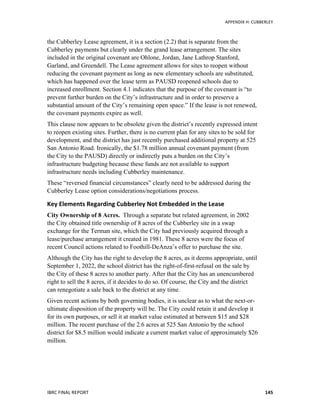
e.	
  Excludes	
  recategorizations	
  between	
  catch-­‐up	
  and	
  keep-­‐up	
  after	
  12/1/2011	
  totaling	
  under	
  $1	
  million.	
  	
  
f.	
  	
  $7	
  million	
  of	
  Cubberley	
  catch-­‐up	
  and	
  $11.9	
  million	
  of	
  Cubberley	
  CIP	
  are	
  included	
  in	
  the	
  above	
  25-­‐year	
  figures.	
  These	
  represent	
  potential	
  
savings	
  if	
  lease	
  arrangements	
  no	
  longer	
  apply.	
  
g.	
  New	
  &	
  Replacement	
  needs	
  listed	
  by	
  project	
  with	
  no	
  assumed	
  time	
  frame	
  for	
  implementation.	


   EXECUTIVE	
  SUMMARY	
  
IBRC	
  FINAL	
  REPORT	
  	
   9	
  
Section	
  3:	
  Public	
  Safety	
  
Problem	
  Identification	
  and	
  Findings	
  
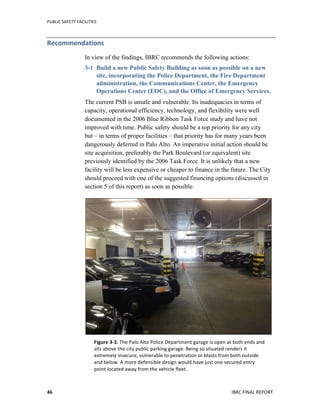
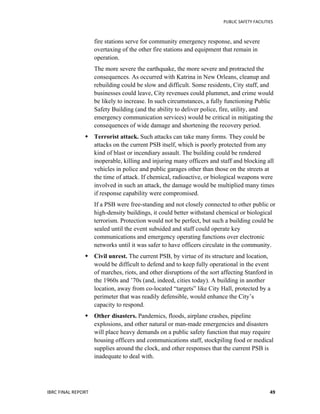
The current Public Safety Building located at 275 Forest Avenue
(customarily known as police services) has been the subject of five
separate studies to address its problems and their remedies. The two most
recent, in 1998 and 2006, both strongly recommended replacing the
building. As community attention and commitment to emergency
preparedness has grown, so has the importance of a Public Safety Building
that can withstand intense natural and man-made events such as
earthquakes, terrorist attacks, or civil unrest.
The Public Safety Working Group examined the current building, studied
the work of the 2006 Blue Ribbon Task Force, and visited the new San
Mateo police building (the size of the city and the department are roughly
comparable to Palo Alto). The working group also spent time with key
staff to learn how the building functions relative to the demands made
upon it, and what might be the consequences if an earthquake or other
catastrophic event rendered the building unusable. Because the
probabilities of a major seismic event on the San Andreas or Hayward
faults in the next 20 to 30 years are 21 and 32 percent, respectively, the
probability of an unusable Public Safety Building has to be taken
seriously.1
Among the failings of the current facility are these:
 Failure to meet Essential Services building codes and Occupational
Safety and Health Administration (OSHA) requirements.
 Insufficient, poorly designed space for evidence processing, evidence
storage, locker rooms, holding cells, materials storage, meeting rooms,
vehicle parking, training, prisoner transfer, supplies, and tactical
vehicles.
 An inadequate and difficult-to-use Emergency Operations Center.
 Windowless 911 dispatch center in basement location (vulnerable to
earthquake or blast).
 No blast protection on sides and underneath (city parking garage).
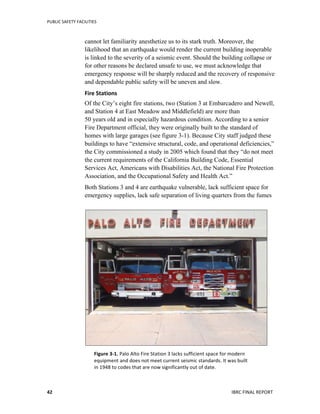
Regarding Fire Stations 3 and 4, a 2005 consultant study found “extensive
structural, code, and operational deficiencies,” and recommended


1
Forecasting California’s Earthquakes – What Can We Expect in the Next 30 Years? USGS Fact Sheet
2008-3027, p. 4.
EXECUTIVE	
  SUMMARY	


   IBRC	
  FINAL	
  REPORT	
  	
  10	
  
replacement or significant upgrade. The working group examined this
study, visited the stations as well as two in Mountain View, and talked
with fire personnel. Besides being vulnerable to earthquakes, these two
stations have insufficient space to safely house the larger engines needed
to accommodate developments in firefighting, rescue operations, and
emergency medical response. Modern engines now fill the apparatus bays,
leaving very little room for personnel to maneuver to the sides and rear.
Living quarters for fire personnel in these one-story buildings are not
adequately separated from hazardous fumes. Storage and shop space is
insufficient for supplies and equipment, nor is there adequate space for
drying hoses after use.
Recommendations	
  
3-1 Build a new Public Safety Building (PSB) as soon as possible on
a new site, incorporating the Police Department, the Fire
Department administration, the Communications Center, the
Emergency Operations Center, and the Office of Emergency
Services.
Public safety should be a top priority for any city, but that priority has
been dangerously deferred in Palo Alto. An initial action should be site
acquisition, preferably the Park Avenue (or equivalent) site previously
identified by the 2006 Task Force. The Commission reviewed rebuilding
at the present site, splitting public safety into multiple facilities, and
exploring further interagency collaborations. None of these compared
favorably.
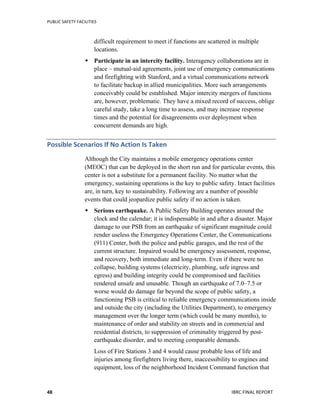
3-2 Rebuild and significantly upgrade Fire Station 3 (Newell and
Embarcadero) and Station 4 (Middlefield and East Meadow) at
their present sites as soon as possible.
These two stations, built in the middle of the last century, do not meet
current earthquake codes and have become increasingly inadequate for the
multiple functions they are intended to support.
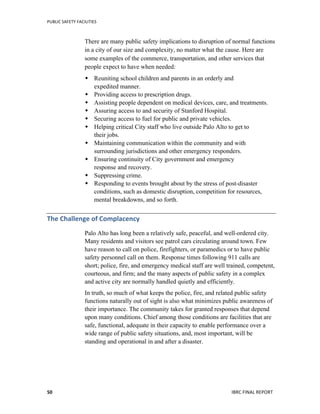
Possible disaster scenarios were explored. Each underscored the need for
facilities that are safe, functional, adequate to perform over a wide range
of public safety situations, and, most important, will be standing and
operational in and after a disaster.
Estimated costs for the recommended police and fire facilities are
$79.2 million. Financing should be by long-term borrowing as
recommended in section 5.
  	
   EXECUTIVE	
  SUMMARY	
  
IBRC	
  FINAL	
  REPORT	
  	
   11	
  
Section	
  4:	
  Municipal	
  Services	
  Center	
  /	
  Embarcadero	
  East	
  Corridor	
  
Problem	
  Identification	
  and	
  Findings	
  
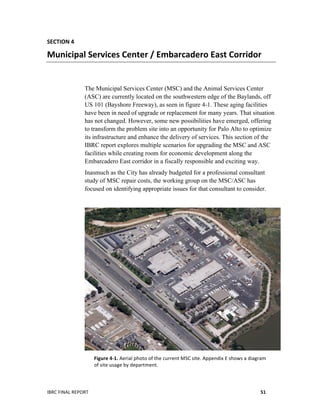
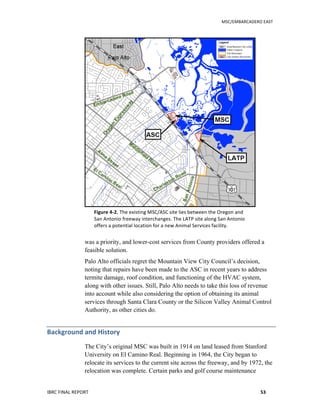
The Municipal Services Center (MSC) and the Animal Services Center
(ASC) are located on 16 acres of City-owned land on East Bayshore Road
between Embarcadero and San Antonio. The trucks and equipment used
by the Utilities Department and the Department of Public Works, along
with their shops, service bays, offices, and storage spaces, are housed or
parked there.
The Utilities Department is vital to City operations, to emergency
responses, and to recovery in the case of a major disaster. As an
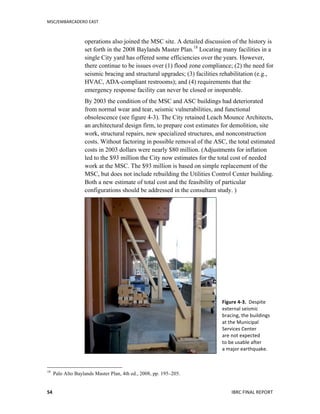
emergency response facility, the MSC can never be closed. A 2003 study
determined that the MSC and ASC had deteriorated due to a combination
of normal wear and tear, seismic vulnerabilities, and functional
obsolescence.
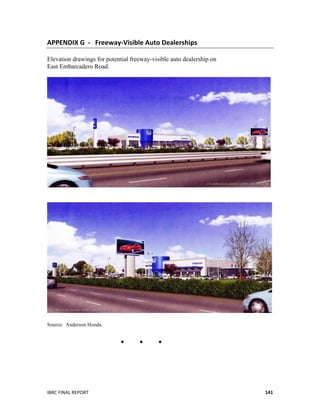
The City has explored the possibility of a land exchange with auto dealers
on Embarcadero East. Highway 101 frontage adds to the commercial
potential of auto dealers, and relocating to Embarcadero is equally
satisfactory for many departmental functions currently housed at the MSC.
IBRC findings were as follows:
 Both the MSC and ASC require either extensive repairs or rebuilding,
although investigating alternatives to City-delivered animal services
also deserves consideration.
 While the MSC could be split up and relocated to sites with less total
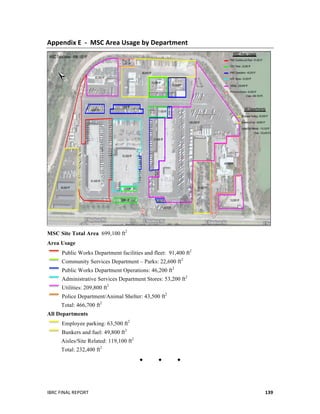
acreage, it would be necessary to identify potential sites in Palo Alto to
house the existing functions.
 The MSC’s current location may hamper delivery of services in a
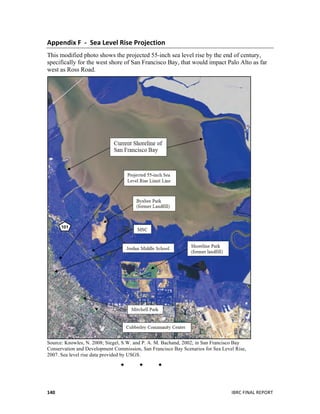
seismic or flood emergency.
 Sales tax revenue to the city from auto dealers has declined
significantly since 2000.
 The City houses staff in high-rent offices that could be relocated to the
Embarcadero East corridor if that area were developed for office use.
Because the Council has already directed Public Works to commission a
consultant study of that area, IBRC has focused on describing the range of
options that should inform the consultant process:
 Static option. Renovate or replace the MSC and ASC at their present
locations, consistent with the existing Baylands Master Plan, and with
no additional land required. This would risk continued decline in auto
EXECUTIVE	
  SUMMARY	


   IBRC	
  FINAL	
  REPORT	
  	
  12	
  
sales tax revenues, jeopardize emergency response capability, and
provide no lower-cost office space for City uses.
 Dynamic option. Widen the parameters of the consultant study to re-
imagine possibilities. These could include relocating routine and
emergency response functions west of Bayshore, swapping land with
auto dealers, developing the Embarcadero East corridor, transferring
City functions from downtown to less expensive quarters in newly
developed space, and redeveloping the City-owned vacated space for
income-producing uses.
Recommendations	
  
4-1 Expand the scope of the MSC/ASC consultant study to include
the possibility of establishing an auto dealer cluster or other
economic development project on East Bayshore Road and to
consider the best use of parcels the City may acquire on the
Embarcadero East corridor.
4-2 Obtain current appraisals of the market value of the MSC site
on East Bayshore Road and the auto dealer parcels on
Embarcadero Road.
4-3 Update the City’s disaster response and resiliency and evaluate
the risk of no or limited access to the MSC in the event of a
disaster.
4-4 Update the Baylands Master Plan regarding the MSC site and
the Embarcadero East corridor.
4-5 Perform economic impact analyses of the different scenarios for
repair or replacement of the MSC.
4-6 Review the plan for delivering animal services to the City, the
contractual obligations of the ASC to provide services to
adjacent communities, and the possibility of a closer relationship
with regional providers such as the Silicon Valley Animal
Control Authority.
4-7 Study long-term alternatives for optimization of the Civic Center
block.


   EXECUTIVE	
  SUMMARY	
  
IBRC	
  FINAL	
  REPORT	
  	
   13	
  
Section	
  5:	
  Finance	
  
Problem	
  Identification	
  and	
  Findings	
  
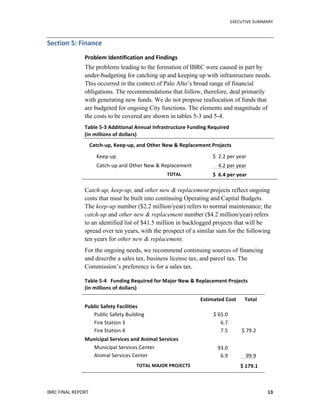
The problems leading to the formation of IBRC were caused in part by
under-budgeting for catching up and keeping up with infrastructure needs.
This occurred in the context of Palo Alto’s broad range of financial
obligations. The recommendations that follow, therefore, deal primarily
with generating new funds. We do not propose reallocation of funds that
are budgeted for ongoing City functions. The elements and magnitude of
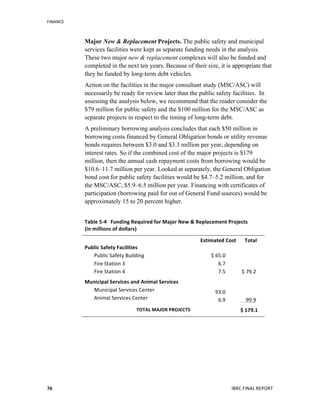
the costs to be covered are shown in tables 5-3 and 5-4.
Table	
  5-­‐3	
  Additional	
  Annual	
  Infrastructure	
  Funding	
  Required	
  	
  
(in	
  millions	
  of	
  dollars)	
  
Catch-­‐up,	
  Keep-­‐up,	
  and	
  Other	
  New	
  &	
  Replacement	
  Projects	
  	
  
Keep-­‐up	
   $	
  	
  2.2	
  per	
  year	
  
Catch-­‐up	
  and	
  Other	
  New	
  &	
  Replacement	


  4.2	
  per	
  year	
  
	
   TOTAL	
   	
   $	
  	
  6.4	
  per	
  year	


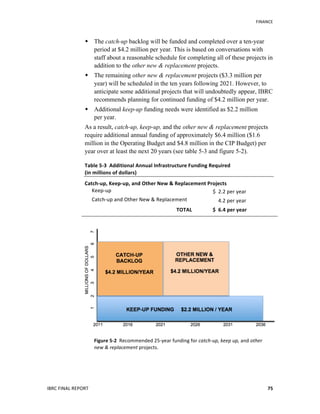
Catch-up, keep-up, and other new & replacement projects reflect ongoing
costs that must be built into continuing Operating and Capital Budgets.
The keep-up number ($2.2 million/year) refers to normal maintenance; the
catch-up and other new & replacement number ($4.2 million/year) refers
to an identified list of $41.5 million in backlogged projects that will be
spread over ten years, with the prospect of a similar sum for the following
ten years for other new & replacement.
For the ongoing needs, we recommend continuing sources of financing
and describe a sales tax, business license tax, and parcel tax. The
Commission’s preference is for a sales tax.
Table	
  5-­‐4	
  	
  	
  Funding	
  Required	
  for	
  Major	
  New	
  &	
  Replacement	
  Projects	
  	
  
(in	
  millions	
  of	
  dollars)	
  
	
   Estimated	
  Cost	
   Total	
  
Public	
  Safety	
  Facilities	


   Public	
  Safety	
  Building	
  
	
   Fire	
  Station	
  3	
  
	
   Fire	
  Station	
  4	


   $	
  65.0	
  
	
   6.7	
  
	
   7.5	


  $	
  79.2	
  
Municipal	
  Services	
  and	
  Animal	
  Services	
  
	
   Municipal	
  Services	
  Center	


   Animal	
  Services	
  Center	


   93.0	
  
	
   6.9	


   99.9	
  
	
   TOTAL	
  MAJOR	
  PROJECTS	
   	
   	
   $	
  179.1	
  
EXECUTIVE	
  SUMMARY	


   IBRC	
  FINAL	
  REPORT	
  	
  14	
  
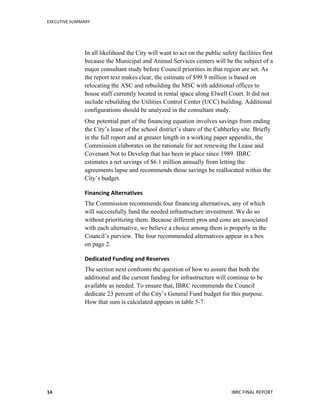
In all likelihood the City will want to act on the public safety facilities first
because the Municipal and Animal Services centers will be the subject of a
major consultant study before Council priorities in that region are set. As
the report text makes clear, the estimate of $99.9 million is based on
relocating the ASC and rebuilding the MSC with additional offices to
house staff currently located in rental space along Elwell Court. It did not
include rebuilding the Utilities Control Center (UCC) building. Additional
configurations should be analyzed in the consultant study.
One potential part of the financing equation involves savings from ending
the City’s lease of the school district’s share of the Cubberley site. Briefly
in the full report and at greater length in a working paper appendix, the
Commission elaborates on the rationale for not renewing the Lease and
Covenant Not to Develop that has been in place since 1989. IBRC
estimates a net savings of $6.1 million annually from letting the
agreements lapse and recommends those savings be reallocated within the
City’s budget.
Financing	
  Alternatives	
  	
  
The Commission recommends four financing alternatives, any of which
will successfully fund the needed infrastructure investment. We do so
without prioritizing them. Because different pros and cons are associated
with each alternative, we believe a choice among them is properly in the
Council’s purview. The four recommended alternatives appear in a box
on page 2.
Dedicated	
  Funding	
  and	
  Reserves	
  
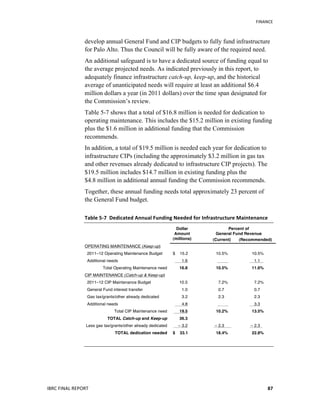
The section next confronts the question of how to assure that both the
additional and the current funding for infrastructure will continue to be
available as needed. To ensure that, IBRC recommends the Council
dedicate 23 percent of the City’s General Fund budget for this purpose.
How that sum is calculated appears in table 5-7.


   EXECUTIVE	
  SUMMARY	
  
IBRC	
  FINAL	
  REPORT	
  	
   15	
  
Table	
  5-­‐7	
  	
  Need	
  for	
  Dedicated	
  Annual	
  Infrastructure	
  Funding	
  
	
   Dollar
Amount
(millions)	
  
	
   Percent of
General Fund Revenue
(Current) (Recommended)	
  
OPERATING MAINTENANCE (Keep-up) 	
   	
  
2011–12 Operating Maintenance Budget $ 15.2 	
   10.5% 10.5%
Additional needs 1.6 	
   1.1
Total Operating Maintenance need 16.8 	
   10.5% 11.6%
CIP MAINTENANCE (Catch-up & Keep-up)
	
  
2011–12 CIP Maintenance Budget 10.5 	
   7.2% 7.2%
General Fund interest transfer 1.0 	
   0.7 0.7
Gas tax/grants/other already dedicated 3.2 	
   2.3 2.3
Additional needs 4.8 	
   3.3
Total CIP Maintenance need 19.5 	
   10.2% 13.5%
TOTAL Catch-up and Keep-up 36.3 	
  
Less gas tax/grants/other already dedicated – 3.2 	
   – 2.3 – 2.3
TOTAL dedication needed $ 33.1 	
   18.4% 22.8%
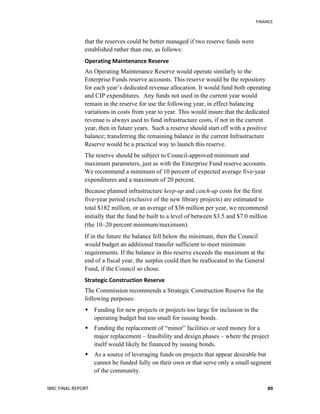
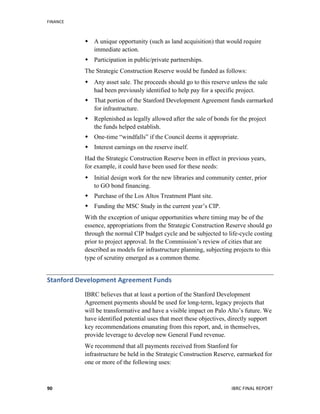
Next, we recommend the establishment of two reserves:
1. An Operating Maintenance Reserve would be funded through the annual
infrastructure allocation to provide for that year’s existing infrastructure
requirements, retaining any balances to smooth year-to-year fluctuations.
2. A Strategic Construction Reserve would deal with longer-term needs and
opportunities, to be funded by asset sales, windfalls, Stanford
Development Agreement funds, and such other transfers as the Council
may determine.
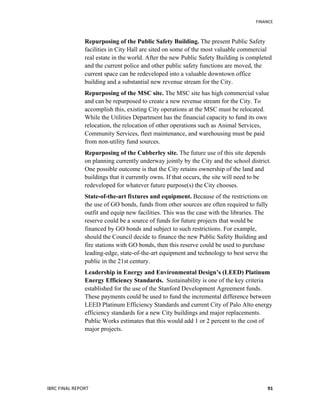
Finally, we describe infrastructure-related uses of the Stanford
Development Agreement funds. These reflect potentially transformative
uses of those funds.
Recommendations	
  
5-1 Consider four recommended alternatives for funding one-time
investments and ongoing infrastructure needs. These
alternatives do not include reallocations within current City
budgets except for the possibility of funds that now pay for the
Cubberley lease.
5-2 Direct the City Manager to dedicate 23 percent of General Fund
revenue annually to infrastructure. Require a supermajority of
six council member votes to reduce any year’s infrastructure
funding below 23 percent. Require that any reductions below
23 percent shall be restored over the succeeding three years.
EXECUTIVE	
  SUMMARY	


   IBRC	
  FINAL	
  REPORT	
  	
  16	
  
5-3 Establish an Operating Maintenance Reserve to manage
infrastructure budgeting and smooth year-to-year fluctuations,
and a Strategic Construction Reserve to deal with unanticipated
infrastructure needs and opportunities.
5-4 Decline to renew the Cubberley Lease and Covenant Not to
Develop. This will free $6.1 million annually and avoid a
substantial portion of the capital upkeep expenditures of $18.9
million and annual maintenance expenditures of $800,000.
Section	
  6:	
  The	
  Future	
  
IBRC established a Futures Working Group (FWG) to identify additional
trends and possibilities for infrastructure planning and investments. This
section and the accompanying appendices identify trends such as the
growth and changing demographics of Palo Alto’s population and
examples of technology advances that will impact future infrastructure
planning.
Explicit attention to what the City might do over the next 25 years to
assure that Palo Alto remains a desirable place to live, work, and visit has
been missing. The City’s Comprehensive Plan (Comp Plan) provides a
ten-year vision for Palo Alto and a framework under which future projects
may be evaluated.2
In this context, our recommendations encourage bold
forward thinking toward infrastructure for the City that preserves our
heritage while continuing to serve Palo Alto’s constituents well.
Renewing our infrastructure presents both a challenge and a timely
opportunity: the average age of the 84 structures with known construction
dates is 50 years.
While predicting the future is difficult, our chances for long-term
sustainability can be improved by:
 Vision – requiring that the City report on the future beyond the horizon
of our current Comp Plan.
 Engagement – engaging with other forward-thinking municipalities.
 Involvement – inviting private citizens and business entities alike into
the thought process.
IBRC proposes joint action with the City Planning department and citizen
groups, as well as discussions with other progressive cities. We believe


2
Embracing the New Century: Palo Alto 1998–2010 Comprehensive Plan, p. I-1.
  	
   EXECUTIVE	
  SUMMARY	
  
IBRC	
  FINAL	
  REPORT	
  	
   17	
  
that by establishing processes to encourage future thinking, new and
exciting ideas will emerge.
The recommended new infrastructure commission would, as part of its
charge, advise the City on future infrastructure needs and plans. Among
the factors influencing those recommendations are population trends,
raising questions that include land use, building height restrictions, mixed-
use zoning, and reuse of sites such as Cubberley.
Other areas for attention include:
 Municipal best practices. We advocate learning from other
progressive cities as well as from think tanks and universities, with
initiatives such as a Palo Alto-hosted “smart cities” conference for
exchanging ideas.
 Technology infrastructure. Infrastructure that leverages emerging
trends and technologies, some of it in conjunction with the Utilities
Department, is a natural direction for Palo Alto. Possible areas include
wireless infrastructure, the Smart Grid, alternative energies,
technologies for aging demographics, and advanced healthcare.
Community members with expertise in these areas can enhance City
infrastructure planning with the intellectual riches Palo Alto enjoys.
 Leasing of assets. The City might consider taking advantage of real
estate prices by charging market rates for City-owned leased space
wherever possible.
 Possible future projects. Speculating about future infrastructure
possibilities can be a fruitful means of turning imagination into action.
In an appendix our report provides, as a basis for discussion, these
possibilities: a Community Services Center, an extension of the
Embarcadero East concept posed in section 4, a Palo Alto conference
center, a start-up incubator, and a Palo Alto wireless network.
 Timeline and project costing. IBRC notes that a single timeline for
infrastructure planning must necessarily be a set of overlapping
timelines for different initiatives. Moreover, these timelines should
have accompanying cost estimates so that financial implications are
understood in advance. We specifically recommend that the Comp
Plan include economic analyses for its programs.
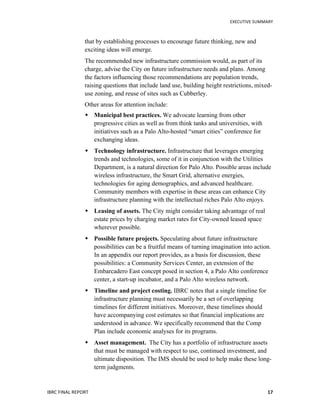
 Asset management. The City has a portfolio of infrastructure assets
that must be managed with respect to use, continued investment, and
ultimate disposition. The IMS should be used to help make these long-
term judgments.
EXECUTIVE	
  SUMMARY	


   IBRC	
  FINAL	
  REPORT	
  	
  18	
  
 Future Idea Bank. To capitalize on the talent and ideas of our
residents, the City should establish a Future Idea Bank into which all
could deposit their ideas for enriching the community’s future.
Recommendations	
  
IBRC has not made formal recommendations in the Future section. Rather,
we intend this section and related appendices to be a set of stimulating
possibilities for the future. The Comp Plan is quite detailed but its sections
age, and a 25-year horizon is difficult to keep in sight.
A city of Palo Alto’s character and capacity cannot afford to have the
future happen to it. A process for actively determining our own destiny
needs to find its way into the hierarchy of the City’s priorities.
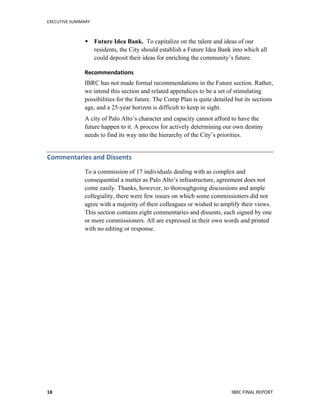
Commentaries	
  and	
  Dissents	
  
To a commission of 17 individuals dealing with as complex and
consequential a matter as Palo Alto’s infrastructure, agreement does not
come easily. Thanks, however, to thoroughgoing discussions and ample
collegiality, there were few issues on which some commissioners did not
agree with a majority of their colleagues or wished to amplify their views.
This section contains eight commentaries and dissents, each signed by one
or more commissioners. All are expressed in their own words and printed
with no editing or response.
	
  
IBRC	
  FINAL	
  REPORT	
  	
   19	
  
Introduction	
  	
  
Infrastructure – the term encompasses essentially all the City owns that
does not move on wheels or rest on a floor. For a city of its size, Palo Alto
has a significant amount of infrastructure, including hundreds of acres of
parks and open space in the baylands and foothills, libraries throughout the
community, performing- and fine-arts centers, community centers, and
much more. A summary list (Appendix A) enumerates buildings and parks
along with miles of streets and sidewalks, fire hydrants, bridges, levees,
and an urban forest.
In its broadest sense, everything that happens in Palo Alto, both public and
private, requires or relies on the proper functioning of our infrastructure.
Without streets, sidewalks, and bridges, we could not get to our
destinations. Without police, fire, and medical response facilities, we
would not be safe in our homes or in public. Without parks, playgrounds,
and open spaces, there would be less opportunity for recreation and the
enjoyment of our environment. With no City Hall or Municipal Services
Center, we would be without community services, utilities, and other vital
functions. Without libraries or cultural resources for fine arts and theatre,
the richness of our lives and those of our children would be diminished.
Infrastructure is a key element in Palo Alto’s attractiveness to residents
and businesses – indeed, to its competitiveness overall.
Palo	
  Alto’s	
  Aging	
  Infrastructure	
  
Our infrastructure has a finite life; just how long it lasts depends on the
City’s stewardship. Roofs need to be replaced, roads repaved, broken fans
fixed, worn turf restored. Medians, streetlights, and tennis courts wear out.
Some assets become obsolete as new uses and new requirements arise.
There will always be technology upgrades, departmental reorganizations,
new directions in emergency preparedness, new concerns about safety.
Thus, the need for upgrades is added to needs for ongoing repair and
upkeep. To these are added the demands for modern libraries,
contemporary community centers, and business district renewal. Taken
together, infrastructure makes a significant claim on the City’s resources.
For some time, however, Palo Alto’s infrastructure has been underfunded.
INRODUCTION
	
   IBRC	
  FINAL	
  REPORT	
  	
  20	
  
As Palo Alto’s infrastructure has aged, maintenance needs have become
more pronounced. At the same time, the City’s revenue-raising flexibility
has diminished. In recent years, despite accounting for almost 19 percent
of the City’s budget, Palo Alto’s infrastructure maintenance has continued
to deteriorate.
The	
  Infrastructure	
  Blue	
  Ribbon	
  Commission	
  (IBRC)	
  
Three recent comprehensive reports all emphasized that aging
infrastructure and an inadequate plan for dealing with it were major
concerns for the City.4
Actions were taken to abate some aspects of the
problem, but they failed to produce a long-term plan to address it
comprehensively.
In May 2010, as a result of these concerns, the Council authorized
formation of the Infrastructure Blue Ribbon Commission (IBRC) and
appointed 17 residents to serve. The Commission began its work in
November 2010, charged “to provide a recommendation to the City
Council on infrastructure needs, priorities, projects and associated funding
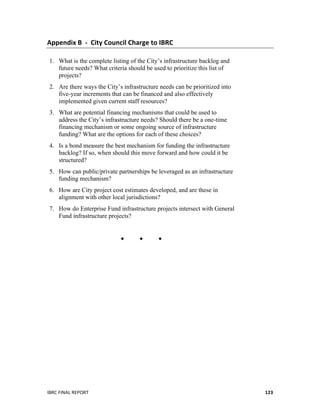
mechanisms to address the infrastructure backlog and future needs.” Seven
guiding questions accompanied this charge (see Appendix B).
As a Commission, our process has included 31 public Commission
meetings, two study sessions with the Council, a session with the Planning
and Transportation Commission and another with the Council Finance
Committee, and well over 200 other meetings of our committees and
working groups, as well as meetings with other cities, between
commissioners and staff, and with individuals who provided assistance.
Infrastructure	
  as	
  a	
  Priority	
  
Palo Alto is a wonderful community because successive generations have
enhanced our public realm with significant civic investments. Although
most infrastructure assets have been developed with public funds, private
benefactors such as Lucie and Ruth Stern (Lucie Stern Community
Center) and Morris Frost (Junior Museum) have also contributed. Palo
Alto has long been a visionary community whose residents value cultural,
intellectual, and physical pursuits.
4
(1) Kitchell Associates, Facility Assessment Report, Job No. 3466A3, February 22, 2008; (2) Leadership
ICMA, General Fund Infrastructure Opportunity Report, September 2009; (3) City Auditor, Infrastructure
Report Card for Palo Alto, March 4, 2008.
  	
   INTRODUCTION
IBRC	
  FINAL	
  REPORT	
  	
   21	
  
The excellence of a community is more than the sum of its parts, but each
element must function well for a city to be successful. When we allow the
elements to deteriorate, the fabric of the city may be weakened, making it
less attractive for its residents over time.
Many Palo Altans likely view their community as an extension of their
homes. Just as we must regularly maintain and upgrade our personal
residence, so the City must keep up its infrastructure. For both the
individual and the City, the consequences of failing to maintain assets are
the same: rundown appearance, deteriorating serviceability, and greater
expense overall.
The	
  Work	
  of	
  IBRC	
  
To address the sprawling challenges of Palo Alto’s infrastructure
problems, IBRC initially created three committees: Finance, Surface
(streets, sidewalks, parks, etc.), and Buildings. These committees did basic
research and analysis into the scope and detail of these three domains.
Subsequently, the Commission redeployed into five working groups to
study specific aspects of the City’s infrastructure that merited deeper
analysis. These working groups (1) confirmed the need for and studied the
development of an Infrastructure Management System, (2) analyzed
current City data to determine Palo Alto’s existing catch-up and keep-up
needs; (3) researched the needs of the City’s public safety facilities,
(4) explored the opportunity represented by the Municipal Services Center
and the Embarcadero East corridor, (5) worked out the financial
considerations, and (6) considered opportunities for the future.
Members of the City staff offered significant support throughout our
efforts, responding to commissioners’ questions and providing the basic
information on which our understanding and consideration of options
depended. For this IBRC is deeply grateful.
Early in the process, IBRC elected not to include the Utilities, the airport,
nor the other Enterprise Funds, except insofar as their work overlapped
with other City departments involved in infrastructure, such as Public
Works for street maintenance. Because Utilities focuses sharply on the
infrastructure for which it is responsible and has protocols for
maintenance, along with oversight by the Utilities Advisory Commission,
it was not part of the problem that led to the formation of IBRC.
IBRC also elected to leave with the San Francisquito Creek Joint Powers
Agreement, the Santa Clara Valley Water District, and the Army Corps of
INRODUCTION
	
   IBRC	
  FINAL	
  REPORT	
  	
  22	
  
Engineers those matters associated with Bay water levels and San
Francisquito Creek, including bridges, dams, and levees.
Definition	
  of	
  Terms	
  
Throughout this report we use several terms, some of the Commission’s
devising and some that are in common use in our City’s management and
budgeting systems. We italicize the first three terms throughout the report
for emphasis because they frame a practical way of thinking and talking
about infrastructure management and stewardship.
Catch-up - Sometimes termed deferred maintenance or backlog, catch-up
refers to the accumulation of needed repairs for which remedies are
overdue. Inattention to this backlog inevitably results in increased
maintenance costs, shortened component life, and increased emergency
repairs. A roof overdue for replacement will leak, damaging both building
structure and contents; a road that wears down will require costs to repair
that can be 10 to 40 times greater than the cost of periodic maintenance.
Keep-up - This category combines two elements:
 Operating maintenance refers to routine upkeep such as repairing
broken equipment, servicing machinery, and painting interiors and
exteriors.
 Planned maintenance refers to the periodic repair or replacement of
such major items as roofs and electrical and plumbing systems to
maintain a facility and extend its life. It is generally financed by the
Capital Improvement Program (CIP) budget and is therefore often
referred to as CIP maintenance.
In an analogy to a car, operating maintenance is like a 10,000 mile
tune-up; planned maintenance is like new brakes, tires, or engine.
New & replacement - This refers to extensive rehabilitation or
reconstruction of buildings which are unsafe or have dropped below
appropriate standards of service through age, use, or evolving
requirements of community service. This category also refers to new
construction required as new services are provided within the community.
General Fund - The primary or catchall fund of the City government,
similar to a firm’s general ledger account, the General Fund records each
asset and liability that is not assigned to a special purpose fund. It provides
the resources necessary to sustain the day-to-day activities and thus pays
for all administrative and operating expenses. When governments or
  	
   INTRODUCTION
IBRC	
  FINAL	
  REPORT	
  	
   23	
  
administrators talk about balancing the budget, they typically mean
balancing the budget for their General Fund.
General Fund Operating Budget - The plan adopted by City Council
each year, laying out the revenues and expenses that support the general
services delivered to the community, including public safety, libraries,
parks, and public works.
Enterprise Funds - City operations that are financed and operated in a
manner similar to a private enterprise, primarily in the Utilities
Department.
Capital Budget - A plan of proposed outlays on physical assets and the
means of financing them for the current fiscal period. Includes both CIP
maintenance and New & Replacement.
Capital Improvement Program (CIP) - Projects related to the
acquisition, expansion, rehabilitation, or major maintenance of the City’s
buildings, equipment, parks, streets, and other public infrastructure.
Organization	
  of	
  This	
  Report	
  
This report has, in addition to the Executive Summary, six principal
sections plus 15 appendices that are referenced in the body of the report
and add useful supplementary material. Where individual commissioners
want to comment on or dissent from Commission findings, those remarks
are found prior to the appendices.
The six sections of the report reflect how the Commission understood the
infrastructure challenge and prioritized the means of addressing it.
 Section 1 deals with infrastructure management. We consider this the
core of our findings and the center of our recommendations. In this
section we identify the reasons why the City fell behind in
infrastructure maintenance and recommend tools and policies to avoid
this happening again.
 Section 2 quantifies the catch-up and keep-up needs that the
Commission and staff identified and summarizes what is needed to
address them.
 Section 3 concerns public safety facilities, specifically a Public Safety
Building and two fire stations; the Commission describes their present
condition and recommends that they be replaced.
 Section 4 addresses the Municipal Services Center on East Bayshore
and some options for that area, particularly land swaps with auto
INRODUCTION
	
   IBRC	
  FINAL	
  REPORT	
  	
  24	
  
dealers and the potential of the Embarcadero East corridor for
commercial, civic, and possibly other development. The City Council
approved a project in the 2012 Capital Budget for a study of the MSC.
IBRC has applied a wide-angle lens to the matter, resulting in a
recommended expansion of the study’s scope to include greater
exploration of the region’s potential.
 Section 5 examines the financing of our recommendations for catch-
up, keep-up, and new & replacement facilities. Four alternative
financial scenarios are proposed.
 Section 6 looks to the future and the ways that Palo Alto can move
closer to the leading edge of progressive cities with the kind of
infrastructure that enriches the community and keeps it a desirable
place in which to live, to work, to play, to raise children, and to retire.
In	
  Summary	
  
This Commission has been acutely aware that Palo Alto’s attractiveness,
sustainability, and vitality as a community is inherently linked to the
quantity and quality of its infrastructure, and that maintaining and
enhancing Palo Alto’s level of infrastructure requires careful evaluation of
the economics. The IBRC report reflects our considered judgment as to the
major infrastructure needs facing the City in the foreseeable future and
how to finance them. Further, it presents a context and a strategy for
keeping abreast of catch-up, keep-up, and new & replacement
requirements now and into the future.
 
IBRC	
  FINAL	
  REPORT	
  	
   25	
  
SECTION	
  1	
  
Infrastructure	
  Management	
  
Management of the City’s infrastructure is a difficult task made more so
by diffused and confusing lines of responsibility and authority within the
City structure.
Tasked with analyzing the City’s infrastructure to determine current and
future needs, IBRC began by attempting to take an inventory of all City
assets. We found it disappointingly difficult to assemble a citywide
inventory. Because the relevant information was in several departments,
there was no single authoritative source of infrastructure information, no
single point of responsibility for management. Thus, the basic
identification and compilation of infrastructure needs took several months
of the Commission’s work, even with help from City staff, who created a
detailed master spreadsheet and database (available online) to show where
we stand today.5
Defining a system for infrastructure management was not part of the
Commission’s original charge, but we quickly saw it was the foundation
on which all else would be built. Properly constructed, it would enable
staff to monitor facility conditions, forecast maintenance needs, factor
inflation, and assemble usage data. And, it would provide decision makers
with invaluable cost and funding data.
Several outside consultants6
as well as the City Auditor (2008) have
recommended that the City put in place such a system, widely used in
industry and government and available commercially.
IBRC’s findings have substantiated these previous recommendations. We
strongly recommend that such a system be developed and installed as soon
as possible.


5
http://www.cityofpaloalto.org/civica/filebank/blobdload.asp?BloblD=29619
6
(1) Kitchell Associates, Facility Assessment Report, Job No. 3466A3, February 22, 2008; (2) Leadership
ICMA, General Fund Infrastructure Opportunity Report, September 2009; (3) Adamson Associates,
Building Management Study, September 1997; Traffic and Transportation, June 1997; Parks Management
Study, January 1998.
INFRASTRUCTURE	
  MANAGEMENT	
  
IBRC	
  FINAL	
  REPORT	
  26	
  
Findings	
  
1. Palo Alto has no comprehensive system for managing its
infrastructure. Responsibility for maintenance has been divided among
Public Works, Community Services, Transportation, and
Administrative Services. The City has lacked an overall system for
maintaining and integrating infrastructure information.
2. Incorporated for more than 100 years, Palo Alto has a substantial
inventory of older assets. Thus systematic management of
infrastructure facilities becomes an increasingly vital need.
3. Incomplete and fragmentary data and dispersal of authority have
affected the City’s ability to assess and prioritize overall needs, to
develop strategies for longer-term maintenance and replacement, and
to prepare for the future. It is imperative that the City Council and City
staff be well informed about the overall state of the City’s
infrastructure and the consequences of budgeting actions and delays.
4. In the competition for City funds, the delay of infrastructure projects in
deference to other perceived needs is an all-too-common occurrence.
Additionally, although the Council reviews and approves the City
budget annually, new items are often proposed and approved in the
middle of each fiscal year. In recent years, the effect of these “pop-up”
items has been to add an average of $1.5 million per year to the
Capital Budget.
Recommendations	
  	
  
In response to the City’s fragmentation of infrastructure management,
IBRC recommends a number of changes in how infrastructure is tracked,
managed, and brought before the City Council in its annual budget
process.
1-1 Establish an Infrastructure Management System (IMS) to
maintain an up-to-date inventory of the City’s infrastructure, its
catch-up and keep-up needs, and available funding. Such a
management tool will support ongoing staff and Council
attention to infrastructure budgeting, planning, and
accountability. This system should integrate with programs the
City now uses to manage infrastructure and finance.
As noted above, this call to systematize infrastructure management with
an IMS reiterates recommendations made by outside consultants and by
the City Auditor.
  	
   INFRASTRUCTURE	
  MANAGEMENT	
  
IBRC	
  FINAL	
  REPORT	
   	
  27	
  
1-2 Establish a single point of responsibility, at a high level, for
infrastructure management. This position should be within the
City Manager’s office.
This recommendation reflects IBRC findings that management of Palo
Alto’s infrastructure is diffused through a number of City departments,
that responsibilities are unclear, and that no comprehensive inventory or
needs analysis exists.
1-3 Require that an IMS summary report be presented to the City
Council as the lead element in each year’s General Fund Budget
review, and that it highlight any gaps in infrastructure funding.
The nature of capital assets is that they rarely have advocates among the
citizenry until they have seriously deteriorated; hence their upkeep is easy
to defer. It is imperative, therefore, that a clear, comprehensive report be
presented to the Council in connection with its budget deliberations each
year, and that it contain a summary of maintenance needs together with
funding availabilities in order to highlight any deficiencies. IBRC believes
that this report will be the most valuable output of the Infrastructure
Management System and the best insurance that infrastructure won’t be
overlooked. Table 1-1 shows our prototype IMS summary.
1-4 Establish a permanent public commission, appointed by the City
Council, to give ongoing oversight to infrastructure
maintenance, to consider and make recommendations regarding
future infrastructure needs, and to assure proper attention to the
City’s physical assets. This commission should have as its staff
liaison the Director of Planning.
1-5 Establish a policy that the City Manager, in coordination with
the public commission on infrastructure, report to the City
Council at least twice a year on infrastructure.
Palo Alto has traditionally employed citizen commissions to assure
ongoing public attention to areas of particular importance. Because our
infrastructure provides the physical underpinnings for the delivery of all
City services, it merits the oversight of a public commission.
1-6 Dedicate sufficient funding to infrastructure on a long-term
basis.
As stated, support of infrastructure has almost no public constituency until
significant needs have appeared. Because of this, infrastructure funding
tends to lose ground in the competition for civic resources. Excepting the
gas tax, Palo Alto has no funding source dedicated to infrastructure.
Without dedicated funding, backlogs are likely to persist and Palo Alto’s
asset base is at risk of continued decline.
INFRASTRUCTURE	
  MANAGEMENT	
  
IBRC	
  FINAL	
  REPORT	
  28	
  
In recent years, approximately 19 percent of the General Fund has been
spent on infrastructure. This needs to increase to 23 percent to properly
fund catch-up and keep-up requirements. IBRC’s recommendation for
dedicated funding is discussed in detail in the Finance section of this
report (section 5).
1-7 Mandate periodic audits of infrastructure maintenance by the
City Auditor.
Good business practices call for regular audits of significant assets. This
could be done by the City Auditor or an outside firm. The City Auditor’s
audit of street maintenance (2006)7
and Infrastructure Report Card for
Palo Alto (2008) were valuable resources for IBRC. Such audits can also
assess ways to improve the functioning of infrastructure management and
the IMS.
Components	
  of	
  an	
  Infrastructure	
  Management	
  System	
  
The	
  System	
  
There is no question that Palo Alto needs a comprehensive Infrastructure
Management System. Toward that end IBRC has worked with staff to
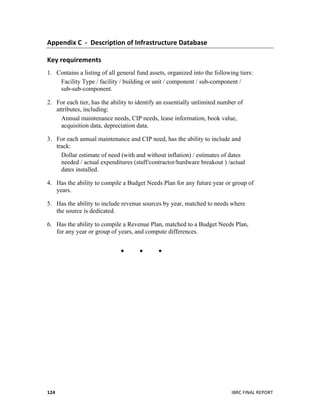
develop the infrastructure database described in Appendix C. The next
step is building a system that fully integrates with Palo Alto’s existing
software. This action must be assigned a high priority or the data we have
will become stale before it can be used.
Management	
  
The system database will support record-keeping, analysis, strategy, and
accountability for all elements of the City’s infrastructure, including
buildings, parks, streets, sidewalks, athletic facilities, and the urban forest.
For each asset, a specified staff member must be assigned the
responsibility of keeping information current. Functions will include the
following:
 Entering facility description, including updated replacement cost.
 Keeping the maintenance history; noting the extent of deferred
maintenance.
 Regular updating of facility condition, including one- to five-year
maintenance and/or replacement needs.
 Estimating longer-term requirements.


7
Palo Alto City Auditor, Audit of Street Maintenance, March 21, 2006.
  	
   INFRASTRUCTURE	
  MANAGEMENT	
  
IBRC	
  FINAL	
  REPORT	
   	
  29	
  
The Finance Department will be responsible for identifying the funding
source (or gap) for each element.
All IMS information will be available both to department heads and to the
Director of Infrastructure Management within the City Manager’s office.
It will be the Director’s job to determine if maintenance is current or if
catch-up is required. The IMS will make it possible to do this on a
facility-by-facility basis and project needs out into the future, taking
inflation into account.
Figure	
  1-­‐1	
  	
  A	
  comprehensive	
  Infrastructure	
  Management	
  System	
  (IMS).	


INFRASTRUCTURE	
  MANAGEMENT	
  
IBRC	
  FINAL	
  REPORT	
  30	
  
Reports	
  to	
  the	
  Council	
  	
  
An important aspect of the system, as we envision it, will be its ability to
provide a one-page financial report to City Council members summarizing
all infrastructure keep-up and catch-up needs and any financing gaps that
may exist or be forecast.
Table 1-1 represents such a one-page report. It is the 25-year overview of
infrastructure maintenance and replacement needs, together with the
financing that is currently anticipated (“Sources”). The difference between
needs and sources is shown as the “Gap.”
In table 1-1, catch-up and keep-up have annual requirements. The new &
replacement projects, however, represent larger capital investments, so
these are not shown with specific timetables.
The first five years would be presented in annual projections, thereafter in
5-year increments.
The IMS summary, as part of the budget process, will give decision
makers a clear status of infrastructure maintenance (keep-up), the degree
to which we have fallen behind (catch-up), and the major capital
expenditures to anticipate (new & replacement).
Using	
  the	
  IMS	
  	
  
The IMS is a tool that will be useful only if continually kept current. Thus,
management of the management system is of critical importance. And,
because infrastructure is spread across the city, a strong recommendation
of IBRC is to place responsibility for overseeing infrastructure within the
City Manager’s office.
We believe that important reasons for the deterioration of Palo Alto’s
infrastructure are the fragmentation of infrastructure management and the
lack of useful, useable information. The IMS will force that information
up through the system and place it before the City Council in a form that
will give clear focus to their infrastructure decisions.
 
Table	
  1-­‐1	
  	
  	
  City	
  of	
  Palo	
  Alto	
  Infrastructure	
  Management	
  System	
  	
  
Summary	
  of	
  Needs,	
  Funding	
  Sources,	
  and	
  Funding	
  Gaps	
  (in	
  millions	
  of	
  dollars)	


   -­‐-­‐-­‐-­‐-­‐-­‐-­‐-­‐	
  CATCH-­‐UP	
  -­‐-­‐-­‐-­‐-­‐-­‐-­‐-­‐	
   	
  -­‐-­‐-­‐-­‐-­‐-­‐-­‐-­‐-­‐-­‐-­‐-­‐-­‐-­‐-­‐-­‐-­‐-­‐-­‐-­‐-­‐-­‐-­‐-­‐-­‐-­‐-­‐-­‐-­‐-­‐-­‐-­‐-­‐-­‐-­‐-­‐-­‐-­‐-­‐-­‐-­‐-­‐-­‐-­‐-­‐-­‐-­‐-­‐-­‐-­‐-­‐	
  	
  KEEP-­‐UP	
  	
  -­‐-­‐-­‐-­‐-­‐-­‐-­‐-­‐-­‐-­‐-­‐-­‐-­‐-­‐-­‐-­‐-­‐-­‐-­‐-­‐-­‐-­‐-­‐-­‐-­‐-­‐-­‐-­‐-­‐-­‐-­‐-­‐-­‐-­‐-­‐-­‐-­‐-­‐-­‐-­‐-­‐-­‐-­‐-­‐-­‐-­‐-­‐-­‐-­‐-­‐	
   	
   NEW	
  &	
  REPLACEMENT	
  
	
   Deferred	
  &	
  Unbudgeted	
   Operating	
  Maintenance	
   Planned	
  CIP	
  Maintenance	
   Total	
  Keep-­‐up	
   	
   Facility	
   Needs
g
	
  
Annual FY Needs Sources Gap Needsa Sourcesb Gap Needsc Sourcesd Gap Needs Sources Gap
	
  
Major	
  projects	
   	
  
2011-­‐12	
   $	


  4.2	
   -­‐	
   $	
  (4.2)	


  $	
  	
  16.8	
  	
   	
  $	
  	
  15.2	
   $	
  (1.6)	
   	
  	
  $	
  	
  	
  15.4	
   	
  $	
  	
  	
  14.8	
   $	
  	
  (0.6)	


  $	
  	
  	
  32.2	
   	
  	
  $	
  	
  30.0	
   	
  $	
  	
  (2.2)	


Public	
  Safety	
  Building	
  -­‐	
  replace	
   $	


  65.0	
  
2012-­‐13	
   	
  4.2	
   -­‐	
   (4.2)	


  16.8	


  15.2	
   (1.6)	


  15.4	


  14.8	


  (0.6)	


  32.2	


  30.0	


  (2.2)	


Fire	
  Station	
  3	
  	
  -­‐	
  replace	
   6.7	
  
2013-­‐14	
   4.2	
   -­‐	
   (4.2)	


  16.8	


  15.2	
   	
  	
  (1.6)	


  15.4	


  14.8	
   	
  	
  (0.6)	


  32.2	


  30.0	


  (2.2)	


Fire	
  Station	
  4	
  	
  -­‐	
  replace	
   7.5	
  
2014-­‐15	
   4.2	
   -­‐	
   (4.2)	


  16.8	


  15.2	


  (1.6)	


  15.4	


  14.8	


  (0.6)	


  32.2	


  30.0	


  (2.2)	


MSC	
  -­‐	
  replace	
   93.0	


2015-­‐16	
   4.2	
   -­‐	
   (4.2)	


  16.8	


  15.2	


  (1.6)	


  15.4	


  14.8	


  (0.6)	


  32.2	


  30.0	


  (2.2)	


Animal	
  Services	
  -­‐	
  replace	
   6.9	
  
5	
  Years	


Other	
  projects	
   	
  
2017-­‐21	
   $	
  	
  	
  20.5	
   	
   $(20.5)	


  $	
  	
  	
  84.0	
   $	
  	
  76.0	
   $	
  (8.0)	
   $	


  71.0	
   $	


  73.3	
   $	
  	
  	
  2.3	
   $	
  155.0	
   $	
  149.3	
   	
  	
  $	
  	
  (5.7)	


Civic	
  Center	
  Plaza	
  deck	
   16.0	
  
2022-­‐26	


  84.0	


  76.0	


  (8.0)	


  81.6	


  73.3	
   	
  	
  (8.3)	


  165.6	


  149.3	


  (16.3)	


Los	
  Altos	
  Treatment	
  SIte	
  	
  	
   2.0	
  
2027-­‐31	


  84.0	


  76.0	
   	
  	
  (8.0)	


  74.1	


  73.3	


  (0.8)	


  158.1	


  149.3	


  (8.8)	


Byxbee	
  Park	
  Phase	
  II	
   3.6	
  
2032-­‐36	


  84.0	


  76.0	


  (8.0)	


  77.3	


  73.3	


  (4.0)	


  161.3	


  149.3	
   	
  	
  (12.0)	


Highway	
  101	
  Bike/Ped	
  Bridge	


  10.0	
  
TOTAL	
   $	
  	
  41.5e	
   	
   $(41.5)	
   	
  	
  $	
  	
  	
  420.0	
   	
  	
  $380.0	
   $(40.0)	
   $	
  	
  381.0	
   	
  	
  $	
  	
  367.2	
   $(13.8)	
   $	
  801.0e	
   $	
  747.2	
   	
  $	
  (53.8)	


TOTAL	
   $	
  	
  210.7	


Cubberley
f	
  
–	
  $	
  	
  7.0
	
  
–	
  	
  $	
  	
  11.9


NOTES:	
  All	
  figures	
  are	
  in	
  2011	
  dollars.	
  Details	
  may	
  not	
  match	
  totals	
  due	
  to	
  rounding.	
  	
  
a.	
  Operating	
  Maintenance	
  Needs	
  were	
  increased	
  from	
  current	
  levels	
  by	
  10	
  percent	
  from	
  staff	
  analysis	
  to	
  provide	
  the	
  appropriate	
  level	
  of	
  
long-­‐term	
  infrastructure	
  service.	
  
b.	
  Operating	
  Maintenance	
  Sources	
  are	
  the	
  FY	
  2012	
  Adopted	
  Budget	
  amount,	
  continued	
  over	
  25	
  years.	
  
c.	
  Planned	
  CIP	
  Keep-­‐up	
  Needs	
  come	
  from	
  staff	
  and	
  working	
  group	
  analysis:	
  $1.5M	
  per	
  year	
  added	
  for	
  unbudgeted	
  proposals	
  based	
  on	
  
historical	
  analysis.	
  
d.	
  Planned	
  CIP	
  Revenue	
  Sources	
  are	
  assumed	
  to	
  be	
  continued	
  General	
  Fund	
  transfer	
  of	
  $10.5	
  million	
  (the	
  2012	
  amount,	
  continued	
  
unchanged	
  over	
  25	
  years)	
  and	
  $4.3	
  million	
  in	
  non-­‐General	
  Fund	
  sources.	
  
e.	
  Excludes	
  recategorizations	
  between	
  catch-­‐up	
  and	
  keep-­‐up	
  after	
  12/1/2011	
  totaling	
  under	
  $1	
  million.	
  	
  
f.	
  	
  $7	
  million	
  of	
  Cubberley	
  catch-­‐up	
  and	
  $11.9	
  million	
  of	
  Cubberley	
  CIP	
  are	
  included	
  in	
  the	
  above	
  25-­‐year	
  figures.	
  These	
  represent	
  potential	
  
savings	
  if	
  lease	
  arrangements	
  no	
  longer	
  apply.	
  
g.	
  New	
  &	
  Replacement	
  needs	
  listed	
  by	
  project	
  with	
  no	
  assumed	
  time	
  frame	
  for	
  implementation.	
  
 
IBRC	
  FINAL	
  REPORT	
  32	
  
SECTION	
  2	
  
The	
  Cost	
  of	
  Catch-­‐up	
  and	
  Keep-­‐up	
  
Although we have not yet developed the Infrastructure Management
System described in section 1, use of the database described there has
enabled IBRC to estimate the size of the City’s existing deferred
infrastructure maintenance (catch-up) and the underfunding of annual
maintenance (keep-up), as well as to prioritize several larger facilities for
replacement. This section details that information and notes the funding
gaps that exist.
As a result of collaboration with IBRC, the Public Works department has
painstakingly documented all known projects relating to infrastructure.
These 1,300 projects, with costing and timing, have been collated in the
master infrastructure spreadsheet that represents our best view of the
City’s infrastructure needs. Because of its size, the document could not be
reproduced in our report. It is available for download from the City’s
website.8
The Commission has taken this detailed needs data and consolidated it
into table 2-1 (catch-up) and table 2-2 (keep-up). Table 2-2 summarizes
the data in five-year periods. The Public Works data, as captured in the
master infrastructure spreadsheet, contains more than 90,000 data entries.
The master infrastructure spreadsheet has shortcomings that have been
acknowledged by the Commission and by City staff:
 Some of the data is old and may not reflect current conditions. For
example, the Kitchell report dates from 2008 and MSC projections
from 2003.
 Buildings leased out to non-City affiliates (mostly nonprofits) are not
included.
 Projects discussed in this report’s Future section are also not included.
 This report recommends clearing the backlog of catch-up over a ten-
year period. That time may see an increase, however, because money
not spent in a timely fashion on maintenance often increases the
amount needed by the time it is spent.
 There may be redundancy in some projects.


8
http://www.cityofpaloalto.org/civica/filebank/blobdload.asp?BloblD=29619
COST	
  OF	
  CATCH-­‐UP	
  AND	
  KEEP-­‐UP	
  
IBRC	
  FINAL	
  REPORT	
   	
  33	
  
 All cost and revenue estimates use uninflated dollars. The effect of
inflation could be to raise costs relative to revenue.
 The master infrastructure spreadsheet is simply a presentation of the
City’s project data, not a comprehensive tool for analysis, reporting, or
tracking of projects.
Deferred	
  Maintenance,	
  or	
  Catch-­‐up	
  
For a number of years the City has underfunded keep-up maintenance,
causing a considerable backlog of deferred (catch-up) maintenance to
accumulate. A list of selected assets and their deferred maintenance costs
appears in table 2-1. Among the facilities earmarked for significant catch-
up are Cubberley (on lease from the school district) – $7.0 million, streets
– $6.1 million, parks – $5.6 million, sidewalks – $3.7 million, and the
Baylands – $3.0 million. The total is $41.5 million.
If unattended, a backlog of deferred maintenance inevitably leads to
increased maintenance costs. Indeed, the cost of deferred maintenance can
amount to multiples of the cost of timely maintenance.
Given the fixed capacity of the Department of Public Works to carry out
projects itself and to supervise outside contractors, IBRC recommends that
the catch-up needs be addressed at the rate of $4.2 million per year over
the next ten years until deferred maintenance is eliminated. This time
Table	
  2-­‐1.	
  	
  Deferred	
  (Catch-­‐up)	
  Maintenance	
  FY	
  2011–12	
  (dollars	
  in	
  thousands)	
  
Summary	
  by	
  Asset	
  
Animal	
  Services	
  Center	
   $	


  30	
  
Arastradero	
  Preserve	
   407	
  
Arts	
  Center	
   79	
  
Baylands	
   2,996	
  
Bridges	
   100	
  
Civic	
  Center	
  Office	
  Building	
   332	
  
Cubberley	
   6,967	
  
Fire	
  Stations	
   129	
  
Foothill	
  Park	
   2,171	
  
Garages	
   1,154	
  
Golf	
  Course	
   810	
  
Junior	
  Museum	
  &	
  Zoo	
   221	
  
Lawn	
  Bowling	
   66	
  
Libraries	
   548	
  
Lots:	
  Parks	
  &	
  Parking	
  Resurfacing	
   224	
  
Lucie	
  Stern	
   669	
  
Mitchell	
  Park	
   831	
  
Municipal	
  Services	
  Center	
   $	


  992	
  
Parks	
   5,559	
  
Parking	
  Assessment	
  District	
   943	
  
Restrooms	
   250	
  
Rinconada	
  Park	
   40	
  
Sidewalks	
   3,700	
  
Stanford-­‐Palo	
  Alto	
  Parks	
   1,257	
  
Street	
  Lights	
   200	
  
Street	
  Medians	
   1,448	
  
Streets	
   6,098	
  
Transportation:	
  Signals,	
  Signage	
   1,825	
  
Ventura	
   1,224	
  
Summary	
  by	
  Category	
  
Buildings	
   	
  	
  12,014	
  
Parks	
   14,378	
  
Surface	
   14,936	
  
Not	
  Categorized	
   $200	
  
	
   Total	
   $	
  41,528	
  
NOTE: Figures do not reflect recategorizations between catch-up and keep-up
after 12/1/2011 totaling under $1 million.
COST	
  OF	
  CATCH-­‐UP	
  AND	
  KEEP-­‐UP	


IBRC	
  FINAL	
  REPORT	
  34	
  
frame will allow City staff time to plan and implement projects in an
orderly manner and work efficiently with outside contractors.
Annual	
  Maintenance,	
  or	
  Keep-­‐up	
  
For annual maintenance, Palo Alto uses two budget categories, operating
maintenance and Capital Improvement Projects (CIP). The basic
difference is dollar value per project; projects over $50,000 generally are
CIP. In calculating total keep-up needs, we have summed the two.
In the 2011–12 budget, $30.0 million is allocated for operating
maintenance and the CIP. Our analysis, however, indicates that
maintenance budgets have been historically underfunded by an average
$2.2 million per year (hence the need for catch-up). To truly “keep up,”
the City should allocate approximately $32.2 million per year to
maintenance.
Our keep-up total includes $1.5 million in “pop-up” items, or those items
introduced in the midst of an average budget year. This figure is derived
from staff analysis of several years of budgeting and spending; on average,
$1.5 million a year has been allocated for projects not initially budgeted.
IBRC has derived keep-up CIP needs from the detailed analysis contained
in the Public Works Department’s master infrastructure spreadsheets.
Public Works breaks each facility into maintenance elements to allow
detailed assessments. Table 2-2 shows a summary of keep-up, by facility.
A multi-year schedule for keep-up requirements is necessarily more
accurate in nearer years than farther out. The advantage of having a
dynamic IMS is that needs will regularly be updated and kept current. As a
result, estimates for each successive one-year and five-year period will be
accurate for budgeting and five-year financial forecasts, and estimates for
years farther out will be useful for long-range projections.
The	
  Gap	
  
As table 1-1 shows, catch-up and keep-up together will have a combined
shortfall of $6.4 million per year. This maintenance “gap” will not come
as a surprise to Palo Alto residents. It is one of the principal reasons for
forming IBRC in the first place.
IBRC’s challenge has been not only to identify the extent of the gap, but
to determine ways to close it. Toward that end, we have developed a set of
funding alternatives. These are presented in section 5 (Finance).
COST	
  OF	
  CATCH-­‐UP	
  AND	
  KEEP-­‐UP	
  
IBRC	
  FINAL	
  REPORT	
   	
  35	
  
Table	
  2-­‐2	
  Keep-­‐up	
  Maintenance	
  Needs	
  (dollars	
  in	
  thousands)	


ALL	
  KEEP-­‐UP	
  MAINTENANCE	


5	
  Years	
  
2012–16	
  	
  
5	
  Years	
  
2017–21	
  
5	
  Years	
  
2022–26	
  
5	
  Years	
  
2027–31	
  
5	
  Years	
  
2032–36	
  
25	
  Years	


TOTAL	
  	
  
Summary	
  by	
  Asset	


Animal	
  Services	
   $	


  0	
   $	


  0	
   $	


  227	
   $	


  175	
   $	


  22	
   $	


  424	
  
Arastradero	
  Preserve	
   	
   0	
   264	
   157	
   243	
   	
  220	
   	
  883	
  
Art	
  Center	
   	
   2,050	
   0	
   278	
   0	
   	
  79	
   	
  2,408	
  
Backflow	
   	
   250	
   0	
   0	
   0	
   	
  0	
   	
  250	
  
Baylands	
   	
   617	
   1,469	
   865	
   1,329	
   	
  901	
   	
  5,181	
  
Bridges	
   	
   50	
   0	
   100	
   0	
   	
  100	
   	
  250	
  
Byxbee	
  Park	
   	
   0	
   0	
   0	
   0	
   	
  88	
   	
  88	
  
Civic	
  Center	
  Office	
  Building	
   617	
   700	
   480	
   750	
   	
  300	
   	
  2,847	
  
Cubberley	
   	
   3,276	
   1,288	
   3,569	
   1,365	
   	
  2,402	
   	
  11,901	
  
Fire	
  Stations	
   	
   403	
   80	
   176	
   301	
   	
  446	
   	
  1,405	
  
Foothill	
  Park	
   	
   350	
   1,475	
   2,533	
   2,199	
   	
  996	
   	
  7,553	
  
Garages	
   	
   500	
   0	
   20	
   0	
   	
  0	
   	
  520	
  
Golf	
  Course	
   	
   817	
   895	
   1,127	
   	
  1,024	
   	
  796	
   	
  4,659	
  
Junior	
  Museum	
  and	
  Zoo	
   	
   1,049	
   0	
   95	
   	
  73	
   	
  0	
   	
  1,218	
  
Lawn	
  Bowling	
   	
   0	
   0	
   148	
   	
  66	
   	
  43	
   	
  257	
  
Library	
   	
   0	
   18	
   741	
   	
  293	
   	
  411	
   	
  1,462	
  
Los	
  Altos	
  Treatment	
  Plant	
   250	
   0	
   0	
   0	
   0	
   250	
  
Lots:	
  Parks	
  &	
  Parking	
  Resurfacing	
   500	
   82	
   812	
   264	
   327	
   1,985	
  
Lucie	
  Stern	
   	
   1,305	
   166	
   479	
   302	
   232	
   2,484	
  
Medians	
   	
   0	
   1,579	
   2,283	
   840	
   1,352	
   6,054	
  
Mitchell	
  Park	
  	
   	
   1,300	
   2,074	
   644	
   1,548	
   944	
   6,510	
  
Multi-­‐site	
  Projects	
   	
   17,021	
   18,496	
   18,446	
   18,446	
   18,446	
   90,854	
  
Municipal	
  Services	
   	
   1,492	
   645	
   1,110	
   645	
   873	
   4,764	
  
Parking	
  Assessment	
  District	
   0	
   137	
   1,247	
   448	
   511	
   2,343	
  
Parks	
  and	
  Open	
  Space	
   	
   5,583	
   4,160	
   5,008	
   5,058	
   7,988	
   27,798	
  
Rinconada	
  Park	
   	
   1,785	
   815	
   1,104	
   377	
   73	
   4,153	
  
Sidewalks	
   	
   3,625	
   5,400	
   5,400	
   5,400	
   5,400	
   25,225	
  
Stanford-­‐Palo	
  Alto	
  Parks	
   	
   775	
   2,189	
   276	
   2,792	
   167	
   6,199	
  
Street	
  Lights	
   	
   700	
   0	
   0	
   0	
   0	
   700	
  
Streets	
   	
   19,545	
   19,000	
   19,000	
   19,000	
   19,000	
   95,545	
  
Transportation:	
  Signals	
  Signage	
   9,247	
   2,293	
   7,367	
   3,133	
   6,807	
   28,846	
  
Ventura	
   	
   715	
   167	
   0	
   211	
   594	
   1,687	
  
Totals	
  by	
  Asset	
  ($	
  thousands)	
  	
   $	
  73,821	
   $	
  63,390	
   $	
  73,693	
   $	
  66,281	
   $	
  69,516	
   $346,701	
  
NOTE:	
  	
  Totals	
  exclude	
  $1.5	
  million	
  per	
  year	
  for	
  unbudgeted	
  items	
  approved	
  by	
  the	
  Council,	
  based	
  on	
  historical	
  analysis.	


COST	
  OF	
  CATCH-­‐UP	
  AND	
  KEEP-­‐UP	


IBRC	
  FINAL	
  REPORT	
  36	
  
New	
  &	
  Replacement	
  	
  
Palo Alto owns an inventory of civic buildings that range from smaller
structures to the 90,000 square foot City Hall. For the most part, these
buildings are in good working order, needing only routine maintenance
and periodic renewal of parts that wear out over time, such as roofs,
exterior paint, and electrical systems. As stated in the report by Kitchell
Corporation (2008), most of the City’s buildings are “relatively well built
public buildings” and “almost all . . . could be renovated to extend their
life indefinitely.” Thus, the bulk of the City’s buildings are projected as
needing only scheduled (keep-up) maintenance to extend their useful life
until such time as a cost-benefit analysis indicates a need for major
overhaul or replacement.
The Commission has singled out five City facilities which it recommends
for upgrade or replacement: the Public Safety Building, Fire Station 3
(Rinconada Park) and Station 4 (Mitchell Park), the Municipal Services
Center, and the Animal Services Center. These facilities are listed as
“Major projects” in table 1-1 and are discussed in depth in sections 3 and 4
of this report.
Looking further ahead, a number of other new & replacement items will
also need to be addressed. Four are listed as “Other projects” in table 1-1;
they are not discussed individually in this report, but will be referenced
throughout as other new & replacement projects. IBRC recommends,
therefore, that the funds utilized for catch-up during the first ten years be
thereafter redirected to offset these other new & replacement needs.
Maintenance	
  of	
  Surface	
  Assets	
  	
  
The term surface assets refers to infrastructure that lies on the City’s
surface: streets, medians, sidewalks, parking lots, parks, and so on. For
most surface assets, catch-up and keep-up are merged within the normal
maintenance cycle; like painting the Golden Gate Bridge, repair and
maintenance happen continuously. The following two examples
demonstrate this. As noted above, deferred maintenance of sidewalks and
streets amounts to $9.8 of the total $41.5 catch-up backlog.
Sidewalks	
  
Maintenance of the City’s 283 miles of sidewalks results less from use and
more from the perpetual battle between tree roots and concrete.
Maintenance generally involves two approaches:
COST	
  OF	
  CATCH-­‐UP	
  AND	
  KEEP-­‐UP	
  
IBRC	
  FINAL	
  REPORT	
   	
  37	
  
 Repair of offsets of three-fourths inch or more through shaving the
cement or paving with asphalt to smooth the offset (see figure 2-1).
Repairs occur as these hazards are brought to the attention of the
Public Services Division of the Department of Public Works.
Sidewalks damaged in other ways are, on a case by case basis, repaired
as needed.
 Dividing the city into 23 sidewalk districts for major repairs, district
by district, over a 30-year cycle. Although this concept has been in
place for some time, budgets have proven inadequate to maintain it.
The recommended budget increase will enable recovery of the 30-year
repair cycle.
In addition to these two approaches, special projects such as ADA-
compliant curb cuts are scheduled as necessary.
It is the responsibility of the City Council to set the standard to be
achieved, using a steady citywide approach to offset repair and a district-
by-district approach to major refurbishing. Data derived from the
recommended IMS will update the status and quantify the cost.
Streets	
  
Palo Alto maintains 473 lane-miles of streets. They are the City’s most
significant surface asset, and their health varies. Street condition is
measured on a Pavement Condition Index (PCI) scale from 1 to 100.
Streets rated 59 or lower are considered “at risk” or “poor” (see
figure 2-2).
In 2010, Palo Alto’s average rating for streets was 73, placing it below
many neighboring communities rated on the same scale:
Los	
  Altos:	
  82	
  
Santa	
  Clara:	
  80	
  
Redwood	
  City:	
  78	
  
Atherton:	
  77	
  
Los	
  Altos	
  Hills:	
  77	
  
Mountain	
  View:	
  76	
  
Sunnyvale:	
  75	
  
Palo	
  Alto:	
  73	
  
Cupertino:	
  70	
  
Menlo	
  Park:	
  63	
  
COST	
  OF	
  CATCH-­‐UP	
  AND	
  KEEP-­‐UP	


IBRC	
  FINAL	
  REPORT	
  38	
  
Figure	
  2-­‐1.	
  Asphalt	
  is	
  often	
  the	
  mediator	
  in	
  the	
  continuous	
  battle	
  between	
  roots	
  	
  
and	
  sidewalks.	
  
Figure	
  2-­‐2.	
  Street	
  condition	
  on	
  Greer	
  Road	
  between	
  Embarcadero	
  and	
  Channing,	
  
rated	
  38	
  on	
  the	
  PCI	
  Index	
  (“very	
  poor	
  to	
  serious”).	
  	
  
COST	
  OF	
  CATCH-­‐UP	
  AND	
  KEEP-­‐UP	
  
IBRC	
  FINAL	
  REPORT	
   	
  39	
  
Figure 2-3 shows the overall effect of funding and carrying out increased
catch-up and keep-up maintenance on Palo Alto’s streets. At present,
20 percent of Palo Alto’s streets are rated under 60. IBRC recommends
that, by 2021, no Palo Alto street carry a PCI rating below 60. This will
raise the City average to 85 while eliminating all at-risk roads. (For the
complete report of the IBRC Surface Committee, see Appendix C.)
Figure	
  2-­‐3.	
  Projected	
  improvements	
  in	
  maintaining	
  Palo	
  Alto’s	
  streets.	
  	
  
The	
  maroon	
  bars	
  show	
  the	
  percent	
  of	
  Palo	
  Alto	
  streets	
  now	
  in	
  each	
  PCI	
  
category.	
  Blue	
  shows	
  what	
  we	
  plan	
  for	
  2021.	
  	
  
Although other elements of the City’s infrastructure are not subject to a
Condition Index and so cannot be quantified as readily as streets, IBRC
believes that this chart generally reflects the impact that the Commission’s
recommendations for implementation of a comprehensive IMS will have
throughout the City, lifting overall infrastructure quality and eliminating
deferred maintenance.
 
IBRC	
  FINAL	
  REPORT	
  40	
  
SECTION	
  3	
  
Public	
  Safety	
  Facilities	
  
Public safety encompasses police, fire, medical response, rescue, utilities,
intracity collaboration, intercity mutual aid agreements, shared services,
and more. Central to the delivery of public safety services are the buildings
that house their providers. In contrast to generic office buildings, facilities
used by public safety agencies must be configured and equipped to be
integral parts of the work their occupants do. That involves evidence
storage, shops for repairing specialized equipment, holding cells and
prisoner processing, separated decontamination areas and equipment,
communications and technical tools, secure space for specialized vehicles,
ammunition storage, sleeping quarters, emergency operations capacity, and
a large number of other special aspects.
Moreover, these public safety buildings must be built to Essential Services
building codes designed to keep them secure and functional in natural and
man-made disasters. When these buildings decline into substandard or
unsafe conditions, both those who use them and the community that
depends on them are placed in jeopardy. With these factors in mind, the
Commission focused its efforts on the Public Safety portion of City Hall
and Fire Stations 3 and 4.
Problem	
  Statement	
  
Public	
  Safety	
  Building	
  
The Public Safety Building (PSB) at 275 Forest opened 41 years ago and
became inadequate shortly thereafter. The shortcomings began as
annoyances when overcrowding required squeezing functions into spaces
not designed for them. A first instance of this problem started with the need
to create a second locker room for female officers (there were none when
the building was originally designed) and eventually five rooms to
accommodate all who needed lockers.
Over time, legal requirements grew, building code requirements changed,
community service needs (e.g., special events, visiting dignitaries)
increased, and information technology burdens on the building leapfrogged
ahead. What were previously annoyances became severe constraints,
hampering the City’s first responders in discharging their duties. Three
  	
   PUBLIC	
  SAFETY	
  FACILITIES	
  
IBRC	
  FINAL	
  REPORT	
  	
   41	
  
needs assessments of the Police Department and the building housing it
were completed between 1985 and 1998. The third of those (1998) was in
response to a Council directive “to initiate the formal process needed for
site selection and construction of a new public safety building.”
Meanwhile, conditions had incrementally and steadily deteriorated relative
to potential threats in the form of terrorism, earthquake, pandemics, and the
like. The City grew, as did different kinds of crime (e.g., computer fraud,
identity theft). Criminal codes and law enforcement techniques expanded,
along with demands on the Police Department for communications,
technology, special equipment, and other crime-fighting and emergency
response capabilities. In reaction, the Council sought a fourth needs
assessment and formed a Blue Ribbon Task Force that delivered its report
in 2006. The opening sentence of the Executive Summary read: “The Task
Force recommends in the strongest possible terms that the City proceed
expeditiously to build a new Public Safety Building.”
The 2006 Task Force paid close attention to justifications for the size of a
new Public Safety Building. Previous studies had recommended numbers
as high as 70,000 square feet.9
The estimate with which the Task Force
began its work was just over 58,000 square feet, a figure arrived at by the
City, the Police Department, and the consulting architectural firm, which
specialized in public safety buildings. After a space-by-space review by the
Task Force, that starting number was further reduced by 15 percent to
49,600 square feet, a number which it declared to be “the smallest possible
size Public Safety Building consistent with present and longer term
functional need.”
Nothing that our working group saw or heard contradicts that conclusion.
We did note, however, that one feature might be reexamined to achieve a
small further reduction. On a visit to the San Mateo Police Department, we
observed that they had combined their Emergency Operations Center, a
training room, and a public meeting room into one flexible space where
technology enables conversion on demand for any of those uses.
The economic recession of 2008 caused cancellation of City action
recommended by the 2006 Blue Ribbon Commission to acquire a purchase
option on a new site. No other action had been taken. In 2011, the City is
five years closer to an inevitable major earthquake and vulnerable to the
other man-made and natural dangers that have grown more probable. When
rather than whether an earthquake will strike is the appropriate way to pose
the earthquake question. Because the issue is so often put that way, we


9
	
  City of Palo Alto, CMR:349:05.	
  
PUBLIC	
  SAFETY	
  FACILITIES	


IBRC	
  FINAL	
  REPORT	
  	
  42	
  
cannot let familiarity anesthetize us to its stark truth. Moreover, the
likelihood that an earthquake would render the current building inoperable
is linked to the severity of a seismic event. Should the building collapse or
for other reasons be declared unsafe to use, we must acknowledge that
emergency response will be sharply reduced and the recovery of responsive
and dependable public safety will be uneven and slow.
Fire	
  Stations	
  
Of the City’s eight fire stations, two (Station 3 at Embarcadero and Newell,
and Station 4 at East Meadow and Middlefield) are more than
50 years old and in especially hazardous condition. According to a senior
Fire Department official, they were originally built to the standard of
homes with large garages (see figure 3-1). Because City staff judged these
buildings to have “extensive structural, code, and operational deficiencies,”
the City commissioned a study in 2005 which found that they “do not meet
the current requirements of the California Building Code, Essential
Services Act, Americans with Disabilities Act, the National Fire Protection
Association, and the Occupational Safety and Health Act.”
Both Stations 3 and 4 are earthquake vulnerable, lack sufficient space for
emergency supplies, lack safe separation of living quarters from the fumes
Figure	
  3-­‐1.	
  Palo	
  Alto	
  Fire	
  Station	
  3	
  lacks	
  sufficient	
  space	
  for	
  modern	
  
equipment	
  and	
  does	
  not	
  meet	
  current	
  seismic	
  standards.	
  It	
  was	
  built	
  	
  
in	
  1948	
  to	
  codes	
  that	
  are	
  now	
  significantly	
  out	
  of	
  date.	


   PUBLIC	
  SAFETY	
  FACILITIES	
  
IBRC	
  FINAL	
  REPORT	
  	
   43	
  
of engines and hazardous materials, and can barely hold the two engines
located at each as those vital pieces of equipment have grown in size and
capacity over the years. For example, Station 3 has only 12 inches of
space between engines and the back wall of the apparatus bay.
Contemporary fire stations typically have drive-through bays to avoid the
unsafe need to back in the engines, a maneuver that risks damage to
engines and buildings alike and often requires stopping traffic on the roads
fronting the stations.
In our study of public safety facilities, IBRC focused attention on police,
fire, communications, and emergency management. As we learned over
several months of visits, interviews, conversations, and review of past
studies, Palo Alto’s public safety facilities cannot be relied upon to deliver
the level of services the community has come to expect: protection from
unusual hazards, quick emergency response, and reliable recovery from
disaster.
A City-commissioned “Fire Services Utilization and Resources Study”
(2011) recommended that the City “replace or significantly upgrade
Stations 3 and 4 at or near their present locations.”10
The study further
noted that these two locations are “good overall and could not be
eliminated without degrading coverage” (service delivery time). In their
present condition, “there are few options to expand services provided by
these stations, even if the need were justified.”
In addition to firehouse condition and location, the study made department-
wide recommendations about more efficient deployment of medical
emergency responders to reduce the use of engines when smaller
emergency medical units could be dispatched. These recommendations deal
with management, staffing, cross-training, and dispatch system
methodology: all are management issues outside IBRC scope.
As for more specific infrastructure issues, the study made the point that
Palo Alto firehouses are generally small “and this fact limits the
deployment changes which the fire department could make.” Given that
emergency incidents are estimated to increase from 7,938 in 2010 to 9,417
in 2020,11
structural soundness and flexible capacity seem to the
Commission strong justification for recommending that Fire Stations 3 and
4 be brought up to a standard that will serve the City well for the next
several decades.


10
	
  “Fire Services Utilization and Resources Study” prepared by TriData Division, System Planning
Corporation, and ICMA Center for Public Safety Excellence, January 2011, p. 97.	
  
11
	
  2011 TriData/ICMA Study, p. 37.	
  
PUBLIC	
  SAFETY	
  FACILITIES	


IBRC	
  FINAL	
  REPORT	
  	
  44	
  
Findings	
  
The IBRC Public Safety Working Group based its findings on the
following:
• Careful study of six previous reports.12
• Detailed discussions with Dennis Burns, Interim Director of Public
Safety and Chief of Police; Catherine Capriles, Acting Deputy Fire
Chief; Ken Dueker, Director, Office of Emergency Services; and
Sgt. Patty Lum, Palo Alto Police Department.
• Examination with principals of Hohbach-Lewin (structural engineers)
and Stoecker-Northway (architects) of their 2010 feasibility study of
rebuilding the PSB at its current site.
• Tours of the current PSB, Fire Stations 3 and 4, the San Mateo Police
Department, and Mountain View Fire Stations 1 and 5.
Principal findings were as follows:
1. The current PSB is not designed to facilitate the efficient flow of police
activities. It is overcrowded. It lacks the capacity to accommodate
increased use of technology or future service demands. And, it falls
short of OSHA (Occupational Safety and Health Administration) and
other legal specifications (see figure 3-2).
2. Fire Stations 3 and 4 were built near the midpoint of the last century
and are poorly designed and too small for their current uses.
3. The current PSB and Fire Stations 3 and 4 are vulnerable to damage in
a severe earthquake that could render them inoperable for an extended
period. The U.S. Geological Survey (USGS) estimates the probability
of a large earthquake in the next 30 years on the nearby San Andreas
Fault at about 21 percent and on the Hayward fault at 32 percent;13
further, it notes that the 1989 Loma Prieta earthquake at 6.9 was not
“the Big One.”14


12
	
  (1) 2003–2004 Santa Clara County Grand Jury Inquiry into Police Evidence Rooms in Santa Clara
County, August 2004; (2) Fire Stations No. 3 and 4 Replacement Needs Assessment Study, April 2005;
(3) Blue Ribbon Task Force Report on the Public Safety Building Project, June, 2006; (4) Feasibility
Study, Palo Alto Public Safety Building 275 Forest Avenue, Palo Alto, CA, May 2010; (5) Fire Services
Utilization and Resources Study, January 2011; (6) Toward a Resilient Future: A Review of Palo Alto’s
Emergency Preparedness, March 2011.	
  	
  
13
	
  US Geological Survey, “2008 Bay Area Earthquake Probabilities,” http://earthquake.usgs.gov/
regional/nca/ucerf/
14
	
  US Geological Survey (2007), Putting Down Roots in Earthquake Country: Your Handbook for the San
Francisco Bay Region, http://earthquake.usgs.gov/regional/nca/prepare/index.php
  	
   PUBLIC	
  SAFETY	
  FACILITIES	
  
IBRC	
  FINAL	
  REPORT	
  	
   45	
  
Figure	
  3-­‐2.	
  	
  Evidence	
  storage	
  for	
  the	
  Palo	
  Alto	
  Police	
  Department	
  (left)	
  is	
  well	
  below	
  current	
  law	
  
enforcement	
  standards	
  and	
  is	
  cramped	
  for	
  space.	
  Current	
  standards	
  call	
  for	
  updating	
  Palo	
  Alto	
  to	
  a	
  
system	
  like	
  the	
  evidence	
  storage	
  lockers	
  used	
  by	
  San	
  Mateo	
  (right).	
  	
  
4. The current PSB lacks blast protection from outside and below (see
figure 3-3). The PSB and fire stations were built for the last century’s
public safety and community service needs, not for current and
projected emergency response services.
5. Estimated replacement costs are Public Safety Building – $65 million;
Fire Station 3 – $6.7 million; Fire Station 4 – $7.5 million. [Note:
These estimates are several years old and would need to be redone with
specific designs in mind. In the case of the contemplated Public Safety
Building, its contents would include elements not included in the
previously estimated structure, namely, an Office of Emergency
Services and the administrative component of the Fire Department.
These are together estimated to add another 7,500 square feet plus
allowances for circulation and shared spaces, additions which have
been included in the $65 million estimate. In the case of Fire Station 4,
the 2005 cost estimate includes a meeting room no longer needed since
the construction of the Mitchell Park Community Center; this removes
approximately 1,000 square feet from the conceptual design.]


PUBLIC	
  SAFETY	
  FACILITIES	


IBRC	
  FINAL	
  REPORT	
  	
  46	
  
Recommendations	
  	
  
In view of the findings, IBRC recommends the following actions:
3-1 Build a new Public Safety Building as soon as possible on a new
site, incorporating the Police Department, the Fire Department
administration, the Communications Center, the Emergency
Operations Center (EOC), and the Office of Emergency Services.
The current PSB is unsafe and vulnerable. Its inadequacies in terms of
capacity, operational efficiency, technology, and flexibility were well
documented in the 2006 Blue Ribbon Task Force study and have not
improved with time. Public safety should be a top priority for any city
but – in terms of proper facilities – that priority has for many years been
dangerously deferred in Palo Alto. An imperative initial action should be
site acquisition, preferably the Park Boulevard (or equivalent) site
previously identified by the 2006 Task Force. It is unlikely that a new
facility will be less expensive or cheaper to finance in the future. The City
should proceed with one of the suggested financing options (discussed in
section 5 of this report) as soon as possible.
Figure	
  3-­‐3.	
  The	
  Palo	
  Alto	
  Police	
  Department	
  garage	
  is	
  open	
  at	
  both	
  ends	
  and	
  
sits	
  above	
  the	
  city	
  public	
  parking	
  garage.	
  Being	
  so	
  situated	
  renders	
  it	
  
extremely	
  insecure,	
  vulnerable	
  to	
  penetration	
  or	
  blasts	
  from	
  both	
  outside	
  
and	
  below.	
  A	
  more	
  defensible	
  design	
  would	
  have	
  just	
  one	
  secured	
  entry	
  
point	
  located	
  away	
  from	
  the	
  vehicle	
  fleet.	
  
  	
   PUBLIC	
  SAFETY	
  FACILITIES	
  
IBRC	
  FINAL	
  REPORT	
  	
   47	
  
3-2 Rebuild and significantly upgrade Fire Station 3 (Newell and
Embarcadero) and Station 4 (Middlefield and East Meadow) at
their present sites as soon as possible.
Fire Stations 3 and 4 are more than 50 years old, do not meet current
earthquake codes, and have become increasingly inadequate as engines
have grown in size. Demands for hazardous materials processing,
equipment storage, and safer conditions for the personnel housed there
have also grown, and the role of these stations in emergency preparation
and response has increased.15
Options	
  NOT	
  Recommended	
  for	
  Further	
  Consideration	
  
 Rebuild a Public Safety Building at the present site. This would
require two years of dislocation, moving departments to alternate site(s)
and returning them at great cost with no residual value from the several
million dollars required for temporary relocation. Municipal parking
would lose approximately 100 public parking spaces and several City
functions would have to be relocated. Ingress and egress to and from
the municipal parking garage to accommodate public and police
parking would be clumsy and hazardous. The resulting building would
still lack blast protection, allow no room for flexibility and expansion,
require relocation of existing City Hall functions, fail to achieve the
level of structural integrity of a new building, and is unlikely to be
economical in the long run.
 Split locations for public safety functions. It has been argued that
separating functions to take advantage of different levels of stringency
in building code requirements would reduce construction costs, since
not all elements would need to be built to the more stringent Essential
Services codes. That course is not recommended because it would
require duplicated features at separate sites, reduce face-to-face
communication, increase travel time for those with business at more
than one site, and have many of the same defects of the present site if
that site were retained as part of a multi-site set of Public Safety
Buildings. When police, communications, the EOC, and other functions
are mobilized for a major incident, such as a kidnapping, riot, search for
a shooter, or plane crash, public safety must function as a single unit, a


15
	
  The Fire Services Utilization and Resources Study, January 2011, recommended consolidation of
Fire Stations 2 and 5 to save on operating costs. We reviewed this recommendation but considered
it pertinent to City public safety operations rather than infrastructure.
PUBLIC	
  SAFETY	
  FACILITIES	


IBRC	
  FINAL	
  REPORT	
  	
  48	
  
difficult requirement to meet if functions are scattered in multiple
locations.
 Participate in an intercity facility. Interagency collaborations are in
place – mutual-aid agreements, joint use of emergency communications
and firefighting with Stanford, and a virtual communications network
to facilitate backup in allied municipalities. More such arrangements
conceivably could be established. Major intercity mergers of functions
are, however, problematic. They have a mixed record of success, oblige
careful study, take a long time to assess, and may increase response
times and the potential for disagreements over deployment when
concurrent demands are high.
Possible	
  Scenarios	
  If	
  No	
  Action	
  Is	
  Taken	
  
Although the City maintains a mobile emergency operations center
(MEOC) that can be deployed in the short run and for particular events, this
center is not a substitute for a permanent facility. No matter what the
emergency, sustaining operations is the key to public safety. Intact facilities
are, in turn, key to sustainability. Following are a number of possible
events that could jeopardize public safety if no action is taken.
 Serious earthquake. A Public Safety Building operates around the
clock and the calendar; it is indispensable in and after a disaster. Major
damage to our PSB from an earthquake of significant magnitude could
render useless the Emergency Operations Center, the Communications
(911) Center, both the police and public garages, and the rest of the
current structure. Impaired would be emergency assessment, response,
and recovery, both immediate and long-term. Even if there were no
collapse, building systems (electricity, plumbing, safe ingress and
egress) and building integrity could be compromised and facilities
rendered unsafe and unusable. Though an earthquake of 7.0–7.5 or
worse would do damage far beyond the scope of public safety, a
functioning PSB is critical to reliable emergency communications inside
and outside the city (including the Utilities Department), to emergency
management over the longer term (which could be many months), to
maintenance of order and stability on streets and in commercial and
residential districts, to suppression of criminality triggered by post-
earthquake disorder, and to meeting comparable demands.
Loss of Fire Stations 3 and 4 would cause probable loss of life and
injuries among firefighters living there, inaccessibility to engines and
equipment, loss of the neighborhood Incident Command function that
  	
   PUBLIC	
  SAFETY	
  FACILITIES	
  
IBRC	
  FINAL	
  REPORT	
  	
   49	
  
fire stations serve for community emergency response, and severe
overtaxing of the other fire stations and equipment that remain in
operation.
The more severe the earthquake, the more severe and protracted the
consequences. As occurred with Katrina in New Orleans, cleanup and
rebuilding could be slow and difficult. Some residents, City staff, and
businesses could leave, City revenues could plummet, and crime would
be likely to increase. In such circumstances, a fully functioning Public
Safety Building (and the ability to deliver police, fire, utility, and
emergency communication services) would be critical in mitigating the
consequences of wide damage and shortening the recovery period.
 Terrorist attack. Such attacks can take many forms. They could be
attacks on the current PSB itself, which is poorly protected from any
kind of blast or incendiary assault. The building could be rendered
inoperable, killing and injuring many officers and staff and blocking all
vehicles in police and public garages other than those on the streets at
the time of attack. If chemical, radioactive, or biological weapons were
involved in such an attack, the damage would be multiplied many times
if response capability were compromised.
If a PSB were free-standing and not closely connected to other public or
high-density buildings, it could better withstand chemical or biological
terrorism. Protection would not be perfect, but such a building could be
sealed until the event subsided and staff could operate key
communications and emergency operating functions over electronic
networks until it was safer to have officers circulate in the community.
 Civil unrest. The current PSB, by virtue of its structure and location,
would be difficult to defend and to keep fully operational in the event
of marches, riots, and other disruptions of the sort affecting Stanford in
the 1960s and ’70s (and, indeed, cities today). A building in another
location, away from co-located “targets” like City Hall, protected by a
perimeter that was readily defensible, would enhance the City’s
capacity to respond.
 Other disasters. Pandemics, floods, airplane crashes, pipeline
explosions, and other natural or man-made emergencies and disasters
will place heavy demands on a public safety function that may require
housing officers and communications staff, stockpiling food or medical
supplies around the clock, and other responses that the current PSB is
inadequate to deal with.
PUBLIC	
  SAFETY	
  FACILITIES	


IBRC	
  FINAL	
  REPORT	
  	
  50	
  
There are many public safety implications to disruption of normal functions
in a city of our size and complexity, no matter what the cause. Here are
some examples of the commerce, transportation, and other services that
people expect to have when needed:
 Reuniting school children and parents in an orderly and
expedited manner.
 Providing access to prescription drugs.
 Assisting people dependent on medical devices, care, and treatments.
 Assuring access to and security of Stanford Hospital.
 Securing access to fuel for public and private vehicles.
 Helping critical City staff who live outside Palo Alto to get to
their jobs.
 Maintaining communication within the community and with
surrounding jurisdictions and other emergency responders.
 Ensuring continuity of City government and emergency
response and recovery.
 Suppressing crime.
 Responding to events brought about by the stress of post-disaster
conditions, such as domestic disruption, competition for resources,
mental breakdowns, and so forth.
The	
  Challenge	
  of	
  Complacency	
  
Palo Alto has long been a relatively safe, peaceful, and well-ordered city.
Many residents and visitors see patrol cars circulating around town. Few
have reason to call on police, firefighters, or paramedics or to have public
safety personnel call on them. Response times following 911 calls are
short; police, fire, and emergency medical staff are well trained, competent,
courteous, and firm; and the many aspects of public safety in a complex
and active city are normally handled quietly and efficiently.
In truth, so much of what keeps the police, fire, and related public safety
functions naturally out of sight is also what minimizes public awareness of
their importance. The community takes for granted responses that depend
upon many conditions. Chief among those conditions are facilities that are
safe, functional, adequate in their capacity to enable performance over a
wide range of public safety situations, and, most important, will be
standing and operational in and after a disaster.
 
IBRC	
  FINAL	
  REPORT	
  	
   51	
  
SECTION	
  4	
  
Municipal	
  Services	
  Center	
  /	
  Embarcadero	
  East	
  Corridor	
  
The Municipal Services Center (MSC) and the Animal Services Center
(ASC) are currently located on the southwestern edge of the Baylands, off
US 101 (Bayshore Freeway), as seen in figure 4-1. These aging facilities
have been in need of upgrade or replacement for many years. That situation
has not changed. However, some new possibilities have emerged, offering
to transform the problem site into an opportunity for Palo Alto to optimize
its infrastructure and enhance the delivery of services. This section of the
IBRC report explores multiple scenarios for upgrading the MSC and ASC
facilities while creating room for economic development along the
Embarcadero East corridor in a fiscally responsible and exciting way.
Inasmuch as the City has already budgeted for a professional consultant
study of MSC repair costs, the working group on the MSC/ASC has
focused on identifying appropriate issues for that consultant to consider.
Figure	
  4-­‐1.	
  Aerial	
  photo	
  of	
  the	
  current	
  MSC	
  site.	
  Appendix	
  E	
  shows	
  a	
  diagram	
  	
  
of	
  site	
  usage	
  by	
  department.	


MSC/EMBARCADERO	
  EAST	
  
	
   IBRC	
  FINAL	
  REPORT	
  	
  52	
  
Problem	
  Statement	
  
The City of Palo Alto owns 16.1 acres of land on East Bayshore Road
where it currently operates a number of critically important municipal
services, including the operations of the Public Works, Utilities,
Community Services, Stores and Warehouse, and Animal Services
departments.
The MSC site lies in a flood zone on the east side of the freeway. This
location creates risks and exposures related to resiliency and disaster
recovery; a damaging flood, earthquake, or other catastrophic event could
prevent or impede the movement of emergency response vehicles into the
city and/or disrupt the Utilities Department’s emergency operations center
currently housed at the MSC. In addition to these risks, a failure to pursue
business development projects related to the location of the MSC might
create certain economic risks. Potential economic redevelopment of the
MSC site would help protect the City’s sources of sales tax revenue, a
critical component of the City’s budget.
As shown in table 1-1 in section 1 of this report, the total cost of major
infrastructure projects is estimated to be approximately $211 million,
of which $93 million is earmarked for MSC building replacement and
another $6.9 million for relocating the animal shelter. Thus, approximately
47 percent of the City’s total current backlog of major infrastructure
projects relates just to the MSC and ASC.
While this report focuses proportionately more attention on the MSC, the
City’s strategy and plans for Animal Services merit reexamination. City
staff has evaluated the cost of moving Animal Services to a nearby site at
the former Los Alto Sewage Treatment Plant (LATP) (see figure 4-2).
Meanwhile, the ASC has had a contract with the City of Mountain View to
provide animal control services for an estimated $450,000 per year; this
contract expires in 2014. In November 2011 the Mountain View City
Council received a report that recommended switching its animal control
services to the Silicon Valley Animal Control Authority in Santa Clara,
noting that “Palo Alto has identified its Animal Control Services Center as
being functionally obsolete and in need of extensive repairs and seismic
upgrades.”16
The contract requires a one-year notice of intent to terminate,
but the Mountain View Council voted to make the switch.17
Cost-cutting
16
City of Mountain View, Police Department/City Manager’s Office, “Animal Control Services,”
Council Report for the meeting November 1, 2011; downloaded from mountainview.granicus.com.
17
“Mountain View Council dumps Palo Alto animal control service,” Palo Alto Online, November 7, 2011.
  	
   MSC/EMBARCADERO	
  EAST	
  
IBRC	
  FINAL	
  REPORT	
   53	
  
Figure	
  4-­‐2.	
  The	
  existing	
  MSC/ASC	
  site	
  lies	
  between	
  the	
  Oregon	
  and	
  
San	
  Antonio	
  freeway	
  interchanges.	
  The	
  LATP	
  site	
  along	
  San	
  Antonio	
  
offers	
  a	
  potential	
  location	
  for	
  a	
  new	
  Animal	
  Services	
  facility.	
  
was a priority, and lower-cost services from County providers offered a
feasible solution.
Palo Alto officials regret the Mountain View City Council’s decision,
noting that repairs have been made to the ASC in recent years to address
termite damage, roof condition, and functioning of the HVAC system,
along with other issues. Still, Palo Alto needs to take this loss of revenue
into account while also considering the option of obtaining its animal
services through Santa Clara County or the Silicon Valley Animal Control
Authority, as other cities do.
Background	
  and	
  History	
  
The City’s original MSC was built in 1914 on land leased from Stanford
University on El Camino Real. Beginning in 1964, the City began to
relocate its services to the current site across the freeway, and by 1972, the
relocation was complete. Certain parks and golf course maintenance
MSC/EMBARCADERO	
  EAST	
  
	
   IBRC	
  FINAL	
  REPORT	
  	
  54	
  
operations also joined the MSC site. A detailed discussion of the history is
set forth in the 2008 Baylands Master Plan.18
Locating many facilities in a
single City yard has offered some efficiencies over the years. However,
there continue to be issues over (1) flood zone compliance; (2) the need for
seismic bracing and structural upgrades; (3) facilities rehabilitation (e.g.,
HVAC, ADA-compliant restrooms); and (4) requirements that the
emergency response facility can never be closed or inoperable.
By 2003 the condition of the MSC and ASC buildings had deteriorated
from normal wear and tear, seismic vulnerabilities, and functional
obsolescence (see figure 4-3). The City retained Leach Mounce Architects,
an architectural design firm, to prepare cost estimates for demolition, site
work, structural repairs, new specialized structures, and nonconstruction
costs. Without factoring in possible removal of the ASC, the total estimated
costs in 2003 dollars were nearly $80 million. (Adjustments for inflation
led to the $93 million the City now estimates for the total cost of needed
work at the MSC. The $93 million is based on simple replacement of the
MSC, but does not include rebuilding the Utilities Control Center building.
Both a new estimate of total cost and the feasibility of particular
configurations should be addressed in the consultant study. )
Figure	
  4-­‐3.	
  	
  Despite	
  
external	
  seismic	
  
bracing,	
  the	
  buildings	
  
at	
  the	
  Municipal	
  
Services	
  Center	
  	
  
are	
  not	
  expected	
  	
  
to	
  be	
  usable	
  after	
  	
  
a	
  major	
  earthquake.	
  	
  
18
Palo Alto Baylands Master Plan, 4th ed., 2008, pp. 195–205.
  	
   MSC/EMBARCADERO	
  EAST	
  
IBRC	
  FINAL	
  REPORT	
   55	
  
In 2006 the City Council conducted a study of the MSC that included
discussions between the Mayor’s Retail Attraction Committee and auto
dealers who had expressed interest in an auto dealer cluster along the
Bayshore Freeway. The City had suffered a precipitous decline in sales tax
revenues: in 2000, seven auto dealers were generating about $3.1 million in
sales tax revenues; by 2006, this had declined to five dealers generating
about $1.9 million. The auto dealers indicated that sales might increase
substantially with a freeway-visible site, noting the potential marketing
synergies from having several dealers in a cluster.19
The City invested
substantial time and expense in further analysis of a possible “land swap”
with auto dealers; however, jeopardized by the recession of 2008–2009,
these plans were put on the shelf.
Noting signs of an economic recovery, the City and the auto dealers have
now renewed their discussions, with good reason: by 2010, sales tax
revenues from auto dealers had further declined to less than $1.3 million.
Just two dealers remained on Embarcadero Road in 2011, on parcels zoned
as PC-4847 and PC-4846.
Most of the issues set forth in the 2006 MSC/Auto Dealer Study Session
remain relevant. The lack of any immediately available 15- to 17-acre
alternative site for the MSC operations suggests that a split-site option may
be more feasible. Possible sites include the 7-acre site comprising the
Honda and Audi dealerships on Embarcadero Road and the LATP site with
6.5 usable acres. Because City operations could not shut down during a
move, this project would entail a multi-year implementation plan with
complicated staging issues. Concluding that this would be a complex and
challenging project, the 2006 Study Session identified four key questions:
 Are split sites acceptable?
 Is there sufficient economic benefit to the City?
 Can we accommodate staging and efficiency challenges?
 Are we willing to make required land use changes?
The	
  Need	
  for	
  an	
  Expanded	
  Study	
  
City staff has created a Capital Improvement Project (CIP) for a Municipal
Services Center Facilities Study (PE-12004) at an estimated cost of
$100,000. Such a study is intended to analyze options for locating City
functions, personnel, and equipment currently housed at the MSC/ASC.
19
Minutes from MSC/Auto Dealer City Council Study Session, July 17, 2006.
MSC/EMBARCADERO	
  EAST	
  
	
   IBRC	
  FINAL	
  REPORT	
  	
  56	
  
After extensive review, IBRC has concluded that existing cost estimates to
replace the MSC and ASC are out of date and not based upon actual bids
from contractors. Moreover, a pivotal question has not been addressed by
the City Council: should the MSC and/or ASC facilities remain at the
Baylands site, or would some of these operations be better placed at other
locations (the split-site option)?
Pursuing the split-site option could generate opportunities for commercial
development at the current East Bayshore Road location, as well as City
acquisition of land along the Embarcadero Road corridor east of the
Bayshore Freeway. This approach not only would address risks related to
disaster recovery and emergency response, but also would support
economic development and alleviate the secondary risk of declining sales
tax revenue without adversely impacting the Baylands Master Plan.
IBRC believes that the planned MSC Facilities Study needs to be expanded
beyond its current projected scope, taking into account elements of the
current situation described in this report.
Analysis	
  of	
  the	
  Current	
  Situation	
  
Sited on land classified by FEMA as a flood plain, the MSC facilities are
therefore subject to more stringent building code restrictions. In the long
term, global climate trends may continue to produce warming conditions
that raise the level of water in the San Francisco Bay. Additionally, all of
Palo Alto falls within an active seismic zone; a recent study found it likely
that one in five freeway overpasses in the Bay Area could fail in a severe
earthquake and become impassable.20
Getting service and emergency
response vehicles into Palo Alto from the current MSC site depends on
intact overpasses.
The Association of Bay Area Governments (ABAG) has conducted
analyses of various disaster scenarios and their possible effects on
infrastructure systems. ABAG notes that infrastructure is critical to a safe
and resilient economy and that disruptions can lead to disproportionate
economic impact.21
An example of what can happen is Japan’s experience
after the March 2011 earthquake and tsunami. Disaster response was
hindered when emergency and utility repair vehicles were reportedly
caught in gridlock and blocked from the communities in crisis.
20
Transportation for America, “New Report Ranks Deficient Bridges by Metro Areas,” October 19, 2011,
http://t4america.org/
21
ABAG Earthquake and Hazards Program: Local and Regional Long-Term Disaster Recovery
Issue Paper, March 3, 2010.
  	
   MSC/EMBARCADERO	
  EAST	
  
IBRC	
  FINAL	
  REPORT	
   57	
  
All of the Utilities and a portion of the Public Works operations at the MSC
are emergency response operations. In case of a major earthquake or other
catastrophe that causes failure of freeway overpasses, emergency response
is likely to be impaired. Developing a plan for a new operations center
should consider siting it west of Bayshore to mitigate this potential
problem. A secondary need is to site the operations center out of the flood
zone or deal with flood risks in the construction plans.
In addition to unexpected catastrophes, a widely recognized long-term
disaster is unfolding. According to projections of the San Francisco Bay
Conservation and Development Commission (BCDC), the sea level of the
Bay could well rise 16 inches by the middle of this century. This will
continue until, by the end of the century, a 55-inch sea level rise is
anticipated (see Appendix F).22
Sea level rise is a significant consideration
for the viability of the MSC and ASC sites. Some experts have explored the
potential cost of strengthening levees, dikes, or other barriers to hold back
rising water levels, but such projects are estimated to cost orders of
magnitude more than the alternative of relocating critical facilities to
higher ground.
Another situation to consider is that the Utilities Department is currently
located in three different sites: the MSC, City Hall, and rented space on
Elwell Court. Development of a new, consolidated operations center,
including a multi-story office building in addition to the shops and other
operations now at the MSC, would allow for increased efficiencies in the
delivery of Utilities services. As an additional benefit, consolidation would
eliminate the rented offices on Elwell Court and open up space in City
Hall, allowing City functions such as the Development Center to move into
City Hall from its current rented space downtown. Estimated savings on
office rent for the City would be over $875,000 per year. Public Works also
has office staff at both the MSC and City Hall and could consider
relocating some staff to the operations center to improve operating
efficiency. The sizing of the operations center to fill these needs, in both
land area and building space, must be identified as a major output of the
expanded study report.
Planning for repurposing the MSC site must begin with a plan to relocate
the operations that currently reside at the MSC. Foremost among these
are Utilities and Public Works operations, which together occupy about
47 percent of the building space and over 36 percent of the land area at the
MSC (see Appendix E). Lack of an easily identifiable site to which these
22
San Francisco BCDC, San Francisco Bay Scenarios for Sea Level Rise, 2007,
http://www.bcdc.ca.gov/planning/climate_change/index_map.shtml
MSC/EMBARCADERO	
  EAST	
  
	
   IBRC	
  FINAL	
  REPORT	
  	
  58	
  
operations could be relocated has over the years been a major stumbling
block in plans to repurpose the MSC site into a revenue generator for the
City. Identification of a suitable site(s) for relocating these operations must
be included in the statement of work for the MSC study and identified as a
major output of the study report.
An	
  Overview	
  of	
  the	
  Options	
  
IBRC believes that timely action is needed to make the necessary repairs to
the MSC and ASC. Indeed, because of the emergency response and disaster
recovery implications, these projects have some degree of urgency. The
Commission sees two distinct options for moving forward:
 “Static” option. This would involve renovating the MSC and/or the
ASC at their current locations. There would be no need to review
policies set forth in the Baylands Master Plan, and no additional land
would need to be acquired. However, the static option would not be
without risk. Sales tax revenues from auto dealers have declined and
may be further reduced if one or more dealers leave Palo Alto. There
are economic resiliency and disaster response risks associated with the
current MSC location. In addition, the City’s need to rent very
expensive office space in the downtown area would not be mitigated by
this option. Possible variations on the static option are described in the
following pages.
 “Dynamic” option. This approach is far more complex and would
create many more opportunities. It would begin with splitting the
functions now at the MSC and relocating each to new sites that would
enhance the delivery of services. For example, because both Utilities
and Public Works bear significant responsibility for emergency
response, moving to a site or sites west of Bayshore would have
considerable benefit. The ASC and the parks and golf maintenance
operations might relocate to the LATP site, an idea that has been
preliminarily studied by City staff. The City could then negotiate with
auto dealers for the development of a freeway-visible auto dealer
cluster on East Bayshore Road, perhaps giving the City ownership of
parcels along the Embarcadero East corridor where two auto dealers are
currently located.
Because Embarcadero East is now home to numerous office buildings,
restaurants, and a potential hotel development, the 7-acre parcel available
to the City in a land swap with auto dealers might be considered for office
  	
   MSC/EMBARCADERO	
  EAST	
  
IBRC	
  FINAL	
  REPORT	
   59	
  
space to alleviate the City’s current costs of renting space downtown.
While the dynamic option has many variables and challenges, we note a
recommendation from IBRC that police services at the Civic Center be
moved into a new Public Safety Building, most likely in the California
Avenue/Park Boulevard area. Opening new office space for City
employees along the Embarcadero East corridor and repurposing the police
headquarters space (or replacing it altogether) could lead to revitalizing the
Civic Center complex, particularly if some municipal employees shift to a
new Embarcadero East building.
IBRC recommends that the budgeted consultant study of MSC and ASC
replacement be expanded to include both the static and dynamic options.
Please note that both options conform to the current developmental
footprint and there will be no encroachment into the Baylands. The
consultant should be asked to identify potential costs or benefits, including
any significant risks associated with either option. In addition, the
estimated costs of relocating or repairing and upgrading the ASC should be
compared with the cost of contracting with a County agency for animal
control services, assuming an acceptable level and quality of service can be
maintained. Due to the expanded scope of the requested study, the CIP
amount should be increased as needed.
A	
  Preliminary	
  Look	
  at	
  Some	
  Options	
  
The City has a wide range of potential scenarios to address future needs
that are currently met by the services based at the MSC. Each of these
involves different costs, risks, and benefits.
1. Minimal change. This is in essence the static option. It assumes that all
City operations now at the MSC and ASC will remain in the same
location, and that bids will be sought for any necessary repairs or
improvements needed to comply with regulations applicable to the
flood zone, seismic conditions, and emergency operation
responsibilities. No impact on the Baylands Master Plan is
contemplated, nor would there be any City acquisition of land on the
Embarcadero East corridor. The LATP site would remain vacant.
Efficiencies of functions located on the single site would be retained.
Resiliency and disaster response concerns would not be mitigated.
2. Rebuild MSC at the same site. This variation on the static option
would involve a project to demolish and replace all of the MSC and the
ASC structures in their current location. Although out of date and
therefore inaccurate, cost estimates from the 2003 study provide a
MSC/EMBARCADERO	
  EAST	
  
	
   IBRC	
  FINAL	
  REPORT	
  	
  60	
  
rough idea of the potential cost. While the cost of completely rebuilding
the MSC may be higher than the first option, all other factors would
be similar.
3. Utilize LATP for ASC and golf/parks maintenance. Either of the
first two options could be modified by selective relocation of some City
functions that may not provide essential synergies with the Utilities and
Public Works activities. For example, the LATP site (see figure 4-4)
might be favored as a new location for the ASC and some of the golf
course and parks maintenance operations. By moving certain City
functions out of the MSC, the concept of a freeway-visible auto
dealership on East Bayshore could become feasible. In this scenario,
the Utilities and Public Works buildings might be rebuilt in the back
portion of the 16-acre MSC site, leaving the front portion open for
other uses.
4. Embarcadero East corridor land swap. If the City negotiates a
transaction with auto dealers that results in “swapping” approximately
7 acres of freeway-visible property on East Bayshore Road for the
current auto dealer parcels on Embarcadero Road (highlighted in
figure 4-5), this leads to the split-site option for MSC operations noted
in the 2006 City Council Study Session. Presumably, there would be
Figure	
  4-­‐4.	
  The	
  LATP	
  site,	
  annexed	
  to	
  Palo	
  Alto	
  in	
  2008,	
  offers	
  a	
  relocation	
  
possibility	
  for	
  some	
  City	
  services,	
  including	
  the	
  ASC.	


   MSC/EMBARCADERO	
  EAST	
  
IBRC	
  FINAL	
  REPORT	
   61	
  
a plan to accommodate all of the current MSC operations at a
combination of the Embarcadero Road parcels PC-4847 and PC-4846,
the back portion of the MSC site, and the LATP site. Both the City and
the auto dealers would expect a freeway-visible auto dealer cluster to
result in increased sales and tax revenues. Appendix G shows related
concept drawings for freeway-visible dealerships.
There may be other possibilities for improvements along the
Embarcadero East corridor, consistent with City policies and the
Baylands Master Plan. For example, upon assuming direct control of
the airport, the City may find it desirable to plan a restaurant–
conference center between the golf course and airport.
5. Land swap + resiliency. The City is mindful of the risks of having the
MSC operations on the edge of the Baylands, in particular, those risks
related to flood zone, seismic, and disaster response issues. If this
concern is a priority, acquisition of land west of Bayshore Freeway for
Utilities and Public Works would mitigate such risks, although such
property acquisition presents its own inherent difficulties.
Figure	
  4-­‐5.	
  Aerial	
  view	
  of	
  Embarcadero	
  East,	
  showing	
  auto	
  dealer	
  parcels	
  
highlighted	
  in	
  pink	
  between	
  Ming’s	
  Restaurant	
  and	
  Faber	
  Place.	
  	
  
MSC/EMBARCADERO	
  EAST	
  
	
   IBRC	
  FINAL	
  REPORT	
  	
  62	
  
A possible location might be found in the East Meadow Circle/Fabian
Way area. In this scenario, the Embarcadero East corridor parcels
offered to the City by the auto dealers need not be used for fleet
maintenance, warehouse, and Utilities/Public Works operations.
Instead, consistent with adjacent properties, the 7-acre parcel could be
developed as attractive office space. Currently, due to insufficient
office space at City Hall, the City rents additional space in the
expensive downtown area; this cost might be lowered or eliminated if
City employees were located in a new building on the Embarcadero
East corridor.
6. Complex infrastructure interdependencies. What might the future
bring? How should we plan for interdependencies in the allocation of
the City’s infrastructure investments? Based on other needs and
priorities, the City may face important decisions about the disposition
of the police services at the Civic Center. If the City Council and the
voters were to approve a new Public Safety Building, then the City
could consider the best future use of the existing public safety facility
and the land it occupies. If the City also takes steps to acquire City-
owned office space on the Embarcadero East corridor, there may be
new public and private uses and activities on the Civic Center block.
Indeed, the price per square foot of office space in the Civic Center
may be the highest in Palo Alto. A long-term plan to capture this value
by relocating some of the operations currently located at City Hall
might yield an economic windfall to the community.
The City needs to consider the interrelationships among the following:
the expected redevelopment of Cubberley in the next ten years by the
opening of a new secondary school; the option for the City to develop
community center facilities on its 8-acre parcel on Middlefield Road;
a new Public Safety Building in the California Avenue area;
improvements along the Embarcadero East corridor; acquisition of
land in the East Meadow Circle/Fabian Way area for Utilities and
Public Works; strengthened resiliency and disaster response. Taken
together, all may create a roadmap for continuous improvement of the
environment and services enjoyed by Palo Alto.
Financial	
  Impacts	
  
IBRC feels there is a lack of data needed to evaluate the overall financial
impact of different plans to deal with future operation and maintenance of
the MSC and ASC. Such data would ideally encompass both the expense
  	
   MSC/EMBARCADERO	
  EAST	
  
IBRC	
  FINAL	
  REPORT	
   63	
  
and the revenue sides of the equation and perhaps some quantification of
the economic and disaster resiliency risks. Given the many different paths
the City might consider, it would be helpful for the City Council to narrow
the universe of choices into a short list. Such direction would enable the
consultant to deliver up-to-date estimates of project costs and associated
revenue impacts in order to reach a final recommendation. The minutes of
the MSC/Auto Dealer Study Session in 2006 address many of these issues,
although the assumptions and relevant facts must be updated to reflect
present conditions.
An important financial consideration – and opportunity – arises because the
Utilities Department is a primary tenant at the MSC. As a regulated utility,
the Palo Alto Utilities Department may finance the reasonable and
necessary cost of facilities required for its operations through issuance of
utility revenue bonds. Thus, a significant portion of the costs associated
with the split-site option – namely, costs attributed to the Utilities needs –
would not be subject to ballot approval. As suggested in IBRC’s analysis of
financing options (section 5 of this report), the remaining costs might be
financed with income from revenue-producing initiatives in the redesigned
MSC/Embarcadero East area.
Sales tax is an important component of the City’s financial stability. The
City recognizes a need to pursue economic development strategies that
enhance the benefits for businesses to locate in Palo Alto and, for that
reason, has begun to consider the creation of an auto dealer cluster along
East Bayshore Road. A similar analysis might pertain to transient
occupancy taxes and the City’s revenue source from hotel operations or
sales tax revenue from retail stores.
The MSC site thus presents an opportunity to increase revenue generation
for the City. If this 16-acre site adjacent to the freeway were open to
appropriate commercial development, respecting the environmentally
sensitive character of the Baylands, a range of potential revenue-generating
uses might be contemplated. One might foresee new retail activities such as
auto dealerships or big-box retail outlets, perhaps development of a hotel
and restaurant complex, or a corporate business campus. Thus, while
optimizing certain City operations by relocating them to new facilities
closer to their end users, the City-owned property could itself be optimized
in an aesthetically pleasing manner for a combination of economic
development and resiliency benefits.
MSC/EMBARCADERO	
  EAST	
  
	
   IBRC	
  FINAL	
  REPORT	
  	
  64	
  
How	
  We	
  Studied	
  the	
  Issues	
  
In its review, the working group on the MSC had substantial support from
many individuals. Key elements of the review process included these:
 A tour of the entire MSC facility accompanied by Steve Emslie, the
Deputy City Manager; Matt Raschke, Public Works Senior Engineer;
and Thomas Fehrenbach, Economic Development Manager. This
included a tour of the ASC conducted by Sandra Stadler, Animal
Services Superintendent.
 A tour of the auto dealerships on Embarcadero Road conducted by John
Anderson (owner, Anderson Honda) and Charley Burton (owner,
Carlson Audi). Together with City staff, the auto dealers explained the
pros and cons of revisiting the land swap proposal studied by the City
Council in 2006.
 A meeting with the City’s Utilities and Public Works departments, the
primary tenants at the current site, who confirmed a high level of
interest in pursuing plans to relocate their operations.
Materials reviewed by the working group included these:
 Baylands Master Plan (2008) and the policies enumerated therein with
respect to the MSC and the ASC.
 MSC/Auto Dealer Study Session (2006).
 Cost estimates for replacement of the MSC and ASC, found in the
“Infrastructure Future Needs - Backlog” table in the Palo Alto Capital
Budget, FY 2012.
IBRC has conducted meetings open to the public, inviting input and
feedback from residents. The MSC Working Group has made an effort to
understand concerns and potential objections to the recommendations we
are making. We realize that our community places a high value on the
environmentally sensitive characteristics of the Baylands, which may lead
to concerns about continuing to operate Utilities, Public Works, warehouse,
fleet maintenance, and Animal Service functions at that site, or concerns
about commercializing part or all of the 16 acres. Any such questions
would be relevant to the recommended consultant study, with further
opportunity for public involvement and comments.
The following lists summarize the IBRC findings and recommendations
related to the MSC/ASC site.
  	
   MSC/EMBARCADERO	
  EAST	
  
IBRC	
  FINAL	
  REPORT	
   65	
  
Findings	
  
1. The present condition of the MSC necessitates either extensive repairs
or rebuilding in order to maintain essential City services and comply
with applicable codes and regulations.
2. The current layout of the MSC is not space efficient; the operations
currently located there could be based on less acreage.
3. Although certain repairs were made to the ASC in recent years, in order
to enhance delivery of services and revenue to the City the ASC would
require further work to bring it to current standards, or it should be
relocated to a new facility.
4. Options for relocating the City operations now based at the MSC site to
other areas of the City might be more advantageous for those operations
while creating an opportunity for revenue generation at the current site.
5. The Comprehensive Annual Financial Report (CAFR) for FY 2010
shows that sales tax revenues provided approximately 15 percent of the
City’s General Fund; however, sales tax revenue from auto dealers has
steadily declined (see figure 4-6).
As a corollary, the number of auto dealers in Palo Alto declined from
seven in 2000 to three in 2011. Carlsen Porsche relocated from
Embarcadero Road, and Ford, Nissan, and Volvo vacated sites on El
Camino Real. Two dealerships remain on Embarcadero East (Honda
and Audi), and a third (Toyota) is located on Middlefield Road.
Figure	
  4-­‐6.	
  Sales	
  tax	
  revenue	
  from	
  auto	
  dealerships	
  has	
  declined	
  
from	
  over	
  $3.1	
  million	
  in	
  2000.	
  Although	
  not	
  shown	
  in	
  this	
  graph,	
  
sales	
  tax	
  revenue	
  in	
  2011	
  stands	
  at	
  less	
  than	
  $1.3	
  million.	
  	
  
MSC/EMBARCADERO	
  EAST	
  
	
   IBRC	
  FINAL	
  REPORT	
  	
  66	
  
6. The City has been renting 6,361 square feet of office space in the
downtown area (the Development Center, at 225 Hamilton) at an
approximate annual cost of $400,000 in the most recent complete year.
7. If the current Public Safety portion of City Hall becomes available for
rental upon completion of a new Public Safety Building, City staff
projects that rental may generate around $5.50 per square foot per
month on up to 20,000 square feet.
8. Caltrans announced plans to open bids in November 2011 for a
Highway 101 Auxiliary Lane (Project No. 04-4A3304). Construction of
an auxiliary lane will entail removal of the landscape strip along the
East Bayshore frontage road, replacing it with a new concrete barrier
and mounted chain link fence. This freeway-widening work will
remove foliage now partially screening the MSC site from passing
motorists. A sensible response would be either to plan for improving
the visual aspects of the MSC site or to consider the site for freeway-
visible businesses.
Recommendations	
  
4-1 Expand the scope of the MSC/ASC consultant study to include
the possibility of establishing an auto dealer cluster or other
economic development project on East Bayshore Road and to
consider the best use of parcels the City may acquire on the
Embarcadero East corridor.
4-2 Obtain current appraisals of the market value of the MSC site on
East Bayshore Road and the auto dealer parcels on Embarcadero
Road.
4-3 Update the City’s disaster response and resiliency and evaluate
the risk of no or limited access to the MSC in the event of a
disaster.
4-4 Update the Baylands Master Plan regarding the MSC site and the
Embarcadero East corridor.
4-5 Perform economic impact analyses of the different scenarios for
repair or replacement of the MSC.
4-6 Review the plan for delivering animal services to the City, the
contractual obligations of the ASC to provide services to adjacent
communities, and the possibility of a closer relationship with
regional providers such as the Silicon Valley Animal Control
Authority.
4-7 Study long-term alternatives for optimization of the Civic
Center block.
  	
   MSC/EMBARCADERO	
  EAST	
  
IBRC	
  FINAL	
  REPORT	
   67	
  
This report is intended to be useful to City Council and staff in determining
what to request from an expanded consultant study. In simplest terms,
IBRC believes the goals of this study should be to (1) consider all relevant
issues, including both the static and dynamic options we have described,
(2) identify the most cost-effective solutions, (3) mitigate any significant
risks, and (4) confer the greatest benefit to the City and its residents in
locating its municipal services, including the Public Works and Utilities
operations.
 
	
   IBRC	
  FINAL	
  REPORT	
  	
  68	
  
SECTION	
  5	
  
Finance	
  
The City Council asked IBRC to identify infrastructure funding needs and
sources and to make recommendations for financing the identified needs.
The need for infrastructure investment has been described in previous
sections. Resources that are currently available for infrastructure funding
are presented later in this section (table 5-1). The difference between
recommended investment levels and currently budgeted funding levels
results in funding “gaps.” The Commission has identified options for
filling these gaps; these options and the Commission’s recommendations
are presented in this section.
Potential revenue sources for funding are considered separately for three
categories of infrastructure needs: catch-up, keep-up, and new &
replacement.
In addition, we describe alternatives that assure required funding is
available by dedicating specific annual revenue amounts to infrastructure
and creating restricted infrastructure reserves.
Major	
  Findings	
  Related	
  to	
  Financing	
  Palo	
  Alto’s	
  Infrastructure	
  	
  
 The City’s current General Fund Operating Budget and Capital
Improvement Program (CIP) funding levels are insufficient to fully
fund the recommended infrastructure investments. There are no
current funding sources for the major facility projects described in
section 3 (new public safety facilities) and section 4 (the MSC/ASC),
nor for the catch-up and other new & replacement projects described
in section 2. In addition, there are annual funding gaps to adequately
maintain existing infrastructure—the keep-up funding needs also
described in section 2.
 Given the current obligations and commitments of the General Fund,
the City can provide sufficient funding for infrastructure only by some
combination of added revenue sources, new borrowing, and/or
offsetting expense reductions that may lead to cutbacks in general
service levels.
 The existing cost estimates for the public safety facilities (recently
updated) and the municipal service facilities (outdated) total $179
  	
   FINANCE	
  
IBRC	
  FINAL	
  REPORT	
  	
   69	
  
million. These numbers will be updated as the projects move closer to
initiation, but we have used these cost estimates to illustrate the long-
term borrowing options for funding these projects.
 An additional $6.4 million is needed annually (in 2011 dollars) to
eliminate the catch-up backlog, to fully fund keep-up maintenance,
and to provide funding for the other new & replacement projects
recommended by IBRC.
 In November 2011, the City moved toward developing a new master
plan for the former Cubberley High School site. In Appendix H, IBRC
explains its thinking about the financial relationship with the Palo Alto
Unified School District (PAUSD) as defined in the Lease and
Covenant Not to Develop agreement entered into in 1989. We make
the case that $6.1 million of the $7.1 million annual payments (in 2011
dollars) now going to the school district can reasonably be
reappropriated to direct City uses when the agreement lapses on
December 31, 2014. On that basis we have included, for the Council's
consideration, the $6.1 million among the alternatives for filling the
current infrastructure funding gaps. In addition, there will be reduced
spending needs if the Cubberley-related catch-up and keep-up funding
needs are eliminated.
 The current financial climate provides a rare window of opportunity to
construct major facilities. Public financing costs are at an historically
low level, and construction costs are extremely competitive compared
to previous eras. Additionally, the City is viewed favorably by the
financial community and has the capacity to successfully issue bonds
to raise the capital needed to finance major infrastructure projects.
Assumptions	
  About	
  Inflation,	
  Interest	
  Rates,	
  and	
  	
  
Construction	
  Costs	
  
There is always uncertainty about trends in inflation, interest rates,
construction costs, and timing. This is a time of extraordinary uncertainty
with record low interest rates, lower than normal construction costs, and
an uncertain environment for economic growth and inflation. In
developing forecasts of infrastructure funding gaps and developing
financing options, the Commission made the assumptions described
below. If projects are delayed or financing sources are selected that realize
revenue well into the future, the cost of the recommended program could
increase dramatically.
FINANCE	
  
	
   IBRC	
  FINAL	
  REPORT	
  	
  70	
  
Inflation	
  
All of the cost estimates and revenue forecasts are stated in 2011 dollars.
There are two caveats: (1) whether the cost estimates for major capital
projects like the public safety facilities will be greater or less than the cost
estimates previously developed, and (2) whether inflation will affect the
cost and revenue components of the Commission’s funding alternatives
equally, or whether cost and revenue inflation rates will be different and
therefore alter the funding gaps identified by the Commission.
In recent years the growth rate of General Fund costs has increased faster
than the growth rate of General Fund revenue sources as a result of (1) the
impact of the recession on revenues, and (2) the rapid rise in costs
associated with health and retirement benefits. The current Palo Alto Long
Range Financial Forecast anticipates a continuing budget imbalance
between the growth rates of costs versus revenues. The City staff and
Council are taking steps to move toward a future where costs and revenues
are in balance. For example, the recent agreement with the firefighters will
reduce staff costs by $1.0 million in fiscal year 2012 and $1.6 million in
2013. An updated Long Range Financial Forecast will be available soon.
The Commission’s financing recommendations anticipate and assume that
the growth rate in General Fund costs and revenues will be similar over the
next 25 years; we did not attempt to incorporate assumptions of different
inflation rates for costs and revenues into the financing plans. If costs
continue to grow at rates in excess of revenues, that set of circumstances
will present a significant challenge to providing public services and
restoring infrastructure to acceptable levels. It will also mean that
additional revenues in excess of the amounts recommended in this report
will be needed to fund the recommended infrastructure expenditures.
The infrastructure management planning tool that IBRC recommends in
section 1 includes a method for incorporating different inflation rates and
the Long Range Financial Forecast into future revisions of infrastructure
needs and financing. As staff and the City Council develop new Long
Range Financial Forecasts and receive information on new construction
costs, the IMS tool will allow decision makers and residents to see the
implications of future inflation trends.
Interest	
  Rates	
  
In the Commission’s recommendations, the public safety and municipal
services facilities will be funded by long-term borrowing. The interest rate
used in our forecasts is the ten-year average for long-term borrowing.
Current long-term interest rates are substantially below the ten-year
  	
   FINANCE	
  
IBRC	
  FINAL	
  REPORT	
  	
   71	
  
average as shown in figure 5-1 below. If the City moves quickly on any of
these recommended projects, the impact of borrowing costs on residents
will be less than shown in our financing options.
Recent data presented to IBRC by staff indicate that the ten-year average
interest rate on General Obligation 30-year bonds is 4.67 percent but that
the current rate is 3.55 percent. For certificates of participation (COPs),
the ten-year average rate is 5.52 percent but the current rate is 4.50
percent. For utility revenue bonds, the ten-year average rate is 4.75 percent
and the current rate is 3.64 percent.
Construction	
  Costs	
  
For the catch-up and new & replacement projects, existing cost estimates
were used. IBRC recognizes that updated cost estimates will be developed
as the major projects move forward. As a result, the amount needed for
funding these projects may be greater or less than the forecasts we have
used.
Construction costs are now lower than they were during the last construction
boom when many of the cost estimates were developed. A national
construction cost index developed by Turner Construction shows a
15 percent decline in average costs from the peak in 2009. If the City can act
quickly on the major construction projects, costs may well be lower than the
existing estimates. A 2010 contract for City Hall infrastructure
Figure	
  5-­‐1.	
  Long-­‐term	
  interest	
  rate	
  trends.	
  
FINANCE	
  
	
   IBRC	
  FINAL	
  REPORT	
  	
  72	
  
improvements was 53 percent below estimates; a 2011 contract for
reroofing at City Hall was 19.5 percent below estimates; and another 2011
project, related to storm drains, was 30 percent below estimates.23
Summary	
  of	
  Infrastructure	
  Funding	
  Needs	
  	
  
Catch-­‐up	


Palo Alto currently has $41.5 million (in 2011 dollars) in catch-up
infrastructure needs (described in section 2); these reflect repairs that
would have been done already if funds had been available. There are no
current revenue sources to fund these catch-up projects, so IBRC is
proposing various funding alternatives for the entire $41.5 million and
spreading those expenditures over a ten-year period at $4.2 million per
year. The catch-up funding needs would be reduced by $7.0 million if the
backlog of Cubberley-related projects were to be eliminated from the
City’s responsibility.
Keep-­‐up	
  
The Commission identified two sets of keep-up infrastructure maintenance
needs: one related to the maintenance done regularly within the Operating
Budget, and one related to the larger ongoing maintenance and repair
projects in the City’s Capital Improvement Program. The background for
these needs forecasts is included in section 2 and in the master spreadsheet
the Commission has posted on the City’s website.24
As shown in table 5-1, the City allocates $15.2 million per year from the
Operating Budget for infrastructure maintenance. Staff estimates the need
as approximately 10 percent higher, or $16.8 million per year, to provide
the level of service commensurate with the community’s expectations.
A gap of $40.0 million for the next 25 years, or approximately $1.6 million
per year, results from the shortfall of operating maintenance needs versus
currently available resources. The gap assumes that all of the currently
available operating maintenance resources continue to be available in
the future.
23
Details can be found in City Manager’s Reports 320:10 and 103:11 and Staff Report ID#1869,
August 1, 2011.
24
http://www.cityofpaloalto.org/civica/filebank/blobdload.asp?BlobID=29619
  	
   FINANCE	
  
IBRC	
  FINAL	
  REPORT	
  	
   73	
  
Table	
  5-­‐1	
  	
  Keep-­‐up	
  Needs	
  and	
  Current	
  Funding	
  Sources	
  FY	
  2012–2036	
  (millions	
  of	
  dollars)	
  
25-­‐Year	
  Total	
   	
   Per	
  Year	
  
Needs	
   Sources	
   Gap	
   	
   Needs	
   Sources	
   Gap	
  
Operating Maintenance Budget 	
  $	
  	
  420.0	
   	
  $	
  	
  380.0	
   	
   $	
  (40.0)	
   	
   	
  $	
  	
  16.8	
   	
  $	
  	
  	
  15.2	
   	
  $	
  	
  (1.6)	
  
Capital Improvement Program 	
   380.0	
   	
   	
  367.2	


  (13.8)	


  15.4	


  14.8	


  (0.6)	
  
TOTAL 	
  $	
  	
  801.0	
   	
  $	
  	
  747.2	
   	
   $	
  (53.8)	
   	
   	
  $	
  	
  32.2	
   	
   $	
  	
  30.0	
   	
  $	
  	
  (2.2)	
  
NOTES:	
  	
  All	
  figures	
  in	
  2011	
  dollars.	
  Details	
  may	
  not	
  match	
  totals	
  due	
  to	
  rounding.	
  	
  
Operating	
  maintenance	
  sources	
  are	
  the	
  FY	
  2012	
  Adopted	
  Budget	
  amount	
  continued	
  over	
  25	
  years.	
  
Operating	
  maintenance	
  needs	
  were	
  increased	
  from	
  current	
  levels	
  by	
  10	
  percent	
  based	
  on	
  staff	
  analysis	
  to	
  avoid	
  future	
  additions	
  to	
  
catch-­‐up.	
  
Planned	
  CIP	
  keep-­‐up	
  needs	
  come	
  from	
  staff	
  and	
  working	
  group	
  analysis,	
  with	
  $1.5M	
  per	
  year	
  added	
  for	
  unbudgeted	
  items	
  approved	
  
by	
  the	
  Council	
  based	
  on	
  historical	
  analysis.	


Planned	
  CIP	
  revenue	
  sources	
  are	
  assumed	
  to	
  consist	
  of	
  $10.5	
  transfered	
  from	
  General	
  Fund	
  and	
  $4.3	
  million	
  in	
  non-­‐General	
  Fund	
  
sources	
  (FY	
  2012	
  Annual	
  Budget	
  amounts	
  continued	
  unchanged	
  over	
  25	
  years).	


Funding for the Capital Improvement Program falls short by $600,000
of the estimated annual need of $15.4 million. This includes an average of
$1.5 million per year which a review of recent CIP budgets indicates is
spent on projects not originally budgeted in the CIP but added later by
City councils in response to proposals received after the budget year has
begun. IBRC recommends that the Council anticipate these unbudgeted
proposals and plan for sufficient revenues to fund the identified keep-up
maintenance needs in the Capital Improvement Program. Thus, the total
keep-up funding needs of $32.2 million include $1.5 million per year to
account for unbudgeted Council-approved projects making a claim on CIP
revenues that would otherwise be available for CIP keep-up needs.
Table 5-2 shows a breakdown of the CIP revenue sources.
Table	
  5-­‐2	
  	
  Current	
  CIP	
  Revenue	
  Sources	
  
Provided from General Fund $ 10.5 million
Transfer from General Fund interest 1.0 million
Gas tax 1.8 million
Other fees and transfers 0.7 million
Grants 0.8 million
Current revenue sources TOTAL $ 14.8 million
The total of $2.2 million per year in needed additional keep-up funding is
calculated by combining the gaps in the Operating Budget ($1.6 million)
and CIP Budget ($0.6 million). This keep-up funding gap could be
reduced by approximately $500,000 per year if the Cubberley-related
keep-up expenses ($11.9 million over the next 25 years) were eliminated
from the City’s responsibility.
FINANCE	
  
	
   IBRC	
  FINAL	
  REPORT	
  	
  74	
  
Major	
  New	
  &	
  Replacement	
  Projects	
  
 The Public Safety Building and Fire Stations 3 and 4 are grouped
together as public safety facilities with a previous cost estimate of
$79.2 million.
 The Municipal Services Center and Animal Services Center are
grouped together. Earlier and now outdated cost estimates totaled
$99.9 million. The Commission is recommending a set of innovative
approaches to these upgrades, with specifics and cost estimates to be
fleshed out by a consultant team hired by the City. However, to
illustrate the long-term borrowing costs for financing these facilities,
the existing cost estimates are used.
None of these projects has a current funding source, and IBRC is
recommending alternative strategies to finance them.
The Commission anticipates that a new municipal services complex can be
designed to include revenue-producing land uses that would reduce the
cost of replacing the existing facilities. The IMS will assess the
incremental operating costs of new, replacement, and renovated space and
include those costs in budget recommendations.
In the case of the Public Safety Building, if the existing space is vacated,
there will be different annual maintenance costs for public safety as well
as potential revenue from reuse of the existing facility. However, in this
report, the Commission only includes strategies which finance the total
capital costs for these facilities.
Other	
  New	
  &	
  Replacement	
  Projects	
  
IBRC has identified $32 million in other new & replacement infrastructure
investments as described in section 2. These projects currently have no
funding source.
The	
  Timing	
  of	
  Infrastructure	
  Spending	
  
To simplify the funding analyses, the Commission grouped the funding
needs as follows:
Catch-up, Keep-up, and Other New & Replacement Projects. These are
considered in this report as one group for financing purposes. Though
smaller than the major facilities, these are long-term assets or annual
needs; therefore, it is appropriate that they be funded by a tax or other
annual source.
  	
   FINANCE	
  
IBRC	
  FINAL	
  REPORT	
  	
   75	
  
 The catch-up backlog will be funded and completed over a ten-year
period at $4.2 million per year. This is based on conversations with
staff about a reasonable schedule for completing all of these projects in
addition to the other new & replacement projects.
 The remaining other new & replacement projects ($3.3 million per
year) will be scheduled in the ten years following 2021. However, to
anticipate some additional projects that will undoubtedly appear, IBRC
recommends planning for continued funding of $4.2 million per year.
 Additional keep-up funding needs were identified as $2.2 million
per year.
As a result, catch-up, keep-up, and the other new & replacement projects
require additional annual funding of approximately $6.4 million ($1.6
million in the Operating Budget and $4.8 million in the CIP Budget) per
year over at least the next 20 years (see table 5-3 and figure 5-2).
Table	
  5-­‐3	
  	
  Additional	
  Annual	
  Infrastructure	
  Funding	
  Required	
  	
  
(in	
  millions	
  of	
  dollars)	
  
Catch-­‐up,	
  Keep-­‐up,	
  and	
  Other	
  New	
  &	
  Replacement	
  Projects	
  	
  
Keep-­‐up	
   	
   $	
  	
  2.2	
  per	
  year	
  
Catch-­‐up	
  and	
  Other	
  New	
  &	
  Replacement	
   	
  	
   4.2	
  per	
  year	
  
	
   TOTAL	
   	
   $	
  	
  6.4	
  per	
  year	


Figure	
  5-­‐2	
  	
  Recommended	
  25-­‐year	
  funding	
  for	
  catch-­‐up,	
  keep	
  up,	
  and	
  other	
  
new	
  &	
  replacement	
  projects.	


FINANCE	
  
	
   IBRC	
  FINAL	
  REPORT	
  	
  76	
  
Major New & Replacement Projects. The public safety and municipal
services facilities were kept as separate funding needs in the analysis.
These two major new & replacement complexes will also be funded and
completed in the next ten years. Because of their size, it is appropriate that
they be funded by long-term debt vehicles.
Action on the facilities in the major consultant study (MSC/ASC) will
necessarily be ready for review later than the public safety facilities. In
assessing the analysis below, we recommend that the reader consider the
$79 million for public safety and the $100 million for the MSC/ASC as
separate projects in respect to the timing of long-term debt.
A preliminary borrowing analysis concludes that each $50 million in
borrowing costs financed by General Obligation bonds or utility revenue
bonds requires between $3.0 and $3.3 million per year, depending on
interest rates. So if the combined cost of the major projects is $179
million, then the annual cash repayment costs from borrowing would be
$10.6–11.7 million per year. Looked at separately, the General Obligation
bond cost for public safety facilities would be $4.7–5.2 million, and for
the MSC/ASC, $5.9–6.5 million per year. Financing with certificates of
participation (borrowing paid for out of General Fund sources) would be
approximately 15 to 20 percent higher.
Table	
  5-­‐4	
  	
  	
  Funding	
  Required	
  for	
  Major	
  New	
  &	
  Replacement	
  Projects	
  	
  
(in	
  millions	
  of	
  dollars)	
  
	
   Estimated	
  Cost	
   Total	
  
Public	
  Safety	
  Facilities	


   Public	
  Safety	
  Building	
  
	
   Fire	
  Station	
  3	
  
	
   Fire	
  Station	
  4	


   $	
  65.0	
  
	
   6.7	
  
	
   7.5	


  $	
  79.2	
  
Municipal	
  Services	
  and	
  Animal	
  Services	
  
	
   Municipal	
  Services	
  Center	


   Animal	
  Services	
  Center	


   93.0	
  
	
   6.9	


   99.9	
  
	
   TOTAL	
  MAJOR	
  PROJECTS	
   	
   	
   $	
  179.1	


   FINANCE	
  
IBRC	
  FINAL	
  REPORT	
  	
   77	
  
Long-­‐Term	
  Funding	
  Alternatives	
  
IBRC reviewed a number of alternatives to fund the large and long-term
projects (the public safety and MSC/ASC facilities). Three long-term
funding alternatives are recommended for consideration:
 General Obligation (GO) bonds
 certificates of participation (COPs)
 utility revenue bonds
The other alternatives reviewed (but not recommended) by IBRC are
described in Appendix I.
General	
  Obligation	
  Bonds	
  
The most common form of long-term capital project financing for cities
and school districts is the use of General Obligation (GO) bonds. GO
bonds require a two-thirds vote for approval. They are funded by a
property tax on all city property owners. Generally, two-thirds is paid by
residents, one-third by business. While GO bonds can be issued for
different lengths of time, the most common are 30-year bonds.
In Palo Alto, GO bonds funded both the recent library and school
infrastructure improvements. The library bond currently adds $15.50 per
$100,000 in assessed value to each property owner’s tax bill, or about
$125 per year for a home appraised at $800,000.
Certificates	
  of	
  Participation	
  	
  
Certificates of participation (COPs) are debt instruments issued by a
jurisdiction and repaid by an identified revenue stream from within the
issuing jurisdiction’s budget. No public vote is required.
These are the major differences between COPs and GO bonds:
 COPs do not require a vote of the electorate, but the interest rate is
higher, so annual debt service costs are approximately 15 to 20 percent
greater.
 COPs need an identified repayment source, unlike GO bonds which, if
approved, provide their own added-taxes repayment source.
Utility	
  Revenue	
  Bonds	
  
Palo Alto’s Utilities, being independent enterprises, issue bonds backed by
their revenues. For the municipal services (MSC/ASC) project, a
substantial portion of these facilities supports the operations of the
Enterprise Funds. Depending on the final configuration and physical
FINANCE	
  
	
   IBRC	
  FINAL	
  REPORT	
  	
  78	
  
locations of the various MSC facilities, the financing of a majority of the
capital cost can be provided by utility revenue bonds. As an order of
magnitude calculation, if the Utilities Department portion of new MSC
facilities costs $50 million, then utility rates would have to be raised
between 1 and 2 percent to cover the additional annual debt service. About
70 percent of the cost would be borne by commercial customers.
This type of funding for the MSC envisions repurposing of the site and
generation of rental income to fund the remainder of the development.
Because the stream of rental income would not be available until
construction is completed, the City would have to obtain bridge financing
during the construction period.
Table	
  5-­‐5	
  	
  Homeowner	
  Costs	
  for	
  General	
  Obligation	
  Bonds	


Facility	


Funds	
  Borrowed	
  
Cost	
  per	
  $800,000	


in	
  Assessed	
  Value	
  
Public	
  Safety	
  Facilities	
   $	
  	
  79.0	
  million	
   $184	
  per	
  year	
  
MSC	
  and	
  ASC	
   $	
  	
  99.9	
  million	
   $232	
  per	
  year	
  
NOTE:	
  	
  January	
  2011	
  average	
  appraised	
  value,	
  Palo	
  Alto	
  single	
  family	
  home:	
  $794,800.	
  Santa	
  Clara	
  
County	
  Appraiser’s	
  Office.	
  
For purposes of illustrating long-term borrowing options, we estimate
costs for GO bonds using the ten-year average for interest rates noted
earlier. The borrowing costs are shown in table 5-5.
Annual	
  Funding	
  Alternatives	
  
IBRC reviewed a number of alternatives for additional annual funding; we
include three of these, summarized below, in one or more of the
recommended infrastructure funding alternatives described later in this
section. For background, see Appendix J, which presents a comparison of
selected Palo Alto taxes with those in other jurisdictions and a summary of
recent tax and bond elections. The Appendix J data comes from the
California City Finance website under the topic Local Tax Votes.25
Sales	
  Tax	
  Increase	
  	
  
In the past three years, 50 cities in California have adopted sales tax
increases ranging from 1/8 percent to 1 percent. Most of the sales tax
increases were for general purposes, which require a majority (50 percent)
vote. Some increases were for specific purposes, requiring a two-thirds
25
http://www.californiacityfinance.com/
  	
   FINANCE	
  
IBRC	
  FINAL	
  REPORT	
  	
   79	
  
majority vote. In the November 2011 election, five more cities increased
their sales tax rate by between 1/8 and 1 percent while four sales tax
increases were defeated.
At present Palo Alto has an 8.25 percent sales tax rate, which is the
minimum level required for cities in San Mateo and Santa Clara counties.
San Mateo and Campbell have 8.50 percent sales tax rates, while the rate
in all other cities in San Mateo and Santa Clara counties currently stands
at 8.25 percent. The City of San Jose is considering asking voters to raise
the sales tax in 2012.
A 3/8 percent sales tax rate increase would yield an additional $7.9 million
in annual revenue; it would add 37.5 cents to each $100 in purchases.
Business	
  License	
  Tax	
  (BLT)	
  
An analysis by City staff prepared for the November 2009 election
estimated that the proposed business license tax would raise $3.3 million
per year.26
Most cities in San Mateo and Santa Clara counties have a business license
tax while Palo Alto does not. In the November 2011 election, Redwood
City was one of six cities to pass an increased or new business license tax.
One vote failed.
A business license tax requires a majority (50 percent) vote.
Parcel	
  Taxes	
  
A parcel tax is a fixed amount, identical for all parcels regardless of use,
size, or value. Cities are increasingly asking voters to approve parcel taxes
for services as documented in Appendix J. In the November 2011 election,
eight cities increased or adopted a new parcel tax, one city extended an
existing tax, and four parcel tax votes failed.
A parcel tax requires a two-thirds vote.
A $200-per-year parcel tax would yield approximately $4 million in
additional annual revenue with approximately two-thirds paid by single-
family home owners.
Sales	
  Tax	
  Recommended	
  Over	
  Combination	
  of	
  Parcel	
  Tax	
  and	
  BLT	
  
If the City Council plans to use new tax revenues to meet the $6.4 million
in annual infrastructure needs we identified, the Commission recommends
the use of a 3/8 percent sales tax increase that would produce annual
26
http://www.cityofpaloalto.org/depts/asd/business_license_tax/default.asp
FINANCE	
  
	
   IBRC	
  FINAL	
  REPORT	
  	
  80	
  
Figure	
  5-­‐3	
  	
  Alternative	
  ways	
  to	
  raise	
  tax	
  revenues	
  to	
  meet	
  the	
  identified	
  
annual	
  needs	
  for	
  infrastructure.	
  	
  
revenue of approximately $7.9 million (in 2011 dollars). The Commission
considers this preferable to the combination of a $200-per-year parcel tax
(yielding $4 million, two-thirds paid by homeowners) and a business
license tax of the same magnitude as the recently defeated proposal (or
$3.3 million per year).
These are the reasons for the Commission’s choice:
 A single new tax is preferred to two new taxes.
 The business license tax had strong opposition in the last election.
 A parcel tax requires a two-thirds vote, while a general sales tax
increase requires a majority (50 percent) vote.
 A parcel tax is usually imposed for a time period much shorter than the
20 to 30 years of infrastructure funding needed.
Nonetheless, in one of the recommended funding alternatives, we have
shown how a two-tax combination could be used.
Cubberley	
  Savings	


In July 2011, the City Council asked IBRC to examine the infrastructure
implications of the current Cubberley Lease and Covenant Not to
Develop. The Lease is a special case because it combines a complex legal
and financial agreement, involves a facility that affects 34 current
occupants and serves many of the City’s residents, and was created to deal
with conditions that no longer pertain. The financial implications are
substantial and play an important role in the City’s capacity to achieve its
budget priorities. The submission of our report coincides with the
initiation of a City/school district process, making timely our comments
on this relationship and a recommendation about it so that the new process
can consider them.
On the basis of our review, the Commission has noted possible Cubberley-
related savings that could result from the City/school district discussion.
  	
   FINANCE	
  
IBRC	
  FINAL	
  REPORT	
  	
   81	
  
These potential savings are included in two of the recommended funding
options to meet the City’s annual infrastructure needs. Our reasoning
about the Cubberley relationship is summarized in the box and discussed
at greater length in our working paper in Appendix H.
About	
  Cubberley	
  
The Commission’s review recognizes that the conditions that existed in 1989 when
the PAUSD and the City entered into this historic and farsighted agreement have
changed dramatically and are no longer operative. The PAUSD has stated its
intention to reuse the Cubberley site for a secondary school within the next several
years. Once this happens, the City will no longer be leasing the facility and will
have no obligation to pay the rent, currently estimated at $4.6 million for fiscal
year 2011–12.
In addition to the reuse of Cubberley, the school district has declared its intention to
reuse unused sites and is expanding school capacity through its Measure A Strong
Schools Bond, as recently demonstrated in its purchase of 525 San Antonio for
$8.5 million. Based on these district actions, the Commission concluded that the
Covenant Not to Develop school sites – intended to save public land and provide
the district with school sites should the school-age population recover from the low
levels of the 1980s (which it has) – is now outdated and the annual City payment of
$1.8 million provides no commensurate public benefit.
Entered into more than 22 years ago, the agreement has accomplished its intended
purpose. It is now time for the City and the school district to determine whether the
two public entities should enter into a new, mutually beneficial arrangement or
simply let the current agreement lapse.
The Commission notes the potential impact on the numerous tenants that currently
use the Cubberley facility. The largest single tenant, the Foothill DeAnza
Community College District, is very likely to vacate the facility within the
remaining time frame of the lease, leaving unleased a significant portion of the
facility owned by both the City and PAUSD. These changes are among the topics
the newly established process will address.
In closing this brief summary, we note that the Commission’s Futures Working
Group calls out three possibilities for the City’s 8-acre portion: to continue to use
the buildings for community services, to sell this property, or to repurpose it for
newly conceived and imaginatively designed community spaces.
See Appendix H for a full discussion of the Commission’s findings and conclusions
on Cubberley.
FINANCE	
  
	
   IBRC	
  FINAL	
  REPORT	
  	
  82	
  
Other	
  Annual	
  Funding	
  Sources
The Commission reviewed a number of other major city taxes, including
the utility users’ tax, the transient occupancy (hotel) tax, and the tax on
property transactions. In each case, Palo Alto has an existing tax rate that
is at or near the top level for all cities in the state and immediate vicinity
(see Appendix J). As a result, these taxes were not considered further as
annual infrastructure funding sources.
Funding	
  Infrastructure	
  Needs	
  Within	
  the	
  Existing	
  	
  
General	
  Fund	
  Financial	
  Structure	
  	
  
As shown earlier in table 5-3, infrastructure catch-up and keep-up needs
and the other new & replacement projects require $6.4 million in
additional annual funding, if existing funding remains at current levels.
The Commission considered that an evaluation of current General Fund
spending was not within the scope of our core mission. From the
information provided by City staff, we understand that there is currently a
structural deficit within the City’s General Fund that the Council had been
addressing prior to the formation of IBRC. The Commission supports the
Council’s aggressive efforts to reduce future General Fund deficits
through operating efficiencies and enhanced revenue recovery from user
fees that better reflect the cost of service at every opportunity.
Funding	
  Alternatives	
  Recommended	
  by	
  the	
  Commission	
  
The Commission recommends four alternatives, any of which will fund
the needed infrastructure investment:
 Two alternatives (1-A and 1-B) are funded with new taxes and
borrowing.
 Two alternatives (2-A and 2-B) include Cubberley savings but have
different approaches to funding the major project borrowing needs.
In addition, we identified another alternative which does not fully fund the
recommended investments and which is, therefore, not recommended to
the City Council for consideration.
  	
   FINANCE	
  
IBRC	
  FINAL	
  REPORT	
  	
   83	
  
Alternative	
  1-­‐A	
  	
  
 Public safety facilities funded by a GO bond (requiring a two-thirds
vote).
 MSC complex funded by a utility revenue bond and an additional
source, such as rental income from potential private commercial users.
 Catch-up, keep-up, and other new & replacement funded by a
3/8 percent sales tax increase (requiring a majority vote).
Alternative	
  1-­‐B	
  	
  
 Public safety facilities funded by COPs paid with funds from a parcel
tax (requiring a two-thirds vote) plus a business license tax (requiring
a majority vote).
 MSC complex funded by a utility revenue bond and an additional
source (such as rental income).
 Catch-up, keep-up, and other new & replacement funded by a
3/8 percent sales tax increase.
Alternative	
  2-­‐A	
  	
  
 Public safety facilities funded by a GO bond.
 MSC complex funded by a utility revenue bond and an additional
source (such as rental income).
 Catch-up, keep-up, and other new & replacement funded by Cubberley
expense savings.
Alternative	
  2-­‐B	
  	
  
 Public safety complex funded by COPs paid with Cubberley expense
savings or by a 3/8 percent sales tax.
 MSC complex funded by a utility revenue bond and an additional
source (such as rental income).
 Catch-up, keep-up, and other new & replacement funded by a
3/8 percent sales tax or with Cubberley expense savings.
Alternative	
  3	
  –	
  Not	
  Recommended	
  
 No new taxes or borrowing.
 The recommended infrastructure investments require $179 million in
long-term borrowing and $6.4 million in additional annual funding.
 Cubberley savings could provide $6.1 million per year.
Table 5-6 summarizes the four recommended alternatives.
FINANCE	
  
	
   IBRC	
  FINAL	
  REPORT	
  	
  84	
  
Table	
  5-­‐6	
  Recommended	
  Options	
  for	
  Funding	
  Sources	
  
Alternative 1-A Alternative 1-B Alternative 2-A Alternative 2-B
Public safety facilities GO Bond COP paid by
parcel tax & BLT
GO Bond COP paid by
Cubberley savings or
3/8 cent sales tax
Municipal service
facilities
Utility bond + Utility bond + Utility bond + Utility bond +
Keep-up, catch-up,
and other new &
replacement
3/8 cent sales tax 3/8 cent sales tax Cubberley
savings
3/8 cent sales tax
or Cubberley savings
Pros	
  and	
  Cons	
  of	
  Each	
  Alternative	
  
The Commission has chosen not to make a single recommendation to the
City Council for financing the infrastructure needs identified in this report.
Instead, this report proposes four alternatives, all of which will fully fund
the infrastructure needs, along with a discussion of the advantages and
disadvantages of each alternative. These are our principal reasons for not
making a single recommendation:
 Decisions about renegotiating or terminating the Cubberley lease are
the subject of an ongoing discussion with the City and school district.
 Decisions about assessing the appropriate timing of bond and tax
elections should rest with the City Council, and these decisions will
affect the financing alternatives and their timing.
 In addition, no single alternative was supported over all others by a
majority of the Commission.
In each alternative recommended by IBRC, long-term facility needs are
funded with long-term borrowing, while annual needs and the other new &
replacement projects are funded by additional annual appropriations from
revenues. Also in each alternative, the municipal services facilities are
funded by a utility revenue bond plus an additional bridge funding source.
It should not be difficult for the City to provide that bridge funding. As
discussed in section 4, IBRC found that reconfiguration and upgrading of
the current MSC/ASC would create revenue-generating opportunities.
Public	
  Safety	
  Facilities:	
  GO	
  Bonds	
  versus	
  COPs	
  
For long-term borrowing, a General Obligation bond is a lower-cost
approach than certificates of participation. The ten-year average interest
rate for GO bonds is 4.67 percent while the ten-year average rate for COPs
is nearly 1 percent higher at 5.52 percent.
  	
   FINANCE	
  
IBRC	
  FINAL	
  REPORT	
  	
   85	
  
A GO bond needs a two-thirds voter majority for approval. The vote
requirement can be considered an advantage of GO bonds because they
would then be funded with the explicit approval of voters. This
characteristic of GO bonds could also be considered a disadvantage if a
particular project is considered vital but the City Council feels voters
would not provide a two-thirds majority.
A GO bond would provide for the most expedient construction time frame
for public safety facilities because an election could be held in November
2012. COPs would require an additional revenue source. Assuming sales
tax revenues would be dedicated to ongoing infrastructure first, the needed
revenue stream to issue COPs would not be available until 2015 and might
significantly increase the cost of the public safety replacement projects, if
the Council selected a scenario that uses Cubberley savings.
Commission members have a variety of personal views about the current
mood of voters for new taxes, but we realize that the City Council would
conduct polling before deciding on future tax or bond elections and that
the economic climate could be different when such votes are scheduled.
As a result, the Commission included alternatives for funding the public
safety facilities with either GO Bonds or COPs.
Alternatives	
  1-­‐A	
  and	
  1-­‐B	
  Compared	
  to	
  Alternatives	
  2-­‐A	
  and	
  2-­‐B
The advantage of Alternatives 1-A and 1-B is that they fully fund the
identified infrastructure needs even if Cubberley savings are not available.
In both Alternatives 1-A and 1-B, new tax or bond funding sources and
associated elections are needed. For Alternative 1-A, a GO bond and sales
tax increase are required. If a GO bond is not considered viable, then for
Alternative 1-B, three new sets of taxes are required.
The disadvantage of Alternatives 1-A and 1-B compared to Alternatives
2-A and 2-B is that they require two or three new tax sources and
elections, which could delay or negate the Commission’s recommended
infrastructure program.	
  
Alternative	
  3	
  
The Commission rejects Alternative 3 for these reasons:
 The mandate of the Commission was to identify funding needs and
sources.
 The Commission was not charged with evaluating General Fund
spending for identifying non-tax or bond funding options, such as
reducing current services or employee compensation.
FINANCE	
  
	
   IBRC	
  FINAL	
  REPORT	
  	
  86	
  
 The Commission considers that a proposal for no new taxes will result
in the identified infrastructure needs not being addressed at all, or not
being addressed in a timely manner, which is contrary to the
Commission’s findings that such infrastructure expenditures are in the
best interests of residents.
Timing	
  Issues	
  
IBRC recognizes that the revenues required to fund the City’s
infrastructure needs are not all currently available. The earliest that a tax
or GO bond election could be held is November 2012, and the funds
would not be available until sometime after the election. The Cubberley
lease is not set to expire until 2014, so any savings likely would not start
until 2015.
Thus, regardless of the funding alternative the Council ultimately adopts,
there will be a short-term deficit in funding if the Council wants to
proceed with the recommended infrastructure program in 2012–13. To
delay the program for even a year is likely to require further annual
revenue dedication beyond the additional $6.4 million indicated in this
report. The City should at least dedicate the additional funds needed for
capital keep-up and catch-up ($4.8 million) for the 2012–13 budget year.
This could be achieved through a loan or grant from the Stanford
Development Agreement funds, the main purpose of which is City
infrastructure (it is recommended later in this section that these Stanford
payments be put into a Strategic Construction Reserve). Once a firm new
revenue source is established, the Strategic Construction Reserve
can reimburse the Stanford Development Agreement funds as actual
revenues allow.
Making	
  Sure	
  the	
  Money	
  Is	
  Available	
  for	
  Annual	
  	
  
Infrastructure	
  Funding	
  Needs	
  
To avoid future deferred maintenance of the City’s infrastructure once
facilities are improved to satisfactory standards, the City needs to adopt
certain policies. Similarly, the City needs a procedure to insure that the
funds identified as needed for the catch-up and other new & replacement
projects are available in future CIP budgets.
With our recommendations for an Infrastructure Management System as
described in section 1, the Commission has laid out a plan for the City to
use the IMS to update infrastructure needs and funding sources and to
  	
   FINANCE	
  
IBRC	
  FINAL	
  REPORT	
  	
   87	
  
develop annual General Fund and CIP budgets to fully fund infrastructure
for Palo Alto. Thus the Council will be fully aware of the required need.
An additional safeguard is to have a dedicated source of funding equal to
the average projected needs. As indicated previously in this report, to
adequately finance infrastructure catch-up, keep-up, and the historical
average of unanticipated needs will require at least an additional $6.4
million dollars a year (in 2011 dollars) over the time span designated for
the Commission’s review.
Table 5-7 shows that a total of $16.8 million is needed for dedication to
operating maintenance. This includes the $15.2 million in existing funding
plus the $1.6 million in additional funding that the Commission
recommends.
In addition, a total of $19.5 million is needed each year for dedication to
infrastructure CIPs (including the approximately $3.2 million in gas tax
and other revenues already dedicated to infrastructure CIP projects). The
$19.5 million includes $14.7 million in existing funding plus the
$4.8 million in additional annual funding the Commission recommends.
Together, these annual funding needs total approximately 23 percent of
the General Fund budget.
Table	
  5-­‐7	
  	
  Dedicated	
  Annual	
  Funding	
  Needed	
  for	
  Infrastructure	
  Maintenance	
  	
  
Dollar
Amount
(millions)
Percent of
General Fund Revenue
(Current) (Recommended)
OPERATING MAINTENANCE (Keep-up)
2011–12 Operating Maintenance Budget $ 15.2 10.5% 10.5%
Additional needs 1.6 1.1
Total Operating Maintenance need 16.8 10.5% 11.6%
CIP MAINTENANCE (Catch-up & Keep-up)
2011–12 CIP Maintenance Budget 10.5 7.2% 7.2%
General Fund interest transfer 1.0 0.7 0.7
Gas tax/grants/other already dedicated 3.2 2.3 2.3
Additional needs 4.8 3.3
Total CIP Maintenance need 19.5 10.2% 13.5%
TOTAL Catch-up and Keep-up 36.3
Less gas tax/grants/other already dedicated – 3.2 – 2.3 – 2.3
TOTAL dedication needed $ 33.1 18.4% 22.8%
FINANCE	
  
	
   IBRC	
  FINAL	
  REPORT	
  	
  88	
  
Recommendations	
  for	
  Dedicated	
  Funding	
  
There are two alternative approaches to dedicated infrastructure funding:
(1) allocate a fixed percentage of General Fund revenues each year to
infrastructure, or (2) identify a specific revenue source or sources for
dedication to infrastructure maintenance and rehabilitation. The
Commission considered both of these alternatives using the annual
Utilities Equity Transfer as a possible specific revenue source.
The Commission recommends that the City adopt the fixed percentage
approach. Specifically, we recommend that Council dedicate approximately
23 percent of General Fund revenue, divided approximately equally
between the Operating Budget and the CIP Budget (see table 5-7), to fund
infrastructure each year. Table 5-7 shows that currently 18.4 percent of the
General Fund budget (or $26.7 million, using $145 million as the current
budget total) is devoted to infrastructure. The IBRC-identified need,
however, is for 22.8 percent.
In order to insure that this funding dedication is preserved into the future,
the Commission recommends that the City adopt a formal policy
embodying the following:
1. That the City Manager dedicate 23 percent of General Fund revenue to
maintaining and improving the City’s infrastructure, the amount to be
divided between the Operating Budget and the CIP.
2. That a supermajority of six Council Member votes be required in order
to reduce any year’s infrastructure funding below 23 percent.
3. That any reductions below 23 percent shall be restored over the
succeeding three years.
Infrastructure	
  Reserves	
  	
  
Since 2004, the current Infrastructure Reserve has been depleted from a
peak of $36 million in 2004 to less than $4 million today. At the same
time, the catch-up backlog is currently more than $40 million. Although a
very laudable attempt to address the infrastructure at the time, the reserve
has clearly fallen short.
The Commission’s review of the purposes and uses of this reserve
indicated that there are two substantially different uses of the funds, and
  	
   FINANCE	
  
IBRC	
  FINAL	
  REPORT	
  	
   89	
  
that the reserves could be better managed if two reserve funds were
established rather than one, as follows:
Operating	
  Maintenance	
  Reserve	
  
An Operating Maintenance Reserve would operate similarly to the
Enterprise Funds reserve accounts. This reserve would be the repository
for each year’s dedicated revenue allocation. It would fund both operating
and CIP expenditures. Any funds not used in the current year would
remain in the reserve for use the following year, in effect balancing
variations in costs from year to year. This would insure that the dedicated
revenue is always used to fund infrastructure costs, if not in the current
year, then in future years. Such a reserve should start off with a positive
balance; transferring the remaining balance in the current Infrastructure
Reserve would be a practical way to launch this reserve.
The reserve should be subject to Council-approved minimum and
maximum parameters, just as with the Enterprise Fund reserve accounts.
We recommend a minimum of 10 percent of expected average five-year
expenditures and a maximum of 20 percent.
Because planned infrastructure keep-up and catch-up costs for the first
five-year period (exclusive of the new library projects) are estimated to
total $182 million, or an average of $36 million per year, we recommend
initially that the fund be built to a level of between $3.5 and $7.0 million
(the 10–20 percent minimum/maximum).
If in the future the balance fell below the minimum, then the Council
would budget an additional transfer sufficient to meet minimum
requirements. If the balance in this reserve exceeds the maximum at the
end of a fiscal year, the surplus could then be reallocated to the General
Fund, if the Council so chose.
Strategic	
  Construction	
  Reserve	
  
The Commission recommends a Strategic Construction Reserve for the
following purposes:
 Funding for new projects or projects too large for inclusion in the
operating budget but too small for issuing bonds.
 Funding the replacement of “minor” facilities or seed money for a
major replacement – feasibility and design phases – where the project
itself would likely be financed by issuing bonds.
 As a source of leveraging funds on projects that appear desirable but
cannot be funded fully on their own or that serve only a small segment
of the community.
FINANCE	
  
	
   IBRC	
  FINAL	
  REPORT	
  	
  90	
  
 A unique opportunity (such as land acquisition) that would require
immediate action.
 Participation in public/private partnerships.
The Strategic Construction Reserve would be funded as follows:
 Any asset sale. The proceeds should go to this reserve unless the sale
had been previously identified to help pay for a specific project.
 That portion of the Stanford Development Agreement funds earmarked
for infrastructure.
 Replenished as legally allowed after the sale of bonds for the project
the funds helped establish.
 One-time “windfalls” if the Council deems it appropriate.
 Interest earnings on the reserve itself.
Had the Strategic Construction Reserve been in effect in previous years,
for example, it could have been used for these needs:
 Initial design work for the new libraries and community center, prior
to GO bond financing.
 Purchase of the Los Altos Treatment Plant site.
 Funding the MSC Study in the current year’s CIP.
With the exception of unique opportunities where timing may be of the
essence, appropriations from the Strategic Construction Reserve should go
through the normal CIP budget cycle and be subjected to life-cycle costing
prior to project approval. In the Commission’s review of cities that are
described as models for infrastructure planning, subjecting projects to this
type of scrutiny emerged as a common theme.
Stanford	
  Development	
  Agreement	
  Funds	
  
IBRC believes that at least a portion of the Stanford Development
Agreement payments should be used for long-term, legacy projects that
will be transformative and have a visible impact on Palo Alto’s future. We
have identified potential uses that meet these objectives, directly support
key recommendations emanating from this report, and, in themselves,
provide leverage to develop new General Fund revenue.
We recommend that all payments received from Stanford for
infrastructure be held in the Strategic Construction Reserve, earmarked for
one or more of the following uses:
  	
   FINANCE	
  
IBRC	
  FINAL	
  REPORT	
  	
   91	
  
Repurposing of the Public Safety Building. The present Public Safety
facilities in City Hall are sited on some of the most valuable commercial
real estate in the world. After the new Public Safety Building is completed
and the current police and other public safety functions are moved, the
current space can be redeveloped into a valuable downtown office
building and a substantial new revenue stream for the City.
Repurposing of the MSC site. The MSC site has high commercial value
and can be repurposed to create a new revenue stream for the City. To
accomplish this, existing City operations at the MSC must be relocated.
While the Utilities Department has the financial capacity to fund its own
relocation, the relocation of other operations such as Animal Services,
Community Services, fleet maintenance, and warehousing must be paid
from non-utility fund sources.
Repurposing of the Cubberley site. The future use of this site depends
on planning currently underway jointly by the City and the school district.
One possible outcome is that the City retains ownership of the land and
buildings that it currently owns. If that occurs, the site will need to be
redeveloped for whatever future purpose(s) the City chooses.
State-of-the-art fixtures and equipment. Because of the restrictions on
the use of GO bonds, funds from other sources are often required to fully
outfit and equip new facilities. This was the case with the libraries. The
reserve could be a source of funds for future projects that would be
financed by GO bonds and subject to such restrictions. For example,
should the Council decide to finance the new Public Safety Building and
fire stations with GO bonds, then this reserve could be used to purchase
leading-edge, state-of-the-art equipment and technology to best serve the
public in the 21st century.
Leadership in Energy and Environmental Design’s (LEED) Platinum
Energy Efficiency Standards. Sustainability is one of the key criteria
established for the use of the Stanford Development Agreement funds.
These payments could be used to fund the incremental difference between
LEED Platinum Efficiency Standards and current City of Palo Alto energy
efficiency standards for a new City buildings and major replacements.
Public Works estimates that this would add 1 or 2 percent to the cost of
major projects.
FINANCE	
  
	
   IBRC	
  FINAL	
  REPORT	
  	
  92	
  
In	
  Conclusion	
  
Continuous underfunding of the City’s infrastructure has led to the
situation Palo Alto faces today. To bring the City’s current portfolio of
assets up to standard and avoid this problem in the future, an additional
$6.4 million annually is required. The City will also need an additional
$179 million dollars for the replacement of critical municipal structures.
In this section we have proposed a number of ongoing revenue sources to
finance the proper maintenance of the existing infrastructure, along with a
recommended dedicated revenue stream and infrastructure reserves to
assure its success. We have also outlined the means to finance the critical
replacement projects through the appropriate use of several forms of bond
financing – General Obligation bonds, utility revenue bonds, certificates
of participation – and a Strategic Construction Reserve to provide seed
money to finance additional new major replacements that are likely to
come into play over the next 25 years.
In summary, the recommendations for financing are as follows:
5-1 Consider four recommended alternatives for funding one-time
investments and ongoing infrastructure needs. These alternatives
do not include reallocations within current City budgets except
for the possibility of funds that now pay for the Cubberley lease.
5-2 Direct the City Manager to dedicate 23 percent of General Fund
revenue annually to infrastructure. Require a supermajority of
six council member votes in order to reduce any year’s
infrastructure funding below 23 percent. Require that any
reductions below 23 percent shall be restored over the succeeding
three years.
5-3 Establish an Operating Maintenance Reserve to manage
infrastructure budgeting and smooth year-to-year fluctuations,
and a Strategic Construction Reserve to deal with unanticipated
infrastructure needs and opportunities.
5-4 Decline to renew the Cubberley Lease and Covenant Not to
Develop. This will free $6.1 million annually and avoid a
substantial portion of the capital upkeep expenditures of
$18.9 million and annual maintenance expenditures of $800,000.
It is imperative that a financing program be put into place as expeditiously
as possible to eliminate catch-up, prevent its return, and effectively
address future needs.
IBRC	
  FINAL	
  REPORT	
   93	
  
SECTION	
  6	
  
The	
  Future	
  
The primary mission of IBRC was to review infrastructure needs that have
been currently identified, to recommend which investments should be
funded, and to identify financing sources for these investments. As to the
future, the Commission recognized that there will be additional
infrastructure needs as Palo Alto grows and changes. The Commission
established a Futures Working Group (FWG) to identify additional trends
and possibilities for infrastructure planning and investments that may arise
over the next 25 years. This section and its accompanying appendices
identify trends such as the growth and changing demographics of Palo
Alto’s population and provide examples of upcoming technology advances
that will impact future infrastructure planning.
As a working group, we considered what the City could do over the next 25
years to best assure that Palo Alto remains a desirable place to live, work,
and visit. One key to sustaining and enhancing the municipal environment
and services is giving continual attention to the needs of our community
through a forward-looking process. The Comprehensive Plan (Comp Plan)
provides a vision for Palo Alto and a framework under which future
projects may be evaluated. This vision should guide decisions relating to
future infrastructure. The 2007 revision of the Comp Plan “integrates the
aspirations of the City’s residents, businesses, neighborhoods, and officials
into a bold strategy for managing change.”26
In this context, our
recommendations for future infrastructure encourage bold forward thinking
toward an infrastructure for the City that preserves our heritage while
continuing to serve its constituents well.
Renewing our infrastructure presents both a long overdue challenge and a
timely opportunity. Appendix K contains a list of City structures and their
construction dates. Many are old: the average age of the 84 structures with
known construction dates is 50 years.


26
“Embracing the New Century: Palo Alto 1998–2010 Comprehensive Plan,” revised July 2007, p. I-1.
THE	
  FUTURE	
  
IBRC	
  FINAL	
  REPORT	
  94	
  
While predicting the future is difficult, our chances for long-term
sustainability can be improved by the following:
 Vision – requiring that the City report on the future beyond the horizon
of our current Comp Plan.
 Engagement – engaging with other forward-thinking municipalities.
 Involvement – inviting private citizens and business entities alike into
the thought process.
The FWG recommends joint action with the City Planning Department and
discussions with citizen groups and other progressive cities as methods of
extending the view many years ahead. We intend that this section of the
report be complementary and respectful of the Comp Plan that currently
looks to the future of our City. Furthermore, we do not intend to limit or
restrict ideas for the future. By introducing new processes within the
planning cycle to encourage creative thinking, new and exciting ideas will
emerge.
We have looked at other cities for lessons to be learned or “better
practices” that may be emulated. Many progressive municipalities focus
attention well into the future, and there may be valuable ideas in interacting
and collaborating with a select group of cities.
A recent joint IBRC study session with the Planning and Transportation
Commission (PTC) posed the question whether the PTC might be a home
for 25-year forward thinking and for continuing the preliminary work about
long-term future infrastructure. Although the PTC’s answer was not
definitive, it is clear that their plate is already full and to accept such an
expanded charter may not be feasible. Hence, in section 1 of this report,
IBRC makes the recommendation to establish a permanent public
commission for infrastructure oversight. We deliberated on whether the
City would best be served by a new commission or by simply extending the
charter and priorities of an existing commission. There was agreement that
in order to address the current issues and avoid a recurrence of
infrastructure issues and concerns, a separate commission was called for.
The FWG strongly suggests that this new commission be separate from
existing committees and commissions in order to increase the visibility of
the infrastructure agenda to the City Council. Although the FWG generated
many interesting ideas for future City infrastructure, we feel the proposed
infrastructure commission will evaluate and recommend projects for the
coming years. Whereas the current City Council has taken a proactive
approach to existing infrastructure problems, a new commission with
THE	
  FUTURE	
  
IBRC	
  FINAL	
  REPORT	
   95	
  
access to future City Councils will ensure that this focus is not lost as
Council Members change.
This new commission should work with City staff to help in the selection
and implementation of the new Infrastructure Management System, help
introduce any requisite changes to the collection of infrastructure and
project data, as well as focus on future-oriented thinking about City
infrastructure and help manage any advisory groups or other future
initiatives that may arise. The proposed infrastructure commission may
decide to meet jointly with the Planning and Transportation Commission to
avoid overlap. The Planning Department, in developing its Comp Plan,
would thereby have two agencies of influence for that plan.
In this section we propose ideas that will result in further exploration and
development of infrastructure projects. Additionally, we make
recommendations on policies and processes by which the City can expand
on what IBRC has begun.
Future	
  Challenges	
  and	
  Opportunities	
  
Looking to the future, the FWG believes the City’s growth, demographic
changes, and continual advances in technology will present challenges and
opportunities related to infrastructure. These include, for example:
 Replacing some of the aging buildings that contribute to costly
maintenance each year.
 Leveraging new technologies for services requiring infrastructure.
 Offering improved and innovative services to fulfill the City’s vision.
 Optimizing land and structures for the best delivery of key City services
(asset management).
Whereas in the past Palo Alto has been a leader with its City-owned
utilities, green utility incentives and programs, telecommunications
services, recycling, and other innovative municipal services, we now
witness the City lagging: neighboring cities have taken advantage of
redevelopment agencies to rebuild their infrastructure, attract major
businesses, and manage their infrastructure without falling behind in
building upkeep and maintenance. In contrast to Palo Alto, the City of
Mountain View funds all its keep-up projects annually. Additionally, it has
a form of infrastructure reserve that is protected from non-infrastructure
uses. Santa Clara, San Jose, Sunnyvale, and to a large extent Redwood City
have rebuilt their downtown centers and City Halls within the last decade.
Mountain View offers a Performing Arts Center and Shoreline
THE	
  FUTURE	
  
IBRC	
  FINAL	
  REPORT	
  96	
  
Amphitheater for cultural, music, and dance events. Stanford is
constructing the Bing Center and offers its on-campus residents high-speed
Internet access by virtue of a relationship with Google.
Where is Palo Alto in relation to its neighbors? Mountain View and other
cities created redevelopment districts that substantially enabled the
financing of city rebuilding projects. Palo Alto has chosen not to utilize
such redistricting. Consequently, the City does not benefit from the fiscal
advantages of redevelopment zones and therefore needs to find other
sources of financing to fund its projects. The new commission will need to
address the financing issues as part of its charter.
Goals	
  and	
  Objectives	
  of	
  the	
  Futures	
  Working	
  Group	
  
An objective of the Futures Working Group has been to stimulate the
thought process and discussion that will deliver the right set of buildings,
facilities, and asset use to keep Palo Alto a thriving and progressive
environment for its private citizens and business residents. We have begun
what we hope will become an ongoing thought-to-action process that
leverages the community, our business partners, and our City government
to keep Palo Alto at the forefront of attractive communities.
We have focused on infrastructure needs relating to the following:
 demographic changes
 technology changes
 best practices of municipal governments
 optimization of City assets based on cost and benefit to the City (asset
management)
We believe that the City’s capital planning cycle, especially as it relates to
infrastructure, should be strengthened. This includes periodic reviews to
determine if the City should retain, repurpose, or dispose of certain assets,
as well as consider if new assets are required. Some form of prioritization
or cost-benefit analysis may be applicable: the FWG recognizes that our
aging assets tend to suffer high operating maintenance costs, and that some
assets may have higher usage or confer more desirable benefits than others.
There are opportunities for cost avoidance by repurposing or selling costly
assets. The catch-up and keep-up costs of modern buildings are
significantly less than those of the legacy structures. The selection of an
Infrastructure Management System, discussed in section 1 of this report,
should include asset management tools to aid in this process.
THE	
  FUTURE	
  
IBRC	
  FINAL	
  REPORT	
   97	
  
We believe that the City would be well served by a more business-friendly
environment, including incentives for locating business activities and
headquarters within the City. We recommend a number of initiatives for
consideration by the City for creating such an environment. A conference
center, start-up incubator, and “smart cities” conference are examples of
such incentives.
Revenue for future infrastructure projects might come from new sources
such as sale of City assets, new services such as wireless provision, rental
of City property at market rates; or public-private partnerships, especially
with regard to technology-related projects.
Demographics	
  
Planning Department data are shown in tables 6-1 to 6-3.27
They project
that the number of households will increase over the next ten years with
these trends (also shown in figure 6-1):
 Significant increases in the number of school-age children.
 Reduced percentage of productivity-aged residents (18 to 64 years).
 Increasing household size from 2.43 persons per household in 2010 to
2.53 persons per household in 2020.
 Ten percent increase in the 65 and older age group.
A member of the FWG met with Bob Golton, Facilities and Bond Program
Manager for the Palo Alto Unified School District (PAUSD). The district
uses data from Lapkoff & Gobalet Demographic Research to conclude the
need for increasing school capacity in Palo Alto.28
Mr. Golton predicts the
need for a fourth middle school and third high school in Palo Alto
sometime in the future, and indicated the Cubberley property to be one
likely choice for the new schools. Mr. Golton has stated that these are his
predictions and opinions, and do not reflect in any way the official position
of the PAUSD. Further study and discussions between the City and the
school district are underway.
The Association of Bay Area Governments (ABAG) would like to see an
even higher population for Palo Alto. Their goal is for Palo Alto to
accommodate 3,210 additional households,29
which at 2.53 persons per unit
would increase the population to 72,524 residents by 2020. As there are


27
Curtis Williams, Palo Alto Planning Director, (Age_HHSize_2020Estimates.pdf) and Growth Projections
and Census Data (IBRC_ Futures_Planning_08.12.11.pdf).
28
Lapkoff & Gobalet Demographic Research, Inc. District-wide Enrollment Forecasts, Palo Alto Unified
School District, December 8, 2010.
29
ABAG Projections 2009, cited in City of Palo Alto CMR:240:10, May 12, 2010.
THE	
  FUTURE	
  
IBRC	
  FINAL	
  REPORT	
  98	
  
significant differences between the ABAG targets and the City’s
projections, the City needs to determine what level of additional housing it
is able to absorb in the future. Implicit in this assessment are zoning
regulations and requirements that may be affected by population growth.
Table	
  6-­‐1	
  	
  City	
  Population	
  by	
  Age	
  Group	
  1970–2020	
  (projected)	
  
1970 1980 1990 2000 2010 2020
Under 5 years 3,205 2,192 2,764 2,970 3,506 3,954
5 to 17 years* 14,310 10,262 6,999 9,436 11,573 14,135
18 to 64 years* 32,662 35,393 37,390 37,052 38,318 39,550
65 years and over 5,789 7,378 8,747 9,140 11,006 12,376
Total 55,966 55,225 55,900 58,598 64,403 70,015
Incr (decr) over
prior 10-year period – 1.3% 1.2% 4.8% 9.9% 8.7%


Figure	
  6-­‐1.	
  City	
  population	
  by	
  age	
  group,	
  1970–2020	
  (projected).	


Table	
  6-­‐2	
  	
  Palo	
  Alto	
  Population,	
  Percentage	
  by	
  Age	
  Group	
  1970–2020	
  (projected)	
  
1970 1980 1990 2000 2010 2020
Under 5 years 5.7 4.0 4.9 5.1 5.4 5.6
5 to 17 years* 25.6 18.6 12.5 16.1 18.0 20.2
18 to 64 years* 58.4 64.1 66.9 63.2 59.5 56.5
65 years and over 10.3 13.4 15.6 15.6 17.1 17.7
Total 100.0 100.0 100.0 100.0 100.0 100.0
Note:	
  Percentages	
  may	
  not	
  total	
  100	
  due	
  to	
  rounding.	
  
THE	
  FUTURE	
  
IBRC	
  FINAL	
  REPORT	
   99	
  
Table	
  6-­‐3	
  	
  Growth	
  by	
  Age	
  Group,	
  2010–2020	
  (projected)	
  
Percent	
  Change	
  
	
   2010/2020	


Under 5 years 10.6 %
5 to 17 years* 19.8
18 to 64 years* 1.2
65 years and over 10.3
Total all ages 8.7 %
Whereas the school-age population is projected to grow at 20 percent, the
productivity-age cohort barely increases over the same 10-year period. The
sharp increase in the under-5 category suggests an increasing need for
school-age services beyond 2020. As noted previously, there is public
discussion of PAUSD’s use of the Cubberley site for in anticipation of a
student population that will exceed the current capacity of the City’s
middle and high schools. Should this occur, the questions then become:
what would become of the current tenants of the Cubberley facilities, and
what should the City do with the 8 acres it owns?
The FWG notes three options for the City-owned portion of Cubberley:
 Status quo – make no change to existing structures or current use of
those structures.
 Sell our property – the PAUSD has right of first refusal if this is offered
for sale.
 Repurpose – replace the current buildings on the site with either new
buildings or designate some other use (e.g., athletic fields). New
buildings could serve the community in much the same way that
Cubberley buildings currently do, by providing space for non-City
activities and businesses that may be displaced when the PAUSD acts
on its plans to create a new campus.
Potential effects of demographic change need to be further explored by
investigating questions such as these:
 What are the consequences for land use, given an expanding population
in a city that has fixed boundaries?
 Should current building height restrictions be selectively relieved to
accommodate growth?
 Should mixed use be encouraged, such as occurs on California Avenue
with retail, residential, and business tenants in a single building?
THE	
  FUTURE	
  
IBRC	
  FINAL	
  REPORT	
  100	
  
The Planning Department and the proposed infrastructure commission
should be tasked with further analysis of demographic data and
implications for Palo Alto infrastructure.
Municipal	
  “Best	
  Practices”	
  
Many cities have addressed social, environmental, and technology
infrastructure needs in preparing for the future. In the interest of learning
from such cities, we have selected a handful that have progressive and
forward-looking plans and programs (see Appendix L). The FWG does not
recommend adopting any specific programs from the cities featured in
Appendix L. However, we do believe that it is important for Palo Alto to
exchange ideas and learn from the experiences of other progressive cities.
We further believe that there are lessons to be gleaned from think tanks and
universities. Such organizations should be considered for the exchange of
ideas regarding the future of Palo Alto.
Palo Alto could take the lead in hosting a “smart cities” conference,
assembling City Managers, Council Members, and City staff from different
municipalities, as well as experts and interested members of the public, for
an exchange of ideas on planning infrastructure for the future.
Technology	
  Infrastructure	
  
The City should actively consider infrastructure that leverages emerging
trends and technologies. Several current technologies, if deployed in a
sensible manner, could bring value to the City, both in terms of services to
its constituents and revenue. These include the following (further explored
in Appendix M):
 Wireless infrastructure
 Smart Grid
 Alternative energies
 Technologies for aging demographics
 Advanced healthcare
Where appropriate, investigations should be coordinated with the City’s
Utilities Department. We are aware of ongoing investigations of some of
these technologies for Palo Alto. The new infrastructure commission
should supplement these activities by forming advisory boards that include
Palo Alto residents with interests and background in technology,
environment, infrastructure, sustainability, and the arts and recreation.
THE	
  FUTURE	
  
IBRC	
  FINAL	
  REPORT	
   101	
  
Leasing	
  of	
  Assets	
  	
  
The City owns assets for providing services to residents (e.g., the Art
Center) as well as buildings that are leased to organizations such as
preschools or nonprofits. We recognize that the City favors many non-City
service providers with below-market lease arrangements. In light of the
high value of local real estate, the City could in the future offset its
infrastructure costs and generate revenue by charging market rates to
tenants who do not require subsidies. The PAUSD, with its intended
purchase of the former childcare facilities on San Antonio Road, is also
considering renting, at market rates, available space at that site.
Possible	
  Future	
  Projects	
  
The Futures Working Group has discussed possible projects to enhance
Palo Alto’s future. These projects have not been endorsed by IBRC but
provide a basis for discussion:
 Community Services Center
 Extension of the Embarcadero East concept discussed in section 4
 Palo Alto conference center
 Start-up incubator
 Palo Alto wireless network
These five projects are discussed in Appendix N.
If the City decides to develop the Embarcadero East corridor, as discussed
in section 4 of this report, exciting opportunities arise. By considering
alternative uses for the golf course and redevelopment of that area with
hotels, restaurants, and a convention center, this locale, ideally positioned
near Baylands recreational resources, could become another attractive
region of the City.
An Embarcadero East center could house City services currently using
rented office space. Migration of City staff to the new location could allow
the current City Hall to be converted to a municipal/commercial center, an
ideal arrangement given its close proximity to the city center and
transportation services. If police services are moved out of their current
site, as discussed in section 3, then the redevelopment of the entire Civic
Center plaza becomes a possibility.
THE	
  FUTURE	
  
IBRC	
  FINAL	
  REPORT	
  102	
  
Timeline	
  and	
  Project	
  Costing	
  	
  
A 25-year view of the City correlates with internal City processes
according to the timeline shown in figure 6-2. The current fiscal year, with
the approval of the annual budget, commits funds to projects. For each
annual budgeting cycle, a five-year view of future spending on Capital
Improvement Projects (CIPs) is performed and presented. As indicated in
this timeline, there does not appear to be any City staff responsibility for
plans beyond Year 10.
Palo Alto’s Comp Plan is typically a 10- to 12-year view. The Comp Plan
process, unlike environmental impact assessments, requires no analysis of
financial impacts. We believe for future updates, economic analysis should
be an integral Comp Plan component.
The City Council has expressed an interest in extending the planning
horizon, and the FWG recommends the extended view as well. We believe
there should be a “home” within City staff to study, report on, and
recommend actions based on long-term trends in population, technology,
and government. The logical home for this function is the City’s Planning
Department, which would work collaboratively with the proposed new
infrastructure commission. We see the City’s Planning Department
extending its mission out 25 years and reflecting that time frame in the
City’s Comp Plan.
The City is likely to undertake projects with different characteristics of
immediacy and longevity. There may be projects with very long-term
perspectives that will span many transitions of City Councils and
changeover in staff. City processes for these varying terms should be
adjusted accordingly.
	
  
Figure	
  6-­‐2.	
  	
  Palo	
  Alto’s	
  planning	
  system	
  fails	
  to	
  look	
  beyond	
  Year	
  10.	
  	
  
THE	
  FUTURE	
  
IBRC	
  FINAL	
  REPORT	
   103	
  
Future projects involve many unknowns. Nevertheless, the City will need
to consider future infrastructure needs beyond the catch-up, keep-up, and
new & replacement projects currently under consideration.
Asset	
  Management	
  	
  
The FWG suggests that the City review its current policies and procedures
for managing its infrastructure assets. This should include a regular review
to determine if assets should be retained, repurposed, or disposed of, as
well as to consider if new assets are required. Aging assets tend to require
higher operating maintenance costs, and some City assets may be more
useful than others. We believe that an Infrastructure Management System
should include asset management tools.
Future	
  Idea	
  Bank	
  	
  
Finally, the FWG proposes establishing a Future Idea Bank to serve as a
repository for ideas related to City infrastructure. Palo Alto residents may
suggest ideas, providing a name and address for follow-up. The Idea Bank
is intended to be a collection of the “raw idea” thinking of residents. Ideas
may be expressed by a few words or by a few short descriptive sentences.
As we see it, the Idea Bank would be made available to the public on the
City’s website. The set of ideas should be reviewed regularly by City staff
and presented to the City Council from time to time.
Conclusion	
  
Palo Alto needs to start thinking now about future needs and how to fund
them.
The proposed new infrastructure commission will have as part of its charter
an important role in shaping what Palo Alto’s future infrastructure will be,
and it will be active in defining the projects that will keep Palo Alto a
desirable place to live and work. The commission will work closely with
the Planning Department, with members of the community, and with other
progressive cities to develop plans and ideas for presentation to the City
Council.
The FWG has started a thought process that we hope the City continues and
incorporates into its planning cycles to help Palo Alto offer progressive
services to its residents and businesses.
THE	
  FUTURE	
  
IBRC	
  FINAL	
  REPORT	
  104	
  
 
IBRC	
  FINAL	
  REPORT	
  	
   105	
  
Infrastructure	
  and	
  Competitiveness	
  
Commentary	
  	
  
The Commission’s report identifies many reasons why immediate attention to the
City’s infrastructure challenges will benefit residents. I want to add economic
competitiveness as an additional reason.
My work involves studying the Silicon Valley and California economies. Recently I
participated in a study of high tech employers in Silicon Valley. The study identified
access to entrepreneurs and talented workers as the key competitive advantage of
locating in Silicon Valley.
This means that world-class infrastructure investments are not only a benefit for
residents, they are increasingly an imperative of economic competitiveness. This is
especially true for Silicon Valley where we are striving to attract entrepreneurs and
talented workers and their families to make the Valley their home. They won’t want
to work here if they don’t want to live here and raise their families.
A recent survey of CEOs in Silicon Valley states the infrastructure imperative clearly.
The Silicon Valley Leadership Group 2011 CEO Survey reported “a deteriorating
state infrastructure in areas ranging from public education to public transportation has
added to the difficulties of recruiting the best workforce, finding them housing and
educating their children to be tomorrow’s world-class workforce.”
Infrastructure investment is one of those unique opportunities where improving the
quality of life for residents simultaneously improves our economic competitiveness.
Stephen Levy


   IBRC	
  FINAL	
  REPORT	
  	
  106	
  
Infrastructure	
  Commission	
  
Dissent	
  	
  
The recommendation to which we are dissenting reads as follows:
1-4 Establish a permanent public commission, appointed by the City Council, to
give ongoing oversight to infrastructure maintenance, to consider and make
recommendations regarding future infrastructure needs, and to assure proper
attention to the City’s physical assets. This commission should have as its
staff liaison the Director of Planning
We understand and appreciate the intention behind this recommendation which
reflects a deep concern that adequate attention has not been paid to present and future
infrastructure and that, without an entity with appropriate authority in place, adequate
attention will not be paid in the future. Our dissent has two parts:
1. Regarding the “ongoing oversight” function, we believe that an effective
Infrastructure Management System (IMS) operating under a single point of
management responsibility can accomplish what is needed. Incorporating
methods for public accountability for eliminating catch-up and properly funding
and managing keep-up will keep infrastructure in the spotlight. Such
accountability will be a major product of the proposed IMS. Moreover, the
management tools this Commission recommends will provide for the most
effective and economical deployment of staff and expenditure of funds on behalf
of infrastructure maintenance and renewal.
If a commission were added to this oversight function, it would, we believe,
consume a great deal of management effort without commensurate pay-off and
would add another governing entity to an already large number of commissions,
committees, boards, and similar entities. Instead of providing a clear and
compelling voice for infrastructure, it could simply be another voice arguing for
different priorities in the annual budget process. The core objective of IBRC, and
of the charge the Council provided, was to assure the valid and reliable
assessment of infrastructure needs and a commitment to fund those needs.
A direct line from the City Manager to the Council in addressing that core
objective each year can be an effective and efficient means to that end.
2. Regarding the “future infrastructure needs” function, we believe that should
become part of the charge of the Planning and Transportation Commission in
order to assure a close connection with the Comprehensive Plan. Although it may
be necessary to reassess that Commission’s scope and operations in order to
handle this additional responsibility, placing the futures advocacy function
 
IBRC	
  FINAL	
  REPORT	
  	
   107	
  
anywhere else would leave it unmoored in relation to city planning, budgetary
influence, and management priorities.
Although we strongly believe that ongoing oversight should reside in the City
Manager’s Office, there is an interim step that could address some of the concern of
the majority of the Commission without establishing a permanent new Infrastructure
Commission. This approach would be to create a five-person, one-year
Implementation Team that would work with staff, the City Manager, and the Council
to assure that those among IBRC’s recommendations adopted by the Council become
part of the City’s ongoing policy and management priorities. Members could be
drawn from the current IBRC membership, from other relevant commissions, and
from new applicants.
Ray Bacchetti
Ralph Britton
Mark Harris
Le Levy
John Melton
Mark Michael
Greg Tanaka
 
	
   IBRC	
  FINAL	
  REPORT	
  	
  108	
  
Public	
  Safety	
  
Dissent	


I believe that the commission’s recommendation for replacement of Fire Stations #3
and #4 is premature. Additional evaluation needs to be done to determine the full
extent of infrastructure for fire and emergency services (which may be much larger,
and require significantly more funding). Given the imminent restructuring of Fire
Services under the Public Safety department, the recommendation is best left to that
department.
The Fire Stations (FS) #3 and #4 are clearly in need of money in order to make them
safer and more efficient in the event of emergency. Based on a study done in 2005 by
the Fire Department itself, it was estimated that these two building required $14.2M
in capital to replace them with larger and more modern structures. It is premature to
recommend spending this large sum of money without first considering other options
to enhance the City’s emergency response and public safety capability, options that
the IBRC has not had time to address. Additionally, there are other Fire Stations that
are in need of upgrade, update, consolidation31
	
  or replacement that should be visibly
identified on the list of city projects and considered prior to seeking funding for FS #3
and #4. We should better understand and disclose to the public the full extent of
infrastructure needs prior to seeking funding for this first, necessary part.
Furthermore, with the announcement of the new Public Safety function in the City
organization, any changes to fire/public safety infrastructure should be addressed
after any organizational changes are done.
The Fire Stations currently house emergency medical response teams and facilities in
addition to the traditional fire equipment and fire personnel. The City auditor’s
report32 is instructive in its reporting of services provided by the Fire Department
over a one year period. That report states that there were 182 fire incidents during that
period, of which 11 were residential structure fires. This corresponds to an incident
every 48 hours on the average, and a residential structure fire once every 33 days.
Medical response, on the other hand had 4432 incidents over the same one-year
period, or about 12 incidents per day on average. Clearly medical response is the
considerably more frequently needed service. Emergency medical response has
increased at a rate of 5% per year since 2000, whereas fire response has declined
slightly.
The number of emergency medical calls is high. We wish to optimize response times
for medical emergencies. I ask the question: Is our emergency medical capability


31
The “Fire Services Utilization and Resources Study, Final Report,” January 2011 recommends
consolidation of Fire Stations 2 and 5, as one example.
32
City of Palo Alto, Service Efforts and Accomplishments Report for Fiscal 2010.” January 2011
 
IBRC	
  FINAL	
  REPORT	
  	
   109	
  
optimally served by its co-location in fire stations? Shouldn’t we be considering
medical response more heavily in our analysis of the Fire Department capabilities,
especially given the projections for increasing numbers of senior citizens in our
community? Furthermore, since our fire stations represent the City’s service for
emergency and disaster, are we adequately equipped for response to earthquakes,
floods, other acts of nature, terrorism? Do we need other capabilities, equipment,
personnel than we currently have? Do we have an opportunity to revisit our needs
before spending money? Can disaster/emergency response capabilities, equipment
and personnel be shared with neighboring communities?
There is an opportunity for the City to re-evaluate its organization of the fire services
with the creation of the new Public Safety department at City Hall. Prior to spending
the $14.2M on fire station rebuild, which is tantamount to being able to deliver the
exact same services we have today, we should first evaluate our emergency response
capability and consider ways of improving the City’s emergency response capability
and optimizing emergency services around those services that are most in demand.
The commission’s early work with City staff revealed that “the recent fire staffing
study, which noted that all of our fire stations are woefully out of date and far too
small for their intended purpose.”33	
  The recommendation for fire station infrastructure
should be delayed until the full scope is better understood and we can present to the
public the full cost of Public Safety infrastructure for the City.
I would recommend that the new Public Safety office of the City be tasked with
addressing these questions in collaboration with the new infrastructure commission.
Bob Stillerman


33
Fire Station Survey, Acting Deputy Chief Catherine Capriles, April 2011
 
	
   IBRC	
  FINAL	
  REPORT	
  	
  110	
  
Cubberley	
  Lease	
  Recommendation	
  
Commentary	


In July 2011 the City Council asked the Commission to look at the Cubberley lease.
A group of Commission members undertook that task with the help of staff. Their
report, reproduced in Appendix H, concludes that conditions have changed since the
original agreement between the City and School District and that many of the original
reasons for the current arrangement are no longer present.
I accept the conclusion of my colleagues.
The Commission was then faced with two decisions – (1) whether to recommend
terminating the current lease arrangement and (2) whether to recommend that the City
allocated the resulting cost savings to infrastructure.
The Commission has made no specific recommendation as to the use of any savings
from terminating the Cubberley lease and, instead, has illustrated the impact of using
these savings for infrastructure purposes as well as other options for funding
infrastructure that do not include Cubberley savings. I agree with this approach.
The Commission has voted to recommend terminating the current Cubberley lease.
I am uncomfortable with that recommendation for the following reasons:
1. I believe such a recommendation is beyond the main scope of the Commission’s
charge from the City Council.
2. I believe this recommendation will detract attention from the major work
conducted by the Commission – to identify infrastructure funding needs and
propose ways to develop the required funding. I worry that public discussion of
our year’s work in identifying and studying infrastructure needs and funding
possibilities will be diverted into a discussion of this one potentially contentious
issue.
3. The City Council and School District have recently set up a process to review the
existing lease arrangement. This means that the Commission’s findings about the
lease as summarized in Appendix H will get immediate attention. My feeling is
that a Commission recommendation at this time to terminate the lease is
premature before the information that will be gathered in the City/school district
discussion process is evaluated.
Stephen Levy


IBRC	
  FINAL	
  REPORT	
  	
   111	
  
Finance	


Dissent	
  
IBRC should recommend a specific financing plan in the report.
The following is a specific financing recommendation that fully funds all proposed catch-
up, keep-up, and new infrastructure work while minimizing the net effect on citizens and
businesses:
1. Terminate Cubberley Lease ASAP: this will free up at least $6 million annually, plus
it will relieve approximately $7 million in infrastructure backlog.
2. Use all of the Stanford contribution to fund entire current Infrastructure backlog (the
amount that Stanford is paying is approximately the same amount as our backlog ex-
Cubberley).
3. Devote ~$2 million of $6+ million in annual Cubberley savings to fully fund keep-up
maintenance activities;
4. Allocate $4+ million annually of Cubberley savings to be used to partially or fully
fund a COP for Public Safety facilities (if not sufficient to fully fund, then adopt an
appropriate sales tax);
a. Freeing up existing PA Police Department space for City Services located in
leased space (and thus saving operating budget funds);
5. A utility bond to finance Utilities’ share of the space in a new, relocated MSC
a. Reiterating that our electricity rates will still be significantly lower than PG&E
even after accounting for this new bond
b. Freeing up the existing 101-adjacent site for auto dealers, possibly generating
significant lease and/or sales tax revenue
Alex Panelli
Jim Schmidt


   IBRC	
  FINAL	
  REPORT	
  	
  112	
  
Finance	
  	
  
Commentary	
  	
  
It is generally agreed by the IBRC that it is sound financial practice to match
operating expenses with operating revenues. We consider that ongoing
maintenance of our infrastructure be managed as an operating expense in the
annual budgeting cycle. The operating maintenance costs (“keep up”) are
estimated at approximately $33M per year, not counting new construction and
future projects.
In the past decade these operating maintenance expenses have not been fully
funded through operating revenues. This is evident in the backlog of $41M that
currently appears on the City’s books and which is discussed in detail in this
report. Additionally, the pot of money allocated in the City’s reserves for
infrastructure has been depleted, going from $36M in FY 2004 to $1M in FY
2012. The trend is clear: keep up is underfunded through ordinary operations and
the rainy day fund has been emptied. This trend needs to be reversed.
One of the problems that the IBRC was asked to address is how to deal with the
backlog of infrastructure projects. One of IBRC’s stated objectives, and explicit in
our recommendations, is that the City take specific near term actions to address
the problem directly and to impose policy changes to assure that this problem
does not recur. Consequently, IBRC is recommending that revenues be dedicated
to infrastructure projects and that reserves be established to treat fluctuations year
over year, that may be required for the infrastructure ‘needs.’
It is perhaps unreasonable to assume that the City can easily recover sufficient
operating capital to cover the backlog. Hence, this report recommends a number
of options to the City Council for funding that backlog over an extended (10-year)
period.
The commission has considered traditional funding sources that the City may
avail itself of, including additional burden on the constituency: taxpayers and
ratepayers, and future savings from termination of the Cubberley lease. The
commission has not specifically studied or recommended other sources of revenue
to the General Fund as follows:
 Transfers of Development Rights (TDRs)
 Sale of assets (discussed in the report under the futures discussion)
 New sources of revenue to the City
 Market priced rental rates to leasees of City buildings
 Re-pricing of City services
 
IBRC	
  FINAL	
  REPORT	
  	
   113	
  
 Public/private partnerships for funding of infrastructure
 Reductions in other operating expenses in the City budget (not in the remit of IBRC)
We believe it important that these sources of revenue be considered prior to imposing
yet additional burdens on our citizens.
Bob Stillerman
Greg Tanaka
 
	
   IBRC	
  FINAL	
  REPORT	
  	
  114	
  
Dedicated	
  Funding	
  
Dissent	
  
IBRC has learned that funding for our infrastructure had been neglected, resulting not
only in a backlog of capital projects but insufficient attention to maintenance, repair and
upgrades to facilities needed for the City’s community services. To remedy this, IBRC
recommends that 23% of the General Fund be dedicated to infrastructure and that
payments to Palo Alto from the Development Agreement with Stanford be sequestered in
one or more reserve accounts and dedicated to infrastructure needs.
While desperate times may call for desperate measures, sequestration and budgetary
entitlements are controversial solutions. It may be not only unwise but also unnecessary
to impose a requirement for dedication of a fixed percentage of the General Fund for
infrastructure needs. Indeed, unpredictable future events and inevitable fluctuations in the
rate of inflation will require adjustment to changing circumstances and community needs.
What is the best process for ensuring reliable funding for Palo Alto’s infrastructure
needs?
Reserves aren’t inviolate – they can be manipulated by different techniques, such as
understating amounts deemed to be adequate to meet the specific need, or perhaps by
simply excluding certain expenses from what the reserve covers. Thus, it may be more
practical to arm the Council and the City’s staff with a stronger process and better tools –
specifically a more robust Infrastructure Management System that provides accurate and
timely information of the true and complete costs, as well as benefits, of the City's
infrastructure. A decision-making process that would best protect the public interest in
viable City infrastructure is one that is well informed by an IMS, is accountable at a high
level of City management, is fully transparent via periodic analysis and reporting to the
Council, and is communicated to the residents for their feedback, input and ultimate
sanction via the ballot box.
Mark Michael
Greg Tanaka
David Bower
 
IBRC	
  FINAL	
  REPORT	
  	
   115	
  
Revenue	
  Dedication	
  
Dissent	


Summary: There are sufficiently serious shortcomings in the logic and numbers being
used by the Commission to determine the 23% revenue dedication recommendation being
made in this Report to prompt this commentary.
Among other forecasting analysis decisions, the Commission has opted to assume and
present all financial data in current 2011-dollars over the projected 25-year period. Actual
inflation factors used by the City in its Long Range Financial Forecast (LRFF) assume
higher inflation in costs than in revenues, which results in extended/expanding future
operating cash shortfalls. The possible consequences of the Report’s choices to not
present the potential effects of varied inflation factors may result in funding
recommendations that do not fully address nor fully correct the infrastructure backlog
problem.
The problems arise from the projected infrastructure expense and future inflation
assumptions and one-time starting data used in initial determinations regarding funding
gaps, and the lack of adequate scenarios testing, to this point, to validate or refine these
foundational gap assumptions and resulting recommendations.
Key examples are (refer to table 1-1 and its notes):
1) using (and projecting) a static one-time 2011-dollars number for Operating
Maintenance infrastructure expense of $15.2 million (that has been simply-and-
mechanically straight-line projected over the next 25 years) versus an inflation	
  adjusted
(using the City’s 4.24% factor) figure (in effect for and averaged over the first 5 years)
which is $16.5 million, and which results in implied higher cash funding needs of $1.3
million per year (over the first 5 year period, alone), and
2) using a currently calculated 2011-dollars Operating Maintenance/CIP backlog “catch-
up” total of $41.5 million that has been evenly-and-mechanically divided into ten 1 year
increments of $4.15 million per year) versus applying the 3.90% City-provided inflation
factor which sums to an inflation-adjusted projected total of $49.6 million…. which
further results in implied higher cash funding needs of $8.1 million over the same 10
year period.
Thus, the Report does not present a fully-accurate more-comprehensive financial analysis
because it is limited to one very simplistic assumption regarding future inflation; that
City revenues and expenses (and infrastructure costs) are non-inflated or equal-inflated
over the next 25 years (refer to Finance Section-Inflation, page 70).
This presentation choice passes over-or-around actual and available staff-prepared City
revenue and expense projections in the current Long Range Financial Forecast (LRFF)
 
	
   IBRC	
  FINAL	
  REPORT	
  	
  116	
  
and the related actual and compiled costs of projected infrastructure outlays with
embedded City-accepted inflation assumptions.
As alternatives-and-evidence of the impacts of both “inflation” timings and new sources
“additional revenues” timings, certain select scenarios testing extracts from a simplified-
modified cash flow template have been included in a table at the end of this
dissent/commentary (block corners A152, A184, AD152, AD184).
These calculations for 23% and 25% dedication testing have only had one
addition/modification made to staff-vetted numbers (numbers previously and exactly
drawn from the staff-prepared LRFF and the newly-compiled Public Works inventory-of-
infrastructure-needs). The Report has made reference for the need (supporting
justification for the 3/8% sales tax increase recommendation) to continue $4.15 million
(in 2011 dollars) spending for smaller-unspecified new-and-replacement in the 10
outlying years (2022-2031) after current “catch-up” is completed. Those future 10 years
of infrastructure expenditure, adjusted by a City-used inflation factor of 3.90%, have
been added to the “dedications testings” noted above (refer to Lines 162 of the following
table items).
These rudimentary scenarios testings indicate (referring to Lines 171 and 184) some
potentially substantial variations (or uncertainties) in projected future cash positions
(near-term and longer-term) for the cumulative Operating Maintenance Reserve (as
proposed on page 89) and its funding source, the General Fund Operating Budget…..
given the levels of hypothetical General Fund revenue dedications (23% or 24% or 25%).
By example, the Version 23% infrastructure needs (Line 171) are initially and
increasingly underfunded…. “catch-up” never gets “caught up”.
By example, the Version 25% infrastructure needs (Line 171) successfully builds cash
reserves for infrastructure, but at substantial ($10-12 million levels) added deficit
pressures to near-term General Fund Operating Budget cash projections.
By example, if BOTH the 3/8% sales tax increase is approved-and-fully contributive
starting in year 2013 AND the FULL realization of “Cubberley savings” is applied to
“back-fill” the General Fund Operating Budget “cash holes” starting in FY 2015, then…..
all other factors being stable…..the City’s long-term General Fund cash position
improves dramatically over an extended period of time, starting 8 to 10 years out (Lines
184). This scenario implies several options for the City including: a source of funding to
finance COP’s for the larger, future Infrastructure projects mentioned in the Report,
potential structural relief from the City’s current projected longer-term operating deficits,
and/or a possible sunset provision or reduction in the 3/8% sales tax increase sometime in
the future.
Conversely, if there is ANY reduction in the projected realization of future “Cubberley
savings” (Lines 180) because of other demands or allocations, those reductions will
 
IBRC	
  FINAL	
  REPORT	
  	
   117	
  
create dollar-for-dollar cash decreases in the intertwined projected cash positions of the
Infrastructure Reserves and the City’s General Fund.
Stated in other ways, as reinforcement of the above concerns:
There is no doubt that dedicating, as a minimum, 23% of revenue versus the current
18.4% will make a major contribution to infrastructure maintenance. However, this 23%
figure was based on a first order-of-magnitude analysis of the identified needs without
taking into account the actual planned project scheduling to implement the recommended
infrastructure plan (as has been presented in the main body of this report) and the
potentially erosive effects of inflation.
Several member of the Commission have worked very closely with both Public Works
and Administrative Services staff to take the information gathered on infrastructure needs
and preliminarily develop an expanded Long Range Financial Forecast (LRFF) cash flow
template incorporating those findings. Although the model template (as used and
referenced above) needs much more refinement (the core of the IMS recommendation,
which is fully supported here), it is the only tool currently available that could be used to
combine the City’s current LRFF with the identified infrastructure needs and the untested
financing options presented in this Report.
Even though rudimentary, this is a critical tool in that it demonstrates varying “cash
flow” impacts of certain Report recommendations on the General Fund’s operating
funding and capital funding over the 25 year time horizon.
Running a very limited set of scenarios (23%, 24% and 25% dedications) based on the
earliest possible dates that new revenues or savings would occur for the two major
sources of additional ongoing funding identified by the Commission – a 3/8% increase in
the sales tax and Cubberley savings (and again, stated for reinforcement of our concerns)
results in:
 In the short run, the City will have a major revenue (“cash shortfall”) gap if it
determines to embark immediately on both ongoing recommendations for
infrastructure catch-up and keep-up and/or financing of the major projects. This
can be addressed by either finding a short-term source of additional cash funding
on the order of $5 million or by deferring the infrastructure restorations plan until
a new revenue stream (or streams) is actually secured. Such a delay could greatly
increase the cost of the plan, however.
 In the long run, there should be sufficient revenue and cost savings generated by
the two new sources (if fully and continuingly realized) to offset current general
fund operating maintenance needs and ongoing new infrastructure needs,
including major replacement CIP’s financed through COP’s. At 23% of GF
revenue dedication, the infrastructure restoration program will likely be
underfunded and the general fund will receive a major (long-term) cumulative
 
	
   IBRC	
  FINAL	
  REPORT	
  	
  118	
  
cash-inflow windfall. The reverse is true at a 25% level dedication – the
infrastructure restoration program will be overfunded and will, reciprocally,
create additional “cash flow gap” pressures for the General Fund
 Under the Sales Tax/Cubberley scenario, a net cash flow stream from the General
Fund could be available to finance (fund repayment of) COP’s for Public Safety
structures, but not until fiscal year 2015-16 at the earliest.
These complex-and-inter-related “available cash” issues are partially addressed within
the Finance and IMS sections of the Report, and are re-summarized below for added
emphasis because of their importance:
 That the expanded LRFF be an integral part of the IMS.
 That the City determine the appropriate level of additional “funding advances”
needed to initiate the new infrastructure restorations program, and the method(s)
for their continued funding prior to institution/initiation of any new revenue
streams.
 A caveat that the 23% dedication may not cover proposed infrastructure
Operating Maintenance catch-up and keep-up plans, and that it is likely the
General Fund will have to make additional balancing allocations at the onset of
each fiscal year to the Operating Maintenance Reserve to meet the recommended
lower limit cash balance for that Reserve.
 If the City decides to utilize the enhanced revenue/expense savings approach as
recommend by this Commission (3/8%sales tax increase AND Cubberley lease
termination) to fund major public projects with Certificates of Participation, then
that should become a clear City policy so that when those CASH BUDGET
INFUSIONS become available – whether in 2015 or earlier or later – they will be
allocated for major public purpose infrastructure investment, and NOT
AVAILABLE to fund ongoing General Fund Operating Budget expenditures.
Conclusion: The City’s prior formal Infrastructure Reserve has declined (in part because
of operating budget pressures and cumulative annual operating deficits) over the last few
years from a one-time peak of $36 million in 2004 to less than $4 million today, along
with a continuing build-up to a $40+ million current infrastructure backlog. These
sobering facts amplify the need for thoughtful consideration of the dissent counter-point
topics (and increased cautions and awareness) cited above. They add both weight and
pause to the other very thoughtful references, recommendations and facts as presented in
the main body of this Commission’s work.
Jim Olstad Mark Harris
Bob Stillerman Alex Panelli
152 Calculation using 23.0% of General Fund revenues for infrastructure FY 2012 2013 2014 2015 2016 2017 2018 2019 2020 2021 2022 2023 2024 2025 2026 2027 2028 2029
153
154 23.0% revenue dedication (from line 28) $33,653 $34,154 $35,290 $36,503 $37,720 $39,044 $40,446 $41,816 $43,094 $44,383 $45,795 $47,253 $48,760 $50,316 $51,924 $53,585 $55,301 $57,074
155 Gas Tax only source (from line 46) $1,764 $1,764 $1,764 $1,764 $1,764 $1,764 $1,764 $1,764 $1,764 $1,764 $1,764 $1,764 $1,764 $1,764 $1,764 $1,764 $1,764 $1,764
156 Other sources (from line 58 - no interest transfers) $2,426 $1,470 $1,516 $1,564 $1,613 $1,664 $1,716 $1,770 $1,826 $1,884 $1,943 $2,004 $2,067 $2,132 $2,200 $2,269 $2,340 $2,414
157
158 Total JO-derived Annual Infrastructure Sources $37,843 $37,388 $38,570 $39,830 $41,098 $42,472 $43,926 $45,350 $46,684 $48,031 $49,502 $51,021 $52,591 $54,213 $55,888 $57,618 $59,405 $61,252
159
160 CIP Budgets Needs (from line 69) $18,350 $14,746 $16,401 $15,778 $14,096 $18,073 $15,036 $14,554 $16,544 $19,094 $30,807 $25,752 $19,546 $21,278 $19,455 $27,211 $24,246 $24,400
161 Unexpected CIP cushion as per IBRC (from line 70) $1,500 $1,559 $1,621 $1,685 $1,752 $1,821 $1,894 $1,969 $2,047 $2,128 $2,212 $2,299 $2,390 $2,485 $2,584 $2,686 $2,792 $2,903
162 Catch-Up (inflation adjusted) Needs (from line 73) $4,153 $4,315 $4,483 $4,658 $4,839 $5,028 $5,224 $5,428 $5,640 $5,860 $6,088 $6,326 $6,572 $6,829 $7,095 $7,372 $7,659 $7,958
163 Optimal Operating Maintenance Needs (from line 75) $1,623 $1,692 $1,764 $1,839 $1,917 $1,998 $2,083 $2,171 $2,263 $2,359 $2,459 $2,563 $2,672 $2,785 $2,903 $3,027 $3,155 $3,289
164
165 CIP "plus" Needs Subtotal $25,627 $22,312 $24,269 $23,960 $22,605 $26,921 $24,236 $24,122 $26,493 $29,441 $41,566 $36,940 $31,181 $33,377 $32,036 $40,295 $37,852 $38,550
166 Operating Maintnance Needs (inflation adjusted) $15,208 $15,853 $16,525 $17,226 $17,956 $18,717 $19,511 $20,338 $21,201 $22,099 $23,036 $24,013 $25,031 $26,093 $27,199 $28,352 $29,554 $30,808
167
168 Total JO-derived Annual Infrastructure Needs $40,835 $38,165 $40,794 $41,186 $40,561 $45,638 $43,747 $44,460 $47,694 $51,540 $64,602 $60,953 $56,212 $59,470 $59,236 $68,648 $67,406 $69,357
169
170 23.0 Maintenance Reserve Surplus or Deficit -$2,991 -$777 -$2,224 -$1,356 $537 -$3,166 $179 $890 -$1,010 -$3,509 -$15,100 -$9,932 -$3,621 -$5,257 -$3,348 -$11,030 -$8,001 -$8,105
171 23.0 Maintenance Reserve Cumulative Result -$2,991 -$3,769 -$5,992 -$7,348 -$6,811 -$9,977 -$9,798 -$8,908 -$9,917 -$13,426 -$28,526 -$38,458 -$42,080 -$47,337 -$50,685 -$61,715 -$69,716 -$77,821
172
173 Cash NET-Net (GF Operating Budget Cash Flow Effect)
174 23.0% revenue (from line 154) -$33,653 -$34,154 -$35,290 -$36,503 -$37,720 -$39,044 -$40,446 -$41,816 -$43,094 -$44,383 -$45,795 -$47,253 -$48,760 -$50,316 -$51,924 -$53,585 -$55,301 -$57,074
175 Cancelled infrastructue transfer (from line 42) $10,478 $10,892 $11,334 $11,787 $12,288 $12,780 $13,291 $13,823 $14,376 $14,951 $15,549 $16,171 $16,818 $17,491 $18,190 $18,918 $19,674 $20,461
176 Cancelled interest transfer (from line 47) $1,000 $1,000 $1,000 $1,000 $1,000 $1,000 $1,000 $1,000 $1,000 $1,000 $1,000 $1,000 $1,000 $1,000 $1,000 $1,000 $1,000 $1,000
177 Operating Maintnance Needs (from line 166) $15,208 $15,853 $16,525 $17,226 $17,956 $18,717 $19,511 $20,338 $21,201 $22,099 $23,036 $24,013 $25,031 $26,093 $27,199 $28,352 $29,554 $30,808
178 Subtotal effect on GF operating budget cash -$6,967 -$6,409 -$6,431 -$6,490 -$6,476 -$6,547 -$6,644 -$6,655 -$6,517 -$6,333 -$6,210 -$6,069 -$5,911 -$5,733 -$5,535 -$5,315 -$5,072 -$4,805
179
180 Cubberley Savings (from line 110) $0 $0 $0 $3,365 $6,954 $7,186 $7,425 $7,672 $7,928 $8,192 $8,464 $8,746 $9,037 $9,338 $9,649 $9,971 $10,303 $10,646
181 3/8 % Sales tax increase effects (from line 88) $0 $7,851 $8,146 $8,457 $8,790 $9,137 $9,502 $9,773 $10,022 $10,290 $10,616 $10,952 $11,299 $11,656 $12,025 $12,406 $12,798 $13,203
182
183 GF Operating plus Infrastructure Adjusted Net -$6,967 $1,441 $1,715 $5,332 $9,267 $9,776 $10,283 $10,790 $11,432 $12,149 $12,871 $13,629 $14,426 $15,262 $16,140 $17,061 $18,029 $19,044
184 Cumulative GF Operating Budget Cash Effect -$6,967 -$5,526 -$3,811 $1,521 $10,788 $20,564 $30,847 $41,637 $53,069 $65,218 $78,089 $91,718 $106,143 $121,405 $137,545 $154,606 $172,635 $191,679
152 Calculation using 25.0% of General Fund revenues for infrastructure FY 2012 2013 2014 2015 2016 2017 2018 2019 2020 2021 2022 2023 2024 2025 2026 2027 2028 2029
153
154 25.0% revenue dedication (from line 28) $36,580 $37,124 $38,359 $39,677 $41,001 $42,439 $43,963 $45,452 $46,841 $48,243 $49,777 $51,362 $53,000 $54,691 $56,439 $58,245 $60,110 $62,037
155 Gas Tax only source (from line 46) $1,764 $1,764 $1,764 $1,764 $1,764 $1,764 $1,764 $1,764 $1,764 $1,764 $1,764 $1,764 $1,764 $1,764 $1,764 $1,764 $1,764 $1,764
156 Other sources (from line 58 - no interest transfers) $2,426 $1,470 $1,516 $1,564 $1,613 $1,664 $1,716 $1,770 $1,826 $1,884 $1,943 $2,004 $2,067 $2,132 $2,200 $2,269 $2,340 $2,414
157
158 Total JO-derived Annual Infrastructure Sources $40,770 $40,358 $41,639 $43,005 $44,378 $45,867 $47,443 $48,987 $50,431 $51,890 $53,484 $55,130 $56,831 $58,588 $60,403 $62,277 $64,214 $66,215
159
160 CIP Budgets Needs (from line 69) $18,350 $14,746 $16,401 $15,778 $14,096 $18,073 $15,036 $14,554 $16,544 $19,094 $30,807 $25,752 $19,546 $21,278 $19,455 $27,211 $24,246 $24,400
161 Unexpected CIP cushion as per IBRC (from line 70) $1,500 $1,559 $1,621 $1,685 $1,752 $1,821 $1,894 $1,969 $2,047 $2,128 $2,212 $2,299 $2,390 $2,485 $2,584 $2,686 $2,792 $2,903
162 Catch-Up (inflation adjusted) Needs (from line 73) $4,153 $4,315 $4,483 $4,658 $4,839 $5,028 $5,224 $5,428 $5,640 $5,860 $6,088 $6,326 $6,572 $6,829 $7,095 $7,372 $7,659 $7,958
163 Optimal Operating Maintenance Needs (from line 75) $1,623 $1,692 $1,764 $1,839 $1,917 $1,998 $2,083 $2,171 $2,263 $2,359 $2,459 $2,563 $2,672 $2,785 $2,903 $3,027 $3,155 $3,289
164
165 CIP "plus" Needs Subtotal $25,627 $22,312 $24,269 $23,960 $22,605 $26,921 $24,236 $24,122 $26,493 $29,441 $41,566 $36,940 $31,181 $33,377 $32,036 $40,295 $37,852 $38,550
166 Operating Maintnance Needs (inflation adjusted) $15,208 $15,853 $16,525 $17,226 $17,956 $18,717 $19,511 $20,338 $21,201 $22,099 $23,036 $24,013 $25,031 $26,093 $27,199 $28,352 $29,554 $30,808
167
168 Total JO-derived Annual Infrastructure Needs $40,835 $38,165 $40,794 $41,186 $40,561 $45,638 $43,747 $44,460 $47,694 $51,540 $64,602 $60,953 $56,212 $59,470 $59,236 $68,648 $67,406 $69,357
169
170 25.0 Maintenance Reserve Surplus or Deficit -$65 $2,193 $845 $1,819 $3,817 $229 $3,696 $4,526 $2,738 $350 -$11,118 -$5,823 $619 -$882 $1,167 -$6,370 -$3,192 -$3,142
171 25.0 Maintenance Reserve Cumulative Result -$65 $2,128 $2,973 $4,791 $8,608 $8,837 $12,533 $17,060 $19,798 $20,148 $9,030 $3,207 $3,826 $2,944 $4,111 -$2,259 -$5,451 -$8,593
172
173 Cash NET-Net (GF Operating Budget Cash Flow Effect)
174 25.0% revenue (from line 154) -$36,580 -$37,124 -$38,359 -$39,677 -$41,001 -$42,439 -$43,963 -$45,452 -$46,841 -$48,243 -$49,777 -$51,362 -$53,000 -$54,691 -$56,439 -$58,245 -$60,110 -$62,037
175 Cancelled infrastructue transfer (from line 42) $10,478 $10,892 $11,334 $11,787 $12,288 $12,780 $13,291 $13,823 $14,376 $14,951 $15,549 $16,171 $16,818 $17,491 $18,190 $18,918 $19,674 $20,461
176 Cancelled interest transfer (from line 47) $1,000 $1,000 $1,000 $1,000 $1,000 $1,000 $1,000 $1,000 $1,000 $1,000 $1,000 $1,000 $1,000 $1,000 $1,000 $1,000 $1,000 $1,000
177 Operating Maintnance Needs (from line 166) $15,208 $15,853 $16,525 $17,226 $17,956 $18,717 $19,511 $20,338 $21,201 $22,099 $23,036 $24,013 $25,031 $26,093 $27,199 $28,352 $29,554 $30,808
178 Subtotal effect on GF operating budget cash -$9,894 -$9,379 -$9,500 -$9,664 -$9,757 -$9,942 -$10,161 -$10,291 -$10,265 -$10,192 -$10,192 -$10,178 -$10,151 -$10,108 -$10,050 -$9,974 -$9,881 -$9,768
179
180 Cubberley Savings (from line 110) $0 $0 $0 $3,365 $6,954 $7,186 $7,425 $7,672 $7,928 $8,192 $8,464 $8,746 $9,037 $9,338 $9,649 $9,971 $10,303 $10,646
181 3/8 % Sales tax increase effects (from line 88) $0 $7,851 $8,146 $8,457 $8,790 $9,137 $9,502 $9,773 $10,022 $10,290 $10,616 $10,952 $11,299 $11,656 $12,025 $12,406 $12,798 $13,203
182
183 GF Operating plus Infrastructure Adjusted Net -$9,894 -$1,529 -$1,354 $2,157 $5,987 $6,381 $6,766 $7,154 $7,685 $8,290 $8,889 $9,520 $10,186 $10,886 $11,625 $12,402 $13,220 $14,081
184 Cumulative GF Operating Budget Cash Effect -$9,894 -$11,422 -$12,776 -$10,618 -$4,631 $1,749 $8,515 $15,669 $23,354 $31,644 $40,532 $50,052 $60,238 $71,124 $82,749 $95,151 $108,371 $122,452
152 Calculation using 23.0% of General Fund revenues for infrastructure
153
154 23.0% revenue dedication (from line 28)
155 Gas Tax only source (from line 46)
156 Other sources (from line 58 - no interest transfers)
157
158 Total JO-derived Annual Infrastructure Sources
159
160 CIP Budgets Needs (from line 69)
161 Unexpected CIP cushion as per IBRC (from line 70)
162 Catch-Up (inflation adjusted) Needs (from line 73)
163 Optimal Operating Maintenance Needs (from line 75)
164
165 CIP "plus" Needs Subtotal
166 Operating Maintnance Needs (inflation adjusted)
167
168 Total JO-derived Annual Infrastructure Needs
169
170 23.0 Maintenance Reserve Surplus or Deficit
171 23.0 Maintenance Reserve Cumulative Result
172
173 Cash NET-Net (GF Operating Budget Cash Flow Effect)
174 23.0% revenue (from line 154)
175 Cancelled infrastructue transfer (from line 42)
176 Cancelled interest transfer (from line 47)
177 Operating Maintnance Needs (from line 166)
178 Subtotal effect on GF operating budget cash
179
180 Cubberley Savings (from line 110)
181 3/8 % Sales tax increase effects (from line 88)
182
183 GF Operating plus Infrastructure Adjusted Net
184 Cumulative GF Operating Budget Cash Effect
152 Calculation using 25.0% of General Fund revenues for infrastructure
153
154 25.0% revenue dedication (from line 28)
155 Gas Tax only source (from line 46)
156 Other sources (from line 58 - no interest transfers)
157
158 Total JO-derived Annual Infrastructure Sources
159
160 CIP Budgets Needs (from line 69)
161 Unexpected CIP cushion as per IBRC (from line 70)
162 Catch-Up (inflation adjusted) Needs (from line 73)
163 Optimal Operating Maintenance Needs (from line 75)
164
165 CIP "plus" Needs Subtotal
166 Operating Maintnance Needs (inflation adjusted)
167
168 Total JO-derived Annual Infrastructure Needs
169
170 25.0 Maintenance Reserve Surplus or Deficit
171 25.0 Maintenance Reserve Cumulative Result
172
173 Cash NET-Net (GF Operating Budget Cash Flow Effect)
174 25.0% revenue (from line 154)
175 Cancelled infrastructue transfer (from line 42)
176 Cancelled interest transfer (from line 47)
177 Operating Maintnance Needs (from line 166)
178 Subtotal effect on GF operating budget cash
179
180 Cubberley Savings (from line 110)
181 3/8 % Sales tax increase effects (from line 88)
182
183 GF Operating plus Infrastructure Adjusted Net
184 Cumulative GF Operating Budget Cash Effect
2030 2031 2032 2033 2034 2035 2036
$58,906 $60,799 $62,755 $64,776 $66,864 $69,022 $71,252
$1,764 $1,764 $1,764 $1,764 $1,764 $1,764 $1,764
$2,490 $2,569 $2,649 $2,733 $2,819 $2,908 $2,999
$63,160 $65,132 $67,168 $69,273 $71,447 $73,694 $76,015
$25,590 $27,220 $46,510 $27,391 $26,168 $29,584 $33,069
$3,018 $3,137 $3,261 $3,391 $3,525 $3,665 $3,810
$8,268 $8,591 $0 $0 $0 $0 $0
$3,428 $3,573 $3,725 $3,883 $4,047 $4,219 $4,398
$40,304 $42,521 $53,497 $34,664 $33,740 $37,468 $41,276
$32,114 $33,475 $34,895 $36,374 $37,917 $39,524 $41,200
$72,418 $75,997 $88,391 $71,038 $71,657 $76,992 $82,476
-$9,257 -$10,865 -$21,223 -$1,766 -$210 -$3,298 -$6,461
-$87,078 -$97,943 -$119,166 -$120,932 -$121,142 -$124,440 -$130,901
-$58,906 -$60,799 -$62,755 -$64,776 -$66,864 -$69,022 -$71,252
$21,280 $22,131 $23,016 $23,937 $24,895 $25,890 $26,926
$1,000 $1,000 $1,000 $1,000 $1,000 $1,000 $1,000
$32,114 $33,475 $34,895 $36,374 $37,917 $39,524 $41,200
-$4,512 -$4,192 -$3,844 -$3,464 -$3,053 -$2,607 -$2,126
$11,000 $11,367 $11,745 $12,136 $12,540 $12,958 $13,389
$13,621 $14,052 $14,497 $14,956 $15,429 $15,917 $16,421
$20,109 $21,226 $22,398 $23,628 $24,916 $26,268 $27,685
$211,788 $233,014 $255,413 $279,040 $303,957 $330,224 $357,909
2030 2031 2032 2033 2034 2035 2036
$64,028 $66,086 $68,212 $70,408 $72,678 $75,024 $77,448
$1,764 $1,764 $1,764 $1,764 $1,764 $1,764 $1,764
$2,490 $2,569 $2,649 $2,733 $2,819 $2,908 $2,999
$68,283 $70,418 $72,625 $74,905 $77,261 $79,696 $82,211
$25,590 $27,220 $46,510 $27,391 $26,168 $29,584 $33,069
$3,018 $3,137 $3,261 $3,391 $3,525 $3,665 $3,810
$8,268 $8,591 $0 $0 $0 $0 $0
$3,428 $3,573 $3,725 $3,883 $4,047 $4,219 $4,398
$40,304 $42,521 $53,497 $34,664 $33,740 $37,468 $41,276
$32,114 $33,475 $34,895 $36,374 $37,917 $39,524 $41,200
$72,418 $75,997 $88,391 $71,038 $71,657 $76,992 $82,476
-$4,135 -$5,578 -$15,766 $3,867 $5,604 $2,703 -$265
-$12,729 -$18,307 -$34,073 -$30,206 -$24,602 -$21,898 -$22,164
-$64,028 -$66,086 -$68,212 -$70,408 -$72,678 -$75,024 -$77,448
$21,280 $22,131 $23,016 $23,937 $24,895 $25,890 $26,926
$1,000 $1,000 $1,000 $1,000 $1,000 $1,000 $1,000
$32,114 $33,475 $34,895 $36,374 $37,917 $39,524 $41,200
-$9,635 -$9,479 -$9,301 -$9,097 -$8,867 -$8,609 -$8,322
$11,000 $11,367 $11,745 $12,136 $12,540 $12,958 $13,389
$13,621 $14,052 $14,497 $14,956 $15,429 $15,917 $16,421
$14,987 $15,939 $16,941 $17,995 $19,102 $20,266 $21,489
$137,438 $153,378 $170,319 $188,314 $207,416 $227,682 $249,171
IBRC	
  FINAL	
  REPORT	
   121	
  
APPENDIX	
  A	
  	
  -­‐	
  	
  CITY	
  OF	
  PALO	
  ALTO:	
  CIVIC	
  INFRASTRUCTURE	
  
1. Basic Services34
City Hall (built 1970): 90,000 square feet (with 260,000 square feet
of public underground parking)
Public Safety Building (1970): 24,000 square feet
Municipal Services Center (1966) ~ 83,000 square feet on 16 acres
Fire and Medical Response:
Station 1 Alma Street (1965)
Station 2 Hanover (Stanford) (1965)
Station 3 Rinconada Park (1948)
Station 4 Meadow/Middlefield (1953)
Station 5 Arastradero (1962)
Station 6 Serra (Stanford) (1968)
Station 7 Sand Hill Road (1968)
Station 8 Foothills Park (1986)
2,700 fire hydrants
2. Surface Assets
Streets: 473 lane miles
Sidewalks: 283 miles
Street trees: ~ 37,000 trees of 230 species
Bridges: 74 bridges (for which Palo Alto has full or partial responsibility)
Levees (for which Palo Alto has partial responsibility)
Dams: 2 earthen dams
Paved bike paths: 8.5 miles off-road (not including Foothills Park, Pearson-
Arastradero Preserve)
Hiking/biking trails: 35.3 miles (Baylands Preserve, Foothills Park, Pearson-
Arastradero Preserve)
3. Recreation and Culture
34 parks: ~ 4,200 acres
Golf course
Swimming facility
4 community centers
5 libraries
Junior Museum and Zoo
Art Center
2 Little League baseball parks
2 interpretive centers (at Baylands and Foothills parks)
34
In addition to these listings, Palo Alto’s Electric, Gas, Water, Refuse, Storm Drain, and
Wastewater enterprises own and maintain infrastructure in connection with their provision of
services to Palo Alto residents. The mandate of IBRC has excluded these not-for-profit
enterprises which are essentially self-funding and self-financing.
APPENDIX	
  A:	
  CIVIC	
  INFRASTRUCTURE	
  
	
   IBRC	
  FINAL	
  REPORT	
  	
  122	
  
Recreation and Culture, cont.
Lawn Bowling Green & Clubhouse
Community Theatre
Children’s Theatre
Community gardens
4. Properties Leased to Nonprofits
Gamble House & Gardens (Gamble Garden Center)
Bryant Street Police & Fire House (Avenidas)
Williams House (Museum of American Heritage)
Roth Building (Palo Alto History Association)
Winter Lodge (Winter Club)
Sea Scout Building
Girl Scout Building
(The above facilities are leased for $1/per year; annual maintenance is the
responsibility of lessees.)
Camp Fremont Hostess House (MacArthur Park Restaurant)
Portion of the former Cubberley School (8 acres)
  
 
IBRC	
  FINAL	
  REPORT	
   	
  123	
  
Appendix	
  B	
  	
  -­‐	
  	
  City	
  Council	
  Charge	
  to	
  IBRC	


1. What is the complete listing of the City’s infrastructure backlog and
future needs? What criteria should be used to prioritize this list of
projects?
2. Are there ways the City’s infrastructure needs can be prioritized into
five-year increments that can be financed and also effectively
implemented given current staff resources?
3. What are potential financing mechanisms that could be used to
address the City’s infrastructure needs? Should there be a one-time
financing mechanism or some ongoing source of infrastructure
funding? What are the options for each of these choices?
4. Is a bond measure the best mechanism for funding the infrastructure
backlog? If so, when should this move forward and how could it be
structured?
5. How can public/private partnerships be leveraged as an infrastructure
funding mechanism?
6. How are City project cost estimates developed, and are these in
alignment with other local jurisdictions?
7. How do Enterprise Fund infrastructure projects intersect with General
Fund infrastructure projects?
  


   IBRC	
  FINAL	
  REPORT	
  	
  124	
  
Appendix	
  C	
  	
  -­‐	
  	
  Description	
  of	
  Infrastructure	
  Database	
  
Key	
  requirements	
  
1. Contains a listing of all general fund assets, organized into the following tiers:
Facility Type / facility / building or unit / component / sub-component /
sub-sub-component.
2. For each tier, has the ability to identify an essentially unlimited number of
attributes, including:
Annual maintenance needs, CIP needs, lease information, book value,
acquisition data, depreciation data.
3. For each annual maintenance and CIP need, has the ability to include and
track:
Dollar estimate of need (with and without inflation) / estimates of dates
needed / actual expenditures (staff/contractor/hardware breakout ) /actual
dates installed.
4. Has the ability to compile a Budget Needs Plan for any future year or group of
years.
5. Has the ability to include revenue sources by year, matched to needs where
the source is dedicated.
6. Has the ability to compile a Revenue Plan, matched to a Budget Needs Plan,
for any year or group of years, and compute differences.
	
  
  


IBRC	
  FINAL	
  REPORT	
   125	
  
Appendix	
  D	
  	
  -­‐	
  	
  Report	
  of	
  the	
  Surface	
  Committee	


REPORT OF THE SURFACE COMMITTEE TO THE
INFRASTRUCTURE BLUE RIBBON COMMISSION
CITY OF PALO ALTO
JULY 20, 2011
Revised November 1, 2011
MEMBERS
Jim Schmidt, Chair
Marc Berman
Ralph Britton
Pat Markevitch
STAFF LIAISONS
Mike Sartor
Elizabeth Ames
CONTENTS
Introduction
Streets
Medians
Sidewalks
Parks, Open Space & Golf
Trees
Trails
Traffic Signals
Transportation Improvements
Street Lights
Dams/Bridges
Parking Lots
Flood Control
Resources List
APPENDIX	
  D:	
  SURFACE	
  REPORT	
  
	
   IBRC	
  FINAL	
  REPORT	
  	
  126	
  
INTRODUCTION
This report was prepared by the Surface Committee of the Palo Alto Infrastructure
Blue Ribbon Commission (IBRC) with the assistance of Elizabeth Ames, Senior
Engineer for the City.
The report summarizes the recommendations of the Committee divided into
twelve sections. Each section contains one recommendation and provides cost
estimates of three kinds: current funding level, incremental annual funding
recommended above current annual level and estimated annual average over 25
years to achieve the committee’s recommendations. These estimates do not
account for possible outside revenue sources including gas tax funds, park
development impact fees and miscellaneous grants. Estimates for future years do
NOT include any inflation factor and are subject to change given that their level
of accuracy diminishes over time.
The Committee gathered its information from four sources: background
information prepared for the Commission (IBRC Briefing Materials, dated
October 2010); presentations by City of Palo Alto (CPA) department heads and
key staff (see resources list); meetings with appropriate staff from three adjacent
cities – Redwood City, Menlo Park, Mountain View; and a field trip with CPA
staff around Palo Alto. The Committee provided a brief status report as part of
the Commission’s status report to the Palo Alto City Council on March 14, 2011.
The Committee provided an extensive interim report to the Commission on May
12, 2011, which is available at
http://www.cityofpaloalto.org/civica/filebank/blobdload.asp?BlobID=27246.
Each of the Committee’s recommendations has a priority level on a scale from 1
to 3 as shown in the prioritization table. The scale from 1 to 3 corresponds to the
following definitions:
1. Required by legal obligation, safety improvement, contract with another
agency or to maintain existing asset
2. Reduction of service level or functionality
3. Desirable community benefit
The committee priority shown is an average of the four committee members’
rankings. The lowest score (1) indicates the highest priority.
Service on the Surface Committee has been a considerable learning experience for
every committee member, not necessarily only of things we wanted to know but
also necessarily of things we needed to know.
  	
   APPENDIX	
  D:	
  SURFACE	
  REPORT	
  
IBRC	
  FINAL	
  REPORT	
  	
   127	
  
Element: STREETS
STREET MAINTENANCE Committee priority: 1
Costs:
Current Annual Funding
Level
Incremental Funding Level Average Annual Funding
(need) 25 years
$3.7M None $3.7M
Recommendation: To bring seriously damaged pavement up to standard requires
continuing the annual capital expenditure of $3.7M over the next five years. This would
result in an average Pavement Condition Index (PCI) value of 80, which is considered
“very good” and would be one of the highest PCI scores in the Bay Area. After that,
$3.7M should be earmarked for the annual street maintenance capital program. This also
represents a number which minimizes costs, provides timely maintenance performed
before serious deterioration sets in at PCI scores of 60 or below.
Project Narrative: The City maintains 197 miles of streets in Palo Alto. The State of
California maintains El Camino Real and US Highway 101 while Santa Clara County
maintains Oregon Expressway and Page Mill Road. City crews perform urgently needed
repairs such as pothole filling and crack sealing. Larger capital maintenance programs are
bid out to contractors, which accounts for 2/3 of the expenditures. Communities generally
use a metric known as the PCI to describe the condition of their streets. Using a PCI
numerical value between 0 and 100 defines the condition with 100 representing an
excellent pavement. The PCI for the City of Palo Alto was 73 in 2010. The PCI range in
2010 for other Bay Area cities was from a high 86 to low 42 PCI score. These funding
estimates do not account for possible outside revenue sources including gas tax funds and
miscellaneous grants.
APPENDIX	
  D:	
  SURFACE	
  REPORT	
  
	
   IBRC	
  FINAL	
  REPORT	
  	
  128	
  
PCI score of 60: McKellar Lane
The reason this block scored a 60 is because of the raveling (exposed rock at the
pavement surface) and numerous trenches and patches.
  	
   APPENDIX	
  D:	
  SURFACE	
  REPORT	
  
IBRC	
  FINAL	
  REPORT	
  	
   129	
  
PCI score of 40: Kings Lane at Newell Road
The reason this block is scored a 40 is due to the extensive trenching, patching and
alligator cracking (closely spaced cracks forming an irregular pattern at the pavement
surface).
APPENDIX	
  D:	
  SURFACE	
  REPORT	
  
	
   IBRC	
  FINAL	
  REPORT	
  	
  130	
  
PCI Score of 20: Manzanita from Madrono to Escobita
The reason this block scored a 20 is due to a severe 800 square feet (SF) base failure,
1,500 linear feet (LF) of moderate block cracking (cracks forming a block pattern at the
pavement surface), 900 SF of utility patching and moderate raveling over the entire
block.
  	
   APPENDIX	
  D:	
  SURFACE	
  REPORT	
  
IBRC	
  FINAL	
  REPORT	
  	
   131	
  
APPENDIX	
  D:	
  SURFACE	
  REPORT	
  
	
   IBRC	
  FINAL	
  REPORT	
  	
  132	
  
Element: STREETS
MEDIANS Committee priority 2.5
Costs:
Current Annual Funding
Level
Incremental Funding Level Average Annual Funding
(need) 25 years
$145,000 $155,000 $300,000
Recommendation: Medians are raised concrete curbs located at the center of wide
roadways to divide traffic and improve the streets’ appearance. The medians typically
include concrete curbs, irrigation and landscaping. Although medians are not generally
considered of high importance, some of these sites are located in business/downtown
areas as well as gateway areas where attractive landscaping might attract more people to
the area and possibly bring in revenue for the City. The incremental funding level of
$155,000 is the estimated amount required to improve the major medians in the City
including gateway and business/downtown areas. Additionally it would be prudent to
transition to more efficient and sustainable, yet attractive, landscaped medians. Examples
include native grasses that require little to no pruning and irrigation or decorative
hardscape that would require no irrigation, pruning, and very minimal ongoing
maintenance.
Project Narrative: The City maintains medians comprising 39 acres. By agreement with
Santa Clara County and Caltrans, the City maintains medians along Oregon Expressway,
Page Mill Road and El Camino Real. There are median improvement plans for the next
25 years totaling $7.5M which include landscaping and irrigation improvements at
University and California Avenue business districts, El Camino Real, Oregon
Expressway and Alma Street to maintain gateways and create points of interest.
The $10M to complete the Charleston/Arastradero Corridor Project is considered a New
& Replacement Facility and thus is not accounted for here.
Element: SIDEWALKS Committee priority 1
Cost:
Current Annual Funding
Level
Incremental Funding Level Average Annual Funding
(need) 25 years
$725,000 $287,000 $1,012,000
Recommendation: The Committee recommends an increase in capital sidewalk repairs
to remain at a 30 year cycle to reduce tripping hazards and achieve Americans with
Disabilities Act (ADA) standards. Funding levels have varied over the past 25 years. The
incremental funding level of $287,000 is the estimated amount required in addition to the
current annual funding to remain at a 30 year cycle level.
Project Narrative: The City maintains 283 miles of sidewalks (measured on both sides
of a street) which are divided into 23 sidewalk districts. The current cycle of contract
  	
   APPENDIX	
  D:	
  SURFACE	
  REPORT	
  
IBRC	
  FINAL	
  REPORT	
  	
   133	
  
repairs began in 1986. On average, 30% of the sidewalk is replaced in each district over
the course of a 30-year cycle. The time it takes to repair an entire district ranges from 1
year to as long as 3 years. The City uses a metric that requires sidewalk repair when the
differential offset reaches ¾ inch in height. In addition to the contract work, in-house
City crews repair or replace damaged sidewalks on a case by case basis after a complaint
is logged. Curbs and gutters are repaired during contract work when the damage is
integral with damaged sidewalk.
Element: PARKS, OPEN SPACE, GOLF Committee priority 1.5
Costs:
Current Annual Funding
Level
Incremental Funding Level Average Annual Funding
(need) 25 years
$1,760,000 $725,000 $2,485,000
Recommendation: The Committee recommends incremental funding of $725,000 for
open space, parks and golf to improve functionality, safety and accessibility for the City’s
park system. Examples include creating multi-use athletic fields, replacement of aging
playground equipment, enhancing pathways to meet ADA standards. Additionally, it may
be prudent to implement Bay friendly landscaping to reduce water and maintenance costs
over time.
Open Space: The Committee recommends maintaining the existing open space amenities
and infrastructure in a manner that meets habitat protection goals, public safety concerns,
and recreational needs. The committee recommends investing in the maintenance of
natural assets such as trees, vegetation, and levees in order to minimize public exposure
to hazards such as fires and floods.
Parks: The Committee recommends maintaining and enhancing existing park amenities
and structures to sustain aesthetically pleasing neighborhood parks that create a strong
sense of community and recreational opportunities for youth and adult well-being.
Improvements result in improved accessibility, enhanced public gathering spaces, and
clean, well-lit, and attractive landscaping.
Golf Course: The Committee recommends investing in the maintenance of natural assets
such as trees on the course in order to minimize public exposure to hazards. Maintain and
enhance the following features: cart paths, driving range, irrigation system, drainage
system, putting/practicing facility, greens, bunkers and tees. These improvements create
an aesthetically pleasing course with the goal of enhancing the customer’s experience
which may result in increased revenue.
Project Narrative: The City maintains 32 neighborhood and regional parks comprising
190 acres. There are also 4,100 acres of open space. The golf course is 184 acres with
18,000 linear feet of cart paths. There are park improvement plans for the next 25 years
totaling $62M.
APPENDIX	
  D:	
  SURFACE	
  REPORT	
  
	
   IBRC	
  FINAL	
  REPORT	
  	
  134	
  
The Byxbee Park Phase II improvements (cost of $3.6M) and the additional work at El
Camino Park (cost of $1.4M) are considered New & Replacement projects and thus are
not accounted for here.
Element: TREES Committee priority 1.75
Costs:
Current Annual Funding
Level in Operating Budget
Incremental Funding Level Average Annual Funding
(need) 25 years
$600,000 $325,000 $925,000
Recommendation: The City is currently able to trim trees on a 10 year cycle. Given the
completion of the TreeKeeper database and the information gathered from visits with
adjacent cities, the Committee recommends that funding be increased to change from a
10 year cycle to the industry recommended 6 year cycle.
Project Narrative: The City contracts with tree crews to maintain approximately 37,000
trees. Tree maintenance is more than trimming as it includes monitoring tree condition,
removal of City-owned trees and replanting trees with the proper species. The
incremental funding level of $325,000 is the estimated amount required in addition to the
existing annual contract funding level to reach a 6 year cycle trimming goal. Therefore,
the average annual funding need over 25 years is $925,000. Please note, tree trimming
around power lines is paid for by the Utilities Department.
Element: TRANSPORTATION INFRASTRUCTURE and BIKE PATHS
The purpose of the transportation infrastructure and bike paths is to improve safety,
reduce traffic, save money by updating our technology and materials used to extend the
life of the infrastructure and, in some instances, to comply with new state and federal
regulations.
TRAILS Committee Priority 2
Costs:
Current Annual Funding
Level effective 2013
Incremental Funding Level Average Annual Funding
(need) 25 years
$100,000 None $100,000
Recommendation: The Committee recommends that planned maintenance for the off-
road trail network be increased as noted in the capital project “Off-Road Pathway
Resurfacing and Repair” funded at $100,000 per year, This funding will become effective
FY 2013 as identified in the City’s Adopted Capital Budget 2012, page 115. Starting in
2013, the City will be establishing a preventive maintenance program for off-road
pathways to seal the pavement every 10 years and resurface the asphalt every 25 years.
  	
   APPENDIX	
  D:	
  SURFACE	
  REPORT	
  
IBRC	
  FINAL	
  REPORT	
  	
   135	
  
Project Narrative: Palo Alto’s 35 year old off-road trail network has not had a
preventive maintenance program identified and has been repaired and patched on an as-
needed basis.
TRAFFIC SIGNALS Committee Priority 1
Costs:
Current Annual Funding
Level
Incremental Funding Level Average Annual Funding
(need) 25 years
$210,000 $140,000 $350,000
Recommendation: The Committee recommends that the current program be continued.
In addition, controller and system software should be replaced at all 99 intersections
across the city over a 10 year cycle. In order to achieve this objective, funding for traffic
signals will need to increase $140,000 a year above current funding levels.
TRANSPORTATION IMPROVEMENTS Committee Priority 2.75
Costs:
Current Annual Funding
Level
Incremental Funding Level Average Annual Funding
(need) 25 years
$380,000 $20,000 $400,000
Recommendation: The Committee recommends an increase in capital transportation
improvements which includes Safe Routes to School and various traffic calming
measures (neighborhood entry barriers, traffic circles, enhanced crosswalks and advisory
signs). Funding levels have varied over the years. The incremental funding level of
$20,000 is the estimated amount required in addition to the annual funding level to
maintain the new and existing facilities. The low priority assigned by the Committee
reflects a lack of support for traffic calming.
These estimates do not account for possible revenue sources including gas tax funds and
miscellaneous grants.
Element: STREET LIGHTS Committee Priority 1.25
Costs:
Current Annual Funding
Level
Incremental Funding Level Average Annual Funding
(need) 25 years
$140,000 TBD TBD
Recommendation: The Committee recommends a study to evaluate the condition of the
lighting system to determine the incremental funding needed to maintain this system. The
current funding supports the replacement of accidentally damaged poles and minor
routine maintenance. This funding level cannot support full area-wide replacement of
APPENDIX	
  D:	
  SURFACE	
  REPORT	
  
	
   IBRC	
  FINAL	
  REPORT	
  	
  136	
  
poles, lamps, conduits and conductors. With respect to the TBD (to be determined), the
incremental funding level and the average annual funding level for 25 years will be a
mixture of funding sources (e.g. gas tax, enterprise funds, etc.) to be determined.
Project Narrative: The street lights located in parking lots, along medians and on city
streets are maintained by the City. The Utilities Department supplies power to the street
light system, which is comprised of the street lights, poles and conduit infrastructure.
This system is aging and is reaching the end of its useful life in the California Avenue
Business District and other areas throughout the City.
Element: DAMS/BRIDGES Committee Priority 1
Costs:
Current Annual Funding
Level
Incremental Funding Level Average Annual Funding
(need) 25 years
$10,000 TBD TBD
Recommendation: The Committee recommends the bridges that do not get structurally
evaluated by Caltrans and/or the Joint Powers Board (JPB) be structurally assessed at
regular intervals at least once every 10 years at an estimated cost of $100,000 per city-
wide assessment. Plans should be developed and included in the 5 year capital cycle to
implement the recommendations from these structural assessments.
The Committee recommends an inspection at regular intervals be performed at the
Pearson Arastradero Preserve Dam similar to the annual inspection that is currently
undertaken at the Foothills Park Dam.
Project Narrative: There are over 90 bridges in Palo Alto. 13 are maintained by
Caltrans, 4 are maintained by JPB, 3 are maintained by Santa Clara County and 11
bridges are collaboratively maintained with adjacent cities, the remaining 63 bridges are
solely maintained by the City of Palo Alto.
Of the 74 bridges maintained by the City of Palo Alto and adjacent cities, Caltrans
evaluates the structural conditions of 28 of those bridges routinely and provides reports to
the City of Palo Alto. The remaining 46 bridges are evaluated as needed.
There are two earthen dams; one at Pearson Arastradero Preserve and the second at
Foothills Park. The State Division of Safety of Dams inspects Foothills Park Dam
annually because of its size and height. Arastradero Dam is not inspected by the State
because it is smaller than the limits for State jurisdiction. The City provides periodic
maintenance on both earthen dams.
Element: PARKING LOTS Committee Priority 2
Costs:
Deferred
Maintenance
Current Annual
Funding Level
Incremental Funding
Level
Average Annual
Funding (need) 25
years
$3.2M $140,000 $375,000 $515,000
  	
   APPENDIX	
  D:	
  SURFACE	
  REPORT	
  
IBRC	
  FINAL	
  REPORT	
  	
   137	
  
Recommendation: The Committee recommends addressing the deferred maintenance
immediately. This includes preventive maintenance and asphalt resurfacing of parking
lots in need of repair within the Assessments Districts and City facilities. The Committee
also recommends a preventive maintenance program to seal parking lots every 7 to 10
years and asphalt resurfacing every 25 years be established to improve drainage and
pavement conditions. These require an incremental annual cost of $375,000 over 25
years. Emphasis is placed upon preventing water seepage through the pavement surface,
which preserves the integrity of the underlayment and avoids more serious pavement
deterioration.
Project Narrative: There are 70 city-owned parking lots totaling 2.9 million square feet.
The University and California Avenue business district parking lots and City facility
parking lots are repaired by City paving crews when potholes develop. The larger
improvement projects, including drainage, large pavement repairs, and ADA
improvements, are bid out to contractors.
Element: FLOOD CONTROL Committee Priority 1.5
Costs:
Current Annual Funding
Level
Incremental Funding Level Average Annual Funding
(need) 25 years
N/A TBD TBD
Recommendation: The City of Palo Alto does not have primary responsibility for flood
control. The City should look to the Santa Clara Valley Water District and the US Army
Corps of Engineers to provide the majority of the resources needed to fund infrastructure
improvements to address current and future flood risks. In addition, it is likely that local
voters and/or property owners will be asked to approve a new assessment district
coordinated by the San Francisquito Creek Joint Powers Authority (JPA) and/or a special
tax proposed by the Santa Clara Valley Water District to provide supplemental local
matching funds for flood control infrastructure improvements.
Project Narrative: There are two main flood risks to Palo Alto - flooding from San
Francisquito Creek and tidal flooding from San Francisco Bay - which affect
approximately 4,800 properties in the City.
The JPA, which has authority over San Francisquito Creek, is a government agency
formed in 1999 by the cities of Palo Alto, Menlo Park and East Palo Alto, the Santa Clara
Valley Water District and the San Mateo County Flood Control District. The JPA, in
partnership with the US Army Corps of Engineers, is developing a comprehensive flood
control plan for San Francisquito Creek with a total cost of approximately $100 million,
with 65% possibly coming from federal funding. This would leave approximately $35
million to be funded by the five JPA member agencies or a new voter-approved
assessment district or special tax.
Much of eastern Palo Alto is below the daily high tide elevation, but is protected from
flooding by a network of Baylands levees. Due to numerous deficiencies, these levees
have not been certified by FEMA as providing protection against flooding during a 1%
APPENDIX	
  D:	
  SURFACE	
  REPORT	
  
	
   IBRC	
  FINAL	
  REPORT	
  	
  138	
  
(100-year) high tide. Tidal flood risk for Palo Alto is currently being studied by the US
Army Corps of Engineers (Corps) and the JPA. While the exact price is still unknown,
preliminary estimates for the cost to implement the Palo Alto portion of a regional tidal
flood control project are in the range of $50 million. Depending on the findings of the
ongoing Corps’ studies, the Corps might cover up to 65% of the cost for raising and
strengthening the levees. Additional funding sources for a tidal flood control project have
not yet been identified.
RESOURCES LIST
“Update on General Fund Infrastructure Backlog,” City of Palo Alto ppt n.d.
“Palo Alto Bicycle Transportation Plan,” Wilbur Smith Associates, 2003
“City of Palo Alto Comprehensive Plan and Amendment,” ppt, March 24, 2011
“Infrastructure Priorities for a City Beautiful,” City and County of Denver, 2007
“Infrastructure Report Card for Palo Alto,” PA City Auditor, March 4, 2008
“Long Range Financial Forecast 2011-2021,” PA City Manager, ID#1446, March 14, 2011
“Five-year Capital Improvement Plan FY 2012-2016,” City of Menlo Park
“Open Space, Parks, and Golf Projects,” ppt, March 10, 2011
“A Report to Our Citizens: annual report of City Auditor re Services and Accomplishments,”
FY 2010
“Review of Other Cities’ Sidewalk Replacement Programs,” May 20, 2010
“Flooding issues in the City of Palo Alto,” ppt, March 24, 2011
“Audit of Street Maintenance,” PA City Auditor, March 2006
“Transportation Elements,” ppt, April 14, 2011
“Utilities Strategic Plan 2011,” PA Finance Committee, ID 1351, March 1, 2011
“Proposed Capital Budget Fiscal Year 2012,” City of Palo Alto
“Proposed Operating Budget Fiscal Year 2012,” City of Palo Alto
“Adopted Capital Budget Fiscal Year 2011,” City of Palo Alto
“Infrastructure Blue Ribbon Commission (see Committee) Briefing Materials,” October 2010
“Standard Drawings and Specifications,” City of Palo Alto Department of Public Works, 2007
Meeting with Redwood City Public Works staff, May 2, 2011
Meeting with Mountain View Public Works staff, May 4, 2011
Meeting with Menlo Park Public Works staff, May 11, 2011
Citywide field trip on May 17, 2011
Operational Analysis of City of Palo Alto Municipal Golf Course, prepared by EPA,
November 2008
“The Pothole Report: Can the Bay Area Have Better Roads?” Metropolitan Transportation
Commission, June 2011
  
 
IBRC	
  FINAL	
  REPORT	
  	
   139	
  
Appendix	
  E	
  	
  -­‐	
  	
  MSC	
  Area	
  Usage	
  by	
  Department	
  
MSC Site Total Area 699,100 ft2
Area Usage
Public Works Department facilities and fleet: 91,400 ft2
Community Services Department – Parks: 22,600 ft2
Public Works Department Operations: 46,200 ft2
Administrative Services Department Stores: 53,200 ft2
Utilities: 209,800 ft2
Police Department/Animal Shelter: 43,500 ft2
Total: 466,700 ft2
All Departments
Employee parking: 63,500	
  ft2
Bunkers and fuel: 49,800 ft2
Aisles/Site Related: 119,100 ft2
Total: 232,400 ft2
  
 
	
   IBRC	
  FINAL	
  REPORT	
  	
  140	
  
Appendix	
  F	
  	
  -­‐	
  	
  Sea	
  Level	
  Rise	
  Projection	
  	
  
This modified photo shows the projected 55-inch sea level rise by the end of century,
specifically for the west shore of San Francisco Bay, that would impact Palo Alto as far
west as Ross Road.
Source: Knowles, N. 2008; Siegel, S.W. and P. A. M. Bachand, 2002; in San Francisco Bay
Conservation and Development Commission, San Francisco Bay Scenarios for Sea Level Rise,
2007. Sea level rise data provided by USGS.
  
 
IBRC	
  FINAL	
  REPORT	
  	
   141	
  
APPENDIX	
  G	
  	
  -­‐	
  	
  	
  Freeway-­‐Visible	
  Auto	
  Dealerships	
  
Elevation drawings for potential freeway-visible auto dealership on
East Embarcadero Road.
Source: Anderson Honda.
  
 
	
   IBRC	
  FINAL	
  REPORT	
  	
  142	
  
Appendix	
  H	
  	
  -­‐	
  	
  Working	
  Paper	
  on	
  Cubberley	
  Site	
  
Why	
  This	
  Document?	
  
Throughout the life of the Commission, Cubberley has stood out as the “elephant in
the room.” Until very recently, we have been ambivalent about whether to expend
any time and energy on a very complex and politically charged issue, other than
gathering infrastructure needs related to the site. We were also unsure whether the
Council even wanted any advice from us on the matter.
However, recent events have changed that dynamic. On June 27, the Council
indicated its intent to explore selling the City’s 8 acres at Cubberley to the Foothill-
DeAnza Community College District, and later reversed that decision when the
Palo Alto Unified School District (PAUSD) board formally indicated its intent to
reuse the site for a school. At the Commission’s July 18 workshop with the City
Council, several Council Members asked questions directly related to Cubberley.
Since the Council and the PAUSD are unlikely to come to any decisions on
Cubberley prior to our final report, and since decisions related to Cubberley could
have a significant impact on infrastructure plans and financing, a number of us felt
it was too important to address in a limited manner. Mark Harris, Jim Olstad, and
Ray Bacchetti agreed to put together an issue paper covering the key elements of
the Cubberley situation as a means to facilitate a discussion by the Commission
regarding Cubberley. Even if the Commission ultimately decides not to make any
recommendations regarding Cubberley, at least 17 city residents will be well versed
on the Cubberley situation and could individually provide input to the Council at
the appropriate time as he or she desired.
Background	
  and	
  Context	
  of	
  the	
  Cubberley	
  Situation	
  
Substantial budget pressures were being experienced by the PAUSD due to a
variety of circumstances starting in the late 1970s and early 80s, including
 passage of Proposition 13 in 1978.
 declining PAUSD enrollment and revenue during the post–Baby Boom era.
In response to that stressed financial situation, the PAUSD closed several schools
and sold some existing school sites in order to help sustain its educational programs
at the level the community expected. This included the closure of Cubberley in
1979 and the City’s acquisition of Terman in 1981, among the sale and/or closure
of other sites.
The City realized that the PAUSD was one of the City’s major assets and its
decline would have severely negative impacts on the City as a whole, not the least
of which would have been a decrease in general property values. The City and the
PAUSD also recognized that sites once sold would never again be available for
school use should the trends reverse in the future.
  	
   APPENDIX	
  H:	
  CUBBERLEY	
  
IBRC	
  FINAL	
  REPORT	
  	
   143	
  
In 1987, the City put Measure B on the ballot with the intent to create a 5 percent
utility users tax (UUT) that would be used primarily to fund lease payments by the
City to the PAUSD for unused school sites (Cubberley being the premier site) of
about $4.0 million annually, with $2.7 million applicable to Cubberley. In 1989, the
City and PAUSD entered into what is known as the Lease and Covenant Not to
Develop Agreement (Cubberley Lease), which covers a variety of complex clauses
including lease arrangements at Cubberley and other sites.
At the time the original lease negotiations were taking place, the City was in a
relatively good position in terms of financial capacity as compared to the PAUSD’s
circumstances. The Lease and Covenant Not to Develop arrangement had the
benefit of providing a major injection of operating budget money to the school
district, while providing corollary benefits to the City such as preserving open
space and playing fields, providing childcare sites and protection from liability for
new infrastructure requirements (how ironic!) had these sites then been sold and
developed.
Flash forward nearly 25 years and the respective financial situations and site needs
have changed dramatically.
Here are a few of the key developments that make the situation very different
today:
 The PAUSD is now a Basic Aid District, which essentially means that local
property tax revenue far exceeds the amount of revenue the State is required to
provide the district in excess of “basic aid” – a very small amount per student.
Although property tax revenue has been somewhat affected by the recent
financial crisis, PAUSD has not seen the reductions that many other California
school districts have encountered and is likely poised to see property tax
increases in excess of inflation for the foreseeable future. Property taxes are
budgeted to provide about 73 percent of the PAUSD’s general fund revenue in
2011–12, or about $114 million out of a $159 million budget. The remainder is
accounted for as follows:
Federal funds: 3 percent
Local income: 5 percent
Lease revenue: 6 percent
Parcel tax: 7 percent
State income: 6 percent
 The district has received approval from the voters for more than $500 million
(Measure B in 1995 and Measure A in 2008) and a $600 parcel tax (Measure A
in 2010) generating about $11–12 million annually, or about 7 percent of its
annual operating budget. In addition, parents provide gifts in excess of $2
million annually through the foundation Palo Alto Partners in Education (PiE).
APPENDIX	
  H:	
  CUBBERLEY	
  
	
   IBRC	
  FINAL	
  REPORT	
  	
  144	
  
 Enrollment has recovered dramatically since its low in about 1990, to the point
that the district is now reopening sites: most recently, Garland is slated to
reopen in several years, and the Board recently expressed an intent to reuse the
Cubberley site in the near future for a secondary school (which halted the
Council’s efforts to negotiate an offer to sell the City-owned 8 acres at
Cubberley to Foothill-DeAnza College).
Thus, the current respective financial and enrollment conditions related to the
Cubberley Lease are substantially different than they were 22 years ago when the
City and the PAUSD entered into it. Financially, the City has been grappling
annually with the issue of balancing the General Fund operating budget as well as
meeting the ongoing capital assets/infrastructure needs of the community (pressures
which were the impetus for the formation of our Commission).
The City’s current option on the Cubberley Lease expires by its stated terms at the
end of 2014, and the City must notify the PAUSD by December 31, 2013, if it
intends to renew the lease for another five years.
Now is the time for the Commission to provide input regarding the lease agreement
as it relates to infrastructure.
Key	
  Elements	
  of	
  the	
  Cubberley	
  Lease	
  as	
  They	
  Relate	
  to	
  	
  
Infrastructure	
  and	
  Infrastructure	
  Financing	
  
Cubberley Lease Payment. In the current 2011–12 operating budget, the City is
obligated to pay $4.60 million in lease payments for Cubberley (section 2.1 of the
lease). Those payments are escalated each year at an agreed upon inflation factor
currently estimated at 3 percent. This payment covers the 27 acres leased from the
district, not the 8 acres the City now owns as a renegotiated consequence of the
swap for the Terman site approved in 2002.
Childcare Sites. The Lease Agreement also includes City payments to the PAUSD
for onsite childcare at 12 elementary school sites. In 2011–12, the City will pay
$0.675 million for the combined 12 sites including utilities costs. The City
contracts with Palo Alto Community Childcare (PACC), a nonprofit provider
independent from the City, to operate the 12 sites. PACC pays the City
approximately $100,000 in rental payments and utilities reimbursement. The
childcare lease also runs concurrent with the lease term and will end if the lease is
not extended by mutual consent of the City and the PAUSD in 2014. Without any
information to the contrary, we assume that this arrangement will be renewed even
if the current Lease Agreement is not. If this were not the case, the City would have
an additional net slightly in excess of $0.5 million dollars annually to use for other
purposes.
Covenant Not to Develop. An additional $1.78 million expense is budgeted for
2011–12 with a similar 3 percent inflation factor for succeeding years. In reading
  	
   APPENDIX	
  H:	
  CUBBERLEY	
  
IBRC	
  FINAL	
  REPORT	
  	
   145	
  
the Cubberley Lease agreement, it is a section (2.2) that is separate from the
Cubberley payments but clearly under the grand lease arrangement. The sites
included in the original covenant are Ohlone, Jordan, Jane Lathrop Stanford,
Garland, and Greendell. The Lease agreement allows for sites to reopen without
reducing the covenant payment as long as new elementary schools are substituted,
which has happened over the lease term as PAUSD reopened schools due to
increased enrollment. Section 4.1 indicates that the purpose of the covenant is “to
prevent further burden on the City’s infrastructure and in order to preserve a
substantial amount of the City’s remaining open space.” If the lease is not renewed,
the covenant payments expire as well.
This clause now appears to be obsolete given the district’s recently expressed intent
to reopen existing sites. Further, there is no current plan for any sites to be sold for
development, and the district has just recently purchased additional property at 525
San Antonio Road. Ironically, the $1.78 million annual covenant payment (from
the City to the PAUSD) directly or indirectly puts a burden on the City’s
infrastructure budgeting because these funds are not available to support
infrastructure needs including Cubberley maintenance.
These “reversed financial circumstances” clearly need to be addressed during the
Cubberley Lease option considerations/negotiations process.
Key	
  Elements	
  Regarding	
  Cubberley	
  Not	
  Embedded	
  in	
  the	
  Lease	
  
City Ownership of 8 Acres. Through a separate but related agreement, in 2002
the City obtained title ownership of 8 acres of the Cubberley site in a swap
exchange for the Terman site, which the City had previously acquired through a
lease/purchase arrangement it created in 1981. These 8 acres were the focus of
recent Council actions related to Foothill-DeAnza’s offer to purchase the site.
Although the City has the right to develop the 8 acres, as it deems appropriate, until
September 1, 2022, the school district has the right-of-first-refusal on the sale by
the City of these 8 acres to another party. After that the City has an unencumbered
right to sell the 8 acres, if it decides to do so. Of course, the City and the district
can renegotiate a sale back to the district at any time.
Given recent actions by both governing bodies, it is unclear as to what the next-or-
ultimate disposition of the property will be. The City could retain it and develop it
for its own purposes, or sell it at market value estimated at between $15 and $28
million. The recent purchase of the 2.6 acres at 525 San Antonio by the school
district for $8.5 million would indicate a current market value of approximately $26
million.
APPENDIX	
  H:	
  CUBBERLEY	
  
	
   IBRC	
  FINAL	
  REPORT	
  	
  146	
  
Revenues and Expenses at Cubberley Outside the Lease Obligations. Current
revenue at Cubberley is $2.54 million annually composed of the following
elements:
Foothill-DeAnza lease $0.93 million
Property rental (artists, nonprofits, etc) 0.52
Hourly rental (events, use of theater, etc.) 1.02
City office rental 0.07
Annual expenses total $2.21 million including routine annual maintenance costs of
about $330,000. Thus, the Cubberley complex is showing a net positive cash flow
of about $300,000 (excluding the lease-and-covenant payments expense).
Tenants at Cubberley are being heavily subsidized in their rental payments. When
considering the annual lease payments, the City is paying the school district
approximately $4 per square foot for the building space it leases. However, it is
generating less than $1 per square foot in rental income.
Planned CIP and Deferred Maintenance. As discovered through our
Commission’s infrastructure investigations, this maintenance liability – not
included in the above figures – cumulatively totals about $18.8 million through
2036, with $10.2 million scheduled between now and 2016. Public works indicates
that optimal maintenance expenditures should be about $800,000 versus the
$330,000 currently expended. This projected aggregate maintenance liability has
several implications.
First, the revenue and expense statement as typically presented to the Council –
most recently in the slide presentation at the June 27, 2011, meeting – is incomplete
in that it does not include these ongoing maintenance expenses. These real
maintenance costs should be acknowledged and represented in future reports.
Secondly, the City should neither continue nor consider expending this level of
maintenance money into the facility until the long-term use or disposition of
Cubberley is resolved. The City should spend only what is needed to keep the
facilities operational and safe.
Conclusions	
  
The conditions that created the original need for the Cubberley Lease agreement
have changed dramatically and are no longer in play today. With our City struggling
to meet the financial requirements of the General Fund, let alone catching-up and
keeping-up with the maintenance of the City’s overall infrastructure demands, now
is the appropriate time for the school district to re-establish its management and
financial responsibilities of and for the Cubberley site.
The Cubberley Lease agreement, with its associated amendments, has
accomplished what it set out to achieve more than 20 years ago. It has preserved
valuable public space and kept it maintained and available for public use and
  	
   APPENDIX	
  H:	
  CUBBERLEY	
  
IBRC	
  FINAL	
  REPORT	
  	
   147	
  
enjoyment. In addition, it has provided the PAUSD with more than $125 million in
operating cash to date, and will provide approximately $150 million in total cash
infusion by the end of the current lease arrangement in 2014, if it is not terminated
or amended prior to this date. Finally, it has preserved these sites for the district for
its future use as and when necessary (which is apparently the case now).
As we indicated earlier, the PAUSD’s financial situation has improved dramatically
over the past 20 years: with the passage of major bond issues for reconstruction and
improvements to school facilities, generous community support through
contributions to Palo Alto PiE, passage of a sizable parcel tax, and the
attainment/surpassing of Basic Aid status. The district is in a strong financial
position to finance its operations without all of the subsidies provided by the City
through the Cubberley Lease Agreement.
The residents and businesses, through the City government, have contributed
significantly to the restoration and financial strength of the district. With strong
reserve balances and more than three years of payments left on the current lease
option, the district should have sufficient time and financial resources to plan for a
smooth transition to clear ownership.
Recommendations	
  	
  
The City should, at a minimum, decline to renew the Cubberley and non-development
portions of the Lease and Covenant Not to Develop agreement in order to free $6.1
million (net of rental revenue) annually (in current dollars) and avoid a substantial
portion of the upkeep expenditures of $18.8 million (in current dollars) through 2036.
Indeed, it would be mutually beneficial for the City and the school district to begin
discussions now on any potential new lease agreements related to childcare facilities
or other noneducational uses, the transition of the 27 acres back to school district
management, and clarification on the final disposition of the City’s 8 acres.
The $6.1 million operating expense savings represents potential annual cash
availability to the City that could be reassigned to several infrastructure problem-
solving applications. Example 1: If these funds were committed to a new issue of
certificates of participation, it could finance a 30-year, $100 million debt obligation,
sufficient to finance a new Public Safety Building and replace two fire houses.
Example 2: If the funds were used to rebuild an Infrastructure Reserve, it could
enable forward funding of new or renovated City assets, accommodating unexpected
infrastructure costs without disturbing the ability of the City to keep up routine
infrastructure maintenance needs, enable the raising of existing infrastructure quality
(e.g., condition of streets, parks, and sidewalks), or any number of other real
property redevelopment initiatives (including repurposing other existing
infrastructure assets).
Regarding the 8 acres of Cubberley that the City owns, it is important to evaluate the
best use of the parcel in relation to the future needs of the community. Historically,
APPENDIX	
  H:	
  CUBBERLEY	
  
	
   IBRC	
  FINAL	
  REPORT	
  	
  148	
  
there has been a secondary school campus on these 8 acres and the adjoining 27
acres owned by the school district. This may not be the same use going forward.
Indeed, the school district should have considerable flexibility in the design of a
middle school and/or high school campus on its 27 acres, together with the school
district’s adjacent property at the former Greendell school site and the property
recently purchased at 525 San Antonio.
Therefore, we encourage the City to evaluate potential alternatives for the highest
and best use of its 8 acres on Middlefield Road, including the possibility of
developing a variety of “community center” resources that could provide services to
residents. In the event this process does not result in an approved plan for new City
infrastructure on its 8 acres, then it may be preferable for the City to pursue sale of
the land, either to the school district or to another purchaser. The City is presently
bound by the school district’s right-of-first-refusal until September 1, 2022. In any
event, the City should request a clear indication from the school district concerning
its interest in the 8 acres.
Until the final disposition of the Cubberley site is determined, the City should spend
only the minimum amount of funds necessary to keep the site safe and operational
for the tenants occupying it. Major expenditures in facilities upgrades will be wasted
if a major portion of the site is later razed to construct a new educational facility at
Cubberley.
Respectfully submitted,
Mark Harris
Ray Bacchetti
Jim Olstad
November 30, 2011
References	
  
1. Lease and Covenant Not to Develop Between the City of Palo Alto and Palo Alto Unified
School District dated September 1, 1989
2. Amendment #1 to the Lease and Covenant Not to Develop dated July 21, 1999
3. Amendment #2 to the Lease and Covenant Not to Develop dated August 13, 2002
4. Background on the Utility Users Tax prepared by Lanie Wheeler dated May 2010
5. City Manager’s Report #1866 (Direction on the Submission of Letter of Interest to Foothill
College Regarding new Educational Center at Cubberley Community Center) and associated
Power Point Presentation prepared by Deputy City Manager Steve Emslie for the Council
Meeting of June 27, 2011
6. Various conversations and e-mail correspondence with City senior staff members Steve
Emslie, Lalo Perez, Phil Bobel, and Joe Saccio regarding the Lease and Covenant Not to
Develop from July through October 2011
7. Accuracy of the working paper information verified by City senior staff members Steve
Emslie, Lalo Perez, and Phil Bobel
  
 
IBRC	
  FINAL	
  REPORT	
  	
   149	
  
Appendix	
  I	
  	
  -­‐	
  	
  Other	
  Long-­‐Term	
  Funding	
  Alternatives	
  	
  
In addition to the alternatives for long-term funding explored in section 5, the
Commission reviewed a number of other alternatives. We found the following
other options to be interesting but either not appropriate for Palo Alto’s main
funding needs or beyond the scope of the Commission to develop.
Public-­‐Private	
  Partnerships	
  
Fee-income financing. In the public-private partnerships commonly used for
infrastructure, private-sector financing is provided and repaid with fee income.
Examples are toll roads and, in some regions, private airport ownership. These are
legitimate options where they are relevant, but IBRC does not consider fee-based
financing to be appropriate for public safety and municipal services facilities.
“Friends” financing. Many communities, including Palo Alto, fund some
infrastructure improvements with a combination of City (public) funding and
funding raised by “friends” – people in the community who want to make a gift to
support these facilities. In Palo Alto, donations from Community members have
financed construction or improvements at Lucie Stern Community Center, the
Junior Museum, the Arts Center, Lytton Plaza, the libraries, and various athletic
and recreation facilities. Although some projects in the catch-up or future new &
replacement categories could attract friends co-funding, the Commission did not
find reasonable evidence to include friends funding as part of our
recommendations.
Corporate donations. Another kind of public-private partnership is at work when
an individual or business donates funds for a public facility. This kind of funding,
however, is not traditionally offered for such things as the public safety
improvements or municipal services complex that will be the main focus of City
infrastructure activity over the next several years.
Redevelopment	
  Agencies	
  
Some cities are able to fund infrastructure improvements through their
redevelopment agencies. Palo Alto does not have a redevelopment agency,
though, and recent state legislation greatly restricts future redevelopment agency
activities.
Asset	
  Sales	
  and	
  Leases	
  
The Commission anticipates that there will be options for revenue generating
activities in both the Public Safety Building improvement and the Municipal
Services Center projects. For example, if a new Public Safety Building is
developed at an alternative site as the Commission recommends, the existing
facility and land is freed for other uses. Additionally, the Commission’s analysis
APPENDIX	
  H:	
  CUBBERLEY	
  
	
   IBRC	
  FINAL	
  REPORT	
  	
  150	
  
of a new MSC/ASC complex provides examples of combining infrastructure
improvements with the sale or lease of publicly owned space
Although in neither case are the plans far enough along for the Commission to
make specific recommendations, IBRC does recommend that the City include sale
or lease considerations as final plans are developed for these facilities and those
they replace.
  
IBRC	
  FINAL	
  REPORT	
  	
   151	
  
Appendix	
  J	
  	
  -­‐	
  	
  Comparison	
  of	
  Tax	
  Rates	
  and	
  Recent	
  Election	
  Results	
  
This appendix provides (1) a comparison of selected tax rates in Palo Alto,
statewide, and in neighboring communities, and (2) a review of selected bond and
tax votes in recent elections, statewide and in neighboring communities, with an
emphasis on non-school bond votes.
Comparison	
  of	
  Tax	
  Rates	
  
The Finance Working Group reviewed data on the California City Finance
website www.californiacityfinance.com and presented findings at a Commission
meeting April 28, 2011. Excerpts from the PowerPoint (some updated) are
included below.
Transient	
  Occupancy	
  Taxes	
  
A review of transient occupancy taxes (hotel taxes) found the data shown
below. Note that that 14 cities had tax rates of 13 percent or higher. Palo Alto, at
12 percent, is one of 50 cities in the 12 to 13 percent range.
In San Mateo and Santa Clara counties, the top rate is 12 percent, which occurs in
Brisbane, Burlingame, Campbell, Cupertino (raised in November 2011), East Palo
Alto, Half Moon Bay, Millbrae, Pacifica, Palo Alto, Redwood City (raised in
November 2011), San Bruno, and San Mateo.
The rate is 10 percent in Belmont, Daly City, Los Altos, Menlo Park, Morgan
Hill, Mountain View, San Carlos, San Jose, Saratoga, and South San Francisco.
Other cities have lower rates.
Each 2 percent increase in the Transient Occupancy Tax rate raises approximately
$1 million. The tax is paid predominantly by nonresidents.
Transient	
  Occupancy	
  Taxes	
  
	
   Anaheim	
  	
   15%	
  
	
   6	
  cities	
  	
   14%	
  
	
   7	
  cities	
  	
   13-­‐14%	
  
	
   50	
  cities	
  	
   12-­‐13%	
  
	
   9	
  cities	
  	
   11-­‐12%	
  
	
   221	
  cities	
  	
   10-­‐11%	
  
	
   135	
  cities	
  	
  	
  <	
  10%	
  
	
   51	
  cities	
   no	
  tax	
  
Transient	
  Occupancy	
  Tax	
  Rates	
  
in	
  Nearby	
  Cities	
  
	
   Palo	
  Alto	
  	
   12%	
  
	
   Menlo	
  Park	
  	
   10%	
  
	
   Mountain	
  View	
  	
   10%	
  
	
   Redwood	
  City	
  	
   12%	
  
	
   Sunnyvale	
  	
   9.5%	


Property	
  Transfer	
  Taxes	
  
Palo Alto has a documentary (property) transfer tax of $3.30 per $1,000 of
assessed value and a $1.10 county rate for a total rate of $4.40. Eleven cities have
a higher rate and four, including Mountain View and San Jose, have the same
rate. Most cities do not have their own property transfer tax and therefore charge
only the county rate of $1.10.
APENDIX	
  J:	
  FINANCE	
  
	
   IBRC	
  FINAL	
  REPORT	
  	
  152	
  
Each $0.83 increase per $1,000 value in the Transfer Tax rate raises
approximately $1 million. The tax is paid approximately 70 percent from
residential property sales and 30 percent from business property sales.
Property	
  Transfer	
  Taxes	
  as	
  	
  
Percent	
  of	
  Assessed	
  Value	
  
(includes	
  city	
  and	
  county	
  rates)	
  
	
   11	
  cities	
   0.5-­‐1.5%	
  
	
   5	
  cities	
  	
   0.3-­‐0.5%	
  
	
   7	
  cities	
  	
   0.2-­‐0.3%	
  
	
   36	
  cities	
   0.1-­‐0.2%	
  
	
   394	
  cities	
  	
   0.0-­‐0.1%	
  
	
   28	
  cities	
  	
   no	
  tax	
  
Property	
  Transfer	
  Taxes	
  in	
  
Nearby	
  Cities	
  
Mountain	
  View	
  	
   0.44%	
  (0.33%	
  to	
  city)	
  
	
   Palo	
  Alto	
  	
   0.44%	
  (0.33%	
  to	
  city)	


   Sunnyvale	
  	
   0.11%	
  (0.055%	
  to	
  city)	
  
	
   Menlo	
  Park	
  	
   0.11%	
  (0.055%	
  to	
  city)	


   Redwood	
  City	
  	
   0.11%	
  (0.055%	
  to	
  city)	


Utility	
  Users	
  Tax	
  on	
  Electricity	
  and	
  Gas	
  
Palo Alto has a rate of 5 percent. Sixty cities have rates of 6 percent or higher,
including Pacifica (6.5 percent). All other San Mateo or Santa Clara County cities
have no rate or a lower rate than Palo Alto except Daly City, East Palo Alto,
Redwood City, and San Jose, all of which also have a 5 percent utility users rate.
Each 0.5 percent increase in the Utility Users Tax rate raises approximately
$1 million. The tax is paid approximately 60 percent by business customers and
40 percent by residential customers.
Utility	
  Tax	
  on	
  Electricity	
  and	
  Gas	


   10	
  cities	
  	
   10-­‐11%	
  
	
   6	
  cities	
  	
   8-­‐10%	
  
	
   20	
  cities	
  	
   7-­‐8%	
  
	
   24	
  cities	
  	
   6-­‐7%	
  
	
   41	
  cities	
  	
   5-­‐6%	
  
	
   33	
  cities	
  	
   3-­‐5%	
  
	
   14	
  cities	
  	
   1-­‐3%	
  
	
   335	
  cities	
  	
   no	
  tax	


Utility	
  Tax	
  on	
  Electricity	
  and	
  Gas	
  	
  
in	
  Nearby	
  Cities	
  
	
   Palo	
  Alto	
  	
   5%	
  
	
   Redwood	
  City	
  	
   5%	
  
	
   Mountain	
  View	
  	
   3%	
  
	
   Sunnyvale	
  	
   2%	
  
	
   Menlo	
  Park	
  	
   1%	


Business	
  License	
  Tax	
  
Palo Alto currently has no business license tax. According to the	
  California City
Finance website, as of 2008–09, 30 cities did not have a business license tax while
441 cities did, including most cities in San Mateo and Santa Clara counties. The
rates and revenues raised vary substantially from city to city.
In the November 2011 election voters in Redwood City adopted an increase in the
city’s business license tax.
  	
   APPENDIX	
  J:	
  FINANCE	
  
IBRC	
  FINAL	
  REPORT	
   153	
  
Business	
  License	
  Tax	
  
in	
  2007–2008	
  
	
   36	
  cities	
  	
   no	
  tax	


   440	
  cities	
  with	
  tax	


Money	
  Raised	
  from	
  Business	
  License	
  
Tax	
  in	
  2007-­‐2008	
  
Menlo	
  Park	
  	
   $1.5	
  million	
  
Redwood	
  City	
  	
   $1.4	
  million	
  
Sunnyvale	
  	
   $1.1	
  million	
  
Mountain	
  View	
  	
   $0.2	
  million	


Recent	
  Tax	
  and	
  Bond	
  Votes	
  	
  
Recent	
  Palo	
  Alto	
  Votes	
  
	
   5/10	
  	
   PAUSD	
  parcel	
  tax	
  raised	
  from	
  $96	
  to	
  $589,	
  passed	
  79%	
  
	
   11/09	
  	
   Business	
  License	
  Tax,	
  failed	
  43%	
  
	
   11/08	
  	
   Library	
  bond	
  $76	
  million,	
  passed	
  70%	
  
	
   6/08	
  	
   PAUSD	
  bond	
  $378	
  million,	
  passed	
  78%	
  
	
   11/07	
  	
   Transient	
  Occupancy	
  Tax	
  raised	
  from	
  10	
  to	
  12%,	
  passed	
  80%	


A summary of tax and bond votes in neighboring communities since 2007 is
shown below.
Non-­‐School	
  Votes	
  in	
  Nearby	
  Cities	
  
	
   11/10	
  	
   Half	
  Moon	
  Bay	
  1%	
  sales	
  tax	
  increase,	
  failed	
  47%	


   Campbell,	
  Pacifica	
  Transient	
  Occupancy	
  Tax	
  increase	
  to	
  12%,	
  passed	


   Campbell	
  Business	
  License	
  Tax	
  passed	


   San	
  Mateo,	
  Santa	
  Clara	
  $10	
  vehicle	
  license	
  fee	
  passed	
  
	
   6/10	
   SCC	
  library	
  parcel	
  tax	
  $76,	
  passed	
  77%	


   San	
  Jose	
  card	
  room	
  tax,	
  passed	
  76%	
  
	
   11/09	
   San	
  Mateo	
  1/4	
  %	
  sales	
  tax	
  increase,	
  passed	
  61%	


   San	
  Carlos	
  1/2	
  %	
  tax	
  increase,	
  failed	
  44%	


   6	
  Transient	
  Occupancy	
  Tax	
  increases,	
  passed	


   Redwood	
  City	
  Business	
  License	
  Tax,	
  failed	
  55%	
  
	
   6/09	
  	
   Pacifica	
  1%	
  sales	
  tax	
  increase,	
  failed	
  38%	


   11/08	
  	
   Campbell	
  1/4	
  %	
  sales	
  tax	
  increase,	
  passed	
  70%	


   Santa	
  Clara	
  County	
  1/8	
  %	
  sales	
  tax	
  increase,	
  passed	
  67%	


   Brisbane	
  Business	
  License	
  Tax,	
  passed	
  70%	


   Santa	
  Clara	
  County	
  hospital	
  bond,	
  passed	
  78%	


   Gilroy	
  library	
  bond,	
  passed	
  68%	


   San	
  Mateo	
  County	
  vehicle	
  taxes	
  (2)	
  failed	
  
	
   11/07	
  	
   South	
  San	
  Francisco	
  Business	
  License	
  Tax,	
  passed	
  73%	


   South	
  San	
  Francisco	
  library	
  bond,	
  passed	
  74%	


APENDIX	
  J:	
  FINANCE	
  
	
   IBRC	
  FINAL	
  REPORT	
  	
  154	
  
In the November 2011 election, voters in Foster City, Cupertino, and Redwood
City increased their transient occupancy taxes. Voters in Brisbane and Redwood
City increased business license taxes.
Voters in San Francisco passed a $248 million General Obligation bond to fund
street and road repair with a 68 percent majority. Voters there also defeated a 1/2
cent sales tax increase for police and fire services.
Voters in Pacifica and Burlingame adopted or increased school parcel taxes
requiring more than a two-thirds majority. Millbrae and San Francisco passed
school bonds, while San Bruno and the San Mateo Community College District
had school bonds get more than a 50 percent vote but short of the 55 percent
required for passage.
In November 2011 statewide elections, 18 of 22 city majority vote elections
passed; 4 of 8 city (two-thirds needed) elections succeeded; 6 of 8 school bonds
(55 percent needed) passed; 6 of 7 special district votes (two-thirds needed)
passed; and 5 of 7 school parcel taxes (two-thirds needed) passed, for an overall
passage rate of 75 percent.
In recent elections, a large majority of local tax issues requiring a majority vote
have passed, and the same is true for school bonds. In most elections, more than
half of the tax and bond votes requiring a two-thirds majority have been passed,
except in the November 2010 elections, when more than half were defeated.
A complete listing of all recent elections is in the Local Tax Vote section of the
California City Finance website.	


  


IBRC	
  FINAL	
  REPORT	
  	
   155	
  
Appendix	
  K	
  	
  -­‐	
  	
  List	
  of	
  City	
  Structures	
  and	
  Their	
  Age	
  
DATE
FACILITIES CONSTRUCTED
DATE
FACILITIES CONSTRUCTED
Cubberley Community Center
A-Wing (Leased) 1955
B-Wing (Leased) 1955
C-Wing (Leased) 1955
D-Wing 1955
E-Wing 1955
F-Wing 1955
FH-Wing 1968
Boys and Girls Gym (Leased) 1968
H-Wing 1955
I-Wing 1968
J-Wing 1955
K-Wing 1955
L-Wing 1955
Multipurpose Wing (Leased) 1955
Music/Theater Wing (Leased) 1968
P-Wing 1968
Pavilion (Leased) 1968
S-Wing 1955
T-Wing 1955
U-Wing 1955
V-Wing 1968
Lucie Stern
Lucie Stern Community Theater 1933
Children’s Theater 1934
Community Theater Scene Shop 1972
Lucie Stern Community Center 1933
Junior Museum 1941
Fire Stations
Fire Station #1 (University Park) 1965
Fire Station #2 (Mayfield) 1965
Fire Station #3 (Rinconada) 1948
Fire Station #4 (Mitchell Park) 1953
Fire Station #5 (Arastradero) 1962
Fire Station #8 (Foothills) 1986
Libraries
Children's Library 1940
College Terrace Library/Childcare 1935
Downtown Library 1971
Main Library 1958
Mitchell Park Library 1958
Municipal Services Center
Building A 1966
Building B 1966
Building C 1966
MSC UCC/SCADA Building 1987
Animal Services
Euthanasia Building 1986
Kitchen/Kennels/Storage 1972
Office/Clinic 1972
Civic Center 1970
Parking Garages
Civic Ctr Office Building Public Parking 1970
Cambridge Parking Facility 1968
Parking Lot J (Cowper/Webster) 1984
Parking Lot Q 1984
Parking Lot R (High Street) 2004
Parking Lot S/L (Bryant Street) 2004
Ted Thompson Parking Garage 1994
Ventura Childcare
Unit #1 Office 1957
Unit #2 1957
Unit #3 1957
Multipurpose Unit 1957
Palo Alto Art Center 1956
Mitchell Park Community Center 1967
Leased Buildings
Gamble Garden Center 1900; 91
Senior Center 1927
Williams House 1907
Winter Lodge 1970s
Boy Scouts Facility
Roth Building 1932
Sea Scouts Building 1940s
Buildings on Parks
Arastradero Gateway Facility 2005
Baylands Athletic Center Grandstand 1969
Baylands Athletic Center Restroom 1969
Baylands Ranger Station unknown
Baylands Interpretive Center 1969
Foothills Park Interpretive Center 1968
Foothills Park Shop/Maintenance 1968
Foothills Park Equipment & Storage 1975
Foothills Park Lake Restroom 1965
Foothills Park Oak Grove Restroom
Foothills Park Orchard Glen Restroom 1965
Golf Course Maintenance Shop 1950
Golf Course Office/Emp. Facility/
Equip Facility 1950
Golf Course Pro Shop/Hofbrau 1986
Golf Course Storage 1950
El Camino Park Restroom 1940
Greer Park Restrooms 1983
Hoover Park Restroom
Lawn Bowl Clubhouse 1983
Mitchell Park Clubhouse Restroom 1956
Mitchell Park Storage - Pool & Pool
Filter Facility 1957
Mitchell Park Tennis Center Restroom 1956
Peers Park Clubhouse & Restroom 1940
Rinconada Park Restroom 1940
Rinconada Park Snack Bar/
Swim Club Facility 1958
Rinconada Pool Shower/Office/
Equip. Facility 1958
Stanford Playing Fields Snacks/
Restroom Building 2006
Seale Park Restroom
  
 
IBRC	
  FINAL	
  REPORT	
  	
  156	
  
Appendix	
  L	
  	
  -­‐	
  	
  Learning	
  from	
  Other	
  Progressive	
  Cities	
  
City	
  1:	
  Portland,	
  Oregon	
  
Portland has been referred to as one of the most environmentally friendly or “green” cities
in the world.35
“In 2009, the Portland Sustainability Institute, in partnership with the City
of Portland, launched EcoDistricts as part of the Portland region’s broadening
commitment to sustainability. …An EcoDistrict is a neighborhood or district with a broad
commitment to accelerate neighborhood-scale sustainability. EcoDistricts commit to
achieving ambitious sustainability performance goals, guiding district investments and
community action, and tracking the results over time.”36
An EcoDistrict roadmap taken from the website of the Portland Sustainability Institute is
show below. The roadmap calls for building and infrastructure strategies that hold
sustainability as a goal. It contains similarities with the City in terms of utilities
management, focus on clean energy and focus on transportation. The engagement process
also calls for community involvement, which is part of IBRC’s recommendation for
helping the City analyze needs and manage the ongoing development of our infrastructure.


35
Kate Sheppard (July 19, 2007). “15 Green Cities” Environmental News and Commentary,
http://www.grist.org/article/cities3
36
Portland Sustainability Institute (2011), EcoDistricts, http://www.pdxinstitute.org/index.php/ecodistricts
  	
   APPENDIX	
  L:	
  FUTURE/MODEL	
  CITIES	
  
IBRC	
  FINAL	
  REPORT	
  	
   157	
  
City	
  2:	
  Shreveport,	
  Louisiana	
  
The City of Shreveport boasts a 1,629 page master plan that looks ahead to 2030.
Shreveport’s plan is characterized by a forward-looking vision statement that sets the
stage for future decisions well beyond the purview of the current administration. Excerpts
from this plan follow:
GREATER	
  SHREVEPORT’S	
  VISION	
  FOR	
  THE	
  21ST	
  CENTURY37
In 2030, greater Shreveport is the dynamic, creative and flourishing powerhouse of the
ArkLaTex region. It combines the economic opportunity, diversity and cultural
excitement of a growing city with the friendliness of a small town. Our neighborhoods –
safe, clean and welcoming – are connected by shared civic spirit and by a network of
inviting public spaces and transportation choices. Downtown and nearby neighborhoods
in the city core are vibrantly alive with residents and businesses in historic and new
buildings. A revitalized waterfront district links Cross Bayou and the city center to
Shreveport’s origins on the banks of the Red River. Underutilized properties throughout
the city have been restored to community use with housing, shops, offices, or parks and
other public spaces. Downtown and our diverse neighborhoods offer attractive and
affordable choices for young singles and couples, families with children, empty-nesters,
and retirees.
Because of its culture of excellent education and access to lifelong learning from the
cradle to the senior years, the Shreveport-Caddo area has the qualified workforce to
support an expanding 21st century economy. Established and emerging industries –
natural gas, manufacturing, education, biomedicine, cyber security, green building and
energy, health care, tourism, film production, and digital media – rely on local talent,
and entrepreneurial start-ups nurture new industries. As a transportation crossroads of
rail lines and highways, including an extended I-49, and with a successful river port, we
reach out to the nation and the world. Shreveport is the “greenest” and healthiest city in
the South, committed to resource and energy sustainability and enhancing access to
healthy lifestyles. Our landscape is enriched by a natural network of greenways and
bayous offering recreation in nature. Shreveport’s youth and college graduates, as well
as newcomers, are proud of their beautiful city, cohesive community, and culture of
opportunity. All citizens choose to be part of an innovative city on the move.
WHY	
  WE	
  DEVELOPED	
  THIS	
  PLAN	
  
Our last comprehensive master plan was in 1957 – and it shaped our road system and
development for many years. The Great Expectations Plan is designed to put
Shreveport-Caddo on a new strategic path for the 21st century toward more jobs, more
households, smarter growth patterns, and a better quality of life for all. Shreveport is the
biggest center of employment, retail, media, and health care for a region of a million
people. We are the center of a growing natural gas energy economy. The Plan gives us a
framework for seizing the opportunities before us to make our community better, while
preserving all the things we love about Shreveport and Caddo Parish.


37	
  Great Expectations: Shreveport-Caddo 2030 Master Plan (2010),
http://www.shreveportcaddomasterplan.com/
APPENDIX	
  L:	
  FUTURE/MODEL	
  CITIES	
  
	
   IBRC	
  FINAL	
  REPORT	
  	
  158	
  
HOW	
  WE	
  DEVELOPED	
  THIS	
  PLAN	
  
The Great Expectations Plan was developed by the Shreveport-Caddo community in a
process with broad public participation of citizens from all over the city and nearby parts
of Caddo Parish. The planning process touched thousands of people, whether through
the public opinion survey, the visioning events, neighborhood workshops and open
houses, topical workshops, or the scenario open houses. Residents from all walks of life
gave many hours of their time to serve on the Community Advisory Group and the six
Working Groups that helped shape the plan.
HOW	
  WE’LL	
  PUT	
  THE	
  PLAN	
  TO	
  WORK	
  	
  
The purpose of a plan is to prepare for action. The Great Expectations plan includes a
detailed implementation plan setting out the What, How, Who, and When for specific
actions to achieve the goals of the plan. A Master Plan Advisory Committee made up of
citizens will serve as the stewards of the plan, advising government and other partners
and monitoring progress. Annual public hearings will give citizens a report on
implementation and the plan will be used in capital improvement planning, work plans,
and to guide land use decision making. Partnerships with residents, businesses, medical
and educational institutions, and nonprofits will be critical to success.
City	
  3:	
  Dublin,	
  Ohio	
  
Dublin is recognized as a progressive city. It has a number of initiatives, including
a strong interest and programs towards sustainability. Many of these programs are
directly related to infrastructure as evidenced by the set of design ideas that the
city espouses:
 Regional open space connections
 Alternative transportation methods
 Pedestrian connectivity
 Walkable environments
 Increased housing options
 Economic viability
 Focus on design
City	
  4:	
  Eindhoven,	
  Netherlands	
  
Eindhoven declares itself the “smartest city in the world.” It is part of a technology
region called Brainport (much like our Silicon Valley), considered a “breeding
ground for knowledge and innovation.”38
Eindhoven is the 2011 recipient of the
Intelligent Community Forum award. The city has a vision and set of objectives to
achieve certain benchmarks and goals by 2020, far exceeding our future view of
our own city. Eindhoven hosted a city planning conference, “Intelligent cities
innovate Europe,” in October 2011.
  


38
Brainport Eindhoven Region: The World’s Smartest Region! http://www.brainport.nl/
 
IBRC	
  FINAL	
  REPORT	
  	
   159	
  
Appendix	
  M	
  	
  -­‐	
  	
  Technology	
  Considerations	
  
Wireless	
  Infrastructure	
  
Through the use of wireless technologies, it would be possible to implement a
wireless “canopy” for Palo Alto and its immediate surrounding area. The canopy is
simply a wireless network, to be operated by the City, which offers access to the
Internet wirelessly. There has been a problem with municipal networks in the past
because the business model wasn’t appropriate. For example, there would be
insufficient use of the network by the City to justify the infrastructure costs.
Typically, cities lack the capability to offer network access for a fee to private users.
In Silicon Valley, there was an early attempt to put together this type of arrangement
(e.g., Smart Valley II). This was before more recent 4G wireless was available and
4G appears to overcome some of the key limitations. It offers higher speed and
greater coverage. It provides for voice, video and data. The proliferation of
additional categories of connected devices that will make use of a 4G wireless
network (e.g., iPad3, iPhone6) might give rise to a robust ecosystem of users. Also,
there are now or shortly will be many reliable, low-cost semiconductor components
available as needed for lowering the cost to users for their equipment. As wireless
technologies continue to evolve, there will be even higher speeds and greater
coverage available, which will enable even more uses of the network. The City can
profit from the “app” model in which the City, by providing the network, allows and
encourages other service providers to offer value to customers within the city.
One example of this might take the form of an app that supports a mobile payment
zone within the 4G wireless canopy. All of the merchants in the city could be
enrolled. The app would enable customers (residents or visitors) to search for what
they might want in the form of goods or services, stores or restaurants. A map
feature could generate instructions for finding the location of something they were
looking for. Purchases could be made online. Discount coupons or marketing
programs might allow merchants to provide incentives in the form of discounts or
advertisements for sales. Also, a useful, high-demand 4G canopy with a mobile
payment zone might invite a public-private partnership. For example, Palo Alto
might negotiate a partnership with a service provider such as Verizon and an
equipment vendor for smartphones.
The existence and availability of high-speed infrastructure is likely to allow
knowledge workers greater flexibility in collaborating without traveling and in
remote access to services needed for work environments. Increasing numbers of
technology solutions, such as video collaboration, require high bandwidth to operate.
Making such bandwidth available can reduce the need for driving to physical offices
and allow the City to profit from the resulting fewer cars on the road and parking
needs.
APPENDIX	
  M:	
  FUTURE/TECHNOLOGY	


   IBRC	
  FINAL	
  REPORT	
  	
  160	
  
As part of “technology catch-up,” the City might consider investigating how wireless
technologies can be used for residential, business and public safety services. The
City can take advantage of its expertise in fiber networks and can also leverage local
business in this technology sector.
Smart	
  Grid	
  	
  
Given that Palo Alto has a municipal Utilities Department, the introduction of the so-
called Smart Grid may become an important element of civic infrastructure. This
will involve smart meters and a control network that allows for load balancing.
There are issues associated with right-of-way for the necessary equipment, and the
City controls the issuance of permits for things like base stations, antennas or
trenches. Excessive cost or delays associated with fees and permits may discourage
deployments. However, the evolution towards a Smart Grid system is coming, and
this will enable many other potential benefits, including alternative energies.
Alternative	
  Energies	
  (‘CleanTech’)	
  
Is it possible for Palo Alto to implement a solar photovoltaic (PV) infrastructure?
When clean energy is sufficiently cost-effective, it may be feasible to cross over to
sustainable energy sources of different types. High-efficiency solar PV is rapidly
becoming available. Whereas it has been proven successful to install solar arrays in
hot desert areas with lower efficiency, thin film solar arrays, such technology may
convert only ~18 percent of the solar energy into electricity. Now, however, higher
efficiency systems are being developed and are coming into production. These will
be optimal for the Palo Alto climate zone and weather conditions, operating with
efficiency in the mid-20 percent range. This improvement is significant and makes it
viable to introduce solar PV more broadly here on the Peninsula.
The question for the City might be how to accelerate the deployment of such
alternative energy resources. Smart meters will be needed in order to allow the flow
of energy in both directions from the grid, and from the solar PV installations back
into the grid. There are issues with how the energy supplies may be distributed.
Another question for the City might relate to rooftops and building walls. If higher
buildings are allowed which have rooftops and walls above the tree shadow, this
would enable the use of solar collecting technologies on rooftops and windows.
Taller buildings will often have flat roofs, which are easier to solarize. Technologies
for solar windows are now going into production with embedded photovoltaic cells
in network-managed PV blinds. As a general proposition, higher buildings can be
more energy efficient.
Technologies	
  for	
  Aging	
  Demographics	
  
The increase to Palo Alto’s aging population will bring planning challenges. In
observing the anecdotal patterns of older people moving about Palo Alto, it does not
appear that we have made the City particularly supportive or friendly for the unique
  	
   APPENDIX	
  M:	
  FUTURE/TECHNOLOGY	
  
IBRC	
  FINAL	
  REPORT	
  	
   161	
  
needs of senior citizens. A number of studies have found that urban high-density
areas can support a higher quality of life, particularly as people age. There is more to
do in a more compact area, with lots of mental, intellectual and emotional
stimulation. In the Silicon Valley current projects are under way for “intelligent
urbanization.” There are conferences for city mayors and other experts on ways to
bring an entire city into the urban renewal planning process. This ensures that the
City may evolve in a direction aligned with the desires and needs of its inhabitants.
The City should get involved in such activities.
Other municipalities have also invested in “digital inclusion” by making Internet
access widely available for those who may not otherwise have it. The Internet access
points in our libraries are examples.
Advanced	
  Healthcare	
  
In a city that already boasts leading healthcare facilities, clinics and hospitals, it
would be easy to assume that Palo Alto offers sufficient services for the well-being
of its residents. However, with the escalation of healthcare costs and the ever-present
need of accurate, up-to-date medical information for treatment, and given the high
percentage of senior citizens in our City, improvements and advances in any of these
areas would be welcomed. With the shortage of healthcare professionals, the ability
to treat patients remotely, monitor the ill on a full-time basis, and provide online
access to medical records and medical research would all contribute to increased
productivity, reduced costs and better overall services. The City has already engaged
the local hospitals in support of their expansion within city limits, to improve our
access to world-class medical facilities. Notwithstanding these impressive programs
and decision, improving access in other ways will continue to be a priority. Many
other municipalities have initiatives, programs and networks towards this goal.
In parallel, the City may consider consulting studies on technologies of interest
(examples provided above) and creating citizen groups or advisory boards consisting
of technology executives and Stanford personnel to work with the consultants to
derive strategies and plans for the city. The involvement of executives in the process
might facilitate and public/private activities relating to these technologies.
  
 
IBRC	
  FINAL	
  REPORT	
  	
  162	
  
Appendix	
  N	
  	
  -­‐	
  	
  Future	
  Ideas	
  for	
  Consideration	
  
Community	
  Services	
  Center	
  	
  
Should the City invest in a services building or campus that could house many of the
organizations that currently occupy older structures? For example, Avenidas in 450
Bryant Street might be situated in a shared services building that also houses a teen
center, preschool daycare, and office space for other tenants.
The present City-owned portion of the Cubberley site could be the location for such a
collection of services – a new community services center (CSC). IBRC elsewhere
recommends that the City not renew its current lease with the PAUSD.
We imagine a services center that replaces the multiple classroom-style buildings at
the present site, providing approximately 180,000 square feet of space. The building
would be a mixed-use structure, in which office space, class workshops, and
recreation facilities such as a yoga center, teen center, and senior center could be
housed. Senior services, such as space for health clinics for the aged, could be
included. Many of the small nonprofits that the City chooses to support could be
offered space in such a community services center. The model we are using for the
CSC is the Mitchell Park Community Center and Library. We see a two-story
structure. The cost estimate is between $40 and $60 million in current dollars.
Leveraging	
  the	
  Embarcadero	
  Corridor	
  	
  
The MSC working group has developed a rational plan for reconsidering the location
of municipal services in light of their functions and their needs. There is an
opportunity to relocate some of the current services that are housed in the MSC to the
Embarcadero East corridor. By thinking ahead to the future use of Embarcadero land,
by considering how the golf course could be used differently, by planning a multi-
year redevelopment of that area in conjunction with commercial interests for hotels,
restaurants, and a convention center, this locale, ideally positioned near Baylands
recreational resources, could become another attractive region of the City.
Such a plan opens the door to exciting opportunities for the City. The Embarcadero
East corridor could become another center of City activity and services. For example,
we see the possibility of repurposing the auto dealership properties to accommodate
services such as vehicle maintenance, while the current MSC acreage affords
adequate space for a multi-story office building that could be the future home of City
staff functions now residing at 250 Hamilton. With the gradual migration of City staff
to the new location, the current City Hall could be converted into a
municipal/commercial center, given its close proximity to the city center and
transportation services. In the event police services are moved out of the 250
Hamilton block, as recommended elsewhere in this report, then the redevelopment of
the entire Civic Center plaza becomes an intriguing possibility. (See the discussion of
the MSC/Embarcadero East possibilities in section 4 for the germ of this idea.)
  	
   APPENDIX	
  N:	
  FUTURE/IDEAS	
  
IBRC	
  FINAL	
  REPORT	
  	
   163	
  
Should action be taken to examine those alternatives, the City might also consider
repurposing the golf course and relocating other City services in the area adjacent to
the Baylands and East of the Bayshore Freeway. Mountain View has successfully
developed their shoreline into a mixed-use recreational, entertainment, and business
district. The possibilities are somewhat limited by the problematic topology (flood
zone). However, sufficient zoning and construction regulations might open the door
to a new and revitalized area of the City.
Portland, Oregon, has created EcoDistricts, combining green buildings, access to
transportation, “walkable sidewalks,” and enhanced services in specific sections of
the city. The Futures Working Group recommends that these concepts be considered
for all of the development projects that are contemplated in this report.
Conference	
  Center	
  
To attract business entities and executives to our city, enhanced business services are
a critical element of the City offerings. One example would be a conference center,
adjacent to the golf course and aligned with high-speed communications facilities.
Start-­‐up	
  Incubator	
  
Given the physical limitations of our geography, we ask ourselves the question: what
types of companies do we wish to see in Palo Alto? The city suffers from the
“Facebook effect,” whereby Facebook employees enjoy living in the city, yet the
company itself moves beyond our borders. Given our geographical constraints against
hosting large campuses such as those preferred by companies such as Google and
Facebook, what are our other options for business development and growth? With our
proximity to Stanford University, the access to technologists, capital, and
management resources creates a unique eco-system for creating and building
companies. Should the City build the context for attracting such incubators?
City	
  Wireless	
  Network	
  
The Futures Working Group envisages a wireless network that initially covers the
commercial retail areas of the city and eventually migrates to provide general
coverage and services to the high-density regions of the city. In Appendix M, we
review a number of services that can be supported by ubiquitous, always-on wireless
networks. For example, a retail payment system for downtown merchants could be
supported wirelessly, with the City collecting a percentage of all payments made by
customers. This payment system would offer the City a new revenue stream.
Another consideration is that if the wireless network were set up to encourage
economic development, then, as a City utility, the regulations surrounding the system
might be less rigorous.
The recent deployment by AT&T of a University Avenue Hot Spot (Wi-Fi access) is
a step in the right direction, but limited to AT&T customers. How might the City get
involved in such a project?
  
 
	
   IBRC	
  FINAL	
  REPORT	
  	
  164	
  
Appendix	
  O	
  	
  -­‐	
  	
  Summary:	
  Futures	
  Working	
  Group	
  
Ideas	
  for	
  Consideration	
  Contained	
  in	
  Section	
  6	
  
The IBRC report already recommends the formation of a new commission, as per
the adopted resolution:
1-4 Establish a permanent public commission, appointed by the City
Council, to give ongoing oversight to infrastructure maintenance, to
consider and make recommendations regarding future infrastructure
needs, and to assure proper attention to the City’s physical assets. This
commission should have as its staff liaison the Director of Planning.
Further ideas for consideration contained in the Future section of the IBRC report
are summarized below:
 Task the new infrastructure commission with further analysis of demographic
data and implications for Palo Alto infrastructure.
 Hold a “smart cities” conference in Palo Alto, assembling City Managers,
Council Members, and City staff, as well as interested members of the public,
for the exchange of ideas on planning infrastructure for the future.
 Institute an end-of-life process for City assets. Consider asset sale as a
potential source of funding for other infrastructure projects.
 Encourage the new infrastructure commission to form advisory boards that
include Palo Alto residents with interests and background in the following
areas: technology, environment, infrastructure, sustainability, the arts and
recreation.
 As part of technology catch-up, the City should immediately investigate how
wireless technologies can be used for residential, business, and public safety
services. The City can take advantage of its expertise in fiber networks and
can also leverage local business in this technology sector.
 Institute consulting studies on technologies of interest (examples provided in
Appendix M). Create a citizen group or advisory board of technology
executives to work with the consultants to derive strategies and plans for the
city. Involve Stanford personnel in this advisory board.
 Incorporate a longer-term planning perspective for infrastructure in the City’s
Planning Department. That perspective should extend 25 years in the future
and reflect any programs in the City’s Comprehensive Plan.
  

IBRC Final Report_12-22-2011

  • 1.
  • 3.
      Palo  Alto’s  Infrastructure   Catching  Up,  Keeping  Up,  and  Moving  Ahead     INFRASTRUCTURE  BLUE  RIBBON  COMMISSION   Final  Report     December  22,  2011    
  • 4.
    IBRC  FINAL  REPORT  ii   Acknowledgments     Seventeen commissioners participated in the Infrastructure Blue Ribbon Commission (IBRC), with staff liaisons assigned to each committee. The participation and efforts of all and their commitment to our community has been extraordinary. IBRC  Co-­‐chairs   Leland Levy, Ray Bacchetti Staff liaisons Steve Emslie, Richard Hackmann Above  Ground  Committee   Mark Michael, chair   David Bower Brent Butler Bob Stillerman Gary Wetzel Staff liaisons Steve Emslie, Phil Bobel   Finance  Committee   Mark Harris, chair Stephen Levy John Melton Jim Olstad Alex Panelli Greg Tanaka Staff liaisons Lalo Perez, Joe Saccio     Surface  Committee   James Schmidt, chair Marc Berman Ralph Britton Patricia Markevitch Staff liaisons Mike Sartor, Elizabeth Ames       Infrastructure  Management   Working  Group   Ralph Britton, chair Leland Levy Stephen Levy Jim Olstad Alex Panelli Bob Stillerman Staff liaison Phil Bobel Public  Safety  Working  Group   Ray Bacchetti, co-chair Mark Harris, co-chair David Bower Brent Butler James Schmidt Staff liaisons Mike Sartor, Elizabeth Ames MSC/Embarcadero  East     Working  Group   Mark Michael, chair   Marc Berman Patricia Markevitch John Melton Greg Tanaka Gary Wetzel Staff liaison Matt Raschke     Finance  Working  Group   Stephen Levy, co-chair Jim Olstad, co-chair Mark Harris John Melton Staff liaisons Lalo Perez, Joe Saccio Futures  Working  Group   Bob Stillerman, chair Mark Michael Alex Panelli Greg Tanaka Gary Wetzel Staff liaison Steve Emslie   And with gratitude for the additional support of these staff members: Karol Galucci Nancy Nagel Lisa Navarett Danille Rice   Many other staff members contributed significantly to this effort: Daren Anderson, Greg Betts, Holly Boyd, Matt Brunnings, Dennis Burns, Catherine Capriles, Miguel Chacon, Charles Cullen, Kenneth Dueker, Valerie Fong, Pete Hazarian, Dennis Huebner, Judge Luckey, Tarun Narayan, Murdo Nicolson, Tatiana Pham, Jaime Rodriguez, Cara Silver, Joe Teresi, Steven Turner, Curtis Williams, Mike Wong. While all have done great service, we wish especially to acknowledge: Beverly Cory, our editor who, at a late date, waded into a mountain of prose and numbers and helped bring order, accuracy, look, tone, and as much narrative style as a document with 17 authors will permit. Phil Bobel, our link to the Public Works department who was with us every inch and dollar of the way explaining, listening, and affirming the significance of our work. Richard Hackmann, liaison to the co-chairs and our mainstay from the City Manager’s office who did everything we asked of him with intelligence, grace, and a commitment to this 14-month effort.
  • 5.
      IBRC  FINAL  REPORT   iii   Contents     Executive Summary .................................................................. 1 Introduction ............................................................................. 19 1. Infrastructure Management ................................................ 25 2. The Cost of Catch-up and Keep-up..................................... 32 3. Public Safety Facilities ....................................................... 40 4. Municipal Services Center/Embarcadero East Corridor ..... 51 5. Finance ................................................................................68 6. The Future ...........................................................................93 Commentaries and Dissents ...................................................105 Appendices       A. City of Palo Alto: Civic Infrastructure............................ 121 B. City Council Charge to IBRC......................................... 123 C. Description of Infrastructure Database........................... 124 D. Report of the Surface Committee ................................... 125 E. MSC Area Usage by Department ................................... 139 F. Sea Level Rise Projection............................................... 140 G. Freeway-Visible Auto Dealerships................................. 141 H. Working Paper on Cubberley Site .................................. 142 I. Other Long-Term Funding Alternatives......................... 149 J. Comparison of Tax Rates and Recent Election Results 151 K. List of City Structures and Their Age............................. 155 L. Learning from Other Progressive Cities ......................... 156 M. Technology Considerations ............................................ 159 N. Future Ideas for Consideration........................................ 162 O. Summary: Futures Working Group ................................ 164    
  • 6.
      IBRC  FINAL  REPORT  iv                
  • 7.
      IBRC  FINAL  REPORT     1   Executive  Summary       In October 2010, the City Council appointed a 17-member Infrastructure Blue Ribbon Commission (IBRC) to look out 25 years and tackle a four- part challenge. Our conclusions, summarized briefly below, are the basis for this report. What  is  the  state  of  Palo  Alto’s  infrastructure?  Over the years Palo Alto has built up a wide array of infrastructure assets. In the competition for civic funds, infrastructure has suffered.  As a result, the City has underfunded its infrastructure maintenance in the amount of over $2 million per year. IBRC refers to these as keep- up needs.  At the same time, the City permitted the infrastructure underfunding to accumulate, building a backlog of catch-up needs totaling over $40 million.  Five major facilities, including the police headquarters and two fire stations, have been allowed to fall below current standards of safety, capacity, and functionality. What  can  we  do  to  resolve  these  problems?    Increase current levels of spending on catch-up and keep-up by $6 million per year.  Replace the existing Public Safety Building and replace two older fire stations at Rinconada Park and Mitchell Park at an estimated cost of $79 million.  Fund a major study of the Municipal Services Center and the region along East Bayshore and Embarcadero East to assess the new & replacement needs and the area’s commercial and civic potential. The eventual cost is currently estimated at $100 million. How  can  the  City  prevent  a  recurrence  in  the  future?    Create an Infrastructure Management System that will track the condition and use of all City infrastructure and provide the basis for budgeting and longer-range projections.
  • 8.
    EXECUTIVE  SUMMARY   IBRC  FINAL  REPORT    2    Create a single point of responsibility for infrastructure assessment, management, budgeting, and accountability.  Implement policies and practices that assure accountability for eliminating catch-up, maintaining keep-up, and planning ahead for the kind of infrastructure the community needs and expects. How  will  it  be  paid  for?        We present four alternatives for the Council’s consideration.  Three alternatives include a tax increase to offset annual needs and long-term borrowing to finance new facility construction.  Should the current Cubberley contracts with the Palo Alto Unified School District be terminated in the near future, realized savings could be used in place of a tax increase. In its final section, the IBRC report looks to the future: What would it take to keep Palo Alto at the leading edge of progressive cities? IBRC-­‐Recommended  Funding  Alternatives   Alternative  1-­‐A      Public  safety  facilities  funded  by  a  General   Obligation  (GO)  bond  (requiring  a  two-­‐ thirds  vote).    MSC  complex  funded  by  a  utility  revenue   bond  (for  Utilities  Department  occupancy)   and  an  additional  source,  such  as  rental   income  from  potential  private  commercial   users.      Catch-­‐up,  keep-­‐up,  and  other  new  &   replacement  funded  by  a  3/8  percent  sales   tax  increase  (requiring  a  majority  vote).   Alternative  2-­‐A      Public  safety  facilities  funded  by  a  GO   bond.    MSC  complex  funded  by  a  utility  revenue   bond  and  an  additional  source  (such  as   rental  income).    Catch-­‐up,  keep-­‐up,  and  other  new  &   replacement  funded  by  Cubberley  expense   savings.     Alternative  1-­‐B      Public  safety  facilities  funded  by   certificates  of  participation  (COPs)  paid   with  funds  from  a  parcel  tax  (requiring  a   two-­‐thirds  vote)  plus  a  business  license  tax   (requiring  a  majority  vote).    MSC  complex  funded  by  a  utility  revenue   bond  and  an  additional  source  (such  as   rental  income).    Catch-­‐up,  keep-­‐up,  and  other  new  &   replacement  funded  by  a  3/8  percent  sales   tax  increase.   Alternative  2-­‐B      Public  safety  complex  funded  by  COPs  paid   with  Cubberley  expense  savings  or  by  a   3/8  percent  sales  tax.      MSC  complex  funded  by  a  utility  revenue   bond  and  an  additional  source  (such  as   rental  income).    Catch-­‐up,  keep-­‐up,  and  other  new  &   replacement  funded  by  a  3/8  percent  sales   tax  or  with  Cubberley  expense  savings.    
  • 9.
       EXECUTIVE  SUMMARY   IBRC  FINAL  REPORT     3   The  Commission’s  Approach   The City’s infrastructure assets have a finite life. How long they last is a function of how they get used, how close to obsolescence they drift, and how well we take care of them. It is this last – how well we take care of them and, to a lesser extent, how the City’s needs change – that determines the annual upkeep and periodic investments required of the City and its residents. Palo Alto has fallen behind in this responsibility. Studies have identified parts of the problem, but none have laid out a comprehensive solution. The City Council charged the Infrastructure Blue Ribbon Commission (IBRC) as follows: to provide a recommendation to the City Council on infrastructure needs, priorities, projects and associated funding mechanisms to address the infrastructure backlog and future needs. (Appendix B) IBRC decided to look out 25 years. Our work, particularly financial figures, however, is most accurate when applied to the near future. In preparing this report, we have appreciated the willing and strong support from City staff. The Commission gathered data, visited nearby cities, and methodically explored problems, circumstances, and solutions. The result: 20 recommendations, grouped by section within the report. Three terms are used throughout this report to name aspects of infrastructure responsibility that require differing solutions: Catch-up - Sometimes called deferred maintenance or backlog, this term refers to the accumulation of needed repairs for which remedies are overdue. Deferred maintenance can increase repair costs, shorten component lifetimes, and lead to emergency repairs. Keep-up - This category combines two elements:  Operating maintenance refers to routine upkeep such as repairing broken equipment, servicing machinery, filling potholes, painting, and other routine and preventive maintenance that is required to keep the facilities, parks, streets, and sidewalks safe and operational.  Planned maintenance refers to (1) a systematic approach to repairing or replacing building systems such as roofs, HVAC, electrical, and plumbing systems to maintain and extend the life of the facility and keep the building in good operating condition; and (2) for streets, sidewalks, parks, and other surface assets, a systematic repair and replacement cycle designed to achieve targeted levels of functionality.
  • 10.
    EXECUTIVE  SUMMARY   IBRC  FINAL  REPORT    4   New & replacement - This category refers to rehabilitating or reconstructing substandard buildings as well as to building new facilities to either replace existing ones or expand the City’s capital assets. In assessing and projecting costs and revenues, the Commission has used constant 2011 dollars throughout. As the City proceeds with efforts to resolve its budget challenges, budget projections and inflation rates will change. Timing is another variable. When can various elements in our recommendations reasonably move forward? In the sections on Infrastructure Management and Finance, we propose tools for dealing with these key variables and for adjusting future projections. We define infrastructure as just about everything the City owns and maintains that does not move, with the exception of equipment and supplies. A summary list can be found in Appendix A.1 IBRC has seen its task as both quantitative – to assess the extent of our community’s infrastructure and its annual and long-term cost – and qualitative – to honor the role infrastructure plays in sustaining a community in which people want to live, work, raise a family, transact business, enjoy themselves, and retire. Section  1:  Infrastructure  Management   Problem  Identification  and  Findings   The problem that gave rise to the Commission is the same problem that demonstrates the need for more systematic infrastructure management: significant unfunded City infrastructure needs. As we began our task and asked for data on the full picture of our infrastructure, we found that the staff did not have such a picture ready at hand. They had to construct it bit by bit, scouring various data sets to identify all the relevant information. Both IBRC and staff agreed that a more effective and robust Infrastructure Management System (IMS) was needed. Further, it had to be the backbone of any effort to assure that infrastructure needs would annually be front and center in capital budgeting. In addition, we found these deficiencies and have made recommendations to address them:                                                                                                                 1 IBRC elected not to include the Utilities, the airport, nor the other Enterprise Funds, except insofar as their work overlapped with other City departments involved in infrastructure, such as Public Works for street maintenance. Because Utilities focuses sharply on the infrastructure for which it is responsible and has protocols for maintenance, along with oversight by the Utilities Advisory Commission, it was not part of the problem that led to the formation of IBRC.
  • 11.
       EXECUTIVE  SUMMARY   IBRC  FINAL  REPORT     5    Infrastructure funding lacks an imperative priority in the annual City budgeting process.  There is no single point of responsibility for infrastructure management, funding, and accountability.  Dedicated funding would better match the continuing cost of infrastructure keep-up than does annual budget competition.  Software for the IMS must link easily to the City’s other management software systems. Recommendations   The demands of infrastructure maintenance cannot be ignored. They do not go away. Collectively they represent an enormous investment, and the stewardship of that investment is one of the primary responsibilities of the City Council and City management. To strengthen this management, IBRC makes seven recommendations: 1-1 Establish an Infrastructure Management System (IMS) to maintain an up-to-date inventory of the City’s infrastructure, its catch-up and keep-up needs, and available funding. Such a management tool will support ongoing staff and Council attention to infrastructure budgeting, planning, and accountability. This system should integrate with programs the City now uses to manage infrastructure and finance. The Commission has outlined in Appendix C the elements of an IMS it believes are necessary. 1-2 Establish a single point of responsibility, at a high level, for infrastructure management. This position should be within the City Manager’s office. In IBRC findings, diffuse responsibility was a common thread. Creating a senior position in the City Manager’s office is one key way to focus responsibility. 1-3 Require that an IMS summary report be presented to the City Council as the lead element in each year’s General Fund Budget review, and that it highlight any gaps in infrastructure funding. Because infrastructure includes the bulk of the City’s capital assets, a report on the status of those assets and the resources required to maintain them should be plainly and transparently put forth at the start of each budget cycle.
  • 12.
    EXECUTIVE  SUMMARY   IBRC  FINAL  REPORT    6   1-4 Establish a permanent public commission, appointed by the City Council, to give ongoing oversight to infrastructure maintenance, to consider and make recommendations regarding future infrastructure needs, and to assure proper attention to the City’s physical assets. This commission should have as its staff liaison the Director of Planning. Another way to focus responsibility is to provide a voice for infrastructure at the level of a Council-appointed commission, charged with assuring the proper upkeep, development, and stewardship of the City’s capital assets. 1-5 Establish a policy that the City Manager, in coordination with the public commission on infrastructure, report to the City Council at least twice a year on infrastructure. With a working IMS and more stringent infrastructure management, the Council should expect focused reports on how well that system is functioning and what problems still exist. 1-6 Dedicate sufficient funding to infrastructure on a long-term basis. Dedicated funding is the partner of good management and the right policies. 1-7 Mandate periodic audits of infrastructure maintenance by the City Auditor. IBRC was impressed by the City Auditor’s Infrastructure Report Card (2008). We believe that reports similar in scope and depth will help keep infrastructure stewardship front and center. Section  2:  The  Cost  of  Catch-­‐up  and  Keep-­‐up   Problem  Identification  and  Findings   Though assembling data in spreadsheet form was arduous and time- consuming, staff produced extensive tabulations on the magnitude of the catch-up and keep-up obligations. IBRC members, working with staff, evaluated these numbers. Through a collaborative process, we reduced totals where feasible and increased them where necessary. The resulting numbers represent IBRC’s best judgment. This section of the report identifies the revenue required – specific investments for those needs that are one-time in nature, and continuing funding for those that are ongoing. Catch-up or deferred maintenance. The annual shortfall in keep-up has led to a deferred maintenance backlog that now amounts to $41.5 million.
  • 13.
       EXECUTIVE  SUMMARY   IBRC  FINAL  REPORT     7   If unattended, this backlog will result in increased maintenance costs, shortened component lives, and increased emergency repairs. A complete list of catch-up items appears in section 2. IBRC recommends that the catch-up needs be addressed at approximately $4.2 million per year over the next ten years. Thereafter, this same amount should be devoted to the other new & replacement needs that are anticipated. Keep-up or annual maintenance. The 2011–12 budget allocates $30.0 million to operating maintenance and the CIP (Capital Improvement Projects). Commission-assembled data, however, indicates that to truly “keep up,” the total should be $32.2 million per year. At 2012 funding rates, this results in an estimated annual shortfall of $2.2 million into the foreseeable future. The keep-up need includes an average of $1.5 million in “pop-up” items introduced in the midst of each average budget year which take funding from planned projects and create more catch-up. This figure is derived from staff analysis of several years of budgeting and spending; on average, $1.5 million a year has been allocated for projects not initially budgeted. New & replacement. IBRC recommends five facilities for upgrade or replacement: the Public Safety Building, Fire Stations 3 (Rinconada) and 4 (Mitchell Park), the Municipal Services Center, and the Animal Services Center. These facilities are listed as “major projects” in table 1-1 and are discussed in sections 3 and 4 of this report. Table 1-1 also lists “other projects” for action after 2021. Recommendations   Recommendations for financing these needs are found in section 5.
  • 14.
      Table  1-­‐1      City  of  Palo  Alto  Infrastructure  Management  System     Summary  of  Needs,  Funding  Sources,  and  Funding  Gaps  (in  millions  of  dollars)         -­‐-­‐-­‐-­‐-­‐-­‐-­‐-­‐  CATCH-­‐UP  -­‐-­‐-­‐-­‐-­‐-­‐-­‐-­‐    -­‐-­‐-­‐-­‐-­‐-­‐-­‐-­‐-­‐-­‐-­‐-­‐-­‐-­‐-­‐-­‐-­‐-­‐-­‐-­‐-­‐-­‐-­‐-­‐-­‐-­‐-­‐-­‐-­‐-­‐-­‐-­‐-­‐-­‐-­‐-­‐-­‐-­‐-­‐-­‐-­‐-­‐-­‐-­‐-­‐-­‐-­‐-­‐-­‐-­‐-­‐    KEEP-­‐UP    -­‐-­‐-­‐-­‐-­‐-­‐-­‐-­‐-­‐-­‐-­‐-­‐-­‐-­‐-­‐-­‐-­‐-­‐-­‐-­‐-­‐-­‐-­‐-­‐-­‐-­‐-­‐-­‐-­‐-­‐-­‐-­‐-­‐-­‐-­‐-­‐-­‐-­‐-­‐-­‐-­‐-­‐-­‐-­‐-­‐-­‐-­‐-­‐-­‐-­‐     NEW  &  REPLACEMENT     Deferred  &  Unbudgeted   Operating  Maintenance   Planned  CIP  Maintenance   Total  Keep-­‐up     Facility   Needs g   Annual FY Needs Sources Gap Needsa Sourcesb Gap Needsc Sourcesd Gap Needs Sources Gap   Major  projects     2011-­‐12   $        4.2   -­‐   $  (4.2)          $    16.8      $    15.2   $  (1.6)      $      15.4    $      14.8   $    (0.6)          $      32.2      $    30.0    $    (2.2)     Public  Safety  Building  -­‐  replace   $        65.0   2012-­‐13    4.2   -­‐   (4.2)                    16.8            15.2   (1.6)                    15.4                14.8        (0.6)              32.2              30.0            (2.2)     Fire  Station  3    -­‐  replace   6.7   2013-­‐14   4.2   -­‐   (4.2)                    16.8            15.2      (1.6)                    15.4                14.8      (0.6)              32.2              30.0            (2.2)     Fire  Station  4    -­‐  replace   7.5   2014-­‐15   4.2   -­‐   (4.2)                    16.8            15.2        (1.6)                    15.4                14.8        (0.6)              32.2              30.0            (2.2)     MSC  -­‐  replace   93.0       2015-­‐16   4.2   -­‐   (4.2)                    16.8        15.2        (1.6)                    15.4                14.8        (0.6)              32.2              30.0            (2.2)     Animal  Services  -­‐  replace   6.9   5  Years                                               Other  projects     2017-­‐21   $      20.5     $(20.5)          $      84.0   $    76.0   $  (8.0)   $        71.0   $          73.3   $      2.3   $  155.0   $  149.3      $    (5.7)     Civic  Center  Plaza  deck   16.0   2022-­‐26                            84.0            76.0        (8.0)                    81.6                73.3      (8.3)        165.6        149.3        (16.3)     Los  Altos  Treatment  SIte       2.0   2027-­‐31                            84.0            76.0      (8.0)                74.1                73.3        (0.8)        158.1        149.3            (8.8)     Byxbee  Park  Phase  II   3.6   2032-­‐36                                                    84.0            76.0          (8.0)                77.3                73.3        (4.0)        161.3        149.3      (12.0)     Highway  101  Bike/Ped  Bridge                                    10.0   TOTAL   $    41.5e     $(41.5)      $      420.0      $380.0   $(40.0)   $    381.0      $    367.2   $(13.8)   $  801.0e   $  747.2    $  (53.8)     TOTAL   $    210.7                                   Cubberley f   –  $    7.0   –    $    11.9       Notes:  All  figures  are  in  2011  dollars.  Details  may  not  match  totals  due  to  rounding.     a.  Operating  Maintenance  Needs  were  increased  from  current  levels  by  10  percent  from  staff  analysis  to  provide  the  appropriate  level  of   long-­‐term  infrastructure  service.     b.  Operating  Maintenance  Sources  are  the  FY  2012  Adopted  Budget  amount,  continued  over  25  years.   c.  Planned  CIP  Keep-­‐up  Needs  come  from  staff  and  working  group  analysis:  $1.5M  per  year  added  for  unbudgeted  proposals  based  on   historical  analysis.   d.  Planned  CIP  Revenue  Sources  are  assumed  to  be  continued  General  Fund  transfer  of  $10.5  million  (the  2012  amount,  continued   unchanged  over  25  years)  and  $4.3  million  in  non-­‐General  Fund  sources.   e.  Excludes  recategorizations  between  catch-­‐up  and  keep-­‐up  after  12/1/2011  totaling  under  $1  million.     f.    $7  million  of  Cubberley  catch-­‐up  and  $11.9  million  of  Cubberley  CIP  are  included  in  the  above  25-­‐year  figures.  These  represent  potential   savings  if  lease  arrangements  no  longer  apply.   g.  New  &  Replacement  needs  listed  by  project  with  no  assumed  time  frame  for  implementation.      
  • 15.
       EXECUTIVE  SUMMARY   IBRC  FINAL  REPORT     9   Section  3:  Public  Safety   Problem  Identification  and  Findings   The current Public Safety Building located at 275 Forest Avenue (customarily known as police services) has been the subject of five separate studies to address its problems and their remedies. The two most recent, in 1998 and 2006, both strongly recommended replacing the building. As community attention and commitment to emergency preparedness has grown, so has the importance of a Public Safety Building that can withstand intense natural and man-made events such as earthquakes, terrorist attacks, or civil unrest. The Public Safety Working Group examined the current building, studied the work of the 2006 Blue Ribbon Task Force, and visited the new San Mateo police building (the size of the city and the department are roughly comparable to Palo Alto). The working group also spent time with key staff to learn how the building functions relative to the demands made upon it, and what might be the consequences if an earthquake or other catastrophic event rendered the building unusable. Because the probabilities of a major seismic event on the San Andreas or Hayward faults in the next 20 to 30 years are 21 and 32 percent, respectively, the probability of an unusable Public Safety Building has to be taken seriously.1 Among the failings of the current facility are these:  Failure to meet Essential Services building codes and Occupational Safety and Health Administration (OSHA) requirements.  Insufficient, poorly designed space for evidence processing, evidence storage, locker rooms, holding cells, materials storage, meeting rooms, vehicle parking, training, prisoner transfer, supplies, and tactical vehicles.  An inadequate and difficult-to-use Emergency Operations Center.  Windowless 911 dispatch center in basement location (vulnerable to earthquake or blast).  No blast protection on sides and underneath (city parking garage). Regarding Fire Stations 3 and 4, a 2005 consultant study found “extensive structural, code, and operational deficiencies,” and recommended                                                                                                                 1 Forecasting California’s Earthquakes – What Can We Expect in the Next 30 Years? USGS Fact Sheet 2008-3027, p. 4.
  • 16.
    EXECUTIVE  SUMMARY       IBRC  FINAL  REPORT    10   replacement or significant upgrade. The working group examined this study, visited the stations as well as two in Mountain View, and talked with fire personnel. Besides being vulnerable to earthquakes, these two stations have insufficient space to safely house the larger engines needed to accommodate developments in firefighting, rescue operations, and emergency medical response. Modern engines now fill the apparatus bays, leaving very little room for personnel to maneuver to the sides and rear. Living quarters for fire personnel in these one-story buildings are not adequately separated from hazardous fumes. Storage and shop space is insufficient for supplies and equipment, nor is there adequate space for drying hoses after use. Recommendations   3-1 Build a new Public Safety Building (PSB) as soon as possible on a new site, incorporating the Police Department, the Fire Department administration, the Communications Center, the Emergency Operations Center, and the Office of Emergency Services. Public safety should be a top priority for any city, but that priority has been dangerously deferred in Palo Alto. An initial action should be site acquisition, preferably the Park Avenue (or equivalent) site previously identified by the 2006 Task Force. The Commission reviewed rebuilding at the present site, splitting public safety into multiple facilities, and exploring further interagency collaborations. None of these compared favorably. 3-2 Rebuild and significantly upgrade Fire Station 3 (Newell and Embarcadero) and Station 4 (Middlefield and East Meadow) at their present sites as soon as possible. These two stations, built in the middle of the last century, do not meet current earthquake codes and have become increasingly inadequate for the multiple functions they are intended to support. Possible disaster scenarios were explored. Each underscored the need for facilities that are safe, functional, adequate to perform over a wide range of public safety situations, and, most important, will be standing and operational in and after a disaster. Estimated costs for the recommended police and fire facilities are $79.2 million. Financing should be by long-term borrowing as recommended in section 5.
  • 17.
       EXECUTIVE  SUMMARY   IBRC  FINAL  REPORT     11   Section  4:  Municipal  Services  Center  /  Embarcadero  East  Corridor   Problem  Identification  and  Findings   The Municipal Services Center (MSC) and the Animal Services Center (ASC) are located on 16 acres of City-owned land on East Bayshore Road between Embarcadero and San Antonio. The trucks and equipment used by the Utilities Department and the Department of Public Works, along with their shops, service bays, offices, and storage spaces, are housed or parked there. The Utilities Department is vital to City operations, to emergency responses, and to recovery in the case of a major disaster. As an emergency response facility, the MSC can never be closed. A 2003 study determined that the MSC and ASC had deteriorated due to a combination of normal wear and tear, seismic vulnerabilities, and functional obsolescence. The City has explored the possibility of a land exchange with auto dealers on Embarcadero East. Highway 101 frontage adds to the commercial potential of auto dealers, and relocating to Embarcadero is equally satisfactory for many departmental functions currently housed at the MSC. IBRC findings were as follows:  Both the MSC and ASC require either extensive repairs or rebuilding, although investigating alternatives to City-delivered animal services also deserves consideration.  While the MSC could be split up and relocated to sites with less total acreage, it would be necessary to identify potential sites in Palo Alto to house the existing functions.  The MSC’s current location may hamper delivery of services in a seismic or flood emergency.  Sales tax revenue to the city from auto dealers has declined significantly since 2000.  The City houses staff in high-rent offices that could be relocated to the Embarcadero East corridor if that area were developed for office use. Because the Council has already directed Public Works to commission a consultant study of that area, IBRC has focused on describing the range of options that should inform the consultant process:  Static option. Renovate or replace the MSC and ASC at their present locations, consistent with the existing Baylands Master Plan, and with no additional land required. This would risk continued decline in auto
  • 18.
    EXECUTIVE  SUMMARY       IBRC  FINAL  REPORT    12   sales tax revenues, jeopardize emergency response capability, and provide no lower-cost office space for City uses.  Dynamic option. Widen the parameters of the consultant study to re- imagine possibilities. These could include relocating routine and emergency response functions west of Bayshore, swapping land with auto dealers, developing the Embarcadero East corridor, transferring City functions from downtown to less expensive quarters in newly developed space, and redeveloping the City-owned vacated space for income-producing uses. Recommendations   4-1 Expand the scope of the MSC/ASC consultant study to include the possibility of establishing an auto dealer cluster or other economic development project on East Bayshore Road and to consider the best use of parcels the City may acquire on the Embarcadero East corridor. 4-2 Obtain current appraisals of the market value of the MSC site on East Bayshore Road and the auto dealer parcels on Embarcadero Road. 4-3 Update the City’s disaster response and resiliency and evaluate the risk of no or limited access to the MSC in the event of a disaster. 4-4 Update the Baylands Master Plan regarding the MSC site and the Embarcadero East corridor. 4-5 Perform economic impact analyses of the different scenarios for repair or replacement of the MSC. 4-6 Review the plan for delivering animal services to the City, the contractual obligations of the ASC to provide services to adjacent communities, and the possibility of a closer relationship with regional providers such as the Silicon Valley Animal Control Authority. 4-7 Study long-term alternatives for optimization of the Civic Center block.    
  • 19.
       EXECUTIVE  SUMMARY   IBRC  FINAL  REPORT     13   Section  5:  Finance   Problem  Identification  and  Findings   The problems leading to the formation of IBRC were caused in part by under-budgeting for catching up and keeping up with infrastructure needs. This occurred in the context of Palo Alto’s broad range of financial obligations. The recommendations that follow, therefore, deal primarily with generating new funds. We do not propose reallocation of funds that are budgeted for ongoing City functions. The elements and magnitude of the costs to be covered are shown in tables 5-3 and 5-4. Table  5-­‐3  Additional  Annual  Infrastructure  Funding  Required     (in  millions  of  dollars)   Catch-­‐up,  Keep-­‐up,  and  Other  New  &  Replacement  Projects     Keep-­‐up   $    2.2  per  year   Catch-­‐up  and  Other  New  &  Replacement              4.2  per  year     TOTAL     $    6.4  per  year     Catch-up, keep-up, and other new & replacement projects reflect ongoing costs that must be built into continuing Operating and Capital Budgets. The keep-up number ($2.2 million/year) refers to normal maintenance; the catch-up and other new & replacement number ($4.2 million/year) refers to an identified list of $41.5 million in backlogged projects that will be spread over ten years, with the prospect of a similar sum for the following ten years for other new & replacement. For the ongoing needs, we recommend continuing sources of financing and describe a sales tax, business license tax, and parcel tax. The Commission’s preference is for a sales tax. Table  5-­‐4      Funding  Required  for  Major  New  &  Replacement  Projects     (in  millions  of  dollars)     Estimated  Cost   Total   Public  Safety  Facilities       Public  Safety  Building     Fire  Station  3     Fire  Station  4       $  65.0     6.7     7.5          $  79.2   Municipal  Services  and  Animal  Services     Municipal  Services  Center                 Animal  Services  Center       93.0     6.9         99.9     TOTAL  MAJOR  PROJECTS       $  179.1  
  • 20.
    EXECUTIVE  SUMMARY       IBRC  FINAL  REPORT    14   In all likelihood the City will want to act on the public safety facilities first because the Municipal and Animal Services centers will be the subject of a major consultant study before Council priorities in that region are set. As the report text makes clear, the estimate of $99.9 million is based on relocating the ASC and rebuilding the MSC with additional offices to house staff currently located in rental space along Elwell Court. It did not include rebuilding the Utilities Control Center (UCC) building. Additional configurations should be analyzed in the consultant study. One potential part of the financing equation involves savings from ending the City’s lease of the school district’s share of the Cubberley site. Briefly in the full report and at greater length in a working paper appendix, the Commission elaborates on the rationale for not renewing the Lease and Covenant Not to Develop that has been in place since 1989. IBRC estimates a net savings of $6.1 million annually from letting the agreements lapse and recommends those savings be reallocated within the City’s budget. Financing  Alternatives     The Commission recommends four financing alternatives, any of which will successfully fund the needed infrastructure investment. We do so without prioritizing them. Because different pros and cons are associated with each alternative, we believe a choice among them is properly in the Council’s purview. The four recommended alternatives appear in a box on page 2. Dedicated  Funding  and  Reserves   The section next confronts the question of how to assure that both the additional and the current funding for infrastructure will continue to be available as needed. To ensure that, IBRC recommends the Council dedicate 23 percent of the City’s General Fund budget for this purpose. How that sum is calculated appears in table 5-7.    
  • 21.
       EXECUTIVE  SUMMARY   IBRC  FINAL  REPORT     15   Table  5-­‐7    Need  for  Dedicated  Annual  Infrastructure  Funding     Dollar Amount (millions)     Percent of General Fund Revenue (Current) (Recommended)   OPERATING MAINTENANCE (Keep-up)     2011–12 Operating Maintenance Budget $ 15.2   10.5% 10.5% Additional needs 1.6   1.1 Total Operating Maintenance need 16.8   10.5% 11.6% CIP MAINTENANCE (Catch-up & Keep-up)   2011–12 CIP Maintenance Budget 10.5   7.2% 7.2% General Fund interest transfer 1.0   0.7 0.7 Gas tax/grants/other already dedicated 3.2   2.3 2.3 Additional needs 4.8   3.3 Total CIP Maintenance need 19.5   10.2% 13.5% TOTAL Catch-up and Keep-up 36.3   Less gas tax/grants/other already dedicated – 3.2   – 2.3 – 2.3 TOTAL dedication needed $ 33.1   18.4% 22.8% Next, we recommend the establishment of two reserves: 1. An Operating Maintenance Reserve would be funded through the annual infrastructure allocation to provide for that year’s existing infrastructure requirements, retaining any balances to smooth year-to-year fluctuations. 2. A Strategic Construction Reserve would deal with longer-term needs and opportunities, to be funded by asset sales, windfalls, Stanford Development Agreement funds, and such other transfers as the Council may determine. Finally, we describe infrastructure-related uses of the Stanford Development Agreement funds. These reflect potentially transformative uses of those funds. Recommendations   5-1 Consider four recommended alternatives for funding one-time investments and ongoing infrastructure needs. These alternatives do not include reallocations within current City budgets except for the possibility of funds that now pay for the Cubberley lease. 5-2 Direct the City Manager to dedicate 23 percent of General Fund revenue annually to infrastructure. Require a supermajority of six council member votes to reduce any year’s infrastructure funding below 23 percent. Require that any reductions below 23 percent shall be restored over the succeeding three years.
  • 22.
    EXECUTIVE  SUMMARY       IBRC  FINAL  REPORT    16   5-3 Establish an Operating Maintenance Reserve to manage infrastructure budgeting and smooth year-to-year fluctuations, and a Strategic Construction Reserve to deal with unanticipated infrastructure needs and opportunities. 5-4 Decline to renew the Cubberley Lease and Covenant Not to Develop. This will free $6.1 million annually and avoid a substantial portion of the capital upkeep expenditures of $18.9 million and annual maintenance expenditures of $800,000. Section  6:  The  Future   IBRC established a Futures Working Group (FWG) to identify additional trends and possibilities for infrastructure planning and investments. This section and the accompanying appendices identify trends such as the growth and changing demographics of Palo Alto’s population and examples of technology advances that will impact future infrastructure planning. Explicit attention to what the City might do over the next 25 years to assure that Palo Alto remains a desirable place to live, work, and visit has been missing. The City’s Comprehensive Plan (Comp Plan) provides a ten-year vision for Palo Alto and a framework under which future projects may be evaluated.2 In this context, our recommendations encourage bold forward thinking toward infrastructure for the City that preserves our heritage while continuing to serve Palo Alto’s constituents well. Renewing our infrastructure presents both a challenge and a timely opportunity: the average age of the 84 structures with known construction dates is 50 years. While predicting the future is difficult, our chances for long-term sustainability can be improved by:  Vision – requiring that the City report on the future beyond the horizon of our current Comp Plan.  Engagement – engaging with other forward-thinking municipalities.  Involvement – inviting private citizens and business entities alike into the thought process. IBRC proposes joint action with the City Planning department and citizen groups, as well as discussions with other progressive cities. We believe                                                                                                                 2 Embracing the New Century: Palo Alto 1998–2010 Comprehensive Plan, p. I-1.
  • 23.
       EXECUTIVE  SUMMARY   IBRC  FINAL  REPORT     17   that by establishing processes to encourage future thinking, new and exciting ideas will emerge. The recommended new infrastructure commission would, as part of its charge, advise the City on future infrastructure needs and plans. Among the factors influencing those recommendations are population trends, raising questions that include land use, building height restrictions, mixed- use zoning, and reuse of sites such as Cubberley. Other areas for attention include:  Municipal best practices. We advocate learning from other progressive cities as well as from think tanks and universities, with initiatives such as a Palo Alto-hosted “smart cities” conference for exchanging ideas.  Technology infrastructure. Infrastructure that leverages emerging trends and technologies, some of it in conjunction with the Utilities Department, is a natural direction for Palo Alto. Possible areas include wireless infrastructure, the Smart Grid, alternative energies, technologies for aging demographics, and advanced healthcare. Community members with expertise in these areas can enhance City infrastructure planning with the intellectual riches Palo Alto enjoys.  Leasing of assets. The City might consider taking advantage of real estate prices by charging market rates for City-owned leased space wherever possible.  Possible future projects. Speculating about future infrastructure possibilities can be a fruitful means of turning imagination into action. In an appendix our report provides, as a basis for discussion, these possibilities: a Community Services Center, an extension of the Embarcadero East concept posed in section 4, a Palo Alto conference center, a start-up incubator, and a Palo Alto wireless network.  Timeline and project costing. IBRC notes that a single timeline for infrastructure planning must necessarily be a set of overlapping timelines for different initiatives. Moreover, these timelines should have accompanying cost estimates so that financial implications are understood in advance. We specifically recommend that the Comp Plan include economic analyses for its programs.  Asset management. The City has a portfolio of infrastructure assets that must be managed with respect to use, continued investment, and ultimate disposition. The IMS should be used to help make these long- term judgments.
  • 24.
    EXECUTIVE  SUMMARY       IBRC  FINAL  REPORT    18    Future Idea Bank. To capitalize on the talent and ideas of our residents, the City should establish a Future Idea Bank into which all could deposit their ideas for enriching the community’s future. Recommendations   IBRC has not made formal recommendations in the Future section. Rather, we intend this section and related appendices to be a set of stimulating possibilities for the future. The Comp Plan is quite detailed but its sections age, and a 25-year horizon is difficult to keep in sight. A city of Palo Alto’s character and capacity cannot afford to have the future happen to it. A process for actively determining our own destiny needs to find its way into the hierarchy of the City’s priorities. Commentaries  and  Dissents   To a commission of 17 individuals dealing with as complex and consequential a matter as Palo Alto’s infrastructure, agreement does not come easily. Thanks, however, to thoroughgoing discussions and ample collegiality, there were few issues on which some commissioners did not agree with a majority of their colleagues or wished to amplify their views. This section contains eight commentaries and dissents, each signed by one or more commissioners. All are expressed in their own words and printed with no editing or response.  
  • 25.
    IBRC  FINAL  REPORT     19   Introduction     Infrastructure – the term encompasses essentially all the City owns that does not move on wheels or rest on a floor. For a city of its size, Palo Alto has a significant amount of infrastructure, including hundreds of acres of parks and open space in the baylands and foothills, libraries throughout the community, performing- and fine-arts centers, community centers, and much more. A summary list (Appendix A) enumerates buildings and parks along with miles of streets and sidewalks, fire hydrants, bridges, levees, and an urban forest. In its broadest sense, everything that happens in Palo Alto, both public and private, requires or relies on the proper functioning of our infrastructure. Without streets, sidewalks, and bridges, we could not get to our destinations. Without police, fire, and medical response facilities, we would not be safe in our homes or in public. Without parks, playgrounds, and open spaces, there would be less opportunity for recreation and the enjoyment of our environment. With no City Hall or Municipal Services Center, we would be without community services, utilities, and other vital functions. Without libraries or cultural resources for fine arts and theatre, the richness of our lives and those of our children would be diminished. Infrastructure is a key element in Palo Alto’s attractiveness to residents and businesses – indeed, to its competitiveness overall. Palo  Alto’s  Aging  Infrastructure   Our infrastructure has a finite life; just how long it lasts depends on the City’s stewardship. Roofs need to be replaced, roads repaved, broken fans fixed, worn turf restored. Medians, streetlights, and tennis courts wear out. Some assets become obsolete as new uses and new requirements arise. There will always be technology upgrades, departmental reorganizations, new directions in emergency preparedness, new concerns about safety. Thus, the need for upgrades is added to needs for ongoing repair and upkeep. To these are added the demands for modern libraries, contemporary community centers, and business district renewal. Taken together, infrastructure makes a significant claim on the City’s resources. For some time, however, Palo Alto’s infrastructure has been underfunded.
  • 26.
    INRODUCTION   IBRC  FINAL  REPORT    20   As Palo Alto’s infrastructure has aged, maintenance needs have become more pronounced. At the same time, the City’s revenue-raising flexibility has diminished. In recent years, despite accounting for almost 19 percent of the City’s budget, Palo Alto’s infrastructure maintenance has continued to deteriorate. The  Infrastructure  Blue  Ribbon  Commission  (IBRC)   Three recent comprehensive reports all emphasized that aging infrastructure and an inadequate plan for dealing with it were major concerns for the City.4 Actions were taken to abate some aspects of the problem, but they failed to produce a long-term plan to address it comprehensively. In May 2010, as a result of these concerns, the Council authorized formation of the Infrastructure Blue Ribbon Commission (IBRC) and appointed 17 residents to serve. The Commission began its work in November 2010, charged “to provide a recommendation to the City Council on infrastructure needs, priorities, projects and associated funding mechanisms to address the infrastructure backlog and future needs.” Seven guiding questions accompanied this charge (see Appendix B). As a Commission, our process has included 31 public Commission meetings, two study sessions with the Council, a session with the Planning and Transportation Commission and another with the Council Finance Committee, and well over 200 other meetings of our committees and working groups, as well as meetings with other cities, between commissioners and staff, and with individuals who provided assistance. Infrastructure  as  a  Priority   Palo Alto is a wonderful community because successive generations have enhanced our public realm with significant civic investments. Although most infrastructure assets have been developed with public funds, private benefactors such as Lucie and Ruth Stern (Lucie Stern Community Center) and Morris Frost (Junior Museum) have also contributed. Palo Alto has long been a visionary community whose residents value cultural, intellectual, and physical pursuits. 4 (1) Kitchell Associates, Facility Assessment Report, Job No. 3466A3, February 22, 2008; (2) Leadership ICMA, General Fund Infrastructure Opportunity Report, September 2009; (3) City Auditor, Infrastructure Report Card for Palo Alto, March 4, 2008.
  • 27.
       INTRODUCTION IBRC  FINAL  REPORT     21   The excellence of a community is more than the sum of its parts, but each element must function well for a city to be successful. When we allow the elements to deteriorate, the fabric of the city may be weakened, making it less attractive for its residents over time. Many Palo Altans likely view their community as an extension of their homes. Just as we must regularly maintain and upgrade our personal residence, so the City must keep up its infrastructure. For both the individual and the City, the consequences of failing to maintain assets are the same: rundown appearance, deteriorating serviceability, and greater expense overall. The  Work  of  IBRC   To address the sprawling challenges of Palo Alto’s infrastructure problems, IBRC initially created three committees: Finance, Surface (streets, sidewalks, parks, etc.), and Buildings. These committees did basic research and analysis into the scope and detail of these three domains. Subsequently, the Commission redeployed into five working groups to study specific aspects of the City’s infrastructure that merited deeper analysis. These working groups (1) confirmed the need for and studied the development of an Infrastructure Management System, (2) analyzed current City data to determine Palo Alto’s existing catch-up and keep-up needs; (3) researched the needs of the City’s public safety facilities, (4) explored the opportunity represented by the Municipal Services Center and the Embarcadero East corridor, (5) worked out the financial considerations, and (6) considered opportunities for the future. Members of the City staff offered significant support throughout our efforts, responding to commissioners’ questions and providing the basic information on which our understanding and consideration of options depended. For this IBRC is deeply grateful. Early in the process, IBRC elected not to include the Utilities, the airport, nor the other Enterprise Funds, except insofar as their work overlapped with other City departments involved in infrastructure, such as Public Works for street maintenance. Because Utilities focuses sharply on the infrastructure for which it is responsible and has protocols for maintenance, along with oversight by the Utilities Advisory Commission, it was not part of the problem that led to the formation of IBRC. IBRC also elected to leave with the San Francisquito Creek Joint Powers Agreement, the Santa Clara Valley Water District, and the Army Corps of
  • 28.
    INRODUCTION   IBRC  FINAL  REPORT    22   Engineers those matters associated with Bay water levels and San Francisquito Creek, including bridges, dams, and levees. Definition  of  Terms   Throughout this report we use several terms, some of the Commission’s devising and some that are in common use in our City’s management and budgeting systems. We italicize the first three terms throughout the report for emphasis because they frame a practical way of thinking and talking about infrastructure management and stewardship. Catch-up - Sometimes termed deferred maintenance or backlog, catch-up refers to the accumulation of needed repairs for which remedies are overdue. Inattention to this backlog inevitably results in increased maintenance costs, shortened component life, and increased emergency repairs. A roof overdue for replacement will leak, damaging both building structure and contents; a road that wears down will require costs to repair that can be 10 to 40 times greater than the cost of periodic maintenance. Keep-up - This category combines two elements:  Operating maintenance refers to routine upkeep such as repairing broken equipment, servicing machinery, and painting interiors and exteriors.  Planned maintenance refers to the periodic repair or replacement of such major items as roofs and electrical and plumbing systems to maintain a facility and extend its life. It is generally financed by the Capital Improvement Program (CIP) budget and is therefore often referred to as CIP maintenance. In an analogy to a car, operating maintenance is like a 10,000 mile tune-up; planned maintenance is like new brakes, tires, or engine. New & replacement - This refers to extensive rehabilitation or reconstruction of buildings which are unsafe or have dropped below appropriate standards of service through age, use, or evolving requirements of community service. This category also refers to new construction required as new services are provided within the community. General Fund - The primary or catchall fund of the City government, similar to a firm’s general ledger account, the General Fund records each asset and liability that is not assigned to a special purpose fund. It provides the resources necessary to sustain the day-to-day activities and thus pays for all administrative and operating expenses. When governments or
  • 29.
       INTRODUCTION IBRC  FINAL  REPORT     23   administrators talk about balancing the budget, they typically mean balancing the budget for their General Fund. General Fund Operating Budget - The plan adopted by City Council each year, laying out the revenues and expenses that support the general services delivered to the community, including public safety, libraries, parks, and public works. Enterprise Funds - City operations that are financed and operated in a manner similar to a private enterprise, primarily in the Utilities Department. Capital Budget - A plan of proposed outlays on physical assets and the means of financing them for the current fiscal period. Includes both CIP maintenance and New & Replacement. Capital Improvement Program (CIP) - Projects related to the acquisition, expansion, rehabilitation, or major maintenance of the City’s buildings, equipment, parks, streets, and other public infrastructure. Organization  of  This  Report   This report has, in addition to the Executive Summary, six principal sections plus 15 appendices that are referenced in the body of the report and add useful supplementary material. Where individual commissioners want to comment on or dissent from Commission findings, those remarks are found prior to the appendices. The six sections of the report reflect how the Commission understood the infrastructure challenge and prioritized the means of addressing it.  Section 1 deals with infrastructure management. We consider this the core of our findings and the center of our recommendations. In this section we identify the reasons why the City fell behind in infrastructure maintenance and recommend tools and policies to avoid this happening again.  Section 2 quantifies the catch-up and keep-up needs that the Commission and staff identified and summarizes what is needed to address them.  Section 3 concerns public safety facilities, specifically a Public Safety Building and two fire stations; the Commission describes their present condition and recommends that they be replaced.  Section 4 addresses the Municipal Services Center on East Bayshore and some options for that area, particularly land swaps with auto
  • 30.
    INRODUCTION   IBRC  FINAL  REPORT    24   dealers and the potential of the Embarcadero East corridor for commercial, civic, and possibly other development. The City Council approved a project in the 2012 Capital Budget for a study of the MSC. IBRC has applied a wide-angle lens to the matter, resulting in a recommended expansion of the study’s scope to include greater exploration of the region’s potential.  Section 5 examines the financing of our recommendations for catch- up, keep-up, and new & replacement facilities. Four alternative financial scenarios are proposed.  Section 6 looks to the future and the ways that Palo Alto can move closer to the leading edge of progressive cities with the kind of infrastructure that enriches the community and keeps it a desirable place in which to live, to work, to play, to raise children, and to retire. In  Summary   This Commission has been acutely aware that Palo Alto’s attractiveness, sustainability, and vitality as a community is inherently linked to the quantity and quality of its infrastructure, and that maintaining and enhancing Palo Alto’s level of infrastructure requires careful evaluation of the economics. The IBRC report reflects our considered judgment as to the major infrastructure needs facing the City in the foreseeable future and how to finance them. Further, it presents a context and a strategy for keeping abreast of catch-up, keep-up, and new & replacement requirements now and into the future.
  • 31.
      IBRC  FINAL  REPORT     25   SECTION  1   Infrastructure  Management   Management of the City’s infrastructure is a difficult task made more so by diffused and confusing lines of responsibility and authority within the City structure. Tasked with analyzing the City’s infrastructure to determine current and future needs, IBRC began by attempting to take an inventory of all City assets. We found it disappointingly difficult to assemble a citywide inventory. Because the relevant information was in several departments, there was no single authoritative source of infrastructure information, no single point of responsibility for management. Thus, the basic identification and compilation of infrastructure needs took several months of the Commission’s work, even with help from City staff, who created a detailed master spreadsheet and database (available online) to show where we stand today.5 Defining a system for infrastructure management was not part of the Commission’s original charge, but we quickly saw it was the foundation on which all else would be built. Properly constructed, it would enable staff to monitor facility conditions, forecast maintenance needs, factor inflation, and assemble usage data. And, it would provide decision makers with invaluable cost and funding data. Several outside consultants6 as well as the City Auditor (2008) have recommended that the City put in place such a system, widely used in industry and government and available commercially. IBRC’s findings have substantiated these previous recommendations. We strongly recommend that such a system be developed and installed as soon as possible.                                                                                                                     5 http://www.cityofpaloalto.org/civica/filebank/blobdload.asp?BloblD=29619 6 (1) Kitchell Associates, Facility Assessment Report, Job No. 3466A3, February 22, 2008; (2) Leadership ICMA, General Fund Infrastructure Opportunity Report, September 2009; (3) Adamson Associates, Building Management Study, September 1997; Traffic and Transportation, June 1997; Parks Management Study, January 1998.
  • 32.
    INFRASTRUCTURE  MANAGEMENT   IBRC  FINAL  REPORT  26   Findings   1. Palo Alto has no comprehensive system for managing its infrastructure. Responsibility for maintenance has been divided among Public Works, Community Services, Transportation, and Administrative Services. The City has lacked an overall system for maintaining and integrating infrastructure information. 2. Incorporated for more than 100 years, Palo Alto has a substantial inventory of older assets. Thus systematic management of infrastructure facilities becomes an increasingly vital need. 3. Incomplete and fragmentary data and dispersal of authority have affected the City’s ability to assess and prioritize overall needs, to develop strategies for longer-term maintenance and replacement, and to prepare for the future. It is imperative that the City Council and City staff be well informed about the overall state of the City’s infrastructure and the consequences of budgeting actions and delays. 4. In the competition for City funds, the delay of infrastructure projects in deference to other perceived needs is an all-too-common occurrence. Additionally, although the Council reviews and approves the City budget annually, new items are often proposed and approved in the middle of each fiscal year. In recent years, the effect of these “pop-up” items has been to add an average of $1.5 million per year to the Capital Budget. Recommendations     In response to the City’s fragmentation of infrastructure management, IBRC recommends a number of changes in how infrastructure is tracked, managed, and brought before the City Council in its annual budget process. 1-1 Establish an Infrastructure Management System (IMS) to maintain an up-to-date inventory of the City’s infrastructure, its catch-up and keep-up needs, and available funding. Such a management tool will support ongoing staff and Council attention to infrastructure budgeting, planning, and accountability. This system should integrate with programs the City now uses to manage infrastructure and finance. As noted above, this call to systematize infrastructure management with an IMS reiterates recommendations made by outside consultants and by the City Auditor.
  • 33.
       INFRASTRUCTURE  MANAGEMENT   IBRC  FINAL  REPORT    27   1-2 Establish a single point of responsibility, at a high level, for infrastructure management. This position should be within the City Manager’s office. This recommendation reflects IBRC findings that management of Palo Alto’s infrastructure is diffused through a number of City departments, that responsibilities are unclear, and that no comprehensive inventory or needs analysis exists. 1-3 Require that an IMS summary report be presented to the City Council as the lead element in each year’s General Fund Budget review, and that it highlight any gaps in infrastructure funding. The nature of capital assets is that they rarely have advocates among the citizenry until they have seriously deteriorated; hence their upkeep is easy to defer. It is imperative, therefore, that a clear, comprehensive report be presented to the Council in connection with its budget deliberations each year, and that it contain a summary of maintenance needs together with funding availabilities in order to highlight any deficiencies. IBRC believes that this report will be the most valuable output of the Infrastructure Management System and the best insurance that infrastructure won’t be overlooked. Table 1-1 shows our prototype IMS summary. 1-4 Establish a permanent public commission, appointed by the City Council, to give ongoing oversight to infrastructure maintenance, to consider and make recommendations regarding future infrastructure needs, and to assure proper attention to the City’s physical assets. This commission should have as its staff liaison the Director of Planning. 1-5 Establish a policy that the City Manager, in coordination with the public commission on infrastructure, report to the City Council at least twice a year on infrastructure. Palo Alto has traditionally employed citizen commissions to assure ongoing public attention to areas of particular importance. Because our infrastructure provides the physical underpinnings for the delivery of all City services, it merits the oversight of a public commission. 1-6 Dedicate sufficient funding to infrastructure on a long-term basis. As stated, support of infrastructure has almost no public constituency until significant needs have appeared. Because of this, infrastructure funding tends to lose ground in the competition for civic resources. Excepting the gas tax, Palo Alto has no funding source dedicated to infrastructure. Without dedicated funding, backlogs are likely to persist and Palo Alto’s asset base is at risk of continued decline.
  • 34.
    INFRASTRUCTURE  MANAGEMENT   IBRC  FINAL  REPORT  28   In recent years, approximately 19 percent of the General Fund has been spent on infrastructure. This needs to increase to 23 percent to properly fund catch-up and keep-up requirements. IBRC’s recommendation for dedicated funding is discussed in detail in the Finance section of this report (section 5). 1-7 Mandate periodic audits of infrastructure maintenance by the City Auditor. Good business practices call for regular audits of significant assets. This could be done by the City Auditor or an outside firm. The City Auditor’s audit of street maintenance (2006)7 and Infrastructure Report Card for Palo Alto (2008) were valuable resources for IBRC. Such audits can also assess ways to improve the functioning of infrastructure management and the IMS. Components  of  an  Infrastructure  Management  System   The  System   There is no question that Palo Alto needs a comprehensive Infrastructure Management System. Toward that end IBRC has worked with staff to develop the infrastructure database described in Appendix C. The next step is building a system that fully integrates with Palo Alto’s existing software. This action must be assigned a high priority or the data we have will become stale before it can be used. Management   The system database will support record-keeping, analysis, strategy, and accountability for all elements of the City’s infrastructure, including buildings, parks, streets, sidewalks, athletic facilities, and the urban forest. For each asset, a specified staff member must be assigned the responsibility of keeping information current. Functions will include the following:  Entering facility description, including updated replacement cost.  Keeping the maintenance history; noting the extent of deferred maintenance.  Regular updating of facility condition, including one- to five-year maintenance and/or replacement needs.  Estimating longer-term requirements.                                                                                                                 7 Palo Alto City Auditor, Audit of Street Maintenance, March 21, 2006.
  • 35.
       INFRASTRUCTURE  MANAGEMENT   IBRC  FINAL  REPORT    29   The Finance Department will be responsible for identifying the funding source (or gap) for each element. All IMS information will be available both to department heads and to the Director of Infrastructure Management within the City Manager’s office. It will be the Director’s job to determine if maintenance is current or if catch-up is required. The IMS will make it possible to do this on a facility-by-facility basis and project needs out into the future, taking inflation into account. Figure  1-­‐1    A  comprehensive  Infrastructure  Management  System  (IMS).      
  • 36.
    INFRASTRUCTURE  MANAGEMENT   IBRC  FINAL  REPORT  30   Reports  to  the  Council     An important aspect of the system, as we envision it, will be its ability to provide a one-page financial report to City Council members summarizing all infrastructure keep-up and catch-up needs and any financing gaps that may exist or be forecast. Table 1-1 represents such a one-page report. It is the 25-year overview of infrastructure maintenance and replacement needs, together with the financing that is currently anticipated (“Sources”). The difference between needs and sources is shown as the “Gap.” In table 1-1, catch-up and keep-up have annual requirements. The new & replacement projects, however, represent larger capital investments, so these are not shown with specific timetables. The first five years would be presented in annual projections, thereafter in 5-year increments. The IMS summary, as part of the budget process, will give decision makers a clear status of infrastructure maintenance (keep-up), the degree to which we have fallen behind (catch-up), and the major capital expenditures to anticipate (new & replacement). Using  the  IMS     The IMS is a tool that will be useful only if continually kept current. Thus, management of the management system is of critical importance. And, because infrastructure is spread across the city, a strong recommendation of IBRC is to place responsibility for overseeing infrastructure within the City Manager’s office. We believe that important reasons for the deterioration of Palo Alto’s infrastructure are the fragmentation of infrastructure management and the lack of useful, useable information. The IMS will force that information up through the system and place it before the City Council in a form that will give clear focus to their infrastructure decisions.
  • 37.
      Table  1-­‐1      City  of  Palo  Alto  Infrastructure  Management  System     Summary  of  Needs,  Funding  Sources,  and  Funding  Gaps  (in  millions  of  dollars)         -­‐-­‐-­‐-­‐-­‐-­‐-­‐-­‐  CATCH-­‐UP  -­‐-­‐-­‐-­‐-­‐-­‐-­‐-­‐    -­‐-­‐-­‐-­‐-­‐-­‐-­‐-­‐-­‐-­‐-­‐-­‐-­‐-­‐-­‐-­‐-­‐-­‐-­‐-­‐-­‐-­‐-­‐-­‐-­‐-­‐-­‐-­‐-­‐-­‐-­‐-­‐-­‐-­‐-­‐-­‐-­‐-­‐-­‐-­‐-­‐-­‐-­‐-­‐-­‐-­‐-­‐-­‐-­‐-­‐-­‐    KEEP-­‐UP    -­‐-­‐-­‐-­‐-­‐-­‐-­‐-­‐-­‐-­‐-­‐-­‐-­‐-­‐-­‐-­‐-­‐-­‐-­‐-­‐-­‐-­‐-­‐-­‐-­‐-­‐-­‐-­‐-­‐-­‐-­‐-­‐-­‐-­‐-­‐-­‐-­‐-­‐-­‐-­‐-­‐-­‐-­‐-­‐-­‐-­‐-­‐-­‐-­‐-­‐     NEW  &  REPLACEMENT     Deferred  &  Unbudgeted   Operating  Maintenance   Planned  CIP  Maintenance   Total  Keep-­‐up     Facility   Needs g   Annual FY Needs Sources Gap Needsa Sourcesb Gap Needsc Sourcesd Gap Needs Sources Gap   Major  projects     2011-­‐12   $        4.2   -­‐   $  (4.2)          $    16.8      $    15.2   $  (1.6)      $      15.4    $      14.8   $    (0.6)          $      32.2      $    30.0    $    (2.2)     Public  Safety  Building  -­‐  replace   $        65.0   2012-­‐13    4.2   -­‐   (4.2)                    16.8            15.2   (1.6)                    15.4                14.8        (0.6)              32.2              30.0            (2.2)     Fire  Station  3    -­‐  replace   6.7   2013-­‐14   4.2   -­‐   (4.2)                    16.8            15.2      (1.6)                    15.4                14.8      (0.6)              32.2              30.0            (2.2)     Fire  Station  4    -­‐  replace   7.5   2014-­‐15   4.2   -­‐   (4.2)                    16.8            15.2        (1.6)                    15.4                14.8        (0.6)              32.2              30.0            (2.2)     MSC  -­‐  replace   93.0       2015-­‐16   4.2   -­‐   (4.2)                    16.8        15.2        (1.6)                    15.4                14.8        (0.6)              32.2              30.0            (2.2)     Animal  Services  -­‐  replace   6.9   5  Years                                               Other  projects     2017-­‐21   $      20.5     $(20.5)          $      84.0   $    76.0   $  (8.0)   $        71.0   $          73.3   $      2.3   $  155.0   $  149.3      $    (5.7)     Civic  Center  Plaza  deck   16.0   2022-­‐26                            84.0            76.0        (8.0)                    81.6                73.3      (8.3)        165.6        149.3        (16.3)     Los  Altos  Treatment  SIte       2.0   2027-­‐31                            84.0            76.0      (8.0)                74.1                73.3        (0.8)        158.1        149.3            (8.8)     Byxbee  Park  Phase  II   3.6   2032-­‐36                                                    84.0            76.0          (8.0)                77.3                73.3        (4.0)        161.3        149.3      (12.0)     Highway  101  Bike/Ped  Bridge                                    10.0   TOTAL   $    41.5e     $(41.5)      $      420.0      $380.0   $(40.0)   $    381.0      $    367.2   $(13.8)   $  801.0e   $  747.2    $  (53.8)     TOTAL   $    210.7                                   Cubberley f   –  $    7.0   –    $    11.9       NOTES:  All  figures  are  in  2011  dollars.  Details  may  not  match  totals  due  to  rounding.     a.  Operating  Maintenance  Needs  were  increased  from  current  levels  by  10  percent  from  staff  analysis  to  provide  the  appropriate  level  of   long-­‐term  infrastructure  service.   b.  Operating  Maintenance  Sources  are  the  FY  2012  Adopted  Budget  amount,  continued  over  25  years.   c.  Planned  CIP  Keep-­‐up  Needs  come  from  staff  and  working  group  analysis:  $1.5M  per  year  added  for  unbudgeted  proposals  based  on   historical  analysis.   d.  Planned  CIP  Revenue  Sources  are  assumed  to  be  continued  General  Fund  transfer  of  $10.5  million  (the  2012  amount,  continued   unchanged  over  25  years)  and  $4.3  million  in  non-­‐General  Fund  sources.   e.  Excludes  recategorizations  between  catch-­‐up  and  keep-­‐up  after  12/1/2011  totaling  under  $1  million.     f.    $7  million  of  Cubberley  catch-­‐up  and  $11.9  million  of  Cubberley  CIP  are  included  in  the  above  25-­‐year  figures.  These  represent  potential   savings  if  lease  arrangements  no  longer  apply.   g.  New  &  Replacement  needs  listed  by  project  with  no  assumed  time  frame  for  implementation.  
  • 38.
      IBRC  FINAL  REPORT  32   SECTION  2   The  Cost  of  Catch-­‐up  and  Keep-­‐up   Although we have not yet developed the Infrastructure Management System described in section 1, use of the database described there has enabled IBRC to estimate the size of the City’s existing deferred infrastructure maintenance (catch-up) and the underfunding of annual maintenance (keep-up), as well as to prioritize several larger facilities for replacement. This section details that information and notes the funding gaps that exist. As a result of collaboration with IBRC, the Public Works department has painstakingly documented all known projects relating to infrastructure. These 1,300 projects, with costing and timing, have been collated in the master infrastructure spreadsheet that represents our best view of the City’s infrastructure needs. Because of its size, the document could not be reproduced in our report. It is available for download from the City’s website.8 The Commission has taken this detailed needs data and consolidated it into table 2-1 (catch-up) and table 2-2 (keep-up). Table 2-2 summarizes the data in five-year periods. The Public Works data, as captured in the master infrastructure spreadsheet, contains more than 90,000 data entries. The master infrastructure spreadsheet has shortcomings that have been acknowledged by the Commission and by City staff:  Some of the data is old and may not reflect current conditions. For example, the Kitchell report dates from 2008 and MSC projections from 2003.  Buildings leased out to non-City affiliates (mostly nonprofits) are not included.  Projects discussed in this report’s Future section are also not included.  This report recommends clearing the backlog of catch-up over a ten- year period. That time may see an increase, however, because money not spent in a timely fashion on maintenance often increases the amount needed by the time it is spent.  There may be redundancy in some projects.                                                                                                                 8 http://www.cityofpaloalto.org/civica/filebank/blobdload.asp?BloblD=29619
  • 39.
    COST  OF  CATCH-­‐UP  AND  KEEP-­‐UP   IBRC  FINAL  REPORT    33    All cost and revenue estimates use uninflated dollars. The effect of inflation could be to raise costs relative to revenue.  The master infrastructure spreadsheet is simply a presentation of the City’s project data, not a comprehensive tool for analysis, reporting, or tracking of projects. Deferred  Maintenance,  or  Catch-­‐up   For a number of years the City has underfunded keep-up maintenance, causing a considerable backlog of deferred (catch-up) maintenance to accumulate. A list of selected assets and their deferred maintenance costs appears in table 2-1. Among the facilities earmarked for significant catch- up are Cubberley (on lease from the school district) – $7.0 million, streets – $6.1 million, parks – $5.6 million, sidewalks – $3.7 million, and the Baylands – $3.0 million. The total is $41.5 million. If unattended, a backlog of deferred maintenance inevitably leads to increased maintenance costs. Indeed, the cost of deferred maintenance can amount to multiples of the cost of timely maintenance. Given the fixed capacity of the Department of Public Works to carry out projects itself and to supervise outside contractors, IBRC recommends that the catch-up needs be addressed at the rate of $4.2 million per year over the next ten years until deferred maintenance is eliminated. This time Table  2-­‐1.    Deferred  (Catch-­‐up)  Maintenance  FY  2011–12  (dollars  in  thousands)   Summary  by  Asset   Animal  Services  Center   $          30   Arastradero  Preserve   407   Arts  Center   79   Baylands   2,996   Bridges   100   Civic  Center  Office  Building   332   Cubberley   6,967   Fire  Stations   129   Foothill  Park   2,171   Garages   1,154   Golf  Course   810   Junior  Museum  &  Zoo   221   Lawn  Bowling   66   Libraries   548   Lots:  Parks  &  Parking  Resurfacing   224   Lucie  Stern   669   Mitchell  Park   831   Municipal  Services  Center   $              992   Parks   5,559   Parking  Assessment  District   943   Restrooms   250   Rinconada  Park   40   Sidewalks   3,700   Stanford-­‐Palo  Alto  Parks   1,257   Street  Lights   200   Street  Medians   1,448   Streets   6,098   Transportation:  Signals,  Signage   1,825   Ventura   1,224   Summary  by  Category   Buildings      12,014   Parks   14,378   Surface   14,936   Not  Categorized   $200     Total   $  41,528   NOTE: Figures do not reflect recategorizations between catch-up and keep-up after 12/1/2011 totaling under $1 million.
  • 40.
    COST  OF  CATCH-­‐UP  AND  KEEP-­‐UP     IBRC  FINAL  REPORT  34   frame will allow City staff time to plan and implement projects in an orderly manner and work efficiently with outside contractors. Annual  Maintenance,  or  Keep-­‐up   For annual maintenance, Palo Alto uses two budget categories, operating maintenance and Capital Improvement Projects (CIP). The basic difference is dollar value per project; projects over $50,000 generally are CIP. In calculating total keep-up needs, we have summed the two. In the 2011–12 budget, $30.0 million is allocated for operating maintenance and the CIP. Our analysis, however, indicates that maintenance budgets have been historically underfunded by an average $2.2 million per year (hence the need for catch-up). To truly “keep up,” the City should allocate approximately $32.2 million per year to maintenance. Our keep-up total includes $1.5 million in “pop-up” items, or those items introduced in the midst of an average budget year. This figure is derived from staff analysis of several years of budgeting and spending; on average, $1.5 million a year has been allocated for projects not initially budgeted. IBRC has derived keep-up CIP needs from the detailed analysis contained in the Public Works Department’s master infrastructure spreadsheets. Public Works breaks each facility into maintenance elements to allow detailed assessments. Table 2-2 shows a summary of keep-up, by facility. A multi-year schedule for keep-up requirements is necessarily more accurate in nearer years than farther out. The advantage of having a dynamic IMS is that needs will regularly be updated and kept current. As a result, estimates for each successive one-year and five-year period will be accurate for budgeting and five-year financial forecasts, and estimates for years farther out will be useful for long-range projections. The  Gap   As table 1-1 shows, catch-up and keep-up together will have a combined shortfall of $6.4 million per year. This maintenance “gap” will not come as a surprise to Palo Alto residents. It is one of the principal reasons for forming IBRC in the first place. IBRC’s challenge has been not only to identify the extent of the gap, but to determine ways to close it. Toward that end, we have developed a set of funding alternatives. These are presented in section 5 (Finance).
  • 41.
    COST  OF  CATCH-­‐UP  AND  KEEP-­‐UP   IBRC  FINAL  REPORT    35   Table  2-­‐2  Keep-­‐up  Maintenance  Needs  (dollars  in  thousands)         ALL  KEEP-­‐UP  MAINTENANCE     5  Years   2012–16     5  Years   2017–21   5  Years   2022–26   5  Years   2027–31   5  Years   2032–36   25  Years       TOTAL     Summary  by  Asset                 Animal  Services   $                0   $                0   $        227   $          175   $          22   $          424   Arastradero  Preserve     0   264   157   243    220    883   Art  Center     2,050   0   278   0    79    2,408   Backflow     250   0   0   0    0    250   Baylands     617   1,469   865   1,329    901    5,181   Bridges     50   0   100   0    100    250   Byxbee  Park     0   0   0   0    88    88   Civic  Center  Office  Building   617   700   480   750    300    2,847   Cubberley     3,276   1,288   3,569   1,365    2,402    11,901   Fire  Stations     403   80   176   301    446    1,405   Foothill  Park     350   1,475   2,533   2,199    996    7,553   Garages     500   0   20   0    0    520   Golf  Course     817   895   1,127    1,024    796    4,659   Junior  Museum  and  Zoo     1,049   0   95    73    0    1,218   Lawn  Bowling     0   0   148    66    43    257   Library     0   18   741    293    411    1,462   Los  Altos  Treatment  Plant   250   0   0   0   0   250   Lots:  Parks  &  Parking  Resurfacing   500   82   812   264   327   1,985   Lucie  Stern     1,305   166   479   302   232   2,484   Medians     0   1,579   2,283   840   1,352   6,054   Mitchell  Park       1,300   2,074   644   1,548   944   6,510   Multi-­‐site  Projects     17,021   18,496   18,446   18,446   18,446   90,854   Municipal  Services     1,492   645   1,110   645   873   4,764   Parking  Assessment  District   0   137   1,247   448   511   2,343   Parks  and  Open  Space     5,583   4,160   5,008   5,058   7,988   27,798   Rinconada  Park     1,785   815   1,104   377   73   4,153   Sidewalks     3,625   5,400   5,400   5,400   5,400   25,225   Stanford-­‐Palo  Alto  Parks     775   2,189   276   2,792   167   6,199   Street  Lights     700   0   0   0   0   700   Streets     19,545   19,000   19,000   19,000   19,000   95,545   Transportation:  Signals  Signage   9,247   2,293   7,367   3,133   6,807   28,846   Ventura     715   167   0   211   594   1,687   Totals  by  Asset  ($  thousands)     $  73,821   $  63,390   $  73,693   $  66,281   $  69,516   $346,701   NOTE:    Totals  exclude  $1.5  million  per  year  for  unbudgeted  items  approved  by  the  Council,  based  on  historical  analysis.    
  • 42.
    COST  OF  CATCH-­‐UP  AND  KEEP-­‐UP     IBRC  FINAL  REPORT  36   New  &  Replacement     Palo Alto owns an inventory of civic buildings that range from smaller structures to the 90,000 square foot City Hall. For the most part, these buildings are in good working order, needing only routine maintenance and periodic renewal of parts that wear out over time, such as roofs, exterior paint, and electrical systems. As stated in the report by Kitchell Corporation (2008), most of the City’s buildings are “relatively well built public buildings” and “almost all . . . could be renovated to extend their life indefinitely.” Thus, the bulk of the City’s buildings are projected as needing only scheduled (keep-up) maintenance to extend their useful life until such time as a cost-benefit analysis indicates a need for major overhaul or replacement. The Commission has singled out five City facilities which it recommends for upgrade or replacement: the Public Safety Building, Fire Station 3 (Rinconada Park) and Station 4 (Mitchell Park), the Municipal Services Center, and the Animal Services Center. These facilities are listed as “Major projects” in table 1-1 and are discussed in depth in sections 3 and 4 of this report. Looking further ahead, a number of other new & replacement items will also need to be addressed. Four are listed as “Other projects” in table 1-1; they are not discussed individually in this report, but will be referenced throughout as other new & replacement projects. IBRC recommends, therefore, that the funds utilized for catch-up during the first ten years be thereafter redirected to offset these other new & replacement needs. Maintenance  of  Surface  Assets     The term surface assets refers to infrastructure that lies on the City’s surface: streets, medians, sidewalks, parking lots, parks, and so on. For most surface assets, catch-up and keep-up are merged within the normal maintenance cycle; like painting the Golden Gate Bridge, repair and maintenance happen continuously. The following two examples demonstrate this. As noted above, deferred maintenance of sidewalks and streets amounts to $9.8 of the total $41.5 catch-up backlog. Sidewalks   Maintenance of the City’s 283 miles of sidewalks results less from use and more from the perpetual battle between tree roots and concrete. Maintenance generally involves two approaches:
  • 43.
    COST  OF  CATCH-­‐UP  AND  KEEP-­‐UP   IBRC  FINAL  REPORT    37    Repair of offsets of three-fourths inch or more through shaving the cement or paving with asphalt to smooth the offset (see figure 2-1). Repairs occur as these hazards are brought to the attention of the Public Services Division of the Department of Public Works. Sidewalks damaged in other ways are, on a case by case basis, repaired as needed.  Dividing the city into 23 sidewalk districts for major repairs, district by district, over a 30-year cycle. Although this concept has been in place for some time, budgets have proven inadequate to maintain it. The recommended budget increase will enable recovery of the 30-year repair cycle. In addition to these two approaches, special projects such as ADA- compliant curb cuts are scheduled as necessary. It is the responsibility of the City Council to set the standard to be achieved, using a steady citywide approach to offset repair and a district- by-district approach to major refurbishing. Data derived from the recommended IMS will update the status and quantify the cost. Streets   Palo Alto maintains 473 lane-miles of streets. They are the City’s most significant surface asset, and their health varies. Street condition is measured on a Pavement Condition Index (PCI) scale from 1 to 100. Streets rated 59 or lower are considered “at risk” or “poor” (see figure 2-2). In 2010, Palo Alto’s average rating for streets was 73, placing it below many neighboring communities rated on the same scale: Los  Altos:  82   Santa  Clara:  80   Redwood  City:  78   Atherton:  77   Los  Altos  Hills:  77   Mountain  View:  76   Sunnyvale:  75   Palo  Alto:  73   Cupertino:  70   Menlo  Park:  63  
  • 44.
    COST  OF  CATCH-­‐UP  AND  KEEP-­‐UP     IBRC  FINAL  REPORT  38   Figure  2-­‐1.  Asphalt  is  often  the  mediator  in  the  continuous  battle  between  roots     and  sidewalks.   Figure  2-­‐2.  Street  condition  on  Greer  Road  between  Embarcadero  and  Channing,   rated  38  on  the  PCI  Index  (“very  poor  to  serious”).    
  • 45.
    COST  OF  CATCH-­‐UP  AND  KEEP-­‐UP   IBRC  FINAL  REPORT    39   Figure 2-3 shows the overall effect of funding and carrying out increased catch-up and keep-up maintenance on Palo Alto’s streets. At present, 20 percent of Palo Alto’s streets are rated under 60. IBRC recommends that, by 2021, no Palo Alto street carry a PCI rating below 60. This will raise the City average to 85 while eliminating all at-risk roads. (For the complete report of the IBRC Surface Committee, see Appendix C.) Figure  2-­‐3.  Projected  improvements  in  maintaining  Palo  Alto’s  streets.     The  maroon  bars  show  the  percent  of  Palo  Alto  streets  now  in  each  PCI   category.  Blue  shows  what  we  plan  for  2021.     Although other elements of the City’s infrastructure are not subject to a Condition Index and so cannot be quantified as readily as streets, IBRC believes that this chart generally reflects the impact that the Commission’s recommendations for implementation of a comprehensive IMS will have throughout the City, lifting overall infrastructure quality and eliminating deferred maintenance.
  • 46.
      IBRC  FINAL  REPORT  40   SECTION  3   Public  Safety  Facilities   Public safety encompasses police, fire, medical response, rescue, utilities, intracity collaboration, intercity mutual aid agreements, shared services, and more. Central to the delivery of public safety services are the buildings that house their providers. In contrast to generic office buildings, facilities used by public safety agencies must be configured and equipped to be integral parts of the work their occupants do. That involves evidence storage, shops for repairing specialized equipment, holding cells and prisoner processing, separated decontamination areas and equipment, communications and technical tools, secure space for specialized vehicles, ammunition storage, sleeping quarters, emergency operations capacity, and a large number of other special aspects. Moreover, these public safety buildings must be built to Essential Services building codes designed to keep them secure and functional in natural and man-made disasters. When these buildings decline into substandard or unsafe conditions, both those who use them and the community that depends on them are placed in jeopardy. With these factors in mind, the Commission focused its efforts on the Public Safety portion of City Hall and Fire Stations 3 and 4. Problem  Statement   Public  Safety  Building   The Public Safety Building (PSB) at 275 Forest opened 41 years ago and became inadequate shortly thereafter. The shortcomings began as annoyances when overcrowding required squeezing functions into spaces not designed for them. A first instance of this problem started with the need to create a second locker room for female officers (there were none when the building was originally designed) and eventually five rooms to accommodate all who needed lockers. Over time, legal requirements grew, building code requirements changed, community service needs (e.g., special events, visiting dignitaries) increased, and information technology burdens on the building leapfrogged ahead. What were previously annoyances became severe constraints, hampering the City’s first responders in discharging their duties. Three
  • 47.
       PUBLIC  SAFETY  FACILITIES   IBRC  FINAL  REPORT     41   needs assessments of the Police Department and the building housing it were completed between 1985 and 1998. The third of those (1998) was in response to a Council directive “to initiate the formal process needed for site selection and construction of a new public safety building.” Meanwhile, conditions had incrementally and steadily deteriorated relative to potential threats in the form of terrorism, earthquake, pandemics, and the like. The City grew, as did different kinds of crime (e.g., computer fraud, identity theft). Criminal codes and law enforcement techniques expanded, along with demands on the Police Department for communications, technology, special equipment, and other crime-fighting and emergency response capabilities. In reaction, the Council sought a fourth needs assessment and formed a Blue Ribbon Task Force that delivered its report in 2006. The opening sentence of the Executive Summary read: “The Task Force recommends in the strongest possible terms that the City proceed expeditiously to build a new Public Safety Building.” The 2006 Task Force paid close attention to justifications for the size of a new Public Safety Building. Previous studies had recommended numbers as high as 70,000 square feet.9 The estimate with which the Task Force began its work was just over 58,000 square feet, a figure arrived at by the City, the Police Department, and the consulting architectural firm, which specialized in public safety buildings. After a space-by-space review by the Task Force, that starting number was further reduced by 15 percent to 49,600 square feet, a number which it declared to be “the smallest possible size Public Safety Building consistent with present and longer term functional need.” Nothing that our working group saw or heard contradicts that conclusion. We did note, however, that one feature might be reexamined to achieve a small further reduction. On a visit to the San Mateo Police Department, we observed that they had combined their Emergency Operations Center, a training room, and a public meeting room into one flexible space where technology enables conversion on demand for any of those uses. The economic recession of 2008 caused cancellation of City action recommended by the 2006 Blue Ribbon Commission to acquire a purchase option on a new site. No other action had been taken. In 2011, the City is five years closer to an inevitable major earthquake and vulnerable to the other man-made and natural dangers that have grown more probable. When rather than whether an earthquake will strike is the appropriate way to pose the earthquake question. Because the issue is so often put that way, we                                                                                                                 9  City of Palo Alto, CMR:349:05.  
  • 48.
    PUBLIC  SAFETY  FACILITIES     IBRC  FINAL  REPORT    42   cannot let familiarity anesthetize us to its stark truth. Moreover, the likelihood that an earthquake would render the current building inoperable is linked to the severity of a seismic event. Should the building collapse or for other reasons be declared unsafe to use, we must acknowledge that emergency response will be sharply reduced and the recovery of responsive and dependable public safety will be uneven and slow. Fire  Stations   Of the City’s eight fire stations, two (Station 3 at Embarcadero and Newell, and Station 4 at East Meadow and Middlefield) are more than 50 years old and in especially hazardous condition. According to a senior Fire Department official, they were originally built to the standard of homes with large garages (see figure 3-1). Because City staff judged these buildings to have “extensive structural, code, and operational deficiencies,” the City commissioned a study in 2005 which found that they “do not meet the current requirements of the California Building Code, Essential Services Act, Americans with Disabilities Act, the National Fire Protection Association, and the Occupational Safety and Health Act.” Both Stations 3 and 4 are earthquake vulnerable, lack sufficient space for emergency supplies, lack safe separation of living quarters from the fumes Figure  3-­‐1.  Palo  Alto  Fire  Station  3  lacks  sufficient  space  for  modern   equipment  and  does  not  meet  current  seismic  standards.  It  was  built     in  1948  to  codes  that  are  now  significantly  out  of  date.    
  • 49.
       PUBLIC  SAFETY  FACILITIES   IBRC  FINAL  REPORT     43   of engines and hazardous materials, and can barely hold the two engines located at each as those vital pieces of equipment have grown in size and capacity over the years. For example, Station 3 has only 12 inches of space between engines and the back wall of the apparatus bay. Contemporary fire stations typically have drive-through bays to avoid the unsafe need to back in the engines, a maneuver that risks damage to engines and buildings alike and often requires stopping traffic on the roads fronting the stations. In our study of public safety facilities, IBRC focused attention on police, fire, communications, and emergency management. As we learned over several months of visits, interviews, conversations, and review of past studies, Palo Alto’s public safety facilities cannot be relied upon to deliver the level of services the community has come to expect: protection from unusual hazards, quick emergency response, and reliable recovery from disaster. A City-commissioned “Fire Services Utilization and Resources Study” (2011) recommended that the City “replace or significantly upgrade Stations 3 and 4 at or near their present locations.”10 The study further noted that these two locations are “good overall and could not be eliminated without degrading coverage” (service delivery time). In their present condition, “there are few options to expand services provided by these stations, even if the need were justified.” In addition to firehouse condition and location, the study made department- wide recommendations about more efficient deployment of medical emergency responders to reduce the use of engines when smaller emergency medical units could be dispatched. These recommendations deal with management, staffing, cross-training, and dispatch system methodology: all are management issues outside IBRC scope. As for more specific infrastructure issues, the study made the point that Palo Alto firehouses are generally small “and this fact limits the deployment changes which the fire department could make.” Given that emergency incidents are estimated to increase from 7,938 in 2010 to 9,417 in 2020,11 structural soundness and flexible capacity seem to the Commission strong justification for recommending that Fire Stations 3 and 4 be brought up to a standard that will serve the City well for the next several decades.                                                                                                                 10  “Fire Services Utilization and Resources Study” prepared by TriData Division, System Planning Corporation, and ICMA Center for Public Safety Excellence, January 2011, p. 97.   11  2011 TriData/ICMA Study, p. 37.  
  • 50.
    PUBLIC  SAFETY  FACILITIES     IBRC  FINAL  REPORT    44   Findings   The IBRC Public Safety Working Group based its findings on the following: • Careful study of six previous reports.12 • Detailed discussions with Dennis Burns, Interim Director of Public Safety and Chief of Police; Catherine Capriles, Acting Deputy Fire Chief; Ken Dueker, Director, Office of Emergency Services; and Sgt. Patty Lum, Palo Alto Police Department. • Examination with principals of Hohbach-Lewin (structural engineers) and Stoecker-Northway (architects) of their 2010 feasibility study of rebuilding the PSB at its current site. • Tours of the current PSB, Fire Stations 3 and 4, the San Mateo Police Department, and Mountain View Fire Stations 1 and 5. Principal findings were as follows: 1. The current PSB is not designed to facilitate the efficient flow of police activities. It is overcrowded. It lacks the capacity to accommodate increased use of technology or future service demands. And, it falls short of OSHA (Occupational Safety and Health Administration) and other legal specifications (see figure 3-2). 2. Fire Stations 3 and 4 were built near the midpoint of the last century and are poorly designed and too small for their current uses. 3. The current PSB and Fire Stations 3 and 4 are vulnerable to damage in a severe earthquake that could render them inoperable for an extended period. The U.S. Geological Survey (USGS) estimates the probability of a large earthquake in the next 30 years on the nearby San Andreas Fault at about 21 percent and on the Hayward fault at 32 percent;13 further, it notes that the 1989 Loma Prieta earthquake at 6.9 was not “the Big One.”14                                                                                                                 12  (1) 2003–2004 Santa Clara County Grand Jury Inquiry into Police Evidence Rooms in Santa Clara County, August 2004; (2) Fire Stations No. 3 and 4 Replacement Needs Assessment Study, April 2005; (3) Blue Ribbon Task Force Report on the Public Safety Building Project, June, 2006; (4) Feasibility Study, Palo Alto Public Safety Building 275 Forest Avenue, Palo Alto, CA, May 2010; (5) Fire Services Utilization and Resources Study, January 2011; (6) Toward a Resilient Future: A Review of Palo Alto’s Emergency Preparedness, March 2011.     13  US Geological Survey, “2008 Bay Area Earthquake Probabilities,” http://earthquake.usgs.gov/ regional/nca/ucerf/ 14  US Geological Survey (2007), Putting Down Roots in Earthquake Country: Your Handbook for the San Francisco Bay Region, http://earthquake.usgs.gov/regional/nca/prepare/index.php
  • 51.
       PUBLIC  SAFETY  FACILITIES   IBRC  FINAL  REPORT     45   Figure  3-­‐2.    Evidence  storage  for  the  Palo  Alto  Police  Department  (left)  is  well  below  current  law   enforcement  standards  and  is  cramped  for  space.  Current  standards  call  for  updating  Palo  Alto  to  a   system  like  the  evidence  storage  lockers  used  by  San  Mateo  (right).     4. The current PSB lacks blast protection from outside and below (see figure 3-3). The PSB and fire stations were built for the last century’s public safety and community service needs, not for current and projected emergency response services. 5. Estimated replacement costs are Public Safety Building – $65 million; Fire Station 3 – $6.7 million; Fire Station 4 – $7.5 million. [Note: These estimates are several years old and would need to be redone with specific designs in mind. In the case of the contemplated Public Safety Building, its contents would include elements not included in the previously estimated structure, namely, an Office of Emergency Services and the administrative component of the Fire Department. These are together estimated to add another 7,500 square feet plus allowances for circulation and shared spaces, additions which have been included in the $65 million estimate. In the case of Fire Station 4, the 2005 cost estimate includes a meeting room no longer needed since the construction of the Mitchell Park Community Center; this removes approximately 1,000 square feet from the conceptual design.]    
  • 52.
    PUBLIC  SAFETY  FACILITIES     IBRC  FINAL  REPORT    46   Recommendations     In view of the findings, IBRC recommends the following actions: 3-1 Build a new Public Safety Building as soon as possible on a new site, incorporating the Police Department, the Fire Department administration, the Communications Center, the Emergency Operations Center (EOC), and the Office of Emergency Services. The current PSB is unsafe and vulnerable. Its inadequacies in terms of capacity, operational efficiency, technology, and flexibility were well documented in the 2006 Blue Ribbon Task Force study and have not improved with time. Public safety should be a top priority for any city but – in terms of proper facilities – that priority has for many years been dangerously deferred in Palo Alto. An imperative initial action should be site acquisition, preferably the Park Boulevard (or equivalent) site previously identified by the 2006 Task Force. It is unlikely that a new facility will be less expensive or cheaper to finance in the future. The City should proceed with one of the suggested financing options (discussed in section 5 of this report) as soon as possible. Figure  3-­‐3.  The  Palo  Alto  Police  Department  garage  is  open  at  both  ends  and   sits  above  the  city  public  parking  garage.  Being  so  situated  renders  it   extremely  insecure,  vulnerable  to  penetration  or  blasts  from  both  outside   and  below.  A  more  defensible  design  would  have  just  one  secured  entry   point  located  away  from  the  vehicle  fleet.  
  • 53.
       PUBLIC  SAFETY  FACILITIES   IBRC  FINAL  REPORT     47   3-2 Rebuild and significantly upgrade Fire Station 3 (Newell and Embarcadero) and Station 4 (Middlefield and East Meadow) at their present sites as soon as possible. Fire Stations 3 and 4 are more than 50 years old, do not meet current earthquake codes, and have become increasingly inadequate as engines have grown in size. Demands for hazardous materials processing, equipment storage, and safer conditions for the personnel housed there have also grown, and the role of these stations in emergency preparation and response has increased.15 Options  NOT  Recommended  for  Further  Consideration    Rebuild a Public Safety Building at the present site. This would require two years of dislocation, moving departments to alternate site(s) and returning them at great cost with no residual value from the several million dollars required for temporary relocation. Municipal parking would lose approximately 100 public parking spaces and several City functions would have to be relocated. Ingress and egress to and from the municipal parking garage to accommodate public and police parking would be clumsy and hazardous. The resulting building would still lack blast protection, allow no room for flexibility and expansion, require relocation of existing City Hall functions, fail to achieve the level of structural integrity of a new building, and is unlikely to be economical in the long run.  Split locations for public safety functions. It has been argued that separating functions to take advantage of different levels of stringency in building code requirements would reduce construction costs, since not all elements would need to be built to the more stringent Essential Services codes. That course is not recommended because it would require duplicated features at separate sites, reduce face-to-face communication, increase travel time for those with business at more than one site, and have many of the same defects of the present site if that site were retained as part of a multi-site set of Public Safety Buildings. When police, communications, the EOC, and other functions are mobilized for a major incident, such as a kidnapping, riot, search for a shooter, or plane crash, public safety must function as a single unit, a                                                                                                                 15  The Fire Services Utilization and Resources Study, January 2011, recommended consolidation of Fire Stations 2 and 5 to save on operating costs. We reviewed this recommendation but considered it pertinent to City public safety operations rather than infrastructure.
  • 54.
    PUBLIC  SAFETY  FACILITIES     IBRC  FINAL  REPORT    48   difficult requirement to meet if functions are scattered in multiple locations.  Participate in an intercity facility. Interagency collaborations are in place – mutual-aid agreements, joint use of emergency communications and firefighting with Stanford, and a virtual communications network to facilitate backup in allied municipalities. More such arrangements conceivably could be established. Major intercity mergers of functions are, however, problematic. They have a mixed record of success, oblige careful study, take a long time to assess, and may increase response times and the potential for disagreements over deployment when concurrent demands are high. Possible  Scenarios  If  No  Action  Is  Taken   Although the City maintains a mobile emergency operations center (MEOC) that can be deployed in the short run and for particular events, this center is not a substitute for a permanent facility. No matter what the emergency, sustaining operations is the key to public safety. Intact facilities are, in turn, key to sustainability. Following are a number of possible events that could jeopardize public safety if no action is taken.  Serious earthquake. A Public Safety Building operates around the clock and the calendar; it is indispensable in and after a disaster. Major damage to our PSB from an earthquake of significant magnitude could render useless the Emergency Operations Center, the Communications (911) Center, both the police and public garages, and the rest of the current structure. Impaired would be emergency assessment, response, and recovery, both immediate and long-term. Even if there were no collapse, building systems (electricity, plumbing, safe ingress and egress) and building integrity could be compromised and facilities rendered unsafe and unusable. Though an earthquake of 7.0–7.5 or worse would do damage far beyond the scope of public safety, a functioning PSB is critical to reliable emergency communications inside and outside the city (including the Utilities Department), to emergency management over the longer term (which could be many months), to maintenance of order and stability on streets and in commercial and residential districts, to suppression of criminality triggered by post- earthquake disorder, and to meeting comparable demands. Loss of Fire Stations 3 and 4 would cause probable loss of life and injuries among firefighters living there, inaccessibility to engines and equipment, loss of the neighborhood Incident Command function that
  • 55.
       PUBLIC  SAFETY  FACILITIES   IBRC  FINAL  REPORT     49   fire stations serve for community emergency response, and severe overtaxing of the other fire stations and equipment that remain in operation. The more severe the earthquake, the more severe and protracted the consequences. As occurred with Katrina in New Orleans, cleanup and rebuilding could be slow and difficult. Some residents, City staff, and businesses could leave, City revenues could plummet, and crime would be likely to increase. In such circumstances, a fully functioning Public Safety Building (and the ability to deliver police, fire, utility, and emergency communication services) would be critical in mitigating the consequences of wide damage and shortening the recovery period.  Terrorist attack. Such attacks can take many forms. They could be attacks on the current PSB itself, which is poorly protected from any kind of blast or incendiary assault. The building could be rendered inoperable, killing and injuring many officers and staff and blocking all vehicles in police and public garages other than those on the streets at the time of attack. If chemical, radioactive, or biological weapons were involved in such an attack, the damage would be multiplied many times if response capability were compromised. If a PSB were free-standing and not closely connected to other public or high-density buildings, it could better withstand chemical or biological terrorism. Protection would not be perfect, but such a building could be sealed until the event subsided and staff could operate key communications and emergency operating functions over electronic networks until it was safer to have officers circulate in the community.  Civil unrest. The current PSB, by virtue of its structure and location, would be difficult to defend and to keep fully operational in the event of marches, riots, and other disruptions of the sort affecting Stanford in the 1960s and ’70s (and, indeed, cities today). A building in another location, away from co-located “targets” like City Hall, protected by a perimeter that was readily defensible, would enhance the City’s capacity to respond.  Other disasters. Pandemics, floods, airplane crashes, pipeline explosions, and other natural or man-made emergencies and disasters will place heavy demands on a public safety function that may require housing officers and communications staff, stockpiling food or medical supplies around the clock, and other responses that the current PSB is inadequate to deal with.
  • 56.
    PUBLIC  SAFETY  FACILITIES     IBRC  FINAL  REPORT    50   There are many public safety implications to disruption of normal functions in a city of our size and complexity, no matter what the cause. Here are some examples of the commerce, transportation, and other services that people expect to have when needed:  Reuniting school children and parents in an orderly and expedited manner.  Providing access to prescription drugs.  Assisting people dependent on medical devices, care, and treatments.  Assuring access to and security of Stanford Hospital.  Securing access to fuel for public and private vehicles.  Helping critical City staff who live outside Palo Alto to get to their jobs.  Maintaining communication within the community and with surrounding jurisdictions and other emergency responders.  Ensuring continuity of City government and emergency response and recovery.  Suppressing crime.  Responding to events brought about by the stress of post-disaster conditions, such as domestic disruption, competition for resources, mental breakdowns, and so forth. The  Challenge  of  Complacency   Palo Alto has long been a relatively safe, peaceful, and well-ordered city. Many residents and visitors see patrol cars circulating around town. Few have reason to call on police, firefighters, or paramedics or to have public safety personnel call on them. Response times following 911 calls are short; police, fire, and emergency medical staff are well trained, competent, courteous, and firm; and the many aspects of public safety in a complex and active city are normally handled quietly and efficiently. In truth, so much of what keeps the police, fire, and related public safety functions naturally out of sight is also what minimizes public awareness of their importance. The community takes for granted responses that depend upon many conditions. Chief among those conditions are facilities that are safe, functional, adequate in their capacity to enable performance over a wide range of public safety situations, and, most important, will be standing and operational in and after a disaster.
  • 57.
      IBRC  FINAL  REPORT     51   SECTION  4   Municipal  Services  Center  /  Embarcadero  East  Corridor   The Municipal Services Center (MSC) and the Animal Services Center (ASC) are currently located on the southwestern edge of the Baylands, off US 101 (Bayshore Freeway), as seen in figure 4-1. These aging facilities have been in need of upgrade or replacement for many years. That situation has not changed. However, some new possibilities have emerged, offering to transform the problem site into an opportunity for Palo Alto to optimize its infrastructure and enhance the delivery of services. This section of the IBRC report explores multiple scenarios for upgrading the MSC and ASC facilities while creating room for economic development along the Embarcadero East corridor in a fiscally responsible and exciting way. Inasmuch as the City has already budgeted for a professional consultant study of MSC repair costs, the working group on the MSC/ASC has focused on identifying appropriate issues for that consultant to consider. Figure  4-­‐1.  Aerial  photo  of  the  current  MSC  site.  Appendix  E  shows  a  diagram     of  site  usage  by  department.      
  • 58.
    MSC/EMBARCADERO  EAST     IBRC  FINAL  REPORT    52   Problem  Statement   The City of Palo Alto owns 16.1 acres of land on East Bayshore Road where it currently operates a number of critically important municipal services, including the operations of the Public Works, Utilities, Community Services, Stores and Warehouse, and Animal Services departments. The MSC site lies in a flood zone on the east side of the freeway. This location creates risks and exposures related to resiliency and disaster recovery; a damaging flood, earthquake, or other catastrophic event could prevent or impede the movement of emergency response vehicles into the city and/or disrupt the Utilities Department’s emergency operations center currently housed at the MSC. In addition to these risks, a failure to pursue business development projects related to the location of the MSC might create certain economic risks. Potential economic redevelopment of the MSC site would help protect the City’s sources of sales tax revenue, a critical component of the City’s budget. As shown in table 1-1 in section 1 of this report, the total cost of major infrastructure projects is estimated to be approximately $211 million, of which $93 million is earmarked for MSC building replacement and another $6.9 million for relocating the animal shelter. Thus, approximately 47 percent of the City’s total current backlog of major infrastructure projects relates just to the MSC and ASC. While this report focuses proportionately more attention on the MSC, the City’s strategy and plans for Animal Services merit reexamination. City staff has evaluated the cost of moving Animal Services to a nearby site at the former Los Alto Sewage Treatment Plant (LATP) (see figure 4-2). Meanwhile, the ASC has had a contract with the City of Mountain View to provide animal control services for an estimated $450,000 per year; this contract expires in 2014. In November 2011 the Mountain View City Council received a report that recommended switching its animal control services to the Silicon Valley Animal Control Authority in Santa Clara, noting that “Palo Alto has identified its Animal Control Services Center as being functionally obsolete and in need of extensive repairs and seismic upgrades.”16 The contract requires a one-year notice of intent to terminate, but the Mountain View Council voted to make the switch.17 Cost-cutting 16 City of Mountain View, Police Department/City Manager’s Office, “Animal Control Services,” Council Report for the meeting November 1, 2011; downloaded from mountainview.granicus.com. 17 “Mountain View Council dumps Palo Alto animal control service,” Palo Alto Online, November 7, 2011.
  • 59.
       MSC/EMBARCADERO  EAST   IBRC  FINAL  REPORT   53   Figure  4-­‐2.  The  existing  MSC/ASC  site  lies  between  the  Oregon  and   San  Antonio  freeway  interchanges.  The  LATP  site  along  San  Antonio   offers  a  potential  location  for  a  new  Animal  Services  facility.   was a priority, and lower-cost services from County providers offered a feasible solution. Palo Alto officials regret the Mountain View City Council’s decision, noting that repairs have been made to the ASC in recent years to address termite damage, roof condition, and functioning of the HVAC system, along with other issues. Still, Palo Alto needs to take this loss of revenue into account while also considering the option of obtaining its animal services through Santa Clara County or the Silicon Valley Animal Control Authority, as other cities do. Background  and  History   The City’s original MSC was built in 1914 on land leased from Stanford University on El Camino Real. Beginning in 1964, the City began to relocate its services to the current site across the freeway, and by 1972, the relocation was complete. Certain parks and golf course maintenance
  • 60.
    MSC/EMBARCADERO  EAST     IBRC  FINAL  REPORT    54   operations also joined the MSC site. A detailed discussion of the history is set forth in the 2008 Baylands Master Plan.18 Locating many facilities in a single City yard has offered some efficiencies over the years. However, there continue to be issues over (1) flood zone compliance; (2) the need for seismic bracing and structural upgrades; (3) facilities rehabilitation (e.g., HVAC, ADA-compliant restrooms); and (4) requirements that the emergency response facility can never be closed or inoperable. By 2003 the condition of the MSC and ASC buildings had deteriorated from normal wear and tear, seismic vulnerabilities, and functional obsolescence (see figure 4-3). The City retained Leach Mounce Architects, an architectural design firm, to prepare cost estimates for demolition, site work, structural repairs, new specialized structures, and nonconstruction costs. Without factoring in possible removal of the ASC, the total estimated costs in 2003 dollars were nearly $80 million. (Adjustments for inflation led to the $93 million the City now estimates for the total cost of needed work at the MSC. The $93 million is based on simple replacement of the MSC, but does not include rebuilding the Utilities Control Center building. Both a new estimate of total cost and the feasibility of particular configurations should be addressed in the consultant study. ) Figure  4-­‐3.    Despite   external  seismic   bracing,  the  buildings   at  the  Municipal   Services  Center     are  not  expected     to  be  usable  after     a  major  earthquake.     18 Palo Alto Baylands Master Plan, 4th ed., 2008, pp. 195–205.
  • 61.
       MSC/EMBARCADERO  EAST   IBRC  FINAL  REPORT   55   In 2006 the City Council conducted a study of the MSC that included discussions between the Mayor’s Retail Attraction Committee and auto dealers who had expressed interest in an auto dealer cluster along the Bayshore Freeway. The City had suffered a precipitous decline in sales tax revenues: in 2000, seven auto dealers were generating about $3.1 million in sales tax revenues; by 2006, this had declined to five dealers generating about $1.9 million. The auto dealers indicated that sales might increase substantially with a freeway-visible site, noting the potential marketing synergies from having several dealers in a cluster.19 The City invested substantial time and expense in further analysis of a possible “land swap” with auto dealers; however, jeopardized by the recession of 2008–2009, these plans were put on the shelf. Noting signs of an economic recovery, the City and the auto dealers have now renewed their discussions, with good reason: by 2010, sales tax revenues from auto dealers had further declined to less than $1.3 million. Just two dealers remained on Embarcadero Road in 2011, on parcels zoned as PC-4847 and PC-4846. Most of the issues set forth in the 2006 MSC/Auto Dealer Study Session remain relevant. The lack of any immediately available 15- to 17-acre alternative site for the MSC operations suggests that a split-site option may be more feasible. Possible sites include the 7-acre site comprising the Honda and Audi dealerships on Embarcadero Road and the LATP site with 6.5 usable acres. Because City operations could not shut down during a move, this project would entail a multi-year implementation plan with complicated staging issues. Concluding that this would be a complex and challenging project, the 2006 Study Session identified four key questions:  Are split sites acceptable?  Is there sufficient economic benefit to the City?  Can we accommodate staging and efficiency challenges?  Are we willing to make required land use changes? The  Need  for  an  Expanded  Study   City staff has created a Capital Improvement Project (CIP) for a Municipal Services Center Facilities Study (PE-12004) at an estimated cost of $100,000. Such a study is intended to analyze options for locating City functions, personnel, and equipment currently housed at the MSC/ASC. 19 Minutes from MSC/Auto Dealer City Council Study Session, July 17, 2006.
  • 62.
    MSC/EMBARCADERO  EAST     IBRC  FINAL  REPORT    56   After extensive review, IBRC has concluded that existing cost estimates to replace the MSC and ASC are out of date and not based upon actual bids from contractors. Moreover, a pivotal question has not been addressed by the City Council: should the MSC and/or ASC facilities remain at the Baylands site, or would some of these operations be better placed at other locations (the split-site option)? Pursuing the split-site option could generate opportunities for commercial development at the current East Bayshore Road location, as well as City acquisition of land along the Embarcadero Road corridor east of the Bayshore Freeway. This approach not only would address risks related to disaster recovery and emergency response, but also would support economic development and alleviate the secondary risk of declining sales tax revenue without adversely impacting the Baylands Master Plan. IBRC believes that the planned MSC Facilities Study needs to be expanded beyond its current projected scope, taking into account elements of the current situation described in this report. Analysis  of  the  Current  Situation   Sited on land classified by FEMA as a flood plain, the MSC facilities are therefore subject to more stringent building code restrictions. In the long term, global climate trends may continue to produce warming conditions that raise the level of water in the San Francisco Bay. Additionally, all of Palo Alto falls within an active seismic zone; a recent study found it likely that one in five freeway overpasses in the Bay Area could fail in a severe earthquake and become impassable.20 Getting service and emergency response vehicles into Palo Alto from the current MSC site depends on intact overpasses. The Association of Bay Area Governments (ABAG) has conducted analyses of various disaster scenarios and their possible effects on infrastructure systems. ABAG notes that infrastructure is critical to a safe and resilient economy and that disruptions can lead to disproportionate economic impact.21 An example of what can happen is Japan’s experience after the March 2011 earthquake and tsunami. Disaster response was hindered when emergency and utility repair vehicles were reportedly caught in gridlock and blocked from the communities in crisis. 20 Transportation for America, “New Report Ranks Deficient Bridges by Metro Areas,” October 19, 2011, http://t4america.org/ 21 ABAG Earthquake and Hazards Program: Local and Regional Long-Term Disaster Recovery Issue Paper, March 3, 2010.
  • 63.
       MSC/EMBARCADERO  EAST   IBRC  FINAL  REPORT   57   All of the Utilities and a portion of the Public Works operations at the MSC are emergency response operations. In case of a major earthquake or other catastrophe that causes failure of freeway overpasses, emergency response is likely to be impaired. Developing a plan for a new operations center should consider siting it west of Bayshore to mitigate this potential problem. A secondary need is to site the operations center out of the flood zone or deal with flood risks in the construction plans. In addition to unexpected catastrophes, a widely recognized long-term disaster is unfolding. According to projections of the San Francisco Bay Conservation and Development Commission (BCDC), the sea level of the Bay could well rise 16 inches by the middle of this century. This will continue until, by the end of the century, a 55-inch sea level rise is anticipated (see Appendix F).22 Sea level rise is a significant consideration for the viability of the MSC and ASC sites. Some experts have explored the potential cost of strengthening levees, dikes, or other barriers to hold back rising water levels, but such projects are estimated to cost orders of magnitude more than the alternative of relocating critical facilities to higher ground. Another situation to consider is that the Utilities Department is currently located in three different sites: the MSC, City Hall, and rented space on Elwell Court. Development of a new, consolidated operations center, including a multi-story office building in addition to the shops and other operations now at the MSC, would allow for increased efficiencies in the delivery of Utilities services. As an additional benefit, consolidation would eliminate the rented offices on Elwell Court and open up space in City Hall, allowing City functions such as the Development Center to move into City Hall from its current rented space downtown. Estimated savings on office rent for the City would be over $875,000 per year. Public Works also has office staff at both the MSC and City Hall and could consider relocating some staff to the operations center to improve operating efficiency. The sizing of the operations center to fill these needs, in both land area and building space, must be identified as a major output of the expanded study report. Planning for repurposing the MSC site must begin with a plan to relocate the operations that currently reside at the MSC. Foremost among these are Utilities and Public Works operations, which together occupy about 47 percent of the building space and over 36 percent of the land area at the MSC (see Appendix E). Lack of an easily identifiable site to which these 22 San Francisco BCDC, San Francisco Bay Scenarios for Sea Level Rise, 2007, http://www.bcdc.ca.gov/planning/climate_change/index_map.shtml
  • 64.
    MSC/EMBARCADERO  EAST     IBRC  FINAL  REPORT    58   operations could be relocated has over the years been a major stumbling block in plans to repurpose the MSC site into a revenue generator for the City. Identification of a suitable site(s) for relocating these operations must be included in the statement of work for the MSC study and identified as a major output of the study report. An  Overview  of  the  Options   IBRC believes that timely action is needed to make the necessary repairs to the MSC and ASC. Indeed, because of the emergency response and disaster recovery implications, these projects have some degree of urgency. The Commission sees two distinct options for moving forward:  “Static” option. This would involve renovating the MSC and/or the ASC at their current locations. There would be no need to review policies set forth in the Baylands Master Plan, and no additional land would need to be acquired. However, the static option would not be without risk. Sales tax revenues from auto dealers have declined and may be further reduced if one or more dealers leave Palo Alto. There are economic resiliency and disaster response risks associated with the current MSC location. In addition, the City’s need to rent very expensive office space in the downtown area would not be mitigated by this option. Possible variations on the static option are described in the following pages.  “Dynamic” option. This approach is far more complex and would create many more opportunities. It would begin with splitting the functions now at the MSC and relocating each to new sites that would enhance the delivery of services. For example, because both Utilities and Public Works bear significant responsibility for emergency response, moving to a site or sites west of Bayshore would have considerable benefit. The ASC and the parks and golf maintenance operations might relocate to the LATP site, an idea that has been preliminarily studied by City staff. The City could then negotiate with auto dealers for the development of a freeway-visible auto dealer cluster on East Bayshore Road, perhaps giving the City ownership of parcels along the Embarcadero East corridor where two auto dealers are currently located. Because Embarcadero East is now home to numerous office buildings, restaurants, and a potential hotel development, the 7-acre parcel available to the City in a land swap with auto dealers might be considered for office
  • 65.
       MSC/EMBARCADERO  EAST   IBRC  FINAL  REPORT   59   space to alleviate the City’s current costs of renting space downtown. While the dynamic option has many variables and challenges, we note a recommendation from IBRC that police services at the Civic Center be moved into a new Public Safety Building, most likely in the California Avenue/Park Boulevard area. Opening new office space for City employees along the Embarcadero East corridor and repurposing the police headquarters space (or replacing it altogether) could lead to revitalizing the Civic Center complex, particularly if some municipal employees shift to a new Embarcadero East building. IBRC recommends that the budgeted consultant study of MSC and ASC replacement be expanded to include both the static and dynamic options. Please note that both options conform to the current developmental footprint and there will be no encroachment into the Baylands. The consultant should be asked to identify potential costs or benefits, including any significant risks associated with either option. In addition, the estimated costs of relocating or repairing and upgrading the ASC should be compared with the cost of contracting with a County agency for animal control services, assuming an acceptable level and quality of service can be maintained. Due to the expanded scope of the requested study, the CIP amount should be increased as needed. A  Preliminary  Look  at  Some  Options   The City has a wide range of potential scenarios to address future needs that are currently met by the services based at the MSC. Each of these involves different costs, risks, and benefits. 1. Minimal change. This is in essence the static option. It assumes that all City operations now at the MSC and ASC will remain in the same location, and that bids will be sought for any necessary repairs or improvements needed to comply with regulations applicable to the flood zone, seismic conditions, and emergency operation responsibilities. No impact on the Baylands Master Plan is contemplated, nor would there be any City acquisition of land on the Embarcadero East corridor. The LATP site would remain vacant. Efficiencies of functions located on the single site would be retained. Resiliency and disaster response concerns would not be mitigated. 2. Rebuild MSC at the same site. This variation on the static option would involve a project to demolish and replace all of the MSC and the ASC structures in their current location. Although out of date and therefore inaccurate, cost estimates from the 2003 study provide a
  • 66.
    MSC/EMBARCADERO  EAST     IBRC  FINAL  REPORT    60   rough idea of the potential cost. While the cost of completely rebuilding the MSC may be higher than the first option, all other factors would be similar. 3. Utilize LATP for ASC and golf/parks maintenance. Either of the first two options could be modified by selective relocation of some City functions that may not provide essential synergies with the Utilities and Public Works activities. For example, the LATP site (see figure 4-4) might be favored as a new location for the ASC and some of the golf course and parks maintenance operations. By moving certain City functions out of the MSC, the concept of a freeway-visible auto dealership on East Bayshore could become feasible. In this scenario, the Utilities and Public Works buildings might be rebuilt in the back portion of the 16-acre MSC site, leaving the front portion open for other uses. 4. Embarcadero East corridor land swap. If the City negotiates a transaction with auto dealers that results in “swapping” approximately 7 acres of freeway-visible property on East Bayshore Road for the current auto dealer parcels on Embarcadero Road (highlighted in figure 4-5), this leads to the split-site option for MSC operations noted in the 2006 City Council Study Session. Presumably, there would be Figure  4-­‐4.  The  LATP  site,  annexed  to  Palo  Alto  in  2008,  offers  a  relocation   possibility  for  some  City  services,  including  the  ASC.    
  • 67.
       MSC/EMBARCADERO  EAST   IBRC  FINAL  REPORT   61   a plan to accommodate all of the current MSC operations at a combination of the Embarcadero Road parcels PC-4847 and PC-4846, the back portion of the MSC site, and the LATP site. Both the City and the auto dealers would expect a freeway-visible auto dealer cluster to result in increased sales and tax revenues. Appendix G shows related concept drawings for freeway-visible dealerships. There may be other possibilities for improvements along the Embarcadero East corridor, consistent with City policies and the Baylands Master Plan. For example, upon assuming direct control of the airport, the City may find it desirable to plan a restaurant– conference center between the golf course and airport. 5. Land swap + resiliency. The City is mindful of the risks of having the MSC operations on the edge of the Baylands, in particular, those risks related to flood zone, seismic, and disaster response issues. If this concern is a priority, acquisition of land west of Bayshore Freeway for Utilities and Public Works would mitigate such risks, although such property acquisition presents its own inherent difficulties. Figure  4-­‐5.  Aerial  view  of  Embarcadero  East,  showing  auto  dealer  parcels   highlighted  in  pink  between  Ming’s  Restaurant  and  Faber  Place.    
  • 68.
    MSC/EMBARCADERO  EAST     IBRC  FINAL  REPORT    62   A possible location might be found in the East Meadow Circle/Fabian Way area. In this scenario, the Embarcadero East corridor parcels offered to the City by the auto dealers need not be used for fleet maintenance, warehouse, and Utilities/Public Works operations. Instead, consistent with adjacent properties, the 7-acre parcel could be developed as attractive office space. Currently, due to insufficient office space at City Hall, the City rents additional space in the expensive downtown area; this cost might be lowered or eliminated if City employees were located in a new building on the Embarcadero East corridor. 6. Complex infrastructure interdependencies. What might the future bring? How should we plan for interdependencies in the allocation of the City’s infrastructure investments? Based on other needs and priorities, the City may face important decisions about the disposition of the police services at the Civic Center. If the City Council and the voters were to approve a new Public Safety Building, then the City could consider the best future use of the existing public safety facility and the land it occupies. If the City also takes steps to acquire City- owned office space on the Embarcadero East corridor, there may be new public and private uses and activities on the Civic Center block. Indeed, the price per square foot of office space in the Civic Center may be the highest in Palo Alto. A long-term plan to capture this value by relocating some of the operations currently located at City Hall might yield an economic windfall to the community. The City needs to consider the interrelationships among the following: the expected redevelopment of Cubberley in the next ten years by the opening of a new secondary school; the option for the City to develop community center facilities on its 8-acre parcel on Middlefield Road; a new Public Safety Building in the California Avenue area; improvements along the Embarcadero East corridor; acquisition of land in the East Meadow Circle/Fabian Way area for Utilities and Public Works; strengthened resiliency and disaster response. Taken together, all may create a roadmap for continuous improvement of the environment and services enjoyed by Palo Alto. Financial  Impacts   IBRC feels there is a lack of data needed to evaluate the overall financial impact of different plans to deal with future operation and maintenance of the MSC and ASC. Such data would ideally encompass both the expense
  • 69.
       MSC/EMBARCADERO  EAST   IBRC  FINAL  REPORT   63   and the revenue sides of the equation and perhaps some quantification of the economic and disaster resiliency risks. Given the many different paths the City might consider, it would be helpful for the City Council to narrow the universe of choices into a short list. Such direction would enable the consultant to deliver up-to-date estimates of project costs and associated revenue impacts in order to reach a final recommendation. The minutes of the MSC/Auto Dealer Study Session in 2006 address many of these issues, although the assumptions and relevant facts must be updated to reflect present conditions. An important financial consideration – and opportunity – arises because the Utilities Department is a primary tenant at the MSC. As a regulated utility, the Palo Alto Utilities Department may finance the reasonable and necessary cost of facilities required for its operations through issuance of utility revenue bonds. Thus, a significant portion of the costs associated with the split-site option – namely, costs attributed to the Utilities needs – would not be subject to ballot approval. As suggested in IBRC’s analysis of financing options (section 5 of this report), the remaining costs might be financed with income from revenue-producing initiatives in the redesigned MSC/Embarcadero East area. Sales tax is an important component of the City’s financial stability. The City recognizes a need to pursue economic development strategies that enhance the benefits for businesses to locate in Palo Alto and, for that reason, has begun to consider the creation of an auto dealer cluster along East Bayshore Road. A similar analysis might pertain to transient occupancy taxes and the City’s revenue source from hotel operations or sales tax revenue from retail stores. The MSC site thus presents an opportunity to increase revenue generation for the City. If this 16-acre site adjacent to the freeway were open to appropriate commercial development, respecting the environmentally sensitive character of the Baylands, a range of potential revenue-generating uses might be contemplated. One might foresee new retail activities such as auto dealerships or big-box retail outlets, perhaps development of a hotel and restaurant complex, or a corporate business campus. Thus, while optimizing certain City operations by relocating them to new facilities closer to their end users, the City-owned property could itself be optimized in an aesthetically pleasing manner for a combination of economic development and resiliency benefits.
  • 70.
    MSC/EMBARCADERO  EAST     IBRC  FINAL  REPORT    64   How  We  Studied  the  Issues   In its review, the working group on the MSC had substantial support from many individuals. Key elements of the review process included these:  A tour of the entire MSC facility accompanied by Steve Emslie, the Deputy City Manager; Matt Raschke, Public Works Senior Engineer; and Thomas Fehrenbach, Economic Development Manager. This included a tour of the ASC conducted by Sandra Stadler, Animal Services Superintendent.  A tour of the auto dealerships on Embarcadero Road conducted by John Anderson (owner, Anderson Honda) and Charley Burton (owner, Carlson Audi). Together with City staff, the auto dealers explained the pros and cons of revisiting the land swap proposal studied by the City Council in 2006.  A meeting with the City’s Utilities and Public Works departments, the primary tenants at the current site, who confirmed a high level of interest in pursuing plans to relocate their operations. Materials reviewed by the working group included these:  Baylands Master Plan (2008) and the policies enumerated therein with respect to the MSC and the ASC.  MSC/Auto Dealer Study Session (2006).  Cost estimates for replacement of the MSC and ASC, found in the “Infrastructure Future Needs - Backlog” table in the Palo Alto Capital Budget, FY 2012. IBRC has conducted meetings open to the public, inviting input and feedback from residents. The MSC Working Group has made an effort to understand concerns and potential objections to the recommendations we are making. We realize that our community places a high value on the environmentally sensitive characteristics of the Baylands, which may lead to concerns about continuing to operate Utilities, Public Works, warehouse, fleet maintenance, and Animal Service functions at that site, or concerns about commercializing part or all of the 16 acres. Any such questions would be relevant to the recommended consultant study, with further opportunity for public involvement and comments. The following lists summarize the IBRC findings and recommendations related to the MSC/ASC site.
  • 71.
       MSC/EMBARCADERO  EAST   IBRC  FINAL  REPORT   65   Findings   1. The present condition of the MSC necessitates either extensive repairs or rebuilding in order to maintain essential City services and comply with applicable codes and regulations. 2. The current layout of the MSC is not space efficient; the operations currently located there could be based on less acreage. 3. Although certain repairs were made to the ASC in recent years, in order to enhance delivery of services and revenue to the City the ASC would require further work to bring it to current standards, or it should be relocated to a new facility. 4. Options for relocating the City operations now based at the MSC site to other areas of the City might be more advantageous for those operations while creating an opportunity for revenue generation at the current site. 5. The Comprehensive Annual Financial Report (CAFR) for FY 2010 shows that sales tax revenues provided approximately 15 percent of the City’s General Fund; however, sales tax revenue from auto dealers has steadily declined (see figure 4-6). As a corollary, the number of auto dealers in Palo Alto declined from seven in 2000 to three in 2011. Carlsen Porsche relocated from Embarcadero Road, and Ford, Nissan, and Volvo vacated sites on El Camino Real. Two dealerships remain on Embarcadero East (Honda and Audi), and a third (Toyota) is located on Middlefield Road. Figure  4-­‐6.  Sales  tax  revenue  from  auto  dealerships  has  declined   from  over  $3.1  million  in  2000.  Although  not  shown  in  this  graph,   sales  tax  revenue  in  2011  stands  at  less  than  $1.3  million.    
  • 72.
    MSC/EMBARCADERO  EAST     IBRC  FINAL  REPORT    66   6. The City has been renting 6,361 square feet of office space in the downtown area (the Development Center, at 225 Hamilton) at an approximate annual cost of $400,000 in the most recent complete year. 7. If the current Public Safety portion of City Hall becomes available for rental upon completion of a new Public Safety Building, City staff projects that rental may generate around $5.50 per square foot per month on up to 20,000 square feet. 8. Caltrans announced plans to open bids in November 2011 for a Highway 101 Auxiliary Lane (Project No. 04-4A3304). Construction of an auxiliary lane will entail removal of the landscape strip along the East Bayshore frontage road, replacing it with a new concrete barrier and mounted chain link fence. This freeway-widening work will remove foliage now partially screening the MSC site from passing motorists. A sensible response would be either to plan for improving the visual aspects of the MSC site or to consider the site for freeway- visible businesses. Recommendations   4-1 Expand the scope of the MSC/ASC consultant study to include the possibility of establishing an auto dealer cluster or other economic development project on East Bayshore Road and to consider the best use of parcels the City may acquire on the Embarcadero East corridor. 4-2 Obtain current appraisals of the market value of the MSC site on East Bayshore Road and the auto dealer parcels on Embarcadero Road. 4-3 Update the City’s disaster response and resiliency and evaluate the risk of no or limited access to the MSC in the event of a disaster. 4-4 Update the Baylands Master Plan regarding the MSC site and the Embarcadero East corridor. 4-5 Perform economic impact analyses of the different scenarios for repair or replacement of the MSC. 4-6 Review the plan for delivering animal services to the City, the contractual obligations of the ASC to provide services to adjacent communities, and the possibility of a closer relationship with regional providers such as the Silicon Valley Animal Control Authority. 4-7 Study long-term alternatives for optimization of the Civic Center block.
  • 73.
       MSC/EMBARCADERO  EAST   IBRC  FINAL  REPORT   67   This report is intended to be useful to City Council and staff in determining what to request from an expanded consultant study. In simplest terms, IBRC believes the goals of this study should be to (1) consider all relevant issues, including both the static and dynamic options we have described, (2) identify the most cost-effective solutions, (3) mitigate any significant risks, and (4) confer the greatest benefit to the City and its residents in locating its municipal services, including the Public Works and Utilities operations.
  • 74.
        IBRC  FINAL  REPORT    68   SECTION  5   Finance   The City Council asked IBRC to identify infrastructure funding needs and sources and to make recommendations for financing the identified needs. The need for infrastructure investment has been described in previous sections. Resources that are currently available for infrastructure funding are presented later in this section (table 5-1). The difference between recommended investment levels and currently budgeted funding levels results in funding “gaps.” The Commission has identified options for filling these gaps; these options and the Commission’s recommendations are presented in this section. Potential revenue sources for funding are considered separately for three categories of infrastructure needs: catch-up, keep-up, and new & replacement. In addition, we describe alternatives that assure required funding is available by dedicating specific annual revenue amounts to infrastructure and creating restricted infrastructure reserves. Major  Findings  Related  to  Financing  Palo  Alto’s  Infrastructure      The City’s current General Fund Operating Budget and Capital Improvement Program (CIP) funding levels are insufficient to fully fund the recommended infrastructure investments. There are no current funding sources for the major facility projects described in section 3 (new public safety facilities) and section 4 (the MSC/ASC), nor for the catch-up and other new & replacement projects described in section 2. In addition, there are annual funding gaps to adequately maintain existing infrastructure—the keep-up funding needs also described in section 2.  Given the current obligations and commitments of the General Fund, the City can provide sufficient funding for infrastructure only by some combination of added revenue sources, new borrowing, and/or offsetting expense reductions that may lead to cutbacks in general service levels.  The existing cost estimates for the public safety facilities (recently updated) and the municipal service facilities (outdated) total $179
  • 75.
       FINANCE   IBRC  FINAL  REPORT     69   million. These numbers will be updated as the projects move closer to initiation, but we have used these cost estimates to illustrate the long- term borrowing options for funding these projects.  An additional $6.4 million is needed annually (in 2011 dollars) to eliminate the catch-up backlog, to fully fund keep-up maintenance, and to provide funding for the other new & replacement projects recommended by IBRC.  In November 2011, the City moved toward developing a new master plan for the former Cubberley High School site. In Appendix H, IBRC explains its thinking about the financial relationship with the Palo Alto Unified School District (PAUSD) as defined in the Lease and Covenant Not to Develop agreement entered into in 1989. We make the case that $6.1 million of the $7.1 million annual payments (in 2011 dollars) now going to the school district can reasonably be reappropriated to direct City uses when the agreement lapses on December 31, 2014. On that basis we have included, for the Council's consideration, the $6.1 million among the alternatives for filling the current infrastructure funding gaps. In addition, there will be reduced spending needs if the Cubberley-related catch-up and keep-up funding needs are eliminated.  The current financial climate provides a rare window of opportunity to construct major facilities. Public financing costs are at an historically low level, and construction costs are extremely competitive compared to previous eras. Additionally, the City is viewed favorably by the financial community and has the capacity to successfully issue bonds to raise the capital needed to finance major infrastructure projects. Assumptions  About  Inflation,  Interest  Rates,  and     Construction  Costs   There is always uncertainty about trends in inflation, interest rates, construction costs, and timing. This is a time of extraordinary uncertainty with record low interest rates, lower than normal construction costs, and an uncertain environment for economic growth and inflation. In developing forecasts of infrastructure funding gaps and developing financing options, the Commission made the assumptions described below. If projects are delayed or financing sources are selected that realize revenue well into the future, the cost of the recommended program could increase dramatically.
  • 76.
    FINANCE    IBRC  FINAL  REPORT    70   Inflation   All of the cost estimates and revenue forecasts are stated in 2011 dollars. There are two caveats: (1) whether the cost estimates for major capital projects like the public safety facilities will be greater or less than the cost estimates previously developed, and (2) whether inflation will affect the cost and revenue components of the Commission’s funding alternatives equally, or whether cost and revenue inflation rates will be different and therefore alter the funding gaps identified by the Commission. In recent years the growth rate of General Fund costs has increased faster than the growth rate of General Fund revenue sources as a result of (1) the impact of the recession on revenues, and (2) the rapid rise in costs associated with health and retirement benefits. The current Palo Alto Long Range Financial Forecast anticipates a continuing budget imbalance between the growth rates of costs versus revenues. The City staff and Council are taking steps to move toward a future where costs and revenues are in balance. For example, the recent agreement with the firefighters will reduce staff costs by $1.0 million in fiscal year 2012 and $1.6 million in 2013. An updated Long Range Financial Forecast will be available soon. The Commission’s financing recommendations anticipate and assume that the growth rate in General Fund costs and revenues will be similar over the next 25 years; we did not attempt to incorporate assumptions of different inflation rates for costs and revenues into the financing plans. If costs continue to grow at rates in excess of revenues, that set of circumstances will present a significant challenge to providing public services and restoring infrastructure to acceptable levels. It will also mean that additional revenues in excess of the amounts recommended in this report will be needed to fund the recommended infrastructure expenditures. The infrastructure management planning tool that IBRC recommends in section 1 includes a method for incorporating different inflation rates and the Long Range Financial Forecast into future revisions of infrastructure needs and financing. As staff and the City Council develop new Long Range Financial Forecasts and receive information on new construction costs, the IMS tool will allow decision makers and residents to see the implications of future inflation trends. Interest  Rates   In the Commission’s recommendations, the public safety and municipal services facilities will be funded by long-term borrowing. The interest rate used in our forecasts is the ten-year average for long-term borrowing. Current long-term interest rates are substantially below the ten-year
  • 77.
       FINANCE   IBRC  FINAL  REPORT     71   average as shown in figure 5-1 below. If the City moves quickly on any of these recommended projects, the impact of borrowing costs on residents will be less than shown in our financing options. Recent data presented to IBRC by staff indicate that the ten-year average interest rate on General Obligation 30-year bonds is 4.67 percent but that the current rate is 3.55 percent. For certificates of participation (COPs), the ten-year average rate is 5.52 percent but the current rate is 4.50 percent. For utility revenue bonds, the ten-year average rate is 4.75 percent and the current rate is 3.64 percent. Construction  Costs   For the catch-up and new & replacement projects, existing cost estimates were used. IBRC recognizes that updated cost estimates will be developed as the major projects move forward. As a result, the amount needed for funding these projects may be greater or less than the forecasts we have used. Construction costs are now lower than they were during the last construction boom when many of the cost estimates were developed. A national construction cost index developed by Turner Construction shows a 15 percent decline in average costs from the peak in 2009. If the City can act quickly on the major construction projects, costs may well be lower than the existing estimates. A 2010 contract for City Hall infrastructure Figure  5-­‐1.  Long-­‐term  interest  rate  trends.  
  • 78.
    FINANCE    IBRC  FINAL  REPORT    72   improvements was 53 percent below estimates; a 2011 contract for reroofing at City Hall was 19.5 percent below estimates; and another 2011 project, related to storm drains, was 30 percent below estimates.23 Summary  of  Infrastructure  Funding  Needs     Catch-­‐up       Palo Alto currently has $41.5 million (in 2011 dollars) in catch-up infrastructure needs (described in section 2); these reflect repairs that would have been done already if funds had been available. There are no current revenue sources to fund these catch-up projects, so IBRC is proposing various funding alternatives for the entire $41.5 million and spreading those expenditures over a ten-year period at $4.2 million per year. The catch-up funding needs would be reduced by $7.0 million if the backlog of Cubberley-related projects were to be eliminated from the City’s responsibility. Keep-­‐up   The Commission identified two sets of keep-up infrastructure maintenance needs: one related to the maintenance done regularly within the Operating Budget, and one related to the larger ongoing maintenance and repair projects in the City’s Capital Improvement Program. The background for these needs forecasts is included in section 2 and in the master spreadsheet the Commission has posted on the City’s website.24 As shown in table 5-1, the City allocates $15.2 million per year from the Operating Budget for infrastructure maintenance. Staff estimates the need as approximately 10 percent higher, or $16.8 million per year, to provide the level of service commensurate with the community’s expectations. A gap of $40.0 million for the next 25 years, or approximately $1.6 million per year, results from the shortfall of operating maintenance needs versus currently available resources. The gap assumes that all of the currently available operating maintenance resources continue to be available in the future. 23 Details can be found in City Manager’s Reports 320:10 and 103:11 and Staff Report ID#1869, August 1, 2011. 24 http://www.cityofpaloalto.org/civica/filebank/blobdload.asp?BlobID=29619
  • 79.
       FINANCE   IBRC  FINAL  REPORT     73   Table  5-­‐1    Keep-­‐up  Needs  and  Current  Funding  Sources  FY  2012–2036  (millions  of  dollars)   25-­‐Year  Total     Per  Year   Needs   Sources   Gap     Needs   Sources   Gap   Operating Maintenance Budget  $    420.0    $    380.0     $  (40.0)      $    16.8    $      15.2    $    (1.6)   Capital Improvement Program   380.0      367.2          (13.8)              15.4            14.8          (0.6)   TOTAL  $    801.0    $    747.2     $  (53.8)      $    32.2     $    30.0    $    (2.2)   NOTES:    All  figures  in  2011  dollars.  Details  may  not  match  totals  due  to  rounding.     Operating  maintenance  sources  are  the  FY  2012  Adopted  Budget  amount  continued  over  25  years.   Operating  maintenance  needs  were  increased  from  current  levels  by  10  percent  based  on  staff  analysis  to  avoid  future  additions  to   catch-­‐up.   Planned  CIP  keep-­‐up  needs  come  from  staff  and  working  group  analysis,  with  $1.5M  per  year  added  for  unbudgeted  items  approved   by  the  Council  based  on  historical  analysis.       Planned  CIP  revenue  sources  are  assumed  to  consist  of  $10.5  transfered  from  General  Fund  and  $4.3  million  in  non-­‐General  Fund   sources  (FY  2012  Annual  Budget  amounts  continued  unchanged  over  25  years).       Funding for the Capital Improvement Program falls short by $600,000 of the estimated annual need of $15.4 million. This includes an average of $1.5 million per year which a review of recent CIP budgets indicates is spent on projects not originally budgeted in the CIP but added later by City councils in response to proposals received after the budget year has begun. IBRC recommends that the Council anticipate these unbudgeted proposals and plan for sufficient revenues to fund the identified keep-up maintenance needs in the Capital Improvement Program. Thus, the total keep-up funding needs of $32.2 million include $1.5 million per year to account for unbudgeted Council-approved projects making a claim on CIP revenues that would otherwise be available for CIP keep-up needs. Table 5-2 shows a breakdown of the CIP revenue sources. Table  5-­‐2    Current  CIP  Revenue  Sources   Provided from General Fund $ 10.5 million Transfer from General Fund interest 1.0 million Gas tax 1.8 million Other fees and transfers 0.7 million Grants 0.8 million Current revenue sources TOTAL $ 14.8 million The total of $2.2 million per year in needed additional keep-up funding is calculated by combining the gaps in the Operating Budget ($1.6 million) and CIP Budget ($0.6 million). This keep-up funding gap could be reduced by approximately $500,000 per year if the Cubberley-related keep-up expenses ($11.9 million over the next 25 years) were eliminated from the City’s responsibility.
  • 80.
    FINANCE    IBRC  FINAL  REPORT    74   Major  New  &  Replacement  Projects    The Public Safety Building and Fire Stations 3 and 4 are grouped together as public safety facilities with a previous cost estimate of $79.2 million.  The Municipal Services Center and Animal Services Center are grouped together. Earlier and now outdated cost estimates totaled $99.9 million. The Commission is recommending a set of innovative approaches to these upgrades, with specifics and cost estimates to be fleshed out by a consultant team hired by the City. However, to illustrate the long-term borrowing costs for financing these facilities, the existing cost estimates are used. None of these projects has a current funding source, and IBRC is recommending alternative strategies to finance them. The Commission anticipates that a new municipal services complex can be designed to include revenue-producing land uses that would reduce the cost of replacing the existing facilities. The IMS will assess the incremental operating costs of new, replacement, and renovated space and include those costs in budget recommendations. In the case of the Public Safety Building, if the existing space is vacated, there will be different annual maintenance costs for public safety as well as potential revenue from reuse of the existing facility. However, in this report, the Commission only includes strategies which finance the total capital costs for these facilities. Other  New  &  Replacement  Projects   IBRC has identified $32 million in other new & replacement infrastructure investments as described in section 2. These projects currently have no funding source. The  Timing  of  Infrastructure  Spending   To simplify the funding analyses, the Commission grouped the funding needs as follows: Catch-up, Keep-up, and Other New & Replacement Projects. These are considered in this report as one group for financing purposes. Though smaller than the major facilities, these are long-term assets or annual needs; therefore, it is appropriate that they be funded by a tax or other annual source.
  • 81.
       FINANCE   IBRC  FINAL  REPORT     75    The catch-up backlog will be funded and completed over a ten-year period at $4.2 million per year. This is based on conversations with staff about a reasonable schedule for completing all of these projects in addition to the other new & replacement projects.  The remaining other new & replacement projects ($3.3 million per year) will be scheduled in the ten years following 2021. However, to anticipate some additional projects that will undoubtedly appear, IBRC recommends planning for continued funding of $4.2 million per year.  Additional keep-up funding needs were identified as $2.2 million per year. As a result, catch-up, keep-up, and the other new & replacement projects require additional annual funding of approximately $6.4 million ($1.6 million in the Operating Budget and $4.8 million in the CIP Budget) per year over at least the next 20 years (see table 5-3 and figure 5-2). Table  5-­‐3    Additional  Annual  Infrastructure  Funding  Required     (in  millions  of  dollars)   Catch-­‐up,  Keep-­‐up,  and  Other  New  &  Replacement  Projects     Keep-­‐up     $    2.2  per  year   Catch-­‐up  and  Other  New  &  Replacement       4.2  per  year     TOTAL     $    6.4  per  year     Figure  5-­‐2    Recommended  25-­‐year  funding  for  catch-­‐up,  keep  up,  and  other   new  &  replacement  projects.      
  • 82.
    FINANCE    IBRC  FINAL  REPORT    76   Major New & Replacement Projects. The public safety and municipal services facilities were kept as separate funding needs in the analysis. These two major new & replacement complexes will also be funded and completed in the next ten years. Because of their size, it is appropriate that they be funded by long-term debt vehicles. Action on the facilities in the major consultant study (MSC/ASC) will necessarily be ready for review later than the public safety facilities. In assessing the analysis below, we recommend that the reader consider the $79 million for public safety and the $100 million for the MSC/ASC as separate projects in respect to the timing of long-term debt. A preliminary borrowing analysis concludes that each $50 million in borrowing costs financed by General Obligation bonds or utility revenue bonds requires between $3.0 and $3.3 million per year, depending on interest rates. So if the combined cost of the major projects is $179 million, then the annual cash repayment costs from borrowing would be $10.6–11.7 million per year. Looked at separately, the General Obligation bond cost for public safety facilities would be $4.7–5.2 million, and for the MSC/ASC, $5.9–6.5 million per year. Financing with certificates of participation (borrowing paid for out of General Fund sources) would be approximately 15 to 20 percent higher. Table  5-­‐4      Funding  Required  for  Major  New  &  Replacement  Projects     (in  millions  of  dollars)     Estimated  Cost   Total   Public  Safety  Facilities       Public  Safety  Building     Fire  Station  3     Fire  Station  4       $  65.0     6.7     7.5          $  79.2   Municipal  Services  and  Animal  Services     Municipal  Services  Center                 Animal  Services  Center       93.0     6.9         99.9     TOTAL  MAJOR  PROJECTS       $  179.1    
  • 83.
       FINANCE   IBRC  FINAL  REPORT     77   Long-­‐Term  Funding  Alternatives   IBRC reviewed a number of alternatives to fund the large and long-term projects (the public safety and MSC/ASC facilities). Three long-term funding alternatives are recommended for consideration:  General Obligation (GO) bonds  certificates of participation (COPs)  utility revenue bonds The other alternatives reviewed (but not recommended) by IBRC are described in Appendix I. General  Obligation  Bonds   The most common form of long-term capital project financing for cities and school districts is the use of General Obligation (GO) bonds. GO bonds require a two-thirds vote for approval. They are funded by a property tax on all city property owners. Generally, two-thirds is paid by residents, one-third by business. While GO bonds can be issued for different lengths of time, the most common are 30-year bonds. In Palo Alto, GO bonds funded both the recent library and school infrastructure improvements. The library bond currently adds $15.50 per $100,000 in assessed value to each property owner’s tax bill, or about $125 per year for a home appraised at $800,000. Certificates  of  Participation     Certificates of participation (COPs) are debt instruments issued by a jurisdiction and repaid by an identified revenue stream from within the issuing jurisdiction’s budget. No public vote is required. These are the major differences between COPs and GO bonds:  COPs do not require a vote of the electorate, but the interest rate is higher, so annual debt service costs are approximately 15 to 20 percent greater.  COPs need an identified repayment source, unlike GO bonds which, if approved, provide their own added-taxes repayment source. Utility  Revenue  Bonds   Palo Alto’s Utilities, being independent enterprises, issue bonds backed by their revenues. For the municipal services (MSC/ASC) project, a substantial portion of these facilities supports the operations of the Enterprise Funds. Depending on the final configuration and physical
  • 84.
    FINANCE    IBRC  FINAL  REPORT    78   locations of the various MSC facilities, the financing of a majority of the capital cost can be provided by utility revenue bonds. As an order of magnitude calculation, if the Utilities Department portion of new MSC facilities costs $50 million, then utility rates would have to be raised between 1 and 2 percent to cover the additional annual debt service. About 70 percent of the cost would be borne by commercial customers. This type of funding for the MSC envisions repurposing of the site and generation of rental income to fund the remainder of the development. Because the stream of rental income would not be available until construction is completed, the City would have to obtain bridge financing during the construction period. Table  5-­‐5    Homeowner  Costs  for  General  Obligation  Bonds       Facility     Funds  Borrowed   Cost  per  $800,000       in  Assessed  Value   Public  Safety  Facilities   $    79.0  million   $184  per  year   MSC  and  ASC   $    99.9  million   $232  per  year   NOTE:    January  2011  average  appraised  value,  Palo  Alto  single  family  home:  $794,800.  Santa  Clara   County  Appraiser’s  Office.   For purposes of illustrating long-term borrowing options, we estimate costs for GO bonds using the ten-year average for interest rates noted earlier. The borrowing costs are shown in table 5-5. Annual  Funding  Alternatives   IBRC reviewed a number of alternatives for additional annual funding; we include three of these, summarized below, in one or more of the recommended infrastructure funding alternatives described later in this section. For background, see Appendix J, which presents a comparison of selected Palo Alto taxes with those in other jurisdictions and a summary of recent tax and bond elections. The Appendix J data comes from the California City Finance website under the topic Local Tax Votes.25 Sales  Tax  Increase     In the past three years, 50 cities in California have adopted sales tax increases ranging from 1/8 percent to 1 percent. Most of the sales tax increases were for general purposes, which require a majority (50 percent) vote. Some increases were for specific purposes, requiring a two-thirds 25 http://www.californiacityfinance.com/
  • 85.
       FINANCE   IBRC  FINAL  REPORT     79   majority vote. In the November 2011 election, five more cities increased their sales tax rate by between 1/8 and 1 percent while four sales tax increases were defeated. At present Palo Alto has an 8.25 percent sales tax rate, which is the minimum level required for cities in San Mateo and Santa Clara counties. San Mateo and Campbell have 8.50 percent sales tax rates, while the rate in all other cities in San Mateo and Santa Clara counties currently stands at 8.25 percent. The City of San Jose is considering asking voters to raise the sales tax in 2012. A 3/8 percent sales tax rate increase would yield an additional $7.9 million in annual revenue; it would add 37.5 cents to each $100 in purchases. Business  License  Tax  (BLT)   An analysis by City staff prepared for the November 2009 election estimated that the proposed business license tax would raise $3.3 million per year.26 Most cities in San Mateo and Santa Clara counties have a business license tax while Palo Alto does not. In the November 2011 election, Redwood City was one of six cities to pass an increased or new business license tax. One vote failed. A business license tax requires a majority (50 percent) vote. Parcel  Taxes   A parcel tax is a fixed amount, identical for all parcels regardless of use, size, or value. Cities are increasingly asking voters to approve parcel taxes for services as documented in Appendix J. In the November 2011 election, eight cities increased or adopted a new parcel tax, one city extended an existing tax, and four parcel tax votes failed. A parcel tax requires a two-thirds vote. A $200-per-year parcel tax would yield approximately $4 million in additional annual revenue with approximately two-thirds paid by single- family home owners. Sales  Tax  Recommended  Over  Combination  of  Parcel  Tax  and  BLT   If the City Council plans to use new tax revenues to meet the $6.4 million in annual infrastructure needs we identified, the Commission recommends the use of a 3/8 percent sales tax increase that would produce annual 26 http://www.cityofpaloalto.org/depts/asd/business_license_tax/default.asp
  • 86.
    FINANCE    IBRC  FINAL  REPORT    80   Figure  5-­‐3    Alternative  ways  to  raise  tax  revenues  to  meet  the  identified   annual  needs  for  infrastructure.     revenue of approximately $7.9 million (in 2011 dollars). The Commission considers this preferable to the combination of a $200-per-year parcel tax (yielding $4 million, two-thirds paid by homeowners) and a business license tax of the same magnitude as the recently defeated proposal (or $3.3 million per year). These are the reasons for the Commission’s choice:  A single new tax is preferred to two new taxes.  The business license tax had strong opposition in the last election.  A parcel tax requires a two-thirds vote, while a general sales tax increase requires a majority (50 percent) vote.  A parcel tax is usually imposed for a time period much shorter than the 20 to 30 years of infrastructure funding needed. Nonetheless, in one of the recommended funding alternatives, we have shown how a two-tax combination could be used. Cubberley  Savings         In July 2011, the City Council asked IBRC to examine the infrastructure implications of the current Cubberley Lease and Covenant Not to Develop. The Lease is a special case because it combines a complex legal and financial agreement, involves a facility that affects 34 current occupants and serves many of the City’s residents, and was created to deal with conditions that no longer pertain. The financial implications are substantial and play an important role in the City’s capacity to achieve its budget priorities. The submission of our report coincides with the initiation of a City/school district process, making timely our comments on this relationship and a recommendation about it so that the new process can consider them. On the basis of our review, the Commission has noted possible Cubberley- related savings that could result from the City/school district discussion.
  • 87.
       FINANCE   IBRC  FINAL  REPORT     81   These potential savings are included in two of the recommended funding options to meet the City’s annual infrastructure needs. Our reasoning about the Cubberley relationship is summarized in the box and discussed at greater length in our working paper in Appendix H. About  Cubberley   The Commission’s review recognizes that the conditions that existed in 1989 when the PAUSD and the City entered into this historic and farsighted agreement have changed dramatically and are no longer operative. The PAUSD has stated its intention to reuse the Cubberley site for a secondary school within the next several years. Once this happens, the City will no longer be leasing the facility and will have no obligation to pay the rent, currently estimated at $4.6 million for fiscal year 2011–12. In addition to the reuse of Cubberley, the school district has declared its intention to reuse unused sites and is expanding school capacity through its Measure A Strong Schools Bond, as recently demonstrated in its purchase of 525 San Antonio for $8.5 million. Based on these district actions, the Commission concluded that the Covenant Not to Develop school sites – intended to save public land and provide the district with school sites should the school-age population recover from the low levels of the 1980s (which it has) – is now outdated and the annual City payment of $1.8 million provides no commensurate public benefit. Entered into more than 22 years ago, the agreement has accomplished its intended purpose. It is now time for the City and the school district to determine whether the two public entities should enter into a new, mutually beneficial arrangement or simply let the current agreement lapse. The Commission notes the potential impact on the numerous tenants that currently use the Cubberley facility. The largest single tenant, the Foothill DeAnza Community College District, is very likely to vacate the facility within the remaining time frame of the lease, leaving unleased a significant portion of the facility owned by both the City and PAUSD. These changes are among the topics the newly established process will address. In closing this brief summary, we note that the Commission’s Futures Working Group calls out three possibilities for the City’s 8-acre portion: to continue to use the buildings for community services, to sell this property, or to repurpose it for newly conceived and imaginatively designed community spaces. See Appendix H for a full discussion of the Commission’s findings and conclusions on Cubberley.
  • 88.
    FINANCE    IBRC  FINAL  REPORT    82   Other  Annual  Funding  Sources The Commission reviewed a number of other major city taxes, including the utility users’ tax, the transient occupancy (hotel) tax, and the tax on property transactions. In each case, Palo Alto has an existing tax rate that is at or near the top level for all cities in the state and immediate vicinity (see Appendix J). As a result, these taxes were not considered further as annual infrastructure funding sources. Funding  Infrastructure  Needs  Within  the  Existing     General  Fund  Financial  Structure     As shown earlier in table 5-3, infrastructure catch-up and keep-up needs and the other new & replacement projects require $6.4 million in additional annual funding, if existing funding remains at current levels. The Commission considered that an evaluation of current General Fund spending was not within the scope of our core mission. From the information provided by City staff, we understand that there is currently a structural deficit within the City’s General Fund that the Council had been addressing prior to the formation of IBRC. The Commission supports the Council’s aggressive efforts to reduce future General Fund deficits through operating efficiencies and enhanced revenue recovery from user fees that better reflect the cost of service at every opportunity. Funding  Alternatives  Recommended  by  the  Commission   The Commission recommends four alternatives, any of which will fund the needed infrastructure investment:  Two alternatives (1-A and 1-B) are funded with new taxes and borrowing.  Two alternatives (2-A and 2-B) include Cubberley savings but have different approaches to funding the major project borrowing needs. In addition, we identified another alternative which does not fully fund the recommended investments and which is, therefore, not recommended to the City Council for consideration.
  • 89.
       FINANCE   IBRC  FINAL  REPORT     83   Alternative  1-­‐A      Public safety facilities funded by a GO bond (requiring a two-thirds vote).  MSC complex funded by a utility revenue bond and an additional source, such as rental income from potential private commercial users.  Catch-up, keep-up, and other new & replacement funded by a 3/8 percent sales tax increase (requiring a majority vote). Alternative  1-­‐B      Public safety facilities funded by COPs paid with funds from a parcel tax (requiring a two-thirds vote) plus a business license tax (requiring a majority vote).  MSC complex funded by a utility revenue bond and an additional source (such as rental income).  Catch-up, keep-up, and other new & replacement funded by a 3/8 percent sales tax increase. Alternative  2-­‐A      Public safety facilities funded by a GO bond.  MSC complex funded by a utility revenue bond and an additional source (such as rental income).  Catch-up, keep-up, and other new & replacement funded by Cubberley expense savings. Alternative  2-­‐B      Public safety complex funded by COPs paid with Cubberley expense savings or by a 3/8 percent sales tax.  MSC complex funded by a utility revenue bond and an additional source (such as rental income).  Catch-up, keep-up, and other new & replacement funded by a 3/8 percent sales tax or with Cubberley expense savings. Alternative  3  –  Not  Recommended    No new taxes or borrowing.  The recommended infrastructure investments require $179 million in long-term borrowing and $6.4 million in additional annual funding.  Cubberley savings could provide $6.1 million per year. Table 5-6 summarizes the four recommended alternatives.
  • 90.
    FINANCE    IBRC  FINAL  REPORT    84   Table  5-­‐6  Recommended  Options  for  Funding  Sources   Alternative 1-A Alternative 1-B Alternative 2-A Alternative 2-B Public safety facilities GO Bond COP paid by parcel tax & BLT GO Bond COP paid by Cubberley savings or 3/8 cent sales tax Municipal service facilities Utility bond + Utility bond + Utility bond + Utility bond + Keep-up, catch-up, and other new & replacement 3/8 cent sales tax 3/8 cent sales tax Cubberley savings 3/8 cent sales tax or Cubberley savings Pros  and  Cons  of  Each  Alternative   The Commission has chosen not to make a single recommendation to the City Council for financing the infrastructure needs identified in this report. Instead, this report proposes four alternatives, all of which will fully fund the infrastructure needs, along with a discussion of the advantages and disadvantages of each alternative. These are our principal reasons for not making a single recommendation:  Decisions about renegotiating or terminating the Cubberley lease are the subject of an ongoing discussion with the City and school district.  Decisions about assessing the appropriate timing of bond and tax elections should rest with the City Council, and these decisions will affect the financing alternatives and their timing.  In addition, no single alternative was supported over all others by a majority of the Commission. In each alternative recommended by IBRC, long-term facility needs are funded with long-term borrowing, while annual needs and the other new & replacement projects are funded by additional annual appropriations from revenues. Also in each alternative, the municipal services facilities are funded by a utility revenue bond plus an additional bridge funding source. It should not be difficult for the City to provide that bridge funding. As discussed in section 4, IBRC found that reconfiguration and upgrading of the current MSC/ASC would create revenue-generating opportunities. Public  Safety  Facilities:  GO  Bonds  versus  COPs   For long-term borrowing, a General Obligation bond is a lower-cost approach than certificates of participation. The ten-year average interest rate for GO bonds is 4.67 percent while the ten-year average rate for COPs is nearly 1 percent higher at 5.52 percent.
  • 91.
       FINANCE   IBRC  FINAL  REPORT     85   A GO bond needs a two-thirds voter majority for approval. The vote requirement can be considered an advantage of GO bonds because they would then be funded with the explicit approval of voters. This characteristic of GO bonds could also be considered a disadvantage if a particular project is considered vital but the City Council feels voters would not provide a two-thirds majority. A GO bond would provide for the most expedient construction time frame for public safety facilities because an election could be held in November 2012. COPs would require an additional revenue source. Assuming sales tax revenues would be dedicated to ongoing infrastructure first, the needed revenue stream to issue COPs would not be available until 2015 and might significantly increase the cost of the public safety replacement projects, if the Council selected a scenario that uses Cubberley savings. Commission members have a variety of personal views about the current mood of voters for new taxes, but we realize that the City Council would conduct polling before deciding on future tax or bond elections and that the economic climate could be different when such votes are scheduled. As a result, the Commission included alternatives for funding the public safety facilities with either GO Bonds or COPs. Alternatives  1-­‐A  and  1-­‐B  Compared  to  Alternatives  2-­‐A  and  2-­‐B The advantage of Alternatives 1-A and 1-B is that they fully fund the identified infrastructure needs even if Cubberley savings are not available. In both Alternatives 1-A and 1-B, new tax or bond funding sources and associated elections are needed. For Alternative 1-A, a GO bond and sales tax increase are required. If a GO bond is not considered viable, then for Alternative 1-B, three new sets of taxes are required. The disadvantage of Alternatives 1-A and 1-B compared to Alternatives 2-A and 2-B is that they require two or three new tax sources and elections, which could delay or negate the Commission’s recommended infrastructure program.   Alternative  3   The Commission rejects Alternative 3 for these reasons:  The mandate of the Commission was to identify funding needs and sources.  The Commission was not charged with evaluating General Fund spending for identifying non-tax or bond funding options, such as reducing current services or employee compensation.
  • 92.
    FINANCE    IBRC  FINAL  REPORT    86    The Commission considers that a proposal for no new taxes will result in the identified infrastructure needs not being addressed at all, or not being addressed in a timely manner, which is contrary to the Commission’s findings that such infrastructure expenditures are in the best interests of residents. Timing  Issues   IBRC recognizes that the revenues required to fund the City’s infrastructure needs are not all currently available. The earliest that a tax or GO bond election could be held is November 2012, and the funds would not be available until sometime after the election. The Cubberley lease is not set to expire until 2014, so any savings likely would not start until 2015. Thus, regardless of the funding alternative the Council ultimately adopts, there will be a short-term deficit in funding if the Council wants to proceed with the recommended infrastructure program in 2012–13. To delay the program for even a year is likely to require further annual revenue dedication beyond the additional $6.4 million indicated in this report. The City should at least dedicate the additional funds needed for capital keep-up and catch-up ($4.8 million) for the 2012–13 budget year. This could be achieved through a loan or grant from the Stanford Development Agreement funds, the main purpose of which is City infrastructure (it is recommended later in this section that these Stanford payments be put into a Strategic Construction Reserve). Once a firm new revenue source is established, the Strategic Construction Reserve can reimburse the Stanford Development Agreement funds as actual revenues allow. Making  Sure  the  Money  Is  Available  for  Annual     Infrastructure  Funding  Needs   To avoid future deferred maintenance of the City’s infrastructure once facilities are improved to satisfactory standards, the City needs to adopt certain policies. Similarly, the City needs a procedure to insure that the funds identified as needed for the catch-up and other new & replacement projects are available in future CIP budgets. With our recommendations for an Infrastructure Management System as described in section 1, the Commission has laid out a plan for the City to use the IMS to update infrastructure needs and funding sources and to
  • 93.
       FINANCE   IBRC  FINAL  REPORT     87   develop annual General Fund and CIP budgets to fully fund infrastructure for Palo Alto. Thus the Council will be fully aware of the required need. An additional safeguard is to have a dedicated source of funding equal to the average projected needs. As indicated previously in this report, to adequately finance infrastructure catch-up, keep-up, and the historical average of unanticipated needs will require at least an additional $6.4 million dollars a year (in 2011 dollars) over the time span designated for the Commission’s review. Table 5-7 shows that a total of $16.8 million is needed for dedication to operating maintenance. This includes the $15.2 million in existing funding plus the $1.6 million in additional funding that the Commission recommends. In addition, a total of $19.5 million is needed each year for dedication to infrastructure CIPs (including the approximately $3.2 million in gas tax and other revenues already dedicated to infrastructure CIP projects). The $19.5 million includes $14.7 million in existing funding plus the $4.8 million in additional annual funding the Commission recommends. Together, these annual funding needs total approximately 23 percent of the General Fund budget. Table  5-­‐7    Dedicated  Annual  Funding  Needed  for  Infrastructure  Maintenance     Dollar Amount (millions) Percent of General Fund Revenue (Current) (Recommended) OPERATING MAINTENANCE (Keep-up) 2011–12 Operating Maintenance Budget $ 15.2 10.5% 10.5% Additional needs 1.6 1.1 Total Operating Maintenance need 16.8 10.5% 11.6% CIP MAINTENANCE (Catch-up & Keep-up) 2011–12 CIP Maintenance Budget 10.5 7.2% 7.2% General Fund interest transfer 1.0 0.7 0.7 Gas tax/grants/other already dedicated 3.2 2.3 2.3 Additional needs 4.8 3.3 Total CIP Maintenance need 19.5 10.2% 13.5% TOTAL Catch-up and Keep-up 36.3 Less gas tax/grants/other already dedicated – 3.2 – 2.3 – 2.3 TOTAL dedication needed $ 33.1 18.4% 22.8%
  • 94.
    FINANCE    IBRC  FINAL  REPORT    88   Recommendations  for  Dedicated  Funding   There are two alternative approaches to dedicated infrastructure funding: (1) allocate a fixed percentage of General Fund revenues each year to infrastructure, or (2) identify a specific revenue source or sources for dedication to infrastructure maintenance and rehabilitation. The Commission considered both of these alternatives using the annual Utilities Equity Transfer as a possible specific revenue source. The Commission recommends that the City adopt the fixed percentage approach. Specifically, we recommend that Council dedicate approximately 23 percent of General Fund revenue, divided approximately equally between the Operating Budget and the CIP Budget (see table 5-7), to fund infrastructure each year. Table 5-7 shows that currently 18.4 percent of the General Fund budget (or $26.7 million, using $145 million as the current budget total) is devoted to infrastructure. The IBRC-identified need, however, is for 22.8 percent. In order to insure that this funding dedication is preserved into the future, the Commission recommends that the City adopt a formal policy embodying the following: 1. That the City Manager dedicate 23 percent of General Fund revenue to maintaining and improving the City’s infrastructure, the amount to be divided between the Operating Budget and the CIP. 2. That a supermajority of six Council Member votes be required in order to reduce any year’s infrastructure funding below 23 percent. 3. That any reductions below 23 percent shall be restored over the succeeding three years. Infrastructure  Reserves     Since 2004, the current Infrastructure Reserve has been depleted from a peak of $36 million in 2004 to less than $4 million today. At the same time, the catch-up backlog is currently more than $40 million. Although a very laudable attempt to address the infrastructure at the time, the reserve has clearly fallen short. The Commission’s review of the purposes and uses of this reserve indicated that there are two substantially different uses of the funds, and
  • 95.
       FINANCE   IBRC  FINAL  REPORT     89   that the reserves could be better managed if two reserve funds were established rather than one, as follows: Operating  Maintenance  Reserve   An Operating Maintenance Reserve would operate similarly to the Enterprise Funds reserve accounts. This reserve would be the repository for each year’s dedicated revenue allocation. It would fund both operating and CIP expenditures. Any funds not used in the current year would remain in the reserve for use the following year, in effect balancing variations in costs from year to year. This would insure that the dedicated revenue is always used to fund infrastructure costs, if not in the current year, then in future years. Such a reserve should start off with a positive balance; transferring the remaining balance in the current Infrastructure Reserve would be a practical way to launch this reserve. The reserve should be subject to Council-approved minimum and maximum parameters, just as with the Enterprise Fund reserve accounts. We recommend a minimum of 10 percent of expected average five-year expenditures and a maximum of 20 percent. Because planned infrastructure keep-up and catch-up costs for the first five-year period (exclusive of the new library projects) are estimated to total $182 million, or an average of $36 million per year, we recommend initially that the fund be built to a level of between $3.5 and $7.0 million (the 10–20 percent minimum/maximum). If in the future the balance fell below the minimum, then the Council would budget an additional transfer sufficient to meet minimum requirements. If the balance in this reserve exceeds the maximum at the end of a fiscal year, the surplus could then be reallocated to the General Fund, if the Council so chose. Strategic  Construction  Reserve   The Commission recommends a Strategic Construction Reserve for the following purposes:  Funding for new projects or projects too large for inclusion in the operating budget but too small for issuing bonds.  Funding the replacement of “minor” facilities or seed money for a major replacement – feasibility and design phases – where the project itself would likely be financed by issuing bonds.  As a source of leveraging funds on projects that appear desirable but cannot be funded fully on their own or that serve only a small segment of the community.
  • 96.
    FINANCE    IBRC  FINAL  REPORT    90    A unique opportunity (such as land acquisition) that would require immediate action.  Participation in public/private partnerships. The Strategic Construction Reserve would be funded as follows:  Any asset sale. The proceeds should go to this reserve unless the sale had been previously identified to help pay for a specific project.  That portion of the Stanford Development Agreement funds earmarked for infrastructure.  Replenished as legally allowed after the sale of bonds for the project the funds helped establish.  One-time “windfalls” if the Council deems it appropriate.  Interest earnings on the reserve itself. Had the Strategic Construction Reserve been in effect in previous years, for example, it could have been used for these needs:  Initial design work for the new libraries and community center, prior to GO bond financing.  Purchase of the Los Altos Treatment Plant site.  Funding the MSC Study in the current year’s CIP. With the exception of unique opportunities where timing may be of the essence, appropriations from the Strategic Construction Reserve should go through the normal CIP budget cycle and be subjected to life-cycle costing prior to project approval. In the Commission’s review of cities that are described as models for infrastructure planning, subjecting projects to this type of scrutiny emerged as a common theme. Stanford  Development  Agreement  Funds   IBRC believes that at least a portion of the Stanford Development Agreement payments should be used for long-term, legacy projects that will be transformative and have a visible impact on Palo Alto’s future. We have identified potential uses that meet these objectives, directly support key recommendations emanating from this report, and, in themselves, provide leverage to develop new General Fund revenue. We recommend that all payments received from Stanford for infrastructure be held in the Strategic Construction Reserve, earmarked for one or more of the following uses:
  • 97.
       FINANCE   IBRC  FINAL  REPORT     91   Repurposing of the Public Safety Building. The present Public Safety facilities in City Hall are sited on some of the most valuable commercial real estate in the world. After the new Public Safety Building is completed and the current police and other public safety functions are moved, the current space can be redeveloped into a valuable downtown office building and a substantial new revenue stream for the City. Repurposing of the MSC site. The MSC site has high commercial value and can be repurposed to create a new revenue stream for the City. To accomplish this, existing City operations at the MSC must be relocated. While the Utilities Department has the financial capacity to fund its own relocation, the relocation of other operations such as Animal Services, Community Services, fleet maintenance, and warehousing must be paid from non-utility fund sources. Repurposing of the Cubberley site. The future use of this site depends on planning currently underway jointly by the City and the school district. One possible outcome is that the City retains ownership of the land and buildings that it currently owns. If that occurs, the site will need to be redeveloped for whatever future purpose(s) the City chooses. State-of-the-art fixtures and equipment. Because of the restrictions on the use of GO bonds, funds from other sources are often required to fully outfit and equip new facilities. This was the case with the libraries. The reserve could be a source of funds for future projects that would be financed by GO bonds and subject to such restrictions. For example, should the Council decide to finance the new Public Safety Building and fire stations with GO bonds, then this reserve could be used to purchase leading-edge, state-of-the-art equipment and technology to best serve the public in the 21st century. Leadership in Energy and Environmental Design’s (LEED) Platinum Energy Efficiency Standards. Sustainability is one of the key criteria established for the use of the Stanford Development Agreement funds. These payments could be used to fund the incremental difference between LEED Platinum Efficiency Standards and current City of Palo Alto energy efficiency standards for a new City buildings and major replacements. Public Works estimates that this would add 1 or 2 percent to the cost of major projects.
  • 98.
    FINANCE    IBRC  FINAL  REPORT    92   In  Conclusion   Continuous underfunding of the City’s infrastructure has led to the situation Palo Alto faces today. To bring the City’s current portfolio of assets up to standard and avoid this problem in the future, an additional $6.4 million annually is required. The City will also need an additional $179 million dollars for the replacement of critical municipal structures. In this section we have proposed a number of ongoing revenue sources to finance the proper maintenance of the existing infrastructure, along with a recommended dedicated revenue stream and infrastructure reserves to assure its success. We have also outlined the means to finance the critical replacement projects through the appropriate use of several forms of bond financing – General Obligation bonds, utility revenue bonds, certificates of participation – and a Strategic Construction Reserve to provide seed money to finance additional new major replacements that are likely to come into play over the next 25 years. In summary, the recommendations for financing are as follows: 5-1 Consider four recommended alternatives for funding one-time investments and ongoing infrastructure needs. These alternatives do not include reallocations within current City budgets except for the possibility of funds that now pay for the Cubberley lease. 5-2 Direct the City Manager to dedicate 23 percent of General Fund revenue annually to infrastructure. Require a supermajority of six council member votes in order to reduce any year’s infrastructure funding below 23 percent. Require that any reductions below 23 percent shall be restored over the succeeding three years. 5-3 Establish an Operating Maintenance Reserve to manage infrastructure budgeting and smooth year-to-year fluctuations, and a Strategic Construction Reserve to deal with unanticipated infrastructure needs and opportunities. 5-4 Decline to renew the Cubberley Lease and Covenant Not to Develop. This will free $6.1 million annually and avoid a substantial portion of the capital upkeep expenditures of $18.9 million and annual maintenance expenditures of $800,000. It is imperative that a financing program be put into place as expeditiously as possible to eliminate catch-up, prevent its return, and effectively address future needs.
  • 99.
    IBRC  FINAL  REPORT   93   SECTION  6   The  Future   The primary mission of IBRC was to review infrastructure needs that have been currently identified, to recommend which investments should be funded, and to identify financing sources for these investments. As to the future, the Commission recognized that there will be additional infrastructure needs as Palo Alto grows and changes. The Commission established a Futures Working Group (FWG) to identify additional trends and possibilities for infrastructure planning and investments that may arise over the next 25 years. This section and its accompanying appendices identify trends such as the growth and changing demographics of Palo Alto’s population and provide examples of upcoming technology advances that will impact future infrastructure planning. As a working group, we considered what the City could do over the next 25 years to best assure that Palo Alto remains a desirable place to live, work, and visit. One key to sustaining and enhancing the municipal environment and services is giving continual attention to the needs of our community through a forward-looking process. The Comprehensive Plan (Comp Plan) provides a vision for Palo Alto and a framework under which future projects may be evaluated. This vision should guide decisions relating to future infrastructure. The 2007 revision of the Comp Plan “integrates the aspirations of the City’s residents, businesses, neighborhoods, and officials into a bold strategy for managing change.”26 In this context, our recommendations for future infrastructure encourage bold forward thinking toward an infrastructure for the City that preserves our heritage while continuing to serve its constituents well. Renewing our infrastructure presents both a long overdue challenge and a timely opportunity. Appendix K contains a list of City structures and their construction dates. Many are old: the average age of the 84 structures with known construction dates is 50 years.                                                                                                                           26 “Embracing the New Century: Palo Alto 1998–2010 Comprehensive Plan,” revised July 2007, p. I-1.
  • 100.
    THE  FUTURE   IBRC  FINAL  REPORT  94   While predicting the future is difficult, our chances for long-term sustainability can be improved by the following:  Vision – requiring that the City report on the future beyond the horizon of our current Comp Plan.  Engagement – engaging with other forward-thinking municipalities.  Involvement – inviting private citizens and business entities alike into the thought process. The FWG recommends joint action with the City Planning Department and discussions with citizen groups and other progressive cities as methods of extending the view many years ahead. We intend that this section of the report be complementary and respectful of the Comp Plan that currently looks to the future of our City. Furthermore, we do not intend to limit or restrict ideas for the future. By introducing new processes within the planning cycle to encourage creative thinking, new and exciting ideas will emerge. We have looked at other cities for lessons to be learned or “better practices” that may be emulated. Many progressive municipalities focus attention well into the future, and there may be valuable ideas in interacting and collaborating with a select group of cities. A recent joint IBRC study session with the Planning and Transportation Commission (PTC) posed the question whether the PTC might be a home for 25-year forward thinking and for continuing the preliminary work about long-term future infrastructure. Although the PTC’s answer was not definitive, it is clear that their plate is already full and to accept such an expanded charter may not be feasible. Hence, in section 1 of this report, IBRC makes the recommendation to establish a permanent public commission for infrastructure oversight. We deliberated on whether the City would best be served by a new commission or by simply extending the charter and priorities of an existing commission. There was agreement that in order to address the current issues and avoid a recurrence of infrastructure issues and concerns, a separate commission was called for. The FWG strongly suggests that this new commission be separate from existing committees and commissions in order to increase the visibility of the infrastructure agenda to the City Council. Although the FWG generated many interesting ideas for future City infrastructure, we feel the proposed infrastructure commission will evaluate and recommend projects for the coming years. Whereas the current City Council has taken a proactive approach to existing infrastructure problems, a new commission with
  • 101.
    THE  FUTURE   IBRC  FINAL  REPORT   95   access to future City Councils will ensure that this focus is not lost as Council Members change. This new commission should work with City staff to help in the selection and implementation of the new Infrastructure Management System, help introduce any requisite changes to the collection of infrastructure and project data, as well as focus on future-oriented thinking about City infrastructure and help manage any advisory groups or other future initiatives that may arise. The proposed infrastructure commission may decide to meet jointly with the Planning and Transportation Commission to avoid overlap. The Planning Department, in developing its Comp Plan, would thereby have two agencies of influence for that plan. In this section we propose ideas that will result in further exploration and development of infrastructure projects. Additionally, we make recommendations on policies and processes by which the City can expand on what IBRC has begun. Future  Challenges  and  Opportunities   Looking to the future, the FWG believes the City’s growth, demographic changes, and continual advances in technology will present challenges and opportunities related to infrastructure. These include, for example:  Replacing some of the aging buildings that contribute to costly maintenance each year.  Leveraging new technologies for services requiring infrastructure.  Offering improved and innovative services to fulfill the City’s vision.  Optimizing land and structures for the best delivery of key City services (asset management). Whereas in the past Palo Alto has been a leader with its City-owned utilities, green utility incentives and programs, telecommunications services, recycling, and other innovative municipal services, we now witness the City lagging: neighboring cities have taken advantage of redevelopment agencies to rebuild their infrastructure, attract major businesses, and manage their infrastructure without falling behind in building upkeep and maintenance. In contrast to Palo Alto, the City of Mountain View funds all its keep-up projects annually. Additionally, it has a form of infrastructure reserve that is protected from non-infrastructure uses. Santa Clara, San Jose, Sunnyvale, and to a large extent Redwood City have rebuilt their downtown centers and City Halls within the last decade. Mountain View offers a Performing Arts Center and Shoreline
  • 102.
    THE  FUTURE   IBRC  FINAL  REPORT  96   Amphitheater for cultural, music, and dance events. Stanford is constructing the Bing Center and offers its on-campus residents high-speed Internet access by virtue of a relationship with Google. Where is Palo Alto in relation to its neighbors? Mountain View and other cities created redevelopment districts that substantially enabled the financing of city rebuilding projects. Palo Alto has chosen not to utilize such redistricting. Consequently, the City does not benefit from the fiscal advantages of redevelopment zones and therefore needs to find other sources of financing to fund its projects. The new commission will need to address the financing issues as part of its charter. Goals  and  Objectives  of  the  Futures  Working  Group   An objective of the Futures Working Group has been to stimulate the thought process and discussion that will deliver the right set of buildings, facilities, and asset use to keep Palo Alto a thriving and progressive environment for its private citizens and business residents. We have begun what we hope will become an ongoing thought-to-action process that leverages the community, our business partners, and our City government to keep Palo Alto at the forefront of attractive communities. We have focused on infrastructure needs relating to the following:  demographic changes  technology changes  best practices of municipal governments  optimization of City assets based on cost and benefit to the City (asset management) We believe that the City’s capital planning cycle, especially as it relates to infrastructure, should be strengthened. This includes periodic reviews to determine if the City should retain, repurpose, or dispose of certain assets, as well as consider if new assets are required. Some form of prioritization or cost-benefit analysis may be applicable: the FWG recognizes that our aging assets tend to suffer high operating maintenance costs, and that some assets may have higher usage or confer more desirable benefits than others. There are opportunities for cost avoidance by repurposing or selling costly assets. The catch-up and keep-up costs of modern buildings are significantly less than those of the legacy structures. The selection of an Infrastructure Management System, discussed in section 1 of this report, should include asset management tools to aid in this process.
  • 103.
    THE  FUTURE   IBRC  FINAL  REPORT   97   We believe that the City would be well served by a more business-friendly environment, including incentives for locating business activities and headquarters within the City. We recommend a number of initiatives for consideration by the City for creating such an environment. A conference center, start-up incubator, and “smart cities” conference are examples of such incentives. Revenue for future infrastructure projects might come from new sources such as sale of City assets, new services such as wireless provision, rental of City property at market rates; or public-private partnerships, especially with regard to technology-related projects. Demographics   Planning Department data are shown in tables 6-1 to 6-3.27 They project that the number of households will increase over the next ten years with these trends (also shown in figure 6-1):  Significant increases in the number of school-age children.  Reduced percentage of productivity-aged residents (18 to 64 years).  Increasing household size from 2.43 persons per household in 2010 to 2.53 persons per household in 2020.  Ten percent increase in the 65 and older age group. A member of the FWG met with Bob Golton, Facilities and Bond Program Manager for the Palo Alto Unified School District (PAUSD). The district uses data from Lapkoff & Gobalet Demographic Research to conclude the need for increasing school capacity in Palo Alto.28 Mr. Golton predicts the need for a fourth middle school and third high school in Palo Alto sometime in the future, and indicated the Cubberley property to be one likely choice for the new schools. Mr. Golton has stated that these are his predictions and opinions, and do not reflect in any way the official position of the PAUSD. Further study and discussions between the City and the school district are underway. The Association of Bay Area Governments (ABAG) would like to see an even higher population for Palo Alto. Their goal is for Palo Alto to accommodate 3,210 additional households,29 which at 2.53 persons per unit would increase the population to 72,524 residents by 2020. As there are                                                                                                                           27 Curtis Williams, Palo Alto Planning Director, (Age_HHSize_2020Estimates.pdf) and Growth Projections and Census Data (IBRC_ Futures_Planning_08.12.11.pdf). 28 Lapkoff & Gobalet Demographic Research, Inc. District-wide Enrollment Forecasts, Palo Alto Unified School District, December 8, 2010. 29 ABAG Projections 2009, cited in City of Palo Alto CMR:240:10, May 12, 2010.
  • 104.
    THE  FUTURE   IBRC  FINAL  REPORT  98   significant differences between the ABAG targets and the City’s projections, the City needs to determine what level of additional housing it is able to absorb in the future. Implicit in this assessment are zoning regulations and requirements that may be affected by population growth. Table  6-­‐1    City  Population  by  Age  Group  1970–2020  (projected)   1970 1980 1990 2000 2010 2020 Under 5 years 3,205 2,192 2,764 2,970 3,506 3,954 5 to 17 years* 14,310 10,262 6,999 9,436 11,573 14,135 18 to 64 years* 32,662 35,393 37,390 37,052 38,318 39,550 65 years and over 5,789 7,378 8,747 9,140 11,006 12,376 Total 55,966 55,225 55,900 58,598 64,403 70,015 Incr (decr) over prior 10-year period – 1.3% 1.2% 4.8% 9.9% 8.7%     Figure  6-­‐1.  City  population  by  age  group,  1970–2020  (projected).     Table  6-­‐2    Palo  Alto  Population,  Percentage  by  Age  Group  1970–2020  (projected)   1970 1980 1990 2000 2010 2020 Under 5 years 5.7 4.0 4.9 5.1 5.4 5.6 5 to 17 years* 25.6 18.6 12.5 16.1 18.0 20.2 18 to 64 years* 58.4 64.1 66.9 63.2 59.5 56.5 65 years and over 10.3 13.4 15.6 15.6 17.1 17.7 Total 100.0 100.0 100.0 100.0 100.0 100.0 Note:  Percentages  may  not  total  100  due  to  rounding.  
  • 105.
    THE  FUTURE   IBRC  FINAL  REPORT   99   Table  6-­‐3    Growth  by  Age  Group,  2010–2020  (projected)   Percent  Change     2010/2020         Under 5 years 10.6 % 5 to 17 years* 19.8 18 to 64 years* 1.2 65 years and over 10.3 Total all ages 8.7 % Whereas the school-age population is projected to grow at 20 percent, the productivity-age cohort barely increases over the same 10-year period. The sharp increase in the under-5 category suggests an increasing need for school-age services beyond 2020. As noted previously, there is public discussion of PAUSD’s use of the Cubberley site for in anticipation of a student population that will exceed the current capacity of the City’s middle and high schools. Should this occur, the questions then become: what would become of the current tenants of the Cubberley facilities, and what should the City do with the 8 acres it owns? The FWG notes three options for the City-owned portion of Cubberley:  Status quo – make no change to existing structures or current use of those structures.  Sell our property – the PAUSD has right of first refusal if this is offered for sale.  Repurpose – replace the current buildings on the site with either new buildings or designate some other use (e.g., athletic fields). New buildings could serve the community in much the same way that Cubberley buildings currently do, by providing space for non-City activities and businesses that may be displaced when the PAUSD acts on its plans to create a new campus. Potential effects of demographic change need to be further explored by investigating questions such as these:  What are the consequences for land use, given an expanding population in a city that has fixed boundaries?  Should current building height restrictions be selectively relieved to accommodate growth?  Should mixed use be encouraged, such as occurs on California Avenue with retail, residential, and business tenants in a single building?
  • 106.
    THE  FUTURE   IBRC  FINAL  REPORT  100   The Planning Department and the proposed infrastructure commission should be tasked with further analysis of demographic data and implications for Palo Alto infrastructure. Municipal  “Best  Practices”   Many cities have addressed social, environmental, and technology infrastructure needs in preparing for the future. In the interest of learning from such cities, we have selected a handful that have progressive and forward-looking plans and programs (see Appendix L). The FWG does not recommend adopting any specific programs from the cities featured in Appendix L. However, we do believe that it is important for Palo Alto to exchange ideas and learn from the experiences of other progressive cities. We further believe that there are lessons to be gleaned from think tanks and universities. Such organizations should be considered for the exchange of ideas regarding the future of Palo Alto. Palo Alto could take the lead in hosting a “smart cities” conference, assembling City Managers, Council Members, and City staff from different municipalities, as well as experts and interested members of the public, for an exchange of ideas on planning infrastructure for the future. Technology  Infrastructure   The City should actively consider infrastructure that leverages emerging trends and technologies. Several current technologies, if deployed in a sensible manner, could bring value to the City, both in terms of services to its constituents and revenue. These include the following (further explored in Appendix M):  Wireless infrastructure  Smart Grid  Alternative energies  Technologies for aging demographics  Advanced healthcare Where appropriate, investigations should be coordinated with the City’s Utilities Department. We are aware of ongoing investigations of some of these technologies for Palo Alto. The new infrastructure commission should supplement these activities by forming advisory boards that include Palo Alto residents with interests and background in technology, environment, infrastructure, sustainability, and the arts and recreation.
  • 107.
    THE  FUTURE   IBRC  FINAL  REPORT   101   Leasing  of  Assets     The City owns assets for providing services to residents (e.g., the Art Center) as well as buildings that are leased to organizations such as preschools or nonprofits. We recognize that the City favors many non-City service providers with below-market lease arrangements. In light of the high value of local real estate, the City could in the future offset its infrastructure costs and generate revenue by charging market rates to tenants who do not require subsidies. The PAUSD, with its intended purchase of the former childcare facilities on San Antonio Road, is also considering renting, at market rates, available space at that site. Possible  Future  Projects   The Futures Working Group has discussed possible projects to enhance Palo Alto’s future. These projects have not been endorsed by IBRC but provide a basis for discussion:  Community Services Center  Extension of the Embarcadero East concept discussed in section 4  Palo Alto conference center  Start-up incubator  Palo Alto wireless network These five projects are discussed in Appendix N. If the City decides to develop the Embarcadero East corridor, as discussed in section 4 of this report, exciting opportunities arise. By considering alternative uses for the golf course and redevelopment of that area with hotels, restaurants, and a convention center, this locale, ideally positioned near Baylands recreational resources, could become another attractive region of the City. An Embarcadero East center could house City services currently using rented office space. Migration of City staff to the new location could allow the current City Hall to be converted to a municipal/commercial center, an ideal arrangement given its close proximity to the city center and transportation services. If police services are moved out of their current site, as discussed in section 3, then the redevelopment of the entire Civic Center plaza becomes a possibility.
  • 108.
    THE  FUTURE   IBRC  FINAL  REPORT  102   Timeline  and  Project  Costing     A 25-year view of the City correlates with internal City processes according to the timeline shown in figure 6-2. The current fiscal year, with the approval of the annual budget, commits funds to projects. For each annual budgeting cycle, a five-year view of future spending on Capital Improvement Projects (CIPs) is performed and presented. As indicated in this timeline, there does not appear to be any City staff responsibility for plans beyond Year 10. Palo Alto’s Comp Plan is typically a 10- to 12-year view. The Comp Plan process, unlike environmental impact assessments, requires no analysis of financial impacts. We believe for future updates, economic analysis should be an integral Comp Plan component. The City Council has expressed an interest in extending the planning horizon, and the FWG recommends the extended view as well. We believe there should be a “home” within City staff to study, report on, and recommend actions based on long-term trends in population, technology, and government. The logical home for this function is the City’s Planning Department, which would work collaboratively with the proposed new infrastructure commission. We see the City’s Planning Department extending its mission out 25 years and reflecting that time frame in the City’s Comp Plan. The City is likely to undertake projects with different characteristics of immediacy and longevity. There may be projects with very long-term perspectives that will span many transitions of City Councils and changeover in staff. City processes for these varying terms should be adjusted accordingly.   Figure  6-­‐2.    Palo  Alto’s  planning  system  fails  to  look  beyond  Year  10.    
  • 109.
    THE  FUTURE   IBRC  FINAL  REPORT   103   Future projects involve many unknowns. Nevertheless, the City will need to consider future infrastructure needs beyond the catch-up, keep-up, and new & replacement projects currently under consideration. Asset  Management     The FWG suggests that the City review its current policies and procedures for managing its infrastructure assets. This should include a regular review to determine if assets should be retained, repurposed, or disposed of, as well as to consider if new assets are required. Aging assets tend to require higher operating maintenance costs, and some City assets may be more useful than others. We believe that an Infrastructure Management System should include asset management tools. Future  Idea  Bank     Finally, the FWG proposes establishing a Future Idea Bank to serve as a repository for ideas related to City infrastructure. Palo Alto residents may suggest ideas, providing a name and address for follow-up. The Idea Bank is intended to be a collection of the “raw idea” thinking of residents. Ideas may be expressed by a few words or by a few short descriptive sentences. As we see it, the Idea Bank would be made available to the public on the City’s website. The set of ideas should be reviewed regularly by City staff and presented to the City Council from time to time. Conclusion   Palo Alto needs to start thinking now about future needs and how to fund them. The proposed new infrastructure commission will have as part of its charter an important role in shaping what Palo Alto’s future infrastructure will be, and it will be active in defining the projects that will keep Palo Alto a desirable place to live and work. The commission will work closely with the Planning Department, with members of the community, and with other progressive cities to develop plans and ideas for presentation to the City Council. The FWG has started a thought process that we hope the City continues and incorporates into its planning cycles to help Palo Alto offer progressive services to its residents and businesses.
  • 110.
    THE  FUTURE   IBRC  FINAL  REPORT  104  
  • 111.
      IBRC  FINAL  REPORT     105   Infrastructure  and  Competitiveness   Commentary     The Commission’s report identifies many reasons why immediate attention to the City’s infrastructure challenges will benefit residents. I want to add economic competitiveness as an additional reason. My work involves studying the Silicon Valley and California economies. Recently I participated in a study of high tech employers in Silicon Valley. The study identified access to entrepreneurs and talented workers as the key competitive advantage of locating in Silicon Valley. This means that world-class infrastructure investments are not only a benefit for residents, they are increasingly an imperative of economic competitiveness. This is especially true for Silicon Valley where we are striving to attract entrepreneurs and talented workers and their families to make the Valley their home. They won’t want to work here if they don’t want to live here and raise their families. A recent survey of CEOs in Silicon Valley states the infrastructure imperative clearly. The Silicon Valley Leadership Group 2011 CEO Survey reported “a deteriorating state infrastructure in areas ranging from public education to public transportation has added to the difficulties of recruiting the best workforce, finding them housing and educating their children to be tomorrow’s world-class workforce.” Infrastructure investment is one of those unique opportunities where improving the quality of life for residents simultaneously improves our economic competitiveness. Stephen Levy  
  • 112.
        IBRC  FINAL  REPORT    106   Infrastructure  Commission   Dissent     The recommendation to which we are dissenting reads as follows: 1-4 Establish a permanent public commission, appointed by the City Council, to give ongoing oversight to infrastructure maintenance, to consider and make recommendations regarding future infrastructure needs, and to assure proper attention to the City’s physical assets. This commission should have as its staff liaison the Director of Planning We understand and appreciate the intention behind this recommendation which reflects a deep concern that adequate attention has not been paid to present and future infrastructure and that, without an entity with appropriate authority in place, adequate attention will not be paid in the future. Our dissent has two parts: 1. Regarding the “ongoing oversight” function, we believe that an effective Infrastructure Management System (IMS) operating under a single point of management responsibility can accomplish what is needed. Incorporating methods for public accountability for eliminating catch-up and properly funding and managing keep-up will keep infrastructure in the spotlight. Such accountability will be a major product of the proposed IMS. Moreover, the management tools this Commission recommends will provide for the most effective and economical deployment of staff and expenditure of funds on behalf of infrastructure maintenance and renewal. If a commission were added to this oversight function, it would, we believe, consume a great deal of management effort without commensurate pay-off and would add another governing entity to an already large number of commissions, committees, boards, and similar entities. Instead of providing a clear and compelling voice for infrastructure, it could simply be another voice arguing for different priorities in the annual budget process. The core objective of IBRC, and of the charge the Council provided, was to assure the valid and reliable assessment of infrastructure needs and a commitment to fund those needs. A direct line from the City Manager to the Council in addressing that core objective each year can be an effective and efficient means to that end. 2. Regarding the “future infrastructure needs” function, we believe that should become part of the charge of the Planning and Transportation Commission in order to assure a close connection with the Comprehensive Plan. Although it may be necessary to reassess that Commission’s scope and operations in order to handle this additional responsibility, placing the futures advocacy function
  • 113.
      IBRC  FINAL  REPORT     107   anywhere else would leave it unmoored in relation to city planning, budgetary influence, and management priorities. Although we strongly believe that ongoing oversight should reside in the City Manager’s Office, there is an interim step that could address some of the concern of the majority of the Commission without establishing a permanent new Infrastructure Commission. This approach would be to create a five-person, one-year Implementation Team that would work with staff, the City Manager, and the Council to assure that those among IBRC’s recommendations adopted by the Council become part of the City’s ongoing policy and management priorities. Members could be drawn from the current IBRC membership, from other relevant commissions, and from new applicants. Ray Bacchetti Ralph Britton Mark Harris Le Levy John Melton Mark Michael Greg Tanaka
  • 114.
        IBRC  FINAL  REPORT    108   Public  Safety   Dissent     I believe that the commission’s recommendation for replacement of Fire Stations #3 and #4 is premature. Additional evaluation needs to be done to determine the full extent of infrastructure for fire and emergency services (which may be much larger, and require significantly more funding). Given the imminent restructuring of Fire Services under the Public Safety department, the recommendation is best left to that department. The Fire Stations (FS) #3 and #4 are clearly in need of money in order to make them safer and more efficient in the event of emergency. Based on a study done in 2005 by the Fire Department itself, it was estimated that these two building required $14.2M in capital to replace them with larger and more modern structures. It is premature to recommend spending this large sum of money without first considering other options to enhance the City’s emergency response and public safety capability, options that the IBRC has not had time to address. Additionally, there are other Fire Stations that are in need of upgrade, update, consolidation31  or replacement that should be visibly identified on the list of city projects and considered prior to seeking funding for FS #3 and #4. We should better understand and disclose to the public the full extent of infrastructure needs prior to seeking funding for this first, necessary part. Furthermore, with the announcement of the new Public Safety function in the City organization, any changes to fire/public safety infrastructure should be addressed after any organizational changes are done. The Fire Stations currently house emergency medical response teams and facilities in addition to the traditional fire equipment and fire personnel. The City auditor’s report32 is instructive in its reporting of services provided by the Fire Department over a one year period. That report states that there were 182 fire incidents during that period, of which 11 were residential structure fires. This corresponds to an incident every 48 hours on the average, and a residential structure fire once every 33 days. Medical response, on the other hand had 4432 incidents over the same one-year period, or about 12 incidents per day on average. Clearly medical response is the considerably more frequently needed service. Emergency medical response has increased at a rate of 5% per year since 2000, whereas fire response has declined slightly. The number of emergency medical calls is high. We wish to optimize response times for medical emergencies. I ask the question: Is our emergency medical capability                                                                                                                 31 The “Fire Services Utilization and Resources Study, Final Report,” January 2011 recommends consolidation of Fire Stations 2 and 5, as one example. 32 City of Palo Alto, Service Efforts and Accomplishments Report for Fiscal 2010.” January 2011
  • 115.
      IBRC  FINAL  REPORT     109   optimally served by its co-location in fire stations? Shouldn’t we be considering medical response more heavily in our analysis of the Fire Department capabilities, especially given the projections for increasing numbers of senior citizens in our community? Furthermore, since our fire stations represent the City’s service for emergency and disaster, are we adequately equipped for response to earthquakes, floods, other acts of nature, terrorism? Do we need other capabilities, equipment, personnel than we currently have? Do we have an opportunity to revisit our needs before spending money? Can disaster/emergency response capabilities, equipment and personnel be shared with neighboring communities? There is an opportunity for the City to re-evaluate its organization of the fire services with the creation of the new Public Safety department at City Hall. Prior to spending the $14.2M on fire station rebuild, which is tantamount to being able to deliver the exact same services we have today, we should first evaluate our emergency response capability and consider ways of improving the City’s emergency response capability and optimizing emergency services around those services that are most in demand. The commission’s early work with City staff revealed that “the recent fire staffing study, which noted that all of our fire stations are woefully out of date and far too small for their intended purpose.”33  The recommendation for fire station infrastructure should be delayed until the full scope is better understood and we can present to the public the full cost of Public Safety infrastructure for the City. I would recommend that the new Public Safety office of the City be tasked with addressing these questions in collaboration with the new infrastructure commission. Bob Stillerman                                                                                                                 33 Fire Station Survey, Acting Deputy Chief Catherine Capriles, April 2011
  • 116.
        IBRC  FINAL  REPORT    110   Cubberley  Lease  Recommendation   Commentary     In July 2011 the City Council asked the Commission to look at the Cubberley lease. A group of Commission members undertook that task with the help of staff. Their report, reproduced in Appendix H, concludes that conditions have changed since the original agreement between the City and School District and that many of the original reasons for the current arrangement are no longer present. I accept the conclusion of my colleagues. The Commission was then faced with two decisions – (1) whether to recommend terminating the current lease arrangement and (2) whether to recommend that the City allocated the resulting cost savings to infrastructure. The Commission has made no specific recommendation as to the use of any savings from terminating the Cubberley lease and, instead, has illustrated the impact of using these savings for infrastructure purposes as well as other options for funding infrastructure that do not include Cubberley savings. I agree with this approach. The Commission has voted to recommend terminating the current Cubberley lease. I am uncomfortable with that recommendation for the following reasons: 1. I believe such a recommendation is beyond the main scope of the Commission’s charge from the City Council. 2. I believe this recommendation will detract attention from the major work conducted by the Commission – to identify infrastructure funding needs and propose ways to develop the required funding. I worry that public discussion of our year’s work in identifying and studying infrastructure needs and funding possibilities will be diverted into a discussion of this one potentially contentious issue. 3. The City Council and School District have recently set up a process to review the existing lease arrangement. This means that the Commission’s findings about the lease as summarized in Appendix H will get immediate attention. My feeling is that a Commission recommendation at this time to terminate the lease is premature before the information that will be gathered in the City/school district discussion process is evaluated. Stephen Levy    
  • 117.
      IBRC  FINAL  REPORT     111   Finance                 Dissent   IBRC should recommend a specific financing plan in the report. The following is a specific financing recommendation that fully funds all proposed catch- up, keep-up, and new infrastructure work while minimizing the net effect on citizens and businesses: 1. Terminate Cubberley Lease ASAP: this will free up at least $6 million annually, plus it will relieve approximately $7 million in infrastructure backlog. 2. Use all of the Stanford contribution to fund entire current Infrastructure backlog (the amount that Stanford is paying is approximately the same amount as our backlog ex- Cubberley). 3. Devote ~$2 million of $6+ million in annual Cubberley savings to fully fund keep-up maintenance activities; 4. Allocate $4+ million annually of Cubberley savings to be used to partially or fully fund a COP for Public Safety facilities (if not sufficient to fully fund, then adopt an appropriate sales tax); a. Freeing up existing PA Police Department space for City Services located in leased space (and thus saving operating budget funds); 5. A utility bond to finance Utilities’ share of the space in a new, relocated MSC a. Reiterating that our electricity rates will still be significantly lower than PG&E even after accounting for this new bond b. Freeing up the existing 101-adjacent site for auto dealers, possibly generating significant lease and/or sales tax revenue Alex Panelli Jim Schmidt    
  • 118.
        IBRC  FINAL  REPORT    112   Finance     Commentary     It is generally agreed by the IBRC that it is sound financial practice to match operating expenses with operating revenues. We consider that ongoing maintenance of our infrastructure be managed as an operating expense in the annual budgeting cycle. The operating maintenance costs (“keep up”) are estimated at approximately $33M per year, not counting new construction and future projects. In the past decade these operating maintenance expenses have not been fully funded through operating revenues. This is evident in the backlog of $41M that currently appears on the City’s books and which is discussed in detail in this report. Additionally, the pot of money allocated in the City’s reserves for infrastructure has been depleted, going from $36M in FY 2004 to $1M in FY 2012. The trend is clear: keep up is underfunded through ordinary operations and the rainy day fund has been emptied. This trend needs to be reversed. One of the problems that the IBRC was asked to address is how to deal with the backlog of infrastructure projects. One of IBRC’s stated objectives, and explicit in our recommendations, is that the City take specific near term actions to address the problem directly and to impose policy changes to assure that this problem does not recur. Consequently, IBRC is recommending that revenues be dedicated to infrastructure projects and that reserves be established to treat fluctuations year over year, that may be required for the infrastructure ‘needs.’ It is perhaps unreasonable to assume that the City can easily recover sufficient operating capital to cover the backlog. Hence, this report recommends a number of options to the City Council for funding that backlog over an extended (10-year) period. The commission has considered traditional funding sources that the City may avail itself of, including additional burden on the constituency: taxpayers and ratepayers, and future savings from termination of the Cubberley lease. The commission has not specifically studied or recommended other sources of revenue to the General Fund as follows:  Transfers of Development Rights (TDRs)  Sale of assets (discussed in the report under the futures discussion)  New sources of revenue to the City  Market priced rental rates to leasees of City buildings  Re-pricing of City services
  • 119.
      IBRC  FINAL  REPORT     113    Public/private partnerships for funding of infrastructure  Reductions in other operating expenses in the City budget (not in the remit of IBRC) We believe it important that these sources of revenue be considered prior to imposing yet additional burdens on our citizens. Bob Stillerman Greg Tanaka
  • 120.
        IBRC  FINAL  REPORT    114   Dedicated  Funding   Dissent   IBRC has learned that funding for our infrastructure had been neglected, resulting not only in a backlog of capital projects but insufficient attention to maintenance, repair and upgrades to facilities needed for the City’s community services. To remedy this, IBRC recommends that 23% of the General Fund be dedicated to infrastructure and that payments to Palo Alto from the Development Agreement with Stanford be sequestered in one or more reserve accounts and dedicated to infrastructure needs. While desperate times may call for desperate measures, sequestration and budgetary entitlements are controversial solutions. It may be not only unwise but also unnecessary to impose a requirement for dedication of a fixed percentage of the General Fund for infrastructure needs. Indeed, unpredictable future events and inevitable fluctuations in the rate of inflation will require adjustment to changing circumstances and community needs. What is the best process for ensuring reliable funding for Palo Alto’s infrastructure needs? Reserves aren’t inviolate – they can be manipulated by different techniques, such as understating amounts deemed to be adequate to meet the specific need, or perhaps by simply excluding certain expenses from what the reserve covers. Thus, it may be more practical to arm the Council and the City’s staff with a stronger process and better tools – specifically a more robust Infrastructure Management System that provides accurate and timely information of the true and complete costs, as well as benefits, of the City's infrastructure. A decision-making process that would best protect the public interest in viable City infrastructure is one that is well informed by an IMS, is accountable at a high level of City management, is fully transparent via periodic analysis and reporting to the Council, and is communicated to the residents for their feedback, input and ultimate sanction via the ballot box. Mark Michael Greg Tanaka David Bower
  • 121.
      IBRC  FINAL  REPORT     115   Revenue  Dedication   Dissent     Summary: There are sufficiently serious shortcomings in the logic and numbers being used by the Commission to determine the 23% revenue dedication recommendation being made in this Report to prompt this commentary. Among other forecasting analysis decisions, the Commission has opted to assume and present all financial data in current 2011-dollars over the projected 25-year period. Actual inflation factors used by the City in its Long Range Financial Forecast (LRFF) assume higher inflation in costs than in revenues, which results in extended/expanding future operating cash shortfalls. The possible consequences of the Report’s choices to not present the potential effects of varied inflation factors may result in funding recommendations that do not fully address nor fully correct the infrastructure backlog problem. The problems arise from the projected infrastructure expense and future inflation assumptions and one-time starting data used in initial determinations regarding funding gaps, and the lack of adequate scenarios testing, to this point, to validate or refine these foundational gap assumptions and resulting recommendations. Key examples are (refer to table 1-1 and its notes): 1) using (and projecting) a static one-time 2011-dollars number for Operating Maintenance infrastructure expense of $15.2 million (that has been simply-and- mechanically straight-line projected over the next 25 years) versus an inflation  adjusted (using the City’s 4.24% factor) figure (in effect for and averaged over the first 5 years) which is $16.5 million, and which results in implied higher cash funding needs of $1.3 million per year (over the first 5 year period, alone), and 2) using a currently calculated 2011-dollars Operating Maintenance/CIP backlog “catch- up” total of $41.5 million that has been evenly-and-mechanically divided into ten 1 year increments of $4.15 million per year) versus applying the 3.90% City-provided inflation factor which sums to an inflation-adjusted projected total of $49.6 million…. which further results in implied higher cash funding needs of $8.1 million over the same 10 year period. Thus, the Report does not present a fully-accurate more-comprehensive financial analysis because it is limited to one very simplistic assumption regarding future inflation; that City revenues and expenses (and infrastructure costs) are non-inflated or equal-inflated over the next 25 years (refer to Finance Section-Inflation, page 70). This presentation choice passes over-or-around actual and available staff-prepared City revenue and expense projections in the current Long Range Financial Forecast (LRFF)
  • 122.
        IBRC  FINAL  REPORT    116   and the related actual and compiled costs of projected infrastructure outlays with embedded City-accepted inflation assumptions. As alternatives-and-evidence of the impacts of both “inflation” timings and new sources “additional revenues” timings, certain select scenarios testing extracts from a simplified- modified cash flow template have been included in a table at the end of this dissent/commentary (block corners A152, A184, AD152, AD184). These calculations for 23% and 25% dedication testing have only had one addition/modification made to staff-vetted numbers (numbers previously and exactly drawn from the staff-prepared LRFF and the newly-compiled Public Works inventory-of- infrastructure-needs). The Report has made reference for the need (supporting justification for the 3/8% sales tax increase recommendation) to continue $4.15 million (in 2011 dollars) spending for smaller-unspecified new-and-replacement in the 10 outlying years (2022-2031) after current “catch-up” is completed. Those future 10 years of infrastructure expenditure, adjusted by a City-used inflation factor of 3.90%, have been added to the “dedications testings” noted above (refer to Lines 162 of the following table items). These rudimentary scenarios testings indicate (referring to Lines 171 and 184) some potentially substantial variations (or uncertainties) in projected future cash positions (near-term and longer-term) for the cumulative Operating Maintenance Reserve (as proposed on page 89) and its funding source, the General Fund Operating Budget….. given the levels of hypothetical General Fund revenue dedications (23% or 24% or 25%). By example, the Version 23% infrastructure needs (Line 171) are initially and increasingly underfunded…. “catch-up” never gets “caught up”. By example, the Version 25% infrastructure needs (Line 171) successfully builds cash reserves for infrastructure, but at substantial ($10-12 million levels) added deficit pressures to near-term General Fund Operating Budget cash projections. By example, if BOTH the 3/8% sales tax increase is approved-and-fully contributive starting in year 2013 AND the FULL realization of “Cubberley savings” is applied to “back-fill” the General Fund Operating Budget “cash holes” starting in FY 2015, then….. all other factors being stable…..the City’s long-term General Fund cash position improves dramatically over an extended period of time, starting 8 to 10 years out (Lines 184). This scenario implies several options for the City including: a source of funding to finance COP’s for the larger, future Infrastructure projects mentioned in the Report, potential structural relief from the City’s current projected longer-term operating deficits, and/or a possible sunset provision or reduction in the 3/8% sales tax increase sometime in the future. Conversely, if there is ANY reduction in the projected realization of future “Cubberley savings” (Lines 180) because of other demands or allocations, those reductions will
  • 123.
      IBRC  FINAL  REPORT     117   create dollar-for-dollar cash decreases in the intertwined projected cash positions of the Infrastructure Reserves and the City’s General Fund. Stated in other ways, as reinforcement of the above concerns: There is no doubt that dedicating, as a minimum, 23% of revenue versus the current 18.4% will make a major contribution to infrastructure maintenance. However, this 23% figure was based on a first order-of-magnitude analysis of the identified needs without taking into account the actual planned project scheduling to implement the recommended infrastructure plan (as has been presented in the main body of this report) and the potentially erosive effects of inflation. Several member of the Commission have worked very closely with both Public Works and Administrative Services staff to take the information gathered on infrastructure needs and preliminarily develop an expanded Long Range Financial Forecast (LRFF) cash flow template incorporating those findings. Although the model template (as used and referenced above) needs much more refinement (the core of the IMS recommendation, which is fully supported here), it is the only tool currently available that could be used to combine the City’s current LRFF with the identified infrastructure needs and the untested financing options presented in this Report. Even though rudimentary, this is a critical tool in that it demonstrates varying “cash flow” impacts of certain Report recommendations on the General Fund’s operating funding and capital funding over the 25 year time horizon. Running a very limited set of scenarios (23%, 24% and 25% dedications) based on the earliest possible dates that new revenues or savings would occur for the two major sources of additional ongoing funding identified by the Commission – a 3/8% increase in the sales tax and Cubberley savings (and again, stated for reinforcement of our concerns) results in:  In the short run, the City will have a major revenue (“cash shortfall”) gap if it determines to embark immediately on both ongoing recommendations for infrastructure catch-up and keep-up and/or financing of the major projects. This can be addressed by either finding a short-term source of additional cash funding on the order of $5 million or by deferring the infrastructure restorations plan until a new revenue stream (or streams) is actually secured. Such a delay could greatly increase the cost of the plan, however.  In the long run, there should be sufficient revenue and cost savings generated by the two new sources (if fully and continuingly realized) to offset current general fund operating maintenance needs and ongoing new infrastructure needs, including major replacement CIP’s financed through COP’s. At 23% of GF revenue dedication, the infrastructure restoration program will likely be underfunded and the general fund will receive a major (long-term) cumulative
  • 124.
        IBRC  FINAL  REPORT    118   cash-inflow windfall. The reverse is true at a 25% level dedication – the infrastructure restoration program will be overfunded and will, reciprocally, create additional “cash flow gap” pressures for the General Fund  Under the Sales Tax/Cubberley scenario, a net cash flow stream from the General Fund could be available to finance (fund repayment of) COP’s for Public Safety structures, but not until fiscal year 2015-16 at the earliest. These complex-and-inter-related “available cash” issues are partially addressed within the Finance and IMS sections of the Report, and are re-summarized below for added emphasis because of their importance:  That the expanded LRFF be an integral part of the IMS.  That the City determine the appropriate level of additional “funding advances” needed to initiate the new infrastructure restorations program, and the method(s) for their continued funding prior to institution/initiation of any new revenue streams.  A caveat that the 23% dedication may not cover proposed infrastructure Operating Maintenance catch-up and keep-up plans, and that it is likely the General Fund will have to make additional balancing allocations at the onset of each fiscal year to the Operating Maintenance Reserve to meet the recommended lower limit cash balance for that Reserve.  If the City decides to utilize the enhanced revenue/expense savings approach as recommend by this Commission (3/8%sales tax increase AND Cubberley lease termination) to fund major public projects with Certificates of Participation, then that should become a clear City policy so that when those CASH BUDGET INFUSIONS become available – whether in 2015 or earlier or later – they will be allocated for major public purpose infrastructure investment, and NOT AVAILABLE to fund ongoing General Fund Operating Budget expenditures. Conclusion: The City’s prior formal Infrastructure Reserve has declined (in part because of operating budget pressures and cumulative annual operating deficits) over the last few years from a one-time peak of $36 million in 2004 to less than $4 million today, along with a continuing build-up to a $40+ million current infrastructure backlog. These sobering facts amplify the need for thoughtful consideration of the dissent counter-point topics (and increased cautions and awareness) cited above. They add both weight and pause to the other very thoughtful references, recommendations and facts as presented in the main body of this Commission’s work. Jim Olstad Mark Harris Bob Stillerman Alex Panelli
  • 125.
    152 Calculation using23.0% of General Fund revenues for infrastructure FY 2012 2013 2014 2015 2016 2017 2018 2019 2020 2021 2022 2023 2024 2025 2026 2027 2028 2029 153 154 23.0% revenue dedication (from line 28) $33,653 $34,154 $35,290 $36,503 $37,720 $39,044 $40,446 $41,816 $43,094 $44,383 $45,795 $47,253 $48,760 $50,316 $51,924 $53,585 $55,301 $57,074 155 Gas Tax only source (from line 46) $1,764 $1,764 $1,764 $1,764 $1,764 $1,764 $1,764 $1,764 $1,764 $1,764 $1,764 $1,764 $1,764 $1,764 $1,764 $1,764 $1,764 $1,764 156 Other sources (from line 58 - no interest transfers) $2,426 $1,470 $1,516 $1,564 $1,613 $1,664 $1,716 $1,770 $1,826 $1,884 $1,943 $2,004 $2,067 $2,132 $2,200 $2,269 $2,340 $2,414 157 158 Total JO-derived Annual Infrastructure Sources $37,843 $37,388 $38,570 $39,830 $41,098 $42,472 $43,926 $45,350 $46,684 $48,031 $49,502 $51,021 $52,591 $54,213 $55,888 $57,618 $59,405 $61,252 159 160 CIP Budgets Needs (from line 69) $18,350 $14,746 $16,401 $15,778 $14,096 $18,073 $15,036 $14,554 $16,544 $19,094 $30,807 $25,752 $19,546 $21,278 $19,455 $27,211 $24,246 $24,400 161 Unexpected CIP cushion as per IBRC (from line 70) $1,500 $1,559 $1,621 $1,685 $1,752 $1,821 $1,894 $1,969 $2,047 $2,128 $2,212 $2,299 $2,390 $2,485 $2,584 $2,686 $2,792 $2,903 162 Catch-Up (inflation adjusted) Needs (from line 73) $4,153 $4,315 $4,483 $4,658 $4,839 $5,028 $5,224 $5,428 $5,640 $5,860 $6,088 $6,326 $6,572 $6,829 $7,095 $7,372 $7,659 $7,958 163 Optimal Operating Maintenance Needs (from line 75) $1,623 $1,692 $1,764 $1,839 $1,917 $1,998 $2,083 $2,171 $2,263 $2,359 $2,459 $2,563 $2,672 $2,785 $2,903 $3,027 $3,155 $3,289 164 165 CIP "plus" Needs Subtotal $25,627 $22,312 $24,269 $23,960 $22,605 $26,921 $24,236 $24,122 $26,493 $29,441 $41,566 $36,940 $31,181 $33,377 $32,036 $40,295 $37,852 $38,550 166 Operating Maintnance Needs (inflation adjusted) $15,208 $15,853 $16,525 $17,226 $17,956 $18,717 $19,511 $20,338 $21,201 $22,099 $23,036 $24,013 $25,031 $26,093 $27,199 $28,352 $29,554 $30,808 167 168 Total JO-derived Annual Infrastructure Needs $40,835 $38,165 $40,794 $41,186 $40,561 $45,638 $43,747 $44,460 $47,694 $51,540 $64,602 $60,953 $56,212 $59,470 $59,236 $68,648 $67,406 $69,357 169 170 23.0 Maintenance Reserve Surplus or Deficit -$2,991 -$777 -$2,224 -$1,356 $537 -$3,166 $179 $890 -$1,010 -$3,509 -$15,100 -$9,932 -$3,621 -$5,257 -$3,348 -$11,030 -$8,001 -$8,105 171 23.0 Maintenance Reserve Cumulative Result -$2,991 -$3,769 -$5,992 -$7,348 -$6,811 -$9,977 -$9,798 -$8,908 -$9,917 -$13,426 -$28,526 -$38,458 -$42,080 -$47,337 -$50,685 -$61,715 -$69,716 -$77,821 172 173 Cash NET-Net (GF Operating Budget Cash Flow Effect) 174 23.0% revenue (from line 154) -$33,653 -$34,154 -$35,290 -$36,503 -$37,720 -$39,044 -$40,446 -$41,816 -$43,094 -$44,383 -$45,795 -$47,253 -$48,760 -$50,316 -$51,924 -$53,585 -$55,301 -$57,074 175 Cancelled infrastructue transfer (from line 42) $10,478 $10,892 $11,334 $11,787 $12,288 $12,780 $13,291 $13,823 $14,376 $14,951 $15,549 $16,171 $16,818 $17,491 $18,190 $18,918 $19,674 $20,461 176 Cancelled interest transfer (from line 47) $1,000 $1,000 $1,000 $1,000 $1,000 $1,000 $1,000 $1,000 $1,000 $1,000 $1,000 $1,000 $1,000 $1,000 $1,000 $1,000 $1,000 $1,000 177 Operating Maintnance Needs (from line 166) $15,208 $15,853 $16,525 $17,226 $17,956 $18,717 $19,511 $20,338 $21,201 $22,099 $23,036 $24,013 $25,031 $26,093 $27,199 $28,352 $29,554 $30,808 178 Subtotal effect on GF operating budget cash -$6,967 -$6,409 -$6,431 -$6,490 -$6,476 -$6,547 -$6,644 -$6,655 -$6,517 -$6,333 -$6,210 -$6,069 -$5,911 -$5,733 -$5,535 -$5,315 -$5,072 -$4,805 179 180 Cubberley Savings (from line 110) $0 $0 $0 $3,365 $6,954 $7,186 $7,425 $7,672 $7,928 $8,192 $8,464 $8,746 $9,037 $9,338 $9,649 $9,971 $10,303 $10,646 181 3/8 % Sales tax increase effects (from line 88) $0 $7,851 $8,146 $8,457 $8,790 $9,137 $9,502 $9,773 $10,022 $10,290 $10,616 $10,952 $11,299 $11,656 $12,025 $12,406 $12,798 $13,203 182 183 GF Operating plus Infrastructure Adjusted Net -$6,967 $1,441 $1,715 $5,332 $9,267 $9,776 $10,283 $10,790 $11,432 $12,149 $12,871 $13,629 $14,426 $15,262 $16,140 $17,061 $18,029 $19,044 184 Cumulative GF Operating Budget Cash Effect -$6,967 -$5,526 -$3,811 $1,521 $10,788 $20,564 $30,847 $41,637 $53,069 $65,218 $78,089 $91,718 $106,143 $121,405 $137,545 $154,606 $172,635 $191,679 152 Calculation using 25.0% of General Fund revenues for infrastructure FY 2012 2013 2014 2015 2016 2017 2018 2019 2020 2021 2022 2023 2024 2025 2026 2027 2028 2029 153 154 25.0% revenue dedication (from line 28) $36,580 $37,124 $38,359 $39,677 $41,001 $42,439 $43,963 $45,452 $46,841 $48,243 $49,777 $51,362 $53,000 $54,691 $56,439 $58,245 $60,110 $62,037 155 Gas Tax only source (from line 46) $1,764 $1,764 $1,764 $1,764 $1,764 $1,764 $1,764 $1,764 $1,764 $1,764 $1,764 $1,764 $1,764 $1,764 $1,764 $1,764 $1,764 $1,764 156 Other sources (from line 58 - no interest transfers) $2,426 $1,470 $1,516 $1,564 $1,613 $1,664 $1,716 $1,770 $1,826 $1,884 $1,943 $2,004 $2,067 $2,132 $2,200 $2,269 $2,340 $2,414 157 158 Total JO-derived Annual Infrastructure Sources $40,770 $40,358 $41,639 $43,005 $44,378 $45,867 $47,443 $48,987 $50,431 $51,890 $53,484 $55,130 $56,831 $58,588 $60,403 $62,277 $64,214 $66,215 159 160 CIP Budgets Needs (from line 69) $18,350 $14,746 $16,401 $15,778 $14,096 $18,073 $15,036 $14,554 $16,544 $19,094 $30,807 $25,752 $19,546 $21,278 $19,455 $27,211 $24,246 $24,400 161 Unexpected CIP cushion as per IBRC (from line 70) $1,500 $1,559 $1,621 $1,685 $1,752 $1,821 $1,894 $1,969 $2,047 $2,128 $2,212 $2,299 $2,390 $2,485 $2,584 $2,686 $2,792 $2,903 162 Catch-Up (inflation adjusted) Needs (from line 73) $4,153 $4,315 $4,483 $4,658 $4,839 $5,028 $5,224 $5,428 $5,640 $5,860 $6,088 $6,326 $6,572 $6,829 $7,095 $7,372 $7,659 $7,958 163 Optimal Operating Maintenance Needs (from line 75) $1,623 $1,692 $1,764 $1,839 $1,917 $1,998 $2,083 $2,171 $2,263 $2,359 $2,459 $2,563 $2,672 $2,785 $2,903 $3,027 $3,155 $3,289 164 165 CIP "plus" Needs Subtotal $25,627 $22,312 $24,269 $23,960 $22,605 $26,921 $24,236 $24,122 $26,493 $29,441 $41,566 $36,940 $31,181 $33,377 $32,036 $40,295 $37,852 $38,550 166 Operating Maintnance Needs (inflation adjusted) $15,208 $15,853 $16,525 $17,226 $17,956 $18,717 $19,511 $20,338 $21,201 $22,099 $23,036 $24,013 $25,031 $26,093 $27,199 $28,352 $29,554 $30,808 167 168 Total JO-derived Annual Infrastructure Needs $40,835 $38,165 $40,794 $41,186 $40,561 $45,638 $43,747 $44,460 $47,694 $51,540 $64,602 $60,953 $56,212 $59,470 $59,236 $68,648 $67,406 $69,357 169 170 25.0 Maintenance Reserve Surplus or Deficit -$65 $2,193 $845 $1,819 $3,817 $229 $3,696 $4,526 $2,738 $350 -$11,118 -$5,823 $619 -$882 $1,167 -$6,370 -$3,192 -$3,142 171 25.0 Maintenance Reserve Cumulative Result -$65 $2,128 $2,973 $4,791 $8,608 $8,837 $12,533 $17,060 $19,798 $20,148 $9,030 $3,207 $3,826 $2,944 $4,111 -$2,259 -$5,451 -$8,593 172 173 Cash NET-Net (GF Operating Budget Cash Flow Effect) 174 25.0% revenue (from line 154) -$36,580 -$37,124 -$38,359 -$39,677 -$41,001 -$42,439 -$43,963 -$45,452 -$46,841 -$48,243 -$49,777 -$51,362 -$53,000 -$54,691 -$56,439 -$58,245 -$60,110 -$62,037 175 Cancelled infrastructue transfer (from line 42) $10,478 $10,892 $11,334 $11,787 $12,288 $12,780 $13,291 $13,823 $14,376 $14,951 $15,549 $16,171 $16,818 $17,491 $18,190 $18,918 $19,674 $20,461 176 Cancelled interest transfer (from line 47) $1,000 $1,000 $1,000 $1,000 $1,000 $1,000 $1,000 $1,000 $1,000 $1,000 $1,000 $1,000 $1,000 $1,000 $1,000 $1,000 $1,000 $1,000 177 Operating Maintnance Needs (from line 166) $15,208 $15,853 $16,525 $17,226 $17,956 $18,717 $19,511 $20,338 $21,201 $22,099 $23,036 $24,013 $25,031 $26,093 $27,199 $28,352 $29,554 $30,808 178 Subtotal effect on GF operating budget cash -$9,894 -$9,379 -$9,500 -$9,664 -$9,757 -$9,942 -$10,161 -$10,291 -$10,265 -$10,192 -$10,192 -$10,178 -$10,151 -$10,108 -$10,050 -$9,974 -$9,881 -$9,768 179 180 Cubberley Savings (from line 110) $0 $0 $0 $3,365 $6,954 $7,186 $7,425 $7,672 $7,928 $8,192 $8,464 $8,746 $9,037 $9,338 $9,649 $9,971 $10,303 $10,646 181 3/8 % Sales tax increase effects (from line 88) $0 $7,851 $8,146 $8,457 $8,790 $9,137 $9,502 $9,773 $10,022 $10,290 $10,616 $10,952 $11,299 $11,656 $12,025 $12,406 $12,798 $13,203 182 183 GF Operating plus Infrastructure Adjusted Net -$9,894 -$1,529 -$1,354 $2,157 $5,987 $6,381 $6,766 $7,154 $7,685 $8,290 $8,889 $9,520 $10,186 $10,886 $11,625 $12,402 $13,220 $14,081 184 Cumulative GF Operating Budget Cash Effect -$9,894 -$11,422 -$12,776 -$10,618 -$4,631 $1,749 $8,515 $15,669 $23,354 $31,644 $40,532 $50,052 $60,238 $71,124 $82,749 $95,151 $108,371 $122,452
  • 126.
    152 Calculation using23.0% of General Fund revenues for infrastructure 153 154 23.0% revenue dedication (from line 28) 155 Gas Tax only source (from line 46) 156 Other sources (from line 58 - no interest transfers) 157 158 Total JO-derived Annual Infrastructure Sources 159 160 CIP Budgets Needs (from line 69) 161 Unexpected CIP cushion as per IBRC (from line 70) 162 Catch-Up (inflation adjusted) Needs (from line 73) 163 Optimal Operating Maintenance Needs (from line 75) 164 165 CIP "plus" Needs Subtotal 166 Operating Maintnance Needs (inflation adjusted) 167 168 Total JO-derived Annual Infrastructure Needs 169 170 23.0 Maintenance Reserve Surplus or Deficit 171 23.0 Maintenance Reserve Cumulative Result 172 173 Cash NET-Net (GF Operating Budget Cash Flow Effect) 174 23.0% revenue (from line 154) 175 Cancelled infrastructue transfer (from line 42) 176 Cancelled interest transfer (from line 47) 177 Operating Maintnance Needs (from line 166) 178 Subtotal effect on GF operating budget cash 179 180 Cubberley Savings (from line 110) 181 3/8 % Sales tax increase effects (from line 88) 182 183 GF Operating plus Infrastructure Adjusted Net 184 Cumulative GF Operating Budget Cash Effect 152 Calculation using 25.0% of General Fund revenues for infrastructure 153 154 25.0% revenue dedication (from line 28) 155 Gas Tax only source (from line 46) 156 Other sources (from line 58 - no interest transfers) 157 158 Total JO-derived Annual Infrastructure Sources 159 160 CIP Budgets Needs (from line 69) 161 Unexpected CIP cushion as per IBRC (from line 70) 162 Catch-Up (inflation adjusted) Needs (from line 73) 163 Optimal Operating Maintenance Needs (from line 75) 164 165 CIP "plus" Needs Subtotal 166 Operating Maintnance Needs (inflation adjusted) 167 168 Total JO-derived Annual Infrastructure Needs 169 170 25.0 Maintenance Reserve Surplus or Deficit 171 25.0 Maintenance Reserve Cumulative Result 172 173 Cash NET-Net (GF Operating Budget Cash Flow Effect) 174 25.0% revenue (from line 154) 175 Cancelled infrastructue transfer (from line 42) 176 Cancelled interest transfer (from line 47) 177 Operating Maintnance Needs (from line 166) 178 Subtotal effect on GF operating budget cash 179 180 Cubberley Savings (from line 110) 181 3/8 % Sales tax increase effects (from line 88) 182 183 GF Operating plus Infrastructure Adjusted Net 184 Cumulative GF Operating Budget Cash Effect 2030 2031 2032 2033 2034 2035 2036 $58,906 $60,799 $62,755 $64,776 $66,864 $69,022 $71,252 $1,764 $1,764 $1,764 $1,764 $1,764 $1,764 $1,764 $2,490 $2,569 $2,649 $2,733 $2,819 $2,908 $2,999 $63,160 $65,132 $67,168 $69,273 $71,447 $73,694 $76,015 $25,590 $27,220 $46,510 $27,391 $26,168 $29,584 $33,069 $3,018 $3,137 $3,261 $3,391 $3,525 $3,665 $3,810 $8,268 $8,591 $0 $0 $0 $0 $0 $3,428 $3,573 $3,725 $3,883 $4,047 $4,219 $4,398 $40,304 $42,521 $53,497 $34,664 $33,740 $37,468 $41,276 $32,114 $33,475 $34,895 $36,374 $37,917 $39,524 $41,200 $72,418 $75,997 $88,391 $71,038 $71,657 $76,992 $82,476 -$9,257 -$10,865 -$21,223 -$1,766 -$210 -$3,298 -$6,461 -$87,078 -$97,943 -$119,166 -$120,932 -$121,142 -$124,440 -$130,901 -$58,906 -$60,799 -$62,755 -$64,776 -$66,864 -$69,022 -$71,252 $21,280 $22,131 $23,016 $23,937 $24,895 $25,890 $26,926 $1,000 $1,000 $1,000 $1,000 $1,000 $1,000 $1,000 $32,114 $33,475 $34,895 $36,374 $37,917 $39,524 $41,200 -$4,512 -$4,192 -$3,844 -$3,464 -$3,053 -$2,607 -$2,126 $11,000 $11,367 $11,745 $12,136 $12,540 $12,958 $13,389 $13,621 $14,052 $14,497 $14,956 $15,429 $15,917 $16,421 $20,109 $21,226 $22,398 $23,628 $24,916 $26,268 $27,685 $211,788 $233,014 $255,413 $279,040 $303,957 $330,224 $357,909 2030 2031 2032 2033 2034 2035 2036 $64,028 $66,086 $68,212 $70,408 $72,678 $75,024 $77,448 $1,764 $1,764 $1,764 $1,764 $1,764 $1,764 $1,764 $2,490 $2,569 $2,649 $2,733 $2,819 $2,908 $2,999 $68,283 $70,418 $72,625 $74,905 $77,261 $79,696 $82,211 $25,590 $27,220 $46,510 $27,391 $26,168 $29,584 $33,069 $3,018 $3,137 $3,261 $3,391 $3,525 $3,665 $3,810 $8,268 $8,591 $0 $0 $0 $0 $0 $3,428 $3,573 $3,725 $3,883 $4,047 $4,219 $4,398 $40,304 $42,521 $53,497 $34,664 $33,740 $37,468 $41,276 $32,114 $33,475 $34,895 $36,374 $37,917 $39,524 $41,200 $72,418 $75,997 $88,391 $71,038 $71,657 $76,992 $82,476 -$4,135 -$5,578 -$15,766 $3,867 $5,604 $2,703 -$265 -$12,729 -$18,307 -$34,073 -$30,206 -$24,602 -$21,898 -$22,164 -$64,028 -$66,086 -$68,212 -$70,408 -$72,678 -$75,024 -$77,448 $21,280 $22,131 $23,016 $23,937 $24,895 $25,890 $26,926 $1,000 $1,000 $1,000 $1,000 $1,000 $1,000 $1,000 $32,114 $33,475 $34,895 $36,374 $37,917 $39,524 $41,200 -$9,635 -$9,479 -$9,301 -$9,097 -$8,867 -$8,609 -$8,322 $11,000 $11,367 $11,745 $12,136 $12,540 $12,958 $13,389 $13,621 $14,052 $14,497 $14,956 $15,429 $15,917 $16,421 $14,987 $15,939 $16,941 $17,995 $19,102 $20,266 $21,489 $137,438 $153,378 $170,319 $188,314 $207,416 $227,682 $249,171
  • 127.
    IBRC  FINAL  REPORT   121   APPENDIX  A    -­‐    CITY  OF  PALO  ALTO:  CIVIC  INFRASTRUCTURE   1. Basic Services34 City Hall (built 1970): 90,000 square feet (with 260,000 square feet of public underground parking) Public Safety Building (1970): 24,000 square feet Municipal Services Center (1966) ~ 83,000 square feet on 16 acres Fire and Medical Response: Station 1 Alma Street (1965) Station 2 Hanover (Stanford) (1965) Station 3 Rinconada Park (1948) Station 4 Meadow/Middlefield (1953) Station 5 Arastradero (1962) Station 6 Serra (Stanford) (1968) Station 7 Sand Hill Road (1968) Station 8 Foothills Park (1986) 2,700 fire hydrants 2. Surface Assets Streets: 473 lane miles Sidewalks: 283 miles Street trees: ~ 37,000 trees of 230 species Bridges: 74 bridges (for which Palo Alto has full or partial responsibility) Levees (for which Palo Alto has partial responsibility) Dams: 2 earthen dams Paved bike paths: 8.5 miles off-road (not including Foothills Park, Pearson- Arastradero Preserve) Hiking/biking trails: 35.3 miles (Baylands Preserve, Foothills Park, Pearson- Arastradero Preserve) 3. Recreation and Culture 34 parks: ~ 4,200 acres Golf course Swimming facility 4 community centers 5 libraries Junior Museum and Zoo Art Center 2 Little League baseball parks 2 interpretive centers (at Baylands and Foothills parks) 34 In addition to these listings, Palo Alto’s Electric, Gas, Water, Refuse, Storm Drain, and Wastewater enterprises own and maintain infrastructure in connection with their provision of services to Palo Alto residents. The mandate of IBRC has excluded these not-for-profit enterprises which are essentially self-funding and self-financing.
  • 128.
    APPENDIX  A:  CIVIC  INFRASTRUCTURE     IBRC  FINAL  REPORT    122   Recreation and Culture, cont. Lawn Bowling Green & Clubhouse Community Theatre Children’s Theatre Community gardens 4. Properties Leased to Nonprofits Gamble House & Gardens (Gamble Garden Center) Bryant Street Police & Fire House (Avenidas) Williams House (Museum of American Heritage) Roth Building (Palo Alto History Association) Winter Lodge (Winter Club) Sea Scout Building Girl Scout Building (The above facilities are leased for $1/per year; annual maintenance is the responsibility of lessees.) Camp Fremont Hostess House (MacArthur Park Restaurant) Portion of the former Cubberley School (8 acres)   
  • 129.
      IBRC  FINAL  REPORT    123   Appendix  B    -­‐    City  Council  Charge  to  IBRC     1. What is the complete listing of the City’s infrastructure backlog and future needs? What criteria should be used to prioritize this list of projects? 2. Are there ways the City’s infrastructure needs can be prioritized into five-year increments that can be financed and also effectively implemented given current staff resources? 3. What are potential financing mechanisms that could be used to address the City’s infrastructure needs? Should there be a one-time financing mechanism or some ongoing source of infrastructure funding? What are the options for each of these choices? 4. Is a bond measure the best mechanism for funding the infrastructure backlog? If so, when should this move forward and how could it be structured? 5. How can public/private partnerships be leveraged as an infrastructure funding mechanism? 6. How are City project cost estimates developed, and are these in alignment with other local jurisdictions? 7. How do Enterprise Fund infrastructure projects intersect with General Fund infrastructure projects?     
  • 130.
        IBRC  FINAL  REPORT    124   Appendix  C    -­‐    Description  of  Infrastructure  Database   Key  requirements   1. Contains a listing of all general fund assets, organized into the following tiers: Facility Type / facility / building or unit / component / sub-component / sub-sub-component. 2. For each tier, has the ability to identify an essentially unlimited number of attributes, including: Annual maintenance needs, CIP needs, lease information, book value, acquisition data, depreciation data. 3. For each annual maintenance and CIP need, has the ability to include and track: Dollar estimate of need (with and without inflation) / estimates of dates needed / actual expenditures (staff/contractor/hardware breakout ) /actual dates installed. 4. Has the ability to compile a Budget Needs Plan for any future year or group of years. 5. Has the ability to include revenue sources by year, matched to needs where the source is dedicated. 6. Has the ability to compile a Revenue Plan, matched to a Budget Needs Plan, for any year or group of years, and compute differences.     
  • 131.
          IBRC  FINAL  REPORT   125   Appendix  D    -­‐    Report  of  the  Surface  Committee     REPORT OF THE SURFACE COMMITTEE TO THE INFRASTRUCTURE BLUE RIBBON COMMISSION CITY OF PALO ALTO JULY 20, 2011 Revised November 1, 2011 MEMBERS Jim Schmidt, Chair Marc Berman Ralph Britton Pat Markevitch STAFF LIAISONS Mike Sartor Elizabeth Ames CONTENTS Introduction Streets Medians Sidewalks Parks, Open Space & Golf Trees Trails Traffic Signals Transportation Improvements Street Lights Dams/Bridges Parking Lots Flood Control Resources List
  • 132.
    APPENDIX  D:  SURFACE  REPORT     IBRC  FINAL  REPORT    126   INTRODUCTION This report was prepared by the Surface Committee of the Palo Alto Infrastructure Blue Ribbon Commission (IBRC) with the assistance of Elizabeth Ames, Senior Engineer for the City. The report summarizes the recommendations of the Committee divided into twelve sections. Each section contains one recommendation and provides cost estimates of three kinds: current funding level, incremental annual funding recommended above current annual level and estimated annual average over 25 years to achieve the committee’s recommendations. These estimates do not account for possible outside revenue sources including gas tax funds, park development impact fees and miscellaneous grants. Estimates for future years do NOT include any inflation factor and are subject to change given that their level of accuracy diminishes over time. The Committee gathered its information from four sources: background information prepared for the Commission (IBRC Briefing Materials, dated October 2010); presentations by City of Palo Alto (CPA) department heads and key staff (see resources list); meetings with appropriate staff from three adjacent cities – Redwood City, Menlo Park, Mountain View; and a field trip with CPA staff around Palo Alto. The Committee provided a brief status report as part of the Commission’s status report to the Palo Alto City Council on March 14, 2011. The Committee provided an extensive interim report to the Commission on May 12, 2011, which is available at http://www.cityofpaloalto.org/civica/filebank/blobdload.asp?BlobID=27246. Each of the Committee’s recommendations has a priority level on a scale from 1 to 3 as shown in the prioritization table. The scale from 1 to 3 corresponds to the following definitions: 1. Required by legal obligation, safety improvement, contract with another agency or to maintain existing asset 2. Reduction of service level or functionality 3. Desirable community benefit The committee priority shown is an average of the four committee members’ rankings. The lowest score (1) indicates the highest priority. Service on the Surface Committee has been a considerable learning experience for every committee member, not necessarily only of things we wanted to know but also necessarily of things we needed to know.
  • 133.
       APPENDIX  D:  SURFACE  REPORT   IBRC  FINAL  REPORT     127   Element: STREETS STREET MAINTENANCE Committee priority: 1 Costs: Current Annual Funding Level Incremental Funding Level Average Annual Funding (need) 25 years $3.7M None $3.7M Recommendation: To bring seriously damaged pavement up to standard requires continuing the annual capital expenditure of $3.7M over the next five years. This would result in an average Pavement Condition Index (PCI) value of 80, which is considered “very good” and would be one of the highest PCI scores in the Bay Area. After that, $3.7M should be earmarked for the annual street maintenance capital program. This also represents a number which minimizes costs, provides timely maintenance performed before serious deterioration sets in at PCI scores of 60 or below. Project Narrative: The City maintains 197 miles of streets in Palo Alto. The State of California maintains El Camino Real and US Highway 101 while Santa Clara County maintains Oregon Expressway and Page Mill Road. City crews perform urgently needed repairs such as pothole filling and crack sealing. Larger capital maintenance programs are bid out to contractors, which accounts for 2/3 of the expenditures. Communities generally use a metric known as the PCI to describe the condition of their streets. Using a PCI numerical value between 0 and 100 defines the condition with 100 representing an excellent pavement. The PCI for the City of Palo Alto was 73 in 2010. The PCI range in 2010 for other Bay Area cities was from a high 86 to low 42 PCI score. These funding estimates do not account for possible outside revenue sources including gas tax funds and miscellaneous grants.
  • 134.
    APPENDIX  D:  SURFACE  REPORT     IBRC  FINAL  REPORT    128   PCI score of 60: McKellar Lane The reason this block scored a 60 is because of the raveling (exposed rock at the pavement surface) and numerous trenches and patches.
  • 135.
       APPENDIX  D:  SURFACE  REPORT   IBRC  FINAL  REPORT     129   PCI score of 40: Kings Lane at Newell Road The reason this block is scored a 40 is due to the extensive trenching, patching and alligator cracking (closely spaced cracks forming an irregular pattern at the pavement surface).
  • 136.
    APPENDIX  D:  SURFACE  REPORT     IBRC  FINAL  REPORT    130   PCI Score of 20: Manzanita from Madrono to Escobita The reason this block scored a 20 is due to a severe 800 square feet (SF) base failure, 1,500 linear feet (LF) of moderate block cracking (cracks forming a block pattern at the pavement surface), 900 SF of utility patching and moderate raveling over the entire block.
  • 137.
       APPENDIX  D:  SURFACE  REPORT   IBRC  FINAL  REPORT     131  
  • 138.
    APPENDIX  D:  SURFACE  REPORT     IBRC  FINAL  REPORT    132   Element: STREETS MEDIANS Committee priority 2.5 Costs: Current Annual Funding Level Incremental Funding Level Average Annual Funding (need) 25 years $145,000 $155,000 $300,000 Recommendation: Medians are raised concrete curbs located at the center of wide roadways to divide traffic and improve the streets’ appearance. The medians typically include concrete curbs, irrigation and landscaping. Although medians are not generally considered of high importance, some of these sites are located in business/downtown areas as well as gateway areas where attractive landscaping might attract more people to the area and possibly bring in revenue for the City. The incremental funding level of $155,000 is the estimated amount required to improve the major medians in the City including gateway and business/downtown areas. Additionally it would be prudent to transition to more efficient and sustainable, yet attractive, landscaped medians. Examples include native grasses that require little to no pruning and irrigation or decorative hardscape that would require no irrigation, pruning, and very minimal ongoing maintenance. Project Narrative: The City maintains medians comprising 39 acres. By agreement with Santa Clara County and Caltrans, the City maintains medians along Oregon Expressway, Page Mill Road and El Camino Real. There are median improvement plans for the next 25 years totaling $7.5M which include landscaping and irrigation improvements at University and California Avenue business districts, El Camino Real, Oregon Expressway and Alma Street to maintain gateways and create points of interest. The $10M to complete the Charleston/Arastradero Corridor Project is considered a New & Replacement Facility and thus is not accounted for here. Element: SIDEWALKS Committee priority 1 Cost: Current Annual Funding Level Incremental Funding Level Average Annual Funding (need) 25 years $725,000 $287,000 $1,012,000 Recommendation: The Committee recommends an increase in capital sidewalk repairs to remain at a 30 year cycle to reduce tripping hazards and achieve Americans with Disabilities Act (ADA) standards. Funding levels have varied over the past 25 years. The incremental funding level of $287,000 is the estimated amount required in addition to the current annual funding to remain at a 30 year cycle level. Project Narrative: The City maintains 283 miles of sidewalks (measured on both sides of a street) which are divided into 23 sidewalk districts. The current cycle of contract
  • 139.
       APPENDIX  D:  SURFACE  REPORT   IBRC  FINAL  REPORT     133   repairs began in 1986. On average, 30% of the sidewalk is replaced in each district over the course of a 30-year cycle. The time it takes to repair an entire district ranges from 1 year to as long as 3 years. The City uses a metric that requires sidewalk repair when the differential offset reaches ¾ inch in height. In addition to the contract work, in-house City crews repair or replace damaged sidewalks on a case by case basis after a complaint is logged. Curbs and gutters are repaired during contract work when the damage is integral with damaged sidewalk. Element: PARKS, OPEN SPACE, GOLF Committee priority 1.5 Costs: Current Annual Funding Level Incremental Funding Level Average Annual Funding (need) 25 years $1,760,000 $725,000 $2,485,000 Recommendation: The Committee recommends incremental funding of $725,000 for open space, parks and golf to improve functionality, safety and accessibility for the City’s park system. Examples include creating multi-use athletic fields, replacement of aging playground equipment, enhancing pathways to meet ADA standards. Additionally, it may be prudent to implement Bay friendly landscaping to reduce water and maintenance costs over time. Open Space: The Committee recommends maintaining the existing open space amenities and infrastructure in a manner that meets habitat protection goals, public safety concerns, and recreational needs. The committee recommends investing in the maintenance of natural assets such as trees, vegetation, and levees in order to minimize public exposure to hazards such as fires and floods. Parks: The Committee recommends maintaining and enhancing existing park amenities and structures to sustain aesthetically pleasing neighborhood parks that create a strong sense of community and recreational opportunities for youth and adult well-being. Improvements result in improved accessibility, enhanced public gathering spaces, and clean, well-lit, and attractive landscaping. Golf Course: The Committee recommends investing in the maintenance of natural assets such as trees on the course in order to minimize public exposure to hazards. Maintain and enhance the following features: cart paths, driving range, irrigation system, drainage system, putting/practicing facility, greens, bunkers and tees. These improvements create an aesthetically pleasing course with the goal of enhancing the customer’s experience which may result in increased revenue. Project Narrative: The City maintains 32 neighborhood and regional parks comprising 190 acres. There are also 4,100 acres of open space. The golf course is 184 acres with 18,000 linear feet of cart paths. There are park improvement plans for the next 25 years totaling $62M.
  • 140.
    APPENDIX  D:  SURFACE  REPORT     IBRC  FINAL  REPORT    134   The Byxbee Park Phase II improvements (cost of $3.6M) and the additional work at El Camino Park (cost of $1.4M) are considered New & Replacement projects and thus are not accounted for here. Element: TREES Committee priority 1.75 Costs: Current Annual Funding Level in Operating Budget Incremental Funding Level Average Annual Funding (need) 25 years $600,000 $325,000 $925,000 Recommendation: The City is currently able to trim trees on a 10 year cycle. Given the completion of the TreeKeeper database and the information gathered from visits with adjacent cities, the Committee recommends that funding be increased to change from a 10 year cycle to the industry recommended 6 year cycle. Project Narrative: The City contracts with tree crews to maintain approximately 37,000 trees. Tree maintenance is more than trimming as it includes monitoring tree condition, removal of City-owned trees and replanting trees with the proper species. The incremental funding level of $325,000 is the estimated amount required in addition to the existing annual contract funding level to reach a 6 year cycle trimming goal. Therefore, the average annual funding need over 25 years is $925,000. Please note, tree trimming around power lines is paid for by the Utilities Department. Element: TRANSPORTATION INFRASTRUCTURE and BIKE PATHS The purpose of the transportation infrastructure and bike paths is to improve safety, reduce traffic, save money by updating our technology and materials used to extend the life of the infrastructure and, in some instances, to comply with new state and federal regulations. TRAILS Committee Priority 2 Costs: Current Annual Funding Level effective 2013 Incremental Funding Level Average Annual Funding (need) 25 years $100,000 None $100,000 Recommendation: The Committee recommends that planned maintenance for the off- road trail network be increased as noted in the capital project “Off-Road Pathway Resurfacing and Repair” funded at $100,000 per year, This funding will become effective FY 2013 as identified in the City’s Adopted Capital Budget 2012, page 115. Starting in 2013, the City will be establishing a preventive maintenance program for off-road pathways to seal the pavement every 10 years and resurface the asphalt every 25 years.
  • 141.
       APPENDIX  D:  SURFACE  REPORT   IBRC  FINAL  REPORT     135   Project Narrative: Palo Alto’s 35 year old off-road trail network has not had a preventive maintenance program identified and has been repaired and patched on an as- needed basis. TRAFFIC SIGNALS Committee Priority 1 Costs: Current Annual Funding Level Incremental Funding Level Average Annual Funding (need) 25 years $210,000 $140,000 $350,000 Recommendation: The Committee recommends that the current program be continued. In addition, controller and system software should be replaced at all 99 intersections across the city over a 10 year cycle. In order to achieve this objective, funding for traffic signals will need to increase $140,000 a year above current funding levels. TRANSPORTATION IMPROVEMENTS Committee Priority 2.75 Costs: Current Annual Funding Level Incremental Funding Level Average Annual Funding (need) 25 years $380,000 $20,000 $400,000 Recommendation: The Committee recommends an increase in capital transportation improvements which includes Safe Routes to School and various traffic calming measures (neighborhood entry barriers, traffic circles, enhanced crosswalks and advisory signs). Funding levels have varied over the years. The incremental funding level of $20,000 is the estimated amount required in addition to the annual funding level to maintain the new and existing facilities. The low priority assigned by the Committee reflects a lack of support for traffic calming. These estimates do not account for possible revenue sources including gas tax funds and miscellaneous grants. Element: STREET LIGHTS Committee Priority 1.25 Costs: Current Annual Funding Level Incremental Funding Level Average Annual Funding (need) 25 years $140,000 TBD TBD Recommendation: The Committee recommends a study to evaluate the condition of the lighting system to determine the incremental funding needed to maintain this system. The current funding supports the replacement of accidentally damaged poles and minor routine maintenance. This funding level cannot support full area-wide replacement of
  • 142.
    APPENDIX  D:  SURFACE  REPORT     IBRC  FINAL  REPORT    136   poles, lamps, conduits and conductors. With respect to the TBD (to be determined), the incremental funding level and the average annual funding level for 25 years will be a mixture of funding sources (e.g. gas tax, enterprise funds, etc.) to be determined. Project Narrative: The street lights located in parking lots, along medians and on city streets are maintained by the City. The Utilities Department supplies power to the street light system, which is comprised of the street lights, poles and conduit infrastructure. This system is aging and is reaching the end of its useful life in the California Avenue Business District and other areas throughout the City. Element: DAMS/BRIDGES Committee Priority 1 Costs: Current Annual Funding Level Incremental Funding Level Average Annual Funding (need) 25 years $10,000 TBD TBD Recommendation: The Committee recommends the bridges that do not get structurally evaluated by Caltrans and/or the Joint Powers Board (JPB) be structurally assessed at regular intervals at least once every 10 years at an estimated cost of $100,000 per city- wide assessment. Plans should be developed and included in the 5 year capital cycle to implement the recommendations from these structural assessments. The Committee recommends an inspection at regular intervals be performed at the Pearson Arastradero Preserve Dam similar to the annual inspection that is currently undertaken at the Foothills Park Dam. Project Narrative: There are over 90 bridges in Palo Alto. 13 are maintained by Caltrans, 4 are maintained by JPB, 3 are maintained by Santa Clara County and 11 bridges are collaboratively maintained with adjacent cities, the remaining 63 bridges are solely maintained by the City of Palo Alto. Of the 74 bridges maintained by the City of Palo Alto and adjacent cities, Caltrans evaluates the structural conditions of 28 of those bridges routinely and provides reports to the City of Palo Alto. The remaining 46 bridges are evaluated as needed. There are two earthen dams; one at Pearson Arastradero Preserve and the second at Foothills Park. The State Division of Safety of Dams inspects Foothills Park Dam annually because of its size and height. Arastradero Dam is not inspected by the State because it is smaller than the limits for State jurisdiction. The City provides periodic maintenance on both earthen dams. Element: PARKING LOTS Committee Priority 2 Costs: Deferred Maintenance Current Annual Funding Level Incremental Funding Level Average Annual Funding (need) 25 years $3.2M $140,000 $375,000 $515,000
  • 143.
       APPENDIX  D:  SURFACE  REPORT   IBRC  FINAL  REPORT     137   Recommendation: The Committee recommends addressing the deferred maintenance immediately. This includes preventive maintenance and asphalt resurfacing of parking lots in need of repair within the Assessments Districts and City facilities. The Committee also recommends a preventive maintenance program to seal parking lots every 7 to 10 years and asphalt resurfacing every 25 years be established to improve drainage and pavement conditions. These require an incremental annual cost of $375,000 over 25 years. Emphasis is placed upon preventing water seepage through the pavement surface, which preserves the integrity of the underlayment and avoids more serious pavement deterioration. Project Narrative: There are 70 city-owned parking lots totaling 2.9 million square feet. The University and California Avenue business district parking lots and City facility parking lots are repaired by City paving crews when potholes develop. The larger improvement projects, including drainage, large pavement repairs, and ADA improvements, are bid out to contractors. Element: FLOOD CONTROL Committee Priority 1.5 Costs: Current Annual Funding Level Incremental Funding Level Average Annual Funding (need) 25 years N/A TBD TBD Recommendation: The City of Palo Alto does not have primary responsibility for flood control. The City should look to the Santa Clara Valley Water District and the US Army Corps of Engineers to provide the majority of the resources needed to fund infrastructure improvements to address current and future flood risks. In addition, it is likely that local voters and/or property owners will be asked to approve a new assessment district coordinated by the San Francisquito Creek Joint Powers Authority (JPA) and/or a special tax proposed by the Santa Clara Valley Water District to provide supplemental local matching funds for flood control infrastructure improvements. Project Narrative: There are two main flood risks to Palo Alto - flooding from San Francisquito Creek and tidal flooding from San Francisco Bay - which affect approximately 4,800 properties in the City. The JPA, which has authority over San Francisquito Creek, is a government agency formed in 1999 by the cities of Palo Alto, Menlo Park and East Palo Alto, the Santa Clara Valley Water District and the San Mateo County Flood Control District. The JPA, in partnership with the US Army Corps of Engineers, is developing a comprehensive flood control plan for San Francisquito Creek with a total cost of approximately $100 million, with 65% possibly coming from federal funding. This would leave approximately $35 million to be funded by the five JPA member agencies or a new voter-approved assessment district or special tax. Much of eastern Palo Alto is below the daily high tide elevation, but is protected from flooding by a network of Baylands levees. Due to numerous deficiencies, these levees have not been certified by FEMA as providing protection against flooding during a 1%
  • 144.
    APPENDIX  D:  SURFACE  REPORT     IBRC  FINAL  REPORT    138   (100-year) high tide. Tidal flood risk for Palo Alto is currently being studied by the US Army Corps of Engineers (Corps) and the JPA. While the exact price is still unknown, preliminary estimates for the cost to implement the Palo Alto portion of a regional tidal flood control project are in the range of $50 million. Depending on the findings of the ongoing Corps’ studies, the Corps might cover up to 65% of the cost for raising and strengthening the levees. Additional funding sources for a tidal flood control project have not yet been identified. RESOURCES LIST “Update on General Fund Infrastructure Backlog,” City of Palo Alto ppt n.d. “Palo Alto Bicycle Transportation Plan,” Wilbur Smith Associates, 2003 “City of Palo Alto Comprehensive Plan and Amendment,” ppt, March 24, 2011 “Infrastructure Priorities for a City Beautiful,” City and County of Denver, 2007 “Infrastructure Report Card for Palo Alto,” PA City Auditor, March 4, 2008 “Long Range Financial Forecast 2011-2021,” PA City Manager, ID#1446, March 14, 2011 “Five-year Capital Improvement Plan FY 2012-2016,” City of Menlo Park “Open Space, Parks, and Golf Projects,” ppt, March 10, 2011 “A Report to Our Citizens: annual report of City Auditor re Services and Accomplishments,” FY 2010 “Review of Other Cities’ Sidewalk Replacement Programs,” May 20, 2010 “Flooding issues in the City of Palo Alto,” ppt, March 24, 2011 “Audit of Street Maintenance,” PA City Auditor, March 2006 “Transportation Elements,” ppt, April 14, 2011 “Utilities Strategic Plan 2011,” PA Finance Committee, ID 1351, March 1, 2011 “Proposed Capital Budget Fiscal Year 2012,” City of Palo Alto “Proposed Operating Budget Fiscal Year 2012,” City of Palo Alto “Adopted Capital Budget Fiscal Year 2011,” City of Palo Alto “Infrastructure Blue Ribbon Commission (see Committee) Briefing Materials,” October 2010 “Standard Drawings and Specifications,” City of Palo Alto Department of Public Works, 2007 Meeting with Redwood City Public Works staff, May 2, 2011 Meeting with Mountain View Public Works staff, May 4, 2011 Meeting with Menlo Park Public Works staff, May 11, 2011 Citywide field trip on May 17, 2011 Operational Analysis of City of Palo Alto Municipal Golf Course, prepared by EPA, November 2008 “The Pothole Report: Can the Bay Area Have Better Roads?” Metropolitan Transportation Commission, June 2011   
  • 145.
      IBRC  FINAL  REPORT     139   Appendix  E    -­‐    MSC  Area  Usage  by  Department   MSC Site Total Area 699,100 ft2 Area Usage Public Works Department facilities and fleet: 91,400 ft2 Community Services Department – Parks: 22,600 ft2 Public Works Department Operations: 46,200 ft2 Administrative Services Department Stores: 53,200 ft2 Utilities: 209,800 ft2 Police Department/Animal Shelter: 43,500 ft2 Total: 466,700 ft2 All Departments Employee parking: 63,500  ft2 Bunkers and fuel: 49,800 ft2 Aisles/Site Related: 119,100 ft2 Total: 232,400 ft2   
  • 146.
        IBRC  FINAL  REPORT    140   Appendix  F    -­‐    Sea  Level  Rise  Projection     This modified photo shows the projected 55-inch sea level rise by the end of century, specifically for the west shore of San Francisco Bay, that would impact Palo Alto as far west as Ross Road. Source: Knowles, N. 2008; Siegel, S.W. and P. A. M. Bachand, 2002; in San Francisco Bay Conservation and Development Commission, San Francisco Bay Scenarios for Sea Level Rise, 2007. Sea level rise data provided by USGS.   
  • 147.
      IBRC  FINAL  REPORT     141   APPENDIX  G    -­‐      Freeway-­‐Visible  Auto  Dealerships   Elevation drawings for potential freeway-visible auto dealership on East Embarcadero Road. Source: Anderson Honda.   
  • 148.
        IBRC  FINAL  REPORT    142   Appendix  H    -­‐    Working  Paper  on  Cubberley  Site   Why  This  Document?   Throughout the life of the Commission, Cubberley has stood out as the “elephant in the room.” Until very recently, we have been ambivalent about whether to expend any time and energy on a very complex and politically charged issue, other than gathering infrastructure needs related to the site. We were also unsure whether the Council even wanted any advice from us on the matter. However, recent events have changed that dynamic. On June 27, the Council indicated its intent to explore selling the City’s 8 acres at Cubberley to the Foothill- DeAnza Community College District, and later reversed that decision when the Palo Alto Unified School District (PAUSD) board formally indicated its intent to reuse the site for a school. At the Commission’s July 18 workshop with the City Council, several Council Members asked questions directly related to Cubberley. Since the Council and the PAUSD are unlikely to come to any decisions on Cubberley prior to our final report, and since decisions related to Cubberley could have a significant impact on infrastructure plans and financing, a number of us felt it was too important to address in a limited manner. Mark Harris, Jim Olstad, and Ray Bacchetti agreed to put together an issue paper covering the key elements of the Cubberley situation as a means to facilitate a discussion by the Commission regarding Cubberley. Even if the Commission ultimately decides not to make any recommendations regarding Cubberley, at least 17 city residents will be well versed on the Cubberley situation and could individually provide input to the Council at the appropriate time as he or she desired. Background  and  Context  of  the  Cubberley  Situation   Substantial budget pressures were being experienced by the PAUSD due to a variety of circumstances starting in the late 1970s and early 80s, including  passage of Proposition 13 in 1978.  declining PAUSD enrollment and revenue during the post–Baby Boom era. In response to that stressed financial situation, the PAUSD closed several schools and sold some existing school sites in order to help sustain its educational programs at the level the community expected. This included the closure of Cubberley in 1979 and the City’s acquisition of Terman in 1981, among the sale and/or closure of other sites. The City realized that the PAUSD was one of the City’s major assets and its decline would have severely negative impacts on the City as a whole, not the least of which would have been a decrease in general property values. The City and the PAUSD also recognized that sites once sold would never again be available for school use should the trends reverse in the future.
  • 149.
       APPENDIX  H:  CUBBERLEY   IBRC  FINAL  REPORT     143   In 1987, the City put Measure B on the ballot with the intent to create a 5 percent utility users tax (UUT) that would be used primarily to fund lease payments by the City to the PAUSD for unused school sites (Cubberley being the premier site) of about $4.0 million annually, with $2.7 million applicable to Cubberley. In 1989, the City and PAUSD entered into what is known as the Lease and Covenant Not to Develop Agreement (Cubberley Lease), which covers a variety of complex clauses including lease arrangements at Cubberley and other sites. At the time the original lease negotiations were taking place, the City was in a relatively good position in terms of financial capacity as compared to the PAUSD’s circumstances. The Lease and Covenant Not to Develop arrangement had the benefit of providing a major injection of operating budget money to the school district, while providing corollary benefits to the City such as preserving open space and playing fields, providing childcare sites and protection from liability for new infrastructure requirements (how ironic!) had these sites then been sold and developed. Flash forward nearly 25 years and the respective financial situations and site needs have changed dramatically. Here are a few of the key developments that make the situation very different today:  The PAUSD is now a Basic Aid District, which essentially means that local property tax revenue far exceeds the amount of revenue the State is required to provide the district in excess of “basic aid” – a very small amount per student. Although property tax revenue has been somewhat affected by the recent financial crisis, PAUSD has not seen the reductions that many other California school districts have encountered and is likely poised to see property tax increases in excess of inflation for the foreseeable future. Property taxes are budgeted to provide about 73 percent of the PAUSD’s general fund revenue in 2011–12, or about $114 million out of a $159 million budget. The remainder is accounted for as follows: Federal funds: 3 percent Local income: 5 percent Lease revenue: 6 percent Parcel tax: 7 percent State income: 6 percent  The district has received approval from the voters for more than $500 million (Measure B in 1995 and Measure A in 2008) and a $600 parcel tax (Measure A in 2010) generating about $11–12 million annually, or about 7 percent of its annual operating budget. In addition, parents provide gifts in excess of $2 million annually through the foundation Palo Alto Partners in Education (PiE).
  • 150.
    APPENDIX  H:  CUBBERLEY     IBRC  FINAL  REPORT    144    Enrollment has recovered dramatically since its low in about 1990, to the point that the district is now reopening sites: most recently, Garland is slated to reopen in several years, and the Board recently expressed an intent to reuse the Cubberley site in the near future for a secondary school (which halted the Council’s efforts to negotiate an offer to sell the City-owned 8 acres at Cubberley to Foothill-DeAnza College). Thus, the current respective financial and enrollment conditions related to the Cubberley Lease are substantially different than they were 22 years ago when the City and the PAUSD entered into it. Financially, the City has been grappling annually with the issue of balancing the General Fund operating budget as well as meeting the ongoing capital assets/infrastructure needs of the community (pressures which were the impetus for the formation of our Commission). The City’s current option on the Cubberley Lease expires by its stated terms at the end of 2014, and the City must notify the PAUSD by December 31, 2013, if it intends to renew the lease for another five years. Now is the time for the Commission to provide input regarding the lease agreement as it relates to infrastructure. Key  Elements  of  the  Cubberley  Lease  as  They  Relate  to     Infrastructure  and  Infrastructure  Financing   Cubberley Lease Payment. In the current 2011–12 operating budget, the City is obligated to pay $4.60 million in lease payments for Cubberley (section 2.1 of the lease). Those payments are escalated each year at an agreed upon inflation factor currently estimated at 3 percent. This payment covers the 27 acres leased from the district, not the 8 acres the City now owns as a renegotiated consequence of the swap for the Terman site approved in 2002. Childcare Sites. The Lease Agreement also includes City payments to the PAUSD for onsite childcare at 12 elementary school sites. In 2011–12, the City will pay $0.675 million for the combined 12 sites including utilities costs. The City contracts with Palo Alto Community Childcare (PACC), a nonprofit provider independent from the City, to operate the 12 sites. PACC pays the City approximately $100,000 in rental payments and utilities reimbursement. The childcare lease also runs concurrent with the lease term and will end if the lease is not extended by mutual consent of the City and the PAUSD in 2014. Without any information to the contrary, we assume that this arrangement will be renewed even if the current Lease Agreement is not. If this were not the case, the City would have an additional net slightly in excess of $0.5 million dollars annually to use for other purposes. Covenant Not to Develop. An additional $1.78 million expense is budgeted for 2011–12 with a similar 3 percent inflation factor for succeeding years. In reading
  • 151.
       APPENDIX  H:  CUBBERLEY   IBRC  FINAL  REPORT     145   the Cubberley Lease agreement, it is a section (2.2) that is separate from the Cubberley payments but clearly under the grand lease arrangement. The sites included in the original covenant are Ohlone, Jordan, Jane Lathrop Stanford, Garland, and Greendell. The Lease agreement allows for sites to reopen without reducing the covenant payment as long as new elementary schools are substituted, which has happened over the lease term as PAUSD reopened schools due to increased enrollment. Section 4.1 indicates that the purpose of the covenant is “to prevent further burden on the City’s infrastructure and in order to preserve a substantial amount of the City’s remaining open space.” If the lease is not renewed, the covenant payments expire as well. This clause now appears to be obsolete given the district’s recently expressed intent to reopen existing sites. Further, there is no current plan for any sites to be sold for development, and the district has just recently purchased additional property at 525 San Antonio Road. Ironically, the $1.78 million annual covenant payment (from the City to the PAUSD) directly or indirectly puts a burden on the City’s infrastructure budgeting because these funds are not available to support infrastructure needs including Cubberley maintenance. These “reversed financial circumstances” clearly need to be addressed during the Cubberley Lease option considerations/negotiations process. Key  Elements  Regarding  Cubberley  Not  Embedded  in  the  Lease   City Ownership of 8 Acres. Through a separate but related agreement, in 2002 the City obtained title ownership of 8 acres of the Cubberley site in a swap exchange for the Terman site, which the City had previously acquired through a lease/purchase arrangement it created in 1981. These 8 acres were the focus of recent Council actions related to Foothill-DeAnza’s offer to purchase the site. Although the City has the right to develop the 8 acres, as it deems appropriate, until September 1, 2022, the school district has the right-of-first-refusal on the sale by the City of these 8 acres to another party. After that the City has an unencumbered right to sell the 8 acres, if it decides to do so. Of course, the City and the district can renegotiate a sale back to the district at any time. Given recent actions by both governing bodies, it is unclear as to what the next-or- ultimate disposition of the property will be. The City could retain it and develop it for its own purposes, or sell it at market value estimated at between $15 and $28 million. The recent purchase of the 2.6 acres at 525 San Antonio by the school district for $8.5 million would indicate a current market value of approximately $26 million.
  • 152.
    APPENDIX  H:  CUBBERLEY     IBRC  FINAL  REPORT    146   Revenues and Expenses at Cubberley Outside the Lease Obligations. Current revenue at Cubberley is $2.54 million annually composed of the following elements: Foothill-DeAnza lease $0.93 million Property rental (artists, nonprofits, etc) 0.52 Hourly rental (events, use of theater, etc.) 1.02 City office rental 0.07 Annual expenses total $2.21 million including routine annual maintenance costs of about $330,000. Thus, the Cubberley complex is showing a net positive cash flow of about $300,000 (excluding the lease-and-covenant payments expense). Tenants at Cubberley are being heavily subsidized in their rental payments. When considering the annual lease payments, the City is paying the school district approximately $4 per square foot for the building space it leases. However, it is generating less than $1 per square foot in rental income. Planned CIP and Deferred Maintenance. As discovered through our Commission’s infrastructure investigations, this maintenance liability – not included in the above figures – cumulatively totals about $18.8 million through 2036, with $10.2 million scheduled between now and 2016. Public works indicates that optimal maintenance expenditures should be about $800,000 versus the $330,000 currently expended. This projected aggregate maintenance liability has several implications. First, the revenue and expense statement as typically presented to the Council – most recently in the slide presentation at the June 27, 2011, meeting – is incomplete in that it does not include these ongoing maintenance expenses. These real maintenance costs should be acknowledged and represented in future reports. Secondly, the City should neither continue nor consider expending this level of maintenance money into the facility until the long-term use or disposition of Cubberley is resolved. The City should spend only what is needed to keep the facilities operational and safe. Conclusions   The conditions that created the original need for the Cubberley Lease agreement have changed dramatically and are no longer in play today. With our City struggling to meet the financial requirements of the General Fund, let alone catching-up and keeping-up with the maintenance of the City’s overall infrastructure demands, now is the appropriate time for the school district to re-establish its management and financial responsibilities of and for the Cubberley site. The Cubberley Lease agreement, with its associated amendments, has accomplished what it set out to achieve more than 20 years ago. It has preserved valuable public space and kept it maintained and available for public use and
  • 153.
       APPENDIX  H:  CUBBERLEY   IBRC  FINAL  REPORT     147   enjoyment. In addition, it has provided the PAUSD with more than $125 million in operating cash to date, and will provide approximately $150 million in total cash infusion by the end of the current lease arrangement in 2014, if it is not terminated or amended prior to this date. Finally, it has preserved these sites for the district for its future use as and when necessary (which is apparently the case now). As we indicated earlier, the PAUSD’s financial situation has improved dramatically over the past 20 years: with the passage of major bond issues for reconstruction and improvements to school facilities, generous community support through contributions to Palo Alto PiE, passage of a sizable parcel tax, and the attainment/surpassing of Basic Aid status. The district is in a strong financial position to finance its operations without all of the subsidies provided by the City through the Cubberley Lease Agreement. The residents and businesses, through the City government, have contributed significantly to the restoration and financial strength of the district. With strong reserve balances and more than three years of payments left on the current lease option, the district should have sufficient time and financial resources to plan for a smooth transition to clear ownership. Recommendations     The City should, at a minimum, decline to renew the Cubberley and non-development portions of the Lease and Covenant Not to Develop agreement in order to free $6.1 million (net of rental revenue) annually (in current dollars) and avoid a substantial portion of the upkeep expenditures of $18.8 million (in current dollars) through 2036. Indeed, it would be mutually beneficial for the City and the school district to begin discussions now on any potential new lease agreements related to childcare facilities or other noneducational uses, the transition of the 27 acres back to school district management, and clarification on the final disposition of the City’s 8 acres. The $6.1 million operating expense savings represents potential annual cash availability to the City that could be reassigned to several infrastructure problem- solving applications. Example 1: If these funds were committed to a new issue of certificates of participation, it could finance a 30-year, $100 million debt obligation, sufficient to finance a new Public Safety Building and replace two fire houses. Example 2: If the funds were used to rebuild an Infrastructure Reserve, it could enable forward funding of new or renovated City assets, accommodating unexpected infrastructure costs without disturbing the ability of the City to keep up routine infrastructure maintenance needs, enable the raising of existing infrastructure quality (e.g., condition of streets, parks, and sidewalks), or any number of other real property redevelopment initiatives (including repurposing other existing infrastructure assets). Regarding the 8 acres of Cubberley that the City owns, it is important to evaluate the best use of the parcel in relation to the future needs of the community. Historically,
  • 154.
    APPENDIX  H:  CUBBERLEY     IBRC  FINAL  REPORT    148   there has been a secondary school campus on these 8 acres and the adjoining 27 acres owned by the school district. This may not be the same use going forward. Indeed, the school district should have considerable flexibility in the design of a middle school and/or high school campus on its 27 acres, together with the school district’s adjacent property at the former Greendell school site and the property recently purchased at 525 San Antonio. Therefore, we encourage the City to evaluate potential alternatives for the highest and best use of its 8 acres on Middlefield Road, including the possibility of developing a variety of “community center” resources that could provide services to residents. In the event this process does not result in an approved plan for new City infrastructure on its 8 acres, then it may be preferable for the City to pursue sale of the land, either to the school district or to another purchaser. The City is presently bound by the school district’s right-of-first-refusal until September 1, 2022. In any event, the City should request a clear indication from the school district concerning its interest in the 8 acres. Until the final disposition of the Cubberley site is determined, the City should spend only the minimum amount of funds necessary to keep the site safe and operational for the tenants occupying it. Major expenditures in facilities upgrades will be wasted if a major portion of the site is later razed to construct a new educational facility at Cubberley. Respectfully submitted, Mark Harris Ray Bacchetti Jim Olstad November 30, 2011 References   1. Lease and Covenant Not to Develop Between the City of Palo Alto and Palo Alto Unified School District dated September 1, 1989 2. Amendment #1 to the Lease and Covenant Not to Develop dated July 21, 1999 3. Amendment #2 to the Lease and Covenant Not to Develop dated August 13, 2002 4. Background on the Utility Users Tax prepared by Lanie Wheeler dated May 2010 5. City Manager’s Report #1866 (Direction on the Submission of Letter of Interest to Foothill College Regarding new Educational Center at Cubberley Community Center) and associated Power Point Presentation prepared by Deputy City Manager Steve Emslie for the Council Meeting of June 27, 2011 6. Various conversations and e-mail correspondence with City senior staff members Steve Emslie, Lalo Perez, Phil Bobel, and Joe Saccio regarding the Lease and Covenant Not to Develop from July through October 2011 7. Accuracy of the working paper information verified by City senior staff members Steve Emslie, Lalo Perez, and Phil Bobel   
  • 155.
      IBRC  FINAL  REPORT     149   Appendix  I    -­‐    Other  Long-­‐Term  Funding  Alternatives     In addition to the alternatives for long-term funding explored in section 5, the Commission reviewed a number of other alternatives. We found the following other options to be interesting but either not appropriate for Palo Alto’s main funding needs or beyond the scope of the Commission to develop. Public-­‐Private  Partnerships   Fee-income financing. In the public-private partnerships commonly used for infrastructure, private-sector financing is provided and repaid with fee income. Examples are toll roads and, in some regions, private airport ownership. These are legitimate options where they are relevant, but IBRC does not consider fee-based financing to be appropriate for public safety and municipal services facilities. “Friends” financing. Many communities, including Palo Alto, fund some infrastructure improvements with a combination of City (public) funding and funding raised by “friends” – people in the community who want to make a gift to support these facilities. In Palo Alto, donations from Community members have financed construction or improvements at Lucie Stern Community Center, the Junior Museum, the Arts Center, Lytton Plaza, the libraries, and various athletic and recreation facilities. Although some projects in the catch-up or future new & replacement categories could attract friends co-funding, the Commission did not find reasonable evidence to include friends funding as part of our recommendations. Corporate donations. Another kind of public-private partnership is at work when an individual or business donates funds for a public facility. This kind of funding, however, is not traditionally offered for such things as the public safety improvements or municipal services complex that will be the main focus of City infrastructure activity over the next several years. Redevelopment  Agencies   Some cities are able to fund infrastructure improvements through their redevelopment agencies. Palo Alto does not have a redevelopment agency, though, and recent state legislation greatly restricts future redevelopment agency activities. Asset  Sales  and  Leases   The Commission anticipates that there will be options for revenue generating activities in both the Public Safety Building improvement and the Municipal Services Center projects. For example, if a new Public Safety Building is developed at an alternative site as the Commission recommends, the existing facility and land is freed for other uses. Additionally, the Commission’s analysis
  • 156.
    APPENDIX  H:  CUBBERLEY     IBRC  FINAL  REPORT    150   of a new MSC/ASC complex provides examples of combining infrastructure improvements with the sale or lease of publicly owned space Although in neither case are the plans far enough along for the Commission to make specific recommendations, IBRC does recommend that the City include sale or lease considerations as final plans are developed for these facilities and those they replace.   
  • 157.
    IBRC  FINAL  REPORT     151   Appendix  J    -­‐    Comparison  of  Tax  Rates  and  Recent  Election  Results   This appendix provides (1) a comparison of selected tax rates in Palo Alto, statewide, and in neighboring communities, and (2) a review of selected bond and tax votes in recent elections, statewide and in neighboring communities, with an emphasis on non-school bond votes. Comparison  of  Tax  Rates   The Finance Working Group reviewed data on the California City Finance website www.californiacityfinance.com and presented findings at a Commission meeting April 28, 2011. Excerpts from the PowerPoint (some updated) are included below. Transient  Occupancy  Taxes   A review of transient occupancy taxes (hotel taxes) found the data shown below. Note that that 14 cities had tax rates of 13 percent or higher. Palo Alto, at 12 percent, is one of 50 cities in the 12 to 13 percent range. In San Mateo and Santa Clara counties, the top rate is 12 percent, which occurs in Brisbane, Burlingame, Campbell, Cupertino (raised in November 2011), East Palo Alto, Half Moon Bay, Millbrae, Pacifica, Palo Alto, Redwood City (raised in November 2011), San Bruno, and San Mateo. The rate is 10 percent in Belmont, Daly City, Los Altos, Menlo Park, Morgan Hill, Mountain View, San Carlos, San Jose, Saratoga, and South San Francisco. Other cities have lower rates. Each 2 percent increase in the Transient Occupancy Tax rate raises approximately $1 million. The tax is paid predominantly by nonresidents. Transient  Occupancy  Taxes     Anaheim     15%     6  cities     14%     7  cities     13-­‐14%     50  cities     12-­‐13%     9  cities     11-­‐12%     221  cities     10-­‐11%     135  cities      <  10%     51  cities   no  tax   Transient  Occupancy  Tax  Rates   in  Nearby  Cities     Palo  Alto     12%     Menlo  Park     10%     Mountain  View     10%     Redwood  City     12%     Sunnyvale     9.5%         Property  Transfer  Taxes   Palo Alto has a documentary (property) transfer tax of $3.30 per $1,000 of assessed value and a $1.10 county rate for a total rate of $4.40. Eleven cities have a higher rate and four, including Mountain View and San Jose, have the same rate. Most cities do not have their own property transfer tax and therefore charge only the county rate of $1.10.
  • 158.
    APENDIX  J:  FINANCE     IBRC  FINAL  REPORT    152   Each $0.83 increase per $1,000 value in the Transfer Tax rate raises approximately $1 million. The tax is paid approximately 70 percent from residential property sales and 30 percent from business property sales. Property  Transfer  Taxes  as     Percent  of  Assessed  Value   (includes  city  and  county  rates)     11  cities   0.5-­‐1.5%     5  cities     0.3-­‐0.5%     7  cities     0.2-­‐0.3%     36  cities   0.1-­‐0.2%     394  cities     0.0-­‐0.1%     28  cities     no  tax   Property  Transfer  Taxes  in   Nearby  Cities   Mountain  View     0.44%  (0.33%  to  city)     Palo  Alto     0.44%  (0.33%  to  city)       Sunnyvale     0.11%  (0.055%  to  city)     Menlo  Park     0.11%  (0.055%  to  city)       Redwood  City     0.11%  (0.055%  to  city)     Utility  Users  Tax  on  Electricity  and  Gas   Palo Alto has a rate of 5 percent. Sixty cities have rates of 6 percent or higher, including Pacifica (6.5 percent). All other San Mateo or Santa Clara County cities have no rate or a lower rate than Palo Alto except Daly City, East Palo Alto, Redwood City, and San Jose, all of which also have a 5 percent utility users rate. Each 0.5 percent increase in the Utility Users Tax rate raises approximately $1 million. The tax is paid approximately 60 percent by business customers and 40 percent by residential customers. Utility  Tax  on  Electricity  and  Gas       10  cities     10-­‐11%     6  cities     8-­‐10%     20  cities     7-­‐8%     24  cities     6-­‐7%     41  cities     5-­‐6%     33  cities     3-­‐5%     14  cities     1-­‐3%     335  cities     no  tax     Utility  Tax  on  Electricity  and  Gas     in  Nearby  Cities     Palo  Alto     5%     Redwood  City     5%     Mountain  View     3%     Sunnyvale     2%     Menlo  Park     1%       Business  License  Tax   Palo Alto currently has no business license tax. According to the  California City Finance website, as of 2008–09, 30 cities did not have a business license tax while 441 cities did, including most cities in San Mateo and Santa Clara counties. The rates and revenues raised vary substantially from city to city. In the November 2011 election voters in Redwood City adopted an increase in the city’s business license tax.
  • 159.
       APPENDIX  J:  FINANCE   IBRC  FINAL  REPORT   153   Business  License  Tax   in  2007–2008     36  cities     no  tax       440  cities  with  tax       Money  Raised  from  Business  License   Tax  in  2007-­‐2008   Menlo  Park     $1.5  million   Redwood  City     $1.4  million   Sunnyvale     $1.1  million   Mountain  View     $0.2  million       Recent  Tax  and  Bond  Votes     Recent  Palo  Alto  Votes     5/10     PAUSD  parcel  tax  raised  from  $96  to  $589,  passed  79%     11/09     Business  License  Tax,  failed  43%     11/08     Library  bond  $76  million,  passed  70%     6/08     PAUSD  bond  $378  million,  passed  78%     11/07     Transient  Occupancy  Tax  raised  from  10  to  12%,  passed  80%       A summary of tax and bond votes in neighboring communities since 2007 is shown below. Non-­‐School  Votes  in  Nearby  Cities     11/10     Half  Moon  Bay  1%  sales  tax  increase,  failed  47%       Campbell,  Pacifica  Transient  Occupancy  Tax  increase  to  12%,  passed         Campbell  Business  License  Tax  passed       San  Mateo,  Santa  Clara  $10  vehicle  license  fee  passed     6/10   SCC  library  parcel  tax  $76,  passed  77%       San  Jose  card  room  tax,  passed  76%     11/09   San  Mateo  1/4  %  sales  tax  increase,  passed  61%       San  Carlos  1/2  %  tax  increase,  failed  44%         6  Transient  Occupancy  Tax  increases,  passed       Redwood  City  Business  License  Tax,  failed  55%     6/09     Pacifica  1%  sales  tax  increase,  failed  38%       11/08     Campbell  1/4  %  sales  tax  increase,  passed  70%       Santa  Clara  County  1/8  %  sales  tax  increase,  passed  67%       Brisbane  Business  License  Tax,  passed  70%       Santa  Clara  County  hospital  bond,  passed  78%       Gilroy  library  bond,  passed  68%       San  Mateo  County  vehicle  taxes  (2)  failed     11/07     South  San  Francisco  Business  License  Tax,  passed  73%         South  San  Francisco  library  bond,  passed  74%    
  • 160.
    APENDIX  J:  FINANCE     IBRC  FINAL  REPORT    154   In the November 2011 election, voters in Foster City, Cupertino, and Redwood City increased their transient occupancy taxes. Voters in Brisbane and Redwood City increased business license taxes. Voters in San Francisco passed a $248 million General Obligation bond to fund street and road repair with a 68 percent majority. Voters there also defeated a 1/2 cent sales tax increase for police and fire services. Voters in Pacifica and Burlingame adopted or increased school parcel taxes requiring more than a two-thirds majority. Millbrae and San Francisco passed school bonds, while San Bruno and the San Mateo Community College District had school bonds get more than a 50 percent vote but short of the 55 percent required for passage. In November 2011 statewide elections, 18 of 22 city majority vote elections passed; 4 of 8 city (two-thirds needed) elections succeeded; 6 of 8 school bonds (55 percent needed) passed; 6 of 7 special district votes (two-thirds needed) passed; and 5 of 7 school parcel taxes (two-thirds needed) passed, for an overall passage rate of 75 percent. In recent elections, a large majority of local tax issues requiring a majority vote have passed, and the same is true for school bonds. In most elections, more than half of the tax and bond votes requiring a two-thirds majority have been passed, except in the November 2010 elections, when more than half were defeated. A complete listing of all recent elections is in the Local Tax Vote section of the California City Finance website.           
  • 161.
      IBRC  FINAL  REPORT     155   Appendix  K    -­‐    List  of  City  Structures  and  Their  Age   DATE FACILITIES CONSTRUCTED DATE FACILITIES CONSTRUCTED Cubberley Community Center A-Wing (Leased) 1955 B-Wing (Leased) 1955 C-Wing (Leased) 1955 D-Wing 1955 E-Wing 1955 F-Wing 1955 FH-Wing 1968 Boys and Girls Gym (Leased) 1968 H-Wing 1955 I-Wing 1968 J-Wing 1955 K-Wing 1955 L-Wing 1955 Multipurpose Wing (Leased) 1955 Music/Theater Wing (Leased) 1968 P-Wing 1968 Pavilion (Leased) 1968 S-Wing 1955 T-Wing 1955 U-Wing 1955 V-Wing 1968 Lucie Stern Lucie Stern Community Theater 1933 Children’s Theater 1934 Community Theater Scene Shop 1972 Lucie Stern Community Center 1933 Junior Museum 1941 Fire Stations Fire Station #1 (University Park) 1965 Fire Station #2 (Mayfield) 1965 Fire Station #3 (Rinconada) 1948 Fire Station #4 (Mitchell Park) 1953 Fire Station #5 (Arastradero) 1962 Fire Station #8 (Foothills) 1986 Libraries Children's Library 1940 College Terrace Library/Childcare 1935 Downtown Library 1971 Main Library 1958 Mitchell Park Library 1958 Municipal Services Center Building A 1966 Building B 1966 Building C 1966 MSC UCC/SCADA Building 1987 Animal Services Euthanasia Building 1986 Kitchen/Kennels/Storage 1972 Office/Clinic 1972 Civic Center 1970 Parking Garages Civic Ctr Office Building Public Parking 1970 Cambridge Parking Facility 1968 Parking Lot J (Cowper/Webster) 1984 Parking Lot Q 1984 Parking Lot R (High Street) 2004 Parking Lot S/L (Bryant Street) 2004 Ted Thompson Parking Garage 1994 Ventura Childcare Unit #1 Office 1957 Unit #2 1957 Unit #3 1957 Multipurpose Unit 1957 Palo Alto Art Center 1956 Mitchell Park Community Center 1967 Leased Buildings Gamble Garden Center 1900; 91 Senior Center 1927 Williams House 1907 Winter Lodge 1970s Boy Scouts Facility Roth Building 1932 Sea Scouts Building 1940s Buildings on Parks Arastradero Gateway Facility 2005 Baylands Athletic Center Grandstand 1969 Baylands Athletic Center Restroom 1969 Baylands Ranger Station unknown Baylands Interpretive Center 1969 Foothills Park Interpretive Center 1968 Foothills Park Shop/Maintenance 1968 Foothills Park Equipment & Storage 1975 Foothills Park Lake Restroom 1965 Foothills Park Oak Grove Restroom Foothills Park Orchard Glen Restroom 1965 Golf Course Maintenance Shop 1950 Golf Course Office/Emp. Facility/ Equip Facility 1950 Golf Course Pro Shop/Hofbrau 1986 Golf Course Storage 1950 El Camino Park Restroom 1940 Greer Park Restrooms 1983 Hoover Park Restroom Lawn Bowl Clubhouse 1983 Mitchell Park Clubhouse Restroom 1956 Mitchell Park Storage - Pool & Pool Filter Facility 1957 Mitchell Park Tennis Center Restroom 1956 Peers Park Clubhouse & Restroom 1940 Rinconada Park Restroom 1940 Rinconada Park Snack Bar/ Swim Club Facility 1958 Rinconada Pool Shower/Office/ Equip. Facility 1958 Stanford Playing Fields Snacks/ Restroom Building 2006 Seale Park Restroom   
  • 162.
      IBRC  FINAL  REPORT    156   Appendix  L    -­‐    Learning  from  Other  Progressive  Cities   City  1:  Portland,  Oregon   Portland has been referred to as one of the most environmentally friendly or “green” cities in the world.35 “In 2009, the Portland Sustainability Institute, in partnership with the City of Portland, launched EcoDistricts as part of the Portland region’s broadening commitment to sustainability. …An EcoDistrict is a neighborhood or district with a broad commitment to accelerate neighborhood-scale sustainability. EcoDistricts commit to achieving ambitious sustainability performance goals, guiding district investments and community action, and tracking the results over time.”36 An EcoDistrict roadmap taken from the website of the Portland Sustainability Institute is show below. The roadmap calls for building and infrastructure strategies that hold sustainability as a goal. It contains similarities with the City in terms of utilities management, focus on clean energy and focus on transportation. The engagement process also calls for community involvement, which is part of IBRC’s recommendation for helping the City analyze needs and manage the ongoing development of our infrastructure.                                                                                                                   35 Kate Sheppard (July 19, 2007). “15 Green Cities” Environmental News and Commentary, http://www.grist.org/article/cities3 36 Portland Sustainability Institute (2011), EcoDistricts, http://www.pdxinstitute.org/index.php/ecodistricts
  • 163.
       APPENDIX  L:  FUTURE/MODEL  CITIES   IBRC  FINAL  REPORT     157   City  2:  Shreveport,  Louisiana   The City of Shreveport boasts a 1,629 page master plan that looks ahead to 2030. Shreveport’s plan is characterized by a forward-looking vision statement that sets the stage for future decisions well beyond the purview of the current administration. Excerpts from this plan follow: GREATER  SHREVEPORT’S  VISION  FOR  THE  21ST  CENTURY37 In 2030, greater Shreveport is the dynamic, creative and flourishing powerhouse of the ArkLaTex region. It combines the economic opportunity, diversity and cultural excitement of a growing city with the friendliness of a small town. Our neighborhoods – safe, clean and welcoming – are connected by shared civic spirit and by a network of inviting public spaces and transportation choices. Downtown and nearby neighborhoods in the city core are vibrantly alive with residents and businesses in historic and new buildings. A revitalized waterfront district links Cross Bayou and the city center to Shreveport’s origins on the banks of the Red River. Underutilized properties throughout the city have been restored to community use with housing, shops, offices, or parks and other public spaces. Downtown and our diverse neighborhoods offer attractive and affordable choices for young singles and couples, families with children, empty-nesters, and retirees. Because of its culture of excellent education and access to lifelong learning from the cradle to the senior years, the Shreveport-Caddo area has the qualified workforce to support an expanding 21st century economy. Established and emerging industries – natural gas, manufacturing, education, biomedicine, cyber security, green building and energy, health care, tourism, film production, and digital media – rely on local talent, and entrepreneurial start-ups nurture new industries. As a transportation crossroads of rail lines and highways, including an extended I-49, and with a successful river port, we reach out to the nation and the world. Shreveport is the “greenest” and healthiest city in the South, committed to resource and energy sustainability and enhancing access to healthy lifestyles. Our landscape is enriched by a natural network of greenways and bayous offering recreation in nature. Shreveport’s youth and college graduates, as well as newcomers, are proud of their beautiful city, cohesive community, and culture of opportunity. All citizens choose to be part of an innovative city on the move. WHY  WE  DEVELOPED  THIS  PLAN   Our last comprehensive master plan was in 1957 – and it shaped our road system and development for many years. The Great Expectations Plan is designed to put Shreveport-Caddo on a new strategic path for the 21st century toward more jobs, more households, smarter growth patterns, and a better quality of life for all. Shreveport is the biggest center of employment, retail, media, and health care for a region of a million people. We are the center of a growing natural gas energy economy. The Plan gives us a framework for seizing the opportunities before us to make our community better, while preserving all the things we love about Shreveport and Caddo Parish.                                                                                                                 37  Great Expectations: Shreveport-Caddo 2030 Master Plan (2010), http://www.shreveportcaddomasterplan.com/
  • 164.
    APPENDIX  L:  FUTURE/MODEL  CITIES     IBRC  FINAL  REPORT    158   HOW  WE  DEVELOPED  THIS  PLAN   The Great Expectations Plan was developed by the Shreveport-Caddo community in a process with broad public participation of citizens from all over the city and nearby parts of Caddo Parish. The planning process touched thousands of people, whether through the public opinion survey, the visioning events, neighborhood workshops and open houses, topical workshops, or the scenario open houses. Residents from all walks of life gave many hours of their time to serve on the Community Advisory Group and the six Working Groups that helped shape the plan. HOW  WE’LL  PUT  THE  PLAN  TO  WORK     The purpose of a plan is to prepare for action. The Great Expectations plan includes a detailed implementation plan setting out the What, How, Who, and When for specific actions to achieve the goals of the plan. A Master Plan Advisory Committee made up of citizens will serve as the stewards of the plan, advising government and other partners and monitoring progress. Annual public hearings will give citizens a report on implementation and the plan will be used in capital improvement planning, work plans, and to guide land use decision making. Partnerships with residents, businesses, medical and educational institutions, and nonprofits will be critical to success. City  3:  Dublin,  Ohio   Dublin is recognized as a progressive city. It has a number of initiatives, including a strong interest and programs towards sustainability. Many of these programs are directly related to infrastructure as evidenced by the set of design ideas that the city espouses:  Regional open space connections  Alternative transportation methods  Pedestrian connectivity  Walkable environments  Increased housing options  Economic viability  Focus on design City  4:  Eindhoven,  Netherlands   Eindhoven declares itself the “smartest city in the world.” It is part of a technology region called Brainport (much like our Silicon Valley), considered a “breeding ground for knowledge and innovation.”38 Eindhoven is the 2011 recipient of the Intelligent Community Forum award. The city has a vision and set of objectives to achieve certain benchmarks and goals by 2020, far exceeding our future view of our own city. Eindhoven hosted a city planning conference, “Intelligent cities innovate Europe,” in October 2011.                                                                                                                    38 Brainport Eindhoven Region: The World’s Smartest Region! http://www.brainport.nl/
  • 165.
      IBRC  FINAL  REPORT     159   Appendix  M    -­‐    Technology  Considerations   Wireless  Infrastructure   Through the use of wireless technologies, it would be possible to implement a wireless “canopy” for Palo Alto and its immediate surrounding area. The canopy is simply a wireless network, to be operated by the City, which offers access to the Internet wirelessly. There has been a problem with municipal networks in the past because the business model wasn’t appropriate. For example, there would be insufficient use of the network by the City to justify the infrastructure costs. Typically, cities lack the capability to offer network access for a fee to private users. In Silicon Valley, there was an early attempt to put together this type of arrangement (e.g., Smart Valley II). This was before more recent 4G wireless was available and 4G appears to overcome some of the key limitations. It offers higher speed and greater coverage. It provides for voice, video and data. The proliferation of additional categories of connected devices that will make use of a 4G wireless network (e.g., iPad3, iPhone6) might give rise to a robust ecosystem of users. Also, there are now or shortly will be many reliable, low-cost semiconductor components available as needed for lowering the cost to users for their equipment. As wireless technologies continue to evolve, there will be even higher speeds and greater coverage available, which will enable even more uses of the network. The City can profit from the “app” model in which the City, by providing the network, allows and encourages other service providers to offer value to customers within the city. One example of this might take the form of an app that supports a mobile payment zone within the 4G wireless canopy. All of the merchants in the city could be enrolled. The app would enable customers (residents or visitors) to search for what they might want in the form of goods or services, stores or restaurants. A map feature could generate instructions for finding the location of something they were looking for. Purchases could be made online. Discount coupons or marketing programs might allow merchants to provide incentives in the form of discounts or advertisements for sales. Also, a useful, high-demand 4G canopy with a mobile payment zone might invite a public-private partnership. For example, Palo Alto might negotiate a partnership with a service provider such as Verizon and an equipment vendor for smartphones. The existence and availability of high-speed infrastructure is likely to allow knowledge workers greater flexibility in collaborating without traveling and in remote access to services needed for work environments. Increasing numbers of technology solutions, such as video collaboration, require high bandwidth to operate. Making such bandwidth available can reduce the need for driving to physical offices and allow the City to profit from the resulting fewer cars on the road and parking needs.
  • 166.
    APPENDIX  M:  FUTURE/TECHNOLOGY       IBRC  FINAL  REPORT    160   As part of “technology catch-up,” the City might consider investigating how wireless technologies can be used for residential, business and public safety services. The City can take advantage of its expertise in fiber networks and can also leverage local business in this technology sector. Smart  Grid     Given that Palo Alto has a municipal Utilities Department, the introduction of the so- called Smart Grid may become an important element of civic infrastructure. This will involve smart meters and a control network that allows for load balancing. There are issues associated with right-of-way for the necessary equipment, and the City controls the issuance of permits for things like base stations, antennas or trenches. Excessive cost or delays associated with fees and permits may discourage deployments. However, the evolution towards a Smart Grid system is coming, and this will enable many other potential benefits, including alternative energies. Alternative  Energies  (‘CleanTech’)   Is it possible for Palo Alto to implement a solar photovoltaic (PV) infrastructure? When clean energy is sufficiently cost-effective, it may be feasible to cross over to sustainable energy sources of different types. High-efficiency solar PV is rapidly becoming available. Whereas it has been proven successful to install solar arrays in hot desert areas with lower efficiency, thin film solar arrays, such technology may convert only ~18 percent of the solar energy into electricity. Now, however, higher efficiency systems are being developed and are coming into production. These will be optimal for the Palo Alto climate zone and weather conditions, operating with efficiency in the mid-20 percent range. This improvement is significant and makes it viable to introduce solar PV more broadly here on the Peninsula. The question for the City might be how to accelerate the deployment of such alternative energy resources. Smart meters will be needed in order to allow the flow of energy in both directions from the grid, and from the solar PV installations back into the grid. There are issues with how the energy supplies may be distributed. Another question for the City might relate to rooftops and building walls. If higher buildings are allowed which have rooftops and walls above the tree shadow, this would enable the use of solar collecting technologies on rooftops and windows. Taller buildings will often have flat roofs, which are easier to solarize. Technologies for solar windows are now going into production with embedded photovoltaic cells in network-managed PV blinds. As a general proposition, higher buildings can be more energy efficient. Technologies  for  Aging  Demographics   The increase to Palo Alto’s aging population will bring planning challenges. In observing the anecdotal patterns of older people moving about Palo Alto, it does not appear that we have made the City particularly supportive or friendly for the unique
  • 167.
       APPENDIX  M:  FUTURE/TECHNOLOGY   IBRC  FINAL  REPORT     161   needs of senior citizens. A number of studies have found that urban high-density areas can support a higher quality of life, particularly as people age. There is more to do in a more compact area, with lots of mental, intellectual and emotional stimulation. In the Silicon Valley current projects are under way for “intelligent urbanization.” There are conferences for city mayors and other experts on ways to bring an entire city into the urban renewal planning process. This ensures that the City may evolve in a direction aligned with the desires and needs of its inhabitants. The City should get involved in such activities. Other municipalities have also invested in “digital inclusion” by making Internet access widely available for those who may not otherwise have it. The Internet access points in our libraries are examples. Advanced  Healthcare   In a city that already boasts leading healthcare facilities, clinics and hospitals, it would be easy to assume that Palo Alto offers sufficient services for the well-being of its residents. However, with the escalation of healthcare costs and the ever-present need of accurate, up-to-date medical information for treatment, and given the high percentage of senior citizens in our City, improvements and advances in any of these areas would be welcomed. With the shortage of healthcare professionals, the ability to treat patients remotely, monitor the ill on a full-time basis, and provide online access to medical records and medical research would all contribute to increased productivity, reduced costs and better overall services. The City has already engaged the local hospitals in support of their expansion within city limits, to improve our access to world-class medical facilities. Notwithstanding these impressive programs and decision, improving access in other ways will continue to be a priority. Many other municipalities have initiatives, programs and networks towards this goal. In parallel, the City may consider consulting studies on technologies of interest (examples provided above) and creating citizen groups or advisory boards consisting of technology executives and Stanford personnel to work with the consultants to derive strategies and plans for the city. The involvement of executives in the process might facilitate and public/private activities relating to these technologies.   
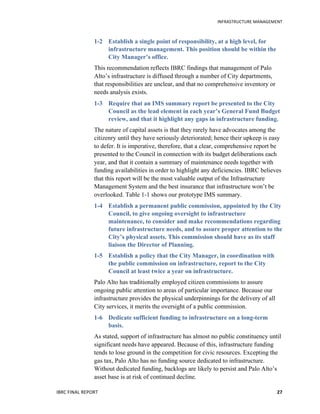
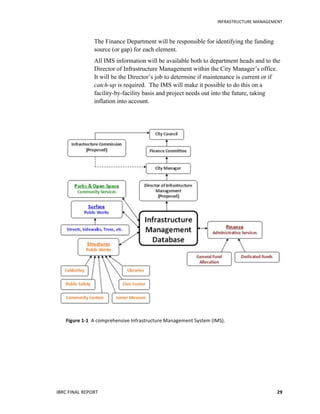
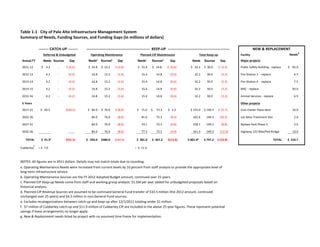
  • 168.
      IBRC  FINAL  REPORT    162   Appendix  N    -­‐    Future  Ideas  for  Consideration   Community  Services  Center     Should the City invest in a services building or campus that could house many of the organizations that currently occupy older structures? For example, Avenidas in 450 Bryant Street might be situated in a shared services building that also houses a teen center, preschool daycare, and office space for other tenants. The present City-owned portion of the Cubberley site could be the location for such a collection of services – a new community services center (CSC). IBRC elsewhere recommends that the City not renew its current lease with the PAUSD. We imagine a services center that replaces the multiple classroom-style buildings at the present site, providing approximately 180,000 square feet of space. The building would be a mixed-use structure, in which office space, class workshops, and recreation facilities such as a yoga center, teen center, and senior center could be housed. Senior services, such as space for health clinics for the aged, could be included. Many of the small nonprofits that the City chooses to support could be offered space in such a community services center. The model we are using for the CSC is the Mitchell Park Community Center and Library. We see a two-story structure. The cost estimate is between $40 and $60 million in current dollars. Leveraging  the  Embarcadero  Corridor     The MSC working group has developed a rational plan for reconsidering the location of municipal services in light of their functions and their needs. There is an opportunity to relocate some of the current services that are housed in the MSC to the Embarcadero East corridor. By thinking ahead to the future use of Embarcadero land, by considering how the golf course could be used differently, by planning a multi- year redevelopment of that area in conjunction with commercial interests for hotels, restaurants, and a convention center, this locale, ideally positioned near Baylands recreational resources, could become another attractive region of the City. Such a plan opens the door to exciting opportunities for the City. The Embarcadero East corridor could become another center of City activity and services. For example, we see the possibility of repurposing the auto dealership properties to accommodate services such as vehicle maintenance, while the current MSC acreage affords adequate space for a multi-story office building that could be the future home of City staff functions now residing at 250 Hamilton. With the gradual migration of City staff to the new location, the current City Hall could be converted into a municipal/commercial center, given its close proximity to the city center and transportation services. In the event police services are moved out of the 250 Hamilton block, as recommended elsewhere in this report, then the redevelopment of the entire Civic Center plaza becomes an intriguing possibility. (See the discussion of the MSC/Embarcadero East possibilities in section 4 for the germ of this idea.)
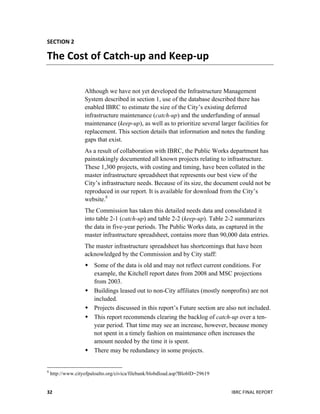
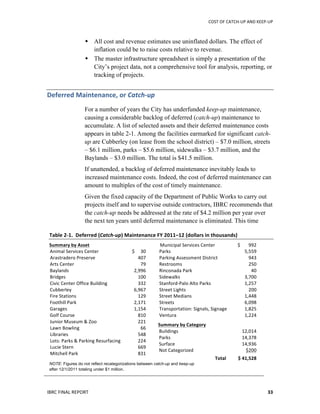
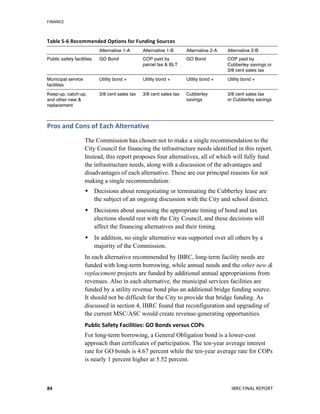
  • 169.
       APPENDIX  N:  FUTURE/IDEAS   IBRC  FINAL  REPORT     163   Should action be taken to examine those alternatives, the City might also consider repurposing the golf course and relocating other City services in the area adjacent to the Baylands and East of the Bayshore Freeway. Mountain View has successfully developed their shoreline into a mixed-use recreational, entertainment, and business district. The possibilities are somewhat limited by the problematic topology (flood zone). However, sufficient zoning and construction regulations might open the door to a new and revitalized area of the City. Portland, Oregon, has created EcoDistricts, combining green buildings, access to transportation, “walkable sidewalks,” and enhanced services in specific sections of the city. The Futures Working Group recommends that these concepts be considered for all of the development projects that are contemplated in this report. Conference  Center   To attract business entities and executives to our city, enhanced business services are a critical element of the City offerings. One example would be a conference center, adjacent to the golf course and aligned with high-speed communications facilities. Start-­‐up  Incubator   Given the physical limitations of our geography, we ask ourselves the question: what types of companies do we wish to see in Palo Alto? The city suffers from the “Facebook effect,” whereby Facebook employees enjoy living in the city, yet the company itself moves beyond our borders. Given our geographical constraints against hosting large campuses such as those preferred by companies such as Google and Facebook, what are our other options for business development and growth? With our proximity to Stanford University, the access to technologists, capital, and management resources creates a unique eco-system for creating and building companies. Should the City build the context for attracting such incubators? City  Wireless  Network   The Futures Working Group envisages a wireless network that initially covers the commercial retail areas of the city and eventually migrates to provide general coverage and services to the high-density regions of the city. In Appendix M, we review a number of services that can be supported by ubiquitous, always-on wireless networks. For example, a retail payment system for downtown merchants could be supported wirelessly, with the City collecting a percentage of all payments made by customers. This payment system would offer the City a new revenue stream. Another consideration is that if the wireless network were set up to encourage economic development, then, as a City utility, the regulations surrounding the system might be less rigorous. The recent deployment by AT&T of a University Avenue Hot Spot (Wi-Fi access) is a step in the right direction, but limited to AT&T customers. How might the City get involved in such a project?   
  • 170.
        IBRC  FINAL  REPORT    164   Appendix  O    -­‐    Summary:  Futures  Working  Group   Ideas  for  Consideration  Contained  in  Section  6   The IBRC report already recommends the formation of a new commission, as per the adopted resolution: 1-4 Establish a permanent public commission, appointed by the City Council, to give ongoing oversight to infrastructure maintenance, to consider and make recommendations regarding future infrastructure needs, and to assure proper attention to the City’s physical assets. This commission should have as its staff liaison the Director of Planning. Further ideas for consideration contained in the Future section of the IBRC report are summarized below:  Task the new infrastructure commission with further analysis of demographic data and implications for Palo Alto infrastructure.  Hold a “smart cities” conference in Palo Alto, assembling City Managers, Council Members, and City staff, as well as interested members of the public, for the exchange of ideas on planning infrastructure for the future.  Institute an end-of-life process for City assets. Consider asset sale as a potential source of funding for other infrastructure projects.  Encourage the new infrastructure commission to form advisory boards that include Palo Alto residents with interests and background in the following areas: technology, environment, infrastructure, sustainability, the arts and recreation.  As part of technology catch-up, the City should immediately investigate how wireless technologies can be used for residential, business, and public safety services. The City can take advantage of its expertise in fiber networks and can also leverage local business in this technology sector.  Institute consulting studies on technologies of interest (examples provided in Appendix M). Create a citizen group or advisory board of technology executives to work with the consultants to derive strategies and plans for the city. Involve Stanford personnel in this advisory board.  Incorporate a longer-term planning perspective for infrastructure in the City’s Planning Department. That perspective should extend 25 years in the future and reflect any programs in the City’s Comprehensive Plan.   