Zero hours contracts – insecurity or 
flexibility? 
Ian Brinkley 
Director, The Work Foundation
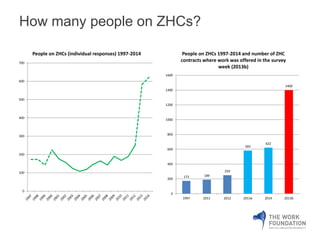
How many people on ZHCs? 
700 
600 
500 
400 
300 
200 
100 
0 
People on ZHCs (individual responses) 1997-2014 
People on ZHCs 1997-2014 and number of ZHC 
contracts where work was offered in the survey 
173 189 
week (2013b) 
250 
583 
622 
1400 
1600 
1400 
1200 
1000 
800 
600 
400 
200 
0 
1997 2011 2012 2013a 2014 2013b
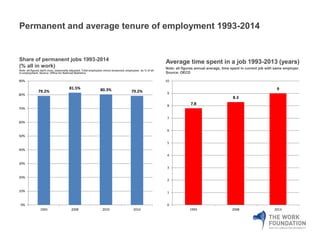
Permanent and average tenure of employment 1993-2014 
Share of permanent jobs 1993-2014 
(% all in work) 
Note: all figures April-June, seasonally adjusted. Total employees minus temporary employees as % of all 
in employment. Source: Office for National Statistics 
79.2% 
81.5% 80.3% 79.2% 
90% 
80% 
70% 
60% 
50% 
40% 
30% 
20% 
10% 
0% 
1993 2008 2010 2014 
Average time spent in a job 1993-2013 (years) 
Note: all figures annual average, time spent in current job with same employer. 
Source: OECD 
7.8 
8.3 
9 
10 
9 
8 
7 
6 
5 
4 
3 
2 
1 
0 
1993 2008 2013
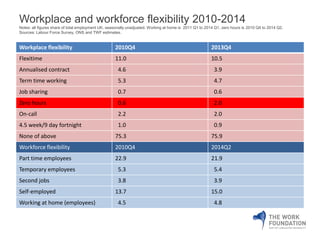
Workplace and workforce flexibility 2010-2014 
Notes: all figures share of total employment UK, seasonally unadjusted. Working at home is 2011 Q1 to 2014 Q1, zero hours is 2010 Q4 to 2014 Q2. 
Sources: Labour Force Survey, ONS and TWF estimates. 
Workplace flexibility 2010Q4 2013Q4 
Flexitime 11.0 10.5 
Annualised contract 4.6 3.9 
Term time working 5.3 4.7 
Job sharing 0.7 0.6 
Zero hours 0.6 2.0 
On-call 2.2 2.0 
4.5 week/9 day fortnight 1.0 0.9 
None of above 75.3 75.9 
Workforce flexibility 2010Q4 2014Q2 
Part time employees 22.9 21.9 
Temporary employees 5.3 5.4 
Second jobs 3.8 3.9 
Self-employed 13.7 15.0 
Working at home (employees) 4.5 4.8
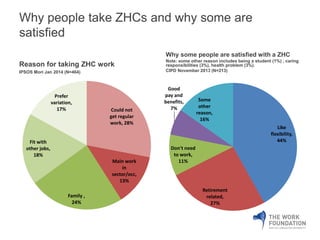
Why people take ZHCs and why some are 
satisfied 
Reason for taking ZHC work 
IPSOS Mori Jan 2014 (N=464) 
Could not 
get regular 
work, 28% 
Main work 
in 
sector/occ, 
13% 
Family , 
24% 
Fit with 
other jobs, 
18% 
Prefer 
variation, 
17% 
Why some people are satisfied with a ZHC 
Note: some other reason includes being a student (1%) , caring 
responsibilities (3%), health problem (3%). 
CIPD November 2013 (N=213) 
Like 
flexibility, 
44% 
Retirement 
related, 
27% 
Good 
pay and 
benefits, 
Don't need 
to work, 
11% 
7% 
Some 
other 
reason, 
16%
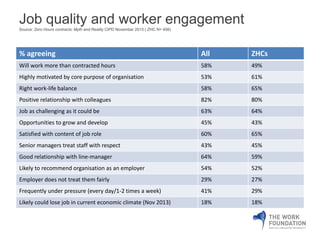
Job quality and worker engagement 
Source: Zero Hours contracts: Myth and Reality CIPD November 2013 ( ZHC N= 456) 
% agreeing All ZHCs 
Will work more than contracted hours 58% 49% 
Highly motivated by core purpose of organisation 53% 61% 
Right work-life balance 58% 65% 
Positive relationship with colleagues 82% 80% 
Job as challenging as it could be 63% 64% 
Opportunities to grow and develop 45% 43% 
Satisfied with content of job role 60% 65% 
Senior managers treat staff with respect 43% 45% 
Good relationship with line-manager 64% 59% 
Likely to recommend organisation as an employer 54% 52% 
Employer does not treat them fairly 29% 27% 
Frequently under pressure (every day/1-2 times a week) 41% 29% 
Likely could lose job in current economic climate (Nov 2013) 18% 18%
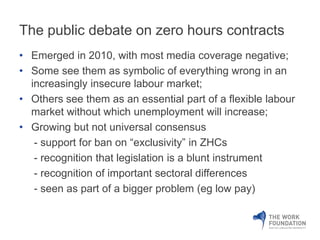
The public debate on zero hours contracts 
• Emerged in 2010, with most media coverage negative; 
• Some see them as symbolic of everything wrong in an 
increasingly insecure labour market; 
• Others see them as an essential part of a flexible labour 
market without which unemployment will increase; 
• Growing but not universal consensus 
- support for ban on “exclusivity” in ZHCs 
- recognition that legislation is a blunt instrument 
- recognition of important sectoral differences 
- seen as part of a bigger problem (eg low pay)
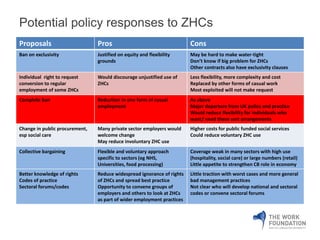
Potential policy responses to ZHCs 
Proposals Pros Cons 
Ban on exclusivity Justified on equity and flexibility 
grounds 
May be hard to make water-tight 
Don’t know if big problem for ZHCs 
Other contracts also have exclusivity clauses 
Individual right to request 
conversion to regular 
employment of some ZHCs 
Would discourage unjustified use of 
ZHCs 
Less flexibility, more complexity and cost 
Replaced by other forms of casual work 
Most exploited will not make request 
Complete ban Reduction in one form of casual 
employment 
As above 
Major departure from UK policy and practice 
Would reduce flexibility for individuals who 
want/ need these sort arrangements 
Change in public procurement, 
esp social care 
Many private sector employers would 
welcome change 
May reduce involuntary ZHC use 
Higher costs for public funded social services 
Could reduce voluntary ZHC use 
Collective bargaining Flexible and voluntary approach 
specific to sectors (eg NHS, 
Universities, food processing) 
Coverage weak in many sectors with high use 
(hospitality, social care) or large numbers (retail) 
Little appetite to strengthen CB role in economy 
Better knowledge of rights 
Codes of practice 
Sectoral forums/codes 
Reduce widespread ignorance of rights 
of ZHCs and spread best practice 
Opportunity to convene groups of 
employers and others to look at ZHCs 
as part of wider employment practices 
Little traction with worst cases and more general 
bad management practices 
Not clear who will develop national and sectoral 
codes or convene sectoral forums
Future trends 
• Despite “toxic” public image, few signs that many 
employers will reduce use of ZHCs; 
• Public sector austerity means higher cost solutions to 
end ZHCs in social care/NHS will not be fully funded; 
• More pressure on employers from semi-legal/voluntary 
codes, collective agreements, better informed workforce, 
and public procurement to implement best practice; 
• More people working beyond state retirement age and 
students combining work and study may increase 
“voluntary” demand; 
• Return to “full employment” would increase more regular 
job opportunities and reduce involuntary ZHCs.

Zero-hours contracts - insecurity of flexibility?

  • 1.
    Zero hours contracts– insecurity or flexibility? Ian Brinkley Director, The Work Foundation
  • 2.
    How many peopleon ZHCs? 700 600 500 400 300 200 100 0 People on ZHCs (individual responses) 1997-2014 People on ZHCs 1997-2014 and number of ZHC contracts where work was offered in the survey 173 189 week (2013b) 250 583 622 1400 1600 1400 1200 1000 800 600 400 200 0 1997 2011 2012 2013a 2014 2013b
  • 3.
    Permanent and averagetenure of employment 1993-2014 Share of permanent jobs 1993-2014 (% all in work) Note: all figures April-June, seasonally adjusted. Total employees minus temporary employees as % of all in employment. Source: Office for National Statistics 79.2% 81.5% 80.3% 79.2% 90% 80% 70% 60% 50% 40% 30% 20% 10% 0% 1993 2008 2010 2014 Average time spent in a job 1993-2013 (years) Note: all figures annual average, time spent in current job with same employer. Source: OECD 7.8 8.3 9 10 9 8 7 6 5 4 3 2 1 0 1993 2008 2013
  • 4.
    Workplace and workforceflexibility 2010-2014 Notes: all figures share of total employment UK, seasonally unadjusted. Working at home is 2011 Q1 to 2014 Q1, zero hours is 2010 Q4 to 2014 Q2. Sources: Labour Force Survey, ONS and TWF estimates. Workplace flexibility 2010Q4 2013Q4 Flexitime 11.0 10.5 Annualised contract 4.6 3.9 Term time working 5.3 4.7 Job sharing 0.7 0.6 Zero hours 0.6 2.0 On-call 2.2 2.0 4.5 week/9 day fortnight 1.0 0.9 None of above 75.3 75.9 Workforce flexibility 2010Q4 2014Q2 Part time employees 22.9 21.9 Temporary employees 5.3 5.4 Second jobs 3.8 3.9 Self-employed 13.7 15.0 Working at home (employees) 4.5 4.8
  • 5.
    Why people takeZHCs and why some are satisfied Reason for taking ZHC work IPSOS Mori Jan 2014 (N=464) Could not get regular work, 28% Main work in sector/occ, 13% Family , 24% Fit with other jobs, 18% Prefer variation, 17% Why some people are satisfied with a ZHC Note: some other reason includes being a student (1%) , caring responsibilities (3%), health problem (3%). CIPD November 2013 (N=213) Like flexibility, 44% Retirement related, 27% Good pay and benefits, Don't need to work, 11% 7% Some other reason, 16%
  • 6.
    Job quality andworker engagement Source: Zero Hours contracts: Myth and Reality CIPD November 2013 ( ZHC N= 456) % agreeing All ZHCs Will work more than contracted hours 58% 49% Highly motivated by core purpose of organisation 53% 61% Right work-life balance 58% 65% Positive relationship with colleagues 82% 80% Job as challenging as it could be 63% 64% Opportunities to grow and develop 45% 43% Satisfied with content of job role 60% 65% Senior managers treat staff with respect 43% 45% Good relationship with line-manager 64% 59% Likely to recommend organisation as an employer 54% 52% Employer does not treat them fairly 29% 27% Frequently under pressure (every day/1-2 times a week) 41% 29% Likely could lose job in current economic climate (Nov 2013) 18% 18%
  • 7.
    The public debateon zero hours contracts • Emerged in 2010, with most media coverage negative; • Some see them as symbolic of everything wrong in an increasingly insecure labour market; • Others see them as an essential part of a flexible labour market without which unemployment will increase; • Growing but not universal consensus - support for ban on “exclusivity” in ZHCs - recognition that legislation is a blunt instrument - recognition of important sectoral differences - seen as part of a bigger problem (eg low pay)
  • 8.
    Potential policy responsesto ZHCs Proposals Pros Cons Ban on exclusivity Justified on equity and flexibility grounds May be hard to make water-tight Don’t know if big problem for ZHCs Other contracts also have exclusivity clauses Individual right to request conversion to regular employment of some ZHCs Would discourage unjustified use of ZHCs Less flexibility, more complexity and cost Replaced by other forms of casual work Most exploited will not make request Complete ban Reduction in one form of casual employment As above Major departure from UK policy and practice Would reduce flexibility for individuals who want/ need these sort arrangements Change in public procurement, esp social care Many private sector employers would welcome change May reduce involuntary ZHC use Higher costs for public funded social services Could reduce voluntary ZHC use Collective bargaining Flexible and voluntary approach specific to sectors (eg NHS, Universities, food processing) Coverage weak in many sectors with high use (hospitality, social care) or large numbers (retail) Little appetite to strengthen CB role in economy Better knowledge of rights Codes of practice Sectoral forums/codes Reduce widespread ignorance of rights of ZHCs and spread best practice Opportunity to convene groups of employers and others to look at ZHCs as part of wider employment practices Little traction with worst cases and more general bad management practices Not clear who will develop national and sectoral codes or convene sectoral forums
  • 9.
    Future trends •Despite “toxic” public image, few signs that many employers will reduce use of ZHCs; • Public sector austerity means higher cost solutions to end ZHCs in social care/NHS will not be fully funded; • More pressure on employers from semi-legal/voluntary codes, collective agreements, better informed workforce, and public procurement to implement best practice; • More people working beyond state retirement age and students combining work and study may increase “voluntary” demand; • Return to “full employment” would increase more regular job opportunities and reduce involuntary ZHCs.