Hypertension/CAD
Management
Role of CCB + BB
• Hypertension – sustained elevation of BP > 140/90 mm Hg
• An asymptomatic & chronic disorder
• If undetected & untreated, silently damages the blood vessels,
heart, brain & kidneys
– Causes cardiovascular complications & premature mortality
• Lowering BP goals reduces the risk of complications &
improves survival
• Treatment – a great challenge in view of the high prevalence
JNC 7, 8
Hypertension
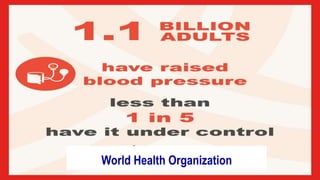
2017
World Health Organization
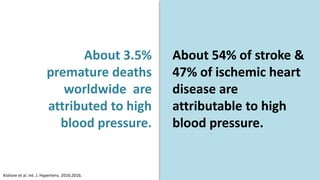
Kishore et al. Int. J. Hypertens. 2016;2016.
About 3.5%
premature deaths
worldwide are
attributed to high
blood pressure.
About 54% of stroke &
47% of ischemic heart
disease are
attributable to high
blood pressure.
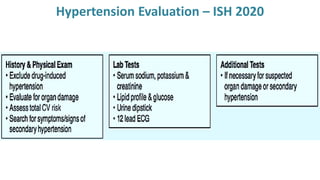
Hypertension Evaluation – ISH 2020
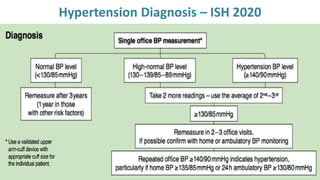
Hypertension Diagnosis – ISH 2020
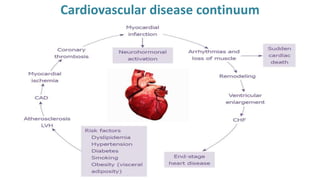
Cardiovascular disease continuum
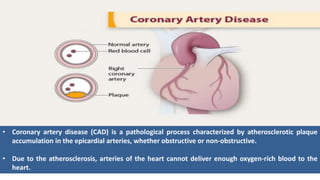
• Coronary artery disease (CAD) is a pathological process characterized by atherosclerotic plaque
accumulation in the epicardial arteries, whether obstructive or non-obstructive.
• Due to the atherosclerosis, arteries of the heart cannot deliver enough oxygen-rich blood to the
heart.
CAD Symptoms
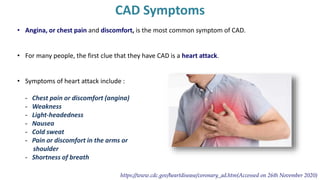
• Angina, or chest pain and discomfort, is the most common symptom of CAD.
• For many people, the first clue that they have CAD is a heart attack.
• Symptoms of heart attack include :
- Chest pain or discomfort (angina)
- Weakness
- Light-headedness
- Nausea
- Cold sweat
- Pain or discomfort in the arms or
shoulder
- Shortness of breath
https://www.cdc.gov/heartdisease/coronary_ad.htm(Accessed on 26th November 2020)
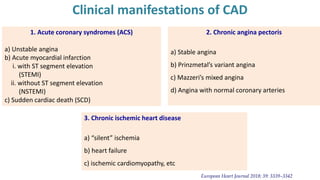
Clinical manifestations of CAD
European Heart Journal 2018; 39: 3339–3342
1. Acute coronary syndromes (ACS)
a) Unstable angina
b) Acute myocardial infarction
i. with ST segment elevation
(STEMI)
ii. without ST segment elevation
(NSTEMI)
c) Sudden cardiac death (SCD)
2. Chronic angina pectoris
a) Stable angina
b) Prinzmetal’s variant angina
c) Mazzeri’s mixed angina
d) Angina with normal coronary arteries
3. Chronic ischemic heart disease
a) “silent” ischemia
b) heart failure
c) ischemic cardiomyopathy, etc
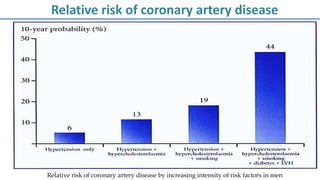
Relative risk of coronary artery disease
Relative risk of coronary artery disease by increasing intensity of risk factors in men
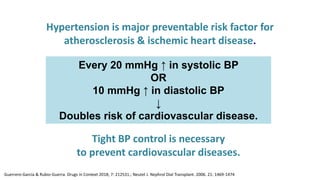
Hypertension is major preventable risk factor for
atherosclerosis & ischemic heart disease.
Guerrero-García & Rubio-Guerra. Drugs in Context 2018; 7: 212531.; Neutel J. Nephrol Dial Transplant. 2006. 21: 1469-1474
Every 20 mmHg ↑ in systolic BP
OR
10 mmHg ↑ in diastolic BP
↓
Doubles risk of cardiovascular disease.
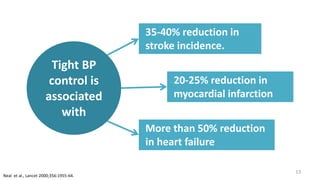
Tight BP control is necessary
to prevent cardiovascular diseases.
Neal et al., Lancet 2000;356:1955-64.
35-40% reduction in
stroke incidence.
More than 50% reduction
in heart failure
20-25% reduction in
myocardial infarction
Tight BP
control is
associated
with
13
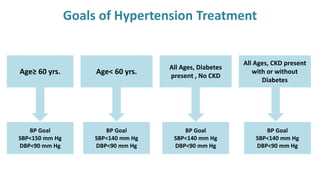
Age≥ 60 yrs.
BP Goal
SBP<150 mm Hg
DBP<90 mm Hg
Age< 60 yrs.
BP Goal
SBP<140 mm Hg
DBP<90 mm Hg
All Ages, Diabetes
present , No CKD
BP Goal
SBP<140 mm Hg
DBP<90 mm Hg
All Ages, CKD present
with or without
Diabetes
BP Goal
SBP<140 mm Hg
DBP<90 mm Hg
Goals of Hypertension Treatment
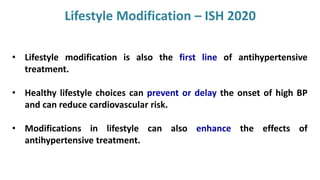
• Lifestyle modification is also the first line of antihypertensive
treatment.
• Healthy lifestyle choices can prevent or delay the onset of high BP
and can reduce cardiovascular risk.
• Modifications in lifestyle can also enhance the effects of
antihypertensive treatment.
Lifestyle Modification – ISH 2020
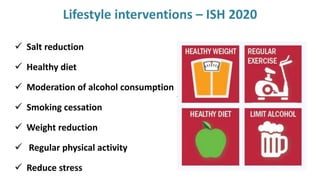
Lifestyle interventions – ISH 2020
 Salt reduction
 Healthy diet
 Moderation of alcohol consumption
 Smoking cessation
 Weight reduction
 Regular physical activity
 Reduce stress
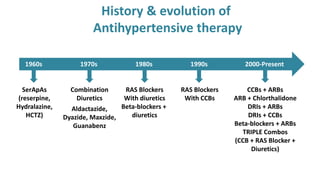
History & evolution of
Antihypertensive therapy
1960s 1970s 1980s 1990s 2000-Present
SerApAs
(reserpine,
Hydralazine,
HCTZ)
Combination
Diuretics
Aldactazide,
Dyazide, Maxzide,
Guanabenz
RAS Blockers
With diuretics
Beta-blockers +
diuretics
RAS Blockers
With CCBs
CCBs + ARBs
ARB + Chlorthalidone
DRIs + ARBs
DRIs + CCBs
Beta-blockers + ARBs
TRIPLE Combos
(CCB + RAS Blocker +
Diuretics)
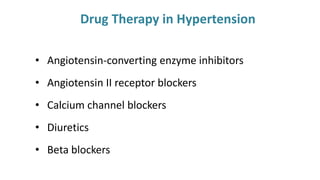
Drug Therapy in Hypertension
• Angiotensin-converting enzyme inhibitors
• Angiotensin II receptor blockers
• Calcium channel blockers
• Diuretics
• Beta blockers
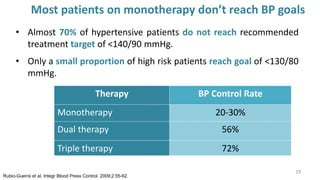
• Almost 70% of hypertensive patients do not reach recommended
treatment target of <140/90 mmHg.
• Only a small proportion of high risk patients reach goal of <130/80
mmHg.
Rubio-Guerra et al. Integr Blood Press Control. 2009;2:55-62.
Most patients on monotherapy don’t reach BP goals
19
Therapy BP Control Rate
Monotherapy 20-30%
Dual therapy 56%
Triple therapy 72%
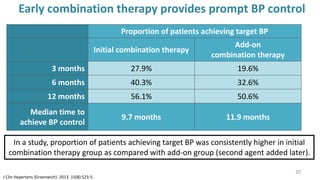
Early combination therapy provides prompt BP control
In a study, proportion of patients achieving target BP was consistently higher in initial
combination therapy group as compared with add-on group (second agent added later).
J Clin Hypertens (Greenwich). 2013. 15(8):523-5.
Proportion of patients achieving target BP
Initial combination therapy
Add-on
combination therapy
3 months 27.9% 19.6%
6 months 40.3% 32.6%
12 months 56.1% 50.6%
Median time to
achieve BP control
9.7 months 11.9 months
20
21
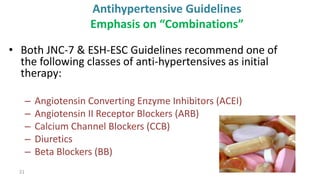
Antihypertensive Guidelines
Emphasis on “Combinations”
• Both JNC-7 & ESH-ESC Guidelines recommend one of
the following classes of anti-hypertensives as initial
therapy:
– Angiotensin Converting Enzyme Inhibitors (ACEI)
– Angiotensin II Receptor Blockers (ARB)
– Calcium Channel Blockers (CCB)
– Diuretics
– Beta Blockers (BB)
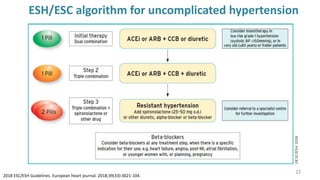
ESH/ESC algorithm for uncomplicated hypertension
2018 ESC/ESH Guidelines. European heart journal. 2018;39(33):3021-104.
22
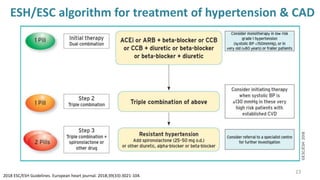
ESH/ESC algorithm for treatment of hypertension & CAD
2018 ESC/ESH Guidelines. European heart journal. 2018;39(33):3021-104.
23
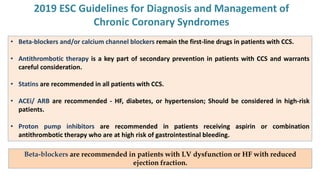
2019 ESC Guidelines for Diagnosis and Management of
Chronic Coronary Syndromes
• Beta-blockers and/or calcium channel blockers remain the first-line drugs in patients with CCS.
• Antithrombotic therapy is a key part of secondary prevention in patients with CCS and warrants
careful consideration.
• Statins are recommended in all patients with CCS.
• ACEi/ ARB are recommended - HF, diabetes, or hypertension; Should be considered in high-risk
patients.
• Proton pump inhibitors are recommended in patients receiving aspirin or combination
antithrombotic therapy who are at high risk of gastrointestinal bleeding.
Beta-blockers are recommended in patients with LV dysfunction or HF with reduced
ejection fraction.
ESC guidelines on the management of
stable coronary artery disease
• Short-term therapy with nitrates, β-blockers and CCB are first-line options for stable CAD.
• Sublingual nitroglycerin is the standard initial therapy for effort angina, because it promotes
coronary arteriolar and venous vasodilation
• Long-acting nitrates, ivabradine, nicorandil or ranolazine are recommended as second-line
treatment options for patients with stable CAD
• Treatment with antiplatelet agents is recommended for patients with stable CAD for vascular
protection by preventing blood clot formation over any ruptured/eroded atherosclerotic plaques
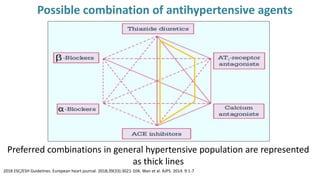
Possible combination of antihypertensive agents
Preferred combinations in general hypertensive population are represented
as thick lines
2018 ESC/ESH Guidelines. European heart journal. 2018;39(33):3021-104; Wan et al. AJPS. 2014. 9:1-7
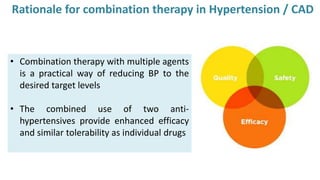
• Combination therapy with multiple agents
is a practical way of reducing BP to the
desired target levels
• The combined use of two anti-
hypertensives provide enhanced efficacy
and similar tolerability as individual drugs
Rationale for combination therapy in Hypertension / CAD
Fixed Dose Combination of
Calcium Channel Blocker &
Beta Blocker
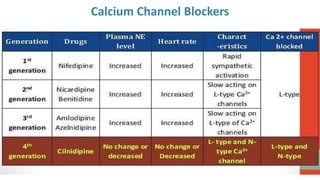
Calcium Channel Blockers
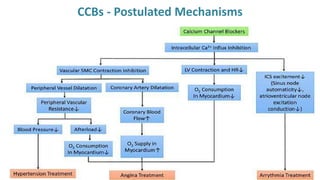
CCBs - Postulated Mechanisms
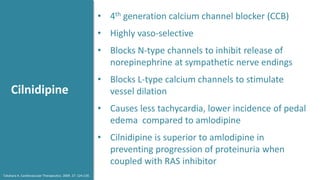
Cilnidipine
• 4th generation calcium channel blocker (CCB)
• Highly vaso-selective
• Blocks N-type channels to inhibit release of
norepinephrine at sympathetic nerve endings
• Blocks L-type calcium channels to stimulate
vessel dilation
• Causes less tachycardia, lower incidence of pedal
edema compared to amlodipine
• Cilnidipine is superior to amlodipine in
preventing progression of proteinuria when
coupled with RAS inhibitor
Takahara A. Cardiovascular Therapeutics. 2009. 27: 124-139.
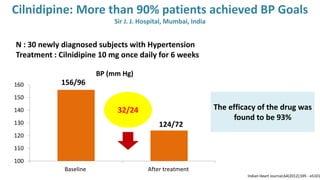
N : 30 newly diagnosed subjects with Hypertension
Treatment : Cilnidipine 10 mg once daily for 6 weeks
100
110
120
130
140
150
160
Baseline After treatment
BP (mm Hg)
156/96
124/72
The efficacy of the drug was
found to be 93%
Indian Heart Journal;64(2012);S95 - eS101
32/24
Cilnidipine: More than 90% patients achieved BP Goals
Sir J. J. Hospital, Mumbai, India
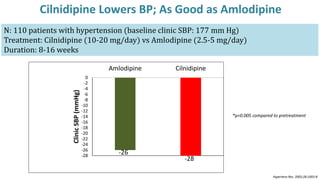
N: 110 patients with hypertension (baseline clinic SBP: 177 mm Hg)
Treatment: Cilnidipine (10-20 mg/day) vs Amlodipine (2.5-5 mg/day)
Duration: 8-16 weeks
-26
-28
-28
-26
-24
-22
-20
-18
-16
-14
-12
-10
-8
-6
-4
-2
0
Amlodipine Cilnidipine
Clinic
SBP
(mmHg)
*p<0.005 compared to pretreatment
Hypertens Res. 2005;28:1003-8
Cilnidipine Lowers BP; As Good as Amlodipine
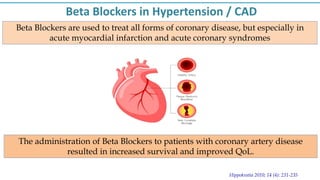
Beta Blockers are used to treat all forms of coronary disease, but especially in
acute myocardial infarction and acute coronary syndromes
Beta Blockers in Hypertension / CAD
Hippokratia 2010; 14 (4): 231-235
The administration of Beta Blockers to patients with coronary artery disease
resulted in increased survival and improved QoL.
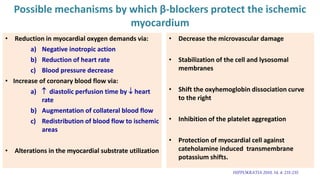
Possible mechanisms by which β-blockers protect the ischemic
myocardium
• Reduction in myocardial oxygen demands via:
a) Negative inotropic action
b) Reduction of heart rate
c) Blood pressure decrease
• Increase of coronary blood flow via:
a)  diastolic perfusion time by  heart
rate
b) Augmentation of collateral blood flow
c) Redistribution of blood flow to ischemic
areas
• Alterations in the myocardial substrate utilization
HIPPOKRATIA 2010, 14, 4: 231-235
• Decrease the microvascular damage
• Stabilization of the cell and lysosomal
membranes
• Shift the oxyhemoglobin dissociation curve
to the right
• Inhibition of the platelet aggregation
• Protection of myocardial cell against
cateholamine induced transmembrane
potassium shifts.
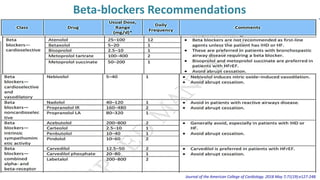
Beta-blockers Recommendations
Journal of the American College of Cardiology. 2018 May 7;71(19):e127-248.
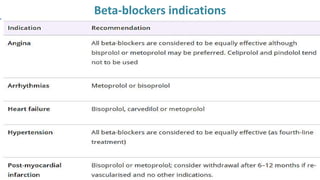
Beta-blockers indications
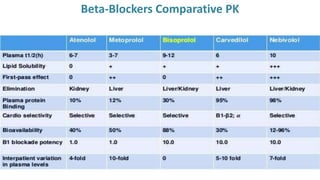
Beta-Blockers Comparative PK
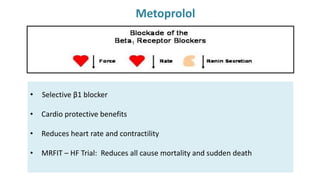
Metoprolol
• Selective β1 blocker
• Cardio protective benefits
• Reduces heart rate and contractility
• MRFIT – HF Trial: Reduces all cause mortality and sudden death
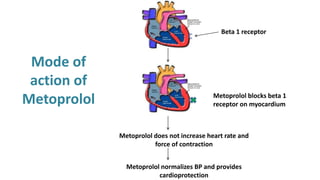
Beta 1 receptor
Metoprolol blocks beta 1
receptor on myocardium
Metoprolol does not increase heart rate and
force of contraction
Metoprolol normalizes BP and provides
cardioprotection
Mode of
action of
Metoprolol
• Combination therapy with a β-blocker and a CCB exerts complementary actions
• Different modes of action of β-blocker and a CCB results in greater reductions in BP than
with either drug alone
• β-Blockers control any initial reflex tachycardia caused by CCBs
• CCBs inhibit α-adrenoceptor-mediated reflex peripheral vasoconstriction resulting from β-
blockade
• Low-dose combinations are not only efficacious but well tolerated
Rationale for combination of CCB + BB
• Cilnidipine + Metoprolol results in synergistic benefits
• Cilnidipine is a 4th generation dual L/N type CCB
• Metoprolol normalizes BP by blocking β1 receptor
• Lowers risk of cardiac death
• Cilnidipine in addition provides Reno-protection & Neuro-protection.
Cilnidipine + Metoprolol
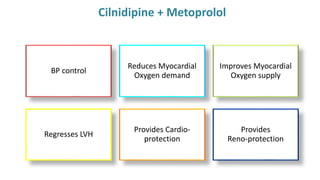
BP control
Reduces Myocardial
Oxygen demand
Improves Myocardial
Oxygen supply
Regresses LVH
Provides Cardio-
protection
Provides
Reno-protection
Cilnidipine + Metoprolol
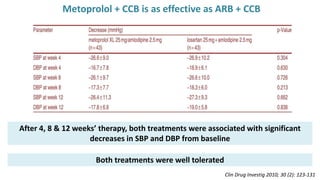
Metoprolol + CCB effective in the treatment of essential hypertension
Changes in mean blood pressure (BP) throughout the study in responders to metoprolol extended
release 25mg/amlodipine 2.5mg (M/A) [n = 43] or losartan 25mg plus amlodipine 2.5mg (L+A) [n = 43].
DBP= diastolic BP; SBP= systolic BP
Clin Drug Investig 2010; 30 (2): 123-131
Metoprolol + CCB is as effective as ARB + CCB
After 4, 8 & 12 weeks’ therapy, both treatments were associated with significant
decreases in SBP and DBP from baseline
Both treatments were well tolerated
Summary
 > 1 billion people globally have hypertension
 Tight BP control is necessary to prevent cardiovascular diseases
 Most patients fail to achieve the target BP goals with monotherapy
 A combination therapy results in optimal BP control
 Hypertension is a risk factor for CAD
Summary
 β-blockers and/or CCBs are the first-line drugs in patients with hypertension / CAD
 Cilnidipine effectively reduces BP and also offer Reno-protection
 Metoprolol reduces BP by blocking β-1 receptor
 Metoprolol lowers risk of sudden cardiac death by 41%
 Combination therapy with a β-blocker and a CCB exerts complementary actions
 Different modes of action of β-blocker and a CCB results in greater reductions in
BP than with either drug alone
 Metoprolol + CCB is as effective as ARB + CCB
HypertensionCAD Management Cilacar M.pptx

HypertensionCAD Management Cilacar M.pptx

  • 1.
  • 2.
    • Hypertension –sustained elevation of BP > 140/90 mm Hg • An asymptomatic & chronic disorder • If undetected & untreated, silently damages the blood vessels, heart, brain & kidneys – Causes cardiovascular complications & premature mortality • Lowering BP goals reduces the risk of complications & improves survival • Treatment – a great challenge in view of the high prevalence JNC 7, 8 Hypertension
  • 3.
  • 4.
    Kishore et al.Int. J. Hypertens. 2016;2016. About 3.5% premature deaths worldwide are attributed to high blood pressure. About 54% of stroke & 47% of ischemic heart disease are attributable to high blood pressure.
  • 5.
  • 6.
  • 7.
  • 8.
    • Coronary arterydisease (CAD) is a pathological process characterized by atherosclerotic plaque accumulation in the epicardial arteries, whether obstructive or non-obstructive. • Due to the atherosclerosis, arteries of the heart cannot deliver enough oxygen-rich blood to the heart.
  • 9.
    CAD Symptoms • Angina,or chest pain and discomfort, is the most common symptom of CAD. • For many people, the first clue that they have CAD is a heart attack. • Symptoms of heart attack include : - Chest pain or discomfort (angina) - Weakness - Light-headedness - Nausea - Cold sweat - Pain or discomfort in the arms or shoulder - Shortness of breath https://www.cdc.gov/heartdisease/coronary_ad.htm(Accessed on 26th November 2020)
  • 10.
    Clinical manifestations ofCAD European Heart Journal 2018; 39: 3339–3342 1. Acute coronary syndromes (ACS) a) Unstable angina b) Acute myocardial infarction i. with ST segment elevation (STEMI) ii. without ST segment elevation (NSTEMI) c) Sudden cardiac death (SCD) 2. Chronic angina pectoris a) Stable angina b) Prinzmetal’s variant angina c) Mazzeri’s mixed angina d) Angina with normal coronary arteries 3. Chronic ischemic heart disease a) “silent” ischemia b) heart failure c) ischemic cardiomyopathy, etc
  • 11.
    Relative risk ofcoronary artery disease Relative risk of coronary artery disease by increasing intensity of risk factors in men
  • 12.
    Hypertension is majorpreventable risk factor for atherosclerosis & ischemic heart disease. Guerrero-García & Rubio-Guerra. Drugs in Context 2018; 7: 212531.; Neutel J. Nephrol Dial Transplant. 2006. 21: 1469-1474 Every 20 mmHg ↑ in systolic BP OR 10 mmHg ↑ in diastolic BP ↓ Doubles risk of cardiovascular disease. Tight BP control is necessary to prevent cardiovascular diseases.
  • 13.
    Neal et al.,Lancet 2000;356:1955-64. 35-40% reduction in stroke incidence. More than 50% reduction in heart failure 20-25% reduction in myocardial infarction Tight BP control is associated with 13
  • 14.
    Age≥ 60 yrs. BPGoal SBP<150 mm Hg DBP<90 mm Hg Age< 60 yrs. BP Goal SBP<140 mm Hg DBP<90 mm Hg All Ages, Diabetes present , No CKD BP Goal SBP<140 mm Hg DBP<90 mm Hg All Ages, CKD present with or without Diabetes BP Goal SBP<140 mm Hg DBP<90 mm Hg Goals of Hypertension Treatment
  • 15.
    • Lifestyle modificationis also the first line of antihypertensive treatment. • Healthy lifestyle choices can prevent or delay the onset of high BP and can reduce cardiovascular risk. • Modifications in lifestyle can also enhance the effects of antihypertensive treatment. Lifestyle Modification – ISH 2020
  • 16.
    Lifestyle interventions –ISH 2020  Salt reduction  Healthy diet  Moderation of alcohol consumption  Smoking cessation  Weight reduction  Regular physical activity  Reduce stress
  • 17.
    History & evolutionof Antihypertensive therapy 1960s 1970s 1980s 1990s 2000-Present SerApAs (reserpine, Hydralazine, HCTZ) Combination Diuretics Aldactazide, Dyazide, Maxzide, Guanabenz RAS Blockers With diuretics Beta-blockers + diuretics RAS Blockers With CCBs CCBs + ARBs ARB + Chlorthalidone DRIs + ARBs DRIs + CCBs Beta-blockers + ARBs TRIPLE Combos (CCB + RAS Blocker + Diuretics)
  • 18.
    Drug Therapy inHypertension • Angiotensin-converting enzyme inhibitors • Angiotensin II receptor blockers • Calcium channel blockers • Diuretics • Beta blockers
  • 19.
    • Almost 70%of hypertensive patients do not reach recommended treatment target of <140/90 mmHg. • Only a small proportion of high risk patients reach goal of <130/80 mmHg. Rubio-Guerra et al. Integr Blood Press Control. 2009;2:55-62. Most patients on monotherapy don’t reach BP goals 19 Therapy BP Control Rate Monotherapy 20-30% Dual therapy 56% Triple therapy 72%
  • 20.
    Early combination therapyprovides prompt BP control In a study, proportion of patients achieving target BP was consistently higher in initial combination therapy group as compared with add-on group (second agent added later). J Clin Hypertens (Greenwich). 2013. 15(8):523-5. Proportion of patients achieving target BP Initial combination therapy Add-on combination therapy 3 months 27.9% 19.6% 6 months 40.3% 32.6% 12 months 56.1% 50.6% Median time to achieve BP control 9.7 months 11.9 months 20
  • 21.
    21 Antihypertensive Guidelines Emphasis on“Combinations” • Both JNC-7 & ESH-ESC Guidelines recommend one of the following classes of anti-hypertensives as initial therapy: – Angiotensin Converting Enzyme Inhibitors (ACEI) – Angiotensin II Receptor Blockers (ARB) – Calcium Channel Blockers (CCB) – Diuretics – Beta Blockers (BB)
  • 22.
    ESH/ESC algorithm foruncomplicated hypertension 2018 ESC/ESH Guidelines. European heart journal. 2018;39(33):3021-104. 22
  • 23.
    ESH/ESC algorithm fortreatment of hypertension & CAD 2018 ESC/ESH Guidelines. European heart journal. 2018;39(33):3021-104. 23
  • 24.
    2019 ESC Guidelinesfor Diagnosis and Management of Chronic Coronary Syndromes • Beta-blockers and/or calcium channel blockers remain the first-line drugs in patients with CCS. • Antithrombotic therapy is a key part of secondary prevention in patients with CCS and warrants careful consideration. • Statins are recommended in all patients with CCS. • ACEi/ ARB are recommended - HF, diabetes, or hypertension; Should be considered in high-risk patients. • Proton pump inhibitors are recommended in patients receiving aspirin or combination antithrombotic therapy who are at high risk of gastrointestinal bleeding. Beta-blockers are recommended in patients with LV dysfunction or HF with reduced ejection fraction.
  • 25.
    ESC guidelines onthe management of stable coronary artery disease • Short-term therapy with nitrates, β-blockers and CCB are first-line options for stable CAD. • Sublingual nitroglycerin is the standard initial therapy for effort angina, because it promotes coronary arteriolar and venous vasodilation • Long-acting nitrates, ivabradine, nicorandil or ranolazine are recommended as second-line treatment options for patients with stable CAD • Treatment with antiplatelet agents is recommended for patients with stable CAD for vascular protection by preventing blood clot formation over any ruptured/eroded atherosclerotic plaques
  • 26.
    Possible combination ofantihypertensive agents Preferred combinations in general hypertensive population are represented as thick lines 2018 ESC/ESH Guidelines. European heart journal. 2018;39(33):3021-104; Wan et al. AJPS. 2014. 9:1-7
  • 27.
    • Combination therapywith multiple agents is a practical way of reducing BP to the desired target levels • The combined use of two anti- hypertensives provide enhanced efficacy and similar tolerability as individual drugs Rationale for combination therapy in Hypertension / CAD
  • 28.
    Fixed Dose Combinationof Calcium Channel Blocker & Beta Blocker
  • 29.
  • 30.
  • 31.
    Cilnidipine • 4th generationcalcium channel blocker (CCB) • Highly vaso-selective • Blocks N-type channels to inhibit release of norepinephrine at sympathetic nerve endings • Blocks L-type calcium channels to stimulate vessel dilation • Causes less tachycardia, lower incidence of pedal edema compared to amlodipine • Cilnidipine is superior to amlodipine in preventing progression of proteinuria when coupled with RAS inhibitor Takahara A. Cardiovascular Therapeutics. 2009. 27: 124-139.
  • 32.
    N : 30newly diagnosed subjects with Hypertension Treatment : Cilnidipine 10 mg once daily for 6 weeks 100 110 120 130 140 150 160 Baseline After treatment BP (mm Hg) 156/96 124/72 The efficacy of the drug was found to be 93% Indian Heart Journal;64(2012);S95 - eS101 32/24 Cilnidipine: More than 90% patients achieved BP Goals Sir J. J. Hospital, Mumbai, India
  • 33.
    N: 110 patientswith hypertension (baseline clinic SBP: 177 mm Hg) Treatment: Cilnidipine (10-20 mg/day) vs Amlodipine (2.5-5 mg/day) Duration: 8-16 weeks -26 -28 -28 -26 -24 -22 -20 -18 -16 -14 -12 -10 -8 -6 -4 -2 0 Amlodipine Cilnidipine Clinic SBP (mmHg) *p<0.005 compared to pretreatment Hypertens Res. 2005;28:1003-8 Cilnidipine Lowers BP; As Good as Amlodipine
  • 34.
    Beta Blockers areused to treat all forms of coronary disease, but especially in acute myocardial infarction and acute coronary syndromes Beta Blockers in Hypertension / CAD Hippokratia 2010; 14 (4): 231-235 The administration of Beta Blockers to patients with coronary artery disease resulted in increased survival and improved QoL.
  • 35.
    Possible mechanisms bywhich β-blockers protect the ischemic myocardium • Reduction in myocardial oxygen demands via: a) Negative inotropic action b) Reduction of heart rate c) Blood pressure decrease • Increase of coronary blood flow via: a)  diastolic perfusion time by  heart rate b) Augmentation of collateral blood flow c) Redistribution of blood flow to ischemic areas • Alterations in the myocardial substrate utilization HIPPOKRATIA 2010, 14, 4: 231-235 • Decrease the microvascular damage • Stabilization of the cell and lysosomal membranes • Shift the oxyhemoglobin dissociation curve to the right • Inhibition of the platelet aggregation • Protection of myocardial cell against cateholamine induced transmembrane potassium shifts.
  • 36.
    Beta-blockers Recommendations Journal ofthe American College of Cardiology. 2018 May 7;71(19):e127-248.
  • 37.
  • 38.
  • 39.
    Metoprolol • Selective β1blocker • Cardio protective benefits • Reduces heart rate and contractility • MRFIT – HF Trial: Reduces all cause mortality and sudden death
  • 40.
    Beta 1 receptor Metoprololblocks beta 1 receptor on myocardium Metoprolol does not increase heart rate and force of contraction Metoprolol normalizes BP and provides cardioprotection Mode of action of Metoprolol
  • 41.
    • Combination therapywith a β-blocker and a CCB exerts complementary actions • Different modes of action of β-blocker and a CCB results in greater reductions in BP than with either drug alone • β-Blockers control any initial reflex tachycardia caused by CCBs • CCBs inhibit α-adrenoceptor-mediated reflex peripheral vasoconstriction resulting from β- blockade • Low-dose combinations are not only efficacious but well tolerated Rationale for combination of CCB + BB
  • 42.
    • Cilnidipine +Metoprolol results in synergistic benefits • Cilnidipine is a 4th generation dual L/N type CCB • Metoprolol normalizes BP by blocking β1 receptor • Lowers risk of cardiac death • Cilnidipine in addition provides Reno-protection & Neuro-protection. Cilnidipine + Metoprolol
  • 43.
    BP control Reduces Myocardial Oxygendemand Improves Myocardial Oxygen supply Regresses LVH Provides Cardio- protection Provides Reno-protection Cilnidipine + Metoprolol
  • 44.
    Metoprolol + CCBeffective in the treatment of essential hypertension Changes in mean blood pressure (BP) throughout the study in responders to metoprolol extended release 25mg/amlodipine 2.5mg (M/A) [n = 43] or losartan 25mg plus amlodipine 2.5mg (L+A) [n = 43]. DBP= diastolic BP; SBP= systolic BP Clin Drug Investig 2010; 30 (2): 123-131
  • 45.
    Clin Drug Investig2010; 30 (2): 123-131 Metoprolol + CCB is as effective as ARB + CCB After 4, 8 & 12 weeks’ therapy, both treatments were associated with significant decreases in SBP and DBP from baseline Both treatments were well tolerated
  • 46.
    Summary  > 1billion people globally have hypertension  Tight BP control is necessary to prevent cardiovascular diseases  Most patients fail to achieve the target BP goals with monotherapy  A combination therapy results in optimal BP control  Hypertension is a risk factor for CAD
  • 47.
    Summary  β-blockers and/orCCBs are the first-line drugs in patients with hypertension / CAD  Cilnidipine effectively reduces BP and also offer Reno-protection  Metoprolol reduces BP by blocking β-1 receptor  Metoprolol lowers risk of sudden cardiac death by 41%  Combination therapy with a β-blocker and a CCB exerts complementary actions  Different modes of action of β-blocker and a CCB results in greater reductions in BP than with either drug alone  Metoprolol + CCB is as effective as ARB + CCB