HUMAN BEHAVIOR
PRINCIPLES AND FACTORS
Presenter:
RANESSA O. CASINTAHAN
What is
HUMAN BEHAVIOR?
INTRODUCTION TO HUMAN BEHAVIOR
 Aims to understand others
 To determine how and why people behave the way they do.
 Is a complicated phenomenon influenced by many factors.
 A collection of activities influenced by culture, attitude,
emotions, values, ethics, authority, rapport, hypnosis,
persuasion and coercion.
BEHAVIOR
Most people use the word “behavior” to mean
conduct.
Behavior is anything that a person does.
In psychology, behavior is regarded as any
observable activity by human being.
What is Human behavior?
 Human behavior is the potential and expressed capacity of
human individuals or groups to respond to internal and
external stimuli throughout their life.
 Human behaviour refers to the way humans act and
interact.
 Human behavior is an inherently complex subject matter
which pertains to the manner and reasons behind people’s
actions.
 Human Behavior
•Behavior is LEARNED
•Behavior is a function of the environment
Therefore
•New behaviors can be taught
•Old behaviors can be unlearned
•We change behavior by changing the ENVIRONMENT
PRINCIPLES OF HUMAN BEHAVIOR
 Almost all human behavior is learned.
 All behavior occur for a reason.
 No behavior occur “out of the blue”.
 Behaviors continue to occur because they are effective.
 Behaviors stop occurring when they are ineffective.
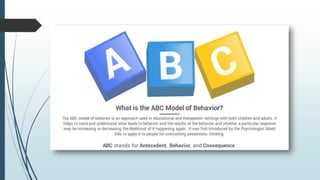
A – B – C Model of Behavior
3
C
Consequence
Response
2
B
Behavior
Action
1
A
Antecedent
Trigger
Antecedent - What happened before the behavior?
Behavior – What happened? What did the child say or do?
Consequences – How did people react to the behavior?
What is behavior?
• Behavior is a manner in
which a person
behaves, whether they
can conform to the
accepted social
standards or not.
Normal Behavior
 Word “NORMAL” derived from the Latin word “norma-” which
means rule.
 Therfore “normal behavior” means that which follows the
rule or pattern or standard as set by the society.
 When an individual is able to function adequately and
performs daily living activities efficiently and feels satisfied
with his lifestyle, he is said to have normal behavior.
Factors Affecting Human Behavior
 Genetics – patterns of behavior are influenced by inheritance from parents.
 Early Childhood Experience - provides the foundation for all future learning,
behavior and health.
 Core Faith and Social Culture - shape our religious faith, philosophical thinking and
emotional wellbeing.
 Creativity – pushes people past their comfort zones.
 Attitude – is an expression of favour or disfavour of a person towards a person,
place, things, or event. The way a person behaves depends a lot on how he looks
at the situation.

HUMAN-BEHAVIOR in science 7 module 1.pptx

  • 1.
    HUMAN BEHAVIOR PRINCIPLES ANDFACTORS Presenter: RANESSA O. CASINTAHAN
  • 2.
  • 3.
    INTRODUCTION TO HUMANBEHAVIOR  Aims to understand others  To determine how and why people behave the way they do.  Is a complicated phenomenon influenced by many factors.  A collection of activities influenced by culture, attitude, emotions, values, ethics, authority, rapport, hypnosis, persuasion and coercion.
  • 4.
    BEHAVIOR Most people usethe word “behavior” to mean conduct. Behavior is anything that a person does. In psychology, behavior is regarded as any observable activity by human being.
  • 5.
    What is Humanbehavior?  Human behavior is the potential and expressed capacity of human individuals or groups to respond to internal and external stimuli throughout their life.  Human behaviour refers to the way humans act and interact.  Human behavior is an inherently complex subject matter which pertains to the manner and reasons behind people’s actions.
  • 6.
     Human Behavior •Behavioris LEARNED •Behavior is a function of the environment Therefore •New behaviors can be taught •Old behaviors can be unlearned •We change behavior by changing the ENVIRONMENT
  • 7.
    PRINCIPLES OF HUMANBEHAVIOR  Almost all human behavior is learned.  All behavior occur for a reason.  No behavior occur “out of the blue”.  Behaviors continue to occur because they are effective.  Behaviors stop occurring when they are ineffective.
  • 8.
    A – B– C Model of Behavior 3 C Consequence Response 2 B Behavior Action 1 A Antecedent Trigger
  • 10.
    Antecedent - Whathappened before the behavior? Behavior – What happened? What did the child say or do? Consequences – How did people react to the behavior?
  • 11.
    What is behavior? •Behavior is a manner in which a person behaves, whether they can conform to the accepted social standards or not.
  • 12.
    Normal Behavior  Word“NORMAL” derived from the Latin word “norma-” which means rule.  Therfore “normal behavior” means that which follows the rule or pattern or standard as set by the society.  When an individual is able to function adequately and performs daily living activities efficiently and feels satisfied with his lifestyle, he is said to have normal behavior.
  • 13.
  • 14.
    Factors Affecting HumanBehavior  Genetics – patterns of behavior are influenced by inheritance from parents.  Early Childhood Experience - provides the foundation for all future learning, behavior and health.  Core Faith and Social Culture - shape our religious faith, philosophical thinking and emotional wellbeing.  Creativity – pushes people past their comfort zones.  Attitude – is an expression of favour or disfavour of a person towards a person, place, things, or event. The way a person behaves depends a lot on how he looks at the situation.