5
Report Structure: Discussions
[1/3]
•Discussion explains:
• What exactly you accomplished?
• What problems you encountered (status report)?
• What you saw and did (trip report)?
• What procedure you followed?
• What you learned from the task (laboratory report)?
• What options exist as feasible solutions to a problem
(proposal)?
6.
6
Report Structure: Discussions
[2/3]
•Author’s reflection on the subject matter
• Author's expression of his/her own opinions and
views
• Indicates how to provide solution to the problem
• Good prose style
• Justified arguments or generalizations
7.
7
• To thinkcritically about an issue.
• To develop creative solutions to the problems.
• To formulate a deeper, more profound
understanding of the problem under
investigation.
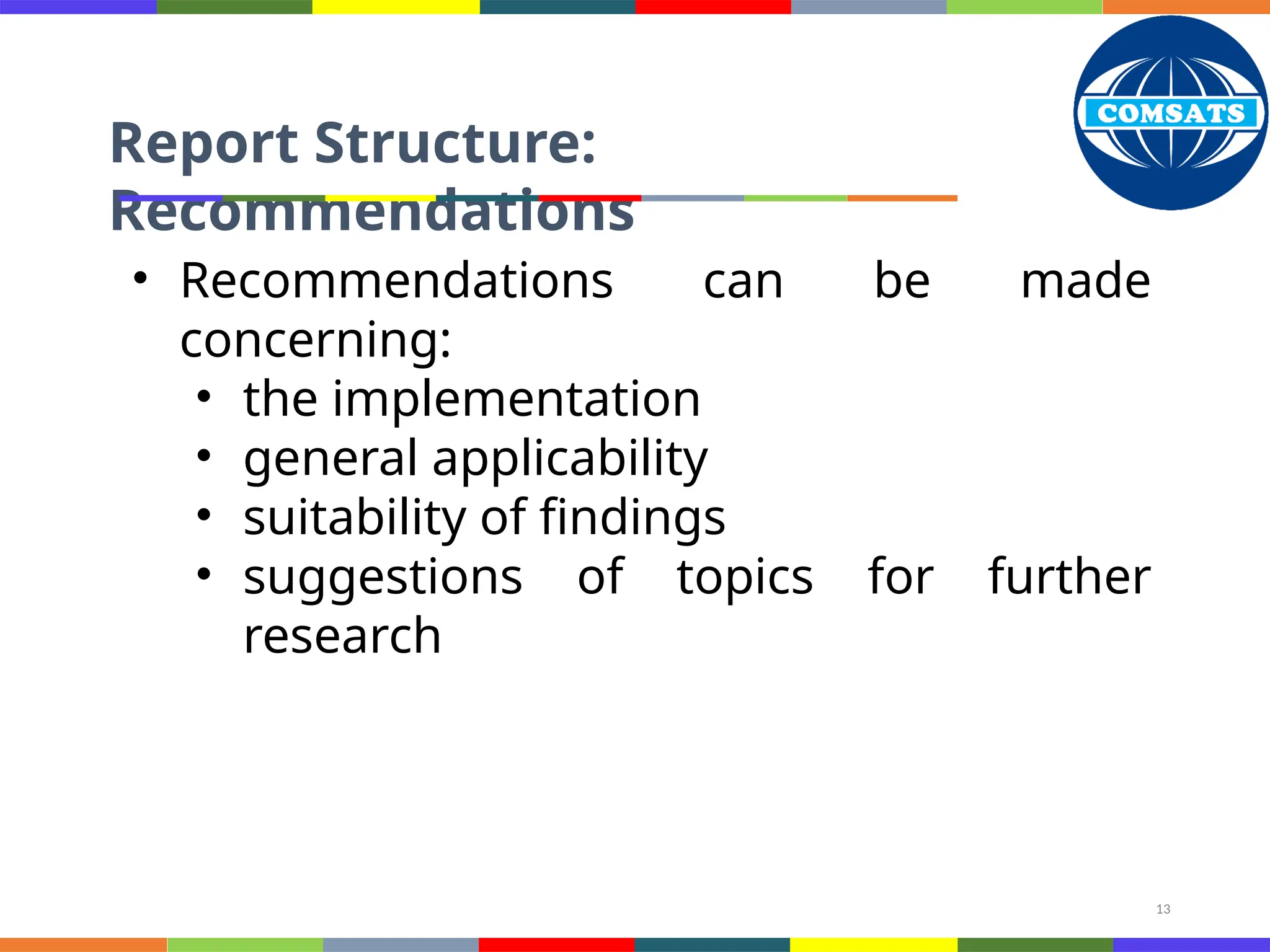
Report Structure: Discussions
[3/3]
11
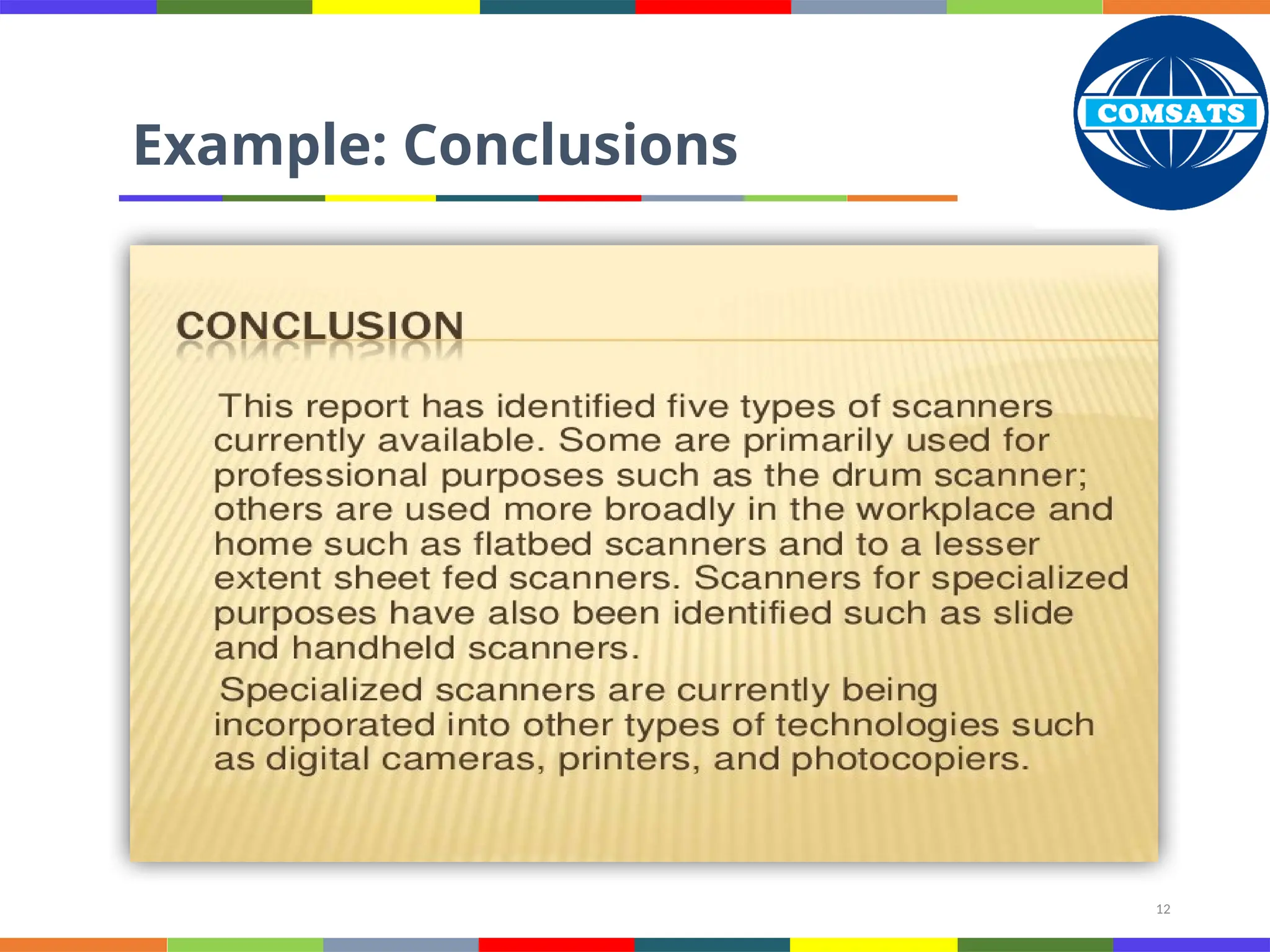
Report Structure:
Conclusions
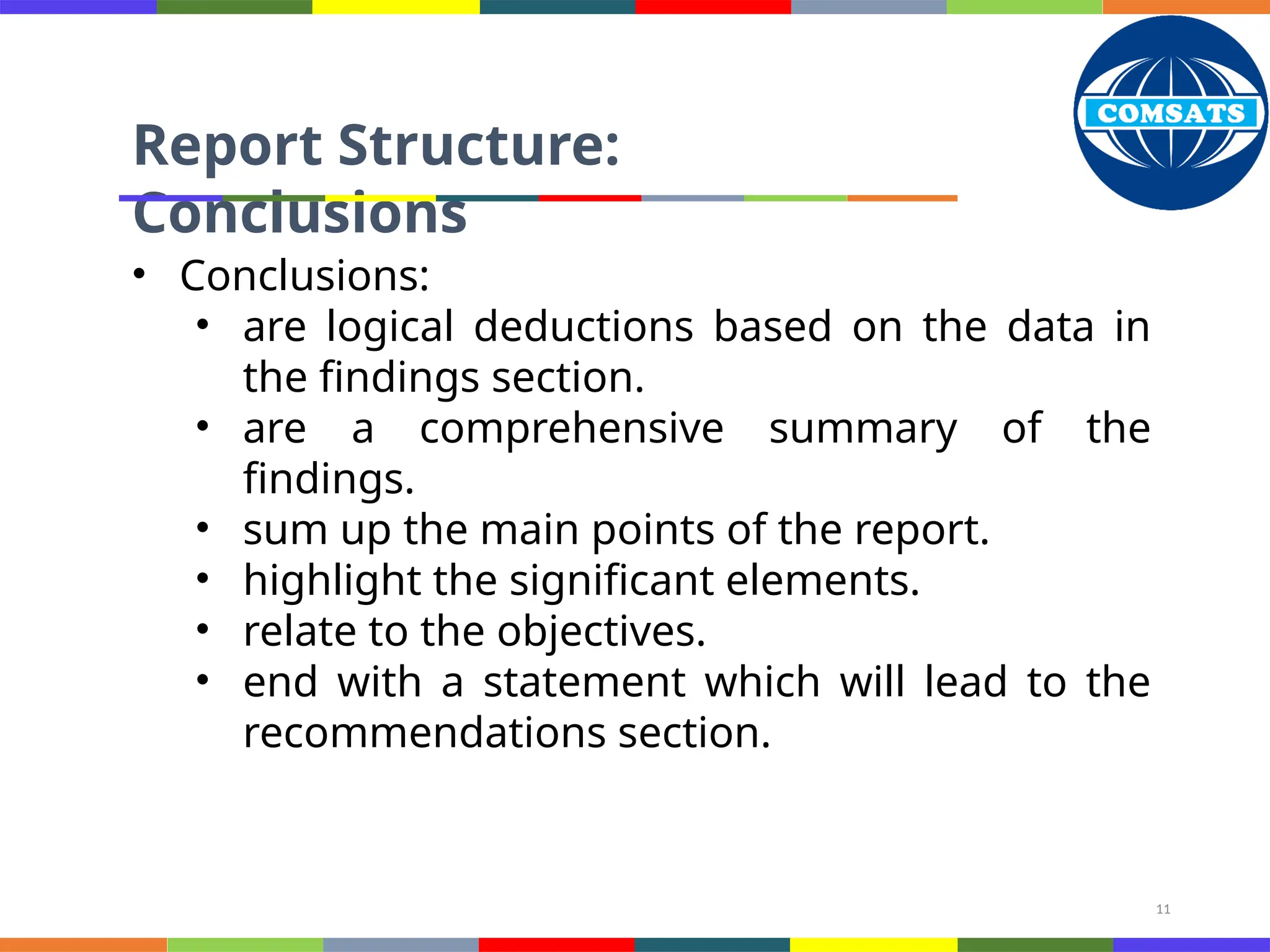
• Conclusions:
•are logical deductions based on the data in
the findings section.
• are a comprehensive summary of the
findings.
• sum up the main points of the report.
• highlight the significant elements.
• relate to the objectives.
• end with a statement which will lead to the
recommendations section.
14
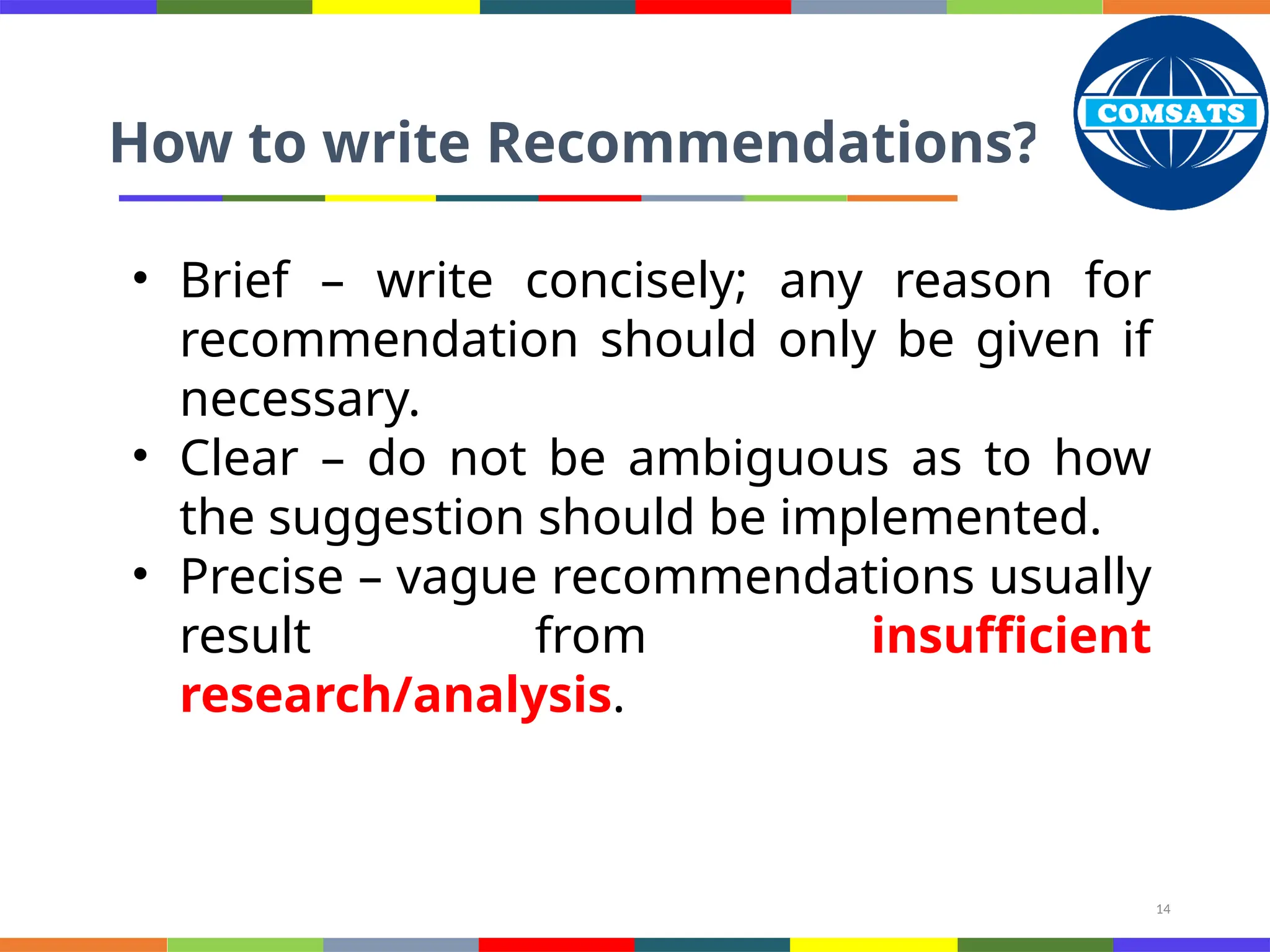
How to writeRecommendations?
• Brief – write concisely; any reason for
recommendation should only be given if
necessary.
• Clear – do not be ambiguous as to how
the suggestion should be implemented.
• Precise – vague recommendations usually
result from insufficient
research/analysis.
15.
15
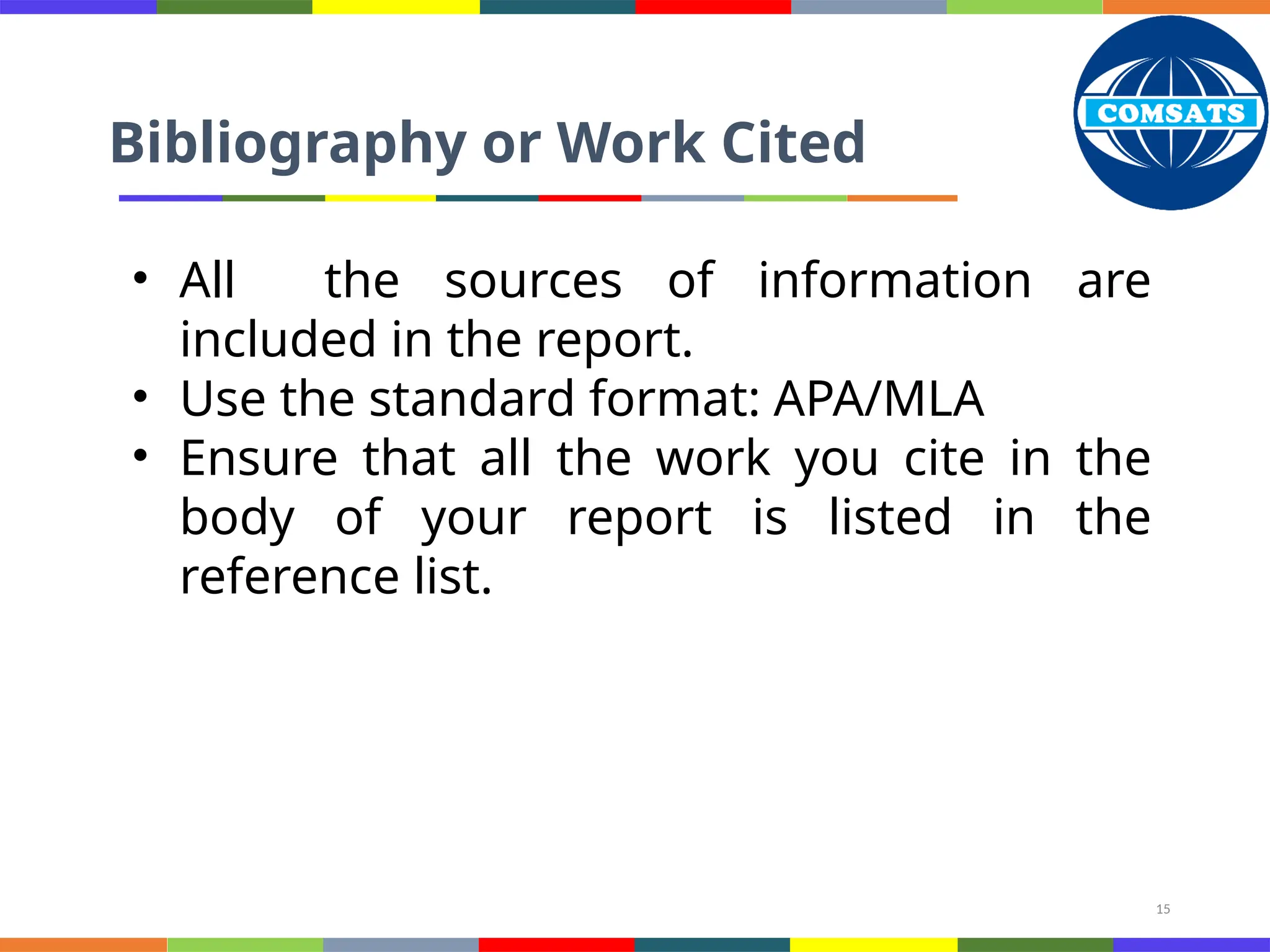
Bibliography or WorkCited
• All the sources of information are
included in the report.
• Use the standard format: APA/MLA
• Ensure that all the work you cite in the
body of your report is listed in the
reference list.
16.
16
Appendices
• An appendixcontains material which is
too detailed, technical, or complex to
include in the body of the report .
• Example:
• Specifications
• Questionnaire
• Long complex table of figures etc.
• Placed at the very end of the report.
![5
Report Structure: Discussions
[1/3]
• Discussion explains:
• What exactly you accomplished?
• What problems you encountered (status report)?
• What you saw and did (trip report)?
• What procedure you followed?
• What you learned from the task (laboratory report)?
• What options exist as feasible solutions to a problem
(proposal)?](https://image.slidesharecdn.com/hum102slideslecture04-250304184503-0a1179cd/75/HUM102-Slides-Lecture-Report-writting-skills-5-2048.jpg)
![6
Report Structure: Discussions
[2/3]
• Author’s reflection on the subject matter
• Author's expression of his/her own opinions and
views
• Indicates how to provide solution to the problem
• Good prose style
• Justified arguments or generalizations](https://image.slidesharecdn.com/hum102slideslecture04-250304184503-0a1179cd/75/HUM102-Slides-Lecture-Report-writting-skills-6-2048.jpg)
![7
• To think critically about an issue.
• To develop creative solutions to the problems.
• To formulate a deeper, more profound
understanding of the problem under
investigation.
Report Structure: Discussions
[3/3]](https://image.slidesharecdn.com/hum102slideslecture04-250304184503-0a1179cd/75/HUM102-Slides-Lecture-Report-writting-skills-7-2048.jpg)