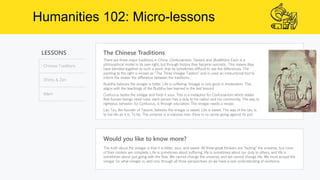
The document provides an overview of three traditions in Chinese philosophy - Confucianism, Taoism, and Buddhism - which are represented metaphorically in the painting "The Three Vinegar Tasters". Confucius finds vinegar sour, representing his view that life requires rules and duty. Lao Tzu finds vinegar sweet, representing the Taoist view to accept life as it is. Buddha finds vinegar bitter, representing the Buddhist view that life is suffering. The document then briefly discusses Shinto and Zen traditions in Japan before concluding with an overview of Islam, noting some misconceptions Westerners have about the religion.