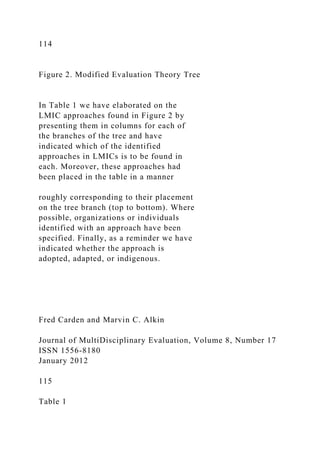
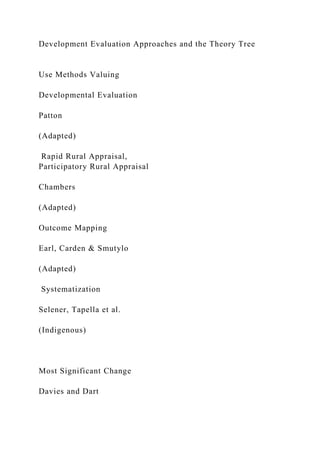
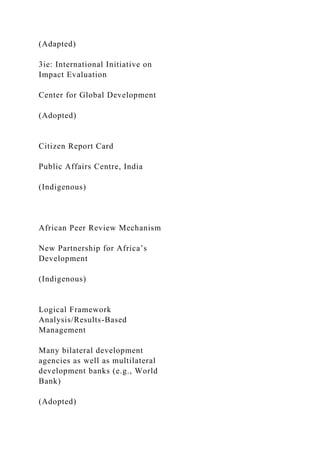
This article addresses the gaps in evaluation theory within low and middle-income countries (LMICs), highlighting the collective origins of evaluation practices influenced by external actors. It underscores the need for local evaluation analysts to document and build a field of development evaluation rooted in local contexts and practices. The authors advocate for a conceptual framework that recognizes the distinct evaluation perspectives emerging from LMICs, as well as the importance of adapting methodologies to better fit these contexts.