Human Resource
Management in
Pharmaceutical
Management
O P T I M I Z I N G W O R K F O R C E S T R AT E G I E S F O R P H A R M A C E U T I C A L
I N D U S T R Y S U C C E S S
INTRODUCTION TO HRM IN
PHARMACEUTICAL
MANAGEMENT
Overview and Role of HRM in
Pharma
Strategic HRM in Pharma
HRM strategically plans and controls human resources to ensure efficient
pharmaceutical operations aligned with organizational goals.
Compliance and Quality Assurance
HRM ensures adherence to drug laws, GMP, and ethical standards while
maintaining workforce productivity and safety.
Workforce Development and Engagement
HRM focuses on competency development, performance monitoring, and
employee engagement to tackle attrition and technological changes.
Enhancing Patient Safety
By integrating HRM principles, pharmaceutical companies improve quality
control and regulatory compliance, ensuring patient safety.
CORE OBJECTIVES AND
FUNCTIONS OF HRM IN
PHARMA
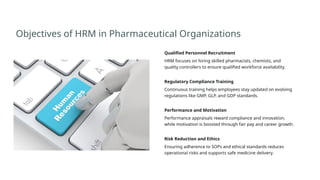
Objectives of HRM in Pharmaceutical Organizations
Qualified Personnel Recruitment
HRM focuses on hiring skilled pharmacists, chemists, and
quality controllers to ensure qualified workforce availability.
Regulatory Compliance Training
Continuous training helps employees stay updated on evolving
regulations like GMP, GLP, and GDP standards.
Performance and Motivation
Performance appraisals reward compliance and innovation,
while motivation is boosted through fair pay and career growth.
Risk Reduction and Ethics
Ensuring adherence to SOPs and ethical standards reduces
operational risks and supports safe medicine delivery.
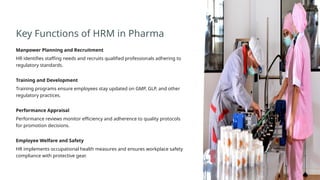
Key Functions of HRM in Pharma
Manpower Planning and Recruitment
HR identifies staffing needs and recruits qualified professionals adhering to
regulatory standards.
Training and Development
Training programs ensure employees stay updated on GMP, GLP, and other
regulatory practices.
Performance Appraisal
Performance reviews monitor efficiency and adherence to quality protocols
for promotion decisions.
Employee Welfare and Safety
HR implements occupational health measures and ensures workplace safety
compliance with protective gear.
COMPONENTS AND PRACTICES
OF HRM IN PHARMA
Manpower Planning and
Recruitment
Forecasting Staffing Needs
Manpower planning forecasts staffing requirements based on production,
regulations, and growth in pharmaceutical management.
Qualified Personnel Recruitment
Recruitment focuses on hiring qualified pharmacists, analysts, and quality
assurance officers to meet operational demands.
Compliance and Ethical Hiring
Verification of professional licenses and ethical recruitment practices ensure
legal compliance in the hiring process.
Ensuring Operational Continuity
Effective manpower planning prevents skill gaps and maintains continuity in
drug formulation, testing, and distribution.
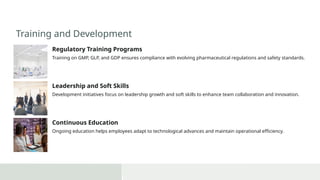
Training and Development
Regulatory Training Programs
Training on GMP, GLP, and GDP ensures compliance with evolving pharmaceutical regulations and safety standards.
Leadership and Soft Skills
Development initiatives focus on leadership growth and soft skills to enhance team collaboration and innovation.
Continuous Education
Ongoing education helps employees adapt to technological advances and maintain operational efficiency.
IMPORTANCE AND IMPACT OF
HRM IN PHARMACEUTICAL
MANAGEMENT
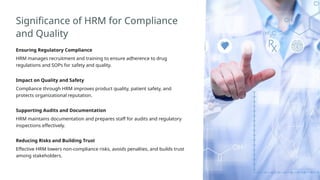
Significance of HRM for Compliance
and Quality
Ensuring Regulatory Compliance
HRM manages recruitment and training to ensure adherence to drug
regulations and SOPs for safety and quality.
Impact on Quality and Safety
Compliance through HRM improves product quality, patient safety, and
protects organizational reputation.
Supporting Audits and Documentation
HRM maintains documentation and prepares staff for audits and regulatory
inspections effectively.
Reducing Risks and Building Trust
Effective HRM lowers non-compliance risks, avoids penalties, and builds trust
among stakeholders.
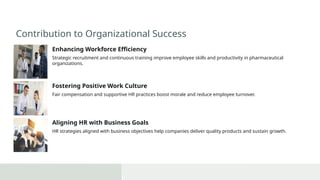
Contribution to Organizational Success
Enhancing Workforce Efficiency
Strategic recruitment and continuous training improve employee skills and productivity in pharmaceutical
organizations.
Fostering Positive Work Culture
Fair compensation and supportive HR practices boost morale and reduce employee turnover.
Aligning HR with Business Goals
HR strategies aligned with business objectives help companies deliver quality products and sustain growth.
CONCLUSION
Summary and Future Outlook
HRM Foundations in Pharma
HRM ensures compliance, quality, and operational
excellence in pharmaceutical organizations through
manpower planning and training.
Strategic HR Contributions
HRM supports innovation, employee engagement, and
organizational resilience beyond administrative functions.
Future HR Trends
Emerging trends include digital HR platforms, AI-driven
talent management, and global compliance training in
healthcare.

HRM in Pharmaceutical Management Presentation

  • 1.
    Human Resource Management in Pharmaceutical Management OP T I M I Z I N G W O R K F O R C E S T R AT E G I E S F O R P H A R M A C E U T I C A L I N D U S T R Y S U C C E S S
  • 2.
    INTRODUCTION TO HRMIN PHARMACEUTICAL MANAGEMENT
  • 3.
    Overview and Roleof HRM in Pharma Strategic HRM in Pharma HRM strategically plans and controls human resources to ensure efficient pharmaceutical operations aligned with organizational goals. Compliance and Quality Assurance HRM ensures adherence to drug laws, GMP, and ethical standards while maintaining workforce productivity and safety. Workforce Development and Engagement HRM focuses on competency development, performance monitoring, and employee engagement to tackle attrition and technological changes. Enhancing Patient Safety By integrating HRM principles, pharmaceutical companies improve quality control and regulatory compliance, ensuring patient safety.
  • 4.
  • 5.
    Objectives of HRMin Pharmaceutical Organizations Qualified Personnel Recruitment HRM focuses on hiring skilled pharmacists, chemists, and quality controllers to ensure qualified workforce availability. Regulatory Compliance Training Continuous training helps employees stay updated on evolving regulations like GMP, GLP, and GDP standards. Performance and Motivation Performance appraisals reward compliance and innovation, while motivation is boosted through fair pay and career growth. Risk Reduction and Ethics Ensuring adherence to SOPs and ethical standards reduces operational risks and supports safe medicine delivery.
  • 6.
    Key Functions ofHRM in Pharma Manpower Planning and Recruitment HR identifies staffing needs and recruits qualified professionals adhering to regulatory standards. Training and Development Training programs ensure employees stay updated on GMP, GLP, and other regulatory practices. Performance Appraisal Performance reviews monitor efficiency and adherence to quality protocols for promotion decisions. Employee Welfare and Safety HR implements occupational health measures and ensures workplace safety compliance with protective gear.
  • 7.
  • 8.
    Manpower Planning and Recruitment ForecastingStaffing Needs Manpower planning forecasts staffing requirements based on production, regulations, and growth in pharmaceutical management. Qualified Personnel Recruitment Recruitment focuses on hiring qualified pharmacists, analysts, and quality assurance officers to meet operational demands. Compliance and Ethical Hiring Verification of professional licenses and ethical recruitment practices ensure legal compliance in the hiring process. Ensuring Operational Continuity Effective manpower planning prevents skill gaps and maintains continuity in drug formulation, testing, and distribution.
  • 9.
    Training and Development RegulatoryTraining Programs Training on GMP, GLP, and GDP ensures compliance with evolving pharmaceutical regulations and safety standards. Leadership and Soft Skills Development initiatives focus on leadership growth and soft skills to enhance team collaboration and innovation. Continuous Education Ongoing education helps employees adapt to technological advances and maintain operational efficiency.
  • 10.
    IMPORTANCE AND IMPACTOF HRM IN PHARMACEUTICAL MANAGEMENT
  • 11.
    Significance of HRMfor Compliance and Quality Ensuring Regulatory Compliance HRM manages recruitment and training to ensure adherence to drug regulations and SOPs for safety and quality. Impact on Quality and Safety Compliance through HRM improves product quality, patient safety, and protects organizational reputation. Supporting Audits and Documentation HRM maintains documentation and prepares staff for audits and regulatory inspections effectively. Reducing Risks and Building Trust Effective HRM lowers non-compliance risks, avoids penalties, and builds trust among stakeholders.
  • 12.
    Contribution to OrganizationalSuccess Enhancing Workforce Efficiency Strategic recruitment and continuous training improve employee skills and productivity in pharmaceutical organizations. Fostering Positive Work Culture Fair compensation and supportive HR practices boost morale and reduce employee turnover. Aligning HR with Business Goals HR strategies aligned with business objectives help companies deliver quality products and sustain growth.
  • 13.
  • 14.
    Summary and FutureOutlook HRM Foundations in Pharma HRM ensures compliance, quality, and operational excellence in pharmaceutical organizations through manpower planning and training. Strategic HR Contributions HRM supports innovation, employee engagement, and organizational resilience beyond administrative functions. Future HR Trends Emerging trends include digital HR platforms, AI-driven talent management, and global compliance training in healthcare.

Editor's Notes

  • #1 AI-generated content may be incorrect. ---
  • #2 Overview and Role of HRM in Pharma
  • #3  Human Resource Management (HRM) in pharmaceutical management refers to the strategic approach of planning, organizing, and controlling human resources to ensure efficient functioning of pharmaceutical organizations. It plays a vital role in managing professionals such as pharmacists, scientists, quality assurance personnel, and regulatory experts. HRM ensures compliance with stringent drug laws, Good Manufacturing Practices (GMP), and ethical standards while maintaining productivity and safety. In the pharmaceutical sector, HRM is not limited to hiring and payroll; it encompasses workforce planning, competency development, performance monitoring, and fostering a culture of continuous improvement. The primary objective is to align human resources with organizational goals, ensuring that medicines are produced, tested, and distributed safely and effectively. HRM also addresses challenges like high attrition rates, regulatory audits, and technological advancements by implementing robust training programs and employee engagement strategies. By integrating HRM principles into pharmaceutical management, companies can achieve better quality control, regulatory compliance, and enhanced patient safety, which are critical for sustaining trust and competitiveness in the healthcare industry.
  • #4 Objectives of HRM in Pharmaceutical Organizations, Key Functions of HRM in Pharma
  • #5  The objectives of HRM in pharmaceutical management revolve around ensuring the availability of qualified personnel, maintaining compliance with regulatory standards, and enhancing organizational efficiency. Key goals include recruiting skilled professionals such as pharmacists, chemists, and quality controllers; providing continuous training to keep pace with evolving regulations; and fostering a safe and ethical work environment. HRM aims to improve productivity by implementing performance appraisal systems that reward compliance and innovation. Another critical objective is to reduce operational risks by ensuring that employees adhere to Standard Operating Procedures (SOPs) and Good Practices like GMP, GLP, and GDP. HRM also focuses on employee motivation through fair compensation, career development opportunities, and recognition programs. By achieving these objectives, HRM contributes to the overall mission of pharmaceutical companies: delivering safe, effective, and high-quality medicines to patients while meeting legal and ethical obligations.
  • #6  HRM in pharmaceutical management performs several critical functions to ensure smooth operations and compliance. These include manpower planning and recruitment, where HR identifies staffing needs and hires qualified professionals according to regulatory requirements. Training and development programs are essential to keep employees updated on Good Manufacturing Practices (GMP), Good Laboratory Practices (GLP), and other regulatory standards. Performance appraisal systems help monitor employee efficiency and adherence to quality protocols, enabling informed decisions on promotions and incentives. HRM also manages employee welfare and safety by implementing occupational health measures, providing protective equipment, and ensuring compliance with workplace safety laws. Compensation and motivation strategies, such as fair wages and bonuses, are designed to retain talent and boost morale. Additionally, HRM oversees industrial relations, resolving conflicts and maintaining harmony between management and staff. These functions collectively ensure that pharmaceutical organizations operate ethically, efficiently, and in compliance with national and international standards.
  • #7 Manpower Planning and Recruitment, Training and Development
  • #8  Manpower planning in pharmaceutical management involves forecasting staffing needs based on production schedules, regulatory requirements, and organizational growth. HR professionals ensure that the right number of qualified individuals, such as pharmacists, analysts, and quality assurance officers, are available to meet operational demands. Recruitment processes are aligned with legal standards, requiring verification of professional licenses and adherence to ethical hiring practices. Effective manpower planning minimizes skill gaps and ensures continuity in critical functions like drug formulation, testing, and distribution. By employing structured recruitment strategies, HRM helps maintain compliance with drug laws and supports the organization’s commitment to quality and safety.
  • #9  Training and development are indispensable in the pharmaceutical industry due to frequent updates in regulatory guidelines and technological advancements. HRM designs comprehensive training programs covering Good Manufacturing Practices (GMP), Good Laboratory Practices (GLP), and Good Distribution Practices (GDP). These programs ensure that employees remain competent in handling complex processes and equipment while complying with safety and quality standards. Development initiatives also include leadership training, soft skills enhancement, and continuous education to foster innovation and adaptability. By investing in training, pharmaceutical organizations reduce compliance risks, improve operational efficiency, and maintain a competitive edge in a highly regulated market.
  • #10 Significance of HRM for Compliance and Quality, Contribution to Organizational Success
  • #11  HRM plays a pivotal role in ensuring compliance with national and international drug regulations, which is fundamental for pharmaceutical organizations. By managing recruitment, training, and performance monitoring, HRM guarantees that employees adhere to Standard Operating Procedures (SOPs) and Good Practices. This compliance directly impacts product quality, patient safety, and organizational reputation. HRM also facilitates audits and inspections by maintaining accurate documentation and ensuring that staff are prepared for regulatory evaluations. In essence, effective HRM reduces the risk of non-compliance, prevents costly penalties, and strengthens trust among stakeholders, including healthcare providers, patients, and regulatory authorities.
  • #12  Beyond compliance, HRM significantly contributes to the overall success of pharmaceutical organizations by enhancing workforce efficiency and morale. Through strategic recruitment, continuous training, and fair compensation, HRM ensures that employees are motivated and equipped to meet organizational goals. Effective HR practices foster innovation, reduce turnover, and create a positive work culture, which is essential in a competitive and highly regulated industry. By aligning human resource strategies with business objectives, HRM enables pharmaceutical companies to deliver high-quality products, maintain profitability, and achieve sustainable growth in the global healthcare market.
  • #13 Summary and Future Outlook
  • #14  Human Resource Management in pharmaceutical organizations is a cornerstone for ensuring compliance, quality, and operational excellence. By integrating functions such as manpower planning, training, performance appraisal, and employee welfare, HRM supports the safe and efficient production of medicines. Its role extends beyond administrative tasks to strategic contributions that enhance innovation, employee engagement, and organizational resilience. As the pharmaceutical industry evolves with technological advancements and stricter regulations, HRM will continue to play a critical role in shaping workforce capabilities and sustaining competitive advantage. Future trends may include digital HR platforms, AI-driven talent management, and global compliance training to meet emerging challenges in healthcare.