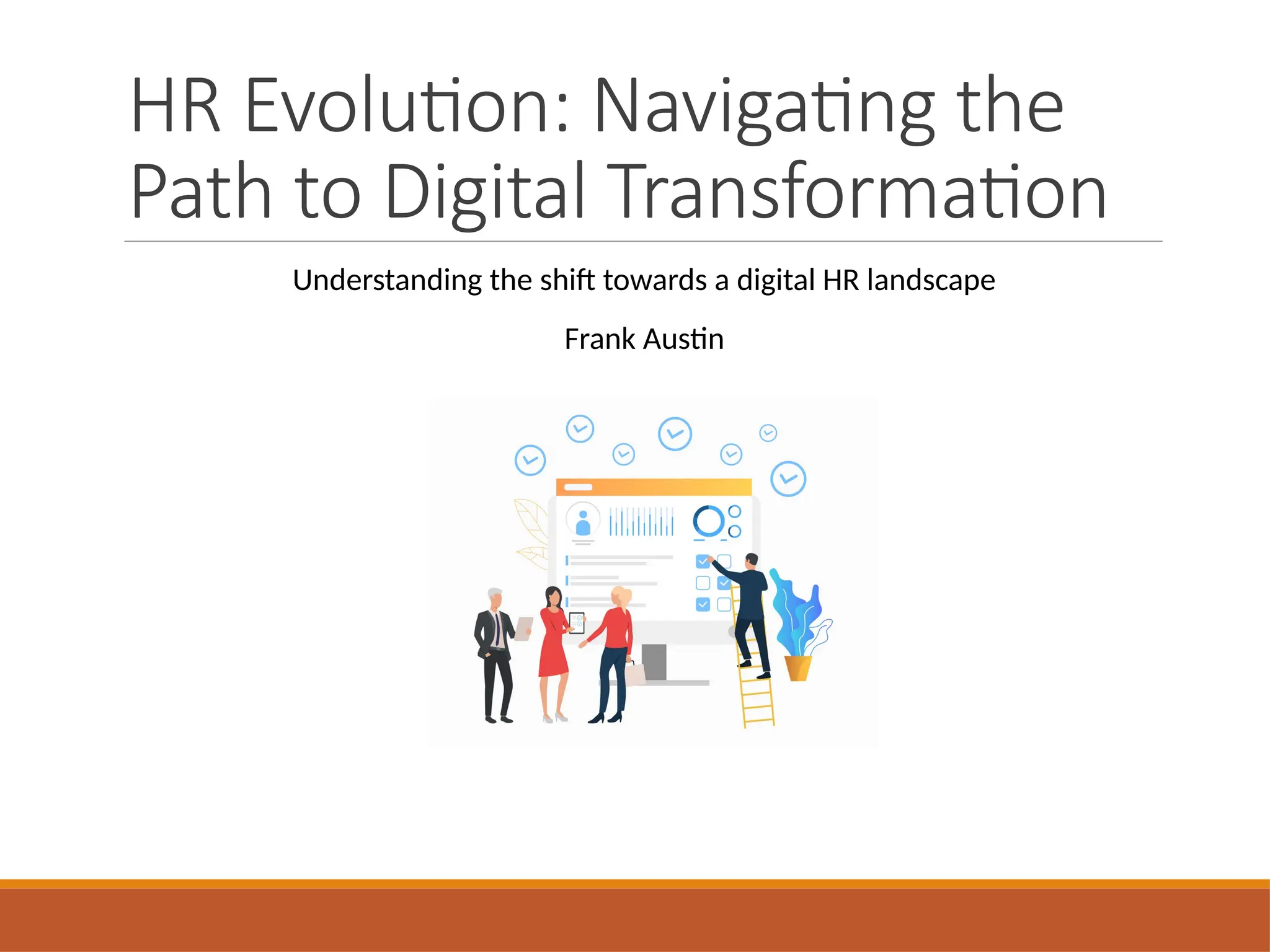
HR Evolution: Navigating the
Path to Digital Transformation
Understanding the shift towards a digital HR landscape
Frank Austin
Introduction to HR Digital
Transformation
As organizations grow and the workforce evolves, HR must adapt to remain
relevant. Digital transformation in HR is not just a trend but a necessity for
modern businesses aiming to stay competitive. This shift is about leveraging
technology to improve HR processes, enhance employee experience, and drive
organizational success.
The Drivers of HR Digital
Transformation
- Workforce Expectations for Modern, Tech-Driven Environments:
Employees today expect seamless, tech-enabled experiences in their interactions
with HR, mirroring the convenience they experience in their personal lives.
- The Need for Data-Driven Decision-Making:
HR departments must harness data analytics to make informed decisions, from
recruitment to employee engagement, ensuring a strategic approach.
- Competitive Advantage in Attracting and Retaining Talent:
Companies that embrace digital transformation can attract top talent and retain
employees by offering more efficient and engaging HR services.
Core Components of HR
Digital Transformation
- Adoption of HR Software and Tools:
HR software like Human Resource Management Systems
(HRMS) automates administrative tasks, allowing HR
professionals to focus on strategic initiatives.
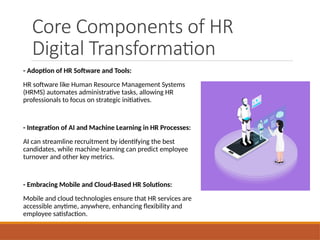
- Integration of AI and Machine Learning in HR Processes:
AI can streamline recruitment by identifying the best
candidates, while machine learning can predict employee
turnover and other key metrics.
- Embracing Mobile and Cloud-Based HR Solutions:
Mobile and cloud technologies ensure that HR services are
accessible anytime, anywhere, enhancing flexibility and
employee satisfaction.
Challenges in Implementing
HR Digital Transformation
- Resistance to Change Within the Organization:
Employees and managers may be reluctant to adopt new technologies, fearing
disruption to their workflow or job security.
- Data Privacy and Security Concerns:
With increased reliance on digital tools comes the need for robust data security
measures to protect sensitive employee information.
- The Need for Upskilling and Reskilling HR Teams:
HR professionals must be trained to use new digital tools effectively, ensuring
they have the skills needed for a transformed HR function.
Case Studies of Successful HR
Digital Transformation
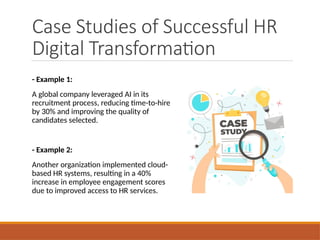
- Example 1:
A global company leveraged AI in its
recruitment process, reducing time-to-hire
by 30% and improving the quality of
candidates selected.
- Example 2:
Another organization implemented cloud-
based HR systems, resulting in a 40%
increase in employee engagement scores
due to improved access to HR services.
Strategies for a Successful HR
Digital Transformation
- Developing a Clear Digital Transformation Roadmap:
Organizations should create a step-by-step plan that outlines the goals, timeline,
and resources needed for digital transformation in HR.
- Ensuring Alignment with Overall Business Strategy:
HR digital transformation should support broader business objectives, ensuring
that technology investments deliver strategic value.
- Involving Key Stakeholders and Ensuring Continuous Communication:
Engage leaders, managers, and employees throughout the transformation
process to foster buy-in and reduce resistance to change.
The Future of HR: Trends in
Digital Transformation
- Increasing Reliance on AI and Predictive Analytics:
Future HR functions will heavily rely on AI to forecast workforce trends, identify
skill gaps, and optimize talent management.
- The Rise of Remote Work and Virtual Collaboration Tools:
With the growing trend of remote work, HR will increasingly adopt virtual tools
that facilitate communication, collaboration, and productivity.
- Continuous Evolution of HR Technology:
As technology evolves, HR systems will become more integrated, intuitive, and
capable of delivering personalized employee experiences.
Conclusion
HR digital transformation is not just a one-time initiative but an ongoing
journey. By embracing digital tools and strategies, organizations can enhance
their HR functions, leading to better employee experiences and improved
business outcomes.
Call to Action: Now is the time to evaluate your HR processes and identify areas
where digital transformation can make a significant impact. Start planning your
HR digital transformation journey today.
References:
• https://www.azilen.com/blog/hr-digital-transformation/
• https://lemonlearning.com/blog/hr-digital-transformation
• https://www.beekeeper.io/blog/hr-digital-transformation/
Thank You

HR Evolution - Navigating the Path to Digital Transformation

  • 1.
    HR Evolution: Navigatingthe Path to Digital Transformation Understanding the shift towards a digital HR landscape Frank Austin
  • 2.
    Introduction to HRDigital Transformation As organizations grow and the workforce evolves, HR must adapt to remain relevant. Digital transformation in HR is not just a trend but a necessity for modern businesses aiming to stay competitive. This shift is about leveraging technology to improve HR processes, enhance employee experience, and drive organizational success.
  • 3.
    The Drivers ofHR Digital Transformation - Workforce Expectations for Modern, Tech-Driven Environments: Employees today expect seamless, tech-enabled experiences in their interactions with HR, mirroring the convenience they experience in their personal lives. - The Need for Data-Driven Decision-Making: HR departments must harness data analytics to make informed decisions, from recruitment to employee engagement, ensuring a strategic approach. - Competitive Advantage in Attracting and Retaining Talent: Companies that embrace digital transformation can attract top talent and retain employees by offering more efficient and engaging HR services.
  • 4.
    Core Components ofHR Digital Transformation - Adoption of HR Software and Tools: HR software like Human Resource Management Systems (HRMS) automates administrative tasks, allowing HR professionals to focus on strategic initiatives. - Integration of AI and Machine Learning in HR Processes: AI can streamline recruitment by identifying the best candidates, while machine learning can predict employee turnover and other key metrics. - Embracing Mobile and Cloud-Based HR Solutions: Mobile and cloud technologies ensure that HR services are accessible anytime, anywhere, enhancing flexibility and employee satisfaction.
  • 5.
    Challenges in Implementing HRDigital Transformation - Resistance to Change Within the Organization: Employees and managers may be reluctant to adopt new technologies, fearing disruption to their workflow or job security. - Data Privacy and Security Concerns: With increased reliance on digital tools comes the need for robust data security measures to protect sensitive employee information. - The Need for Upskilling and Reskilling HR Teams: HR professionals must be trained to use new digital tools effectively, ensuring they have the skills needed for a transformed HR function.
  • 6.
    Case Studies ofSuccessful HR Digital Transformation - Example 1: A global company leveraged AI in its recruitment process, reducing time-to-hire by 30% and improving the quality of candidates selected. - Example 2: Another organization implemented cloud- based HR systems, resulting in a 40% increase in employee engagement scores due to improved access to HR services.
  • 7.
    Strategies for aSuccessful HR Digital Transformation - Developing a Clear Digital Transformation Roadmap: Organizations should create a step-by-step plan that outlines the goals, timeline, and resources needed for digital transformation in HR. - Ensuring Alignment with Overall Business Strategy: HR digital transformation should support broader business objectives, ensuring that technology investments deliver strategic value. - Involving Key Stakeholders and Ensuring Continuous Communication: Engage leaders, managers, and employees throughout the transformation process to foster buy-in and reduce resistance to change.
  • 8.
    The Future ofHR: Trends in Digital Transformation - Increasing Reliance on AI and Predictive Analytics: Future HR functions will heavily rely on AI to forecast workforce trends, identify skill gaps, and optimize talent management. - The Rise of Remote Work and Virtual Collaboration Tools: With the growing trend of remote work, HR will increasingly adopt virtual tools that facilitate communication, collaboration, and productivity. - Continuous Evolution of HR Technology: As technology evolves, HR systems will become more integrated, intuitive, and capable of delivering personalized employee experiences.
  • 9.
    Conclusion HR digital transformationis not just a one-time initiative but an ongoing journey. By embracing digital tools and strategies, organizations can enhance their HR functions, leading to better employee experiences and improved business outcomes. Call to Action: Now is the time to evaluate your HR processes and identify areas where digital transformation can make a significant impact. Start planning your HR digital transformation journey today.
  • 10.
  • 11.