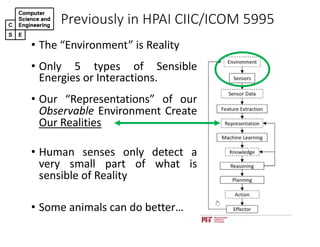
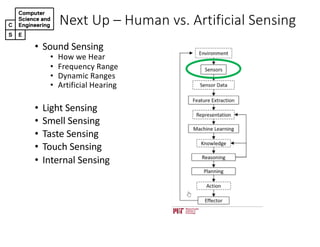
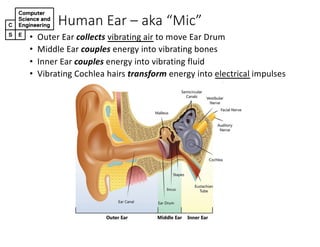
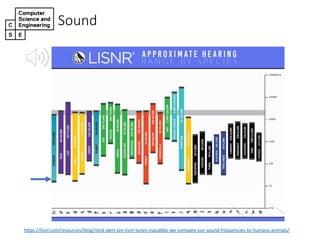
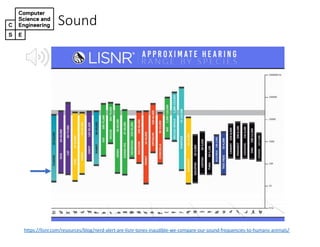
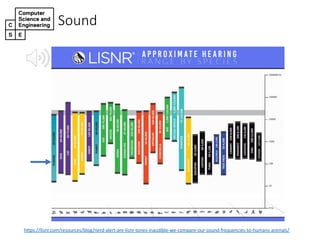
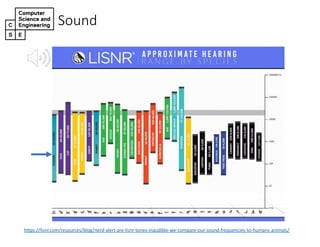
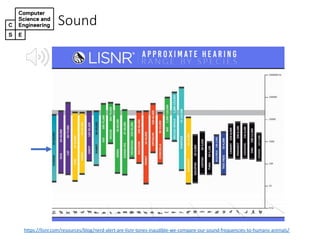
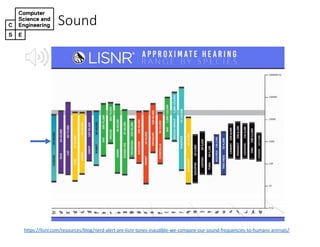
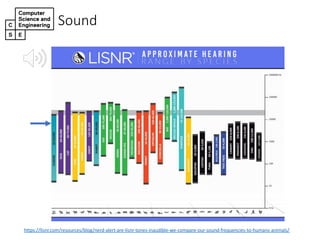
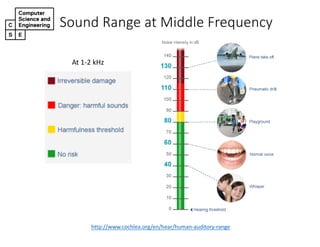
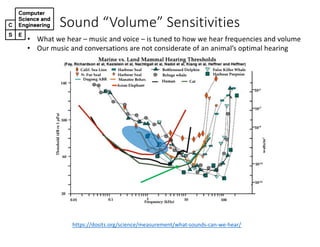
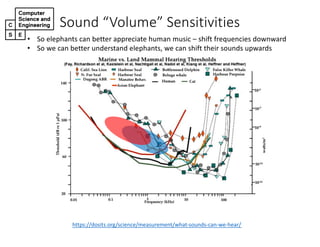
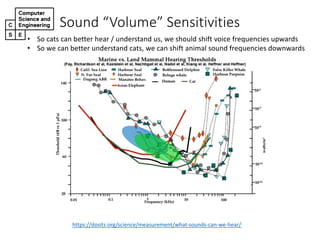
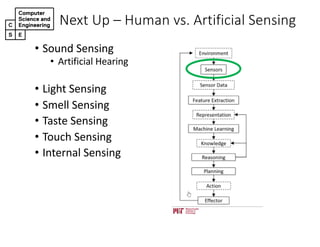
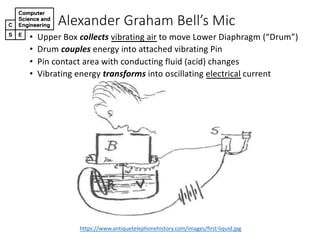
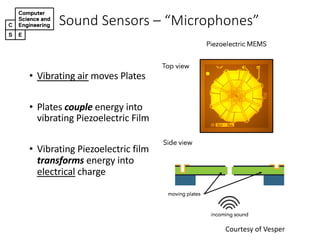
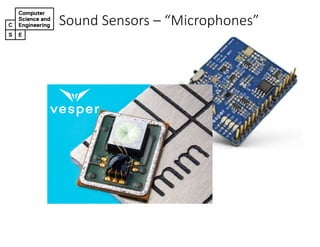
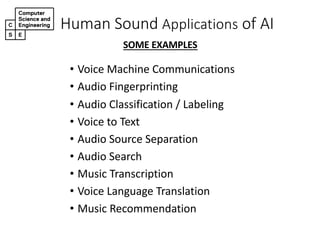
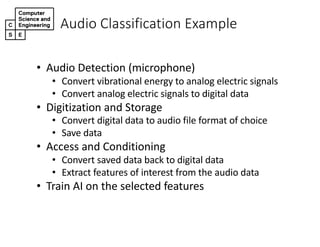
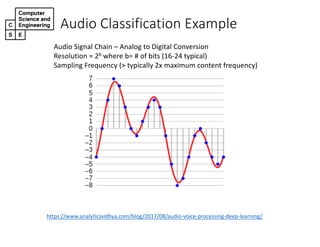
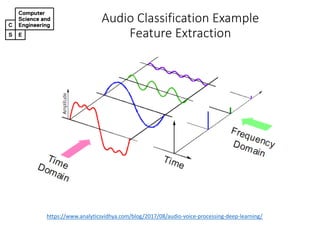
The document discusses human and artificial sensing capabilities. It begins by describing how the human ear detects sound through the outer, middle and inner ear, which transform vibrations into electrical signals in the cochlea. It then compares the human range of hearing to other animals, noting we are most sensitive to frequencies relevant to speech. Examples are given of microphones and cochlear implants that transform sound vibrations or waves into electrical signals analogous to biological hearing. Applications of artificial intelligence in audio analysis are also briefly outlined.