How Virtual Kitchens Work:
Behind the Scenes
The restaurant industry is undergoing a significant
transformation with the rise of virtual kitchens, also known as
ghost kitchen solutions These innovative kitchens operate
without a traditional dine-in space, focusing solely on preparing
food for delivery. For those curious about how virtual kitchens
work and why they’re becoming so popular, let’s take a
behind-the-scenes look at this groundbreaking model.
What is a Virtual Kitchen?
A virtual kitchen is a professional food preparation and cooking
facility set up to prepare meals exclusively for delivery. Unlike
traditional restaurants, virtual kitchens do not have a physical
dining area for customers. Instead, they rely on online orders,
which are then delivered directly to the customer’s doorstep.
The Setup: Efficient and Cost-Effective
Virtual kitchens are designed to maximize efficiency and
minimize costs. Here’s how they achieve this:
1. Location: Virtual kitchens are often situated in less
expensive real estate locations, such as industrial
areas, since they don’t need to attract foot traffic.
2. Shared Spaces: Many virtual kitchens operate within
shared kitchen facilities, allowing multiple brands to use
the same space and equipment. This reduces overhead
costs and makes it easier to scale operations.
3. Optimized Layout: The kitchen layout is optimized for
delivery, with streamlined processes for preparing,
cooking, and packaging food quickly and efficiently.
Technology: The Backbone of Virtual Kitchens
Technology plays a crucial role in the operation of virtual
kitchens. Here’s how:
1. Online Ordering Platforms: Virtual kitchens rely heavily
on online platforms for receiving orders. These
platforms aggregate orders from various channels like
apps, websites, and third-party delivery services.
2. Integrated Systems: Order management systems
integrate with the kitchen’s workflow, ensuring that
orders are received and processed smoothly. These
systems help manage inventory, track orders, and
streamline communication between kitchen staff.
3. Delivery Optimization: Advanced logistics software
helps optimize delivery routes, ensuring that food
arrives fresh and hot. Some virtual kitchens partner
with multiple delivery services to extend their reach and
improve delivery times.
The Workflow: From Order to Delivery
Let’s break down the workflow of a typical virtual kitchen:
1. Order Placement: A customer places an order through
a food delivery app or the virtual kitchen’s website.
2. Order Processing: The order is received by the kitchen
staff via an integrated order management system. The
system helps prioritize and schedule orders based on
preparation time and delivery schedules.
3. Food Preparation: Chefs and kitchen staff prepare the
food according to the order specifications. Since virtual
kitchens can house multiple brands, chefs may be
trained to prepare various cuisines.
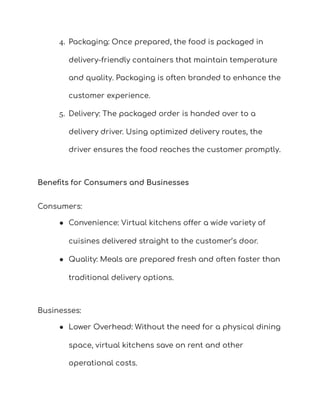
4. Packaging: Once prepared, the food is packaged in
delivery-friendly containers that maintain temperature
and quality. Packaging is often branded to enhance the
customer experience.
5. Delivery: The packaged order is handed over to a
delivery driver. Using optimized delivery routes, the
driver ensures the food reaches the customer promptly.
Benefits for Consumers and Businesses
Consumers:
● Convenience: Virtual kitchens offer a wide variety of
cuisines delivered straight to the customer’s door.
● Quality: Meals are prepared fresh and often faster than
traditional delivery options.
Businesses:
● Lower Overhead: Without the need for a physical dining
space, virtual kitchens save on rent and other
operational costs.
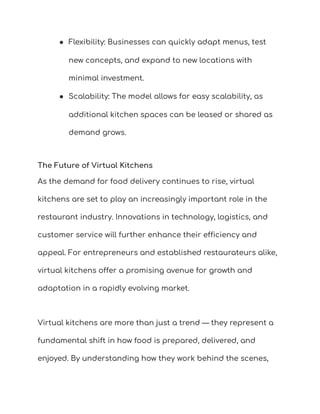
● Flexibility: Businesses can quickly adapt menus, test
new concepts, and expand to new locations with
minimal investment.
● Scalability: The model allows for easy scalability, as
additional kitchen spaces can be leased or shared as
demand grows.
The Future of Virtual Kitchens
As the demand for food delivery continues to rise, virtual
kitchens are set to play an increasingly important role in the
restaurant industry. Innovations in technology, logistics, and
customer service will further enhance their efficiency and
appeal. For entrepreneurs and established restaurateurs alike,
virtual kitchens offer a promising avenue for growth and
adaptation in a rapidly evolving market.
Virtual kitchens are more than just a trend — they represent a
fundamental shift in how food is prepared, delivered, and
enjoyed. By understanding how they work behind the scenes,
consumers and businesses can appreciate the many benefits
they bring to the table. Read More

How Virtual Kitchens Work_ Behind the Scenes.pdf

  • 1.
    How Virtual KitchensWork: Behind the Scenes The restaurant industry is undergoing a significant transformation with the rise of virtual kitchens, also known as ghost kitchen solutions These innovative kitchens operate without a traditional dine-in space, focusing solely on preparing food for delivery. For those curious about how virtual kitchens
  • 2.
    work and whythey’re becoming so popular, let’s take a behind-the-scenes look at this groundbreaking model. What is a Virtual Kitchen? A virtual kitchen is a professional food preparation and cooking facility set up to prepare meals exclusively for delivery. Unlike traditional restaurants, virtual kitchens do not have a physical dining area for customers. Instead, they rely on online orders, which are then delivered directly to the customer’s doorstep. The Setup: Efficient and Cost-Effective Virtual kitchens are designed to maximize efficiency and minimize costs. Here’s how they achieve this: 1. Location: Virtual kitchens are often situated in less expensive real estate locations, such as industrial areas, since they don’t need to attract foot traffic. 2. Shared Spaces: Many virtual kitchens operate within shared kitchen facilities, allowing multiple brands to use
  • 3.
    the same spaceand equipment. This reduces overhead costs and makes it easier to scale operations. 3. Optimized Layout: The kitchen layout is optimized for delivery, with streamlined processes for preparing, cooking, and packaging food quickly and efficiently. Technology: The Backbone of Virtual Kitchens Technology plays a crucial role in the operation of virtual kitchens. Here’s how: 1. Online Ordering Platforms: Virtual kitchens rely heavily on online platforms for receiving orders. These platforms aggregate orders from various channels like apps, websites, and third-party delivery services. 2. Integrated Systems: Order management systems integrate with the kitchen’s workflow, ensuring that orders are received and processed smoothly. These systems help manage inventory, track orders, and streamline communication between kitchen staff.
  • 4.
    3. Delivery Optimization:Advanced logistics software helps optimize delivery routes, ensuring that food arrives fresh and hot. Some virtual kitchens partner with multiple delivery services to extend their reach and improve delivery times. The Workflow: From Order to Delivery Let’s break down the workflow of a typical virtual kitchen: 1. Order Placement: A customer places an order through a food delivery app or the virtual kitchen’s website. 2. Order Processing: The order is received by the kitchen staff via an integrated order management system. The system helps prioritize and schedule orders based on preparation time and delivery schedules. 3. Food Preparation: Chefs and kitchen staff prepare the food according to the order specifications. Since virtual kitchens can house multiple brands, chefs may be trained to prepare various cuisines.
  • 5.
    4. Packaging: Onceprepared, the food is packaged in delivery-friendly containers that maintain temperature and quality. Packaging is often branded to enhance the customer experience. 5. Delivery: The packaged order is handed over to a delivery driver. Using optimized delivery routes, the driver ensures the food reaches the customer promptly. Benefits for Consumers and Businesses Consumers: ● Convenience: Virtual kitchens offer a wide variety of cuisines delivered straight to the customer’s door. ● Quality: Meals are prepared fresh and often faster than traditional delivery options. Businesses: ● Lower Overhead: Without the need for a physical dining space, virtual kitchens save on rent and other operational costs.
  • 6.
    ● Flexibility: Businessescan quickly adapt menus, test new concepts, and expand to new locations with minimal investment. ● Scalability: The model allows for easy scalability, as additional kitchen spaces can be leased or shared as demand grows. The Future of Virtual Kitchens As the demand for food delivery continues to rise, virtual kitchens are set to play an increasingly important role in the restaurant industry. Innovations in technology, logistics, and customer service will further enhance their efficiency and appeal. For entrepreneurs and established restaurateurs alike, virtual kitchens offer a promising avenue for growth and adaptation in a rapidly evolving market. Virtual kitchens are more than just a trend — they represent a fundamental shift in how food is prepared, delivered, and enjoyed. By understanding how they work behind the scenes,
  • 7.
    consumers and businessescan appreciate the many benefits they bring to the table. Read More