Understanding
the Higg Index:
Measuring
Sustainability
in the Textile
Industry
What is the Higg Index? (Definition)
Definition: The Higg Index is a
suite of tools developed by the
Sustainable Apparel Coalition
(SAC) to measure
environmental, social, and labor
impacts across the supply
chain.
It helps companies to identify
areas for improvement in their
sustainability practices and
supports transparency.
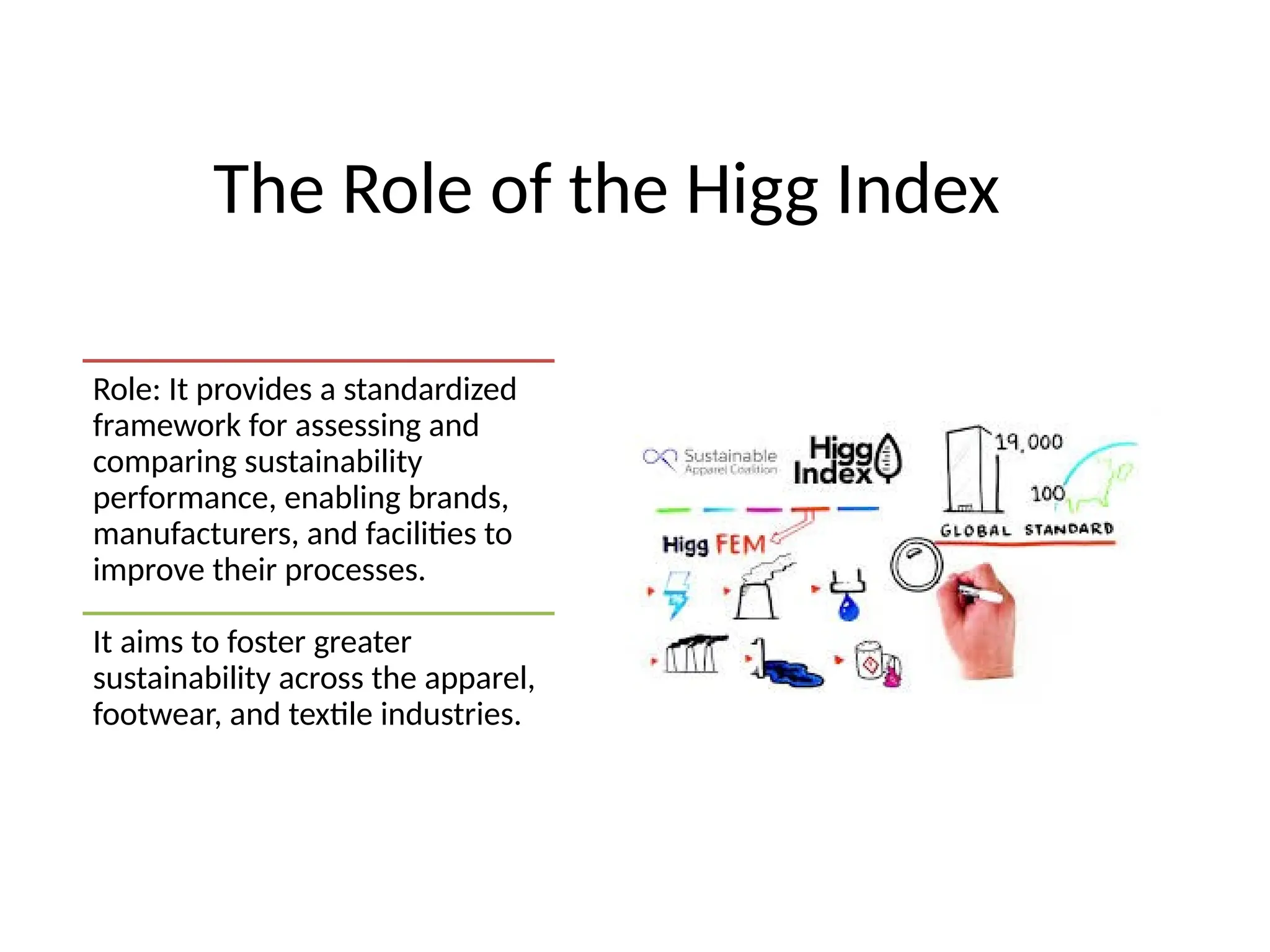
The Role of the Higg Index
Role: It provides a standardized
framework for assessing and
comparing sustainability
performance, enabling brands,
manufacturers, and facilities to
improve their processes.
It aims to foster greater
sustainability across the apparel,
footwear, and textile industries.
Importance
of Using the
Higg Index
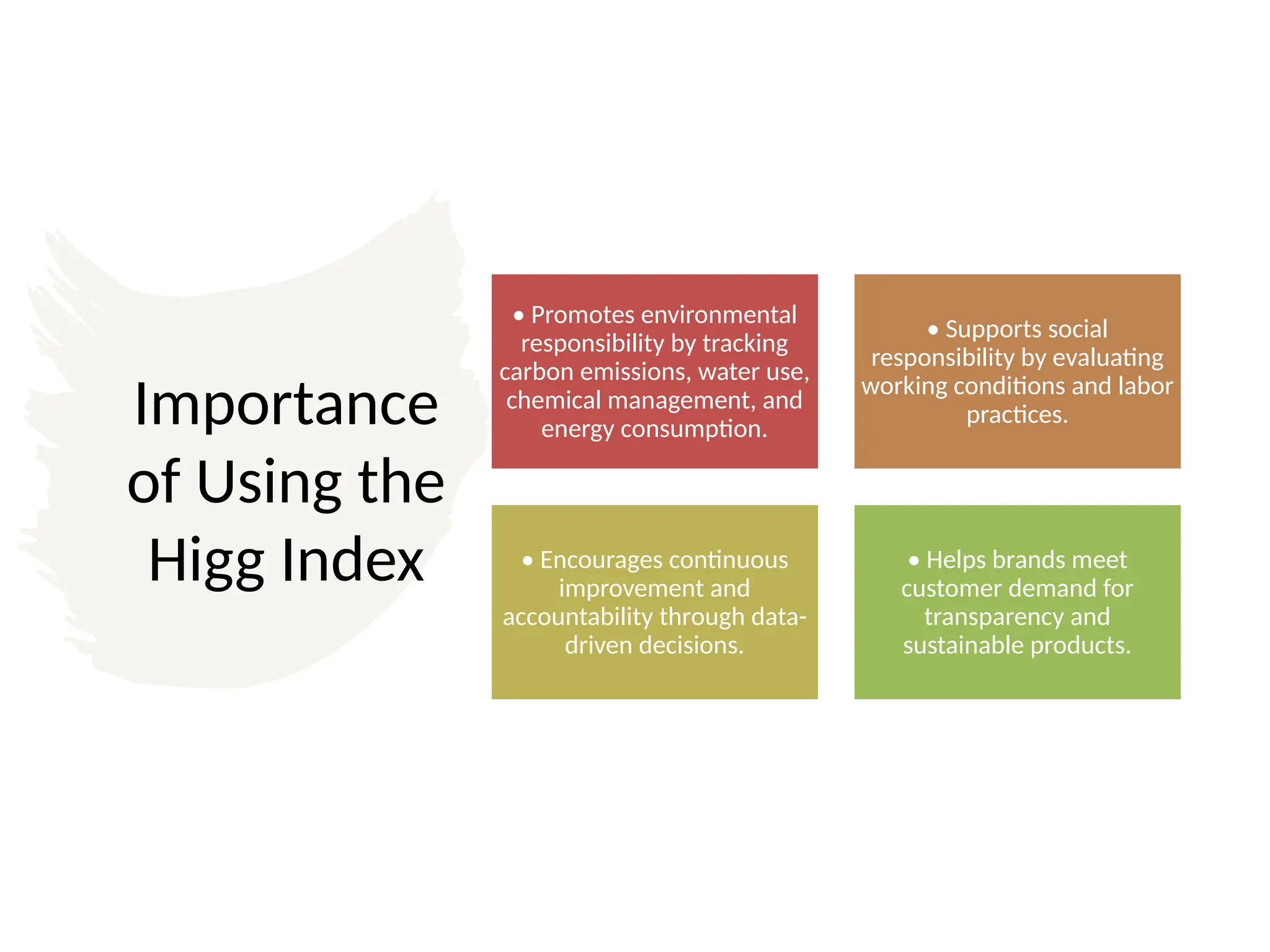
• Promotes environmental
responsibility by tracking
carbon emissions, water use,
chemical management, and
energy consumption.
• Supports social
responsibility by evaluating
working conditions and labor
practices.
• Encourages continuous
improvement and
accountability through data-
driven decisions.
• Helps brands meet
customer demand for
transparency and
sustainable products.
Who Launched the
Higg Index?
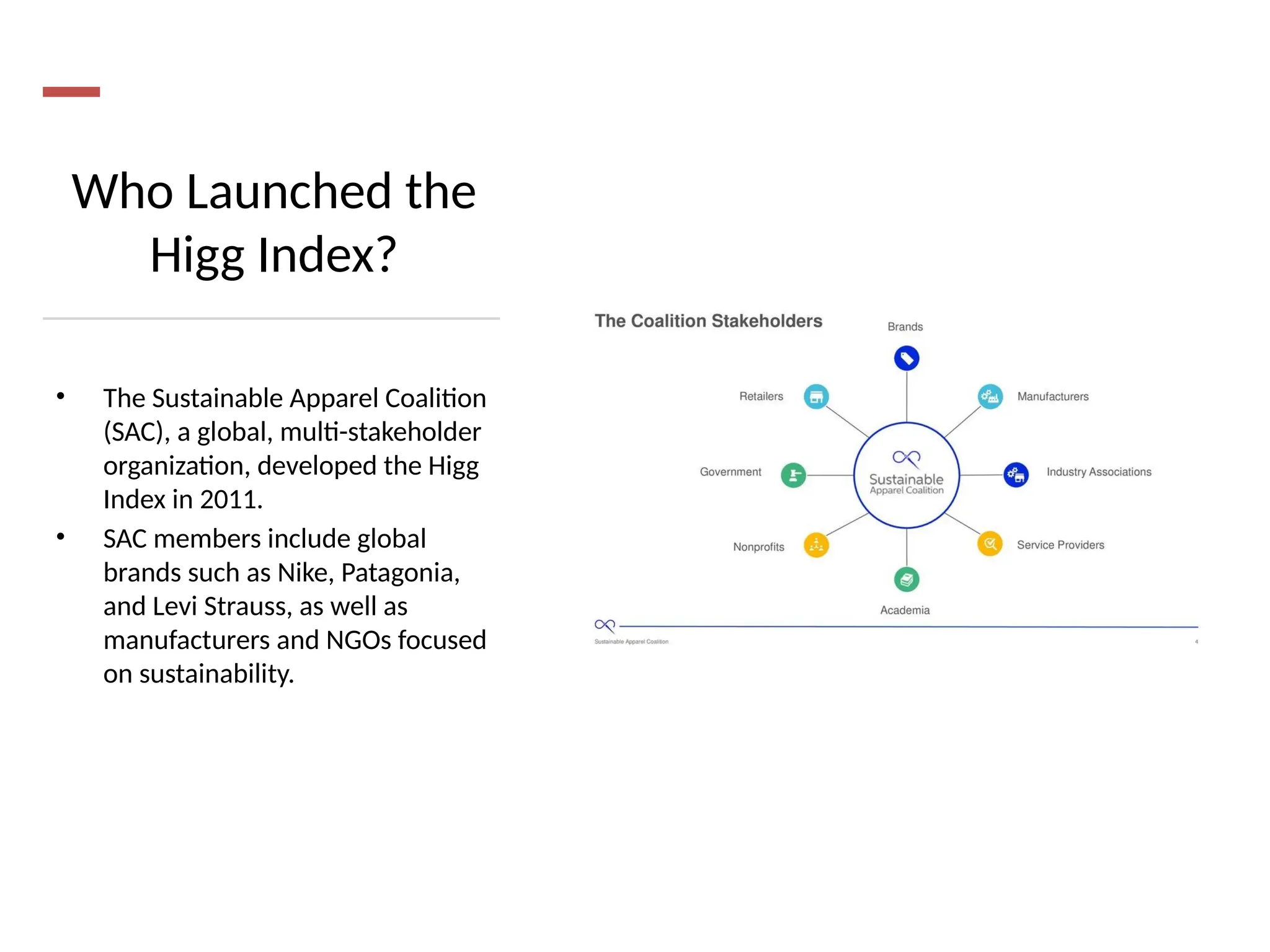
• The Sustainable Apparel Coalition
(SAC), a global, multi-stakeholder
organization, developed the Higg
Index in 2011.
• SAC members include global
brands such as Nike, Patagonia,
and Levi Strauss, as well as
manufacturers and NGOs focused
on sustainability.
Basic
Components
of the Higg
Index Tools
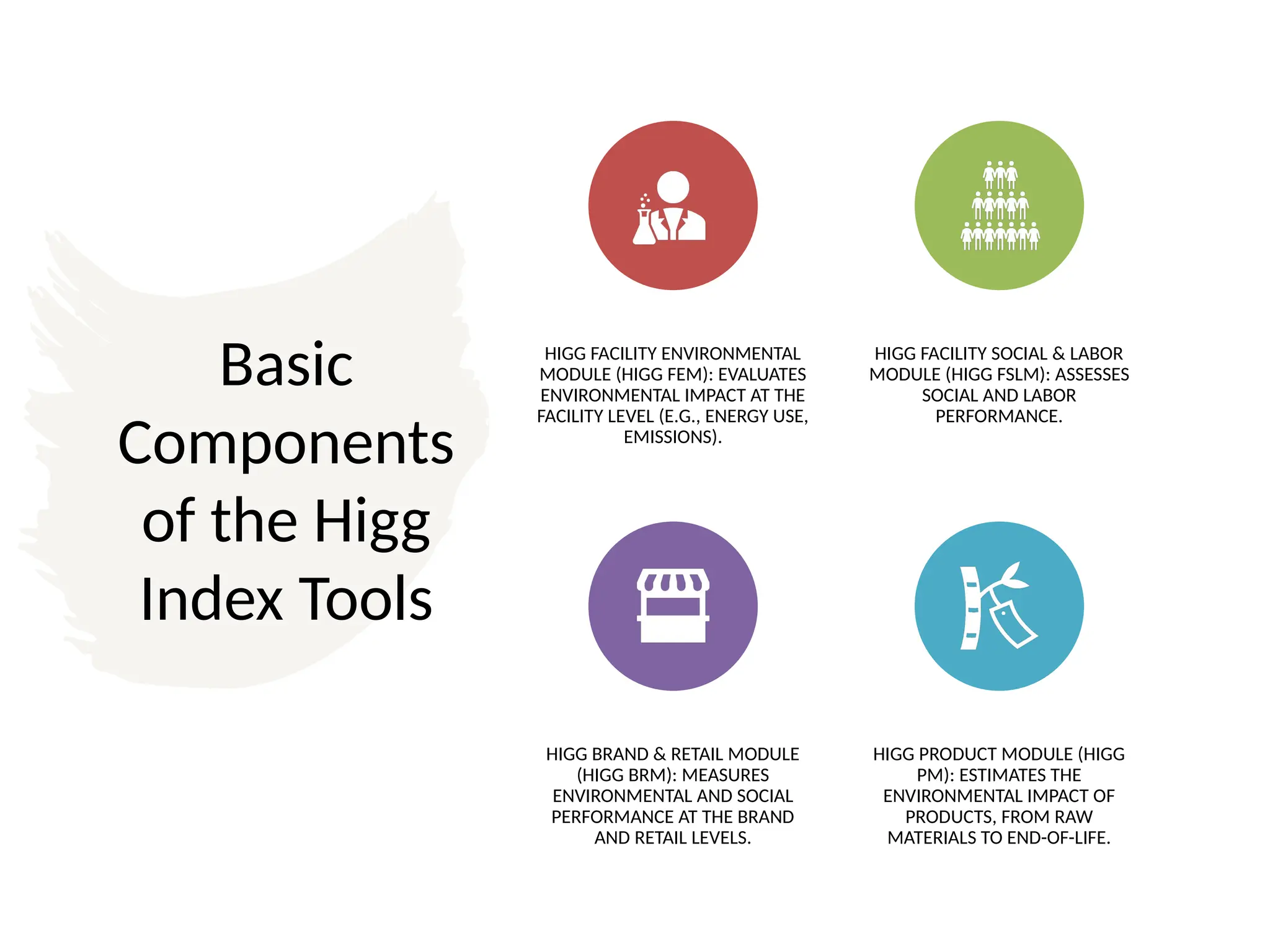
HIGG FACILITY ENVIRONMENTAL
MODULE (HIGG FEM): EVALUATES
ENVIRONMENTAL IMPACT AT THE
FACILITY LEVEL (E.G., ENERGY USE,
EMISSIONS).
HIGG FACILITY SOCIAL & LABOR
MODULE (HIGG FSLM): ASSESSES
SOCIAL AND LABOR
PERFORMANCE.
HIGG BRAND & RETAIL MODULE
(HIGG BRM): MEASURES
ENVIRONMENTAL AND SOCIAL
PERFORMANCE AT THE BRAND
AND RETAIL LEVELS.
HIGG PRODUCT MODULE (HIGG
PM): ESTIMATES THE
ENVIRONMENTAL IMPACT OF
PRODUCTS, FROM RAW
MATERIALS TO END-OF-LIFE.
Report
Structure &
Format
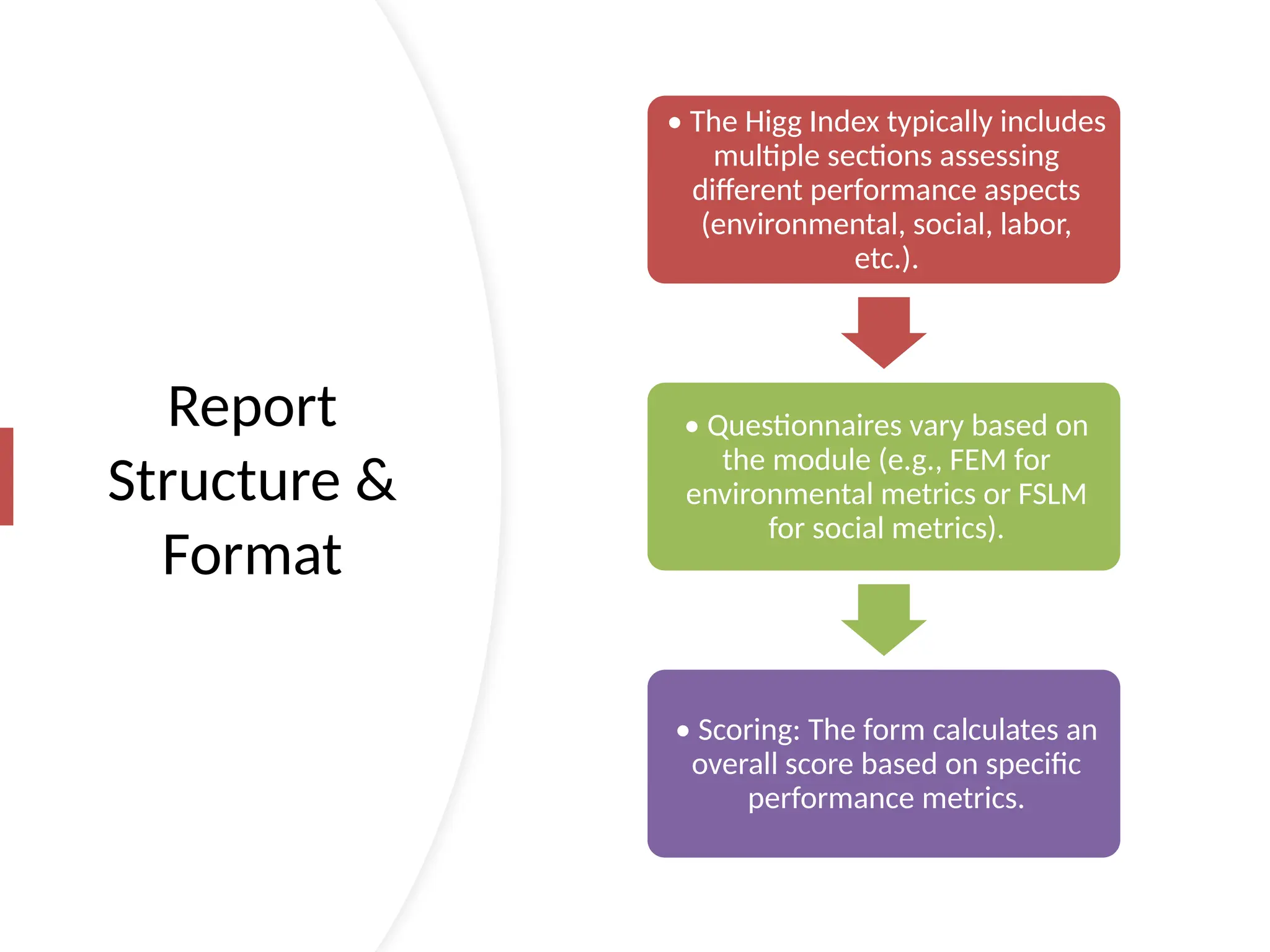
• The Higg Index typically includes
multiple sections assessing
different performance aspects
(environmental, social, labor,
etc.).
• Questionnaires vary based on
the module (e.g., FEM for
environmental metrics or FSLM
for social metrics).
• Scoring: The form calculates an
overall score based on specific
performance metrics.
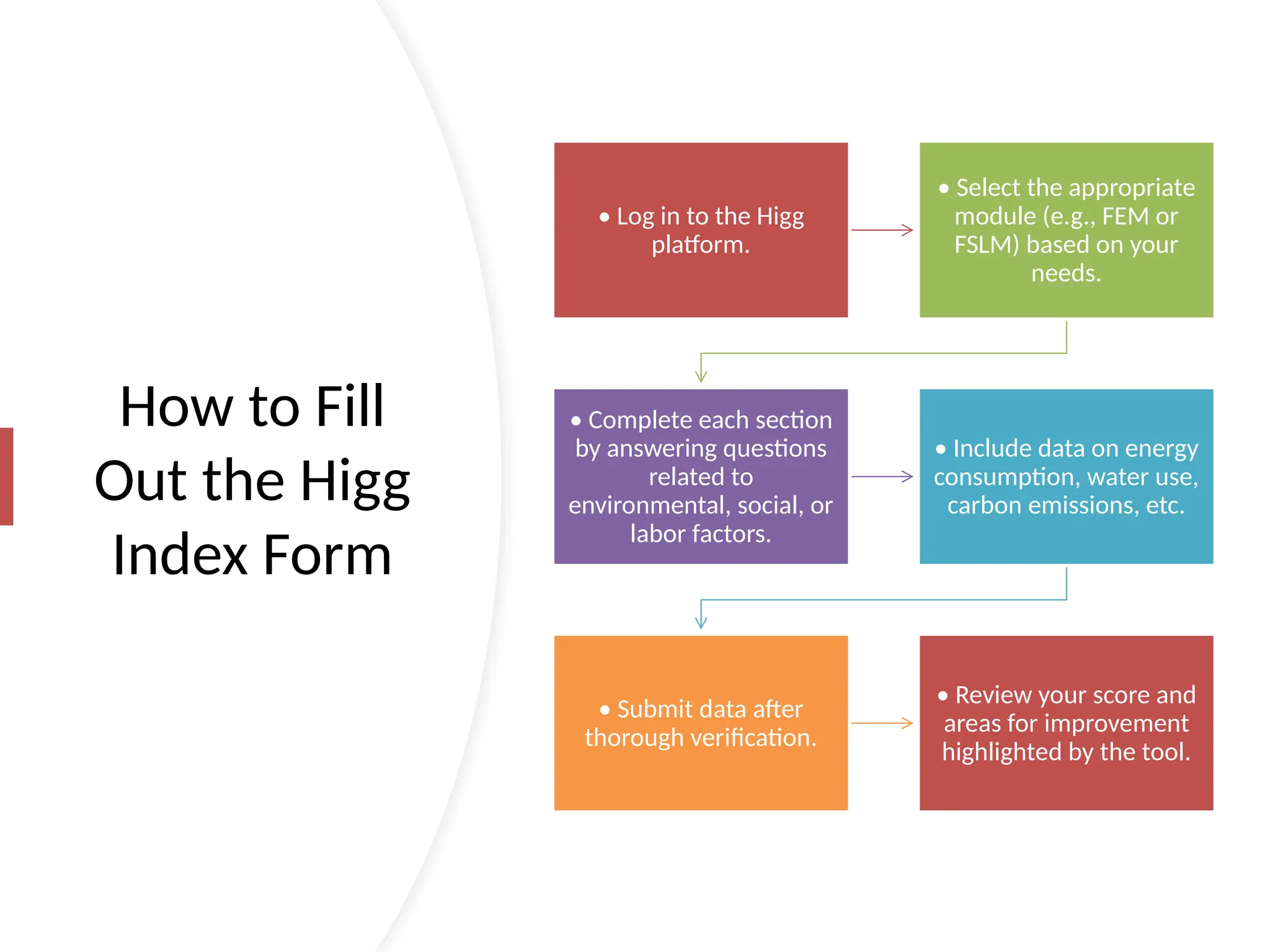
How to Fill
Out the Higg
Index Form
• Log in to the Higg
platform.
• Select the appropriate
module (e.g., FEM or
FSLM) based on your
needs.
• Complete each section
by answering questions
related to
environmental, social, or
labor factors.
• Include data on energy
consumption, water use,
carbon emissions, etc.
• Submit data after
thorough verification.
• Review your score and
areas for improvement
highlighted by the tool.
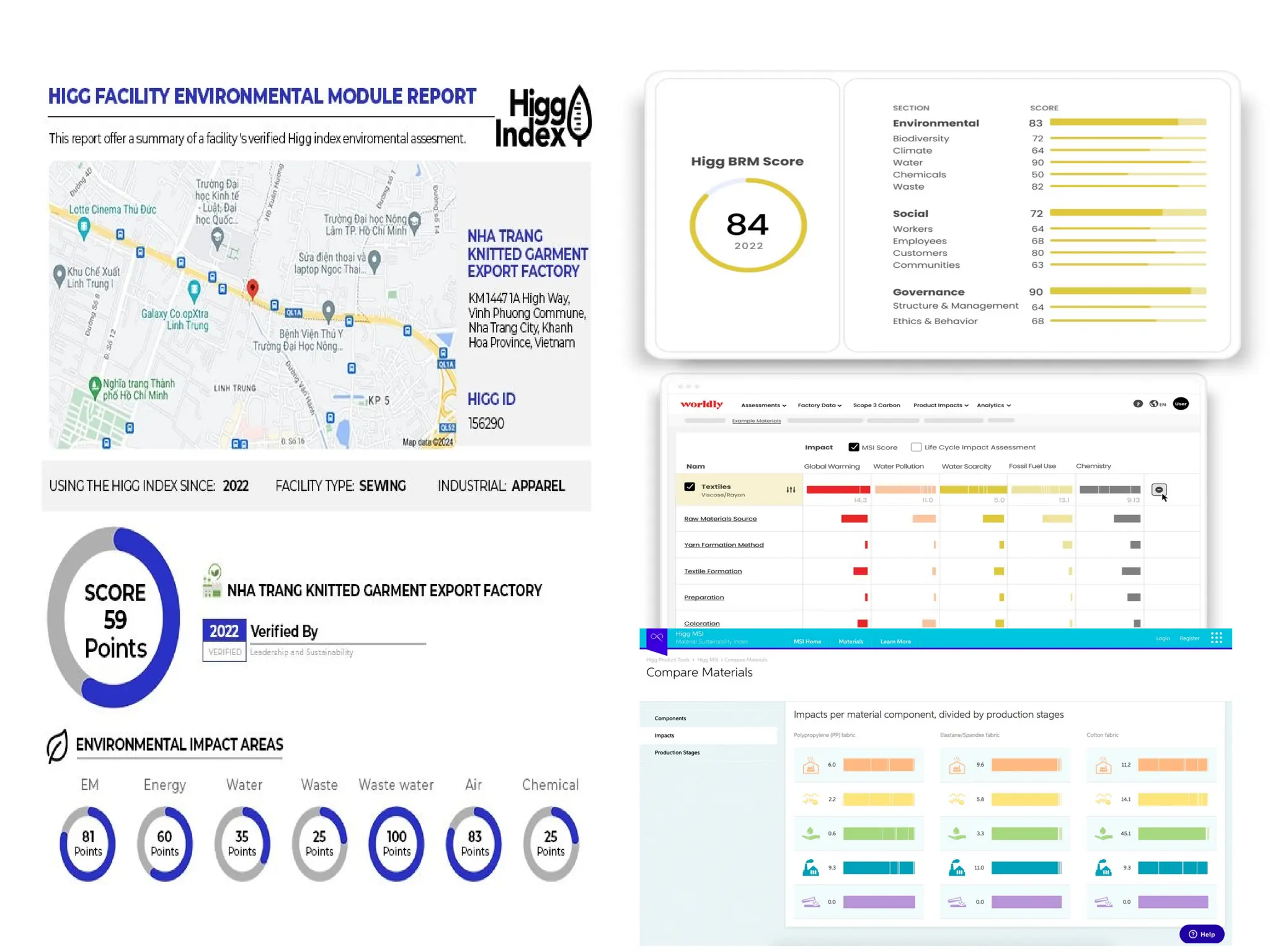
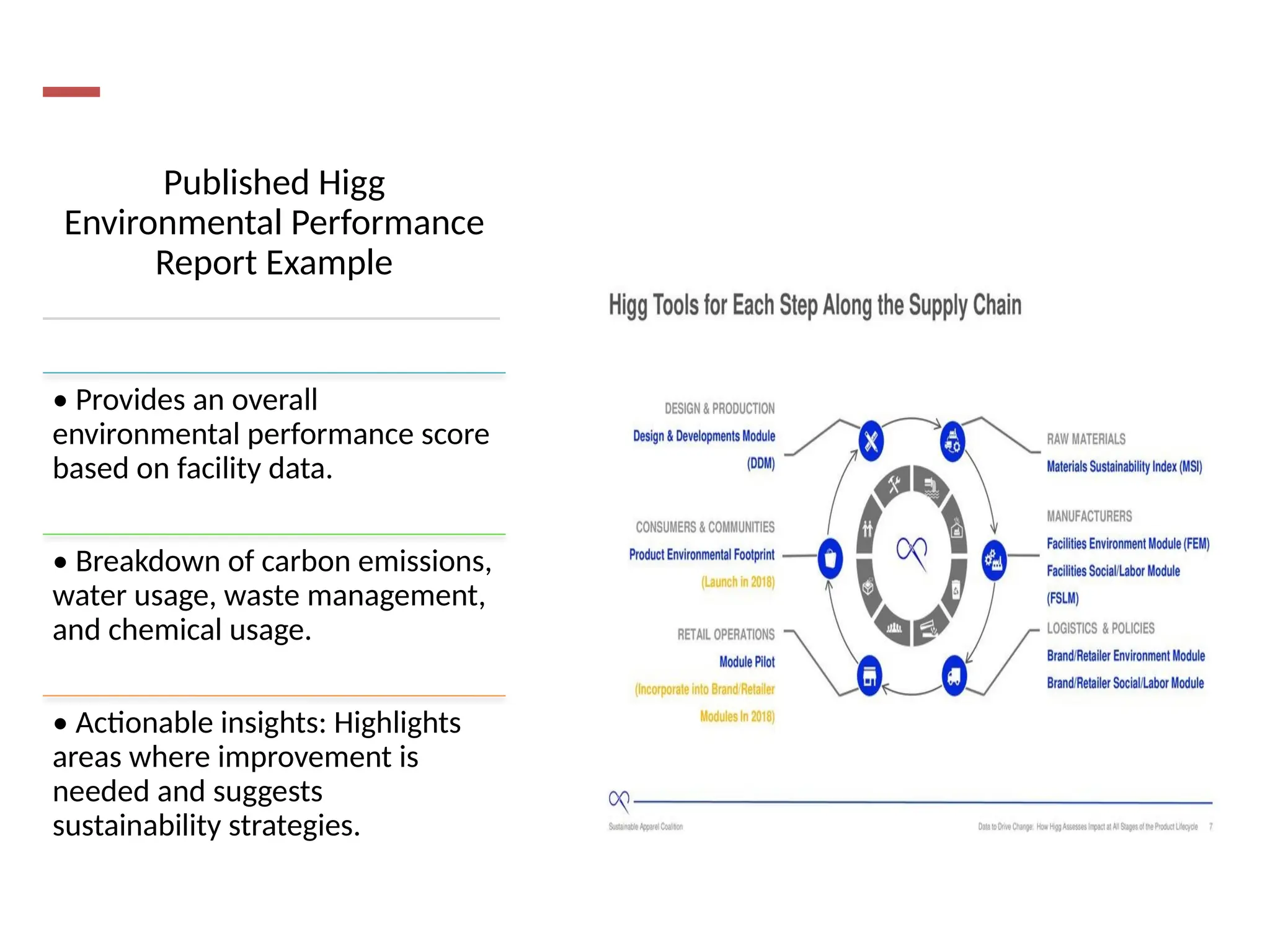
Published Higg
Environmental Performance
Report Example
• Provides an overall
environmental performance score
based on facility data.
• Breakdown of carbon emissions,
water usage, waste management,
and chemical usage.
• Actionable insights: Highlights
areas where improvement is
needed and suggests
sustainability strategies.
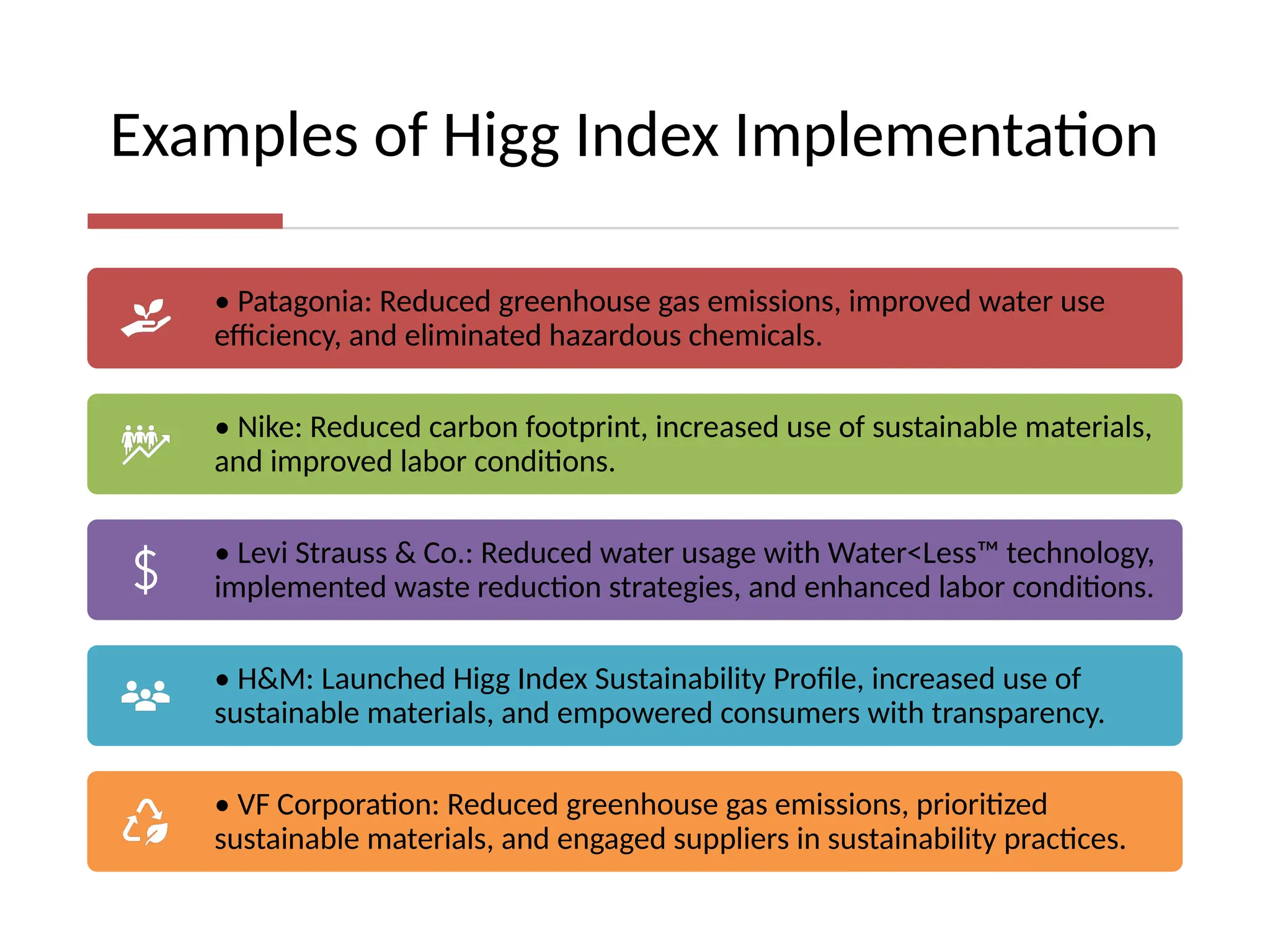
Examples of Higg Index Implementation
• Patagonia: Reduced greenhouse gas emissions, improved water use
efficiency, and eliminated hazardous chemicals.
• Nike: Reduced carbon footprint, increased use of sustainable materials,
and improved labor conditions.
• Levi Strauss & Co.: Reduced water usage with Water<Less™ technology,
implemented waste reduction strategies, and enhanced labor conditions.
• H&M: Launched Higg Index Sustainability Profile, increased use of
sustainable materials, and empowered consumers with transparency.
• VF Corporation: Reduced greenhouse gas emissions, prioritized
sustainable materials, and engaged suppliers in sustainability practices.
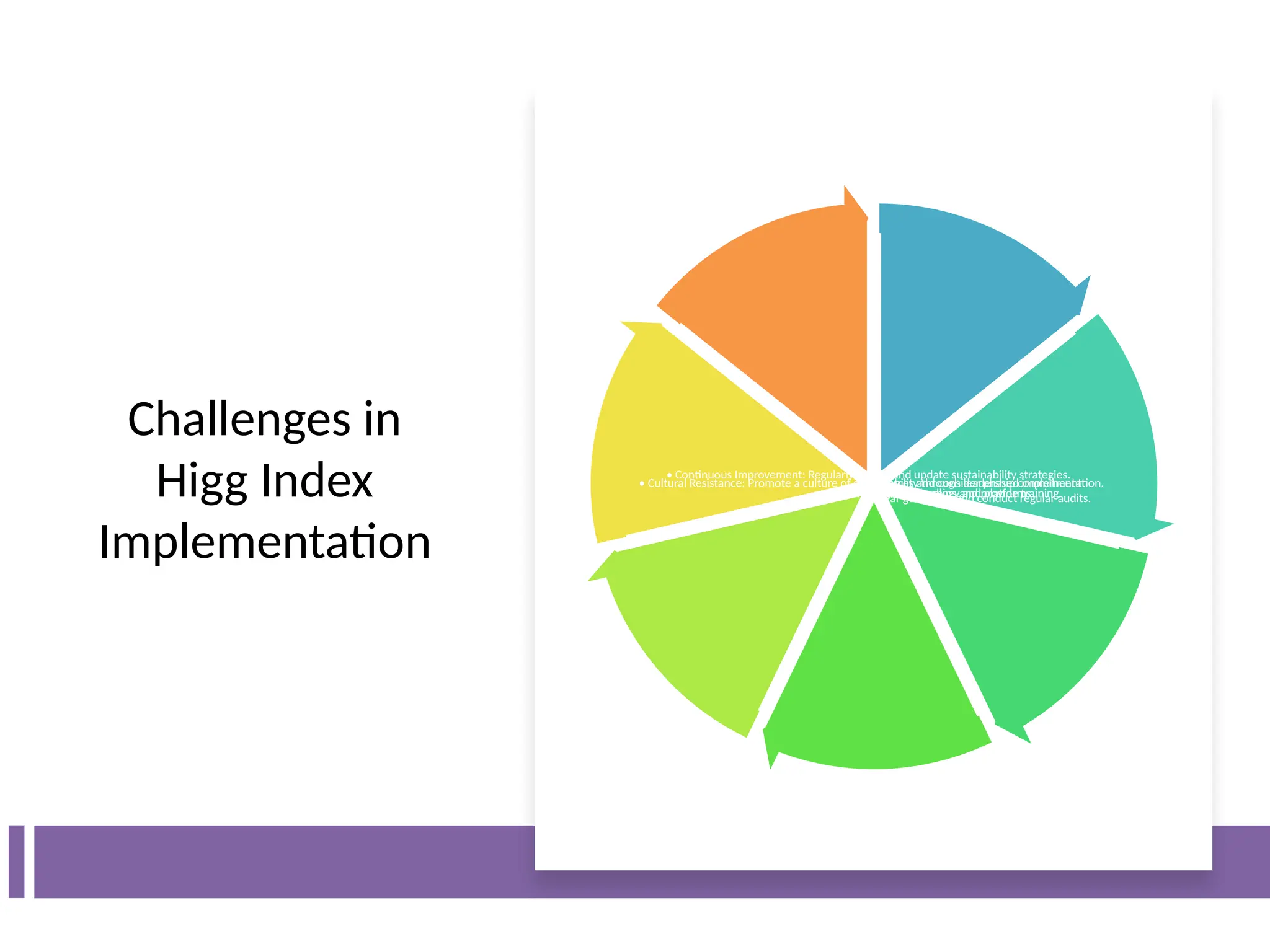
Challenges in
Higg Index
Implementation
• Data Collection and Accuracy: Establish robust data collection systems.
• Resource Intensity: Allocate sufficient resources and consider phased implementation.
• Supplier Engagement: Foster strong relationships and provide training.
• Standardization and Consistency: Develop clear guidelines and conduct regular audits.
• Technological Barriers: Invest in modern technology and platforms.
• Cultural Resistance: Promote a culture of sustainability through leadership commitment.
• Continuous Improvement: Regularly review and update sustainability strategies.
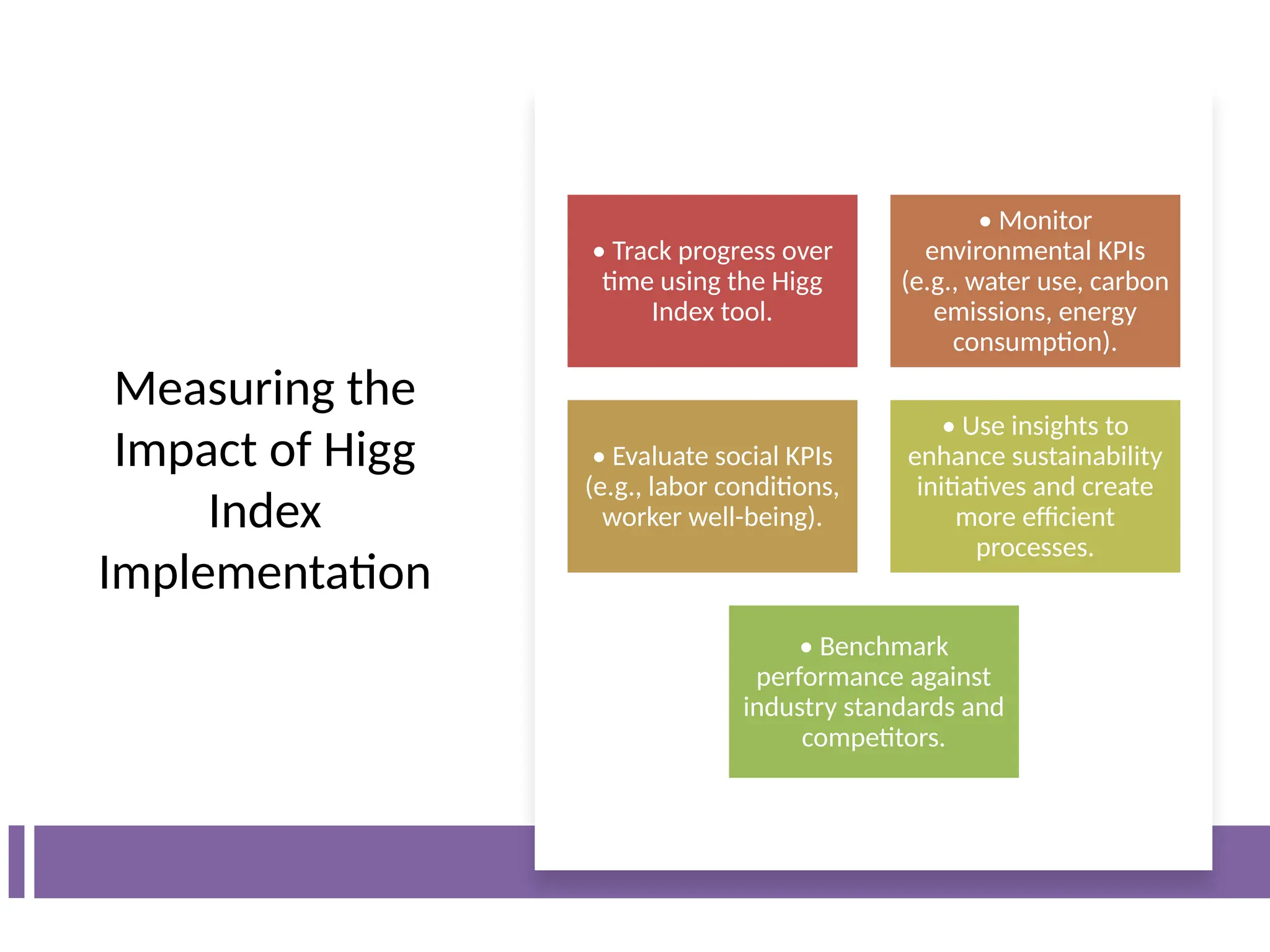
Measuring the
Impact of Higg
Index
Implementation
• Track progress over
time using the Higg
Index tool.
• Monitor
environmental KPIs
(e.g., water use, carbon
emissions, energy
consumption).
• Evaluate social KPIs
(e.g., labor conditions,
worker well-being).
• Use insights to
enhance sustainability
initiatives and create
more efficient
processes.
• Benchmark
performance against
industry standards and
competitors.
References
• Sustainable Apparel Coalition (SAC) - Higg Index Overview:
https://apparelcoalition.org/the-higg-index/
• Patagonia Sustainability Practices:
https://www.patagonia.com/sustainability/
• Nike Sustainability: https://purpose.nike.com/sustainability
• Levi Strauss Sustainability: https://www.levistrauss.com/sustainability/
• H&M Sustainability Initiatives: https://hmgroup.com/sustainability/
• VF Corporation Sustainability Practices: https://www.vfc.com/sustainability/
Any
Questions

How to use Higg_Index_Presentation.pptx

  • 1.
  • 2.
    What is theHigg Index? (Definition) Definition: The Higg Index is a suite of tools developed by the Sustainable Apparel Coalition (SAC) to measure environmental, social, and labor impacts across the supply chain. It helps companies to identify areas for improvement in their sustainability practices and supports transparency.
  • 3.
    The Role ofthe Higg Index Role: It provides a standardized framework for assessing and comparing sustainability performance, enabling brands, manufacturers, and facilities to improve their processes. It aims to foster greater sustainability across the apparel, footwear, and textile industries.
  • 4.
    Importance of Using the HiggIndex • Promotes environmental responsibility by tracking carbon emissions, water use, chemical management, and energy consumption. • Supports social responsibility by evaluating working conditions and labor practices. • Encourages continuous improvement and accountability through data- driven decisions. • Helps brands meet customer demand for transparency and sustainable products.
  • 5.
    Who Launched the HiggIndex? • The Sustainable Apparel Coalition (SAC), a global, multi-stakeholder organization, developed the Higg Index in 2011. • SAC members include global brands such as Nike, Patagonia, and Levi Strauss, as well as manufacturers and NGOs focused on sustainability.
  • 6.
    Basic Components of the Higg IndexTools HIGG FACILITY ENVIRONMENTAL MODULE (HIGG FEM): EVALUATES ENVIRONMENTAL IMPACT AT THE FACILITY LEVEL (E.G., ENERGY USE, EMISSIONS). HIGG FACILITY SOCIAL & LABOR MODULE (HIGG FSLM): ASSESSES SOCIAL AND LABOR PERFORMANCE. HIGG BRAND & RETAIL MODULE (HIGG BRM): MEASURES ENVIRONMENTAL AND SOCIAL PERFORMANCE AT THE BRAND AND RETAIL LEVELS. HIGG PRODUCT MODULE (HIGG PM): ESTIMATES THE ENVIRONMENTAL IMPACT OF PRODUCTS, FROM RAW MATERIALS TO END-OF-LIFE.
  • 7.
    Report Structure & Format • TheHigg Index typically includes multiple sections assessing different performance aspects (environmental, social, labor, etc.). • Questionnaires vary based on the module (e.g., FEM for environmental metrics or FSLM for social metrics). • Scoring: The form calculates an overall score based on specific performance metrics.
  • 9.
    How to Fill Outthe Higg Index Form • Log in to the Higg platform. • Select the appropriate module (e.g., FEM or FSLM) based on your needs. • Complete each section by answering questions related to environmental, social, or labor factors. • Include data on energy consumption, water use, carbon emissions, etc. • Submit data after thorough verification. • Review your score and areas for improvement highlighted by the tool.
  • 10.
    Published Higg Environmental Performance ReportExample • Provides an overall environmental performance score based on facility data. • Breakdown of carbon emissions, water usage, waste management, and chemical usage. • Actionable insights: Highlights areas where improvement is needed and suggests sustainability strategies.
  • 11.
    Examples of HiggIndex Implementation • Patagonia: Reduced greenhouse gas emissions, improved water use efficiency, and eliminated hazardous chemicals. • Nike: Reduced carbon footprint, increased use of sustainable materials, and improved labor conditions. • Levi Strauss & Co.: Reduced water usage with Water<Less™ technology, implemented waste reduction strategies, and enhanced labor conditions. • H&M: Launched Higg Index Sustainability Profile, increased use of sustainable materials, and empowered consumers with transparency. • VF Corporation: Reduced greenhouse gas emissions, prioritized sustainable materials, and engaged suppliers in sustainability practices.
  • 12.
    Challenges in Higg Index Implementation •Data Collection and Accuracy: Establish robust data collection systems. • Resource Intensity: Allocate sufficient resources and consider phased implementation. • Supplier Engagement: Foster strong relationships and provide training. • Standardization and Consistency: Develop clear guidelines and conduct regular audits. • Technological Barriers: Invest in modern technology and platforms. • Cultural Resistance: Promote a culture of sustainability through leadership commitment. • Continuous Improvement: Regularly review and update sustainability strategies.
  • 13.
    Measuring the Impact ofHigg Index Implementation • Track progress over time using the Higg Index tool. • Monitor environmental KPIs (e.g., water use, carbon emissions, energy consumption). • Evaluate social KPIs (e.g., labor conditions, worker well-being). • Use insights to enhance sustainability initiatives and create more efficient processes. • Benchmark performance against industry standards and competitors.
  • 14.
    References • Sustainable ApparelCoalition (SAC) - Higg Index Overview: https://apparelcoalition.org/the-higg-index/ • Patagonia Sustainability Practices: https://www.patagonia.com/sustainability/ • Nike Sustainability: https://purpose.nike.com/sustainability • Levi Strauss Sustainability: https://www.levistrauss.com/sustainability/ • H&M Sustainability Initiatives: https://hmgroup.com/sustainability/ • VF Corporation Sustainability Practices: https://www.vfc.com/sustainability/
  • 15.