How to Choose the Right Transport Management Software (TMS).pdf
Looking for the best Transport Management Software (TMS)? Discover expert tips to evaluate features, compare providers, and choose the right TMS solution to optimize logistics, cut costs, and streamline your supply chain.
How to Choose the Right Transport Management Software (TMS).pdf
1.
A Step-by-Step Guideon Choosing the Right
Transport Management Software
Have you thought about how some businesses can manage their transportation operation, while
others struggle with inefficiency and delays? The secret of this is that Transport Management
Software (TMS) is a control center for logistics operations, which streamlines the whole process.
It optimizes and routes, which keeps your business running smoothly. This kind of system
provides businesses with real-time visibility into their transportation operations, helps in reducing
Time in decision making, and minimizes production delays.
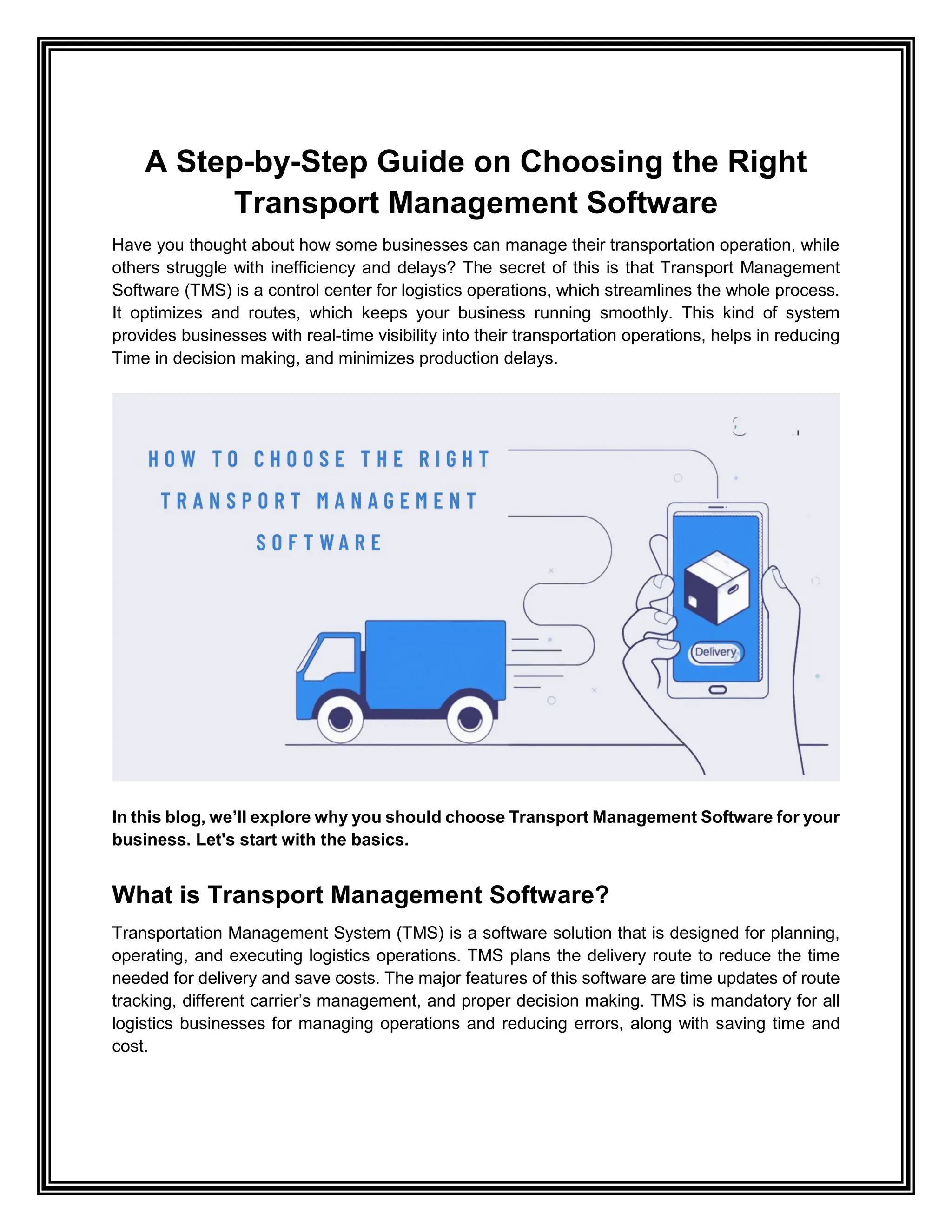
In this blog, we’ll explore why you should choose Transport Management Software for your
business. Let's start with the basics.
What is Transport Management Software?
Transportation Management System (TMS) is a software solution that is designed for planning,
operating, and executing logistics operations. TMS plans the delivery route to reduce the time
needed for delivery and save costs. The major features of this software are time updates of route
tracking, different carrier’s management, and proper decision making. TMS is mandatory for all
logistics businesses for managing operations and reducing errors, along with saving time and
cost.
2.
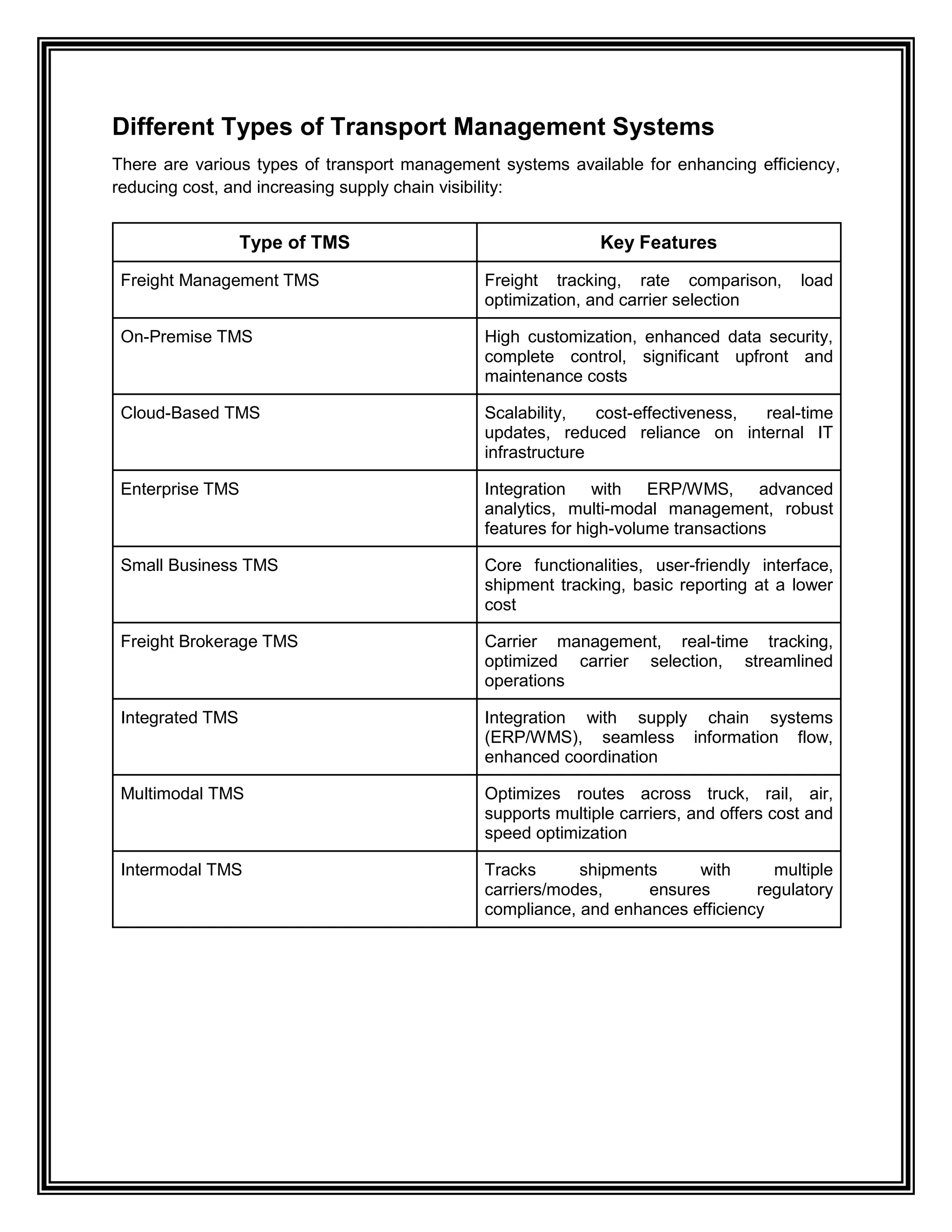
Different Types ofTransport Management Systems
There are various types of transport management systems available for enhancing efficiency,
reducing cost, and increasing supply chain visibility:
Type of TMS Key Features
Freight Management TMS Freight tracking, rate comparison, load
optimization, and carrier selection
On-Premise TMS High customization, enhanced data security,
complete control, significant upfront and
maintenance costs
Cloud-Based TMS Scalability, cost-effectiveness, real-time
updates, reduced reliance on internal IT
infrastructure
Enterprise TMS Integration with ERP/WMS, advanced
analytics, multi-modal management, robust
features for high-volume transactions
Small Business TMS Core functionalities, user-friendly interface,
shipment tracking, basic reporting at a lower
cost
Freight Brokerage TMS Carrier management, real-time tracking,
optimized carrier selection, streamlined
operations
Integrated TMS Integration with supply chain systems
(ERP/WMS), seamless information flow,
enhanced coordination
Multimodal TMS Optimizes routes across truck, rail, air,
supports multiple carriers, and offers cost and
speed optimization
Intermodal TMS Tracks shipments with multiple
carriers/modes, ensures regulatory
compliance, and enhances efficiency
3.
Features of TransportManagement System
Freight Management
The freight management system will oversee the entire shipping process from planning to
execution. This feature will help in optimizing the load capacity and ensure compliance with
regulations.
Carrier Management
Negotiating contracts, evaluating carrier performance, and managing relationships effectively
which is important for transportation operations. Businesses can select the best carrier based on
performance metrics and cost-effectiveness by reducing expenses.
Analytical and Reporting
TMS has analytical tools that let users generate an analytical report of many transportation
operations. This feature is important for choosing the right TMS for your business. These reports
help in identifying the trends and help in making decisions. Users can use advanced analytical
tools to continuously improve logistics performance.
Customers Communication
Effective communication with customers helps in automated alerts about the tracking status or
shipment delay. TMS can send notifications and emails to customers about the status of the
transit.
Automated Documentation
This feature of TMS helps in documenting all the paperwork and storing it securely, which will
eliminate the risk of errors and compliance issues. The best Transportation Management System
is one that has a compliance check in the documentation process during shipment, adhering to
relevant regulations.
Steps to choose the correct Transportation Management
System
Step 1: Identify your Business Needs
In this step, you must identify your business needs first, which includes shipment volume,
geographic location, future growth, and pain points etc. These factors should be considered as
they help you in defining your needs for a Transportation management system.
4.
Step 2: SetBudget
After the need identification, you must decide on your budget to meet different types of costs, like
upfront and ongoing. Also, based on your security and IT infrastructure, you must decide between
an on-premises and a cloud-based system. If your operations include managing stock levels,
factor management integration TMS is important.
Step 3: Compare the Features and Integration
You must prioritize the features in TMS like freight management, analytics, and automated
documentation. Make sure that the system can integrate with existing systems such as ERP,
WMS, and CRM. And look for easy customization, a system that can be easily customized as per
business needs. hire web developer who will help with this kind of integration.
Step 4: Different Vendors Availability
Research different vendors and request demos and free trials. Always go for those vendors who
have a good reputation, experience, and specialization in the industry. In the demo, check for
ease of use and user friendliness, also evaluate reliability and responsiveness.
Step 5: Finalize the Vendor
After thorough research, finalize the vendor that gives support and regular updates. Choose a
solution that grows your business by automating business operations. Again, before actually
finalizing the vendor who gives the tailored solution with a freight management software feature,
relook at your goals and confirm that the chosen vendor aligns with your business goals.
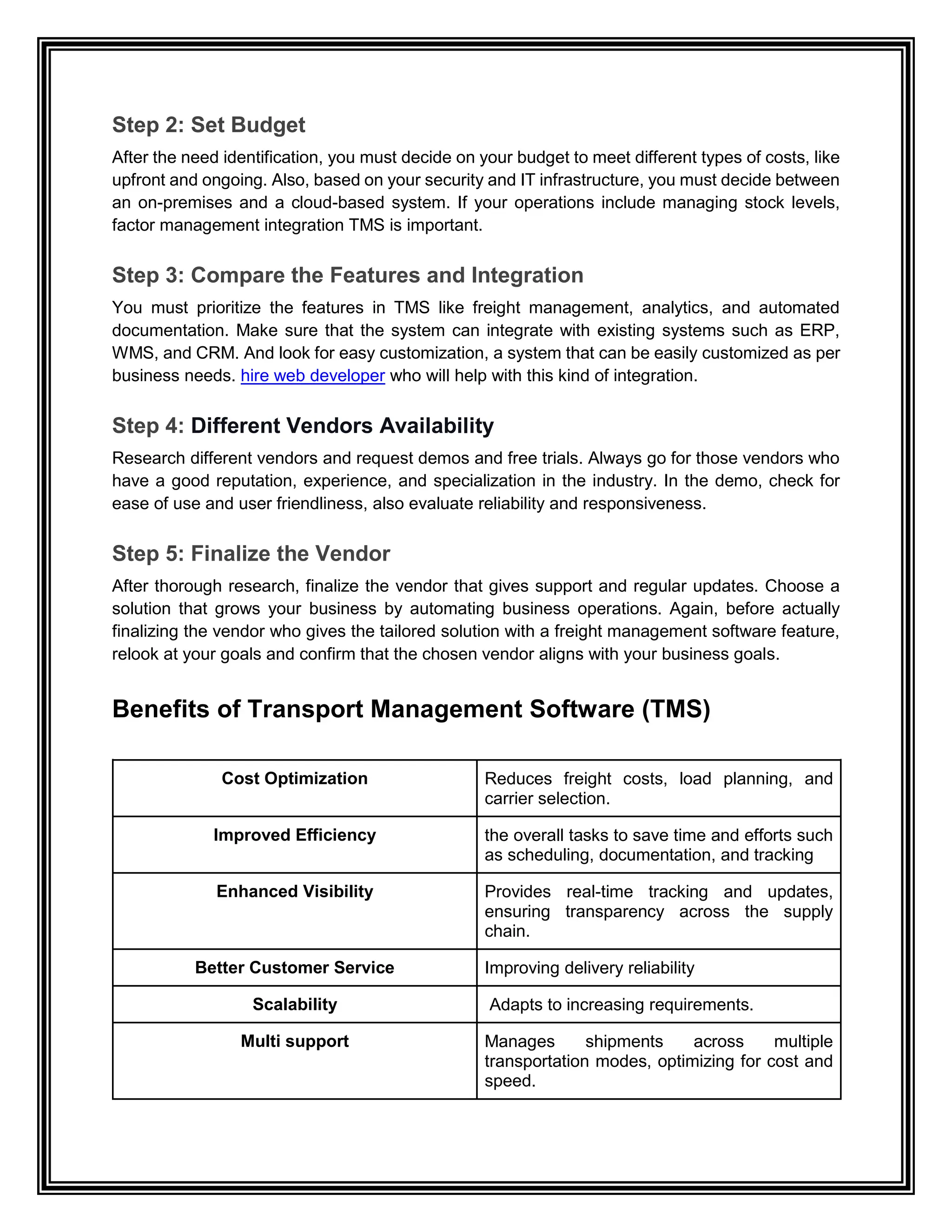
Benefits of Transport Management Software (TMS)
Cost Optimization Reduces freight costs, load planning, and
carrier selection.
Improved Efficiency the overall tasks to save time and efforts such
as scheduling, documentation, and tracking
Enhanced Visibility Provides real-time tracking and updates,
ensuring transparency across the supply
chain.
Better Customer Service Improving delivery reliability
Scalability Adapts to increasing requirements.
Multi support Manages shipments across multiple
transportation modes, optimizing for cost and
speed.
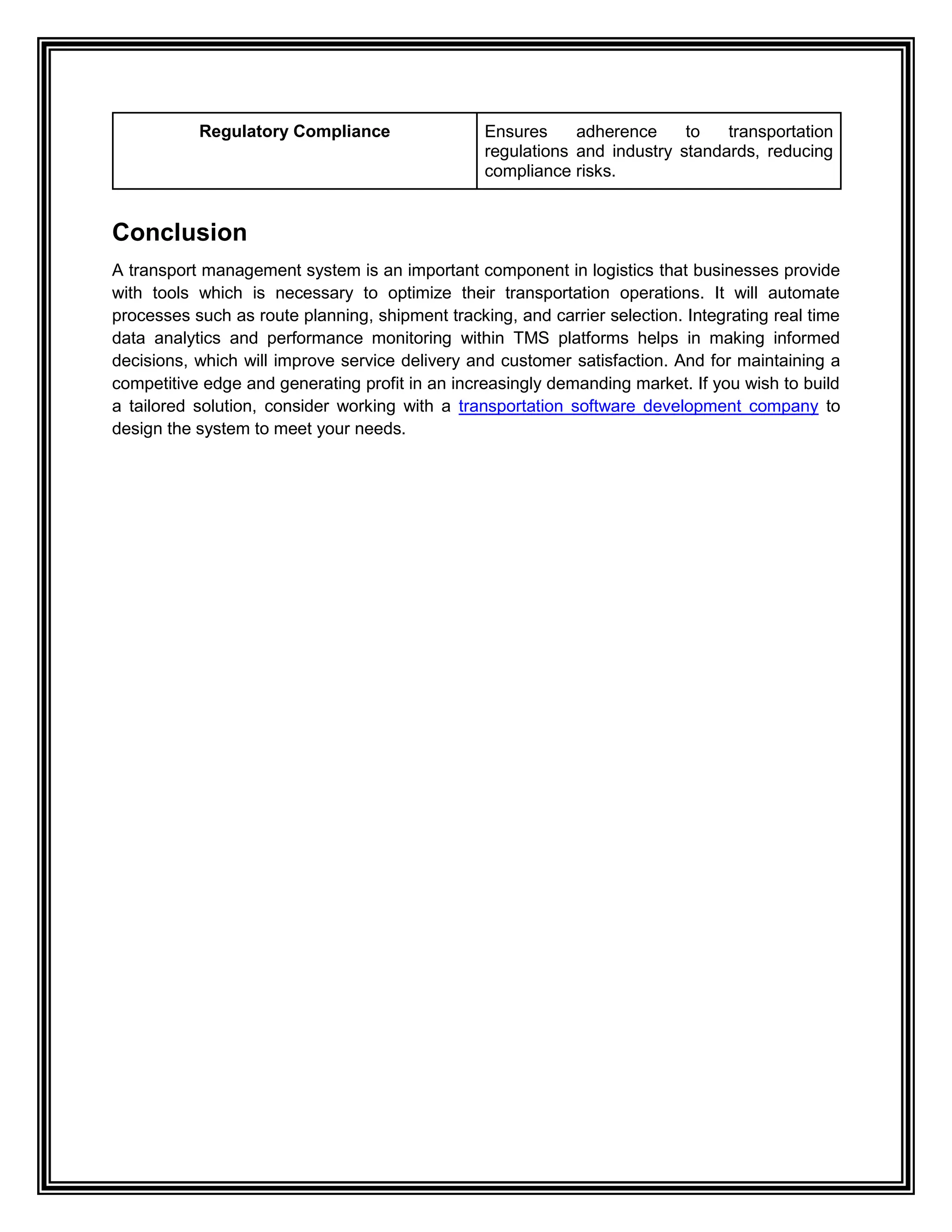
5.
Regulatory Compliance Ensuresadherence to transportation
regulations and industry standards, reducing
compliance risks.
Conclusion
A transport management system is an important component in logistics that businesses provide
with tools which is necessary to optimize their transportation operations. It will automate
processes such as route planning, shipment tracking, and carrier selection. Integrating real time
data analytics and performance monitoring within TMS platforms helps in making informed
decisions, which will improve service delivery and customer satisfaction. And for maintaining a
competitive edge and generating profit in an increasingly demanding market. If you wish to build
a tailored solution, consider working with a transportation software development company to
design the system to meet your needs.


![Coded Agents – with UiPath SDK + LangGraph [Virtual Hands-on Workshop]](https://cdn.slidesharecdn.com/ss_thumbnails/codedagentsdeck-251215155422-5497c599-thumbnail.jpg?width=640&height=640&fit=bounds)


