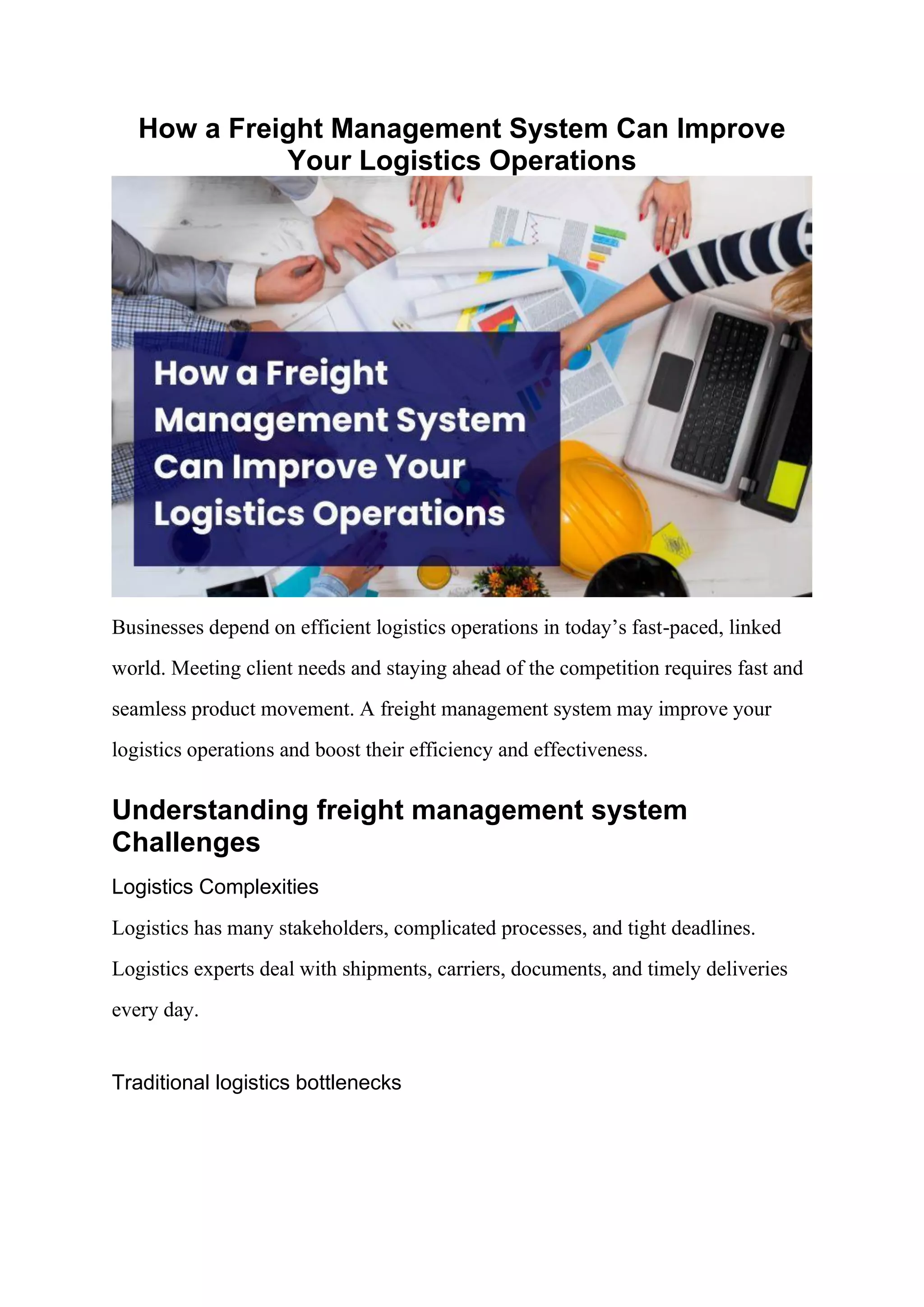
How a Freight Management System Can Improve
Your Logistics Operations
Businesses depend on efficient logistics operations in today’s fast-paced, linked
world. Meeting client needs and staying ahead of the competition requires fast and
seamless product movement. A freight management system may improve your
logistics operations and boost their efficiency and effectiveness.
Understanding freight management system
Challenges
Logistics Complexities
Logistics has many stakeholders, complicated processes, and tight deadlines.
Logistics experts deal with shipments, carriers, documents, and timely deliveries
every day.
Traditional logistics bottlenecks
Traditional logistics operations can be inefficient and costly due to bottlenecks.
Manual processes, poor communication, and lack of real-time visibility can delay,
error, and miss optimization possibilities.
Freight Management System
A. What’s a freight management system?
Freight management systems automate logistics processes. From freight booking
and paperwork to carrier management and performance evaluation, it delivers end-
to-end visibility, control, and optimization.
B. Main Functions
Freight management systems have several features and functions tailored to
logistics operations. Automated freight booking, real-time tracking, freight rate
management, load optimization, document management, and reporting are
examples.
C. Freight Management System Advantages
Freight management systems can improve logistics operations in many ways:
• Automation lowers errors and saves time, increasing productivity and
turnaround times.
• Route planning, load consolidation, and freight rate management
minimise transportation costs and enhance resource utilisation.
• Real-time tracking improves shipment monitoring, issue resolution,
and customer support.
• Streamlined Communication: Centralised communication platforms
let stakeholders collaborate and share information, reducing
confusion and delays.
• Data-Driven Insights: Advanced reporting and analytics give
important performance measures for informed decision-making and
continual development.
III. Freight Management System Streamlining
Click here
A. Automate Freight Booking and Documentation
No more manual freight booking and paperwork. A freight management system
automates shipping documentation, online booking, and confirmation. Book
shipments, generate bills of lading, and streamline documentation with a few
clicks.
B. Effective Freight Rate Optimization
With various carriers and unpredictable market conditions, freight rate
management is difficult. A freight management system lets you evaluate real-time
carrier prices, identify the most cost-effective choice, and optimise your freight
budget.
C. Real-time Tracking
Freight management systems allow real-time cargo tracking. The system tracks
your shipments using GPS and tracking technology. This improves client
communication, proactive decision-making, and prompt interventions.
D. Improved Collaboration
Logistics operations require good stakeholder communication. Shippers, carriers,
and others can communicate efficiently through a freight management system.
Communication speeds reaction and reduces errors.
IV. Optimising Resource Use and Cost Reduction
A. Route optimization and load consolidation
Freight management optimises routes based on distance, traffic, and delivery
schedules. Consolidating goods and arranging effective routes reduces empty
miles, improves fuel economy, and maximises transportation resources.
B. Carrier Performance and Management
Logistics success requires carrier management. A freight management system
simplifies carrier selection, evaluates performance using established measures, and
maintains a trustworthy carrier database. This guarantees you work with the most
efficient and cost-effective partners for your needs.
C. Freight Audit/Invoice Management
Manual freight bill auditing is time-consuming and error-prone. Freight
management systems automate freight audits for correct billing and payment
reconciliation. Eliminating overcharges, conflicts, and invoice processing delays
saves money and improves financial control.
V. Improving Service and Satisfaction
A. Accurate Shipment Tracking and Delivery Notifications
Customers today expect openness and real-time shipment updates. A freight
management system lets you give accurate tracking and proactive delivery
notifications to keep customers informed and delighted.
B. Prompt Problem Solving
Logistics operations face unexpected issues. A freight management system helps
you anticipate and resolve challenges. The system helps you quickly resolve issues
like weather-related rerouting or delivery delays to keep customers pleased.
C. Improved Communication and Transparency
Transparency fosters business trust. A freight management system lets you give
customers and partners more information about their shipments, delivery times,
and any concerns. Communication improves connections and client loyalty.
VI. Freight Management System Installation
A. Determining Your Logistics Goals
Evaluate logistical needs, pain areas, and goals before deploying a freight
management system. Choose features and functions that support your business
goals.
B. Assessing Freight Management System Providers
Research reliable freight management system suppliers that offer solutions for your
industry and business size. Compare features, cost, user reviews, and integration
capabilities.
C. Customization and System Integration
Customise the system with your provider. Integrate ERP, WMS, and TMS systems.
D. Training and Adoption
Train staff on freight management system use. To ensure a seamless transition and
optimise user acceptance, create training materials, hold workshops, and provide
assistance.
E. Continuous Monitoring and Improvement
Review system performance, gather user feedback, and analyse key performance
metrics for continual improvement. Work with your provider to improve the
system to meet business demands.
VII. Success Stories: Real-World Freight
Management System Implementations
Case Study 1: Company X Improves Efficiency and Cuts Costs
Discover how multinational retailer Company X used a freight management
system to optimise logistics, decrease transportation costs by 15%, and speed up
order fulfilment, improving customer happiness.
Case Study 2: Company Y Enhances Customer Satisfaction and Service
Learn how Company Y, a logistics service provider, introduced a freight
management system to improve visibility, shipment tracking, and delivery issues,
increasing customer satisfaction by 20%.
Boosting Logistics Operations with a Freight Management System
Today’s competitive business environment requires logistical optimization. Freight
management systems boost efficiency, customer satisfaction, cost savings, and
competitiveness. Your logistics operations may increase efficiency and
profitability with the appropriate technology and strategy. Take the plunge and
transform your logistics operations with a freight management system, the key to
endless possibilities.

How a Freight Management System Can Improve Your Logistics Operations.pdf

  • 1.
    How a FreightManagement System Can Improve Your Logistics Operations Businesses depend on efficient logistics operations in today’s fast-paced, linked world. Meeting client needs and staying ahead of the competition requires fast and seamless product movement. A freight management system may improve your logistics operations and boost their efficiency and effectiveness. Understanding freight management system Challenges Logistics Complexities Logistics has many stakeholders, complicated processes, and tight deadlines. Logistics experts deal with shipments, carriers, documents, and timely deliveries every day. Traditional logistics bottlenecks
  • 2.
    Traditional logistics operationscan be inefficient and costly due to bottlenecks. Manual processes, poor communication, and lack of real-time visibility can delay, error, and miss optimization possibilities. Freight Management System A. What’s a freight management system? Freight management systems automate logistics processes. From freight booking and paperwork to carrier management and performance evaluation, it delivers end- to-end visibility, control, and optimization. B. Main Functions Freight management systems have several features and functions tailored to logistics operations. Automated freight booking, real-time tracking, freight rate management, load optimization, document management, and reporting are examples. C. Freight Management System Advantages Freight management systems can improve logistics operations in many ways: • Automation lowers errors and saves time, increasing productivity and turnaround times. • Route planning, load consolidation, and freight rate management minimise transportation costs and enhance resource utilisation. • Real-time tracking improves shipment monitoring, issue resolution, and customer support.
  • 3.
    • Streamlined Communication:Centralised communication platforms let stakeholders collaborate and share information, reducing confusion and delays. • Data-Driven Insights: Advanced reporting and analytics give important performance measures for informed decision-making and continual development. III. Freight Management System Streamlining Click here A. Automate Freight Booking and Documentation No more manual freight booking and paperwork. A freight management system automates shipping documentation, online booking, and confirmation. Book shipments, generate bills of lading, and streamline documentation with a few clicks. B. Effective Freight Rate Optimization With various carriers and unpredictable market conditions, freight rate management is difficult. A freight management system lets you evaluate real-time carrier prices, identify the most cost-effective choice, and optimise your freight budget. C. Real-time Tracking Freight management systems allow real-time cargo tracking. The system tracks your shipments using GPS and tracking technology. This improves client communication, proactive decision-making, and prompt interventions. D. Improved Collaboration
  • 4.
    Logistics operations requiregood stakeholder communication. Shippers, carriers, and others can communicate efficiently through a freight management system. Communication speeds reaction and reduces errors. IV. Optimising Resource Use and Cost Reduction A. Route optimization and load consolidation Freight management optimises routes based on distance, traffic, and delivery schedules. Consolidating goods and arranging effective routes reduces empty miles, improves fuel economy, and maximises transportation resources. B. Carrier Performance and Management Logistics success requires carrier management. A freight management system simplifies carrier selection, evaluates performance using established measures, and maintains a trustworthy carrier database. This guarantees you work with the most efficient and cost-effective partners for your needs. C. Freight Audit/Invoice Management Manual freight bill auditing is time-consuming and error-prone. Freight management systems automate freight audits for correct billing and payment reconciliation. Eliminating overcharges, conflicts, and invoice processing delays saves money and improves financial control. V. Improving Service and Satisfaction A. Accurate Shipment Tracking and Delivery Notifications
  • 5.
    Customers today expectopenness and real-time shipment updates. A freight management system lets you give accurate tracking and proactive delivery notifications to keep customers informed and delighted. B. Prompt Problem Solving Logistics operations face unexpected issues. A freight management system helps you anticipate and resolve challenges. The system helps you quickly resolve issues like weather-related rerouting or delivery delays to keep customers pleased. C. Improved Communication and Transparency Transparency fosters business trust. A freight management system lets you give customers and partners more information about their shipments, delivery times, and any concerns. Communication improves connections and client loyalty. VI. Freight Management System Installation A. Determining Your Logistics Goals Evaluate logistical needs, pain areas, and goals before deploying a freight management system. Choose features and functions that support your business goals. B. Assessing Freight Management System Providers Research reliable freight management system suppliers that offer solutions for your industry and business size. Compare features, cost, user reviews, and integration capabilities. C. Customization and System Integration Customise the system with your provider. Integrate ERP, WMS, and TMS systems.
  • 6.
    D. Training andAdoption Train staff on freight management system use. To ensure a seamless transition and optimise user acceptance, create training materials, hold workshops, and provide assistance. E. Continuous Monitoring and Improvement Review system performance, gather user feedback, and analyse key performance metrics for continual improvement. Work with your provider to improve the system to meet business demands. VII. Success Stories: Real-World Freight Management System Implementations Case Study 1: Company X Improves Efficiency and Cuts Costs Discover how multinational retailer Company X used a freight management system to optimise logistics, decrease transportation costs by 15%, and speed up order fulfilment, improving customer happiness. Case Study 2: Company Y Enhances Customer Satisfaction and Service Learn how Company Y, a logistics service provider, introduced a freight management system to improve visibility, shipment tracking, and delivery issues, increasing customer satisfaction by 20%. Boosting Logistics Operations with a Freight Management System Today’s competitive business environment requires logistical optimization. Freight management systems boost efficiency, customer satisfaction, cost savings, and competitiveness. Your logistics operations may increase efficiency and
  • 7.
    profitability with theappropriate technology and strategy. Take the plunge and transform your logistics operations with a freight management system, the key to endless possibilities.