Practical work to deliver  ‘How Science Works’
Why are we here? There are many positive changes to the new KS4 curriculum
Changes to KS4 There is an emphasis on scientific literacy Pupils should get better at distinguishing between opinion based on scientific evidence and opinion based on non scientific ideas – they should be increasingly able to question the reports they see in the media.. They should learn about the applications of scientific knowledge and how these have changed over time and they should develop a greater understanding of the social, economic and ethical implications of certain decisions
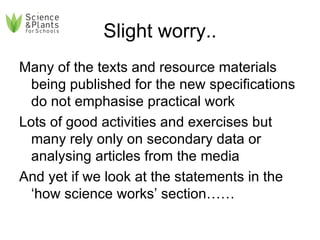
Slight worry.. Many of the texts and resource materials being published for the new specifications do not emphasise practical work Lots of good activities and exercises but many rely only on secondary data or analysing articles from the media And yet if we look at the statements in the ‘how science works’ section……
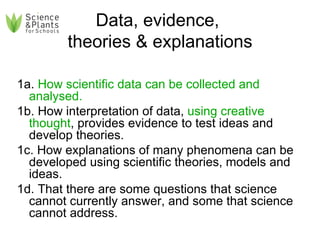
Data, evidence,  theories & explanations 1a.  How scientific data can be collected and analysed. 1b. How interpretation of data,  using creative thought , provides evidence to test ideas and develop theories. 1c. How explanations of many phenomena can be developed using scientific theories, models and ideas. 1d. That there are some questions that science cannot currently answer, and some that science cannot address.
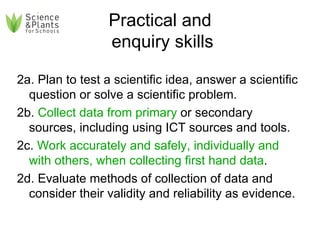
Practical and  enquiry skills 2a. Plan to test a scientific idea, answer a scientific question or solve a scientific problem. 2b.  Collect data from primary  or secondary sources, including using ICT sources and tools. 2c.  Work accurately and safely, individually and with others, when collecting first hand data . 2d. Evaluate methods of collection of data and consider their validity and reliability as evidence.
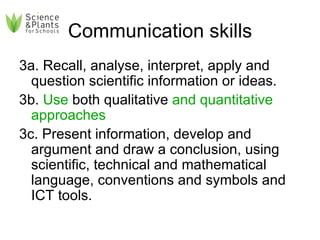
Communication skills 3a. Recall, analyse, interpret, apply and question scientific information or ideas. 3b.  Use   both qualitative   and quantitative approaches 3c. Present information, develop and argument and draw a conclusion, using scientific, technical and mathematical language, conventions and symbols and ICT tools.
Applications and  implications of science 4a. About the use of contemporary scientific and technological developments and their benefits, drawbacks and risks. 4b. To consider how and why decisions about science and technology are made, including those that raise ethical issues, and about the social, economic and environmental effects of such decisions. 4c. How uncertainties in scientific knowledge and scientific ideas change over time and about the role of the scientific community in validating these changes.
Our view is ..  The best way to encourage this is to do real investigative science  To  help students to become genuinely curious by…  setting investigatory work in a context and providing stimulus material to get them to generate their own questions
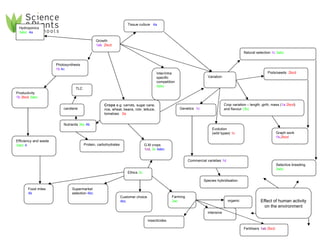
Effect of human activity on the environment Hydroponics 3abc   4a Tissue culture  4a Natural selection  1c   3abc Growth 1ab  2bcd Photosynthesis 1b   4c Productivity 1b   2bcd   3abc Inter/intra specific competition 3abc Variation Pods/seeds  2bcd Crop variation – length, girth, mass ( 1a   2bcd ) and flavour  (3b) Evolution (wild types)  1c Supermarket selection  4bc Crops  e.g. carrots, sugar cane, rice, wheat, beans, rcbr, lettuce, tomatoes  2a Genetics  1c Ethics  3c G.M crops 1cd ,  3c   4abc Species hybridisation Selective breeding 3abc Commercial varieties  1d Farming 3ac Customer choice  4bc Nutrients  3bc   4b organic insecticides intensive Fertilisers  1ab   2bcd Food miles 4b Efficiency and waste 3abc   4 Protein, carbohydrates carotene TLC Graph work  1b , 2bcd
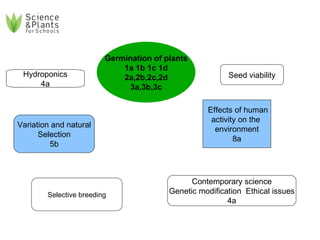
Hydroponics 4a Germination of plants 1a 1b 1c 1d 2a,2b,2c,2d 3a,3b,3c Selective breeding Contemporary science Genetic modification  Ethical issues 4a Variation and natural Selection 5b Effects of human activity on the  environment 8a Seed viability
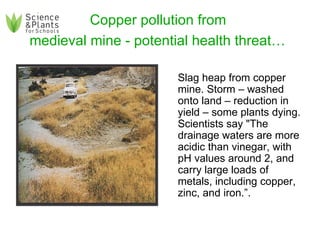
Copper pollution from  medieval mine - potential health threat…   Slag heap from copper mine. Storm – washed onto land – reduction in yield – some plants dying. Scientists say "The drainage waters are more acidic than vinegar, with pH values around 2, and carry large loads of metals, including copper, zinc, and iron.”.
Questions generated  by pupils Does copper affect germination? Does copper affect growth? Are some plants more tolerant of copper than others? What minerals do plants need to be healthy? Do plants grow better with more minerals? How do some plants grow in poor soils?
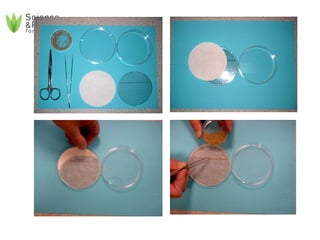
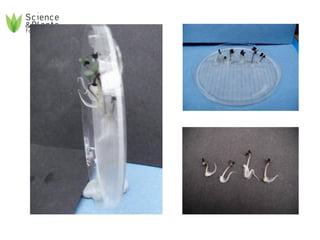
Generating  primary data Set up your own dish with white mustard seeds.
 
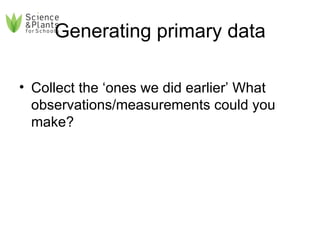
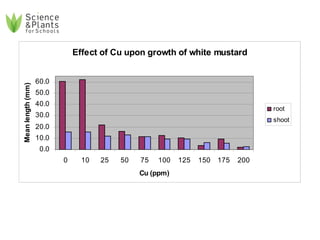
Generating primary data Collect the ‘ones we did earlier’ What observations/measurements could you make?
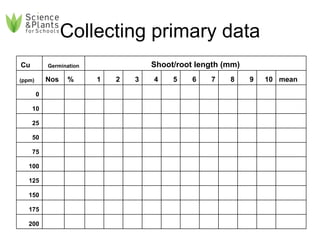
Collecting primary data 10 200 175 150 125 100 75 50 25 0 mean 10 9 8 7 6 5 4 3 2 1 % Nos (ppm) Shoot/root length (mm) Germination   Cu
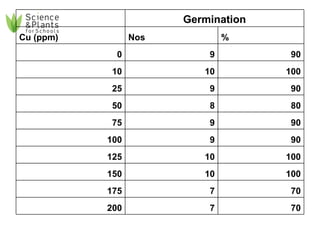
70 7 200 70 7 175 100 10 150 100 10 125 90 9 100 90 9 75 80 8 50 90 9 25 100 10 10 90 9 0 % Nos Cu (ppm) Germination  
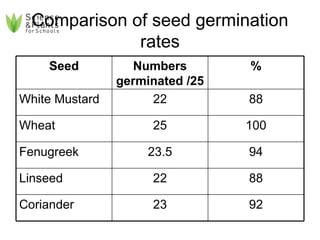
Comparison of seed germination rates 92 23 Coriander 88 22 Linseed 94 23.5 Fenugreek 100 25 Wheat 88 22 White Mustard % Numbers germinated /25 Seed
 
 
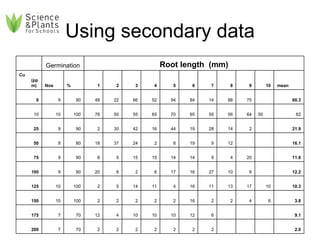
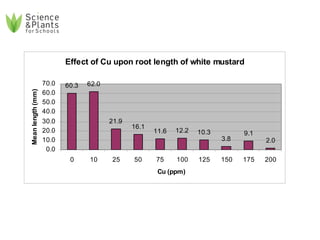
Using secondary data 62 50 64 56 55 65 70 65 55 50 78 100 10 10 2.0       2 2 2 2 2 2 2 70 7 200 9.1       6 12 10 10 10 4 12 70 7 175 3.8 6 4 2 2 16 2 2 2 2 2 100 10 150 10.3 10 17 13 11 16 4 11 14 5 2 100 10 125 12.2   6 10 27 16 17 6 2 6 20 90 9 100 11.6   20 4 9 14 14 15 15 5 8 90 9 75 16.1     12 9 19 8 2 24 37 18 80 8 50 21.9   2 14 28 19 44 16 42 30 2 90 9 25 60.3 75 88 14 84 94 52 66 22 48 90 9 0 mean 10 9 8 7 6 5 4 3 2 1 % Nos Cu (ppm) Root length  (mm) Germination  


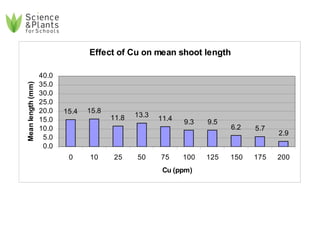
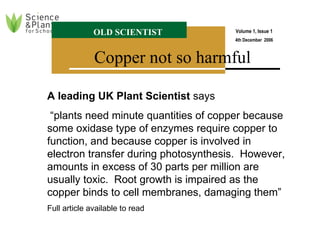
A leading UK Plant Scientist  says “ plants need minute quantities of copper because some oxidase type of enzymes require copper to function, and because copper is involved in electron transfer during photosynthesis.  However, amounts in excess of 30 parts per million are usually toxic.  Root growth is impaired as the copper binds to cell membranes, damaging them”  Full article available to read OLD SCIENTIST Volume 1, Issue 1 4th December  2006 Copper not so harmful

How Science works overview

  • 1.
    Practical work todeliver ‘How Science Works’
  • 2.
    Why are wehere? There are many positive changes to the new KS4 curriculum
  • 3.
    Changes to KS4There is an emphasis on scientific literacy Pupils should get better at distinguishing between opinion based on scientific evidence and opinion based on non scientific ideas – they should be increasingly able to question the reports they see in the media.. They should learn about the applications of scientific knowledge and how these have changed over time and they should develop a greater understanding of the social, economic and ethical implications of certain decisions
  • 4.
    Slight worry.. Manyof the texts and resource materials being published for the new specifications do not emphasise practical work Lots of good activities and exercises but many rely only on secondary data or analysing articles from the media And yet if we look at the statements in the ‘how science works’ section……
  • 5.
    Data, evidence, theories & explanations 1a. How scientific data can be collected and analysed. 1b. How interpretation of data, using creative thought , provides evidence to test ideas and develop theories. 1c. How explanations of many phenomena can be developed using scientific theories, models and ideas. 1d. That there are some questions that science cannot currently answer, and some that science cannot address.
  • 6.
    Practical and enquiry skills 2a. Plan to test a scientific idea, answer a scientific question or solve a scientific problem. 2b. Collect data from primary or secondary sources, including using ICT sources and tools. 2c. Work accurately and safely, individually and with others, when collecting first hand data . 2d. Evaluate methods of collection of data and consider their validity and reliability as evidence.
  • 7.
    Communication skills 3a.Recall, analyse, interpret, apply and question scientific information or ideas. 3b. Use both qualitative and quantitative approaches 3c. Present information, develop and argument and draw a conclusion, using scientific, technical and mathematical language, conventions and symbols and ICT tools.
  • 8.
    Applications and implications of science 4a. About the use of contemporary scientific and technological developments and their benefits, drawbacks and risks. 4b. To consider how and why decisions about science and technology are made, including those that raise ethical issues, and about the social, economic and environmental effects of such decisions. 4c. How uncertainties in scientific knowledge and scientific ideas change over time and about the role of the scientific community in validating these changes.
  • 9.
    Our view is.. The best way to encourage this is to do real investigative science To help students to become genuinely curious by… setting investigatory work in a context and providing stimulus material to get them to generate their own questions
  • 10.
    Effect of humanactivity on the environment Hydroponics 3abc 4a Tissue culture 4a Natural selection 1c 3abc Growth 1ab 2bcd Photosynthesis 1b 4c Productivity 1b 2bcd 3abc Inter/intra specific competition 3abc Variation Pods/seeds 2bcd Crop variation – length, girth, mass ( 1a 2bcd ) and flavour (3b) Evolution (wild types) 1c Supermarket selection 4bc Crops e.g. carrots, sugar cane, rice, wheat, beans, rcbr, lettuce, tomatoes 2a Genetics 1c Ethics 3c G.M crops 1cd , 3c 4abc Species hybridisation Selective breeding 3abc Commercial varieties 1d Farming 3ac Customer choice 4bc Nutrients 3bc 4b organic insecticides intensive Fertilisers 1ab 2bcd Food miles 4b Efficiency and waste 3abc 4 Protein, carbohydrates carotene TLC Graph work 1b , 2bcd
  • 11.
    Hydroponics 4a Germinationof plants 1a 1b 1c 1d 2a,2b,2c,2d 3a,3b,3c Selective breeding Contemporary science Genetic modification Ethical issues 4a Variation and natural Selection 5b Effects of human activity on the environment 8a Seed viability
  • 12.
    Copper pollution from medieval mine - potential health threat… Slag heap from copper mine. Storm – washed onto land – reduction in yield – some plants dying. Scientists say "The drainage waters are more acidic than vinegar, with pH values around 2, and carry large loads of metals, including copper, zinc, and iron.”.
  • 13.
    Questions generated by pupils Does copper affect germination? Does copper affect growth? Are some plants more tolerant of copper than others? What minerals do plants need to be healthy? Do plants grow better with more minerals? How do some plants grow in poor soils?
  • 14.
    Generating primarydata Set up your own dish with white mustard seeds.
  • 15.
  • 16.
    Generating primary dataCollect the ‘ones we did earlier’ What observations/measurements could you make?
  • 17.
    Collecting primary data10 200 175 150 125 100 75 50 25 0 mean 10 9 8 7 6 5 4 3 2 1 % Nos (ppm) Shoot/root length (mm) Germination   Cu
  • 18.
    70 7 20070 7 175 100 10 150 100 10 125 90 9 100 90 9 75 80 8 50 90 9 25 100 10 10 90 9 0 % Nos Cu (ppm) Germination  
  • 19.
    Comparison of seedgermination rates 92 23 Coriander 88 22 Linseed 94 23.5 Fenugreek 100 25 Wheat 88 22 White Mustard % Numbers germinated /25 Seed
  • 20.
  • 21.
  • 22.
    Using secondary data62 50 64 56 55 65 70 65 55 50 78 100 10 10 2.0       2 2 2 2 2 2 2 70 7 200 9.1       6 12 10 10 10 4 12 70 7 175 3.8 6 4 2 2 16 2 2 2 2 2 100 10 150 10.3 10 17 13 11 16 4 11 14 5 2 100 10 125 12.2   6 10 27 16 17 6 2 6 20 90 9 100 11.6   20 4 9 14 14 15 15 5 8 90 9 75 16.1     12 9 19 8 2 24 37 18 80 8 50 21.9   2 14 28 19 44 16 42 30 2 90 9 25 60.3 75 88 14 84 94 52 66 22 48 90 9 0 mean 10 9 8 7 6 5 4 3 2 1 % Nos Cu (ppm) Root length (mm) Germination  
  • 23.
  • 24.
  • 25.
  • 26.
    A leading UKPlant Scientist says “ plants need minute quantities of copper because some oxidase type of enzymes require copper to function, and because copper is involved in electron transfer during photosynthesis. However, amounts in excess of 30 parts per million are usually toxic. Root growth is impaired as the copper binds to cell membranes, damaging them” Full article available to read OLD SCIENTIST Volume 1, Issue 1 4th December 2006 Copper not so harmful