How Firewalls Stop Cyber Attacks Before
They Happen?
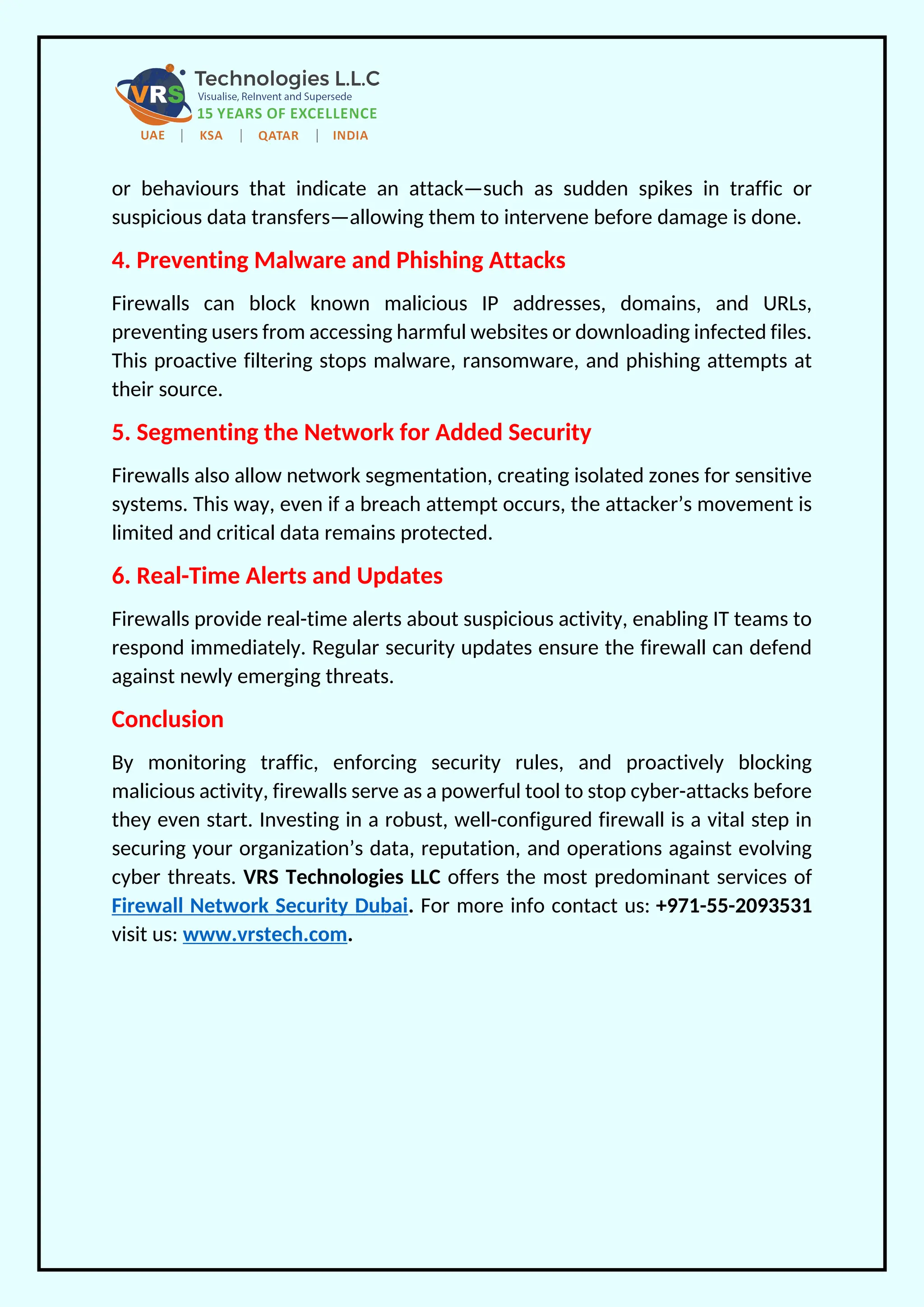
In today’s hyper-connected world, cyber threats are growing more
sophisticated, making proactive protection a necessity rather than an option. A
firewall serves as the first line of defence in safeguarding your digital
environment, preventing malicious activity before it can infiltrate your network.
But how exactly does a firewall Solutions stop cyber-attacks before they even
occur?
1. Monitoring and Filtering Traffic
Firewalls act as a gatekeeper between your internal network and the outside
world. They monitor incoming and outgoing traffic, using predefined rules to
allow or block specific data packets. This ensures that only safe, authorized
traffic passes through, stopping potentially harmful connections before they
gain access.
2. Blocking Unauthorized Access
Hackers often attempt to exploit open network ports or use brute force methods
to gain entry. Firewalls identify suspicious connection requests and block them
instantly, reducing the chances of unauthorized access.
3. Detecting and Stopping Malicious Patterns
Modern firewalls, especially Next-Generation Firewalls (NGFWs), leverage deep
packet inspection and advanced threat intelligence to detect unusual patterns
or behaviours that indicate an attack—such as sudden spikes in traffic or
suspicious data transfers—allowing them to intervene before damage is done.
4. Preventing Malware and Phishing Attacks
Firewalls can block known malicious IP addresses, domains, and URLs,
preventing users from accessing harmful websites or downloading infected files.
This proactive filtering stops malware, ransomware, and phishing attempts at
their source.
5. Segmenting the Network for Added Security
Firewalls also allow network segmentation, creating isolated zones for sensitive
systems. This way, even if a breach attempt occurs, the attacker’s movement is
limited and critical data remains protected.
6. Real-Time Alerts and Updates
Firewalls provide real-time alerts about suspicious activity, enabling IT teams to
respond immediately. Regular security updates ensure the firewall can defend
against newly emerging threats.
Conclusion
By monitoring traffic, enforcing security rules, and proactively blocking
malicious activity, firewalls serve as a powerful tool to stop cyber-attacks before
they even start. Investing in a robust, well-configured firewall is a vital step in
securing your organization’s data, reputation, and operations against evolving
cyber threats. VRS Technologies LLC offers the most predominant services of
Firewall Network Security Dubai. For more info contact us: +971-55-2093531
visit us: www.vrstech.com.

How Firewalls Stop Cyber Attacks Before They Happen?

  • 1.
    How Firewalls StopCyber Attacks Before They Happen? In today’s hyper-connected world, cyber threats are growing more sophisticated, making proactive protection a necessity rather than an option. A firewall serves as the first line of defence in safeguarding your digital environment, preventing malicious activity before it can infiltrate your network. But how exactly does a firewall Solutions stop cyber-attacks before they even occur? 1. Monitoring and Filtering Traffic Firewalls act as a gatekeeper between your internal network and the outside world. They monitor incoming and outgoing traffic, using predefined rules to allow or block specific data packets. This ensures that only safe, authorized traffic passes through, stopping potentially harmful connections before they gain access. 2. Blocking Unauthorized Access Hackers often attempt to exploit open network ports or use brute force methods to gain entry. Firewalls identify suspicious connection requests and block them instantly, reducing the chances of unauthorized access. 3. Detecting and Stopping Malicious Patterns Modern firewalls, especially Next-Generation Firewalls (NGFWs), leverage deep packet inspection and advanced threat intelligence to detect unusual patterns
  • 2.
    or behaviours thatindicate an attack—such as sudden spikes in traffic or suspicious data transfers—allowing them to intervene before damage is done. 4. Preventing Malware and Phishing Attacks Firewalls can block known malicious IP addresses, domains, and URLs, preventing users from accessing harmful websites or downloading infected files. This proactive filtering stops malware, ransomware, and phishing attempts at their source. 5. Segmenting the Network for Added Security Firewalls also allow network segmentation, creating isolated zones for sensitive systems. This way, even if a breach attempt occurs, the attacker’s movement is limited and critical data remains protected. 6. Real-Time Alerts and Updates Firewalls provide real-time alerts about suspicious activity, enabling IT teams to respond immediately. Regular security updates ensure the firewall can defend against newly emerging threats. Conclusion By monitoring traffic, enforcing security rules, and proactively blocking malicious activity, firewalls serve as a powerful tool to stop cyber-attacks before they even start. Investing in a robust, well-configured firewall is a vital step in securing your organization’s data, reputation, and operations against evolving cyber threats. VRS Technologies LLC offers the most predominant services of Firewall Network Security Dubai. For more info contact us: +971-55-2093531 visit us: www.vrstech.com.