How Does Structured Cabling Integrate with
Modern Technologies?
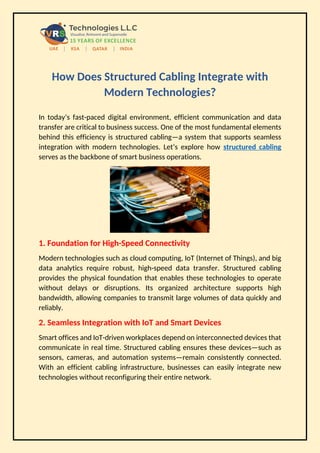
In today’s fast-paced digital environment, efficient communication and data
transfer are critical to business success. One of the most fundamental elements
behind this efficiency is structured cabling—a system that supports seamless
integration with modern technologies. Let’s explore how structured cabling
serves as the backbone of smart business operations.
1. Foundation for High-Speed Connectivity
Modern technologies such as cloud computing, IoT (Internet of Things), and big
data analytics require robust, high-speed data transfer. Structured cabling
provides the physical foundation that enables these technologies to operate
without delays or disruptions. Its organized architecture supports high
bandwidth, allowing companies to transmit large volumes of data quickly and
reliably.
2. Seamless Integration with IoT and Smart Devices
Smart offices and IoT-driven workplaces depend on interconnected devices that
communicate in real time. Structured cabling ensures these devices—such as
sensors, cameras, and automation systems—remain consistently connected.
With an efficient cabling infrastructure, businesses can easily integrate new
technologies without reconfiguring their entire network.
3. Enhanced Scalability and Flexibility
As companies grow and adopt emerging technologies, scalability becomes
essential. Structured cabling systems are designed to be modular, making it easy
to add or modify devices and network components. This flexibility reduces
downtime and supports future upgrades, such as migrating from traditional
setups to advanced fiber optic networks.
4. Reliable Performance for Unified Communications
Modern businesses rely heavily on unified communications—video
conferencing, VoIP, and cloud-based collaboration tools. Structured cabling
ensures these systems perform at optimal levels by minimizing signal
interference and maintaining consistent network performance across all
communication platforms.
5. Supporting Cloud and Data Center Technologies
Data centers and cloud-based applications depend on robust infrastructure to
handle continuous data exchange. Structured cabling provides the necessary
stability and organization to support virtualization, cloud computing, and
advanced storage solutions, making it a vital part of digital transformation
strategies.
Conclusion
Structured cabling is more than just an IT necessity—it’s the framework that
connects modern technologies and drives innovation. By ensuring speed,
reliability, and scalability, structured cabling helps businesses stay competitive
in an ever-evolving digital world.
For professional Structured Cabling Services in Dubai, connect with VRS
Technologies LLC, the trusted experts in network infrastructure. Call us: +971-
55-2093531 Visit: www.vrstech.com

How Does Structured Cabling Integrate with Modern Technologies?

  • 1.
    How Does StructuredCabling Integrate with Modern Technologies? In today’s fast-paced digital environment, efficient communication and data transfer are critical to business success. One of the most fundamental elements behind this efficiency is structured cabling—a system that supports seamless integration with modern technologies. Let’s explore how structured cabling serves as the backbone of smart business operations. 1. Foundation for High-Speed Connectivity Modern technologies such as cloud computing, IoT (Internet of Things), and big data analytics require robust, high-speed data transfer. Structured cabling provides the physical foundation that enables these technologies to operate without delays or disruptions. Its organized architecture supports high bandwidth, allowing companies to transmit large volumes of data quickly and reliably. 2. Seamless Integration with IoT and Smart Devices Smart offices and IoT-driven workplaces depend on interconnected devices that communicate in real time. Structured cabling ensures these devices—such as sensors, cameras, and automation systems—remain consistently connected. With an efficient cabling infrastructure, businesses can easily integrate new technologies without reconfiguring their entire network.
  • 2.
    3. Enhanced Scalabilityand Flexibility As companies grow and adopt emerging technologies, scalability becomes essential. Structured cabling systems are designed to be modular, making it easy to add or modify devices and network components. This flexibility reduces downtime and supports future upgrades, such as migrating from traditional setups to advanced fiber optic networks. 4. Reliable Performance for Unified Communications Modern businesses rely heavily on unified communications—video conferencing, VoIP, and cloud-based collaboration tools. Structured cabling ensures these systems perform at optimal levels by minimizing signal interference and maintaining consistent network performance across all communication platforms. 5. Supporting Cloud and Data Center Technologies Data centers and cloud-based applications depend on robust infrastructure to handle continuous data exchange. Structured cabling provides the necessary stability and organization to support virtualization, cloud computing, and advanced storage solutions, making it a vital part of digital transformation strategies. Conclusion Structured cabling is more than just an IT necessity—it’s the framework that connects modern technologies and drives innovation. By ensuring speed, reliability, and scalability, structured cabling helps businesses stay competitive in an ever-evolving digital world. For professional Structured Cabling Services in Dubai, connect with VRS Technologies LLC, the trusted experts in network infrastructure. Call us: +971- 55-2093531 Visit: www.vrstech.com