HOW COUNTRIES
BECOME DEVELOPED
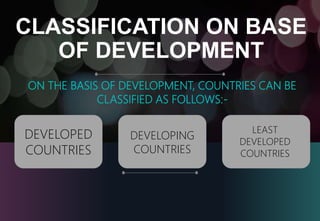
CLASSIFICATION ON BASE
OF DEVELOPMENT
ON THE BASIS OF DEVELOPMENT, COUNTRIES CAN BE
CLASSIFIED AS FOLLOWS:-
DEVELOPED
COUNTRIES
DEVELOPING
COUNTRIES
LEAST
DEVELOPED
COUNTRIES
DEVELOPED
COUNTRIES
Developed countries are characterized by comparatively high
standards of living where many people have enough money to
buy the things they need. Their economies tend to be more stable
and prosperous than developing nations, which, in comparison,
have less industrialization, higher population growth, and higher
unemployment.
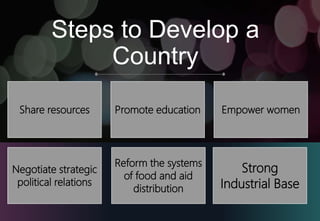
Steps to Develop a
Country
Share resources Promote education Empower women
Negotiate strategic
political relations
Strong
Industrial Base
Reform the systems
of food and aid
distribution
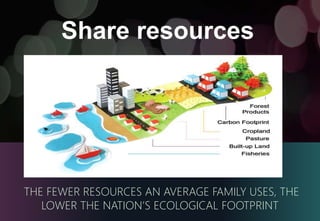
Share resources
THE FEWER RESOURCES AN AVERAGE FAMILY USES, THE
LOWER THE NATION’S ECOLOGICAL FOOTPRINT
Developing countries may not be able to afford electric or
semi-electric cars, but their people can conserve both
money and oxygen by carpooling, riding bikes and reusing
grocery bags.
Promote education
All levels of education are important stepping-stones to
development, from the fundamentals of kindergarten, to the
advanced quantum physics courses at the university. Each class
ought to be taught with the overarching goals of quality of life
and economic improvement in mind.
Education stops terrorist groups from gaining strength
and trains doctors and scientists to research and cure
diseases. It is one of the primary movers that help
impoverished nations to help themselves.
Empower women
By empowering women and equalizing academic opportunity,
countries can increase incomes by an average of 23%. It is so
because almost 49.6% of world’s population comprises of
women and roughly 50% of women (in developing countries)
lacks facilities like that of education.
They can do this by investing in schools closer to rural areas so
that the children of farmers do not have to walk hours each day to
get to and from school, straining their parents’ time and resources
in the process.
Negotiate strategic
political relations
Educated learn to choose their political allies carefully in order
to make the greatest leaps in ecological, economic and
humanitarian development.
For example, Afghanistan getting aid from United States of
America
Reform the systems of
food and aid distribution
So many millions of people
still suffer from world hunger
each day. Their problem
springs less from stinginess
among foreign taxpayers, but
from inefficient systems of
distribution
Instead of pouring money into resources, shipping and energy
costs developed countries ought to invest in local African
businesses so that the people can more effectively improve their
own circumstances without having to resort to the whims of
potentially corrupt and incompetent leaders.
Example of China
Investing in Africa
Strong Industrial Base
Industrialization plays a vital role in the
economic development of
underdeveloped countries. The developed
countries of the world broke the vicious
cycle of poverty by industrializing, rather
than focusing on agricultural or the
production of national resources
Hindrances in Transformation
of Developing Country into a
Developed Country
Every developing country has to focus on the following to
become a developed nation.
•Low levels of literacy
•Low health and HDI indicators
•Low per capita income.
•High incidence of corruption and nepotism
Conclusion
Developing countries, owing to a bag full of disadvantages
cannot leap sudden and become a developed country. Such a
transformation requires a minimum of 20 years or may be
more in case of a slowly developing country. Such slow
development can be because of a lot of reasons.
How countries become developed

How countries become developed

  • 1.
  • 2.
    CLASSIFICATION ON BASE OFDEVELOPMENT ON THE BASIS OF DEVELOPMENT, COUNTRIES CAN BE CLASSIFIED AS FOLLOWS:- DEVELOPED COUNTRIES DEVELOPING COUNTRIES LEAST DEVELOPED COUNTRIES
  • 3.
    DEVELOPED COUNTRIES Developed countries arecharacterized by comparatively high standards of living where many people have enough money to buy the things they need. Their economies tend to be more stable and prosperous than developing nations, which, in comparison, have less industrialization, higher population growth, and higher unemployment.
  • 4.
    Steps to Developa Country Share resources Promote education Empower women Negotiate strategic political relations Strong Industrial Base Reform the systems of food and aid distribution
  • 5.
    Share resources THE FEWERRESOURCES AN AVERAGE FAMILY USES, THE LOWER THE NATION’S ECOLOGICAL FOOTPRINT
  • 6.
    Developing countries maynot be able to afford electric or semi-electric cars, but their people can conserve both money and oxygen by carpooling, riding bikes and reusing grocery bags.
  • 7.
    Promote education All levelsof education are important stepping-stones to development, from the fundamentals of kindergarten, to the advanced quantum physics courses at the university. Each class ought to be taught with the overarching goals of quality of life and economic improvement in mind.
  • 8.
    Education stops terroristgroups from gaining strength and trains doctors and scientists to research and cure diseases. It is one of the primary movers that help impoverished nations to help themselves.
  • 9.
    Empower women By empoweringwomen and equalizing academic opportunity, countries can increase incomes by an average of 23%. It is so because almost 49.6% of world’s population comprises of women and roughly 50% of women (in developing countries) lacks facilities like that of education.
  • 10.
    They can dothis by investing in schools closer to rural areas so that the children of farmers do not have to walk hours each day to get to and from school, straining their parents’ time and resources in the process.
  • 11.
    Negotiate strategic political relations Educatedlearn to choose their political allies carefully in order to make the greatest leaps in ecological, economic and humanitarian development.
  • 12.
    For example, Afghanistangetting aid from United States of America
  • 13.
    Reform the systemsof food and aid distribution So many millions of people still suffer from world hunger each day. Their problem springs less from stinginess among foreign taxpayers, but from inefficient systems of distribution
  • 14.
    Instead of pouringmoney into resources, shipping and energy costs developed countries ought to invest in local African businesses so that the people can more effectively improve their own circumstances without having to resort to the whims of potentially corrupt and incompetent leaders.
  • 15.
  • 16.
    Strong Industrial Base Industrializationplays a vital role in the economic development of underdeveloped countries. The developed countries of the world broke the vicious cycle of poverty by industrializing, rather than focusing on agricultural or the production of national resources
  • 17.
    Hindrances in Transformation ofDeveloping Country into a Developed Country Every developing country has to focus on the following to become a developed nation. •Low levels of literacy •Low health and HDI indicators •Low per capita income. •High incidence of corruption and nepotism
  • 18.
    Conclusion Developing countries, owingto a bag full of disadvantages cannot leap sudden and become a developed country. Such a transformation requires a minimum of 20 years or may be more in case of a slowly developing country. Such slow development can be because of a lot of reasons.