Together We Can Make It
            Happen!
  “Reduce The Risk To Public Health Through
Better Management of the Wastes We Generate”


     A Presentation for Residents & Households
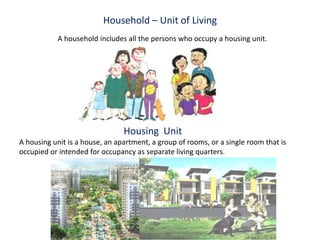
Household – Unit of Living
           A household includes all the persons who occupy a housing unit.


                                Housing Unit
A housing unit is a house, an apartment, a group of rooms, or a single room that is
occupied or intended for occupancy as separate living quarters.
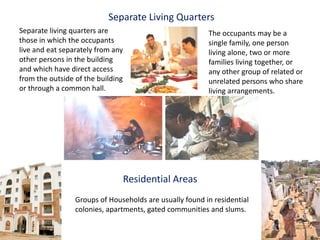
Separate Living Quarters
Separate living quarters are                             The occupants may be a
those in which the occupants                             single family, one person
live and eat separately from any                         living alone, two or more
other persons in the building                            families living together, or
and which have direct access                             any other group of related or
from the outside of the building                         unrelated persons who share
or through a common hall.                                living arrangements.


                               Residential Areas
                 Groups of Households are usually found in residential
                 colonies, apartments, gated communities and slums.
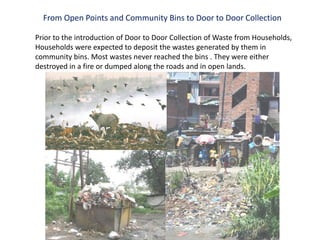
From Open Points and Community Bins to Door to Door Collection

Prior to the introduction of Door to Door Collection of Waste from Households,
Households were expected to deposit the wastes generated by them in
community bins. Most wastes never reached the bins . They were either
destroyed in a fire or dumped along the roads and in open lands.
Door to Door Collection

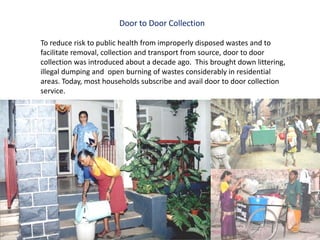
To reduce risk to public health from improperly disposed wastes and to
facilitate removal, collection and transport from source, door to door
collection was introduced about a decade ago. This brought down littering,
illegal dumping and open burning of wastes considerably in residential
areas. Today, most households subscribe and avail door to door collection
service.
Door to Door Collection

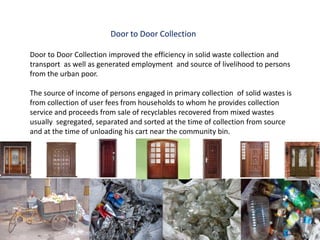
Door to Door Collection improved the efficiency in solid waste collection and
transport as well as generated employment and source of livelihood to persons
from the urban poor.

The source of income of persons engaged in primary collection of solid wastes is
from collection of user fees from households to whom he provides collection
service and proceeds from sale of recyclables recovered from mixed wastes
usually segregated, separated and sorted at the time of collection from source
and at the time of unloading his cart near the community bin.
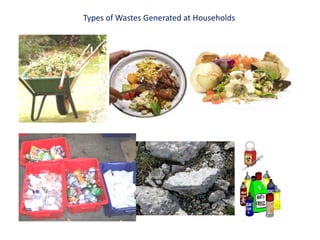
Types of Wastes Generated at Households
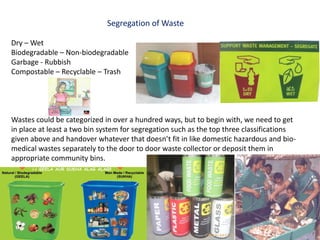
Segregation of Waste

Dry – Wet
Biodegradable – Non-biodegradable
Garbage - Rubbish
Compostable – Recyclable – Trash


Wastes could be categorized in over a hundred ways, but to begin with, we need to get
in place at least a two bin system for segregation such as the top three classifications
given above and handover whatever that doesn’t fit in like domestic hazardous and bio-
medical wastes separately to the door to door waste collector or deposit them in
appropriate community bins.
Benefits of Segregating Waste


Enables Easier, Cleaner, Safer and Optimal Resource Recovery

Reduces Waste that’s taken for Landfill

Reduces Time, Energy, Labor and Expense on Resource Recovery

Larger Quantity and Better Quality Resources can be Extracted from Waste

Facilitates Conversion of Waste into Resource

Reduces Dependence on Extraction of Depleting Natural Resources

Promotes 3Rs and Environmentally Safe Disposal

Reduces Costs, Improves Earnings and Promotes Sustainability

Helps in Keeping Our Locality Clean & Green
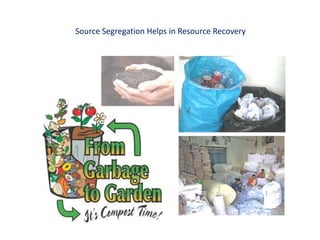
Source Segregation Helps in Resource Recovery
DOs & DON’Ts for Residents & Households
Segregate Wet & Dry Waste
Do not mix Biodegradable with Non-biodegradable Waste
Do not Litter
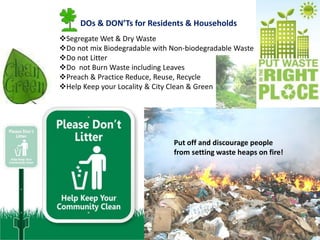
Do not Burn Waste including Leaves
Preach & Practice Reduce, Reuse, Recycle
Help Keep your Locality & City Clean & Green


                               Put off and discourage people
                               from setting waste heaps on fire!
Households SWM

Households SWM

  • 1.
    Together We CanMake It Happen! “Reduce The Risk To Public Health Through Better Management of the Wastes We Generate” A Presentation for Residents & Households
  • 2.
    Household – Unitof Living A household includes all the persons who occupy a housing unit. Housing Unit A housing unit is a house, an apartment, a group of rooms, or a single room that is occupied or intended for occupancy as separate living quarters.
  • 3.
    Separate Living Quarters Separateliving quarters are The occupants may be a those in which the occupants single family, one person live and eat separately from any living alone, two or more other persons in the building families living together, or and which have direct access any other group of related or from the outside of the building unrelated persons who share or through a common hall. living arrangements. Residential Areas Groups of Households are usually found in residential colonies, apartments, gated communities and slums.
  • 4.
    From Open Pointsand Community Bins to Door to Door Collection Prior to the introduction of Door to Door Collection of Waste from Households, Households were expected to deposit the wastes generated by them in community bins. Most wastes never reached the bins . They were either destroyed in a fire or dumped along the roads and in open lands.
  • 5.
    Door to DoorCollection To reduce risk to public health from improperly disposed wastes and to facilitate removal, collection and transport from source, door to door collection was introduced about a decade ago. This brought down littering, illegal dumping and open burning of wastes considerably in residential areas. Today, most households subscribe and avail door to door collection service.
  • 6.
    Door to DoorCollection Door to Door Collection improved the efficiency in solid waste collection and transport as well as generated employment and source of livelihood to persons from the urban poor. The source of income of persons engaged in primary collection of solid wastes is from collection of user fees from households to whom he provides collection service and proceeds from sale of recyclables recovered from mixed wastes usually segregated, separated and sorted at the time of collection from source and at the time of unloading his cart near the community bin.
  • 7.
    Types of WastesGenerated at Households
  • 8.
    Segregation of Waste Dry– Wet Biodegradable – Non-biodegradable Garbage - Rubbish Compostable – Recyclable – Trash Wastes could be categorized in over a hundred ways, but to begin with, we need to get in place at least a two bin system for segregation such as the top three classifications given above and handover whatever that doesn’t fit in like domestic hazardous and bio- medical wastes separately to the door to door waste collector or deposit them in appropriate community bins.
  • 9.
    Benefits of SegregatingWaste Enables Easier, Cleaner, Safer and Optimal Resource Recovery Reduces Waste that’s taken for Landfill Reduces Time, Energy, Labor and Expense on Resource Recovery Larger Quantity and Better Quality Resources can be Extracted from Waste Facilitates Conversion of Waste into Resource Reduces Dependence on Extraction of Depleting Natural Resources Promotes 3Rs and Environmentally Safe Disposal Reduces Costs, Improves Earnings and Promotes Sustainability Helps in Keeping Our Locality Clean & Green
  • 10.
    Source Segregation Helpsin Resource Recovery
  • 11.
    DOs & DON’Tsfor Residents & Households Segregate Wet & Dry Waste Do not mix Biodegradable with Non-biodegradable Waste Do not Litter Do not Burn Waste including Leaves Preach & Practice Reduce, Reuse, Recycle Help Keep your Locality & City Clean & Green Put off and discourage people from setting waste heaps on fire!