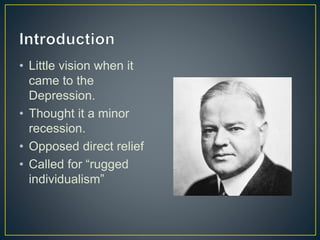
• Little vision when it
came to the
Depression.
• Thought it a minor
recession.
• Opposed direct relief
• Called for “rugged
individualism”
• What we will analyze today is the
• “Hoover Remedies”
• Three phases
•Phase One: 1929-1930
•Phase Two: 1930-1931
•Phase Three: 1931-1932
• Meetings with influential businessmen
•Maintain employment, wages, prices
• Asked Fed. Reserve to make it easier
to borrow $$
• Asked Congress to cut taxes
•People spend more
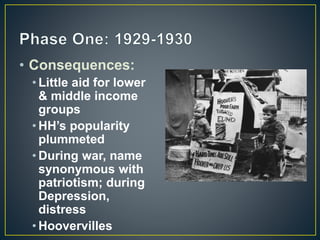
• Consequences:
• Little aid for lower
& middle income
groups
• HH’s popularity
plummeted
• During war, name
synonymous with
patriotism; during
Depression,
distress
• Hoovervilles
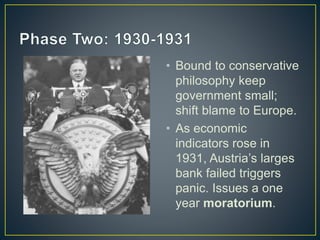
• Bound to conservative
philosophy keep
government small;
shift blame to Europe.
• As economic
indicators rose in
1931, Austria’s larges
bank failed triggers
panic. Issues a one
year moratorium.
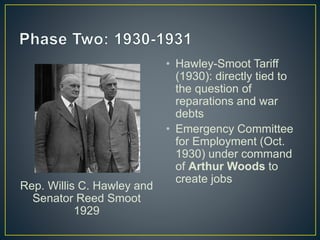
• Hawley-Smoot Tariff
(1930): directly tied to
the question of
reparations and war
debts
• Emergency Committee
for Employment (Oct.
1930) under command
of Arthur Woods to
create jobs
Rep. Willis C. Hawley and
Senator Reed Smoot
1929
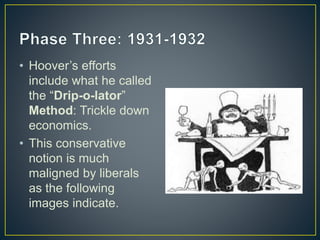
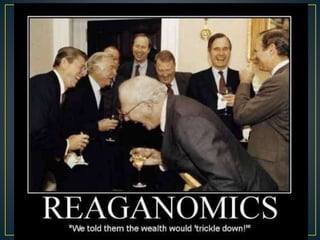
• Hoover’s efforts
include what he called
the “Drip-o-lator”
Method: Trickle down
economics.
• This conservative
notion is much
maligned by liberals
as the following
images indicate.
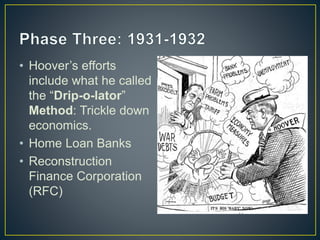
• Hoover’s efforts
include what he called
the “Drip-o-lator”
Method: Trickle down
economics.
• Home Loan Banks
• Reconstruction
Finance Corporation
(RFC)
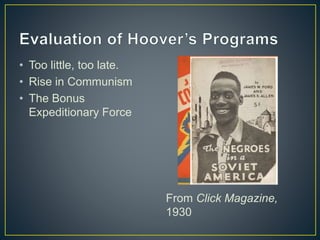
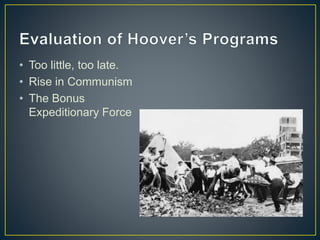
• Too little, too late.
• Rise in Communism
• The Bonus
Expeditionary Force
From Click Magazine,
1930
• Too little, too late.
• Rise in Communism
• The Bonus
Expeditionary Force
From Click Magazine,
1930
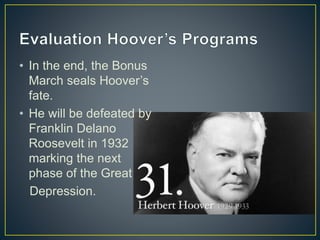
• In the end, the Bonus
March seals Hoover’s
fate.
• He will be defeated by
Franklin Delano
Roosevelt in 1932
marking the next
phase of the Great
Depression.

Hoover and the depression

  • 2.
    • Little visionwhen it came to the Depression. • Thought it a minor recession. • Opposed direct relief • Called for “rugged individualism”
  • 3.
    • What wewill analyze today is the • “Hoover Remedies” • Three phases •Phase One: 1929-1930 •Phase Two: 1930-1931 •Phase Three: 1931-1932
  • 4.
    • Meetings withinfluential businessmen •Maintain employment, wages, prices • Asked Fed. Reserve to make it easier to borrow $$ • Asked Congress to cut taxes •People spend more
  • 5.
    • Consequences: • Littleaid for lower & middle income groups • HH’s popularity plummeted • During war, name synonymous with patriotism; during Depression, distress • Hoovervilles
  • 6.
    • Bound toconservative philosophy keep government small; shift blame to Europe. • As economic indicators rose in 1931, Austria’s larges bank failed triggers panic. Issues a one year moratorium.
  • 7.
    • Hawley-Smoot Tariff (1930):directly tied to the question of reparations and war debts • Emergency Committee for Employment (Oct. 1930) under command of Arthur Woods to create jobs Rep. Willis C. Hawley and Senator Reed Smoot 1929
  • 8.
    • Hoover’s efforts includewhat he called the “Drip-o-lator” Method: Trickle down economics. • This conservative notion is much maligned by liberals as the following images indicate.
  • 10.
    • Hoover’s efforts includewhat he called the “Drip-o-lator” Method: Trickle down economics. • Home Loan Banks • Reconstruction Finance Corporation (RFC)
  • 11.
    • Too little,too late. • Rise in Communism • The Bonus Expeditionary Force From Click Magazine, 1930
  • 12.
    • Too little,too late. • Rise in Communism • The Bonus Expeditionary Force From Click Magazine, 1930
  • 13.
    • In theend, the Bonus March seals Hoover’s fate. • He will be defeated by Franklin Delano Roosevelt in 1932 marking the next phase of the Great Depression.

Editor's Notes

  • #6 c27-f011.jpg Corbis IH036336 These two children set up shop in a Hooverville in Washington, D.C.