Level 2
Food Safety in Catering
fun aids learning
Course Objectives
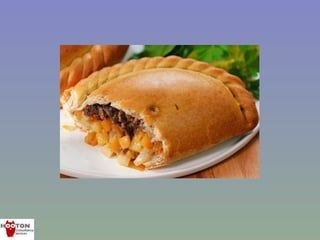
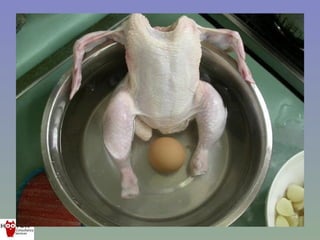
Cooked pork and
Raw chicken
                  prawns
Which one of these foodstuffs gives rise
     to the most food poisoning?

     A   Raw chicken


     B   Raw chicken


     C   Raw chicken

     D   Raw chicken
Myth no. 1: We are too ………
Myth 2: hygiene is lowering
 our immunity to illness
Objective 1

 An understanding of food
poisoning and what causes it
Group work 1

• What is food poisoning?

• What are the symptoms?

• How do we get it?
Long Term Illnesses

• Irritable Bowel Syndrome
• Chronic Fatigue Syndrome
• Rheumatology problems – e.g. reactive
  arthritis
• Psychological problems
• Long term symptoms in around 40% of
  clients
What is
Food Safety?
Group
work 2
Group work 3
Danger signs
• d tp b aes
   ir u l ra
      y   ic
• d tt l ( e s k fa tor, c ceyctr ad
    ir a e th tic c ) r kr uly n
      y bs                o   , e
g s ae
  ls r
  aw
• s f- d thn s rin enil d ta rn o l g
   t f ir ad o fg ras ir po s r n
     a     y              ,  y     o
hirht n tdb c
  a ta is't ie ak
• oefw gb s r a s fu b h
    vr in in o b g o rb is
       lo
• d ttils
    ir oe
      y t
• fo o d p yht osirdo hs asdit'ue
  o d n isl ta l k te r a p s
             a   o              e ss
b' d t
  y a  e
• hir r sc in o d
   a o inet fo
             s
Good signs
• hot food is piping hot when served
• cold food is properly cold when served
• Well presented staff – clean, helpful,
   smiling
• staff hygiene training certificates on the
  walls or food safety instructions in food
  preparation areas
Group work 4


                Holiday resort
                   in food
                  poisoning
                   drama:
               13 dead and 400
                      ill
‘Good food is one of life’s great
    pleasures. However, food
poisoning can be one of our worst
           memories’

          Professor Peter Borriello, Director HPA, London
Idyllic !
2 for £4.50
 (with added
 salmonella &
campylobacter)
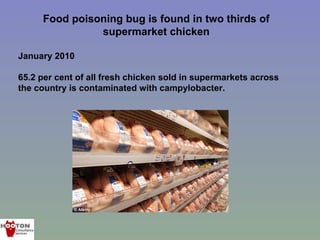
Food poisoning bug is found in two thirds of
               supermarket chicken

January 2010

65.2 per cent of all fresh chicken sold in supermarkets across
the country is contaminated with campylobacter.
Learnt so far

•   FP isn’t just a dose of the runs
•   Learning – work – improve
•   FACTS ….. Not newspapers of TV
•   Enjoyable, not paranoid
•   Raw Chickens – full of nasties
Group
work 5     Foods


     high or low risk
         & why?
What ‘things’ cause Food
        Poisoning
• Micro-organisms:
  bacteria, viruses and moulds

• Natural poisons: Plants, fish

• Metals & Chemicals
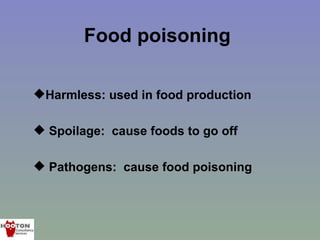
Food poisoning

Harmless: used in food production

 Spoilage: cause foods to go off

 Pathogens: cause food poisoning
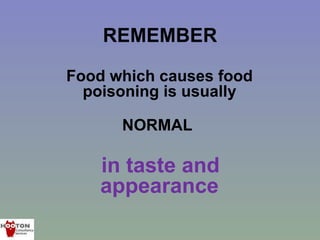
REMEMBER

Food which causes food
  poisoning is usually

      NORMAL

    in taste and
    appearance
What people are at
      risk?
70˚C   63˚C   37˚C   5˚C   -18˚C -22˚C
Requirements for bacterial
        growth
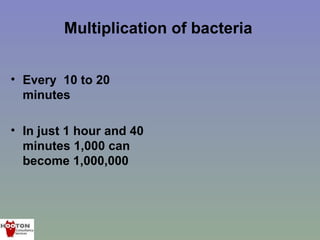
Multiplication of bacteria


• Every 10 to 20
  minutes

• In just 1 hour and 40
  minutes 1,000 can
  become 1,000,000
Temperature control general
             rules
• Keep food hot or cold NOT ……..
• Keep frozen food frozen (at – xx ˚C or below)
• Minimise the …… high risk food is in the danger
  zone
   – store deliveries ……………
   – minimise preparation time
   – ……… quickly
• Cook and serve food ……. whenever possible
• Re-heating means ……………………….
Critical limits


63 c for xx minutes
  o


70oc for x minutes
To preserve food
•   Keep it clean
•   Cover food, temperature, moisture (DGS)
•   Heat treatment, freezing
•   Drying
•   Vacuum packing
•   Chemical preservation
•   Smoking, Salting
Summary
1. Only some are    4. WFTM
  harmful
                    5. Things that cause food
2. Normal in
                       poisoning
  taste &
  appearance
                    6. People at risk
3. One bacteria
  can divide into
  2 every …
Pathways to
  infection
‘If everyone washed their hands
  thoroughly after going to the toilet,
  before and after handling food and
 before sitting down to eat, we would
see massive reductions in a range of
unpleasant infections including those
caused by campylobacter, salmonella
             and norovirus.’
1   WHO?
Ignaz Semmelweis
1
    ‘Saviour of mothers’
3
3   Bare below the elbow!
4
4 Global Handwashing day   (15.10.09)
Faecal bacteria join the commute


More than one in four commuters has
bacteria from faeces on their hands, an
investigation suggests.

Scientists from the London School of
Hygiene and Tropical Medicine swabbed 409
people at bus and train stations in five
major cities in England and Wales.


                            October 2008
A sample of doctors were
    surveyed about their behaviour,
    they reported that they washed
    their hands from 50-95% of the
       time; but when they were
     surreptitiously observed, their
    actual rate was as low as ?%.

    (Medical Journal of Australia, 164, 389-390, 1996)
5
A sample of doctors were
    surveyed about their behaviour,
    they reported that they washed
    their hands from 50-95% of the
       time; but when they were
     surreptitiously observed, their
     actual rate was as low as 9%.
    (Medical Journal of Australia, 164, 389-390, 1996)


5
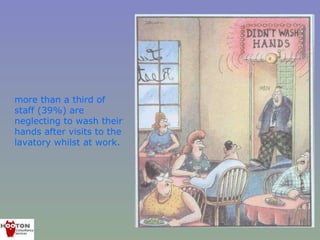
more than a third of
staff (39%) are
neglecting to wash their
hands after visits to the
lavatory whilst at work.
The research also demonstrated that
half of all those interviewed (53%)
did not appear to wash their hands
before preparing food.
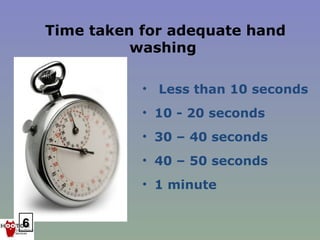
Time taken for adequate hand
              washing

               • Less than 10 seconds
               • 10 - 20 seconds
               • 30 – 40 seconds
               • 40 – 50 seconds
               • 1 minute


6
Time constraint =
    major obstacle for hand hygiene

                • Average time usually
                  adopted by health-care
                  workers (food
                  handlers?):
                  <10 seconds

                • Adequate handwashing
                  with water and soap
                  requires
                  c.30-40 seconds
                                 (Noskin et al)


6
Water temperature is a
        critical factor for
     microbial removal from
      hands being washed


         True or False


10
Water temperature is a
        critical factor for
     microbial removal from
      hands being washed


           False


10
C   C

C   C
Contamination
Head Chef washes his hands
      for 30 seconds!
Dishcloth
Joint of lamb defrosting
Rice found in fridge
Acute, severe allergy is
thought to affect around one
       million people
One in three of the total UK
population – around 18 million
people – suffer from some
form of allergy
   (Royal College of Physicians report, “Allergy – the unmet
                                          need”, June 2003).
The prevalence of food allergy is
 at its highest in young children
   (about one in 17 children).

In most cases the allergy is mild.

    Around 80-90 per cent of
         children outgrow
their sensitivity by the age of five
Nut allergy girl killed by a curry
                         October 01, 2003
 The family of a nut allergy victim who died after eating a small
amount of a takeaway curry have urged food manufacturers to act
                        more responsibly.

An inquest heard that when Kate Obertelli, 21, ordered the Indian
meal. She specifically stated that it should not contain nuts or nut
                                oil.

  She died from an acute reaction after taking only a couple of
  mouthfuls of a chicken korma prepared using almond paste.

 Tests on the paste later showed the presence of peanuts. A post
 mortem examination showed the cause of death to be a severe
      asthma attack, due to an allergic reaction to peanuts.
Best of Both !
Cooking
Thorough xxxxx
  kills bacteria
Cleaning
Food in dumbwaiter
Chilling
Nearly time to go home
 ….. just a recap & the
       test to go
The big 6
•   Thoroughly cook food
•   Cool it quickly
•   Wash hands properly & regularly
•   Don’t cross contaminate
•   Clear and clean as you go
•   Apply what you know at work ….. and
    at home
Hooton Grenada
Hooton Grenada
Hooton Grenada

Hooton Grenada

  • 1.
  • 18.
  • 22.
  • 24.
    Cooked pork and Rawchicken prawns
  • 25.
    Which one ofthese foodstuffs gives rise to the most food poisoning? A Raw chicken B Raw chicken C Raw chicken D Raw chicken
  • 28.
    Myth no. 1:We are too ………
  • 29.
    Myth 2: hygieneis lowering our immunity to illness
  • 33.
    Objective 1 Anunderstanding of food poisoning and what causes it
  • 34.
    Group work 1 •What is food poisoning? • What are the symptoms? • How do we get it?
  • 36.
    Long Term Illnesses •Irritable Bowel Syndrome • Chronic Fatigue Syndrome • Rheumatology problems – e.g. reactive arthritis • Psychological problems • Long term symptoms in around 40% of clients
  • 37.
  • 38.
  • 39.
  • 40.
    • d tpb aes ir u l ra y ic • d tt l ( e s k fa tor, c ceyctr ad ir a e th tic c ) r kr uly n y bs o , e g s ae ls r aw • s f- d thn s rin enil d ta rn o l g t f ir ad o fg ras ir po s r n a y , y o hirht n tdb c a ta is't ie ak • oefw gb s r a s fu b h vr in in o b g o rb is lo • d ttils ir oe y t • fo o d p yht osirdo hs asdit'ue o d n isl ta l k te r a p s a o e ss b' d t y a e • hir r sc in o d a o inet fo s
  • 41.
    Good signs • hotfood is piping hot when served • cold food is properly cold when served • Well presented staff – clean, helpful, smiling • staff hygiene training certificates on the walls or food safety instructions in food preparation areas
  • 42.
    Group work 4 Holiday resort in food poisoning drama: 13 dead and 400 ill
  • 45.
    ‘Good food isone of life’s great pleasures. However, food poisoning can be one of our worst memories’ Professor Peter Borriello, Director HPA, London
  • 46.
  • 47.
    2 for £4.50 (with added salmonella & campylobacter)
  • 48.
    Food poisoning bugis found in two thirds of supermarket chicken January 2010 65.2 per cent of all fresh chicken sold in supermarkets across the country is contaminated with campylobacter.
  • 50.
    Learnt so far • FP isn’t just a dose of the runs • Learning – work – improve • FACTS ….. Not newspapers of TV • Enjoyable, not paranoid • Raw Chickens – full of nasties
  • 53.
    Group work 5 Foods high or low risk & why?
  • 54.
    What ‘things’ causeFood Poisoning • Micro-organisms: bacteria, viruses and moulds • Natural poisons: Plants, fish • Metals & Chemicals
  • 55.
    Food poisoning Harmless: usedin food production  Spoilage: cause foods to go off  Pathogens: cause food poisoning
  • 56.
    REMEMBER Food which causesfood poisoning is usually NORMAL in taste and appearance
  • 57.
  • 58.
    70˚C 63˚C 37˚C 5˚C -18˚C -22˚C
  • 59.
  • 60.
    Multiplication of bacteria •Every 10 to 20 minutes • In just 1 hour and 40 minutes 1,000 can become 1,000,000
  • 61.
    Temperature control general rules • Keep food hot or cold NOT …….. • Keep frozen food frozen (at – xx ˚C or below) • Minimise the …… high risk food is in the danger zone – store deliveries …………… – minimise preparation time – ……… quickly • Cook and serve food ……. whenever possible • Re-heating means ……………………….
  • 62.
    Critical limits 63 cfor xx minutes o 70oc for x minutes
  • 63.
    To preserve food • Keep it clean • Cover food, temperature, moisture (DGS) • Heat treatment, freezing • Drying • Vacuum packing • Chemical preservation • Smoking, Salting
  • 64.
    Summary 1. Only someare 4. WFTM harmful 5. Things that cause food 2. Normal in poisoning taste & appearance 6. People at risk 3. One bacteria can divide into 2 every …
  • 68.
    Pathways to infection
  • 70.
    ‘If everyone washedtheir hands thoroughly after going to the toilet, before and after handling food and before sitting down to eat, we would see massive reductions in a range of unpleasant infections including those caused by campylobacter, salmonella and norovirus.’
  • 71.
    1 WHO?
  • 72.
    Ignaz Semmelweis 1 ‘Saviour of mothers’
  • 73.
  • 74.
    3 Bare below the elbow!
  • 75.
  • 76.
    4 Global Handwashingday (15.10.09)
  • 77.
    Faecal bacteria jointhe commute More than one in four commuters has bacteria from faeces on their hands, an investigation suggests. Scientists from the London School of Hygiene and Tropical Medicine swabbed 409 people at bus and train stations in five major cities in England and Wales. October 2008
  • 79.
    A sample ofdoctors were surveyed about their behaviour, they reported that they washed their hands from 50-95% of the time; but when they were surreptitiously observed, their actual rate was as low as ?%. (Medical Journal of Australia, 164, 389-390, 1996) 5
  • 80.
    A sample ofdoctors were surveyed about their behaviour, they reported that they washed their hands from 50-95% of the time; but when they were surreptitiously observed, their actual rate was as low as 9%. (Medical Journal of Australia, 164, 389-390, 1996) 5
  • 81.
    more than athird of staff (39%) are neglecting to wash their hands after visits to the lavatory whilst at work.
  • 82.
    The research alsodemonstrated that half of all those interviewed (53%) did not appear to wash their hands before preparing food.
  • 83.
    Time taken foradequate hand washing • Less than 10 seconds • 10 - 20 seconds • 30 – 40 seconds • 40 – 50 seconds • 1 minute 6
  • 84.
    Time constraint = major obstacle for hand hygiene • Average time usually adopted by health-care workers (food handlers?): <10 seconds • Adequate handwashing with water and soap requires c.30-40 seconds (Noskin et al) 6
  • 85.
    Water temperature isa critical factor for microbial removal from hands being washed True or False 10
  • 86.
    Water temperature isa critical factor for microbial removal from hands being washed False 10
  • 88.
    C C C C
  • 89.
  • 90.
    Head Chef washeshis hands for 30 seconds!
  • 96.
  • 97.
    Joint of lambdefrosting
  • 98.
  • 105.
    Acute, severe allergyis thought to affect around one million people
  • 106.
    One in threeof the total UK population – around 18 million people – suffer from some form of allergy (Royal College of Physicians report, “Allergy – the unmet need”, June 2003).
  • 107.
    The prevalence offood allergy is at its highest in young children (about one in 17 children). In most cases the allergy is mild. Around 80-90 per cent of children outgrow their sensitivity by the age of five
  • 108.
    Nut allergy girlkilled by a curry October 01, 2003 The family of a nut allergy victim who died after eating a small amount of a takeaway curry have urged food manufacturers to act more responsibly. An inquest heard that when Kate Obertelli, 21, ordered the Indian meal. She specifically stated that it should not contain nuts or nut oil. She died from an acute reaction after taking only a couple of mouthfuls of a chicken korma prepared using almond paste. Tests on the paste later showed the presence of peanuts. A post mortem examination showed the cause of death to be a severe asthma attack, due to an allergic reaction to peanuts.
  • 110.
  • 111.
  • 114.
    Thorough xxxxx kills bacteria
  • 115.
  • 117.
  • 120.
  • 124.
    Nearly time togo home ….. just a recap & the test to go
  • 125.
    The big 6 • Thoroughly cook food • Cool it quickly • Wash hands properly & regularly • Don’t cross contaminate • Clear and clean as you go • Apply what you know at work ….. and at home

Editor's Notes

  • #4 4200m 6700kms SW
  • #15 0900 – 300 1200 lunch 1 hour
  • #39 Drawing competition 2 teams: food safety
  • #43 Group work 3 How can a food poisoning outbreak affect your business?
  • #55 Page 5 &amp; 6
  • #65 Definitions on page 9
  • #72 M
  • #73 M
  • #74 M
  • #75 M
  • #76 M
  • #77 R
  • #78 R
  • #79 R
  • #80 M
  • #81 M
  • #82 R The Food Standards Agency (FSA) in Wales has today published the largest ever nationwide survey of the food hygiene knowledge of workers in the catering industry. The survey of over 1,000 workers and managers in small independent catering businesses revealed that (?%) are neglecting to wash their hands after visits to the lavatory whilst at work.
  • #83 R Vis a vis doctors 9%
  • #84 M
  • #85 R Sala and colleagues 156 investigated an outbreak of food poisoning attributed to norovirus genogroup 1 and traced the index case to a food handler in the hospital cafeteria. Most of the foodstuffs consumed in the outbreak were handmade, thus suggesting inadequate hand hygiene. Noskin and colleagues 145 showed that a 5-second handwash with water alone produced no change in contamination with VRE, and 20% of the initial inoculum was recovered on unwashed hands. In the same study, a 5-second wash with two soaps did not remove the organisms completely with approximately a 1% recovery; a 30-second wash with either soap was necessary to remove the organisms completely from the hands.
  • #86 R Apart from the issue of skin tolerance and level of comfort, water temperature does not appear to be a critical factor for microbial removal from hands being washed. In contrast, in a study comparing water temperatures of 4 °C, 20 °C and 40 °C, warmer temperatures have been shown to be very significantly associated with skin irritation.
  • #87 R Apart from the issue of skin tolerance and level of comfort, water temperature does not appear to be a critical factor for microbial removal from hands being washed. In contrast, in a study comparing water temperatures of 4 °C, 20 °C and 40 °C, warmer temperatures have been shown to be very significantly associated with skin irritation.
  • #88 R M to give evidence base
  • #92 R HACCP-not physical contam, but biological. Ring wearing increased the frequency of hand contamination with potential health care-associated pathogens. Wearing artificial acrylic fingernails can also result in hands remaining contaminated with pathogens after use of either soap or alcohol-based hand gel 154 and has been associated with outbreaks of infection 155. HCWs who wear artificial nails are more likely to harbour Gram-negative pathogens (The proteobacteria E coli , Salmonella , Shigella ,and other Enterobacteriaceae , Legionella ) on their fingertips than those who have natural nails, both before and after handwashing 154,534,974,975. natural nails should be kept short (􀀩 0.5 cm long or approximately ¼ inch long).
  • #93 R
  • #95 Masterchef
  • #124 I walk past it every day