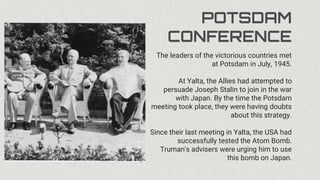
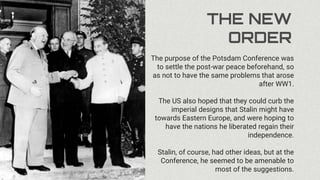
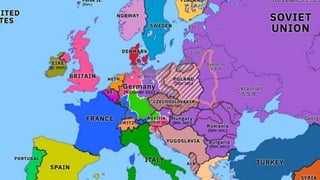
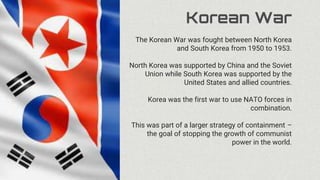
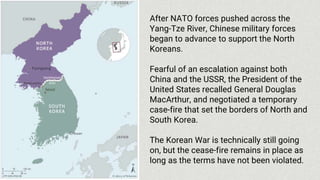
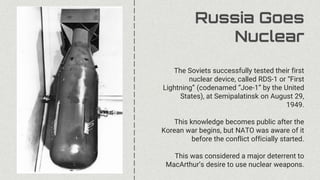
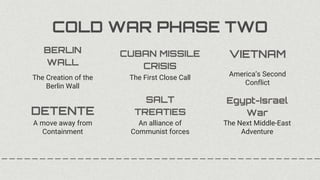
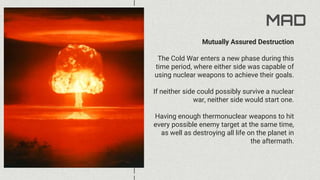
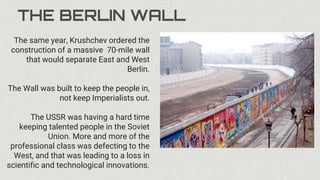
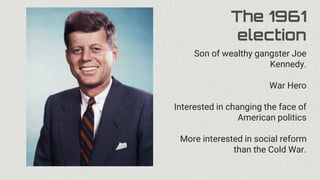
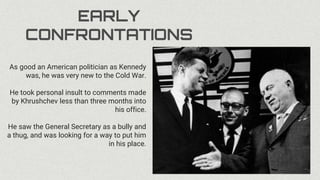
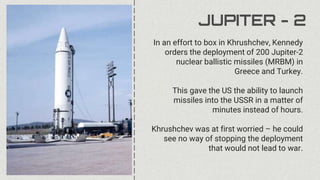
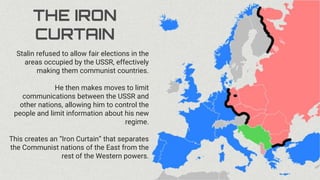
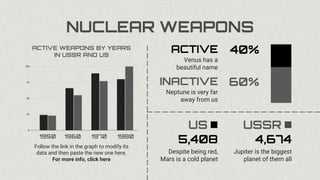
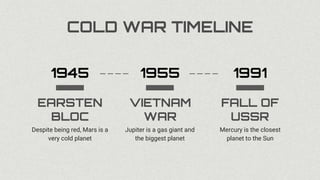
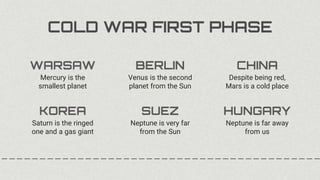
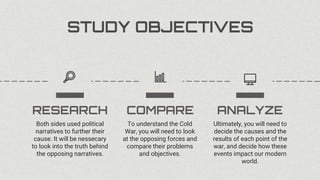
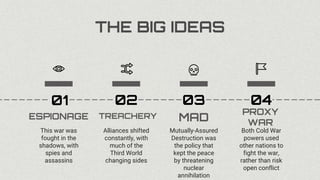
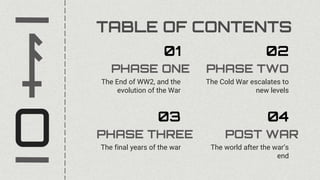
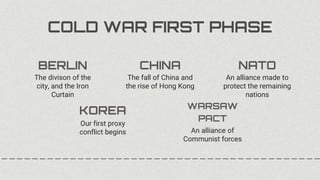
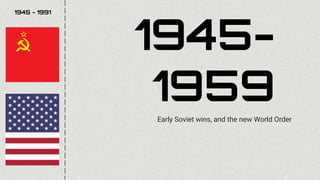
The Cold War (1945-1991) was a significant phase in world history characterized by ideological conflict between the United States and the Soviet Union, marked by espionage, shifting alliances, and proxy wars. Events like the Potsdam Conference, the formation of NATO, and the Korean War exemplified the political and military strategies employed during this period, while the threat of nuclear annihilation under the policy of mutually assured destruction shaped international relations. The war saw various phases, leading to major confrontations like the Cuban Missile Crisis and evolving into a complicated geopolitical landscape that continued to influence the modern world.

 Most read
 Most read
 Most read