Jean-Marc Itard


The first documented efforts to provide
  intervention services to a child with
          special needs in 1800.
She suggested that teachers observe
the natural, spontaneous behavior
 of children and then arrange learning
    experiences to encourage t
          their development
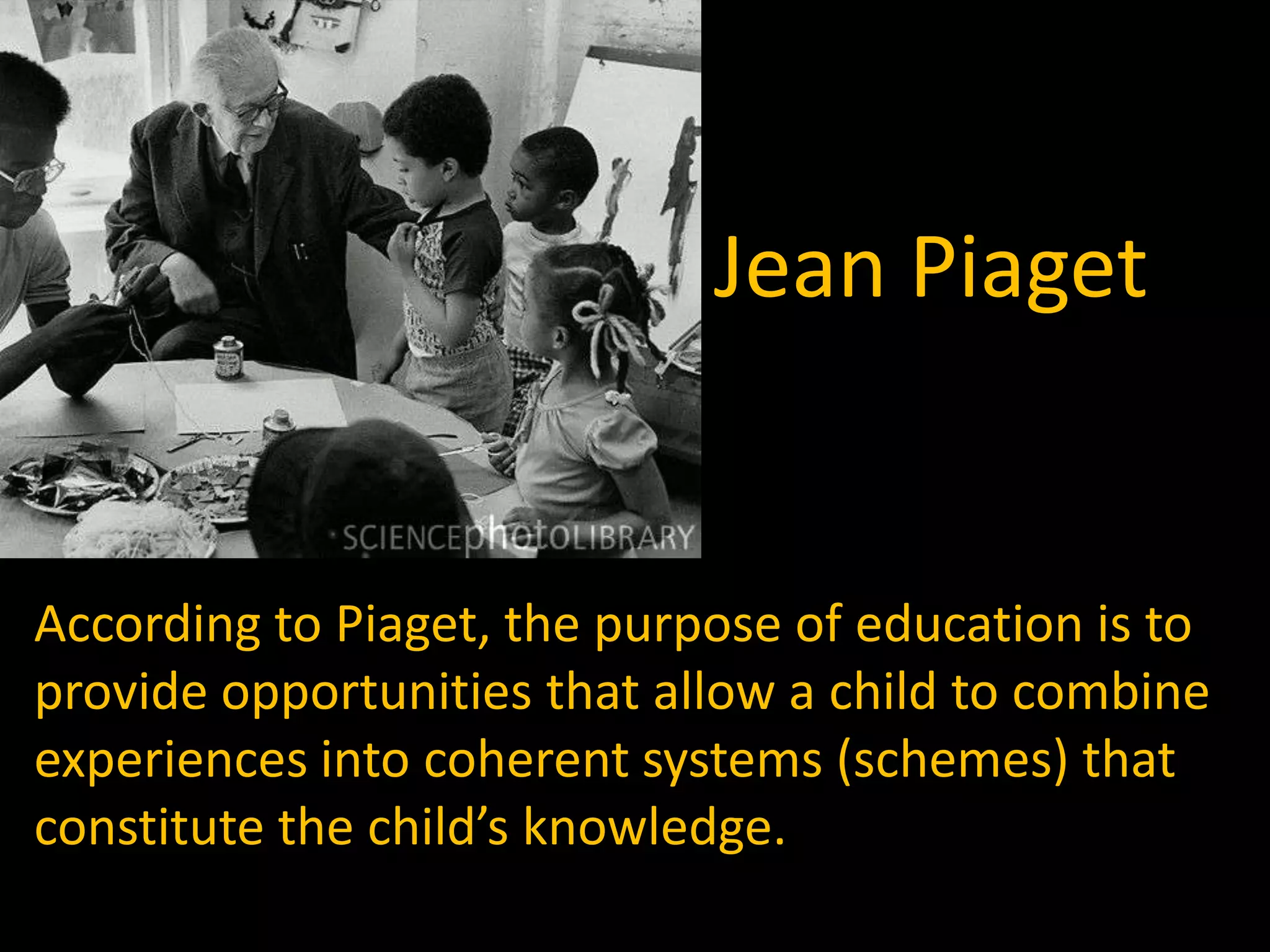
Jean Piaget


According to Piaget, the purpose of education is to
provide opportunities that allow a child to combine
experiences into coherent systems (schemes) that
constitute the child’s knowledge.
Bloom (1964), claimed that about “50%
of the [intellectual] development takes place
between conception and age 4.


Under the belief that children’s intelligence
develops early and rapidly and that
enrichment early in life can have profound
influences on the child’s development,
federal funding for Project Head Start was
provided in 1965.
The formation of the International Council for
Exceptional Children (CEC) in 1922 provided the
impetus for what some believe to be the most
influential advocacy group continuing to provide
national leadership on behalf of children with
special needs.
The 1930 White House Conference on Child
Health and Protection was a milestone in
marking the first time that special education had
received national recognition.
Laws Affecting Early Childhood Ed.
Rehabilitation Act of 1973

prohibits discrimination on the basis of disability
in programs conducted by Federal agencies, in
programs receiving Federal financial assistance.
Laws Affecting Early Childhood Ed.
1974 Public Law 93-380 Education
Amendments Buckley Amendment, Title V

Established a total federal commitment to the
education of children with disabilities; concerns
included education within the least restrictive
environment, nondiscriminatory testing, and
privacy rights.
Laws Affecting Early Childhood Ed.
• 1990 Public Law 101-336 Americans with
  Disabilities Act (ADA)

Ensures full civil rights for all individuals with
disabilities including reasonable
accommodations in preschools and child-care
centers.
Laws Affecting Early Childhood Ed.
• 1990 Public Law 101-476 Individuals with
  Disabilities Education Act (IDEA)

Marked a change in philosophy away from
labeling children as “handicapped children” to
referring to them as individuals first, with
“disabilities” following as a secondary
description.
Laws Affecting Early Childhood Ed.
Public Law 102-119 Individuals with Disabilities
Education Act of 1991

Ensuring comprehensive early intervention
services to young children and their families.
Laws Affecting Early Childhood Ed.
No Child Left Behind Act (NCLB) of 2001

NCLB is a reauthorization of the Elementary and Secondary Education
Act, which included Title 1, the government's flagship aid program for
disadvantaged students. NCLB supports standards-based education
reform based on the premise that setting high standards and
establishing measurable goals can improve individual outcomes in
education. The Act requires states to develop assessments in basic
skills. States must give these assessments to all students at select
grade levels in order to receive federal school funding. The Act does
not assert a national achievement standard; standards are set by each
individual state. NCLB expanded the federal role in public education
through annual testing, annual academic progress, report cards,
teacher qualifications, and funding changes
Laws Affecting Early Childhood Ed.
Public Law 108-446 Individuals with Disabilities
Education Improvement Act of 2004

Reauthorization of P.L. 105-17 continuing
authorization of preschool services under Part B
and early intervention services for infants and
toddlers under Part C with allowance to
continue early intervention services until
kindergarten.
Trends in Early Childhood Special Ed.
• Family-centered Approach

Rather than the traditional focus on the child, a
family-centered approach views the child’s
development within the context of the family
system.

Public Law 102-119 Individuals with Disabilities Education Act of 1991
Trends in Early Childhood Special Ed.
• Community-Based Inclusive Settings

Each child’s individual plan must state the degree to
which the child will receive services in “natural
environments.” Natural environments include not only
the child’s home but also neighborhood play groups,
child development centers, Head Start programs, and
any other setting designed for children without
disabilities.
Trends in Early Childhood Special Ed.
Interagency and Interdisciplinary Collaboration
Facilitates the learning of skills necessary to
work in teams comprising various disciplines,
sometimes from several agencies.

Culturally Responsive Practices
Family characteristics will continue to become
more diverse and complex.
Trends in Early Childhood Special Ed.
Coordinated, Comprehensive Services

Training programs have moved away from curricula that
follow traditional disciplinary boundaries toward curricula
that foster multiagency and multidisciplinary collaboration.

Evidence-Based Practices

The focus on educational standards and outcomes has
resulted in federal policies that have contributed the current
emphasis on evidence-based practices in early childhood
special education.
Trends in Early Childhood Special Ed.
Activity-based intervention , embedded
intervention , routines-based intervention, and
natural learning opportunities refer to everyday
activities in which the child’s interventions can be
embedded or infused.

Standards-Based Curriculum
By 2005, 45 states had developed curriculum
standards for 3- to 5-year-olds, and some had or
were working on standards for children from birth
to 3 years old (Gronlund, 2006).
Trends in Early Childhood Special Ed.
Child Outcomes
Related to the current emphases on evidence based
practices and standards-based curriculum, early
childhood special education focuses on positive
outcomes for children and families.

Recognition and Response
An emerging practice called “recognition &
response” (R & R) is based on Response to
Intervention.

History, laws, trends sped 501

  • 2.
    Jean-Marc Itard The firstdocumented efforts to provide intervention services to a child with special needs in 1800.
  • 3.
    She suggested thatteachers observe the natural, spontaneous behavior of children and then arrange learning experiences to encourage t their development
  • 4.
    Jean Piaget According toPiaget, the purpose of education is to provide opportunities that allow a child to combine experiences into coherent systems (schemes) that constitute the child’s knowledge.
  • 5.
    Bloom (1964), claimedthat about “50% of the [intellectual] development takes place between conception and age 4. Under the belief that children’s intelligence develops early and rapidly and that enrichment early in life can have profound influences on the child’s development, federal funding for Project Head Start was provided in 1965.
  • 6.
    The formation ofthe International Council for Exceptional Children (CEC) in 1922 provided the impetus for what some believe to be the most influential advocacy group continuing to provide national leadership on behalf of children with special needs. The 1930 White House Conference on Child Health and Protection was a milestone in marking the first time that special education had received national recognition.
  • 7.
    Laws Affecting EarlyChildhood Ed. Rehabilitation Act of 1973 prohibits discrimination on the basis of disability in programs conducted by Federal agencies, in programs receiving Federal financial assistance.
  • 8.
    Laws Affecting EarlyChildhood Ed. 1974 Public Law 93-380 Education Amendments Buckley Amendment, Title V Established a total federal commitment to the education of children with disabilities; concerns included education within the least restrictive environment, nondiscriminatory testing, and privacy rights.
  • 9.
    Laws Affecting EarlyChildhood Ed. • 1990 Public Law 101-336 Americans with Disabilities Act (ADA) Ensures full civil rights for all individuals with disabilities including reasonable accommodations in preschools and child-care centers.
  • 10.
    Laws Affecting EarlyChildhood Ed. • 1990 Public Law 101-476 Individuals with Disabilities Education Act (IDEA) Marked a change in philosophy away from labeling children as “handicapped children” to referring to them as individuals first, with “disabilities” following as a secondary description.
  • 11.
    Laws Affecting EarlyChildhood Ed. Public Law 102-119 Individuals with Disabilities Education Act of 1991 Ensuring comprehensive early intervention services to young children and their families.
  • 12.
    Laws Affecting EarlyChildhood Ed. No Child Left Behind Act (NCLB) of 2001 NCLB is a reauthorization of the Elementary and Secondary Education Act, which included Title 1, the government's flagship aid program for disadvantaged students. NCLB supports standards-based education reform based on the premise that setting high standards and establishing measurable goals can improve individual outcomes in education. The Act requires states to develop assessments in basic skills. States must give these assessments to all students at select grade levels in order to receive federal school funding. The Act does not assert a national achievement standard; standards are set by each individual state. NCLB expanded the federal role in public education through annual testing, annual academic progress, report cards, teacher qualifications, and funding changes
  • 13.
    Laws Affecting EarlyChildhood Ed. Public Law 108-446 Individuals with Disabilities Education Improvement Act of 2004 Reauthorization of P.L. 105-17 continuing authorization of preschool services under Part B and early intervention services for infants and toddlers under Part C with allowance to continue early intervention services until kindergarten.
  • 14.
    Trends in EarlyChildhood Special Ed. • Family-centered Approach Rather than the traditional focus on the child, a family-centered approach views the child’s development within the context of the family system. Public Law 102-119 Individuals with Disabilities Education Act of 1991
  • 15.
    Trends in EarlyChildhood Special Ed. • Community-Based Inclusive Settings Each child’s individual plan must state the degree to which the child will receive services in “natural environments.” Natural environments include not only the child’s home but also neighborhood play groups, child development centers, Head Start programs, and any other setting designed for children without disabilities.
  • 16.
    Trends in EarlyChildhood Special Ed. Interagency and Interdisciplinary Collaboration Facilitates the learning of skills necessary to work in teams comprising various disciplines, sometimes from several agencies. Culturally Responsive Practices Family characteristics will continue to become more diverse and complex.
  • 17.
    Trends in EarlyChildhood Special Ed. Coordinated, Comprehensive Services Training programs have moved away from curricula that follow traditional disciplinary boundaries toward curricula that foster multiagency and multidisciplinary collaboration. Evidence-Based Practices The focus on educational standards and outcomes has resulted in federal policies that have contributed the current emphasis on evidence-based practices in early childhood special education.
  • 18.
    Trends in EarlyChildhood Special Ed. Activity-based intervention , embedded intervention , routines-based intervention, and natural learning opportunities refer to everyday activities in which the child’s interventions can be embedded or infused. Standards-Based Curriculum By 2005, 45 states had developed curriculum standards for 3- to 5-year-olds, and some had or were working on standards for children from birth to 3 years old (Gronlund, 2006).
  • 19.
    Trends in EarlyChildhood Special Ed. Child Outcomes Related to the current emphases on evidence based practices and standards-based curriculum, early childhood special education focuses on positive outcomes for children and families. Recognition and Response An emerging practice called “recognition & response” (R & R) is based on Response to Intervention.