Presentation On
    EXPORTIng

Himani Gangwar
Nidhi Vats
Export
• The term "export" is derived from the conceptual
  meaning as to ship the goods and services out of the port
  of a country.

• The seller of such goods and services is referred to an
  "exporter" who is based in the country of export whereas
  the overseas based buyer is referred to as an "importer".
  ...
Exports are of three types
 Exoport-traders:-include trading houses export
  distributers ,export representatives manufacturers’
  representatives.
     they include traders operating on commission
       
     basis/free or both
 Export-manufacturers:-include
  manufacturers, producers , assemblers and processors.
       they either export directly or export through traders.
 Service- Exporters :- include banks, shipping
  companies,consulting firms,they provide services to export
  traders and export manufacturers.
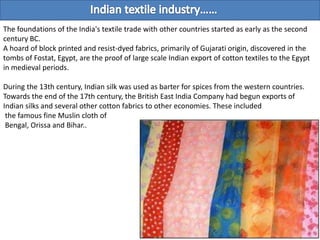
The foundations of the India's textile trade with other countries started as early as the second
century BC.
A hoard of block printed and resist-dyed fabrics, primarily of Gujarati origin, discovered in the
tombs of Fostat, Egypt, are the proof of large scale Indian export of cotton textiles to the Egypt
in medieval periods.

During the 13th century, Indian silk was used as barter for spices from the western countries.
Towards the end of the 17th century, the British East India Company had begun exports of
Indian silks and several other cotton fabrics to other economies. These included
 the famous fine Muslin cloth of
 Bengal, Orissa and Bihar..
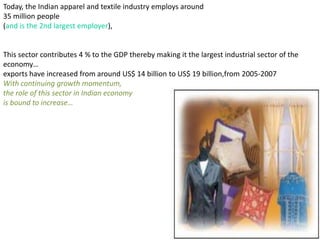
Today, the Indian apparel and textile industry employs around
35 million people
(and is the 2nd largest employer),


This sector contributes 4 % to the GDP thereby making it the largest industrial sector of the
economy…
exports have increased from around US$ 14 billion to US$ 19 billion,from 2005-2007
With continuing growth momentum,
the role of this sector in Indian economy
is bound to increase…
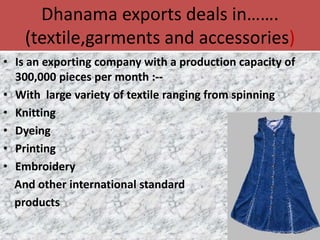
Dhanama exports deals in…….
    (textile,garments and accessories)
• Is an exporting company with a production capacity of
  300,000 pieces per month :--
• With large variety of textile ranging from spinning
• Knitting
• Dyeing
• Printing
• Embroidery
  And other international standard
  products
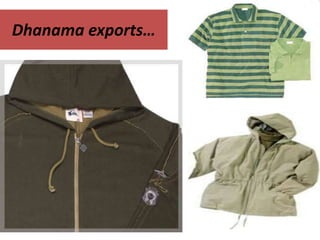
Dhanama exports…

      …..
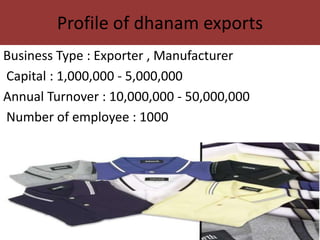
Profile of dhanam exports
Business Type : Exporter , Manufacturer
Capital : 1,000,000 - 5,000,000
Annual Turnover : 10,000,000 - 50,000,000
Number of employee : 1000
Some shortcomings of exporting….
   exporters have to bear the brunt of rise in indian
    rupee .
   Thereby fetching less margins on costs incurred in
    manufacturing .
   Rules and regulations
   Transport and risks involved
   currency
Benefits are there…
 As exports contribute in national income of a country
 Improves condition of economies
 As when exports increase over imports it leads to
 surplus of budget.

 Improves bilateral relations among nations   and so
On…
THANK YOU

Himani ppt

  • 1.
    Presentation On EXPORTIng Himani Gangwar Nidhi Vats
  • 2.
    Export • The term"export" is derived from the conceptual meaning as to ship the goods and services out of the port of a country. • The seller of such goods and services is referred to an "exporter" who is based in the country of export whereas the overseas based buyer is referred to as an "importer". ...
  • 3.
    Exports are ofthree types  Exoport-traders:-include trading houses export distributers ,export representatives manufacturers’ representatives. they include traders operating on commission  basis/free or both  Export-manufacturers:-include manufacturers, producers , assemblers and processors.  they either export directly or export through traders.  Service- Exporters :- include banks, shipping companies,consulting firms,they provide services to export traders and export manufacturers.
  • 4.
    The foundations ofthe India's textile trade with other countries started as early as the second century BC. A hoard of block printed and resist-dyed fabrics, primarily of Gujarati origin, discovered in the tombs of Fostat, Egypt, are the proof of large scale Indian export of cotton textiles to the Egypt in medieval periods. During the 13th century, Indian silk was used as barter for spices from the western countries. Towards the end of the 17th century, the British East India Company had begun exports of Indian silks and several other cotton fabrics to other economies. These included the famous fine Muslin cloth of Bengal, Orissa and Bihar..
  • 5.
    Today, the Indianapparel and textile industry employs around 35 million people (and is the 2nd largest employer), This sector contributes 4 % to the GDP thereby making it the largest industrial sector of the economy… exports have increased from around US$ 14 billion to US$ 19 billion,from 2005-2007 With continuing growth momentum, the role of this sector in Indian economy is bound to increase…
  • 6.
    Dhanama exports dealsin……. (textile,garments and accessories) • Is an exporting company with a production capacity of 300,000 pieces per month :-- • With large variety of textile ranging from spinning • Knitting • Dyeing • Printing • Embroidery And other international standard products
  • 7.
  • 8.
    Profile of dhanamexports Business Type : Exporter , Manufacturer Capital : 1,000,000 - 5,000,000 Annual Turnover : 10,000,000 - 50,000,000 Number of employee : 1000
  • 9.
    Some shortcomings ofexporting….  exporters have to bear the brunt of rise in indian rupee .  Thereby fetching less margins on costs incurred in manufacturing .  Rules and regulations  Transport and risks involved  currency
  • 10.
    Benefits are there… As exports contribute in national income of a country  Improves condition of economies  As when exports increase over imports it leads to surplus of budget.  Improves bilateral relations among nations and so On…
  • 11.