By: Brandon Carney  Period 6 th   Bio II HIGH ALTITUDES
Proper Clothing and Equipment   Oxygen tanks  Warm coat, pants, and boots  Long shirts  Boots with grips  Long socks  Rain proof clothing  Ice Axe Snow shovel
High Altitude Sickness The higher you climb above sea level, the less oxygen there is in the air. The oxygen level becomes very low at altitudes above 8,000 feet. This causes problems for people who normally live at lower altitudes because their bodies aren't used to working on so little oxygen. If you stay at a high altitude for a long time, your body gets used to the low oxygen level, and you don't get sick from it.
First signs of high-altitude illness are headache, lightheadedness, weakness, trouble sleeping and an upset stomach . Stop going up or go back down to a lower altitude until your symptoms go away. Sickness Continued
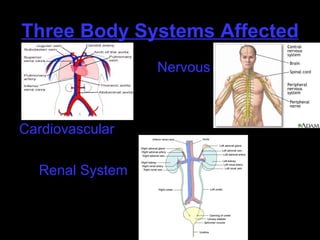
Three Body Systems Affected   Nervous  Cardiovascular   Renal System
High Altitude weather Very Cold, can get to -28 degrees on Mount Everest  Lots of snow 5 to 20 feet  Less oxygen  Dry Air Wind speed is an average of 75 mph
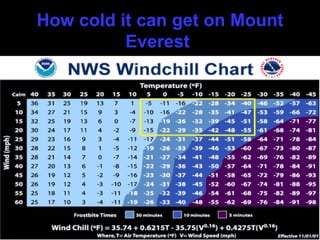
How cold it can get on Mount Everest
THE END

High Altitude Show

  • 1.
    By: Brandon Carney Period 6 th Bio II HIGH ALTITUDES
  • 2.
    Proper Clothing andEquipment Oxygen tanks Warm coat, pants, and boots Long shirts Boots with grips Long socks Rain proof clothing Ice Axe Snow shovel
  • 3.
    High Altitude SicknessThe higher you climb above sea level, the less oxygen there is in the air. The oxygen level becomes very low at altitudes above 8,000 feet. This causes problems for people who normally live at lower altitudes because their bodies aren't used to working on so little oxygen. If you stay at a high altitude for a long time, your body gets used to the low oxygen level, and you don't get sick from it.
  • 4.
    First signs ofhigh-altitude illness are headache, lightheadedness, weakness, trouble sleeping and an upset stomach . Stop going up or go back down to a lower altitude until your symptoms go away. Sickness Continued
  • 5.
    Three Body SystemsAffected Nervous Cardiovascular Renal System
  • 6.
    High Altitude weatherVery Cold, can get to -28 degrees on Mount Everest Lots of snow 5 to 20 feet Less oxygen Dry Air Wind speed is an average of 75 mph
  • 7.
    How cold itcan get on Mount Everest
  • 8.