Dr.GregLee
Greg@fundmetric.com
ChrisSteeves
Csteeves@fundmetric.com
Hidden Potential:
Using data to raise more
money!
OUTLINE:
โ€ข What is data?
โ€ข What data should you collect?
โ€ข What can data do for you?
โ€ข How do you analyze data?
What Is Data?
โ€ข Pieces of information (One piece = a datum)
โ€ข Can be qualitative or quantitative
โ€ข Age = 34 Quantitative
โ€ข Demeanor = Happy Qualitative
โ€ข Quantitative is the easiest to work with
โ€ข Qualitative can be categorized
โ€ข โ€œFriendlyโ€ = 2
โ€ข โ€˜Aggressiveโ€ = 1
What Data is Useful?
โ€ข Most data is useful
โ€ข Anything that can be used to distinguish between donors
โ€ข Or events
โ€ข Or appeals
โ€ข Anything that you would like to know about donors
โ€ข Or events
โ€ข Or appeals
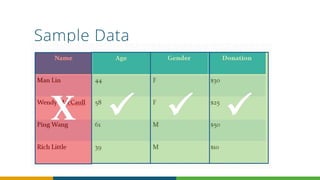
Sample Data
LAUNCH GROWTH MATURITY
DIRECT EMAIL
โ€ข Opt- in email list
โ€ข Professional
association lists
โ€ข Symposium & events
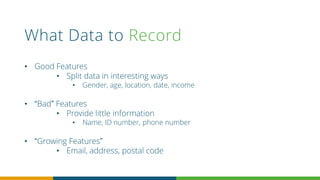
What Data to Record
โ€ข Good Features
โ€ข Split data in interesting ways
โ€ข Gender, age, location, date, income
โ€ข โ€œBadโ€ Features
โ€ข Provide little information
โ€ข Name, ID number, phone number
โ€ข โ€œGrowing Featuresโ€
โ€ข Email, address, postal code
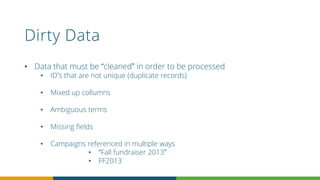
Dirty Data
โ€ข Data that must be โ€œcleanedโ€ in order to be processed
โ€ข IDโ€™s that are not unique (duplicate records)
โ€ข Mixed up collumns
โ€ข Ambiguous terms
โ€ข Missing fields
โ€ข Campaigns referenced in multiple ways
โ€ข โ€œFall fundraiser 2013โ€
โ€ข FF2013
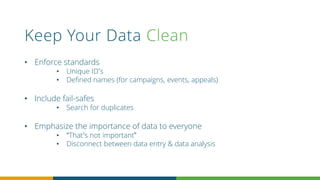
Keep Your Data Clean
โ€ข Enforce standards
โ€ข Unique IDโ€™s
โ€ข Defined names (for campaigns, events, appeals)
โ€ข Include fail-safes
โ€ข Search for duplicates
โ€ข Emphasize the importance of data to everyone
โ€ข โ€œThatโ€™s not importantโ€
โ€ข Disconnect between data entry & data analysis
What Can Data do for You
โ€ข Increase your fundraising knowledge
โ€ข With respect to your particular area
โ€ข Thatโ€™s nice, how does that help?
โ€ข Saving money through:
โ€ข Targeted campaigns
โ€ข Eliminating unprofitable campaigns
Simple Analysis
โ€ข โ€œWe are drowning in data but starving for informationโ€™
โ€ข John Naisbitt
โ€ข We want to make informed insights from data
โ€ข To do this you need years of training in statistics, data
processing and machine learning
โ€ข Not really
Simple Analysis
โ€ข What is the average donation?
โ€ข Within a given campaign
โ€ข Within a geographic area
โ€ข Within a gender
โ€ข What campaigns generate the most new donors?
โ€ข Which are best at keeping donors?
โ€ข Numbers can surprise you
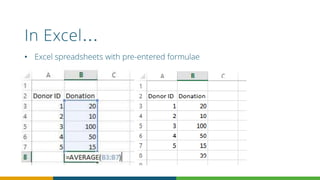
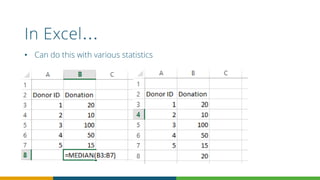
In Excelโ€ฆ
โ€ข Excel spreadsheets with pre-entered formulae
In Excelโ€ฆ
โ€ข Can do this with various statistics
Recency/Frequency/Monetary
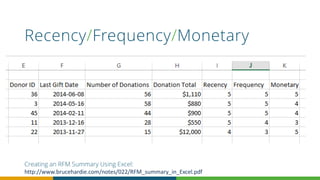
โ€ข Sort your donors by:
โ€ข Recency: The last time they donated
โ€ข Frequency: How many times theyโ€™ve donated
โ€ข Monetary: How much they have donated
โ€ข Bucket donors in each category:
โ€ข 5 buckets
โ€ข Donor X is R=4, F=3, M=5
โ€ข 80% of donations come from top 20%
Recency/Frequency/Monetary
Creating an RFM Summary Using Excel:
http://www.brucehardie.com/notes/022/RFM_summary_in_Excel.pdf
Sophisticated Analysis
โ€ข Basic statistics give valuable information
โ€ข Historical information
โ€ข But what if we want to predict what donors will do?
โ€ข Or how profitable a campaign was
โ€ข Patterns in data can provide statistical bias for predictions
โ€ข Machine learning can find these patterns
Machine Learning
โ€ข A subfield of artificial intelligence
โ€ข A computer finds patterns in data & predicts based on them
โ€ข Sometimes are understandable to humans
โ€ข Other times, it is hard to tell
โ€ข Can only work with the data provided
โ€ข Except when expert knowledge is included
โ€ข Generally classified into two categories:
โ€ข Classification
โ€ข Regression
Machine Learning is Easy
โ€ข Predict whether a given person has cancer
โ€ข Difficult problem
โ€ข Can build a predictor with 97% accuracy
โ€ข โ€œNoโ€
โ€ข Not useful
Machine Learning is Hard
โ€ข Requires useful data
โ€ข Features relevant to the program
โ€ข If they help distinguish between donors
โ€ข Not always clear what a โ€œrelevantโ€ feature is
โ€ข Beware of red herrings/correlation
โ€ข โ€œ85% of repeat donors have their favourite colour as blueโ€
โ€ข Make everything blue
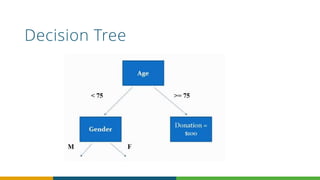
Decision Tree
โ€ข A flow chart
โ€ข Used to classify input
โ€ข At each step:
โ€ข Pick a feature of the input
โ€ข Pick a value of that feature that splits the data
โ€ข Split the data
Decision Tree
Decision Tree
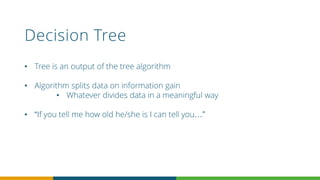
โ€ข Tree is an output of the tree algorithm
โ€ข Algorithm splits data on information gain
โ€ข Whatever divides data in a meaningful way
โ€ข โ€œIf you tell me how old he/she is I can tell youโ€ฆโ€
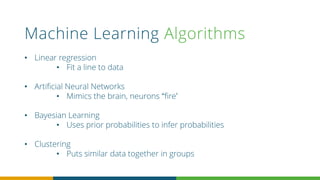
Machine Learning Algorithms
โ€ข Linear regression
โ€ข Fit a line to data
โ€ข Artificial Neural Networks
โ€ข Mimics the brain, neurons โ€œfireโ€™
โ€ข Bayesian Learning
โ€ข Uses prior probabilities to infer probabilities
โ€ข Clustering
โ€ข Puts similar data together in groups
Whatโ€™s the Point?
โ€ข Machine learning algorithms output a model
โ€ข We feed the model new data
โ€ข And out pops a prediction
โ€ข Learn a model to predict planned giving
โ€ข Use it to predict which donors to approach about this
What Can I do With the
Results?
โ€ข Predict which donors to steward
โ€ข Or which not to waste time on
โ€ข Predict which campaigns will make money
โ€ข Predict which events to run
โ€ข Find patterns that you didnโ€™t know were there
โ€ข Confirms patterns you thought were there
โ€ข Defy conventional knowledge
Strange Data Examples
โ€ข Big Bang radiation
โ€ข Ozone layer hole
โ€ข UPS route changes
โ€ข Canada Post
โ€ข Paralyzed veterans
Dr.GregLee
Greg@fundmetric.com
CHRISSteeves
Csteeves@fundmetric.com
fundmetric.com
902-233-8243

Hidden Potential- Using Data to Raise More Money

  • 1.
  • 2.
    OUTLINE: โ€ข What isdata? โ€ข What data should you collect? โ€ข What can data do for you? โ€ข How do you analyze data?
  • 3.
    What Is Data? โ€ขPieces of information (One piece = a datum) โ€ข Can be qualitative or quantitative โ€ข Age = 34 Quantitative โ€ข Demeanor = Happy Qualitative โ€ข Quantitative is the easiest to work with โ€ข Qualitative can be categorized โ€ข โ€œFriendlyโ€ = 2 โ€ข โ€˜Aggressiveโ€ = 1
  • 4.
    What Data isUseful? โ€ข Most data is useful โ€ข Anything that can be used to distinguish between donors โ€ข Or events โ€ข Or appeals โ€ข Anything that you would like to know about donors โ€ข Or events โ€ข Or appeals
  • 5.
    Sample Data LAUNCH GROWTHMATURITY DIRECT EMAIL โ€ข Opt- in email list โ€ข Professional association lists โ€ข Symposium & events
  • 6.
    What Data toRecord โ€ข Good Features โ€ข Split data in interesting ways โ€ข Gender, age, location, date, income โ€ข โ€œBadโ€ Features โ€ข Provide little information โ€ข Name, ID number, phone number โ€ข โ€œGrowing Featuresโ€ โ€ข Email, address, postal code
  • 7.
    Dirty Data โ€ข Datathat must be โ€œcleanedโ€ in order to be processed โ€ข IDโ€™s that are not unique (duplicate records) โ€ข Mixed up collumns โ€ข Ambiguous terms โ€ข Missing fields โ€ข Campaigns referenced in multiple ways โ€ข โ€œFall fundraiser 2013โ€ โ€ข FF2013
  • 8.
    Keep Your DataClean โ€ข Enforce standards โ€ข Unique IDโ€™s โ€ข Defined names (for campaigns, events, appeals) โ€ข Include fail-safes โ€ข Search for duplicates โ€ข Emphasize the importance of data to everyone โ€ข โ€œThatโ€™s not importantโ€ โ€ข Disconnect between data entry & data analysis
  • 9.
    What Can Datado for You โ€ข Increase your fundraising knowledge โ€ข With respect to your particular area โ€ข Thatโ€™s nice, how does that help? โ€ข Saving money through: โ€ข Targeted campaigns โ€ข Eliminating unprofitable campaigns
  • 10.
    Simple Analysis โ€ข โ€œWeare drowning in data but starving for informationโ€™ โ€ข John Naisbitt โ€ข We want to make informed insights from data โ€ข To do this you need years of training in statistics, data processing and machine learning โ€ข Not really
  • 11.
    Simple Analysis โ€ข Whatis the average donation? โ€ข Within a given campaign โ€ข Within a geographic area โ€ข Within a gender โ€ข What campaigns generate the most new donors? โ€ข Which are best at keeping donors? โ€ข Numbers can surprise you
  • 12.
    In Excelโ€ฆ โ€ข Excelspreadsheets with pre-entered formulae
  • 13.
    In Excelโ€ฆ โ€ข Cando this with various statistics
  • 14.
    Recency/Frequency/Monetary โ€ข Sort yourdonors by: โ€ข Recency: The last time they donated โ€ข Frequency: How many times theyโ€™ve donated โ€ข Monetary: How much they have donated โ€ข Bucket donors in each category: โ€ข 5 buckets โ€ข Donor X is R=4, F=3, M=5 โ€ข 80% of donations come from top 20%
  • 15.
    Recency/Frequency/Monetary Creating an RFMSummary Using Excel: http://www.brucehardie.com/notes/022/RFM_summary_in_Excel.pdf
  • 16.
    Sophisticated Analysis โ€ข Basicstatistics give valuable information โ€ข Historical information โ€ข But what if we want to predict what donors will do? โ€ข Or how profitable a campaign was โ€ข Patterns in data can provide statistical bias for predictions โ€ข Machine learning can find these patterns
  • 17.
    Machine Learning โ€ข Asubfield of artificial intelligence โ€ข A computer finds patterns in data & predicts based on them โ€ข Sometimes are understandable to humans โ€ข Other times, it is hard to tell โ€ข Can only work with the data provided โ€ข Except when expert knowledge is included โ€ข Generally classified into two categories: โ€ข Classification โ€ข Regression
  • 18.
    Machine Learning isEasy โ€ข Predict whether a given person has cancer โ€ข Difficult problem โ€ข Can build a predictor with 97% accuracy โ€ข โ€œNoโ€ โ€ข Not useful
  • 19.
    Machine Learning isHard โ€ข Requires useful data โ€ข Features relevant to the program โ€ข If they help distinguish between donors โ€ข Not always clear what a โ€œrelevantโ€ feature is โ€ข Beware of red herrings/correlation โ€ข โ€œ85% of repeat donors have their favourite colour as blueโ€ โ€ข Make everything blue
  • 20.
    Decision Tree โ€ข Aflow chart โ€ข Used to classify input โ€ข At each step: โ€ข Pick a feature of the input โ€ข Pick a value of that feature that splits the data โ€ข Split the data
  • 21.
  • 22.
    Decision Tree โ€ข Treeis an output of the tree algorithm โ€ข Algorithm splits data on information gain โ€ข Whatever divides data in a meaningful way โ€ข โ€œIf you tell me how old he/she is I can tell youโ€ฆโ€
  • 23.
    Machine Learning Algorithms โ€ขLinear regression โ€ข Fit a line to data โ€ข Artificial Neural Networks โ€ข Mimics the brain, neurons โ€œfireโ€™ โ€ข Bayesian Learning โ€ข Uses prior probabilities to infer probabilities โ€ข Clustering โ€ข Puts similar data together in groups
  • 24.
    Whatโ€™s the Point? โ€ขMachine learning algorithms output a model โ€ข We feed the model new data โ€ข And out pops a prediction โ€ข Learn a model to predict planned giving โ€ข Use it to predict which donors to approach about this
  • 25.
    What Can Ido With the Results? โ€ข Predict which donors to steward โ€ข Or which not to waste time on โ€ข Predict which campaigns will make money โ€ข Predict which events to run โ€ข Find patterns that you didnโ€™t know were there โ€ข Confirms patterns you thought were there โ€ข Defy conventional knowledge
  • 26.
    Strange Data Examples โ€ขBig Bang radiation โ€ข Ozone layer hole โ€ข UPS route changes โ€ข Canada Post โ€ข Paralyzed veterans
  • 27.