Hepatitis C
Recommendations for managing Hepatitis C according to latest guidelines.
Dr. Waleed Haider.
Epidemiology of HCV
 Highly prevalent disease.
 Globally, an estimated 58 million people have chronic hepatitis C virus
infection
 WHO estimated that in 2019, approximately 290,000 people died of
hepatitis C, mostly from cirrhosis and hepatocellular carcinoma (primary
liver cancer)
 Genotype 1 and 3 are the most common causes of infection (44% and 25%,
respectively)
Compensated vs decompensated
cirrhosis
 To know weather cirrhosis is present or not, is very important for all liver
diseases but its specifically important for Hepatitis C treatment.
 If the patient is in cirrhosis it is important to know if it is compensated or
decompensated.
 Gold standard to detect cirrhosis is Liver Biopsy. which is rarely done
nowadays for hepatitis C.
 Non Invasive methods are available to know the grades of fibrosis and
cirrhosis to great extent.
Child-Turcotte-Pugh score
Metavir Staging (Liver biopsy)
The METAVIR​scoring system is a system used to assess the extent
of inflammation and fibrosis by histopathological evaluation in a
liver biopsy of patients with hepatitis C.
Stage grade Histology on Biopsy Fibrosis/Cirrhosis
0 F0 No fibrosis Insignificant fibrosis
1 F1 Only portal fibrosis Insignificant fibrosis
2 F2 Portal fibrosis plus few septae Significant fibrosis
3 F3 Multiple Septations Advanced Fibrosis
4 F4 Cirrhosis Cirrhosis
Non invasive Assessment of fibrosis and
Cirrhosis.
Biomarker based
 APRI – AST to platelet ratio index.
 FIB-4 score
Imaging based
 Transient Elastography (Fibroscan).
AST to Platelet Ratio Index (APRI)
 < 0.5 = No fibrosis
 >1.5 = Significant fibrosis (grade F2)
 <1 = No Cirrhosis
 >2 = Cirrhosis (grade F4)
FIB-4 Score
 < 1.45 = Significant Fibrosis ruled out.
 > 3.25 = Significant Fibrosis ruled in
(garde F2)
Pre-therapeutic assessment
Recommendations
Liver disease severity must be assessed prior to therapy.
Cirrhosis must be identified, as some treatment regimens must be
adjusted and post-treatment surveillance for HCC is mandatory.
Post-treatment surveillance for HCC must also be performed in patients
with advanced fibrosis (METAVIR score F3).
Fibrosis stage must initially be assessed by non-invasive methods,
including liver stiffness measurement or serum biomarkers, including
AST to Platelet Ratio Index(APRI) and FIB-4 score that are inexpensive
and reliable biomarker panels.
Liver biopsy should be reserved for cases where there is uncertainty or
potential additional etiologies.
Non-invasive methods should not be used to assess fibrosis stage after
therapy, as they are unreliable in this setting
Primary goal and impact of HCV
therapy
 The goal of therapy is to cure HCV infection and attain SVR-12(Sustained
Virologic response means 12 weeks or more after stopping the treatment
for hepatitis C, tests Can’t find the virus in blood), in order to:
I. Prevent and reduce the complications of HCV-related liver and
extrahepatic diseases, including hepatic fibrosis, cirrhosis, decompensation
of cirrhosis, HCC, severe extrahepatic manifestations like Idiopathic
pulmonary fibrosis, Autoimmune thyroiditis, Lichen planus, Type 2 diabetes
mellitus etc and death.
II. Improve quality of life and remove stigma.
III. Prevent onward transmission of HCV through treatment as prevention.
Fibroscan (Transient Elastography)
 FibroScan is a type of liver elastography. FibroScan is a special modified
ultrasound technology that measures liver stiffness (hardness) and fatty
changes in liver. Units used is usually KiloPascals (kPa).
For HCV
 >12.5 kPa = Cirrhosis (F4)
 <7.1 kPa = No significant Fibrosis (<F2)
Indications for treatment: who should
be treated (continued)
Recommendations
All patients with HCV infection must be considered for therapy, including
treatment-naïve and treatment-experienced patients.
Patients who should be treated without delay
•Significant fibrosis or cirrhosis (METAVIR score ≥F2): including compensated
(Child–Pugh A) and decompensated (Child–Pugh B or C) cirrhosis.
•Clinically significant extra-hepatic manifestations.
•HCV recurrence after liver transplantation
•Patients at risk of rapid evolution of liver disease due to concurrent
comorbidities
•Individuals at risk of transmitting HCV
• Person who inject drugs
• Male homosexuals with high-risk sexual practices
• Women of child-bearing age who wish to get pregnant
• Hemodialysis patients
• Incarcerated individuals
Indications for treatment: who should
be treated .
Recommendations
•In patients with decompensated cirrhosis and an indication for liver transplantation,
transplant first and treat after transplantation
•For waiting time >6 months, treat before transplant (clinical benefit not well
established)
•Treatment is generally not recommended in patients with limited life expectancy
due to non-liver-related comorbidities
Drugs used for treatment of Hepatitis C
NS3/4A Inhibitors
(Protease Inhibitors)
NS5A Polymerase
Inhibitors
NS5B Polymerase
Inhibitors
Others
Glecaprevir Velpatasvir NUCLEOSIDASE:
SOFOSBUVIR
Peg Interferon
alpha
Voxilaprevir Daclatasvir NON-NUCLEOSIDASE:
DASABUVIR
Ribavirin
Paritaprevir Pibrentasvir
Grazoprevir Ledipasvir
Simepravir Elbasvir
Boseprevir Ombitasvir
Treatment of Hepatitis C
 No single drug should be used for treatment of Hepatitis C.
 Acute Hepatitis C should be treated and monitored same as chronic
hepatitis C is treated.
Before 2012
 Peg Interferon Alpha and ribavirin were used for this purpose, which had
major side effects and rate of non compliance was high.
After 2012
 With the advent of DAA’s (Direct-Acting Antivirals), interferons were
completely discontinued and Ribavirin is rarely used (genotype 3 infection
and cirrhotic patients)
 Genotyping, subtyping and resistance associated substitution (RAS) are not
done at the start of treatment.
DAA(Direct-Acting Antivirals)combinations
used for the Treatment of Hepatitis C
1. Sofosbuvir + Valpatasvir (Pangenotype)
2. Sofosbuvir + Daclatasvir (Pangenotype, Not in the latest Guidelines)
3. Glacaprevir + Pibrentasvir(Pangenotype)
4. Sofosbuvir + Ledipasvir (Genotype 1,4,5,6)
5. Sofosbuvir + Valpatasvir + Voxilaprevir (Rescue therapy)
6. Sofosbuvir + Valpatasvir + Ribavirin (Decompensated cirrhosis)
Earlier combination 1 and 3 were not used in adolescent, children and CKD patient but
now according to the latest guidelines (AASLD 2022 and EASL 2020) both can be used
safely in these group of patients.
Currently available pangenotypic DAAs for
the treatment of non-cirrhotic patients
HCV infected persons without Cirrhosis
Glecaprevir(300mg) +
Pibrentasvir(120mg)
Sofosbuvir(400mg) +
Valpatasvir(100mg)
Sofosbuvir(400mg) +
Daclatasvir(60mg)
8 weeks 12 weeks 12 weeks
Available regimens for HCV infected
person with Cirrhosis (compensated).
HCV infected person with Cirrhosis
Glecaprevir(300mg)
+
Pibrentasvir(120mg)
Sofosbuvir(400mg)
+
Daclatasvir(60mg)
Sofosbuvir(400mg)
+
Daclatasvir(60mg)
Sofosbuvir(400mg)
+
Valpatasvir(100mg)
12 weeks 24 weeks 12 weeks
(considered in
countries where
genotype 3 distribution
is known and
prevalence is less than
5 %)
12 weeks
Treatment in Decompensated Liver
Disease (Child Pugh B and C)
 Like Interferons, Protease Inhibitors are contraindicated in decompensated
liver disease.
Category of patient Regimen recommended Duration of therapy
Decompensated Cirrhosis
(Child-Pugh B & C)
SOFusbovir +Valpatasvir +
Ribavirin (600-1200mg) weight
based
12 weeks
In Ribavirin intolerant Patients:
SOFusbovir +Valpatasvir
24 weeks
Retreatment of DAA failures and
Rescue therapy.
 HCV resistance testing (RAS) prior to retreatment in patients who failed after
any of the DAA-containing treatment regimens is useful to guide
retreatment.
 Patients without cirrhosis or with compensated (Child Pugh A) cirrhosis who
failed after a DAA containing regimen should be retreated with sofosbuvir,
velpatasvir and voxilaprevir for 12 weeks .
 Patients with decompensated (Child-Pugh B or C) cirrhosis who failed after
a DAA containing regimen have a contraindication for the use of protease
inhibitors, should be treated with sofosbuvir and velpatasvir with weight-
based ribavirin for 24 weeks .
Treatment of chronic hepatitis C in
special epidemiological groups
Treatment of chronic Hepatitis C in patients
with HCC (hepatocellular carcinoma)
Recommendations
Patients without cirrhosis or with compensated (Child-Pugh A) cirrhosis with HCC who are eligible for
potentially curative therapy with liver resection or ablation should defer DAA therapy until after
HCC treatment is completed.
In patients with HCC awaiting liver transplantation with an HCV infection, the timing of antiviral
treatment (pre or post transplant) should not interfere with the management of the patient on the
waiting list and must be decided on a case-by-case basis through a multidisciplinary discussion.
In patients with HCC awaiting liver transplantation with an HCV infection in centers with long
waiting times, HCV treatment should be initiated before liver transplantation.
Patients with HCC without cirrhosis or with compensated (Child-Pugh A) cirrhosis awaiting liver
transplantation should be treated for their HCV infection, prior to or after liver transplantation,
according to the general recommendations.
Patients with complete response to HCC therapy who achieve SVR(Sustained Virologic response)
have a continued risk of HCC recurrence and require indefinite post-SVR HCC surveillance by
means of ultrasound every 6 months.
Treatment of chronic hepatitis C in
adolescents and children
 All children born to HCV-infected women should be tested for HCV infection
from the age of 18 months .
 Adolescents aged 12–17 years who are treatment-naïve or treatment-
experienced, without cirrhosis or with compensated (Child-Pugh A) cirrhosis,
should be treated according to the general recommendations in adult patients.
 Children aged 3–11 years who are treatment-naïve or treatment-experienced,
without cirrhosis or with compensated (Child-Pugh A) cirrhosis, should be treated
according to the general recommendations in adult patients but with dose
adjustment for the weight.
Treatment of chronic hepatitis C in
pregnant women
 HCV treatment during pregnancy is not recommended in the absence of
safety and efficacy data.
 Treatment can be considered during pregnancy, or in the case of
accidental conception during treatment, only on a case-by-case basis
after a thorough discussion with the patient about the potential risks and
benefits and in a joined-up approach with hepatology and obstetric
services .
 Breastfeeding is not contraindicated in women with HCV, except in the
case of bleeding or cracked nipples for which specialist advice should be
sought .
Treatment of chronic hepatitis C in
patients with HBV coinfection.
 Patients coinfected with HCV and HBV should be tested for HIV if their HIV status is
unknown.
 Patients coinfected with HCV and HBV should be treated with the same anti-HCV
regimens, following the same rules as HCV-monoinfected patients .
 Patients coinfected with HCV and HBV fulfilling the standard criteria for HBV treatment
should receive nucleoside/nucleotide analogue treatment according to the EASL 2017(the
European association for the study of the liver)Guidelines on the management of hepatitis
B virus infection.
 Patients who are HBs antigen-positive should receive nucleoside/nucleotide analogue
prophylaxis at least until week 12 post anti-HCV therapy and be monitored monthly if HBV
treatment is stopped .
 In patients who are HBs antigen-negative but anti-HBc antibody-positive(antibody to
hepatitis B core antigen), serum ALT levels should be monitored monthly to detect possible
reactivation .
Treatment of chronic hepatitis C in
patients with HIV coinfection.
 The same IFN-free, ribavirin-free treatment regimens should be used in HIV-
coinfected patients as in patients without HIV infection, because the
virological results of therapy are identical.
 Drug-drug interactions are a key consideration in treating HIV-HCV-
coinfected patients, and close attention must be paid to anti-retroviral
drugs that are contraindicated, not recommended or require dose
adjustment with particular DAA regimens .
Treatment of chronic hepatitis C in patients with renal
impairment, including patients on haemodialysis
 Patients with HCV infection and mild to moderate or severe renal
impairment, including those with end-stage renal disease on
haemodialysis, should be treated for their HCV infection according to
the general recommendations, with no need for dose adjustments of
HCV DAAs, with close on and post treatment monitoring by a
multidisciplinary team.
Drug-drug interactions.
Drug-drug interactions between HCV
DAAs and antiretroviral drugs(HIV).
Drug-drug interactions between HCV
DAAs and anticonvulsants
Drug-drug interactions between HCV
DAAs and cardiovascular drugs
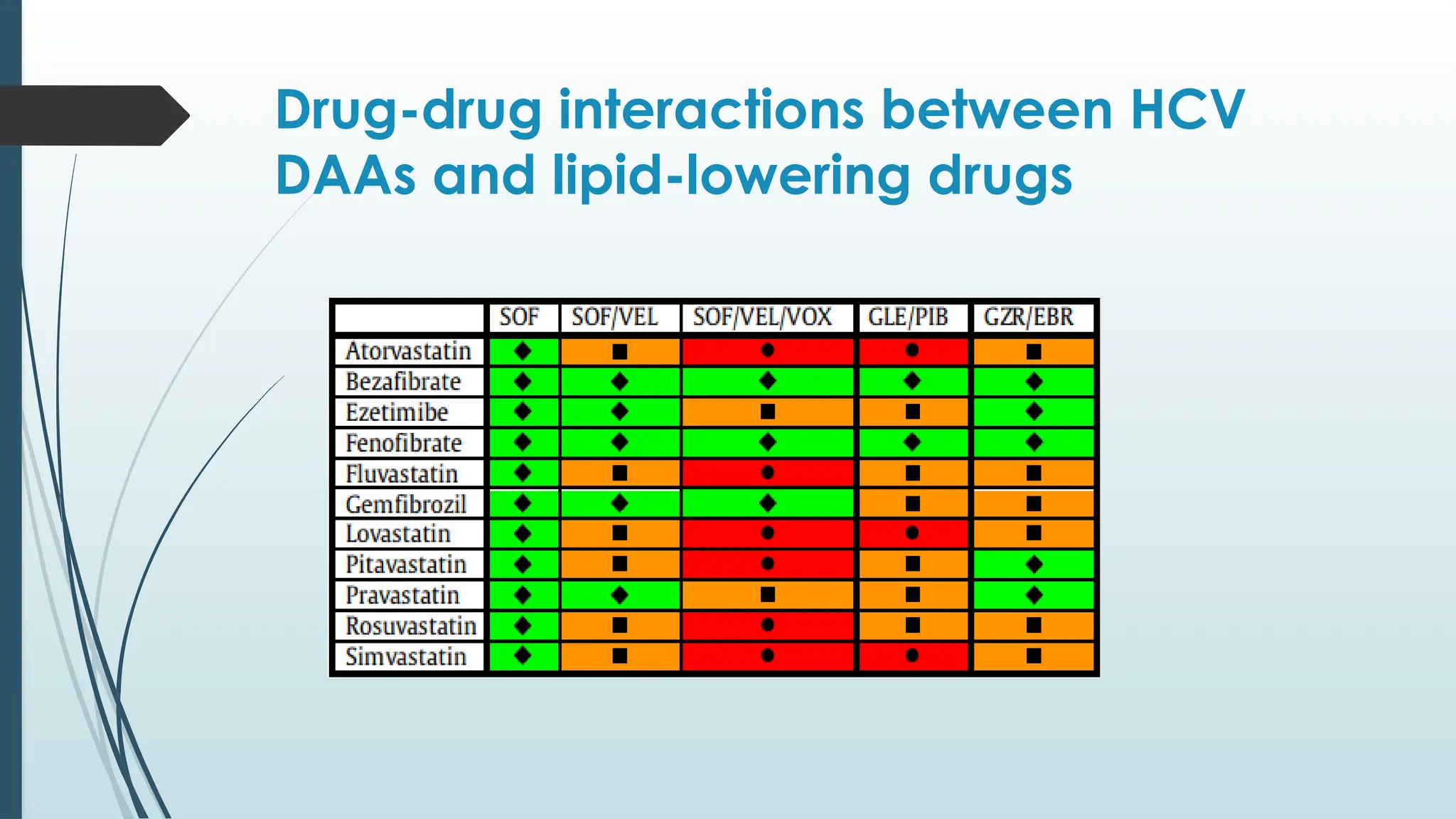
Drug-drug interactions between HCV
DAAs and lipid-lowering drugs
Drug-drug interactions between HCV
DAAs and immunosuppressant's.
Drug-drug interactions between HCV DAAs
and antiplatelets and anticoagulants.
Treatment monitoring
 HCV RNA or HCV core antigen detection should be performed at week 12th
(SVR12) or 24th
(SVR24) post-treatment to assess whether treatment has
been successful . SVR:sustained Virologic Response
 ALT levels should be assessed at least at baseline and at 12 or 24 weeks
post-treatment .
 Renal function should be checked monthly in patients with reduced GFR .
 The efficacy and toxicity of concurrent drugs given for comorbidities and
potential drug-drug interactions should be monitored during treatment .
 Treatment should be stopped in case of severe adverse events or in case of
ALT flare >10 times the upper limit of normal values .
Thank you.

hepatitis c presentation on its management and treatment

  • 1.
    Hepatitis C Recommendations formanaging Hepatitis C according to latest guidelines. Dr. Waleed Haider.
  • 2.
    Epidemiology of HCV Highly prevalent disease.  Globally, an estimated 58 million people have chronic hepatitis C virus infection  WHO estimated that in 2019, approximately 290,000 people died of hepatitis C, mostly from cirrhosis and hepatocellular carcinoma (primary liver cancer)  Genotype 1 and 3 are the most common causes of infection (44% and 25%, respectively)
  • 3.
    Compensated vs decompensated cirrhosis To know weather cirrhosis is present or not, is very important for all liver diseases but its specifically important for Hepatitis C treatment.  If the patient is in cirrhosis it is important to know if it is compensated or decompensated.  Gold standard to detect cirrhosis is Liver Biopsy. which is rarely done nowadays for hepatitis C.  Non Invasive methods are available to know the grades of fibrosis and cirrhosis to great extent.
  • 4.
  • 5.
    Metavir Staging (Liverbiopsy) The METAVIR​scoring system is a system used to assess the extent of inflammation and fibrosis by histopathological evaluation in a liver biopsy of patients with hepatitis C. Stage grade Histology on Biopsy Fibrosis/Cirrhosis 0 F0 No fibrosis Insignificant fibrosis 1 F1 Only portal fibrosis Insignificant fibrosis 2 F2 Portal fibrosis plus few septae Significant fibrosis 3 F3 Multiple Septations Advanced Fibrosis 4 F4 Cirrhosis Cirrhosis
  • 6.
    Non invasive Assessmentof fibrosis and Cirrhosis. Biomarker based  APRI – AST to platelet ratio index.  FIB-4 score Imaging based  Transient Elastography (Fibroscan).
  • 7.
    AST to PlateletRatio Index (APRI)  < 0.5 = No fibrosis  >1.5 = Significant fibrosis (grade F2)  <1 = No Cirrhosis  >2 = Cirrhosis (grade F4)
  • 8.
    FIB-4 Score  <1.45 = Significant Fibrosis ruled out.  > 3.25 = Significant Fibrosis ruled in (garde F2)
  • 9.
    Pre-therapeutic assessment Recommendations Liver diseaseseverity must be assessed prior to therapy. Cirrhosis must be identified, as some treatment regimens must be adjusted and post-treatment surveillance for HCC is mandatory. Post-treatment surveillance for HCC must also be performed in patients with advanced fibrosis (METAVIR score F3). Fibrosis stage must initially be assessed by non-invasive methods, including liver stiffness measurement or serum biomarkers, including AST to Platelet Ratio Index(APRI) and FIB-4 score that are inexpensive and reliable biomarker panels. Liver biopsy should be reserved for cases where there is uncertainty or potential additional etiologies. Non-invasive methods should not be used to assess fibrosis stage after therapy, as they are unreliable in this setting
  • 10.
    Primary goal andimpact of HCV therapy  The goal of therapy is to cure HCV infection and attain SVR-12(Sustained Virologic response means 12 weeks or more after stopping the treatment for hepatitis C, tests Can’t find the virus in blood), in order to: I. Prevent and reduce the complications of HCV-related liver and extrahepatic diseases, including hepatic fibrosis, cirrhosis, decompensation of cirrhosis, HCC, severe extrahepatic manifestations like Idiopathic pulmonary fibrosis, Autoimmune thyroiditis, Lichen planus, Type 2 diabetes mellitus etc and death. II. Improve quality of life and remove stigma. III. Prevent onward transmission of HCV through treatment as prevention.
  • 11.
    Fibroscan (Transient Elastography) FibroScan is a type of liver elastography. FibroScan is a special modified ultrasound technology that measures liver stiffness (hardness) and fatty changes in liver. Units used is usually KiloPascals (kPa). For HCV  >12.5 kPa = Cirrhosis (F4)  <7.1 kPa = No significant Fibrosis (<F2)
  • 12.
    Indications for treatment:who should be treated (continued) Recommendations All patients with HCV infection must be considered for therapy, including treatment-naïve and treatment-experienced patients. Patients who should be treated without delay •Significant fibrosis or cirrhosis (METAVIR score ≥F2): including compensated (Child–Pugh A) and decompensated (Child–Pugh B or C) cirrhosis. •Clinically significant extra-hepatic manifestations. •HCV recurrence after liver transplantation •Patients at risk of rapid evolution of liver disease due to concurrent comorbidities •Individuals at risk of transmitting HCV • Person who inject drugs • Male homosexuals with high-risk sexual practices • Women of child-bearing age who wish to get pregnant • Hemodialysis patients • Incarcerated individuals
  • 13.
    Indications for treatment:who should be treated . Recommendations •In patients with decompensated cirrhosis and an indication for liver transplantation, transplant first and treat after transplantation •For waiting time >6 months, treat before transplant (clinical benefit not well established) •Treatment is generally not recommended in patients with limited life expectancy due to non-liver-related comorbidities
  • 14.
    Drugs used fortreatment of Hepatitis C NS3/4A Inhibitors (Protease Inhibitors) NS5A Polymerase Inhibitors NS5B Polymerase Inhibitors Others Glecaprevir Velpatasvir NUCLEOSIDASE: SOFOSBUVIR Peg Interferon alpha Voxilaprevir Daclatasvir NON-NUCLEOSIDASE: DASABUVIR Ribavirin Paritaprevir Pibrentasvir Grazoprevir Ledipasvir Simepravir Elbasvir Boseprevir Ombitasvir
  • 15.
    Treatment of HepatitisC  No single drug should be used for treatment of Hepatitis C.  Acute Hepatitis C should be treated and monitored same as chronic hepatitis C is treated. Before 2012  Peg Interferon Alpha and ribavirin were used for this purpose, which had major side effects and rate of non compliance was high. After 2012  With the advent of DAA’s (Direct-Acting Antivirals), interferons were completely discontinued and Ribavirin is rarely used (genotype 3 infection and cirrhotic patients)  Genotyping, subtyping and resistance associated substitution (RAS) are not done at the start of treatment.
  • 16.
    DAA(Direct-Acting Antivirals)combinations used forthe Treatment of Hepatitis C 1. Sofosbuvir + Valpatasvir (Pangenotype) 2. Sofosbuvir + Daclatasvir (Pangenotype, Not in the latest Guidelines) 3. Glacaprevir + Pibrentasvir(Pangenotype) 4. Sofosbuvir + Ledipasvir (Genotype 1,4,5,6) 5. Sofosbuvir + Valpatasvir + Voxilaprevir (Rescue therapy) 6. Sofosbuvir + Valpatasvir + Ribavirin (Decompensated cirrhosis) Earlier combination 1 and 3 were not used in adolescent, children and CKD patient but now according to the latest guidelines (AASLD 2022 and EASL 2020) both can be used safely in these group of patients.
  • 17.
    Currently available pangenotypicDAAs for the treatment of non-cirrhotic patients HCV infected persons without Cirrhosis Glecaprevir(300mg) + Pibrentasvir(120mg) Sofosbuvir(400mg) + Valpatasvir(100mg) Sofosbuvir(400mg) + Daclatasvir(60mg) 8 weeks 12 weeks 12 weeks
  • 18.
    Available regimens forHCV infected person with Cirrhosis (compensated). HCV infected person with Cirrhosis Glecaprevir(300mg) + Pibrentasvir(120mg) Sofosbuvir(400mg) + Daclatasvir(60mg) Sofosbuvir(400mg) + Daclatasvir(60mg) Sofosbuvir(400mg) + Valpatasvir(100mg) 12 weeks 24 weeks 12 weeks (considered in countries where genotype 3 distribution is known and prevalence is less than 5 %) 12 weeks
  • 19.
    Treatment in DecompensatedLiver Disease (Child Pugh B and C)  Like Interferons, Protease Inhibitors are contraindicated in decompensated liver disease. Category of patient Regimen recommended Duration of therapy Decompensated Cirrhosis (Child-Pugh B & C) SOFusbovir +Valpatasvir + Ribavirin (600-1200mg) weight based 12 weeks In Ribavirin intolerant Patients: SOFusbovir +Valpatasvir 24 weeks
  • 20.
    Retreatment of DAAfailures and Rescue therapy.  HCV resistance testing (RAS) prior to retreatment in patients who failed after any of the DAA-containing treatment regimens is useful to guide retreatment.  Patients without cirrhosis or with compensated (Child Pugh A) cirrhosis who failed after a DAA containing regimen should be retreated with sofosbuvir, velpatasvir and voxilaprevir for 12 weeks .  Patients with decompensated (Child-Pugh B or C) cirrhosis who failed after a DAA containing regimen have a contraindication for the use of protease inhibitors, should be treated with sofosbuvir and velpatasvir with weight- based ribavirin for 24 weeks .
  • 21.
    Treatment of chronichepatitis C in special epidemiological groups
  • 22.
    Treatment of chronicHepatitis C in patients with HCC (hepatocellular carcinoma) Recommendations Patients without cirrhosis or with compensated (Child-Pugh A) cirrhosis with HCC who are eligible for potentially curative therapy with liver resection or ablation should defer DAA therapy until after HCC treatment is completed. In patients with HCC awaiting liver transplantation with an HCV infection, the timing of antiviral treatment (pre or post transplant) should not interfere with the management of the patient on the waiting list and must be decided on a case-by-case basis through a multidisciplinary discussion. In patients with HCC awaiting liver transplantation with an HCV infection in centers with long waiting times, HCV treatment should be initiated before liver transplantation. Patients with HCC without cirrhosis or with compensated (Child-Pugh A) cirrhosis awaiting liver transplantation should be treated for their HCV infection, prior to or after liver transplantation, according to the general recommendations. Patients with complete response to HCC therapy who achieve SVR(Sustained Virologic response) have a continued risk of HCC recurrence and require indefinite post-SVR HCC surveillance by means of ultrasound every 6 months.
  • 23.
    Treatment of chronichepatitis C in adolescents and children  All children born to HCV-infected women should be tested for HCV infection from the age of 18 months .  Adolescents aged 12–17 years who are treatment-naïve or treatment- experienced, without cirrhosis or with compensated (Child-Pugh A) cirrhosis, should be treated according to the general recommendations in adult patients.  Children aged 3–11 years who are treatment-naïve or treatment-experienced, without cirrhosis or with compensated (Child-Pugh A) cirrhosis, should be treated according to the general recommendations in adult patients but with dose adjustment for the weight.
  • 24.
    Treatment of chronichepatitis C in pregnant women  HCV treatment during pregnancy is not recommended in the absence of safety and efficacy data.  Treatment can be considered during pregnancy, or in the case of accidental conception during treatment, only on a case-by-case basis after a thorough discussion with the patient about the potential risks and benefits and in a joined-up approach with hepatology and obstetric services .  Breastfeeding is not contraindicated in women with HCV, except in the case of bleeding or cracked nipples for which specialist advice should be sought .
  • 25.
    Treatment of chronichepatitis C in patients with HBV coinfection.  Patients coinfected with HCV and HBV should be tested for HIV if their HIV status is unknown.  Patients coinfected with HCV and HBV should be treated with the same anti-HCV regimens, following the same rules as HCV-monoinfected patients .  Patients coinfected with HCV and HBV fulfilling the standard criteria for HBV treatment should receive nucleoside/nucleotide analogue treatment according to the EASL 2017(the European association for the study of the liver)Guidelines on the management of hepatitis B virus infection.  Patients who are HBs antigen-positive should receive nucleoside/nucleotide analogue prophylaxis at least until week 12 post anti-HCV therapy and be monitored monthly if HBV treatment is stopped .  In patients who are HBs antigen-negative but anti-HBc antibody-positive(antibody to hepatitis B core antigen), serum ALT levels should be monitored monthly to detect possible reactivation .
  • 26.
    Treatment of chronichepatitis C in patients with HIV coinfection.  The same IFN-free, ribavirin-free treatment regimens should be used in HIV- coinfected patients as in patients without HIV infection, because the virological results of therapy are identical.  Drug-drug interactions are a key consideration in treating HIV-HCV- coinfected patients, and close attention must be paid to anti-retroviral drugs that are contraindicated, not recommended or require dose adjustment with particular DAA regimens .
  • 27.
    Treatment of chronichepatitis C in patients with renal impairment, including patients on haemodialysis  Patients with HCV infection and mild to moderate or severe renal impairment, including those with end-stage renal disease on haemodialysis, should be treated for their HCV infection according to the general recommendations, with no need for dose adjustments of HCV DAAs, with close on and post treatment monitoring by a multidisciplinary team.
  • 28.
  • 29.
    Drug-drug interactions betweenHCV DAAs and antiretroviral drugs(HIV).
  • 30.
    Drug-drug interactions betweenHCV DAAs and anticonvulsants
  • 31.
    Drug-drug interactions betweenHCV DAAs and cardiovascular drugs
  • 32.
    Drug-drug interactions betweenHCV DAAs and lipid-lowering drugs
  • 33.
    Drug-drug interactions betweenHCV DAAs and immunosuppressant's.
  • 34.
    Drug-drug interactions betweenHCV DAAs and antiplatelets and anticoagulants.
  • 35.
    Treatment monitoring  HCVRNA or HCV core antigen detection should be performed at week 12th (SVR12) or 24th (SVR24) post-treatment to assess whether treatment has been successful . SVR:sustained Virologic Response  ALT levels should be assessed at least at baseline and at 12 or 24 weeks post-treatment .  Renal function should be checked monthly in patients with reduced GFR .  The efficacy and toxicity of concurrent drugs given for comorbidities and potential drug-drug interactions should be monitored during treatment .  Treatment should be stopped in case of severe adverse events or in case of ALT flare >10 times the upper limit of normal values .
  • 36.