Hemolytic disease of new born
baby
Submited to:Ma'am Faiza
Submited by :Hassan Saif
Reg# 2021-Bs-Mls-080
Semester. 4th
Hemolytic
Hemolytic disease of the
newborn (HDN) — also called
erythroblastosis fetalis.
Erythro------------ Red cell
Blast -------------- break
down
Fetails------------ fetus relate
0
1
Hemolytic disease of the newborn baby..
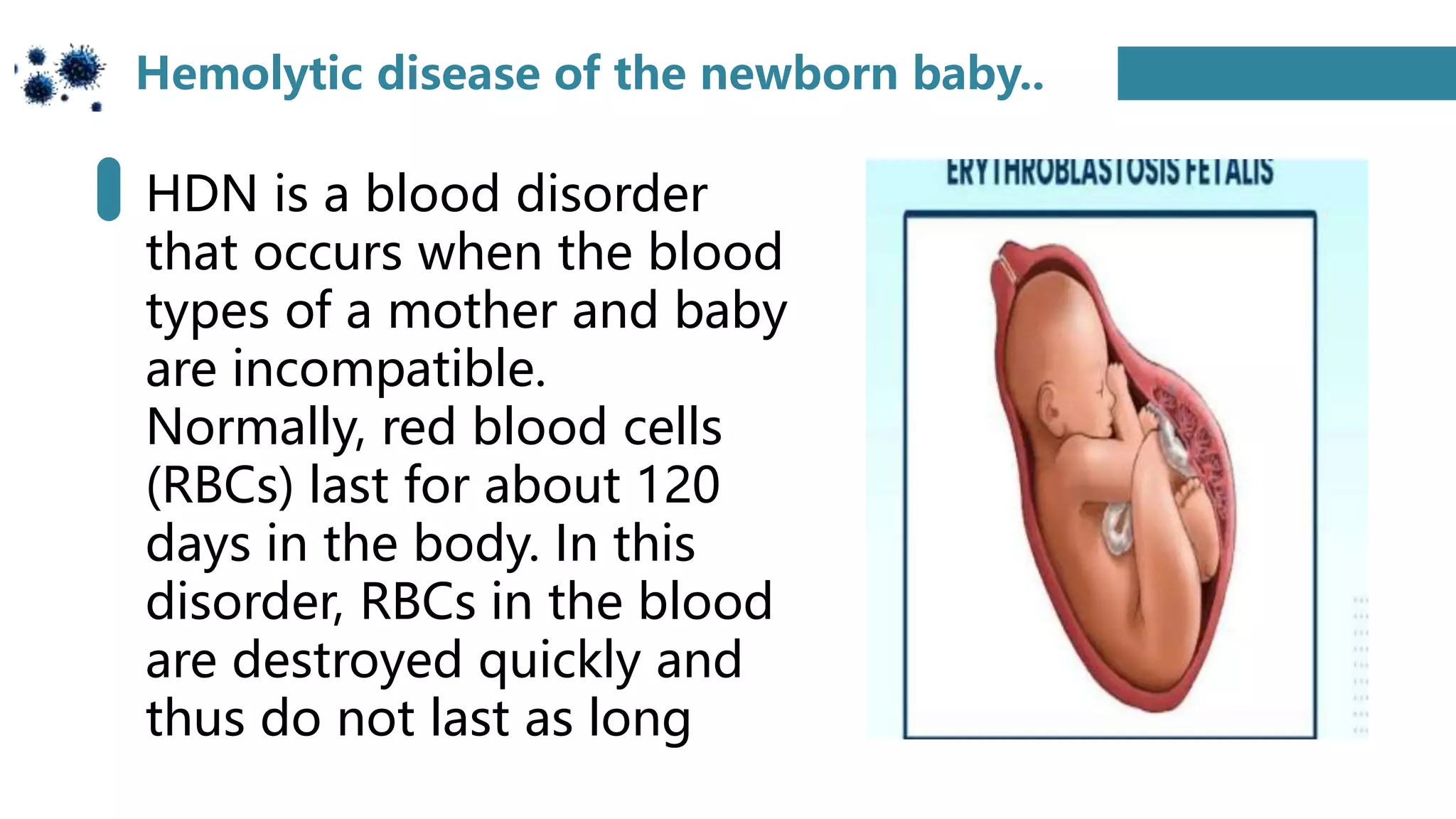
HDN is a blood disorder
that occurs when the blood
types of a mother and baby
are incompatible.
Normally, red blood cells
(RBCs) last for about 120
days in the body. In this
disorder, RBCs in the blood
are destroyed quickly and
thus do not last as long
What are the
Causes?
Causes......
• There is more than one way in which the unborn
baby's blood type may not match the mother's.
• A, B, AB, and O are the 4 major blood group antigens
or types. This is the most common form of a
mismatch. In most cases, this is not very severe.
Rh blood group
• Firstly discovered by Rhesus monkey. (Land steiner
1930)
• The Rh blood group system is a human blood group
system. It contains proteins on the surface of red
blood cells. After the ABO blood group system, it is
the most likely to be involved in transfusion
reactions.
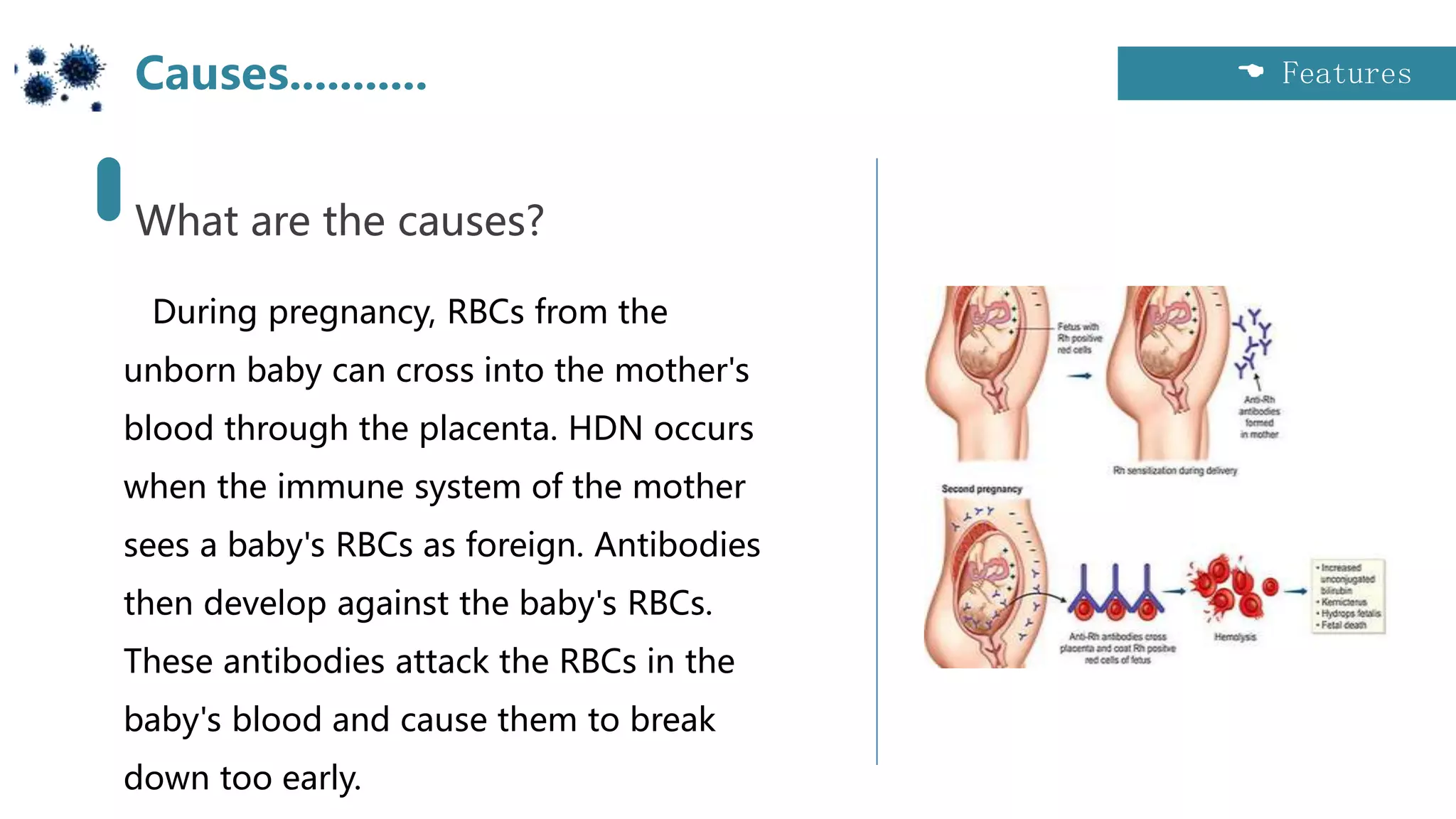
• HDN happens when an Rh negative mother has a
baby with an Rh positive father. If the Rh negative
mother has been sensitized to Rh positive blood, her
immune system will make antibodies to attack her
baby. When the antibodies enter the baby's blood,
they will attack the red blood cells. This causes them
to break down.
Causes...........
What are the causes?
 Features
During pregnancy, RBCs from the
unborn baby can cross into the mother's
blood through the placenta. HDN occurs
when the immune system of the mother
sees a baby's RBCs as foreign. Antibodies
then develop against the baby's RBCs.
These antibodies attack the RBCs in the
baby's blood and cause them to break
down too early.
Condition symptoms
Symptoms
HDN can destroy the newborn baby's blood cells very
quickly, which can cause symptoms such as:
• Edema
• (swelling under the surface of the skin)
• Newborn jaundice which occurs sooner and is more
severe than normal.
Symptoms
• Yellowing of the amniotic fluid, umbilical cord,
skin, and eyes.
• enlarged liver or spleen.
• severe swelling of the body.
Treatment
• Light therapy (phototherapy) using special blue lights to convert bilirubin into a
form which is easier for the baby's body to get rid of.
• Antiserum injections.
• Medicines to raise blood pressure if it drops too low.
• In severe cases, an exchange transfusion may need to be performed. This involves
removing a large amount of the baby's blood, and thus the extra bilirubin and
antibodies.
Tests for HDN
• Which tests are done depends on the type of blood group
incompatibility and the severity of symptoms, but may
include:
• Complete blood count and immature red blood cell
(reticulocyte) count
• Bilirubin level
• Blood typing
Thank You

Hemolytic disease of newborn. GHS.pptx

  • 1.
    Hemolytic disease ofnew born baby Submited to:Ma'am Faiza Submited by :Hassan Saif Reg# 2021-Bs-Mls-080 Semester. 4th
  • 2.
    Hemolytic Hemolytic disease ofthe newborn (HDN) — also called erythroblastosis fetalis. Erythro------------ Red cell Blast -------------- break down Fetails------------ fetus relate 0 1
  • 4.
    Hemolytic disease ofthe newborn baby.. HDN is a blood disorder that occurs when the blood types of a mother and baby are incompatible. Normally, red blood cells (RBCs) last for about 120 days in the body. In this disorder, RBCs in the blood are destroyed quickly and thus do not last as long
  • 5.
  • 6.
    Causes...... • There ismore than one way in which the unborn baby's blood type may not match the mother's. • A, B, AB, and O are the 4 major blood group antigens or types. This is the most common form of a mismatch. In most cases, this is not very severe.
  • 7.
    Rh blood group •Firstly discovered by Rhesus monkey. (Land steiner 1930) • The Rh blood group system is a human blood group system. It contains proteins on the surface of red blood cells. After the ABO blood group system, it is the most likely to be involved in transfusion reactions.
  • 8.
    • HDN happenswhen an Rh negative mother has a baby with an Rh positive father. If the Rh negative mother has been sensitized to Rh positive blood, her immune system will make antibodies to attack her baby. When the antibodies enter the baby's blood, they will attack the red blood cells. This causes them to break down.
  • 9.
    Causes........... What are thecauses?  Features During pregnancy, RBCs from the unborn baby can cross into the mother's blood through the placenta. HDN occurs when the immune system of the mother sees a baby's RBCs as foreign. Antibodies then develop against the baby's RBCs. These antibodies attack the RBCs in the baby's blood and cause them to break down too early.
  • 10.
  • 11.
    Symptoms HDN can destroythe newborn baby's blood cells very quickly, which can cause symptoms such as: • Edema • (swelling under the surface of the skin) • Newborn jaundice which occurs sooner and is more severe than normal.
  • 12.
    Symptoms • Yellowing ofthe amniotic fluid, umbilical cord, skin, and eyes. • enlarged liver or spleen. • severe swelling of the body.
  • 14.
    Treatment • Light therapy(phototherapy) using special blue lights to convert bilirubin into a form which is easier for the baby's body to get rid of. • Antiserum injections. • Medicines to raise blood pressure if it drops too low. • In severe cases, an exchange transfusion may need to be performed. This involves removing a large amount of the baby's blood, and thus the extra bilirubin and antibodies.
  • 15.
    Tests for HDN •Which tests are done depends on the type of blood group incompatibility and the severity of symptoms, but may include: • Complete blood count and immature red blood cell (reticulocyte) count • Bilirubin level • Blood typing
  • 16.