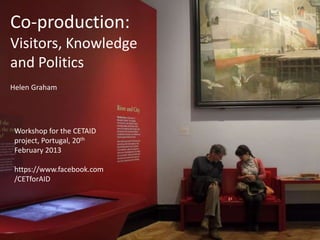
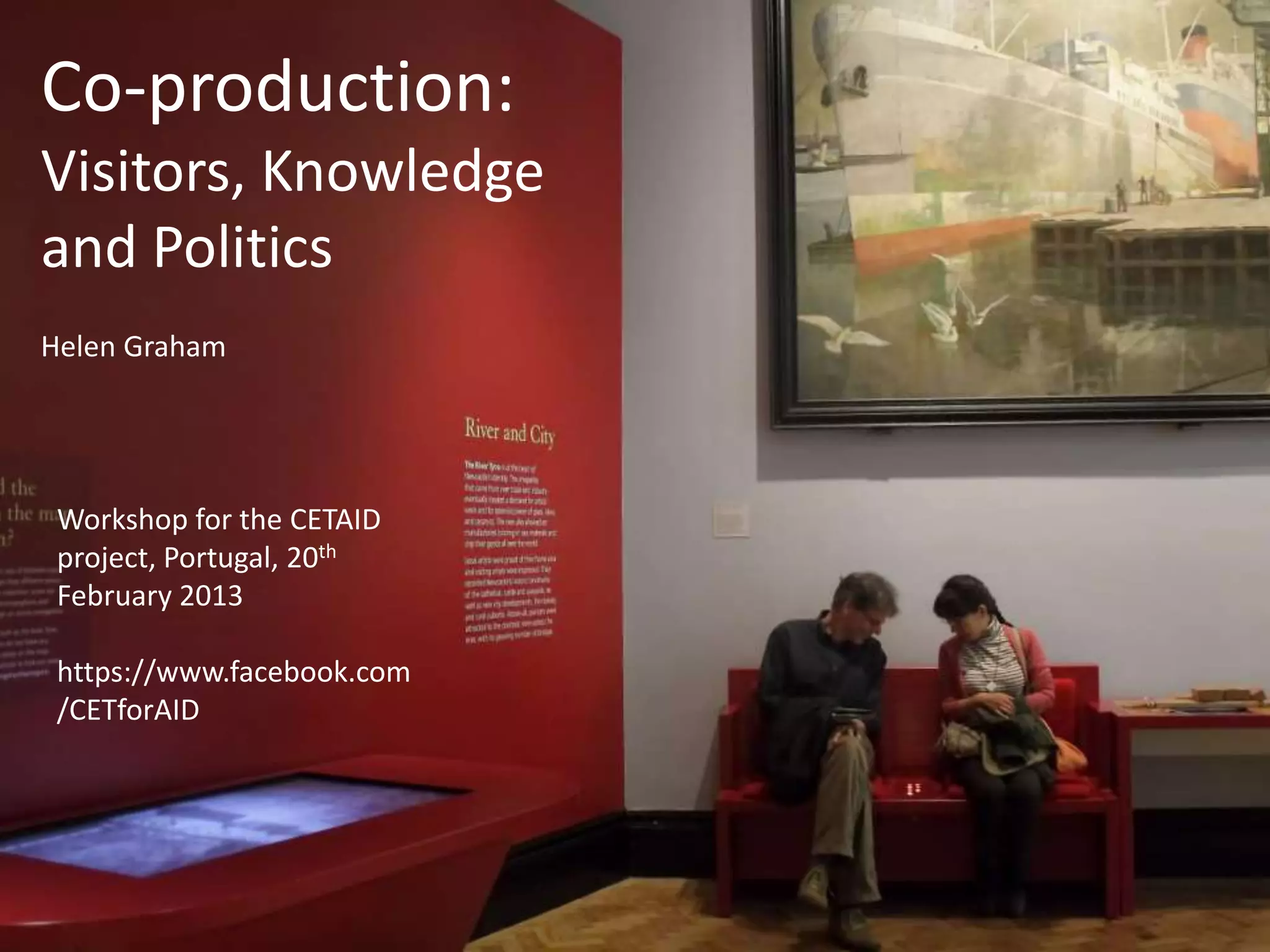
Co-production:
Visitors, Knowledge
and Politics
Helen Graham


 Workshop for the CETAID
 project, Portugal, 20th
 February 2013

 https://www.facebook.com
 /CETforAID
Q1.

      What are the key words you
      have been using in your
      workshops so far?
Q2.

      Are there examples of co-produced and user-
      generated content you’ve been involved in at
                    your museums?
          Why do museums do co-
      production? What do we hope co-
          production will achieve?
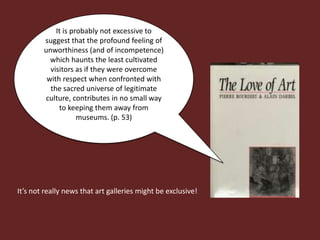
It is probably not excessive to
        suggest that the profound feeling of
        unworthiness (and of incompetence)
          which haunts the least cultivated
          visitors as if they were overcome
         with respect when confronted with
          the sacred universe of legitimate
        culture, contributes in no small way
             to keeping them away from
                    museums. (p. 53)


It’s not really news that art galleries might be exclusive!
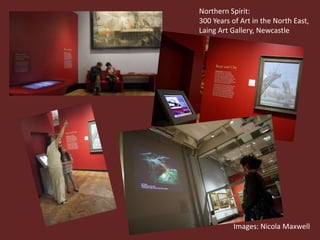
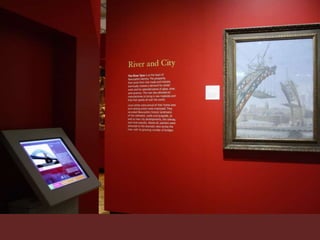
Northern Spirit:
300 Years of Art in the North East,
Laing Art Gallery, Newcastle


          Images: Nicola Maxwell
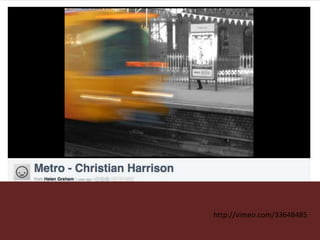
http://vimeo.com/33648485
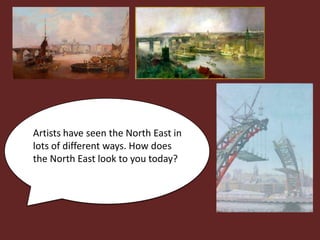
Artists have seen the North East in
lots of different ways. How does
the North East look to you today?
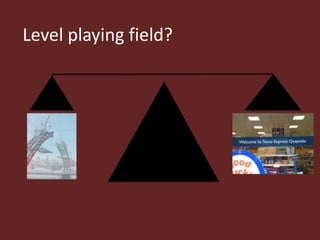
Level playing field?
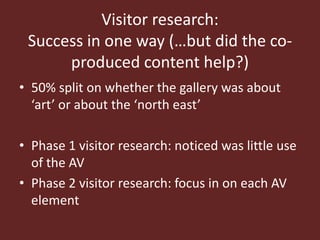
Visitor research:
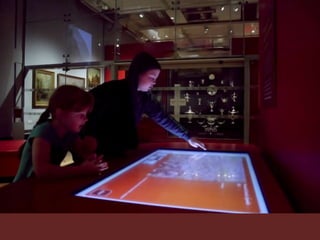
 Success in one way (…but did the co-
      produced content help?)
• 50% split on whether the gallery was about
  ‘art’ or about the ‘north east’

• Phase 1 visitor research: noticed was little use
  of the AV
• Phase 2 visitor research: focus in on each AV
  element
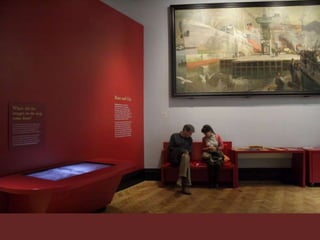
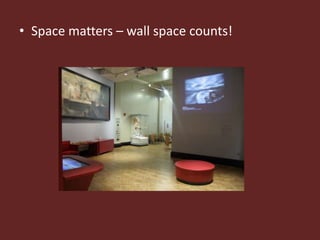
• Space matters – wall space counts!
But…
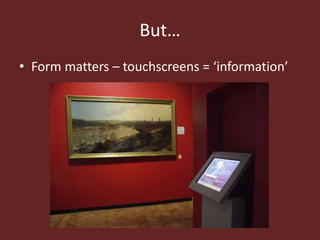
• Form matters – touchscreens = ‘information’
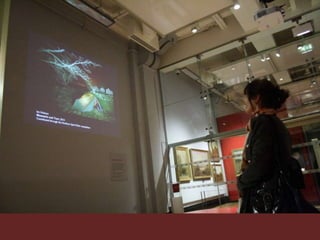
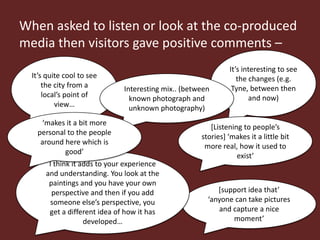
When asked to listen or look at the co-produced
media then visitors gave positive comments –
                                                              It’s interesting to see
  It’s quite cool to see                                         the changes (e.g.
      the city from a         Interesting mix.. (between       Tyne, between then
      local’s point of          known photograph and                 and now)
          view…                 unknown photography)
    ‘makes it a bit more
                                                        *Listening to people’s
   personal to the people
                                                     stories+ ‘makes it a little bit
    around here which is
                                                      more real, how it used to
           good’
                                                                 exist’
       I think it adds to your experience
      and understanding. You look at the
       paintings and you have your own
        perspective and then if you add                   *support idea that’
       someone else’s perspective, you                 ‘anyone can take pictures
       get a different idea of how it has                 and capture a nice
                   developed…                                 moment’
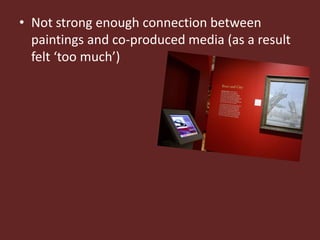
• Not strong enough connection between
  paintings and co-produced media (as a result
  felt ‘too much’)
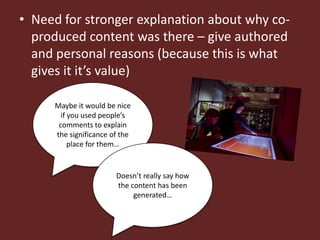
• Need for stronger explanation about why co-
  produced content was there – give authored
  and personal reasons (because this is what
  gives it it’s value)

     Maybe it would be nice
       if you used people’s
      comments to explain
     the significance of the
          place for them…


                       Doesn’t really say how
                       the content has been
                            generated…
Q3.

      What are the issues with displaying
      collections and co-produced and user-
      generated content side-by-side? Is it
      helpful to treat them differently? And if
      so, in what ways?
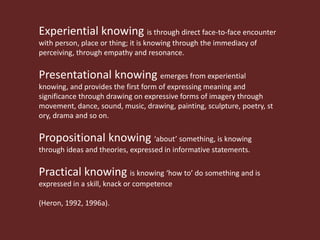
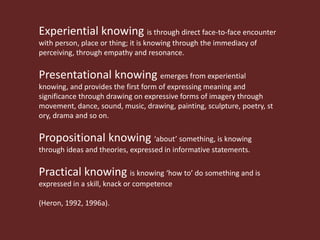
Experiential knowing is through direct face-to-face encounter
with person, place or thing; it is knowing through the immediacy of
perceiving, through empathy and resonance.

Presentational knowing emerges from experiential
knowing, and provides the first form of expressing meaning and
significance through drawing on expressive forms of imagery through
movement, dance, sound, music, drawing, painting, sculpture, poetry,
story, drama and so on.

Propositional knowing ‘about’ something, is knowing
through ideas and theories, expressed in informative statements.

Practical knowing is knowing ‘how to’ do something and is
expressed in a skill, knack or competence

(Heron, 1992, 1996a).
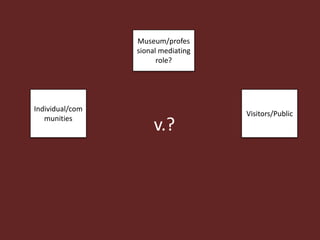
Museum/profes
                 sional mediating
                       role?


Individual/com
                                    Visitors/Public
   munities
                      v.?
Q4.

      Do these different ‘ways of knowing’
      reflect your experience of developing
      exhibitions? Is anything left out?
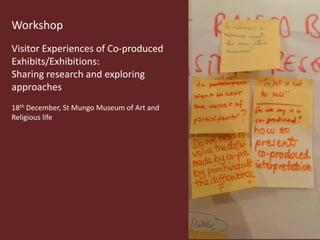
Workshop
Visitor Experiences of Co-produced
Exhibits/Exhibitions:
Sharing research and exploring
approaches
18th December, St Mungo Museum of Art and
Religious life
Experiential knowing is through direct face-to-face encounter
with person, place or thing; it is knowing through the immediacy of
perceiving, through empathy and resonance.

Presentational knowing emerges from experiential
knowing, and provides the first form of expressing meaning and
significance through drawing on expressive forms of imagery through
movement, dance, sound, music, drawing, painting, sculpture, poetry,
story, drama and so on.

Propositional knowing ‘about’ something, is knowing
through ideas and theories, expressed in informative statements.

Practical knowing is knowing ‘how to’ do something and is
expressed in a skill, knack or competence

(Heron, 1992, 1996a).
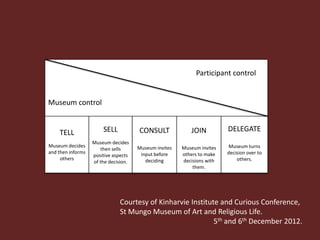
Participant control


Museum control

                                                                           D
    TELL               SELL           CONSULT             JOIN          DELEGATE
                   Museum decides
Museum decides                        Museum invites   Museum invites   Museum turns
                      then sells
and then informs                       input before    others to make   decision over to
                   positive aspects
     others                              deciding      decisions with       others.
                   of the decision.
                                                           them.


                               Courtesy of Kinharvie Institute and Curious Conference,
                               St Mungo Museum of Art and Religious Life.
                                                             5th and 6th December 2012.
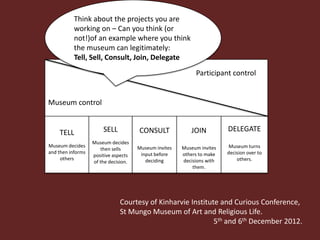
Think about the projects you are
           working on – Can you think (or
           not!)of an example where you think
           the museum can legitimately: Tell,
           Sell, Consult, Join, Delegate
                                                            Participant control


Museum control

                                                                           D
    TELL               SELL           CONSULT             JOIN          DELEGATE
                   Museum decides
Museum decides                        Museum invites   Museum invites   Museum turns
                      then sells
and then informs                       input before    others to make   decision over to
                   positive aspects
     others                              deciding      decisions with       others.
                   of the decision.
                                                           them.


                               Courtesy of Kinharvie Institute and Curious Conference,
                               St Mungo Museum of Art and Religious Life.
                                                             5th and 6th December 2012.
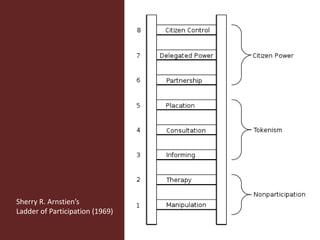
Sherry R. Arnstien’s
Ladder of Participation (1969)
Austerity and co-production


         What is core to the
            museum?
Q5.

      Does content produced by visitors
      present a different challenge and
      possibilities to co-produced
      material by a group working with
      the museum?
Q6.

      Return to our motivations for doing
      co-production…

      How might co-production and
      visitor-generated content renew
      museums for 21st century and in
      the context of cuts?
More on Northern Spirit and the co-produced content see:
artontyneside.wordpress.com

Helen Graham: helengraham@wordpress.com

Co-production: Visitors, Knowledge and Politics for CETAID

  • 1.
    Co-production: Visitors, Knowledge and Politics HelenGraham Workshop for the CETAID project, Portugal, 20th February 2013 https://www.facebook.com /CETforAID
  • 2.
    Q1. What are the key words you have been using in your workshops so far?
  • 3.
    Q2. Are there examples of co-produced and user- generated content you’ve been involved in at your museums? Why do museums do co- production? What do we hope co- production will achieve?
  • 4.
    It is probablynot excessive to suggest that the profound feeling of unworthiness (and of incompetence) which haunts the least cultivated visitors as if they were overcome with respect when confronted with the sacred universe of legitimate culture, contributes in no small way to keeping them away from museums. (p. 53) It’s not really news that art galleries might be exclusive!
  • 5.
    Northern Spirit: 300 Yearsof Art in the North East, Laing Art Gallery, Newcastle Images: Nicola Maxwell
  • 7.
  • 12.
    Artists have seenthe North East in lots of different ways. How does the North East look to you today?
  • 13.
  • 14.
    Visitor research: Successin one way (…but did the co- produced content help?) • 50% split on whether the gallery was about ‘art’ or about the ‘north east’ • Phase 1 visitor research: noticed was little use of the AV • Phase 2 visitor research: focus in on each AV element
  • 15.
    • Space matters– wall space counts!
  • 16.
    But… • Form matters– touchscreens = ‘information’
  • 17.
    When asked tolisten or look at the co-produced media then visitors gave positive comments – It’s interesting to see It’s quite cool to see the changes (e.g. the city from a Interesting mix.. (between Tyne, between then local’s point of known photograph and and now) view… unknown photography) ‘makes it a bit more *Listening to people’s personal to the people stories+ ‘makes it a little bit around here which is more real, how it used to good’ exist’ I think it adds to your experience and understanding. You look at the paintings and you have your own perspective and then if you add *support idea that’ someone else’s perspective, you ‘anyone can take pictures get a different idea of how it has and capture a nice developed… moment’
  • 18.
    • Not strongenough connection between paintings and co-produced media (as a result felt ‘too much’)
  • 19.
    • Need forstronger explanation about why co- produced content was there – give authored and personal reasons (because this is what gives it it’s value) Maybe it would be nice if you used people’s comments to explain the significance of the place for them… Doesn’t really say how the content has been generated…
  • 20.
    Q3. What are the issues with displaying collections and co-produced and user- generated content side-by-side? Is it helpful to treat them differently? And if so, in what ways?
  • 21.
    Experiential knowing isthrough direct face-to-face encounter with person, place or thing; it is knowing through the immediacy of perceiving, through empathy and resonance. Presentational knowing emerges from experiential knowing, and provides the first form of expressing meaning and significance through drawing on expressive forms of imagery through movement, dance, sound, music, drawing, painting, sculpture, poetry, story, drama and so on. Propositional knowing ‘about’ something, is knowing through ideas and theories, expressed in informative statements. Practical knowing is knowing ‘how to’ do something and is expressed in a skill, knack or competence (Heron, 1992, 1996a).
  • 22.
    Museum/profes sional mediating role? Individual/com Visitors/Public munities v.?
  • 23.
    Q4. Do these different ‘ways of knowing’ reflect your experience of developing exhibitions? Is anything left out?
  • 24.
    Workshop Visitor Experiences ofCo-produced Exhibits/Exhibitions: Sharing research and exploring approaches 18th December, St Mungo Museum of Art and Religious life
  • 25.
    Experiential knowing isthrough direct face-to-face encounter with person, place or thing; it is knowing through the immediacy of perceiving, through empathy and resonance. Presentational knowing emerges from experiential knowing, and provides the first form of expressing meaning and significance through drawing on expressive forms of imagery through movement, dance, sound, music, drawing, painting, sculpture, poetry, story, drama and so on. Propositional knowing ‘about’ something, is knowing through ideas and theories, expressed in informative statements. Practical knowing is knowing ‘how to’ do something and is expressed in a skill, knack or competence (Heron, 1992, 1996a).
  • 26.
    Participant control Museum control D TELL SELL CONSULT JOIN DELEGATE Museum decides Museum decides Museum invites Museum invites Museum turns then sells and then informs input before others to make decision over to positive aspects others deciding decisions with others. of the decision. them. Courtesy of Kinharvie Institute and Curious Conference, St Mungo Museum of Art and Religious Life. 5th and 6th December 2012.
  • 27.
    Think about theprojects you are working on – Can you think (or not!)of an example where you think the museum can legitimately: Tell, Sell, Consult, Join, Delegate Participant control Museum control D TELL SELL CONSULT JOIN DELEGATE Museum decides Museum decides Museum invites Museum invites Museum turns then sells and then informs input before others to make decision over to positive aspects others deciding decisions with others. of the decision. them. Courtesy of Kinharvie Institute and Curious Conference, St Mungo Museum of Art and Religious Life. 5th and 6th December 2012.
  • 28.
    Sherry R. Arnstien’s Ladderof Participation (1969)
  • 29.
    Austerity and co-production What is core to the museum?
  • 30.
    Q5. Does content produced by visitors present a different challenge and possibilities to co-produced material by a group working with the museum?
  • 31.
    Q6. Return to our motivations for doing co-production… How might co-production and visitor-generated content renew museums for 21st century and in the context of cuts?
  • 32.
    More on NorthernSpirit and the co-produced content see: artontyneside.wordpress.com Helen Graham: helengraham@wordpress.com

Editor's Notes

  • #15 Visitor research
  • #16 Easy to see – gets most attention
  • #17 BUT design perhaps didn’t help
  • #18 Makes it personal, real, link between now and then – helps idea of different perspectives.Principle – anyone can…
  • #19 Interpretative lack – clearer about the value and importance of the content
  • #20 Heighten the personal element within the interpretation – as a way of explaining why it is there.