HEAT TRANSFER
CONDUCTION, CONVECTION
AND RADIATION
Radiation Conduction
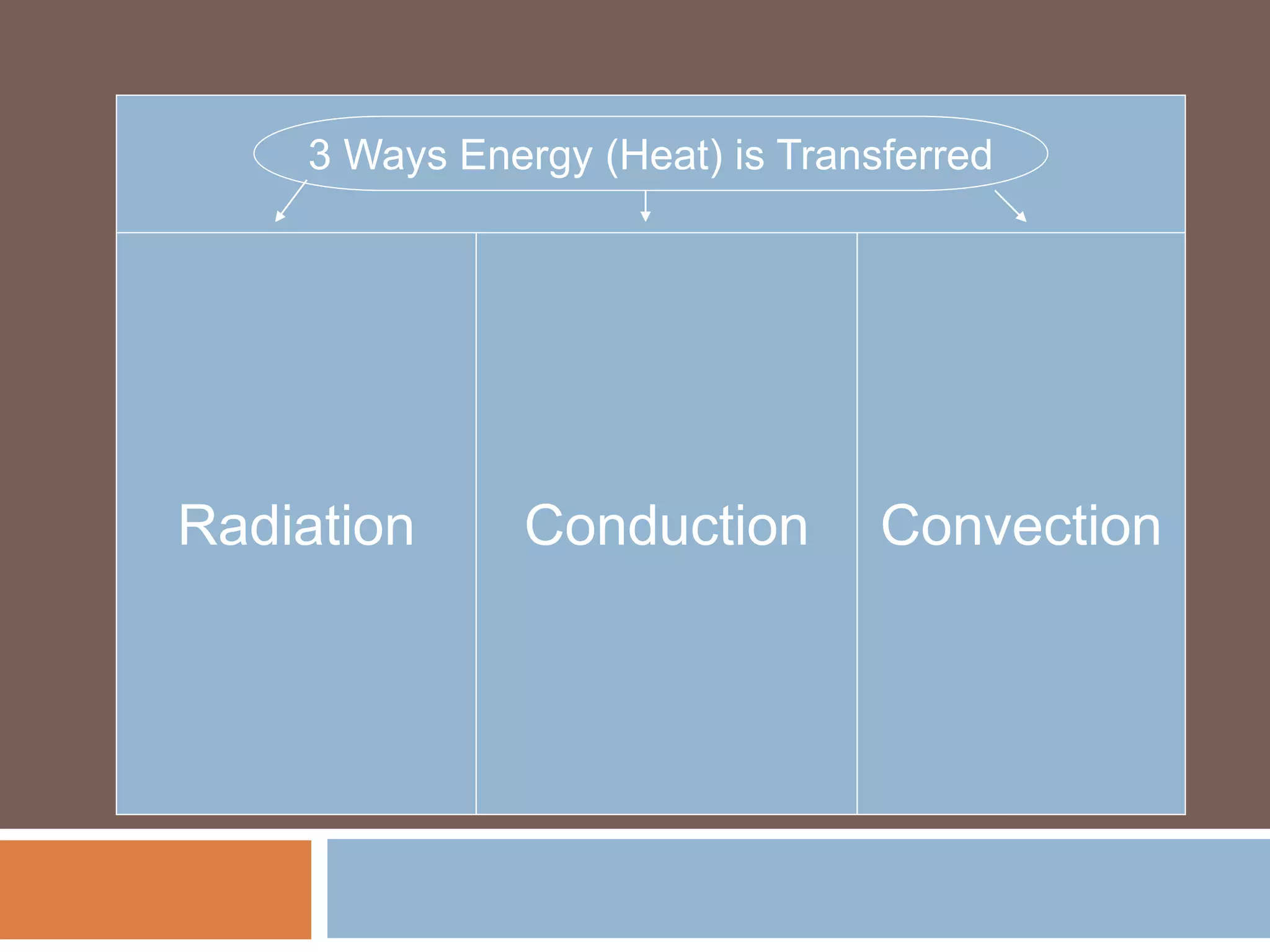
3 Ways Energy (Heat) is Transferred
Convection
Heat Transfer
 Heat always moves from a warmer place to a
cooler place.
 Hot objects in a cooler room will cool to room
temperature.
 Cold objects in a warmer room will heat up to
room temperature.
How is Heat Transferred?
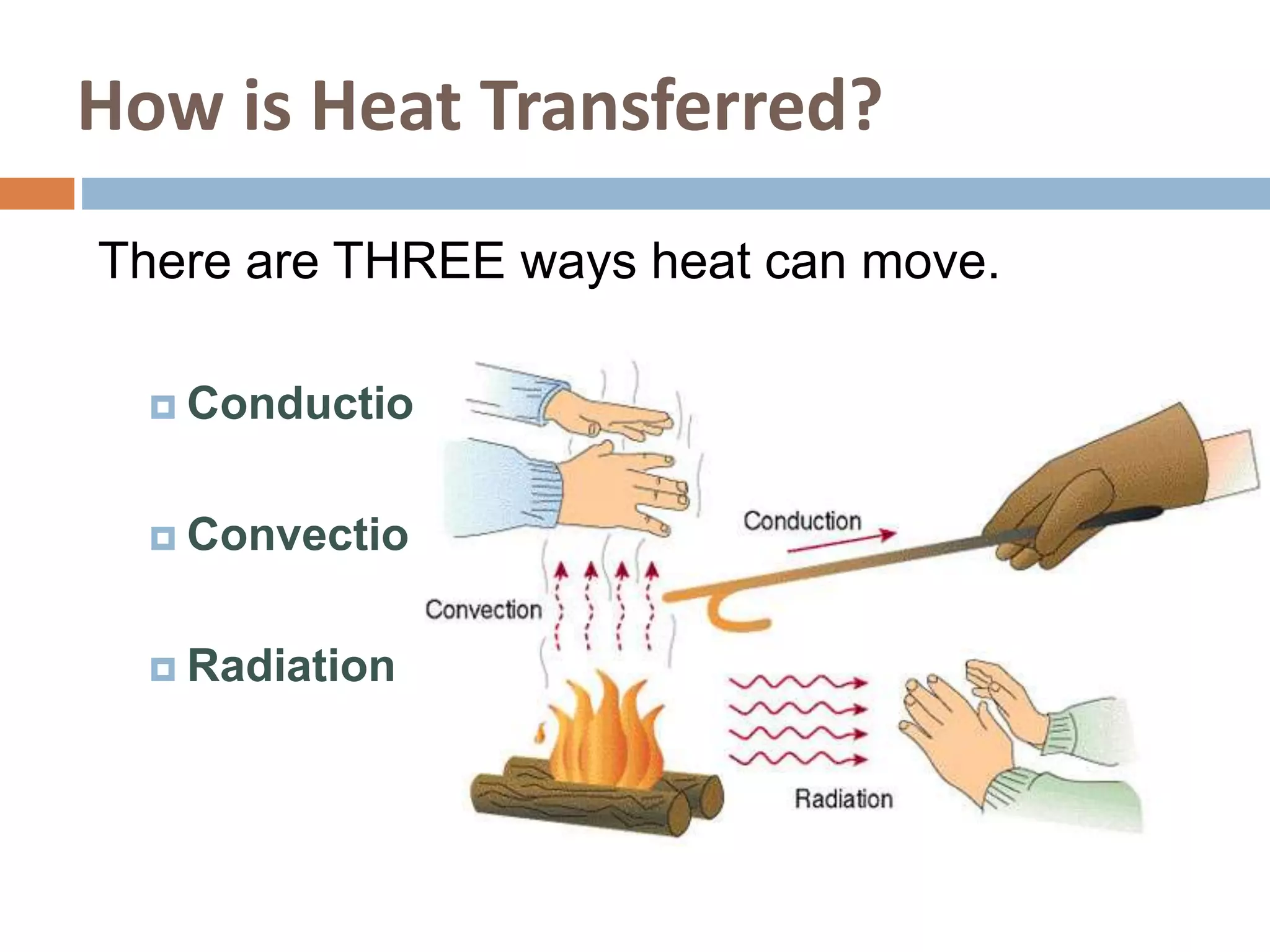
There are THREE ways heat can move.
 Conduction
 Convection
 Radiation
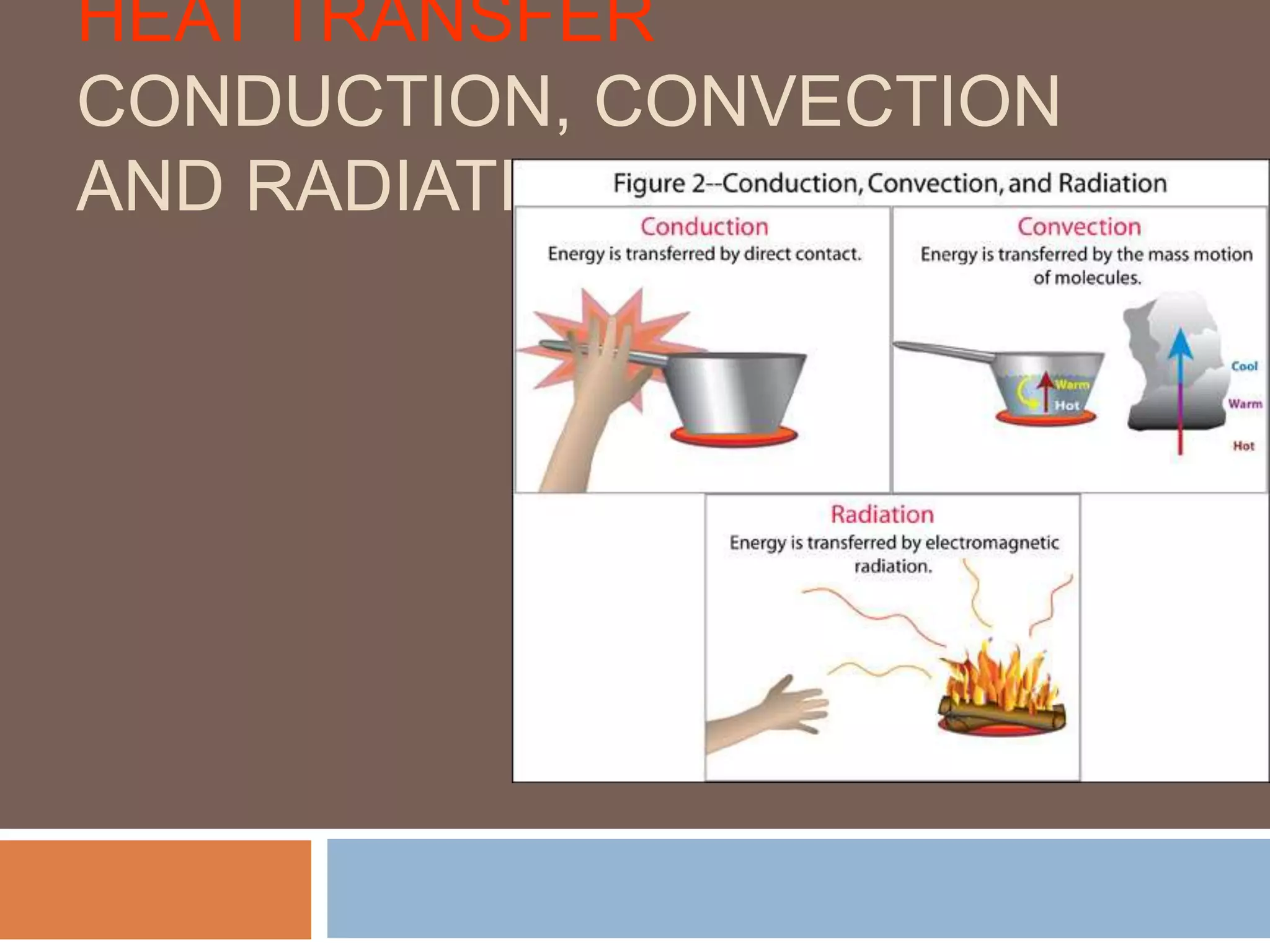
CONDUCTION
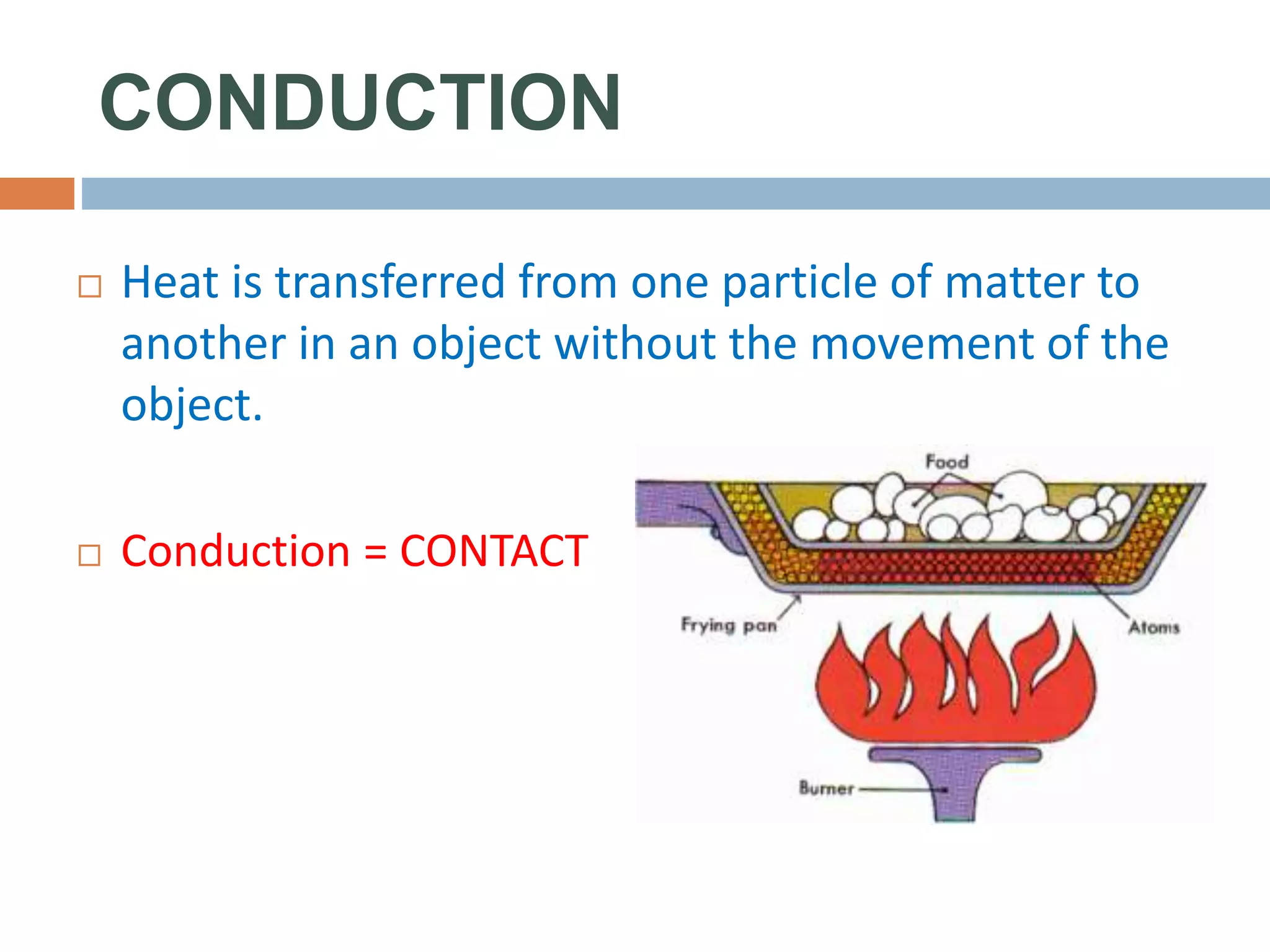
 Heat is transferred from one particle of matter to
another in an object without the movement of the
object.
 Conduction = CONTACT
 https://www.pbslearningmedia.org/resource/co
nduction-heat-transfer-animation/unc-tv-
science/
Have you ever…
 Touched a metal spoon sitting in a pan of boiling
water only to be surprised by HOW hot it is??
Think back to what you know about metals and
nonmetals. What conducts heat better, metal or
nonmetal? Why?
Example of Conduction
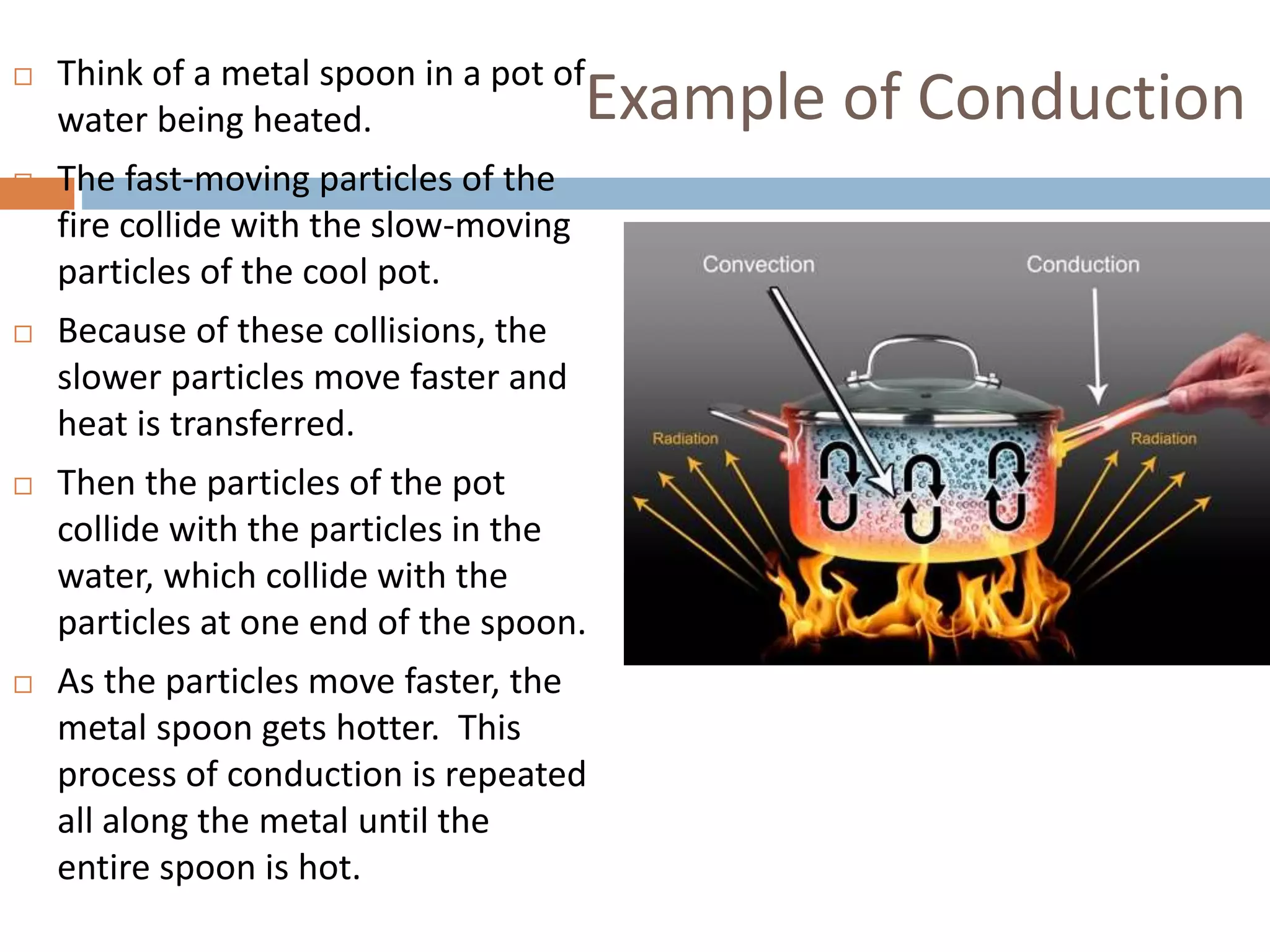
 Think of a metal spoon in a pot of
water being heated.
 The fast-moving particles of the
fire collide with the slow-moving
particles of the cool pot.
 Because of these collisions, the
slower particles move faster and
heat is transferred.
 Then the particles of the pot
collide with the particles in the
water, which collide with the
particles at one end of the spoon.
 As the particles move faster, the
metal spoon gets hotter. This
process of conduction is repeated
all along the metal until the
entire spoon is hot.
EXAMPLE OF CONDUCTION
 A piece of cheese melts as heat is transferred from
the meat to the cheese (Contact)
CONVECTION
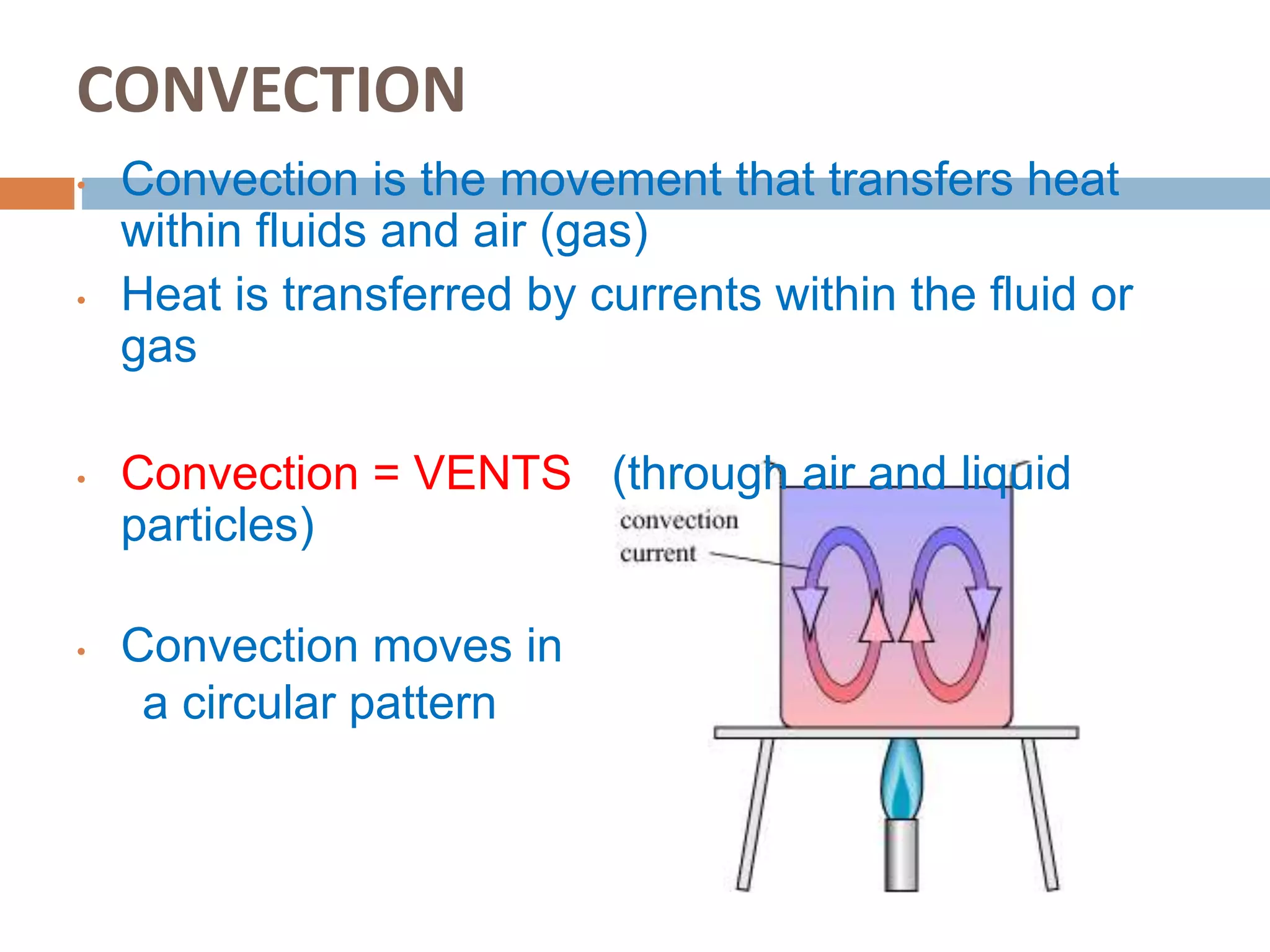
• Convection is the movement that transfers heat
within fluids and air (gas)
• Heat is transferred by currents within the fluid or
gas
• Convection = VENTS (through air and liquid
particles)
• Convection moves in
a circular pattern
 https://www.pbslearningmedia.org/resource/co
nvection-heat-transfer-animation/unc-tv-
science/
Examples of Convection:
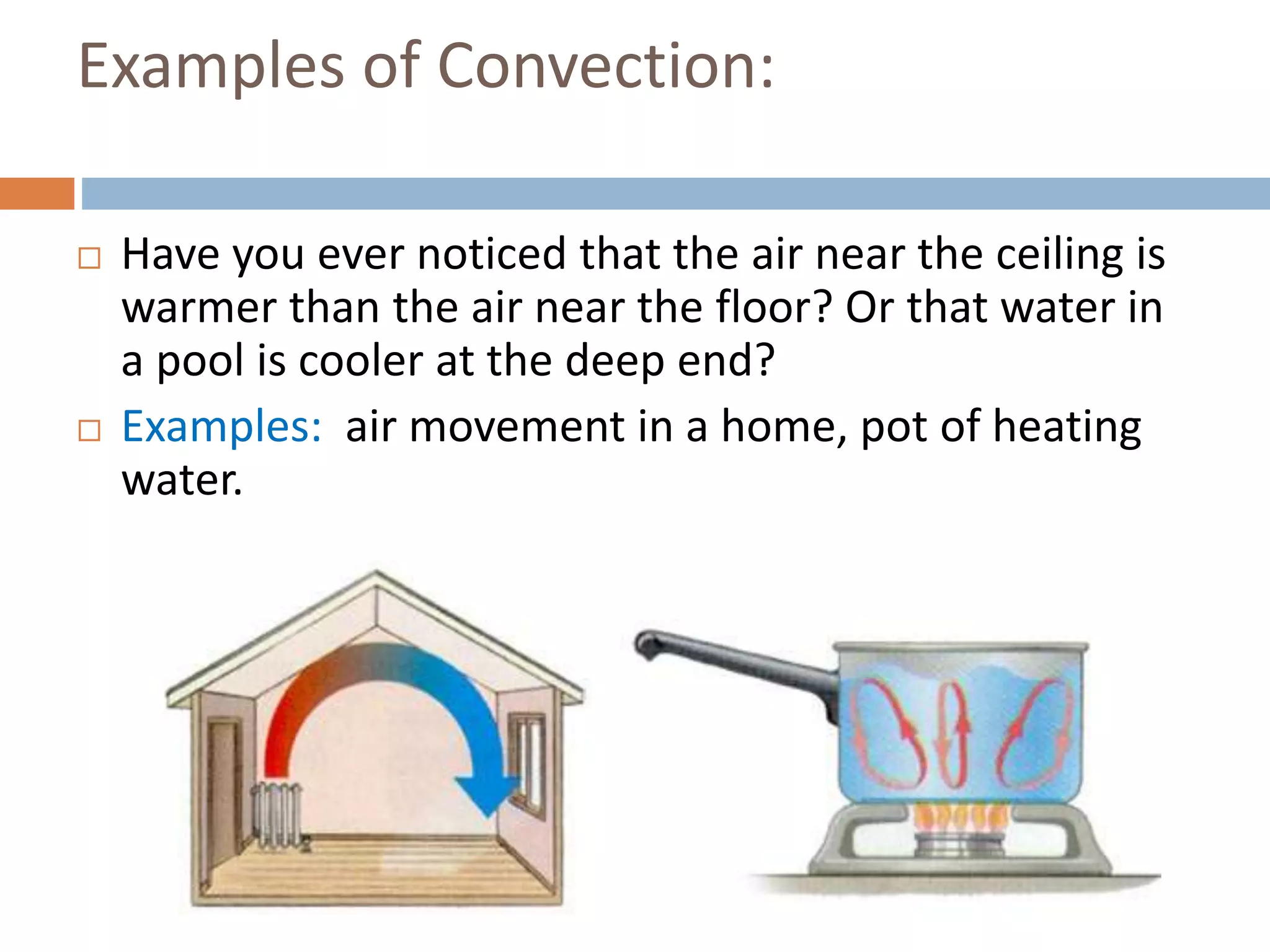
 Have you ever noticed that the air near the ceiling is
warmer than the air near the floor? Or that water in
a pool is cooler at the deep end?
 Examples: air movement in a home, pot of heating
water.
RADIATION
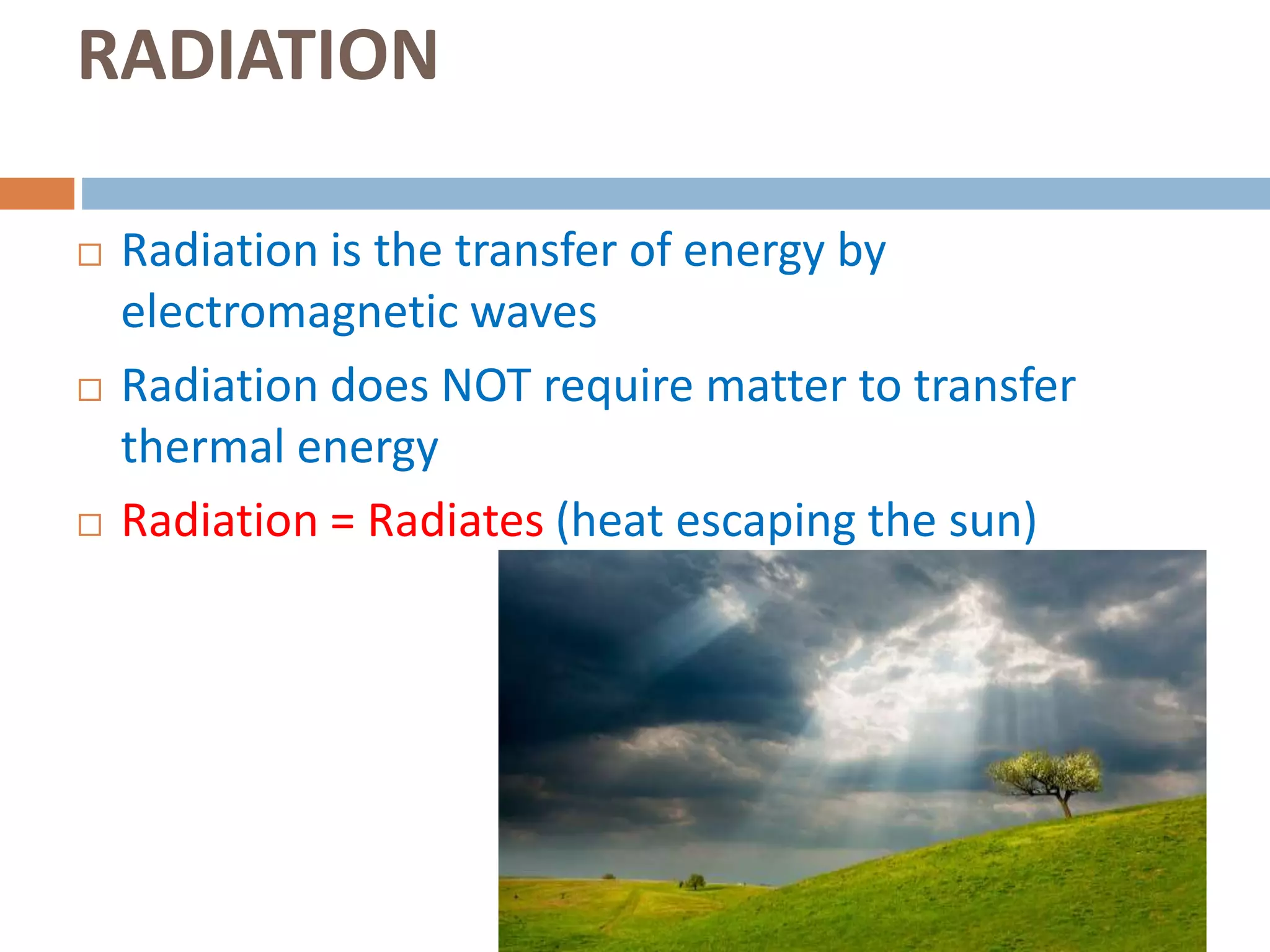
 Radiation is the transfer of energy by
electromagnetic waves
 Radiation does NOT require matter to transfer
thermal energy
 Radiation = Radiates (heat escaping the sun)
 https://www.pbslearningmedia.org/resource/th
ermal-radiation-heat-transfer-animation/unc-tv-
science/
Radiation May Come From Other Sources
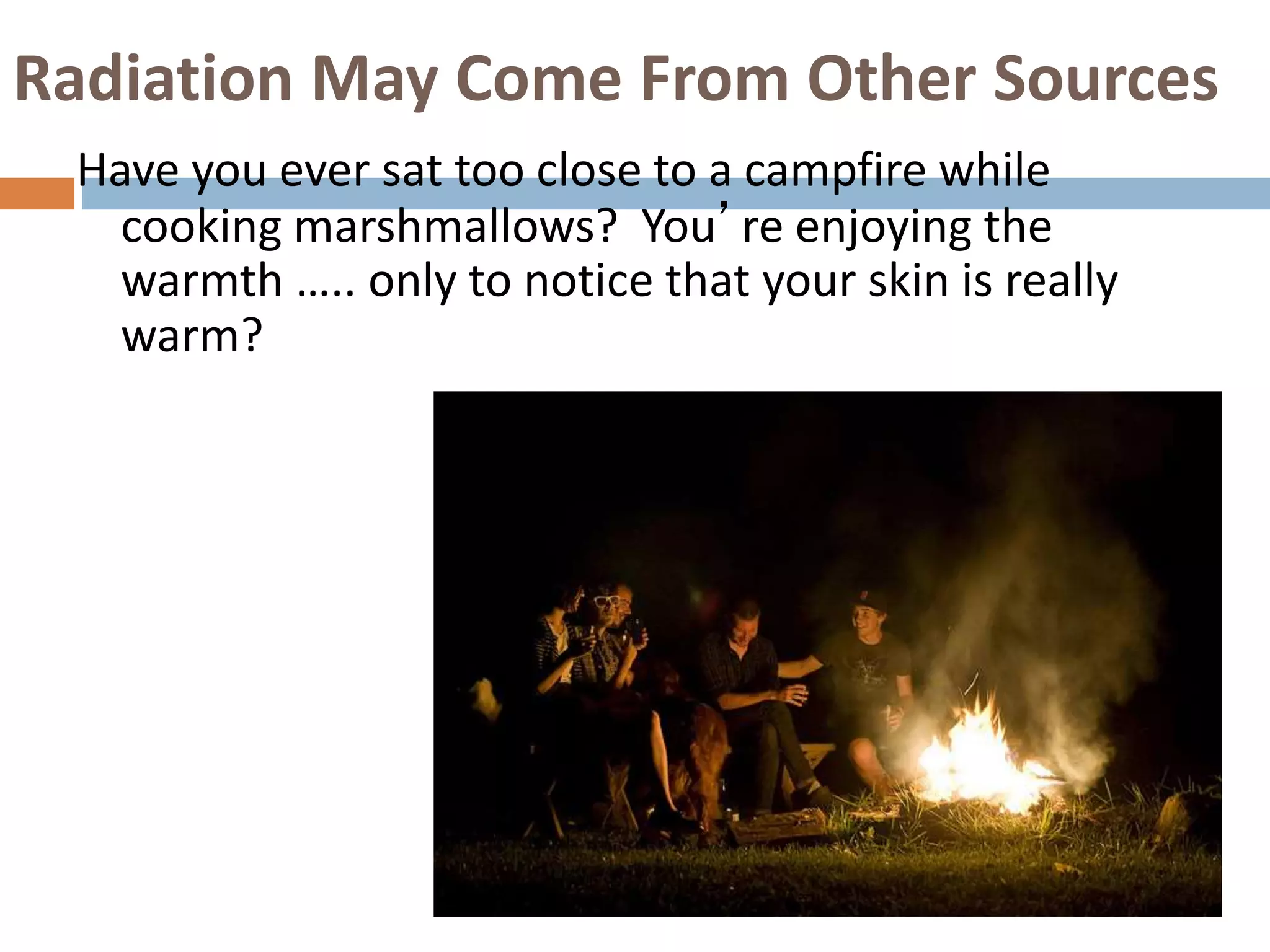
Have you ever sat too close to a campfire while
cooking marshmallows? You’re enjoying the
warmth ….. only to notice that your skin is really
warm?
Examples of RADIATION
1. Fire
2. Heat Lamps
3. Sun
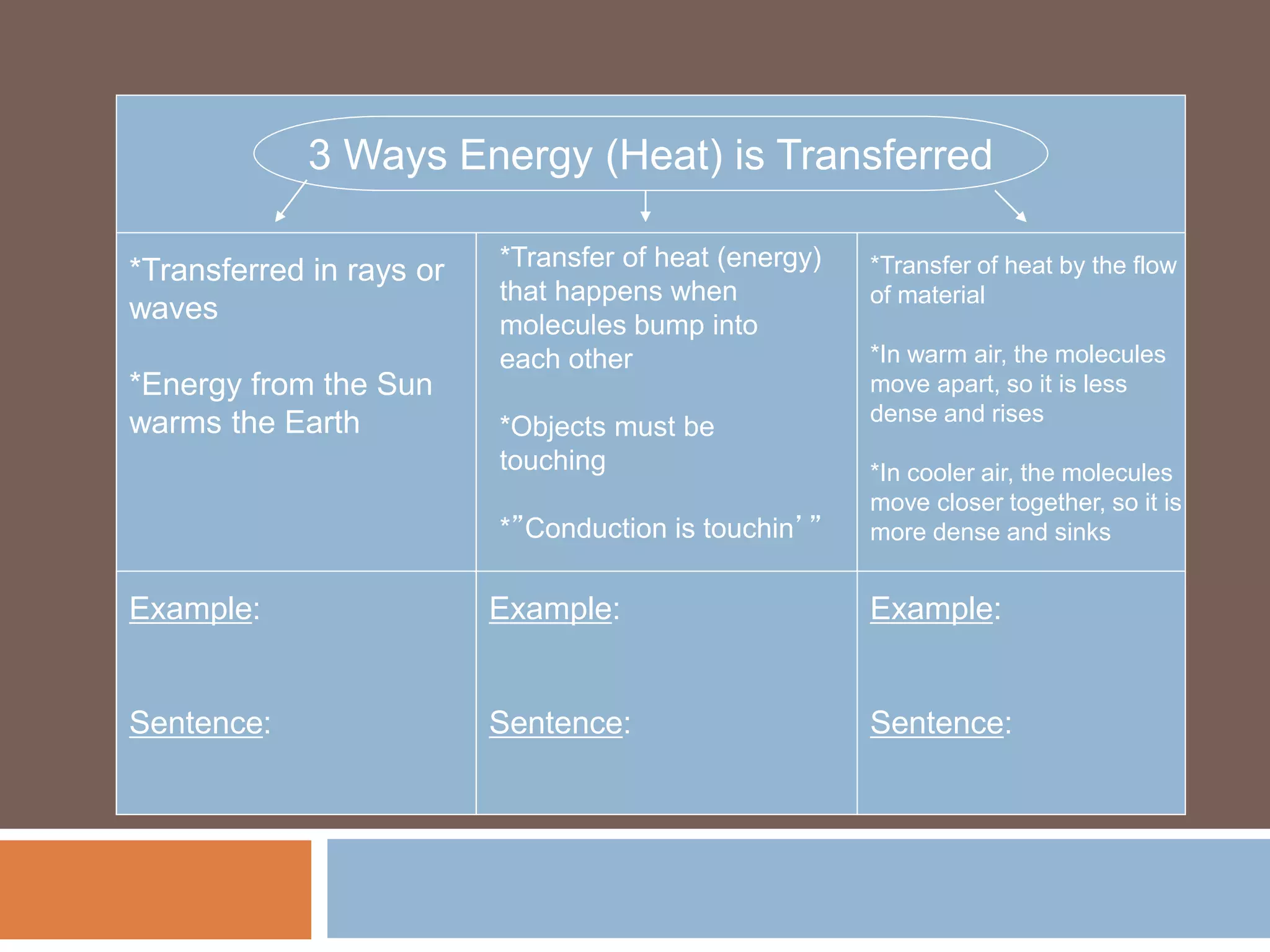
3 Ways Energy (Heat) is Transferred
*Transferred in rays or
waves
*Energy from the Sun
warms the Earth
Example:
Sentence:
Example:
Sentence:
Example:
Sentence:
*Transfer of heat (energy)
that happens when
molecules bump into
each other
*Objects must be
touching
*”Conduction is touchin’”
*Transfer of heat by the flow
of material
*In warm air, the molecules
move apart, so it is less
dense and rises
*In cooler air, the molecules
move closer together, so it is
more dense and sinks

Heat Energy-transfer-conductionconvectionradiation.ppt

  • 1.
  • 2.
    Radiation Conduction 3 WaysEnergy (Heat) is Transferred Convection
  • 3.
    Heat Transfer  Heatalways moves from a warmer place to a cooler place.  Hot objects in a cooler room will cool to room temperature.  Cold objects in a warmer room will heat up to room temperature.
  • 4.
    How is HeatTransferred? There are THREE ways heat can move.  Conduction  Convection  Radiation
  • 5.
    CONDUCTION  Heat istransferred from one particle of matter to another in an object without the movement of the object.  Conduction = CONTACT
  • 6.
  • 7.
    Have you ever… Touched a metal spoon sitting in a pan of boiling water only to be surprised by HOW hot it is?? Think back to what you know about metals and nonmetals. What conducts heat better, metal or nonmetal? Why?
  • 8.
    Example of Conduction Think of a metal spoon in a pot of water being heated.  The fast-moving particles of the fire collide with the slow-moving particles of the cool pot.  Because of these collisions, the slower particles move faster and heat is transferred.  Then the particles of the pot collide with the particles in the water, which collide with the particles at one end of the spoon.  As the particles move faster, the metal spoon gets hotter. This process of conduction is repeated all along the metal until the entire spoon is hot.
  • 9.
    EXAMPLE OF CONDUCTION A piece of cheese melts as heat is transferred from the meat to the cheese (Contact)
  • 10.
    CONVECTION • Convection isthe movement that transfers heat within fluids and air (gas) • Heat is transferred by currents within the fluid or gas • Convection = VENTS (through air and liquid particles) • Convection moves in a circular pattern
  • 11.
  • 12.
    Examples of Convection: Have you ever noticed that the air near the ceiling is warmer than the air near the floor? Or that water in a pool is cooler at the deep end?  Examples: air movement in a home, pot of heating water.
  • 13.
    RADIATION  Radiation isthe transfer of energy by electromagnetic waves  Radiation does NOT require matter to transfer thermal energy  Radiation = Radiates (heat escaping the sun)
  • 14.
  • 15.
    Radiation May ComeFrom Other Sources Have you ever sat too close to a campfire while cooking marshmallows? You’re enjoying the warmth ….. only to notice that your skin is really warm?
  • 16.
    Examples of RADIATION 1.Fire 2. Heat Lamps 3. Sun
  • 17.
    3 Ways Energy(Heat) is Transferred *Transferred in rays or waves *Energy from the Sun warms the Earth Example: Sentence: Example: Sentence: Example: Sentence: *Transfer of heat (energy) that happens when molecules bump into each other *Objects must be touching *”Conduction is touchin’” *Transfer of heat by the flow of material *In warm air, the molecules move apart, so it is less dense and rises *In cooler air, the molecules move closer together, so it is more dense and sinks

Editor's Notes

  • #9 Have an example sitting in front on the lab table (doesn’t need to be on); a visual.
  • #13 When the water at the bottom of a pot is heated, its particles move faster, and they also move farther apart. As a result, the heated water becomes less dense. A less dense fluid will float on top of a more dense one. Therefore, the heated water rises in the pot. The surrounding cooler water flows into its place. This flow creates the circular motion as seen on the next page, which is known as convection currents.