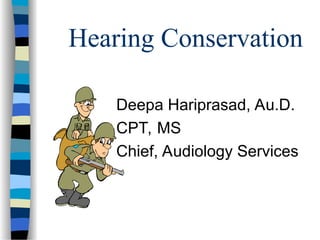
Hearing Conservation
Deepa Hariprasad, Au.D.
CPT, MS
Chief, Audiology Services
Outline
 Causes of hearing loss
 Symptoms/warning signs
 Sources of noise
 Situations where good hearing is critical
 How to Protect Your Hearing
 How to Understand Your Hearing Test
 Your Responsibilities
Did You Know????
+Noise-induced hearing loss is the
number one occupational disability
+It is generally painless
+It is progressive over time
+It is permanent
+IT IS PREVENTABLE!!!
What are some causes of hearing
loss?
 The number one cause of hearing loss
in the army is NOISE!
 Environmental chemicals
 Medicinal Drugs
 Injuries to head or ear
 Infections
 Tumors
Noise Induced Hearing Loss
 Initially, exposure to noise causes a
loss of sensitivity to high frequency
(high pitch) sound.
 Continued exposure results in damage
to mid frequency region as well.
 One can experience progressive high
frequency hearing loss and not be
aware of it until it becomes severe
How Can We Acquire Noise-
Induced Hearing Loss?
 ACOUSTIC TRAUMA – ONE TIME
EXPOSURE TO LOUD SOUND
OR
 DAILY EXPOSURES TO
MODERATELY LOUD SOUNDS
Symptoms/ Warning Signs
of Hearing Loss
 Speech sounds distorted or muffled
 Difficulty understanding speech,
especially with background noise
 Muffling of sounds after noise exposure
 Ringing or buzzing sounds in the ear
Symptoms/Warning Signs
of Hearing Loss
 Difficulty hearing on the telephone
 Need for loud volume on TV or radio
 Frequently asking people to repeat
themselves
 Difficulty hearing some pitches (usually
high frequency)
What are different
sources of noise?
 Weapons firing
 Power tools
 Loud music: concerts,stereos,headphone
 Powered lawnmowers
 Aircraft
 Noisy vehicles
 Construction Equipment
 Sirens
 Fire engines
When is Noise Defined to be a
Hazard?
-85dBA for steady-state noise sources
-140dBP for impulse/impact noise sources
Examples of Steady State Noise
 Rustling Leaves 20dB
 Conversation 60dB
 Lawnmower 95dB
 Handsaw 85dB
 Electric Drill 95dB
 Pneumatic Drill 120dB
Chainsaw/Powersaw 110-120 dB

Examples of Steady State Noise
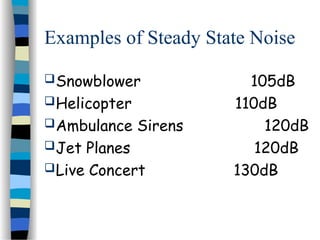
Snowblower 105dB
Helicopter 110dB
Ambulance Sirens 120dB
Jet Planes 120dB
Live Concert 130dB
Examples of Impulse Noise
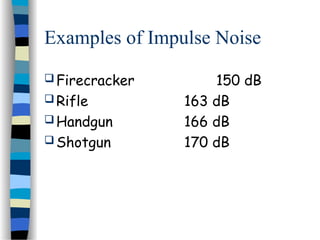
 Firecracker 150 dB
 Rifle 163 dB
 Handgun 166 dB
 Shotgun 170 dB
HOW DO WE KNOW
SOMETHING IS TOO LOUD?
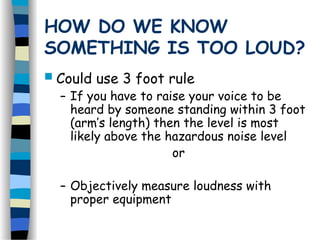
 Could use 3 foot rule
– If you have to raise your voice to be
heard by someone standing within 3 foot
(arm’s length) then the level is most
likely above the hazardous noise level
or
– Objectively measure loudness with
proper equipment
Other Health Effects of Noise
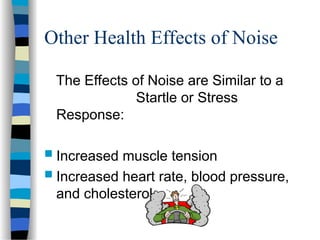
The Effects of Noise are Similar to a
Startle or Stress
Response:
 Increased muscle tension
 Increased heart rate, blood pressure,
and cholesterol
Why is noise a problem
on the job?
 It creates safety hazards by masking
alarms and other warning sounds
 It discourages communication between
workers because shouting is hard to do
and hard to listen to
 Noise makes it harder for people with
hearing loss to understand speech
Why is Protecting My Hearing
So Important?
 Hearing loss destroys your ability to
hear and understand speech, especially
in background noise
 Hearing loss is permanent and not
medically treatable
Why is Protecting My Hearing
So Important?
 Loss of hearing sensitivity due
to hazardous noise exposures
from either steady state noise
or impulse noise does occur even
before we can measure the
change!
Why is Protecting My Hearing
So Important?
 Impaired hearing can cause serious or
fatal mistakes in training and
emergency operation situations
 Good hearing is needed for the success
of the mission and saving lives
Situations Where
Good Hearing is Critical
 Determining location of victims
 Hearing radio messages
 Hearing verbal orders
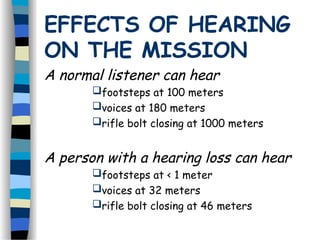
EFFECTS OF HEARING
ON THE MISSION
A normal listener can hear
footsteps at 100 meters
voices at 180 meters
rifle bolt closing at 1000 meters
A person with a hearing loss can hear
footsteps at < 1 meter
voices at 32 meters
rifle bolt closing at 46 meters
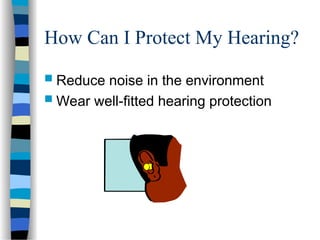
How Can I Protect My Hearing?
 Reduce noise in the environment
 Wear well-fitted hearing protection
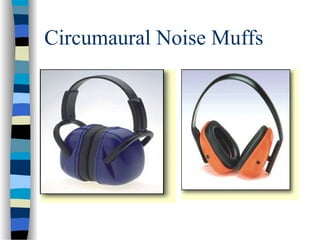
Circumaural Noise Muffs
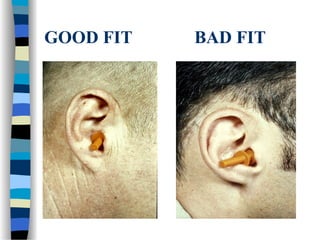
GOOD FIT BAD FIT
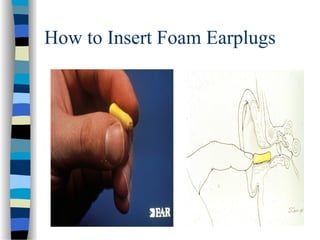
How to Insert Foam Earplugs
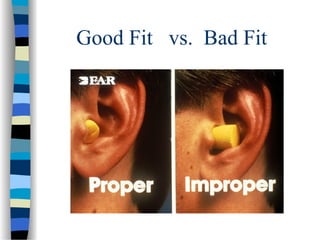
Good Fit vs. Bad Fit
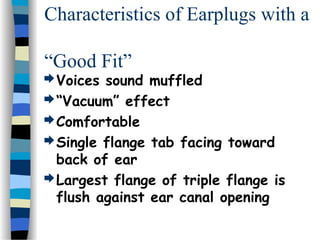
Characteristics of Earplugs with a
“Good Fit”
 Voices sound muffled
 “Vacuum” effect
 Comfortable
 Single flange tab facing toward
back of ear
 Largest flange of triple flange is
flush against ear canal opening
What if I can’t hear speech when
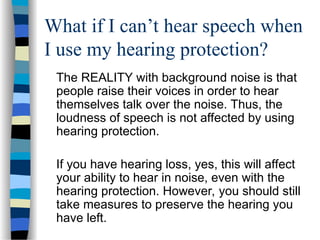
I use my hearing protection?
The REALITY with background noise is that
people raise their voices in order to hear
themselves talk over the noise. Thus, the
loudness of speech is not affected by using
hearing protection.
If you have hearing loss, yes, this will affect
your ability to hear in noise, even with the
hearing protection. However, you should still
take measures to preserve the hearing you
have left.
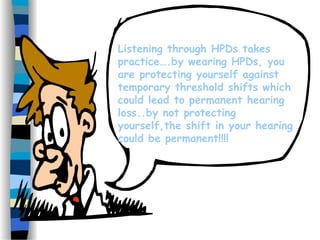
Listening through HPDs takes
practice….by wearing HPDs, you
are protecting yourself against
temporary threshold shifts which
could lead to permanent hearing
loss..by not protecting
yourself,the shift in your hearing
could be permanent!!!!
Your Responsibilities as per
DA PAM 40-501
 All noise-exposed personnel must wear
hearing protection while participating in noise-
hazardous activities. This includes, but is not
limited to: weapons firing, live-fire exercises,
operating or repairing noisy vehicles and
equipment.
 All personnel must receive, at the minimum,
an initial (on form DD 2215) and annual (on
form DD2216) hearing test. You must also
obtain a hearing test before ETS.
Where do I get my hearing
tested?
 Hearing Conservation Testing is
performed at Building 3504, and is open
from 8:30-11:00 Monday thru Friday.
 Please take medical records with you to
your hearing test
Conclusion
 Hearing loss is painless
 Hearing loss is not reversible
 The best type of hearing protection is
the type that is worn correctly
Questions?
 Please direct any questions you may
have to Captain Deepa Hariprasad at
337-531-192 or schedule an
appointment at our EENT clinic at
Bayne Jones Army Community
Hospital. Thank You!
Hearing Conversation- A brief study on Hearing Loss

  • 1.
    Hearing Conservation Deepa Hariprasad,Au.D. CPT, MS Chief, Audiology Services
  • 2.
    Outline  Causes ofhearing loss  Symptoms/warning signs  Sources of noise  Situations where good hearing is critical  How to Protect Your Hearing  How to Understand Your Hearing Test  Your Responsibilities
  • 3.
    Did You Know???? +Noise-inducedhearing loss is the number one occupational disability +It is generally painless +It is progressive over time +It is permanent +IT IS PREVENTABLE!!!
  • 4.
    What are somecauses of hearing loss?  The number one cause of hearing loss in the army is NOISE!  Environmental chemicals  Medicinal Drugs  Injuries to head or ear  Infections  Tumors
  • 5.
    Noise Induced HearingLoss  Initially, exposure to noise causes a loss of sensitivity to high frequency (high pitch) sound.  Continued exposure results in damage to mid frequency region as well.  One can experience progressive high frequency hearing loss and not be aware of it until it becomes severe
  • 6.
    How Can WeAcquire Noise- Induced Hearing Loss?  ACOUSTIC TRAUMA – ONE TIME EXPOSURE TO LOUD SOUND OR  DAILY EXPOSURES TO MODERATELY LOUD SOUNDS
  • 7.
    Symptoms/ Warning Signs ofHearing Loss  Speech sounds distorted or muffled  Difficulty understanding speech, especially with background noise  Muffling of sounds after noise exposure  Ringing or buzzing sounds in the ear
  • 8.
    Symptoms/Warning Signs of HearingLoss  Difficulty hearing on the telephone  Need for loud volume on TV or radio  Frequently asking people to repeat themselves  Difficulty hearing some pitches (usually high frequency)
  • 9.
    What are different sourcesof noise?  Weapons firing  Power tools  Loud music: concerts,stereos,headphone  Powered lawnmowers  Aircraft  Noisy vehicles  Construction Equipment  Sirens  Fire engines
  • 10.
    When is NoiseDefined to be a Hazard? -85dBA for steady-state noise sources -140dBP for impulse/impact noise sources
  • 11.
    Examples of SteadyState Noise  Rustling Leaves 20dB  Conversation 60dB  Lawnmower 95dB  Handsaw 85dB  Electric Drill 95dB  Pneumatic Drill 120dB Chainsaw/Powersaw 110-120 dB 
  • 12.
    Examples of SteadyState Noise Snowblower 105dB Helicopter 110dB Ambulance Sirens 120dB Jet Planes 120dB Live Concert 130dB
  • 13.
    Examples of ImpulseNoise  Firecracker 150 dB  Rifle 163 dB  Handgun 166 dB  Shotgun 170 dB
  • 14.
    HOW DO WEKNOW SOMETHING IS TOO LOUD?  Could use 3 foot rule – If you have to raise your voice to be heard by someone standing within 3 foot (arm’s length) then the level is most likely above the hazardous noise level or – Objectively measure loudness with proper equipment
  • 15.
    Other Health Effectsof Noise The Effects of Noise are Similar to a Startle or Stress Response:  Increased muscle tension  Increased heart rate, blood pressure, and cholesterol
  • 16.
    Why is noisea problem on the job?  It creates safety hazards by masking alarms and other warning sounds  It discourages communication between workers because shouting is hard to do and hard to listen to  Noise makes it harder for people with hearing loss to understand speech
  • 17.
    Why is ProtectingMy Hearing So Important?  Hearing loss destroys your ability to hear and understand speech, especially in background noise  Hearing loss is permanent and not medically treatable
  • 18.
    Why is ProtectingMy Hearing So Important?  Loss of hearing sensitivity due to hazardous noise exposures from either steady state noise or impulse noise does occur even before we can measure the change!
  • 19.
    Why is ProtectingMy Hearing So Important?  Impaired hearing can cause serious or fatal mistakes in training and emergency operation situations  Good hearing is needed for the success of the mission and saving lives
  • 20.
    Situations Where Good Hearingis Critical  Determining location of victims  Hearing radio messages  Hearing verbal orders
  • 21.
    EFFECTS OF HEARING ONTHE MISSION A normal listener can hear footsteps at 100 meters voices at 180 meters rifle bolt closing at 1000 meters A person with a hearing loss can hear footsteps at < 1 meter voices at 32 meters rifle bolt closing at 46 meters
  • 22.
    How Can IProtect My Hearing?  Reduce noise in the environment  Wear well-fitted hearing protection
  • 23.
  • 24.
  • 25.
    How to InsertFoam Earplugs
  • 26.
    Good Fit vs.Bad Fit
  • 27.
    Characteristics of Earplugswith a “Good Fit”  Voices sound muffled  “Vacuum” effect  Comfortable  Single flange tab facing toward back of ear  Largest flange of triple flange is flush against ear canal opening
  • 28.
    What if Ican’t hear speech when I use my hearing protection? The REALITY with background noise is that people raise their voices in order to hear themselves talk over the noise. Thus, the loudness of speech is not affected by using hearing protection. If you have hearing loss, yes, this will affect your ability to hear in noise, even with the hearing protection. However, you should still take measures to preserve the hearing you have left.
  • 30.
    Listening through HPDstakes practice….by wearing HPDs, you are protecting yourself against temporary threshold shifts which could lead to permanent hearing loss..by not protecting yourself,the shift in your hearing could be permanent!!!!
  • 31.
    Your Responsibilities asper DA PAM 40-501  All noise-exposed personnel must wear hearing protection while participating in noise- hazardous activities. This includes, but is not limited to: weapons firing, live-fire exercises, operating or repairing noisy vehicles and equipment.  All personnel must receive, at the minimum, an initial (on form DD 2215) and annual (on form DD2216) hearing test. You must also obtain a hearing test before ETS.
  • 32.
    Where do Iget my hearing tested?  Hearing Conservation Testing is performed at Building 3504, and is open from 8:30-11:00 Monday thru Friday.  Please take medical records with you to your hearing test
  • 33.
    Conclusion  Hearing lossis painless  Hearing loss is not reversible  The best type of hearing protection is the type that is worn correctly
  • 34.
    Questions?  Please directany questions you may have to Captain Deepa Hariprasad at 337-531-192 or schedule an appointment at our EENT clinic at Bayne Jones Army Community Hospital. Thank You!