INDIAN HEALTHCARE SECTOR
Indian Healthcare industry contributes approximately 4% to the GDP and is estimated to be at
US $104bn in FY14 (Fortis Healthcare Annual Report). It is expected to grow at a CAGR of
15% to reach US $160 bn by FY17. The Indian healthcare sector consists of hospitals,
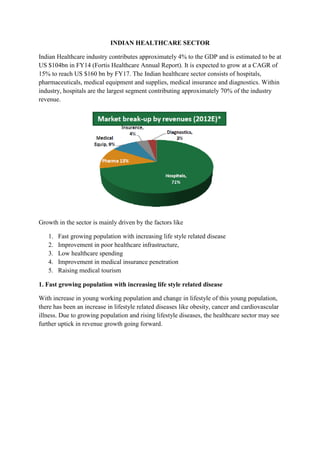
pharmaceuticals, medical equipment and supplies, medical insurance and diagnostics. Within
industry, hospitals are the largest segment contributing approximately 70% of the industry
revenue.
Growth in the sector is mainly driven by the factors like
1. Fast growing population with increasing life style related disease
2. Improvement in poor healthcare infrastructure,
3. Low healthcare spending
4. Improvement in medical insurance penetration
5. Raising medical tourism
1. Fast growing population with increasing life style related disease
With increase in young working population and change in lifestyle of this young population,
there has been an increase in lifestyle related diseases like obesity, cancer and cardiovascular
illness. Due to growing population and rising lifestyle diseases, the healthcare sector may see
further uptick in revenue growth going forward.
2. Improvement in poor healthcare infrastructure
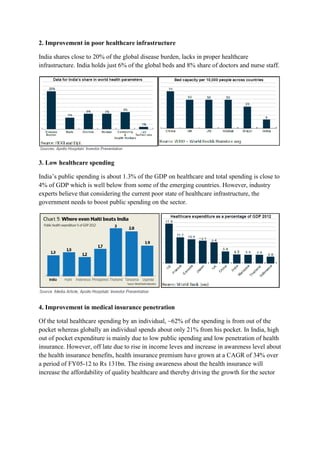
India shares close to 20% of the global disease burden, lacks in proper healthcare
infrastructure. India holds just 6% of the global beds and 8% share of doctors and nurse staff.
3. Low healthcare spending
India’s public spending is about 1.3% of the GDP on healthcare and total spending is close to
4% of GDP which is well below from some of the emerging countries. However, industry
experts believe that considering the current poor state of healthcare infrastructure, the
government needs to boost public spending on the sector.
4. Improvement in medical insurance penetration
Of the total healthcare spending by an individual, ~62% of the spending is from out of the
pocket whereas globally an individual spends about only 21% from his pocket. In India, high
out of pocket expenditure is mainly due to low public spending and low penetration of health
insurance. However, off late due to rise in income leves and increase in awareness level about
the health insurance benefits, health insurance premium have grown at a CAGR of 34% over
a period of FY05-12 to Rs 131bn. The rising awareness about the health insurance will
increase the affordability of quality healthcare and thereby driving the growth for the sector
5. Raising medical tourism
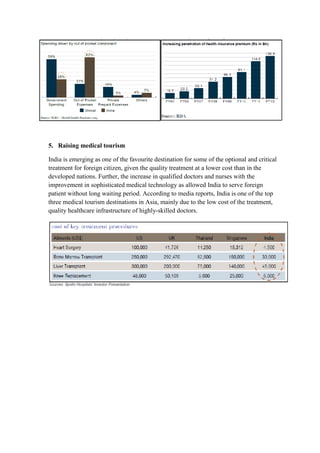
India is emerging as one of the favourite destination for some of the optional and critical
treatment for foreign citizen, given the quality treatment at a lower cost than in the
developed nations. Further, the increase in qualified doctors and nurses with the
improvement in sophisticated medical technology as allowed India to serve foreign
patient without long waiting period. According to media reports, India is one of the top
three medical tourism destinations in Asia, mainly due to the low cost of the treatment,
quality healthcare infrastructure of highly-skilled doctors.
Key challenges for the sector
1. Inadequate healthcare workforce
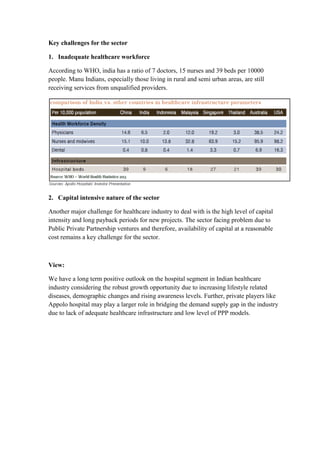
According to WHO, india has a ratio of 7 doctors, 15 nurses and 39 beds per 10000
people. Manu Indians, especially those living in rural and semi urban areas, are still
receiving services from unqualified providers.
2. Capital intensive nature of the sector
Another major challenge for healthcare industry to deal with is the high level of capital
intensity and long payback periods for new projects. The sector facing problem due to
Public Private Partnership ventures and therefore, availability of capital at a reasonable
cost remains a key challenge for the sector.
View:
We have a long term positive outlook on the hospital segment in Indian healthcare
industry considering the robust growth opportunity due to increasing lifestyle related
diseases, demographic changes and rising awareness levels. Further, private players like
Appolo hospital may play a larger role in bridging the demand supply gap in the industry
due to lack of adequate healthcare infrastructure and low level of PPP models.

Healthcare Inda

  • 1.
    INDIAN HEALTHCARE SECTOR IndianHealthcare industry contributes approximately 4% to the GDP and is estimated to be at US $104bn in FY14 (Fortis Healthcare Annual Report). It is expected to grow at a CAGR of 15% to reach US $160 bn by FY17. The Indian healthcare sector consists of hospitals, pharmaceuticals, medical equipment and supplies, medical insurance and diagnostics. Within industry, hospitals are the largest segment contributing approximately 70% of the industry revenue. Growth in the sector is mainly driven by the factors like 1. Fast growing population with increasing life style related disease 2. Improvement in poor healthcare infrastructure, 3. Low healthcare spending 4. Improvement in medical insurance penetration 5. Raising medical tourism 1. Fast growing population with increasing life style related disease With increase in young working population and change in lifestyle of this young population, there has been an increase in lifestyle related diseases like obesity, cancer and cardiovascular illness. Due to growing population and rising lifestyle diseases, the healthcare sector may see further uptick in revenue growth going forward.
  • 2.
    2. Improvement inpoor healthcare infrastructure India shares close to 20% of the global disease burden, lacks in proper healthcare infrastructure. India holds just 6% of the global beds and 8% share of doctors and nurse staff. 3. Low healthcare spending India’s public spending is about 1.3% of the GDP on healthcare and total spending is close to 4% of GDP which is well below from some of the emerging countries. However, industry experts believe that considering the current poor state of healthcare infrastructure, the government needs to boost public spending on the sector. 4. Improvement in medical insurance penetration Of the total healthcare spending by an individual, ~62% of the spending is from out of the pocket whereas globally an individual spends about only 21% from his pocket. In India, high out of pocket expenditure is mainly due to low public spending and low penetration of health insurance. However, off late due to rise in income leves and increase in awareness level about the health insurance benefits, health insurance premium have grown at a CAGR of 34% over a period of FY05-12 to Rs 131bn. The rising awareness about the health insurance will increase the affordability of quality healthcare and thereby driving the growth for the sector
  • 3.
    5. Raising medicaltourism India is emerging as one of the favourite destination for some of the optional and critical treatment for foreign citizen, given the quality treatment at a lower cost than in the developed nations. Further, the increase in qualified doctors and nurses with the improvement in sophisticated medical technology as allowed India to serve foreign patient without long waiting period. According to media reports, India is one of the top three medical tourism destinations in Asia, mainly due to the low cost of the treatment, quality healthcare infrastructure of highly-skilled doctors.
  • 4.
    Key challenges forthe sector 1. Inadequate healthcare workforce According to WHO, india has a ratio of 7 doctors, 15 nurses and 39 beds per 10000 people. Manu Indians, especially those living in rural and semi urban areas, are still receiving services from unqualified providers. 2. Capital intensive nature of the sector Another major challenge for healthcare industry to deal with is the high level of capital intensity and long payback periods for new projects. The sector facing problem due to Public Private Partnership ventures and therefore, availability of capital at a reasonable cost remains a key challenge for the sector. View: We have a long term positive outlook on the hospital segment in Indian healthcare industry considering the robust growth opportunity due to increasing lifestyle related diseases, demographic changes and rising awareness levels. Further, private players like Appolo hospital may play a larger role in bridging the demand supply gap in the industry due to lack of adequate healthcare infrastructure and low level of PPP models.