RightPatient®
Free Online Learning Podcasts
Healthcare Data Integrity and Interoperability Standards with John
Donnelly, MBA, M.Sc, CPHIMS – President of IntePro Solutions, Inc.
Podcast length – 35:34
Healthcare’s major challenges sharing data across HIEs
Changes to health systems strategic vision of quality
healthcare
Impact of data visibility on patient-provider
relationship
Patient identification’s affect on data integrity in HIEs &
future technologies for patient identification in
healthcare
HIEs effect on State privacy and security regulations
Most important HIE aspects for patient education
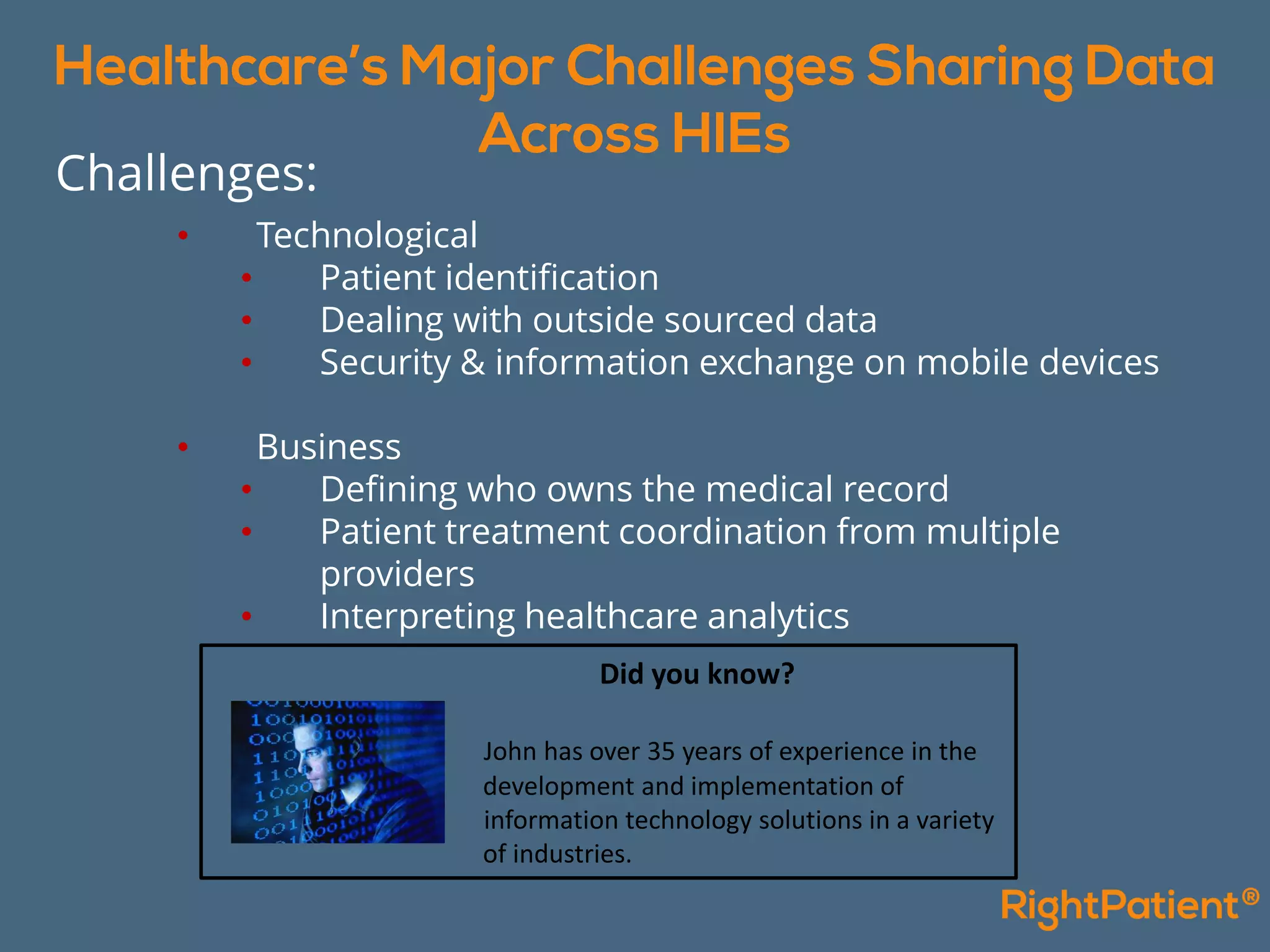
Did you know?
John has over 35 years of experience in the
development and implementation of
information technology solutions in a variety
of industries.
• Technological
• Patient identification
• Dealing with outside sourced data
• Security & information exchange on mobile devices
• Business
• Defining who owns the medical record
• Patient treatment coordination from multiple
providers
• Interpreting healthcare analytics
Challenges:
• Meaningful Use reimbursements altered health systems’
strategic direction
• Health IT began to more closely reassess system
partners
• Who are they?
• What value do they bring?
• Identifying and curating quality care teams
• Defining what differentiates themselves from their peers
Did you know?
John serves as a HIMSS Strategic Advisor
on the topic of healthcare interoperability
throughout the world and the effective
testing and demonstration in national and
international venues.
• First, patient must now be considered as a partner
• Provider becomes less directive and more collaborative
• Patient will have more active role in maintaining medical
record data integrity
• Providers will more step up patient data portal web
guidance ensuring quality data and mentoring patients
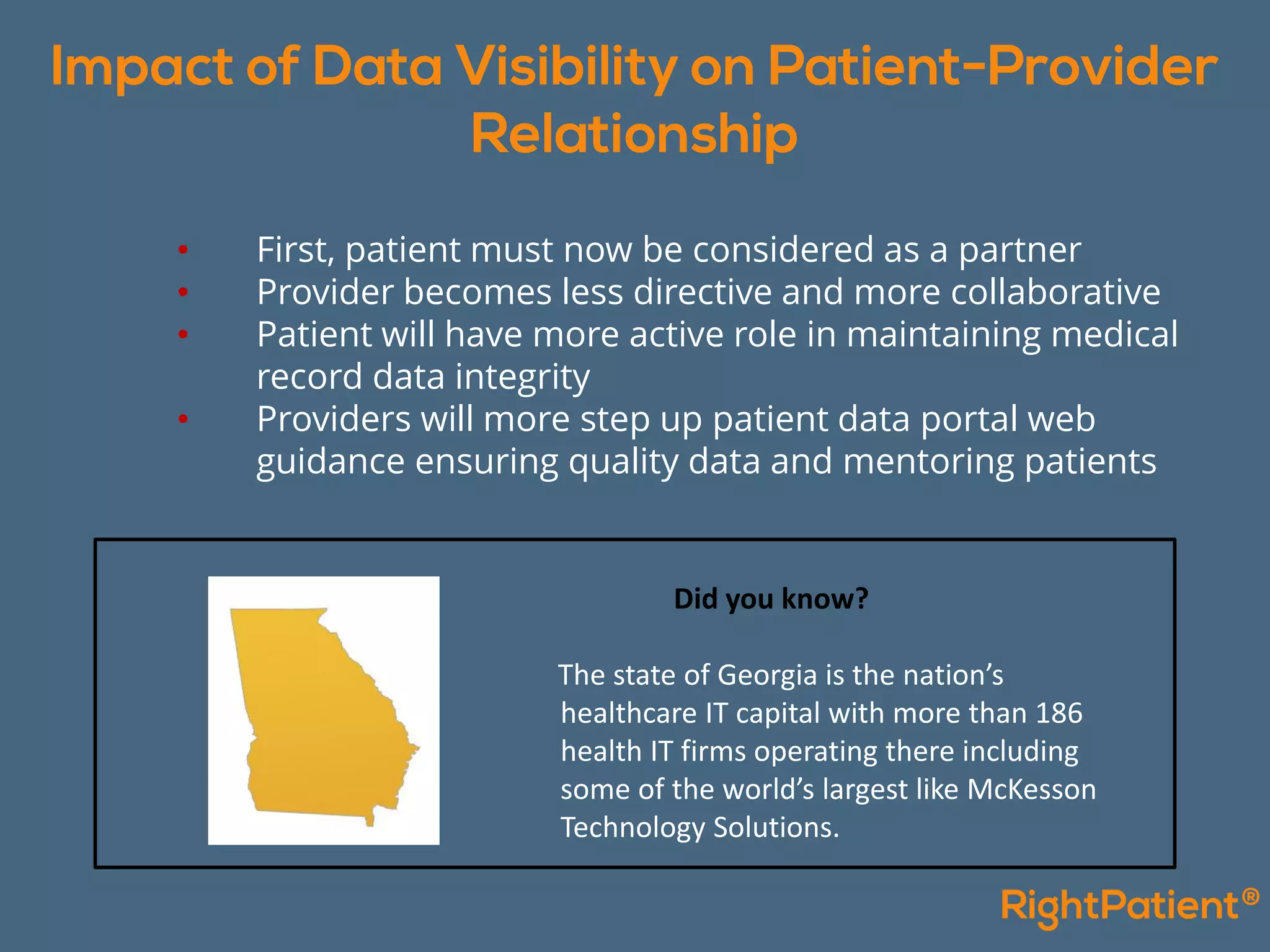
Did you know?
The state of Georgia is the nation’s
healthcare IT capital with more than 186
health IT firms operating there including
some of the world’s largest like McKesson
Technology Solutions.
• It is the single most important element of effective and
accurate HIEs, extremely critical to the process
• Patient identification has gone from casual to mission
critical; it’s a fundamental building block of data accuracy
• Closer scrutiny of processes used to identify patients & who
has access to patient data
• Healthcare adopting more stringent security measures for
system access including multi-factor authentication
(biometrics as an example); raises “assurance” bar that those
interacting with data are authorized
• Cultural naming conventions present complexities in
accurately identifying patients, especially in urban areas
• Biometrics
• Two-factor authentication
• Barcoding (especially prior to medication dispensing)
• Leveraging smart phone technology
Did you know?
Accurate Patient Identification has been number
one on the list of the Joint Commission’s
Hospital National Patient Safety Goals since 2003.
• Privacy and security should be treated as separate entities
• Not as much worry over security for information exchanges
because of success in other industries
• Privacy will be a larger issue
• Debating the benefits of an opt-in approach
• Clear and effective communication to patients of HIE
purpose
• State boundaries will become an issue
• Have to figure out a way to share consent and patient input
across boundaries
• Changes are definitely imminent, and may require federal or
state legislation
• Most challenging is educating in opt-in States
• Ensure patient is aware of HIE purpose
• What impact this has on a provider sharing patient data
throughout a network
• Net result of HIE is a better care delivery model
• HIE intended to improve care coordination
• Patients need to be control point – making sure their
identification is consistent across providers
• Emphasizing the critical nature of accurate patient
identification
• Industry is attempting to move from a sickness model to a
wellness model
• Patients need to participate in maintaining their health
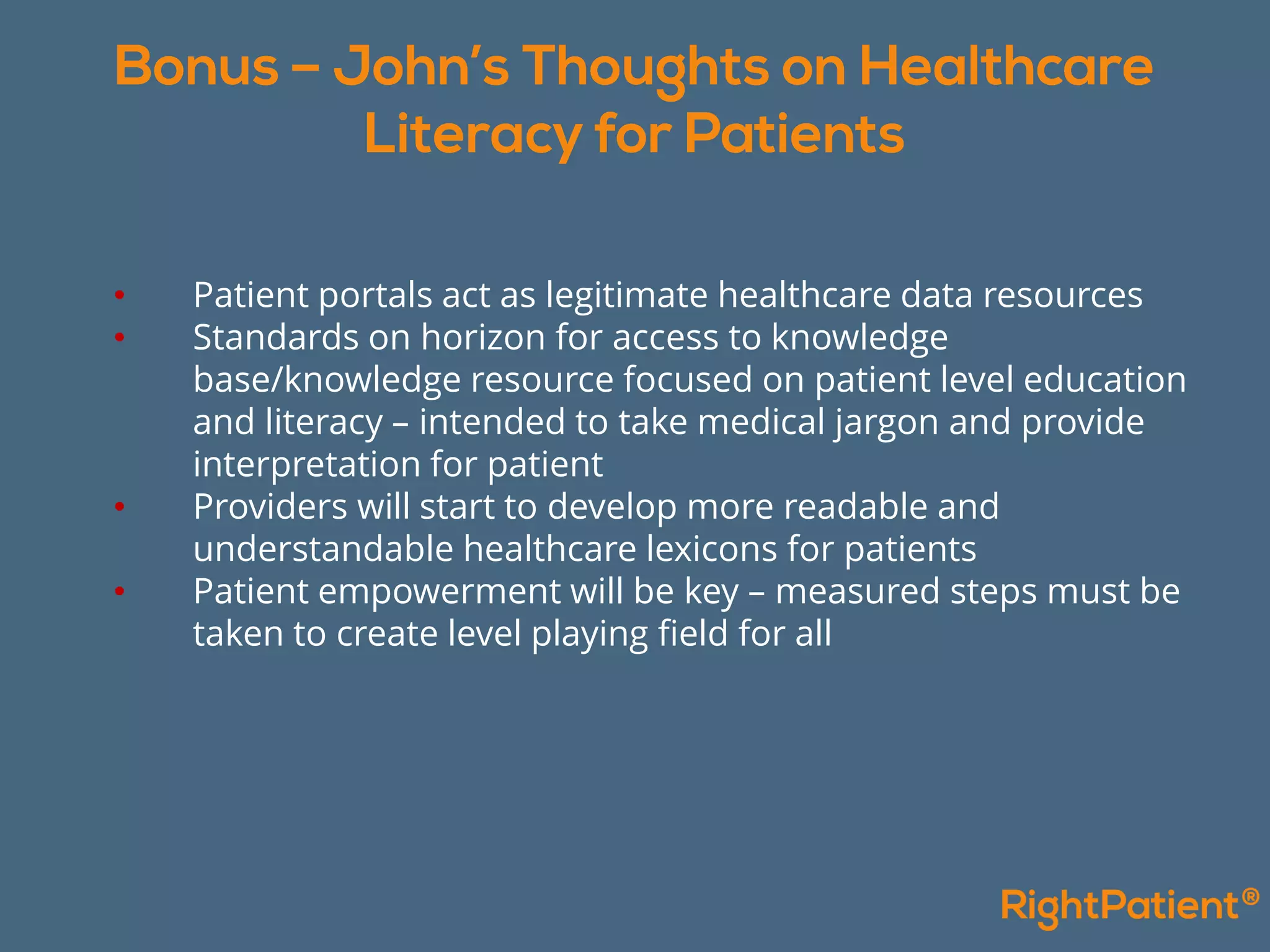
• Patient portals act as legitimate healthcare data resources
• Standards on horizon for access to knowledge
base/knowledge resource focused on patient level education
and literacy – intended to take medical jargon and provide
interpretation for patient
• Providers will start to develop more readable and
understandable healthcare lexicons for patients
• Patient empowerment will be key – measured steps must be
taken to create level playing field for all
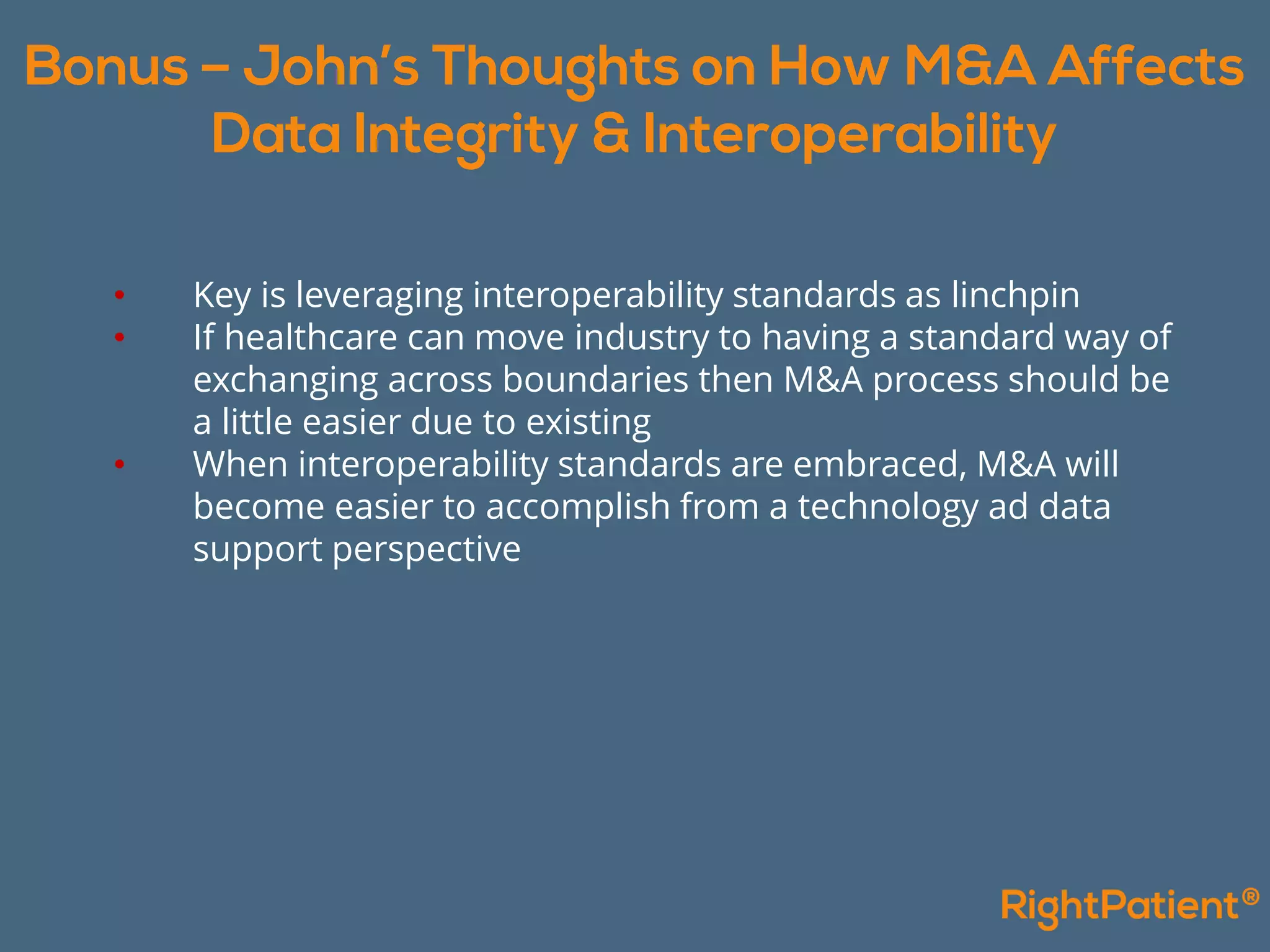
• Key is leveraging interoperability standards as linchpin
• If healthcare can move industry to having a standard way of
exchanging across boundaries then M&A process should be
a little easier due to existing
• When interoperability standards are embraced, M&A will
become easier to accomplish from a technology ad data
support perspective
Thank you to John Donnelly for
lending us his time and knowledge
for this podcast!
John Trader
Director of Communications
RightPatient®
1050 Crown Pointe Pkwy.
Suite 470
Atlanta, GA 30338
jtrader@rightpatient.com
404-528-1270
www.rightpatient.com
Twitter: twitter.com/rightpatient
Facebook: facebook.com/rightpatient
LinkedIn: linkedin.com/company/rightpatient
Contact Information

Healthcare Data Integrity and Data Interoperability

  • 1.
    RightPatient® Free Online LearningPodcasts Healthcare Data Integrity and Interoperability Standards with John Donnelly, MBA, M.Sc, CPHIMS – President of IntePro Solutions, Inc. Podcast length – 35:34
  • 2.
    Healthcare’s major challengessharing data across HIEs Changes to health systems strategic vision of quality healthcare Impact of data visibility on patient-provider relationship Patient identification’s affect on data integrity in HIEs & future technologies for patient identification in healthcare HIEs effect on State privacy and security regulations Most important HIE aspects for patient education
  • 3.
    Did you know? Johnhas over 35 years of experience in the development and implementation of information technology solutions in a variety of industries. • Technological • Patient identification • Dealing with outside sourced data • Security & information exchange on mobile devices • Business • Defining who owns the medical record • Patient treatment coordination from multiple providers • Interpreting healthcare analytics Challenges:
  • 4.
    • Meaningful Usereimbursements altered health systems’ strategic direction • Health IT began to more closely reassess system partners • Who are they? • What value do they bring? • Identifying and curating quality care teams • Defining what differentiates themselves from their peers Did you know? John serves as a HIMSS Strategic Advisor on the topic of healthcare interoperability throughout the world and the effective testing and demonstration in national and international venues.
  • 5.
    • First, patientmust now be considered as a partner • Provider becomes less directive and more collaborative • Patient will have more active role in maintaining medical record data integrity • Providers will more step up patient data portal web guidance ensuring quality data and mentoring patients Did you know? The state of Georgia is the nation’s healthcare IT capital with more than 186 health IT firms operating there including some of the world’s largest like McKesson Technology Solutions.
  • 6.
    • It isthe single most important element of effective and accurate HIEs, extremely critical to the process • Patient identification has gone from casual to mission critical; it’s a fundamental building block of data accuracy • Closer scrutiny of processes used to identify patients & who has access to patient data • Healthcare adopting more stringent security measures for system access including multi-factor authentication (biometrics as an example); raises “assurance” bar that those interacting with data are authorized • Cultural naming conventions present complexities in accurately identifying patients, especially in urban areas
  • 7.
    • Biometrics • Two-factorauthentication • Barcoding (especially prior to medication dispensing) • Leveraging smart phone technology Did you know? Accurate Patient Identification has been number one on the list of the Joint Commission’s Hospital National Patient Safety Goals since 2003.
  • 8.
    • Privacy andsecurity should be treated as separate entities • Not as much worry over security for information exchanges because of success in other industries • Privacy will be a larger issue • Debating the benefits of an opt-in approach • Clear and effective communication to patients of HIE purpose • State boundaries will become an issue • Have to figure out a way to share consent and patient input across boundaries • Changes are definitely imminent, and may require federal or state legislation
  • 9.
    • Most challengingis educating in opt-in States • Ensure patient is aware of HIE purpose • What impact this has on a provider sharing patient data throughout a network • Net result of HIE is a better care delivery model • HIE intended to improve care coordination • Patients need to be control point – making sure their identification is consistent across providers • Emphasizing the critical nature of accurate patient identification • Industry is attempting to move from a sickness model to a wellness model • Patients need to participate in maintaining their health
  • 10.
    • Patient portalsact as legitimate healthcare data resources • Standards on horizon for access to knowledge base/knowledge resource focused on patient level education and literacy – intended to take medical jargon and provide interpretation for patient • Providers will start to develop more readable and understandable healthcare lexicons for patients • Patient empowerment will be key – measured steps must be taken to create level playing field for all
  • 11.
    • Key isleveraging interoperability standards as linchpin • If healthcare can move industry to having a standard way of exchanging across boundaries then M&A process should be a little easier due to existing • When interoperability standards are embraced, M&A will become easier to accomplish from a technology ad data support perspective
  • 12.
    Thank you toJohn Donnelly for lending us his time and knowledge for this podcast!
  • 13.
    John Trader Director ofCommunications RightPatient® 1050 Crown Pointe Pkwy. Suite 470 Atlanta, GA 30338 jtrader@rightpatient.com 404-528-1270 www.rightpatient.com Twitter: twitter.com/rightpatient Facebook: facebook.com/rightpatient LinkedIn: linkedin.com/company/rightpatient Contact Information