Best Practices for Enabling HIE and
Incorporating Capabilities into EHR workflows
2018 Minnesota e-Health Summit
Agenda
• Why is HIE needed?
• Value Based Care
• Consumerization of Healthcare
• What should you expect from HIE?
• HIE Capabilities
• How do you do it?
• Sharing Data
• Leveraging Insights
• SHIEC
• What is SHIEC and what role does it play?
• What PCDH is and how it works
• Where is PCDH working and future
expansion
• Why is PCDH important?
Health Information Exchange is now Table Stakes
Why should you care?
Payers are seeking opportunities to reduce low value care by transferring risk to
Providers with System-wide, Total Cost of Care Capitated.
Payers are selecting systems as strategic partners based on the value of the
physician enterprise as a leading indicator of the system’s ability to maximize
outcomes per dollar spent for populations.
Managing inpatient efficiency is not enough to be successful in value-based
arrangements. The decisions that impact inpatient activities starts much earlier,
often with the patient’s first visit with a physician. Managing risk starts with a visit.
High Performing Networks and Low Value Care
Why should you care?
Reducing that 30% of unnecessary, low-value care will directly impact
healthcare spend without an impact on outcome or quality of care delivered.
Offering patients the proper direction toward high value physicians within the
system will ensure that only necessary care is provided at the right cost to the
plan, employer and patient.
By utilizing RowdMap’s Risk-Readiness® benchmarks, your system can
express to payers and employers the benefits, both financial and quality
outcomes, that companies, payers and patients can receive by choosing a
high value partner.
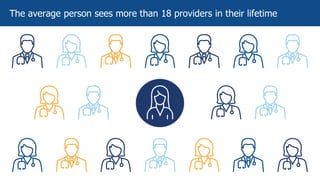
The average person sees more than 18 providers in their lifetime
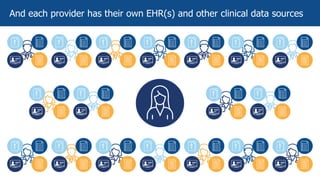
And each provider has their own EHR(s) and other clinical data sources
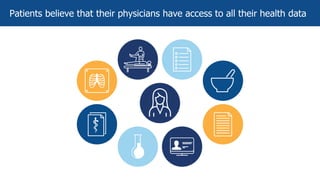
Patients believe that their physicians have access to all their health data
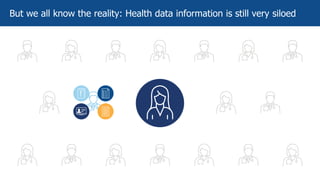
But we all know the reality: Health data information is still very siloed
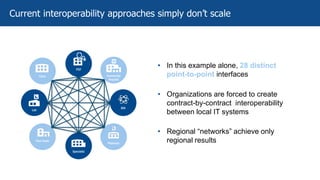
Community
Hospital
IDN
Pharmacy
Lab
Post-Acute
Specialist
PCP
Clinic
• In this example alone, 28 distinct
point-to-point interfaces
• Organizations are forced to create
contract-by-contract interoperability
between local IT systems
• Regional “networks” achieve only
regional results
Current interoperability approaches simply don’t scale
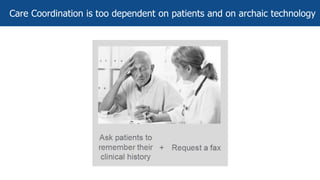
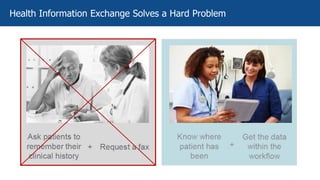
Care Coordination is too dependent on patients and on archaic technology
Health Information Exchange Solves a Hard Problem
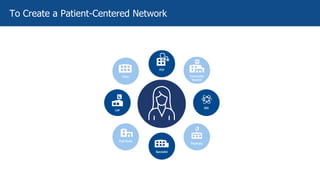
To Create a Patient-Centered Network
Community
Hospital
IDN
Pharmacy
Lab
Post-Acute
Specialist
PCP
Clinic Community
Hospital
Pharmacy
Post-Acute
Specialist
PCP
Clinic
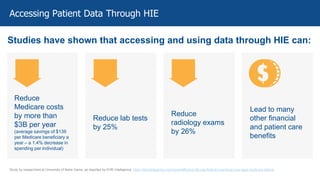
Study by researchers at University of Notre Dame, as reported by EHR Intelligence: https://ehrintelligence.com/news/effective-hie-use-federal-incentives-may-save-medicare-billions
Accessing Patient Data Through HIE
Studies have shown that accessing and using data through HIE can:
Reduce
Medicare costs
by more than
$3B per year
(average savings of $139
per Medicare beneficiary a
year – a 1.4% decrease in
spending per individual)
Lead to many
other financial
and patient care
benefits
Reduce
radiology exams
by 26%
Reduce lab tests
by 25%
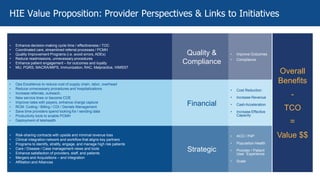
HIE Value Proposition: Provider Perspectives & Links to Initiatives
• Enhance decision-making cycle time / effectiveness / TOC
• Coordinated care, streamlined referral processes / PCMH
• Quality Improvement Programs (i.e. avoid errors, ADEs)
• Reduce readmissions, unnecessary procedures
• Enhance patient engagement – for outcomes and loyalty
• MU, PQRS, MACRA/MIPS, Immunization, RAC, Malpractice, HIMSS7
• Ops Excellence to reduce cost of supply chain, labor, overhead
• Reduce unnecessary procedures and hospitalizations
• Increase referrals, outreach,
• New service lines or become COE
• Improve rates with payers, enhance charge capture
• RCM: Coding / Billing / CDI / Denials Management
• Save time providers spend looking for / sending data
• Productivity tools to enable PCMH
• Deployment of telehealth
• Risk-sharing contracts with upside and minimal revenue loss
• Clinical integration network and workflow that aligns key partners
• Programs to identify, stratify, engage, and manage high risk patients
• Care / Disease / Case management views and tools
• Enhance satisfaction of providers, staff, and patients
• Mergers and Acquisitions – and Integration
• Affiliation and Alliances
Quality &
Compliance
Financial
Strategic
• Improve Outcomes
• Compliance
• Cost Reduction
• Increase Revenue
• CashAcceleration
• Increase Effective
Capacity
• ACO / P4P
• Population Health
• Provider / Patient
User Experience
• Scale
Overall
Benefits
-
TCO
=
Value $$
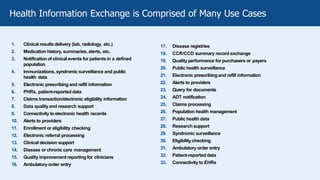
1. Clinical results delivery (lab, radiology, etc.)
2. Medication history, summaries, alerts, etc.
3. Notification of clinical events for patients in a defined
population
4. Immunizations, syndromic surveillance and public
health data
5. Electronic prescribing and refill information
6. PHRs, patient-reported data
7. Claims transaction/electronic eligibility information
8. Data quality and research support
9. Connectivity to electronic health records
10. Alerts to providers
11. Enrollment or eligibility checking
12. Electronic referral processing
13. Clinical decision support
14. Disease or chronic care management
15. Quality improvement reporting for clinicians
16. Ambulatory order entry
17. Disease registries
18. CCR/CCD summary record exchange
19. Quality performance for purchasers or payers
20. Public health surveillance
21. Electronic prescribingand refill information
22. Alerts to providers
23. Query for documents
24. ADT notification
25. Claims processing
26. Population health management
27. Public health data
28. Research support
29. Syndromic surveillance
30. Eligibility checking
31. Ambulatory order entry
32. Patient-reported data
33. Connectivity to EHRs
Health Information Exchange is Comprised of Many Use Cases
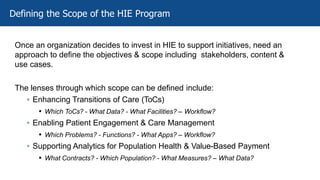
Once an organization decides to invest in HIE to support initiatives, need an
approach to define the objectives & scope including stakeholders, content &
use cases.
The lenses through which scope can be defined include:
▪ Enhancing Transitions of Care (ToCs)
▪ Which ToCs? - What Data? - What Facilities? – Workflow?
▪ Enabling Patient Engagement & Care Management
▪ Which Problems? - Functions? - What Apps? – Workflow?
▪ Supporting Analytics for Population Health & Value-Based Payment
▪ What Contracts? - Which Population? - What Measures? – What Data?
Defining the Scope of the HIE Program
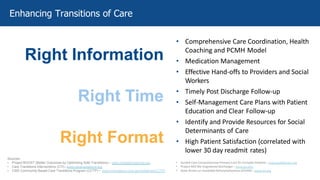
• Comprehensive Care Coordination, Health
Coaching and PCMH Model
• Medication Management
• Effective Hand-offs to Providers and Social
Workers
• Timely Post Discharge Follow-up
• Self-Management Care Plans with Patient
Education and Clear Follow-up
• Identify and Provide Resources for Social
Determinants of Care
• High Patient Satisfaction (correlated with
lower 30 day readmit rates)
Sources:
• Project BOOST (Better Outcomes by Optimizing Safe Transitions) – www.hospitalmedicine.org
• Care Transitions Interventions (CTI) –www.caretransitions.org
• CMS Community-Based Care Transitions Program (CCTP) – www.innovations.cms.gov/initiatives/CCTP/
Enhancing Transitions of Care
Right Information
Right Time
Right Format
• Guided Care Comprehensive Primary Care for Complex Patients – www.guidedcare.org
• Project RED (Re-Engineered Discharge) – www.bu.edu
• State Action on Avoidable Rehospitalizations (STAAR) – www.ihi.org
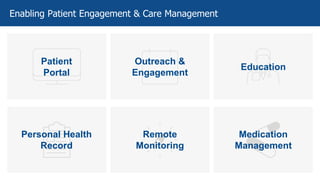
Enabling Patient Engagement & Care Management
Patient
Portal
Outreach &
Engagement
Education
Personal Health
Record
Remote
Monitoring
Medication
Management
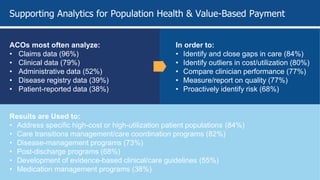
ACOs most often analyze:
• Claims data (96%)
• Clinical data (79%)
• Administrative data (52%)
• Disease registry data (39%)
• Patient-reported data (38%)
In order to:
• Identify and close gaps in care (84%)
• Identify outliers in cost/utilization (80%)
• Compare clinician performance (77%)
• Measure/report on quality (77%)
• Proactively identify risk (68%)
Results are Used to:
• Address specific high-cost or high-utilization patient populations (84%)
• Care transitions management/care coordination programs (82%)
• Disease-management programs (73%)
• Post-discharge programs (68%)
• Development of evidence-based clinical/care guidelines (55%)
• Medication management programs (38%)
Supporting Analytics for Population Health & Value-Based Payment
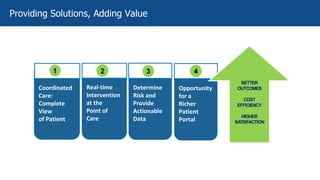
Determine
Risk and
Provide
Actionable
Data
Real-time
Intervention
at the
Point of
Care
Coordinated
Care:
Complete
View
of Patient
1 2 3
Opportunity
for a
Richer
Patient
Portal
4
BETTER
OUTCOMES
COST
EFFICIENCY
HIGHER
SATISFACTION
Providing Solutions, Adding Value
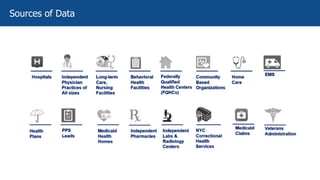
Sources of Data
22
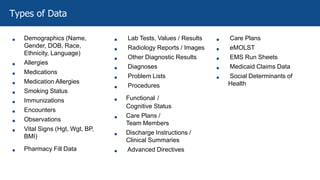
• Demographics (Name,
Gender, DOB, Race,
Ethnicity, Language)
• Allergies
• Medications
• Medication Allergies
• Smoking Status
• Immunizations
• Encounters
• Observations
• Vital Signs (Hgt, Wgt, BP,
BMI)
• Pharmacy Fill Data
• Lab Tests, Values / Results
• Radiology Reports / Images
• Other Diagnostic Results
• Diagnoses
• Problem Lists
• Procedures
• Functional /
Cognitive Status
• Care Plans /
Team Members
• Discharge Instructions /
Clinical Summaries
• Advanced Directives
• Care Plans
• eMOLST
• EMS Run Sheets
• Medicaid Claims Data
• Social Determinants of
Health
Types of Data
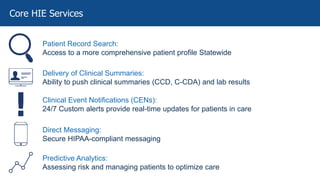
Core HIE Services
Patient Record Search:
Access to a more comprehensive patient profile Statewide
Delivery of Clinical Summaries:
Ability to push clinical summaries (CCD, C-CDA) and lab results
Clinical Event Notifications (CENs):
24/7 Custom alerts provide real-time updates for patients in care
Direct Messaging:
Secure HIPAA-compliant messaging
Predictive Analytics:
Assessing risk and managing patients to optimize care
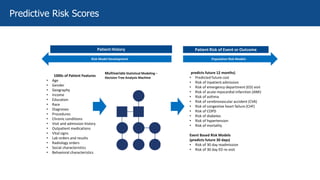
24
Patient History Patient Risk of Event or Outcome
Risk Model Development Population Risk Models
1000s of Patient Features
• Age
• Gender
• Geography
• Income
• Education
• Race
• Diagnoses
• Procedures
• Chronic conditions
• Visit and admission history
• Outpatient medications
• Vital signs
• Lab orders and results
• Radiology orders
• Social characteristics
• Behavioral characteristics
Multivariate Statistical Modeling –
Decision Tree Analysis Machine Learning
(predicts future 12 months)
• Predicted future cost
• Risk of inpatient admission
• Risk of emergency department (ED) visit
• Risk of acute myocardial infarction (AMI)
• Risk of asthma
• Risk of cerebrovascular accident (CVA)
• Risk of congestive heart failure (CHF)
• Risk of COPD
• Risk of diabetes
• Risk of hypertension
• Risk of mortality
Event Based Risk Models
(predicts future 30 days)
• Risk of 30 day readmission
• Risk of 30 day ED re-visit
Predictive Risk Scores
25
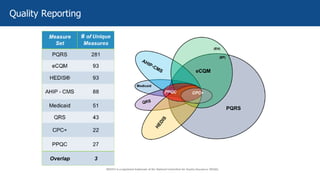
Quality Reporting
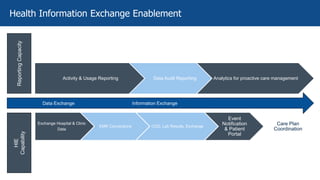
ReportingCapacity
Activity & Usage Reporting Data Audit Reporting Analytics for proactive care management
HIE
Capability
Exchange Hospital & Clinic
Data
EMR Connections CCD, Lab Results, Exchange
Event
Notification
& Patient
Portal
Care Plan
Coordination
Health Information Exchange Enablement
Data Exchange Information Exchange
Source
Organization
Specific
Source
System
Type of Clinical
Data
Date first live in
production
Volume Estimates (e.g.,
# of unique patients)
Clinical Data Format
(include terminology
used, if any)
Location or
region
XYZ Health
System
(hospital)
ADT (GE) Admissions data,
discharge
summaries
Since Jan 2009 2,000,000 HL7 v2.5.1 Tallahassee
ABC Hospital Lab
(Cerner)
Lab results Since Feb 2010 1,000,000 HL7 v2.5.1, LOINC coded Jacksonville
St. Sam’s
Hospital
Transcripti
on (XYZ
vendor)
Transcribed
reports: surgical
notes, radiology
reports
Since June 2010 1,000,000 HL7 v2.6 Lakeland
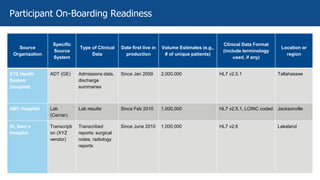
Participant On-Boarding Readiness
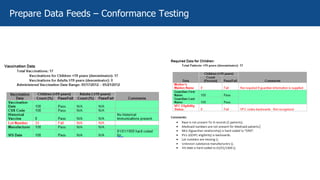
Prepare Data Feeds – Conformance Testing
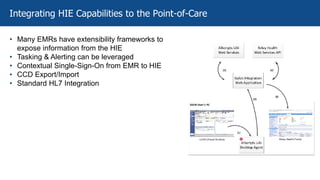
• Many EMRs have extensibility frameworks to
expose information from the HIE
• Tasking & Alerting can be leveraged
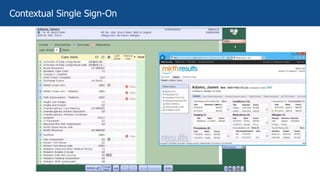
• Contextual Single-Sign-On from EMR to HIE
• CCD Export/Import
• Standard HL7 Integration
Integrating HIE Capabilities to the Point-of-Care
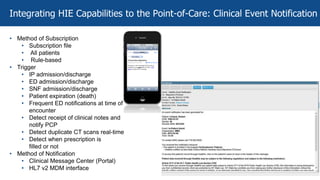
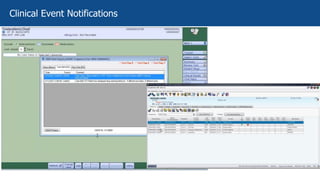
• Method of Subscription
• Subscription file
• All patients
• Rule-based
• Trigger
• IP admission/discharge
• ED admission/discharge
• SNF admission/discharge
• Patient expiration (death)
• Frequent ED notifications at time of
encounter
• Detect receipt of clinical notes and
notify PCP
• Detect duplicate CT scans real-time
• Detect when prescription is
filled or not
• Method of Notification
• Clinical Message Center (Portal)
• HL7 v2 MDM interface
Integrating HIE Capabilities to the Point-of-Care: Clinical Event Notification
Contextual Single Sign-On
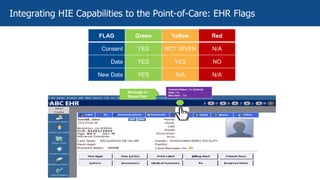
FLAG Green Yellow Red
Consent YES NOT GIVEN N/A
Data YES YES NO
New Data YES N/A N/A
Consent Status: Yes External
Data: Yes
New Data: : Yes
Message on
Mouse Over
Integrating HIE Capabilities to the Point-of-Care: EHR Flags
Clinical Event Notifications
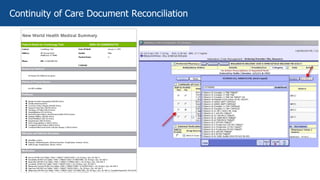
Continuity of Care Document Reconciliation
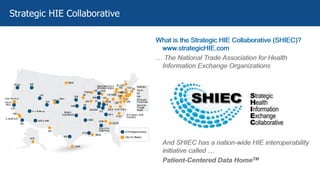
What is the Strategic HIE Collaborative (SHIEC)?
www.strategicHIE.com
… The National Trade Association for Health
Information Exchange Organizations
And SHIEC has a nation-wide HIE interoperability
initiative called …
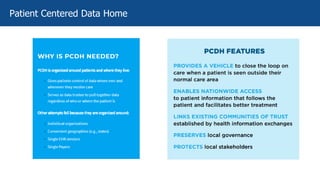
Patient-Centered Data HomeTM
What is the Strategic HIE Collaborative (SHIEC)?
www.strategicHIE.com
… The National Trade Association for Health
Information Exchange Organizations
And SHIEC has a nation-wide HIE interoperability
initiative called …
Patient-Centered Data HomeTM
Strategic HIE Collaborative
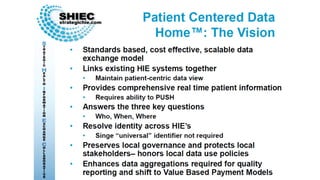
Patient Centered Data Home
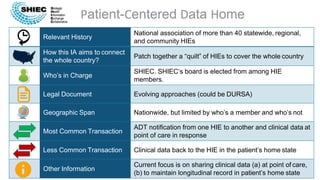
Relevant History
National association of more than 40 statewide, regional,
and community HIEs
How this IA aims to connect
the whole country?
Patch together a “quilt” of HIEs to cover the whole country
Who’s in Charge
SHIEC. SHIEC’s board is elected from among HIE
members.
Legal Document Evolving approaches (could be DURSA)
Geographic Span Nationwide, but limited by who’s a member and who’s not
Most Common Transaction
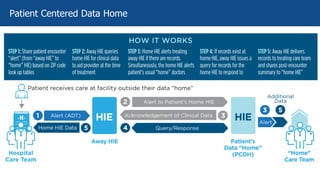
ADT notification from one HIE to another and clinical data at
point of care in response
Less Common Transaction Clinical data back to the HIE in the patient’s home state
Other Information
Current focus is on sharing clinical data (a) at point of care,
(b) to maintain longitudinal record in patient’s home state
Patient-Centered Data Home
44
MUCH MORE THAN I.T.
GALENHEALTHCARE.COM

Best Practices for Enabling HIE and Incorporating Capabilities into EHR Workflows

  • 1.
    Best Practices forEnabling HIE and Incorporating Capabilities into EHR workflows 2018 Minnesota e-Health Summit
  • 2.
    Agenda • Why isHIE needed? • Value Based Care • Consumerization of Healthcare • What should you expect from HIE? • HIE Capabilities • How do you do it? • Sharing Data • Leveraging Insights • SHIEC • What is SHIEC and what role does it play? • What PCDH is and how it works • Where is PCDH working and future expansion • Why is PCDH important?
  • 3.
    Health Information Exchangeis now Table Stakes Why should you care? Payers are seeking opportunities to reduce low value care by transferring risk to Providers with System-wide, Total Cost of Care Capitated. Payers are selecting systems as strategic partners based on the value of the physician enterprise as a leading indicator of the system’s ability to maximize outcomes per dollar spent for populations. Managing inpatient efficiency is not enough to be successful in value-based arrangements. The decisions that impact inpatient activities starts much earlier, often with the patient’s first visit with a physician. Managing risk starts with a visit.
  • 4.
    High Performing Networksand Low Value Care Why should you care? Reducing that 30% of unnecessary, low-value care will directly impact healthcare spend without an impact on outcome or quality of care delivered. Offering patients the proper direction toward high value physicians within the system will ensure that only necessary care is provided at the right cost to the plan, employer and patient. By utilizing RowdMap’s Risk-Readiness® benchmarks, your system can express to payers and employers the benefits, both financial and quality outcomes, that companies, payers and patients can receive by choosing a high value partner.
  • 5.
    The average personsees more than 18 providers in their lifetime
  • 6.
    And each providerhas their own EHR(s) and other clinical data sources
  • 7.
    Patients believe thattheir physicians have access to all their health data
  • 8.
    But we allknow the reality: Health data information is still very siloed
  • 9.
    Community Hospital IDN Pharmacy Lab Post-Acute Specialist PCP Clinic • In thisexample alone, 28 distinct point-to-point interfaces • Organizations are forced to create contract-by-contract interoperability between local IT systems • Regional “networks” achieve only regional results Current interoperability approaches simply don’t scale
  • 10.
    Care Coordination istoo dependent on patients and on archaic technology
  • 11.
    Health Information ExchangeSolves a Hard Problem
  • 12.
    To Create aPatient-Centered Network Community Hospital IDN Pharmacy Lab Post-Acute Specialist PCP Clinic Community Hospital Pharmacy Post-Acute Specialist PCP Clinic
  • 13.
    Study by researchersat University of Notre Dame, as reported by EHR Intelligence: https://ehrintelligence.com/news/effective-hie-use-federal-incentives-may-save-medicare-billions Accessing Patient Data Through HIE Studies have shown that accessing and using data through HIE can: Reduce Medicare costs by more than $3B per year (average savings of $139 per Medicare beneficiary a year – a 1.4% decrease in spending per individual) Lead to many other financial and patient care benefits Reduce radiology exams by 26% Reduce lab tests by 25%
  • 14.
    HIE Value Proposition:Provider Perspectives & Links to Initiatives • Enhance decision-making cycle time / effectiveness / TOC • Coordinated care, streamlined referral processes / PCMH • Quality Improvement Programs (i.e. avoid errors, ADEs) • Reduce readmissions, unnecessary procedures • Enhance patient engagement – for outcomes and loyalty • MU, PQRS, MACRA/MIPS, Immunization, RAC, Malpractice, HIMSS7 • Ops Excellence to reduce cost of supply chain, labor, overhead • Reduce unnecessary procedures and hospitalizations • Increase referrals, outreach, • New service lines or become COE • Improve rates with payers, enhance charge capture • RCM: Coding / Billing / CDI / Denials Management • Save time providers spend looking for / sending data • Productivity tools to enable PCMH • Deployment of telehealth • Risk-sharing contracts with upside and minimal revenue loss • Clinical integration network and workflow that aligns key partners • Programs to identify, stratify, engage, and manage high risk patients • Care / Disease / Case management views and tools • Enhance satisfaction of providers, staff, and patients • Mergers and Acquisitions – and Integration • Affiliation and Alliances Quality & Compliance Financial Strategic • Improve Outcomes • Compliance • Cost Reduction • Increase Revenue • CashAcceleration • Increase Effective Capacity • ACO / P4P • Population Health • Provider / Patient User Experience • Scale Overall Benefits - TCO = Value $$
  • 15.
    1. Clinical resultsdelivery (lab, radiology, etc.) 2. Medication history, summaries, alerts, etc. 3. Notification of clinical events for patients in a defined population 4. Immunizations, syndromic surveillance and public health data 5. Electronic prescribing and refill information 6. PHRs, patient-reported data 7. Claims transaction/electronic eligibility information 8. Data quality and research support 9. Connectivity to electronic health records 10. Alerts to providers 11. Enrollment or eligibility checking 12. Electronic referral processing 13. Clinical decision support 14. Disease or chronic care management 15. Quality improvement reporting for clinicians 16. Ambulatory order entry 17. Disease registries 18. CCR/CCD summary record exchange 19. Quality performance for purchasers or payers 20. Public health surveillance 21. Electronic prescribingand refill information 22. Alerts to providers 23. Query for documents 24. ADT notification 25. Claims processing 26. Population health management 27. Public health data 28. Research support 29. Syndromic surveillance 30. Eligibility checking 31. Ambulatory order entry 32. Patient-reported data 33. Connectivity to EHRs Health Information Exchange is Comprised of Many Use Cases
  • 16.
    Once an organizationdecides to invest in HIE to support initiatives, need an approach to define the objectives & scope including stakeholders, content & use cases. The lenses through which scope can be defined include: ▪ Enhancing Transitions of Care (ToCs) ▪ Which ToCs? - What Data? - What Facilities? – Workflow? ▪ Enabling Patient Engagement & Care Management ▪ Which Problems? - Functions? - What Apps? – Workflow? ▪ Supporting Analytics for Population Health & Value-Based Payment ▪ What Contracts? - Which Population? - What Measures? – What Data? Defining the Scope of the HIE Program
  • 17.
    • Comprehensive CareCoordination, Health Coaching and PCMH Model • Medication Management • Effective Hand-offs to Providers and Social Workers • Timely Post Discharge Follow-up • Self-Management Care Plans with Patient Education and Clear Follow-up • Identify and Provide Resources for Social Determinants of Care • High Patient Satisfaction (correlated with lower 30 day readmit rates) Sources: • Project BOOST (Better Outcomes by Optimizing Safe Transitions) – www.hospitalmedicine.org • Care Transitions Interventions (CTI) –www.caretransitions.org • CMS Community-Based Care Transitions Program (CCTP) – www.innovations.cms.gov/initiatives/CCTP/ Enhancing Transitions of Care Right Information Right Time Right Format • Guided Care Comprehensive Primary Care for Complex Patients – www.guidedcare.org • Project RED (Re-Engineered Discharge) – www.bu.edu • State Action on Avoidable Rehospitalizations (STAAR) – www.ihi.org
  • 18.
    Enabling Patient Engagement& Care Management Patient Portal Outreach & Engagement Education Personal Health Record Remote Monitoring Medication Management
  • 19.
    ACOs most oftenanalyze: • Claims data (96%) • Clinical data (79%) • Administrative data (52%) • Disease registry data (39%) • Patient-reported data (38%) In order to: • Identify and close gaps in care (84%) • Identify outliers in cost/utilization (80%) • Compare clinician performance (77%) • Measure/report on quality (77%) • Proactively identify risk (68%) Results are Used to: • Address specific high-cost or high-utilization patient populations (84%) • Care transitions management/care coordination programs (82%) • Disease-management programs (73%) • Post-discharge programs (68%) • Development of evidence-based clinical/care guidelines (55%) • Medication management programs (38%) Supporting Analytics for Population Health & Value-Based Payment
  • 20.
    Determine Risk and Provide Actionable Data Real-time Intervention at the Pointof Care Coordinated Care: Complete View of Patient 1 2 3 Opportunity for a Richer Patient Portal 4 BETTER OUTCOMES COST EFFICIENCY HIGHER SATISFACTION Providing Solutions, Adding Value
  • 21.
  • 22.
    22 • Demographics (Name, Gender,DOB, Race, Ethnicity, Language) • Allergies • Medications • Medication Allergies • Smoking Status • Immunizations • Encounters • Observations • Vital Signs (Hgt, Wgt, BP, BMI) • Pharmacy Fill Data • Lab Tests, Values / Results • Radiology Reports / Images • Other Diagnostic Results • Diagnoses • Problem Lists • Procedures • Functional / Cognitive Status • Care Plans / Team Members • Discharge Instructions / Clinical Summaries • Advanced Directives • Care Plans • eMOLST • EMS Run Sheets • Medicaid Claims Data • Social Determinants of Health Types of Data
  • 23.
    Core HIE Services PatientRecord Search: Access to a more comprehensive patient profile Statewide Delivery of Clinical Summaries: Ability to push clinical summaries (CCD, C-CDA) and lab results Clinical Event Notifications (CENs): 24/7 Custom alerts provide real-time updates for patients in care Direct Messaging: Secure HIPAA-compliant messaging Predictive Analytics: Assessing risk and managing patients to optimize care
  • 24.
    24 Patient History PatientRisk of Event or Outcome Risk Model Development Population Risk Models 1000s of Patient Features • Age • Gender • Geography • Income • Education • Race • Diagnoses • Procedures • Chronic conditions • Visit and admission history • Outpatient medications • Vital signs • Lab orders and results • Radiology orders • Social characteristics • Behavioral characteristics Multivariate Statistical Modeling – Decision Tree Analysis Machine Learning (predicts future 12 months) • Predicted future cost • Risk of inpatient admission • Risk of emergency department (ED) visit • Risk of acute myocardial infarction (AMI) • Risk of asthma • Risk of cerebrovascular accident (CVA) • Risk of congestive heart failure (CHF) • Risk of COPD • Risk of diabetes • Risk of hypertension • Risk of mortality Event Based Risk Models (predicts future 30 days) • Risk of 30 day readmission • Risk of 30 day ED re-visit Predictive Risk Scores
  • 25.
  • 26.
    ReportingCapacity Activity & UsageReporting Data Audit Reporting Analytics for proactive care management HIE Capability Exchange Hospital & Clinic Data EMR Connections CCD, Lab Results, Exchange Event Notification & Patient Portal Care Plan Coordination Health Information Exchange Enablement Data Exchange Information Exchange
  • 27.
    Source Organization Specific Source System Type of Clinical Data Datefirst live in production Volume Estimates (e.g., # of unique patients) Clinical Data Format (include terminology used, if any) Location or region XYZ Health System (hospital) ADT (GE) Admissions data, discharge summaries Since Jan 2009 2,000,000 HL7 v2.5.1 Tallahassee ABC Hospital Lab (Cerner) Lab results Since Feb 2010 1,000,000 HL7 v2.5.1, LOINC coded Jacksonville St. Sam’s Hospital Transcripti on (XYZ vendor) Transcribed reports: surgical notes, radiology reports Since June 2010 1,000,000 HL7 v2.6 Lakeland Participant On-Boarding Readiness
  • 28.
    Prepare Data Feeds– Conformance Testing
  • 29.
    • Many EMRshave extensibility frameworks to expose information from the HIE • Tasking & Alerting can be leveraged • Contextual Single-Sign-On from EMR to HIE • CCD Export/Import • Standard HL7 Integration Integrating HIE Capabilities to the Point-of-Care
  • 30.
    • Method ofSubscription • Subscription file • All patients • Rule-based • Trigger • IP admission/discharge • ED admission/discharge • SNF admission/discharge • Patient expiration (death) • Frequent ED notifications at time of encounter • Detect receipt of clinical notes and notify PCP • Detect duplicate CT scans real-time • Detect when prescription is filled or not • Method of Notification • Clinical Message Center (Portal) • HL7 v2 MDM interface Integrating HIE Capabilities to the Point-of-Care: Clinical Event Notification
  • 31.
  • 32.
    FLAG Green YellowRed Consent YES NOT GIVEN N/A Data YES YES NO New Data YES N/A N/A Consent Status: Yes External Data: Yes New Data: : Yes Message on Mouse Over Integrating HIE Capabilities to the Point-of-Care: EHR Flags
  • 33.
  • 34.
    Continuity of CareDocument Reconciliation
  • 35.
    What is theStrategic HIE Collaborative (SHIEC)? www.strategicHIE.com … The National Trade Association for Health Information Exchange Organizations And SHIEC has a nation-wide HIE interoperability initiative called … Patient-Centered Data HomeTM What is the Strategic HIE Collaborative (SHIEC)? www.strategicHIE.com … The National Trade Association for Health Information Exchange Organizations And SHIEC has a nation-wide HIE interoperability initiative called … Patient-Centered Data HomeTM Strategic HIE Collaborative
  • 36.
  • 37.
  • 38.
    Relevant History National associationof more than 40 statewide, regional, and community HIEs How this IA aims to connect the whole country? Patch together a “quilt” of HIEs to cover the whole country Who’s in Charge SHIEC. SHIEC’s board is elected from among HIE members. Legal Document Evolving approaches (could be DURSA) Geographic Span Nationwide, but limited by who’s a member and who’s not Most Common Transaction ADT notification from one HIE to another and clinical data at point of care in response Less Common Transaction Clinical data back to the HIE in the patient’s home state Other Information Current focus is on sharing clinical data (a) at point of care, (b) to maintain longitudinal record in patient’s home state Patient-Centered Data Home
  • 44.
  • 45.
    MUCH MORE THANI.T. GALENHEALTHCARE.COM