Maths for Chemistry at Keele:
(R)Evolution
Dr Katherine J. Haxton
k.j.haxton@keele.ac.uk
Acknowledgements:
Dr David J. McGarvey, Dr Laura Hancock
Dr Simon Lancaster,
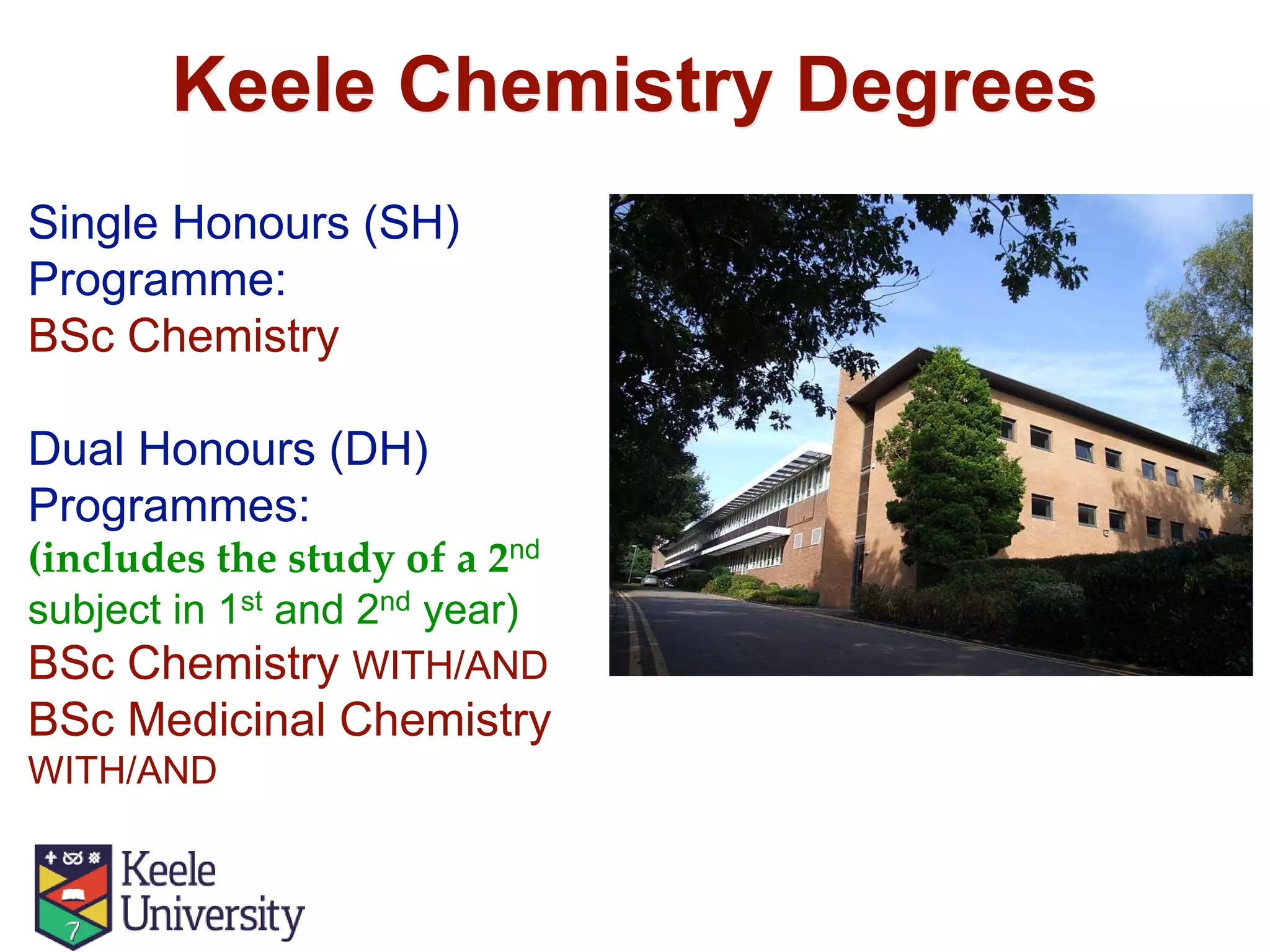
Keele Chemistry Degrees
Single Honours (SH)
Programme:
BSc Chemistry
Dual Honours (DH)
Programmes:
(includes the study of a 2nd
subject in 1st and 2nd year)
BSc Chemistry WITH/AND
BSc Medicinal Chemistry
WITH/AND
6 Years of Change
Pre-2009: 12 x 10 credit 1st year modules
Maths for Chemistry Module
4 Chemistry Modules
2009: New Degree Structure Introduced,
All 1st year modules 15 credits,
4 Chemistry Modules - maths removed
Maths Diagnostic Test Introduced
Optional Maths Workshops (2 hrs/wk)
Maths for Chemistry 2009 - 2012
Diagnostic Test
G. Currell, http://calcscience.uwe.ac.uk/w2/sa/saIndex.htm
Recommendation made to students regarding attendance.
Identified need for numeracy skills over ‘harder’ maths skills.
2 hour workshops:
greater chemistry context,
more emphasis on ‘basics’
(equation rearranging, handling units, scientific notation,
equation of straight line).
Attendance declines as differentiation looms…
6 Years of Change
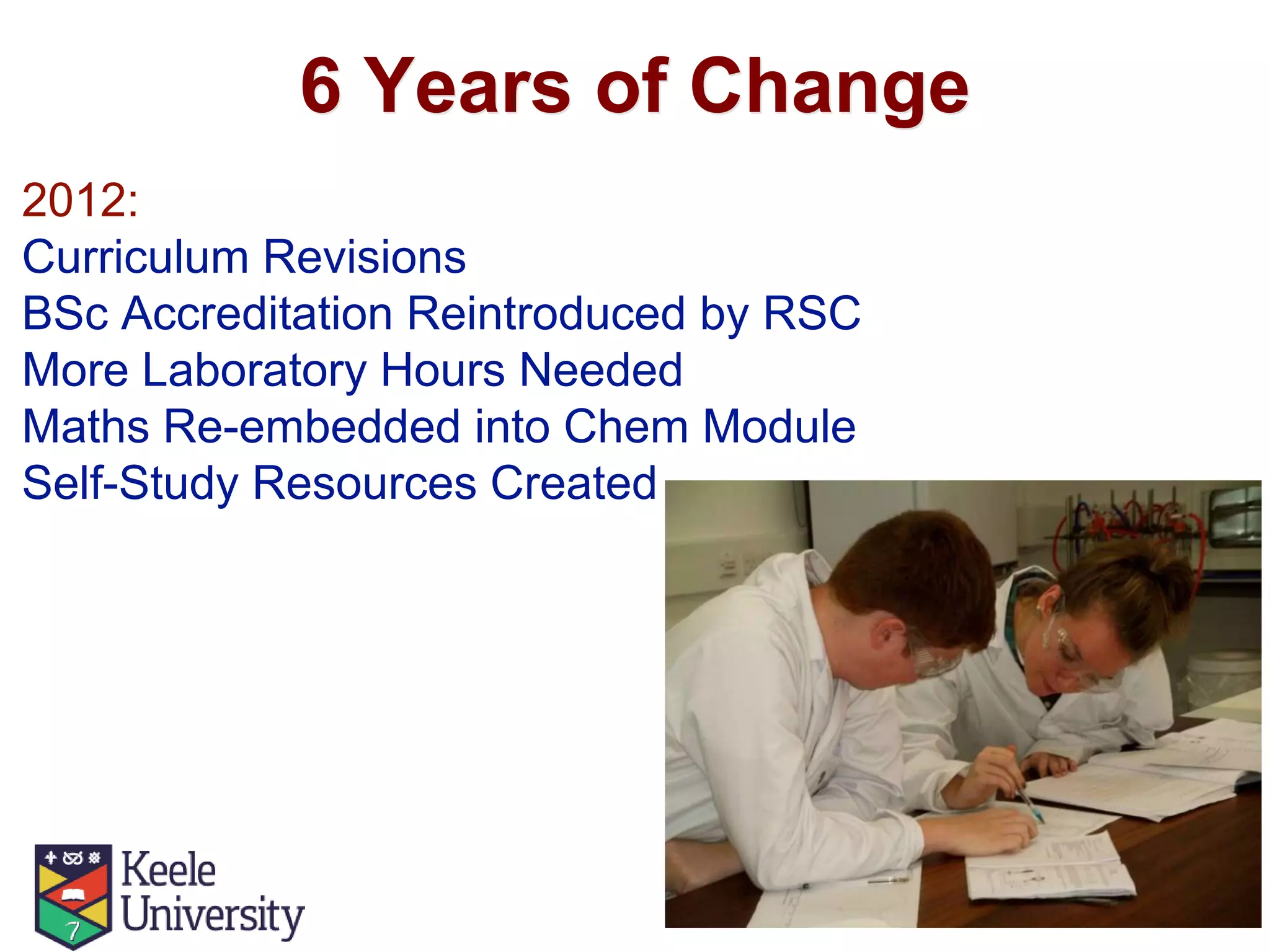
2012:
Curriculum Revisions
BSc Accreditation Reintroduced by RSC
More Laboratory Hours Needed
Maths Re-embedded into Chem Module
Self-Study Resources Created
Screencasts
http://www.chemistryvignettes.net/mathematics-
for-chemists-screencasts/
6 Years of Change
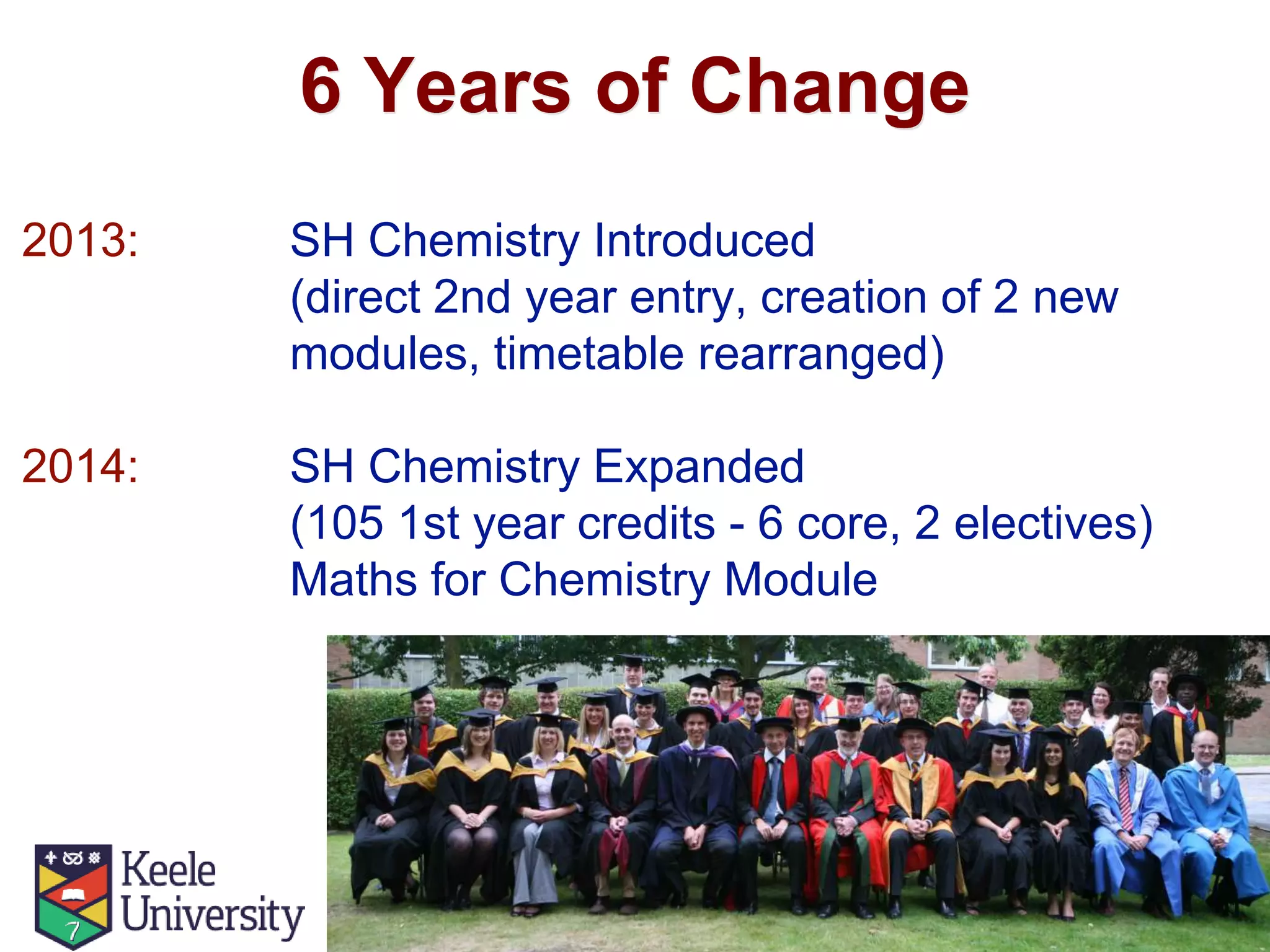
2013: SH Chemistry Introduced
(direct 2nd year entry, creation of 2 new
modules, timetable rearranged)
2014: SH Chemistry Expanded
(105 1st year credits - 6 core, 2 electives)
Maths for Chemistry Module
Mathematical Tools
& Concepts in
Chemistry
‘Advanced Topics’:vectors,
differentiation and
integration, power series
Teaching Style:
Combined self-study &
workshop based learning
Assessment:
Assessed problems (35%)
Class Test (35%)
Report (30%)
Scientific Numeracy:
sig fig, units,
unit conversions,
rearranging equations
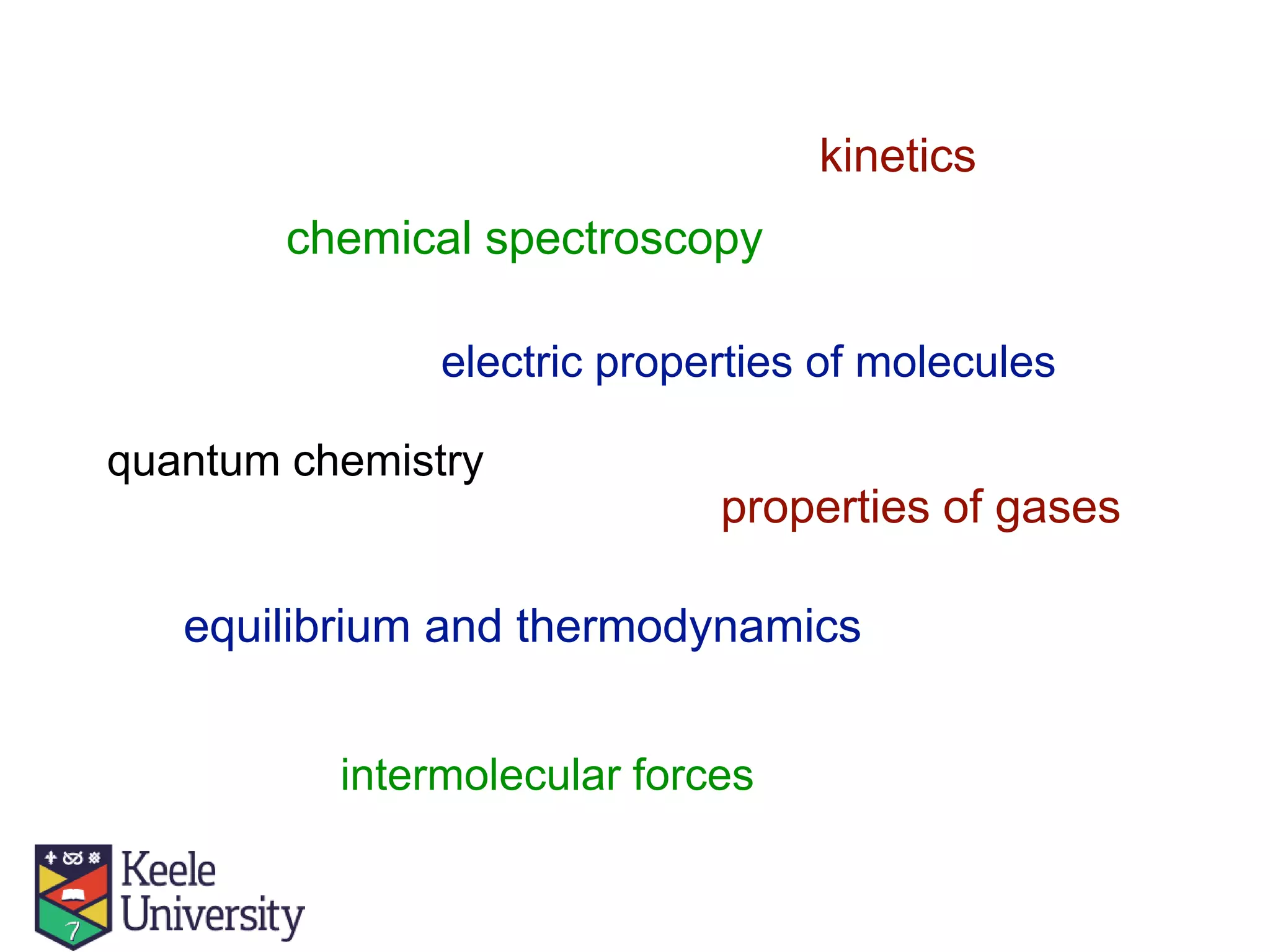
properties of gases
chemical spectroscopy
equilibrium and thermodynamics
kinetics
quantum chemistry
electric properties of molecules
intermolecular forces
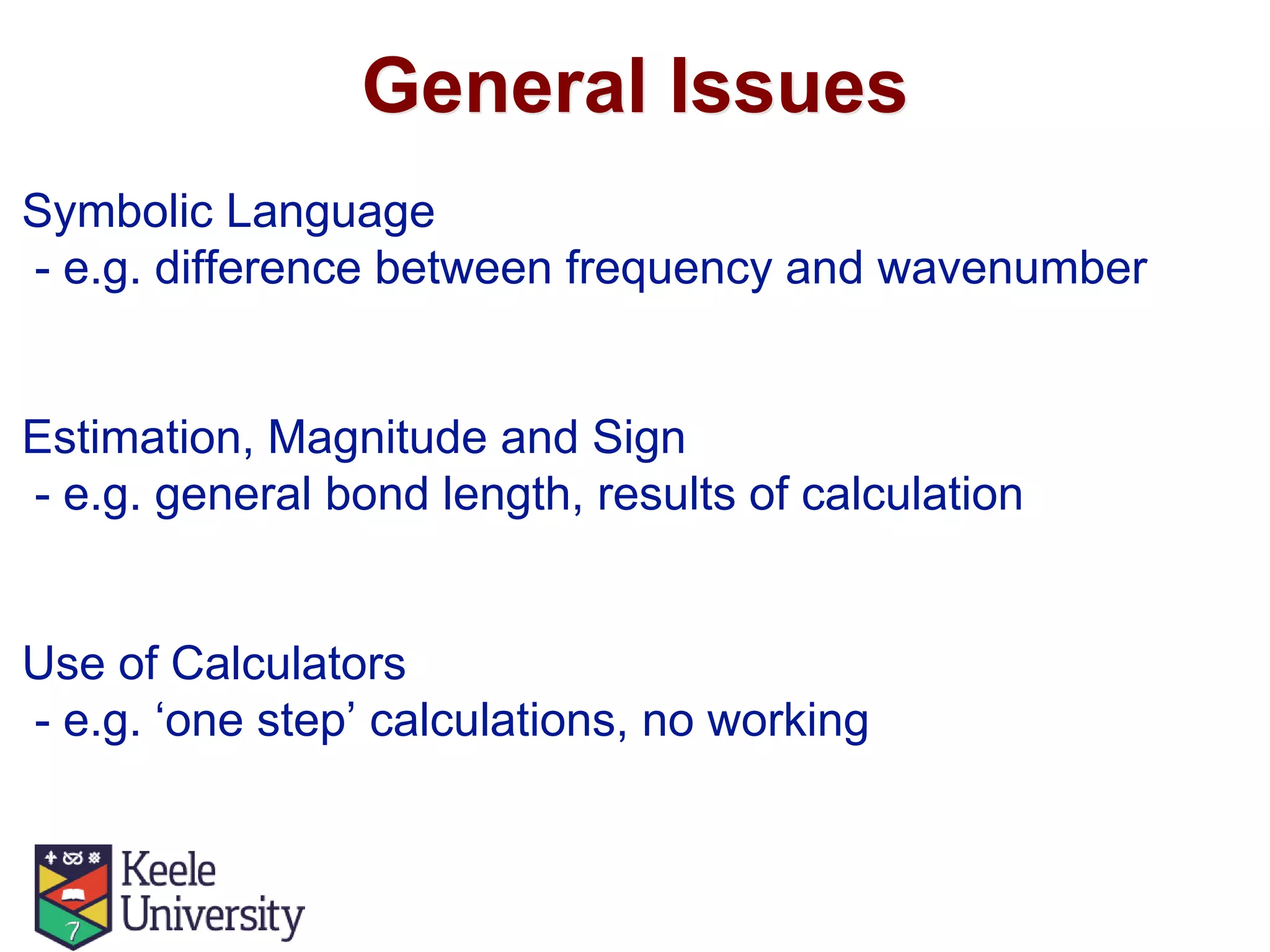
General Issues
Symbolic Language
- e.g. difference between frequency and wavenumber
Estimation, Magnitude and Sign
- e.g. general bond length, results of calculation
Use of Calculators
- e.g. ‘one step’ calculations, no working
General Thoughts
Reinventing The Wheel
Sharing Resources

HEA Maths for Chemistry April 2014

  • 1.
    Maths for Chemistryat Keele: (R)Evolution Dr Katherine J. Haxton k.j.haxton@keele.ac.uk Acknowledgements: Dr David J. McGarvey, Dr Laura Hancock Dr Simon Lancaster,
  • 2.
    Keele Chemistry Degrees SingleHonours (SH) Programme: BSc Chemistry Dual Honours (DH) Programmes: (includes the study of a 2nd subject in 1st and 2nd year) BSc Chemistry WITH/AND BSc Medicinal Chemistry WITH/AND
  • 3.
    6 Years ofChange Pre-2009: 12 x 10 credit 1st year modules Maths for Chemistry Module 4 Chemistry Modules 2009: New Degree Structure Introduced, All 1st year modules 15 credits, 4 Chemistry Modules - maths removed Maths Diagnostic Test Introduced Optional Maths Workshops (2 hrs/wk)
  • 4.
    Maths for Chemistry2009 - 2012 Diagnostic Test G. Currell, http://calcscience.uwe.ac.uk/w2/sa/saIndex.htm Recommendation made to students regarding attendance. Identified need for numeracy skills over ‘harder’ maths skills. 2 hour workshops: greater chemistry context, more emphasis on ‘basics’ (equation rearranging, handling units, scientific notation, equation of straight line). Attendance declines as differentiation looms…
  • 5.
    6 Years ofChange 2012: Curriculum Revisions BSc Accreditation Reintroduced by RSC More Laboratory Hours Needed Maths Re-embedded into Chem Module Self-Study Resources Created
  • 6.
  • 7.
    6 Years ofChange 2013: SH Chemistry Introduced (direct 2nd year entry, creation of 2 new modules, timetable rearranged) 2014: SH Chemistry Expanded (105 1st year credits - 6 core, 2 electives) Maths for Chemistry Module
  • 8.
    Mathematical Tools & Conceptsin Chemistry ‘Advanced Topics’:vectors, differentiation and integration, power series Teaching Style: Combined self-study & workshop based learning Assessment: Assessed problems (35%) Class Test (35%) Report (30%) Scientific Numeracy: sig fig, units, unit conversions, rearranging equations
  • 9.
    properties of gases chemicalspectroscopy equilibrium and thermodynamics kinetics quantum chemistry electric properties of molecules intermolecular forces
  • 11.
    General Issues Symbolic Language -e.g. difference between frequency and wavenumber Estimation, Magnitude and Sign - e.g. general bond length, results of calculation Use of Calculators - e.g. ‘one step’ calculations, no working
  • 12.
    General Thoughts Reinventing TheWheel Sharing Resources