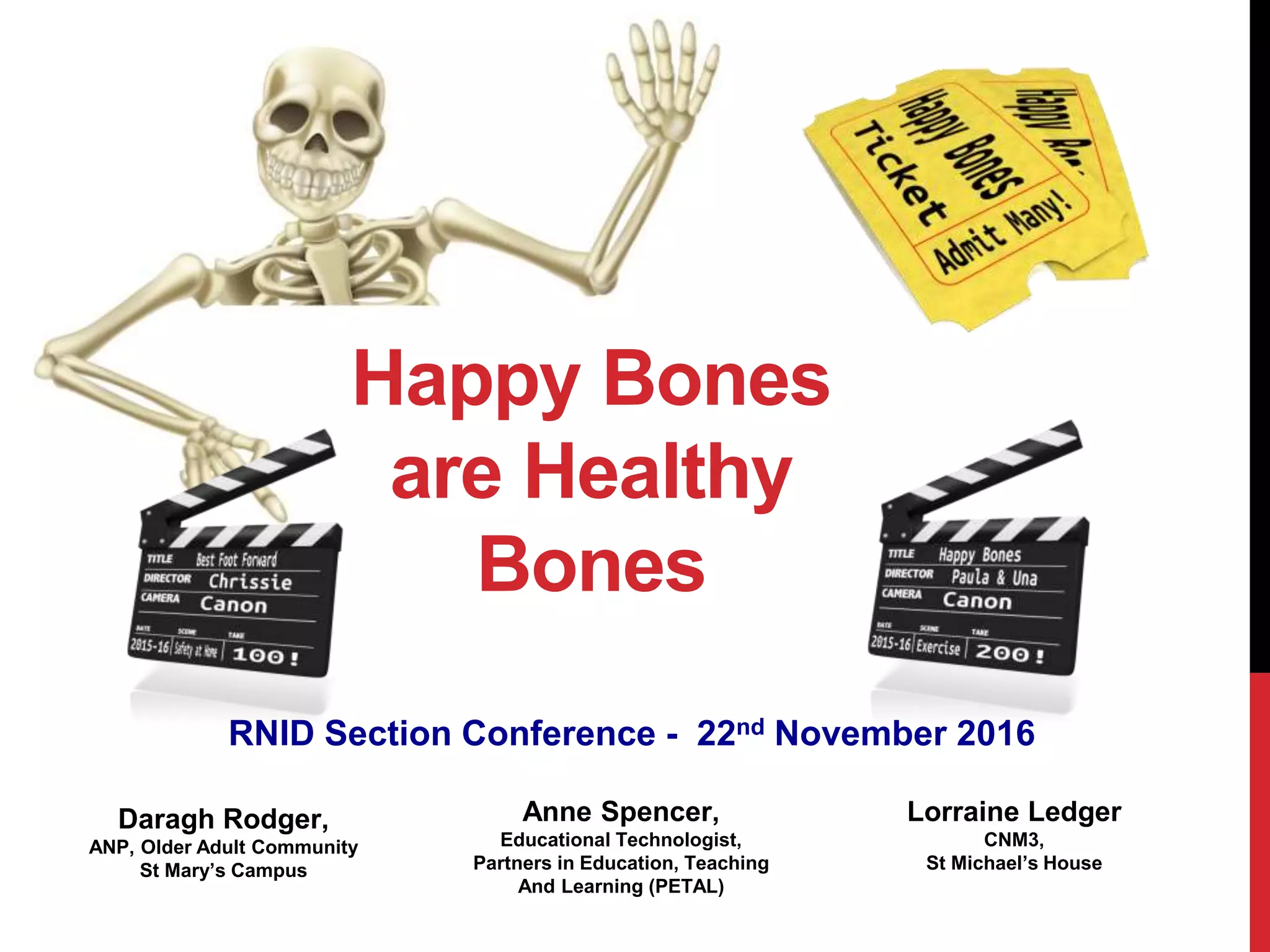
Happy Bones
are Healthy
Bones
Anne Spencer,
Educational Technologist,
Partners in Education, Teaching
And Learning (PETAL)
Daragh Rodger,
ANP, Older Adult Community
St Mary’s Campus
Lorraine Ledger
CNM3,
St Michael’s House
RNID Section Conference - 22nd November 2016
Background
• St Michael’s House, Osteoporosis
Awareness Campaign 2011
• MDT input
• Doctor
• Nurse
• Physiotherapist
• Dietician
• Education sessions for all staff
• Leaflet and mail shot to families
• Generic referral letter for DXA Scan
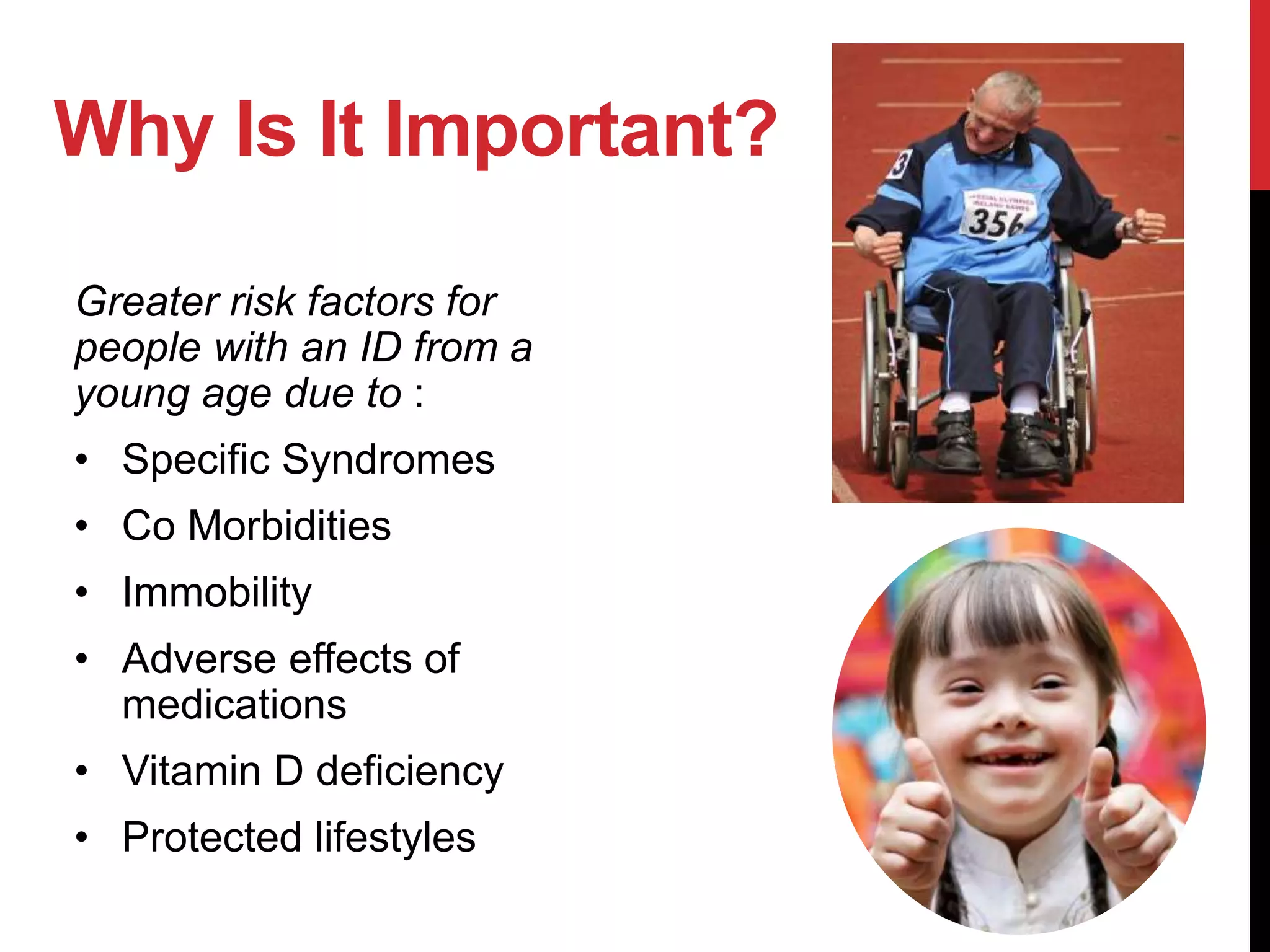
Why Is It Important?
Greater risk factors for
people with an ID from a
young age due to :
• Specific Syndromes
• Co Morbidities
• Immobility
• Adverse effects of
medications
• Vitamin D deficiency
• Protected lifestyles
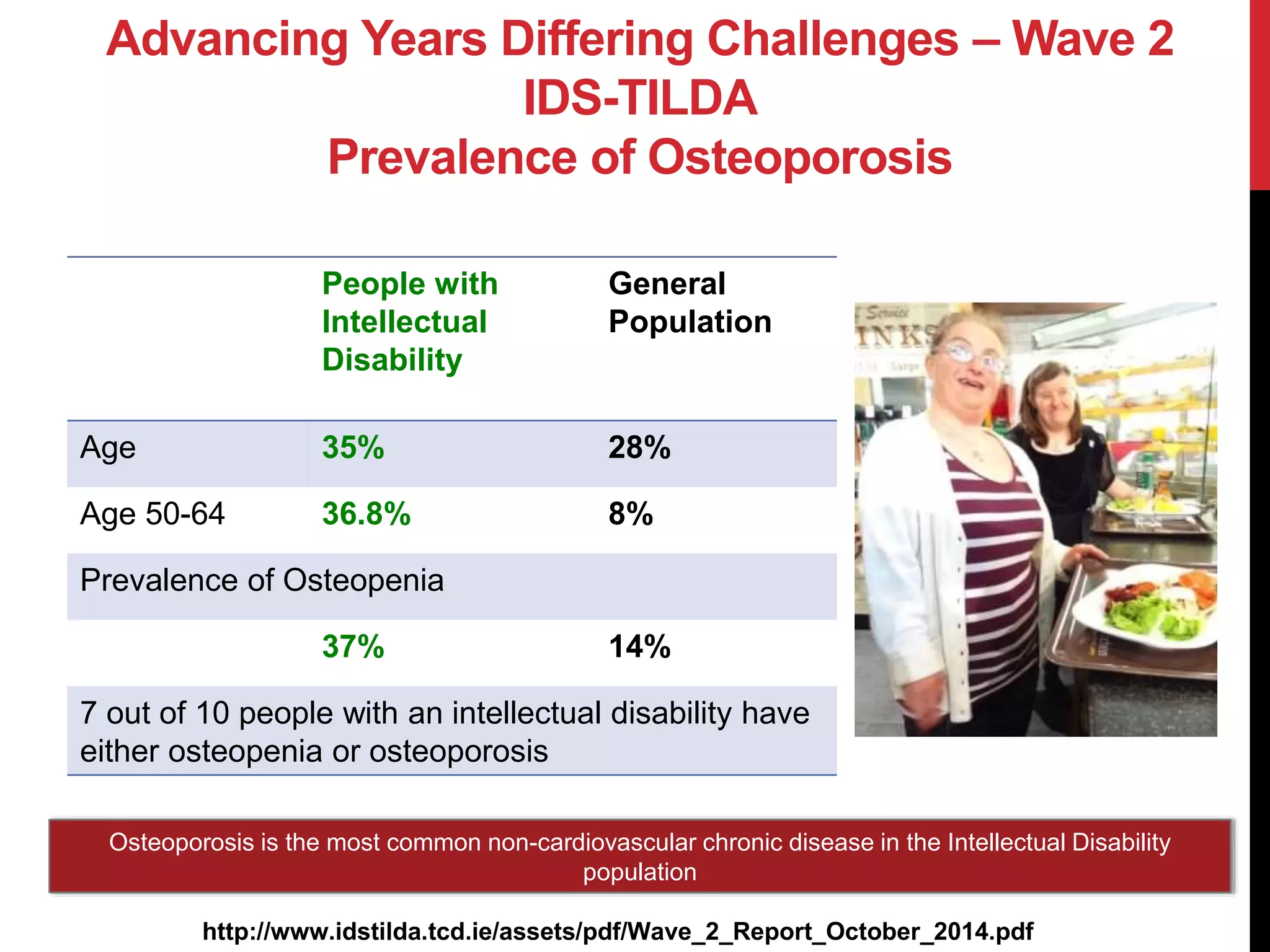
Advancing Years Differing Challenges – Wave 2
IDS-TILDA
Prevalence of Osteoporosis
http://www.idstilda.tcd.ie/assets/pdf/Wave_2_Report_October_2014.pdf
People with
Intellectual
Disability
General
Population
Age 35% 28%
Age 50-64 36.8% 8%
Prevalence of Osteopenia
37% 14%
7 out of 10 people with an intellectual disability have
either osteopenia or osteoporosis
Osteoporosis is the most common non-cardiovascular chronic disease in the Intellectual Disability
population
Advancing Years Differing Challenges – Wave 2
IDS-TILDA
Prevalence of Falls
http://www.idstilda.tcd.ie/assets/pdf/Wave_2_Report_October_2014.pdf
People with
Intellectual
Disability
General
Population
Age 40-49 22.7%
Age 50-59 33% 17.6%
Age 75+ 24.6%
Recurrent Falls 15.3% 8.8%
Injurious Falls 13.7% 9.9%
St Michael’s House DXA Results
70% demonstrate some degree of
bone thinning
• Supplements and
treatments prescribed
• Dietary improvements
• Exercise programmes
• Carer’s are generally more
bone health aware
• Follow up Dexa scans –
this year 2015
Actions
Gap in Service Delivery
• Recognised need for education
for all regarding bone health and
falls prevention in those with an
intellectual disability – “Bone
Health is a lifelong process”
• Blinkered vision – some units in
St Michael’s House
• Linked with ANP in St Mary’s
Healthy Ageing Clinic who had
developed bone health in the
park www.bonehealth.co
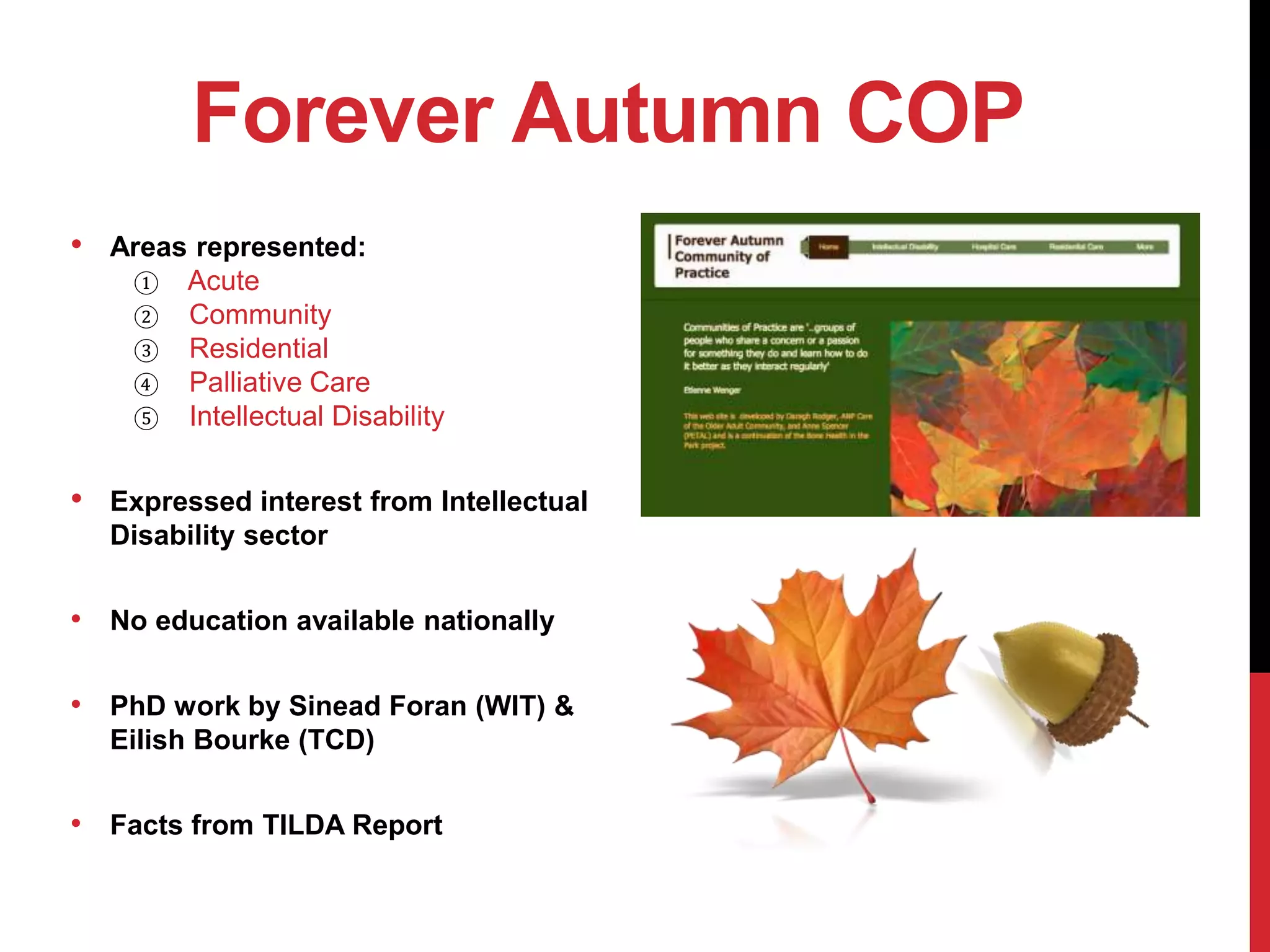
Forever Autumn COP
• Areas represented:
① Acute
② Community
③ Residential
④ Palliative Care
⑤ Intellectual Disability
• Expressed interest from Intellectual
Disability sector
• No education available nationally
• PhD work by Sinead Foran (WIT) &
Eilish Bourke (TCD)
• Facts from TILDA Report
Bone Health in Intellectual Disability
• Commenced work with St Michael’s House Aug 2014 to develop
educational resource on bone health for service users, carer’s, key
workers and health care professionals
• Built on existing work and created ‘Happy Bones’
• Collaborated with MDT in St Michael’s House with representation from
Nursing, Medicine, Dietetics and Physiotherapy
Falls Awareness in Intellectual Disability
• Worked with staff and service users from Daughters of Charity Disability
Support Services, in 2015, to develop educational resource on falls awareness
for service users, carer’s, key workers and health care professionals
• Built on existing work and created “Best Foot Forward”
• Collaborated with MDT in St Joseph’s Care Centre, Clonsilla & St Vincent’s
Care Centre, Navan Road with representation from Nursing, Pharmacy and
Physiotherapy
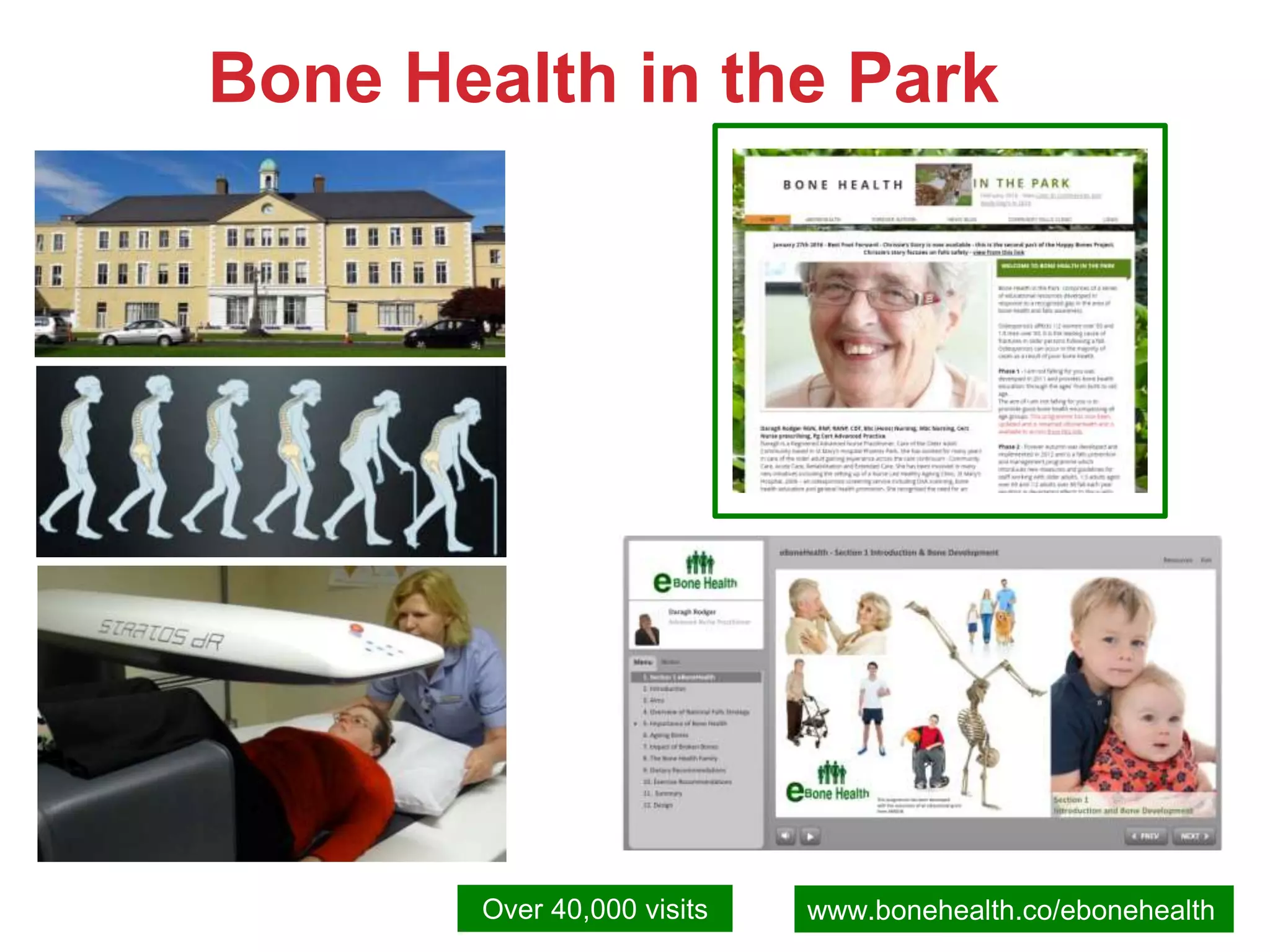
Bone Health in the Park
www.bonehealth.co/ebonehealthOver 40,000 visits
• Collaborative exercise
• Pragmatic approach to design & delivery
• Online - accessibility & equitability key considerations
• Open access – staff, families, carers and the public
• Suitable for mobile devices and differing platforms
• Bite size ‘nuggets’ of learning
Design & Delivery
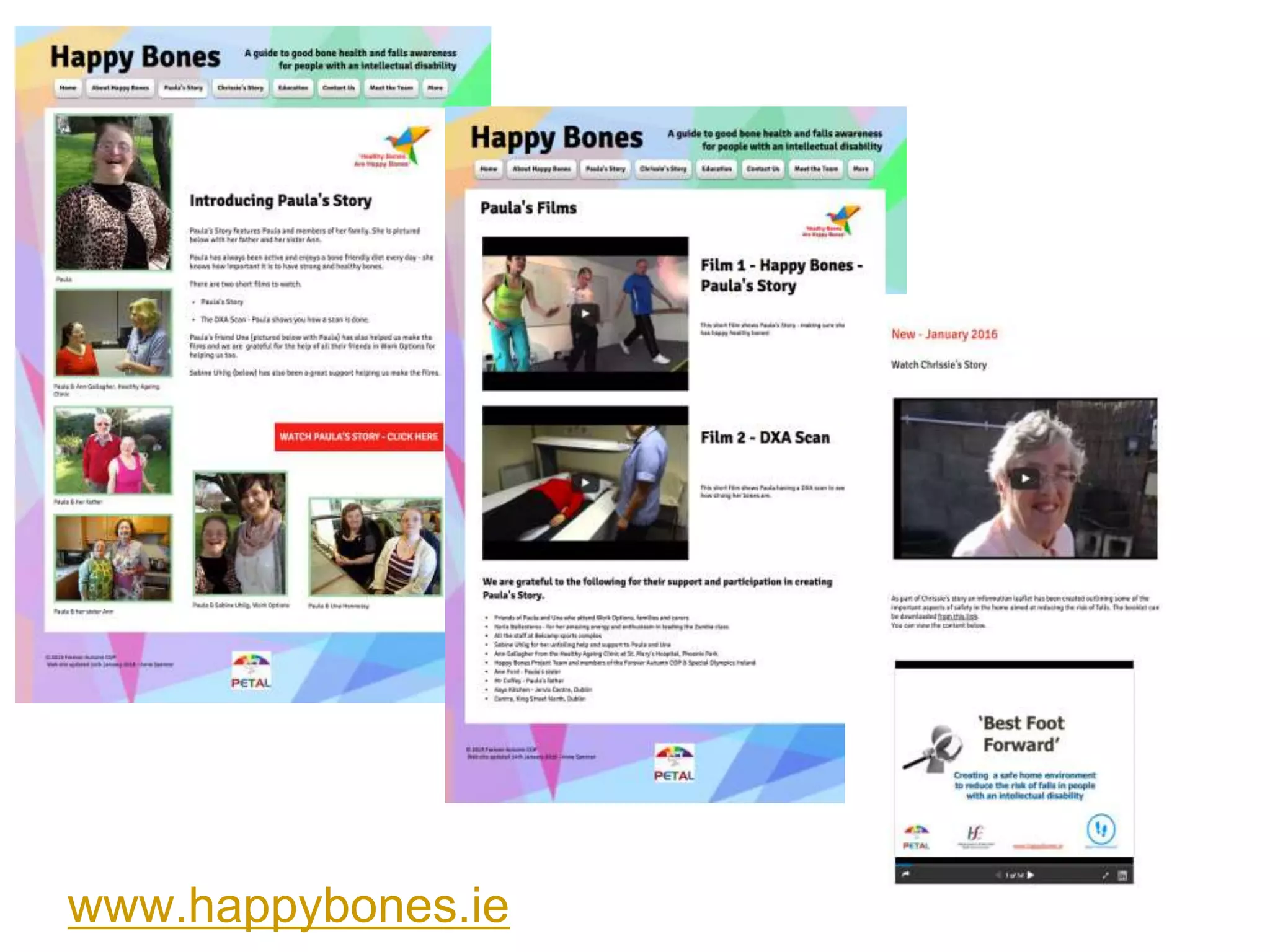
• Happy Bones – Exercise and Healthy Eating Booklet
• 3 short films - Paula’s Story, Having a DXA Scan, Chrissie’s
Story
• Easy Read Information Leaflet
• Best Foot Forward – Falls Awareness Booklet
Happy Bones
Paula’s Story (& Una!) Chrissie’s Story –
Best Foot Forward
www.happybones.ie
www.happybones.ie
A special thanks to the ‘stars’ of Happy Bones
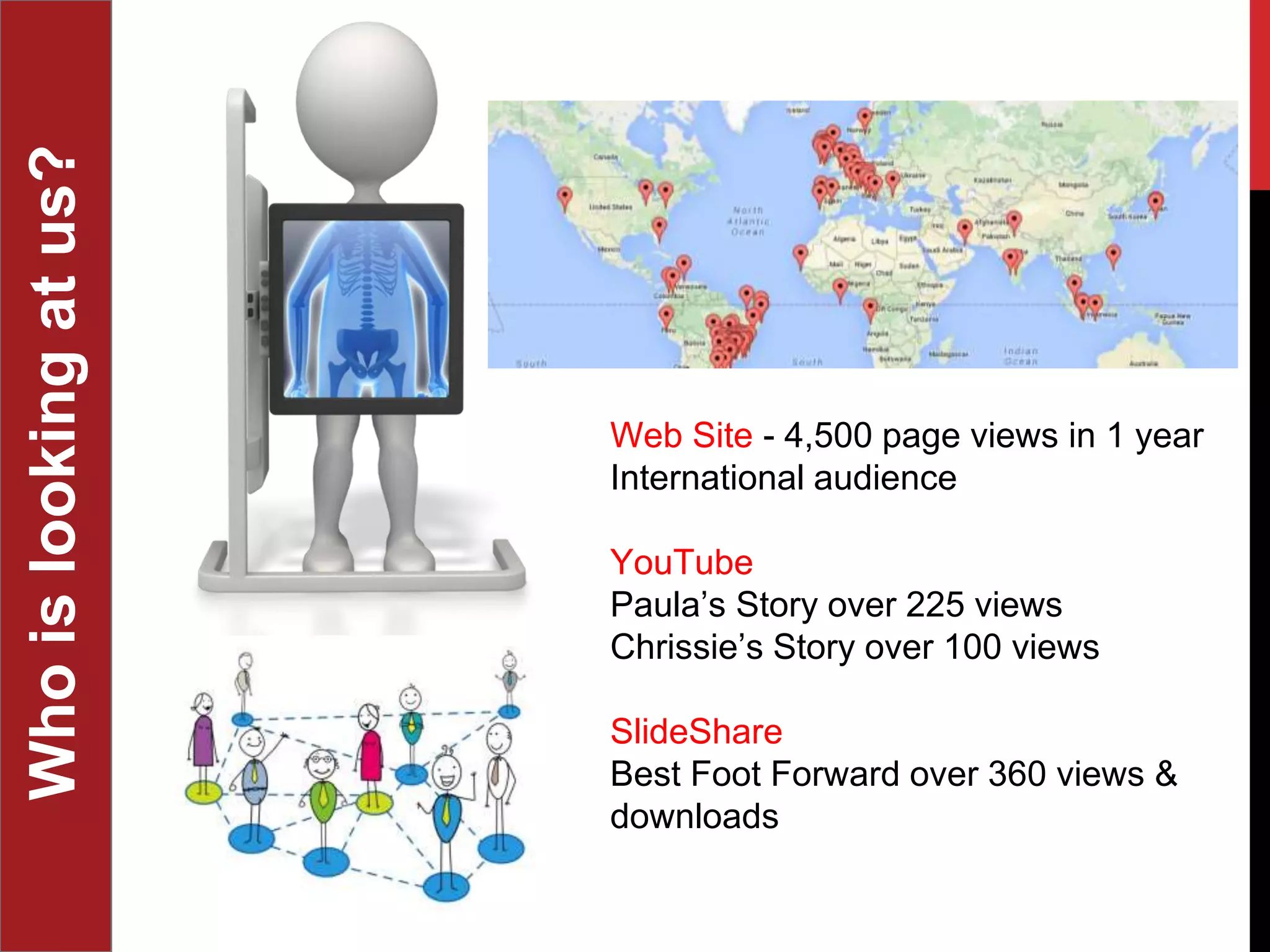
Whoislookingatus?
Web Site - 4,500 page views in 1 year
International audience
YouTube
Paula’s Story over 225 views
Chrissie’s Story over 100 views
SlideShare
Best Foot Forward over 360 views &
downloads
NextSteps?
Falls Prevention Programme
• Screening / Falls Risk
• Multifactorial assessment
• Falls Prevention & Management Policy
Aim would be that “ Happy Bones”
will be adopted nationally and
become synonymous with healthy
bones and falls prevention for the
Intellectual Disability population
within Ireland
1
2
Web Sites:
www.happybones.ie
www.bonehealth.co
Facebook: Happy Bones & eBonehealth
Contact Us:
daragh.rodger@hse.ie
lorraine.ledger@smh.ie

Happy Bones are Healthy Bones

  • 1.
    Happy Bones are Healthy Bones AnneSpencer, Educational Technologist, Partners in Education, Teaching And Learning (PETAL) Daragh Rodger, ANP, Older Adult Community St Mary’s Campus Lorraine Ledger CNM3, St Michael’s House RNID Section Conference - 22nd November 2016
  • 2.
    Background • St Michael’sHouse, Osteoporosis Awareness Campaign 2011 • MDT input • Doctor • Nurse • Physiotherapist • Dietician • Education sessions for all staff • Leaflet and mail shot to families • Generic referral letter for DXA Scan
  • 3.
    Why Is ItImportant? Greater risk factors for people with an ID from a young age due to : • Specific Syndromes • Co Morbidities • Immobility • Adverse effects of medications • Vitamin D deficiency • Protected lifestyles
  • 4.
    Advancing Years DifferingChallenges – Wave 2 IDS-TILDA Prevalence of Osteoporosis http://www.idstilda.tcd.ie/assets/pdf/Wave_2_Report_October_2014.pdf People with Intellectual Disability General Population Age 35% 28% Age 50-64 36.8% 8% Prevalence of Osteopenia 37% 14% 7 out of 10 people with an intellectual disability have either osteopenia or osteoporosis Osteoporosis is the most common non-cardiovascular chronic disease in the Intellectual Disability population
  • 5.
    Advancing Years DifferingChallenges – Wave 2 IDS-TILDA Prevalence of Falls http://www.idstilda.tcd.ie/assets/pdf/Wave_2_Report_October_2014.pdf People with Intellectual Disability General Population Age 40-49 22.7% Age 50-59 33% 17.6% Age 75+ 24.6% Recurrent Falls 15.3% 8.8% Injurious Falls 13.7% 9.9%
  • 6.
    St Michael’s HouseDXA Results 70% demonstrate some degree of bone thinning
  • 7.
    • Supplements and treatmentsprescribed • Dietary improvements • Exercise programmes • Carer’s are generally more bone health aware • Follow up Dexa scans – this year 2015 Actions
  • 8.
    Gap in ServiceDelivery • Recognised need for education for all regarding bone health and falls prevention in those with an intellectual disability – “Bone Health is a lifelong process” • Blinkered vision – some units in St Michael’s House • Linked with ANP in St Mary’s Healthy Ageing Clinic who had developed bone health in the park www.bonehealth.co
  • 9.
    Forever Autumn COP •Areas represented: ① Acute ② Community ③ Residential ④ Palliative Care ⑤ Intellectual Disability • Expressed interest from Intellectual Disability sector • No education available nationally • PhD work by Sinead Foran (WIT) & Eilish Bourke (TCD) • Facts from TILDA Report
  • 10.
    Bone Health inIntellectual Disability • Commenced work with St Michael’s House Aug 2014 to develop educational resource on bone health for service users, carer’s, key workers and health care professionals • Built on existing work and created ‘Happy Bones’ • Collaborated with MDT in St Michael’s House with representation from Nursing, Medicine, Dietetics and Physiotherapy
  • 11.
    Falls Awareness inIntellectual Disability • Worked with staff and service users from Daughters of Charity Disability Support Services, in 2015, to develop educational resource on falls awareness for service users, carer’s, key workers and health care professionals • Built on existing work and created “Best Foot Forward” • Collaborated with MDT in St Joseph’s Care Centre, Clonsilla & St Vincent’s Care Centre, Navan Road with representation from Nursing, Pharmacy and Physiotherapy
  • 12.
    Bone Health inthe Park www.bonehealth.co/ebonehealthOver 40,000 visits
  • 13.
    • Collaborative exercise •Pragmatic approach to design & delivery • Online - accessibility & equitability key considerations • Open access – staff, families, carers and the public • Suitable for mobile devices and differing platforms • Bite size ‘nuggets’ of learning Design & Delivery • Happy Bones – Exercise and Healthy Eating Booklet • 3 short films - Paula’s Story, Having a DXA Scan, Chrissie’s Story • Easy Read Information Leaflet • Best Foot Forward – Falls Awareness Booklet
  • 14.
    Happy Bones Paula’s Story(& Una!) Chrissie’s Story – Best Foot Forward www.happybones.ie
  • 15.
  • 16.
    A special thanksto the ‘stars’ of Happy Bones
  • 17.
    Whoislookingatus? Web Site -4,500 page views in 1 year International audience YouTube Paula’s Story over 225 views Chrissie’s Story over 100 views SlideShare Best Foot Forward over 360 views & downloads
  • 18.
    NextSteps? Falls Prevention Programme •Screening / Falls Risk • Multifactorial assessment • Falls Prevention & Management Policy Aim would be that “ Happy Bones” will be adopted nationally and become synonymous with healthy bones and falls prevention for the Intellectual Disability population within Ireland 1 2
  • 19.
    Web Sites: www.happybones.ie www.bonehealth.co Facebook: HappyBones & eBonehealth Contact Us: daragh.rodger@hse.ie lorraine.ledger@smh.ie