Hand
Strengthening
Activities
OT Presentation
Hand
strength
Muscle strength of the hands and
fingers increases as children grow
and participate in everyday
activities.
Activities such as climbing, playing
with toys or scribbling with crayons
all help to develop and strengthen
the muscles of the hands and
fingers.
Importance of Hand Strength
• Hand and finger strength is important as it is
required for many everyday activities such as
doing up buttons and zips, climbing monkey
bars or cutting up a piece of food at mealtimes.
It also helps to develop the endurance to
complete activities such as writing a full page.
• Grip strength refers to whole hand strength.
Pinch strength involves the thumb and index
finger (and the middle finger if required).
Hand strengthening strategies
• Encourage the child to do fine motor activities
as much as possible. For example, drawing, craft
activities, playing with playdough, building with
blocks.
• Encourage the child to draw and to do activities
on a vertical surface. This helps develop and
strengthen your child’s arms, hands and fingers.
For example, encourage the child to draw on a
blackboard, colour in at an easel or put stickers
on a piece of paper taped to a wall
Fine-motor activities
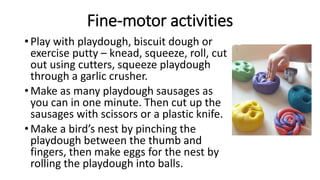
• Play with playdough, biscuit dough or
exercise putty – knead, squeeze, roll, cut
out using cutters, squeeze playdough
through a garlic crusher.
• Make as many playdough sausages as
you can in one minute. Then cut up the
sausages with scissors or a plastic knife.
• Make a bird’s nest by pinching the
playdough between the thumb and
fingers, then make eggs for the nest by
rolling the playdough into balls.
• Pop beads, duplo or construction sets
can be pulled apart and pushed
together.
• Squeeze soft balls (or squeeze toys) –
Ask the child to squeeze the toy 10
times or as many times as they can in
one minute to make it fun. Progress to
using firmer rubber balls as strength
increases
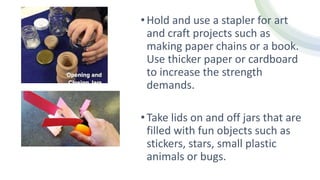
•Hold and use a stapler for art
and craft projects such as
making paper chains or a book.
Use thicker paper or cardboard
to increase the strength
demands.
•Take lids on and off jars that are
filled with fun objects such as
stickers, stars, small plastic
animals or bugs.
•Squeeze clothes pegs
to remove them from
the rim of a peg basket
(or ice-cream
container). Hang out
doll’s clothes or dress
ups on a clotheshorse.
•Duplo, lego and other
construction toys.
•Undo and do up nuts
and bolts.
•Use tweezers to pick
up small beads,
smarties or toys and
put them into a
container.
•Use an eye-dropper
and food colouring to
change or mix colours.
•Use stamps and ink
pads
• Threading activities such as
beads or lacing cards.
• Playing with wind-up toys.
• Art activities that require
colouring or scribbling with
crayons or pencils for long
periods. For example, trace
around the child’s body on a
large piece of paper and get
them to draw and colour in all
their features and clothing.
Hand strength.pptx
Hand strength.pptx

Hand strength.pptx

  • 1.
  • 2.
    Hand strength Muscle strength ofthe hands and fingers increases as children grow and participate in everyday activities. Activities such as climbing, playing with toys or scribbling with crayons all help to develop and strengthen the muscles of the hands and fingers.
  • 3.
    Importance of HandStrength • Hand and finger strength is important as it is required for many everyday activities such as doing up buttons and zips, climbing monkey bars or cutting up a piece of food at mealtimes. It also helps to develop the endurance to complete activities such as writing a full page. • Grip strength refers to whole hand strength. Pinch strength involves the thumb and index finger (and the middle finger if required).
  • 4.
    Hand strengthening strategies •Encourage the child to do fine motor activities as much as possible. For example, drawing, craft activities, playing with playdough, building with blocks. • Encourage the child to draw and to do activities on a vertical surface. This helps develop and strengthen your child’s arms, hands and fingers. For example, encourage the child to draw on a blackboard, colour in at an easel or put stickers on a piece of paper taped to a wall
  • 5.
    Fine-motor activities • Playwith playdough, biscuit dough or exercise putty – knead, squeeze, roll, cut out using cutters, squeeze playdough through a garlic crusher. • Make as many playdough sausages as you can in one minute. Then cut up the sausages with scissors or a plastic knife. • Make a bird’s nest by pinching the playdough between the thumb and fingers, then make eggs for the nest by rolling the playdough into balls.
  • 6.
    • Pop beads,duplo or construction sets can be pulled apart and pushed together. • Squeeze soft balls (or squeeze toys) – Ask the child to squeeze the toy 10 times or as many times as they can in one minute to make it fun. Progress to using firmer rubber balls as strength increases
  • 8.
    •Hold and usea stapler for art and craft projects such as making paper chains or a book. Use thicker paper or cardboard to increase the strength demands. •Take lids on and off jars that are filled with fun objects such as stickers, stars, small plastic animals or bugs.
  • 9.
    •Squeeze clothes pegs toremove them from the rim of a peg basket (or ice-cream container). Hang out doll’s clothes or dress ups on a clotheshorse. •Duplo, lego and other construction toys. •Undo and do up nuts and bolts.
  • 10.
    •Use tweezers topick up small beads, smarties or toys and put them into a container. •Use an eye-dropper and food colouring to change or mix colours. •Use stamps and ink pads
  • 11.
    • Threading activitiessuch as beads or lacing cards. • Playing with wind-up toys. • Art activities that require colouring or scribbling with crayons or pencils for long periods. For example, trace around the child’s body on a large piece of paper and get them to draw and colour in all their features and clothing.