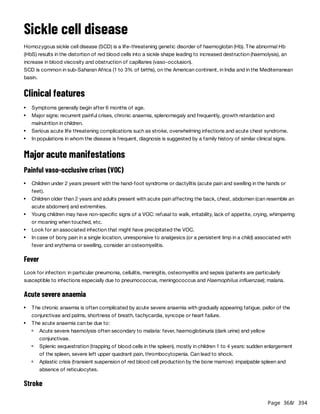
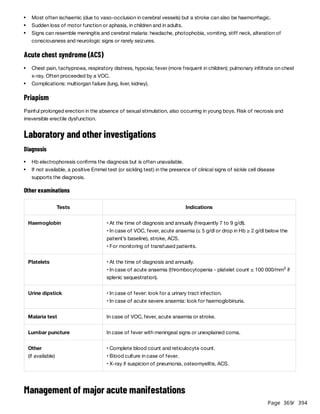
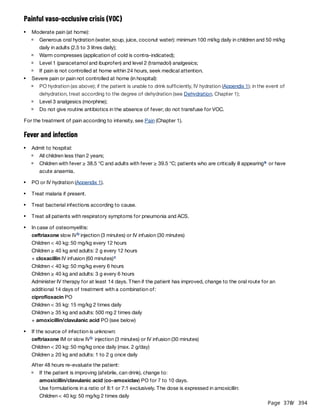
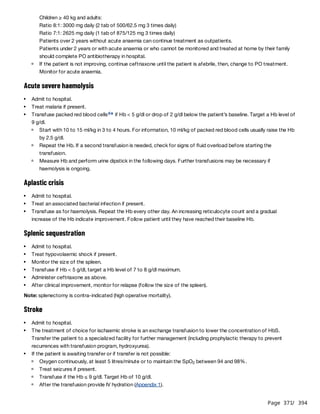
Page 1 / 394
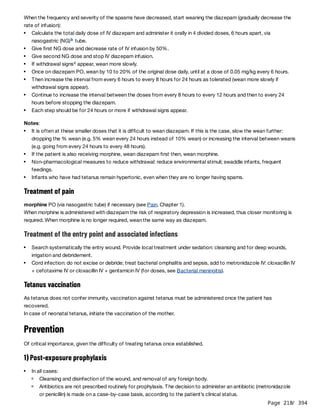
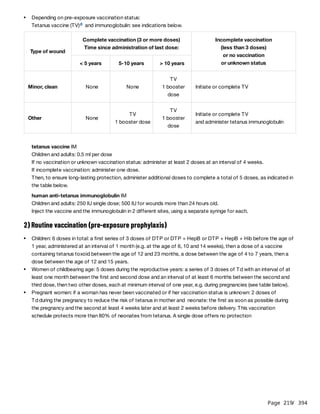
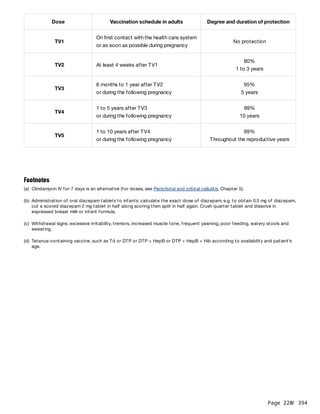
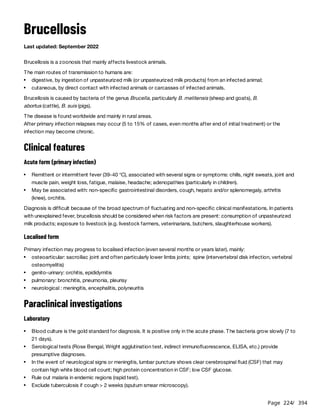
Exported on: 01/03/2024
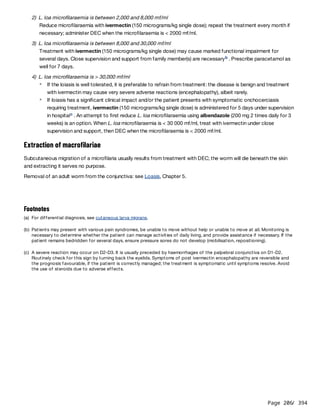
Clinical guidelines - Diagnosis and treatment
manual
For curative programmes in hospitals and dispensaries
Guidance for prescribing
© Médecins Sans Frontières
All rights reserved for all countries. No reproduction, translation and adaptation may be done without the prior
permission of the Copyright owner.
Page 2 / 394
ISBN
Médecins Sans Frontières. Clinical guidelines - Diagnosis and treatment manual.
February 2024
978-2-37585-244-6
Page 3 / 394
Table of contents
Authors/Contributors
Preface
Abbreviations and acronyms
Chapter 1: A few symptoms and syndromes
Chapter 2: Respiratory diseases
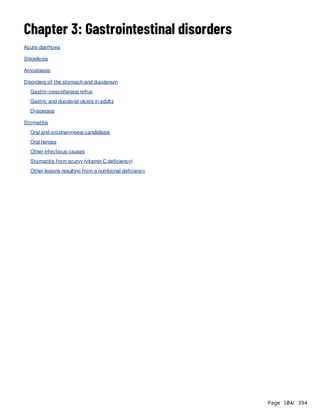
Chapter 3: Gastrointestinal disorders
Chapter 4: Skin diseases
Chapter 5: Eye diseases
Chapter 6: Parasitic diseases
Chapter 7: Bacterial diseases
Chapter 8: Viral diseases
Chapter 9: Genito-urinary diseases
Chapter 10: Medical and minor surgical procedures
Chapter 11: Mental disorders in adults
Chapter 12: Other conditions
Appendices
Main references
Page 4 / 394
Authors/Contributors
The Clinical guidelines hasbeen developed by Médecins Sans Frontières.
MSF would like to express its sincere gratitude to everyone who has contributed to developing these guidelines.
Co-authors: Grace Dubois, Blandine Vasseur-Binachon, Cedric Yoshimoto
Contributors: Gabriel Alcoba, Beatriz Alonso, Mohana Amirtharajah, Haydar Alwash, Catherine Bachy, Roberta
Caboclo, Severine Caluwaerts, Cristina Carreno, Arlene Chua, Kate Clezy, Anne-Sophie Coutin, Marcio da Fonseca,
Martin De Smet, Eva Deplecker, Carolina Echeverri, Sylvie Fagard-Sultan, Roopan Gill, Sonia Guinovart, Jarred Halton,
Kerstin Hanson, Christian Heck, Caroline Henry-Ostian, Cathy Hewison, Yves-Laurent Jackson, Carolina Jimenez, John
Johnson, Rupa Kanapathipillai, Mohamad Khalife, Nadia Lafferty, Amin Lamrous, James Lee, Helen McColl, Natasha
Mlakar, Juno Min, Miguel Palma, Isabella Panunzi, Roberta Petrucci, Nicolas Peyraud, Ernestina Repetto, Jean Rigal,
Koert Ritmeijer, Julia Sander, Raghda Sleit, Erin Stratta, Alex Telnov, Malcolm Townsend, Clara Van Gulik.
Specific support has been given by the International Guidelines Publication team:
Editor: Véronique Grouzard
Language editors: Mohamed Elsonbaty Ramadan, Carolina López, Anna Romero
Lay-out designer: Evelyne Laissu
Page 5 / 394
Preface
This guide is designed for use by medical professionals involved in curative care at the dispensary and primary hospital.
We have tried to respond in the simplest and most practical way possible to the questions and problems faced by field
medical staff, using the accumulated field experience of Médecins Sans Frontières, the recommendations of reference
organizations such as the World Health Organization (WHO) and specialized works in each field.
This edition touches on the curative and, to a lesser extent, the preventive aspects of the main diseases encountered
in the field. The list is incomplete, but covers the essential needs.
This guide is used not only in programmes supported by Médecins Sans Frontières, but also in other programmes and in
other contexts. It is notably an integral part of the WHO Emergency Health Kit.
Médecins Sans Frontières has also issued French, Spanish and Arabic editions. Editions in other languages have also
been produced in the field.
This guide is a collaborative effort of medical professionals from many disciplines, all with field experience.
Despite all efforts, it is possible that certain errors may have been overlooked in this guide. Please inform the authors
of any errors detected. It is important to remember, that if in doubt, it is the responsibility of the prescribing medical
professional to ensure that the doses indicated in this manual conform to the manufacturer ’s specifications.
To ensure that this guide continues to evolve while remaining adapted to field realities, please send any comments or
suggestions.
As treatment protocols are regularly revised, please check the monthly updates.
Page 6 / 394
Abbreviations and acronyms
Last update: October 2023
Page 7 / 394
ACE angiotensin converting enzyme
ACT artemisinin-based combination therapy
AFB acid-fast bacillus
ALT alanine aminotransferase
ARV antiretroviral
AST aspartate aminotransferase
BCG bacillus Calmette-Guérin
BMI body mass index
BP blood pressure
°C degree Celsius
co-amoxiclav amoxicillin + clavulanic acid
co-trimoxazole sulfamethoxazole + trimethoprim
CRT capillary refill time
CSF cerebrospinal fluid
CMV cytomegalovirus
D1 (D2, D3, etc.) Day 1 or first day (Day 2 or 2 day, Day 3 or 3 day, etc.)
nd rd
dl decilitre
(e)FAST (extended) focused assessment with sonography for trauma
FBC full blood count
g gram
HBP high blood pressure (hypertension)
HF heart failure
HIV human immunodeficiency virus
HR heart rate
Page 8 / 394
Ig immunoglobulin
IM intramuscular
IO intraosseous
IU international unit
IV intravenous
kcal kilocalorie
kg kilogram
LP lumbar puncture
mg milligram
MIU million international units
ml millilitre
mmHg millimetre of mercury
mmol millimole
MSF Médecins Sans Frontières
NSAID nonsteroidal anti-inflammatory drug
ORS oral rehydration solution or salts
PCP pneumocystosis
PCR polymerase chain reaction
PO per os – oral administration
POCUS point-of-care ultrasound
PRBC packed-red blood cells
RR respiratory rate
SAM severe acute malnutrition
SC subcutaneous
SMX sulfamethoxazole
Page 9 / 394
SMX + TMP sulfamethoxazole + trimethoprim = co-trimoxazole
SpO2 arterial blood oxygen saturation measured by pulse oximetry
tab tablet
TB tuberculosis
TMP trimethoprim
WHO World Health Organization
Page 10 / 394
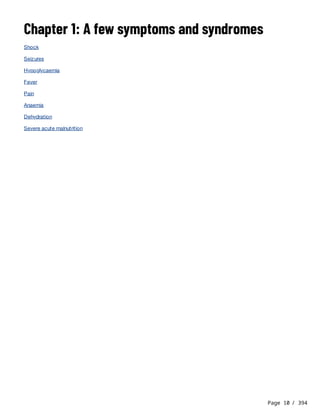
Chapter 1: A few symptoms and syndromes
Shock
Seizures
Hypoglycaemia
Fever
Pain
Anaemia
Dehydration
Severe acute malnutrition
Page 11 / 394
Shock
Last updated: September 2023
Shock is a condition of widespread reduced tissue perfusion and inadequate oxygen delivery. Prolonged shock can
result in cellular dysfunction and irreversible organ failure. Mortality is high without early diagnosis and treatment.
Clinical features
Shock should be suspected in patients with:
In children, accurate BP measurement is difficult, and hypotension is a very late sign of shock. Therefore, critically ill
children should be treated for shock if they present at least one of the following signs: lower limb temperature
gradient , CRT ≥ 3 seconds, weak radial pulse or severe tachycardia .
Clinical features may vary according to the type of shock :
Sign(s) of hypotension: weak pulse, low or declining blood pressure (BP) , narrow pulse pressure
a
Acute onset of signs of tissue hypoperfusion:
Skin: pallor, mottled skin, sweating, cold extremities or lower limb temperature gradient , capillary refill time
(CRT) ≥ 3 seconds
b
Lungs: tachypnea, dyspnoea
Heart: tachycardia, which often occurs before BP decreases
Kidney: oliguria (urine output < 0.5 to 1 ml/kg/hour) or anuria
Brain: thirst, anxiety, agitation, confusional state, apathy, altered mental status
c
b d [1]
[2]
Page 12 / 394
Type Specific clinical features Risk factors
Distributive
Severe vasodilation
and increased capillary
permeability resulting
in maldistribution of
blood flow
Anaphylaxis: likely when either of the following 2
criteria develop within minutes to hours :
[3]
Involvement of skin and/or mucous membranes (e.g.
generalised urticaria, itching, flushing, swollen
lips/tongue/uvula) AND ≥ 1 of the following:
respiratory symptoms (wheeze, dyspnoea);
low BP or symptoms of end-organ dysfunction
(hypotonia, incontinence);
severe gastrointestinal symptoms (abdominal
pain, repetitive vomiting).
Hypotension, bronchospasm or laryngeal
involvement (stridor, vocal changes, odynophagia)
after exposure to known or probable allergen for
that patient.
Recent exposure to an allergen
(e.g. food, sting, medicine) or
history of anaphylaxis
Septic shock: signs of infection, fever or
hypothermia, altered mental status, dyspnoea,
persisting hypotension despite fluid resuscitation[4]
Infection, recent surgery,
immunodeficiency
Cardiogenic
Cardiac pump failure
Ischaemia: chest pain, dyspnoea
Arrhythmia
Murmur of valvular heart disease
History of cardiac disease,
advanced age
Acute heart failure: see Heart failure in adults, Chapter
12.
History of cardiac disease, viral
illness, immunodeficiency
Hypovolaemic
Direct blood/fluid loss
or fluid sequestration
into the extravascular
space resulting in
decreased
intravascular volume
Haemorrhagic: external bleeding, signs and symptoms
of internal bleeding, hypotension(a)
Trauma, recent surgery, obstetric
haemorrhage
Non-haemorrhagic: dry mouth, absence of tears,
sunken eyes/fontanelle, low jugular venous pressure
(JVP), altered mental status
Profuse diarrhoea and/or
vomiting, intestinal obstruction
Obstructive
Obstruction to blood
flow to, or from, the
heart or great vessels
Pulmonary embolism (PE): chest pain, tachycardia,
tachypnoea, hypoxia
Deep vein thrombosis (DVT): leg pain, swelling, warmth
Recent surgery or immobilisation,
cancer, history of PE or DVT
Tension pneumothorax: decreased breath sounds,
raised JVP, weak radial pulse, tracheal deviation
Trauma, invasive medical
procedure
Cardiac tamponade: pulsus paradoxus , raised JVP,
narrow pulse pressure, muffled heart sounds
(b) Trauma, immunodeficiency
(a) In children and young adults with hypovolaemic shock, BP may be maintained initially, but subsequently declines rapidly if
fluid loss is not replaced.
Page 13 / 394
Management
Primary objective of shock management is to restore adequate tissue perfusion, demonstrated by:
After initial management:
On-going care:
Basic Life Support
1) Manage airways and breathing
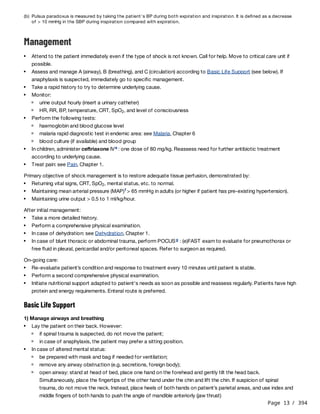
(b) Pulsus paradoxus is measured by taking the patient's BP during both expiration and inspiration. It is defined as a decrease
of > 10 mmHg in the SBP during inspiration compared with expiration.
Attend to the patient immediately even if the type of shock is not known. Call for help. Move to critical care unit if
possible.
Assess and manage A (airway), B (breathing), and C (circulation) according to Basic Life Support (see below). If
anaphylaxis is suspected, immediately go to specific management.
Take a rapid history to try to determine underlying cause.
Monitor:
urine output hourly (insert a urinary catheter)
HR, RR, BP, temperature, CRT, SpO , and level of consciousness
2
Perform the following tests:
haemoglobin and blood glucose level
malaria rapid diagnostic test in endemic area: see Malaria, Chapter 6
blood culture (if available) and blood group
In children, administer ceftriaxone IV : one dose of 80 mg/kg. Reassess need for further antibiotic treatment
according to underlying cause.
e
Treat pain: see Pain, Chapter 1.
Returning vital signs, CRT, SpO , mental status, etc. to normal.
2
Maintaining mean arterial pressure (MAP) > 65 mmHg in adults (or higher if patient has pre-existing hypertension).
f
Maintaining urine output > 0.5 to 1 ml/kg/hour.
Take a more detailed history.
Perform a comprehensive physical examination.
In case of dehydration: see Dehydration, Chapter 1.
In case of blunt thoracic or abdominal trauma, perform POCUS : (e)FAST exam to evaluate for pneumothorax or
free fluid in pleural, pericardial and/or peritoneal spaces. Refer to surgeon as required.
g
Re-evaluate patient’s condition and response to treatment every 10 minutes until patient is stable.
Perform a second comprehensive physical examination.
Initiate nutritional support adapted to patient's needs as soon as possible and reassess regularly. Patients have high
protein and energy requirements. Enteral route is preferred.
Lay the patient on their back. However:
if spinal trauma is suspected, do not move the patient;
in case of anaphylaxis, the patient may prefer a sitting position.
In case of altered mental status:
be prepared with mask and bag if needed for ventilation;
remove any airway obstruction (e.g. secretions, foreign body);
open airway: stand at head of bed, place one hand on the forehead and gently tilt the head back.
Simultaneously, place the fingertips of the other hand under the chin and lift the chin. If suspicion of spinal
trauma, do not move the neck. Instead, place heels of both hands on patient’s parietal areas, and use index and
middle fingers of both hands to push the angle of mandible anteriorly (jaw thrust)
Page 14 / 394
2) Maintain circulation
Anaphylaxis
Repeat after 5 minutes if no or poor clinical improvement (up to a total of 3 IM injections).
Repeat bolus once if signs of poor perfusion persist after 15 minutes.
Septic shock
Look for source of infection. If possible, take specimens for culture before starting antibiotic treatment.
if needed, insert an oropharyngeal airway.
Auscultate lungs to assess ventilation.
Administer 10 to 15 litres/minute of oxygen with mask to maintain SpO > 94%.
2
If SpO remains ≤ 94% with oxygen, see If resources allow.
2
Control bleeding:
apply direct manual pressure and/or compression/haemostatic dressing to the wound;
in case of massive life-threatening bleeding from an extremity (e.g. leg) not controlled by direct pressure: apply a
windlass tourniquet .
h[5]
Insert 2 peripheral IV lines (catheters 20-22G in children and 14-18G in adults) or an intraosseous (IO) needle.
Administer Ringer lactate (RL) , glucose 5%-Ringer lactate (G5%-RL) , and/or blood, following specific
management described below. Reassess before giving additional fluid therapy. Monitor for fluid overload ,
especially in patients at risk, e.g. severely malnourished children; patients with severe malaria, heart disease, severe
anaemia; older patients.
i j
k
Maintain normal body temperature.
If unable to maintain BP, see If resources allow.
Remove exposure to causal agent.
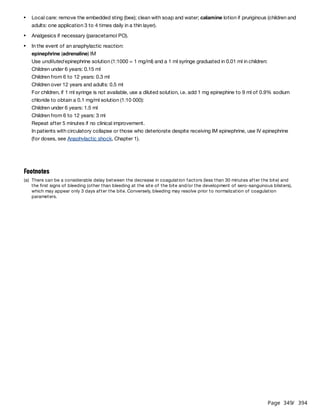
Administer epinephrine (adrenaline) IM into the mid-anterolateral thigh. Use undiluted solution and a 1 ml syringe
graduated in 0.01 ml :
[6]
Children under 6 months: 0.1 to 0.15 ml
Children 6 months to 5 years: 0.15 ml
Children 6 to 12 years: 0.3 ml
Children over 12 years and adults: 0.5 ml
l
Monitor HR, BP, CRT and clinical response.
In case of stridor, administer nebulized epinephrine: 0.5 mg/kg/dose (max. 5 mg) in 5 ml of 0.9% sodium chloride
over 10 to 15 minutes
If SpO is < 94%, ventilate with bag mask.
2
Administer a bolus of RL:
Children: 10 ml/kg as quickly as possible
Adults: 500 ml as quickly as possible
If shock persists after 3 IM injections of epinephrine, in particular if unable to maintain BP, see If ressources allow.
After initial treatment with epinephrine and IV fluids, some patients (e.g. patients requiring continuing treatment after
2 doses of epinephrine IM or patients with ongoing asthma or shock) may benefit from a short course of
corticosteroid therapy. When the patient is stable, prednisolone PO : 1 to 2 mg/kg (max. 50 mg) once daily in the
morning for 3 to 5 days. Use an IV corticosteroid only if the patient cannot take oral treatment.
Fluid therapy:
Children and adolescents under 15 years: G5%-RL solution as maintenance fluids (see Appendix 1)
Adolescents 15 years and over and adults: one bolus of 250 to 500 ml of RL as quickly as possible
Antibiotic treatment:
Start antibiotics according to the suspected origin of infection within 1 hour of presentation (see tables
below).
[7]
Page 15 / 394
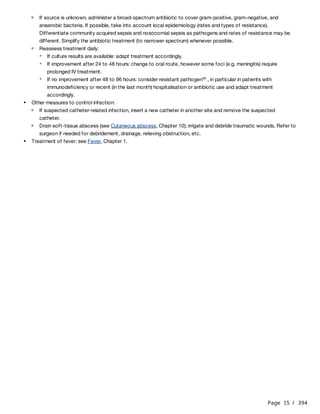
If source is unknown, administer a broad-spectrum antibiotic to cover gram-positive, gram-negative, and
anaerobic bacteria. If possible, take into account local epidemiology (rates and types of resistance).
Differentiate community acquired sepsis and nosocomial sepsis as pathogens and rates of resistance may be
different. Simplify the antibiotic treatment (to narrower spectrum) whenever possible.
Reassess treatment daily:
If culture results are available: adapt treatment accordingly.
If improvement after 24 to 48 hours: change to oral route, however some foci (e.g. meningitis) require
prolonged IV treatment.
If no improvement after 48 to 96 hours: consider resistant pathogen , in particular in patients with
immunodeficiency or recent (in the last month) hospitalisation or antibiotic use and adapt treatment
accordingly.
m
Other measures to control infection:
If suspected catheter-related infection, insert a new catheter in another site and remove the suspected
catheter.
Drain soft-tissue abscess (see Cutaneous abscess, Chapter 10); irrigate and debride traumatic wounds. Refer to
surgeon if needed for debridement, drainage, relieving obstruction, etc.
Treatment of fever: see Fever, Chapter 1.
Page 16 / 394
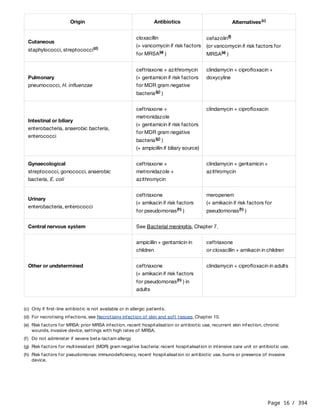
Origin Antibiotics Alternatives(c)
Cutaneous
staphylococci, streptococci(d)
cloxacillin
(+ vancomycin if risk factors
for MRSA )
(e)
cefazolin
(or vancomycin if risk factors for
MRSA )
(f)
(e)
Pulmonary
pneumococci, H. influenzae
ceftriaxone + azithromycin
(+ gentamicin if risk factors
for MDR gram negative
bacteria )
(g)
clindamycin + ciprofloxacin +
doxycyline
Intestinal or biliary
enterobacteria, anaerobic bacteria,
enterococci
ceftriaxone +
metronidazole
(+ gentamicin if risk factors
for MDR gram negative
bacteria )
(+ ampicillin if biliary source)
(g)
clindamycin + ciprofloxacin
Gynaecological
streptococci, gonococci, anaerobic
bacteria, E. coli
ceftriaxone +
metronidazole +
azithromycin
clindamycin + gentamicin +
azithromycin
Urinary
enterobacteria, enterococci
ceftriaxone
(+ amikacin if risk factors
for pseudomonas )
(h)
meropenem
(+ amikacin if risk factors for
pseudomonas )
(h)
Central nervous system See Bacterial meningitis, Chapter 7.
Other or undetermined
ampicillin + gentamicin in
children
ceftriaxone
or cloxacillin + amikacin in children
ceftriaxone
(+ amikacin if risk factors
for pseudomonas ) in
adults
(h)
clindamycin + ciprofloxacin in adults
(c) Only if first-line antibiotic is not available or in allergic patients.
(d) For necrotising infections, see Necrotising infection of skin and soft tissues, Chapter 10.
(e) Risk factors for MRSA: prior MRSA infection, recent hospitalisation or antibiotic use, recurrent skin infection, chronic
wounds, invasive device, settings with high rates of MRSA.
(f) Do not administer if severe beta-lactam allergy
(g) Risk factors for multiresistant (MDR) gram negative bacteria: recent hospitalisation in intensive care unit or antibiotic use.
(h) Risk factors for pseudomonas: immunodeficiency, recent hospitalisation or antibiotic use, burns or presence of invasive
device.
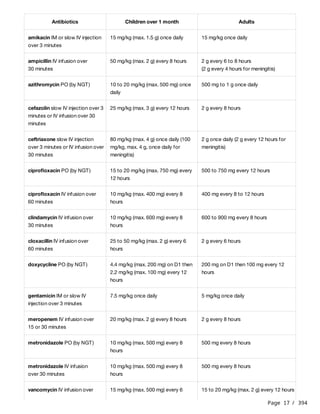
Page 17 / 394
Antibiotics Children over 1 month Adults
amikacin IM or slow IV injection
over 3 minutes
15 mg/kg (max. 1.5 g) once daily 15 mg/kg once daily
ampicillin IV infusion over
30 minutes
50 mg/kg (max. 2 g) every 8 hours 2 g every 6 to 8 hours
(2 g every 4 hours for meningitis)
azithromycin PO (by NGT) 10 to 20 mg/kg (max. 500 mg) once
daily
500 mg to 1 g once daily
cefazolin slow IV injection over 3
minutes or IV infusion over 30
minutes
25 mg/kg (max. 3 g) every 12 hours 2 g every 8 hours
ceftriaxone slow IV injection
over 3 minutes or IV infusion over
30 minutes
80 mg/kg (max. 4 g) once daily (100
mg/kg, max. 4 g, once daily for
meningitis)
2 g once daily (2 g every 12 hours for
meningitis)
ciprofloxacin PO (by NGT) 15 to 20 mg/kg (max. 750 mg) every
12 hours
500 to 750 mg every 12 hours
ciprofloxacin IV infusion over
60 minutes
10 mg/kg (max. 400 mg) every 8
hours
400 mg every 8 to 12 hours
clindamycin IV infusion over
30 minutes
10 mg/kg (max. 600 mg) every 8
hours
600 to 900 mg every 8 hours
cloxacillin IV infusion over
60 minutes
25 to 50 mg/kg (max. 2 g) every 6
hours
2 g every 6 hours
doxycycline PO (by NGT) 4.4 mg/kg (max. 200 mg) on D1 then
2.2 mg/kg (max. 100 mg) every 12
hours
200 mg on D1 then 100 mg every 12
hours
gentamicin IM or slow IV
injection over 3 minutes
7.5 mg/kg once daily 5 mg/kg once daily
meropenem IV infusion over
15 or 30 minutes
20 mg/kg (max. 2 g) every 8 hours 2 g every 8 hours
metronidazole PO (by NGT) 10 mg/kg (max. 500 mg) every 8
hours
500 mg every 8 hours
metronidazole IV infusion
over 30 minutes
10 mg/kg (max. 500 mg) every 8
hours
500 mg every 8 hours
vancomycin IV infusion over 15 mg/kg (max. 500 mg) every 6 15 to 20 mg/kg (max. 2 g) every 12 hours
Page 18 / 394
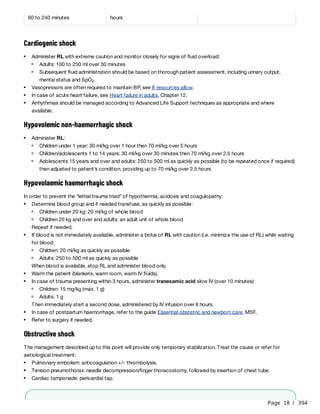
Cardiogenic shock
Hypovolemic non-haemorrhagic shock
Hypovolaemic haemorrhagic shock
In order to prevent the “lethal trauma triad” of hypothermia, acidosis and coagulopathy:
Repeat if needed.
When blood is available, stop RL and administer blood only.
Then immediately start a second dose, administered by IV infusion over 8 hours.
Obstructive shock
The management described up to this point will provide only temporary stabilization. Treat the cause or refer for
aetiological treatment:
f
60 to 240 minutes hours
Administer RL with extreme caution and monitor closely for signs of fluid overload:
Adults: 100 to 250 ml over 30 minutes
Subsequent fluid administration should be based on thorough patient assessment, including urinary output,
mental status and SpO .
2
Vasopressors are often required to maintain BP, see If resources allow.
In case of acute heart failure, see Heart failure in adults, Chapter 12.
Arrhythmias should be managed according to Advanced Life Support techniques as appropriate and where
available.
Administer RL:
Children under 1 year: 30 ml/kg over 1 hour then 70 ml/kg over 5 hours
Children/adolescents 1 to 14 years: 30 ml/kg over 30 minutes then 70 ml/kg over 2.5 hours
Adolescents 15 years and over and adults: 250 to 500 ml as quickly as possible (to be repeated once if required)
then adjusted to patient’s condition, providing up to 70 ml/kg over 2.5 hours
Determine blood group and if needed transfuse, as quickly as possible:
Children under 20 kg: 20 ml/kg of whole blood
Children 20 kg and over and adults: an adult unit of whole blood
If blood is not immediately available, administer a bolus of RL with caution (i.e. minimize the use of RL) while waiting
for blood:
Children: 20 ml/kg as quickly as possible
Adults: 250 to 500 ml as quickly as possible
Warm the patient (blankets, warm room, warm IV fluids).
In case of trauma presenting within 3 hours, administer tranexamic acid slow IV (over 10 minutes):
Children: 15 mg/kg (max. 1 g)
Adults: 1 g
In case of postpartum haemorrhage, refer to the guide Essential obstetric and newborn care, MSF.
Refer to surgery if needed.
Pulmonary embolism: anticoagulation +/- thrombolysis.
Tension pneumothorax: needle decompression/finger thoracostomy, followed by insertion of chest tube.
Cardiac tamponade: pericardial tap.
Page 19 / 394
If ressources allow:
These protocols are for peripheral IV administration. Titrate according to patient's clinical situation. Refer to
management objectives (including BP) under Management.
Manage airways and breathing:
complete airway obstruction: endotracheal intubation or cricothyroidotomy
respiratory failure: non-invasive or invasive mechanical ventilation
Maintain circulation:
If unable to achieve management objectives (in particular BP) using fluid therapy (and no signs of fluid
overload are present) or, in the case of anaphylaxis, if shock persists after 3 IM epinephrine injections,
vasopressors-inotropes (see below) can be used in the following conditions:
close monitoring in a critical care unit;
a large peripheral IV catheter (proximal forearm or above), a central venous catheter or an IO line
dedicated to the infusion;
n
use of an electric syringe or pump to control flow rate ;
o
intensive monitoring of drug administration, particularly during syringe changes.
All infused volumes must be accounted for when recording fluid balance.
Norepinephrine (NEP) tartrate(i) Epinephrine (EPN) (adrenaline)
Indication
Children: 2 choice
Adults: 1 choice
nd
st
Children: 1 choice
Adults: 2 choice
st
nd
Preparation
of
diluted
solution(j)
Children:
Add 1 ml (2 mg) of NEP tartrate to 39 ml
of 0.9% NaCl to obtain a 0.05 mg/ml (50
micrograms/ml) solution.
Children:
Add 2 ml (2 mg) of EPN to 38 ml of 0.9% NaCl
to obtain a 0.05 mg/ml (50 micrograms/ml)
solution.
Adults:
Add 2 ml (4 mg) of NEP tartrate to 38 ml
of 0.9% NaCl to obtain a 0.1 mg/ml (100
micrograms/ml) solution.
Adults:
Add 4 ml (4 mg) of EPN to 36 ml of 0.9% NaCl
to obtain a 0.1 mg/ml (100 micrograms/ml)
solution.
Starting
rate(k)
0.1 microgram/kg/minute
Rate for
increasing(k)
Increase by 0.05 micrograms/kg/minute every 10 minutes for the first hour, then every hour.
Max. 1 microgram/kg/minute.
Rate for
decreasing(k)
Taper down doses when management objectives are attained. Do not stop abruptly.
Decrease by 0.05 micrograms/kg/minute every hour.
(i) 2 mg of NEP tartrate = 1 mg of NEP base.
(j) 0.9% sodium chloride or 5% glucose or RL can be used for dilution.
(k) The infusion rate is calculated as follows: [desired dose (microgram/kg/min) x weight (kg) x 60 min] ÷ concentration
(microgram/ml).
Ongoing care: measure serum potassium, magnesium, calcium and phosphate levels and correct any
abnormalities. Additional investigations (e.g. X-rays, other laboratory tests) may be indicated, depending on
aetiology suspected.
Page 20 / 394
References
Footnotes
(a) Hypotension is based on systolic blood pressure (SBP) in adults: SBP < 90 mmHg or decrease in SBP ≥ 40 mmHg from
baseline or mean arterial pressure MAP < 65 mmHg. Shock is often accompanied by hypotension but may also occur with
normal or elevated BP
.
(b) Run the back of the hand from the toe to the knee. A notable temperature change from the cold foot to the warm knee is a
positive temperature gradient, indicating distal hypoperfusion.
(c) Critically ill-appearing child: weak grunting or crying, drowsy and difficult to arouse, does not smile, disconjugate or anxious
gaze, pallor or cyanosis, general hypotonia.
(d) Children under 1 year: > 180 bpm; Children 1 to 5 years: > 160 bpm; Children 5 years and over: > 140 bpm.
(e) For IV administration of ceftriaxone, dissolve only in water for injection.
(f) MAP = diastolic BP (DBP) + 1/3 (SBP-DBP). A patient with BP 90/60 has a MAP = 60 + 1/3 (90-60) = 70.
(g) POCUS should only be performed and interpreted by trained clinicians.
(h) The patient should receive surgery within 1 hour of the application of a windlass tourniquet. After 1 hour, there is a risk of
ischaemic injury of the limb. If surgery is not possible and the tourniquet is required to save the patient’s life, it should be
left in place. Any tourniquet that has been applied for more than 6 hours should be left in place until arrival at a facility
capable of providing definitive surgical care.
(i) Crystalloids should be used. Colloids (e.g. modified fluid gelatin, albumin) are not recommended.
(j) Remove 50 ml of RL from a 500 ml RL bottle or bag, then add 50 ml of 50% glucose to the remaining 450 ml of RL to obtain
500 ml of 5% glucose-RL solution.
(k) In case of fluid overload: sit the patient up, reduce the infusion rate to a minimum and administer furosemide IV (0.5 mg/kg in
children; 40 mg in adults). Monitor the patient closely over 30 minutes and assess for underlying cardiorespiratory or renal
disease. Once the patient is stabilised, reassess the necessity of continuing IV fluids. If IV fluids are still required, re-start at
half the previous infusion rate and monitor closely.
(l) If small or prepubertal children, administer 0.3 ml of epinephrine.
(m) For example: methicillin-resistant Staphylococcus aureus (MRSA), pseudomonas species, and gram-negative bacteria with
extended-spectrum beta-lactamase (ESBL) activity.
(n) When using a peripheral vein, monitor infusion site closely for signs of extravasation, in particular in young children.
(o) If no system to control volume delivery and flow rate (e.g. syringe pump), an infusion using an infusion bag and standard
paediatric giving set can be considered in extreme situations as a temporary measure. However, it is important to consider
the risks related to this type of administration (accidental bolus or insufficient dose). The infusion must be constantly
monitored to prevent any, even small, change from the prescribed rate.
1. Houston KA, George EC, Maitland K. Implications for paediatric shock management in resource-limited settings: a
perspective from the FEAST trial. Crit Care. 2018;22(1):119.
https://doi.org/10.1186/s13054-018-1966-4
2. Cecconi M, De Backer D, Antonelli M, et al. Consensus on circulatory shock and hemodynamic monitoring. Task force of the
European Society of Intensive Care Medicine. Intensive Care Med. 2014;40(12):1795-1815.
https://doi.org/10.1007/s00134-014-3525-z
3. Cardona V, Ansotegui IJ, Ebisawa M, et al. World allergy organization anaphylaxis guidance 2020. World Allergy Organ J.
Page 21 / 394
2020;13(10):100472. Published 2020 Oct 30.
https://doi.org/10.1016/j.waojou.2020.100472
4. Singer M, Deutschman CS, Seymour CW, et al. The Third International Consensus Definitions for Sepsis and Septic Shock
(Sepsis-3). JAMA. 2016;315(8):801-810.
https://doi.org/10.1001/jama.2016.0288
5. Richey SL. Tourniquets for the control of traumatic hemorrhage: a review of the literature. World J Emerg Surg. 2007;2:28.
Published 2007 Oct 24.
https://doi.org/10.1186/1749-7922-2-28
6. Emergency treatment of anaphylaxis. Guidelines for healthcare providers. Rescuscitation Council UK. Updated 2021
[Accessed May 31 2023].
https://www.resus.org.uk/sites/default/files/2021-
05/Emergency%20Treatment%20of%20Anaphylaxis%20May%202021_0.pdf
7. Evans L, Rhodes A, Alhazzani W, et al. Surviving sepsis campaign: international guidelines for management of sepsis and
septic shock 2021. Intensive Care Med. 2021;47(11):1181-1247.
https://doi.org/10.1007/s00134-021-06506-y
Page 22 / 394
Seizures
Involuntary movements of cerebral origin (stiffness followed by clonic movements), accompanied by a loss of
consciousness, and often urinary incontinence (generalized tonic-clonic seizures).
In pregnant women, eclamptic seizures require specific medical and obstetrical care. Refer to the guide Essential
obstetric and newborn care, MSF.
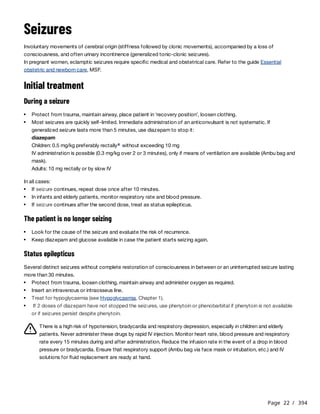
Initial treatment
During a seizure
diazepam
Children: 0.5 mg/kg preferably rectally without exceeding 10 mg
IV administration is possible (0.3 mg/kg over 2 or 3 minutes), only if means of ventilation are available (Ambu bag and
mask).
Adults: 10 mg rectally or by slow IV
In all cases:
The patient is no longer seizing
Status epilepticus
Several distinct seizures without complete restoration of consciousness in between or an uninterrupted seizure lasting
more than 30 minutes.
There is a high risk of hypotension, bradycardia and respiratory depression, especially in children and elderly
patients. Never administer these drugs by rapid IV injection. Monitor heart rate, blood pressure and respiratory
rate every 15 minutes during and after administration. Reduce the infusion rate in the event of a drop in blood
pressure or bradycardia. Ensure that respiratory support (Ambu bag via face mask or intubation, etc.) and IV
solutions for fluid replacement are ready at hand.
Protect from trauma, maintain airway, place patient in ‘recovery position’, loosen clothing.
Most seizures are quickly self-limited. Immediate administration of an anticonvulsant is not systematic. If
generalized seizure lasts more than 5 minutes, use diazepam to stop it:
a
If seizure continues, repeat dose once after 10 minutes.
In infants and elderly patients, monitor respiratory rate and blood pressure.
If seizure continues after the second dose, treat as status epilepticus.
Look for the cause of the seizure and evaluate the risk of recurrence.
Keep diazepam and glucose available in case the patient starts seizing again.
Protect from trauma, loosen clothing, maintain airway and administer oxygen as required.
Insert an intravenous or intraosseus line.
Treat for hypoglycaemia (see Hypoglycaemia, Chapter 1).
If 2 doses of diazepam have not stopped the seizures, use phenytoin or phenobarbital if phenytoin is not available
or if seizures persist despite phenytoin.
Page 23 / 394
Further treatment
Febrile seizures
Infectious causes
Severe malaria (Chapter 6), meningitis (Chapter 7), meningo-encephalitis, cerebral toxoplasmosis (HIV infection and
AIDS, Chapter 8), cysticercosis (Cestodes, Chapter 6), etc.
Metabolic causes
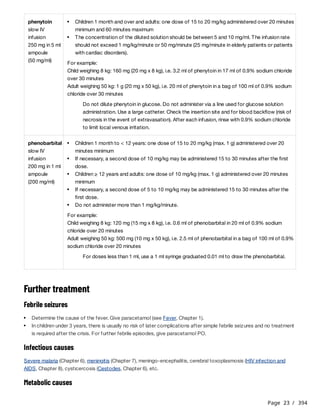
phenytoin
slow IV
infusion
250 mg in 5 ml
ampoule
(50 mg/ml)
For example:
Child weighing 8 kg: 160 mg (20 mg x 8 kg), i.e. 3.2 ml of phenytoin in 17 ml of 0.9% sodium chloride
over 30 minutes
Adult weighing 50 kg: 1 g (20 mg x 50 kg), i.e. 20 ml of phenytoin in a bag of 100 ml of 0.9% sodium
chloride over 30 minutes
Do not dilute phenytoin in glucose. Do not administer via a line used for glucose solution
administration. Use a large catheter. Check the insertion site and for blood backflow (risk of
necrosis in the event of extravasation). After each infusion, rinse with 0.9% sodium chloride
to limit local venous irritation.
Children 1 month and over and adults: one dose of 15 to 20 mg/kg administered over 20 minutes
minimum and 60 minutes maximum
The concentration of the diluted solution should be between 5 and 10 mg/ml. The infusion rate
should not exceed 1 mg/kg/minute or 50 mg/minute (25 mg/minute in elderly patients or patients
with cardiac disorders).
phenobarbital
slow IV
infusion
200 mg in 1 ml
ampoule
(200 mg/ml)
For example:
Child weighing 8 kg: 120 mg (15 mg x 8 kg), i.e. 0.6 ml of phenobarbital in 20 ml of 0.9% sodium
chloride over 20 minutes
Adult weighing 50 kg: 500 mg (10 mg x 50 kg), i.e. 2.5 ml of phenobarbital in a bag of 100 ml of 0.9%
sodium chloride over 20 minutes
For doses less than 1 ml, use a 1 ml syringe graduated 0.01 ml to draw the phenobarbital.
Children 1 month to < 12 years: one dose of 15 to 20 mg/kg (max. 1 g) administered over 20
minutes minimum
If necessary, a second dose of 10 mg/kg may be administered 15 to 30 minutes after the first
dose.
Children ≥ 12 years and adults: one dose of 10 mg/kg (max. 1 g) administered over 20 minutes
minimum
If necessary, a second dose of 5 to 10 mg/kg may be administered 15 to 30 minutes after the
first dose.
Do not administer more than 1 mg/kg/minute.
Determine the cause of the fever. Give paracetamol (see Fever, Chapter 1).
In children under 3 years, there is usually no risk of later complications after simple febrile seizures and no treatment
is required after the crisis. For further febrile episodes, give paracetamol PO.
Page 24 / 394
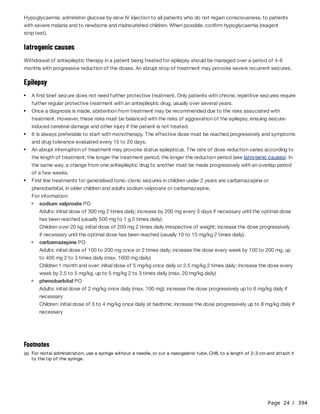
Hypoglycaemia: administer glucose by slow IV injection to all patients who do not regain consciousness, to patients
with severe malaria and to newborns and malnourished children. When possible, confirm hypoglycaemia (reagent
strip test).
Iatrogenic causes
Withdrawal of antiepileptic therapy in a patient being treated for epilepsy should be managed over a period of 4-6
months with progressive reduction of the doses. An abrupt stop of treatment may provoke severe recurrent seizures.
Epilepsy
For information:
A first brief seizure does not need further protective treatment. Only patients with chronic repetitive seizures require
further regular protective treatment with an antiepileptic drug, usually over several years.
Once a diagnosis is made, abstention from treatment may be recommended due to the risks associated with
treatment. However, these risks must be balanced with the risks of aggravation of the epilepsy, ensuing seizure-
induced cerebral damage and other injury if the patient is not treated.
It is always preferable to start with monotherapy. The effective dose must be reached progressively and symptoms
and drug tolerance evaluated every 15 to 20 days.
An abrupt interruption of treatment may provoke status epilepticus. The rate of dose reduction varies according to
the length of treatment; the longer the treatment period, the longer the reduction period (see Iatrogenic causes). In
the same way, a change from one antiepileptic drug to another must be made progressively with an overlap period
of a few weeks.
First line treatments for generalised tonic-clonic seizures in children under 2 years are carbamazepine or
phenobarbital, in older children and adults sodium valproate or carbamazepine.
sodium valproate PO
Adults: initial dose of 300 mg 2 times daily; increase by 200 mg every 3 days if necessary until the optimal dose
has been reached (usually 500 mg to 1 g 2 times daily).
Children over 20 kg: initial dose of 200 mg 2 times daily irrespective of weight; increase the dose progressively
if necessary until the optimal dose has been reached (usually 10 to 15 mg/kg 2 times daily).
carbamazepine PO
Adults: initial dose of 100 to 200 mg once or 2 times daily; increase the dose every week by 100 to 200 mg, up
to 400 mg 2 to 3 times daily (max. 1600 mg daily)
Children 1 month and over: initial dose of 5 mg/kg once daily or 2.5 mg/kg 2 times daily; increase the dose every
week by 2.5 to 5 mg/kg, up to 5 mg/kg 2 to 3 times daily (max. 20 mg/kg daily)
phenobarbital PO
Adults: initial dose of 2 mg/kg once daily (max. 100 mg); increase the dose progressively up to 6 mg/kg daily if
necessary
Children: initial dose of 3 to 4 mg/kg once daily at bedtime; increase the dose progressively up to 8 mg/kg daily if
necessary
Footnotes
(a) For rectal administration, use a syringe without a needle, or cut a nasogastric tube, CH8, to a length of 2-3 cm and attach it
to the tip of the syringe.
Page 25 / 394
Hypoglycaemia
Last update: November 2023
Hypoglycaemia is an abnormally low concentration of blood glucose. Severe hypoglycaemia can be fatal or lead to
irreversible neurological damage.
Blood glucose levels should be measured whenever possible in patients presenting symptoms of hypoglycaemia. If
hypoglycaemia is suspected but blood glucose measurement is not available, glucose (or another available sugar)
should be given empirically.
Always consider hypoglycaemia in patients presenting impaired consciousness (lethargy, coma) or seizures.
For diagnosis and treatment of hypoglycaemia in neonates, refer to the guide Essential obstetric and newborn care,
MSF.
Clinical features
Rapid onset of non-specific signs, mild to severe depending on the degree of the hypoglycaemia: sensation of hunger
and fatigue, tremors, tachycardia, pallor, sweats, anxiety, blurred vision, difficulty speaking, confusion, convulsions,
lethargy, coma.
Diagnosis
Capillary blood glucose concentration (reagent strip test):
If blood glucose measurement is not available, diagnosis is confirmed when symptoms resolve after the administration
of sugar or glucose.
Symptomatic treatment
Symptoms improve approximately 15 minutes after taking sugar by oral route.
Neurological symptoms improve a few minutes after the injection.
Check blood glucose after 15 minutes. If it is still low, re-administer glucose by IV route or sugar by oral route according
to the patient’s clinical condition.
If there is no clinical improvement, differential diagnoses should be considered: e.g. serious infection (severe malaria,
meningitis, etc.), epilepsy, unintentional alcohol intoxication or adrenal insufficiency in children.
In all cases, after stabilisation, give a meal or snack rich in complex carbohydrates and monitor the patients for a few
hours.
Non-diabetic patients:
Hypoglycaemia: < 3.3 mmol/litre (< 60 mg/dl)
Severe hypoglycaemia: < 2.2 mmol/litre (< 40 mg/dl)
Diabetic patients on home treatment: < 3.9 mmol/litre (< 70 mg/dl)[1]
Conscious patients:
Children: a teaspoon of powdered sugar in a few ml of water or 50 ml of fruit juice, maternal or therapeutic milk
or 10 ml/kg of 10% glucose by oral route or nasogastric tube.
Adults: 15 to 20 g of sugar (3 or 4 cubes) or sugar water, fruit juice, soda, etc.
Patients with impaired consciousness or prolonged convulsions:
Children: 2 ml/kg of 10% glucose by slow IV (2 to 3 minutes)a
Adults: 1 ml/kg of 50% glucose by slow IV (3 to 5 minutes)
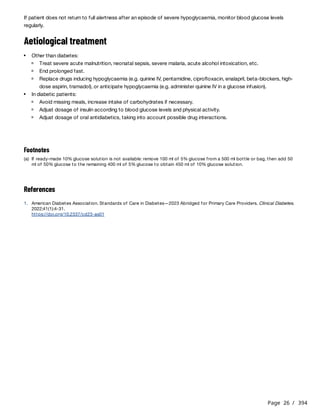
Page 26 / 394
If patient does not return to full alertness after an episode of severe hypoglycaemia, monitor blood glucose levels
regularly.
Aetiological treatment
References
Other than diabetes:
Treat severe acute malnutrition, neonatal sepsis, severe malaria, acute alcohol intoxication, etc.
End prolonged fast.
Replace drugs inducing hypoglycaemia (e.g. quinine IV, pentamidine, ciprofloxacin, enalapril, beta-blockers, high-
dose aspirin, tramadol), or anticipate hypoglycaemia (e.g. administer quinine IV in a glucose infusion).
In diabetic patients:
Avoid missing meals, increase intake of carbohydrates if necessary.
Adjust dosage of insulin according to blood glucose levels and physical activity.
Adjust dosage of oral antidiabetics, taking into account possible drug interactions.
Footnotes
(a) If ready-made 10% glucose solution is not available: remove 100 ml of 5% glucose from a 500 ml bottle or bag, then add 50
ml of 50% glucose to the remaining 400 ml of 5% glucose to obtain 450 ml of 10% glucose solution.
1. American Diabetes Association. Standards of Care in Diabetes—2023 Abridged for Primary Care Providers. Clinical Diabetes.
2022;41(1):4-31.
https://doi.org/10.2337/cd23-as01
Page 27 / 394
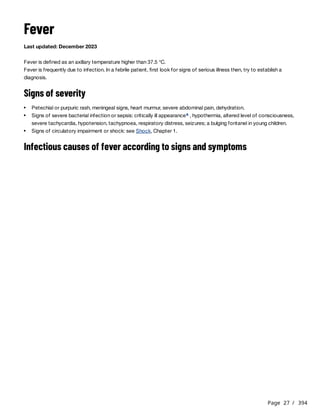
Fever
Last updated: December 2023
Fever is defined as an axillary temperature higher than 37.5 °C.
Fever is frequently due to infection. In a febrile patient, first look for signs of serious illness then, try to establish a
diagnosis.
Signs of severity
Infectious causes of fever according to signs and symptoms
Petechial or purpuric rash, meningeal signs, heart murmur, severe abdominal pain, dehydration.
Signs of severe bacterial infection or sepsis: critically ill appearance , hypothermia, altered level of consciousness,
severe tachycardia, hypotension, tachypnoea, respiratory distress, seizures; a bulging fontanel in young children.
a
Signs of circulatory impairment or shock: see Shock, Chapter 1.
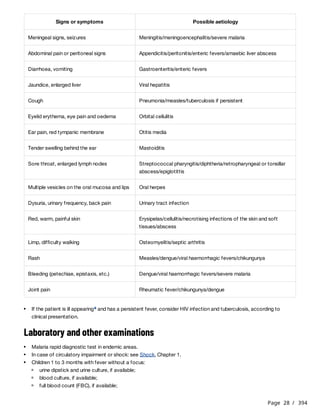
Page 28 / 394
Laboratory and other examinations
Signs or symptoms Possible aetiology
Meningeal signs, seizures Meningitis/meningoencephalitis/severe malaria
Abdominal pain or peritoneal signs Appendicitis/peritonitis/enteric fevers/amaebic liver abscess
Diarrhoea, vomiting Gastroenteritis/enteric fevers
Jaundice, enlarged liver Viral hepatitis
Cough Pneumonia/measles/tuberculosis if persistent
Eyelid erythema, eye pain and oedema Orbital cellulitis
Ear pain, red tympanic membrane Otitis media
Tender swelling behind the ear Mastoiditis
Sore throat, enlarged lymph nodes Streptococcal pharyngitis/diphtheria/retropharyngeal or tonsillar
abscess/epiglotittis
Multiple vesicles on the oral mucosa and lips Oral herpes
Dysuria, urinary frequency, back pain Urinary tract infection
Red, warm, painful skin Erysipelas/cellulitis/necrotising infections of the skin and soft
tissues/abscess
Limp, difficulty walking Osteomyelitis/septic arthritis
Rash Measles/dengue/viral haemorrhagic fevers/chikungunya
Bleeding (petechiae, epistaxis, etc.) Dengue/viral haemorrhagic fevers/severe malaria
Joint pain Rheumatic fever/chikungunya/dengue
If the patient is ill appearing and has a persistent fever, consider HIV infection and tuberculosis, according to
clinical presentation.
a
Malaria rapid diagnostic test in endemic areas.
In case of circulatory impairment or shock: see Shock, Chapter 1.
Children 1 to 3 months with fever without a focus:
urine dipstick and urine culture, if available;
blood culture, if available;
full blood count (FBC), if available;
Page 29 / 394
Aetiological treatment
Symptomatic treatment
paracetamol PO
Children 1 month and over: 15 mg/kg 3 to 4 times daily (max. 60 mg/kg daily)
Adults: 1 g 3 to 4 times daily (max. 4 g daily)
or
ibuprofen PO
Children over 3 months and < 12 years: 5 to 10 mg/kg 3 to 4 times daily (max. 30 mg/kg daily)
Children 12 years and over and adults: 200 to 400 mg 3 to 4 times daily (max. 1200 mg daily)
or
acetylsalicylic acid (ASA) PO
Children over 16 years and adults: 500 mg to 1 g 3 to 4 times daily (max. 4 g daily)
lumbar puncture (LP) if meningeal signs or signs of severe bacterial infection or sepsis, or failure of prior
antibiotic treatment;
chest x-ray, if available, in case of signs of respiratory disease or severe infection or sepsis.
Children > 3 months to 2 years with fever without a focus:
urine dipstick and urine culture, if available;
LP if meningeal signs or signs of severe bacterial infection or sepsis;
chest x-ray, if available, if fever > 72 hours or signs of severe bacterial infection or sepsis;
blood culture, if available, if fever > 72 hours or signs of severe bacterial infection or sepsis;
FBC, if available, if fever > 72 hours or signs of severe bacterial infection or sepsis;
other: according to clinical presentation.
Children over 2 years with fever without a focus:
urine dipstick and urine culture, if available, if history of urinary tract infection or fever > 72 hours or signs of
severe bacterial infection or sepsis;
LP if meningeal signs or signs of severe bacterial infection or sepsis;
chest x-ray, if available, if fever > 72 hours or signs of severe bacterial infection or sepsis;
blood culture, if available, if fever > 72 hours or signs of severe bacterial infection or sepsis;
FBC, if available, if fever > 72 hours or signs of severe bacterial infection or sepsis;
other: according to clinical presentation.
Adults: according to clinical presentation.
Treat patients with a positive malaria test: see Malaria, Chapter 6.
If the source of infection has been found: administer antibiotic treatment accordingly.
If severe infection, sepsis, circulatory impairment or shock: hospitalise and immediately administer an empiric
antibiotic treatment (see Shock, Chapter 1). Continue this treatment until the source of infection is found and adapt
antibiotic treatment accordingly.
If no source of infection is found, and there are no signs of severe infection, sepsis, circulatory impairment or
shock, hospitalise for further investigations and monitoring:
Children 1 to 3 months;
Children > 3 months to < 2 years with negative urine dipstick (and negative urine culture if available).
For malnourished children, see Severe acute malnutrition, Chapter 1.
For patients with sickle cell disease, see Sickle cell disease, Chapter 12.
Undress the patient. Do not wrap children in wet towels or cloths (not effective, increases discomfort, risk of
hypothermia).
Antipyretics may increase the patient’s comfort but they do not prevent febrile convulsions. Do not treat for more
than 3 days with antipyretics.
Page 30 / 394
Prevention of complications
Notes:
Encourage oral hydration. Continue frequent breastfeeding in infants.
Look for signs of dehydration.
Monitor urine output.
In pregnant or breast-feeding women use paracetamol only.
In case of viral haemorrhagic fevers and dengue: acetylsalicylic acid and ibuprofen are contraindicated; use
paracetamol with caution in the presence of hepatic dysfunction.
Footnotes
(a) Critically ill appearing child: weak grunting or crying, drowsiness, difficult to arrouse, does not smile, disconjugate or anxious
gaze, pallor or cyanosis, general hypotonia.
Page 31 / 394
Pain
Pain results from a variety of pathological processes. It is expressed differently by each patient depending on cultural
background, age, etc. It is a subjective experience meaning that only the individual is able to assess his/her level of pain.
Regular assessment of the intensity of pain is indispensable in establishing effective treatment.
Clinical features
Pain assessment
Clinical examination
Synthesis
The synthesis of information gathered during history taking and clinical examination allows aetiological diagnosis and
orients treatment. It is important to distinguish:
Pain evaluation scales
Self-evaluation scale - Children over 5 years and adults
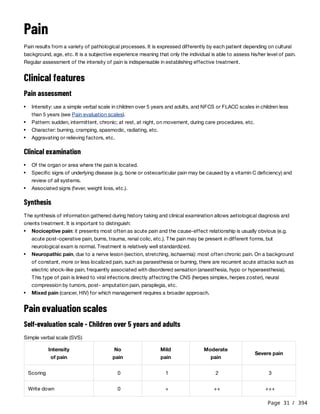
Simple verbal scale (SVS)
Intensity: use a simple verbal scale in children over 5 years and adults, and NFCS or FLACC scales in children less
than 5 years (see Pain evaluation scales).
Pattern: sudden, intermittent, chronic; at rest, at night, on movement, during care procedures, etc.
Character: burning, cramping, spasmodic, radiating, etc.
Aggravating or relieving factors, etc.
Of the organ or area where the pain is located.
Specific signs of underlying disease (e.g. bone or osteoarticular pain may be caused by a vitamin C deficiency) and
review of all systems.
Associated signs (fever, weight loss, etc.).
Nociceptive pain: it presents most often as acute pain and the cause-effect relationship is usually obvious (e.g.
acute post-operative pain, burns, trauma, renal colic, etc.). The pain may be present in different forms, but
neurological exam is normal. Treatment is relatively well standardized.
Neuropathic pain, due to a nerve lesion (section, stretching, ischaemia): most often chronic pain. On a background
of constant, more or less localized pain, such as paraesthesia or burning, there are recurrent acute attacks such as
electric shock-like pain, frequently associated with disordered sensation (anaesthesia, hypo or hyperaesthesia).
This type of pain is linked to viral infections directly affecting the CNS (herpes simplex, herpes zoster), neural
compression by tumors, post- amputation pain, paraplegia, etc.
Mixed pain (cancer, HIV) for which management requires a broader approach.
Intensity
of pain
No
pain
Mild
pain
Moderate
pain
Severe pain
Scoring 0 1 2 3
Write down 0 + ++ +++
Page 32 / 394
Observational evaluation scale - Children 2 months-5 years
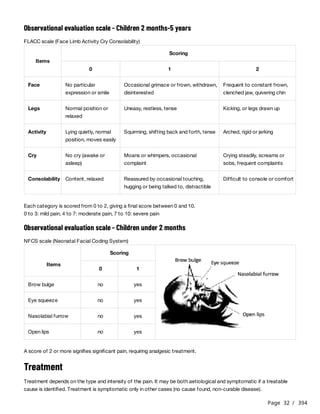
FLACC scale (Face Limb Activity Cry Consolability)
Each category is scored from 0 to 2, giving a final score between 0 and 10.
0 to 3: mild pain, 4 to 7: moderate pain, 7 to 10: severe pain
Observational evaluation scale - Children under 2 months
NFCS scale (Neonatal Facial Coding System)
A score of 2 or more signifies significant pain, requiring analgesic treatment.
Treatment
Treatment depends on the type and intensity of the pain. It may be both aetiological and symptomatic if a treatable
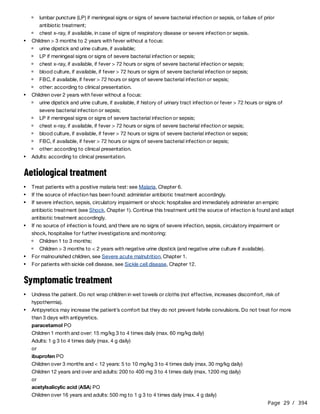
cause is identified. Treatment is symptomatic only in other cases (no cause found, non-curable disease).
Items
Scoring
0 1 2
Face No particular
expression or smile
Occasional grimace or frown, withdrawn,
disinterested
Frequent to constant frown,
clenched jaw, quivering chin
Legs Normal position or
relaxed
Uneasy, restless, tense Kicking, or legs drawn up
Activity Lying quietly, normal
position, moves easily
Squirming, shifting back and forth, tense Arched, rigid or jerking
Cry No cry (awake or
asleep)
Moans or whimpers, occasional
complaint
Crying steadily, screams or
sobs, frequent complaints
Consolability Content, relaxed Reassured by occasional touching,
hugging or being talked to, distractible
Difficult to console or comfort
Items
Scoring
0 1
Brow bulge no yes
Eye squeeze no yes
Nasolabial furrow no yes
Open lips no yes
Page 33 / 394
Nociceptive pain
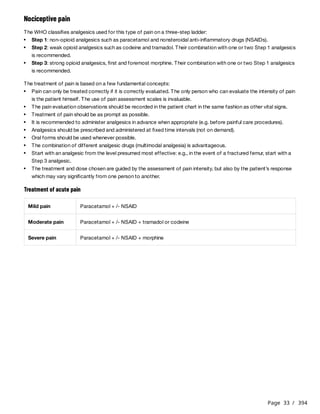
The WHO classifies analgesics used for this type of pain on a three-step ladder:
The treatment of pain is based on a few fundamental concepts:
Treatment of acute pain
Step 1: non-opioid analgesics such as paracetamol and nonsteroidal anti-inflammatory drugs (NSAIDs).
Step 2: weak opioid analgesics such as codeine and tramadol. Their combination with one or two Step 1 analgesics
is recommended.
Step 3: strong opioid analgesics, first and foremost morphine. Their combination with one or two Step 1 analgesics
is recommended.
Pain can only be treated correctly if it is correctly evaluated. The only person who can evaluate the intensity of pain
is the patient himself. The use of pain assessment scales is invaluable.
The pain evaluation observations should be recorded in the patient chart in the same fashion as other vital signs.
Treatment of pain should be as prompt as possible.
It is recommended to administer analgesics in advance when appropriate (e.g. before painful care procedures).
Analgesics should be prescribed and administered at fixed time intervals (not on demand).
Oral forms should be used whenever possible.
The combination of different analgesic drugs (multimodal analgesia) is advantageous.
Start with an analgesic from the level presumed most effective: e.g., in the event of a fractured femur, start with a
Step 3 analgesic.
The treatment and dose chosen are guided by the assessment of pain intensity, but also by the patient’s response
which may vary significantly from one person to another.
Mild pain Paracetamol + /- NSAID
Moderate pain Paracetamol + /- NSAID + tramadol or codeine
Severe pain Paracetamol + /- NSAID + morphine
Page 34 / 394
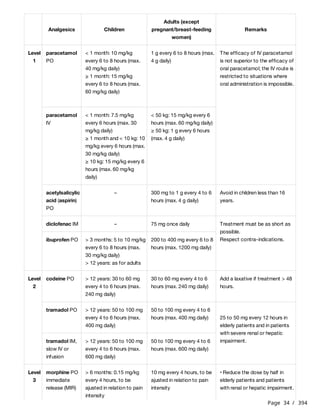
Analgesics Children
Adults (except
pregnant/breast-feeding
women)
Remarks
Level
1
paracetamol
PO
< 1 month: 10 mg/kg
every 6 to 8 hours (max.
40 mg/kg daily)
≥ 1 month: 15 mg/kg
every 6 to 8 hours (max.
60 mg/kg daily)
1 g every 6 to 8 hours (max.
4 g daily)
The efficacy of IV paracetamol
is not superior to the efficacy of
oral paracetamol; the IV route is
restricted to situations where
oral administration is impossible.
paracetamol
IV
< 1 month: 7.5 mg/kg
every 6 hours (max. 30
mg/kg daily)
≥ 1 month and < 10 kg: 10
mg/kg every 6 hours (max.
30 mg/kg daily)
≥ 10 kg: 15 mg/kg every 6
hours (max. 60 mg/kg
daily)
< 50 kg: 15 mg/kg every 6
hours (max. 60 mg/kg daily)
≥ 50 kg: 1 g every 6 hours
(max. 4 g daily)
acetylsalicylic
acid (aspirin)
PO
– 300 mg to 1 g every 4 to 6
hours (max. 4 g daily)
Avoid in children less than 16
years.
diclofenac IM – 75 mg once daily Treatment must be as short as
possible.
Respect contra-indications.
ibuprofen PO > 3 months: 5 to 10 mg/kg
every 6 to 8 hours (max.
30 mg/kg daily)
> 12 years: as for adults
200 to 400 mg every 6 to 8
hours (max. 1200 mg daily)
Level
2
codeine PO > 12 years: 30 to 60 mg
every 4 to 6 hours (max.
240 mg daily)
30 to 60 mg every 4 to 6
hours (max. 240 mg daily)
Add a laxative if treatment > 48
hours.
tramadol PO > 12 years: 50 to 100 mg
every 4 to 6 hours (max.
400 mg daily)
50 to 100 mg every 4 to 6
hours (max. 400 mg daily) 25 to 50 mg every 12 hours in
elderly patients and in patients
with severe renal or hepatic
impairment.
tramadol IM,
slow IV or
infusion
> 12 years: 50 to 100 mg
every 4 to 6 hours (max.
600 mg daily)
50 to 100 mg every 4 to 6
hours (max. 600 mg daily)
Level
3
morphine PO
immediate
release (MIR)
> 6 months: 0.15 mg/kg
every 4 hours, to be
ajusted in relation to pain
intensity
10 mg every 4 hours, to be
ajusted in relation to pain
intensity
• Reduce the dose by half in
elderly patients and patients
with renal or hepatic impairment.
Page 35 / 394
Notes on the use of morphine and derivatives:
The RR should remain equal to or greater than the thresholds indicated below:
Respiratory depression must be identified and treated quickly: verbal and physical stimulation of the patient;
administration of oxygen; respiratory support (bag and mask) if necessary. If no improvement, administer naloxone
(antagonist of morphine) in bolus to be repeated every minute until RR normalises and the excessive drowsiness
resolves: 5 micrograms/kg in children and 1 to 3 micrograms/kg in adults.
• Add a laxative if treatment >
48 hours.
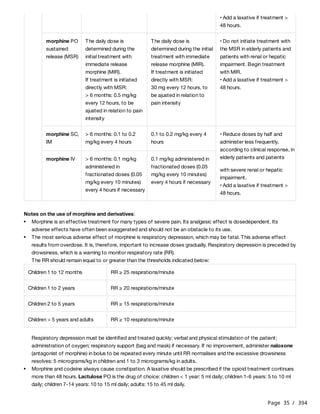
morphine PO
sustained
release (MSR)
The daily dose is
determined during the
initial treatment with
immediate release
morphine (MIR).
If treatment is initiated
directly with MSR:
> 6 months: 0.5 mg/kg
every 12 hours, to be
ajusted in relation to pain
intensity
The daily dose is
determined during the initial
treatment with immediate
release morphine (MIR).
If treatment is initiated
directly with MSR:
30 mg every 12 hours, to
be ajusted in relation to
pain intensity
• Do not initiate treatment with
the MSR in elderly patients and
patients with renal or hepatic
impairment. Begin treatment
with MIR.
• Add a laxative if treatment >
48 hours.
morphine SC,
IM
> 6 months: 0.1 to 0.2
mg/kg every 4 hours
0.1 to 0.2 mg/kg every 4
hours
• Reduce doses by half and
administer less frequently,
according to clinical response, in
elderly patients and patients
with severe renal or hepatic
impairment.
• Add a laxative if treatment >
48 hours.
morphine IV > 6 months: 0.1 mg/kg
administered in
fractionated doses (0.05
mg/kg every 10 minutes)
every 4 hours if necessary
0.1 mg/kg administered in
fractionated doses (0.05
mg/kg every 10 minutes)
every 4 hours if necessary
Morphine is an effective treatment for many types of severe pain. Its analgesic effect is dosedependent. Its
adverse effects have often been exaggerated and should not be an obstacle to its use.
The most serious adverse effect of morphine is respiratory depression, which may be fatal. This adverse effect
results from overdose. It is, therefore, important to increase doses gradually. Respiratory depression is preceded by
drowsiness, which is a warning to monitor respiratory rate (RR).
Children 1 to 12 months RR ≥ 25 respirations/minute
Children 1 to 2 years RR ≥ 20 respirations/minute
Children 2 to 5 years RR ≥ 15 respirations/minute
Children > 5 years and adults RR ≥ 10 respirations/minute
Morphine and codeine always cause constipation. A laxative should be prescribed if the opioid treatment continues
more than 48 hours. Lactulose PO is the drug of choice: children < 1 year: 5 ml daily; children 1-6 years: 5 to 10 ml
daily; children 7-14 years: 10 to 15 ml daily; adults: 15 to 45 ml daily.
Page 36 / 394
If the patient’s stools are soft, a stimulant laxative (bisacodyl PO: children > 3 years: 5 to 10 mg once daily; adults:
10 to 15 mg once daily) is preferred.
Children:
ondansetron PO: 0.15 mg/kg (max. 4 mg per dose) up to 3 times daily
Do not use metoclopramide in children.
Adults:
haloperidol PO (2 mg/ml oral solution): 1 to 2 mg up to 6 times daily or metoclopramide PO: 5 to 10 mg 3 times
daily with an interval of at least 6 hours between each dose
Do not combine haloperidol and metoclopramide.
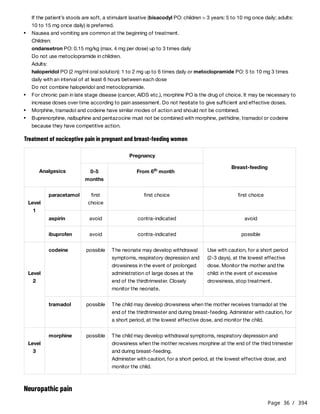
Treatment of nociceptive pain in pregnant and breast-feeding women
Neuropathic pain
Nausea and vomiting are common at the beginning of treatment.
For chronic pain in late stage disease (cancer, AIDS etc.), morphine PO is the drug of choice. It may be necessary to
increase doses over time according to pain assessment. Do not hesitate to give sufficient and effective doses.
Morphine, tramadol and codeine have similar modes of action and should not be combined.
Buprenorphine, nalbuphine and pentazocine must not be combined with morphine, pethidine, tramadol or codeine
because they have competitive action.
Analgesics
Pregnancy
Breast-feeding
0-5
months
From 6 month
th
Level
1
paracetamol first
choice
first choice first choice
aspirin avoid contra-indicated avoid
ibuprofen avoid contra-indicated possible
Level
2
codeine possible The neonate may develop withdrawal
symptoms, respiratory depression and
drowsiness in the event of prolonged
administration of large doses at the
end of the thirdtrimester. Closely
monitor the neonate.
Use with caution, for a short period
(2-3 days), at the lowest effective
dose. Monitor the mother and the
child: in the event of excessive
drowsiness, stop treatment.
tramadol possible The child may develop drowsiness when the mother receives tramadol at the
end of the thirdtrimester and during breast-feeding. Administer with caution, for
a short period, at the lowest effective dose, and monitor the child.
Level
3
morphine possible The child may develop withdrawal symptoms, respiratory depression and
drowsiness when the mother receives morphine at the end of the third trimester
and during breast-feeding.
Administer with caution, for a short period, at the lowest effective dose, and
monitor the child.
Page 37 / 394
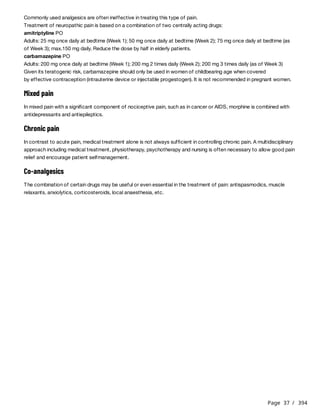
Commonly used analgesics are often ineffective in treating this type of pain.
Treatment of neuropathic pain is based on a combination of two centrally acting drugs:
amitriptyline PO
Adults: 25 mg once daily at bedtime (Week 1); 50 mg once daily at bedtime (Week 2); 75 mg once daily at bedtime (as
of Week 3); max.150 mg daily. Reduce the dose by half in elderly patients.
carbamazepine PO
Adults: 200 mg once daily at bedtime (Week 1); 200 mg 2 times daily (Week 2); 200 mg 3 times daily (as of Week 3)
Given its teratogenic risk, carbamazepine should only be used in women of childbearing age when covered
by effective contraception (intrauterine device or injectable progestogen). It is not recommended in pregnant women.
Mixed pain
In mixed pain with a significant component of nociceptive pain, such as in cancer or AIDS, morphine is combined with
antidepressants and antiepileptics.
Chronic pain
In contrast to acute pain, medical treatment alone is not always sufficient in controlling chronic pain. A multidisciplinary
approach including medical treatment, physiotherapy, psychotherapy and nursing is often necessary to allow good pain
relief and encourage patient selfmanagement.
Co-analgesics
The combination of certain drugs may be useful or even essential in the treatment of pain: antispasmodics, muscle
relaxants, anxiolytics, corticosteroids, local anaesthesia, etc.
Page 38 / 394
Anaemia
Last updated: January 2024
Anaemia is defined as a haemoglobin (Hb) level below reference values , which vary depending on age, sex, and
pregnancy status (see Table 2).
Anaemia may be caused by:
The causes of anaemia are often interlinked.
Clinical features
Laboratory
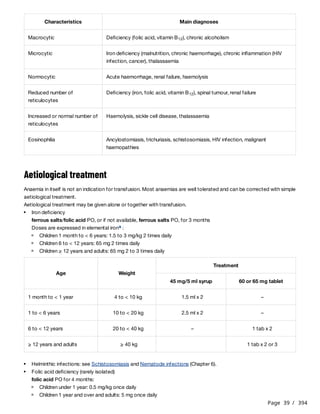
Table 1 - Possible diagnoses with FBC
[1][2]
Decreased production of red blood cells: iron deficiency, nutritional deficiencies (folic acid, vitamin B , vitamin A),
depressed bone marrow function, certain infections (HIV, visceral leishmaniasis), renal failure;
12
Loss of red blood cells: acute or chronic haemorrhage (gastrointestinal ulcer, ancylostomiasis, schistosomiasis,
etc.);
Increased destruction of red blood cells (haemolysis): parasitic (malaria), bacterial and viral (HIV) infections;
haemoglobinopathies (sickle cell disease, thalassaemia); intolerance to certain drugs (primaquine, dapsone, co-
trimoxazole, nitrofurantoin, etc.) in patients with G6PD deficiency.
Common signs: pallor of the conjunctivae, mucous membranes, palms of hands and soles of feet; fatigue,
dizziness, dyspnoea, tachycardia, heart murmur.
Signs of decompensation: cold extremities, altered mental status, oedema in the lower limbs, respiratory distress,
elevated jugular venous pressure, cardiac/coronary failure, shock.
Significant signs: cheilosis and glossitis (nutritional deficiency), jaundice, hepatosplenomegaly, dark coloured urine
(haemolysis), bleeding (maelena, haematuria, etc.), signs of malaria (Chapter 6), etc.
Hb levels
Rapid diagnostic test or thick and thin blood films in areas where malaria is endemic.
Urinary dipstick: check for haemoglobinuria or haematuria.
If sickle cell disease is suspected (to be done before blood transfusion): rapid diagnostic test (Sickle SCAN®) or, if
not available, Emmel test.
Full blood count (FBC) if available to guide diagnosis.
Page 39 / 394
Aetiological treatment
Anaemia in itself is not an indication for transfusion. Most anaemias are well tolerated and can be corrected with simple
aetiological treatment.
Aetiological treatment may be given alone or together with transfusion.
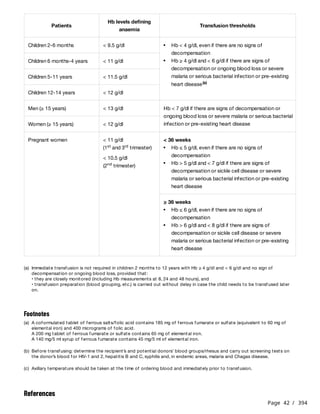
ferrous salts/folic acid PO, or if not available, ferrous salts PO, for 3 months
Doses are expressed in elemental iron :
folic acid PO for 4 months:
Characteristics Main diagnoses
Macrocytic Deficiency (folic acid, vitamin B ), chronic alcoholism
12
Microcytic Iron deficiency (malnutrition, chronic haemorrhage), chronic inflammation (HIV
infection, cancer), thalassaemia
Normocytic Acute haemorrhage, renal failure, haemolysis
Reduced number of
reticulocytes
Deficiency (iron, folic acid, vitamin B ), spinal tumour, renal failure
12
Increased or normal number of
reticulocytes
Haemolysis, sickle cell disease, thalassaemia
Eosinophilia Ancylostomiasis, trichuriasis, schistosomiasis, HIV infection, malignant
haemopathies
Iron deficiency
a
Children 1 month to < 6 years: 1.5 to 3 mg/kg 2 times daily
Children 6 to < 12 years: 65 mg 2 times daily
Children ≥ 12 years and adults: 65 mg 2 to 3 times daily
Age Weight
Treatment
45 mg/5 ml syrup 60 or 65 mg tablet
1 month to < 1 year 4 to < 10 kg 1.5 ml x 2 –
1 to < 6 years 10 to < 20 kg 2.5 ml x 2 –
6 to < 12 years 20 to < 40 kg – 1 tab x 2
≥ 12 years and adults ≥ 40 kg 1 tab x 2 or 3
Helminthic infections: see Schistosomiasis and Nematode infections (Chapter 6).
Folic acid deficiency (rarely isolated)
Children under 1 year: 0.5 mg/kg once daily
Children 1 year and over and adults: 5 mg once daily
Page 40 / 394
Blood transfusion
Indications
To decide whether to transfuse, several parameters should be taken into account:
If transfusion is indicated, it should be carried out without delay . For transfusion thresholds, see Table 2.
Volume to be transfused
If presence of haemorrhagic shock: see Shock, Chapter 1. Otherwise:
Transfusion volume is based on presence or absence of fever at any point from the time of ordering blood to the
time of transfusion:
Repeat if necessary, depending on clinical condition.
Monitoring
Repeat the injection (same dose) after 2 hours if necessary.
Malaria: see Malaria (Chapter 6). In the event of associated iron deficiency, wait 4 weeks after malaria treatment
before prescribing iron supplements.
Suspected haemolytic anaemia: stop any drug that causes haemolysis in patients with (or that may possibly have)
G6PD deficiency.
Clinical tolerance of anaemia
Underlying conditions (cardiovascular disease, infection, etc.)
Rate at which anaemia develops.
Hb levels
b
Children :
[3]
If no fever (axillary temperature ≤ 37.5 °C) : administer either 15 ml/kg of packed red blood cells (PRBC) over 3
hours or 30 ml/kg of whole blood over 4 hours
c
If fever (axillary temperature > 37.5 °C) : administer either 10 ml/kg of PRBC over 3 hours or 20 ml/kg of whole
blood over 4 hours
c
Adolescents and adults: start with an adult unit of PRBC or whole blood; do not exceed a transfusion rate of 5
ml/kg/hour.
Monitor the patient’s condition and vital signs (heart rate, blood pressure, respiratory rate, temperature):
During the transfusion: 5 minutes after the start of transfusion, then every 15 minutes during the first hour, then
every 30 minutes until the end of the transfusion.
After the transfusion: 4 to 6 hours after the end of the transfusion.
Pay attention to signs of transfusion reaction, fluid overload, decompensation or continuing blood loss.
For children: measure Hb once between 8 and 24 hours after the end of the transfusion or if signs of
decompensation or continuing blood loss.
If signs of circulatory overload appear:
Stop temporarily the transfusion.
Sit the patient in an upright position.
Administer oxygen.
Administer furosemide by slow IV injection:
Children: 0.5 to 1 mg/kg
Adults: 20 to 40 mg
Once the patient has been stabilised, start the transfusion again after 30 minutes.
Page 41 / 394
Prevention
ferrous salts/folic acid PO, or if not available, ferrous salts PO, as long as the risk of deficiency persists (e.g.
pregnancy , malnutrition).
Doses are expressed in elemental iron :
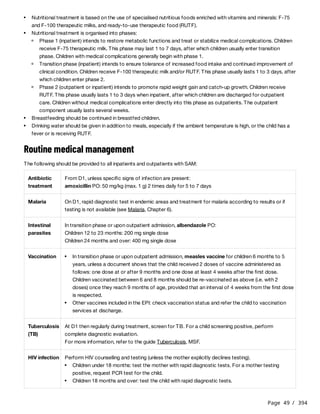
Table 2 - Definition of anaemia and transfusion thresholds
Iron (and folic acid) deficiency:
Drug supplements:
[4]
a
Children 1 month to < 12 years: 1 to 2 mg/kg once daily (max. 65 mg daily)
Children ≥ 12 years and adults: 65 mg once daily
Age Weight
Prevention
45 mg/5 ml syrup 60 or 65 mg tablet
1 month to < 1 year 4 to < 10 kg 1 ml –
1 to < 6 years 10 to < 20 kg 2.5 ml –
6 to < 12 years 20 to < 40 kg 5 ml –
≥ 12 years and adults ≥ 40 kg – 1 tab
Nutritional supplements (if the basic diet is insufficient).
In the event of sickle cell anaemia: see Sickle cell disease (Chapter 12).
Early treatment of malaria, helminthic infections, etc.
Page 42 / 394
References
Patients
Hb levels defining
anaemia
Transfusion thresholds
Children 2-6 months < 9.5 g/dl Hb < 4 g/dl, even if there are no signs of
decompensation
Hb ≥ 4 g/dl and < 6 g/dl if there are signs of
decompensation or ongoing blood loss or severe
malaria or serious bacterial infection or pre-existing
heart disease(a)
Children 6 months-4 years < 11 g/dl
Children 5-11 years < 11.5 g/dl
Children 12-14 years < 12 g/dl
Men (≥ 15 years) < 13 g/dl Hb < 7 g/dl if there are signs of decompensation or
ongoing blood loss or severe malaria or serious bacterial
infection or pre-existing heart disease
Women (≥ 15 years) < 12 g/dl
Pregnant women < 11 g/dl
(1 and 3 trimester)
< 10.5 g/dl
(2 trimester)
st rd
nd
< 36 weeks
Hb ≤ 5 g/dl, even if there are no signs of
decompensation
Hb > 5 g/dl and < 7 g/dl if there are signs of
decompensation or sickle cell disease or severe
malaria or serious bacterial infection or pre-existing
heart disease
≥ 36 weeks
Hb ≤ 6 g/dl, even if there are no signs of
decompensation
Hb > 6 g/dl and < 8 g/dl if there are signs of
decompensation or sickle cell disease or severe
malaria or serious bacterial infection or pre-existing
heart disease
(a) Immediate transfusion is not required in children 2 months to 12 years with Hb ≥ 4 g/dl and < 6 g/dl and no sign of
decompensation or ongoing blood loss, provided that:
• they are closely monitored (including Hb measurements at 8, 24 and 48 hours), and
• transfusion preparation (blood grouping, etc.) is carried out without delay in case the child needs to be transfused later
on.
Footnotes
(a) A coformulated tablet of ferrous salts/folic acid contains 185 mg of ferrous fumarate or sulfate (equivalent to 60 mg of
elemental iron) and 400 micrograms of folic acid.
A 200 mg tablet of ferrous fumarate or sulfate contains 65 mg of elemental iron.
A 140 mg/5 ml syrup of ferrous fumarate contains 45 mg/5 ml of elemental iron.
(b) Before transfusing: determine the recipient’s and potential donors’ blood groups/rhesus and carry out screening tests on
the donor’s blood for HIV-1 and 2, hepatitis B and C, syphilis and, in endemic areas, malaria and Chagas disease.
(c) Axillary temperature should be taken at the time of ordering blood and immediately prior to transfusion.
Page 43 / 394
1. World Health Organization. Haemoglobin Concentrations for the Diagnosis of Anaemia and Assessment of Severity. World
Health Organization; 2011. [Accessed June 26, 2023]
https://apps.who.int/iris/handle/10665/85839
2. World Health Organization. Educational Modules on Clinical Use of Blood. World Health Organization; 2021. [Accessed June
26, 2023]
https://apps.who.int/iris/handle/10665/350246
3. Maitland K, Olupot-Olupot P
, Kiguli S, et al. Transfusion Volume for Children with Severe Anemia in Africa. N Engl J Med.
2019;381(5):420-431.
https://doi.org/10.1056/NEJMoa1900100
4. Word Health Organization. Daily iron and folic acid supplementation in pregnant women. Word Health Organization. Geneva,
2012. [Accessed June 26, 2023]
https://apps.who.int/iris/handle/10665/77770
Page 44 / 394
Dehydration
Dehydration results from excessive loss of water and electrolytes from the body. If prolonged, dehydration can
compromise organ perfusion, resulting in shock.
It is principally caused by diarrhoea, vomiting and severe burns.
Children are particularly susceptible to dehydration due to frequent episodes of gastroenteritis, high surface area to
volume ratio and inability to fully communicate, or independently meet their fluid needs.
The protocols below are focused on treatment of dehydration caused by diarrhoea and vomiting. Alternative treatment
protocols should be used for children with malnutrition (see Severe acute malnutrition, Chapter 1) or in patients with
severe burns (see Burns, Chapter 10).
Clinical features and assessment
Classification of degree of dehydration (adapted from the WHO)
Treatment of dehydration
History of diarrhoea and/or vomiting and concomitant reduced urine output.
Clinical features depend on the degree of dehydration (see table below). Features such as dry mouth, absence of
tears may also be noted.
Patients with severe dehydration should be assessed for shock (tachycardia, low blood pressure and delayed
capillary refill time etc.).
Electrolyte disorders may cause tachypnoea, muscle cramps or weakness, cardiac arrhythmia (irregular heart rate,
palpitation), confusion and/or seizures.
[1][2]
Severe dehydration
At least 2 of the
following signs:
Some dehydration
At least 2
of the following signs:
No dehydration
No signs of "severe"
or "some" dehydration.
Mental status
Lethargic or
unconscious
Restless or irritable Normal
Radial pulse Weak or absent Palpable Easily palpable
Eyes(a) Sunken Sunken Normal
Skin pinch(b)
Goes back very slowly
(> 2 seconds)
Goes back slowly
(< 2 seconds)
Goes back quickly
(< 1 second)
Thirst
Drinks poorly
or not able to drink
Thirst,
drinks quickly
No thirst,
drinks normally
(a) Sunken eyes may be a normal feature in some children. Ask the mother if the child's eyes are the same as usual or if they are
more sunken than usual.
(b) Skin pinch is assessed by pinching the skin of the abdomen between the thumb and forefinger without twisting. In older
people this sign is not reliable as normal aging diminishes skin elasticity.
Page 45 / 394
Severe dehydration
WHO Treatment Plan C
Some dehydration
WHO Treatment Plan B
Treat shock if present (see Shock, Chapter 1).
If able to drink, administer oral rehydration solution (ORS) PO whilst obtaining IV access.
according to WHO Treatment Plan C, monitoring infusion rate closely:
Insert peripheral IV line using large caliber catheter (22-24G in children or 18G in adults) or intraosseous needle.
Administer Ringer lactate (RL)a
[1][2]
Age First, give 30 ml/kg over :
(c) Then, give 70 ml/kg over:
Children < 1 year 1 hour 5 hours
Children ≥ 1 year and adults 30 minutes 2 ½ hours
(c) Repeat once if radial pulse remains weak or absent after first bolus.
In case of suspected severe anaemia, measure haemoglobin and treat accordingly (see Anaemia, Chapter 1).b
As soon as the patient is able to drink safely (often within 2 hours), provide ORS as the patient tolerates. ORS
contains glucose and electrolytes which prevent development of complications.
Monitor ongoing losses closely. Assess clinical condition and degree of dehydration at regular intervals to ensure
continuation of appropriate treatment.
If over the course of treatment the patient:
remains or becomes lethargic: measure blood glucose level and/or treat hypoglycaemia (see Hypoglycaemia,
Chapter 1).
develops muscle cramps/weakness and abdominal distention: treat for moderate hypokalaemia with 7.5%
potassium chloride syrup (1 mmol of K /ml) PO for 2 days:
Children under 45 kg: 2 mmol/kg (2 ml/kg) daily (according to weight, the daily dose is divided into 2 or 3 doses)
Children 45 kg and over and adults: 30 mmol (30 ml) 3 times daily
This treatment should only be given as an inpatient .
+
c
develops peri-orbital or peripheral oedema: reduce the infusion rate to a minimum, auscultate the lungs, re-
evaluate the stage of dehydration and the necessity of continuing IV rehydration. If IV rehydration is still required,
continue the infusion at a slower rate and observe the patient closely. If IV rehydration is no longer required,
change to oral treatment with ORS.
develops dyspnoea, cough and bibasal crepitations are heard on auscultation of the lungs: sit the patient up,
reduce the infusion rate to a minimum and administer one dose of furosemide IV (1 mg/kg in children; 40 mg in
adults). Monitor the patient closely over 30 minutes and assess for underlying cardiorespiratory or renal disease.
Once the patient is stabilised, reassess the degree of dehydration and the necessity of continuing IV rehydration.
If IV rehydration is still required, re-start at half the previous infusion rate and monitor closely. If IV rehydration is
no longer required, change to oral treatment with ORS.
Administer ORS according to WHO Treatment Plan B which equates to 75 ml/kg ORS given over 4 hours.
[1]d
Page 46 / 394
No dehydration
Prevent dehydration:
WHO Treatment Plan A
Treatment of diarrhoea
In addition to the WHO treatment plan corresponding to patient's degree of dehydration:
Age
< 4
months
4 to
11 months
12 to
23 months
2 to 4 years
5 to
14 years
≥ 15 years
Weight < 5 kg
5 to
7.9 kg
8 to
10.9 kg
11 to 15.9
kg
16 to 29.9
kg
≥ 30 kg
Quantity of ORS over
4 hours
200 to 400
ml
400 to
600 ml
600 to
800 ml
800 to 1200
ml
1200 to
2200 ml
2200 to
4000 ml
Encourage additional age-appropriate fluid intake, including breastfeeding in young children. Give additional ORS
after each loose stool (see below).
Monitor ongoing losses closely. Assess clinical condition and degree of dehydration at regular intervals to ensure
continuation of appropriate treatment.
Encourage age-appropriate fluid intake, including breastfeeding in young children.
Administer ORS according to WHO Treatment Plan A after any loose stool.
[1][2]
Age Quantity of ORS
Children < 2 years 50 to 100 ml (10 to 20 teaspoons)
Children 2 to 10 years 100 to 200 ml (½ to 1 glass)
Children > 10 years and adults at least 250 ml (at least 1 glass)
Administer aetiologic treatment if required.
Administer zinc sulfate to children under 5 years (see Acute diarrhoea, Chapter 3).
Footnotes
(a) If RL not available, 0.9% sodium chloride can be used.
(b) If transfusion is required, it should be provided in parallel to IV fluids, using a separate IV line. The blood volume administered
should be deducted from the total volume of Plan C.
(c) If available, take blood tests to monitor urea and electrolyte levels.
(d) For more detailed information on ORS recommendations by age and weight, refer to the guide Management of a cholera
epidemic, MSF.
Page 47 / 394
References
1. World Health Organization. The treatment of diarrhoea : a manual for physicians and other senior health workers, 4th
rev. World Health Organization. 2005.
https://apps.who.int/iris/handle/10665/43209
2. World Health Organization. Pocket book of Hospital Care for children. Guidelines for the Management of Common
Childhood Illnesses. 2013.
https://apps.who.int/iris/bitstream/handle/10665/81170/9789241548373_eng.pdf?sequence=1
Page 48 / 394
Severe acute malnutrition
Last updated: February 2024
Severe acute malnutrition (SAM) results from insufficient energy (kilocalories), fat, protein and/or other nutrients
(vitamins and minerals, etc.) to cover individual needs.
SAM is frequently associated with medical complications due to metabolic disturbances and compromised immunity. It
is a major cause of morbidity and mortality in children globally.
The protocols below are focused on the diagnosis and management of SAM in children 6 to 59 months only. For
further details regarding this age group, and guidance for other age groups, refer to national recommendations and/or
specialised protocols.
Clinical assessment
Characteristic physical signs
Diagnostic and admission criteria
Diagnostic criteria for SAM are both anthropometric and clinical:
Admission criteria for SAM treatment programmes vary with context. Refer to national recommendations.
Medical complications
Nutritional treatment
In marasmus: skeletal appearance resulting from significant loss of muscle mass and subcutaneous fat.
In kwashiorkor:
Bilateral oedema of the lower limbs sometimes extending to other parts of the body (e.g. arms and hands, face).
Discoloured, brittle hair; shiny skin which may crack, weep, and become infected.
Mid-upper arm circumference (MUAC) measures the degree of muscle wasting. MUAC < 115 mm indicates
SAM and significant mortality risk.
a
Weight-for-height z-score (WHZ) indicates the degree of weight loss by comparing the weight of the child with the
median weight of non-malnourished children of the same height and sex. SAM is defined as WHZ < –3 with
reference to the WHO Child Growth Standards .
b
The presence of bilateral pitting oedema of the lower limbs (when other causes of oedema have been ruled out)
indicates SAM, regardless of MUAC and WHZ.
Children with any of the following severe medical conditions should receive hospital-based medical management:
Pitting oedema extending from the lower limbs up to the face;
Anorexia (observed during appetite test);
Other severe complications: persistent vomiting, shock, altered mental status, seizures, severe anaemia
(clinically suspected or confirmed), persistent hypoglycaemia, eye lesions due to vitamin A deficiency, frequent
or abundant diarrhoea, dysentery, dehydration, severe malaria, pneumonia, meningitis, sepsis, severe cutaneous
infection, fever of unknown origin, etc.
In the absence of these conditions, children should be treated as outpatients with regular follow-up.
All children with SAM should receive nutritional treatment.
Page 49 / 394
Routine medical management
The following should be provided to all inpatients and outpatients with SAM:
Nutritional treatment is based on the use of specialised nutritious foods enriched with vitamins and minerals: F-75
and F-100 therapeutic milks, and ready-to-use therapeutic food (RUTF).
Nutritional treatment is organised into phases:
Phase 1 (inpatient) intends to restore metabolic functions and treat or stabilize medical complications. Children
receive F-75 therapeutic milk. This phase may last 1 to 7 days, after which children usually enter transition
phase. Children with medical complications generally begin with phase 1.
Transition phase (inpatient) intends to ensure tolerance of increased food intake and continued improvement of
clinical condition. Children receive F-100 therapeutic milk and/or RUTF. This phase usually lasts 1 to 3 days, after
which children enter phase 2.
Phase 2 (outpatient or inpatient) intends to promote rapid weight gain and catch-up growth. Children receive
RUTF. This phase usually lasts 1 to 3 days when inpatient, after which children are discharged for outpatient
care. Children without medical complications enter directly into this phase as outpatients. The outpatient
component usually lasts several weeks.
Breastfeeding should be continued in breastfed children.
Drinking water should be given in addition to meals, especially if the ambient temperature is high, or the child has a
fever or is receiving RUTF.
Antibiotic
treatment
From D1, unless specific signs of infection are present:
amoxicillin PO: 50 mg/kg (max. 1 g) 2 times daily for 5 to 7 days
Malaria On D1, rapid diagnostic test in endemic areas and treatment for malaria according to results or if
testing is not available (see Malaria, Chapter 6).
Intestinal
parasites
In transition phase or upon outpatient admission, albendazole PO:
Children 12 to 23 months: 200 mg single dose
Children 24 months and over: 400 mg single dose
Vaccination
Children vaccinated between 6 and 8 months should be re-vaccinated as above (i.e. with 2
doses) once they reach 9 months of age, provided that an interval of 4 weeks from the first dose
is respected.
In transition phase or upon outpatient admission, measles vaccine for children 6 months to 5
years, unless a document shows that the child received 2 doses of vaccine administered as
follows: one dose at or after 9 months and one dose at least 4 weeks after the first dose.
Other vaccines included in the EPI: check vaccination status and refer the child to vaccination
services at discharge.
Tuberculosis
(TB)
At D1 then regularly during treatment, screen for TB. For a child screening positive, perform
complete diagnostic evaluation.
For more information, refer to the guide Tuberculosis, MSF.
HIV infection Perform HIV counselling and testing (unless the mother explicitly declines testing).
Children under 18 months: test the mother with rapid diagnostic tests. For a mother testing
positive, request PCR test for the child.
Children 18 months and over: test the child with rapid diagnostic tests.
Page 50 / 394
Management of complications
Infections
Severe anaemia
Diarrhoea and dehydration
Respiratory, cutaneous and urinary infections are common. However, classic signs of infection, such as fever, may
be absent .
[1]
Severe infection or sepsis should be suspected in children that are lethargic or apathetic or suffering from an acute
complication such as hypothermia, hypoglycaemia, seizures, difficulty breathing, or shock. Immediately
administer ampicillin IV 50 mg/kg every 8 hours + gentamicin IV 7.5 mg/kg once daily. Continue this treatment
unless the source of infection is identified and different antibiotic treatment is required.
If circulatory impairment or shock, immediately administer ceftriaxone IV, one dose of 80 mg/kg, then assess the
source of infection to determine further antibiotic treatment. See also Shock, Chapter 1. Transfuse urgently as for
severe anaemia (see below) if haemoglobin (Hb) is < 6 g/dl.
In less severe infections, assess the source of infection (see Fever, Chapter 1) and treat accordingly.
If fever is present and causes discomfort, undress the child. If insufficient, administer paracetamol PO in low dose:
10 mg/kg, up to 3 times maximum per 24 hours. Encourage oral fluids (including breast milk).
If hypothermia is present, place the child skin-to-skin against the mother's body and cover with a warm blanket.
Treat for infection as above. Check blood glucose level and treat for hypoglycaemia if necessary (see
Hypoglycaemia, Chapter 1).
In children with kwashiorkor, infection of cutaneous lesions is common and may progress to soft tissue or systemic
infection. If cutaneous infection is present, stop amoxicillin and start amoxicillin/clavulanic acid PO. Use
formulations in a ratio of 8:1 or 7:1. The dose is expressed in amoxicillin: 50 mg/kg 2 times daily for 7 days.
Children with Hb < 4 or < 6 with signs of decompensation (such as respiratory distress) or ongoing blood loss require
transfusion within the first 24 hours. See Anaemia (Chapter 1) for volume to be transfused and patient monitoring
during and after transfusion.
Preferably use packed red blood cells (PRBC), if available. Monitor closely for signs of fluid overload (see box
below).
Diarrhoea is common. Therapeutic foods facilitate the recovery of physiological function of the gastrointestinal
tract. Amoxicillin administered as part of routine treatment reduces intestinal bacterial overgrowth. Diarrhoea
generally resolves without additional treatment. If an aetiological treatment is necessary, see Acute diarrhoea,
Chapter 3.
Zinc supplementation is not needed if children consume recommended amounts of therapeutic foods.
The diagnosis of dehydration is based on history and clinical features.
Clinical assessment is difficult in children with SAM as delayed skin pinch test and sunken eyes are often present
even in the absence of dehydration.
For classification of degree of dehydration adapted for children with SAM, see table below:
Page 51 / 394
Acute diarrhoea with no dehydration (Plan A SAM)
Acute diarrhoea with some dehydration (Plan B SAM)
Acute diarrhoea with severe dehydration (Plan C SAM)
Clinical features
(2 or more of the following signs)
No
dehydration
Some
dehydration
Severe
dehydration
Mental status Normal Restless, irritability
Lethargic or
unconscious
Thirst
No thirst, drinks
normally
Thirsty, drinks eagerly
Unable to drink or drinks
poorly
Urine output Normal Reduced
Absent for
several hours
Recent frequent watery
diarrhoea and/or vomiting
Yes Yes Yes
Recent obvious rapid weight
loss
No Yes Yes
Stools are neither frequent nor abundant (outpatient): oral rehydration solution (ORS) PO: 5 ml/kg after each loose
stool to prevent dehydration.
Stools are frequent and/or abundant (inpatient): ReSoMal PO or by nasogastric tube (NGT): 5 ml/kg after each
loose stool to prevent dehydration.
c
In all cases, continue feeding and breastfeeding, encourage oral fluids.
Determine the target weight (weight before the onset of diarrhoea) before starting rehydration. If not feasible (e.g.
new admission), estimate target weight as current weight x 1.06.
ReSoMal PO or by NGT: 20 ml/kg/hour for 2 hours. In addition, administer 5 ml/kg of ReSoMal after each loose
stool if tolerated.
c
Assess after 2 hours (clinical evaluation and weight):
If improvement (diarrhoea and signs of dehydration regress):
Reduce ReSoMal to 10 ml/kg/hour until the signs of dehydration and/or weight loss (known or estimated)
have been corrected.
Assess every 2 hours.
Once there are no signs of dehydration and/or the target weight is reached, change to Plan A SAM to
prevent dehydration.
If no improvement after 2 to 4 hours or if oral rehydration cannot compensate for losses: change to Plan C SAM
"with circulatory impairment".
Continue feeding including breastfeeding.
Monitor for signs of fluid overload (see box below). Regardless of the target weight, stop rehydration if signs
of fluid overload appear.
In all patients:
Assess for circulatory impairment (see Shock, Chapter 1).
Estimate target weight as current weight x 1.1.
Page 52 / 394
Signs of fluid overload include:
Plus any one of the following:
Other complications
For other complications (to be treated as inpatient), see:
Measure blood glucose level and treat hypoglycaemia (Chapter 1) if necessary.
Monitor vital signs and signs of dehydration every 15 to 30 minutes.
Monitor urine output.
Monitor for signs of fluid overload (see box below).
If there is no circulatory impairment:
ReSoMal PO or by NGT: 20 ml/kg over 1 hour
If the child is alert, continue feeding including breastfeeding.
Assess after 1 hour:
If improvement: change to Plan B SAM, but keep the same target weight.
If rehydration PO/NGT not tolerated (e. g. vomiting):
Stop ReSoMal. Administer glucose 5%-Ringer lactate (G5%-RL) IV infusion: 10 ml/kg/hour for 2 hours.
d
Assess after 2 hours of IV fluids:
If improvement and/or not vomiting, stop G5%-RL IV infusion and change to Plan B SAM.
If no improvement or still vomiting, continue G5%-RL IV infusion: 10 ml/kg/hour for 2 hours.
If deterioration with circulatory impairment: see below.
If there is circulatory impairment:
Stabilize (see Shock, Chapter 1).
Administer ceftriaxone IV, one dose of 80 mg/kg. Subsequent antibiotic treatment depends on assessment of
underlying cause.
Administer G5%-RL IV infusion: 10 ml/kg/hour for 2 hours. Stop ReSoMal if the child was taking it.
Assess after 1 hour of IV fluids:
If improvement and no vomiting: stop IV fluid and change to Plan B SAM, but keep the same target weight.
If no improvement:
Continue G5%-RL IV infusion: 10 ml/kg/hour.
Prepare for blood transfusion.
Assess after 2 hours of IV fluids:
If improvement: change to Plan B SAM, but keep the same target weight.
If no improvement or deterioration:
Check Hb as baseline and administer blood transfusion using a separate IV line. See Anaemia (Chapter 1)
for volume to be transfused and patient monitoring during and after transfusion.
While transfusing, continue G5%-RL IV infusion 10 ml/kg/hour for another 2 hours.
RR ≥ 10 breaths/minute compared to initial RR, or
HR ≥ 20 beats/minute compared to initial HR
New or worsening hypoxia (decrease in SpO by > 5%)
2
New onset of rales and/or fine crackles in lung fields
New galloping heart rhythm
Increased liver size (must have marked liver border with pen before rehydration)
New peripheral or eyelid oedema
Hypoglycaemia, seizures, Chapter 1.
Acute pneumonia, Chapter 2.
Stomatitis, Chapter 3.
Xerophthalmia (vitamin A deficiency), Chapter 5.
Page 53 / 394
Discharge criteria
In general:
Discharge criteria vary with context. Refer to national recommendations.
References
Children can be discharged from hospital and be treated as outpatients if the following criteria are met:
clinically well;
medical complications controlled;
able to eat RUTF (observed during appetite test);
reduction or absence of oedema;
caregiver feels able to provide care as outpatient;
vaccinations up to date or referral to vaccination service organised.
Children can be discharged from nutritional treatment if the following criteria are met:
co-existing medical conditions stable and outpatient treatment organised if necessary (e.g. dressing changes,
follow-up for chronic diseases);
vaccinations up to date or referral to vaccination service organised;
absence of oedema and WHZ > –2 or MUAC > 125 mm for at least 2 weeks.
Footnotes
(a) MUAC is measured at the mid-point of the left upper arm. The arm should be relaxed. The measuring tape should be in
contact with the skin all around the arm, without exerting pressure.
(b) For WHZ, see WHO simplified field tables in z-scores for girls and for boys:
https://www.who.int/tools/child-growth-standards/standards/weight-for-length-height
(c) ReSoMal is a specific oral rehydration solution for malnourished children, containing less sodium and more potassium than
standard ORS. It should be administered under medical supervision to avoid overdosing and hyponatremia.
(d) Remove 50 ml of Ringer lactate (RL) from a 500 ml RL bottle or bag, then add 50 ml of 50% glucose to the remaining 450 ml
of RL to obtain 500 ml of 5% glucose-RL solution.
1. Jones KDJ, Berkley JA. Severe acute malnutrition and infection. Paediatrics and International Child Health 2014; 34(sup1):
S1-S29.
https://www.tandfonline.com/doi/full/10.1179/2046904714Z.000000000218 [Accessed 24 August 2022]
Page 54 / 394
Chapter 2: Respiratory diseases
Acute upper airway obstruction
Rhinitis and rhinopharyngitis (common cold)
Acute sinusitis
Acute pharyngitis
Diphtheria
Other upper respiratory tract infections
Croup (laryngotracheitis and laryngotracheobronchitis)
Epiglottitis
Bacterial tracheitis
Otitis
Acute otitis externa
Acute otitis media (AOM)
Chronic suppurative otitis media (CSOM)
Whooping cough (pertussis)
Bronchitis
Acute bronchitis
Chronic bronchitis
Bronchiolitis
Acute pneumonia
Pneumonia in children under 5 years of age
Pneumonia in children over 5 years and adults
Persistent pneumonia
Staphylococcal pneumonia
Asthma
Acute asthma (asthma attack)
Chronic asthma
Pulmonary tuberculosis
Page 55 / 394
Acute upper airway obstruction
Acute upper airway obstruction can be caused by foreign body aspiration, viral or bacterial infections (croup,
epiglottitis, tracheitis), anaphylaxis, burns or trauma.
Initially stable and partial obstruction may worsen and develop into a life-threatening emergency, especially in young
children.
Clinical features
Clinical signs of the severity of obstruction:
Management in all cases
Obstruction Signs
Danger
signs
Complete Respiratory distress followed by cardiac arrest
Yes
Imminent
complete
Severe respiratory distress with cyanosis or SpO < 90%
2
Agitation or lethargy
Tachycardia, capillary refill time > 3 seconds
Severe Stridor (abnormal high pitched sound on inspiration) at rest
Severe respiratory distress:
Severe intercostal and subcostal retractions
Nasal flaring
Substernal retractions (inward movement of the breastbone during
inspiration)
Severe tachypnoea
Moderate Stridor with agitation
Moderate respiratory distress:
Mild intercostal and subcostal retractions
Moderate tachypnoea
No
Mild Cough, hoarse voice, no respiratory distress
Examine children in the position in which they are the most comfortable.
Evaluate the severity of the obstruction according to the table above.
Monitor SpO , except in mild obstruction.
2
Administer oxygen continuously:
to maintain the SpO between 94 and 98% if it is ≤ 90% or if the patient has cyanosis or respiratory distress;
2
a
if pulse oxymeter is not available: at least 5 litres/minute or to relieve the hypoxia and improve respiration.
Hospitalize (except if obstruction is mild), in intensive care if danger signs.
Monitor mental status, heart and respiratory rate, SpO and severity of obstruction.
2
Maintain adequate hydration by mouth if possible, by IV if patient unable to drink.
Page 56 / 394
Management of foreign body aspiration
Acute airway obstruction (the foreign body either completely obstructs the pharynx or acts as a valve on the laryngeal
inlet), no warning signs, most frequently in a child 6 months-5 years playing with a small object or eating. Conscience is
initially maintained.
Perform maneuvers to relieve obstruction only if the patient cannot speak or cough or emit any sound:
Heimlich manoeuvre: stand behind the patient. Place a closed fist in the pit of the stomach, above the navel and
below the ribs. Place the other hand over fist and press hard into the abdomen with a quick, upward thrust. Perform
one to five abdominal thrusts in order to compress the lungs from the below and dislodge the foreign body.
Place the infant face down across the forearm (resting the forearm on the leg) and support the infant’s head with
the hand. With the heel of the other hand, perform one to five slaps on the back, between shoulder plates.
If unsuccessful, turn the infant on their back. Perform five forceful sternal compressions as in cardiopulmonary
resuscitation: use 2 or 3 fingers in the center of the chest just below the nipples. Press down approximately one-
third the depth of the chest (about 3 to 4 cm).
Repeat until the foreign body is expelled and the patient resumes spontaneous breathing (coughing, crying, talking). If
the patient loses consciousness ventilate and perform cardiopulmonary rescucitation. Tracheostomy if unable to
ventilate.
Differential diagnosis and management of airway obstructions of
infectious origin
Management of other causes
Children over 1 year and adults:
Children under 1 year:
Infections Symptoms Appearance
Timing of
symptoms
Viral croup Stridor, cough and moderate respiratory
difficulty
Prefers to sit Progressive
Epiglottitis Stridor, high fever and severe respiratory
distress
Prefers to sit, drooling (cannot
swallow their own saliva)
Rapid
Bacterial tracheitis Stridor, fever, purulent secretions and severe
respiratory distress
Prefers to lie flat Progressive
Retropharyngeal or
tonsillar abscess
Fever, sore throat and painful swallowing,
earache, trismus and hot potato voice
Prefers to sit, drooling Progressive
Croup, epiglottitis, and tracheitis: see Other upper respiratory tract infections.
Abscess: refer for surgical drainage.
Anaphylactic reaction (angioedema): see Anaphylactic shock (Chapter 1)
Burns to the face or neck, smoke inhalation with airway oedema: see Burns (Chapter 10).
Page 57 / 394
Footnotes
(a) If possible it is better to treat all patients with a SpO < 95% with oxygen.
2
Page 58 / 394
Rhinitis and rhinopharyngitis (common cold)
Rhinitis (inflammation of the nasal mucosa) and rhinopharyngitis (inflammation of the nasal and pharyngeal mucosa) are
generally benign, self-limited and most often of viral origin. However, they may be an early sign of another infection (e.g.
measles or influenza) or may be complicated by a bacterial infection (e.g. otitis media or sinusitis).
Clinical features
Treatment
Nasal discharge or obstruction, which may be accompanied by sore throat, fever, cough, lacrimation, and diarrhoea
in infants. Purulent nasal discharge is not indicative of a secondary bacterial infection.
In children under 5 years, routinely check the tympanic membranes to look for an associated otitis media.
Antibiotherapy is not recommended: it does not promote recovery nor prevent complications.
Treatment is symptomatic:
Clear the nose with 0.9% sodium chloride .
a
Fever, throat soreness: paracetamol PO for 2 to 3 days (Fever, Chapter 1).
Footnotes
(a) For a child: place him on his back, head turned to the side, and instil 0.9% sodium chloride into each nostril.
Page 59 / 394
Acute sinusitis
Acute sinusitis is an inflammation of one or more of the sinus cavities, caused by an infection or allergy.
Most acute sinus infections are viral and resolve spontaneously in less than 10 days. Treatment is symptomatic.
Acute bacterial sinusitis may be a primary infection, a complication of viral sinusitis or of dental origin. The principal
causative organisms are Streptococcus pneumoniae, Haemophilus influenzae and Moraxella catarrhalis.
It is essential to distinguish between bacterial sinusitis and common rhinopharyngitis (see Rhinitis and rhinopharyngitis).
Antibiotic therapy is required in case of bacterial sinusitis only.
Without treatment, severe sinusitis in children may cause serious complications due to the spread of infection to the
neighbouring bony structures, orbits or the meninges.
Clinical features
Sinusitis in adults
Sinusitis is likely if symptoms persist for longer than 10 to 14 days or worsen after 5 to 7 days or are severe (severe
pain, high fever, deterioration of the general condition).
Sinusitis in children
Treatment
Symptomatic treatment
Antibiotherapy
Purulent unilateral or bilateral discharge, nasal obstruction
and
Facial unilateral or bilateral pain that increases when bending over; painful pressure in maxillary area or behind the
forehead.
Fever is usually mild or absent.
Same symptoms; in addition, irritability or lethargy or cough or vomiting may be present.
In the event of severe infection: deterioration of the general condition, fever over 39 °C, periorbital or facial
oedema.
Fever and pain (Chapter 1).
Clear the nose with 0.9% sodium chloride .
a
In adults:
Antibiotherapy is indicated if the patient meets the criteria of duration or severity of symptoms. Oral amoxicillin is
the first-line treatment.
If the diagnosis is uncertain (moderate symptoms < 10 days) and the patient can be reexamined in the next few
days, start with a symptomatic treatment, as for rhinopharyngitis or viral sinusitis.
In children:
Antibiotic therapy is indicated if the child has severe symptoms or mild symptoms associated with risk factors (e.g.
immunosuppression, sickle cell disease, asthma).
Oral amoxicillin is the first-line treatment.
amoxicillin PO for 7 to 10 days:
Page 60 / 394
Other treatments
Children: 30 mg/kg 3 times daily (max. 3 g daily)
Adults: 1 g 3 times daily
In the event of failure to respond within 48 hours of therapy:
amoxicillin/clavulanic acid PO for 7 to 10 days. Use formulations in a ratio of 8:1 or 7:1 exclusively. The dose
is expressed in amoxicillin:
Children < 40 kg: 25 mg/kg 2 times daily
Children ≥ 40 kg and adults:
Ratio 8:1: 2000 mg daily (2 tablets of 500/62.5 mg 2 times daily)
Ratio 7:1: 1750 mg daily (1 tablet of 875/125 mg 2 times daily)
In penicillin-allergic patients:
erythromycin PO for 7 to 10 days:
Children: 30 to 50 mg/kg daily
Adults: 1 g 2 to 3 times daily
b
In infants with ethmoiditis, see Periorbital and orbital cellulitis (Chapter 5).
For sinusitis secondary to dental infection: dental extraction while under antibiotic treatment.
In the event of ophthalmologic complications (ophthalmoplegia, mydriasis, reduced visual acuity, corneal
anesthesia), refer for surgical drainage.
Footnotes
(a) For a child: place him on his back, head turned to the side, and instil 0.9% sodium chloride into each nostril.
(b) For dosage according to age or weight, see erythromycin in the guide Essential drugs, MSF.
Page 61 / 394
Acute pharyngitis
Last updated: November 2020
Acute inflammation of the tonsils and pharynx. The majority of cases are of viral origin and do not require antibiotic
treatment. Group A streptococcus (GAS) is the main bacterial cause, and mainly affects children aged 3 to 14 years.
Acute rheumatic fever (ARF), a serious late complication of GAS pharyngitis, can be prevented with antibiotic
treatment.
One of the main objectives of assessing acute pharyngitis is to identify patients requiring antibiotic treatment.
Clinical features
Common forms:
Centor criteria
In patients over 14 years, the probability of GAS pharyngitis is low. Infectious mononucleosis (IM) due to the
Epstein-Barr virus should be suspected in adolescents and young adults with extreme fatigue, generalized
adenopathy and often splenomegaly.
Erythematous or exudative pharyngitis may also be associated with gonococcal or primary HIV infection. In
these cases, the diagnosis is mainly prompted by the patient's history.
Other forms of pharyngitis:
Features common to all types of pharyngitis: throat pain, dysphagia (difficulty swallowing), inflammation of the
tonsils and pharynx, tender anterior cervical lymph nodes, with or without fever.
Specific features, depending on the cause:
Erythematous (red throat) or exudative (red throat and whitish exudate) pharyngitis: this appearance is
common to both viral and GAS pharyngitis. Centor criteria help assessment and decrease the empirical use of
antibiotics in settings where rapid testing for GAS is not available. A Centor score of less than 2 rules out GAS
infection . Nevertheless, in patients with risk factors (immunosuppression, personal or family history of ARF)
for poststreptococcal complications, or for local or general complications, do not use Centor score and
prescribe empirical antibiotic treatment.
[1][2]
Criteria Score
Temperature > 38 °C 1
Absence of cough 1
Tender anterior cervical lymph node(s) 1
Tonsillar swelling or exudate 1
Pseudomembranous pharyngitis (red tonsils/pharynx covered with an adherent greyish white false membrane):
see Diphtheria, Chapter 2.
Vesicular pharyngitis (clusters of tiny blisters or ulcers on the tonsils): always viral (coxsackie virus or primary
herpetic infection).
Ulcero-necrotic pharyngitis: hard and painless syphilitic chancre of the tonsil; tonsillar ulcer soft on palpation in
a patient with poor oral hygiene and malodorous breath (Vincent tonsillitis).
Page 62 / 394
Peritonsillar, retropharyngeal or lateral pharyngeal abscess: fever, intense pain, dysphagia, hoarse voice, trismus
(limitation of mouth opening), unilateral deviation of the uvula.
Treatment
Spots on oral mucosa (Koplik’s spots) accompanied by conjunctivitis and skin rash (see Measles, Chapter 8).
“Strawberry” (red and bumpy) tongue accompanied by a skin rash: scarlet fever caused by GAS.
Local complications:
General complications:
Complications due to the toxin: diphtheria (see Diphtheria, Chapter 2).
Poststreptococcal complications: ARF, acute glomerulonephritis.
Signs of serious illness in children: severe dehydration, severe difficulty swallowing, upper airway compromise,
deterioration of general condition.
Differential diagnosis: epiglottitis (see Epiglottitis, Chapter 2).
Symptomatic treatment (fever and pain): paracetamol or ibuprofen PO (Fever, Chapter 1).
Centor score ≤ 1: viral pharyngitis, which typically resolves within a few days (or weeks, for IM): no antibiotic
treatment.
Centor score ≥ 2 or scarlet fever: antibiotic treatment for GAS infections :
[3]
If single-use injection equipment is available, benzathine benzylpenicillin is the drug of choice as streptococcus
A resistance to penicillin remains rare; it is the only antibiotic proven effective in reducing the incidence of
rheumatic fever; and the treatment is administered as a single dose.
benzathine benzylpenicillin IM
Children under 30 kg (or under 10 years): 600 000 IU single dose
Children 30 kg and over (or 10 years and over) and adults: 1.2 MIU single dose
Penicillin V is the oral reference treatment, but poor adherence is predictable due to the length of treatment.
phenoxymethylpenicillin (penicillin V) PO for 10 days
Children 1 to < 6 years: 250 mg 2 times daily
Children 6 to < 12 years: 500 mg 2 times daily
Children 12 years and over and adults: 1 g 2 times daily
Children under 1 year: 125 mg 2 times daily
Amoxicillin is an alternative and the treatment has the advantage of being relatively short. However, it can
cause adverse skin reactions in patients with undiagnosed IM and thus should be avoided when IM has not been
excluded
amoxicillin PO for 6 days
Children: 25 mg/kg 2 times daily
Adults: 1 g 2 times daily
Macrolides should be reserved for penicillin allergic patients as resistance to macrolides is frequent and their
efficacy in the prevention of rheumatic fever has not been studied.
azithromycin PO for 3 days
Children: 20 mg/kg once daily (max. 500 mg daily)
Adults: 500 mg once daily
Gonococcal or syphilitic pharyngitis: as for genital gonorrhoea (Chapter 9) and syphilis (Chapter 9).
Diphtherial pharyngitis: see Diphtheria (Chapter 2).
Vincent tonsillitis: metronidazole or amoxicillin.
Peritonsillar retropharyngeal or lateral pharyngeal abscess: refer for surgical drainage.
Page 63 / 394
References
If signs of serious illness or epiglottitis are present in children: hospitalise.
1. Fine AM, Nizet V, Mandl KD. Large-scale validation of the Centor and McIsaac scores to predict group A streptococcal
pharyngitis. Arch Intern Med. 2012;172(11):847-852.
https://www.ncbi.nlm.nih.gov/pmc/articles/PMC3627733/ [Accessed 20 October 2020]
2. National Institute for Health and Care Excellence. Sore throat (acute): antimicrobial prescribing. 2018.
http://www.nice.org.uk/ng84 [Accessed 20 October 2020]
3. Group A Streptococcal Disease, Centers for Disease Control and Prevention. Atlanta (GA): CDC; 2020.
https://www.cdc.gov/groupastrep/diseases-hcp/strep-throat.html [Accessed 20 October 2020]
Page 64 / 394
Diphtheria
Last updated: October 2022
Diphtheria is a bacterial infection due to Corynebacterium diphtheriae, spread from person to person through
inhalation of infected respiratory droplets of symptomatic or asymptomatic individuals, or direct contact with
contaminated objects or diphtheria skin lesions .
After infection, C. diphtheriae has an incubation period of 1 to 5 days (max. 10 days) during which time it multiplies in
the upper respiratory tract. The bacteria secretes a toxin which causes severe local as well as systemic effects. Death
can occur from airway obstruction or as a result of systemic complications, including damage to the myocardium and
nervous system, caused by the toxin.
Cases can remain infectious up to 8 weeks after initial infection . Antibiotic treatment can reduce infectiousness to 6
days .
Vaccination is the key to prevention and control of diphtheria. It protects individuals from severe disease (fewer and
less severe symptoms) but does not prevent the spread of C. diphtheriae. Clinical disease does not confer protective
immunity and vaccination is an integral part of case management.
Clinical features
Laboratory
Treatment
[1][2]a
[1]
[2]
[3]
During clinical examination respect standard, contact, and droplet precautions (handwashing, gloves, gown, mask,
etc.). Conduct a careful examination of the throat.
Signs of respiratory diphtheria :
a
pharyngitis, rhinopharyngitis, tonsillitis or laryngitis with tough, greyish, firmly adherent pseudo-membranes of the
pharynx, nasopharynx, tonsils, or larynx;
dysphagia and cervical adenitis, at times progressing to massive swelling of the neck;
airway obstruction and possible suffocation when the infection extends to the nasal passages, larynx, trachea
and bronchi;
fever is generally low-grade .
[2]
Generalised signs due to effects of the toxin:
cardiac dysfunction (tachycardia, arrhythmias), severe myocarditis with heart failure and possibly cardiogenic
shock (see Shock, Chapter 1) 3 to 7 days or 2 to 3 weeks after onset of the disease;
neuropathies in 2 to 8 weeks after the onset of disease leading to nasal voice and difficulty with swallowing
(paralysis of the soft palate), vision (ocular motor paralysis), breathing (paralysis of respiratory muscles) and
ambulation (limb paralysis);
oliguria, anuria and acute renal failure.
Differential diagnoses: Epiglottitis and Acute pharyngitis, Chapter 2, Stomatitis, Chapter 3.
Diagnosis is confirmed by isolation of toxigenic C. diphtheriae by culture (and antibiotic susceptibility test) of swab
specimens collected from the affected areas: throat (tonsils, pharyngeal mucosa, soft palate, exudate, ulcer, etc.),
nasopharynx.
The presence of the toxin is confirmed by PCR testing (detection of diphtheria toxin gene).
Isolation of patients; standard, droplet, and contact precautions for medical staff.
Page 65 / 394
There is a risk of anaphylactic reaction, especially in patients with asthma. Close monitoring of the patient is
essential, with immediate availability of equipment for manual ventilation (Ambu bag, face mask) and
intubation, Ringer lactate and epinephrine (see Shock, Chapter 1).
Besredka method: inject 0.1 ml SC and wait 15 minutes. If there is no allergic reaction (no erythema at the injection
site or a flat erythema of less than 0.5 cm in diameter), inject a further 0.25 ml SC. If there is no reaction after 15
minutes, inject the rest of the product IM or IV depending on the volume to be administered.
Doses are given as a function of the severity of illness, and the delay in treatment:
Never administer procaine benzylpenicillin by IV injection or infusion.
In penicillin-allergic patients, use erythromycin IV .
Diphtheria antitoxin (DAT) derived from horse serum:
Administer DAT as soon as possible after disease onset. Do not wait for bacteriological confirmation ; administer
DAT under close monitoring in a hospital setting, according to the Besredka method to assess possibility of allergy.
Any delay can diminish efficacy.
b
[1]
Clinical signs Dose in units Administration route
Laryngitis or pharyngitis
or duration < 48 hours
20 to 40 000
IM or IV infusion in 250 ml of 0.9% sodium
chloride in 2 to 4 hours for doses of more
than 20 000 units.
Rhinopharyngitis 40 to 60 000
Severe disease (respiratory distress,
shock), cervical oedema or duration ≥ 48
hours
80 to 100 000
Antibiotic treatment (as soon as possible without waiting for bacteriological confirmation ) for 14 days or according
to length of treatment recommended by the national protocol:
if the patient can swallow:
azithromycin PO (first-line)
Children: 10 to 12 mg/kg once daily (max. 500 mg daily)
Adults: 500 mg once daily
or
erythromycin PO
Children under 40 kg: 10 to 15 mg/kg (max. 500 mg) 4 times daily
Children 40 kg and over and adults: 500 mg 4 times daily
or
phenoxymethylpenicillin (penicillin V) PO
Children under 40 kg: 10 to 15 mg/kg (max. 500 mg) 4 times daily
Children 40 kg and over and adults: 500 mg 4 times daily
If the patient cannot swallow, start with one of the treatments below and change as soon as possible to oral
route with one of the oral treatments above to complete 14 days of treatment:
procaine benzylpenicillin IM
Children under 25 kg: 50 000 IU/kg (= 50 mg/kg) once daily (max. 1.2 MIU = 1.2 g daily)
Children 25 kg and over and adults: 1.2 MIU (= 1.2 g) once daily
c
Intubation/tracheotomy if necessary (airway obstruction, respiratory failure, etc.).
If the event of shock, see Shock, Chapter 1, for complementary treatment.
Update every patient's vaccination status before hospital discharge (or during first visit, if receiving home-based
care). If the patient has been administered DAT and can receive adequate home-based follow up after hospital
discharge, wait 3 weeks after administration of DAT before vaccination.
Page 66 / 394
Management of close contacts
Close contacts include household members living under the same roof and people who were directly exposed (less than
one metre) to nasopharyngeal secretions of the patient on a regular basis (e.g. family or close friends, children in the
same class, medical personnel) during the 5 days or nights prior to onset of symptoms of the case .
Benzathine benzylpenicillin should never be administered by IV route.
or azithromycin PO or erythromycin PO as above for 7 days.
Outbreak surveillance measures
AND
Prevention
Administer 2 subsequent booster doses containing d at least 4 weeks apart .​
​
​
​
​
​
​
[4]
Collect nasal and pharyngeal swabs for culture before starting antibiotic prophylaxis; temperature and throat
examination daily (10 days); exclusion from school or work until 48 hours after starting antibiotic prophylaxis. If
symptoms of respiratory infection appear: treat immediately as a case of diphtheria.
Antibiotic prophylaxis:
benzathine benzylpenicillin IM
Children under 30 kg: 600 000 IU single dose
Children 30 kg and over and adults: 1.2 MIU single dose
Check vaccination status:
if less than 3 injections received: complete vaccination schedule (see Prevention below);
if 3 injections received, with the last injection over one year ago: administer a booster dose immediately;
if 3 injections received, with the last injection less than one year ago: a booster dose is not immediately
necessary.
A suspected case of diphtheria is defined as a person with:
pharyngitis, rhinopharyngitis, tonsillitis and/or laryngitis
an adherent pseudo-membrane of the pharynx, nose, tonsils and/or larynx .
[1]
Isolate and treat suspect cases without delay. Collect swab samples before starting antibiotic treatment. Submit
case notification to the public health authorities within 24 hours .
[1]
Routine vaccination (EPI), for information: 3 doses of conjugate vaccine containing the higher potency (D)
formulation of diphtheria toxoid as soon as possible as of 6 weeks of age and at 4 week intervals; D booster
between 12 and 23 months, then between 4 and 7 years; booster with a vaccine containing a reduced dose (d) of
diphtheria toxoid between 9 and 15 years .
[5]
Catch-up vaccination (individuals who have not received routine vaccination), for information:
children 1 to 6 years: 3 doses of conjugate vaccine containing the higher potency (D) formulation of diphtheria
toxoid at least 4 weeks apart;
children 7 years and over and adults (including medical staff): 3 doses of conjugate vaccine containing a reduced
dose (d) of diphtheria toxoid. Administer with a minimum interval of 4 weeks between first and second dose and
an interval of at least 6 months between second and third dose (in the event of an outbreak this interval may be
reduced to 4 weeks to achieve protection quicker).
[5]
Footnotes
(a) This guide focuses on respiratory diphtheria and signs due to the toxin. It should be noted that cutaneous diphtheria is still
a significant reservoir of C. diphtheriae.
Page 67 / 394
References
(b) DAT reduces mortality and should be given to all diphtheria patients. However, as supply is very limited, it may be necessary
to define criteria and reserve DAT for the treatment of patients who will benefit the most from it. DAT can be administered
to pregnant women.
(c) erythromycin IV infusion (60 minutes)
Children: 12.5 mg/kg every 6 hours (max. 2 g daily); adults: 500 mg every 6 hours
Erythromycin powder (1 g) should be reconstituted in 20 ml of water for injection only. Then, dilute each dose of
erythromycin in 10 ml/kg of 0.9% sodium chloride in children less than 20 kg and in a bag of 250 ml of 0.9% sodium chloride
in children 20 kg and over and in adults. Do not dilute in glucose.
1. World Health Organization. Diphtheria. Vaccine-Preventable Diseases Surveillance Standards. 2018.
https://www.who.int/immunization/monitoring_surveillance/burden/vpd/WHO_SurveillanceVaccinePreventable_04_Diphtheria
_R2.pdf?ua=1 [Accessed 11 August 2020]
2. Tiwari TSP
, Wharton M. Chapter 19: Diphtheria Toxoid. In: Plotkin SA, Orenstein WA, Offit PA, editors. Vaccines. 7th ed.
Philadelphia, PA: Elsevier; 2018. p. 261–275.
3. Truelove SA, Keegan LT, Moss WJ, Chaisson LH, Macher E, Azman AS, Lessler J. Clinical and Epidemiological Aspects of
Diphtheria: A Systematic Review and Pooled Analysis. Clin Infect Dis. 2020 Jun 24;71(1):89-97.
https://www.ncbi.nlm.nih.gov/pmc/articles/PMC7312233/ [Accessed 24 November 2020]
4. Pan American Health Organization, World Health Organization. Diphtheria in the Americas - Summary of the situation 2018.
Epidemiological Update Diphtheria. 16 April 2018.
https://www.paho.org/hq/index.php?option=com_docman&view=download&category_slug=diphtheria-
%098968&alias=44497-16-april-2018-diphtheria-epidemiological-update-497&Itemid=270&lang=en [Accessed 11 August
2020]
5. World Health Organization. Diphtheria vaccine: WHO position paper - August 2017. Weekly epidemiological record 2017;
92/(31):417–436.
https://www.who.int/immunization/policy/position_papers/wer_31_diphtheria_updated_position_paper.pdf?ua=1 [Accessed
11 August 2020]
Page 68 / 394
Other upper respiratory tract infections
Laryngotracheitis and laryngotracheobronchitis (croup)
Epiglottitis
Bacterial tracheitis
Page 69 / 394
Croup (laryngotracheitis and
laryngotracheobronchitis)
Last updated: December 2023
Common viral respiratory infection with peak incidence amongst children between 6 months and 3 years.
Clinical features
Treatment
Typical barking cough, hoarse voice or cry.
Inspiratory stridor (abnormal high pitched sound on inspiration):
Croup is considered mild if the stridor only occurs with agitation;
Croup is considered severe if there is stridor at rest, especially when it is accompanied by respiratory distress.
Wheezing may also be present if the bronchi are involved.
In the absence of inspiratory stridor or intercostal, subcostal or sternal retractions, treat symptomatically: ensure
adequate hydration, seek medical attention if symptoms worsen (e.g. respiratory difficulty, noisy breathing, inability
to tolerate oral fluids).
If stridor is only present with agitation (mild croup) :
[1]
Assure adequate hydration.
Corticosteroids:
dexamethasone PO: 0.15 to 0.6 mg/kg (max. 16 mg) single dose
a
or, if not available, prednisolone PO: 1 mg/kg single dose
Keep the child under observation at least 30 minutes after oral corticosteroid. Consider hospitalisation or longer
observation (> 4 hours) if the child is less than 6 months old, or is dehydrated, or lives far from health facility.
If danger signs are present (stridor at rest, respiratory distress, hypoxia) or the child is unable to drink, admit
to hospital :
[1]
Administer oxygen continuously if respiratory distress or SpO < 92%: maintain SpO between 94 and 98% (or if
SpO cannot be determined, at least 5 litres/minute).
2 2
2
Insert a peripheral IV line and provide IV hydration.
Epinephrine (adrenaline) via nebulizer: 0.5 mg/kg (max. 5 mg) to be repeated every 20 minutes if danger signs
persist (see table below).
Monitor heart rate during nebulization (if heart rate greater than 200, stop the nebulization).
Weight 6 kg 7 kg 8 kg 9 kg 10-17 kg
Dose in mg 3 mg 3.5 mg 4 mg 4.5 mg 5 mg
Dose in ml (1 mg/ml, 1 ml ampoule) 3 ml 3.5 ml 4 ml 4.5 ml 5 ml
NaCl 0.9%(a) 1 ml 1 ml – – –
(a) Add sufficient NaCl 0.9% to obtain a total volume of 4 to 4.5 ml in the nebulizing chamber.
Page 70 / 394
Epinephrine is intended exclusively for nebulized administration and should not be given IV or IM in croup.
References
Corticosteroids:
dexamethasone PO (or IM or IV if the child is vomiting): 0.6 mg/kg (max. 16 mg) single dose (see table
below)
a
or, if not available, prednisolone PO: 1 mg/kg single dose
Weight 6-8 kg 9-11 kg 12-14 kg 15-17 kg
Dose in mg 4 mg 6 mg 8 mg 10 mg
Dose in 2 mg tablet 2 tab 3 tab 4 tab 5 tab
Dose in ml (4 mg/ml, 1 ml ampoule) 1 ml 1.5 ml 2 ml 2.5 ml
Suspect bacterial tracheitis in a critically ill appearing child with croup who does not improve with the above
treatment.
b
If the patient has a complete airway obstruction, intubation if possible or emergency tracheotomy.
Footnotes
(a) Administer orally if possible in order to avoid causing agitation in the child as this may worsen symptoms.
(b) Critically ill appearing child: weak grunting or crying, drowsiness, difficult to arouse, does not smile, disconjugate or anxious
gaze, pallor or cyanosis, general hypotonia.
1. Pocket book of primary health care for children and adolescents: guidelines for health promotion, disease prevention and
management from the newborn period to adolescence. Copenhagen: WHO Regional Office for Europe; 2022. Licence: CC
BY-NCSA 3.0 IGO.
https://www.who.int/europe/publications/i/item/9789289057622
Page 71 / 394
Epiglottitis
Bacterial infection of the epiglottis in young children caused by Haemophilus influenzae (Hib), it is rare when Hib
vaccine coverage is high. It can be caused by other bacteria and occur in adults.
Clinical features
Allow the child to sit in a comfortable position or on the parent’s lap. Do not force them to lie down (may
precipitate airway obstruction). Avoid any examination that will upset the child including examination of the
mouth and throat.
Treatment
Rapid (less than 12-24 hours) onset of high fever.
Typical “tripod or sniffing” position, preferring to sit, leaning forward with an open mouth, anxious appearing.
Difficulty swallowing, drooling, and respiratory distress.
Stridor may be present (as opposed to croup, hoarse voice and cough are usually absent).
Critically ill appearing .
a
In case of imminent airway obstruction, emergency intubation or tracheotomy is indicated. The intubation is
technically difficult and should be performed under anaesthesia by a physician familiar with the procedure. Be
prepared to perform a tracheotomy if intubation is unsuccessful.
In all cases:
Insert a peripheral IV line and provide IV hydration.
Antibiotherapy:
ceftriaxone slow IV (3 minutes) or IV infusion (30 minutes) . Avoid IM route (may agitate the child and precipitate
a respiratory arrest).
Children: 50 mg/kg once daily
Adults: 1 g once daily
The IV treatment is administered for at least 5 days then, if the clinical condition has improved and oral
treatment can be tolerated, change to:
amoxicillin/clavulanic acid (co-amoxiclav) PO to complete a total of 7 to 10 days of treatment. Use
formulations in a ratio of 8:1 or 7:1 exclusively. The dose is expressed in amoxicillin:
Children < 40 kg: 50 mg/kg 2 times daily
Children ≥ 40 kg and adult:
Ratio 8:1: 3000 mg daily (2 tablets of 500/62.5 mg 3 times daily)
Ratio 7:1: 2625 mg daily (1 tablet of 875/125 mg 3 times daily)
b
c
Footnotes
(a) Critically ill appearing child: weak grunting or crying, drowsiness, difficult to arrouse, does not smile, unconjugate or anxious
gaze, pallor or cyanosis, general hypotonia.
(b) For administration by IV route, ceftriaxone powder should to be reconstituted in water for injection only. For administration
by IV infusion, dilute each dose of ceftriaxone in 5 ml/kg of 0.9% sodium chloride or 5% glucose in children less than 20 kg
and in a bag of 100 ml of 0.9% sodium chloride or 5% glucose in children over 20 kg and in adults.
(c) Improvement criteria include: fever reduction, diminished respiratory distress, improved SpO , improved appetite and/or
activity.
2
Page 72 / 394
Bacterial tracheitis
Bacterial infection of the trachea in children, occurring as a complication of a previous viral infection (croup, influenza,
measles, etc.).
Clinical features
Treatment
Fever in a critically ill appearing child .
a
Stridor, cough and respiratory distress.
Copious purulent secretions.
As opposed to epiglottitis the onset of symptoms is gradual and the child prefers to lie flat.
In severe cases there is a risk of complete airway obstruction, especially in very young children.
Suction purulent secretions.
Insert a peripheral IV line and provide IV hydration.
Antibiotherapy:
ceftriaxone slow IV (3 minutes) or IV infusion (30 minutes). Do not administer by IM route (may agitate the child and
precipitate a respiratory arrest).
Children: 50 mg/kg once daily
Adults: 1 g once daily
+
cloxacillin IV infusion (60 minutes)
Children less than 12 years: 25 to 50 mg/kg every 6 hours
Children 12 years and over and adults: 2 g every 6 hours
The IV treatment is administered for at least 5 days then, if the clinical condition has improved and oral treatment
can be tolerated, change to :
amoxicillin/clavulanic acid (co-amoxiclav) PO to complete 7 to 10 days of treatment, as in epiglottitis.
b
c
If the event of complete airway obstruction, intubation if possible or emergency tracheotomy.
Footnotes
(a) Critically ill appearing child: weak grunting or crying, drowsiness, difficult to arrouse, does not smile, unconjugate or anxious
gaze, pallor or cyanosis, general hypotonia.
(b) For administration by IV route, ceftriaxone powder should to be reconstituted in water for injection only. For administration
by IV infusion, dilute each dose of ceftriaxone in 5 ml/kg of 0.9% sodium chloride or 5% glucose in children less than 20 kg
and in a bag of 100 ml of 0.9% sodium chloride or 5% glucose in children over 20 kg and in adults.
(c) Improvement criteria include: fever reduction, diminished respiratory distress, improved SpO , improved appetite and/or
activity.
2
Page 73 / 394
Otitis
Acute otitis externa
Acute otitis media (AOM)
Chronic suppurative otitis media (CSOM)
Page 74 / 394
Acute otitis externa
Diffuse inflammation of the external ear canal, due to bacterial or fungal infection. Common precipitants of otitis
externa are maceration, trauma of the ear canal or presence of a foreign body or dermatologic diseases (such as
eczema, psoriasis).
Clinical features
Treatment
Ear canal pruritus or ear pain, often severe and exacerbated by motion of the pinna; feeling of fullness in the ear;
clear or purulent ear discharge or no discharge
Otoscopy (remove skin debris and secretions from the auditory canal by gentle dry mopping (use a dry cotton bud
or a small piece of dry cotton wool):
diffuse erythema and edema, or infected eczema, of the ear canal
look for a foreign body
if visible, the tympanic membrane is normal (swelling and pain very often prevent adequate visualization of the
tympanic membrane)
Remove a foreign body, if present.
Treatment of pain: paracetamol PO (Chapter 1, Pain).
Local treatment:
Remove secretions from the auditory canal by gentle dry mopping (use a dry cotton bud or a small piece of dry
cotton wool). Consider ear irrigation (0.9% sodium chloride, using a syringe) only if the tympanic membrane can
be fully visualised and is intact (no perforation). Otherwise, ear irrigation is contra-indicated.
Apply ciprofloxacin ear drops in the affected ear(s) for 7 days:
Children ≥ 1 year: 3 drops 2 times daily
Adults: 4 drops 2 times daily
Page 75 / 394
Acute otitis media (AOM)
Acute inflammation of the middle ear, due to viral or bacterial infection, very common in children under 3 years, but
uncommon in adults.
The principal causative organisms of bacterial otitis media are Streptococcus pneumoniae, Haemophilus influenzae,
Moraxella catarrhalis and in older children, Streptococcus pyogenes.
Clinical features
Treatment
amoxicillin PO for 5 days
Children: 30 mg/kg 3 times daily (max. 3 g daily)
Adults: 1 g 3 times daily
Rapid onset of ear pain (in infants: crying, irritability, sleeplessness, reluctance to nurse) and ear discharge
(otorrhoea) or fever.
Other signs such as rhinorrhoea, cough, diarrhoea or vomiting are frequently associated, and may confuse the
diagnosis, hence the necessity of examining the tympanic membranes.
Otoscopy: bright red tympanic membrane (or yellowish if rupture is imminent) and presence of pus, either
externalised (drainage in ear canal if the tympanic membrane is ruptured) or internalised (opaque or bulging tympanic
membrane). The combination of these signs with ear pain or fever confirms the diagnosis of AOM.
Note:
The following otoscopic findings are not sufficient to make the diagnosis of AOM:
A red tympanic membrane alone, with no evidence of bulging or perforation, is suggestive of viral otitis in a
context of upper respiratory tract infection, or may be due to prolonged crying in children or high fever.
The presence of air bubbles or fluid behind an intact tympanic membrane, in the absence of signs and symptoms
of acute infection, is suggestive of otitis media with effusion (OME).
Complications, particularly in high-risk children (malnutrition, immunodeficiency, ear malformation) include chronic
suppurative otitis media, and rarely, mastoiditis, brain abscess or meningitis.
In all cases:
Treatment of fever and pain: paracetamol PO (Chapter 1).
Ear irrigation is contra-indicated if the tympanic membrane is ruptured, or when the tympanic membrane cannot
be fully visualised. Ear drops are not indicated.
Indications for antibiotic therapy:
Antibiotics are prescribed in children less than 2 years, children whose assessment suggests severe infection
(vomiting, fever > 39 °C, severe pain) and children at risk of unfavourable outcome (malnutrition,
immunodeficiency, ear malformation).
For other children:
If the child can be re-examined within 48 to 72 hours: it is preferable to delay antibiotic prescription.
Spontaneous resolution is probable and a short symptomatic treatment of fever and pain may be sufficient.
Antibiotics are prescribed if there is no improvement or worsening of symptoms after 48 to 72 hours.
If the child cannot be re-examined: antibiotics are prescribed.
For children treated with antibiotics: advise the mother to bring the child back if fever and pain persist after 48
hours.
Choice of antibiotherapy:
Amoxicillin is the first-line treatment:
Page 76 / 394
amoxicillin/clavulanic acid (co-amoxiclav) PO for 5 days
Use formulations in a ratio of 8:1 or 7:1. The dose is expressed in amoxicillin:
Children < 40 kg: 25 mg/kg 2 times daily
Children ≥ 40 kg and adult:
Ratio 8:1: 2000 mg daily (2 tablets of 500/62.5 mg 2 times daily)
Ratio 7:1: 1750 mg daily (1 tablet of 875/125 mg 2 times daily)
Persistence of a ear drainage alone, without fever and pain, in a child who has otherwise improved (reduction in
systemic symptoms and local inflammation) does not warrant a change in antibiotic therapy. Clean ear canal by
gentle dry mopping until no more drainage is obtained.
azithromycin PO
Children over 6 months: 10 mg/kg once daily for 3 days
Amoxicillin/clavulanic acid is used as second-line treatment, in the case of treatment failure. Treatment failure is
defined as persistence of fever and/or ear pain after 48 hours of antibiotic treatment.
Macrolides should be reserved for very rare penicillin-allergic patients, as treatment failure (resistance to
macrolides) is frequent.
Page 77 / 394
Chronic suppurative otitis media (CSOM)
Chronic bacterial infection of the middle ear with persistent purulent discharge through a perforated tympanic
membrane.
The principal causative organisms are Pseudomonas aeruginosa, Proteus sp, staphylococcus, other Gram negative
and anaerobic bacteria.
Clinical features
Treatment
Children 1 year and over: 3 drops 2 times daily
Adults: 4 drops 2 times daily
Purulent discharge for more than 2 weeks, often associated with hearing loss or even deafness; absence of pain
and fever
Otoscopy: perforation of the tympanic membrane and purulent exudate
Complications:
Consider a superinfection (AOM) in the case of new onset of fever with ear pain, and treat accordingly.
Consider mastoiditis in the case of new onset of high fever, severe ear pain and/or tender swelling behind the
ear, in a patient who appears significantly unwell.
Consider brain abscess or meningitis in the case of impaired consciousness, neck stiffness and focal
neurological signs (e.g. facial nerve paralysis).
Remove secretions from the auditory canal by gentle dry mopping (use a dry cotton bud or a small piece of dry
cotton wool).
Apply ciprofloxacin ear drops until no more drainage is obtained (approximately 2 weeks, max. 4 weeks):
Complications:
Chronic mastoiditis is a medical emergency that requires prompt hospitalisation, prolonged antibiotherapy that
covers the causative organisms of CSOM (ceftriaxone IM for 10 days + ciprofloxacin PO for 14 days),
atraumatic cleaning of the ear canal; surgical treatment may be required. Before transfer to hospital, if the
patient needs to be transferred, administer the first dose of antibiotics.
Meningitis (Chapter 7).
Page 78 / 394
Whooping cough (pertussis)
Whooping cough is a highly contagious bacterial infection of the lower respiratory tract, of prolonged duration, due
to Bordetella pertussis.
B. pertussis is transmitted through inhalation of droplets spread by infected individuals (coughing, sneezing).
The majority of cases arise in non-vaccinated or incompletely vaccinated individuals. Whooping cough affects all age
groups. Signs and symptoms are usually minor in adolescents and adults. As a result the infection may be ignored, thus
contributing to the spread of B. pertussis and infection in infants and young children, in whom the illness is severe.
Clinical features
After an incubation period of 7 to 10 days, the illness evolves in 3 phases:
Management and treatment
Suspect cases
Catarrhal phase (1 to 2 weeks): coryza and cough. At this stage, the illness is indistinguishable from a minor upper
respiratory infection.
Paroxysmal phase (1 to 6 weeks):
Typical presentation: cough of at least 2 weeks duration, occurring in characteristic bouts (paroxysms), followed
by a laboured inspiration causing a distinctive sound (whoop), or vomiting. Fever is absent or moderate, and the
clinical exam is normal between coughing bouts; however, the patient becomes more and more fatigued.
Atypical presentations:
Infants under 6 months: paroxysms are poorly tolerated, with apnoea, cyanosis; coughing bouts and whoop
may be absent.
Adults: prolonged cough, often without other symptoms.
Complications:
Major: in infants, secondary bacterial pneumonia (new-onset fever is an indicator); malnutrition and
dehydration triggered by poor feeding due to cough and vomiting; rarely, seizures, encephalopathy; sudden
death.
Minor: subconjunctival haemorrhage, petechiae, hernias, rectal prolapse.
Convalescent phase: symptoms gradually resolve over weeks or months.
Routinely hospitalise infants less than 3 months, as well as children with severe cases. Infants under 3 months must
be monitored 24 hours per day due to the risk of apnoea.
When children are treated as outpatients, educate the parents about signs that should lead to re-consultation
(fever, deterioration in general condition, dehydration, malutrition, apnoea, cyanosis).
Respiratory isolation (until the patient has received 5 days of antibiotic treatment):
at home: avoid contact with non-vaccinated or incompletely vaccinated infants;
in congregate settings: exclusion of suspect cases;
in hospital: single room or grouping together of cases away from other patients (cohorting).
Hydration and nutrition: ensure children < 5 years are well hydrated; breastfeeding should continue. Advise mothers
to feed the child frequently in small quantities after coughing bouts and the vomiting which follows. Monitor the
weight of the child during the course of the illness, and consider food supplements for several weeks after recovery.
Antibiotherapy:
Page 79 / 394
Antibiotic treatment is indicated in the first 3 weeks after onset of cough. Infectivity is virtually nil after 5 days of
antibiotherapy.
Post-exposure prophylaxis
Note: pertussis vaccination should be updated in all cases (suspects and contacts). If the primary series has been
interrupted, it should be completed, rather than restarted from the beginning.
Prevention
Routine vaccination with polyvalent vaccines containing pertussis antigens (e.g. DTP, or DTP + Hep B, or DTP + Hib +
Hep B) from the age of 6 weeks or according to national protocol.
Neither vaccination nor natural disease confers lasting immunity. Booster doses are necessary to reinforce immunity
and reduce the risk of developing disease and transmitting it to young children.
Antibiotic Children Adults
First line azithromycin PO
for 5 days
10 mg/kg once daily
(max. 500 mg daily)
D1 500 mg
D2 to D5 250 mg once daily
Alternative(a) co-trimoxazole PO
for 14 days
(if macrolides contra-
indicated or not tolerated)
20 mg/kg SMX + 4 mg/kg TMP
2 times daily
(avoid in infant < 1 month, and
in the last month of pregnancy)
800 mg SMX + 160 mg TMP 2
times daily
(a) Erythromycin (7 days) is a possible alternative but azithromycin is better tolerated and simpler to administrate (shorter
treatment duration, fewer daily doses). For dosage according to age or weight, see erythromycin in the guide Essential
drugs, MSF.
For hospitalised children:
Place the child in a semi-reclining position (± 30°).
Oro-pharyngeal suction if needed.
Antibiotic prophylaxis (same treatment as for suspect cases) is recommended for unvaccinated or incompletely
vaccinated infants of less than 6 months, who have had contact with a suspect case.
Isolation of contacts is not necessary.
Page 80 / 394
Bronchitis
Acute bronchitis
Chronic bronchitis
Page 81 / 394
Acute bronchitis
An acute inflammation of the bronchial mucosa, most commonly of viral origin. In older children it can be caused
by Mycoplasma pneumoniae. In children over 2 years of age with repetitive acute bronchitis or ‘wheezing’ bronchitis,
consider asthma (see Asthma). In children under 2 years of age, consider bronchiolitis (see Bronchiolitis).
Clinical features
Often begins with a rhinopharyngitis that descends progressively: pharyngitis, laryngitis, tracheitis.
Treatment
amoxicillin PO
Children: 30 mg/kg 3 times daily (max. 3 g daily) for 5 days
Adults: 1 g 3 times daily for 5 days
Heavy cough, dry at the beginning then becoming productive
Low-grade fever
No tachypnoea, no dyspnoea
On pulmonary auscultation: bronchial wheezing
Fever: paracetamol PO (Chapter 1).
Keep the patient hydrated, humidify air (with a bowl of water or a wet towel).
Children: nasal irrigation with 0.9% sodium chloride or Ringer lactate, 4 to 6 times daily to clear the airway.
Antibiotherapy is not useful for patients in good overall condition with rhinopharyngitis or influenza.
Antibiotherapy is indicated only if:
the patient is in poor general condition: malnutrition, measles, rickets, severe anaemia, cardiac disease, elderly
patient etc.
if the patient has dyspnoea, fever greater than 38.5 °C and purulent expectorations: a secondary infection
with Haemophilus influenzae or with pneumococcus is probable.
Page 82 / 394
Chronic bronchitis
A chronic inflammation of the bronchial mucosa due to irritation (tobacco, pollution), allergy (asthma) or infection
(repetitive acute bronchitis). It may develop into chronic obstructive pulmonary disease.
Clinical features
A patient with an acute exacerbation of chronic bronchitis presents with:
Treatment
Productive cough for 3 consecutive months per year for 2 successive years.
No dyspnoea at onset. Dyspnoea develops after several years, first on exertion, then becoming persistent.
On pulmonary auscultation: bronchial wheeze (always exclude tuberculosis).
Onset or increase of dyspnoea.
Increased volume of sputum.
Purulent sputum.
Antibiotic treatment is not useful in treating simple chronic bronchitis.
Antibiotic treatment may be useful, for patients in a poor general condition only, for acute exacerbations of chronic
bronchitis (see Acute bronchitis).
Discourage smoking and other irritating factors.
Page 83 / 394
Bronchiolitis
Last updated: October 2023
Bronchiolitis is an epidemic and seasonal viral infection of the lower respiratory tract in children less than 2 years of
age, characterised by bronchiolar obstruction.
Respiratory syncytial virus (RSV) is responsible for 70% of cases of bronchiolitis. Transmission of RSV is direct,
through inhalation of droplets (coughing, sneezing), and indirect, through contact with hands or materials contaminated
by infected secretions.
In the majority of cases, bronchiolitis is benign, resolves spontaneously (relapses are possible), and can be treated on
an outpatient basis.
Severe cases may occur, which put the child at risk due to exhaustion or secondary bacterial infection. Hospitalisation
is necessary when signs/criteria of severity are present (10 to 20% of cases).
Clinical features
Rhinopharyngitis, with dry cough, precedes these features by 24 to 72 hours; fever is absent or moderate.
Treatment
Treatment is symptomatic. Obstructive signs and symptoms last for about 10 days; cough may persist for 2 weeks or
longer.
Hospitalise children with one of the following criteria:
Consider hospitalisation on a case-by-case basis in the following situations:
In all other cases, the child may be treated at home, provided the parents are taught how to carry out treatment, and
what signs of severity should lead to re-consultation.
Tachypnoea, dyspnoea, wheezing, cough; profuse, frothy, obstructive secretions.
On auscultation: prolonged expiration with diffuse, bilateral wheezes; sometimes diffuse fine, end-inspiratory
crackles.
Signs of severity:
Significant deterioration in general condition, toxic appearance (pallor, greyish colouration)
Apnoea, cyanosis (check lips, buccal mucosa, fingernails)
Respiratory distress (nasal flaring, sternal and chest wall indrawing)
Anxiety and agitation (hypoxia), altered level of consciousness
Respiratory rate > 60/minute
Decreased signs of respiratory distress (exhaustion) and decline of respiratory rate (< 30/minute below the age
of 1 year and < 20/minute below the age of 3 years). Exercise caution in interpreting these signs as indicators of
clinical improvement.
SpO persistently < 92%
2
Sweats, tachycardia at rest and in the absence of fever
Silence on auscultation (severe bronchospasm)
Difficulty drinking or sucking (reduced tolerance for exertion)
Presence of any sign of severity
Pre-existing pathology (cardiac or pulmonary disease, malnutrition, HIV infection, etc.)
Associated acute pathology (viral gastro-enteritis, bacterial infection, etc.)
Age less than 3 months
Page 84 / 394
Outpatient treatment
Hospitalisation
Prevention and control
The risk of transmission of the virus is increased in hospital settings:
Nasal irrigation with 0.9% NaCl before each feeding (demonstrate the technique to the mother) .
a
Small, frequent feedings to reduce vomiting triggered by bouts of coughing.
Increased fluids if fever and/or significant secretions are present.
Treat fever (Chapter 1).
Handle the patient the patient as little as possible and avoid unnecessary procedures.
In all cases:
Place the infant in a semi-reclining position (± 30°).
Nasal irrigation, small, frequent feeds, treatment of fever: as for outpatient treatment.
Gentle oro-pharyngeal suction if needed.
Monitor fluid intake: normal requirements are 80 to 100 ml/kg/day + 20 to 25 ml/kg/day with high fever or very
profuse secretions.
According to symptoms:
Humidified nasal oxygen if respiratory distress or SpO < 92%.
2
When there is vomiting or significant fatigue when sucking, fluid requirements may be administered by
nasogastric tube (small volumes on a frequent basis) or the IV route, for the shortest possible time. Avoid
breastfeeding or oral feeds in children with severe tachypnoea, but do not prolong NG feeds (respiratory
compromise) or IV infusions any longer than necessary.
Bronchodilator therapy is not indicated but a trial treatment may be given in case of severe respiratory distress
(salbutamol metered-dose inhaler, 100 micrograms/puff: 2 to 3 puffs with spacer, repeated 2 times at an
interval of 30 minutes). If inhaled salbutamol appears effective in relieving symptoms, the treatment is continued
(2 to 3 puffs every 6 hours in the acute phase, then gradual reduction as recovery takes place). If the trial is
ineffective, the treatment is discontinued.
Antibiotics are not indicated unless there is concern about complications such as secondary bacterial
pneumonia.
Children with bronchiolitis should be grouped together, away from other children (cohorting).
As infection is most commonly transmitted by the hands, the most important prevention measure is hand-washing
after any contact with patients, and objects or surfaces in contact with patients on which the virus may survive for
several hours.
In addition, staff should wear gowns, gloves and surgical masks when in contact with patients.
Footnotes
(a) Lie the child on his back, head turned to the side and instil 0.9% NaCl into the nose, one nostril at a time.
Page 85 / 394
Acute pneumonia
Acute pneumonia is a viral, bacterial (pneumococcus, Haemophilus influenzae, staphylococcus, atypical bacteria) or
parasitic (pneumocystosis) infection of the pulmonary alveoli.
Pneumonia in children under 5 years of age
Pneumonia in children over 5 years and adults
Persistent pneumonia
Page 86 / 394
Pneumonia in children under 5 years of age
The most common causes are viruses, pneumococcus and Haemophilus influenzae.
Clinical features
Clinical examination must be done on a calm child in order to correctly count the respiratory rate and look for signs of
serious illness.
RR ≥ 60 breaths/minute in children under 1 months
RR ≥ 50 breaths/minute in children from 1 to 11 months
RR ≥ 40 breaths/minute in children from 12 months to 5 years
Notes:
Consider also:
Treatment
Severe pneumonia (inpatient treatment)
Cough or difficulty breathing
Fever often high (> 39 °C), but the child may present with low-grade fever or may have no fever (often a sign of
serious illness)
A child has tachypnoea (increased respiratory rate) if:
On pulmonary auscultation: dullness with diminished vesicular breath sounds, crepitations and sometimes bronchial
breathing or normal pulmonary auscultation.
Signs of serious illness (severe pneumonia):
Chest indrawing: the inferior thoracic wall depresses on inspiration as the superior abdomen expands
Cyanosis (lips, oral mucosa, fingernails) or SpO < 90%
2
Nasal flaring
Altered consciousness (child is abnormally sleepy or difficult to wake)
Stridor (hoarse noise on inspiration)
Grunting (a short repetitive noise produced by a partial closure of the vocal cords) on expiration
Refusal to drink or feed
Children under 2 months
Severe malnutrition
In malnourished children, the RR thresholds should be decreased by 5 breaths/minute from those listed above.
Chest indrawing is significant if it is clearly visible and present at all times. If it is observed when a child is upset or
feeding and is not visible when the child is resting, there is no chest indrawing.
In children under 2 months of age, moderate chest indrawing is normal as the thoracic wall is flexible.
If only the soft tissues between the ribs or above the clavicles depress, there is no chest indrawing.
Malaria in endemic areas, as it may also cause cough and tachypnoea.
Staphylococcal pneumonia in patients with empyema or painful abdominal swelling and diarrhoea.
Pneumocystosis in children with confirmed or suspected HIV infection (see HIV infection and AIDS, Chapter 8).
Tuberculosis:
in a child with cough, fever and poor weight gain and a history of close contact with a tuberculous patient . For
the diagnosis, refer to the MSF handbook, Tuberculosis.
a
in the event of pneumonia complicated with empyema (pus in the pleural space).
Page 87 / 394
Children under 2 months
The first line treatment is the combination ampicillin slow IV (3 minutes) for 10 days + gentamicin slow IV (3 minutes)
or IM for 5 days:
For ampicillin, IV route is preferred but IM route may be an alternative.
If ampicillin is not available, alternatives may be cefotaxime slow IV (3 minutes) or infusion (20 minutes) or IM for 10
days (for doses, see Meningitis, Chapter 7), or, as a last resort: ceftriaxone slow IV (3 minutes) or infusion (30 minutes;
60 minutes in neonates) or IM: 50 mg/kg once daily for 10 days.
If the child's condition does not improve after 48 hours of well administered treatment, add cloxacillin IV for 10 to 14
days:
Children from 2 months to 5 years
The first line treatment is:
ceftriaxone IM or slow IV (3 minutes): 50 mg/kg once daily
or
ampicillin slow IV (3 minutes) or IM: 50 mg/kg every 6 hours
+ gentamicin slow IV (3 minutes) or IM: 6 mg/kg once daily
Ampicillin is preferably administered in 4 divided doses. If the context does not permit it, the daily dose must be divided
in at least 3 doses.
The treatment is administered by parenteral route for at least 3 days then, if the clinical condition has improved and
oral treatment can be tolerated, switch to amoxicillin PO: 30 mg/kg 3 times daily to complete 10 days of treatment.
If the child's condition deteriorates or does not improve after 48 hours of correct administration, add cloxacillin IV: 25
to 50 mg/kg every 6 hours. After clinical improvement and 3 days with no fever, switch to amoxicillin/clavulanic
acid (co-amoxiclav) PO to complete 10 to 14 days of treatment. Use formulations in a ratio of 8:1 or 7:1
exclusively. The dose is expressed in amoxicillin: 50 mg/kg 2 times daily.
Children
0 - 7 days
< 2 kg
ampicillin 50 mg/kg every 12 hours
+ gentamicin 3 mg/kg once daily
≥ 2 kg
ampicillin 50 mg/kg every 8 hours
+ gentamicin 5 mg/kg once daily
Children
8 days - < 1 month
ampicillin 50 mg/kg every 8 hours
+ gentamicin 5 mg/kg once daily
Children
1 month - < 2 months
ampicillin 50 mg/kg every 6 hours
+ gentamicin 6 mg/kg once daily
b
c
Children 0 - 7 days
< 2 kg cloxacillin 50 mg/kg every 12 hours
≥ 2 kg cloxacillin 50 mg/kg every 8 hours
Children > 7 days
< 2 kg cloxacillin 50 mg/kg every 8 hours
≥ 2 kg cloxacillin 50 mg/kg every 6 hours
b
c
Page 88 / 394
If the child's condition does not improve after 48 hours with ceftriaxone + cloxacillin, consider tuberculosis. For the
diagnosis, refer to the guide Tuberculosis, MSF.
If tuberculosis is unlikely, continue with ceftriaxone + cloxacillin and add azithromycin (see Atypical pneumonia).
Notes:
Adjuvant therapy
Use a nasogastric tube only if an IV line cannot be established: children under 12 months: 5 ml/kg/hour; children
over 12 months: 3 to 4 ml/kg/hour; alternate milk and water. Resume normal oral feeding as soon as possible.
Pneumonia with no signs of serious illness
Children under 2 months
Admit the child for inpatient care and treat for severe pneumonia.
Children from 2 months to 5 years
Treat as outpatient, except infants.
amoxicillin PO: 30 mg/kg 3 times daily for 5 days
Follow-up in 48 to 72 hours or sooner if the child’s condition deteriorates:
For malnourished children, refer to specific protocol.
In the event of moderate-large empyema, assess if drainage is required. Administer antibiotics active against
pneumococci and staphylococci (see Staphylococcal pneumonia).
Fever: paracetamol PO (Chapter 1).
Infants: keep warm.
Install on an incline (head elevated) or in semi-sitting position.
Clear the airway (nasal irrigation with 0.9% sodium chloride if needed).
Oxygen at the flow rate required to maintain SpO ≥ 90% or, if pulse oxymeter is not available, minimum 1
litre/minute.
2
Maintain adequate hydration and nutrition:
In children with severe respiratory difficulty: place an IV line and give 70% of normal maintenance fluids. Resume
oral feeding as soon as possible (no severe respiratory difficulty, ability to eat normally).
In the absence of severe respiratory difficulty: breastfeed on demand; milk/food and water by spoon on
demand.
ORS when required (Dehydration, Chapter 1).
If the condition is improving : continue with the same antibiotic to complete treatment.
c
If there is no improvement after 3 days of correct administration: add azithromycin (see Atypical pneumonia).
If the condition is deteriorating: hospitalise and treat as severe pneumonia.
Footnotes
(a) Contact is defined as living in the same household, or in close and regular contact with any known or suspected tuberculous
case within the last 12 months.
(b) The solvent of ceftriaxone for IM injection contains lidocaine. Ceftriaxone reconstituted using this solvent must never be
administered by IV route. For IV administration, water for injection must always be used.
(c) Improvement criteria include: fever reduction, diminished respiratory distress, improved SpO , improved appetite and/or
activity.
2
Page 89 / 394
Pneumonia in children over 5 years and adults
The most common causes are viruses, pneumococcus, and Mycoplasma pneumoniae.
Clinical features
Sudden onset with high fever (higher than 39 °C), thoracic pain and oral herpes are suggestive of pneumococcal
infection. Symptoms may be confusing, particularly in children with abdominal pain, meningeal syndrome, etc.
Signs of serious illness (severe pneumonia) include:
Patients at risk include the elderly, patients suffering from heart failure, sickle cell disease or severe chronic bronchitis;
immunocompromised patients (severe malnutrition, HIV infection with CD4 < 200).
Treatment
Severe pneumonia (inpatient treatment)
ceftriaxone IM or slow IV (3 minutes)
Children: 50 mg/kg once daily
Adults: 1 g once daily
The treatment is given by parenteral route for at least 3 days then, if the clinical condition has improved and oral
treatment can be tolerated, switch to amoxicillin PO to complete 7 to 10 days of treatment:
Children: 30 mg/kg 3 times daily (max. 3 g daily)
Adults: 1 g 3 times daily
or
ampicillin slow IV (3 minutes) or IM
Children: 50 mg/kg every 6 hours
Adults: 1 g every 6 to 8 hours
Ampicillin is preferably administered in 4 divided doses. If the context does not permit it, the daily dose must be divided
in at least 3 doses.
The treatment is given by parenteral route for at least 3 days then, if the clinical condition has improved and oral
treatment can be tolerated, switch to the oral route with amoxicillin PO as above, to complete 7 to 10 days of
treatment.
Cough, with or without purulent sputum, fever, thoracic pain, tachypnoea
On pulmonary auscultation: decreased vesicular breath sounds, dullness, localised foci of crepitations, sometimes
bronchial wheeze.
Cyanosis (lips, oral mucosa, fingernails)
Nasal flaring
Intercostal or subclavial indrawing
RR > 30 breaths/minute
Heart rate > 125 beats/minute
Altered level of consciousness (drowsiness, confusion)
a
b
b
Page 90 / 394
If the clinical condition deteriorates or does not improve after 48 hours of correct administration, administer
ceftriaxone as above + cloxacillin IV infusion:
Children: 25 to 50 mg/kg every 6 hours
Adults: 2 g every 6 hours
After clinical improvement and 3 days with no fever, switch to amoxicillin/clavulanic acid (co-amoxiclav) PO to
complete 10 to 14 days of treatment. Use formulations in a ratio of 8:1 or 7:1 exclusively. The dose is expressed in
amoxicillin:
Children < 40 kg: 50 mg/kg 2 times daily
Children ≥ 40 kg and adults:
Ratio 8:1: 3000 mg daily (2 tablets of 500/62.5 mg 3 times daily)
Ratio 7:1: 2625 mg daily (1 tablet of 875/125 mg 3 times daily)
If the clinical condition does not improve after 48 hours with ceftriaxone + cloxacillin, consider tuberculosis. For the
diagnosis, refer to the guide Tuberculosis, MSF.
If tuberculosis is unlikely, continue with ceftriaxone + cloxacillin and add azithromycin (see Atypical pneumonia).
Adjuvant therapy
Pneumonia without signs of serious illness (outpatient treatment)
amoxicillin PO
Children: 30 mg/kg 3 times daily (max. 3 g daily) for 5 days
Adults: 1 g 3 times daily for 5 days
Follow-up in 48 to 72 hours or sooner if the child’s condition deteriorates:
Fever: paracetamol PO (Chapter 1).
Clear the airway (nasal irrigation with 0.9% sodium chloride if needed).
Oxygen at the flow rate required to maintain SpO ≥ 90% or, if pulse oxymeter is not available, minimum 1
litre/minute.
2
Maintain adequate hydration and nutrition.
If the condition is improving : continue with the same antibiotic to complete treatment.
b
If there is no improvement after 3 days of correct administration: add azithromycin (see Atypical pneumonia).
If the condition is deteriorating: hospitalise and treat as severe pneumonia.
Footnotes
(a) The solvent of ceftriaxone for IM injection contains lidocaine. Ceftriaxone reconstituted using this solvent must never be
administered by IV route. For IV administration, water for injection must always be used.
(b) Improvement criteria include: fever reduction, diminished respiratory distress, improved SpO , improved appetite and/or
activity.
2
Page 91 / 394
Persistent pneumonia
Last update: November 2022
In patients not responding to therapy, consider atypical pneumonia, tuberculosis, pneumocystosis (HIV infection and
AIDS, Chapter 8).
Bacteria responsible for atypical pneumonia are mainly Mycoplasma pneumoniae and Chlamydophila pneumoniae. If
suspected, one of the following antibiotics may be used:
First choice, azithromycin PO
Children: 10 mg/kg (max. 500 mg) once daily for 5 days
Adults: 500 mg on D1 then, 250 mg once daily from D2 to D5
If not available,
erythromycin PO
Children: 10 mg/kg (max. 500 mg) 4 times daily for 10 to 14 days
Adults: 500 mg 4 times daily for 10 to 14 days
or
doxycycline PO (except in pregnant or breastfeeding women)
Children under 45 kg: 2 to 2.2 mg/kg (max. 100 mg) 2 times daily for 10 to 14 days
Children 45 kg and over and adults: 100 mg 2 times daily for 10 to 14 days
Page 92 / 394
Staphylococcal pneumonia
Pneumonia due to Staphylococcus aureus affecting young children, often those in a poor general condition
(malnutrition, skin lesions, etc.). Staphylococcal pneumonia is a classic complication of measles.
Clinical features
Paraclinical investigations
Treatment
Treatment is urgent as patients deteriorate quickly: hospitalise.
ceftriaxone IM or slow IV (at least 3 minutes): 50 mg/kg once daily
+ cloxacillin IV infusion (60 minutes)
Neonates 0 to 7 days (< 2 kg): 50 mg/kg every 12 hours
Neonates 0 to 7 days (≥ 2 kg): 50 mg/kg every 8 hours
Neonates 8 days to < 1 month (< 2 kg): 50 mg/kg every 8 hours
Neonates 8 days to < 1 month (≥ 2 kg): 50 mg/kg every 6 hours
Children 1 month and over: 25 to 50 mg/kg every 6 hours (max. 8 g daily)
After clinical improvement , 3 days with no fever, and drain removal if any, switch to amoxicillin/clavulanic
acid PO to complete 10 to 14 days. Use formulations in a ratio of 8:1 or 7:1 exclusively. The dose is expressed in
amoxicillin: 50 mg/kg 2 times daily
In the event of large empyema: same treatment but switch to the oral route after 7 days with no fever and treat for
3 weeks.
Clindamycin IV may be an alternative to cloxacillin: 10 mg/kg every 8 hours then switch to clindamycin PO at the
same dose, according to the criteria above.
General signs: change in overall condition, pallor, high fever or hypothermia, frequently signs of shock; presence of
skin lesions (point of bacterial entry), however, skin lesions may be absent.
Gastrointestinal signs: nausea, vomiting, diarrhoea, painful abdominal distention.
Respiratory signs: dry cough, tachypnoea, signs of distress (nasal flaring, chest indrawing). Pulmonary auscultation is
often normal; sometimes dullness indicating pleural effusion.
Chest x-ray (if available): may show multilobar consolidation, cavitation, pneumatoceles, spontaneous
pneumothorax.
Antibiotic treatment: if staphylococcal aetiology cannot be confirmed or while waiting for confirmation, a broad
spectrum antibiotic therapy is recommended:
a
b
c
Fever: paracetamol (Chapter 1).
Hydration by oral route or infusion or nasogastric tube depending on clinical condition.
Oxygen at the flow rate required to maintain SpO ≥ 90% or, if pulse oxymeter is not available, minimum 1
litre/minute.
2
Local disinfection of skin lesions.
Page 93 / 394
Clinical evolution
If there is significant pleural effusion: pleural tap with drainage (for pyopneumothorax; insert 2 drains, one anterior
and one posterior) or without drainage (for suppurative pleurisy, make repetitive taps with an IV catheter).
There is a serious risk of decompensation from pneumothorax or suppurative pleurisy or pyopneumothorax.
On a paediatric ward, adequate equipment for urgent pleural drainage should always be available.
Footnotes
(a) The solvent of ceftriaxone for IM injection contains lidocaine. Ceftriaxone reconstituted using this solvent must never be
administered by IV route. For IV administration, water for injection must always be used.
(b) Cloxacillin powder for injection should be reconstituted in 4 ml of water for injection. Then dilute each dose of cloxacillin in
5 ml/kg of 0.9% sodium chloride or 5 % glucose in children less than 20 kg and in a bag of 100 ml of 0.9% sodium chloride or
5% glucose in children 20 kg and over and in adults.
(c) Improvement criteria include: fever reduction, diminished respiratory distress, improved SpO2, improved appetite and/or
activity.
Page 94 / 394
Asthma
Last updated: June 2023
Asthma is a chronic inflammatory disorder of the airways associated with airway hyperresponsiveness that leads to
recurrent episodes of wheezing, breathlessness, chest tightness and coughing. These episodes are usually associated
with airflow obstruction within the lung, often reversible, either spontaneously or with treatment.
Factors that precipitate/aggravate asthma include: allergens, infection, exercise, drugs (aspirin), tobacco,
etc. Symptoms are sometimes worse at night.
In children up to 5 years, most initial episodes of asthma-like symptoms are associated with a respiratory tract
infection, with no symptoms between infections. Wheezing episodes usually become less frequent with time; most of
these children do not develop asthma.
Acute asthma (asthma attack)
Chronic asthma
Page 95 / 394
Acute asthma (asthma attack)
Last updated: June 2023
Asthma attack is a substantial worsening of asthma symptoms. The severity and duration of attacks are variable and
unpredictable.
Assessment of the severity of asthma attack
The severity of the asthma attack must be rapidly evaluated by the following clinical criteria. Not all signs are
necessarily present.
Assessment of severity in children over 2 years and adults
Treatment
Reassure the patient. Treatment and follow-up depend on the severity of the attack and the patient’s response:
Mild to moderate attack
[1][2][3]
Mild or moderate attack Severe or life-threatening attack
Able to talk in sentences Cannot complete sentences in one breath
or
Too breathless to talk or feed
Mild or moderate increase of
respiratory rate (RR)
Very high RR
Children 2-5 years: > 40/minute
Children > 5 years and adults: > 30/minute
Normal or mild increase of heart rate (HR)
Children 2-3 years: ≤ 180/minute
Children 4-5 years: ≤ 150/minute
Children > 5 years and adults: ≤ 120/minute
Very high HR
Children 2-3 years: > 180/minute
Children 4-5 years: > 150/minute
Children > 5 years and adults: > 120/minute
SpO ≥ 90% (≥ 92% for children 2-5 years)
2 SpO < 90% (< 92% for children 2-5 years)
2
and
No criteria of severe or life-threatening attack Signs of life-threatening attack:
Altered level of consciousness (drowsiness, confusion, coma)
Exhaustion
Silent chest
Cyanosis
Arrhythmia or hypotension in adults
Place the patient in a 1/2 sitting position.
Administer:
Page 96 / 394
Severe attack
The two solutions should be mixed in the drug reservoir of the nebuliser. Assess symptoms at the end of each
nebulisation.
If there is no nebuliser, use salbutamol MDI (same dose as for mild to moderate attack) and ipratropium MDI
20 micrograms/puff, 4 to 8 puffs every 20 minutes for the first hour.
salbutamol metered-dose inhaler (MDI) 100 micrograms/puff: 2 to 10 puffs every 20 minutes during the first
hour. In children, use a spacer (use face mask in children under 3 years). Single puffs should be given one at a
time, let the child breathe 4 to 5 times from the spacer before repeating the procedure. A spacer can also be
used in adults to increase effectiveness.
a
prednisolone PO: one dose of 1 to 2 mg/kg (max. 50 mg) for children over 5 years and adults
oxygen if SpO < 94% .
2
b
If the attack is completely resolved:
Observe the patient for 1 hour (4 hours if they live far from the health centre) then give outpatient
treatment: salbutamol MDI for 24 to 48 hours (2 to 4 puffs every 4 to 6 hours depending on clinical evolution)
and prednisolone PO (same dose as above once daily) to complete 5 days of treatment.
Reassess after 1 to 2 days: address any identified risk factor, reassess need for salbutamol and long-term
treatment. If the patient is already receiving long-term treatment, reevaluate the severity of the asthma (see
Chronic asthma), review compliance and correct use of medications and adjust treatment if necessary.
If the attack is only partially resolved, continue with salbutamol MDI (2 to 10 puffs every 1 to 4 hours) until
symptoms subside. For children up to 5 years, administer one dose of prednisolone PO as above if symptoms
recur within 3 to 4 hours. When the attack is completely resolved, proceed as above.
If symptoms worsen or do not improve, treat as severe attack.
Hospitalise ; place the patient in a 1/2 sitting position.
c
Administer:
oxygen to maintain SpO between 94 and 98% .
2
b
salbutamol + ipratropium nebuliser solutions using a nebuliser (continue oxygen via nasal cannula during
nebulisation):
Children < 5 years salbutamol 2.5 mg (1.25 ml) + ipratropium 0.25 mg (1 ml) every 20 minutes for the
first hour
Children 5 to 11 years salbutamol 2.5 to 5 mg (1.25 to 2.5 ml) + ipratropium 0.5 mg (2 ml) every 20
minutes for the first hour
Children 12 years and over
and adults
salbutamol 5 mg (2.5 ml) + ipratropium 0.5 mg (2 ml) every 20 minutes for the first
hour
prednisolone PO: one dose of 1 to 2 mg/kg (max. 50 mg)
If prednisolone is not available, or if the patient cannot take oral treatment, administer:
Children: dexamethasone PO/IV/IM, one dose of 0.15 to 0.6 mg/kg (max. 16 mg)
Adults: hydrocortisone IV, 4 mg/kg (max. 100 mg) every 6 hours for 24 hours
If symptoms do not improve after one hour:
transfer to intensive care unit
insert an IV line
oxygen to maintain SpO between 94 and 98%
2
b
continue salbutamol (solution for nebuliser) without ipratropium, and corticosteroids as above.
administer one dose of magnesium sulfate by IV infusion in 0.9% sodium chloride over 20 minutes, monitoring
blood pressure:
Page 97 / 394
Notes:
References
Children: 40 mg/kg (max. 2 g)
Adults: 2 g
If symptoms improve: continue salbutamol (solution for nebuliser) every 1 to 4 hours (depending on symptoms) and
oxygen as above. Assess symptoms at the end of each nebulisation. When possible, switch to salbutamol MDI
and continue as for mild to moderate attack.
If the attack is completely resolved, observe the patient for at least 4 hours. Continue the treatment with
salbutamol (MDI) and prednisolone PO and reassess as for a mild to moderate attack.
In pregnant women, treatment is the same as for adults. In mild or moderate asthma attacks, administering oxygen
reduces the risk of foetal hypoxia.
For all patients, irrespective of the severity of the asthma attack, look for underlying lung infection and treat
accordingly.
Footnotes
(a) If a conventional spacer is not available, use a 500 ml plastic bottle: insert the mouthpiece of the inhaler into a hole made in
the bottom of the bottle (the seal should be as tight as possible). The patient breathes from the mouth of the bottle in the
same way as they would with a spacer. The use of a plastic cup instead of a spacer is not recommended (ineffective).
(b) If pulse oxymetry is not available, administer oxygen continuously in case of moderate, severe or life-threatening attack.
(c) If signs of life-threatening attack, transfer to intensive care unit as soon as possible.
1. British guideline on the management of asthma. A national clinical guideline First published 2003. Revised edition published
July 2019.
https://www.sign.ac.uk/our-guidelines/british-guideline-on-the-management-of-asthma/ [Accessed 12 January 2023]
2. Global INitiative for Asthma. Global Strategy for Asthma Management and Prevention. 2022 update.
https://ginasthma.org/gina-reports/ [Accessed 12 January 2023]
3. WHO Pocket book of primary health care for children and adolescents: guidelines for health promotion, disease prevention
and management from the newborn period to adolescence. WHO Regional Office for Europe; 2022.
https://www.who.int/europe/publications/i/item/9789289057622 [Accessed 12 January 2023]
Page 98 / 394
Chronic asthma
Last updated: June 2023
Clinical features
Treatment
The mainstay of long-term treatment are inhaled corticosteroids (ICS) and long-acting beta-2 agonists (LABA). LABAs
should never be used alone but always in combination with an ICS. Combination inhalers are preferred, when available.
In addition to long-term treatment, salbutamol (short-acting beta-2 agonist, SABA) and combination inhalers can be
used to reduce bronchoconstriction if the patient is symptomatic.
Treatment is started at the step most appropriate to initial severity then, re-evaluated and adjusted according to
clinical response. An intervening severe asthma attack or loss of control necessitates treatment reassessment.
The inhaler is chosen according to age. In children, a spacer should be used. Instructions on inhaler technique and
information on asthma attack symptoms should be provided.
Long-term treatment of asthma according to severity in children 6 years and over and adults
Asthma should be suspected in patients with recurrent respiratory symptoms (wheezing, chest tightness, shortness
of breath and/or cough) of variable frequency, severity and duration, disturbing sleep, and causing the patient to sit
up to breathe. These symptoms may appear during or after exercise.
Chest auscultation may be normal or demonstrate diffuse sibilant wheezes.
A personal or family history of atopy (eczema, allergic rhinitis/conjunctivitis) or a family history of asthma increases
probability of asthma but their absence does not exclude asthma.
Patients with typical symptoms of asthma and a history of disease that is characteristic of asthma should be
considered as having asthma after exclusion of other diagnoses.
Any identified asthma risk factor (e.g. allergen, pollution, tobacco smoke exposure) should be eliminated where
possible. The assessment of the frequency of symptoms and limitations of daily activities determines the
treatment.
[1][2]
Page 99 / 394
Symptoms Children 6 to 11 years Children ≥ 12 years and adults
Intermittent asthma
Daytime symptoms < 2
times monthly
Normal daily activities
salbutamol when symptomatic beclometasone/formoterol when
symptomatic
OR
beclometasone + salbutamol when
symptomatic(a)
Mild persistent asthma
Daytime symptoms ≥ 2
times monthly
Symptoms may affect
daily activities
beclometasone (low dose) daily
AND
salbutamol when symptomatic
beclometasone/formoterol when
symptomatic
OR
beclometasone (low dose) daily
AND
salbutamol when symptomatic
Moderate persistent
asthma
Daytime symptoms most
days OR nighttime
symptoms ≥ once weekly
Symptoms affect daily
activities
beclometasone (low dose)
+ salmeterol daily
AND
salbutamol when symptomatic
(b)
beclometasone/formoterol (low dose)
daily
AND
beclometasone/formoterol when
symptomatic
OR
budesonide/formoterol (very low
dose) daily
AND
budesonide/formoterol when
symptomatic
OR
beclometasone (low dose)
+ salmeterol daily
AND
salbutamol when symptomatic
(b)
Severe persistent asthma
Daily daytime symptoms
OR very frequent
nighttime symptoms
Daily activities very
limited by symptoms
beclometasone (medium dose)
+ salmeterol daily
AND
salbutamol when symptomatic
beclometasone/formoterol (medium
dose) daily
AND
beclometasone/formoterol when
symptomatic
OR
budesonide/formoterol (low dose)
daily
AND
budesonide/formoterol when
symptomatic
OR
beclometasone (medium dose)
+ salmeterol daily
AND
salbutamol when symptomatic
(c)
(a) Salbutamol should be taken just before beclometasone, or together if a combination inhaler is available.
(b) If salmeterol is not available, use beclometasone medium-dose.
(c) If salmeterol is not available, use beclometasone high-dose.
Page 100
/ 394
The doses vary according to the severity of asthma. Find the lowest possible effective dose necessary to both
relieve symptoms and avoid local and systemic adverse effects.
beclometasone MDI (ICS):
In all cases, do not exceed 2000 micrograms daily.
The number of puffs of beclometasone depends on its concentration in the inhaled aerosol: 50, 100 or 250
micrograms per puff.
salbutamol MDI 100 micrograms/puff (SABA):
salmeterol MDI 25 micrograms/puff (LABA):
budesonide/formoterol MDI 80/4.5 micrograms/puff (ICS/LABA combination):
In all cases, do not exceed 8 puffs daily.
beclometasone/formoterol MDI 100/6 micrograms/puff (ICS/LABA combination):
In all cases, do not exceed 8 puffs daily.
Do not restrict exercise. If exercise is a trigger for asthma attacks, administer 1 or 2 puffs of salbutamol or
beclometasone/formoterol 10 minutes beforehand.
In pregnant women, poorly controlled asthma increases the risk of pre-eclampsia, eclampsia, haemorrhage, in utero
growth retardation, premature delivery, neonatal hypoxia and perinatal mortality. Long-term treatment should be
continued under close monitoring.
Children 6 to 11 years Children ≥ 12 years and adults
When symptomatic – 200 to 500 micrograms
Long-term treatment
Low dose
50 to 100 micrograms
2 times daily
100 to 250 micrograms
2 times daily
Medium dose
150 to 200 micrograms
2 times daily
300 to 500 micrograms
2 times daily
High dose –
> 500 micrograms
2 times daily
Children and adults: 2 to 4 puffs up to 4 times daily if necessary
Children 6 to 11 years: 2 puffs 2 times daily (max. 4 puffs daily)
Children 12 years and over and adults: 2 to 4 puffs 2 times daily (max. 8 puffs daily)
Children 6 to 11 years:
when symptomatic: 1 puff
long-term treatment, very low-dose: 1 puff once daily
long-term treatment, low-dose: 1 puff 2 times daily
Children 12 years and over and adults:
when symptomatic: 1 puff
long-term treatment, low-dose: 1 puff 2 times daily
long-term treatment, medium-dose: 2 puffs 2 times daily
Page 101
/ 394
If symptoms have not been well controlled for a period of 2 to 3 months, check inhalation technique and adherence
before changing to a stronger treatment.
If symptoms have been well controlled for a period of at least 3 months (the patient is asymptomatic or the asthma
attacks are well controlled): try a step-wise reduction in medication.
References
1. Global INitiative for Asthma. Global Strategy for Asthma Management and Prevention. 2022 update.
https://ginasthma.org/gina-reports/ [Accessed 23 January 2023]
2. WHO Pocket book of primary health care for children and adolescents: guidelines for health promotion, disease prevention
and management from the newborn period to adolescence. WHO Regional Office for Europe; 2022.
https://www.who.int/europe/publications/i/item/9789289057622 [Accessed 23 January 2023]
Page 102
/ 394
Pulmonary tuberculosis
Pulmonary tuberculosis is a bacterial infection due to Mycobacterium tuberculosis, spread from person to person
through inhalation of infected respiratory droplets.
After infection, M. tuberculosis multiplies slowly in the lungs and is usually eliminated spontaneously or lies dormant.
Only 10% of cases develop active tuberculosis. The risk of progressing to active tuberculosis is higher in
immunocompromised patients. In certain countries, half of newly diagnosed tuberculosis patients are co-infected with
HIV .
For more information on tuberculosis, refer to the guide Tuberculosis, MSF.
Clinical features
In an endemic area, the diagnosis of tuberculosis is to be considered, in any patient consulting for respiratory
symptoms for over 2 weeks who does not respond to non-specific antibacterial treatment.
Laboratory
Treatment
For pulmonary tuberculosis, the standard treatment is a combination of four antituberculosis drugs (isoniazid,
rifampicin, pyrazinamide, ethambutol). The regimen is organised into 2 phases (initial phase and continuation phase) and
lasts 6 months.
If the strain is drug-resistant, the treatment is longer and different drug combinations are used.
It takes significant investment to cure tuberculosis, both from the patient and the medical team. Only uninterrupted
treatment will lead to cure and prevent the development of resistance. It is essential that the patient understands the
importance of treatment adherence and has access to correct case management until treatment is completed.
Prevention
References
[1]
Prolonged cough (> 2 weeks) with or without sputum production and/or haemoptysis, prolonged fever, night sweats,
anorexia, weight loss, chest pain and fatigue.
Differential diagnosis includes pneumonia, chronic obstructive pulmonary disease (COPD), lung cancer, pulmonary
distomatosis (Flukes, Chapter 6) and melioidosis (Southeast Asia).
In the general population: Xpert® MTB/RIF test which simultaneously detects M. tuberculosis (MTB) in sputum and
resistance to rifampicin (RIF). If not available perform sputum smear microscopy .
[2]
If HIV co-infection suspected or diagnosed: Xpert® MTB/RIF test and point-of-care, urine LF-LAM (lateral flow
urine lipoarabinomannan assay) .
[2]
BCG vaccination in neonates: provides 59% protection against pulmonary tuberculosis .
[3]
Infection control in healthcare settings: standard precautions and airborne precautions for confirmed or suspected
cases.
Close contacts: isoniazid preventive therapy for 6 months.
Page 103
/ 394
1. World Health Organization. Global tuberculosis report 2018.
https://apps.who.int/iris/handle/10665/274453 [Accessed 21 October 2019]
2. Global Laboratory Initiative. GLI model TB diagnostic algorithms. 2018.
http://www.stoptb.org/wg/gli/assets/documents/GLI_algorithms.pdf [Accessed 21 October 2019]
3. World Health Organization. Weekly epidemiological record/Relevé épidémiologique hebdomadaire 23rd February 2018,
93rd year/23 Février 2018, 93e année. No 8, 2018, 93, 73–96.
https://www.who.int/immunization/policy/position_papers/bcg/en/ [Accessed 21 October 2019]
Page 104
/ 394
Chapter 3: Gastrointestinal disorders
Acute diarrhoea
Shigellosis
Amoebiasis
Disorders of the stomach and duodenum
Gastro-oesophageal reflux
Gastric and duodenal ulcers in adults
Dyspepsia
Stomatitis
Oral and oropharyngeal candidiasis
Oral herpes
Other infectious causes
Stomatitis from scurvy (vitamin C deficiency)
Other lesions resulting from a nutritional deficiency
Page 105
/ 394
Acute diarrhoea
Acute diarrhoea is defined as at least 3 liquid stools per day for less than 2 weeks.
Clinical features
Treatment
General principles:
Prevention and treatment of dehydration
See Dehydration, Chapter 1.
Adapted treatment protocols are recommended for children with malnutrition (see Severe acute malnutrition, Chapter
1).
Prevention of malnutrition
Continue unrestricted normal diet. In breastfed children, increase the frequency of feeds. Breast milk does not replace
ORS. ORS should be given between feeds.
Zinc supplementation
There are 2 clinical types of acute diarrhoea:
Diarrhoea without blood, caused by viruses in 60% of cases (rotavirus, enterovirus), bacteria (Vibrio cholerae,
enterotoxigenic Escherichia coli, non Typhi Salmonella, Yersinia enterocolitica) or parasites (giardiasis).
Diseases, such as malaria, acute otitis media, respiratory tract infections, etc. can be accompanied by this type
of diarrhoea.
Diarrhoea with blood, caused by bacteria (Shigella in 50% of cases, Campylobacter jejuni, enteroinvasive or
enterohaemorrhagic Escherichia coli, Salmonella) or parasites (intestinal amoebiasis).
Infectious diarrhoeas are transmitted by direct (dirty hands) or indirect (ingestion of contaminated water or food)
contact.
The high mortality rate from diarrhoeal diseases, even benign, is due to acute dehydration and malnutrition. This can
be prevented by adequate rehydration and nutrition.
First assess for signs of dehydration (see Dehydration, Chapter 1).
Then look for other signs:
profuse watery diarrhoea (cholera, enterotoxigenic E. coli),
repeated vomiting (cholera),
fever (salmonellosis, viral diarrhoea),
presence of red blood in stools: see also Shigellosis and Amoebiasis (Chapter 3).
In a patient over 5 years with severe and rapid onset of dehydration, suspect cholera.
Prevent or treat dehydration: rehydration consists of prompt replacement of fluid and electrolyte losses as
required, until the diarrhoea stops.
Administer zinc sulfate to children under 5 years.
Prevent malnutrition.
Do not systematically administer antimicrobials: only certain diarrhoeas require antibiotics (see Antimicrobial
treatment).
Do not administer anti-diarrhoeal drugs or antiemetics.
Treat the underlying condition if any (malaria, otitis, respiratory infection, etc.).
Page 106
/ 394
Zinc sulfate is given in combination with oral rehydration solution in order to reduce the duration and severity of
diarrhoea, as well as to prevent further occurrences in the 2 to 3 months after treatment:
zinc sulfate PO
Children under 6 months: 10 mg (½ tablet) once daily for 10 days
Children from 6 months to 5 years: 20 mg (1 tablet) once daily for 10 days
Place the half-tablet or full tablet in a teaspoon, add a bit of water to dissolve it, and give the entire spoonful to the
child.
Antimicrobial treatment
Diarrhoea without blood
Most acute diarrhoeas are caused by viruses unresponsive to antimicrobials. Antimicrobials can be beneficial in the
event of cholera or giardiasis.
Diarrhoea with blood
Prevention
References
Cholera: the most important part of treatment is rehydration. In the absence of resistance (perform antibiotic-
sensitivity testing at the beginning of an outbreak), antibiotic treatment shortens the duration of diarrhoea. See the
guide Management of a cholera epidemic, MSF.
Giardiasis: see Intestinal protozoan infections, Chapter 6.
Shigellosis is the most frequent cause of bloody diarrhoea (amoebiasis is much less common). If there is no
laboratory diagnosis to confirm the presence of amoebae, first line treatment is for shigellosis (Chapter 3).
Amoebiasis: antiparasitic treatment only if motile Entamoeba histolytica amoebae are found in stools or if a
correct shigellosis treatment has been ineffective (see Amoebiasis, Chapter 3).
Breastfeeding reduces infant morbidity and mortality from diarrhoea and the severity of diarrhoea episodes.
When the child is weaned preparation and storage of food are associated with the risk of contamination by faecal
micro-organisms: discourage bottle-feeding; food must be cooked well; milk or porridge must never be stored at
room temperature.
Access to sufficient amounts of clean water and personal hygiene (washing hands with soap and water before food
preparation and before eating, after defecation etc.) are effective methods of reducing the spread of diarrhoea.
In countries with a high rotavirus diarrhoea fatality rate, the WHO recommends routine rotavirus vaccination in
children between 6 weeks and 24 months of age .
[1]
1. Weekly epidemiological record/Relevé épidémiologique hebdomadaire 1st February 2013, 88th year/1er Février 2013, 88e
année No. 5, 2013, 88, 49–64.
https://www.who.int/wer/2013/wer8805.pdf [Accessed 02 January 2019]
Page 107
/ 394
Shigellosis
Shigellosis is a highly contagious bacterial infection resulting in bloody diarrhoea. There are 4 serogroups of shigella: S.
dysenteriae, S. sonnei, S. flexneri, S. boydii.
S. dysenteriae type 1 (Sd1) is the only strain that causes large scale outbreaks. It has the highest case fatality rate (up
to 10%).
Patients at risk of death are children under 5 years, malnourished patients, children after measles, adults over 50 years.
Clinical features
Laboratory
Shigellosis in an epidemic context:
Treatment
If resistance or contra-indication to ciprofloxacin or if no improvement within 48 hours of starting first-line
treatment:
Diarrhoea with bright red blood visible in stool , with or without fever
a
Abdominal and rectal pain frequent
Signs of serious illness: fever above 39 °C; severe dehydration; seizures, altered mental status
Complications (more frequent with Sd1): febrile seizures (5 to 30% of children), rectal prolapse (3%), septicaemia,
intestinal obstruction or perforation, moderate to severe haemolytic uraemic syndrome
Confirm the causal agent (stool culture) and perform antibiotic sensitivity tests.
Perform monthly culture and sensitivity tests (antibiotic resistance can develop rapidly, sometimes during the course
of an outbreak).
Patients with signs of serious illness or with life-threatening risk factors must be admitted as inpatients.
Treat patients with neither signs of serious illness nor risk factors as outpatients.
Antibiotherapy:
First-line treatment
ciprofloxacin PO for 3 days
Children: 15 mg/kg 2 times daily
(max. 1 g daily)
Adults: 500 mg 2 times daily
if the strain is sensitive
if there is no antibiotic sensitivity test
if oral administration is possible
ceftriaxone IM for 3 days
Children: 50 to 100 mg/kg once daily
(max. 1 g daily)
Adults: 1 to 2 g once daily
in patients with severe infection and/or oral
administration is not possible
in pregnant womenb
Page 108
/ 394
azithromycin PO for 5 days
Children: one dose of 12 mg/kg on D1 then 6 mg/kg once daily from D2 to D5
Adults: one dose of 500 mg on D1 then 250 mg once daily from D2 to D5
or
cefixime PO for 5 days
Children: 8 mg/kg once daily (max. 400 mg daily)
Adults: 400 mg once daily
If there is no improvement 48 hours after starting second-line treatment, treat for amoebiasis .
Shigellosis in an epidemic context
References
[1][2]
For pain and/or fever:
paracetamol PO (see Pain, Chapter 1). All opioid analgesics are contra-indicated as they slow peristalsis.
Supportive therapy:
nutrition: nutritional supplement with frequent meals
+ 2500 kcal daily during hospitalisation
+ 1000 kcal daily as outpatients
rehydration: administration of ORS according to WHO protocols (see Dehydration, Chapter 1).
zinc supplement in children under 5 years (see Acute diarrhoea, Chapitre 3).
Never give loperamide or any other antidiarrhoeal.
Management of complications: rectal prolapse reduction, septicaemia (see Septic shock, Chapter 1), etc.
Isolation of hospitalised patients; school exclusion of children treated as outpatients.
Hygiene (handwashing, hygienic preparation and storage of food, home hygiene, etc.).
Management if signs worsen or bloody diarrhoea in entourage (seek medical attention).
Footnotes
(a) This definition excludes: blood detected on microscope examination; stool containing digested blood (melaena); streaks of
blood on the surface of normal stool (haemorrhoids, anal or rectal lesion, etc.).
(b) Ciprofloxacin should be avoided in pregnant women. Nevertheless, if ceftriaxone is not available, the other antibiotics can
be used, including ciprofloxacin if necessary.
1. Karen L. Kotloff et al. Seminar: Shigellosis. The Lancet, Volume 391, ISSUE 10122, P801-812, February 24, 2018.
2. Word Health Organization. Pocket book for hospital care in children: guidelines for the management of common childhood
illnesses, 2013.
http://apps.who.int/iris/bitstream/handle/10665/81170/9789241548373_eng.pdf;jsessionid=CE5C46916607EF413AA9FCA89B
84163F?sequence=1 [Accessed 20 September 2018]
Page 109
/ 394
Amoebiasis
Amoebiasis is a parasitic infection due to the intestinal protozoa Entamoeba histolytica. Transmission is faecal-oral,
by ingestion of amoebic cysts from food or water contaminated with faeces. Usually, ingested cysts release non-
pathogenic amoebae and 90% of carriers are asymptomatic.
In 10% of infected patients, pathogenic amoebae penetrate the mucous of the colon: this is the intestinal amoebiasis
(amoebic dysentery). The clinical picture is similar to that of shigellosis, which is the principal cause of dysentery.
Occasionally, the pathogenic amoebae migrate via the blood stream and form peripheral abscesses. Amoebic liver
abscess is the most common form of extra-intestinal amoebiasis.
Clinical features
Investigations
Treatment
Amoebic dysentery
diarrhoea containing red blood and mucus
abdominal pain, tenesmus
no fever or moderate fever
possibly signs of dehydration
Amoebic liver abscess
painful hepatomegaly; mild jaundice may be present
anorexia, weight loss, nausea, vomiting
intermittent fever, sweating, chills; change in overall condition
Amoebic dysentery: identification of mobile trophozoites (E. histolytica histolytica) in fresh stool samples
Amoebic liver abscess: indirect haemoagglutination and ELISA
POCUS : perform an EFAST (extended focused assessment with sonography for trauma) examination, with
additional views of the liver and spleen to evaluate for signs of amoebic lesions. Contact an expert (local or via
telemedicine services) to help interpret the images and differentiate amoebic abscesses from other pathologies
with similar characteristics.
a
Amoebic dysentery
The presence of cysts alone should not lead to the treatment of amoebiasis.
Amoebiasis confirmed with a parasitological stool examination:
tinidazole PO
Children: 50 mg/kg once daily for 3 days (max. 2 g daily)
Adults: 2 g once daily for 3 days
or metronidazole PO
Children: 15 mg/kg 3 times daily for 5 days
Adults: 500 mg 3 times daily for 5 days
If there is no laboratory, first line treatment for dysentery is for shigellosis. Treat for amoebiasis if correct
treatment for shigellosis has been ineffective.
Oral rehydration salts (ORS) if there is risk of, or if there are signs of dehydration (see Dehydration, Chapter 1).
Amoebic liver abscess
tinidazole PO: same treatment for 5 days
metronidazole PO: same treatment for 5 to 10 days
Page 110
/ 394
Footnotes
(a) POCUS should only be performed and interpreted by trained clinicians.
Page 111
/ 394
Disorders of the stomach and duodenum
Gastro-oesophageal reflux
Gastric and duodenal ulcers in adults
Dyspepsia
Page 112
/ 394
Gastro-oesophageal reflux
Clinical features
Burning stomachache or heartburn, generally relieved by antacids; acid regurgitation (often postural: while sitting
forward or lying down). In the absence of dysphagia (oesophageal stenosis), these signs are benign.
Treatment
First instance: encourage the patient to avoid alcohol and tobacco use.
Give aluminium hydroxide/magnesium hydroxide PO (400 mg/400 mg tablet) : 1 to 2 tablets 3 times daily 20
minutes to one hour after meals, or 1 tablet during painful attacks.
a
If antacids are insufficient:
omeprazole PO: 20 mg once daily in the morning for 3 days
In young children: no drug treatment, rest and sleep on an incline (30° to 45°).
Footnotes
(a) Aluminium hydroxide/magnesium hydroxide may decrease intestinal absorption of drugs taken at the same time:
• atazanavir,chloroquine, digoxin, doxycycline, iron salts, gabapentin, itraconazole, levothyroxine (take at least 2 hours
apart).
• ciprofloxacin (take ciprofloxacin 2 hours before or 4 hours after antacids), dolutegravir (take dolutegravir 2 hours before
or 6 hours after antacids), velpatasvir (take 4 hours apart).
Page 113
/ 394
Gastric and duodenal ulcers in adults
Clinical features
Burning epigastric pain or epigastric cramps between meals, that wake the patient at night. Recurrent episodes
characteristically last a few days and are often accompanied by nausea and even vomiting.
The most common complications are perforation and bleeding.
Treatment of non-complicated ulcers
Treatment of complicated ulcers
Perforation
Perforation should be considered in patients presenting with sudden onset intense epigastric pain, particularly if there is
rigidity of the abdominal wall. The risk of peritonitis is increased if the perforation occurs on a full stomach.
Gastrointestinal bleeding
Passing of black stool (maelena) and/or vomiting blood (haematemesis). In 80% of cases the bleeding stops
spontaneously.
For an isolated episode:
identify patients taking NSAID or acetylsalicylic acid; stop treatment;
encourage patients to avoid alcohol and tobacco use;
omeprazole PO: 20 mg once daily in the morning for 7 to 10 days. In severe or recurrent cases, dose can be
increased to 40 mg once daily and the treatment can be prolonged for up to 8 weeks.
If the patient has frequent recurrences unrelated to NSAID use, that require repeated treatment with antiulcer drugs:
see eradication of Helicobacter pylori.
To start:
place the patient on a strict fast (NPO); insert a nasogastric tube and aspirate if possible;
insert an intravenous line and hydrate (Ringer lactate);
treat acute pain (see Pain, Chapter 1);
omeprazole IV infusion: 40 mg once daily over 20 to 30 minutes
Refer to a surgeon.
If referral not possible, risk of mortality is high:
Continue conservative management including maintenance fluid (alternate 5% glucose and Ringer lactate).
Start IV antibiotics (see Shock, Chapter 1).
If after 3 days, the patient's clinical condition has improved, cautiously restart oral feeding, remove the
nasogastric tube and start PO treatment to eradicate Helicobacter pylori (see eradication of Helicobacter
pylori).
Insert a nasogastric tube for aspiration and insert an IV line (16G).
If the haemodynamic state is stable (pulse and blood pressure are normal):
Hydrate (Ringer lactate), monitor, keep NPO for 12 hours.
If there is no active haemorrhage, restart oral feeding after 12 hours.
Gastric lavage with cold water is not essential, but may help evaluate persistence of bleeding.
If the haemorrhage continues (haematemesis) and/or if the haemodynamic state deteriorates (pulse increases, BP
drops):
Page 114
/ 394
Eradication of Helicobacter pylori
Most peptic ulcers are caused by Helicobacter pylori infection. If a diagnosis of ulcer is probable, treatment to
eradicate H. pylori should be considered if the patient has frequent attacks requiring repeated and/or prolonged
treatments with antiulcer drugs over 8 weeks or in cases of complicated ulcers (perforation or gastrointestinal
bleeding). Infection should be confirmed with a test where possible.
H. pylori resistance to antibiotics varies globally, follow national recommendations where available. If not, for
information, administer a triple therapy for 7 days:
omeprazole PO 20 mg 2 times daily + clarithromycin PO 500 mg 2 times daily + amoxicillin PO 1 g 2 times daily .
In immunocompromised patients, consider mycobacterium avium complex (MAC) infection or other nontuberculous
mycobacterium (NTM) infection prior to starting a clarithromycin-containing triple therapy.
If symptoms continue despite treatment, consider the differential diagnosis of gastric cancer. Refer for investigations
if possible.
Notes:
Intensive care and transfusion according to the severity of the bleeding (see haemorrhagic shock, Chapter 1).
Emergency surgical intervention.
a
Acetylsalicylic acid (aspirin) and NSAID (ibuprofen, diclofenac, etc.) are contra-indicated in patients suffering from
or with a history of ulcers.
Omeprazole is as effective PO as IV.
Footnotes
(a) In penicillin-allergic patients, amoxicillin PO can be substituted with metronidazole PO 500 mg 2 times daily.
Page 115
/ 394
Dyspepsia
Last updated: December 2020
Clinical features
Epigastric pain or discomfort following meals, often accompanied by bloating, sensation of fullness and nausea.
Dyspepsia is most commonly functional. The diagnosis of functional dyspepsia is based on clinical assessment after
ruling out organic causes (Gastro-oesophageal reflux, Gastric and duodenal ulcers, drug-induced symptoms, gastric
cancer). If possible, test for Helicobacter pylori.
Treatment
In adults:
Note: consider and treat possible intestinal parasites (see Intestinal protozoan infections, Cestodes, Nematode
infections, Chapter 6; Amoebiasis, Chapter 3).
References
In case of patients who test positive for H. pylori, see Eradication of Helicobacter pylori .
[1]
Omeprazole PO (10 mg once daily) for 4 weeks may help even in H. pylori-negative patients .
[2][3]
1. Ford AC, Mahadeva S, Carbone MF, Lacy BE, Talley NJ. Functional dyspepsia. Lancet. 2020 Nov 21;396(10263):1689-1702.
2. Moayyedi PM, Lacy BE, Andrews CN, et al. ACG and CAG clinical guideline: management of dyspepsia. Am J Gastroenterol.
2017 Jul;112(7):988-1013.
http://www.cag-acg.org/images/publications/CAG_CPG_Dyspepsia_AJG_Aug2017.pdf [Accessed 24 November 2020]
3. National Institute for Health and Care Excellence. Gastro-oesophageal reflux disease and dyspepsia in adults: investigation
and management. Sept 2014.
https://www.nice.org.uk/guidance/CG184/chapter/1-Recommendations#interventions-for-functional-
dyspepsia [Accessed 24 November 2020]
Page 116
/ 394
Stomatitis
Stomatitis is an inflammation of the mucous membranes of the mouth caused by a fungal, viral or bacterial infection, a
vitamin deficiency, an injury, etc.
Prolonged or painful stomatitis may contribute to dehydration or may cause loss of appetite with denutrition,
particularly in children.
In infants, examine routinely the mouth in the event of breast refusal or difficulties in sucking.
In all cases:
Oral and oropharyngeal candidiasis
Oral herpes
Other infectious causes
Stomatitis from scurvy (vitamin C deficiency)
Other lesions resulting from a nutritional deficiency
Maintain adequate hydration and feeding; offer foods that will not irritate the mucosa (soft, non-acidic). Use a
nasogastric tube for a few days if pain is preventing the patient from eating.
Keep the mouth clean to prevent complications and recurrence.
Page 117
/ 394
Oral and oropharyngeal candidiasis
Infection due to Candida albicans, common in infants, immunocompromised or diabetic patients. Other risk factors
include treatment with oral antibiotics or high-dose inhaled corticosteroids.
Clinical features
Treatment
nystatin oral suspension for 7 days
Children and adults: 400 000 IU daily, i.e. 1 ml of the oral suspension (100 000 IU) 4 times daily
or
miconazole oral gel for 7 days
Children 6 months to 2 years: 1.25 ml 4 times daily
Children over 2 years and adults: 2.5 ml 4 times daily
Apply the oral suspension of nystatin or the oral gel of miconazole between meals; keep in the mouth for 2 to 3
minutes, then swallow. In young children, apply to the tongue and inside of each cheek.
Show the mother how to treat since, in most cases, candidiasis will be treated at home.
In immunocompromised patients: see HIV infection and AIDS, Chapter 8.
White patches on the tongue, inside the cheeks, that may spread to the pharynx.
In patients with frequent recurrences or extensive forms invading the esophagus (swallowing difficulty and pain),
consider HIV infection.
Page 118
/ 394
Oral herpes
Infection due to the herpes simplex virus. Primary infection typically occurs in children aged 6 months to 5 years and
may cause acute gingivostomatitis, sometimes severe. After primary infection, the virus remains in the body and
causes in some individuals periodic recurrences which are usually benign (herpes labialis).
Clinical features
Multiple vesicles on the oral mucosa and lips which rupture to form painful, yellowish, at times extensive ulcers.
Local lesions are usually associated with general malaise, regional lymphadenopathy and fever.
Clusters of vesicles at the junction between the lip and the skin.
In patients with frequent recurrences or extensive forms, consider HIV infection (see HIV infection and AIDS, Chapter
8).
Treatment
Primary herpetic gingivostomatitis
In immunocompromised patients: see HIV infection and AIDS, Chapter 8.
Recurrent herpes labialis
Spontaneous resolution within 7 to 10 days. An antiseptic (chlorhexidine or povidone iodine) may be applied;
paracetamol PO if necessary.
Both forms of herpes are contagious: do not touch lesions (or wash hands afterwards); avoid oral contact.
Primary herpetic gingivostomatitis
Recurrent herpes labialis
Treat pain: paracetamol or ibuprofen PO (Chapter 1)
In the event of severe lesions, inability to drink and significant pain:
Admit the child to hospital (high risk of dehydration).
If the child presents within the first 96 hours of symptoms onset, aciclovir PO for 5 to 7 days:
Children under 2 years: 200 mg 5 times daily
Children 2 years and over and adults: 400 mg 5 times daily
In the event of secondary bacterial infection: amoxicillin PO 7 days.
Page 119
/ 394
Other infectious causes
See Pharyngitis (Chapter 2), Diphtheria (Chapter 2), Measles (Chapter 8).
Page 120
/ 394
Stomatitis from scurvy (vitamin C deficiency)
Clinical features
Bleeding gums, associated in infants with lower limb pain caused by subperiosteal haemorrhage. It is common in
contexts of poor food quality or in populations completely dependent on food aid (refugee camps).
Treatment
ascorbic acid (vitamin C) PO
The optimal dose has not been established. For information:
Children 1 month to 11 years: 100 mg 3 times daily
Children 12 years and over and adults: 250 mg 3 times daily
or
Children 1 month to 3 years: 100 mg 2 times daily
Children 4 to 11 years: 250 mg 2 times daily
Children 12 years and over and adults: 500 mg 2 times daily
Treatment is administred at least 2 weeks or longer (until symptoms resolve), then preventive treatment is
given (children and adults: 50 mg daily as long as the situation requires).
Page 121
/ 394
Other lesions resulting from a nutritional
deficiency
Other vitamin deficiencies may provoke mouth lesions: angular stomatitis of the lips and glossitis from vitamin
B (riboflavin), niacin (see Pellagra, Chapter 4) or vitamin B (pyridoxine) deficiencies.
Iron deficiency may also provoke angular stomatitis (see Anaemia, Chapter 1).
Give the corresponding vitamins at curative doses. Multivitamins are insufficient to treat true vitamin deficiencies.
2 6
Page 122
/ 394
Chapter 4: Skin diseases
Dermatology
Scabies
Lice (pediculosis)
Superficial fungal infections
Bacterial skin infections
Impetigo
Furuncles and carbuncles
Erysipelas and cellulitis
Cutaneous anthrax
Endemic treponematoses
Leprosy
Herpes simplex and herpes zoster
Herpes simplex
Herpes zoster (shingles)
Other skin disorders
Eczema
Seborrheic dermatitis
Urticaria
Pellagra
Page 123
/ 394
Dermatology
Skin diseases, particularly infectious skin diseases, are very common. They must be treated individually or collectively,
but must also be considered as indicators of the sanitary condition of a population. A high prevalence of infectious skin
diseases may reflect a problem of insufficient water quantity and lack of hygiene in a population.
Dermatological examination
Patients with skin disease often present late. At this stage, primary lesions and specific signs may be masked by
secondary infection. In these cases, it is necessary to re-examine the patient, after treating the secondary infection, in
order to identify and treat the underlying skin disease.
Observe the type of lesion:
Macule: flat, non palpable lesion that is different in colour than the surrounding skin
Papule: small (< 1 cm) slightly elevated, circumscribed, solid lesion
Vesicle (< 1 cm), bulla (> 1 cm): clear fluid-filled blisters
Pustule: vesicle containing pus
Nodule: firm, elevated palpable lesion (> 1 cm) that extend into the dermis or subcutaneous tissue
Erosion: loss of the epidermis that heals without leaving a scar
Excoriation: erosion caused by scratching
Ulcer: loss of the epidermis and at least part of the dermis that leaves a scar
Scale: flake of epidermis that detaches from the skin surface
Crust: dried serum, blood, or pus on the skin surface
Atrophy: thinning of the skin
Lichenification: thickening of the skin with accentuation of normal skin markings
Look at the distribution of the lesions over the body; observe their arrangement: isolated, clustered, linear, annular
(in a ring). Ask if the lesions are itchy.
Look for a possible cause: insect bites; scabies, lice, other parasitic skin infections; contact with plants, animals,
jewellery, detergents, etc.
Ask about any past or ongoing treatment: topical, oral or parenteral.
Look for local or regional signs (secondary infection, lymphangitis, adenopathy, erysipelas) and/or systemic signs
(fever, septicaemia, secondary focus).
Consider the sanitary conditions of the family, particularly for contagious skin diseases (scabies, scalp ringworm,
lice).
Check tetanus vaccination status.
Page 124
/ 394
Scabies
Scabies is a cutaneous parasitosis due to the presence of the mite Sarcoptes scabiei hominis within the epidermis. It
exists in two forms: ordinary scabies, relatively benign and moderately contagious; and crusted scabies, favoured by
immune deficiency, extremely contagious and refractory to conventional treatment.
Person to person transmission takes place chiefly through direct skin contact, and sometimes by indirect contact
(sharing clothing, bedding). The challenge in management is that it must include simultaneous treatment of both the
patient and close contacts, and at the same time, decontamination of clothing and bedding of all persons undergoing
treatment, in order to break the transmission cycle.
Clinical features
Ordinary scabies
In older children and adults
and
and/or
Typical lesions and secondary lesions may co-exist, or specific lesions may be entirely masked by secondary lesions.
In infants and young children
Crusted (Norwegian) scabies
Thick, scaly, erythematous plaques, generalised or localised, resembling psoriasis, with or without itching (50% of
cases). Delay in diagnosis may lead to a scabies epidemic.
Treatment
In all cases
Ordinary scabies
Itching, worse at night, very suggestive of scabies if close contacts have the same symptom
Typical skin lesions:
Scabies burrows (common): fine wavy lines of 5 to 15 mm, corresponding to the tunnels made by the parasite
within the skin. Burrows are most often seen in the interdigital spaces of the hand and flexor aspect of the wrist,
but may be present on the areolae, buttocks, elbows, axillae. The back and the face are spared. Burrows may
be associated with vesicles, corresponding to the entry point of the parasite in the skin.
Scabies nodules (less common): reddish-brown nodules, measuring 2 to 20 mm, on the genitals in men, persisting
after effective treatment (they are not necessarily indicative of active infection).
Secondary skin lesions: resulting from scratching (excoriations, crusts) or super-infection (impetigo).
Vesicular eruption; often involving palms and soles, back, face, and limbs. Secondary infection or eczematisation is
frequent. Isolated scabies nodules in the axillae may be the only manifestation.
Examination of the mother’s hands may support the diagnosis.
Close contacts of the patient are treated simultaneously, even in the absence of symptoms.
Clothing and bedding (including that of contacts) are changed after each treatment. They are washed at ≥ 60 °C
then dried in the sun, or exposed to sunlight for 72 hours, or sealed in a plastic bag for 72 hours.
Page 125
/ 394
Topical treatment
Topical scabicides are applied over the entire body (including the scalp, post-auricular areas, umbilicus, palms and
soles), avoiding mucous membranes and face, and the breasts in breastfeeding women. Particular attention should be
paid to common infestation sites. The recommended contact time should not be shortened or exceeded; the patient
must not wash his hands while the product is in use (or the product should be reapplied if the hands are washed). In
children under 2 years, the hands must be wrapped to prevent accidental ingestion of the product and contact with
eyes. Topical scabicides should not be applied to broken or inflamed skin. Treatment of secondary bacterial infection,
if present, should be initiated 24 to 48 hours before use of topical scabicides (see Impetigo).
The preferred treatment is 5% permethrin cream:
Children 2 months and over and adults: one application, with a contact time of 8 hours, then rinse thoroughly. Repeat
the application after 7 days.
or, if not available, 25% benzyl benzoate lotion:
See the table below for dilution (depending on age), contact time and number of applications.
Oral treatment
Treatment with ivermectin PO (200 micrograms/kg single dose) is an alternative: it is more practical than topical
treatment (e.g. in the case of an epidemic or for treating contacts) and can be started right away in the case of
secondary infection. A single dose may be sufficient; a second dose 7 days later reduces the risk of treatment failure.
Ivermectin is not recommended for children < 15 kg or pregnant women (safety not established) .
Administration of ivermectin to patients with loiasis carries a risk of severe neurological complications when significant
Loa loa microfilaraemia is present (see Filariasis, Chapter 6) .
ivermectin PO single dose:
Children
< 2 years
Children
2 to 12 years
Children
> 12 years
and adults
Pregnant
women
Dilution
Lotion must be
diluted before use:
1 part 25% lotion +
3 parts water
Lotion must be
diluted before
use:
1 part 25%
lotion + 1 part
water
Use undiluted
25% lotion
Use undiluted
25% lotion
Contact time
12 hours (6 hours
for infants
< 6 months)
then rinse
thoroughly
24 hours then
rinse thoroughly
24 hours then
rinse thoroughly
12 hours then
rinse thoroughly
Number of applications One application
Two applications (e.g. 24 hours
apart, with a rinse between the 2
applications; or 2 successive
applications, 10 minutes apart,
when the first application has dried
with a rinse after 24 hours)
One application
a
b
Page 126
/ 394
Treatment effectiveness is judged on clinical grounds. Itching may persist for 1 to 3 weeks after elimination of the
parasite.
Persistence of typical burrows beyond 4 weeks should lead to suspicion of treatment failure (insufficient treatment,
e.g. the scalp was not included in topical treatment or the patient washed his hands during the treatment period), or
early re-infestation (contacts and environment not treated). In these cases, patient and contacts should be retreated.
Persistent itching may be due to another condition, initially masked by scabies.
Crusted scabies
Treatment combines simultaneous administration of oral ivermectin and topical scabicide at regular intervals, e.g. every
week for 2 to 3 weeks or more, according to severity and clinical response.
Crusts should be softened (salicylic acid ointment) and removed before applying local treatment (otherwise, local
treatment is ineffective).
As exfoliated skin scales may spread the parasite, the patient should be isolated during the treatment, staff should use
protection (gloves, gowns and hand washing after contact), and environment (bedding, floors and surfaces) should be
decontaminated.
Weight 15 to 24 kg 25 to 35 kg 36 to 50 kg 51 to 65 kg
Ivermectin 3 mg tab 1 tab 2 tab 3 tab 4 tab
Footnotes
(a) Treatment with ivermectin in these patients is reserved for severe cases for which no alternative exists (see Crusted
scabies).
(b) In areas where loiasis is endemic, certain precautions are recommended before administering ivermectin: e.g. measure the
Loa loa microfilaraemia, if possible, or ensure that the patient has no history of loiasis (migration of an adult worm under the
conjunctiva or transient « Calabar » swellings), nor history of severe adverse reactions following a previous treatment with
ivermectin, or if in doubt, use topical treatment in preference to oral.
Page 127
/ 394
Lice (pediculosis)
Pediculosis is a benign contagious parasitic infection due to 3 species of lice specific to humans: head lice, body lice
and pubic lice. Transmission from person to person occurs through direct or indirect contact.
Body lice are potential vectors of relapsing fever (Chapter 7), typhus (Eruptive rickettsioses, Chapter 7) and trench
fever.
Clinical features
Treatment
Head lice
Body lice
Mass treatment (outbreak)
Apply 30 to 60 g (2 to 4 heaped soup spoons) of 0.5% permethrin powder to the inside of the clothes and
underclothes in contact with the skin (front and back, neck and waistline, sleeves and socks) in a fully clothed patient,
then rub in the powder by hand. Leave for 12 to 24 hours.
Treat other clothing (including headwear) and bedding in a plastic bag with 0.5% permethrin powder. Repeat in 8 to 10
days if the infestation persists.
Head lice mainly affect children: itching and scratch marks (nape of neck and around the ears), which may become
secondarily infected (impetigo) in prolonged infestation; presence of live lice and/or live (shiny, grey) nits attached to
the hair shaft within 5 mm of the scalp.
Body lice mainly affect populations living under poor conditions (refugees, prisoners, the homeless): itching and
scratch marks (back, belt line and armpits), often inflamed and infected; presence of lice and nits in the clothing
(parasites are not found on the body).
Pubic lice are considered to be a sexually transmitted infection (STI): itching and scratch marks (pubic and perianal
area), but other hairy areas may also be affected (armpits, thighs, eyelashes); lice and nits at the base of the hair
shaft, rarely visible.
Examine contacts; check for associated systemic infection (body lice) or STI (pubic lice).
Apply lotion to scalp and dry hair, paying particular attention to the areas behind the ears and around the nape of the
neck. Do not reduce or exceed the recommended duration of application.
4% dimeticone lotion
Children 6 months and over and adults: leave on hair for 8 hours, then rinse thoroughly.
Keep away from flames and/or intense heat sources (including cigarettes) during application and until rinsing (risk of
ignition).
or, if dimeticone is not available or in children 2 to 6 months:
1% permethrin lotion.
Children 2 months and over and adults: leave on hair for 10 minutes, then rinse thoroughly.
Repeat application of either treatment after 7 days.
Decontaminate combs, headwear and bedding (wash ≥ 60 °C/30 minutes, iron or dry in the sun or, if not feasible,
seal in a plastic bag for 2 weeks).
Treat as above contacts with live lice and/or live nits. Do not treat those with dead nits alone (dull, white, > 1 cm
from scalp).
Page 128
/ 394
Individual treatment
Disinfection of clothing and bedding as above or as for head lice.
Pubic lice
Shave and/or apply 1% permethrin lotion to hairy areas (as for head lice). Treat the partner at the same time.
Decontaminate clothing and bedding (as for head lice). Repeat the application after 7 days.
Treatment of secondary bacterial infection, if present, should begin 24 to 48 hours before local antiparasitic treatment
(see Impetigo); local treatment is applied later when tolerated.
Page 129
/ 394
Superficial fungal infections
Superficial fungal infections are benign infections of the skin, scalp and nails caused by Candida albicans or
dermatophytes.
Clinical features and treatment
Candidiasis
Candidal diaper dermatitis
Erythema of the perianal area with peripheral desquamation and sometimes pustules. Secondary infection may
develop.
Other candidiasis
Dermatophytoses
Dermatophytes cause various clinical lesions, depending on the anatomic site involved: scalp, glabrous (hairless) skin,
folds or nails.
Buttocks must be kept clean (ordinary soap and water) and dry.
Avoid humidity: according to the context, expose the buttocks to air or change diapers more frequently; remove
plastic pants.
Protect the skin with zinc oxide ointment if diarrhoea is present.
If diaper dermatitis is severe and persistent despite these measures, consider an intestinal infection (nystatin PO:
100 000 IU 4 times daily for 20 days).
Candidiasis of skin folds: miconazole 2% cream, one application 2 times daily for 2 to 4 weeks
Oral candidiasis: see Stomatitis, Chapter 3.
Vulvovaginal candidiasis: see Abnormal vaginal discharge, Chapter 9.
Page 130
/ 394
Anatomic
site(a)
Clinical features Treatment
Scalp
Scalp ringworm
Tinea capitis
Common in children. Depending on the species:
• One or more round, scaly, erythematous plaques with
the ends of broken hairs.
• Inflammation, suppuration, crusting and peripheral
lymphadenopathy (kerion).
• Permanent hair loss (favus).
Some scalp ringworms are contagious:
simultaneously examine (and treat) symptomatic
contacts.
• Shave or cut hair short on and around
the lesions.
• Local treatment: 2 times daily, clean
with soap and water, dry and apply
miconazole 2% cream or Whitfield’s
ointment for 2 weeks or longer if
necessary.
• Administer systemic treatment as
local treatment alone does not cure
scalp ringworm:
griseofulvin PO for 6 weeks minimum
(up to 8 to 12 weeks)
Children 1 to 12 years: 10 to 20 mg/kg
once daily (max. 500 mg daily)
Children ≥ 12 years and adults: 500 mg
to 1 g once daily, depending on
severity
or itraconazole PO
Children: 3 to 5 mg/kg once daily for 4
to 6 weeks (max. 200 mg daily)
Adults: 200 mg once daily for 2 to 4
weeks
• Suppurative lesions: treat
superinfection (see Impetigo) before
applying local antifungal treatment.
• For painful kerion: paracetamol PO.
In pregnant lactating/breastfeeding
women: oral antifungals are
contraindicated. Apply a topical
treatment (miconazole 2% cream or
Whitfield’s ointment) to limit the
spread of infection until it is possible
to treat orally.
Glabrous skin
Ringworm of the
body
Tinea corporis
Erythematous, scaly, pruritic macule with a well-
demarcated, raised, vesicular border and central
healing.
• For non widespread, localised tinea:
Local treatment: 2 times daily, clean
with soap and water, dry and apply
miconazole 2% cream or Whitfield’s
ointment for 2 to 4 weeks or for 2
weeks after clinical resolution.
• Reserve oral antifungals for
particularly extensive lesions:
griseofulvin PO for 4 to 6 weeks or
itraconazole for 2 weeks.
Folds • Interdigital spaces (Tinea pedis): Topical treatment as above. If oozing
Page 131
/ 394
Tinea pedis
(athlete’s foot)
Tinea cruris
Pruritus, fissure and whitish scales in the 3 and/or 4
interdigital spaces .
• Groin (Tinea cruris):
Circumscribed, pruritic, erythematous plaque, with a
pale centre surrounded by vesiculo- pustules, extending
outward from the groin.
rd th
(b)
lesions, use miconazole 2% cream
only (do not use Whitfield’s ointment).
(a) Dermatophytosis may affect the nails (Tinea unguium, onychomycosis). Treatment is prolonged (12 to 18 months with
griseofulvin) thus, in practice, difficult. Failures and relapses are frequent.
(b) In candidal intertrigo, lesions are usually located in the 1st and 2nd interdigital spaces.
Page 132
/ 394
Bacterial skin infections
Impetigo
Furuncles and carbuncles
Erysipelas and cellulitis
Page 133
/ 394
Impetigo
Impetigo is a benign, contagious infection of the epidermis due to group A ß-haemolytic streptococcus
and Staphylococcus aureus. Co-infection is common. Transmission is by direct contact. Lack of water, and poor
hygiene, increase spread.
Primary infections are most common in children. Secondary infections complicating preexisting pruritic dermatoses
(lice, scabies, eczema, herpes, chickenpox, etc.) are more common in adults.
Clinical features
Treatment
Non bullous impetigo (classic form): flaccid vesicle on erythematous skin which becomes pustular and forms a
yellowish crust. Different stages o the infection may be present simultaneously. The lesion does not leave a scar.
The most common sites of infection are around the nose and mouth, on the limbs or on the scalp.
Bullous impetigo: large flaccid bullae and erosions of the skin in the ano-genital region in newborns and infants.
Ecthyma: an ulcerative form of impetigo that leaves scars. This form is most common in the immunocompromised
(e.g. HIV infection, malnutrition), diabetics and alcoholics.
Regardless of the type of impetigo: absence of fever or systemic signs.
Possible complications:
abscess, pyodermitis, cellulitis, lymphangitis, osteomyelitis, septicaemia;
acute glomerulonephritis (routinely look for signs of glomerulonephritis).
Localised non bullous impetigo (max. 5 lesions in a single skin area):
Clean with soap and water and dry before applying mupirocin.
2% mupirocin ointment: one application 3 times daily for 7 days. Reassess after 3 days. If there is no response,
switch to oral antibiotic therapy (see below).
Keep fingernails short. Avoid touching the lesions, keep them covered with gauze if possible.
Extensive non bullous impetigo (more than 5 lesions or impetigo involving more than one skin area), bullous
impetigo, ecthyma, impetigo with abscess; immunocompromised patient; topical treatment failure:
Clean with soap and water and dry 2 to 3 times daily.
Keep fingernails short. Avoid touching the lesions, keep them covered with gauze if possible.
Incise abscesses if present.
Administer oral antibiotic therapy :
cefalexin PO for 7 days
Neonates under 7 days: 25 mg/kg 2 times daily
Neonates 7 to 28 days: 25 mg/kg 3 times daily
Children 1 month to 12 years: 25 mg/kg 2 times daily
Children 12 years and over and adults: 1 g 2 times daily
or
cloxacillin PO for 7 days
Children over 10 years: 15 mg/kg 3 times daily (max. 3 g daily)
Adults: 1 g 3 times daily
Note: in newborns with lesions located around the umbilicus, administer cloxacilllin IV.
a
For all patients:
Quarantine from school (children can return to school after 24 to 48 hours of antibiotic therapy).
Page 134
/ 394
Look for and treat any underlying dermatosis: lice, scabies, eczema, herpes, scalp ringworm, or an ENT
infection.
Trace and treat contacts.
Check for proteinuria (use urine dipstick) 3 weeks after the infection.
Footnotes
(a) In penicillin-allergic patients only (resistance to macrolides is common), azithromycin PO for 3 days (children: 10 mg/kg once
daily; adults: 500 mg once daily).
Page 135
/ 394
Furuncles and carbuncles
Necrotising perifollicular infection, usually due to Staphylococcus aureus. Risk factors include: nasal carriage of S.
aureus, maceration, breaks in the skin, poor hygiene; diabetes mellitus, malnutrition, iron deficiency or
immunodeficiency.
Clinical features
Treatment
Furuncle: red, warm, painful nodule with a central pustule, usually around a hair follicle. It becomes fluctuant,
discharges a core of purulent exudate, and leaves a depressed scar. It occurs most frequently on the thighs, groin,
buttocks, armpits, neck and back. There is no fever.
Carbuncle: a cluster of interconnected furuncles, sometimes with fever and peripheral lymphadenopathy. It leaves a
depressed scar.
Single furuncle:
Clean with soap and water 2 times daily and cover with a dry dressing.
Apply warm moist compresses to the furuncle in order to encourage it to drain.
After drainage, clean and apply a dry dressing until the lesion has healed.
Furuncle on the face, multiple furuncles, carbuncles or in immunocompromised patients:
Same local care.
Add systematically an antibiotic for 7 days :
cefalexin PO
Neonates under 7 days: 25 mg/kg 2 times daily
Neonates 7 to 28 days: 25 mg/kg 3 times daily
Children 1 month to 12 years: 25 mg/kg 2 times daily
Children 12 years and over and adults: 1 g 2 times daily
or
amoxicillin/clavulanic acid (co-amoxiclav) PO. Use formulations in a ratio of 8:1 or 7:1. The dose is expressed
in amoxicillin:
Children < 40 kg: 25 mg/kg 2 times daily
Children ≥ 40 kg and adults:
Ratio 8:1: 2000 mg daily (2 tablets of 500/62.5 mg 2 times daily)
Ratio 7:1: 1750 mg daily (1 tablet of 875/125 mg 2 times daily)
a
In all cases: wash hand frequently, wash bedding.
Footnotes
(a) For penicillin-allergic patients:
clindamycin PO (children: 10 mg/kg 3 times daily; adults: 600 mg 3 times daily)
Page 136
/ 394
Erysipelas and cellulitis
Last updated: October 2020
Acute skin infections, due to bacteria (usually Group A beta-haemolytic streptococcus and sometimes
Staphylococcus aureus, including methicillin resistant S. aureus–MRSA) that enter through a break in the skin.
The main risk factors are: venous insufficiency, obesity, oedema or lymphoedema, history of erysipelas or cellulitis,
immunosuppression and cutaneous inflammation (e.g. dermatosis, wound).
Erysipelas is a superficial infection (affecting the dermis and superficial lymph vessels), while cellulitis affects the deeper
tissues (deep dermis layers and subcutaneous fat).
Generally, these infections affect the lower extremities and sometimes the face. If the orbital and periorbital tissues
are infected, see Periorbital and orbital cellulitis, Chapter 5. If the infection is perifollicular, see Furuncles and
carbuncles, Chapter 4.
Clinical signs
Paraclinical investigations
Treatment
Warm, tender, swollen well–demarcated erythematous plaque.
Fever, lymphadenopathy and lymphangitis.
Look for a portal of entry (bite, ulcer, wound, intertrigo, eczema, fungal infection, etc.).
In case of intense pain disproportionate to the skin lesion, hypoesthesia, rapidly progressing local signs, crepitation,
skin necrosis or critically ill appearing patient, consider necrotising fasciitis that is a surgical emergency
(see Necrotising infections of the skin and soft tissues, Chapter 10).
Other complications: septicaemia (see Septic shock, Chapter 1), acute glomerulonephritis, osteomyelitis, septic
arthritis.
The main differential diagnoses include: contact dermatitis, stasis dermatitis due to venous insufficiency, venous
thrombosis and erythema migrans characteristic of Lyme disease.
Ultrasound: can detect signs of cellulitis and rule out an underlying abscess, deep vein thrombosis or a foreign body.
Radiography: can detect a foreign body, underlying osteomyelitis (or gas in the subcutaneous tissue in case of a
necrotising infection, nevertheless the absence of gas does not rule out this diagnosis).
Test for proteinuria with urine dipstick 3 weeks after infection to look for glomerulonephritis.
In all cases:
Outline the area of erythema with a pen in order to follow the infection .
a
Bed rest, elevation of affected area (e.g. leg).
Treatment of pain (Chapter 1). Avoid NSAIDs that may increase the risk of necrotising fasciitis.
Administer antibiotics: either orally or IV depending on severity.
Treat portal of entry and comorbidities.
Check and/or catch up tetanus vaccination (see Tetanus, Chapter 7).
In case of necrotising fasciitis, septic arthritis or osteomyelitis: urgent transfer to a surgical centre, initiate IV
antibiotic treatment while awaiting transfer.
Page 137
/ 394
In the event of worsening clinical signs after 48 hours of antibiotic treatment, consider IV route.
If there is clinical improvement after 48 hours (afebrile and erythema and oedema have improved) switch to
cefalexin or amoxicillin/clavulanic acid PO at the doses indicated above to complete 7 to 10 days of treatment.
After 48 hours, change to clindamycin PO at the doses indicated above to complete 7 to 10 days of treatment.
Hospitalize for the following: children younger than 3 months, critically ill appearing patient , local complications,
debilitated patient (chronic conditions, the elderly) or if there is a risk of non-compliance with or failure of outpatient
treatment. Treat other patients as outpatients.
b
Outpatient antibiotherapy :
cefalexin PO for 7 to 10 days
Children 1 month to under 12 years: 25 mg/kg 2 times daily
Children 12 years and over and adults: 1 g 2 times daily
or
amoxicillin/clavulanic acid (co-amoxiclav) PO for 7 to 10 days.
Use formulations in a ratio of 8:1 or 7:1. The dose is expressed in amoxicillin:
Children < 40 kg: 25 mg/kg 2 times daily
Children ≥ 40 kg and adults:
Ratio 8:1: 2000 mg daily (2 tablets of 500/62.5 mg 2 times daily)
Ratio 7:1: 1750 mg daily (1 tablet of 875/125 mg 2 times daily)
c
Inpatient antibiotherapy :
d
First line therapy:
cloxacillin IV infusion over 60 minutes
Children 1 month to under 12 years: 12.5 to 25 mg/kg every 6 hours
Children 12 years and over and adults: 1 g every 6 hours
or
amoxicillin/clavulanic acid (co-amoxiclav) by slow IV injection (3 minutes) or IV infusion (30 minutes). The dose
is expressed in amoxicillin:
Children under 3 months: 30 mg/kg every 12 hours
Children 3 months and over: 20 to 30 mg/kg every 8 hours (max. 3 g daily)
Adults: 1 g every 8 hours
e
If there is no clinical improvement after 48 hours, consider MRSA:
clindamycin IV infusion over 30 minutes
Children 1 month and over: 10 mg/kg every 8 hours
Adults: 600 mg every 8 hours
f
Footnotes
(a) The erythema will regress if the treatment is effective. If the erythema spreads consider a treatment failure (MRSA or a
necrotising infection).
(b) Critically ill appearing child: weak grunting or crying, drowsy and difficult to arouse, does not smile, disconjugate or anxious
gaze, pallor or cyanosis, general hypotonia.
(c) For penicillin-allergic patients, clindamycin PO for 7 to 10 days (children: 10 mg/kg 3 times daily; adults: 600 mg 3 times daily).
(d) For penicillin-allergic patients, clindamycin IV infusion (children: 10 mg/kg 3 times daily; adults: 600 mg 3 times daily).
(e) Cloxacillin powder for injection should be reconstituted in 4 ml of water for injection. Then dilute each dose of cloxacillin in
5 ml/kg of 0.9% sodium chloride or 5% glucose in children less than 20 kg and in a bag of 100 ml of 0.9% sodium chloride or
5% glucose in children 20 kg and over and in adults.
Page 138
/ 394
(f) Dilute each dose of clindamycin in 5 ml/kg of 0.9% sodium chloride or 5% glucose in children less than 20 kg and in a bag of
100 ml of 0.9% sodium chloride or 5% glucose in children 20 kg and over and in adults.
Page 139
/ 394
Cutaneous anthrax
Last updated: September 2022
Anthrax is caused by the bacterium Bacillus anthracis that primarily affects herbivores (sheep, goats, cows, camels,
horses, etc.). Humans may become infected through contact of broken skin with a dead or sick animal. People at risk
include livestock farmers and those that manipulate skins, wool or carcasses of infected animals.
The disease is found in Eastern Europe, Central Asia, the Mediterranean Basin, Africa and South America.
Pulmonary (acquired by inhalation) and intestinal (acquired by eating infected meat) forms also exist.
Clinical features
Laboratory
Treatment
Uncomplicated cutaneous anthrax
doxycycline PO (except in pregnant or breastfeeding women)
Children under 45 kg: 2 to 2.2 mg/kg (max. 100 mg) 2 times daily
Children 45 kg and over and adults: 100 mg 2 times daily
clindamycin PO (in patients allergic to first-line antibiotics)
Children: 10 mg/kg (max. 600 mg) 3 times daily
Adults: 600 mg 3 times daily
or
Papule, then pruritic vesicle on uncovered skin surfaces (face, neck, arms, legs). The vesicle ulcerates and becomes
a painless black eschar surrounded by oedema, often associated with with lymphangitis and regional
lymphadenopathy.
The following are criteria of severity:
lesion located on the head or neck, or
presence of systemic symptoms (fever, malaise, headache, tachycardia, tachypnoea, hypotension,
hyper/hypothermia), or
presence of extensive oedema, or
multiple, extensive or bullous lesions.
From vesicular fluid : culture and drug susceptibility testing (rarely available) or Gram stain for microscopic
examination.
a
PCR testing (reference laboratory).
Do not excise the eschar; daily dry dressings.
Antibiotic treatment for 7 to 10 days:
First-line antibiotics:
ciprofloxacin PO (including in pregnant or breastfeeding women and children)
Children: 15 mg/kg (max. 500 mg) 2 times daily
Adults: 500 mg 2 times daily
or
Alternatives include:
Page 140
/ 394
amoxicillin PO, if penicillins are effective (documented susceptibility)
Children: 30 mg/kg (max. 1 g) 3 times daily
Adults: 1 g 3 times daily
Severe cutaneous anthrax
Do not mix the two antibiotics in the same infusion bag (incompatibility).
ampicillin IV infusion over 30 minutes
Children 1 month and over: 50 mg/kg (max. 3 g) every 6 hours or 65 mg/kg (max. 4 g) every 8 hours
Adults: 3 g every 6 hours or 4 g every 8 hours
+ clindamycin IV infusion as above.
Change to oral treatment as soon as possible to complete 14 days of treatment with ciprofloxacin + clindamycin or
amoxicillin + clindamycin as for uncomplicated cutaneous anthrax.
Prevention
Combined antibiotic treatment for 14 days:
First-line:
ciprofloxacin IV infusion over 60 minutes
Children: 10 mg/kg (max. 400 mg) every 8 hours
Adults: 400 mg every 8 hours
+ clindamycin IV infusion over 30 minutes
Children 1 month and over: 10 to 13 mg/kg (max. 900 mg) every 8 hours
Adults: 900 mg every 8 hours
b
b
Alternative, if penicillins are effective (documented susceptibility):
b
Intensive care: symptomatic treatment of shock (see Shock, Chapter 1); tracheostomy and ventilatory support may
be necessary.
Antibiotic prophylaxis in case of known skin exposure: treat for 10 days PO as for uncomplicated cutaneous
anthrax.
Livestock vaccination; burial or burning of animal carcasses.
Footnotes
(a) Samples can be stored (including transport time) for 7 days max. in cold chain (if not available, at a temperature < 30 °C).
(b) Dilute each dose of ciprofloxacin, clindamycin or ampicillin in 5 ml/kg of 0.9% sodium chloride or 5% glucose in children less
than 20 kg and in a bag of 100 ml of 0.9% sodium chloride or 5% glucose in children 20 kg and above and in adults.
Administer ciprofloxacin more slowly than clindamycin or ampicillin.
Page 141
/ 394
Endemic treponematoses
Endemic treponematoses are bacterial infections caused by 3 different types of treponema (other than Treponema
pallidum). Human-to-human transmission may be direct or indirect.
The 3 endemic treponematoses result in positive syphilis serology (TPHA-VDRL), but these tests are not necessary as
diagnosis is clinical. There is no laboratory test that can distinguish between the different treponematoses.
For the diagnosis and treatment of syphilis, see Genital infections, Chapter 9.
Clinical features
Page 142
/ 394
Yaws Pinta Bejel
Pathogen Treponema pertenue Treponema carateum Treponema pallidum type M
Geographic
distribution
Tropical and humid
forests
Tropical zones of Latin America Arid areas, semi-desert of the Middle
East and Africa
Population Children between 4 and
14years
Children and adults Nomadic populations, particularly
children
First stage Yaws chancre: skin
coloured lesion, non-
indurated, itchy, on the
lower limbs in 95% of
cases, with peripheral
adenopathy.
Spontaneous healing or
development of a large
yaw surrounded by
smaller yaws.
Annular, erythematous, scaly
plaques, usually on uncovered
body parts (face, extremities),
resemble dermatophytes.
Lesions heal sponta- neously
leaving scars.
Discrete chancre: moist papule, most
commonly on the mucous membranes
or in dermal folds, with peripheral
adenopathy.
Second
stage
Lesions appear 3
weeks after the initial
chancre, occur in crops
and heal spontaneously:
• Frambesioma
(papillomatous lesion,
vegetal, very
contagious)
• Isolated or associated
with yaws (round,
squamous papules, not
very contagious)
• Osteoperiostitis of the
long bones (phalanges,
nasal process of the
maxilla, tibia)
Pintids: plaques of various
colours (bluish, reddish, whitish).
May occur anywhere on the
body.
• Mucous patches of the mouth
common: very contagious ulcerated,
round in form, indurated, with white
coating, bleed easily, usually occur on
the inside of the lips, cheek and tongue
or labial folds
• Condyloma in the anogenital region
(rare)
• Cutaneous lesions are rare: vegetal
aspect, in dermal folds
• Bone destruction identical to that of
yaws, in the legs and forearms
Late stage After some years of
latency:
• Periostitis; painful,
debilitating osteitis
• Ulcerating and
disfiguring
rhinopharyngitis
• Juxta-articular nodules
Symmetrical white patches on
the limbs.The depigmentation is
permanent, remaining after
treatment.
After several years of latency:
• Gummatous lesions of skin and long
bones
• Plantar and palmar keratosis
• Juxta-articular nodules
• Hyper- and hypo-pigmented patches
(as in pinta)
Page 143
/ 394
Treatment
Yaws
azithromycin PO
Children and adults: 30 mg/kg single dose (max. 2 g)
or, if not available,
benzathine benzylpenicillin IM
Children under 10 years: 1.2 MIU single dose
Children 10 years and over and adults: 2.4 MIU single dose
Pinta and bejel
benzathine benzylpenicillin IM.
As for yaws.
For patients allergic to penicillin:
doxycycline PO (except in children under 8 years and pregnant or lactating women)
Children 8 years and over: 50 mg 2 times daily for 14 days
Adults: 100 mg 2 times daily for 14 days
Notes:
Treatment of contacts and latent cases
The same treatment should be administered to all symptomatic and asymptomatic contacts and to all latent cases
(asymptomatic individuals with positive serologic test for syphilis) in endemic zones.
References
[1]
[2][3]
Antibiotic treatment will cure early stage cases and may relieve the pain of osteitis. It may be ineffective for late
stage infections.
Syphilis serology will remain positive despite clinical cure.
1. World Health Organization (‎
2012)‎
. Yaws: recognition booklet for communities. Reprinted with changes, 2014.
http://www.who.int/iris/handle/10665/75360 [Accessed 15 May 2018]
2. Oriol Mitjà, David Mabey. Yaws, bejel, and pinta (last updated. May 07, 2018). UpToDate [Accessed 15 May 2018].
3. Michael Marks, Anthony W Solomon, David C Mabey. Endemic treponemal diseases. Transactions of The Royal Society of
Tropical Medicine and Hygiene, Volume 108, Issue 10, 1 October 2014, Pages 601–607.
https://doi.org/10.1093/trstmh/tru128 [Accessed 15 May 2018]
Page 144
/ 394
Leprosy
Leprosy is a chronic bacterial infection due to Mycobacterium leprae.
It is transmitted by frequent close contact, mainly between household members.
It mainly affects young adults. 94% of reported cases globally were in Bangladesh, Brazil, Democratic Republic of
Congo, Ethiopia, India, Indonesia, Madagascar, Myanmar, Nepal, Nigeria, the Philippines, Sri Lanka and the United
Republic of Tanzania.
Clinical features
Leprosy should be considered in any patient presenting with:
There are different clinical forms and classification systems of leprosy.
Ridley-Jopling classification
This classification differentiates 5 forms based on the bacteriological index. These forms correlate with the
immunological response to M. leprae. Patients with tuberculoid leprosy (TT) are resistant to the bacillus and infection
is localised. Patients with lepromatous leprosy (LL) are extremely sensitive to the bacillus and the infection is
disseminated. Borderline forms (BT, BB, BL) are between the two ends of the spectrum (TT and LL).
WHO classification
In order to simplify diagnosis and to promote rapid implementation of treatment, the WHO has simplified clinical
classification of leprosy and differentiates only 2 forms:
Multibacillary leprosy includes LL, BL and BB forms and paucibacillary leprosy includes the TT and BT forms of the
Ridley-Jopling classification system.
Laboratory
[1]
Hypopigmented or erythematous skin lesion(s) with partial or complete loss of sensation to touch, pain, heat;
Infiltrated pigmented nodules, initially with no sensory loss, on the face, ear lobes and the upper and lower limbs;
Tender, infiltrated and hypertrophied peripheral nerve (ulnar, radial, median, popliteal, tibial etc.) with possible
paraesthesia of the extremities, trophic changes (perforating ulcer of the foot) or paralysis (steppage gait,
deformaties of hands and feet, facial nerve paralysis).
Paucibacillary forms
(least contagious forms)
Multibacillary forms
(most contagious forms)
Tuberculoid Borderline
Tuberculoid
Borderline Borderline
Lepromatous
Lepromatous
T.T. B.T. B.B. B.L. L.L.
Multibacillary leprosy: more than 5 skin lesions
Paucibacillary leprosy: 1 to 5 skin lesions
Laboratory diagnosis is based on the detection of acid-fast bacilli in a Ziehl-Neelsen stained nasal smear and skin-
split smear taken from the ear lobe or from a skin lesion. In TT leprosy bacilli are not found.
In practice, in most endemic countries diagnosis is based on the WHO clinical classification (number of lesions).
Page 145
/ 394
Treatment
Countries where leprosy is endemic have a control programme. Check national recommendations.
First-line treatment regimens recommended by the WHO
Note: the monthly doses of rifampicin and clofazimine are administered under direct observation by medical staff
whereas the daily doses of clofazimine and dapsone are taken by the patient at home. Rifampicin should be taken on
an empty stomach to improve absorption.
Teach the patient to recognise and quickly report a lepra reaction or relapse in order to modify or restart treatment.
Leprosy reactions
These reactions usually occur during the course of treatment in patients with multibacillary leprosy (BL and LL). They
are associated with the immunological response to M. leprae antigens. Urgent treatment is required to avoid
irreversible disability. Do not interrupt ongoing leprosy treatment.
Clinical features
Treatment
Age
Multibacillary leprosy
(more than 5 skin lesions)
Paucibacillary leprosy
(1 to 5 skin lesions)
Children 10 to 14 years rifampicin PO: 450 mg once monthly
+ clofazimine PO: 150 mg once monthly
and 50 mg on alternate days
+ dapsone PO: 50 mg once daily
rifampicin PO: 450 mg once monthly
+ clofazimine PO: 150 mg once monthly
and 50 mg on alternate days
+ dapsone PO: 50 mg once daily
Children 15 years and
over and adults
rifampicin PO: 600 mg once monthly
+ clofazimine PO: 300 mg once monthly
and 50 mg once daily
+ dapsone PO: 100 mg once daily
rifampicin PO: 600 mg once monthly
+ clofazimine PO: 300 mg once monthly
and 50 mg once daily
+ dapsone PO: 100 mg once daily
Duration 12 months 6 months
Reversal reactions:
Exacerbation of the skin lesions that become erythematous and oedematous and risk or ulceration. Onset or
worsening of numbness of skin lesions;
Onset of acute painful hypertrophic neuritis.
Erythema nodosum leprosum:
Fever, asthenia, alteration of the general state;
Crops of purplish-red, tender subcutaneous nodules, warmer than the surrounding skin.
Reversal reactions:
prednisolone (or prednisone) PO: 0.5 to 1 mg/kg once daily for 2 weeks. Re-examine the patient every 2 weeks
and decrease the dosage if the neurological signs recede. According to clinical response, treatment may last 3 to 6
months.
For example, for an adult:
Week 1 and 2: 40 mg once daily
[2]
[3]
Page 146
/ 394
References
Week 3 and 4: 30 mg once daily
Week 5 and 6: 20 mg once daily
Week 7 and 8: 15 mg once daily
Week 9 and 10: 10 mg once daily
Week 11 and 12: 5 mg once daily
Erythema nodosum leprosum:
prednisolone (or prednisone) PO as for reversal reactions, for 3 months.[2]
Fever: paracetamol PO (see Fever, Chapter 1)
1. World Health Organization. Global Leprosy Programme. Global leprosy strategy 2016-2020. Accelerating towards a leprosy-
free world, 2016.
http://apps.who.int/iris/bitstream/handle/10665/208824/9789290225096_en.pdf?sequence=14&isAllowed=y [Accessed 17
October 2018]
2. World Health Organization. WHO Expert Committee on Leprosy. Eighth report. WHO technical report series, n° 968. Geneva,
2012.
http://www.searo.who.int/entity/global_leprosy_programme/publications/8th_expert_comm_2012.pdf [Accessed 17 October
2018]
3. World Health Organization. A guide to eliminating leprosy as a public health problem. Leprosy Elimination Group, 2000.
http://apps.who.int/iris/bitstream/handle/10665/66612/WHO_CDS_CPE_CEE_2000.14.pdf?sequence=1 [Accessed 17
October 2018]
Page 147
/ 394
Herpes simplex and herpes zoster
Herpes simplex
Herpes zoster (shingles)
Page 148
/ 394
Herpes simplex
Recurrent viral infection of the skin and mucous membranes due to the Herpes simplex virus. Recurrent lesions have a
different presentation than primary infection.
Clinical features
Treatment
Recurrent herpes labialis: tingling feeling followed by an eruption of vesicles on an erythematous base, located on
the lips (‘fever blisters’) and around the mouth, they may extend onto the face. Recurrence corresponds to a
reactivation of the latent virus after a primary infection. No associated malaise, adenopathy or fever.
Carefully consider other sites: buccal (Stomatitis, Chapter 3), genital (Genital ulcers, Chapter 9), ophthalmic, and
secondary bacterial infections.
Clean with soap and water 2 times daily until the lesions have healed.
For patients with secondary bacterial infections: antibiotic treatment as for impetigo.
Page 149
/ 394
Herpes zoster (shingles)
Acute viral infection due to the varicella-zoster virus. Chickenpox is the primary infection and herpes zoster the
reactivation of the latent virus.
Clinical features
Treatment
Unilateral neuralgic pain followed by an eruption of vesicles on a erythematous base, that follow the distribution of a
nerve pathway.
Lesions most commonly occur on the thorax, but herpes zoster may also develop on the face with a risk of
ophthalmic complications.
Herpes zoster is more common in adults than in children.
Similar to that of herpes simplex, with the addition of systematic analgesics: paracetamol PO (see Pain, Chapter 1).
Aciclovir PO given within the first 48 hours after the eruption of lesions is only indicated for severe forms: necrotic
or extensive lesions or lesion on the face which may spread to the eyes (see HIV infection and AIDS, Chapter 8).
Page 150
/ 394
Other skin disorders
Eczema
Seborrheic dermatitis
Urticaria
Pellagra
Page 151
/ 394
Eczema
Acute eczema: erythematous plaque, pruritic, vesicular, oozing, with poorly demarcated and crumbly borders.
Chronic eczema: erythematous plaque, scaly, dry, poorly demarcated and pruritic.
Look for a cause (contact allergic dermatitis, fungal or bacterial infection with a distant focus, malnutrition) and ask
about family history.
Treatment
Clean with soap and water 2 times daily.
Then:
for acute eczema: calamine lotion, one application 2 times daily
for chronic eczema: zinc oxide ointment, one application 2 times daily
Look for and treat any pre-existing condition (scabies, lice etc.).
For patients with secondary infections: treat as impetigo.
For patients with intense pruritus, antihistamines for a few days (see Urticaria).
Page 152
/ 394
Seborrheic dermatitis
Seborrheic dermatitis is an inflammatory chronic dermatosis that can be localized on areas rich with sebaceous glands.
This dermatosis is more common in infected patients with HIV.
Clinical features
Treatment
Erythematous plaques covered by greasy yellow scales that can be localized on the scalp, the face (nose wings,
eyebrows, edge of the eyelids), sternum, spine, perineum, and skin folds.
Clean with soap and water 2 times daily; shampooing the scalp.
Hydrocortisone 1% cream: one application once daily or 2 times daily to the affected area only, in thin layer, for 7
days maximum
Do not apply if pre-existing bacterial infection; treat first the infection (see Impetigo).
Page 153
/ 394
Urticaria
Last updated: July 2022
Papules: transient, erythematous, oedematous, pruritic, resembling nettle stings.
Look for a cause: food or drug (particularly antibiotic) allergy, insect bites; the invasive stage of a bacterial or parasitic
infection (ascariasis, strongylodiasis, ancylostomiasis, schistosomiasis, loiasis), viral infection (hepatitis B or C);
generalised disease (cancer, lupus, dysthyroidism, vasculitis).
Treatment
If the pruritus is intense, antihistamines for a few days:
loratadine PO
Children over 2 years and under 30 kg: 5 mg (5 ml) once daily
Children over 30 kg and adults: 10 mg (1 tab) once daily
In the event of anaphylactic reaction, see Shock (Chapter 1).
Page 154
/ 394
Pellagra
Pellagra is a dermatitis resulting from niacin and/or tryptophane deficiency (in persons whose staple food is sorghum;
patients with malabsorption, or during famine).
Clinical features
Classically, disease of the ‘three Ds’: dermatitis, diarrhoea and dementia.
Treatment
Children and adults: 100 mg 3 times daily, give with a diet rich in protein until the patient is fully cured.
References
Dark red plaques, well demarcated, symmetric, located on exposed areas of the body (forehead, neck, forearms,
legs). The skin becomes very scaly, pigmented, sometimes with haemorrhagic bullae.
Gastrointestinal (glossitis, stomatitis and diarrhoea) and neuropsychiatric symptoms are seen in more serious forms.
nicotinamide (vitamin PP) PO[1]
In the event of an epidemic of pellagra, for example in a refugee camp, it is vital that the food ration be modified
(add groundnuts or dry vegetables) in order to meet the daily requirements (approximately 15 mg daily for adults).
1. World Health Organization, United Nations High Commissions for Refugees. Pellagra and its prevention and control in major
emergencies. World Health Organization, 2000.
http://www.who.int/nutrition/publications/en/pellagra_prevention_control.pdf [Accessed 23 May 2018]
Page 155
/ 394
Chapter 5: Eye diseases
Xerophthalmia (vitamin A deficiency)
Conjunctivitis
Neonatal conjunctivitis
Viral epidemic keratoconjunctivitis
Trachoma
Periorbital and orbital cellulitis
Other pathologies
Onchocerciasis (river blindness)
Loiasis
Pterygium
Cataract
Page 156
/ 394
Xerophthalmia (vitamin A deficiency)
The term xerophthalmia covers all the ocular manifestations of vitamin A deficiency. Xerophthalmia can progress to
irreversible blindness if left untreated.
In endemic areas, vitamin A deficiency and xerophthalmia affect mainly children (particularly those suffering from
malnutrition or measles) and pregnant women.
Disorders due to vitamin A deficiency can be prevented by the routine administration of retinol.
Clinical features
Treatment
Treat early symptoms to avoid the development of severe complications. Vision can be saved provided that
ulcerations affect less than a third of the cornea and the pupil is spared. Even if deficiency has already led to
keratomalacia and irreversible loss of sight, it is imperative to administer treatment, in order to save the other eye and
the life of the patient.
retinol (vitamin A) PO:
The first sign is hemeralopia (crepuscular blindness): the child cannot see in dim light, may bump into objects and/or
show decreased mobility.
Then, other signs appear gradually:
Conjunctival xerosis: bulbar conjunctiva appears dry, dull, thick, wrinkled and insensitive
Bitot’s spots: greyish foamy patches on the bulbar conjunctiva, usually in both eyes (specific sign, however not
always present)
Corneal xerosis: cornea appears dry and dull
Corneal ulcerations
Keratomalacia (the last and most severe sign of xerophthalmia): softening of the cornea, followed by
perforation of the eyeball and blindness (extreme care must be taken during ophthalmic examination due to risk
of rupturing cornea)
Treatment is the same regardless of the clinical stage, except in pregnant women.
Age 200 000 IU capsule(a)
Children < 6 months(b) 50 000 IU (2 drops) once daily on D1, D2 and D8
Children 6 months to < 1 year 100 000 IU (4 drops) once daily on D1, D2 and D8
Children ≥ 1 year and adults 200 000 IU (one capsule) once daily on D1, D2 and D8
(a) Capsules must not be swallowed whole. Cut the end of the capsule and deliver the dose directly into the mouth.
(b) Vitamin A deficiency is rare in breastfed infants under 6 months.
In pregnant women, treatment varies according to the stage of illness:
Hemeralopia or Bitot's spots: 10 000 IU once daily or 25 000 IU once weekly for at least 4 weeks. Do not
exceed indicated doses (risk of foetal malformations).
Page 157
/ 394
Corneal lesions are a medical emergency. In addition to the immediate administration of retinol, treat or prevent
secondary bacterial infections with 1% tetracycline eye ointment, one application 2 times daily (do not apply eye
drops containing corticosteroids) and protect the eye with an eye-pad after each application.
Prevention
To avoid excessive dosage, record any doses administered on the health/immunisation card and do not exceed
indicated doses. Vitamin A overdose may cause raised intracranial pressure (bulging fontanelle in infants; headache,
nausea, vomiting) and, in severe cases, impaired consciousness and convulsions. These adverse effects are transient;
they require medical surveillance and symptomatic treatment if needed.
If the cornea is affected, risk of blindness outweighs teratogenic risk. Administer 200 000 IU once daily on D1,
D2 and D8.
Systematically administer retinol PO to children suffering from measles (one dose on D1 and D2).
In areas where vitamin A deficiency is endemic , routine supplementation of retinol PO:
a
Age 200 000 IU capsule(c)
Children < 6 months 50 000 IU (2 drops) single dose
Children 6 months to < 1 year 100 000 IU (4 drops) every 4 to 6 months
Children 1 to < 5 years 200 000 IU (one capsule) every 4 to 6 months
Women after delivery 200 000 IU (one capsule) single dose
(c) Capsules must not be swallowed whole. Cut the end of the capsule and deliver the dose directly into the mouth.
Footnotes
(a) For more information country-specific prevalence of vitamin A deficiency, see:
https://www.thelancet.com/action/showPdf?pii=S2214-109X%2815%2900039-X
Page 158
/ 394
Conjunctivitis
Conjunctivitis is an acute inflammation of the conjunctiva due to a bacterial or viral infection, allergy, or irritation.
Conjunctivitis may be associated with measles or rhinopharyngitis in children.
In the absence of hygiene and effective treatment, secondary bacterial infections may develop, affecting the cornea
(keratitis).
Clinical features
Treatment
Bacterial conjunctivitis
Viral conjunctivitis
Allergic conjunctivitis
Note: in the event of a foreign body, check tetanus immunisation status.
Neonatal conjunctivitis
Viral epidemic keratoconjunctivitis
Clinical signs of all conjuctivites include: redness of the eye and irritation. Visual acuity is not affected.
Depending on the cause:
abundant and purulent secretions, eyelids stuck together on waking, unilateral infection at onset: bacterial
conjunctivitis;
watery (serous) secretions, no itching: viral conjunctivitis;
excessive lacrimation, eyelid oedema, intense itching: allergic conjunctivitis.
In endemic areas, turn both upper eyelids up to check for signs of trachoma (see Trachoma).
Suspect keratitis if patient reports intense pain (more than is usually associated with conjunctivitis) and
photophobia. Instill one drop of 0.5% fluorescein to check for possible ulcerations.
Always check for foreign bodies (subconjunctival or corneal) and remove after administering 0.4%
oxybuprocaine anaesthetic eye drops. Never give bottle of eye drops to the patient.
Clean eyes 4 times daily with boiled water or 0.9% sodium chloride.
Apply into both eyes 1% tetracycline eye ointment: one application 2 times daily for 7 days
Never use corticosteroid drops or ointment.
Clean eyes 4 times daily with boiled water or 0.9% sodium chloride.
Apply local antibiotics if there is a (risk of) secondary bacterial infection (see above).
Local treatment as for viral conjunctivitis.
Antihistamines PO for one to 3 days (see Urticaria, Chapter 4).
Page 159
/ 394
Neonatal conjunctivitis
Conjunctivitis due to Neisseria gonorrhoeae and/or Chlamydia trachomatis in neonates born to mothers with genital
gonococcal and/or chlamydial infections at the time of delivery.
Neonatal conjunctivitis is a medical emergency. Without prompt treatment, risk of corneal lesions and visual
impairment.
Clinical features
Treatment
If symptoms persist 48 hours after parenteral treatment alone, administer azithromycin PO (or erythromycin PO
as above).
Notes:
Prevention
Apply as soon as possible and preferably within one hour after birth:
1% tetracycline eye ointment: application of 1 cm in each eye.
References
Unilateral or bilateral purulent conjunctivitis in the first 28 days of life.
Clean eyes with isotonic sterile solution (0.9% sodium chloride or Ringer lactate) 4 times daily to remove secretions.
Antibiotic treatment:
for all neonates with conjunctivitis in the first 28 days of life
for all neonates born to mothers with a genital infection (purulent cervical discharge) at the time of delivery
0 to 7 days 8 to 28 days
First line ceftriaxone IM: 50 mg/kg single dose
(max. 125 mg)
ceftriaxone IM: 50 mg/kg single dose
(max. 125 mg)
+
azithromycin PO: 20 mg/kg once daily for
3 days
Alternatives If ceftriaxone contra-indicated:
cefotaxime IM: 100 mg/kg single dose
If azithromycin unavailable:
erythromycin PO: 12.5 mg/kg 4 times daily for
14 days
When systemic treatment is not immediately available, clean both eyes and apply 1% tetracycline eye
ointment every hour, until systemic treatment is available.
In all cases, treat the genital infection of the mother and partner (see Genital infections, Chapter 9).
Azithromycin and erythromycin are associated with an increased risk of pyloric stenosis in neonates. The risk is
higher with erythromycin . Adverse effects should be monitored.
[1][2][3]
Page 160
/ 394
1. Lund M et al. Use of macrolides in mother and child and risk of infantile hypertrophic pyloric stenosis: nationwide cohort
study. BMJ. 2014; 348: g1908.
https://www.bmj.com/content/348/bmj.g1908 [Accessed 16 April 2021]
2. Murchison L et al. Post-natal erythromycin exposure and risk of infantile hypertrophic pyloric stenosis: a systematic review
and meta-analysis. Pediatr Surg Int. 2016 Dec; 32(12): 1147-1152.
https://www.ncbi.nlm.nih.gov/pmc/articles/PMC5106491/ [Accessed 16 April 2021]
3. Almaramhy HH et al. The association of prenatal and postnatal macrolide exposure with subsequent development of
infantile hypertrophic pyloric stenosis: a systematic review and meta-analysis. Ital J Pediatr. 2019 Feb 4; 45(1)20.
https://ijponline.biomedcentral.com/articles/10.1186/s13052-019-0613-2 [Accessed 16 April 2021]
Page 161
/ 394
Viral epidemic keratoconjunctivitis
Corneal and conjunctival lesions
Treat as viral conjunctivitis. If possible, refer to an ophthalmologist.
Protect the eye with a compress as long as photophobia lasts. Remove as soon as possible.
If necessary, administer a preventive dose of vitamin A.
Page 162
/ 394
Trachoma
Trachoma is a highly contagious keratoconjunctivitis due to Chlamydia trachomatis. The disease is endemic in the
poorest rural areas of Africa, Asia, Central and South America and the Middle East.
Infection is usually first contracted early in childhood by direct or indirect contact (dirty hands, contaminated towels,
flies). In the absence of hygiene and effective treatment, the inflammation intensifies with successive infections,
causing scars and deformities on the upper tarsal conjunctiva. The resulting ingrowing eyelashes (trichiasis) cause
corneal lesions followed by permanent blindness, usually in adulthood.
The WHO classifies trachoma into 5 stages. Early diagnosis and treatment of first stages is essential to avoid the
development of trichiasis and associated complications.
Clinical features
Several stages can occur simultaneously :
Treatment
[1][2]
Stage 1: trachomatous inflammation - follicular (TF)
Presence of five or more follicles in the upper tarsal conjunctiva. Follicles are whitish, grey or yellow elevations,
paler than the surrounding conjunctiva.
Stage 2: trachomatous inflammation - intense (TI)
The upper tarsal conjunctiva is red, rough and thickened. The blood vessels, normally visible, are masked by a
diffuse inflammatory infiltration or follicles.
Stage 3: trachomatous scarring (TS)
Follicles disappear, leaving scars: scars are white lines, bands or patches in the tarsal conjunctiva.
Stage 4: trachomatous trichiasis (TT)
Due to multiple scars the margin of the eyelid, usually the upper lid, turns inwards (entropion); the eyelashes rub
against the cornea and cause ulcerations and chronic inflammation.
Stage 5: corneal opacity (CO)
Cornea gradually loses its transparency, leading to visual impairment and blindness.
Stages 1 and 2:
Clean eyes and face several times per day.
Antibiotic treatment :
The treatment of choice is azithromycin PO:
Children: 20 mg/kg single dose
Adults: 1 g single dose
Failing the above, 1% tetracycline eye ointment: one application 2 times daily for 6 weeks, or, as a last resort,
erythromycin PO: 20 mg/kg (max. 1 g) 2 times daily for 14 days.
[3]
Stage 3: no treatment
Stage 4: surgical treatment
While waiting for surgery, if regular patient follow-up is possible, taping eyelashes to the eyelid is a palliative
measure that can help protect the cornea. In certain cases, this may lead to permanent correction of the trichiasis
within a few months.
The method consists in sticking the ingrowing eyelashes to the external eyelid with a thin strip of sticking-plaster,
making sure that the eyelid can open and close perfectly. Replace the plaster when it starts to peel off (usually once
a week); continue treatment for 3 months.
Page 163
/ 394
Prevention
Cleaning of the eyes, face and hands with clean water reduces direct transmission and the development of secondary
bacterial infections.
References
Note: epilation of ingrowing eyelashes is not recommended since it offers only temporary relief and regrowing
eyelashes are more abrasive to the cornea.
Stage 5: no treatment
1. Solomon AW et al. The simplified trachoma grading system, amended. Bull World Health Organ. 2020;98(10):698-705.
https://www.ncbi.nlm.nih.gov/pmc/articles/PMC7652564/ [Accessed 20 April 2021]
2. Thylefors B et al. A simple system for the assessment of trachoma and its complications. Bull World Health Organ.
1987;65(4):477–83.
https://www.ncbi.nlm.nih.gov/pmc/articles/PMC2491032/ [Accessed 20 April 2021]
3. Evans JR et al. Antibiotics for trachoma. Cochrane Database Syst Rev. 2019 Sep 26;9:CD001860.
https://www.cochranelibrary.com/cdsr/doi/10.1002/14651858.CD001860.pub4/full [Accessed 20 April 2021]
Page 164
/ 394
Periorbital and orbital cellulitis
Periorbital cellulitis is a common, usually benign, bacterial infection of the eyelids. It arises principally following trauma
to the eyelids (insect bite or abrasion).
Orbital cellulitis is a serious infection involving the contents of the orbit (fat and ocular muscles) that may lead to loss of
vision or a brain abscess. It usually arises secondary to spread from sinusitis (e.g. as a complication of ethmoid
sinusitis).
Periorbital and orbital cellulitis are more common in children than in adults.
The most common organisms causing periorbital and orbital cellulitis are Staphylococcus aureus, Streptococcus
pneumoniae and other streptococci, as well as Haemophilus influenzae type b (Hib) in children living in countries where
rates of immunisation with Hib remain low.
Clinical features
Treatment
Signs common to both periorbital and orbital cellulitis: acute eyelid erythema and oedema; the oedema has a
violaceous hue if secondary to H. influenzae.
In case of orbital cellulitis only:
Pain with eye movements;
Ophthalmoplegia (paralysis of eye movements) often with diplopia (double vision);
Protrusion of the eye (eye bulges out of the socket);
High fever, systemic signs.
Hospitalize for the following: orbital cellulitis, children younger than 3 months, critically ill appearing patient , local
complications, debilitated patient (chronic conditions, the elderly), if there is a risk of non-compliance with or failure
of outpatient treatment. Treat the other patients as outpatients.
a
Outpatient antibiotic therapy :
cefalexin PO for 7 to 10 days
Neonates 0 to 7 days: 25 mg/kg 2 times daily
Neonates 8 days to 1 month: 25 mg/kg 3 times daily
Children over 1 month: 25 mg/kg 2 times daily (max. 2 g daily)
Children ≥ 40 kg and adults: 1 g 2 times daily
or
amoxicillin/clavulanic acid (co-amoxiclav) PO for 7 to 10 days
Use formulations in a ratio of 8:1 or 7:1 exclusively. The dose is expressed in amoxicillin:
Children < 40 kg: 50 mg/kg 2 times daily
Children ≥ 40 kg and adults:
Ratio 8:1: 3000 mg daily (2 tab of 500/62.5 mg 3 times daily)
Ratio 7:1: 2625 mg daily (1 tab of 875/125 mg 3 times daily)
b
Inpatient antibiotic therapy :
ceftriaxone slow IV (3 minutes) or IV infusion (30 minutes; 60 minutes in neonates) for at least 5 days
Children: one dose of 100 mg/kg on the first day, then 50 mg/kg 2 times daily
Adults: 1 to 2 g once daily
+
cloxacillin IV infusion (60 minutes)
Neonates 0 to 7 days (< 2 kg): 50 mg/kg every 12 hours
c
d
e
Page 165
/ 394
If there is no improvement in the first 48 hours (suspicion of methicillin resistant S. aureus), replace cloxacillin with:
clindamycin IV infusion (30 minutes)
Neonates 0 to 7 days (< 2 kg): 5 mg/kg every 12 hours
Neonates 0 to 7 days (≥ 2 kg): 5 mg/kg every 8 hours
Neonates 8 days to < 1 month (< 2 kg): 5 mg/kg every 8 hours
Neonates 8 days to < 1 month (≥ 2 kg): 10 mg/kg every 8 hours
Children 1 month and over: 10 mg/kg every 8 hours (max. 1800 mg daily)
Adults: 600 mg every 8 hours
After 5 days, change to clindamycin PO at the same doses to complete 7 to 10 days of treatment.
Neonates 0 to 7 days (≥ 2 kg): 50 mg/kg every 8 hours
Neonates 8 days to < 1 month (< 2 kg): 50 mg/kg every 8 hours
Neonates 8 days to < 1 month (≥ 2 kg): 50 mg/kg every 6 hours
Children 1 month and over: 25 to 50 mg/kg every 6 hours (max. 8 g daily)
Children ≥ 40 kg and adults: 2 g every 6 hours
If there is clinical improvement (patient afebrile and erythema and oedema have improved) after 5 days, change to
amoxicillin/clavulanic acid PO at the doses indicated above to complete 7 to 10 days of treatment.
f
If orbital cellulitis is unresponsive to IV antibiotics, consider an abscess. Transfer patient to a surgical centre for
drainage.
Footnotes
(a) Critically ill appearing child: weak grunting or crying, drowsy and difficult to arrouse, does not smile, disconjugate or anxious
gaze, pallor or cyanosis, general hypotonia.
(b) For penicillin-allergic patients, clindamycin PO for 7 to 10 days:
Children: 10 mg/kg 3 times daily; adults: 600 mg 3 times daily
(c) For penicillin-allergic patients, clindamycin IV infusion (doses as above).
(d) For administration by IV route, ceftriaxone powder should to be reconstituted in water for injection only. For administration
by IV infusion, dilute each dose of ceftriaxone in 5 ml/kg of 0.9% sodium chloride or 5% glucose in children less than 20 kg
and in a bag of 100 ml of 0.9% sodium chloride or 5% glucose in children over 20 kg and in adults.
(e) Cloxacillin powder for injection should be reconstituted in 4 ml of water for injection. Then dilute each dose of cloxacillin in
5 ml/kg of 0.9% sodium chloride or 5 % glucose in children less than 20 kg and in a bag of 100 ml of 0.9% sodium chloride or
5% glucose in children over 20 kg and in adults.
(f) Dilute each dose of clindamycin in 5 ml/kg of 0.9% sodium chloride or 5% glucose in children less than 20 kg and in a bag of
100 ml of 0.9% sodium chloride or 5% glucose in children over 20 kg and in adults.
Page 166
/ 394
Other pathologies
Onchocerciasis
Loiasis
Pterygium
Cataract
Page 167
/ 394
Onchocerciasis (river blindness)
Ocular lesions result from the invasion of the eye by microfilariae. They generally develop in adults and progress to
blindness in the absence of early treatment.
Clinical features and treatment
Ocular lesions are always associated with onchocercal skin lesions (see Onchocerciasis, Chapter 6).
For treatment, see Onchocerciasis, Chapter 6. Ivermectin treatment may improve anterior segment lesions (sclerosing
keratitis, iridocyclitis) and visual acuity. Severe lesions (chorioretinal lesions, optic atrophy) continue to progress despite
treatment.
Pruritus, hemeralopia (crepuscular blindness), decrease in visual acuity, narrowing of the visual field, awareness of
microfilariae in the visual field (the patient sees “little wiggling worms before his eyes”).
Lesions of the cornea (punctuate, then sclerosing, keratitis), iris (iridocyclitis) or posterior segment
(chorioretinopathy and optic atrophy); microfilariae within the anterior chamber or vitreous humor (slit lamp).
Page 168
/ 394
Loiasis
Clinical features and treatment
Migration of an adult worm under the palpebral or bulbar conjunctiva (white, filiform worm, measuring 4 to 7 cm in
length, mobile) and ocular pruritus, lacrimation, photophobia or eyelid oedema.
For treatment, see Loiais, Chapter 6. The migration of the worm is often of very brief duration. Do not attempt to
extract it, or administer anaesthetic drops; simply reassure the patient, the event is harmless. Surgical removal is
likewise futile if the worm is dead/calcified.
Page 169
/ 394
Pterygium
A whitish, triangular growth of fibrovascular tissue extending slowly from the conjunctiva to the cornea. It occurs most
frequently in patients who are exposed to wind, dust, or arid climates and never disappears spontaneously.
Clinical features and treatment
Two stages:
Benign pterygium develops slowly, does not reach the pupil: no treatment.
Progressive vascularized pterygium: red and inflamed growth covers the pupil and may impair vision:
Clean eye with sterile water or 0.9% sodium chloride.
Surgical removal if facilities are available.
Page 170
/ 394
Cataract
Opacity of the lens that causes a progressive loss of visual acuity. Cataract is common in the tropics and can occur at
a younger age than in Europe. The presence of cataract in both eyes leads to blindness. Surgery is the only treatment.
Page 171
/ 394
Chapter 6: Parasitic diseases
Malaria
Human African trypanosomiasis (sleeping sickness)
American trypanosomiasis (Chagas disease)
Leishmaniases
Intestinal protozoan infections (parasitic diarrhoea)
Flukes
Schistosomiases
Cestodes
Nematode infections
Filariasis
Onchocerciasis (river blindness)
Loiasis
Lymphatic filariasis (LF)
Page 172
/ 394
Malaria
Malaria is a parasitic infection due to protozoa of the genus Plasmodium, transmitted to humans by the bite of
Anopheles mosquitoes. Transmission by transfusion of parasite infected blood and transplacental transmission are
also possible.
5 species of Plasmodium cause malaria in humans: P
. falciparum, P
. vivax, P
. ovale, P
. malariae and P
. knowlesi. All
species may cause uncomplicated malaria. Severe malaria (defined by the presence of complications) is almost always
due to P
. falciparum. and, less frequently, P
. vivax and P
. knowlesi.
Uncomplicated malaria can rapidly progress to severe malaria, and severe malaria may cause death within a few hours
if left untreated.
Clinical features
Malaria should always be considered in patients living in or coming from, an endemic area, who presents with fever (or
history of fever in the previous 48 hours).
Uncomplicated malaria
Fever is frequently associated with chills, sweating, headache, muscular ache, malaise, anorexia or nausea. In children,
fever may be associated with abdominal pain, diarrhoea and vomiting. Mild to moderate anaemia is frequent in children
and pregnant women.
Severe malaria
In addition to the above, patients presenting with one or more of the following complications should be hospitalised
immediately:
Laboratory
Parasitological diagnosis
Diagnosis of malaria should be confirmed, whenever possible. If testing is not available, treatment of suspected malaria
should not be delayed.
Rapid diagnostic tests (RDTs)
Rapid tests detect parasite antigens. They give only a qualitative result (positive or negative) and may remain positive
several days or weeks following elimination of parasites.
[1]
Impaired consciousness, including coma.
Seizures: more than 2 episodes of generalised or focal (e.g. abnormal eye movements) seizures within 24 hours.
Prostration: extreme weakness; in children: inability to sit or drink/suck.
Respiratory distress: rapid, laboured breathing or slow, deep breathing.
Shock: cold extremities, weak or absent pulse, capillary refill time ≥ 3 seconds, cyanosis.
Jaundice: yellow discolouration of mucosal surfaces of the mouth, conjunctivae and palms.
Haemoglobinuria: dark red urine.
Abnormal bleeding: skin (petechiae), conjunctivae, nose, gums; blood in stools.
Acute renal failure: oliguria (urine output < 12 ml/kg/day in children and < 400 ml/day in adults) despite adequate
hydration.
[2]
a
Page 173
/ 394
Microscopy
Thin and thick blood films enable parasite detection, species identification, quantification and monitoring of
parasitaemia.
Blood films may be negative due to sequestration of the parasitized erythrocytes in peripheral capillaries in severe
malaria, as well as in placental vessels in pregnant women.
Note: even with positive diagnostic results, rule out other causes of fever.
Additional examinations
Haemoglobin (Hb) level
To be measured routinely in all patients with clinical anaemia, and in all patients with severe malaria.
Blood glucose level
To be measured routinely to detect hypoglycaemia in patients with severe malaria and those with malnutrition (see
Hypoglycaemia, Chapter 1).
Treatment of malaria due to P. vivax, P. ovale, P. malariae, P. knowlesi
chloroquine (CQ) PO
Children and adults:
Day 1: 10 mg base/kg
Day 2: 10 mg base/kg
Day 3: 5 mg base/kg
In general P
. vivax remains sensitive to CQ but resistance is found in several countries. Where such resistance is high
(>10%), or in countries which have de-registered CQ due to P
. falciparum resistance, an artemisinin-based combination
therapy (ACT) should be used instead . For dosing information, see Treatment of uncomplicated falciparum malaria.
Relapses can occur with P
. vivax and P
. ovale due to activation of dormant parasites in the liver. Primaquine PO for 14
days (0.25 to 0.5 mg/kg once daily in children ≥ 15 kg; 15 mg once daily in adults) can be given to eliminate these
parasites, after the initial treatment with CQ or an ACT. However, this treatment is only recommended for patients living
in areas where reinfection is unlikely, i.e. non-endemic, low transmission areas or in countries aiming for elimination of
malaria. This treatment is contra-indicated in individuals with G6PD deficiency. If G6PD deficiency cannot be tested
individually, the decision to prescribe primaquine must take into account the prevalence of deficiency in the population.
Treatment of uncomplicated falciparum malaria
Antimalarial treatment
During pregnancy, see Antimalarial treatment in pregnant women.
Treatment is an artemisinin-based combination therapy (ACT) given by the oral route for 3 days . The first-line ACT
is chosen according to therapeutic efficacy in the area where the patient is living. If the first line ACT is unavailable,
contra-indicated or has failed despite being correctly administered, use another ACT. For dosing information, see table
below.
b
c [1]
c [1]
Page 174
/ 394
Treatment of uncomplicated falciparum malaria
In low malaria endemic areas, in addition to ACT, all individuals (except in children < 30 kg, pregnant women or
breastfeeding women of infants aged < 6 months) diagnosed with P
. falciparum malaria, should be given a single dose
of 0.25 mg/kg primaquine to reduce the risk of transmission .
Notes:
Quinine PO is not recommended as standard treatment, however still remains in some national protocols:
quinine PO for 7 days
Children and adults under 50 kg: 10 mg/kg 3 times daily
Adults 50 kg and over: 600 mg 3 times daily
Symptomatic treatment
Paracetamol PO in the event of high fever only (Fever, Chapter 1).
Treatment of severe malaria
The patient must be hospitalised.
Antimalarial treatment
b
[3]
In infants below the age/weight mentioned in the table above, there is little data on efficacy and safety of ACTs.
The combinations AL, AS/AQ and DHA/PPQ can be used. The dose should be calculated so as to correspond to
10-16 mg/kg/dose of lumefantrine; 10 mg/kg daily of amodiaquine; 20 mg/kg daily of piperaquine.
Clinical condition of young children can deteriorate rapidly; it may be preferable to start parenteral treatment
straight away (see below).
b
Page 175
/ 394
During pregnancy, see Antimalarial treatment in pregnant women.
Pre-referral treatment
If the patient needs to be transferred, administer before transfer:
or
In either case, provide patients, especially children, with some sugar prior to or during transfer.
Inpatient treatment
The drug of choice is artesunate, preferably IV, or if not possible IM.
For patients in shock: IM route is not appropriate, use artesunate IV only.
artesunate slow IV injection (3 to 5 minutes) or, if not possible, slow IM injection, into the anterior thigh:
Children under 20 kg: 3 mg/kg/dose
Children 20 kg and over and adults: 2.4 mg/kg/dose
Treat parenterally for at least 24 hours (3 doses), then, if the patient can tolerate the oral route, change to a complete
3-day course of an ACT. If not, continue parenteral treatment once daily until the patient can change to oral route
(without exceeding 7 days of parenteral treatment).
If artesunate is not unavailable, artemether may be an alternative:
artemether IM into the anterior thigh (never administer by IV route)
Children and adults: 3.2 mg/kg on admission (D1) then 1.6 mg/kg once daily
Treat parenterally for at least 24 hours (2 doses), then, if the patient can tolerate the oral route, change to a complete
3-day course of an ACT. If not, continue parenteral treatment once daily until the patient can change to oral route
(without exceeding 7 days of parenteral treatment).
Note: if patient is still on parenteral treatment on Day 5, continue on the same treatment until Day 7. In this case it is
not necessary to start an ACT.
Quinine IV is still recommended in some national protocols. It may be used in treatment of malaria with shock if
artesunate IV is not available. The dose is expressed in quinine salt:
For adults, administer each dose of quinine in 250 ml of glucose. For children under 20 kg, administer each dose of
quinine in a volume of 10 ml/kg of glucose.
Do not administer a loading dose to patients who have received oral quinine, or mefloquine within the previous 24
hours: start with maintenance dose.
Treat parenterally for at least 24 hours, then, if the patient can tolerate the oral route, change to a complete 3-day
course of an ACT (or if not available, oral quinine to complete 7 days of quinine treatment). If not, continue parenteral
treatment until the patient can change to oral route (without exceeding 7 days of parenteral treatment).
At community level, for children under 6 years: one dose of rectal artesunate (10 mg/kg)
d
Children 2 months to < 3 years (≤ 10 kg): 1 rectal capsule (100 mg)
Children 3 to < 6 years (≤ 20 kg): 2 rectal capsules (200 mg)
At dispensary level, for children and adults: the first dose of artesunate or, if unavailable, the first dose of
artemether. For dosing information, see below.
One dose on admission (H0)
One dose 12 hours after admission (H12)
One dose 24 hours after admission (H24)
Then one dose once daily
Loading dose: 20 mg/kg to be administered over 4 hours, then, keep the vein open with an infusion of 5% glucose
over 4 hours; then
Maintenance dose: 8 hours after the start of the loading dose, 10 mg/kg every 8 hours (alternate quinine over 4
hours and 5% glucose over 4 hours).
Page 176
/ 394
Symptomatic treatment and management of complications
Hydration
Maintain adequate hydration. As a guide, for volume to be administered per 24 hours by oral or IV route, see Appendix
1.
Adjust the volume according to clinical condition in order to avoid dehydration or fluid overload (risk of pulmonary
oedema).
Fever
Paracetamol in the event of high fever only (Fever, Chapter 1).
Severe anaemia
For treatment, see Anaemia, Chapter 1.
Hypoglycaemia
For treatment, see Hypoglycaemia, Chapter 1.
Notes:
Coma
Check/ensure the airway is clear, measure blood glucose level and assess level of consciousness.
In the event of hypoglycaemia or if blood glucose level cannot be measured, administer glucose.
If the patient does not respond to administration of glucose, or if hypoglycaemia is not detected:
Seizures
See Seizures, Chapter 1. Address possible causes (e.g. hypoglycaemia; fever in children).
Respiratory distress
Oliguria and acute renal failure
In an unconscious or prostrated patient, in case of emergency or when venous access is unavailable or awaited, use
granulated sugar by the sublingual route to correct hypoglycaemia .
e
The risk of hypoglycaemia is higher in patients receiving IV quinine.
Insert a urinary catheter; place the patient in the recovery position.
Monitor vital signs, blood glucose level, level of consciousness, fluid balance (urine output and fluid input) hourly until
stable, then every 4 hours.
Rule out meningitis (lumbar puncture) or proceed directly to administration of an antibiotic (see Meningitis, Chapter
7).
Reposition the patient every 2 hours; ensure eyes and mouth are kept clean and moist, etc.
Rapid laboured breathing:
Check for pulmonary oedema (crepitations on auscultation), which may occur with or without fluid overload: reduce
IV infusion rate if the patient is receiving IV therapy, nurse semi-sitting, oxygen, furosemide IV: 1 mg/kg in children,
40 mg in adults. Repeat after 1 to 2 hours if necessary.
Associated pneumonia should also be considered (see Acute pneumonia, Chapter 2).
Slow, deep breathing (suspected metabolic acidosis):
Look for dehydration (and correct if present), decompensated anaemia (and transfuse if present).
Page 177
/ 394
Look first for dehydration (Dehydration, Chapter 1), especially due to inadequate fluid intake or excessive fluid losses
(high fever, vomiting, diarrhoea). Treat dehydration if present. Be aware of the risk of fluid overload and acute
pulmonary oedema. Monitor for the return of urine output.
Acute renal failure (ARF) is found almost exclusively in adults and is more common in Asia than Africa. Insert a urinary
catheter, measure output. Restrict fluids to 1 litre/day (30 ml/kg/day in children), plus additional volume equal to urine
output. Renal dialysis is often necessary.
Antimalarial treatment in pregnant women
Uncomplicated P. vivax, P. ovale, P. malariae, P. knowlesi malaria
As other patients.
Primaquine should not be given in pregnancy.
Uncomplicated falciparum malaria
All ACT included in the table Treatment of uncomplicated falciparum malaria can be used in all trimesters.
If ACTs are not available, quinine PO (for dosing, see Treatment of uncomplicated falciparum malaria)
combined with clindamycin PO if possible (10 mg/kg 2 times daily for 7 days) may be an alternative to ACT.
Primaquine should not be given in pregnancy.
Severe malaria
Artesunate, or if unavailable artemether, is recommended in all trimesters.
Quinine IV is not recommended as standard treatment, however it still remains in some national protocols.
Prevention
For pregnant women in areas with high risk of infection with P
. falciparum, refer to the guide Essential obstetric and
newborn care, MSF.
In areas with seasonal malaria transmission (in particular across the Sahel sub-region), seasonal malaria
chemoprevention in children < 5 years reduces mortality: administer amodiaquine + SP at monthly intervals for 4
months during the transmission period .
[4]
In malaria endemic areas and in epidemic-prone contexts, all in-patient facilities (including HIV treatment centres
and feeding centres), should be furnished with long-lasting insecticidal nets (LLINs). For more information, refer to
the guide Public health engineering, MSF.
See specialised literature for information regarding anti-vector measures and prevention in travellers.
Footnotes
(a) Most rapid tests detect the following antigens alone or in combination: HRP2 protein specific to P
. falciparum; an enzyme
(Pf pLDH) specific to P
. falciparum; an enzyme (pan pLDH) common to all 4 plasmodium species. HRP2 may continue to be
detectable for 6 weeks or more after parasite clearance; pLDH remains detectable for several days (up to 2 weeks) after
parasite clearance.
Use pan pLDH tests as first choice in hyper and holo-endemic areas, as well as in areas of intense seasonal transmission and
during outbreaks or complex emergencies. In other contexts, HRP2 tests (P
. falciparum > 95%) or HRP2 + pLDH combination
tests (P
. falciparum < 95%) are preferred.
(b) If the patient vomits within 30 minutes after administration: re-administer the full dose. If the patient vomits between 30
minutes and 1 hour after administration, re-administer half of the dose. If severe vomiting precludes oral therapy, manage as
severe malaria, see Treatment of severe malaria.
Page 178
/ 394
References
(c) ACT: a combination of artemisinin or one of its derivatives (e.g. artesunate, artemether) with another antimalarial of a
different class.
(d) If it is impossible to refer a patient to a center capable of providing parenteral treatment, rectal artesunate should be given
according to the same schedule as artesunate slow IV injection (H0, H12, H24, then once daily).
(e) Place a level teaspoon of sugar, moistened with a few drops of water, under the tongue, then place the patient in the
recovery position. Repeat after 15 minutes if the patient has not regained consciousness. As with other methods for
treating hypoglycaemia, maintain regular sugar intake, and monitor.
1. World Health Organization. Guidelines for the treatment of malaria, 3rd ed. World Health Organization. 2015.
https://apps.who.int/iris/handle/10665/162441
2. World Health Organization. Compendium of WHO malaria guidance: prevention, diagnosis, treatment, surveillance and
elimination. 2019.
https://apps.who.int/iris/handle/10665/312082
3. World Health Organization. WHO policy brief on single-dose primaquine as gametocytocide in Plasmodium falciparum
malaria. 2015.
https://www.who.int/malaria/publications/atoz/who_htm_gmp_2015.1.pdf?ua=1
4. World Health Organization. WHO Policy Recommendation: Seasonal Malaria Chemoprevention (SMC) for Plasmodium
falciparum malaria control in highly seasonal transmission areas of the Sahel sub-region in Africa. 2012.
https://www.who.int/malaria/publications/atoz/smc_policy_recommendation_en_032012.pdf?ua=1
Page 179
/ 394
Human African trypanosomiasis (sleeping
sickness)
Human African trypanosomiasis (HAT) is a zoonosis caused by protozoa (trypanosomes), transmitted to humans
through the bite of a tsetse fly (Glossina). Transmission by contaminated blood transfusion and transplacental
transmission are also possible.
The disease is found only in sub-Saharan Africa. There are two forms: Trypanosoma brucei gambiense HAT in western
and central Africa and Trypanosoma brucei rhodesiense HAT in eastern and southern Africa.
Clinical features
Inoculation may be followed by an immediate local reaction (trypanosomal chancre). This chancre arises in about 50%
of all rhodesiense but rarely in gambiense.
Gambiense HAT
Rhodesiense HAT
The first stage is the same as above, but the incubation period is shorter (< 3 weeks), the disease evolves more rapidly
and symptoms are more severe. Patients often die of myocarditis in 3 to 6 months without having developed signs of
the meningo-encephalitic stage.
In practice, gambiense and rhodesiense HAT can be difficult to differentiate: e.g., there exist cases of acute
gambiense infection and others of chronic rhodesiense infection.
Laboratory
Incubation lasts from a few days to several years.
The first stage (haemolymphatic stage) corresponds to the haematogenous and lymphatic dissemination of the
parasite. Signs include intermittent fever, joint pain, lymphadenopathy (firm, mobile, painless lymph nodes, mainly
cervical), hepatosplenomegaly and skin signs (facial oedema, pruritus).
The second stage (meningoencephalitic stage) corresponds to the invasion of the central nervous system. Signs of
the haemolymphatic stage recede or disappear and varying neurological signs progressively develop: sensory
disturbances (deep hyperaesthesia), psychiatric disorders (apathy or agitation), disturbance of the sleep cycle (with
daytime somnolence alternating with insomnia at night), impaired motor functions (paralysis, seizures, tics) and
neuroendocrine disorders (amenorrhoea, impotence).
In the absence of treatment: cachexia, lethargy, coma and death.
Diagnosis involves 3 steps for gambiense HAT (screening test, diagnostic confirmation and stage determination)
and 2 steps for rhodesiense HAT (diagnostic confirmation and stage determination).
The recommended screening test for T.b. gambiense infection is the CATT (Card Agglutination Test for
Trypanosomiasis). It detects the presence of specific antibodies in the patient’s blood or serum.
Diagnostic confirmation: presence of trypanosomes in lymph node aspirates or in blood using concentration
techniques: capillary tube centrifugation technique (Woo test), quantitative buffy coat (QBC), mini-anion exchange
centrifugation technique (mAEC).
Stage determination: detection of trypanosomes (after centrifugation) and white cell count in the cerebrospinal fluid
(lumbar puncture):
Haemolymphatic stage: no trypanosomes AND ≤ 5 white cells/mm3
Page 180
/ 394
Treatment (except in pregnant women)
Haemolymphatic stage (Stage I)
Gambiense HAT
pentamidine isetionate deep IM
Children and adults: 4 mg/kg once daily for 7 to 10 days
Patients should receive a source of glucose (meal, sweet tea) one hour before injection (risk of hypoglycaemia); they
should remain supine during administration and one hour after injection (risk of hypotension).
Rhodesiense HAT
suramin slow IV
Children and adults:
D1: test dose of 4 to 5 mg/kg
D3, D10, D17, D24, D31: 20 mg/kg (max. 1 g per injection)
Suramin may cause anaphylactic reactions, a test dose is recommended prior to starting treatment. In the event of an
anaphylactic reaction after the test dose, the patients must not be given suramin again.
Meningoencephalitic stage (Stage II)
Before administrating trypanocides, the priority is to improve the patient’s general condition (rehydration, treatment of
malaria, intestinal worms, malnutrition, bacterial infections). It is nonetheless recommended not to postpone the
trypanocidal treatment for more than 10 days.
Gambiense HAT
Meningoencephalitic stage: evidence of trypanosomes OR > 5 white cells/mm3
Due to the toxicity of trypanocides, detection of the parasite is essential before initiating treatment. In the absence
of parasitological confirmation, treatment may nevertheless be justified in certain cases: very strong clinical
suspicion, patients in life-threatening condition, strong serological suspicion (CATT 1:16 positive) in a population
where the disease is highly prevalent (> 2%).
Several treatment regimens exist. Check national recommendations and local resistance levels.
Treatment must be administered under close medical supervision. Patients receiving pentamidine can be treated as
outpatients but those receiving suramin, eflornithine (with or without nifurtimox) or melarsoprol should be
hospitalised.
After treatment, patients should be checked every 6 months (clinical examination, lumbar puncture and examination
for trypanosomes) over 24 months, to look for relapse.
First choice: nifurtimox-eflornithine combination therapy (NECT)
nifurtimox PO
Children and adults: 5 mg/kg 3 times daily for 10 days
+ eflornithine IV infusion over 2 hours
Children and adults: 200 mg/kg every 12 hours for 7 days
The catheter must be handled with great attention to avoid local or general bacterial infections: thoroughly disinfect
the insertion site, ensure secure catheter fixation, protect the insertion site with a sterile dressing, systematically
change the catheter every 48 hours or earlier in case of signs of phlebitis.
Second choice:
eflornithine IV infusion over 2 hours
Page 181
/ 394
Rhodesiense HAT
melarsoprol slow IV
Children and adults: 2.2 mg/kg once daily for 10 days
Prednisolone PO (1 mg/kg once daily) is frequently combined throughout the duration of treatment.
Treatment in pregnant women
All trypanocides are potentially toxic for the mother and the foetus (risk of miscarriage, malformation, etc.). However,
due to the life-threatening risk for the mother and the risk of mother-to-child transmission, treatment must be initiated
as follows:
Prevention and control
Children under 12 years: 150 mg/kg every 6 hours for 14 days
Children 12 years and over and adults: 100 mg/kg every 6 hours for 14 days
In the event of a relapse after NECT or eflornithine:
melarsoprol slow IV
Children and adults: 2.2 mg/kg once daily for 10 days
Melarsoprol is highly toxic: reactive encephalopathy (coma, or recurrent or prolonged seizures) in 5 to 10% of
treated patients, fatal in around 50% of cases; peripheral neuropathy, invasive diarrhoea, severe skin rash, phlebitis,
etc.
Prednisolone PO (1 mg/kg once daily) is frequently combined throughout the duration of treatment.
Haemolymphatic stage:
pentamidine for gambiense HAT as of the second trimester and suramin for rhodesiense HAT.
Meningoencephalitic stage: treatment depends on the mother's condition:
If in immediately life-threatening condition: treatment with NECT or eflornithine cannot be deferred until after
delivery.
If not immediately life-threatening condition: pentamidine for gambiense HAT and suramin for rhodesiense HAT.
Treatment with NECT or eflornithine is to be administered after delivery.
Individual protection against tsetse fly bites: long sleeves and trousers, repellents, keeping away from risk areas
(e.g. near rivers).
Disease control: mass screening and treatment of patients (T.b. gambiense), trypanocide treatment of cattle (T.b.
rhodesiense), vector control using tsetse fly traps or insecticides.
Page 182
/ 394
American trypanosomiasis (Chagas disease)
Chagas disease is a zoonosis caused by the protozoa Trypanosoma cruzi. It is transmitted to humans by contact of
triatomine bug faeces with a break in the skin (often caused by a bite from the triatomine bug), or with mucous
membranes. Transmission by contaminated blood transfusion, accidental exposure to blood, mother-to-child (during
pregnancy or childbirth) or consumption of contaminated food and water is also possible.
Chagas disease has two phases: an acute phase, which lasts approximately 4 to 6 weeks, and a chronic phase, which
is lifelong if left untreated.
The disease is primarily found on the American continent . It is significantly underdiagnosed.
Clinical features
Acute phase
Chronic phase
Diagnosis
Laboratory
Other investigations
Treatment
a [1]
Most cases are asymptomatic.
If transmitted through a break in the skin: a red swelling on the skin (chagoma) or unilateral painless purplish
periorbital oedema (Romaña's sign) with local lymphadenopathy, headache and fever.
Rarely: multiple lymphadenopathies, hepatosplenomegaly, myocarditis (chest pain, dyspnoea), meningoencephalitis
(seizures, paralysis).
Many cases remain asymptomatic (indeterminate phase).
Up to 30% of cases develop organ damage:[2]
cardiac lesions (conduction disorders, dilated cardiomyopathy): arrhythmia, dyspnoea, chest pain, heart failure;
gastrointestinal lesions (dilation of the oesophagus or colon i.e. megaoesophagus, megacolon): difficulty
swallowing, severe constipation.
Individuals with immunosuppression have a higher risk of developing organ damage than the general population.
[1]
Acute phase:
Identification of Trypanosoma cruzi by direct microscopy of fresh blood or blood concentrated by
microhematocrit method.
In case of strong clinical suspicion despite no definitive diagnosis from direct microscopy, perform serologic
tests after a delay of approximately 1 month (see "Chronic phase").
Chronic phase:
Identification of anti-Trypanosoma cruzi antibodies by serologic tests, e.g. enzyme-linked immunosorbent assay
(ELISA), hemagglutination inhibition assay (HAI), indirect immunofluorescence (IIF) or rapid diagnostic test (RDT).
For a definitive diagnosis, two different serological tests should be performed simultaneously; in case of
conflicting results, a third test is recommended.b
ECG may demonstrate conduction disorders.
Chest or abdominal x-ray may demonstrate cardiomegaly, megaoesophagus or megacolon.
Page 183
/ 394
Aetiologic treatment
For information:
Symptomatic treatment
See Seizures (Chapter 1), Pain (Chapter 1) and Heart failure (Chapter 12).
Prevention
References
Acute or chronic Chagas disease can be treated with either benznidazole or nifurtimox. However, treatment is not
recommended if patient has already developed cardiac or digestive complications.
Close clinical monitoring should be provided due to the frequent occurrence of adverse effects. Where available,
blood tests (complete blood count, liver and renal function tests) should be performed before, during and after
treatment.
Protocols vary according to the country, follow national recommendations.
Age Dose and duration
benznidazole
PO((a)
2 to 12 years[3] 5 to 8 mg/kg daily in 2 divided doses for 60 days
> 12 years and adults[4] 5 to 7 mg/kg daily in 2 divided doses for 60 days
nifurtimox
PO(b) [3]
≤ 10 years 15 to 20 mg/kg daily in 3 to 4 divided doses for 90 days
11 to 16 years 12.5 to 15 mg/kg daily in 3 to 4 divided doses for 90 days
≥ 17 years and adults 8 to 10 mg/kg daily in 3 to 4 divided doses for 90 days
(a) Benznidazole is contra-indicated in pregnancy, breastfeeding and in patient with severe hepatic/renal impairment.
(b) Nifurtimox is contra-indicated in pregnancy, breastfeeding, patients with severe hepatic/renal impairment or history of
severe mental disorders or seizures. Adverse effects (gastrointestinal disturbances, agitation, sleeping disorders, seizure)
are frequent and reversible and should not necessarily result in discontinuation of treatment. Avoid alcohol and fatty meals
during treatment.
Individual protection against bite from triatomine bugs: use of long-lasting insecticidal net.
In healthcare settings: standard precautions to avoid contamination with soiled materials or potentially infected
body fluids.
Blood transfusions: advise patients with Chagas disease not to donate blood. In endemic areas, screen donor
blood for Trypanosoma cruzi antibodies.
Footnotes
(a) For more information on geographical distribution of cases of T. cruzi infection:
http://gamapserver.who.int/mapLibrary/Files/Maps/Global_chagas_2009.png
(b) If resources are limited, ELISA alone can be performed. If the result is positive, a second serologic test should then be
performed to confirm the diagnosis before starting treatment.
Page 184
/ 394
1. Pan American Health Organization. Guidelines for diagnosis and treatment of Chagas disease. Washington, D.C. 2019.
http://iris.paho.org/xmlui/bitstream/handle/123456789/49653/9789275120439_eng.pdf?sequence=6&isAllowed=y
2. Rassi A, Marin-Neto J. Seminar: Chagas disease. The Lancet, Volume 375, ISSUE 9723, P1388-1402, April 17, 2010.
3. Centers for Disease Control and Prevention. Parasites - American Trypanosomiasis.
https://www.cdc.gov/parasites/chagas/ [Accessed 17 February 2020]
4. World Health Organization. WHO Model Prescribing Information: Drugs Used in Parasitic Diseases - Second Edition. Geneva.
1995.
https://apps.who.int/iris/handle/10665/41765 [Accessed 6 May 2020]
Page 185
/ 394
Leishmaniases
The leishmaniases are a group of parasitic diseases caused by protozoa of the genus Leishmania, transmitted by the
bite of a sandfly. Over 20 species cause disease in man.
Clinical features
Cutaneous and mucocutaneous leishmaniasis
Visceral leishmaniasis
Visceral leishmaniasis (kala azar) is a systemic disease, resulting in pancytopenia, immunosuppression, and death if left
untreated.
Post-kala azar dermal leishmaniasis
Macular, nodular or papular skin rash of unknown aetiology, particularly on the face, and typically occurring after
apparent cure of visceral leishmaniasis.
Laboratory
Cutaneous and mucocutaneous leishmaniasis
Visceral leishmaniasis
Cutaneous leishmaniasis is endemic in more than 70 countries in South and Central America, Middle East, Central
Asia, and Africa.
Mucocutaneous leishmaniasis occurs in Latin America and, more rarely, in Africa (Ethiopia, Sudan).
Visceral leishmaniasis occurs in more than 60 countries in East and North Africa, South and Central Asia, Southern
Europe, and South and Central America.
Single or multiple lesions on the uncovered parts of the body: an erythematous papule begins at the sandfly bite,
enlarges to a nodule and extends in surface and depth to form a scabbed ulcer. Ulcers are painless, unless there is
secondary bacterial or fungal infection.
Usually, lesions heal spontaneously, leaving a scar, and result in lifelong protection from disease.
Lesions may also spread to the mucosa (mouth, nose, conjunctiva) giving rise to the mucocutaneous form, which
may cause severe disfigurement.
Prolonged (> 2 weeks) irregular fever, splenomegaly, and weight loss are the main signs.
Other signs include: anaemia, diarrhoea, epistaxis, lymphadenopathy, moderate hepatomegaly.
Bacterial diarrhoea, pneumonia, and tuberculosis may develop due to immunosuppression.
Parasitological diagnosis: identification of Giemsa-stained parasites in smears of tissue biopsy from the edge of
the ulcer.
No useful serological tests.
Parasitological diagnosis: identification of Giemsa-stained parasites in smears of splenic, bone marrow, or lymph
node aspiration-biopsy. Splenic aspiration is the most sensitive technique but carries a theoretical risk of potentially
fatal haemorrhage.
Serological diagnosis: rK39 dipstick test and direct agglutination test (DAT) can be used for diagnosis of primary
visceral leishmaniasis in clinically suspect cases. Diagnosis of relapse is only by parasitological confirmation.
Page 186
/ 394
Treatment
The various species of Leishmania respond differently to drugs. Follow national recommendations.
For information:
Cutaneous and mucocutaneous leishmaniasis
Visceral leishmaniasis
Visceral leishmaniasis in East Africa
Visceral leishmaniasis in South Asia
For all patients with visceral leishmaniasis, hydration, nutritional support and treatment of intercurrent infections
(malaria, dysentery, pneumonia, etc.) are essential.
Tuberculosis and/or HIV infection may also be present and should be suspected if relapse occurs more than once or in
the event of treatment failure.
Cutaneous lesions generally heal spontaneously in 3 to 6 months. Treatment is only indicated if lesions are
persistent (> 6 months), disfiguring, ulcerating, or disseminated.
Forms with a single lesion or few lesions: start with local treatment with a pentavalent antimonial: sodium
stibogluconate or meglumine antimoniate, 1 to 2 ml infiltrated into the lesion if it is a nodule and into the edges
and base around the crust if it is an ulcer.
It should be repeated every 3 to 7 days for 2 to 4 weeks. Once healing begins, the treatment can be stopped and
healing will continue.
IM treatment with a pentavalant antimonial (20 mg/kg daily for 10 to 20 days) is restricted to severe cases and must
be administered under close medical supervision.
Miltefosine PO (as for visceral leishmaniasis) for 28 days is effective in many forms of cutaneous leishmaniasis.
Ulcers are often secondarily infected with streptococci and staphylococci: administer suitable antibiotics.
Mucocutaneous forms: as for visceral leishmaniasis.
First-line treatment:
a pentavalent antimonial IM or slow IV: 20 mg/kg daily for 17 days
+ paromomycin IM: 15 mg (11 mg base)/kg daily for 17 days
Second-line treatment for relapse and for specific vulnerable groups: severe disease, pregnant women, patients
over 45 years:
liposomal amphotericin B IV infusion: 3 to 5 mg/kg once daily for 6 to 10 days up to a total dose of 30 mg/kg
Treatment in HIV co-infected patients:
liposomal amphotericin B IV infusion: 3 to 5 mg/kg once daily for 6 to 10 days up to a total dose of 30 mg/kg
+ miltefosine PO for 28 days:
Children 2 to 11 years: 2.5 mg/kg once daily
Children ≥ 12 years and < 25 kg: 50 mg once daily
Children ≥ 12 years and adults 25 to 50 kg: 50 mg 2 times daily
Adults > 50 kg: 50 mg 3 times daily
First-line treatment:
liposomal amphotericin B IV infusion: 3 to 5 mg/kg once daily for 3 to 5 days up to a total dose of 15 mg/kg
or
liposomal amphotericin B IV infusion: 10 mg/kg single dose
Second-line treatment for relapse:
liposomal amphotericin B IV infusion: 3 to 5 mg/kg once daily for 5 to 8 days up to a total dose of 25 mg/kg
Page 187
/ 394
Post-kala azar dermal leishmaniasis (PKDL)
Only patients with severe or disfiguring disease or with lesions remaining for > 6 months, and young children with oral
lesions that interfere with feeding, are treated.
PKDL in East Africa
a pentavalent antimonial IM or slow IV: 20 mg/kg daily for 17 to 60 days
+ paromomycin IM: 15 mg (11 mg base)/kg daily for 17 days
or
liposomal amphotericin B IV infusion: 2.5 mg/kg once daily for 20 days
or
miltefosine PO for 28 days (as for visceral leishmaniasis) may be beneficial in HIV co-infected patients
PKDL in South Asia
liposomal amphotericin B IV infusion: 5 mg/kg 2 times weekly up to a total dose of 30 mg/kg
Prevention
Insecticide-treated mosquito nets.
Vector control and elimination of animal reservoir hosts.
Page 188
/ 394
Intestinal protozoan infections (parasitic
diarrhoea)
The most important intestinal protozoan infections are amoebiasis (Entamoeba histolytica), giardiasis (Giardia
lamblia), cryptosporidiosis (Cryptosporidium sp), cyclosporiasis (Cyclospora cayetanensis) and isosporiasis (Isospora
belli).
Intestinal protozoa are transmitted by the faecal-oral route (soiled hands, ingestion of food or water contaminated
with faeces) and may cause both individual cases of diarrhoea and epidemic diarrhoea outbreaks.
Clinical features
Laboratory
Definitive diagnosis relies on parasite identification in stool specimens (trophozoites and cysts for giardia; oocysts for
cryptosporidium, cyclospora, isospora). Two to three samples, collected 2 to 3 days apart are necessary, as
pathogens are shed intermittently.
Treatment
Amoebiasis gives rise to bloody diarrhoea (see Amoebiasis, Chapter 3).
Clinical presentation of giardiasis, cryptosporidiosis, cyclosporiasis and isosporiasis is very similar:
Diarrhoea is usually mild and self-limiting, except in children and patients with advanced HIV disease (CD4 < 200).
These patients are likely to develop severe, intermittent or chronic diarrhoea that may be complicated by
malabsorption with significant wasting (or failure to gain weight in children) or severe dehydration.
Stools are usually watery, but steatorrhoea (pale, bulky, fatty stools) may be found in the event of secondary fat
malabsorption; stools may contain mucus.
Diarrhoea is usually associated with non-specific gastrointestinal symptoms (abdominal distension and cramps,
flatulence, nausea, anorexia), but patients have low-grade fever or no fever.
Correct dehydration if present (for clinical features and management, see Dehydration, Chapter 1).
If the causal agent has been identified in the stool:
Page 189
/ 394
Giardiasis tinidazole PO single dose
Children: 50 mg/kg (max. 2 g)
Adults: 2 g
or
metronidazole PO for 3 days
Children: 30 mg/kg once daily
Adults: 2 g once daily
Cryptosporidiosis In immunocompetent patients, no aetiological treatment; spontaneous
resolution in 1 to 2 weeks.
Cyclosporiasis co-trimoxazole PO for 7 days
Children: 25 mg SMX + 5 mg TMP/kg 2 times daily
Adults: 800 mg SMX + 160 mg TMP 2 times daily
In immunocompetent patients, symptoms usually resolve spontaneous in 1 to 3
weeks. Treatment is given in case of severe or prolonged symptoms.
Isoporiasis co-trimoxazole PO for 7 to 10 days
Adults: 800 mg SMX + 160 mg TMP 2 times daily
In immunocompetent patients, symptoms usually resolve spontaneous in 2 to 3
weeks. Treatment is given in case of severe or prolonged symptoms.
If reliable stool examination cannot be carried out: parasitic diarrhoeas cannot be differentiated on clinical grounds,
nor is it possible to distinguish these from non- parasitic diarrhoeas. An empirical treatment (using tinidazole or
metronidazole and co-trimoxazole as above, together or in succession) may be tried in the case of prolonged
diarrhoea or steatorrhoea. In patients with HIV infection, see empirical treatment (HIV infections and AIDS, Chapter
8).
In patients with advanced HIV disease, cryptosporidiosis, cyclosporiasis and isosporiasis are opportunistic
infections; the most effective intervention is the treatment of the underlying HIV infection with antiretrovirals.
Patients remain at high risk for dehydration/death until immunity is restored.
Page 190
/ 394
Flukes
Page 191
/ 394
Infection/Epidemiology Clinical features/Diagnosis Treatment
Lung flukes
Paragonimus sp
Distribution: South-East
Asia, China, parts of
Cameroon, Nigeria,
Gabon, Congo, Colombia,
Peru
Transmission: eating raw
freshwater crustaceans
The two most prominent symptoms are prolonged (> 2 weeks)
productive cough and intermittent haemoptysis (rusty-brown sputum).
In endemic areas, paragonimosis should be considered whenever
pulmonary tuberculosis is suspected as the clinical and radiological
features overlap. Paragonimosis is confirmed when eggs are
detected in sputum (or possibly in stools).
praziquantel
PO
Children 4 years
and over and
adults:
25 mg/kg 3
times daily for 2
days
Hepatobiliary flukes
Fasciola hepatica and
gigantica
Distribution: worldwide, in
areas where sheep and
cattle are raised
Transmission: eating
uncooked aquatic plants
During migration phase: asthenia, prolonged fever, myalgia, right
upper quadrant pain, mild hepatomegaly; sometimes, allergic signs
(e.g. pruritus). At this stage, the diagnosis is rarely considered and can
only be confirmed through serology; parasitological examination of
stools is always negative.
Once adult flukes are present in the biliary tract: presentation
resembles cholelithiasis: right upper quadrant pain, recurrent episodes
of obstructive jaundice/ febrile cholangitis. The diagnosis is
confirmed when parasite eggs are detected in stools (or flukes are
seen in the biliary tract with sonography).
triclabendazole
PO
Children and
adults:
10 mg/kg single
dose
May repeat in
24 hours in the
event of severe
infection
Opisthorchis felineus
(Asia, Eastern Europe)
Opisthorchis viverrini
(Cambodia, Laos,
Vietnam, Thailand)
Clonorchis sinensis
(China, Koera, Vietnam)
Transmission: eating
raw/undercooked
freshwater fish
Abdominal pain and diarrhoea. With heavy infection, hepatobiliary
symptoms: hepatomegaly, right upper quadrant pain, jaundice or
episodes of febrile cholangitis. The diagnosis is confirmed when
parasite eggs are detected in stools.
praziquantel
PO
Children 4 years
and over and
adults:
25 mg/kg 3
times daily for 2
days
Intestinal flukes
Fasciolopsis buski
(India, Bangladesh,
South-East Asia)
Heterophyes
heterophyes
(South-East Asia, Nile
delta)
Metagonimus yokogawai
(Siberia, China, Korea)
Transmission: eating
uncooked aquatic plants
(F. buski),
Symptoms are limited to diarrhoea and epigastric or abdominal pain.
With massive infection, F. buski can cause oedematous allergic
reactions (including ascites, anasarca).
The diagnosis is confirmed when parasite eggs are detected in
stools.
praziquantel
PO
Children 4 years
and over and
adults:
25 mg/kg 3
times daily, 1
day
Page 192
/ 394
raw/undercooked fish
(other species)
Page 193
/ 394
Schistosomiases
Schistosomiases are acute or chronic visceral parasitic diseases due to 5 species of trematodes (schistosomes). The
three main species infecting humans are Schistosoma haematobium, Schistosoma mansoni and Schistosoma
japonicum. Schistosoma mekongi and Schistosoma intercalatum have a more limited distribution.
Humans are infected while wading/bathing in fresh water infested with schistosome larvae. Symptoms occurring during
the phases of parasite invasion (transient localized itching as larvae penetrate the skin) and migration (allergic
manifestations and gastrointestinal symptoms during migration of schistosomules) are frequently overlooked. In
general, schistosomiasis is suspected when symptoms of established infection become evident. Each species gives
rise to a specific clinical form: genito-urinary schistosomiasis due to S. haematobium, intestinal schistosomiasis due S.
mansoni, S. japonicum, S. mekongi and S. intercalatum.
The severity of the disease depends on the parasite load. Heavily infected patients are prone to visceral lesions with
potentially irreversible sequelae. Children aged 5 to 15 years are particularly at risk: prevalence and parasite load are
highest in this age group.
An antiparasitic treatment should be administered to reduce the risk of severe lesions, even if there is a likelihood of re-
infection.
Clinical features
Page 194
/ 394
Parasite/Epidemiologya
Clinical features/Diagnosis
(established infection)
Genito-urinary
schistosomiasis
S. haematobium
Distribution: Africa,
Madagascar and the
Arabian peninsula
Urinary manifestations:
In endemic areas, urinary schistosomiasis should be
suspected in any patients who complain of macroscopic
haematuria (red coloured urine throughout, or at the end of,
micturition). Haematuria is frequently associated with
polyuria/dysuria (frequent and painful micturition).
In patients, especially children and adolescents, with urinary
symptoms, visual inspection of the urine (and dipstick test
for microscopic haematuria if the urine appears grossly
normal) is indispensible.
Presumptive treatment is recommended in the presence of
macro- or microscopic haematuria, when parasitological
confirmation (parasite eggs detected in urine) cannot be
obtained.
Genital manifestations:
In women, symptoms of genital infection (white-yellow or
bloody vaginal discharge, itching, lower abdominal pain,
dyspareunia) or vaginal lesions resembling genital warts or
ulcerative lesions on the cervix; in men, haematospermia
(blood in the semen).
If left untreated: risk of recurrent urinary tract infections,
fibrosis/calcification of the bladder and ureters, bladder
cancer; increased susceptibility to sexually transmitted
infections and risk of infertility.
In endemic areas, genito-urinary schistosomiasis may be a
differential diagnosis to the genito-urinary tuberculosis, and in
women, to the sexually transmitted infections (especially in
women with an history of haematuria).
Intestinal
schistosomiasis
S. mansoni
Distribution: tropical
Africa, Madagascar, the
Arabian peninsula, South
America (especially Brazil)
S. japonicum
Distribution: China,
Indonesia, the Philippines
S. mekongi
Distribution: parts of Lao
PDR, Cambodia (along the
Mekong River)
S. intercalatum
Distribution: parts of DRC,
Congo, Gabon, Cameroon,
Chad
Non-specific digestive symptoms (abdominal pain; diarrhoea,
intermittent or chronic, with or without blood) and
hepatomegaly.
For S. intercalatum: digestive symptoms only (rectal pain,
tenesmus, rectal prolapse, bloody diarrhoea).
If left untreated: risk of hepatic fibrosis, portal hypertension,
cirrhosis, gastrointestinal haemorrhage (hematemesis, melena,
etc.), except with S. intercalatum (less pathogenic than other
intestinal schistosomes, no severe hepatic lesions).
The diagnosis is confirmed when parasite eggs are detected
in stools.
In the absence of reliable parasitological diagnosis: in areas
where intestinal schistosomiasis is common, diarrhoea
(especially bloody diarrhoea) with abdominal pain and/or
hepatomegaly may be a basis for presumptive diagnosis and
treatment.
Page 195
/ 394
Treatment
praziquantel PO
Children 4 years and over and adults :
References
[1][2]
b
S. haematobium, S. mansoni, S. intercalatum: 40 mg/kg single dose or 2 doses of 20 mg/kg administered 4 hours
apart
S. japonicum, S. mekongi: 2 doses of 30 mg/kg or 3 doses of 20 mg/kg administered 4 hours apart
Footnotes
(a) For more information on geographic distribution of schistosomiasis:
https://www.who.int/schistosomiasis/Schistosomiasis_2012-01.png?ua=1
(b) For the treatment of schistosomiasis, praziquantel may me administered to pregnant women.
1. Treatment Guidelines from The Medical Letter. Vol. 11 (Suppl). Drugs for Parasitic Infections. 2013.
https://www.uab.edu/medicine/gorgas/images/docs/syllabus/2015/03_Parasites/RxParasitesMedicalLetter2013.pdf [Accesse
d 25 May 2020]
2. Centers for Disease Control and Prevention (CDC). Schistosomiasis. Resources for Health Professionals. 2018.
https://www.cdc.gov/parasites/schistosomiasis/health_professionals/index.html#tx [Accessed 25 May 2020]
Page 196
/ 394
Cestodes
Cestodes (adult forms)
Cestodes (larvae)
Parasites
Clinical
features/Laboratory
Treatment Transmission/Prevention
Taeniasis
Taenia saginata
Taenia solium
(worldwide)
Often asymptomatic
Segments expelled in the
stools, sometimes
gastrointestinal disturbances
(epigastric or abdominal
pain, nausea, diarrhoea)
Laboratory: eggs in stools
or collected from perianal
skin (scotch tape method),
segments in stools
praziquantel PO
Children 4 years and
over and adults:
5 to 10 mg/kg single
dose
(a) Transmission by eating
raw or under-cooked meat:
Prevention:
beef for T. saginata
pork for T. solium
individual: cook meat
thoroughly
collective:
slaughterhouse
monitoring
Diphyllobothriasis
Diphyllobothrium latum
(temperate or cold lake
areas)
Often asymptomatic
In the event of heavy
infection: mild
gastrointestinal
disturbances, anaemia due
to vitamin B deficiency
associated with (rare)
neurological sequelae
Laboratory: eggs in stools
12
praziquantel PO
Children 4 years and
over and adults:
5 to 10 mg/kg single
dose
If anaemia: vitamin B
+ folic acid
(a)
12
Transmission by eating
raw or under- cooked
freshwater fish
Prevention:
individual: cook fish
thoroughly
Hymenolepiasis
Hymenolepis nana
(worldwide)
Often asymptomatic
In the event of heavy
infection: gastrointestinal
disturbances (epigastric
pain)
Laboratory: eggs in stools
praziquantel PO
Children 4 years and
over and adults:
15 to 25 mg/kg single
dose
(a) Transmission by faecal-
oral route or auto-infection
Prevention:
individual: hand washing,
nail cutting
collective: hygiene and
sanitation (water,
latrines, etc.)
(a) Praziquantel may be administered to pregnant women with T. solium taeniasis. For the other indications, treatment can
usually be deferred until after delivery.
Page 197
/ 394
Parasites Clinical features/Laboratory Treatment Transmission/Prevention
Cysticercosis
Taenia solium
(worldwide)
Laboratory: hypereosinophilia in
blood and cerebrospinal fluid
Muscular: asymptomatic or
myalgia
Subcutaneous: nodules
Neurological
(neurocysticercosis): headache,
convulsions, coma, etc.
Ocular: exophthalmia,
strabismus, iritis, etc.
Neurological and ocular
cysticercosis should be
managed in specialized
facilities.
Antiparasitic treatment
without diagnosis of
location by
computerirsed
tomography and/or
magnetic resonance
imaging can worsen the
symptoms even threat
the life. Neurosurgical
treatment can be
required.
Transmission by eating
food contaminated with T.
solium eggs or auto-
infection
Prevention:
individual: treat T. solium
carriers, hygiene, cook
meat thoroughly
Hydatid cyst
Echinococcus
granulosus
(South America,
North, East and South
Africa, Western
Europe)
Cysts located in the liver (60% of
cases); lungs (30% of cases), and,
less frequently, in other sites
including the brain.
Long asymptomatic period. The
cyst becomes symptomatic when
complications develop (biliary
obstruction; anaphylactic shock in
the event of rupture into peritoneal
cavity, vessels or an organ; febrile
painful jaundice in the event of
rupture into the biliary tree, etc.).
First-line treatment:
surgical excision
albendazole PO is
useful in addition to, or
instead of, surgery:
Children over 2 years
and adults under 60 kg:
7.5 mg/kg 2 times daily
Adults over 60 kg:
400 mg 2 times daily
Treatment duration:
In addition to surgery
(pre-operatively or
post- operatively):
continuous course of
minimum 2 months or at
least two 28-day
courses with a drug-
free interval of 14 days.
Inoperable cases: 28-
day courses with drug-
free intervals of 14
days, for 3 to 6 months
(on average), possibly
up to 1 year.
(b)
Transmission:
Prevention:
direct: contact with
dogs
indirect: water and food
contaminated by dog
faeces
individual: avoid contact
with dogs
collective: eliminate
stray dogs, monitor
slaughterhouses
(b) Albendazole is contra-indicated during the first trimester of pregnancy.
Page 198
/ 394
Nematode infections
Page 199
/ 394
Infection/Epidemiology Clinical features/Diagnosis Treatment
Ascariasis (roundworms)
Ascaris lumbricoides
Distribution: worldwide,
mainly in tropical and
subtropical
Transmission: ingestion of
ascaris eggs
(a)
During larval migration
Loeffler ’s syndrome: transient pulmonary
symptoms (dry cough, dyspnoea, wheezing) and
mild fever.
Once adult worms are present in the intestine
Abdominal pain and distension. In general, the
diagnosis is made when adult worms are
expelled from the anus (or occasionally from the
mouth). Ascaris are large (15-30 cm), cylindrical
worms, pinkish-white, with slightly tapered ends.
Complications
Ascariasis is usually benign, but massive
infestation may cause intestinal obstruction
(abdominal pain, vomiting, constipation),
especially in children < 5 years. Worms may
accidentally migrate to gall bladder, liver or
peritoneum, causing jaundice, liver abscess, or
peritonitis.
Ascaris eggs may be detected through
parasitological examination of stools.
albendazole PO single dose
Children > 6 months and adults:
400 mg
(200 mg in children > 6 months
but < 10 kg)
or
mebendazole PO for 3 days
Children > 6 months and adults:
100 mg 2 times daily
(50 mg 2 times daily in children
> 6 months but < 10 kg)
Trichuriasis (whipworms)
Trichuris trichiura
Distribution and
transmission:
as for A. lumbricoides
(a)
In heavy infection: abdominal pain and diarrhoea.
In massive infection: chronic bloody diarrhea,
tenesmus, rectal prolapse due to frequent
attempts to defecate, especially in children.
Worms may sometimes be seen on the rectal
mucosa when prolapsed: these are grayish-
white, 3-5 cm in length, in the shape of a whip,
with a thickened body and a long, threadlike
extremity.
Trichuris eggs may be detected through
parasitological examination of stools.
albendazole PO for 3 days
Children > 6 months and adults:
400 mg once daily
(200 mg once daily in children >
6 months but < 10 kg)
or
mebendazole PO for 3 days,
as for ascariasis.
A single dose of albendazole
or mebendazole is often
insufficient.
Ankylostomiase
Ancylostoma duodenale
Necator americanus
Distribution: tropical and
subtropical regions
Transmission: larval skin
penetration following
contact (feet, hands) with
contaminated soil
(a)
During larval penetration/migration
Cutaneous signs (pruritic papulo-vesicular rash
at the site of penetration, usually the feet) and
pulmonary symptoms (similar to ascariasis).
Once adult worms are present in the intestine
Mild abdominal pain. Attachment of the parasite
to the mucosa leads to chronic blood loss and
anaemia (in endemic areas, antihelminthic
treatment is recommended for patients with
iron-deficiency anaemia).
Hookworm eggs may be detected through
parasitological examination of stools.
albendazole single dose (as
for ascariasis) is much more
effective than mebendazole
single dose.
When using mebendazole, a 3-
day treatment (as for
ascariasis) is recommended.
Treatment of anaemia
(Chapter 1).
Strongyloidiasis Acute strongyloidiasis First line treatment is:
Page 200
/ 394
Strongyloides stercoralis
Distribution: humid tropical
regions
Transmission: larval skin
penetration and auto-
infection
During larval penetration/migration:
cutaneous signs (erythema and pruritus at the
site of penetration, which may persist several
weeks) and pulmonary symptoms (similar to
ascariasis).
Once larvae are present in the intestine:
gastrointestinal symptoms (bloating,
abdominal and epigastric pain, vomiting,
diarrhoea).
Chronic strongyloidiasis
Intestinal larvae may re-infect their host (auto-
infection) by penetrating through the intestinal
wall or by migrating transcutaneously from
perianal skin. Chronic infections result in
prolonged or recurrent pulmonary and
gastrointestinal symptoms. Transcutaneous
migration of intestinal larvae gives rise to a
typical rash (larva currens), mainly in the anal
region and on the trunk: sinuous, raised, linear,
migrating lesion, intensely pruritic, moving rapidly
(5 to 10 cm/hour) and lasting several hours or
days.
Complications
Hyperinfection (massive infestation) results in
exacerbation of pulmonary and gastrointestinal
symptoms, and possible dissemination of larvae
to atypical locations, (CNS, heart, etc.). This
form occurs mainly in patients receiving
immunosuppressive therapy (e.g.
corticosteroids).
Strongyloides larvae may be detected through
parasitological examination of stools.
ivermectin PO single dose
Children > 15 kg and adults:
200 micrograms/kg, on an
empty stomach
While less effective, a 3-day
treatment with albendazole
PO (as for trichuriasis) may be
an alternative.
Hyperinfections are refractory
to conventional therapy.
Prolonged or intermittent
multiple-dose regimens are
required.
(b)
Enterobiasis (pinworms)
Enterobius vermicularis
Distribution: worldwide
Transmission: faecal-oral
route or auto-infection
Anal pruritus, more intense at night, vulvovaginitis
in girls (rare). In practice, the diagnosis is most
often made when worms are seen on the
perianal skin (or in the stool in heavy infestation).
Pinworms are small (1 cm), mobile, white,
cylindrical worms with slightly tapered ends.
Pinworm eggs may be collected from the anal
area (scotch tape method) and detected under
the microscope.
albendazole PO single dose,
as for ascariasis
or
mebendazole PO single dose
Children > 6 months and adults:
100 mg
(50 mg in children > 6 months
but < 10 kg)
A second dose may be given
after 2 to 4 weeks.
Trichinellosis
Trichinella sp
Distribution: worldwide,
particularly frequent in Asia
(Thailand, Laos, China, etc.)
Enteric phase (1 to 2 days after ingestion of
infected meat)
Self-limited episode of diarrhoea and abdominal
pain lasting several days.
albendazole PO for 10 to 15
days
Children > 2 years:
5 mg/kg 2 times daily
Adults:
Page 201
/ 394
Roundworms, whipworms and hookworms frequently co-infect the same host. This should be taken into account
when prescribing antihelminthic treatment.
The migrating larvae of Ancylostoma braziliense and caninum (hookworms of cats and dogs) also present as a
pruritic, inflammatory, creeping eruption in humans (cutaneous larva migrans) but with a slower rate of progression and a
longer duration (several weeks or months). Treatment is with albendazole (400 mg single dose or once daily for 3 days
in children > 6 months and adults; 200 mg in children > 6 months but < 10 kg) or ivermectin (200 micrograms/kg single
dose).
Transmission: consumption
of raw or undercooked
meat containing trichinella
larvae (pork, wart-hog, bear,
dog, etc.)
Muscular phase (about 1 week after ingestion)
High fever; muscular pain (ocular [pain on eye
movement], masseters [limitation of mouth
opening], throat and neck [pain with swallowing
and speech], trunk and limbs); facial or bilateral
peri-orbital oedema; conjunctival haemorrhage,
subungual haemorrhage; headache. Typical
features are not always present and the patient
may present with a non-specific flu-like
syndrome.
Other features, such as dietary habits
(consuming pork/raw meat), suggestive
symptoms (fever > 39 °C and myalgia and facial
oedema) in several individuals who have shared
the same meal (e.g. ceremony) or
hypereosinophilia > 1000/mm , reinforce the
clinical suspicion.
3
Definitive diagnosis: muscle biopsy; serology
(ELISA, Western Blot).
400 mg 2 times daily
or
mebendazole PO for 10 to 15
days
Children > 2 years:
2.5 mg/kg 2 times daily
Adults:
200 mg 2 times daily
plus, regardless of which anti-
helminthic is chosen:
prednisolone PO
0.5 to 1 mg/kg once daily for
the duration of treatment
(a)
(b)
Page 202
/ 394
Filariasis
Filariases are helminthiases due to tissue-dwelling nematode worms (filariae). Human to human transmission takes
place through the bite of an insect vector.
The most important pathogens are outlined in the table below. Mixed infections are common in co-endemic regions.
Each filarial species is found in 2 principal developmental stages: macrofilariae (adult worms) and microfilariae (larval
offspring). The treatment depends on the pathogenic stage of the species considered and targets microfilariae for O.
volvulus and macrofilariae for the other species.
Classical antifilarial agents include diethylcarbamazine (DEC), ivermectin and albendazole. Doxycycline is used solely in
the treatment of O. volvulus and lymphatic filarial worms, which harbour an endosymbiotic bacterium (Wolbachia)
sensitive to doxycycline.
Onchocerciasis (river blindness)
Loiasis.
Lymphatic filariasis (LF)
Species/Infections
Location of
macrofilariae
Location of
microfilariae
Pathogenic
stage
Presence
of Wolbachia
Onchocerca volvulus
(onchocerciasis)
Subcutaneous
nodules
Skin and eye Microfilariae Yes
Loa loa
(loiasis)
Subcutaneous
tissue
Blood Macrofilariae No
Wuchereria bancrofti, Brugia
malayi and Brugia timori
(lymphatic filariasis)
Lymph vessels Blood Macrofilariae Yes
Page 203
/ 394
Onchocerciasis (river blindness)
The distribution of onchocerciasis is linked to that of its vector (Simulium), which reproduces near rapidly flowing rivers
in intertropical Africa (99% of cases), Latin America (Guatemala, Mexico, Ecuador, Colombia, Venezuela, Brazil) and
Yemen.
Clinical features
In endemic areas, the following signs, alone or in combination, are suggestive of onchocerciasis:
Laboratory
Treatment
Antiparasitic treatment
Onchocercomas: painless subcutaneous nodules containing adult worms, usually found over a bony prominence
(iliac crest, trochanters, sacrum, rib cage, skull, etc.), measuring several mm or cm in size, firm, smooth, round or
oval, mobile or adherent to underlying tissue; single, or multiple and clustered.
Acute papular onchodermatitis: papular rash, sometimes diffuse but often confined to the buttocks or lower
extremities, intensely itchy, associated with scratch marks, often superinfected (“filarial scabies”) . This arises from
dermal invasion by microfilariae.
a
Late chronic skin lesions: patchy depigmentation on the shins (“leopard skin”), skin atrophy or areas of dry,
thickened, peeling skin (lichenification; “lizard skin”).
Visual disturbances and ocular lesions: see Onchocerciasis, Chapter 5.
Detection of the microfilariae in the skin (skin snip biopsy, iliac crest).
If the skin biopsy is positive, look for loiasis in regions where loiasis is co-endemic (mainly in Central Africa).
Diethylcarbamazine is contra-indicated (risk of severe ocular lesions).
Doxycycline PO (200 mg once daily for 4 weeks; if possible 6 weeks) kills a significant percentage of adult worms
and progressively reduces the number of O. volvulus microfilariae . It is contraindicated in children < 8 years and
pregnant or breast-feeding women.
b
Ivermectin PO is the drug of choice: 150 micrograms/kg single dose; a 2 dose should be administered after 3
months if clinical signs persist. Repeat the treatment every 6 or 12 months to maintain the parasite load below the
threshold at which clinical signs appear . Ivermectin is not recommended in children < 5 years or < 15 kg and
pregnant women.
nd
c
In case of co-infection with Loa loa or in regions where loiasis is co-endemic, ivermectin should be administered
with caution (risk of severe adverse reactions in patients with high L. loa microfilarial load):
If it is possible to test for Loa loa (thick blood film):
Confirm and quantify the microfilaraemia. Administer the appropriate treatment according to the microfilarial
load (see Loiasis).
If it is not possible to perform a thick film examination, take a history from the patient:
If the patient has received a previous treatment with ivermectin without developing serious adverse reactions
(see Loiasis), administer the treatment.
If the patient has never received ivermectin nor developed signs of loiasis (migration of an adult worm under the
conjunctiva, or « Calabar » swellings), administer the treatment.
If the patient already has developed signs of loiaisis and if onchocerciasis has a significant clinical impact,
administer ivermectin under close supervision (see Loiasis) or use an alternative (doxycycline, as above).
Page 204
/ 394
Nodulectomy (surgical removal of onchocercomas)
Nodules are benign, often deep, and their ablation does not treat onchocerciasis. Thus, nodulectomy is reserved for
cranial nodules (their proximity to the eye is a risk factor for visual compromise) or nodules which are cosmetically
unacceptable. In other cases, refrain from nodulectomy. Nodulectomy is performed under local anaesthesia, in an
appropriately equipped facility.
In the case of concomitant lymphatic filariasis: administer ivermectin first then start treatment for lymphatic
filariasis with doxycycline PO (see Lymphatic filariasis) one week later.
Footnotes
(a) Differential diagnosis is sarcoptic scabies (Scabies, Chapter 4).
(b) Elimination of Wolbachia reduces the longevity and fertility of the macrofilariae, and thus the production of new microfilariae
within the organism.
(c) Ivermectin kills microfilariae and disrupts production of microfilariae by adult worms. However the treatment must be
administered at regular intervals since it does not kill adult worms.
Page 205
/ 394
Loiasis
The distribution of loiasis is linked to that of its vector (Chrysops) in forests or savannah with gallery forests in West or
Central Africa (limits West: Benin; East: Uganda; North: Sudan and South: Angola).
Clinical features
Laboratory
Treatment
Antiparasitic treatment
1) L. loa microfilaraemia is < 1,000-2,000 mf/ml
A 28-day treatment of DEC may be started using a small dose: 6 mg on D1, i.e. 1/8 of a 50 mg tablet 2 times
daily.
Double the dose every day up to 200 mg 2 times daily in adults (1.5 mg/kg 2 times daily in children).
If microfilaraemia or symptoms persist, a second treatment is given 4 weeks later.
If DEC is contra-indicated due to possible or confirmed co-infection with O. volvulus, ivermectin (150
microgams/kg single dose) treats onchocerciasis, and reduces pruritus and frequency of Calabar swellings.
The treatment may be repeated every month or every 3 months.
The subconjunctival migration of an adult worm is pathognomonic of Loa loa infection.
Localised subcutaneous swellings, allergic in origin, transient (several hours or days), painless, non-pitting, appearing
anywhere on the body, frequently the upper extremities and face, often associated with localised or generalised
pruritus (« Calabar swellings »).
Onset of pruritus, in the absence of other signs.
Subcutaneous migration of an adult worm: pruritic, palpable red cord-like linear lesion, sinuous, advancing (1
cm/hour), disappearing rapidly with no trace . Such migration generally arises following treatment with
diethylcarbamazine, rarely spontaneously.
a
Detection of microfilariae in the peripheral blood (thick film, stained with Giemsa). Blood specimens should be
collected between 10 am and 5 pm. Quantify microfilaraemia even if the diagnosis is certain, since treatment is
determined by the intensity of the parasite load.
If the thick film is positive, look for onchocerciasis in regions where onchocerciasis is coendemic (mainly in Central
Africa).
Diethylcarbamazine (DEC) is the only macrofilaricide available but is contra-indicated in:
Patients with microfilaraemia > 2000 mf/ml (risk of severe encephalopathy, with poor prognosis).
Patients co-infected with O. volvulus (risk of severe eye lesions).
Pregnant women, infants, and patients in poor general condition.
Ivermectin (and possibly albendazole) is used to reduce microfilaraemia before administration of DEC; however,
ivermectin administration may trigger encephalopathy in patients with very high Loa loa microfilaraemia (> 30 000
mf/ml).
Doxycycline is not indicated since Loa loa does not harbour Wolbachia.
Management:
Page 206
/ 394
2) L. loa microfilaraemia is between 2,000 and 8,000 mf/ml
Reduce microfilaraemia with ivermectin (150 micrograms/kg single dose); repeat the treatment every month if
necessary; administer DEC when the microfilaraemia is < 2000 mf/ml.
3) L. loa microfilaraemia is between 8,000 and 30,000 mf/ml
Treatment with ivermectin (150 micrograms/kg single dose) may cause marked functional impairment for
several days. Close supervision and support from family member(s) are necessary . Prescribe paracetamol as
well for 7 days.
4) L. loa microfilaraemia is > 30,000 mf/ml
Extraction of macrofilariae
Subcutaneous migration of a microfilaria usually results from treatment with DEC; the worm will die beneath the skin
and extracting it serves no purpose.
Removal of an adult worm from the conjunctiva: see Loasis, Chapter 5.
b
If the loiasis is well tolerated, it is preferable to refrain from treatment: the disease is benign and treatment
with ivermectin may cause very severe adverse reactions (encephalopathy), albeit rarely.
If loiasis has a significant clinical impact and/or the patient presents with symptomatic onchocerciasis
requiring treatment, ivermectin (150 micrograms/kg single dose) is administered for 5 days under supervision
in hospital . An attempt to first reduce L. loa microfilaraemia using albendazole (200 mg 2 times daily for 3
weeks) is an option. When L. loa microfilaraemia is < 30 000 mf/ml, treat with ivermectin under close
supervision and support, then DEC when the microfilaraemia is < 2000 mf/ml.
c
Footnotes
(a) For differential diagnosis, see cutaneous larva migrans.
(b) Patients may present with various pain syndromes, be unable to move without help or unable to move at all. Monitoring is
necessary to determine whether the patient can manage activities of daily living, and provide assistance if necessary. If the
patient remains bedridden for several days, ensure pressure sores do not develop (mobilisation, repositioning).
(c) A severe reaction may occur on D2-D3. It is usually preceded by haemorrhages of the palpebral conjunctiva on D1-D2.
Routinely check for this sign by turning back the eyelids. Symptoms of post ivermectin encephalopathy are reversible and
the prognosis favourable, if the patient is correctly managed; the treatment is symptomatic until symptoms resolve. Avoid
the use of steroids due to adverse effects.
Page 207
/ 394
Lymphatic filariasis (LF)
The distribution of LF is linked to that of its mosquito vectors (Anopheles, Culex, Aedes, etc.):
90% of LF is due to W. bancrofti and 10% to Brugia spp.
Clinical features
Laboratory
Treatment
Antiparasitic treatment
W. bancrofti: sub-Saharan Africa, Madagascar, Egypt, India, South East Asia, Pacific region, South America, The
Caribbean
B. malayi: South East Asia, China, India, Sri Lanka
B. timori: Timor
Acute recurrent inflammatory manifestations
Adenolymphangitis: lymph node(s) and red, warm, tender oedema along the length of a lymphatic channel, with or
without systemic signs (e.g. fever, nausea, vomiting). The inflammation may involve the lower limbs, external
genitalia and breast.
In men: acute inflammation of the spermatic cord (funiculitis), epididymis and testicle (epididymo-orchitis).
Attacks resolve spontaneously within a week and recur regularly in patients with chronic disease.
Chronic manifestations
Lymphoedema: oedema of the lower extremity or external genitalia or breast, secondary to obstruction of the
lymphatics by macrofilariae. The oedema is reversible initially but then becomes chronic and increasingly severe:
hypertrophy of the area affected, progressive thickening of the skin (fibrous thickening with formation of
creases, initially superficial, but then deep, and verrucous lesions). The final stage of lymphoedema is
elephantiasis.
In men: increase in volume of fluid due to accumulation within the tunica vaginalis (hydrocoele, lymphocoele,
chylocoele); chronic epididymo-orchitis.
Chyluria: milky or rice-water urine (disruption of a lymphatic vessel in the urinary tract).
In patients parasitized by Brugia spp, genital lesions and chyluria are rare: lymphoedema is usually confined to
below the knee.
Detection of microfilariae in the peripheral blood (thick film) ; blood specimens should be collected between 9 pm
and 3 am.
a
In regions where loiasis and/or onchocerciasis are co-endemic, check for co-infection if the LF diagnosis is
positive.
Treatment is not administered during an acute attack.
Doxycycline PO, when administered as a prolonged treatment, eliminates the majority of macrofilariae and reduces
lymphoedema: 200 mg once daily for 4 weeks minimum. It is contraindicated in children < 8 years and pregnant or
breast-feeding women.
Diethylcarbamazine PO single dose (400 mg in adults; 3 mg/kg in children) may be an alternative but eliminates a
variable proportion of adult worms (up to 40%) and does not relieve symptoms; a prolonged treatment is no more
effective than single dose therapy. In addition, DEC is contra-indicated in patients with onchocerciasis or Loa
loa microfilarial load > 2000 mf/ml and in pregnant and breast-feeding women.
Page 208
/ 394
Control/prevention of inflammatory manifestations and infectious complications
Surgery
May be indicated in the treatment of chronic manifestations: advanced lymphoedema (diversion-reconstruction),
hydrocoele and its complications, chyluria.
Ivermectin (weak or absent macrofilaricidal effect) and albendazole should not be used for the treatment of
individual cases (no effect on symptoms).
In the case of confirmed or probable co-infection with O. volvulus: treat onchocerciasis first, then administer
doxycycline.
Acute attacks: bed rest, elevation of the affected limb without bandaging, cooling of the affected limb (wet cloth,
cold bath) and analgesics; antibacterial or antifungal cream if necessary; antipyretics if fever (paracetamol) and
hydration.
Prevention of episodes of lymphangitis and lymphoedema: hygiene of the affected extremity , comfortable
footwear, immediate attention to secondary bacterial/fungal infections and wounds.
b
Established lymphoedema: bandaging of the affected limb by day, elevation of the affected extremity (after
removal of the bandage) when at rest, simple exercises (flexion-extension of the feet when recumbent or upright,
rotation of the ankles); skin hygiene, as above.
Footnotes
(a) When test results are negative in a clinically suspect case, consider detection of antigens (ICT rapid test) and/or ultrasound
of the inguinal area in search of the « filarial dance sign ».
(b) Wash at least once daily (soap and water at room temperature), paying special attention to folds and interdigital areas;
rinse thoroughly and dry with a clean cloth; nail care.
Page 209
/ 394
Chapter 7: Bacterial diseases
Bacterial meningitis
Tetanus
Enteric (typhoid and paratyphoid) fevers
Brucellosis
Plague
Leptospirosis
Relapsing fever (borreliosis)
Louse-borne relapsing fever (LBRF)
Tick-borne relapsing fever (TBRF)
Eruptive rickettsioses
Page 210
/ 394
Bacterial meningitis
Meningitis is an acute bacterial infection of the meninges, which may affect the brain and lead to irreversible
neurological damage and auditory impairment.
Bacterial meningitis is a medical emergency. The treatment is based on early parenteral administration of antibiotics
that penetrates well into the cerebrospinal fluid (CSF). Empiric antibiotic therapy is administered if the pathogen cannot
be identified or while waiting for laboratory results.
The main bacteria responsible vary depending on age and/or context:
Meningitis in a non-epidemic context
L. monocytogenes is occasionally responsible for meningitis during this period.
Special conditions:
Meningitis in an epidemic context
In the Sahelian region (but not exclusively, e.g. Rwanda, Angola, Brazil), during the dry season, epidemics of
meningococcal meningitis (Neisseria meningitidis A or C or W135) affect children from 6 months of age, adolescents
and adults. In these regions, whether during epidemics or not, all the above pathogens can be found, especially in young
children.
Clinical features
The clinical presentation depends on the patient's age.
Children over 1 year and adults
Children under 1 year
The classic signs of meningitis are usually absent.
Children 0 to 3 months:
Children ≤ 7 days: Gram-negative bacilli (Klebsiella spp, E. coli, S.
marcescens, Pseudomona spp, Salmonella spp) and group B streptococcus
Children > 7 days: S. pneumoniae accounts for 50% of all bacterial meningitis
Children 3 months-5 years: S. pneumoniae, H. influenza B and N. meningitidis
Children > 5 years and adults: S. pneumoniae and N. meningitidis
Immunodepressed patients (HIV, malnourished): high percentage of Gram- negative bacilli (specially Salmonella spp)
and also M. tuberculosis.
Sickle cell anaemia: Salmonella spp and Staphylococcus aureus are frequent causes.
Meningitis may be related to S. aureus when associated with skin infection or skull fracture.
Fever, severe headache, photophobia, neck stiffness
Brudzinski's sign (neck flexion in a supine patient results in involuntary flexion of the knees) and Kernig's sign
(attempts to extend the knee from the flexed-thigh position are met with strong passive resistance).
Petechial or ecchymotic purpura (usually in meningococcal infections)
In severe forms: coma, seizures, focal signs, purpura fulminans
The child is irritable, appears sick with fever or hypothermia, poor feeding or vomiting.
Other features include: seizures, apnoea, altered consciousness, bulging fontanelle (when not crying); occasionally,
neck stiffness and purpuric rash.
Page 211
/ 394
Laboratory
Note: in an endemic area, it is essential to test for severe malaria (rapid test or thin/thick films).
Treatment in a non-epidemic context
Antibiotic therapy
For the choice of antibiotic therapy and dosages according to age, see table below.
Lumbar puncture (LP):
Macroscopic examination of CSF: antibiotic therapy should be initiated immediately if the LP yields a turbid CSF.
Microscopic examination: Gram stain (but a negative examination does not exclude the diagnosis) and white
blood cell count (WBC).
In an epidemic context, once the meningococcal aetiology has been confirmed, there is no need for routine LP
for new cases.
Pressure Aspect
WBC
(leucocytes/mm )
3
Protein
Other
tests
Normal CSF Clear < 5
Pandy–
< 40 mg/dl
–
Bacterial meningitis ++++ Cloudy, turbid
100-20 000
mainly neutrophiles
In neonates:
> 20
In
immunocompromised,
the WBC may be < 100
Pandy+
100-500
mg/dl
Gram stain +
Viral meningitis
Normal to
+
Clear
10-700
mainly lymphocytes
Pandy– –
TB meningitis +++
Clear or
yellowish
< 500
mainly lymphocytes
Pandy+ AFB
Cryptococcal
meningitis
++++ Clear
< 800
mainly lymphocytes
Pandy– India ink
Rapid test for detection of bacterial antigens.
Page 212
/ 394
No associated skin infection
Associated skin infection (including umbilical
cord infection)
First line Alternative First line Alternative
0 to 7
days
< 2 kg
ampicillin IV
100 mg/kg every 12 hours
+
cefotaxime IV
50 mg/kg every 12 hours
ampicillin IV
100 mg/kg
every 12
hours
+
gentamicin
IV
3 mg/kg
once daily
cloxacillin IV
50 mg/kg every 12 hours
+
cefotaxime IV
50 mg/kg every 12 hours
cloxacillin
IV
50 mg/kg
every 12
hours
+
gentamicin
IV
3 mg/kg
once daily
0 to 7
days
≥ 2 kg
ampicillin IV
100 mg/kg every 8 hours
+
cefotaxime IV
50 mg/kg every 8 hours
ampicillin IV
100 mg/kg
every 8
hours
+
gentamicin
IV
5 mg/kg
once daily
cloxacillin IV
50 mg/kg every 8 hours
+
cefotaxime IV
50 mg/kg every 8 hours
cloxacillin
IV
50 mg/kg
every 8
hours
+
gentamicin
IV
5 mg/kg
once daily
8 days
to
< 1
month
≥ 2 kg
ampicillin IV
100 mg/kg every 8 hours
+
cefotaxime IV
50 mg/kg every 8 hours
ampicillin IV
100 mg/kg
every 8
hours
+
gentamicin
IV
5 mg/kg
once daily
cloxacillin IV
50 mg/kg every 6 hours
+
cefotaxime IV
50 mg/kg every 8 hours
cloxacillin
IV
50 mg/kg
every 6
hours
+
gentamicin
IV
5 mg/kg
once daily
1 to 3
months
ampicillin IV
100 mg/kg every 8 hours
+
ceftriaxone IV 100 mg/kg on D1
then starting on D2: 100 mg/kg once
daily or 50 mg/kg every 12 hours
ampicillin IV
100 mg/kg
every 8
hours
+
gentamicin
IV
2.5 mg/kg
every 8
hours
cloxacillin IV
50 mg/kg every 6 hours
+
ceftriaxone IV 100 mg/kg on D1
then starting on D2: 100 mg/kg once
daily or 50 mg/kg every 12 hours
cloxacillin
IV
50 mg/kg
every 6
hours
+
gentamicin
IV
2.5 mg/kg
every 8
hours
Page 213
/ 394
Duration of antibiotherapy:
1) According to the pathogen:
2) If the pathogen is unknown:
Additional treatment
Treatment in an epidemic context
Antibiotic therapy
In this context, N. meningitidis is the most likely pathogen.
> 3
months
ceftriaxone IV
Children: 100 mg/kg on D1 then starting on D2: 100
mg/kg once daily or 50 mg/kg every 12 hours (max.
4 g daily)
cloxacillin IV
Children < 40 kg: 50 mg/kg every 6 hours
Children ≥ 40 kg: 2 g every 6 hours
+
ceftriaxone IV
Children: 100 mg/kg on D1 then starting on D2: 100
mg/kg once daily or 50 mg/kg every 12 hours (max.
4 g daily)
Adults ceftriaxone IV: 4 g once daily or 2 g every 12 hours cloxacillin IV: 2 g every 6 hours
+
ceftriaxone IV: 4 g once daily or 2 g every 12 hours
Haemophilus influenzae: 7 days
Streptococcus pneumonia: 10-14 days
Group B streptococcus and Listeria: 14-21 days
Gram-negative bacilli: 21 days
Neisseria meningitidis: see antibiotherapy in an epidemic context
Children < 3 months: 2 weeks beyond the first sterile CSF culture or 21 days
Children > 3 months and adults: 10 days. Consider extending treatment or alternative diagnoses if fever persists
beyond 10 days. On the other hand, a 7-day course of ceftriaxone is sufficient in patients who are making an
uncomplicated recovery.
Dexamethasone reduces the risk of hearing loss in patients with H. influenzae or S. pneumoniae.
Early administration is indicated in meningitis caused by these pathogens or when the pathogen is unknown, except
in neonates (and in presumed meningococcal meningitis in an epidemic context).
dexamethasone IV
Children > 1 month: 0.15 mg/kg (max. 10 mg) every 6 hours for 2 to 4 days
Adults: 10 mg every 6 hours for 2 to 4 days
The treatment should be started before or with the first dose of antibiotic, otherwise, the treatment offers no
benefit.
[1][2]
Ensure that the patient is well fed and well hydrated (infusions or nasogastric tube if necessary).
Seizures (Chapter 1).
Coma: prevention of bed sores, care of the mouth and eyes, etc.
Page 214
/ 394
Note:
A short treatment with a single dose of ceftriaxone IM can be used in children 2 years and older and in adults during a
meningococcal meningitis epidemic if 1) confirmed by a reliable laboratory 2) the number of cases exceeds
management capacities with the 5-day treatment. Check national recommendations. Nevertheless, it is essential to
ensure a monitoring of cases after 24 hours.
ceftriaxone IM
Children 2 to < 12 years: 100 mg/kg single dose
Children ≥ 12 years and adults: 4 g single dose
If there is no clinical improvement (fever > 38.5 °C, repeated seizures, appearance or aggravation of a reduced level of
consciousness or of neurological signs) 24 hours after the injection, continue the treatment with ceftriaxone for 5 days.
Additional treatment
References
Age Treatment[3]
Children
< 2 months
ceftriaxone IV or IM for 7 days
100 mg/kg once daily
(a) (b)
Children ≥ 2 months
and adults
ceftriaxone IV or IM or 5 days
Children 2 months to < 5 years: 100 mg/kg once daily (max. 2 g daily)
Children ≥ 5 years and adults: 2 g once daily
(a) (b)
(a) The solvent of ceftriaxone for IM injection contains lidocaine. Ceftriaxone reconstituted using this solvent must never be
administered by IV route. For IV administration, water for injection must always be used.
(b) For IM administration, divide the dose into 2 injections if needed, half-dose in each buttock.
a
Ensure that the patient is well fed and well hydrated (infusions or nasogastric tube if necessary).
Seizures (Chapter 1).
Coma: prevention of bed sores, care of the mouth and eyes, etc.
Dexamethasone in not indicated.
Footnotes
(a) For IM administration, divide the dose into 2 injections if needed, half-dose in each buttock.
1. D. van de Beek, C. Cabellos, O. Dzupova, S. Esposito, M. Klein, A. T. Kloek, S. L. Leib, B. Mourvillier, C. Ostergaard, P
. Pagliano,
H.W. Pfister, R. C. Read, O. Resat Sipahi, M.C. Brouwer. ESCMID guideline: diagnosis and treatment of acute bacterial
meningitis, 2016.
https://www.clinicalmicrobiologyandinfection.com/article/S1198-743X(16)00020-3/pdf
2. Sheldon L Kaplan, MD. Bacterial meningitis in children: Dexamethasone and other measures to prevent neurologic
complications. UpToDate [Accessed 25 February 2019].
3. World Health Organization. Managing meningitis epidemics in Africa. A quick reference guide for health authorities and
health-care workers. 2015.
https://apps.who.int/iris/bitstream/handle/10665/154595/WHO_HSE_GAR_ERI_2010.4_Rev1_eng.pdf?sequence=1
Page 215
/ 394
Tetanus
Last updated: August 2022
Tetanus is a severe infection due to the bacillus Clostridium tetani, found in soil, and human and animal waste. The
infection is noncontagious.
Clostridium tetani is introduced into the body through a wound and produces a toxin whose action on the central
nervous system is responsible for the symptoms of tetanus.
Tetanus is entirely preventable by vaccination. It occurs in people who have not been fully vaccinated before exposure
or have not received adequate post-exposure prophylaxis. In these individuals, most breaks in the skin or mucous
membranes carry a risk of tetanus, but the wounds with the greatest risk are: the stump of the umbilical cord in
neonates, puncture wounds, wounds with tissue loss or contamination with foreign material or soil, avulsion and crush
injuries, sites of non-sterile injections, chronic wounds (e.g. lower extremity ulcers), burns and bites. Surgical or
obstetrical procedures performed under non-sterile conditions also carry a risk of tetanus.
Clinical features
Generalised tetanus is the most frequent and severe form of the infection. It presents as muscular rigidity, which
progresses rapidly to involve the entire body, and muscle spasms, which are very painful. Level of consciousness is not
altered.
Children and adults
Neonates
Treatment
Hospitalisation is needed and usually lasts 3 to 4 weeks. Correct management can reduce mortality even in hospitals
with limited resources.
General measures
Average time from exposure to onset of symptoms is 7 days (3 to 21 days).
Muscular rigidity begins in the jaw muscles (difficulty with then inability to open mouth [trismus] preventing the patient
from speaking, eating), spreading to the face (fixed smile), neck (difficulty with swallowing), to the trunk (restriction
of respiratory muscles; hyperextension of spine [opisthotonus]), to the abdomen (guarding) and to the limbs (flexion
of the upper limbs and extension of the lower limbs).
Muscle spasms, which are very painful, appear at the onset or when muscular rigidity becomes generalised. They
are triggered by stimuli (noise, light, touch) or arise spontaneously. Spasms of the thoracic and laryngeal muscles
may cause respiratory distress or aspiration.
In 90% of cases, initial symptoms appear within 3 to 14 days of birth.
The first signs are significant irritability and difficulty sucking (rigidity of the lips, trismus) then rigidity becomes
generalised, as in adults. Any neonate, who initially sucked and cried normally, presenting with irritability and difficulty
sucking 3 to 28 days after birth and demonstrating rigidity and muscle spasms should be assumed to have neonatal
tetanus.
Ensure intensive nursing care.
The patient should be in a dark, quiet room. Blindfold neonates with a cloth bandage.
Page 216
/ 394
Neutralisation of toxin
human tetanus immunoglobulin IM
Neonates, children and adults: 500 IU single dose, injected into 2 separate sites
Inhibition of toxin production
metronidazole IV infusion (30 minutes; 60 minutes in neonates) for 7 days
Control of rigidity and spasms, and sedation of the patient
Diazepam should decrease the frequency and intensity of spams without causing respiratory depression. The dose and
frequency of administration depend on the patient’s clinical response and tolerance.
Handle the patient carefully, while sedated and as little as possible; change position every 3 to 4 hours to avoid
bedsores.
Teach family the danger signs and instruct them to call the nurse for the slightest respiratory symptom (cough,
difficulty breathing, apnoea, excessive secretions, cyanosis, etc.).
Establish IV access for hydration, IV injections.
Gentle suction of secretions (mouth, oropharynx).
Insert a nasogastric tube for hydration, feeding and administration of oral medications.
Provide hydration and nutrition in feeds divided over 24 hours. In neonates, give expressed breast milk every 3 hours
(risk of hypoglycaemia).
a
Neonates:
0 to 7 days: 15 mg/kg on D1 then, after 24 hours, 7.5 mg/kg every 12 hours
8 days to < 1 month (< 2 kg): same doses
8 days to < 1 month (≥ 2 kg): 15 mg/kg every 12 hours
Children 1 month and over: 10 mg/kg every 8 hours (max. 1500 mg daily)
Adults: 500 mg every 8 hours
There is a high risk of respiratory depression and hypotension when using diazepam, especially in children and
elderly patients. Constant and close monitoring of the patient‘s respiratory rate (RR) and oxygen saturation
(SpO ) is essential, with immediate availability of equipment for manual ventilation (Ambu bag, face mask) and
intubation, suction (electric if possible) and Ringer lactate.
2
A continuous IV infusion of diazepam requires the use of a dedicated vein (no other infusion/injection in this
vein); avoid the antecubital fossa if possible.
Do not stop treatment abruptly; an abrupt stop can cause spasms.
Page 217
/ 394
Count the volume of the infusion of diazepam as part of the patient’s daily fluid intake.
Neonates diazepam emulsion for injection (10 mg ampoule, 5 mg/ml, 2 ml)
Example:
Neonate weighing 3 kg (administration by electric syringe)
0.1 mg/kg/hour x 3 kg = 0.3 mg/hour
Dilute one 10 mg ampoule of diazepam emulsion for injection in 50 ml of 10% glucose to obtain a
solution containing 0.2 mg of diazepam per ml.
Administer 1.5 ml/hour [dose (in mg/hour) ÷ dilution (in mg/ml) = dose in ml/hour i.e. 0.3 (mg/hour) ÷ 0.2
(mg/ml) = 1.5 ml/hour].
If an electric syringe is not available, diluting the diazepam emulsion in an infusion bag for continuous
infusion may be considered. Weigh the risks associated with this mode of administration (accidental
bolus or insufficient dose). The infusion should be monitored closely to avoid any change, however
small, of the prescribed rate.
0.1 to 0.3 mg/kg by slow IV injection (3 to 5 minutes) every 1 to 4 hours depending on the severity
and the persistence of the spasms as long as the RR is ≥ 30.
If despite hourly diazepam the spasms persist, start a continuous infusion of diazepam with an
electric syringe: 0.1 to 0.5 mg/kg/hour (2.4 to 12 mg/kg every 24 hours). Start with 0.1 mg/kg/hour
and if symptoms persist, increase by 0.1 mg/kg/hour as long as RR is ≥ 30.
If in spite of 0.5 mg/kg/hour symptoms persist, the dose can be increased up to 0.8 mg/kg/hour as
long as the RR ≥ 30.
Diluted diazepam emulsion does not keep for more than 6 hours.
Children
> 1
month
and
adults
Same doses and protocol as in neonates but:
Examples:
Use diazepam solution for injection 5 mg/ml: (10 mg ampoule, 5 mg/ml, 2 ml).(a)
These doses can be administered as long as the RR is:
≥ 30 in children under 1 year
≥ 25 in children 1 to 4 years
≥ 20 in children 5 to 12 years
≥ 14 in children over 12 years
≥ 12 in adults
Child weighing 6 kg (continuous IV infusion using a pediatric infusion set; 1 ml = 60 drops)
0.1 mg/kg/hour x 6 kg = 0.6 mg/hour
Dilute one 10 mg ampoule of diazepam solution for injection in 50 ml of 5% glucose (10%
glucose if child < 3 months) to obtain a solution containing 0.2 mg of diazepam per ml.
Administer 3 ml/hour [dose (in mg/hour) ÷ dilution (in mg/ml) = dose in ml/hour i.e. 0.6 (mg/hour) ÷ 0.2
(mg/ml) = 3 ml/hour] or 3 drops/minute (in a paediatric infusion set ml/hour = drops/minute).
Adult weighing 60 kg (standard adult infusion set, 1 ml = 20 drops)
0.1 mg/kg/hour x 60 kg = 6 mg/hour
Dilute 5 ampoules of 10 mg of diazepam solution (50 mg) in 250 ml of 0.9% sodium chloride or
5% glucose to obtain a solution containing 0.2 mg of diazepam per ml.
Administer 30 ml/hour [dose (in mg/hour) ÷ dilution (in mg/ml) = dose in ml/hour e.g. 6 (mg/hour) ÷ 0.5
(mg/ml) = 30 ml/hour] or 10 drops/minute.
(a) Administer the first dose rectally if an IV cannot be placed immediately.
Page 218
/ 394
When the frequency and severity of the spasms have decreased, start weaning the diazepam (gradually decrease the
rate of infusion):
Notes:
Treatment of pain
morphine PO (via nasogastric tube) if necessary (see Pain, Chapter 1).
When morphine is administered with diazepam the risk of respiratory depression is increased, thus closer monitoring is
required. When morphine is no longer required, wean the same way as diazepam.
Treatment of the entry point and associated infections
Tetanus vaccination
As tetanus does not confer immunity, vaccination against tetanus must be administered once the patient has
recovered.
In case of neonatal tetanus, initiate the vaccination of the mother.
Prevention
Of critical importance, given the difficulty of treating tetanus once established.
1) Post-exposure prophylaxis
Calculate the total daily dose of IV diazepam and administer it orally in 4 divided doses, 6 hours apart, via
nasogastric (NG) tube.
b
Give first NG dose and decrease rate of IV infusion by 50%.
Give second NG dose and stop IV diazepam infusion.
If withdrawal signs appear, wean more slowly.
c
Once on diazepam PO, wean by 10 to 20% of the original dose daily, until at a dose of 0.05 mg/kg every 6 hours.
Then increase the interval from every 6 hours to every 8 hours for 24 hours as tolerated (wean more slowly if
withdrawal signs appear).
Continue to increase the interval between the doses from every 8 hours to every 12 hours and then to every 24
hours before stopping the diazepam.
Each step should be for 24 hours or more if withdrawal signs appear.
It is often at these smaller doses that it is difficult to wean diazepam. If this is the case, slow the wean further:
dropping the % wean (e.g. 5% wean every 24 hours instead of 10% wean) or increasing the interval between weans
(e.g. going from every 24 hours to every 48 hours).
If the patient is also receiving morphine, wean diazepam first then, wean morphine.
Non-pharmacological measures to reduce withdrawal: reduce environmental stimuli; swaddle infants, frequent
feedings.
Infants who have had tetanus remain hypertonic, even when they are no longer having spams.
Search systematically the entry wound. Provide local treatment under sedation: cleansing and for deep wounds,
irrigation and debridement.
Cord infection: do not excise or debride; treat bacterial omphalitis and sepsis, add to metronidazole IV: cloxacillin IV
+ cefotaxime IV or cloxacillin IV + gentamicin IV (for doses, see Bacterial meningitis).
In all cases:
Cleansing and disinfection of the wound, and removal of any foreign body.
Antibiotics are not prescribed routinely for prophylaxis. The decision to administer an antibiotic (metronidazole
or penicillin) is made on a case-by-case basis, according to the patient’s clinical status.
Page 219
/ 394
tetanus vaccine IM
Children and adults: 0.5 ml per dose
If no vaccination or unknown vaccination status: administer at least 2 doses at an interval of 4 weeks.
If incomplete vaccination: administer one dose.
Then, to ensure long-lasting protection, administer additional doses to complete a total of 5 doses, as indicated in
the table below.
human anti-tetanus immunoglobulin IM
Children and adults: 250 IU single dose; 500 IU for wounds more than 24 hours old.
Inject the vaccine and the immunoglobulin in 2 different sites, using a separate syringe for each.
2) Routine vaccination (pre-exposure prophylaxis)
Depending on pre-exposure vaccination status:
Tetanus vaccine (TV) and immunoglobulin: see indications below.
d
Type of wound
Complete vaccination (3 or more doses)
Time since administration of last dose:
Incomplete vaccination
(less than 3 doses)
or no vaccination
or unknown status
< 5 years 5-10 years > 10 years
Minor, clean None None
TV
1 booster
dose
Initiate or complete TV
Other None
TV
1 booster dose
TV
1 booster
dose
Initiate or complete TV
and administer tetanus immunoglobulin
Children: 6 doses in total: a first series of 3 doses of DTP or DTP + HepB or DTP + HepB + Hib before the age of
1 year, administered at an interval of 1 month (e.g. at the age of 6, 10 and 14 weeks), then a dose of a vaccine
containing tetanus toxoid between the age of 12 and 23 months, a dose between the age of 4 to 7 years, then a
dose between the age of 12 and 15 years.
Women of childbearing age: 5 doses during the reproductive years: a series of 3 doses of Td with an interval of at
least one month between the first and second dose and an interval of at least 6 months between the second and
third dose, then two other doses, each at minimum interval of one year, e.g. during pregnancies (see table below).
Pregnant women: if a woman has never been vaccinated or if her vaccination status is unknown: 2 doses of
Td during the pregnancy to reduce the risk of tetanus in mother and neonate: the first as soon as possible during
the pregnancy and the second at least 4 weeks later and at least 2 weeks before delivery. This vaccination
schedule protects more than 80% of neonates from tetanus. A single dose offers no protection
Page 220
/ 394
Dose Vaccination schedule in adults Degree and duration of protection
TV1
On first contact with the health care system
or as soon as possible during pregnancy
No protection
TV2 At least 4 weeks after TV1
80%
1 to 3 years
TV3
6 months to 1 year after TV2
or during the following pregnancy
95%
5 years
TV4
1 to 5 years after TV3
or during the following pregnancy
99%
10 years
TV5
1 to 10 years after TV4
or during the following pregnancy
99%
Throughout the reproductive years
Footnotes
(a) Clindamycin IV for 7 days is an alternative (for doses, see Periorbital and orbital cellulitis, Chapter 5).
(b) Administration of oral diazepam tablets to infants: calculate the exact dose of diazepam, e.g. to obtain 0.5 mg of diazepam,
cut a scored diazepam 2 mg tablet in half along scoring then split in half again. Crush quarter tablet and dissolve in
expressed breast milk or infant formula.
(c) Withdrawal signs: excessive irritability, tremors, increased muscle tone, frequent yawning, poor feeding, watery stools and
sweating.
(d) Tetanus-containing vaccine, such as Td or DTP or DTP + HepB or DTP + HepB + Hib according to availability and patient’s
age.
Page 221
/ 394
Enteric (typhoid and paratyphoid) fevers
Last updated: September 2022
Enteric fevers include typhoid fever, due to Salmonella enterica serotype Typhi (S. Typhi) and paratyphoid fever, due
to Salmonella enterica serotype Paratyphi A, B or C (S. Paratyphi).
Enteric fevers are acquired by the ingestion of water or food contaminated with excreta of symptomatic or
asymptomatic carriers or by direct contact (dirty hands).
Enteric fevers are endemic in South, Central and Southeast Asia, sub-saharan Africa, Oceania and, to a lesser extent, in
Latin America.
Effective treatment significantly reduces the risk of complications and death.
Clinical features
Clinical manifestations of typhoid and paratyphoid fevers are the same. Enteric fevers have insidious onset and vary
from mild to severe.
Clinical diagnosis is difficult as enteric fevers resembles other infections present in regions where they are
endemic. The main differential diagnoses are: malaria, brucellosis, leptospirosis, typhus, rickettsiosis,
sepsis and dengue.
Laboratory
Treatment
In all cases
The characteristic sign is prolonged fever, which gradually increases during the first week, plateaus the second
week then decreases between the third and fourth week.
Non-specific signs and symptoms are frequently associated: gastrointestinal disturbances (abdominal pain,
constipation or diarrhoea, vomiting), headache, malaise, chills, fatigue, non productive cough and/or
hepatosplenomegaly.
Erythematous maculopapular rash on the trunk extreme fatigue and/or relative bradycardia (heart rate-temperature
dissociation) may be present.
Serious complications affect about 27% of hospitalised patients and usually occur during the second or third
week of illness. These may incude decreased level of consciousness, intestinal haemorrhage or perforation
or peritonitis, shock, or nephritis. In pregnant women, severe infection may lead to foetal complications
(miscarriage, preterm delivery, intrauterine death).
[1]
Relapse may occur 2 to 3 weeks after recovery. It is usually not due to antibiotic resistance, and re-treatment is
required.
Culture of S. Typhi or Paratyphi and drug susceptibility test (blood and stool specimens).
In all cases, rapid test for malaria in endemic regions (and antimalarial treatment if needed, see Malaria, Chapter 6).
Widal agglutination test, other serologic tests, and rapid diagnostic tests are not recommended (low sensitivity and
specificity).
Hydrate and treat fever (Chapter 1). Fever usually resolves 4 to 5 days after starting effective antibiotic treatment.
Choice of antibiotic treatment depends on the susceptibility of the strain, or when susceptibility is unknown, on
recent data on susceptibility of strains in the region. Check national recommendations. For information:
Page 222
/ 394
Uncomplicated cases (outpatients)
Uncomplicated cases (the vast majority of cases) can be treated with an oral antibiotic treatment.
Severe cases (inpatients)
These cases should be treated under close monitoring. Antibiotic treatment is initially parenteral, then oral when
there is decreasing fever, clinical improvement and the patient can tolerate oral treatment.
Additional measures
Prevention
Strains resistant to chloramphenicol, ampicillin/amoxicillin and co-trimoxazole (multidrug-resistant, MDR
strains) are present in most parts of the world.
Ciprofloxacin is used as first-line treatment in some countries, however fluoroquinolone resistance is endemic in
Asia and is increasing in several parts of the world .
[2]
Ceftriaxone resistance has been identified in several regions .
[2]
MDR strains also resistant to fluoroquinolones and third-generation cephalosporins (extensively drug-resistant,
XDR strains) have developed .​
​
​
[3]
First-line antibiotics:
azithromycin PO for 7 days (including for MDR and XDR cases, and pregnant women)
Children: 10 to 20 mg/kg (max. 1 g) once daily
Adults: 500 mg to 1 g once daily or 1 g on D1 then 500 mg once daily
or
cefixime PO for 10 to 14 days (except for third-generation cephalosporin resistance and XDR cases)
Children: 10 mg/kg (max. 200 mg) 2 times daily
Adults: 200 mg 2 times daily
Alternatives include, only if recent data show susceptibility of strains to these antibiotics in the region:
amoxicillin PO for 14 days
Children: 30 mg/kg (max. 1 g) 3 times daily
Adults: 1 g 3 times daily
or
co-trimoxazole PO for 14 days
Children: 20 mg SMX + 4 mg TMP/kg (max. 800 mg SMX + 160 mg TMP) 2 times daily
Adults: 800 mg SMX + 160 mg TMP 2 times daily
Severe cases include:
toxic appearance or decreased level of consciousness or medical or surgical complication;
oral administration not possible due to persistent vomiting.
Start with ceftriaxone IV (including for pregnant women)
Children: 50 to 100 mg/kg (max. 4 g) once daily
Adults: 2 g once daily or 2 times daily
Then change to azithromycin PO (as above) to complete at least 7 days of treatment.
a
For suspected or confirmed ceftriaxone resistance or XDR stains, use meropenem IV, including for pregnant
women, then change to azithromycin PO to complete at least 7 days of treatment.
In case of decreased level of consciousness or shock, dexamethasone IV: 3 mg/kg then 1 mg/kg every 6 hours for
2 days (total of 8 doses)
Treat in intensive care unit patients with shock, significant intestinal haemorrhage or suspected
perforation/peritonitis. If suspected perforation/peritonitis, get urgent surgical review and add metronidazole to
ceftriaxone for anaerobic bacterial coverage .
b
Page 223
/ 394
References
Hygiene measures common to all diarrhoeas: handwashing; consumption of treated water (chlorinated, boiled,
bottled, etc.); washing/cooking of food, etc.
In hospitals: for patients with watery diarrhoea, consider disinfection of excreta with chlorinated solution, if stools
are collected in buckets.
Vaccination with the typhoid conjugate vaccine in endemic regions . This vaccine can be used to control typhoid
outbreaks. It does not protect against paratyphoid fever.
c
Footnotes
(a) The solvent of ceftriaxone for IM injection contains lidocaine. Ceftriaxone reconstituted using this solvent must NEVER be
administered by IV route. For IV administration, water for injection must always be used.
(b) Do not add metronidazole if the patient receives meropenem (meropenem already covers anaerobic bacteria).
(c) For more information, see Typhoid vaccines: WHO position paper:
http://apps.who.int/iris/bitstream/handle/10665/272272/WER9313.pdf?ua=1
1. Cruz Espinoza LM, McCreedy E, Holm M, et al. Occurrence of typhoid fever complications and their relation to duration of
illness preceding hospitalization: a systematic literature review and meta-analysis. Clin Infect Dis 2019;69(Suppl 6):S435-48.
https://www.ncbi.nlm.nih.gov/pmc/articles/PMC6821330/ [Accessed 28 June 2022]
2. Browne AJ, Hamadani BHK, Kumaran EAP
, Rao P
, et al. Drug-resistant enteric fever worldwide, 1990 to 2018: a systematic
review and meta-analysis. BMC Medicine 2020;18:1+22.
https://doi.org/10.1186/s12916-019-1443-1 [Accessed 23 February 2022]
3. Klemm EJ, Shakoor S, Page AJ, Qamar FN, et al. Emergence of an Extensively Drug-Resistant Salmonella enterica Serovar
Typhi Clone Harboring a Promiscuous Plasmid Encoding Resistance to Fluoroquinolones and Third-Generation
Cephalosporins. mBio. 2018 Jan-Feb; 9(1): e00105-18. https://www.ncbi.nlm.nih.gov/pmc/articles/PMC5821095/ [Accessed 26
June 2022]
Page 224
/ 394
Brucellosis
Last updated: September 2022
Brucellosis is a zoonosis that mainly affects livestock animals.
The main routes of transmission to humans are:
Brucellosis is caused by bacteria of the genus Brucella, particularly B. melitensis (sheep and goats), B.
abortus (cattle), B. suis (pigs).
The disease is found worldwide and mainly in rural areas.
After primary infection relapses may occur (5 to 15% of cases, even months after end of initial treatment) or the
infection may become chronic.
Clinical features
Acute form (primary infection)
Diagnosis is difficult because of the broad spectrum of fluctuating and non-specific clinical manifestations. In patients
with unexplained fever, brucellosis should be considered when risk factors are present: consumption of unpasteurized
milk products; exposure to livestock (e.g. livestock farmers, veterinarians, butchers, slaughterhouse workers).
Localised form
Primary infection may progress to localised infection (even several months or years later), mainly:
Paraclinical investigations
Laboratory
digestive, by ingestion of unpasteurized milk (or unpasteurized milk products) from an infected animal;
cutaneous, by direct contact with infected animals or carcasses of infected animals.
Remittent or intermittent fever (39-40 °C), associated with several signs or symptoms: chills, night sweats, joint and
muscle pain, weight loss, fatigue, malaise, headache; adenopathies (particularly in children).
May be associated with: non-specific gastrointestinal disorders, cough, hepato and/or splenomegaly, arthritis
(knee), orchitis.
osteoarticular: sacroiliac joint and often particularly lower limbs joints; spine (intervertebral disk infection, vertebral
osteomyelitis)
genito-urinary: orchitis, epididymitis
pulmonary: bronchitis, pneumonia, pleurisy
neurological : meningitis, encephalitis, polyneuritis
Blood culture is the gold standard for diagnosis. It is positive only in the acute phase. The bacteria grow slowly (7 to
21 days).
Serological tests (Rose Bengal, Wright agglutination test, indirect immunofluorescence, ELISA, etc.) provide
presumptive diagnoses.
In the event of neurological signs or meningitis, lumbar puncture shows clear cerebrospinal fluid (CSF) that may
contain high white blood cell count; high protein concentration in CSF; low CSF glucose.
Rule out malaria in endemic regions (rapid test).
Exclude tuberculosis if cough > 2 weeks (sputum smear microscopy).
Page 225
/ 394
Radiography
Treatment
Check national recommendations on antibiotic therapy. For information:
co-trimoxazole PO for 6 weeks
Children < 8 years: 20 mg SMX + 4 mg TMP/kg (max. 800 mg SMX + 160 mg TMP) 2 times daily
doxycycline PO for 6 weeks
Children ≥ 8 years and < 45 kg: 2 to 2.2 mg/kg (max. 100 mg) 2 times daily
Children ≥ 45 kg and adults: 100 mg 2 times daily
rifampicin PO for 6 weeks
Children: 15 to 20 mg/kg (max. 600 mg) once daily
Adults: 600 to 900 mg once daily
gentamicin IM for 2 weeks
Children and adults: 5 mg/kg once daily
streptomycin IM for 2 weeks
Adults: 1 g once daily
For localised forms of the infection, same treatment but for a period of 6 weeks to 4 months depending on the focus.
Prevention
Joint pain (hips, knees, ankles, vertebrae, sacroiliac joint): small erosions or destruction or joint space narrowing.
Often involves the spine, particularly the lumbar spine, causing spondylodiskitis.
Pulmonary signs: chest x-ray often normal. There may be consolidation, nodules, lymphadenopathy, or pleural
effusion.
Children under 8 years
co-trimoxazole + rifampicin
or co-trimoxazole + gentamicin
Children 8 years and over
doxycycline + rifampicin
or doxycycline + gentamicin
Adults
doxycycline + rifampicin
or doxycycline + streptomycin or gentamicin
Pregnant/breast-feeding women rifampicin
Washing of hands and clothing if in contact with animals.
Boil milk, avoid ingestion of unpasteurized milk products, cook offal thoroughly.
Page 226
/ 394
Plague
Last updated: September 2022
Plague is a zoonosis caused by the Gram-negative bacillus Yersinia pestis that affects many wild and domestic
mammals, particularly rodents.
Plague is transmitted to man by infected animals (direct contact or inhalation of their respiratory secretions), the bite
of a flea of infected animals, or inhalation of respiratory secretions of individuals with pneumonic plague.
Natural foci of infection include Africa, Asia, North and South America, and parts of Europe.
Bubonic plague is the most common form, usually resulting from the bite of an infected flea. Without prompt
treatment, the bacteria may be disseminated by haematogenous route, producing a more severe form (see below) with
a high mortality rate.
The following forms of plague may be primary or secondary to bubonic plague:
Clinical features
See table below.
Main differential diagnoses include:
Laboratory
Management
Pneumonic plague can rapidly progress to respiratory distress, shock, and death without prompt treatment.
Septicaemic plague is a fulminant illness that can progress to disseminated intravascular coagulation, respiratory
distress, shock, and death.
Plague meningitis is a rare but very severe form of plague.
Other causes of lymphadenitis (e.g. some bacterial skin infections, tularemia, lymphogranuloma
venereum, chancroid)
Acute pneumonia (Chapter 2)
Other causes of septicaemia (see Shock, Chapter 1) or meningitis (see Bacterial meningitis, Chapter 7)
Collect pre-treatment specimens: lymph node aspirate (bubonic plague), sputum (pneumonic plague), blood
(septicaemic plague), or cerebrospinal fluid (plague meningitis).
Send specimens to reference laboratory for:
a
Rapid diagnostic test for detection of F1 capsular antigen of Y. pestis
PCR
Culture of Y. pestis and drug suceptibility test
In all cases, rapid test for malaria in endemic regions (and antimalarial treatment if needed, see Malaria, Chapter 6).
Start empiric antibiotic treatment for 10 to 14 days as soon as plague is suspected, before results of diagnosis
tests are available.
A combination of 2 antibiotics from different classes is recommended in severe disease, plague meningitis, and
pregnant women.
Follow national recommendations according to antibiotic resistance patterns if known. For information: see table
below.
Page 227
/ 394
Treatment of suspected cases
Page 228
/ 394
Forms of plague Clinical features Antibiotic treatment[1]
Bubonic
AND
Fever, chills, malaise,
headache
Lymph node (bubo), painful,
usually inguinal, (one or
more)
Children (including < 8 years) and adults:
doxycycline PO:
or
gentamicin IM or IV:
or
ciprofloxacin PO:
Under 45 kg: 4.4 mg/kg (max. 200 mg) on D1, then
2.2 mg/kg (max. 100 mg) 2 times daily
45 kg and over: 200 mg on D1, then 100 mg 2 times
daily
(a)
Children: 4.5 to 7.5 mg/kg once daily
Adults: 5 mg/kg once daily
Children: 15 mg/kg 2 to 3 times daily (max. 750 mg 2
times daily or 500 mg 3 times daily)
Adults: 750 mg 2 times daily
Pneumonic
AND
Fever, chills, malaise,
headache
Dyspnea, chest pain,
productive cough with
purulent or blood-stained
sputum
Respiratory distress or
failure and sepsis in severe
or advanced, untreated
disease
Children and adults:
If mild disease:
gentamicin IM or IV (as above)
or
ciprofloxacin PO (as above) or IV
If severe disease:
gentamicin + ciprofloxacin (as above)
or, if not available, gentamicin + doxycycline (as
above)
After clinical improvement, change to ciprofloxacin or
doxycycline PO (as above).
(a)
(b)
Septicaemic Frequently no localizing
symptoms or signs
Gastrointestinal
disturbances (abdominal
pain, vomiting, diarrhoea,
etc.) often present
As severe pneumonic plague
Meningitis(c) Signs of meningitis. Children and adults:
chloramphenicol IV:
+ ciprofloxacin PO or IV (as above)
or, if not available,
gentamicin + ciprofloxacin (as above)
Children 1 to 12 years: 25 mg/kg (max. 1 g) every 8
hours
Children 13 years and over and adults: 1 g every 8
hours
Page 229
/ 394
Treatment in pregnant women
Infection prevention and control (in hospitals)
Post-exposure prophylaxis of contacts
In the event of contact (distance less than 2 meters without appropriate personal protective equipment) with a
pneumonic plague patient or direct contact with infected body fluids or tissues of any plague patient and within one
week after the end of exposure:
doxycycline PO for 7 days
Children: 2.2 mg/kg (max. 100 mg) 2 times daily
Adults (including pregnant women): 100 mg 2 times daily
or
ciprofloxacin PO for 7 days
Children: 20 mg/kg (max. 750 mg) 2 times daily
Adults: 500 to 750 mg 2 times daily
Pregnant women: 500 mg 3 times daily
Prevention
(a) Streptomycin IM may be an alternative to gentamicin (except in pregnant women):
Children: 15 mg/kg (max. 1 g) every 12 hours
Adults: 1 g every 12 hours
(b) Use ciprofloxacin IV when oral route is not possible:
Children: 10 mg/kg (max. 400 mg) every 8 or 12 hours
Adults: 400 mg every 8 hours
(c) If plague meningitis develops, add chloramphenicol to the existing regimen, and continue the combined regimen for an
additional 10 days.
Bubonic, pneumonic, and septicaemic plague: gentamicin IM or IV (as above) + ciprofloxacin PO (500 mg 3 times
daily) or IV (as above)
Plague meningitis: chloramphenicol IV + ciprofloxacin PO (500 mg 3 times daily) or IV (as above)​
​
Bubonic plague: no isolation, standard precautions (handwashing, gowns, gloves, eye protection, etc.) with respect
to lymph node aspiration or discharge and other body fluids.
Pneumonic plague: isolation (in single room if possible), standard precautions, plus, for 48 hours after the start of
antibiotic treatment, droplet precautions (medical mask for healthcare workers and for patients during
contact). Only for aerosol-generating procedures, airborne precautions (FFP2 or N95 respirators) for health
workers exposed to aerosols.
Elimination of fleas (e.g. bedding, clothing, corpse): refer to the guide Public health engineering, MSF.
Flea vector control, sanitation and rodent reservoir control, refer to the guide Public health engineering, MSF.
Vaccination against plague is indicated for laboratory technicians handling rodents or working with Y. pestis and is
not a method for controlling an epidemic.
Footnotes
(a) Transportation of specimens in 0.9% sodium chloride requires a cold chain (failing that, a temperature below 30 °C), triple
packaging and UN3373 label.
Page 230
/ 394
References
1. Nelson CA, Meaney-Delman D, Fleck-Derderian S, Cooley KM, et al. Antimicrobial treatment and prophylaxis of plague:
recommendations for naturally acquired infection and bioterrorism response. MMWR Recomm Rep 2021;70(No. RR-3):1-27.
https://www.cdc.gov/mmwr/volumes/70/rr/rr7003a1.htm?s_cid=rr7003a1_w [Accessed 25 January 2022]
Page 231
/ 394
Leptospirosis
Last update: October 2022
Leptospirosis is a zoonosis that affects many domestic and wild animals, mainly rodents (particularly rats) but also
dogs and cattle, etc.
It is transmitted to humans by contact through skin lesions or mucous membranes (e.g. eyes, mouth) with:
It is caused by bacteria (spirochetes) of the genus Leptospira.
Leptospirosis occurs worldwide, particularly in tropical and subtropical regions. There are often outbreaks after heavy
rainfall or flooding.
Clinical features
Approximately 90% of cases are asymptomatic or mild with a favourable outcome. 5 to 15% of cases present a
severe form with multiple organ dysfunction and a high mortality rate without prompt treatment.
Mild form
Severe or ictero-haemorrhagic form
The onset is the same but a few days later the symptoms worsen: renal disorders (oliguria or polyuria), hepatic disorder
(jaundice), widespread haemorrhages (purpura, ecchymoses, epistaxis, haemoptysis, etc.), pulmonary signs (chest pain)
or cardiac signs (myocarditis, pericarditis).
Other conditions to consider include a wide range of acute febrile illnesses, e.g.:
freshwater or moist soil contaminated with urine of an infected animal (indirect contact);
urine, blood and other body fluids or tissues of an infected animal (direct contact).
Acute phase (septicaemic):
Sudden onset of high fever with chills, headache, myalgia (especially calf and lumbar pain), photophobia, ocular
pain. Bilateral conjunctival suffusion affecting the bulbar conjunctiva (redness without discharge) is a
characteristic sign, but not always present.
May be associated with: gastrointestinal symptoms (anorexia, abdominal pain, nausea, vomiting), non-
productive cough, lymphadenopathy, hepatomegaly, and sometimes, skin rash.
Immune phase:
The signs of the acute phase regress after 5 to 7 days then reappear for a few days usually in a milder form
(milder fever, less severe myalgia) then disappear.
Signs of meningitis (thought to be of immune origin) are however very common during this phase.
Diagnosis is difficult because of the broad spectrum of clinical manifestations. Patients that present the following
should be considered as suspected cases of leptospirosis :
and
[1]
abrupt onset of fever, chills, conjunctival suffusion, headache, myalgia and jaundice
one or more risk factors for infection: exposure to contaminated freshwater (e.g. swimming, fishing, rice fields,
flooding) or infected animals (e.g. crop and livestock farmers, veterinarians, butchers and slaughterhouse
workers).
Viral haemorrhagic fevers, dengue, chikungunya, Zika, influenza, measles, viral hepatitis, other causes of meningitis
Page 232
/ 394
Laboratory
Diagnosis
Other investigations
(if available)
Treatment
Start empiric antibiotic treatment as soon as leptospirosis suspected, before results of diagnosis tests are available.
Mild form (outpatients)
Symptomatic treatment
Antibiotic treatment
Children under 45 kg: 2 to 2.2 mg/kg (max. 100 mg) 2 times daily
Children 45 kg and over and adults: 100 mg 2 times daily
or, particularly in pregnant women:
Children: 10 mg/kg (max. 500 mg) on D1 then 5 mg/kg (max. 250 mg) once daily on D2 and D3
Adults : 1 g on D1 then 500 mg once daily on D2 and D3
or, if not available,
Children: 25 mg/kg (max. 1 g) 2 times daily
Adults: 1 g 2 times daily
Antibiotic treatment can trigger a Jarisch-Herxheimer reaction (high fever, chills, fall in blood pressure and
sometimes shock). It is recommended to monitor the patient for 2 hours after the first dose of antibiotic for
occurrence and management of severe Jarisch-Herxheimer reaction (symptomatic treatment of shock).
Severe form (inpatients)
Symptomatic treatment
Malaria
Typhoid fever, brucellosis, rickettsioses
Collect pre-treatment specimens and send them to reference laboratory:
Acute phase (first week of illness): blood and/or serum for IgM screening, PCR, and acute specimen for
microscopic agglutination test (MAT);
Immune phase (second week of illness): serum for IgM screening and convalescent specimen for MAT, and urine
for PCR.
In all cases, rapid test for malaria in endemic regions (and antimalarial treatment if needed, see Malaria, Chapter 6).
Serum creatinine: elevated if renal dysfunction.
Full blood count: possible neutrophilia and thrombocytopenia (acute phase), or anaemia secondary to haemorrhage
(immune phase).
Cerebrospinal fluid (immune phase): features of aseptic meningitis in CSF (see viral meningitis, Chapter 7).
Urine: mild proteinuria, leukocyturia, possible microscopic haematuria (acute phase).
Rest and treatment of pain and fever: paracetamol PO (Chapter 1).
Acetylsalicylic acid (aspirin) is contra-indicated (risk of haemorrhage).
doxycycline PO for 7 days
azithromycin PO for 3 days
amoxicillin PO for 7 days
Page 233
/ 394
Antibiotic treatment
Children: 80 to 100 mg/kg (max. 2 g) once daily
Adults: 2 g once daily
or
Children: 50 000 IU (30 mg)/kg (max. 2 MIU or 1200 mg) every 6 hours
Adults: 1 to 2 MIU (600 to 1200 mg) every 6 hours
Prevention
References
Specific management according to organs affected. Oliguria generally responds to correction of hypovolaemia.
Rest and treatment of pain and fever: paracetamol PO (Chapter 1). Avoid or use paracetamol with caution in
patients with hepatic involvement.
ceftriaxone IV for 7 daysa
benzylpenicillin IV for 7 days
Avoid bathing in freshwater in endemic areas.
Disinfect laundry and objects soiled by urine of infected animal or patient.
Vaccination and protective clothing (only for professionals at risk of exposure).
Footnotes
(a) For IV administration of ceftriaxone, dilute with water for injection only.
1. World Health Organization. Human leptospirosis: guidance for diagnosis, surveillance and control. World Health Organization,
2003.
https://apps.who.int/iris/bitstream/handle/10665/42667/WHO_CDS_CSR_EPH_2002.23.pdf?%20sequence=1&isAllowed=y
[Accessed 5 September 2022]
Page 234
/ 394
Relapsing fever (borreliosis)
Relapsing fever (FR) is caused by spirochetes of the genus Borrelia, transmitted to humans by arthropod vectors.
Louse-borne relapsing fever (LBRF)
Tick-borne relapsing fever (TBRF)
Page 235
/ 394
Louse-borne relapsing fever (LBRF)
Last updated: October 2022
LBRF is caused by Borrelia recurrentis. It occurs in epidemic waves when conditions favourable to the transmission of
body lice are met: cold climate/season, overcrowding and very poor sanitation (e.g. refugee camps, prisons). Endemic
foci of LBRF are mainly the Sudan and the Horn of Africa (especially Ethiopia). LBRF can be associated with louse-
borne typhus (see Eruptive rickettsioses). The mortality rate for untreated LBRF ranges from 15 to 40%.
Clinical features
In practice, in an applicable epidemiological setting (see above), a suspect case of LBRF is, according to WHO, a
patient with high fever and two of the following symptoms: severe joint pain, chills, jaundice or signs of bleeding (nose
or other bleeding) or a patient with high fever who is responding poorly to antimalarial drugs. Clothing should be
checked for the presence of body lice and nits.
Laboratory
The diagnosis is confirmed by detection of Borrelia in thick or thin blood films (Giemsa stain). Blood samples must be
collected during febrile periods. Spirochetes are not found in the peripheral blood during afebrile periods. In addition,
the number of circulating spirochetes tends to decrease with each febrile episode.
Treatment
Relapsing fever is characterized by febrile episodes separated by afebrile periods of approximately 7 days (4 to 14
days).
The initial febrile episode lasts up to 6 days:
Sudden onset of high fever (axillary temperature > 39 °C), severe headache and asthenia, diffuse pain (muscle,
joint, back pain), often associated with gastrointestinal disturbances (anorexia, abdominal pain, vomiting,
diarrhoea).
Splenomegaly is common; bleeding signs (e.g. petechiae, subconjunctival haemorrhage, epistaxis, bleeding
gums), jaundice or neurological symptoms may be observed.
The febrile episode terminates in a crisis with an elevation in temperature, heart rate and blood pressure,
followed by a fall in temperature and blood pressure, which may last for several hours.
Following the initial febrile episode, the cycle usually reccurs; each episode is less severe than the previous one and
the patient develops temporary immunity.
Complications:
collapse during defervescence, myocarditis, cerebral haemorrhage;
during pregnancy: abortion, preterm delivery, in utero foetal death, neonatal death.
Antibiotic treatment (suspect or confirmed cases and close contacts):
doxycycline PO
Children: 4 mg/kg (max. 100 mg) single dose
Adults: 200 mg single dose
or
erythromycin PO
Children under 5 years: 250 mg single dose
Children 5 years and over and adults: 500 mg single dose
Page 236
/ 394
or
azithromycin PO
Children: 10 mg/kg (max. 500 mg) single dose
Adults: 500 mg single dose
Treatment of pain and fever (paracetamol PO) and prevention or treatment of dehydration in the event of
associated diarrhoea.
Elimination of body lice is essential in control of epidemics (see Pediculosis, Chapter 4).
Page 237
/ 394
Tick-borne relapsing fever (TBRF)
Last update: October 2022
TBRFs are caused by different Borrelia species. They are endemic in temperate and warm regions of the word,
especially in Africa (Tanzania, DRC, Senegal, Mauritania, Mali, the Horn of Africa) and mainly in rural areas. TBRF is a
major cause of morbidity and mortality in children and pregnant women. The mortality rate for untreated TBRF ranges
from 2 to 15%.
Clinical features
The clinical manifestations and complications of TBRF are similar to those of LBRF but central nervous system (CNS)
involvement (particularly lymphocytic meningitis) is more frequent than in LBRF and the number of relapses is higher.
The clinical diagnosis is difficult, especially during the first episode: cases occur sporadically rather than in outbreaks;
the tick bite is painless and usually unnoticed by the patient; symptoms are very similar to those of malaria, typhoid
fever, leptospirosis, certain arbovirosis (yellow fever, dengue) or rickettsiosis, and meningitis.
Laboratory
Treatment
Children under 45 kg: 2.2 mg/kg (max. 100 mg) 2 times daily
Children 45 kg and over and adults: 100 mg 2 times daily
or
azithromycin PO for 7 to 10 days (if doxycycline is contra-indicated or not available)
Children: 10 mg/kg (max. 500 mg) once daily
Adults: 500 mg once daily
or
ceftriaxone IV for 10 to 14 days (for pregnant women or in case of CNS involvement)
Children: 50 to 75 mg/kg (max. 2 g) once daily
Adults: 2 g once daily
Antibiotic treatment can trigger a Jarisch-Herxheimer reaction with high fever, chills, fall in blood pressure and
sometimes shock. It is recommended to monitor the patient for 2 hours after the first dose of antibiotic, for
occurrence and management of severe Jarisch-Herxheimer reaction (symptomatic treatment of shock).
Jarisch-Herxheimer reaction appears to occur more frequently in LBRF than in TBRF.
As for LBRF, the diagnosis is confirmed by detection of Borrelia in the patient’s blood.
Repeat the examination if the first smear is negative despite strong clinical suspicion.
In all cases, rapid test for malaria in endemic regions (and antimalarial treatment if needed, see Malaria, Chapter 6).
Antibiotic treatment:
doxycycline PO for 7 to 10 days
a
Treatment of pain and fever (paracetamol PO) and prevention or treatment of dehydration in the event of
associated diarrhoea.
Page 238
/ 394
Footnotes
(a) For IV administration of ceftriaxone, dilute with water for injection only.
Page 239
/ 394
Eruptive rickettsioses
Last update: October 2022
Rickettsioses are eruptive fevers caused by bacteria of the genus Rickettsia and transmitted to man by an arthropod
vector. Three main groups are distinguished: typhus group, spotted fever group and scrub typhus group.
Clinical features
Common to all forms:
Sudden onset of fever (temperature of over 39 °C) with severe headache and myalgias.
3 to 5 days later; onset of generalised cutaneous eruption (see below).
Hypotension; non-dissociated rapid heart rate (variable).
Typhoid state: prostration, obnubilation, confusion and extreme asthenia, particularly marked in typhus forms.
Inoculation eschar: painless, black crusted lesion surrounded by a erythematous halo at the site of the bite.
Always check for this significant sign.
Non-cutaneous signs vary from one form to another, and are atypical and variable (see below).
Page 240
/ 394
Laboratory
Detection of specific IgM of each group by indirect immunofluorescence. The diagnosis is confirmed by 2 serological
tests at an interval of 10 days. In practice, clinical signs and the epidemiological context are sufficient to suggest the
diagnosis and start treatment.
Group Typhus Spotted fever Scrub
typhus
Form Epidemic typhus Murine typhus Mediterranean
spotted fever
Rocky
Mountain
spotted fever
Other Old-
World tick-
borne fevers
Scrub typhus
Pathogen R. prowasekii R. typhi R. conorii R. rickettsii R. sibirica, R.
australis
O.
tsutsugamushi
Vector body lice rat fleas ticks ticks ticks mites
Reservoir man rats dogs rodents rodents, dogs,
etc.
rodents
Occurence epidemic endemic endemic endemic endemic sporadic
Geographical
distribution
worldwide,
conflicts; main
sites:
Burundi/Rwanda,
Ethiopia
worldwide around the
mediterranean,
Sub-Saharan
Africa
North America,
Central
America,
Columbia,
Brazil
Southern
Africa,
Australia,
Siberia
Far East, India,
South Pacific
Area
Rash maculopapular maculopapular maculopapular purpural maculopapular macular
Eschar 0 0 black
necrotic area
rare black
necrotic area
black
necrotic area
Typhoid
state
+++ +++ +/- +/- +/- +++
Extra-
cutaneous
signs
cough, myalgia,
meningeal signs
gastrointestinal
signs
meningeal
signs
gastrointestinal
and
neurological
signs,
hypotension
variables meningeal
signs
Case fatality
(%)
30 (without
treatment)
5 2 5 1 0-30
Complications can be severe, and sometimes fatal: encephalitis, myocarditis, hepatitis, acute renal failure,
haemorrhage etc.
Page 241
/ 394
Treatment
Children under 45 kg: 2.2 mg/kg (max. 100 mg) 2 times daily
Children 45 kg and over and adults: 100 mg 2 times daily
In severe infections, a loading dose of doxycycline is recommended:
Children under 45 kg: 4.4 mg/kg (max. 200 mg) on D1 then 2.2 mg /kg (max. 100 mg) 2 times daily
Children 45 kg and over and adults: 200 mg on D1 then 100 mg 2 times daily
Prevention
Symptomatic treatment:
Hydration (PO or IV if the patient is unable to drink).
Fever: paracetamol PO (Chapter 1). Acetylsalicylic acid (aspirin) is contra-indicated due to the risk of
haemorrhage.
Antibiotic for 5 to 7 days or until 3 days after the fever has disappeared:
doxycycline PO
a
In a context of epidemic typhus, doxycycline PO is the choice treatment, but there is a risk of recurrence:
Children: 4 mg/kg (max. 100 mg) single dose
Adults: 200 mg single dose
Epidemic typhus: control of body lice (see Pediculosis, Chapter 4).
Murine typhus: control of fleas and then rats.
Spotted fevers: avoid tick bites by wearing clothing and using repellents.
Scrub typhus: use of repellents, chemoprophylaxis with doxycycline PO (200 mg once weekly in adults).
Footnotes
(a) Unlike borrelioses, antibiotic treatment of rickettsioses does not provoke a Jarisch-Herxheimer reaction. However, the
geographical distribution of borrelioses and rickettsioses may overlap, and thus a reaction may occur due to a possible co-
infection (see Borreliosis).
Page 242
/ 394
Chapter 8: Viral diseases
Measles
Poliomyelitis
Rabies
Viral hepatitis
Dengue
Viral haemorrhagic fevers
HIV infection and AIDS
Page 243
/ 394
Measles
Measles is a highly contagious acute viral infection, transmitted by the airborne route (inhalation of respiratory droplets
spread by infected individuals). The disease mainly affects children under 5 years of age and can be prevented by
immunization.
For more information, refer to the guide Management of a measles epidemic, MSF.
Clinical features
The average incubation period is 10 days.
Prodromal or catarrhal phase (2 to 4 days)
Eruptive phase (4 to 6 days)
The eruptive phase is followed by skin desquamation during 1 to 2 weeks, very pronounced on pigmented skin (the skin
develops a striped appearance).
In practice, a patient presenting with fever and erythematous maculopapular rash and at least one of the following
signs: cough or runny nose or conjunctivitis, is a clinical case of measles.
Complications
Most measles cases experience at least one complication:
Pneumonia and dehydration are the most common immediate causes of death.
Case management
High fever (39-40 °C) with cough, coryza (nasal discharge) and/or conjunctivitis (red and watery eyes).
Koplik’s spots: tiny bluish-white spots on an erythematous base, found on the inside of the cheek. This sign is
specific of measles infection, but may be absent at the time of examination. Observation of Koplik's spots is not
required for diagnosing measles.
On average 3 days after the onset of symptoms: eruption of erythematous, non- pruritic maculopapules, which
blanch with pressure. The rash begins on the forehead then spreads downward to the face, neck, trunk
(second day), abdomen and lower limbs (third and fourth day).
As the rash progresses, prodromal symptoms subside. In the absence of complications, the fever disappears once
the rash reaches the feet.
The rash fades around the fifth day in the same order that it appeared (from the head to the feet).
Respiratory and ENT: pneumonia, otitis media, laryngotracheobronchitis
Ocular: purulent conjunctivitis, keratitis, xerophthalmia (risk of blindness)
Gastrointestinal: diarrhoea with or without dehydration, benign or severe stomatitis
Neurological: febrile seizures; rarely, encephalitis
Acute malnutrition, provoked or aggravated by measles (post-measles period)
Admit as inpatient children with at least one major complication:
Inability to eat/drink/suck, or vomiting
Altered consciousness or seizures
Dehydration
Severe pneumonia (pneumonia with respiratory distress or cyanosis or SpO < 90%)
2
Acute laryngotracheobronchitis (croup)a
Corneal lesions (pain, photophobia, erosion or opacity)
Page 244
/ 394
If in doubt, keep the child under observation for a few hours.
Treatment
Supportive and preventive treatment
Treatment of complications
Severe oral lesions that prevent eating
Acute malnutrition
Treat as outpatient children with no major complications, no complications or minor complications:
Pneumonia without severe signs
Acute otitis media
Purulent conjunctivitis (no corneal lesions)
Diarrhoea without dehydration
Oral candidiasis that does not interfere with eating
Isolation
Isolation of hospitalized patients
Measles cases treated as outpatients should be kept at home during this period.
Treat fever: paracetamol (Fever, Chapter 1).
Make the child drink (high risk of dehydration).
Give smaller, more frequent meals or breastfeed more frequently (every 2 to 3 hours).
Clear the nasopharynx (nose-blowing or nasal lavages) to prevent secondary respiratory infection and improve the
child’s comfort.
Clean the eyes with clean water 2 times daily and administer retinol on D1 and D2 (see Xerophthalmia, Chapter 5) to
prevent ocular complications.
In children under 5 years: amoxicillin PO for 5 days as a preventive measure (reduction of respiratory and ocular
infections).
In the event of watery diarrhoea without dehydration: oral rehydration according to WHO Plan A (see Dehydration,
Chapter 1).
Insert a nasogastric tube for a few days if oral lesions prevent the child from drinking.
Page 245
/ 394
Prevention
Treatment of complications
Severe pneumonia ceftriaxone IV or IM + cloxacillin IV then change to amoxicillin/clavulanic acid
PO (see Chapter 2)
+ oxygen if cyanosis or SpO < 90%
+ salbutamol if expiratory wheezing and sibilant rales on auscultation
In all cases, close monitoring.
2
Pneumonia without severe
signs
amoxicillin PO for 5 days
Croup Inpatient monitoring (risk of worsening). Keep the child calm. Agitation and crying
exacerbate the symptoms.
For severe croup:
dexamethasone IM: 0.6 mg/kg single dose
+ nebulized epinephrine (adrenaline, 1 mg/ml ampoule): 0.5 ml/kg (max. 5 ml)
+ oxygen if cyanosis or SpO < 90%
Intensive monitoring until symptoms resolve.
2
Acute otitis media See Otitis, Chapter 2.
Dehydration Per oral route or IV depending on the degree of dehydration.
Oral candidiasis See Stomatitis, Chapter 3.
Purulent conjunctivitis See Conjunctivitis, Chapter 5.
Keratitis/keratoconjunctivitis tetracycline 1% eye ointment 2 times daily for 7 days
+ retinol PO one dose on D1, D2 and D8 (see Xerophthalmia, Chapter 5)
+ eye protection and pain management (see Pain, Chapter 1).
No topical corticosteroids.
Xerophthalmia See Xerophthalmia, Chapter 5.
Febrile seizures See Seizures, Chapter 1.
No chemoprophylaxis for contacts.
Vaccination:
Between 9 and 12 months: one dose of 0.5 ml. The WHO recommends a second dose between 15 and 18
months. Respect an interval of at least 4 weeks between doses.
Where there is high risk of infection (overcrowding, epidemics, malnutrition, infants born to a mother with HIV
infection, etc.), administer a supplementary dose from 6 months of age then continue vaccination schedule.
Children under 15 years who have missed either one or both doses of routine vaccination should be vaccinated
when they come in contact with health services. Check national recommendations.
Page 246
/ 394
Footnotes
(a) Symptoms (hoarse crying or voice, difficulty breathing, a high-pitched inspiratory wheeze [inspiratory stridor], characteristic
"barking" cough) are caused by inflammation and narrowing of the larynx. Croup is considered benign or “moderate” if the
stridor occurs when the child is agitated or crying, but disappears when the child is calm. The child should be monitored
during this period, however, because his general and respiratory status can deteriorate rapidly. Croup is severe when the
stridor persists at rest or is associated with signs of respiratory distress.
Page 247
/ 394
Poliomyelitis
Poliomyelitis is an acute viral infection due to a poliovirus (serotypes 1, 2 or 3). Human-to-human transmission is direct
(faecal-oral) or indirect (ingestion of food and water contaminated by stool). Humans are the only reservoir of the virus.
In principle the disease can be eradicated by mass vaccination.
In endemic areas, poliomyelitis mainly affect children under 5 years not (or not fully) vaccinated, but the infection can
affect persons of any age, especially in areas where population immunity is low.
Clinical features
Laboratory
Look for the polio virus in stool samples. The virus is excreted for one month after infection, but only intermittently;
therefore, 2 samples must be collected with an interval of 24-48 hours, and within 14 days of onset of symptoms
. Send the stool samples to a reference laboratory, with a clinical description of the patient. The stool samples must be
stored and transported between 0 °C and 8 °C.
Treatment
Outbreak control in case of acute flaccid paralysis (AFP)
Up to 90% of cases are asymptomatic or present mild symptoms .
[1]
Non-paralytic form: a non-specific febrile illness with muscle pain, headache, vomiting, backache; no neurological
involvement. As spontaneous recovery usually occurs within 10 days, diagnosis is rarely made outside epidemic
contexts.
Paralytic form: in less than 1% of cases, after the non-specific signs, the patient develops rapid onset (from the
morning to the evening) asymmetrical acute flaccid paralysis, predominantly of the lower limbs, with ascending
progression. The muscles become soft with diminished reflexes. Sensation is maintained. The disease is life
threatening if paralysis involves the respiratory muscles or muscles of swallowing. Initial urinary retention is common.
Gastrointestinal disturbances (nausea, vomiting, diarrhoea), muscle pain and meningeal symptoms may also occur.
[2]
Hospitalise patients with the paralytic form: rest, prevent bed sores in bedridden patients, give analgesics (do not
give IM injections to patients in the febrile phase), ventilate patients with respiratory paralysis.
Physiotherapy once the lesions are stable to prevent muscle atrophy and contractures.
Care for sequelae: physiotherapy, surgery and prosthetics.
Consider any patient with AFP as a suspected case of poliomyelitis.
Send stool samples to a reference laboratory to confirm the diagnosis.
Organize vaccination of all children under 5 years living in the area (from the same village or neighbouring villages)
irrespective of their vaccination status, within 14 days of laboratory confirmation and with the available vaccine
(round 0) .
[3]
Organize two mass vaccination campaigns within 8 weeks of the laboratory confirmation. The type of vaccine, the
area and the age groups are determined by epidemiological data.
Organize a mop-up (door-to-door) vaccination campaign wherever monitoring suggests that children have been
missed, to ensure interruption of transmission.
Surveillance: for each case of AFP there are between 100 and 200 subclinical cases. Therefore, active surveillance
to detect new cases is essential for epidemic control.
Page 248
/ 394
Prevention
In children who start routine vaccination late (after the age of 3 months), the dose of IPV is administered together with
the first dose of bOPV, followed by 2 doses of bOPV alone administered 4 weeks apart.
There is also an ‘IPV only’ schedule: 3 doses administered at least 4 weeks apart (e.g. at 6, 10 and 14 weeks) and a
booster dose at least 6 months later.
IPV should eventually completely replace bOPV.
References
3 types of vaccines exist:
a trivalent injectable inactivated poliovirus vaccine (IPV),
a bivalent oral live attenuated poliovirus vaccine (bOPV), containing serotypes 1 and 3,
a monovalent oral type 2 vaccine (mOPV or nOPV) exclusively used for responding to epidemics.
Vaccination schedule: depends on the epidemiology of the virus.
Protocols vary according to the country, follow national recommendations. For information, the WHO
recommends:
Schedule
Primary vaccination
Endemic or at risk zones(a) Other zones
Birth 1 dose bOPV(b) –
6 weeks 1 dose bOPV 1 dose bOPV
10 weeks 1 dose bOPV 1 dose bOPV
14 weeks 1 dose bOPV + 1 dose IPV 1 dose bOPV + 1 dose IPV
(a) Countries where poliomyelitis is endemic or zones at high risk of importation and subsequent spread of the virus.
(b) The first dose of bOPV is administered at birth, or as soon as possible, to optimise seroconversion rates after subsequent
doses and induce mucosal protection.
1. World Health Organization. Poliomyelitis (polio).
https://www.who.int/health-topics/poliomyelitis#tab=tab_1 [Accessed 08 June 2021]
2. Centers for Disease Control and Prevention. Poliomyelitis. 2020.
https://www.cdc.gov/vaccines/pubs/pinkbook/polio.html [Accessed 08 June 2021]
3. Global Polio Eradication Initiative. Standard operating procedures: responding to a poliovirus event or outbreak, version 3.1.
World Health Organization. 2020.
https://www.who.int/publications/i/item/9789240002999 [Accessed 08 June 2021]
Page 249
/ 394
Rabies
Rabies is a viral infection of wild and domestic mammals, transmitted to humans by the saliva of infected animals
through bites, scratches or licks on broken skin or mucous membranes.
In endemic areas (Africa and Asia), 99% of cases are due to dog bites and 40% of cases are children under 15 years of
age .
Before symptoms develop, rabies can effectively be prevented by post-exposure prophylaxis.
Once symptoms develop, rabies is fatal. There is no curative treatment; care is palliative.
Clinical features
Diagnosis is often difficult: there may be no history of scratch or bite (exposure through licking) or wounds may have
healed; a reliable history may be difficult to obtain.
Post-exposure prophylaxis
Definitions of exposure categories (WHO)
Post-exposure prophylaxis is carried out for Category II and III exposures.
Treatment of the wound
In all cases
[1]
The incubation period averages 20 to 90 days from exposure (75% of patients), but can be shorter (in severe
exposure, e.g. bites to face, head and hands; multiple bites), or longer (20% of patients develop symptoms
between 90 days and 1 year, and 5% more than 1 year after exposure).
Prodromal phase: itching or paraesthesiae or neuropathic pain around the site of exposure, and non-specific
symptoms (fever, malaise, etc.).
Neurologic phase:
Encephalitic form (furious form): psychomotor agitation or hydrophobia (throat spasms and panic, triggered by
attempting to drink or sight/sound/touch of water) and aerophobia (similar response to a draft of air); sometimes
seizures. The patient is calm and lucid between episodes. Infection evolves to paralysis and coma.
Paralytic form (less common, 20% of cases): progressive ascending paralysis resembling Guillain-Barré
syndrome; evolves to coma.
Category I Contact with animal, or licks on intact skin No exposure
Category II
Nibbles on exposed skin
Minor bite(s) or scratch(es) without bleeding
Minor exposure
Category III
Transdermal bite(s) or scratch(es)
Licks on broken skin
Contamination of mucous membranes by animal’s saliva (licks)
Direct contact with batsa
Severe exposure
Page 250
/ 394
Prolonged cleansing of the wound or contact site for 15 minutes to eliminate the virus, as soon as possible after
exposure, is of critical importance. For skin: use soap, rinse copiously with running water, remove all foreign material;
application of a disinfectant (povidone iodine 10% or other) is an additional precaution which does not take the place
of thorough wound washing. For mucous membranes (eye, mouth, etc.): rinse thoroughly with water or 0.9% sodium
chloride. Local cleansing is indicated even if the patient presents late.
According to condition/type of wound
In order to avoid inoculating virus deeper into the tissues, wounds are either not sutured at all (e.g. superficial, non-
mutilating or puncture wounds), or are left open and re-evaluated in 48-72 hours, with a view to possible closure. Highly
contaminated wounds, or wounds that may compromise function, require surgical management (exploration, removal
of foreign material, excision of necrotic tissue, copious irrigation with sterile 0.9% sodium chloride or Ringer lactate,
with local or general anaesthesia). When suturing is indicated (face), rabies immunoglobulin should be administered
several hours before wound closure (see below). Infected wounds are not sutured and reassessed daily.
Passive and active immunisation
Given the duration of incubation, administration of vaccine/immunoglobulin is always a priority, even for patients
exposed several months previously.
Anti-rabies serotherapy
Rabies immunoglobulin is indicated after:
It is intended to neutralize virus in the exposure site. It is given as a single dose on D0, with the first dose of rabies
vaccine.
human rabies immunoglobulin:
Children and adults: 20 IU/kg
or
highly purified rabies immunoglobulin F(ab')2 fragments:
Children and adults: 40 IU/kg
Infiltrate rabies immunoglobulin into and around the previously washed wound(s). Ensure it is not injected into a blood
vessel (risk of shock).
For finger wounds, infiltrate very cautiously to avoid increased pressure in the tissue compartment (compartment
syndrome).
In the event of multiple wounds, dilute the dose 2- to 3-fold with sterile 0.9% sodium chloride to obtain a sufficient
quantity to infiltrate all the sites exposed.
Infiltrate rabies immunoglobulin into the wound even if it has already healed.
For mucosal exposures with no wound, rinse with rabies immunoglobulin diluted in sterile 0.9% sodium chloride.
Monitor the patient during and after the injection (low risk of anaphylactic reaction).
If rabies immunoglobulin is not available on D0, the first dose of rabies vaccine is administered alone. Administer rabies
immunoglobulin as soon as possible between D0 and D7; from D8, it is not necessary to
administer rabies immunoglobulin as vaccine-induced antibodies begin to appear.
Post-exposure rabies prophylaxis
Category III exposures (except in patients who have received a full course of pre-exposure prophylaxis against
rabies, see Prevention);
Category II and III exposures in immunocompromised patients (even in patients who have received a full course of
pre-exposure prophylaxis against rabies).
b
[1]
Page 251
/ 394
A complete prophylaxis series is indicated for Category II and III exposures. It should be started on D0 and continued to
completion if the risk of rabies has not been excluded . Several different types of rabies vaccines prepared from cell
cultures (CCEEV) exist. These vaccines must replace nerve tissue vaccines (NTV).
Prophylaxis schedules may vary from country to country, check national recommendations. The patient must be
administered the full course of doses indicated.
Main post-exposure prophylaxis regimens
Notes:
Other measures
Antibiotherapy/antibiotic prophylaxis
c
[1]
Date
No pre-exposure prophylaxis or unknown prophylaxis status
or incomplete pre-exposure prophylaxis or complete pre-exposure prophylaxis with an NTV
IM route
1 dose = 0.5 or 1 ml depending on the
manufacturer
(a)
ID route
1 dose = 0.1 ml
(b)
D0
2 doses
(1 dose in each arm or thigh)
(c)
1 dose(c) 2 doses
(1 dose in each arm)
(c)
D3 1 dose
2 doses
(1 dose in each arm)
D7 1 dose 1 dose
2 doses
(1 dose in each arm)
D14 1 dose(d)
D21 1 dose
(a) IM route: there are two possible schedules, the Zagreb regimen (2-0-1-0-1) over 21 days or the 4-dose Essen regimen (1-1-
1-1-0) over 14 to 28 days. The IM injection is administered into the anterolateral part of the thigh in children < 2 years; into
the deltoid muscle (arm) in children ≥ 2 years and adults; do not administer into the gluteal muscle.
(b) ID route: inject into the deltoid muscle (or the suprascapular region or the anterolateral part of the thigh). Incorrect ID
technique results in failure of post-exposure prophylaxis. If correct ID technique cannot be assured, use IM route.
(c) As well as a single dose of rabies immunoglobulin on D0 if indicated.
(d) The last injection can be administered between D14 and D28.
In immunocompromised patients: 1 dose on D0, 1 dose on D7 and 1 dose between D21 and D28.[1]
In patients that have received a full course of pre-exposure prophylaxis (see Prevention), the post-exposure
regimen is: 1 dose on D0 and 1 dose D3 by IM or ID route or 4 doses by ID route on D0.
[2]
Page 252
/ 394
The same dosage is used for both treatment and prophylaxis:
The treatment of choice is amoxicillin/clavulanic acid (co-amoxiclav) PO
Use formulations in a ratio of 8:1 or 7:1. The dose is expressed in amoxicillin:
Children < 40 kg: 25 mg/kg 2 times daily
Children ≥ 40 kg and adults:
Ratio 8:1: 2000 mg daily (2 tablets of 500/62.5 mg 2 times daily)
Ratio 7:1: 1750 mg daily (1 tablet of 875/125 mg 2 times daily)
Tetanus vaccination and serotherapy
Check prophylaxis status. If unknown or not up-to-date, see Tetanus, Chapter 7.
Prevention
Pre-exposure prophylaxis with a CCEEV for people at risk (prolonged stay in rabies endemic areas, professionals in
contact with animals susceptible of carrying the virus, etc): 1 dose by IM route or 2 doses by ID route on D0 and D7.
Infection present No infection
and
No infection
and
local: redness,
oedema, serosanguinous
or purulent drainage
locoregional or general:
lymphangitis, lymphadenopathy,
localised cellulitis, bone or joint
infection, fever
wounds on the face or hands or
genital region
wounds involving joint, tendon,
ligament or fracture
deep puncture wounds
wounds with crush injury
wounds very contaminated or
requiring debridement
wounds where correct debridement
is not possible
immunocompromised patients
no criteria requiring antibiotic
prophylaxis
wounds more than 24-48
hours old
Antibiotherapy PO 7 days in the event
of local non severe infection;
14 days in the event of severe local
infection, or widespread generalised
infection.
Antibiotic prophylaxis PO 5 to 7 days No antibiotic prophylaxis
d
Footnotes
(a) In the event of direct contact with bats, check national recommendations.
(b) For example, for HIV-infected patients: CD4 ≤ 25% in children < 5 years and < 200 cells/mm³ in children ≥ 5 years and adults.
(http://apps.who.int/iris/bitstream/handle/10665/272371/WER9316.pdf?ua=1)
(c) Either through observation of the captured animal (if domestic) or through laboratory diagnosis of the animal (killed). The
WHO recommends a 10-day observation period of the animal, if captured. If no signs of rabies develop during the
observation period, the risk of rabies is excluded, and post-exposure prophylaxis is discontinued. Laboratory diagnosis of
the dead animal involves sending the head to a specialised laboratory, which confirms or excludes rabies in the animal. If
laboratory diagnosis is negative, risk of rabies is excluded, and post-exposure prophylaxis is discontinued.
Page 253
/ 394
References
(d) In penicillin-allergic patients:
• Children: co-trimoxazole (30 mg SMX + 6 mg TMP/kg 2 times daily) + clindamycin (10 mg/kg 3 times daily)
• Adults: co-trimoxazole (800 mg SMX + 160 mg TMP 2 times daily) or doxycycline (100 mg 2 times daily or 200 mg once
daily, except in pregnant and lactating women) + metronidazole (500 mg 3 times daily).
1. Weekly epidemiological record/Relevé épidémiologique hebdomadaire, 20 April 2018, 93th year/20 avril 2018, 93e année.
No 16, 2018, 93, 201–220.
http://apps.who.int/iris/bitstream/handle/10665/272371/WER9316.pdf?ua=1 [Accessed 25 october 2018]
2. Spencer O, Banerjee S. Animal bites. BMJ Best practice 2018 [Accessed 25 october 2018]
Page 254
/ 394
Viral hepatitis
Last updated: October 2021
Several viral infections of the liver are grouped under the heading of viral hepatitis: hepatitis A, B, C, D (delta) and E.
The different hepatitis viruses are present throughout the world, but their prevalence varies by country. Hepatitis A and
B are common in developing countries where the vast majority of infections occur during childhood.
The clinical characteristics of all five diseases are similar enough to make differential diagnosis difficult; however, there
are epidemiological, immunological and pathological differences. Patients with hepatitis B, C and D may later develop
chronic liver disease.
The main characteristics of each type of viral hepatitis are summarized in the table below.
Clinical features
The various forms of viral hepatitis
Asymptomatic forms
Mild or anicteric forms are the most common, irrespective of the causal virus.
Icteric forms
Insidious or sudden onset with symptoms of varying intensity: fever, fatigue, nausea, gastrointestinal disturbance,
followed by jaundice, dark coloured urine and more or less claycoloured stool.
Fulminant forms
Hepatocellular failure with severe cytolysis that can be fatal. This form is most frequent in hepatitis B patients with
secondary infection with the D virus, and in the event of pregnant women infected with hepatitis E during their third
trimester.
Chronic hepatitis
Hepatitis B, C and D may lead to cirrhosis and/or hepatocellular carcinoma (HCC).
Page 255
/ 394
Hepatitis A Hepatitis B Hepatitis C Hepatitis D Hepatitis E
Age group
most at risk
Children Children Young adults Young adults Young adults
Transmission Faecal-oral
Contaminated
food and
water
Transfusion
(rare)
Vertical
Close contact with infected
person (especially intra-
familial).
Exposure to blood
(transfusion; material
contaminated with blood)
Sexual
(a) Exposure to
blood
(transfusion;
material
contaminated
with blood)
Sexual (low)
Intranasal
(implements
shared by
intranasal drug
users)
Vertical(a)
Exposure to
blood
(transfusion;
material
contaminated
with blood)
Sexual
Possibly
vertical(a)
Faecal-oral
Contaminated
food and water
Incubation
period
2 to 6 weeks 4 to 30 weeks (average 10
weeks)
2 to 25 weeks Co-infection
B/D: as for
hepatitis B
Secondary
infection of
hepatitis B:
approximately
5 weeks
2 to 8 weeks
Fulminant
forms
0.2 to 0.4% 1 to 3% More rare than
in hepatitis B
Much more
common in
patients with
secondary
infection of
hepatitis B
than in patients
with B/D co-
infection
20% mortality
in pregnant
women
Prognosis No chronic
forms
Chronicity: 0.2 to 10% (risk
is inversely related to age,
e.g. up to 90% if infected
before the age of 1 year) of
which 5 to 15% progress to
cirrhosis.
HCC possible
Chronicity: up
to 50%, of
which 10 to
25% progress
to cirrhosis.
HCC possible
Chronicity: <
5% for
patients with
B/D co-
infection; >
90% if
secondary
infection of
hepatitis B
(rapid cirrhosis)
No chronic
forms
Page 256
/ 394
Laboratory
Diagnosis
Other tests
Other investigations
Elastography (Fibroscan®): measures the elasticity of the liver to determine stage of liver fibrosis, scored from
F0 (absence of fibrosis) to F4 (cirrhosis).
Treatment
Treatment of chronic active hepatitis B
The goal of treatment is to reduce the risk of cirrhosis and HCC.
Individual
prevention
Polyvalent
immunoglobulin
Specific anti-HBs
immunoglobulin
Safe sex (condoms)
Specific anti-
HBs
immunoglobulin
may be
effective
As for hepatitis
B (the D virus
can only
develop with
B)
Cook meat
(pork)
Vaccination Anti-hepatitis
A
Anti-hepatitis B Does not exist Anti-hepatitis
B
Does not exist
Collective
prevention
Hygiene,
sanitation
Limit transfusion, screen blood prior to transfusion
Single use of disposable material
Hygiene,
sanitation
(a) Vertical transmission: transmission of the virus from the mother to the child during pregnancy, at the time of delivery, or
during the first 28 days after birth.
HAV, HDV and HEV infection: detection of IgM anti-HAV, anti-HDV and anti-HEV antibodies, respectively.
HBV infection: detection of HBsAg; chronic hepatitis B: presence of HBsAG for longer 6 months; chronic active
hepatitis B: detection of HBeAg and/or HBV DNA.
HCV infection: detection of anti-HCV antibodies and HCV RNA; chronic hepatitis C: viraemia persists for longer
than 6 months.
ALT (or AST) level, platelet count, creatinine, HCV diagnosis and HBV viral load to decide treatment of chronic
active hepatitis B.
APRI score (evaluation of liver fibrosis in chronic hepatitis): [(patient's AST level/normal AST level) x 100]/platelet
count (10 platelets/litre). An APRI score > 1 indicates probable severe fibrosis.
9
HIV test.
Rest, hydration, no special diet.
Do not administer drug therapy for symptomatic treatment (analgesics, antipyretics, antidiarrhoeals, antiemetics
etc.) during the acute phase as it may aggravate symptoms and the evolution of hepatitis. Corticosteroids are not
indicated.
Stop or reduce alcohol consumption.
Patients with HIV co-infection
Lifelong antiretroviral therapy of HIV that includes tenofovir. Do not administer tenofovir monotherapy or tenofovir
Page 257
/ 394
Treatment of chronic hepatitis C
In case of decompensated cirrhosis (presence of ascites or jaundice or mental confusion or signs of gastrointestinal
haemorrhage): same treatment but for 24 weeks.
Treatment is contra-indicated during pregnancy and breastfeeding.
For women of childbearing age: provide a contraceptive; do not start treatment in women who do not want
contraception.
Vaccination
dual therapy with lamivudine or emtricitabine (risk of developing HIV drug resistance).
Patients without HIV co-infection
Treatment is indicated in the event of cirrhosis or advanced hepatic fibrosis (APRI score > 1.5 or Fibroscan F3-F4 >
10 kPa); HBsAg positive with persistently elevated ALT or AST > 2 times the normal values in 2 samples taken 3 or
6 months apart; or persistently elevated ALT or AST with a high viral load (> 20 000 IU/ml).
tenofovir PO (300 mg tab, equivalent to 245 mg of tenofovir disoproxil), lifelong therapy:
Children ≥ 12 years and adults, including pregnant women: one tablet once daily taken with a meal
[1]
Genotypes 1, 2, 3, 4, 5, 6 without cirrhosis
or with compensated cirrhosis
sofosbuvir/velpatasvir PO (400 mg SOF/100 mg VEL tablet)
1 tablet once daily for 12 weeks
Genotypes 1, 2, 4, 5, 6 without cirrhosis
or with compensated cirrhosis
Genotype 3 without cirrhosis
sofosbuvir/daclatasvir PO (400 mg SOF/60 mg DCV tablet)
1 tablet once daily for 12 weeks
Genotype 3 with compensated cirrhosis sofosbuvir/daclatasvir PO (400 mg SOF/60 mg DCV tablet)
1 tablet once daily for 24 weeks
Routine vaccination of neonates and infants (according to national vaccination schedule):
[2]
3 dose schedule: one dose as soon as possible after birth, preferably within the first 24 hours of life, then one
dose at 6 weeks and one dose at 14 weeksa
4 dose schedule: one dose as soon as possible after birth, preferably within the first 24 hours of life, then one
dose at 6 weeks, one dose at 10 weeks and one dose at 14 weeksa
Catch-up vaccination (unvaccinated individuals):
3 dose schedule (0-1-6): 2 doses 4 weeks apart, then a third dose 6 months after the first dose
Post-exposure prophylaxis:
One dose on D0, one dose on D7 and one dose between D21 and D30 then a booster dose 12 months after the
first dose
Footnotes
(a) At birth, only the monovalent hepatitis B vaccine can be used.
For the following doses, a monovalent or tetravalent (diphtheria, tetanus, pertussis, hepatitis B) or pentavalent (diphtheria,
tetanus, pertussis, hepatitis B and Haemophilus influenzae) vaccine can be used, depending on national recommendations.
If an infant was not administered the birth dose, this dose can be administered at anytime during the first contact with
health-care providers, up to the time of the next dose of the primary schedule.
Page 258
/ 394
References
1. World Health Organization. Guidelines for the care and treatment of persons diagnosed with chronic hepatitis C virus
infection. July 2018.
http://apps.who.int/iris/bitstream/handle/10665/273174/9789241550345-eng.pdf?ua=1 [Accessed 21 December 2018]
2. Weekly epidemiological record/Relevé épidémiologique hebdomadaire 7 JULY 2017, 92th YEAR / 7 JUILLET 2017, 92e ANNÉE
No 27, 2017, 92, 369–392
http://apps.who.int/iris/bitstream/handle/10665/255841/WER9227.pdf?sequence=1 [Accessed 22 November 2018]
Page 259
/ 394
Dengue
Last update: October 2022
Dengue fever is an arbovirus transmitted to humans by the bite of a mosquito (Aedes). Transmission by transfusion of
contaminated blood and transplacental transmission to the foetus have also been reported.
Four different serotypes of dengue have been described. Infection with one serotype provides a lifelong immunity to
that specific serotype, but only partial, short-term immunity to other serotypes. There is no specific antiviral treatment.
Dengue is a mainly urban disease, present in tropical and subtropical regions , in particular in Asia, Central and South
America and the Caribbean. Outbreaks have been described in Eastern Africa.
Primary infection may be asymptomatic or present as mild or occasionally severe dengue fever. Subsequent infections
increase the risk of severe dengue.
Clinical features
After the incubation period (4 to 10 days), the illness occurs in 3 phases:
a
Febrile phase: high fever (39 to 40 °C) lasting 2 to 7 days, often accompanied by generalized aches, a
maculopapular rash and mild haemorrhagic manifestations.
Critical phase (between the third and seventh day): at the end of the febrile phase, temperature decreases. The
majority of patients will have dengue without warning signs and proceed to the recovery phase. Certain patients will
develop dengue with warning sign(s) at this stage. These patients are at higher risk for developing severe dengue.
Recovery phase: patient improves, vital signs normalise, gastrointestinal symptoms subside and appetite returns.
At times, bradycardia and generalized pruritus.
Page 260
/ 394
Major differential diagnoses
Other conditions to consider include a wide range of acute febrile illnesses, e.g.:
Laboratory
Diagnosis
Symptoms according to severity (adapted from PAHO )
[1]
Dengue
without warning
signs
Fever + 2 of the following symptoms:
Nausea, vomiting
Rash resembling measles
Generalized aches (headache, retro-orbital pain, myalgias, arthralgias)
Benign mucocutaneous bleeding (petechiae, positive tourniquet test , epistaxis, gingival
bleeding)
(a)
Leucopenia
Dengue
with warning signs
Presence of at least one of these symptoms:
Intense abdominal pain
Persistent vomiting
Fluid accumulation (ascites, pleural effusion)
Mucosal bleeding
Hepatomegaly (> 2 cm)
Postural hypotension
Agitation or lethargy
Increasing haematocrit
Severe dengue Severe fluid accumulation (ascites, pleural effusion) with respiratory distress and/or shock
Severe mucocutaneous bleeding
Severe organ involvement (e.g.: transaminases > 1000 IU/litre, myocarditis, altered mental
status)
(a) Tourniquet test: inflate a blood pressure cuff on the upper arm to a point midway between the systolic and diastolic
pressure for 5 min. The test is positive when 20 or more petechiae per 2.5 cm square are observed.
Chikungunya, Zika, influenza, mononucleosis, measles, rubella, viral haemorrhagic fevers
Malaria
Meningococcemia, typhoid fever, leptospirosis, rickettsioses, other causes of sepsis
Leukaemia
NS-1 antigen detection during febrile phase with rapid diagnostic test or ELISA (serum, plasma or blood).
Antibody detection (complex interpretation):
IgM detection 5 to 6 days after onset of illness may support (but does not confirm) a diagnosis of recent
infection;
IgG detection may indicate prior infection by, or vaccination against, dengue virus or a closely related virus (e.g.
chikungunya, Zika, Japanese encephalitis, yellow fever).
PCR may also be available in reference laboratories.
In all cases, rapid test for malaria in endemic regions (and antimalarial treatment if needed, see Malaria, Chapter 6).
Page 261
/ 394
Monitoring disease course
Treatment
Patients in Group A (outpatients)
Patients with no warning signs, able to drink sufficiently and with a normal urine output.
Patients in Group B (inpatients)
Patients with any of the following:
In all cases:
If poor oral intake:
If warning signs:
Haematocrit (Hct) or if available full blood count (FBC) at baseline, then daily if possible.
A progressive increase in Hct is a warning sign. It indicates haemoconcentration due to increased vascular
permeability (plasma leakage). Hct should be monitored frequently (before and after fluid administration) in
patients with warning signs up to the end of the fluid treatment.
Leukopenia and thrombocytopenia are common and improve as the recovery phase begins. Leukocytosis may
occur with severe bleeding.
Liver function tests if possible at baseline, then according to results.
Bed rest and good hydration.
Fever and pain: paracetamol PO at the usual doses (see Fever, Chapter 1), maintaining a 6 to 8 hour interval
between doses. Do not prescribe acetylsalicylic acid, ibuprofen or other NSAIDs.
Seek medical attention if: no clinical improvement, persistent vomiting, cold extremities, agitation or lethargy,
breathing difficulties or absence of urine output.
If follow-up is impossible or symptoms cannot be monitored at home (patients living far from the health care
facility/living alone), hospitalise for observation.
Warning sign(s)
Acute (e.g. severe dehydation or malaria) or chronic (e.g. diabetes, cardiovascular, renal or haemolytic disease,
obesity) co-morbidities
Risk factors for bleeding (e.g. anticoagulation, coagulopathy, peptic ulcer or gastritis, treatment with NSAIDs)
Pregnant women, patients under 1 year or 65 years and over or patients with difficulty drinking
Place the patient under a mosquito net; encourage oral fluid intake (including oral rehydration solution (ORS) if
needed).
Avoid invasive procedures (nasogastric tube, IM injections) to minimize the risk of bleeding.
Fever and pain: paracetamol PO with caution and without exceeding:
[2]
children: 10 mg/kg every 6 to 8 hours
adults: 500 mg every 6 to 8 hours
In case of elevated transaminases ≥ 10 times the upper limit of normal, do not administer paracetamol. Use tepid
sponging for reducing fever.
Monitor vital signs, fluid intake (infusion and oral) and urine output every 4 hours .
b
Place an intravenous line and administer:
children: 5% glucose + Ringer lactate solution as maintenance fluids, according to the Holliday-Segar
formula, i.e. 4 ml/kg/hour for first 10 kg of body weight + 2 ml/kg/hour for next 10 kg + 1 ml/kg/hour for each
additional kg above 20 kg.
c
adults: Ringer lactate, 2 to 3 ml/kg/hour
Encourage oral intake as soon as possible.
Page 262
/ 394
Patients in Group C (intensive care unit)
Patients with severe dengue requiring emergency treatment for managing shock and other complications (e.g. severe
bleeding, acidosis, coagulopathy).
Prevention
References
Monitor clinical status (warning signs, general symptoms, vital signs, capillary refill time), IV and oral fluid intake, urine
output, hourly for at least 4 hours, then every 4 hours while the patient is on IV fluid treatment.
Place an intravenous line and administer a bolus of Ringer lactate:
children and adults: 10 ml/kg over one hour
patients 65 years and over or with co-morbidities : 5 ml/kg over one hour
Re-assess the patient:
If no improvement after first bolus: administer a second bolus as above. If necessary, a total of 3 boluses can
be administered. If still no improvement after 3 bolus, consider as severe dengue (patients in Group C) and
transfer to intensive care unit.
If improvement after the first, second, or third bolus, reduce Ringer lactate:
children and adults: 5 to 7 ml/kg/hour over 2 to 4 hours
patients 65 years and over or with co-morbidities: 5 ml/kg/hour over 2 to 4 hours
If continuing improvement, reduce Ringer lactate (then stop as soon as possible to reduce the risk of fluid
overload):
children and adults: 3 to 5 ml/kg/hour over 2 to 4 hours, then 2 to 4 ml/kg/hour over 24 to 48 hours
patients 65 years and over or with co-morbidities: 3 ml/kg/hour over 2 to 4 hours, then 2 ml/kg/hour over 24
to 48 hours
If the patient deteriorates after initial improvement, resume the bolus therapy with Ringer lactate (up to 3 bolus)
as above.
Individual protection: long sleeves and trousers, repellents, mosquito net (Aedes bites during the day).
Elimination of mosquito breeding sites (small collections of water in discarded tires, flower pots, and other
containers).
Footnotes
(a) For more information:
http://gamapserver.who.int/mapLibrary/Files/Maps/Global_DengueTransmission_ITHRiskMap.png?ua=1
(b) Adequate urine output: at least 1 ml/kg/hour in children and 0.5 ml/kg/hour in adults. If unavailable, ensure that the patient is
urinating at least every 4 hours.
(c) Remove 50 ml of Ringer lactate (RL) from a 500 ml RL bottle or bag, then add 50 ml of 50% glucose to the remaining 450 ml
of RL to obtain 500 ml of 5% glucose-RL solution.
1. Pan American Health Organization. Dengue: guidelines for patient care in the Region of the Americas, 2nd edition.
Washington, D.C.: PAHO, 2016.
https://iris.paho.org/bitstream/handle/10665.2/31207/9789275118900-eng.pdf?sequence=1&isAllowed=y [Accessed 23 Aug
2022]
2. Pan American Health Organization. Guidelines for the Clinical Diagnosis and Treatment of Dengue, Chikungunya, and Zika.
Page 263
/ 394
Washington, D.C. : PAHO; 2022.
https://iris.paho.org/handle/10665.2/55867 [Accessed 16 Aug 2022]
Page 264
/ 394
Viral haemorrhagic fevers
Several diseases with different aetiologies and different modes of transmission are grouped under this term as they
present with common clinical signs.
Dengue haemorrhagic fever is a viral haemorrhagic fever that is described in a specific chapter (see Dengue, Chapter
8).
Clinical features
Common syndrome (CS):
Fever higher than 38.5 °C;
Haemorrhagic symptoms (purpura, epistaxis, haematemesis, melaena, etc.).
The clinical signs are often nonspecific; the severity varies depending on the aetiology.
Page 265
/ 394
Laboratory
Reservoir/ Vector
Geographical
distribution
Isolation
of
patients
Clinical features
Estimated
case
fatality
rate
Ebola Marburg
(a)
Bats (?)
Africa
Strict
isolation
CS + sudden onset general malaise,
vomiting and diarrhoea
60-80%
Lassa(a)
Rodents
West Africa(b)
Strict
isolation
CS + general malaise, headache, muscle
pain, facial oedema, pharyngitis, proteinuria
on reagent strip
15-20%
Junin and
Machupo(a)
Rodents
South America
Isolation
CS + vomiting, erythema of the face and,
depending on the aetiology:
periorbital oedema, cervical
adenopathy, pharyngitis
pharyngitis, reddened conjunctivae
oedema of the soft palate, generalised
petechial rash
proteinuria on reagent strip
15-30%
Omsk
Ticks
Europe, Asia
None 2-5%
Crimean
Congo(a)
Livestock/Ticks
Africa, Asia
Strict
isolation
5-20%
FHSR
(hantavirus)(a)
Rodents
Asia and Europe
None < 1%
Kyasanur
Small mammals/Ticks
India
None
CS + headache, muscle pain, prostration
2-10%
Rift Valley(a)
Livestock/Mosquitoes
Africa
Mosquito
nets
Clinical signs:
isolated fever
SC
encephalitis
retinitis and blindness
30-50%
Yellow fever(a)
Primates/Mosquitoes
Africa, South America
Mosquito
nets
CS + jaundice, proteinuria on reagent strip,
oliguria, headache
10-30%
(a) Viral haemorrhagic fever with epidemic potential.
(b) For more information on geographic distribution of Lassa fever:
https://www.who.int/emergencies/diseases/lassa-fever/geographic-distribution.png?ua=1
A sample of whole blood must be send to a reference laboratory for serological diagnosis, with a clinical description
of the patient. The sample may also be sent on filter paper. It is easier to transport, but the small volume of blood
only allows a limited number of aetiologies to be tested.
Protective clothing must be worn while taking or handling the sample (gown, gloves, glasses, mask, etc.).
The sample must be sent in a triple packaging system for Category A infectious substances.
Page 266
/ 394
Management
Suspicion of haemorrhagic fever
Isolated case of fever with haemorrhagic symptoms in an endemic area
Confirmed cases of Ebola, Marburg, Lassa, Crimean-Congo fevers or epidemics of unknown origin
PLUS
Confirmed cases of Yellow fever or Rift Valley fever
For all patients
Report to the Ministry of Health of the country.
Treatment
Isolation: isolation room (or if not available, use screens/partitions); restrict visitors (if a carer is strictly necessary,
s/he must be protected with gown, gloves, mask).
Standard precautions:
The majority of hospital-acquired infections have occurred due to a lack of respect for these precautions:
Hand washing;
Gloves for patient examination and when touching blood, body fluids, secretions, excretions, mucous
membranes, non-intact skin;
Gowns to protect skin and prevent soiling of clothing during consultations and activities that are likely to
generate splashes or sprays of blood, body fluids, secretions, or excretions;
Surgical mask and goggles, or face shield, to protect mucous membranes of the eyes, nose, and mouth during
activities that may generate splashes of blood, body fluids, secretions, and excretions;
Adequate procedures for the routine cleaning and disinfection of objects and surfaces;
Rubber gloves to handle soiled laundry;
Safe waste management;
Safe injection practices.
Strict isolation in a reserved area separate from other patient areas, with a defined circuit for entrance/exit and
changing room at the entrance/exit; dedicated staff and equipment/supplies; use of disposable material if possible.
Standard precautions (as above)
Droplet precautions AND contact precautions including personal protective equipment (PPE).
The PPE is to be worn systematically prior to entry into isolation area, regardless the tasks to be performed (care,
cleaning, distribution of meals, etc.) and to be removed before leaving the isolation area:
two pairs of gloves,
double gown or coverall suit,
surgical cap or hood, mask, protective glasses,
impermeable apron,
rubber boots.
Disinfection of surfaces, objects, clothing and bedding with chlorine solution; safe handling and on site disposal of
waste and excreta, etc.
In the event of a death, do not wash the body. Prompt and safe burial of the dead as quickly as possible, using a
body bag.
Standard precautions.
Patient under a mosquito net to prevent transmission.
Page 267
/ 394
Prevention
References
Aetiological treatment: ribavirine for Lassa fever and Crimean-Congo fever.
Symptomatic treatment:
Fever: paracetamol (Chapter 1). Acetylsalicylic acid (aspirin) is contra-indicated.
Pain: mild (paracetamol), moderate (tramadol), severe (sublingual morphine): see Pain, Chapter 1.
Dehydration: oral rehydration salts and/or IV rehydration with Ringer lactate, see Dehydration, Chapter 1.
Seizures (Chapter 1).
Vomiting: ondansetron PO
Children 6 months to < 2 years: 2 mg once daily
Children 2 to < 4 years: 2 mg 2 times daily
Children 4 to < 12 years: 4 mg 2 times daily
Children ≥ 12 years and adults: 4 to 8 mg 2 times daily
[1]
For Ebola and Marburg haemorrhagic fevers: invasive procedures must be strictly limited. Health care staff is at risk
of contamination when inserting and maintaining IV lines. An IV line must be well secured so that the patient, often
confused, cannot pull it out.
Vaccination against yellow fever :
Children and adults: 0.5 ml single dose
[2]
Routine vaccination : children from 9 months of age, along with the measles vaccine.
Mass vaccination campaign during an epidemic: children from 6 months and adults ; for pregnant women, only
administer during an epidemic.
Vaccination against Rift Valley fever: only during an epidemic.
Vector control programmes for known vectors.
Infection control measures are essential in all cases.
1. World Health Organization. Clinical management of patients with viral haemorrhagic fever. A pocket guide for front-line
health workers. Interim emergency guidance for country adaptation, February 2016.
http://apps.who.int/iris/bitstream/handle/10665/205570/9789241549608_eng.pdf;jsessionid=15E17DE39631519C2051413DD
CBBC8A7?sequence=1 [Accessed 11 January 2019]
2. Weekly epidemiological record-Relevé épidémiologique hebdomadaire 5 july 2013, 88th year / 5 juillet 2013, 88e année No. 27,
2013, 88, 269–284.
https://www.who.int/wer/2013/wer8827.pdf?ua=1 [Accessed 10 december 2018]
Page 268
/ 394
HIV infection and AIDS
Last updated: January 2024
Acquired immune deficiency syndrome (AIDS) is the most advanced stage of infection with human immunodeficiency
virus (HIV).
Two subtypes of HIV have been identified. HIV-1 is more widespread than HIV-2, the latter mainly being found in West
Africa. HIV-2 is less virulent and less transmissible than HIV-1.
HIV weakens the immune system by causing a deficit in CD4 T lymphocytes.
Evolution of the disease
The World Health Organization (WHO) has proposed a clinical classification of HIV infection in 4 stages of severity for
adults and adolescents and for children.
Laboratory
Diagnosis of HIV infection
CD4 lymphocyte counts
CD4 cell depletion is a marker of the progression of immune depression. The level of the CD4 cell count is a predictor
of the development of opportunistic infections or neoplasms and can be used to orient their diagnosis, e.g. cerebral
toxoplasmosis or cryptococcal meningitis appear when the CD4 count is below 100 cells/mm in adults. If clinical
symptoms/signs are present suggesting one of these infections, but the CD4 count is greater than or equal to 200
cells/mm , it is unlikely that that particular infection is present.
Opportunistic infections
Primary infection or acute retroviral syndrome: 50 to 70% of newly infected individuals develop during
seroconversion (from 15 days to 3 months post exposure), a viral syndrome with fever, malaise, and
lymphadenopathy.
Asymptomatic HIV infection (after seroconversion): a period of clinical latency, but not viral latency. The time
period for progression from HIV infection to the development of severe immune deficiency in western countries is
approximately 10 years. This period appears to be shorter in developing countries.
Symptomatic HIV infection: with progressive destruction of the immune system, common and more severe
diseases occur more frequently, and with higher mortality, in seropositive individuals.
AIDS: this stage corresponds to the development of severe opportunistic infections and neoplasms. From a
biological point of view, AIDS is defined as a CD4 count < 200 cells/mm . Without treatment the disease
progresses rapidly towards death.
3
[1]
The diagnosis is made with serological (detection of antibodies against the virus) or virological (especially in infants)
testing.
Testing should always be done voluntarily with informed consent.
All HIV test results must be strictly confidential in order to avoid discrimination.
The individual should have access to services offering pre-test and post-test counselling, treatment and support.
A diagnosis of HIV infection can be made only after at least 2 different test results (2 different brands) are clearly
positive: the positive result of an initial (highly sensitive) test must be confirmed through use of a second (highly
specific) test. In areas where HIV prevalence is low, diagnosis is confirmed after 3 positive test results.
3
3
Page 269
/ 394
It is important to screen for serious opportunistic infections in those at risk (e.g. testing for cryptococcal antigen for all
adults with a CD4 count < 100 cells/mm regardless of symptoms).
Treatment of HIV infection
Antiretroviral (ARV) treatment
A multi-drug (at least 3) antiretroviral therapy (ART) is the reference treatment. It does not eradicate the virus, but
slows the progression of the disease and improves the patient’s clinical state by reducing viral replication and
consequently increasing the CD4 cell count to levels beyond the threshold of opportunistic infections.
Therapeutic classes
Four major classes ARV are used:
Principles of ARV treatment
Other possible combinations exist which are less commonly used or more difficult to manage.
Criteria for ARV treatment
As a priority ART should be initiated in all patients with WHO clinical stage 3 or 4 and patients with CD4 < 350 /mm .
However, those with higher CD4 counts can initiate ART.
Monitoring of ARV treatment
HIV viral load is an essential tool for monitoring the effectiveness of ARV. CD4 count is useful for identifying severely
immunosuppressed. Other tests such as blood count, tests for liver (ALAT) and renal function (creatinine clearance) are
not essential, but can be useful in detecting adverse effects.
Treatment of opportunistic and other infections
With progressive immunosuppression, HIV-infected patients who are not receiving triple therapy (or patients on ART
but with poor adherence) become increasingly susceptible to infections. For conditions of clinical stages 2 and 3,
standard treatments are usually effective. Patients may benefit from primary prophylaxis against opportunistic
infections (see Primary prophylaxis). Tuberculosis (TB) is the most common serious opportunistic infection. It can be
difficult to diagnose in HIV-infected patients however.
Treatment of pain
Treat all patients for associated pain (see Pain, Chapter 1).
Prevention of HIV infection
3
a
NRTI (nucleoside/nucleotide reverse transcriptase inhibitors): zidovudine (AZT), lamivudine (3TC), abacavir (ABC),
tenofovir (TDF), emtricitabine (FTC).
NNRTI (non-nucleoside reverse transcriptase inhibitors): efavirenz (EFV), nevirapine (NVP), etravirine (ETR). HIV-2 is
naturally resistant to NNRTIs.
PI (protease inhibitors): atazanavir (ATV), lopinavir (LPV), ritonavir (RTV), darunavir (DRV).
INI (integrase inhibitors): dolutegravir, raltegravir.
Daily triple therapy must be taken for life to prevent the rapid development of resistance. It is important that the
patient understands this and that adherence to treatment is optimal.
Follow the ART protocols recommended by national HIV program.
The most widely used and easiest regimens to administer are 2 NRTI + 1 NNRTI: e.g. TDF/3TC/EFV.
In the event of treatment failure, all 3 drugs should be replaced with a second-line regimen: 2 other NRTIs + 1 PI.
3
Page 270
/ 394
Sexual transmission
The most reliable method of prevention is the use of male or female condoms.
Male circumcision decreases significantly the risk of HIV transmission.
Early diagnosis and treatment of sexually transmitted infections is essential as they increase the transmission of HIV
(see Chapter 9).
ART to HIV positive and adherent partner does protect the negative partner from HIV infection.
Occupational transmission
(accidental needle stick injuries or injuries with contaminated objects, contact between a patient’s blood and
unprotected broken skin or mucous membranes)
Prevention is based on use of standard precautions to avoid contamination with soiled material or potentially infected
body fluids.
Post-exposure prophylaxis (PEP): e.g. in the event of rape or occupational accidental exposure to blood, ARV
treatment initiated as soon as possible within 72 hours of exposure for a duration of 1 month may reduce the risk of
infection.
Nosocomial transmission
Prevention of nosocomial HIV infection is based on the rational use of injections and strict respect for hygiene and
sterilization and disinfection procedures for medical material.
For transfusion: strict respect of indications for transfusion and systematic serological screening of the donor’s blood
are the two indispensable precautions in the prevention of HIV transmission through transfusions.
Transmission in injection drug users
Needle and syringe exchange programs with disposable needles and syringes for users can reduce the risk.
Mother-to-child transmission (MTCT)
The global rate of vertical transmission varies from 20 to 40%. The risk of transmission through breast-feeding is
evaluated at approximately 12% and persists for the duration of breast-feeding.
Prevention of opportunistic infections
In the absence of ARV treatment, all HIV-infected individuals become symptomatic and evolve towards AIDS.
However, some opportunistic infections can be prevented.
Primary prophylaxis
For HIV infected patients who have not previously contracted an opportunistic infection, in order to prevent the
development of some opportunistic infections.
In pregnant women: HIV transmission from mother-to-child may be reduced by ART. The protocol called Option
B+ is the internationally preferred protocol. All HIV-infected pregnant women receive lifelong triple-drug therapy,
regardless of the CD4 count or clinical stage, both for their own health and to prevent transmission to the child. The
most commonly recommended ART is TDF/3TC/EFV or TDF/FTC/EFV. Check national recommendations. In
addition, ARVs are administered to the newborn.
Programs targeting pregnant women also include other preventive measures such as avoiding artificial rupture of
the membranes and systematic episiotomy.
In breast-feeding women: exclusive breast-feeding for the first 6 months of life, introduction of complementary
(solid) foods at 6 months, gradual cessation of breast-feeding to the age of 12 months.
Page 271
/ 394
Secondary prophylaxis
For patients who develop a specific opportunistic infection, in order to prevent recurrence once treatment for the
infection is completed.
Infections Primary prophylaxis
Pneumocystosis
Cerebral toxoplasmosis
Isosporiasis
Various bacterial infections
Malaria
co-trimoxazole PO
Children: 50 mg SMX + 10 mg TMP/kg once daily
Adults: 800 mg SMX + 160 mg TMP once daily
Infections Secondary prophylaxis Comments
Pneumocystosis
co-trimoxazole PO
Children: 50 mg SMX + 10 mg TMP/kg once
daily
Adults: 800 mg SMX + 160 mg TMP once
daily
Alternative
dapsone PO
Children: 2 mg/kg once daily (max. 100 mg
daily)
Adults: 100 mg once daily
Toxoplasmosis Alternative
Adults:
dapsone PO: 200 mg once weekly or 50
mg once daily
+ pyrimethamine PO: 75 mg once weekly
+ folinic acid PO: 25 to 30 mg once
weekly
Isosporiasis –
Penicilliosis
Histoplasmosis
itraconazole PO
Adults: 200 mg once daily
–
Cryptococcal meningitis fluconazole PO
Children: 6 mg/kg once daily
Adults: 200 mg once daily
–
Oral or oesophageal
candidiasis
fluconazole PO
Children: 3 to 6 mg/kg once daily
Adults: 100 to 200 mg once daily
Only for frequent and severe recurrences
Herpes simplex aciclovir PO
Children under 2 years: 200 mg 2 times daily
Children 2 years and over and adults: 400 mg
2 times daily
Only for frequent and severe recurrences
Page 272
/ 394
Page 273
/ 394
Symptoms
Definitions and
aetiologies
Diagnosis Treatment
Diarrhoea
with or without blood
(also see
Chapter 3)
Diarrhoea is defined as at
least 3 liquid stools per
day.
Aetiologies:
Parasitic infections
• Isospora belli
• Cryptosporidium
• Microsporidium
• Giardia lamblia
• Entamoeba histolytica
Bacterial infections
• Shigella
• Salmonella enteritis
• Campylobacter
enteritis
Mycobacterial
infections
• Mycobacterium
tuberculosis
(gastrointestinal TB)
• Mycobacterium avium
complex
Helminthiasis
• Strongyloides
stercoralis
Viral infections
• Cytomegalovirus (CMV)
Other causes
• Kaposi sarcoma
• Lymphoma
• Idiopathic (HIV
infection)
• Antiretrovirals
(especially lopinavir and
ritonavir)
1. History and clinical
examination
2. Microscopic
examination of stool for
ova and parasites (2 to 3
samples)
Note:
I. belli, Cryptosporidium,
Microsporidium, MAC
and CMV are unlikely if
CD4 count > 200 cells.
• Persistent (> 2 weeks) or chronic (>
4 weeks) diarrhoea is often
associated with weight loss and
dehydration.
• Prevention or treatment of
dehydration is critical (Dehydration,
Chapter 1).
• Depending on the results of the
stool examinations: give appropriate
treatment.
• If there is no laboratory support:
Acute bloody diarrhoea
• First-line treatment:
Children: azithromycin PO: 20 mg/kg
once daily for 5 days or
ciprofloxacin PO: 15 mg/kg 2 times
daily for 7 days
Adults: ciprofloxacin PO: 500 mg 2
times daily for 7 days
• If amoebiasis suspected:
tinidazole or metronidazole PO (
Amoebiasis, Chapter 3).
Page 274
/ 394
Non-bloody persistent or chronic
diarrhea
Persistent or chronic diarrhoea
suggests advanced
immunocompromised state. For
patients who qualify for ARVs by
CD4 count (or unknown CD4 count),
ARV initiation is urgent and will
usually resolve symptoms in 14 to 28
days.
• Isospora belli: co-trimoxazole PO
Children: 40 mg SMX + 8 mg TMP/kg
2 times daily for 10 days then 25 mg
SMX + 5 mg TMP/kg 2 times daily
for 3 weeks
Adults: 800 mg SMX + 160 mg TMP
2 times daily for 7 to 10 days then
400 mg SMX + 80 mg TMP 2 times
daily for 3 weeks
• Cryptosporidium: no specific
treatment in HIV-infected patients
• Microsporidium: albendazole PO
(limited efficacy)
Children: 10 mg/kg 2 times daily
(max. 800 mg daily) for 7 days
Adults: 400 mg 2 times daily for 2 to
4 weeks
• Helminthiasis: albendazole PO for
3 days
Children > 6 months but ≤ 10 kg: 200
mg once daily
Children > 6 months and adults: 400
mg once daily
• Giardiasis: tinidazole or
metronidazole (
Intestinal protozoan infections,
Chapter 6).
• If no improvement (and no contra-
indications such as bloody
diarrhoea), symptomatic treatment
with loperamide PO:
Adults: initial dose 4 mg then 2 mg
after each liquid stool (max. 16 mg
daily)
Page 275
/ 394
Nutrition ++++
Children: continue to breastfeed;
increase daily calorie intake:
6-11 months: add 150 kcal daily
12-23 months: add 200 kcal daily
2-5 years: add 250 kcal daily
6-9 years: add 350 kcal daily
10-14 years: add 400 kcal daily
Eliminate fresh milk, give porridge
prepared with rice water or soup or
yoghurts. Give 2.5 ml of oil per meal.
Any child 0-5 years should receive
zinc sulfate (Acute diarrhoea,
Chapter 3).
Adults: increase the calorie and
protein intake (at least 2 g protein/kg
daily). No food is excluded but avoid
raw food, fresh milk and foods high
in fibre. Encourage small, frequent
meals.
Oral and
oesophageal
lesions
Fungal infections
• Oral candidiasis: see
Stomatitis, Chapter 3.
• Oesophageal
candidiasis: pain on
swallowing, dysphagia.
May result in weight loss.
Viral infections
• Oral hairy leukoplakia
(keratosis on the lateral
sides of the tongue due
to the Epstein-Barr virus)
• Oral and oesophageal
herpes
Aphthous ulcers
Clinical examination is
enough to make a
diagnosis.
Consider all severe oral
candidiasis (if the
pharynx is involved) as
oesophageal candidiasis
even in the absence of
dysphagia.
• Mild oral candidiasis
nystatin PO
Children and adults: 100 000 IU (= 1
ml) 4 times daily
or miconazole oral gel
Children 6 months-2 years: 1.25 ml 4
times daily
Children over 2 years and adults: 2.5
ml 4 times daily
The treatment lasts 7 to 14 days.
• Moderate to severe oral
candidiasis and oesophageal
candidiasis
fluconazole PO
Children: 3 to 6 mg/kg once daily
Adults: 50 to 200 mg once daily
up to 400 mg daily if necessary
The treatment lasts 7 to 14 days for
oral candidiasis and 14 to 21 days
for oesophageal candidiasis.
Candidiasis is an indication for
prophylaxis with co-trimoxazole.
• Oral hairy leukoplakia: no treatment
Page 276
/ 394
• Oral herpes:
Analgesics (paracetamol, ibuprofen).
For recurrent or extensive forms
affecting the oesophagus, add:
aciclovir PO for 7 days
Children under 2 years: 200 mg 5
times daily
Children 2 years and over and adults:
400 mg 5 times daily
Secondary prophylaxis only for
patients with frequent recurrences.
Respiratory
problems
(also see
Chapter 2)
Cough and/or thoracic
pain and/or dyspnoea in a
symptomatic HIV
infected patient.
Aetiologies:
Bacterial infections
• Streptococcus
pneumoniae
• Haemophilus
influenzae
• Staphylococcus aureus
Mycobacterial
infections
• M. tuberculosis, MAC
Protozoal infections
• Pneumocystis jiroveci
(PCP)
Fungal infections
• Cryptococcus
neoformans
• Histoplasma
capsulatum
• Coccidioides immitis
• Aspergillus spp
• Penicillium marneffei
Viral infections
• CMV
Neoplasms
• Kaposi sarcoma
• Non-Hodgkin’s
lymphoma
1. History and clinical
examination:
Blood in the sputum?
If fever < 7 days,
dyspnoea: unlikely TB.
If cough > 21 days,
weight loss, thoracic pain
> 15 days, no dyspnoea:
likely TB.
Pulmonary auscultation:
bilateral lobar
pneumonia?
2. If possible:
a) Look for AFB in
sputum
b) Chest x-ray
• PCP: bilateral interstitial
infiltrates
• TB: miliary shadowing,
large heart, pleural
effusion, enlarged lymph
nodes inside the chest.
Notes
• MAC, PCP, CMV and
fungal infections are
unlikely in patients with a
CD4 count > 200
cells/mm .
• Staphylococcal
pneumonia is often
associated with a
pyomyositis or an
abscess.
3
• For the diagnosis and treatment of
upper respiratory tract infections,
particularly pneumonia: see
Chapter 2.
• If the chest x-ray is consistent with
staphylococcal pneumonia:
Children: see
Staphylococcal pneumonia, Chapter
2.
Adults: ceftriaxone IM or slow IV 1 g
once daily + cloxacillin IV 2 g every
6 hours
• If the sputum examination is AFB+,
treat for TB.
Page 277
/ 394
Others
• Lymphoid interstitial
pneumonia
• Pleural effusion (often
TB)
• Pericardial effusion
(often TB)
• Pneumothorax (may be
due to PCP)
• If the sputum examination is
negative and the chest x-ray is
consistent with PCP:
co-trimoxazole PO for 21 days
Children: 50 mg SMX + 10 mg
TMP/kg 2 times daily
Adults: 1600 SMX + 320 TMP 3
times daily
Note: the symptoms may become
worse during the first phase of
treatment, effectiveness can only be
evaluated after one week of
treatment.
Add prednisolone PO for patients
with severe PCP with hypoxia:
Children: start with 2 mg/kg daily
then decrease the dose following
the adult example
Adults: 40 mg 2 times daily for 5
days, then 40 mg once daily for 5
days then 20 mg once daily for 10
days
Secondary prophylaxis is
recommended.
• Fungal infections (cryptococcosis,
penicilliosis, histoplasmosis):
Adults: amphotericin B IV: 0.7 to 1
mg/kg once daily for 2 weeks
(cryptococcosis, penicilliosis) or 1 to
2 weeks (histoplasmosis), then:
fluconazole PO: 400 mg daily for 8
weeks (cryptococcosis)
itraconazole PO: 200 mg 2 times
daily for 10 weeks (penicilliosis)
itraconazole PO: 200 mg 3 times
daily for 3 days then 200 to 400 mg
daily for 12 weeks (histoplasmosis)
Secondary prophylaxis is
recommended.
Lymphadenopathy Enlarged lymph nodes in
a symptomatic HIV-
infected patient
1. Clinical examination:
look for a local cause
(skin or dental infection
etc.); TB or syphilis.
• Treat according to the aetiology or
empirical treatment with, for
example doxycycline PO.
• TB: see the guide Tuberculosis,
MSF.
Page 278
/ 394
Persistent generalised
lymphadenopathy (PGL):
• 2 or more extra-inguinal
sites
• lymph nodes > 1.5 cm
• enlarged for 3 or more
months PGL is usually
due to HIV infection.
Aetiologies:
HIV infection
Infections
• TB
• Syphilis
• Histoplasmosis
• Toxoplasmosis
• CMV
Neoplasms
• Kaposi sarcoma
• Lymphoma
2. Suspected TB: lymph
node aspiration, look for
AFB, chest x-ray
Note: in HIV infected
patients, TB is often
extrapulmonary.
3. Suspected syphilis:
serology
4. If all examinations are
negative: biopsy is useful
to exclude lymphoma,
Kaposi’s sarcoma and
fungal or mycobacterial
infections (see notes for
patients in stage 1).
• Early syphilis:
benzathine benzylpenicillin IM
Adults: 2.4 MIU single dose (1.2 MIU
in each buttock)
or, if not available:
azithromycin PO
Adults: 2 g single dose
Note: in patients in stage 1, no
further investigation (other than 1, 2
and 3 in this table) or treatment are
required.
Skin lesions
(also see
Chapter 4)
Bacterial infections
• Furunculosis
• Impetigo and pyoderma
• Axillary hidradenitis
• Pyomyositis
• Syphilis
Viral infections
• Herpes zoster
• Herpes simplex
• Genital warts
• Molluscum
contagiosum
Fungal infections
• Candidiasis,
dermatophytoses and
deep mycoses
(penicilliosis,
cryptococcosis,
histoplasmosis, etc.)
Neoplasms
• Kaposi sarcoma
Bacterial infections
• Furunculosis, impetigo, chronic
folliculitis: see
Bacterial skin infections, Chapter 4.
• Suppurative axillary hidradenitis:
local treatment + doxycycline PO:
200 mg once daily for 6 weeks (in
adults)
• Pyomyositis: antibiotics and
surgical drainage, see Pyomyositis,
Chapter 10.
• Primary and secondary syphilis: see
Genital ulcers, Chapter 9.
Page 279
/ 394
Other skin infections
• Chronic prurigo or
urticaria
• Severe seborrhoeic
dermatitis
• Psoriasis
• Scabies
• Diffuse cutaneous
xerosis
Rash caused by
medication
Bed sores
Viral infections
• Herpes zoster: see
Herpes simplex and herpes zoster,
Chapter 4.
For necrotic, extensive forms,
eruption on the face, ophthalmic
zoster, add aciclovir within 48 hours
of the onset of lesions:
Children (IV route): 5 to 10 mg/kg
every 8 hours for 7 days
Adults (oral route): 800 mg 5 times
daily for 7 days
• Herpes simplex: see
Herpes simplex and herpes zoster,
Chapter 4.
• Genital warts: see Venereal warts,
Chapter 9.
Fungal infections
• Candidiasis: 2% miconazole
cream, one application 2 times daily
• Dermatophytoses: see
Superficial fungal infections, Chapter
4.
Treatment of Kaposi sarcoma (KS)
• Start promptly ART.
• KS tumours with oedema or
ulceration or presence of extensive
oral or gastrointestinal or pulmonary
KS +/- systemic illness:
chemotherapy
Other skin infections
• Prurigo, urticaria: see
Other skin disorders, Chapter 4.
• Seborrhoeic dermatitis: Whitfield’s
ointment or 2% miconazole, one
application 2 times daily. For severe
inflammation, use a topical
corticosteroid in combination with
miconazole.
• Xerosis: zinc oxide ointment or
calamine lotion
• Psoriasis: corticosteroids and
zinc oxide ointment
• Scabies: local treatment. For
crusted or profuse scabies, add
ivermectin PO (see Scabies,
Chapter 4).
Neurological Aetiologies: History and clinical Positive malaria test: see Malaria,
Page 280
/ 394
disorders in adults Infections
• TB meningitis
• Cryptococcal meningitis
• Cerebral toxoplasmosis
• Neurosyphilis
• CMV encephalitis
• HIV encephalopathy
• Progressive multifocal
leuko- encephalopathy
• Cerebral malaria
Neoplasms
• Primary CNS lymphoma
Common causes of
headache unrelated to
HIV infection:
sometimes more
frequent in HIV infected
patients (sinusitis,
problems with
accommodation etc.)
Adverse effects of
ARVs
examination:
• Change in mental state
• Focal deficits
• Seizures
• Signs of meningeal
irritation
• Raised intercranial
pressure
• Motor problems, ataxia
In settings where
cryptococcal infection is
common, screen all
adults with CD4 < 100
prior to initiation of ART,
using a rapid CrAg test
on serum or plasma.
In endemic areas: check
for malaria (if febrile).
Lumbar puncture (LP) if
not contra-indicated.
Elements in favour of
neurosyphilis:
• VDRL positive in blood
and/or CSF
• cells in the CSF
• high protein in the CSF
Chapter 6.
If focal signs, treat for
toxoplasmosis:
co-trimoxazole PO: 25 mg SMX + 5
mg TMP/kg 2 times daily for 4 to 6
weeks
or
pyrimethamine PO: 100 mg morning
and evening on D1, then 75 to 100
mg daily + sulfadiazine PO: 2 g 2 to
3 times daily + folinic acid PO: 15
mg once daily, for 6 weeks
A secondary prophylaxis is
recommended.
Page 281
/ 394
If the LP is positive:
• Bacterial meningitis: see Chapter 7.
• TB meningitis: see the guide
Tuberculosis, MSF.
• Cryptococcal meningitis :
amphotericin B IV: 1 mg/kg once
daily + flucytosine PO: 25 mg/kg 4
times daily for 1 week
then fluconazole PO: 1200 mg once
daily for 1 week then 800 mg once
daily for 8 weeks
or, if not available
amphotericin B IV: 1 mg/kg once
daily + fluconazole PO: 1200 mg
once daily for 2 weeks
then fluconazole PO alone: 800 mg
once daily for 8 weeks
or
fluconazole PO: 1200 mg once daily
+ flucytosine PO: 25 mg/kg 4 times
daily for 2 weeks
then fluconazole PO alone: 800 mg
once daily for 8 weeks
During the induction phase: give
fluconazole IV (same doses) if the
patient cannot take oral treatment;
liposomal amphotericin B (3 mg/kg
daily 2 weeks) may be used instead
of conventional amphotericin B in
case of renal impairment.
A secondary prophylaxis is
recommended.
Note: intracranial pressure (ICP) is
often raised in cryptococcal
meningitis. To lower ICP, repeated
‘therapeutic’ punctures to drain CSF
may be necessary at the beginning
of treatment.
Neurosyphilis:
benzylpenicillin IV: 2 to 4 MIU (1.2
to 2.4 g) every 4 hours for 14 days
or ceftriaxone IV or IM: 2 g once
daily for 10 to 14 days
Headache of unknown origin:
symptomatic treatment starting with
a step 1 analgesic (see Pain,
Chapter 1).
[2]
Neurological Aetiologies: Good history taking as Positive malaria test: see Malaria,
Page 282
/ 394
disorders in
children
• Bacterial meningitis
• TB meningitis
• Cryptococcal meningitis
• Cerebral toxoplasmosis
• CMV meningo-
encephalitis
• Cerebral malaria
only patients with acute
episodes benefit from
specific aetiological
treatment (seizures,
meningeal syndrome,
focal signs).
In endemic areas, check
for malaria (if febrile).
Lumbar puncture (LP) if
not contra-indicated.
Chapter 6.
If LP is not possible:
• Treat for bacterial meningitis if
patient febrile and/or meningeal
syndrome (see Chapter 7).
• If focal signs, treat for
toxoplasmosis:
co-trimoxazole PO: 25 mg SMX + 5
mg TMP/kg 2 times daily for 4 to 6
weeks
or
pyrimethamine PO: 1 mg/kg 2 times
daily for 2 days then 1 mg/kg once
daily + sulfadiazine PO: 40 mg/kg 2
times daily + folinic acid PO: 10 mg
once daily, for 8 weeks
A secondary prophylaxis is
recommended.
Page 283
/ 394
If the LP is positive:
• Bacterial meningitis: see Chapter 7.
• TB meningitis: see the guide
Tuberculosis, MSF.
• Cryptococcal meningitis (in order of
preference) :
amphotericin B IV: 1 mg/kg once
daily + flucytosine PO: 25 mg/kg 4
times daily for 1 week then
fluconazole PO: 12 mg/kg once
daily (max. 800 mg daily) for 1 week
then 6-12 mg/kg once daily (max.
800 mg daily) for 8 weeks
or, if not available
amphotericin B IV: 1 mg/kg once
daily + fluconazole PO: 12 mg/kg
once daily (max. 800 mg daily) for 2
weeks then fluconazole PO alone:
6-12 mg/kg once daily for 8 weeks
(max. 800 mg daily)
or
fluconazole PO: 12 mg/kg once
daily (max. 800 mg daily) +
flucytosine PO: 25 mg/kg 4 times
daily for 2 weeks then fluconazole
PO alone: 6-12 mg/kg once daily
(max. 800 mg daily) for 8 weeks
During the induction phase: give
fluconazole IV (same doses) if the
child cannot take oral treatment;
liposomal amphotericin B (3 mg/kg
daily, 2 weeks) may be used instead
of conventional amphotericin B in
case of renal impairment.
A secondary prophylaxis is
recommended.
[2]
Persistent or
recurrent fever
Temperature > 38 °C,
chronic (lasting more than
5 days) or recurrent
(multiple episodes in a
period of more than 5
days)
Aetiologies:
1. History and clinical
examination: look for a
ENT or urinary infection,
TB, skin infection,
enlarged lymph nodes
etc.
2. In endemic areas,
check for malaria.
3. Suspected TB: look
for AFB.
Positive malaria test: see Malaria,
Chapter 6.
If testing is not available: in endemic
areas, treat malaria.
Suspected meningitis: treat
according to the results of the LP.
If LP is not available, treat for
bacterial meningitis, see Chapter 7.
Page 284
/ 394
References
Infections
• Common childhood
diseases
• Severe bacterial
infections (TB,
pneumonia, typhoid fever,
septicaemia, meningitis,
endocarditis, etc.)
• Occult bacterial
infections (sinusitis, otitis,
urinary tract infections)
• Opportunistic infections
(TB, mycosis,
toxoplasmosis)
• Malaria
Neoplasms
• Non-Hodgkin’s
lymphoma
HIV infection
Fever caused by
medication
4. Chest x-ray, CBC,
blood cultures, urinalysis,
stool culture, serology,
lumbar puncture (LP).
If the child is under
treatment, consider
adverse effects of
medication.
Identified or suspected focus of
infection:
• ENT: see Chapter 2; urinary: see
Chapter 9, etc.
• TB: see the guide Tuberculosis,
MSF.
Footnotes
(a) For more information: The use of antiretroviral drugs for treating and preventing HIV infection. Recommendations for a
public health approach. World Health Organization, second edition, 2016.
http://apps.who.int/iris/bitstream/10665/208825/1/9789241549684_eng.pdf?ua=1
1. World Health Organization. WHO case definitions of HIV for surveillance and revised clinical staging and immunological
classification de HIV-related disease in adults and children, 2007.
http://www.who.int/hiv/pub/guidelines/HIVstaging150307.pdf [Accessed 17 May 2018]
2. Word Health Organization. Guidelines for the diagnosis, prevention, and management of cryptococcal disease in HIV-
infected adults, adolescents and children, Geneva, 2018.
http://apps.who.int/iris/bitstream/handle/10665/260399/9789241550277-eng.pdf?sequence=1 [Accessed 17 May 2018]
Page 285
/ 394
Chapter 9: Genito-urinary diseases
Nephrotic syndrome in children
Urolithiasis
Acute cystitis
Acute pyelonephritis
Acute prostatitis
Genital infections
Urethral discharge
Abnormal vaginal discharge
Genital ulcers
Lower abdominal pain in women
Upper genital tract infections (UGTI)
Venereal warts
Major genital infections (summary)
Abnormal uterine bleeding (in the absence of pregnancy)
Page 286
/ 394
Nephrotic syndrome in children
Nephrotic syndrome (NS) is characterized by the presence of oedema, heavy proteinuria, hypoalbuminemia, and
hyperlipidaemia.
Primary or idiopathic NS is the most common cause of NS in children between 1 and 10 years. It usually responds to
corticosteroids.
Secondary NS is associated with infectious diseases (e.g. post-infectious glomerulonephritis, endocarditis, hepatitis B
and C, HIV infection, malaria, and schistosomiasis) and may respond to treatment of the underlying cause.
Children with NS are at increased risk of thromboembolism, severe bacterial infections (in particular, due to S.
pneumoniae) and malnutrition. Untreated NS may progress to renal failure.
Clinical features
As oedema worsens, it may localize to the back or genitals, or become generalized with ascites and pleural
effusions.
Laboratory
Treatment
Typically, the child presents with soft, pitting and painless oedema, which varies in location based on position and
activity. Upon awaking, the child has periorbital or facial oedema, which over the day decreases as oedema of the
legs increases.
This oedema should be differentiated from the oedema of severe acute malnutrition (SAM): in SAM, the child
presents with bilateral pitting oedema of the feet and lower legs that does not vary with position. Oedema extends
upwards to hands and face in severe cases. It is usually associated with typical skin and hair changes (see
Kwashiorkor: Severe acute malnutrition, Chapter 1).
Once SAM is excluded, the following two criteria must be met to make a clinical diagnosis of primary NS:
Presence of heavy proteinuria,
and
Absence of associated infections: see Hepatitis B and C and HIV infection (Chapter 8), Malaria and
Schistosomiases (Chapter 6).
Urine
Measure protein with urinary dipstick on three separate voided urine samples (first voided urine if possible). In NS,
proteinuria is equal or greater than +++ or equal or greater than 300 mg/dl or 30 g/litre . NS is excluded if heavy
proteinuria is not consistently present.
a
In case of macroscopic haematuria, or microscopic haematuria ≥ +, consider glomerulonephritis.
Blood tests (if available)
Serum albumin concentration less than 30 g/litre and hyperlipidaemia.
Blood urea nitrogen (BUN) and creatinine most often in the normal range.
Perform all necessary laboratory tests to exclude secondary NS.
Hospitalize the child for initial therapy.
Corticosteroids (prednisolone or prednisone) are indicated in primary NS.
Before starting corticosteroid treatment:
Treat any concomitant acute infections such as pneumonia, peritonitis, sepsis, pharyngitis, or cellulitis.
Page 287
/ 394
See algorithm below. Total length of initial treatment is 2 to 4 months.
Treat infections as soon as they appear but do not routinely give prophylactic antibiotics.
Management of complications
Exclude active tuberculosis and/or start antituberculous treatment.
Corticosteroid treatment
Nutrition, fluid intake, nursing and follow-up
No salt-added diet.
Do not restrict fluids (risk of thrombosis due to hypercoagulability). If oedema is very severe, fluids may initially
be restricted (e.g. 75% of usual intake) while monitoring urine output.
Encourage child to walk and play to prevent thromboembolism.
Discharge child when stable, follow-up at least monthly, more frequently if indicated, weight and urine dipstick at
each visit.
Instruct the parent to continue no salt-added diet and to seek medical advice in case of fever, abdominal pain,
respiratory distress or signs of thromboembolism.
Management of infections
Immunization
Children under 5 years: check that the child has received all EPI vaccines including Haemophilus influenzae type
B, conjugated pneumococcal vaccine and (if in an endemic area) meningococcal A conjugate vaccine. If not,
administer catch-up vaccines.
Children over 5 years: check that the child has received tetanus, measles, pneumococcal conjugate and (if in an
endemic area) meningococcal A conjugate vaccine. If not, administer catch-up vaccines.
Intravascular volume depletion potentially leading to shock, present despite oedematous appearance
Page 288
/ 394
Signs include decreased urine output with any one of the following: capillary refill ≥ 3 seconds, poor skin
perfusion/mottling, cold extremities, low blood pressure.
If signs are present, administer human albumin 5% IV: 1 g/kg. If albumin is not available, administer Ringer
lactate or 0.9% sodium chloride: 10 ml/kg over 30 minutes.
If signs of shock are present, see Shock, Chapter 1.
This is the only situation in which diuretics should be used and only if there are no signs of intravascular volume
depletion or after hypovolaemia has been corrected:
furosemide PO: 0.5 mg/kg 2 times daily
If not effective, discontinue furosemide. If creatinine is normal, administer spironolactone PO: 1 mg/kg 2 times
daily. The dose can be increased to 9 mg/kg daily in resistant cases of ascites.
While on diuretics, monitor for dehydration, thromboembolism and hypokalaemia.
Specialized advice and management (including further investigations such as renal biopsy) are required:
In case of steroid-resistant NS, when referral is impossible and as a last resort, the following palliative measure may
reduce proteinuria and delay renal failure:
enalapril PO: 0.1 to 0.3 mg/kg 2 times daily (start with the lowest dose and increase gradually if necessary until
reduction of proteinuria). If available, monitor for hyperkalaemia.
This is a palliative measure and the prognosis for steroid-resistant NS is poor in the absence of specialized treatment.
Respiratory distress due to severe oedema (rare)
In children less than 1 year or more than 10 years,
In case of steroid resistant NS,
In case of mixed nephrotic and nephritic clinical picture.
Footnotes
(a) Nephrotic range proteinuria in children is defined as urinary protein excretion greater than 50 mg/kg daily. Quantitative
measurement of protein excretion is normally based on a timed 24-hour urine collection. However, if this test cannot be
performed, urine dipstick measurements can be substituted.
Page 289
/ 394
Urolithiasis
Last updated: December 2020
Urolithiasis is the formation and passage of calculi (stones) in the urinary tract.
Clinical features
Note: if available, ultrasound may demonstrate calculi and hydronephrosis.
Treatment
Note: the majority of calculi pass spontaneously. If there are signs of significant renal dysfunction or secondary
infection that does not improve with antibiotic treatment, consider surgical referral.
Many calculi do not cause symptoms; they may be found incidentally through radiology exams.
Symptoms arise when calculi cause partial or complete obstruction and/or infection:
Intermittent, acute flank to pelvic pain (renal colic). Pain can be severe and typically causes nausea and vomiting.
Abdomen/flank may be tender to palpation. Patients are typically restless, finding no comfortable position.
Haematuria and/or gravel (calculi) passed in urine.
Fever and signs of pyelonephritis if secondary infection develops (see Acute pyelonephritis, Chapter 9).
Encourage the patient to drink fluids.
Administer analgesics according to the intensity of pain (see Pain, Chapter 1).
In case of secondary infection: antibiotic treatment as for pyelonephritis. The effectiveness will depend on the
passage of calculi.
Page 290
/ 394
Acute cystitis
Last updated: July 2021
Cystitis is an infection of the bladder and urethra that affects mainly women and girls from 2 years of age. Escherichia
coli is the causative pathogen in at least 70% of cases. Other pathogens include Proteus mirabilis, Enterococcus sp,
Klebsiella sp and in young women, Staphylococcus saprophyticus.
Clinical features
AND
It is essential to rule out pyelonephritis.
The symptom 'burning pain on urination' alone is insufficient to make the diagnosis. See Abnormal vaginal discharge.
Investigations
Perform dipstick analysis for nitrites (which indicate the presence of enterobacteria) and leukocytes (which indicate
an inflammation) in the urine.
When urine microscopy is not feasible, an empirical antibiotherapy should be administered to patients with typical
signs of cystitis and positive dipstick urinalysis (leukocytes and/or nitrites).
Note: aside of these results, in areas where urinary schistosomiasis is endemic, consider schistosomiasis in patients
with macroscopic haematuria or microscopic haematuria detected by dipstick test, especially in children from 5 to 15
years, even if the patient may suffer from concomitant bacterial cystitis.
Treatment
Cystitis in girls ≥ 2 years
cefixime PO: 8 mg/kg once daily for 3 days
or
amoxicillin/clavulanic acid PO (dose expressed in amoxicillin): 12.5 mg/kg 2 times daily for 3 days
Cystitis in young, nonpregnant women
fosfomycin-trometamol PO: 3 g single dose
or
nitrofurantoinPO:100 mg 3 times daily for 5 days
Burning pain on urination and urinary urgency and frequency; in children: crying when passing urine; involuntary loss of
urine.
No fever (or mild fever), no flank pain; no systemic signs and symptoms in children.
Urine dipstick test:
If dipstick analysis is positive for nitrites and/or leukocytes, a urinary infection is likely.
In women, if dipstick analysis is negative for both nitrites and leukocytes, a urinary infection is excluded.
Microscopy/culture: when a dipstick analysis is positive, it is recommended to carry out urine microscopy/culture in
order to confirm the infection and identify the causative pathogen, particularly in children and pregnant women.
POCUS : in cases of recurrent cystitis, perform FAST views to evaluate for signs of urinary tract pathologies.
a
If dipstick analysis is positive for both nitrites and leukocytes:
Page 291
/ 394
Cystitis in pregnant or lactating women
fosfomycin-trometamol PO: 3 g single dose
or
nitrofurantoin PO (contraindicated in the last month of pregnancy): 100 mg 3 times daily for 7 days
or
cefixime PO: 200 mg 2 times daily for 5 days
If dipstick analysis is negative for nitrites but positive for leukocytes, the infection may be due to S. saprophyticus.
Fosfomycin is not active against this pathogen. Use nitrofurantoin as above.
Whatever the antibiotic used, symptoms may persist for 2 to 3 days despite adequate treatment.
In the event of treatment failure (or recurrent cystitis i.e. > 3-4 episodes per year), ciprofloxacin PO: 500 mg 2
times daily for 3 days
For patients with recurrent cystitis, consider bladder stones, urinary schistosomiasis, urinary tuberculosis or
gonorrhoea (examine the partner).
Footnotes
(a) POCUS should only be performed and interpreted by trained clinicians.
Page 292
/ 394
Acute pyelonephritis
Pyelonephritis is an infection of the renal parenchyma, more common in women than in men.
The pathogens causing pyelonephritis are the same as those causing cystitis (see Acute cystitis, Chapter 9).
Pyelonephritis is potentially severe, especially in pregnant women, neonates and infants.
Management depends on the presence of signs of severity or complications or risk of complications.
Clinical features
Neonates and infant
In practice, a urinary tract infection should be suspected in children with unexplained fever or septic syndrome with no
obvious focus of infection.
Older children and adults
AND
Laboratory
See Acute cystitis, Chapter 9.
Treatment
Symptoms are not specific: fever, irritability, vomiting, poor oral intake. Palpation of the lower abdomen may show
abdominal tenderness. The absence of fever does not rule out the diagnosis. On the other hand, fever –with no
obvious cause– may be the only manifestation.
Neonates may present with fever or hypothermia, altered general condition, altered conscious state, pale/grey
colour, shock.
Signs of cystitis (burning pain on urination and urinary urgency and frequency, etc.)
Fever > 38 °C and unilateral flank pain or abdominal tenderness
Nausea and/or vomiting are common.
Criteria for hospital admission:
Patients at risk of complications: children, pregnant women, men , functional or structural abnormality of the
urinary tract (lithiasis, malformation, etc.), severe immunodeficiency;
a
Patients with complicated pyelonephritis: urinary tract obstruction, renal abscess, emphysematous
pyelonephritis in diabetic patients;
Patients with signs of severe infection: sepsis (infection with signs of organ dysfunction) and septic shock,
dehydration or nausea/vomiting preventing hydration and oral treatment;
No clinical improvement 24 hours after the start of oral antibiotherapy in women treated as outpatients.
Antibiotherapy in children
Children under one month
ampicillin slow IV (3 minutes) for 7 to 10 days
Children 0 to 7 days (< 2 kg): 50 mg/kg every 12 hours
Children 0 to 7 days (≥ 2 kg): 50 mg/kg every 8 hours
Children 8 days to < 1 month: 50 mg/kg every 8 hours
+ gentamicin slow IV (3 minutes) for 5 days
Children 0 to 7 days (< 2 kg): 3 mg/kg once daily
Page 293
/ 394
Preferably use the combination ampicillin + gentamicin to cover enterococci.
Pyelonephritis with abscess formation or emphysematous pyelonephritis may require longer antibiotherapy.
Children 0 to 7 days (≥ 2 kg): 5 mg/kg once daily
Children 8 days to < 1 month: 5 mg/kg once daily
or
cefotaxime slow IV (3 minutes) for 7 to 10 days
Children 0 to 7 days (< 2 kg): 50 mg/kg every 12 hours
Children 0 to 7 days (≥ 2 kg): 50 mg/kg every 8 hours
Children 8 days to < 1 month: 50 mg/kg every 8 hours
Children one month and over
ceftriaxone IM or slow IV (3 minutes): 50 mg/kg once daily until the child's condition improves (at least 3 days)
then change to oral route to complete 10 days of treatment with:
amoxicillin/clavulanic acid PO (dose expressed in amoxicillin)
Children < 40 kg: 25 mg/kg 2 times daily
Children ≥ 40 kg:
Ratio 8:1: 2000 mg daily (2 tablets of 500/62.5 mg 2 times daily)
Ratio 7:1: 1750 mg daily (1 tablet of 875/125 mg 2 times daily)
b
Antibiotherapy in adults[1]
Uncomplicated pyelonephritis
ceftriaxone IM: 1 g single dose or gentamicin IM: 5 mg/kg single dose
+
ciprofloxacin PO: 500 mg 2 times daily for 7 days
or
amoxicillin/clavulanic acid PO (dose expressed in amoxicillin) for 10 to 14 days
Ratio 8:1: 2000 mg daily (2 tablets of 500/62.5 mg 2 times daily)
Ratio 7:1: 1750 mg daily (1 tablet of 875/125 mg 2 times daily)
or
cefixime PO: 200 mg 2 times daily or 400 mg once daily for 10 to 14 days
Pyelonephritis with criteria for hospital admission
ampicillin slow IV (3 minutes): 2 g every 6 hours for at least 3 days + gentamicin IM: 5 mg/kg once daily for 3
days
then change to amoxicillin/clavulanic acid PO (or another antibiotic depending on the antibiotic susceptibility
test) to complete 10 to 14 days of treatment
or
ceftriaxone IV : 1 g once daily for at least 3 days + gentamicin IM: 5 mg/kg once daily for 3 days in the event
of sepsis then change to amoxicillin/clavulanic acid PO (or another antibiotic depending on the antibiotic
susceptibility test) to complete 10 to 14 days of treatment
b
Treatment of fever and pain: do not administer NSAID (Fever, Chapter 1).
Maintain proper hydration (1.5 litres daily in adults), especially in children (risk of dehydration); treat dehydration if
present (see Dehydration, Chapter 1).
Management of septic shock if needed.
Footnotes
(a) Pyelonephritis is rare in men; bacterial prostatitis should be suspected in the event of febrile urinary tract infection.
Page 294
/ 394
References
(b) The solvent of ceftriaxone for IM injection contains lidocaine. Ceftriaxone reconstituted using this solvent must never be
administered by IV route. For IV administration, water for injection must always be used.
1. Gupta K, Hooton TM, Naber KG, Wullt B, Colgan R, Miller LG, Moran GJ, Nicolle LE, Raz R, Schaeffer AJ, Soper DE, Infectious
Diseases Society of America, European Society for Microbiology and Infectious Diseases. International clinical practice
guidelines for the treatment of acute uncomplicated cystitis and pyelonephritis in women: A 2010 update by the Infectious
Diseases Society of America and the European Society for Microbiology and Infectious Diseases. Clin Infect Dis.
2011;52(5):e103.
https://academic.oup.com/cid/article/52/5/e103/388285 [Accessed 17 December 2018]
Page 295
/ 394
Acute prostatitis
Prostatitis is an acute bacterial infection of the prostate.
The most common causative pathogen is Escherichia coli. Other pathogens include Proteus
mirabilis, Klebsiella sp, Pseudomonas aeruginosa and Enterococcus sp.
Progression to chronic prostatitis is possible.
Clinical features
On examination:
Treatment
References
Fever (often high) and chills.
Signs of cystitis (burning on urination and urinary frequency).
Perineal, urethral, penile or rectal pain.
Urinary retention.
Very painful digital rectal examination. Fluctuant mass in case of prostatic abscess.
Leukocyturia, pyuria, possible macroscopic haematuria.
Antibiotic therapy:
ciprofloxacin PO: 500 mg 2 times daily for 14 days then review the patient. Stop treatment if signs and symptoms
have completely resolved. If signs and symptoms are ongoing continue the same treatment for a further 14 days.[1]
Symptomatic treatment:
Ensure adequate hydration (1.5 litres daily).
Treat fever (Chapter 1) and pain (Chapter 1).
Refer to a surgeon in case of suspected prostatic abscess.
1. National Institute for Health and Care Excellence. NICE guideline [NG110] Prostatitis (acute): antimicrobial prescribing, 2018.
https://www.nice.org.uk/guidance/ng110/resources/visual-summary-pdf-6544018477 [Accessed 4 March 2020]
Page 296
/ 394
Genital infections
Last updated: August 2021
The diagnosis and treatment of genital infections (GI) present several difficulties: clinical features are not specific;
many infections are asymptomatic; laboratory tests available in the field are not always reliable; mixed infections are
common; sexual partners need to be treated simultaneously in case of sexually transmitted infections and the risk of
recurrence or treatment failure is increased in HIV-infected patients.
Thus, the WHO has introduced the syndromic management of GI and developed standardised case management
flowcharts: based on the identification of consistent groups of signs and symptoms (syndromes), patients are treated
for the pathogens/infections that may cause each syndrome.
Basic principles of GI management
Special situation: sexual violence
a
b
Look for a GI if a patient complains of: See
Urethral discharge
Painful or difficult urination (dysuria)
Urethral discharge
Abnormal vaginal discharge
Vulvar itching/burning
Pain with intercourse (dyspareunia)
Painful or difficult urination (dysuria)
Abnormal vaginal discharge
Genital blisters or sores
Burning sensation in the vulva or perineum
Genital ulcers
Skin growths in the genital (or anal) area Venereal warts
Lower abdominal pain (in women) Lower abdominal pain
Upper genital tract infections
The patient can be effectively treated without laboratory testing. Some tests may help in diagnosing vaginal and
urethral discharge, but they should never delay treatment (results should be available within one hour).
The patient should be treated at his/her first encounter with the health care provider (no patient should be sent
home without treatment, e.g. while waiting for laboratory results).
Single dose regimens are preferred when indicated.
In the case of urethral discharge, abnormal vaginal discharge (except candidiasis), genital ulcers (except herpes) and
sexually transmitted upper genital tract infection, the sexual partner should receive a treatment. In the case of
candidiasis, genital herpes and venereal warts, the partner is treated only if symptomatic.
Patients with sexually transmitted infections should receive information on their disease(s) and treatment and be
counselled on risk reduction and HIV testing. Condoms should be provided for the duration of treatment.
Page 297
/ 394
Taking into consideration the physical, psychological, legal and social consequences of sexual violence, medical
care is not limited to the diagnosis and treatment of genital lesions or infections.
Care includes listening to the victim’s story, a complete physical examination, laboratory tests if available, and
completion of a medical certificate.
During the consultation, prophylactic or curative treatments must be proposed to the patient.
Mental health care is necessary irrespective of any delay between the event and the patient arriving for a consultation.
Care is based on immediate attention (one-on-one reception and listening) and if necessary, follow-up care with a view
to detecting and treating any psychological and/or psychiatric sequelae (anxiety, depression, post-traumatic stress
disorder, etc.). See Chapter 11.
Prophylactic treatment:
priority is given to:
a) the risk of HIV transmission. Start antiretroviral therapy as early as possible if the patient is seen within 48-
72 hours after exposure (see HIV infection and AIDS, Chapter 8);
b) the risk of pregnancy resulting from rape. Administer emergency contraception as soon as possible, ideally
within 72 hours after the rape :
levonorgestrel PO, one 1.5 mg tablet single dose (including in women receiving HIV post-exposure
prophylaxis); double the dose (3 mg) only if the patient was already taking an enzyme-inducing drug (e.g.
rifampicin, carbamazepine, certain antiretrovirals) before the rape;
or ulipristal PO, one 30 mg tablet single dose;
or a copper intrauterine device (except in case of active genital infection);
c
prevention of sexually transmitted infections: a single dose of azithromycin PO 2 g + ceftriaxone IM 500 mg
(or, if ceftriaxone is not available, cefixime PO 400 mg). If necessary, treatment of trichomoniasis may be
started later than the other treatments (tinidazole or metronidazole PO, 2 g single dose);
tetanus prophylaxis and/or vaccination (see Tetanus, Chapter 7) if there are any wounds;
vaccination against hepatitis B (accelerated vaccination schedule, see Viral hepatitis, Chapter 8).
Curative treatment:
of any related pathologies/infections if the assault is not recent.
of wounds,
Footnotes
(a) GI may be sexually transmitted (e.g. gonorrhoea, chlamydia) or not (e.g. most cases of candidiasis).
(b) Keep in mind that in Schistosoma haematobium endemic areas, genital symptoms may also be due to, or associated with,
genitourinary schistosomiasis (see Schistosomiasis, Chapter 6).
(c) Nevertheless, between 72 and 120 hours (5 days) after the rape, emergency contraception is still sufficiently effective to be
administered.
Page 298
/ 394
Urethral discharge
Last updated: August 2022
Urethral discharge is seen almost exclusively in men. The principal causative organisms are Neisseria gonorrhoeae
(gonorrhoea) and Chlamydia trachomatis (chlamydia).
Abnormal discharge should be confirmed by performing a clinical examination . In males, the urethra should be milked
gently if no discharge is visible. Furthermore, specifically check for urethral discharge in patients complaining of painful
or difficult urination (dysuria).
Case management
Laboratory
Treatment of the patient
a
C. trachomatis cannot easily be identified in a field laboratory. In the absence of validated rapid diagnostic tests,
the treatment is empiric.
In men, a methylene blue or Gram stained smear from a urethral swab may be used to detect gonococci (Gram
negative intracellular diplococci).
In women: same treatment as cervicitis.
In men:
If microscopy of a urethral smear has been performed: in the absence of gonococci, treat for chlamydia alone;
in the presence of gonococci, treat for chlamydia AND gonorrhoea.
When no laboratory is available, treat for chlamydia AND gonorrhoea as below:
Page 299
/ 394
If urethral discharge persists or reappears after 7 days:
Treatment of the partner
The sexual partner receives the same treatment as the patient, whether or not symptoms are present.
Treatment for chlamydia Treatment for gonorrhoea
azithromycin PO: 1 g single dose
or
doxycycline PO: 100 mg 2 times daily for
7 days
PLUS ceftriaxone IM: 500 mg single dose
or, if ceftriaxone is not available,
cefixime PO: 400 mg single dose
Verify that the patient has received an effective treatment (i.e. one of the combinations above).
Gonococcal resistance is a possibility if another treatment (e.g. co-trimoxazole or kanamycin) has been
administered: re-treat for gonorrhoea as above (chlamydia is rarely resistant).
If an effective antibiotic therapy has been given, consider trichomoniasis (tinidazole or metronidazole PO, 2 g
single dose); also consider reinfection.
Footnotes
(a) In areas where lymphatic filariasis is endemic, be careful not to confuse purulent urethral discharge with milky or rice-water
urine (chyluria) suggestive of lymphatic filariasis.
Page 300
/ 394
Abnormal vaginal discharge
Last updated: August 2022
Abnormal vaginal discharge is defined as discharge that is different from usual with respect to
colour/odour/consistency (e.g. discoloured or purulent or malodorous).
Abnormal discharge is often associated with vulvar pruritus or pain with intercourse (dyspareunia), or painful or difficult
urination (dysuria) or lower abdominal pain. Routinely check for abnormal vaginal discharge in women presenting with
these symptoms.
Abnormal vaginal discharge may be a sign of infection of the vagina (vaginitis) and/or the cervix (cervicitis) or upper
genital tract infection.
Abnormal discharge must be clinically confirmed: inspection of the vulva, speculum exam checking for cervical/vaginal
inflammation or discharge.
Abdominal and bimanual pelvic examinations should be performed routinely in all women presenting with vaginal
discharge to rule out upper genital tract infection (lower abdominal pain and cervical motion tenderness).
The principal causative organisms are:
Case management
In vaginitis: Gardnerella vaginalis and other bacteria (bacterial vaginosis), Trichomonas vaginalis (trichomoniasis)
and Candida albicans (candidiasis).
In cervicitis: Neisseria gonorrhoeae (gonorrhoea) and Chlamydia trachomatis (chlamydia).
In upper genital tract infections: see Upper genital tract infections.
Page 301
/ 394
Cervicitis may be difficult to diagnose. When in doubt, administer treatment for cervicitis to women with abnormal
vaginal discharge and any of the following risk factors:
Laboratory
Treatment of the patient
Cervicitis
Treat for both chlamydia AND gonorrhoea.
Urethral discharge in the partner
Context of sexual violence or prostitution
New partner or more than one partner in the preceding 3 months
Xpert molecular (PCR) tests are recommended for the detection of C. trachomatis and N. gonorrhoea.
Microscopic examination of a fresh wet smear may show mobile T. vaginalis, yeast cells and hyphae in candidiasis,
and “clue cells” in bacterial vaginosis.
Identification of N. gonorrhoeae by Gram-stained smear is not sensitive in women and is not recommended.
Page 302
/ 394
Bacterial vaginosis and trichomoniasis
tinidazole PO: 2 g single dose
or metronidazole PO: 2 g single dose
In the case of treatment failure:
tinidazole PO: 500 mg 2 times daily for 5 days
or metronidazole PO: 400 to 500 mg 2 times daily for 7 days
Vulvovaginal candidiasis
clotrimazole (500 mg vaginal tab): 1 tablet inserted deep into the vagina at bedtime, single dose
If the patient has extensive vulvar involvement, miconazole 2% cream (one application to the vulva 2 times daily for 7
days) may be used in combination with the intravaginal treatment above. Miconazole cream may complement, but
does not replace, treatment with clotrimazole.
Treatment of the partner
When the patient is treated for vaginitis or cervicitis, the partner receives the same treatment as the patient, whether
or not symptoms are present.
In the case of vulvovaginal candidiasis, the partner is treated only if symptomatic (itching and redness of the
glans/prepuce): miconazole 2% cream, one application 2 times daily for 7 days.
Treatment for chlamydia Treatment for gonorrhoea
Non-pregnant women
azithromycin PO: 1 g single dose
or
doxycycline PO: 100 mg 2 times daily
for 7 days
PLUS ceftriaxone IM: 500 mg single dose
or, if not available,
cefixime PO: 400 mg single dose
Pregnant women
azithromycin PO: 1 g single dose
or
erythromycin PO: 1 g 2 times daily
or 500 mg 4 times daily for 7 days
PLUS ceftriaxone IM: 500 mg single dose
or, if not available,
cefixime PO: 400 mg single dose
Page 303
/ 394
Genital ulcers
Genital ulcers, defined as single or multiple vesicular, ulcerative or erosive lesions of the genital tract, with or without
inguinal lymphadenopathy, should lead to consideration of sexually transmitted infection.
The principal causative organisms are Treponema pallidum (syphilis), Haemophilus ducreyi (chancroid) and Herpes
simplex (genital herpes). Chlamydia trachomatis (lymphogranuloma venereum) and Calymmatobacterium
granulomatis (donovanosis) are less frequent.
Case management
Laboratory
Laboratory testing available in the field is of little value: e.g., in syphilis, a negative RPR or VDRL result does not
exclude primary syphilis in early stage, and a positive test may reflect previous infection in a successfully treated
patient.
Treatment of the patient
Genital herpes
a
Local treatment: clean the area with soap and water.
Antiviral treatment: aciclovir PO
Page 304
/ 394
In patients with a first episode, treatment may reduce the duration of symptoms when given within 5 days after the
onset of symptoms: 400 mg 3 times daily for 7 days.
In patients with recurrence, give the same dose for 5 days, but treatment is only effective if initiated during the
prodromal phase or within 24 hours after the onset of symptoms.
In patients with frequent recurrences (more than 6 episodes par year), see HIV infection and AIDS, Chapter 8.
Syphilis
benzathine benzylpenicillin IM: 2.4 MUI per injection (half the dose in each buttock) .
Early syphilis (primary, secondary, or early latent infection of less than 12 months duration): single dose
Late latent syphilis (infection of more than 12 months duration or of unknown duration): one injection weekly for 3
weeks
or, for penicillin-allergic patients or if penicillin is not available:
erythromycin PO: 1 g 2 times daily or 500 mg 4 times daily for 14 days (early syphilis) or 30 days (late latent syphilis)
or
doxycycline PO: 100 mg 2 times daily for 14 days (early syphilis) or 30 days (late latent syphilis)
or
azithromycin PO: 2 g single dose (only in cases of early syphilis and only if the strain is sensitive)
Chancroid
azithromycin PO: 1 g single dose
or
ceftriaxone IM: 250 mg single dose
or
erythromycin PO: 1 g 2 times daily or 500 mg 4 times daily for 7 days
Fluctuant lymph nodes may be aspirated through healthy skin as required. Do not incise and drain lymph nodes.
Note: treat simultaneously for syphilis AND chancroid as both are frequent, and cannot be correctly distinguished on
clinical grounds.
Lymphogranuloma venereum
erythromycin PO: 1 g 2 times daily or 500 mg 4 times daily for 14 days
or
doxycycline PO: 100 mg 2 times daily for 14 days
Fluctuant lymph nodes may be aspirated through healthy skin as required. Do not incise and drain lymph nodes.
Donovanosis
Treatment is given until the complete disappearance of the lesions (usually, several weeks; otherwise risk of
recurrence):
azithromycin PO: 1 g on D1 then 500 mg once daily
or
erythromycin PO: 1 g 2 times daily or 500 mg 4 times daily
or
doxycycline PO: 100 mg 2 times daily
In HIV infected patients, add gentamicin IM: 6 mg/kg once daily.
Treatment of the partner
Treatment of pain: paracetamol PO (Chapter 1).
[1]
b
[2]
b
b
Page 305
/ 394
The sexual partner receives the same treatment as the patient, whether or not symptoms are present, except in the
case of genital herpes (the partner is treated only if symptomatic).
References
Footnotes
(a) Lymphogranuloma venereum is endemic in East and West Africa, India, Southeast Asia, South America and the Caribbean.
Donovanosis is endemic in South Africa, Papua New Guinea, India, Brazil and the Caribbean.
(b) Doxycycline is contra-indicated in pregnant and breast-feeding women.
1. Centers for Disease Control and Prevention. Syphilis Pocket Guide for Providers. 2017.
https://www.cdc.gov/std/syphilis/Syphilis-Pocket-Guide-FINAL-508.pdf
2. World Health Organization. WHO guidelines for the treatment of Treponema pallidum (syphilis), Geneva, 2016.
http://apps.who.int/iris/bitstream/handle/10665/249572/9789241549806-eng.pdf?sequence=1
Page 306
/ 394
Lower abdominal pain in women
Upper genital tract infection should be suspected in women with lower abdominal pain (see Upper genital tract
infections).
Gynaecological examination should be routinely performed:
If available, POCUS : perform FAST views to evaluate for free fluid and urological abnormalities. Perform pelvic views
to evaluate for uterine and adnexal pathologies. Consult a gynaecologist (local or via telemedicine services).
Case management
Inspection of the vulva, speculum examination: check for purulent discharge or inflammation.
Abdominal exam and bimanual pelvic exam: check for pain on mobilising the cervix.
a
Footnotes
(a) POCUS should only be performed and interpreted by trained clinicians.
Page 307
/ 394
Upper genital tract infections (UGTI)
Last update: March 2023
Upper genital tract infections are bacterial infections of the uterus (endometritis) and/or the fallopian tubes (salpingitis),
which may be complicated by peritonitis, pelvic abscess or septicaemia.
UGTI may be sexually transmitted or arise after childbirth or abortion. Antibiotic choices are directed by the most
common pathogens in each scenario.
If peritonitis or pelvic abscess is suspected, request a surgical opinion while initiating antibiotic therapy.
Clinical features
Sexually transmitted infections
Diagnosis may be difficult, as clinical presentation is variable.
Infections after childbirth or abortion
Treatment
Sexually transmitted infections
Suggestive symptoms are: abdominal pain, abnormal vaginal discharge, fever, dyspareunia, menometrorrhagia,
dysuria.
Infection is probable when one or more of the above symptoms are associated with one or more of the following
signs: cervical motion tenderness, adnexal tenderness, tender abdominal mass.
Most cases present with a typical clinical picture, developing within 2 to 10 days after delivery (caesarean section
or vaginal delivery) or abortion (spontaneous or induced):
Fever, generally high
Abdominal or pelvic pain
Malodorous or purulent lochia
Enlarged, soft and/or tender uterus
Check for retained placenta.
In the early stages, fever may be absent or moderate and abdominal pain may be mild.
Criteria for hospitalisation include:
Clinical suspicion of severe or complicated infection (e.g. peritonitis, abscess, septicaemia)
Diagnostic uncertainty (e.g. suspicion of extra-uterine pregnancy, appendicitis)
Significant obstacles to ambulatory oral treatment
No improvement after 48 hours, or deterioration within 48 hours, of outpatient treatment
All other patients may be treated on an ambulatory basis. They should be reassessed routinely on the third day of
treatment to evaluate clinical improvement (decrease in pain, absence of fever). If it is difficult to organise routine
follow-up, advise patients to return to clinic if there is no improvement after 48 hours of treatment, or sooner if their
condition is worsening.
Antibiotic therapy combines 3 antibiotics to cover the most frequent causative organisms: gonococci, chlamydiae,
and anaerobes.
Ambulatory treatment:
cefixime PO: 400 mg single dose or ceftriaxone IM: 500 mg single dose
Page 308
/ 394
Infections after childbirth or abortion
+ doxycycline PO: 100 mg 2 times daily for 14 days
+ metronidazole PO: 500 mg 2 times daily for 14 days
a
Treatment in hospital:
ceftriaxone IM or IV : 1 g once daily
+ doxycycline PO: 100 mg 2 times daily for 14 days
+ metronidazole PO or IV infusion: 500 mg 2 times daily for 14 days
Continue triple therapy for 24 to 48 hours after signs and symptoms have improved (resolution of fever,
decrease in pain), then continue doxycycline (or erythromycin) + metronidazole to complete 14 days of
treatment.
b
a
If an IUD is in place, it should be removed (offer another method of contraception).
Analgesic treatment according to pain intensity.
Treatment of the partner: single dose treatment for both gonorrhoea AND chlamydia (as for Urethral discharge),
whether or not symptoms are present.
Antibiotic therapy: treatment must cover the most frequent causative organisms: anaerobes, Gram negatives and
streptococci.
Ambulatory treatment (early stages only):
amoxicillin/clavulanic acid (co-amoxiclav) PO for 7 days
Use formulations in a ratio of 8:1 or 7:1 exclusively. The dose is expressed in amoxicillin:
Ratio 8:1: 3000 mg daily (2 tablets of 500/62.5 mg 3 times daily)
Ratio 7:1: 2625 mg daily (1 tablet of 875/125 mg 3 times daily)
or
amoxicillin PO: 1 g 3 times daily + metronidazole PO: 500 mg 3 times daily doses for 7 days
Treatment in hospital:
amoxicillin/clavulanic acid (co-amoxiclav) IV (dose expressed in amoxicillin): 1 g every 8 hours
+ gentamicin IM: 5 mg/kg once daily
or
ampicillin IV: 2 g every 8 hours
+ metronidazole IV infusion: 500 mg every 8 hours
+ gentamicin IM: as above
Stop antibiotic therapy 48 hours after resolution of fever and clinical signs and symptoms.
In penicillin-allergic patients, use clindamycin IV (900 mg every 8 hours) + gentamicin (as above).
In case of placental retention: perform digital curettage or manual vacuum extraction (refer to the guide Essential
obstetric and newborn care, MSF) 24 hours after initiation of antibiotic therapy.
Analgesic treatment according to pain intensity.
If the patient’s condition deteriorates or if fever persists after 48-72 hours of treatment, consider the possibility of
complication requiring additional treatment (e.g. pelvic abscess drainage), otherwise change the antibiotic to
ceftriaxone + doxycycline + metronidazole as in hospital-based treatment of sexually transmitted UGTI.
Footnotes
(a) In pregnant/breastfeeding women: erythromycin PO: 1 g 2 times daily or 500 mg 4 times daily for 14 days
Single dose azithromycin is not effective against chlamydia in the treatment of sexually transmitted UGTI.
(b) The solvent of ceftriaxone for IM injection contains lidocaine. Ceftriaxone reconstituted using this solvent must never be
administered by IV route. For IV administration, water for injection must always be used.
Page 309
/ 394
Venereal warts
Venereal warts are benign tumours of the skin or mucous membranes due to certain papilloma viruses (HPV).
Clinical features
Treatment
Choice of treatment depends on the size and location of the warts. Treatment may be less effective, and relapses
more frequent, in HIV infected patients.
External warts < 3 cm and vaginal warts
podophyllotoxin 0.5% solution may be self-applied by the patient, but in the event of vaginal warts, the treatment
must be applied by medical staff.
Explain the procedure to the patient: apply the solution to the warts using an applicator or cotton bud, sparing the
surrounding healthy skin, allow to air dry. On vaginal warts, the solution should be allowed to dry before the speculum is
withdrawn.
Apply the solution 2 times daily, 3 consecutive days per week, for up to 4 weeks.
Podophyllum preparations are contra-indicated in pregnant or breastfeeding women. They should not be applied on
cervical, intra-urethral, rectal, oral or extensive warts. Improper use may result in painful ulceration.
External warts > 3 cm; cervical, intra-urethral, rectal and oral warts; warts in pregnant or
breastfeeding women
Surgical excision or cryotherapy or electrocoagulation.
Venereal warts are soft, raised, painless growths, sometimes clustered (cauliflower- like appearance) or macules
(flat warts), which are more difficult to discern. Warts can be external (vulva, penis, scrotum, perineum, anus) and/or
internal (vagina, cervix, urethra, rectum; oral cavity in HIV infected patients).
In women, the presence of external warts is an indication for a speculum examination to exclude vaginal or cervical
warts. Speculum exam may reveal a friable, fungating tumour on the cervix, suggestive of cancer associated with
papilloma virus .
a
b
c
Footnotes
(a) Certain types of HPV may cause cancer. Presence of genital warts in women is an indication to screen for precancerous
lesions of the cervix, if feasible in the context (visual inspection with acetic acid, or cervical smear, or other available
techniques), and to treat any lesions identified (cryotherapy, conisation, etc., according to diagnosis).
(b) Podophyllum 10%, 15% or 25% resin is another preparation which is much more caustic, and should be applied only by
medical staff. Protect the surrounding skin (vaseline or zinc oxide ointment) before applying the resin. Wash off with soap
and water after 1 to 4 hours. Apply once weekly for 4 weeks.
(c) Treatment of warts is not an emergency and may be deferred if alternatives to podophyllum preparations are not available.
Genital warts are not an indication for caesarean section: it is uncommon for warts to interfere with delivery, and the risk of
mother-to-child transmission is very low.
Page 310
/ 394
Major genital infections (summary)
Last updated: July 2021
Page 311
/ 394
Pathogens/
Infections
Clinical features Investigations Treatment
Neisseria
gonorrhoeae
(gonorrhoea)
In women:
vaginal discharge, cervicitis
(mucopurulent cervical discharge),
dysuria (50% of infections are
asymptomatic);
UGTI (salpingitis, endometritis).
In men: purulent urethral discharge
and sometimes dysuria (5 to 50% of
infections are asymptomatic).
Best method is PCR
(Xpert), if available.
In men (not sensitive
enough in women): Gram
or methylene blue stain:
intracellular diplococci
and polymorphonuclear
leukocytes (more than 4
per field).
ceftriaxone IM: 500 mg
single dose
or, if not available,
cefixime PO: 400 mg
single dose
Treat also for
chlamydia.
In case of upper genital
tract infection, see
UGTI.
Chlamydia
trachomatis
(chlamydia)
In women:
vaginal discharge, cervicitis, and
rarely dysuria (> 50% of
infections are asymptomatic);
UGTI (salpingitis, endometritis).
In men: mild urethral discharge and/or
dysuria but up to 90% of infections
are asymptomatic.
The best method is PCR
(Xpert), if available.
azithromycin PO: 1 g
single dose
or doxycycline PO :
200 mg daily for 7 days
Treat also for
gonococcal infection
(except when a Gram
stain in males or PCR
shows no N.
gonorrhoeae).
In case of upper genital
tract infection, see
UGTI.
(a)
Trichomonas
vaginalis
(trichomoniasis)
In women: yellow-green vaginal
discharge, sometimes foul smelling,
vulvar irritation (10 to 50% of
infections are asymptomatic).
In men: most infections are
asymptomatic. Can produce
balanitis, urethritis with mild discharge
and sometimes dysuria.
Wet mount of fresh
vaginal fluid shows motile
trichomonas (low
sensitivity).
pH of urethral/vaginal
fluid > 4.5.
tinidazole or
metronidazole PO: 2 g
single dose
Bacterial
vaginosis
(Gardnerella
vaginalis and
other
associated
bacteria)
Diagnosis is made in the presence of 3 of the following 4 signs:
Homogenous grey-white adherent vaginal discharge
pH of vaginal fluid > 4.5
Vaginal fluid has an amine (fishy) odour, especially when mixed with
10% KOH
Presence of clue cells in wet mount or Gram stain of vaginal fluid
tinidazole or
metronidazole PO: 2 g
single dose
Candida
albicans
(candidiasis)
Mainly seen in women: pruritus and
vulvovaginitis, frequently creamy-
white vaginal discharge, sometimes
dysuria.
Saline of KOH wet mount
of fresh vaginal fluid
shows budding yeast
cells and pseudohyphae.
In women:
clotrimazole 500
mg: one vaginal
tablet single dose
Page 312
/ 394
In men: balanitis/balanoposthitis
(inflammation of the glans/prepuce,
erythema, pruritus, white pustules)
and rarely urethritis
pH of vaginal fluid:
normal
In men:
miconazole 2%
cream: 1 application
2 times daily for 7
days
Herpes
simplex
virus type 2
(genital herpes)
Many asymptomatic carriers. Multiple
vesicles on genitals leading to painful
ulcerations. In women, affects vulva,
vagina and cervix; in males, penis and
sometimes urethra. In primary episodes,
fever (30%) and lymphadenopathy
(50%). Recurrences in 1/3 of infections
with shorter and milder symptoms.
Diagnosis by culture,
serology and PCR done
exclusively at a reference
laboratory.
Analgesics, local
disinfection.
If available, aciclovir
PO:
Primary episode:
1200 mg daily for 7
days, given within 5
days after onset of
lesions.
Recurrent
infections: same
dose for 5 days,
given within 24
hours after onset of
lesions.
Treponema
pallidum
(syphilis)
Single firm painless genital ulcer, often
unnoticed.
RPR/VDRL lack sensitivity
and specificity, but may be
useful for following
treatment effectiveness
(decrease in titer) or
confirming re-infection (rise
in titer).
Treponemal tests (TPHA,
FTA-ABS, rapid tests such
as SD Bioline®) are more
sensitive and specific.
benzathine
benzylpenicillin IM:
2.4 MIU per injection,
single dose (syphylis <
12 months) or once
weekly for 3 weeks
(syphilis > 12 months or
unknown duration)
or azithromycin PO: 2
g single dose
or erythromycin PO: 2
g daily for 14 days
or doxycycline PO :
200 mg daily for 14
days
Treat also for
chancroid.
(a)
Haemophilus
ducreyi
(chancroid)
Painful single (or multiple) genital ulcer
(soft chancre, bleeds easily when
touched).
Painful and voluminous inguinal
lymphadenitis in 50%. Fistulae develop in
25% of cases.
H. ducreyi bacillus is difficult
to identify on microscopy or
by culture.
azithromycin PO: 1 g
single dose
or ceftriaxone IM: 250
mg single dose
or ciprofloxacin PO :
1 g daily for 3 days
or erythromycin PO: 2
g daily for 7 days
Treat also for syphillis.
(b)
Page 313
/ 394
Human
papillomavirus
(venereal
warts)
Soft, raised, painless growths,
sometimes clustered (acuminate
condyloma) or macules (flat warts).
Warts can be external (vulva, penis,
scrotum, perineum, anus) and/or internal
(vagina, cervix, urethra, rectum; oral
cavity in HIV infected patients).
The diagnosis is based on
clinical features.
It feasible in the context, the
presence of genital warts in
women in an indication to
screen for pre-cancerous
lesions of the cervix (visual
inspection with acetic acid,
or cervical smear, or other
available techniques).
External warts < 3
cm and vaginal
warts:
podophyllotoxin
0.5%
External warts > 3
cm; cervical, intra-
urethral, rectal and
oral warts; warts in
pregnant or
breastfeeding
women: surgical
excision or
cryotherapy or
electrocoagulation.
(a) Doxycycline is contra-indicated in pregnant women. It should not be administered to breast-feeding women if the treatment
exceeds 7 days (use erythromycin).
(b) Ciprofloxacin should be avoided in pregnant women.
Page 314
/ 394
Abnormal uterine bleeding (in the absence of
pregnancy)
Last updated: October 2021
For the management of pregnancy-related bleeding, refer to the guide Essential obstetric and newborn care, MSF.
In all events
According to clinical examination
Heavy menstrual bleeding or intermenstrual genital bleeding
In women of childbearing age:
assess if the bleeding is pregnancy-related;
perform a pregnancy test.
Rapidly assess the severity of bleeding.
Perform a pelvic examination:
speculum examination: determine the origin (vagina, cervix, uterine cavity) and cause of the bleeding; appearance
of the cervix; amount and intensity of bleeding;
bimanual examination: look for cervical motion tenderness, uterine enlargement or irregularity.
Assess for recent trauma or surgical history.
Measure haemoglobin, if possible, to prevent or treat anaemia.
In the event of signs of shock, see Shock, Chapter 1.
In the event of heavy bleeding:
start an IV infusion of Ringer lactate;
monitor vital signs (heart rate, blood pressure);
administer :
tranexamic acid IV: 10 mg/kg (max. 600 mg) every 8 hours. When bleeding has been reduced, switch to
tranexamic acid PO: 1 g 3 times daily, until bleeding stops (max. 5 days).
[1]
if bleeding persists and/or in case or contraindication to tranexamic acid, administer one of the following two
drugs (except if suspicion of cervical or endometrial cancer):
ethinylestradiol/levonorgestrel PO (0.03 mg/0.15 mg tab): one tablet 3 times daily for 7 days
or medroxyprogesterone acetate PO: 20 mg 3 times daily for 7 days
In case of massive haemorrhage and/or lack of response to medical management: surgical management (dilation
and curettage, intrauterine balloon, and as a last resort, hysterectomy).
In the event of referral to a surgical facility, difficult transport conditions may aggravate the bleeding: the patient
should have an IV line and/or be accompanied by family members who are potential blood donors.
If available, POCUS : perform FAST to evaluate for free fluid and/or urological abnormalities; perform pelvic views
to evaluate for uterine and/or adnexal pathologies.
a
Friable, hard, ulcerated, hypertrophic mass on the cervix: possible cervical cancer; surgical treatment,
chemotherapy, radiation therapy or palliative care is required depending on the stage of the cancer. While waiting
for appropriate treatment, tranexamic acid PO (1 g 3 times daily for 5 days max.) may be used to reduce bleeding.
Inflammation of the cervix, light or moderate bleeding, purulent cervical discharge, pelvic pain: consider cervicitis
(see Abnormal vaginal discharge) or salpingitis (see Upper genital tract infections).
Page 315
/ 394
Note: rule out other causes of vaginal bleeding before diagnosing functional uterine bleeding. Consider for example
poorly tolerated contraceptive, endometrial cancer in postmenopausal women, genitourinary schistosomiasis in
endemic areas (see Schistosomiasis, Chapter 6).
References
Enlarged, irregular uterus: uterine fibroids. In case of failure to respond to medical treatment, surgical management
is required. While waiting for surgery or if surgery is not indicated, treat as for functional uterine bleeding.
Normal uterus and cervix: possible functional uterine bleeding: tranexamic acid PO as above. In case of repeated
bleeding, it can be combined with an NSAID (ibuprofen PO for 3 to 5 days, see Pain, Chapter 1) and/or one of the
following long-term treatments:
levonorgestrel intrauterine device
or ethinylestradiol/levonorgestrel PO (0.03 mg/0.15 mg tab): one tablet daily
or medroxyprogesterone acetate IM: 150 mg every 3 months
or medroxyprogesterone acetate PO : 10 mg once daily (up to 30 mg once daily if necessary) for 21 days
monthly.
b
Footnotes
(a) POCUS should only be performed and interpreted by trained clinicians.
(b) Unlike the other treatments, this drug has no contraceptive effect.
1. American College of Obstetricians and Gynecologists. Management of acute abnormal uterine bleeding in nonpregnant
reproductive-aged women. Obstet Gynecol. 2013 Apr;121(4):891-6.
https://www.acog.org/-/media/project/acog/acogorg/clinical/files/committee-opinion/articles/2013/04/management-of-
acute-abnormal-uterine-bleeding-in-nonpregnant-reproductive-aged-1.pdf
Page 316
/ 394
Chapter 10: Medical and minor surgical
procedures
Dressings
Treatment of a simple wound
Burns
Cutaneous abscess
Pyomyositis
Leg ulcers
Necrotising infections of the skin and soft tissues
Venomous bites and stings
Dental infections
Page 317
/ 394
Dressings
The objective of dressing wounds is to promote healing. The procedure includes cleaning, disinfection and protection
of the wound while respecting the rules of hygiene.
Not all wounds need to be covered by a dressing (e.g. a clean wound that has been sutured for several days; a small
dry wound not requiring sutures).
Equipment
Sterile instruments
Instruments for one dressing for one patient must be wrapped together in paper or fabric (or can be placed in a metallic
box) and sterilised together to limit handling and breaks in asepsis. 5 to 10 compresses may be included in this set.
If there are no sterile instruments, a dressing can be done using sterile gloves.
Renewable supplies
Organisation of care
Proper organization of care helps maintain the rules of asepsis and decreases the risk of contamination of the wound
or transmission of organisms from one patient to another:
Technique
One Kocher or Pean forceps
One dissecting forceps
One pair of surgical scissors or one scalpel to excise necrotic tissue and to cut gauze or sutures
Sterile compresses
Non-sterile disposable gloves
Adhesive tape and/or crepe or gauze bandage
Sterile 0.9% sodium chloride or sterile water
Depending on the wound: antiseptic (7.5% povidone iodine scrub solution, 10% povidone iodine dermal solution),
paraffin compresses, analgesics
Assign one room for dressings. It must be cleaned and the waste removed every day. The dressing table must be
disinfected after each patient.
Dressings may be applied at the bedside if the patient’s condition requires. Use a clean, disinfected dressing trolley
with: on the upper tray, sterile and/or clean material (dressing set, extra compresses, etc.) and on the lower tray,
septic material (container for contaminated instruments, sharps disposal container and a container or garbage bag
for waste).
Prepare all the necessary material in a well lit area. If necessary, arrange for an assistant to be present.
Wear protective glasses if there is a risk of projection from an oozing wound.
Always proceed from clean to dirty: start with patients with uninfected wounds. If there are multiple dressings for
one patient, start with the cleanest wound.
If the procedure may be painful, give an analgesic and wait the necessary time for the drug to take effect before
starting the procedure.
Settle the patient comfortably in an area where his privacy is respected throughout the procedure.
Explain the procedure to the patient and obtain his co-operation.
Instruments (or sterile gloves) must be changed between patients.
Page 318
/ 394
Removal of an old dressing
Observe the wound
In any case, if local signs of infection are observed, look for general signs of infection (fever, chills, changes in the
overall condition).
Technique for cleaning and dressing of the wound
To prevent drug interactions, use the same antiseptic for all care of one patient.
Wash hands (ordinary soap) or disinfect them with an alcohol-based hand rub.
Put on non-sterile gloves and remove the adhesive tape, bandage and superficial compresses.
Proceed gently with the last compresses. If they stick to the wound, loosen them with 0.9% sodium chloride or
sterile water before removal.
Observe the soiled compresses. If there is significant discharge, a greenish colour or a foul odour, a wound infection
is likely.
Discard the dressing and the non-sterile gloves in the waste container.
In the case of an open wound, loss of cutaneous tissue or ulcer, the colour is an indicator of the stage in the healing
process:
black area = necrosis, wet or dry infected eschar
yellow or greenish area = infected tissue and presence of pus
red area = granulation, usually a sign of healing (unless there is hypertrophy), however, red edges indicate
inflammation or infection
pink area = process of epithelisation, the final stage of healing that begins at the edges of the wound
In the case of a sutured wound, the existence of local signs of suppuration and pain requires the removal of one or
more sutures to avoid the infection spreading. Local signs include:
red, indurated and painful edges
drainage of pus between the sutures, either spontaneously or when pressure is applied on either side of the
wound
lymphangitis
sub-cutaneous crepitations around the wound
Wash hands again or disinfect them with an alcohol-based hand rub.
Open the dressing set or box after checking the date of sterilisation and that the wrapping is intact.
Pick up one of the sterile forceps being careful not to touch anything else.
Pick up the second forceps with the help of the first one.
Make a swab by folding a compress in 4 using the forceps.
Clean sutured wound or clean open wound with red granulation:
clean with 0.9% sodium chloride or sterile water to remove any organic residue; work from the cleanest to the
dirtiest area (use a clean swab for each stroke);
dab dry with a sterile compress;
re-cover a sutured wound with sterile compresses or an open wound with paraffin compresses; the dressing
should extend a few cm beyond the edges of the wound;
keep the dressing in place with adhesive tape or a bandage.
Necrotic or infected open wounds:
clean with povidone iodine (7.5% scrub solution, 1 part of solution + 4 parts of sterile 0.9% sodium chloride or
sterile water). Rinse thoroughly then dab dry with a sterile compress; or if not available, sterile 0.9% sodium
chloride or sterile water and apply an antiseptic (10% povidone iodine dermal solution).
apply sterile vaseline and remove all necrotic tissue at each dressing change until the wound is clean.
Page 319
/ 394
The principles remain the same if the dressing is done using instruments or sterile gloves.
Subsequent dressings
Discard any sharp materials used in an appropriate sharps container and the rest of the waste in a waste container.
As quickly as possible, soak the instruments in disinfectant.
Wash hands again or disinfect them with an alcohol-based hand rub.
Clean, sutured wound: remove the initial dressing after 5 days if the wound remains painless and odourless, and if
the dressing remains clean. The decision to re-cover or to leave the wound uncovered (if it is dry) often depends on
the context and local practices.
Infected, sutured wound: remove one or more sutures and evacuate the pus. Change the dressing at least once
daily.
Open, dirty wound: daily cleaning and dressing change.
Open granulating wound: change the dressing every 2 to 3 days, except if the granulation is hypertrophic (in this
case, apply local corticosteroids).
Page 320
/ 394
Treatment of a simple wound
A simple wound is a break in the continuity of the skin limited in depth at the sub-cutaneous fatty tissue, that does not
affect the underlying structures (muscle, bone, joints, major arteries, nerves, tendons) and without significant loss of
tissue.
The goal of treatment is to assure rapid healing of the wound without complications or sequelae. Several basic rules
apply:
Equipment
Instruments
(Figures 1a to 1d)
Instruments to suture one wound for one patient must be packaged and sterilised together (suture box or set) to limit
handling and breaks in asepsis.
Renewable supplies
Technique
Initial cleaning
rapidly treat wounds, while maintaining the rules of asepsis and the order of the initial procedures: cleaning-
exploration-excision;
identify wounds that need to be sutured and those for which suturing would be harmful or dangerous;
immediately suture recent, clean, simple wounds (less than 6 hours old) and delay suturing contaminated wounds
and/or those more than 6 hours old;
prevent local (abscess) or general (gas gangrene; tetanus) infections.
One dissecting forceps, one needle-holder, one pair of surgical scissors and one Pean or Kocher forceps are
usually enough.
One or two other artery forceps, a pair of Farabeuf retractors and a scalpel may be useful for a contused or deep
wound.
For local anaesthesia: sterile syringe and needle; 1% lidocaine (without epinephrine)
Sterile gloves, fenestrated sterile towel
Sterile absorbable and non-absorbable sutures
Antiseptic and supplies for dressings
For drainage: corrugated rubber drain or equivalent, nylon suture
Settle the patient comfortably in an area with good lighting and ensure all the necessary material is prepared.
Explain the procedure to the patient and ensure his co-operation.
If the patient is a young child, arrange to have an assistant hold the child if necessary.
Wear suitable clothing: sterile gloves for all wounds and a gown and protective glasses if there is a risk of projection
from a bleeding wound.
Start by washing the wound, prolong the cleaning if the wound is particularly soiled. Use ordinary soap
or 7.5% povidone iodine scrub solution and water and rinse.
If necessary use a sterile brush. Cleaning with running water is preferable to cleaning by immersion.
Page 321
/ 394
Exploration
Wound excision
Immediate suturing of a simple wound
Delayed suturing of a simple wound
Healing by second intention of infected wounds
If the wound is infected and the patient has general signs of infection (fever, chills, changes in the overall condition)
systemic antibiotic therapy may be required. Administer antibiotics at least one hour prior to starting care.
Wash hands and put on sterile gloves.
Disinfect the wound and surrounding area with 10% povidone iodine.
Cover the wound with a fenestrated sterile towel.
Local anaesthetic: infiltrate 1% lidocaine into the edges of the wound and wait at least 2 minutes for the
anaesthetic to take effect.
Proceed carefully from the superficial to the deepest parts of the wound to explore the extent of the wound, if
necessary, aided by an assistant.
Consider the anatomical location of the wound and look for injury to any underlying structures (the clinical
examination of a limb must include evaluation of sensitivity and motor functioning, as well as that of tendons in
order to orient surgical exploration):
a wound that communicates with a fracture is an open fracture,
a wound close to a joint may be a joint wound,
a wound on the hands or feet may affect the nerves and/or tendons,
a wound close to a major artery may be an arterial wound even if it is no longer bleeding.
Look for and remove any foreign bodies.
In the event of significant pain or bleeding, the exploration must be completed in an operating room.
The goal of the excision is to remove non-viable tissue, which favours the proliferation of bacteria and infection.
The wound may require little or no excision if it is clean. The excision is more extensive if the wound is bruised,
irregular or extensive.
Limit excision of the skin around the wound, particularly in facial wounds.
Sub-cutaneous fat and tissue of doubtful viability should be generously excised in order to leave only well
vascularised tissue.
Immediate suturing may have serious consequences for the patient if precautions to prevent infection and promote
healing are not taken.
The decision to suture immediately can only be taken after the cleaning, exploration and satisfactory excision, and
if the following conditions are met: simple wound, no more than 6 hours old with no devitalised or contused tissue
(the wound may be as long as 24 hours old if on the face, scalp, upper limbs or hands).
Bites (for local treatment see Rabies, Chapter 8) and bullet, shell or mine shrapnel wounds should not be
immediately sutured.
Wounds that do not fill the above conditions should not be immediately sutured.
After cleaning, exploration and excision a simple dressing is applied to the open wound.
Further cleaning and removal of any remaining necrotic tissue is completed with daily dressing changes.
If after 72 hours there are no signs of local infection, the wound may be sutured.
Page 322
/ 394
If the wound does not meet the conditions of cleanliness described above, the wound cannot be sutured. It will heal
either spontaneously (healing by secondary intention), or will require a skin graft (once the wound is clean) if there is
significant loss of tissue.
Figures 1 : Basic instruments
Figures 2 : How to hold instruments
Figure 1a
Kocher forceps,
straight, toothed
Figure 1b
Kelly forceps,
curved, non-toothed
Figure 1c
Small artery forceps,
curved, non-toothed
Figure 1d
Farabeuf retractors
Page 323
/ 394
Figures 3 : Wound debridement
This should be done sparingly, limited to excision of severely contused or lacerated tissue that is clearly becoming
necrotic.
Figure 2a
Always mount a surgical blade using a needle holder.
Change the blade for each new procedure.
Figure 2b
Dissecting forceps should not be held in the palm of the hand,
but rather between the thumb and index finger.
Toothed dissecting forceps should only be used on skin.
Figure 2c
Insert the thumb and the ring finger into the handle of a needle holder (or scissors), and stabilize the instrument using
the index finger.
Page 324
/ 394
Figures 4 : Practising making knots using forceps
Figure 3a
Debridement of a contused, ragged wound: straightening of the wound edges with a scalpel. Be conservative in
facial wounds.
Figure 3b
Excision of edges of the aponeurosis to prevent necrosis.
Figure 3c
Excision of contused muscle.
Page 325
/ 394
Figure 4a
Loop the suture around the needle holder in one direction and remember the direction of the loop. Grasp the loose
end with the needle holder
and pull it through the loop to make the first knot.
Lower the knot so that it closes the wound.
Figure 4b
The second loop should be in the opposite direction. At least 3 knots are needed to make a suture, alternating form
one direction to the other.
Figure 4c
In principle the first knot lies flat. Figure 4d
Second knot in the opposite direction.
Figure 4e Figure 4f
Page 326
/ 394
Figures 5 : Particular problems
Grasp the loose end with the needle holder.
Figure 4g
Fist flat knot.
Slide the knot towards the wound using the hand holding
the loose end while holding the other end with the needle holder.
Tighten the knot without causing tissue ischaemia.
Figure 4h Figure 4i
Second knot in the opposite direction.
Page 327
/ 394
Figure 6 : Closing a corner
Figure 7 : Closure of the skin, simple interrupted sutures with non-absorbable sutures
Figure 5a Figure 5b
The suture should be as deep as it is wide.
Figure 5c Figure 5d
The suture is too shallow, the edges are invaginated.
Figure 5e
Poor lining of the edges. Figure 5f
Do not make the knot directly over the wound.
​
Page 328
/ 394
Burns
Last updated: August 2022
Burns are cutaneous lesions caused by exposure to heat, electricity, chemicals or radiation. They cause significant pain
and may threaten survival and/or compromise function.
Classification of burns
Severe burns: one or more of the following parameters:
Minor burns: involving less than 10% of the BSA in children and 15% in adults, in the absence of other risk factors
Evaluation of burns
Extent of burns
Lund-Browder table – Percentage of body surface area according to age
Involving more than 10% of the body surface area (BSA) in children and 15% in adults
Inhalation injury (smoke, hot air, particles, toxic gas, etc.)
Major concomitant trauma (fracture, head injury, etc.)
Location: face, hands, neck, genitalia/perineum, joints (risk of functional deficit)
Electrical and chemical burns or burns due to explosions
Age < 3 years or > 60 years or significant co-morbidities (e.g. epilepsy, malnutrition)
Page 329
/ 394
This table helps to accurately calculate the % of BSA involved according to patient’s age: e.g. burn of the face,
anterior trunk, inner surface of the lower arm and circumferential burn of left upper arm in a child 2 years of age: 8.5 +
13 + 1.5 + 4 = 27% BSA.
Depth of burns
Location < 1 year 1-4 years 5-9 years 10-15 years Adults
Head 19 17 13 10 7
Neck 2 2 2 2 2
Anterior trunk 13 13 13 13 13
Posterior trunk 13 13 13 13 13
Right buttock 2.5 2.5 2.5 2.5 2.5
Left buttock 2.5 2.5 2.5 2.5 2.5
Perineum/genitalia 1 1 1 1 1
Right upper arm 4 4 4 4 4
Left upper arm 4 4 4 4 4
Right lower arm 3 3 3 3 3
Left lower arm 3 3 3 3 3
Right hand 2.5 2.5 2.5 2.5 2.5
Left hand 2.5 2.5 2.5 2.5 2.5
Right thigh 5.5 6.5 8.5 8.5 9.5
Left thigh 5.5 6.5 8.5 8.5 9.5
Right leg 5 5 5.5 6 7
Left leg 5 5 5.5 6 7
Right foot 3.5 3.5 3.5 3.5 3.5
Left foot 3.5 3.5 3.5 3.5 3.5
Page 330
/ 394
Apart from first-degree burns (painful erythema of the skin and absence of blisters) and very deep burns (third-degree
burns, carbonization), it is not possible, upon initial examination, to determine the depth of burns. Differentiation is
possible after D8-D10.
Evaluation for the presence of inhalation injury
Dyspnoea with chest wall indrawing, bronchospasm, soot in the nares or mouth, productive cough, carbonaceous
sputum, hoarseness, etc.
Treatment of severe burns
I. Initial management
On admission
Once the patient is stabilized
Superficial burn on D8-D10 Deep burn on D8-D10
Sensation Normal or pain Insensitive or diminished sensation
Colour Pink, blanches with pressure White, red, brown or black
Does not blanch with pressure
Texture Smooth and supple Firm and leathery
Appearance Minimal fibrinous exudate
Granulation tissue evident
Bleeds when incised
Covered with fibrinous exudate
Little or no bleeding when incised
Healing Heals spontaneously within 5-
15 days
Very deep burn: always requires surgery (no
spontaneous healing)
Intermediate burn: may heal spontaneously in 3 to 5
weeks; high risk of infection and permanent sequelae
Ensure airway is patent; high-flow oxygen, even when SpO is normal.
2
Establish IV access, through unburned skin if possible (intraosseous access if IV access is not possible).
Ringer lactate (RL): 20 ml/kg during the first hour, even if the patient is stable.
Morphine SC: 0.2 mg/kg (Step 1 and Step 2 analgesics are not effective).
In the event of chemical burns: flush with copious amounts of water for 15 to 30 minutes, avoiding contamination of
healthy skin; do not attempt to neutralize the chemical agent.
Remove clothes if they are not adherent to the burn.
Take history of the burn injury: mechanism, causative agent, time, etc.
Assess the burn injury: extent, depth, carbonization; ocular burns, burns at risk of secondary functional deficits;
circumferential burns of the extremities, chest or neck. Wear face mask and sterile gloves during the examination.
Assess for associated injuries (fractures, etc.).
Protect the patient and keep him warm: clean/sterile sheet, survival blanket.
Insert a urinary catheter if burns involve > 15% of BSA, and in the case of electrical burns or burns of the
perineum/genitalia.
Page 331
/ 394
Notes:
II. General measures during the first 48 hours
Resuscitative measures
Intravenous replacement fluid to correct hypovolaemia:
Fluid and electrolyte requirements during the first 48 hours according to age
Note: increase replacement volumes by 50% (3 ml/kg x % BSA for the first 8 hours) in the event of inhalation injury or
electrical burn. For burns > 50% BSA, limit the calculation to 50% BSA.
This formula provides a guide only and should be adjusted according to systolic arterial pressure (SAP) and urine
output. Avoid fluid overload. Reduce replacement fluid volumes if urine output exceeds the upper limit.
Target endpoints for IV replacement fluids
Insert a nasogastric tube if burns involve > 20% of BSA (in the operating room while carrying out dressing
procedure).
Calculate and initiate fluid and electrolyte requirements for the first 24 hours.
Intensive monitoring: level of consciousness, heart rate, blood pressure, SpO , respiratory rate (RR) hourly;
temperature and urine output every 4 hours.
2
Additional testing: haemoglobin, blood group, urine dipstick test.
Prepare the patient for the first dressing procedure in the operating room.
Burns do not bleed in the initial stage: check for haemorrhage if haemoglobin level is normal or low.
Burns alone do not alter the level of consciousness. In the case if altered consciousness, consider head injury,
intoxication, postictal state in epileptic patients.
Clinical manifestations of electrical burns vary significantly according to the type of current. Look for complications
(arrhythmia, rhabdomyolysis, neurological disorders).
Children < 12 years Children ≥ 12 years and adults
0 - 8 h 2 ml/kg x % BSA of RL
+ maintenance fluid per hour x 8 h
(a)
2 ml/kg x % BSA of RL
8 - 24 h 2 ml/kg x % BSA of RL
+ maintenance fluid per hour x 16 h
(a)
2 ml/kg x % BSA of RL
24 - 48 h Daily maintenance IV fluid requirements minus oral
fluids such as milk, broth, gavage feeds (do not
include drinking water in the calculation).
(a) 40 ml/kg RL minus oral fluids (do not include
drinking water in the calculation).
(a) Maintenance fluid: alternate RL and 5% glucose: 4 ml/kg/h for first 10 kg of body weight + 2 ml/kg/h for next 10 kg + 1
ml/kg/h for each additional kg (over 20 kg, up to 30 kg)
Page 332
/ 394
In patients with oliguria despite adequate fluid replacement:
dopamine IV: 5 to 15 micrograms/kg/minute by IV pump
or
epinephrine IV: 0.1 to 0.5 micrograms/kg/minute by IV pump
Stop the infusion after 48 hours, if fluid requirements can be met by the oral route or gavage.
Respiratory care
Analgesia
See Pain management
Nutrition
Start feeding early, beginning at H8:
Patients at risk of rhabdomyolysis
In the event of deep and extensive burns, electrical burns, crush injuries to the extremities:
Infection control
Non-electrical burns Electrical burns
Children
< 1 year
Children
1-12 years
Children
> 12 years/adults
All ages
AP (mmHg) SAP ≥ 60 SAP 70 to 90 + (2 x age) SAP ≥ 100 Age appropriate SAP
Urine output 1 to 2 ml/kg/h 1 to 1.5 ml/kg/h 0.5 to 1 ml/kg/h 1 to 2 ml/kg/h
In all cases: continuous inhalation of humidified oxygen, chest physiotherapy.
Emergency surgical intervention if necessary: tracheotomy, chest escharotomy.
Do not administer corticosteroids (no effect on oedema; predisposition to infection). No specific treatment for
direct bronchopulmonary lesions.
Daily needs in adults
calories: 25 kcal/kg + 40 kcal/% BSA
proteins: 1.5 to 2 g/kg
High energy foods (NRG5, Plumpy'nut, F100 milk) are necessary if the BSA is > 20% (normal food is inadequate).
Nutritional requirements are administered according to the following distribution: carbohydrates 50%, lipids 30%,
proteins 20%.
Provide 5-10 times the recommended daily intake of vitamins and trace elements.
Enteral feeds are preferred: oral route or nasogastric tube (necessary if BSA > 20%).
Start with small quantities on D1, then increase progressively to reach recommended energy requirements within 3
days.
Assess nutritional status regularly (weigh 2 times weekly).
Reduce energy loss: occlusive dressings, warm environment (28-33 °C), early grafting; management of pain,
insomnia and depression.
Monitor for myoglobinuria: dark urine and urine dipstick tests.
If present: induce alkaline diuresis for 48 hours (20 ml of 8.4% sodium bicarbonate per litre of RL) to obtain an
output of 1 to 2 ml/kg/hour. Do not administer dopamine or furosemide.
Page 333
/ 394
Precautions against infection are of paramount importance until healing is complete. Infection is one of the most
frequent and serious complications of burns:
Other treatments
III. Local treatment
Regular dressing changes prevent infection, decrease heat and fluid losses, reduce energy loss, and promote patient
comfort. Dressings should be occlusive, assist in relieving pain, permit mobilisation, and prevent contractures.
Basic principles
Technique
Hygiene precautions (e.g. sterile gloves when handling patients).
Rigorous wound management (dressing changes, early excision).
Separate “new” patients (< 7 days from burn) from convalescent patients (≥ 7 days from burn).
Do not administer antibiotherapy in the absence of systemic infection.
Infection is defined by the presence of at least 2 of 4 following signs: temperature > 38.5 °C or < 36 °C,
tachycardia, tachypnoea, elevation of white blood cell count by more than 100% (or substantial decrease in the
number of white blood cells).
In the event of systemic infection, start empiric antibiotherapy:
cefazolin IV
Children > 1 month: 25 mg/kg every 8 hours
Adults : 2 g every 8 hours
+ ciprofloxacin PO
Children > 1 month: 15 mg/kg 2 times daily
Adults: 500 mg 3 times daily
Local infection, in the absence of signs of systemic infection, requires topical treatment with silver sulfadiazine. Not
to be applied to children under 2 months.
Omeprazole IV from D1
Children: 1 mg/kg once daily
Adults: 40 mg once daily
Tetanus vaccination (see Tetanus, Chapter 7).
Thromboprophylaxis: low molecular weight heparin SC beginning 48 to 72 hours post-injury.
Physiotherapy from D1 (prevention of contractures), analgesia is necessary.
Intentional burns (suicide attempt, aggression): appropriate psychological follow-up.
a
Rigorous adherence to the principles of asepsis.
Dressing changes require morphine administration in the non-anaesthetised patient.
The first dressing procedure is performed in the operating room under general anaesthesia, the following in an
operating room under general anaesthesia or at the bedside with morphine.
At the time of the first dressing procedure, shave any hairy areas (armpit, groin, pubis) if burns involve the adjacent
tissues; scalp (anteriorly in the case of facial burns, entirely in the case of cranial burns). Cut nails.
Clean the burn with povidone iodine scrub solution (1 volume of 7.5% povidone iodine + 4 volumes of 0.9% sodium
chloride or sterile water). Scrub gently with compresses, taking care to avoid bleeding.
Remove blisters with forceps and scissors.
Rinse with 0.9% sodium chloride or sterile water.
Dry the skin by blotting with sterile compresses.
Apply silver sulfadiazine directly by hand (wear sterile gloves) in a uniform layer of 3-5 mm to all burned areas
(except eyelids and lips) to children 2 months and over and adults.
Page 334
/ 394
Frequency
Monitoring
IV. Surgical care
Emergency surgical interventions
Burn surgery
V. Pain management
All burns require analgesic treatment. Pain intensity is not always predictable and regular assessment is paramount: use
a simple verbal scale (SVS) in children > 5 years and adults and NFCS or FLACC scales in children < 5 years (see Pain,
Chapter 1).
Morphine is the treatment of choice for moderate to severe pain. Development of tolerance is common in burn
patients and requires dose augmentation. Adjuvant treatment may complement analgesic medication (e.g. massage
therapy, psychotherapy).
Continuous pain (experienced at rest)
Apply a greasy dressing (Jelonet® or petrolatum gauze) using a back and forth motion (do not use a circular
movement).
Cover with a sterile compresses, unfolded into a single layer. Never encircle a limb with a single compress.
Wrap with a crepe bandage, loosely applied.
Elevate extremities to prevent oedema; immobilise in extension.
Routinely: every 48 hours.
Daily in the event of superinfection or in certain areas (e.g. perineum).
Distal ischaemia of the burned limb is the main complication during the first 48 hours. Assess for signs of ischaemia:
cyanosis or pallor of the extremity, dysaesthesia, hyperalgia, impaired capillary refill.
Monitor daily: pain, bleeding, progression of healing and infection.
Escharotomy: in the case of circumferential burns of arms, legs or fingers, in order to avoid ischaemia, and
circumferential burns of chest or neck that compromise respiratory movements.
Tracheotomy: in the event of airway obstruction due to oedema (e.g. deep cervicofacial burns). Tracheotomy can
be performed through a burned area.
Tarsorrhaphy: in the event of ocular or deep eyelid burns.
Surgery for associated injuries (fractures, visceral lesions, etc.).
Excision-grafting of deep burns, in the operating room, under general anaesthesia, between D5 and D6: excision of
necrotic tissue (eschar) with simultaneous grafting with autografts of thin skin. This intervention entails significant
bleeding risk, do not involve more than 15% of BSA in the same surgery.
If early excision-grafting is not feasible, default to the process of sloughing-granulation-reepithelisation. Sloughing
occurs spontaneously due to the action of sulfadiazine/ petrolatum gauze dressings and, if necessary, by
mechanical surgical debridement of necrotic tissue. This is followed by granulation, which may require surgical
reduction in the case of hypertrophy. The risk of infection is high and the process is prolonged (> 1 month).
Moderate pain:
paracetamol PO + tramadol PO (see Pain, Chapter 1)
Moderate to severe pain:
paracetamol PO + sustained release morphine PO (see Pain, Chapter 1)
Page 335
/ 394
Acute pain experienced during care
Analgesics are given in addition to those given for continuous pain.
Note: these doses of morphine are for adults, dosing is the same in children > 1 year, should be halved in children
less than 1 year, and quartered in infants less than 3 months.
Chronic pain (during the rehabilitation period)
Minor burns
In patients with severe burns, oral drugs are poorly absorbed in the digestive tract during the first 48 hours, morphine
is administered by SC route.
Significant medical interventions and extensive burns: general anaesthesia in an operating room.
Limited non-surgical interventions (dressings, painful physiotherapy):
Mild to moderate pain, 60 to 90 minutes before giving care:
tramadol PO (see Pain, Chapter 1) rarely allows treatment to be completed comfortably. In the event of
treatment failure, use morphine.
Moderate or severe pain, 60 to 90 minutes before giving care:
immediate release morphine PO: initial dose of 0.5 to 1 mg/kg; the effective dose is usually around 1 mg/kg,
but there is no maximum dose.
or morphine SC: initial dose of 0.2 to 0.5 mg/kg; the effective dose is usually around 0.5 mg/kg, but there is no
maximum dose.
Pain management using morphine during dressing changes at the bedside requires:
A trained nursing team.
Availability of immediate release oral morphine and naloxone.
Close monitoring: level of consciousness, RR, heart rate, SpO , every 15 min for the first hour following dressing
change, then routine monitoring.
2
Assessment of pain intensity and sedation during the intervention and for 1 hour thereafter.
Necessary equipment for ventilation by mask and manual suction.
Gentle handling of the patient at all times.
Adjustment of morphine doses for subsequent dressings:
If pain intensity (SVS) is 0 or 1: continue with the same dose.
If SVS score ≥ 2: increase the dose by 25 to 50%. If pain control remains inadequate, the dressing change
should be carried out in the operating room under anaesthesia.
Take advantage of the residual analgesia following dressing changes to carry out physiotherapy.
As a last resort (morphine unavailable and no facilities to give general anaesthesia), in a safe setting (trained staff,
resuscitation equipment, recovery room), adding ketamine IM at analgesic doses (0.5 to 1 mg/kg) reinforces the
analgesic effect of the paracetamol + tramadol combination given before a dressing change.
The treatment is guided by self-evaluation of pain intensity, and utilises paracetamol and/or tramadol. Patients may
develop neuropathic pain (see Pain, Chapter 1).
All other associated pain (physiotherapy, mobilization) should be treated as acute pain.
Treat as outpatients.
Wound care: dressings with silver sulfadiazine (to children 2 months and over and adults) or petrolatum gauze
(except for first degree superficial burns).
Pain: paracetamol ± tramadol usually effective.
Page 336
/ 394
Footnotes
(a) Open technique « naked burn patient under a mosquito net » and water immersion therapy are obsolete and should no
longer be used.
Page 337
/ 394
Cutaneous abscess
A cutaneous abscess is a collection of pus within the dermis or subcutaneous tissue.
It is most commonly due to Staphylococcus aureus.
Clinical features
Paraclinical investigations
Radiography in case of suspected osteomyelitis or septic arthritis.
Treatment
Equipment
Anaesthesia
For analgesia, see Pain, Chapter 1.
Technique
Incision
(Figure 8a)
Painful, red, shiny nodule with or without fluctuance; suppuration or surrounding cellulitis (see Erysipelas and cellulitis,
Chapter 4).
Regional adenopathy and fever may be present.
Complications: osteomyelitis, septic arthritis, septic shock (see Shock, Chapter 1).
Treatment is surgical incision and drainage, under aseptic conditions (i.e. sterile consumables and instruments,
antiseptic skin preparation).
Refer to a surgeon any cutaneous abscess:
located in anterior and lateral neck, central triangle of the face, hand, perirectal region, breast, or
adjacent to major blood vessels (e.g. femoral artery), or
involving joint and bone.
Antibiotic therapy only if signs of systemic infection, extensive surrounding cellulitis or for individuals with risk
factors e.g. immunosuppression or diabetes (for antibiotic therapy, see Erysipelas and cellulitis, Chapter 4).
Sterile scalpel
Sterile curved, non-toothed artery forceps (Kelly type)
Sterile disposable gloves and compresses
Antiseptic solution and 0.9% sodium chloride
5 or 10 ml syringe
For small (approximately < 5 cm), well delineated abscess in adults: use local anaesthesia with 1% lidocaine
without epinephrine (10 mg/ml): 15 to 20 ml.
For larger (approximately > 5 cm), deep or poorly delineated abscess in adults or for abscess in children: consider
procedural sedation or general anaesthesia (ketamine IM: 10 mg/kg).
Page 338
/ 394
Digital exploration
(Figure 8b)
Washing
Abundant washing of the cavity using a syringe filled with 0.9% sodium chloride.
Drainage
(Figure 8c)
Only necessary for deep abscesses.
Insert a drain (or, failing that a gauze wick) into the base of the cavity. If possible, fix it to the edge of the incision with a
single suture. The drain is withdrawn progressively and then, after 3 to 5 days removed completely.
Hold the scalpel between the thumb and middle finger of the dominant hand, the index finger presses on the handle.
Hold the abscess between the thumb and index finger of the other hand. The scalpel blade should be perpendicular
to the skin.
The incision is made in a single stroke along the long axis of the abscess. The incision must be long enough for a
finger to be inserted.
​
Figure 8a
Incision with a scalpel
Explore the cavity with the index finger, breaking down all loculi (a single cavity should remain), evacuate the pus (and
foreign body, if present) and explore to the edges of the cavity.
The exploration also allows an assessment of the extent of the abscess, the depth, and location with respect to
underlying structures (arterial pulsation) or any possible contact with underlying bone. In this last case, seek surgical
advice.
​
​
Figure 8b
Exploration of the cavity,
breaking down any loculi
Page 339
/ 394
Dressing
Cover with sterile compresses.
Figure 8c
Drain fixed to the skin
Page 340
/ 394
Pyomyositis
Pyomyositis is an infection of the muscle, almost always due to Staphylococcus aureus. It most commonly affects the
muscles of the limbs and torso. Infections may occur simultaneously in multiple sites.
Risk factors include immunosuppression, concurrent S. aureus infection, malnutrition, trauma and injection drug use.
Risk of mortality is significant if treatment is delayed.
Clinical features
Paraclinical investigations
Treatment
Equipment and anaesthesia
As for Cutaneous abscess, Chapter 10.
Technique
Signs and symptoms:
local: exquisite muscle tenderness, oedema giving muscles "woody" texture on palpation.
systemic: regional adenopathy and fever.
pyomyositis of the psoas muscle: patient keeps hip flexed and experiences pain on hip extension. If the abscess
is on the right side, the clinical signs are the same as for appendicitis with pain in the right iliac fossa.
Complications: septic emboli, endocarditis and septic arthritis, septic shock (see Shock, Chapter 1).
POCUS : assists in characterisation of abscess; can rule out deep venous thrombosis.
a
Radiography: may demonstrate a foreign body, signs of osteomyelitis or osteosarcoma.
Immobilise the limb.
Systematic antibiotic therapy (see Erysipelas and cellulitis, Chapter 4).
Adapt analgesics to the pain level (see Pain, Chapter 1).
Apply compresses soaked in 70% alcohol 2 times daily (max. 3 times daily to prevent burns to the skin) until incision
and drainage.
Treatment is surgical incision and drainage, under aseptic conditions (sterile consumables and instruments,
antiseptic skin preparation) following the rules for incision and drainage of abscesses (see Cutaneous abscess,
Chapter 10). Muscle abscesses are often deeper than other abscesses. As a result, aspiration with a large bore
needle may be necessary to locate the abscess. Needle aspiration is insufficient treatment even if pus is evacuated
and should be followed by surgical incision and drainage.
In case of pyomyositis of the psoas muscle, start antibiotics and refer to a surgeon.
Generous incision along the axis of the limb, over the site of the abscess and avoiding underlying neurovascular
stuctures; incise the skin, subcutaneous tissues and muscular fascia with a scalpel (Figure 9a).
Dissect the muscle fibres with non-toothed forceps (Kelly type) or round tipped scissors. Insert the instrument or a
finger into the muscle until the purulent cavity is reached. If an instrument is used, during insertion, keep the
instrument closed and perpendicular to the muscle fibres. Withdraw gently with the scissors or forceps slightly open,
keeping instrument perpendicular to the fibres (Figure 9b). If abscess is found to be very deep, it may be necessary
to refer to a surgeon.
Page 341
/ 394
Figures 9: Surgical incision-drainage of a pyomyositis
Use a forefinger to explore the cavity, break down any loculi and evacuate the pus (Figure 9c).
Wash abundantly with 0.9% sodium chloride.
Insert a large drain.
Fix the drain to the edge of the wound using a single suture. Remove the drain on about the 5 day (Figure 9d).
th
​
Figure 9a
Long incision
Figure 9b
Dissection of the muscle using Kelly forceps, insert closed
then withdraw
with the instrument slightly open
​
Figure 9c
Exploration and evacuation of pus with the finger
Figure 9d
Drain fixed to the skin
Footnotes
(a) POCUS should only be performed and interpreted by trained clinicians.
Page 342
/ 394
Leg ulcers
Daily local treatment
Systemic treatment
Leg ulcers are chronic losses of cutaneous tissue. They are common in tropical regions, resulting from varied
aetiologies:
vascular: venous and/or arterial insufficiency,
bacterial: leprosy, Buruli ulcer (Mycobacterium ulcerans), phagedenic ulcer, yaws, syphilis,
parasitic: dracunculiasis (Guinea-worm disease), leishmaniasis,
metabolic: diabetes,
traumatic: trauma is often a precipitating factor combined with another underlying cause.
The history of the disease and a complete clinical examination (paying particular attention to the neurological
examination to determine if there is a peripheral neuropathy caused by leprosy or diabetes) usually leads to an
aetiological diagnosis.
All ulcers may become complicated with either local or regional secondary infections (abscess, lymphadenopathy,
adenitis, osteomyelitis, erysipela, pyodermitis), generalised infection (septicaemia), tetanus and after many years of
evolution, skin cancer.
Bathe the leg for 10 to 15 minutes in NaDCC and rinse in boiled water.
Remove any necrotic (black) and fibrinous (yellowish) tissue using compresses or excise the tissue with a scalpel.
Apply:
to a clean ulcer, with little discharge: 10% povidone iodine and vaseline;
to a dirty ulcer, with little discharge: silver sulfadiazine to a limited area (monitor for systemic adverse effects);
to an oozing ulcer: 10% povidone iodine alone;
to an extensive, oozing ulcer or multiple ulcers: diluted povidone iodine (1/4 of 10% povidone iodine + 3/4 of
0.9% sodium chloride or clean water) for one minute then rinse with 0.9% sodium chloride or clean water to
reduce the risk of transcutaneous iodine absorption.
Cover with a dry sterile dressing.
Treatment with analgesics in the event of pain: adapt the level and dosage to the individual (see Pain, Chapter 1).
Give systemic antibiotics in case of:
Secondary infection (see Bacterial skin infections, Chapter 4).
Phagedenic ulcer (in the early stages, antibiotics may be useful. They are often ineffective in the chronic
stages):
doxycycline PO (except in children under 8 years and pregnant or lactating women)
Children 8 years and over: 4 mg/kg once daily
Adults: 200 mg once daily
or
metronidazole PO
Children: 10 mg/kg 3 times daily
Adults: 500 mg 3 times daily
If after 7 days, antibiotherapy is effective, continue with doxycycline or metronidazole as above. Treatment
duration varies according to the clinical evolution.
Treat the cause.
Complementary therapy:
Elevate the legs in cases of venous and/or lymphatic insufficiency.
Page 343
/ 394
Tetanus prophylaxis if appropriate (see Tetanus, Chapter 7).
Skin graft if the ulcer is extensive, clean, red and flat. Skin grafts are often necessary after surgical excision to
heal phagedenic and Buruli ulcers.
Page 344
/ 394
Necrotising infections of the skin and soft
tissues
Invasive infections of the soft tissues: skin, subcutaneous tissue, superficial or deep fascia, muscles. They include
necrotising cellulitis, necrotising fasciitis, myonecrosis, gas gangrene, etc.
Clinical presentation depends on the causative organism and the stage of progression. Group A streptococcus is
frequently isolated, as are Staphylococcus aureus, enterobacteriaceae and anaerobic bacteria including Clostridium
sp.
Delay in treatment of a minor wound or certain types of wounds (gunshot wounds or stabbings, open fractures or non-
sterile intramuscular injections/circumcisions) or certain infections (varicella or omphalitis), favours the development of
a necrotising infection. Patient risk factors include immunosuppression, diabetes, malnutrition and advanced age.
A necrotising infection is a surgical emergency and has a high mortality rate.
Clinical features
Laboratory
Paraclinical investigations
Radiography: may demonstrate gas in muscles or along the fascia planes. Can rule out foreign body, osteomyelitis or
osteosarcoma.
Treatment
Prompt surgical management accompanied by IV antibiotic therapy is essential to reduce the high mortality. Refer
immediately to a surgeon. Start resuscitation if necessary (see Shock, Chapter 1).
Initial signs and symptoms include erythema, oedema and pain disproportionate to appearance of infection.
Location depends on the portal of entry. It may be difficult to differentiate necrotising infections from
nonnecrotising infections (see Erysipelas and cellulitis, Chapter 4). Systemic signs of infection (fever, tachycardia
etc.) may be present.
Lesions progress rapidly despite antibiotic therapy, with the development of the typical signs of a necrotizing
infection: haemorrhagic blisters and necrosis (cold bluish or blackish hypoaesthetic macules).
Signs of late infection: crepitus on palpation and fetid odour (gas gangrene) with signs of severe systemic infection
(see Shock, Chapter 1).
If available, the following tests can help identify an early necrotising infection: white blood cell count > 15 000/mm³
or < 4000/mm³; serum creatinine > 141 micromol/litre; serum glucose > 10 mmol/litre (180 mg/dl) or < 3.3 mmol/litre
(60 mg/dl). However, normal results do not exclude a necrotising infection.
Obtain specimens for bacterial culture in the operating room and blood cultures if possible.
Emergency surgical treatment:
Debridement, drainage, wide excision of necrotic tissue and rapid amputation if necessary.
Surgical re-evaluation within 24 to 36 hours to check for eventual progression of the necrosis and need for
further debridement.
Page 345
/ 394
cloxacillin IV infusion (60 minutes)
Children < 40 kg: 50 mg/kg every 6 hours
Children ≥ 40 kg and adults: 3 g every 6 hours
ceftriaxone slow IV (3 minutes) or IV infusion (30 minutes)
Children 1 month and over: 100 mg/kg once daily
Adults: 2 g once daily
clindamycin IV infusion (30 minutes)
Neonates 0 to 7 days (< 2 kg): 5 mg/kg every 12 hours
Neonates 0 to 7 days (≥ 2 kg): 5 mg/kg every 8 hours
Neonates 8 days to < 1 month (< 2 kg): 5 mg/kg every 8 hours
Neonates 8 days to < 1 month (≥ 2 kg): 10 mg/kg every 8 hours
Children 1 month and over: 10 to 13 mg/kg every 8 hours (max. 2700 mg daily)
Adults: 900 mg every 8 hours
amoxicillin/clavulanic acid (co-amoxiclav) slow IV injection (3 minutes) or IV infusion (30 minutes)
Children less than 3 months: 50 mg/kg every 12 hours
Children ≥ 3 months and < 40 kg: 50 mg/kg every 8 hours (max. 6 g daily)
Children ≥ 40 kg and adults: 2 g every 8 hours
IV antibiotic therapy for at least 14 days or more depending on clinical response:
cloxacillin + ceftriaxone + clindamycin or amoxicillin/clavulanic acid + clindamycin. For doses, see below.
a
b
c
d
Other treatments:
Deep vein thrombosis prophylaxis;
Appropriate management of pain (see Pain, Chapter 1);
Early nutritional support.
Footnotes
(a) Cloxacillin powder for injection should be reconstituted in 4 ml of water for injection. Then dilute each dose of cloxacillin in
5 ml/kg of 0.9% sodium chloride or 5% glucose in children less than 20 kg and in a bag of 100 ml of 0.9% sodium chloride or
5% glucose in children 20 kg and over and in adults.
(b) For administration by IV route, ceftriaxone powder should to be reconstituted in water for injection only. For administration
by IV infusion, dilute each dose of ceftriaxone in 5 ml/kg of 0.9% sodium chloride or 5% glucose in children less than 20 kg
and in a bag of 100 ml of 0.9% sodium chloride or 5% glucose in children 20 kg and over and in adults.
(c) Dilute each dose of clindamycin in 5 ml/kg of 0.9% sodium chloride or 5% glucose in children less than 20 kg and in a bag of
100 ml of 0.9% sodium chloride or 5% glucose in children 20 kg and over and in adults.
(d) Dilute each dose of amoxicillin/clavulanic acid in 5 ml/kg of 0.9% sodium chloride in children less than 20 kg and in a bag of
100 ml of 0.9% sodium chloride in children 20 kg and over and in adults. Do not dilute in glucose.
Page 346
/ 394
Venomous bites and stings
Snake bites and envenomation
Clinical manifestations and management of bites and envenomations are described in the table below.
In the event of coagulation abnormalities, continue to monitor once daily until coagulation returns to normal.
For all patients, be prepared for an anaphylactic reaction, which, despite its potential severity (shock), is
usually more easily controlled than coagulation disorders or serious neurological disorders.
Clinical signs and treatment
More than 50% of the bites are dry bites, i.e. no envenomation occurred. In the event that venom is injected, the
severity of envenomation depends on the species, the amount of venom injected, the location of the bite (bites on
the head and neck are the most dangerous) and the weight, general condition and age of the individual (more serious
in children).
It is rare that the snake involved is identified. However, observation of the clinical signs may orient diagnosis and
management. Two major syndromes are identified:
neurological disorders that evolve towards respiratory muscle paralysis and coma are common manifestations
of elapid envenomation (cobra, mamba, etc.);
extensive local lesions (intense pain, inflammation with oedema and necrosis) and coagulation abnormalities are
common manifestations of viperid or crotalid (rattle snake) envenomation.
Early diagnosis and monitoring of coagulation abnormalities is based on whole blood clotting tests performed in a
dry tube (at the patient’s arrival and then every 4 to 6 hours for the first day).
Take 2 to 5 ml of whole blood, wait 30 minutes and examine the tube:
Complete clotting: no coagulation abnormality
Incomplete clotting or no clotting: coagulation abnormality, susceptibility to bleedinga
Aetiological treatment is based on the administration of snake antivenom serum, only if there are clear clinical
manifestations of envenomation or coagulation abnormalities are observed.
Antivenom sera are effective, but rarely available (verify local availability) and difficult to store. Antivenom serum
should be administered as early as possible: by IV infusion (in 0.9% sodium chloride) if using a poorly purified serum;
by slow IV in the event of severe envenomation if the serum is known to be well purified. Repeat antivenom serum
administration after 4 or 6 hours if the symptoms of envenomation persist.
In asymptomatic patients (bites without signs of envenomation and with normal coagulation), monitoring must
continue for at least 12 hours (24 hours preferred).
Page 347
/ 394
Time
since
bite
Clinical manifestations
Possible
aggressor
Treatment
Bite
0 Fang marks
Pain at the site of bite
? Strict rest, immobilisation of the limb with a
splint to slow the diffusion of venom .
Wound cleansing.
Tetanus prophylaxis (Tetanus, Chapter 7).
Observe for manifestations of envenomation.
A the dispensary level, prepare patient
evacuation to a referral centre.
(a)
Envenomation
10-30
minutes
Hypotension, myosis, excessive
salivation and sweating, dysphagia,
dyspnoea
Local paraesthesia, paresis
Elapids Insert a peripheral IV line.
IV antivenom serum as soon as possible.
Inflammatory syndrome: intense pain,
extensive regional oedema
Viperids
Crotalids
Insert a peripheral IV line.
IV antivenom serum as soon as possible.
Analgesics .
IV or PO anti-inflammatories.
(b)
(b)
30
minutes-
5 hours
Cobra syndrome: bilateral eyelid drooping,
trismus, respiratory muscle paralysis
Shock
Elapids Intubation and assisted ventilation.
See Shock, Chapter 1.
30
minutes-
48 hours
Haemorrhagic syndome: epistaxis,
purpura, haemolysis or disseminated
intra-vascular coagulation
Shock
Viperids
Crotalids
Monitor coagulation (blood clotting test in a
dry tube).
Transfusion of fresh blood in the event of
severe anaemia.
See Shock, Chapter 1.
6 hours
or more
No signs or changes in coagulation (non-
venomous snakes or snake bite without
envenomation)
? Reassure the patient.
Send him home after 12 hours.
Tissue necrosis Remove blisters, clean; daily (non occlusive)
dressings.
Surgical intervention for necrosis, depending
on the extent, after the lesions stabilise
(minimum 15 days).
(a) Tourniquets, incision-suction and cauterisation are ineffective and may be dangerous.
(b) Do not use acetylsalicylic acid (aspirin).
Page 348
/ 394
Scorpion stings and envenomation
Spider bites and envenomation
As well as the general measures listed above, treatment includes administration of 10% calcium gluconate by slow IV
in the event of muscle spasms (children: 5 ml per injection, adults: 10 ml per injection, administered over 10 to 20
minutes).
Incision and debridement of necrotic tissue are not recommended (not useful; may impair healing).
Hymenoptera stings (honeybees, wasps and hornets)
In case of clinical evidence of infection only: drainage of any abscess; amoxicillin/clavulanic acid (co-amoxiclav) for
7 to 10 days in case of cellulitis.
Infections are relatively rare, and most often associated with traditional treatment or with nosocomial transmission
after unnecessary or premature surgery.
In most cases, the sting causes local effects including: pain, oedema, erythema. Management includes strict rest,
wound cleansing, analgesics PO, and tetanus prophylaxis (see Tetanus, Chapter 7).
In patients with significant pain, infiltrate the area around the sting with local anaesthetic (1% lidocaine). Observe
for 12 hours.
General signs appear in the event of severe envenomation: hypertension, excessive salivation and sweating,
hyperthermia, vomiting, diarrhoea, muscle pain, respiratory difficulties, seizures; rarely, shock.
Aetiological treatment:
The use of scorpion antivenom sera is controversial (most of them are not very effective; they may be poorly
tolerated due to insufficient purification).
In practice, in countries where scorpion envenomations are severe (North Africa, the Middle East, Central America
and Amazonia), check local availability of antivenom sera and follow national recommendations.
The criteria for administration are the severity of the envenomation, the age of the patient (more severe in children)
and the time elapsed since the sting. This should not exceed 2 to 3 hours. If the time elapsed is more than 2 or 3
hours, the benefit of antivenom serum is poor in comparison with the risk of anaphylaxis (in contrast to
envenomation by snakes).
Symptomatic treatment:
In the event of vomiting, diarrhoea or excessive sweating: prevention of dehydration (oral rehydration salts),
especially in children.
In the event of muscle pain: 10% calcium gluconate slow IV (children: 5 ml per injection, adults: 10 ml per
injection, administered over 10 to 20 minutes).
In the event of seizures: diazepam may be used with caution; the risk of respiratory depression is increased in
envenomated patients (see Seizures, Chapter 1).
Treatment is usually limited to wound cleansing, strict rest, analgesics PO and tetanus prophylaxis (see Tetanus,
Chapter 7).
Severe envenomations are rare. There are two main clinical syndromes:
Neurotoxic syndrome (black widow spider): severe muscle pain, tachycardia, hypertension, nausea, vomiting,
headache, excessive sweating. The signs develop for 24 hours and then resolve spontaneously over a few
days.
Necrotic syndrome (recluse spider): local tissue lesions, possible necrosis and ulceration; mild general signs
(fever, chills, malaise and vomiting) which usually resolve over a few days. If present, haemolysis may sometimes
be life threatening.
Page 349
/ 394
For children, if 1 ml syringe is not available, use a diluted solution, i.e. add 1 mg epinephine to 9 ml of 0.9% sodium
chloride to obtain a 0.1 mg/ml solution (1:10 000):
Children under 6 years: 1.5 ml
Children from 6 to 12 years: 3 ml
Repeat after 5 minutes if no clinical improvement.
In patients with circulatory collapse or those who deteriorate despite receiving IM epinephrine, use IV epinephrine
(for doses, see Anaphylactic shock, Chapter 1).
Local care: remove the embedded sting (bee); clean with soap and water; calamine lotion if pruriginous (children and
adults: one application 3 to 4 times daily in a thin layer).
Analgesics if necessary (paracetamol PO).
In the event of an anaphylactic reaction:
epinephrine (adrenaline) IM
Use undiluted epinephrine solution (1:1000 = 1 mg/ml) and a 1 ml syringe graduated in 0.01 ml in children:
Children under 6 years: 0.15 ml
Children from 6 to 12 years: 0.3 ml
Children over 12 years and adults: 0.5 ml
Footnotes
(a) There can be a considerable delay between the decrease in coagulation factors (less than 30 minutes after the bite) and
the first signs of bleeding (other than bleeding at the site of the bite and/or the development of sero-sanguinous blisters),
which may appear only 3 days after the bite. Conversely, bleeding may resolve prior to normalization of coagulation
parameters.
Page 350
/ 394
Dental infections
Infection arising as a secondary complication of an inflammation of the dental pulp. The severity and the treatment of
dental infections depend on their evolution: localised to the infected tooth, extended to adjacent anatomical
structures or diffuse infections.
Clinical features and treatment
Infection localised to a tooth and its surroundings (acute dental abscess)
Infections extending to adjacent anatomical structures (acute dento-alveolar abscess)
Local spreading of an acute dental abscess into the surrounding bone and tissue.
Notes:
If the dental procedure has to be delayed (local anaesthesia not possible due to inflammation, significant
trismus), start an antibiotherapy, but the dental procedure must be completed in the following days.
If there is no improvement within 48 to 72 hours after the dental procedure, do not change antibiotic, but start a
new procedure on the tooth.
Infections extending into the cervico-facial tissues
Intense and continuous pain.
On examination: swelling limited to the gum surrounding the infected tooth. Purulent exudate may be present
draining either through the root canal, or through the periodontal ligament (loosening the tooth) or through a gingival
fistula. There are no signs of the infection extending to adjacent anatomical structures nor general signs of
infection.
Treatment:
Treatment is only surgical (the source of infection is inaccessible to antibiotics): root canal therapy (disinfection
of the root canal) if possible or extraction of the tooth.
Pain: paracetamol or ibuprofen PO (see Pain, Chapter 1).
Painful gingival and buccal swelling with warm and tender skin, developing into a ripe abscess: intense pain, with
trismus, particularly if the infection is in a posterior tooth, presence of general signs (fever, fatigue, cervical
lymphadenopathy).
In patients with acute gangrenous cellulitis (crepitations on palpation), treat as an infection extending into the
cervico-facial tissues (see below).
Treatment:
First surgical: incision and drainage of the pus or extraction of the tooth.
Then antibiotic treatment for 5 days following the procedure:
amoxicillin PO
Children: 25 mg/kg 2 times daily
Adults: 1 g 2 times daily
Pain: paracetamol or ibuprofen PO (see Pain, Chapter 1).
Extremely serious cellulitis, with rapidly spreading cervical or facial tissue necrosis and signs of septicaemia.
Treatment:
treatment in an intensive care unit.
high dose antibiotic treatment (see Necrotising infections of the skin and soft tissues).
extraction of the tooth.
Page 351
/ 394
Chapter 11: Mental disorders in adults
Anxiety
Insomnia
Agitation
Acute confusional state (delirium)
Post-traumatic stress disorder
Depression
Psychotic disorders
Acute psychotic episode
Chronic psychoses
Bipolar disorder
Page 352
/ 394
Anxiety
Last updated: November 2021
A patient suffering from anxiety has:
Anxiety is a common feature in depression, post-traumatic stress disorder and psychosis. It can also occur in isolation,
not associated with any other mental disorders. Anxiety symptoms often occur immediately after a difficult life event.
Medically unexplained symptoms are frequent in refugees and people exposed to adversity; in certain cultures they may
be the only expression of psychological distress.
Management
Try to determine the source of the anxiety and reassure the patient (without minimising the distress or symptoms). If
necessary, use simple relaxation techniques to alleviate the symptoms .
If symptoms are exacerbated (e.g., tachycardia, feeling of suffocation, fear of dying or “going crazy,” agitation, or
conversely, prostration), it may be necessary to administer diazepam: 5 to 10 mg PO or 10 mg IM, to be repeated
after one hour if required.
Acute severe anxiety may justify a short course (max. 2 or 3 weeks) of:
diazepam PO: 2.5 to 5 mg 2 times daily; reducing the dose by half in the last few days of treatment
Moderate anxiety lasting more than 2 weeks, administer as first-line treatment:
hydroxyzine PO: 25 to 50 mg 2 times daily (max. 100 mg daily)
or, only if there is no improvement after 1 week, diazepam PO: 2.5 to 5 mg 2 times daily for max. 2 weeks.
If symptoms recur after treatment discontinuation, do not resume diazepam or hydroxyzine. Re-evaluate for possible
depression or post-traumatic stress disorder.
For generalised anxiety that lasts more than 2 months, and does not improve with psychosocial interventions, an
antidepressant should be prescribed (fluoxetine or paroxetine PO: 20 mg once daily), to be continued for 2 to 3
months after symptoms resolve then, stop gradually over 2 weeks.
psychological symptoms: pervasive worries, e.g. fear of having a serious illness, fear with no clearly-defined object
or phobias;
behavioural changes: nervousness, avoidance behaviour, self-isolating tendency, irritability;
physical symptoms: e.g. dry mouth, “lump in the throat”; sometimes medically unexplained symptoms (e.g. feeling of
malaise, hot flashes or chills, diffuse pain);
concentration difficulties, sleep problems (difficulty getting to sleep, recurrent nightmares).
a
Footnotes
(a) For example, in case of hyperventilation, use a technique that controls the respiratory rate: get the patient in a comfortable
position with his eyes closed. Help him focus on his breathing so that it becomes calmer and more regular, with three-phase
breathing cycles: inhalation (count to three), exhalation (count to three), pause (count to three), etc.
Page 353
/ 394
Insomnia
Last updated: November 2021
Complaints may be: difficulty falling or remaining asleep, waking up too early in the morning, nightmares, or fatigue.
Symptoms occur at least three times a week for at least one month.
Management
If insomnia is related to an organic cause, treat the cause (e.g. administer analgesics for pain).
If insomnia is related to the use of alcohol, drugs or a medication , management depends on the substance involved.
If insomnia is related to a particular life event (e.g. bereavement), a short term treatment with a sedative may be useful:
promethazine PO: 25 mg once daily at bedtime for 7 to 10 days
or, if promethazine is not available, hydroxyzine PO: 25 mg once daily at bedtime for 7 to 10 days
or, as a last resort (risk of addiction), diazepam PO: 2 to 5 mg once daily at bedtime for 7 days max.
If insomnia persists, re-evaluate the patient. Insomnia is a common feature in depression (Depression), post-traumatic
stress disorder (Post-traumatic stress disorder) and anxiety disorders (Anxiety). In such cases, the underlying disorder
should be addressed.
a
Footnotes
(a) The main drugs known to cause sleep problems are corticosteroids, beta blockers, levodopa/carbidopa, fluoxetine,
levothyroxine, etc.
Page 354
/ 394
Agitation
Last updated: November 2021
People who have recently experienced violent events, or with anxiety, depression, psychotic disorders or delirium, may
have periods of psychomotor agitation.
Agitation is common in acute intoxication (alcohol/psychostimulant drugs) and withdrawal syndrome. Certain drugs may
cause agitation (selective serotonin reuptake inhibitors (SSRIs), levodopa, mefloquine, efavirenz, etc.).
Agitation may be accompanied by oppositional, violent or fleeing behaviour.
Management
Clinical evaluation is best performed in pairs, in a calm setting, with or without the person’s family/friends, depending on
the situation.
It is essential to check for signs of delirium. If present, the priority is to identify the cause and treat it (see Acute
confusional state).
It may be necessary to administer diazepam 10 mg PO to reduce the agitation and conduct the clinical exam, without
over-sedating the patient.
If the patient is violent or dangerous, urgent sedation is required: diazepam IM 10 mg, to be repeated after 30 to 60
minutes if necessary.
Physical restraint should only be used in certain circumstances, strictly following the procedure in place.
Avoid diazepam if agitation is related to acute alcohol intoxication or in case of delirium (risk of respiratory depression).
Use haloperidol (see Acute confusional state).
Alcoholic patients can experience withdrawal symptoms within 6 to 24 hours after they stop drinking. Withdrawal
syndrome should be taken into consideration in patients who are hospitalised and therefore forced to stop drinking
abruptly. In the early phase (pre-delirium tremens), the symptoms include irritability, a general feeling of malaise, profuse
sweating and shaking. Treatment consists in:
diazepam PO (10 mg every 6 hours for 1 to 3 days, then reduce and stop over 7 days)
+ oral hydration (3 litres of water daily)
+ thiamine IM or very slow IV (100 mg 3 times daily for at least 3 days)
If the agitation is associated with anxiety, see Anxiety; if associated with psychotic disorders, see Psychotic disorders.
Page 355
/ 394
Acute confusional state (delirium)
Last updated: July 2022
Clinical features
The clinical picture includes:
These symptoms develop rapidly (hours or days), and often fluctuate during the course of the day.
Agitation, delusions, behavioural disorders and hallucinations (often visual) may be associated symptoms.
Management
Delirium almost always has an organic cause:
Also consider the use of drugs which may cause delirium (opioid analgesics, psychotropic drugs, fluoroquinolones, etc.),
use of toxic substances (alcohol/drugs), or withdrawal from these substances.
Delirium requires hospitalisation.
The administration of diazepam may increase delirium. If it is absolutely necessary to sedate an agitated patient, use
low dose haloperidol for a short time (7 days or less):
haloperidol PO: 0.5 to 1 mg 2 times daily
or haloperidol IM: 0.5 to 1 mg, to be repeated if the patient is still agitated 30 to 60 minutes after the first injection.
If necessary, administer additional doses every 4 hours, do not exceed a total dose of 5 mg daily.
In case of delirium related to alcohol withdrawal (delirium tremens):
disorientation in time and space;
impaired consciousness;
concentration problems;
memory impairment.
Infectious: meningitis, severe malaria, encephalitis, septicaemia, syphilis, AIDS, etc.
Metabolic: hyper/hypoglycaemia, electrolyte imbalance, niacin (vitamin PP or B ) or thiamine (vitamin B )
deficiencies, etc.
3 1
Endocrine: thyroid disorders
Neurological: epilepsy, raised intracranial pressure, head trauma, meningeal haemorrhage, brain tumour, etc.
Treat the underlying cause.
Provide supportive care (i.e. nutrition, fluid, electrolyte balance); ensure bladder function.
Ensure that the patient receives only medications appropriate to their needs.
Treat pain if needed (see Pain, Chapter 1);
Ensure adequate sensory environment: low lightening, limit noise.
Admit the patient to an intensive care unit.
Administer diazepam IV: 10 to 20 mg 4 to 6 times daily, under close supervision with ventilation equipment near at
hand.
The goal is to achieve mild sedation without provoking respiratory depression. The doses and duration of the
treatment are adjusted according to the clinical progress.
IV hydration: 2 to 4 litres 0.9% sodium chloride per 24 hours.
Administer thiamine IM or very slow IV (over 30 minutes): 100 mg 3 times daily for 3 to 5 days.
Monitor vital signs and blood glucose levels.
Page 356
/ 394
Post-traumatic stress disorder
Last updated: November 2021
An event is “traumatic” when someone has been directly confronted with death, either by seeing another person being
killed or seriously injured as the result of violence, or by experiencing serious harm, such as a threat to his/her life or
physical integrity (e.g. rape, torture). Exposure to one or several of these events causes feelings of helplessness and
horror.
Immediate, transitory symptoms (disorientation, anxiety, sadness, fleeing, etc.) are to be distinguished from secondary,
long-lasting problems that appear and/or last several weeks or months after the event: post-traumatic stress, often
associated with depression (Depression), or sometimes acute psychosis (Psychotic disorders), even in people with no
history of psychotic symptoms.
Post-traumatic stress disorder is characterized by three types of psychological response, generally seen in
combination .
Hypervigilance (constant state of alert), exaggerated startle reaction, anxiety, insomnia, poor
concentration; sometimes somatic symptoms (sweating, shaking, tachycardia, headache, etc.).
Re-experiencing is highly distressing and causes disorders that may worsen over time; people isolate themselves,
behave differently, stop fulfilling their family/social obligations, and experience diffuse pain and mental exhaustion.
Management
Psychological intervention is essential to reduce the suffering, disabling symptoms and social handicaps resulting from
PTSD.
It is important to reassure the patient that their symptoms are a normal response to an abnormal event. Sessions
should be conducted with tact. The patient should be listened to. Avoid intensely questioning the patient about their
emotions: leave it to the patient to decide how far they want to go.
Associated symptoms (anxiety or insomnia), if persistent, can be relieved by symptomatic treatment (see Anxiety and
Insomnia) for no more than two weeks.
If the patient has severe symptoms (obsessive thoughts, pronounced hypervigilance, comorbid despression etc.), the
pharmacological treatment is fluoxetine PO (20 mg once daily) or paroxetine PO (10 to 20 mg once daily) or sertraline
PO (50 mg once daily), to be continued for 2 to 3 months after symptoms resolve then, stop gradually.
[1]
Persistent re-experiencing
The patient describes:
images, thoughts or perceptions related to the traumatic experience, which intrude despite efforts to block
them out, including at night in the form of distressing dreams;
flashbacks during which the patient “relives” parts of the traumatic scene.
Avoidance
The patient tries to avoid:
places, situations and people that might be associated with the trauma;
having thoughts or feelings related to the trauma; patients may use alcohol, drugs or any psychotropic agents
for this purpose.
Persistent perceptions of heightened current threat
Page 357
/ 394
References
1. World Health Organization. Post traumatic stress disorder. International Classification of Diseases for Mortality and
Morbidity Statistics, Eleventh Revision (ICD-11).
https://icd.who.int/browse11/l-m/en#/http://id.who.int/icd/entity/2070699808 [Accessed 26 January 2021]
Page 358
/ 394
Depression
Last updated: July 2022
Depression is characterised by a set of symptoms that have been present at least two weeks and represent a change
from previous functioning.
The standard criteria for diagnosis of major depressive disorder are:
The features of depression can vary according to the patient’s culture . For example, the depressed patient may
express multiple somatic complaints rather than psychological distress. Depression may also manifest itself as an
acute psychotic disorder in a given cultural context.
Management
When faced with symptoms of depression, consider an underlying organic cause (e.g. hypothyroidism or Parkinson’s
disease) or adverse effects from medical treatment (corticosteroids, cycloserine, efavirenz, mefloquine, etc.). Look for
a triggering event (e.g. sexual violence, recent childbirth and post-partum depression).
Depressive disorders are the most common mental disorders in patients with severe chronic infectious diseases such
as HIV infection or tuberculosis. These disorders should not be neglected, especially as they have a negative impact on
adherence to treatment.
Symptoms of depression are common after a major loss (bereavement, forced displacement, etc.). They gradually
subside, in most cases, with social support. Psychological support may be useful.
Pharmacological treatment should always be offered, along with counseling, to patients with severe depression
(Patient Health Questionnaire-9 (PHQ-9) score > 19; severe functional impairment, psychotic symptoms, and/or
suicidal risk).
In patients with moderately severe depression (PHQ-9 score 15-19), pharmacological treatment should be considered
if there is no improvement after 3 counselling sessions, or from the outset if patients express a personal preference for
it.
Before prescribing, make sure that 9-month treatment and follow-up (psychological support, adherence and response)
are possible.
Pervasive sadness and/or a lack of interest or pleasure in activities normally found pleasurable and
At least four of the following signs:
Significant change in appetite or weight
Insomnia, especially early waking (or, more rarely, hypersomnia)
Psychomotor agitation or retardation
Significant fatigue, making it difficult to carry out daily tasks
Diminished ability to make decisions or concentrate
Feelings of guilt or worthlessness, loss of self-confidence or self-esteem
Feelings of despair
Thoughts of death, suicidal ideation or attempt
a
Page 359
/ 394
Preferably use a serotonin reuptake inhibitor (SRI), particularly in older patients. Preferably use fluoxetine, except during
pregnancy when sertraline is preferred.
fluoxetine PO: 20 mg on alternate days for one week, then once daily for 3 weeks, then increase the dose if necessary
(max. 40 mg daily); use with caution in patients with severe anxiety disorders or who are immobilised (e.g. wounded)
or
paroxetine PO: 10 mg once daily for 3 days, then 20 mg once daily for 3 weeks, then increase the dose if necessary
(max. 40 mg daily), especially if the depression is accompanied by severe anxiety
or
sertraline PO: 25 mg once daily for 3 days, then 50 mg once daily for 3 weeks, then increase the dose if necessary
(max. 100 mg daily)
Assess tolerance and response every week for 4 weeks. If the response is inadequate after 4 weeks at optimal dose
or if the SRI is poorly tolerated, replace with another SRI (there is no need for a medication-free interval between the
two).
If SRIs are not available, amitriptyline PO may be used as an alternative: start with 25 mg once daily at bedtime and
gradually increase over 8 to 10 days to 75 mg once daily (max. 150 mg daily). The therapeutic dose is close to the
lethal dose; in older patients, reduce the dose by half.
There is a delay of 2 to 3 weeks before the antidepressant effect of SRIs occurs, at least 4 weeks for amitriptyline.
During this period, anxiety may be exacerbated and the risk of suicide may increase, especially with
fluoxetine. Hydroxyzine PO (25 to 50 mg 2 times daily, max 100 mg daily) or promethazine PO (25 to 50 mg once daily
at bedtime) may be given for the first 2 weeks of treatment. If there is no improvement after 1 week, change to
diazepam PO (2.5 to 5 mg 2 times daily) for 2 weeks max.
During the first 2 to 4 weeks, do not give the patient more tablets than the quantity required for each week or entrust
the treatment to someone in the patient's close entourage that can initially ensure administration of the drug.
Severe depression carries the risk of suicide. Talking to patients about this will not increase the risk of suicide attempt.
On the contrary – depressed people are often anxious and ambivalent about suicide and feel relieved when able to talk
about it.
If major symptoms have not improved after a month of treatment, increase to the maximum dose and assessafter 2
weeks. If there is no improvement, refer the patient to a psychiatrist, if possible; if not, try a different antidepressant.
The treatment should always be stopped gradually over a 4-week period. Inform the patient about problems
associated with abrupt treatment discontinuation (very common with paroxetine).
Special situations: pregnant or breast-feeding women
Re-evaluate the need to continue treatment. If treatment is still necessary, it is best to continue a treatment that
has been effective rather than switching to a different antidepressant. Nevertheless, if the woman plans to
breastfeed and is taking fluoxetine, consider switching to another SRI at least 3 weeks before expected delivery to
reduce adverse effects in the neonate during breastfeeding. Monitor the neonate the first few days of life for signs
of toxicity or withdrawal symptoms.
Depression is more frequent in the post-partum (breast-feeding) period than in pregnancy. In case of severe post-
partum depression in a breast-feeding woman: use sertraline as first-line option, or if not available, use paroxetine:
do not administer fluoxetine. In case of severe depression during pregnancy: use sertraline, avoid paroxetine.
Pregnancy in a woman under antidepressants:
Depression occurring during pregnancy or during post-partum period:
Footnotes
Page 360
/ 394
(a) Hence the importance of working with an “informant” (in the anthropological sense of the word) when dealing with
unfamiliar cultural contexts.
Page 361
/ 394
Psychotic disorders
Last updated: July 2022
Psychoses are characterised by delusions (the patient is convinced of things that are not real and not accounted for by
the person’s cultural background), or hallucinations (the patient hears voices that do not exist) and behavioural
symptoms (e.g. strange behaviour, agitation, mutism, opposition, fleeing).
Management includes psychosocial support and antipsychotic medication.
Treatment efficacy and prognosis depend largely on the quality of the therapeutic relationship established with the
patient and their family.
Keeping the patient at home with outpatient follow-up is preferred if there is no risk of self-harm or harm to others, and
if the family is capable of managing the disorder.
Interpretation of psychotic symptoms vary according to the cultural context . For example, psychotic disorders may
be attributed to charms or to ancestor intervention. Therapeutic approach should take those beliefs into account.
Patients are usually already under “traditional” treatments, this should not be seen as an obstacle to conventional
medical treatment.
Acute psychotic episode
Chronic psychoses
Bipolar disorder
a
Footnotes
(a) Hence the importance of working with an “informant” (in the anthropological sense of the word) when dealing with
unfamiliar cultural contexts.
Page 362
/ 394
Acute psychotic episode
Last updated: July 2022
An acute psychotic episode can be a one-time occurrence, usually of sudden onset, or can occur repeatedly, or it may
be the early phase of chronic psychosis. It can occur following an adverse life event (e.g. loss, acute stress or trauma).
In postpartum psychosis, delusions are frequently related to the mother-child relationship.
Before prescribing antipsychotic medication, consider the possibility of an underlying organic cause (see Acute
confusional state (delirium)) or substance use; check and record blood pressure, heart rate, weight.
Antipsychotic treatment is the same as for chronic psychoses (haloperidol or risperidone) and should last at least 3
months. After 3 months, if the patient is stable, stop the treatment gradually over 4 weeks, monitoring for potential
relapse. If the acute episode lasted more than 3 months, continue antipsychotic treatment for at least 2 years.
For severe anxiety or agitation, a short-course anxiolytic or sedative treatment may be added to the antipsychotic
treatment, at the beginning of treatment.
Page 363
/ 394
Chronic psychoses
Last updated: July 2022
Chronic psychoses (schizophrenia, paranoid psychosis, etc.) are defined by specific clinical characteristics and their
long-term nature.
Schizophrenia is characterized by delusions, disorganized thinking, hallucinations, depersonalisation, loss of motivation,
diminished emotional expression, impaired cognition, abnormal behaviour and neglected hygiene. Such patients are
often very anxious.
The goal of treatment is to reduce symptoms and improve social and occupational functioning. It offers real benefits,
even if chronic symptoms persist (tendency toward social isolation, possible relapses and periods of increased
behavioural problems, etc.).
Before prescribing antipsychotic medication, consider the possibility of an underlying organic cause (see Acute
confusional state (delirium)) and use of substances. Check and record blood pressure, heart rate and weight.
Treatment should last at least one year, possibly for life, particularly in patients with schizophrenia. Uncertainty about
the possibility of follow-up at one year or beyond is no reason not to treat. However, it is better not to start
pharmacological treatment for patients who have no family/social support (e.g. homeless), provided they do not have
severe behavioural disorders.
Only prescribe one antipsychotic at a time. To limit the risk of adverse effects, start treatment at a low dose and
gradually increase until the minimum effective dose is reached. In older patients, reduce the dose by half, whichever
medication is used.
Haloperidol is the first-line antipsychotic. Preferably use oral haloperidol with a view to switching to long-acting
haloperidol (haloperidol decanoate) if the patient is likely to need long-term treatment (e.g. patients with schizophrenia).
haloperidol PO: start with 0.5 mg 2 times daily for 3 days then 1 mg 2 times daily until the end of the first week;
increase to 2.5 mg 2 times daily the second week. After 2 weeks, assess if the treatment is well tolerated and
effective. If it is not effective, check adherence; if necessary increase to 5 mg 2 times daily (max. 15 mg daily).
If haloperidol is not available, contraindicated or poorly tolerated, possible alternative are:
risperidone PO: 1 mg 2 times daily for one week, then 2 mg 2 times daily for one week; if necessary, increase to 3 mg
2 times daily as of the third week (max. 10 mg daily).
or
chlorpromazine PO (especially if a sedative effect is required):
25 to 50 mg once daily in the evening for one week; if necessary, increase to 50 mg in the morning and 100 mg in the
evening for one week; if necessary, 100 mg 3 times daily as of the third week.
or
olanzapine PO: 10 mg once daily; if necessary, increase by 5 mg every week (max. 20 mg daily).
In case of extrapyramidal symptoms, try reducing the dose of antipsychotic or, if the extrapyramidal symptoms are
severe, add biperiden PO: 2 mg once daily, increase if necessary up to 2 mg 2 to 3 times daily (if biperiden is not
available, use trihexyphenidyl PO at the same dosage).
For severe anxiety, it is possible to add a short-course anxiolytic treatment (for a few days to max. 2 to 3 weeks) to
the antipsychotic treatment:
diazepam PO: 2.5 to 5 mg 2 times daily
For major agitation:
Page 364
/ 394
haloperidol PO 5 mg + promethazine PO 25 mg, to be repeated after 60 minutes if necessary. After a further 60
minutes, if necessary administer promethazine IM 50 mg.
In case of hostile or agressive behaviour, use IM route (same dose), to be repeated after 30 minutes if necessary;
after a further 30 minutes, if necessary, administer promethazine IM 50 mg.
High doses of haloperidol can induce extrapyramidal symptoms, add biperiden if necessary.
diazepam PO or IM: 10 mg to be repeated after 60 minutes if necessary
Do not combine two antipsychotics.
For long-term treatment (e.g. patients with schizophrenia) a long-acting antipsychotic drug can be used once the
patient has been stabilised on oral treatment. The dosage depends on the oral dose the patient is taking. The switch
from oral to a long-acting antipsychotic should be gradual, according to a specific protocol. For information, at the
end of the transition period from oral to long-acting antipsychotic, the dose of haloperidol decanoate IM administered
every 3 to 4 weeks is approximately:
For a patient on risperidone PO: gradually decrease the dose of risperidone by slowly introducing haloperidol PO then,
once the patient is stabilised, change to haloperidol decanoate every 3 to 4 weeks as above.
Special situations: pregnant or breast-feeding women
If the patient is not under antipsychotic treatment:
If the patient is already under antipsychotic treatment:
Daily dose
of haloperidol PO
Monthly dose of
haloperidol decanoate IM(a)
2.5 mg 25 mg
5 mg 50 mg
10 mg 100 mg
15 mg 150 mg
(a) If haloperidol decanoate is not available, fluphenazine IM: 12.5 to 50 mg/injection every 3 to 4 weeks.
In the event of pregnancy in a woman taking antipsychotics: re-evaluate the need to continue the treatment. If
treatment is still necessary, administer the minimal effective dose and avoid combination with an anticholinergic
(biperiden or trihexphenidyl). Monitor the neonate for extrapyramidal symptoms during the first few days of life.
First symptoms of psychosis during pregnancy: start with the lowest dose of haloperidol and only increase slowly if
necessary.
Post-partum psychosis: if the woman is breast-feeding, haloperidol should be preferred.
Long-acting antipsychotics should not be administered.
Page 365
/ 394
Bipolar disorder
Last updated: July 2022
Bipolar disorder is characterised by alternating manic and depressive episodes , generally separated by “normal”
periods lasting several months or years.
Episodes of mania are characterised by elation, euphoria and hyperactivity accompanied by insomnia, grandiose ideas,
and loss of social inhibitions (sexual, in particular).
Depressive episodes are often severe, with significant risk of suicide.
Look for family history of similar symptoms (particularly suicide), very frequent in bipolar patients.
Pharmacological treatment:
valproic acid PO: 200 mg 2 times daily (Week 1) then 400 mg 2 times daily (Week 2) then 500 mg 2 times daily
(Week 3). This is usually sufficient to stabilise the patient; if necessary the dose may be increased by 500 mg weekly
(max. 1000 mg 2 times daily).
or
carbamazepine PO: 100 mg 2 times daily (Week 1) then 200 mg 2 times daily (Week 2) then 200 mg 3 times daily
(Week 3). This is usually sufficient to stabilise the patient; if necessary the dose may be increased by 200 mg
weekly (max. 1200 mg daily).
Long-term treatment for bipolar disorder is based on continuation of the treatment that led to the remission of the
manic episode: antipsychotic, mood stabilizer, or a combination of both.
Treatment can be initiated by a physician trained in mental health, but a consultation should be set up as soon as
possible with a specialist.
a
Episodes of mania are treated with haloperidol PO: 5 mg once daily for 3 days, then 7.5 mg for one week; if
necessary, increase by increments of 2.5 mg per week (max. 15 mg daily).
Possible alternatives:
risperidone PO: 2 mg once daily; if necessary, increase in increments of 1 mg per week (max. 6 mg daily).
or
olanzapine PO: 10 mg once daily for 3 days; if necessary, increase in increments of 5 mg per week (max. 20 mg
daily).
If there is improvement after one week of treatment, continue with the same dose for at least 8 weeks after
remission of symptoms.
Diazepam PO (5 to 10 mg daily) can be added during the first 2 to 3 weeks.
If symptoms do not resolve after 2 weeks of antipsychotic treatment at maximum tolerated dose (and 2 different
antipsychotics have been tried), add a mood stabiliser:
Treatment should be continued until at least 8 weeks after complete remission of symptoms. Assess together with
the patient the benefits and risks of pursuing long-term treatment.
If is it decided to discontinue antipsychotic treatment,medication should be stopped gradually, monitoring for
possible relapse.
Depressive episodes are treated as for depression (see Depression).
If the patient has an episode of mania while on antidepressants, immediately stop antidepressants andtreat the
episode of mania as above. An episode of mania while on antidepressants is indicative of bipolar disorder.
Page 366
/ 394
Valproic acid is not recommended in women of childbearing age. If it is necessary to start treatment, use
carbamazepine.
If a woman of childbearing age is already taking valproic acid, switch to carbamazepine by gradually decreasing the
dose of valproic acid over a period of 2 weeks (do not stop treatment abruptly) while gradually starting carbamazepine.
If a woman becomes pregnant or is planning pregnancy it is essential to contact a specialist to re-evaluate whether the
treatment is still necessary and adjust the dose if needed.
Footnotes
(a) “Unipolar forms” are characterized by recurring episodes of depression.
Page 367
/ 394
Chapter 12: Other conditions
Sickle cell disease
Diabetes type 2 in adults
Essential hypertension in adults
Heart failure in adults
Chronic heart failure
Acute heart failure (acute pulmonary oedema)
Endemic goitre and iodine deficiency
Page 368
/ 394
Sickle cell disease
Homozygous sickle cell disease (SCD) is a life-threatening genetic disorder of haemoglobin (Hb). The abnormal Hb
(HbS) results in the distortion of red blood cells into a sickle shape leading to increased destruction (haemolysis), an
increase in blood viscosity and obstruction of capillaries (vaso-occlusion).
SCD is common in sub-Saharan Africa (1 to 3% of births), on the American continent, in India and in the Mediterranean
basin.
Clinical features
Major acute manifestations
Painful vaso-occlusive crises (VOC)
Fever
Look for infection: in particular pneumonia, cellulitis, meningitis, osteomyelitis and sepsis (patients are particularly
susceptible to infections especially due to pneumococcus, meningococcus and Haemophilus influenzae); malaria.
Acute severe anaemia
Stroke
Symptoms generally begin after 6 months of age.
Major signs: recurrent painful crises, chronic anaemia, splenomegaly and frequently, growth retardation and
malnutrition in children.
Serious acute life threatening complications such as stroke, overwhelming infections and acute chest syndrome.
In populations in whom the disease is frequent, diagnosis is suggested by a family history of similar clinical signs.
Children under 2 years present with the hand-foot syndrome or dactylitis (acute pain and swelling in the hands or
feet).
Children older than 2 years and adults present with acute pain affecting the back, chest, abdomen (can resemble an
acute abdomen) and extremities.
Young children may have non-specific signs of a VOC: refusal to walk, irritability, lack of appetite, crying, whimpering
or moaning when touched, etc.
Look for an associated infection that might have precipitated the VOC.
In case of bony pain in a single location, unresponsive to analgesics (or a persistent limp in a child) associated with
fever and erythema or swelling, consider an osteomyelitis.
The chronic anaemia is often complicated by acute severe anaemia with gradually appearing fatigue, pallor of the
conjunctivae and palms, shortness of breath, tachycardia, syncope or heart failure.
The acute anaemia can be due to:
Acute severe haemolysis often secondary to malaria: fever, haemoglobinuria (dark urine) and yellow
conjunctivae.
Splenic sequestration (trapping of blood cells in the spleen), mostly in children 1 to 4 years: sudden enlargement
of the spleen, severe left upper quadrant pain, thrombocytopenia. Can lead to shock.
Aplastic crisis (transient suspension of red blood cell production by the bone marrow): impalpable spleen and
absence of reticulocytes.
Page 369
/ 394
Acute chest syndrome (ACS)
Priapism
Painful prolonged erection in the absence of sexual stimulation, also occurring in young boys. Risk of necrosis and
irreversible erectile dysfunction.
Laboratory and other investigations
Diagnosis
Other examinations
Management of major acute manifestations
Most often ischaemic (due to vaso-occlusion in cerebral vessels) but a stroke can also be haemorrhagic.
Sudden loss of motor function or aphasia, in children and in adults.
Signs can resemble meningitis and cerebral malaria: headache, photophobia, vomiting, stiff neck, alteration of
consciousness and neurologic signs or rarely seizures.
Chest pain, tachypnoea, respiratory distress, hypoxia; fever (more frequent in children); pulmonary infiltrate on chest
x-ray. Often proceeded by a VOC.
Complications: multiorgan failure (lung, liver, kidney).
Hb electrophoresis confirms the diagnosis but is often unavailable.
If not available, a positive Emmel test (or sickling test) in the presence of clinical signs of sickle cell disease
supports the diagnosis.
Tests Indications
Haemoglobin • At the time of diagnosis and annually (frequently 7 to 9 g/dl).
• In case of VOC, fever, acute anaemia (≤ 5 g/dl or drop in Hb ≥ 2 g/dl below the
patient’s baseline), stroke, ACS.
• For monitoring of transfused patients.
Platelets • At the time of diagnosis and annually.
• In case of acute anaemia (thrombocytopenia - platelet count ≤ 100 000/mm if
splenic sequestration).
3
Urine dipstick • In case of fever: look for a urinary tract infection.
• In case of acute severe anaemia: look for haemoglobinuria.
Malaria test In case of VOC, fever, acute anaemia or stroke.
Lumbar puncture In case of fever with meningeal signs or unexplained coma.
Other
(if available)
• Complete blood count and reticulocyte count.
• Blood culture in case of fever.
• X-ray if suspicion of pneumonia, osteomyelitis, ACS.
Page 370
/ 394
Painful vaso-occlusive crisis (VOC)
For the treatment of pain according to intensity, see Pain (Chapter 1).
Fever and infection
ceftriaxone slow IV injection (3 minutes) or IV infusion (30 minutes)
Children < 40 kg: 50 mg/kg every 12 hours
Children ≥ 40 kg and adults: 2 g every 12 hours
+ cloxacillin IV infusion (60 minutes)
Children < 40 kg: 50 mg/kg every 6 hours
Children ≥ 40 kg and adults: 3 g every 6 hours
Administer IV therapy for at least 14 days. Then if the patient has improved, change to the oral route for an
additional 14 days of treatment with a combination of:
ciprofloxacin PO
Children < 35 kg: 15 mg/kg 2 times daily
Children ≥ 35 kg and adults: 500 mg 2 times daily
+ amoxicillin/clavulanic acid PO (see below)
ceftriaxone IM or slow IV injection (3 minutes) or IV infusion (30 minutes)
Children < 20 kg: 50 mg/kg once daily (max. 2 g/day)
Children ≥ 20 kg and adults: 1 to 2 g once daily
After 48 hours re-evaluate the patient:
amoxicillin/clavulanic acid (co-amoxiclav) PO for 7 to 10 days.
Use formulations in a ratio of 8:1 or 7:1 exclusively. The dose is expressed in amoxicillin:
Children < 40 kg: 50 mg/kg 2 times daily
Moderate pain (at home):
Generous oral hydration (water, soup, juice, coconut water): minimum 100 ml/kg daily in children and 50 ml/kg
daily in adults (2.5 to 3 litres daily);
Warm compresses (application of cold is contra-indicated);
Level 1 (paracetamol and ibuprofen) and level 2 (tramadol) analgesics;
If pain is not controlled at home within 24 hours, seek medical attention.
Severe pain or pain not controlled at home (in hospital):
PO hydration (as above); if the patient is unable to drink sufficiently, IV hydration (Appendix 1); in the event of
dehydration, treat according to the degree of dehydration (see Dehydration, Chapter 1);
Level 3 analgesics (morphine);
Do not give routine antibiotics in the absence of fever; do not transfuse for VOC.
Admit to hospital:
All children less than 2 years;
Children with fever ≥ 38.5 °C and adults with fever ≥ 39.5 °C; patients who are critically ill appearing or have
acute anaemia.
a
PO or IV hydration (Appendix 1).
Treat malaria if present.
Treat bacterial infections according to cause.
Treat all patients with respiratory symptoms for pneumonia and ACS.
In case of osteomyelitis:
b
c
If the source of infection is unknown:
b
If the patient is improving (afebrile, can drink), change to:
Page 371
/ 394
Children ≥ 40 kg and adults:
Ratio 8:1: 3000 mg daily (2 tab of 500/62.5 mg 3 times daily)
Ratio 7:1: 2625 mg daily (1 tab of 875/125 mg 3 times daily)
Patients over 2 years without acute anaemia can continue treatment as outpatients.
Patients under 2 years or with acute anaemia or who cannot be monitored and treated at home by their family
should complete PO antibiotherapy in hospital.
Acute severe haemolysis
Aplastic crisis
Splenic sequestration
Note: splenectomy is contra-indicated (high operative mortality).
Stroke
If the patient is not improving, continue ceftriaxone until the patient is afebrile, then, change to PO treatment.
Monitor for acute anaemia.
Admit to hospital.
Treat malaria if present.
Transfuse packed red blood cells if Hb < 5 g/dl or drop of 2 g/dl below the patient’s baseline. Target a Hb level of
9 g/dl.
d e
Start with 10 to 15 ml/kg in 3 to 4 hours. For information, 10 ml/kg of packed red blood cells usually raise the Hb
by 2.5 g/dl.
Repeat the Hb. If a second transfusion is needed, check for signs of fluid overload before starting the
transfusion.
Measure Hb and perform urine dipstick in the following days. Further transfusions may be necessary if
haemolysis is ongoing.
Admit to hospital.
Treat an associated bacterial infection if present.
Transfuse as for haemolysis. Repeat the Hb every other day. An increasing reticulocyte count and a gradual
increase of the Hb indicate improvement. Follow patient until they have reached their baseline Hb.
Admit to hospital.
Treat hypovolaemic shock if present.
Monitor the size of the spleen.
Transfuse if Hb < 5 g/dl, target a Hb level of 7 to 8 g/dl maximum.
Administer ceftriaxone as above.
After clinical improvement, monitor for relapse (follow the size of the spleen).
Admit to hospital.
The treatment of choice for ischaemic stroke is an exchange transfusion to lower the concentration of HbS.
Transfer the patient to a specialized facility for further management (including prophylactic therapy to prevent
recurrences with transfusion program, hydroxyurea).
If the patient is awaiting transfer or if transfer is not possible:
Oxygen continuously, at least 5 litres/minute or to maintain the SpO between 94 and 98%.
2
Treat seizures if present.
Transfuse if the Hb ≤ 9 g/dl. Target Hb of 10 g/dl.
After the transfusion provide IV hydration (Appendix 1).
Page 372
/ 394
Acute chest syndrome
ceftriaxone slow IV injection (3 minutes) or IV infusion (30 minutes) for 7 to 10 days
Children < 20 kg: 50 mg/kg once daily (max. 2 g daily)
Children ≥ 20 kg and adults: 1 to 2 g once daily
+ azithromycin PO for 5 days
Children: 10 mg/kg once daily (max. 500 mg daily)
Adults: 500 mg on D1 then 250 mg once daily from D2 to D5
salbutamol aerosol (100 micrograms/puff)
Children and adults: 2 to 4 puffs with a spacer every 10 to 30 minutes as needed
Priapism
Prevention of complications
Certain complications can be avoided with appropriate health education of patients/families, routine preventive care
and regular follow-up.
Education of patients (including children) and families
Admit to hospital.
Measure SpO and administer oxygen as in stroke.
2
PO hydration as for a VOC; if the patient is unable to drink sufficiently, IV hydration (Appendix 1) while monitoring for
fluid overload; in the event of fluid overload, administer one dose of furosemide IV (see Dehydration, Chapter 1).
Antibiotics:
b
Transfuse if symptoms are unresponsive to antibiotics and Hb < 9 g/dl.
If wheezing is present treat with:
Encourage deep breathing (incentive spirometry hourly).
Treat pain (see Pain, Chapter 1).
PO hydration as for a VOC; IV hydration if necessary (Appendix 1) and treat dehydration if present (see Dehydration,
Chapter 1).
Encourage urination, apply warm compresses, treat pain.
Erection > 4 hours: consider transfusion and refer to surgery.
Page 373
/ 394
Routine preventive care
phenoxymethylpenicillin (penicillin V) PO until age 15 years (at least until 5 years):
Children < 1 year: 62.5 mg 2 times daily
Children 1 to < 5 years: 125 mg 2 times daily
Children 5 to 15 years: 250 mg 2 times daily
Ensure that the child’s immunisations are up to date; if not, administer catch up vaccines:
folic acid PO (life-long treatment)
Children < 1 year: 2.5 mg once daily
Basic knowledge
Disease
Treatment
Monitoring
Chronic, necessarily transmitted by both parents, non-contagious.
Routine (see below) and symptomatic (pain).
Size of the spleen, temperature, baseline Hb.
Major precipitating factors of a painful crisis and how to prevent them
Cold
Excessive heat
Tight clothing
Dehydration
Excessive effort
Infections
Wear warm clothing, avoid bathing in cold water.
For example, avoid going out at mid-day.
Wear wide comfortable clothing without elastics.
Drink plenty of fluids.
Moderate physical activity is beneficial.
Follow routine treatments (including vaccination).
Principal complications requiring the patient to seek urgent medical advice
Pain unresponsive to analgesia after 24 hours or severe from the start.
Any fever (do not treat at home).
Respiratory problems (cough, difficulty breathing, chest pain).
Diarrhoea/vomiting and inability to drink.
Dehydration (dark, infrequent urine).
Anaemia (pale or yellow conjunctivae, pale palms, enlarged spleen).
Prevention of pneumococcal infections
Immunization
Children
< 5 years
DTP, hepatitis B, polio, measles, H. influenzae type B vaccines
Pneumococcal conjugate vaccine (PCV13 or, if not available, PCV10)
Meningococcal conjugate vaccine in endemic areas
At 2 years: pneumococcal 23-valent polysaccharide vaccine, at least 8 weeks after the last
PCV13 or 10
Children
> 5 years
DTP or Td, hepatitis B, polio, measles, H. influenzae type B vaccines
Pneumococcal conjugate vaccine PCV13 (or PCV10)
Meningococcal conjugate vaccine in endemic areas
To support red blood cell production
f
Page 374
/ 394
Children ≥ 1 year and adults: 5 mg once daily
mefloquine PO
Children 6 months to 5 years and > 5 kg: 5 mg base/kg once weekly
Do not use to treat malaria.
Routine follow-up of patients
Children < 5 years: every 1 to 3 months;
Children ≥ 5 years and adults: every 3 to 6 months.
Malaria chemoprophylaxis (if malaria prevalence ≥ 5%)
Provide nutritional support at hospital discharge.
Between crises, for information:
After a crisis: as often as necessary, according to the clinical course.
Footnotes
(a) Critically ill appearing child: weak grunting or crying, drowsy and difficult to arouse, does not smile, disconjugate or anxious
gaze, pallor or cyanosis, general hypotonia.
(b) For administration by IV route, ceftriaxone powder should to be reconstituted in water for injection only. For administration
by IV infusion, dilute each dose of ceftriaxone in 5 ml/kg of 0.9% sodium chloride or 5% glucose in children less than 20 kg
and in a bag of 100 ml of 0.9% sodium chloride or 5% glucose in children 20 kg and over and in adults.
(c) Cloxacillin powder for injection should be reconstituted in 4 ml of water for injection. Then dilute each dose of cloxacillin in
5 ml/kg of 0.9% sodium chloride or 5% glucose in children less than 20 kg and in a bag of 100 ml of 0.9% sodium chloride or
5% glucose in children 20 kg and over and in adults.
(d) Always inquire how many transfusions a patient has previously received (risk of iron overload).
(e) Do not transfuse whole blood if possible (risk of fluid overload).
(f) Iron is contraindicated in patients who have received multiple transfusions. Avoid combined preparations of iron and folic
acid.
Page 375
/ 394
Diabetes type 2 in adults
Last update: November 2023
Diabetes is a metabolic disorder that leads to hyperglycaemia.
Type 2 diabetes usually occurs in adults and accounts for 90 to 95% of diabetes cases worldwide.
Type 2 diabetes can lead to acute complications, as well as chronic complications that result in serious organ damage
(cardiovascular events; diabetic retinopathy, neuropathy, nephropathy).
Clinical features
Diagnosis
[1]
Few or no symptoms; symptoms of hyperglycaemia may be present: polyuria (frequent urination) and polydypsia
(excessive thirst and drinking).
In rare cases, patients may present with severe hyperglycaemia (impaired consciousness, coma or acute
dehydration).
Look for diabetes in the event of:
symptoms of hyperglycaemia;
cardiovascular disorders: stroke, myocardial infarction, hypertension;
peripheral neuropathies, foot ulcers, absence of tendon reflexes or peripheral pulse.
Diagnosis is made on one of the following results :
a[1][2]
Tests Symptomatic patient Asymptomatic patient
Fasting blood glucose(a) 1 fasting blood glucose
≥ 7 mmol/litre (≥ 126 mg/dl)
2 fasting blood glucose
≥ 7 mmol/litre (≥ 126 mg/dl)
Random blood glucose(b) 1 random blood glucose
≥ 11 mmol/litre (≥ 200 mg/dl)
See tablenote (b)
Post-load blood glucose(c) 1 post-load blood glucose:
on venous blood
≥ 11 mmol/litre (≥ 200 mg/dl)
2 post-load blood glucose:
on venous blood
≥ 11 mmol/litre (≥ 200 mg/dl)
or
on capillary blood
≥ 12.2 mmol/litre (≥ 220 mg/dl)
or
on capillary blood
≥ 12.2 mmol/litre (≥ 220 mg/dl)
Glycated Hb (HbA1c)(d) 1 HbA1c ≥ 6.5% 2 HbA1c ≥ 6.5%
(a) Fasting blood glucose test: performed on patient that has fasted at least 8 hours. Values are the same for venous and
capillary blood.
(b) Random blood glucose test: performed at any moment of the day. Values are for venous blood only.
For asymptomatic patients, it is not recommended to perform 2 random blood glucose tests. If the first test is a random
blood glucose, the second test should be a fasting blood glucose.
(c) Post-load blood glucose test: performed 2 hours after oral ingestion of 75 g glucose (one sachet of 75 g anhydrous
glucose powder dissolved in 200 to 300 ml of water, to be drunk within 10 minutes).
Page 376
/ 394
or
Treatment
Glycaemic targets
Fasting blood glucose ≤ 7 mmol/litre (≤ 126 mg/dl) or HbA1c of 7%.
The closer blood glucose levels remain to these values, the more cardiovascular complications are prevented or
delayed.
Depending on the context (healthcare provision) or patient profile (older patient, history of severe hypoglycaemia or
long-standing poorly controlled diabetes), HbA1c ≤ 8% is acceptable.
Blood glucose should not fall < 4.5 mmol/litre (or < 80 mg/dl) or HbA1c < 6.5%.
Lifestyle and dietary advice
Pharmacological treatment
First-line treatment metformin PO .
The usual dose is 1 to 2 g daily. For information:
Week 1: 500 mg once daily in the morning at breakfast
Week 2: 500 mg 2 times daily (morning and evening) during meals
Increase in increments of 500 mg per week as long as the drug is well tolerated (max. 2 g daily, i.e. 1 g morning and
evening).
If glycaemic control is not acheived, administer metformin in combination with a sulfonylurea.
Sulfonylurea doses are adjusted in increments to avoid the risk of hypoglycaemia, based on blood glucose results.
The usual dose is 5 mg 2 times daily. For information:
Week 1: 2.5 mg once daily in the morning at breakfast
Week 2: 5 mg once daily in the morning at breakfast
Increase in increments of 2.5 mg weekly until fasting blood glucose reaches target levels (max.15 mg daily).
The usual dose is 40 to 80 mg 2 times daily. For information:
Weeks 1 and 2: 40 mg once daily in the morning at breakfast
Increase in increments of 40 mg every 2 weeks (weeks 3 and 4: 80 mg once daily in the morning at breakfast) until
fasting blood glucose reaches target levels (max. 240 mg daily, i.e. 120 mg morning and evening).
(d) Glycated haemoglobin (HbA1c): reflects average glycaemia over around 3 months.
Perform urine dipstick analysis for ketones if:
fasting blood glucose ≥ 15 mmol/litre (≥ 270 mg/dl) and symptoms of hyperglycemia,
fasting or random blood glucose ≥ 18 mmol/litre (≥ 325 mg/dl) even without symptoms.
Refer the patient if acute complications (such as hyperosmolar hyperglycaemia or ketoacidosis) are present.
[3]
[2]
b
Avoid sugared foods and drinks (but no excessive restriction of carbohydrates).
High fibre intake; limit animal fats and alcohol.
Physical activity.
Weight control. If BMI ≥ 25, try to reduce weight by 5 to 10%.
Stop smoking.
c
In patients under 60, glibenclamide PO:
In patients over 60, gliclazide PO (immediate release tablet):
Page 377
/ 394
If glycaemic control is not acheived with the combination of metformin + a sulfonylurea, continue metformin but
replace the sulfonylurea with intermediate-acting insulin SC: start with 0.2 IU/kg at bedtime. The dose is adjusted
after measuring fasting blood glucose in the morning. Once blood glucose levels have stabilized, test levels once
weekly then after each consultation. Doses of 1 IU/kg/day or more may be necessary to reach glycaemic targets. If
the necessary dose is over 0.5 IU/kg/day, administer in 2 injections daily.
Adjustment of intermediate-acting insulin dosage based on blood glucose levels
Example for a man weighing 79 kg:
Start with 16 IU per day (79 kg x 0.2 IU).
On D4, blood glucose is 14.6 mmol/litre. Add 4 IU (daily dose of insulin is 20 IU).
On D8, blood glucose is 10.4 mmol/litre. Add 2 IU (daily dose of insulin is 22 IU).
On D12, blood glucose is 6.1 mmol/litre. Glycaemic target is reached.
Surveillance and monitoring
Laboratory surveillance
Morning blood glucose Action
< 4 mmol/litre
(< 70 mg/dl)
Treat hypoglycaemia (see Hypoglycaemia, Chapter 1).
Reduce daily dose of insulin by 2 to 4 units.
Maintain new dose for 4 days.
Check blood glucose after 4 days, readjust dose if glycaemic target has not
been not reached.
Check blood glucose again after 4 days and repeat the process until
glycaemic target is reached.
≥ 4 and < 7.2 mmol/litre
(≥ 70 and < 130 mg/dl)
Do not change dose.
≥ 7.2 and < 11 mmol/litre
(≥ 130 and < 200 mg/dl)
Increase daily dose of insulin by 2 units.
Check blood glucose after 4 days, readjust dose if glycaemic target has not
been not reached.
Check blood glucose again after 4 days and repeat the process until
glycaemic target is reached.
≥ 11 mmol/litre
(≥ 200 mg/dl)
Increase daily dose of insulin by 4 units.
Check blood glucose after 4 days, readjust dose if glycaemic target has not
been not reached.
Check blood glucose again after 4 days and repeat the process until
glycaemic target is reached.
Perform urine dipstick analysis for ketones according to the criteria defined in
the Diagnosis section.
Patients on oral hypoglycemic agents: blood glucose test once a month to begin with, then during monitoring visits.
Patients on insulin: fasting blood glucose test during the dose adjustment phase then, if possible, once weekly, once
the insulin dose stabilised.
HbA1c if available: every 3 months, then every 6 months if well stabilised.
Page 378
/ 394
Clinical monitoring
Patient education
References
Other necessary tests according to comorbidities and chronic complications.
Routine consultations: check blood pressure (should remain < 140/80 mmHg) and weight, examine feet.
Consultations once a month for the first 6 months, then individualised frequency of consultations depending on the
patient's characteristics (e.g. every 6 months if the diabetes is well controlled).
Annual check-up: check for cardiovascular and neurological complications, evaluate renal function (serum creatinine
and proteinuria dipstick test), examination of teeth and gums.
Management of diabetes complications.
b
Lifestyle and dietary measures (diet, physical activity, etc.).
Patients on sulfonylurea or insulin therapy: signs of hypoglycaemia/hyperglycaemia and management.
Patients on insulin therapy: auto-administration (schedule, injection sites and techniques); storage of insulin.
Patients on insulin therapy or presenting hypoglycaemic episodes : self-monitoring of blood glucose and
adjustment of doses at home using a glucometer.
[3]
Patients with sensory neuropathy or peripheral arterial disease: autoexamination of feet; prevention of foot lesions.
Footnotes
(a) Even in symptomatic patients, it is preferable to perform a second blood glucose test to confirm the result.
(b) These measures concern all patients regardless of medication prescribed. They can be sufficient alone to normalize blood
glucose levels in certain patients.
(c) If metformin is contraindicated or not tolerated, replace with a sulfonylurea.
1. World Health Organization. Classification of Diabetes Mellitus. World Health Organization; 2019 [Accessed October 19, 2023].
https://iris.who.int/handle/10665/325182
2. HEARTS D: diagnosis and management of type 2 diabetes [Accessed October 19, 2023].
https://www.who.int/publications-detail-redirect/who-ucn-ncd-20.1
3. Type 2 diabetes in adults: management | Guidance | NICE. Published December 2, 2015 [Accessed October 19, 2023].
https://www.nice.org.uk/guidance/ng28
Page 379
/ 394
Essential hypertension in adults
Hypertension (or high blood pressure - HBP) is defined as elevated blood pressure (BP) at rest that persists over time
i.e. measured 3 times during 3 separate consultations over a period of three months.
Essential hypertension is defined as HBP of undetermined cause (the large majority of cases).
The global overall prevalence of HBP in adults aged 25 and over is around 40%.
Serious complications of HBP can be acute (hypertensive encephalopathy, left-sided heart failure, acute renal failure)
or delayed i.e. occur after a long period during which HBP has not been controlled (stroke, ischaemic heart disease,
peripheral arterial disease, chronic renal impairment).
For pregnancy-induced hypertension, see Essential obstetric and newborn care, MSF.
Clinical features
SBP ≥ 180 and/or DBP ≥ 110 and some symptoms (moderate headaches, epistaxis, dizziness, tinnitus, eye
floaters) but no signs of end-organ damage;
SBP ≥ 180 and/or DBP ≥ 110 and signs of end-organ damage:
Paraclinical investigations
[1]
HBP thresholds:
HBP classification
Blood pressure (BP) in mmHg
Systolic (SBP) Diastolic (DBP)
Mild 140 or over 90 or over
Moderate 160 or over 100 or over
Severe 180 or over 110 or over
Severe HBP is defined more by the presence of serious end-organ damage than the blood pressure reading:
Uncomplicated hypertensive crisis:
Hypertensive emergency:
intense headaches, nausea/vomitting, confusion, seizures, coma in the event of hypertensive
encephalopathy;
dyspnoea, chest pain in the event of heart failure or cardiac ischaemia;
rapid and/or irregular heart rate in the event of heart failure;
anuria, oliguria in the event of renal impairment.
History and clinical examination should look for:
medications being taken that can cause or aggravate HBP;a
focal neurological sign(s) suggestive of stroke;
comorbidities and risk factors: heart failure, diabetes, renal impairment; excessive smoking or consumption of
alcohol, excess weight (BMI ≥ 25), etc.
Blood test: ionogram (particularly serum potassium levels), serum creatinine.
Other necessary laboratory tests according to comorbidities (e.g. diabetes).
Page 380
/ 394
Long-term treatment
Lifestyle and dietary advice
Recommended for all hypertensive patients:
Pharmacological treatment
Start with a monotherapy. One of four classes of antihypertensive drugs can be chosen as first line treatment,
according to the patient’s characteristics (e.g. age, contra-indications, etc.). For information:
ECG and echocardiogram to look for signs of heart failure, coronary disease, or arrhythmia.
The goal of treatment is to lower BP. Target BP are:
SBP < 140 and/or DBP < 90
SBP < 140 and/or DBP < 80 in diabetic patients
SBP < 150 and/or DBP < 90 in patients aged > 80 years
In patients with mild HBP (SBP ≥ 140 and/or DBP ≥ 90) without associated cardiovascular disorders or stroke or
diabetes, start with lifestyle and dietary advice.
Pharmacological treatment is indicated in the following cases:
SBP ≥ 160 and/or DBP ≥ 100;
HBP associated with cardiovascular disorder, stroke or diabetes;
HBP not controlled by lifestyle and dietary changes alone.
Reduce calorie and salt intake.
Regular physical activity.
Weight loss if BMI ≥ 25.
Stop smoking and alcohol consumption.
Page 381
/ 394
In patients with no comorbidity start with a thiazide diuretic and check BP after 4 weeks of treatment.
If the treatment has been correctly taken but there is no improvement after 4 weeks, add a second antihypertensive
drug.
After 4 weeks of bitherapy, reevaluate. If the patient’s BP remains too high, consider triple-therapy.
In diabetic patients, if there is no improvement after 4 weeks of AEC inhibitor treatment taken correctly, add a calcium
channel blocker.
In patients with a cardiac disorder (heart failure or coronary heart disease), bitherapy is usually necessary from the start
(AEC inhibitor + beta-blocker).
Surveillance and monitoring
Laboratory surveillance
According to treatment (diuretic, AEC inhibitor, etc.): ionogram and serum creatinine every 6 to 12 months.
Clinical monitoring
Patient education
Patient with no comorbidities Patient with comorbidities
Thiazide diuretic After a stroke: thiazide diuretic
Patient > 65 years: thiazide diuretic or calcium
channel blocker
Diabetic patient:
angiotensin converting enzyme (ACE) inhibitor
or beta blocker if concomitant cardiovascular disorder
Patient with black skin: thiazide diuretic or calcium
channel blocker (avoid ACE inhibitors)
Renal impairment: ACE inhibitor
Thiazide diuretic:
hydrochlorothiazide PO: 12.5 to 25 mg once daily in the morning (max. 25 mg daily)
Angiotensin converting enzyme inhibitor:
enalapril PO: start with 5 mg once daily. Gradually increase, every 1 to 2 weeks, according to BP, up to 10 to 20 mg
once daily (max. 40 mg daily).
In elderly patients or patients taking a diuretic or patients with renal impairment: start with 2.5 mg once daily.
Calcium channel blocker:
amlodipine PO: 5 mg once daily. Increase to 10 mg once daily if necessary (max. 10 mg daily).
In elderly patients or patients with hepatic impairment: start with 2.5 mg once daily.
Beta-blocker: (contra-indicated in patients with asthma)
bisoprolol PO: 5 to 10 mg once daily in the morning
Do not stop treatment abruptly (risk of malaise, angina).
Consultations every 3 months (BP, weight), then every 6 months, then individualised frequency of consultations
depending on the patient's characteristics.
Management of comorbidities (e.g. diabetes).
Page 382
/ 394
Treatment of hypertensive crisis
Uncomplicated hypertensive crisis
Most frequent. Reassure the patient and prescribe rest. Check BP a few days later to start or adapt treatment.
Hypertensive emergency
Treat in an intensive care unit.
The aim is to reduce BP by 10 to 15% within the first hour and to not reduce it more than 25% during the first 24
hours.
labetalol IV (contra-indicated in patients with asthma :
20 mg over at least 1 minute. Administer another dose after 10 minutes if BP has not decreased. If necessary, 40
mg doses are administered every 10 minutes until hypertension is controlled (max. 300 mg total dose).
References
Lifestyle and dietary advice.
Treatment observance: do not stop treatment abruptly, particularly if taking beta blockers (risk of malaise, angina).
Consultation in the event of epistaxis, tinnitus, eye floaters; adverse effects of treatment (e.g. cough with AEC
inhibitors, erectile dysfunction with beta blockers, oedema with calcium channel blockers).
Hypertensive encephalopathy:
b
Stroke: do not try to decrease BP during the first 3 days unless SBP is ≥ 220 and/or DBP ≥ 120 (in this event
administer labetalol).
Acute pulmonary oedema: see Acute heart failure.
Footnotes
(a) Consider secondary hypertension caused by medications being taken, mainly NSAID, corticosteroids, opioids, oral
estroprogestogens, etc. Treatment, in this event, consists in stopping or replacing the causative drug.
(b) In patient with asthma, hydralazine IV: 5 to 10 mg diluted in 10 ml of 0,9% sodium chloride administered by slow IV, to be
repeated after 20 to 30 minutes if necessary.
1. World Health Organization. Media center. High blood pressure: a public health problem, 2018.
http://www.emro.who.int/media/world-health-day/public-health-problem-factsheet-2013.html [Accessed 12 September
2018]
Page 383
/ 394
Heart failure in adults
Heart failure (HF) is defined as the inability of the heart to maintain adequate cardiac output.
It is a serious condition, particularly frequent in people over 70 years.
There are two types:
chronic HF: gradual onset of signs of HF;
acute HF: sudden onset of life-threatening HF (cardiogenic acute pulmonary oedema or shock), in most cases in
patients with known cardiopathy.
Chronic heart failure
Acute heart failure (acute pulmonary oedema)
Page 384
/ 394
Chronic heart failure
Clinical features
Fatigue and/or progressive onset of dyspnoea, occurs on exertion and then at rest, accentuated by the decubitus
position, preventing the patient from lying down; peripheral oedema.
Oedema of the lower limbs, hepatomegaly, jugular vein distention, hepatojugular reflux; ascites in advanced stages.
Left and right-sided signs; right-sided signs are often the most prominent.
Evaluate severity of HF :
Identify causative or aggravating factors:
Paraclinical investigations
Treatment
Lifestyle and dietary advice
Left-sided HF (left ventricle failure; most frequent form)
Right-sided HF (right ventricle failure)
Global HF (failure of both ventricles)
[1]
Class I No limitation of physical activity. No symptoms during ordinary physical activity.
Class II
Slight limitation of physical activity. Comfortable at rest. Ordinary physical activity results in fatigue,
palpitation, dyspnoea.
Class III
Marked limitation of physical activity. Comfortable at rest. Less than ordinary activity causes fatigue,
palpitation, or dyspnoea.
Class IV Unable to carry on any physical activity without discomfort. Symptoms of heart failure at rest.
Coronary or valvular heart disease, hypertension, viral or toxic cardiopathy, pericarditis.
Anaemia, American trypanosomiasis, rheumatic fever, diabetes, thyroid disorder, drug/alcohol addiction.
Cardiac ultrasound: if available, method of choice to confirm cardiopathy.
Electrocardiogram (ECG): can diagnose left ventricular cardiomyopathy (left ventricular hypertrophy and/or left
bundle branch block) or arrhythmia and particularly atrial fibrillation (AF or Afib) or signs of myocardial ischemia or
infarction.
Chest x-ray: can exclude lung disease in patients with dyspnoea or can show cardiomegaly or pleural effusion (often
bilateral) and alveolar-interstitial syndrome.
Blood test: full blood count, ionogram, serum creatinine.
Other necessary laboratory tests according to comorbidities (e.g. diabetes, thyroid disorder).
Reduce salt intake to limit fluid retention.
Normal fluid intake except in cases of very severe oedema.
Stop smoking.
Physical activity adapted to the patient’s capacity.
Page 385
/ 394
Treatment of fluid retention
furosemide PO: start with 20 mg once daily; increase if necessary, according to clinical response (certain patients
need doses of 80 mg 1 to 2 times daily) then reduce once oedema decrease (20 to 40 mg once daily).
The reabsorption of oedema can sometimes be slow, taking up to 2 to 3 weeks.
The gradual worsening of HF may require an increase in dosage. Lifelong treatment with diuretics is not always
necessary.
In the event of resistant oedema, add hydrochlorothiazide PO (25 mg 1 to 2 times daily for a few days) but only in
hospital settings and monitoring renal function.
Long-term (lifelong) treatment
Other treatments
Weight loss if BMI ≥ 25.
ACE inhibitors are the first line treatment. Start with low doses, especially in patients with hypotension, renal
impairment, hyponatraemia.
While increasing the dose monitor: drug tolerance (dry cough), blood pressure (the systolic BP should remain above
> 90 mmHg), serum potassium and creatinine levels.
In patients taking diuretics, reduce the dose of the diuretic if possible while introducing ACE inhibitors (risk of
hypotension if the patient is on high doses of diuretics).
enalapril PO:
Week 1: 2.5 mg once daily for 3 days then 5 mg once daily
Week 2: 10 mg once daily for 3 days then 20 mg once daily
The effective dose is usually 20 mg once daily (or 10 mg 2 times daily). Doses of 10 mg daily are sometimes
enough; conversely, doses of 40 mg daily (maximum) are sometimes necessary.
Once the patient has been stable for at least 2 weeks taking ACE inhibitors and in the absence of any contra-
indications (asthma, hypotension, bradycardia, conduction disorders, particularly atrio-ventricular heart blocks), add
a beta blocker.
bisoprolol PO: start with a low dose and gradually increase as long as the drug is well tolerated (monitor for signs
of worsening HF, blood pressure, heart rate).
Week 1: 1.25 mg once daily
Week 2: 2.5 mg once daily
Week 3: 3.75 mg once daily
Weeks 4 to 8: 5 mg once daily
If insufficient:
Weeks 9 to 12: 7.5 mg once daily
As from week 13: 10 mg once daily (max. 10 mg daily)
In the event of temporarily worsening HF, hypotension or bradycardia, readjust doses of associated treatments and
reduce the dose of bisoprolol or gradually stop treatment (stopping abruptly can lead to acute deterioration of the
patient’s condition). Once the patient is stabilized, re-increase/recommence bisoprolol.
Antagonist of aldosterone: only if serum potassium levels and ECG can be monitored (risk of severe hyperkalaemia),
add spironolactone PO (25 mg once daily) to long-term treatment, particularly in cases of severe HF (Classes III
and IV).
Nitrates: can be used in left-sided or global HF in patients with intolerance to ACE inhibitors (cough is not tolerated,
renal impairment, severe hypotension).
isosorbide dinitrate PO: start with 5 to 40 mg 2 to 3 times daily and increase up to the effective dose, usually 15
to 120 mg daily.
Page 386
/ 394
Treatment of causative or aggravating factors
According to the cause.
Surveillance and monitoring
Laboratory surveillance
According to treatment (ACE, diuretic, etc.).
Clinical monitoring
Patient education
References
Digitalis glycosides: administer with caution, in intensive care unit (the therapeutic dose is close to the toxic dose),
only in patients with AF with rapid ventricular response confirmed by ECG: no visible P waves, irregularly irregular
QRS complex (120-160).
Once stabilised, consultations once a month for the first 6 months, then individualised frequency of consultations
depending on the patient's characteristics.
Routine consultations: weight curve, BP, progress of signs (dyspnoea, oedema, etc.).
Monitoring of comorbidities and causative or aggravating.
Lifestyle and dietary measures (diet, weight control, physical activity adapted to the patient’s capacity, etc.).
Warning signs (shortness of breath or oedema of the lower limbs, serious adverse effects of treatment) and
management (timely/urgent medical consultation).
1. Chop WM, Jr. Extending the New York Heart Association classification system. JAMA. 1985;254:505.
Page 387
/ 394
Acute heart failure (acute pulmonary oedema)
Last updated: April 2021
Clinical features
Signs of severity:
Paraclinical investigations
Diagnosis is mainly clinical.
If available:
Treatment
Systolic blood pressure is < 90 mmHg
See Shock, Chapter 1.
Systolic blood pressure is ≥ 90 mmHg
Sudden onset or exacerbation of dyspnoea
Fatigue, increased time to recover after exercise
Bilateral peripheral oedema
Cold extremities
Elevated jugular venous pressure
On auscultation: bilateral pulmonary crepitations and/or extra heart sound (gallop rhythm)
Severe respiratory distress (intercostal retractions, nasal flaring, see-saw breathing, SpO < 90%,
etc.), cyanosis, profuse sweating, confusion
2
Systolic blood pressure < 90 mmHg (cardiogenic shock)
Rapid and excessive increase in arterial blood pressure (hypertensive emergency)
Heart rate (HR) > 130/minute or < 40/minute
Respiratory rate (RR) > 30/minute or < 12/minute
Chest pain if underlying cardiac ischemia
ECG: look for signs of myocardial ischemia or arrhythmia.
Chest x-ray: signs vary depending on the severity of pulmonary oedema. In early stage, dilation of vessels in upper
lobes then perihilar haze and thickening of septa. In advanced stage, prominent opacities in hilar and perihilar regions
and pleural effusion. Can exclude other lung disease, such as pulmonary infection.
POCUS :
a
Perform 12-zone lung exam to evaluate for signs of bilateral pulmonary oedema and/or pleural effusions.
Perform 5-view cardiac exam to evaluate for signs of acute volume overload and/or decreased cardiac
function.
Monitoring: full blood count, electrolytes, serum creatinine; cardiac troponins if available.
[1][2]
The patient must be hospitalised.
Place patient in semi-seated position, legs down.
In patients with SpO < 90%, administer oxygen with a mask at the necessary flow rate to maintain SpO ≥ 95%. If
pulse oximetry is not available, administer oxygen at a flow rate of 6 to 10 litres/minute to patients with signs of
2 2
Page 388
/ 394
isosorbide dinitrate sublingual (5 mg tablet)
5 mg per dose; if necessary up to 2 doses taken 10 minutes apart
or
isosorbide dinitrate IV (10 ml ampoule, 1 mg/ml)
2 mg (= 2 ml) by slow IV injection (over 2 minutes) then if necessary 2 to 10 mg/hour by continuous infusion with
an electric syringe pump
or
glyceryl trinitrate sublingual (0.5 mg tablet)
0.5 mg per dose; if necessary up to 3 doses taken 5 minutes apart
Subsequent treatment depends on the underlying pathology (chronic heart failure, hypertension, acute coronary
syndrome, etc.).
References
hypoxia.
Insert an IV line.
If there are signs of volume overload (and/or in case of hypertensive emergency): furosemide IV, 40 to 80 mg, may
be repeated if necessary according to urine output, signs of respiratory distress and SpO . If the patient was
already taking furosemide at doses of > 40 mg, administer pre-existing dose by IV route.
2
Add a short-acting nitrate (vasodilator) if systolic blood pressure is > 100 mmHg. The aim is to gradually lower
systolic blood pressure to near-baseline value. If the patient’s baseline value is unknown, for information, lower
systolic blood pressure to 120-150 mmHg and the diastolic pressure to under 110 mmHg.
Non-invasive ventilation using continuous positive airway pressure (CPAP) is recommended in patients with
persistent hypoxaemia, unless contraindicated (e.g. impaired consciousness) and on condition that appropriate
monitoring is available.
Monitoring: HR, RR, BP, SpO , mental status, urine output.
2
Footnotes
(a) POCUS should only be performed and interpreted by trained clinicians.
1. Ponikowski P et al. 2016 ESC Guidelines for the diagnosis and treatment of acute and chronic heart failure: The Task Force
for the diagnosis and treatment of acute and chronic heart failure of the European Society of Cardiology (ESC). Developed
with the special contribution of the Heart Failure Association (HFA) of the ESC. Eur J Heart Fail. 2016;18(8):891-975.
https://academic.oup.com/eurheartj/article/37/27/2129/1748921 [Accessed 23 March 2021]
2. Ezekowitz, Justin A. et al. 2017 Comprehensive Update of the Canadian Cardiovascular Society Guidelines for the
Management of Heart Failure. Can J Cardiol 2017;33:1342-1433.
https://www.onlinecjc.ca/action/showPdf?pii=S0828-282X%2817%2930973-X [Accessed 23 March 2021]
Page 389
/ 394
Endemic goitre and iodine deficiency
Goitre is an enlargement of the thyroid gland. Endemic goitre occurs in iodine-deficient areas. Goitre can also be
caused or aggravated by the regular consumption of goitrogens such as manioc, cabbage, turnips, millet etc.
Goitre is an adaptive process: iodine is essential for the production of thyroid hormones; iodine deficiency impairs
thyroid hormone synthesis; to compensate, the thyroid gland increases in volume. Thyroid function usually remains
normal.
As well as the development of goitre, iodine deficiency in pregnant women has serious consequences for the child
(foetal and perinatal mortality, physical and mental retardation, cretinism). These risks must be prevented by providing
iodine supplementation in iodinedeficient areas.
Clinical features
Prevention and treatment
The objective of prevention is to reduce the consequences of iodine deficiency in neonates and children. Supplying
iodised salt through national programmes is the recommended method of prevention.
For prevention in populations living in iodine deficient areas where iodised salt is not available and for curative
treatment of patients with goitre: use iodised oil, according to national protocols. For information (according to the
WHO):
Curative and preventive single-doses are the same. Oral treatment is preferred. The target populations are pregnant
and breastfeeding women, women of childbearing age and children.
In children, goitre disappears after several months. It disappears more slowly (or never) in adults despite restoration of
normal thyroid function in 2 weeks. Surgery is only indicated for patients with local mechanical dysfunction.
The WHO proposes a simplified classification based on the significance of goitre:
Group 0: normal thyroid, no palpable or visible goitre
Group 1: enlarged thyroid, palpable but not visible when the neck is in the normal position
Group 2: thyroid clearly visible when the neck is in the normal position
Possible mechanical complications (rare): compression, deviation of the trachea or of the oesophagus.
Population
Iodised oil PO
once yearly
(190 mg capsule)
Children under 1 year 1 capsule
Children from 1 to < 6 years 2 capsules
Children from 6 to 15 years 3 capsules
Pregnant or lactating women
or women of childbearing age
2 capsules
Page 390
/ 394
Appendices
Appendix 1. Normal daily maintenance IV fluids in children > 1 month
Page 391
/ 394
Appendix 1. Normal daily maintenance IV fluids
in children > 1 month
Last updated: January 2021
Indications
Basic hydration needs for patients unable to drink sufficiently. After 48 hours, it is essential to provide nutrition to the
patient orally or by nasogastric tube and to gradually reduce IV fluids.
This protocol should not be used for surgical or burns patients, those with renal, cardiac disease or diabetic
ketoacidosis.
Fluid to be administered
The fluid of choice in children is Ringer lactate-Glucose 5% (RL-G5%). Use a premixed solution if available. If not,
add 50 ml of G50% to 500 ml of RL or 100 ml of G50% to 1000 ml of RL. If RL is not available, use 0.9% sodium
chloride instead.
For ease of prescription and administration, the daily volumes and rates in drops per minute have been rounded off.
a
Weight
Volume
/24 hours
Rate
(paediatric infusion set 1 ml = 60 drops)
(*)
3 to < 4 kg 350 ml/24 h 15 drops/min
4 to < 5 kg 450 ml/24 h 19 drops/min
5 to < 6 kg 550 ml/24 h 23 drops/min
6 to < 7 kg 650 ml/24 h 27 drops/min
7 to < 8 kg 750 ml/24 h 31 drops/min
8 to < 9 kg 850 ml/24 h 35 drops/min
9 to < 11 kg 950 ml/24 h 40 drops/min
11 to < 14 kg 1100 ml/24 h 46 drops/min
14 to < 16 kg 1200 ml/24 h 50 drops/min
16 to < 18 kg 1300 ml/24 h 54 drops/min
18 to < 20 kg 1400 ml/24 h 58 drops/min
Page 392
/ 394
Weight
Volume
/24 hours
Rate
(paediatric infusion set
1 ml = 60 drops)
(*) Rate
(standard infusion set
1 ml = 20 drops)
20 to < 22 kg 1500 ml/24 h 63 drops/min 21 drops/min
22 to < 26 kg 1600 ml/24 h 67 drops/min 22 drops/min
26 to < 30 kg 1700 ml/24 h 71 drops/min 24 drops/min
30 to < 35 kg 1800 ml/24 h 75 drops/min 25 drops/min
≥ 35 kg 2000 ml/24 h 83 drops/min 28 drops/min
(*) In a paediatric infusion set, the number of drops per minute is equal to the number of ml per hour.
For example: 15 drops/min = 15 ml/hour
Footnotes
(a) Daily needs are calculated according the following formula:
Children 0-10 kg: 100 ml/kg per day
Children 11-20 kg: 1000 ml + (50 ml/kg for every kg over 10 kg) per day
Children > 20 kg: 1500 ml + (20-25 ml/kg for every kg over 20 kg) per day
Adults: 2 litres per day
Page 393
/ 394
Main references
Websites consulted between June 2019 and December 2022
British National Formulary (BNF) and British National Formulary for Children (BNFc)
MedicinesComplete
Martindale. The Complete Drug Reference
MedicinesComplete
UpToDate. Evidence-based clinical decision support resource
BMJ Group. BMJ Best Practice.
La revue Prescrire
Centre belge d’information pharmacothérapeutique (CBIP)
http://www.cbip.be/fr/start
Centers for Disease Control and Prevention
http://www.cdc.gov/DiseasesConditions/
Cochrane Library
World Health Organization
http://www.who.int/publications/en/
Page 394
/ 394

guideline-170-enد حاتم البيطاررررررر.pdf

  • 1.
    Page 1 /394 Exported on: 01/03/2024 Clinical guidelines - Diagnosis and treatment manual For curative programmes in hospitals and dispensaries Guidance for prescribing © Médecins Sans Frontières All rights reserved for all countries. No reproduction, translation and adaptation may be done without the prior permission of the Copyright owner.
  • 2.
    Page 2 /394 ISBN Médecins Sans Frontières. Clinical guidelines - Diagnosis and treatment manual. February 2024 978-2-37585-244-6
  • 3.
    Page 3 /394 Table of contents Authors/Contributors Preface Abbreviations and acronyms Chapter 1: A few symptoms and syndromes Chapter 2: Respiratory diseases Chapter 3: Gastrointestinal disorders Chapter 4: Skin diseases Chapter 5: Eye diseases Chapter 6: Parasitic diseases Chapter 7: Bacterial diseases Chapter 8: Viral diseases Chapter 9: Genito-urinary diseases Chapter 10: Medical and minor surgical procedures Chapter 11: Mental disorders in adults Chapter 12: Other conditions Appendices Main references
  • 4.
    Page 4 /394 Authors/Contributors The Clinical guidelines hasbeen developed by Médecins Sans Frontières. MSF would like to express its sincere gratitude to everyone who has contributed to developing these guidelines. Co-authors: Grace Dubois, Blandine Vasseur-Binachon, Cedric Yoshimoto Contributors: Gabriel Alcoba, Beatriz Alonso, Mohana Amirtharajah, Haydar Alwash, Catherine Bachy, Roberta Caboclo, Severine Caluwaerts, Cristina Carreno, Arlene Chua, Kate Clezy, Anne-Sophie Coutin, Marcio da Fonseca, Martin De Smet, Eva Deplecker, Carolina Echeverri, Sylvie Fagard-Sultan, Roopan Gill, Sonia Guinovart, Jarred Halton, Kerstin Hanson, Christian Heck, Caroline Henry-Ostian, Cathy Hewison, Yves-Laurent Jackson, Carolina Jimenez, John Johnson, Rupa Kanapathipillai, Mohamad Khalife, Nadia Lafferty, Amin Lamrous, James Lee, Helen McColl, Natasha Mlakar, Juno Min, Miguel Palma, Isabella Panunzi, Roberta Petrucci, Nicolas Peyraud, Ernestina Repetto, Jean Rigal, Koert Ritmeijer, Julia Sander, Raghda Sleit, Erin Stratta, Alex Telnov, Malcolm Townsend, Clara Van Gulik. Specific support has been given by the International Guidelines Publication team: Editor: Véronique Grouzard Language editors: Mohamed Elsonbaty Ramadan, Carolina López, Anna Romero Lay-out designer: Evelyne Laissu
  • 5.
    Page 5 /394 Preface This guide is designed for use by medical professionals involved in curative care at the dispensary and primary hospital. We have tried to respond in the simplest and most practical way possible to the questions and problems faced by field medical staff, using the accumulated field experience of Médecins Sans Frontières, the recommendations of reference organizations such as the World Health Organization (WHO) and specialized works in each field. This edition touches on the curative and, to a lesser extent, the preventive aspects of the main diseases encountered in the field. The list is incomplete, but covers the essential needs. This guide is used not only in programmes supported by Médecins Sans Frontières, but also in other programmes and in other contexts. It is notably an integral part of the WHO Emergency Health Kit. Médecins Sans Frontières has also issued French, Spanish and Arabic editions. Editions in other languages have also been produced in the field. This guide is a collaborative effort of medical professionals from many disciplines, all with field experience. Despite all efforts, it is possible that certain errors may have been overlooked in this guide. Please inform the authors of any errors detected. It is important to remember, that if in doubt, it is the responsibility of the prescribing medical professional to ensure that the doses indicated in this manual conform to the manufacturer ’s specifications. To ensure that this guide continues to evolve while remaining adapted to field realities, please send any comments or suggestions. As treatment protocols are regularly revised, please check the monthly updates.
  • 6.
    Page 6 /394 Abbreviations and acronyms Last update: October 2023
  • 7.
    Page 7 /394 ACE angiotensin converting enzyme ACT artemisinin-based combination therapy AFB acid-fast bacillus ALT alanine aminotransferase ARV antiretroviral AST aspartate aminotransferase BCG bacillus Calmette-Guérin BMI body mass index BP blood pressure °C degree Celsius co-amoxiclav amoxicillin + clavulanic acid co-trimoxazole sulfamethoxazole + trimethoprim CRT capillary refill time CSF cerebrospinal fluid CMV cytomegalovirus D1 (D2, D3, etc.) Day 1 or first day (Day 2 or 2 day, Day 3 or 3 day, etc.) nd rd dl decilitre (e)FAST (extended) focused assessment with sonography for trauma FBC full blood count g gram HBP high blood pressure (hypertension) HF heart failure HIV human immunodeficiency virus HR heart rate
  • 8.
    Page 8 /394 Ig immunoglobulin IM intramuscular IO intraosseous IU international unit IV intravenous kcal kilocalorie kg kilogram LP lumbar puncture mg milligram MIU million international units ml millilitre mmHg millimetre of mercury mmol millimole MSF Médecins Sans Frontières NSAID nonsteroidal anti-inflammatory drug ORS oral rehydration solution or salts PCP pneumocystosis PCR polymerase chain reaction PO per os – oral administration POCUS point-of-care ultrasound PRBC packed-red blood cells RR respiratory rate SAM severe acute malnutrition SC subcutaneous SMX sulfamethoxazole
  • 9.
    Page 9 /394 SMX + TMP sulfamethoxazole + trimethoprim = co-trimoxazole SpO2 arterial blood oxygen saturation measured by pulse oximetry tab tablet TB tuberculosis TMP trimethoprim WHO World Health Organization
  • 10.
    Page 10 /394 Chapter 1: A few symptoms and syndromes Shock Seizures Hypoglycaemia Fever Pain Anaemia Dehydration Severe acute malnutrition
  • 11.
    Page 11 /394 Shock Last updated: September 2023 Shock is a condition of widespread reduced tissue perfusion and inadequate oxygen delivery. Prolonged shock can result in cellular dysfunction and irreversible organ failure. Mortality is high without early diagnosis and treatment. Clinical features Shock should be suspected in patients with: In children, accurate BP measurement is difficult, and hypotension is a very late sign of shock. Therefore, critically ill children should be treated for shock if they present at least one of the following signs: lower limb temperature gradient , CRT ≥ 3 seconds, weak radial pulse or severe tachycardia . Clinical features may vary according to the type of shock : Sign(s) of hypotension: weak pulse, low or declining blood pressure (BP) , narrow pulse pressure a Acute onset of signs of tissue hypoperfusion: Skin: pallor, mottled skin, sweating, cold extremities or lower limb temperature gradient , capillary refill time (CRT) ≥ 3 seconds b Lungs: tachypnea, dyspnoea Heart: tachycardia, which often occurs before BP decreases Kidney: oliguria (urine output < 0.5 to 1 ml/kg/hour) or anuria Brain: thirst, anxiety, agitation, confusional state, apathy, altered mental status c b d [1] [2]
  • 12.
    Page 12 /394 Type Specific clinical features Risk factors Distributive Severe vasodilation and increased capillary permeability resulting in maldistribution of blood flow Anaphylaxis: likely when either of the following 2 criteria develop within minutes to hours : [3] Involvement of skin and/or mucous membranes (e.g. generalised urticaria, itching, flushing, swollen lips/tongue/uvula) AND ≥ 1 of the following: respiratory symptoms (wheeze, dyspnoea); low BP or symptoms of end-organ dysfunction (hypotonia, incontinence); severe gastrointestinal symptoms (abdominal pain, repetitive vomiting). Hypotension, bronchospasm or laryngeal involvement (stridor, vocal changes, odynophagia) after exposure to known or probable allergen for that patient. Recent exposure to an allergen (e.g. food, sting, medicine) or history of anaphylaxis Septic shock: signs of infection, fever or hypothermia, altered mental status, dyspnoea, persisting hypotension despite fluid resuscitation[4] Infection, recent surgery, immunodeficiency Cardiogenic Cardiac pump failure Ischaemia: chest pain, dyspnoea Arrhythmia Murmur of valvular heart disease History of cardiac disease, advanced age Acute heart failure: see Heart failure in adults, Chapter 12. History of cardiac disease, viral illness, immunodeficiency Hypovolaemic Direct blood/fluid loss or fluid sequestration into the extravascular space resulting in decreased intravascular volume Haemorrhagic: external bleeding, signs and symptoms of internal bleeding, hypotension(a) Trauma, recent surgery, obstetric haemorrhage Non-haemorrhagic: dry mouth, absence of tears, sunken eyes/fontanelle, low jugular venous pressure (JVP), altered mental status Profuse diarrhoea and/or vomiting, intestinal obstruction Obstructive Obstruction to blood flow to, or from, the heart or great vessels Pulmonary embolism (PE): chest pain, tachycardia, tachypnoea, hypoxia Deep vein thrombosis (DVT): leg pain, swelling, warmth Recent surgery or immobilisation, cancer, history of PE or DVT Tension pneumothorax: decreased breath sounds, raised JVP, weak radial pulse, tracheal deviation Trauma, invasive medical procedure Cardiac tamponade: pulsus paradoxus , raised JVP, narrow pulse pressure, muffled heart sounds (b) Trauma, immunodeficiency (a) In children and young adults with hypovolaemic shock, BP may be maintained initially, but subsequently declines rapidly if fluid loss is not replaced.
  • 13.
    Page 13 /394 Management Primary objective of shock management is to restore adequate tissue perfusion, demonstrated by: After initial management: On-going care: Basic Life Support 1) Manage airways and breathing (b) Pulsus paradoxus is measured by taking the patient's BP during both expiration and inspiration. It is defined as a decrease of > 10 mmHg in the SBP during inspiration compared with expiration. Attend to the patient immediately even if the type of shock is not known. Call for help. Move to critical care unit if possible. Assess and manage A (airway), B (breathing), and C (circulation) according to Basic Life Support (see below). If anaphylaxis is suspected, immediately go to specific management. Take a rapid history to try to determine underlying cause. Monitor: urine output hourly (insert a urinary catheter) HR, RR, BP, temperature, CRT, SpO , and level of consciousness 2 Perform the following tests: haemoglobin and blood glucose level malaria rapid diagnostic test in endemic area: see Malaria, Chapter 6 blood culture (if available) and blood group In children, administer ceftriaxone IV : one dose of 80 mg/kg. Reassess need for further antibiotic treatment according to underlying cause. e Treat pain: see Pain, Chapter 1. Returning vital signs, CRT, SpO , mental status, etc. to normal. 2 Maintaining mean arterial pressure (MAP) > 65 mmHg in adults (or higher if patient has pre-existing hypertension). f Maintaining urine output > 0.5 to 1 ml/kg/hour. Take a more detailed history. Perform a comprehensive physical examination. In case of dehydration: see Dehydration, Chapter 1. In case of blunt thoracic or abdominal trauma, perform POCUS : (e)FAST exam to evaluate for pneumothorax or free fluid in pleural, pericardial and/or peritoneal spaces. Refer to surgeon as required. g Re-evaluate patient’s condition and response to treatment every 10 minutes until patient is stable. Perform a second comprehensive physical examination. Initiate nutritional support adapted to patient's needs as soon as possible and reassess regularly. Patients have high protein and energy requirements. Enteral route is preferred. Lay the patient on their back. However: if spinal trauma is suspected, do not move the patient; in case of anaphylaxis, the patient may prefer a sitting position. In case of altered mental status: be prepared with mask and bag if needed for ventilation; remove any airway obstruction (e.g. secretions, foreign body); open airway: stand at head of bed, place one hand on the forehead and gently tilt the head back. Simultaneously, place the fingertips of the other hand under the chin and lift the chin. If suspicion of spinal trauma, do not move the neck. Instead, place heels of both hands on patient’s parietal areas, and use index and middle fingers of both hands to push the angle of mandible anteriorly (jaw thrust)
  • 14.
    Page 14 /394 2) Maintain circulation Anaphylaxis Repeat after 5 minutes if no or poor clinical improvement (up to a total of 3 IM injections). Repeat bolus once if signs of poor perfusion persist after 15 minutes. Septic shock Look for source of infection. If possible, take specimens for culture before starting antibiotic treatment. if needed, insert an oropharyngeal airway. Auscultate lungs to assess ventilation. Administer 10 to 15 litres/minute of oxygen with mask to maintain SpO > 94%. 2 If SpO remains ≤ 94% with oxygen, see If resources allow. 2 Control bleeding: apply direct manual pressure and/or compression/haemostatic dressing to the wound; in case of massive life-threatening bleeding from an extremity (e.g. leg) not controlled by direct pressure: apply a windlass tourniquet . h[5] Insert 2 peripheral IV lines (catheters 20-22G in children and 14-18G in adults) or an intraosseous (IO) needle. Administer Ringer lactate (RL) , glucose 5%-Ringer lactate (G5%-RL) , and/or blood, following specific management described below. Reassess before giving additional fluid therapy. Monitor for fluid overload , especially in patients at risk, e.g. severely malnourished children; patients with severe malaria, heart disease, severe anaemia; older patients. i j k Maintain normal body temperature. If unable to maintain BP, see If resources allow. Remove exposure to causal agent. Administer epinephrine (adrenaline) IM into the mid-anterolateral thigh. Use undiluted solution and a 1 ml syringe graduated in 0.01 ml : [6] Children under 6 months: 0.1 to 0.15 ml Children 6 months to 5 years: 0.15 ml Children 6 to 12 years: 0.3 ml Children over 12 years and adults: 0.5 ml l Monitor HR, BP, CRT and clinical response. In case of stridor, administer nebulized epinephrine: 0.5 mg/kg/dose (max. 5 mg) in 5 ml of 0.9% sodium chloride over 10 to 15 minutes If SpO is < 94%, ventilate with bag mask. 2 Administer a bolus of RL: Children: 10 ml/kg as quickly as possible Adults: 500 ml as quickly as possible If shock persists after 3 IM injections of epinephrine, in particular if unable to maintain BP, see If ressources allow. After initial treatment with epinephrine and IV fluids, some patients (e.g. patients requiring continuing treatment after 2 doses of epinephrine IM or patients with ongoing asthma or shock) may benefit from a short course of corticosteroid therapy. When the patient is stable, prednisolone PO : 1 to 2 mg/kg (max. 50 mg) once daily in the morning for 3 to 5 days. Use an IV corticosteroid only if the patient cannot take oral treatment. Fluid therapy: Children and adolescents under 15 years: G5%-RL solution as maintenance fluids (see Appendix 1) Adolescents 15 years and over and adults: one bolus of 250 to 500 ml of RL as quickly as possible Antibiotic treatment: Start antibiotics according to the suspected origin of infection within 1 hour of presentation (see tables below). [7]
  • 15.
    Page 15 /394 If source is unknown, administer a broad-spectrum antibiotic to cover gram-positive, gram-negative, and anaerobic bacteria. If possible, take into account local epidemiology (rates and types of resistance). Differentiate community acquired sepsis and nosocomial sepsis as pathogens and rates of resistance may be different. Simplify the antibiotic treatment (to narrower spectrum) whenever possible. Reassess treatment daily: If culture results are available: adapt treatment accordingly. If improvement after 24 to 48 hours: change to oral route, however some foci (e.g. meningitis) require prolonged IV treatment. If no improvement after 48 to 96 hours: consider resistant pathogen , in particular in patients with immunodeficiency or recent (in the last month) hospitalisation or antibiotic use and adapt treatment accordingly. m Other measures to control infection: If suspected catheter-related infection, insert a new catheter in another site and remove the suspected catheter. Drain soft-tissue abscess (see Cutaneous abscess, Chapter 10); irrigate and debride traumatic wounds. Refer to surgeon if needed for debridement, drainage, relieving obstruction, etc. Treatment of fever: see Fever, Chapter 1.
  • 16.
    Page 16 /394 Origin Antibiotics Alternatives(c) Cutaneous staphylococci, streptococci(d) cloxacillin (+ vancomycin if risk factors for MRSA ) (e) cefazolin (or vancomycin if risk factors for MRSA ) (f) (e) Pulmonary pneumococci, H. influenzae ceftriaxone + azithromycin (+ gentamicin if risk factors for MDR gram negative bacteria ) (g) clindamycin + ciprofloxacin + doxycyline Intestinal or biliary enterobacteria, anaerobic bacteria, enterococci ceftriaxone + metronidazole (+ gentamicin if risk factors for MDR gram negative bacteria ) (+ ampicillin if biliary source) (g) clindamycin + ciprofloxacin Gynaecological streptococci, gonococci, anaerobic bacteria, E. coli ceftriaxone + metronidazole + azithromycin clindamycin + gentamicin + azithromycin Urinary enterobacteria, enterococci ceftriaxone (+ amikacin if risk factors for pseudomonas ) (h) meropenem (+ amikacin if risk factors for pseudomonas ) (h) Central nervous system See Bacterial meningitis, Chapter 7. Other or undetermined ampicillin + gentamicin in children ceftriaxone or cloxacillin + amikacin in children ceftriaxone (+ amikacin if risk factors for pseudomonas ) in adults (h) clindamycin + ciprofloxacin in adults (c) Only if first-line antibiotic is not available or in allergic patients. (d) For necrotising infections, see Necrotising infection of skin and soft tissues, Chapter 10. (e) Risk factors for MRSA: prior MRSA infection, recent hospitalisation or antibiotic use, recurrent skin infection, chronic wounds, invasive device, settings with high rates of MRSA. (f) Do not administer if severe beta-lactam allergy (g) Risk factors for multiresistant (MDR) gram negative bacteria: recent hospitalisation in intensive care unit or antibiotic use. (h) Risk factors for pseudomonas: immunodeficiency, recent hospitalisation or antibiotic use, burns or presence of invasive device.
  • 17.
    Page 17 /394 Antibiotics Children over 1 month Adults amikacin IM or slow IV injection over 3 minutes 15 mg/kg (max. 1.5 g) once daily 15 mg/kg once daily ampicillin IV infusion over 30 minutes 50 mg/kg (max. 2 g) every 8 hours 2 g every 6 to 8 hours (2 g every 4 hours for meningitis) azithromycin PO (by NGT) 10 to 20 mg/kg (max. 500 mg) once daily 500 mg to 1 g once daily cefazolin slow IV injection over 3 minutes or IV infusion over 30 minutes 25 mg/kg (max. 3 g) every 12 hours 2 g every 8 hours ceftriaxone slow IV injection over 3 minutes or IV infusion over 30 minutes 80 mg/kg (max. 4 g) once daily (100 mg/kg, max. 4 g, once daily for meningitis) 2 g once daily (2 g every 12 hours for meningitis) ciprofloxacin PO (by NGT) 15 to 20 mg/kg (max. 750 mg) every 12 hours 500 to 750 mg every 12 hours ciprofloxacin IV infusion over 60 minutes 10 mg/kg (max. 400 mg) every 8 hours 400 mg every 8 to 12 hours clindamycin IV infusion over 30 minutes 10 mg/kg (max. 600 mg) every 8 hours 600 to 900 mg every 8 hours cloxacillin IV infusion over 60 minutes 25 to 50 mg/kg (max. 2 g) every 6 hours 2 g every 6 hours doxycycline PO (by NGT) 4.4 mg/kg (max. 200 mg) on D1 then 2.2 mg/kg (max. 100 mg) every 12 hours 200 mg on D1 then 100 mg every 12 hours gentamicin IM or slow IV injection over 3 minutes 7.5 mg/kg once daily 5 mg/kg once daily meropenem IV infusion over 15 or 30 minutes 20 mg/kg (max. 2 g) every 8 hours 2 g every 8 hours metronidazole PO (by NGT) 10 mg/kg (max. 500 mg) every 8 hours 500 mg every 8 hours metronidazole IV infusion over 30 minutes 10 mg/kg (max. 500 mg) every 8 hours 500 mg every 8 hours vancomycin IV infusion over 15 mg/kg (max. 500 mg) every 6 15 to 20 mg/kg (max. 2 g) every 12 hours
  • 18.
    Page 18 /394 Cardiogenic shock Hypovolemic non-haemorrhagic shock Hypovolaemic haemorrhagic shock In order to prevent the “lethal trauma triad” of hypothermia, acidosis and coagulopathy: Repeat if needed. When blood is available, stop RL and administer blood only. Then immediately start a second dose, administered by IV infusion over 8 hours. Obstructive shock The management described up to this point will provide only temporary stabilization. Treat the cause or refer for aetiological treatment: f 60 to 240 minutes hours Administer RL with extreme caution and monitor closely for signs of fluid overload: Adults: 100 to 250 ml over 30 minutes Subsequent fluid administration should be based on thorough patient assessment, including urinary output, mental status and SpO . 2 Vasopressors are often required to maintain BP, see If resources allow. In case of acute heart failure, see Heart failure in adults, Chapter 12. Arrhythmias should be managed according to Advanced Life Support techniques as appropriate and where available. Administer RL: Children under 1 year: 30 ml/kg over 1 hour then 70 ml/kg over 5 hours Children/adolescents 1 to 14 years: 30 ml/kg over 30 minutes then 70 ml/kg over 2.5 hours Adolescents 15 years and over and adults: 250 to 500 ml as quickly as possible (to be repeated once if required) then adjusted to patient’s condition, providing up to 70 ml/kg over 2.5 hours Determine blood group and if needed transfuse, as quickly as possible: Children under 20 kg: 20 ml/kg of whole blood Children 20 kg and over and adults: an adult unit of whole blood If blood is not immediately available, administer a bolus of RL with caution (i.e. minimize the use of RL) while waiting for blood: Children: 20 ml/kg as quickly as possible Adults: 250 to 500 ml as quickly as possible Warm the patient (blankets, warm room, warm IV fluids). In case of trauma presenting within 3 hours, administer tranexamic acid slow IV (over 10 minutes): Children: 15 mg/kg (max. 1 g) Adults: 1 g In case of postpartum haemorrhage, refer to the guide Essential obstetric and newborn care, MSF. Refer to surgery if needed. Pulmonary embolism: anticoagulation +/- thrombolysis. Tension pneumothorax: needle decompression/finger thoracostomy, followed by insertion of chest tube. Cardiac tamponade: pericardial tap.
  • 19.
    Page 19 /394 If ressources allow: These protocols are for peripheral IV administration. Titrate according to patient's clinical situation. Refer to management objectives (including BP) under Management. Manage airways and breathing: complete airway obstruction: endotracheal intubation or cricothyroidotomy respiratory failure: non-invasive or invasive mechanical ventilation Maintain circulation: If unable to achieve management objectives (in particular BP) using fluid therapy (and no signs of fluid overload are present) or, in the case of anaphylaxis, if shock persists after 3 IM epinephrine injections, vasopressors-inotropes (see below) can be used in the following conditions: close monitoring in a critical care unit; a large peripheral IV catheter (proximal forearm or above), a central venous catheter or an IO line dedicated to the infusion; n use of an electric syringe or pump to control flow rate ; o intensive monitoring of drug administration, particularly during syringe changes. All infused volumes must be accounted for when recording fluid balance. Norepinephrine (NEP) tartrate(i) Epinephrine (EPN) (adrenaline) Indication Children: 2 choice Adults: 1 choice nd st Children: 1 choice Adults: 2 choice st nd Preparation of diluted solution(j) Children: Add 1 ml (2 mg) of NEP tartrate to 39 ml of 0.9% NaCl to obtain a 0.05 mg/ml (50 micrograms/ml) solution. Children: Add 2 ml (2 mg) of EPN to 38 ml of 0.9% NaCl to obtain a 0.05 mg/ml (50 micrograms/ml) solution. Adults: Add 2 ml (4 mg) of NEP tartrate to 38 ml of 0.9% NaCl to obtain a 0.1 mg/ml (100 micrograms/ml) solution. Adults: Add 4 ml (4 mg) of EPN to 36 ml of 0.9% NaCl to obtain a 0.1 mg/ml (100 micrograms/ml) solution. Starting rate(k) 0.1 microgram/kg/minute Rate for increasing(k) Increase by 0.05 micrograms/kg/minute every 10 minutes for the first hour, then every hour. Max. 1 microgram/kg/minute. Rate for decreasing(k) Taper down doses when management objectives are attained. Do not stop abruptly. Decrease by 0.05 micrograms/kg/minute every hour. (i) 2 mg of NEP tartrate = 1 mg of NEP base. (j) 0.9% sodium chloride or 5% glucose or RL can be used for dilution. (k) The infusion rate is calculated as follows: [desired dose (microgram/kg/min) x weight (kg) x 60 min] ÷ concentration (microgram/ml). Ongoing care: measure serum potassium, magnesium, calcium and phosphate levels and correct any abnormalities. Additional investigations (e.g. X-rays, other laboratory tests) may be indicated, depending on aetiology suspected.
  • 20.
    Page 20 /394 References Footnotes (a) Hypotension is based on systolic blood pressure (SBP) in adults: SBP < 90 mmHg or decrease in SBP ≥ 40 mmHg from baseline or mean arterial pressure MAP < 65 mmHg. Shock is often accompanied by hypotension but may also occur with normal or elevated BP . (b) Run the back of the hand from the toe to the knee. A notable temperature change from the cold foot to the warm knee is a positive temperature gradient, indicating distal hypoperfusion. (c) Critically ill-appearing child: weak grunting or crying, drowsy and difficult to arouse, does not smile, disconjugate or anxious gaze, pallor or cyanosis, general hypotonia. (d) Children under 1 year: > 180 bpm; Children 1 to 5 years: > 160 bpm; Children 5 years and over: > 140 bpm. (e) For IV administration of ceftriaxone, dissolve only in water for injection. (f) MAP = diastolic BP (DBP) + 1/3 (SBP-DBP). A patient with BP 90/60 has a MAP = 60 + 1/3 (90-60) = 70. (g) POCUS should only be performed and interpreted by trained clinicians. (h) The patient should receive surgery within 1 hour of the application of a windlass tourniquet. After 1 hour, there is a risk of ischaemic injury of the limb. If surgery is not possible and the tourniquet is required to save the patient’s life, it should be left in place. Any tourniquet that has been applied for more than 6 hours should be left in place until arrival at a facility capable of providing definitive surgical care. (i) Crystalloids should be used. Colloids (e.g. modified fluid gelatin, albumin) are not recommended. (j) Remove 50 ml of RL from a 500 ml RL bottle or bag, then add 50 ml of 50% glucose to the remaining 450 ml of RL to obtain 500 ml of 5% glucose-RL solution. (k) In case of fluid overload: sit the patient up, reduce the infusion rate to a minimum and administer furosemide IV (0.5 mg/kg in children; 40 mg in adults). Monitor the patient closely over 30 minutes and assess for underlying cardiorespiratory or renal disease. Once the patient is stabilised, reassess the necessity of continuing IV fluids. If IV fluids are still required, re-start at half the previous infusion rate and monitor closely. (l) If small or prepubertal children, administer 0.3 ml of epinephrine. (m) For example: methicillin-resistant Staphylococcus aureus (MRSA), pseudomonas species, and gram-negative bacteria with extended-spectrum beta-lactamase (ESBL) activity. (n) When using a peripheral vein, monitor infusion site closely for signs of extravasation, in particular in young children. (o) If no system to control volume delivery and flow rate (e.g. syringe pump), an infusion using an infusion bag and standard paediatric giving set can be considered in extreme situations as a temporary measure. However, it is important to consider the risks related to this type of administration (accidental bolus or insufficient dose). The infusion must be constantly monitored to prevent any, even small, change from the prescribed rate. 1. Houston KA, George EC, Maitland K. Implications for paediatric shock management in resource-limited settings: a perspective from the FEAST trial. Crit Care. 2018;22(1):119. https://doi.org/10.1186/s13054-018-1966-4 2. Cecconi M, De Backer D, Antonelli M, et al. Consensus on circulatory shock and hemodynamic monitoring. Task force of the European Society of Intensive Care Medicine. Intensive Care Med. 2014;40(12):1795-1815. https://doi.org/10.1007/s00134-014-3525-z 3. Cardona V, Ansotegui IJ, Ebisawa M, et al. World allergy organization anaphylaxis guidance 2020. World Allergy Organ J.
  • 21.
    Page 21 /394 2020;13(10):100472. Published 2020 Oct 30. https://doi.org/10.1016/j.waojou.2020.100472 4. Singer M, Deutschman CS, Seymour CW, et al. The Third International Consensus Definitions for Sepsis and Septic Shock (Sepsis-3). JAMA. 2016;315(8):801-810. https://doi.org/10.1001/jama.2016.0288 5. Richey SL. Tourniquets for the control of traumatic hemorrhage: a review of the literature. World J Emerg Surg. 2007;2:28. Published 2007 Oct 24. https://doi.org/10.1186/1749-7922-2-28 6. Emergency treatment of anaphylaxis. Guidelines for healthcare providers. Rescuscitation Council UK. Updated 2021 [Accessed May 31 2023]. https://www.resus.org.uk/sites/default/files/2021- 05/Emergency%20Treatment%20of%20Anaphylaxis%20May%202021_0.pdf 7. Evans L, Rhodes A, Alhazzani W, et al. Surviving sepsis campaign: international guidelines for management of sepsis and septic shock 2021. Intensive Care Med. 2021;47(11):1181-1247. https://doi.org/10.1007/s00134-021-06506-y
  • 22.
    Page 22 /394 Seizures Involuntary movements of cerebral origin (stiffness followed by clonic movements), accompanied by a loss of consciousness, and often urinary incontinence (generalized tonic-clonic seizures). In pregnant women, eclamptic seizures require specific medical and obstetrical care. Refer to the guide Essential obstetric and newborn care, MSF. Initial treatment During a seizure diazepam Children: 0.5 mg/kg preferably rectally without exceeding 10 mg IV administration is possible (0.3 mg/kg over 2 or 3 minutes), only if means of ventilation are available (Ambu bag and mask). Adults: 10 mg rectally or by slow IV In all cases: The patient is no longer seizing Status epilepticus Several distinct seizures without complete restoration of consciousness in between or an uninterrupted seizure lasting more than 30 minutes. There is a high risk of hypotension, bradycardia and respiratory depression, especially in children and elderly patients. Never administer these drugs by rapid IV injection. Monitor heart rate, blood pressure and respiratory rate every 15 minutes during and after administration. Reduce the infusion rate in the event of a drop in blood pressure or bradycardia. Ensure that respiratory support (Ambu bag via face mask or intubation, etc.) and IV solutions for fluid replacement are ready at hand. Protect from trauma, maintain airway, place patient in ‘recovery position’, loosen clothing. Most seizures are quickly self-limited. Immediate administration of an anticonvulsant is not systematic. If generalized seizure lasts more than 5 minutes, use diazepam to stop it: a If seizure continues, repeat dose once after 10 minutes. In infants and elderly patients, monitor respiratory rate and blood pressure. If seizure continues after the second dose, treat as status epilepticus. Look for the cause of the seizure and evaluate the risk of recurrence. Keep diazepam and glucose available in case the patient starts seizing again. Protect from trauma, loosen clothing, maintain airway and administer oxygen as required. Insert an intravenous or intraosseus line. Treat for hypoglycaemia (see Hypoglycaemia, Chapter 1). If 2 doses of diazepam have not stopped the seizures, use phenytoin or phenobarbital if phenytoin is not available or if seizures persist despite phenytoin.
  • 23.
    Page 23 /394 Further treatment Febrile seizures Infectious causes Severe malaria (Chapter 6), meningitis (Chapter 7), meningo-encephalitis, cerebral toxoplasmosis (HIV infection and AIDS, Chapter 8), cysticercosis (Cestodes, Chapter 6), etc. Metabolic causes phenytoin slow IV infusion 250 mg in 5 ml ampoule (50 mg/ml) For example: Child weighing 8 kg: 160 mg (20 mg x 8 kg), i.e. 3.2 ml of phenytoin in 17 ml of 0.9% sodium chloride over 30 minutes Adult weighing 50 kg: 1 g (20 mg x 50 kg), i.e. 20 ml of phenytoin in a bag of 100 ml of 0.9% sodium chloride over 30 minutes Do not dilute phenytoin in glucose. Do not administer via a line used for glucose solution administration. Use a large catheter. Check the insertion site and for blood backflow (risk of necrosis in the event of extravasation). After each infusion, rinse with 0.9% sodium chloride to limit local venous irritation. Children 1 month and over and adults: one dose of 15 to 20 mg/kg administered over 20 minutes minimum and 60 minutes maximum The concentration of the diluted solution should be between 5 and 10 mg/ml. The infusion rate should not exceed 1 mg/kg/minute or 50 mg/minute (25 mg/minute in elderly patients or patients with cardiac disorders). phenobarbital slow IV infusion 200 mg in 1 ml ampoule (200 mg/ml) For example: Child weighing 8 kg: 120 mg (15 mg x 8 kg), i.e. 0.6 ml of phenobarbital in 20 ml of 0.9% sodium chloride over 20 minutes Adult weighing 50 kg: 500 mg (10 mg x 50 kg), i.e. 2.5 ml of phenobarbital in a bag of 100 ml of 0.9% sodium chloride over 20 minutes For doses less than 1 ml, use a 1 ml syringe graduated 0.01 ml to draw the phenobarbital. Children 1 month to < 12 years: one dose of 15 to 20 mg/kg (max. 1 g) administered over 20 minutes minimum If necessary, a second dose of 10 mg/kg may be administered 15 to 30 minutes after the first dose. Children ≥ 12 years and adults: one dose of 10 mg/kg (max. 1 g) administered over 20 minutes minimum If necessary, a second dose of 5 to 10 mg/kg may be administered 15 to 30 minutes after the first dose. Do not administer more than 1 mg/kg/minute. Determine the cause of the fever. Give paracetamol (see Fever, Chapter 1). In children under 3 years, there is usually no risk of later complications after simple febrile seizures and no treatment is required after the crisis. For further febrile episodes, give paracetamol PO.
  • 24.
    Page 24 /394 Hypoglycaemia: administer glucose by slow IV injection to all patients who do not regain consciousness, to patients with severe malaria and to newborns and malnourished children. When possible, confirm hypoglycaemia (reagent strip test). Iatrogenic causes Withdrawal of antiepileptic therapy in a patient being treated for epilepsy should be managed over a period of 4-6 months with progressive reduction of the doses. An abrupt stop of treatment may provoke severe recurrent seizures. Epilepsy For information: A first brief seizure does not need further protective treatment. Only patients with chronic repetitive seizures require further regular protective treatment with an antiepileptic drug, usually over several years. Once a diagnosis is made, abstention from treatment may be recommended due to the risks associated with treatment. However, these risks must be balanced with the risks of aggravation of the epilepsy, ensuing seizure- induced cerebral damage and other injury if the patient is not treated. It is always preferable to start with monotherapy. The effective dose must be reached progressively and symptoms and drug tolerance evaluated every 15 to 20 days. An abrupt interruption of treatment may provoke status epilepticus. The rate of dose reduction varies according to the length of treatment; the longer the treatment period, the longer the reduction period (see Iatrogenic causes). In the same way, a change from one antiepileptic drug to another must be made progressively with an overlap period of a few weeks. First line treatments for generalised tonic-clonic seizures in children under 2 years are carbamazepine or phenobarbital, in older children and adults sodium valproate or carbamazepine. sodium valproate PO Adults: initial dose of 300 mg 2 times daily; increase by 200 mg every 3 days if necessary until the optimal dose has been reached (usually 500 mg to 1 g 2 times daily). Children over 20 kg: initial dose of 200 mg 2 times daily irrespective of weight; increase the dose progressively if necessary until the optimal dose has been reached (usually 10 to 15 mg/kg 2 times daily). carbamazepine PO Adults: initial dose of 100 to 200 mg once or 2 times daily; increase the dose every week by 100 to 200 mg, up to 400 mg 2 to 3 times daily (max. 1600 mg daily) Children 1 month and over: initial dose of 5 mg/kg once daily or 2.5 mg/kg 2 times daily; increase the dose every week by 2.5 to 5 mg/kg, up to 5 mg/kg 2 to 3 times daily (max. 20 mg/kg daily) phenobarbital PO Adults: initial dose of 2 mg/kg once daily (max. 100 mg); increase the dose progressively up to 6 mg/kg daily if necessary Children: initial dose of 3 to 4 mg/kg once daily at bedtime; increase the dose progressively up to 8 mg/kg daily if necessary Footnotes (a) For rectal administration, use a syringe without a needle, or cut a nasogastric tube, CH8, to a length of 2-3 cm and attach it to the tip of the syringe.
  • 25.
    Page 25 /394 Hypoglycaemia Last update: November 2023 Hypoglycaemia is an abnormally low concentration of blood glucose. Severe hypoglycaemia can be fatal or lead to irreversible neurological damage. Blood glucose levels should be measured whenever possible in patients presenting symptoms of hypoglycaemia. If hypoglycaemia is suspected but blood glucose measurement is not available, glucose (or another available sugar) should be given empirically. Always consider hypoglycaemia in patients presenting impaired consciousness (lethargy, coma) or seizures. For diagnosis and treatment of hypoglycaemia in neonates, refer to the guide Essential obstetric and newborn care, MSF. Clinical features Rapid onset of non-specific signs, mild to severe depending on the degree of the hypoglycaemia: sensation of hunger and fatigue, tremors, tachycardia, pallor, sweats, anxiety, blurred vision, difficulty speaking, confusion, convulsions, lethargy, coma. Diagnosis Capillary blood glucose concentration (reagent strip test): If blood glucose measurement is not available, diagnosis is confirmed when symptoms resolve after the administration of sugar or glucose. Symptomatic treatment Symptoms improve approximately 15 minutes after taking sugar by oral route. Neurological symptoms improve a few minutes after the injection. Check blood glucose after 15 minutes. If it is still low, re-administer glucose by IV route or sugar by oral route according to the patient’s clinical condition. If there is no clinical improvement, differential diagnoses should be considered: e.g. serious infection (severe malaria, meningitis, etc.), epilepsy, unintentional alcohol intoxication or adrenal insufficiency in children. In all cases, after stabilisation, give a meal or snack rich in complex carbohydrates and monitor the patients for a few hours. Non-diabetic patients: Hypoglycaemia: < 3.3 mmol/litre (< 60 mg/dl) Severe hypoglycaemia: < 2.2 mmol/litre (< 40 mg/dl) Diabetic patients on home treatment: < 3.9 mmol/litre (< 70 mg/dl)[1] Conscious patients: Children: a teaspoon of powdered sugar in a few ml of water or 50 ml of fruit juice, maternal or therapeutic milk or 10 ml/kg of 10% glucose by oral route or nasogastric tube. Adults: 15 to 20 g of sugar (3 or 4 cubes) or sugar water, fruit juice, soda, etc. Patients with impaired consciousness or prolonged convulsions: Children: 2 ml/kg of 10% glucose by slow IV (2 to 3 minutes)a Adults: 1 ml/kg of 50% glucose by slow IV (3 to 5 minutes)
  • 26.
    Page 26 /394 If patient does not return to full alertness after an episode of severe hypoglycaemia, monitor blood glucose levels regularly. Aetiological treatment References Other than diabetes: Treat severe acute malnutrition, neonatal sepsis, severe malaria, acute alcohol intoxication, etc. End prolonged fast. Replace drugs inducing hypoglycaemia (e.g. quinine IV, pentamidine, ciprofloxacin, enalapril, beta-blockers, high- dose aspirin, tramadol), or anticipate hypoglycaemia (e.g. administer quinine IV in a glucose infusion). In diabetic patients: Avoid missing meals, increase intake of carbohydrates if necessary. Adjust dosage of insulin according to blood glucose levels and physical activity. Adjust dosage of oral antidiabetics, taking into account possible drug interactions. Footnotes (a) If ready-made 10% glucose solution is not available: remove 100 ml of 5% glucose from a 500 ml bottle or bag, then add 50 ml of 50% glucose to the remaining 400 ml of 5% glucose to obtain 450 ml of 10% glucose solution. 1. American Diabetes Association. Standards of Care in Diabetes—2023 Abridged for Primary Care Providers. Clinical Diabetes. 2022;41(1):4-31. https://doi.org/10.2337/cd23-as01
  • 27.
    Page 27 /394 Fever Last updated: December 2023 Fever is defined as an axillary temperature higher than 37.5 °C. Fever is frequently due to infection. In a febrile patient, first look for signs of serious illness then, try to establish a diagnosis. Signs of severity Infectious causes of fever according to signs and symptoms Petechial or purpuric rash, meningeal signs, heart murmur, severe abdominal pain, dehydration. Signs of severe bacterial infection or sepsis: critically ill appearance , hypothermia, altered level of consciousness, severe tachycardia, hypotension, tachypnoea, respiratory distress, seizures; a bulging fontanel in young children. a Signs of circulatory impairment or shock: see Shock, Chapter 1.
  • 28.
    Page 28 /394 Laboratory and other examinations Signs or symptoms Possible aetiology Meningeal signs, seizures Meningitis/meningoencephalitis/severe malaria Abdominal pain or peritoneal signs Appendicitis/peritonitis/enteric fevers/amaebic liver abscess Diarrhoea, vomiting Gastroenteritis/enteric fevers Jaundice, enlarged liver Viral hepatitis Cough Pneumonia/measles/tuberculosis if persistent Eyelid erythema, eye pain and oedema Orbital cellulitis Ear pain, red tympanic membrane Otitis media Tender swelling behind the ear Mastoiditis Sore throat, enlarged lymph nodes Streptococcal pharyngitis/diphtheria/retropharyngeal or tonsillar abscess/epiglotittis Multiple vesicles on the oral mucosa and lips Oral herpes Dysuria, urinary frequency, back pain Urinary tract infection Red, warm, painful skin Erysipelas/cellulitis/necrotising infections of the skin and soft tissues/abscess Limp, difficulty walking Osteomyelitis/septic arthritis Rash Measles/dengue/viral haemorrhagic fevers/chikungunya Bleeding (petechiae, epistaxis, etc.) Dengue/viral haemorrhagic fevers/severe malaria Joint pain Rheumatic fever/chikungunya/dengue If the patient is ill appearing and has a persistent fever, consider HIV infection and tuberculosis, according to clinical presentation. a Malaria rapid diagnostic test in endemic areas. In case of circulatory impairment or shock: see Shock, Chapter 1. Children 1 to 3 months with fever without a focus: urine dipstick and urine culture, if available; blood culture, if available; full blood count (FBC), if available;
  • 29.
    Page 29 /394 Aetiological treatment Symptomatic treatment paracetamol PO Children 1 month and over: 15 mg/kg 3 to 4 times daily (max. 60 mg/kg daily) Adults: 1 g 3 to 4 times daily (max. 4 g daily) or ibuprofen PO Children over 3 months and < 12 years: 5 to 10 mg/kg 3 to 4 times daily (max. 30 mg/kg daily) Children 12 years and over and adults: 200 to 400 mg 3 to 4 times daily (max. 1200 mg daily) or acetylsalicylic acid (ASA) PO Children over 16 years and adults: 500 mg to 1 g 3 to 4 times daily (max. 4 g daily) lumbar puncture (LP) if meningeal signs or signs of severe bacterial infection or sepsis, or failure of prior antibiotic treatment; chest x-ray, if available, in case of signs of respiratory disease or severe infection or sepsis. Children > 3 months to 2 years with fever without a focus: urine dipstick and urine culture, if available; LP if meningeal signs or signs of severe bacterial infection or sepsis; chest x-ray, if available, if fever > 72 hours or signs of severe bacterial infection or sepsis; blood culture, if available, if fever > 72 hours or signs of severe bacterial infection or sepsis; FBC, if available, if fever > 72 hours or signs of severe bacterial infection or sepsis; other: according to clinical presentation. Children over 2 years with fever without a focus: urine dipstick and urine culture, if available, if history of urinary tract infection or fever > 72 hours or signs of severe bacterial infection or sepsis; LP if meningeal signs or signs of severe bacterial infection or sepsis; chest x-ray, if available, if fever > 72 hours or signs of severe bacterial infection or sepsis; blood culture, if available, if fever > 72 hours or signs of severe bacterial infection or sepsis; FBC, if available, if fever > 72 hours or signs of severe bacterial infection or sepsis; other: according to clinical presentation. Adults: according to clinical presentation. Treat patients with a positive malaria test: see Malaria, Chapter 6. If the source of infection has been found: administer antibiotic treatment accordingly. If severe infection, sepsis, circulatory impairment or shock: hospitalise and immediately administer an empiric antibiotic treatment (see Shock, Chapter 1). Continue this treatment until the source of infection is found and adapt antibiotic treatment accordingly. If no source of infection is found, and there are no signs of severe infection, sepsis, circulatory impairment or shock, hospitalise for further investigations and monitoring: Children 1 to 3 months; Children > 3 months to < 2 years with negative urine dipstick (and negative urine culture if available). For malnourished children, see Severe acute malnutrition, Chapter 1. For patients with sickle cell disease, see Sickle cell disease, Chapter 12. Undress the patient. Do not wrap children in wet towels or cloths (not effective, increases discomfort, risk of hypothermia). Antipyretics may increase the patient’s comfort but they do not prevent febrile convulsions. Do not treat for more than 3 days with antipyretics.
  • 30.
    Page 30 /394 Prevention of complications Notes: Encourage oral hydration. Continue frequent breastfeeding in infants. Look for signs of dehydration. Monitor urine output. In pregnant or breast-feeding women use paracetamol only. In case of viral haemorrhagic fevers and dengue: acetylsalicylic acid and ibuprofen are contraindicated; use paracetamol with caution in the presence of hepatic dysfunction. Footnotes (a) Critically ill appearing child: weak grunting or crying, drowsiness, difficult to arrouse, does not smile, disconjugate or anxious gaze, pallor or cyanosis, general hypotonia.
  • 31.
    Page 31 /394 Pain Pain results from a variety of pathological processes. It is expressed differently by each patient depending on cultural background, age, etc. It is a subjective experience meaning that only the individual is able to assess his/her level of pain. Regular assessment of the intensity of pain is indispensable in establishing effective treatment. Clinical features Pain assessment Clinical examination Synthesis The synthesis of information gathered during history taking and clinical examination allows aetiological diagnosis and orients treatment. It is important to distinguish: Pain evaluation scales Self-evaluation scale - Children over 5 years and adults Simple verbal scale (SVS) Intensity: use a simple verbal scale in children over 5 years and adults, and NFCS or FLACC scales in children less than 5 years (see Pain evaluation scales). Pattern: sudden, intermittent, chronic; at rest, at night, on movement, during care procedures, etc. Character: burning, cramping, spasmodic, radiating, etc. Aggravating or relieving factors, etc. Of the organ or area where the pain is located. Specific signs of underlying disease (e.g. bone or osteoarticular pain may be caused by a vitamin C deficiency) and review of all systems. Associated signs (fever, weight loss, etc.). Nociceptive pain: it presents most often as acute pain and the cause-effect relationship is usually obvious (e.g. acute post-operative pain, burns, trauma, renal colic, etc.). The pain may be present in different forms, but neurological exam is normal. Treatment is relatively well standardized. Neuropathic pain, due to a nerve lesion (section, stretching, ischaemia): most often chronic pain. On a background of constant, more or less localized pain, such as paraesthesia or burning, there are recurrent acute attacks such as electric shock-like pain, frequently associated with disordered sensation (anaesthesia, hypo or hyperaesthesia). This type of pain is linked to viral infections directly affecting the CNS (herpes simplex, herpes zoster), neural compression by tumors, post- amputation pain, paraplegia, etc. Mixed pain (cancer, HIV) for which management requires a broader approach. Intensity of pain No pain Mild pain Moderate pain Severe pain Scoring 0 1 2 3 Write down 0 + ++ +++
  • 32.
    Page 32 /394 Observational evaluation scale - Children 2 months-5 years FLACC scale (Face Limb Activity Cry Consolability) Each category is scored from 0 to 2, giving a final score between 0 and 10. 0 to 3: mild pain, 4 to 7: moderate pain, 7 to 10: severe pain Observational evaluation scale - Children under 2 months NFCS scale (Neonatal Facial Coding System) A score of 2 or more signifies significant pain, requiring analgesic treatment. Treatment Treatment depends on the type and intensity of the pain. It may be both aetiological and symptomatic if a treatable cause is identified. Treatment is symptomatic only in other cases (no cause found, non-curable disease). Items Scoring 0 1 2 Face No particular expression or smile Occasional grimace or frown, withdrawn, disinterested Frequent to constant frown, clenched jaw, quivering chin Legs Normal position or relaxed Uneasy, restless, tense Kicking, or legs drawn up Activity Lying quietly, normal position, moves easily Squirming, shifting back and forth, tense Arched, rigid or jerking Cry No cry (awake or asleep) Moans or whimpers, occasional complaint Crying steadily, screams or sobs, frequent complaints Consolability Content, relaxed Reassured by occasional touching, hugging or being talked to, distractible Difficult to console or comfort Items Scoring 0 1 Brow bulge no yes Eye squeeze no yes Nasolabial furrow no yes Open lips no yes
  • 33.
    Page 33 /394 Nociceptive pain The WHO classifies analgesics used for this type of pain on a three-step ladder: The treatment of pain is based on a few fundamental concepts: Treatment of acute pain Step 1: non-opioid analgesics such as paracetamol and nonsteroidal anti-inflammatory drugs (NSAIDs). Step 2: weak opioid analgesics such as codeine and tramadol. Their combination with one or two Step 1 analgesics is recommended. Step 3: strong opioid analgesics, first and foremost morphine. Their combination with one or two Step 1 analgesics is recommended. Pain can only be treated correctly if it is correctly evaluated. The only person who can evaluate the intensity of pain is the patient himself. The use of pain assessment scales is invaluable. The pain evaluation observations should be recorded in the patient chart in the same fashion as other vital signs. Treatment of pain should be as prompt as possible. It is recommended to administer analgesics in advance when appropriate (e.g. before painful care procedures). Analgesics should be prescribed and administered at fixed time intervals (not on demand). Oral forms should be used whenever possible. The combination of different analgesic drugs (multimodal analgesia) is advantageous. Start with an analgesic from the level presumed most effective: e.g., in the event of a fractured femur, start with a Step 3 analgesic. The treatment and dose chosen are guided by the assessment of pain intensity, but also by the patient’s response which may vary significantly from one person to another. Mild pain Paracetamol + /- NSAID Moderate pain Paracetamol + /- NSAID + tramadol or codeine Severe pain Paracetamol + /- NSAID + morphine
  • 34.
    Page 34 /394 Analgesics Children Adults (except pregnant/breast-feeding women) Remarks Level 1 paracetamol PO < 1 month: 10 mg/kg every 6 to 8 hours (max. 40 mg/kg daily) ≥ 1 month: 15 mg/kg every 6 to 8 hours (max. 60 mg/kg daily) 1 g every 6 to 8 hours (max. 4 g daily) The efficacy of IV paracetamol is not superior to the efficacy of oral paracetamol; the IV route is restricted to situations where oral administration is impossible. paracetamol IV < 1 month: 7.5 mg/kg every 6 hours (max. 30 mg/kg daily) ≥ 1 month and < 10 kg: 10 mg/kg every 6 hours (max. 30 mg/kg daily) ≥ 10 kg: 15 mg/kg every 6 hours (max. 60 mg/kg daily) < 50 kg: 15 mg/kg every 6 hours (max. 60 mg/kg daily) ≥ 50 kg: 1 g every 6 hours (max. 4 g daily) acetylsalicylic acid (aspirin) PO – 300 mg to 1 g every 4 to 6 hours (max. 4 g daily) Avoid in children less than 16 years. diclofenac IM – 75 mg once daily Treatment must be as short as possible. Respect contra-indications. ibuprofen PO > 3 months: 5 to 10 mg/kg every 6 to 8 hours (max. 30 mg/kg daily) > 12 years: as for adults 200 to 400 mg every 6 to 8 hours (max. 1200 mg daily) Level 2 codeine PO > 12 years: 30 to 60 mg every 4 to 6 hours (max. 240 mg daily) 30 to 60 mg every 4 to 6 hours (max. 240 mg daily) Add a laxative if treatment > 48 hours. tramadol PO > 12 years: 50 to 100 mg every 4 to 6 hours (max. 400 mg daily) 50 to 100 mg every 4 to 6 hours (max. 400 mg daily) 25 to 50 mg every 12 hours in elderly patients and in patients with severe renal or hepatic impairment. tramadol IM, slow IV or infusion > 12 years: 50 to 100 mg every 4 to 6 hours (max. 600 mg daily) 50 to 100 mg every 4 to 6 hours (max. 600 mg daily) Level 3 morphine PO immediate release (MIR) > 6 months: 0.15 mg/kg every 4 hours, to be ajusted in relation to pain intensity 10 mg every 4 hours, to be ajusted in relation to pain intensity • Reduce the dose by half in elderly patients and patients with renal or hepatic impairment.
  • 35.
    Page 35 /394 Notes on the use of morphine and derivatives: The RR should remain equal to or greater than the thresholds indicated below: Respiratory depression must be identified and treated quickly: verbal and physical stimulation of the patient; administration of oxygen; respiratory support (bag and mask) if necessary. If no improvement, administer naloxone (antagonist of morphine) in bolus to be repeated every minute until RR normalises and the excessive drowsiness resolves: 5 micrograms/kg in children and 1 to 3 micrograms/kg in adults. • Add a laxative if treatment > 48 hours. morphine PO sustained release (MSR) The daily dose is determined during the initial treatment with immediate release morphine (MIR). If treatment is initiated directly with MSR: > 6 months: 0.5 mg/kg every 12 hours, to be ajusted in relation to pain intensity The daily dose is determined during the initial treatment with immediate release morphine (MIR). If treatment is initiated directly with MSR: 30 mg every 12 hours, to be ajusted in relation to pain intensity • Do not initiate treatment with the MSR in elderly patients and patients with renal or hepatic impairment. Begin treatment with MIR. • Add a laxative if treatment > 48 hours. morphine SC, IM > 6 months: 0.1 to 0.2 mg/kg every 4 hours 0.1 to 0.2 mg/kg every 4 hours • Reduce doses by half and administer less frequently, according to clinical response, in elderly patients and patients with severe renal or hepatic impairment. • Add a laxative if treatment > 48 hours. morphine IV > 6 months: 0.1 mg/kg administered in fractionated doses (0.05 mg/kg every 10 minutes) every 4 hours if necessary 0.1 mg/kg administered in fractionated doses (0.05 mg/kg every 10 minutes) every 4 hours if necessary Morphine is an effective treatment for many types of severe pain. Its analgesic effect is dosedependent. Its adverse effects have often been exaggerated and should not be an obstacle to its use. The most serious adverse effect of morphine is respiratory depression, which may be fatal. This adverse effect results from overdose. It is, therefore, important to increase doses gradually. Respiratory depression is preceded by drowsiness, which is a warning to monitor respiratory rate (RR). Children 1 to 12 months RR ≥ 25 respirations/minute Children 1 to 2 years RR ≥ 20 respirations/minute Children 2 to 5 years RR ≥ 15 respirations/minute Children > 5 years and adults RR ≥ 10 respirations/minute Morphine and codeine always cause constipation. A laxative should be prescribed if the opioid treatment continues more than 48 hours. Lactulose PO is the drug of choice: children < 1 year: 5 ml daily; children 1-6 years: 5 to 10 ml daily; children 7-14 years: 10 to 15 ml daily; adults: 15 to 45 ml daily.
  • 36.
    Page 36 /394 If the patient’s stools are soft, a stimulant laxative (bisacodyl PO: children > 3 years: 5 to 10 mg once daily; adults: 10 to 15 mg once daily) is preferred. Children: ondansetron PO: 0.15 mg/kg (max. 4 mg per dose) up to 3 times daily Do not use metoclopramide in children. Adults: haloperidol PO (2 mg/ml oral solution): 1 to 2 mg up to 6 times daily or metoclopramide PO: 5 to 10 mg 3 times daily with an interval of at least 6 hours between each dose Do not combine haloperidol and metoclopramide. Treatment of nociceptive pain in pregnant and breast-feeding women Neuropathic pain Nausea and vomiting are common at the beginning of treatment. For chronic pain in late stage disease (cancer, AIDS etc.), morphine PO is the drug of choice. It may be necessary to increase doses over time according to pain assessment. Do not hesitate to give sufficient and effective doses. Morphine, tramadol and codeine have similar modes of action and should not be combined. Buprenorphine, nalbuphine and pentazocine must not be combined with morphine, pethidine, tramadol or codeine because they have competitive action. Analgesics Pregnancy Breast-feeding 0-5 months From 6 month th Level 1 paracetamol first choice first choice first choice aspirin avoid contra-indicated avoid ibuprofen avoid contra-indicated possible Level 2 codeine possible The neonate may develop withdrawal symptoms, respiratory depression and drowsiness in the event of prolonged administration of large doses at the end of the thirdtrimester. Closely monitor the neonate. Use with caution, for a short period (2-3 days), at the lowest effective dose. Monitor the mother and the child: in the event of excessive drowsiness, stop treatment. tramadol possible The child may develop drowsiness when the mother receives tramadol at the end of the thirdtrimester and during breast-feeding. Administer with caution, for a short period, at the lowest effective dose, and monitor the child. Level 3 morphine possible The child may develop withdrawal symptoms, respiratory depression and drowsiness when the mother receives morphine at the end of the third trimester and during breast-feeding. Administer with caution, for a short period, at the lowest effective dose, and monitor the child.
  • 37.
    Page 37 /394 Commonly used analgesics are often ineffective in treating this type of pain. Treatment of neuropathic pain is based on a combination of two centrally acting drugs: amitriptyline PO Adults: 25 mg once daily at bedtime (Week 1); 50 mg once daily at bedtime (Week 2); 75 mg once daily at bedtime (as of Week 3); max.150 mg daily. Reduce the dose by half in elderly patients. carbamazepine PO Adults: 200 mg once daily at bedtime (Week 1); 200 mg 2 times daily (Week 2); 200 mg 3 times daily (as of Week 3) Given its teratogenic risk, carbamazepine should only be used in women of childbearing age when covered by effective contraception (intrauterine device or injectable progestogen). It is not recommended in pregnant women. Mixed pain In mixed pain with a significant component of nociceptive pain, such as in cancer or AIDS, morphine is combined with antidepressants and antiepileptics. Chronic pain In contrast to acute pain, medical treatment alone is not always sufficient in controlling chronic pain. A multidisciplinary approach including medical treatment, physiotherapy, psychotherapy and nursing is often necessary to allow good pain relief and encourage patient selfmanagement. Co-analgesics The combination of certain drugs may be useful or even essential in the treatment of pain: antispasmodics, muscle relaxants, anxiolytics, corticosteroids, local anaesthesia, etc.
  • 38.
    Page 38 /394 Anaemia Last updated: January 2024 Anaemia is defined as a haemoglobin (Hb) level below reference values , which vary depending on age, sex, and pregnancy status (see Table 2). Anaemia may be caused by: The causes of anaemia are often interlinked. Clinical features Laboratory Table 1 - Possible diagnoses with FBC [1][2] Decreased production of red blood cells: iron deficiency, nutritional deficiencies (folic acid, vitamin B , vitamin A), depressed bone marrow function, certain infections (HIV, visceral leishmaniasis), renal failure; 12 Loss of red blood cells: acute or chronic haemorrhage (gastrointestinal ulcer, ancylostomiasis, schistosomiasis, etc.); Increased destruction of red blood cells (haemolysis): parasitic (malaria), bacterial and viral (HIV) infections; haemoglobinopathies (sickle cell disease, thalassaemia); intolerance to certain drugs (primaquine, dapsone, co- trimoxazole, nitrofurantoin, etc.) in patients with G6PD deficiency. Common signs: pallor of the conjunctivae, mucous membranes, palms of hands and soles of feet; fatigue, dizziness, dyspnoea, tachycardia, heart murmur. Signs of decompensation: cold extremities, altered mental status, oedema in the lower limbs, respiratory distress, elevated jugular venous pressure, cardiac/coronary failure, shock. Significant signs: cheilosis and glossitis (nutritional deficiency), jaundice, hepatosplenomegaly, dark coloured urine (haemolysis), bleeding (maelena, haematuria, etc.), signs of malaria (Chapter 6), etc. Hb levels Rapid diagnostic test or thick and thin blood films in areas where malaria is endemic. Urinary dipstick: check for haemoglobinuria or haematuria. If sickle cell disease is suspected (to be done before blood transfusion): rapid diagnostic test (Sickle SCAN®) or, if not available, Emmel test. Full blood count (FBC) if available to guide diagnosis.
  • 39.
    Page 39 /394 Aetiological treatment Anaemia in itself is not an indication for transfusion. Most anaemias are well tolerated and can be corrected with simple aetiological treatment. Aetiological treatment may be given alone or together with transfusion. ferrous salts/folic acid PO, or if not available, ferrous salts PO, for 3 months Doses are expressed in elemental iron : folic acid PO for 4 months: Characteristics Main diagnoses Macrocytic Deficiency (folic acid, vitamin B ), chronic alcoholism 12 Microcytic Iron deficiency (malnutrition, chronic haemorrhage), chronic inflammation (HIV infection, cancer), thalassaemia Normocytic Acute haemorrhage, renal failure, haemolysis Reduced number of reticulocytes Deficiency (iron, folic acid, vitamin B ), spinal tumour, renal failure 12 Increased or normal number of reticulocytes Haemolysis, sickle cell disease, thalassaemia Eosinophilia Ancylostomiasis, trichuriasis, schistosomiasis, HIV infection, malignant haemopathies Iron deficiency a Children 1 month to < 6 years: 1.5 to 3 mg/kg 2 times daily Children 6 to < 12 years: 65 mg 2 times daily Children ≥ 12 years and adults: 65 mg 2 to 3 times daily Age Weight Treatment 45 mg/5 ml syrup 60 or 65 mg tablet 1 month to < 1 year 4 to < 10 kg 1.5 ml x 2 – 1 to < 6 years 10 to < 20 kg 2.5 ml x 2 – 6 to < 12 years 20 to < 40 kg – 1 tab x 2 ≥ 12 years and adults ≥ 40 kg 1 tab x 2 or 3 Helminthic infections: see Schistosomiasis and Nematode infections (Chapter 6). Folic acid deficiency (rarely isolated) Children under 1 year: 0.5 mg/kg once daily Children 1 year and over and adults: 5 mg once daily
  • 40.
    Page 40 /394 Blood transfusion Indications To decide whether to transfuse, several parameters should be taken into account: If transfusion is indicated, it should be carried out without delay . For transfusion thresholds, see Table 2. Volume to be transfused If presence of haemorrhagic shock: see Shock, Chapter 1. Otherwise: Transfusion volume is based on presence or absence of fever at any point from the time of ordering blood to the time of transfusion: Repeat if necessary, depending on clinical condition. Monitoring Repeat the injection (same dose) after 2 hours if necessary. Malaria: see Malaria (Chapter 6). In the event of associated iron deficiency, wait 4 weeks after malaria treatment before prescribing iron supplements. Suspected haemolytic anaemia: stop any drug that causes haemolysis in patients with (or that may possibly have) G6PD deficiency. Clinical tolerance of anaemia Underlying conditions (cardiovascular disease, infection, etc.) Rate at which anaemia develops. Hb levels b Children : [3] If no fever (axillary temperature ≤ 37.5 °C) : administer either 15 ml/kg of packed red blood cells (PRBC) over 3 hours or 30 ml/kg of whole blood over 4 hours c If fever (axillary temperature > 37.5 °C) : administer either 10 ml/kg of PRBC over 3 hours or 20 ml/kg of whole blood over 4 hours c Adolescents and adults: start with an adult unit of PRBC or whole blood; do not exceed a transfusion rate of 5 ml/kg/hour. Monitor the patient’s condition and vital signs (heart rate, blood pressure, respiratory rate, temperature): During the transfusion: 5 minutes after the start of transfusion, then every 15 minutes during the first hour, then every 30 minutes until the end of the transfusion. After the transfusion: 4 to 6 hours after the end of the transfusion. Pay attention to signs of transfusion reaction, fluid overload, decompensation or continuing blood loss. For children: measure Hb once between 8 and 24 hours after the end of the transfusion or if signs of decompensation or continuing blood loss. If signs of circulatory overload appear: Stop temporarily the transfusion. Sit the patient in an upright position. Administer oxygen. Administer furosemide by slow IV injection: Children: 0.5 to 1 mg/kg Adults: 20 to 40 mg Once the patient has been stabilised, start the transfusion again after 30 minutes.
  • 41.
    Page 41 /394 Prevention ferrous salts/folic acid PO, or if not available, ferrous salts PO, as long as the risk of deficiency persists (e.g. pregnancy , malnutrition). Doses are expressed in elemental iron : Table 2 - Definition of anaemia and transfusion thresholds Iron (and folic acid) deficiency: Drug supplements: [4] a Children 1 month to < 12 years: 1 to 2 mg/kg once daily (max. 65 mg daily) Children ≥ 12 years and adults: 65 mg once daily Age Weight Prevention 45 mg/5 ml syrup 60 or 65 mg tablet 1 month to < 1 year 4 to < 10 kg 1 ml – 1 to < 6 years 10 to < 20 kg 2.5 ml – 6 to < 12 years 20 to < 40 kg 5 ml – ≥ 12 years and adults ≥ 40 kg – 1 tab Nutritional supplements (if the basic diet is insufficient). In the event of sickle cell anaemia: see Sickle cell disease (Chapter 12). Early treatment of malaria, helminthic infections, etc.
  • 42.
    Page 42 /394 References Patients Hb levels defining anaemia Transfusion thresholds Children 2-6 months < 9.5 g/dl Hb < 4 g/dl, even if there are no signs of decompensation Hb ≥ 4 g/dl and < 6 g/dl if there are signs of decompensation or ongoing blood loss or severe malaria or serious bacterial infection or pre-existing heart disease(a) Children 6 months-4 years < 11 g/dl Children 5-11 years < 11.5 g/dl Children 12-14 years < 12 g/dl Men (≥ 15 years) < 13 g/dl Hb < 7 g/dl if there are signs of decompensation or ongoing blood loss or severe malaria or serious bacterial infection or pre-existing heart disease Women (≥ 15 years) < 12 g/dl Pregnant women < 11 g/dl (1 and 3 trimester) < 10.5 g/dl (2 trimester) st rd nd < 36 weeks Hb ≤ 5 g/dl, even if there are no signs of decompensation Hb > 5 g/dl and < 7 g/dl if there are signs of decompensation or sickle cell disease or severe malaria or serious bacterial infection or pre-existing heart disease ≥ 36 weeks Hb ≤ 6 g/dl, even if there are no signs of decompensation Hb > 6 g/dl and < 8 g/dl if there are signs of decompensation or sickle cell disease or severe malaria or serious bacterial infection or pre-existing heart disease (a) Immediate transfusion is not required in children 2 months to 12 years with Hb ≥ 4 g/dl and < 6 g/dl and no sign of decompensation or ongoing blood loss, provided that: • they are closely monitored (including Hb measurements at 8, 24 and 48 hours), and • transfusion preparation (blood grouping, etc.) is carried out without delay in case the child needs to be transfused later on. Footnotes (a) A coformulated tablet of ferrous salts/folic acid contains 185 mg of ferrous fumarate or sulfate (equivalent to 60 mg of elemental iron) and 400 micrograms of folic acid. A 200 mg tablet of ferrous fumarate or sulfate contains 65 mg of elemental iron. A 140 mg/5 ml syrup of ferrous fumarate contains 45 mg/5 ml of elemental iron. (b) Before transfusing: determine the recipient’s and potential donors’ blood groups/rhesus and carry out screening tests on the donor’s blood for HIV-1 and 2, hepatitis B and C, syphilis and, in endemic areas, malaria and Chagas disease. (c) Axillary temperature should be taken at the time of ordering blood and immediately prior to transfusion.
  • 43.
    Page 43 /394 1. World Health Organization. Haemoglobin Concentrations for the Diagnosis of Anaemia and Assessment of Severity. World Health Organization; 2011. [Accessed June 26, 2023] https://apps.who.int/iris/handle/10665/85839 2. World Health Organization. Educational Modules on Clinical Use of Blood. World Health Organization; 2021. [Accessed June 26, 2023] https://apps.who.int/iris/handle/10665/350246 3. Maitland K, Olupot-Olupot P , Kiguli S, et al. Transfusion Volume for Children with Severe Anemia in Africa. N Engl J Med. 2019;381(5):420-431. https://doi.org/10.1056/NEJMoa1900100 4. Word Health Organization. Daily iron and folic acid supplementation in pregnant women. Word Health Organization. Geneva, 2012. [Accessed June 26, 2023] https://apps.who.int/iris/handle/10665/77770
  • 44.
    Page 44 /394 Dehydration Dehydration results from excessive loss of water and electrolytes from the body. If prolonged, dehydration can compromise organ perfusion, resulting in shock. It is principally caused by diarrhoea, vomiting and severe burns. Children are particularly susceptible to dehydration due to frequent episodes of gastroenteritis, high surface area to volume ratio and inability to fully communicate, or independently meet their fluid needs. The protocols below are focused on treatment of dehydration caused by diarrhoea and vomiting. Alternative treatment protocols should be used for children with malnutrition (see Severe acute malnutrition, Chapter 1) or in patients with severe burns (see Burns, Chapter 10). Clinical features and assessment Classification of degree of dehydration (adapted from the WHO) Treatment of dehydration History of diarrhoea and/or vomiting and concomitant reduced urine output. Clinical features depend on the degree of dehydration (see table below). Features such as dry mouth, absence of tears may also be noted. Patients with severe dehydration should be assessed for shock (tachycardia, low blood pressure and delayed capillary refill time etc.). Electrolyte disorders may cause tachypnoea, muscle cramps or weakness, cardiac arrhythmia (irregular heart rate, palpitation), confusion and/or seizures. [1][2] Severe dehydration At least 2 of the following signs: Some dehydration At least 2 of the following signs: No dehydration No signs of "severe" or "some" dehydration. Mental status Lethargic or unconscious Restless or irritable Normal Radial pulse Weak or absent Palpable Easily palpable Eyes(a) Sunken Sunken Normal Skin pinch(b) Goes back very slowly (> 2 seconds) Goes back slowly (< 2 seconds) Goes back quickly (< 1 second) Thirst Drinks poorly or not able to drink Thirst, drinks quickly No thirst, drinks normally (a) Sunken eyes may be a normal feature in some children. Ask the mother if the child's eyes are the same as usual or if they are more sunken than usual. (b) Skin pinch is assessed by pinching the skin of the abdomen between the thumb and forefinger without twisting. In older people this sign is not reliable as normal aging diminishes skin elasticity.
  • 45.
    Page 45 /394 Severe dehydration WHO Treatment Plan C Some dehydration WHO Treatment Plan B Treat shock if present (see Shock, Chapter 1). If able to drink, administer oral rehydration solution (ORS) PO whilst obtaining IV access. according to WHO Treatment Plan C, monitoring infusion rate closely: Insert peripheral IV line using large caliber catheter (22-24G in children or 18G in adults) or intraosseous needle. Administer Ringer lactate (RL)a [1][2] Age First, give 30 ml/kg over : (c) Then, give 70 ml/kg over: Children < 1 year 1 hour 5 hours Children ≥ 1 year and adults 30 minutes 2 ½ hours (c) Repeat once if radial pulse remains weak or absent after first bolus. In case of suspected severe anaemia, measure haemoglobin and treat accordingly (see Anaemia, Chapter 1).b As soon as the patient is able to drink safely (often within 2 hours), provide ORS as the patient tolerates. ORS contains glucose and electrolytes which prevent development of complications. Monitor ongoing losses closely. Assess clinical condition and degree of dehydration at regular intervals to ensure continuation of appropriate treatment. If over the course of treatment the patient: remains or becomes lethargic: measure blood glucose level and/or treat hypoglycaemia (see Hypoglycaemia, Chapter 1). develops muscle cramps/weakness and abdominal distention: treat for moderate hypokalaemia with 7.5% potassium chloride syrup (1 mmol of K /ml) PO for 2 days: Children under 45 kg: 2 mmol/kg (2 ml/kg) daily (according to weight, the daily dose is divided into 2 or 3 doses) Children 45 kg and over and adults: 30 mmol (30 ml) 3 times daily This treatment should only be given as an inpatient . + c develops peri-orbital or peripheral oedema: reduce the infusion rate to a minimum, auscultate the lungs, re- evaluate the stage of dehydration and the necessity of continuing IV rehydration. If IV rehydration is still required, continue the infusion at a slower rate and observe the patient closely. If IV rehydration is no longer required, change to oral treatment with ORS. develops dyspnoea, cough and bibasal crepitations are heard on auscultation of the lungs: sit the patient up, reduce the infusion rate to a minimum and administer one dose of furosemide IV (1 mg/kg in children; 40 mg in adults). Monitor the patient closely over 30 minutes and assess for underlying cardiorespiratory or renal disease. Once the patient is stabilised, reassess the degree of dehydration and the necessity of continuing IV rehydration. If IV rehydration is still required, re-start at half the previous infusion rate and monitor closely. If IV rehydration is no longer required, change to oral treatment with ORS. Administer ORS according to WHO Treatment Plan B which equates to 75 ml/kg ORS given over 4 hours. [1]d
  • 46.
    Page 46 /394 No dehydration Prevent dehydration: WHO Treatment Plan A Treatment of diarrhoea In addition to the WHO treatment plan corresponding to patient's degree of dehydration: Age < 4 months 4 to 11 months 12 to 23 months 2 to 4 years 5 to 14 years ≥ 15 years Weight < 5 kg 5 to 7.9 kg 8 to 10.9 kg 11 to 15.9 kg 16 to 29.9 kg ≥ 30 kg Quantity of ORS over 4 hours 200 to 400 ml 400 to 600 ml 600 to 800 ml 800 to 1200 ml 1200 to 2200 ml 2200 to 4000 ml Encourage additional age-appropriate fluid intake, including breastfeeding in young children. Give additional ORS after each loose stool (see below). Monitor ongoing losses closely. Assess clinical condition and degree of dehydration at regular intervals to ensure continuation of appropriate treatment. Encourage age-appropriate fluid intake, including breastfeeding in young children. Administer ORS according to WHO Treatment Plan A after any loose stool. [1][2] Age Quantity of ORS Children < 2 years 50 to 100 ml (10 to 20 teaspoons) Children 2 to 10 years 100 to 200 ml (½ to 1 glass) Children > 10 years and adults at least 250 ml (at least 1 glass) Administer aetiologic treatment if required. Administer zinc sulfate to children under 5 years (see Acute diarrhoea, Chapter 3). Footnotes (a) If RL not available, 0.9% sodium chloride can be used. (b) If transfusion is required, it should be provided in parallel to IV fluids, using a separate IV line. The blood volume administered should be deducted from the total volume of Plan C. (c) If available, take blood tests to monitor urea and electrolyte levels. (d) For more detailed information on ORS recommendations by age and weight, refer to the guide Management of a cholera epidemic, MSF.
  • 47.
    Page 47 /394 References 1. World Health Organization. The treatment of diarrhoea : a manual for physicians and other senior health workers, 4th rev. World Health Organization. 2005. https://apps.who.int/iris/handle/10665/43209 2. World Health Organization. Pocket book of Hospital Care for children. Guidelines for the Management of Common Childhood Illnesses. 2013. https://apps.who.int/iris/bitstream/handle/10665/81170/9789241548373_eng.pdf?sequence=1
  • 48.
    Page 48 /394 Severe acute malnutrition Last updated: February 2024 Severe acute malnutrition (SAM) results from insufficient energy (kilocalories), fat, protein and/or other nutrients (vitamins and minerals, etc.) to cover individual needs. SAM is frequently associated with medical complications due to metabolic disturbances and compromised immunity. It is a major cause of morbidity and mortality in children globally. The protocols below are focused on the diagnosis and management of SAM in children 6 to 59 months only. For further details regarding this age group, and guidance for other age groups, refer to national recommendations and/or specialised protocols. Clinical assessment Characteristic physical signs Diagnostic and admission criteria Diagnostic criteria for SAM are both anthropometric and clinical: Admission criteria for SAM treatment programmes vary with context. Refer to national recommendations. Medical complications Nutritional treatment In marasmus: skeletal appearance resulting from significant loss of muscle mass and subcutaneous fat. In kwashiorkor: Bilateral oedema of the lower limbs sometimes extending to other parts of the body (e.g. arms and hands, face). Discoloured, brittle hair; shiny skin which may crack, weep, and become infected. Mid-upper arm circumference (MUAC) measures the degree of muscle wasting. MUAC < 115 mm indicates SAM and significant mortality risk. a Weight-for-height z-score (WHZ) indicates the degree of weight loss by comparing the weight of the child with the median weight of non-malnourished children of the same height and sex. SAM is defined as WHZ < –3 with reference to the WHO Child Growth Standards . b The presence of bilateral pitting oedema of the lower limbs (when other causes of oedema have been ruled out) indicates SAM, regardless of MUAC and WHZ. Children with any of the following severe medical conditions should receive hospital-based medical management: Pitting oedema extending from the lower limbs up to the face; Anorexia (observed during appetite test); Other severe complications: persistent vomiting, shock, altered mental status, seizures, severe anaemia (clinically suspected or confirmed), persistent hypoglycaemia, eye lesions due to vitamin A deficiency, frequent or abundant diarrhoea, dysentery, dehydration, severe malaria, pneumonia, meningitis, sepsis, severe cutaneous infection, fever of unknown origin, etc. In the absence of these conditions, children should be treated as outpatients with regular follow-up. All children with SAM should receive nutritional treatment.
  • 49.
    Page 49 /394 Routine medical management The following should be provided to all inpatients and outpatients with SAM: Nutritional treatment is based on the use of specialised nutritious foods enriched with vitamins and minerals: F-75 and F-100 therapeutic milks, and ready-to-use therapeutic food (RUTF). Nutritional treatment is organised into phases: Phase 1 (inpatient) intends to restore metabolic functions and treat or stabilize medical complications. Children receive F-75 therapeutic milk. This phase may last 1 to 7 days, after which children usually enter transition phase. Children with medical complications generally begin with phase 1. Transition phase (inpatient) intends to ensure tolerance of increased food intake and continued improvement of clinical condition. Children receive F-100 therapeutic milk and/or RUTF. This phase usually lasts 1 to 3 days, after which children enter phase 2. Phase 2 (outpatient or inpatient) intends to promote rapid weight gain and catch-up growth. Children receive RUTF. This phase usually lasts 1 to 3 days when inpatient, after which children are discharged for outpatient care. Children without medical complications enter directly into this phase as outpatients. The outpatient component usually lasts several weeks. Breastfeeding should be continued in breastfed children. Drinking water should be given in addition to meals, especially if the ambient temperature is high, or the child has a fever or is receiving RUTF. Antibiotic treatment From D1, unless specific signs of infection are present: amoxicillin PO: 50 mg/kg (max. 1 g) 2 times daily for 5 to 7 days Malaria On D1, rapid diagnostic test in endemic areas and treatment for malaria according to results or if testing is not available (see Malaria, Chapter 6). Intestinal parasites In transition phase or upon outpatient admission, albendazole PO: Children 12 to 23 months: 200 mg single dose Children 24 months and over: 400 mg single dose Vaccination Children vaccinated between 6 and 8 months should be re-vaccinated as above (i.e. with 2 doses) once they reach 9 months of age, provided that an interval of 4 weeks from the first dose is respected. In transition phase or upon outpatient admission, measles vaccine for children 6 months to 5 years, unless a document shows that the child received 2 doses of vaccine administered as follows: one dose at or after 9 months and one dose at least 4 weeks after the first dose. Other vaccines included in the EPI: check vaccination status and refer the child to vaccination services at discharge. Tuberculosis (TB) At D1 then regularly during treatment, screen for TB. For a child screening positive, perform complete diagnostic evaluation. For more information, refer to the guide Tuberculosis, MSF. HIV infection Perform HIV counselling and testing (unless the mother explicitly declines testing). Children under 18 months: test the mother with rapid diagnostic tests. For a mother testing positive, request PCR test for the child. Children 18 months and over: test the child with rapid diagnostic tests.
  • 50.
    Page 50 /394 Management of complications Infections Severe anaemia Diarrhoea and dehydration Respiratory, cutaneous and urinary infections are common. However, classic signs of infection, such as fever, may be absent . [1] Severe infection or sepsis should be suspected in children that are lethargic or apathetic or suffering from an acute complication such as hypothermia, hypoglycaemia, seizures, difficulty breathing, or shock. Immediately administer ampicillin IV 50 mg/kg every 8 hours + gentamicin IV 7.5 mg/kg once daily. Continue this treatment unless the source of infection is identified and different antibiotic treatment is required. If circulatory impairment or shock, immediately administer ceftriaxone IV, one dose of 80 mg/kg, then assess the source of infection to determine further antibiotic treatment. See also Shock, Chapter 1. Transfuse urgently as for severe anaemia (see below) if haemoglobin (Hb) is < 6 g/dl. In less severe infections, assess the source of infection (see Fever, Chapter 1) and treat accordingly. If fever is present and causes discomfort, undress the child. If insufficient, administer paracetamol PO in low dose: 10 mg/kg, up to 3 times maximum per 24 hours. Encourage oral fluids (including breast milk). If hypothermia is present, place the child skin-to-skin against the mother's body and cover with a warm blanket. Treat for infection as above. Check blood glucose level and treat for hypoglycaemia if necessary (see Hypoglycaemia, Chapter 1). In children with kwashiorkor, infection of cutaneous lesions is common and may progress to soft tissue or systemic infection. If cutaneous infection is present, stop amoxicillin and start amoxicillin/clavulanic acid PO. Use formulations in a ratio of 8:1 or 7:1. The dose is expressed in amoxicillin: 50 mg/kg 2 times daily for 7 days. Children with Hb < 4 or < 6 with signs of decompensation (such as respiratory distress) or ongoing blood loss require transfusion within the first 24 hours. See Anaemia (Chapter 1) for volume to be transfused and patient monitoring during and after transfusion. Preferably use packed red blood cells (PRBC), if available. Monitor closely for signs of fluid overload (see box below). Diarrhoea is common. Therapeutic foods facilitate the recovery of physiological function of the gastrointestinal tract. Amoxicillin administered as part of routine treatment reduces intestinal bacterial overgrowth. Diarrhoea generally resolves without additional treatment. If an aetiological treatment is necessary, see Acute diarrhoea, Chapter 3. Zinc supplementation is not needed if children consume recommended amounts of therapeutic foods. The diagnosis of dehydration is based on history and clinical features. Clinical assessment is difficult in children with SAM as delayed skin pinch test and sunken eyes are often present even in the absence of dehydration. For classification of degree of dehydration adapted for children with SAM, see table below:
  • 51.
    Page 51 /394 Acute diarrhoea with no dehydration (Plan A SAM) Acute diarrhoea with some dehydration (Plan B SAM) Acute diarrhoea with severe dehydration (Plan C SAM) Clinical features (2 or more of the following signs) No dehydration Some dehydration Severe dehydration Mental status Normal Restless, irritability Lethargic or unconscious Thirst No thirst, drinks normally Thirsty, drinks eagerly Unable to drink or drinks poorly Urine output Normal Reduced Absent for several hours Recent frequent watery diarrhoea and/or vomiting Yes Yes Yes Recent obvious rapid weight loss No Yes Yes Stools are neither frequent nor abundant (outpatient): oral rehydration solution (ORS) PO: 5 ml/kg after each loose stool to prevent dehydration. Stools are frequent and/or abundant (inpatient): ReSoMal PO or by nasogastric tube (NGT): 5 ml/kg after each loose stool to prevent dehydration. c In all cases, continue feeding and breastfeeding, encourage oral fluids. Determine the target weight (weight before the onset of diarrhoea) before starting rehydration. If not feasible (e.g. new admission), estimate target weight as current weight x 1.06. ReSoMal PO or by NGT: 20 ml/kg/hour for 2 hours. In addition, administer 5 ml/kg of ReSoMal after each loose stool if tolerated. c Assess after 2 hours (clinical evaluation and weight): If improvement (diarrhoea and signs of dehydration regress): Reduce ReSoMal to 10 ml/kg/hour until the signs of dehydration and/or weight loss (known or estimated) have been corrected. Assess every 2 hours. Once there are no signs of dehydration and/or the target weight is reached, change to Plan A SAM to prevent dehydration. If no improvement after 2 to 4 hours or if oral rehydration cannot compensate for losses: change to Plan C SAM "with circulatory impairment". Continue feeding including breastfeeding. Monitor for signs of fluid overload (see box below). Regardless of the target weight, stop rehydration if signs of fluid overload appear. In all patients: Assess for circulatory impairment (see Shock, Chapter 1). Estimate target weight as current weight x 1.1.
  • 52.
    Page 52 /394 Signs of fluid overload include: Plus any one of the following: Other complications For other complications (to be treated as inpatient), see: Measure blood glucose level and treat hypoglycaemia (Chapter 1) if necessary. Monitor vital signs and signs of dehydration every 15 to 30 minutes. Monitor urine output. Monitor for signs of fluid overload (see box below). If there is no circulatory impairment: ReSoMal PO or by NGT: 20 ml/kg over 1 hour If the child is alert, continue feeding including breastfeeding. Assess after 1 hour: If improvement: change to Plan B SAM, but keep the same target weight. If rehydration PO/NGT not tolerated (e. g. vomiting): Stop ReSoMal. Administer glucose 5%-Ringer lactate (G5%-RL) IV infusion: 10 ml/kg/hour for 2 hours. d Assess after 2 hours of IV fluids: If improvement and/or not vomiting, stop G5%-RL IV infusion and change to Plan B SAM. If no improvement or still vomiting, continue G5%-RL IV infusion: 10 ml/kg/hour for 2 hours. If deterioration with circulatory impairment: see below. If there is circulatory impairment: Stabilize (see Shock, Chapter 1). Administer ceftriaxone IV, one dose of 80 mg/kg. Subsequent antibiotic treatment depends on assessment of underlying cause. Administer G5%-RL IV infusion: 10 ml/kg/hour for 2 hours. Stop ReSoMal if the child was taking it. Assess after 1 hour of IV fluids: If improvement and no vomiting: stop IV fluid and change to Plan B SAM, but keep the same target weight. If no improvement: Continue G5%-RL IV infusion: 10 ml/kg/hour. Prepare for blood transfusion. Assess after 2 hours of IV fluids: If improvement: change to Plan B SAM, but keep the same target weight. If no improvement or deterioration: Check Hb as baseline and administer blood transfusion using a separate IV line. See Anaemia (Chapter 1) for volume to be transfused and patient monitoring during and after transfusion. While transfusing, continue G5%-RL IV infusion 10 ml/kg/hour for another 2 hours. RR ≥ 10 breaths/minute compared to initial RR, or HR ≥ 20 beats/minute compared to initial HR New or worsening hypoxia (decrease in SpO by > 5%) 2 New onset of rales and/or fine crackles in lung fields New galloping heart rhythm Increased liver size (must have marked liver border with pen before rehydration) New peripheral or eyelid oedema Hypoglycaemia, seizures, Chapter 1. Acute pneumonia, Chapter 2. Stomatitis, Chapter 3. Xerophthalmia (vitamin A deficiency), Chapter 5.
  • 53.
    Page 53 /394 Discharge criteria In general: Discharge criteria vary with context. Refer to national recommendations. References Children can be discharged from hospital and be treated as outpatients if the following criteria are met: clinically well; medical complications controlled; able to eat RUTF (observed during appetite test); reduction or absence of oedema; caregiver feels able to provide care as outpatient; vaccinations up to date or referral to vaccination service organised. Children can be discharged from nutritional treatment if the following criteria are met: co-existing medical conditions stable and outpatient treatment organised if necessary (e.g. dressing changes, follow-up for chronic diseases); vaccinations up to date or referral to vaccination service organised; absence of oedema and WHZ > –2 or MUAC > 125 mm for at least 2 weeks. Footnotes (a) MUAC is measured at the mid-point of the left upper arm. The arm should be relaxed. The measuring tape should be in contact with the skin all around the arm, without exerting pressure. (b) For WHZ, see WHO simplified field tables in z-scores for girls and for boys: https://www.who.int/tools/child-growth-standards/standards/weight-for-length-height (c) ReSoMal is a specific oral rehydration solution for malnourished children, containing less sodium and more potassium than standard ORS. It should be administered under medical supervision to avoid overdosing and hyponatremia. (d) Remove 50 ml of Ringer lactate (RL) from a 500 ml RL bottle or bag, then add 50 ml of 50% glucose to the remaining 450 ml of RL to obtain 500 ml of 5% glucose-RL solution. 1. Jones KDJ, Berkley JA. Severe acute malnutrition and infection. Paediatrics and International Child Health 2014; 34(sup1): S1-S29. https://www.tandfonline.com/doi/full/10.1179/2046904714Z.000000000218 [Accessed 24 August 2022]
  • 54.
    Page 54 /394 Chapter 2: Respiratory diseases Acute upper airway obstruction Rhinitis and rhinopharyngitis (common cold) Acute sinusitis Acute pharyngitis Diphtheria Other upper respiratory tract infections Croup (laryngotracheitis and laryngotracheobronchitis) Epiglottitis Bacterial tracheitis Otitis Acute otitis externa Acute otitis media (AOM) Chronic suppurative otitis media (CSOM) Whooping cough (pertussis) Bronchitis Acute bronchitis Chronic bronchitis Bronchiolitis Acute pneumonia Pneumonia in children under 5 years of age Pneumonia in children over 5 years and adults Persistent pneumonia Staphylococcal pneumonia Asthma Acute asthma (asthma attack) Chronic asthma Pulmonary tuberculosis
  • 55.
    Page 55 /394 Acute upper airway obstruction Acute upper airway obstruction can be caused by foreign body aspiration, viral or bacterial infections (croup, epiglottitis, tracheitis), anaphylaxis, burns or trauma. Initially stable and partial obstruction may worsen and develop into a life-threatening emergency, especially in young children. Clinical features Clinical signs of the severity of obstruction: Management in all cases Obstruction Signs Danger signs Complete Respiratory distress followed by cardiac arrest Yes Imminent complete Severe respiratory distress with cyanosis or SpO < 90% 2 Agitation or lethargy Tachycardia, capillary refill time > 3 seconds Severe Stridor (abnormal high pitched sound on inspiration) at rest Severe respiratory distress: Severe intercostal and subcostal retractions Nasal flaring Substernal retractions (inward movement of the breastbone during inspiration) Severe tachypnoea Moderate Stridor with agitation Moderate respiratory distress: Mild intercostal and subcostal retractions Moderate tachypnoea No Mild Cough, hoarse voice, no respiratory distress Examine children in the position in which they are the most comfortable. Evaluate the severity of the obstruction according to the table above. Monitor SpO , except in mild obstruction. 2 Administer oxygen continuously: to maintain the SpO between 94 and 98% if it is ≤ 90% or if the patient has cyanosis or respiratory distress; 2 a if pulse oxymeter is not available: at least 5 litres/minute or to relieve the hypoxia and improve respiration. Hospitalize (except if obstruction is mild), in intensive care if danger signs. Monitor mental status, heart and respiratory rate, SpO and severity of obstruction. 2 Maintain adequate hydration by mouth if possible, by IV if patient unable to drink.
  • 56.
    Page 56 /394 Management of foreign body aspiration Acute airway obstruction (the foreign body either completely obstructs the pharynx or acts as a valve on the laryngeal inlet), no warning signs, most frequently in a child 6 months-5 years playing with a small object or eating. Conscience is initially maintained. Perform maneuvers to relieve obstruction only if the patient cannot speak or cough or emit any sound: Heimlich manoeuvre: stand behind the patient. Place a closed fist in the pit of the stomach, above the navel and below the ribs. Place the other hand over fist and press hard into the abdomen with a quick, upward thrust. Perform one to five abdominal thrusts in order to compress the lungs from the below and dislodge the foreign body. Place the infant face down across the forearm (resting the forearm on the leg) and support the infant’s head with the hand. With the heel of the other hand, perform one to five slaps on the back, between shoulder plates. If unsuccessful, turn the infant on their back. Perform five forceful sternal compressions as in cardiopulmonary resuscitation: use 2 or 3 fingers in the center of the chest just below the nipples. Press down approximately one- third the depth of the chest (about 3 to 4 cm). Repeat until the foreign body is expelled and the patient resumes spontaneous breathing (coughing, crying, talking). If the patient loses consciousness ventilate and perform cardiopulmonary rescucitation. Tracheostomy if unable to ventilate. Differential diagnosis and management of airway obstructions of infectious origin Management of other causes Children over 1 year and adults: Children under 1 year: Infections Symptoms Appearance Timing of symptoms Viral croup Stridor, cough and moderate respiratory difficulty Prefers to sit Progressive Epiglottitis Stridor, high fever and severe respiratory distress Prefers to sit, drooling (cannot swallow their own saliva) Rapid Bacterial tracheitis Stridor, fever, purulent secretions and severe respiratory distress Prefers to lie flat Progressive Retropharyngeal or tonsillar abscess Fever, sore throat and painful swallowing, earache, trismus and hot potato voice Prefers to sit, drooling Progressive Croup, epiglottitis, and tracheitis: see Other upper respiratory tract infections. Abscess: refer for surgical drainage. Anaphylactic reaction (angioedema): see Anaphylactic shock (Chapter 1) Burns to the face or neck, smoke inhalation with airway oedema: see Burns (Chapter 10).
  • 57.
    Page 57 /394 Footnotes (a) If possible it is better to treat all patients with a SpO < 95% with oxygen. 2
  • 58.
    Page 58 /394 Rhinitis and rhinopharyngitis (common cold) Rhinitis (inflammation of the nasal mucosa) and rhinopharyngitis (inflammation of the nasal and pharyngeal mucosa) are generally benign, self-limited and most often of viral origin. However, they may be an early sign of another infection (e.g. measles or influenza) or may be complicated by a bacterial infection (e.g. otitis media or sinusitis). Clinical features Treatment Nasal discharge or obstruction, which may be accompanied by sore throat, fever, cough, lacrimation, and diarrhoea in infants. Purulent nasal discharge is not indicative of a secondary bacterial infection. In children under 5 years, routinely check the tympanic membranes to look for an associated otitis media. Antibiotherapy is not recommended: it does not promote recovery nor prevent complications. Treatment is symptomatic: Clear the nose with 0.9% sodium chloride . a Fever, throat soreness: paracetamol PO for 2 to 3 days (Fever, Chapter 1). Footnotes (a) For a child: place him on his back, head turned to the side, and instil 0.9% sodium chloride into each nostril.
  • 59.
    Page 59 /394 Acute sinusitis Acute sinusitis is an inflammation of one or more of the sinus cavities, caused by an infection or allergy. Most acute sinus infections are viral and resolve spontaneously in less than 10 days. Treatment is symptomatic. Acute bacterial sinusitis may be a primary infection, a complication of viral sinusitis or of dental origin. The principal causative organisms are Streptococcus pneumoniae, Haemophilus influenzae and Moraxella catarrhalis. It is essential to distinguish between bacterial sinusitis and common rhinopharyngitis (see Rhinitis and rhinopharyngitis). Antibiotic therapy is required in case of bacterial sinusitis only. Without treatment, severe sinusitis in children may cause serious complications due to the spread of infection to the neighbouring bony structures, orbits or the meninges. Clinical features Sinusitis in adults Sinusitis is likely if symptoms persist for longer than 10 to 14 days or worsen after 5 to 7 days or are severe (severe pain, high fever, deterioration of the general condition). Sinusitis in children Treatment Symptomatic treatment Antibiotherapy Purulent unilateral or bilateral discharge, nasal obstruction and Facial unilateral or bilateral pain that increases when bending over; painful pressure in maxillary area or behind the forehead. Fever is usually mild or absent. Same symptoms; in addition, irritability or lethargy or cough or vomiting may be present. In the event of severe infection: deterioration of the general condition, fever over 39 °C, periorbital or facial oedema. Fever and pain (Chapter 1). Clear the nose with 0.9% sodium chloride . a In adults: Antibiotherapy is indicated if the patient meets the criteria of duration or severity of symptoms. Oral amoxicillin is the first-line treatment. If the diagnosis is uncertain (moderate symptoms < 10 days) and the patient can be reexamined in the next few days, start with a symptomatic treatment, as for rhinopharyngitis or viral sinusitis. In children: Antibiotic therapy is indicated if the child has severe symptoms or mild symptoms associated with risk factors (e.g. immunosuppression, sickle cell disease, asthma). Oral amoxicillin is the first-line treatment. amoxicillin PO for 7 to 10 days:
  • 60.
    Page 60 /394 Other treatments Children: 30 mg/kg 3 times daily (max. 3 g daily) Adults: 1 g 3 times daily In the event of failure to respond within 48 hours of therapy: amoxicillin/clavulanic acid PO for 7 to 10 days. Use formulations in a ratio of 8:1 or 7:1 exclusively. The dose is expressed in amoxicillin: Children < 40 kg: 25 mg/kg 2 times daily Children ≥ 40 kg and adults: Ratio 8:1: 2000 mg daily (2 tablets of 500/62.5 mg 2 times daily) Ratio 7:1: 1750 mg daily (1 tablet of 875/125 mg 2 times daily) In penicillin-allergic patients: erythromycin PO for 7 to 10 days: Children: 30 to 50 mg/kg daily Adults: 1 g 2 to 3 times daily b In infants with ethmoiditis, see Periorbital and orbital cellulitis (Chapter 5). For sinusitis secondary to dental infection: dental extraction while under antibiotic treatment. In the event of ophthalmologic complications (ophthalmoplegia, mydriasis, reduced visual acuity, corneal anesthesia), refer for surgical drainage. Footnotes (a) For a child: place him on his back, head turned to the side, and instil 0.9% sodium chloride into each nostril. (b) For dosage according to age or weight, see erythromycin in the guide Essential drugs, MSF.
  • 61.
    Page 61 /394 Acute pharyngitis Last updated: November 2020 Acute inflammation of the tonsils and pharynx. The majority of cases are of viral origin and do not require antibiotic treatment. Group A streptococcus (GAS) is the main bacterial cause, and mainly affects children aged 3 to 14 years. Acute rheumatic fever (ARF), a serious late complication of GAS pharyngitis, can be prevented with antibiotic treatment. One of the main objectives of assessing acute pharyngitis is to identify patients requiring antibiotic treatment. Clinical features Common forms: Centor criteria In patients over 14 years, the probability of GAS pharyngitis is low. Infectious mononucleosis (IM) due to the Epstein-Barr virus should be suspected in adolescents and young adults with extreme fatigue, generalized adenopathy and often splenomegaly. Erythematous or exudative pharyngitis may also be associated with gonococcal or primary HIV infection. In these cases, the diagnosis is mainly prompted by the patient's history. Other forms of pharyngitis: Features common to all types of pharyngitis: throat pain, dysphagia (difficulty swallowing), inflammation of the tonsils and pharynx, tender anterior cervical lymph nodes, with or without fever. Specific features, depending on the cause: Erythematous (red throat) or exudative (red throat and whitish exudate) pharyngitis: this appearance is common to both viral and GAS pharyngitis. Centor criteria help assessment and decrease the empirical use of antibiotics in settings where rapid testing for GAS is not available. A Centor score of less than 2 rules out GAS infection . Nevertheless, in patients with risk factors (immunosuppression, personal or family history of ARF) for poststreptococcal complications, or for local or general complications, do not use Centor score and prescribe empirical antibiotic treatment. [1][2] Criteria Score Temperature > 38 °C 1 Absence of cough 1 Tender anterior cervical lymph node(s) 1 Tonsillar swelling or exudate 1 Pseudomembranous pharyngitis (red tonsils/pharynx covered with an adherent greyish white false membrane): see Diphtheria, Chapter 2. Vesicular pharyngitis (clusters of tiny blisters or ulcers on the tonsils): always viral (coxsackie virus or primary herpetic infection). Ulcero-necrotic pharyngitis: hard and painless syphilitic chancre of the tonsil; tonsillar ulcer soft on palpation in a patient with poor oral hygiene and malodorous breath (Vincent tonsillitis).
  • 62.
    Page 62 /394 Peritonsillar, retropharyngeal or lateral pharyngeal abscess: fever, intense pain, dysphagia, hoarse voice, trismus (limitation of mouth opening), unilateral deviation of the uvula. Treatment Spots on oral mucosa (Koplik’s spots) accompanied by conjunctivitis and skin rash (see Measles, Chapter 8). “Strawberry” (red and bumpy) tongue accompanied by a skin rash: scarlet fever caused by GAS. Local complications: General complications: Complications due to the toxin: diphtheria (see Diphtheria, Chapter 2). Poststreptococcal complications: ARF, acute glomerulonephritis. Signs of serious illness in children: severe dehydration, severe difficulty swallowing, upper airway compromise, deterioration of general condition. Differential diagnosis: epiglottitis (see Epiglottitis, Chapter 2). Symptomatic treatment (fever and pain): paracetamol or ibuprofen PO (Fever, Chapter 1). Centor score ≤ 1: viral pharyngitis, which typically resolves within a few days (or weeks, for IM): no antibiotic treatment. Centor score ≥ 2 or scarlet fever: antibiotic treatment for GAS infections : [3] If single-use injection equipment is available, benzathine benzylpenicillin is the drug of choice as streptococcus A resistance to penicillin remains rare; it is the only antibiotic proven effective in reducing the incidence of rheumatic fever; and the treatment is administered as a single dose. benzathine benzylpenicillin IM Children under 30 kg (or under 10 years): 600 000 IU single dose Children 30 kg and over (or 10 years and over) and adults: 1.2 MIU single dose Penicillin V is the oral reference treatment, but poor adherence is predictable due to the length of treatment. phenoxymethylpenicillin (penicillin V) PO for 10 days Children 1 to < 6 years: 250 mg 2 times daily Children 6 to < 12 years: 500 mg 2 times daily Children 12 years and over and adults: 1 g 2 times daily Children under 1 year: 125 mg 2 times daily Amoxicillin is an alternative and the treatment has the advantage of being relatively short. However, it can cause adverse skin reactions in patients with undiagnosed IM and thus should be avoided when IM has not been excluded amoxicillin PO for 6 days Children: 25 mg/kg 2 times daily Adults: 1 g 2 times daily Macrolides should be reserved for penicillin allergic patients as resistance to macrolides is frequent and their efficacy in the prevention of rheumatic fever has not been studied. azithromycin PO for 3 days Children: 20 mg/kg once daily (max. 500 mg daily) Adults: 500 mg once daily Gonococcal or syphilitic pharyngitis: as for genital gonorrhoea (Chapter 9) and syphilis (Chapter 9). Diphtherial pharyngitis: see Diphtheria (Chapter 2). Vincent tonsillitis: metronidazole or amoxicillin. Peritonsillar retropharyngeal or lateral pharyngeal abscess: refer for surgical drainage.
  • 63.
    Page 63 /394 References If signs of serious illness or epiglottitis are present in children: hospitalise. 1. Fine AM, Nizet V, Mandl KD. Large-scale validation of the Centor and McIsaac scores to predict group A streptococcal pharyngitis. Arch Intern Med. 2012;172(11):847-852. https://www.ncbi.nlm.nih.gov/pmc/articles/PMC3627733/ [Accessed 20 October 2020] 2. National Institute for Health and Care Excellence. Sore throat (acute): antimicrobial prescribing. 2018. http://www.nice.org.uk/ng84 [Accessed 20 October 2020] 3. Group A Streptococcal Disease, Centers for Disease Control and Prevention. Atlanta (GA): CDC; 2020. https://www.cdc.gov/groupastrep/diseases-hcp/strep-throat.html [Accessed 20 October 2020]
  • 64.
    Page 64 /394 Diphtheria Last updated: October 2022 Diphtheria is a bacterial infection due to Corynebacterium diphtheriae, spread from person to person through inhalation of infected respiratory droplets of symptomatic or asymptomatic individuals, or direct contact with contaminated objects or diphtheria skin lesions . After infection, C. diphtheriae has an incubation period of 1 to 5 days (max. 10 days) during which time it multiplies in the upper respiratory tract. The bacteria secretes a toxin which causes severe local as well as systemic effects. Death can occur from airway obstruction or as a result of systemic complications, including damage to the myocardium and nervous system, caused by the toxin. Cases can remain infectious up to 8 weeks after initial infection . Antibiotic treatment can reduce infectiousness to 6 days . Vaccination is the key to prevention and control of diphtheria. It protects individuals from severe disease (fewer and less severe symptoms) but does not prevent the spread of C. diphtheriae. Clinical disease does not confer protective immunity and vaccination is an integral part of case management. Clinical features Laboratory Treatment [1][2]a [1] [2] [3] During clinical examination respect standard, contact, and droplet precautions (handwashing, gloves, gown, mask, etc.). Conduct a careful examination of the throat. Signs of respiratory diphtheria : a pharyngitis, rhinopharyngitis, tonsillitis or laryngitis with tough, greyish, firmly adherent pseudo-membranes of the pharynx, nasopharynx, tonsils, or larynx; dysphagia and cervical adenitis, at times progressing to massive swelling of the neck; airway obstruction and possible suffocation when the infection extends to the nasal passages, larynx, trachea and bronchi; fever is generally low-grade . [2] Generalised signs due to effects of the toxin: cardiac dysfunction (tachycardia, arrhythmias), severe myocarditis with heart failure and possibly cardiogenic shock (see Shock, Chapter 1) 3 to 7 days or 2 to 3 weeks after onset of the disease; neuropathies in 2 to 8 weeks after the onset of disease leading to nasal voice and difficulty with swallowing (paralysis of the soft palate), vision (ocular motor paralysis), breathing (paralysis of respiratory muscles) and ambulation (limb paralysis); oliguria, anuria and acute renal failure. Differential diagnoses: Epiglottitis and Acute pharyngitis, Chapter 2, Stomatitis, Chapter 3. Diagnosis is confirmed by isolation of toxigenic C. diphtheriae by culture (and antibiotic susceptibility test) of swab specimens collected from the affected areas: throat (tonsils, pharyngeal mucosa, soft palate, exudate, ulcer, etc.), nasopharynx. The presence of the toxin is confirmed by PCR testing (detection of diphtheria toxin gene). Isolation of patients; standard, droplet, and contact precautions for medical staff.
  • 65.
    Page 65 /394 There is a risk of anaphylactic reaction, especially in patients with asthma. Close monitoring of the patient is essential, with immediate availability of equipment for manual ventilation (Ambu bag, face mask) and intubation, Ringer lactate and epinephrine (see Shock, Chapter 1). Besredka method: inject 0.1 ml SC and wait 15 minutes. If there is no allergic reaction (no erythema at the injection site or a flat erythema of less than 0.5 cm in diameter), inject a further 0.25 ml SC. If there is no reaction after 15 minutes, inject the rest of the product IM or IV depending on the volume to be administered. Doses are given as a function of the severity of illness, and the delay in treatment: Never administer procaine benzylpenicillin by IV injection or infusion. In penicillin-allergic patients, use erythromycin IV . Diphtheria antitoxin (DAT) derived from horse serum: Administer DAT as soon as possible after disease onset. Do not wait for bacteriological confirmation ; administer DAT under close monitoring in a hospital setting, according to the Besredka method to assess possibility of allergy. Any delay can diminish efficacy. b [1] Clinical signs Dose in units Administration route Laryngitis or pharyngitis or duration < 48 hours 20 to 40 000 IM or IV infusion in 250 ml of 0.9% sodium chloride in 2 to 4 hours for doses of more than 20 000 units. Rhinopharyngitis 40 to 60 000 Severe disease (respiratory distress, shock), cervical oedema or duration ≥ 48 hours 80 to 100 000 Antibiotic treatment (as soon as possible without waiting for bacteriological confirmation ) for 14 days or according to length of treatment recommended by the national protocol: if the patient can swallow: azithromycin PO (first-line) Children: 10 to 12 mg/kg once daily (max. 500 mg daily) Adults: 500 mg once daily or erythromycin PO Children under 40 kg: 10 to 15 mg/kg (max. 500 mg) 4 times daily Children 40 kg and over and adults: 500 mg 4 times daily or phenoxymethylpenicillin (penicillin V) PO Children under 40 kg: 10 to 15 mg/kg (max. 500 mg) 4 times daily Children 40 kg and over and adults: 500 mg 4 times daily If the patient cannot swallow, start with one of the treatments below and change as soon as possible to oral route with one of the oral treatments above to complete 14 days of treatment: procaine benzylpenicillin IM Children under 25 kg: 50 000 IU/kg (= 50 mg/kg) once daily (max. 1.2 MIU = 1.2 g daily) Children 25 kg and over and adults: 1.2 MIU (= 1.2 g) once daily c Intubation/tracheotomy if necessary (airway obstruction, respiratory failure, etc.). If the event of shock, see Shock, Chapter 1, for complementary treatment. Update every patient's vaccination status before hospital discharge (or during first visit, if receiving home-based care). If the patient has been administered DAT and can receive adequate home-based follow up after hospital discharge, wait 3 weeks after administration of DAT before vaccination.
  • 66.
    Page 66 /394 Management of close contacts Close contacts include household members living under the same roof and people who were directly exposed (less than one metre) to nasopharyngeal secretions of the patient on a regular basis (e.g. family or close friends, children in the same class, medical personnel) during the 5 days or nights prior to onset of symptoms of the case . Benzathine benzylpenicillin should never be administered by IV route. or azithromycin PO or erythromycin PO as above for 7 days. Outbreak surveillance measures AND Prevention Administer 2 subsequent booster doses containing d at least 4 weeks apart .​ ​ ​ ​ ​ ​ ​ [4] Collect nasal and pharyngeal swabs for culture before starting antibiotic prophylaxis; temperature and throat examination daily (10 days); exclusion from school or work until 48 hours after starting antibiotic prophylaxis. If symptoms of respiratory infection appear: treat immediately as a case of diphtheria. Antibiotic prophylaxis: benzathine benzylpenicillin IM Children under 30 kg: 600 000 IU single dose Children 30 kg and over and adults: 1.2 MIU single dose Check vaccination status: if less than 3 injections received: complete vaccination schedule (see Prevention below); if 3 injections received, with the last injection over one year ago: administer a booster dose immediately; if 3 injections received, with the last injection less than one year ago: a booster dose is not immediately necessary. A suspected case of diphtheria is defined as a person with: pharyngitis, rhinopharyngitis, tonsillitis and/or laryngitis an adherent pseudo-membrane of the pharynx, nose, tonsils and/or larynx . [1] Isolate and treat suspect cases without delay. Collect swab samples before starting antibiotic treatment. Submit case notification to the public health authorities within 24 hours . [1] Routine vaccination (EPI), for information: 3 doses of conjugate vaccine containing the higher potency (D) formulation of diphtheria toxoid as soon as possible as of 6 weeks of age and at 4 week intervals; D booster between 12 and 23 months, then between 4 and 7 years; booster with a vaccine containing a reduced dose (d) of diphtheria toxoid between 9 and 15 years . [5] Catch-up vaccination (individuals who have not received routine vaccination), for information: children 1 to 6 years: 3 doses of conjugate vaccine containing the higher potency (D) formulation of diphtheria toxoid at least 4 weeks apart; children 7 years and over and adults (including medical staff): 3 doses of conjugate vaccine containing a reduced dose (d) of diphtheria toxoid. Administer with a minimum interval of 4 weeks between first and second dose and an interval of at least 6 months between second and third dose (in the event of an outbreak this interval may be reduced to 4 weeks to achieve protection quicker). [5] Footnotes (a) This guide focuses on respiratory diphtheria and signs due to the toxin. It should be noted that cutaneous diphtheria is still a significant reservoir of C. diphtheriae.
  • 67.
    Page 67 /394 References (b) DAT reduces mortality and should be given to all diphtheria patients. However, as supply is very limited, it may be necessary to define criteria and reserve DAT for the treatment of patients who will benefit the most from it. DAT can be administered to pregnant women. (c) erythromycin IV infusion (60 minutes) Children: 12.5 mg/kg every 6 hours (max. 2 g daily); adults: 500 mg every 6 hours Erythromycin powder (1 g) should be reconstituted in 20 ml of water for injection only. Then, dilute each dose of erythromycin in 10 ml/kg of 0.9% sodium chloride in children less than 20 kg and in a bag of 250 ml of 0.9% sodium chloride in children 20 kg and over and in adults. Do not dilute in glucose. 1. World Health Organization. Diphtheria. Vaccine-Preventable Diseases Surveillance Standards. 2018. https://www.who.int/immunization/monitoring_surveillance/burden/vpd/WHO_SurveillanceVaccinePreventable_04_Diphtheria _R2.pdf?ua=1 [Accessed 11 August 2020] 2. Tiwari TSP , Wharton M. Chapter 19: Diphtheria Toxoid. In: Plotkin SA, Orenstein WA, Offit PA, editors. Vaccines. 7th ed. Philadelphia, PA: Elsevier; 2018. p. 261–275. 3. Truelove SA, Keegan LT, Moss WJ, Chaisson LH, Macher E, Azman AS, Lessler J. Clinical and Epidemiological Aspects of Diphtheria: A Systematic Review and Pooled Analysis. Clin Infect Dis. 2020 Jun 24;71(1):89-97. https://www.ncbi.nlm.nih.gov/pmc/articles/PMC7312233/ [Accessed 24 November 2020] 4. Pan American Health Organization, World Health Organization. Diphtheria in the Americas - Summary of the situation 2018. Epidemiological Update Diphtheria. 16 April 2018. https://www.paho.org/hq/index.php?option=com_docman&view=download&category_slug=diphtheria- %098968&alias=44497-16-april-2018-diphtheria-epidemiological-update-497&Itemid=270&lang=en [Accessed 11 August 2020] 5. World Health Organization. Diphtheria vaccine: WHO position paper - August 2017. Weekly epidemiological record 2017; 92/(31):417–436. https://www.who.int/immunization/policy/position_papers/wer_31_diphtheria_updated_position_paper.pdf?ua=1 [Accessed 11 August 2020]
  • 68.
    Page 68 /394 Other upper respiratory tract infections Laryngotracheitis and laryngotracheobronchitis (croup) Epiglottitis Bacterial tracheitis
  • 69.
    Page 69 /394 Croup (laryngotracheitis and laryngotracheobronchitis) Last updated: December 2023 Common viral respiratory infection with peak incidence amongst children between 6 months and 3 years. Clinical features Treatment Typical barking cough, hoarse voice or cry. Inspiratory stridor (abnormal high pitched sound on inspiration): Croup is considered mild if the stridor only occurs with agitation; Croup is considered severe if there is stridor at rest, especially when it is accompanied by respiratory distress. Wheezing may also be present if the bronchi are involved. In the absence of inspiratory stridor or intercostal, subcostal or sternal retractions, treat symptomatically: ensure adequate hydration, seek medical attention if symptoms worsen (e.g. respiratory difficulty, noisy breathing, inability to tolerate oral fluids). If stridor is only present with agitation (mild croup) : [1] Assure adequate hydration. Corticosteroids: dexamethasone PO: 0.15 to 0.6 mg/kg (max. 16 mg) single dose a or, if not available, prednisolone PO: 1 mg/kg single dose Keep the child under observation at least 30 minutes after oral corticosteroid. Consider hospitalisation or longer observation (> 4 hours) if the child is less than 6 months old, or is dehydrated, or lives far from health facility. If danger signs are present (stridor at rest, respiratory distress, hypoxia) or the child is unable to drink, admit to hospital : [1] Administer oxygen continuously if respiratory distress or SpO < 92%: maintain SpO between 94 and 98% (or if SpO cannot be determined, at least 5 litres/minute). 2 2 2 Insert a peripheral IV line and provide IV hydration. Epinephrine (adrenaline) via nebulizer: 0.5 mg/kg (max. 5 mg) to be repeated every 20 minutes if danger signs persist (see table below). Monitor heart rate during nebulization (if heart rate greater than 200, stop the nebulization). Weight 6 kg 7 kg 8 kg 9 kg 10-17 kg Dose in mg 3 mg 3.5 mg 4 mg 4.5 mg 5 mg Dose in ml (1 mg/ml, 1 ml ampoule) 3 ml 3.5 ml 4 ml 4.5 ml 5 ml NaCl 0.9%(a) 1 ml 1 ml – – – (a) Add sufficient NaCl 0.9% to obtain a total volume of 4 to 4.5 ml in the nebulizing chamber.
  • 70.
    Page 70 /394 Epinephrine is intended exclusively for nebulized administration and should not be given IV or IM in croup. References Corticosteroids: dexamethasone PO (or IM or IV if the child is vomiting): 0.6 mg/kg (max. 16 mg) single dose (see table below) a or, if not available, prednisolone PO: 1 mg/kg single dose Weight 6-8 kg 9-11 kg 12-14 kg 15-17 kg Dose in mg 4 mg 6 mg 8 mg 10 mg Dose in 2 mg tablet 2 tab 3 tab 4 tab 5 tab Dose in ml (4 mg/ml, 1 ml ampoule) 1 ml 1.5 ml 2 ml 2.5 ml Suspect bacterial tracheitis in a critically ill appearing child with croup who does not improve with the above treatment. b If the patient has a complete airway obstruction, intubation if possible or emergency tracheotomy. Footnotes (a) Administer orally if possible in order to avoid causing agitation in the child as this may worsen symptoms. (b) Critically ill appearing child: weak grunting or crying, drowsiness, difficult to arouse, does not smile, disconjugate or anxious gaze, pallor or cyanosis, general hypotonia. 1. Pocket book of primary health care for children and adolescents: guidelines for health promotion, disease prevention and management from the newborn period to adolescence. Copenhagen: WHO Regional Office for Europe; 2022. Licence: CC BY-NCSA 3.0 IGO. https://www.who.int/europe/publications/i/item/9789289057622
  • 71.
    Page 71 /394 Epiglottitis Bacterial infection of the epiglottis in young children caused by Haemophilus influenzae (Hib), it is rare when Hib vaccine coverage is high. It can be caused by other bacteria and occur in adults. Clinical features Allow the child to sit in a comfortable position or on the parent’s lap. Do not force them to lie down (may precipitate airway obstruction). Avoid any examination that will upset the child including examination of the mouth and throat. Treatment Rapid (less than 12-24 hours) onset of high fever. Typical “tripod or sniffing” position, preferring to sit, leaning forward with an open mouth, anxious appearing. Difficulty swallowing, drooling, and respiratory distress. Stridor may be present (as opposed to croup, hoarse voice and cough are usually absent). Critically ill appearing . a In case of imminent airway obstruction, emergency intubation or tracheotomy is indicated. The intubation is technically difficult and should be performed under anaesthesia by a physician familiar with the procedure. Be prepared to perform a tracheotomy if intubation is unsuccessful. In all cases: Insert a peripheral IV line and provide IV hydration. Antibiotherapy: ceftriaxone slow IV (3 minutes) or IV infusion (30 minutes) . Avoid IM route (may agitate the child and precipitate a respiratory arrest). Children: 50 mg/kg once daily Adults: 1 g once daily The IV treatment is administered for at least 5 days then, if the clinical condition has improved and oral treatment can be tolerated, change to: amoxicillin/clavulanic acid (co-amoxiclav) PO to complete a total of 7 to 10 days of treatment. Use formulations in a ratio of 8:1 or 7:1 exclusively. The dose is expressed in amoxicillin: Children < 40 kg: 50 mg/kg 2 times daily Children ≥ 40 kg and adult: Ratio 8:1: 3000 mg daily (2 tablets of 500/62.5 mg 3 times daily) Ratio 7:1: 2625 mg daily (1 tablet of 875/125 mg 3 times daily) b c Footnotes (a) Critically ill appearing child: weak grunting or crying, drowsiness, difficult to arrouse, does not smile, unconjugate or anxious gaze, pallor or cyanosis, general hypotonia. (b) For administration by IV route, ceftriaxone powder should to be reconstituted in water for injection only. For administration by IV infusion, dilute each dose of ceftriaxone in 5 ml/kg of 0.9% sodium chloride or 5% glucose in children less than 20 kg and in a bag of 100 ml of 0.9% sodium chloride or 5% glucose in children over 20 kg and in adults. (c) Improvement criteria include: fever reduction, diminished respiratory distress, improved SpO , improved appetite and/or activity. 2
  • 72.
    Page 72 /394 Bacterial tracheitis Bacterial infection of the trachea in children, occurring as a complication of a previous viral infection (croup, influenza, measles, etc.). Clinical features Treatment Fever in a critically ill appearing child . a Stridor, cough and respiratory distress. Copious purulent secretions. As opposed to epiglottitis the onset of symptoms is gradual and the child prefers to lie flat. In severe cases there is a risk of complete airway obstruction, especially in very young children. Suction purulent secretions. Insert a peripheral IV line and provide IV hydration. Antibiotherapy: ceftriaxone slow IV (3 minutes) or IV infusion (30 minutes). Do not administer by IM route (may agitate the child and precipitate a respiratory arrest). Children: 50 mg/kg once daily Adults: 1 g once daily + cloxacillin IV infusion (60 minutes) Children less than 12 years: 25 to 50 mg/kg every 6 hours Children 12 years and over and adults: 2 g every 6 hours The IV treatment is administered for at least 5 days then, if the clinical condition has improved and oral treatment can be tolerated, change to : amoxicillin/clavulanic acid (co-amoxiclav) PO to complete 7 to 10 days of treatment, as in epiglottitis. b c If the event of complete airway obstruction, intubation if possible or emergency tracheotomy. Footnotes (a) Critically ill appearing child: weak grunting or crying, drowsiness, difficult to arrouse, does not smile, unconjugate or anxious gaze, pallor or cyanosis, general hypotonia. (b) For administration by IV route, ceftriaxone powder should to be reconstituted in water for injection only. For administration by IV infusion, dilute each dose of ceftriaxone in 5 ml/kg of 0.9% sodium chloride or 5% glucose in children less than 20 kg and in a bag of 100 ml of 0.9% sodium chloride or 5% glucose in children over 20 kg and in adults. (c) Improvement criteria include: fever reduction, diminished respiratory distress, improved SpO , improved appetite and/or activity. 2
  • 73.
    Page 73 /394 Otitis Acute otitis externa Acute otitis media (AOM) Chronic suppurative otitis media (CSOM)
  • 74.
    Page 74 /394 Acute otitis externa Diffuse inflammation of the external ear canal, due to bacterial or fungal infection. Common precipitants of otitis externa are maceration, trauma of the ear canal or presence of a foreign body or dermatologic diseases (such as eczema, psoriasis). Clinical features Treatment Ear canal pruritus or ear pain, often severe and exacerbated by motion of the pinna; feeling of fullness in the ear; clear or purulent ear discharge or no discharge Otoscopy (remove skin debris and secretions from the auditory canal by gentle dry mopping (use a dry cotton bud or a small piece of dry cotton wool): diffuse erythema and edema, or infected eczema, of the ear canal look for a foreign body if visible, the tympanic membrane is normal (swelling and pain very often prevent adequate visualization of the tympanic membrane) Remove a foreign body, if present. Treatment of pain: paracetamol PO (Chapter 1, Pain). Local treatment: Remove secretions from the auditory canal by gentle dry mopping (use a dry cotton bud or a small piece of dry cotton wool). Consider ear irrigation (0.9% sodium chloride, using a syringe) only if the tympanic membrane can be fully visualised and is intact (no perforation). Otherwise, ear irrigation is contra-indicated. Apply ciprofloxacin ear drops in the affected ear(s) for 7 days: Children ≥ 1 year: 3 drops 2 times daily Adults: 4 drops 2 times daily
  • 75.
    Page 75 /394 Acute otitis media (AOM) Acute inflammation of the middle ear, due to viral or bacterial infection, very common in children under 3 years, but uncommon in adults. The principal causative organisms of bacterial otitis media are Streptococcus pneumoniae, Haemophilus influenzae, Moraxella catarrhalis and in older children, Streptococcus pyogenes. Clinical features Treatment amoxicillin PO for 5 days Children: 30 mg/kg 3 times daily (max. 3 g daily) Adults: 1 g 3 times daily Rapid onset of ear pain (in infants: crying, irritability, sleeplessness, reluctance to nurse) and ear discharge (otorrhoea) or fever. Other signs such as rhinorrhoea, cough, diarrhoea or vomiting are frequently associated, and may confuse the diagnosis, hence the necessity of examining the tympanic membranes. Otoscopy: bright red tympanic membrane (or yellowish if rupture is imminent) and presence of pus, either externalised (drainage in ear canal if the tympanic membrane is ruptured) or internalised (opaque or bulging tympanic membrane). The combination of these signs with ear pain or fever confirms the diagnosis of AOM. Note: The following otoscopic findings are not sufficient to make the diagnosis of AOM: A red tympanic membrane alone, with no evidence of bulging or perforation, is suggestive of viral otitis in a context of upper respiratory tract infection, or may be due to prolonged crying in children or high fever. The presence of air bubbles or fluid behind an intact tympanic membrane, in the absence of signs and symptoms of acute infection, is suggestive of otitis media with effusion (OME). Complications, particularly in high-risk children (malnutrition, immunodeficiency, ear malformation) include chronic suppurative otitis media, and rarely, mastoiditis, brain abscess or meningitis. In all cases: Treatment of fever and pain: paracetamol PO (Chapter 1). Ear irrigation is contra-indicated if the tympanic membrane is ruptured, or when the tympanic membrane cannot be fully visualised. Ear drops are not indicated. Indications for antibiotic therapy: Antibiotics are prescribed in children less than 2 years, children whose assessment suggests severe infection (vomiting, fever > 39 °C, severe pain) and children at risk of unfavourable outcome (malnutrition, immunodeficiency, ear malformation). For other children: If the child can be re-examined within 48 to 72 hours: it is preferable to delay antibiotic prescription. Spontaneous resolution is probable and a short symptomatic treatment of fever and pain may be sufficient. Antibiotics are prescribed if there is no improvement or worsening of symptoms after 48 to 72 hours. If the child cannot be re-examined: antibiotics are prescribed. For children treated with antibiotics: advise the mother to bring the child back if fever and pain persist after 48 hours. Choice of antibiotherapy: Amoxicillin is the first-line treatment:
  • 76.
    Page 76 /394 amoxicillin/clavulanic acid (co-amoxiclav) PO for 5 days Use formulations in a ratio of 8:1 or 7:1. The dose is expressed in amoxicillin: Children < 40 kg: 25 mg/kg 2 times daily Children ≥ 40 kg and adult: Ratio 8:1: 2000 mg daily (2 tablets of 500/62.5 mg 2 times daily) Ratio 7:1: 1750 mg daily (1 tablet of 875/125 mg 2 times daily) Persistence of a ear drainage alone, without fever and pain, in a child who has otherwise improved (reduction in systemic symptoms and local inflammation) does not warrant a change in antibiotic therapy. Clean ear canal by gentle dry mopping until no more drainage is obtained. azithromycin PO Children over 6 months: 10 mg/kg once daily for 3 days Amoxicillin/clavulanic acid is used as second-line treatment, in the case of treatment failure. Treatment failure is defined as persistence of fever and/or ear pain after 48 hours of antibiotic treatment. Macrolides should be reserved for very rare penicillin-allergic patients, as treatment failure (resistance to macrolides) is frequent.
  • 77.
    Page 77 /394 Chronic suppurative otitis media (CSOM) Chronic bacterial infection of the middle ear with persistent purulent discharge through a perforated tympanic membrane. The principal causative organisms are Pseudomonas aeruginosa, Proteus sp, staphylococcus, other Gram negative and anaerobic bacteria. Clinical features Treatment Children 1 year and over: 3 drops 2 times daily Adults: 4 drops 2 times daily Purulent discharge for more than 2 weeks, often associated with hearing loss or even deafness; absence of pain and fever Otoscopy: perforation of the tympanic membrane and purulent exudate Complications: Consider a superinfection (AOM) in the case of new onset of fever with ear pain, and treat accordingly. Consider mastoiditis in the case of new onset of high fever, severe ear pain and/or tender swelling behind the ear, in a patient who appears significantly unwell. Consider brain abscess or meningitis in the case of impaired consciousness, neck stiffness and focal neurological signs (e.g. facial nerve paralysis). Remove secretions from the auditory canal by gentle dry mopping (use a dry cotton bud or a small piece of dry cotton wool). Apply ciprofloxacin ear drops until no more drainage is obtained (approximately 2 weeks, max. 4 weeks): Complications: Chronic mastoiditis is a medical emergency that requires prompt hospitalisation, prolonged antibiotherapy that covers the causative organisms of CSOM (ceftriaxone IM for 10 days + ciprofloxacin PO for 14 days), atraumatic cleaning of the ear canal; surgical treatment may be required. Before transfer to hospital, if the patient needs to be transferred, administer the first dose of antibiotics. Meningitis (Chapter 7).
  • 78.
    Page 78 /394 Whooping cough (pertussis) Whooping cough is a highly contagious bacterial infection of the lower respiratory tract, of prolonged duration, due to Bordetella pertussis. B. pertussis is transmitted through inhalation of droplets spread by infected individuals (coughing, sneezing). The majority of cases arise in non-vaccinated or incompletely vaccinated individuals. Whooping cough affects all age groups. Signs and symptoms are usually minor in adolescents and adults. As a result the infection may be ignored, thus contributing to the spread of B. pertussis and infection in infants and young children, in whom the illness is severe. Clinical features After an incubation period of 7 to 10 days, the illness evolves in 3 phases: Management and treatment Suspect cases Catarrhal phase (1 to 2 weeks): coryza and cough. At this stage, the illness is indistinguishable from a minor upper respiratory infection. Paroxysmal phase (1 to 6 weeks): Typical presentation: cough of at least 2 weeks duration, occurring in characteristic bouts (paroxysms), followed by a laboured inspiration causing a distinctive sound (whoop), or vomiting. Fever is absent or moderate, and the clinical exam is normal between coughing bouts; however, the patient becomes more and more fatigued. Atypical presentations: Infants under 6 months: paroxysms are poorly tolerated, with apnoea, cyanosis; coughing bouts and whoop may be absent. Adults: prolonged cough, often without other symptoms. Complications: Major: in infants, secondary bacterial pneumonia (new-onset fever is an indicator); malnutrition and dehydration triggered by poor feeding due to cough and vomiting; rarely, seizures, encephalopathy; sudden death. Minor: subconjunctival haemorrhage, petechiae, hernias, rectal prolapse. Convalescent phase: symptoms gradually resolve over weeks or months. Routinely hospitalise infants less than 3 months, as well as children with severe cases. Infants under 3 months must be monitored 24 hours per day due to the risk of apnoea. When children are treated as outpatients, educate the parents about signs that should lead to re-consultation (fever, deterioration in general condition, dehydration, malutrition, apnoea, cyanosis). Respiratory isolation (until the patient has received 5 days of antibiotic treatment): at home: avoid contact with non-vaccinated or incompletely vaccinated infants; in congregate settings: exclusion of suspect cases; in hospital: single room or grouping together of cases away from other patients (cohorting). Hydration and nutrition: ensure children < 5 years are well hydrated; breastfeeding should continue. Advise mothers to feed the child frequently in small quantities after coughing bouts and the vomiting which follows. Monitor the weight of the child during the course of the illness, and consider food supplements for several weeks after recovery. Antibiotherapy:
  • 79.
    Page 79 /394 Antibiotic treatment is indicated in the first 3 weeks after onset of cough. Infectivity is virtually nil after 5 days of antibiotherapy. Post-exposure prophylaxis Note: pertussis vaccination should be updated in all cases (suspects and contacts). If the primary series has been interrupted, it should be completed, rather than restarted from the beginning. Prevention Routine vaccination with polyvalent vaccines containing pertussis antigens (e.g. DTP, or DTP + Hep B, or DTP + Hib + Hep B) from the age of 6 weeks or according to national protocol. Neither vaccination nor natural disease confers lasting immunity. Booster doses are necessary to reinforce immunity and reduce the risk of developing disease and transmitting it to young children. Antibiotic Children Adults First line azithromycin PO for 5 days 10 mg/kg once daily (max. 500 mg daily) D1 500 mg D2 to D5 250 mg once daily Alternative(a) co-trimoxazole PO for 14 days (if macrolides contra- indicated or not tolerated) 20 mg/kg SMX + 4 mg/kg TMP 2 times daily (avoid in infant < 1 month, and in the last month of pregnancy) 800 mg SMX + 160 mg TMP 2 times daily (a) Erythromycin (7 days) is a possible alternative but azithromycin is better tolerated and simpler to administrate (shorter treatment duration, fewer daily doses). For dosage according to age or weight, see erythromycin in the guide Essential drugs, MSF. For hospitalised children: Place the child in a semi-reclining position (± 30°). Oro-pharyngeal suction if needed. Antibiotic prophylaxis (same treatment as for suspect cases) is recommended for unvaccinated or incompletely vaccinated infants of less than 6 months, who have had contact with a suspect case. Isolation of contacts is not necessary.
  • 80.
    Page 80 /394 Bronchitis Acute bronchitis Chronic bronchitis
  • 81.
    Page 81 /394 Acute bronchitis An acute inflammation of the bronchial mucosa, most commonly of viral origin. In older children it can be caused by Mycoplasma pneumoniae. In children over 2 years of age with repetitive acute bronchitis or ‘wheezing’ bronchitis, consider asthma (see Asthma). In children under 2 years of age, consider bronchiolitis (see Bronchiolitis). Clinical features Often begins with a rhinopharyngitis that descends progressively: pharyngitis, laryngitis, tracheitis. Treatment amoxicillin PO Children: 30 mg/kg 3 times daily (max. 3 g daily) for 5 days Adults: 1 g 3 times daily for 5 days Heavy cough, dry at the beginning then becoming productive Low-grade fever No tachypnoea, no dyspnoea On pulmonary auscultation: bronchial wheezing Fever: paracetamol PO (Chapter 1). Keep the patient hydrated, humidify air (with a bowl of water or a wet towel). Children: nasal irrigation with 0.9% sodium chloride or Ringer lactate, 4 to 6 times daily to clear the airway. Antibiotherapy is not useful for patients in good overall condition with rhinopharyngitis or influenza. Antibiotherapy is indicated only if: the patient is in poor general condition: malnutrition, measles, rickets, severe anaemia, cardiac disease, elderly patient etc. if the patient has dyspnoea, fever greater than 38.5 °C and purulent expectorations: a secondary infection with Haemophilus influenzae or with pneumococcus is probable.
  • 82.
    Page 82 /394 Chronic bronchitis A chronic inflammation of the bronchial mucosa due to irritation (tobacco, pollution), allergy (asthma) or infection (repetitive acute bronchitis). It may develop into chronic obstructive pulmonary disease. Clinical features A patient with an acute exacerbation of chronic bronchitis presents with: Treatment Productive cough for 3 consecutive months per year for 2 successive years. No dyspnoea at onset. Dyspnoea develops after several years, first on exertion, then becoming persistent. On pulmonary auscultation: bronchial wheeze (always exclude tuberculosis). Onset or increase of dyspnoea. Increased volume of sputum. Purulent sputum. Antibiotic treatment is not useful in treating simple chronic bronchitis. Antibiotic treatment may be useful, for patients in a poor general condition only, for acute exacerbations of chronic bronchitis (see Acute bronchitis). Discourage smoking and other irritating factors.
  • 83.
    Page 83 /394 Bronchiolitis Last updated: October 2023 Bronchiolitis is an epidemic and seasonal viral infection of the lower respiratory tract in children less than 2 years of age, characterised by bronchiolar obstruction. Respiratory syncytial virus (RSV) is responsible for 70% of cases of bronchiolitis. Transmission of RSV is direct, through inhalation of droplets (coughing, sneezing), and indirect, through contact with hands or materials contaminated by infected secretions. In the majority of cases, bronchiolitis is benign, resolves spontaneously (relapses are possible), and can be treated on an outpatient basis. Severe cases may occur, which put the child at risk due to exhaustion or secondary bacterial infection. Hospitalisation is necessary when signs/criteria of severity are present (10 to 20% of cases). Clinical features Rhinopharyngitis, with dry cough, precedes these features by 24 to 72 hours; fever is absent or moderate. Treatment Treatment is symptomatic. Obstructive signs and symptoms last for about 10 days; cough may persist for 2 weeks or longer. Hospitalise children with one of the following criteria: Consider hospitalisation on a case-by-case basis in the following situations: In all other cases, the child may be treated at home, provided the parents are taught how to carry out treatment, and what signs of severity should lead to re-consultation. Tachypnoea, dyspnoea, wheezing, cough; profuse, frothy, obstructive secretions. On auscultation: prolonged expiration with diffuse, bilateral wheezes; sometimes diffuse fine, end-inspiratory crackles. Signs of severity: Significant deterioration in general condition, toxic appearance (pallor, greyish colouration) Apnoea, cyanosis (check lips, buccal mucosa, fingernails) Respiratory distress (nasal flaring, sternal and chest wall indrawing) Anxiety and agitation (hypoxia), altered level of consciousness Respiratory rate > 60/minute Decreased signs of respiratory distress (exhaustion) and decline of respiratory rate (< 30/minute below the age of 1 year and < 20/minute below the age of 3 years). Exercise caution in interpreting these signs as indicators of clinical improvement. SpO persistently < 92% 2 Sweats, tachycardia at rest and in the absence of fever Silence on auscultation (severe bronchospasm) Difficulty drinking or sucking (reduced tolerance for exertion) Presence of any sign of severity Pre-existing pathology (cardiac or pulmonary disease, malnutrition, HIV infection, etc.) Associated acute pathology (viral gastro-enteritis, bacterial infection, etc.) Age less than 3 months
  • 84.
    Page 84 /394 Outpatient treatment Hospitalisation Prevention and control The risk of transmission of the virus is increased in hospital settings: Nasal irrigation with 0.9% NaCl before each feeding (demonstrate the technique to the mother) . a Small, frequent feedings to reduce vomiting triggered by bouts of coughing. Increased fluids if fever and/or significant secretions are present. Treat fever (Chapter 1). Handle the patient the patient as little as possible and avoid unnecessary procedures. In all cases: Place the infant in a semi-reclining position (± 30°). Nasal irrigation, small, frequent feeds, treatment of fever: as for outpatient treatment. Gentle oro-pharyngeal suction if needed. Monitor fluid intake: normal requirements are 80 to 100 ml/kg/day + 20 to 25 ml/kg/day with high fever or very profuse secretions. According to symptoms: Humidified nasal oxygen if respiratory distress or SpO < 92%. 2 When there is vomiting or significant fatigue when sucking, fluid requirements may be administered by nasogastric tube (small volumes on a frequent basis) or the IV route, for the shortest possible time. Avoid breastfeeding or oral feeds in children with severe tachypnoea, but do not prolong NG feeds (respiratory compromise) or IV infusions any longer than necessary. Bronchodilator therapy is not indicated but a trial treatment may be given in case of severe respiratory distress (salbutamol metered-dose inhaler, 100 micrograms/puff: 2 to 3 puffs with spacer, repeated 2 times at an interval of 30 minutes). If inhaled salbutamol appears effective in relieving symptoms, the treatment is continued (2 to 3 puffs every 6 hours in the acute phase, then gradual reduction as recovery takes place). If the trial is ineffective, the treatment is discontinued. Antibiotics are not indicated unless there is concern about complications such as secondary bacterial pneumonia. Children with bronchiolitis should be grouped together, away from other children (cohorting). As infection is most commonly transmitted by the hands, the most important prevention measure is hand-washing after any contact with patients, and objects or surfaces in contact with patients on which the virus may survive for several hours. In addition, staff should wear gowns, gloves and surgical masks when in contact with patients. Footnotes (a) Lie the child on his back, head turned to the side and instil 0.9% NaCl into the nose, one nostril at a time.
  • 85.
    Page 85 /394 Acute pneumonia Acute pneumonia is a viral, bacterial (pneumococcus, Haemophilus influenzae, staphylococcus, atypical bacteria) or parasitic (pneumocystosis) infection of the pulmonary alveoli. Pneumonia in children under 5 years of age Pneumonia in children over 5 years and adults Persistent pneumonia
  • 86.
    Page 86 /394 Pneumonia in children under 5 years of age The most common causes are viruses, pneumococcus and Haemophilus influenzae. Clinical features Clinical examination must be done on a calm child in order to correctly count the respiratory rate and look for signs of serious illness. RR ≥ 60 breaths/minute in children under 1 months RR ≥ 50 breaths/minute in children from 1 to 11 months RR ≥ 40 breaths/minute in children from 12 months to 5 years Notes: Consider also: Treatment Severe pneumonia (inpatient treatment) Cough or difficulty breathing Fever often high (> 39 °C), but the child may present with low-grade fever or may have no fever (often a sign of serious illness) A child has tachypnoea (increased respiratory rate) if: On pulmonary auscultation: dullness with diminished vesicular breath sounds, crepitations and sometimes bronchial breathing or normal pulmonary auscultation. Signs of serious illness (severe pneumonia): Chest indrawing: the inferior thoracic wall depresses on inspiration as the superior abdomen expands Cyanosis (lips, oral mucosa, fingernails) or SpO < 90% 2 Nasal flaring Altered consciousness (child is abnormally sleepy or difficult to wake) Stridor (hoarse noise on inspiration) Grunting (a short repetitive noise produced by a partial closure of the vocal cords) on expiration Refusal to drink or feed Children under 2 months Severe malnutrition In malnourished children, the RR thresholds should be decreased by 5 breaths/minute from those listed above. Chest indrawing is significant if it is clearly visible and present at all times. If it is observed when a child is upset or feeding and is not visible when the child is resting, there is no chest indrawing. In children under 2 months of age, moderate chest indrawing is normal as the thoracic wall is flexible. If only the soft tissues between the ribs or above the clavicles depress, there is no chest indrawing. Malaria in endemic areas, as it may also cause cough and tachypnoea. Staphylococcal pneumonia in patients with empyema or painful abdominal swelling and diarrhoea. Pneumocystosis in children with confirmed or suspected HIV infection (see HIV infection and AIDS, Chapter 8). Tuberculosis: in a child with cough, fever and poor weight gain and a history of close contact with a tuberculous patient . For the diagnosis, refer to the MSF handbook, Tuberculosis. a in the event of pneumonia complicated with empyema (pus in the pleural space).
  • 87.
    Page 87 /394 Children under 2 months The first line treatment is the combination ampicillin slow IV (3 minutes) for 10 days + gentamicin slow IV (3 minutes) or IM for 5 days: For ampicillin, IV route is preferred but IM route may be an alternative. If ampicillin is not available, alternatives may be cefotaxime slow IV (3 minutes) or infusion (20 minutes) or IM for 10 days (for doses, see Meningitis, Chapter 7), or, as a last resort: ceftriaxone slow IV (3 minutes) or infusion (30 minutes; 60 minutes in neonates) or IM: 50 mg/kg once daily for 10 days. If the child's condition does not improve after 48 hours of well administered treatment, add cloxacillin IV for 10 to 14 days: Children from 2 months to 5 years The first line treatment is: ceftriaxone IM or slow IV (3 minutes): 50 mg/kg once daily or ampicillin slow IV (3 minutes) or IM: 50 mg/kg every 6 hours + gentamicin slow IV (3 minutes) or IM: 6 mg/kg once daily Ampicillin is preferably administered in 4 divided doses. If the context does not permit it, the daily dose must be divided in at least 3 doses. The treatment is administered by parenteral route for at least 3 days then, if the clinical condition has improved and oral treatment can be tolerated, switch to amoxicillin PO: 30 mg/kg 3 times daily to complete 10 days of treatment. If the child's condition deteriorates or does not improve after 48 hours of correct administration, add cloxacillin IV: 25 to 50 mg/kg every 6 hours. After clinical improvement and 3 days with no fever, switch to amoxicillin/clavulanic acid (co-amoxiclav) PO to complete 10 to 14 days of treatment. Use formulations in a ratio of 8:1 or 7:1 exclusively. The dose is expressed in amoxicillin: 50 mg/kg 2 times daily. Children 0 - 7 days < 2 kg ampicillin 50 mg/kg every 12 hours + gentamicin 3 mg/kg once daily ≥ 2 kg ampicillin 50 mg/kg every 8 hours + gentamicin 5 mg/kg once daily Children 8 days - < 1 month ampicillin 50 mg/kg every 8 hours + gentamicin 5 mg/kg once daily Children 1 month - < 2 months ampicillin 50 mg/kg every 6 hours + gentamicin 6 mg/kg once daily b c Children 0 - 7 days < 2 kg cloxacillin 50 mg/kg every 12 hours ≥ 2 kg cloxacillin 50 mg/kg every 8 hours Children > 7 days < 2 kg cloxacillin 50 mg/kg every 8 hours ≥ 2 kg cloxacillin 50 mg/kg every 6 hours b c
  • 88.
    Page 88 /394 If the child's condition does not improve after 48 hours with ceftriaxone + cloxacillin, consider tuberculosis. For the diagnosis, refer to the guide Tuberculosis, MSF. If tuberculosis is unlikely, continue with ceftriaxone + cloxacillin and add azithromycin (see Atypical pneumonia). Notes: Adjuvant therapy Use a nasogastric tube only if an IV line cannot be established: children under 12 months: 5 ml/kg/hour; children over 12 months: 3 to 4 ml/kg/hour; alternate milk and water. Resume normal oral feeding as soon as possible. Pneumonia with no signs of serious illness Children under 2 months Admit the child for inpatient care and treat for severe pneumonia. Children from 2 months to 5 years Treat as outpatient, except infants. amoxicillin PO: 30 mg/kg 3 times daily for 5 days Follow-up in 48 to 72 hours or sooner if the child’s condition deteriorates: For malnourished children, refer to specific protocol. In the event of moderate-large empyema, assess if drainage is required. Administer antibiotics active against pneumococci and staphylococci (see Staphylococcal pneumonia). Fever: paracetamol PO (Chapter 1). Infants: keep warm. Install on an incline (head elevated) or in semi-sitting position. Clear the airway (nasal irrigation with 0.9% sodium chloride if needed). Oxygen at the flow rate required to maintain SpO ≥ 90% or, if pulse oxymeter is not available, minimum 1 litre/minute. 2 Maintain adequate hydration and nutrition: In children with severe respiratory difficulty: place an IV line and give 70% of normal maintenance fluids. Resume oral feeding as soon as possible (no severe respiratory difficulty, ability to eat normally). In the absence of severe respiratory difficulty: breastfeed on demand; milk/food and water by spoon on demand. ORS when required (Dehydration, Chapter 1). If the condition is improving : continue with the same antibiotic to complete treatment. c If there is no improvement after 3 days of correct administration: add azithromycin (see Atypical pneumonia). If the condition is deteriorating: hospitalise and treat as severe pneumonia. Footnotes (a) Contact is defined as living in the same household, or in close and regular contact with any known or suspected tuberculous case within the last 12 months. (b) The solvent of ceftriaxone for IM injection contains lidocaine. Ceftriaxone reconstituted using this solvent must never be administered by IV route. For IV administration, water for injection must always be used. (c) Improvement criteria include: fever reduction, diminished respiratory distress, improved SpO , improved appetite and/or activity. 2
  • 89.
    Page 89 /394 Pneumonia in children over 5 years and adults The most common causes are viruses, pneumococcus, and Mycoplasma pneumoniae. Clinical features Sudden onset with high fever (higher than 39 °C), thoracic pain and oral herpes are suggestive of pneumococcal infection. Symptoms may be confusing, particularly in children with abdominal pain, meningeal syndrome, etc. Signs of serious illness (severe pneumonia) include: Patients at risk include the elderly, patients suffering from heart failure, sickle cell disease or severe chronic bronchitis; immunocompromised patients (severe malnutrition, HIV infection with CD4 < 200). Treatment Severe pneumonia (inpatient treatment) ceftriaxone IM or slow IV (3 minutes) Children: 50 mg/kg once daily Adults: 1 g once daily The treatment is given by parenteral route for at least 3 days then, if the clinical condition has improved and oral treatment can be tolerated, switch to amoxicillin PO to complete 7 to 10 days of treatment: Children: 30 mg/kg 3 times daily (max. 3 g daily) Adults: 1 g 3 times daily or ampicillin slow IV (3 minutes) or IM Children: 50 mg/kg every 6 hours Adults: 1 g every 6 to 8 hours Ampicillin is preferably administered in 4 divided doses. If the context does not permit it, the daily dose must be divided in at least 3 doses. The treatment is given by parenteral route for at least 3 days then, if the clinical condition has improved and oral treatment can be tolerated, switch to the oral route with amoxicillin PO as above, to complete 7 to 10 days of treatment. Cough, with or without purulent sputum, fever, thoracic pain, tachypnoea On pulmonary auscultation: decreased vesicular breath sounds, dullness, localised foci of crepitations, sometimes bronchial wheeze. Cyanosis (lips, oral mucosa, fingernails) Nasal flaring Intercostal or subclavial indrawing RR > 30 breaths/minute Heart rate > 125 beats/minute Altered level of consciousness (drowsiness, confusion) a b b
  • 90.
    Page 90 /394 If the clinical condition deteriorates or does not improve after 48 hours of correct administration, administer ceftriaxone as above + cloxacillin IV infusion: Children: 25 to 50 mg/kg every 6 hours Adults: 2 g every 6 hours After clinical improvement and 3 days with no fever, switch to amoxicillin/clavulanic acid (co-amoxiclav) PO to complete 10 to 14 days of treatment. Use formulations in a ratio of 8:1 or 7:1 exclusively. The dose is expressed in amoxicillin: Children < 40 kg: 50 mg/kg 2 times daily Children ≥ 40 kg and adults: Ratio 8:1: 3000 mg daily (2 tablets of 500/62.5 mg 3 times daily) Ratio 7:1: 2625 mg daily (1 tablet of 875/125 mg 3 times daily) If the clinical condition does not improve after 48 hours with ceftriaxone + cloxacillin, consider tuberculosis. For the diagnosis, refer to the guide Tuberculosis, MSF. If tuberculosis is unlikely, continue with ceftriaxone + cloxacillin and add azithromycin (see Atypical pneumonia). Adjuvant therapy Pneumonia without signs of serious illness (outpatient treatment) amoxicillin PO Children: 30 mg/kg 3 times daily (max. 3 g daily) for 5 days Adults: 1 g 3 times daily for 5 days Follow-up in 48 to 72 hours or sooner if the child’s condition deteriorates: Fever: paracetamol PO (Chapter 1). Clear the airway (nasal irrigation with 0.9% sodium chloride if needed). Oxygen at the flow rate required to maintain SpO ≥ 90% or, if pulse oxymeter is not available, minimum 1 litre/minute. 2 Maintain adequate hydration and nutrition. If the condition is improving : continue with the same antibiotic to complete treatment. b If there is no improvement after 3 days of correct administration: add azithromycin (see Atypical pneumonia). If the condition is deteriorating: hospitalise and treat as severe pneumonia. Footnotes (a) The solvent of ceftriaxone for IM injection contains lidocaine. Ceftriaxone reconstituted using this solvent must never be administered by IV route. For IV administration, water for injection must always be used. (b) Improvement criteria include: fever reduction, diminished respiratory distress, improved SpO , improved appetite and/or activity. 2
  • 91.
    Page 91 /394 Persistent pneumonia Last update: November 2022 In patients not responding to therapy, consider atypical pneumonia, tuberculosis, pneumocystosis (HIV infection and AIDS, Chapter 8). Bacteria responsible for atypical pneumonia are mainly Mycoplasma pneumoniae and Chlamydophila pneumoniae. If suspected, one of the following antibiotics may be used: First choice, azithromycin PO Children: 10 mg/kg (max. 500 mg) once daily for 5 days Adults: 500 mg on D1 then, 250 mg once daily from D2 to D5 If not available, erythromycin PO Children: 10 mg/kg (max. 500 mg) 4 times daily for 10 to 14 days Adults: 500 mg 4 times daily for 10 to 14 days or doxycycline PO (except in pregnant or breastfeeding women) Children under 45 kg: 2 to 2.2 mg/kg (max. 100 mg) 2 times daily for 10 to 14 days Children 45 kg and over and adults: 100 mg 2 times daily for 10 to 14 days
  • 92.
    Page 92 /394 Staphylococcal pneumonia Pneumonia due to Staphylococcus aureus affecting young children, often those in a poor general condition (malnutrition, skin lesions, etc.). Staphylococcal pneumonia is a classic complication of measles. Clinical features Paraclinical investigations Treatment Treatment is urgent as patients deteriorate quickly: hospitalise. ceftriaxone IM or slow IV (at least 3 minutes): 50 mg/kg once daily + cloxacillin IV infusion (60 minutes) Neonates 0 to 7 days (< 2 kg): 50 mg/kg every 12 hours Neonates 0 to 7 days (≥ 2 kg): 50 mg/kg every 8 hours Neonates 8 days to < 1 month (< 2 kg): 50 mg/kg every 8 hours Neonates 8 days to < 1 month (≥ 2 kg): 50 mg/kg every 6 hours Children 1 month and over: 25 to 50 mg/kg every 6 hours (max. 8 g daily) After clinical improvement , 3 days with no fever, and drain removal if any, switch to amoxicillin/clavulanic acid PO to complete 10 to 14 days. Use formulations in a ratio of 8:1 or 7:1 exclusively. The dose is expressed in amoxicillin: 50 mg/kg 2 times daily In the event of large empyema: same treatment but switch to the oral route after 7 days with no fever and treat for 3 weeks. Clindamycin IV may be an alternative to cloxacillin: 10 mg/kg every 8 hours then switch to clindamycin PO at the same dose, according to the criteria above. General signs: change in overall condition, pallor, high fever or hypothermia, frequently signs of shock; presence of skin lesions (point of bacterial entry), however, skin lesions may be absent. Gastrointestinal signs: nausea, vomiting, diarrhoea, painful abdominal distention. Respiratory signs: dry cough, tachypnoea, signs of distress (nasal flaring, chest indrawing). Pulmonary auscultation is often normal; sometimes dullness indicating pleural effusion. Chest x-ray (if available): may show multilobar consolidation, cavitation, pneumatoceles, spontaneous pneumothorax. Antibiotic treatment: if staphylococcal aetiology cannot be confirmed or while waiting for confirmation, a broad spectrum antibiotic therapy is recommended: a b c Fever: paracetamol (Chapter 1). Hydration by oral route or infusion or nasogastric tube depending on clinical condition. Oxygen at the flow rate required to maintain SpO ≥ 90% or, if pulse oxymeter is not available, minimum 1 litre/minute. 2 Local disinfection of skin lesions.
  • 93.
    Page 93 /394 Clinical evolution If there is significant pleural effusion: pleural tap with drainage (for pyopneumothorax; insert 2 drains, one anterior and one posterior) or without drainage (for suppurative pleurisy, make repetitive taps with an IV catheter). There is a serious risk of decompensation from pneumothorax or suppurative pleurisy or pyopneumothorax. On a paediatric ward, adequate equipment for urgent pleural drainage should always be available. Footnotes (a) The solvent of ceftriaxone for IM injection contains lidocaine. Ceftriaxone reconstituted using this solvent must never be administered by IV route. For IV administration, water for injection must always be used. (b) Cloxacillin powder for injection should be reconstituted in 4 ml of water for injection. Then dilute each dose of cloxacillin in 5 ml/kg of 0.9% sodium chloride or 5 % glucose in children less than 20 kg and in a bag of 100 ml of 0.9% sodium chloride or 5% glucose in children 20 kg and over and in adults. (c) Improvement criteria include: fever reduction, diminished respiratory distress, improved SpO2, improved appetite and/or activity.
  • 94.
    Page 94 /394 Asthma Last updated: June 2023 Asthma is a chronic inflammatory disorder of the airways associated with airway hyperresponsiveness that leads to recurrent episodes of wheezing, breathlessness, chest tightness and coughing. These episodes are usually associated with airflow obstruction within the lung, often reversible, either spontaneously or with treatment. Factors that precipitate/aggravate asthma include: allergens, infection, exercise, drugs (aspirin), tobacco, etc. Symptoms are sometimes worse at night. In children up to 5 years, most initial episodes of asthma-like symptoms are associated with a respiratory tract infection, with no symptoms between infections. Wheezing episodes usually become less frequent with time; most of these children do not develop asthma. Acute asthma (asthma attack) Chronic asthma
  • 95.
    Page 95 /394 Acute asthma (asthma attack) Last updated: June 2023 Asthma attack is a substantial worsening of asthma symptoms. The severity and duration of attacks are variable and unpredictable. Assessment of the severity of asthma attack The severity of the asthma attack must be rapidly evaluated by the following clinical criteria. Not all signs are necessarily present. Assessment of severity in children over 2 years and adults Treatment Reassure the patient. Treatment and follow-up depend on the severity of the attack and the patient’s response: Mild to moderate attack [1][2][3] Mild or moderate attack Severe or life-threatening attack Able to talk in sentences Cannot complete sentences in one breath or Too breathless to talk or feed Mild or moderate increase of respiratory rate (RR) Very high RR Children 2-5 years: > 40/minute Children > 5 years and adults: > 30/minute Normal or mild increase of heart rate (HR) Children 2-3 years: ≤ 180/minute Children 4-5 years: ≤ 150/minute Children > 5 years and adults: ≤ 120/minute Very high HR Children 2-3 years: > 180/minute Children 4-5 years: > 150/minute Children > 5 years and adults: > 120/minute SpO ≥ 90% (≥ 92% for children 2-5 years) 2 SpO < 90% (< 92% for children 2-5 years) 2 and No criteria of severe or life-threatening attack Signs of life-threatening attack: Altered level of consciousness (drowsiness, confusion, coma) Exhaustion Silent chest Cyanosis Arrhythmia or hypotension in adults Place the patient in a 1/2 sitting position. Administer:
  • 96.
    Page 96 /394 Severe attack The two solutions should be mixed in the drug reservoir of the nebuliser. Assess symptoms at the end of each nebulisation. If there is no nebuliser, use salbutamol MDI (same dose as for mild to moderate attack) and ipratropium MDI 20 micrograms/puff, 4 to 8 puffs every 20 minutes for the first hour. salbutamol metered-dose inhaler (MDI) 100 micrograms/puff: 2 to 10 puffs every 20 minutes during the first hour. In children, use a spacer (use face mask in children under 3 years). Single puffs should be given one at a time, let the child breathe 4 to 5 times from the spacer before repeating the procedure. A spacer can also be used in adults to increase effectiveness. a prednisolone PO: one dose of 1 to 2 mg/kg (max. 50 mg) for children over 5 years and adults oxygen if SpO < 94% . 2 b If the attack is completely resolved: Observe the patient for 1 hour (4 hours if they live far from the health centre) then give outpatient treatment: salbutamol MDI for 24 to 48 hours (2 to 4 puffs every 4 to 6 hours depending on clinical evolution) and prednisolone PO (same dose as above once daily) to complete 5 days of treatment. Reassess after 1 to 2 days: address any identified risk factor, reassess need for salbutamol and long-term treatment. If the patient is already receiving long-term treatment, reevaluate the severity of the asthma (see Chronic asthma), review compliance and correct use of medications and adjust treatment if necessary. If the attack is only partially resolved, continue with salbutamol MDI (2 to 10 puffs every 1 to 4 hours) until symptoms subside. For children up to 5 years, administer one dose of prednisolone PO as above if symptoms recur within 3 to 4 hours. When the attack is completely resolved, proceed as above. If symptoms worsen or do not improve, treat as severe attack. Hospitalise ; place the patient in a 1/2 sitting position. c Administer: oxygen to maintain SpO between 94 and 98% . 2 b salbutamol + ipratropium nebuliser solutions using a nebuliser (continue oxygen via nasal cannula during nebulisation): Children < 5 years salbutamol 2.5 mg (1.25 ml) + ipratropium 0.25 mg (1 ml) every 20 minutes for the first hour Children 5 to 11 years salbutamol 2.5 to 5 mg (1.25 to 2.5 ml) + ipratropium 0.5 mg (2 ml) every 20 minutes for the first hour Children 12 years and over and adults salbutamol 5 mg (2.5 ml) + ipratropium 0.5 mg (2 ml) every 20 minutes for the first hour prednisolone PO: one dose of 1 to 2 mg/kg (max. 50 mg) If prednisolone is not available, or if the patient cannot take oral treatment, administer: Children: dexamethasone PO/IV/IM, one dose of 0.15 to 0.6 mg/kg (max. 16 mg) Adults: hydrocortisone IV, 4 mg/kg (max. 100 mg) every 6 hours for 24 hours If symptoms do not improve after one hour: transfer to intensive care unit insert an IV line oxygen to maintain SpO between 94 and 98% 2 b continue salbutamol (solution for nebuliser) without ipratropium, and corticosteroids as above. administer one dose of magnesium sulfate by IV infusion in 0.9% sodium chloride over 20 minutes, monitoring blood pressure:
  • 97.
    Page 97 /394 Notes: References Children: 40 mg/kg (max. 2 g) Adults: 2 g If symptoms improve: continue salbutamol (solution for nebuliser) every 1 to 4 hours (depending on symptoms) and oxygen as above. Assess symptoms at the end of each nebulisation. When possible, switch to salbutamol MDI and continue as for mild to moderate attack. If the attack is completely resolved, observe the patient for at least 4 hours. Continue the treatment with salbutamol (MDI) and prednisolone PO and reassess as for a mild to moderate attack. In pregnant women, treatment is the same as for adults. In mild or moderate asthma attacks, administering oxygen reduces the risk of foetal hypoxia. For all patients, irrespective of the severity of the asthma attack, look for underlying lung infection and treat accordingly. Footnotes (a) If a conventional spacer is not available, use a 500 ml plastic bottle: insert the mouthpiece of the inhaler into a hole made in the bottom of the bottle (the seal should be as tight as possible). The patient breathes from the mouth of the bottle in the same way as they would with a spacer. The use of a plastic cup instead of a spacer is not recommended (ineffective). (b) If pulse oxymetry is not available, administer oxygen continuously in case of moderate, severe or life-threatening attack. (c) If signs of life-threatening attack, transfer to intensive care unit as soon as possible. 1. British guideline on the management of asthma. A national clinical guideline First published 2003. Revised edition published July 2019. https://www.sign.ac.uk/our-guidelines/british-guideline-on-the-management-of-asthma/ [Accessed 12 January 2023] 2. Global INitiative for Asthma. Global Strategy for Asthma Management and Prevention. 2022 update. https://ginasthma.org/gina-reports/ [Accessed 12 January 2023] 3. WHO Pocket book of primary health care for children and adolescents: guidelines for health promotion, disease prevention and management from the newborn period to adolescence. WHO Regional Office for Europe; 2022. https://www.who.int/europe/publications/i/item/9789289057622 [Accessed 12 January 2023]
  • 98.
    Page 98 /394 Chronic asthma Last updated: June 2023 Clinical features Treatment The mainstay of long-term treatment are inhaled corticosteroids (ICS) and long-acting beta-2 agonists (LABA). LABAs should never be used alone but always in combination with an ICS. Combination inhalers are preferred, when available. In addition to long-term treatment, salbutamol (short-acting beta-2 agonist, SABA) and combination inhalers can be used to reduce bronchoconstriction if the patient is symptomatic. Treatment is started at the step most appropriate to initial severity then, re-evaluated and adjusted according to clinical response. An intervening severe asthma attack or loss of control necessitates treatment reassessment. The inhaler is chosen according to age. In children, a spacer should be used. Instructions on inhaler technique and information on asthma attack symptoms should be provided. Long-term treatment of asthma according to severity in children 6 years and over and adults Asthma should be suspected in patients with recurrent respiratory symptoms (wheezing, chest tightness, shortness of breath and/or cough) of variable frequency, severity and duration, disturbing sleep, and causing the patient to sit up to breathe. These symptoms may appear during or after exercise. Chest auscultation may be normal or demonstrate diffuse sibilant wheezes. A personal or family history of atopy (eczema, allergic rhinitis/conjunctivitis) or a family history of asthma increases probability of asthma but their absence does not exclude asthma. Patients with typical symptoms of asthma and a history of disease that is characteristic of asthma should be considered as having asthma after exclusion of other diagnoses. Any identified asthma risk factor (e.g. allergen, pollution, tobacco smoke exposure) should be eliminated where possible. The assessment of the frequency of symptoms and limitations of daily activities determines the treatment. [1][2]
  • 99.
    Page 99 /394 Symptoms Children 6 to 11 years Children ≥ 12 years and adults Intermittent asthma Daytime symptoms < 2 times monthly Normal daily activities salbutamol when symptomatic beclometasone/formoterol when symptomatic OR beclometasone + salbutamol when symptomatic(a) Mild persistent asthma Daytime symptoms ≥ 2 times monthly Symptoms may affect daily activities beclometasone (low dose) daily AND salbutamol when symptomatic beclometasone/formoterol when symptomatic OR beclometasone (low dose) daily AND salbutamol when symptomatic Moderate persistent asthma Daytime symptoms most days OR nighttime symptoms ≥ once weekly Symptoms affect daily activities beclometasone (low dose) + salmeterol daily AND salbutamol when symptomatic (b) beclometasone/formoterol (low dose) daily AND beclometasone/formoterol when symptomatic OR budesonide/formoterol (very low dose) daily AND budesonide/formoterol when symptomatic OR beclometasone (low dose) + salmeterol daily AND salbutamol when symptomatic (b) Severe persistent asthma Daily daytime symptoms OR very frequent nighttime symptoms Daily activities very limited by symptoms beclometasone (medium dose) + salmeterol daily AND salbutamol when symptomatic beclometasone/formoterol (medium dose) daily AND beclometasone/formoterol when symptomatic OR budesonide/formoterol (low dose) daily AND budesonide/formoterol when symptomatic OR beclometasone (medium dose) + salmeterol daily AND salbutamol when symptomatic (c) (a) Salbutamol should be taken just before beclometasone, or together if a combination inhaler is available. (b) If salmeterol is not available, use beclometasone medium-dose. (c) If salmeterol is not available, use beclometasone high-dose.
  • 100.
    Page 100 / 394 Thedoses vary according to the severity of asthma. Find the lowest possible effective dose necessary to both relieve symptoms and avoid local and systemic adverse effects. beclometasone MDI (ICS): In all cases, do not exceed 2000 micrograms daily. The number of puffs of beclometasone depends on its concentration in the inhaled aerosol: 50, 100 or 250 micrograms per puff. salbutamol MDI 100 micrograms/puff (SABA): salmeterol MDI 25 micrograms/puff (LABA): budesonide/formoterol MDI 80/4.5 micrograms/puff (ICS/LABA combination): In all cases, do not exceed 8 puffs daily. beclometasone/formoterol MDI 100/6 micrograms/puff (ICS/LABA combination): In all cases, do not exceed 8 puffs daily. Do not restrict exercise. If exercise is a trigger for asthma attacks, administer 1 or 2 puffs of salbutamol or beclometasone/formoterol 10 minutes beforehand. In pregnant women, poorly controlled asthma increases the risk of pre-eclampsia, eclampsia, haemorrhage, in utero growth retardation, premature delivery, neonatal hypoxia and perinatal mortality. Long-term treatment should be continued under close monitoring. Children 6 to 11 years Children ≥ 12 years and adults When symptomatic – 200 to 500 micrograms Long-term treatment Low dose 50 to 100 micrograms 2 times daily 100 to 250 micrograms 2 times daily Medium dose 150 to 200 micrograms 2 times daily 300 to 500 micrograms 2 times daily High dose – > 500 micrograms 2 times daily Children and adults: 2 to 4 puffs up to 4 times daily if necessary Children 6 to 11 years: 2 puffs 2 times daily (max. 4 puffs daily) Children 12 years and over and adults: 2 to 4 puffs 2 times daily (max. 8 puffs daily) Children 6 to 11 years: when symptomatic: 1 puff long-term treatment, very low-dose: 1 puff once daily long-term treatment, low-dose: 1 puff 2 times daily Children 12 years and over and adults: when symptomatic: 1 puff long-term treatment, low-dose: 1 puff 2 times daily long-term treatment, medium-dose: 2 puffs 2 times daily
  • 101.
    Page 101 / 394 Ifsymptoms have not been well controlled for a period of 2 to 3 months, check inhalation technique and adherence before changing to a stronger treatment. If symptoms have been well controlled for a period of at least 3 months (the patient is asymptomatic or the asthma attacks are well controlled): try a step-wise reduction in medication. References 1. Global INitiative for Asthma. Global Strategy for Asthma Management and Prevention. 2022 update. https://ginasthma.org/gina-reports/ [Accessed 23 January 2023] 2. WHO Pocket book of primary health care for children and adolescents: guidelines for health promotion, disease prevention and management from the newborn period to adolescence. WHO Regional Office for Europe; 2022. https://www.who.int/europe/publications/i/item/9789289057622 [Accessed 23 January 2023]
  • 102.
    Page 102 / 394 Pulmonarytuberculosis Pulmonary tuberculosis is a bacterial infection due to Mycobacterium tuberculosis, spread from person to person through inhalation of infected respiratory droplets. After infection, M. tuberculosis multiplies slowly in the lungs and is usually eliminated spontaneously or lies dormant. Only 10% of cases develop active tuberculosis. The risk of progressing to active tuberculosis is higher in immunocompromised patients. In certain countries, half of newly diagnosed tuberculosis patients are co-infected with HIV . For more information on tuberculosis, refer to the guide Tuberculosis, MSF. Clinical features In an endemic area, the diagnosis of tuberculosis is to be considered, in any patient consulting for respiratory symptoms for over 2 weeks who does not respond to non-specific antibacterial treatment. Laboratory Treatment For pulmonary tuberculosis, the standard treatment is a combination of four antituberculosis drugs (isoniazid, rifampicin, pyrazinamide, ethambutol). The regimen is organised into 2 phases (initial phase and continuation phase) and lasts 6 months. If the strain is drug-resistant, the treatment is longer and different drug combinations are used. It takes significant investment to cure tuberculosis, both from the patient and the medical team. Only uninterrupted treatment will lead to cure and prevent the development of resistance. It is essential that the patient understands the importance of treatment adherence and has access to correct case management until treatment is completed. Prevention References [1] Prolonged cough (> 2 weeks) with or without sputum production and/or haemoptysis, prolonged fever, night sweats, anorexia, weight loss, chest pain and fatigue. Differential diagnosis includes pneumonia, chronic obstructive pulmonary disease (COPD), lung cancer, pulmonary distomatosis (Flukes, Chapter 6) and melioidosis (Southeast Asia). In the general population: Xpert® MTB/RIF test which simultaneously detects M. tuberculosis (MTB) in sputum and resistance to rifampicin (RIF). If not available perform sputum smear microscopy . [2] If HIV co-infection suspected or diagnosed: Xpert® MTB/RIF test and point-of-care, urine LF-LAM (lateral flow urine lipoarabinomannan assay) . [2] BCG vaccination in neonates: provides 59% protection against pulmonary tuberculosis . [3] Infection control in healthcare settings: standard precautions and airborne precautions for confirmed or suspected cases. Close contacts: isoniazid preventive therapy for 6 months.
  • 103.
    Page 103 / 394 1.World Health Organization. Global tuberculosis report 2018. https://apps.who.int/iris/handle/10665/274453 [Accessed 21 October 2019] 2. Global Laboratory Initiative. GLI model TB diagnostic algorithms. 2018. http://www.stoptb.org/wg/gli/assets/documents/GLI_algorithms.pdf [Accessed 21 October 2019] 3. World Health Organization. Weekly epidemiological record/Relevé épidémiologique hebdomadaire 23rd February 2018, 93rd year/23 Février 2018, 93e année. No 8, 2018, 93, 73–96. https://www.who.int/immunization/policy/position_papers/bcg/en/ [Accessed 21 October 2019]
  • 104.
    Page 104 / 394 Chapter3: Gastrointestinal disorders Acute diarrhoea Shigellosis Amoebiasis Disorders of the stomach and duodenum Gastro-oesophageal reflux Gastric and duodenal ulcers in adults Dyspepsia Stomatitis Oral and oropharyngeal candidiasis Oral herpes Other infectious causes Stomatitis from scurvy (vitamin C deficiency) Other lesions resulting from a nutritional deficiency
  • 105.
    Page 105 / 394 Acutediarrhoea Acute diarrhoea is defined as at least 3 liquid stools per day for less than 2 weeks. Clinical features Treatment General principles: Prevention and treatment of dehydration See Dehydration, Chapter 1. Adapted treatment protocols are recommended for children with malnutrition (see Severe acute malnutrition, Chapter 1). Prevention of malnutrition Continue unrestricted normal diet. In breastfed children, increase the frequency of feeds. Breast milk does not replace ORS. ORS should be given between feeds. Zinc supplementation There are 2 clinical types of acute diarrhoea: Diarrhoea without blood, caused by viruses in 60% of cases (rotavirus, enterovirus), bacteria (Vibrio cholerae, enterotoxigenic Escherichia coli, non Typhi Salmonella, Yersinia enterocolitica) or parasites (giardiasis). Diseases, such as malaria, acute otitis media, respiratory tract infections, etc. can be accompanied by this type of diarrhoea. Diarrhoea with blood, caused by bacteria (Shigella in 50% of cases, Campylobacter jejuni, enteroinvasive or enterohaemorrhagic Escherichia coli, Salmonella) or parasites (intestinal amoebiasis). Infectious diarrhoeas are transmitted by direct (dirty hands) or indirect (ingestion of contaminated water or food) contact. The high mortality rate from diarrhoeal diseases, even benign, is due to acute dehydration and malnutrition. This can be prevented by adequate rehydration and nutrition. First assess for signs of dehydration (see Dehydration, Chapter 1). Then look for other signs: profuse watery diarrhoea (cholera, enterotoxigenic E. coli), repeated vomiting (cholera), fever (salmonellosis, viral diarrhoea), presence of red blood in stools: see also Shigellosis and Amoebiasis (Chapter 3). In a patient over 5 years with severe and rapid onset of dehydration, suspect cholera. Prevent or treat dehydration: rehydration consists of prompt replacement of fluid and electrolyte losses as required, until the diarrhoea stops. Administer zinc sulfate to children under 5 years. Prevent malnutrition. Do not systematically administer antimicrobials: only certain diarrhoeas require antibiotics (see Antimicrobial treatment). Do not administer anti-diarrhoeal drugs or antiemetics. Treat the underlying condition if any (malaria, otitis, respiratory infection, etc.).
  • 106.
    Page 106 / 394 Zincsulfate is given in combination with oral rehydration solution in order to reduce the duration and severity of diarrhoea, as well as to prevent further occurrences in the 2 to 3 months after treatment: zinc sulfate PO Children under 6 months: 10 mg (½ tablet) once daily for 10 days Children from 6 months to 5 years: 20 mg (1 tablet) once daily for 10 days Place the half-tablet or full tablet in a teaspoon, add a bit of water to dissolve it, and give the entire spoonful to the child. Antimicrobial treatment Diarrhoea without blood Most acute diarrhoeas are caused by viruses unresponsive to antimicrobials. Antimicrobials can be beneficial in the event of cholera or giardiasis. Diarrhoea with blood Prevention References Cholera: the most important part of treatment is rehydration. In the absence of resistance (perform antibiotic- sensitivity testing at the beginning of an outbreak), antibiotic treatment shortens the duration of diarrhoea. See the guide Management of a cholera epidemic, MSF. Giardiasis: see Intestinal protozoan infections, Chapter 6. Shigellosis is the most frequent cause of bloody diarrhoea (amoebiasis is much less common). If there is no laboratory diagnosis to confirm the presence of amoebae, first line treatment is for shigellosis (Chapter 3). Amoebiasis: antiparasitic treatment only if motile Entamoeba histolytica amoebae are found in stools or if a correct shigellosis treatment has been ineffective (see Amoebiasis, Chapter 3). Breastfeeding reduces infant morbidity and mortality from diarrhoea and the severity of diarrhoea episodes. When the child is weaned preparation and storage of food are associated with the risk of contamination by faecal micro-organisms: discourage bottle-feeding; food must be cooked well; milk or porridge must never be stored at room temperature. Access to sufficient amounts of clean water and personal hygiene (washing hands with soap and water before food preparation and before eating, after defecation etc.) are effective methods of reducing the spread of diarrhoea. In countries with a high rotavirus diarrhoea fatality rate, the WHO recommends routine rotavirus vaccination in children between 6 weeks and 24 months of age . [1] 1. Weekly epidemiological record/Relevé épidémiologique hebdomadaire 1st February 2013, 88th year/1er Février 2013, 88e année No. 5, 2013, 88, 49–64. https://www.who.int/wer/2013/wer8805.pdf [Accessed 02 January 2019]
  • 107.
    Page 107 / 394 Shigellosis Shigellosisis a highly contagious bacterial infection resulting in bloody diarrhoea. There are 4 serogroups of shigella: S. dysenteriae, S. sonnei, S. flexneri, S. boydii. S. dysenteriae type 1 (Sd1) is the only strain that causes large scale outbreaks. It has the highest case fatality rate (up to 10%). Patients at risk of death are children under 5 years, malnourished patients, children after measles, adults over 50 years. Clinical features Laboratory Shigellosis in an epidemic context: Treatment If resistance or contra-indication to ciprofloxacin or if no improvement within 48 hours of starting first-line treatment: Diarrhoea with bright red blood visible in stool , with or without fever a Abdominal and rectal pain frequent Signs of serious illness: fever above 39 °C; severe dehydration; seizures, altered mental status Complications (more frequent with Sd1): febrile seizures (5 to 30% of children), rectal prolapse (3%), septicaemia, intestinal obstruction or perforation, moderate to severe haemolytic uraemic syndrome Confirm the causal agent (stool culture) and perform antibiotic sensitivity tests. Perform monthly culture and sensitivity tests (antibiotic resistance can develop rapidly, sometimes during the course of an outbreak). Patients with signs of serious illness or with life-threatening risk factors must be admitted as inpatients. Treat patients with neither signs of serious illness nor risk factors as outpatients. Antibiotherapy: First-line treatment ciprofloxacin PO for 3 days Children: 15 mg/kg 2 times daily (max. 1 g daily) Adults: 500 mg 2 times daily if the strain is sensitive if there is no antibiotic sensitivity test if oral administration is possible ceftriaxone IM for 3 days Children: 50 to 100 mg/kg once daily (max. 1 g daily) Adults: 1 to 2 g once daily in patients with severe infection and/or oral administration is not possible in pregnant womenb
  • 108.
    Page 108 / 394 azithromycinPO for 5 days Children: one dose of 12 mg/kg on D1 then 6 mg/kg once daily from D2 to D5 Adults: one dose of 500 mg on D1 then 250 mg once daily from D2 to D5 or cefixime PO for 5 days Children: 8 mg/kg once daily (max. 400 mg daily) Adults: 400 mg once daily If there is no improvement 48 hours after starting second-line treatment, treat for amoebiasis . Shigellosis in an epidemic context References [1][2] For pain and/or fever: paracetamol PO (see Pain, Chapter 1). All opioid analgesics are contra-indicated as they slow peristalsis. Supportive therapy: nutrition: nutritional supplement with frequent meals + 2500 kcal daily during hospitalisation + 1000 kcal daily as outpatients rehydration: administration of ORS according to WHO protocols (see Dehydration, Chapter 1). zinc supplement in children under 5 years (see Acute diarrhoea, Chapitre 3). Never give loperamide or any other antidiarrhoeal. Management of complications: rectal prolapse reduction, septicaemia (see Septic shock, Chapter 1), etc. Isolation of hospitalised patients; school exclusion of children treated as outpatients. Hygiene (handwashing, hygienic preparation and storage of food, home hygiene, etc.). Management if signs worsen or bloody diarrhoea in entourage (seek medical attention). Footnotes (a) This definition excludes: blood detected on microscope examination; stool containing digested blood (melaena); streaks of blood on the surface of normal stool (haemorrhoids, anal or rectal lesion, etc.). (b) Ciprofloxacin should be avoided in pregnant women. Nevertheless, if ceftriaxone is not available, the other antibiotics can be used, including ciprofloxacin if necessary. 1. Karen L. Kotloff et al. Seminar: Shigellosis. The Lancet, Volume 391, ISSUE 10122, P801-812, February 24, 2018. 2. Word Health Organization. Pocket book for hospital care in children: guidelines for the management of common childhood illnesses, 2013. http://apps.who.int/iris/bitstream/handle/10665/81170/9789241548373_eng.pdf;jsessionid=CE5C46916607EF413AA9FCA89B 84163F?sequence=1 [Accessed 20 September 2018]
  • 109.
    Page 109 / 394 Amoebiasis Amoebiasisis a parasitic infection due to the intestinal protozoa Entamoeba histolytica. Transmission is faecal-oral, by ingestion of amoebic cysts from food or water contaminated with faeces. Usually, ingested cysts release non- pathogenic amoebae and 90% of carriers are asymptomatic. In 10% of infected patients, pathogenic amoebae penetrate the mucous of the colon: this is the intestinal amoebiasis (amoebic dysentery). The clinical picture is similar to that of shigellosis, which is the principal cause of dysentery. Occasionally, the pathogenic amoebae migrate via the blood stream and form peripheral abscesses. Amoebic liver abscess is the most common form of extra-intestinal amoebiasis. Clinical features Investigations Treatment Amoebic dysentery diarrhoea containing red blood and mucus abdominal pain, tenesmus no fever or moderate fever possibly signs of dehydration Amoebic liver abscess painful hepatomegaly; mild jaundice may be present anorexia, weight loss, nausea, vomiting intermittent fever, sweating, chills; change in overall condition Amoebic dysentery: identification of mobile trophozoites (E. histolytica histolytica) in fresh stool samples Amoebic liver abscess: indirect haemoagglutination and ELISA POCUS : perform an EFAST (extended focused assessment with sonography for trauma) examination, with additional views of the liver and spleen to evaluate for signs of amoebic lesions. Contact an expert (local or via telemedicine services) to help interpret the images and differentiate amoebic abscesses from other pathologies with similar characteristics. a Amoebic dysentery The presence of cysts alone should not lead to the treatment of amoebiasis. Amoebiasis confirmed with a parasitological stool examination: tinidazole PO Children: 50 mg/kg once daily for 3 days (max. 2 g daily) Adults: 2 g once daily for 3 days or metronidazole PO Children: 15 mg/kg 3 times daily for 5 days Adults: 500 mg 3 times daily for 5 days If there is no laboratory, first line treatment for dysentery is for shigellosis. Treat for amoebiasis if correct treatment for shigellosis has been ineffective. Oral rehydration salts (ORS) if there is risk of, or if there are signs of dehydration (see Dehydration, Chapter 1). Amoebic liver abscess tinidazole PO: same treatment for 5 days metronidazole PO: same treatment for 5 to 10 days
  • 110.
    Page 110 / 394 Footnotes (a)POCUS should only be performed and interpreted by trained clinicians.
  • 111.
    Page 111 / 394 Disordersof the stomach and duodenum Gastro-oesophageal reflux Gastric and duodenal ulcers in adults Dyspepsia
  • 112.
    Page 112 / 394 Gastro-oesophagealreflux Clinical features Burning stomachache or heartburn, generally relieved by antacids; acid regurgitation (often postural: while sitting forward or lying down). In the absence of dysphagia (oesophageal stenosis), these signs are benign. Treatment First instance: encourage the patient to avoid alcohol and tobacco use. Give aluminium hydroxide/magnesium hydroxide PO (400 mg/400 mg tablet) : 1 to 2 tablets 3 times daily 20 minutes to one hour after meals, or 1 tablet during painful attacks. a If antacids are insufficient: omeprazole PO: 20 mg once daily in the morning for 3 days In young children: no drug treatment, rest and sleep on an incline (30° to 45°). Footnotes (a) Aluminium hydroxide/magnesium hydroxide may decrease intestinal absorption of drugs taken at the same time: • atazanavir,chloroquine, digoxin, doxycycline, iron salts, gabapentin, itraconazole, levothyroxine (take at least 2 hours apart). • ciprofloxacin (take ciprofloxacin 2 hours before or 4 hours after antacids), dolutegravir (take dolutegravir 2 hours before or 6 hours after antacids), velpatasvir (take 4 hours apart).
  • 113.
    Page 113 / 394 Gastricand duodenal ulcers in adults Clinical features Burning epigastric pain or epigastric cramps between meals, that wake the patient at night. Recurrent episodes characteristically last a few days and are often accompanied by nausea and even vomiting. The most common complications are perforation and bleeding. Treatment of non-complicated ulcers Treatment of complicated ulcers Perforation Perforation should be considered in patients presenting with sudden onset intense epigastric pain, particularly if there is rigidity of the abdominal wall. The risk of peritonitis is increased if the perforation occurs on a full stomach. Gastrointestinal bleeding Passing of black stool (maelena) and/or vomiting blood (haematemesis). In 80% of cases the bleeding stops spontaneously. For an isolated episode: identify patients taking NSAID or acetylsalicylic acid; stop treatment; encourage patients to avoid alcohol and tobacco use; omeprazole PO: 20 mg once daily in the morning for 7 to 10 days. In severe or recurrent cases, dose can be increased to 40 mg once daily and the treatment can be prolonged for up to 8 weeks. If the patient has frequent recurrences unrelated to NSAID use, that require repeated treatment with antiulcer drugs: see eradication of Helicobacter pylori. To start: place the patient on a strict fast (NPO); insert a nasogastric tube and aspirate if possible; insert an intravenous line and hydrate (Ringer lactate); treat acute pain (see Pain, Chapter 1); omeprazole IV infusion: 40 mg once daily over 20 to 30 minutes Refer to a surgeon. If referral not possible, risk of mortality is high: Continue conservative management including maintenance fluid (alternate 5% glucose and Ringer lactate). Start IV antibiotics (see Shock, Chapter 1). If after 3 days, the patient's clinical condition has improved, cautiously restart oral feeding, remove the nasogastric tube and start PO treatment to eradicate Helicobacter pylori (see eradication of Helicobacter pylori). Insert a nasogastric tube for aspiration and insert an IV line (16G). If the haemodynamic state is stable (pulse and blood pressure are normal): Hydrate (Ringer lactate), monitor, keep NPO for 12 hours. If there is no active haemorrhage, restart oral feeding after 12 hours. Gastric lavage with cold water is not essential, but may help evaluate persistence of bleeding. If the haemorrhage continues (haematemesis) and/or if the haemodynamic state deteriorates (pulse increases, BP drops):
  • 114.
    Page 114 / 394 Eradicationof Helicobacter pylori Most peptic ulcers are caused by Helicobacter pylori infection. If a diagnosis of ulcer is probable, treatment to eradicate H. pylori should be considered if the patient has frequent attacks requiring repeated and/or prolonged treatments with antiulcer drugs over 8 weeks or in cases of complicated ulcers (perforation or gastrointestinal bleeding). Infection should be confirmed with a test where possible. H. pylori resistance to antibiotics varies globally, follow national recommendations where available. If not, for information, administer a triple therapy for 7 days: omeprazole PO 20 mg 2 times daily + clarithromycin PO 500 mg 2 times daily + amoxicillin PO 1 g 2 times daily . In immunocompromised patients, consider mycobacterium avium complex (MAC) infection or other nontuberculous mycobacterium (NTM) infection prior to starting a clarithromycin-containing triple therapy. If symptoms continue despite treatment, consider the differential diagnosis of gastric cancer. Refer for investigations if possible. Notes: Intensive care and transfusion according to the severity of the bleeding (see haemorrhagic shock, Chapter 1). Emergency surgical intervention. a Acetylsalicylic acid (aspirin) and NSAID (ibuprofen, diclofenac, etc.) are contra-indicated in patients suffering from or with a history of ulcers. Omeprazole is as effective PO as IV. Footnotes (a) In penicillin-allergic patients, amoxicillin PO can be substituted with metronidazole PO 500 mg 2 times daily.
  • 115.
    Page 115 / 394 Dyspepsia Lastupdated: December 2020 Clinical features Epigastric pain or discomfort following meals, often accompanied by bloating, sensation of fullness and nausea. Dyspepsia is most commonly functional. The diagnosis of functional dyspepsia is based on clinical assessment after ruling out organic causes (Gastro-oesophageal reflux, Gastric and duodenal ulcers, drug-induced symptoms, gastric cancer). If possible, test for Helicobacter pylori. Treatment In adults: Note: consider and treat possible intestinal parasites (see Intestinal protozoan infections, Cestodes, Nematode infections, Chapter 6; Amoebiasis, Chapter 3). References In case of patients who test positive for H. pylori, see Eradication of Helicobacter pylori . [1] Omeprazole PO (10 mg once daily) for 4 weeks may help even in H. pylori-negative patients . [2][3] 1. Ford AC, Mahadeva S, Carbone MF, Lacy BE, Talley NJ. Functional dyspepsia. Lancet. 2020 Nov 21;396(10263):1689-1702. 2. Moayyedi PM, Lacy BE, Andrews CN, et al. ACG and CAG clinical guideline: management of dyspepsia. Am J Gastroenterol. 2017 Jul;112(7):988-1013. http://www.cag-acg.org/images/publications/CAG_CPG_Dyspepsia_AJG_Aug2017.pdf [Accessed 24 November 2020] 3. National Institute for Health and Care Excellence. Gastro-oesophageal reflux disease and dyspepsia in adults: investigation and management. Sept 2014. https://www.nice.org.uk/guidance/CG184/chapter/1-Recommendations#interventions-for-functional- dyspepsia [Accessed 24 November 2020]
  • 116.
    Page 116 / 394 Stomatitis Stomatitisis an inflammation of the mucous membranes of the mouth caused by a fungal, viral or bacterial infection, a vitamin deficiency, an injury, etc. Prolonged or painful stomatitis may contribute to dehydration or may cause loss of appetite with denutrition, particularly in children. In infants, examine routinely the mouth in the event of breast refusal or difficulties in sucking. In all cases: Oral and oropharyngeal candidiasis Oral herpes Other infectious causes Stomatitis from scurvy (vitamin C deficiency) Other lesions resulting from a nutritional deficiency Maintain adequate hydration and feeding; offer foods that will not irritate the mucosa (soft, non-acidic). Use a nasogastric tube for a few days if pain is preventing the patient from eating. Keep the mouth clean to prevent complications and recurrence.
  • 117.
    Page 117 / 394 Oraland oropharyngeal candidiasis Infection due to Candida albicans, common in infants, immunocompromised or diabetic patients. Other risk factors include treatment with oral antibiotics or high-dose inhaled corticosteroids. Clinical features Treatment nystatin oral suspension for 7 days Children and adults: 400 000 IU daily, i.e. 1 ml of the oral suspension (100 000 IU) 4 times daily or miconazole oral gel for 7 days Children 6 months to 2 years: 1.25 ml 4 times daily Children over 2 years and adults: 2.5 ml 4 times daily Apply the oral suspension of nystatin or the oral gel of miconazole between meals; keep in the mouth for 2 to 3 minutes, then swallow. In young children, apply to the tongue and inside of each cheek. Show the mother how to treat since, in most cases, candidiasis will be treated at home. In immunocompromised patients: see HIV infection and AIDS, Chapter 8. White patches on the tongue, inside the cheeks, that may spread to the pharynx. In patients with frequent recurrences or extensive forms invading the esophagus (swallowing difficulty and pain), consider HIV infection.
  • 118.
    Page 118 / 394 Oralherpes Infection due to the herpes simplex virus. Primary infection typically occurs in children aged 6 months to 5 years and may cause acute gingivostomatitis, sometimes severe. After primary infection, the virus remains in the body and causes in some individuals periodic recurrences which are usually benign (herpes labialis). Clinical features Multiple vesicles on the oral mucosa and lips which rupture to form painful, yellowish, at times extensive ulcers. Local lesions are usually associated with general malaise, regional lymphadenopathy and fever. Clusters of vesicles at the junction between the lip and the skin. In patients with frequent recurrences or extensive forms, consider HIV infection (see HIV infection and AIDS, Chapter 8). Treatment Primary herpetic gingivostomatitis In immunocompromised patients: see HIV infection and AIDS, Chapter 8. Recurrent herpes labialis Spontaneous resolution within 7 to 10 days. An antiseptic (chlorhexidine or povidone iodine) may be applied; paracetamol PO if necessary. Both forms of herpes are contagious: do not touch lesions (or wash hands afterwards); avoid oral contact. Primary herpetic gingivostomatitis Recurrent herpes labialis Treat pain: paracetamol or ibuprofen PO (Chapter 1) In the event of severe lesions, inability to drink and significant pain: Admit the child to hospital (high risk of dehydration). If the child presents within the first 96 hours of symptoms onset, aciclovir PO for 5 to 7 days: Children under 2 years: 200 mg 5 times daily Children 2 years and over and adults: 400 mg 5 times daily In the event of secondary bacterial infection: amoxicillin PO 7 days.
  • 119.
    Page 119 / 394 Otherinfectious causes See Pharyngitis (Chapter 2), Diphtheria (Chapter 2), Measles (Chapter 8).
  • 120.
    Page 120 / 394 Stomatitisfrom scurvy (vitamin C deficiency) Clinical features Bleeding gums, associated in infants with lower limb pain caused by subperiosteal haemorrhage. It is common in contexts of poor food quality or in populations completely dependent on food aid (refugee camps). Treatment ascorbic acid (vitamin C) PO The optimal dose has not been established. For information: Children 1 month to 11 years: 100 mg 3 times daily Children 12 years and over and adults: 250 mg 3 times daily or Children 1 month to 3 years: 100 mg 2 times daily Children 4 to 11 years: 250 mg 2 times daily Children 12 years and over and adults: 500 mg 2 times daily Treatment is administred at least 2 weeks or longer (until symptoms resolve), then preventive treatment is given (children and adults: 50 mg daily as long as the situation requires).
  • 121.
    Page 121 / 394 Otherlesions resulting from a nutritional deficiency Other vitamin deficiencies may provoke mouth lesions: angular stomatitis of the lips and glossitis from vitamin B (riboflavin), niacin (see Pellagra, Chapter 4) or vitamin B (pyridoxine) deficiencies. Iron deficiency may also provoke angular stomatitis (see Anaemia, Chapter 1). Give the corresponding vitamins at curative doses. Multivitamins are insufficient to treat true vitamin deficiencies. 2 6
  • 122.
    Page 122 / 394 Chapter4: Skin diseases Dermatology Scabies Lice (pediculosis) Superficial fungal infections Bacterial skin infections Impetigo Furuncles and carbuncles Erysipelas and cellulitis Cutaneous anthrax Endemic treponematoses Leprosy Herpes simplex and herpes zoster Herpes simplex Herpes zoster (shingles) Other skin disorders Eczema Seborrheic dermatitis Urticaria Pellagra
  • 123.
    Page 123 / 394 Dermatology Skindiseases, particularly infectious skin diseases, are very common. They must be treated individually or collectively, but must also be considered as indicators of the sanitary condition of a population. A high prevalence of infectious skin diseases may reflect a problem of insufficient water quantity and lack of hygiene in a population. Dermatological examination Patients with skin disease often present late. At this stage, primary lesions and specific signs may be masked by secondary infection. In these cases, it is necessary to re-examine the patient, after treating the secondary infection, in order to identify and treat the underlying skin disease. Observe the type of lesion: Macule: flat, non palpable lesion that is different in colour than the surrounding skin Papule: small (< 1 cm) slightly elevated, circumscribed, solid lesion Vesicle (< 1 cm), bulla (> 1 cm): clear fluid-filled blisters Pustule: vesicle containing pus Nodule: firm, elevated palpable lesion (> 1 cm) that extend into the dermis or subcutaneous tissue Erosion: loss of the epidermis that heals without leaving a scar Excoriation: erosion caused by scratching Ulcer: loss of the epidermis and at least part of the dermis that leaves a scar Scale: flake of epidermis that detaches from the skin surface Crust: dried serum, blood, or pus on the skin surface Atrophy: thinning of the skin Lichenification: thickening of the skin with accentuation of normal skin markings Look at the distribution of the lesions over the body; observe their arrangement: isolated, clustered, linear, annular (in a ring). Ask if the lesions are itchy. Look for a possible cause: insect bites; scabies, lice, other parasitic skin infections; contact with plants, animals, jewellery, detergents, etc. Ask about any past or ongoing treatment: topical, oral or parenteral. Look for local or regional signs (secondary infection, lymphangitis, adenopathy, erysipelas) and/or systemic signs (fever, septicaemia, secondary focus). Consider the sanitary conditions of the family, particularly for contagious skin diseases (scabies, scalp ringworm, lice). Check tetanus vaccination status.
  • 124.
    Page 124 / 394 Scabies Scabiesis a cutaneous parasitosis due to the presence of the mite Sarcoptes scabiei hominis within the epidermis. It exists in two forms: ordinary scabies, relatively benign and moderately contagious; and crusted scabies, favoured by immune deficiency, extremely contagious and refractory to conventional treatment. Person to person transmission takes place chiefly through direct skin contact, and sometimes by indirect contact (sharing clothing, bedding). The challenge in management is that it must include simultaneous treatment of both the patient and close contacts, and at the same time, decontamination of clothing and bedding of all persons undergoing treatment, in order to break the transmission cycle. Clinical features Ordinary scabies In older children and adults and and/or Typical lesions and secondary lesions may co-exist, or specific lesions may be entirely masked by secondary lesions. In infants and young children Crusted (Norwegian) scabies Thick, scaly, erythematous plaques, generalised or localised, resembling psoriasis, with or without itching (50% of cases). Delay in diagnosis may lead to a scabies epidemic. Treatment In all cases Ordinary scabies Itching, worse at night, very suggestive of scabies if close contacts have the same symptom Typical skin lesions: Scabies burrows (common): fine wavy lines of 5 to 15 mm, corresponding to the tunnels made by the parasite within the skin. Burrows are most often seen in the interdigital spaces of the hand and flexor aspect of the wrist, but may be present on the areolae, buttocks, elbows, axillae. The back and the face are spared. Burrows may be associated with vesicles, corresponding to the entry point of the parasite in the skin. Scabies nodules (less common): reddish-brown nodules, measuring 2 to 20 mm, on the genitals in men, persisting after effective treatment (they are not necessarily indicative of active infection). Secondary skin lesions: resulting from scratching (excoriations, crusts) or super-infection (impetigo). Vesicular eruption; often involving palms and soles, back, face, and limbs. Secondary infection or eczematisation is frequent. Isolated scabies nodules in the axillae may be the only manifestation. Examination of the mother’s hands may support the diagnosis. Close contacts of the patient are treated simultaneously, even in the absence of symptoms. Clothing and bedding (including that of contacts) are changed after each treatment. They are washed at ≥ 60 °C then dried in the sun, or exposed to sunlight for 72 hours, or sealed in a plastic bag for 72 hours.
  • 125.
    Page 125 / 394 Topicaltreatment Topical scabicides are applied over the entire body (including the scalp, post-auricular areas, umbilicus, palms and soles), avoiding mucous membranes and face, and the breasts in breastfeeding women. Particular attention should be paid to common infestation sites. The recommended contact time should not be shortened or exceeded; the patient must not wash his hands while the product is in use (or the product should be reapplied if the hands are washed). In children under 2 years, the hands must be wrapped to prevent accidental ingestion of the product and contact with eyes. Topical scabicides should not be applied to broken or inflamed skin. Treatment of secondary bacterial infection, if present, should be initiated 24 to 48 hours before use of topical scabicides (see Impetigo). The preferred treatment is 5% permethrin cream: Children 2 months and over and adults: one application, with a contact time of 8 hours, then rinse thoroughly. Repeat the application after 7 days. or, if not available, 25% benzyl benzoate lotion: See the table below for dilution (depending on age), contact time and number of applications. Oral treatment Treatment with ivermectin PO (200 micrograms/kg single dose) is an alternative: it is more practical than topical treatment (e.g. in the case of an epidemic or for treating contacts) and can be started right away in the case of secondary infection. A single dose may be sufficient; a second dose 7 days later reduces the risk of treatment failure. Ivermectin is not recommended for children < 15 kg or pregnant women (safety not established) . Administration of ivermectin to patients with loiasis carries a risk of severe neurological complications when significant Loa loa microfilaraemia is present (see Filariasis, Chapter 6) . ivermectin PO single dose: Children < 2 years Children 2 to 12 years Children > 12 years and adults Pregnant women Dilution Lotion must be diluted before use: 1 part 25% lotion + 3 parts water Lotion must be diluted before use: 1 part 25% lotion + 1 part water Use undiluted 25% lotion Use undiluted 25% lotion Contact time 12 hours (6 hours for infants < 6 months) then rinse thoroughly 24 hours then rinse thoroughly 24 hours then rinse thoroughly 12 hours then rinse thoroughly Number of applications One application Two applications (e.g. 24 hours apart, with a rinse between the 2 applications; or 2 successive applications, 10 minutes apart, when the first application has dried with a rinse after 24 hours) One application a b
  • 126.
    Page 126 / 394 Treatmenteffectiveness is judged on clinical grounds. Itching may persist for 1 to 3 weeks after elimination of the parasite. Persistence of typical burrows beyond 4 weeks should lead to suspicion of treatment failure (insufficient treatment, e.g. the scalp was not included in topical treatment or the patient washed his hands during the treatment period), or early re-infestation (contacts and environment not treated). In these cases, patient and contacts should be retreated. Persistent itching may be due to another condition, initially masked by scabies. Crusted scabies Treatment combines simultaneous administration of oral ivermectin and topical scabicide at regular intervals, e.g. every week for 2 to 3 weeks or more, according to severity and clinical response. Crusts should be softened (salicylic acid ointment) and removed before applying local treatment (otherwise, local treatment is ineffective). As exfoliated skin scales may spread the parasite, the patient should be isolated during the treatment, staff should use protection (gloves, gowns and hand washing after contact), and environment (bedding, floors and surfaces) should be decontaminated. Weight 15 to 24 kg 25 to 35 kg 36 to 50 kg 51 to 65 kg Ivermectin 3 mg tab 1 tab 2 tab 3 tab 4 tab Footnotes (a) Treatment with ivermectin in these patients is reserved for severe cases for which no alternative exists (see Crusted scabies). (b) In areas where loiasis is endemic, certain precautions are recommended before administering ivermectin: e.g. measure the Loa loa microfilaraemia, if possible, or ensure that the patient has no history of loiasis (migration of an adult worm under the conjunctiva or transient « Calabar » swellings), nor history of severe adverse reactions following a previous treatment with ivermectin, or if in doubt, use topical treatment in preference to oral.
  • 127.
    Page 127 / 394 Lice(pediculosis) Pediculosis is a benign contagious parasitic infection due to 3 species of lice specific to humans: head lice, body lice and pubic lice. Transmission from person to person occurs through direct or indirect contact. Body lice are potential vectors of relapsing fever (Chapter 7), typhus (Eruptive rickettsioses, Chapter 7) and trench fever. Clinical features Treatment Head lice Body lice Mass treatment (outbreak) Apply 30 to 60 g (2 to 4 heaped soup spoons) of 0.5% permethrin powder to the inside of the clothes and underclothes in contact with the skin (front and back, neck and waistline, sleeves and socks) in a fully clothed patient, then rub in the powder by hand. Leave for 12 to 24 hours. Treat other clothing (including headwear) and bedding in a plastic bag with 0.5% permethrin powder. Repeat in 8 to 10 days if the infestation persists. Head lice mainly affect children: itching and scratch marks (nape of neck and around the ears), which may become secondarily infected (impetigo) in prolonged infestation; presence of live lice and/or live (shiny, grey) nits attached to the hair shaft within 5 mm of the scalp. Body lice mainly affect populations living under poor conditions (refugees, prisoners, the homeless): itching and scratch marks (back, belt line and armpits), often inflamed and infected; presence of lice and nits in the clothing (parasites are not found on the body). Pubic lice are considered to be a sexually transmitted infection (STI): itching and scratch marks (pubic and perianal area), but other hairy areas may also be affected (armpits, thighs, eyelashes); lice and nits at the base of the hair shaft, rarely visible. Examine contacts; check for associated systemic infection (body lice) or STI (pubic lice). Apply lotion to scalp and dry hair, paying particular attention to the areas behind the ears and around the nape of the neck. Do not reduce or exceed the recommended duration of application. 4% dimeticone lotion Children 6 months and over and adults: leave on hair for 8 hours, then rinse thoroughly. Keep away from flames and/or intense heat sources (including cigarettes) during application and until rinsing (risk of ignition). or, if dimeticone is not available or in children 2 to 6 months: 1% permethrin lotion. Children 2 months and over and adults: leave on hair for 10 minutes, then rinse thoroughly. Repeat application of either treatment after 7 days. Decontaminate combs, headwear and bedding (wash ≥ 60 °C/30 minutes, iron or dry in the sun or, if not feasible, seal in a plastic bag for 2 weeks). Treat as above contacts with live lice and/or live nits. Do not treat those with dead nits alone (dull, white, > 1 cm from scalp).
  • 128.
    Page 128 / 394 Individualtreatment Disinfection of clothing and bedding as above or as for head lice. Pubic lice Shave and/or apply 1% permethrin lotion to hairy areas (as for head lice). Treat the partner at the same time. Decontaminate clothing and bedding (as for head lice). Repeat the application after 7 days. Treatment of secondary bacterial infection, if present, should begin 24 to 48 hours before local antiparasitic treatment (see Impetigo); local treatment is applied later when tolerated.
  • 129.
    Page 129 / 394 Superficialfungal infections Superficial fungal infections are benign infections of the skin, scalp and nails caused by Candida albicans or dermatophytes. Clinical features and treatment Candidiasis Candidal diaper dermatitis Erythema of the perianal area with peripheral desquamation and sometimes pustules. Secondary infection may develop. Other candidiasis Dermatophytoses Dermatophytes cause various clinical lesions, depending on the anatomic site involved: scalp, glabrous (hairless) skin, folds or nails. Buttocks must be kept clean (ordinary soap and water) and dry. Avoid humidity: according to the context, expose the buttocks to air or change diapers more frequently; remove plastic pants. Protect the skin with zinc oxide ointment if diarrhoea is present. If diaper dermatitis is severe and persistent despite these measures, consider an intestinal infection (nystatin PO: 100 000 IU 4 times daily for 20 days). Candidiasis of skin folds: miconazole 2% cream, one application 2 times daily for 2 to 4 weeks Oral candidiasis: see Stomatitis, Chapter 3. Vulvovaginal candidiasis: see Abnormal vaginal discharge, Chapter 9.
  • 130.
    Page 130 / 394 Anatomic site(a) Clinicalfeatures Treatment Scalp Scalp ringworm Tinea capitis Common in children. Depending on the species: • One or more round, scaly, erythematous plaques with the ends of broken hairs. • Inflammation, suppuration, crusting and peripheral lymphadenopathy (kerion). • Permanent hair loss (favus). Some scalp ringworms are contagious: simultaneously examine (and treat) symptomatic contacts. • Shave or cut hair short on and around the lesions. • Local treatment: 2 times daily, clean with soap and water, dry and apply miconazole 2% cream or Whitfield’s ointment for 2 weeks or longer if necessary. • Administer systemic treatment as local treatment alone does not cure scalp ringworm: griseofulvin PO for 6 weeks minimum (up to 8 to 12 weeks) Children 1 to 12 years: 10 to 20 mg/kg once daily (max. 500 mg daily) Children ≥ 12 years and adults: 500 mg to 1 g once daily, depending on severity or itraconazole PO Children: 3 to 5 mg/kg once daily for 4 to 6 weeks (max. 200 mg daily) Adults: 200 mg once daily for 2 to 4 weeks • Suppurative lesions: treat superinfection (see Impetigo) before applying local antifungal treatment. • For painful kerion: paracetamol PO. In pregnant lactating/breastfeeding women: oral antifungals are contraindicated. Apply a topical treatment (miconazole 2% cream or Whitfield’s ointment) to limit the spread of infection until it is possible to treat orally. Glabrous skin Ringworm of the body Tinea corporis Erythematous, scaly, pruritic macule with a well- demarcated, raised, vesicular border and central healing. • For non widespread, localised tinea: Local treatment: 2 times daily, clean with soap and water, dry and apply miconazole 2% cream or Whitfield’s ointment for 2 to 4 weeks or for 2 weeks after clinical resolution. • Reserve oral antifungals for particularly extensive lesions: griseofulvin PO for 4 to 6 weeks or itraconazole for 2 weeks. Folds • Interdigital spaces (Tinea pedis): Topical treatment as above. If oozing
  • 131.
    Page 131 / 394 Tineapedis (athlete’s foot) Tinea cruris Pruritus, fissure and whitish scales in the 3 and/or 4 interdigital spaces . • Groin (Tinea cruris): Circumscribed, pruritic, erythematous plaque, with a pale centre surrounded by vesiculo- pustules, extending outward from the groin. rd th (b) lesions, use miconazole 2% cream only (do not use Whitfield’s ointment). (a) Dermatophytosis may affect the nails (Tinea unguium, onychomycosis). Treatment is prolonged (12 to 18 months with griseofulvin) thus, in practice, difficult. Failures and relapses are frequent. (b) In candidal intertrigo, lesions are usually located in the 1st and 2nd interdigital spaces.
  • 132.
    Page 132 / 394 Bacterialskin infections Impetigo Furuncles and carbuncles Erysipelas and cellulitis
  • 133.
    Page 133 / 394 Impetigo Impetigois a benign, contagious infection of the epidermis due to group A ß-haemolytic streptococcus and Staphylococcus aureus. Co-infection is common. Transmission is by direct contact. Lack of water, and poor hygiene, increase spread. Primary infections are most common in children. Secondary infections complicating preexisting pruritic dermatoses (lice, scabies, eczema, herpes, chickenpox, etc.) are more common in adults. Clinical features Treatment Non bullous impetigo (classic form): flaccid vesicle on erythematous skin which becomes pustular and forms a yellowish crust. Different stages o the infection may be present simultaneously. The lesion does not leave a scar. The most common sites of infection are around the nose and mouth, on the limbs or on the scalp. Bullous impetigo: large flaccid bullae and erosions of the skin in the ano-genital region in newborns and infants. Ecthyma: an ulcerative form of impetigo that leaves scars. This form is most common in the immunocompromised (e.g. HIV infection, malnutrition), diabetics and alcoholics. Regardless of the type of impetigo: absence of fever or systemic signs. Possible complications: abscess, pyodermitis, cellulitis, lymphangitis, osteomyelitis, septicaemia; acute glomerulonephritis (routinely look for signs of glomerulonephritis). Localised non bullous impetigo (max. 5 lesions in a single skin area): Clean with soap and water and dry before applying mupirocin. 2% mupirocin ointment: one application 3 times daily for 7 days. Reassess after 3 days. If there is no response, switch to oral antibiotic therapy (see below). Keep fingernails short. Avoid touching the lesions, keep them covered with gauze if possible. Extensive non bullous impetigo (more than 5 lesions or impetigo involving more than one skin area), bullous impetigo, ecthyma, impetigo with abscess; immunocompromised patient; topical treatment failure: Clean with soap and water and dry 2 to 3 times daily. Keep fingernails short. Avoid touching the lesions, keep them covered with gauze if possible. Incise abscesses if present. Administer oral antibiotic therapy : cefalexin PO for 7 days Neonates under 7 days: 25 mg/kg 2 times daily Neonates 7 to 28 days: 25 mg/kg 3 times daily Children 1 month to 12 years: 25 mg/kg 2 times daily Children 12 years and over and adults: 1 g 2 times daily or cloxacillin PO for 7 days Children over 10 years: 15 mg/kg 3 times daily (max. 3 g daily) Adults: 1 g 3 times daily Note: in newborns with lesions located around the umbilicus, administer cloxacilllin IV. a For all patients: Quarantine from school (children can return to school after 24 to 48 hours of antibiotic therapy).
  • 134.
    Page 134 / 394 Lookfor and treat any underlying dermatosis: lice, scabies, eczema, herpes, scalp ringworm, or an ENT infection. Trace and treat contacts. Check for proteinuria (use urine dipstick) 3 weeks after the infection. Footnotes (a) In penicillin-allergic patients only (resistance to macrolides is common), azithromycin PO for 3 days (children: 10 mg/kg once daily; adults: 500 mg once daily).
  • 135.
    Page 135 / 394 Furunclesand carbuncles Necrotising perifollicular infection, usually due to Staphylococcus aureus. Risk factors include: nasal carriage of S. aureus, maceration, breaks in the skin, poor hygiene; diabetes mellitus, malnutrition, iron deficiency or immunodeficiency. Clinical features Treatment Furuncle: red, warm, painful nodule with a central pustule, usually around a hair follicle. It becomes fluctuant, discharges a core of purulent exudate, and leaves a depressed scar. It occurs most frequently on the thighs, groin, buttocks, armpits, neck and back. There is no fever. Carbuncle: a cluster of interconnected furuncles, sometimes with fever and peripheral lymphadenopathy. It leaves a depressed scar. Single furuncle: Clean with soap and water 2 times daily and cover with a dry dressing. Apply warm moist compresses to the furuncle in order to encourage it to drain. After drainage, clean and apply a dry dressing until the lesion has healed. Furuncle on the face, multiple furuncles, carbuncles or in immunocompromised patients: Same local care. Add systematically an antibiotic for 7 days : cefalexin PO Neonates under 7 days: 25 mg/kg 2 times daily Neonates 7 to 28 days: 25 mg/kg 3 times daily Children 1 month to 12 years: 25 mg/kg 2 times daily Children 12 years and over and adults: 1 g 2 times daily or amoxicillin/clavulanic acid (co-amoxiclav) PO. Use formulations in a ratio of 8:1 or 7:1. The dose is expressed in amoxicillin: Children < 40 kg: 25 mg/kg 2 times daily Children ≥ 40 kg and adults: Ratio 8:1: 2000 mg daily (2 tablets of 500/62.5 mg 2 times daily) Ratio 7:1: 1750 mg daily (1 tablet of 875/125 mg 2 times daily) a In all cases: wash hand frequently, wash bedding. Footnotes (a) For penicillin-allergic patients: clindamycin PO (children: 10 mg/kg 3 times daily; adults: 600 mg 3 times daily)
  • 136.
    Page 136 / 394 Erysipelasand cellulitis Last updated: October 2020 Acute skin infections, due to bacteria (usually Group A beta-haemolytic streptococcus and sometimes Staphylococcus aureus, including methicillin resistant S. aureus–MRSA) that enter through a break in the skin. The main risk factors are: venous insufficiency, obesity, oedema or lymphoedema, history of erysipelas or cellulitis, immunosuppression and cutaneous inflammation (e.g. dermatosis, wound). Erysipelas is a superficial infection (affecting the dermis and superficial lymph vessels), while cellulitis affects the deeper tissues (deep dermis layers and subcutaneous fat). Generally, these infections affect the lower extremities and sometimes the face. If the orbital and periorbital tissues are infected, see Periorbital and orbital cellulitis, Chapter 5. If the infection is perifollicular, see Furuncles and carbuncles, Chapter 4. Clinical signs Paraclinical investigations Treatment Warm, tender, swollen well–demarcated erythematous plaque. Fever, lymphadenopathy and lymphangitis. Look for a portal of entry (bite, ulcer, wound, intertrigo, eczema, fungal infection, etc.). In case of intense pain disproportionate to the skin lesion, hypoesthesia, rapidly progressing local signs, crepitation, skin necrosis or critically ill appearing patient, consider necrotising fasciitis that is a surgical emergency (see Necrotising infections of the skin and soft tissues, Chapter 10). Other complications: septicaemia (see Septic shock, Chapter 1), acute glomerulonephritis, osteomyelitis, septic arthritis. The main differential diagnoses include: contact dermatitis, stasis dermatitis due to venous insufficiency, venous thrombosis and erythema migrans characteristic of Lyme disease. Ultrasound: can detect signs of cellulitis and rule out an underlying abscess, deep vein thrombosis or a foreign body. Radiography: can detect a foreign body, underlying osteomyelitis (or gas in the subcutaneous tissue in case of a necrotising infection, nevertheless the absence of gas does not rule out this diagnosis). Test for proteinuria with urine dipstick 3 weeks after infection to look for glomerulonephritis. In all cases: Outline the area of erythema with a pen in order to follow the infection . a Bed rest, elevation of affected area (e.g. leg). Treatment of pain (Chapter 1). Avoid NSAIDs that may increase the risk of necrotising fasciitis. Administer antibiotics: either orally or IV depending on severity. Treat portal of entry and comorbidities. Check and/or catch up tetanus vaccination (see Tetanus, Chapter 7). In case of necrotising fasciitis, septic arthritis or osteomyelitis: urgent transfer to a surgical centre, initiate IV antibiotic treatment while awaiting transfer.
  • 137.
    Page 137 / 394 Inthe event of worsening clinical signs after 48 hours of antibiotic treatment, consider IV route. If there is clinical improvement after 48 hours (afebrile and erythema and oedema have improved) switch to cefalexin or amoxicillin/clavulanic acid PO at the doses indicated above to complete 7 to 10 days of treatment. After 48 hours, change to clindamycin PO at the doses indicated above to complete 7 to 10 days of treatment. Hospitalize for the following: children younger than 3 months, critically ill appearing patient , local complications, debilitated patient (chronic conditions, the elderly) or if there is a risk of non-compliance with or failure of outpatient treatment. Treat other patients as outpatients. b Outpatient antibiotherapy : cefalexin PO for 7 to 10 days Children 1 month to under 12 years: 25 mg/kg 2 times daily Children 12 years and over and adults: 1 g 2 times daily or amoxicillin/clavulanic acid (co-amoxiclav) PO for 7 to 10 days. Use formulations in a ratio of 8:1 or 7:1. The dose is expressed in amoxicillin: Children < 40 kg: 25 mg/kg 2 times daily Children ≥ 40 kg and adults: Ratio 8:1: 2000 mg daily (2 tablets of 500/62.5 mg 2 times daily) Ratio 7:1: 1750 mg daily (1 tablet of 875/125 mg 2 times daily) c Inpatient antibiotherapy : d First line therapy: cloxacillin IV infusion over 60 minutes Children 1 month to under 12 years: 12.5 to 25 mg/kg every 6 hours Children 12 years and over and adults: 1 g every 6 hours or amoxicillin/clavulanic acid (co-amoxiclav) by slow IV injection (3 minutes) or IV infusion (30 minutes). The dose is expressed in amoxicillin: Children under 3 months: 30 mg/kg every 12 hours Children 3 months and over: 20 to 30 mg/kg every 8 hours (max. 3 g daily) Adults: 1 g every 8 hours e If there is no clinical improvement after 48 hours, consider MRSA: clindamycin IV infusion over 30 minutes Children 1 month and over: 10 mg/kg every 8 hours Adults: 600 mg every 8 hours f Footnotes (a) The erythema will regress if the treatment is effective. If the erythema spreads consider a treatment failure (MRSA or a necrotising infection). (b) Critically ill appearing child: weak grunting or crying, drowsy and difficult to arouse, does not smile, disconjugate or anxious gaze, pallor or cyanosis, general hypotonia. (c) For penicillin-allergic patients, clindamycin PO for 7 to 10 days (children: 10 mg/kg 3 times daily; adults: 600 mg 3 times daily). (d) For penicillin-allergic patients, clindamycin IV infusion (children: 10 mg/kg 3 times daily; adults: 600 mg 3 times daily). (e) Cloxacillin powder for injection should be reconstituted in 4 ml of water for injection. Then dilute each dose of cloxacillin in 5 ml/kg of 0.9% sodium chloride or 5% glucose in children less than 20 kg and in a bag of 100 ml of 0.9% sodium chloride or 5% glucose in children 20 kg and over and in adults.
  • 138.
    Page 138 / 394 (f)Dilute each dose of clindamycin in 5 ml/kg of 0.9% sodium chloride or 5% glucose in children less than 20 kg and in a bag of 100 ml of 0.9% sodium chloride or 5% glucose in children 20 kg and over and in adults.
  • 139.
    Page 139 / 394 Cutaneousanthrax Last updated: September 2022 Anthrax is caused by the bacterium Bacillus anthracis that primarily affects herbivores (sheep, goats, cows, camels, horses, etc.). Humans may become infected through contact of broken skin with a dead or sick animal. People at risk include livestock farmers and those that manipulate skins, wool or carcasses of infected animals. The disease is found in Eastern Europe, Central Asia, the Mediterranean Basin, Africa and South America. Pulmonary (acquired by inhalation) and intestinal (acquired by eating infected meat) forms also exist. Clinical features Laboratory Treatment Uncomplicated cutaneous anthrax doxycycline PO (except in pregnant or breastfeeding women) Children under 45 kg: 2 to 2.2 mg/kg (max. 100 mg) 2 times daily Children 45 kg and over and adults: 100 mg 2 times daily clindamycin PO (in patients allergic to first-line antibiotics) Children: 10 mg/kg (max. 600 mg) 3 times daily Adults: 600 mg 3 times daily or Papule, then pruritic vesicle on uncovered skin surfaces (face, neck, arms, legs). The vesicle ulcerates and becomes a painless black eschar surrounded by oedema, often associated with with lymphangitis and regional lymphadenopathy. The following are criteria of severity: lesion located on the head or neck, or presence of systemic symptoms (fever, malaise, headache, tachycardia, tachypnoea, hypotension, hyper/hypothermia), or presence of extensive oedema, or multiple, extensive or bullous lesions. From vesicular fluid : culture and drug susceptibility testing (rarely available) or Gram stain for microscopic examination. a PCR testing (reference laboratory). Do not excise the eschar; daily dry dressings. Antibiotic treatment for 7 to 10 days: First-line antibiotics: ciprofloxacin PO (including in pregnant or breastfeeding women and children) Children: 15 mg/kg (max. 500 mg) 2 times daily Adults: 500 mg 2 times daily or Alternatives include:
  • 140.
    Page 140 / 394 amoxicillinPO, if penicillins are effective (documented susceptibility) Children: 30 mg/kg (max. 1 g) 3 times daily Adults: 1 g 3 times daily Severe cutaneous anthrax Do not mix the two antibiotics in the same infusion bag (incompatibility). ampicillin IV infusion over 30 minutes Children 1 month and over: 50 mg/kg (max. 3 g) every 6 hours or 65 mg/kg (max. 4 g) every 8 hours Adults: 3 g every 6 hours or 4 g every 8 hours + clindamycin IV infusion as above. Change to oral treatment as soon as possible to complete 14 days of treatment with ciprofloxacin + clindamycin or amoxicillin + clindamycin as for uncomplicated cutaneous anthrax. Prevention Combined antibiotic treatment for 14 days: First-line: ciprofloxacin IV infusion over 60 minutes Children: 10 mg/kg (max. 400 mg) every 8 hours Adults: 400 mg every 8 hours + clindamycin IV infusion over 30 minutes Children 1 month and over: 10 to 13 mg/kg (max. 900 mg) every 8 hours Adults: 900 mg every 8 hours b b Alternative, if penicillins are effective (documented susceptibility): b Intensive care: symptomatic treatment of shock (see Shock, Chapter 1); tracheostomy and ventilatory support may be necessary. Antibiotic prophylaxis in case of known skin exposure: treat for 10 days PO as for uncomplicated cutaneous anthrax. Livestock vaccination; burial or burning of animal carcasses. Footnotes (a) Samples can be stored (including transport time) for 7 days max. in cold chain (if not available, at a temperature < 30 °C). (b) Dilute each dose of ciprofloxacin, clindamycin or ampicillin in 5 ml/kg of 0.9% sodium chloride or 5% glucose in children less than 20 kg and in a bag of 100 ml of 0.9% sodium chloride or 5% glucose in children 20 kg and above and in adults. Administer ciprofloxacin more slowly than clindamycin or ampicillin.
  • 141.
    Page 141 / 394 Endemictreponematoses Endemic treponematoses are bacterial infections caused by 3 different types of treponema (other than Treponema pallidum). Human-to-human transmission may be direct or indirect. The 3 endemic treponematoses result in positive syphilis serology (TPHA-VDRL), but these tests are not necessary as diagnosis is clinical. There is no laboratory test that can distinguish between the different treponematoses. For the diagnosis and treatment of syphilis, see Genital infections, Chapter 9. Clinical features
  • 142.
    Page 142 / 394 YawsPinta Bejel Pathogen Treponema pertenue Treponema carateum Treponema pallidum type M Geographic distribution Tropical and humid forests Tropical zones of Latin America Arid areas, semi-desert of the Middle East and Africa Population Children between 4 and 14years Children and adults Nomadic populations, particularly children First stage Yaws chancre: skin coloured lesion, non- indurated, itchy, on the lower limbs in 95% of cases, with peripheral adenopathy. Spontaneous healing or development of a large yaw surrounded by smaller yaws. Annular, erythematous, scaly plaques, usually on uncovered body parts (face, extremities), resemble dermatophytes. Lesions heal sponta- neously leaving scars. Discrete chancre: moist papule, most commonly on the mucous membranes or in dermal folds, with peripheral adenopathy. Second stage Lesions appear 3 weeks after the initial chancre, occur in crops and heal spontaneously: • Frambesioma (papillomatous lesion, vegetal, very contagious) • Isolated or associated with yaws (round, squamous papules, not very contagious) • Osteoperiostitis of the long bones (phalanges, nasal process of the maxilla, tibia) Pintids: plaques of various colours (bluish, reddish, whitish). May occur anywhere on the body. • Mucous patches of the mouth common: very contagious ulcerated, round in form, indurated, with white coating, bleed easily, usually occur on the inside of the lips, cheek and tongue or labial folds • Condyloma in the anogenital region (rare) • Cutaneous lesions are rare: vegetal aspect, in dermal folds • Bone destruction identical to that of yaws, in the legs and forearms Late stage After some years of latency: • Periostitis; painful, debilitating osteitis • Ulcerating and disfiguring rhinopharyngitis • Juxta-articular nodules Symmetrical white patches on the limbs.The depigmentation is permanent, remaining after treatment. After several years of latency: • Gummatous lesions of skin and long bones • Plantar and palmar keratosis • Juxta-articular nodules • Hyper- and hypo-pigmented patches (as in pinta)
  • 143.
    Page 143 / 394 Treatment Yaws azithromycinPO Children and adults: 30 mg/kg single dose (max. 2 g) or, if not available, benzathine benzylpenicillin IM Children under 10 years: 1.2 MIU single dose Children 10 years and over and adults: 2.4 MIU single dose Pinta and bejel benzathine benzylpenicillin IM. As for yaws. For patients allergic to penicillin: doxycycline PO (except in children under 8 years and pregnant or lactating women) Children 8 years and over: 50 mg 2 times daily for 14 days Adults: 100 mg 2 times daily for 14 days Notes: Treatment of contacts and latent cases The same treatment should be administered to all symptomatic and asymptomatic contacts and to all latent cases (asymptomatic individuals with positive serologic test for syphilis) in endemic zones. References [1] [2][3] Antibiotic treatment will cure early stage cases and may relieve the pain of osteitis. It may be ineffective for late stage infections. Syphilis serology will remain positive despite clinical cure. 1. World Health Organization (‎ 2012)‎ . Yaws: recognition booklet for communities. Reprinted with changes, 2014. http://www.who.int/iris/handle/10665/75360 [Accessed 15 May 2018] 2. Oriol Mitjà, David Mabey. Yaws, bejel, and pinta (last updated. May 07, 2018). UpToDate [Accessed 15 May 2018]. 3. Michael Marks, Anthony W Solomon, David C Mabey. Endemic treponemal diseases. Transactions of The Royal Society of Tropical Medicine and Hygiene, Volume 108, Issue 10, 1 October 2014, Pages 601–607. https://doi.org/10.1093/trstmh/tru128 [Accessed 15 May 2018]
  • 144.
    Page 144 / 394 Leprosy Leprosyis a chronic bacterial infection due to Mycobacterium leprae. It is transmitted by frequent close contact, mainly between household members. It mainly affects young adults. 94% of reported cases globally were in Bangladesh, Brazil, Democratic Republic of Congo, Ethiopia, India, Indonesia, Madagascar, Myanmar, Nepal, Nigeria, the Philippines, Sri Lanka and the United Republic of Tanzania. Clinical features Leprosy should be considered in any patient presenting with: There are different clinical forms and classification systems of leprosy. Ridley-Jopling classification This classification differentiates 5 forms based on the bacteriological index. These forms correlate with the immunological response to M. leprae. Patients with tuberculoid leprosy (TT) are resistant to the bacillus and infection is localised. Patients with lepromatous leprosy (LL) are extremely sensitive to the bacillus and the infection is disseminated. Borderline forms (BT, BB, BL) are between the two ends of the spectrum (TT and LL). WHO classification In order to simplify diagnosis and to promote rapid implementation of treatment, the WHO has simplified clinical classification of leprosy and differentiates only 2 forms: Multibacillary leprosy includes LL, BL and BB forms and paucibacillary leprosy includes the TT and BT forms of the Ridley-Jopling classification system. Laboratory [1] Hypopigmented or erythematous skin lesion(s) with partial or complete loss of sensation to touch, pain, heat; Infiltrated pigmented nodules, initially with no sensory loss, on the face, ear lobes and the upper and lower limbs; Tender, infiltrated and hypertrophied peripheral nerve (ulnar, radial, median, popliteal, tibial etc.) with possible paraesthesia of the extremities, trophic changes (perforating ulcer of the foot) or paralysis (steppage gait, deformaties of hands and feet, facial nerve paralysis). Paucibacillary forms (least contagious forms) Multibacillary forms (most contagious forms) Tuberculoid Borderline Tuberculoid Borderline Borderline Lepromatous Lepromatous T.T. B.T. B.B. B.L. L.L. Multibacillary leprosy: more than 5 skin lesions Paucibacillary leprosy: 1 to 5 skin lesions Laboratory diagnosis is based on the detection of acid-fast bacilli in a Ziehl-Neelsen stained nasal smear and skin- split smear taken from the ear lobe or from a skin lesion. In TT leprosy bacilli are not found. In practice, in most endemic countries diagnosis is based on the WHO clinical classification (number of lesions).
  • 145.
    Page 145 / 394 Treatment Countrieswhere leprosy is endemic have a control programme. Check national recommendations. First-line treatment regimens recommended by the WHO Note: the monthly doses of rifampicin and clofazimine are administered under direct observation by medical staff whereas the daily doses of clofazimine and dapsone are taken by the patient at home. Rifampicin should be taken on an empty stomach to improve absorption. Teach the patient to recognise and quickly report a lepra reaction or relapse in order to modify or restart treatment. Leprosy reactions These reactions usually occur during the course of treatment in patients with multibacillary leprosy (BL and LL). They are associated with the immunological response to M. leprae antigens. Urgent treatment is required to avoid irreversible disability. Do not interrupt ongoing leprosy treatment. Clinical features Treatment Age Multibacillary leprosy (more than 5 skin lesions) Paucibacillary leprosy (1 to 5 skin lesions) Children 10 to 14 years rifampicin PO: 450 mg once monthly + clofazimine PO: 150 mg once monthly and 50 mg on alternate days + dapsone PO: 50 mg once daily rifampicin PO: 450 mg once monthly + clofazimine PO: 150 mg once monthly and 50 mg on alternate days + dapsone PO: 50 mg once daily Children 15 years and over and adults rifampicin PO: 600 mg once monthly + clofazimine PO: 300 mg once monthly and 50 mg once daily + dapsone PO: 100 mg once daily rifampicin PO: 600 mg once monthly + clofazimine PO: 300 mg once monthly and 50 mg once daily + dapsone PO: 100 mg once daily Duration 12 months 6 months Reversal reactions: Exacerbation of the skin lesions that become erythematous and oedematous and risk or ulceration. Onset or worsening of numbness of skin lesions; Onset of acute painful hypertrophic neuritis. Erythema nodosum leprosum: Fever, asthenia, alteration of the general state; Crops of purplish-red, tender subcutaneous nodules, warmer than the surrounding skin. Reversal reactions: prednisolone (or prednisone) PO: 0.5 to 1 mg/kg once daily for 2 weeks. Re-examine the patient every 2 weeks and decrease the dosage if the neurological signs recede. According to clinical response, treatment may last 3 to 6 months. For example, for an adult: Week 1 and 2: 40 mg once daily [2] [3]
  • 146.
    Page 146 / 394 References Week3 and 4: 30 mg once daily Week 5 and 6: 20 mg once daily Week 7 and 8: 15 mg once daily Week 9 and 10: 10 mg once daily Week 11 and 12: 5 mg once daily Erythema nodosum leprosum: prednisolone (or prednisone) PO as for reversal reactions, for 3 months.[2] Fever: paracetamol PO (see Fever, Chapter 1) 1. World Health Organization. Global Leprosy Programme. Global leprosy strategy 2016-2020. Accelerating towards a leprosy- free world, 2016. http://apps.who.int/iris/bitstream/handle/10665/208824/9789290225096_en.pdf?sequence=14&isAllowed=y [Accessed 17 October 2018] 2. World Health Organization. WHO Expert Committee on Leprosy. Eighth report. WHO technical report series, n° 968. Geneva, 2012. http://www.searo.who.int/entity/global_leprosy_programme/publications/8th_expert_comm_2012.pdf [Accessed 17 October 2018] 3. World Health Organization. A guide to eliminating leprosy as a public health problem. Leprosy Elimination Group, 2000. http://apps.who.int/iris/bitstream/handle/10665/66612/WHO_CDS_CPE_CEE_2000.14.pdf?sequence=1 [Accessed 17 October 2018]
  • 147.
    Page 147 / 394 Herpessimplex and herpes zoster Herpes simplex Herpes zoster (shingles)
  • 148.
    Page 148 / 394 Herpessimplex Recurrent viral infection of the skin and mucous membranes due to the Herpes simplex virus. Recurrent lesions have a different presentation than primary infection. Clinical features Treatment Recurrent herpes labialis: tingling feeling followed by an eruption of vesicles on an erythematous base, located on the lips (‘fever blisters’) and around the mouth, they may extend onto the face. Recurrence corresponds to a reactivation of the latent virus after a primary infection. No associated malaise, adenopathy or fever. Carefully consider other sites: buccal (Stomatitis, Chapter 3), genital (Genital ulcers, Chapter 9), ophthalmic, and secondary bacterial infections. Clean with soap and water 2 times daily until the lesions have healed. For patients with secondary bacterial infections: antibiotic treatment as for impetigo.
  • 149.
    Page 149 / 394 Herpeszoster (shingles) Acute viral infection due to the varicella-zoster virus. Chickenpox is the primary infection and herpes zoster the reactivation of the latent virus. Clinical features Treatment Unilateral neuralgic pain followed by an eruption of vesicles on a erythematous base, that follow the distribution of a nerve pathway. Lesions most commonly occur on the thorax, but herpes zoster may also develop on the face with a risk of ophthalmic complications. Herpes zoster is more common in adults than in children. Similar to that of herpes simplex, with the addition of systematic analgesics: paracetamol PO (see Pain, Chapter 1). Aciclovir PO given within the first 48 hours after the eruption of lesions is only indicated for severe forms: necrotic or extensive lesions or lesion on the face which may spread to the eyes (see HIV infection and AIDS, Chapter 8).
  • 150.
    Page 150 / 394 Otherskin disorders Eczema Seborrheic dermatitis Urticaria Pellagra
  • 151.
    Page 151 / 394 Eczema Acuteeczema: erythematous plaque, pruritic, vesicular, oozing, with poorly demarcated and crumbly borders. Chronic eczema: erythematous plaque, scaly, dry, poorly demarcated and pruritic. Look for a cause (contact allergic dermatitis, fungal or bacterial infection with a distant focus, malnutrition) and ask about family history. Treatment Clean with soap and water 2 times daily. Then: for acute eczema: calamine lotion, one application 2 times daily for chronic eczema: zinc oxide ointment, one application 2 times daily Look for and treat any pre-existing condition (scabies, lice etc.). For patients with secondary infections: treat as impetigo. For patients with intense pruritus, antihistamines for a few days (see Urticaria).
  • 152.
    Page 152 / 394 Seborrheicdermatitis Seborrheic dermatitis is an inflammatory chronic dermatosis that can be localized on areas rich with sebaceous glands. This dermatosis is more common in infected patients with HIV. Clinical features Treatment Erythematous plaques covered by greasy yellow scales that can be localized on the scalp, the face (nose wings, eyebrows, edge of the eyelids), sternum, spine, perineum, and skin folds. Clean with soap and water 2 times daily; shampooing the scalp. Hydrocortisone 1% cream: one application once daily or 2 times daily to the affected area only, in thin layer, for 7 days maximum Do not apply if pre-existing bacterial infection; treat first the infection (see Impetigo).
  • 153.
    Page 153 / 394 Urticaria Lastupdated: July 2022 Papules: transient, erythematous, oedematous, pruritic, resembling nettle stings. Look for a cause: food or drug (particularly antibiotic) allergy, insect bites; the invasive stage of a bacterial or parasitic infection (ascariasis, strongylodiasis, ancylostomiasis, schistosomiasis, loiasis), viral infection (hepatitis B or C); generalised disease (cancer, lupus, dysthyroidism, vasculitis). Treatment If the pruritus is intense, antihistamines for a few days: loratadine PO Children over 2 years and under 30 kg: 5 mg (5 ml) once daily Children over 30 kg and adults: 10 mg (1 tab) once daily In the event of anaphylactic reaction, see Shock (Chapter 1).
  • 154.
    Page 154 / 394 Pellagra Pellagrais a dermatitis resulting from niacin and/or tryptophane deficiency (in persons whose staple food is sorghum; patients with malabsorption, or during famine). Clinical features Classically, disease of the ‘three Ds’: dermatitis, diarrhoea and dementia. Treatment Children and adults: 100 mg 3 times daily, give with a diet rich in protein until the patient is fully cured. References Dark red plaques, well demarcated, symmetric, located on exposed areas of the body (forehead, neck, forearms, legs). The skin becomes very scaly, pigmented, sometimes with haemorrhagic bullae. Gastrointestinal (glossitis, stomatitis and diarrhoea) and neuropsychiatric symptoms are seen in more serious forms. nicotinamide (vitamin PP) PO[1] In the event of an epidemic of pellagra, for example in a refugee camp, it is vital that the food ration be modified (add groundnuts or dry vegetables) in order to meet the daily requirements (approximately 15 mg daily for adults). 1. World Health Organization, United Nations High Commissions for Refugees. Pellagra and its prevention and control in major emergencies. World Health Organization, 2000. http://www.who.int/nutrition/publications/en/pellagra_prevention_control.pdf [Accessed 23 May 2018]
  • 155.
    Page 155 / 394 Chapter5: Eye diseases Xerophthalmia (vitamin A deficiency) Conjunctivitis Neonatal conjunctivitis Viral epidemic keratoconjunctivitis Trachoma Periorbital and orbital cellulitis Other pathologies Onchocerciasis (river blindness) Loiasis Pterygium Cataract
  • 156.
    Page 156 / 394 Xerophthalmia(vitamin A deficiency) The term xerophthalmia covers all the ocular manifestations of vitamin A deficiency. Xerophthalmia can progress to irreversible blindness if left untreated. In endemic areas, vitamin A deficiency and xerophthalmia affect mainly children (particularly those suffering from malnutrition or measles) and pregnant women. Disorders due to vitamin A deficiency can be prevented by the routine administration of retinol. Clinical features Treatment Treat early symptoms to avoid the development of severe complications. Vision can be saved provided that ulcerations affect less than a third of the cornea and the pupil is spared. Even if deficiency has already led to keratomalacia and irreversible loss of sight, it is imperative to administer treatment, in order to save the other eye and the life of the patient. retinol (vitamin A) PO: The first sign is hemeralopia (crepuscular blindness): the child cannot see in dim light, may bump into objects and/or show decreased mobility. Then, other signs appear gradually: Conjunctival xerosis: bulbar conjunctiva appears dry, dull, thick, wrinkled and insensitive Bitot’s spots: greyish foamy patches on the bulbar conjunctiva, usually in both eyes (specific sign, however not always present) Corneal xerosis: cornea appears dry and dull Corneal ulcerations Keratomalacia (the last and most severe sign of xerophthalmia): softening of the cornea, followed by perforation of the eyeball and blindness (extreme care must be taken during ophthalmic examination due to risk of rupturing cornea) Treatment is the same regardless of the clinical stage, except in pregnant women. Age 200 000 IU capsule(a) Children < 6 months(b) 50 000 IU (2 drops) once daily on D1, D2 and D8 Children 6 months to < 1 year 100 000 IU (4 drops) once daily on D1, D2 and D8 Children ≥ 1 year and adults 200 000 IU (one capsule) once daily on D1, D2 and D8 (a) Capsules must not be swallowed whole. Cut the end of the capsule and deliver the dose directly into the mouth. (b) Vitamin A deficiency is rare in breastfed infants under 6 months. In pregnant women, treatment varies according to the stage of illness: Hemeralopia or Bitot's spots: 10 000 IU once daily or 25 000 IU once weekly for at least 4 weeks. Do not exceed indicated doses (risk of foetal malformations).
  • 157.
    Page 157 / 394 Corneallesions are a medical emergency. In addition to the immediate administration of retinol, treat or prevent secondary bacterial infections with 1% tetracycline eye ointment, one application 2 times daily (do not apply eye drops containing corticosteroids) and protect the eye with an eye-pad after each application. Prevention To avoid excessive dosage, record any doses administered on the health/immunisation card and do not exceed indicated doses. Vitamin A overdose may cause raised intracranial pressure (bulging fontanelle in infants; headache, nausea, vomiting) and, in severe cases, impaired consciousness and convulsions. These adverse effects are transient; they require medical surveillance and symptomatic treatment if needed. If the cornea is affected, risk of blindness outweighs teratogenic risk. Administer 200 000 IU once daily on D1, D2 and D8. Systematically administer retinol PO to children suffering from measles (one dose on D1 and D2). In areas where vitamin A deficiency is endemic , routine supplementation of retinol PO: a Age 200 000 IU capsule(c) Children < 6 months 50 000 IU (2 drops) single dose Children 6 months to < 1 year 100 000 IU (4 drops) every 4 to 6 months Children 1 to < 5 years 200 000 IU (one capsule) every 4 to 6 months Women after delivery 200 000 IU (one capsule) single dose (c) Capsules must not be swallowed whole. Cut the end of the capsule and deliver the dose directly into the mouth. Footnotes (a) For more information country-specific prevalence of vitamin A deficiency, see: https://www.thelancet.com/action/showPdf?pii=S2214-109X%2815%2900039-X
  • 158.
    Page 158 / 394 Conjunctivitis Conjunctivitisis an acute inflammation of the conjunctiva due to a bacterial or viral infection, allergy, or irritation. Conjunctivitis may be associated with measles or rhinopharyngitis in children. In the absence of hygiene and effective treatment, secondary bacterial infections may develop, affecting the cornea (keratitis). Clinical features Treatment Bacterial conjunctivitis Viral conjunctivitis Allergic conjunctivitis Note: in the event of a foreign body, check tetanus immunisation status. Neonatal conjunctivitis Viral epidemic keratoconjunctivitis Clinical signs of all conjuctivites include: redness of the eye and irritation. Visual acuity is not affected. Depending on the cause: abundant and purulent secretions, eyelids stuck together on waking, unilateral infection at onset: bacterial conjunctivitis; watery (serous) secretions, no itching: viral conjunctivitis; excessive lacrimation, eyelid oedema, intense itching: allergic conjunctivitis. In endemic areas, turn both upper eyelids up to check for signs of trachoma (see Trachoma). Suspect keratitis if patient reports intense pain (more than is usually associated with conjunctivitis) and photophobia. Instill one drop of 0.5% fluorescein to check for possible ulcerations. Always check for foreign bodies (subconjunctival or corneal) and remove after administering 0.4% oxybuprocaine anaesthetic eye drops. Never give bottle of eye drops to the patient. Clean eyes 4 times daily with boiled water or 0.9% sodium chloride. Apply into both eyes 1% tetracycline eye ointment: one application 2 times daily for 7 days Never use corticosteroid drops or ointment. Clean eyes 4 times daily with boiled water or 0.9% sodium chloride. Apply local antibiotics if there is a (risk of) secondary bacterial infection (see above). Local treatment as for viral conjunctivitis. Antihistamines PO for one to 3 days (see Urticaria, Chapter 4).
  • 159.
    Page 159 / 394 Neonatalconjunctivitis Conjunctivitis due to Neisseria gonorrhoeae and/or Chlamydia trachomatis in neonates born to mothers with genital gonococcal and/or chlamydial infections at the time of delivery. Neonatal conjunctivitis is a medical emergency. Without prompt treatment, risk of corneal lesions and visual impairment. Clinical features Treatment If symptoms persist 48 hours after parenteral treatment alone, administer azithromycin PO (or erythromycin PO as above). Notes: Prevention Apply as soon as possible and preferably within one hour after birth: 1% tetracycline eye ointment: application of 1 cm in each eye. References Unilateral or bilateral purulent conjunctivitis in the first 28 days of life. Clean eyes with isotonic sterile solution (0.9% sodium chloride or Ringer lactate) 4 times daily to remove secretions. Antibiotic treatment: for all neonates with conjunctivitis in the first 28 days of life for all neonates born to mothers with a genital infection (purulent cervical discharge) at the time of delivery 0 to 7 days 8 to 28 days First line ceftriaxone IM: 50 mg/kg single dose (max. 125 mg) ceftriaxone IM: 50 mg/kg single dose (max. 125 mg) + azithromycin PO: 20 mg/kg once daily for 3 days Alternatives If ceftriaxone contra-indicated: cefotaxime IM: 100 mg/kg single dose If azithromycin unavailable: erythromycin PO: 12.5 mg/kg 4 times daily for 14 days When systemic treatment is not immediately available, clean both eyes and apply 1% tetracycline eye ointment every hour, until systemic treatment is available. In all cases, treat the genital infection of the mother and partner (see Genital infections, Chapter 9). Azithromycin and erythromycin are associated with an increased risk of pyloric stenosis in neonates. The risk is higher with erythromycin . Adverse effects should be monitored. [1][2][3]
  • 160.
    Page 160 / 394 1.Lund M et al. Use of macrolides in mother and child and risk of infantile hypertrophic pyloric stenosis: nationwide cohort study. BMJ. 2014; 348: g1908. https://www.bmj.com/content/348/bmj.g1908 [Accessed 16 April 2021] 2. Murchison L et al. Post-natal erythromycin exposure and risk of infantile hypertrophic pyloric stenosis: a systematic review and meta-analysis. Pediatr Surg Int. 2016 Dec; 32(12): 1147-1152. https://www.ncbi.nlm.nih.gov/pmc/articles/PMC5106491/ [Accessed 16 April 2021] 3. Almaramhy HH et al. The association of prenatal and postnatal macrolide exposure with subsequent development of infantile hypertrophic pyloric stenosis: a systematic review and meta-analysis. Ital J Pediatr. 2019 Feb 4; 45(1)20. https://ijponline.biomedcentral.com/articles/10.1186/s13052-019-0613-2 [Accessed 16 April 2021]
  • 161.
    Page 161 / 394 Viralepidemic keratoconjunctivitis Corneal and conjunctival lesions Treat as viral conjunctivitis. If possible, refer to an ophthalmologist. Protect the eye with a compress as long as photophobia lasts. Remove as soon as possible. If necessary, administer a preventive dose of vitamin A.
  • 162.
    Page 162 / 394 Trachoma Trachomais a highly contagious keratoconjunctivitis due to Chlamydia trachomatis. The disease is endemic in the poorest rural areas of Africa, Asia, Central and South America and the Middle East. Infection is usually first contracted early in childhood by direct or indirect contact (dirty hands, contaminated towels, flies). In the absence of hygiene and effective treatment, the inflammation intensifies with successive infections, causing scars and deformities on the upper tarsal conjunctiva. The resulting ingrowing eyelashes (trichiasis) cause corneal lesions followed by permanent blindness, usually in adulthood. The WHO classifies trachoma into 5 stages. Early diagnosis and treatment of first stages is essential to avoid the development of trichiasis and associated complications. Clinical features Several stages can occur simultaneously : Treatment [1][2] Stage 1: trachomatous inflammation - follicular (TF) Presence of five or more follicles in the upper tarsal conjunctiva. Follicles are whitish, grey or yellow elevations, paler than the surrounding conjunctiva. Stage 2: trachomatous inflammation - intense (TI) The upper tarsal conjunctiva is red, rough and thickened. The blood vessels, normally visible, are masked by a diffuse inflammatory infiltration or follicles. Stage 3: trachomatous scarring (TS) Follicles disappear, leaving scars: scars are white lines, bands or patches in the tarsal conjunctiva. Stage 4: trachomatous trichiasis (TT) Due to multiple scars the margin of the eyelid, usually the upper lid, turns inwards (entropion); the eyelashes rub against the cornea and cause ulcerations and chronic inflammation. Stage 5: corneal opacity (CO) Cornea gradually loses its transparency, leading to visual impairment and blindness. Stages 1 and 2: Clean eyes and face several times per day. Antibiotic treatment : The treatment of choice is azithromycin PO: Children: 20 mg/kg single dose Adults: 1 g single dose Failing the above, 1% tetracycline eye ointment: one application 2 times daily for 6 weeks, or, as a last resort, erythromycin PO: 20 mg/kg (max. 1 g) 2 times daily for 14 days. [3] Stage 3: no treatment Stage 4: surgical treatment While waiting for surgery, if regular patient follow-up is possible, taping eyelashes to the eyelid is a palliative measure that can help protect the cornea. In certain cases, this may lead to permanent correction of the trichiasis within a few months. The method consists in sticking the ingrowing eyelashes to the external eyelid with a thin strip of sticking-plaster, making sure that the eyelid can open and close perfectly. Replace the plaster when it starts to peel off (usually once a week); continue treatment for 3 months.
  • 163.
    Page 163 / 394 Prevention Cleaningof the eyes, face and hands with clean water reduces direct transmission and the development of secondary bacterial infections. References Note: epilation of ingrowing eyelashes is not recommended since it offers only temporary relief and regrowing eyelashes are more abrasive to the cornea. Stage 5: no treatment 1. Solomon AW et al. The simplified trachoma grading system, amended. Bull World Health Organ. 2020;98(10):698-705. https://www.ncbi.nlm.nih.gov/pmc/articles/PMC7652564/ [Accessed 20 April 2021] 2. Thylefors B et al. A simple system for the assessment of trachoma and its complications. Bull World Health Organ. 1987;65(4):477–83. https://www.ncbi.nlm.nih.gov/pmc/articles/PMC2491032/ [Accessed 20 April 2021] 3. Evans JR et al. Antibiotics for trachoma. Cochrane Database Syst Rev. 2019 Sep 26;9:CD001860. https://www.cochranelibrary.com/cdsr/doi/10.1002/14651858.CD001860.pub4/full [Accessed 20 April 2021]
  • 164.
    Page 164 / 394 Periorbitaland orbital cellulitis Periorbital cellulitis is a common, usually benign, bacterial infection of the eyelids. It arises principally following trauma to the eyelids (insect bite or abrasion). Orbital cellulitis is a serious infection involving the contents of the orbit (fat and ocular muscles) that may lead to loss of vision or a brain abscess. It usually arises secondary to spread from sinusitis (e.g. as a complication of ethmoid sinusitis). Periorbital and orbital cellulitis are more common in children than in adults. The most common organisms causing periorbital and orbital cellulitis are Staphylococcus aureus, Streptococcus pneumoniae and other streptococci, as well as Haemophilus influenzae type b (Hib) in children living in countries where rates of immunisation with Hib remain low. Clinical features Treatment Signs common to both periorbital and orbital cellulitis: acute eyelid erythema and oedema; the oedema has a violaceous hue if secondary to H. influenzae. In case of orbital cellulitis only: Pain with eye movements; Ophthalmoplegia (paralysis of eye movements) often with diplopia (double vision); Protrusion of the eye (eye bulges out of the socket); High fever, systemic signs. Hospitalize for the following: orbital cellulitis, children younger than 3 months, critically ill appearing patient , local complications, debilitated patient (chronic conditions, the elderly), if there is a risk of non-compliance with or failure of outpatient treatment. Treat the other patients as outpatients. a Outpatient antibiotic therapy : cefalexin PO for 7 to 10 days Neonates 0 to 7 days: 25 mg/kg 2 times daily Neonates 8 days to 1 month: 25 mg/kg 3 times daily Children over 1 month: 25 mg/kg 2 times daily (max. 2 g daily) Children ≥ 40 kg and adults: 1 g 2 times daily or amoxicillin/clavulanic acid (co-amoxiclav) PO for 7 to 10 days Use formulations in a ratio of 8:1 or 7:1 exclusively. The dose is expressed in amoxicillin: Children < 40 kg: 50 mg/kg 2 times daily Children ≥ 40 kg and adults: Ratio 8:1: 3000 mg daily (2 tab of 500/62.5 mg 3 times daily) Ratio 7:1: 2625 mg daily (1 tab of 875/125 mg 3 times daily) b Inpatient antibiotic therapy : ceftriaxone slow IV (3 minutes) or IV infusion (30 minutes; 60 minutes in neonates) for at least 5 days Children: one dose of 100 mg/kg on the first day, then 50 mg/kg 2 times daily Adults: 1 to 2 g once daily + cloxacillin IV infusion (60 minutes) Neonates 0 to 7 days (< 2 kg): 50 mg/kg every 12 hours c d e
  • 165.
    Page 165 / 394 Ifthere is no improvement in the first 48 hours (suspicion of methicillin resistant S. aureus), replace cloxacillin with: clindamycin IV infusion (30 minutes) Neonates 0 to 7 days (< 2 kg): 5 mg/kg every 12 hours Neonates 0 to 7 days (≥ 2 kg): 5 mg/kg every 8 hours Neonates 8 days to < 1 month (< 2 kg): 5 mg/kg every 8 hours Neonates 8 days to < 1 month (≥ 2 kg): 10 mg/kg every 8 hours Children 1 month and over: 10 mg/kg every 8 hours (max. 1800 mg daily) Adults: 600 mg every 8 hours After 5 days, change to clindamycin PO at the same doses to complete 7 to 10 days of treatment. Neonates 0 to 7 days (≥ 2 kg): 50 mg/kg every 8 hours Neonates 8 days to < 1 month (< 2 kg): 50 mg/kg every 8 hours Neonates 8 days to < 1 month (≥ 2 kg): 50 mg/kg every 6 hours Children 1 month and over: 25 to 50 mg/kg every 6 hours (max. 8 g daily) Children ≥ 40 kg and adults: 2 g every 6 hours If there is clinical improvement (patient afebrile and erythema and oedema have improved) after 5 days, change to amoxicillin/clavulanic acid PO at the doses indicated above to complete 7 to 10 days of treatment. f If orbital cellulitis is unresponsive to IV antibiotics, consider an abscess. Transfer patient to a surgical centre for drainage. Footnotes (a) Critically ill appearing child: weak grunting or crying, drowsy and difficult to arrouse, does not smile, disconjugate or anxious gaze, pallor or cyanosis, general hypotonia. (b) For penicillin-allergic patients, clindamycin PO for 7 to 10 days: Children: 10 mg/kg 3 times daily; adults: 600 mg 3 times daily (c) For penicillin-allergic patients, clindamycin IV infusion (doses as above). (d) For administration by IV route, ceftriaxone powder should to be reconstituted in water for injection only. For administration by IV infusion, dilute each dose of ceftriaxone in 5 ml/kg of 0.9% sodium chloride or 5% glucose in children less than 20 kg and in a bag of 100 ml of 0.9% sodium chloride or 5% glucose in children over 20 kg and in adults. (e) Cloxacillin powder for injection should be reconstituted in 4 ml of water for injection. Then dilute each dose of cloxacillin in 5 ml/kg of 0.9% sodium chloride or 5 % glucose in children less than 20 kg and in a bag of 100 ml of 0.9% sodium chloride or 5% glucose in children over 20 kg and in adults. (f) Dilute each dose of clindamycin in 5 ml/kg of 0.9% sodium chloride or 5% glucose in children less than 20 kg and in a bag of 100 ml of 0.9% sodium chloride or 5% glucose in children over 20 kg and in adults.
  • 166.
    Page 166 / 394 Otherpathologies Onchocerciasis Loiasis Pterygium Cataract
  • 167.
    Page 167 / 394 Onchocerciasis(river blindness) Ocular lesions result from the invasion of the eye by microfilariae. They generally develop in adults and progress to blindness in the absence of early treatment. Clinical features and treatment Ocular lesions are always associated with onchocercal skin lesions (see Onchocerciasis, Chapter 6). For treatment, see Onchocerciasis, Chapter 6. Ivermectin treatment may improve anterior segment lesions (sclerosing keratitis, iridocyclitis) and visual acuity. Severe lesions (chorioretinal lesions, optic atrophy) continue to progress despite treatment. Pruritus, hemeralopia (crepuscular blindness), decrease in visual acuity, narrowing of the visual field, awareness of microfilariae in the visual field (the patient sees “little wiggling worms before his eyes”). Lesions of the cornea (punctuate, then sclerosing, keratitis), iris (iridocyclitis) or posterior segment (chorioretinopathy and optic atrophy); microfilariae within the anterior chamber or vitreous humor (slit lamp).
  • 168.
    Page 168 / 394 Loiasis Clinicalfeatures and treatment Migration of an adult worm under the palpebral or bulbar conjunctiva (white, filiform worm, measuring 4 to 7 cm in length, mobile) and ocular pruritus, lacrimation, photophobia or eyelid oedema. For treatment, see Loiais, Chapter 6. The migration of the worm is often of very brief duration. Do not attempt to extract it, or administer anaesthetic drops; simply reassure the patient, the event is harmless. Surgical removal is likewise futile if the worm is dead/calcified.
  • 169.
    Page 169 / 394 Pterygium Awhitish, triangular growth of fibrovascular tissue extending slowly from the conjunctiva to the cornea. It occurs most frequently in patients who are exposed to wind, dust, or arid climates and never disappears spontaneously. Clinical features and treatment Two stages: Benign pterygium develops slowly, does not reach the pupil: no treatment. Progressive vascularized pterygium: red and inflamed growth covers the pupil and may impair vision: Clean eye with sterile water or 0.9% sodium chloride. Surgical removal if facilities are available.
  • 170.
    Page 170 / 394 Cataract Opacityof the lens that causes a progressive loss of visual acuity. Cataract is common in the tropics and can occur at a younger age than in Europe. The presence of cataract in both eyes leads to blindness. Surgery is the only treatment.
  • 171.
    Page 171 / 394 Chapter6: Parasitic diseases Malaria Human African trypanosomiasis (sleeping sickness) American trypanosomiasis (Chagas disease) Leishmaniases Intestinal protozoan infections (parasitic diarrhoea) Flukes Schistosomiases Cestodes Nematode infections Filariasis Onchocerciasis (river blindness) Loiasis Lymphatic filariasis (LF)
  • 172.
    Page 172 / 394 Malaria Malariais a parasitic infection due to protozoa of the genus Plasmodium, transmitted to humans by the bite of Anopheles mosquitoes. Transmission by transfusion of parasite infected blood and transplacental transmission are also possible. 5 species of Plasmodium cause malaria in humans: P . falciparum, P . vivax, P . ovale, P . malariae and P . knowlesi. All species may cause uncomplicated malaria. Severe malaria (defined by the presence of complications) is almost always due to P . falciparum. and, less frequently, P . vivax and P . knowlesi. Uncomplicated malaria can rapidly progress to severe malaria, and severe malaria may cause death within a few hours if left untreated. Clinical features Malaria should always be considered in patients living in or coming from, an endemic area, who presents with fever (or history of fever in the previous 48 hours). Uncomplicated malaria Fever is frequently associated with chills, sweating, headache, muscular ache, malaise, anorexia or nausea. In children, fever may be associated with abdominal pain, diarrhoea and vomiting. Mild to moderate anaemia is frequent in children and pregnant women. Severe malaria In addition to the above, patients presenting with one or more of the following complications should be hospitalised immediately: Laboratory Parasitological diagnosis Diagnosis of malaria should be confirmed, whenever possible. If testing is not available, treatment of suspected malaria should not be delayed. Rapid diagnostic tests (RDTs) Rapid tests detect parasite antigens. They give only a qualitative result (positive or negative) and may remain positive several days or weeks following elimination of parasites. [1] Impaired consciousness, including coma. Seizures: more than 2 episodes of generalised or focal (e.g. abnormal eye movements) seizures within 24 hours. Prostration: extreme weakness; in children: inability to sit or drink/suck. Respiratory distress: rapid, laboured breathing or slow, deep breathing. Shock: cold extremities, weak or absent pulse, capillary refill time ≥ 3 seconds, cyanosis. Jaundice: yellow discolouration of mucosal surfaces of the mouth, conjunctivae and palms. Haemoglobinuria: dark red urine. Abnormal bleeding: skin (petechiae), conjunctivae, nose, gums; blood in stools. Acute renal failure: oliguria (urine output < 12 ml/kg/day in children and < 400 ml/day in adults) despite adequate hydration. [2] a
  • 173.
    Page 173 / 394 Microscopy Thinand thick blood films enable parasite detection, species identification, quantification and monitoring of parasitaemia. Blood films may be negative due to sequestration of the parasitized erythrocytes in peripheral capillaries in severe malaria, as well as in placental vessels in pregnant women. Note: even with positive diagnostic results, rule out other causes of fever. Additional examinations Haemoglobin (Hb) level To be measured routinely in all patients with clinical anaemia, and in all patients with severe malaria. Blood glucose level To be measured routinely to detect hypoglycaemia in patients with severe malaria and those with malnutrition (see Hypoglycaemia, Chapter 1). Treatment of malaria due to P. vivax, P. ovale, P. malariae, P. knowlesi chloroquine (CQ) PO Children and adults: Day 1: 10 mg base/kg Day 2: 10 mg base/kg Day 3: 5 mg base/kg In general P . vivax remains sensitive to CQ but resistance is found in several countries. Where such resistance is high (>10%), or in countries which have de-registered CQ due to P . falciparum resistance, an artemisinin-based combination therapy (ACT) should be used instead . For dosing information, see Treatment of uncomplicated falciparum malaria. Relapses can occur with P . vivax and P . ovale due to activation of dormant parasites in the liver. Primaquine PO for 14 days (0.25 to 0.5 mg/kg once daily in children ≥ 15 kg; 15 mg once daily in adults) can be given to eliminate these parasites, after the initial treatment with CQ or an ACT. However, this treatment is only recommended for patients living in areas where reinfection is unlikely, i.e. non-endemic, low transmission areas or in countries aiming for elimination of malaria. This treatment is contra-indicated in individuals with G6PD deficiency. If G6PD deficiency cannot be tested individually, the decision to prescribe primaquine must take into account the prevalence of deficiency in the population. Treatment of uncomplicated falciparum malaria Antimalarial treatment During pregnancy, see Antimalarial treatment in pregnant women. Treatment is an artemisinin-based combination therapy (ACT) given by the oral route for 3 days . The first-line ACT is chosen according to therapeutic efficacy in the area where the patient is living. If the first line ACT is unavailable, contra-indicated or has failed despite being correctly administered, use another ACT. For dosing information, see table below. b c [1] c [1]
  • 174.
    Page 174 / 394 Treatmentof uncomplicated falciparum malaria In low malaria endemic areas, in addition to ACT, all individuals (except in children < 30 kg, pregnant women or breastfeeding women of infants aged < 6 months) diagnosed with P . falciparum malaria, should be given a single dose of 0.25 mg/kg primaquine to reduce the risk of transmission . Notes: Quinine PO is not recommended as standard treatment, however still remains in some national protocols: quinine PO for 7 days Children and adults under 50 kg: 10 mg/kg 3 times daily Adults 50 kg and over: 600 mg 3 times daily Symptomatic treatment Paracetamol PO in the event of high fever only (Fever, Chapter 1). Treatment of severe malaria The patient must be hospitalised. Antimalarial treatment b [3] In infants below the age/weight mentioned in the table above, there is little data on efficacy and safety of ACTs. The combinations AL, AS/AQ and DHA/PPQ can be used. The dose should be calculated so as to correspond to 10-16 mg/kg/dose of lumefantrine; 10 mg/kg daily of amodiaquine; 20 mg/kg daily of piperaquine. Clinical condition of young children can deteriorate rapidly; it may be preferable to start parenteral treatment straight away (see below). b
  • 175.
    Page 175 / 394 Duringpregnancy, see Antimalarial treatment in pregnant women. Pre-referral treatment If the patient needs to be transferred, administer before transfer: or In either case, provide patients, especially children, with some sugar prior to or during transfer. Inpatient treatment The drug of choice is artesunate, preferably IV, or if not possible IM. For patients in shock: IM route is not appropriate, use artesunate IV only. artesunate slow IV injection (3 to 5 minutes) or, if not possible, slow IM injection, into the anterior thigh: Children under 20 kg: 3 mg/kg/dose Children 20 kg and over and adults: 2.4 mg/kg/dose Treat parenterally for at least 24 hours (3 doses), then, if the patient can tolerate the oral route, change to a complete 3-day course of an ACT. If not, continue parenteral treatment once daily until the patient can change to oral route (without exceeding 7 days of parenteral treatment). If artesunate is not unavailable, artemether may be an alternative: artemether IM into the anterior thigh (never administer by IV route) Children and adults: 3.2 mg/kg on admission (D1) then 1.6 mg/kg once daily Treat parenterally for at least 24 hours (2 doses), then, if the patient can tolerate the oral route, change to a complete 3-day course of an ACT. If not, continue parenteral treatment once daily until the patient can change to oral route (without exceeding 7 days of parenteral treatment). Note: if patient is still on parenteral treatment on Day 5, continue on the same treatment until Day 7. In this case it is not necessary to start an ACT. Quinine IV is still recommended in some national protocols. It may be used in treatment of malaria with shock if artesunate IV is not available. The dose is expressed in quinine salt: For adults, administer each dose of quinine in 250 ml of glucose. For children under 20 kg, administer each dose of quinine in a volume of 10 ml/kg of glucose. Do not administer a loading dose to patients who have received oral quinine, or mefloquine within the previous 24 hours: start with maintenance dose. Treat parenterally for at least 24 hours, then, if the patient can tolerate the oral route, change to a complete 3-day course of an ACT (or if not available, oral quinine to complete 7 days of quinine treatment). If not, continue parenteral treatment until the patient can change to oral route (without exceeding 7 days of parenteral treatment). At community level, for children under 6 years: one dose of rectal artesunate (10 mg/kg) d Children 2 months to < 3 years (≤ 10 kg): 1 rectal capsule (100 mg) Children 3 to < 6 years (≤ 20 kg): 2 rectal capsules (200 mg) At dispensary level, for children and adults: the first dose of artesunate or, if unavailable, the first dose of artemether. For dosing information, see below. One dose on admission (H0) One dose 12 hours after admission (H12) One dose 24 hours after admission (H24) Then one dose once daily Loading dose: 20 mg/kg to be administered over 4 hours, then, keep the vein open with an infusion of 5% glucose over 4 hours; then Maintenance dose: 8 hours after the start of the loading dose, 10 mg/kg every 8 hours (alternate quinine over 4 hours and 5% glucose over 4 hours).
  • 176.
    Page 176 / 394 Symptomatictreatment and management of complications Hydration Maintain adequate hydration. As a guide, for volume to be administered per 24 hours by oral or IV route, see Appendix 1. Adjust the volume according to clinical condition in order to avoid dehydration or fluid overload (risk of pulmonary oedema). Fever Paracetamol in the event of high fever only (Fever, Chapter 1). Severe anaemia For treatment, see Anaemia, Chapter 1. Hypoglycaemia For treatment, see Hypoglycaemia, Chapter 1. Notes: Coma Check/ensure the airway is clear, measure blood glucose level and assess level of consciousness. In the event of hypoglycaemia or if blood glucose level cannot be measured, administer glucose. If the patient does not respond to administration of glucose, or if hypoglycaemia is not detected: Seizures See Seizures, Chapter 1. Address possible causes (e.g. hypoglycaemia; fever in children). Respiratory distress Oliguria and acute renal failure In an unconscious or prostrated patient, in case of emergency or when venous access is unavailable or awaited, use granulated sugar by the sublingual route to correct hypoglycaemia . e The risk of hypoglycaemia is higher in patients receiving IV quinine. Insert a urinary catheter; place the patient in the recovery position. Monitor vital signs, blood glucose level, level of consciousness, fluid balance (urine output and fluid input) hourly until stable, then every 4 hours. Rule out meningitis (lumbar puncture) or proceed directly to administration of an antibiotic (see Meningitis, Chapter 7). Reposition the patient every 2 hours; ensure eyes and mouth are kept clean and moist, etc. Rapid laboured breathing: Check for pulmonary oedema (crepitations on auscultation), which may occur with or without fluid overload: reduce IV infusion rate if the patient is receiving IV therapy, nurse semi-sitting, oxygen, furosemide IV: 1 mg/kg in children, 40 mg in adults. Repeat after 1 to 2 hours if necessary. Associated pneumonia should also be considered (see Acute pneumonia, Chapter 2). Slow, deep breathing (suspected metabolic acidosis): Look for dehydration (and correct if present), decompensated anaemia (and transfuse if present).
  • 177.
    Page 177 / 394 Lookfirst for dehydration (Dehydration, Chapter 1), especially due to inadequate fluid intake or excessive fluid losses (high fever, vomiting, diarrhoea). Treat dehydration if present. Be aware of the risk of fluid overload and acute pulmonary oedema. Monitor for the return of urine output. Acute renal failure (ARF) is found almost exclusively in adults and is more common in Asia than Africa. Insert a urinary catheter, measure output. Restrict fluids to 1 litre/day (30 ml/kg/day in children), plus additional volume equal to urine output. Renal dialysis is often necessary. Antimalarial treatment in pregnant women Uncomplicated P. vivax, P. ovale, P. malariae, P. knowlesi malaria As other patients. Primaquine should not be given in pregnancy. Uncomplicated falciparum malaria All ACT included in the table Treatment of uncomplicated falciparum malaria can be used in all trimesters. If ACTs are not available, quinine PO (for dosing, see Treatment of uncomplicated falciparum malaria) combined with clindamycin PO if possible (10 mg/kg 2 times daily for 7 days) may be an alternative to ACT. Primaquine should not be given in pregnancy. Severe malaria Artesunate, or if unavailable artemether, is recommended in all trimesters. Quinine IV is not recommended as standard treatment, however it still remains in some national protocols. Prevention For pregnant women in areas with high risk of infection with P . falciparum, refer to the guide Essential obstetric and newborn care, MSF. In areas with seasonal malaria transmission (in particular across the Sahel sub-region), seasonal malaria chemoprevention in children < 5 years reduces mortality: administer amodiaquine + SP at monthly intervals for 4 months during the transmission period . [4] In malaria endemic areas and in epidemic-prone contexts, all in-patient facilities (including HIV treatment centres and feeding centres), should be furnished with long-lasting insecticidal nets (LLINs). For more information, refer to the guide Public health engineering, MSF. See specialised literature for information regarding anti-vector measures and prevention in travellers. Footnotes (a) Most rapid tests detect the following antigens alone or in combination: HRP2 protein specific to P . falciparum; an enzyme (Pf pLDH) specific to P . falciparum; an enzyme (pan pLDH) common to all 4 plasmodium species. HRP2 may continue to be detectable for 6 weeks or more after parasite clearance; pLDH remains detectable for several days (up to 2 weeks) after parasite clearance. Use pan pLDH tests as first choice in hyper and holo-endemic areas, as well as in areas of intense seasonal transmission and during outbreaks or complex emergencies. In other contexts, HRP2 tests (P . falciparum > 95%) or HRP2 + pLDH combination tests (P . falciparum < 95%) are preferred. (b) If the patient vomits within 30 minutes after administration: re-administer the full dose. If the patient vomits between 30 minutes and 1 hour after administration, re-administer half of the dose. If severe vomiting precludes oral therapy, manage as severe malaria, see Treatment of severe malaria.
  • 178.
    Page 178 / 394 References (c)ACT: a combination of artemisinin or one of its derivatives (e.g. artesunate, artemether) with another antimalarial of a different class. (d) If it is impossible to refer a patient to a center capable of providing parenteral treatment, rectal artesunate should be given according to the same schedule as artesunate slow IV injection (H0, H12, H24, then once daily). (e) Place a level teaspoon of sugar, moistened with a few drops of water, under the tongue, then place the patient in the recovery position. Repeat after 15 minutes if the patient has not regained consciousness. As with other methods for treating hypoglycaemia, maintain regular sugar intake, and monitor. 1. World Health Organization. Guidelines for the treatment of malaria, 3rd ed. World Health Organization. 2015. https://apps.who.int/iris/handle/10665/162441 2. World Health Organization. Compendium of WHO malaria guidance: prevention, diagnosis, treatment, surveillance and elimination. 2019. https://apps.who.int/iris/handle/10665/312082 3. World Health Organization. WHO policy brief on single-dose primaquine as gametocytocide in Plasmodium falciparum malaria. 2015. https://www.who.int/malaria/publications/atoz/who_htm_gmp_2015.1.pdf?ua=1 4. World Health Organization. WHO Policy Recommendation: Seasonal Malaria Chemoprevention (SMC) for Plasmodium falciparum malaria control in highly seasonal transmission areas of the Sahel sub-region in Africa. 2012. https://www.who.int/malaria/publications/atoz/smc_policy_recommendation_en_032012.pdf?ua=1
  • 179.
    Page 179 / 394 HumanAfrican trypanosomiasis (sleeping sickness) Human African trypanosomiasis (HAT) is a zoonosis caused by protozoa (trypanosomes), transmitted to humans through the bite of a tsetse fly (Glossina). Transmission by contaminated blood transfusion and transplacental transmission are also possible. The disease is found only in sub-Saharan Africa. There are two forms: Trypanosoma brucei gambiense HAT in western and central Africa and Trypanosoma brucei rhodesiense HAT in eastern and southern Africa. Clinical features Inoculation may be followed by an immediate local reaction (trypanosomal chancre). This chancre arises in about 50% of all rhodesiense but rarely in gambiense. Gambiense HAT Rhodesiense HAT The first stage is the same as above, but the incubation period is shorter (< 3 weeks), the disease evolves more rapidly and symptoms are more severe. Patients often die of myocarditis in 3 to 6 months without having developed signs of the meningo-encephalitic stage. In practice, gambiense and rhodesiense HAT can be difficult to differentiate: e.g., there exist cases of acute gambiense infection and others of chronic rhodesiense infection. Laboratory Incubation lasts from a few days to several years. The first stage (haemolymphatic stage) corresponds to the haematogenous and lymphatic dissemination of the parasite. Signs include intermittent fever, joint pain, lymphadenopathy (firm, mobile, painless lymph nodes, mainly cervical), hepatosplenomegaly and skin signs (facial oedema, pruritus). The second stage (meningoencephalitic stage) corresponds to the invasion of the central nervous system. Signs of the haemolymphatic stage recede or disappear and varying neurological signs progressively develop: sensory disturbances (deep hyperaesthesia), psychiatric disorders (apathy or agitation), disturbance of the sleep cycle (with daytime somnolence alternating with insomnia at night), impaired motor functions (paralysis, seizures, tics) and neuroendocrine disorders (amenorrhoea, impotence). In the absence of treatment: cachexia, lethargy, coma and death. Diagnosis involves 3 steps for gambiense HAT (screening test, diagnostic confirmation and stage determination) and 2 steps for rhodesiense HAT (diagnostic confirmation and stage determination). The recommended screening test for T.b. gambiense infection is the CATT (Card Agglutination Test for Trypanosomiasis). It detects the presence of specific antibodies in the patient’s blood or serum. Diagnostic confirmation: presence of trypanosomes in lymph node aspirates or in blood using concentration techniques: capillary tube centrifugation technique (Woo test), quantitative buffy coat (QBC), mini-anion exchange centrifugation technique (mAEC). Stage determination: detection of trypanosomes (after centrifugation) and white cell count in the cerebrospinal fluid (lumbar puncture): Haemolymphatic stage: no trypanosomes AND ≤ 5 white cells/mm3
  • 180.
    Page 180 / 394 Treatment(except in pregnant women) Haemolymphatic stage (Stage I) Gambiense HAT pentamidine isetionate deep IM Children and adults: 4 mg/kg once daily for 7 to 10 days Patients should receive a source of glucose (meal, sweet tea) one hour before injection (risk of hypoglycaemia); they should remain supine during administration and one hour after injection (risk of hypotension). Rhodesiense HAT suramin slow IV Children and adults: D1: test dose of 4 to 5 mg/kg D3, D10, D17, D24, D31: 20 mg/kg (max. 1 g per injection) Suramin may cause anaphylactic reactions, a test dose is recommended prior to starting treatment. In the event of an anaphylactic reaction after the test dose, the patients must not be given suramin again. Meningoencephalitic stage (Stage II) Before administrating trypanocides, the priority is to improve the patient’s general condition (rehydration, treatment of malaria, intestinal worms, malnutrition, bacterial infections). It is nonetheless recommended not to postpone the trypanocidal treatment for more than 10 days. Gambiense HAT Meningoencephalitic stage: evidence of trypanosomes OR > 5 white cells/mm3 Due to the toxicity of trypanocides, detection of the parasite is essential before initiating treatment. In the absence of parasitological confirmation, treatment may nevertheless be justified in certain cases: very strong clinical suspicion, patients in life-threatening condition, strong serological suspicion (CATT 1:16 positive) in a population where the disease is highly prevalent (> 2%). Several treatment regimens exist. Check national recommendations and local resistance levels. Treatment must be administered under close medical supervision. Patients receiving pentamidine can be treated as outpatients but those receiving suramin, eflornithine (with or without nifurtimox) or melarsoprol should be hospitalised. After treatment, patients should be checked every 6 months (clinical examination, lumbar puncture and examination for trypanosomes) over 24 months, to look for relapse. First choice: nifurtimox-eflornithine combination therapy (NECT) nifurtimox PO Children and adults: 5 mg/kg 3 times daily for 10 days + eflornithine IV infusion over 2 hours Children and adults: 200 mg/kg every 12 hours for 7 days The catheter must be handled with great attention to avoid local or general bacterial infections: thoroughly disinfect the insertion site, ensure secure catheter fixation, protect the insertion site with a sterile dressing, systematically change the catheter every 48 hours or earlier in case of signs of phlebitis. Second choice: eflornithine IV infusion over 2 hours
  • 181.
    Page 181 / 394 RhodesienseHAT melarsoprol slow IV Children and adults: 2.2 mg/kg once daily for 10 days Prednisolone PO (1 mg/kg once daily) is frequently combined throughout the duration of treatment. Treatment in pregnant women All trypanocides are potentially toxic for the mother and the foetus (risk of miscarriage, malformation, etc.). However, due to the life-threatening risk for the mother and the risk of mother-to-child transmission, treatment must be initiated as follows: Prevention and control Children under 12 years: 150 mg/kg every 6 hours for 14 days Children 12 years and over and adults: 100 mg/kg every 6 hours for 14 days In the event of a relapse after NECT or eflornithine: melarsoprol slow IV Children and adults: 2.2 mg/kg once daily for 10 days Melarsoprol is highly toxic: reactive encephalopathy (coma, or recurrent or prolonged seizures) in 5 to 10% of treated patients, fatal in around 50% of cases; peripheral neuropathy, invasive diarrhoea, severe skin rash, phlebitis, etc. Prednisolone PO (1 mg/kg once daily) is frequently combined throughout the duration of treatment. Haemolymphatic stage: pentamidine for gambiense HAT as of the second trimester and suramin for rhodesiense HAT. Meningoencephalitic stage: treatment depends on the mother's condition: If in immediately life-threatening condition: treatment with NECT or eflornithine cannot be deferred until after delivery. If not immediately life-threatening condition: pentamidine for gambiense HAT and suramin for rhodesiense HAT. Treatment with NECT or eflornithine is to be administered after delivery. Individual protection against tsetse fly bites: long sleeves and trousers, repellents, keeping away from risk areas (e.g. near rivers). Disease control: mass screening and treatment of patients (T.b. gambiense), trypanocide treatment of cattle (T.b. rhodesiense), vector control using tsetse fly traps or insecticides.
  • 182.
    Page 182 / 394 Americantrypanosomiasis (Chagas disease) Chagas disease is a zoonosis caused by the protozoa Trypanosoma cruzi. It is transmitted to humans by contact of triatomine bug faeces with a break in the skin (often caused by a bite from the triatomine bug), or with mucous membranes. Transmission by contaminated blood transfusion, accidental exposure to blood, mother-to-child (during pregnancy or childbirth) or consumption of contaminated food and water is also possible. Chagas disease has two phases: an acute phase, which lasts approximately 4 to 6 weeks, and a chronic phase, which is lifelong if left untreated. The disease is primarily found on the American continent . It is significantly underdiagnosed. Clinical features Acute phase Chronic phase Diagnosis Laboratory Other investigations Treatment a [1] Most cases are asymptomatic. If transmitted through a break in the skin: a red swelling on the skin (chagoma) or unilateral painless purplish periorbital oedema (Romaña's sign) with local lymphadenopathy, headache and fever. Rarely: multiple lymphadenopathies, hepatosplenomegaly, myocarditis (chest pain, dyspnoea), meningoencephalitis (seizures, paralysis). Many cases remain asymptomatic (indeterminate phase). Up to 30% of cases develop organ damage:[2] cardiac lesions (conduction disorders, dilated cardiomyopathy): arrhythmia, dyspnoea, chest pain, heart failure; gastrointestinal lesions (dilation of the oesophagus or colon i.e. megaoesophagus, megacolon): difficulty swallowing, severe constipation. Individuals with immunosuppression have a higher risk of developing organ damage than the general population. [1] Acute phase: Identification of Trypanosoma cruzi by direct microscopy of fresh blood or blood concentrated by microhematocrit method. In case of strong clinical suspicion despite no definitive diagnosis from direct microscopy, perform serologic tests after a delay of approximately 1 month (see "Chronic phase"). Chronic phase: Identification of anti-Trypanosoma cruzi antibodies by serologic tests, e.g. enzyme-linked immunosorbent assay (ELISA), hemagglutination inhibition assay (HAI), indirect immunofluorescence (IIF) or rapid diagnostic test (RDT). For a definitive diagnosis, two different serological tests should be performed simultaneously; in case of conflicting results, a third test is recommended.b ECG may demonstrate conduction disorders. Chest or abdominal x-ray may demonstrate cardiomegaly, megaoesophagus or megacolon.
  • 183.
    Page 183 / 394 Aetiologictreatment For information: Symptomatic treatment See Seizures (Chapter 1), Pain (Chapter 1) and Heart failure (Chapter 12). Prevention References Acute or chronic Chagas disease can be treated with either benznidazole or nifurtimox. However, treatment is not recommended if patient has already developed cardiac or digestive complications. Close clinical monitoring should be provided due to the frequent occurrence of adverse effects. Where available, blood tests (complete blood count, liver and renal function tests) should be performed before, during and after treatment. Protocols vary according to the country, follow national recommendations. Age Dose and duration benznidazole PO((a) 2 to 12 years[3] 5 to 8 mg/kg daily in 2 divided doses for 60 days > 12 years and adults[4] 5 to 7 mg/kg daily in 2 divided doses for 60 days nifurtimox PO(b) [3] ≤ 10 years 15 to 20 mg/kg daily in 3 to 4 divided doses for 90 days 11 to 16 years 12.5 to 15 mg/kg daily in 3 to 4 divided doses for 90 days ≥ 17 years and adults 8 to 10 mg/kg daily in 3 to 4 divided doses for 90 days (a) Benznidazole is contra-indicated in pregnancy, breastfeeding and in patient with severe hepatic/renal impairment. (b) Nifurtimox is contra-indicated in pregnancy, breastfeeding, patients with severe hepatic/renal impairment or history of severe mental disorders or seizures. Adverse effects (gastrointestinal disturbances, agitation, sleeping disorders, seizure) are frequent and reversible and should not necessarily result in discontinuation of treatment. Avoid alcohol and fatty meals during treatment. Individual protection against bite from triatomine bugs: use of long-lasting insecticidal net. In healthcare settings: standard precautions to avoid contamination with soiled materials or potentially infected body fluids. Blood transfusions: advise patients with Chagas disease not to donate blood. In endemic areas, screen donor blood for Trypanosoma cruzi antibodies. Footnotes (a) For more information on geographical distribution of cases of T. cruzi infection: http://gamapserver.who.int/mapLibrary/Files/Maps/Global_chagas_2009.png (b) If resources are limited, ELISA alone can be performed. If the result is positive, a second serologic test should then be performed to confirm the diagnosis before starting treatment.
  • 184.
    Page 184 / 394 1.Pan American Health Organization. Guidelines for diagnosis and treatment of Chagas disease. Washington, D.C. 2019. http://iris.paho.org/xmlui/bitstream/handle/123456789/49653/9789275120439_eng.pdf?sequence=6&isAllowed=y 2. Rassi A, Marin-Neto J. Seminar: Chagas disease. The Lancet, Volume 375, ISSUE 9723, P1388-1402, April 17, 2010. 3. Centers for Disease Control and Prevention. Parasites - American Trypanosomiasis. https://www.cdc.gov/parasites/chagas/ [Accessed 17 February 2020] 4. World Health Organization. WHO Model Prescribing Information: Drugs Used in Parasitic Diseases - Second Edition. Geneva. 1995. https://apps.who.int/iris/handle/10665/41765 [Accessed 6 May 2020]
  • 185.
    Page 185 / 394 Leishmaniases Theleishmaniases are a group of parasitic diseases caused by protozoa of the genus Leishmania, transmitted by the bite of a sandfly. Over 20 species cause disease in man. Clinical features Cutaneous and mucocutaneous leishmaniasis Visceral leishmaniasis Visceral leishmaniasis (kala azar) is a systemic disease, resulting in pancytopenia, immunosuppression, and death if left untreated. Post-kala azar dermal leishmaniasis Macular, nodular or papular skin rash of unknown aetiology, particularly on the face, and typically occurring after apparent cure of visceral leishmaniasis. Laboratory Cutaneous and mucocutaneous leishmaniasis Visceral leishmaniasis Cutaneous leishmaniasis is endemic in more than 70 countries in South and Central America, Middle East, Central Asia, and Africa. Mucocutaneous leishmaniasis occurs in Latin America and, more rarely, in Africa (Ethiopia, Sudan). Visceral leishmaniasis occurs in more than 60 countries in East and North Africa, South and Central Asia, Southern Europe, and South and Central America. Single or multiple lesions on the uncovered parts of the body: an erythematous papule begins at the sandfly bite, enlarges to a nodule and extends in surface and depth to form a scabbed ulcer. Ulcers are painless, unless there is secondary bacterial or fungal infection. Usually, lesions heal spontaneously, leaving a scar, and result in lifelong protection from disease. Lesions may also spread to the mucosa (mouth, nose, conjunctiva) giving rise to the mucocutaneous form, which may cause severe disfigurement. Prolonged (> 2 weeks) irregular fever, splenomegaly, and weight loss are the main signs. Other signs include: anaemia, diarrhoea, epistaxis, lymphadenopathy, moderate hepatomegaly. Bacterial diarrhoea, pneumonia, and tuberculosis may develop due to immunosuppression. Parasitological diagnosis: identification of Giemsa-stained parasites in smears of tissue biopsy from the edge of the ulcer. No useful serological tests. Parasitological diagnosis: identification of Giemsa-stained parasites in smears of splenic, bone marrow, or lymph node aspiration-biopsy. Splenic aspiration is the most sensitive technique but carries a theoretical risk of potentially fatal haemorrhage. Serological diagnosis: rK39 dipstick test and direct agglutination test (DAT) can be used for diagnosis of primary visceral leishmaniasis in clinically suspect cases. Diagnosis of relapse is only by parasitological confirmation.
  • 186.
    Page 186 / 394 Treatment Thevarious species of Leishmania respond differently to drugs. Follow national recommendations. For information: Cutaneous and mucocutaneous leishmaniasis Visceral leishmaniasis Visceral leishmaniasis in East Africa Visceral leishmaniasis in South Asia For all patients with visceral leishmaniasis, hydration, nutritional support and treatment of intercurrent infections (malaria, dysentery, pneumonia, etc.) are essential. Tuberculosis and/or HIV infection may also be present and should be suspected if relapse occurs more than once or in the event of treatment failure. Cutaneous lesions generally heal spontaneously in 3 to 6 months. Treatment is only indicated if lesions are persistent (> 6 months), disfiguring, ulcerating, or disseminated. Forms with a single lesion or few lesions: start with local treatment with a pentavalent antimonial: sodium stibogluconate or meglumine antimoniate, 1 to 2 ml infiltrated into the lesion if it is a nodule and into the edges and base around the crust if it is an ulcer. It should be repeated every 3 to 7 days for 2 to 4 weeks. Once healing begins, the treatment can be stopped and healing will continue. IM treatment with a pentavalant antimonial (20 mg/kg daily for 10 to 20 days) is restricted to severe cases and must be administered under close medical supervision. Miltefosine PO (as for visceral leishmaniasis) for 28 days is effective in many forms of cutaneous leishmaniasis. Ulcers are often secondarily infected with streptococci and staphylococci: administer suitable antibiotics. Mucocutaneous forms: as for visceral leishmaniasis. First-line treatment: a pentavalent antimonial IM or slow IV: 20 mg/kg daily for 17 days + paromomycin IM: 15 mg (11 mg base)/kg daily for 17 days Second-line treatment for relapse and for specific vulnerable groups: severe disease, pregnant women, patients over 45 years: liposomal amphotericin B IV infusion: 3 to 5 mg/kg once daily for 6 to 10 days up to a total dose of 30 mg/kg Treatment in HIV co-infected patients: liposomal amphotericin B IV infusion: 3 to 5 mg/kg once daily for 6 to 10 days up to a total dose of 30 mg/kg + miltefosine PO for 28 days: Children 2 to 11 years: 2.5 mg/kg once daily Children ≥ 12 years and < 25 kg: 50 mg once daily Children ≥ 12 years and adults 25 to 50 kg: 50 mg 2 times daily Adults > 50 kg: 50 mg 3 times daily First-line treatment: liposomal amphotericin B IV infusion: 3 to 5 mg/kg once daily for 3 to 5 days up to a total dose of 15 mg/kg or liposomal amphotericin B IV infusion: 10 mg/kg single dose Second-line treatment for relapse: liposomal amphotericin B IV infusion: 3 to 5 mg/kg once daily for 5 to 8 days up to a total dose of 25 mg/kg
  • 187.
    Page 187 / 394 Post-kalaazar dermal leishmaniasis (PKDL) Only patients with severe or disfiguring disease or with lesions remaining for > 6 months, and young children with oral lesions that interfere with feeding, are treated. PKDL in East Africa a pentavalent antimonial IM or slow IV: 20 mg/kg daily for 17 to 60 days + paromomycin IM: 15 mg (11 mg base)/kg daily for 17 days or liposomal amphotericin B IV infusion: 2.5 mg/kg once daily for 20 days or miltefosine PO for 28 days (as for visceral leishmaniasis) may be beneficial in HIV co-infected patients PKDL in South Asia liposomal amphotericin B IV infusion: 5 mg/kg 2 times weekly up to a total dose of 30 mg/kg Prevention Insecticide-treated mosquito nets. Vector control and elimination of animal reservoir hosts.
  • 188.
    Page 188 / 394 Intestinalprotozoan infections (parasitic diarrhoea) The most important intestinal protozoan infections are amoebiasis (Entamoeba histolytica), giardiasis (Giardia lamblia), cryptosporidiosis (Cryptosporidium sp), cyclosporiasis (Cyclospora cayetanensis) and isosporiasis (Isospora belli). Intestinal protozoa are transmitted by the faecal-oral route (soiled hands, ingestion of food or water contaminated with faeces) and may cause both individual cases of diarrhoea and epidemic diarrhoea outbreaks. Clinical features Laboratory Definitive diagnosis relies on parasite identification in stool specimens (trophozoites and cysts for giardia; oocysts for cryptosporidium, cyclospora, isospora). Two to three samples, collected 2 to 3 days apart are necessary, as pathogens are shed intermittently. Treatment Amoebiasis gives rise to bloody diarrhoea (see Amoebiasis, Chapter 3). Clinical presentation of giardiasis, cryptosporidiosis, cyclosporiasis and isosporiasis is very similar: Diarrhoea is usually mild and self-limiting, except in children and patients with advanced HIV disease (CD4 < 200). These patients are likely to develop severe, intermittent or chronic diarrhoea that may be complicated by malabsorption with significant wasting (or failure to gain weight in children) or severe dehydration. Stools are usually watery, but steatorrhoea (pale, bulky, fatty stools) may be found in the event of secondary fat malabsorption; stools may contain mucus. Diarrhoea is usually associated with non-specific gastrointestinal symptoms (abdominal distension and cramps, flatulence, nausea, anorexia), but patients have low-grade fever or no fever. Correct dehydration if present (for clinical features and management, see Dehydration, Chapter 1). If the causal agent has been identified in the stool:
  • 189.
    Page 189 / 394 Giardiasistinidazole PO single dose Children: 50 mg/kg (max. 2 g) Adults: 2 g or metronidazole PO for 3 days Children: 30 mg/kg once daily Adults: 2 g once daily Cryptosporidiosis In immunocompetent patients, no aetiological treatment; spontaneous resolution in 1 to 2 weeks. Cyclosporiasis co-trimoxazole PO for 7 days Children: 25 mg SMX + 5 mg TMP/kg 2 times daily Adults: 800 mg SMX + 160 mg TMP 2 times daily In immunocompetent patients, symptoms usually resolve spontaneous in 1 to 3 weeks. Treatment is given in case of severe or prolonged symptoms. Isoporiasis co-trimoxazole PO for 7 to 10 days Adults: 800 mg SMX + 160 mg TMP 2 times daily In immunocompetent patients, symptoms usually resolve spontaneous in 2 to 3 weeks. Treatment is given in case of severe or prolonged symptoms. If reliable stool examination cannot be carried out: parasitic diarrhoeas cannot be differentiated on clinical grounds, nor is it possible to distinguish these from non- parasitic diarrhoeas. An empirical treatment (using tinidazole or metronidazole and co-trimoxazole as above, together or in succession) may be tried in the case of prolonged diarrhoea or steatorrhoea. In patients with HIV infection, see empirical treatment (HIV infections and AIDS, Chapter 8). In patients with advanced HIV disease, cryptosporidiosis, cyclosporiasis and isosporiasis are opportunistic infections; the most effective intervention is the treatment of the underlying HIV infection with antiretrovirals. Patients remain at high risk for dehydration/death until immunity is restored.
  • 190.
  • 191.
    Page 191 / 394 Infection/EpidemiologyClinical features/Diagnosis Treatment Lung flukes Paragonimus sp Distribution: South-East Asia, China, parts of Cameroon, Nigeria, Gabon, Congo, Colombia, Peru Transmission: eating raw freshwater crustaceans The two most prominent symptoms are prolonged (> 2 weeks) productive cough and intermittent haemoptysis (rusty-brown sputum). In endemic areas, paragonimosis should be considered whenever pulmonary tuberculosis is suspected as the clinical and radiological features overlap. Paragonimosis is confirmed when eggs are detected in sputum (or possibly in stools). praziquantel PO Children 4 years and over and adults: 25 mg/kg 3 times daily for 2 days Hepatobiliary flukes Fasciola hepatica and gigantica Distribution: worldwide, in areas where sheep and cattle are raised Transmission: eating uncooked aquatic plants During migration phase: asthenia, prolonged fever, myalgia, right upper quadrant pain, mild hepatomegaly; sometimes, allergic signs (e.g. pruritus). At this stage, the diagnosis is rarely considered and can only be confirmed through serology; parasitological examination of stools is always negative. Once adult flukes are present in the biliary tract: presentation resembles cholelithiasis: right upper quadrant pain, recurrent episodes of obstructive jaundice/ febrile cholangitis. The diagnosis is confirmed when parasite eggs are detected in stools (or flukes are seen in the biliary tract with sonography). triclabendazole PO Children and adults: 10 mg/kg single dose May repeat in 24 hours in the event of severe infection Opisthorchis felineus (Asia, Eastern Europe) Opisthorchis viverrini (Cambodia, Laos, Vietnam, Thailand) Clonorchis sinensis (China, Koera, Vietnam) Transmission: eating raw/undercooked freshwater fish Abdominal pain and diarrhoea. With heavy infection, hepatobiliary symptoms: hepatomegaly, right upper quadrant pain, jaundice or episodes of febrile cholangitis. The diagnosis is confirmed when parasite eggs are detected in stools. praziquantel PO Children 4 years and over and adults: 25 mg/kg 3 times daily for 2 days Intestinal flukes Fasciolopsis buski (India, Bangladesh, South-East Asia) Heterophyes heterophyes (South-East Asia, Nile delta) Metagonimus yokogawai (Siberia, China, Korea) Transmission: eating uncooked aquatic plants (F. buski), Symptoms are limited to diarrhoea and epigastric or abdominal pain. With massive infection, F. buski can cause oedematous allergic reactions (including ascites, anasarca). The diagnosis is confirmed when parasite eggs are detected in stools. praziquantel PO Children 4 years and over and adults: 25 mg/kg 3 times daily, 1 day
  • 192.
    Page 192 / 394 raw/undercookedfish (other species)
  • 193.
    Page 193 / 394 Schistosomiases Schistosomiasesare acute or chronic visceral parasitic diseases due to 5 species of trematodes (schistosomes). The three main species infecting humans are Schistosoma haematobium, Schistosoma mansoni and Schistosoma japonicum. Schistosoma mekongi and Schistosoma intercalatum have a more limited distribution. Humans are infected while wading/bathing in fresh water infested with schistosome larvae. Symptoms occurring during the phases of parasite invasion (transient localized itching as larvae penetrate the skin) and migration (allergic manifestations and gastrointestinal symptoms during migration of schistosomules) are frequently overlooked. In general, schistosomiasis is suspected when symptoms of established infection become evident. Each species gives rise to a specific clinical form: genito-urinary schistosomiasis due to S. haematobium, intestinal schistosomiasis due S. mansoni, S. japonicum, S. mekongi and S. intercalatum. The severity of the disease depends on the parasite load. Heavily infected patients are prone to visceral lesions with potentially irreversible sequelae. Children aged 5 to 15 years are particularly at risk: prevalence and parasite load are highest in this age group. An antiparasitic treatment should be administered to reduce the risk of severe lesions, even if there is a likelihood of re- infection. Clinical features
  • 194.
    Page 194 / 394 Parasite/Epidemiologya Clinicalfeatures/Diagnosis (established infection) Genito-urinary schistosomiasis S. haematobium Distribution: Africa, Madagascar and the Arabian peninsula Urinary manifestations: In endemic areas, urinary schistosomiasis should be suspected in any patients who complain of macroscopic haematuria (red coloured urine throughout, or at the end of, micturition). Haematuria is frequently associated with polyuria/dysuria (frequent and painful micturition). In patients, especially children and adolescents, with urinary symptoms, visual inspection of the urine (and dipstick test for microscopic haematuria if the urine appears grossly normal) is indispensible. Presumptive treatment is recommended in the presence of macro- or microscopic haematuria, when parasitological confirmation (parasite eggs detected in urine) cannot be obtained. Genital manifestations: In women, symptoms of genital infection (white-yellow or bloody vaginal discharge, itching, lower abdominal pain, dyspareunia) or vaginal lesions resembling genital warts or ulcerative lesions on the cervix; in men, haematospermia (blood in the semen). If left untreated: risk of recurrent urinary tract infections, fibrosis/calcification of the bladder and ureters, bladder cancer; increased susceptibility to sexually transmitted infections and risk of infertility. In endemic areas, genito-urinary schistosomiasis may be a differential diagnosis to the genito-urinary tuberculosis, and in women, to the sexually transmitted infections (especially in women with an history of haematuria). Intestinal schistosomiasis S. mansoni Distribution: tropical Africa, Madagascar, the Arabian peninsula, South America (especially Brazil) S. japonicum Distribution: China, Indonesia, the Philippines S. mekongi Distribution: parts of Lao PDR, Cambodia (along the Mekong River) S. intercalatum Distribution: parts of DRC, Congo, Gabon, Cameroon, Chad Non-specific digestive symptoms (abdominal pain; diarrhoea, intermittent or chronic, with or without blood) and hepatomegaly. For S. intercalatum: digestive symptoms only (rectal pain, tenesmus, rectal prolapse, bloody diarrhoea). If left untreated: risk of hepatic fibrosis, portal hypertension, cirrhosis, gastrointestinal haemorrhage (hematemesis, melena, etc.), except with S. intercalatum (less pathogenic than other intestinal schistosomes, no severe hepatic lesions). The diagnosis is confirmed when parasite eggs are detected in stools. In the absence of reliable parasitological diagnosis: in areas where intestinal schistosomiasis is common, diarrhoea (especially bloody diarrhoea) with abdominal pain and/or hepatomegaly may be a basis for presumptive diagnosis and treatment.
  • 195.
    Page 195 / 394 Treatment praziquantelPO Children 4 years and over and adults : References [1][2] b S. haematobium, S. mansoni, S. intercalatum: 40 mg/kg single dose or 2 doses of 20 mg/kg administered 4 hours apart S. japonicum, S. mekongi: 2 doses of 30 mg/kg or 3 doses of 20 mg/kg administered 4 hours apart Footnotes (a) For more information on geographic distribution of schistosomiasis: https://www.who.int/schistosomiasis/Schistosomiasis_2012-01.png?ua=1 (b) For the treatment of schistosomiasis, praziquantel may me administered to pregnant women. 1. Treatment Guidelines from The Medical Letter. Vol. 11 (Suppl). Drugs for Parasitic Infections. 2013. https://www.uab.edu/medicine/gorgas/images/docs/syllabus/2015/03_Parasites/RxParasitesMedicalLetter2013.pdf [Accesse d 25 May 2020] 2. Centers for Disease Control and Prevention (CDC). Schistosomiasis. Resources for Health Professionals. 2018. https://www.cdc.gov/parasites/schistosomiasis/health_professionals/index.html#tx [Accessed 25 May 2020]
  • 196.
    Page 196 / 394 Cestodes Cestodes(adult forms) Cestodes (larvae) Parasites Clinical features/Laboratory Treatment Transmission/Prevention Taeniasis Taenia saginata Taenia solium (worldwide) Often asymptomatic Segments expelled in the stools, sometimes gastrointestinal disturbances (epigastric or abdominal pain, nausea, diarrhoea) Laboratory: eggs in stools or collected from perianal skin (scotch tape method), segments in stools praziquantel PO Children 4 years and over and adults: 5 to 10 mg/kg single dose (a) Transmission by eating raw or under-cooked meat: Prevention: beef for T. saginata pork for T. solium individual: cook meat thoroughly collective: slaughterhouse monitoring Diphyllobothriasis Diphyllobothrium latum (temperate or cold lake areas) Often asymptomatic In the event of heavy infection: mild gastrointestinal disturbances, anaemia due to vitamin B deficiency associated with (rare) neurological sequelae Laboratory: eggs in stools 12 praziquantel PO Children 4 years and over and adults: 5 to 10 mg/kg single dose If anaemia: vitamin B + folic acid (a) 12 Transmission by eating raw or under- cooked freshwater fish Prevention: individual: cook fish thoroughly Hymenolepiasis Hymenolepis nana (worldwide) Often asymptomatic In the event of heavy infection: gastrointestinal disturbances (epigastric pain) Laboratory: eggs in stools praziquantel PO Children 4 years and over and adults: 15 to 25 mg/kg single dose (a) Transmission by faecal- oral route or auto-infection Prevention: individual: hand washing, nail cutting collective: hygiene and sanitation (water, latrines, etc.) (a) Praziquantel may be administered to pregnant women with T. solium taeniasis. For the other indications, treatment can usually be deferred until after delivery.
  • 197.
    Page 197 / 394 ParasitesClinical features/Laboratory Treatment Transmission/Prevention Cysticercosis Taenia solium (worldwide) Laboratory: hypereosinophilia in blood and cerebrospinal fluid Muscular: asymptomatic or myalgia Subcutaneous: nodules Neurological (neurocysticercosis): headache, convulsions, coma, etc. Ocular: exophthalmia, strabismus, iritis, etc. Neurological and ocular cysticercosis should be managed in specialized facilities. Antiparasitic treatment without diagnosis of location by computerirsed tomography and/or magnetic resonance imaging can worsen the symptoms even threat the life. Neurosurgical treatment can be required. Transmission by eating food contaminated with T. solium eggs or auto- infection Prevention: individual: treat T. solium carriers, hygiene, cook meat thoroughly Hydatid cyst Echinococcus granulosus (South America, North, East and South Africa, Western Europe) Cysts located in the liver (60% of cases); lungs (30% of cases), and, less frequently, in other sites including the brain. Long asymptomatic period. The cyst becomes symptomatic when complications develop (biliary obstruction; anaphylactic shock in the event of rupture into peritoneal cavity, vessels or an organ; febrile painful jaundice in the event of rupture into the biliary tree, etc.). First-line treatment: surgical excision albendazole PO is useful in addition to, or instead of, surgery: Children over 2 years and adults under 60 kg: 7.5 mg/kg 2 times daily Adults over 60 kg: 400 mg 2 times daily Treatment duration: In addition to surgery (pre-operatively or post- operatively): continuous course of minimum 2 months or at least two 28-day courses with a drug- free interval of 14 days. Inoperable cases: 28- day courses with drug- free intervals of 14 days, for 3 to 6 months (on average), possibly up to 1 year. (b) Transmission: Prevention: direct: contact with dogs indirect: water and food contaminated by dog faeces individual: avoid contact with dogs collective: eliminate stray dogs, monitor slaughterhouses (b) Albendazole is contra-indicated during the first trimester of pregnancy.
  • 198.
  • 199.
    Page 199 / 394 Infection/EpidemiologyClinical features/Diagnosis Treatment Ascariasis (roundworms) Ascaris lumbricoides Distribution: worldwide, mainly in tropical and subtropical Transmission: ingestion of ascaris eggs (a) During larval migration Loeffler ’s syndrome: transient pulmonary symptoms (dry cough, dyspnoea, wheezing) and mild fever. Once adult worms are present in the intestine Abdominal pain and distension. In general, the diagnosis is made when adult worms are expelled from the anus (or occasionally from the mouth). Ascaris are large (15-30 cm), cylindrical worms, pinkish-white, with slightly tapered ends. Complications Ascariasis is usually benign, but massive infestation may cause intestinal obstruction (abdominal pain, vomiting, constipation), especially in children < 5 years. Worms may accidentally migrate to gall bladder, liver or peritoneum, causing jaundice, liver abscess, or peritonitis. Ascaris eggs may be detected through parasitological examination of stools. albendazole PO single dose Children > 6 months and adults: 400 mg (200 mg in children > 6 months but < 10 kg) or mebendazole PO for 3 days Children > 6 months and adults: 100 mg 2 times daily (50 mg 2 times daily in children > 6 months but < 10 kg) Trichuriasis (whipworms) Trichuris trichiura Distribution and transmission: as for A. lumbricoides (a) In heavy infection: abdominal pain and diarrhoea. In massive infection: chronic bloody diarrhea, tenesmus, rectal prolapse due to frequent attempts to defecate, especially in children. Worms may sometimes be seen on the rectal mucosa when prolapsed: these are grayish- white, 3-5 cm in length, in the shape of a whip, with a thickened body and a long, threadlike extremity. Trichuris eggs may be detected through parasitological examination of stools. albendazole PO for 3 days Children > 6 months and adults: 400 mg once daily (200 mg once daily in children > 6 months but < 10 kg) or mebendazole PO for 3 days, as for ascariasis. A single dose of albendazole or mebendazole is often insufficient. Ankylostomiase Ancylostoma duodenale Necator americanus Distribution: tropical and subtropical regions Transmission: larval skin penetration following contact (feet, hands) with contaminated soil (a) During larval penetration/migration Cutaneous signs (pruritic papulo-vesicular rash at the site of penetration, usually the feet) and pulmonary symptoms (similar to ascariasis). Once adult worms are present in the intestine Mild abdominal pain. Attachment of the parasite to the mucosa leads to chronic blood loss and anaemia (in endemic areas, antihelminthic treatment is recommended for patients with iron-deficiency anaemia). Hookworm eggs may be detected through parasitological examination of stools. albendazole single dose (as for ascariasis) is much more effective than mebendazole single dose. When using mebendazole, a 3- day treatment (as for ascariasis) is recommended. Treatment of anaemia (Chapter 1). Strongyloidiasis Acute strongyloidiasis First line treatment is:
  • 200.
    Page 200 / 394 Strongyloidesstercoralis Distribution: humid tropical regions Transmission: larval skin penetration and auto- infection During larval penetration/migration: cutaneous signs (erythema and pruritus at the site of penetration, which may persist several weeks) and pulmonary symptoms (similar to ascariasis). Once larvae are present in the intestine: gastrointestinal symptoms (bloating, abdominal and epigastric pain, vomiting, diarrhoea). Chronic strongyloidiasis Intestinal larvae may re-infect their host (auto- infection) by penetrating through the intestinal wall or by migrating transcutaneously from perianal skin. Chronic infections result in prolonged or recurrent pulmonary and gastrointestinal symptoms. Transcutaneous migration of intestinal larvae gives rise to a typical rash (larva currens), mainly in the anal region and on the trunk: sinuous, raised, linear, migrating lesion, intensely pruritic, moving rapidly (5 to 10 cm/hour) and lasting several hours or days. Complications Hyperinfection (massive infestation) results in exacerbation of pulmonary and gastrointestinal symptoms, and possible dissemination of larvae to atypical locations, (CNS, heart, etc.). This form occurs mainly in patients receiving immunosuppressive therapy (e.g. corticosteroids). Strongyloides larvae may be detected through parasitological examination of stools. ivermectin PO single dose Children > 15 kg and adults: 200 micrograms/kg, on an empty stomach While less effective, a 3-day treatment with albendazole PO (as for trichuriasis) may be an alternative. Hyperinfections are refractory to conventional therapy. Prolonged or intermittent multiple-dose regimens are required. (b) Enterobiasis (pinworms) Enterobius vermicularis Distribution: worldwide Transmission: faecal-oral route or auto-infection Anal pruritus, more intense at night, vulvovaginitis in girls (rare). In practice, the diagnosis is most often made when worms are seen on the perianal skin (or in the stool in heavy infestation). Pinworms are small (1 cm), mobile, white, cylindrical worms with slightly tapered ends. Pinworm eggs may be collected from the anal area (scotch tape method) and detected under the microscope. albendazole PO single dose, as for ascariasis or mebendazole PO single dose Children > 6 months and adults: 100 mg (50 mg in children > 6 months but < 10 kg) A second dose may be given after 2 to 4 weeks. Trichinellosis Trichinella sp Distribution: worldwide, particularly frequent in Asia (Thailand, Laos, China, etc.) Enteric phase (1 to 2 days after ingestion of infected meat) Self-limited episode of diarrhoea and abdominal pain lasting several days. albendazole PO for 10 to 15 days Children > 2 years: 5 mg/kg 2 times daily Adults:
  • 201.
    Page 201 / 394 Roundworms,whipworms and hookworms frequently co-infect the same host. This should be taken into account when prescribing antihelminthic treatment. The migrating larvae of Ancylostoma braziliense and caninum (hookworms of cats and dogs) also present as a pruritic, inflammatory, creeping eruption in humans (cutaneous larva migrans) but with a slower rate of progression and a longer duration (several weeks or months). Treatment is with albendazole (400 mg single dose or once daily for 3 days in children > 6 months and adults; 200 mg in children > 6 months but < 10 kg) or ivermectin (200 micrograms/kg single dose). Transmission: consumption of raw or undercooked meat containing trichinella larvae (pork, wart-hog, bear, dog, etc.) Muscular phase (about 1 week after ingestion) High fever; muscular pain (ocular [pain on eye movement], masseters [limitation of mouth opening], throat and neck [pain with swallowing and speech], trunk and limbs); facial or bilateral peri-orbital oedema; conjunctival haemorrhage, subungual haemorrhage; headache. Typical features are not always present and the patient may present with a non-specific flu-like syndrome. Other features, such as dietary habits (consuming pork/raw meat), suggestive symptoms (fever > 39 °C and myalgia and facial oedema) in several individuals who have shared the same meal (e.g. ceremony) or hypereosinophilia > 1000/mm , reinforce the clinical suspicion. 3 Definitive diagnosis: muscle biopsy; serology (ELISA, Western Blot). 400 mg 2 times daily or mebendazole PO for 10 to 15 days Children > 2 years: 2.5 mg/kg 2 times daily Adults: 200 mg 2 times daily plus, regardless of which anti- helminthic is chosen: prednisolone PO 0.5 to 1 mg/kg once daily for the duration of treatment (a) (b)
  • 202.
    Page 202 / 394 Filariasis Filariasesare helminthiases due to tissue-dwelling nematode worms (filariae). Human to human transmission takes place through the bite of an insect vector. The most important pathogens are outlined in the table below. Mixed infections are common in co-endemic regions. Each filarial species is found in 2 principal developmental stages: macrofilariae (adult worms) and microfilariae (larval offspring). The treatment depends on the pathogenic stage of the species considered and targets microfilariae for O. volvulus and macrofilariae for the other species. Classical antifilarial agents include diethylcarbamazine (DEC), ivermectin and albendazole. Doxycycline is used solely in the treatment of O. volvulus and lymphatic filarial worms, which harbour an endosymbiotic bacterium (Wolbachia) sensitive to doxycycline. Onchocerciasis (river blindness) Loiasis. Lymphatic filariasis (LF) Species/Infections Location of macrofilariae Location of microfilariae Pathogenic stage Presence of Wolbachia Onchocerca volvulus (onchocerciasis) Subcutaneous nodules Skin and eye Microfilariae Yes Loa loa (loiasis) Subcutaneous tissue Blood Macrofilariae No Wuchereria bancrofti, Brugia malayi and Brugia timori (lymphatic filariasis) Lymph vessels Blood Macrofilariae Yes
  • 203.
    Page 203 / 394 Onchocerciasis(river blindness) The distribution of onchocerciasis is linked to that of its vector (Simulium), which reproduces near rapidly flowing rivers in intertropical Africa (99% of cases), Latin America (Guatemala, Mexico, Ecuador, Colombia, Venezuela, Brazil) and Yemen. Clinical features In endemic areas, the following signs, alone or in combination, are suggestive of onchocerciasis: Laboratory Treatment Antiparasitic treatment Onchocercomas: painless subcutaneous nodules containing adult worms, usually found over a bony prominence (iliac crest, trochanters, sacrum, rib cage, skull, etc.), measuring several mm or cm in size, firm, smooth, round or oval, mobile or adherent to underlying tissue; single, or multiple and clustered. Acute papular onchodermatitis: papular rash, sometimes diffuse but often confined to the buttocks or lower extremities, intensely itchy, associated with scratch marks, often superinfected (“filarial scabies”) . This arises from dermal invasion by microfilariae. a Late chronic skin lesions: patchy depigmentation on the shins (“leopard skin”), skin atrophy or areas of dry, thickened, peeling skin (lichenification; “lizard skin”). Visual disturbances and ocular lesions: see Onchocerciasis, Chapter 5. Detection of the microfilariae in the skin (skin snip biopsy, iliac crest). If the skin biopsy is positive, look for loiasis in regions where loiasis is co-endemic (mainly in Central Africa). Diethylcarbamazine is contra-indicated (risk of severe ocular lesions). Doxycycline PO (200 mg once daily for 4 weeks; if possible 6 weeks) kills a significant percentage of adult worms and progressively reduces the number of O. volvulus microfilariae . It is contraindicated in children < 8 years and pregnant or breast-feeding women. b Ivermectin PO is the drug of choice: 150 micrograms/kg single dose; a 2 dose should be administered after 3 months if clinical signs persist. Repeat the treatment every 6 or 12 months to maintain the parasite load below the threshold at which clinical signs appear . Ivermectin is not recommended in children < 5 years or < 15 kg and pregnant women. nd c In case of co-infection with Loa loa or in regions where loiasis is co-endemic, ivermectin should be administered with caution (risk of severe adverse reactions in patients with high L. loa microfilarial load): If it is possible to test for Loa loa (thick blood film): Confirm and quantify the microfilaraemia. Administer the appropriate treatment according to the microfilarial load (see Loiasis). If it is not possible to perform a thick film examination, take a history from the patient: If the patient has received a previous treatment with ivermectin without developing serious adverse reactions (see Loiasis), administer the treatment. If the patient has never received ivermectin nor developed signs of loiasis (migration of an adult worm under the conjunctiva, or « Calabar » swellings), administer the treatment. If the patient already has developed signs of loiaisis and if onchocerciasis has a significant clinical impact, administer ivermectin under close supervision (see Loiasis) or use an alternative (doxycycline, as above).
  • 204.
    Page 204 / 394 Nodulectomy(surgical removal of onchocercomas) Nodules are benign, often deep, and their ablation does not treat onchocerciasis. Thus, nodulectomy is reserved for cranial nodules (their proximity to the eye is a risk factor for visual compromise) or nodules which are cosmetically unacceptable. In other cases, refrain from nodulectomy. Nodulectomy is performed under local anaesthesia, in an appropriately equipped facility. In the case of concomitant lymphatic filariasis: administer ivermectin first then start treatment for lymphatic filariasis with doxycycline PO (see Lymphatic filariasis) one week later. Footnotes (a) Differential diagnosis is sarcoptic scabies (Scabies, Chapter 4). (b) Elimination of Wolbachia reduces the longevity and fertility of the macrofilariae, and thus the production of new microfilariae within the organism. (c) Ivermectin kills microfilariae and disrupts production of microfilariae by adult worms. However the treatment must be administered at regular intervals since it does not kill adult worms.
  • 205.
    Page 205 / 394 Loiasis Thedistribution of loiasis is linked to that of its vector (Chrysops) in forests or savannah with gallery forests in West or Central Africa (limits West: Benin; East: Uganda; North: Sudan and South: Angola). Clinical features Laboratory Treatment Antiparasitic treatment 1) L. loa microfilaraemia is < 1,000-2,000 mf/ml A 28-day treatment of DEC may be started using a small dose: 6 mg on D1, i.e. 1/8 of a 50 mg tablet 2 times daily. Double the dose every day up to 200 mg 2 times daily in adults (1.5 mg/kg 2 times daily in children). If microfilaraemia or symptoms persist, a second treatment is given 4 weeks later. If DEC is contra-indicated due to possible or confirmed co-infection with O. volvulus, ivermectin (150 microgams/kg single dose) treats onchocerciasis, and reduces pruritus and frequency of Calabar swellings. The treatment may be repeated every month or every 3 months. The subconjunctival migration of an adult worm is pathognomonic of Loa loa infection. Localised subcutaneous swellings, allergic in origin, transient (several hours or days), painless, non-pitting, appearing anywhere on the body, frequently the upper extremities and face, often associated with localised or generalised pruritus (« Calabar swellings »). Onset of pruritus, in the absence of other signs. Subcutaneous migration of an adult worm: pruritic, palpable red cord-like linear lesion, sinuous, advancing (1 cm/hour), disappearing rapidly with no trace . Such migration generally arises following treatment with diethylcarbamazine, rarely spontaneously. a Detection of microfilariae in the peripheral blood (thick film, stained with Giemsa). Blood specimens should be collected between 10 am and 5 pm. Quantify microfilaraemia even if the diagnosis is certain, since treatment is determined by the intensity of the parasite load. If the thick film is positive, look for onchocerciasis in regions where onchocerciasis is coendemic (mainly in Central Africa). Diethylcarbamazine (DEC) is the only macrofilaricide available but is contra-indicated in: Patients with microfilaraemia > 2000 mf/ml (risk of severe encephalopathy, with poor prognosis). Patients co-infected with O. volvulus (risk of severe eye lesions). Pregnant women, infants, and patients in poor general condition. Ivermectin (and possibly albendazole) is used to reduce microfilaraemia before administration of DEC; however, ivermectin administration may trigger encephalopathy in patients with very high Loa loa microfilaraemia (> 30 000 mf/ml). Doxycycline is not indicated since Loa loa does not harbour Wolbachia. Management:
  • 206.
    Page 206 / 394 2)L. loa microfilaraemia is between 2,000 and 8,000 mf/ml Reduce microfilaraemia with ivermectin (150 micrograms/kg single dose); repeat the treatment every month if necessary; administer DEC when the microfilaraemia is < 2000 mf/ml. 3) L. loa microfilaraemia is between 8,000 and 30,000 mf/ml Treatment with ivermectin (150 micrograms/kg single dose) may cause marked functional impairment for several days. Close supervision and support from family member(s) are necessary . Prescribe paracetamol as well for 7 days. 4) L. loa microfilaraemia is > 30,000 mf/ml Extraction of macrofilariae Subcutaneous migration of a microfilaria usually results from treatment with DEC; the worm will die beneath the skin and extracting it serves no purpose. Removal of an adult worm from the conjunctiva: see Loasis, Chapter 5. b If the loiasis is well tolerated, it is preferable to refrain from treatment: the disease is benign and treatment with ivermectin may cause very severe adverse reactions (encephalopathy), albeit rarely. If loiasis has a significant clinical impact and/or the patient presents with symptomatic onchocerciasis requiring treatment, ivermectin (150 micrograms/kg single dose) is administered for 5 days under supervision in hospital . An attempt to first reduce L. loa microfilaraemia using albendazole (200 mg 2 times daily for 3 weeks) is an option. When L. loa microfilaraemia is < 30 000 mf/ml, treat with ivermectin under close supervision and support, then DEC when the microfilaraemia is < 2000 mf/ml. c Footnotes (a) For differential diagnosis, see cutaneous larva migrans. (b) Patients may present with various pain syndromes, be unable to move without help or unable to move at all. Monitoring is necessary to determine whether the patient can manage activities of daily living, and provide assistance if necessary. If the patient remains bedridden for several days, ensure pressure sores do not develop (mobilisation, repositioning). (c) A severe reaction may occur on D2-D3. It is usually preceded by haemorrhages of the palpebral conjunctiva on D1-D2. Routinely check for this sign by turning back the eyelids. Symptoms of post ivermectin encephalopathy are reversible and the prognosis favourable, if the patient is correctly managed; the treatment is symptomatic until symptoms resolve. Avoid the use of steroids due to adverse effects.
  • 207.
    Page 207 / 394 Lymphaticfilariasis (LF) The distribution of LF is linked to that of its mosquito vectors (Anopheles, Culex, Aedes, etc.): 90% of LF is due to W. bancrofti and 10% to Brugia spp. Clinical features Laboratory Treatment Antiparasitic treatment W. bancrofti: sub-Saharan Africa, Madagascar, Egypt, India, South East Asia, Pacific region, South America, The Caribbean B. malayi: South East Asia, China, India, Sri Lanka B. timori: Timor Acute recurrent inflammatory manifestations Adenolymphangitis: lymph node(s) and red, warm, tender oedema along the length of a lymphatic channel, with or without systemic signs (e.g. fever, nausea, vomiting). The inflammation may involve the lower limbs, external genitalia and breast. In men: acute inflammation of the spermatic cord (funiculitis), epididymis and testicle (epididymo-orchitis). Attacks resolve spontaneously within a week and recur regularly in patients with chronic disease. Chronic manifestations Lymphoedema: oedema of the lower extremity or external genitalia or breast, secondary to obstruction of the lymphatics by macrofilariae. The oedema is reversible initially but then becomes chronic and increasingly severe: hypertrophy of the area affected, progressive thickening of the skin (fibrous thickening with formation of creases, initially superficial, but then deep, and verrucous lesions). The final stage of lymphoedema is elephantiasis. In men: increase in volume of fluid due to accumulation within the tunica vaginalis (hydrocoele, lymphocoele, chylocoele); chronic epididymo-orchitis. Chyluria: milky or rice-water urine (disruption of a lymphatic vessel in the urinary tract). In patients parasitized by Brugia spp, genital lesions and chyluria are rare: lymphoedema is usually confined to below the knee. Detection of microfilariae in the peripheral blood (thick film) ; blood specimens should be collected between 9 pm and 3 am. a In regions where loiasis and/or onchocerciasis are co-endemic, check for co-infection if the LF diagnosis is positive. Treatment is not administered during an acute attack. Doxycycline PO, when administered as a prolonged treatment, eliminates the majority of macrofilariae and reduces lymphoedema: 200 mg once daily for 4 weeks minimum. It is contraindicated in children < 8 years and pregnant or breast-feeding women. Diethylcarbamazine PO single dose (400 mg in adults; 3 mg/kg in children) may be an alternative but eliminates a variable proportion of adult worms (up to 40%) and does not relieve symptoms; a prolonged treatment is no more effective than single dose therapy. In addition, DEC is contra-indicated in patients with onchocerciasis or Loa loa microfilarial load > 2000 mf/ml and in pregnant and breast-feeding women.
  • 208.
    Page 208 / 394 Control/preventionof inflammatory manifestations and infectious complications Surgery May be indicated in the treatment of chronic manifestations: advanced lymphoedema (diversion-reconstruction), hydrocoele and its complications, chyluria. Ivermectin (weak or absent macrofilaricidal effect) and albendazole should not be used for the treatment of individual cases (no effect on symptoms). In the case of confirmed or probable co-infection with O. volvulus: treat onchocerciasis first, then administer doxycycline. Acute attacks: bed rest, elevation of the affected limb without bandaging, cooling of the affected limb (wet cloth, cold bath) and analgesics; antibacterial or antifungal cream if necessary; antipyretics if fever (paracetamol) and hydration. Prevention of episodes of lymphangitis and lymphoedema: hygiene of the affected extremity , comfortable footwear, immediate attention to secondary bacterial/fungal infections and wounds. b Established lymphoedema: bandaging of the affected limb by day, elevation of the affected extremity (after removal of the bandage) when at rest, simple exercises (flexion-extension of the feet when recumbent or upright, rotation of the ankles); skin hygiene, as above. Footnotes (a) When test results are negative in a clinically suspect case, consider detection of antigens (ICT rapid test) and/or ultrasound of the inguinal area in search of the « filarial dance sign ». (b) Wash at least once daily (soap and water at room temperature), paying special attention to folds and interdigital areas; rinse thoroughly and dry with a clean cloth; nail care.
  • 209.
    Page 209 / 394 Chapter7: Bacterial diseases Bacterial meningitis Tetanus Enteric (typhoid and paratyphoid) fevers Brucellosis Plague Leptospirosis Relapsing fever (borreliosis) Louse-borne relapsing fever (LBRF) Tick-borne relapsing fever (TBRF) Eruptive rickettsioses
  • 210.
    Page 210 / 394 Bacterialmeningitis Meningitis is an acute bacterial infection of the meninges, which may affect the brain and lead to irreversible neurological damage and auditory impairment. Bacterial meningitis is a medical emergency. The treatment is based on early parenteral administration of antibiotics that penetrates well into the cerebrospinal fluid (CSF). Empiric antibiotic therapy is administered if the pathogen cannot be identified or while waiting for laboratory results. The main bacteria responsible vary depending on age and/or context: Meningitis in a non-epidemic context L. monocytogenes is occasionally responsible for meningitis during this period. Special conditions: Meningitis in an epidemic context In the Sahelian region (but not exclusively, e.g. Rwanda, Angola, Brazil), during the dry season, epidemics of meningococcal meningitis (Neisseria meningitidis A or C or W135) affect children from 6 months of age, adolescents and adults. In these regions, whether during epidemics or not, all the above pathogens can be found, especially in young children. Clinical features The clinical presentation depends on the patient's age. Children over 1 year and adults Children under 1 year The classic signs of meningitis are usually absent. Children 0 to 3 months: Children ≤ 7 days: Gram-negative bacilli (Klebsiella spp, E. coli, S. marcescens, Pseudomona spp, Salmonella spp) and group B streptococcus Children > 7 days: S. pneumoniae accounts for 50% of all bacterial meningitis Children 3 months-5 years: S. pneumoniae, H. influenza B and N. meningitidis Children > 5 years and adults: S. pneumoniae and N. meningitidis Immunodepressed patients (HIV, malnourished): high percentage of Gram- negative bacilli (specially Salmonella spp) and also M. tuberculosis. Sickle cell anaemia: Salmonella spp and Staphylococcus aureus are frequent causes. Meningitis may be related to S. aureus when associated with skin infection or skull fracture. Fever, severe headache, photophobia, neck stiffness Brudzinski's sign (neck flexion in a supine patient results in involuntary flexion of the knees) and Kernig's sign (attempts to extend the knee from the flexed-thigh position are met with strong passive resistance). Petechial or ecchymotic purpura (usually in meningococcal infections) In severe forms: coma, seizures, focal signs, purpura fulminans The child is irritable, appears sick with fever or hypothermia, poor feeding or vomiting. Other features include: seizures, apnoea, altered consciousness, bulging fontanelle (when not crying); occasionally, neck stiffness and purpuric rash.
  • 211.
    Page 211 / 394 Laboratory Note:in an endemic area, it is essential to test for severe malaria (rapid test or thin/thick films). Treatment in a non-epidemic context Antibiotic therapy For the choice of antibiotic therapy and dosages according to age, see table below. Lumbar puncture (LP): Macroscopic examination of CSF: antibiotic therapy should be initiated immediately if the LP yields a turbid CSF. Microscopic examination: Gram stain (but a negative examination does not exclude the diagnosis) and white blood cell count (WBC). In an epidemic context, once the meningococcal aetiology has been confirmed, there is no need for routine LP for new cases. Pressure Aspect WBC (leucocytes/mm ) 3 Protein Other tests Normal CSF Clear < 5 Pandy– < 40 mg/dl – Bacterial meningitis ++++ Cloudy, turbid 100-20 000 mainly neutrophiles In neonates: > 20 In immunocompromised, the WBC may be < 100 Pandy+ 100-500 mg/dl Gram stain + Viral meningitis Normal to + Clear 10-700 mainly lymphocytes Pandy– – TB meningitis +++ Clear or yellowish < 500 mainly lymphocytes Pandy+ AFB Cryptococcal meningitis ++++ Clear < 800 mainly lymphocytes Pandy– India ink Rapid test for detection of bacterial antigens.
  • 212.
    Page 212 / 394 Noassociated skin infection Associated skin infection (including umbilical cord infection) First line Alternative First line Alternative 0 to 7 days < 2 kg ampicillin IV 100 mg/kg every 12 hours + cefotaxime IV 50 mg/kg every 12 hours ampicillin IV 100 mg/kg every 12 hours + gentamicin IV 3 mg/kg once daily cloxacillin IV 50 mg/kg every 12 hours + cefotaxime IV 50 mg/kg every 12 hours cloxacillin IV 50 mg/kg every 12 hours + gentamicin IV 3 mg/kg once daily 0 to 7 days ≥ 2 kg ampicillin IV 100 mg/kg every 8 hours + cefotaxime IV 50 mg/kg every 8 hours ampicillin IV 100 mg/kg every 8 hours + gentamicin IV 5 mg/kg once daily cloxacillin IV 50 mg/kg every 8 hours + cefotaxime IV 50 mg/kg every 8 hours cloxacillin IV 50 mg/kg every 8 hours + gentamicin IV 5 mg/kg once daily 8 days to < 1 month ≥ 2 kg ampicillin IV 100 mg/kg every 8 hours + cefotaxime IV 50 mg/kg every 8 hours ampicillin IV 100 mg/kg every 8 hours + gentamicin IV 5 mg/kg once daily cloxacillin IV 50 mg/kg every 6 hours + cefotaxime IV 50 mg/kg every 8 hours cloxacillin IV 50 mg/kg every 6 hours + gentamicin IV 5 mg/kg once daily 1 to 3 months ampicillin IV 100 mg/kg every 8 hours + ceftriaxone IV 100 mg/kg on D1 then starting on D2: 100 mg/kg once daily or 50 mg/kg every 12 hours ampicillin IV 100 mg/kg every 8 hours + gentamicin IV 2.5 mg/kg every 8 hours cloxacillin IV 50 mg/kg every 6 hours + ceftriaxone IV 100 mg/kg on D1 then starting on D2: 100 mg/kg once daily or 50 mg/kg every 12 hours cloxacillin IV 50 mg/kg every 6 hours + gentamicin IV 2.5 mg/kg every 8 hours
  • 213.
    Page 213 / 394 Durationof antibiotherapy: 1) According to the pathogen: 2) If the pathogen is unknown: Additional treatment Treatment in an epidemic context Antibiotic therapy In this context, N. meningitidis is the most likely pathogen. > 3 months ceftriaxone IV Children: 100 mg/kg on D1 then starting on D2: 100 mg/kg once daily or 50 mg/kg every 12 hours (max. 4 g daily) cloxacillin IV Children < 40 kg: 50 mg/kg every 6 hours Children ≥ 40 kg: 2 g every 6 hours + ceftriaxone IV Children: 100 mg/kg on D1 then starting on D2: 100 mg/kg once daily or 50 mg/kg every 12 hours (max. 4 g daily) Adults ceftriaxone IV: 4 g once daily or 2 g every 12 hours cloxacillin IV: 2 g every 6 hours + ceftriaxone IV: 4 g once daily or 2 g every 12 hours Haemophilus influenzae: 7 days Streptococcus pneumonia: 10-14 days Group B streptococcus and Listeria: 14-21 days Gram-negative bacilli: 21 days Neisseria meningitidis: see antibiotherapy in an epidemic context Children < 3 months: 2 weeks beyond the first sterile CSF culture or 21 days Children > 3 months and adults: 10 days. Consider extending treatment or alternative diagnoses if fever persists beyond 10 days. On the other hand, a 7-day course of ceftriaxone is sufficient in patients who are making an uncomplicated recovery. Dexamethasone reduces the risk of hearing loss in patients with H. influenzae or S. pneumoniae. Early administration is indicated in meningitis caused by these pathogens or when the pathogen is unknown, except in neonates (and in presumed meningococcal meningitis in an epidemic context). dexamethasone IV Children > 1 month: 0.15 mg/kg (max. 10 mg) every 6 hours for 2 to 4 days Adults: 10 mg every 6 hours for 2 to 4 days The treatment should be started before or with the first dose of antibiotic, otherwise, the treatment offers no benefit. [1][2] Ensure that the patient is well fed and well hydrated (infusions or nasogastric tube if necessary). Seizures (Chapter 1). Coma: prevention of bed sores, care of the mouth and eyes, etc.
  • 214.
    Page 214 / 394 Note: Ashort treatment with a single dose of ceftriaxone IM can be used in children 2 years and older and in adults during a meningococcal meningitis epidemic if 1) confirmed by a reliable laboratory 2) the number of cases exceeds management capacities with the 5-day treatment. Check national recommendations. Nevertheless, it is essential to ensure a monitoring of cases after 24 hours. ceftriaxone IM Children 2 to < 12 years: 100 mg/kg single dose Children ≥ 12 years and adults: 4 g single dose If there is no clinical improvement (fever > 38.5 °C, repeated seizures, appearance or aggravation of a reduced level of consciousness or of neurological signs) 24 hours after the injection, continue the treatment with ceftriaxone for 5 days. Additional treatment References Age Treatment[3] Children < 2 months ceftriaxone IV or IM for 7 days 100 mg/kg once daily (a) (b) Children ≥ 2 months and adults ceftriaxone IV or IM or 5 days Children 2 months to < 5 years: 100 mg/kg once daily (max. 2 g daily) Children ≥ 5 years and adults: 2 g once daily (a) (b) (a) The solvent of ceftriaxone for IM injection contains lidocaine. Ceftriaxone reconstituted using this solvent must never be administered by IV route. For IV administration, water for injection must always be used. (b) For IM administration, divide the dose into 2 injections if needed, half-dose in each buttock. a Ensure that the patient is well fed and well hydrated (infusions or nasogastric tube if necessary). Seizures (Chapter 1). Coma: prevention of bed sores, care of the mouth and eyes, etc. Dexamethasone in not indicated. Footnotes (a) For IM administration, divide the dose into 2 injections if needed, half-dose in each buttock. 1. D. van de Beek, C. Cabellos, O. Dzupova, S. Esposito, M. Klein, A. T. Kloek, S. L. Leib, B. Mourvillier, C. Ostergaard, P . Pagliano, H.W. Pfister, R. C. Read, O. Resat Sipahi, M.C. Brouwer. ESCMID guideline: diagnosis and treatment of acute bacterial meningitis, 2016. https://www.clinicalmicrobiologyandinfection.com/article/S1198-743X(16)00020-3/pdf 2. Sheldon L Kaplan, MD. Bacterial meningitis in children: Dexamethasone and other measures to prevent neurologic complications. UpToDate [Accessed 25 February 2019]. 3. World Health Organization. Managing meningitis epidemics in Africa. A quick reference guide for health authorities and health-care workers. 2015. https://apps.who.int/iris/bitstream/handle/10665/154595/WHO_HSE_GAR_ERI_2010.4_Rev1_eng.pdf?sequence=1
  • 215.
    Page 215 / 394 Tetanus Lastupdated: August 2022 Tetanus is a severe infection due to the bacillus Clostridium tetani, found in soil, and human and animal waste. The infection is noncontagious. Clostridium tetani is introduced into the body through a wound and produces a toxin whose action on the central nervous system is responsible for the symptoms of tetanus. Tetanus is entirely preventable by vaccination. It occurs in people who have not been fully vaccinated before exposure or have not received adequate post-exposure prophylaxis. In these individuals, most breaks in the skin or mucous membranes carry a risk of tetanus, but the wounds with the greatest risk are: the stump of the umbilical cord in neonates, puncture wounds, wounds with tissue loss or contamination with foreign material or soil, avulsion and crush injuries, sites of non-sterile injections, chronic wounds (e.g. lower extremity ulcers), burns and bites. Surgical or obstetrical procedures performed under non-sterile conditions also carry a risk of tetanus. Clinical features Generalised tetanus is the most frequent and severe form of the infection. It presents as muscular rigidity, which progresses rapidly to involve the entire body, and muscle spasms, which are very painful. Level of consciousness is not altered. Children and adults Neonates Treatment Hospitalisation is needed and usually lasts 3 to 4 weeks. Correct management can reduce mortality even in hospitals with limited resources. General measures Average time from exposure to onset of symptoms is 7 days (3 to 21 days). Muscular rigidity begins in the jaw muscles (difficulty with then inability to open mouth [trismus] preventing the patient from speaking, eating), spreading to the face (fixed smile), neck (difficulty with swallowing), to the trunk (restriction of respiratory muscles; hyperextension of spine [opisthotonus]), to the abdomen (guarding) and to the limbs (flexion of the upper limbs and extension of the lower limbs). Muscle spasms, which are very painful, appear at the onset or when muscular rigidity becomes generalised. They are triggered by stimuli (noise, light, touch) or arise spontaneously. Spasms of the thoracic and laryngeal muscles may cause respiratory distress or aspiration. In 90% of cases, initial symptoms appear within 3 to 14 days of birth. The first signs are significant irritability and difficulty sucking (rigidity of the lips, trismus) then rigidity becomes generalised, as in adults. Any neonate, who initially sucked and cried normally, presenting with irritability and difficulty sucking 3 to 28 days after birth and demonstrating rigidity and muscle spasms should be assumed to have neonatal tetanus. Ensure intensive nursing care. The patient should be in a dark, quiet room. Blindfold neonates with a cloth bandage.
  • 216.
    Page 216 / 394 Neutralisationof toxin human tetanus immunoglobulin IM Neonates, children and adults: 500 IU single dose, injected into 2 separate sites Inhibition of toxin production metronidazole IV infusion (30 minutes; 60 minutes in neonates) for 7 days Control of rigidity and spasms, and sedation of the patient Diazepam should decrease the frequency and intensity of spams without causing respiratory depression. The dose and frequency of administration depend on the patient’s clinical response and tolerance. Handle the patient carefully, while sedated and as little as possible; change position every 3 to 4 hours to avoid bedsores. Teach family the danger signs and instruct them to call the nurse for the slightest respiratory symptom (cough, difficulty breathing, apnoea, excessive secretions, cyanosis, etc.). Establish IV access for hydration, IV injections. Gentle suction of secretions (mouth, oropharynx). Insert a nasogastric tube for hydration, feeding and administration of oral medications. Provide hydration and nutrition in feeds divided over 24 hours. In neonates, give expressed breast milk every 3 hours (risk of hypoglycaemia). a Neonates: 0 to 7 days: 15 mg/kg on D1 then, after 24 hours, 7.5 mg/kg every 12 hours 8 days to < 1 month (< 2 kg): same doses 8 days to < 1 month (≥ 2 kg): 15 mg/kg every 12 hours Children 1 month and over: 10 mg/kg every 8 hours (max. 1500 mg daily) Adults: 500 mg every 8 hours There is a high risk of respiratory depression and hypotension when using diazepam, especially in children and elderly patients. Constant and close monitoring of the patient‘s respiratory rate (RR) and oxygen saturation (SpO ) is essential, with immediate availability of equipment for manual ventilation (Ambu bag, face mask) and intubation, suction (electric if possible) and Ringer lactate. 2 A continuous IV infusion of diazepam requires the use of a dedicated vein (no other infusion/injection in this vein); avoid the antecubital fossa if possible. Do not stop treatment abruptly; an abrupt stop can cause spasms.
  • 217.
    Page 217 / 394 Countthe volume of the infusion of diazepam as part of the patient’s daily fluid intake. Neonates diazepam emulsion for injection (10 mg ampoule, 5 mg/ml, 2 ml) Example: Neonate weighing 3 kg (administration by electric syringe) 0.1 mg/kg/hour x 3 kg = 0.3 mg/hour Dilute one 10 mg ampoule of diazepam emulsion for injection in 50 ml of 10% glucose to obtain a solution containing 0.2 mg of diazepam per ml. Administer 1.5 ml/hour [dose (in mg/hour) ÷ dilution (in mg/ml) = dose in ml/hour i.e. 0.3 (mg/hour) ÷ 0.2 (mg/ml) = 1.5 ml/hour]. If an electric syringe is not available, diluting the diazepam emulsion in an infusion bag for continuous infusion may be considered. Weigh the risks associated with this mode of administration (accidental bolus or insufficient dose). The infusion should be monitored closely to avoid any change, however small, of the prescribed rate. 0.1 to 0.3 mg/kg by slow IV injection (3 to 5 minutes) every 1 to 4 hours depending on the severity and the persistence of the spasms as long as the RR is ≥ 30. If despite hourly diazepam the spasms persist, start a continuous infusion of diazepam with an electric syringe: 0.1 to 0.5 mg/kg/hour (2.4 to 12 mg/kg every 24 hours). Start with 0.1 mg/kg/hour and if symptoms persist, increase by 0.1 mg/kg/hour as long as RR is ≥ 30. If in spite of 0.5 mg/kg/hour symptoms persist, the dose can be increased up to 0.8 mg/kg/hour as long as the RR ≥ 30. Diluted diazepam emulsion does not keep for more than 6 hours. Children > 1 month and adults Same doses and protocol as in neonates but: Examples: Use diazepam solution for injection 5 mg/ml: (10 mg ampoule, 5 mg/ml, 2 ml).(a) These doses can be administered as long as the RR is: ≥ 30 in children under 1 year ≥ 25 in children 1 to 4 years ≥ 20 in children 5 to 12 years ≥ 14 in children over 12 years ≥ 12 in adults Child weighing 6 kg (continuous IV infusion using a pediatric infusion set; 1 ml = 60 drops) 0.1 mg/kg/hour x 6 kg = 0.6 mg/hour Dilute one 10 mg ampoule of diazepam solution for injection in 50 ml of 5% glucose (10% glucose if child < 3 months) to obtain a solution containing 0.2 mg of diazepam per ml. Administer 3 ml/hour [dose (in mg/hour) ÷ dilution (in mg/ml) = dose in ml/hour i.e. 0.6 (mg/hour) ÷ 0.2 (mg/ml) = 3 ml/hour] or 3 drops/minute (in a paediatric infusion set ml/hour = drops/minute). Adult weighing 60 kg (standard adult infusion set, 1 ml = 20 drops) 0.1 mg/kg/hour x 60 kg = 6 mg/hour Dilute 5 ampoules of 10 mg of diazepam solution (50 mg) in 250 ml of 0.9% sodium chloride or 5% glucose to obtain a solution containing 0.2 mg of diazepam per ml. Administer 30 ml/hour [dose (in mg/hour) ÷ dilution (in mg/ml) = dose in ml/hour e.g. 6 (mg/hour) ÷ 0.5 (mg/ml) = 30 ml/hour] or 10 drops/minute. (a) Administer the first dose rectally if an IV cannot be placed immediately.
  • 218.
    Page 218 / 394 Whenthe frequency and severity of the spasms have decreased, start weaning the diazepam (gradually decrease the rate of infusion): Notes: Treatment of pain morphine PO (via nasogastric tube) if necessary (see Pain, Chapter 1). When morphine is administered with diazepam the risk of respiratory depression is increased, thus closer monitoring is required. When morphine is no longer required, wean the same way as diazepam. Treatment of the entry point and associated infections Tetanus vaccination As tetanus does not confer immunity, vaccination against tetanus must be administered once the patient has recovered. In case of neonatal tetanus, initiate the vaccination of the mother. Prevention Of critical importance, given the difficulty of treating tetanus once established. 1) Post-exposure prophylaxis Calculate the total daily dose of IV diazepam and administer it orally in 4 divided doses, 6 hours apart, via nasogastric (NG) tube. b Give first NG dose and decrease rate of IV infusion by 50%. Give second NG dose and stop IV diazepam infusion. If withdrawal signs appear, wean more slowly. c Once on diazepam PO, wean by 10 to 20% of the original dose daily, until at a dose of 0.05 mg/kg every 6 hours. Then increase the interval from every 6 hours to every 8 hours for 24 hours as tolerated (wean more slowly if withdrawal signs appear). Continue to increase the interval between the doses from every 8 hours to every 12 hours and then to every 24 hours before stopping the diazepam. Each step should be for 24 hours or more if withdrawal signs appear. It is often at these smaller doses that it is difficult to wean diazepam. If this is the case, slow the wean further: dropping the % wean (e.g. 5% wean every 24 hours instead of 10% wean) or increasing the interval between weans (e.g. going from every 24 hours to every 48 hours). If the patient is also receiving morphine, wean diazepam first then, wean morphine. Non-pharmacological measures to reduce withdrawal: reduce environmental stimuli; swaddle infants, frequent feedings. Infants who have had tetanus remain hypertonic, even when they are no longer having spams. Search systematically the entry wound. Provide local treatment under sedation: cleansing and for deep wounds, irrigation and debridement. Cord infection: do not excise or debride; treat bacterial omphalitis and sepsis, add to metronidazole IV: cloxacillin IV + cefotaxime IV or cloxacillin IV + gentamicin IV (for doses, see Bacterial meningitis). In all cases: Cleansing and disinfection of the wound, and removal of any foreign body. Antibiotics are not prescribed routinely for prophylaxis. The decision to administer an antibiotic (metronidazole or penicillin) is made on a case-by-case basis, according to the patient’s clinical status.
  • 219.
    Page 219 / 394 tetanusvaccine IM Children and adults: 0.5 ml per dose If no vaccination or unknown vaccination status: administer at least 2 doses at an interval of 4 weeks. If incomplete vaccination: administer one dose. Then, to ensure long-lasting protection, administer additional doses to complete a total of 5 doses, as indicated in the table below. human anti-tetanus immunoglobulin IM Children and adults: 250 IU single dose; 500 IU for wounds more than 24 hours old. Inject the vaccine and the immunoglobulin in 2 different sites, using a separate syringe for each. 2) Routine vaccination (pre-exposure prophylaxis) Depending on pre-exposure vaccination status: Tetanus vaccine (TV) and immunoglobulin: see indications below. d Type of wound Complete vaccination (3 or more doses) Time since administration of last dose: Incomplete vaccination (less than 3 doses) or no vaccination or unknown status < 5 years 5-10 years > 10 years Minor, clean None None TV 1 booster dose Initiate or complete TV Other None TV 1 booster dose TV 1 booster dose Initiate or complete TV and administer tetanus immunoglobulin Children: 6 doses in total: a first series of 3 doses of DTP or DTP + HepB or DTP + HepB + Hib before the age of 1 year, administered at an interval of 1 month (e.g. at the age of 6, 10 and 14 weeks), then a dose of a vaccine containing tetanus toxoid between the age of 12 and 23 months, a dose between the age of 4 to 7 years, then a dose between the age of 12 and 15 years. Women of childbearing age: 5 doses during the reproductive years: a series of 3 doses of Td with an interval of at least one month between the first and second dose and an interval of at least 6 months between the second and third dose, then two other doses, each at minimum interval of one year, e.g. during pregnancies (see table below). Pregnant women: if a woman has never been vaccinated or if her vaccination status is unknown: 2 doses of Td during the pregnancy to reduce the risk of tetanus in mother and neonate: the first as soon as possible during the pregnancy and the second at least 4 weeks later and at least 2 weeks before delivery. This vaccination schedule protects more than 80% of neonates from tetanus. A single dose offers no protection
  • 220.
    Page 220 / 394 DoseVaccination schedule in adults Degree and duration of protection TV1 On first contact with the health care system or as soon as possible during pregnancy No protection TV2 At least 4 weeks after TV1 80% 1 to 3 years TV3 6 months to 1 year after TV2 or during the following pregnancy 95% 5 years TV4 1 to 5 years after TV3 or during the following pregnancy 99% 10 years TV5 1 to 10 years after TV4 or during the following pregnancy 99% Throughout the reproductive years Footnotes (a) Clindamycin IV for 7 days is an alternative (for doses, see Periorbital and orbital cellulitis, Chapter 5). (b) Administration of oral diazepam tablets to infants: calculate the exact dose of diazepam, e.g. to obtain 0.5 mg of diazepam, cut a scored diazepam 2 mg tablet in half along scoring then split in half again. Crush quarter tablet and dissolve in expressed breast milk or infant formula. (c) Withdrawal signs: excessive irritability, tremors, increased muscle tone, frequent yawning, poor feeding, watery stools and sweating. (d) Tetanus-containing vaccine, such as Td or DTP or DTP + HepB or DTP + HepB + Hib according to availability and patient’s age.
  • 221.
    Page 221 / 394 Enteric(typhoid and paratyphoid) fevers Last updated: September 2022 Enteric fevers include typhoid fever, due to Salmonella enterica serotype Typhi (S. Typhi) and paratyphoid fever, due to Salmonella enterica serotype Paratyphi A, B or C (S. Paratyphi). Enteric fevers are acquired by the ingestion of water or food contaminated with excreta of symptomatic or asymptomatic carriers or by direct contact (dirty hands). Enteric fevers are endemic in South, Central and Southeast Asia, sub-saharan Africa, Oceania and, to a lesser extent, in Latin America. Effective treatment significantly reduces the risk of complications and death. Clinical features Clinical manifestations of typhoid and paratyphoid fevers are the same. Enteric fevers have insidious onset and vary from mild to severe. Clinical diagnosis is difficult as enteric fevers resembles other infections present in regions where they are endemic. The main differential diagnoses are: malaria, brucellosis, leptospirosis, typhus, rickettsiosis, sepsis and dengue. Laboratory Treatment In all cases The characteristic sign is prolonged fever, which gradually increases during the first week, plateaus the second week then decreases between the third and fourth week. Non-specific signs and symptoms are frequently associated: gastrointestinal disturbances (abdominal pain, constipation or diarrhoea, vomiting), headache, malaise, chills, fatigue, non productive cough and/or hepatosplenomegaly. Erythematous maculopapular rash on the trunk extreme fatigue and/or relative bradycardia (heart rate-temperature dissociation) may be present. Serious complications affect about 27% of hospitalised patients and usually occur during the second or third week of illness. These may incude decreased level of consciousness, intestinal haemorrhage or perforation or peritonitis, shock, or nephritis. In pregnant women, severe infection may lead to foetal complications (miscarriage, preterm delivery, intrauterine death). [1] Relapse may occur 2 to 3 weeks after recovery. It is usually not due to antibiotic resistance, and re-treatment is required. Culture of S. Typhi or Paratyphi and drug susceptibility test (blood and stool specimens). In all cases, rapid test for malaria in endemic regions (and antimalarial treatment if needed, see Malaria, Chapter 6). Widal agglutination test, other serologic tests, and rapid diagnostic tests are not recommended (low sensitivity and specificity). Hydrate and treat fever (Chapter 1). Fever usually resolves 4 to 5 days after starting effective antibiotic treatment. Choice of antibiotic treatment depends on the susceptibility of the strain, or when susceptibility is unknown, on recent data on susceptibility of strains in the region. Check national recommendations. For information:
  • 222.
    Page 222 / 394 Uncomplicatedcases (outpatients) Uncomplicated cases (the vast majority of cases) can be treated with an oral antibiotic treatment. Severe cases (inpatients) These cases should be treated under close monitoring. Antibiotic treatment is initially parenteral, then oral when there is decreasing fever, clinical improvement and the patient can tolerate oral treatment. Additional measures Prevention Strains resistant to chloramphenicol, ampicillin/amoxicillin and co-trimoxazole (multidrug-resistant, MDR strains) are present in most parts of the world. Ciprofloxacin is used as first-line treatment in some countries, however fluoroquinolone resistance is endemic in Asia and is increasing in several parts of the world . [2] Ceftriaxone resistance has been identified in several regions . [2] MDR strains also resistant to fluoroquinolones and third-generation cephalosporins (extensively drug-resistant, XDR strains) have developed .​ ​ ​ [3] First-line antibiotics: azithromycin PO for 7 days (including for MDR and XDR cases, and pregnant women) Children: 10 to 20 mg/kg (max. 1 g) once daily Adults: 500 mg to 1 g once daily or 1 g on D1 then 500 mg once daily or cefixime PO for 10 to 14 days (except for third-generation cephalosporin resistance and XDR cases) Children: 10 mg/kg (max. 200 mg) 2 times daily Adults: 200 mg 2 times daily Alternatives include, only if recent data show susceptibility of strains to these antibiotics in the region: amoxicillin PO for 14 days Children: 30 mg/kg (max. 1 g) 3 times daily Adults: 1 g 3 times daily or co-trimoxazole PO for 14 days Children: 20 mg SMX + 4 mg TMP/kg (max. 800 mg SMX + 160 mg TMP) 2 times daily Adults: 800 mg SMX + 160 mg TMP 2 times daily Severe cases include: toxic appearance or decreased level of consciousness or medical or surgical complication; oral administration not possible due to persistent vomiting. Start with ceftriaxone IV (including for pregnant women) Children: 50 to 100 mg/kg (max. 4 g) once daily Adults: 2 g once daily or 2 times daily Then change to azithromycin PO (as above) to complete at least 7 days of treatment. a For suspected or confirmed ceftriaxone resistance or XDR stains, use meropenem IV, including for pregnant women, then change to azithromycin PO to complete at least 7 days of treatment. In case of decreased level of consciousness or shock, dexamethasone IV: 3 mg/kg then 1 mg/kg every 6 hours for 2 days (total of 8 doses) Treat in intensive care unit patients with shock, significant intestinal haemorrhage or suspected perforation/peritonitis. If suspected perforation/peritonitis, get urgent surgical review and add metronidazole to ceftriaxone for anaerobic bacterial coverage . b
  • 223.
    Page 223 / 394 References Hygienemeasures common to all diarrhoeas: handwashing; consumption of treated water (chlorinated, boiled, bottled, etc.); washing/cooking of food, etc. In hospitals: for patients with watery diarrhoea, consider disinfection of excreta with chlorinated solution, if stools are collected in buckets. Vaccination with the typhoid conjugate vaccine in endemic regions . This vaccine can be used to control typhoid outbreaks. It does not protect against paratyphoid fever. c Footnotes (a) The solvent of ceftriaxone for IM injection contains lidocaine. Ceftriaxone reconstituted using this solvent must NEVER be administered by IV route. For IV administration, water for injection must always be used. (b) Do not add metronidazole if the patient receives meropenem (meropenem already covers anaerobic bacteria). (c) For more information, see Typhoid vaccines: WHO position paper: http://apps.who.int/iris/bitstream/handle/10665/272272/WER9313.pdf?ua=1 1. Cruz Espinoza LM, McCreedy E, Holm M, et al. Occurrence of typhoid fever complications and their relation to duration of illness preceding hospitalization: a systematic literature review and meta-analysis. Clin Infect Dis 2019;69(Suppl 6):S435-48. https://www.ncbi.nlm.nih.gov/pmc/articles/PMC6821330/ [Accessed 28 June 2022] 2. Browne AJ, Hamadani BHK, Kumaran EAP , Rao P , et al. Drug-resistant enteric fever worldwide, 1990 to 2018: a systematic review and meta-analysis. BMC Medicine 2020;18:1+22. https://doi.org/10.1186/s12916-019-1443-1 [Accessed 23 February 2022] 3. Klemm EJ, Shakoor S, Page AJ, Qamar FN, et al. Emergence of an Extensively Drug-Resistant Salmonella enterica Serovar Typhi Clone Harboring a Promiscuous Plasmid Encoding Resistance to Fluoroquinolones and Third-Generation Cephalosporins. mBio. 2018 Jan-Feb; 9(1): e00105-18. https://www.ncbi.nlm.nih.gov/pmc/articles/PMC5821095/ [Accessed 26 June 2022]
  • 224.
    Page 224 / 394 Brucellosis Lastupdated: September 2022 Brucellosis is a zoonosis that mainly affects livestock animals. The main routes of transmission to humans are: Brucellosis is caused by bacteria of the genus Brucella, particularly B. melitensis (sheep and goats), B. abortus (cattle), B. suis (pigs). The disease is found worldwide and mainly in rural areas. After primary infection relapses may occur (5 to 15% of cases, even months after end of initial treatment) or the infection may become chronic. Clinical features Acute form (primary infection) Diagnosis is difficult because of the broad spectrum of fluctuating and non-specific clinical manifestations. In patients with unexplained fever, brucellosis should be considered when risk factors are present: consumption of unpasteurized milk products; exposure to livestock (e.g. livestock farmers, veterinarians, butchers, slaughterhouse workers). Localised form Primary infection may progress to localised infection (even several months or years later), mainly: Paraclinical investigations Laboratory digestive, by ingestion of unpasteurized milk (or unpasteurized milk products) from an infected animal; cutaneous, by direct contact with infected animals or carcasses of infected animals. Remittent or intermittent fever (39-40 °C), associated with several signs or symptoms: chills, night sweats, joint and muscle pain, weight loss, fatigue, malaise, headache; adenopathies (particularly in children). May be associated with: non-specific gastrointestinal disorders, cough, hepato and/or splenomegaly, arthritis (knee), orchitis. osteoarticular: sacroiliac joint and often particularly lower limbs joints; spine (intervertebral disk infection, vertebral osteomyelitis) genito-urinary: orchitis, epididymitis pulmonary: bronchitis, pneumonia, pleurisy neurological : meningitis, encephalitis, polyneuritis Blood culture is the gold standard for diagnosis. It is positive only in the acute phase. The bacteria grow slowly (7 to 21 days). Serological tests (Rose Bengal, Wright agglutination test, indirect immunofluorescence, ELISA, etc.) provide presumptive diagnoses. In the event of neurological signs or meningitis, lumbar puncture shows clear cerebrospinal fluid (CSF) that may contain high white blood cell count; high protein concentration in CSF; low CSF glucose. Rule out malaria in endemic regions (rapid test). Exclude tuberculosis if cough > 2 weeks (sputum smear microscopy).
  • 225.
    Page 225 / 394 Radiography Treatment Checknational recommendations on antibiotic therapy. For information: co-trimoxazole PO for 6 weeks Children < 8 years: 20 mg SMX + 4 mg TMP/kg (max. 800 mg SMX + 160 mg TMP) 2 times daily doxycycline PO for 6 weeks Children ≥ 8 years and < 45 kg: 2 to 2.2 mg/kg (max. 100 mg) 2 times daily Children ≥ 45 kg and adults: 100 mg 2 times daily rifampicin PO for 6 weeks Children: 15 to 20 mg/kg (max. 600 mg) once daily Adults: 600 to 900 mg once daily gentamicin IM for 2 weeks Children and adults: 5 mg/kg once daily streptomycin IM for 2 weeks Adults: 1 g once daily For localised forms of the infection, same treatment but for a period of 6 weeks to 4 months depending on the focus. Prevention Joint pain (hips, knees, ankles, vertebrae, sacroiliac joint): small erosions or destruction or joint space narrowing. Often involves the spine, particularly the lumbar spine, causing spondylodiskitis. Pulmonary signs: chest x-ray often normal. There may be consolidation, nodules, lymphadenopathy, or pleural effusion. Children under 8 years co-trimoxazole + rifampicin or co-trimoxazole + gentamicin Children 8 years and over doxycycline + rifampicin or doxycycline + gentamicin Adults doxycycline + rifampicin or doxycycline + streptomycin or gentamicin Pregnant/breast-feeding women rifampicin Washing of hands and clothing if in contact with animals. Boil milk, avoid ingestion of unpasteurized milk products, cook offal thoroughly.
  • 226.
    Page 226 / 394 Plague Lastupdated: September 2022 Plague is a zoonosis caused by the Gram-negative bacillus Yersinia pestis that affects many wild and domestic mammals, particularly rodents. Plague is transmitted to man by infected animals (direct contact or inhalation of their respiratory secretions), the bite of a flea of infected animals, or inhalation of respiratory secretions of individuals with pneumonic plague. Natural foci of infection include Africa, Asia, North and South America, and parts of Europe. Bubonic plague is the most common form, usually resulting from the bite of an infected flea. Without prompt treatment, the bacteria may be disseminated by haematogenous route, producing a more severe form (see below) with a high mortality rate. The following forms of plague may be primary or secondary to bubonic plague: Clinical features See table below. Main differential diagnoses include: Laboratory Management Pneumonic plague can rapidly progress to respiratory distress, shock, and death without prompt treatment. Septicaemic plague is a fulminant illness that can progress to disseminated intravascular coagulation, respiratory distress, shock, and death. Plague meningitis is a rare but very severe form of plague. Other causes of lymphadenitis (e.g. some bacterial skin infections, tularemia, lymphogranuloma venereum, chancroid) Acute pneumonia (Chapter 2) Other causes of septicaemia (see Shock, Chapter 1) or meningitis (see Bacterial meningitis, Chapter 7) Collect pre-treatment specimens: lymph node aspirate (bubonic plague), sputum (pneumonic plague), blood (septicaemic plague), or cerebrospinal fluid (plague meningitis). Send specimens to reference laboratory for: a Rapid diagnostic test for detection of F1 capsular antigen of Y. pestis PCR Culture of Y. pestis and drug suceptibility test In all cases, rapid test for malaria in endemic regions (and antimalarial treatment if needed, see Malaria, Chapter 6). Start empiric antibiotic treatment for 10 to 14 days as soon as plague is suspected, before results of diagnosis tests are available. A combination of 2 antibiotics from different classes is recommended in severe disease, plague meningitis, and pregnant women. Follow national recommendations according to antibiotic resistance patterns if known. For information: see table below.
  • 227.
    Page 227 / 394 Treatmentof suspected cases
  • 228.
    Page 228 / 394 Formsof plague Clinical features Antibiotic treatment[1] Bubonic AND Fever, chills, malaise, headache Lymph node (bubo), painful, usually inguinal, (one or more) Children (including < 8 years) and adults: doxycycline PO: or gentamicin IM or IV: or ciprofloxacin PO: Under 45 kg: 4.4 mg/kg (max. 200 mg) on D1, then 2.2 mg/kg (max. 100 mg) 2 times daily 45 kg and over: 200 mg on D1, then 100 mg 2 times daily (a) Children: 4.5 to 7.5 mg/kg once daily Adults: 5 mg/kg once daily Children: 15 mg/kg 2 to 3 times daily (max. 750 mg 2 times daily or 500 mg 3 times daily) Adults: 750 mg 2 times daily Pneumonic AND Fever, chills, malaise, headache Dyspnea, chest pain, productive cough with purulent or blood-stained sputum Respiratory distress or failure and sepsis in severe or advanced, untreated disease Children and adults: If mild disease: gentamicin IM or IV (as above) or ciprofloxacin PO (as above) or IV If severe disease: gentamicin + ciprofloxacin (as above) or, if not available, gentamicin + doxycycline (as above) After clinical improvement, change to ciprofloxacin or doxycycline PO (as above). (a) (b) Septicaemic Frequently no localizing symptoms or signs Gastrointestinal disturbances (abdominal pain, vomiting, diarrhoea, etc.) often present As severe pneumonic plague Meningitis(c) Signs of meningitis. Children and adults: chloramphenicol IV: + ciprofloxacin PO or IV (as above) or, if not available, gentamicin + ciprofloxacin (as above) Children 1 to 12 years: 25 mg/kg (max. 1 g) every 8 hours Children 13 years and over and adults: 1 g every 8 hours
  • 229.
    Page 229 / 394 Treatmentin pregnant women Infection prevention and control (in hospitals) Post-exposure prophylaxis of contacts In the event of contact (distance less than 2 meters without appropriate personal protective equipment) with a pneumonic plague patient or direct contact with infected body fluids or tissues of any plague patient and within one week after the end of exposure: doxycycline PO for 7 days Children: 2.2 mg/kg (max. 100 mg) 2 times daily Adults (including pregnant women): 100 mg 2 times daily or ciprofloxacin PO for 7 days Children: 20 mg/kg (max. 750 mg) 2 times daily Adults: 500 to 750 mg 2 times daily Pregnant women: 500 mg 3 times daily Prevention (a) Streptomycin IM may be an alternative to gentamicin (except in pregnant women): Children: 15 mg/kg (max. 1 g) every 12 hours Adults: 1 g every 12 hours (b) Use ciprofloxacin IV when oral route is not possible: Children: 10 mg/kg (max. 400 mg) every 8 or 12 hours Adults: 400 mg every 8 hours (c) If plague meningitis develops, add chloramphenicol to the existing regimen, and continue the combined regimen for an additional 10 days. Bubonic, pneumonic, and septicaemic plague: gentamicin IM or IV (as above) + ciprofloxacin PO (500 mg 3 times daily) or IV (as above) Plague meningitis: chloramphenicol IV + ciprofloxacin PO (500 mg 3 times daily) or IV (as above)​ ​ Bubonic plague: no isolation, standard precautions (handwashing, gowns, gloves, eye protection, etc.) with respect to lymph node aspiration or discharge and other body fluids. Pneumonic plague: isolation (in single room if possible), standard precautions, plus, for 48 hours after the start of antibiotic treatment, droplet precautions (medical mask for healthcare workers and for patients during contact). Only for aerosol-generating procedures, airborne precautions (FFP2 or N95 respirators) for health workers exposed to aerosols. Elimination of fleas (e.g. bedding, clothing, corpse): refer to the guide Public health engineering, MSF. Flea vector control, sanitation and rodent reservoir control, refer to the guide Public health engineering, MSF. Vaccination against plague is indicated for laboratory technicians handling rodents or working with Y. pestis and is not a method for controlling an epidemic. Footnotes (a) Transportation of specimens in 0.9% sodium chloride requires a cold chain (failing that, a temperature below 30 °C), triple packaging and UN3373 label.
  • 230.
    Page 230 / 394 References 1.Nelson CA, Meaney-Delman D, Fleck-Derderian S, Cooley KM, et al. Antimicrobial treatment and prophylaxis of plague: recommendations for naturally acquired infection and bioterrorism response. MMWR Recomm Rep 2021;70(No. RR-3):1-27. https://www.cdc.gov/mmwr/volumes/70/rr/rr7003a1.htm?s_cid=rr7003a1_w [Accessed 25 January 2022]
  • 231.
    Page 231 / 394 Leptospirosis Lastupdate: October 2022 Leptospirosis is a zoonosis that affects many domestic and wild animals, mainly rodents (particularly rats) but also dogs and cattle, etc. It is transmitted to humans by contact through skin lesions or mucous membranes (e.g. eyes, mouth) with: It is caused by bacteria (spirochetes) of the genus Leptospira. Leptospirosis occurs worldwide, particularly in tropical and subtropical regions. There are often outbreaks after heavy rainfall or flooding. Clinical features Approximately 90% of cases are asymptomatic or mild with a favourable outcome. 5 to 15% of cases present a severe form with multiple organ dysfunction and a high mortality rate without prompt treatment. Mild form Severe or ictero-haemorrhagic form The onset is the same but a few days later the symptoms worsen: renal disorders (oliguria or polyuria), hepatic disorder (jaundice), widespread haemorrhages (purpura, ecchymoses, epistaxis, haemoptysis, etc.), pulmonary signs (chest pain) or cardiac signs (myocarditis, pericarditis). Other conditions to consider include a wide range of acute febrile illnesses, e.g.: freshwater or moist soil contaminated with urine of an infected animal (indirect contact); urine, blood and other body fluids or tissues of an infected animal (direct contact). Acute phase (septicaemic): Sudden onset of high fever with chills, headache, myalgia (especially calf and lumbar pain), photophobia, ocular pain. Bilateral conjunctival suffusion affecting the bulbar conjunctiva (redness without discharge) is a characteristic sign, but not always present. May be associated with: gastrointestinal symptoms (anorexia, abdominal pain, nausea, vomiting), non- productive cough, lymphadenopathy, hepatomegaly, and sometimes, skin rash. Immune phase: The signs of the acute phase regress after 5 to 7 days then reappear for a few days usually in a milder form (milder fever, less severe myalgia) then disappear. Signs of meningitis (thought to be of immune origin) are however very common during this phase. Diagnosis is difficult because of the broad spectrum of clinical manifestations. Patients that present the following should be considered as suspected cases of leptospirosis : and [1] abrupt onset of fever, chills, conjunctival suffusion, headache, myalgia and jaundice one or more risk factors for infection: exposure to contaminated freshwater (e.g. swimming, fishing, rice fields, flooding) or infected animals (e.g. crop and livestock farmers, veterinarians, butchers and slaughterhouse workers). Viral haemorrhagic fevers, dengue, chikungunya, Zika, influenza, measles, viral hepatitis, other causes of meningitis
  • 232.
    Page 232 / 394 Laboratory Diagnosis Otherinvestigations (if available) Treatment Start empiric antibiotic treatment as soon as leptospirosis suspected, before results of diagnosis tests are available. Mild form (outpatients) Symptomatic treatment Antibiotic treatment Children under 45 kg: 2 to 2.2 mg/kg (max. 100 mg) 2 times daily Children 45 kg and over and adults: 100 mg 2 times daily or, particularly in pregnant women: Children: 10 mg/kg (max. 500 mg) on D1 then 5 mg/kg (max. 250 mg) once daily on D2 and D3 Adults : 1 g on D1 then 500 mg once daily on D2 and D3 or, if not available, Children: 25 mg/kg (max. 1 g) 2 times daily Adults: 1 g 2 times daily Antibiotic treatment can trigger a Jarisch-Herxheimer reaction (high fever, chills, fall in blood pressure and sometimes shock). It is recommended to monitor the patient for 2 hours after the first dose of antibiotic for occurrence and management of severe Jarisch-Herxheimer reaction (symptomatic treatment of shock). Severe form (inpatients) Symptomatic treatment Malaria Typhoid fever, brucellosis, rickettsioses Collect pre-treatment specimens and send them to reference laboratory: Acute phase (first week of illness): blood and/or serum for IgM screening, PCR, and acute specimen for microscopic agglutination test (MAT); Immune phase (second week of illness): serum for IgM screening and convalescent specimen for MAT, and urine for PCR. In all cases, rapid test for malaria in endemic regions (and antimalarial treatment if needed, see Malaria, Chapter 6). Serum creatinine: elevated if renal dysfunction. Full blood count: possible neutrophilia and thrombocytopenia (acute phase), or anaemia secondary to haemorrhage (immune phase). Cerebrospinal fluid (immune phase): features of aseptic meningitis in CSF (see viral meningitis, Chapter 7). Urine: mild proteinuria, leukocyturia, possible microscopic haematuria (acute phase). Rest and treatment of pain and fever: paracetamol PO (Chapter 1). Acetylsalicylic acid (aspirin) is contra-indicated (risk of haemorrhage). doxycycline PO for 7 days azithromycin PO for 3 days amoxicillin PO for 7 days
  • 233.
    Page 233 / 394 Antibiotictreatment Children: 80 to 100 mg/kg (max. 2 g) once daily Adults: 2 g once daily or Children: 50 000 IU (30 mg)/kg (max. 2 MIU or 1200 mg) every 6 hours Adults: 1 to 2 MIU (600 to 1200 mg) every 6 hours Prevention References Specific management according to organs affected. Oliguria generally responds to correction of hypovolaemia. Rest and treatment of pain and fever: paracetamol PO (Chapter 1). Avoid or use paracetamol with caution in patients with hepatic involvement. ceftriaxone IV for 7 daysa benzylpenicillin IV for 7 days Avoid bathing in freshwater in endemic areas. Disinfect laundry and objects soiled by urine of infected animal or patient. Vaccination and protective clothing (only for professionals at risk of exposure). Footnotes (a) For IV administration of ceftriaxone, dilute with water for injection only. 1. World Health Organization. Human leptospirosis: guidance for diagnosis, surveillance and control. World Health Organization, 2003. https://apps.who.int/iris/bitstream/handle/10665/42667/WHO_CDS_CSR_EPH_2002.23.pdf?%20sequence=1&isAllowed=y [Accessed 5 September 2022]
  • 234.
    Page 234 / 394 Relapsingfever (borreliosis) Relapsing fever (FR) is caused by spirochetes of the genus Borrelia, transmitted to humans by arthropod vectors. Louse-borne relapsing fever (LBRF) Tick-borne relapsing fever (TBRF)
  • 235.
    Page 235 / 394 Louse-bornerelapsing fever (LBRF) Last updated: October 2022 LBRF is caused by Borrelia recurrentis. It occurs in epidemic waves when conditions favourable to the transmission of body lice are met: cold climate/season, overcrowding and very poor sanitation (e.g. refugee camps, prisons). Endemic foci of LBRF are mainly the Sudan and the Horn of Africa (especially Ethiopia). LBRF can be associated with louse- borne typhus (see Eruptive rickettsioses). The mortality rate for untreated LBRF ranges from 15 to 40%. Clinical features In practice, in an applicable epidemiological setting (see above), a suspect case of LBRF is, according to WHO, a patient with high fever and two of the following symptoms: severe joint pain, chills, jaundice or signs of bleeding (nose or other bleeding) or a patient with high fever who is responding poorly to antimalarial drugs. Clothing should be checked for the presence of body lice and nits. Laboratory The diagnosis is confirmed by detection of Borrelia in thick or thin blood films (Giemsa stain). Blood samples must be collected during febrile periods. Spirochetes are not found in the peripheral blood during afebrile periods. In addition, the number of circulating spirochetes tends to decrease with each febrile episode. Treatment Relapsing fever is characterized by febrile episodes separated by afebrile periods of approximately 7 days (4 to 14 days). The initial febrile episode lasts up to 6 days: Sudden onset of high fever (axillary temperature > 39 °C), severe headache and asthenia, diffuse pain (muscle, joint, back pain), often associated with gastrointestinal disturbances (anorexia, abdominal pain, vomiting, diarrhoea). Splenomegaly is common; bleeding signs (e.g. petechiae, subconjunctival haemorrhage, epistaxis, bleeding gums), jaundice or neurological symptoms may be observed. The febrile episode terminates in a crisis with an elevation in temperature, heart rate and blood pressure, followed by a fall in temperature and blood pressure, which may last for several hours. Following the initial febrile episode, the cycle usually reccurs; each episode is less severe than the previous one and the patient develops temporary immunity. Complications: collapse during defervescence, myocarditis, cerebral haemorrhage; during pregnancy: abortion, preterm delivery, in utero foetal death, neonatal death. Antibiotic treatment (suspect or confirmed cases and close contacts): doxycycline PO Children: 4 mg/kg (max. 100 mg) single dose Adults: 200 mg single dose or erythromycin PO Children under 5 years: 250 mg single dose Children 5 years and over and adults: 500 mg single dose
  • 236.
    Page 236 / 394 or azithromycinPO Children: 10 mg/kg (max. 500 mg) single dose Adults: 500 mg single dose Treatment of pain and fever (paracetamol PO) and prevention or treatment of dehydration in the event of associated diarrhoea. Elimination of body lice is essential in control of epidemics (see Pediculosis, Chapter 4).
  • 237.
    Page 237 / 394 Tick-bornerelapsing fever (TBRF) Last update: October 2022 TBRFs are caused by different Borrelia species. They are endemic in temperate and warm regions of the word, especially in Africa (Tanzania, DRC, Senegal, Mauritania, Mali, the Horn of Africa) and mainly in rural areas. TBRF is a major cause of morbidity and mortality in children and pregnant women. The mortality rate for untreated TBRF ranges from 2 to 15%. Clinical features The clinical manifestations and complications of TBRF are similar to those of LBRF but central nervous system (CNS) involvement (particularly lymphocytic meningitis) is more frequent than in LBRF and the number of relapses is higher. The clinical diagnosis is difficult, especially during the first episode: cases occur sporadically rather than in outbreaks; the tick bite is painless and usually unnoticed by the patient; symptoms are very similar to those of malaria, typhoid fever, leptospirosis, certain arbovirosis (yellow fever, dengue) or rickettsiosis, and meningitis. Laboratory Treatment Children under 45 kg: 2.2 mg/kg (max. 100 mg) 2 times daily Children 45 kg and over and adults: 100 mg 2 times daily or azithromycin PO for 7 to 10 days (if doxycycline is contra-indicated or not available) Children: 10 mg/kg (max. 500 mg) once daily Adults: 500 mg once daily or ceftriaxone IV for 10 to 14 days (for pregnant women or in case of CNS involvement) Children: 50 to 75 mg/kg (max. 2 g) once daily Adults: 2 g once daily Antibiotic treatment can trigger a Jarisch-Herxheimer reaction with high fever, chills, fall in blood pressure and sometimes shock. It is recommended to monitor the patient for 2 hours after the first dose of antibiotic, for occurrence and management of severe Jarisch-Herxheimer reaction (symptomatic treatment of shock). Jarisch-Herxheimer reaction appears to occur more frequently in LBRF than in TBRF. As for LBRF, the diagnosis is confirmed by detection of Borrelia in the patient’s blood. Repeat the examination if the first smear is negative despite strong clinical suspicion. In all cases, rapid test for malaria in endemic regions (and antimalarial treatment if needed, see Malaria, Chapter 6). Antibiotic treatment: doxycycline PO for 7 to 10 days a Treatment of pain and fever (paracetamol PO) and prevention or treatment of dehydration in the event of associated diarrhoea.
  • 238.
    Page 238 / 394 Footnotes (a)For IV administration of ceftriaxone, dilute with water for injection only.
  • 239.
    Page 239 / 394 Eruptiverickettsioses Last update: October 2022 Rickettsioses are eruptive fevers caused by bacteria of the genus Rickettsia and transmitted to man by an arthropod vector. Three main groups are distinguished: typhus group, spotted fever group and scrub typhus group. Clinical features Common to all forms: Sudden onset of fever (temperature of over 39 °C) with severe headache and myalgias. 3 to 5 days later; onset of generalised cutaneous eruption (see below). Hypotension; non-dissociated rapid heart rate (variable). Typhoid state: prostration, obnubilation, confusion and extreme asthenia, particularly marked in typhus forms. Inoculation eschar: painless, black crusted lesion surrounded by a erythematous halo at the site of the bite. Always check for this significant sign. Non-cutaneous signs vary from one form to another, and are atypical and variable (see below).
  • 240.
    Page 240 / 394 Laboratory Detectionof specific IgM of each group by indirect immunofluorescence. The diagnosis is confirmed by 2 serological tests at an interval of 10 days. In practice, clinical signs and the epidemiological context are sufficient to suggest the diagnosis and start treatment. Group Typhus Spotted fever Scrub typhus Form Epidemic typhus Murine typhus Mediterranean spotted fever Rocky Mountain spotted fever Other Old- World tick- borne fevers Scrub typhus Pathogen R. prowasekii R. typhi R. conorii R. rickettsii R. sibirica, R. australis O. tsutsugamushi Vector body lice rat fleas ticks ticks ticks mites Reservoir man rats dogs rodents rodents, dogs, etc. rodents Occurence epidemic endemic endemic endemic endemic sporadic Geographical distribution worldwide, conflicts; main sites: Burundi/Rwanda, Ethiopia worldwide around the mediterranean, Sub-Saharan Africa North America, Central America, Columbia, Brazil Southern Africa, Australia, Siberia Far East, India, South Pacific Area Rash maculopapular maculopapular maculopapular purpural maculopapular macular Eschar 0 0 black necrotic area rare black necrotic area black necrotic area Typhoid state +++ +++ +/- +/- +/- +++ Extra- cutaneous signs cough, myalgia, meningeal signs gastrointestinal signs meningeal signs gastrointestinal and neurological signs, hypotension variables meningeal signs Case fatality (%) 30 (without treatment) 5 2 5 1 0-30 Complications can be severe, and sometimes fatal: encephalitis, myocarditis, hepatitis, acute renal failure, haemorrhage etc.
  • 241.
    Page 241 / 394 Treatment Childrenunder 45 kg: 2.2 mg/kg (max. 100 mg) 2 times daily Children 45 kg and over and adults: 100 mg 2 times daily In severe infections, a loading dose of doxycycline is recommended: Children under 45 kg: 4.4 mg/kg (max. 200 mg) on D1 then 2.2 mg /kg (max. 100 mg) 2 times daily Children 45 kg and over and adults: 200 mg on D1 then 100 mg 2 times daily Prevention Symptomatic treatment: Hydration (PO or IV if the patient is unable to drink). Fever: paracetamol PO (Chapter 1). Acetylsalicylic acid (aspirin) is contra-indicated due to the risk of haemorrhage. Antibiotic for 5 to 7 days or until 3 days after the fever has disappeared: doxycycline PO a In a context of epidemic typhus, doxycycline PO is the choice treatment, but there is a risk of recurrence: Children: 4 mg/kg (max. 100 mg) single dose Adults: 200 mg single dose Epidemic typhus: control of body lice (see Pediculosis, Chapter 4). Murine typhus: control of fleas and then rats. Spotted fevers: avoid tick bites by wearing clothing and using repellents. Scrub typhus: use of repellents, chemoprophylaxis with doxycycline PO (200 mg once weekly in adults). Footnotes (a) Unlike borrelioses, antibiotic treatment of rickettsioses does not provoke a Jarisch-Herxheimer reaction. However, the geographical distribution of borrelioses and rickettsioses may overlap, and thus a reaction may occur due to a possible co- infection (see Borreliosis).
  • 242.
    Page 242 / 394 Chapter8: Viral diseases Measles Poliomyelitis Rabies Viral hepatitis Dengue Viral haemorrhagic fevers HIV infection and AIDS
  • 243.
    Page 243 / 394 Measles Measlesis a highly contagious acute viral infection, transmitted by the airborne route (inhalation of respiratory droplets spread by infected individuals). The disease mainly affects children under 5 years of age and can be prevented by immunization. For more information, refer to the guide Management of a measles epidemic, MSF. Clinical features The average incubation period is 10 days. Prodromal or catarrhal phase (2 to 4 days) Eruptive phase (4 to 6 days) The eruptive phase is followed by skin desquamation during 1 to 2 weeks, very pronounced on pigmented skin (the skin develops a striped appearance). In practice, a patient presenting with fever and erythematous maculopapular rash and at least one of the following signs: cough or runny nose or conjunctivitis, is a clinical case of measles. Complications Most measles cases experience at least one complication: Pneumonia and dehydration are the most common immediate causes of death. Case management High fever (39-40 °C) with cough, coryza (nasal discharge) and/or conjunctivitis (red and watery eyes). Koplik’s spots: tiny bluish-white spots on an erythematous base, found on the inside of the cheek. This sign is specific of measles infection, but may be absent at the time of examination. Observation of Koplik's spots is not required for diagnosing measles. On average 3 days after the onset of symptoms: eruption of erythematous, non- pruritic maculopapules, which blanch with pressure. The rash begins on the forehead then spreads downward to the face, neck, trunk (second day), abdomen and lower limbs (third and fourth day). As the rash progresses, prodromal symptoms subside. In the absence of complications, the fever disappears once the rash reaches the feet. The rash fades around the fifth day in the same order that it appeared (from the head to the feet). Respiratory and ENT: pneumonia, otitis media, laryngotracheobronchitis Ocular: purulent conjunctivitis, keratitis, xerophthalmia (risk of blindness) Gastrointestinal: diarrhoea with or without dehydration, benign or severe stomatitis Neurological: febrile seizures; rarely, encephalitis Acute malnutrition, provoked or aggravated by measles (post-measles period) Admit as inpatient children with at least one major complication: Inability to eat/drink/suck, or vomiting Altered consciousness or seizures Dehydration Severe pneumonia (pneumonia with respiratory distress or cyanosis or SpO < 90%) 2 Acute laryngotracheobronchitis (croup)a Corneal lesions (pain, photophobia, erosion or opacity)
  • 244.
    Page 244 / 394 Ifin doubt, keep the child under observation for a few hours. Treatment Supportive and preventive treatment Treatment of complications Severe oral lesions that prevent eating Acute malnutrition Treat as outpatient children with no major complications, no complications or minor complications: Pneumonia without severe signs Acute otitis media Purulent conjunctivitis (no corneal lesions) Diarrhoea without dehydration Oral candidiasis that does not interfere with eating Isolation Isolation of hospitalized patients Measles cases treated as outpatients should be kept at home during this period. Treat fever: paracetamol (Fever, Chapter 1). Make the child drink (high risk of dehydration). Give smaller, more frequent meals or breastfeed more frequently (every 2 to 3 hours). Clear the nasopharynx (nose-blowing or nasal lavages) to prevent secondary respiratory infection and improve the child’s comfort. Clean the eyes with clean water 2 times daily and administer retinol on D1 and D2 (see Xerophthalmia, Chapter 5) to prevent ocular complications. In children under 5 years: amoxicillin PO for 5 days as a preventive measure (reduction of respiratory and ocular infections). In the event of watery diarrhoea without dehydration: oral rehydration according to WHO Plan A (see Dehydration, Chapter 1). Insert a nasogastric tube for a few days if oral lesions prevent the child from drinking.
  • 245.
    Page 245 / 394 Prevention Treatmentof complications Severe pneumonia ceftriaxone IV or IM + cloxacillin IV then change to amoxicillin/clavulanic acid PO (see Chapter 2) + oxygen if cyanosis or SpO < 90% + salbutamol if expiratory wheezing and sibilant rales on auscultation In all cases, close monitoring. 2 Pneumonia without severe signs amoxicillin PO for 5 days Croup Inpatient monitoring (risk of worsening). Keep the child calm. Agitation and crying exacerbate the symptoms. For severe croup: dexamethasone IM: 0.6 mg/kg single dose + nebulized epinephrine (adrenaline, 1 mg/ml ampoule): 0.5 ml/kg (max. 5 ml) + oxygen if cyanosis or SpO < 90% Intensive monitoring until symptoms resolve. 2 Acute otitis media See Otitis, Chapter 2. Dehydration Per oral route or IV depending on the degree of dehydration. Oral candidiasis See Stomatitis, Chapter 3. Purulent conjunctivitis See Conjunctivitis, Chapter 5. Keratitis/keratoconjunctivitis tetracycline 1% eye ointment 2 times daily for 7 days + retinol PO one dose on D1, D2 and D8 (see Xerophthalmia, Chapter 5) + eye protection and pain management (see Pain, Chapter 1). No topical corticosteroids. Xerophthalmia See Xerophthalmia, Chapter 5. Febrile seizures See Seizures, Chapter 1. No chemoprophylaxis for contacts. Vaccination: Between 9 and 12 months: one dose of 0.5 ml. The WHO recommends a second dose between 15 and 18 months. Respect an interval of at least 4 weeks between doses. Where there is high risk of infection (overcrowding, epidemics, malnutrition, infants born to a mother with HIV infection, etc.), administer a supplementary dose from 6 months of age then continue vaccination schedule. Children under 15 years who have missed either one or both doses of routine vaccination should be vaccinated when they come in contact with health services. Check national recommendations.
  • 246.
    Page 246 / 394 Footnotes (a)Symptoms (hoarse crying or voice, difficulty breathing, a high-pitched inspiratory wheeze [inspiratory stridor], characteristic "barking" cough) are caused by inflammation and narrowing of the larynx. Croup is considered benign or “moderate” if the stridor occurs when the child is agitated or crying, but disappears when the child is calm. The child should be monitored during this period, however, because his general and respiratory status can deteriorate rapidly. Croup is severe when the stridor persists at rest or is associated with signs of respiratory distress.
  • 247.
    Page 247 / 394 Poliomyelitis Poliomyelitisis an acute viral infection due to a poliovirus (serotypes 1, 2 or 3). Human-to-human transmission is direct (faecal-oral) or indirect (ingestion of food and water contaminated by stool). Humans are the only reservoir of the virus. In principle the disease can be eradicated by mass vaccination. In endemic areas, poliomyelitis mainly affect children under 5 years not (or not fully) vaccinated, but the infection can affect persons of any age, especially in areas where population immunity is low. Clinical features Laboratory Look for the polio virus in stool samples. The virus is excreted for one month after infection, but only intermittently; therefore, 2 samples must be collected with an interval of 24-48 hours, and within 14 days of onset of symptoms . Send the stool samples to a reference laboratory, with a clinical description of the patient. The stool samples must be stored and transported between 0 °C and 8 °C. Treatment Outbreak control in case of acute flaccid paralysis (AFP) Up to 90% of cases are asymptomatic or present mild symptoms . [1] Non-paralytic form: a non-specific febrile illness with muscle pain, headache, vomiting, backache; no neurological involvement. As spontaneous recovery usually occurs within 10 days, diagnosis is rarely made outside epidemic contexts. Paralytic form: in less than 1% of cases, after the non-specific signs, the patient develops rapid onset (from the morning to the evening) asymmetrical acute flaccid paralysis, predominantly of the lower limbs, with ascending progression. The muscles become soft with diminished reflexes. Sensation is maintained. The disease is life threatening if paralysis involves the respiratory muscles or muscles of swallowing. Initial urinary retention is common. Gastrointestinal disturbances (nausea, vomiting, diarrhoea), muscle pain and meningeal symptoms may also occur. [2] Hospitalise patients with the paralytic form: rest, prevent bed sores in bedridden patients, give analgesics (do not give IM injections to patients in the febrile phase), ventilate patients with respiratory paralysis. Physiotherapy once the lesions are stable to prevent muscle atrophy and contractures. Care for sequelae: physiotherapy, surgery and prosthetics. Consider any patient with AFP as a suspected case of poliomyelitis. Send stool samples to a reference laboratory to confirm the diagnosis. Organize vaccination of all children under 5 years living in the area (from the same village or neighbouring villages) irrespective of their vaccination status, within 14 days of laboratory confirmation and with the available vaccine (round 0) . [3] Organize two mass vaccination campaigns within 8 weeks of the laboratory confirmation. The type of vaccine, the area and the age groups are determined by epidemiological data. Organize a mop-up (door-to-door) vaccination campaign wherever monitoring suggests that children have been missed, to ensure interruption of transmission. Surveillance: for each case of AFP there are between 100 and 200 subclinical cases. Therefore, active surveillance to detect new cases is essential for epidemic control.
  • 248.
    Page 248 / 394 Prevention Inchildren who start routine vaccination late (after the age of 3 months), the dose of IPV is administered together with the first dose of bOPV, followed by 2 doses of bOPV alone administered 4 weeks apart. There is also an ‘IPV only’ schedule: 3 doses administered at least 4 weeks apart (e.g. at 6, 10 and 14 weeks) and a booster dose at least 6 months later. IPV should eventually completely replace bOPV. References 3 types of vaccines exist: a trivalent injectable inactivated poliovirus vaccine (IPV), a bivalent oral live attenuated poliovirus vaccine (bOPV), containing serotypes 1 and 3, a monovalent oral type 2 vaccine (mOPV or nOPV) exclusively used for responding to epidemics. Vaccination schedule: depends on the epidemiology of the virus. Protocols vary according to the country, follow national recommendations. For information, the WHO recommends: Schedule Primary vaccination Endemic or at risk zones(a) Other zones Birth 1 dose bOPV(b) – 6 weeks 1 dose bOPV 1 dose bOPV 10 weeks 1 dose bOPV 1 dose bOPV 14 weeks 1 dose bOPV + 1 dose IPV 1 dose bOPV + 1 dose IPV (a) Countries where poliomyelitis is endemic or zones at high risk of importation and subsequent spread of the virus. (b) The first dose of bOPV is administered at birth, or as soon as possible, to optimise seroconversion rates after subsequent doses and induce mucosal protection. 1. World Health Organization. Poliomyelitis (polio). https://www.who.int/health-topics/poliomyelitis#tab=tab_1 [Accessed 08 June 2021] 2. Centers for Disease Control and Prevention. Poliomyelitis. 2020. https://www.cdc.gov/vaccines/pubs/pinkbook/polio.html [Accessed 08 June 2021] 3. Global Polio Eradication Initiative. Standard operating procedures: responding to a poliovirus event or outbreak, version 3.1. World Health Organization. 2020. https://www.who.int/publications/i/item/9789240002999 [Accessed 08 June 2021]
  • 249.
    Page 249 / 394 Rabies Rabiesis a viral infection of wild and domestic mammals, transmitted to humans by the saliva of infected animals through bites, scratches or licks on broken skin or mucous membranes. In endemic areas (Africa and Asia), 99% of cases are due to dog bites and 40% of cases are children under 15 years of age . Before symptoms develop, rabies can effectively be prevented by post-exposure prophylaxis. Once symptoms develop, rabies is fatal. There is no curative treatment; care is palliative. Clinical features Diagnosis is often difficult: there may be no history of scratch or bite (exposure through licking) or wounds may have healed; a reliable history may be difficult to obtain. Post-exposure prophylaxis Definitions of exposure categories (WHO) Post-exposure prophylaxis is carried out for Category II and III exposures. Treatment of the wound In all cases [1] The incubation period averages 20 to 90 days from exposure (75% of patients), but can be shorter (in severe exposure, e.g. bites to face, head and hands; multiple bites), or longer (20% of patients develop symptoms between 90 days and 1 year, and 5% more than 1 year after exposure). Prodromal phase: itching or paraesthesiae or neuropathic pain around the site of exposure, and non-specific symptoms (fever, malaise, etc.). Neurologic phase: Encephalitic form (furious form): psychomotor agitation or hydrophobia (throat spasms and panic, triggered by attempting to drink or sight/sound/touch of water) and aerophobia (similar response to a draft of air); sometimes seizures. The patient is calm and lucid between episodes. Infection evolves to paralysis and coma. Paralytic form (less common, 20% of cases): progressive ascending paralysis resembling Guillain-Barré syndrome; evolves to coma. Category I Contact with animal, or licks on intact skin No exposure Category II Nibbles on exposed skin Minor bite(s) or scratch(es) without bleeding Minor exposure Category III Transdermal bite(s) or scratch(es) Licks on broken skin Contamination of mucous membranes by animal’s saliva (licks) Direct contact with batsa Severe exposure
  • 250.
    Page 250 / 394 Prolongedcleansing of the wound or contact site for 15 minutes to eliminate the virus, as soon as possible after exposure, is of critical importance. For skin: use soap, rinse copiously with running water, remove all foreign material; application of a disinfectant (povidone iodine 10% or other) is an additional precaution which does not take the place of thorough wound washing. For mucous membranes (eye, mouth, etc.): rinse thoroughly with water or 0.9% sodium chloride. Local cleansing is indicated even if the patient presents late. According to condition/type of wound In order to avoid inoculating virus deeper into the tissues, wounds are either not sutured at all (e.g. superficial, non- mutilating or puncture wounds), or are left open and re-evaluated in 48-72 hours, with a view to possible closure. Highly contaminated wounds, or wounds that may compromise function, require surgical management (exploration, removal of foreign material, excision of necrotic tissue, copious irrigation with sterile 0.9% sodium chloride or Ringer lactate, with local or general anaesthesia). When suturing is indicated (face), rabies immunoglobulin should be administered several hours before wound closure (see below). Infected wounds are not sutured and reassessed daily. Passive and active immunisation Given the duration of incubation, administration of vaccine/immunoglobulin is always a priority, even for patients exposed several months previously. Anti-rabies serotherapy Rabies immunoglobulin is indicated after: It is intended to neutralize virus in the exposure site. It is given as a single dose on D0, with the first dose of rabies vaccine. human rabies immunoglobulin: Children and adults: 20 IU/kg or highly purified rabies immunoglobulin F(ab')2 fragments: Children and adults: 40 IU/kg Infiltrate rabies immunoglobulin into and around the previously washed wound(s). Ensure it is not injected into a blood vessel (risk of shock). For finger wounds, infiltrate very cautiously to avoid increased pressure in the tissue compartment (compartment syndrome). In the event of multiple wounds, dilute the dose 2- to 3-fold with sterile 0.9% sodium chloride to obtain a sufficient quantity to infiltrate all the sites exposed. Infiltrate rabies immunoglobulin into the wound even if it has already healed. For mucosal exposures with no wound, rinse with rabies immunoglobulin diluted in sterile 0.9% sodium chloride. Monitor the patient during and after the injection (low risk of anaphylactic reaction). If rabies immunoglobulin is not available on D0, the first dose of rabies vaccine is administered alone. Administer rabies immunoglobulin as soon as possible between D0 and D7; from D8, it is not necessary to administer rabies immunoglobulin as vaccine-induced antibodies begin to appear. Post-exposure rabies prophylaxis Category III exposures (except in patients who have received a full course of pre-exposure prophylaxis against rabies, see Prevention); Category II and III exposures in immunocompromised patients (even in patients who have received a full course of pre-exposure prophylaxis against rabies). b [1]
  • 251.
    Page 251 / 394 Acomplete prophylaxis series is indicated for Category II and III exposures. It should be started on D0 and continued to completion if the risk of rabies has not been excluded . Several different types of rabies vaccines prepared from cell cultures (CCEEV) exist. These vaccines must replace nerve tissue vaccines (NTV). Prophylaxis schedules may vary from country to country, check national recommendations. The patient must be administered the full course of doses indicated. Main post-exposure prophylaxis regimens Notes: Other measures Antibiotherapy/antibiotic prophylaxis c [1] Date No pre-exposure prophylaxis or unknown prophylaxis status or incomplete pre-exposure prophylaxis or complete pre-exposure prophylaxis with an NTV IM route 1 dose = 0.5 or 1 ml depending on the manufacturer (a) ID route 1 dose = 0.1 ml (b) D0 2 doses (1 dose in each arm or thigh) (c) 1 dose(c) 2 doses (1 dose in each arm) (c) D3 1 dose 2 doses (1 dose in each arm) D7 1 dose 1 dose 2 doses (1 dose in each arm) D14 1 dose(d) D21 1 dose (a) IM route: there are two possible schedules, the Zagreb regimen (2-0-1-0-1) over 21 days or the 4-dose Essen regimen (1-1- 1-1-0) over 14 to 28 days. The IM injection is administered into the anterolateral part of the thigh in children < 2 years; into the deltoid muscle (arm) in children ≥ 2 years and adults; do not administer into the gluteal muscle. (b) ID route: inject into the deltoid muscle (or the suprascapular region or the anterolateral part of the thigh). Incorrect ID technique results in failure of post-exposure prophylaxis. If correct ID technique cannot be assured, use IM route. (c) As well as a single dose of rabies immunoglobulin on D0 if indicated. (d) The last injection can be administered between D14 and D28. In immunocompromised patients: 1 dose on D0, 1 dose on D7 and 1 dose between D21 and D28.[1] In patients that have received a full course of pre-exposure prophylaxis (see Prevention), the post-exposure regimen is: 1 dose on D0 and 1 dose D3 by IM or ID route or 4 doses by ID route on D0. [2]
  • 252.
    Page 252 / 394 Thesame dosage is used for both treatment and prophylaxis: The treatment of choice is amoxicillin/clavulanic acid (co-amoxiclav) PO Use formulations in a ratio of 8:1 or 7:1. The dose is expressed in amoxicillin: Children < 40 kg: 25 mg/kg 2 times daily Children ≥ 40 kg and adults: Ratio 8:1: 2000 mg daily (2 tablets of 500/62.5 mg 2 times daily) Ratio 7:1: 1750 mg daily (1 tablet of 875/125 mg 2 times daily) Tetanus vaccination and serotherapy Check prophylaxis status. If unknown or not up-to-date, see Tetanus, Chapter 7. Prevention Pre-exposure prophylaxis with a CCEEV for people at risk (prolonged stay in rabies endemic areas, professionals in contact with animals susceptible of carrying the virus, etc): 1 dose by IM route or 2 doses by ID route on D0 and D7. Infection present No infection and No infection and local: redness, oedema, serosanguinous or purulent drainage locoregional or general: lymphangitis, lymphadenopathy, localised cellulitis, bone or joint infection, fever wounds on the face or hands or genital region wounds involving joint, tendon, ligament or fracture deep puncture wounds wounds with crush injury wounds very contaminated or requiring debridement wounds where correct debridement is not possible immunocompromised patients no criteria requiring antibiotic prophylaxis wounds more than 24-48 hours old Antibiotherapy PO 7 days in the event of local non severe infection; 14 days in the event of severe local infection, or widespread generalised infection. Antibiotic prophylaxis PO 5 to 7 days No antibiotic prophylaxis d Footnotes (a) In the event of direct contact with bats, check national recommendations. (b) For example, for HIV-infected patients: CD4 ≤ 25% in children < 5 years and < 200 cells/mm³ in children ≥ 5 years and adults. (http://apps.who.int/iris/bitstream/handle/10665/272371/WER9316.pdf?ua=1) (c) Either through observation of the captured animal (if domestic) or through laboratory diagnosis of the animal (killed). The WHO recommends a 10-day observation period of the animal, if captured. If no signs of rabies develop during the observation period, the risk of rabies is excluded, and post-exposure prophylaxis is discontinued. Laboratory diagnosis of the dead animal involves sending the head to a specialised laboratory, which confirms or excludes rabies in the animal. If laboratory diagnosis is negative, risk of rabies is excluded, and post-exposure prophylaxis is discontinued.
  • 253.
    Page 253 / 394 References (d)In penicillin-allergic patients: • Children: co-trimoxazole (30 mg SMX + 6 mg TMP/kg 2 times daily) + clindamycin (10 mg/kg 3 times daily) • Adults: co-trimoxazole (800 mg SMX + 160 mg TMP 2 times daily) or doxycycline (100 mg 2 times daily or 200 mg once daily, except in pregnant and lactating women) + metronidazole (500 mg 3 times daily). 1. Weekly epidemiological record/Relevé épidémiologique hebdomadaire, 20 April 2018, 93th year/20 avril 2018, 93e année. No 16, 2018, 93, 201–220. http://apps.who.int/iris/bitstream/handle/10665/272371/WER9316.pdf?ua=1 [Accessed 25 october 2018] 2. Spencer O, Banerjee S. Animal bites. BMJ Best practice 2018 [Accessed 25 october 2018]
  • 254.
    Page 254 / 394 Viralhepatitis Last updated: October 2021 Several viral infections of the liver are grouped under the heading of viral hepatitis: hepatitis A, B, C, D (delta) and E. The different hepatitis viruses are present throughout the world, but their prevalence varies by country. Hepatitis A and B are common in developing countries where the vast majority of infections occur during childhood. The clinical characteristics of all five diseases are similar enough to make differential diagnosis difficult; however, there are epidemiological, immunological and pathological differences. Patients with hepatitis B, C and D may later develop chronic liver disease. The main characteristics of each type of viral hepatitis are summarized in the table below. Clinical features The various forms of viral hepatitis Asymptomatic forms Mild or anicteric forms are the most common, irrespective of the causal virus. Icteric forms Insidious or sudden onset with symptoms of varying intensity: fever, fatigue, nausea, gastrointestinal disturbance, followed by jaundice, dark coloured urine and more or less claycoloured stool. Fulminant forms Hepatocellular failure with severe cytolysis that can be fatal. This form is most frequent in hepatitis B patients with secondary infection with the D virus, and in the event of pregnant women infected with hepatitis E during their third trimester. Chronic hepatitis Hepatitis B, C and D may lead to cirrhosis and/or hepatocellular carcinoma (HCC).
  • 255.
    Page 255 / 394 HepatitisA Hepatitis B Hepatitis C Hepatitis D Hepatitis E Age group most at risk Children Children Young adults Young adults Young adults Transmission Faecal-oral Contaminated food and water Transfusion (rare) Vertical Close contact with infected person (especially intra- familial). Exposure to blood (transfusion; material contaminated with blood) Sexual (a) Exposure to blood (transfusion; material contaminated with blood) Sexual (low) Intranasal (implements shared by intranasal drug users) Vertical(a) Exposure to blood (transfusion; material contaminated with blood) Sexual Possibly vertical(a) Faecal-oral Contaminated food and water Incubation period 2 to 6 weeks 4 to 30 weeks (average 10 weeks) 2 to 25 weeks Co-infection B/D: as for hepatitis B Secondary infection of hepatitis B: approximately 5 weeks 2 to 8 weeks Fulminant forms 0.2 to 0.4% 1 to 3% More rare than in hepatitis B Much more common in patients with secondary infection of hepatitis B than in patients with B/D co- infection 20% mortality in pregnant women Prognosis No chronic forms Chronicity: 0.2 to 10% (risk is inversely related to age, e.g. up to 90% if infected before the age of 1 year) of which 5 to 15% progress to cirrhosis. HCC possible Chronicity: up to 50%, of which 10 to 25% progress to cirrhosis. HCC possible Chronicity: < 5% for patients with B/D co- infection; > 90% if secondary infection of hepatitis B (rapid cirrhosis) No chronic forms
  • 256.
    Page 256 / 394 Laboratory Diagnosis Othertests Other investigations Elastography (Fibroscan®): measures the elasticity of the liver to determine stage of liver fibrosis, scored from F0 (absence of fibrosis) to F4 (cirrhosis). Treatment Treatment of chronic active hepatitis B The goal of treatment is to reduce the risk of cirrhosis and HCC. Individual prevention Polyvalent immunoglobulin Specific anti-HBs immunoglobulin Safe sex (condoms) Specific anti- HBs immunoglobulin may be effective As for hepatitis B (the D virus can only develop with B) Cook meat (pork) Vaccination Anti-hepatitis A Anti-hepatitis B Does not exist Anti-hepatitis B Does not exist Collective prevention Hygiene, sanitation Limit transfusion, screen blood prior to transfusion Single use of disposable material Hygiene, sanitation (a) Vertical transmission: transmission of the virus from the mother to the child during pregnancy, at the time of delivery, or during the first 28 days after birth. HAV, HDV and HEV infection: detection of IgM anti-HAV, anti-HDV and anti-HEV antibodies, respectively. HBV infection: detection of HBsAg; chronic hepatitis B: presence of HBsAG for longer 6 months; chronic active hepatitis B: detection of HBeAg and/or HBV DNA. HCV infection: detection of anti-HCV antibodies and HCV RNA; chronic hepatitis C: viraemia persists for longer than 6 months. ALT (or AST) level, platelet count, creatinine, HCV diagnosis and HBV viral load to decide treatment of chronic active hepatitis B. APRI score (evaluation of liver fibrosis in chronic hepatitis): [(patient's AST level/normal AST level) x 100]/platelet count (10 platelets/litre). An APRI score > 1 indicates probable severe fibrosis. 9 HIV test. Rest, hydration, no special diet. Do not administer drug therapy for symptomatic treatment (analgesics, antipyretics, antidiarrhoeals, antiemetics etc.) during the acute phase as it may aggravate symptoms and the evolution of hepatitis. Corticosteroids are not indicated. Stop or reduce alcohol consumption. Patients with HIV co-infection Lifelong antiretroviral therapy of HIV that includes tenofovir. Do not administer tenofovir monotherapy or tenofovir
  • 257.
    Page 257 / 394 Treatmentof chronic hepatitis C In case of decompensated cirrhosis (presence of ascites or jaundice or mental confusion or signs of gastrointestinal haemorrhage): same treatment but for 24 weeks. Treatment is contra-indicated during pregnancy and breastfeeding. For women of childbearing age: provide a contraceptive; do not start treatment in women who do not want contraception. Vaccination dual therapy with lamivudine or emtricitabine (risk of developing HIV drug resistance). Patients without HIV co-infection Treatment is indicated in the event of cirrhosis or advanced hepatic fibrosis (APRI score > 1.5 or Fibroscan F3-F4 > 10 kPa); HBsAg positive with persistently elevated ALT or AST > 2 times the normal values in 2 samples taken 3 or 6 months apart; or persistently elevated ALT or AST with a high viral load (> 20 000 IU/ml). tenofovir PO (300 mg tab, equivalent to 245 mg of tenofovir disoproxil), lifelong therapy: Children ≥ 12 years and adults, including pregnant women: one tablet once daily taken with a meal [1] Genotypes 1, 2, 3, 4, 5, 6 without cirrhosis or with compensated cirrhosis sofosbuvir/velpatasvir PO (400 mg SOF/100 mg VEL tablet) 1 tablet once daily for 12 weeks Genotypes 1, 2, 4, 5, 6 without cirrhosis or with compensated cirrhosis Genotype 3 without cirrhosis sofosbuvir/daclatasvir PO (400 mg SOF/60 mg DCV tablet) 1 tablet once daily for 12 weeks Genotype 3 with compensated cirrhosis sofosbuvir/daclatasvir PO (400 mg SOF/60 mg DCV tablet) 1 tablet once daily for 24 weeks Routine vaccination of neonates and infants (according to national vaccination schedule): [2] 3 dose schedule: one dose as soon as possible after birth, preferably within the first 24 hours of life, then one dose at 6 weeks and one dose at 14 weeksa 4 dose schedule: one dose as soon as possible after birth, preferably within the first 24 hours of life, then one dose at 6 weeks, one dose at 10 weeks and one dose at 14 weeksa Catch-up vaccination (unvaccinated individuals): 3 dose schedule (0-1-6): 2 doses 4 weeks apart, then a third dose 6 months after the first dose Post-exposure prophylaxis: One dose on D0, one dose on D7 and one dose between D21 and D30 then a booster dose 12 months after the first dose Footnotes (a) At birth, only the monovalent hepatitis B vaccine can be used. For the following doses, a monovalent or tetravalent (diphtheria, tetanus, pertussis, hepatitis B) or pentavalent (diphtheria, tetanus, pertussis, hepatitis B and Haemophilus influenzae) vaccine can be used, depending on national recommendations. If an infant was not administered the birth dose, this dose can be administered at anytime during the first contact with health-care providers, up to the time of the next dose of the primary schedule.
  • 258.
    Page 258 / 394 References 1.World Health Organization. Guidelines for the care and treatment of persons diagnosed with chronic hepatitis C virus infection. July 2018. http://apps.who.int/iris/bitstream/handle/10665/273174/9789241550345-eng.pdf?ua=1 [Accessed 21 December 2018] 2. Weekly epidemiological record/Relevé épidémiologique hebdomadaire 7 JULY 2017, 92th YEAR / 7 JUILLET 2017, 92e ANNÉE No 27, 2017, 92, 369–392 http://apps.who.int/iris/bitstream/handle/10665/255841/WER9227.pdf?sequence=1 [Accessed 22 November 2018]
  • 259.
    Page 259 / 394 Dengue Lastupdate: October 2022 Dengue fever is an arbovirus transmitted to humans by the bite of a mosquito (Aedes). Transmission by transfusion of contaminated blood and transplacental transmission to the foetus have also been reported. Four different serotypes of dengue have been described. Infection with one serotype provides a lifelong immunity to that specific serotype, but only partial, short-term immunity to other serotypes. There is no specific antiviral treatment. Dengue is a mainly urban disease, present in tropical and subtropical regions , in particular in Asia, Central and South America and the Caribbean. Outbreaks have been described in Eastern Africa. Primary infection may be asymptomatic or present as mild or occasionally severe dengue fever. Subsequent infections increase the risk of severe dengue. Clinical features After the incubation period (4 to 10 days), the illness occurs in 3 phases: a Febrile phase: high fever (39 to 40 °C) lasting 2 to 7 days, often accompanied by generalized aches, a maculopapular rash and mild haemorrhagic manifestations. Critical phase (between the third and seventh day): at the end of the febrile phase, temperature decreases. The majority of patients will have dengue without warning signs and proceed to the recovery phase. Certain patients will develop dengue with warning sign(s) at this stage. These patients are at higher risk for developing severe dengue. Recovery phase: patient improves, vital signs normalise, gastrointestinal symptoms subside and appetite returns. At times, bradycardia and generalized pruritus.
  • 260.
    Page 260 / 394 Majordifferential diagnoses Other conditions to consider include a wide range of acute febrile illnesses, e.g.: Laboratory Diagnosis Symptoms according to severity (adapted from PAHO ) [1] Dengue without warning signs Fever + 2 of the following symptoms: Nausea, vomiting Rash resembling measles Generalized aches (headache, retro-orbital pain, myalgias, arthralgias) Benign mucocutaneous bleeding (petechiae, positive tourniquet test , epistaxis, gingival bleeding) (a) Leucopenia Dengue with warning signs Presence of at least one of these symptoms: Intense abdominal pain Persistent vomiting Fluid accumulation (ascites, pleural effusion) Mucosal bleeding Hepatomegaly (> 2 cm) Postural hypotension Agitation or lethargy Increasing haematocrit Severe dengue Severe fluid accumulation (ascites, pleural effusion) with respiratory distress and/or shock Severe mucocutaneous bleeding Severe organ involvement (e.g.: transaminases > 1000 IU/litre, myocarditis, altered mental status) (a) Tourniquet test: inflate a blood pressure cuff on the upper arm to a point midway between the systolic and diastolic pressure for 5 min. The test is positive when 20 or more petechiae per 2.5 cm square are observed. Chikungunya, Zika, influenza, mononucleosis, measles, rubella, viral haemorrhagic fevers Malaria Meningococcemia, typhoid fever, leptospirosis, rickettsioses, other causes of sepsis Leukaemia NS-1 antigen detection during febrile phase with rapid diagnostic test or ELISA (serum, plasma or blood). Antibody detection (complex interpretation): IgM detection 5 to 6 days after onset of illness may support (but does not confirm) a diagnosis of recent infection; IgG detection may indicate prior infection by, or vaccination against, dengue virus or a closely related virus (e.g. chikungunya, Zika, Japanese encephalitis, yellow fever). PCR may also be available in reference laboratories. In all cases, rapid test for malaria in endemic regions (and antimalarial treatment if needed, see Malaria, Chapter 6).
  • 261.
    Page 261 / 394 Monitoringdisease course Treatment Patients in Group A (outpatients) Patients with no warning signs, able to drink sufficiently and with a normal urine output. Patients in Group B (inpatients) Patients with any of the following: In all cases: If poor oral intake: If warning signs: Haematocrit (Hct) or if available full blood count (FBC) at baseline, then daily if possible. A progressive increase in Hct is a warning sign. It indicates haemoconcentration due to increased vascular permeability (plasma leakage). Hct should be monitored frequently (before and after fluid administration) in patients with warning signs up to the end of the fluid treatment. Leukopenia and thrombocytopenia are common and improve as the recovery phase begins. Leukocytosis may occur with severe bleeding. Liver function tests if possible at baseline, then according to results. Bed rest and good hydration. Fever and pain: paracetamol PO at the usual doses (see Fever, Chapter 1), maintaining a 6 to 8 hour interval between doses. Do not prescribe acetylsalicylic acid, ibuprofen or other NSAIDs. Seek medical attention if: no clinical improvement, persistent vomiting, cold extremities, agitation or lethargy, breathing difficulties or absence of urine output. If follow-up is impossible or symptoms cannot be monitored at home (patients living far from the health care facility/living alone), hospitalise for observation. Warning sign(s) Acute (e.g. severe dehydation or malaria) or chronic (e.g. diabetes, cardiovascular, renal or haemolytic disease, obesity) co-morbidities Risk factors for bleeding (e.g. anticoagulation, coagulopathy, peptic ulcer or gastritis, treatment with NSAIDs) Pregnant women, patients under 1 year or 65 years and over or patients with difficulty drinking Place the patient under a mosquito net; encourage oral fluid intake (including oral rehydration solution (ORS) if needed). Avoid invasive procedures (nasogastric tube, IM injections) to minimize the risk of bleeding. Fever and pain: paracetamol PO with caution and without exceeding: [2] children: 10 mg/kg every 6 to 8 hours adults: 500 mg every 6 to 8 hours In case of elevated transaminases ≥ 10 times the upper limit of normal, do not administer paracetamol. Use tepid sponging for reducing fever. Monitor vital signs, fluid intake (infusion and oral) and urine output every 4 hours . b Place an intravenous line and administer: children: 5% glucose + Ringer lactate solution as maintenance fluids, according to the Holliday-Segar formula, i.e. 4 ml/kg/hour for first 10 kg of body weight + 2 ml/kg/hour for next 10 kg + 1 ml/kg/hour for each additional kg above 20 kg. c adults: Ringer lactate, 2 to 3 ml/kg/hour Encourage oral intake as soon as possible.
  • 262.
    Page 262 / 394 Patientsin Group C (intensive care unit) Patients with severe dengue requiring emergency treatment for managing shock and other complications (e.g. severe bleeding, acidosis, coagulopathy). Prevention References Monitor clinical status (warning signs, general symptoms, vital signs, capillary refill time), IV and oral fluid intake, urine output, hourly for at least 4 hours, then every 4 hours while the patient is on IV fluid treatment. Place an intravenous line and administer a bolus of Ringer lactate: children and adults: 10 ml/kg over one hour patients 65 years and over or with co-morbidities : 5 ml/kg over one hour Re-assess the patient: If no improvement after first bolus: administer a second bolus as above. If necessary, a total of 3 boluses can be administered. If still no improvement after 3 bolus, consider as severe dengue (patients in Group C) and transfer to intensive care unit. If improvement after the first, second, or third bolus, reduce Ringer lactate: children and adults: 5 to 7 ml/kg/hour over 2 to 4 hours patients 65 years and over or with co-morbidities: 5 ml/kg/hour over 2 to 4 hours If continuing improvement, reduce Ringer lactate (then stop as soon as possible to reduce the risk of fluid overload): children and adults: 3 to 5 ml/kg/hour over 2 to 4 hours, then 2 to 4 ml/kg/hour over 24 to 48 hours patients 65 years and over or with co-morbidities: 3 ml/kg/hour over 2 to 4 hours, then 2 ml/kg/hour over 24 to 48 hours If the patient deteriorates after initial improvement, resume the bolus therapy with Ringer lactate (up to 3 bolus) as above. Individual protection: long sleeves and trousers, repellents, mosquito net (Aedes bites during the day). Elimination of mosquito breeding sites (small collections of water in discarded tires, flower pots, and other containers). Footnotes (a) For more information: http://gamapserver.who.int/mapLibrary/Files/Maps/Global_DengueTransmission_ITHRiskMap.png?ua=1 (b) Adequate urine output: at least 1 ml/kg/hour in children and 0.5 ml/kg/hour in adults. If unavailable, ensure that the patient is urinating at least every 4 hours. (c) Remove 50 ml of Ringer lactate (RL) from a 500 ml RL bottle or bag, then add 50 ml of 50% glucose to the remaining 450 ml of RL to obtain 500 ml of 5% glucose-RL solution. 1. Pan American Health Organization. Dengue: guidelines for patient care in the Region of the Americas, 2nd edition. Washington, D.C.: PAHO, 2016. https://iris.paho.org/bitstream/handle/10665.2/31207/9789275118900-eng.pdf?sequence=1&isAllowed=y [Accessed 23 Aug 2022] 2. Pan American Health Organization. Guidelines for the Clinical Diagnosis and Treatment of Dengue, Chikungunya, and Zika.
  • 263.
    Page 263 / 394 Washington,D.C. : PAHO; 2022. https://iris.paho.org/handle/10665.2/55867 [Accessed 16 Aug 2022]
  • 264.
    Page 264 / 394 Viralhaemorrhagic fevers Several diseases with different aetiologies and different modes of transmission are grouped under this term as they present with common clinical signs. Dengue haemorrhagic fever is a viral haemorrhagic fever that is described in a specific chapter (see Dengue, Chapter 8). Clinical features Common syndrome (CS): Fever higher than 38.5 °C; Haemorrhagic symptoms (purpura, epistaxis, haematemesis, melaena, etc.). The clinical signs are often nonspecific; the severity varies depending on the aetiology.
  • 265.
    Page 265 / 394 Laboratory Reservoir/Vector Geographical distribution Isolation of patients Clinical features Estimated case fatality rate Ebola Marburg (a) Bats (?) Africa Strict isolation CS + sudden onset general malaise, vomiting and diarrhoea 60-80% Lassa(a) Rodents West Africa(b) Strict isolation CS + general malaise, headache, muscle pain, facial oedema, pharyngitis, proteinuria on reagent strip 15-20% Junin and Machupo(a) Rodents South America Isolation CS + vomiting, erythema of the face and, depending on the aetiology: periorbital oedema, cervical adenopathy, pharyngitis pharyngitis, reddened conjunctivae oedema of the soft palate, generalised petechial rash proteinuria on reagent strip 15-30% Omsk Ticks Europe, Asia None 2-5% Crimean Congo(a) Livestock/Ticks Africa, Asia Strict isolation 5-20% FHSR (hantavirus)(a) Rodents Asia and Europe None < 1% Kyasanur Small mammals/Ticks India None CS + headache, muscle pain, prostration 2-10% Rift Valley(a) Livestock/Mosquitoes Africa Mosquito nets Clinical signs: isolated fever SC encephalitis retinitis and blindness 30-50% Yellow fever(a) Primates/Mosquitoes Africa, South America Mosquito nets CS + jaundice, proteinuria on reagent strip, oliguria, headache 10-30% (a) Viral haemorrhagic fever with epidemic potential. (b) For more information on geographic distribution of Lassa fever: https://www.who.int/emergencies/diseases/lassa-fever/geographic-distribution.png?ua=1 A sample of whole blood must be send to a reference laboratory for serological diagnosis, with a clinical description of the patient. The sample may also be sent on filter paper. It is easier to transport, but the small volume of blood only allows a limited number of aetiologies to be tested. Protective clothing must be worn while taking or handling the sample (gown, gloves, glasses, mask, etc.). The sample must be sent in a triple packaging system for Category A infectious substances.
  • 266.
    Page 266 / 394 Management Suspicionof haemorrhagic fever Isolated case of fever with haemorrhagic symptoms in an endemic area Confirmed cases of Ebola, Marburg, Lassa, Crimean-Congo fevers or epidemics of unknown origin PLUS Confirmed cases of Yellow fever or Rift Valley fever For all patients Report to the Ministry of Health of the country. Treatment Isolation: isolation room (or if not available, use screens/partitions); restrict visitors (if a carer is strictly necessary, s/he must be protected with gown, gloves, mask). Standard precautions: The majority of hospital-acquired infections have occurred due to a lack of respect for these precautions: Hand washing; Gloves for patient examination and when touching blood, body fluids, secretions, excretions, mucous membranes, non-intact skin; Gowns to protect skin and prevent soiling of clothing during consultations and activities that are likely to generate splashes or sprays of blood, body fluids, secretions, or excretions; Surgical mask and goggles, or face shield, to protect mucous membranes of the eyes, nose, and mouth during activities that may generate splashes of blood, body fluids, secretions, and excretions; Adequate procedures for the routine cleaning and disinfection of objects and surfaces; Rubber gloves to handle soiled laundry; Safe waste management; Safe injection practices. Strict isolation in a reserved area separate from other patient areas, with a defined circuit for entrance/exit and changing room at the entrance/exit; dedicated staff and equipment/supplies; use of disposable material if possible. Standard precautions (as above) Droplet precautions AND contact precautions including personal protective equipment (PPE). The PPE is to be worn systematically prior to entry into isolation area, regardless the tasks to be performed (care, cleaning, distribution of meals, etc.) and to be removed before leaving the isolation area: two pairs of gloves, double gown or coverall suit, surgical cap or hood, mask, protective glasses, impermeable apron, rubber boots. Disinfection of surfaces, objects, clothing and bedding with chlorine solution; safe handling and on site disposal of waste and excreta, etc. In the event of a death, do not wash the body. Prompt and safe burial of the dead as quickly as possible, using a body bag. Standard precautions. Patient under a mosquito net to prevent transmission.
  • 267.
    Page 267 / 394 Prevention References Aetiologicaltreatment: ribavirine for Lassa fever and Crimean-Congo fever. Symptomatic treatment: Fever: paracetamol (Chapter 1). Acetylsalicylic acid (aspirin) is contra-indicated. Pain: mild (paracetamol), moderate (tramadol), severe (sublingual morphine): see Pain, Chapter 1. Dehydration: oral rehydration salts and/or IV rehydration with Ringer lactate, see Dehydration, Chapter 1. Seizures (Chapter 1). Vomiting: ondansetron PO Children 6 months to < 2 years: 2 mg once daily Children 2 to < 4 years: 2 mg 2 times daily Children 4 to < 12 years: 4 mg 2 times daily Children ≥ 12 years and adults: 4 to 8 mg 2 times daily [1] For Ebola and Marburg haemorrhagic fevers: invasive procedures must be strictly limited. Health care staff is at risk of contamination when inserting and maintaining IV lines. An IV line must be well secured so that the patient, often confused, cannot pull it out. Vaccination against yellow fever : Children and adults: 0.5 ml single dose [2] Routine vaccination : children from 9 months of age, along with the measles vaccine. Mass vaccination campaign during an epidemic: children from 6 months and adults ; for pregnant women, only administer during an epidemic. Vaccination against Rift Valley fever: only during an epidemic. Vector control programmes for known vectors. Infection control measures are essential in all cases. 1. World Health Organization. Clinical management of patients with viral haemorrhagic fever. A pocket guide for front-line health workers. Interim emergency guidance for country adaptation, February 2016. http://apps.who.int/iris/bitstream/handle/10665/205570/9789241549608_eng.pdf;jsessionid=15E17DE39631519C2051413DD CBBC8A7?sequence=1 [Accessed 11 January 2019] 2. Weekly epidemiological record-Relevé épidémiologique hebdomadaire 5 july 2013, 88th year / 5 juillet 2013, 88e année No. 27, 2013, 88, 269–284. https://www.who.int/wer/2013/wer8827.pdf?ua=1 [Accessed 10 december 2018]
  • 268.
    Page 268 / 394 HIVinfection and AIDS Last updated: January 2024 Acquired immune deficiency syndrome (AIDS) is the most advanced stage of infection with human immunodeficiency virus (HIV). Two subtypes of HIV have been identified. HIV-1 is more widespread than HIV-2, the latter mainly being found in West Africa. HIV-2 is less virulent and less transmissible than HIV-1. HIV weakens the immune system by causing a deficit in CD4 T lymphocytes. Evolution of the disease The World Health Organization (WHO) has proposed a clinical classification of HIV infection in 4 stages of severity for adults and adolescents and for children. Laboratory Diagnosis of HIV infection CD4 lymphocyte counts CD4 cell depletion is a marker of the progression of immune depression. The level of the CD4 cell count is a predictor of the development of opportunistic infections or neoplasms and can be used to orient their diagnosis, e.g. cerebral toxoplasmosis or cryptococcal meningitis appear when the CD4 count is below 100 cells/mm in adults. If clinical symptoms/signs are present suggesting one of these infections, but the CD4 count is greater than or equal to 200 cells/mm , it is unlikely that that particular infection is present. Opportunistic infections Primary infection or acute retroviral syndrome: 50 to 70% of newly infected individuals develop during seroconversion (from 15 days to 3 months post exposure), a viral syndrome with fever, malaise, and lymphadenopathy. Asymptomatic HIV infection (after seroconversion): a period of clinical latency, but not viral latency. The time period for progression from HIV infection to the development of severe immune deficiency in western countries is approximately 10 years. This period appears to be shorter in developing countries. Symptomatic HIV infection: with progressive destruction of the immune system, common and more severe diseases occur more frequently, and with higher mortality, in seropositive individuals. AIDS: this stage corresponds to the development of severe opportunistic infections and neoplasms. From a biological point of view, AIDS is defined as a CD4 count < 200 cells/mm . Without treatment the disease progresses rapidly towards death. 3 [1] The diagnosis is made with serological (detection of antibodies against the virus) or virological (especially in infants) testing. Testing should always be done voluntarily with informed consent. All HIV test results must be strictly confidential in order to avoid discrimination. The individual should have access to services offering pre-test and post-test counselling, treatment and support. A diagnosis of HIV infection can be made only after at least 2 different test results (2 different brands) are clearly positive: the positive result of an initial (highly sensitive) test must be confirmed through use of a second (highly specific) test. In areas where HIV prevalence is low, diagnosis is confirmed after 3 positive test results. 3 3
  • 269.
    Page 269 / 394 Itis important to screen for serious opportunistic infections in those at risk (e.g. testing for cryptococcal antigen for all adults with a CD4 count < 100 cells/mm regardless of symptoms). Treatment of HIV infection Antiretroviral (ARV) treatment A multi-drug (at least 3) antiretroviral therapy (ART) is the reference treatment. It does not eradicate the virus, but slows the progression of the disease and improves the patient’s clinical state by reducing viral replication and consequently increasing the CD4 cell count to levels beyond the threshold of opportunistic infections. Therapeutic classes Four major classes ARV are used: Principles of ARV treatment Other possible combinations exist which are less commonly used or more difficult to manage. Criteria for ARV treatment As a priority ART should be initiated in all patients with WHO clinical stage 3 or 4 and patients with CD4 < 350 /mm . However, those with higher CD4 counts can initiate ART. Monitoring of ARV treatment HIV viral load is an essential tool for monitoring the effectiveness of ARV. CD4 count is useful for identifying severely immunosuppressed. Other tests such as blood count, tests for liver (ALAT) and renal function (creatinine clearance) are not essential, but can be useful in detecting adverse effects. Treatment of opportunistic and other infections With progressive immunosuppression, HIV-infected patients who are not receiving triple therapy (or patients on ART but with poor adherence) become increasingly susceptible to infections. For conditions of clinical stages 2 and 3, standard treatments are usually effective. Patients may benefit from primary prophylaxis against opportunistic infections (see Primary prophylaxis). Tuberculosis (TB) is the most common serious opportunistic infection. It can be difficult to diagnose in HIV-infected patients however. Treatment of pain Treat all patients for associated pain (see Pain, Chapter 1). Prevention of HIV infection 3 a NRTI (nucleoside/nucleotide reverse transcriptase inhibitors): zidovudine (AZT), lamivudine (3TC), abacavir (ABC), tenofovir (TDF), emtricitabine (FTC). NNRTI (non-nucleoside reverse transcriptase inhibitors): efavirenz (EFV), nevirapine (NVP), etravirine (ETR). HIV-2 is naturally resistant to NNRTIs. PI (protease inhibitors): atazanavir (ATV), lopinavir (LPV), ritonavir (RTV), darunavir (DRV). INI (integrase inhibitors): dolutegravir, raltegravir. Daily triple therapy must be taken for life to prevent the rapid development of resistance. It is important that the patient understands this and that adherence to treatment is optimal. Follow the ART protocols recommended by national HIV program. The most widely used and easiest regimens to administer are 2 NRTI + 1 NNRTI: e.g. TDF/3TC/EFV. In the event of treatment failure, all 3 drugs should be replaced with a second-line regimen: 2 other NRTIs + 1 PI. 3
  • 270.
    Page 270 / 394 Sexualtransmission The most reliable method of prevention is the use of male or female condoms. Male circumcision decreases significantly the risk of HIV transmission. Early diagnosis and treatment of sexually transmitted infections is essential as they increase the transmission of HIV (see Chapter 9). ART to HIV positive and adherent partner does protect the negative partner from HIV infection. Occupational transmission (accidental needle stick injuries or injuries with contaminated objects, contact between a patient’s blood and unprotected broken skin or mucous membranes) Prevention is based on use of standard precautions to avoid contamination with soiled material or potentially infected body fluids. Post-exposure prophylaxis (PEP): e.g. in the event of rape or occupational accidental exposure to blood, ARV treatment initiated as soon as possible within 72 hours of exposure for a duration of 1 month may reduce the risk of infection. Nosocomial transmission Prevention of nosocomial HIV infection is based on the rational use of injections and strict respect for hygiene and sterilization and disinfection procedures for medical material. For transfusion: strict respect of indications for transfusion and systematic serological screening of the donor’s blood are the two indispensable precautions in the prevention of HIV transmission through transfusions. Transmission in injection drug users Needle and syringe exchange programs with disposable needles and syringes for users can reduce the risk. Mother-to-child transmission (MTCT) The global rate of vertical transmission varies from 20 to 40%. The risk of transmission through breast-feeding is evaluated at approximately 12% and persists for the duration of breast-feeding. Prevention of opportunistic infections In the absence of ARV treatment, all HIV-infected individuals become symptomatic and evolve towards AIDS. However, some opportunistic infections can be prevented. Primary prophylaxis For HIV infected patients who have not previously contracted an opportunistic infection, in order to prevent the development of some opportunistic infections. In pregnant women: HIV transmission from mother-to-child may be reduced by ART. The protocol called Option B+ is the internationally preferred protocol. All HIV-infected pregnant women receive lifelong triple-drug therapy, regardless of the CD4 count or clinical stage, both for their own health and to prevent transmission to the child. The most commonly recommended ART is TDF/3TC/EFV or TDF/FTC/EFV. Check national recommendations. In addition, ARVs are administered to the newborn. Programs targeting pregnant women also include other preventive measures such as avoiding artificial rupture of the membranes and systematic episiotomy. In breast-feeding women: exclusive breast-feeding for the first 6 months of life, introduction of complementary (solid) foods at 6 months, gradual cessation of breast-feeding to the age of 12 months.
  • 271.
    Page 271 / 394 Secondaryprophylaxis For patients who develop a specific opportunistic infection, in order to prevent recurrence once treatment for the infection is completed. Infections Primary prophylaxis Pneumocystosis Cerebral toxoplasmosis Isosporiasis Various bacterial infections Malaria co-trimoxazole PO Children: 50 mg SMX + 10 mg TMP/kg once daily Adults: 800 mg SMX + 160 mg TMP once daily Infections Secondary prophylaxis Comments Pneumocystosis co-trimoxazole PO Children: 50 mg SMX + 10 mg TMP/kg once daily Adults: 800 mg SMX + 160 mg TMP once daily Alternative dapsone PO Children: 2 mg/kg once daily (max. 100 mg daily) Adults: 100 mg once daily Toxoplasmosis Alternative Adults: dapsone PO: 200 mg once weekly or 50 mg once daily + pyrimethamine PO: 75 mg once weekly + folinic acid PO: 25 to 30 mg once weekly Isosporiasis – Penicilliosis Histoplasmosis itraconazole PO Adults: 200 mg once daily – Cryptococcal meningitis fluconazole PO Children: 6 mg/kg once daily Adults: 200 mg once daily – Oral or oesophageal candidiasis fluconazole PO Children: 3 to 6 mg/kg once daily Adults: 100 to 200 mg once daily Only for frequent and severe recurrences Herpes simplex aciclovir PO Children under 2 years: 200 mg 2 times daily Children 2 years and over and adults: 400 mg 2 times daily Only for frequent and severe recurrences
  • 272.
  • 273.
    Page 273 / 394 Symptoms Definitionsand aetiologies Diagnosis Treatment Diarrhoea with or without blood (also see Chapter 3) Diarrhoea is defined as at least 3 liquid stools per day. Aetiologies: Parasitic infections • Isospora belli • Cryptosporidium • Microsporidium • Giardia lamblia • Entamoeba histolytica Bacterial infections • Shigella • Salmonella enteritis • Campylobacter enteritis Mycobacterial infections • Mycobacterium tuberculosis (gastrointestinal TB) • Mycobacterium avium complex Helminthiasis • Strongyloides stercoralis Viral infections • Cytomegalovirus (CMV) Other causes • Kaposi sarcoma • Lymphoma • Idiopathic (HIV infection) • Antiretrovirals (especially lopinavir and ritonavir) 1. History and clinical examination 2. Microscopic examination of stool for ova and parasites (2 to 3 samples) Note: I. belli, Cryptosporidium, Microsporidium, MAC and CMV are unlikely if CD4 count > 200 cells. • Persistent (> 2 weeks) or chronic (> 4 weeks) diarrhoea is often associated with weight loss and dehydration. • Prevention or treatment of dehydration is critical (Dehydration, Chapter 1). • Depending on the results of the stool examinations: give appropriate treatment. • If there is no laboratory support: Acute bloody diarrhoea • First-line treatment: Children: azithromycin PO: 20 mg/kg once daily for 5 days or ciprofloxacin PO: 15 mg/kg 2 times daily for 7 days Adults: ciprofloxacin PO: 500 mg 2 times daily for 7 days • If amoebiasis suspected: tinidazole or metronidazole PO ( Amoebiasis, Chapter 3).
  • 274.
    Page 274 / 394 Non-bloodypersistent or chronic diarrhea Persistent or chronic diarrhoea suggests advanced immunocompromised state. For patients who qualify for ARVs by CD4 count (or unknown CD4 count), ARV initiation is urgent and will usually resolve symptoms in 14 to 28 days. • Isospora belli: co-trimoxazole PO Children: 40 mg SMX + 8 mg TMP/kg 2 times daily for 10 days then 25 mg SMX + 5 mg TMP/kg 2 times daily for 3 weeks Adults: 800 mg SMX + 160 mg TMP 2 times daily for 7 to 10 days then 400 mg SMX + 80 mg TMP 2 times daily for 3 weeks • Cryptosporidium: no specific treatment in HIV-infected patients • Microsporidium: albendazole PO (limited efficacy) Children: 10 mg/kg 2 times daily (max. 800 mg daily) for 7 days Adults: 400 mg 2 times daily for 2 to 4 weeks • Helminthiasis: albendazole PO for 3 days Children > 6 months but ≤ 10 kg: 200 mg once daily Children > 6 months and adults: 400 mg once daily • Giardiasis: tinidazole or metronidazole ( Intestinal protozoan infections, Chapter 6). • If no improvement (and no contra- indications such as bloody diarrhoea), symptomatic treatment with loperamide PO: Adults: initial dose 4 mg then 2 mg after each liquid stool (max. 16 mg daily)
  • 275.
    Page 275 / 394 Nutrition++++ Children: continue to breastfeed; increase daily calorie intake: 6-11 months: add 150 kcal daily 12-23 months: add 200 kcal daily 2-5 years: add 250 kcal daily 6-9 years: add 350 kcal daily 10-14 years: add 400 kcal daily Eliminate fresh milk, give porridge prepared with rice water or soup or yoghurts. Give 2.5 ml of oil per meal. Any child 0-5 years should receive zinc sulfate (Acute diarrhoea, Chapter 3). Adults: increase the calorie and protein intake (at least 2 g protein/kg daily). No food is excluded but avoid raw food, fresh milk and foods high in fibre. Encourage small, frequent meals. Oral and oesophageal lesions Fungal infections • Oral candidiasis: see Stomatitis, Chapter 3. • Oesophageal candidiasis: pain on swallowing, dysphagia. May result in weight loss. Viral infections • Oral hairy leukoplakia (keratosis on the lateral sides of the tongue due to the Epstein-Barr virus) • Oral and oesophageal herpes Aphthous ulcers Clinical examination is enough to make a diagnosis. Consider all severe oral candidiasis (if the pharynx is involved) as oesophageal candidiasis even in the absence of dysphagia. • Mild oral candidiasis nystatin PO Children and adults: 100 000 IU (= 1 ml) 4 times daily or miconazole oral gel Children 6 months-2 years: 1.25 ml 4 times daily Children over 2 years and adults: 2.5 ml 4 times daily The treatment lasts 7 to 14 days. • Moderate to severe oral candidiasis and oesophageal candidiasis fluconazole PO Children: 3 to 6 mg/kg once daily Adults: 50 to 200 mg once daily up to 400 mg daily if necessary The treatment lasts 7 to 14 days for oral candidiasis and 14 to 21 days for oesophageal candidiasis. Candidiasis is an indication for prophylaxis with co-trimoxazole. • Oral hairy leukoplakia: no treatment
  • 276.
    Page 276 / 394 •Oral herpes: Analgesics (paracetamol, ibuprofen). For recurrent or extensive forms affecting the oesophagus, add: aciclovir PO for 7 days Children under 2 years: 200 mg 5 times daily Children 2 years and over and adults: 400 mg 5 times daily Secondary prophylaxis only for patients with frequent recurrences. Respiratory problems (also see Chapter 2) Cough and/or thoracic pain and/or dyspnoea in a symptomatic HIV infected patient. Aetiologies: Bacterial infections • Streptococcus pneumoniae • Haemophilus influenzae • Staphylococcus aureus Mycobacterial infections • M. tuberculosis, MAC Protozoal infections • Pneumocystis jiroveci (PCP) Fungal infections • Cryptococcus neoformans • Histoplasma capsulatum • Coccidioides immitis • Aspergillus spp • Penicillium marneffei Viral infections • CMV Neoplasms • Kaposi sarcoma • Non-Hodgkin’s lymphoma 1. History and clinical examination: Blood in the sputum? If fever < 7 days, dyspnoea: unlikely TB. If cough > 21 days, weight loss, thoracic pain > 15 days, no dyspnoea: likely TB. Pulmonary auscultation: bilateral lobar pneumonia? 2. If possible: a) Look for AFB in sputum b) Chest x-ray • PCP: bilateral interstitial infiltrates • TB: miliary shadowing, large heart, pleural effusion, enlarged lymph nodes inside the chest. Notes • MAC, PCP, CMV and fungal infections are unlikely in patients with a CD4 count > 200 cells/mm . • Staphylococcal pneumonia is often associated with a pyomyositis or an abscess. 3 • For the diagnosis and treatment of upper respiratory tract infections, particularly pneumonia: see Chapter 2. • If the chest x-ray is consistent with staphylococcal pneumonia: Children: see Staphylococcal pneumonia, Chapter 2. Adults: ceftriaxone IM or slow IV 1 g once daily + cloxacillin IV 2 g every 6 hours • If the sputum examination is AFB+, treat for TB.
  • 277.
    Page 277 / 394 Others •Lymphoid interstitial pneumonia • Pleural effusion (often TB) • Pericardial effusion (often TB) • Pneumothorax (may be due to PCP) • If the sputum examination is negative and the chest x-ray is consistent with PCP: co-trimoxazole PO for 21 days Children: 50 mg SMX + 10 mg TMP/kg 2 times daily Adults: 1600 SMX + 320 TMP 3 times daily Note: the symptoms may become worse during the first phase of treatment, effectiveness can only be evaluated after one week of treatment. Add prednisolone PO for patients with severe PCP with hypoxia: Children: start with 2 mg/kg daily then decrease the dose following the adult example Adults: 40 mg 2 times daily for 5 days, then 40 mg once daily for 5 days then 20 mg once daily for 10 days Secondary prophylaxis is recommended. • Fungal infections (cryptococcosis, penicilliosis, histoplasmosis): Adults: amphotericin B IV: 0.7 to 1 mg/kg once daily for 2 weeks (cryptococcosis, penicilliosis) or 1 to 2 weeks (histoplasmosis), then: fluconazole PO: 400 mg daily for 8 weeks (cryptococcosis) itraconazole PO: 200 mg 2 times daily for 10 weeks (penicilliosis) itraconazole PO: 200 mg 3 times daily for 3 days then 200 to 400 mg daily for 12 weeks (histoplasmosis) Secondary prophylaxis is recommended. Lymphadenopathy Enlarged lymph nodes in a symptomatic HIV- infected patient 1. Clinical examination: look for a local cause (skin or dental infection etc.); TB or syphilis. • Treat according to the aetiology or empirical treatment with, for example doxycycline PO. • TB: see the guide Tuberculosis, MSF.
  • 278.
    Page 278 / 394 Persistentgeneralised lymphadenopathy (PGL): • 2 or more extra-inguinal sites • lymph nodes > 1.5 cm • enlarged for 3 or more months PGL is usually due to HIV infection. Aetiologies: HIV infection Infections • TB • Syphilis • Histoplasmosis • Toxoplasmosis • CMV Neoplasms • Kaposi sarcoma • Lymphoma 2. Suspected TB: lymph node aspiration, look for AFB, chest x-ray Note: in HIV infected patients, TB is often extrapulmonary. 3. Suspected syphilis: serology 4. If all examinations are negative: biopsy is useful to exclude lymphoma, Kaposi’s sarcoma and fungal or mycobacterial infections (see notes for patients in stage 1). • Early syphilis: benzathine benzylpenicillin IM Adults: 2.4 MIU single dose (1.2 MIU in each buttock) or, if not available: azithromycin PO Adults: 2 g single dose Note: in patients in stage 1, no further investigation (other than 1, 2 and 3 in this table) or treatment are required. Skin lesions (also see Chapter 4) Bacterial infections • Furunculosis • Impetigo and pyoderma • Axillary hidradenitis • Pyomyositis • Syphilis Viral infections • Herpes zoster • Herpes simplex • Genital warts • Molluscum contagiosum Fungal infections • Candidiasis, dermatophytoses and deep mycoses (penicilliosis, cryptococcosis, histoplasmosis, etc.) Neoplasms • Kaposi sarcoma Bacterial infections • Furunculosis, impetigo, chronic folliculitis: see Bacterial skin infections, Chapter 4. • Suppurative axillary hidradenitis: local treatment + doxycycline PO: 200 mg once daily for 6 weeks (in adults) • Pyomyositis: antibiotics and surgical drainage, see Pyomyositis, Chapter 10. • Primary and secondary syphilis: see Genital ulcers, Chapter 9.
  • 279.
    Page 279 / 394 Otherskin infections • Chronic prurigo or urticaria • Severe seborrhoeic dermatitis • Psoriasis • Scabies • Diffuse cutaneous xerosis Rash caused by medication Bed sores Viral infections • Herpes zoster: see Herpes simplex and herpes zoster, Chapter 4. For necrotic, extensive forms, eruption on the face, ophthalmic zoster, add aciclovir within 48 hours of the onset of lesions: Children (IV route): 5 to 10 mg/kg every 8 hours for 7 days Adults (oral route): 800 mg 5 times daily for 7 days • Herpes simplex: see Herpes simplex and herpes zoster, Chapter 4. • Genital warts: see Venereal warts, Chapter 9. Fungal infections • Candidiasis: 2% miconazole cream, one application 2 times daily • Dermatophytoses: see Superficial fungal infections, Chapter 4. Treatment of Kaposi sarcoma (KS) • Start promptly ART. • KS tumours with oedema or ulceration or presence of extensive oral or gastrointestinal or pulmonary KS +/- systemic illness: chemotherapy Other skin infections • Prurigo, urticaria: see Other skin disorders, Chapter 4. • Seborrhoeic dermatitis: Whitfield’s ointment or 2% miconazole, one application 2 times daily. For severe inflammation, use a topical corticosteroid in combination with miconazole. • Xerosis: zinc oxide ointment or calamine lotion • Psoriasis: corticosteroids and zinc oxide ointment • Scabies: local treatment. For crusted or profuse scabies, add ivermectin PO (see Scabies, Chapter 4). Neurological Aetiologies: History and clinical Positive malaria test: see Malaria,
  • 280.
    Page 280 / 394 disordersin adults Infections • TB meningitis • Cryptococcal meningitis • Cerebral toxoplasmosis • Neurosyphilis • CMV encephalitis • HIV encephalopathy • Progressive multifocal leuko- encephalopathy • Cerebral malaria Neoplasms • Primary CNS lymphoma Common causes of headache unrelated to HIV infection: sometimes more frequent in HIV infected patients (sinusitis, problems with accommodation etc.) Adverse effects of ARVs examination: • Change in mental state • Focal deficits • Seizures • Signs of meningeal irritation • Raised intercranial pressure • Motor problems, ataxia In settings where cryptococcal infection is common, screen all adults with CD4 < 100 prior to initiation of ART, using a rapid CrAg test on serum or plasma. In endemic areas: check for malaria (if febrile). Lumbar puncture (LP) if not contra-indicated. Elements in favour of neurosyphilis: • VDRL positive in blood and/or CSF • cells in the CSF • high protein in the CSF Chapter 6. If focal signs, treat for toxoplasmosis: co-trimoxazole PO: 25 mg SMX + 5 mg TMP/kg 2 times daily for 4 to 6 weeks or pyrimethamine PO: 100 mg morning and evening on D1, then 75 to 100 mg daily + sulfadiazine PO: 2 g 2 to 3 times daily + folinic acid PO: 15 mg once daily, for 6 weeks A secondary prophylaxis is recommended.
  • 281.
    Page 281 / 394 Ifthe LP is positive: • Bacterial meningitis: see Chapter 7. • TB meningitis: see the guide Tuberculosis, MSF. • Cryptococcal meningitis : amphotericin B IV: 1 mg/kg once daily + flucytosine PO: 25 mg/kg 4 times daily for 1 week then fluconazole PO: 1200 mg once daily for 1 week then 800 mg once daily for 8 weeks or, if not available amphotericin B IV: 1 mg/kg once daily + fluconazole PO: 1200 mg once daily for 2 weeks then fluconazole PO alone: 800 mg once daily for 8 weeks or fluconazole PO: 1200 mg once daily + flucytosine PO: 25 mg/kg 4 times daily for 2 weeks then fluconazole PO alone: 800 mg once daily for 8 weeks During the induction phase: give fluconazole IV (same doses) if the patient cannot take oral treatment; liposomal amphotericin B (3 mg/kg daily 2 weeks) may be used instead of conventional amphotericin B in case of renal impairment. A secondary prophylaxis is recommended. Note: intracranial pressure (ICP) is often raised in cryptococcal meningitis. To lower ICP, repeated ‘therapeutic’ punctures to drain CSF may be necessary at the beginning of treatment. Neurosyphilis: benzylpenicillin IV: 2 to 4 MIU (1.2 to 2.4 g) every 4 hours for 14 days or ceftriaxone IV or IM: 2 g once daily for 10 to 14 days Headache of unknown origin: symptomatic treatment starting with a step 1 analgesic (see Pain, Chapter 1). [2] Neurological Aetiologies: Good history taking as Positive malaria test: see Malaria,
  • 282.
    Page 282 / 394 disordersin children • Bacterial meningitis • TB meningitis • Cryptococcal meningitis • Cerebral toxoplasmosis • CMV meningo- encephalitis • Cerebral malaria only patients with acute episodes benefit from specific aetiological treatment (seizures, meningeal syndrome, focal signs). In endemic areas, check for malaria (if febrile). Lumbar puncture (LP) if not contra-indicated. Chapter 6. If LP is not possible: • Treat for bacterial meningitis if patient febrile and/or meningeal syndrome (see Chapter 7). • If focal signs, treat for toxoplasmosis: co-trimoxazole PO: 25 mg SMX + 5 mg TMP/kg 2 times daily for 4 to 6 weeks or pyrimethamine PO: 1 mg/kg 2 times daily for 2 days then 1 mg/kg once daily + sulfadiazine PO: 40 mg/kg 2 times daily + folinic acid PO: 10 mg once daily, for 8 weeks A secondary prophylaxis is recommended.
  • 283.
    Page 283 / 394 Ifthe LP is positive: • Bacterial meningitis: see Chapter 7. • TB meningitis: see the guide Tuberculosis, MSF. • Cryptococcal meningitis (in order of preference) : amphotericin B IV: 1 mg/kg once daily + flucytosine PO: 25 mg/kg 4 times daily for 1 week then fluconazole PO: 12 mg/kg once daily (max. 800 mg daily) for 1 week then 6-12 mg/kg once daily (max. 800 mg daily) for 8 weeks or, if not available amphotericin B IV: 1 mg/kg once daily + fluconazole PO: 12 mg/kg once daily (max. 800 mg daily) for 2 weeks then fluconazole PO alone: 6-12 mg/kg once daily for 8 weeks (max. 800 mg daily) or fluconazole PO: 12 mg/kg once daily (max. 800 mg daily) + flucytosine PO: 25 mg/kg 4 times daily for 2 weeks then fluconazole PO alone: 6-12 mg/kg once daily (max. 800 mg daily) for 8 weeks During the induction phase: give fluconazole IV (same doses) if the child cannot take oral treatment; liposomal amphotericin B (3 mg/kg daily, 2 weeks) may be used instead of conventional amphotericin B in case of renal impairment. A secondary prophylaxis is recommended. [2] Persistent or recurrent fever Temperature > 38 °C, chronic (lasting more than 5 days) or recurrent (multiple episodes in a period of more than 5 days) Aetiologies: 1. History and clinical examination: look for a ENT or urinary infection, TB, skin infection, enlarged lymph nodes etc. 2. In endemic areas, check for malaria. 3. Suspected TB: look for AFB. Positive malaria test: see Malaria, Chapter 6. If testing is not available: in endemic areas, treat malaria. Suspected meningitis: treat according to the results of the LP. If LP is not available, treat for bacterial meningitis, see Chapter 7.
  • 284.
    Page 284 / 394 References Infections •Common childhood diseases • Severe bacterial infections (TB, pneumonia, typhoid fever, septicaemia, meningitis, endocarditis, etc.) • Occult bacterial infections (sinusitis, otitis, urinary tract infections) • Opportunistic infections (TB, mycosis, toxoplasmosis) • Malaria Neoplasms • Non-Hodgkin’s lymphoma HIV infection Fever caused by medication 4. Chest x-ray, CBC, blood cultures, urinalysis, stool culture, serology, lumbar puncture (LP). If the child is under treatment, consider adverse effects of medication. Identified or suspected focus of infection: • ENT: see Chapter 2; urinary: see Chapter 9, etc. • TB: see the guide Tuberculosis, MSF. Footnotes (a) For more information: The use of antiretroviral drugs for treating and preventing HIV infection. Recommendations for a public health approach. World Health Organization, second edition, 2016. http://apps.who.int/iris/bitstream/10665/208825/1/9789241549684_eng.pdf?ua=1 1. World Health Organization. WHO case definitions of HIV for surveillance and revised clinical staging and immunological classification de HIV-related disease in adults and children, 2007. http://www.who.int/hiv/pub/guidelines/HIVstaging150307.pdf [Accessed 17 May 2018] 2. Word Health Organization. Guidelines for the diagnosis, prevention, and management of cryptococcal disease in HIV- infected adults, adolescents and children, Geneva, 2018. http://apps.who.int/iris/bitstream/handle/10665/260399/9789241550277-eng.pdf?sequence=1 [Accessed 17 May 2018]
  • 285.
    Page 285 / 394 Chapter9: Genito-urinary diseases Nephrotic syndrome in children Urolithiasis Acute cystitis Acute pyelonephritis Acute prostatitis Genital infections Urethral discharge Abnormal vaginal discharge Genital ulcers Lower abdominal pain in women Upper genital tract infections (UGTI) Venereal warts Major genital infections (summary) Abnormal uterine bleeding (in the absence of pregnancy)
  • 286.
    Page 286 / 394 Nephroticsyndrome in children Nephrotic syndrome (NS) is characterized by the presence of oedema, heavy proteinuria, hypoalbuminemia, and hyperlipidaemia. Primary or idiopathic NS is the most common cause of NS in children between 1 and 10 years. It usually responds to corticosteroids. Secondary NS is associated with infectious diseases (e.g. post-infectious glomerulonephritis, endocarditis, hepatitis B and C, HIV infection, malaria, and schistosomiasis) and may respond to treatment of the underlying cause. Children with NS are at increased risk of thromboembolism, severe bacterial infections (in particular, due to S. pneumoniae) and malnutrition. Untreated NS may progress to renal failure. Clinical features As oedema worsens, it may localize to the back or genitals, or become generalized with ascites and pleural effusions. Laboratory Treatment Typically, the child presents with soft, pitting and painless oedema, which varies in location based on position and activity. Upon awaking, the child has periorbital or facial oedema, which over the day decreases as oedema of the legs increases. This oedema should be differentiated from the oedema of severe acute malnutrition (SAM): in SAM, the child presents with bilateral pitting oedema of the feet and lower legs that does not vary with position. Oedema extends upwards to hands and face in severe cases. It is usually associated with typical skin and hair changes (see Kwashiorkor: Severe acute malnutrition, Chapter 1). Once SAM is excluded, the following two criteria must be met to make a clinical diagnosis of primary NS: Presence of heavy proteinuria, and Absence of associated infections: see Hepatitis B and C and HIV infection (Chapter 8), Malaria and Schistosomiases (Chapter 6). Urine Measure protein with urinary dipstick on three separate voided urine samples (first voided urine if possible). In NS, proteinuria is equal or greater than +++ or equal or greater than 300 mg/dl or 30 g/litre . NS is excluded if heavy proteinuria is not consistently present. a In case of macroscopic haematuria, or microscopic haematuria ≥ +, consider glomerulonephritis. Blood tests (if available) Serum albumin concentration less than 30 g/litre and hyperlipidaemia. Blood urea nitrogen (BUN) and creatinine most often in the normal range. Perform all necessary laboratory tests to exclude secondary NS. Hospitalize the child for initial therapy. Corticosteroids (prednisolone or prednisone) are indicated in primary NS. Before starting corticosteroid treatment: Treat any concomitant acute infections such as pneumonia, peritonitis, sepsis, pharyngitis, or cellulitis.
  • 287.
    Page 287 / 394 Seealgorithm below. Total length of initial treatment is 2 to 4 months. Treat infections as soon as they appear but do not routinely give prophylactic antibiotics. Management of complications Exclude active tuberculosis and/or start antituberculous treatment. Corticosteroid treatment Nutrition, fluid intake, nursing and follow-up No salt-added diet. Do not restrict fluids (risk of thrombosis due to hypercoagulability). If oedema is very severe, fluids may initially be restricted (e.g. 75% of usual intake) while monitoring urine output. Encourage child to walk and play to prevent thromboembolism. Discharge child when stable, follow-up at least monthly, more frequently if indicated, weight and urine dipstick at each visit. Instruct the parent to continue no salt-added diet and to seek medical advice in case of fever, abdominal pain, respiratory distress or signs of thromboembolism. Management of infections Immunization Children under 5 years: check that the child has received all EPI vaccines including Haemophilus influenzae type B, conjugated pneumococcal vaccine and (if in an endemic area) meningococcal A conjugate vaccine. If not, administer catch-up vaccines. Children over 5 years: check that the child has received tetanus, measles, pneumococcal conjugate and (if in an endemic area) meningococcal A conjugate vaccine. If not, administer catch-up vaccines. Intravascular volume depletion potentially leading to shock, present despite oedematous appearance
  • 288.
    Page 288 / 394 Signsinclude decreased urine output with any one of the following: capillary refill ≥ 3 seconds, poor skin perfusion/mottling, cold extremities, low blood pressure. If signs are present, administer human albumin 5% IV: 1 g/kg. If albumin is not available, administer Ringer lactate or 0.9% sodium chloride: 10 ml/kg over 30 minutes. If signs of shock are present, see Shock, Chapter 1. This is the only situation in which diuretics should be used and only if there are no signs of intravascular volume depletion or after hypovolaemia has been corrected: furosemide PO: 0.5 mg/kg 2 times daily If not effective, discontinue furosemide. If creatinine is normal, administer spironolactone PO: 1 mg/kg 2 times daily. The dose can be increased to 9 mg/kg daily in resistant cases of ascites. While on diuretics, monitor for dehydration, thromboembolism and hypokalaemia. Specialized advice and management (including further investigations such as renal biopsy) are required: In case of steroid-resistant NS, when referral is impossible and as a last resort, the following palliative measure may reduce proteinuria and delay renal failure: enalapril PO: 0.1 to 0.3 mg/kg 2 times daily (start with the lowest dose and increase gradually if necessary until reduction of proteinuria). If available, monitor for hyperkalaemia. This is a palliative measure and the prognosis for steroid-resistant NS is poor in the absence of specialized treatment. Respiratory distress due to severe oedema (rare) In children less than 1 year or more than 10 years, In case of steroid resistant NS, In case of mixed nephrotic and nephritic clinical picture. Footnotes (a) Nephrotic range proteinuria in children is defined as urinary protein excretion greater than 50 mg/kg daily. Quantitative measurement of protein excretion is normally based on a timed 24-hour urine collection. However, if this test cannot be performed, urine dipstick measurements can be substituted.
  • 289.
    Page 289 / 394 Urolithiasis Lastupdated: December 2020 Urolithiasis is the formation and passage of calculi (stones) in the urinary tract. Clinical features Note: if available, ultrasound may demonstrate calculi and hydronephrosis. Treatment Note: the majority of calculi pass spontaneously. If there are signs of significant renal dysfunction or secondary infection that does not improve with antibiotic treatment, consider surgical referral. Many calculi do not cause symptoms; they may be found incidentally through radiology exams. Symptoms arise when calculi cause partial or complete obstruction and/or infection: Intermittent, acute flank to pelvic pain (renal colic). Pain can be severe and typically causes nausea and vomiting. Abdomen/flank may be tender to palpation. Patients are typically restless, finding no comfortable position. Haematuria and/or gravel (calculi) passed in urine. Fever and signs of pyelonephritis if secondary infection develops (see Acute pyelonephritis, Chapter 9). Encourage the patient to drink fluids. Administer analgesics according to the intensity of pain (see Pain, Chapter 1). In case of secondary infection: antibiotic treatment as for pyelonephritis. The effectiveness will depend on the passage of calculi.
  • 290.
    Page 290 / 394 Acutecystitis Last updated: July 2021 Cystitis is an infection of the bladder and urethra that affects mainly women and girls from 2 years of age. Escherichia coli is the causative pathogen in at least 70% of cases. Other pathogens include Proteus mirabilis, Enterococcus sp, Klebsiella sp and in young women, Staphylococcus saprophyticus. Clinical features AND It is essential to rule out pyelonephritis. The symptom 'burning pain on urination' alone is insufficient to make the diagnosis. See Abnormal vaginal discharge. Investigations Perform dipstick analysis for nitrites (which indicate the presence of enterobacteria) and leukocytes (which indicate an inflammation) in the urine. When urine microscopy is not feasible, an empirical antibiotherapy should be administered to patients with typical signs of cystitis and positive dipstick urinalysis (leukocytes and/or nitrites). Note: aside of these results, in areas where urinary schistosomiasis is endemic, consider schistosomiasis in patients with macroscopic haematuria or microscopic haematuria detected by dipstick test, especially in children from 5 to 15 years, even if the patient may suffer from concomitant bacterial cystitis. Treatment Cystitis in girls ≥ 2 years cefixime PO: 8 mg/kg once daily for 3 days or amoxicillin/clavulanic acid PO (dose expressed in amoxicillin): 12.5 mg/kg 2 times daily for 3 days Cystitis in young, nonpregnant women fosfomycin-trometamol PO: 3 g single dose or nitrofurantoinPO:100 mg 3 times daily for 5 days Burning pain on urination and urinary urgency and frequency; in children: crying when passing urine; involuntary loss of urine. No fever (or mild fever), no flank pain; no systemic signs and symptoms in children. Urine dipstick test: If dipstick analysis is positive for nitrites and/or leukocytes, a urinary infection is likely. In women, if dipstick analysis is negative for both nitrites and leukocytes, a urinary infection is excluded. Microscopy/culture: when a dipstick analysis is positive, it is recommended to carry out urine microscopy/culture in order to confirm the infection and identify the causative pathogen, particularly in children and pregnant women. POCUS : in cases of recurrent cystitis, perform FAST views to evaluate for signs of urinary tract pathologies. a If dipstick analysis is positive for both nitrites and leukocytes:
  • 291.
    Page 291 / 394 Cystitisin pregnant or lactating women fosfomycin-trometamol PO: 3 g single dose or nitrofurantoin PO (contraindicated in the last month of pregnancy): 100 mg 3 times daily for 7 days or cefixime PO: 200 mg 2 times daily for 5 days If dipstick analysis is negative for nitrites but positive for leukocytes, the infection may be due to S. saprophyticus. Fosfomycin is not active against this pathogen. Use nitrofurantoin as above. Whatever the antibiotic used, symptoms may persist for 2 to 3 days despite adequate treatment. In the event of treatment failure (or recurrent cystitis i.e. > 3-4 episodes per year), ciprofloxacin PO: 500 mg 2 times daily for 3 days For patients with recurrent cystitis, consider bladder stones, urinary schistosomiasis, urinary tuberculosis or gonorrhoea (examine the partner). Footnotes (a) POCUS should only be performed and interpreted by trained clinicians.
  • 292.
    Page 292 / 394 Acutepyelonephritis Pyelonephritis is an infection of the renal parenchyma, more common in women than in men. The pathogens causing pyelonephritis are the same as those causing cystitis (see Acute cystitis, Chapter 9). Pyelonephritis is potentially severe, especially in pregnant women, neonates and infants. Management depends on the presence of signs of severity or complications or risk of complications. Clinical features Neonates and infant In practice, a urinary tract infection should be suspected in children with unexplained fever or septic syndrome with no obvious focus of infection. Older children and adults AND Laboratory See Acute cystitis, Chapter 9. Treatment Symptoms are not specific: fever, irritability, vomiting, poor oral intake. Palpation of the lower abdomen may show abdominal tenderness. The absence of fever does not rule out the diagnosis. On the other hand, fever –with no obvious cause– may be the only manifestation. Neonates may present with fever or hypothermia, altered general condition, altered conscious state, pale/grey colour, shock. Signs of cystitis (burning pain on urination and urinary urgency and frequency, etc.) Fever > 38 °C and unilateral flank pain or abdominal tenderness Nausea and/or vomiting are common. Criteria for hospital admission: Patients at risk of complications: children, pregnant women, men , functional or structural abnormality of the urinary tract (lithiasis, malformation, etc.), severe immunodeficiency; a Patients with complicated pyelonephritis: urinary tract obstruction, renal abscess, emphysematous pyelonephritis in diabetic patients; Patients with signs of severe infection: sepsis (infection with signs of organ dysfunction) and septic shock, dehydration or nausea/vomiting preventing hydration and oral treatment; No clinical improvement 24 hours after the start of oral antibiotherapy in women treated as outpatients. Antibiotherapy in children Children under one month ampicillin slow IV (3 minutes) for 7 to 10 days Children 0 to 7 days (< 2 kg): 50 mg/kg every 12 hours Children 0 to 7 days (≥ 2 kg): 50 mg/kg every 8 hours Children 8 days to < 1 month: 50 mg/kg every 8 hours + gentamicin slow IV (3 minutes) for 5 days Children 0 to 7 days (< 2 kg): 3 mg/kg once daily
  • 293.
    Page 293 / 394 Preferablyuse the combination ampicillin + gentamicin to cover enterococci. Pyelonephritis with abscess formation or emphysematous pyelonephritis may require longer antibiotherapy. Children 0 to 7 days (≥ 2 kg): 5 mg/kg once daily Children 8 days to < 1 month: 5 mg/kg once daily or cefotaxime slow IV (3 minutes) for 7 to 10 days Children 0 to 7 days (< 2 kg): 50 mg/kg every 12 hours Children 0 to 7 days (≥ 2 kg): 50 mg/kg every 8 hours Children 8 days to < 1 month: 50 mg/kg every 8 hours Children one month and over ceftriaxone IM or slow IV (3 minutes): 50 mg/kg once daily until the child's condition improves (at least 3 days) then change to oral route to complete 10 days of treatment with: amoxicillin/clavulanic acid PO (dose expressed in amoxicillin) Children < 40 kg: 25 mg/kg 2 times daily Children ≥ 40 kg: Ratio 8:1: 2000 mg daily (2 tablets of 500/62.5 mg 2 times daily) Ratio 7:1: 1750 mg daily (1 tablet of 875/125 mg 2 times daily) b Antibiotherapy in adults[1] Uncomplicated pyelonephritis ceftriaxone IM: 1 g single dose or gentamicin IM: 5 mg/kg single dose + ciprofloxacin PO: 500 mg 2 times daily for 7 days or amoxicillin/clavulanic acid PO (dose expressed in amoxicillin) for 10 to 14 days Ratio 8:1: 2000 mg daily (2 tablets of 500/62.5 mg 2 times daily) Ratio 7:1: 1750 mg daily (1 tablet of 875/125 mg 2 times daily) or cefixime PO: 200 mg 2 times daily or 400 mg once daily for 10 to 14 days Pyelonephritis with criteria for hospital admission ampicillin slow IV (3 minutes): 2 g every 6 hours for at least 3 days + gentamicin IM: 5 mg/kg once daily for 3 days then change to amoxicillin/clavulanic acid PO (or another antibiotic depending on the antibiotic susceptibility test) to complete 10 to 14 days of treatment or ceftriaxone IV : 1 g once daily for at least 3 days + gentamicin IM: 5 mg/kg once daily for 3 days in the event of sepsis then change to amoxicillin/clavulanic acid PO (or another antibiotic depending on the antibiotic susceptibility test) to complete 10 to 14 days of treatment b Treatment of fever and pain: do not administer NSAID (Fever, Chapter 1). Maintain proper hydration (1.5 litres daily in adults), especially in children (risk of dehydration); treat dehydration if present (see Dehydration, Chapter 1). Management of septic shock if needed. Footnotes (a) Pyelonephritis is rare in men; bacterial prostatitis should be suspected in the event of febrile urinary tract infection.
  • 294.
    Page 294 / 394 References (b)The solvent of ceftriaxone for IM injection contains lidocaine. Ceftriaxone reconstituted using this solvent must never be administered by IV route. For IV administration, water for injection must always be used. 1. Gupta K, Hooton TM, Naber KG, Wullt B, Colgan R, Miller LG, Moran GJ, Nicolle LE, Raz R, Schaeffer AJ, Soper DE, Infectious Diseases Society of America, European Society for Microbiology and Infectious Diseases. International clinical practice guidelines for the treatment of acute uncomplicated cystitis and pyelonephritis in women: A 2010 update by the Infectious Diseases Society of America and the European Society for Microbiology and Infectious Diseases. Clin Infect Dis. 2011;52(5):e103. https://academic.oup.com/cid/article/52/5/e103/388285 [Accessed 17 December 2018]
  • 295.
    Page 295 / 394 Acuteprostatitis Prostatitis is an acute bacterial infection of the prostate. The most common causative pathogen is Escherichia coli. Other pathogens include Proteus mirabilis, Klebsiella sp, Pseudomonas aeruginosa and Enterococcus sp. Progression to chronic prostatitis is possible. Clinical features On examination: Treatment References Fever (often high) and chills. Signs of cystitis (burning on urination and urinary frequency). Perineal, urethral, penile or rectal pain. Urinary retention. Very painful digital rectal examination. Fluctuant mass in case of prostatic abscess. Leukocyturia, pyuria, possible macroscopic haematuria. Antibiotic therapy: ciprofloxacin PO: 500 mg 2 times daily for 14 days then review the patient. Stop treatment if signs and symptoms have completely resolved. If signs and symptoms are ongoing continue the same treatment for a further 14 days.[1] Symptomatic treatment: Ensure adequate hydration (1.5 litres daily). Treat fever (Chapter 1) and pain (Chapter 1). Refer to a surgeon in case of suspected prostatic abscess. 1. National Institute for Health and Care Excellence. NICE guideline [NG110] Prostatitis (acute): antimicrobial prescribing, 2018. https://www.nice.org.uk/guidance/ng110/resources/visual-summary-pdf-6544018477 [Accessed 4 March 2020]
  • 296.
    Page 296 / 394 Genitalinfections Last updated: August 2021 The diagnosis and treatment of genital infections (GI) present several difficulties: clinical features are not specific; many infections are asymptomatic; laboratory tests available in the field are not always reliable; mixed infections are common; sexual partners need to be treated simultaneously in case of sexually transmitted infections and the risk of recurrence or treatment failure is increased in HIV-infected patients. Thus, the WHO has introduced the syndromic management of GI and developed standardised case management flowcharts: based on the identification of consistent groups of signs and symptoms (syndromes), patients are treated for the pathogens/infections that may cause each syndrome. Basic principles of GI management Special situation: sexual violence a b Look for a GI if a patient complains of: See Urethral discharge Painful or difficult urination (dysuria) Urethral discharge Abnormal vaginal discharge Vulvar itching/burning Pain with intercourse (dyspareunia) Painful or difficult urination (dysuria) Abnormal vaginal discharge Genital blisters or sores Burning sensation in the vulva or perineum Genital ulcers Skin growths in the genital (or anal) area Venereal warts Lower abdominal pain (in women) Lower abdominal pain Upper genital tract infections The patient can be effectively treated without laboratory testing. Some tests may help in diagnosing vaginal and urethral discharge, but they should never delay treatment (results should be available within one hour). The patient should be treated at his/her first encounter with the health care provider (no patient should be sent home without treatment, e.g. while waiting for laboratory results). Single dose regimens are preferred when indicated. In the case of urethral discharge, abnormal vaginal discharge (except candidiasis), genital ulcers (except herpes) and sexually transmitted upper genital tract infection, the sexual partner should receive a treatment. In the case of candidiasis, genital herpes and venereal warts, the partner is treated only if symptomatic. Patients with sexually transmitted infections should receive information on their disease(s) and treatment and be counselled on risk reduction and HIV testing. Condoms should be provided for the duration of treatment.
  • 297.
    Page 297 / 394 Takinginto consideration the physical, psychological, legal and social consequences of sexual violence, medical care is not limited to the diagnosis and treatment of genital lesions or infections. Care includes listening to the victim’s story, a complete physical examination, laboratory tests if available, and completion of a medical certificate. During the consultation, prophylactic or curative treatments must be proposed to the patient. Mental health care is necessary irrespective of any delay between the event and the patient arriving for a consultation. Care is based on immediate attention (one-on-one reception and listening) and if necessary, follow-up care with a view to detecting and treating any psychological and/or psychiatric sequelae (anxiety, depression, post-traumatic stress disorder, etc.). See Chapter 11. Prophylactic treatment: priority is given to: a) the risk of HIV transmission. Start antiretroviral therapy as early as possible if the patient is seen within 48- 72 hours after exposure (see HIV infection and AIDS, Chapter 8); b) the risk of pregnancy resulting from rape. Administer emergency contraception as soon as possible, ideally within 72 hours after the rape : levonorgestrel PO, one 1.5 mg tablet single dose (including in women receiving HIV post-exposure prophylaxis); double the dose (3 mg) only if the patient was already taking an enzyme-inducing drug (e.g. rifampicin, carbamazepine, certain antiretrovirals) before the rape; or ulipristal PO, one 30 mg tablet single dose; or a copper intrauterine device (except in case of active genital infection); c prevention of sexually transmitted infections: a single dose of azithromycin PO 2 g + ceftriaxone IM 500 mg (or, if ceftriaxone is not available, cefixime PO 400 mg). If necessary, treatment of trichomoniasis may be started later than the other treatments (tinidazole or metronidazole PO, 2 g single dose); tetanus prophylaxis and/or vaccination (see Tetanus, Chapter 7) if there are any wounds; vaccination against hepatitis B (accelerated vaccination schedule, see Viral hepatitis, Chapter 8). Curative treatment: of any related pathologies/infections if the assault is not recent. of wounds, Footnotes (a) GI may be sexually transmitted (e.g. gonorrhoea, chlamydia) or not (e.g. most cases of candidiasis). (b) Keep in mind that in Schistosoma haematobium endemic areas, genital symptoms may also be due to, or associated with, genitourinary schistosomiasis (see Schistosomiasis, Chapter 6). (c) Nevertheless, between 72 and 120 hours (5 days) after the rape, emergency contraception is still sufficiently effective to be administered.
  • 298.
    Page 298 / 394 Urethraldischarge Last updated: August 2022 Urethral discharge is seen almost exclusively in men. The principal causative organisms are Neisseria gonorrhoeae (gonorrhoea) and Chlamydia trachomatis (chlamydia). Abnormal discharge should be confirmed by performing a clinical examination . In males, the urethra should be milked gently if no discharge is visible. Furthermore, specifically check for urethral discharge in patients complaining of painful or difficult urination (dysuria). Case management Laboratory Treatment of the patient a C. trachomatis cannot easily be identified in a field laboratory. In the absence of validated rapid diagnostic tests, the treatment is empiric. In men, a methylene blue or Gram stained smear from a urethral swab may be used to detect gonococci (Gram negative intracellular diplococci). In women: same treatment as cervicitis. In men: If microscopy of a urethral smear has been performed: in the absence of gonococci, treat for chlamydia alone; in the presence of gonococci, treat for chlamydia AND gonorrhoea. When no laboratory is available, treat for chlamydia AND gonorrhoea as below:
  • 299.
    Page 299 / 394 Ifurethral discharge persists or reappears after 7 days: Treatment of the partner The sexual partner receives the same treatment as the patient, whether or not symptoms are present. Treatment for chlamydia Treatment for gonorrhoea azithromycin PO: 1 g single dose or doxycycline PO: 100 mg 2 times daily for 7 days PLUS ceftriaxone IM: 500 mg single dose or, if ceftriaxone is not available, cefixime PO: 400 mg single dose Verify that the patient has received an effective treatment (i.e. one of the combinations above). Gonococcal resistance is a possibility if another treatment (e.g. co-trimoxazole or kanamycin) has been administered: re-treat for gonorrhoea as above (chlamydia is rarely resistant). If an effective antibiotic therapy has been given, consider trichomoniasis (tinidazole or metronidazole PO, 2 g single dose); also consider reinfection. Footnotes (a) In areas where lymphatic filariasis is endemic, be careful not to confuse purulent urethral discharge with milky or rice-water urine (chyluria) suggestive of lymphatic filariasis.
  • 300.
    Page 300 / 394 Abnormalvaginal discharge Last updated: August 2022 Abnormal vaginal discharge is defined as discharge that is different from usual with respect to colour/odour/consistency (e.g. discoloured or purulent or malodorous). Abnormal discharge is often associated with vulvar pruritus or pain with intercourse (dyspareunia), or painful or difficult urination (dysuria) or lower abdominal pain. Routinely check for abnormal vaginal discharge in women presenting with these symptoms. Abnormal vaginal discharge may be a sign of infection of the vagina (vaginitis) and/or the cervix (cervicitis) or upper genital tract infection. Abnormal discharge must be clinically confirmed: inspection of the vulva, speculum exam checking for cervical/vaginal inflammation or discharge. Abdominal and bimanual pelvic examinations should be performed routinely in all women presenting with vaginal discharge to rule out upper genital tract infection (lower abdominal pain and cervical motion tenderness). The principal causative organisms are: Case management In vaginitis: Gardnerella vaginalis and other bacteria (bacterial vaginosis), Trichomonas vaginalis (trichomoniasis) and Candida albicans (candidiasis). In cervicitis: Neisseria gonorrhoeae (gonorrhoea) and Chlamydia trachomatis (chlamydia). In upper genital tract infections: see Upper genital tract infections.
  • 301.
    Page 301 / 394 Cervicitismay be difficult to diagnose. When in doubt, administer treatment for cervicitis to women with abnormal vaginal discharge and any of the following risk factors: Laboratory Treatment of the patient Cervicitis Treat for both chlamydia AND gonorrhoea. Urethral discharge in the partner Context of sexual violence or prostitution New partner or more than one partner in the preceding 3 months Xpert molecular (PCR) tests are recommended for the detection of C. trachomatis and N. gonorrhoea. Microscopic examination of a fresh wet smear may show mobile T. vaginalis, yeast cells and hyphae in candidiasis, and “clue cells” in bacterial vaginosis. Identification of N. gonorrhoeae by Gram-stained smear is not sensitive in women and is not recommended.
  • 302.
    Page 302 / 394 Bacterialvaginosis and trichomoniasis tinidazole PO: 2 g single dose or metronidazole PO: 2 g single dose In the case of treatment failure: tinidazole PO: 500 mg 2 times daily for 5 days or metronidazole PO: 400 to 500 mg 2 times daily for 7 days Vulvovaginal candidiasis clotrimazole (500 mg vaginal tab): 1 tablet inserted deep into the vagina at bedtime, single dose If the patient has extensive vulvar involvement, miconazole 2% cream (one application to the vulva 2 times daily for 7 days) may be used in combination with the intravaginal treatment above. Miconazole cream may complement, but does not replace, treatment with clotrimazole. Treatment of the partner When the patient is treated for vaginitis or cervicitis, the partner receives the same treatment as the patient, whether or not symptoms are present. In the case of vulvovaginal candidiasis, the partner is treated only if symptomatic (itching and redness of the glans/prepuce): miconazole 2% cream, one application 2 times daily for 7 days. Treatment for chlamydia Treatment for gonorrhoea Non-pregnant women azithromycin PO: 1 g single dose or doxycycline PO: 100 mg 2 times daily for 7 days PLUS ceftriaxone IM: 500 mg single dose or, if not available, cefixime PO: 400 mg single dose Pregnant women azithromycin PO: 1 g single dose or erythromycin PO: 1 g 2 times daily or 500 mg 4 times daily for 7 days PLUS ceftriaxone IM: 500 mg single dose or, if not available, cefixime PO: 400 mg single dose
  • 303.
    Page 303 / 394 Genitalulcers Genital ulcers, defined as single or multiple vesicular, ulcerative or erosive lesions of the genital tract, with or without inguinal lymphadenopathy, should lead to consideration of sexually transmitted infection. The principal causative organisms are Treponema pallidum (syphilis), Haemophilus ducreyi (chancroid) and Herpes simplex (genital herpes). Chlamydia trachomatis (lymphogranuloma venereum) and Calymmatobacterium granulomatis (donovanosis) are less frequent. Case management Laboratory Laboratory testing available in the field is of little value: e.g., in syphilis, a negative RPR or VDRL result does not exclude primary syphilis in early stage, and a positive test may reflect previous infection in a successfully treated patient. Treatment of the patient Genital herpes a Local treatment: clean the area with soap and water. Antiviral treatment: aciclovir PO
  • 304.
    Page 304 / 394 Inpatients with a first episode, treatment may reduce the duration of symptoms when given within 5 days after the onset of symptoms: 400 mg 3 times daily for 7 days. In patients with recurrence, give the same dose for 5 days, but treatment is only effective if initiated during the prodromal phase or within 24 hours after the onset of symptoms. In patients with frequent recurrences (more than 6 episodes par year), see HIV infection and AIDS, Chapter 8. Syphilis benzathine benzylpenicillin IM: 2.4 MUI per injection (half the dose in each buttock) . Early syphilis (primary, secondary, or early latent infection of less than 12 months duration): single dose Late latent syphilis (infection of more than 12 months duration or of unknown duration): one injection weekly for 3 weeks or, for penicillin-allergic patients or if penicillin is not available: erythromycin PO: 1 g 2 times daily or 500 mg 4 times daily for 14 days (early syphilis) or 30 days (late latent syphilis) or doxycycline PO: 100 mg 2 times daily for 14 days (early syphilis) or 30 days (late latent syphilis) or azithromycin PO: 2 g single dose (only in cases of early syphilis and only if the strain is sensitive) Chancroid azithromycin PO: 1 g single dose or ceftriaxone IM: 250 mg single dose or erythromycin PO: 1 g 2 times daily or 500 mg 4 times daily for 7 days Fluctuant lymph nodes may be aspirated through healthy skin as required. Do not incise and drain lymph nodes. Note: treat simultaneously for syphilis AND chancroid as both are frequent, and cannot be correctly distinguished on clinical grounds. Lymphogranuloma venereum erythromycin PO: 1 g 2 times daily or 500 mg 4 times daily for 14 days or doxycycline PO: 100 mg 2 times daily for 14 days Fluctuant lymph nodes may be aspirated through healthy skin as required. Do not incise and drain lymph nodes. Donovanosis Treatment is given until the complete disappearance of the lesions (usually, several weeks; otherwise risk of recurrence): azithromycin PO: 1 g on D1 then 500 mg once daily or erythromycin PO: 1 g 2 times daily or 500 mg 4 times daily or doxycycline PO: 100 mg 2 times daily In HIV infected patients, add gentamicin IM: 6 mg/kg once daily. Treatment of the partner Treatment of pain: paracetamol PO (Chapter 1). [1] b [2] b b
  • 305.
    Page 305 / 394 Thesexual partner receives the same treatment as the patient, whether or not symptoms are present, except in the case of genital herpes (the partner is treated only if symptomatic). References Footnotes (a) Lymphogranuloma venereum is endemic in East and West Africa, India, Southeast Asia, South America and the Caribbean. Donovanosis is endemic in South Africa, Papua New Guinea, India, Brazil and the Caribbean. (b) Doxycycline is contra-indicated in pregnant and breast-feeding women. 1. Centers for Disease Control and Prevention. Syphilis Pocket Guide for Providers. 2017. https://www.cdc.gov/std/syphilis/Syphilis-Pocket-Guide-FINAL-508.pdf 2. World Health Organization. WHO guidelines for the treatment of Treponema pallidum (syphilis), Geneva, 2016. http://apps.who.int/iris/bitstream/handle/10665/249572/9789241549806-eng.pdf?sequence=1
  • 306.
    Page 306 / 394 Lowerabdominal pain in women Upper genital tract infection should be suspected in women with lower abdominal pain (see Upper genital tract infections). Gynaecological examination should be routinely performed: If available, POCUS : perform FAST views to evaluate for free fluid and urological abnormalities. Perform pelvic views to evaluate for uterine and adnexal pathologies. Consult a gynaecologist (local or via telemedicine services). Case management Inspection of the vulva, speculum examination: check for purulent discharge or inflammation. Abdominal exam and bimanual pelvic exam: check for pain on mobilising the cervix. a Footnotes (a) POCUS should only be performed and interpreted by trained clinicians.
  • 307.
    Page 307 / 394 Uppergenital tract infections (UGTI) Last update: March 2023 Upper genital tract infections are bacterial infections of the uterus (endometritis) and/or the fallopian tubes (salpingitis), which may be complicated by peritonitis, pelvic abscess or septicaemia. UGTI may be sexually transmitted or arise after childbirth or abortion. Antibiotic choices are directed by the most common pathogens in each scenario. If peritonitis or pelvic abscess is suspected, request a surgical opinion while initiating antibiotic therapy. Clinical features Sexually transmitted infections Diagnosis may be difficult, as clinical presentation is variable. Infections after childbirth or abortion Treatment Sexually transmitted infections Suggestive symptoms are: abdominal pain, abnormal vaginal discharge, fever, dyspareunia, menometrorrhagia, dysuria. Infection is probable when one or more of the above symptoms are associated with one or more of the following signs: cervical motion tenderness, adnexal tenderness, tender abdominal mass. Most cases present with a typical clinical picture, developing within 2 to 10 days after delivery (caesarean section or vaginal delivery) or abortion (spontaneous or induced): Fever, generally high Abdominal or pelvic pain Malodorous or purulent lochia Enlarged, soft and/or tender uterus Check for retained placenta. In the early stages, fever may be absent or moderate and abdominal pain may be mild. Criteria for hospitalisation include: Clinical suspicion of severe or complicated infection (e.g. peritonitis, abscess, septicaemia) Diagnostic uncertainty (e.g. suspicion of extra-uterine pregnancy, appendicitis) Significant obstacles to ambulatory oral treatment No improvement after 48 hours, or deterioration within 48 hours, of outpatient treatment All other patients may be treated on an ambulatory basis. They should be reassessed routinely on the third day of treatment to evaluate clinical improvement (decrease in pain, absence of fever). If it is difficult to organise routine follow-up, advise patients to return to clinic if there is no improvement after 48 hours of treatment, or sooner if their condition is worsening. Antibiotic therapy combines 3 antibiotics to cover the most frequent causative organisms: gonococci, chlamydiae, and anaerobes. Ambulatory treatment: cefixime PO: 400 mg single dose or ceftriaxone IM: 500 mg single dose
  • 308.
    Page 308 / 394 Infectionsafter childbirth or abortion + doxycycline PO: 100 mg 2 times daily for 14 days + metronidazole PO: 500 mg 2 times daily for 14 days a Treatment in hospital: ceftriaxone IM or IV : 1 g once daily + doxycycline PO: 100 mg 2 times daily for 14 days + metronidazole PO or IV infusion: 500 mg 2 times daily for 14 days Continue triple therapy for 24 to 48 hours after signs and symptoms have improved (resolution of fever, decrease in pain), then continue doxycycline (or erythromycin) + metronidazole to complete 14 days of treatment. b a If an IUD is in place, it should be removed (offer another method of contraception). Analgesic treatment according to pain intensity. Treatment of the partner: single dose treatment for both gonorrhoea AND chlamydia (as for Urethral discharge), whether or not symptoms are present. Antibiotic therapy: treatment must cover the most frequent causative organisms: anaerobes, Gram negatives and streptococci. Ambulatory treatment (early stages only): amoxicillin/clavulanic acid (co-amoxiclav) PO for 7 days Use formulations in a ratio of 8:1 or 7:1 exclusively. The dose is expressed in amoxicillin: Ratio 8:1: 3000 mg daily (2 tablets of 500/62.5 mg 3 times daily) Ratio 7:1: 2625 mg daily (1 tablet of 875/125 mg 3 times daily) or amoxicillin PO: 1 g 3 times daily + metronidazole PO: 500 mg 3 times daily doses for 7 days Treatment in hospital: amoxicillin/clavulanic acid (co-amoxiclav) IV (dose expressed in amoxicillin): 1 g every 8 hours + gentamicin IM: 5 mg/kg once daily or ampicillin IV: 2 g every 8 hours + metronidazole IV infusion: 500 mg every 8 hours + gentamicin IM: as above Stop antibiotic therapy 48 hours after resolution of fever and clinical signs and symptoms. In penicillin-allergic patients, use clindamycin IV (900 mg every 8 hours) + gentamicin (as above). In case of placental retention: perform digital curettage or manual vacuum extraction (refer to the guide Essential obstetric and newborn care, MSF) 24 hours after initiation of antibiotic therapy. Analgesic treatment according to pain intensity. If the patient’s condition deteriorates or if fever persists after 48-72 hours of treatment, consider the possibility of complication requiring additional treatment (e.g. pelvic abscess drainage), otherwise change the antibiotic to ceftriaxone + doxycycline + metronidazole as in hospital-based treatment of sexually transmitted UGTI. Footnotes (a) In pregnant/breastfeeding women: erythromycin PO: 1 g 2 times daily or 500 mg 4 times daily for 14 days Single dose azithromycin is not effective against chlamydia in the treatment of sexually transmitted UGTI. (b) The solvent of ceftriaxone for IM injection contains lidocaine. Ceftriaxone reconstituted using this solvent must never be administered by IV route. For IV administration, water for injection must always be used.
  • 309.
    Page 309 / 394 Venerealwarts Venereal warts are benign tumours of the skin or mucous membranes due to certain papilloma viruses (HPV). Clinical features Treatment Choice of treatment depends on the size and location of the warts. Treatment may be less effective, and relapses more frequent, in HIV infected patients. External warts < 3 cm and vaginal warts podophyllotoxin 0.5% solution may be self-applied by the patient, but in the event of vaginal warts, the treatment must be applied by medical staff. Explain the procedure to the patient: apply the solution to the warts using an applicator or cotton bud, sparing the surrounding healthy skin, allow to air dry. On vaginal warts, the solution should be allowed to dry before the speculum is withdrawn. Apply the solution 2 times daily, 3 consecutive days per week, for up to 4 weeks. Podophyllum preparations are contra-indicated in pregnant or breastfeeding women. They should not be applied on cervical, intra-urethral, rectal, oral or extensive warts. Improper use may result in painful ulceration. External warts > 3 cm; cervical, intra-urethral, rectal and oral warts; warts in pregnant or breastfeeding women Surgical excision or cryotherapy or electrocoagulation. Venereal warts are soft, raised, painless growths, sometimes clustered (cauliflower- like appearance) or macules (flat warts), which are more difficult to discern. Warts can be external (vulva, penis, scrotum, perineum, anus) and/or internal (vagina, cervix, urethra, rectum; oral cavity in HIV infected patients). In women, the presence of external warts is an indication for a speculum examination to exclude vaginal or cervical warts. Speculum exam may reveal a friable, fungating tumour on the cervix, suggestive of cancer associated with papilloma virus . a b c Footnotes (a) Certain types of HPV may cause cancer. Presence of genital warts in women is an indication to screen for precancerous lesions of the cervix, if feasible in the context (visual inspection with acetic acid, or cervical smear, or other available techniques), and to treat any lesions identified (cryotherapy, conisation, etc., according to diagnosis). (b) Podophyllum 10%, 15% or 25% resin is another preparation which is much more caustic, and should be applied only by medical staff. Protect the surrounding skin (vaseline or zinc oxide ointment) before applying the resin. Wash off with soap and water after 1 to 4 hours. Apply once weekly for 4 weeks. (c) Treatment of warts is not an emergency and may be deferred if alternatives to podophyllum preparations are not available. Genital warts are not an indication for caesarean section: it is uncommon for warts to interfere with delivery, and the risk of mother-to-child transmission is very low.
  • 310.
    Page 310 / 394 Majorgenital infections (summary) Last updated: July 2021
  • 311.
    Page 311 / 394 Pathogens/ Infections Clinicalfeatures Investigations Treatment Neisseria gonorrhoeae (gonorrhoea) In women: vaginal discharge, cervicitis (mucopurulent cervical discharge), dysuria (50% of infections are asymptomatic); UGTI (salpingitis, endometritis). In men: purulent urethral discharge and sometimes dysuria (5 to 50% of infections are asymptomatic). Best method is PCR (Xpert), if available. In men (not sensitive enough in women): Gram or methylene blue stain: intracellular diplococci and polymorphonuclear leukocytes (more than 4 per field). ceftriaxone IM: 500 mg single dose or, if not available, cefixime PO: 400 mg single dose Treat also for chlamydia. In case of upper genital tract infection, see UGTI. Chlamydia trachomatis (chlamydia) In women: vaginal discharge, cervicitis, and rarely dysuria (> 50% of infections are asymptomatic); UGTI (salpingitis, endometritis). In men: mild urethral discharge and/or dysuria but up to 90% of infections are asymptomatic. The best method is PCR (Xpert), if available. azithromycin PO: 1 g single dose or doxycycline PO : 200 mg daily for 7 days Treat also for gonococcal infection (except when a Gram stain in males or PCR shows no N. gonorrhoeae). In case of upper genital tract infection, see UGTI. (a) Trichomonas vaginalis (trichomoniasis) In women: yellow-green vaginal discharge, sometimes foul smelling, vulvar irritation (10 to 50% of infections are asymptomatic). In men: most infections are asymptomatic. Can produce balanitis, urethritis with mild discharge and sometimes dysuria. Wet mount of fresh vaginal fluid shows motile trichomonas (low sensitivity). pH of urethral/vaginal fluid > 4.5. tinidazole or metronidazole PO: 2 g single dose Bacterial vaginosis (Gardnerella vaginalis and other associated bacteria) Diagnosis is made in the presence of 3 of the following 4 signs: Homogenous grey-white adherent vaginal discharge pH of vaginal fluid > 4.5 Vaginal fluid has an amine (fishy) odour, especially when mixed with 10% KOH Presence of clue cells in wet mount or Gram stain of vaginal fluid tinidazole or metronidazole PO: 2 g single dose Candida albicans (candidiasis) Mainly seen in women: pruritus and vulvovaginitis, frequently creamy- white vaginal discharge, sometimes dysuria. Saline of KOH wet mount of fresh vaginal fluid shows budding yeast cells and pseudohyphae. In women: clotrimazole 500 mg: one vaginal tablet single dose
  • 312.
    Page 312 / 394 Inmen: balanitis/balanoposthitis (inflammation of the glans/prepuce, erythema, pruritus, white pustules) and rarely urethritis pH of vaginal fluid: normal In men: miconazole 2% cream: 1 application 2 times daily for 7 days Herpes simplex virus type 2 (genital herpes) Many asymptomatic carriers. Multiple vesicles on genitals leading to painful ulcerations. In women, affects vulva, vagina and cervix; in males, penis and sometimes urethra. In primary episodes, fever (30%) and lymphadenopathy (50%). Recurrences in 1/3 of infections with shorter and milder symptoms. Diagnosis by culture, serology and PCR done exclusively at a reference laboratory. Analgesics, local disinfection. If available, aciclovir PO: Primary episode: 1200 mg daily for 7 days, given within 5 days after onset of lesions. Recurrent infections: same dose for 5 days, given within 24 hours after onset of lesions. Treponema pallidum (syphilis) Single firm painless genital ulcer, often unnoticed. RPR/VDRL lack sensitivity and specificity, but may be useful for following treatment effectiveness (decrease in titer) or confirming re-infection (rise in titer). Treponemal tests (TPHA, FTA-ABS, rapid tests such as SD Bioline®) are more sensitive and specific. benzathine benzylpenicillin IM: 2.4 MIU per injection, single dose (syphylis < 12 months) or once weekly for 3 weeks (syphilis > 12 months or unknown duration) or azithromycin PO: 2 g single dose or erythromycin PO: 2 g daily for 14 days or doxycycline PO : 200 mg daily for 14 days Treat also for chancroid. (a) Haemophilus ducreyi (chancroid) Painful single (or multiple) genital ulcer (soft chancre, bleeds easily when touched). Painful and voluminous inguinal lymphadenitis in 50%. Fistulae develop in 25% of cases. H. ducreyi bacillus is difficult to identify on microscopy or by culture. azithromycin PO: 1 g single dose or ceftriaxone IM: 250 mg single dose or ciprofloxacin PO : 1 g daily for 3 days or erythromycin PO: 2 g daily for 7 days Treat also for syphillis. (b)
  • 313.
    Page 313 / 394 Human papillomavirus (venereal warts) Soft,raised, painless growths, sometimes clustered (acuminate condyloma) or macules (flat warts). Warts can be external (vulva, penis, scrotum, perineum, anus) and/or internal (vagina, cervix, urethra, rectum; oral cavity in HIV infected patients). The diagnosis is based on clinical features. It feasible in the context, the presence of genital warts in women in an indication to screen for pre-cancerous lesions of the cervix (visual inspection with acetic acid, or cervical smear, or other available techniques). External warts < 3 cm and vaginal warts: podophyllotoxin 0.5% External warts > 3 cm; cervical, intra- urethral, rectal and oral warts; warts in pregnant or breastfeeding women: surgical excision or cryotherapy or electrocoagulation. (a) Doxycycline is contra-indicated in pregnant women. It should not be administered to breast-feeding women if the treatment exceeds 7 days (use erythromycin). (b) Ciprofloxacin should be avoided in pregnant women.
  • 314.
    Page 314 / 394 Abnormaluterine bleeding (in the absence of pregnancy) Last updated: October 2021 For the management of pregnancy-related bleeding, refer to the guide Essential obstetric and newborn care, MSF. In all events According to clinical examination Heavy menstrual bleeding or intermenstrual genital bleeding In women of childbearing age: assess if the bleeding is pregnancy-related; perform a pregnancy test. Rapidly assess the severity of bleeding. Perform a pelvic examination: speculum examination: determine the origin (vagina, cervix, uterine cavity) and cause of the bleeding; appearance of the cervix; amount and intensity of bleeding; bimanual examination: look for cervical motion tenderness, uterine enlargement or irregularity. Assess for recent trauma or surgical history. Measure haemoglobin, if possible, to prevent or treat anaemia. In the event of signs of shock, see Shock, Chapter 1. In the event of heavy bleeding: start an IV infusion of Ringer lactate; monitor vital signs (heart rate, blood pressure); administer : tranexamic acid IV: 10 mg/kg (max. 600 mg) every 8 hours. When bleeding has been reduced, switch to tranexamic acid PO: 1 g 3 times daily, until bleeding stops (max. 5 days). [1] if bleeding persists and/or in case or contraindication to tranexamic acid, administer one of the following two drugs (except if suspicion of cervical or endometrial cancer): ethinylestradiol/levonorgestrel PO (0.03 mg/0.15 mg tab): one tablet 3 times daily for 7 days or medroxyprogesterone acetate PO: 20 mg 3 times daily for 7 days In case of massive haemorrhage and/or lack of response to medical management: surgical management (dilation and curettage, intrauterine balloon, and as a last resort, hysterectomy). In the event of referral to a surgical facility, difficult transport conditions may aggravate the bleeding: the patient should have an IV line and/or be accompanied by family members who are potential blood donors. If available, POCUS : perform FAST to evaluate for free fluid and/or urological abnormalities; perform pelvic views to evaluate for uterine and/or adnexal pathologies. a Friable, hard, ulcerated, hypertrophic mass on the cervix: possible cervical cancer; surgical treatment, chemotherapy, radiation therapy or palliative care is required depending on the stage of the cancer. While waiting for appropriate treatment, tranexamic acid PO (1 g 3 times daily for 5 days max.) may be used to reduce bleeding. Inflammation of the cervix, light or moderate bleeding, purulent cervical discharge, pelvic pain: consider cervicitis (see Abnormal vaginal discharge) or salpingitis (see Upper genital tract infections).
  • 315.
    Page 315 / 394 Note:rule out other causes of vaginal bleeding before diagnosing functional uterine bleeding. Consider for example poorly tolerated contraceptive, endometrial cancer in postmenopausal women, genitourinary schistosomiasis in endemic areas (see Schistosomiasis, Chapter 6). References Enlarged, irregular uterus: uterine fibroids. In case of failure to respond to medical treatment, surgical management is required. While waiting for surgery or if surgery is not indicated, treat as for functional uterine bleeding. Normal uterus and cervix: possible functional uterine bleeding: tranexamic acid PO as above. In case of repeated bleeding, it can be combined with an NSAID (ibuprofen PO for 3 to 5 days, see Pain, Chapter 1) and/or one of the following long-term treatments: levonorgestrel intrauterine device or ethinylestradiol/levonorgestrel PO (0.03 mg/0.15 mg tab): one tablet daily or medroxyprogesterone acetate IM: 150 mg every 3 months or medroxyprogesterone acetate PO : 10 mg once daily (up to 30 mg once daily if necessary) for 21 days monthly. b Footnotes (a) POCUS should only be performed and interpreted by trained clinicians. (b) Unlike the other treatments, this drug has no contraceptive effect. 1. American College of Obstetricians and Gynecologists. Management of acute abnormal uterine bleeding in nonpregnant reproductive-aged women. Obstet Gynecol. 2013 Apr;121(4):891-6. https://www.acog.org/-/media/project/acog/acogorg/clinical/files/committee-opinion/articles/2013/04/management-of- acute-abnormal-uterine-bleeding-in-nonpregnant-reproductive-aged-1.pdf
  • 316.
    Page 316 / 394 Chapter10: Medical and minor surgical procedures Dressings Treatment of a simple wound Burns Cutaneous abscess Pyomyositis Leg ulcers Necrotising infections of the skin and soft tissues Venomous bites and stings Dental infections
  • 317.
    Page 317 / 394 Dressings Theobjective of dressing wounds is to promote healing. The procedure includes cleaning, disinfection and protection of the wound while respecting the rules of hygiene. Not all wounds need to be covered by a dressing (e.g. a clean wound that has been sutured for several days; a small dry wound not requiring sutures). Equipment Sterile instruments Instruments for one dressing for one patient must be wrapped together in paper or fabric (or can be placed in a metallic box) and sterilised together to limit handling and breaks in asepsis. 5 to 10 compresses may be included in this set. If there are no sterile instruments, a dressing can be done using sterile gloves. Renewable supplies Organisation of care Proper organization of care helps maintain the rules of asepsis and decreases the risk of contamination of the wound or transmission of organisms from one patient to another: Technique One Kocher or Pean forceps One dissecting forceps One pair of surgical scissors or one scalpel to excise necrotic tissue and to cut gauze or sutures Sterile compresses Non-sterile disposable gloves Adhesive tape and/or crepe or gauze bandage Sterile 0.9% sodium chloride or sterile water Depending on the wound: antiseptic (7.5% povidone iodine scrub solution, 10% povidone iodine dermal solution), paraffin compresses, analgesics Assign one room for dressings. It must be cleaned and the waste removed every day. The dressing table must be disinfected after each patient. Dressings may be applied at the bedside if the patient’s condition requires. Use a clean, disinfected dressing trolley with: on the upper tray, sterile and/or clean material (dressing set, extra compresses, etc.) and on the lower tray, septic material (container for contaminated instruments, sharps disposal container and a container or garbage bag for waste). Prepare all the necessary material in a well lit area. If necessary, arrange for an assistant to be present. Wear protective glasses if there is a risk of projection from an oozing wound. Always proceed from clean to dirty: start with patients with uninfected wounds. If there are multiple dressings for one patient, start with the cleanest wound. If the procedure may be painful, give an analgesic and wait the necessary time for the drug to take effect before starting the procedure. Settle the patient comfortably in an area where his privacy is respected throughout the procedure. Explain the procedure to the patient and obtain his co-operation. Instruments (or sterile gloves) must be changed between patients.
  • 318.
    Page 318 / 394 Removalof an old dressing Observe the wound In any case, if local signs of infection are observed, look for general signs of infection (fever, chills, changes in the overall condition). Technique for cleaning and dressing of the wound To prevent drug interactions, use the same antiseptic for all care of one patient. Wash hands (ordinary soap) or disinfect them with an alcohol-based hand rub. Put on non-sterile gloves and remove the adhesive tape, bandage and superficial compresses. Proceed gently with the last compresses. If they stick to the wound, loosen them with 0.9% sodium chloride or sterile water before removal. Observe the soiled compresses. If there is significant discharge, a greenish colour or a foul odour, a wound infection is likely. Discard the dressing and the non-sterile gloves in the waste container. In the case of an open wound, loss of cutaneous tissue or ulcer, the colour is an indicator of the stage in the healing process: black area = necrosis, wet or dry infected eschar yellow or greenish area = infected tissue and presence of pus red area = granulation, usually a sign of healing (unless there is hypertrophy), however, red edges indicate inflammation or infection pink area = process of epithelisation, the final stage of healing that begins at the edges of the wound In the case of a sutured wound, the existence of local signs of suppuration and pain requires the removal of one or more sutures to avoid the infection spreading. Local signs include: red, indurated and painful edges drainage of pus between the sutures, either spontaneously or when pressure is applied on either side of the wound lymphangitis sub-cutaneous crepitations around the wound Wash hands again or disinfect them with an alcohol-based hand rub. Open the dressing set or box after checking the date of sterilisation and that the wrapping is intact. Pick up one of the sterile forceps being careful not to touch anything else. Pick up the second forceps with the help of the first one. Make a swab by folding a compress in 4 using the forceps. Clean sutured wound or clean open wound with red granulation: clean with 0.9% sodium chloride or sterile water to remove any organic residue; work from the cleanest to the dirtiest area (use a clean swab for each stroke); dab dry with a sterile compress; re-cover a sutured wound with sterile compresses or an open wound with paraffin compresses; the dressing should extend a few cm beyond the edges of the wound; keep the dressing in place with adhesive tape or a bandage. Necrotic or infected open wounds: clean with povidone iodine (7.5% scrub solution, 1 part of solution + 4 parts of sterile 0.9% sodium chloride or sterile water). Rinse thoroughly then dab dry with a sterile compress; or if not available, sterile 0.9% sodium chloride or sterile water and apply an antiseptic (10% povidone iodine dermal solution). apply sterile vaseline and remove all necrotic tissue at each dressing change until the wound is clean.
  • 319.
    Page 319 / 394 Theprinciples remain the same if the dressing is done using instruments or sterile gloves. Subsequent dressings Discard any sharp materials used in an appropriate sharps container and the rest of the waste in a waste container. As quickly as possible, soak the instruments in disinfectant. Wash hands again or disinfect them with an alcohol-based hand rub. Clean, sutured wound: remove the initial dressing after 5 days if the wound remains painless and odourless, and if the dressing remains clean. The decision to re-cover or to leave the wound uncovered (if it is dry) often depends on the context and local practices. Infected, sutured wound: remove one or more sutures and evacuate the pus. Change the dressing at least once daily. Open, dirty wound: daily cleaning and dressing change. Open granulating wound: change the dressing every 2 to 3 days, except if the granulation is hypertrophic (in this case, apply local corticosteroids).
  • 320.
    Page 320 / 394 Treatmentof a simple wound A simple wound is a break in the continuity of the skin limited in depth at the sub-cutaneous fatty tissue, that does not affect the underlying structures (muscle, bone, joints, major arteries, nerves, tendons) and without significant loss of tissue. The goal of treatment is to assure rapid healing of the wound without complications or sequelae. Several basic rules apply: Equipment Instruments (Figures 1a to 1d) Instruments to suture one wound for one patient must be packaged and sterilised together (suture box or set) to limit handling and breaks in asepsis. Renewable supplies Technique Initial cleaning rapidly treat wounds, while maintaining the rules of asepsis and the order of the initial procedures: cleaning- exploration-excision; identify wounds that need to be sutured and those for which suturing would be harmful or dangerous; immediately suture recent, clean, simple wounds (less than 6 hours old) and delay suturing contaminated wounds and/or those more than 6 hours old; prevent local (abscess) or general (gas gangrene; tetanus) infections. One dissecting forceps, one needle-holder, one pair of surgical scissors and one Pean or Kocher forceps are usually enough. One or two other artery forceps, a pair of Farabeuf retractors and a scalpel may be useful for a contused or deep wound. For local anaesthesia: sterile syringe and needle; 1% lidocaine (without epinephrine) Sterile gloves, fenestrated sterile towel Sterile absorbable and non-absorbable sutures Antiseptic and supplies for dressings For drainage: corrugated rubber drain or equivalent, nylon suture Settle the patient comfortably in an area with good lighting and ensure all the necessary material is prepared. Explain the procedure to the patient and ensure his co-operation. If the patient is a young child, arrange to have an assistant hold the child if necessary. Wear suitable clothing: sterile gloves for all wounds and a gown and protective glasses if there is a risk of projection from a bleeding wound. Start by washing the wound, prolong the cleaning if the wound is particularly soiled. Use ordinary soap or 7.5% povidone iodine scrub solution and water and rinse. If necessary use a sterile brush. Cleaning with running water is preferable to cleaning by immersion.
  • 321.
    Page 321 / 394 Exploration Woundexcision Immediate suturing of a simple wound Delayed suturing of a simple wound Healing by second intention of infected wounds If the wound is infected and the patient has general signs of infection (fever, chills, changes in the overall condition) systemic antibiotic therapy may be required. Administer antibiotics at least one hour prior to starting care. Wash hands and put on sterile gloves. Disinfect the wound and surrounding area with 10% povidone iodine. Cover the wound with a fenestrated sterile towel. Local anaesthetic: infiltrate 1% lidocaine into the edges of the wound and wait at least 2 minutes for the anaesthetic to take effect. Proceed carefully from the superficial to the deepest parts of the wound to explore the extent of the wound, if necessary, aided by an assistant. Consider the anatomical location of the wound and look for injury to any underlying structures (the clinical examination of a limb must include evaluation of sensitivity and motor functioning, as well as that of tendons in order to orient surgical exploration): a wound that communicates with a fracture is an open fracture, a wound close to a joint may be a joint wound, a wound on the hands or feet may affect the nerves and/or tendons, a wound close to a major artery may be an arterial wound even if it is no longer bleeding. Look for and remove any foreign bodies. In the event of significant pain or bleeding, the exploration must be completed in an operating room. The goal of the excision is to remove non-viable tissue, which favours the proliferation of bacteria and infection. The wound may require little or no excision if it is clean. The excision is more extensive if the wound is bruised, irregular or extensive. Limit excision of the skin around the wound, particularly in facial wounds. Sub-cutaneous fat and tissue of doubtful viability should be generously excised in order to leave only well vascularised tissue. Immediate suturing may have serious consequences for the patient if precautions to prevent infection and promote healing are not taken. The decision to suture immediately can only be taken after the cleaning, exploration and satisfactory excision, and if the following conditions are met: simple wound, no more than 6 hours old with no devitalised or contused tissue (the wound may be as long as 24 hours old if on the face, scalp, upper limbs or hands). Bites (for local treatment see Rabies, Chapter 8) and bullet, shell or mine shrapnel wounds should not be immediately sutured. Wounds that do not fill the above conditions should not be immediately sutured. After cleaning, exploration and excision a simple dressing is applied to the open wound. Further cleaning and removal of any remaining necrotic tissue is completed with daily dressing changes. If after 72 hours there are no signs of local infection, the wound may be sutured.
  • 322.
    Page 322 / 394 Ifthe wound does not meet the conditions of cleanliness described above, the wound cannot be sutured. It will heal either spontaneously (healing by secondary intention), or will require a skin graft (once the wound is clean) if there is significant loss of tissue. Figures 1 : Basic instruments Figures 2 : How to hold instruments Figure 1a Kocher forceps, straight, toothed Figure 1b Kelly forceps, curved, non-toothed Figure 1c Small artery forceps, curved, non-toothed Figure 1d Farabeuf retractors
  • 323.
    Page 323 / 394 Figures3 : Wound debridement This should be done sparingly, limited to excision of severely contused or lacerated tissue that is clearly becoming necrotic. Figure 2a Always mount a surgical blade using a needle holder. Change the blade for each new procedure. Figure 2b Dissecting forceps should not be held in the palm of the hand, but rather between the thumb and index finger. Toothed dissecting forceps should only be used on skin. Figure 2c Insert the thumb and the ring finger into the handle of a needle holder (or scissors), and stabilize the instrument using the index finger.
  • 324.
    Page 324 / 394 Figures4 : Practising making knots using forceps Figure 3a Debridement of a contused, ragged wound: straightening of the wound edges with a scalpel. Be conservative in facial wounds. Figure 3b Excision of edges of the aponeurosis to prevent necrosis. Figure 3c Excision of contused muscle.
  • 325.
    Page 325 / 394 Figure4a Loop the suture around the needle holder in one direction and remember the direction of the loop. Grasp the loose end with the needle holder and pull it through the loop to make the first knot. Lower the knot so that it closes the wound. Figure 4b The second loop should be in the opposite direction. At least 3 knots are needed to make a suture, alternating form one direction to the other. Figure 4c In principle the first knot lies flat. Figure 4d Second knot in the opposite direction. Figure 4e Figure 4f
  • 326.
    Page 326 / 394 Figures5 : Particular problems Grasp the loose end with the needle holder. Figure 4g Fist flat knot. Slide the knot towards the wound using the hand holding the loose end while holding the other end with the needle holder. Tighten the knot without causing tissue ischaemia. Figure 4h Figure 4i Second knot in the opposite direction.
  • 327.
    Page 327 / 394 Figure6 : Closing a corner Figure 7 : Closure of the skin, simple interrupted sutures with non-absorbable sutures Figure 5a Figure 5b The suture should be as deep as it is wide. Figure 5c Figure 5d The suture is too shallow, the edges are invaginated. Figure 5e Poor lining of the edges. Figure 5f Do not make the knot directly over the wound. ​
  • 328.
    Page 328 / 394 Burns Lastupdated: August 2022 Burns are cutaneous lesions caused by exposure to heat, electricity, chemicals or radiation. They cause significant pain and may threaten survival and/or compromise function. Classification of burns Severe burns: one or more of the following parameters: Minor burns: involving less than 10% of the BSA in children and 15% in adults, in the absence of other risk factors Evaluation of burns Extent of burns Lund-Browder table – Percentage of body surface area according to age Involving more than 10% of the body surface area (BSA) in children and 15% in adults Inhalation injury (smoke, hot air, particles, toxic gas, etc.) Major concomitant trauma (fracture, head injury, etc.) Location: face, hands, neck, genitalia/perineum, joints (risk of functional deficit) Electrical and chemical burns or burns due to explosions Age < 3 years or > 60 years or significant co-morbidities (e.g. epilepsy, malnutrition)
  • 329.
    Page 329 / 394 Thistable helps to accurately calculate the % of BSA involved according to patient’s age: e.g. burn of the face, anterior trunk, inner surface of the lower arm and circumferential burn of left upper arm in a child 2 years of age: 8.5 + 13 + 1.5 + 4 = 27% BSA. Depth of burns Location < 1 year 1-4 years 5-9 years 10-15 years Adults Head 19 17 13 10 7 Neck 2 2 2 2 2 Anterior trunk 13 13 13 13 13 Posterior trunk 13 13 13 13 13 Right buttock 2.5 2.5 2.5 2.5 2.5 Left buttock 2.5 2.5 2.5 2.5 2.5 Perineum/genitalia 1 1 1 1 1 Right upper arm 4 4 4 4 4 Left upper arm 4 4 4 4 4 Right lower arm 3 3 3 3 3 Left lower arm 3 3 3 3 3 Right hand 2.5 2.5 2.5 2.5 2.5 Left hand 2.5 2.5 2.5 2.5 2.5 Right thigh 5.5 6.5 8.5 8.5 9.5 Left thigh 5.5 6.5 8.5 8.5 9.5 Right leg 5 5 5.5 6 7 Left leg 5 5 5.5 6 7 Right foot 3.5 3.5 3.5 3.5 3.5 Left foot 3.5 3.5 3.5 3.5 3.5
  • 330.
    Page 330 / 394 Apartfrom first-degree burns (painful erythema of the skin and absence of blisters) and very deep burns (third-degree burns, carbonization), it is not possible, upon initial examination, to determine the depth of burns. Differentiation is possible after D8-D10. Evaluation for the presence of inhalation injury Dyspnoea with chest wall indrawing, bronchospasm, soot in the nares or mouth, productive cough, carbonaceous sputum, hoarseness, etc. Treatment of severe burns I. Initial management On admission Once the patient is stabilized Superficial burn on D8-D10 Deep burn on D8-D10 Sensation Normal or pain Insensitive or diminished sensation Colour Pink, blanches with pressure White, red, brown or black Does not blanch with pressure Texture Smooth and supple Firm and leathery Appearance Minimal fibrinous exudate Granulation tissue evident Bleeds when incised Covered with fibrinous exudate Little or no bleeding when incised Healing Heals spontaneously within 5- 15 days Very deep burn: always requires surgery (no spontaneous healing) Intermediate burn: may heal spontaneously in 3 to 5 weeks; high risk of infection and permanent sequelae Ensure airway is patent; high-flow oxygen, even when SpO is normal. 2 Establish IV access, through unburned skin if possible (intraosseous access if IV access is not possible). Ringer lactate (RL): 20 ml/kg during the first hour, even if the patient is stable. Morphine SC: 0.2 mg/kg (Step 1 and Step 2 analgesics are not effective). In the event of chemical burns: flush with copious amounts of water for 15 to 30 minutes, avoiding contamination of healthy skin; do not attempt to neutralize the chemical agent. Remove clothes if they are not adherent to the burn. Take history of the burn injury: mechanism, causative agent, time, etc. Assess the burn injury: extent, depth, carbonization; ocular burns, burns at risk of secondary functional deficits; circumferential burns of the extremities, chest or neck. Wear face mask and sterile gloves during the examination. Assess for associated injuries (fractures, etc.). Protect the patient and keep him warm: clean/sterile sheet, survival blanket. Insert a urinary catheter if burns involve > 15% of BSA, and in the case of electrical burns or burns of the perineum/genitalia.
  • 331.
    Page 331 / 394 Notes: II.General measures during the first 48 hours Resuscitative measures Intravenous replacement fluid to correct hypovolaemia: Fluid and electrolyte requirements during the first 48 hours according to age Note: increase replacement volumes by 50% (3 ml/kg x % BSA for the first 8 hours) in the event of inhalation injury or electrical burn. For burns > 50% BSA, limit the calculation to 50% BSA. This formula provides a guide only and should be adjusted according to systolic arterial pressure (SAP) and urine output. Avoid fluid overload. Reduce replacement fluid volumes if urine output exceeds the upper limit. Target endpoints for IV replacement fluids Insert a nasogastric tube if burns involve > 20% of BSA (in the operating room while carrying out dressing procedure). Calculate and initiate fluid and electrolyte requirements for the first 24 hours. Intensive monitoring: level of consciousness, heart rate, blood pressure, SpO , respiratory rate (RR) hourly; temperature and urine output every 4 hours. 2 Additional testing: haemoglobin, blood group, urine dipstick test. Prepare the patient for the first dressing procedure in the operating room. Burns do not bleed in the initial stage: check for haemorrhage if haemoglobin level is normal or low. Burns alone do not alter the level of consciousness. In the case if altered consciousness, consider head injury, intoxication, postictal state in epileptic patients. Clinical manifestations of electrical burns vary significantly according to the type of current. Look for complications (arrhythmia, rhabdomyolysis, neurological disorders). Children < 12 years Children ≥ 12 years and adults 0 - 8 h 2 ml/kg x % BSA of RL + maintenance fluid per hour x 8 h (a) 2 ml/kg x % BSA of RL 8 - 24 h 2 ml/kg x % BSA of RL + maintenance fluid per hour x 16 h (a) 2 ml/kg x % BSA of RL 24 - 48 h Daily maintenance IV fluid requirements minus oral fluids such as milk, broth, gavage feeds (do not include drinking water in the calculation). (a) 40 ml/kg RL minus oral fluids (do not include drinking water in the calculation). (a) Maintenance fluid: alternate RL and 5% glucose: 4 ml/kg/h for first 10 kg of body weight + 2 ml/kg/h for next 10 kg + 1 ml/kg/h for each additional kg (over 20 kg, up to 30 kg)
  • 332.
    Page 332 / 394 Inpatients with oliguria despite adequate fluid replacement: dopamine IV: 5 to 15 micrograms/kg/minute by IV pump or epinephrine IV: 0.1 to 0.5 micrograms/kg/minute by IV pump Stop the infusion after 48 hours, if fluid requirements can be met by the oral route or gavage. Respiratory care Analgesia See Pain management Nutrition Start feeding early, beginning at H8: Patients at risk of rhabdomyolysis In the event of deep and extensive burns, electrical burns, crush injuries to the extremities: Infection control Non-electrical burns Electrical burns Children < 1 year Children 1-12 years Children > 12 years/adults All ages AP (mmHg) SAP ≥ 60 SAP 70 to 90 + (2 x age) SAP ≥ 100 Age appropriate SAP Urine output 1 to 2 ml/kg/h 1 to 1.5 ml/kg/h 0.5 to 1 ml/kg/h 1 to 2 ml/kg/h In all cases: continuous inhalation of humidified oxygen, chest physiotherapy. Emergency surgical intervention if necessary: tracheotomy, chest escharotomy. Do not administer corticosteroids (no effect on oedema; predisposition to infection). No specific treatment for direct bronchopulmonary lesions. Daily needs in adults calories: 25 kcal/kg + 40 kcal/% BSA proteins: 1.5 to 2 g/kg High energy foods (NRG5, Plumpy'nut, F100 milk) are necessary if the BSA is > 20% (normal food is inadequate). Nutritional requirements are administered according to the following distribution: carbohydrates 50%, lipids 30%, proteins 20%. Provide 5-10 times the recommended daily intake of vitamins and trace elements. Enteral feeds are preferred: oral route or nasogastric tube (necessary if BSA > 20%). Start with small quantities on D1, then increase progressively to reach recommended energy requirements within 3 days. Assess nutritional status regularly (weigh 2 times weekly). Reduce energy loss: occlusive dressings, warm environment (28-33 °C), early grafting; management of pain, insomnia and depression. Monitor for myoglobinuria: dark urine and urine dipstick tests. If present: induce alkaline diuresis for 48 hours (20 ml of 8.4% sodium bicarbonate per litre of RL) to obtain an output of 1 to 2 ml/kg/hour. Do not administer dopamine or furosemide.
  • 333.
    Page 333 / 394 Precautionsagainst infection are of paramount importance until healing is complete. Infection is one of the most frequent and serious complications of burns: Other treatments III. Local treatment Regular dressing changes prevent infection, decrease heat and fluid losses, reduce energy loss, and promote patient comfort. Dressings should be occlusive, assist in relieving pain, permit mobilisation, and prevent contractures. Basic principles Technique Hygiene precautions (e.g. sterile gloves when handling patients). Rigorous wound management (dressing changes, early excision). Separate “new” patients (< 7 days from burn) from convalescent patients (≥ 7 days from burn). Do not administer antibiotherapy in the absence of systemic infection. Infection is defined by the presence of at least 2 of 4 following signs: temperature > 38.5 °C or < 36 °C, tachycardia, tachypnoea, elevation of white blood cell count by more than 100% (or substantial decrease in the number of white blood cells). In the event of systemic infection, start empiric antibiotherapy: cefazolin IV Children > 1 month: 25 mg/kg every 8 hours Adults : 2 g every 8 hours + ciprofloxacin PO Children > 1 month: 15 mg/kg 2 times daily Adults: 500 mg 3 times daily Local infection, in the absence of signs of systemic infection, requires topical treatment with silver sulfadiazine. Not to be applied to children under 2 months. Omeprazole IV from D1 Children: 1 mg/kg once daily Adults: 40 mg once daily Tetanus vaccination (see Tetanus, Chapter 7). Thromboprophylaxis: low molecular weight heparin SC beginning 48 to 72 hours post-injury. Physiotherapy from D1 (prevention of contractures), analgesia is necessary. Intentional burns (suicide attempt, aggression): appropriate psychological follow-up. a Rigorous adherence to the principles of asepsis. Dressing changes require morphine administration in the non-anaesthetised patient. The first dressing procedure is performed in the operating room under general anaesthesia, the following in an operating room under general anaesthesia or at the bedside with morphine. At the time of the first dressing procedure, shave any hairy areas (armpit, groin, pubis) if burns involve the adjacent tissues; scalp (anteriorly in the case of facial burns, entirely in the case of cranial burns). Cut nails. Clean the burn with povidone iodine scrub solution (1 volume of 7.5% povidone iodine + 4 volumes of 0.9% sodium chloride or sterile water). Scrub gently with compresses, taking care to avoid bleeding. Remove blisters with forceps and scissors. Rinse with 0.9% sodium chloride or sterile water. Dry the skin by blotting with sterile compresses. Apply silver sulfadiazine directly by hand (wear sterile gloves) in a uniform layer of 3-5 mm to all burned areas (except eyelids and lips) to children 2 months and over and adults.
  • 334.
    Page 334 / 394 Frequency Monitoring IV.Surgical care Emergency surgical interventions Burn surgery V. Pain management All burns require analgesic treatment. Pain intensity is not always predictable and regular assessment is paramount: use a simple verbal scale (SVS) in children > 5 years and adults and NFCS or FLACC scales in children < 5 years (see Pain, Chapter 1). Morphine is the treatment of choice for moderate to severe pain. Development of tolerance is common in burn patients and requires dose augmentation. Adjuvant treatment may complement analgesic medication (e.g. massage therapy, psychotherapy). Continuous pain (experienced at rest) Apply a greasy dressing (Jelonet® or petrolatum gauze) using a back and forth motion (do not use a circular movement). Cover with a sterile compresses, unfolded into a single layer. Never encircle a limb with a single compress. Wrap with a crepe bandage, loosely applied. Elevate extremities to prevent oedema; immobilise in extension. Routinely: every 48 hours. Daily in the event of superinfection or in certain areas (e.g. perineum). Distal ischaemia of the burned limb is the main complication during the first 48 hours. Assess for signs of ischaemia: cyanosis or pallor of the extremity, dysaesthesia, hyperalgia, impaired capillary refill. Monitor daily: pain, bleeding, progression of healing and infection. Escharotomy: in the case of circumferential burns of arms, legs or fingers, in order to avoid ischaemia, and circumferential burns of chest or neck that compromise respiratory movements. Tracheotomy: in the event of airway obstruction due to oedema (e.g. deep cervicofacial burns). Tracheotomy can be performed through a burned area. Tarsorrhaphy: in the event of ocular or deep eyelid burns. Surgery for associated injuries (fractures, visceral lesions, etc.). Excision-grafting of deep burns, in the operating room, under general anaesthesia, between D5 and D6: excision of necrotic tissue (eschar) with simultaneous grafting with autografts of thin skin. This intervention entails significant bleeding risk, do not involve more than 15% of BSA in the same surgery. If early excision-grafting is not feasible, default to the process of sloughing-granulation-reepithelisation. Sloughing occurs spontaneously due to the action of sulfadiazine/ petrolatum gauze dressings and, if necessary, by mechanical surgical debridement of necrotic tissue. This is followed by granulation, which may require surgical reduction in the case of hypertrophy. The risk of infection is high and the process is prolonged (> 1 month). Moderate pain: paracetamol PO + tramadol PO (see Pain, Chapter 1) Moderate to severe pain: paracetamol PO + sustained release morphine PO (see Pain, Chapter 1)
  • 335.
    Page 335 / 394 Acutepain experienced during care Analgesics are given in addition to those given for continuous pain. Note: these doses of morphine are for adults, dosing is the same in children > 1 year, should be halved in children less than 1 year, and quartered in infants less than 3 months. Chronic pain (during the rehabilitation period) Minor burns In patients with severe burns, oral drugs are poorly absorbed in the digestive tract during the first 48 hours, morphine is administered by SC route. Significant medical interventions and extensive burns: general anaesthesia in an operating room. Limited non-surgical interventions (dressings, painful physiotherapy): Mild to moderate pain, 60 to 90 minutes before giving care: tramadol PO (see Pain, Chapter 1) rarely allows treatment to be completed comfortably. In the event of treatment failure, use morphine. Moderate or severe pain, 60 to 90 minutes before giving care: immediate release morphine PO: initial dose of 0.5 to 1 mg/kg; the effective dose is usually around 1 mg/kg, but there is no maximum dose. or morphine SC: initial dose of 0.2 to 0.5 mg/kg; the effective dose is usually around 0.5 mg/kg, but there is no maximum dose. Pain management using morphine during dressing changes at the bedside requires: A trained nursing team. Availability of immediate release oral morphine and naloxone. Close monitoring: level of consciousness, RR, heart rate, SpO , every 15 min for the first hour following dressing change, then routine monitoring. 2 Assessment of pain intensity and sedation during the intervention and for 1 hour thereafter. Necessary equipment for ventilation by mask and manual suction. Gentle handling of the patient at all times. Adjustment of morphine doses for subsequent dressings: If pain intensity (SVS) is 0 or 1: continue with the same dose. If SVS score ≥ 2: increase the dose by 25 to 50%. If pain control remains inadequate, the dressing change should be carried out in the operating room under anaesthesia. Take advantage of the residual analgesia following dressing changes to carry out physiotherapy. As a last resort (morphine unavailable and no facilities to give general anaesthesia), in a safe setting (trained staff, resuscitation equipment, recovery room), adding ketamine IM at analgesic doses (0.5 to 1 mg/kg) reinforces the analgesic effect of the paracetamol + tramadol combination given before a dressing change. The treatment is guided by self-evaluation of pain intensity, and utilises paracetamol and/or tramadol. Patients may develop neuropathic pain (see Pain, Chapter 1). All other associated pain (physiotherapy, mobilization) should be treated as acute pain. Treat as outpatients. Wound care: dressings with silver sulfadiazine (to children 2 months and over and adults) or petrolatum gauze (except for first degree superficial burns). Pain: paracetamol ± tramadol usually effective.
  • 336.
    Page 336 / 394 Footnotes (a)Open technique « naked burn patient under a mosquito net » and water immersion therapy are obsolete and should no longer be used.
  • 337.
    Page 337 / 394 Cutaneousabscess A cutaneous abscess is a collection of pus within the dermis or subcutaneous tissue. It is most commonly due to Staphylococcus aureus. Clinical features Paraclinical investigations Radiography in case of suspected osteomyelitis or septic arthritis. Treatment Equipment Anaesthesia For analgesia, see Pain, Chapter 1. Technique Incision (Figure 8a) Painful, red, shiny nodule with or without fluctuance; suppuration or surrounding cellulitis (see Erysipelas and cellulitis, Chapter 4). Regional adenopathy and fever may be present. Complications: osteomyelitis, septic arthritis, septic shock (see Shock, Chapter 1). Treatment is surgical incision and drainage, under aseptic conditions (i.e. sterile consumables and instruments, antiseptic skin preparation). Refer to a surgeon any cutaneous abscess: located in anterior and lateral neck, central triangle of the face, hand, perirectal region, breast, or adjacent to major blood vessels (e.g. femoral artery), or involving joint and bone. Antibiotic therapy only if signs of systemic infection, extensive surrounding cellulitis or for individuals with risk factors e.g. immunosuppression or diabetes (for antibiotic therapy, see Erysipelas and cellulitis, Chapter 4). Sterile scalpel Sterile curved, non-toothed artery forceps (Kelly type) Sterile disposable gloves and compresses Antiseptic solution and 0.9% sodium chloride 5 or 10 ml syringe For small (approximately < 5 cm), well delineated abscess in adults: use local anaesthesia with 1% lidocaine without epinephrine (10 mg/ml): 15 to 20 ml. For larger (approximately > 5 cm), deep or poorly delineated abscess in adults or for abscess in children: consider procedural sedation or general anaesthesia (ketamine IM: 10 mg/kg).
  • 338.
    Page 338 / 394 Digitalexploration (Figure 8b) Washing Abundant washing of the cavity using a syringe filled with 0.9% sodium chloride. Drainage (Figure 8c) Only necessary for deep abscesses. Insert a drain (or, failing that a gauze wick) into the base of the cavity. If possible, fix it to the edge of the incision with a single suture. The drain is withdrawn progressively and then, after 3 to 5 days removed completely. Hold the scalpel between the thumb and middle finger of the dominant hand, the index finger presses on the handle. Hold the abscess between the thumb and index finger of the other hand. The scalpel blade should be perpendicular to the skin. The incision is made in a single stroke along the long axis of the abscess. The incision must be long enough for a finger to be inserted. ​ Figure 8a Incision with a scalpel Explore the cavity with the index finger, breaking down all loculi (a single cavity should remain), evacuate the pus (and foreign body, if present) and explore to the edges of the cavity. The exploration also allows an assessment of the extent of the abscess, the depth, and location with respect to underlying structures (arterial pulsation) or any possible contact with underlying bone. In this last case, seek surgical advice. ​ ​ Figure 8b Exploration of the cavity, breaking down any loculi
  • 339.
    Page 339 / 394 Dressing Coverwith sterile compresses. Figure 8c Drain fixed to the skin
  • 340.
    Page 340 / 394 Pyomyositis Pyomyositisis an infection of the muscle, almost always due to Staphylococcus aureus. It most commonly affects the muscles of the limbs and torso. Infections may occur simultaneously in multiple sites. Risk factors include immunosuppression, concurrent S. aureus infection, malnutrition, trauma and injection drug use. Risk of mortality is significant if treatment is delayed. Clinical features Paraclinical investigations Treatment Equipment and anaesthesia As for Cutaneous abscess, Chapter 10. Technique Signs and symptoms: local: exquisite muscle tenderness, oedema giving muscles "woody" texture on palpation. systemic: regional adenopathy and fever. pyomyositis of the psoas muscle: patient keeps hip flexed and experiences pain on hip extension. If the abscess is on the right side, the clinical signs are the same as for appendicitis with pain in the right iliac fossa. Complications: septic emboli, endocarditis and septic arthritis, septic shock (see Shock, Chapter 1). POCUS : assists in characterisation of abscess; can rule out deep venous thrombosis. a Radiography: may demonstrate a foreign body, signs of osteomyelitis or osteosarcoma. Immobilise the limb. Systematic antibiotic therapy (see Erysipelas and cellulitis, Chapter 4). Adapt analgesics to the pain level (see Pain, Chapter 1). Apply compresses soaked in 70% alcohol 2 times daily (max. 3 times daily to prevent burns to the skin) until incision and drainage. Treatment is surgical incision and drainage, under aseptic conditions (sterile consumables and instruments, antiseptic skin preparation) following the rules for incision and drainage of abscesses (see Cutaneous abscess, Chapter 10). Muscle abscesses are often deeper than other abscesses. As a result, aspiration with a large bore needle may be necessary to locate the abscess. Needle aspiration is insufficient treatment even if pus is evacuated and should be followed by surgical incision and drainage. In case of pyomyositis of the psoas muscle, start antibiotics and refer to a surgeon. Generous incision along the axis of the limb, over the site of the abscess and avoiding underlying neurovascular stuctures; incise the skin, subcutaneous tissues and muscular fascia with a scalpel (Figure 9a). Dissect the muscle fibres with non-toothed forceps (Kelly type) or round tipped scissors. Insert the instrument or a finger into the muscle until the purulent cavity is reached. If an instrument is used, during insertion, keep the instrument closed and perpendicular to the muscle fibres. Withdraw gently with the scissors or forceps slightly open, keeping instrument perpendicular to the fibres (Figure 9b). If abscess is found to be very deep, it may be necessary to refer to a surgeon.
  • 341.
    Page 341 / 394 Figures9: Surgical incision-drainage of a pyomyositis Use a forefinger to explore the cavity, break down any loculi and evacuate the pus (Figure 9c). Wash abundantly with 0.9% sodium chloride. Insert a large drain. Fix the drain to the edge of the wound using a single suture. Remove the drain on about the 5 day (Figure 9d). th ​ Figure 9a Long incision Figure 9b Dissection of the muscle using Kelly forceps, insert closed then withdraw with the instrument slightly open ​ Figure 9c Exploration and evacuation of pus with the finger Figure 9d Drain fixed to the skin Footnotes (a) POCUS should only be performed and interpreted by trained clinicians.
  • 342.
    Page 342 / 394 Legulcers Daily local treatment Systemic treatment Leg ulcers are chronic losses of cutaneous tissue. They are common in tropical regions, resulting from varied aetiologies: vascular: venous and/or arterial insufficiency, bacterial: leprosy, Buruli ulcer (Mycobacterium ulcerans), phagedenic ulcer, yaws, syphilis, parasitic: dracunculiasis (Guinea-worm disease), leishmaniasis, metabolic: diabetes, traumatic: trauma is often a precipitating factor combined with another underlying cause. The history of the disease and a complete clinical examination (paying particular attention to the neurological examination to determine if there is a peripheral neuropathy caused by leprosy or diabetes) usually leads to an aetiological diagnosis. All ulcers may become complicated with either local or regional secondary infections (abscess, lymphadenopathy, adenitis, osteomyelitis, erysipela, pyodermitis), generalised infection (septicaemia), tetanus and after many years of evolution, skin cancer. Bathe the leg for 10 to 15 minutes in NaDCC and rinse in boiled water. Remove any necrotic (black) and fibrinous (yellowish) tissue using compresses or excise the tissue with a scalpel. Apply: to a clean ulcer, with little discharge: 10% povidone iodine and vaseline; to a dirty ulcer, with little discharge: silver sulfadiazine to a limited area (monitor for systemic adverse effects); to an oozing ulcer: 10% povidone iodine alone; to an extensive, oozing ulcer or multiple ulcers: diluted povidone iodine (1/4 of 10% povidone iodine + 3/4 of 0.9% sodium chloride or clean water) for one minute then rinse with 0.9% sodium chloride or clean water to reduce the risk of transcutaneous iodine absorption. Cover with a dry sterile dressing. Treatment with analgesics in the event of pain: adapt the level and dosage to the individual (see Pain, Chapter 1). Give systemic antibiotics in case of: Secondary infection (see Bacterial skin infections, Chapter 4). Phagedenic ulcer (in the early stages, antibiotics may be useful. They are often ineffective in the chronic stages): doxycycline PO (except in children under 8 years and pregnant or lactating women) Children 8 years and over: 4 mg/kg once daily Adults: 200 mg once daily or metronidazole PO Children: 10 mg/kg 3 times daily Adults: 500 mg 3 times daily If after 7 days, antibiotherapy is effective, continue with doxycycline or metronidazole as above. Treatment duration varies according to the clinical evolution. Treat the cause. Complementary therapy: Elevate the legs in cases of venous and/or lymphatic insufficiency.
  • 343.
    Page 343 / 394 Tetanusprophylaxis if appropriate (see Tetanus, Chapter 7). Skin graft if the ulcer is extensive, clean, red and flat. Skin grafts are often necessary after surgical excision to heal phagedenic and Buruli ulcers.
  • 344.
    Page 344 / 394 Necrotisinginfections of the skin and soft tissues Invasive infections of the soft tissues: skin, subcutaneous tissue, superficial or deep fascia, muscles. They include necrotising cellulitis, necrotising fasciitis, myonecrosis, gas gangrene, etc. Clinical presentation depends on the causative organism and the stage of progression. Group A streptococcus is frequently isolated, as are Staphylococcus aureus, enterobacteriaceae and anaerobic bacteria including Clostridium sp. Delay in treatment of a minor wound or certain types of wounds (gunshot wounds or stabbings, open fractures or non- sterile intramuscular injections/circumcisions) or certain infections (varicella or omphalitis), favours the development of a necrotising infection. Patient risk factors include immunosuppression, diabetes, malnutrition and advanced age. A necrotising infection is a surgical emergency and has a high mortality rate. Clinical features Laboratory Paraclinical investigations Radiography: may demonstrate gas in muscles or along the fascia planes. Can rule out foreign body, osteomyelitis or osteosarcoma. Treatment Prompt surgical management accompanied by IV antibiotic therapy is essential to reduce the high mortality. Refer immediately to a surgeon. Start resuscitation if necessary (see Shock, Chapter 1). Initial signs and symptoms include erythema, oedema and pain disproportionate to appearance of infection. Location depends on the portal of entry. It may be difficult to differentiate necrotising infections from nonnecrotising infections (see Erysipelas and cellulitis, Chapter 4). Systemic signs of infection (fever, tachycardia etc.) may be present. Lesions progress rapidly despite antibiotic therapy, with the development of the typical signs of a necrotizing infection: haemorrhagic blisters and necrosis (cold bluish or blackish hypoaesthetic macules). Signs of late infection: crepitus on palpation and fetid odour (gas gangrene) with signs of severe systemic infection (see Shock, Chapter 1). If available, the following tests can help identify an early necrotising infection: white blood cell count > 15 000/mm³ or < 4000/mm³; serum creatinine > 141 micromol/litre; serum glucose > 10 mmol/litre (180 mg/dl) or < 3.3 mmol/litre (60 mg/dl). However, normal results do not exclude a necrotising infection. Obtain specimens for bacterial culture in the operating room and blood cultures if possible. Emergency surgical treatment: Debridement, drainage, wide excision of necrotic tissue and rapid amputation if necessary. Surgical re-evaluation within 24 to 36 hours to check for eventual progression of the necrosis and need for further debridement.
  • 345.
    Page 345 / 394 cloxacillinIV infusion (60 minutes) Children < 40 kg: 50 mg/kg every 6 hours Children ≥ 40 kg and adults: 3 g every 6 hours ceftriaxone slow IV (3 minutes) or IV infusion (30 minutes) Children 1 month and over: 100 mg/kg once daily Adults: 2 g once daily clindamycin IV infusion (30 minutes) Neonates 0 to 7 days (< 2 kg): 5 mg/kg every 12 hours Neonates 0 to 7 days (≥ 2 kg): 5 mg/kg every 8 hours Neonates 8 days to < 1 month (< 2 kg): 5 mg/kg every 8 hours Neonates 8 days to < 1 month (≥ 2 kg): 10 mg/kg every 8 hours Children 1 month and over: 10 to 13 mg/kg every 8 hours (max. 2700 mg daily) Adults: 900 mg every 8 hours amoxicillin/clavulanic acid (co-amoxiclav) slow IV injection (3 minutes) or IV infusion (30 minutes) Children less than 3 months: 50 mg/kg every 12 hours Children ≥ 3 months and < 40 kg: 50 mg/kg every 8 hours (max. 6 g daily) Children ≥ 40 kg and adults: 2 g every 8 hours IV antibiotic therapy for at least 14 days or more depending on clinical response: cloxacillin + ceftriaxone + clindamycin or amoxicillin/clavulanic acid + clindamycin. For doses, see below. a b c d Other treatments: Deep vein thrombosis prophylaxis; Appropriate management of pain (see Pain, Chapter 1); Early nutritional support. Footnotes (a) Cloxacillin powder for injection should be reconstituted in 4 ml of water for injection. Then dilute each dose of cloxacillin in 5 ml/kg of 0.9% sodium chloride or 5% glucose in children less than 20 kg and in a bag of 100 ml of 0.9% sodium chloride or 5% glucose in children 20 kg and over and in adults. (b) For administration by IV route, ceftriaxone powder should to be reconstituted in water for injection only. For administration by IV infusion, dilute each dose of ceftriaxone in 5 ml/kg of 0.9% sodium chloride or 5% glucose in children less than 20 kg and in a bag of 100 ml of 0.9% sodium chloride or 5% glucose in children 20 kg and over and in adults. (c) Dilute each dose of clindamycin in 5 ml/kg of 0.9% sodium chloride or 5% glucose in children less than 20 kg and in a bag of 100 ml of 0.9% sodium chloride or 5% glucose in children 20 kg and over and in adults. (d) Dilute each dose of amoxicillin/clavulanic acid in 5 ml/kg of 0.9% sodium chloride in children less than 20 kg and in a bag of 100 ml of 0.9% sodium chloride in children 20 kg and over and in adults. Do not dilute in glucose.
  • 346.
    Page 346 / 394 Venomousbites and stings Snake bites and envenomation Clinical manifestations and management of bites and envenomations are described in the table below. In the event of coagulation abnormalities, continue to monitor once daily until coagulation returns to normal. For all patients, be prepared for an anaphylactic reaction, which, despite its potential severity (shock), is usually more easily controlled than coagulation disorders or serious neurological disorders. Clinical signs and treatment More than 50% of the bites are dry bites, i.e. no envenomation occurred. In the event that venom is injected, the severity of envenomation depends on the species, the amount of venom injected, the location of the bite (bites on the head and neck are the most dangerous) and the weight, general condition and age of the individual (more serious in children). It is rare that the snake involved is identified. However, observation of the clinical signs may orient diagnosis and management. Two major syndromes are identified: neurological disorders that evolve towards respiratory muscle paralysis and coma are common manifestations of elapid envenomation (cobra, mamba, etc.); extensive local lesions (intense pain, inflammation with oedema and necrosis) and coagulation abnormalities are common manifestations of viperid or crotalid (rattle snake) envenomation. Early diagnosis and monitoring of coagulation abnormalities is based on whole blood clotting tests performed in a dry tube (at the patient’s arrival and then every 4 to 6 hours for the first day). Take 2 to 5 ml of whole blood, wait 30 minutes and examine the tube: Complete clotting: no coagulation abnormality Incomplete clotting or no clotting: coagulation abnormality, susceptibility to bleedinga Aetiological treatment is based on the administration of snake antivenom serum, only if there are clear clinical manifestations of envenomation or coagulation abnormalities are observed. Antivenom sera are effective, but rarely available (verify local availability) and difficult to store. Antivenom serum should be administered as early as possible: by IV infusion (in 0.9% sodium chloride) if using a poorly purified serum; by slow IV in the event of severe envenomation if the serum is known to be well purified. Repeat antivenom serum administration after 4 or 6 hours if the symptoms of envenomation persist. In asymptomatic patients (bites without signs of envenomation and with normal coagulation), monitoring must continue for at least 12 hours (24 hours preferred).
  • 347.
    Page 347 / 394 Time since bite Clinicalmanifestations Possible aggressor Treatment Bite 0 Fang marks Pain at the site of bite ? Strict rest, immobilisation of the limb with a splint to slow the diffusion of venom . Wound cleansing. Tetanus prophylaxis (Tetanus, Chapter 7). Observe for manifestations of envenomation. A the dispensary level, prepare patient evacuation to a referral centre. (a) Envenomation 10-30 minutes Hypotension, myosis, excessive salivation and sweating, dysphagia, dyspnoea Local paraesthesia, paresis Elapids Insert a peripheral IV line. IV antivenom serum as soon as possible. Inflammatory syndrome: intense pain, extensive regional oedema Viperids Crotalids Insert a peripheral IV line. IV antivenom serum as soon as possible. Analgesics . IV or PO anti-inflammatories. (b) (b) 30 minutes- 5 hours Cobra syndrome: bilateral eyelid drooping, trismus, respiratory muscle paralysis Shock Elapids Intubation and assisted ventilation. See Shock, Chapter 1. 30 minutes- 48 hours Haemorrhagic syndome: epistaxis, purpura, haemolysis or disseminated intra-vascular coagulation Shock Viperids Crotalids Monitor coagulation (blood clotting test in a dry tube). Transfusion of fresh blood in the event of severe anaemia. See Shock, Chapter 1. 6 hours or more No signs or changes in coagulation (non- venomous snakes or snake bite without envenomation) ? Reassure the patient. Send him home after 12 hours. Tissue necrosis Remove blisters, clean; daily (non occlusive) dressings. Surgical intervention for necrosis, depending on the extent, after the lesions stabilise (minimum 15 days). (a) Tourniquets, incision-suction and cauterisation are ineffective and may be dangerous. (b) Do not use acetylsalicylic acid (aspirin).
  • 348.
    Page 348 / 394 Scorpionstings and envenomation Spider bites and envenomation As well as the general measures listed above, treatment includes administration of 10% calcium gluconate by slow IV in the event of muscle spasms (children: 5 ml per injection, adults: 10 ml per injection, administered over 10 to 20 minutes). Incision and debridement of necrotic tissue are not recommended (not useful; may impair healing). Hymenoptera stings (honeybees, wasps and hornets) In case of clinical evidence of infection only: drainage of any abscess; amoxicillin/clavulanic acid (co-amoxiclav) for 7 to 10 days in case of cellulitis. Infections are relatively rare, and most often associated with traditional treatment or with nosocomial transmission after unnecessary or premature surgery. In most cases, the sting causes local effects including: pain, oedema, erythema. Management includes strict rest, wound cleansing, analgesics PO, and tetanus prophylaxis (see Tetanus, Chapter 7). In patients with significant pain, infiltrate the area around the sting with local anaesthetic (1% lidocaine). Observe for 12 hours. General signs appear in the event of severe envenomation: hypertension, excessive salivation and sweating, hyperthermia, vomiting, diarrhoea, muscle pain, respiratory difficulties, seizures; rarely, shock. Aetiological treatment: The use of scorpion antivenom sera is controversial (most of them are not very effective; they may be poorly tolerated due to insufficient purification). In practice, in countries where scorpion envenomations are severe (North Africa, the Middle East, Central America and Amazonia), check local availability of antivenom sera and follow national recommendations. The criteria for administration are the severity of the envenomation, the age of the patient (more severe in children) and the time elapsed since the sting. This should not exceed 2 to 3 hours. If the time elapsed is more than 2 or 3 hours, the benefit of antivenom serum is poor in comparison with the risk of anaphylaxis (in contrast to envenomation by snakes). Symptomatic treatment: In the event of vomiting, diarrhoea or excessive sweating: prevention of dehydration (oral rehydration salts), especially in children. In the event of muscle pain: 10% calcium gluconate slow IV (children: 5 ml per injection, adults: 10 ml per injection, administered over 10 to 20 minutes). In the event of seizures: diazepam may be used with caution; the risk of respiratory depression is increased in envenomated patients (see Seizures, Chapter 1). Treatment is usually limited to wound cleansing, strict rest, analgesics PO and tetanus prophylaxis (see Tetanus, Chapter 7). Severe envenomations are rare. There are two main clinical syndromes: Neurotoxic syndrome (black widow spider): severe muscle pain, tachycardia, hypertension, nausea, vomiting, headache, excessive sweating. The signs develop for 24 hours and then resolve spontaneously over a few days. Necrotic syndrome (recluse spider): local tissue lesions, possible necrosis and ulceration; mild general signs (fever, chills, malaise and vomiting) which usually resolve over a few days. If present, haemolysis may sometimes be life threatening.
  • 349.
    Page 349 / 394 Forchildren, if 1 ml syringe is not available, use a diluted solution, i.e. add 1 mg epinephine to 9 ml of 0.9% sodium chloride to obtain a 0.1 mg/ml solution (1:10 000): Children under 6 years: 1.5 ml Children from 6 to 12 years: 3 ml Repeat after 5 minutes if no clinical improvement. In patients with circulatory collapse or those who deteriorate despite receiving IM epinephrine, use IV epinephrine (for doses, see Anaphylactic shock, Chapter 1). Local care: remove the embedded sting (bee); clean with soap and water; calamine lotion if pruriginous (children and adults: one application 3 to 4 times daily in a thin layer). Analgesics if necessary (paracetamol PO). In the event of an anaphylactic reaction: epinephrine (adrenaline) IM Use undiluted epinephrine solution (1:1000 = 1 mg/ml) and a 1 ml syringe graduated in 0.01 ml in children: Children under 6 years: 0.15 ml Children from 6 to 12 years: 0.3 ml Children over 12 years and adults: 0.5 ml Footnotes (a) There can be a considerable delay between the decrease in coagulation factors (less than 30 minutes after the bite) and the first signs of bleeding (other than bleeding at the site of the bite and/or the development of sero-sanguinous blisters), which may appear only 3 days after the bite. Conversely, bleeding may resolve prior to normalization of coagulation parameters.
  • 350.
    Page 350 / 394 Dentalinfections Infection arising as a secondary complication of an inflammation of the dental pulp. The severity and the treatment of dental infections depend on their evolution: localised to the infected tooth, extended to adjacent anatomical structures or diffuse infections. Clinical features and treatment Infection localised to a tooth and its surroundings (acute dental abscess) Infections extending to adjacent anatomical structures (acute dento-alveolar abscess) Local spreading of an acute dental abscess into the surrounding bone and tissue. Notes: If the dental procedure has to be delayed (local anaesthesia not possible due to inflammation, significant trismus), start an antibiotherapy, but the dental procedure must be completed in the following days. If there is no improvement within 48 to 72 hours after the dental procedure, do not change antibiotic, but start a new procedure on the tooth. Infections extending into the cervico-facial tissues Intense and continuous pain. On examination: swelling limited to the gum surrounding the infected tooth. Purulent exudate may be present draining either through the root canal, or through the periodontal ligament (loosening the tooth) or through a gingival fistula. There are no signs of the infection extending to adjacent anatomical structures nor general signs of infection. Treatment: Treatment is only surgical (the source of infection is inaccessible to antibiotics): root canal therapy (disinfection of the root canal) if possible or extraction of the tooth. Pain: paracetamol or ibuprofen PO (see Pain, Chapter 1). Painful gingival and buccal swelling with warm and tender skin, developing into a ripe abscess: intense pain, with trismus, particularly if the infection is in a posterior tooth, presence of general signs (fever, fatigue, cervical lymphadenopathy). In patients with acute gangrenous cellulitis (crepitations on palpation), treat as an infection extending into the cervico-facial tissues (see below). Treatment: First surgical: incision and drainage of the pus or extraction of the tooth. Then antibiotic treatment for 5 days following the procedure: amoxicillin PO Children: 25 mg/kg 2 times daily Adults: 1 g 2 times daily Pain: paracetamol or ibuprofen PO (see Pain, Chapter 1). Extremely serious cellulitis, with rapidly spreading cervical or facial tissue necrosis and signs of septicaemia. Treatment: treatment in an intensive care unit. high dose antibiotic treatment (see Necrotising infections of the skin and soft tissues). extraction of the tooth.
  • 351.
    Page 351 / 394 Chapter11: Mental disorders in adults Anxiety Insomnia Agitation Acute confusional state (delirium) Post-traumatic stress disorder Depression Psychotic disorders Acute psychotic episode Chronic psychoses Bipolar disorder
  • 352.
    Page 352 / 394 Anxiety Lastupdated: November 2021 A patient suffering from anxiety has: Anxiety is a common feature in depression, post-traumatic stress disorder and psychosis. It can also occur in isolation, not associated with any other mental disorders. Anxiety symptoms often occur immediately after a difficult life event. Medically unexplained symptoms are frequent in refugees and people exposed to adversity; in certain cultures they may be the only expression of psychological distress. Management Try to determine the source of the anxiety and reassure the patient (without minimising the distress or symptoms). If necessary, use simple relaxation techniques to alleviate the symptoms . If symptoms are exacerbated (e.g., tachycardia, feeling of suffocation, fear of dying or “going crazy,” agitation, or conversely, prostration), it may be necessary to administer diazepam: 5 to 10 mg PO or 10 mg IM, to be repeated after one hour if required. Acute severe anxiety may justify a short course (max. 2 or 3 weeks) of: diazepam PO: 2.5 to 5 mg 2 times daily; reducing the dose by half in the last few days of treatment Moderate anxiety lasting more than 2 weeks, administer as first-line treatment: hydroxyzine PO: 25 to 50 mg 2 times daily (max. 100 mg daily) or, only if there is no improvement after 1 week, diazepam PO: 2.5 to 5 mg 2 times daily for max. 2 weeks. If symptoms recur after treatment discontinuation, do not resume diazepam or hydroxyzine. Re-evaluate for possible depression or post-traumatic stress disorder. For generalised anxiety that lasts more than 2 months, and does not improve with psychosocial interventions, an antidepressant should be prescribed (fluoxetine or paroxetine PO: 20 mg once daily), to be continued for 2 to 3 months after symptoms resolve then, stop gradually over 2 weeks. psychological symptoms: pervasive worries, e.g. fear of having a serious illness, fear with no clearly-defined object or phobias; behavioural changes: nervousness, avoidance behaviour, self-isolating tendency, irritability; physical symptoms: e.g. dry mouth, “lump in the throat”; sometimes medically unexplained symptoms (e.g. feeling of malaise, hot flashes or chills, diffuse pain); concentration difficulties, sleep problems (difficulty getting to sleep, recurrent nightmares). a Footnotes (a) For example, in case of hyperventilation, use a technique that controls the respiratory rate: get the patient in a comfortable position with his eyes closed. Help him focus on his breathing so that it becomes calmer and more regular, with three-phase breathing cycles: inhalation (count to three), exhalation (count to three), pause (count to three), etc.
  • 353.
    Page 353 / 394 Insomnia Lastupdated: November 2021 Complaints may be: difficulty falling or remaining asleep, waking up too early in the morning, nightmares, or fatigue. Symptoms occur at least three times a week for at least one month. Management If insomnia is related to an organic cause, treat the cause (e.g. administer analgesics for pain). If insomnia is related to the use of alcohol, drugs or a medication , management depends on the substance involved. If insomnia is related to a particular life event (e.g. bereavement), a short term treatment with a sedative may be useful: promethazine PO: 25 mg once daily at bedtime for 7 to 10 days or, if promethazine is not available, hydroxyzine PO: 25 mg once daily at bedtime for 7 to 10 days or, as a last resort (risk of addiction), diazepam PO: 2 to 5 mg once daily at bedtime for 7 days max. If insomnia persists, re-evaluate the patient. Insomnia is a common feature in depression (Depression), post-traumatic stress disorder (Post-traumatic stress disorder) and anxiety disorders (Anxiety). In such cases, the underlying disorder should be addressed. a Footnotes (a) The main drugs known to cause sleep problems are corticosteroids, beta blockers, levodopa/carbidopa, fluoxetine, levothyroxine, etc.
  • 354.
    Page 354 / 394 Agitation Lastupdated: November 2021 People who have recently experienced violent events, or with anxiety, depression, psychotic disorders or delirium, may have periods of psychomotor agitation. Agitation is common in acute intoxication (alcohol/psychostimulant drugs) and withdrawal syndrome. Certain drugs may cause agitation (selective serotonin reuptake inhibitors (SSRIs), levodopa, mefloquine, efavirenz, etc.). Agitation may be accompanied by oppositional, violent or fleeing behaviour. Management Clinical evaluation is best performed in pairs, in a calm setting, with or without the person’s family/friends, depending on the situation. It is essential to check for signs of delirium. If present, the priority is to identify the cause and treat it (see Acute confusional state). It may be necessary to administer diazepam 10 mg PO to reduce the agitation and conduct the clinical exam, without over-sedating the patient. If the patient is violent or dangerous, urgent sedation is required: diazepam IM 10 mg, to be repeated after 30 to 60 minutes if necessary. Physical restraint should only be used in certain circumstances, strictly following the procedure in place. Avoid diazepam if agitation is related to acute alcohol intoxication or in case of delirium (risk of respiratory depression). Use haloperidol (see Acute confusional state). Alcoholic patients can experience withdrawal symptoms within 6 to 24 hours after they stop drinking. Withdrawal syndrome should be taken into consideration in patients who are hospitalised and therefore forced to stop drinking abruptly. In the early phase (pre-delirium tremens), the symptoms include irritability, a general feeling of malaise, profuse sweating and shaking. Treatment consists in: diazepam PO (10 mg every 6 hours for 1 to 3 days, then reduce and stop over 7 days) + oral hydration (3 litres of water daily) + thiamine IM or very slow IV (100 mg 3 times daily for at least 3 days) If the agitation is associated with anxiety, see Anxiety; if associated with psychotic disorders, see Psychotic disorders.
  • 355.
    Page 355 / 394 Acuteconfusional state (delirium) Last updated: July 2022 Clinical features The clinical picture includes: These symptoms develop rapidly (hours or days), and often fluctuate during the course of the day. Agitation, delusions, behavioural disorders and hallucinations (often visual) may be associated symptoms. Management Delirium almost always has an organic cause: Also consider the use of drugs which may cause delirium (opioid analgesics, psychotropic drugs, fluoroquinolones, etc.), use of toxic substances (alcohol/drugs), or withdrawal from these substances. Delirium requires hospitalisation. The administration of diazepam may increase delirium. If it is absolutely necessary to sedate an agitated patient, use low dose haloperidol for a short time (7 days or less): haloperidol PO: 0.5 to 1 mg 2 times daily or haloperidol IM: 0.5 to 1 mg, to be repeated if the patient is still agitated 30 to 60 minutes after the first injection. If necessary, administer additional doses every 4 hours, do not exceed a total dose of 5 mg daily. In case of delirium related to alcohol withdrawal (delirium tremens): disorientation in time and space; impaired consciousness; concentration problems; memory impairment. Infectious: meningitis, severe malaria, encephalitis, septicaemia, syphilis, AIDS, etc. Metabolic: hyper/hypoglycaemia, electrolyte imbalance, niacin (vitamin PP or B ) or thiamine (vitamin B ) deficiencies, etc. 3 1 Endocrine: thyroid disorders Neurological: epilepsy, raised intracranial pressure, head trauma, meningeal haemorrhage, brain tumour, etc. Treat the underlying cause. Provide supportive care (i.e. nutrition, fluid, electrolyte balance); ensure bladder function. Ensure that the patient receives only medications appropriate to their needs. Treat pain if needed (see Pain, Chapter 1); Ensure adequate sensory environment: low lightening, limit noise. Admit the patient to an intensive care unit. Administer diazepam IV: 10 to 20 mg 4 to 6 times daily, under close supervision with ventilation equipment near at hand. The goal is to achieve mild sedation without provoking respiratory depression. The doses and duration of the treatment are adjusted according to the clinical progress. IV hydration: 2 to 4 litres 0.9% sodium chloride per 24 hours. Administer thiamine IM or very slow IV (over 30 minutes): 100 mg 3 times daily for 3 to 5 days. Monitor vital signs and blood glucose levels.
  • 356.
    Page 356 / 394 Post-traumaticstress disorder Last updated: November 2021 An event is “traumatic” when someone has been directly confronted with death, either by seeing another person being killed or seriously injured as the result of violence, or by experiencing serious harm, such as a threat to his/her life or physical integrity (e.g. rape, torture). Exposure to one or several of these events causes feelings of helplessness and horror. Immediate, transitory symptoms (disorientation, anxiety, sadness, fleeing, etc.) are to be distinguished from secondary, long-lasting problems that appear and/or last several weeks or months after the event: post-traumatic stress, often associated with depression (Depression), or sometimes acute psychosis (Psychotic disorders), even in people with no history of psychotic symptoms. Post-traumatic stress disorder is characterized by three types of psychological response, generally seen in combination . Hypervigilance (constant state of alert), exaggerated startle reaction, anxiety, insomnia, poor concentration; sometimes somatic symptoms (sweating, shaking, tachycardia, headache, etc.). Re-experiencing is highly distressing and causes disorders that may worsen over time; people isolate themselves, behave differently, stop fulfilling their family/social obligations, and experience diffuse pain and mental exhaustion. Management Psychological intervention is essential to reduce the suffering, disabling symptoms and social handicaps resulting from PTSD. It is important to reassure the patient that their symptoms are a normal response to an abnormal event. Sessions should be conducted with tact. The patient should be listened to. Avoid intensely questioning the patient about their emotions: leave it to the patient to decide how far they want to go. Associated symptoms (anxiety or insomnia), if persistent, can be relieved by symptomatic treatment (see Anxiety and Insomnia) for no more than two weeks. If the patient has severe symptoms (obsessive thoughts, pronounced hypervigilance, comorbid despression etc.), the pharmacological treatment is fluoxetine PO (20 mg once daily) or paroxetine PO (10 to 20 mg once daily) or sertraline PO (50 mg once daily), to be continued for 2 to 3 months after symptoms resolve then, stop gradually. [1] Persistent re-experiencing The patient describes: images, thoughts or perceptions related to the traumatic experience, which intrude despite efforts to block them out, including at night in the form of distressing dreams; flashbacks during which the patient “relives” parts of the traumatic scene. Avoidance The patient tries to avoid: places, situations and people that might be associated with the trauma; having thoughts or feelings related to the trauma; patients may use alcohol, drugs or any psychotropic agents for this purpose. Persistent perceptions of heightened current threat
  • 357.
    Page 357 / 394 References 1.World Health Organization. Post traumatic stress disorder. International Classification of Diseases for Mortality and Morbidity Statistics, Eleventh Revision (ICD-11). https://icd.who.int/browse11/l-m/en#/http://id.who.int/icd/entity/2070699808 [Accessed 26 January 2021]
  • 358.
    Page 358 / 394 Depression Lastupdated: July 2022 Depression is characterised by a set of symptoms that have been present at least two weeks and represent a change from previous functioning. The standard criteria for diagnosis of major depressive disorder are: The features of depression can vary according to the patient’s culture . For example, the depressed patient may express multiple somatic complaints rather than psychological distress. Depression may also manifest itself as an acute psychotic disorder in a given cultural context. Management When faced with symptoms of depression, consider an underlying organic cause (e.g. hypothyroidism or Parkinson’s disease) or adverse effects from medical treatment (corticosteroids, cycloserine, efavirenz, mefloquine, etc.). Look for a triggering event (e.g. sexual violence, recent childbirth and post-partum depression). Depressive disorders are the most common mental disorders in patients with severe chronic infectious diseases such as HIV infection or tuberculosis. These disorders should not be neglected, especially as they have a negative impact on adherence to treatment. Symptoms of depression are common after a major loss (bereavement, forced displacement, etc.). They gradually subside, in most cases, with social support. Psychological support may be useful. Pharmacological treatment should always be offered, along with counseling, to patients with severe depression (Patient Health Questionnaire-9 (PHQ-9) score > 19; severe functional impairment, psychotic symptoms, and/or suicidal risk). In patients with moderately severe depression (PHQ-9 score 15-19), pharmacological treatment should be considered if there is no improvement after 3 counselling sessions, or from the outset if patients express a personal preference for it. Before prescribing, make sure that 9-month treatment and follow-up (psychological support, adherence and response) are possible. Pervasive sadness and/or a lack of interest or pleasure in activities normally found pleasurable and At least four of the following signs: Significant change in appetite or weight Insomnia, especially early waking (or, more rarely, hypersomnia) Psychomotor agitation or retardation Significant fatigue, making it difficult to carry out daily tasks Diminished ability to make decisions or concentrate Feelings of guilt or worthlessness, loss of self-confidence or self-esteem Feelings of despair Thoughts of death, suicidal ideation or attempt a
  • 359.
    Page 359 / 394 Preferablyuse a serotonin reuptake inhibitor (SRI), particularly in older patients. Preferably use fluoxetine, except during pregnancy when sertraline is preferred. fluoxetine PO: 20 mg on alternate days for one week, then once daily for 3 weeks, then increase the dose if necessary (max. 40 mg daily); use with caution in patients with severe anxiety disorders or who are immobilised (e.g. wounded) or paroxetine PO: 10 mg once daily for 3 days, then 20 mg once daily for 3 weeks, then increase the dose if necessary (max. 40 mg daily), especially if the depression is accompanied by severe anxiety or sertraline PO: 25 mg once daily for 3 days, then 50 mg once daily for 3 weeks, then increase the dose if necessary (max. 100 mg daily) Assess tolerance and response every week for 4 weeks. If the response is inadequate after 4 weeks at optimal dose or if the SRI is poorly tolerated, replace with another SRI (there is no need for a medication-free interval between the two). If SRIs are not available, amitriptyline PO may be used as an alternative: start with 25 mg once daily at bedtime and gradually increase over 8 to 10 days to 75 mg once daily (max. 150 mg daily). The therapeutic dose is close to the lethal dose; in older patients, reduce the dose by half. There is a delay of 2 to 3 weeks before the antidepressant effect of SRIs occurs, at least 4 weeks for amitriptyline. During this period, anxiety may be exacerbated and the risk of suicide may increase, especially with fluoxetine. Hydroxyzine PO (25 to 50 mg 2 times daily, max 100 mg daily) or promethazine PO (25 to 50 mg once daily at bedtime) may be given for the first 2 weeks of treatment. If there is no improvement after 1 week, change to diazepam PO (2.5 to 5 mg 2 times daily) for 2 weeks max. During the first 2 to 4 weeks, do not give the patient more tablets than the quantity required for each week or entrust the treatment to someone in the patient's close entourage that can initially ensure administration of the drug. Severe depression carries the risk of suicide. Talking to patients about this will not increase the risk of suicide attempt. On the contrary – depressed people are often anxious and ambivalent about suicide and feel relieved when able to talk about it. If major symptoms have not improved after a month of treatment, increase to the maximum dose and assessafter 2 weeks. If there is no improvement, refer the patient to a psychiatrist, if possible; if not, try a different antidepressant. The treatment should always be stopped gradually over a 4-week period. Inform the patient about problems associated with abrupt treatment discontinuation (very common with paroxetine). Special situations: pregnant or breast-feeding women Re-evaluate the need to continue treatment. If treatment is still necessary, it is best to continue a treatment that has been effective rather than switching to a different antidepressant. Nevertheless, if the woman plans to breastfeed and is taking fluoxetine, consider switching to another SRI at least 3 weeks before expected delivery to reduce adverse effects in the neonate during breastfeeding. Monitor the neonate the first few days of life for signs of toxicity or withdrawal symptoms. Depression is more frequent in the post-partum (breast-feeding) period than in pregnancy. In case of severe post- partum depression in a breast-feeding woman: use sertraline as first-line option, or if not available, use paroxetine: do not administer fluoxetine. In case of severe depression during pregnancy: use sertraline, avoid paroxetine. Pregnancy in a woman under antidepressants: Depression occurring during pregnancy or during post-partum period: Footnotes
  • 360.
    Page 360 / 394 (a)Hence the importance of working with an “informant” (in the anthropological sense of the word) when dealing with unfamiliar cultural contexts.
  • 361.
    Page 361 / 394 Psychoticdisorders Last updated: July 2022 Psychoses are characterised by delusions (the patient is convinced of things that are not real and not accounted for by the person’s cultural background), or hallucinations (the patient hears voices that do not exist) and behavioural symptoms (e.g. strange behaviour, agitation, mutism, opposition, fleeing). Management includes psychosocial support and antipsychotic medication. Treatment efficacy and prognosis depend largely on the quality of the therapeutic relationship established with the patient and their family. Keeping the patient at home with outpatient follow-up is preferred if there is no risk of self-harm or harm to others, and if the family is capable of managing the disorder. Interpretation of psychotic symptoms vary according to the cultural context . For example, psychotic disorders may be attributed to charms or to ancestor intervention. Therapeutic approach should take those beliefs into account. Patients are usually already under “traditional” treatments, this should not be seen as an obstacle to conventional medical treatment. Acute psychotic episode Chronic psychoses Bipolar disorder a Footnotes (a) Hence the importance of working with an “informant” (in the anthropological sense of the word) when dealing with unfamiliar cultural contexts.
  • 362.
    Page 362 / 394 Acutepsychotic episode Last updated: July 2022 An acute psychotic episode can be a one-time occurrence, usually of sudden onset, or can occur repeatedly, or it may be the early phase of chronic psychosis. It can occur following an adverse life event (e.g. loss, acute stress or trauma). In postpartum psychosis, delusions are frequently related to the mother-child relationship. Before prescribing antipsychotic medication, consider the possibility of an underlying organic cause (see Acute confusional state (delirium)) or substance use; check and record blood pressure, heart rate, weight. Antipsychotic treatment is the same as for chronic psychoses (haloperidol or risperidone) and should last at least 3 months. After 3 months, if the patient is stable, stop the treatment gradually over 4 weeks, monitoring for potential relapse. If the acute episode lasted more than 3 months, continue antipsychotic treatment for at least 2 years. For severe anxiety or agitation, a short-course anxiolytic or sedative treatment may be added to the antipsychotic treatment, at the beginning of treatment.
  • 363.
    Page 363 / 394 Chronicpsychoses Last updated: July 2022 Chronic psychoses (schizophrenia, paranoid psychosis, etc.) are defined by specific clinical characteristics and their long-term nature. Schizophrenia is characterized by delusions, disorganized thinking, hallucinations, depersonalisation, loss of motivation, diminished emotional expression, impaired cognition, abnormal behaviour and neglected hygiene. Such patients are often very anxious. The goal of treatment is to reduce symptoms and improve social and occupational functioning. It offers real benefits, even if chronic symptoms persist (tendency toward social isolation, possible relapses and periods of increased behavioural problems, etc.). Before prescribing antipsychotic medication, consider the possibility of an underlying organic cause (see Acute confusional state (delirium)) and use of substances. Check and record blood pressure, heart rate and weight. Treatment should last at least one year, possibly for life, particularly in patients with schizophrenia. Uncertainty about the possibility of follow-up at one year or beyond is no reason not to treat. However, it is better not to start pharmacological treatment for patients who have no family/social support (e.g. homeless), provided they do not have severe behavioural disorders. Only prescribe one antipsychotic at a time. To limit the risk of adverse effects, start treatment at a low dose and gradually increase until the minimum effective dose is reached. In older patients, reduce the dose by half, whichever medication is used. Haloperidol is the first-line antipsychotic. Preferably use oral haloperidol with a view to switching to long-acting haloperidol (haloperidol decanoate) if the patient is likely to need long-term treatment (e.g. patients with schizophrenia). haloperidol PO: start with 0.5 mg 2 times daily for 3 days then 1 mg 2 times daily until the end of the first week; increase to 2.5 mg 2 times daily the second week. After 2 weeks, assess if the treatment is well tolerated and effective. If it is not effective, check adherence; if necessary increase to 5 mg 2 times daily (max. 15 mg daily). If haloperidol is not available, contraindicated or poorly tolerated, possible alternative are: risperidone PO: 1 mg 2 times daily for one week, then 2 mg 2 times daily for one week; if necessary, increase to 3 mg 2 times daily as of the third week (max. 10 mg daily). or chlorpromazine PO (especially if a sedative effect is required): 25 to 50 mg once daily in the evening for one week; if necessary, increase to 50 mg in the morning and 100 mg in the evening for one week; if necessary, 100 mg 3 times daily as of the third week. or olanzapine PO: 10 mg once daily; if necessary, increase by 5 mg every week (max. 20 mg daily). In case of extrapyramidal symptoms, try reducing the dose of antipsychotic or, if the extrapyramidal symptoms are severe, add biperiden PO: 2 mg once daily, increase if necessary up to 2 mg 2 to 3 times daily (if biperiden is not available, use trihexyphenidyl PO at the same dosage). For severe anxiety, it is possible to add a short-course anxiolytic treatment (for a few days to max. 2 to 3 weeks) to the antipsychotic treatment: diazepam PO: 2.5 to 5 mg 2 times daily For major agitation:
  • 364.
    Page 364 / 394 haloperidolPO 5 mg + promethazine PO 25 mg, to be repeated after 60 minutes if necessary. After a further 60 minutes, if necessary administer promethazine IM 50 mg. In case of hostile or agressive behaviour, use IM route (same dose), to be repeated after 30 minutes if necessary; after a further 30 minutes, if necessary, administer promethazine IM 50 mg. High doses of haloperidol can induce extrapyramidal symptoms, add biperiden if necessary. diazepam PO or IM: 10 mg to be repeated after 60 minutes if necessary Do not combine two antipsychotics. For long-term treatment (e.g. patients with schizophrenia) a long-acting antipsychotic drug can be used once the patient has been stabilised on oral treatment. The dosage depends on the oral dose the patient is taking. The switch from oral to a long-acting antipsychotic should be gradual, according to a specific protocol. For information, at the end of the transition period from oral to long-acting antipsychotic, the dose of haloperidol decanoate IM administered every 3 to 4 weeks is approximately: For a patient on risperidone PO: gradually decrease the dose of risperidone by slowly introducing haloperidol PO then, once the patient is stabilised, change to haloperidol decanoate every 3 to 4 weeks as above. Special situations: pregnant or breast-feeding women If the patient is not under antipsychotic treatment: If the patient is already under antipsychotic treatment: Daily dose of haloperidol PO Monthly dose of haloperidol decanoate IM(a) 2.5 mg 25 mg 5 mg 50 mg 10 mg 100 mg 15 mg 150 mg (a) If haloperidol decanoate is not available, fluphenazine IM: 12.5 to 50 mg/injection every 3 to 4 weeks. In the event of pregnancy in a woman taking antipsychotics: re-evaluate the need to continue the treatment. If treatment is still necessary, administer the minimal effective dose and avoid combination with an anticholinergic (biperiden or trihexphenidyl). Monitor the neonate for extrapyramidal symptoms during the first few days of life. First symptoms of psychosis during pregnancy: start with the lowest dose of haloperidol and only increase slowly if necessary. Post-partum psychosis: if the woman is breast-feeding, haloperidol should be preferred. Long-acting antipsychotics should not be administered.
  • 365.
    Page 365 / 394 Bipolardisorder Last updated: July 2022 Bipolar disorder is characterised by alternating manic and depressive episodes , generally separated by “normal” periods lasting several months or years. Episodes of mania are characterised by elation, euphoria and hyperactivity accompanied by insomnia, grandiose ideas, and loss of social inhibitions (sexual, in particular). Depressive episodes are often severe, with significant risk of suicide. Look for family history of similar symptoms (particularly suicide), very frequent in bipolar patients. Pharmacological treatment: valproic acid PO: 200 mg 2 times daily (Week 1) then 400 mg 2 times daily (Week 2) then 500 mg 2 times daily (Week 3). This is usually sufficient to stabilise the patient; if necessary the dose may be increased by 500 mg weekly (max. 1000 mg 2 times daily). or carbamazepine PO: 100 mg 2 times daily (Week 1) then 200 mg 2 times daily (Week 2) then 200 mg 3 times daily (Week 3). This is usually sufficient to stabilise the patient; if necessary the dose may be increased by 200 mg weekly (max. 1200 mg daily). Long-term treatment for bipolar disorder is based on continuation of the treatment that led to the remission of the manic episode: antipsychotic, mood stabilizer, or a combination of both. Treatment can be initiated by a physician trained in mental health, but a consultation should be set up as soon as possible with a specialist. a Episodes of mania are treated with haloperidol PO: 5 mg once daily for 3 days, then 7.5 mg for one week; if necessary, increase by increments of 2.5 mg per week (max. 15 mg daily). Possible alternatives: risperidone PO: 2 mg once daily; if necessary, increase in increments of 1 mg per week (max. 6 mg daily). or olanzapine PO: 10 mg once daily for 3 days; if necessary, increase in increments of 5 mg per week (max. 20 mg daily). If there is improvement after one week of treatment, continue with the same dose for at least 8 weeks after remission of symptoms. Diazepam PO (5 to 10 mg daily) can be added during the first 2 to 3 weeks. If symptoms do not resolve after 2 weeks of antipsychotic treatment at maximum tolerated dose (and 2 different antipsychotics have been tried), add a mood stabiliser: Treatment should be continued until at least 8 weeks after complete remission of symptoms. Assess together with the patient the benefits and risks of pursuing long-term treatment. If is it decided to discontinue antipsychotic treatment,medication should be stopped gradually, monitoring for possible relapse. Depressive episodes are treated as for depression (see Depression). If the patient has an episode of mania while on antidepressants, immediately stop antidepressants andtreat the episode of mania as above. An episode of mania while on antidepressants is indicative of bipolar disorder.
  • 366.
    Page 366 / 394 Valproicacid is not recommended in women of childbearing age. If it is necessary to start treatment, use carbamazepine. If a woman of childbearing age is already taking valproic acid, switch to carbamazepine by gradually decreasing the dose of valproic acid over a period of 2 weeks (do not stop treatment abruptly) while gradually starting carbamazepine. If a woman becomes pregnant or is planning pregnancy it is essential to contact a specialist to re-evaluate whether the treatment is still necessary and adjust the dose if needed. Footnotes (a) “Unipolar forms” are characterized by recurring episodes of depression.
  • 367.
    Page 367 / 394 Chapter12: Other conditions Sickle cell disease Diabetes type 2 in adults Essential hypertension in adults Heart failure in adults Chronic heart failure Acute heart failure (acute pulmonary oedema) Endemic goitre and iodine deficiency
  • 368.
    Page 368 / 394 Sicklecell disease Homozygous sickle cell disease (SCD) is a life-threatening genetic disorder of haemoglobin (Hb). The abnormal Hb (HbS) results in the distortion of red blood cells into a sickle shape leading to increased destruction (haemolysis), an increase in blood viscosity and obstruction of capillaries (vaso-occlusion). SCD is common in sub-Saharan Africa (1 to 3% of births), on the American continent, in India and in the Mediterranean basin. Clinical features Major acute manifestations Painful vaso-occlusive crises (VOC) Fever Look for infection: in particular pneumonia, cellulitis, meningitis, osteomyelitis and sepsis (patients are particularly susceptible to infections especially due to pneumococcus, meningococcus and Haemophilus influenzae); malaria. Acute severe anaemia Stroke Symptoms generally begin after 6 months of age. Major signs: recurrent painful crises, chronic anaemia, splenomegaly and frequently, growth retardation and malnutrition in children. Serious acute life threatening complications such as stroke, overwhelming infections and acute chest syndrome. In populations in whom the disease is frequent, diagnosis is suggested by a family history of similar clinical signs. Children under 2 years present with the hand-foot syndrome or dactylitis (acute pain and swelling in the hands or feet). Children older than 2 years and adults present with acute pain affecting the back, chest, abdomen (can resemble an acute abdomen) and extremities. Young children may have non-specific signs of a VOC: refusal to walk, irritability, lack of appetite, crying, whimpering or moaning when touched, etc. Look for an associated infection that might have precipitated the VOC. In case of bony pain in a single location, unresponsive to analgesics (or a persistent limp in a child) associated with fever and erythema or swelling, consider an osteomyelitis. The chronic anaemia is often complicated by acute severe anaemia with gradually appearing fatigue, pallor of the conjunctivae and palms, shortness of breath, tachycardia, syncope or heart failure. The acute anaemia can be due to: Acute severe haemolysis often secondary to malaria: fever, haemoglobinuria (dark urine) and yellow conjunctivae. Splenic sequestration (trapping of blood cells in the spleen), mostly in children 1 to 4 years: sudden enlargement of the spleen, severe left upper quadrant pain, thrombocytopenia. Can lead to shock. Aplastic crisis (transient suspension of red blood cell production by the bone marrow): impalpable spleen and absence of reticulocytes.
  • 369.
    Page 369 / 394 Acutechest syndrome (ACS) Priapism Painful prolonged erection in the absence of sexual stimulation, also occurring in young boys. Risk of necrosis and irreversible erectile dysfunction. Laboratory and other investigations Diagnosis Other examinations Management of major acute manifestations Most often ischaemic (due to vaso-occlusion in cerebral vessels) but a stroke can also be haemorrhagic. Sudden loss of motor function or aphasia, in children and in adults. Signs can resemble meningitis and cerebral malaria: headache, photophobia, vomiting, stiff neck, alteration of consciousness and neurologic signs or rarely seizures. Chest pain, tachypnoea, respiratory distress, hypoxia; fever (more frequent in children); pulmonary infiltrate on chest x-ray. Often proceeded by a VOC. Complications: multiorgan failure (lung, liver, kidney). Hb electrophoresis confirms the diagnosis but is often unavailable. If not available, a positive Emmel test (or sickling test) in the presence of clinical signs of sickle cell disease supports the diagnosis. Tests Indications Haemoglobin • At the time of diagnosis and annually (frequently 7 to 9 g/dl). • In case of VOC, fever, acute anaemia (≤ 5 g/dl or drop in Hb ≥ 2 g/dl below the patient’s baseline), stroke, ACS. • For monitoring of transfused patients. Platelets • At the time of diagnosis and annually. • In case of acute anaemia (thrombocytopenia - platelet count ≤ 100 000/mm if splenic sequestration). 3 Urine dipstick • In case of fever: look for a urinary tract infection. • In case of acute severe anaemia: look for haemoglobinuria. Malaria test In case of VOC, fever, acute anaemia or stroke. Lumbar puncture In case of fever with meningeal signs or unexplained coma. Other (if available) • Complete blood count and reticulocyte count. • Blood culture in case of fever. • X-ray if suspicion of pneumonia, osteomyelitis, ACS.
  • 370.
    Page 370 / 394 Painfulvaso-occlusive crisis (VOC) For the treatment of pain according to intensity, see Pain (Chapter 1). Fever and infection ceftriaxone slow IV injection (3 minutes) or IV infusion (30 minutes) Children < 40 kg: 50 mg/kg every 12 hours Children ≥ 40 kg and adults: 2 g every 12 hours + cloxacillin IV infusion (60 minutes) Children < 40 kg: 50 mg/kg every 6 hours Children ≥ 40 kg and adults: 3 g every 6 hours Administer IV therapy for at least 14 days. Then if the patient has improved, change to the oral route for an additional 14 days of treatment with a combination of: ciprofloxacin PO Children < 35 kg: 15 mg/kg 2 times daily Children ≥ 35 kg and adults: 500 mg 2 times daily + amoxicillin/clavulanic acid PO (see below) ceftriaxone IM or slow IV injection (3 minutes) or IV infusion (30 minutes) Children < 20 kg: 50 mg/kg once daily (max. 2 g/day) Children ≥ 20 kg and adults: 1 to 2 g once daily After 48 hours re-evaluate the patient: amoxicillin/clavulanic acid (co-amoxiclav) PO for 7 to 10 days. Use formulations in a ratio of 8:1 or 7:1 exclusively. The dose is expressed in amoxicillin: Children < 40 kg: 50 mg/kg 2 times daily Moderate pain (at home): Generous oral hydration (water, soup, juice, coconut water): minimum 100 ml/kg daily in children and 50 ml/kg daily in adults (2.5 to 3 litres daily); Warm compresses (application of cold is contra-indicated); Level 1 (paracetamol and ibuprofen) and level 2 (tramadol) analgesics; If pain is not controlled at home within 24 hours, seek medical attention. Severe pain or pain not controlled at home (in hospital): PO hydration (as above); if the patient is unable to drink sufficiently, IV hydration (Appendix 1); in the event of dehydration, treat according to the degree of dehydration (see Dehydration, Chapter 1); Level 3 analgesics (morphine); Do not give routine antibiotics in the absence of fever; do not transfuse for VOC. Admit to hospital: All children less than 2 years; Children with fever ≥ 38.5 °C and adults with fever ≥ 39.5 °C; patients who are critically ill appearing or have acute anaemia. a PO or IV hydration (Appendix 1). Treat malaria if present. Treat bacterial infections according to cause. Treat all patients with respiratory symptoms for pneumonia and ACS. In case of osteomyelitis: b c If the source of infection is unknown: b If the patient is improving (afebrile, can drink), change to:
  • 371.
    Page 371 / 394 Children≥ 40 kg and adults: Ratio 8:1: 3000 mg daily (2 tab of 500/62.5 mg 3 times daily) Ratio 7:1: 2625 mg daily (1 tab of 875/125 mg 3 times daily) Patients over 2 years without acute anaemia can continue treatment as outpatients. Patients under 2 years or with acute anaemia or who cannot be monitored and treated at home by their family should complete PO antibiotherapy in hospital. Acute severe haemolysis Aplastic crisis Splenic sequestration Note: splenectomy is contra-indicated (high operative mortality). Stroke If the patient is not improving, continue ceftriaxone until the patient is afebrile, then, change to PO treatment. Monitor for acute anaemia. Admit to hospital. Treat malaria if present. Transfuse packed red blood cells if Hb < 5 g/dl or drop of 2 g/dl below the patient’s baseline. Target a Hb level of 9 g/dl. d e Start with 10 to 15 ml/kg in 3 to 4 hours. For information, 10 ml/kg of packed red blood cells usually raise the Hb by 2.5 g/dl. Repeat the Hb. If a second transfusion is needed, check for signs of fluid overload before starting the transfusion. Measure Hb and perform urine dipstick in the following days. Further transfusions may be necessary if haemolysis is ongoing. Admit to hospital. Treat an associated bacterial infection if present. Transfuse as for haemolysis. Repeat the Hb every other day. An increasing reticulocyte count and a gradual increase of the Hb indicate improvement. Follow patient until they have reached their baseline Hb. Admit to hospital. Treat hypovolaemic shock if present. Monitor the size of the spleen. Transfuse if Hb < 5 g/dl, target a Hb level of 7 to 8 g/dl maximum. Administer ceftriaxone as above. After clinical improvement, monitor for relapse (follow the size of the spleen). Admit to hospital. The treatment of choice for ischaemic stroke is an exchange transfusion to lower the concentration of HbS. Transfer the patient to a specialized facility for further management (including prophylactic therapy to prevent recurrences with transfusion program, hydroxyurea). If the patient is awaiting transfer or if transfer is not possible: Oxygen continuously, at least 5 litres/minute or to maintain the SpO between 94 and 98%. 2 Treat seizures if present. Transfuse if the Hb ≤ 9 g/dl. Target Hb of 10 g/dl. After the transfusion provide IV hydration (Appendix 1).
  • 372.
    Page 372 / 394 Acutechest syndrome ceftriaxone slow IV injection (3 minutes) or IV infusion (30 minutes) for 7 to 10 days Children < 20 kg: 50 mg/kg once daily (max. 2 g daily) Children ≥ 20 kg and adults: 1 to 2 g once daily + azithromycin PO for 5 days Children: 10 mg/kg once daily (max. 500 mg daily) Adults: 500 mg on D1 then 250 mg once daily from D2 to D5 salbutamol aerosol (100 micrograms/puff) Children and adults: 2 to 4 puffs with a spacer every 10 to 30 minutes as needed Priapism Prevention of complications Certain complications can be avoided with appropriate health education of patients/families, routine preventive care and regular follow-up. Education of patients (including children) and families Admit to hospital. Measure SpO and administer oxygen as in stroke. 2 PO hydration as for a VOC; if the patient is unable to drink sufficiently, IV hydration (Appendix 1) while monitoring for fluid overload; in the event of fluid overload, administer one dose of furosemide IV (see Dehydration, Chapter 1). Antibiotics: b Transfuse if symptoms are unresponsive to antibiotics and Hb < 9 g/dl. If wheezing is present treat with: Encourage deep breathing (incentive spirometry hourly). Treat pain (see Pain, Chapter 1). PO hydration as for a VOC; IV hydration if necessary (Appendix 1) and treat dehydration if present (see Dehydration, Chapter 1). Encourage urination, apply warm compresses, treat pain. Erection > 4 hours: consider transfusion and refer to surgery.
  • 373.
    Page 373 / 394 Routinepreventive care phenoxymethylpenicillin (penicillin V) PO until age 15 years (at least until 5 years): Children < 1 year: 62.5 mg 2 times daily Children 1 to < 5 years: 125 mg 2 times daily Children 5 to 15 years: 250 mg 2 times daily Ensure that the child’s immunisations are up to date; if not, administer catch up vaccines: folic acid PO (life-long treatment) Children < 1 year: 2.5 mg once daily Basic knowledge Disease Treatment Monitoring Chronic, necessarily transmitted by both parents, non-contagious. Routine (see below) and symptomatic (pain). Size of the spleen, temperature, baseline Hb. Major precipitating factors of a painful crisis and how to prevent them Cold Excessive heat Tight clothing Dehydration Excessive effort Infections Wear warm clothing, avoid bathing in cold water. For example, avoid going out at mid-day. Wear wide comfortable clothing without elastics. Drink plenty of fluids. Moderate physical activity is beneficial. Follow routine treatments (including vaccination). Principal complications requiring the patient to seek urgent medical advice Pain unresponsive to analgesia after 24 hours or severe from the start. Any fever (do not treat at home). Respiratory problems (cough, difficulty breathing, chest pain). Diarrhoea/vomiting and inability to drink. Dehydration (dark, infrequent urine). Anaemia (pale or yellow conjunctivae, pale palms, enlarged spleen). Prevention of pneumococcal infections Immunization Children < 5 years DTP, hepatitis B, polio, measles, H. influenzae type B vaccines Pneumococcal conjugate vaccine (PCV13 or, if not available, PCV10) Meningococcal conjugate vaccine in endemic areas At 2 years: pneumococcal 23-valent polysaccharide vaccine, at least 8 weeks after the last PCV13 or 10 Children > 5 years DTP or Td, hepatitis B, polio, measles, H. influenzae type B vaccines Pneumococcal conjugate vaccine PCV13 (or PCV10) Meningococcal conjugate vaccine in endemic areas To support red blood cell production f
  • 374.
    Page 374 / 394 Children≥ 1 year and adults: 5 mg once daily mefloquine PO Children 6 months to 5 years and > 5 kg: 5 mg base/kg once weekly Do not use to treat malaria. Routine follow-up of patients Children < 5 years: every 1 to 3 months; Children ≥ 5 years and adults: every 3 to 6 months. Malaria chemoprophylaxis (if malaria prevalence ≥ 5%) Provide nutritional support at hospital discharge. Between crises, for information: After a crisis: as often as necessary, according to the clinical course. Footnotes (a) Critically ill appearing child: weak grunting or crying, drowsy and difficult to arouse, does not smile, disconjugate or anxious gaze, pallor or cyanosis, general hypotonia. (b) For administration by IV route, ceftriaxone powder should to be reconstituted in water for injection only. For administration by IV infusion, dilute each dose of ceftriaxone in 5 ml/kg of 0.9% sodium chloride or 5% glucose in children less than 20 kg and in a bag of 100 ml of 0.9% sodium chloride or 5% glucose in children 20 kg and over and in adults. (c) Cloxacillin powder for injection should be reconstituted in 4 ml of water for injection. Then dilute each dose of cloxacillin in 5 ml/kg of 0.9% sodium chloride or 5% glucose in children less than 20 kg and in a bag of 100 ml of 0.9% sodium chloride or 5% glucose in children 20 kg and over and in adults. (d) Always inquire how many transfusions a patient has previously received (risk of iron overload). (e) Do not transfuse whole blood if possible (risk of fluid overload). (f) Iron is contraindicated in patients who have received multiple transfusions. Avoid combined preparations of iron and folic acid.
  • 375.
    Page 375 / 394 Diabetestype 2 in adults Last update: November 2023 Diabetes is a metabolic disorder that leads to hyperglycaemia. Type 2 diabetes usually occurs in adults and accounts for 90 to 95% of diabetes cases worldwide. Type 2 diabetes can lead to acute complications, as well as chronic complications that result in serious organ damage (cardiovascular events; diabetic retinopathy, neuropathy, nephropathy). Clinical features Diagnosis [1] Few or no symptoms; symptoms of hyperglycaemia may be present: polyuria (frequent urination) and polydypsia (excessive thirst and drinking). In rare cases, patients may present with severe hyperglycaemia (impaired consciousness, coma or acute dehydration). Look for diabetes in the event of: symptoms of hyperglycaemia; cardiovascular disorders: stroke, myocardial infarction, hypertension; peripheral neuropathies, foot ulcers, absence of tendon reflexes or peripheral pulse. Diagnosis is made on one of the following results : a[1][2] Tests Symptomatic patient Asymptomatic patient Fasting blood glucose(a) 1 fasting blood glucose ≥ 7 mmol/litre (≥ 126 mg/dl) 2 fasting blood glucose ≥ 7 mmol/litre (≥ 126 mg/dl) Random blood glucose(b) 1 random blood glucose ≥ 11 mmol/litre (≥ 200 mg/dl) See tablenote (b) Post-load blood glucose(c) 1 post-load blood glucose: on venous blood ≥ 11 mmol/litre (≥ 200 mg/dl) 2 post-load blood glucose: on venous blood ≥ 11 mmol/litre (≥ 200 mg/dl) or on capillary blood ≥ 12.2 mmol/litre (≥ 220 mg/dl) or on capillary blood ≥ 12.2 mmol/litre (≥ 220 mg/dl) Glycated Hb (HbA1c)(d) 1 HbA1c ≥ 6.5% 2 HbA1c ≥ 6.5% (a) Fasting blood glucose test: performed on patient that has fasted at least 8 hours. Values are the same for venous and capillary blood. (b) Random blood glucose test: performed at any moment of the day. Values are for venous blood only. For asymptomatic patients, it is not recommended to perform 2 random blood glucose tests. If the first test is a random blood glucose, the second test should be a fasting blood glucose. (c) Post-load blood glucose test: performed 2 hours after oral ingestion of 75 g glucose (one sachet of 75 g anhydrous glucose powder dissolved in 200 to 300 ml of water, to be drunk within 10 minutes).
  • 376.
    Page 376 / 394 or Treatment Glycaemictargets Fasting blood glucose ≤ 7 mmol/litre (≤ 126 mg/dl) or HbA1c of 7%. The closer blood glucose levels remain to these values, the more cardiovascular complications are prevented or delayed. Depending on the context (healthcare provision) or patient profile (older patient, history of severe hypoglycaemia or long-standing poorly controlled diabetes), HbA1c ≤ 8% is acceptable. Blood glucose should not fall < 4.5 mmol/litre (or < 80 mg/dl) or HbA1c < 6.5%. Lifestyle and dietary advice Pharmacological treatment First-line treatment metformin PO . The usual dose is 1 to 2 g daily. For information: Week 1: 500 mg once daily in the morning at breakfast Week 2: 500 mg 2 times daily (morning and evening) during meals Increase in increments of 500 mg per week as long as the drug is well tolerated (max. 2 g daily, i.e. 1 g morning and evening). If glycaemic control is not acheived, administer metformin in combination with a sulfonylurea. Sulfonylurea doses are adjusted in increments to avoid the risk of hypoglycaemia, based on blood glucose results. The usual dose is 5 mg 2 times daily. For information: Week 1: 2.5 mg once daily in the morning at breakfast Week 2: 5 mg once daily in the morning at breakfast Increase in increments of 2.5 mg weekly until fasting blood glucose reaches target levels (max.15 mg daily). The usual dose is 40 to 80 mg 2 times daily. For information: Weeks 1 and 2: 40 mg once daily in the morning at breakfast Increase in increments of 40 mg every 2 weeks (weeks 3 and 4: 80 mg once daily in the morning at breakfast) until fasting blood glucose reaches target levels (max. 240 mg daily, i.e. 120 mg morning and evening). (d) Glycated haemoglobin (HbA1c): reflects average glycaemia over around 3 months. Perform urine dipstick analysis for ketones if: fasting blood glucose ≥ 15 mmol/litre (≥ 270 mg/dl) and symptoms of hyperglycemia, fasting or random blood glucose ≥ 18 mmol/litre (≥ 325 mg/dl) even without symptoms. Refer the patient if acute complications (such as hyperosmolar hyperglycaemia or ketoacidosis) are present. [3] [2] b Avoid sugared foods and drinks (but no excessive restriction of carbohydrates). High fibre intake; limit animal fats and alcohol. Physical activity. Weight control. If BMI ≥ 25, try to reduce weight by 5 to 10%. Stop smoking. c In patients under 60, glibenclamide PO: In patients over 60, gliclazide PO (immediate release tablet):
  • 377.
    Page 377 / 394 Ifglycaemic control is not acheived with the combination of metformin + a sulfonylurea, continue metformin but replace the sulfonylurea with intermediate-acting insulin SC: start with 0.2 IU/kg at bedtime. The dose is adjusted after measuring fasting blood glucose in the morning. Once blood glucose levels have stabilized, test levels once weekly then after each consultation. Doses of 1 IU/kg/day or more may be necessary to reach glycaemic targets. If the necessary dose is over 0.5 IU/kg/day, administer in 2 injections daily. Adjustment of intermediate-acting insulin dosage based on blood glucose levels Example for a man weighing 79 kg: Start with 16 IU per day (79 kg x 0.2 IU). On D4, blood glucose is 14.6 mmol/litre. Add 4 IU (daily dose of insulin is 20 IU). On D8, blood glucose is 10.4 mmol/litre. Add 2 IU (daily dose of insulin is 22 IU). On D12, blood glucose is 6.1 mmol/litre. Glycaemic target is reached. Surveillance and monitoring Laboratory surveillance Morning blood glucose Action < 4 mmol/litre (< 70 mg/dl) Treat hypoglycaemia (see Hypoglycaemia, Chapter 1). Reduce daily dose of insulin by 2 to 4 units. Maintain new dose for 4 days. Check blood glucose after 4 days, readjust dose if glycaemic target has not been not reached. Check blood glucose again after 4 days and repeat the process until glycaemic target is reached. ≥ 4 and < 7.2 mmol/litre (≥ 70 and < 130 mg/dl) Do not change dose. ≥ 7.2 and < 11 mmol/litre (≥ 130 and < 200 mg/dl) Increase daily dose of insulin by 2 units. Check blood glucose after 4 days, readjust dose if glycaemic target has not been not reached. Check blood glucose again after 4 days and repeat the process until glycaemic target is reached. ≥ 11 mmol/litre (≥ 200 mg/dl) Increase daily dose of insulin by 4 units. Check blood glucose after 4 days, readjust dose if glycaemic target has not been not reached. Check blood glucose again after 4 days and repeat the process until glycaemic target is reached. Perform urine dipstick analysis for ketones according to the criteria defined in the Diagnosis section. Patients on oral hypoglycemic agents: blood glucose test once a month to begin with, then during monitoring visits. Patients on insulin: fasting blood glucose test during the dose adjustment phase then, if possible, once weekly, once the insulin dose stabilised. HbA1c if available: every 3 months, then every 6 months if well stabilised.
  • 378.
    Page 378 / 394 Clinicalmonitoring Patient education References Other necessary tests according to comorbidities and chronic complications. Routine consultations: check blood pressure (should remain < 140/80 mmHg) and weight, examine feet. Consultations once a month for the first 6 months, then individualised frequency of consultations depending on the patient's characteristics (e.g. every 6 months if the diabetes is well controlled). Annual check-up: check for cardiovascular and neurological complications, evaluate renal function (serum creatinine and proteinuria dipstick test), examination of teeth and gums. Management of diabetes complications. b Lifestyle and dietary measures (diet, physical activity, etc.). Patients on sulfonylurea or insulin therapy: signs of hypoglycaemia/hyperglycaemia and management. Patients on insulin therapy: auto-administration (schedule, injection sites and techniques); storage of insulin. Patients on insulin therapy or presenting hypoglycaemic episodes : self-monitoring of blood glucose and adjustment of doses at home using a glucometer. [3] Patients with sensory neuropathy or peripheral arterial disease: autoexamination of feet; prevention of foot lesions. Footnotes (a) Even in symptomatic patients, it is preferable to perform a second blood glucose test to confirm the result. (b) These measures concern all patients regardless of medication prescribed. They can be sufficient alone to normalize blood glucose levels in certain patients. (c) If metformin is contraindicated or not tolerated, replace with a sulfonylurea. 1. World Health Organization. Classification of Diabetes Mellitus. World Health Organization; 2019 [Accessed October 19, 2023]. https://iris.who.int/handle/10665/325182 2. HEARTS D: diagnosis and management of type 2 diabetes [Accessed October 19, 2023]. https://www.who.int/publications-detail-redirect/who-ucn-ncd-20.1 3. Type 2 diabetes in adults: management | Guidance | NICE. Published December 2, 2015 [Accessed October 19, 2023]. https://www.nice.org.uk/guidance/ng28
  • 379.
    Page 379 / 394 Essentialhypertension in adults Hypertension (or high blood pressure - HBP) is defined as elevated blood pressure (BP) at rest that persists over time i.e. measured 3 times during 3 separate consultations over a period of three months. Essential hypertension is defined as HBP of undetermined cause (the large majority of cases). The global overall prevalence of HBP in adults aged 25 and over is around 40%. Serious complications of HBP can be acute (hypertensive encephalopathy, left-sided heart failure, acute renal failure) or delayed i.e. occur after a long period during which HBP has not been controlled (stroke, ischaemic heart disease, peripheral arterial disease, chronic renal impairment). For pregnancy-induced hypertension, see Essential obstetric and newborn care, MSF. Clinical features SBP ≥ 180 and/or DBP ≥ 110 and some symptoms (moderate headaches, epistaxis, dizziness, tinnitus, eye floaters) but no signs of end-organ damage; SBP ≥ 180 and/or DBP ≥ 110 and signs of end-organ damage: Paraclinical investigations [1] HBP thresholds: HBP classification Blood pressure (BP) in mmHg Systolic (SBP) Diastolic (DBP) Mild 140 or over 90 or over Moderate 160 or over 100 or over Severe 180 or over 110 or over Severe HBP is defined more by the presence of serious end-organ damage than the blood pressure reading: Uncomplicated hypertensive crisis: Hypertensive emergency: intense headaches, nausea/vomitting, confusion, seizures, coma in the event of hypertensive encephalopathy; dyspnoea, chest pain in the event of heart failure or cardiac ischaemia; rapid and/or irregular heart rate in the event of heart failure; anuria, oliguria in the event of renal impairment. History and clinical examination should look for: medications being taken that can cause or aggravate HBP;a focal neurological sign(s) suggestive of stroke; comorbidities and risk factors: heart failure, diabetes, renal impairment; excessive smoking or consumption of alcohol, excess weight (BMI ≥ 25), etc. Blood test: ionogram (particularly serum potassium levels), serum creatinine. Other necessary laboratory tests according to comorbidities (e.g. diabetes).
  • 380.
    Page 380 / 394 Long-termtreatment Lifestyle and dietary advice Recommended for all hypertensive patients: Pharmacological treatment Start with a monotherapy. One of four classes of antihypertensive drugs can be chosen as first line treatment, according to the patient’s characteristics (e.g. age, contra-indications, etc.). For information: ECG and echocardiogram to look for signs of heart failure, coronary disease, or arrhythmia. The goal of treatment is to lower BP. Target BP are: SBP < 140 and/or DBP < 90 SBP < 140 and/or DBP < 80 in diabetic patients SBP < 150 and/or DBP < 90 in patients aged > 80 years In patients with mild HBP (SBP ≥ 140 and/or DBP ≥ 90) without associated cardiovascular disorders or stroke or diabetes, start with lifestyle and dietary advice. Pharmacological treatment is indicated in the following cases: SBP ≥ 160 and/or DBP ≥ 100; HBP associated with cardiovascular disorder, stroke or diabetes; HBP not controlled by lifestyle and dietary changes alone. Reduce calorie and salt intake. Regular physical activity. Weight loss if BMI ≥ 25. Stop smoking and alcohol consumption.
  • 381.
    Page 381 / 394 Inpatients with no comorbidity start with a thiazide diuretic and check BP after 4 weeks of treatment. If the treatment has been correctly taken but there is no improvement after 4 weeks, add a second antihypertensive drug. After 4 weeks of bitherapy, reevaluate. If the patient’s BP remains too high, consider triple-therapy. In diabetic patients, if there is no improvement after 4 weeks of AEC inhibitor treatment taken correctly, add a calcium channel blocker. In patients with a cardiac disorder (heart failure or coronary heart disease), bitherapy is usually necessary from the start (AEC inhibitor + beta-blocker). Surveillance and monitoring Laboratory surveillance According to treatment (diuretic, AEC inhibitor, etc.): ionogram and serum creatinine every 6 to 12 months. Clinical monitoring Patient education Patient with no comorbidities Patient with comorbidities Thiazide diuretic After a stroke: thiazide diuretic Patient > 65 years: thiazide diuretic or calcium channel blocker Diabetic patient: angiotensin converting enzyme (ACE) inhibitor or beta blocker if concomitant cardiovascular disorder Patient with black skin: thiazide diuretic or calcium channel blocker (avoid ACE inhibitors) Renal impairment: ACE inhibitor Thiazide diuretic: hydrochlorothiazide PO: 12.5 to 25 mg once daily in the morning (max. 25 mg daily) Angiotensin converting enzyme inhibitor: enalapril PO: start with 5 mg once daily. Gradually increase, every 1 to 2 weeks, according to BP, up to 10 to 20 mg once daily (max. 40 mg daily). In elderly patients or patients taking a diuretic or patients with renal impairment: start with 2.5 mg once daily. Calcium channel blocker: amlodipine PO: 5 mg once daily. Increase to 10 mg once daily if necessary (max. 10 mg daily). In elderly patients or patients with hepatic impairment: start with 2.5 mg once daily. Beta-blocker: (contra-indicated in patients with asthma) bisoprolol PO: 5 to 10 mg once daily in the morning Do not stop treatment abruptly (risk of malaise, angina). Consultations every 3 months (BP, weight), then every 6 months, then individualised frequency of consultations depending on the patient's characteristics. Management of comorbidities (e.g. diabetes).
  • 382.
    Page 382 / 394 Treatmentof hypertensive crisis Uncomplicated hypertensive crisis Most frequent. Reassure the patient and prescribe rest. Check BP a few days later to start or adapt treatment. Hypertensive emergency Treat in an intensive care unit. The aim is to reduce BP by 10 to 15% within the first hour and to not reduce it more than 25% during the first 24 hours. labetalol IV (contra-indicated in patients with asthma : 20 mg over at least 1 minute. Administer another dose after 10 minutes if BP has not decreased. If necessary, 40 mg doses are administered every 10 minutes until hypertension is controlled (max. 300 mg total dose). References Lifestyle and dietary advice. Treatment observance: do not stop treatment abruptly, particularly if taking beta blockers (risk of malaise, angina). Consultation in the event of epistaxis, tinnitus, eye floaters; adverse effects of treatment (e.g. cough with AEC inhibitors, erectile dysfunction with beta blockers, oedema with calcium channel blockers). Hypertensive encephalopathy: b Stroke: do not try to decrease BP during the first 3 days unless SBP is ≥ 220 and/or DBP ≥ 120 (in this event administer labetalol). Acute pulmonary oedema: see Acute heart failure. Footnotes (a) Consider secondary hypertension caused by medications being taken, mainly NSAID, corticosteroids, opioids, oral estroprogestogens, etc. Treatment, in this event, consists in stopping or replacing the causative drug. (b) In patient with asthma, hydralazine IV: 5 to 10 mg diluted in 10 ml of 0,9% sodium chloride administered by slow IV, to be repeated after 20 to 30 minutes if necessary. 1. World Health Organization. Media center. High blood pressure: a public health problem, 2018. http://www.emro.who.int/media/world-health-day/public-health-problem-factsheet-2013.html [Accessed 12 September 2018]
  • 383.
    Page 383 / 394 Heartfailure in adults Heart failure (HF) is defined as the inability of the heart to maintain adequate cardiac output. It is a serious condition, particularly frequent in people over 70 years. There are two types: chronic HF: gradual onset of signs of HF; acute HF: sudden onset of life-threatening HF (cardiogenic acute pulmonary oedema or shock), in most cases in patients with known cardiopathy. Chronic heart failure Acute heart failure (acute pulmonary oedema)
  • 384.
    Page 384 / 394 Chronicheart failure Clinical features Fatigue and/or progressive onset of dyspnoea, occurs on exertion and then at rest, accentuated by the decubitus position, preventing the patient from lying down; peripheral oedema. Oedema of the lower limbs, hepatomegaly, jugular vein distention, hepatojugular reflux; ascites in advanced stages. Left and right-sided signs; right-sided signs are often the most prominent. Evaluate severity of HF : Identify causative or aggravating factors: Paraclinical investigations Treatment Lifestyle and dietary advice Left-sided HF (left ventricle failure; most frequent form) Right-sided HF (right ventricle failure) Global HF (failure of both ventricles) [1] Class I No limitation of physical activity. No symptoms during ordinary physical activity. Class II Slight limitation of physical activity. Comfortable at rest. Ordinary physical activity results in fatigue, palpitation, dyspnoea. Class III Marked limitation of physical activity. Comfortable at rest. Less than ordinary activity causes fatigue, palpitation, or dyspnoea. Class IV Unable to carry on any physical activity without discomfort. Symptoms of heart failure at rest. Coronary or valvular heart disease, hypertension, viral or toxic cardiopathy, pericarditis. Anaemia, American trypanosomiasis, rheumatic fever, diabetes, thyroid disorder, drug/alcohol addiction. Cardiac ultrasound: if available, method of choice to confirm cardiopathy. Electrocardiogram (ECG): can diagnose left ventricular cardiomyopathy (left ventricular hypertrophy and/or left bundle branch block) or arrhythmia and particularly atrial fibrillation (AF or Afib) or signs of myocardial ischemia or infarction. Chest x-ray: can exclude lung disease in patients with dyspnoea or can show cardiomegaly or pleural effusion (often bilateral) and alveolar-interstitial syndrome. Blood test: full blood count, ionogram, serum creatinine. Other necessary laboratory tests according to comorbidities (e.g. diabetes, thyroid disorder). Reduce salt intake to limit fluid retention. Normal fluid intake except in cases of very severe oedema. Stop smoking. Physical activity adapted to the patient’s capacity.
  • 385.
    Page 385 / 394 Treatmentof fluid retention furosemide PO: start with 20 mg once daily; increase if necessary, according to clinical response (certain patients need doses of 80 mg 1 to 2 times daily) then reduce once oedema decrease (20 to 40 mg once daily). The reabsorption of oedema can sometimes be slow, taking up to 2 to 3 weeks. The gradual worsening of HF may require an increase in dosage. Lifelong treatment with diuretics is not always necessary. In the event of resistant oedema, add hydrochlorothiazide PO (25 mg 1 to 2 times daily for a few days) but only in hospital settings and monitoring renal function. Long-term (lifelong) treatment Other treatments Weight loss if BMI ≥ 25. ACE inhibitors are the first line treatment. Start with low doses, especially in patients with hypotension, renal impairment, hyponatraemia. While increasing the dose monitor: drug tolerance (dry cough), blood pressure (the systolic BP should remain above > 90 mmHg), serum potassium and creatinine levels. In patients taking diuretics, reduce the dose of the diuretic if possible while introducing ACE inhibitors (risk of hypotension if the patient is on high doses of diuretics). enalapril PO: Week 1: 2.5 mg once daily for 3 days then 5 mg once daily Week 2: 10 mg once daily for 3 days then 20 mg once daily The effective dose is usually 20 mg once daily (or 10 mg 2 times daily). Doses of 10 mg daily are sometimes enough; conversely, doses of 40 mg daily (maximum) are sometimes necessary. Once the patient has been stable for at least 2 weeks taking ACE inhibitors and in the absence of any contra- indications (asthma, hypotension, bradycardia, conduction disorders, particularly atrio-ventricular heart blocks), add a beta blocker. bisoprolol PO: start with a low dose and gradually increase as long as the drug is well tolerated (monitor for signs of worsening HF, blood pressure, heart rate). Week 1: 1.25 mg once daily Week 2: 2.5 mg once daily Week 3: 3.75 mg once daily Weeks 4 to 8: 5 mg once daily If insufficient: Weeks 9 to 12: 7.5 mg once daily As from week 13: 10 mg once daily (max. 10 mg daily) In the event of temporarily worsening HF, hypotension or bradycardia, readjust doses of associated treatments and reduce the dose of bisoprolol or gradually stop treatment (stopping abruptly can lead to acute deterioration of the patient’s condition). Once the patient is stabilized, re-increase/recommence bisoprolol. Antagonist of aldosterone: only if serum potassium levels and ECG can be monitored (risk of severe hyperkalaemia), add spironolactone PO (25 mg once daily) to long-term treatment, particularly in cases of severe HF (Classes III and IV). Nitrates: can be used in left-sided or global HF in patients with intolerance to ACE inhibitors (cough is not tolerated, renal impairment, severe hypotension). isosorbide dinitrate PO: start with 5 to 40 mg 2 to 3 times daily and increase up to the effective dose, usually 15 to 120 mg daily.
  • 386.
    Page 386 / 394 Treatmentof causative or aggravating factors According to the cause. Surveillance and monitoring Laboratory surveillance According to treatment (ACE, diuretic, etc.). Clinical monitoring Patient education References Digitalis glycosides: administer with caution, in intensive care unit (the therapeutic dose is close to the toxic dose), only in patients with AF with rapid ventricular response confirmed by ECG: no visible P waves, irregularly irregular QRS complex (120-160). Once stabilised, consultations once a month for the first 6 months, then individualised frequency of consultations depending on the patient's characteristics. Routine consultations: weight curve, BP, progress of signs (dyspnoea, oedema, etc.). Monitoring of comorbidities and causative or aggravating. Lifestyle and dietary measures (diet, weight control, physical activity adapted to the patient’s capacity, etc.). Warning signs (shortness of breath or oedema of the lower limbs, serious adverse effects of treatment) and management (timely/urgent medical consultation). 1. Chop WM, Jr. Extending the New York Heart Association classification system. JAMA. 1985;254:505.
  • 387.
    Page 387 / 394 Acuteheart failure (acute pulmonary oedema) Last updated: April 2021 Clinical features Signs of severity: Paraclinical investigations Diagnosis is mainly clinical. If available: Treatment Systolic blood pressure is < 90 mmHg See Shock, Chapter 1. Systolic blood pressure is ≥ 90 mmHg Sudden onset or exacerbation of dyspnoea Fatigue, increased time to recover after exercise Bilateral peripheral oedema Cold extremities Elevated jugular venous pressure On auscultation: bilateral pulmonary crepitations and/or extra heart sound (gallop rhythm) Severe respiratory distress (intercostal retractions, nasal flaring, see-saw breathing, SpO < 90%, etc.), cyanosis, profuse sweating, confusion 2 Systolic blood pressure < 90 mmHg (cardiogenic shock) Rapid and excessive increase in arterial blood pressure (hypertensive emergency) Heart rate (HR) > 130/minute or < 40/minute Respiratory rate (RR) > 30/minute or < 12/minute Chest pain if underlying cardiac ischemia ECG: look for signs of myocardial ischemia or arrhythmia. Chest x-ray: signs vary depending on the severity of pulmonary oedema. In early stage, dilation of vessels in upper lobes then perihilar haze and thickening of septa. In advanced stage, prominent opacities in hilar and perihilar regions and pleural effusion. Can exclude other lung disease, such as pulmonary infection. POCUS : a Perform 12-zone lung exam to evaluate for signs of bilateral pulmonary oedema and/or pleural effusions. Perform 5-view cardiac exam to evaluate for signs of acute volume overload and/or decreased cardiac function. Monitoring: full blood count, electrolytes, serum creatinine; cardiac troponins if available. [1][2] The patient must be hospitalised. Place patient in semi-seated position, legs down. In patients with SpO < 90%, administer oxygen with a mask at the necessary flow rate to maintain SpO ≥ 95%. If pulse oximetry is not available, administer oxygen at a flow rate of 6 to 10 litres/minute to patients with signs of 2 2
  • 388.
    Page 388 / 394 isosorbidedinitrate sublingual (5 mg tablet) 5 mg per dose; if necessary up to 2 doses taken 10 minutes apart or isosorbide dinitrate IV (10 ml ampoule, 1 mg/ml) 2 mg (= 2 ml) by slow IV injection (over 2 minutes) then if necessary 2 to 10 mg/hour by continuous infusion with an electric syringe pump or glyceryl trinitrate sublingual (0.5 mg tablet) 0.5 mg per dose; if necessary up to 3 doses taken 5 minutes apart Subsequent treatment depends on the underlying pathology (chronic heart failure, hypertension, acute coronary syndrome, etc.). References hypoxia. Insert an IV line. If there are signs of volume overload (and/or in case of hypertensive emergency): furosemide IV, 40 to 80 mg, may be repeated if necessary according to urine output, signs of respiratory distress and SpO . If the patient was already taking furosemide at doses of > 40 mg, administer pre-existing dose by IV route. 2 Add a short-acting nitrate (vasodilator) if systolic blood pressure is > 100 mmHg. The aim is to gradually lower systolic blood pressure to near-baseline value. If the patient’s baseline value is unknown, for information, lower systolic blood pressure to 120-150 mmHg and the diastolic pressure to under 110 mmHg. Non-invasive ventilation using continuous positive airway pressure (CPAP) is recommended in patients with persistent hypoxaemia, unless contraindicated (e.g. impaired consciousness) and on condition that appropriate monitoring is available. Monitoring: HR, RR, BP, SpO , mental status, urine output. 2 Footnotes (a) POCUS should only be performed and interpreted by trained clinicians. 1. Ponikowski P et al. 2016 ESC Guidelines for the diagnosis and treatment of acute and chronic heart failure: The Task Force for the diagnosis and treatment of acute and chronic heart failure of the European Society of Cardiology (ESC). Developed with the special contribution of the Heart Failure Association (HFA) of the ESC. Eur J Heart Fail. 2016;18(8):891-975. https://academic.oup.com/eurheartj/article/37/27/2129/1748921 [Accessed 23 March 2021] 2. Ezekowitz, Justin A. et al. 2017 Comprehensive Update of the Canadian Cardiovascular Society Guidelines for the Management of Heart Failure. Can J Cardiol 2017;33:1342-1433. https://www.onlinecjc.ca/action/showPdf?pii=S0828-282X%2817%2930973-X [Accessed 23 March 2021]
  • 389.
    Page 389 / 394 Endemicgoitre and iodine deficiency Goitre is an enlargement of the thyroid gland. Endemic goitre occurs in iodine-deficient areas. Goitre can also be caused or aggravated by the regular consumption of goitrogens such as manioc, cabbage, turnips, millet etc. Goitre is an adaptive process: iodine is essential for the production of thyroid hormones; iodine deficiency impairs thyroid hormone synthesis; to compensate, the thyroid gland increases in volume. Thyroid function usually remains normal. As well as the development of goitre, iodine deficiency in pregnant women has serious consequences for the child (foetal and perinatal mortality, physical and mental retardation, cretinism). These risks must be prevented by providing iodine supplementation in iodinedeficient areas. Clinical features Prevention and treatment The objective of prevention is to reduce the consequences of iodine deficiency in neonates and children. Supplying iodised salt through national programmes is the recommended method of prevention. For prevention in populations living in iodine deficient areas where iodised salt is not available and for curative treatment of patients with goitre: use iodised oil, according to national protocols. For information (according to the WHO): Curative and preventive single-doses are the same. Oral treatment is preferred. The target populations are pregnant and breastfeeding women, women of childbearing age and children. In children, goitre disappears after several months. It disappears more slowly (or never) in adults despite restoration of normal thyroid function in 2 weeks. Surgery is only indicated for patients with local mechanical dysfunction. The WHO proposes a simplified classification based on the significance of goitre: Group 0: normal thyroid, no palpable or visible goitre Group 1: enlarged thyroid, palpable but not visible when the neck is in the normal position Group 2: thyroid clearly visible when the neck is in the normal position Possible mechanical complications (rare): compression, deviation of the trachea or of the oesophagus. Population Iodised oil PO once yearly (190 mg capsule) Children under 1 year 1 capsule Children from 1 to < 6 years 2 capsules Children from 6 to 15 years 3 capsules Pregnant or lactating women or women of childbearing age 2 capsules
  • 390.
    Page 390 / 394 Appendices Appendix1. Normal daily maintenance IV fluids in children > 1 month
  • 391.
    Page 391 / 394 Appendix1. Normal daily maintenance IV fluids in children > 1 month Last updated: January 2021 Indications Basic hydration needs for patients unable to drink sufficiently. After 48 hours, it is essential to provide nutrition to the patient orally or by nasogastric tube and to gradually reduce IV fluids. This protocol should not be used for surgical or burns patients, those with renal, cardiac disease or diabetic ketoacidosis. Fluid to be administered The fluid of choice in children is Ringer lactate-Glucose 5% (RL-G5%). Use a premixed solution if available. If not, add 50 ml of G50% to 500 ml of RL or 100 ml of G50% to 1000 ml of RL. If RL is not available, use 0.9% sodium chloride instead. For ease of prescription and administration, the daily volumes and rates in drops per minute have been rounded off. a Weight Volume /24 hours Rate (paediatric infusion set 1 ml = 60 drops) (*) 3 to < 4 kg 350 ml/24 h 15 drops/min 4 to < 5 kg 450 ml/24 h 19 drops/min 5 to < 6 kg 550 ml/24 h 23 drops/min 6 to < 7 kg 650 ml/24 h 27 drops/min 7 to < 8 kg 750 ml/24 h 31 drops/min 8 to < 9 kg 850 ml/24 h 35 drops/min 9 to < 11 kg 950 ml/24 h 40 drops/min 11 to < 14 kg 1100 ml/24 h 46 drops/min 14 to < 16 kg 1200 ml/24 h 50 drops/min 16 to < 18 kg 1300 ml/24 h 54 drops/min 18 to < 20 kg 1400 ml/24 h 58 drops/min
  • 392.
    Page 392 / 394 Weight Volume /24hours Rate (paediatric infusion set 1 ml = 60 drops) (*) Rate (standard infusion set 1 ml = 20 drops) 20 to < 22 kg 1500 ml/24 h 63 drops/min 21 drops/min 22 to < 26 kg 1600 ml/24 h 67 drops/min 22 drops/min 26 to < 30 kg 1700 ml/24 h 71 drops/min 24 drops/min 30 to < 35 kg 1800 ml/24 h 75 drops/min 25 drops/min ≥ 35 kg 2000 ml/24 h 83 drops/min 28 drops/min (*) In a paediatric infusion set, the number of drops per minute is equal to the number of ml per hour. For example: 15 drops/min = 15 ml/hour Footnotes (a) Daily needs are calculated according the following formula: Children 0-10 kg: 100 ml/kg per day Children 11-20 kg: 1000 ml + (50 ml/kg for every kg over 10 kg) per day Children > 20 kg: 1500 ml + (20-25 ml/kg for every kg over 20 kg) per day Adults: 2 litres per day
  • 393.
    Page 393 / 394 Mainreferences Websites consulted between June 2019 and December 2022 British National Formulary (BNF) and British National Formulary for Children (BNFc) MedicinesComplete Martindale. The Complete Drug Reference MedicinesComplete UpToDate. Evidence-based clinical decision support resource BMJ Group. BMJ Best Practice. La revue Prescrire Centre belge d’information pharmacothérapeutique (CBIP) http://www.cbip.be/fr/start Centers for Disease Control and Prevention http://www.cdc.gov/DiseasesConditions/ Cochrane Library World Health Organization http://www.who.int/publications/en/
  • 394.