K-12 Transition Curriculum
for Learners with Disabilities
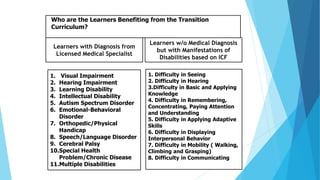
Who are the Learners Benefiting from the Transition
Curriculum?
1. Visual Impairment
2. Hearing Impairment
3. Learning Disability
4. Intellectual Disability
5. Autism Spectrum Disorder
6. Emotional-Behavioral
Disorder
7. Orthopedic/Physical
Handicap
8. Speech/Language Disorder
9. Cerebral Palsy
10.Special Health
Problem/Chronic Disease
11.Multiple Disabilities
Learners with Diagnosis from
Licensed Medical Specialist
Learners w/o Medical Diagnosis
but with Manifestations of
Disabilities based on ICF
1. Difficulty in Seeing
2. Difficulty in Hearing
3.Difficulty in Basic and Applying
Knowledge
4. Difficulty in Remembering,
Concentrating, Paying Attention
and Understanding
5. Difficulty in Applying Adaptive
Skills
6. Difficulty in Displaying
Interpersonal Behavior
7. Difficulty in Mobility ( Walking,
Climbing and Grasping)
8. Difficulty in Communicating
GOALS OF SPECIAL EDUCATION
 To become self reliant
 Purposeful
 Productive members of their
families, communities and
societies
Universal Declaration of the Rights of
Disabled Persons ( 1975 ) “Education
must enable learners with disabilities
to develop their capabilities and skills
to the maximum” and “ hasten the
process of social integration or
reintegration”
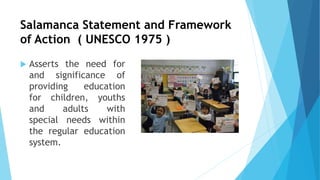
Salamanca Statement and Framework
of Action ( UNESCO 1975 )
 Asserts the need for
and significance of
providing education
for children, youths
and adults with
special needs within
the regular education
system.
Philippine context ,Article 14,Section 1
of the 1987 Constitution
 The state “shall
protect and promote
the rights of citizens
to quality education at
all levels and shall
take appropriate steps
to make such
education available to
all.”
Article XIV, section 2 (5) mandates the
State to
“ provide adult
citizens, disabled
and out of school
youth with training
in civics vocational
efficiency and
other skills “
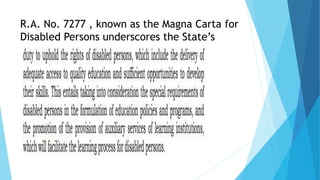
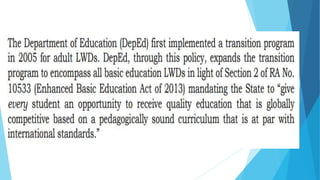
R.A. No. 7277 , known as the Magna Carta for
Disabled Persons underscores the State’s
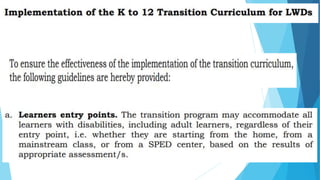
 LWDs who are 5 to 14 years old shall be
placed in the elementary environment
 While those who are 15 to 24 years old shall
be placed in the secondary school
environment
 Those LWDs who are 25 years old and above
shall be referred to DepEd ALS, DSWD,
TESDA and DOLE programs
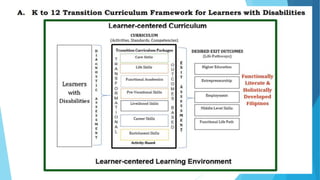
DepEd Developed seven
(7) Transition Curriculum
Packages
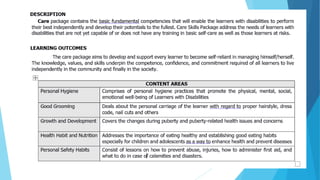
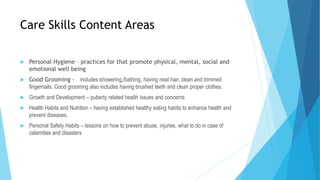
Care Skills Content Areas
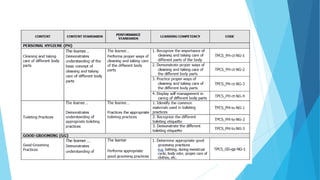
 Personal Hygiene – practices for that promote physical, mental, social and
emotional well being
 Good Grooming - includes showering,/bathing, having neat hair, clean and trimmed
fingernails. Good grooming also includes having brushed teeth and clean proper clothes.
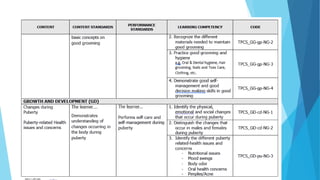
 Growth and Development – puberty related health issues and concerns
 Health Habits and Nutrition – having established healthy eating habits to enhance health and
prevent diseases.
 Personal Safety Habits – lessons on how to prevent abuse, injuries, what to do in case of
calamities and disasters
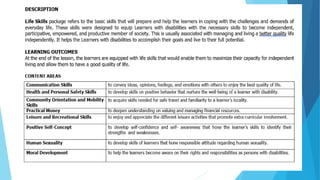
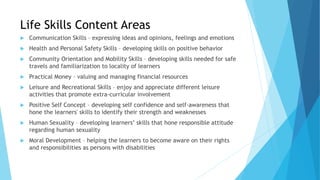
Life Skills Content Areas
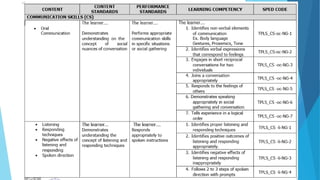
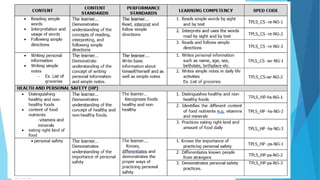
 Communication Skills – expressing ideas and opinions, feelings and emotions
 Health and Personal Safety Skills – developing skills on positive behavior
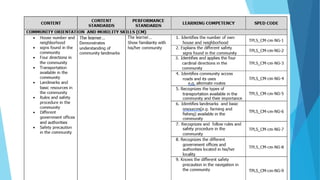
 Community Orientation and Mobility Skills – developing skills needed for safe
travels and familiarization to locality of learners
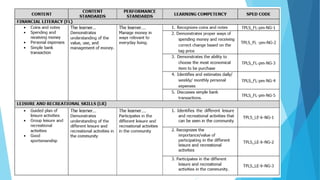
 Practical Money – valuing and managing financial resources
 Leisure and Recreational Skills – enjoy and appreciate different leisure
activities that promote extra-curricular involvement
 Positive Self Concept – developing self confidence and self-awareness that
hone the learners' skills to identify their strength and weaknesses
 Human Sexuality – developing learners’ skills that hone responsible attitude
regarding human sexuality
 Moral Development – helping the learners to become aware on their rights
and responsibilities as persons with disabilities
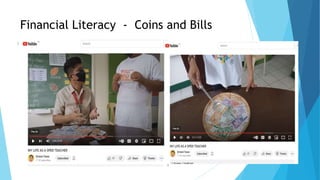
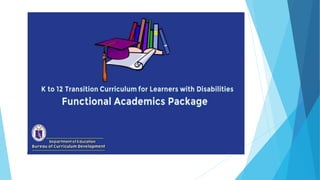
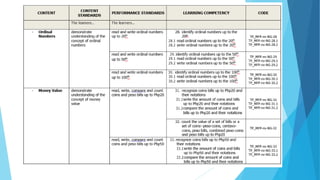
Financial Literacy - Coins and Bills
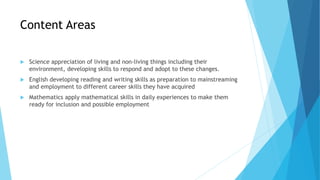
Content Areas
 Science appreciation of living and non-living things including their
environment, developing skills to respond and adopt to these changes.
 English developing reading and writing skills as preparation to mainstreaming
and employment to different career skills they have acquired
 Mathematics apply mathematical skills in daily experiences to make them
ready for inclusion and possible employment
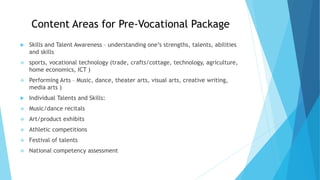
Content Areas for Pre-Vocational Package
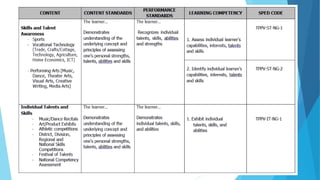
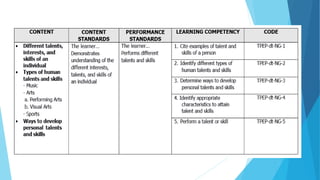
 Skills and Talent Awareness – understanding one’s strengths, talents, abilities
and skills
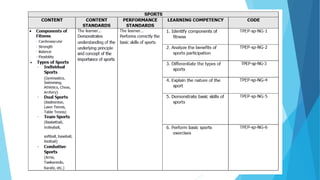
 sports, vocational technology (trade, crafts/cottage, technology, agriculture,
home economics, ICT )
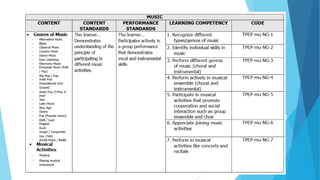
 Performing Arts – Music, dance, theater arts, visual arts, creative writing,
media arts )
 Individual Talents and Skills:
 Music/dance recitals
 Art/product exhibits
 Athletic competitions
 Festival of talents
 National competency assessment
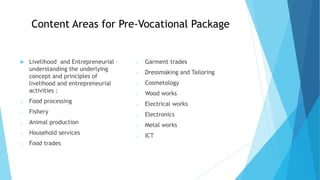
Content Areas for Pre-Vocational Package
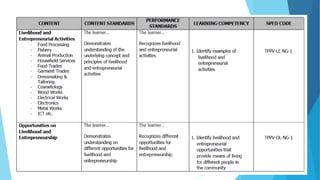
 Livelihood and Entrepreneurial –
understanding the underlying
concept and principles of
livelihood and entrepreneurial
activities :
o Food processing
o Fishery
o Animal production
o Household services
o Food trades
o Garment trades
o Dressmaking and Tailoring
o Cosmetology
o Wood works
o Electrical works
o Electronics
o Metal works
o ICT
Content Areas for Pre-Vocational Package
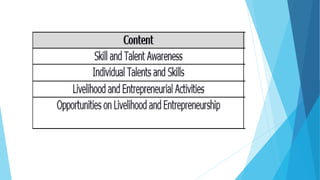
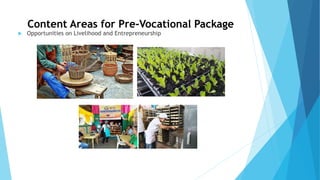
 Opportunities on Livelihood and Entrepreneurship
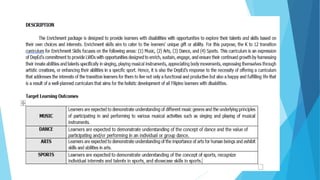
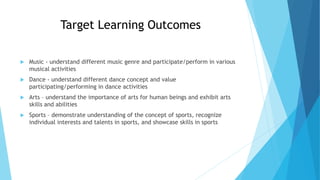
Target Learning Outcomes
 Music - understand different music genre and participate/perform in various
musical activities
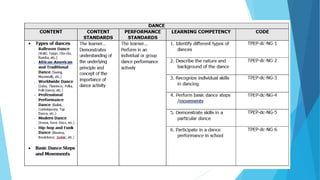
 Dance - understand different dance concept and value
participating/performing in dance activities
 Arts – understand the importance of arts for human beings and exhibit arts
skills and abilities
 Sports – demonstrate understanding of the concept of sports, recognize
individual interests and talents in sports, and showcase skills in sports
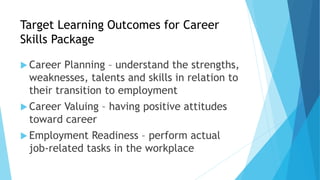
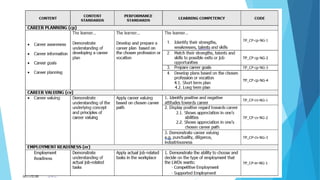
Target Learning Outcomes for Career
Skills Package
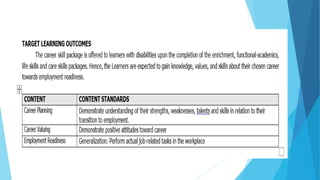
 Career Planning – understand the strengths,
weaknesses, talents and skills in relation to
their transition to employment
 Career Valuing – having positive attitudes
toward career
 Employment Readiness – perform actual
job-related tasks in the workplace
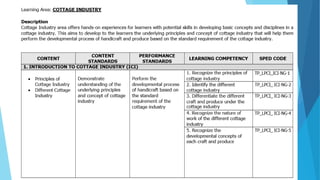
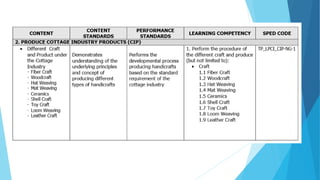
Cottage Industry Crafts and Products
 Fiber craft
 Woodcraft
 Hat weaving
 Mat weaving
 Ceramics
 Shell crafts
 Toy craft
 Loom weaving
 Leather craft
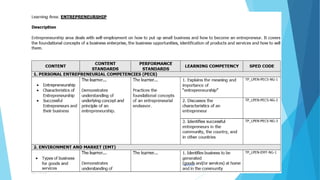
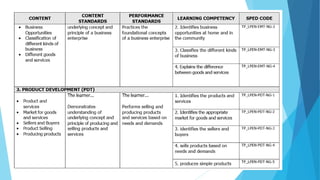
Learning Area: Entrepreneurship deals with
self employment or putting up small business
 Foundational concepts of business
enterprise
 Business opportunities
 Identification of products and
services
 How to sell
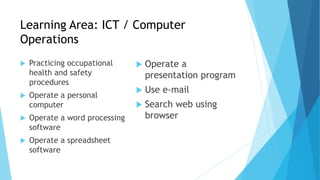
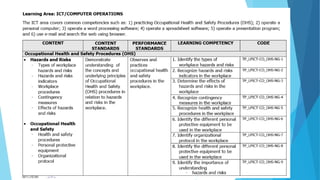
Learning Area: ICT / Computer
Operations
 Practicing occupational
health and safety
procedures
 Operate a personal
computer
 Operate a word processing
software
 Operate a spreadsheet
software
 Operate a
presentation program
 Use e-mail
 Search web using
browser
GS_Quinlog_K-12_Transition_Curriculum.pptx

GS_Quinlog_K-12_Transition_Curriculum.pptx

  • 1.
    K-12 Transition Curriculum forLearners with Disabilities
  • 3.
    Who are theLearners Benefiting from the Transition Curriculum? 1. Visual Impairment 2. Hearing Impairment 3. Learning Disability 4. Intellectual Disability 5. Autism Spectrum Disorder 6. Emotional-Behavioral Disorder 7. Orthopedic/Physical Handicap 8. Speech/Language Disorder 9. Cerebral Palsy 10.Special Health Problem/Chronic Disease 11.Multiple Disabilities Learners with Diagnosis from Licensed Medical Specialist Learners w/o Medical Diagnosis but with Manifestations of Disabilities based on ICF 1. Difficulty in Seeing 2. Difficulty in Hearing 3.Difficulty in Basic and Applying Knowledge 4. Difficulty in Remembering, Concentrating, Paying Attention and Understanding 5. Difficulty in Applying Adaptive Skills 6. Difficulty in Displaying Interpersonal Behavior 7. Difficulty in Mobility ( Walking, Climbing and Grasping) 8. Difficulty in Communicating
  • 4.
    GOALS OF SPECIALEDUCATION  To become self reliant  Purposeful  Productive members of their families, communities and societies Universal Declaration of the Rights of Disabled Persons ( 1975 ) “Education must enable learners with disabilities to develop their capabilities and skills to the maximum” and “ hasten the process of social integration or reintegration”
  • 5.
    Salamanca Statement andFramework of Action ( UNESCO 1975 )  Asserts the need for and significance of providing education for children, youths and adults with special needs within the regular education system.
  • 6.
    Philippine context ,Article14,Section 1 of the 1987 Constitution  The state “shall protect and promote the rights of citizens to quality education at all levels and shall take appropriate steps to make such education available to all.”
  • 7.
    Article XIV, section2 (5) mandates the State to “ provide adult citizens, disabled and out of school youth with training in civics vocational efficiency and other skills “
  • 8.
    R.A. No. 7277, known as the Magna Carta for Disabled Persons underscores the State’s
  • 11.
     LWDs whoare 5 to 14 years old shall be placed in the elementary environment  While those who are 15 to 24 years old shall be placed in the secondary school environment  Those LWDs who are 25 years old and above shall be referred to DepEd ALS, DSWD, TESDA and DOLE programs
  • 12.
    DepEd Developed seven (7)Transition Curriculum Packages
  • 15.
    Care Skills ContentAreas  Personal Hygiene – practices for that promote physical, mental, social and emotional well being  Good Grooming - includes showering,/bathing, having neat hair, clean and trimmed fingernails. Good grooming also includes having brushed teeth and clean proper clothes.  Growth and Development – puberty related health issues and concerns  Health Habits and Nutrition – having established healthy eating habits to enhance health and prevent diseases.  Personal Safety Habits – lessons on how to prevent abuse, injuries, what to do in case of calamities and disasters
  • 20.
    Life Skills ContentAreas  Communication Skills – expressing ideas and opinions, feelings and emotions  Health and Personal Safety Skills – developing skills on positive behavior  Community Orientation and Mobility Skills – developing skills needed for safe travels and familiarization to locality of learners  Practical Money – valuing and managing financial resources  Leisure and Recreational Skills – enjoy and appreciate different leisure activities that promote extra-curricular involvement  Positive Self Concept – developing self confidence and self-awareness that hone the learners' skills to identify their strength and weaknesses  Human Sexuality – developing learners’ skills that hone responsible attitude regarding human sexuality  Moral Development – helping the learners to become aware on their rights and responsibilities as persons with disabilities
  • 25.
    Financial Literacy -Coins and Bills
  • 28.
    Content Areas  Scienceappreciation of living and non-living things including their environment, developing skills to respond and adopt to these changes.  English developing reading and writing skills as preparation to mainstreaming and employment to different career skills they have acquired  Mathematics apply mathematical skills in daily experiences to make them ready for inclusion and possible employment
  • 35.
    Content Areas forPre-Vocational Package  Skills and Talent Awareness – understanding one’s strengths, talents, abilities and skills  sports, vocational technology (trade, crafts/cottage, technology, agriculture, home economics, ICT )  Performing Arts – Music, dance, theater arts, visual arts, creative writing, media arts )  Individual Talents and Skills:  Music/dance recitals  Art/product exhibits  Athletic competitions  Festival of talents  National competency assessment
  • 36.
    Content Areas forPre-Vocational Package  Livelihood and Entrepreneurial – understanding the underlying concept and principles of livelihood and entrepreneurial activities : o Food processing o Fishery o Animal production o Household services o Food trades o Garment trades o Dressmaking and Tailoring o Cosmetology o Wood works o Electrical works o Electronics o Metal works o ICT
  • 37.
    Content Areas forPre-Vocational Package  Opportunities on Livelihood and Entrepreneurship
  • 42.
    Target Learning Outcomes Music - understand different music genre and participate/perform in various musical activities  Dance - understand different dance concept and value participating/performing in dance activities  Arts – understand the importance of arts for human beings and exhibit arts skills and abilities  Sports – demonstrate understanding of the concept of sports, recognize individual interests and talents in sports, and showcase skills in sports
  • 50.
    Target Learning Outcomesfor Career Skills Package  Career Planning – understand the strengths, weaknesses, talents and skills in relation to their transition to employment  Career Valuing – having positive attitudes toward career  Employment Readiness – perform actual job-related tasks in the workplace
  • 53.
    Cottage Industry Craftsand Products  Fiber craft  Woodcraft  Hat weaving  Mat weaving  Ceramics  Shell crafts  Toy craft  Loom weaving  Leather craft
  • 56.
    Learning Area: Entrepreneurshipdeals with self employment or putting up small business  Foundational concepts of business enterprise  Business opportunities  Identification of products and services  How to sell
  • 59.
    Learning Area: ICT/ Computer Operations  Practicing occupational health and safety procedures  Operate a personal computer  Operate a word processing software  Operate a spreadsheet software  Operate a presentation program  Use e-mail  Search web using browser