Staffing
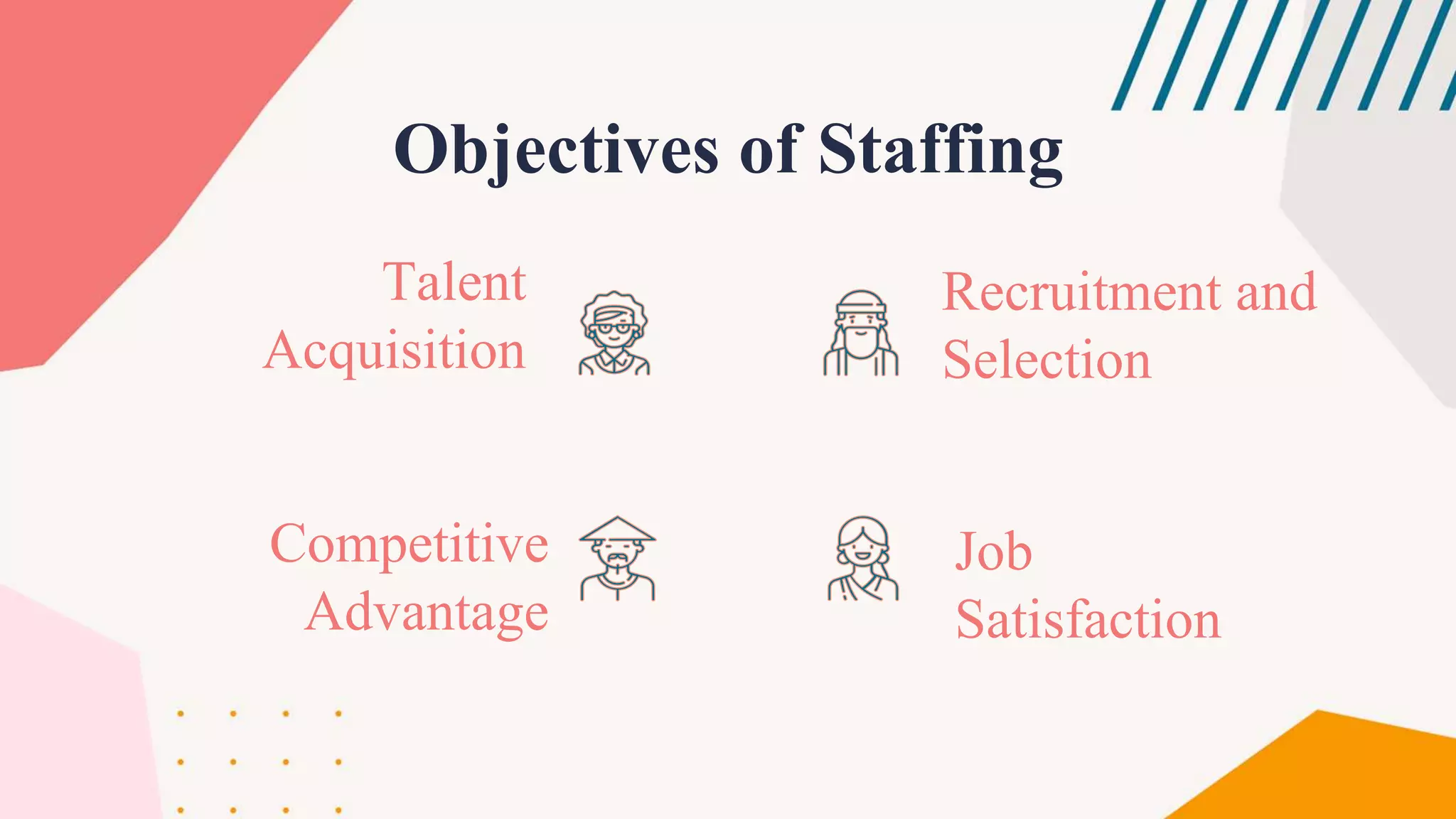
Objectives of Staffing
Talent
Acquisition
Competitive
Advantage
Recruitment and
Selection
Job
Satisfaction
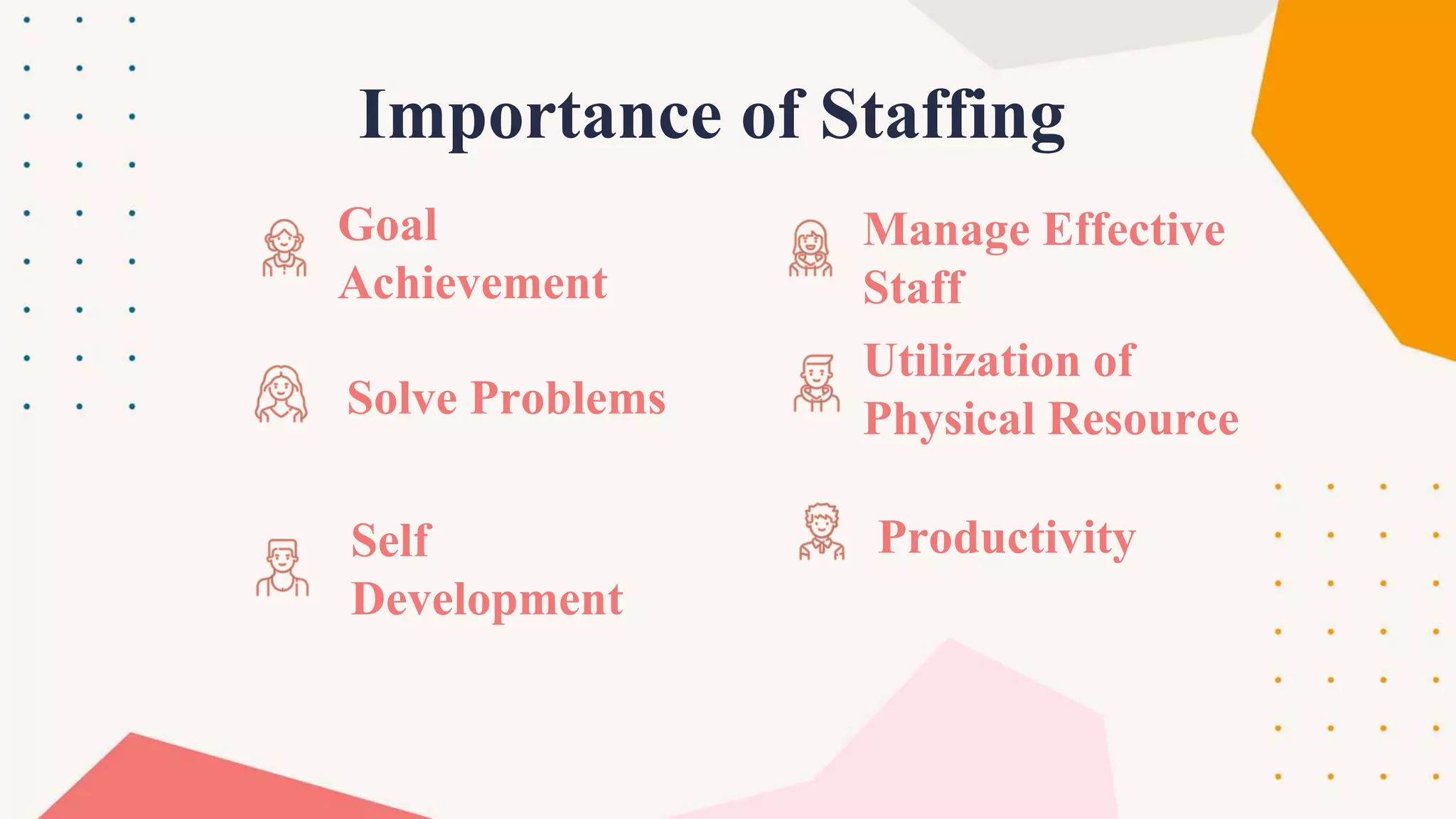
Importance of Staffing
Goal
Achievement
Solve Problems
Self
Development
Manage Effective
Staff
Utilization of
Physical Resource
Productivity
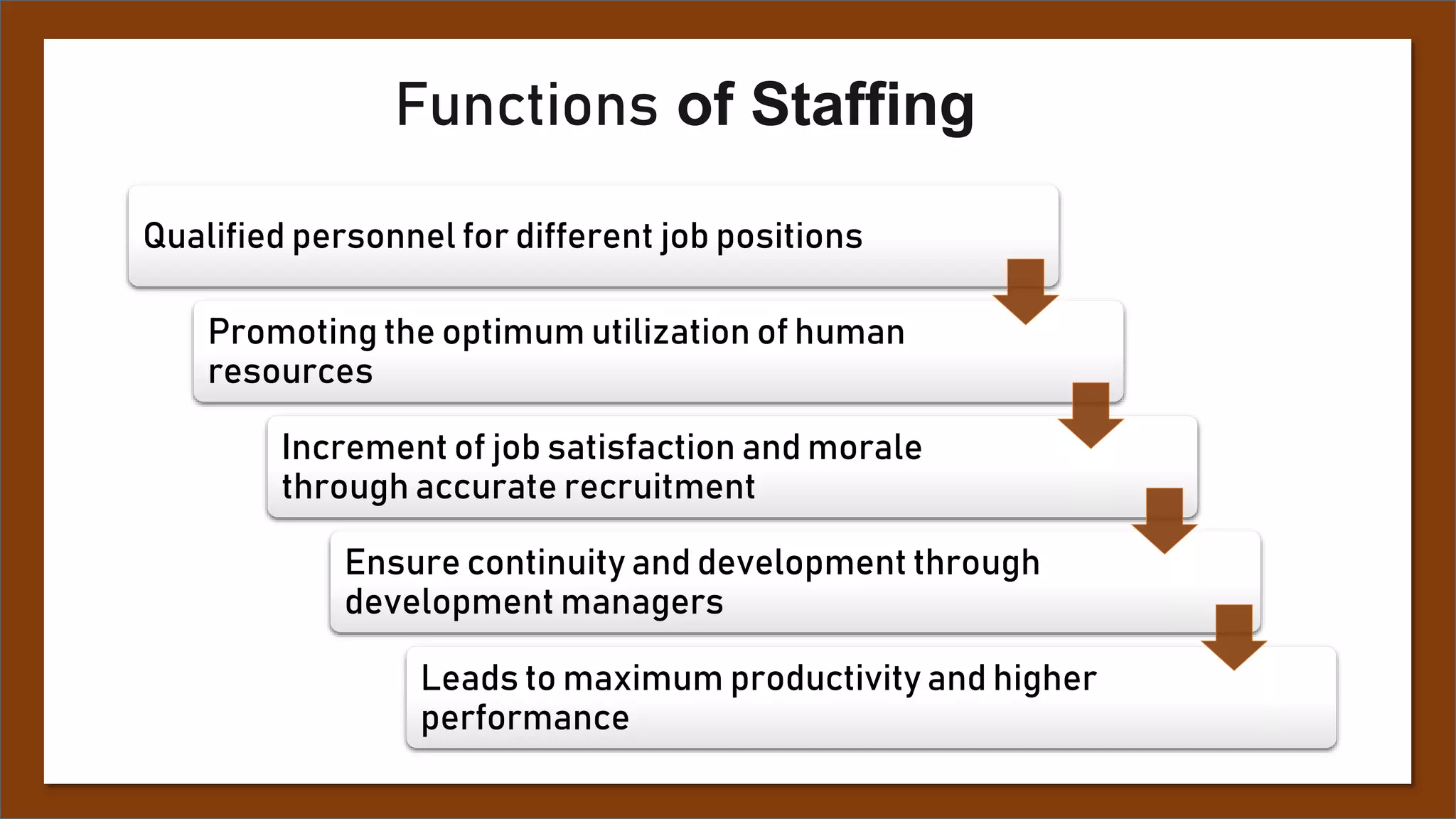
Functions of Staffing
Qualified personnel for different job positions
Promoting the optimum utilization of human
resources
Increment of job satisfaction and morale
through accurate recruitment
Ensure continuity and development through
development managers
Leads to maximum productivity and higher
performance
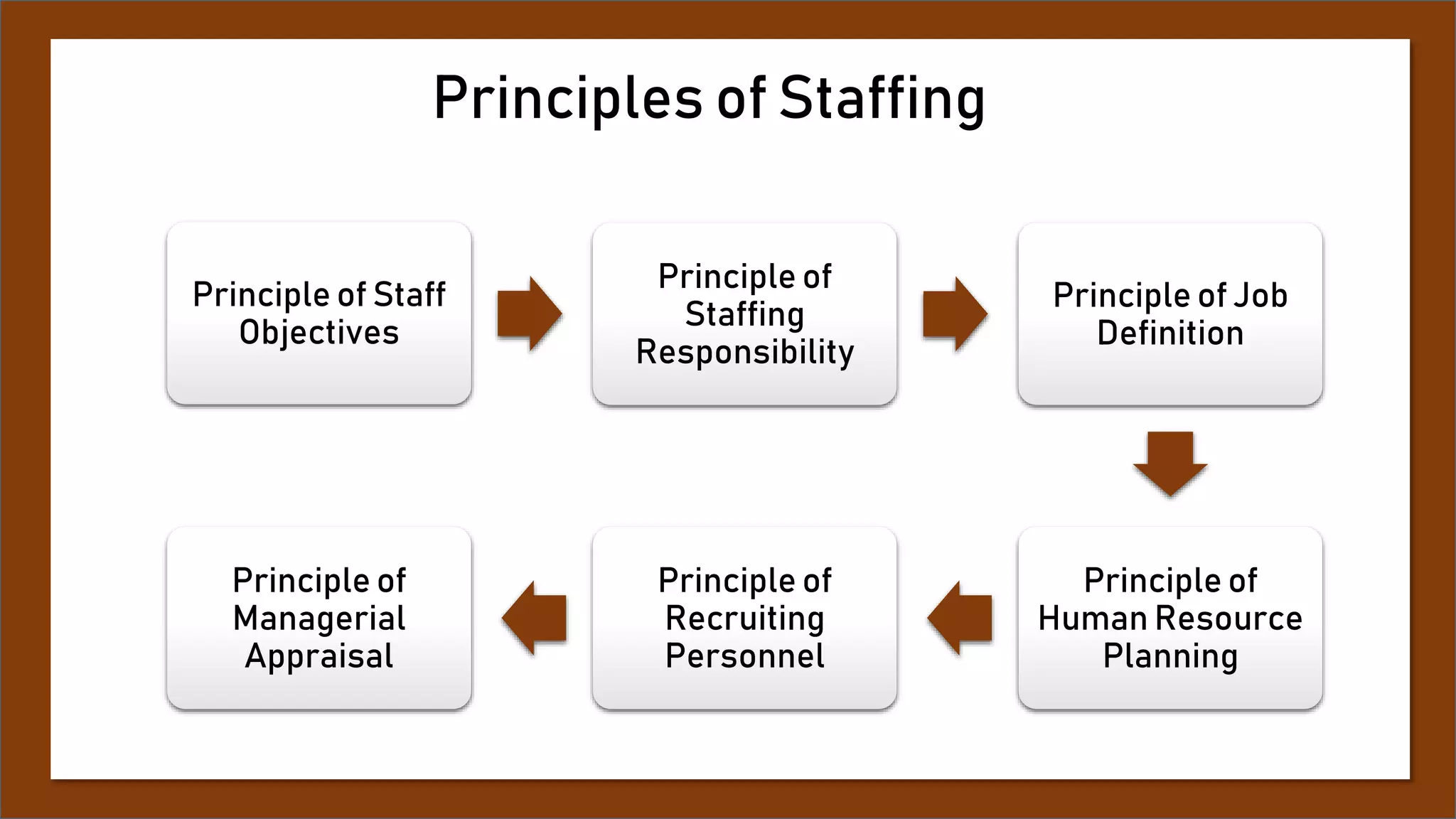
Principles of Staffing
Principle of Staff
Objectives
Principle of
Staffing
Responsibility
Principle of Job
Definition
Principle of
Human Resource
Planning
Principle of
Recruiting
Personnel
Principle of
Managerial
Appraisal
Process
of
Staffing
Recruitment
Compensation
Selection
Estimating
Manpower
Requirement
Estimating
Manpower
Requirement
Recruitment
Compensation
Training and
Development
Performance
Appraisal
Placement
and
Orientation
Promotion
and Career
Planning
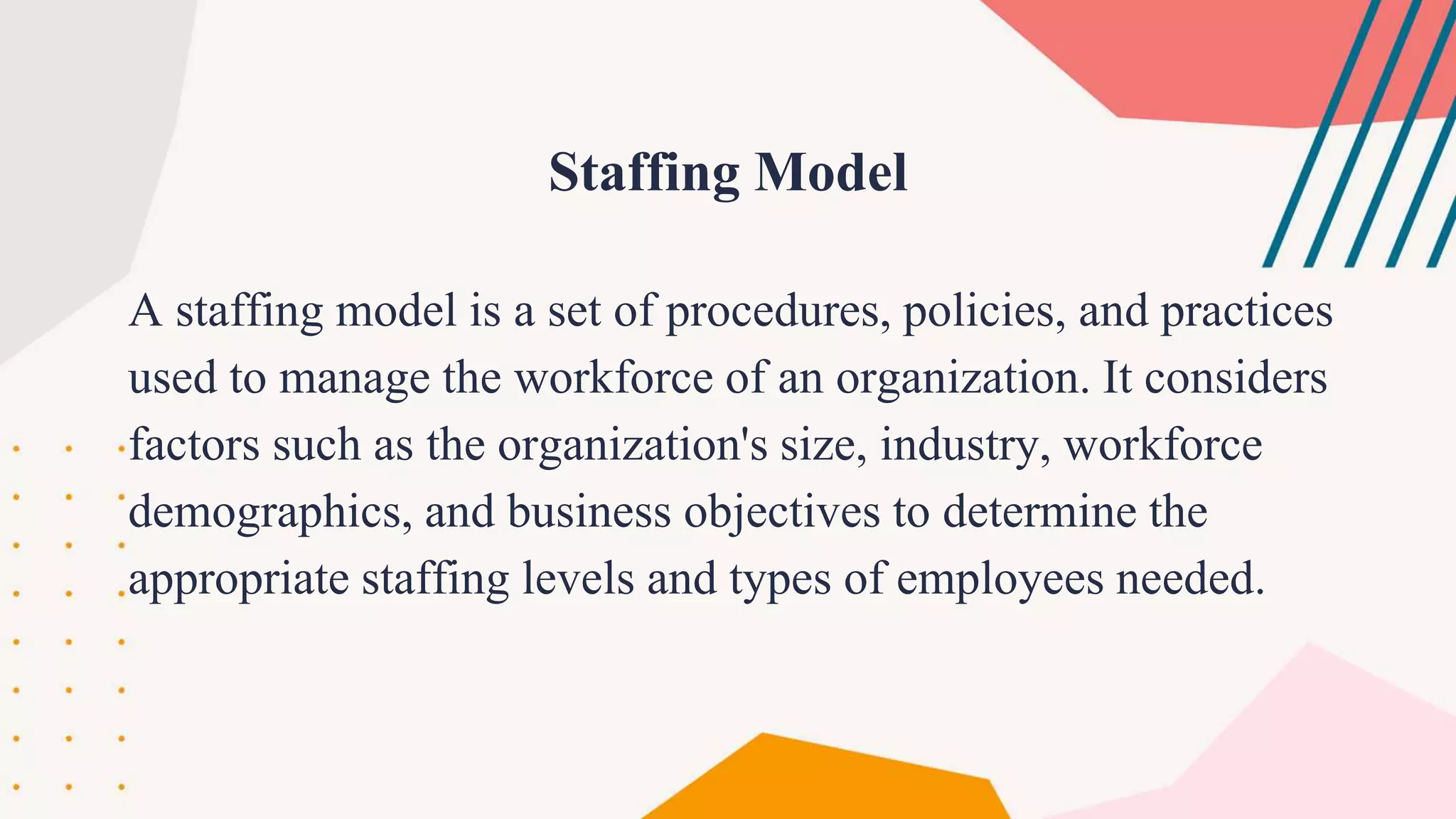
A staffing model is a set of procedures, policies, and practices
used to manage the workforce of an organization. It considers
factors such as the organization's size, industry, workforce
demographics, and business objectives to determine the
appropriate staffing levels and types of employees needed.
Staffing Model
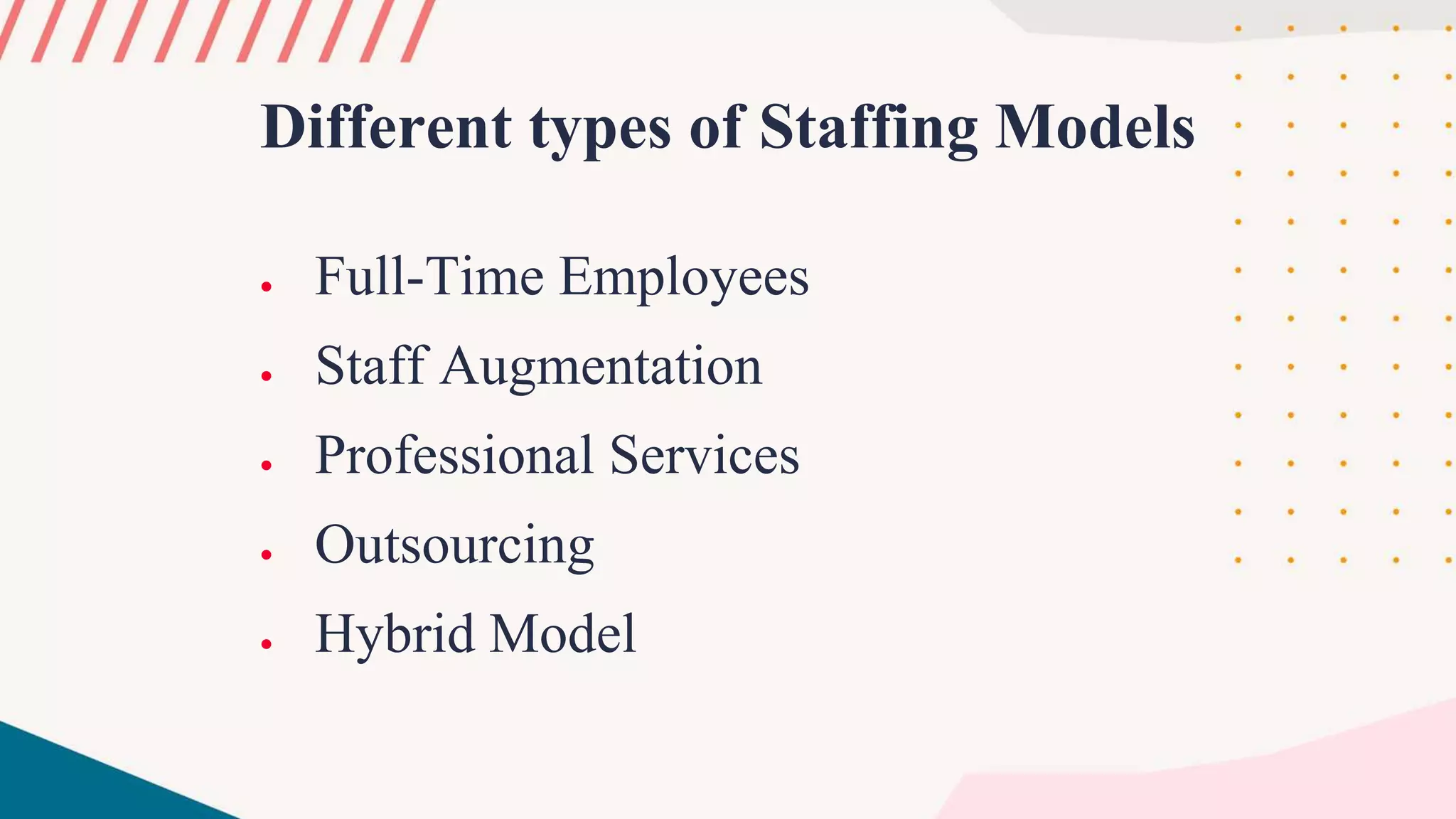
Different types of Staffing Models
 Full-Time Employees
 Staff Augmentation
 Professional Services
 Outsourcing
 Hybrid Model
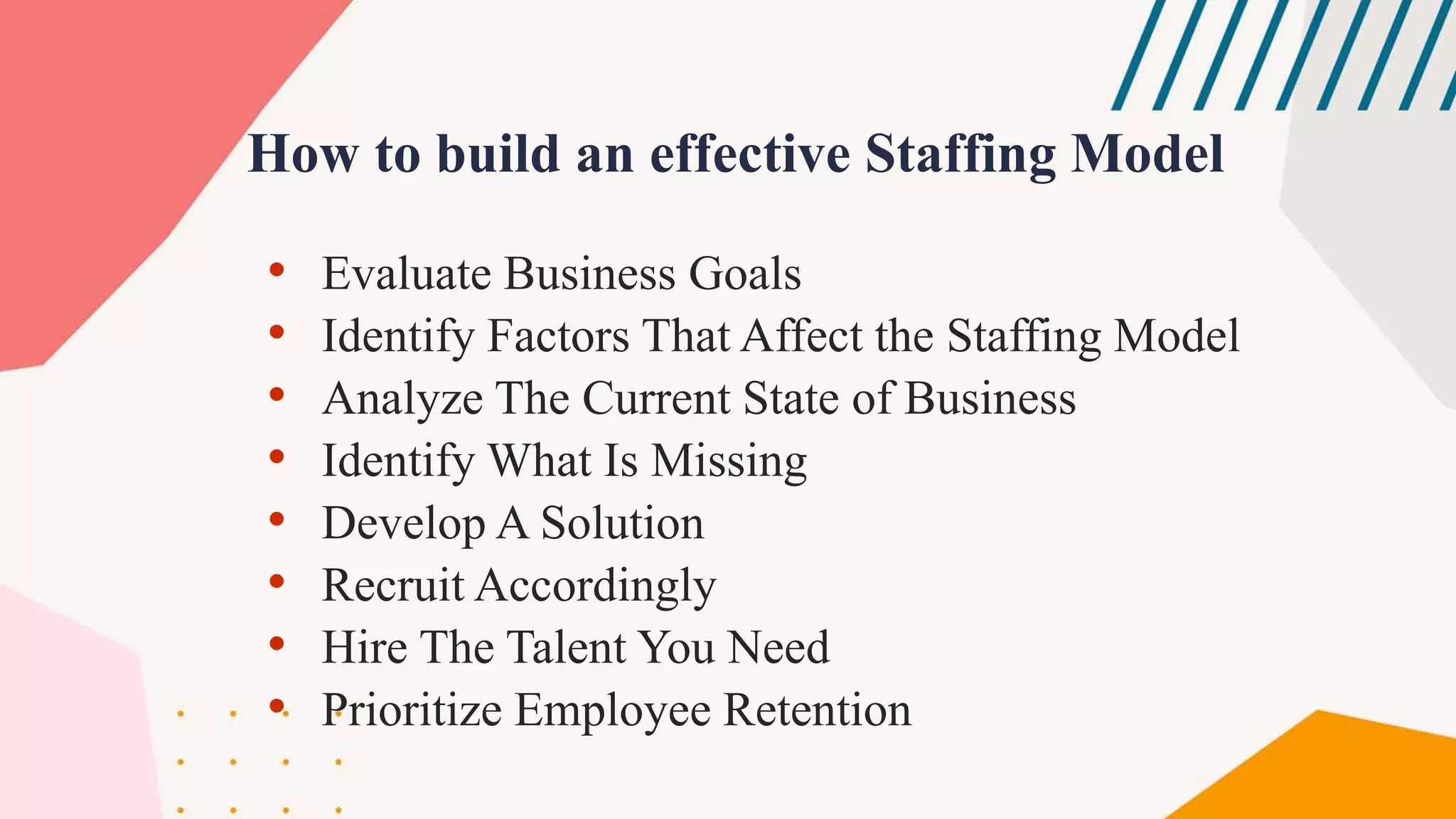
How to build an effective Staffing Model
• Evaluate Business Goals
• Identify Factors That Affect the Staffing Model
• Analyze The Current State of Business
• Identify What Is Missing
• Develop A Solution
• Recruit Accordingly
• Hire The Talent You Need
• Prioritize Employee Retention
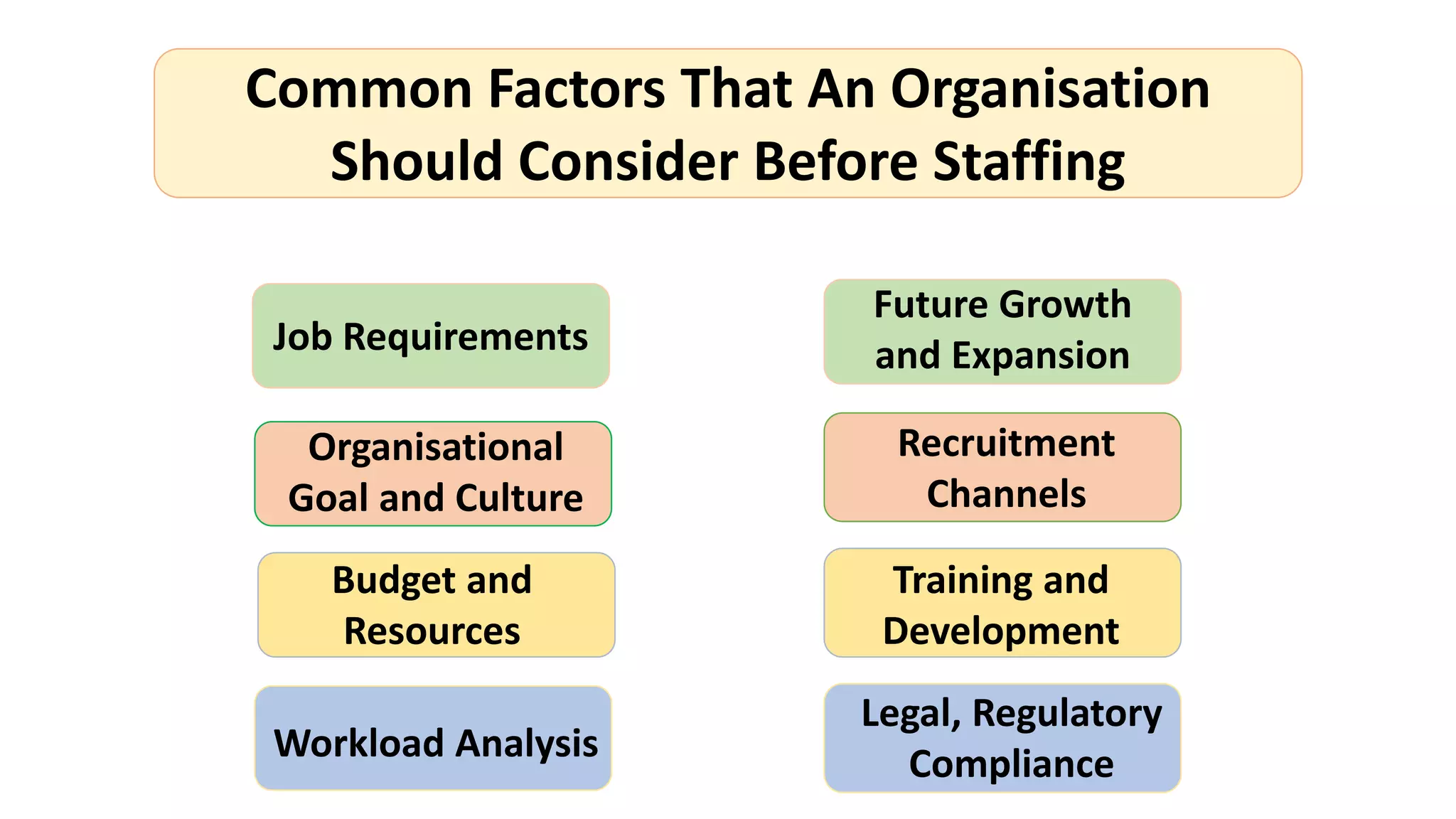
Common Factors That An Organisation
Should Consider Before Staffing
Job Requirements
Organisational
Goal and Culture
Budget and
Resources
Workload Analysis
Future Growth
and Expansion
Recruitment
Channels
Training and
Development
Legal, Regulatory
Compliance
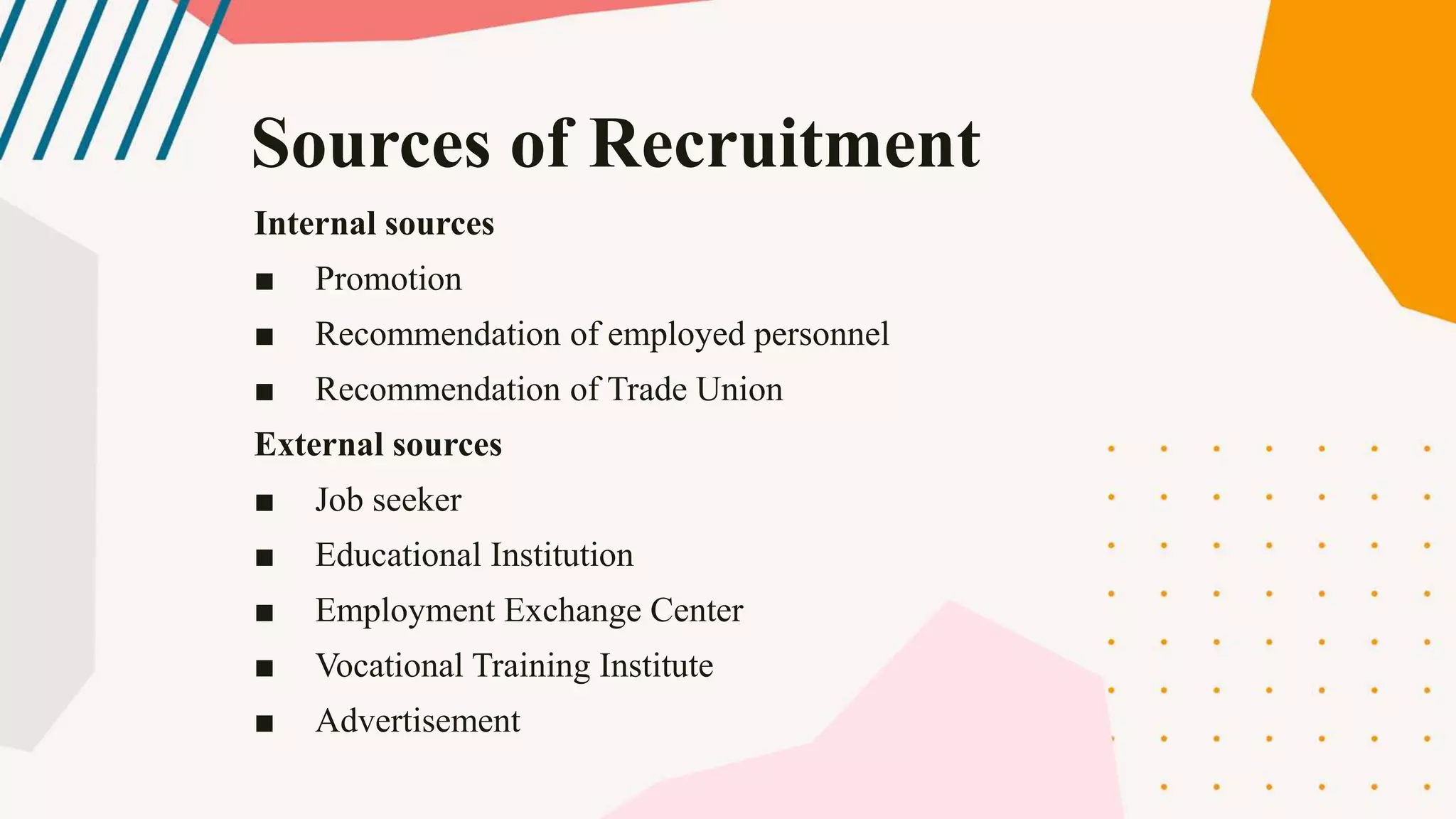
Internal sources
■ Promotion
■ Recommendation of employed personnel
■ Recommendation of Trade Union
External sources
■ Job seeker
■ Educational Institution
■ Employment Exchange Center
■ Vocational Training Institute
■ Advertisement
Sources of Recruitment
Steps of Selection
 Receiving and scrutiny of application
 Issuing invitation card for participation in
selection test
 Conducting test
 Taking interview
 Primary selection
 Enquiry of personal history
 Medical test
 Final selection
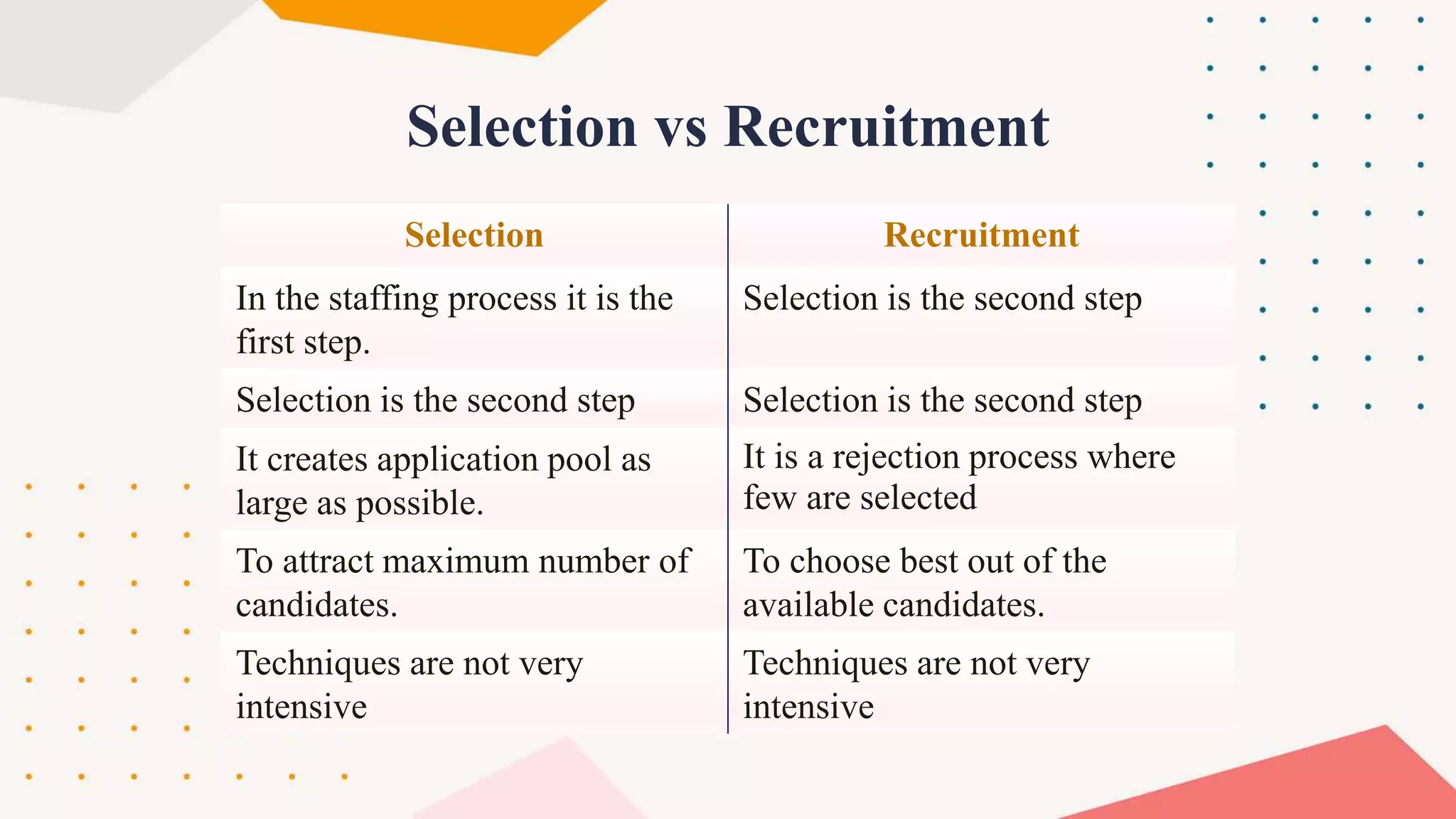
Selection vs Recruitment
Selection Recruitment
In the staffing process it is the
first step.
Selection is the second step
Selection is the second step Selection is the second step
It creates application pool as
large as possible.
It is a rejection process where
few are selected
To attract maximum number of
candidates.
To choose best out of the
available candidates.
Techniques are not very
intensive
Techniques are not very
intensive
Factors affecting staffing
Future
growth plans
Image of
organization
Technology
used
Promotion
policy
Factors affecting staffing
Labor Law
Competition
Social
environment
Economic
condition
Thank You!

Group_6.pptx