JOB ANALYSIS & TALENT
MANAGEMENT PROCESS
GROUP 5
 Shear Ali
 Zain Ali
 M Haseeb
 Sohail Asghar
 Hamza Jalil
 Sanwal Khan
JOB ANALYSIS
 The systematic process of gathering and
analyzing information about a job.
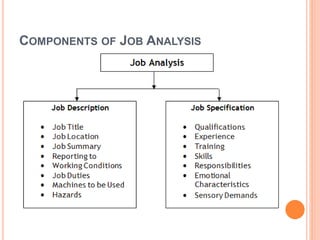
COMPONENTS OF JOB ANALYSIS
 Job Description: A job description is a written
document that outlines the duties, responsibilities,
tasks, and functions associated with a particular job
or position within an organization.
 Job Specification: Job specification, also known
as employee specification or person specification.
 A component of the job description that outlines the
qualifications, skills, knowledge, and attributes
required for an individual to successfully perform
the job.
COMPONENTS OF JOB ANALYSIS
BENEFITS OF JOB ANALYSIS
 Improved recruitment and selection processes.
 Enhanced employee performance evaluations.
 Compliance with legal and regulatory requirements.
 Clear communication of roles and responsibilities.
METHODS FOR COLLECTING JOB ANALYSIS
1. Observation:
 Description: Observing employees as they perform
their job duties.
 Advantages: Provides firsthand, real-time data on job
tasks and work environment.
 Considerations: May not capture all aspects of the job,
and some tasks may be overlooked.
METHODS FOR COLLECTING JOB ANALYSIS
2. Diary/Log Method:
 Description: Employees keep a daily log or diary of
their activities, detailing tasks, time spent, and
challenges faced.
 Advantages: Provides a detailed account of daily job
activities.
 Considerations: Relies on employees accurately
recording their activities, and may be burdensome for
some roles.
METHODS FOR COLLECTING JOB ANALYSIS
3. Job Analysis Workshops:
 Description: Facilitating group sessions with
employees and supervisors to collectively define and
document job roles and requirements.
 Advantages: Encourages collaboration and consensus
building among stakeholders.
 Considerations: Time-consuming and may require
skilled facilitation to ensure meaningful contributions
from participants.
METHODS FOR COLLECTING JOB ANALYSIS
4. Questionnaires and Surveys:
 Description: Distributing standardized questionnaires
or surveys to employees to collect information about
their job.
 Advantages: Efficient for collecting data from a large
number of employees.
 Considerations: Responses may be influenced by the
way questions are framed, and not all employees may
provide accurate information.
METHODS FOR COLLECTING JOB ANALYSIS
5. Interviews:
 Description: Conducting one-on-one or group
interviews with employees, supervisors, or subject
matter experts to gather information.
 Advantages: Allows for in-depth exploration of job
responsibilities and requirements.
 Considerations: Responses may be subjective, and
there may be biases or incomplete information.
METHODS FOR COLLECTING JOB ANALYSIS
6. Online Surveys and Questionnaires:
 Description: Develop and distribute online surveys
or questionnaires to employees, supervisors, or
subject matter experts to gather information about
job duties, responsibilities, and qualifications.
 Advantages: Efficient, cost-effective, and allows for
standardized data collection.
 Considerations: Ensure clear and well-structured
questions to elicit accurate
TALENT MANAGEMENT PROCESS
 Talent management refers to the strategic process
of attracting, developing, and retaining a skilled and
high-performing workforce to meet current and
future organizational needs.
 It involves the comprehensive planning,
recruitment, training, development, and retention of
employees with the goal of maximizing their
individual contributions to the organization while
ensuring the organization's long-term success.
HOW TALENT MANAGEMENT IS CONNECTED TO
JOB ANALYSIS?
1. Recruitment and Selection:
 Job Analysis Connection: Job analysis identifies
the skills, knowledge, and attributes required for a
specific job.
 Talent Management Integration: Talent
management uses job analysis data to design
targeted recruitment strategies, ensuring that the
organization attracts candidates with the right
qualifications and competencies.
2. Performance Management:
 Job Analysis Connection: Job analysis
establishes performance expectations by defining
key job responsibilities and performance indicators.
 Talent Management Integration: Talent
management utilizes job analysis data to set
performance standards, conduct performance
evaluations, and provide constructive feedback to
employees, aligning individual performance with
organizational goals.
3. Compensation and Rewards:
 Job Analysis Connection: Job analysis provides
insights into the relative value of different jobs
within the organization.
 Talent Management Integration: Talent
management uses job analysis data to design fair
and competitive compensation structures, ensuring
that employees are rewarded based on the
requirements and contributions of their roles.
4. Career Development:
 Job Analysis Connection: Job analysis outlines
the qualifications and skills needed for career
progression within the organization.
 Talent Management Integration: Talent
management supports career development by
using job analysis data to guide employees in
acquiring the necessary skills for advancement,
aligning individual career goals with organizational
needs.
Group 5 (Job analysis & talent management process).pptx

Group 5 (Job analysis & talent management process).pptx

  • 1.
    JOB ANALYSIS &TALENT MANAGEMENT PROCESS
  • 2.
    GROUP 5  ShearAli  Zain Ali  M Haseeb  Sohail Asghar  Hamza Jalil  Sanwal Khan
  • 3.
    JOB ANALYSIS  Thesystematic process of gathering and analyzing information about a job.
  • 4.
    COMPONENTS OF JOBANALYSIS  Job Description: A job description is a written document that outlines the duties, responsibilities, tasks, and functions associated with a particular job or position within an organization.  Job Specification: Job specification, also known as employee specification or person specification.  A component of the job description that outlines the qualifications, skills, knowledge, and attributes required for an individual to successfully perform the job.
  • 5.
  • 6.
    BENEFITS OF JOBANALYSIS  Improved recruitment and selection processes.  Enhanced employee performance evaluations.  Compliance with legal and regulatory requirements.  Clear communication of roles and responsibilities.
  • 7.
    METHODS FOR COLLECTINGJOB ANALYSIS 1. Observation:  Description: Observing employees as they perform their job duties.  Advantages: Provides firsthand, real-time data on job tasks and work environment.  Considerations: May not capture all aspects of the job, and some tasks may be overlooked.
  • 8.
    METHODS FOR COLLECTINGJOB ANALYSIS 2. Diary/Log Method:  Description: Employees keep a daily log or diary of their activities, detailing tasks, time spent, and challenges faced.  Advantages: Provides a detailed account of daily job activities.  Considerations: Relies on employees accurately recording their activities, and may be burdensome for some roles.
  • 9.
    METHODS FOR COLLECTINGJOB ANALYSIS 3. Job Analysis Workshops:  Description: Facilitating group sessions with employees and supervisors to collectively define and document job roles and requirements.  Advantages: Encourages collaboration and consensus building among stakeholders.  Considerations: Time-consuming and may require skilled facilitation to ensure meaningful contributions from participants.
  • 10.
    METHODS FOR COLLECTINGJOB ANALYSIS 4. Questionnaires and Surveys:  Description: Distributing standardized questionnaires or surveys to employees to collect information about their job.  Advantages: Efficient for collecting data from a large number of employees.  Considerations: Responses may be influenced by the way questions are framed, and not all employees may provide accurate information.
  • 11.
    METHODS FOR COLLECTINGJOB ANALYSIS 5. Interviews:  Description: Conducting one-on-one or group interviews with employees, supervisors, or subject matter experts to gather information.  Advantages: Allows for in-depth exploration of job responsibilities and requirements.  Considerations: Responses may be subjective, and there may be biases or incomplete information.
  • 12.
    METHODS FOR COLLECTINGJOB ANALYSIS 6. Online Surveys and Questionnaires:  Description: Develop and distribute online surveys or questionnaires to employees, supervisors, or subject matter experts to gather information about job duties, responsibilities, and qualifications.  Advantages: Efficient, cost-effective, and allows for standardized data collection.  Considerations: Ensure clear and well-structured questions to elicit accurate
  • 13.
    TALENT MANAGEMENT PROCESS Talent management refers to the strategic process of attracting, developing, and retaining a skilled and high-performing workforce to meet current and future organizational needs.  It involves the comprehensive planning, recruitment, training, development, and retention of employees with the goal of maximizing their individual contributions to the organization while ensuring the organization's long-term success.
  • 14.
    HOW TALENT MANAGEMENTIS CONNECTED TO JOB ANALYSIS? 1. Recruitment and Selection:  Job Analysis Connection: Job analysis identifies the skills, knowledge, and attributes required for a specific job.  Talent Management Integration: Talent management uses job analysis data to design targeted recruitment strategies, ensuring that the organization attracts candidates with the right qualifications and competencies.
  • 15.
    2. Performance Management: Job Analysis Connection: Job analysis establishes performance expectations by defining key job responsibilities and performance indicators.  Talent Management Integration: Talent management utilizes job analysis data to set performance standards, conduct performance evaluations, and provide constructive feedback to employees, aligning individual performance with organizational goals.
  • 16.
    3. Compensation andRewards:  Job Analysis Connection: Job analysis provides insights into the relative value of different jobs within the organization.  Talent Management Integration: Talent management uses job analysis data to design fair and competitive compensation structures, ensuring that employees are rewarded based on the requirements and contributions of their roles.
  • 17.
    4. Career Development: Job Analysis Connection: Job analysis outlines the qualifications and skills needed for career progression within the organization.  Talent Management Integration: Talent management supports career development by using job analysis data to guide employees in acquiring the necessary skills for advancement, aligning individual career goals with organizational needs.