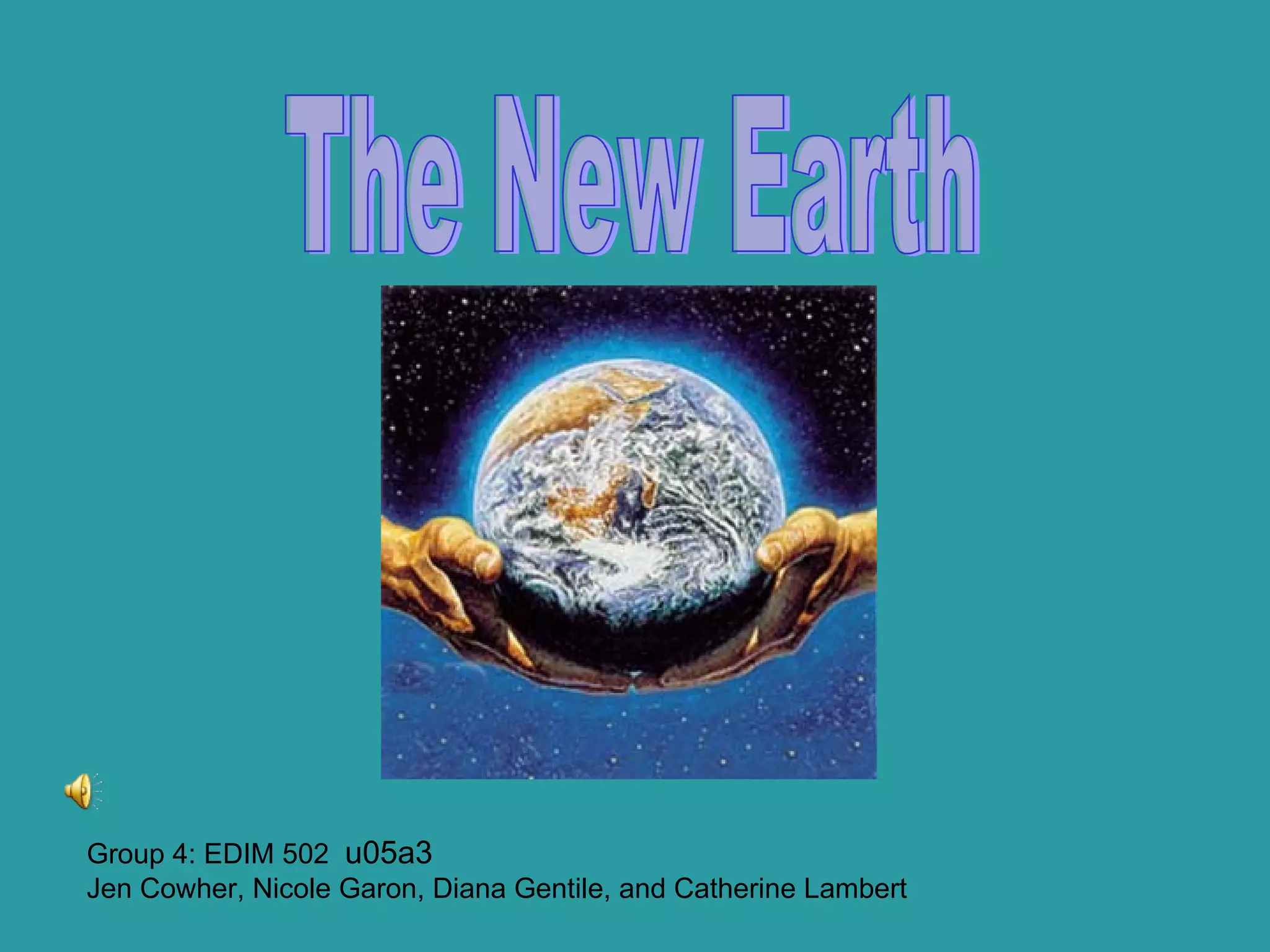
Group 4: EDIM 502  u05a3 Jen Cowher, Nicole Garon, Diana Gentile, and Catherine Lambert The New Earth
Pack your bags and prepare for a tour around the world!
Before you begin…. First you’ll need to pick 4 ancient cities that you will visit on your journey.  You’ll have to plan your travel route and choose how you will travel.  Will you fly? Will you take a cruise? Or will you take your private yacht?  It’s up to you!
Be creative! Just remember to gather as much information as you can because when you come home, you will need to help develop a new economy for our 21 st  century world.  Be Creative
We need your expertise to help set up a new, innovative, and successful economic system that will replace our own. During your travels, gather information that will help you set up this new economy for the 21 st  century.  Good luck and safe travels! Your Mission:
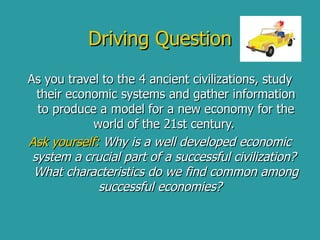
Driving Question As you travel to the 4 ancient civilizations, study their economic systems and gather information to produce a model for a new economy for the world of the 21st century.  Ask yourself:  Why is a well developed economic system a crucial part of a successful civilization?  What characteristics do we find common among successful economies?    
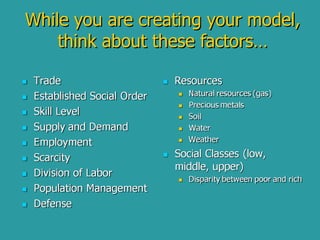
While you are creating your model, think about these factors…
What is Economics?
 
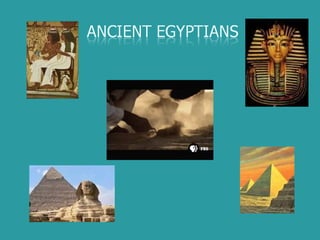
Characteristics of Ancient Egyptian Economy Sources of wealth were farming and fishing. Labor was divided based on gender. Some of the wheat harvested and belonging to private owners was stored in state warehouses. So was much of the grain collected as taxes. Written withdrawal orders by owners of lots of grain were used as a kind of currency.  Main energy source was muscle power. Resources available: Copper, gold, grain Money-barter system Standard sacks of grain Deben-About 91 grams of copper or silver
 
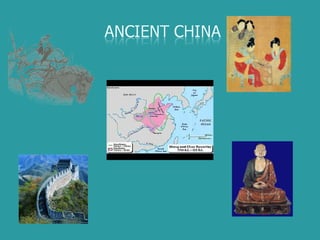
Characteristics of Ancient Chinese Economy Trade via the Silk Road Fished, farmed, and irrigated the land Exported silk Imported gold Originally used seashells as money Development of merit system Mining was an important industry Miners were mainly slaves
 
Characteristics of Ancient Greece and Roman Economy Both economies were based on agriculture Greeks normally lived on small self-sufficient wheat producing farms. Both Greece and Romans worked in mines. Romans were more interested in trade while the Greeks felt it was degrading. They were also both based on coin currency. Their production of materials were mostly from slave labor.
 
Characteristics of the Middle Ages Economy Feudal economic and political system People mainly ate and wore things they produced themselves Relied heavily on agriculture  Wealth was derived from the land  Commodities were wool, glass, leather, metal Value of coin money depended on: weight of coin and  type of metal  Increased trading led to the standardization of  the coin
Follow the Yellow Brick Road to your Goal:
Take a stand on the issue and provide supporting research A Resource-Based Economy is a system in which all goods and services are available without the use of money, credits, barter or any other system of debt or servitude. All resources become the common heritage of all of the inhabitants, not just a select few. The premise upon which this system is based is that the Earth is abundant with plentiful resource; our practice of rationing resources through monetary methods is irrelevant and counter productive to our survival. From “The Venus Project” http:// www.thevenusproject.com/anewResource.php
Here is a recommendation for addressing/resolving the issues raised by the driving question After researching the four ancient civilizations and comparing and contrasting various aspects of their economies, identify the factors that make an economy weak or strong. While researching, take note of the factors that helped to create successful economies.  Identifying these criteria will enable you to begin to construct a model for a successful 21 st  century economy.
Assignment into groups Introduction to rubrics Research (See suggested bibliography) Virtual field trips Mind Mapping Culminating group project (output) GUIDE TO PROCESS
See Bibliography Lists of suggested organizational tools: Diigo, Google Docs Group wiki Mindomo Guide to Resources
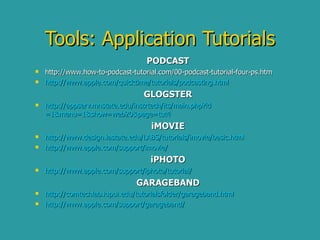
Tools: Application Tutorials PODCAST http://www.how-to-podcast-tutorial.com/00-podcast-tutorial-four-ps.htm http:// www.apple.com/quicktime/tutorials/podcasting.html GLOGSTER http:// appserv.mnstate.edu/instrtech/its/main.php?id =1&menu=1&show=web20&page=tut4 iMOVIE http:// www.design.iastate.edu/LABS/tutorials/imovie/basic.html http:// www.apple.com/support/imovie / iPHOTO http:// www.apple.com/support/iphoto/tutorial / GARAGEBAND http:// comtechlab.iupui.edu/tutorialsfolder/garageband.html http:// www.apple.com/support/garageband /
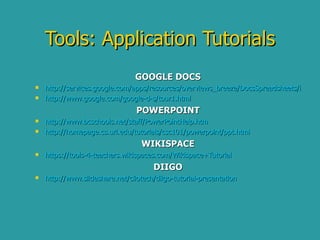
GOOGLE DOCS http://services.google.com/apps/resources/overviews_breeze/DocsSpreadsheets/index.html http://www.google.com/google-d-s/tour1.html POWERPOINT http:// www.bcschools.net/staff/PowerPointHelp.htm http://homepage.cs.uri.edu/tutorials/csc101/powerpoint/ppt.html WIKISPACE https://tools-4-teachers.wikispaces.com/Wikispace+Tutorial DIIGO http:// www.slideshare.net/cliotech/diigo -tutorial-presentation Tools: Application Tutorials
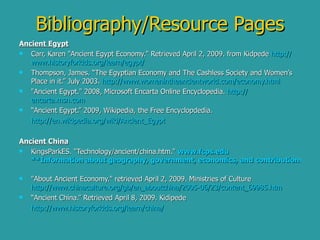
Bibliography/Resource Pages Ancient Egypt Carr, Karen "Ancient Egypt Economy." Retrieved April 2, 2009. from Kidpede  http:// www.historyforkids.org/learn/egypt /   Thompson, James. “The Egyptian Economy and The Cashless Society and Women’s Place in it.” July 2003.  http:// www.womenintheancientworld.com/economy.html "Ancient Egypt." 2008, Microsoft Encarta Online Encyclopedia.  http:// encarta.msn.com   “ Ancient Egypt.” 2009, Wikipedia, the Free Encyclopdedia. http:// en.wikipedia.org/wiki/Ancient_Egypt Ancient China KingsParkES. "Technology/ancient/china.htm."   www.fcps.edu   **Information about geography, government, economics, and contributions of Ancient China**   "About Ancient Economy." retrieved April 2, 2009. Ministries of Culture  http://www.chinaculture.org/gb/en_aboutchina/2005-06/23/content_69985.htm “ Ancient China.” Retrieved April 8, 2009. Kidipede  http:// www.historyforkids.org /learn/china/
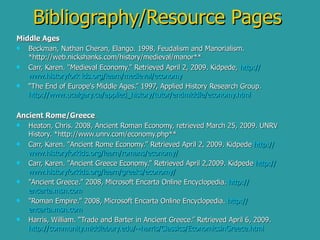
Bibliography/Resource Pages Middle Ages Beckman, Nathan Cheran, Elango. 1998, Feudalism and Manorialism.  *http://web.nickshanks.com/history/medieval/manor**  Carr, Karen. "Medieval Economy." Retrieved April 2, 2009. Kidpede,  http:// www.historyfork   ids.org /learn/medieval/economy   “ The End of Europe's Middle Ages.” 1997, Applied History Research Group.  http://www.ucalgary.ca/applied_history/tutor/endmiddle/economy.html Ancient Rome/Greece  Heaton, Chris. 2008, Ancient Roman Economy, retrieved March 25, 2009. UNRV History.  *http://www.unrv.com/economy.php**  Carr, Karen. "Ancient Rome Economy." Retrieved April 2, 2009. Kidpede  http:// www.historyforkids.org/learn/romans/economy /   Carr, Karen. "Ancient Greece Economy." Retrieved April 2,2009. Kidpede  http:// www.historyforkids.org/learn/greeks/economy /   "Ancient Greece." 2008, Microsoft Encarta Online Encyclopedia.  http:// encarta.msn.com   "Roman Empire." 2008, Microsoft Encarta Online Encyclopedia.  http:// encarta.msn.com   Harris, William. “Trade and Barter in Ancient Greece.” Retrieved April 6, 2009.  http://community.middlebury.edu/~harris/Classics/EconomicsinGreece.html
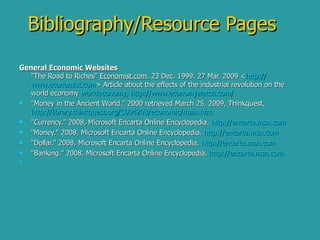
Bibliography/Resource Pages General Economic Websites &quot;The Road to Riches&quot;  Economist.com . 23 Dec. 1999. 27 Mar. 2009 < http:// www.economist.com > Article about the effects of the industrial revolution on the world economy  worldeconomy ,  http:// www.economywatch.com /   &quot;Money in the Ancient World.&quot; 2000 retrieved March 25, 2009, Thinkquest,  http://library.thinkquest.org/C004203/economic/main.htm   &quot;Currency.&quot; 2008, Microsoft Encarta Online Encyclopedia.  http:// encarta.msn.com   &quot;Money.&quot; 2008, Microsoft Encarta Online Encyclopedia.  http:// encarta.msn.com   &quot;Dollar.&quot; 2008, Microsoft Encarta Online Encyclopedia.  http:// encarta.msn.com   &quot;Banking.&quot; 2008, Microsoft Encarta Online Encyclopedia.  http://encarta.msn.com
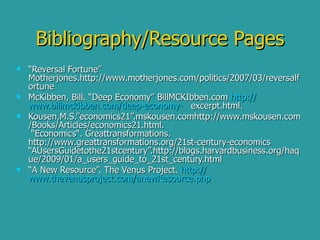
Bibliography/Resource Pages “ Reversal Fortune” Motherjones.http://www.motherjones.com/politics/2007/03/reversalfortune McKibben, Bill. “Deep Economy” BillMCKIbben.com  http:// www.billmckibben.com /deep-economy-   excerpt.html. Kousen,M.S.”economics21”.mskousen.comhttp://www.mskousen.com/Books/Articles/economics21.html.  “Economics“. Greattransformations. http://www.greattransformations.org/21st-century-economics “AUsersGuidetothe21stcentury”.http://blogs.harvardbusiness.org/haque/2009/01/a_users_guide_to_21st_century.html  “ A New Resource”. The Venus Project.  http:// www.thevenusproject.com/anewResource.php
It is yours! The New Earth

GROUP 4 EDIM502

  • 1.
    Group 4: EDIM502 u05a3 Jen Cowher, Nicole Garon, Diana Gentile, and Catherine Lambert The New Earth
  • 2.
    Pack your bagsand prepare for a tour around the world!
  • 3.
    Before you begin….First you’ll need to pick 4 ancient cities that you will visit on your journey. You’ll have to plan your travel route and choose how you will travel. Will you fly? Will you take a cruise? Or will you take your private yacht? It’s up to you!
  • 4.
    Be creative! Justremember to gather as much information as you can because when you come home, you will need to help develop a new economy for our 21 st century world. Be Creative
  • 5.
    We need yourexpertise to help set up a new, innovative, and successful economic system that will replace our own. During your travels, gather information that will help you set up this new economy for the 21 st century. Good luck and safe travels! Your Mission:
  • 6.
    Driving Question Asyou travel to the 4 ancient civilizations, study their economic systems and gather information to produce a model for a new economy for the world of the 21st century. Ask yourself: Why is a well developed economic system a crucial part of a successful civilization?  What characteristics do we find common among successful economies?    
  • 7.
    While you arecreating your model, think about these factors…
  • 8.
  • 9.
  • 10.
    Characteristics of AncientEgyptian Economy Sources of wealth were farming and fishing. Labor was divided based on gender. Some of the wheat harvested and belonging to private owners was stored in state warehouses. So was much of the grain collected as taxes. Written withdrawal orders by owners of lots of grain were used as a kind of currency. Main energy source was muscle power. Resources available: Copper, gold, grain Money-barter system Standard sacks of grain Deben-About 91 grams of copper or silver
  • 11.
  • 12.
    Characteristics of AncientChinese Economy Trade via the Silk Road Fished, farmed, and irrigated the land Exported silk Imported gold Originally used seashells as money Development of merit system Mining was an important industry Miners were mainly slaves
  • 13.
  • 14.
    Characteristics of AncientGreece and Roman Economy Both economies were based on agriculture Greeks normally lived on small self-sufficient wheat producing farms. Both Greece and Romans worked in mines. Romans were more interested in trade while the Greeks felt it was degrading. They were also both based on coin currency. Their production of materials were mostly from slave labor.
  • 15.
  • 16.
    Characteristics of theMiddle Ages Economy Feudal economic and political system People mainly ate and wore things they produced themselves Relied heavily on agriculture Wealth was derived from the land Commodities were wool, glass, leather, metal Value of coin money depended on: weight of coin and type of metal Increased trading led to the standardization of the coin
  • 17.
    Follow the YellowBrick Road to your Goal:
  • 18.
    Take a standon the issue and provide supporting research A Resource-Based Economy is a system in which all goods and services are available without the use of money, credits, barter or any other system of debt or servitude. All resources become the common heritage of all of the inhabitants, not just a select few. The premise upon which this system is based is that the Earth is abundant with plentiful resource; our practice of rationing resources through monetary methods is irrelevant and counter productive to our survival. From “The Venus Project” http:// www.thevenusproject.com/anewResource.php
  • 19.
    Here is arecommendation for addressing/resolving the issues raised by the driving question After researching the four ancient civilizations and comparing and contrasting various aspects of their economies, identify the factors that make an economy weak or strong. While researching, take note of the factors that helped to create successful economies. Identifying these criteria will enable you to begin to construct a model for a successful 21 st century economy.
  • 20.
    Assignment into groupsIntroduction to rubrics Research (See suggested bibliography) Virtual field trips Mind Mapping Culminating group project (output) GUIDE TO PROCESS
  • 21.
    See Bibliography Listsof suggested organizational tools: Diigo, Google Docs Group wiki Mindomo Guide to Resources
  • 22.
    Tools: Application TutorialsPODCAST http://www.how-to-podcast-tutorial.com/00-podcast-tutorial-four-ps.htm http:// www.apple.com/quicktime/tutorials/podcasting.html GLOGSTER http:// appserv.mnstate.edu/instrtech/its/main.php?id =1&menu=1&show=web20&page=tut4 iMOVIE http:// www.design.iastate.edu/LABS/tutorials/imovie/basic.html http:// www.apple.com/support/imovie / iPHOTO http:// www.apple.com/support/iphoto/tutorial / GARAGEBAND http:// comtechlab.iupui.edu/tutorialsfolder/garageband.html http:// www.apple.com/support/garageband /
  • 23.
    GOOGLE DOCS http://services.google.com/apps/resources/overviews_breeze/DocsSpreadsheets/index.htmlhttp://www.google.com/google-d-s/tour1.html POWERPOINT http:// www.bcschools.net/staff/PowerPointHelp.htm http://homepage.cs.uri.edu/tutorials/csc101/powerpoint/ppt.html WIKISPACE https://tools-4-teachers.wikispaces.com/Wikispace+Tutorial DIIGO http:// www.slideshare.net/cliotech/diigo -tutorial-presentation Tools: Application Tutorials
  • 24.
    Bibliography/Resource Pages AncientEgypt Carr, Karen &quot;Ancient Egypt Economy.&quot; Retrieved April 2, 2009. from Kidpede http:// www.historyforkids.org/learn/egypt / Thompson, James. “The Egyptian Economy and The Cashless Society and Women’s Place in it.” July 2003. http:// www.womenintheancientworld.com/economy.html &quot;Ancient Egypt.&quot; 2008, Microsoft Encarta Online Encyclopedia. http:// encarta.msn.com “ Ancient Egypt.” 2009, Wikipedia, the Free Encyclopdedia. http:// en.wikipedia.org/wiki/Ancient_Egypt Ancient China KingsParkES. &quot;Technology/ancient/china.htm.&quot; www.fcps.edu **Information about geography, government, economics, and contributions of Ancient China** &quot;About Ancient Economy.&quot; retrieved April 2, 2009. Ministries of Culture http://www.chinaculture.org/gb/en_aboutchina/2005-06/23/content_69985.htm “ Ancient China.” Retrieved April 8, 2009. Kidipede http:// www.historyforkids.org /learn/china/
  • 25.
    Bibliography/Resource Pages MiddleAges Beckman, Nathan Cheran, Elango. 1998, Feudalism and Manorialism. *http://web.nickshanks.com/history/medieval/manor** Carr, Karen. &quot;Medieval Economy.&quot; Retrieved April 2, 2009. Kidpede, http:// www.historyfork ids.org /learn/medieval/economy “ The End of Europe's Middle Ages.” 1997, Applied History Research Group. http://www.ucalgary.ca/applied_history/tutor/endmiddle/economy.html Ancient Rome/Greece Heaton, Chris. 2008, Ancient Roman Economy, retrieved March 25, 2009. UNRV History. *http://www.unrv.com/economy.php** Carr, Karen. &quot;Ancient Rome Economy.&quot; Retrieved April 2, 2009. Kidpede http:// www.historyforkids.org/learn/romans/economy / Carr, Karen. &quot;Ancient Greece Economy.&quot; Retrieved April 2,2009. Kidpede http:// www.historyforkids.org/learn/greeks/economy / &quot;Ancient Greece.&quot; 2008, Microsoft Encarta Online Encyclopedia. http:// encarta.msn.com &quot;Roman Empire.&quot; 2008, Microsoft Encarta Online Encyclopedia. http:// encarta.msn.com Harris, William. “Trade and Barter in Ancient Greece.” Retrieved April 6, 2009. http://community.middlebury.edu/~harris/Classics/EconomicsinGreece.html
  • 26.
    Bibliography/Resource Pages GeneralEconomic Websites &quot;The Road to Riches&quot; Economist.com . 23 Dec. 1999. 27 Mar. 2009 < http:// www.economist.com > Article about the effects of the industrial revolution on the world economy worldeconomy , http:// www.economywatch.com / &quot;Money in the Ancient World.&quot; 2000 retrieved March 25, 2009, Thinkquest, http://library.thinkquest.org/C004203/economic/main.htm &quot;Currency.&quot; 2008, Microsoft Encarta Online Encyclopedia. http:// encarta.msn.com &quot;Money.&quot; 2008, Microsoft Encarta Online Encyclopedia. http:// encarta.msn.com &quot;Dollar.&quot; 2008, Microsoft Encarta Online Encyclopedia. http:// encarta.msn.com &quot;Banking.&quot; 2008, Microsoft Encarta Online Encyclopedia. http://encarta.msn.com
  • 27.
    Bibliography/Resource Pages “Reversal Fortune” Motherjones.http://www.motherjones.com/politics/2007/03/reversalfortune McKibben, Bill. “Deep Economy” BillMCKIbben.com http:// www.billmckibben.com /deep-economy- excerpt.html. Kousen,M.S.”economics21”.mskousen.comhttp://www.mskousen.com/Books/Articles/economics21.html. “Economics“. Greattransformations. http://www.greattransformations.org/21st-century-economics “AUsersGuidetothe21stcentury”.http://blogs.harvardbusiness.org/haque/2009/01/a_users_guide_to_21st_century.html “ A New Resource”. The Venus Project. http:// www.thevenusproject.com/anewResource.php
  • 28.
    It is yours!The New Earth