Greg Sandow 
Time to join 
the rest of the world
Keynote talk 
at the fourth annual 
Conference on Arts Marketing, 
presented in Madrid by Asimetrica, 
October 20-21, 2014
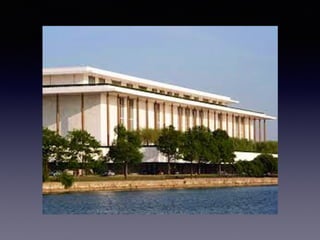
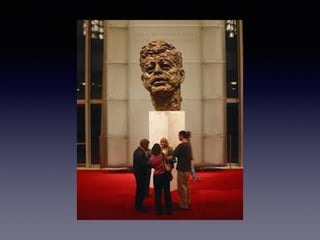
In September, I attended the opening of the 
new season at the John F. Kennedy Center 
for the Performing Arts, in Washington, DC 
(where I live).
It’s the home of: 
• The National Symphony Orchestra 
• The Washington National Opera
And it’s… 
• The most important performing arts institution 
in Washington, DC 
• One of the leading performing arts centers in 
the US
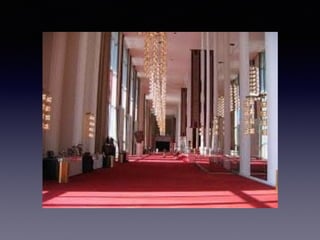
Some things about it: 
• It’s set apart from the rest of the city 
• You can’t get there by public transportation 
• It’s so grand inside that people are dwarfed
It embodies the old model of the arts, 
in which… 
• Art is grand and important 
• Art is far above us 
• Art is far away from everyday life
The performance I heard was an opera 
by a contemporary American composer. 
(I won’t mention his name, or another name later 
on, because I want to criticize ideas, not 
people.)
The audience was: 
• Older 
• Almost entirely white 
• Financially comfortable
These are the people attracted by the old model 
of the arts.
I saw more examples of the old model at this 
performance: 
• The opera was like operas of the past 
• It was comfortable for the older audience 
• But it wouldn’t say much to a younger one
• And there were self-congratulatory speeches 
— praising all of us for supporting the arts
What’s wrong with 
the old model?
• It’s wrong on a human level 
• It’s wrong artistically 
• It’s wrong politically 
• It’s bad for ticket sales 
• It’s not sustainable
How the old model is wrong on a human 
level: 
It excludes people.
To see how the old model excludes people, here’s 
what many of us in the arts might believe: 
• We believe that art shows the central 
meaning of life 
• We believe that we’re the ones 
who understand art 
• And so we must believe that others don’t 
understand
The others who don’t understand might be 
different from us. 
They might be…
• Younger 
• From a different social class 
• From a different race 
• From a different ethnicity
These are the people we’re excluding. 
So here are some hard questions…
• Do we think we understand the central meaning 
of life better than people who don’t know the 
arts? 
• Do we think we’re better than they are?
Something ironic… 
• We exclude others by invoking the highest 
artistic ideals
Something sad… 
• We devalue art that others may make on their 
own
How the old model is wrong artistically: 
• It cuts us off from the art of our time.
To see why that is, let’s step back, and look at the 
big picture.
In our time… 
• Art has migrated away from the arts 
• It’s now found in many other places
Here are some of them: 
• Pop music 
• Film 
• Graphic design
• Television 
• Fashion 
• Children’s books
Because of all this: 
• The arts no longer represent all art 
• We mislead people when we say 
that they do
And if we limit art to what the arts recognize as 
art… 
• We don’t breathe the air everyone else 
breathes 
• We cut ourselves off from the world 
• We cut ourselves off from the art of our time
Some very varied illustrations: 
• A quote from a prominent US arts advocate 
• The Wire 
• Go-go drumming on the streets of 
Washington, DC 
• The American Visionary Art Museum
A quote from a prominent US arts advocate…
He said: 
• “The arts are our family photographs”
Some of his examples…
• Because this arts advocate comes from the 
southern US, he said novels by William 
Faulkner were his family photographs 
• Because he lives in New York, plays by 
David Mamet are his family photos 
• And because he’s gay, plays by Tony 
Kushner
But he might also have chosen: 
• The blues and country music, because he’s 
from the southern US 
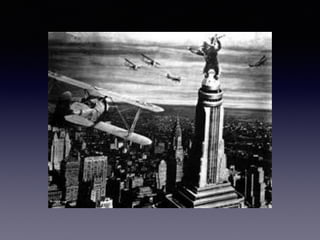
• The movie King Kong, because he’s from New 
York
• And songs by Judy Garland or the Pet Shop 
Boys, because he’s gay
For most people, these might seem like more 
natural choices. 
So our family photos — the things that show us the 
meaning of life — go far beyond the arts.
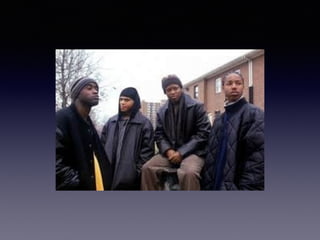
My second illustration: The Wire. 
• An American TV series shown on HBO, from 
2002 to 2008, and seen in many other 
countries
Much of the show was about drug dealers. 
They became as smart as legitimate businessmen.
Because The Wire was on commercial TV, it 
wouldn’t be included in the arts. 
Which means it wouldn’t be considered art.
And yet it has… 
• The depth and texture of a great novel 
• Deep social criticism
• The show showed how illegal drug sales 
became one of the main social institutions in 
an American city 
• And then it looked at other social institutions: 
the police, labor unions, politicians, and the 
press 
• They didn’t seem to serve the social good any 
more than the drug dealers did
Here are two quotes from David Simon, the creator 
of the show…
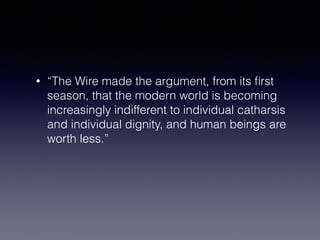
• “The Wire made the argument, from its first 
season, that the modern world is becoming 
increasingly indifferent to individual catharsis 
and individual dignity, and human beings are 
worth less.”
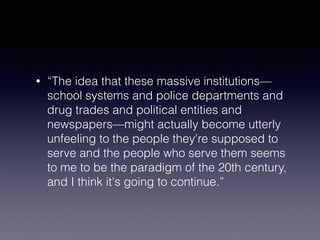
• “The idea that these massive institutions— 
school systems and police departments and 
drug trades and political entities and 
newspapers—might actually become utterly 
unfeeling to the people they're supposed to 
serve and the people who serve them seems 
to me to be the paradigm of the 20th century, 
and I think it's going to continue.”
You don’t have to accept David Simon’s view. 
But if The Wire isn’t art, then why is Balzac art, or 
Flaubert, or Dickens?
My third illustration: go-go drumming…
Go-go is a style of funk dance music created in 
Washington, DC in the 1970s, and still iconic there. 
At a go-go show: 
• The music has a special go-go beat 
• The drums never stop playing, even between songs
Go-go is often performed on the street…
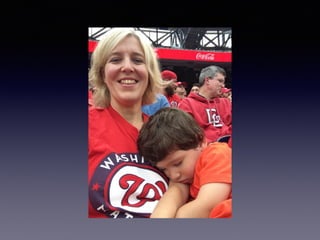
Wait — that’s not go-go! That’s my wife and son, at 
a baseball game in Washington.
My son is three. His name is Rafael. 
We call him Rafa, because he’s partly named after 
our favorite tennis player, Rafael Nadal. 
Who of course is Spanish, and who the world calls 
Rafa.
But there’s a reason for showing you that slide. 
After the ballgame, we saw three groups of go-go 
drummers on the street outside the stadium. 
Which reminded me to talk about go-go drumming 
here.
On the street, these drummers play on plastic 
buckets, because many of them don’t have real 
drums. 
If you’re online, click to see a video.
That’s an iconic Washington sight. Especially in 
the half of the city that’s African-American. 
But go-go hasn’t been noticed in the arts… 
…until the Go-Go Symphony emerged.
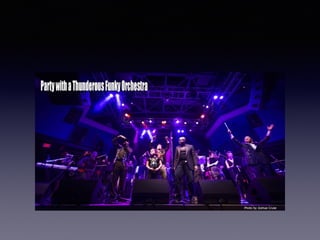
The Go-Go Symphony: 
• Includes go-go drummers, go-go rappers, and 
go-go dancers — plus classical soloists and a 
full symphony orchestra 
• Plays music specially composed for it, 
combining go-go and classical styles
• With a smaller classical ensemble, it had a 
huge triumph in dance clubs 
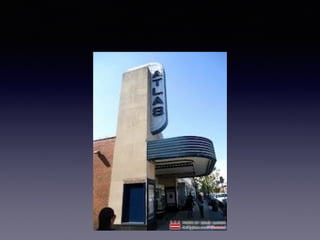
• Now it gives full symphonic performances in 
an edgy performing arts space, the Atlas 
Performing Arts Center
• Which doesn’t look like the Kennedy Center!
• The performances draw big crowds 
• People dance 
• And the shows get rave reviews, including one 
from a classical critic
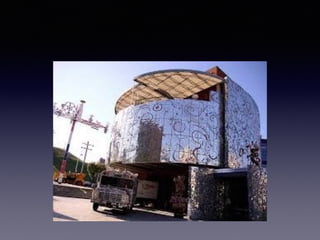
My last illustration: the American Visionary Art 
Museum, in Baltimore…
• This certainly isn’t the Kennedy Center!
• It shows art made by artists without formal 
training — artists, as the museum says, who 
have “intuitive, self-taught artistry” 
• For me, it redefines the familiar term “outsider 
art” 
• Which at this museum no longer looks marginal, 
but seems as strong as art by artists who’ve 
been officially recognized
How the old model is wrong politically… 
This follows from what’s wrong artistically, as we 
can see if we ask: 
Why has art migrated outside the arts?
Art has migrated outside the arts because society 
has changed. 
In our society, we now have…
• A new majority culture 
• Ethnic and cultural diversity 
• Popular culture that’s varied, deep, and 
complex 
• A new sense of individual empowerment 
• A new sense of inclusiveness and participation
In a society like this, it’s natural for people to make 
art on their own.
So here’s the political problem. 
After all these changes… 
How can we ask the world to think old-model art is 
vastly important — and to give it vast amounts of 
money — when it speaks to just one part of our 
culture? 
Especially when…
• It’s the part of our culture that the old elite 
loves 
• The elite seems to believe everyone else 
should share its taste 
• Money for any kind of culture is tight 
• And in the US, there’s an emerging non-white 
majority, which has vivid cultures of its own
Why the old model is bad for ticket sales… 
This should be obvious: 
If we’re speaking only to one part of our culture, 
we’re not reaching our largest potential 
audience
A study done some years ago for Lincoln Center, 
the big performing arts center in New York, 
showed that…
• Many people didn’t go to Lincoln Center 
performances because they didn’t know what was 
being performed 
• They didn’t know what was being performed 
because they didn’t read New York’s elite 
newspaper, the New York Times 
• Lincoln Center concentrated its publicity and 
advertising in the Times 
• So it wasn’t reaching most of New York
Why the old model isn’t sustainable… 
This also ought to be obvious.
• Our existing audience is shrinking 
• Our culture continues to change 
• Younger people, with their new culture, are 
emerging in dominant roles 
• Non-white people — in the US, the coming 
majority — are emerging in dominant roles
Because of all this… 
• The audience for the old-model arts will 
continue to shrink 
• In the future, it may will disappear 
• It will be replaced by a new audience
The new audience: 
• Has a new culture 
• And won’t want the old-model art
The new model
Art, as I’ve said, has migrated away from the arts. 
And so in the new model…
• The arts join the rest of the world 
• They stand side by side with the art 
happening everywhere
Advantages of the new model: 
• It gives a truer, more complete picture of the 
world we live in 
• People in the new culture can embrace it 
• They’ll want to come to what we offer them
About the traditional high arts…
• People today have nothing against them 
• People now mix high art and popular art 
• They’re open to Mahler, or Greek tragedy 
• But they don’t want to be told they have to like 
those things 
• Or that high art is more valid than the other art 
happening today
To join the new world… 
• We have to be open to it 
• We have to celebrate it 
• We have to learn from it 
• We have to include it in what we do
Here are more ways to do this, from: 
• The Baltimore Symphony 
• The Clarice Smith Performing Arts Center, at 
the University of Maryland 
• The National Symphony Orchestra
The Baltimore Symphony… 
Featured black performers at its opening gala this 
year, many more of them than we usually see at a 
symphony concert. 
Here’s who they were…
• Jazz pianist Marcus Roberts, who played 
Gershwin’s Rhapsody in Blue 
• A black actor who heads a Baltimore theater, 
and narrated Copland’s Lincoln Portrait 
• A choir from a historically black college in 
Baltimore, which sang Copland’s Old 
American Songs
The Clarice Smith Performing Arts Center, at the 
University of Maryland… 
Opened its season with a three-day festival, which 
included more than 40 performances.
Among the performances were…
• A “sonic massage,” in which the audience 
was soothed by sounds created by the 
performers 
• Thirty two-minute plays, produced in an 
hour by an experimental theater company 
• An “Opera Jam Session,” produced and 
performed by voice students at the 
university
• A performance by a student orchestra that 
plays music from video games (and whose 
concerts are the most popular musical 
events on campus) 
• A performance by an amateur concert band 
from the community 
• And other classical, pop, jazz, dance, 
theater, and unclassifiable events
The National Symphony Orchestra… 
• Opened its new season with a performance 
that didn’t only include classical music 
• The second half of the concert featured a 
Broadway star, singing Broadway show tunes
And here are some other examples…
A touring Tim Burton art show…
• Burton is one of the world’s leading film directors 
• His films include Edward Scissorhands, The 
Nightmare Before Christmas, Batman, Mars Attacks, 
and Charlie and the Chocolate Factory 
• Drawings and models for his films were featured in 
a blockbuster show, which toured to the world’s 
leading art museums 
• It made the case for Burton as one of the world’s 
top visual artists
Second example: 
The Costume Institute, at the Metropolitan 
Museum of Art (which is in New York, and is the 
leading art museum in the US)
• The Costume Institute’s exhibitions include 
fashion and popular culture 
• One showed how superhero costumes have 
influenced couture
Third example: 
The Museum of Modern Art (MOMA), in New 
York (one of the most important art museums in 
the US)
• MOMA for the first time added an app to its 
permanent collection 
• The app was the iPad version of a pop 
album, Björk’s Biophilia 
• The museum has also done shows about 
the links between visual art and pop music 
in New York
Fourth example: 
The “American Voices” festival at the Kennedy 
Center
• This was conceived and curated by Renée 
Fleming, one of the world’s top opera singers 
• It included vocal music in many genres: 
classical, pop, Broadway, country, R&B, and 
pop 
• For each genre there were performances, 
panel discussions, and master classes
Fifth example: 
The Brooklyn Academy of Music (BAM), in New 
York
• For decades, BAM has built a large audience for 
performing art outside the mainstream 
• It commissioned a piece from Sufjan Stevens, one 
of the stars of American indie rock 
• Stevens wrote 30 minutes of orchestra music for this 
piece 
• The institution hired orchestra musicians to work 
with Stevens, so he could learn how to write for 
them
Sixth example: 
The Orchestra of the Age of Enlightenment, in 
London
• They play one-hour late-night concerts for a 
large, cheering young audience 
• Plus many smaller performances for younger 
people in clubs 
• At all these performancs, they play their 
normal classical repertoire
How they got their young audience: 
• They rebranded themselves for younger 
people as “The Night Shift” 
• At these performances, they introduce each 
piece by talking to the audience 
• They invite the audience to cheer, boo, drink, 
eat, and take photos
Here are two videos that show how they do it… 
• If you’re online, click here for a video about their club 
performances 
• And click here for one about their rebranding: 
• They made that video because they were looking 
for people from their audience to pose for them in 
advertising
• They did all this with no reference to pop 
music 
• But pop and jazz support acts play before and 
after the club performances 
• The OAE publicizes who the pop and jazz 
artists are
• That reinforces their branding 
• And shows they live in same world their 
audience lives in
Marketing to the 
new model
Disclaimer! 
• I’m not a marketing professional
Fear and trembling! 
• That’s what I’ll feel If I talk about detailed 
marketing techniques
But marketing to the new model isn’t only about 
marketing techniques, such as: 
• Email 
• Advertising 
• Brochures 
• Data mining 
• Social media
It’s about marketing attitude. 
Once you have the right attitude, you’ll know what 
techniques to use. 
And you’ll figure out how to use them.
What do I mean by marketing attitude? 
• You have to market the right things 
• You have to speak the language of the people 
you’re marketing to 
• You have to go out and find these people
Marketing the right things… 
• Things that speak to the people you want to 
reach 
• Things that fit in their world 
• Things they’ll be curious about
What marketing the right things doesn’t mean… 
It doesn’t mean pandering. 
So you should never pander to anyone: 
• You shouldn’t do things only because your 
new audience will like them 
• You shouldn’t do art you don’t believe in
One way not to pander… 
• Do things that you don’t know your audience 
will like 
• Things that don’t fit in their world 
• Maybe even things you’re sure they won’t like! 
• And tell them you’re doing this
What you get from that: 
• Your audience will know that you’re serious 
about art 
• They’ll know you’re honest 
• They’ll know you respect them
Your ultimate goal should be… 
To attract people to anything you do. 
But you can’t do that… 
• If they’re not interested in you 
• If they don’t trust you
And so you have to show them you’re in their 
world… 
By doing some things you know they will 
respond to.
About what to market… 
Two more examples: 
• The Indianapolis Museum of Art 
• Wordless Music, a concert series in New York
The Indianapolis Museum… 
• Presents itself as more than just a museum 
that shows art. 
• It says it shows “Modern, African, and Fine 
Art” 
• Which sounds focused, interesting, unusual
• It also says it has gardens, and a nature and 
art park 
• Which gives people more reasons to visit
Wordless Music: 
• Is a concert series in New York 
• Gave a concert of contemporary classical 
music for orchestra 
• Sold out a 1000-seat church for two nights
• The concert featured music by John Adams 
and Gavin Bryars, important classical 
composers 
• And also music by Jonny Greenwood, lead 
guitarist in Radiohead
• Greenwood has real classical composer 
credentials 
• His piece was not a rock piece 
• But his name attracted the very large 
audience… 
• Which loved the entire concert
About speaking the language of the people you 
want to reach… 
• It’s not just the words you use 
• You have to open yourself to their world
Which means you have to: 
• Be informal 
• Be transparent 
• Give people ways to participate
I think we know what informality is. 
So I won’t talk about that.
But here are some examples of transparency: 
• The Indianapolis Museum of Art website 
• The CEO of a successful online company 
• A theater company in Seattle
The Indianapolis Museum of Art website…
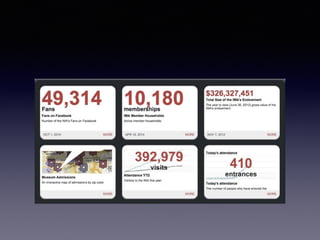
Has a “Dashboard” page, with statistics about the 
museum: 
• How many Facebook fans it has 
• How many members it has 
• The size of its endowment 
• The number of people who visited this year 
• The number of people who visited today
• These numbers are updated in real time 
• So everyone can see if the museum is doing 
well or badly
The CEO of a successful online company… 
• Tweeted often about his business 
• One day was annoyed because his car was 
taking too long to repair 
• He tweeted about that… 
• And got the biggest response he’d ever 
gotten
What he learned from this: 
• People were interested in him, not just in his 
business
A theater company in Seattle…
• Picked four playgoers to review its productions, 
on its website 
• The first reviews were negative 
• But they drew many visitors to the site 
• So more people paid attention to the company 
• And admired it for its honesty
And now here are some examples of participation: 
• Imogen Heap, a British pop star 
• The Pittsburgh Symphony
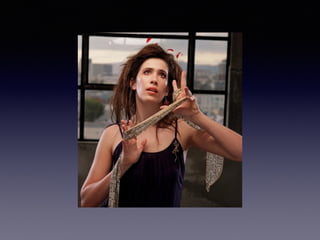
Imogen Heap…
• Sent out videos showing how she was 
making her albums 
• Asked her fans for graphics to use in 
packaging and marketing 
• Asked her fans for sounds to incorporate 
into songs on her latest album 
• She used dozens of those sounds
The Pittsburgh Symphony… 
• Played three short contemporary pieces on the 
first half of a concert 
• During intermission, the audience voted on 
which piece they liked best 
• The winning piece was repeated at the end of 
the concert
I was there, and I’ve rarely seen an audience get so 
involved in a performance. 
• There was much discussion of the three pieces, and 
much debate about which was best 
• People cited specific musical details, to say why 
they made their choice 
• Some even voted for a piece that wasn’t their 
favorite, because they thought it wasn’t going to 
win, and they liked it
And about finding the people we want to reach… 
• They’re not looking for us 
• So we can’t wait for them to come to us 
• We have to go into their world
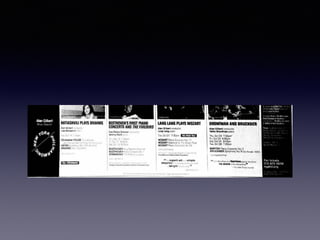
Here’s something that doesn’t go into their world… 
And so it can’t work in the new model: 
• Newspaper advertising by the New York 
Philharmonic
• There’s nothing interesting there, unless you 
already know orchestral music 
• The Philharmonic isn’t going to people. It’s 
waiting for them to see the ad in the 
newspaper 
• But the new audience isn’t looking in the 
newspaper for symphony ads 
• It may not read newspapers at all
Here are some ways to enter the world your 
audience lives in… 
• Create events, apart from your performances 
and exhibitions 
• Turn your performances and exhibitions into 
events 
• Make some noise — do other things that 
people will notice, both online and out in the 
world
Some examples… 
• Pop-up performances, or flash mobs 
• Colorado Symphony marijuana concerts 
• The Hamburg Philharmoniker 
• The BBC Proms concerts 
• A “prostheticallty amplified” string quartet
Pop-up performances, or flash mobs…
Advantages… 
• People who haven’t been thinking about you at 
all suddenly see how terrific you are
But two questions… 
• How can you stay in touch with people who’ve 
never had contact with you before, but loved 
your flash mob or popup? 
• Do you do these events just once, or can you 
build them into something with ongoing 
benefits for you?
Colorado Symphony marijuana concerts… 
• The state of Colorado, in the US, made 
marijuana legal 
• The Colorado Symphony gave concerts to 
celebrate 
• They invited the audience to smoke 
• Got national, maybe international attention
The Hamburg Philharmoniker… 
• Played Brahms with musicians scattered to 50 
locations around Hamburg 
• The conductor led the musicians on video, from a 
church tower 
• 10,000 people came to the 50 sites, to hear the 
musicians live 
• The event had corporate sponsorship, and got wide 
media coverage in Germany
At the BBC Proms concerts…
• People waiting on the street to buy tickets 
were interviewed on video 
• The videos were shown on the Proms website 
• The Proms announced when and where 
they’d do more video interviews 
• People came to those locations, specially 
dressed to be in the videos
A “prostheticallty amplified” string quartet… 
• Sensors recorded the body movements of the 
musicians 
• On a video display, the audience could see 
tiny physical reactions the musicians had, to 
moments in the music 
• And in that way could track the musicians’ 
changing involvement with the music
• This was presented at an indie art space in 
New York 
• But any music organization might benefit 
from doing it 
• It would show the world that they’re 
thoughtful, creative, and surprising
In all of this, am I talking about marketing? 
You may think I’m not…
• But if you do the things I’m talking about, you’ll 
know how to market them… 
• Using traditional marketing techniques 
• Using social media 
• And using new methods you’ll discover for 
yourselves
Now (with fear and trembling!) I’ll offer examples of 
genuine marketing, done by word of mouth…
• Students at the University of Maryland 
• Lara Downes, a pianist in San Francisco 
• The marketing campaign for the blockbuster 
Hunger Games film 
• Eric Haeker, an entrepreneur in his 20s
Students at the University of Maryland, who played 
in the school’s symphony orchestra… 
• Organized the places where they lived — 
dorms, fraternities, sororities 
• Got students living near them to come to a 
concert… 
• And doubled the size of their audience!
I know that this is labor-intensive. 
And I know it’s easier for amateurs to do, than for 
professionals, who’d have to be paid. 
I also know that even for the students, an effort like 
this would be hard to sustain
But if someone found ways to keep it going… 
And if they had the right programming… 
Couldn’t they build a sustainable audience?
Moving on to Lara Downes… 
• She produces a concert series in a jazz club 
• And fills the club with people who don’t 
normally go to classical music events
She first built her audience from: 
• Family friends 
• Parents whose kids went to school with her 
kids 
• Her husband’s professional colleagues
• She encouraged these people to bring their own 
friends 
• And because the concerts were terrific and 
unusual… 
• She built a loyal core audience
About the Hunger Games marketing campaign… 
• The film was based on a series of hugely 
popular books 
• So the producers thought the film would be a 
huge success, marketed in standard ways 
• But they wanted more
• They promoted the movie to fans of the books 
• Long before the film came out, the fans were 
talking about it 
• So the film was even more successful than it 
would have been, with only a standard 
marketing campaign
Finally, Eric Haeker… 
• Described his events as “live electronic 
chamber music,” with “DJ interludes, and an 
aqueous video immersion” 
• Classical musicians played classical melodies 
with a dance beat 
• These events drew large crowds in Philadelphia 
and Washington
One way that Eric promoted them: 
• He organized what he and others have called 
“social media street teams” 
• These teams would have10 to 20 people in 
them 
• All these people would promote the events to 
their own social media networks
• People started talking about the events to 
each other 
• More and more people started talking about 
the events, as the street teams kept promoting 
• This helped draw the large crowds
I know that these things aren’t what marketers 
have normally done. 
And large organizations might not be equipped to 
do them. 
But if you work for a large organization, you might 
ask yourself… 
How can I adapt these techniques?
And now, to conclude… 
Let me take a step backward.
I’ll ask you again: 
What is your ultimate marketing goal?
I think it should be… 
To attract people to any art you want to present.
To do that, you have to be bold.
Here are two famous quotes about being bold, from: 
• Steve Jobs, who made Apple the triumphant 
company it is now 
• Diana Vreeland, who as editor of Vogue magazine 
was a leader in both fashion and magazine 
publishing 
• And who became the first curator at the Costume 
Institute at the Metropolitan Museum of Art
Steve Jobs said: 
• “People don't know what they want until you 
show it to them.”
Diana Vreeland said: 
• “You’re not supposed to give people what they 
want. You’re supposed to give them what they 
don't know they want yet.”
So in the end… 
We’re back to the timeless model of the arts: 
• Art should be new 
• Art should be revelatory 
• Art should take the lead
And that’s where we have to be… 
• But we can’t take the lead until we’re in the 
race 
• We won’t be in the race until we’re in contact 
with our current culture 
• And that’s why we have to join the rest of the 
world
Thanks for reading this!
Greg Sandow 
greg@gregsandow.com 
blog: www.artsjournal.com/sandow 
website: www.gregsandow.com 
facebook.com/gsandow 
twitter.com/gsandow 
listen to my music 
subscribe to my newsletter

Time to join the rest of the world. Greg Sandow

  • 1.
    Greg Sandow Timeto join the rest of the world
  • 2.
    Keynote talk atthe fourth annual Conference on Arts Marketing, presented in Madrid by Asimetrica, October 20-21, 2014
  • 4.
    In September, Iattended the opening of the new season at the John F. Kennedy Center for the Performing Arts, in Washington, DC (where I live).
  • 6.
    It’s the homeof: • The National Symphony Orchestra • The Washington National Opera
  • 7.
    And it’s… •The most important performing arts institution in Washington, DC • One of the leading performing arts centers in the US
  • 8.
    Some things aboutit: • It’s set apart from the rest of the city • You can’t get there by public transportation • It’s so grand inside that people are dwarfed
  • 11.
    It embodies theold model of the arts, in which… • Art is grand and important • Art is far above us • Art is far away from everyday life
  • 12.
    The performance Iheard was an opera by a contemporary American composer. (I won’t mention his name, or another name later on, because I want to criticize ideas, not people.)
  • 13.
    The audience was: • Older • Almost entirely white • Financially comfortable
  • 14.
    These are thepeople attracted by the old model of the arts.
  • 15.
    I saw moreexamples of the old model at this performance: • The opera was like operas of the past • It was comfortable for the older audience • But it wouldn’t say much to a younger one
  • 16.
    • And therewere self-congratulatory speeches — praising all of us for supporting the arts
  • 17.
    What’s wrong with the old model?
  • 18.
    • It’s wrongon a human level • It’s wrong artistically • It’s wrong politically • It’s bad for ticket sales • It’s not sustainable
  • 19.
    How the oldmodel is wrong on a human level: It excludes people.
  • 20.
    To see howthe old model excludes people, here’s what many of us in the arts might believe: • We believe that art shows the central meaning of life • We believe that we’re the ones who understand art • And so we must believe that others don’t understand
  • 21.
    The others whodon’t understand might be different from us. They might be…
  • 22.
    • Younger •From a different social class • From a different race • From a different ethnicity
  • 23.
    These are thepeople we’re excluding. So here are some hard questions…
  • 24.
    • Do wethink we understand the central meaning of life better than people who don’t know the arts? • Do we think we’re better than they are?
  • 25.
    Something ironic… •We exclude others by invoking the highest artistic ideals
  • 26.
    Something sad… •We devalue art that others may make on their own
  • 27.
    How the oldmodel is wrong artistically: • It cuts us off from the art of our time.
  • 28.
    To see whythat is, let’s step back, and look at the big picture.
  • 29.
    In our time… • Art has migrated away from the arts • It’s now found in many other places
  • 30.
    Here are someof them: • Pop music • Film • Graphic design
  • 31.
    • Television •Fashion • Children’s books
  • 32.
    Because of allthis: • The arts no longer represent all art • We mislead people when we say that they do
  • 33.
    And if welimit art to what the arts recognize as art… • We don’t breathe the air everyone else breathes • We cut ourselves off from the world • We cut ourselves off from the art of our time
  • 34.
    Some very variedillustrations: • A quote from a prominent US arts advocate • The Wire • Go-go drumming on the streets of Washington, DC • The American Visionary Art Museum
  • 35.
    A quote froma prominent US arts advocate…
  • 36.
    He said: •“The arts are our family photographs”
  • 37.
    Some of hisexamples…
  • 38.
    • Because thisarts advocate comes from the southern US, he said novels by William Faulkner were his family photographs • Because he lives in New York, plays by David Mamet are his family photos • And because he’s gay, plays by Tony Kushner
  • 39.
    But he mightalso have chosen: • The blues and country music, because he’s from the southern US • The movie King Kong, because he’s from New York
  • 41.
    • And songsby Judy Garland or the Pet Shop Boys, because he’s gay
  • 42.
    For most people,these might seem like more natural choices. So our family photos — the things that show us the meaning of life — go far beyond the arts.
  • 43.
    My second illustration:The Wire. • An American TV series shown on HBO, from 2002 to 2008, and seen in many other countries
  • 45.
    Much of theshow was about drug dealers. They became as smart as legitimate businessmen.
  • 46.
    Because The Wirewas on commercial TV, it wouldn’t be included in the arts. Which means it wouldn’t be considered art.
  • 47.
    And yet ithas… • The depth and texture of a great novel • Deep social criticism
  • 48.
    • The showshowed how illegal drug sales became one of the main social institutions in an American city • And then it looked at other social institutions: the police, labor unions, politicians, and the press • They didn’t seem to serve the social good any more than the drug dealers did
  • 49.
    Here are twoquotes from David Simon, the creator of the show…
  • 50.
    • “The Wiremade the argument, from its first season, that the modern world is becoming increasingly indifferent to individual catharsis and individual dignity, and human beings are worth less.”
  • 51.
    • “The ideathat these massive institutions— school systems and police departments and drug trades and political entities and newspapers—might actually become utterly unfeeling to the people they're supposed to serve and the people who serve them seems to me to be the paradigm of the 20th century, and I think it's going to continue.”
  • 52.
    You don’t haveto accept David Simon’s view. But if The Wire isn’t art, then why is Balzac art, or Flaubert, or Dickens?
  • 53.
    My third illustration:go-go drumming…
  • 54.
    Go-go is astyle of funk dance music created in Washington, DC in the 1970s, and still iconic there. At a go-go show: • The music has a special go-go beat • The drums never stop playing, even between songs
  • 55.
    Go-go is oftenperformed on the street…
  • 57.
    Wait — that’snot go-go! That’s my wife and son, at a baseball game in Washington.
  • 58.
    My son isthree. His name is Rafael. We call him Rafa, because he’s partly named after our favorite tennis player, Rafael Nadal. Who of course is Spanish, and who the world calls Rafa.
  • 59.
    But there’s areason for showing you that slide. After the ballgame, we saw three groups of go-go drummers on the street outside the stadium. Which reminded me to talk about go-go drumming here.
  • 60.
    On the street,these drummers play on plastic buckets, because many of them don’t have real drums. If you’re online, click to see a video.
  • 61.
    That’s an iconicWashington sight. Especially in the half of the city that’s African-American. But go-go hasn’t been noticed in the arts… …until the Go-Go Symphony emerged.
  • 63.
    The Go-Go Symphony: • Includes go-go drummers, go-go rappers, and go-go dancers — plus classical soloists and a full symphony orchestra • Plays music specially composed for it, combining go-go and classical styles
  • 64.
    • With asmaller classical ensemble, it had a huge triumph in dance clubs • Now it gives full symphonic performances in an edgy performing arts space, the Atlas Performing Arts Center
  • 66.
    • Which doesn’tlook like the Kennedy Center!
  • 67.
    • The performancesdraw big crowds • People dance • And the shows get rave reviews, including one from a classical critic
  • 68.
    My last illustration:the American Visionary Art Museum, in Baltimore…
  • 70.
    • This certainlyisn’t the Kennedy Center!
  • 71.
    • It showsart made by artists without formal training — artists, as the museum says, who have “intuitive, self-taught artistry” • For me, it redefines the familiar term “outsider art” • Which at this museum no longer looks marginal, but seems as strong as art by artists who’ve been officially recognized
  • 72.
    How the oldmodel is wrong politically… This follows from what’s wrong artistically, as we can see if we ask: Why has art migrated outside the arts?
  • 73.
    Art has migratedoutside the arts because society has changed. In our society, we now have…
  • 74.
    • A newmajority culture • Ethnic and cultural diversity • Popular culture that’s varied, deep, and complex • A new sense of individual empowerment • A new sense of inclusiveness and participation
  • 75.
    In a societylike this, it’s natural for people to make art on their own.
  • 76.
    So here’s thepolitical problem. After all these changes… How can we ask the world to think old-model art is vastly important — and to give it vast amounts of money — when it speaks to just one part of our culture? Especially when…
  • 77.
    • It’s thepart of our culture that the old elite loves • The elite seems to believe everyone else should share its taste • Money for any kind of culture is tight • And in the US, there’s an emerging non-white majority, which has vivid cultures of its own
  • 78.
    Why the oldmodel is bad for ticket sales… This should be obvious: If we’re speaking only to one part of our culture, we’re not reaching our largest potential audience
  • 79.
    A study donesome years ago for Lincoln Center, the big performing arts center in New York, showed that…
  • 80.
    • Many peopledidn’t go to Lincoln Center performances because they didn’t know what was being performed • They didn’t know what was being performed because they didn’t read New York’s elite newspaper, the New York Times • Lincoln Center concentrated its publicity and advertising in the Times • So it wasn’t reaching most of New York
  • 81.
    Why the oldmodel isn’t sustainable… This also ought to be obvious.
  • 82.
    • Our existingaudience is shrinking • Our culture continues to change • Younger people, with their new culture, are emerging in dominant roles • Non-white people — in the US, the coming majority — are emerging in dominant roles
  • 83.
    Because of allthis… • The audience for the old-model arts will continue to shrink • In the future, it may will disappear • It will be replaced by a new audience
  • 84.
    The new audience: • Has a new culture • And won’t want the old-model art
  • 85.
  • 86.
    Art, as I’vesaid, has migrated away from the arts. And so in the new model…
  • 87.
    • The artsjoin the rest of the world • They stand side by side with the art happening everywhere
  • 88.
    Advantages of thenew model: • It gives a truer, more complete picture of the world we live in • People in the new culture can embrace it • They’ll want to come to what we offer them
  • 89.
  • 90.
    • People todayhave nothing against them • People now mix high art and popular art • They’re open to Mahler, or Greek tragedy • But they don’t want to be told they have to like those things • Or that high art is more valid than the other art happening today
  • 91.
    To join thenew world… • We have to be open to it • We have to celebrate it • We have to learn from it • We have to include it in what we do
  • 92.
    Here are moreways to do this, from: • The Baltimore Symphony • The Clarice Smith Performing Arts Center, at the University of Maryland • The National Symphony Orchestra
  • 93.
    The Baltimore Symphony… Featured black performers at its opening gala this year, many more of them than we usually see at a symphony concert. Here’s who they were…
  • 94.
    • Jazz pianistMarcus Roberts, who played Gershwin’s Rhapsody in Blue • A black actor who heads a Baltimore theater, and narrated Copland’s Lincoln Portrait • A choir from a historically black college in Baltimore, which sang Copland’s Old American Songs
  • 95.
    The Clarice SmithPerforming Arts Center, at the University of Maryland… Opened its season with a three-day festival, which included more than 40 performances.
  • 96.
  • 97.
    • A “sonicmassage,” in which the audience was soothed by sounds created by the performers • Thirty two-minute plays, produced in an hour by an experimental theater company • An “Opera Jam Session,” produced and performed by voice students at the university
  • 98.
    • A performanceby a student orchestra that plays music from video games (and whose concerts are the most popular musical events on campus) • A performance by an amateur concert band from the community • And other classical, pop, jazz, dance, theater, and unclassifiable events
  • 99.
    The National SymphonyOrchestra… • Opened its new season with a performance that didn’t only include classical music • The second half of the concert featured a Broadway star, singing Broadway show tunes
  • 100.
    And here aresome other examples…
  • 101.
    A touring TimBurton art show…
  • 102.
    • Burton isone of the world’s leading film directors • His films include Edward Scissorhands, The Nightmare Before Christmas, Batman, Mars Attacks, and Charlie and the Chocolate Factory • Drawings and models for his films were featured in a blockbuster show, which toured to the world’s leading art museums • It made the case for Burton as one of the world’s top visual artists
  • 103.
    Second example: TheCostume Institute, at the Metropolitan Museum of Art (which is in New York, and is the leading art museum in the US)
  • 104.
    • The CostumeInstitute’s exhibitions include fashion and popular culture • One showed how superhero costumes have influenced couture
  • 105.
    Third example: TheMuseum of Modern Art (MOMA), in New York (one of the most important art museums in the US)
  • 106.
    • MOMA forthe first time added an app to its permanent collection • The app was the iPad version of a pop album, Björk’s Biophilia • The museum has also done shows about the links between visual art and pop music in New York
  • 107.
    Fourth example: The“American Voices” festival at the Kennedy Center
  • 108.
    • This wasconceived and curated by Renée Fleming, one of the world’s top opera singers • It included vocal music in many genres: classical, pop, Broadway, country, R&B, and pop • For each genre there were performances, panel discussions, and master classes
  • 109.
    Fifth example: TheBrooklyn Academy of Music (BAM), in New York
  • 110.
    • For decades,BAM has built a large audience for performing art outside the mainstream • It commissioned a piece from Sufjan Stevens, one of the stars of American indie rock • Stevens wrote 30 minutes of orchestra music for this piece • The institution hired orchestra musicians to work with Stevens, so he could learn how to write for them
  • 111.
    Sixth example: TheOrchestra of the Age of Enlightenment, in London
  • 112.
    • They playone-hour late-night concerts for a large, cheering young audience • Plus many smaller performances for younger people in clubs • At all these performancs, they play their normal classical repertoire
  • 113.
    How they gottheir young audience: • They rebranded themselves for younger people as “The Night Shift” • At these performances, they introduce each piece by talking to the audience • They invite the audience to cheer, boo, drink, eat, and take photos
  • 114.
    Here are twovideos that show how they do it… • If you’re online, click here for a video about their club performances • And click here for one about their rebranding: • They made that video because they were looking for people from their audience to pose for them in advertising
  • 115.
    • They didall this with no reference to pop music • But pop and jazz support acts play before and after the club performances • The OAE publicizes who the pop and jazz artists are
  • 116.
    • That reinforcestheir branding • And shows they live in same world their audience lives in
  • 117.
    Marketing to the new model
  • 118.
    Disclaimer! • I’mnot a marketing professional
  • 119.
    Fear and trembling! • That’s what I’ll feel If I talk about detailed marketing techniques
  • 120.
    But marketing tothe new model isn’t only about marketing techniques, such as: • Email • Advertising • Brochures • Data mining • Social media
  • 121.
    It’s about marketingattitude. Once you have the right attitude, you’ll know what techniques to use. And you’ll figure out how to use them.
  • 122.
    What do Imean by marketing attitude? • You have to market the right things • You have to speak the language of the people you’re marketing to • You have to go out and find these people
  • 123.
    Marketing the rightthings… • Things that speak to the people you want to reach • Things that fit in their world • Things they’ll be curious about
  • 124.
    What marketing theright things doesn’t mean… It doesn’t mean pandering. So you should never pander to anyone: • You shouldn’t do things only because your new audience will like them • You shouldn’t do art you don’t believe in
  • 125.
    One way notto pander… • Do things that you don’t know your audience will like • Things that don’t fit in their world • Maybe even things you’re sure they won’t like! • And tell them you’re doing this
  • 126.
    What you getfrom that: • Your audience will know that you’re serious about art • They’ll know you’re honest • They’ll know you respect them
  • 127.
    Your ultimate goalshould be… To attract people to anything you do. But you can’t do that… • If they’re not interested in you • If they don’t trust you
  • 128.
    And so youhave to show them you’re in their world… By doing some things you know they will respond to.
  • 129.
    About what tomarket… Two more examples: • The Indianapolis Museum of Art • Wordless Music, a concert series in New York
  • 130.
    The Indianapolis Museum… • Presents itself as more than just a museum that shows art. • It says it shows “Modern, African, and Fine Art” • Which sounds focused, interesting, unusual
  • 131.
    • It alsosays it has gardens, and a nature and art park • Which gives people more reasons to visit
  • 132.
    Wordless Music: •Is a concert series in New York • Gave a concert of contemporary classical music for orchestra • Sold out a 1000-seat church for two nights
  • 133.
    • The concertfeatured music by John Adams and Gavin Bryars, important classical composers • And also music by Jonny Greenwood, lead guitarist in Radiohead
  • 134.
    • Greenwood hasreal classical composer credentials • His piece was not a rock piece • But his name attracted the very large audience… • Which loved the entire concert
  • 135.
    About speaking thelanguage of the people you want to reach… • It’s not just the words you use • You have to open yourself to their world
  • 136.
    Which means youhave to: • Be informal • Be transparent • Give people ways to participate
  • 137.
    I think weknow what informality is. So I won’t talk about that.
  • 138.
    But here aresome examples of transparency: • The Indianapolis Museum of Art website • The CEO of a successful online company • A theater company in Seattle
  • 139.
    The Indianapolis Museumof Art website…
  • 140.
    Has a “Dashboard”page, with statistics about the museum: • How many Facebook fans it has • How many members it has • The size of its endowment • The number of people who visited this year • The number of people who visited today
  • 142.
    • These numbersare updated in real time • So everyone can see if the museum is doing well or badly
  • 143.
    The CEO ofa successful online company… • Tweeted often about his business • One day was annoyed because his car was taking too long to repair • He tweeted about that… • And got the biggest response he’d ever gotten
  • 144.
    What he learnedfrom this: • People were interested in him, not just in his business
  • 145.
    A theater companyin Seattle…
  • 146.
    • Picked fourplaygoers to review its productions, on its website • The first reviews were negative • But they drew many visitors to the site • So more people paid attention to the company • And admired it for its honesty
  • 147.
    And now hereare some examples of participation: • Imogen Heap, a British pop star • The Pittsburgh Symphony
  • 148.
  • 150.
    • Sent outvideos showing how she was making her albums • Asked her fans for graphics to use in packaging and marketing • Asked her fans for sounds to incorporate into songs on her latest album • She used dozens of those sounds
  • 151.
    The Pittsburgh Symphony… • Played three short contemporary pieces on the first half of a concert • During intermission, the audience voted on which piece they liked best • The winning piece was repeated at the end of the concert
  • 152.
    I was there,and I’ve rarely seen an audience get so involved in a performance. • There was much discussion of the three pieces, and much debate about which was best • People cited specific musical details, to say why they made their choice • Some even voted for a piece that wasn’t their favorite, because they thought it wasn’t going to win, and they liked it
  • 153.
    And about findingthe people we want to reach… • They’re not looking for us • So we can’t wait for them to come to us • We have to go into their world
  • 154.
    Here’s something thatdoesn’t go into their world… And so it can’t work in the new model: • Newspaper advertising by the New York Philharmonic
  • 156.
    • There’s nothinginteresting there, unless you already know orchestral music • The Philharmonic isn’t going to people. It’s waiting for them to see the ad in the newspaper • But the new audience isn’t looking in the newspaper for symphony ads • It may not read newspapers at all
  • 157.
    Here are someways to enter the world your audience lives in… • Create events, apart from your performances and exhibitions • Turn your performances and exhibitions into events • Make some noise — do other things that people will notice, both online and out in the world
  • 158.
    Some examples… •Pop-up performances, or flash mobs • Colorado Symphony marijuana concerts • The Hamburg Philharmoniker • The BBC Proms concerts • A “prostheticallty amplified” string quartet
  • 159.
  • 160.
    Advantages… • Peoplewho haven’t been thinking about you at all suddenly see how terrific you are
  • 161.
    But two questions… • How can you stay in touch with people who’ve never had contact with you before, but loved your flash mob or popup? • Do you do these events just once, or can you build them into something with ongoing benefits for you?
  • 162.
    Colorado Symphony marijuanaconcerts… • The state of Colorado, in the US, made marijuana legal • The Colorado Symphony gave concerts to celebrate • They invited the audience to smoke • Got national, maybe international attention
  • 163.
    The Hamburg Philharmoniker… • Played Brahms with musicians scattered to 50 locations around Hamburg • The conductor led the musicians on video, from a church tower • 10,000 people came to the 50 sites, to hear the musicians live • The event had corporate sponsorship, and got wide media coverage in Germany
  • 164.
    At the BBCProms concerts…
  • 165.
    • People waitingon the street to buy tickets were interviewed on video • The videos were shown on the Proms website • The Proms announced when and where they’d do more video interviews • People came to those locations, specially dressed to be in the videos
  • 166.
    A “prostheticallty amplified”string quartet… • Sensors recorded the body movements of the musicians • On a video display, the audience could see tiny physical reactions the musicians had, to moments in the music • And in that way could track the musicians’ changing involvement with the music
  • 167.
    • This waspresented at an indie art space in New York • But any music organization might benefit from doing it • It would show the world that they’re thoughtful, creative, and surprising
  • 168.
    In all ofthis, am I talking about marketing? You may think I’m not…
  • 169.
    • But ifyou do the things I’m talking about, you’ll know how to market them… • Using traditional marketing techniques • Using social media • And using new methods you’ll discover for yourselves
  • 170.
    Now (with fearand trembling!) I’ll offer examples of genuine marketing, done by word of mouth…
  • 171.
    • Students atthe University of Maryland • Lara Downes, a pianist in San Francisco • The marketing campaign for the blockbuster Hunger Games film • Eric Haeker, an entrepreneur in his 20s
  • 172.
    Students at theUniversity of Maryland, who played in the school’s symphony orchestra… • Organized the places where they lived — dorms, fraternities, sororities • Got students living near them to come to a concert… • And doubled the size of their audience!
  • 173.
    I know thatthis is labor-intensive. And I know it’s easier for amateurs to do, than for professionals, who’d have to be paid. I also know that even for the students, an effort like this would be hard to sustain
  • 174.
    But if someonefound ways to keep it going… And if they had the right programming… Couldn’t they build a sustainable audience?
  • 175.
    Moving on toLara Downes… • She produces a concert series in a jazz club • And fills the club with people who don’t normally go to classical music events
  • 176.
    She first builther audience from: • Family friends • Parents whose kids went to school with her kids • Her husband’s professional colleagues
  • 177.
    • She encouragedthese people to bring their own friends • And because the concerts were terrific and unusual… • She built a loyal core audience
  • 178.
    About the HungerGames marketing campaign… • The film was based on a series of hugely popular books • So the producers thought the film would be a huge success, marketed in standard ways • But they wanted more
  • 179.
    • They promotedthe movie to fans of the books • Long before the film came out, the fans were talking about it • So the film was even more successful than it would have been, with only a standard marketing campaign
  • 180.
    Finally, Eric Haeker… • Described his events as “live electronic chamber music,” with “DJ interludes, and an aqueous video immersion” • Classical musicians played classical melodies with a dance beat • These events drew large crowds in Philadelphia and Washington
  • 181.
    One way thatEric promoted them: • He organized what he and others have called “social media street teams” • These teams would have10 to 20 people in them • All these people would promote the events to their own social media networks
  • 182.
    • People startedtalking about the events to each other • More and more people started talking about the events, as the street teams kept promoting • This helped draw the large crowds
  • 183.
    I know thatthese things aren’t what marketers have normally done. And large organizations might not be equipped to do them. But if you work for a large organization, you might ask yourself… How can I adapt these techniques?
  • 184.
    And now, toconclude… Let me take a step backward.
  • 185.
    I’ll ask youagain: What is your ultimate marketing goal?
  • 186.
    I think itshould be… To attract people to any art you want to present.
  • 187.
    To do that,you have to be bold.
  • 188.
    Here are twofamous quotes about being bold, from: • Steve Jobs, who made Apple the triumphant company it is now • Diana Vreeland, who as editor of Vogue magazine was a leader in both fashion and magazine publishing • And who became the first curator at the Costume Institute at the Metropolitan Museum of Art
  • 189.
    Steve Jobs said: • “People don't know what they want until you show it to them.”
  • 190.
    Diana Vreeland said: • “You’re not supposed to give people what they want. You’re supposed to give them what they don't know they want yet.”
  • 191.
    So in theend… We’re back to the timeless model of the arts: • Art should be new • Art should be revelatory • Art should take the lead
  • 192.
    And that’s wherewe have to be… • But we can’t take the lead until we’re in the race • We won’t be in the race until we’re in contact with our current culture • And that’s why we have to join the rest of the world
  • 193.
  • 194.
    Greg Sandow greg@gregsandow.com blog: www.artsjournal.com/sandow website: www.gregsandow.com facebook.com/gsandow twitter.com/gsandow listen to my music subscribe to my newsletter