Introduction to
Greek Mythology
Mythology:
 The study of “Myths”—and myths are stories
about supernatural beings in early times,
which were handed down orally from one
generation to another
 Myths attempt to explain such things as:
 Nature-Where did Earth come from? Heavens?
Seasons? Geography?
 Man- Where did we come from?
 Gods-Where do the gods come from?
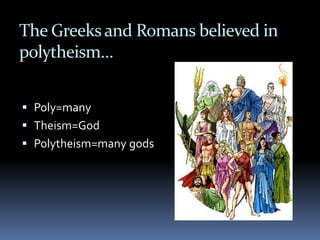
The Greeksand Romans believed in
polytheism…
 Poly=many
 Theism=God
 Polytheism=many gods
Whydowe studyGreekMythology?
Interesting and Entertaining
Shows how ancient people
viewed the world and gives us
an account of their history
It is constantly referenced to in
everyday life
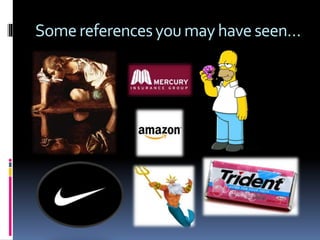
Somereferencesyoumayhaveseen…
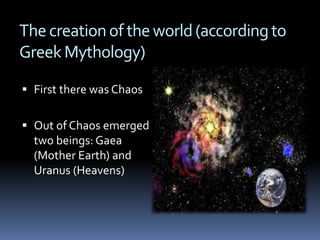
Thecreationof theworld(accordingto
GreekMythology)
 First there was Chaos
 Out of Chaos emerged
two beings: Gaea
(Mother Earth) and
Uranus (Heavens)
Gaea andUranus hadseveralchildren
Titans Monsters
 Oceanus andTethys
 Hyperion andThea
 Coeus and Phoebe
 Cronus and Rhea
 Mnemosyne
 Themis
 Crius
 Lapetus
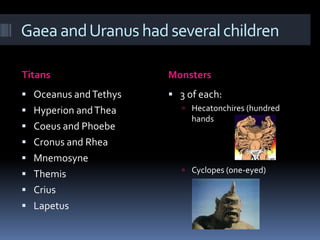
 3 of each:
 Hecatonchires (hundred
hands
 Cyclopes (one-eyed)
Uranus hatedallhischildrenbut
especiallythemonsters…
 Locked the monsters inTartarus
 Gaea was upset and asked theTitans to help
 Cronus, the youngest and strongest,
overthrew is father, Uranus, and seized the
rule of the Universe.
 Cronus took Rhea for a wife and divided the
Earth among his fellowTitans
 Cronus and Rhea had 6 children:The
Olympians
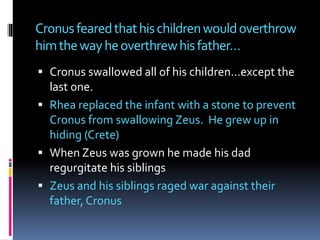
Cronusfearedthathischildrenwouldoverthrow
himthewayheoverthrewhisfather…
 Cronus swallowed all of his children…except the
last one.
 Rhea replaced the infant with a stone to prevent
Cronus from swallowing Zeus. He grew up in
hiding (Crete)
 When Zeus was grown he made his dad
regurgitate his siblings
 Zeus and his siblings raged war against their
father, Cronus
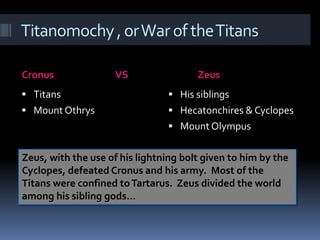
Titanomochy,orWaroftheTitans
Cronus VS Zeus
 Titans
 Mount Othrys
 His siblings
 Hecatonchires & Cyclopes
 Mount Olympus
Zeus, with the use of his lightning bolt given to him by the
Cyclopes, defeated Cronus and his army. Most of the
Titans were confined toTartarus. Zeus divided the world
among his sibling gods…
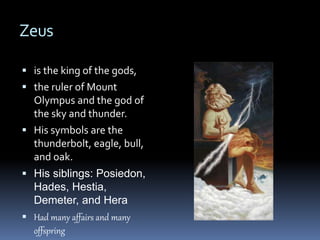
Zeus
 is the king of the gods,
 the ruler of Mount
Olympus and the god of
the sky and thunder.
 His symbols are the
thunderbolt, eagle, bull,
and oak.
 His siblings: Posiedon,
Hades, Hestia,
Demeter, and Hera
 Had many affairs and many
offspring
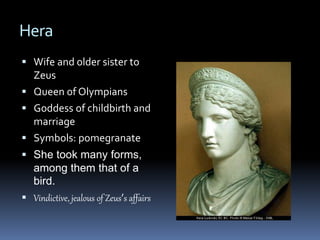
Hera
 Wife and older sister to
Zeus
 Queen of Olympians
 Goddess of childbirth and
marriage
 Symbols: pomegranate
 She took many forms,
among them that of a
bird.
 Vindictive, jealous of Zeus’s affairs
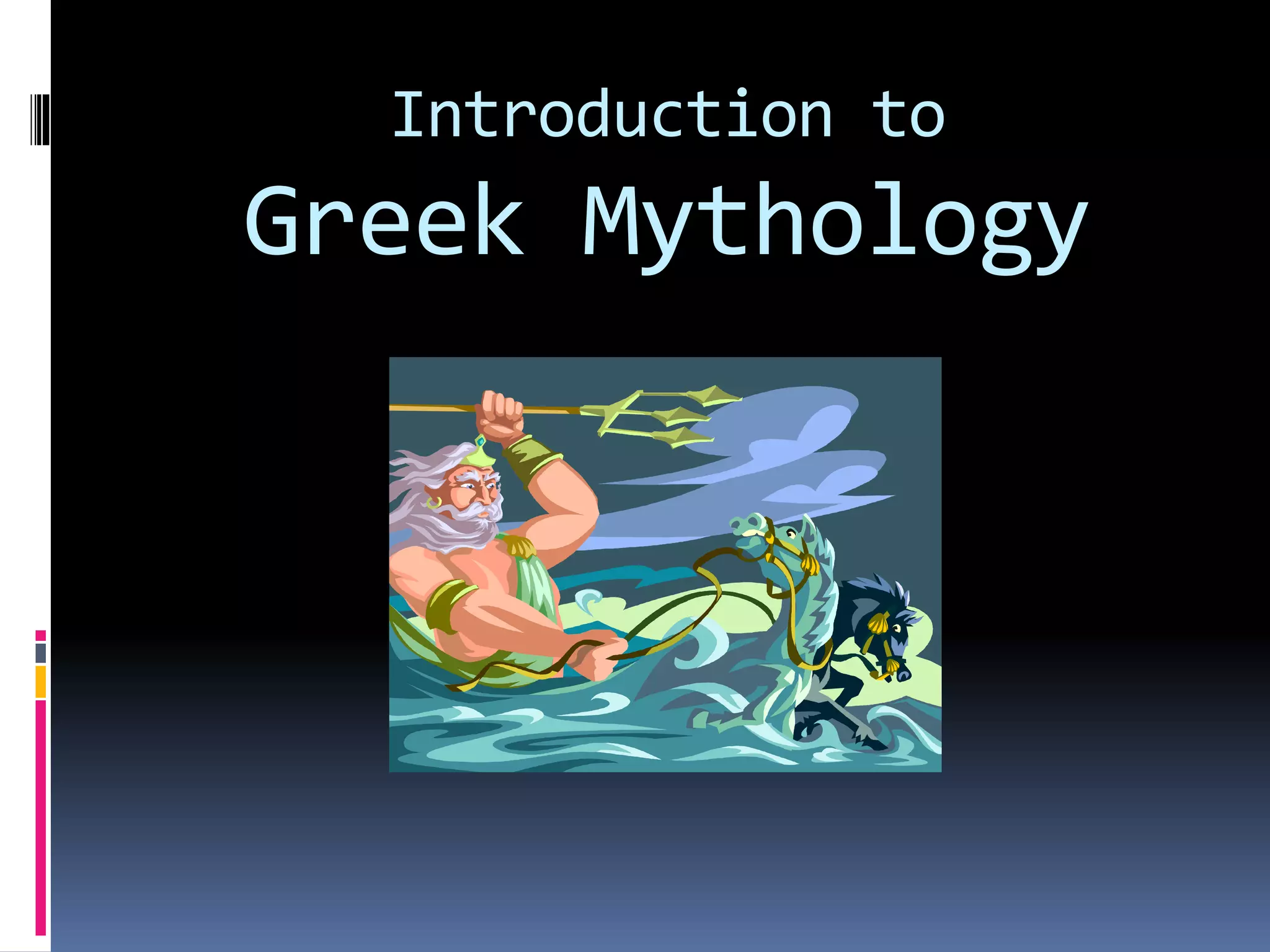
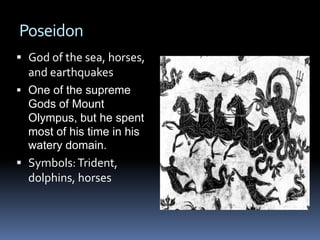
Poseidon
 God of the sea, horses,
and earthquakes
 One of the supreme
Gods of Mount
Olympus, but he spent
most of his time in his
watery domain.
 Symbols:Trident,
dolphins, horses
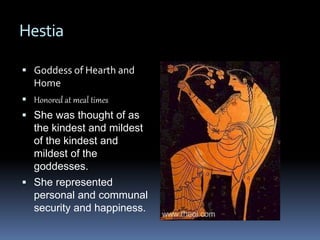
Hestia
 Goddess of Hearth and
Home
 Honored at meal times
 She was thought of as
the kindest and mildest
of the kindest and
mildest of the
goddesses.
 She represented
personal and communal
security and happiness.
Demeter
 Goddess of Agriculture
 Often shown carrying a
bundle of grain
 Symbols: wheat,
poppies, cornucopia
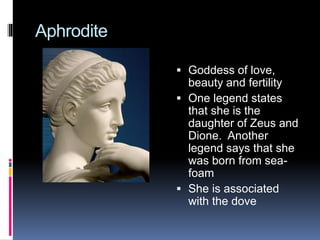
Aphrodite
 Goddess of love,
beauty and fertility
 One legend states
that she is the
daughter of Zeus and
Dione. Another
legend says that she
was born from sea-
foam
 She is associated
with the dove
QuickTime™ and a
decompressor
are needed to see this picture.
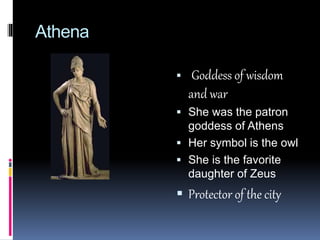
Athena
 Goddess of wisdom
and war
 She was the patron
goddess of Athens
 Her symbol is the owl
 She is the favorite
daughter of Zeus
 Protector of the city
QuickTime™ and a
decompressor
are needed to see this picture.
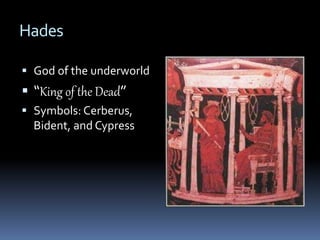
Hades
 God of the underworld
 “King of the Dead”
 Symbols: Cerberus,
Bident, and Cypress
TheHero
 Many mythological stories feature Heroes
 Heroes have specific traits:
 Unusual circumstance of birth; danger or royalty
 Leaves family or land and lives with others
 An event leads to an adventure or quest
 Hero has special weapon only he can wield
 Hero has supernatural help
 The hero must prove himself many times while on
the adventure
 Hero experiences atonement with his father
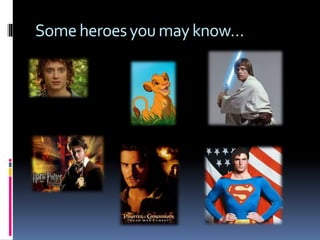
Someheroesyoumayknow…
AnEpicPoem
 A long narrative poem originally told (and
later written) in a dignified style and
presenting characters of high position
engaged in a series of adventures (episodes)
that are important to the history of a nation
or race.
CharacteristicsoftheEpic:
1. The hero is a figure of imposing stature, of
national importance, and of great historical
or legendary significance
2. The setting is vast in scope
3. The action consists of deeds of great valor or
requiring superhuman courage
4. Supernatural forces interests themselves in
the action
5. The epic poet recounts the deeds of the
heroes with objectivity
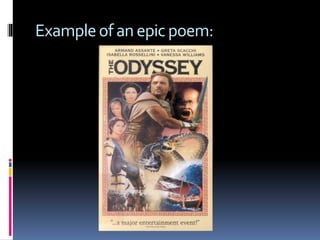
Exampleofan epicpoem:

Greek_Mythology.ppt

  • 1.
  • 2.
    Mythology:  The studyof “Myths”—and myths are stories about supernatural beings in early times, which were handed down orally from one generation to another  Myths attempt to explain such things as:  Nature-Where did Earth come from? Heavens? Seasons? Geography?  Man- Where did we come from?  Gods-Where do the gods come from?
  • 3.
    The Greeksand Romansbelieved in polytheism…  Poly=many  Theism=God  Polytheism=many gods
  • 4.
    Whydowe studyGreekMythology? Interesting andEntertaining Shows how ancient people viewed the world and gives us an account of their history It is constantly referenced to in everyday life
  • 5.
  • 6.
    Thecreationof theworld(accordingto GreekMythology)  Firstthere was Chaos  Out of Chaos emerged two beings: Gaea (Mother Earth) and Uranus (Heavens)
  • 7.
    Gaea andUranus hadseveralchildren TitansMonsters  Oceanus andTethys  Hyperion andThea  Coeus and Phoebe  Cronus and Rhea  Mnemosyne  Themis  Crius  Lapetus  3 of each:  Hecatonchires (hundred hands  Cyclopes (one-eyed)
  • 8.
    Uranus hatedallhischildrenbut especiallythemonsters…  Lockedthe monsters inTartarus  Gaea was upset and asked theTitans to help  Cronus, the youngest and strongest, overthrew is father, Uranus, and seized the rule of the Universe.  Cronus took Rhea for a wife and divided the Earth among his fellowTitans  Cronus and Rhea had 6 children:The Olympians
  • 9.
    Cronusfearedthathischildrenwouldoverthrow himthewayheoverthrewhisfather…  Cronus swallowedall of his children…except the last one.  Rhea replaced the infant with a stone to prevent Cronus from swallowing Zeus. He grew up in hiding (Crete)  When Zeus was grown he made his dad regurgitate his siblings  Zeus and his siblings raged war against their father, Cronus
  • 10.
    Titanomochy,orWaroftheTitans Cronus VS Zeus Titans  Mount Othrys  His siblings  Hecatonchires & Cyclopes  Mount Olympus Zeus, with the use of his lightning bolt given to him by the Cyclopes, defeated Cronus and his army. Most of the Titans were confined toTartarus. Zeus divided the world among his sibling gods…
  • 11.
    Zeus  is theking of the gods,  the ruler of Mount Olympus and the god of the sky and thunder.  His symbols are the thunderbolt, eagle, bull, and oak.  His siblings: Posiedon, Hades, Hestia, Demeter, and Hera  Had many affairs and many offspring
  • 12.
    Hera  Wife andolder sister to Zeus  Queen of Olympians  Goddess of childbirth and marriage  Symbols: pomegranate  She took many forms, among them that of a bird.  Vindictive, jealous of Zeus’s affairs
  • 13.
    Poseidon  God ofthe sea, horses, and earthquakes  One of the supreme Gods of Mount Olympus, but he spent most of his time in his watery domain.  Symbols:Trident, dolphins, horses
  • 14.
    Hestia  Goddess ofHearth and Home  Honored at meal times  She was thought of as the kindest and mildest of the kindest and mildest of the goddesses.  She represented personal and communal security and happiness.
  • 15.
    Demeter  Goddess ofAgriculture  Often shown carrying a bundle of grain  Symbols: wheat, poppies, cornucopia
  • 16.
    Aphrodite  Goddess oflove, beauty and fertility  One legend states that she is the daughter of Zeus and Dione. Another legend says that she was born from sea- foam  She is associated with the dove QuickTime™ and a decompressor are needed to see this picture.
  • 17.
    Athena  Goddess ofwisdom and war  She was the patron goddess of Athens  Her symbol is the owl  She is the favorite daughter of Zeus  Protector of the city QuickTime™ and a decompressor are needed to see this picture.
  • 18.
    Hades  God ofthe underworld  “King of the Dead”  Symbols: Cerberus, Bident, and Cypress
  • 19.
    TheHero  Many mythologicalstories feature Heroes  Heroes have specific traits:  Unusual circumstance of birth; danger or royalty  Leaves family or land and lives with others  An event leads to an adventure or quest  Hero has special weapon only he can wield  Hero has supernatural help  The hero must prove himself many times while on the adventure  Hero experiences atonement with his father
  • 20.
  • 21.
    AnEpicPoem  A longnarrative poem originally told (and later written) in a dignified style and presenting characters of high position engaged in a series of adventures (episodes) that are important to the history of a nation or race.
  • 22.
    CharacteristicsoftheEpic: 1. The herois a figure of imposing stature, of national importance, and of great historical or legendary significance 2. The setting is vast in scope 3. The action consists of deeds of great valor or requiring superhuman courage 4. Supernatural forces interests themselves in the action 5. The epic poet recounts the deeds of the heroes with objectivity
  • 23.