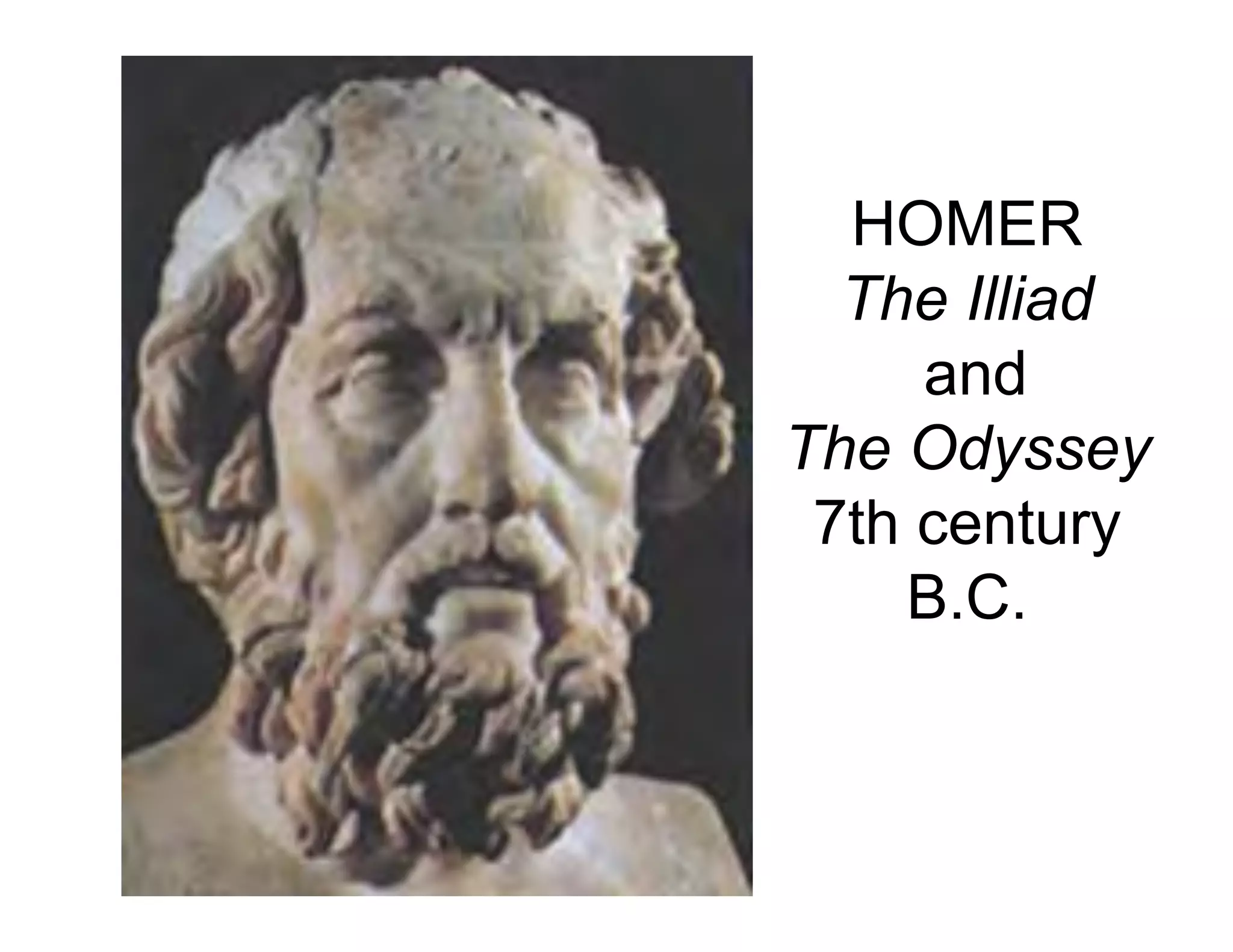
HOMER
  The Illiad
     and
The Odyssey
 7th century
    B.C.
What was needed to create
theater in Greece:
   A middle class to create/attend the
        plays.
   A sense of partiotism.
   Spare time.
   Relative peace and relative prosperity.
   A stable economy.
   A public sponsor and public
        encouragement.
   Appreciation for learning.
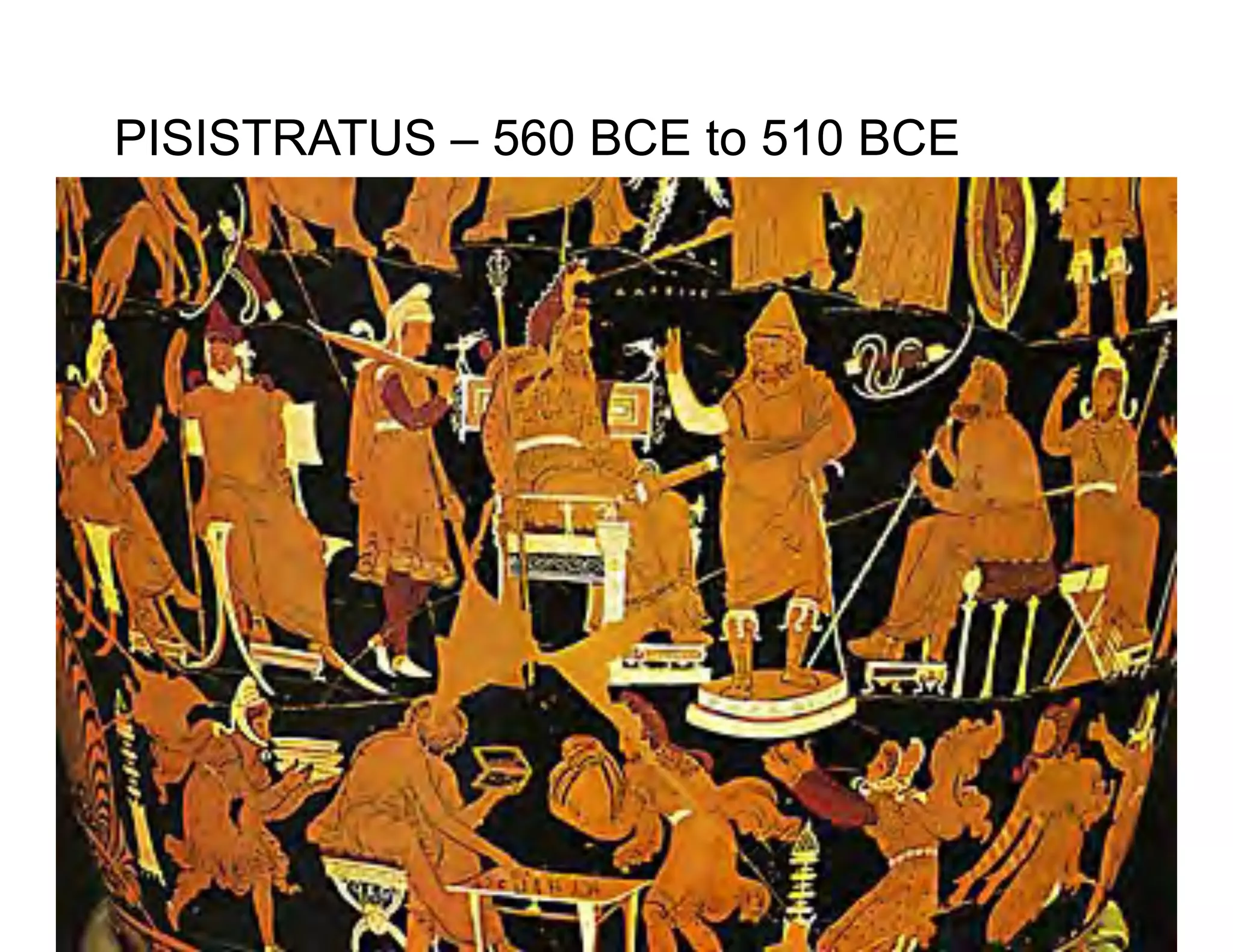
PISISTRATUS – 560 BCE to 510 BCE
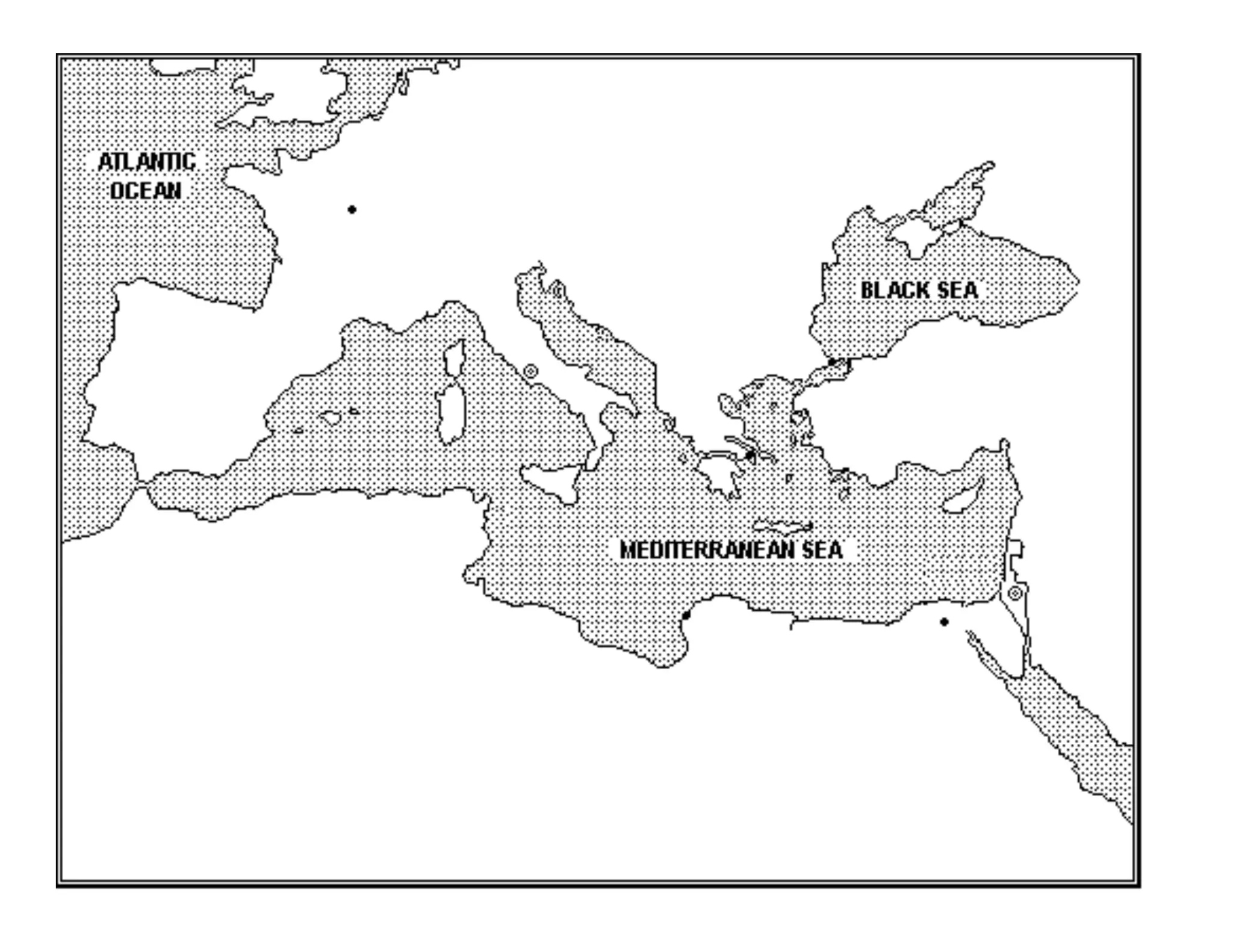
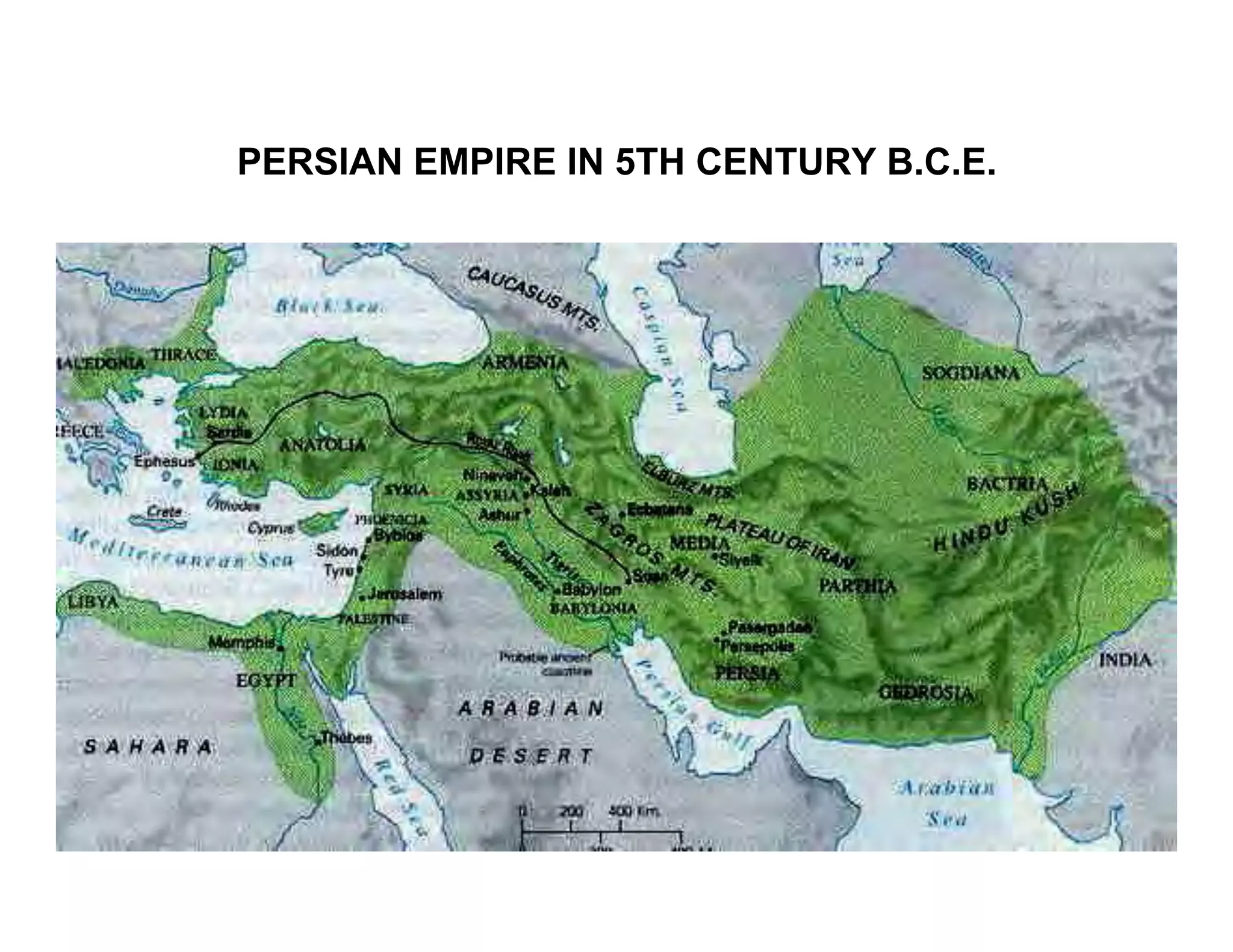
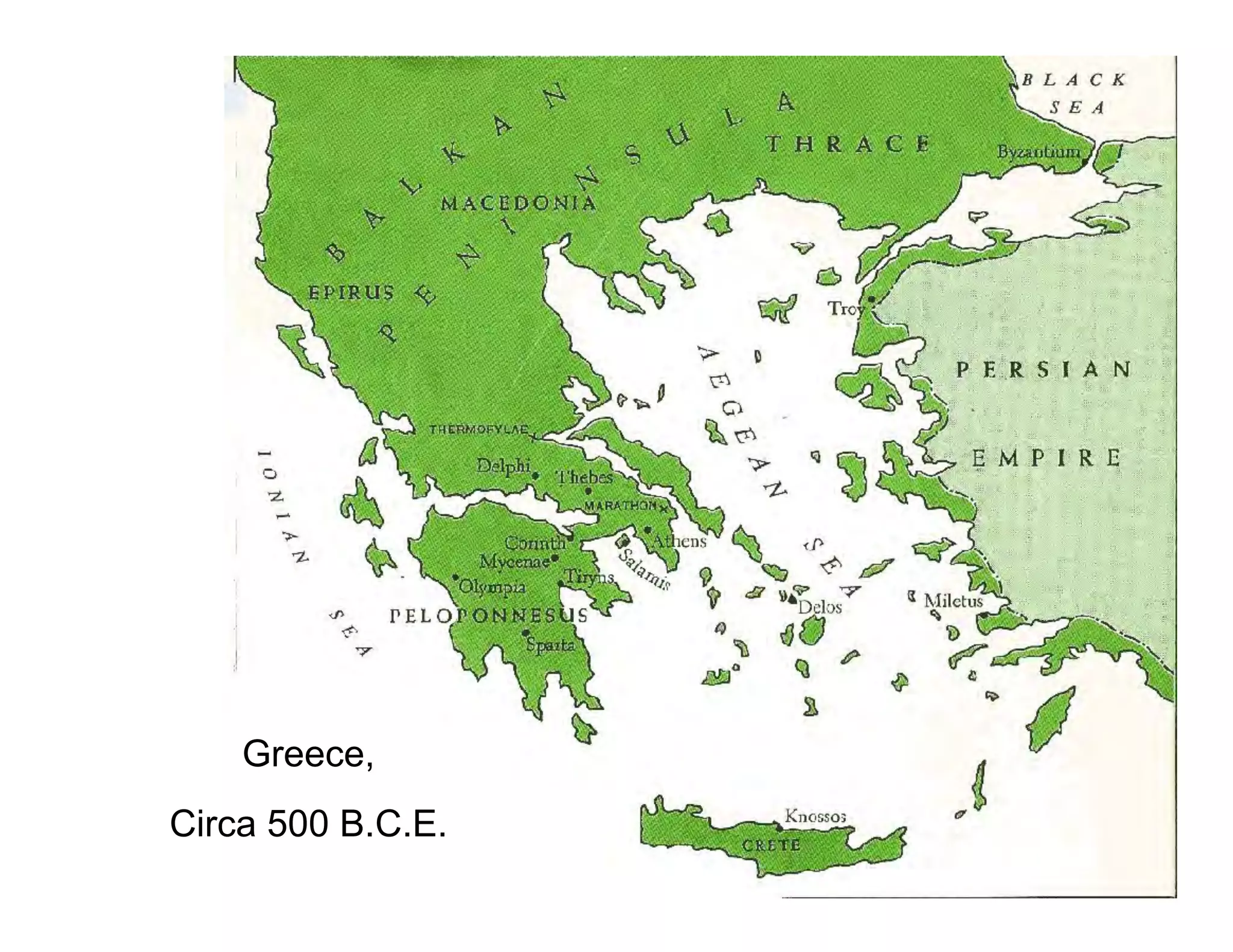
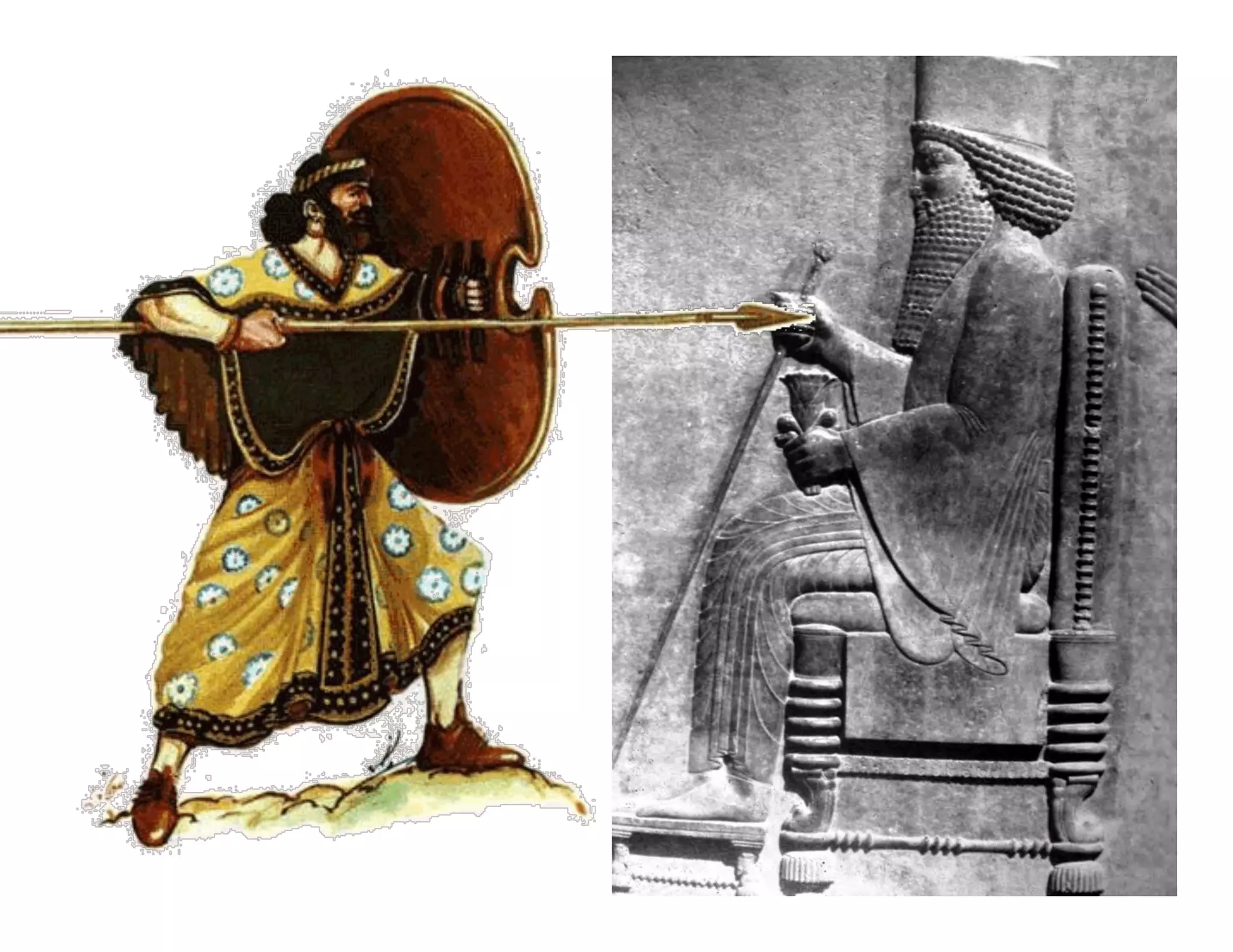
PERSIAN EMPIRE IN 5TH CENTURY B.C.E.
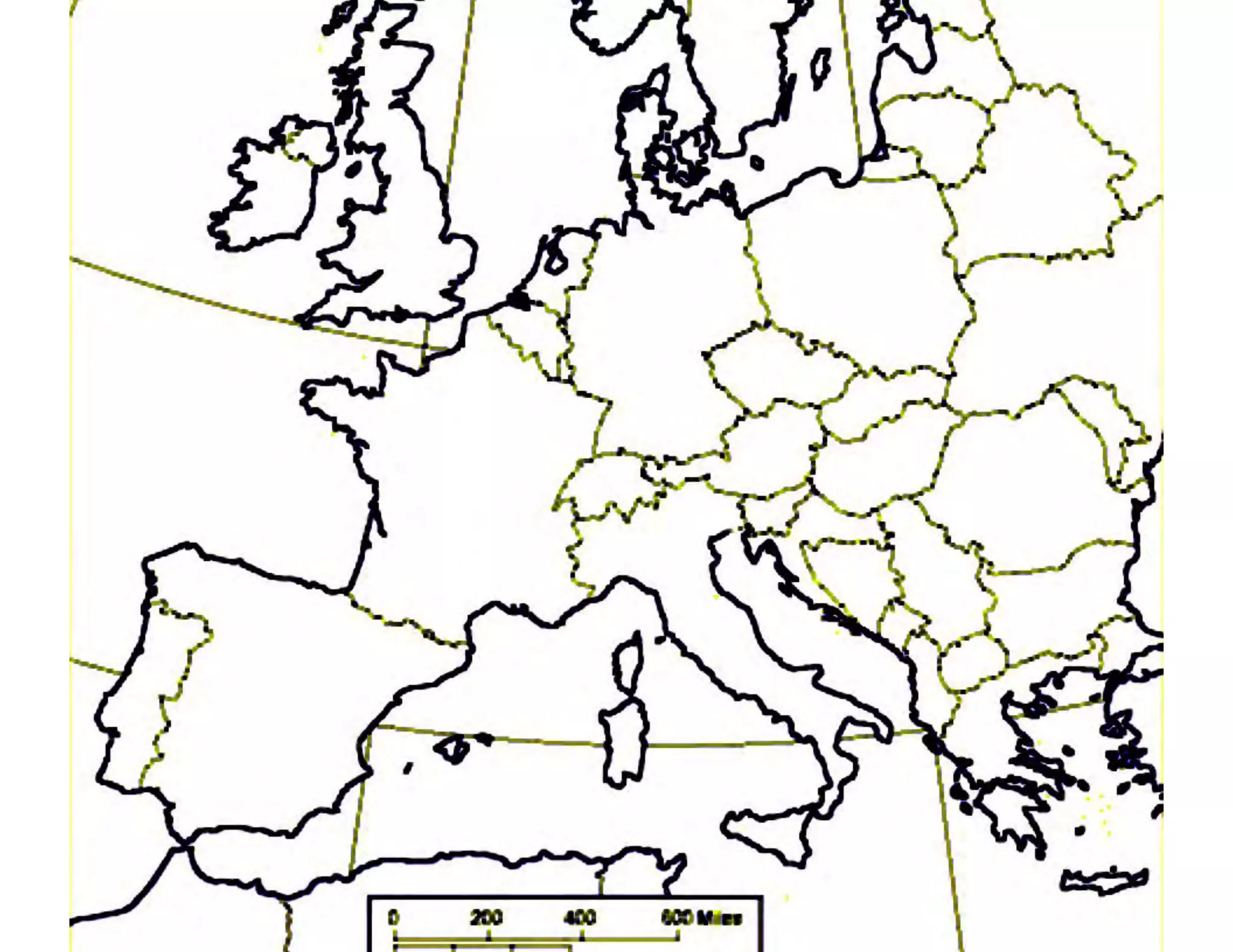
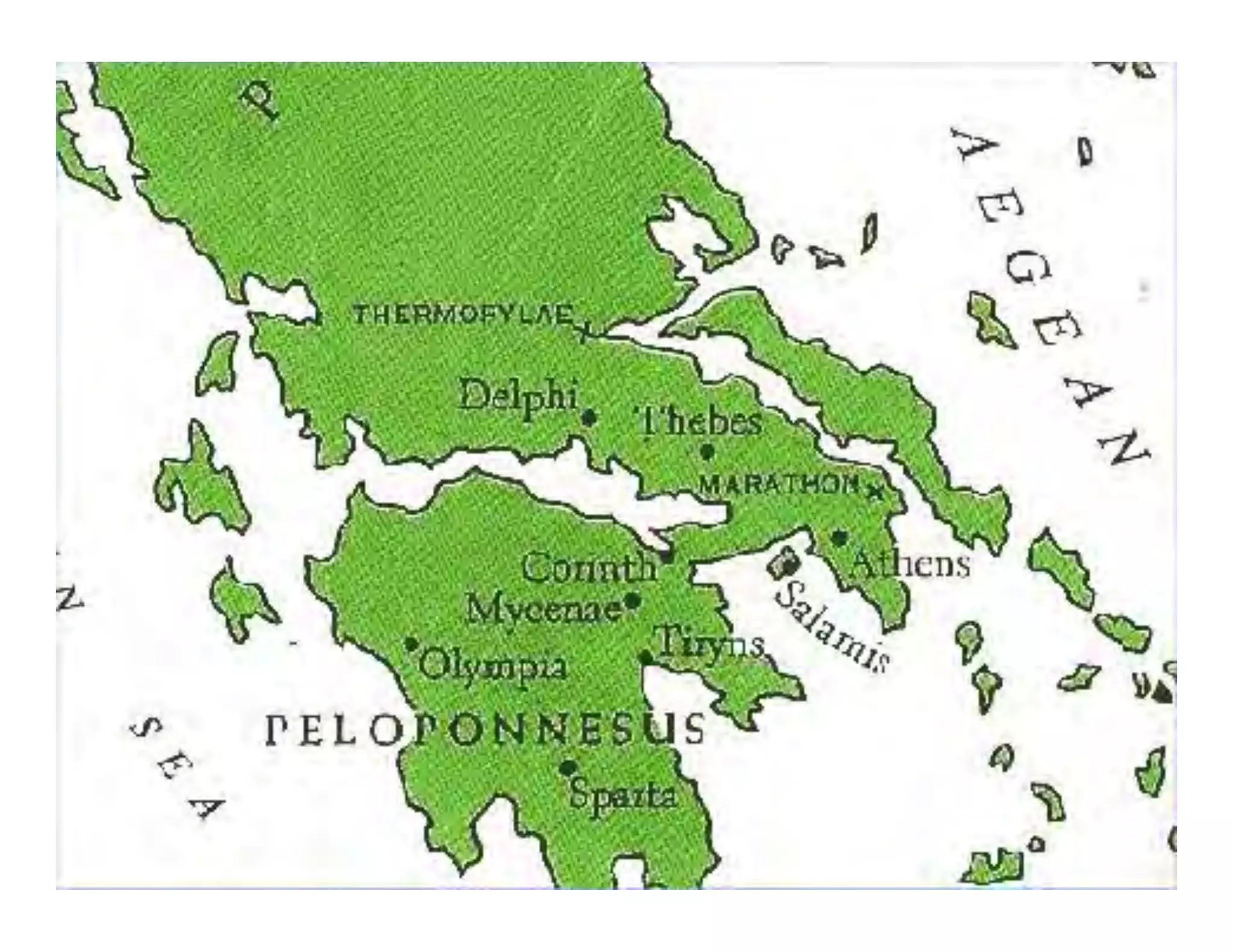
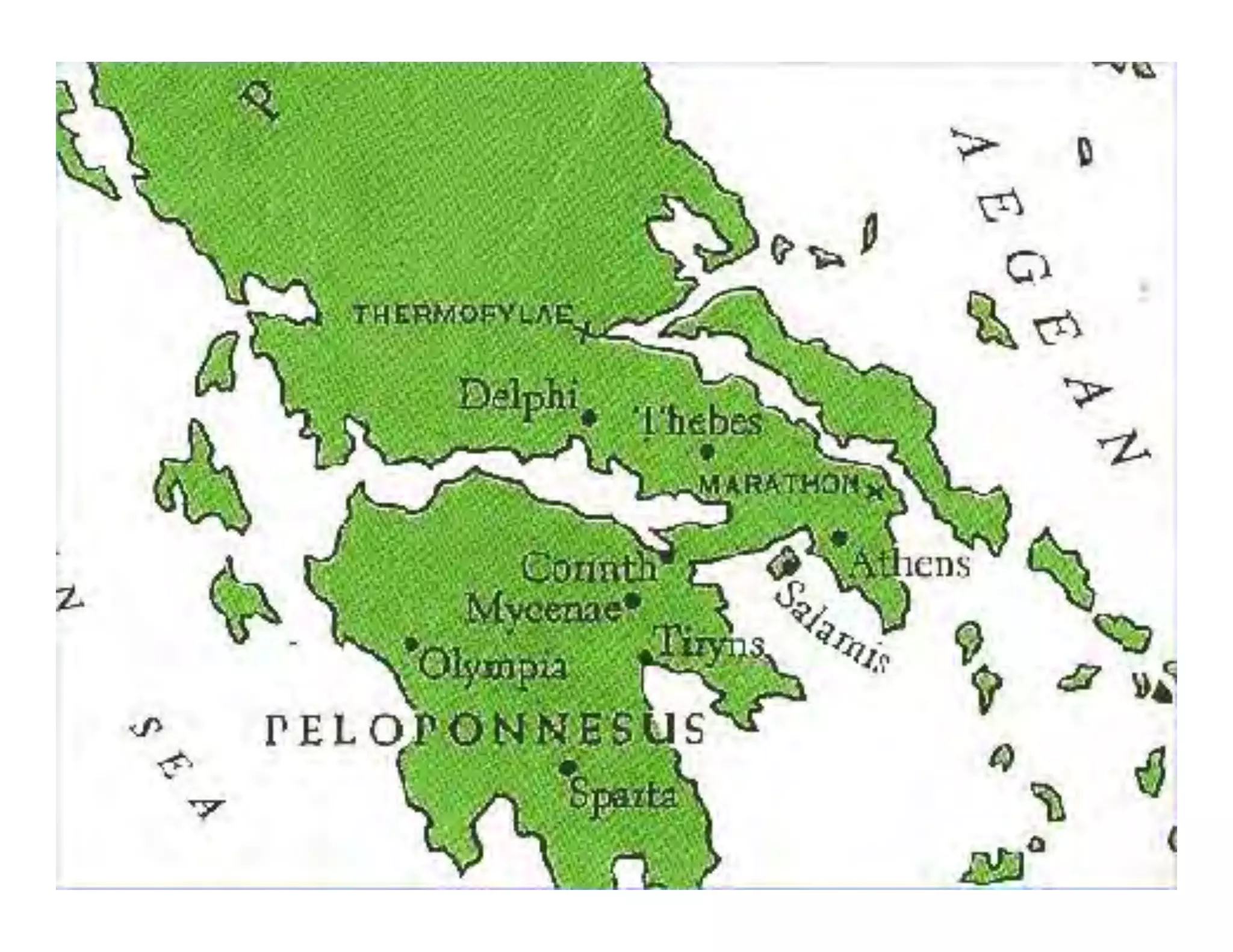
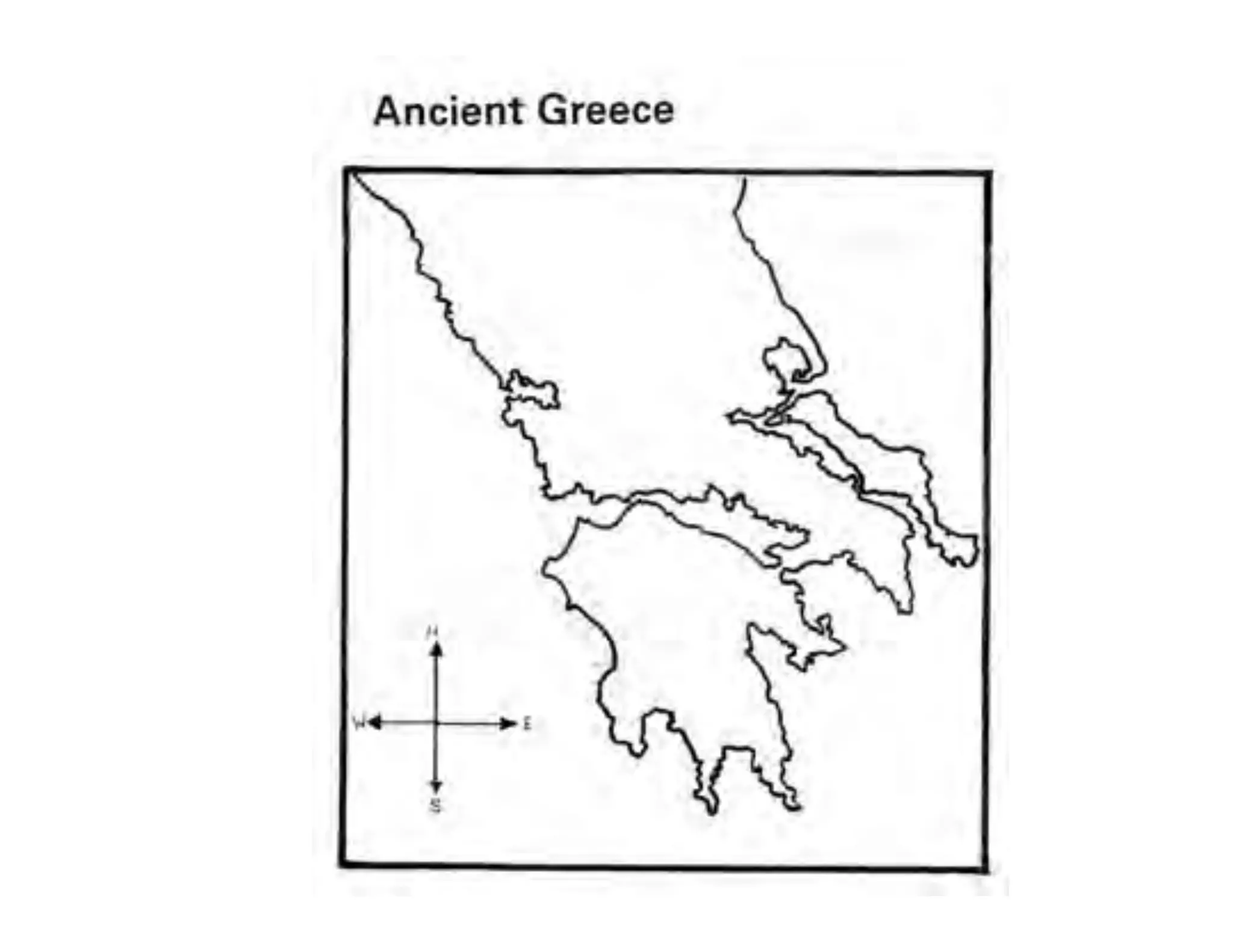
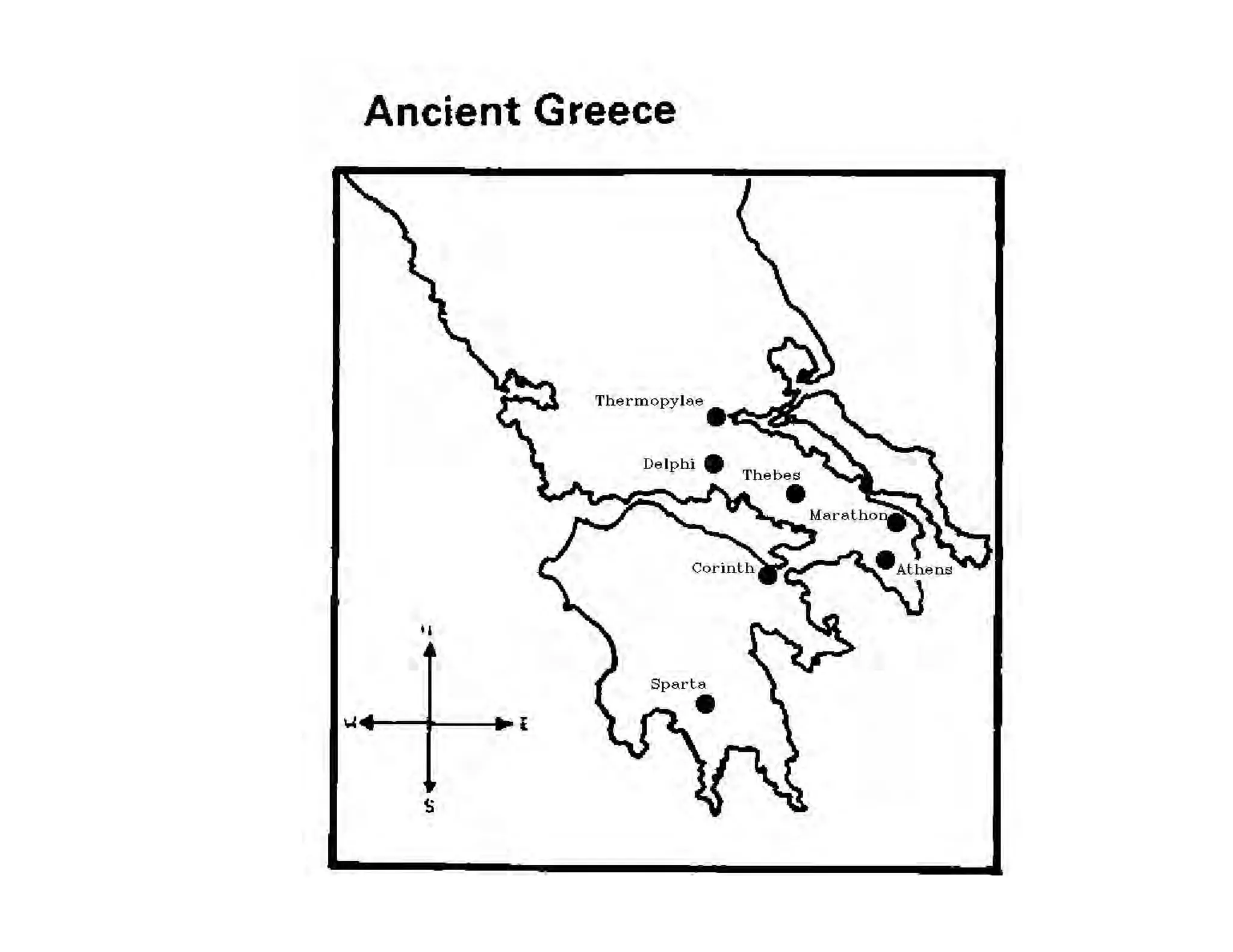
Greece,
Circa 500 B.C.E.
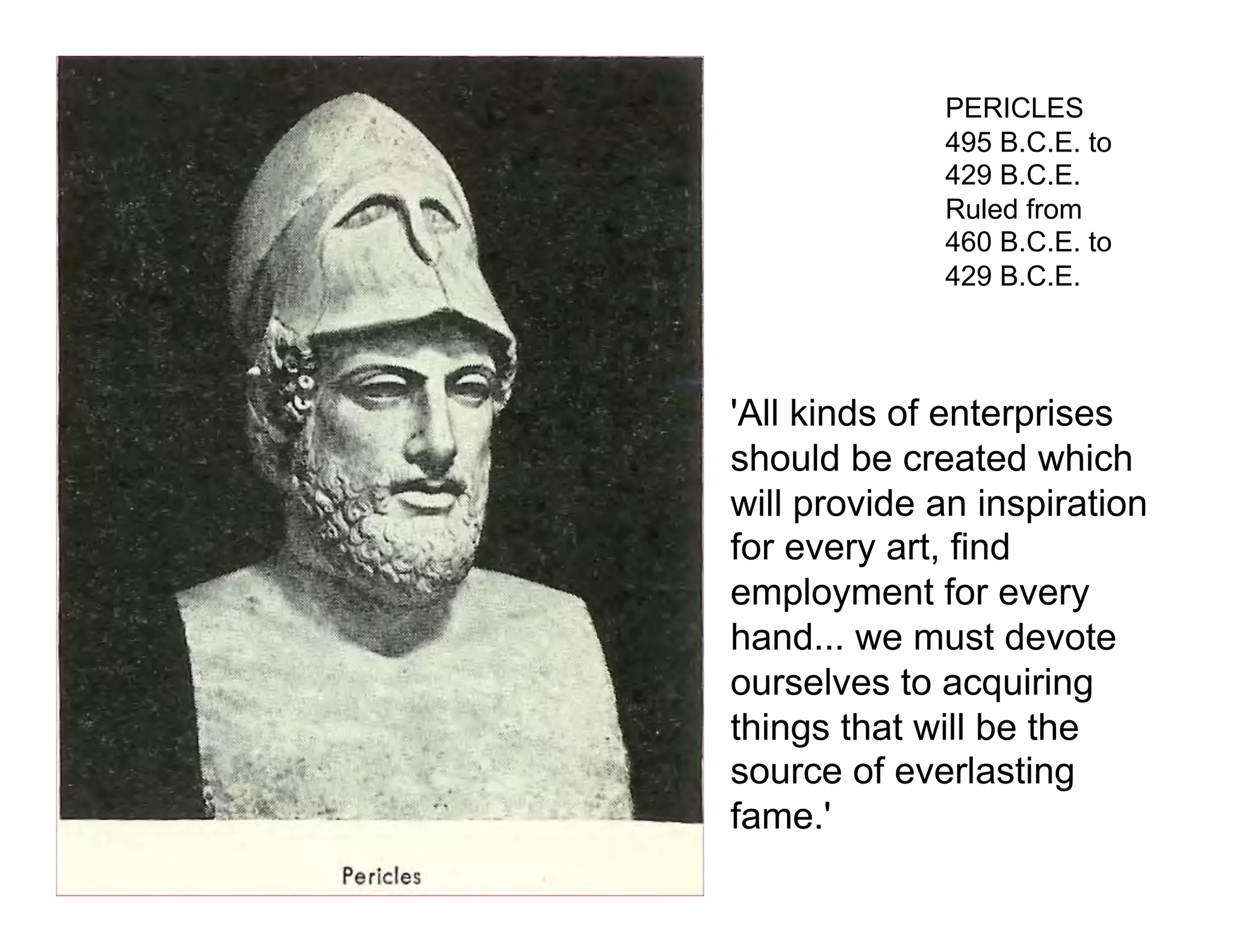
PERICLES
             495 B.C.E. to
             429 B.C.E.
             Ruled from
             460 B.C.E. to
             429 B.C.E.


'All kinds of enterprises
should be created which
will provide an inspiration
for every art, find
employment for every
hand... we must devote
ourselves to acquiring
things that will be the
source of everlasting
fame.'
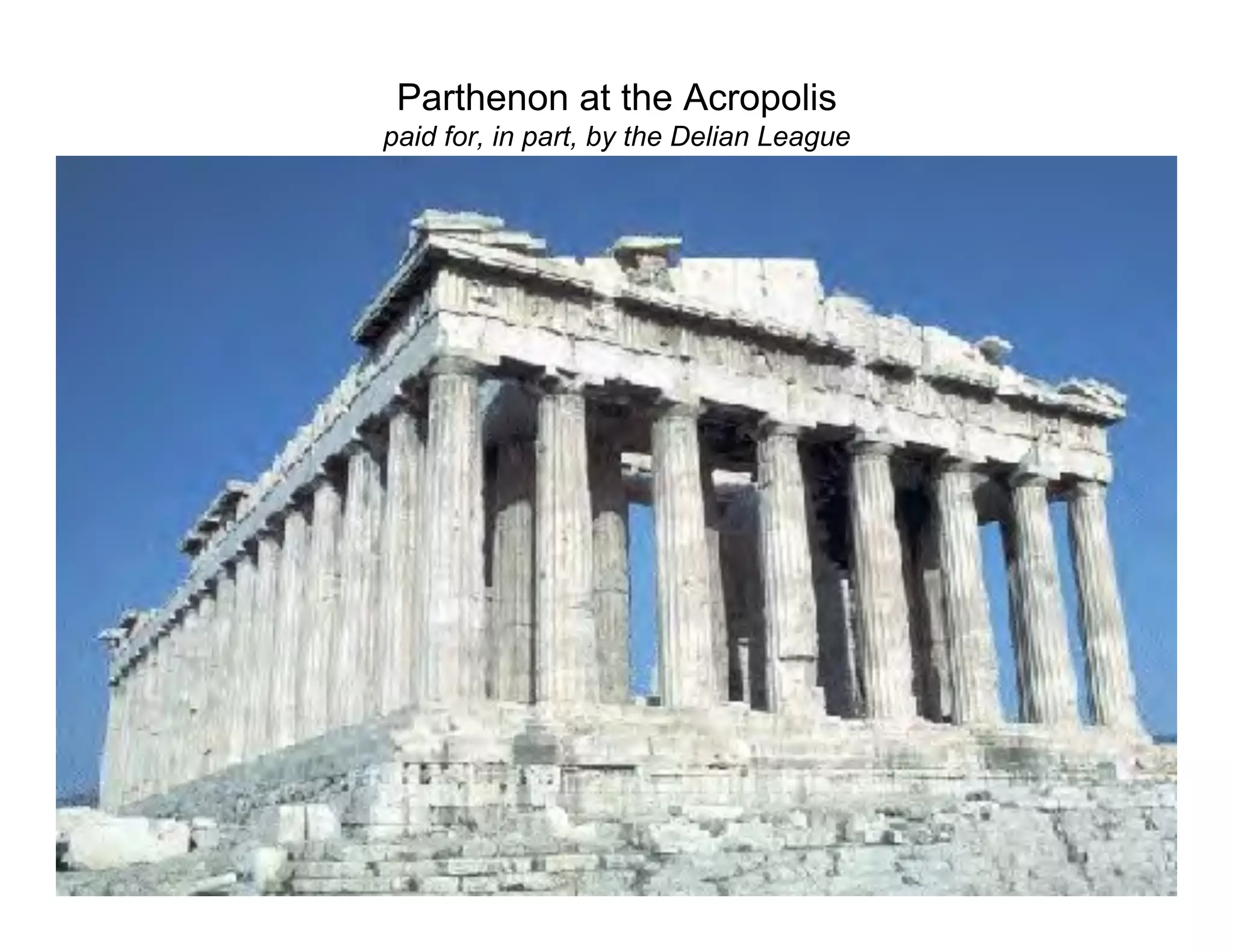
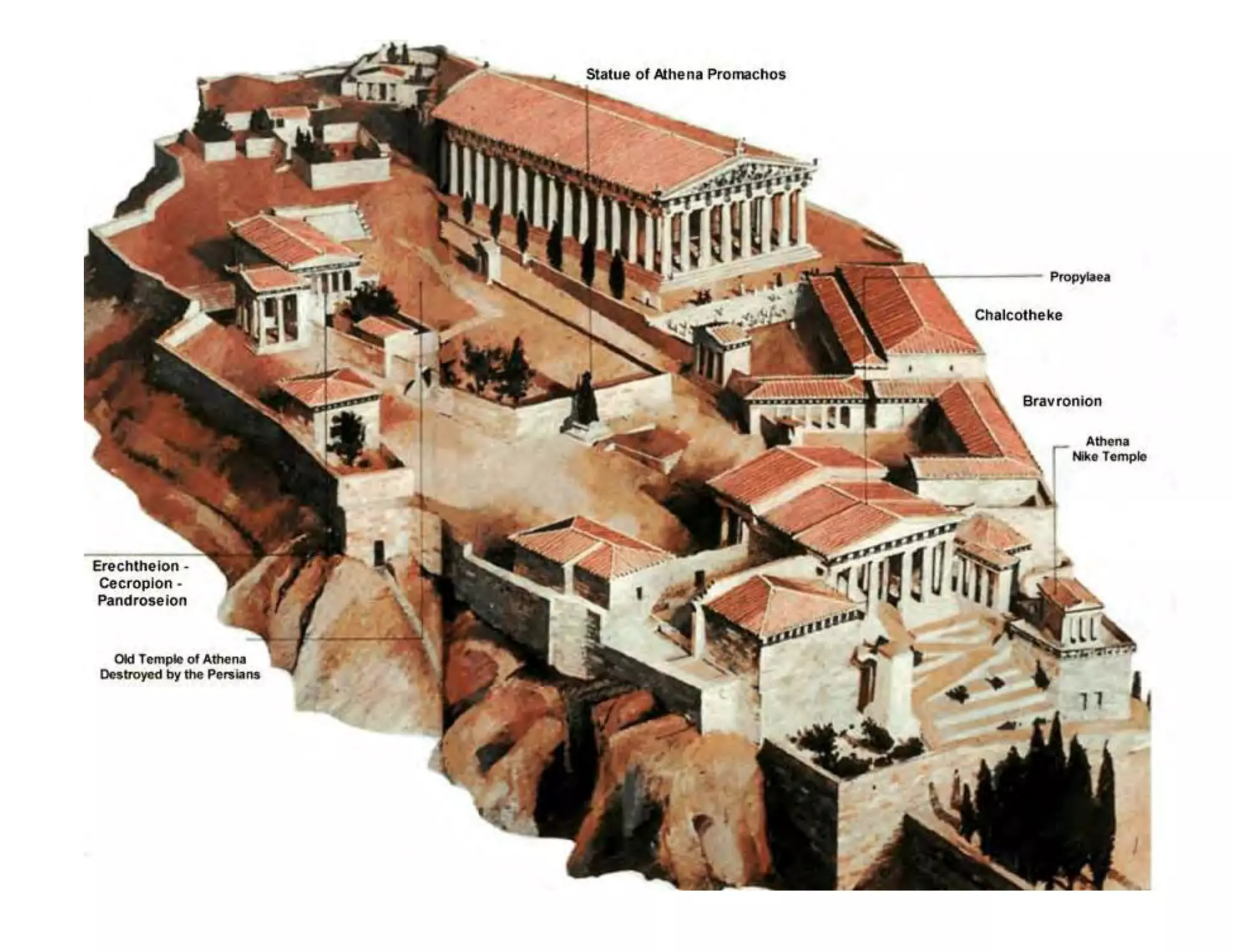
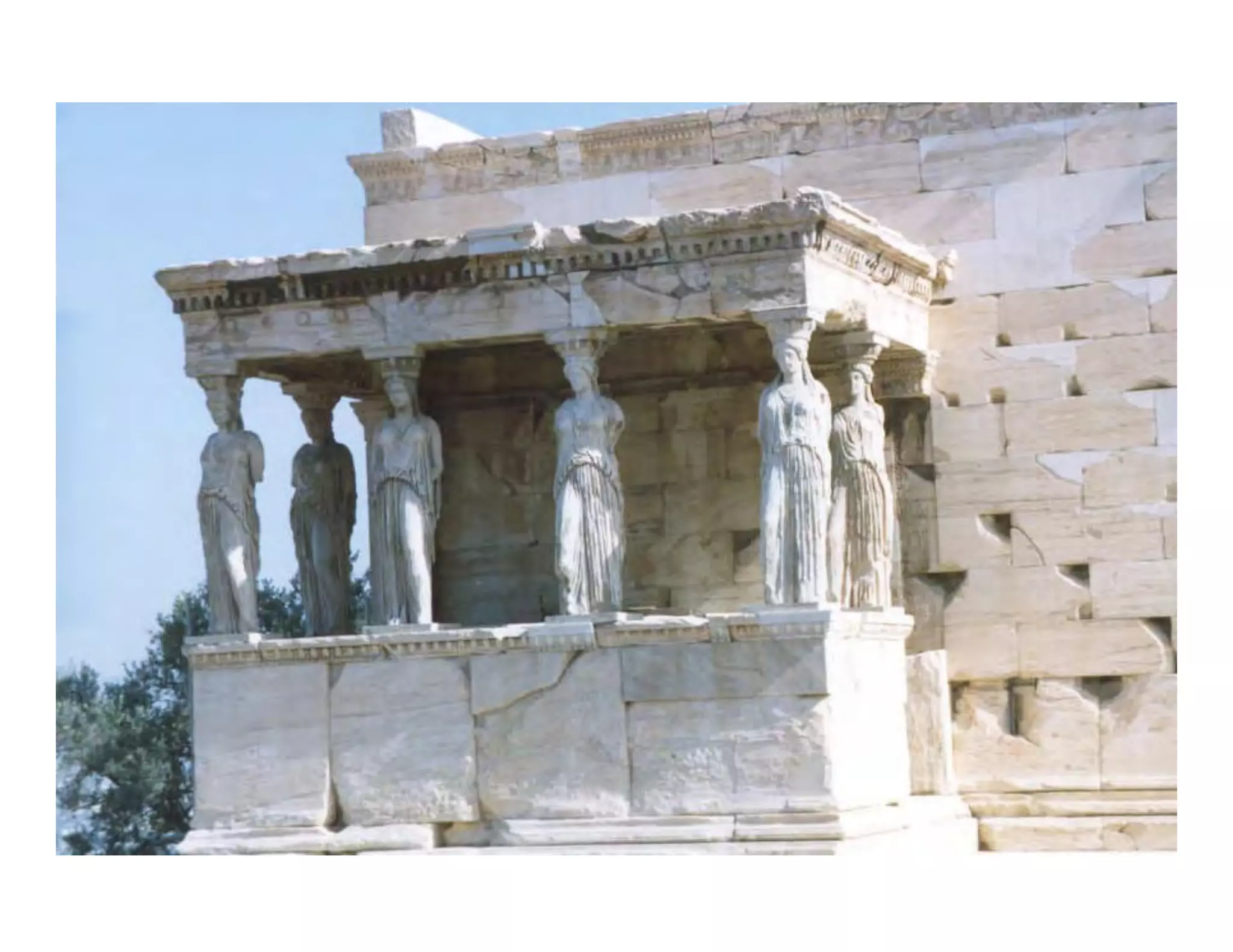
Parthenon at the Acropolis
paid for, in part, by the Delian League
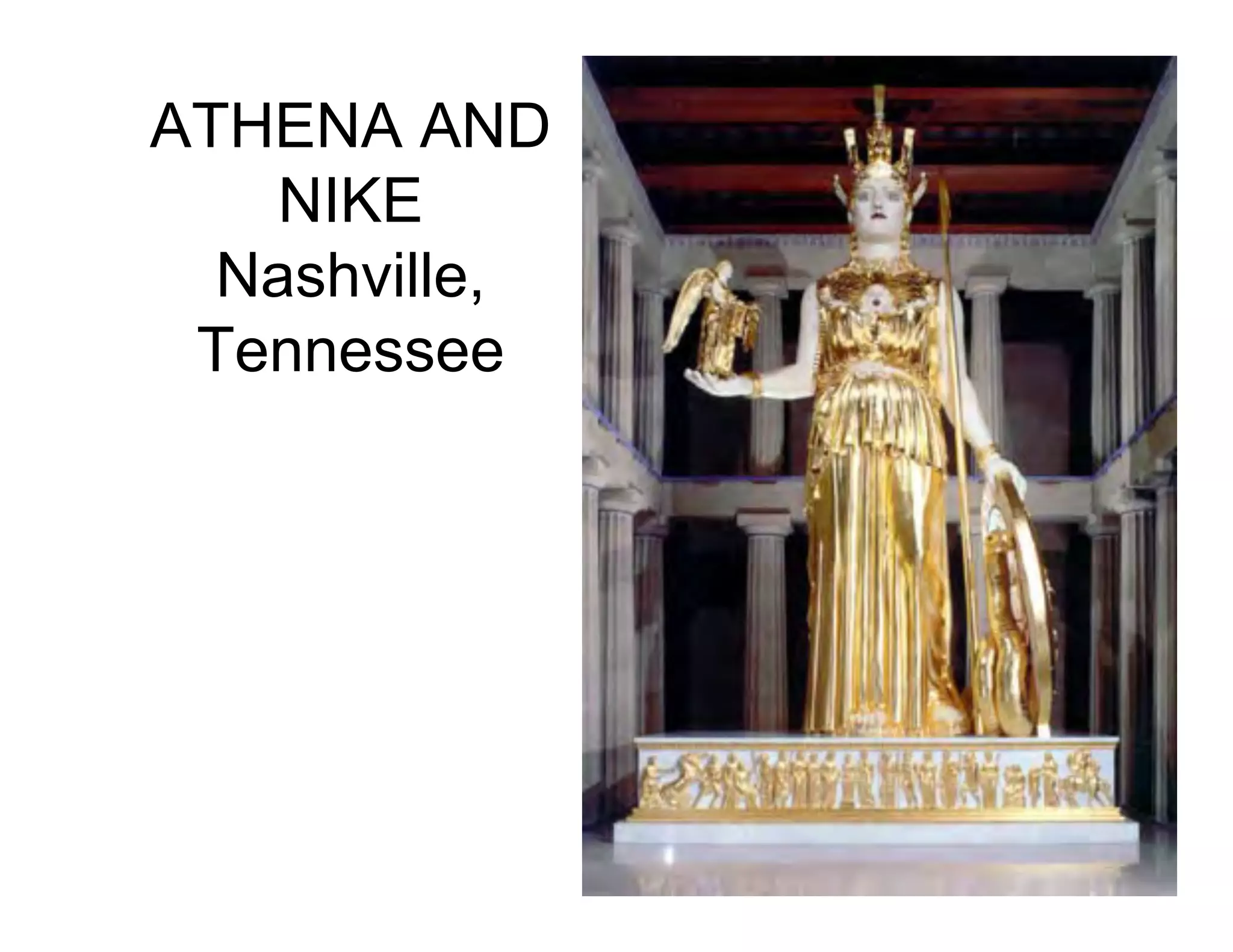
ATHENA AND
    NIKE
  Nashville,
 Tennessee
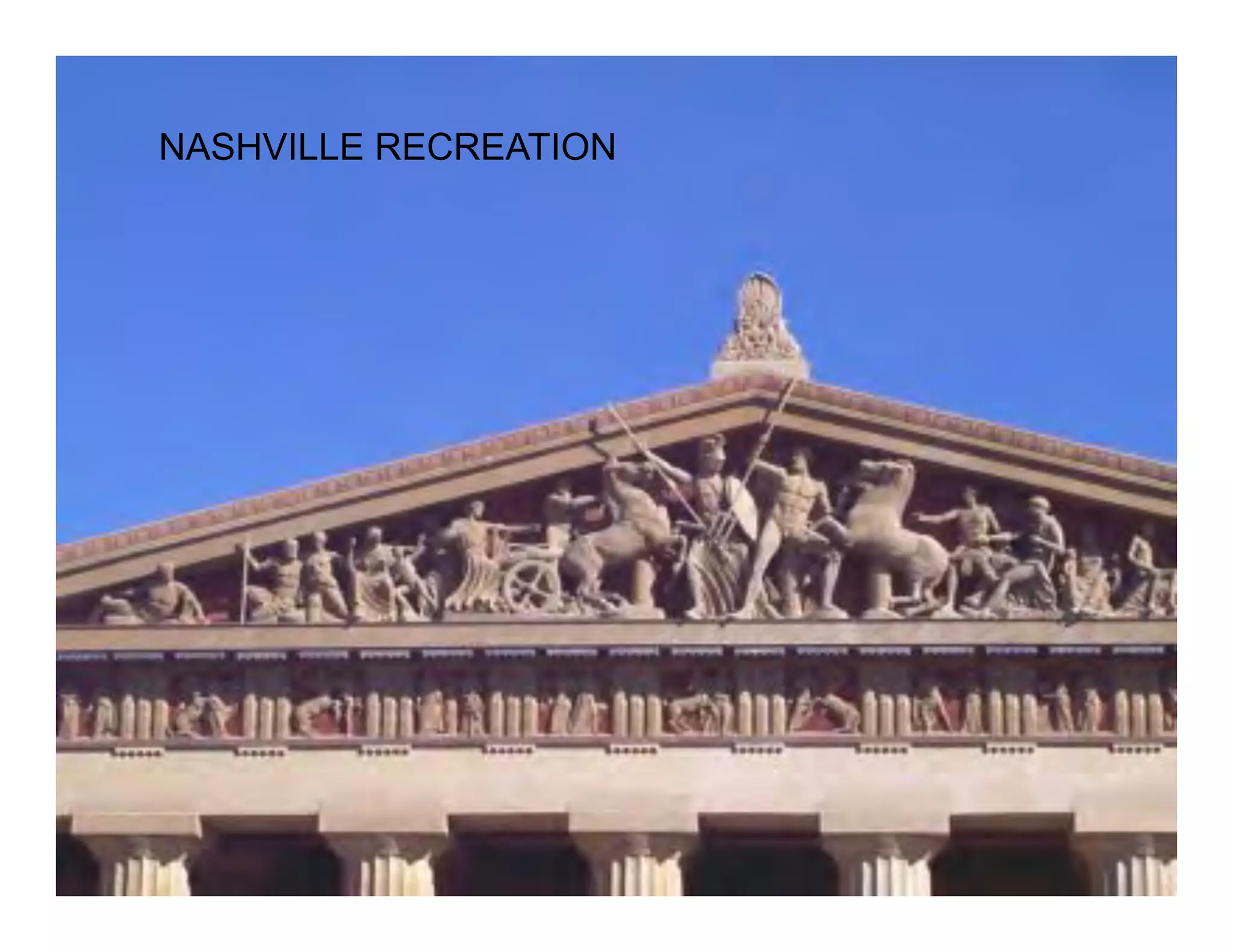
NASHVILLE RECREATION
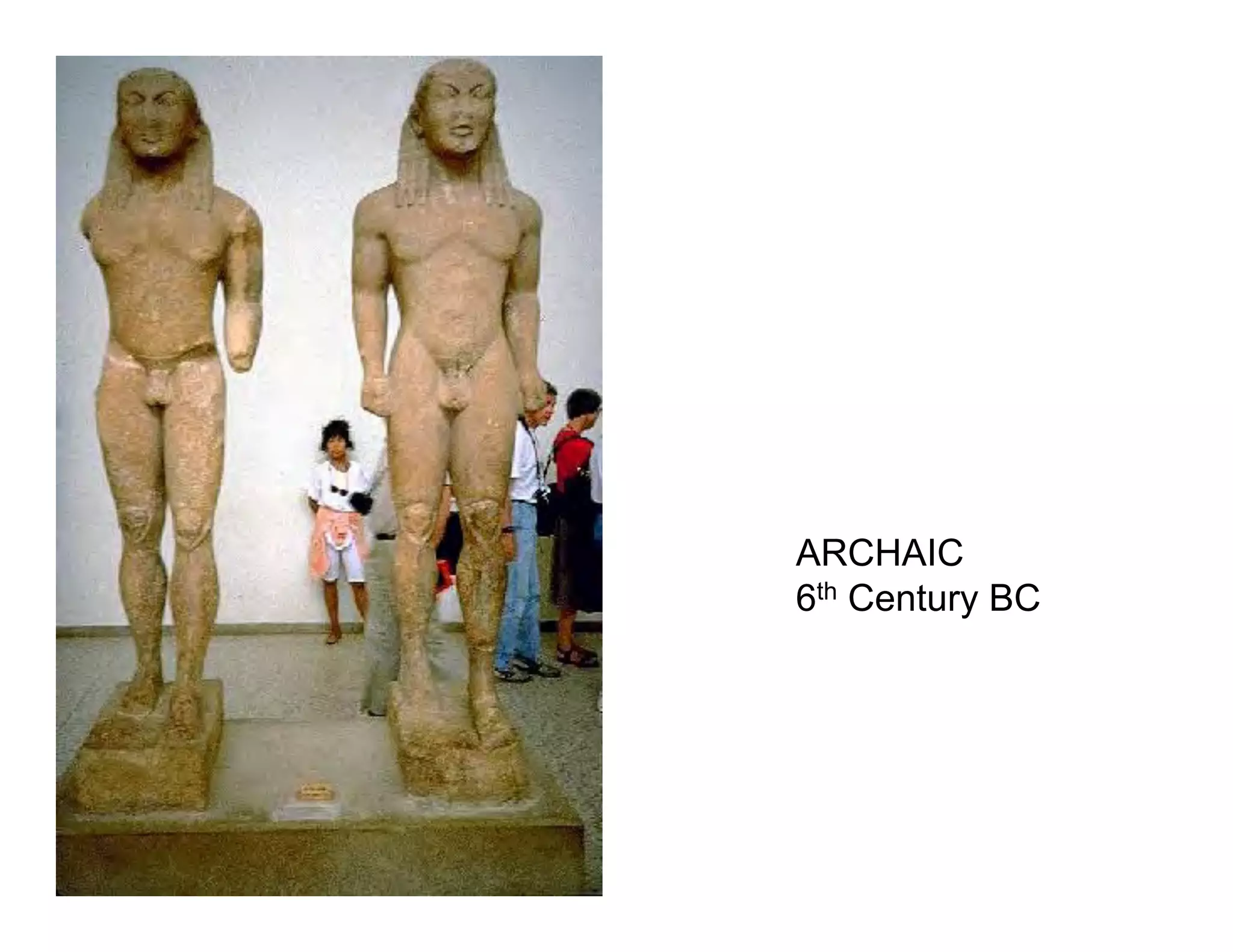
ARCHAIC
6th Century BC
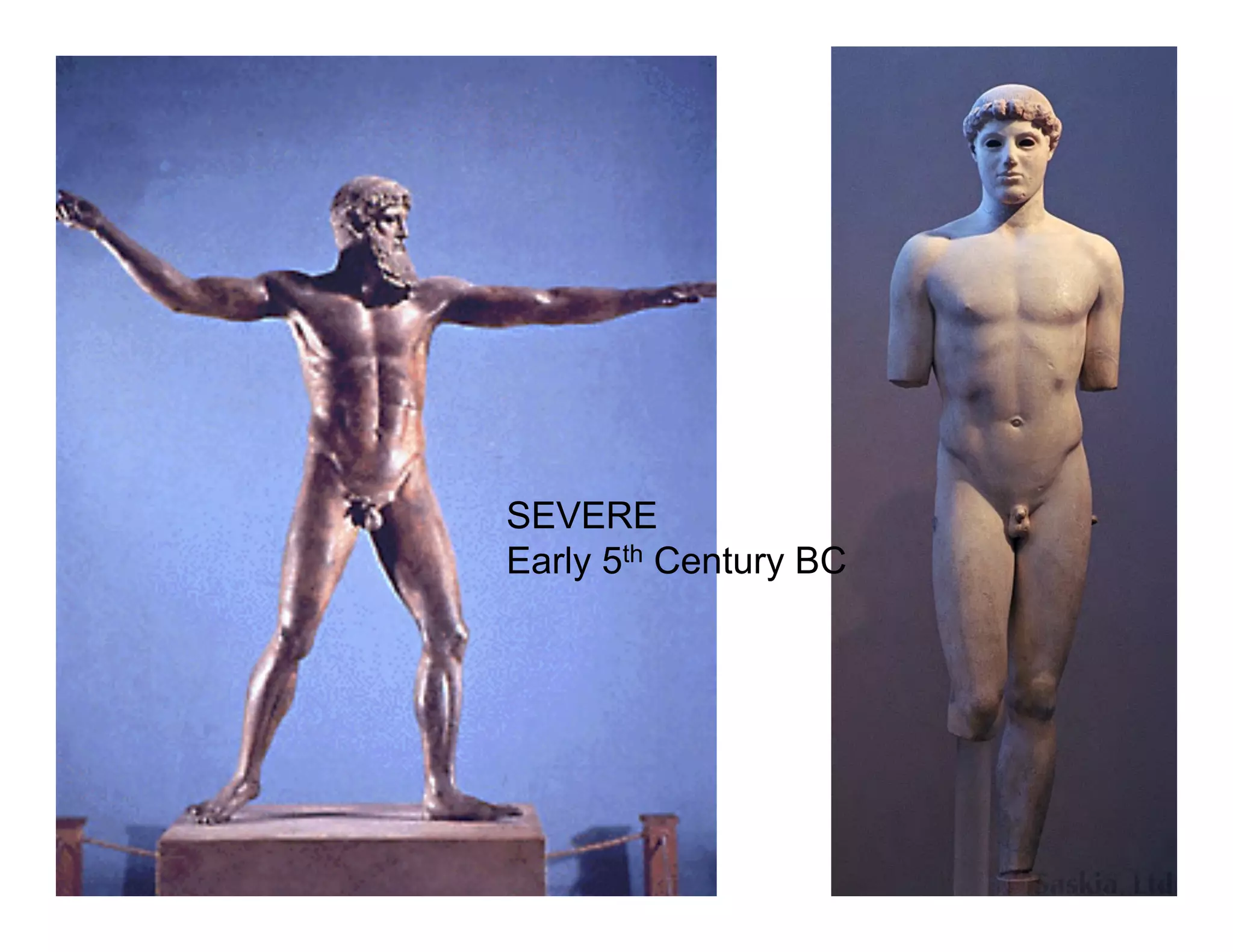
SEVERE
Early 5th Century BC
CLASSICAL
Mid 5th Century BC
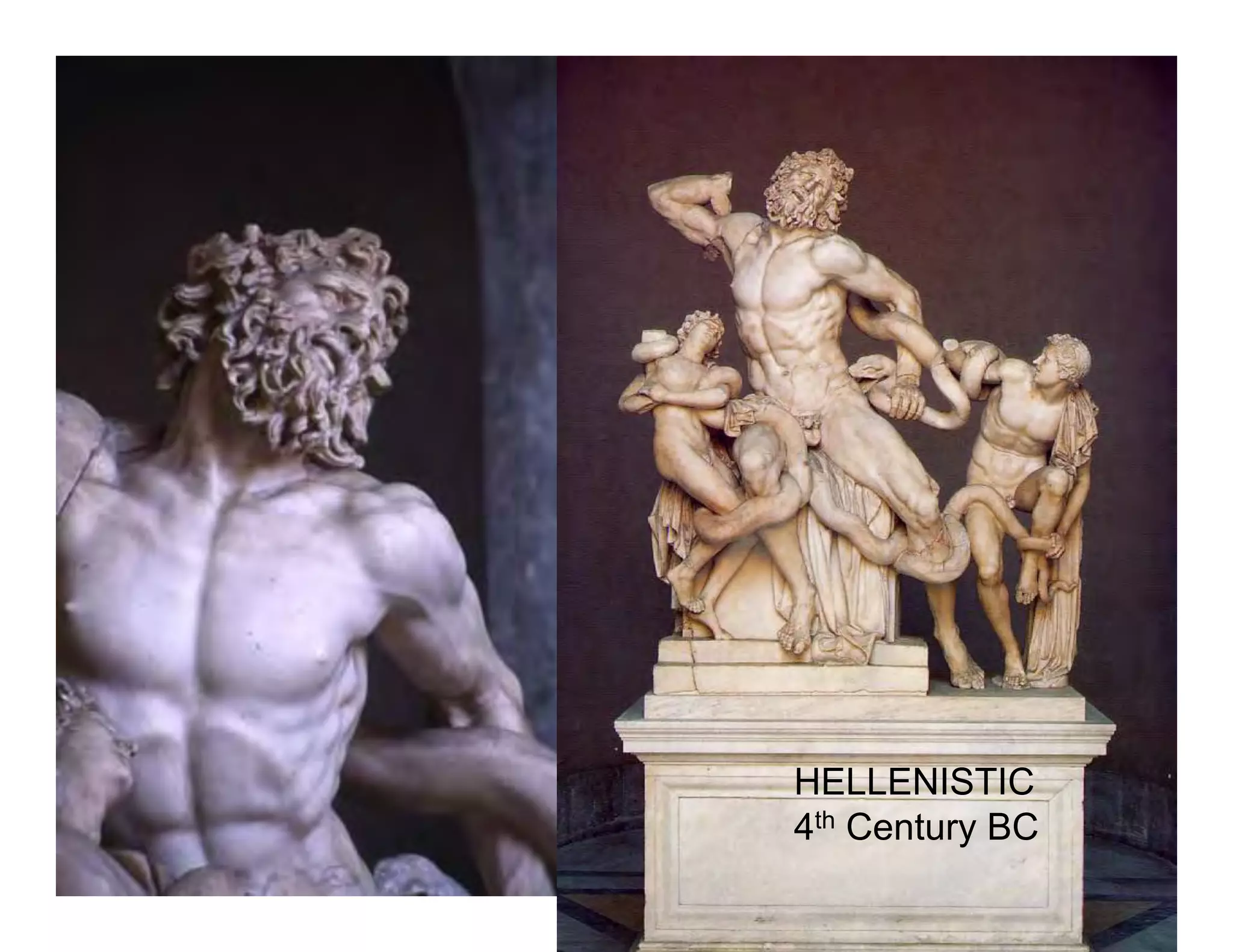
HELLENISTIC
4th Century BC
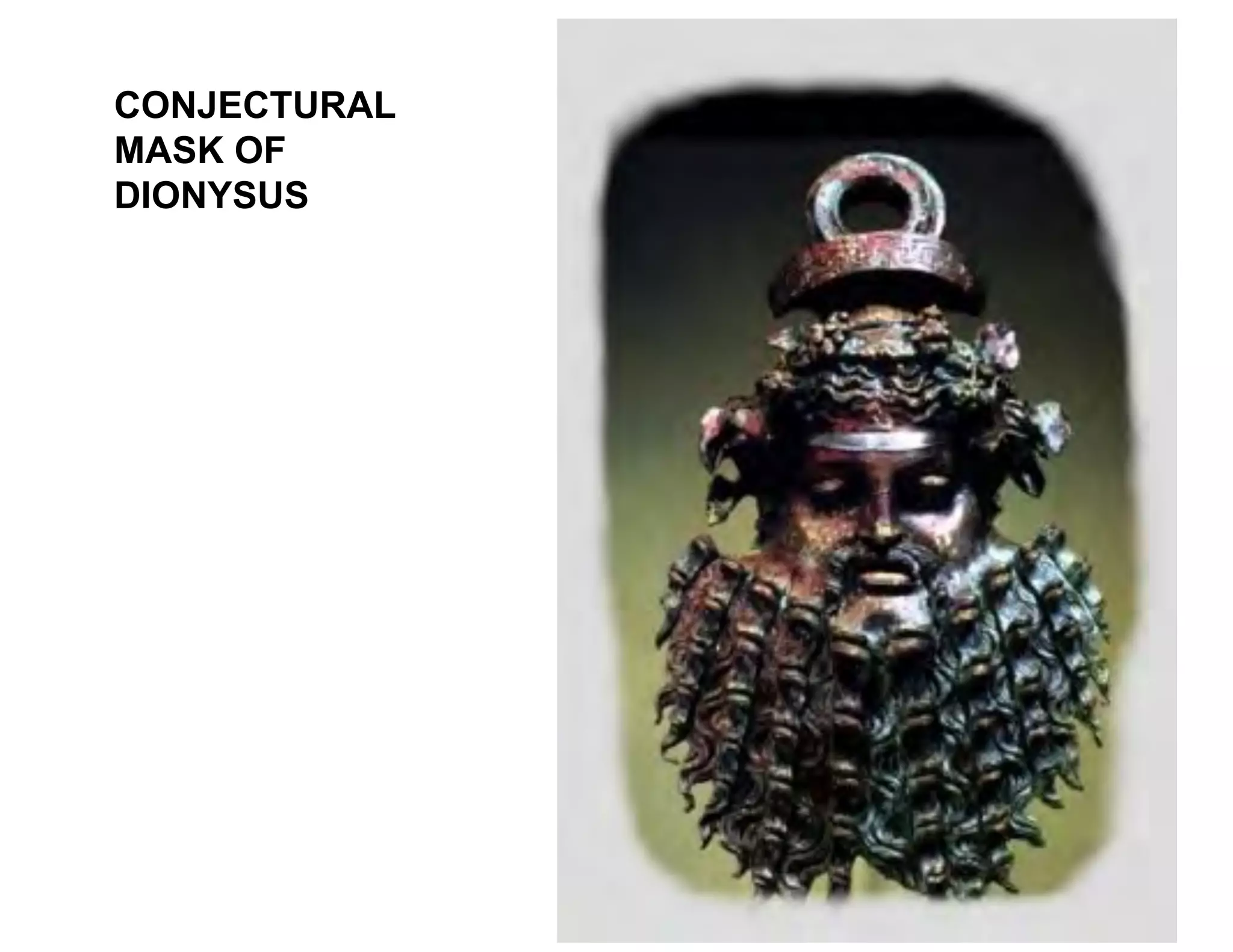
CONJECTURAL
MASK OF
DIONYSUS
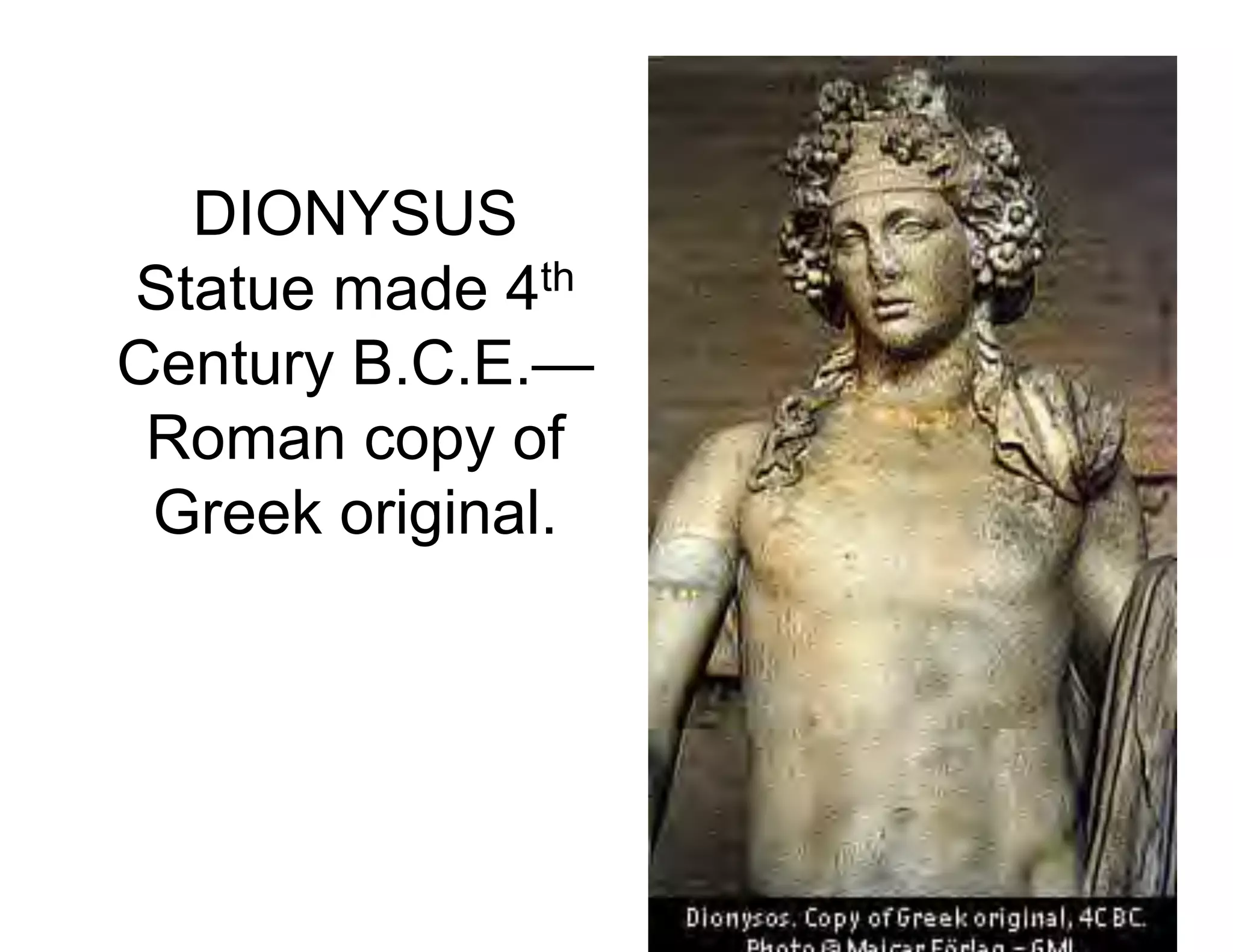
DIONYSUS
DIONYSUS
Statue made 4th
Century B.C.E.—
 Roman copy of
 Greek original.
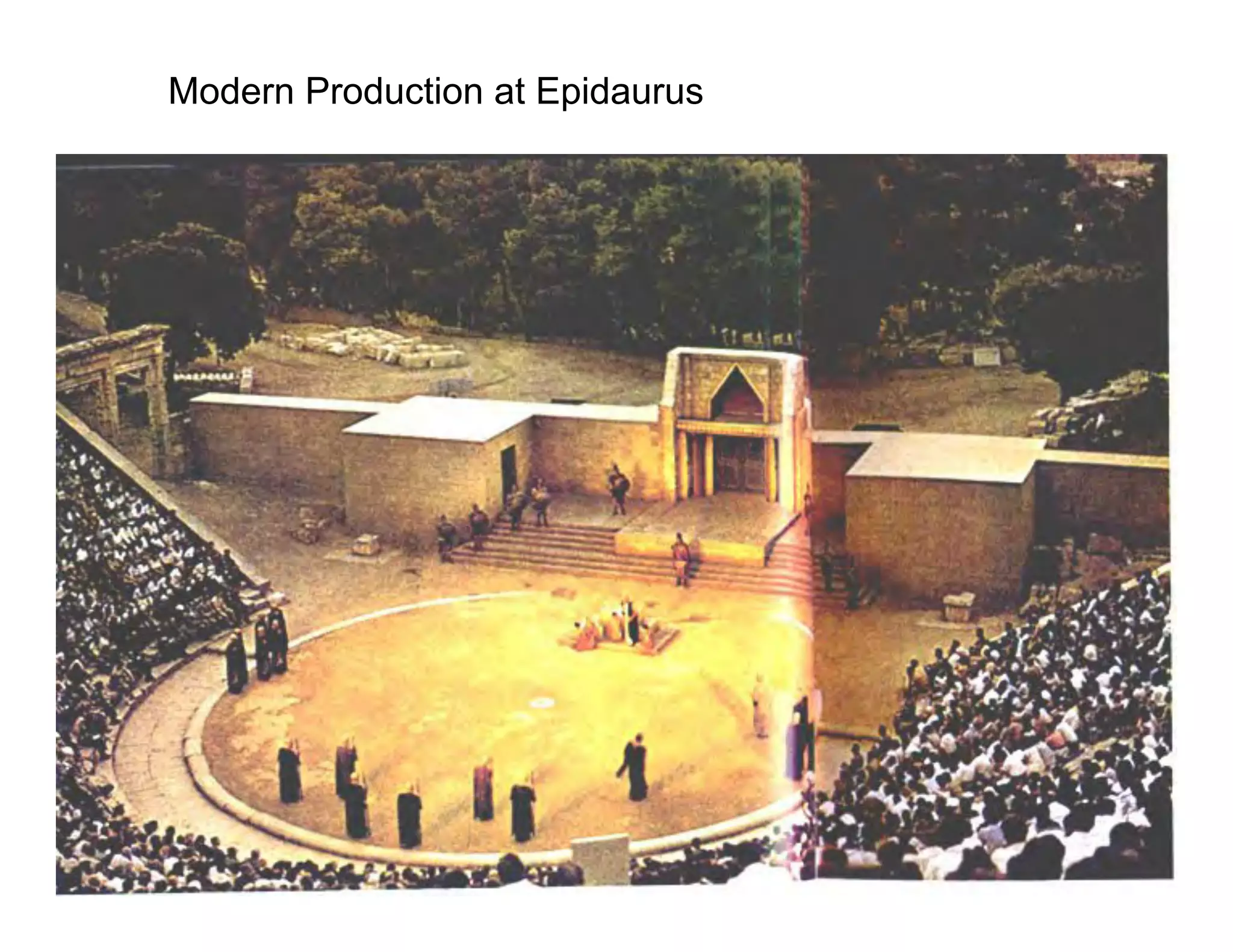
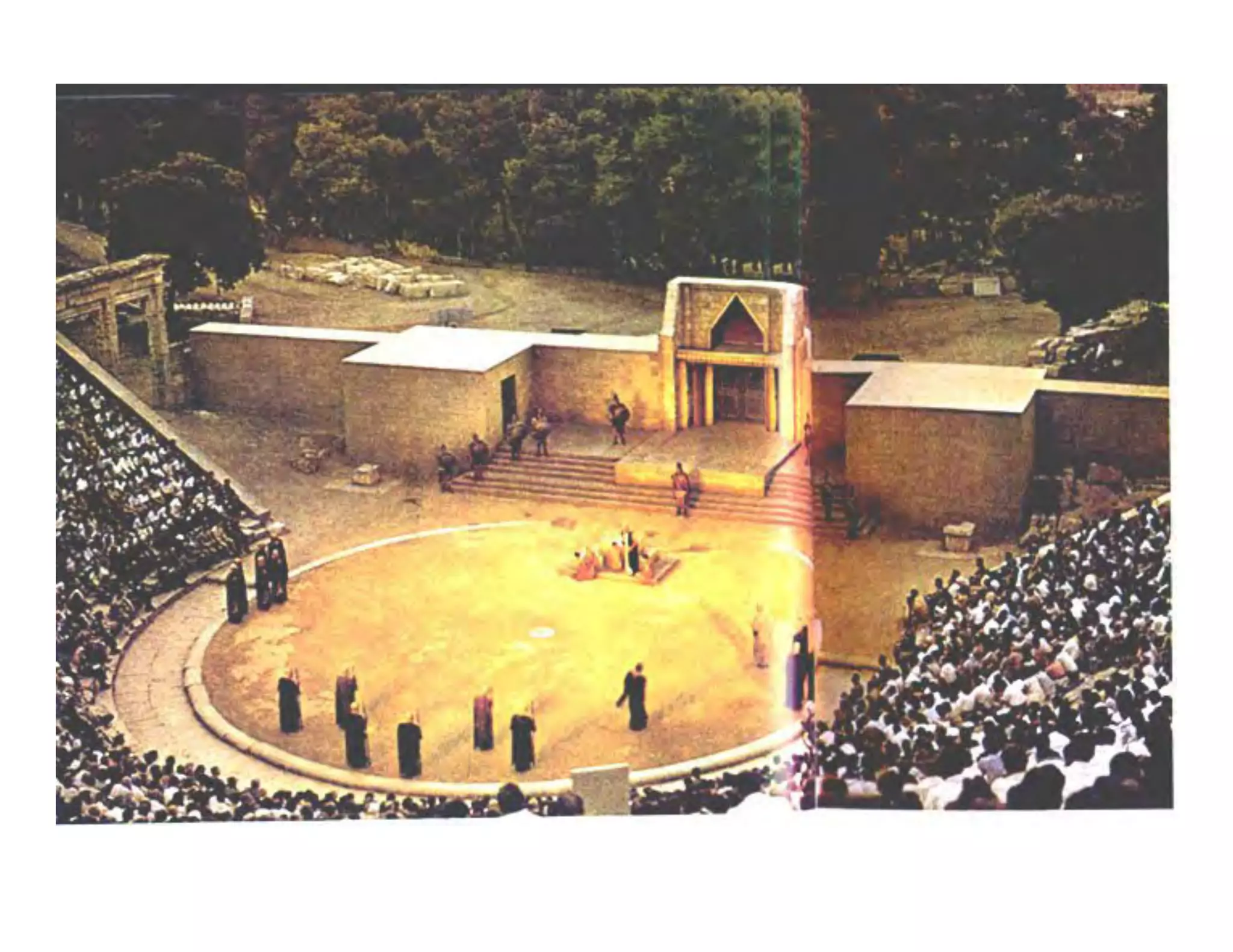
Modern Production at Epidaurus
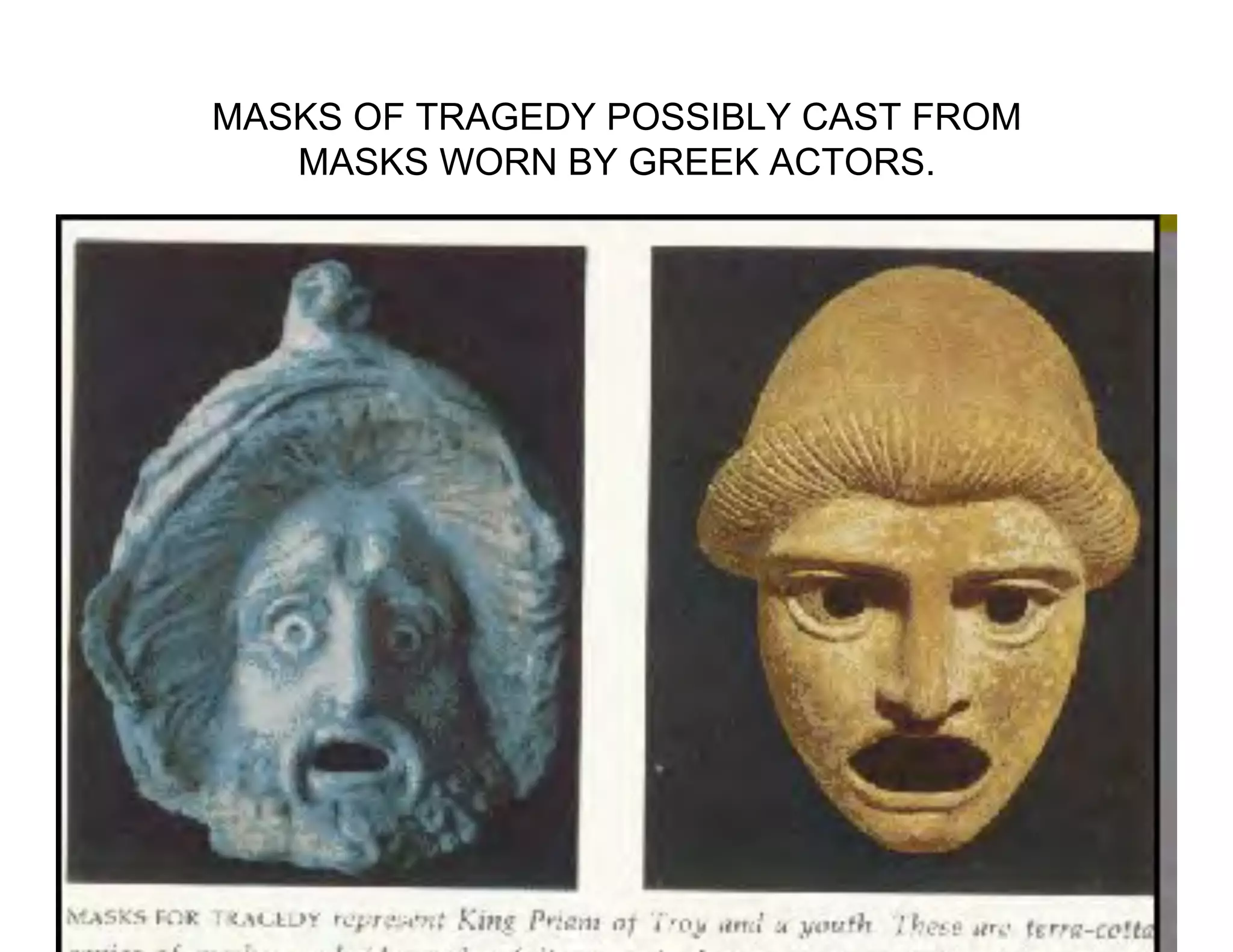
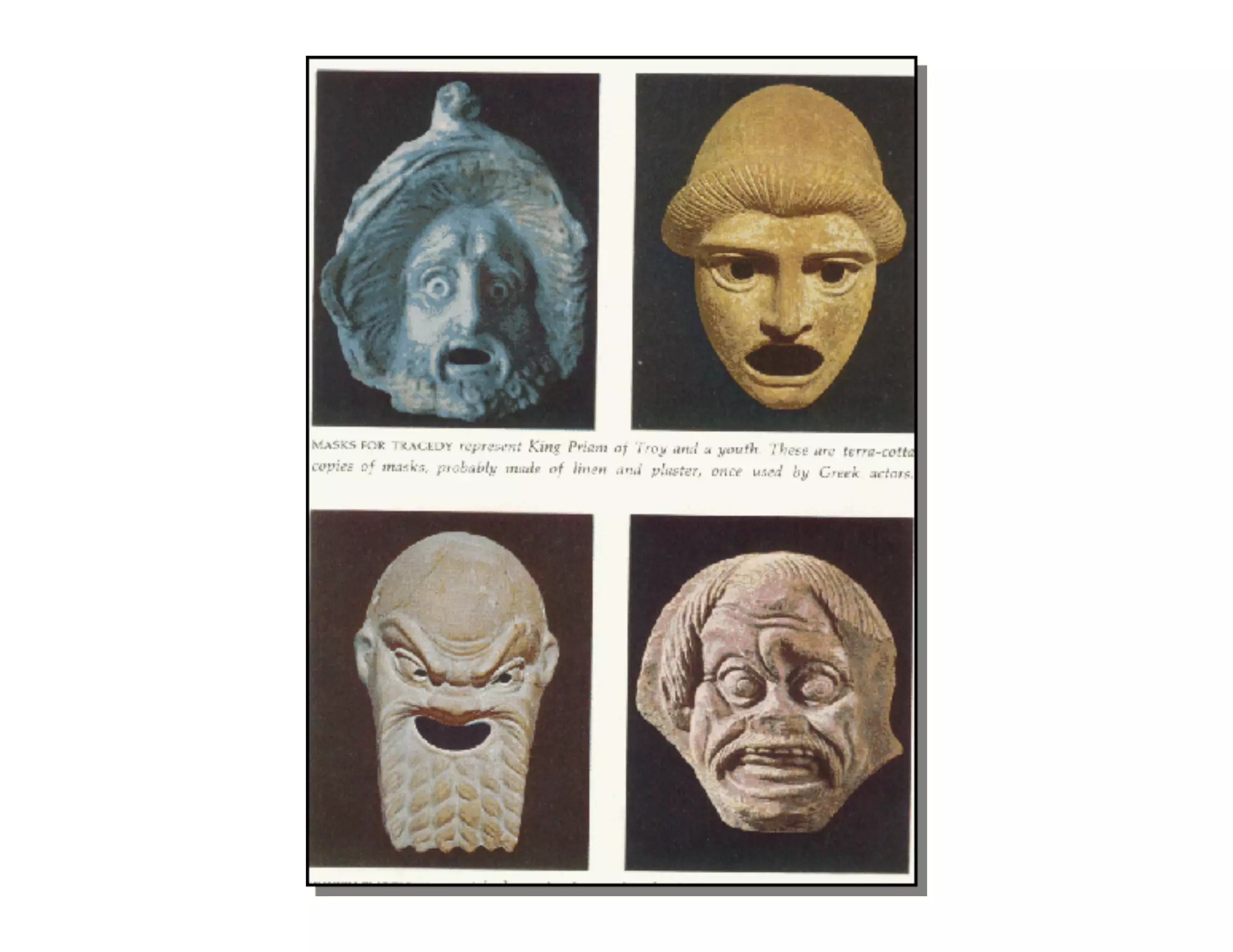
MASKS OF TRAGEDY POSSIBLY CAST FROM
   MASKS WORN BY GREEK ACTORS.
STRUCTURAL CONCEITS OF
         GREEK TRAGEDY
•!   Prologue (exposition)
•!   Parados (entrance of the chorus)
•!   Episode (two person scene)
•!   Staisma (comment on the episode)
     –! Episode and Staisma continue.
•! Exodos (resolution and exit)
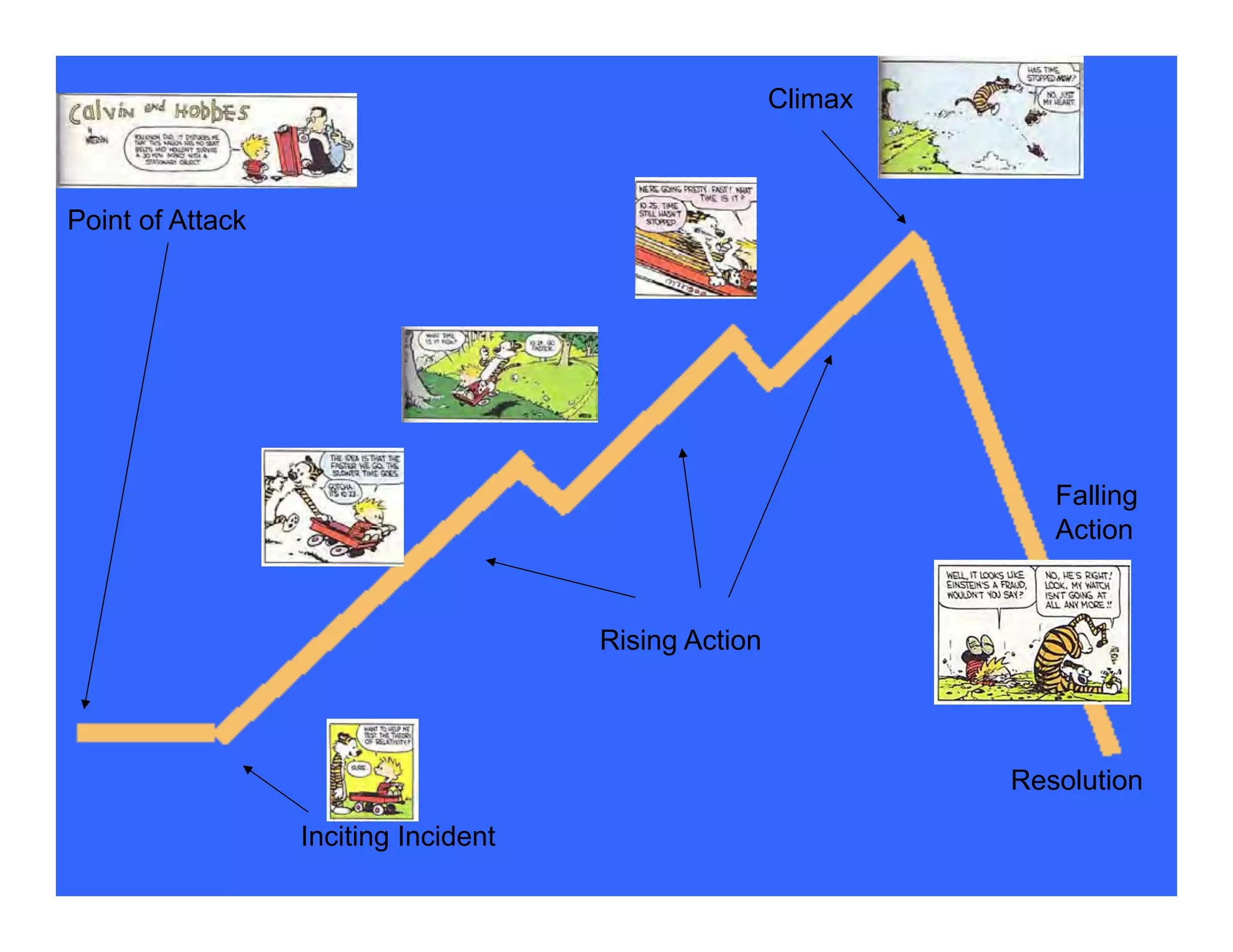
Climax


Point of Attack


                                                                  Falling
                                                                  Action


                                      Rising Action


                                                               Resolution

                  Inciting Incident
GENRES INVENTED BY THE
          GREEKS
•! TRAGEDY
  –! Character based, ends with the death or destruction
     of a single main character. Based on mythology.
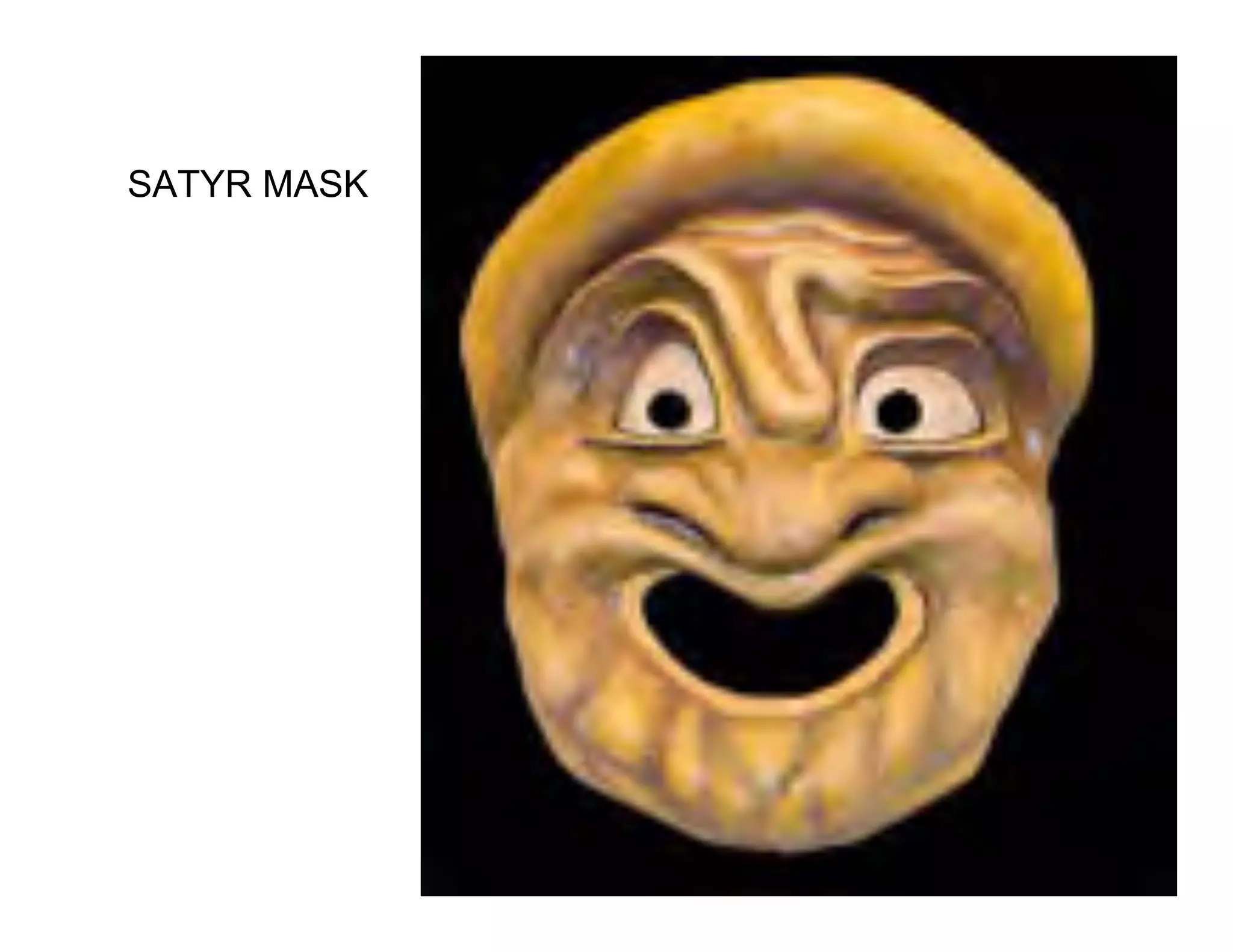
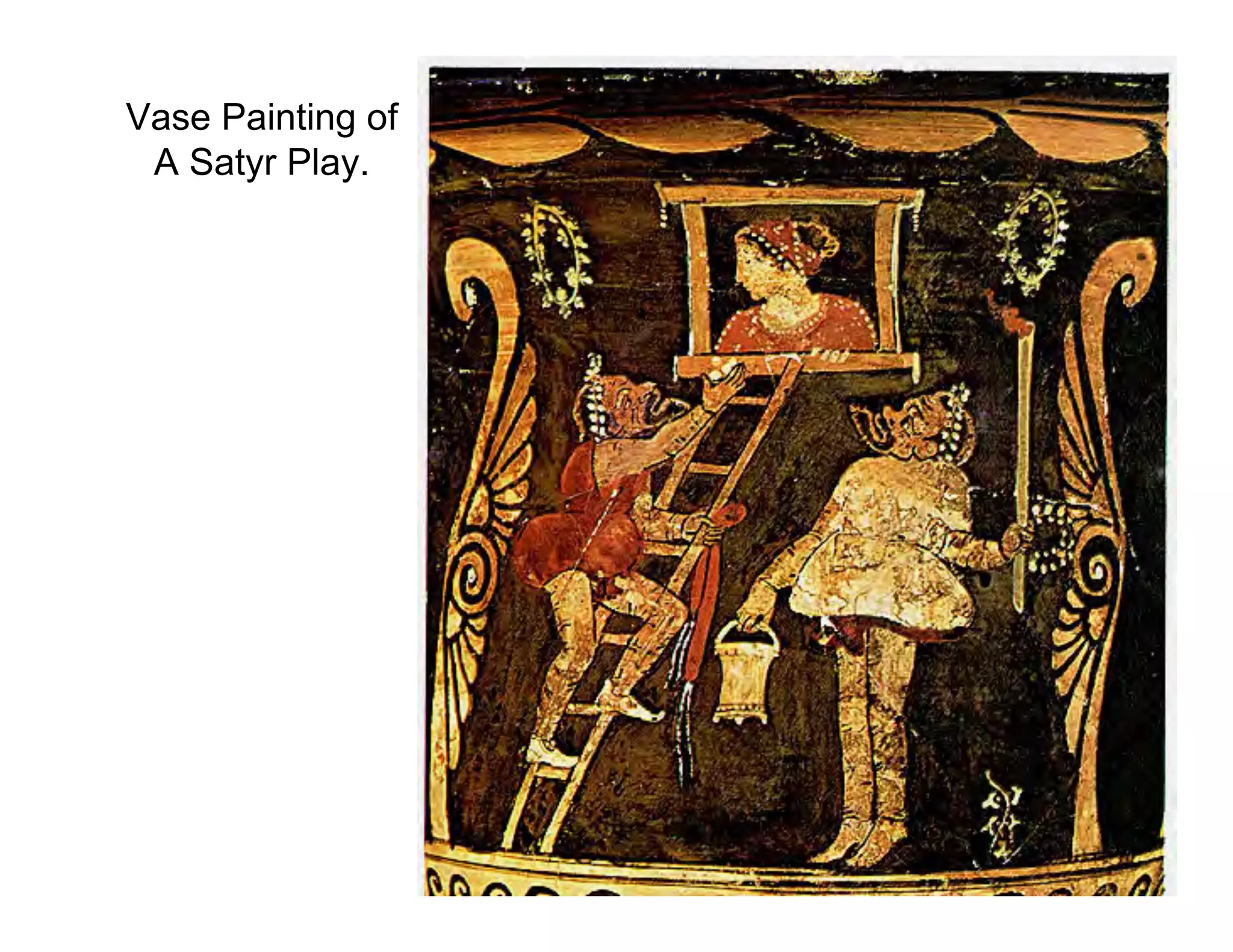
•! SATYR
  –! Plot based, bawdy parody of serious stories from
     mythology.
•! OLD COMEDY
  –! Character based critiques of the social norms. New
     story ideas.
•! NEW COMEDY
  –! Plot based, formulaic plays about young lovers being
     kept apart by their parents – aka domestic comedies.
THE POETICS BY ARISTOTLE
•! Written after the fact (circa 330 B.C.E.)
•! Praises Sophocles over Euripides
•! Three Unities
  –! Space
  –! Time
  –! Action
     •! One character – single action
     •! No subplots
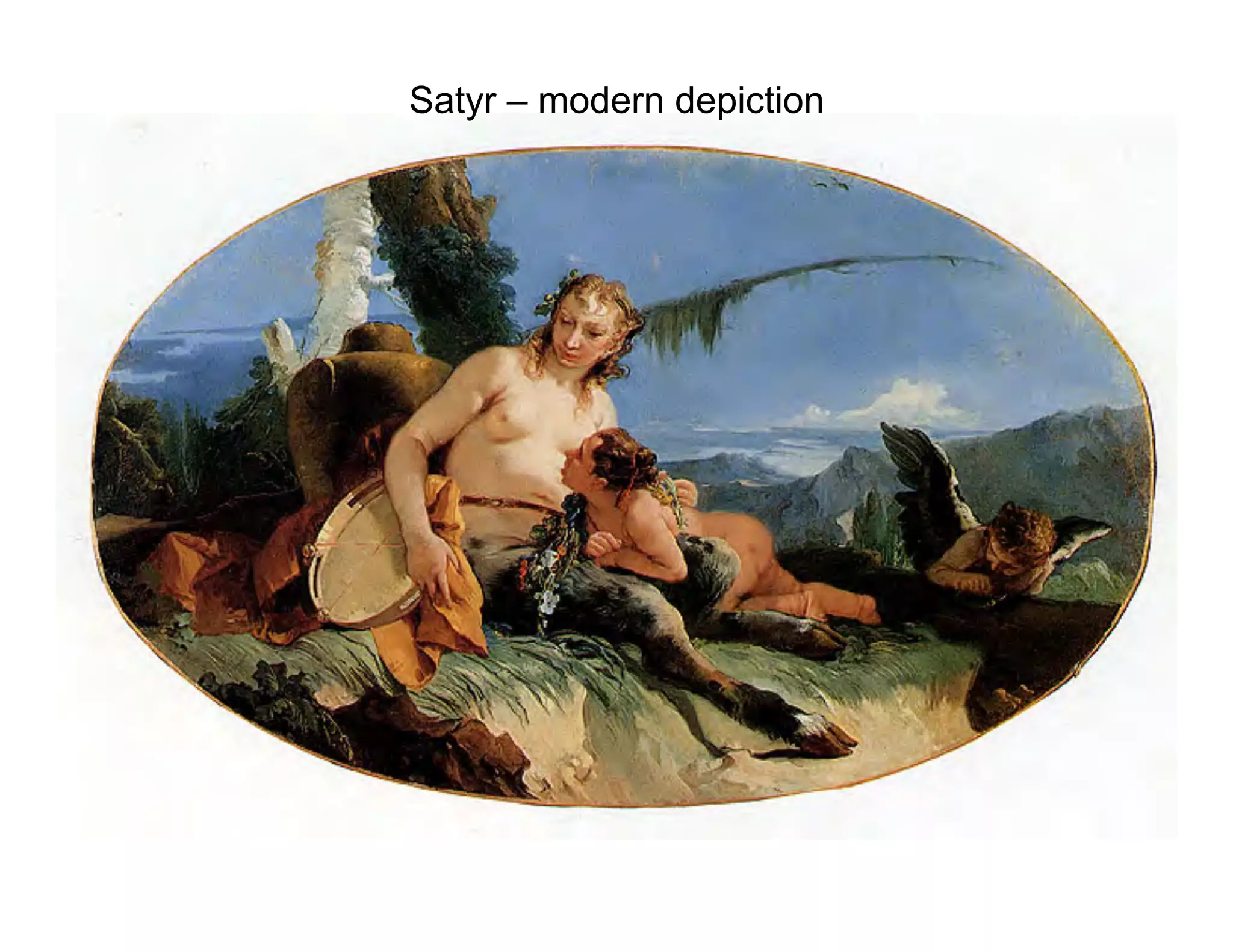
Satyr – modern depiction
SATYR MASK
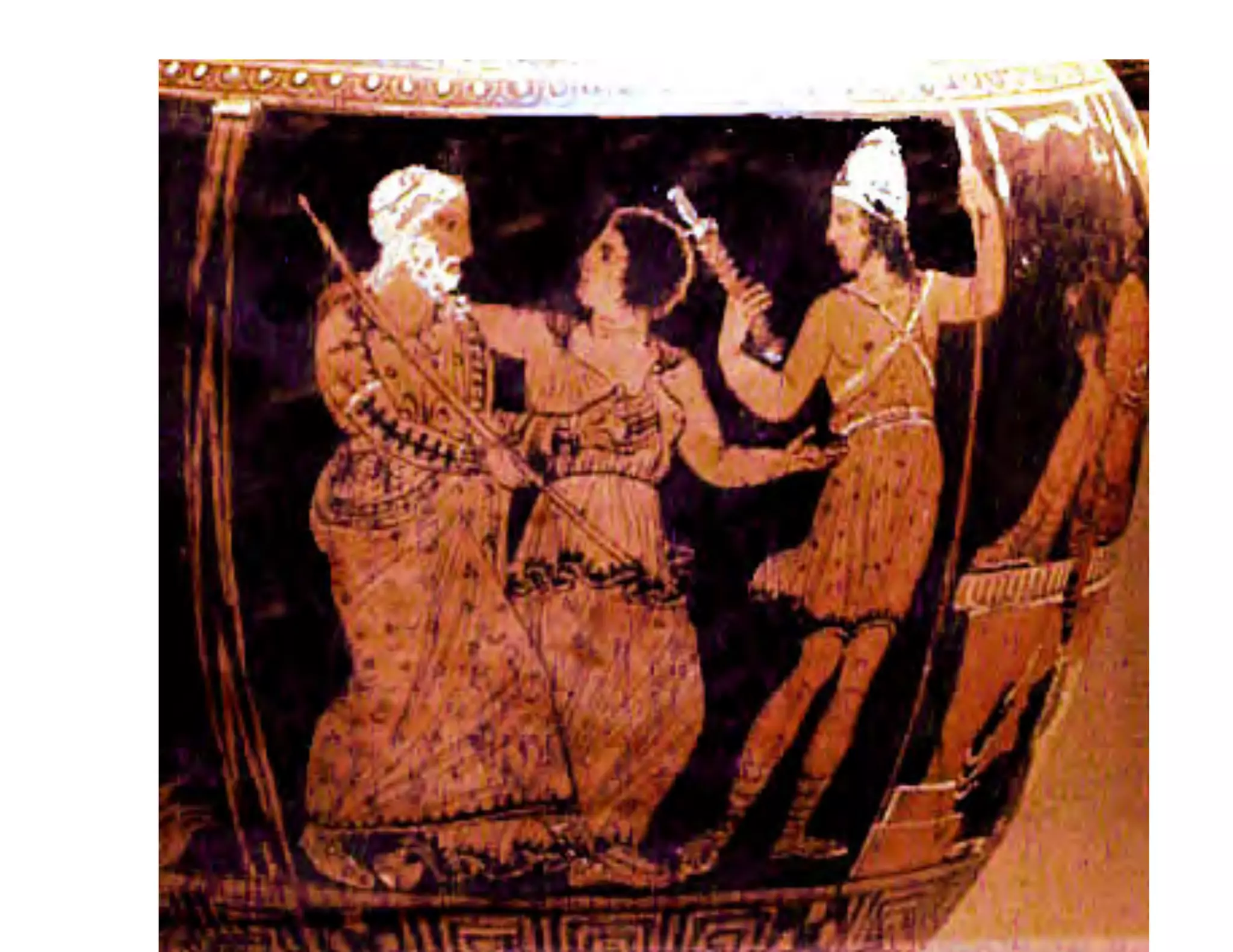
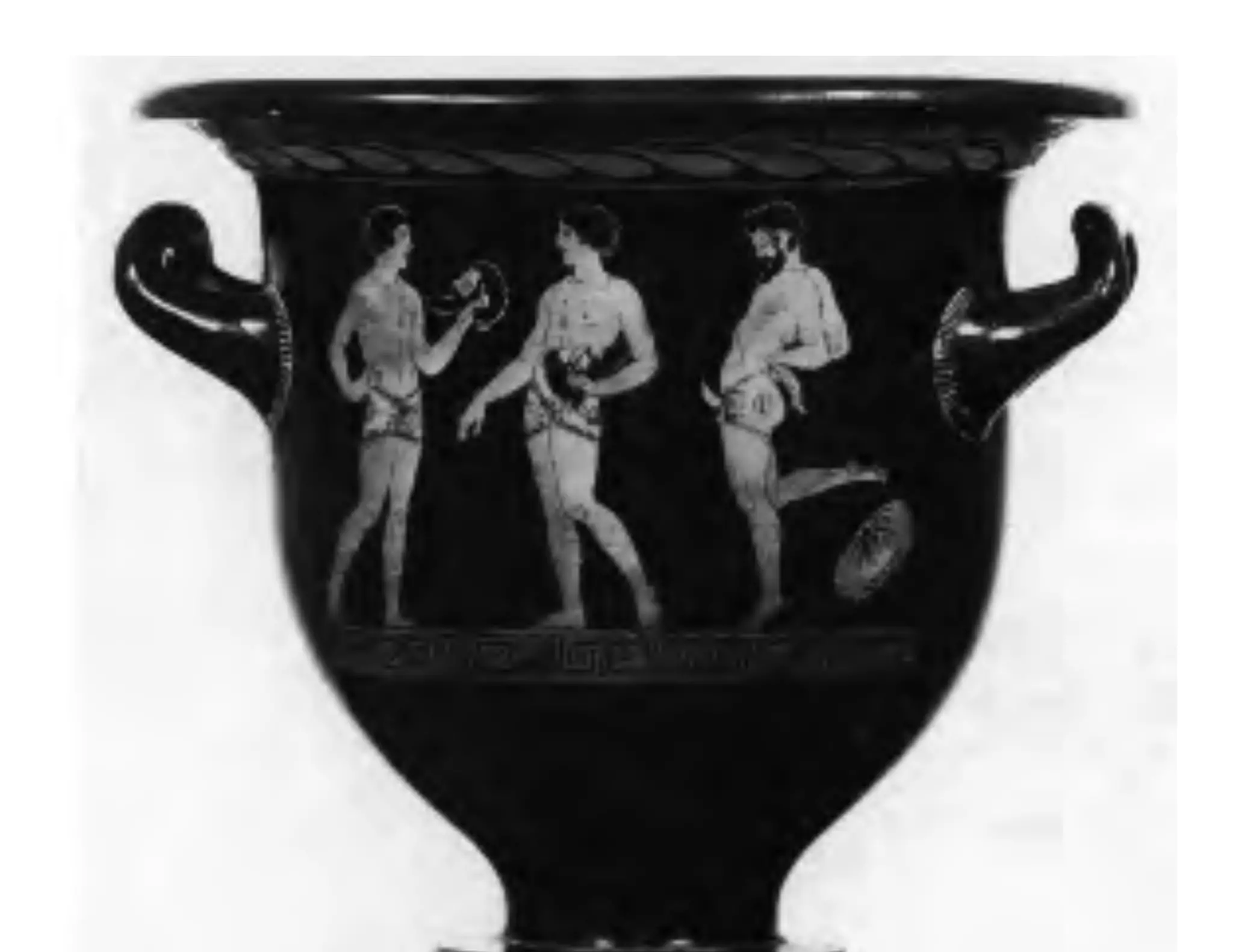
Vase Painting of
 A Satyr Play.
THE GREAT GREEK
                PLAYWRIGHTS


•!   Aescylus (523 to 456 BC)       Tragedy and Satyr
•!   Sophocles (490 – 406 BC)       Tragedy and Satyr
•!   Euripides (480 – 406 BC)       Tradedy and Satyr
•!   Aristophanes (445 to 385 BC)   Old Comedy
•!   Menander (342 – 292 BC)        New Comedy
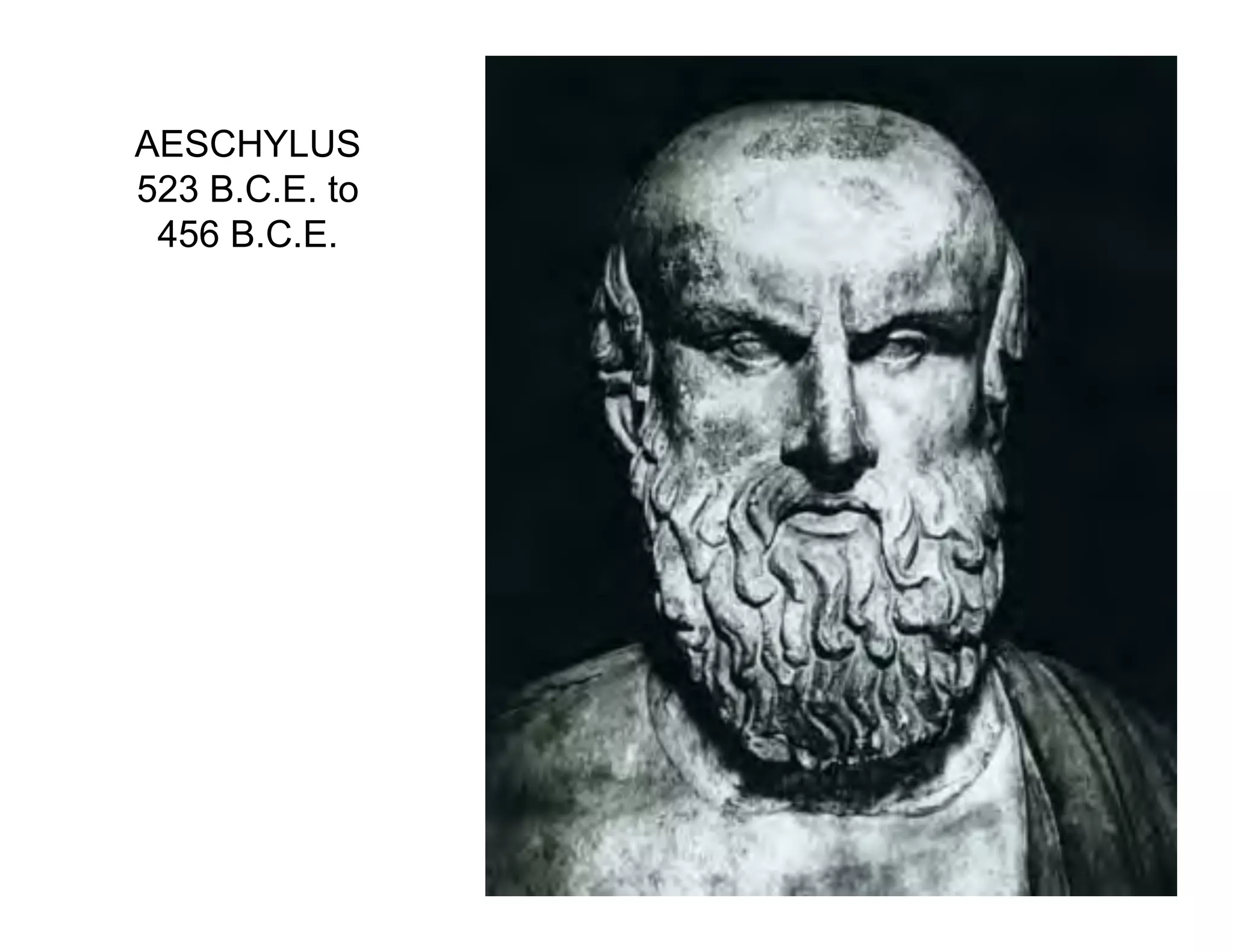
AESCHYLUS
523 B.C.E. to
 456 B.C.E.
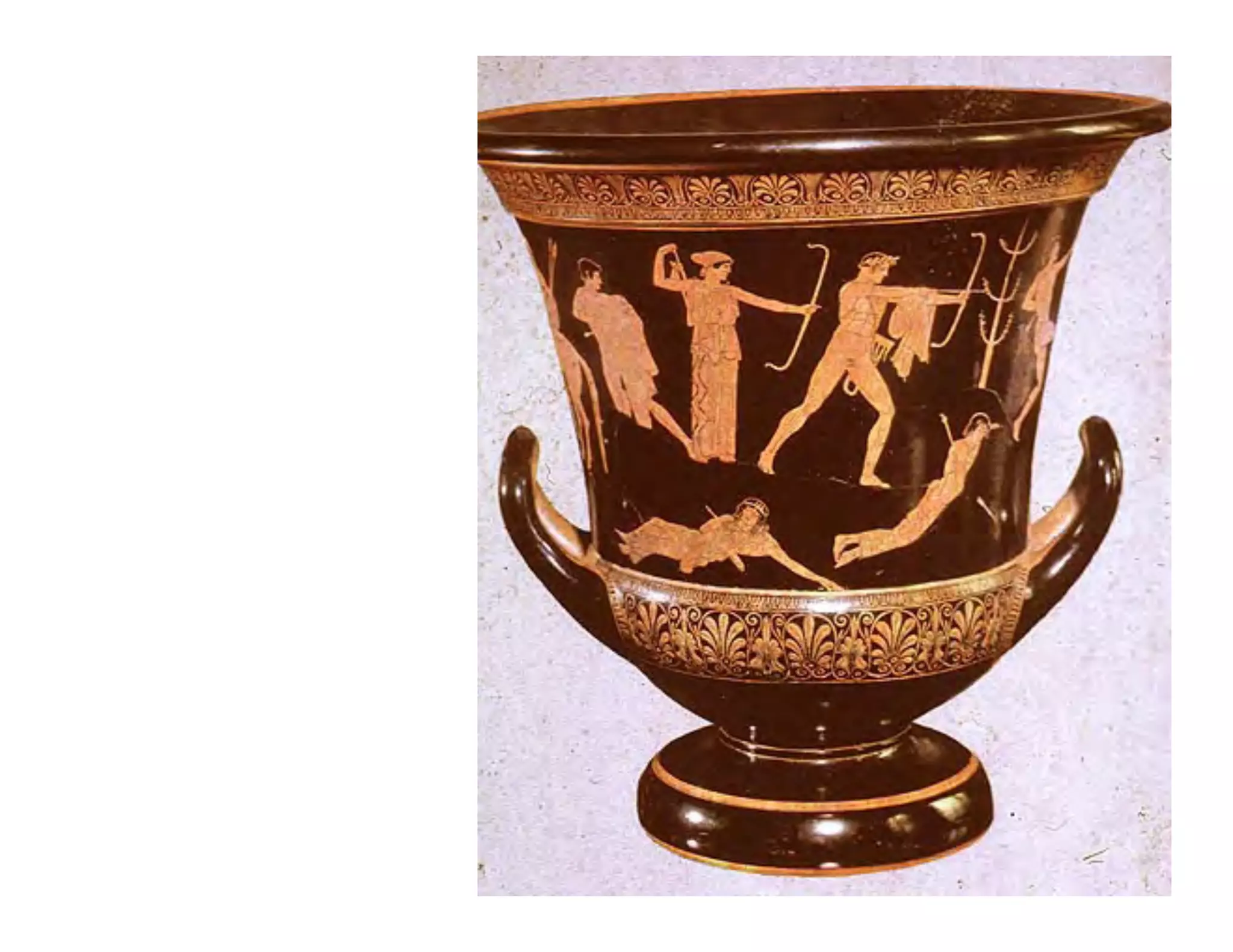
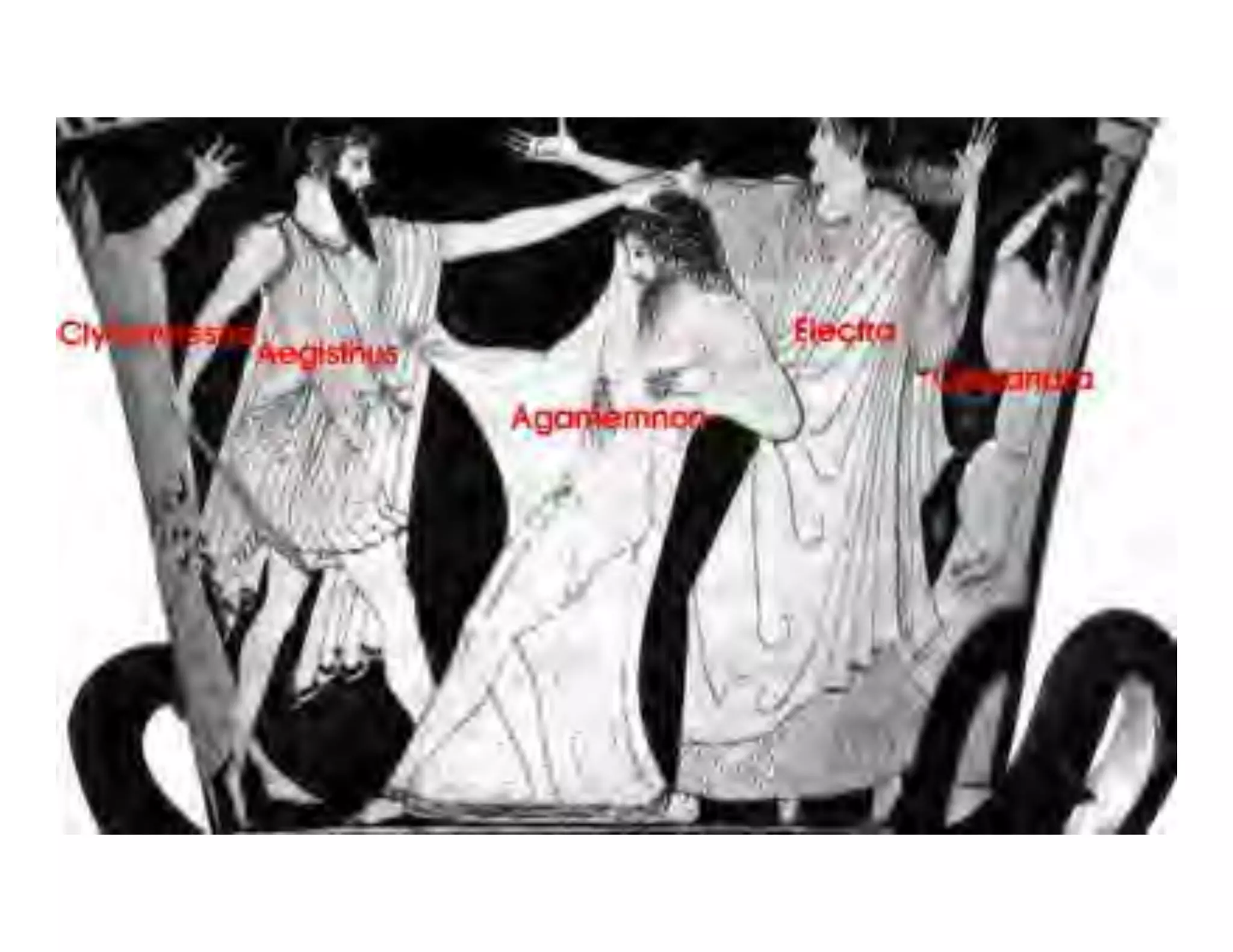
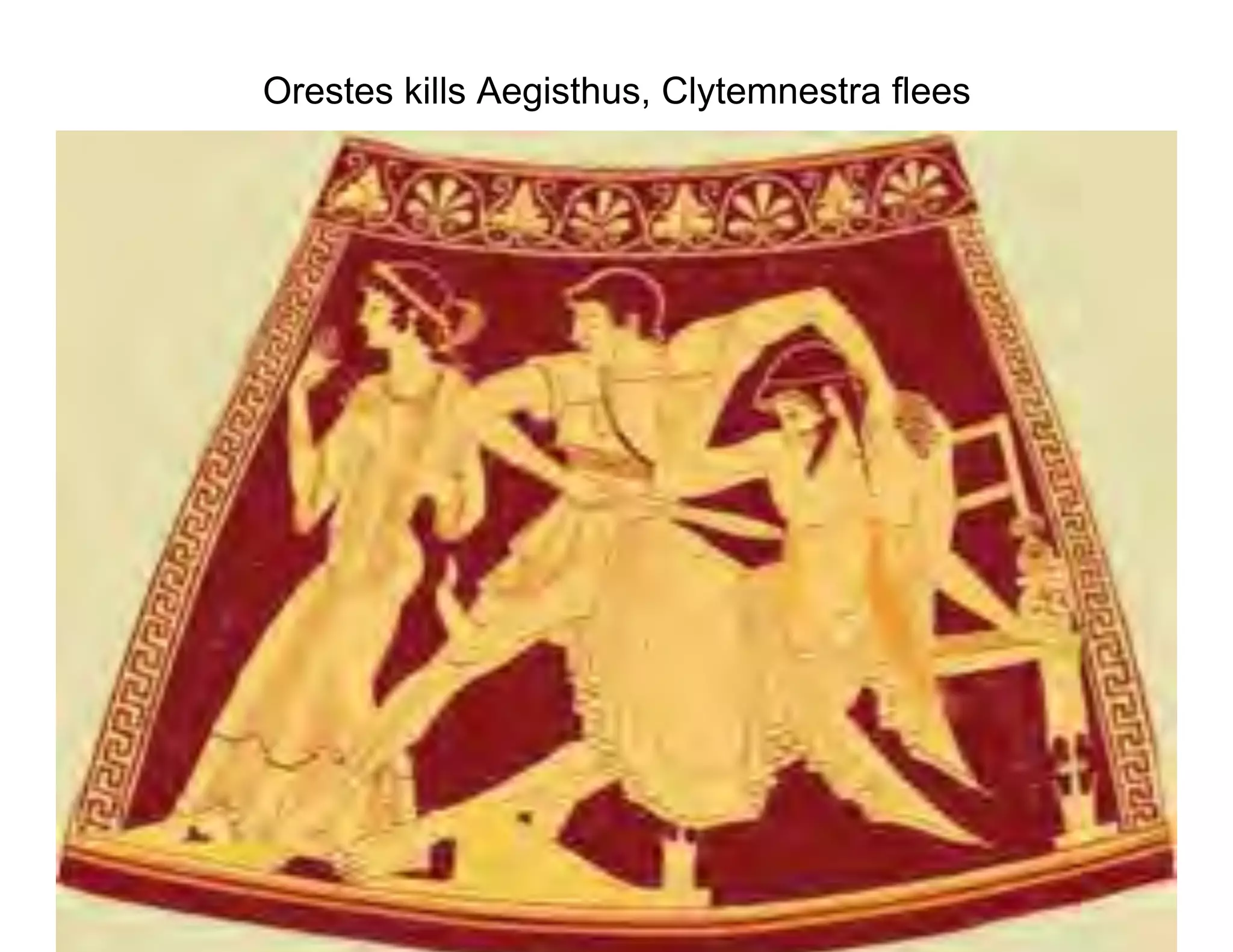
Orestes kills Aegisthus, Clytemnestra flees
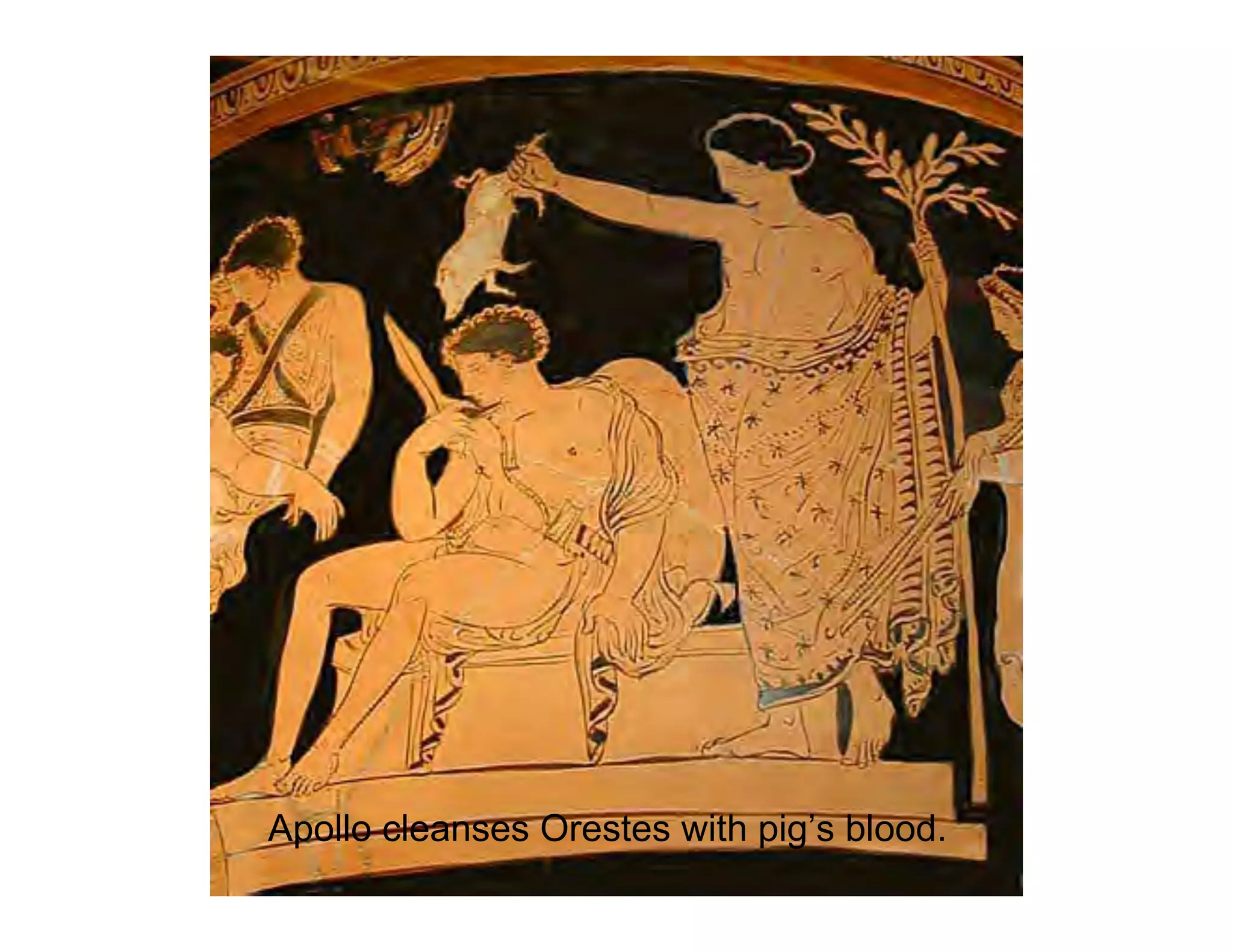
Apollo cleanses Orestes with pig’s blood.
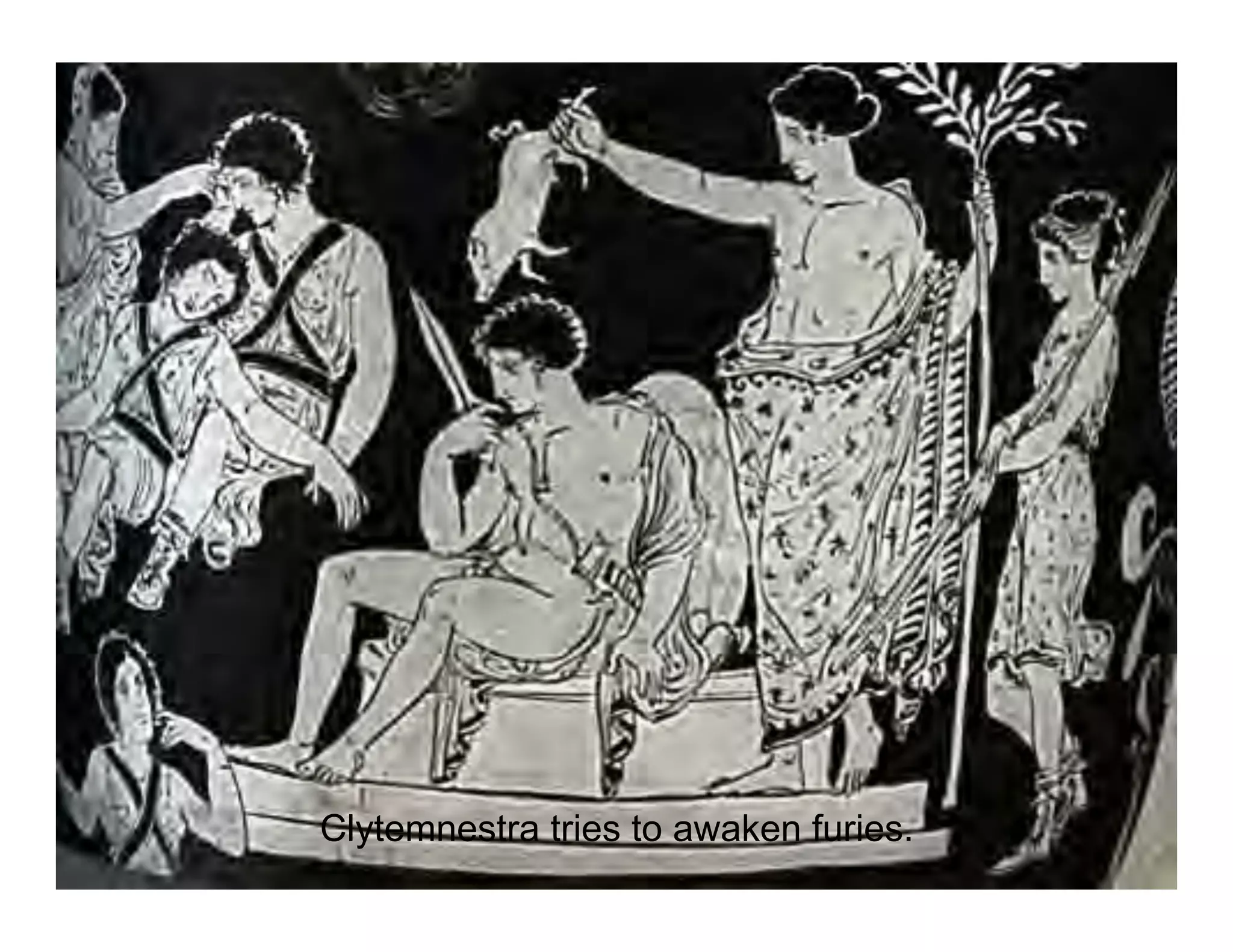
Clytemnestra tries to awaken furies.
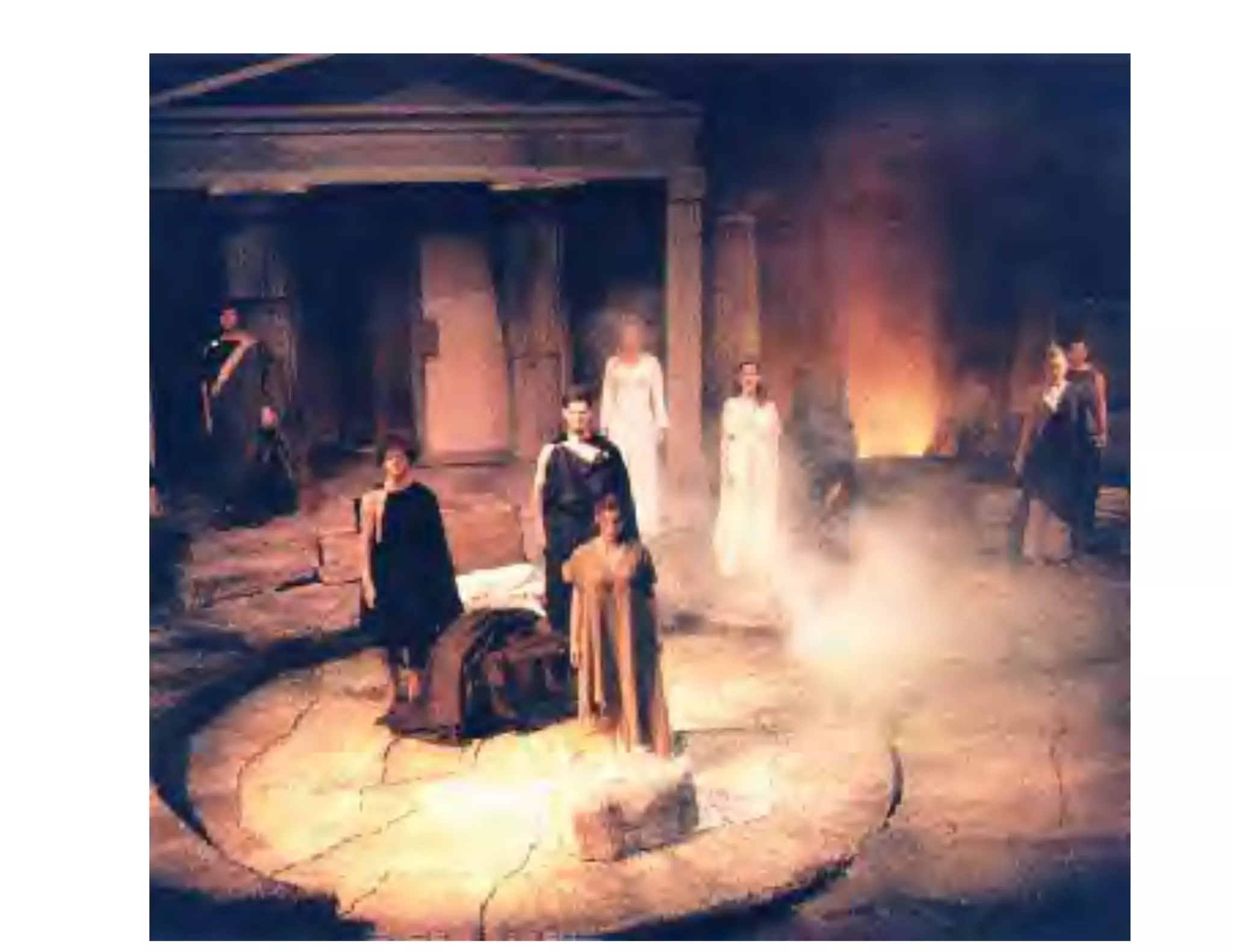
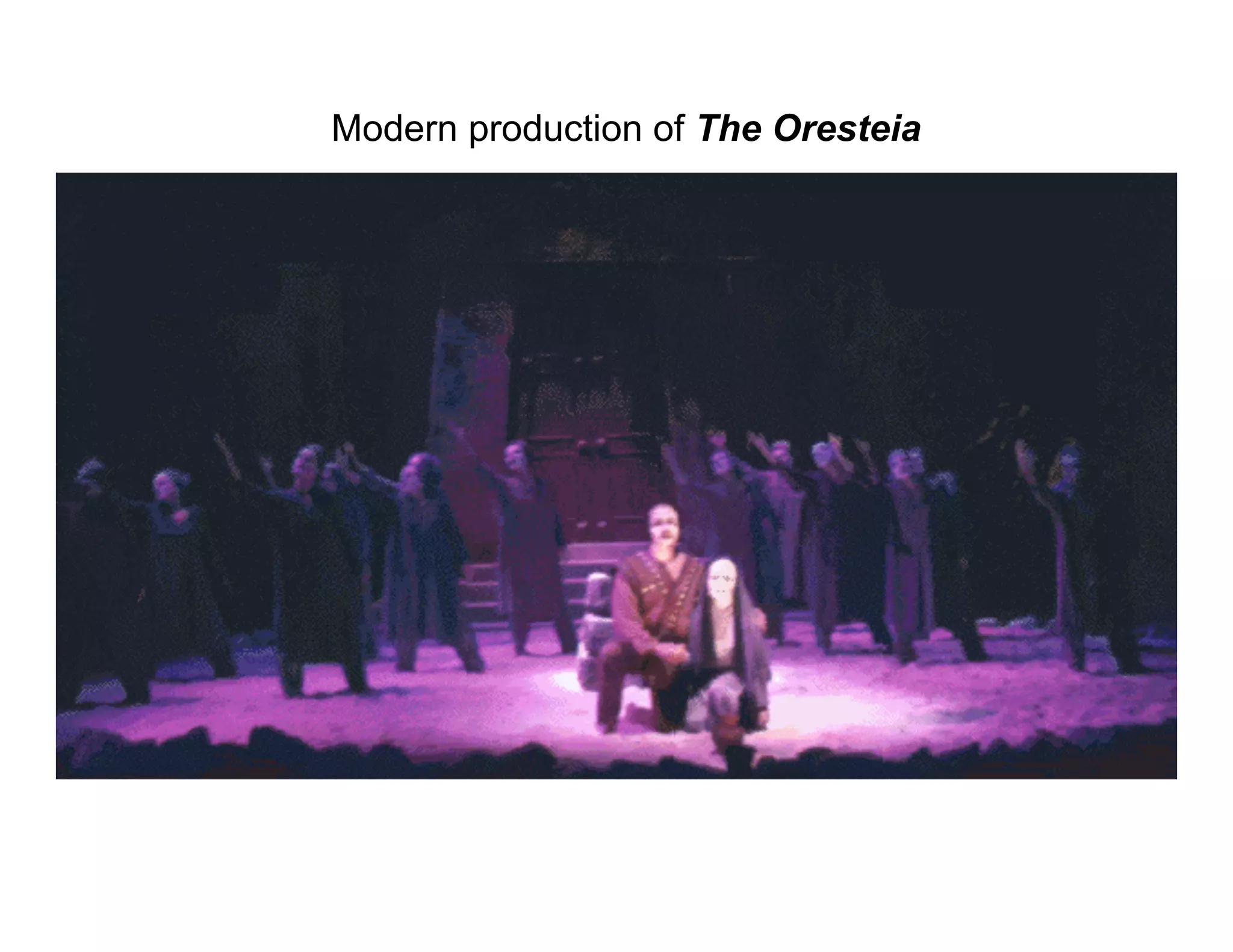
Modern production of The Oresteia
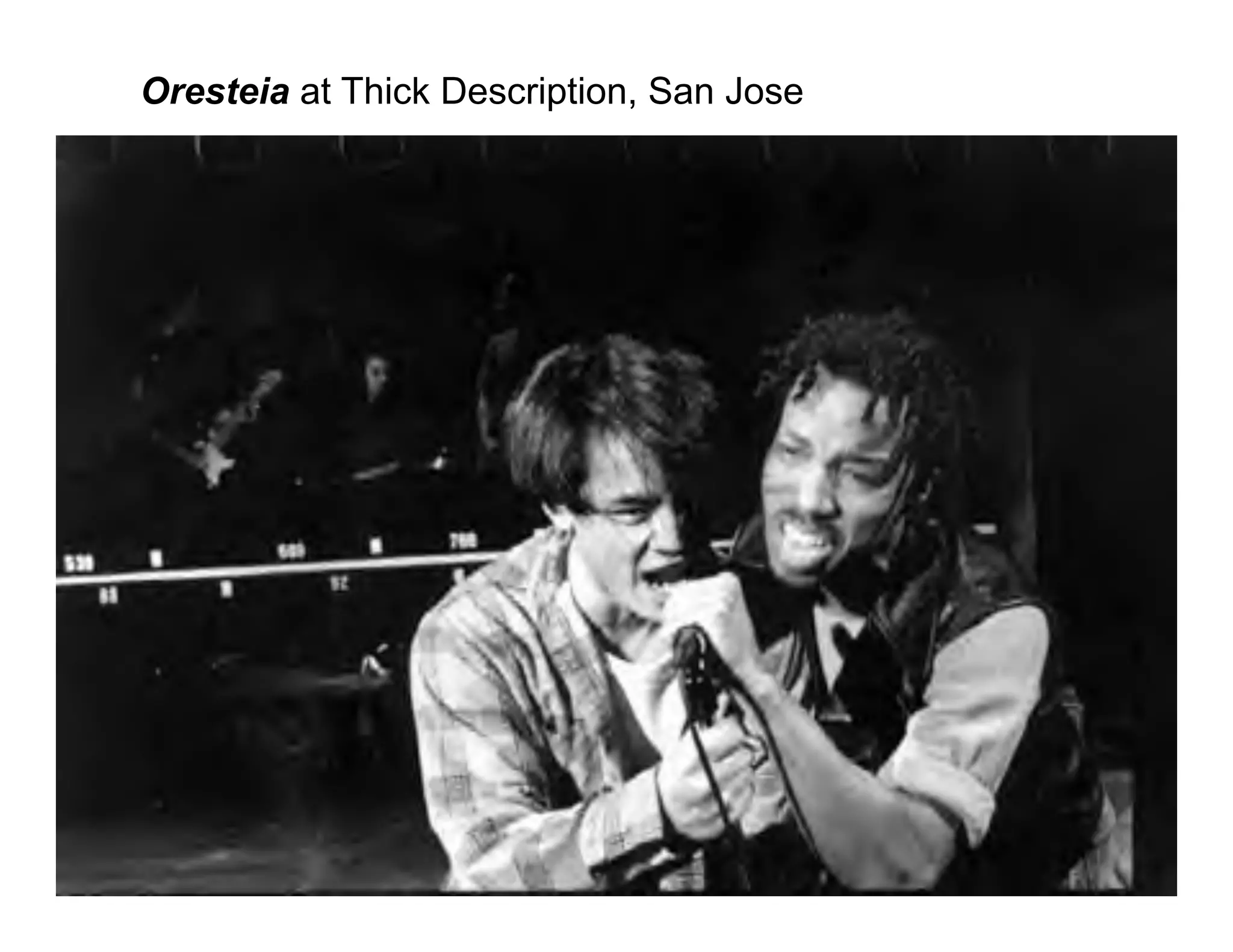
Oresteia at Thick Description, San Jose
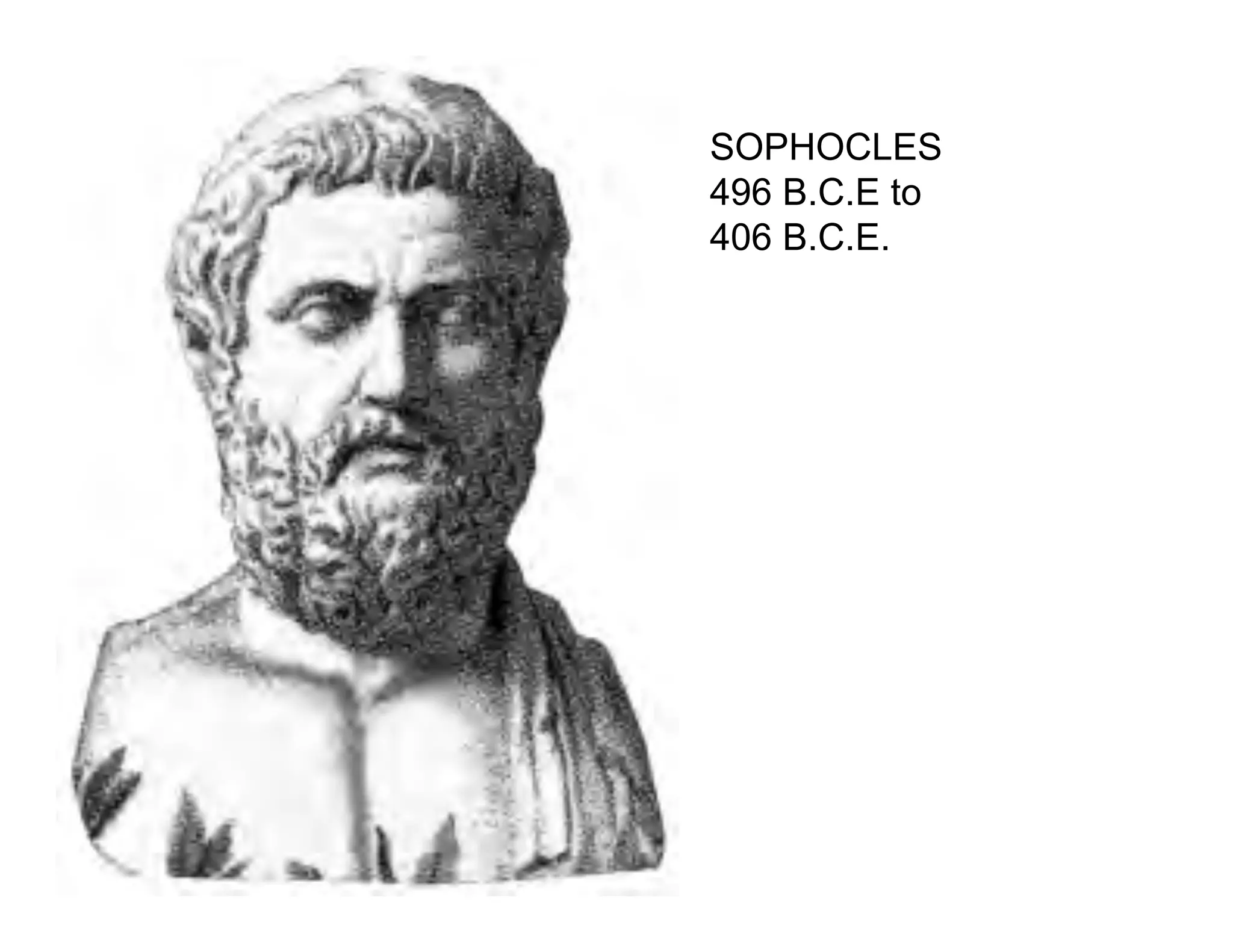
SOPHOCLES
496 B.C.E to
406 B.C.E.
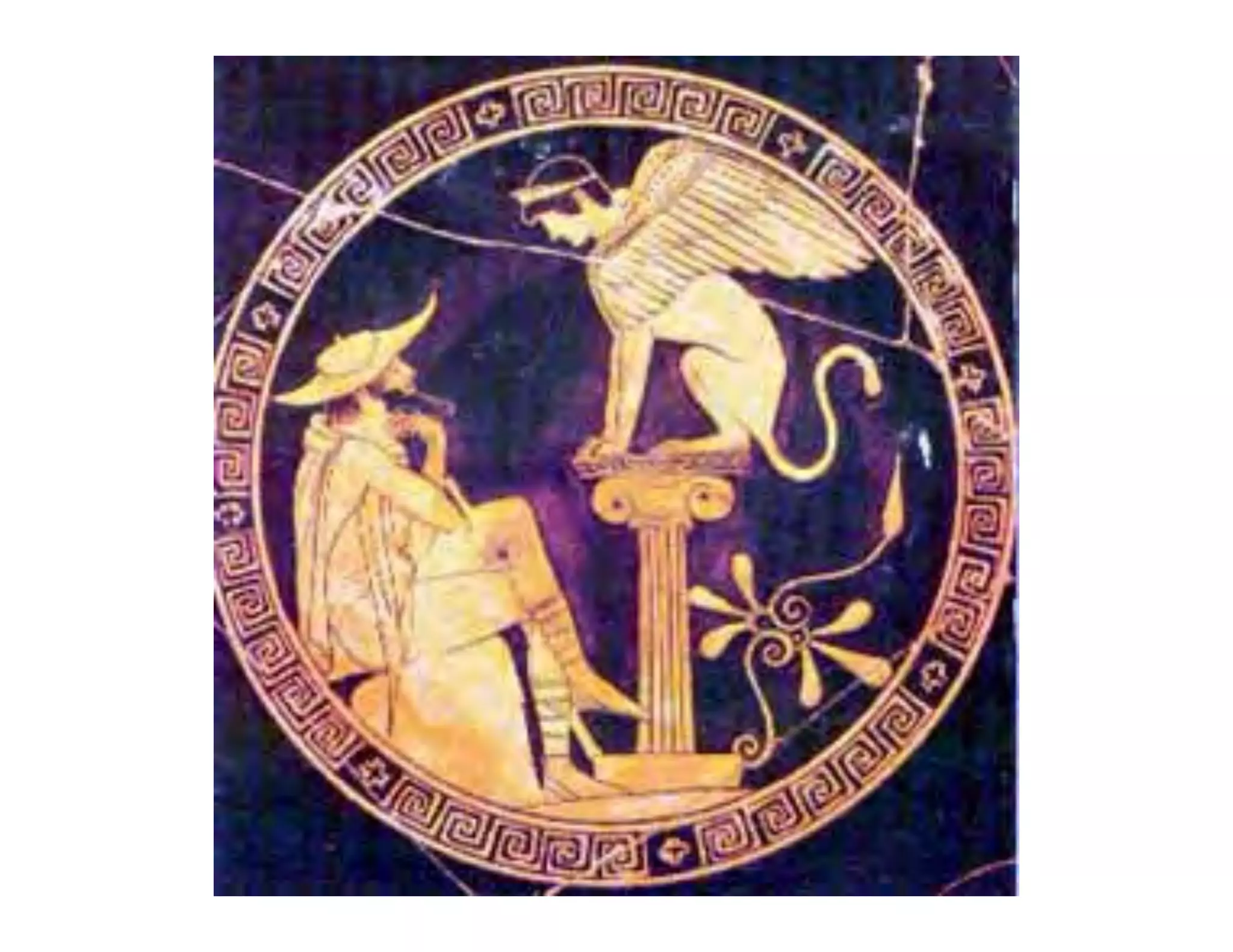
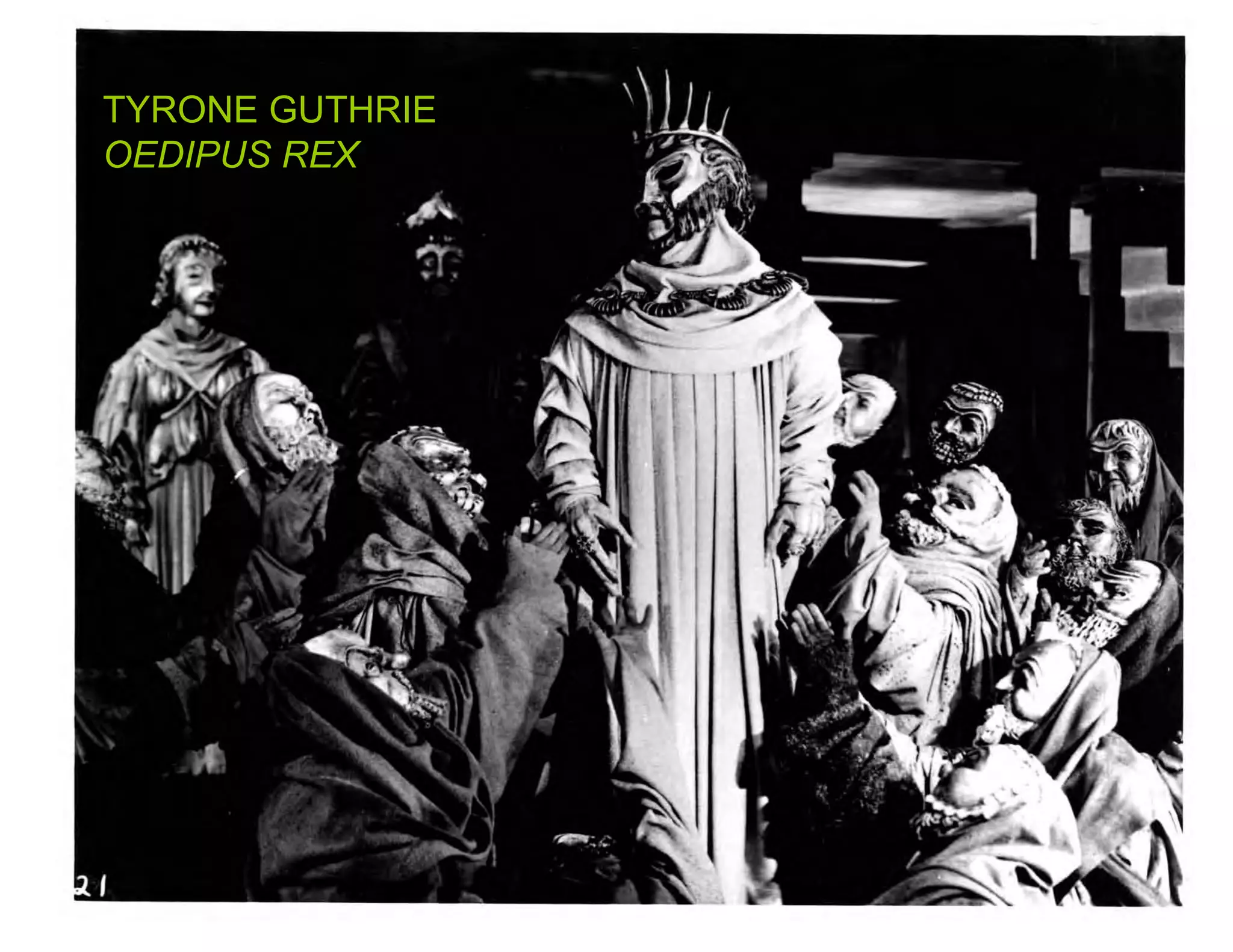
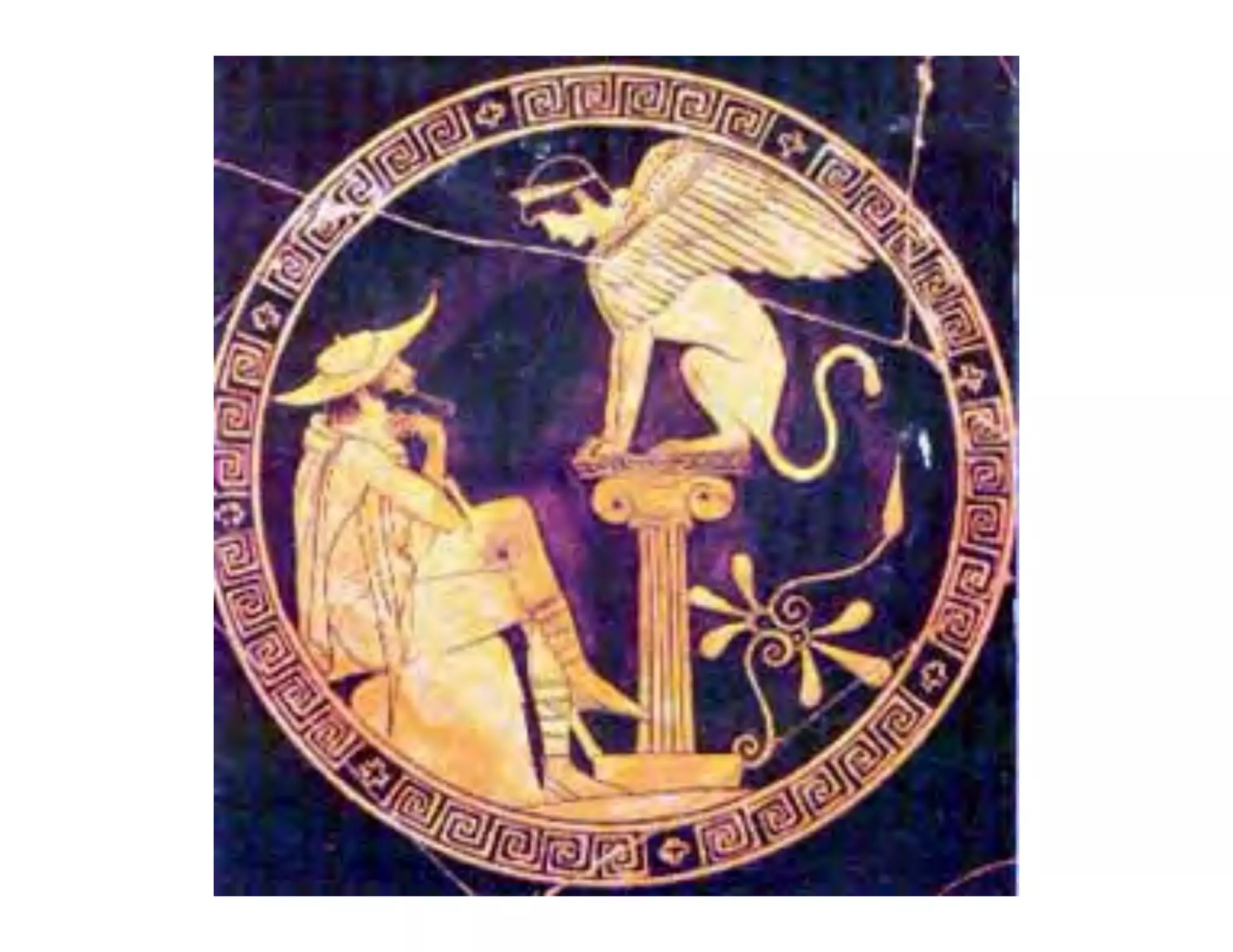
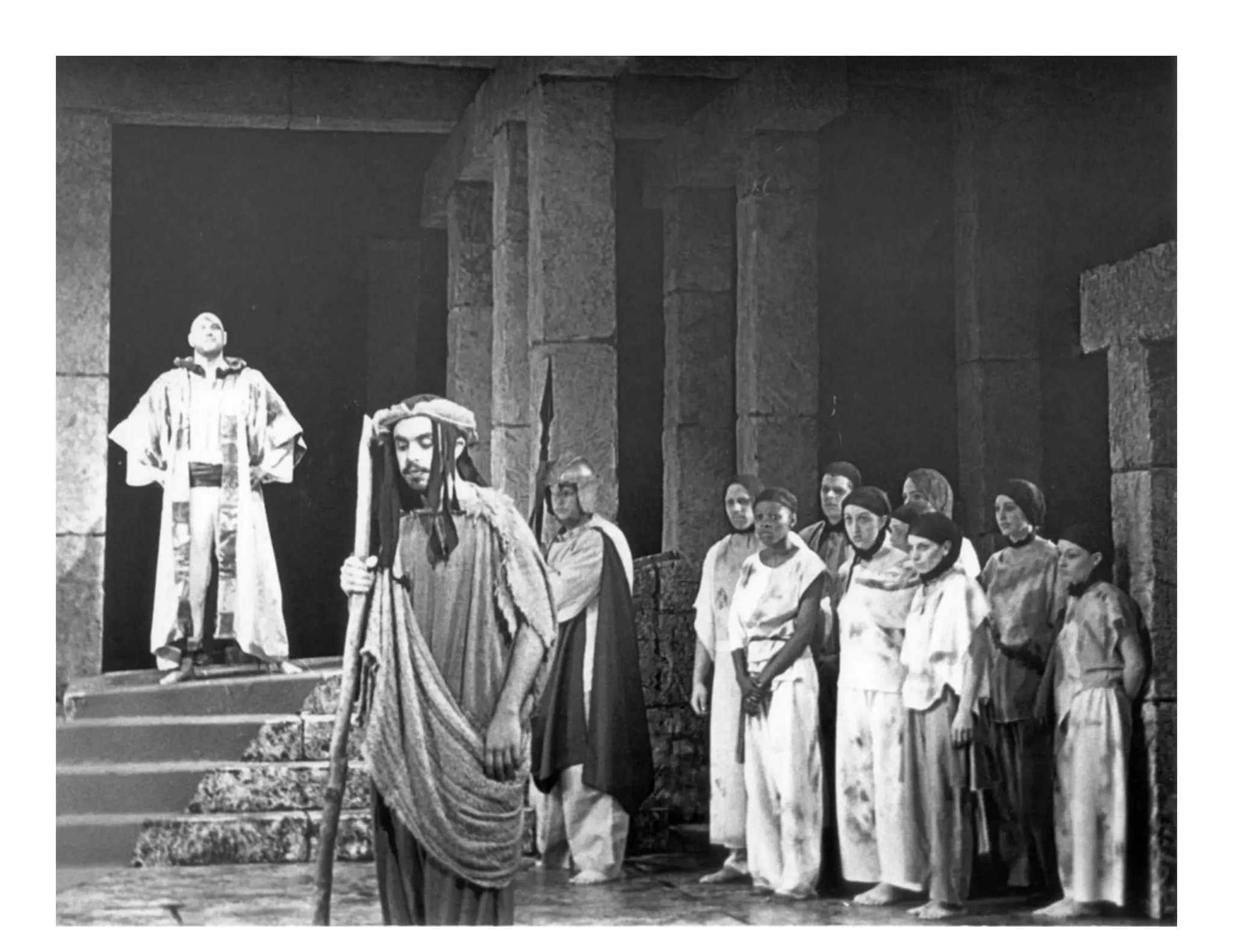
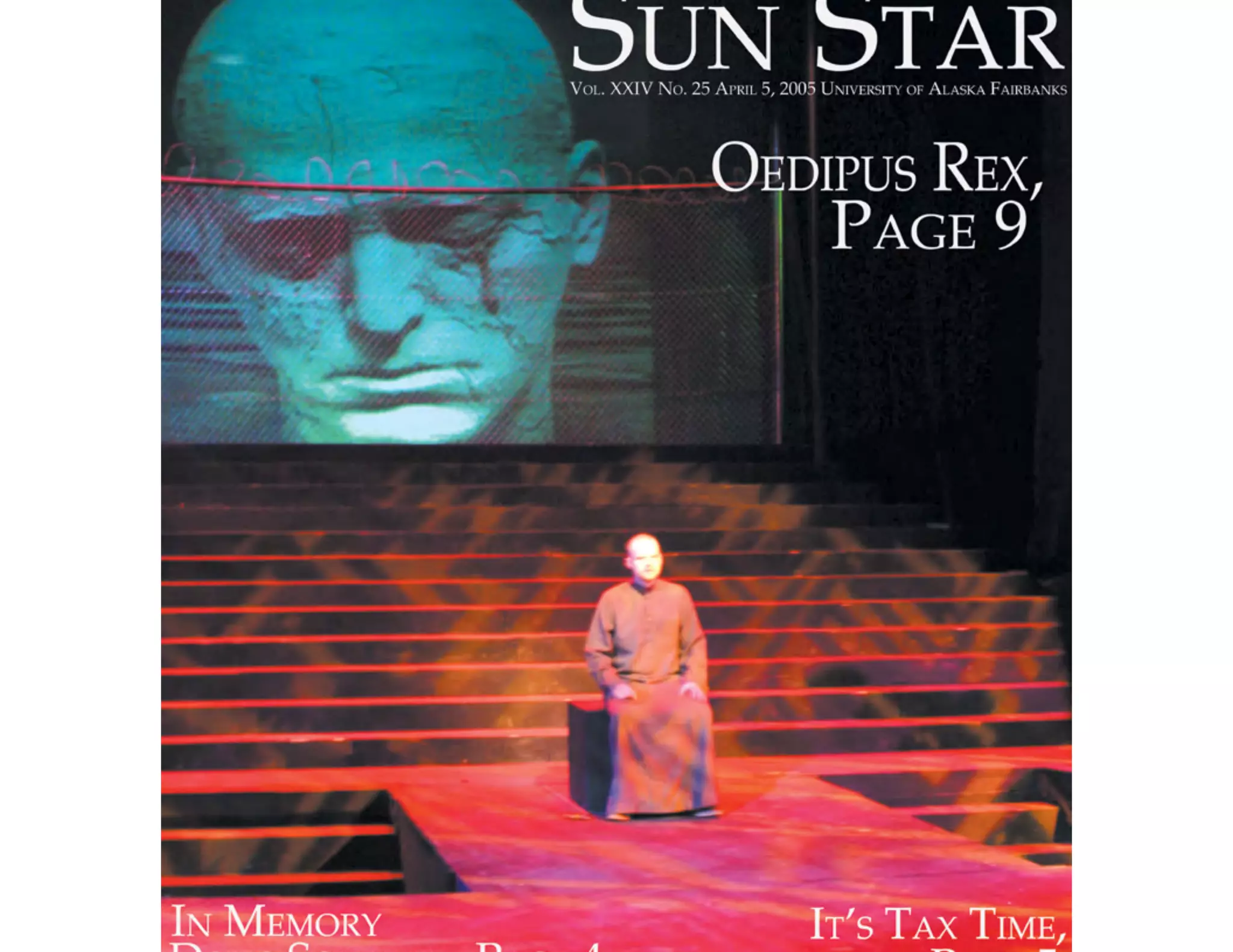
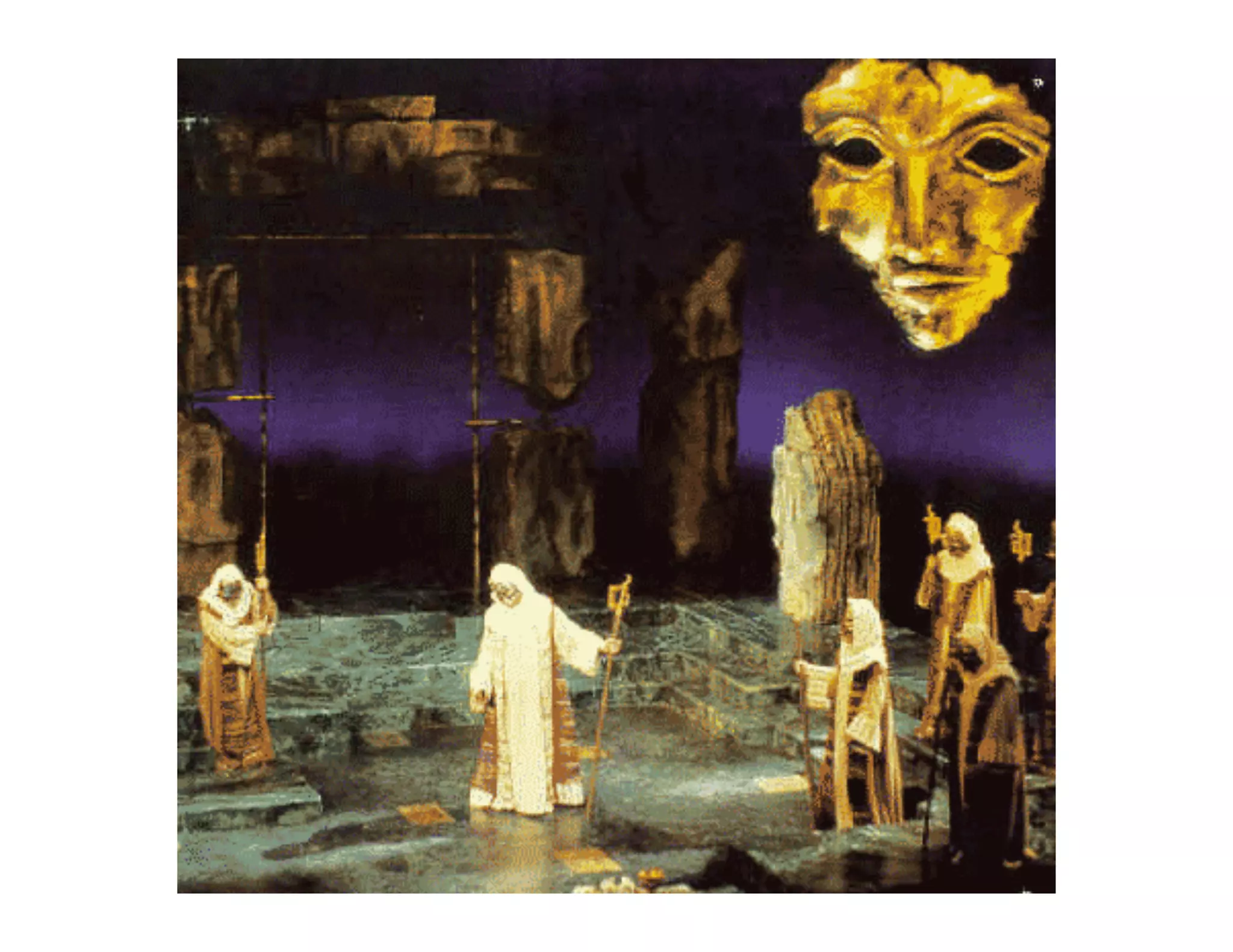
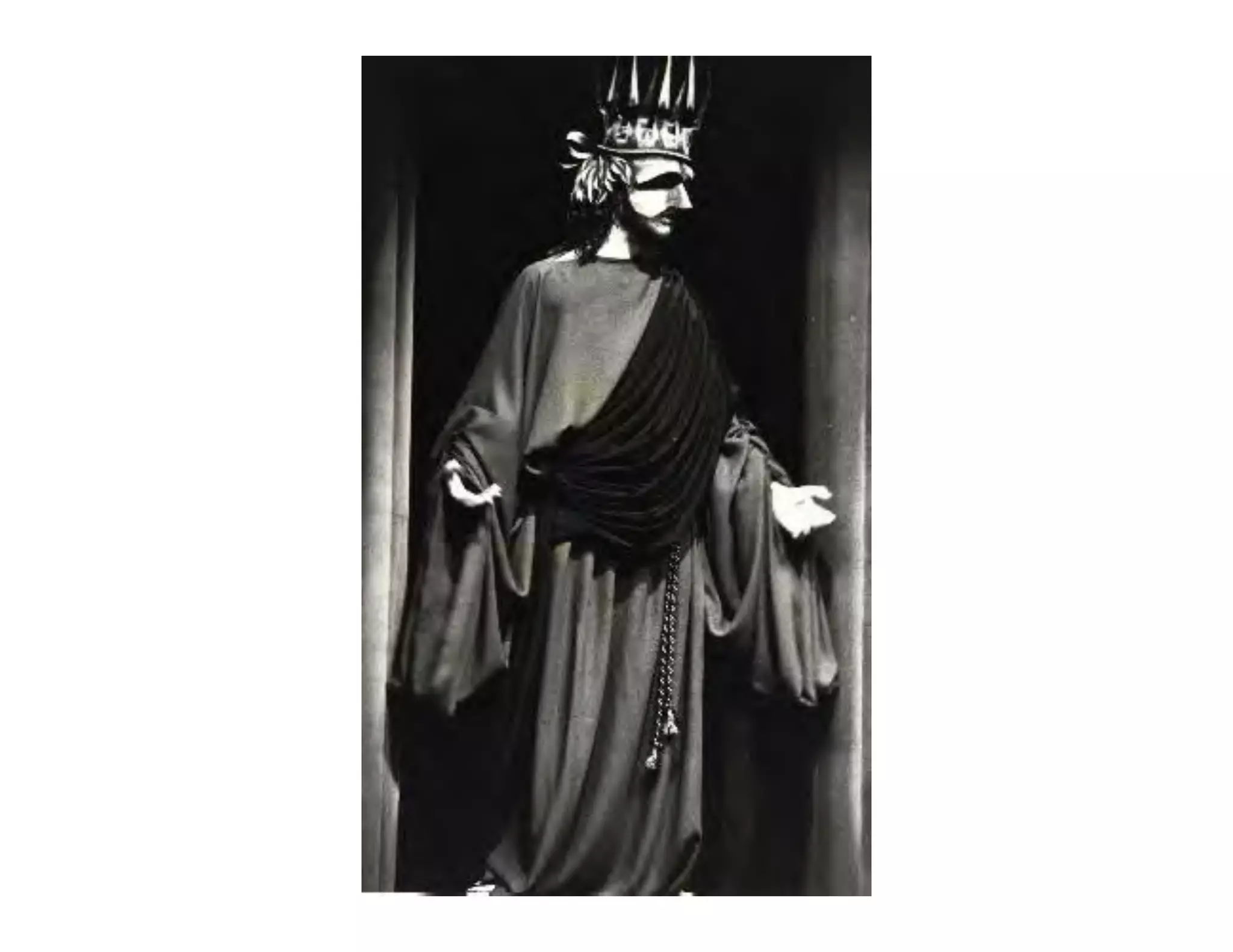
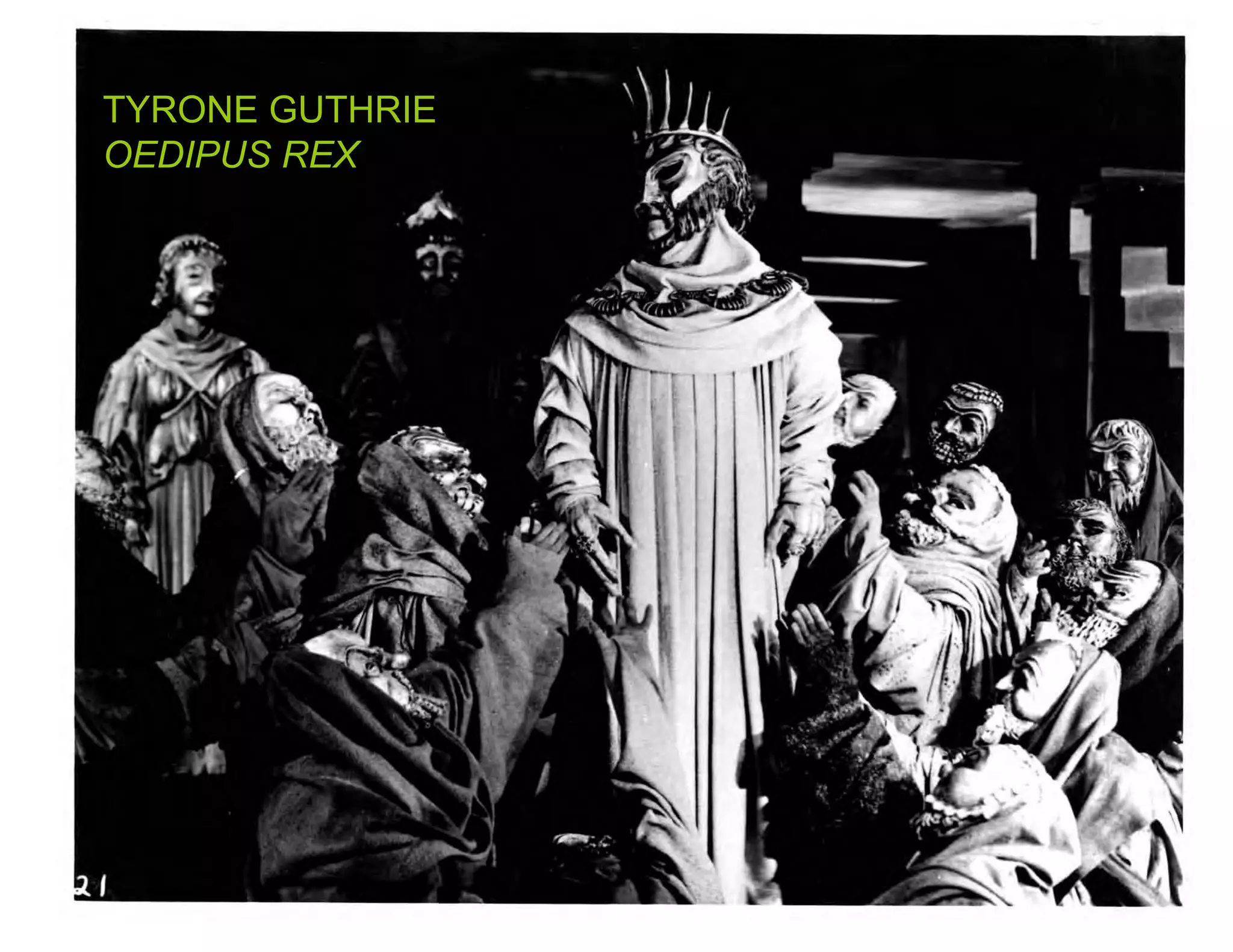
Oedipus Rex
TYRONE GUTHRIE
OEDIPUS REX


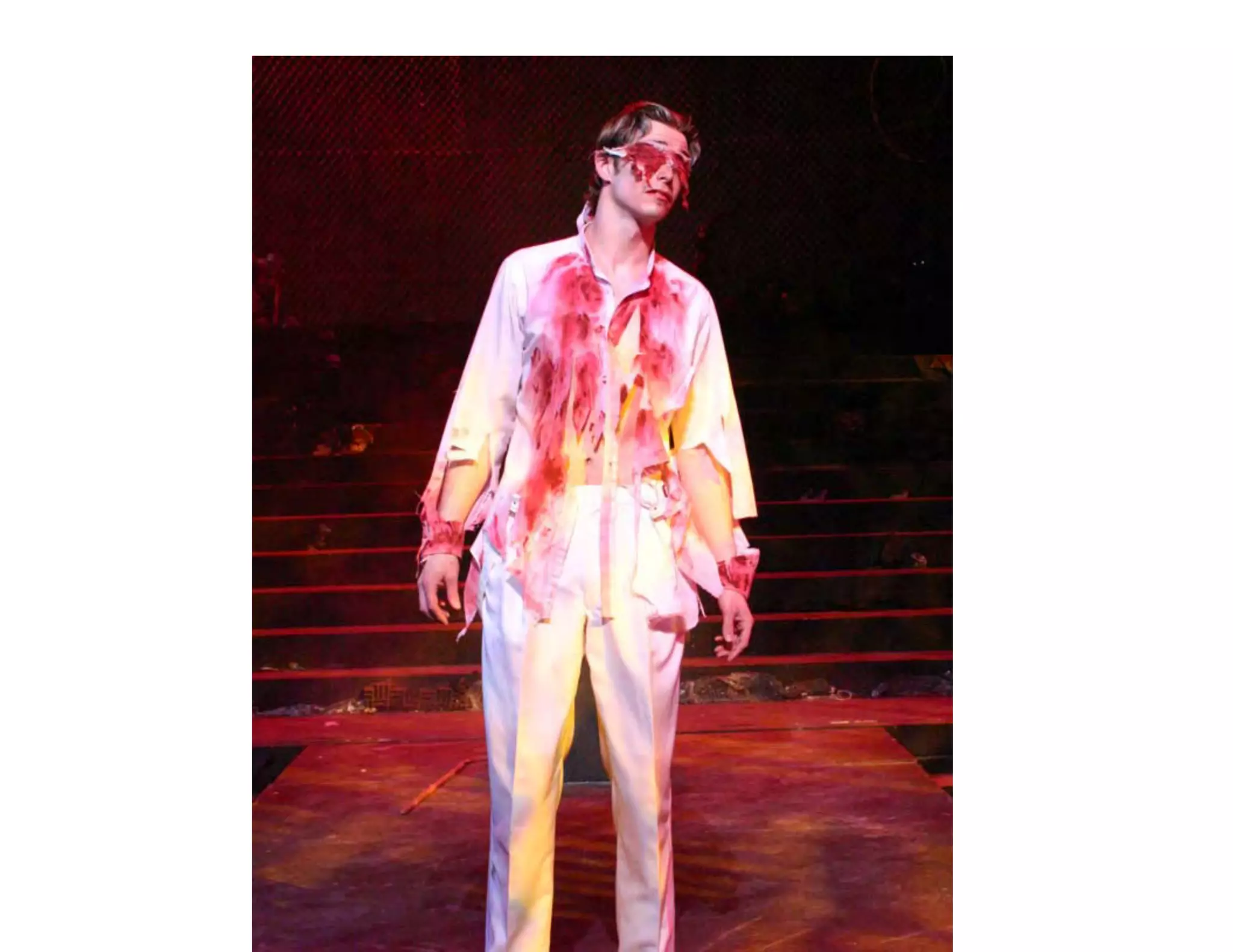
     Contemporary production of Oedipus Rex
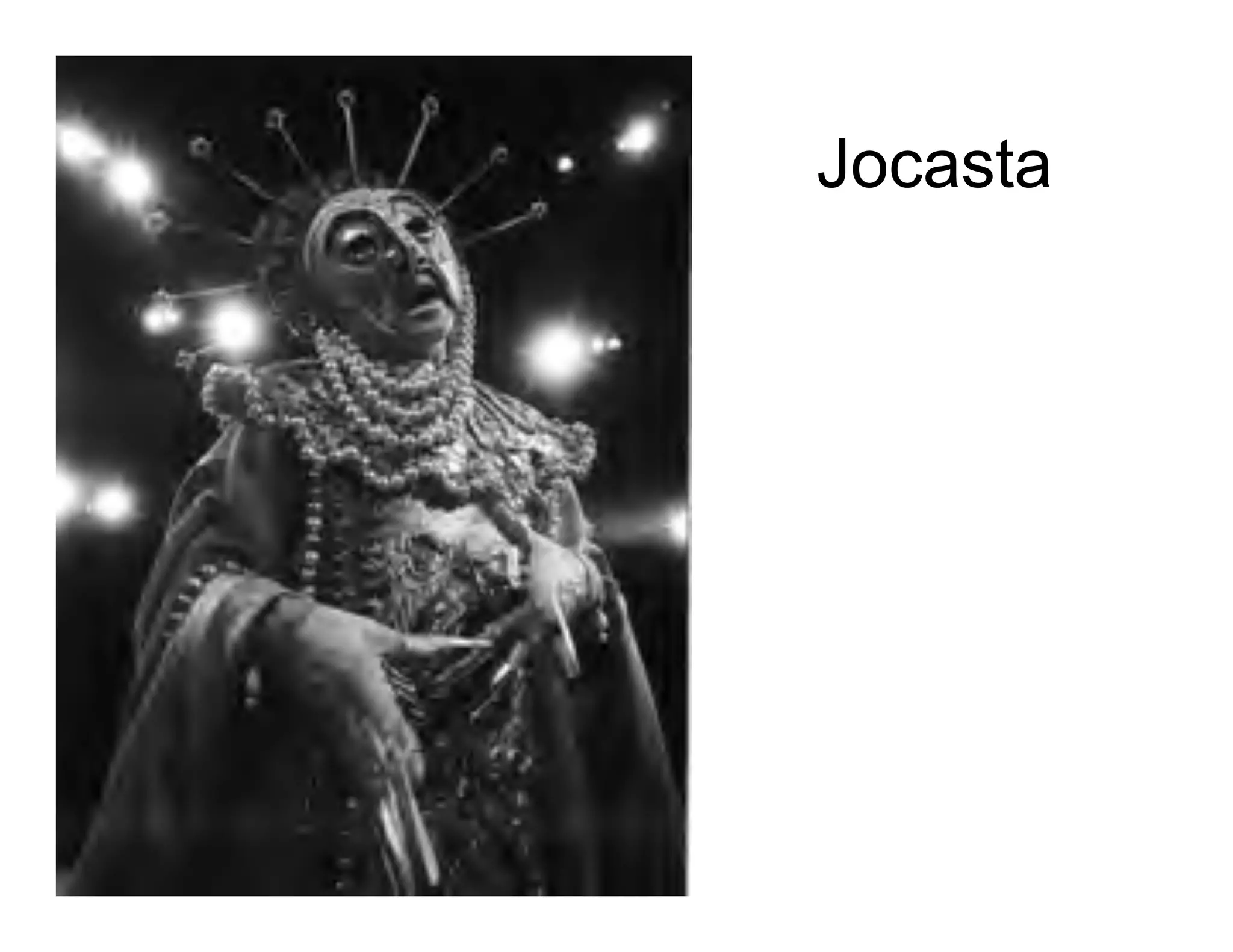
Jocasta
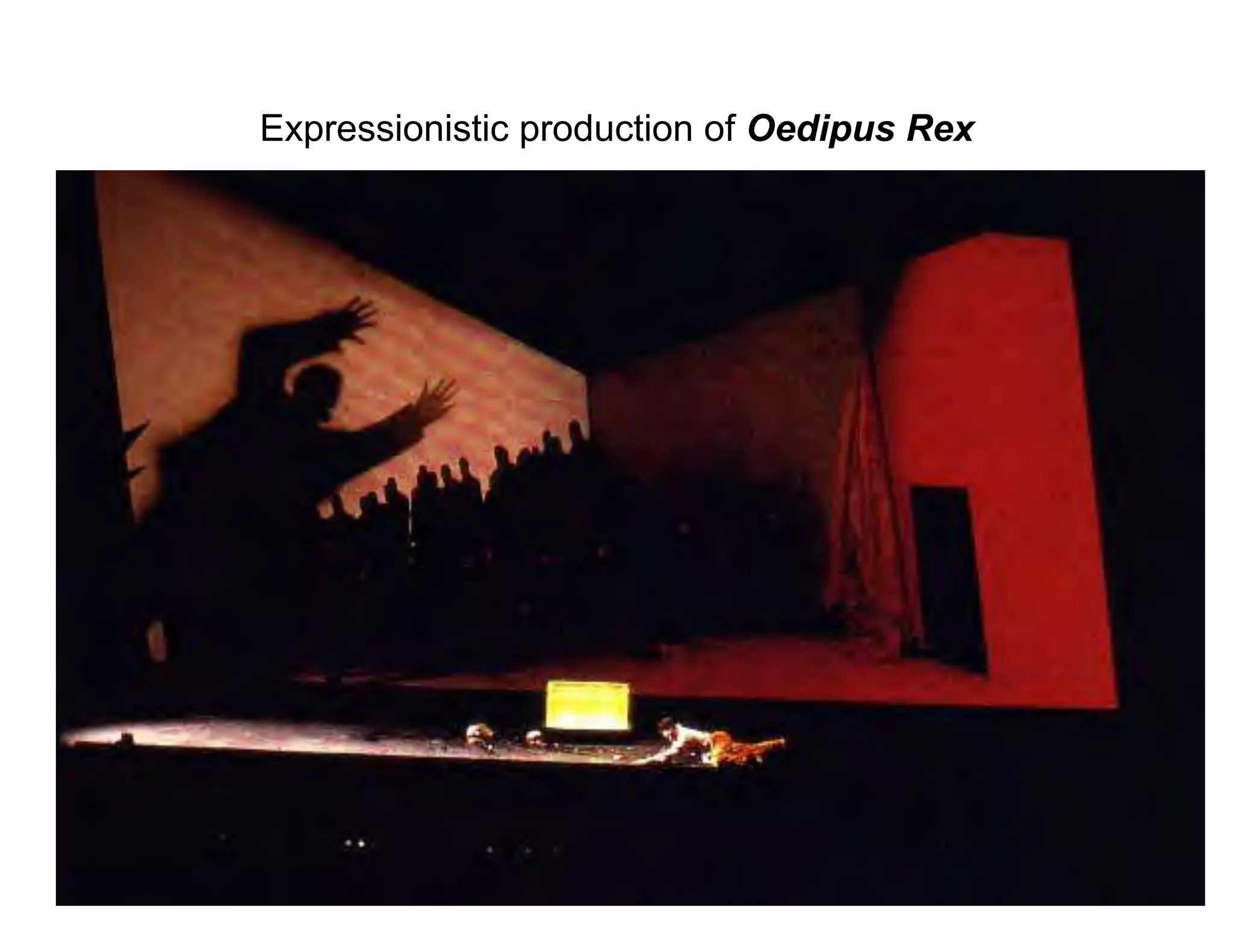
Expressionistic production of Oedipus Rex
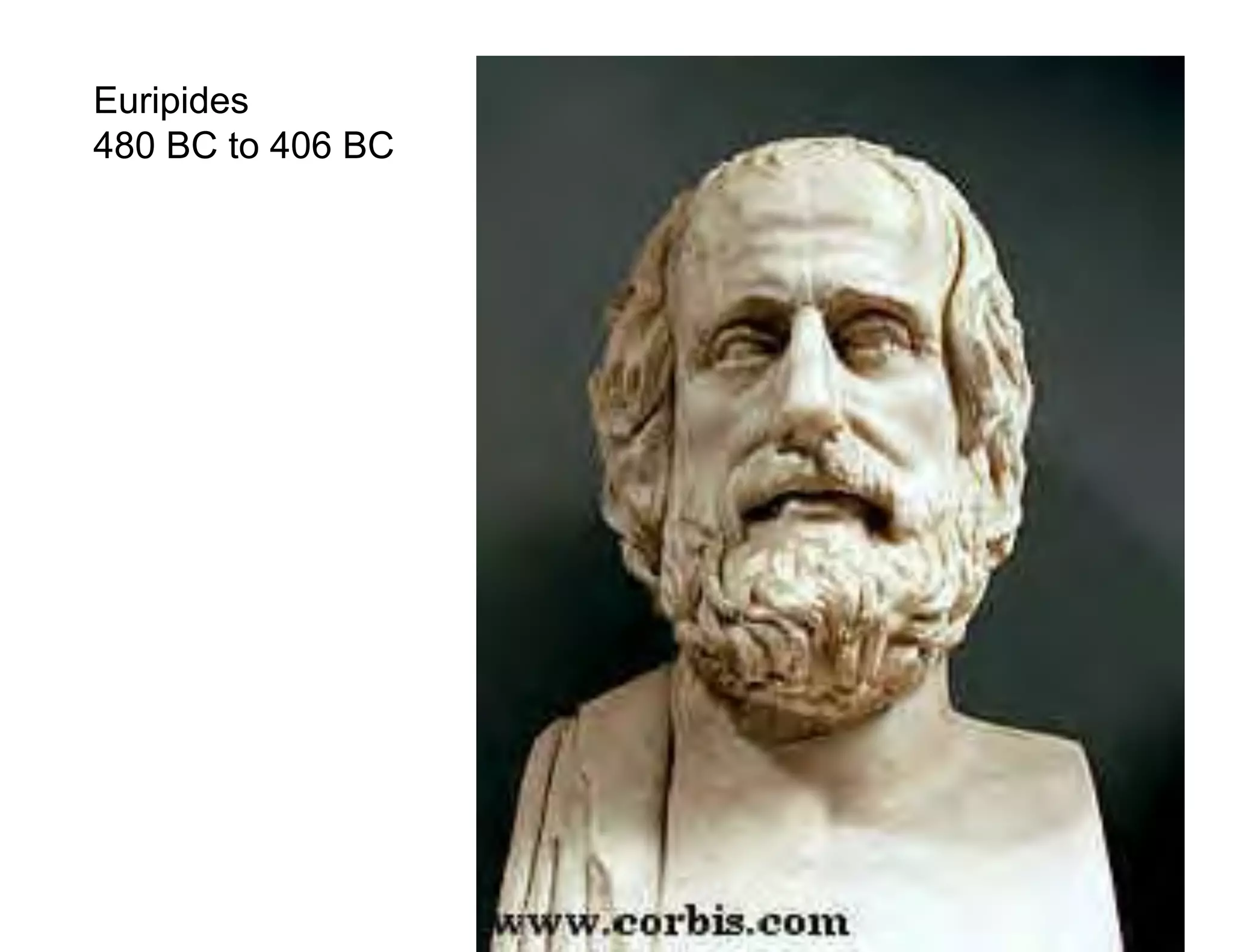
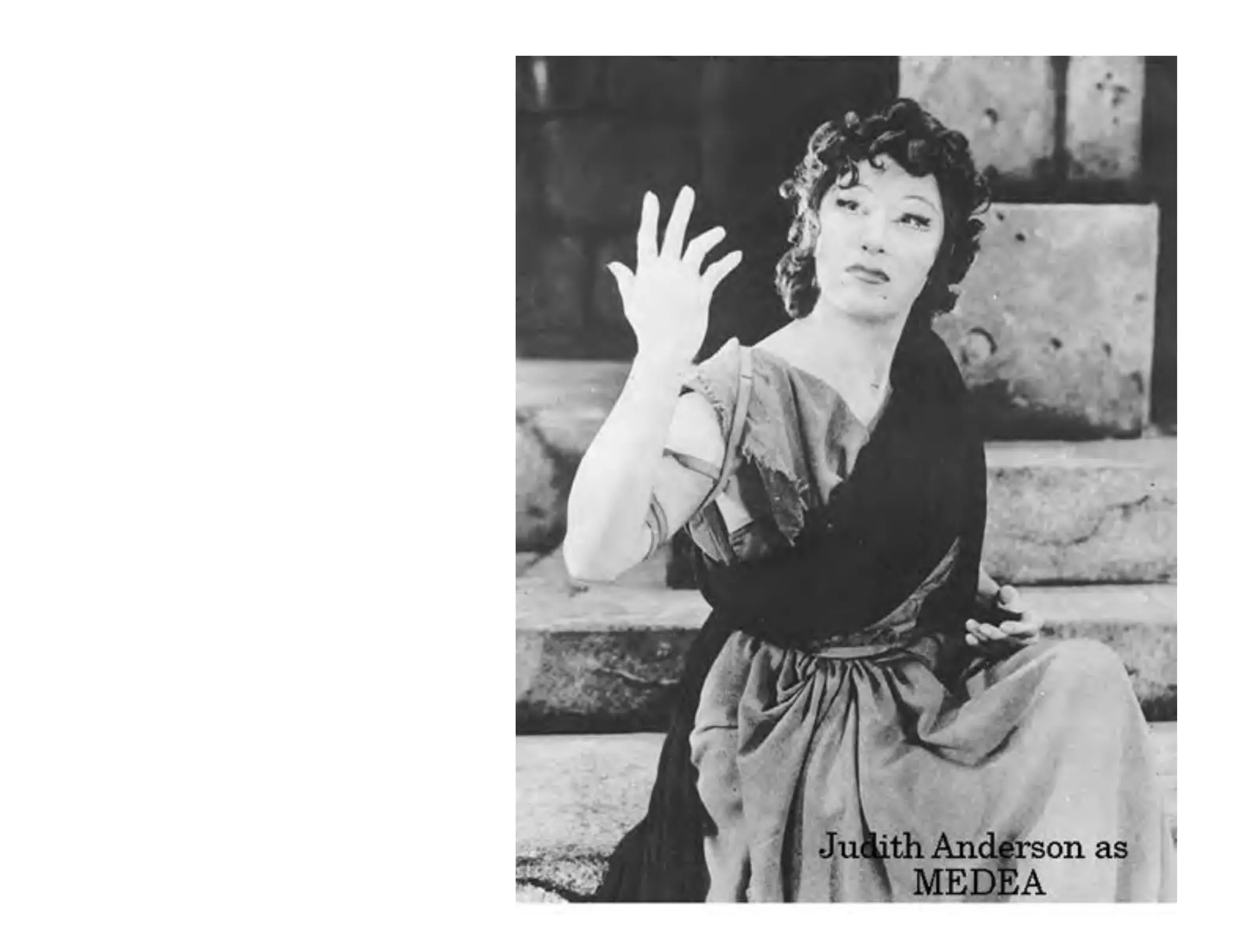
Euripides
480 BC to 406 BC
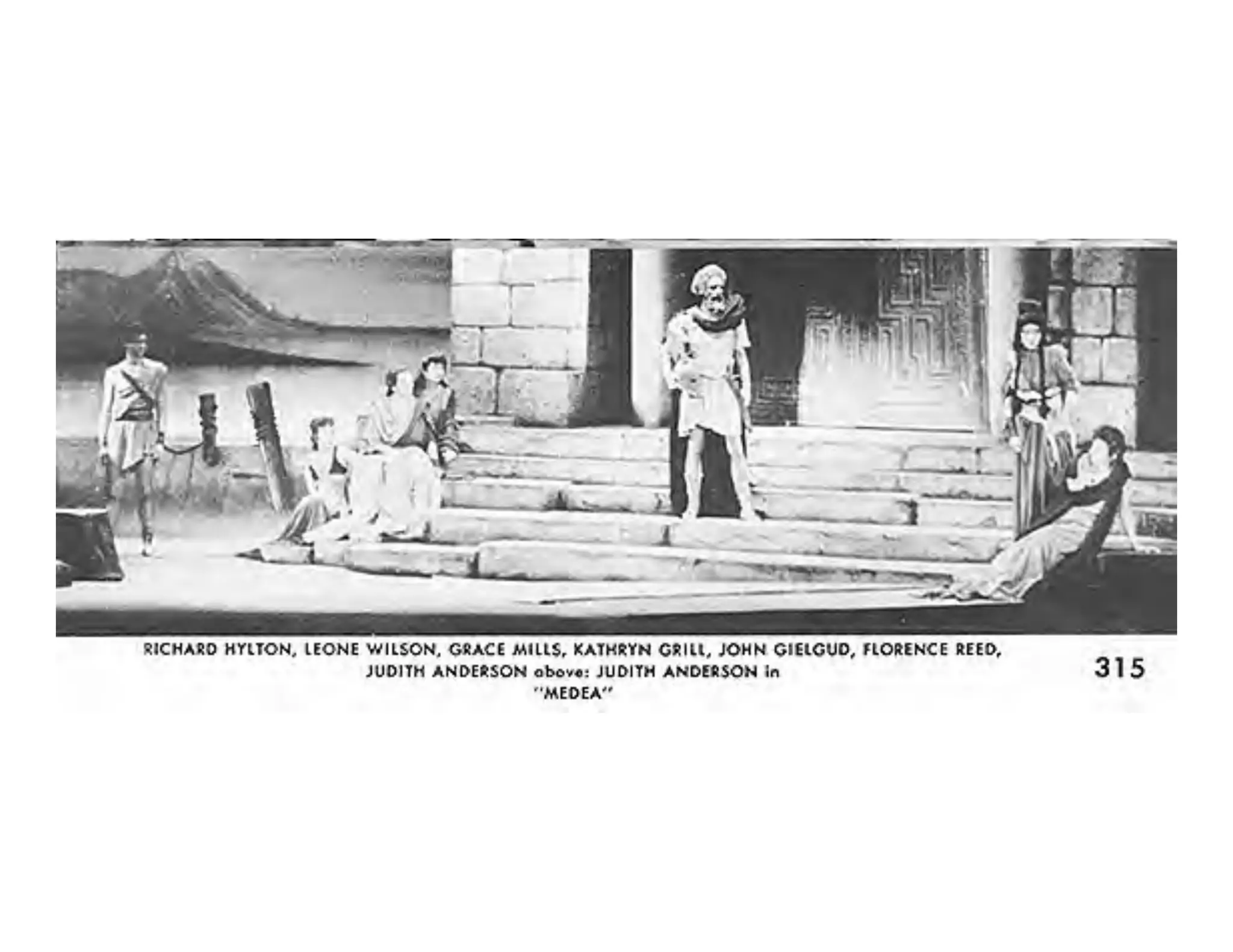
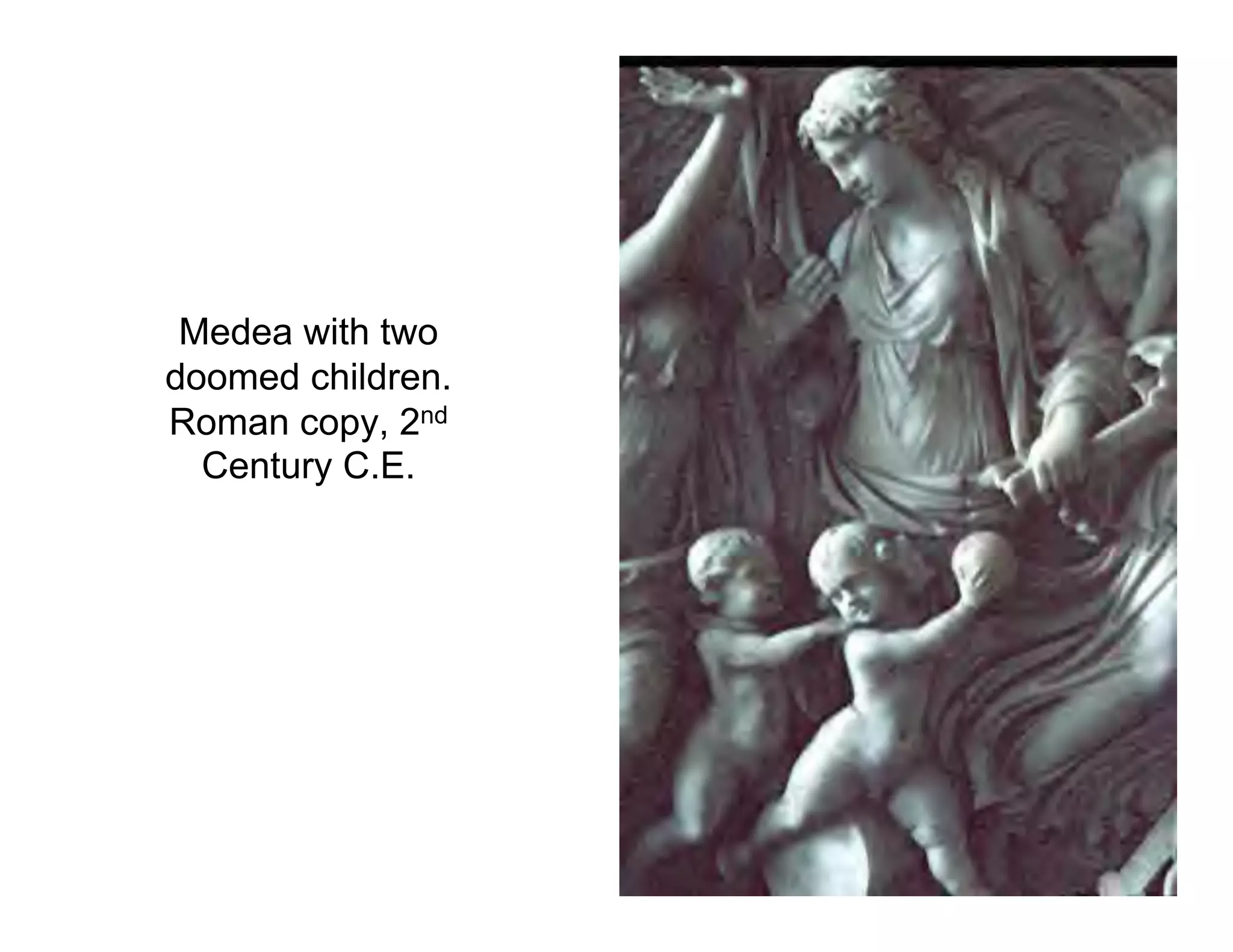
Medea with two
doomed children.
Roman copy, 2nd
  Century C.E.
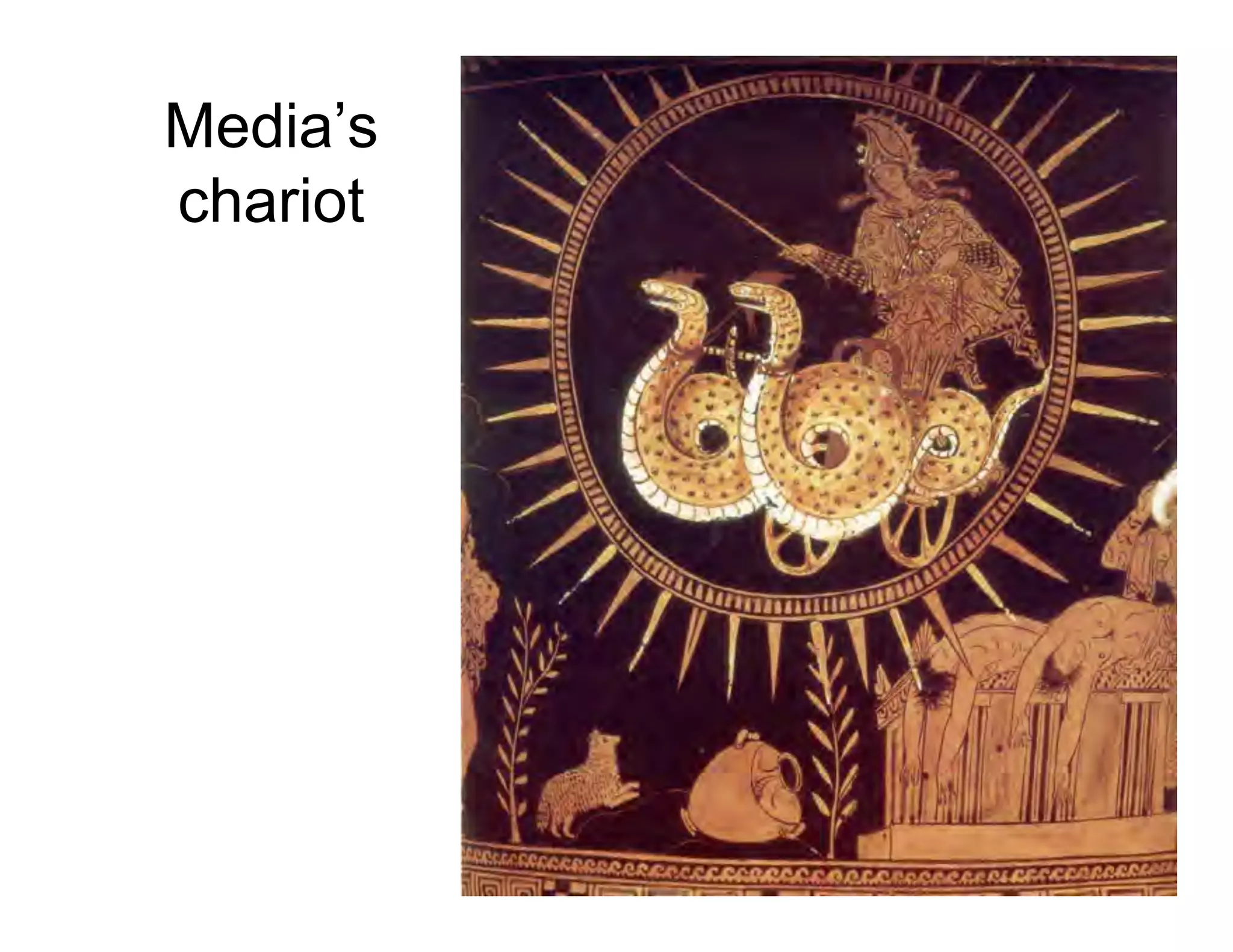
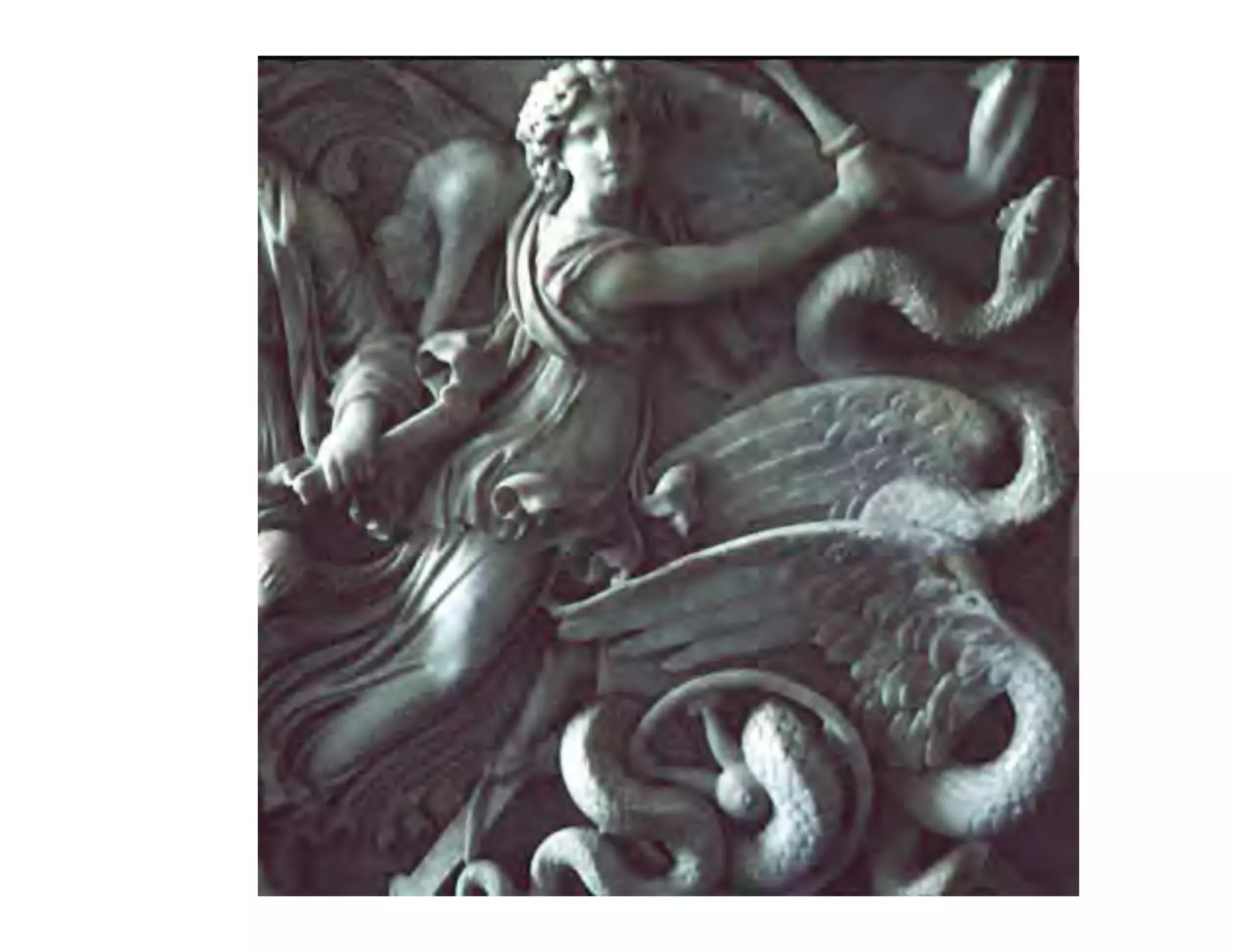
Media’s
chariot
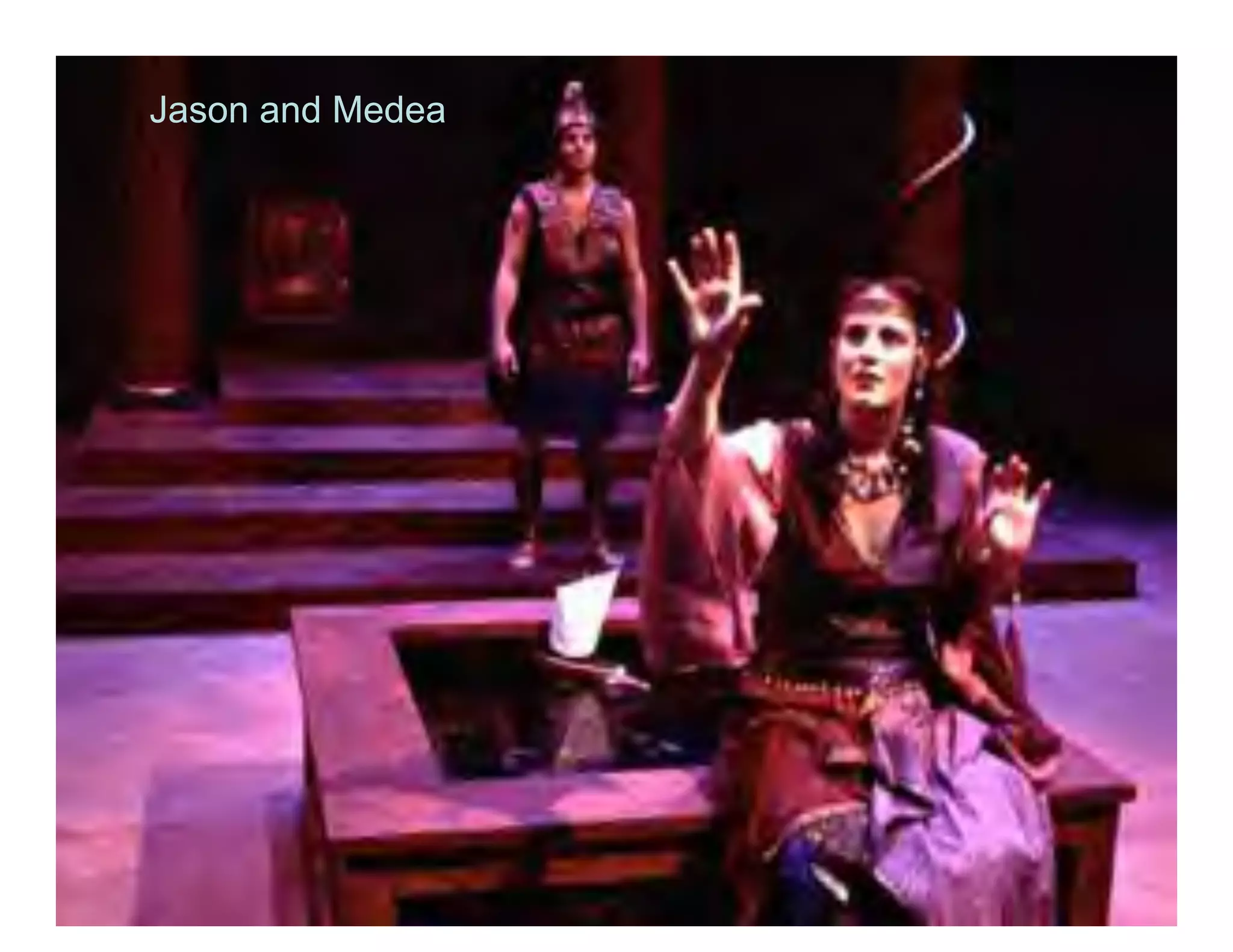
Jason and Medea
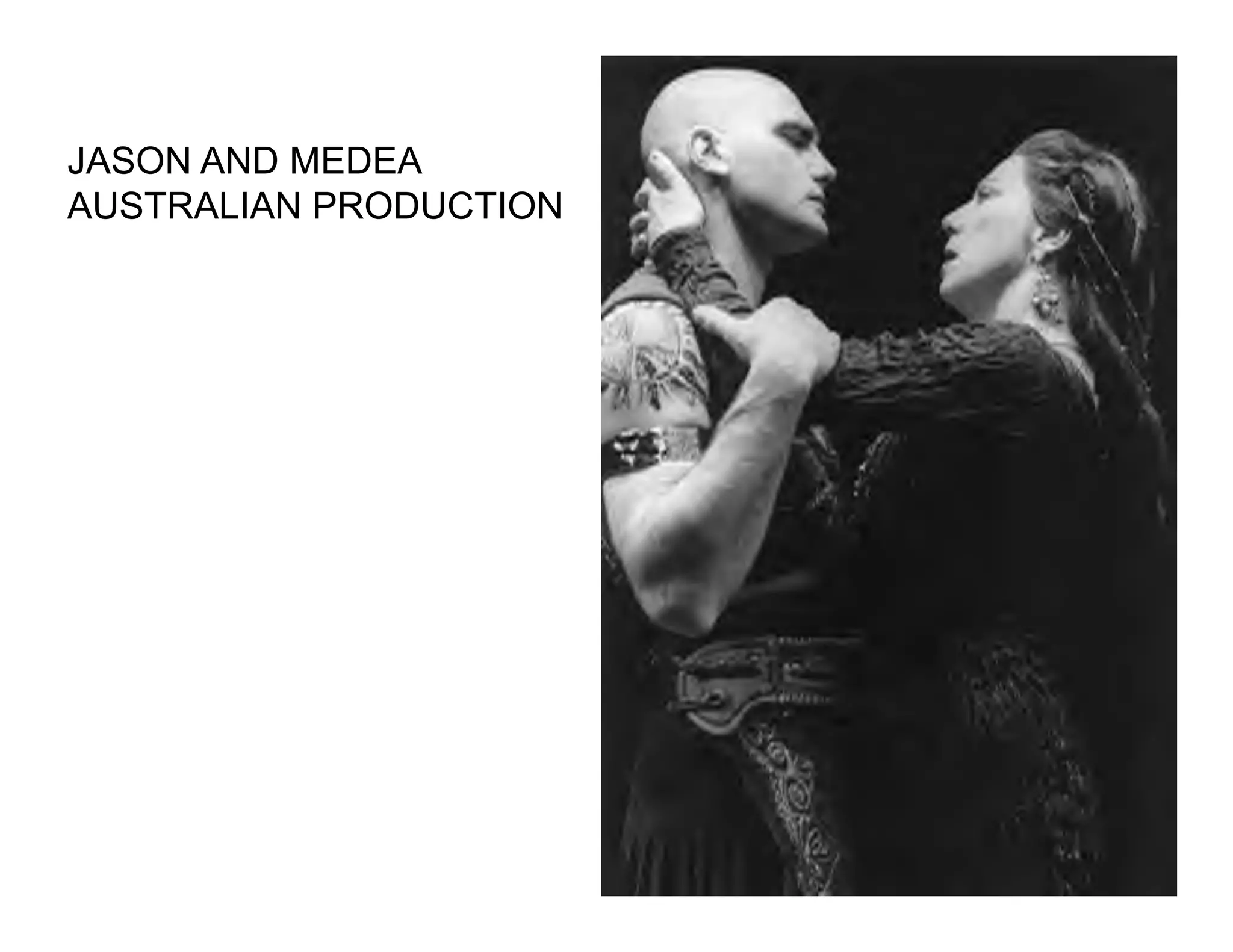
JASON AND MEDEA
AUSTRALIAN PRODUCTION
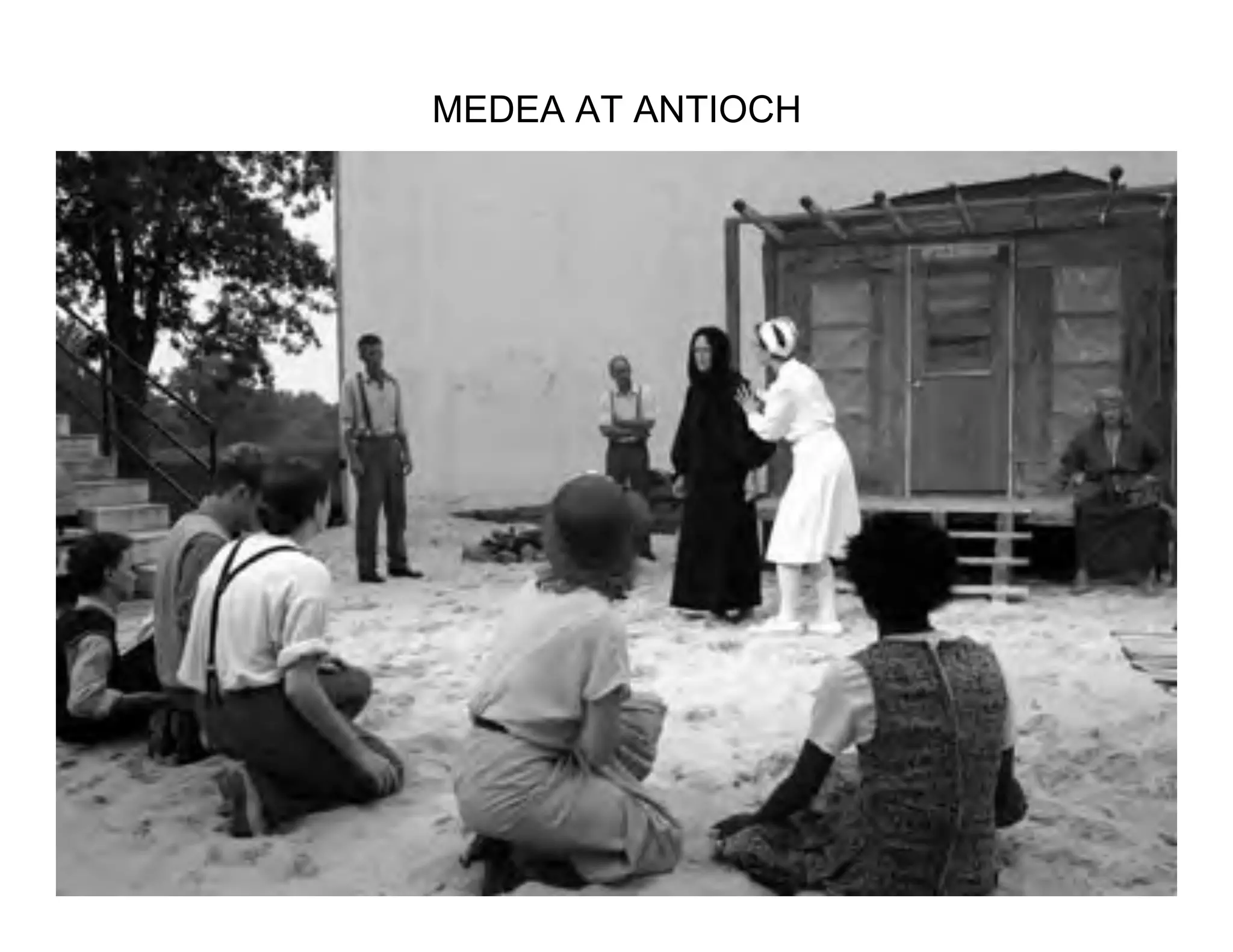
MEDEA AT ANTIOCH
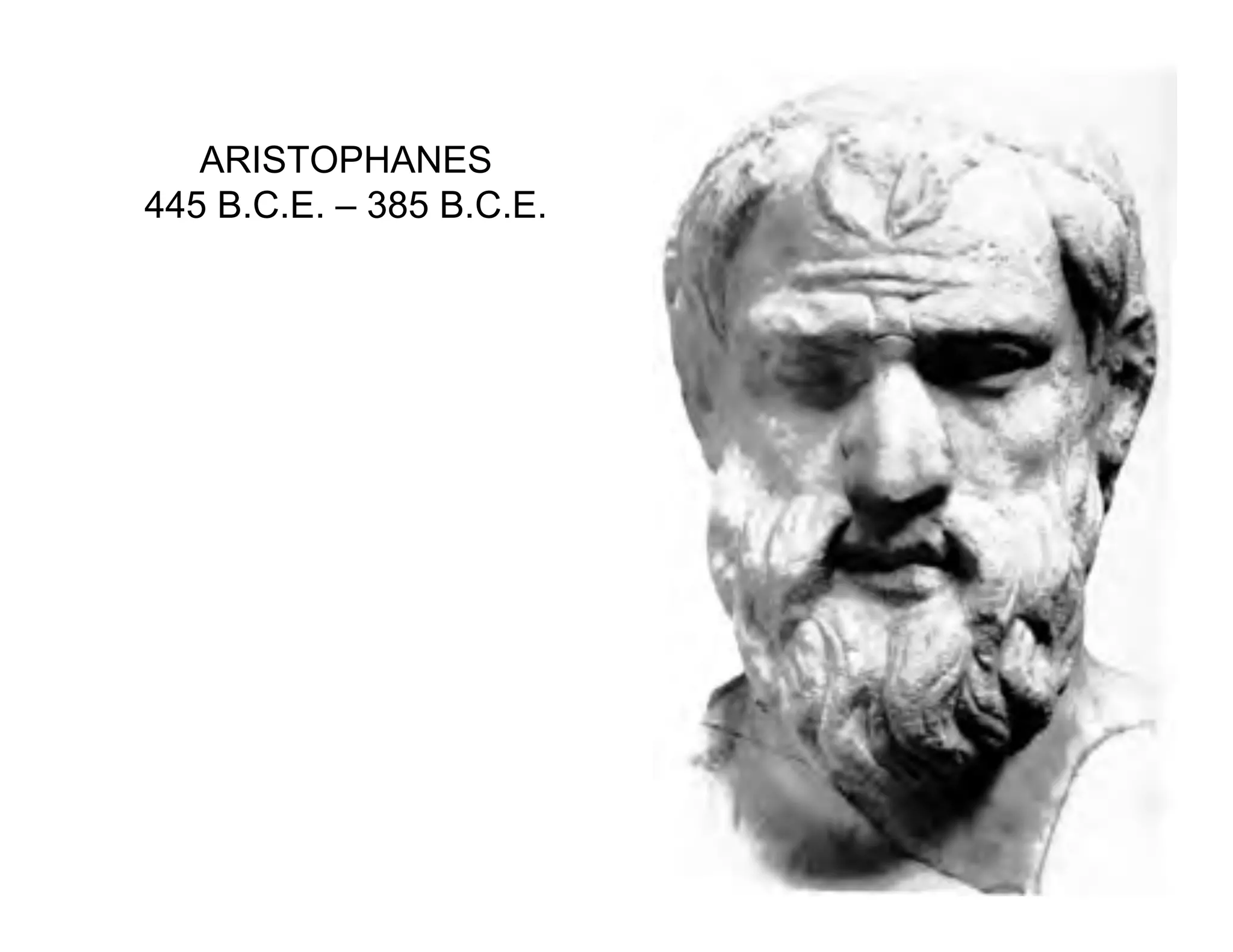
ARISTOPHANES
445 B.C.E. – 385 B.C.E.
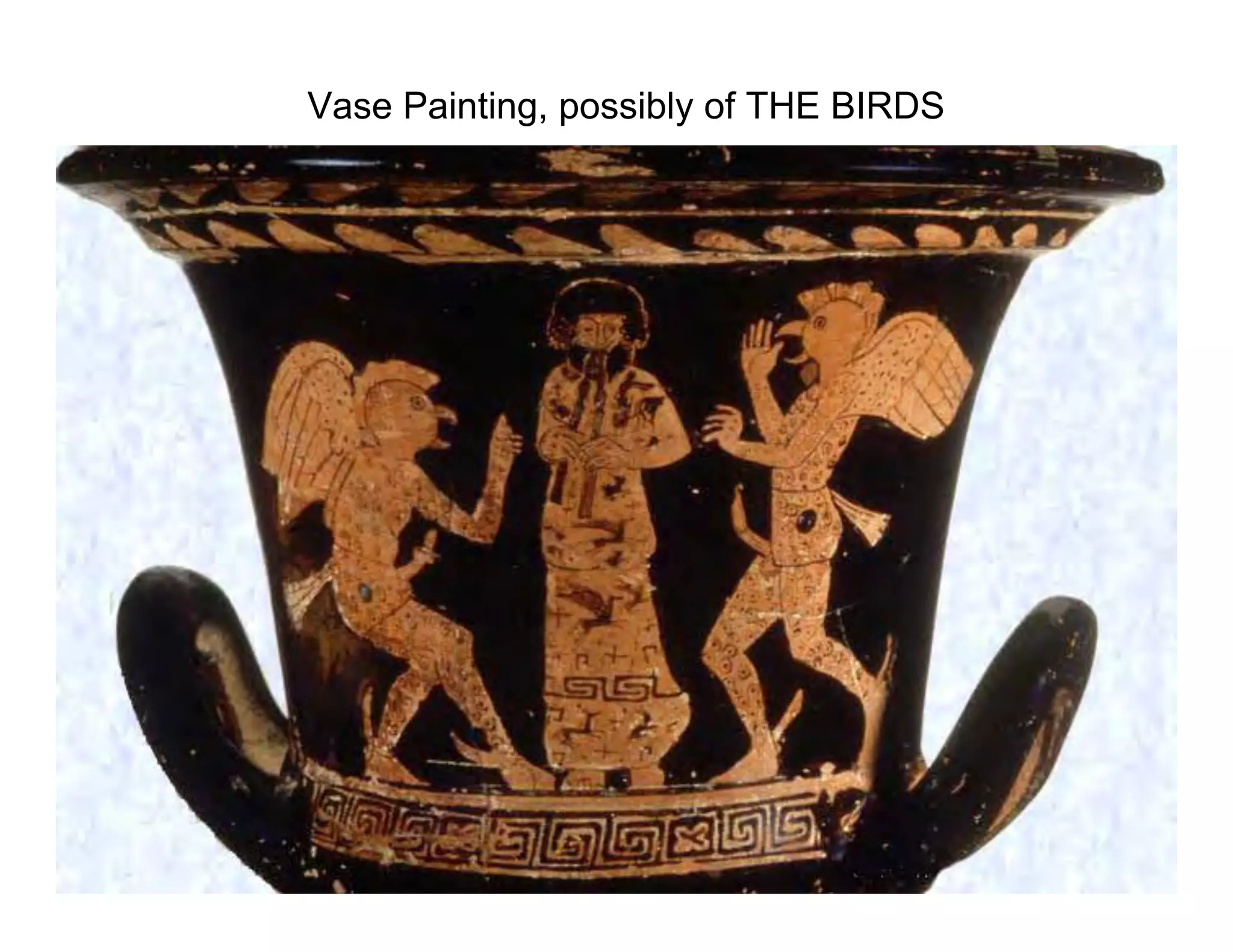
Vase Painting, possibly of THE BIRDS
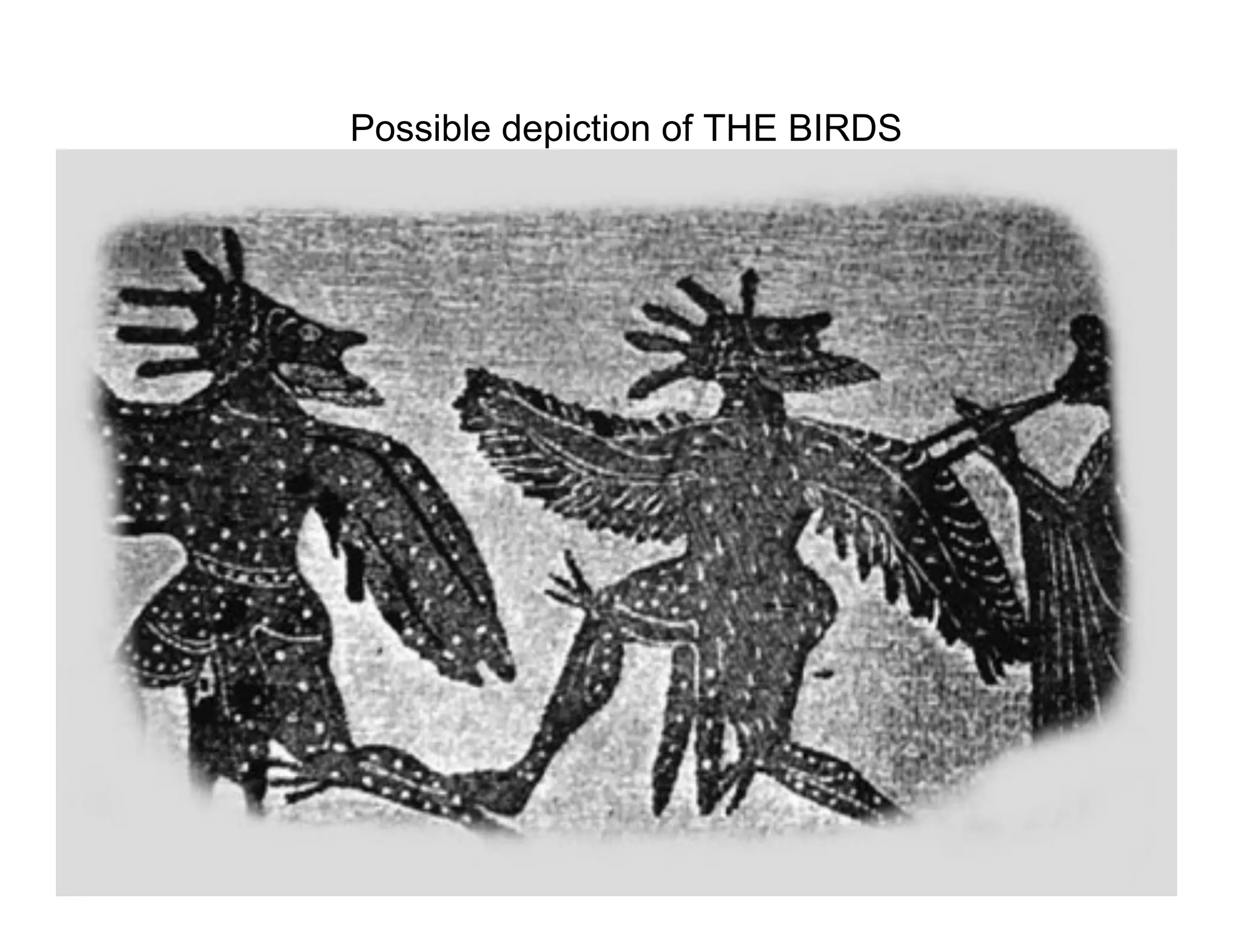
Possible depiction of THE BIRDS
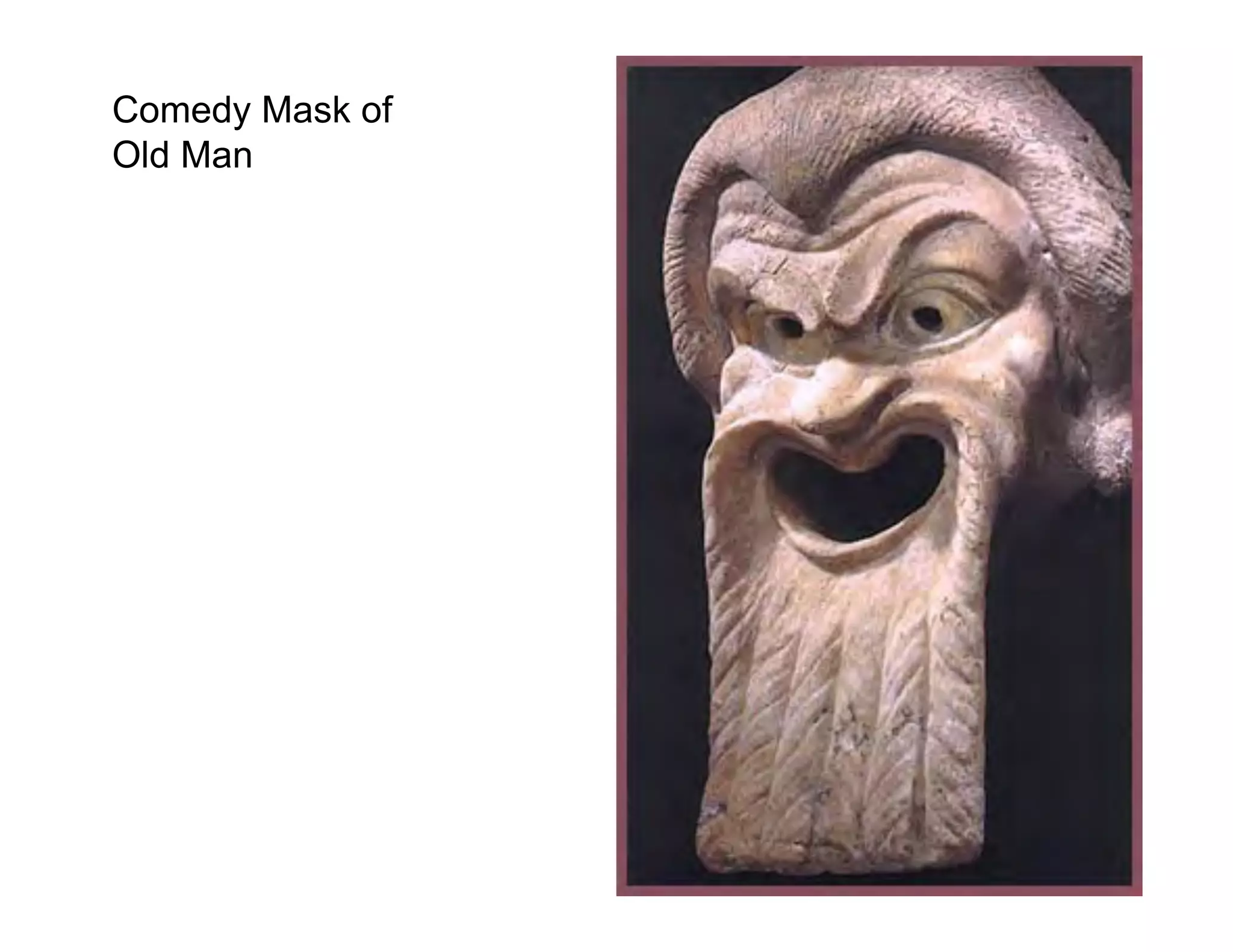
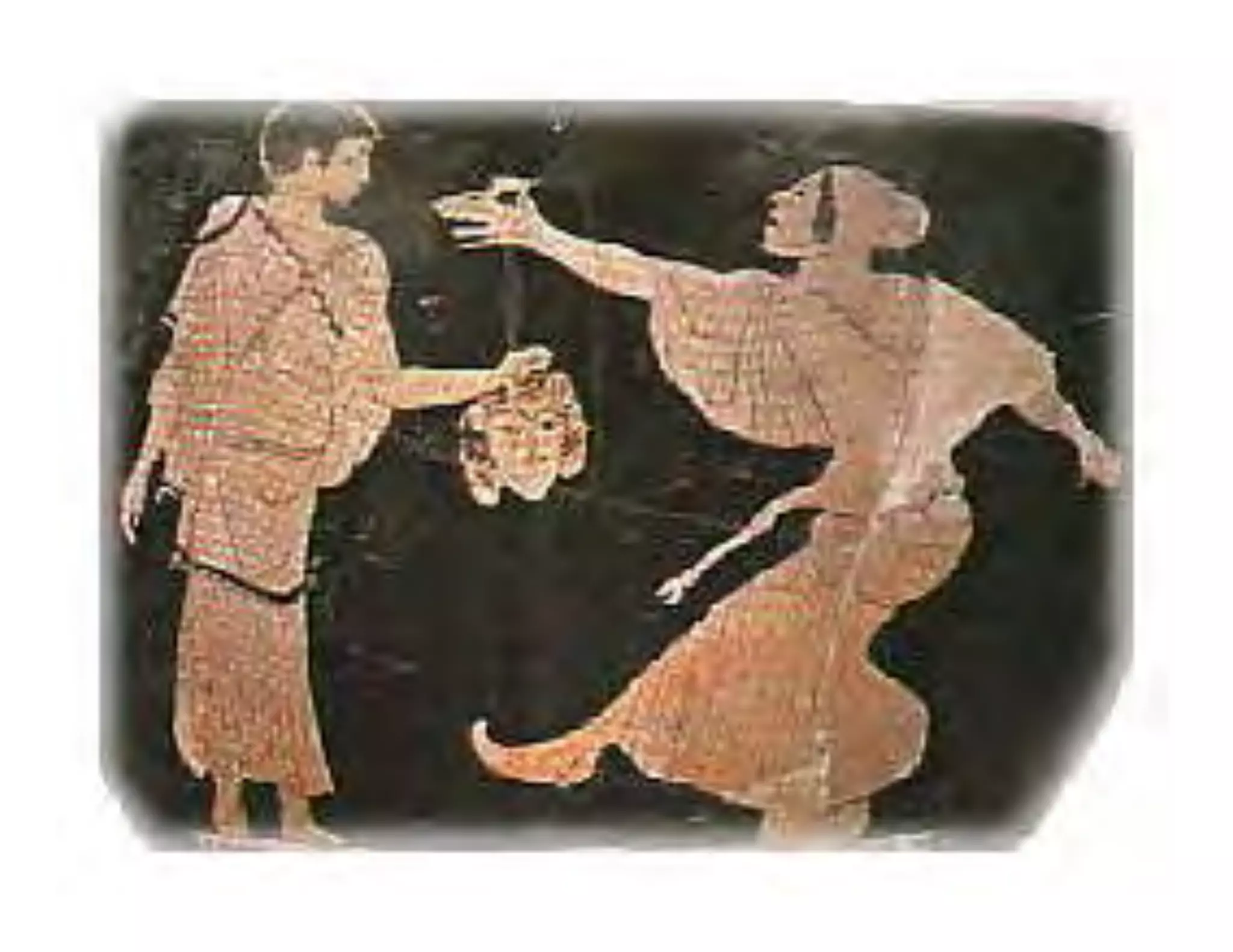
Comedy Mask of
Old Man
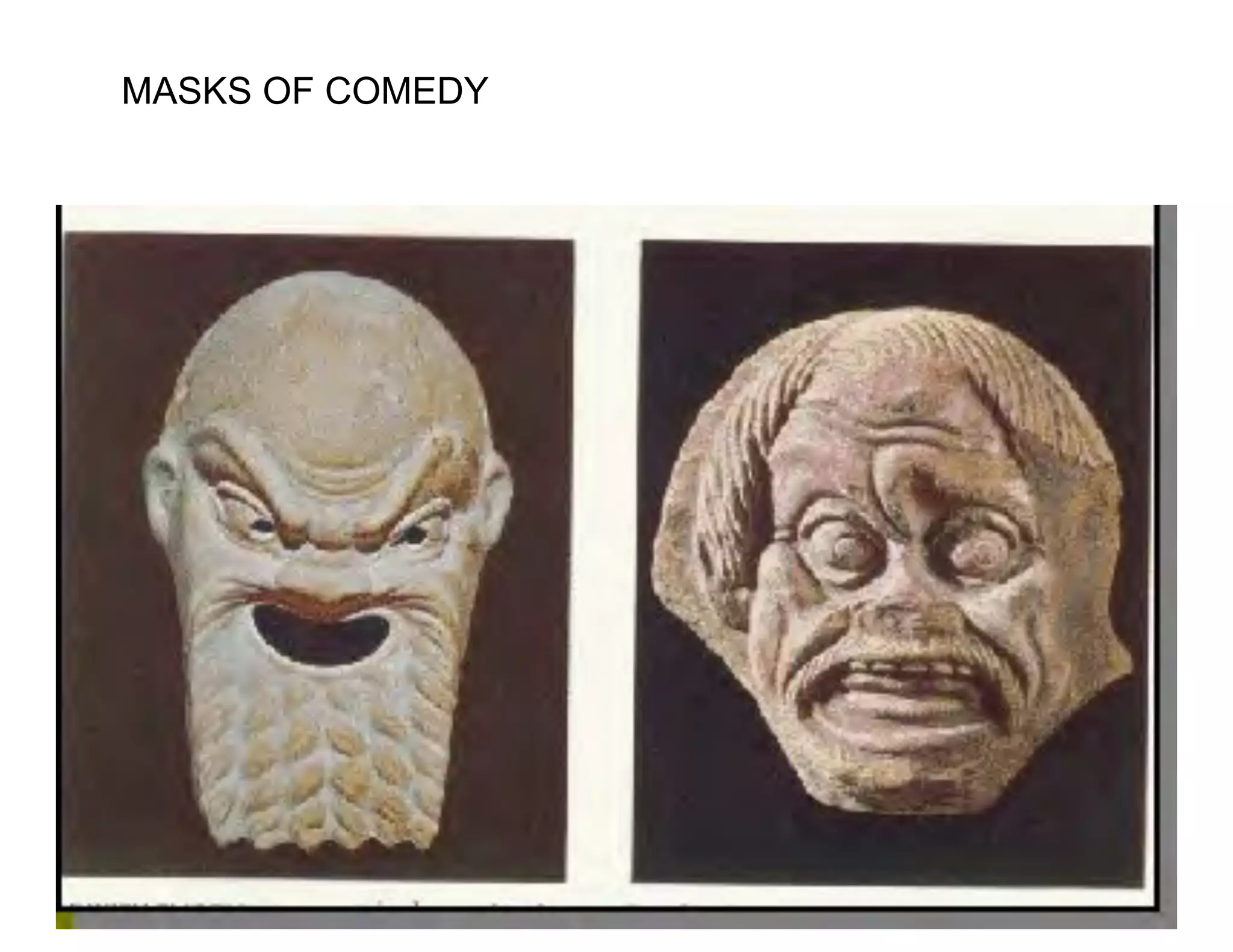
MASKS OF COMEDY
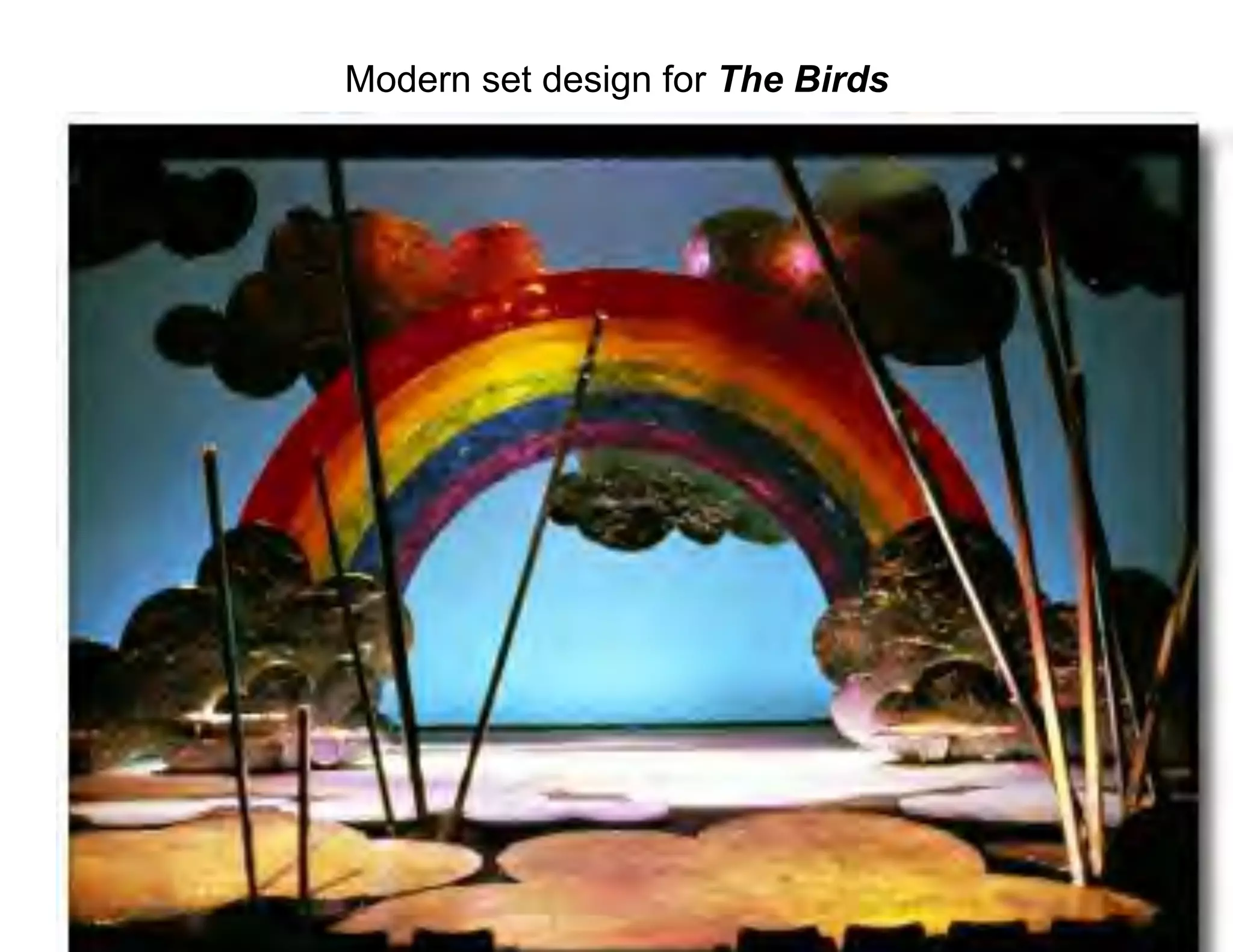
Modern set design for The Birds
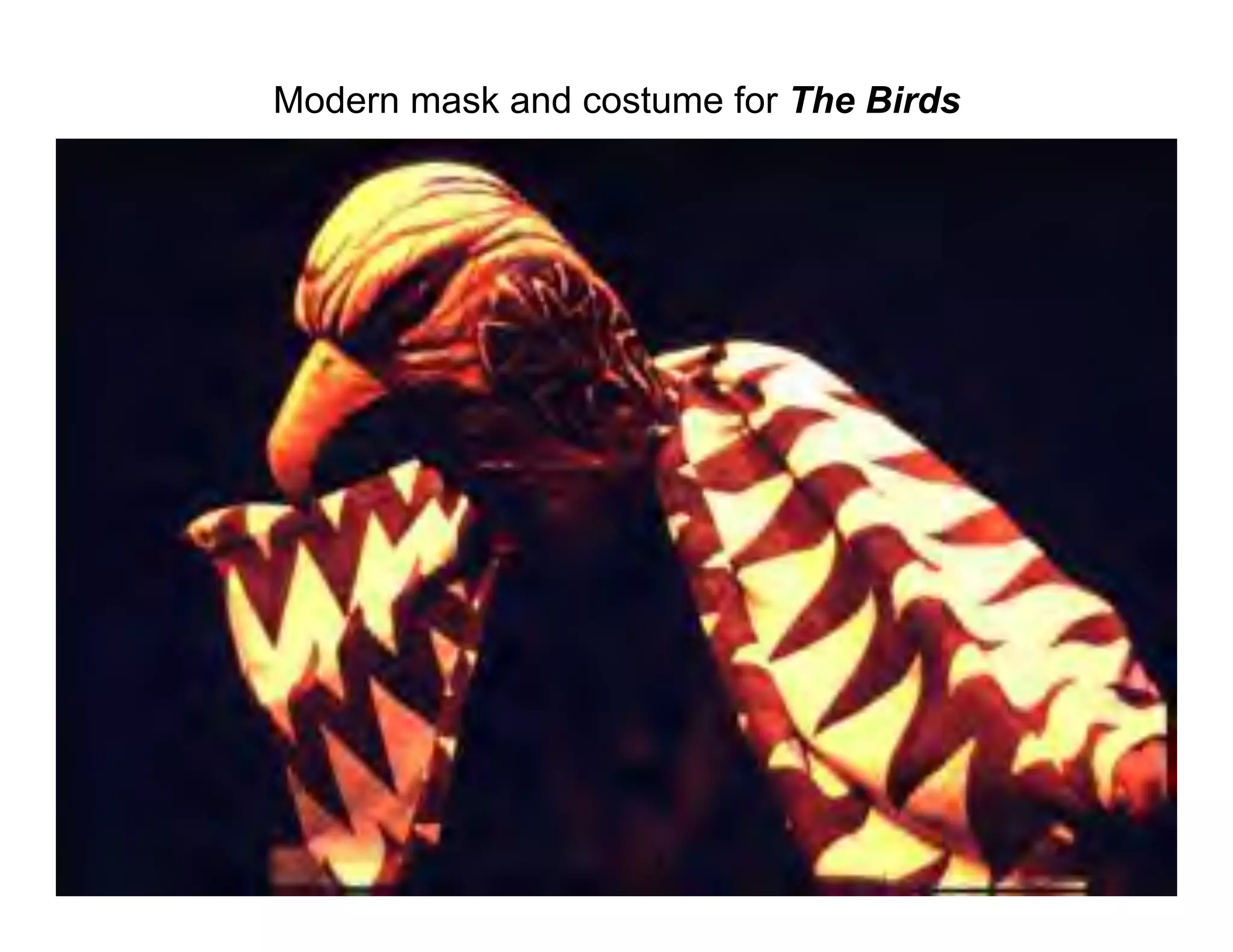
Modern mask and costume for The Birds
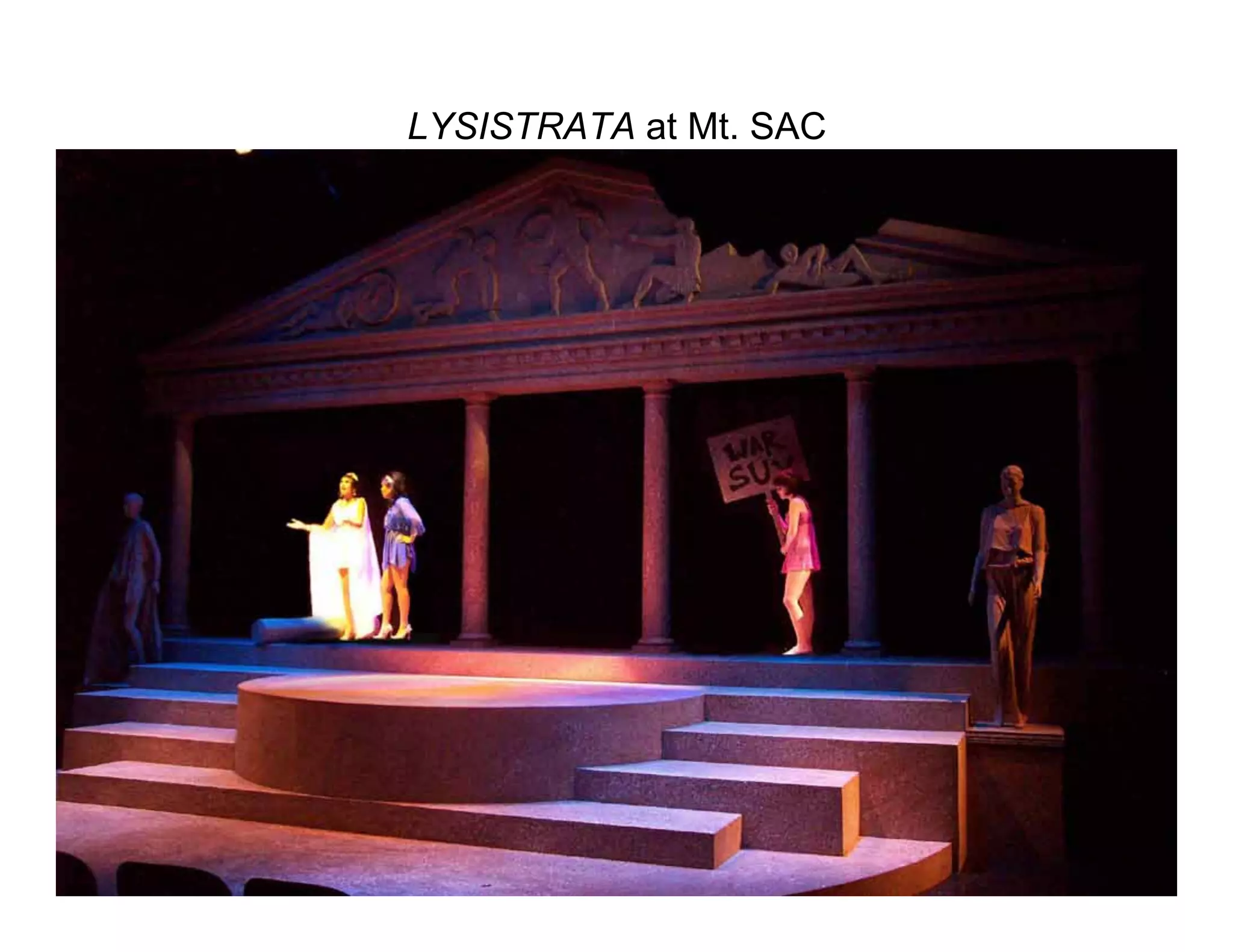
LYSISTRATA at Mt. SAC
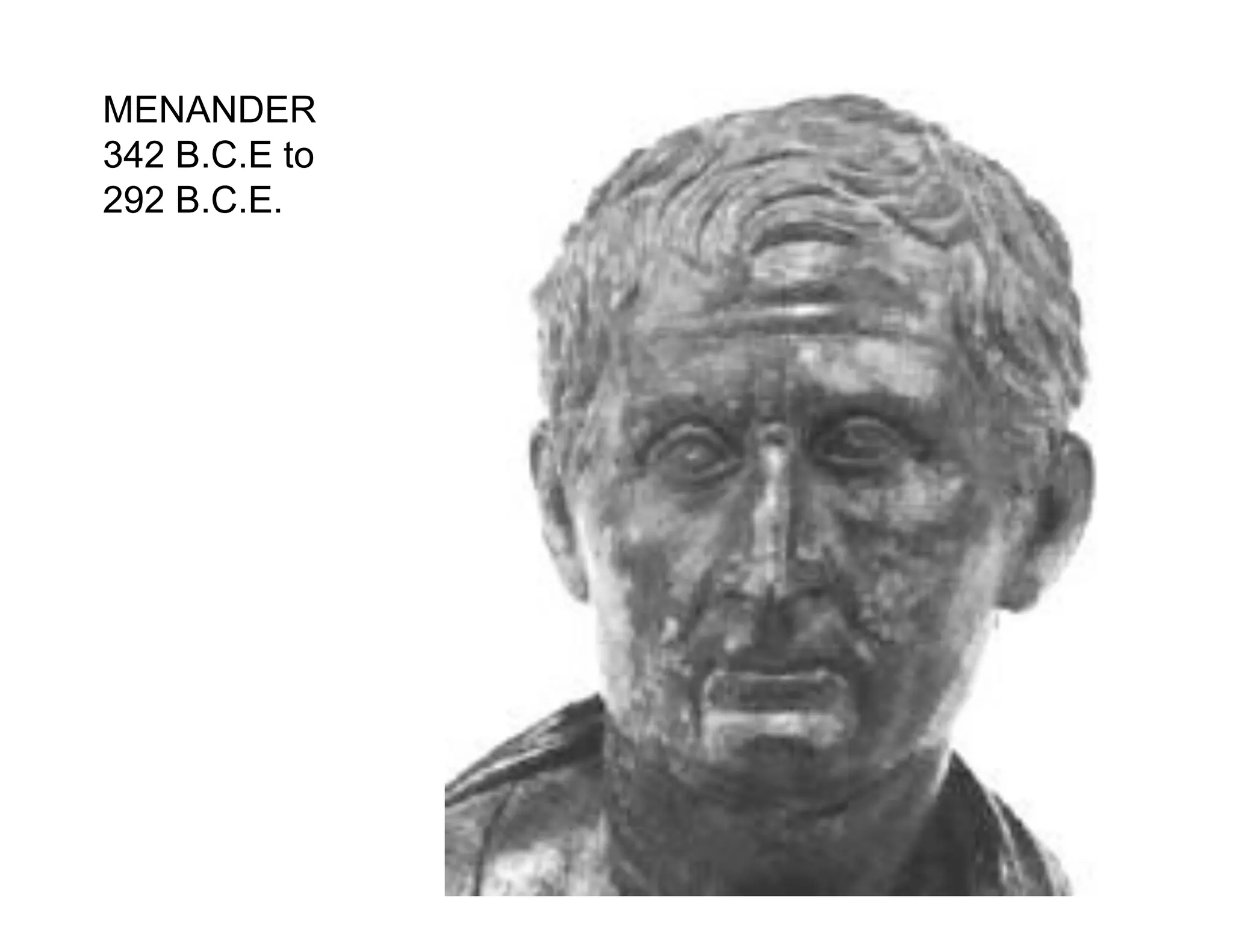
MENANDER
342 B.C.E to
292 B.C.E.
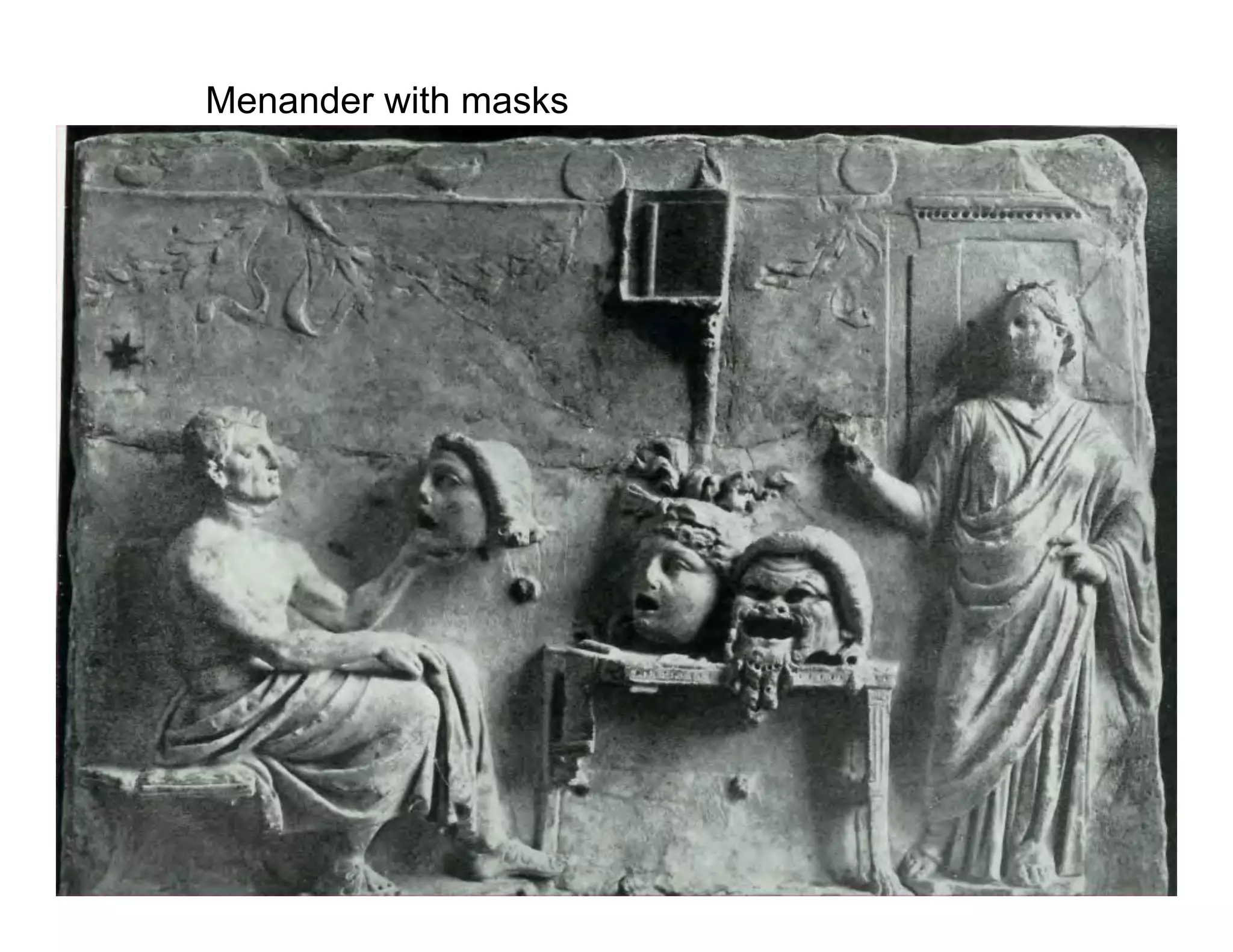
Menander with masks


           Menander and masks
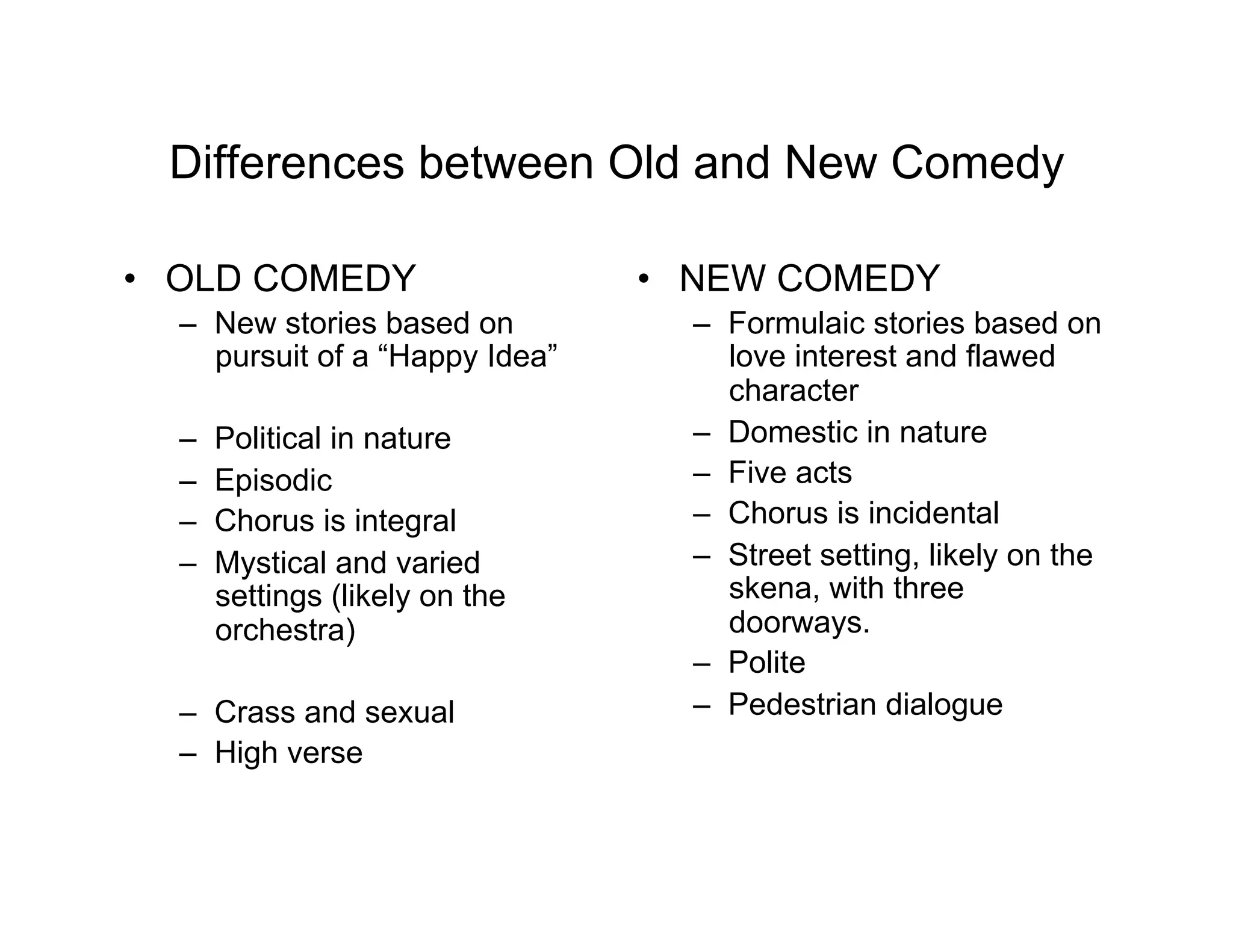
Differences between Old and New Comedy

•! OLD COMEDY                    •! NEW COMEDY
  –! New stories based on          –! Formulaic stories based on
     pursuit of a “Happy Idea”        love interest and flawed
                                      character
  –!   Political in nature         –! Domestic in nature
  –!   Episodic                    –! Five acts
  –!   Chorus is integral          –! Chorus is incidental
  –!   Mystical and varied         –! Street setting, likely on the
       settings (likely on the        skena, with three
       orchestra)                     doorways.
                                   –! Polite
  –! Crass and sexual              –! Pedestrian dialogue
  –! High verse
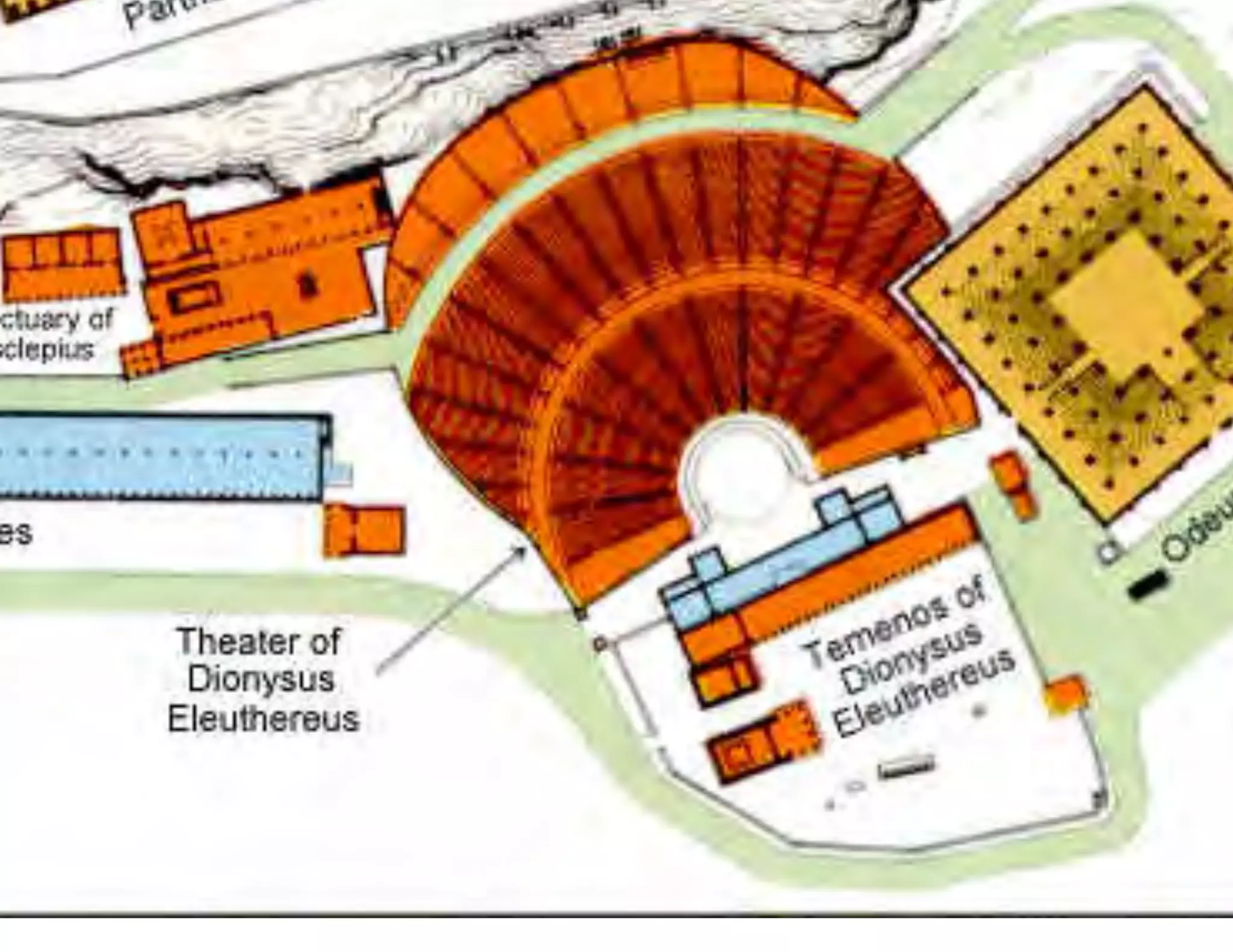
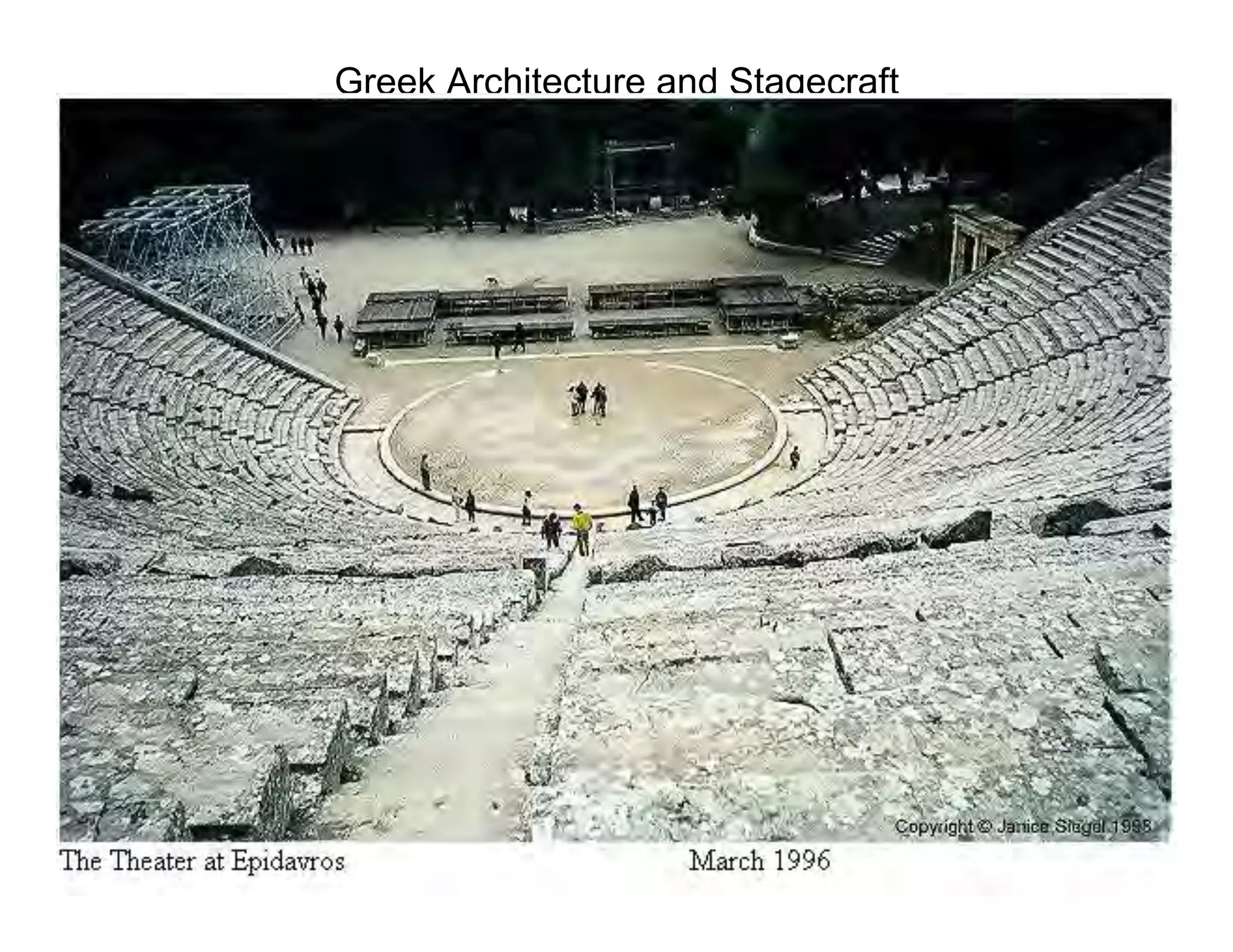
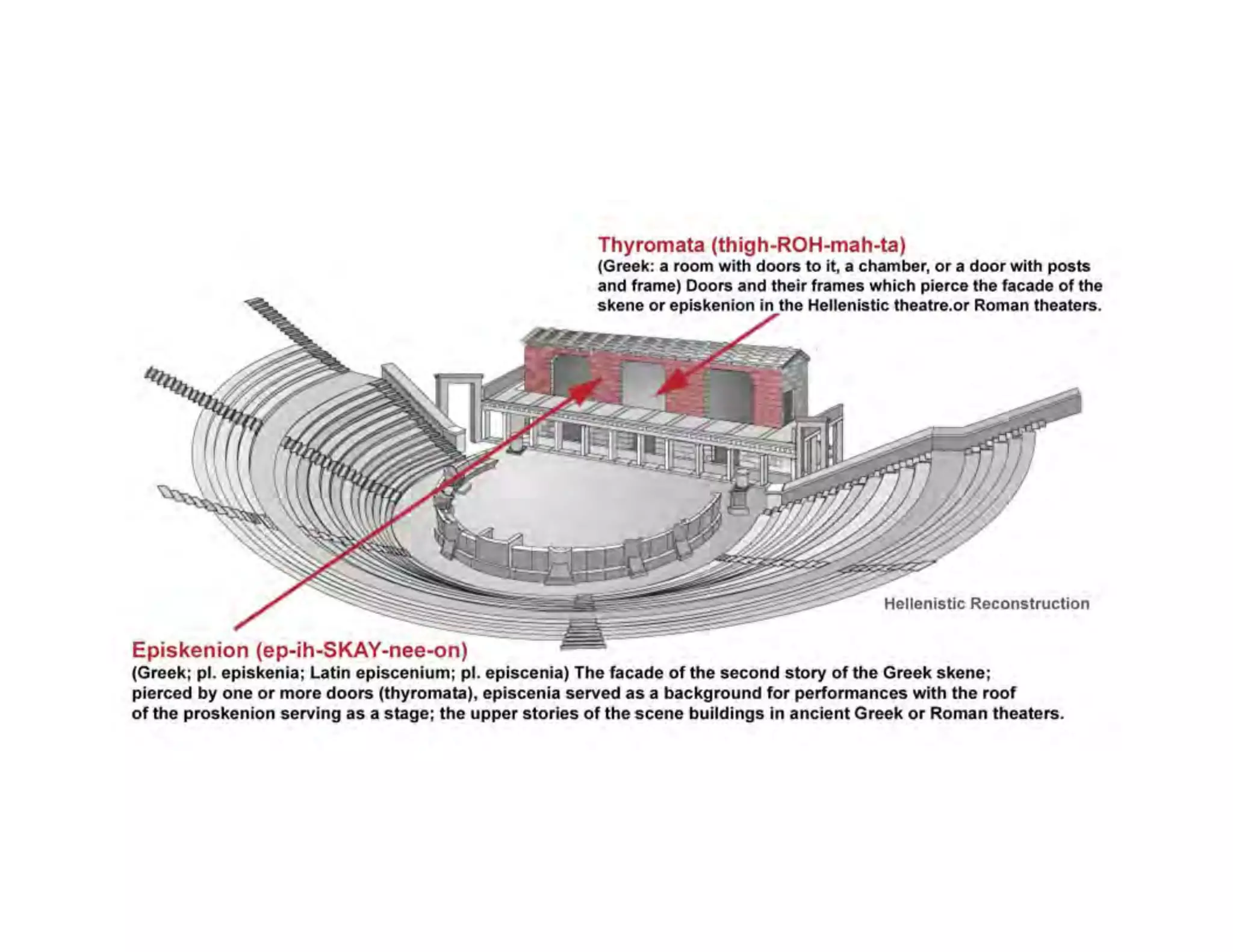
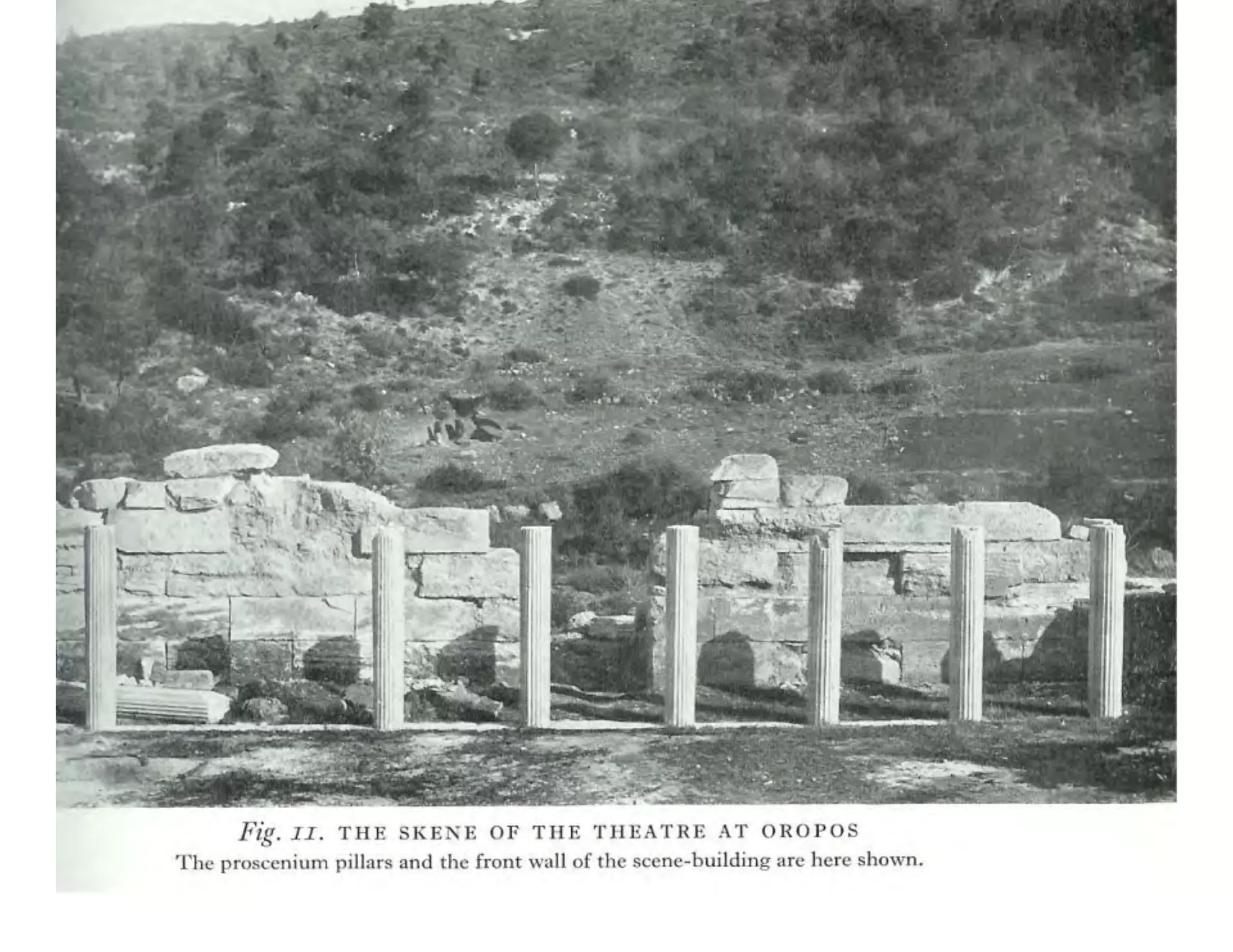
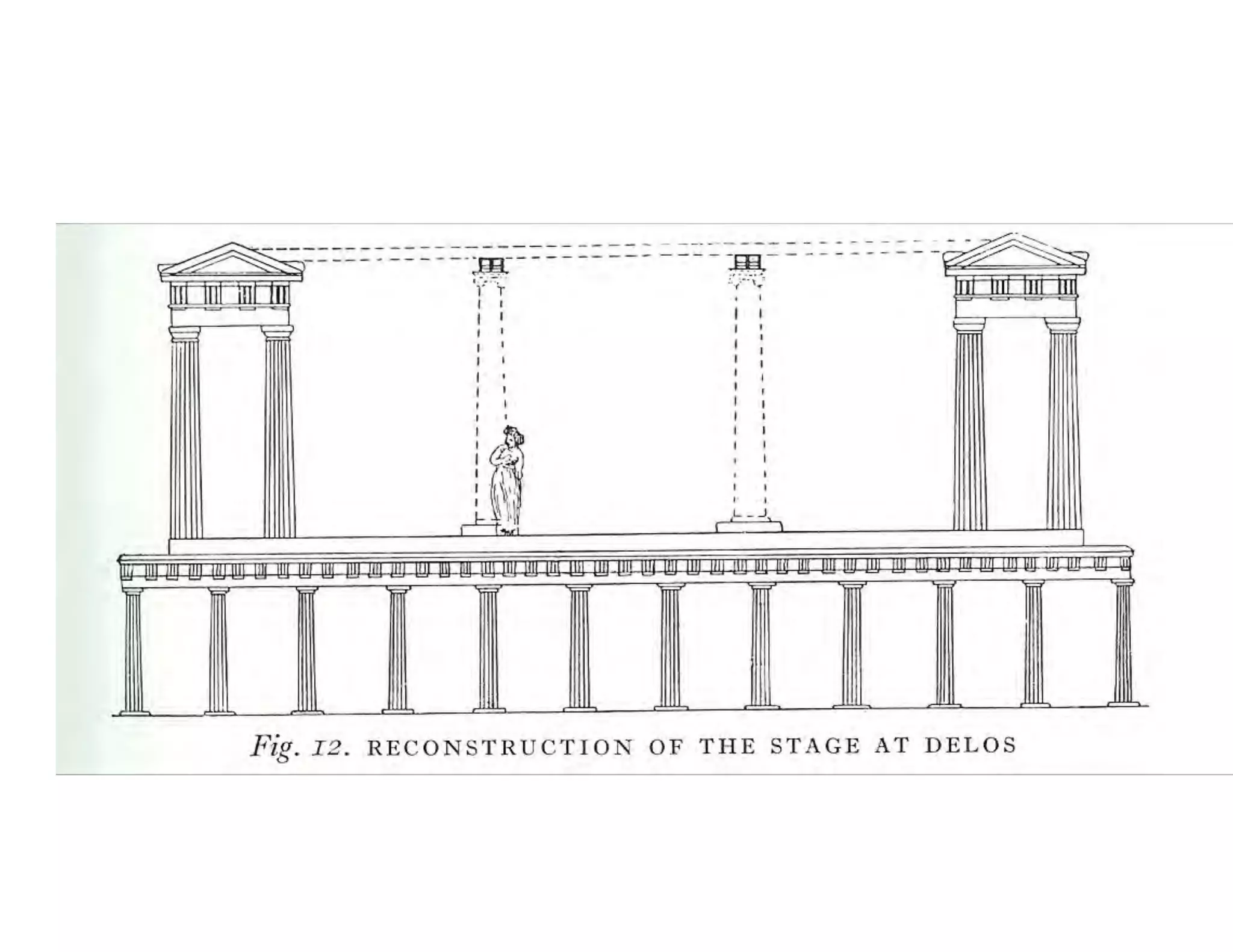
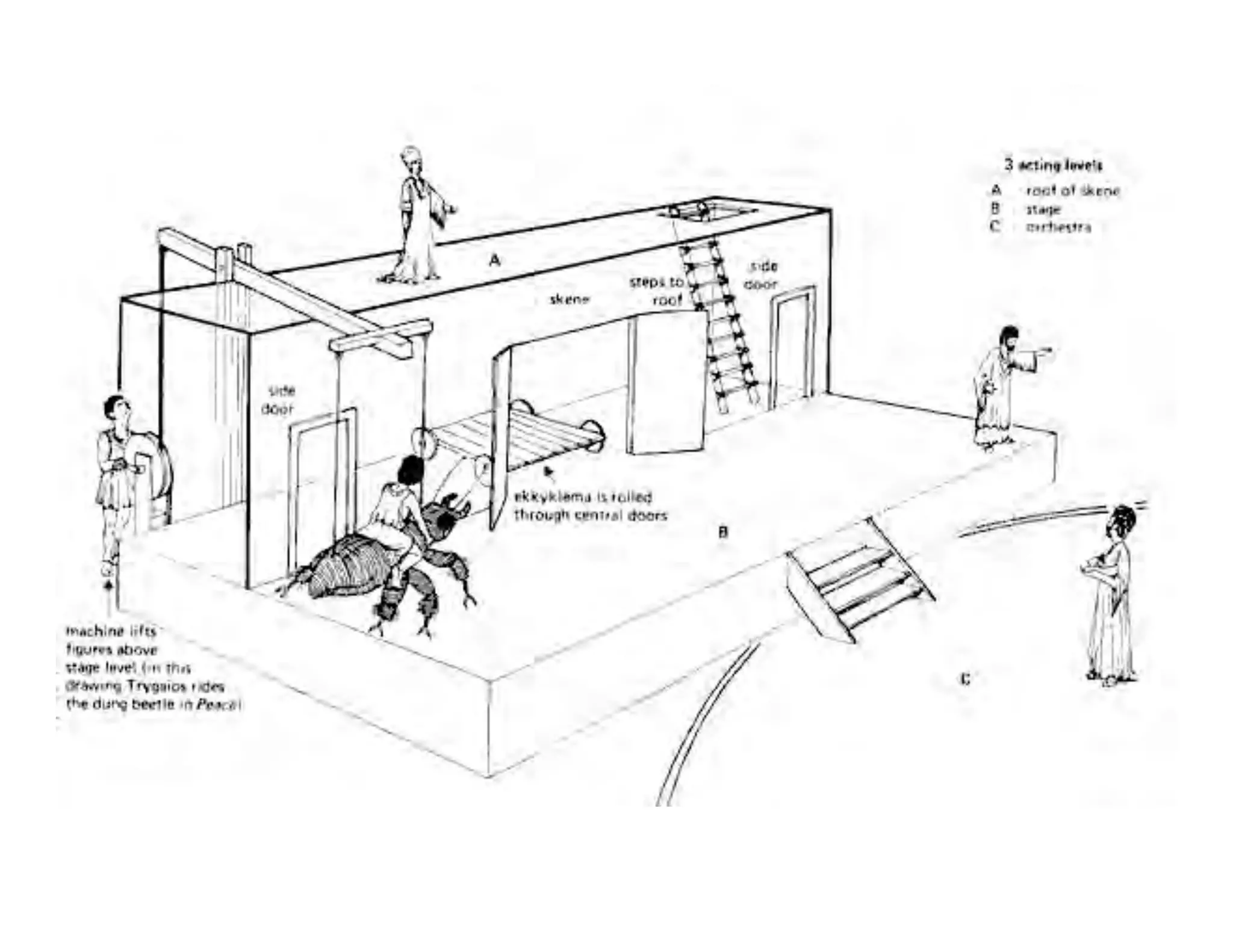
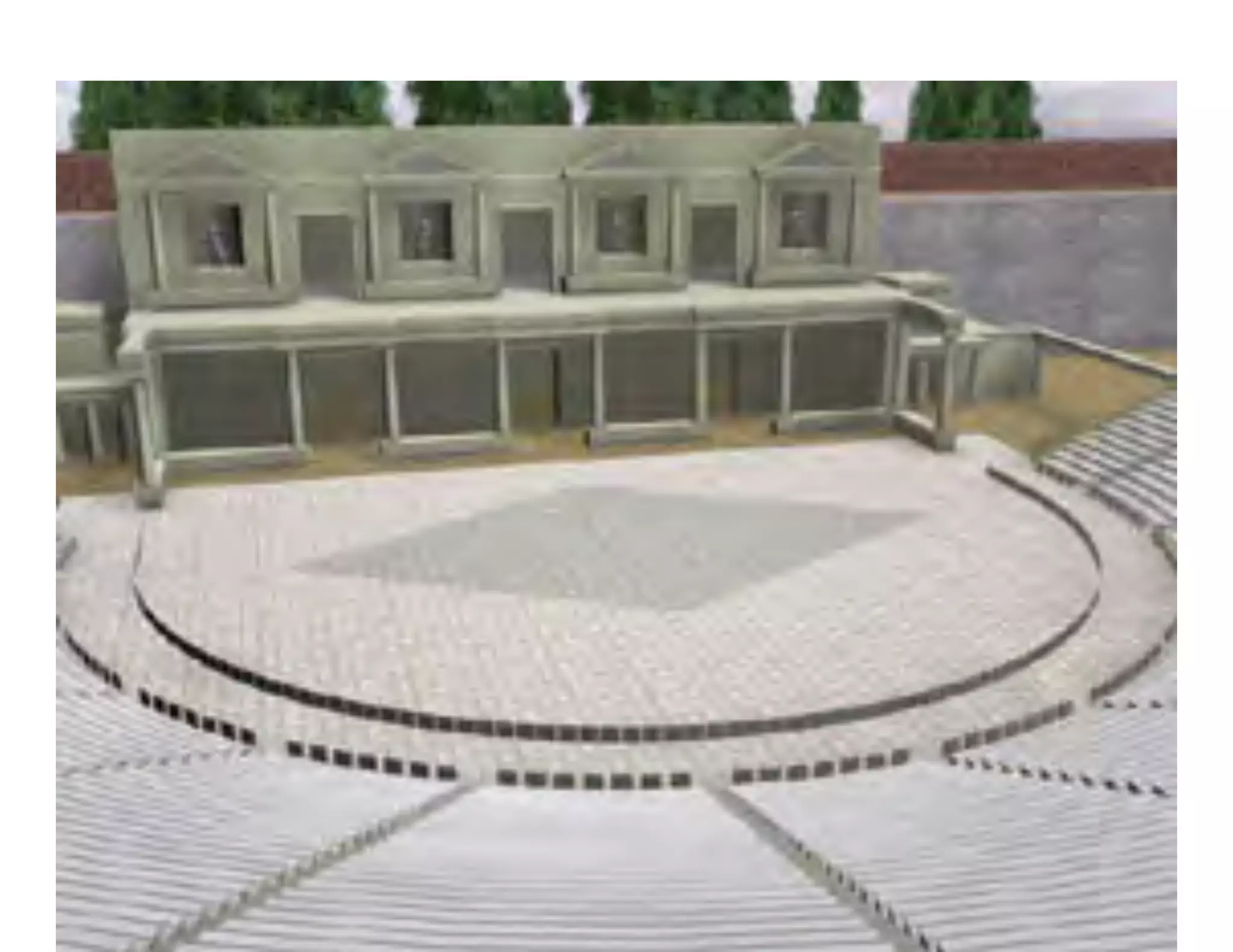
Greek Architecture and Stagecraft
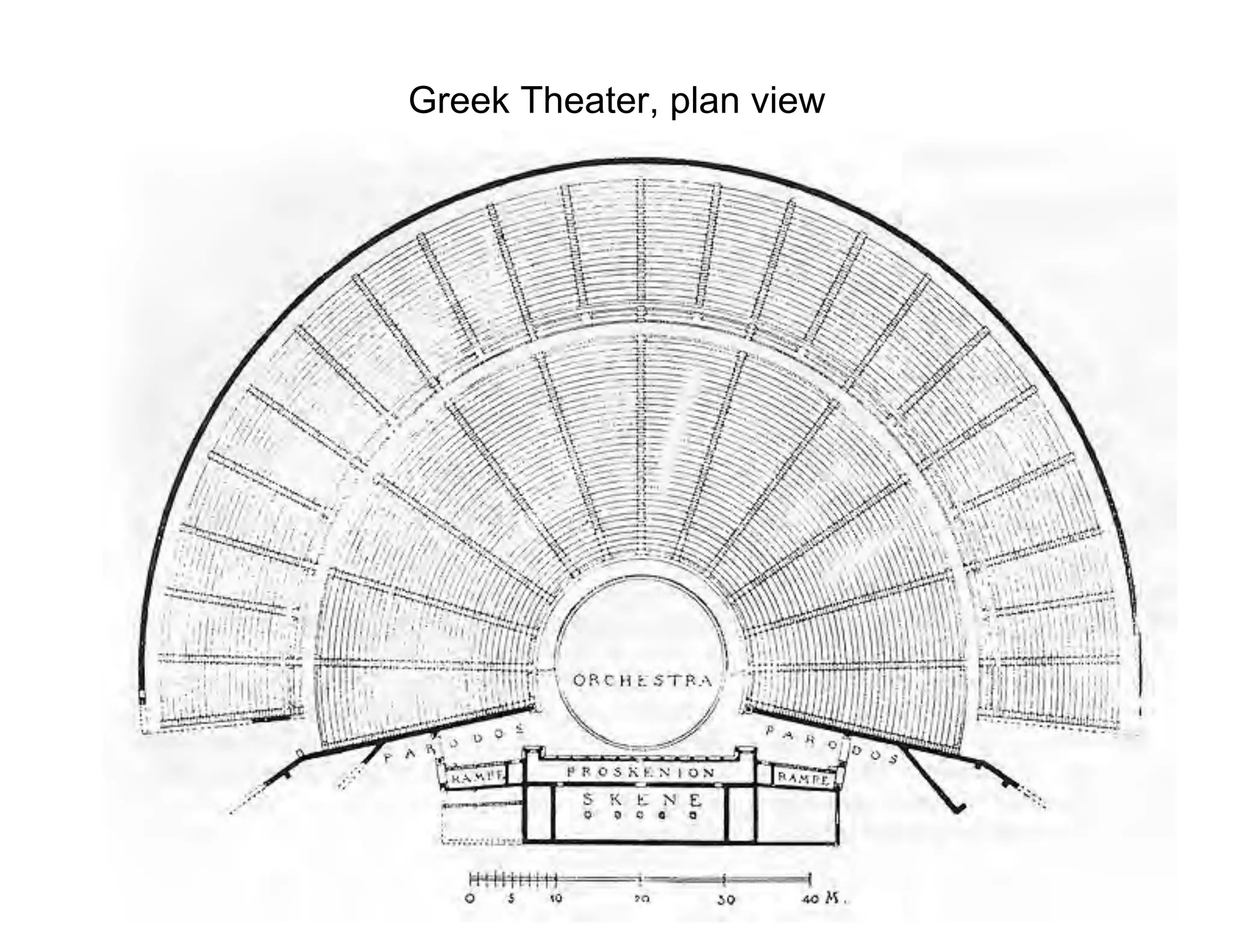
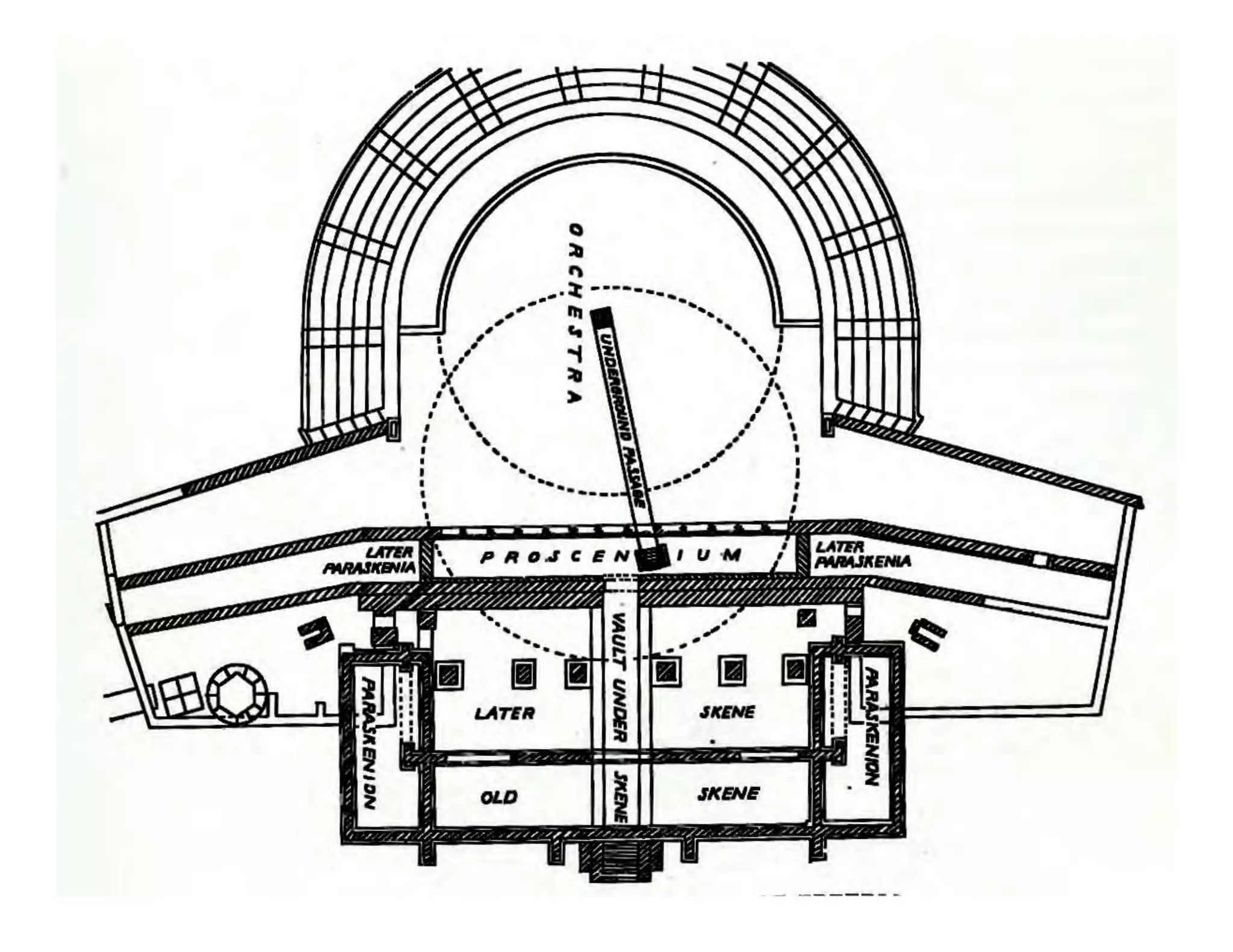
Greek Theater, plan view
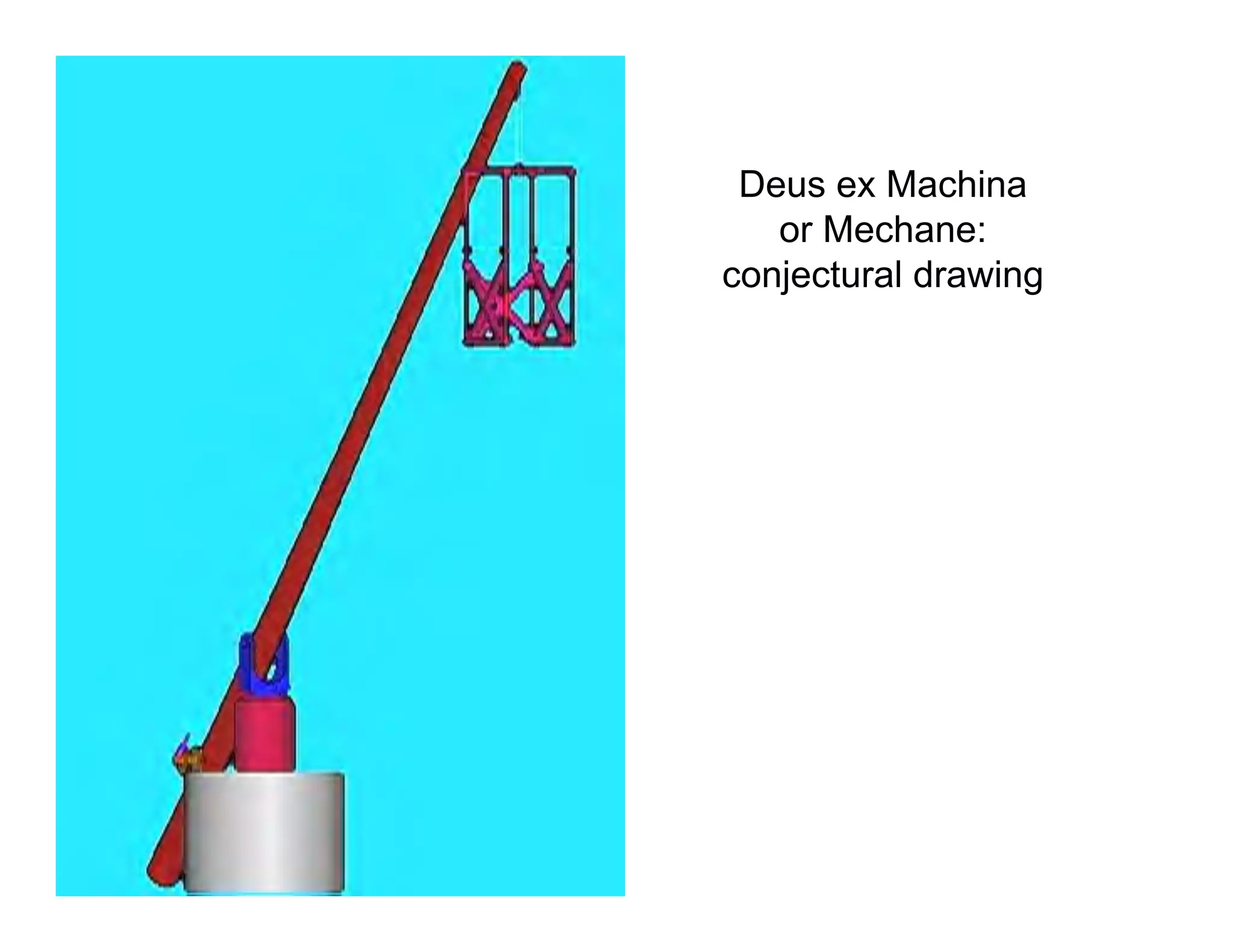
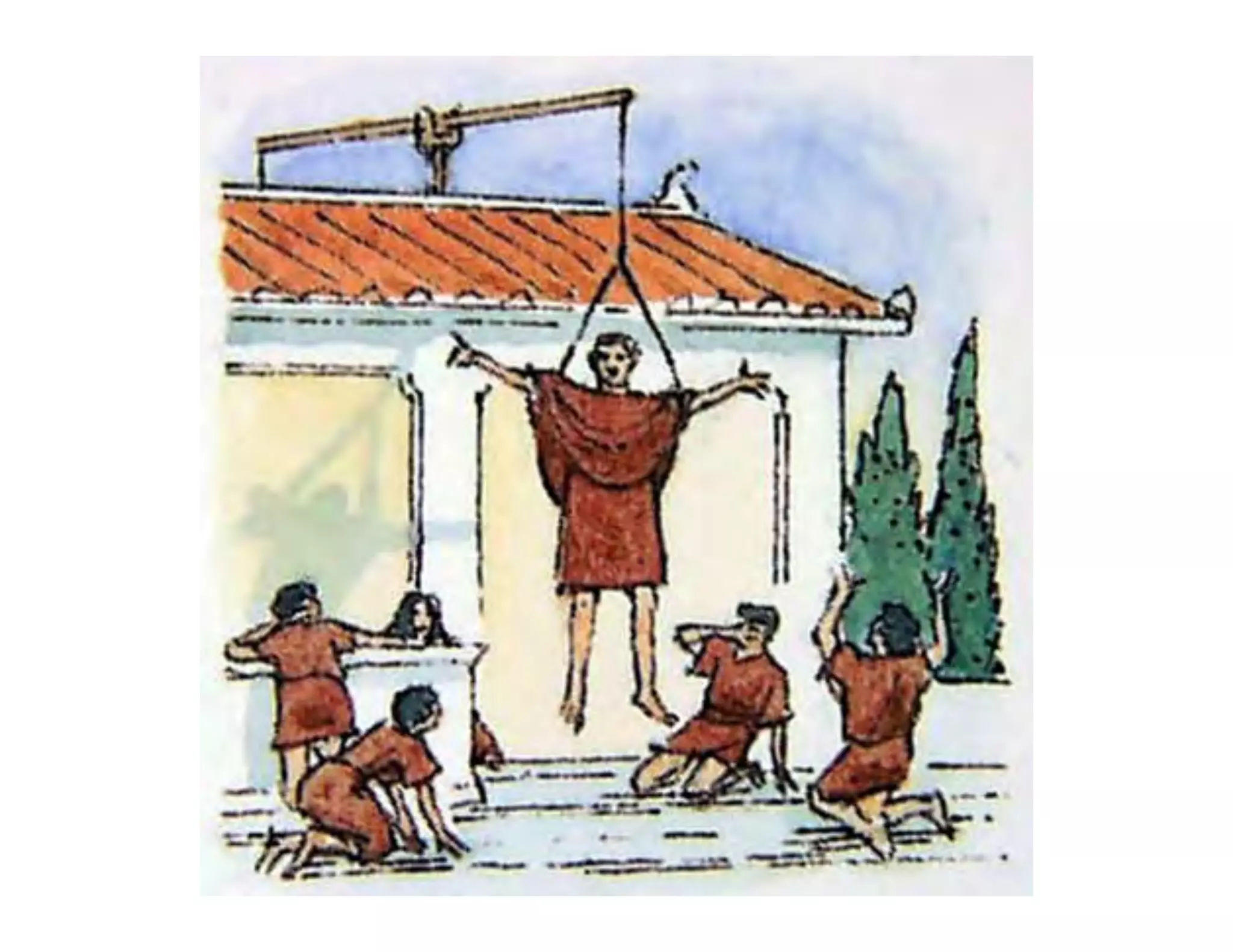
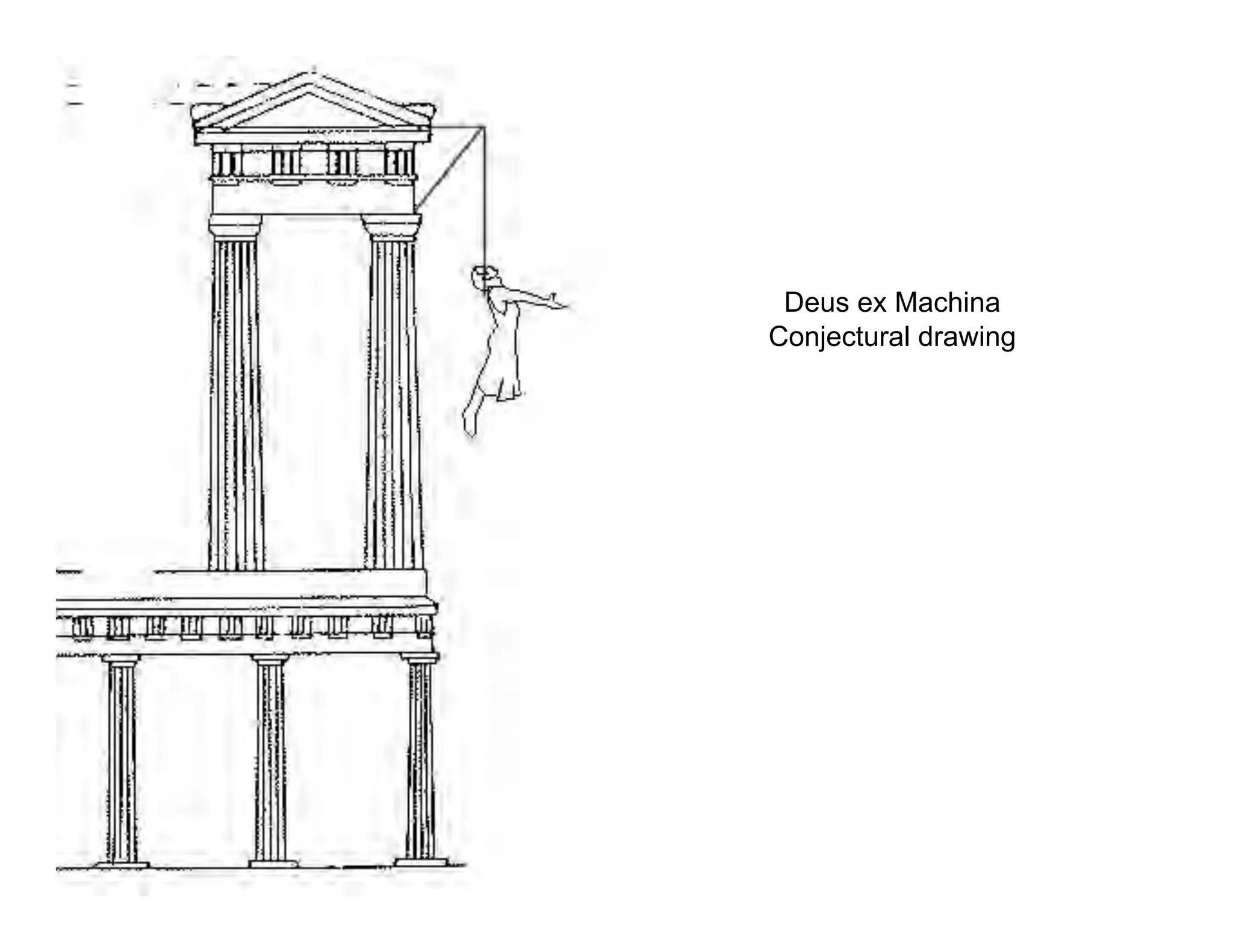
Deus ex Machina
   or Mechane:
conjectural drawing
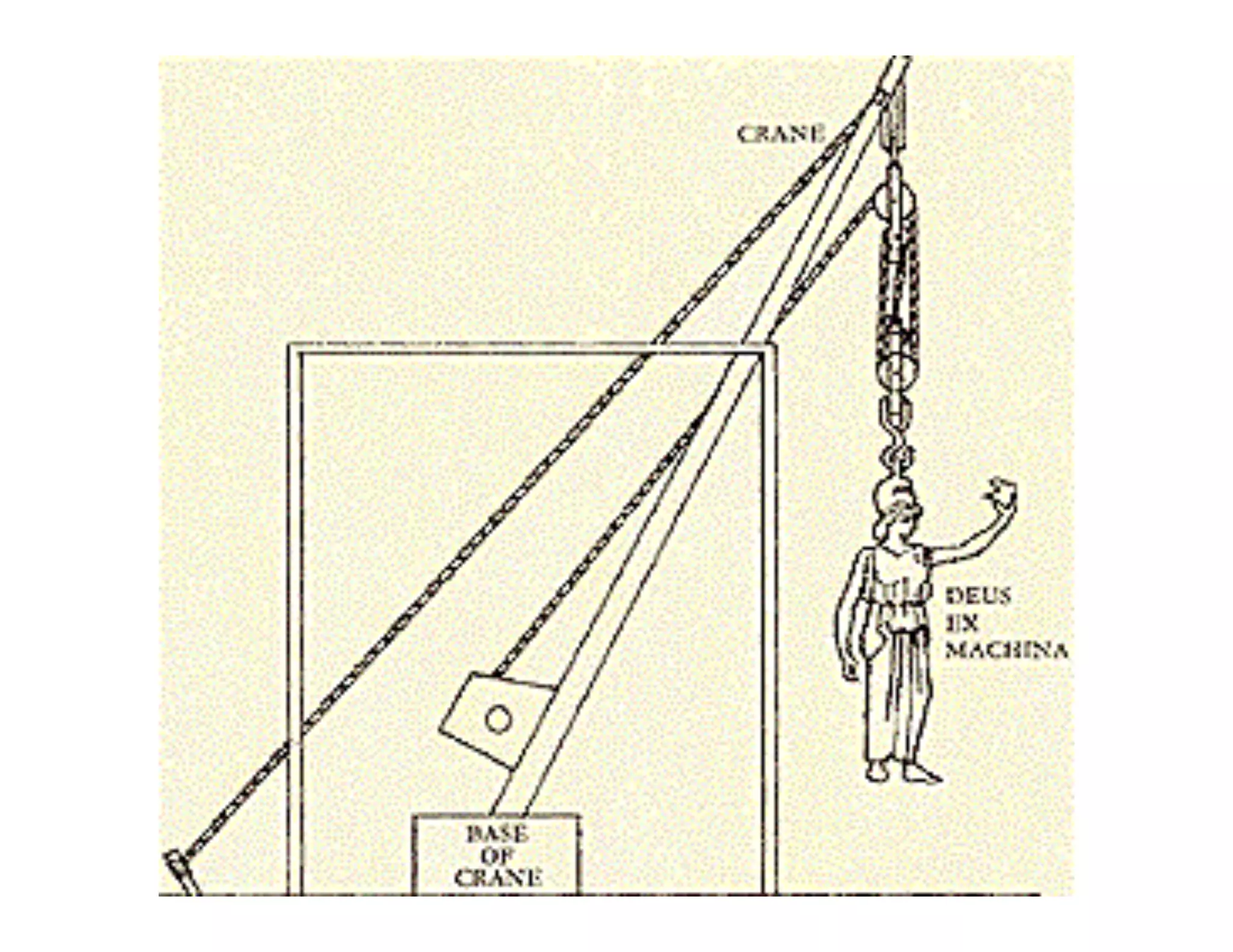
Deus ex Machina
Conjectural drawing
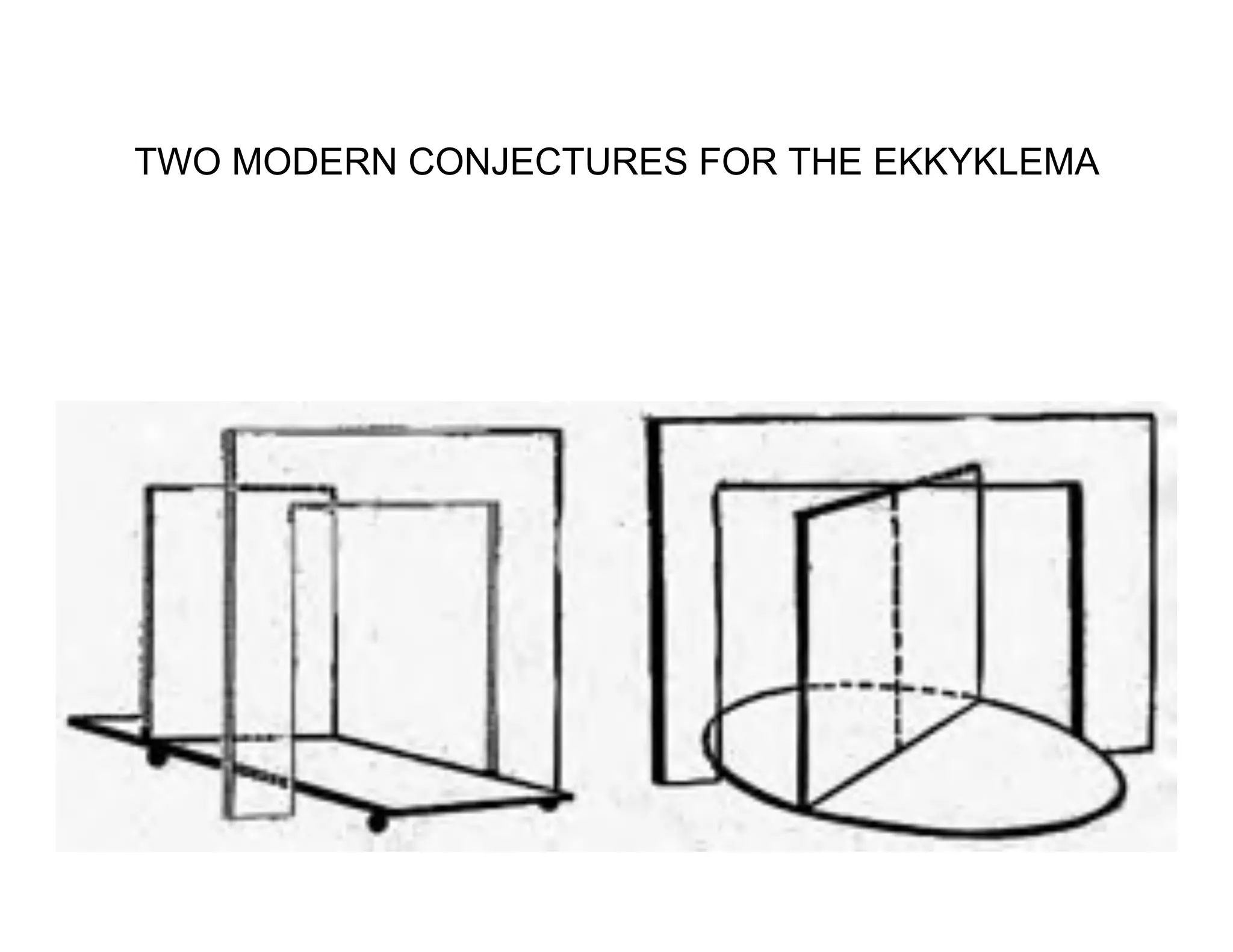
Ekkeklema
TWO MODERN CONJECTURES FOR THE EKKYKLEMA
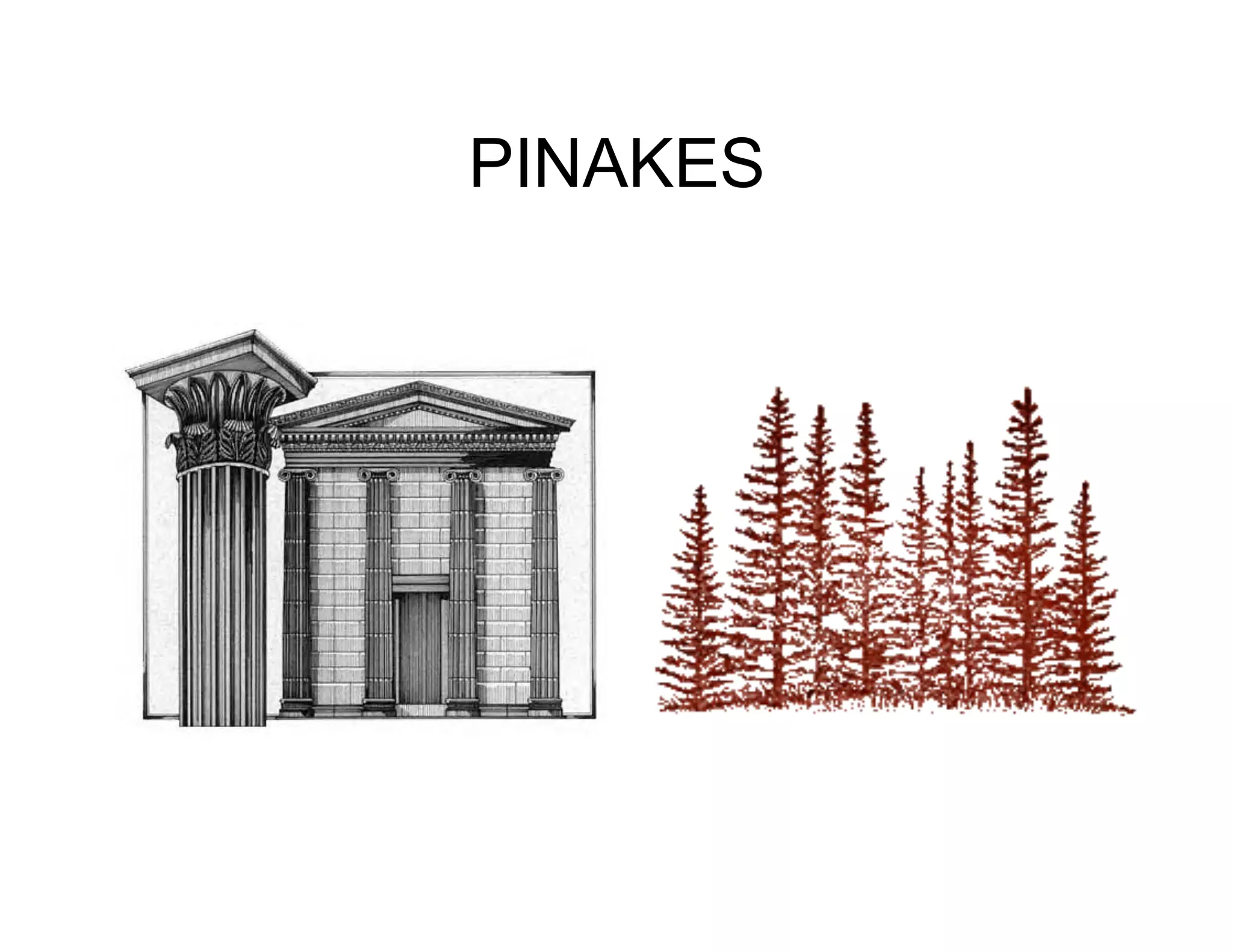
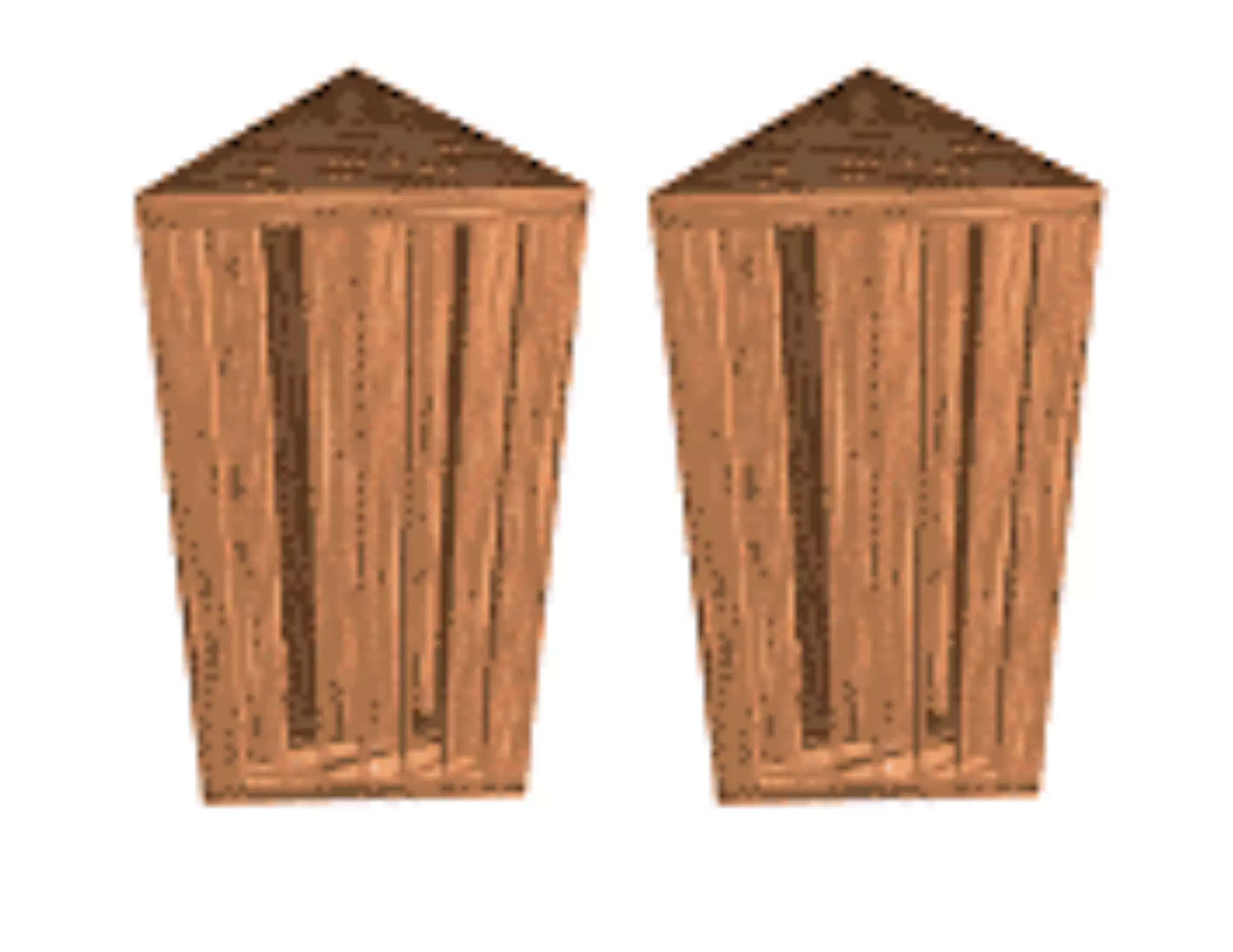
PINAKES
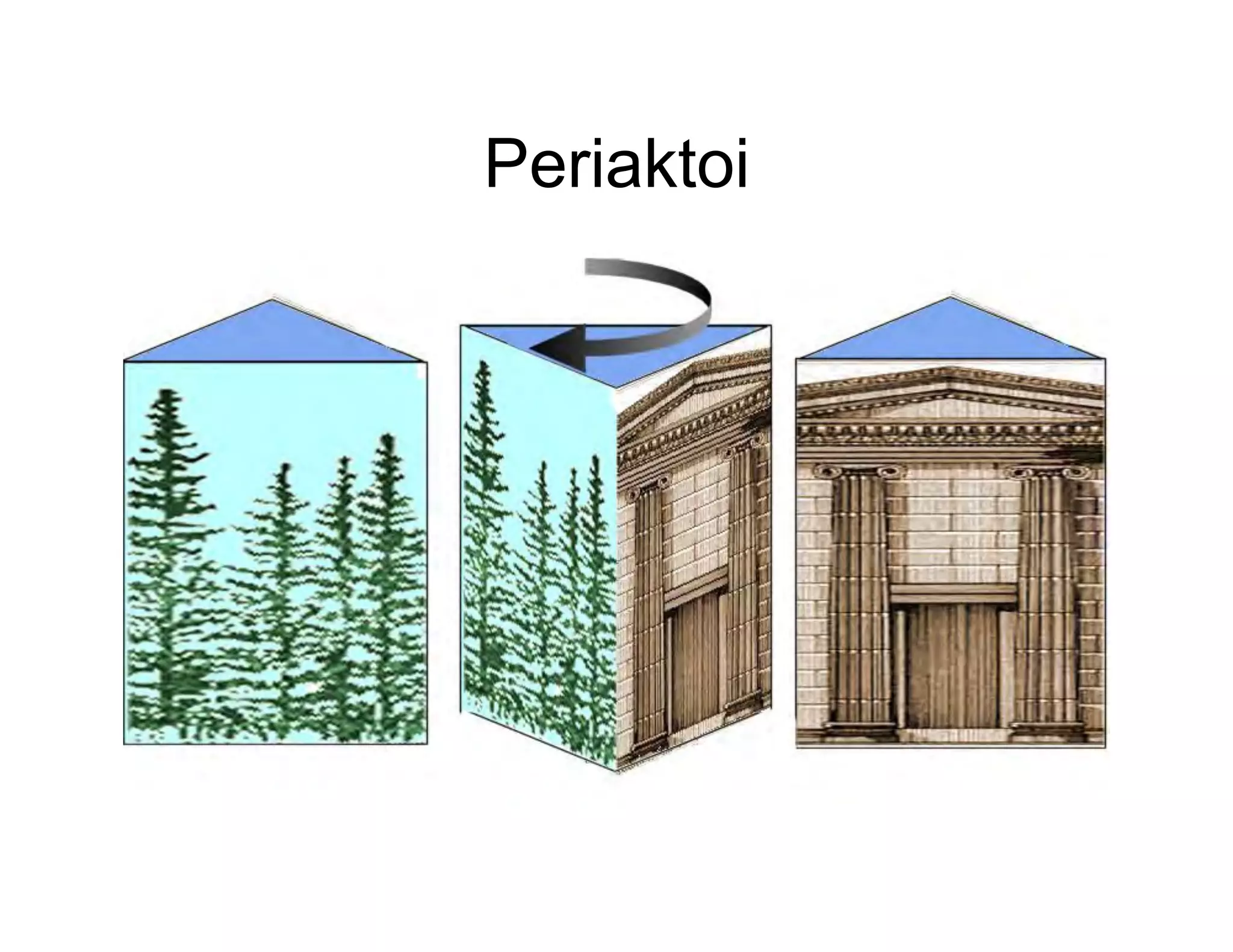
Periaktoi
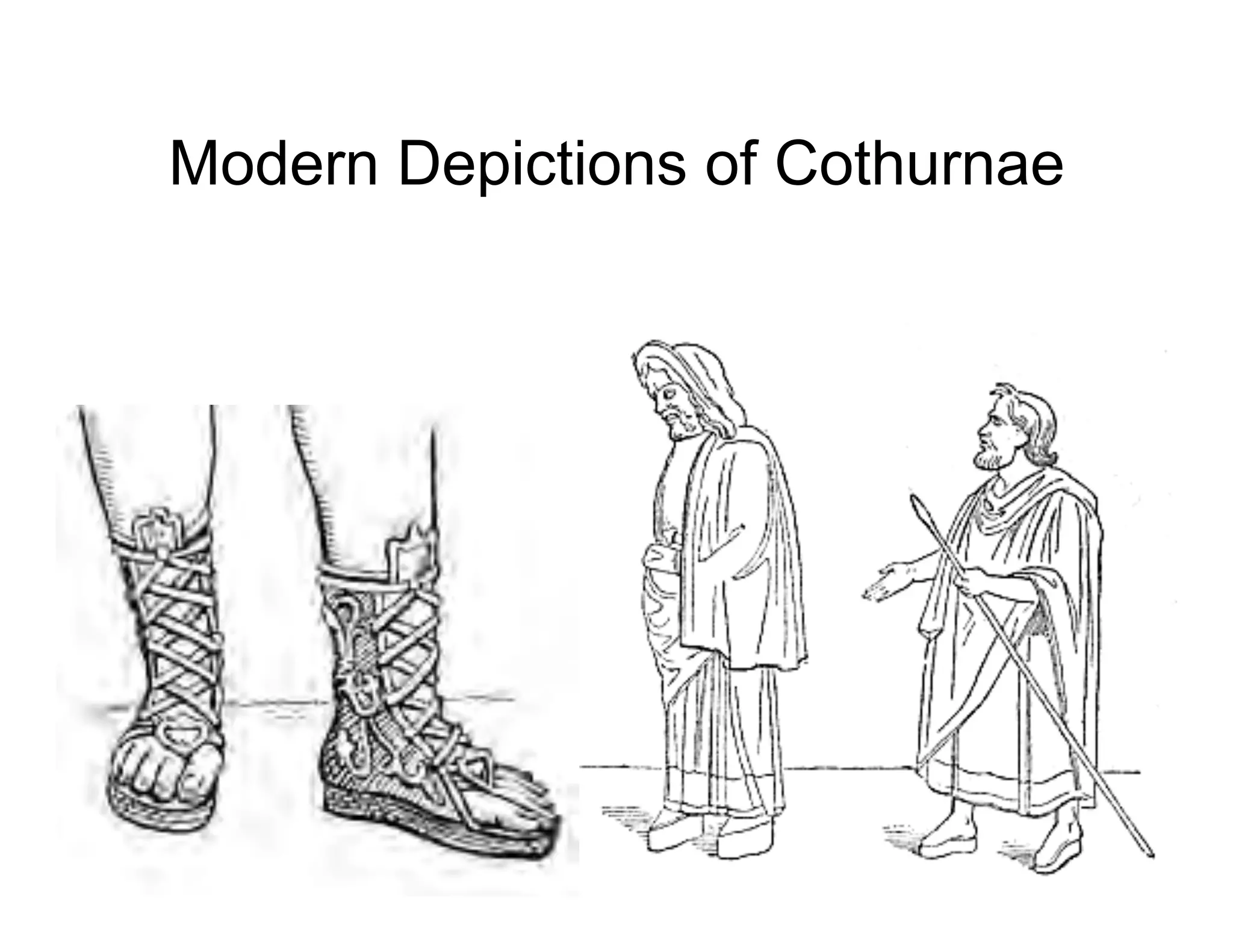
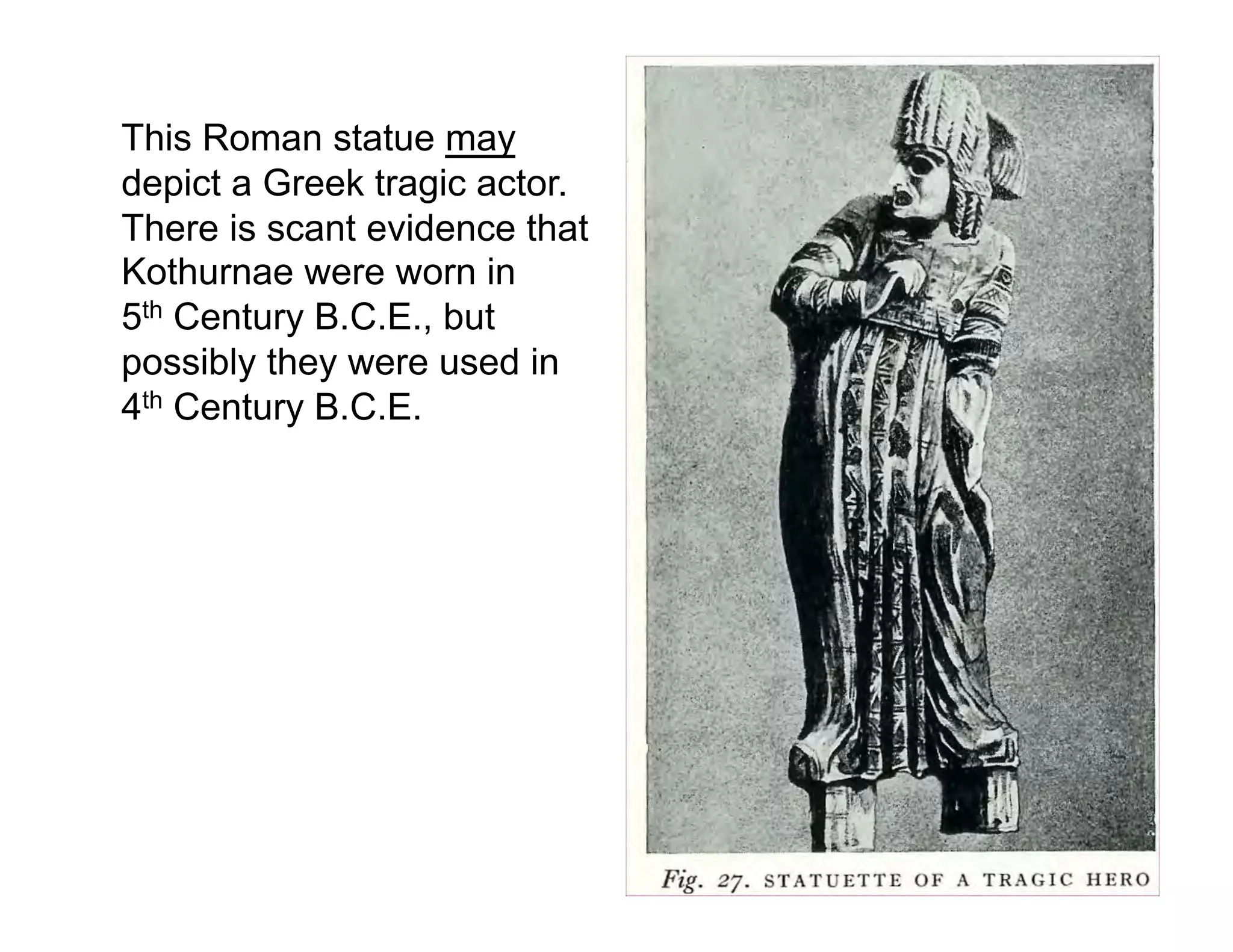
This Roman statue may
depict a Greek tragic actor.
There is scant evidence that
Kothurnae were worn in
5th Century B.C.E., but
possibly they were used in
4th Century B.C.E.
Modern Depictions of Cothurnae
Oedipus Rex
TYRONE GUTHRIE
OEDIPUS REX


     Contemporary production of Oedipus Rex
Greek lecture2.ppt
Greek lecture2.ppt

Greek lecture2.ppt