WEEKLY LEARNING PLAN
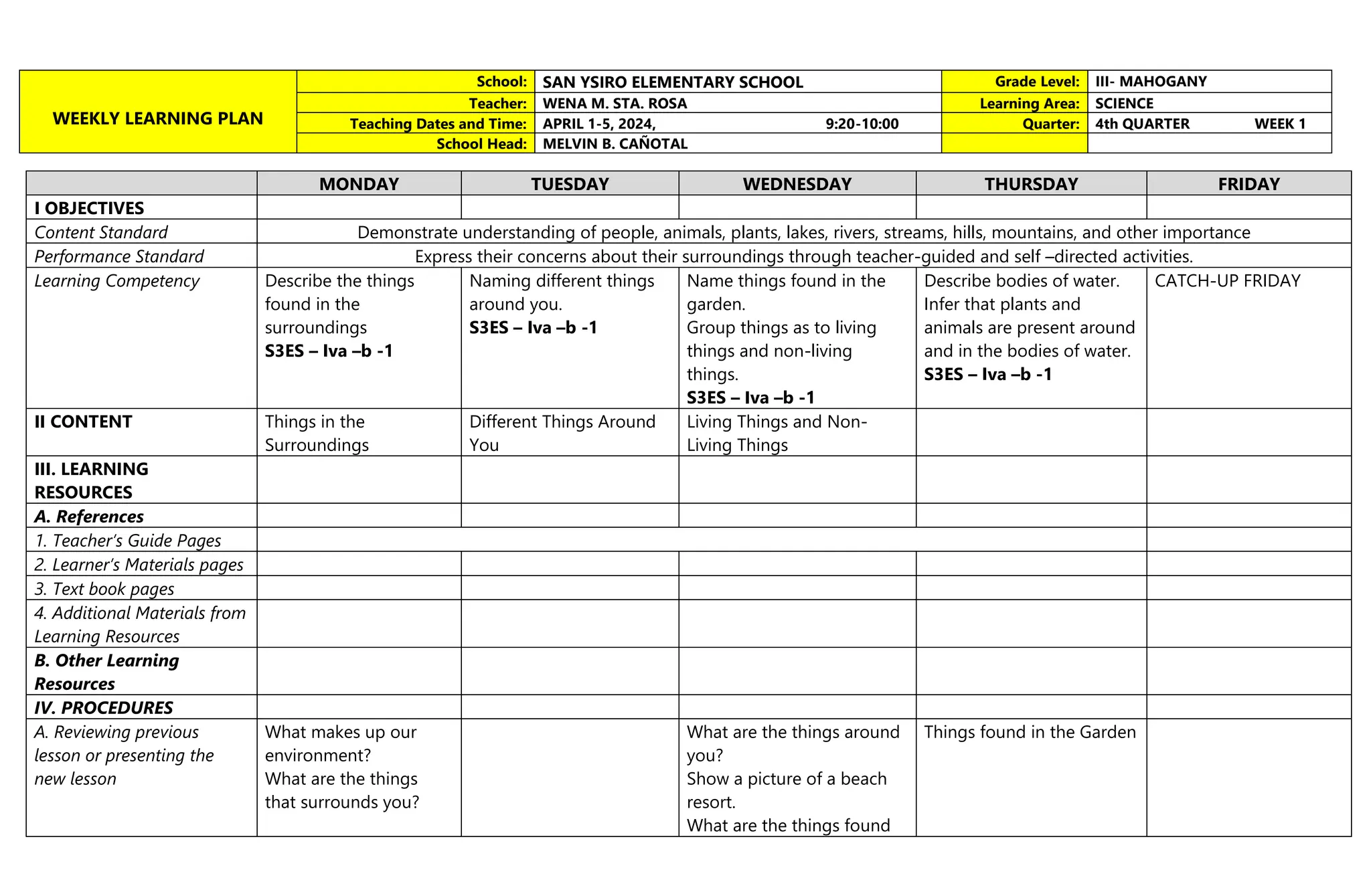
School: SAN YSIRO ELEMENTARY SCHOOL Grade Level: III- MAHOGANY
Teacher: WENA M. STA. ROSA Learning Area: SCIENCE
Teaching Dates and Time: APRIL 1-5, 2024, 9:20-10:00 Quarter: 4th QUARTER WEEK 1
School Head: MELVIN B. CAÑOTAL
MONDAY TUESDAY WEDNESDAY THURSDAY FRIDAY
I OBJECTIVES
Content Standard Demonstrate understanding of people, animals, plants, lakes, rivers, streams, hills, mountains, and other importance
Performance Standard Express their concerns about their surroundings through teacher-guided and self –directed activities.
Learning Competency Describe the things
found in the
surroundings
S3ES – Iva –b -1
Naming different things
around you.
S3ES – Iva –b -1
Name things found in the
garden.
Group things as to living
things and non-living
things.
S3ES – Iva –b -1
Describe bodies of water.
Infer that plants and
animals are present around
and in the bodies of water.
S3ES – Iva –b -1
CATCH-UP FRIDAY
II CONTENT Things in the
Surroundings
Different Things Around
You
Living Things and Non-
Living Things
III. LEARNING
RESOURCES
A. References
1. Teacher’s Guide Pages
2. Learner’s Materials pages
3. Text book pages
4. Additional Materials from
Learning Resources
B. Other Learning
Resources
IV. PROCEDURES
A. Reviewing previous
lesson or presenting the
new lesson
What makes up our
environment?
What are the things
that surrounds you?
What are the things around
you?
Show a picture of a beach
resort.
What are the things found
Things found in the Garden
in the beach resort?
Describe each.
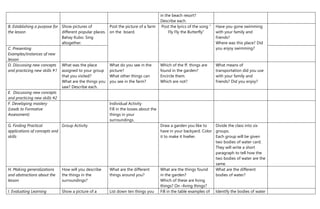
B. Establishing a purpose for
the lesson
Show pictures of
different popular places.
Bahay Kubo. Sing
altogether.
Post the picture of a farm
on the board.
Post the lyrics of the song “
Fly Fly the Butterfly”
Have you gone swimming
with your family and
friends?
Where was this place? Did
you enjoy swimming?
C. Presenting
Examples/instances of new
lesson
D. Discussing new concepts
and practicing new skills #1
What was the place
assigned to your group
that you visited?
What are the things you
saw? Describe each.
What do you see in the
picture?
What other things can
you see in the farm?
Which of the ff. things are
found in the garden?
Encircle them.
Which are not?
What means of
transportation did you use
with your family and
friends? Did you enjoy?
E. Discussing new concepts
and practicing new skills #2
F. Developing mastery
(Leads to Formative
Assessment)
Individual Activity
Fill in the boxes about the
things in your
surroundings.
G. Finding Practical
applications of concepts and
skills
Group Activity Draw a garden you like to
have in your backyard. Color
it to make it livelier.
Divide the class into six
groups.
Each group will be given
two bodies of water card.
They will write a short
paragraph to tell how the
two bodies of water are the
same.
H. Making generalizations
and abstractions about the
lesson
How will you describe
the things in the
surroundings?
What are the different
things around you?
What are the things found
in the garden?
Which of these are living
things? On –living things?
What are the different
bodies of water?
I. Evaluating Learning Show a picture of a List down ten things you Fill in the table examples of Identify the bodies of water
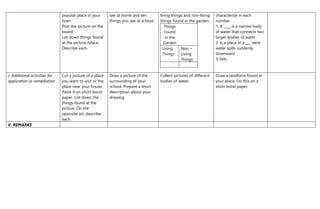
popular place in your
town.
Post the picture on the
board.
List down things found
at the picture /place.
Describe each.
see at home and ten
things you see at school.
living things and non-living
things found in the garden.
Things
Found
in the
Garden
Living
Things
Non –
Living
Things
characterize in each
number.
1. A ____ is a narrow body
of water that connects two
larger bodies of water.
2. Is a place in a ___ were
water spills suddenly
downward.
3-5etc.
J. Additional activities for
application or remediation
Cut a picture of a place
you want to visit or the
place near your house.
Paste it on short bond
paper. List down the
things found at the
picture. On the
opposite art, describe
each.
Draw a picture of the
surrounding of your
school. Prepare a short
description about your
drawing.
Collect pictures of different
bodies of water.
Draw a landform found in
your place. Do this on a
short bond paper.
V. REMARKS

Grade 3 MAHOGANY_ SCIENCE 3_Q4_W1.docx.docx

  • 1.
    WEEKLY LEARNING PLAN School:SAN YSIRO ELEMENTARY SCHOOL Grade Level: III- MAHOGANY Teacher: WENA M. STA. ROSA Learning Area: SCIENCE Teaching Dates and Time: APRIL 1-5, 2024, 9:20-10:00 Quarter: 4th QUARTER WEEK 1 School Head: MELVIN B. CAÑOTAL MONDAY TUESDAY WEDNESDAY THURSDAY FRIDAY I OBJECTIVES Content Standard Demonstrate understanding of people, animals, plants, lakes, rivers, streams, hills, mountains, and other importance Performance Standard Express their concerns about their surroundings through teacher-guided and self –directed activities. Learning Competency Describe the things found in the surroundings S3ES – Iva –b -1 Naming different things around you. S3ES – Iva –b -1 Name things found in the garden. Group things as to living things and non-living things. S3ES – Iva –b -1 Describe bodies of water. Infer that plants and animals are present around and in the bodies of water. S3ES – Iva –b -1 CATCH-UP FRIDAY II CONTENT Things in the Surroundings Different Things Around You Living Things and Non- Living Things III. LEARNING RESOURCES A. References 1. Teacher’s Guide Pages 2. Learner’s Materials pages 3. Text book pages 4. Additional Materials from Learning Resources B. Other Learning Resources IV. PROCEDURES A. Reviewing previous lesson or presenting the new lesson What makes up our environment? What are the things that surrounds you? What are the things around you? Show a picture of a beach resort. What are the things found Things found in the Garden
  • 2.
    in the beachresort? Describe each. B. Establishing a purpose for the lesson Show pictures of different popular places. Bahay Kubo. Sing altogether. Post the picture of a farm on the board. Post the lyrics of the song “ Fly Fly the Butterfly” Have you gone swimming with your family and friends? Where was this place? Did you enjoy swimming? C. Presenting Examples/instances of new lesson D. Discussing new concepts and practicing new skills #1 What was the place assigned to your group that you visited? What are the things you saw? Describe each. What do you see in the picture? What other things can you see in the farm? Which of the ff. things are found in the garden? Encircle them. Which are not? What means of transportation did you use with your family and friends? Did you enjoy? E. Discussing new concepts and practicing new skills #2 F. Developing mastery (Leads to Formative Assessment) Individual Activity Fill in the boxes about the things in your surroundings. G. Finding Practical applications of concepts and skills Group Activity Draw a garden you like to have in your backyard. Color it to make it livelier. Divide the class into six groups. Each group will be given two bodies of water card. They will write a short paragraph to tell how the two bodies of water are the same. H. Making generalizations and abstractions about the lesson How will you describe the things in the surroundings? What are the different things around you? What are the things found in the garden? Which of these are living things? On –living things? What are the different bodies of water? I. Evaluating Learning Show a picture of a List down ten things you Fill in the table examples of Identify the bodies of water
  • 3.
    popular place inyour town. Post the picture on the board. List down things found at the picture /place. Describe each. see at home and ten things you see at school. living things and non-living things found in the garden. Things Found in the Garden Living Things Non – Living Things characterize in each number. 1. A ____ is a narrow body of water that connects two larger bodies of water. 2. Is a place in a ___ were water spills suddenly downward. 3-5etc. J. Additional activities for application or remediation Cut a picture of a place you want to visit or the place near your house. Paste it on short bond paper. List down the things found at the picture. On the opposite art, describe each. Draw a picture of the surrounding of your school. Prepare a short description about your drawing. Collect pictures of different bodies of water. Draw a landform found in your place. Do this on a short bond paper. V. REMARKS