California Code of ----.,
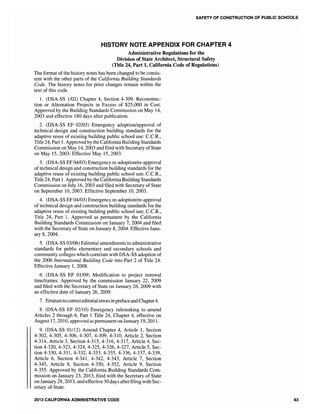
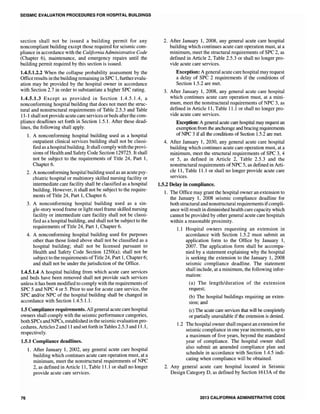
Title 24, Part
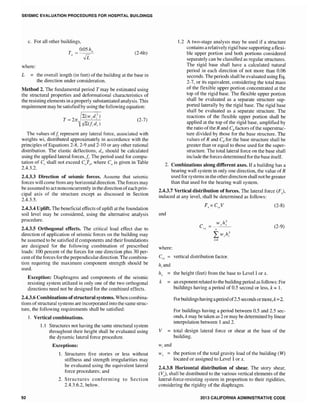
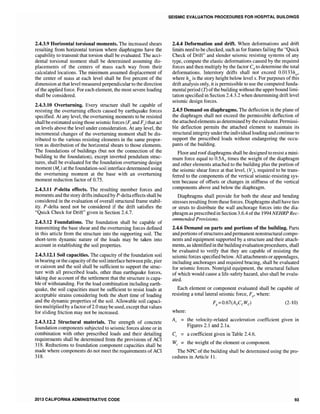
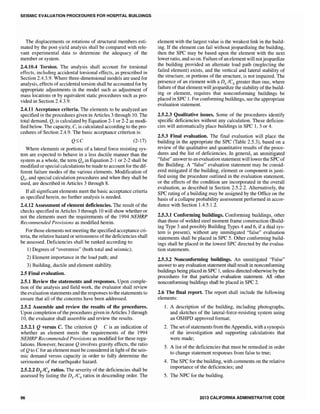
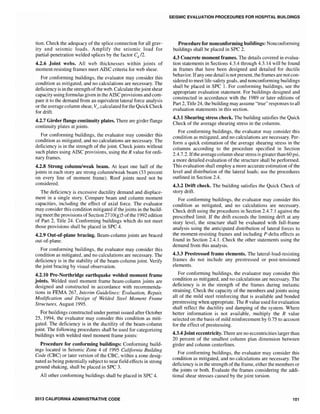
California Building
Effective Date: January 1, 2014
2013 California Administrative Code
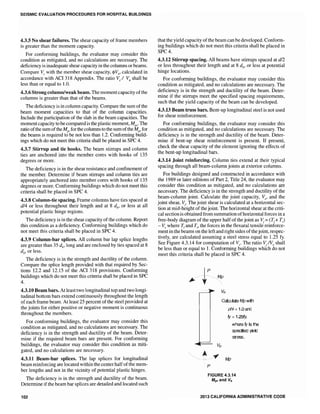
California Code of Regulations, Title 24, Part 1
First Printing: July 2013
ISBN 978-1-58001-456-2
Published by
International Code Council
500 New Jersey Avenue, NW, 6th Floor
Washington, D.C. 20001
1-888-422-7233
COPYRIGHT © 2013
held by
California Building Standards Commission
2525 Natomas Park Drive, Suite 130
Sacramento, California 95833-2936
PRINTED IN THE U.S.A.
PREFACE
This document is the 1st of 12 parts of the official triennial compilation and publication ofthe adoptions, amendments
and repeal of administrative regulations to California Code ofRegulations, Title 24, also referred to as the California
Building Standards Code. This part is known as the California Administrative Code, also known as the California
Building Standards Administrative Code.
The California Building Standards Code is published in its entirety every three years by order ofthe California legislature,
with supplements pub1ished in intervening years. The California legislature delegated authority to various state agencies,
boards, commissions and departments to create building regulations to implement the State's statutes. These building reg-
ulations, or standards, have the same force of law, and take effect 180 days after their publication unless otherwise stipu-
lated. The Califonlia Building Standards Code applies to occupancies in the State of California as annotated.
A city, county, or city and county may establish more restrictive building standards reasonably necessary because of
local climatic, geological or topographical conditions. Findings ofthe local condition(s) and the adopted local building
standard(s) must be filed with the CaliforniaBuilding Standards Commission to become effective and may not beeffec-
tive sooner than the effective date of this edition of the California Building Standards Code. Local building standards
that were adopted and applicable to previous editions of the California Building Standards Code do not apply to this
edition without appropriate adoption and the required filing.
Should you find publication (e.g., typographical) errors or inconsistencies in this code or wish to offer comments
toward improving its format, please address your comments to:
California Building Standards Commission
2525 Natomas Park Drive, Suite 130
Sacramento, CA 95833-2936
Phone: (916)263-0916
Fax: (916) 263-0959
Web Page: www.bsc.ca.gov
ACKNOWLEDGEMENTS
The 2013 California Building Standards Code (Code) was developed through the outstanding collaborative efforts of
the Department of Housing and Community Development, the Division of State Architect, the Office of the State Fire
Marshal, the Office ofStatewide Health Planning and Development, the California Energy Commission, the California
Department of Public Health, the California State Lands Commission, the Board of State and Community Corrections,
and the California Building Standards Commission (Commission).
This collaborative effort included the assistance ofthe Commission's Code Advisory Committees and many other vol-
unteers who worked tirelessly to assist the Commission in the production of this Code.
Governor Edmund G. Brown Jr.
Members ofthe California Building Standards Commission
Secretary Anna Caballaro - Chair
James Barthman - Vice-Chair
Stephen Jensen
Randy Twist
Richard Sawhill
Kent Sasaki
Rose Conroy
Sheila Lee
Richard Sierra
Steven Winkel
Erick Mikiten
Jim McGowan - Executive Director
Michael L. Nearman - Deputy Executive Director
For questions on California state agency amendments, please refer to the contact list on page v.
2013 CALIFORNIA ADMINISTRATIVE CODE iii
iv 2013 CALIFORNIA ADMINISTRATIVE CODE
CALIFORNIA CODE OF REGULATIONS, TITLE 24
California Agency Information Contact List
Board ofState and Community Corrections
www.b cc.ca. ov .. . . . .. . .. .. . .. .... . . ... . . . .(916) 445-5073
Local Adult Jail Standards
Local Juvenile Facilitv Standards
California Building Standards Commission
wWIV.b ·cca.gov . ... . .. . ... . . .. .... . . . . .... . .(916) 263-0916
California Energy Commission
www.energy.ca.gov . . . .... ... . . . Energy Hotline (800) 772-3300
Building Efficiency Standards
Appliance Efficiency Standards
Compliance ManuaUForms
California State Lands Commission
WWIV. k.ca.gov .. . ... . ... . . . .. . ..... . ... .. . .(562) 499-63 12
Marine Oil Terminals
California State Library
www.library.ca.gov .. . . .... . ...... . .. ... .. ... (916) 654-0266
Department ofConsumer AUairs:
Acupuncture Board
www.acupuncture.ca.gov ... .. .. . . . . . . . .. . .. (916) 515-5200
Office tandards
Board ofPharmacy
www.pharmacy.ca.gov . . . ... . . .. . . . . . . . . ... (916) 574-7900
Pharmacy Standard
Bureau ofBarhering and Cosmetology
www.barbercosmo.ca.gov .. . .... .... . . .. ... (916) 952-5210
Barber and Beauty Shop,
and College Standards
Bureau ofElectronic and Appliance Repair,
Home Furnishings and Thermal Insulation
wwIV.bearhfti.ca.gov... . . ........ .. ... . . .. .(9J6) 999-2041
Insulation Testing tandard
Structural Pest COlltrol Board
IVww.pe tboard.ca.gov . . .... . . . ... .... ..... (800) 737-8188
Structural Stalldards
Veterinary Medical Board
www.vmb.ca.gov. . . ... . . . ... . ....... . . ... .(916) 263-26 10
Veterinary Ho pital Stalldards
Department of Food and Agriculture
www.cdfa.ca.goll
Meat & Poultry Packing Plant Standards (916) 654-0509
Dairy tandards (916) 654-0773
Department ofHousing and Community Development
www.hcd. ca.gov . . .. . .. . .. . . .... . . . . . . .. .. . . .(9 16) 445-9471
Residential- Hotel , Motels, Apartments,
Single-Family Dwellings; alld
Permanent Structures in Mobilehome &
Special Occupancy Parks
(916) 445-3338
Factory-Built Housillg, Manufactured Housing &
Commercial Modular
Mobilehome- Permits & Inspectioll
Northern Region- (9 16) 255-2501
Southern Region- (95 I) 782-4420
(916) 445·9471
Employee HOLl illg Standards
Department of Public Health
IVww.dph. ca.gov. . . . . ... .. . ...... .(916) 449-5661
Organized Camp ' Standard
Public Swimming Pools tandards
Division ofthe State A rchitect
IVww.dgs.ca.govldsa. .. . .... . . . . .. . .... .. . . . . .(916) 445-8100
Access Compliance
Struc/ural Safety
Public Schools Standards
E 'sential Services Building Stalldards
Community College Standard '
State Historical Bllilding Safety Board
Alternative Building Stalldards
Office ofStatewide Health Planning and Development
www.oshpd.ca.gol' . .. . . . . . ...... . ........... .(916) 440-8356
Ho pitat Standards
Skilled Nur. iflg facility. tanciards &
Clinic Standard '
Permit ·
Office ofthe State Fire Marshal
osfm.jire.ca.gov .. . .... . .. . .. . ... .. ... . . . .... (916) 445-8200
Code Developmenl alld Analysis
Fire Safety Stanciard
2013 CALIFORNIA ADMINISTRATIVE CODE JANUARY 1, 2014 ERRATA
BUFF
v
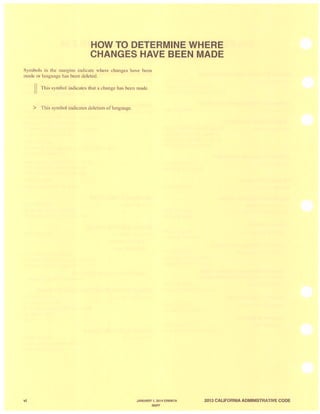
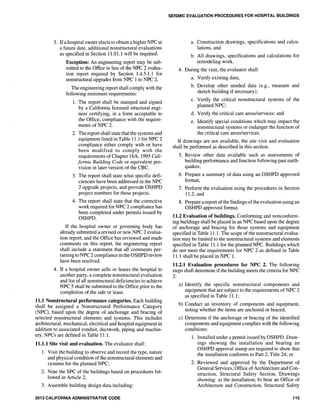
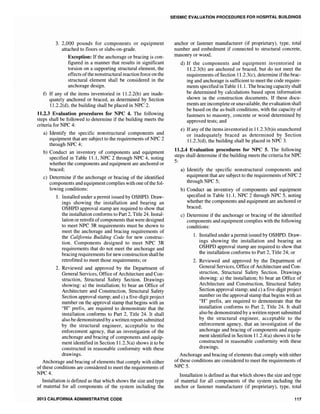
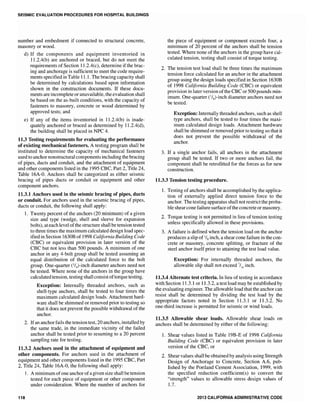
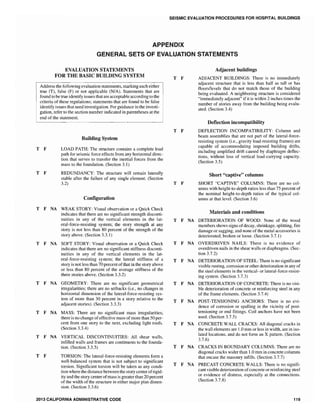
HOW TO DETERMINE WHERE
CHANGES HAVE BEEN MADE
Symbols in th margins indicate wher changes have been
made or language has b en deleted.
vi
II This symbol indicates that a change has been made.
> This symbol indicates deletion of language.
JANUARY 1, 2014 ERRATA
BUFF
2013 CALIFORNIA ADMINISTRATIVE CODE
TAB OF CONTENTS
CHAPTER 1 ADMINISTRATIVE
REGULATIONS OF THE CALIFORNIA
BUILDING STANDARDS COMMISSION ......... 1
Article
General .................................... 1
2 Duties and Responsibilities of the Building
Standards Commission, the Executive
Director, Commission Personnel and Resources..... 3
3 Appeals and Petition Procedures ................. 6
4 Rulemaking for the Adoption of Building
Standards by Proposing Agencies ............... 11
5 City, County, and City and County Building
Pennit Fees ................................ 14
HISTORY NOTE APPENDIX FOR CHAPTER 1 .... 16
CHAPTER 2 ADMINISTRATIVE REGULATIONS
FOR THE DEPARTMENT OF HOUSING AND
COMMUNITY DEVELOPMENT .•.•......•.... 17
HISTORY NOTE APPENDIX FOR CHAPTER 2 .... 18
CHAPTER 3 ADMINISTRATIVE REGULATIONS
FOR THE OFFICE OF THE STATE FIRE
MARSHAL (SFM) [RESERVED] ..........•.••• 19
CHAPTER 4 ADMINISTRATIVE REGULATIONS
FOR THE DIVISION OF THE STATE
ARCHITECT- STRUCTURAL SAFETY
(DSA-SS) ••.•...........••...........•....... 21
Article
Essential Services Buildings ................... 21
2 State Buildings ............................. 28
3 Local Buildings ............................. 33
GROUP 1 SAFETY OF CONSTRUCTION
OF PUBLIC SCHOOLS .•••••.......••.•.....• 35
Article
2
3
4
5
6
7
8
General Provisions .......................... 35
Definitions ................................. 39
Approval of Drawings and Specifications ......... 41
Fees ...................................... 45
Certification of Construction ................... 47
Duties Under the Act......................... 56
Examination and Report of Existing Buildings ..... 60
Documents and Records ...................... 61
2013 CALIFORNIA ADMINISTRATIVE CODe
9 State Advisory Board to the Division
of the State Architect for the Field Act ........... 61
HISTORY NOTE APPENDIX FOR CHAPTER 4 ..•• 63
CHAPTER 5 ACCESS TO PUBLIC BUILDINGS
BY PERSONS WITH DISABILITIES•........... 65
Article
1 Compliance Procedures....................... 65
2 Division of the State Architect-Access
Compliance Processing Product Approvals ....... 67
3 Acceptance of Detectable Warning and
Directional Surface Products for Manufacturers
and Design Professionals ..................... 68
4 Application for Independent Entity Evaluation
Approval (IEEA) ............................ 68
HISTORY NOTE APPENDIX FOR CHAPTER 5 ...• 70
ADMINISTRATIVE REGULATIONS FOR THE
OFFICE OF STATEWIDE HEALTH PLANNING
AND DEVELOPMENT (OSHPD) ....••....•.... 71
CHAPTER 6 SEISMIC EVALUATION
PROCEDURES FOR HOSPITAL BUILDINGS.... 71
Article
1 Definitions and Requirements .................. 71
2 Procedures for Structural Evaluation
of Buildings ................................ 84
3 Procedures for Building Systems ............... 97
4 Procedures for Moment-Resisting Systems........ 99
5 Procedures for Shear Walls ................... 103
6 Procedures for Braced Frames ................ 106
7 Procedures for Diaphragms. . . . . . . . . . . . . . . . . . . 107
8 Procedures for Connections .................. 109
9 Procedures for Foundations and Geologic
Site Hazards............................... 111
10 Evaluation of Elements that Are Not Part
of the Lateral-Foree-Resisting System .......... 112
11 Evaluation of Critical Nonstructural
Components and Systems .................... 113
APPENDIX-GENERAL SETS OF
EVALUATION STATEMENTS.....•••.••...... 119
APPENDIX H TO CHAPTER 6 .................. 125
mSTORY NOTE APPENDIX FOR CHAPTER 6 ... 133
vii
CHAPTER 7 SAFETY STANDARDS
FOR HEALTH FACILITIES .................. 135
Article
General .................................. 135
2 Definitions ................................ 136
3 Approval of Construction Documents ........... 139
4 Construction .............................. 150
5 Appeals to the Hospital Building Safety Board ... 156
6 Contracts ................................. 158
7 Testing and Inspection....................... 161
8 California Building Standards ................. 161
19 Certification and Approval of
Hospital Inspectors ......................... 161
20 Repair of Damage After an Emergency ......... 166
21 Plan Review, Building Inspection and Certification
of Surgical Clinics, Chronic Dialysis Clinics and
Outpatient Services Clinics ................... 167
HISTORY NOTE APPENDIX FOR CHAPTER 7 ... 170
CHAPTER 8 ADMINISTRATIVE
REGULATIONS FOR THE DEPARTMENT
OF HEALTH SERVICES (DHS) •...........•.. 171
Article
Public Swimming Pools ..................... 171
2 Retail Food Establishments ................... 171
3 Organized Camps .. . . . . . . . . . . . . . . . . . . . . . . . . 171
4 Hospitals ................................. 171
5 Acute Psychiatric Hospitals................... 172
6 Skilled Nursing ............................ 172
7 Intermediate Care Facilities. . . . . . . . . . . . .. . ... 172
8 Intermediate Care Facilities for the
Developmentally Disabled ................... 173
CHAPTER 9 ADMINISTRATIVE REGULATIONS
FOR THE OCCUPATIONAL SAFETY AND
HEALTH STANDARDS BOARD (OSHA)
[RESERVED] . . . . . . . . . . . • . . . . . • . . . • • • • . . • . . . 175
CHAPTER 10 ADMINISTRATIVE REGULATIONS
FOR THE CALIFORNIA ENERGY COMMISSION
(CEC)...•..........•••............•.....••. 177
Article
Energy Building Regulations ................. 177
HISTORY NOTE APPENDIX FOR
CHAPTER 10 ...•..•••..••..............•... 200
CHAPTER 11 ADMINISTRATIVE REGULATIONS
FOR THE DEPARTMENT OF FOOD AND
AGRICULTURE (AGR) [RESERVED] ...•...•.. 201
viii
CHAPTER 12 ADMINISTRATIVE REGULATIONS
FOR THE DEPARTMENT OF YOUTH
AUTHORITY (YA) [RESERVED] .............. 203
CHAPTER 13 ADMINISTRATIVE
REGULATIONS FOR THE BOARD OF STATE
AND COMMUNITY CORRECTIONS (BSCC) •.. 205
Article
1 Minimum Standards for Local
Detention Facilities ......................... 205
2 Minimum Standards for Juvenile Facilities ...... 213
HISTORY NOTE APPENDIX
FOR CHAPTER 13 .......................... 221
CHAPTER 14 ADMINISTRATIVE
REGULATIONS FOR THE DEPARTMENT
OF EDUCATION (DOE) [RESERVED] ..•...... 225
CHAPTER 15.1 ADMINISTRATIVE
REGULATIONS FOR THE DEPARTMENT
OF CONSUMER AFFAIRS (CA) BOARD OF
ACCOUNTANCY [RESERVED] ...•....•...•.. 227
CHAPTER 15.2 ACUPUNCTURE
EXAMINING COMMITTEE [RESERVED] ..•.. 227
CHAPTER 15.3 DIVISION OF ALLIED
HEALTH PROFESSIONS [RESERVED] .....•.. 227
CHAPTER 15.4 BOARD OF ARCHITECTURAL
EXAMINERS [RESERVED] ....••..•......... 227
CHAPTER 15.5 ATHLETIC
COMMISSION [RESERVED] ••...•.•......... 227
CHAPTER 15.6 AUCTIONEER
COMMISSION [RESERVED] ................. 227
CHAPTER 15.7. BUREAU OF
AUTOMOTIVE REPAIR [RESERVED] ......... 228
CHAPTER 15.8 BOARD OF BARBER
EXAMINERS [RESERVED] ........•...•...•• 228
CHAPTER 15.9 BOARD OF BEHAVIORAL
SCIENCE EXAMINERS [RESERVED] ......... 228
CHAPTER 15.10 CEMETERY
BOARD [RESERVED]........•.........•..... 228
CHAPTER 15.11 BUREAU OF COLLECTION AND
INVESTIGATIVE SERVICES [RESERVED] .... 228
CHAPTER 15.12 CONTRACTORS'STATE
LICENSE BOARD [RESERVED] ..•....•...... 228
2013 CALIFORNIA ADMINISTRATIVE CODE
CHAPTER 15.13 BOARD OF COSMETOLOGY
[RESERVED] ............................... 229
CHAPTER 15.14 BOARD OF DENTAL
EXAMINERS [RESERVED] ..••.•..•...•..... 229
CHAPTER 15.15 BUREAU OF ELECTRONIC
AND APPLIANCE REPAIR [RESERVED] ...... 229
CHAPTER 15.16 BOARD OF FUNERAL
DIRECTORS AND EMBALMERS
[RESERVED] ............................... 229
CHAPTER 15.17 BOARD OF REGISTRATION
FOR GEOLOGISTS AND GEOPHYSICISTS
[RESERVED] •.....•.....•......•••......... 229
CHAPTER 15.18 BOARD OF GUIDE
DOGS FOR THE BLIND [RESERVED] ......... 229
CHAPTER 15.19 HEARING AID DISPENSERS
EXAMINING COMMITTEE [RESERVED] ..... 230
CHAPTER 15.20 BUREAU OF HOME
FURNISHINGS [RESERVED] ..........•.•.... 230
CHAPTER 15.21 BOARD OF LANDSCAPE
ARCIDTECTS [RESERVED].......••......... 230
CHAPTER 15.22 BOARD OF MEDICAL
QUALITY ASSURANCE [RESERVED] ........• 230
CHAPTER 15.23 BOARD OF NURSING
HOME ADMINISTRATORS [RESERVED]....•. 230
CHAPTER 15.24 BOARD OF OPTOMETRY
[RESERVED] ............................... 230
CHAPTER 15.25 BUREAU OF PERSONNEL
SERVICES [RESERVED] .........•..•..•..... 231
CHAPTER 15.26 BOARD
OF PHARMACY [RESERVED] ................ 231
CHAPTER 15.27 PHYSICAL THERAPY
EXAMINING COMMITTEE [RESERVED] .••.. 231
CHAPTER 15.28 PHYSICIAN'S ASSISTANT
EXAMINING COMMITTEE [RESERVED] ..•.. 231
CHAPTER 15.29 BOARD OF
PODIATRIC MEDICINE [RESERVED]••••..... 231
CHAPTER 15.30 BOARD OF POLYGRAPH
EXAMINERS [RESERVED] ...•........•....• 231
CHAPTER 15.31 BOARD OF
PROFESSIONAL ENGINEERS [RESERVED] •.. 232
2013 CALIFORNIA ADMINISTRATive CODe
CHAPTER 15.32 PSYCHOLOGY EXAMINING
COMMITTEE [RESERVED] .....•••....•..... 232
CHAPTER 15.33 BOARD OF REGISTERED
NURSES [RESERVED] •...•..•....•....•..•.• 232
CHAPTER 15.34 RESPIRATORY CARE
EXAMINING COMMITTEE [RESERVED] ..... 232
CHAPTER 15.35 BOARD OF CERTIFIED
SHORTHAND REPORTERS [RESERVED] ..... 232
CHAPTER 15.36 SPEECH PATHOLOGY
AND AUDIOLOGY EXAMINING
COMMITTEE [RESERVED] ...........••..... 232
CHAPTER 15.37 STRUCTURAL PEST
CONTROL BOARD [RESERVED] ............. 233
CHAPTER 15.38 TAX PREPARERS PROGRAM
[RESERVED] ••................••.•••....... 233
CHAPTER 15.39 BOARD OF EXAMINERS
IN VETERINARY MEDICINE [RESERVED] •..• 233
CHAPTER 15.40 BOARD OF VOCATIONAL
NURSE AND PSYCHIATRIC TECHNICIAN
EXAMINERS [RESERVED] .............••..• 233
CHAPTER 16 CALIFORNIA STATE LIBRARY •.. 235
Article
Scope .................................... 235
2 Definitions................................ 235
3 Administration and Enforcement .............. 235
4 Fees ..................................... 237
5 California Reading and Literacy
Improvement and Public Library
Construction and Renovation Bond
Act of 2000 ............................... 238
Article 5.1 Scope .......................... 238
Article 5.2 Definitions ...................... 238
Article 5.3 Administration and Enforcement.
All Library Bond Act Projects................. 239
Article 5.4 Administration and Enforcement.
All Library Bond Act Projects, Including
All Joint Use Projects ....................... 239
Article 5.5 Fees ........................... 243
APPENDIX-STATE LIBRARY
PLANS REVIEW FORM •...........•...•.... 244
HISTORY NOTE APPENDIX
FOR CHAPTER 16 ••..••.....•.............• 246
ix
x 2013 CALIfORNIA ADMINISTRATIVE CODE
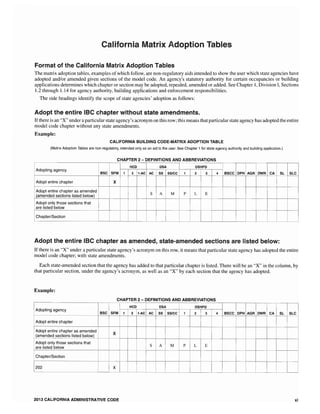
Californ Matrix Tables
Format of the California Matrix Adoption Tables
The matrix adoption tables, examples of which follow, are non-regulatory aids intended to show the user which state agencies have
adopted andlor amended given sections of the model code. An agency's statutory authority for certain occupancies or building
applications determines which chapter or section may be adopted, repealed, amended or added. See Chapter 1, Division I, Sections
1.2 through 1.14 for agency authority, building applications and enforcement responsibilities.
The side headings identify the scope of state agencies' adoption as follows:
Adopt the entire chapter without state amendments.
Ifthere is an "X" under a particular state agency's acronym on this row; this means that particular state agency has adopted the entire
model code chapter without any state amendments.
Example:
CALIFORNIA BUILDING CODE-MATRIX ADOPTION TABLE
(Matrix Adoption Tables are non-regulatory, intended only as an aid to the user. See Chapter 1 for state agency authority and building application.)
CHAPTER 2 - DEFINITIONS AND ABBREVIATIONS
HCD DSA
esc SFM
I i
1 : 2 1-AC AC I SS SS/CC Sl SlC
X
S A
Adopt the entire IBe chapter as amended, state-amended sec::tlc)ns are listed below:
Ifthere is an "X" under a particular state agency's acronym on this row, it means that particular state agency has adopted the entire
model code chapter; with state amendments.
Each state-amended section that the agency has added to that particular chapter is listed. There will be an "X" in the column, by
that particular section, under the agency's acronym, as well as an "X" by each section that the agency has adopted.
Example:
CHAPTER 2 - DEFINITIONS AND ABBREVIATIONS
HCD DSA •
OSHPD
iAdopting agency
esc SFM
12-F AC SS SSICC i 1 2 3 4 ascc DPH AGR DWR CA Sl SlC
Adopt entire chapter
Adopt entire chapter as amended
X
(amended sections listed below)
Adopt only those sections that
AI
•
are listed below
S M P L E
•
Chapter/Section
I
202 X
. .
2013 CALIFORNIA ADMINISTRATIVE CODE xi
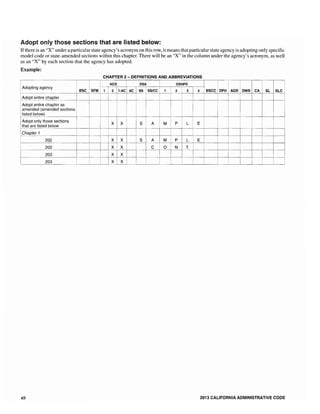
Adopt only those sections that are listed below:
Ifthere is an "X" under a particular state agency's acronym on this row, it means that particular state agency is adopting only specific
model code or state-amended sections within this chapter. There will be an "X" in the column under the agency's acronym, as well
as an "X" by each section that the agency has adopted.
Example:
CHAPTER 2 - DEFINITIONS AND ABBREVIATIONS
iAdopting agency
BSC I SFM
HCD I DSA OSHPD
!
CA I Sl
!
1 2! l-AC AC SS SSiCC 1 2 3 4 BSCC DPH AGR IDWR SlC
I Adopt entire chapter I
.
I
! •
Adopt entire chapter as
I
amended (amended sections
listed below)
those sections
i
X X S A M P L I E I
that are listed below
Chapter 1
!
202 I X X S A M P L E
202 X X C a N T.
!
,
203 X X
203 i I
X X ! i !
xii 2013 CALIFORNIA ADMINISTRATIVE CODE
CHAPTER 1
ADMINISTRATIVE REGULATIONS OF THE CALIFORNIA BUILDING
STANDARDS COMMISSION
ARTICLE 1
GENERAL
1-101. Abbreviations. The following abbreviations shall
apply to Title 24, California Code of Regulation '. Abbrevia-
II tions may aI 0 be provided in each of the other 12parts of Title
24. Whenever an abbreviation provided in this ection conflicts
with an abbreviation provided within another part of Title 24,
the abbreviation meaning provided in the other part shall pre-
vail within that part.
AGR Department of Food and Agriculture (see Note)
BSC
BSCC
CA
CBC
CCR
CEBC
CEC
CEC
CEC
CGBSC
CHBC
CMC
CPC
CRC
CRSC
DPH
DWR
DSA
Identifie ' code provi 'ions by the Building
Standards Commi sion ( ee Note)
Identifie' code provisions by the Board of
State and Community Corrections ( ee Note)
Department of Con umer Affair (see Note)
California Building Code (Part 2 of Title 24)
California Code of Regulation
California Existing Building Code
(Part 10 of Title 24)
California Electrical Code (Part 3 of TitJe 24)
California Energy Code (Part 6 of Title 24)
California Energy Commission (see Note)
California Green Building Standards Code
(Part I I of Title 24) al 0 known a CALGreen
California Historical Building Code
(Part 8 of Title 24)
California Mechanical Code (Part 4 ofTitle 24)
California Plumbing Code (Part 5 of Title 24)
Cal(fornia Residential Code (Part 2.5 ofTitle 24)
California ReferencedStandards Code (Part 12
of Title 24)
Identities code provisions by the Departmentof
Public Health (see Note)
Identifies code provisions by the Department of
Water Re. ource ' (see Note)
Division ofthe State Architect, adivi 'ion within
the Department of General Services
DSA-SS Identifies code provision by theDivision ofth
State Architect-Structural Safety (see Note)
DSA-SSICC Identifie . provi ions by the Division of the State
Architect-Structural Safety, applicable to
community college ' as specified.
DSA-AC Identifies code provi ion by the Division ofthe
State Architect-Acce ' Compliance (. ee Note)
DOE Department of Education
DOT
HCD
HCD I
Department of Tran portation
Housing and Community Development
Identifie code provi ion by the HCD (see Note)
RCD2
HCD IAC
IBC
IFC
IEBC
IRC
NEC
NFPA
OHP
ldentifie. code provisions by the RCD (see Note)
Identifies code provision by theHCD (. ee Note)
International Building Code®
International Fire Code®
International Existing Building Code®
International Residential Code®
National Electrical Code®
National Fire Protection A ociation
Office of Hi torical Pre ervation
OSHPD Office of Statewide Health Planning &
Development
OSHPD I Identifies code provi ions by OSHPD (see Note)
OSHPD 2 Identifies code provi ion by OSHPD (see Note)
OSHPD 3 Identifies code provi ion by OSHPD (seeNote)
OSHPD 4 Identifies code provision by OSHPD ( ee Note)
SFM
SHSB
SL
SLC
UBCTM
Identifies code provisions by the Office of the
State Fire Mar hal ( ee Note)
Identifie code provision' by State Hi torical
Building Safety Board (see Note)
Identifies code provision by the tate Library
(see Note)
Identifie' code provisions by the State Lands
Commi sion (see Note)
Uniform Building Code: the UBC i no longer
publi hed or adopted in lh cun'enl edition of
Title 24.
UBC STDS Unifonn Building Code Standards; the UBC
STDS i no longer published, but relevant
tandards are referenced in the CEBC
UFC
UHC
UMC
UPC
Uniform Fire Code; the UFC is no longer
published or adopted in the current edition of
Title 24.
Uniform Hou ing Code; adopted by HCD in
Chapter I of Title 25.
Uniform Mechanical Code®
Uniform Plumbing Code®
Note: For information regarding the code provisions adopted by th is state
agency and the application of such adoptions, see the late agency administra-
tive chapters inthe various parts orTitle 24, California Code ofReRu/ations,
Authority: GovernmentCode Section 11 000,and Health and Safety Code Sec-
tion 18931 (t),
Reference: Government Code Section 11000, and Health and Safety Code
Section 1893 1(d),
1-103. Definitions. The following definitions shall apply to
this Chapter I, ofPart I , ofTitle 24, California Code ofRegula-
tion . Definitions may also be provided in each of the other
eleven parts of Title 24. Whenever a definition provided in this
section conflict with a definition provided within another part
of Title 24, the definition provided in the other part hall prevail
2013 CALIFORNIA ADMINISTRATIVE CODE JANUARY 1, 2014 ERRATA
BUFF
ADMINISTRATIVE REGULATIONS OFTHE CALIFORNIA BUILDING STANDARDS COMMISSION
within that part. Additional definition are provided in Article 5
of Ihi chapt r.
(a) ADOPTING AGENCY (or state adopting agency).
An agency of stale government with authority in law to
develop and adopt building standard for approval and
publication in Title 24, California Code of Regulations,
by the Commi ion. An adopting agency ha authority to
conduct public hearing aside from the public hearings
conducted by the Commi sion. See Proposing Agency.
(b) APPEAL. An appeal to the Commission, a provid d
and limited by Health and Safety Code Section 18945
through 19849, by any person adver ely affected by the
application of an exi ting building tandard or adminis-
trative regulation in Title 24, by a state agency or local
agency. See Petition.
(c) CALGreen. The California Green Building Standard
in Part 11 of Title 24, California Code of Regulation .
(d) CHALLENGE. A public comment received during
a comment period and directed at a propo ed change or a
code advisory committee recommendation or the proce-
dure followed by the Commission in propo ing or
adopting th action.
(c) CODE ADVISORY COMMITTEE. An advisory
panel or body appointed to advi e the Commi ion with
respeci to building tandard a authorized by Haith and
Safety Code Section 18927.
(f) CODE CHANGE. A proposed change to,or addition
of, a building standard a, defined by Health and Safety
Code Section 18909, or administrative regulation ofTitle
24.
(g) CODE CHANGE SUBMITTAL. A propo ed code
change for Titl 24 and its justification submitted to the
Commi ion by a proposing agen y.
(h) COMMISSION. The California Building Standards
Commission e tablished under Health and Safety Code,
Division 13, Part 2.5. commencing with Section 1890 I.
(i) ENFORCING AGENCY (or Enforcement
Agency). An agency, board, commission, department,
division, offic or individual as igned by law or ordi-
nance as being respon ible for the enforcement of build-
ing standards.
(j) EXECUTIVE DIRECTOR. Th Chief Executive
appointed by the California Building Standards Com-
mi ion pursuant to Haith and Safety Code Section
18925, to carry out the duties assigned by the California
Building Standard Commi ion as designated in Health
and Safety Code, Division 13, Part 2.5, commencing
with Section 1890 I.
(k) JUSTIFICATION. An initial statement of rea ons
and the information needed to complete a notice of pro-
po ed action, including a determ ination as to the effect of
the code chang on hou ing cost.
(I) PETITION. A written submittal to the Commis ion
by any person for the purpo e of proposing a n w build-
ing tandard or administrative regulation in Title 24, or
the amendment or repealof an exi, ting building standard
or administrative regulalion in Title 24.
(m) PROPOSING AGENCY (or state proposing
agency). A tate agency having authority and r pon i-
bility to propose a building standard for adoption by the
Commi ion and publication in Title 24, Cali fornia Code
of Regulations. A propo ing agency doe not have
authority to conduct public hearings for th adoption of
building standards. See Adopting Agency.
(n) PUBLIC UTILITY. The California Public Utilities
Commission (PUC); or which would otherwi e by regu-
lated by the PUC but are exempted by municipal charter.
(0) SPECIAL CODE ADVISORY COMMITTEE.
An ad hoc committee established by the Commis ion,
when necessary, to advise th Commi sion on a ubject
in the code needing extensive revision or on a complex
subject which needs to be regulated or to perform a
review of a proposed code change that warrant' pecial
technical review.
(p) TECHNICAL REVIEW. A I view of a proposed
code change and its justification conducted pur uant to
Health and SaD ty Code Section 18930 (c), (d), (e), (f) to
ensure that a code change i ju tified in terms ofnine-point
criteria of Health and afety Code Section 18930 (a).
(q) TITLE 24. The 24th title within the California Code
of Regulations. Title 24 is reserved for building tan-
dards and administrative regulation to implement build-
ing standard approved and published by the California
Building Standards Commis ion.
Authority: Government Code 11000, and Health and Sa~ ty Code S ctions
18929.1 , 18931(fland 18949.6.
Reference: Government Code 11000, and Health and Safety Code Sections
18927, 18929-18932, 18934, 18935, 18936, 18949.1 , 18949.2. 18949.3,
18949.5 and 18949.6.
1-105. Use of Commission indicia.
(a) Olher than the Commi sion, no per on. firm, agency or
organization shall copy, duplicate, reprint or otherwi e u e
the indicia of the Commi sion without the expre s written
approval of the Commission. For the purpo es of this section,
the Commission's indicia shall include but not be limited to
any logo, symbol or embl 'm used by the Commi ion to
identify code, tandards, bulletins and other documents or
properties as being is u d, adopted, approved, published or
maintained by the Commi sion.
(b) Reque ts for approval to copy, duplicate, r print or oth [-
wi e use lhe indicia oflhe Commission hall be in writing and
be submitted to the Ex cutiv Director at: California Building
Standard Commission, 2525 Natoma Park Dlive, Suite
130, Sacramento, Californ ia 95833. The addre hould be
confirmed at the Commission's website. Requests hall
include the identification of the intended document or mate-
rial that is to include the indicium or indicia of the Commis-
sion, and the time frame for the propo ed usage.
(c) The Ex cutive Director, or hi or her de ignee, hall pro-
vide a written response to reque. t received pur uant to
Subsection (b). Approvals of indicia u, age may include lim-
itations to a specific u age, type of document or material,
2 JANUARY 1, 2014 ERRATA
BUFF
2013 CALIFORNIA ADMINISTRATIVE CODE
ADMINISTRATIVE REGULATIONS OF THE CALIFORNIA BUILDING STANDARDS COMMISSION
and or time frame. Denial of indicia usage shall include the
reasoning for the denial. The Commission shall consider
reasonably corrected resubmittals.
Authority: Health and Safety Code Section 18931(f)
Reference: Health and Safety Code Section 18931(f)
ARTICLE 2
DUTIES AND RESPONSIBILITIES OF THE
BUILDING STANDARDS COMMISSION, THE
EXECUTIVE DIRECTOR, COMMISSION
PERSONNEL AND RESOURCES
II 1~201. Duties.
(a) Commission duties. The Commission shall perform all
functions relating to the adoption and publication of the Cali-
fornia Building Standards Code in Title 24 of the California
Code of Regulations prescribed by the California Building
Standards Law in Health and Safety Code, Division 13, Part
commencing with Section 18901.
(b) Executive Director duties. The Executive Director shall
be the primary individual responsible for implementing the
will of the Commission, and shall have the authority to:
1. Recommend to the Commission policies under which
the office of the Commission will operate.
2. Interpret and implement the policies of the Commis-
sion.
3. Provide the administrative direction for the day-to-day
work of the Commission.
4. Manage the technical and support staff of the Commis-
sion.
5. Represent the Commission to the Legislature.
6. Review and approve or disapprove agencies' public
notices for proposed building standards per Sections
11346.4 and 11346.5 of the Government Code.
7. Ensure that state agencies comply with Section 18930
of the Health and Safety Code and Sections 11342
through 11446 (as required) of the Government Code,
when adopting building standards, prior to submission
to the Commission.
8. Negotiate and execute contractual agreements neces-
sary to carry out the mission of the Commission.
9. Manage the Commission's appeal and petition process.
10. Represent the Commission to all levels of state and
local government, and with the private sector.
11. Perform other duties as required by the Commission
and state statute(s).
Authority: Health and Safety Code Section 18931.
Reference: Health and Safety Code Sections 18925 and 18931.
1-203. Development of standards.
(a) The commission shall adopt, approve, codify, update and
publish green building standards for occupancies that are not
under the explicit authority of another state agency. The com-
mission also may review and comment on proposals and pro-
posed standards developed by other agencies in order to reduce
or eliminate ambiguities or conflicts.
2013 CALIFORNIA ADMINISTRATIVE CODE
(b) A list of agencies with specific authority to adopt or pro-
pose building standards to the commission includes the list of
agencies identified in Title 24, Part 2, the California Building
Code, Chapter 1, Division 1, Section 1.1, et al. The commission
shall work with these agencies to coordinate the adoption of
green building standards for residential and non-residential
occupancies.
(c) In developing green building standards, the commission
shall consult with the state entities it finds to be appropriate for
specific standards including, but not limited to, the following
State agencies:
1. Department ofResource Recycling and Recovery.
2. The California Energy Resources Conservation and
Development Commission.
3. The California Air Resources Board.
4. The California Department ofWater Resources.
5. The California Department ofTramportation.
6. The California Department ofGeneral Services.
7. The California Department ofPublic Health.
8. Office ofState Fire Marshal.
(d) The Commission also shall consult with representatives
from each of the following:
1. Environmental advocacy groups.
2. Interested local government and code enforcement
entities.
3. The building construction and design industry.
4. Interested public parties.
(e) The commission may consult with and seek input from
the entities and representatives identified in Subsections (c)
and (d) either by written comment or in a meeting format and
shall consider all input provided during the development of the
green building standards which is relevant to specific stan-
dards. The commission shall provide written responses to for-
mal comments received during the public comment period for
any proposed green building standards.
Authority: Health and Safety Code Sections 18909(c), 18929, 18930.5,
18931.6 and 18931.7.
Reference(s): Health and Safety Code Sections 18930.5, 18931.6, and
18931.7.
HISTORY:
1. (BSC 07/09) Supplement adding Section 1-1004Development ofStan-
dards to Chapter 1. Effective on January 1, 2011.
1·205. Conflict of interest disclosure.
(a) The Political Reform Act, specifically Government Code
Section 87306, requires state and local governmental agencies
to promulgate and adopt Conflict of Interest Codes. The Fair
Political Practices Commission has adopted a regulation, Title
2, California Code of Regulations, Section 18730, containing
the terms of standard Conflict of Interest Code, that can be
incorporated by reference, and that may be amended by the
Fair Political Practices Commission to conform to amend-
ments in the Political Reform Act after public notice and hear-
ings. Therefore, the terms of Title 2, California Code of
Regulations, Section 18730, and amendments thereto, duly
adopted by the Fair Political Practices Commission, are hereby
3
ADMINISTRATIVE REGULATIONS OF THE CALIFORNIA BUILDING STANDARDS COMMISSION
incorporated by reference and constitute the Conflict of Inter-
est Code of the California Building Standards Commission.
Designated employees shall file statements of economic
interest with the Commission. Upon receipt of the statements
of the Commission members, the agency shall make and retain
a copy and forward the original of these statements to the Fair
Political Practices Commission. Statements of other desig-
nated employees are retained by the agency~ no copies are for-
warded to the Fair Political Practices Commission.
(b) Designated Employee and Disclosure Category
Chair of the Commission
Commissioners
Executive Director
2.3
* Consultants shall be included in the list ofdesignated positions and shall dis-
close pursuant to the disclosure requirements in this conflict-of-interest
code subject to the following limitation:
The Executive Director may determine in writing that a partic-
ular consultant, although a "designated position," is hired to
perform a range of duties that is limited in scope and thus is not
required to fully comply with the disclosure requirements
described in this section. Such written determination shall
include a description ofthe consultant's duties and, based upon
that description, a statement of the extent ofdisclosure require-
ments. The Executive Director's determination is a public
record and shall be retained for public inspection in the same
manner and location as this conflict-of interest code.
1-207. Disclosure categories.
(a) Disclosure Category 1:
Individuals holding positions assigned to Disclosure Cate-
gory 1 must report interests in real property located with the
State of California; all investments and business positions in
business entities, and income, including gifts, loans and travel
payments, from all sources.
(b) Disclosure Category 2:
Individuals hoJding positions assigned to Disclosure Cate-
gory 2 must report investments and business positions in busi-
ness entities, and income, including gifts, loans and travel
payments, from sources, of the type that are required to adhere
to architectural and structural construction and building stan-
dards reviewed and approved by the Commission.
4
(c) Disclosure Category 3:
Individuals holding positions assigned to Disclosure Cate-
gory 3 must report investments and business positions in busi-
ness entities, and income, including gifts, loans and travel
payments, from sources, of the type to provide services and
goods used by the Commission.
Authority: Health and Safety Code Section 18909(f) and Government Code
Sections 82019 and 87306.
Reference: Health and Safety Code Section 18909(f) and Government Code
Sections 82019 and 87306.
HISTORY:
1. (BSC 2/99) Article 1-7, Conflict of Interest Code. Amend Section
1-701. Approved by the Fair Political Practices Committee on October
29. 1999. Filed with the Secretary of State on December 31, 1999;
effective January 30, 2000.
2. (BSC 01/09) Article 1-7, Conflict of Interest Code, and Appendix.
Amend Section 1-701, add Section 1-702, and repeal the Appendix.
Approved by the Fair Political Practices Commission on October 13,
2009; effective on January 1,2010.
1-209. Code advisory committees.
(a) Standing code advisory committees. The Commission
shall establish the following standing code advisory commit-
tees.
1. Accessibility
2. Plumbing, Electrical, Mechanical and Energy
3. Building, Fire and Other Regulations
4. Structural DesigniLateral Forces
5. Health Facilities
6. Green Building
(b) Special code advisory committee. The Commission
may establish one or more special code advisory committees
when it determines that a subject in the code needs to be exten-
sively revised or that a complex subject which needs to be regu-
lated is not covered or that the content of a proposed code
change warrants special technical review.
(c) Quorum. A majority of the members of the code advi-
sory committee(s) shall constitute a quorum for the transaction
ofbusiness. A majority ofthe members present shall constitute
a quorum for determining the outcome of a vote.
(d) Members. The code advisory committees shall be lim-
ited to a maximum of nine voting members, appointed by the
Commission for one triennial code adoption cycle (3 years).
The Commission can extend the term beyond 3 years ifdeemed
necessary, and members shall hold appointments at the plea-
sure of the Commission. The appointments shall be made from
individuals knowledgeable in the building standards or general
subjects assigned to the specific committee. Members shall be
solicited by the Commission based on the representations
listed in this section. However, when there are no volunteers for
a specific representation following a 30-day advertisement of
an available committee position, the Commission may make
other appointments as deemed necessary to maintain the exper-
tise and balance of a committee:
1. Accessibility. The Commission shall solicit nomina-
tions from:
A. Ex-Officio Member(s)
(1) State Agency Representative(s)
2013 CAtiFORNIA ADMINISTRATIVE CODE
ADMINISTRATIVE REGULATIONS OF-THE CALIFORNIA BUILDING STANDARDS COMMISSION
B. Voting Member( )
(1) Di ability Acce Advocate Knowledgeable in
Visually Impaired
(2) Disability Acce s Advocate Knowledgeable in
Hearing Impaired
(3) Di ability Acces Advocate Knowledgeable in
Mobility Impaired
(4) Oi ability Aeee Advocate Knowledgeable in
Envi ronmental Health Network or Other
Cognitively Impaired
(5) Local Government Building Official i
(6) Construction Indu try
(7) Architect
(8) Fire Official
(9) Public Member
2. Plumbing, electrical mechanical and energy. The
Commi' ion shall solicit nominations from:
A. Ex-Officio Member(s)
(1) State Agency Repre entative( )
B. Voting Member(s)
(1) Local Government Building Official i
(2) EnvironmentallEnergy Organization
(3) Con truction Indu try
(4) Architect
(5) Fire Official
(6) Public Member or Local Government Water
Efficiency Official i
(7) Plumbing In pector
(8) Mechanical Engineer
(9) Electrical Engineer
3. Building, fire and other. The Commission hall solicit
nomination from:
A. Ex-Officio Member(s)
(1) State Agency Repre entative(s)
B. Voting Member(s)
(1) Local Government Building Official i
(2) Regi tered Fire Protection Engineer
(3) Con 'truction Industry
(4) Architect
(5) Commercial Building lndu try
(6) Fire Official
(7) Di ability Acce . Advocate
(8) Public Member
4. Structural designllateral forces. The Commission
hall olicit nominations from:
A. Ex-Officio M ' mb r( )
(I) tate Agency Repre entative
B. Voting Member(s)
(1) Three (3) Structural Engineer'
(2) Architect
(3) General Contractor
(4) Local Government Building Official
i
(5) Public Member
5. Health facilities. The Commi ion hall olicit nomi-
nations from:
A. Ex-Officio Member( .)
(1) State Agency Repre.-entative(s)
B. Voting Member(s)
(I) Acute Care Hospital Repre entative
(2) Skilled Nursing Facility Representative
(3) Architect
(4) General Contractor
(5) Mechanical Engineer
(6) Electrical Engineer
(7) Fire Protection Engineer
(8) Local Government Building Official
i
(9) Primary Care or Specialty Clinic Repre 'enta-
live
6. Green building. The Commi ion hall solicit nomina-
tion ' from:
A. Ex-Officio Member( )
(1) Slate Agency Representative(')
B. Voting Member(s)
(1) Residential Con truction Industry Repre enta-
tive
(2) Commercial Building Indu try Repre entative
(3) Architect
(4) Environmental Organization Representative
(5) Local Government Building Official i
(6) Public Member or Local Government Water
Efficiency Official i
(7) Fire Official
(8) Mechanical Engineer or Energy/Building Per-
formance Specialist
(9) Electrical Engineer or EnergyfBuilding Perfor-
mance Specialist
I May be a consultant dedicated to full-time bui lding of1icial ervice for a sin-
gle city. county or city and county authorized to represent the local agency.
[Footnote shall apply to each Local Gov rnment Building Official position
on every committee.]
Section 1-211. Application for code advisory committee
appointment.
(a) Application required. Persons de iring appointment to II
a position on a Code Advi 'ory Committee mu t take appli-
cation to the Commis ion a required by thi section. A sep-
arate application i required for each adverti ed vacancy on
2013 CALIFORNIA ADMINISTRATIVE CODE JANUARY 1.2014 ERRATA
BUFF
5
ADMINISTRATIVE REGULATIONS OF THE CALIFORNIA BUILDING STANDARDS COMMISSION
a Code Advisory Committee. The Commi ion will not
maintain applications on fi le for future consideration.
(b) Application form. For each Code Advi 'Ofy Committee
vacancy, a completed Applicationfor Code Advisory Com-
mittee Appointment, fonn B C-7, shall be submilled to the
office of the Ex cutive Dir ctor, Cali fornia Building Stan-
dards Commis ion, 2525 Natoma Park Drive, Suite 130,
Sacramento, CA 95833. The current addres may be veri-
fied at the Commi ion' web site. The application form is
available from the Commis ion or may be obtained on the
Commis 'ion's web site under Forms and Template.
The application shall be accompanied by a re 'um and
may be further supported by attachments including letters
of support or recommendation and other material demon-
strating experti e and knowledge applicable to the Code
Advisory Committ e position.
(c) Application period. Wh n advertising a vacancy on a
Code Advi ory Committee, the Commi sion may establish
an application period with a closing date and may, at its di -
cretion, consider applications receiv d after the closing
date.
(d) Selection decision. The Commi sion will consider
applications and make selections based on qualification
applicable to th Code Advi ory Committee vacancy. All
d ci ions by the Commis ion regarding appointments to
Code Advi ory Committees are final and are nOl subject to
appeal.
(e) Notice of appointment. The Ex cutive Director, or his
or her design e, shall provide written notice to applicants
elected by the Commission for appointment to a Code
Advi 'ory Committee. Writt n notice :hall al '0 be provided
to all applicant not . elected for appointment to a Code
Advisory Committee.
(n Application fee. There is no ~ e.
Authority: Health and afety Code Sections )8909(c), 18929, 18930.5,
18949.6 and 18931(f).
Reference: Health and Safety Code Sections 18927, 18929, 18930.5, 18931
(f), 18934. 18936 and 18949.6.
HISTORY:
1. (BSC 2/92) Regular order by the California Building Standards Com-
mission to adopt Section 1-90 l, Part I, Title 24, California Code of
Regulations. Filed with the ecretary ofState February 10. 1994;eff c-
tive March 12, 1994. Approved by the Office ofAdministrative Law on
F bruary 10, 1994.
2. (BSC 02/08) Article 1-9, Code Adoption Process. Amend Section
1-902. Eff ctive June 21. 2009.
ARTICLE 3
APPEALS AND PETITION PROCEDURES
1-301. Appeals and petitions. The public may submit appeals
and petitions to the Commission as pr scrib d in this Artic1 .
1-303. Scope of appeals and types of appellants. Appeals to
the Commission and the malters which can be app aled are a .
fol lows:
(a) An appeal may be submitted by any per on adver ely
affected by the administration of building tandards or
administrative regulations ofTitle 24, or the enforcement or
the lack of enforcement of Title 24, by any state agency a
pr cribed in Health and Safety Code Section 18945(a) and
this article.
(b) An appeal may be submitted by any per on adversely
affected by the enforcement of Title 24 by a local enforce-
ment agency, in the company of the local enforcement
agency, as pre cribed in Health and SafelY Code Section
18945(b) and this article. Such joint appeal must have
statewide significance.
(c) An appeal may be filed by any per on, including a tate
or local agency adversely affected by an apparent conflict,
duplication or overlap of any current Title 24 provision, or
any other matter of statewide significance relating to the
application of Title 24.
(d) The Commission may accept appeal relating to actions
and deci. ions by tate and local agenci s to enforce building
standard , but may only make recommendations for recon-
sid ration. The Commission ha no authority to overturn a
decision by a Slate or local agency when the matter is within
the jurisdiction of that state or local agency.
(e) When the ba is of an appeal i . the action of a tate agency
other than the Commi sion, the appellant must obtain a final
determination from the state ag ncy in que tion r lating to
the issue under appeal b for the Commission will hear the
app aI.
Exception: An apparent confl ict, duplication or overlap
in other available tate appeals procedure or within the
regulations or code.
Authority: Health and afety Code ections 18931. 18945. 18946 and 18949.
Reference: Health and Safety Code ections 1893 1, 18945, 18946 and 18949.
HISTORY:
I. (BSC 1/89) Regular order by the California Bui lding Standards Com-
mission to amend Section 1-60 I. Part I, Title 24, California Code of
Regulations. Filed with the Secretary of State April 1990; effective
April 17, 1990. Approved as a regular ord r by the California Bu ilding
Standards Commission on Apri l 16, 1990.
1-305. (a) Time limitations for appeals. Appeal will be
accepted by the Commi sion only within:
1. ix months of when the act, interpretation, deci ion or
practice complained of occurred, or
2. As determined by the Commi ion if pecial circum-
stance are found to exist.
1-307. Appeal form and tiling fee.
(a) The appeal shall be in writing and hall specifically et
forth :
1. The pecilic regulation, rules, int rpretation or deci ion
of any tate ag 'ncy re pecling the admini tration of any
building standard being appealed.
2. The date of any act, interpretation or decision of any
state agency r lated to the complaint.
3. The natur of any act, interpr tation or d ci ion of any
state agency related to the complaint.
4. The rea ons for the appeal.
5. Documentation of the official action of the applicable
state agency with re pect to the agency's final determi-
nation on the is ue.
6 JANUARY 1, 2014 ERRATA
BUFF
2013 CALIFORNIA ADMINISTRATIVE CODE
ADMINISTRATIVE REGULATIONS OF THE CALIFORNIA BUILDING STANDARDS COMMISSION
6. Identification of witnesses, experts and other represen-
tatives of the appellant.
(b) The appeal shall be filed with the Executive Director at:
CALIFORNIA BUILDING STANDARDS COMMISSION,
2525 Natomas Park Drive, Suite 130, Sacramento, California
95833. The address should be confirmed at the Commission's
website.
(c) Filing Fee: Health and Safety Code Section 18949
requires the Commission to recover the cost of administrating
appeals. Accordingly, a nonrefundable fee of $450.00 shall be
submitted with the initial request for appeal. In addition, any
and all costs for an administrative lawjudge orcosts related to a
hearing before the appeals subcommittee will be the responsi-
bility of the appellants.
Authority: Health and Safety Code Sections 18931 and 18945.
Reference: Health and Safety Code Sections 18931 and 18945.
1-309. Receipt and processing appeals.
(a) Receipt of any appeal shall be acknowledged in writing
by the Executive Director within 30 days ofreceipt advising the
appellant and the state agency of the acceptance or rejection of
the appeal as filed. The reply shall also set forth the planned
action of the Commission in response to the application
together with reasons for the proposed actions.
(b) If the Executive Director determines that additional
information is needed in order to process the appeal, the Execu-
tive Director may request such additional information and
defer action on the appeal until such additional information is
received. If the Executive Director requests additional infor-
mation, the appellant shall have 30 days from the date of the
Executive Director's request within which to submit the infor-
mation. If the requested information is not received within 30
days, the Executive Director may treat the appeal as having
been abandoned or may, upon written notice to the appellant
and any state agency a part ofthe appeal, process the appeal on
such information as is available. Upon written request the
Executive Director may, for good cause, extend the 30-day
period by one additional 30-day period.
(c) The Executive Director and the Chair of the three-mem-
ber Appeals Committee, appointed by the Chair of the Com-
mission, shan, acting together, recommend to the Commission
whether the appeal should be heard by the Appeals Committee
or the full Commission. Suggested schedules for such hearings
shall also be submitted. The recommendations shall be con-
tained in the consent calendar ofthe next Commission meeting.
The Executive Director shall advise the appellant and any state
agency a part of the appeal, in writing within 15 days of the
Commission's determination and the procedures and schedules
to be followed for the hearing.
Authority: Health and Safety Code Section 18945.
Reference: Health and Safety Code Sections 18931 and 18946.
mSTORY:
1. (BSC 2/93) Regular order by the California Building Standards Com-
mission to amend Section 1-603, Part 1, Title 24, California Code of
Regulations. Approved by Office ofAdministrative Law onJanuary 27,
1995; filed at the Secretary of State on January 27, 1995; effective 30
days thereafter, which will be February 26, 1995. Publication date April
24,1995.
2013 CALIFORNIA ADMINISTRATIVE CODE
1·311. Hearings for appeals.
(a) If it is determined by the Commission that the appeal
shall be heard by the Appeals Committee, the following provi-
sions shall apply:
1. Time and place of hearing as determined by the Com-
mission shall be noticed to the appellant and any state
agency a part of the appeal, within 15 days of its deter-
mination; date ofsaid hearing shall be within 60 days of
date of said notice.
2. The Executive Director shall provide written notice of
the date, time and location of hearing to interested par-
ties and may invite experts or other witnesses as neces-
sary for the hearing.
3. The Appeals Committee shall not be bound by the rules
of evidence or procedure applicable in the courts.
Appellant, appellant's witnesses, and any other inter-
ested persons may present testimony, argument and/or
documentary material concerning the matter(s) under
consideration.
4. The Appeals Committee shall prepare its finding(s) and
decision within 30 days after the appeal hearing.
5. The Executive Director shall, in writing, advise the
appellant and any state agency a part of the appeal, of
the decision within 15 days and shall advise the Com-
mission of the decision by memorandum at the next
Commission meeting.
6. If an appeal is heard by the Appeals Committee, either
party may request a reconsideration by the Commission.
Said request must be submitted to the Executive Director
no less than 30 days after the determination by the
Appeals Committee and shall be acted upon by the Com-
mission no later than 60 days after said request is received.
Reconsideration by the Commission shall be based upon
the record of the appeal hearing and additional informa-
tion or testimony that is specifically requested by the
Commission. Notice ofthe determination ofthe Commis-
sion upon reconsideration shall be sent to all parties
involved within 15 days ofthe actionby the Commission.
(b) Ifan appeal is not delegated, or if the Commission elects
to conduct the hearing, or ifthe appellant appeals a decision of
the Appeals Committee to the Commission, the following pro-
cedure will be used:
1. Time and place ofthe hearing as determined by the Com-
mission shall be noticed to the appellant and any state
agency a part of the appeal within 15 days. The date of
the hearing shall be within 60 days of date of notice.
2. The Executive Director shall provide written notice the
time, date and location of the hearing to interested par-
ties and invite expert or other witnesses as necessary for
the hearing.
3. The hearing shall be conducted at a regularly scheduled
or specially designated Commission meeting, under its
own rules, accepting evidence as it requires, and chaired
by its regular Chairperson. Appellant and other inter-
ested parties may present relevant testimony, argument
or documentary material as acceptable to the Commis-
sion consistent with the requirements of Section
1-306(a).
7
ADMINISTRATIVE REGULATIONS OF THE CALIFORNIA BUILDING STANDARDS COMMISSION
4. The Commission shall make a decision on the appeal at
an open meeting thereof, provided that the matter may
be continued or taken under advisement for decision at
a later meeting of the Commission, or re-referred to the
Appeals Committee for further consideration and
report to the Commission. No Commissioner may cast a
vote on the determination of an appeal unless the Com-
missioner was present at the hearing held for appeal.
5. Notwithstanding the foregoing, the appeal may be
withdrawn at any time by the appellant upon written
notice to the Executive Director. Upon withdrawal, no
further proceedings as specified above shall take place.
The withdrawal of the appeal shall be accepted with or
without prejudice, as determined by the Commission.
6. The Executive Director shall, in writing, advise the
appellant, and any state agency a part of the appeal, of
the decision ofthe Commission within 15 days from the
date ofthe official Commission decision in the appeal.
(c) The Commission may elect to refer the appealing parties to
a hearing officer appointed by the Office of Administrative
Hearings as described in Health and Safety Code Section 18946.
(d) Action by the Commission on the appeal of a building
standards issue within the authority of the Commission shall
exhaust the administrative relief of the appellant.
Authority: Health and Safety Code Section 18945.
Reference: Health and Safety Code Sections 18931 and 18946.
HISTORY:
1. (BSC 2/93) Regular order by the California Building Standards Com-
mission to amend Section 1-604, Part 1, Title 24, California Code of
Regulations. Approved by Office ofAdministrativeLaw on January 27,
1995; filed at the Secretary of State on January 27,1995; effective 30
days thereafter, which will be February 26,1995. Publication date April
24, 1995.
1-313. Petitions.
(a) Any local governmental agency, firm or member of the
public may petition either the Commission or the authoritative
agency for the proposal, adoption, amendment or repeal of any
building standard or administrative regulation in Title 24 of the
California Code of Regulations.
(b) The Commission may refer received petitions to the state
agency, or multiple agencies, having specific jurisdiction for the
subject of the adopted building standard or for the subject of the
proposed building standard as proposed by the petitioner. A state
agency receiving a petition referred by the Commission shall
process the petition as required by this Article, including the
reporting ofactions and decisions by the agency to the Commis-
sion.
(c) Petitions are not to be used to address matters relating to
currently proposed buildings standards. Any concerns relating
to currently proposed building standards should be brought
forward during the public comment period designated for the
proposed building standard.
Authority: Health and Safety Code Sections 18931 and 18949.6.
Reference: Health and Safety Code Sections 18931 and 18949.6.
HISTORY:
8
1. (BSC 2193) Regular order by the California Building Standards Commis-
sion to adopt Section 1-801, Part I, Title 24, California Code of Regula-
tions. Approved by Office of Administrative Law on January 27, 1995;
filed at the Secretary ofState on January 27, 1995; effective 30 days there-
after, which will be February 26, 1995. Publication date April 24, 1995.
1-315. Criteria for petition. A petition for the adoption,
amendment or repeal ofa state building standard must meet the
following criteria:
(a) The subject issue must have statewide significance and
must have implications for a whole category of projects or a
broad range of project types, and:
(b) The rationale for the petition must take the form of at
least one of the following criteria:
1. A current building standard conflicts with pertinent
statute(s). To substantiate this criterion, the petitioner
must cite the subject building standard and the conflict-
ing statute(s), and provide a clear written description of
why the two are inconsistent.
2. Compliance with a current building standard is rou-
tinely impossible or onerous. To substantiate this crite-
rion, the petitioner must cite the current building
standard, present written or photographic evidence of
the difficulty in complying with it, and clearly show that
the problem is common orpotentially common to many
different projects or project types in many different cir-
cumstances. This criterion shall not be used to justify a
petition for the repeal or amendment of a current build-
ing standard that poses difficulty to a single project.
3. A current building standard is inefficient or ineffective.
To substantiate this criterion, the petitioner must cite
the subject building standard, provide clear and concise
written or photographic evidence of its ineffectiveness
or inefficiency, describe a proposed alternative, and
provide clear and convincing written or photographic
evidence that it is more efficient or effective.
4. A current building standard is obsolete. To substantiate
this criterion, the petitioner must show at least one of
the following facts:
A. A material or product specified in the building
standard is not available, or
B. There is no statute authorizing the subject building
standard, or
C. Significant developments in procedures, materials
or other issues subject to the building standard have
created a need for amendment or deletion of the
building standard; that current state statutes permit
amendment or deletion of the building standards;
and that the building standard has the effect of pro-
hibiting the use of a material or procedure that has
demonstrated satisfactory performance and meets
the intended purpose of building standards.
5. There is a need for a new building standard. To substan-
tiate this criterion, the petitioner must provide a clear
written description of the proposed building standard,
explain why it is necessary, and cite the statute(s) that
require or authorize the new building standard.
Note: The CaliforniaBuilding Standards Commission provides a petition form
available at the website http://www.bsc.ca.gov/pubs/forms.aspx.
Authority: Health and Safety Code Sections 18931 and 18949.6.
Reference: Health and Safety Code Sections 18931 and 18949.6.
HISTORY:
L (BSC 2/93) Regular order by the California Building Standards Com-
mission to adopt Section 1-802, Part 1, Title 24, California Code of
2013 CALIFORNIA ADMINISTRATIVE CODE
ADMINISTRATIVE REGULATIONS OF THE CALIFORNIA BUILDING STANDARDS COMMISSION
Regulations. Approved by Office ofAdministrative Law on January 27,
1995; filed at the Secretary of State on January 27, 1995; effective 30
days thereafter, which will be February 26,1995. Publication date April
24,1995.
1-317. Emergency petition.
(a) A petitioner may assert that the petition requires immedi-
ate action because there is imminent danger to the public
health, safety or welfare. To substantiate the existence of a
potential danger, the petitioner must include in the petition a
written description of the specific facts showing the need for
immediate action.
(b) Ifthe emergency petition is approved by the Commission
and if the petition is accepted pursuant to this Article, the pro-
posing agency or adopting agency shall develop and/or adopt
new or amended building standards necessary to satisfy the
cause for the petition. The new or amended building standards
shall be proposed and adopted as emergency regulations as per-
mittedby Health and Safety Code Sections 18934.8 and 18937.
Authority: Health and Safety Code Sections 18931 and 18949.6.
Reference: Health and Safety Code Sections 18931 and 18949.6.
HISTORY:
1. (BSC 2193) Regular order by the California Building Standards Commis-
sion to adopt Section 1-803, Part 1, Title 24, California Code of Regu1a-
tions. Approved by Oftice of Administrative Law on January 27, 1995;
filed at the Secretary ofState on January 27, 1995; effective 30 days there-
after, which will be February 26, 1995. Publication date April 24, 1995.
1-319. Petition processingby the Commissionand agencies.
(a) Within 45 days after receiving a petition, the Commis-
sion shall determine whether the petition meets the require-
ments of this article for petitions and provide the petitioner
written notification.
(b) If the Commission determines that the petition does not
meet the requirements of this article for petitions, the petition
shall be returned to the petitioner without action but with writ-
ten notification including itemization of the missing or incom-
plete items.
(c) If the Commission determines that the petition meets the
requirements of this article for petitions, the Commission shall
provide the petitioner notification ofthe acceptance ofthe peti-
tion and planned action.
(d) The Commission shall act on the accepted petition by
commencing a rulemaking process, or shall forward a complete
petitions to the appropriate proposing agency or adopting
agency having specificjurisdiction for the subjectofthe petition.
(e) The proposing agency or adopting agency shall have 45
days following receipt of the petition from the Commission to
dispute the determination ofcompleteness and/or the Commis-
sion's determination ofjurisdiction. If the agency determines
that the petition is incomplete, it shall, by the close of business
on the 45th day following receipt ofthe petition, return the peti-
tion to the Commission, with an itemization of the missing or
incomplete items, and the Commission shall return the petition
to the petitioner within 30 days of receiving the returned peti-
tion without action in accordance with the procedures provided
in subparagraph (b) above.
(f) The Commission shall maintain records relating to the
submittal and disposition of petitions received by the Commis-
sion.
2013 CALIFORNIA ADMINISTRATIVE CODE
Authority: Health and Safety Code Sections 18931 and 18949.6.
Reference: Health and Safety Code Sections 18931 and 18949.6.
HISTORY:
I. (BSC 2/93) Regular order by the California Building Standards Com-
mission to adopt Section 1-804, Part I, Title 24, California Code of
Regulations. Approved by Oftice of Administrative Law on January 27,
1995; filed at the Secretary of State on January 27,1995; effective 30
days thereafter, which will beFebruary 26, 1995. Publication date April
24,1995.
1-321. Petition processing by agencies. Upon receiving a
petition referred by the Commission, or a petition received
directly from a petitioner, the proposing agency or adopting
agency shall be responsible for the following duties:
(a) If the proposing agency or adopting agency disagrees
with the Commission's determination that a petition is com-
plete, or if the proposing agency or adopting agency believes
the petition is in the jurisdiction of a different agency, the pro-
posing agency or adopting agency shall notify the Commission
no more than 45 days after receiving a petition.
(b) If the proposing agency or adopting agency determines
that a petition received directly from the public does not meet the
requirements of this article for petitions, the agency shall pro-
vide the petitioner written notification ofthe determination with
itemization ofthe missing or incomplete items. The agency shall
provide the Commission a copy of the notification.
(c) If the proposing agency or adopting agency determines
that it has jurisdiction and that a received petition is complete, it
shall take one ofthe following actions, communicating with the
petitioner and Commission, within the noted time lines:
1. The agency may reject, accept or approve a petition in
part and may grant such other relief or take such other
action as it may determine to be warranted by the peti-
tion and shall notify the petitioner and Commission in
writing of such action.
2. If the agency denies the petition for cause pursuant to
Section 1-323 of this article [Criteria for Denying a
Public Petition for Cause], it shall do so in writing
within 45 days after the date of receiving the petition
from the petitioner, or the referral by the Commission.
3. Ifthe agency accepts the petition, it shall notify the peti-
tioner and Commission in writing within 45 days after
the date of receiving the petition. For the purposes of
this section, accepting the petition indicates that the
agency believes the issue(s) merit proceeding to code
development as prescribed in this chapter.
4. If the approved petition contains an emergency clause,
the agency shall also rule on the existence of an emer-
gency, and if it concurs that an emergency shall
schedule code development and adoption procedures
on an emergency basis.
Authority: Health and Safety Code Sections 18931, 18949.1, 18949.2,
18949.3,18949.5 and 18949.6, Statutes of 1990.
Reference: Health and Safety Code Section 18931 and 18949.6.
HISTORY:
1. (BSC 2/93) Regular order by the California Building Standards Com-
mission to adopt Section 1-805, Part 1, Title 24, California Code of
Regulations. Approved by Office ofAdministrative Law on January 27,
1995; filed at the Secretary of State on January 27, 1995; effective 30
days thereafter, which will be February 26, 1995. Publication date April
24, 1995.
9
ADMINISTRATIVE REGULATIONS OF THE CALIFORNIA BUILDING STANDARDS COMMISSION
1-323. Criteria for denying a petition. The Commission, pro-
posing agency or adopting agency, whichever is processing a
petition, may deny a petition for cause using at least one of the
following criteria:
(a) The subject building standard is already scheduled for
review at the next regular triennial or other scheduled adoption.
To substantiate this criterion, the Commission or agency shall
include in its written denial a schedule for the planned review.
Alternatively, the agency may approve a petition but defer its
implementation until the next scheduled adoption.
(b) The issues cited by the petitioner are factually incorrect.
To substantiate this criterion, the Commission or agency shall
identify in its written denial the incorrect facts.
(c) The issues cited by the petitioner are not within the State's
jurisdiction. To substantiate this criterion, the Commission or
agency shall show in its written denial why the issues are out-
side its jurisdiction.
(d) The issues cited by the petitioner have been raised and
answered through another petition or during the previous
rulemaking. To substantiate this criterion, the Commission or
agency shall include with its written denial a copy of the previ-
ous petition and its response or the pertinent rulemaking file
information.
Note: Ifnew facts or substantiating data, pertinent to a peti-
tion, are provided, this criterion shall not be grounds for
denying a petition.
(e) Resolving the issues raised by the petitioner would com-
promise the agency's ability to carry out its legal mandate. To
substantiate this criterion, the Commission or agency shall
include with its denial the specific ways in which its legal man-
date would be compromised.
(f) The building standard proposed by the petitioner would
create unnecessary hardship or expense~ inappropriately
exclude materials, equipment or brands; include only specific
brands; conflict with federal or state laws or regulations or
existing building standards; or the building standard is other-
wise without merit and public benefit.
Authority: Health and Safety Code Sections 18931 and 18949.6.
Reference: Health and Safety Code Sections 18931 and 18949.6.
HISTORY:
1. (BSC 2/93) Regular order by the California Building Standards Com-
mission to adopt Section 1-806, Part 1, Title 24, California Code of
Regulations. Approved by Office ofAdministrative Law onJanuary 27,
1995; filed at the Secretary of State on January 27,1995; effective 30
days thereafter, which will be February 26, 1995.Publication date April
24, ]995.
1-325. Reconsideration of denied petition. A petitioner may
request reconsideration of any part or all of a decision of any
proposing or adopting agency or the Commission on any
denied petition. Any such request shall be submitted in accor-
dance with these petition procedures and shall include the rea-
son or reasons why the decision to deny the petition should be
reconsidered. Such request for reconsideration must be sub-
mitted no later than 60 days after the date of the decision
involved. The agency's or Commission's reconsideration of
any matter relating to a petition shall be subject to the provi-
sions of this article.
Authority: Health and Safety Code Sections 18931, 18945, and 18949.6.
10
Reference: Health and Safety Code Sections 18931, 18945, and 18949.6.
HISTORY:
1. (BSC 2/93) Regular order by the California Building Standards Com-
mission to adopt Section 1-807, Part 1, Title 24, California Code of
Regulations. Approved by Office ofAdministrative Law on January 27,
1995; filed at the Secretary of State on January 27, 1995; effective 30
days thereafter, which will be February 26, 1995. Publication date April
24, 1995.
1-327. Reconsideration by the commission.
(a) The Commission shall have no authority to reevaluate or
reverse the decisions on petitionsmade by aproposing agency or
adopting agency when the subject of the petition is within the
specificjurisdictionoftheproposing agency oradopting agency.
(b) Requests for the reconsideration of a decision by the
commission shall meet the requirements of Section 1-325 of
this article.
(c) Should the Commission reverse its previous decision
made on a petition, the petition shall be considered accepted and
a rulemaking process shall begin as provided in this chapter.
Authority: Health and Safety Code Sections 18931, 18945, and 18949.6.
Reference: Health and Safety Code Sections 18931, 18945, and 18949.6.
HISTORY:
1. (BSC 2/93) Regular order by the California Building Standards Com-
mission to adopt Section 1-808, Part 1, Title 24, California Code of
Regulations. Approved by Office ofAdministrativeLaw on January 27,
1995; filed at the Secretary of State on January 27,1995; effective 30
days thereafter, which will be February 26,1995. Publicationdate April
24, 1995.
1-329. Substitution ofor supplementation by agency proce-
dures.
(a) The provisions of this article pertaining to petitions
shall not apply when an agency notifies the Commission that
a petition process is mandated by specific statutes in addi-
tion to Government Code Sections 11340.6 and 11340.7,
and/or that it has adopted its own regulations or procedures
complying with Government Code Sections 11340.6 and
11340.7, and that it has notified the public ofthe existence of
these statutes, regulations or procedures. Notification to the
Commission shall consist of a written copy of such statutes,
regulations or procedures and a description of the methods
used to make the public aware of their existence. Upon such
notification, the Commission shall exclude the agency from
compliance with this Article pertaining to Petitions. If the
Commission receives a petition pertaining to an excluded
agency's jurisdiction, the Commission shall forward the
petition without undertaking any of the duties prescribed by
this Article pertaining to petitions directly to the agency and
shall notify the petitioner of that fact.
(b) These regulations are not intended to be the sole means
by which the proposing agency or adopting agencies and the
interested public can raise, discuss and resolve issues per-
taining to building standards. Agency procedures such as
public participation meetings, advisory committees, written
and verbal correspondence between members of the public
and agency personnel, and other methods are considered
alternatives that may be chosen by a member of the public
instead of or in addition to the petition procedures described
in this Article.
Authority: Health and Safety Code Sections 18931 and 18949.6.
Reference: Health and Safety Code Sections 18931 and 18949.6.
2013 CALIFORfIIA ADMINISTRATIVE CODE
ADMINISTRATIVE REGULATIONS OF THE CALIFORNIA BUILDING STANDARDS COMMISSION
HISTORY:
1. (BSC 2/93) Regular order by the California Building Standards Com-
mission to adopt Section 1-809, Part 1, Title 24, California Code of
Regulations. Approved by Office ofAdministrative Law on January 27,
1995; filed at the Secretary of State on January 27,1995; effective 30
days thereafter, which will be February 26,1995. Publication date April
24, 1995.
ARTICLE 4
RULEMAKING FOR THE ADOPTION OF BUILDING
STANDARDS BY PROPOSING AGENCIES
1-401. Purpose. This article establishes basic minimum proce-
dural requirements for a code adoption cycle for proposing
agencies to ensure adequate public participation in the devel-
opment of building standards, to ensure adequate technical
review and adequate time for technical review by code advi-
sory committees and to ensure adequate notice to the public of
compiled code change submittals prior to adoption by the
Commission.
1-403. Public participation. Every state agency with author-
ity to propose or adopt building standards shall develop pro-
posed building standards in a manner to ensure public
participation. Methods for ensuring public participation may
include but are not limited to the following:
(a) Identify and maintain a listing of all interested groups or
persons affected by building standards of the type within the
jurisdiction of the agency.
(b) Prior to commencing the development ofproposed build-
ing standards, notify all interested groups and persons that
building standards are to be developed, and solicit suggestions
and a means for participation.
(c) Conduct workshops to solicit input where the proposals
are complex or large in number and cannot easily be reviewed
during the comment period.
(d) Make available draft proposals to interested groups or
persons expressing interest.
(e) Establish a procedure to provide interested groups or per-
sons the opportunity to advise the agency of the impact of the
proposed standards.
Authority: Health and Safety Code Sections 18929.1 and 18934.
Reference: Government Code Section 11346.45, Health and Safety Code Sec-
tions 18929.1 and 18934.
HISTORY:
1. (BSC 2/93) Regular order by the California Building Standards Com-
mission to amend Section 1-50 I, Part 1, Title 24, California Code of
Regulations. Approved by Office ofAdministrativeLaw on January 27,
1995; filed at the Secretary of State on January 27, 1995; effective 30
days thereafter, which will be February 26, 1995. Publication date April
24, 1995.
1·405. Commencement of rulemaking. The Commission
shall notify a proposing agency of the deadline for acceptance
of code change submittals a minimum of 180 days prior to the
deadline. A proposing agency shall submit a code change
submittal for the Commission's adoption on or before the dead-
line for acceptance specified in the notice.
Authority: Health and Safety Code Sections 18929.1 and 18930.
Reference: Health and Safety Code Sections 18930, 18931 and 18933.
2013 CALIFORNIA ADMINISTRATIVE CODE
1-407. Rulemaking file approval.
(a) Proposing agencies developing building standards, or
administrative regulations to support building standards, to be
published in Title 24, shall prepare a rulemaking file for
submittal to the office of the Commission, which shall comply
with Article 5 (commencing with Section 11346) of Chapter
3.5 of Part 1 of Division 3 of Title 2 of the Government Code.
The proposed Notice of Proposed Action required by this sec-
tion shall be approved by the Commission prior to any official
notice to conduct a hearing or comment period regarding the
proposed rulemaking.
(b) File content. The rulemaking file submitted to the Com-
mission shall include the following:
1. A Building Standards Face Sheet (BSC-l), with original
signature of a person authorized to certify documents on
behalfofthe submitting agency shall accompany all sub-
mittals to the Commission pursuant to this section.
2. Two printed copies and one electronic file of the pro-
posed Notice of Proposed Action. The electronic file
shall be suitable for immediate placement on the
webpage of the Commission for public viewing.
3. One electronic file of the Express Terms showing the
proposed building standards or amendments to existing
building standards in strikeout/underline format. The file
shall be in a form suitable for immediate placement on
the webpage ofthe Commission for public viewing. The
language, including numbering and punctuation, of pro-
posed new building standards or amendments to existing
building standards shall be shown underlined. Proposed
deletions ofexisting building standards shall be shown in
strikeout type. Existing building standards to remain
without amendment shall be shown without underlining
or strikeout or other highlighting.
4. One electronic file of the Initial Statement of Reasons
suitable for immediate placement on the webpage of the
Commission for public viewing.
(c) Upon approval of the proposed Notice of Proposed
Action for proposed building standards the Executive Director
will forward the approved proposed Notice ofProposed Action
to the Office of Administrative Law for the sole purpose of
publication in the CaliforniaRegulatory Notice Registerbefore
the start of the public comment period, and return an approved
copy to the proposing agency. Ifa proposed Notice ofProposed
Action is found to be incomplete or incorrect by Commission
staff, the Executive Director shall return it to the proposing
agency within 10 days with a written listing of the found deft-
ciencies to enable the proposing agency to make corrections for
resubmittal to the office of the Commission.
(d) Any Notice of Proposed Action not acted upon within 20
days shall be considered automatically approved and may be
published.
Authority: Health and Safety Code Sections 18931 and 18935.
Reference: Health and Safety Code Sections 18931 and 18935.
11
ADMINISTRATIVE REGULATIONS OF THE CALIFORNIA BUILDING STANDARDS COMMISSION
1-409. Code advisory committee review.
(a) Prior to conducting any hearing or public comment
period as part of the rulemaking proceeding required by the
Administrative Procedure Act, the Commission shall assign a
code change submittal received on or before the deadline estab-
lished under Section 405 of this article, to one or more code
advisory committees specifically knowledgeable in the build-
ing standard being proposed for change and schedule the
submittal for a noticed public hearing to ensure adequate
opportunity for public participation and technical review.
(b) Code advisory committee reviews. A code advisory
committee shall conduct a public hearing to perform a techni-
cal review of an code change submittals assigned to it by the
Commission. A code advisory committee meeting shall be
scheduled by the Commissionand shall be open to the public.
(c) Code advisory committee meetings. The location and
date of a code advisory committee meeting shan be noticed by
the Commission in accordance with Government Code Sec-
tions 11120 through 11132, the Bagley-Keene Open Meeting
Act.
(d) Code advisory committee recommendations. A code
advisory committee shall make a recommendation on each
code change submittal. A recommendation other than
"approve" shall include a substantiating reason based on
Health and Safety Code Section 18930. The recommendations
to the Commission shall be based on one of the following and
shall become part of the rulemaking file:
1. Approve. Approval of a proposed code change as
submitted.
2. Disapprove. A proposed code change does not
meet one or more specified criteria of Health and
Safety Code Section 18930.
3. Further study required. A proposed code change
has merit but does not meet one or more specified
criteria of Health and Safety Code Section 18930.
The proposed code change requires further study
by the proposing agency. The committee may rec-
ommend that the proposing agency submit the pro-
posed code change in the next code adoption cycle
after further study, or, if the matter can be resolved
in time, submit the proposed code change for a
comment period in the current cycle.
4. Approve as amended. Approval as amended as
suggested by the committee for organization,
cross-referencing, clarity and editorial improve-
ments or as amended and submitted for committee
review by the agency. Modifications are justified
in terms ofHealth and Safety Code Section 18930.
(e) Code advisory committee reports. The code advisory
committee report ofrecommendations to the Commission shall
be made available to the public for review and comment and be
included in the Commission's rulemaking file.
II 1-411. Hearingdate approval. Adopting agencies planning to
conduct hearings relative to building standards shall, prior to
giving public notice, acquire the written approval of the Com-
mission as to the date, time and place of the hearing(s). Such
12
approval may be in the form of the Commission's approval of
the proposed Notice of Proposed Action submitted by an IIadopting agency, when the date, time and place for the hearing
is included in the proposed Notice of Proposed Action.
Authority: Health and Safety Code Sections 18931 and 18935.
Reference: Health and Safety Code Sections 18931 and 18935.
1-413. Public written comment period and related actions.
Anyone wishing to contest a recommendation ofthe code advi-
sory committee(s) and/or comment on a proposed code change
may submit a comment to the Commission during the written
comment period established by the notice of proposed action.
Upon written request received, no later than 15 days prior to the
close of the written comment period, a public hearing pursuant
to Government Code Section 11346.8 shall be held by the
Commission on the proposed code changes, its justification
and code advisory recommendations at which time statements,
arguments, or comments, either oral or in writing, or both, shall
be permitted.
1. A challenge shall refer to a specific objection or recom-
mendation to a proposed code change and clearly indi-
cate what is being contested. The challenge shall
specify the action desired: approve, disapprove, return
for further study or approve as amended. A challenge
shall specify a concise substantiating reason for the
challenge.
2. Following the close of the comment period and/or pub-
lic hearing, the Commission shall make available to the
public upon request a record of comments received at
the Commission office by the close of the written com-
ment period and/or comments received at the public
hearing.
3. The Commission or proposing agency, whichever is
appropriate, shall consider the comments received from
the public pursuant to this section. Amendments and
determinations shall be provided in the Final Statement
of Reasons.
4. No new issues will be raised before the Commission
that were not included in the record of comments.
5. Items not challenged but affected as a result ofan action
on another item may also be considered at the Commis-
sion meeting to eliminate conflict, duplication or over-
lap.
1·415. Final actions by the commission and proposing
agency.
(a) Following the close of the public comment period, and
any public hearing, the Commission shall take one of the fol-
lowing actions on each item of the rulemaking to adopt new,
repeal, or amend building standards.
1. Approve. The Commission approves a proposed code
change as submitted. The change is justified in terms of
Health and Safety Code Section 18930.
2. Disapprove. The Commission disapproves a proposed
code change as notjustifiedin terms ofHealth and Safety
Code Section 18930.
3. Further study required. The Commission finds that a
proposed code change has merit but does not meet speci-
fied criteria of Health and Safety Code Section 18930.
2013 CALIFORNIA ADMINISTRATIVE CODE
ADMINISTRATIVE REGULATIONS OF THE CALIFORNIA BUILDING STANDARDS COMMISSION
The change requires further study and justification by the
proposing agency. The proposed code change may be
submitted in a future code adoption cycle with further
study and justification.
4. Approve as amended. The Commission approves apro-
posed code change as modified by the proposing agency
director or written authorized representative. No modifi-
cation shall be made that materially alters a requirement,
right, responsibility, condition or prescription in the text
made available to the public for comment in accordance
with this chapter. The proposing agency shall justify the
modification pursuant to Health and Safety Code Section
18930 in an amended justification consistent with the
approval action submitted to the Commission within 15
days. Failure to submit the amended justification within
that time is cause for disapproval.
(b) Withdrawal. A proposing agency may withdraw a pro-
posed code change as determined appropriate.
(c) The proposing agencies shall complete their respective
documents for the rulemaking file as specified in Section419.
Authority: Health and Safety Code Sections 18929.1,18949.6 and] 8931(0.
Reference: Health and Safety Code Sections 18927, 18929 through 18932,
18934,18935,18936,18949.1,18949.2,18949.3, ]8949.5 and 18949.6.
1-417. Emergency building standards.
(a) Emergency building standards may be developed as pro-
vided in the California Building Standards Law, Part 2.5, Divi-
sion 13, Section 18930, et seq., of the Health and Safety Code,
and shall not be effective until approved by the Building Stan-
dards Commission and filed with the Secretary of State.
(b) Rulemaking files for emergency building standard(s)
submitted to the Commission prior to public hearing shall
include:
1. An original signedBuildingStandardsFace Sheet(BSC-l )
2. The Finding of Emergency.
3. An analysis which shall justify the approval of the
building standard(s) in terms of the criteria as set forth
in the State Building Standards Law, Part 2.5, Division
13, Section 18930, et seq., of the Health and Safety
Code.
4. The Express Terms illustrating the proposed emer-
gency building standards.
5. A delegation order if the Face Sheet (BSC-l) is signed
by other than the Agency Director/Chief.
6. Any supporting documentation as determined by the
Executive Director.
(c) The number of copies of proposed emergency building
standards packages will be determined by the Executive Direc-
tor.
(d) Following the filing with the Secretary ofState, the Com-
mission shall notify the affected Agency in writing ofthe filing
date of the building standard.
(e) Agencies adopting emergency building standards fol-
lowing an Agency public hearing shall submit a rulemaking
file as prescribed in this article.
(f) The Commission shall forward the required number of
copies of the filing order to the Office of Administrative Law
2013 CALIFORNIA ADMINISTRATIVE CODE
for the sole purpose ofpublication in the CaliforniaRegulatory
Notice Register.
Authority: Government Code Sections 11346.1 and 11346.5 and Health and
Safety Code Section 18937.
Reference: Government Code Section ] 1346.1 and ] 1346.5 and Health and
Safety Code Sections 18913 and 18937.
HISTORY:
1. (BSC 2/93) Regular order by the California Building Standards Com-
mission to amend Section 1-402, Part 1, Title 24, California Code of
Regulations. Approved by Office ofAdministrative Law on January 27,
1995; filed at the Secretary of State on January 27, 1995; effective 30
days thereafter, which wi11 be Febntary 26, 1995. Publication date April
24, 1995.
1-419. Final rulemaking file.
(a) After hearing or close of comment period a final
rulemaking file shall be submitted to the Commission for
approval, in a format as prescribed by the Commission. Each
final rulemaking file shall include:
1. Building Standards Face Sheet (BSC-l) with the origi-
nal signature of a person authorized to certify docu-
ments on behalf of the submitting agency.
2. Copies of the Public Notice, Informative Digest, Initial
Statement of Reasons and Express Terms to illustrate
the proposed building standards.
3. Finding of Emergency Statement (submitted only with
Emergency Regulations).
4. Copies of Department of Finance Fiscal Impact State-
ment (Std. 399) together with fiscal analysis prepared
by the submitting Agency.
5. Copies of the written transcript or recorded minutes of
the public hearing.
6. Copies of exhibits submitted at the public hearing.
7. Copies ofcorrespondence received during public com-
ment period.
8. Copies of the Updated Informative Digest and Final
Statement of Reasons.
9. Copies of the proposed standards with any post hearing·
changes indicated, and a memo attesting to the IS-day
public availability period.
10. Agencies shall certify when the public comment period
was closed, and that the submitted rulemaking is
complete.
11. An analysis which shall justify the approval of the
building standard (s) in terms of the criteria as set forth
in the State Building Standards Law, Part 2.5, Division
13, Section 18930, et seq., of the Health and Safety
Code.
12. Any referenced documentation relevant to the hearing
as determined by the Executive Directorofthe Building
Standards Commission.
13. The number of copies of the proposed building stan-
dards packages to be forwarded to the Commission
shall be determined by the Executive Director of the
Building Standards Commission.
14. All proposed building standards packages shall be
indexed.
15. If other than the Agency Director/ Chief signs a Face
Sheet (BSC-l), a delegation order shall be attached to
the Face Sheet.
13
ADMINISTRATIVE REGULATIONS OF THE CALIFORNIA BUILDING STANDARDS COMMISSION
16. If the building standards were filed as an emergency, a
certification that the requirements ofGovernment Code
Section 11346.1 have been complied with.
(b) The proposed building standards shall be submitted in
the strikeout/underline format. If the proposed building stan-
dards amend existing building standards, all deletions must be
shown in strikeout type and all additions, including punctua-
tion, must be underlined. The provisions of this section may be
waived by the Executive Director through written notification
to the adopting agency.
Authority: Health and Safety Code Section] 8931([).
Reference: Health and Safety Code Section 18931 ([).
1-421. Change without regulatory effect.
(a) Notwithstanding the rulemaking procedures specified in
Sections 407 and 415 ofthis chapter, a state adopting agency or
state proposing agency may add to, revise or delete text pub-
lished in Title 24 of the CaHfornia Code of Regulations, with
the approval of the Commission, when the change has no regu-
latory effect as provided in this section.
(b) A state adopting agency or state proposing agency acting
pursuant to this section on provisions of Title 24 that are also
adopted by other state shall obtain the written con-
currence of the other agencies in regard to the change without
regulatory effect.
(c) A "Change without Regulatory Effect" is a change to the
provisions of Title 24 that does not impose any new require-
ment for the design or construction ofbuildings and associated
structures and equipment. A Change without Regulatory Effect
may include, but is not limited to:
14
1. Renumbering, reordering or relocating a regulatory pro-
vision;
2. Deleting a regulatory provision for which all statutory or
constitutional authority has been repealed;
3. Deleting a regulatory provision held invalid in a judg-
ment that has become final, entered by a California court
of competent jurisdiction, a United States District Court
located in the State of California, the United States Court
of Appeals for the Ninth Circuit, or the United States
Supreme Court; however, the Commission shall not
approve any proposed change without regulatory effect
if the change is based on a superior court decision which
invalidated the regulatory provision solely on the
grounds that the underlying statute was unconstitutional;
4. Revising structure, syntax, cross-reference, grammar or
punctuation;
5. Changing an "authority" or "reference" citation for a
regulation; and
6. Making a regulatory provision consistent with a changed
California statute if both of the following conditions are
met:
(A) The regulatory provision is inconsistent with and
superseded by the changed statute, and
(B) The state adopting agency or state proposing
agency has no discretion to adopt a change which
differs in substance from the one chosen.
(d) The rulemaking file for a change without regulatory
effect to be submitted to the Commission for adoption or
approval, and publication in Title 24 shall include the follow-
ing:
1. A completed Building Standards Face Sheet (BSC-l) as
required by Section 1-419 of this chapter; and
2. Express Terms illustrating the change in the form
required by Section 1-419 of this chapter; and
3. A written statement for each section explaining how the
change meets the requirements of Subsection (c) above;
and
4. Pursuant to Subsection (b) above, a written statement by
each state agency that has adopted the provision being
changed, concurring with the regulatory change. All
such statements shall be signed by a duly authorized rep-
resentative of the agency.
(e) The Commission shall make a determination regarding a
change submitted pursuant this section within thirty (30) days
of its receipt. Within ten (10) days of making a determination,
the Commission shall send written notification of the determi-
nation to the agency that submitted the change.
1. When the Commission determines that the submitted
change meets the requirements of this section for a regu-
latory change without effect, the regulatory change shall
be filed with the Secretary of State and the Commission
shall publish the change in Title 24, California Code of
Regulations.
2. When the Commission determines that the submitted
change does not meet the requirements ofthis section for
a regulatory change without effect, or does not comply
with the rulemaking requirements of this section, the
written determination by the Commission shall provide
sufficient itemization of the deficiencies. The agency
may correct the rulemaking file for reconsideration by
the Commission, or begin proceeding with a regulatory
action pursuant to Section 407 of this chapter.
(f) An adoption or approval by the Commission of a change
without regulatory effect shall be effective 30 days after filing
with the Secretary of State. Health and Safety Code Section
18938(c) establishes the effective as being 30 days after filing
the amendment or repeal by the commission with the Secretary
of State.
Note: Authority cited: Health and Safety Code Sections 18909, 18930 and
18931([).
Reference: Health and Safety Code Sections 18909, 18930 and 18931([).
ARTICLE 5 II
CITY, COUNTY, AND CITY AND COUNTY
BUILDING PERMIT FEES
1-501. Purpose. This article establishes regulations for imple-
mentation of Health and Safety Code Sections 18931.6 and
18931.7, to require a surcharge on building permits in order to
provide funds, upon appropriation, for the California Building
Standards Commission, Department of Housing and Commu-
nity Development and Office of the State Fire Marshal to use in
carrying out the provisions of California Building Standards
2013 CALIFORNIA ADMINISTRATIVE CODE
ADMINISTRATIVE REGULATIONS OF THE CALIFORNIA BUILDING STANDARDS COMMISSION
Law and of State Housing Law relating to building tandards,
with emphasi placed on the adoption, publication and educa-
tional effort a sociated with green building standard . The
fees are to be collected by cities, counlie , and cities and coun-
tie and transmitted to the California Building Standards Com-
mi ion. The fee, are based on building permit valuation.
1-503. Definitions. The word, defined in thi article hall hav
the meaning stated therein throughout California Code of Reg-
ulation , Title 24, Part I, Chapter I, Article 5.
(a) Building Standards Administration Special Revolv-
ing Fund (the Fund). The fund e tabli hed in the State Trea-
sury to receive fund ubmitted by the Commi . ion pur uant to
the provi ion' of Health and Safety Code Section 18931.6 and
thi article.
(b) Department. The Department ofHou ing and Commu-
nity Development.
(c) Fees, appropriate fractions thereof. Fee increment ' for
permit values les than one-hundred thou and doll ars
( 100,000) a de cribed in Section 1-505.
(d) Office. The Office of the Slate Fire Mar hal.
1-505. Fee assessment.
(a) Fee hall be levied on building permits req uired for all
di ciplines covered by Title 24, including, but not limited to,
building, electrical, mechanical and plumbing, and for which a
valuation i made,
(b) Fee are a ,essed at a rate of $4 per $ 100,000 of permit
valuation, but not less than one dollar. with appropriate frac-
tion thereof hown in the following table:
PERMIT VALUATION FEE
$1 - 25,000 $1
$25,00 1- 50,000
f - - - . - - - - E ......_
$50,001 -75,000 $3
$75,00 I - LOO,OOO $4
Every $25,000 or fraction thereor above $ 100,000 Add $1
1. Citie ,countie ,and cities and counties may retain up
to ten percent (10%) ofthe fees for related administra-
tive cost , code enforcement, and education a per-
mitted by Health and Safety Code ection 18931.6.
2, Citie , countie , and citi s and counties may exempt
from fee a es ment permits for which no valuation is
made.
(c) The Commi ' 'ion may r duce the rate of the fee by regu-
lation upon determination that a Ie er fee is sufficient to carry
out the programs of the Commi sion, the Department and the
Office, The Commi ion may e tabli h a termination date or
duration for the fee reduction period.
1-507. Fee collection.
(a) Cities, countie, , and citie and counties shall submit fees
each quarter, commencing with the quarter beginning January
I and ending March 3 1. 2009, due on the fifteen th day of the
following month,
1. Each quarter, a city, county, and city and county shall
submit a Fee Report Form (BSC-2), Contact Informa-
tion Form (BSC-3), and a check made payable to the
Cali fornia Bu ilding Standards Commis ion, with the
fees collected for that quarter.
Note: The form temp late are avail able for
downloading at the Comm i ion 's web it at
http://www.bc.ca.gov/proc_rltn/pr_tmplt ·.html.
(b) The Commi ion hall deposit the money collect d into
the Building Standard Administration Special Fund for u e,
upon appropriation, by the Commi sion, the Department, and
the Office for u e as specified in Section I-50 I.
Authority: Health anti Sarety Code Seclions I8909(e), 18929, 18930.5,
18931.6 and 18931.7
Reference: Health and afely Code eetions 18930.5, 18931.6 and 18931.7
HlSTORY:
I. (B C 02/08) Add new Article 1- 10. City, County, and City and County
Building Permit Fee, . Effective on June 21 , 2009.
2013 CALIFORNIA ADMINISTRATIVE CODE JANUARY 1, 2014 ERRATA
BUFF
15
ADMINISTRATIVE REGULATIONS OFTHE CALIFORNIA BUILDING STANDARDS COMMISSION
HISTORY NOTE APPENDIX FOR CHAPTER 1
Administrative Regulations for the
California Building Standards Commission
(Title 24, Part 1, California Code of Regulations)
Th format of the history notes has b en changed to be con is-
tent with th ' other part of the Cal(fomia Building Standards
Code. The hi tory note ' for prior change r main within the
text of thi . code.
1. (BSC 03/1 0) R peal, amend and reformat Chapter I of
the 20 I0 California Admini tralive Code, CCR Title 24, Part 1,
effective on August 28, 2011 .
2. (BSC 05/10) Add n w S ction 1-105 to Article I Use of
Commi ion Lndicia, effective on Novemb r 20, 20 I I.
3. (B C 02/12) Amend Chapter 1, AI1icle 1, Section 1- 101 ,
1-105, Article2, S ction 1-201,1-207, 1-209, 1-211,Article4,
Section 1-411, 1-421 , Article 5, ection 1-503. Approved by
the California Building Standards Commission on January 23,
2013, filed with the Secretary of State on January 28, 20 13, and
effective 30 days after fi ling with S cr tary of State.
II 4. Errata to con'ect editOJial elTors within the preface and
Chapter I of this code. EffcctivL: Jan uary I. 2014.
16 JANUARY 1, 2014 ERRATA
BUFF
2013 CALIFORNIA ADMINISTRATIVE CODE
CHAPTER 2
ADMINISTRATIVE REGULATIONS FOR THE DEPARTMENT
OF HOUSING AND COMMUNITY DEVELOPMENT
ARTICLE 2-1
GREEN BUILDING STANDARDS
2-101. Scope. The Department of Housing and Community
(HCD) shall develop and propose for adoption to the California
Building Standards Commission green building standards
related to methods, materials or processes not under the author-
ity ofanother state agency. HCD also may review and comment
on proposals and proposed standards developed by other agen-
cies in order to reduce or eliminate ambiguities or conflicts
with HCD's residential standards or authority. The green build-
ing standards developed and proposed by HCD would be appli-
cable for residential occupancies including, but not limited to,
hotels, motels, lodging houses, apartment houses, dwellings,
dormitories, condominiums, shelters for homeless persons,
congregate residences, employee housing, factory-built hous-
ing and other types of dwellings containing sleeping accom-
modations with or without common toilets or cooking
facilities. The administrative procedures for developing and
proposing those standards shall be consistent with this article.
2-102. Development of standards.
(a) In developing green building standards, the Department
of Housing and Community Development shall consult with
state entities appropriate for specific standards including, but
not limited to, the following state agencies:
1. The California Department of Resource Recycling and
Recovery
2. The California Energy Resources Conservation and
Development Commission
3. The California Air Resources Board
4. The California Department of Water Resources
5. The California Department of Transportation
6. The California Department of General Services
7. The California Department of Public Health
8. Office of the State Fire Marshal
2013 CALIFORNIA ADMINISTRATIVE CODE
(b) HCD also shall consult with representatives from each of
the following:
1. Environmental advocacy groups
2. Interested city, county, or city and county government
and code enforcement entities
3. The building construction and design industry
4. Interested public parties
(c) HCD may consult with and seek input from the entities
and representatives identified in subsections (a) and (b) either
by written comment or in a meeting format and shall consider
all input provided during the development ofthe green building
standards which is relevant to specific standards. HCD shall
provide written responses to formal comments received during
the public comment period for any proposed green building
standard.
Authority: Health and Safety Code Sections 17921 , 17922 and 19990.
Reference: Health and Safety Code Sections 17000 through 17060, 17910
through 17990 and 19960 through 19997.
17
HISTORY NOTE APPENDIX
1. (HCD 05/09) Adoption of administrative provisions for
green building code development in Part 1. Effective on Febru-
ary 13, 2010.
18 2013 CALIfORNIA ADMINISTRATIVE CODE
CHAPTER 3
ADMINISTRATIVE REGULATIONS
FOR THE OFFICE OF THE STATE FIRE MARSHAL (SFM)
(RESERVED)
2013 CALIFORNIA ADMINISTRATIVE CODE 19
20 2013 CALIFORNIA ADMINISTRATIVE CODE
CHAPTER 4
ADMINISTRATIV ULATIONS DIVISION OF TH
SAFETY (DSA-SS)STATE ARCHITECT-STRUCTU
ARTICLE 1
ESSENTIAL SERVICES BUILDINGS
4-201. Purpose. Essential services buildings constructed pur-
suant to these rules and regulations shall be designed and con-
structed to resist gravity to minimize fire hazards and to
resist, insofar as practical, the forces generated by winds and
major earthquakes of the intensity and severity of the strongest
anticipated at the building site without catastrophic collapse,
but may experience some repairable architectural or structural
damage. An essential services building as designed and con-
structed shall be capable of providing essential services to the
public after a disaster. In addition, the equipment and other
accessories which are necessary for the continued functioning
ofthe essential services operation shall be anchored and braced
to resist earthquake forces.
Authority: Health and Safety Code Section 16022.
Reference: Health and Safety Code Section 16001.
4-202. Scope. These regulations apply to the administrative
procedures concerning the construction, reconstruction, alter-
ation ofor addition to any essential services building under the
jurisdiction ofa city, city and county, county (including special
fire districts) or the State of California.
When the enforcement agency is the Division of the State
Architect (DSA) all parts of the California Building Standards
Code, as contained in Title 24 ofthe California Code ofRegula-
tions and adopted by that agency designate the building regula-
tions which shall apply to an essential services building. The
term "essential services building" shall include all buildings,
structures, appurtenances and related systems or facilities as
defined in Section 4-207.
These rules and regulations establish reasonable standards
and minimum requirements for the design and construction of
an essential services building. An essential services building
shall also be designed and constructed to conform to the regula-
tions adopted by the California State Fire Marshal in Title 24,
CCR, for the particular occupancy concerned.
When the enforcement agency is a local agency, the locally
adopted editions ofthe model codes and the administrative reg-
ulations contained in Part 1(Sections 4-201 through 4-222 and
4-243 through 4-249) Title 24, California Code of Regulations
(CCR) designate the building regulations which shall apply to
an essential services building. The term "essential services
building" shall include all buildings, structures, appurtenances
and related systems or facilities as defined in Section 4-207.
Ifthe building standards and regulations adopted by the city,
city and county or county agency responsible for building
safety are more restrictive than those adopted in the applicable
sections ofTitle 24, CCR, then the local building standards and
regulations shall govern within its jurisdiction.
Authority: Health and Safety Code Section 16022.
Reference: Health and Safety Code Section 16001.
2013 CALIFORNIA ADMINISTRATIVE CODE
4-203. Interpretation. No regulation shall be construed to
deprive the enforcing agency of its right to exercise the powers
conferred upon it by law or limit the enforcing agency in such
enforcement as is necessary to secure the safety ofconstruction
as required in the Essential Services Seismic Safety Act (see
"Act," Section 4-207.
Authority: Health and Safety Code Section 16022.
Reference: Health and Safety Code Section 16001.
4-204. Delegation of authority. Any powers, duties and
responsibilities pursuant to carrying out the provisions of the
Essential Services Buildings Seismic Safety Act for the State
Architect may be delegated by the State Architect to the Chief
Structural Division of the State Architect, subject to
the direction of the State Architect.
Those powers, duties and responsibilities so delegated may
include the observation of the implementation and administra-
tion of the Act, the adoption in consultation with local jurisdic-
tions of the regulations necessary for carrying out the
provisions of the Act, providing advice and assistance to local
jurisdictions in matters concerning the Act or these regulations
and acting as an appeals agency relative to the administration of
the Act.
Authority: Health and Safety Code Section 16022.
Reference: Health and Safety Code Section 16022.
4-205. Application of building standards. Building stan-
dards are set forth in Parts 2, 3,4, 5, 6, 7 and 12 of Title 24,
CCR, and have been adopted as a basis for the approval ofplans
and specifications. These regulations shall not be construed to
prevent the use ofhigher design standards nor to restrict the use
of new or innovative design or construction techniques.
Where the designer desires to use innovative design or con-
struction techniques not addressed in these regulations, it shall
be necessary to submit for review and approval information
including computations, test data and recommendations cover-
ing the design in question. The Division of the State Architect
or local enforcement agency must be satisfied that the degree of
safety achieved is equivalent to that achieved by the standards
contained in Title 24, CCR. The enforcement agency review
and approval of the innovative design or construction tech-
niques shall precede the submission ofplans and specifications
utilizing these techniques.
Authority: Health and Safety Code Section 16022.
Reference: Health and Safety Code Section 16001.
4-206. Approval of new essential services buildings. Plans
and specifications shall be submitted to the appropriate
enforcement agency for every new owned or leased essential
services building before the plans are adopted by the governing
board, authority, owner, corporation or other agency proposing
to construct any essential services building.
Before any agency may convert an existing building into an
essential services building, that agency shall submit plans and
specifications for the alteration of the building to the appropri-
21
ADMINISTRATIVE REGULATIONS FOR THE DIVISION OF THE STATE ARCHITECT-STRUCTURAL SAFETY (DSA-SS)
ate enforcement agency for approvaL The plans shall provide
for the alterations necessary for compliance with the require-
ments of these rules and regulations.
Authority: Health and Safety Code Section 16022.
Reference: Health and Safety Code Section 1601].
4-207. Definitions. The words defined in this section shall
have the meaning stated therein throughout the rules and regu-
lations contained in Part I (Administrative), Title 24, CCR.
ACT shall mean the Essential Services Buildings Seismic
Safety Act of 1986, Sections 16000-16023, inclusive, of the
Health and Safety Code.
ADDITION shall mean an increase in floor area or volume of
enclosed space which is physically attached to an existing
building by connections which are required for transmitting
vertical or horizontal loads between the addition and the exist-
ing structure. The area exemption in Section 16010 of the Act
does not apply to additions to essential services buildings when
the total area of the existing building and the addition exceeds
2,000 square feet. An "addition" which is not required to be
physically attached either for its own support or for support of
the existing building shall be separated as required by Part 2,
Title 24, CCR, and shall be deemed to be the construction of a
new essential services building.
ALTERATION shall mean changes within an existing build-
ing as defined in Part 2, Title 24, CCR. Alterations to existing
essential services buildings shall conform to the requirements
ofTitle 24, CCR. Major alterations wil1 be permitted, provided
the entire essential services building as modified, including the
structural alterations or additions, conform to the requirements
of Title 24, CCR, if the area of the existing building, including
additions, exceeds 2,000 square feet.
APPROVED PLANS AND SPECIFICATIONS shall mean
plans, specifications, addenda and change orders which have
been duly approved by the appropriate enforcement agency
pursuant to Sections 16013 and 16016 of the Health and Safety
Code and which are identified by a stamp bearing the name of
the enforcement agency, the identification number, the date and
the signature of the qualified reviewer as required in Section
16011 of the Act.
COMPLYING BUILDING shall mean a building which has
been constructed or reconstructed in accordance with these
rules and regulations.
DIVISION OF THE STATE ARCHITECT, or DIVISION
or the initials DSA shall mean the Division of the State Archi-
tect in the Department ofGeneral Services, StateofCalifornia.
ENFORCEMENT AGENCY shall mean the Division of the
State Architect for state-owned or state-leased buildings and
shall mean the enforcement agency of any city, county or city
and county having jurisdiction over locally owned or locally
leased essential services facilities.
ESSENTIAL SERVICES BUILDING means any building,
or any building a portion of which is used or designed to be
used as a fire station, police station, emergency operations cen-
ter, California Highway Patrol office, sheriff's office or emer-
gency communication dispatch center.
22
EQUIPMENT shall mean al1 new or replacement equipment
installed in any new orexisting owned or leased building which
is required for the functioning of the essential services opera-
tion. The installation ofsuch equipment shall meet the support,
bracing and anchorage requirements ofTitle 24, CCR. The area
exemption in Section 16010 of the Act does not apply to the
anchorage or bracing of equipment necessary to the operation
of the essential services function.
FIRE STATION shall mean any building that contains the
operational facilities, fire suppression, alarm and communica-
tions equipment necessary to respond to fire emergencies.
MAINTENANCE shall mean and include ordinary upkeep or
repair work such as replacement in kind, repainting, replaster-
ing and reroofing.
NEW ESSENTIAL SERVICES BUILDING shall mean any
newly erected essential services building or any existing build-
ing converted to essential services use subsequent to the effec-
tive date ofthe Act regardless of whether the building is owned
or leased by the public agency. Existing buildings housing
essential services facilities owned or leased by the state, a city, a
city and county or a county prior to the effective date ofthe Act
are exempt from these regulations except for the installation of
new or replacement equipment. When a portion ofa building is
to be utilized for an essential services operation, the area so uti-
lized and the utilities systems and components servicing the
area shall be constructed according to these rules and regula-
tions and shall be separated or protected from damage due to
failures of other portions of the structure to the extent deter-
mined by the enforcement agency to insure continued func-
tioning after an earthquake or other disaster. Ancillary
buildings and facilities related to the essential services building
function may be exempt from these regulations if the enforce-
ment agency determines that such buildings and facilities are
not necessary to the functioning of the essential services opera-
tion after an earthquake or other disaster.
NONSTRUCTURAL ALTERATIONS shall mean only
such alterations which do not affect the safety of the essential
services building and do not change, in any manner, its struc-
tural elements.
OWNER for the purposes of these regulations shall mean the
public agency responsible for the essential services functions
performed under its authority within an essential services
building. The owner is responsible for applying for and
obtaining the approvals and certifications required by these
regulations.
PLANS as used in these regulations shall mean the drawings
associated with the project such as, but not limited to, vicinity
maps, site plans, foundation plans, floor plans, ceiling plans,
roof plans, cross-sections, interior elevations, exterior eleva-
tions and details which are used in conjunction with the project
specifications and which are necessary to accomplish con-
struction in conformance with the requirements of the Act.
POLICE STATION shall mean any building that contains the
operational facilities and the alarm and communications equip-
ment necessary to respond to police emergencies. This defini-
tion shall include the offices of local police departments,
county sheriffs, California Highway Patrol and all offices nec-
2013 CALIFORNIA ADMINISTRATIVE CODE
ADMINISTRATIVE REGULATIONS FOR THE DIVISION OF THE STATE ARCHITECT-STRUCTURAL SAFETY (DSA-SS)
essary to the functioning of the essential services operation
after an earthquake or other disaster.
PROJECT INSPECTOR shall mean any individual duly
approved by the enforcement agency as the on-site inspector
for a particular project. The project inspector shall be
employed and paid by the owner and shall act under the general
direction of the architect or registered engineer in general
responsible charge of the project and under the supervision of
the enforcement agency. The project inspector shall be
responsible for inspecting all work included in the construction
contract, except for work that must be inspected by an
approved special inspector. (See Section 4-211 (c) for special
inspection.)
RECONSTRUCTION is the repair of damage to an existing
complying essential services building or an alteration of an
existing noncomplying building to bring it into conformance
with the safety standards established by these regulations for
essential services buildings.
REGISTERED ENGINEER as used in these regulations
shall mean a structural engineer, civil engineer, mechanical
engineer or electrical engineer holding a valid certificate under
Chapter 7, Division 3, of the California Business and Profes-
sions Code.
SPECIFICATIONS as used in these regulations shall mean
the written document which is used in conjunction with the
project plans to establish the job conditions, the quality and
quantity of construction materials used in the project and the
quality of workmanship required to accomplish the construc-
tion in conformance with the provisions of the Act.
Authority: Health and Safety Code Section 16022.
Reference: Health and Safety Code Sections 16003, 16011, 16018 and 160l9.
4-208. Application for approval of drawings and specifica-
tions.
(a) Before adopting plans and specifications, the agency
responsible for the essential services function shall submit an
application to the appropriate enforcing agency for written
approval of said plans and specifications except where the new
construction is aType V orType IJ-N one-story structure which
contains 2000 square feet or less of Hoor area and is not located
in a special studies zone as defined in Section 2622 of the Pub-
lic Resources Code.
(b) An architect, structural engineer orcivil engineer may act
as the agent for the essential services agency when filing the
application for approval of plans and specifications.
Authority: Health and Safety Code Section 16022.
Reference: Health and Safety Code Sections 16010, 16011 and 16015.
4-209. Designation of responsibilities.
(a) General responsible charge. For every essential ser-
vices building project there shall be an architect, structural
engineer or civil engineer in general responsible charge of
plans, specifications and observation of construction, except
that plans, specifications and observation of construction may
be under the responsible charge of a registered mechanical or
electrical engineer for work involving only those respective
branches of engineering. A project may be divided into parts,
provided that each part is clearly defined by a building or simi-
2013 CALIFORNIA ADMINISTRATIVE CODE
lar distinct unit. The part, so defined, shaH include all portions
and utility systems or facilities necessary to the complete func-
tioning of that part. Separate assignments of general responsi-
ble charge may be made for the parts.
(b) Delegation of responsibility. The architect, structural
engineer or civil engineer in general responsible charge may
delegate responsibility for any portion of the work to, or may
employ, or retain other architects, structural engineers or civil
engineers. Registered mechanical and electrical engineers may
be delegated responsibility for the mechanical and electrical
pOItions of the work, respectively.
(c) Evidence of responsibility. The stamp and signature of
the architect or registered engineer on a plan, specification or
other document shall be deemed evidence that full responsibil-
ity is assumed by the signator for the work shown thereon,
including also those portions of the accompanying computa-
tions, specifications or plans which pertain to such work.
(d) Alternates. The applicant, or the architect or registered
engineer having general or delegated responsibility, may name
one or more persons to act as alternate(s) for the design and/or
observations of the work of construction, provided such per-
sons are architects or registered engineers who themselves are
qualified under these regulations to assume the responsibility
assigned.
Authority: Health and Safety Code Section] 6022.
Reference: Health and Safety Code Sections 16011, 16012 and 16015.
4-210. Plans, specifications, computations and other data.
(a) General. When an application is filed, it shall be accom-
panied by the required number ofcomplete sets ofthe plans and
specifications, the complete structural design calculations, site
data and a fee as established by the enforcement agency.
(b) Plans. Plans shall show the use or occupancy of all parts
of the essential services buildings and shal1 give such other
information as may be required to indicate the nature of the
work proposed and to show compliance with the act and these
regulations. The drawings shall be legible and sufficiently
detailed and cross-referenced to show clearly the pertinent fea-
tures of the construction, and shall have sufficient dimensions
to be readily interpreted. Where a project includes several
buildings, the plans for each shall be drawn independently
except that details common to all need not be repeated. Submit-
ted plans and specifications, which are obviously incomplete
or incorrect, shall be returned to the architect orregistered engi-
neer in general responsible charge with a request for compli-
ance with these regulations before checking is begun or
resumed by the enforcement agency.
(c) Specifications. Specifications shall completely set forth
the requirements for the various types of materials that wi]]
enter into the permanent construction and shall describe the
methods not covered in the technical regulations which are to
be used to obtain the required quality of the work shown on the
plans and described in the specifications.
(d) Design computations. Computations, stress diagrams
and other pertinent data shall accompany the plans and specifi-
cations and shall be sufficiently complete so that calculations for
individual structural members can be readily interpreted. The
computations shall be prefaced by a statement clearly and con-
23
ADMINISTRATIVE REGULATIONS FOR THE DIVISION OF THE STATE ARCHITECT-STRUCTURAL SAFETY (DSA-SS)
cisely outlining the basis for the structural design and indicat-
ing the manner in which the proposed essential services
building will resist vertical loads and horizontal forces. The
computations shall be sufficiently complete to establish that
the structure will resist the loads and forces prescribed in Part 2,
Title 24, CCR. Assumed safe bearing pressures on soils and
specified strengths of concrete shall be given in the computa-
tions and noted on the plans. Where unusual conditions occur,
such additional data as are pertinent to the work shall be sub-
mitted.
(e) Site data. Site data for all essential services buildings
covered by these regulations shall include a soil investigation
report providing information on subsurface site work and labo-
ratory testing, an evaluation of site soil conditions, a recom-
mendation for the type of foundation to be used and an
allowable design value for the soil bearing capacity. For all
essential services building sites not exempted from the provi-
sions of the act, a geologic and earthquake hazard report
including an evaluation of both known and potentially active
local and regional fault systems, slope stability, liquefaction
potential and other hazards shall be prepared by competent per-
sons and submitted with the application, plans and specifica-
tions. All or parts of the geologic and earthquake hazard
investigation and report may be waived by the enforcement
agency when in the judgment ofthe enforcement agency those
requirements are unnecessary and would not be beneficial to
public safety.
(f) Signatures required. All plans and specifications sub-
mitted for approval shall bear the stamp and signature of the
architect or professional engineer in general responsible
charge ofdesign. When responsibility for a portion of the work
has been delegated, the plans and specifications covering that
portion ofdesign shall also bear the stamp and signature of the
responsible registered engineer or architect.
Authority: Health and Safety Code Section 16022.
Reference: Health and Safety Code Sections 16009, 160II, 16012, 16013 and
16014.
4-211. Observation and inspection of construction.
(a) Observation by architect or registered engineer. The
Act provides that the observation of the work of construction,
reconstruction, alteration or addition shall be under the general
responsible charge ofan architect, structural engineer, civil engi-
neer or, under certain conditions, a registered mechanical or
electrical engineer for work involving only those respective
branches of engineering. A geotechnical engineer shall provide
the observation for placement of fills and shall submit a verified
report attesting to the compliance of the engineered fill.
(b) Inspection by project inspector. The owner must pro-
vide for and require competent, adequate and continuous
inspection of all construction work by a project inspector
approved for each individual project by the enforcement
agency. The project inspector so approved shall cooperate with
the architect or registered engineer in general responsible
charge of the observation of the work ofconstruction to ensure
compliance with the approved drawings and specifications.
The project inspector shall request interpretations and clarifi-
cations of the approved contract drawings and specifications
24
when necessary from the responsible architect or registered
engineer.
For every project there shall be a project inspector who shall
have personal knowledge as defined in Section 16021 of the
Health and Safety Code of all work done on the project or its
parts. On large projects adequate inspection may require the
employment ofone or more approved assistant inspectors. The
employment of special inspectors or assistant inspectors shall
not be construed as relieving the project inspector of his/her
duties and responsibilities under Sections 4-214 and 4-219 of
these regulations. The project inspector shall, under the direc-
tion of the architect or engineer, be responsible for monitoring
the work of the special inspectors and testing laboratories to
ensure that the special inspection and testing program is satis-
factorily completed.
No work shall be carried out except under the inspection of
the project inspector approved by the enforcement agency. The
project inspector shall have had at least three years equivalent
experience in construction work of a type similar to that for
which he/she is proposed as inspector, shall have a thorough
knowledge of building materials, and shall be able to read and
interpret plans and specifications.
The cost ofproject inspection shall be paid for by the owner
(see "Project Inspector" definition in Section 4-207).
(c) Special inspection. Special inspection by inspectors spe-
cially approved by the enforcement agency may be required for
masonry construction, glued laminated lumber fabrication,
wood framing using timber connectors, concrete batching,
shotcrete, prestressed concrete, structural steel fabrication,
high-strength steel bolt installations, welding, pile driving, elec-
trical work ormechanical work. The costofall special inspectors
required by this section shall be paid for by the owner.
The project inspector may perform special inspections ifthe
project inspector has been specially approved for such pur-
poses and has the time available to complete the special inspec-
tions in addition to project inspection work.
The detailed inspection ofall work covered by this section is
the responsibility of the project inspector when special inspec-
tion is not provided. The enforcement agency may require spe-
cial inspection for shop fabrication procedures that preclude
the complete inspection of the work after assembly. The
enforcement agency may require special inspection at the site
in addition to those listed above if found necessary because of
the special use of material or methods of construction.
Approved special inspectors shall submit verified reports as
required by Section 4-214, for the special work covered. Special
inspectors shall periodically submit reports of inspections to the
enforcement agency, the architect, the registered engineer
responsible for the observation ofstructural work and the project
inspector. Construction work that the special inspector finds not
to be in compliance with the approved plans and specifications,
and which is not immediately corrected upon notifying the con-
tractor, shall be reported immediately to the project inspector,
the enforcement agency, the architect and the registered engineer
responsible for observation of the structural work.
Authority: Health and Safety Code Sections 16017 and 16022.
Reference: Health and Safety Code Sections 16015, 16017, 16020and 16021.
2013 CALIFORNIA ADMINISTRATIVE CODE
ADMINISTRATIVE REGULATIONS FOR THE DIVISION OF THE STATE ARCHITECT-STRUCTURAL SAFETY (DSA-SS)
4·212. Supervision of construction by the enforcement
agency. During the construction, reconstruction, repair, alter-
ation of or addition to any essential services building, the
enforcement agency as provided in the Act, shall make such
site visits and observations as in its judgment is necessary or
proper for enforcement of the Act and the protection of the
safety of the occupants of the building and the public. If at any
time as the work progresses it is found that modifications or
changes are necessary to achieve compliance with building
standards, the enforcement agency shall direct the architect or
registered engineer in general responsible charge to prepare
and submit documents covering such modifications or changes
for the review and approval of the enforcement agency.
Authority: Health and Safety Code Section 16022.
Reference: Health and Safety Code Sections 16001, 16009 and 16020.
4-213. Tests.
(a) General. Tests of materials are required as set forth in the
approved plans and specifications and in Part 2, Title 24, CCR.
Wherejob conditions warrant, the architect or registered engineer
may waive certain tests with the approval of the enforcement
agency. A list of all required tests of materials and of all required
special inspections shall be prepared and submitted by the archi-
tect, structural engineer, or civil engineer in general responsible
charge of the project at the time the plans and specifications are
stamped for identification by the enforcement agency.
(b) Test sampling. Test samples or specimens of material for
testing may be taken by the architect or registered engineer, the
architect's or engineer's representative, the project inspector or a
representative of the testing agency. In no case shall the contrac-
tor, his employee or a vendor select the samples or specimens.
(c) Test reports. One copy of all test reports shall be for-
warded by the testing agency to the enforcement agency, the
architect, the registered engineer responsible for observation of
the structural work and the project inspector. Such reports shall
include all tests made, regardless ofwhether such tests indicate
that the material is satisfactory or unsatisfactory. Records of
special sampling operations shall also be reported. The reports
shall show that the material or materials were sampled and
tested in accordance with the requirements of these regulations
and with the approved plans and specifications. In the case of
masonry or concrete, test reports shall show the specified
design strength. Test reports shall also state whether or not the
material or materials tested comply with the requirements of
the approved plans and specifications.
(d) Verification of test reports. Each testing agency shall
submit to the enforcement agency a verified report, covering all
tests and inspections which were required to be performed as of
the date that work on the project is suspended or the services of
the testing laboratory are terminated, and at the completion of
the project, covering all of required tests and inspections. The
verified report shall be signed, under penalty of perjury, by the
professional engineer charged with engineering managerial
responsibility for the laboratory. The verified report shall indi-
cate that all tests and inspections were made as required by the
approved plans and specifications, and shall list any
noncompliant tests or inspections that have not been resolved
by the date of the verified report. In the event that not all
required tests or inspections were made by the laboratory mak-
2013 CALIFORNIA ADMINISTRATIVE CODE
ing this verified report, those tests and inspections not made
shall be listed on the verified report.
Authority: Health and Safety Code Section 16022.
Reference: Health and Safety Code Sections 16009, 16020 and 16021.
4-214. Verified reports. Sections 16020 and 16021 ofthe Act
require that from time to time as the work of construction pro-
gresses, the architect or registered engineer in charge of obser-
vation of the work, each architect or registered engineer
delegated responsibility for observation of a portion of the
work, the project inspector, approved special inspectors and the
contractor shall each make and sign under penalty of perjury, a
duly verified report to the enforcement agency upon a pre-
scribed form or forms, showing that of his or her own personal
knowledge the work during the period covered by the report
has been performed and materials have been used and installed
in every material respect in compliance with the duly approved
plans and specifications, and setting forth such detailed
statement of fact as shall be required.
The term "personal knowledge" as applied to an architect or
registered engineer means the personal knowledge that is
obtained from periodic visits of reasonable frequency to the
project site for the purpose of general observation of the work,
and that is obtained from the reporting ofothers on the progress
of the work, testing of materials, inspection and superinten-
dence of the work. The exercise of reasonable diligence to
obtain the facts is required.
The term "personal knowledge" as applied to an inspector
means the actual personal knowledge that is obtained from the
inspector's personal continuous inspection of the work in all
stages of its progress. For work performed away from the site,
the project inspector may obtain personal knowledge from the
reporting oftesting or special inspection ofmaterials and work-
manship for compliance with approved plans, specifications
and applicable standards. The exercise of reasonable diligence
to obtain the facts is required.
The term "personal knowledge" as applied to the contractor
means the personal knowledge gained from constructing the
building. The exercise of reasonable diligence to obtain the
facts is required.
See Article 2, Section 4-240 and Article 3, Section 4-249 for
the reporting requirements to state and local enforcement agen-
cies, respectively.
Authority: Health and Safety Code Sections 16020, 16021 and 16022.
Reference: Health and Safety Code Sections 16020 and 16021.
4-215. Changes in the approved drawings and specifica-
tions.
(a) General. All work shall be executed in accordance with
the approved plans and specifications except where documents
authorizing changes have been submitted by the responsible
architect or registered engineer to the enforcement agency for
review and approval. These documents shall describe the
authorized changes, show the increase or decrease in the con-
tract cost involved and shall contain the signatures of the
responsible architect or registered engineer and the owner and
shall bear the approval stamp of the enforcement agency.
Authority: Health and Safety Code Section 16022.
Reference: Health and Safety Code Sections 16011, 16013 and 16015.
25
ADMINISTRATIVE REGULATIONS FOR THE DIVISION OF THE STATE ARCHITECT-STRUCTURAL SAFETY (DSA-SS)
4-216. Final certification of compliance. The certification of
compliance for the essential services building shall be issued
by the enforcement agency when the project has been com-
pleted in accordance with the requirements as to safety of
design and construction with Sections 16000-16023 of the
Health and Safety Code (Essential Services Buildings Seismic
Safety Act) and with the requirements ofthese regulations. The
certification of compliance will be evidenced by a letter or a
certificate of occupancy each of which shall contain a state-
ment that the building design and review and the work of con-
struction have been completed in accordance with the
requirements of Sections 16000 through 16023 of the Health
and Safety Code and ofPart 1, Title 24, CCR. The certificate of
compliance will be directed to the owner of the essential
services building.
Local enforcement agencies shall forward one copy of the
certification of compliance to the DSA Headquarters Office in
Sacramento.
Authority: Health and Safety Code Section 16022.
Reference: Health and Safety Code Sections 16009 and 16022.
4-217. Duties of the architect and registered engineers.
(a) General. The architect or registered engineer is responsi-
ble to the owner and to the enforcement agency to see that the
completed work conforms in every material respect to these
regulations and the approved plans and specifications. The
architect or registered engineer may, if so authorized, act as
agent for the owner in completing and submitting the applica-
tion to the enforcement agency.
The architect or registered engineer, in no way, is relieved of
any responsibility by the activities of the enforcement agency
in the performance of its duties.
(b) General responsible charge. The architect or registered
engineer in general responsible charge shall advise the owner
in regard to filing of the application for approval of plans, the
selection of a project inspector and the selection of a testing
laboratory. The architect or registered engineer shall prepare
the plans, specifications, design computations and other data
and shall prepare documents authorizing changes in the
approved drawings and specifications when so directed by the
owner or as required by conditions on the project. The architect
or registered engineer shall make, or cause to be made, the cor-
rections required on the various documents to comply with the
requirements of these regulations and shall provide the project
inspector and testing agency with a complete set of stamped
plans, specifications and documents authorizing changes.
The enforcement agency directs all technical correspon-
dence to the architect or registered engineer in general respon-
sible charge of the project.
(c) Architect or engineer verified reports. All architects
and registered engineers having responsibility for observation
of the work of construction shall maintain such personal con-
tact with the project as is necessary to assure themselves of
compliance in every material respect with the approved plans
and specifications and shaH submit verified reports to the
enforcement agency as required in Section 4-214. The architect
or registered engineer in general responsible charge shall be
responsible for the timely submittal of the required verified
26
reports from the project inspector, the contractor and any other
architects or engineers who have been delegated responsibility
for observation of the work.
(d) Testing program. The architect or registered engineer in
general responsible charge shall establish the extent ofthe test-
ing of materials consistent with the needs of the particular pro-
ject and shall issue specific instructions to the testing agency.
The architect or registered engineer shall also notify the
enforcement agency as to the disposition of materials noted on
laboratory reports as not conforming to the approved plans and
specifications.
Authority: Health and Safety Code Section 16022.
Reference: Health and Safety Code Sections 16015 and 16020.
4-218. Duties of the mechanical and electrical engineers.
The architect, structural engineer or civil engineer in general
responsible charge retains overall responsibility for the
mechanical and electrical portions ofthe work when the design
responsibility for that work has been delegated and the plans
have been prepared by registered mechanical and electrical
engineers.
Where plans, specifications and estimates for alterations or
repairs only involve mechanical or electrical work, said plans,
specifications and estimates may be prepared and the work of
construction observed by a registered mechanical or electrical
engineer, respectively, who shall be in general responsible
charge.
The mechanical or electrical engineer shall fulfill the duties
outlined in Section 4-217 when assuming general responsible
charge and shall submit verified reports as required in Section
4-214. When accepting delegated responsibility, the mechani-
calor electrical engineer shall comply with the requirements of
Sections 4-209 and 4-210 insofar as these may relate to the del-
egated work.
Authority: Health and Safety Code Section 16022.
Reference: Health and Safety Code Section 16015.
4-219. Duties of the project inspector.
(a) General. The project inspector shall act under the gen-
eral direction of the architect or registered engineer and under
the supervision of the enforcement agency.
(b) Duties. The general duties of the project inspector in ful-
filling project inspection responsibilities are as follows:
1. Continuous inspection requirements. The project
inspector must have actual personal knowledge obtained
by persona] and continuous inspection of the work of
construction in all stages of its progress that the require-
ments of the approved plans and specifications are being
executed.
Continuous inspection means complete inspection of
every part of the work. Work, such as concrete work or
masonry work which can be inspected only as it is
placed, shall require the constant presence of the project
inspector. Other types of work which can be completely
inspected after the work is installed may be carried on
while the project inspector is not present. In any case, the
project inspector must personally inspect every part of
the work. In no case shall the project inspector have or
2013 CALIFORNIA ADMINISTRATIVE CODE
ADMINISTRATIVE REGULATIONS FOR THE DIVISION OF THE STATE ARCHITECT-STRUCTURAL SAFETY (DSA-SS)
assume any duties which will prevent him or her from
providing continuous inspection.
The project inspector may obtain personal knowledge
of the work of construction, either on-site or off-site,
from the inspections perfOlmed by special inspectors or
approved assistant inspectors and from the reporting of
others on testing and inspection of materials and work-
manship for compliance with the plans, specifications
and applicable standards. The exercise ofreasonable dil-
igence to obtain the facts shall be required.
2. Relations with the architect or engineer. The project
inspector shall work under the general direction of the
architect or registered engineer. Any uncertainties in the
inspector's comprehension of the plans and specifica-
tions shall be reported promptly to the architect or regis-
tered engineer for hislher interpretation and instructions.
In no case shall the instructions of the architect or regis-
tered engineer be construed to cause work to be done
which is not in conformity with the approved plans,
specifications and documents authorizing changes.
3. Job file. The project inspector shall keep a file of
approved plans and specifications (including all
approved documents authorizing changes) on the job at
all times.
4. Construction procedure records. The project inspector
shall keep a record of certain construction procedures
including, but not limited to the following:
A. Concrete pouring operations. The records show
the time and date of placing concrete and the time
and date of removal offorms in each portion of the
structure.
B. Welding operations. The record shall include iden-
tification marks of welders, lists of defective
welds, manner of correction of defects, etc.
C. Penetration under the last ten (10) blows for each
pile when piles are driven for foundations. All
such records of construction procedures shall be
kept on the job until the completion of the work.
These records shall be made a part of the perma-
nent records of the owner.
5. Deviations. The project inspector shall notify the con-
tractor, in writing, of any deviations from the approved
plans and specifications which are not immediately cor-
rected by the contractor when brought to the contractor's
attention. Copies of such notice shall be forwarded
immediately to the architect or registered engineer and to
the enforcement agency.
Failure on the part ofthe project inspector to notify the
contractor of deviations from the approved plans and
specifications shall in no way relieve the contractor of
any responsibility to complete the work covered by his or
her contract in accordance with the approved plans and
specifications and all laws and regulations.
6. Verified reports. The project inspector shall submit to
the enforcement agency verified reports as required in
Section 4-214.
2013 CALIFORNIA ADMINISTRATIVE CODE
(c) Violations. Failure, refusal or on the part of the
project inspector to notify the contractor of any work that does
not comply with the requirements of the approved plans and
specifications, or failure, refusal or neglect to report immedi-
ately, in writing any such violation to the architect or registered
engineer, to the owner and to the enforcement agency shall con-
stitute a violation of the Act and shall be cause for the enforce-
ment agency to take action, which may result in withdrawal of
the inspector's approval.
Authority: Health and Safety Code Section 16022.
Reference: Health and Safety Code Sections 16017 and 1602].
4-220. Duties of the contractor.
(a) Responsibilities. It is the duty of the contractor to com-
plete the work covered by his or her contract in accordance with
the approved plans and specifications therefore. The contractor
in no way is relieved of any responsibility by the activities of
the architect, registered engineer, project inspector or the
enforcement agency in the performance of their duties.
(b) Performance of the work. The contractor shall study
carefully the approved plans and specifications and shall plan
his schedule ofoperations well ahead oftime. Ifat any time it is
discovered the work is being done that is not in accordance with
the approved plans and specifications, the contractor shall cor-
rect the work immediately.
All inconsistencies oritems which appear to be in error in the
plans and specifications shall be promptly called to the atten-
tion of the architect or registered engineer, through the project
inspector, for interpretation or correction. In no case, however,
shall the instruction of the architect or registered engineer be
construed to cause work to be done that is not in conformity
with the approved plans, specifications and change orders, and
standards.
The contractor must notify the project inspector, in advance,
of the commencement ofconstruction ofeach and every aspect
of the work.
(c) Verified reports. The contractor shall make and submit
to the enforcement agency from time to time, verified reports as
required in Section 4-214.
If work on the building is being done by independent con-
tractors having contracts with the owner, verified reports shall
be submitted by each contractor regardless of the type of work
involved.
Authority: Health and Safety Code Section 16022.
Reference: Health and Safety Code Section 16021.
4-221. Records. DSA shall maintain a record of the approved
plans, specifications, addenda, change orders and letters ofcer-
tification for state-owned or state-leased essential services
buildings which have been certified as complying with the pro-
visions of the Act. DSA shall also maintain a record of the let-
ters of compliance for essential services buildings built under
the jurisdiction of local enforcement agencies which have been
submitted to DSA by those agencies.
Authority: Health and Safety Code Section 16022.
Reference: Health and Safety Code Section 16022.
27
ADMINISTRATIVE REGULATIONS FOR THE DIVISION OF THE STATE ARCHITECT-STRUCTURAL SAFETY (DSA-SS)
4-222. Advisory board.
(a) General. The State Architect may appoint an advisory
board whose duty it is to serve in an advisory capacity to DSA
in connection with administrative matters and with reference to
regulations and requirements pertaining to the administration
of the Act. This board shall also act as a board of review to
which appeal can be made by owners, architects, engineers or
other interested parties in case of disagreement with the inter-
pretation by the local enforcement agencies and/or local
appeals board of the Essential Services Buildings Seismic
Safety Act or the regulations adopted pursuant thereto. For
state agencies, the Advisory Board shall act as an appeals board
for disagreements with the rulings, decisions, interpretations or
acts of DSA.
(b) Membership. The said board shall consist ofnine mem-
bers appointed by the State Architect and four ex-officio mem-
bers who are: State Architect, the Chief Structural Engineer of
DSA, the California State Fire Marshal, the Executive Director
of the Building Standards Commission and the Chairman of
the Seismic Safety Commission. The ex-officio board mem-
bers may appoint alternates to serve on the board as their repre-
sentatives. Of the appointive members, one shall be an
architect, one shall be a structural engineer, one shall be a civil
engineer, one sha11 be a mechanical engineer or an electrical
engineer, one shall be arepresentative ofthe League ofCalifor-
nia Cities, one shall be a representative of the County Supervi-
sors Association, one shall be a representative ofthe California
Building Officials, one shall be a representative of the Califor-
nia Fire Chiefs Association and one shall be a representative of
a law enforcement agency. The appointive members shall serve
at the pleasure of the State Architect. The State Architect will
select appointive members from nominations solicited from
the California Council, American Institute of Architects, the
Structural Engineers Association of California, the Consulting
Engineers and Land Surveyors Association of California, the
CalifOlnia Building Officials, the League of California Cities,
the County Supervisors Association, the CaliforniaPeace Offi-
cers Association and from the California Fire Chiefs Associa-
tion. The State Architect may also appoint additional ex-officio
members. Ex-officio members are not entitled to vote in board
actions.
(c) Meetings. The board shall elect its own chairperson and
vice-chairperson and shall convene upon the call of the chair-
person or the State Architect whenever it may be necessary in
the chairperson's or State Architect'sjudgment for the board to
meet. The board shall adopt such rules ofprocedure as are nec-
essary to enable it to perform the obligations delegated to it.
The chairperson of the board shall at his or her discretion or
upon the instruction of the board designate subcommittees to
study and report back to the board on any technical subject or
matter for which an independent study is desired or regarding
appeals which are made to the board from interpretations ofthe
enforcement agencies. The board members will be reimbursed
for their reasonable expenses in attending meetings but shall
receive no compensation for their services.
Authority: Health and Safety Code Section 16022.
Reference: Health and Safety Code Section 16022.
28
ARTICLE 2
STATE BUILDINGS
4-223. General. The provisions of Article 1 and Article 2 of
these regulations shall apply to state-owned or state-leased
essential services buildings. Article 2 requirements do not
apply to essential services buildings under the jurisdiction of
local enforcement agencies.
Authority: Health and Safety Code Section 16022.
Reference: Health and Safety Code Section 16001.
4-224. Application for DSA approval ofdrawings and spec-
ifications.
(a) The written approval ofdrawings and specifications shall
consist of a letter issued by DSA when the procedures of Sec-
tion 4-229 of these regulations are completed.
(b) The agency responsible for the essential services func-
tion shall submit an application, for the approval of drawings
and specifications to DSA. A separate application shall be sub-
mitted for each essential services building or group of build-
ings on each site. Applications shall be submitted to DSA on
Form DSA-l, Application for Approval ofPlans and Specifica-
tions. DSA forms are available on the Internet at
www.dgs.ca.gov/dsa. or at any of the DSA regional offices.
(c) The application shall contain a project name and location
of the essential services building or buildings, the name of the
architect or registered engineer in general responsible charge
of the work, the names of the architects or registered engineers
who have been delegated responsibility for portions of the
work (see Section 4-209), the estimated cost of the project and
all such other information as is requested on Form DSA-l
Application for Approval of Plans and Specifications.
Authority: Health and Safety Code Section 16022.
Reference: Health and Safety Code Sections 16001 and 16011.
4-225. Designation of responsibility. In addition to the
requirements of Section 4-209, Article 1 of these regulations,
the following provisions shall apply;
(a) Delegation of responsibility. The architect, structural
engineer or civil engineer in general responsible charge shall
employ or retain, under his/her supervision, registered
mechanical and electrical engineers to design and observe the
construction of the mechanical and electrical portions of the
work when these elements are significant to the safety of the
building or its occupants or the continuing functioning of the
building. The requirement for observation of construction of
the mechanical and electrical portions of the work by the
mechanical and electrical engineers may be waived where the
mechanical and electrical elements are not considered to be
significant to the safety of the building or its occupants or its
continuing functioning and when special mechanical and elec-
trical inspection in accordance with Section4-211 is provided.
No delegation to or employment or retention of others shall
be construed as relieving the architect, structural engineer or
civil engineer in general responsible charge of hislher rights,
duties and responsibilities under Section 16015 of the Act and
Section 4-217 of these regulations.
(b) Assumption of responsibility. The architect, structural
engineer or civil engineer who submits for approval plans and
specifications for any project or any portion of any project
2013 CALIFORNIA ADMINISTRATIVE CODE
ADMINISTRATIVE REGULATIONS FOR THE DIVISION OF THE STATE ARCHITECT-STRUCTURAL SAFETY (DSA-SS)
which have been prepared by others shall assume responsibil-
ity for the safety of design of the completed construction and
for the interpretation of and any necessary amplification of the
plans and specifications of the project. He/she shall stamp and
sign all plans submitted for approval to indicate his/her
assumption of responsibility or may in lieu thereof, stamp and
sign, and submit plans prepared under his/her own charge. (See
Section 4-210 for other signatures.) When an architect, struc-
tural engineer or civil engineer accepts the responsibility for
completion ofa project or a portion ofa project relinquished by
another, that architect, structural engineer or civil engineer
thereby assumes responsibility as follows:
1. If the relinquishment occurs prior to the completion of
the design documents, all responsibility shall be
assumed. [See Section 4-225 (c) for the procedure.]
2. If the relinquishment occurs after the design drawings
and specifications have been completed and approved by
the enforcement agency, the assuming architect or regis-
tered engineer shall be responsible for the construction
of the project in accordance with the design of the relin-
quishing architect or engineer. The assuming architect or
registered engineer shall assume responsibility for the
interpretation of and any necessary amplification of the
plans and specifications and shall stamp and sign any
such documents prepared for that purpose.
(c) Acceptance of responsibility. The assumption of gen-
eral responsible charge or of delegated responsibility shall be
clearly outlined, accepted and approved by the parties con-
cerned including the owner. The enforcement agency shall be
notified when any change is made in the individuals in general
responsible charge or delegated responsible charge.
Form DSA-l, Application for Approval of Plans and Speci-
fications, provides for the delegation of responsibility, but for
unusual cases, or for changes in responsibility taking place
after the plans have been submitted for approval, the delegation
of responsibility, acceptances and approvals thereof, shall be
submitted in letter form, which shall include an indication that
the owner has been notified.
Authority: Health and Safety Code Section 16022.
Reference: Health and Safety Code Sections 1601) and 16015.
4-226. Alternates in general responsible charge or dele-
gated responsible charge. Alternates may be named on Form
DSA-l, Application for Approval of Plans and Specifications,
or in letter form. Letter forms shall be submitted to DSA prior
to performance of work by the alternate and shall include an
indication that the owner has been notified.
Authority: Health and Safety Code Section 16022.
Reference: Health and Safety Code Section 16015.
4-227. Estimate ofcost. Estimates ofcost shall be based on the
cost ofconstruction prevailing at the time the plans and specifi-
cations for the project are submitted to DSA. The estimated
cost of a project shan be increased as necessary to include the
estimated cost of every alternate building or portion thereof
shown on the plans and specifications as ifeach alternate build-
ing and portion were to be constructed separately and
simultaneously.
2013 CALIFORNIA ADMINISTRATIVE CODE
When a contract amount, or the cumulative total of two or
more contract amounts, exceeds the estimated cost by more
than 30 percent, the estimated cost shan be revised. An addi-
tional fee based on the contract amount shall be paid before
proceeding with the work. When the actual cost ofconstructing
all the work shown on the approved plans is less than 70 percent
ofthe estimated cost, arefund ofoverpaidfees may be claimed.
(See Section 4-232 for actual cost.)
Authority: Health and Safety Code Section 16022.
Reference: Health and Safety Code Sections 16009 and 16011.
4·228. Procedure for approval of application and voidance
of application.
(a) General. After DSA has completed its review ofthe doc-
uments submitted with the application, the checked prints of
the plans and specifications with the requests for corrections
and/or additional information noted thereon shall be returned
to the responsible architect or registered engineer. When plans
and/or specifications require extensive corrections, a corrected
set of prints of the plans and specifications shall be submitted
for review if requested by DSA.
When the requested corrections have been made and/or the
additional information as requested has been provided by the
responsible architect or registered engineer, an employee rep-
resentative of the architect or registered engineer shan return
the check set ofplans and specifications along with the original
plan tracings, the corrected specification pages and specifica-
tion master cover sheet to DSA for backchecking. The
backcheck is a comparison ofthe corrected plans and specifica-
tions with the check set ofplans and specifications and shall be
accomplished either by a conference at the DSA oftice between
the architect or registered engineer or hislher employee repre-
sentative and the checking engineer or by mail in the case of
minor corrections to which all parties have agreed.
Changes in plans and specifications, other than changes nec-
essary for correction, made after submission for approval shall
be brought to the attention of DSA in writing or by submission
ofrevised plans identifying those changes clearly at the time of
back-checking. Failure to give such notice may result in the
voidance of any subsequent approval given to the plans and
specifications.
All requested corrections shall be made, additional
requested information furnished or original designs justified
and a list of materials to be tested and special inspections to be
made shall be supplied to DSA at the time ofbackcheck. When
DSA deems that the corrected plans and specifications comply
with these regulations and all parts of Title 24, CCR, that per-
tain to essential services building constmction, DSA shall
place its stamp of identification on the reproducible sheets of
drawings and master cover sheet of the specifications. This
stamp is affixed for purposes of identification only and shall
not be construed as authorization to let the construction con-
tracts.
One set of prints of the stamped plans and specifications
shall be submitted to DSA. The submittal of the stamped prints
of the plans and specifications is required before DSA will
issue the written notice of approval of the application.
29
ADMINISTRATIVE REGULATIONS FOR THE DIVISION OF THE STATE ARCHITECT-STRUCTURAL SAFETY (DSA-SS)
(b) Approval of the application. DSA shall issue to the
owner of the essential services building a letter approving the
application for the project upon receipt of the stamped copies
of the approved plans and specifications. This letter shall con-
stitute the approval of drawings and specifications as required
by Section 16016 of the Health and Safety Code. No contract
for construction shall be let or approved by the owner of the
essential services building and no monies shall be spent for
construction work on an essential services building project
until this approval in writing has been had and obtained.
DSA wi11 retain one set of the stamped plans and specifica-
tions and other pertinent project information in its files as aper-
manent record of the compliance of the approved project
documents.
(c) Voidance ofthe application. Any change, erasure, alter-
ation or modification of any plans or specifications bearing the
identification stamp of DSA may result in voidance of the
approval of the application. However, the "written approval of
plans" may be extended by DSA to include revised plans and
specifications after documents are submitted for review and
approved. (See Section 4-233 for revised plans and Section
4-215 for addenda and change orders.)
The procedures leading to written approval of plans shall be
carried to conclusion without suspension or unnecessary delay.
The application shaH be void where either (1) prints from cor-
rected plans or corrected original plans are not filed for
backcheck and the backcheck is not completed within six
months after the date ofreturn ofthe checked plans to the archi-
tect or registered engineer, or (2) prints of the stamped plans
and one set of the stamped specifications are not submitted to
DSA files within two months after the date shown on the stamp
of identification.
Authority: Health and Safety Code Section 16022.
Reference: Health and Safety Code Sections 16009, 16011 and 16013.
4-229. Deferred approvals. Where a portion of the construc-
tion cannot be adequately detailed on the approved plans
because of variations in product design and manufacture, the
approval of plans for such portion, when specifically accepted
by the enforcement agency, may be deferred until the material
suppliers are selected provided the following conditions are
met:
30
(a) The project plans clearly indicate that a deferred
approval by the enforcement agency prior to the fabri-
cation and installation is required for the indicated por-
tions of the work.
(b) The project plans and specifications adequately
describe the performance and loading criteria for such
work.
(c) An architect or registered engineer stamps and signs
the plans and specifications for the deferred approval
items. The architect or engineer in general responsible
charge of the design of the project shall submit the
plans and specifications for the deferred approval item
to the enforcement agency, with notation indicating
that the deferred approval documents have been found
to be in genera] conformance with the design of the
building.
(d) Deferred approval shall not apply to the requirements
ofSection 4-210 (b), (c) and (d) with regard to the verti-
cal and lateral load resisting systems and elements of
the building. The plans, details, specifications and
computations for the structural portions of the building
shall provide sufficient information to permit a com-
plete review when the project is submitted.
Authority: Health and Safety Code Section 16022.
Reference: Health and Safety Code Sections 16009, 16011, 16012, 16013 and
16014.
4-230. Withdrawal ofapplication. Ifa request is made by the
owner of an essential services building for cancellation of the
application and return of the plans and specifications, together
with the fee paid, it will be granted only when the review of
plans and specifications has not actually started. If the review
of the plans and specifications has started, 30 percent of the
paid fee will be refunded or applied to a new application for the
same project.
No refund will be allowed for projects upon which only the
minimum fee has been paid. No refund will be allowed after a
contract has been let for any portion of the work except as pro-
vided in Section 4-228.
Authority: Health and Safety Code Section 16022.
Reference: Health and Safety Code Section 16009.
4-231. Fees. The filing fee required by DSA to accompany the
submittal of project plans and specifications for essential ser-
vices buildings shall be one and one-half percent 0.5%) of the
first $1,000,000 ofestimated cost and one and one-quarter per-
cent 0.25%) of the excess of the estimated cost over
$1,000,000 except that the minimum filing fee for any project
shall be $250.
The words "filing fee" mean the fee which must accompany
the application and the words "further fee" mean the fee which
shall be paid to DSA if the actua1 cost exceeds the estimated
cost by more than 5 percent.
The application for an essential services building is consid-
ered received when it, accompanied by the plans and specifica-
tions, structural design computations, site data and filing fee
has been received by DSA and an application number has been
assigned.
An Essential Services Building Account is hereby estab-
lished in the Architecture Public Fund for the purpose ofcredit-
ing the application fees paid by state agencies into the state
treasury.
Authority: Health and Safety Code Sections 16022 and 16023.
Reference: Health and Safety Code Sections 16006, 16007 and 16009.
4-232. Project cost. For purposes ofdetermining fees, both the
estimated and actual costs ofthe project shall be the total outlay
for al1 work included in the approved plans and specifications
(exclusive of fees paid, but not recovered, for architectural
engineering, inspection and testing services) regardless of
whether the funds are provided by the state, local government
authorities or agencies, or by private groups or individuals. In
the event a building is converted to essential services building
use, the cost shall inc1ude the value of the building. If work is
done in portions, the actual cost shall be determined at the
completion of each contract.
2013 CALIFORNIA ADMINISTRATIVE CODE
ADMINISTRATIVE REGULATIONS fOR THE DIVISION Of THE STATE ARCHITECT-STRUCTURAL SAfETY (DSA-SS)
The estimated cost and the fee based thereon shall not be
amended after plan check has started except as provided by
Section 4-227 or for a permissible increase in the scope of the
project. The scope of the project shall not be amended after
bids for all or part of the project are opened. No portion of the
fee can be returned after checking has started except as pro-
vided by Sections 4-227 and 4-230.
Actual project cost shall include all items which are nor-
mally considered to be contractor's operation costs such as
owner furnished labor and materials, bond insurance and use of
owner's facilities and shall not be reduced by chargebacks such
as those for testing, inspection or overrun of contract time. All
fees and/or reimbursable charges paid the construction manag-
ers shall be included in the actual cost of construction. When
the contract for the work includes items not otherwise subject
to the approval of DSA and not included in the approved plans
and specifications, the actual cost shall include this work unless
such costs are segregated bid items or by separately priced
items of change orders, or by certified copy of a subcontrac-
tor's bid. Such segregation shall not be made by contract price
breakdown or estimates.
Authority: Health and Safety Code Section 16022.
Reference: Health and Safety Code Sections 16009 and 16011.
4-233. Revisions of plans and specifications.
(a) General. No additional fee is charged upon submission
of revisions to the approved plans and specifications, provided
that the entire matter is actually one transaction having to do
with the same essential services building and the revisions do
not require substantial review for safety of design. Ifthe origi-
nal plans are abandoned and the plans and specifications sub-
mitted in lieu thereof are in fact for a new project rather than an
identical building or where a modified set of plans is for an
essentially different structural concept, it is necessary that a
new application be filed and fee paid. This is regardless of the
fact that the building may have the same name, be of the same
general size and be situated at the same location as the essential
services building for which the original application was sub-
mitted.
(b) Addenda. Changes or alterations of the approved plans
or specifications prior to letting a construction contract for the
work involved shall be made by means of addenda. Addenda
shall be stamped and signed by the architect or registered engi-
neer in general responsible charge of preparation of the plans
and specifications, and by the architect or registered engineer
delegated responsibility for the portion affected by the
addenda. Addenda shall be submitted to DSA for review and
approval and as such become partofthe approved contract doc-
uments.
(c) Change orders. Changes or alterations of the approved
plans or specifications after a contract for the work has been let
shall be made by means of change orders. Change orders shall
state the reason for the change, indicate the change in contract
cost, if any, and shall be accompanied by supplementary draw-
ings and calculations where necessary. All change orders shall
be stamped and signed by the architect or registered engineer in
general responsible charge of the work of construction of the
project, and by the architect or registered engineer delegated
responsibility for observation ofthe portion ofthe work ofcon-
2013 CALIFORNIA ADMINISTRATIVE CODE
struction affected by the change order, and shall bear the signa-
ture of the authorized representative of the owner. Change
orders shall be submitted to DSA for review and approval and
as such become part of the approved contract documents.
To avoid unnecessary delays in the completion of the work,
the enforcement agency, at its discretion, may extend tentative
verbal approval ofproposed change order items upon receipt of
sufficient information from the architect or registered engineer
in general responsible charge to permit the enforcement agency
to make a reasonable judgment on those items. At the earliest
possible date subsequent to the tentative approval, the architect
or registered engineer in general responsible charge shall sub-
mit to the enforcement agency for approval a formal completed
change order covering those items given tentative verbal
approval.
Authority: Health and Safety Code Section 16022.
Reference: Health and Safety Code Section 16009.
4-234. Billing for further fees. The owner shall be billed for
further fees upon completion ofthe project or portion thereofif
fee is due. Claims for refunds offive dollars or less due to errors
in cost reporting or fee computation shall be made within six
months from the date of filing.
Authority: Health and Safety Code Section 16022.
Reference: Health and Safety Code Section 16009.
4-235. Time of beginning construction and partial con-
struction. Construction work whether for a new essential ser-
vices building, or for a reconstruction, alteration or addition
project for an essential services building, shall not be com-
menced, and no contract shall be let until the owner has applied
for and obtained from DSA the required written approval of
plans and specifications. Construction ofall work shown in the
approved plans and specifications shall be commenced within
one year after the approval of the application; otherwise the
approval of the part not commenced shall be void unless DSA
has been notified and an extension of the approval has been
granted. DSA may require that the plans and specifications be
revised to meet its current regulations before a renewal of the
voided approval is granted. Renewal shall not be granted after a
period of four years beyond the date of the application
approval.
State agencies may complete all work or proceed with con-
struction ofany part ofthe work included in the approved plans
and specifications with the intent ofcompleting the work later.
All work done and materials used and installed must be in
accordance with and in conformity to the approved plans and
specifications. DSA shall be notified whenever work is being
carried on and failure to give such notice may result in voidance
of the approval of the plans and specifications.
An uncompleted building shall not be construed as having
been constructed under the provisions ofthe Essential Services
Building Seismic Safety Act.
Authority: Health and Safety Code Section 16022.
Reference: Health and Safety Code Section 16016.
4-236. Notice of start ofconstruction. The architect or regis-
tered engineer responsible for the project shall give DSA writ-
ten notification before construction is to be started. As soon as a
contract has been let, the architect or registered engineer shall
31
ADMINISTRATIVE REGULATIONS FOR THE DIVISION OF THE STATE ARCHITECT-STRUCTURAL SAFETY (DSA-SS)
furnish to DSA on Form DSA-I02, Contract Information, the
name ofthe contractor, the contract price and the date of start-
ing of construction. DSA forms are available on the Internet at
www.dgs.ca.gov/dsa. or at any of the DSA regional offices.
Authority: Health and Safety Code Section 16022.
Reference: Health and Safety Code Section 16016.
4-237. Notice of suspension of construction. DSA shall be
notified by the project inspector when (1) the construction is
suspended for more than two weeks or (2) the construction is
suspended or abandoned for any reason for a continuous period
of one year following its commencement at which time the
approval of DSA becomes void. DSA may reinstate the
approval upon the request of the owner.
Authority: Health and Safety Code Section 16022.
Reference: Health and Safety Code Section 16009.
4-237.1 Stop work order.
(a) Whenever DSA finds any construction work being per-
formed in a manner contrary to the provisions of this code and
which would compromise the structural integrity of the build-
ing, the Department of General Services, State ofCalifornia, is
authorized to issue a stop work order.
(b) The stop work order shall be in writing and shall be given
to the owner of the property involved, or to the owner's agent,
or to the person doing the work. Upon issuance of a stop work
order, the cited work shall immediately cease. The stop work
order shall state the reason for the order, and the conditions
under which the cited work will be permitted to resume.
(c) Any person who continues working the cited work after
having been served with a stop work order, except such work as
that person is directed to perform to remove a violation or
unsafe condition, shall be subject to penalties as prescribed by
law.
Authority: Health and Safety Code Section 16022.
Reference: Health and Safety Code Section 16017.5.
4-238. Application for approval ofproject inspectors, assis-
tant inspectors and special inspectors. For each essential ser-
vices building project, an Inspector's Qualification Record,
Form DSA-5, shall be submitted for the proposed project
inspector, a proposed assistant inspector, and may be required
by DSA to be submitted for a proposed special inspector. The
proposed project inspector and any proposed assistant inspec-
tor shall be interviewed by the architect or registered engineer
in general responsible charge of the project to detelmine
his/her qualifications. The architect or registered engineer shall
recommend to DSA the approval of the inspector based upon
his/her determination of the competency of the candidate to
perform the inspection work.
Form DSA-5 for the proposed inspector, with the signatures
of the architect or registered engineer and the owner, shall be
submitted to DSA for review and approval. In addition to the
information supplied on the qualification record, DSA may
require apersonal interview with the proposed inspector which
may include oral and written examinations concerning inspec-
tion and testing procedures.
The submittal ofthe Inspector's Qualification Record for the
project inspector shall be made a minimum of 10 days prior to
the start of construction on the project. The submittal of the
32
Inspector's Qualification Record for an assistant inspector,
or when required for a special inspector, shall be made a mini-
mum of 10 days prior to the use of the assistant inspector or
special inspector on the project. DSA forms are available on the
Internet at www.dgs.ca.gov/dsa. or at any of the DSA regional
offices.
Authority: Health and Safety Code Sections 16017 and 16022.
Reference: Health and Safety Code Sections 16017 and 16021.
4-239. Tests. In addition to the requirements of Section 4-213,
Article 1 of these regulations, the following provisions shall
apply:
(a) Performance oftests. The owner, with therecommenda-
tion of the architect or registered engineer shall select a quali-
fied testing laboratory to conduct the tests. Sampling,
preparation ofsamples and tests shall be in accordance with the
standards as provided in the approved plans and specifications
and in the applicable building regulations. Where a sample has
failed to pass the required tests, the architect or registered engi-
neer, subject to the approval of the enforcement agency, may
permit retest of the sampled material.
(b) Payments. The owner shall pay for all tests. When in the
opinion of the architect or registered engineer additional tests
are required because ofthe manner in which the contractor exe-
cutes his work, such tests shall be paid for by the owner but the
amount paid may be collected from the contractor. Examples of
such tests are: Tests of materials substituted for previously
approved materials, retests made necessary by the failure of
materials to comply with the requirements ofthe specifications
and load tests necessary because certain portions of the struc-
ture have not fully met specification or plan requirements.
Authority: Health and Safety Code Section 16022.
Reference: Health and Safety Code Sections 16009, 16020 and 16021.
4-240. Required filing ofverified reports. Project inspectors,
approved special inspectors and contractors shall file verified
reports on Form DSA-6. Architects and engineers shall file ver-
ified reports on Form DSA-6A1E. DSA forms are available on
the Internet at www.dgs.ca.gov/dsa. or at any of the DSA
regional offices.
Verified reports shall be filed with DSA as foHows:
(a) By each contractor having a contract with the owner, at
the completion of the contract.
(b) By the architect, registered engineers, project inspector
and approved special inspectors at the completion of
the essential services building.
(c) By the architect, registered engineers, project inspec-
tor and contractor at the suspension of all work for a
period of more than one month.
(d) By the architect, registered engineer, project inspector,
approved special inspector or contractor whose ser-
vices in connection with the project have been termi-
nated for any reason.
(e) At any time a verified report is requested by DSA.
Authority: Health and Safety Code Sections 16020, 16021 and 16022.
Reference: Health and Safety Code Sections 16020, 16021 and 16022.
4-241. Project inspector's semimonthly reports. In addition
to the verified reports required in Section 4-214, the project
2013 CALIFORNIA ADMINISTRATIVE CODE
ADMINISTRATIVE REGULATIONS FOR THE DIVISION OF THE STATE ARCHITECT-STRUCTURAL SAFETY (DSA-SS)
inspector shall make semimonthly reports of the progress of
construction to the architect or registered engineer in general
responsible charge. A copy of each such report shall be sent to
the owner, the architect or engineer in general responsible
charge and DSA. Semimonthly reports shall state the name,
location and owner of the essential services building and shall
contain the application number and file number of the project
for identification purposes. The reports shall include a Jist of
official visitors to the project and whom they represent, a brief
statement of the work done, instructions received from the
architect or registered engineer during the period covered by
the report and pertinent information regarding any unusual
conditions or questions that may have arisen at the job. Forms
are not provided by DSA for semimonthly reports. Failure to
comply with this section will be cause for withdrawal of the
approval of the project inspector.
Authority: Health and Safety Code Section 16022.
Reference: Health and Safety Code Section 16017.
4~242. Notifications by the project inspector. The project
inspector shall notify DSA at the following times:
(a) When construction work on the project is started, or
restarted, if previously suspended per Item (d) below.
(b) At least 48 hours in advance of the time when foundation
trenches will be complete and ready for footing forms.
(c) At least 48 hours in advance of the first placement of
foundation concrete and 24 hours in advance ofany subsequent
and significant concrete placement.
(d) When all work on the project is suspended for a period of
more than two weeks.
Authority: Health and Safety Code Section 16022.
Reference: Health and Safety Code Section 16017.
4-243. General.
ARTICLE 3
LOCAL BUILDINGS
(a) The provisions of Article I and Article 3 of these regula-
tions shall apply to essential services buildings owned or leased
by a city, city and county or county or a special fire district
within these jurisdictions. The Division of the State Architect
shall observe the implementation and administration of the
provisions of the Essential Services Buildings Seismic Safety
Act and these regulations pertaining to localjurisdictions under
the authority granted in the Act.
(b) Local jurisdictions shall establish such administrative
procedures as they deem necessary and proper for the enforce-
ment ofthe provisions ofthe Act so long as those procedures do
not conflict with the requirements of Articles I and 3 of these
regulations. The enforcement of these regulations is the
responsibility ofan authorized official of the local enforcement
agency.
Authority: Health and Safety Code Section 16022.
Reference: Health and Safety Code Section 16001.
2013 CALIFORNIA ADMINISTRATIVE CODE
4-244. Approval of drawings and specifications.
(a) The required written approval ofdrawings and specifica-
tions may consist ofeither a building permit or other document
as established by the enforcing agency.
(b) Written notification by the local enforcement agency to
DSA shall be required when the written approval of the draw-
ings and specifications is issued by the local enforcement
agency. The written notification shall contain a project name
and location for the essential services building, the name of the
architect or registered engineer in general responsible charge
of the work, the estimated cost of the project, the name of the
qualified plan reviewer (the licensed architect or registered
engineer responsible for the design review) and if available the
name of the project inspector. The written notification shall
also include a statement signed by an official of the enforce-
ment agency that the plans and specifications and the review
thereof has been accomplished in compliance with the provi-
sions of the Act and of these regulations.
Authority: Health and Safety Code Section 16022.
Reference: Health and Safety Code Sections 16001 and 160] 1.
4-245. Voidance of application. Any change, erasure, alter-
ation or modification of any plans or specifications bearing the
identification or approval stamp of the enforcement agency
may result in voidance ofthe approval ofthe application. How-
ever, the "written approval of the plans" may be extended by
the enforcement agency to include revised plans and specifica-
tions after documents are submitted for review and approved.
Authority: Health and Safety Code Section 16022.
Reference: Health and Safety Code Sections 16009, 16011 and 16013.
4-246. Time of beginning of construction and partial con-
struction. Construction work whether for a new essential ser-
vices building, or for a reconstruction, alteration or addition
project for an essential services building, shall not be com-
menced nor shall any contract be let until the owner has applied
for and obtained from the enforcement agency the required
written approval of plans and specifications.
All work done and materials used and installed must be in
accordance with and in confonnity to the approved plans and
specifications. The enforcement agency shall be notified when-
ever work is being carried on and failure to give such notice may
result in voidance ofthe approval ofthe plans and specifications.
An uncompleted building shall not be considered as having
been constructed under the provisions of the Essential Services
Buildings Seismic Safety Act.
Authority: Health and Safety Code Section 16002.
Reference: Health and Safety Code Section 16016.
4-247. Notice of start of construction. The architect or regis-
tered engineer responsible for the project shall give written
notification to the enforcement agency before construction is to
be started. The architect or registered engineer shall furnish the
name of the contractor, the contract price and the date of start-
ing of construction.
Authority: Health and Safety Code Section 16022.
Reference: Health and Safety Code Section 16016.
33
ADMINISTRATIVE REGULATIONS FOR THE DIVISION OF THE STATE ARCHITECT-STRUCTURAL SAFETY (DSA-SS)
4-248. Approval of the project inspector, assistant inspec-
tor and special inspectors by the enforcement agency.
(a) The enforcement agency shall review, for each individual
project, the qualifications ofthe project inspector, any assistant
inspector, and special inspectors proposed for an essential ser-
vices buildings projects to determine the inspector's compe-
tency to do the inspection required for that particular project.
The qualification review shall include, for the project inspector
and any assistant inspector, an appraisal of the candidate's edu-
cation and experience and a personal interview which may
include a written examination if deemed appropriate by the
enforcement agency.
(b) The approval of the project inspector by the enforcement
agency shall include information to the project inspector of the
"personal knowledge" provisions of the Act and of the addi-
tional requirement that the project inspector shall not assume
other duties which would preclude the inspector from obtain-
ing personal knowledge required of all work of construction.
(c) Representatives of the enforcement agency shall from
time to time visit the construction site to observe the work of
construction and to monitor the performance of the project
inspector. The construction work is subject to any inspections
required by the enforcement agency.
Authority: Health and Safety Code Sections 16017 and 16022.
Reference: Health and Safety Code Sections 16017 and 16021.
4-249. Verified reports. The verified reports required by the
Act to be filed by any architects, engineers, inspectors and con-
tractors having responsibility for all or any portion of the con-
struction work of the project shall be filed on a form prescribed
by the enforcement agency. Original manual signatures of the
architect, engineer, inspector and contractor are required on the
verified report. Refer to Section 4-214 of these regulations for
verified report requirements.
Authority: Health and Safety Code Sections 16020, 16021 and 16022.
Reference: Health and Safety Code Sections 16020 and 16021.
34 2013 CALIFORNIA ADMINISTRATIVE CODE
GROUP 1
ARTICLE 1
GENERAL PROVISIONS
4m
301. Purpose. School buildings constructed pursuant to
these regulations are expected to resist earthquake forces gen-
erated by major earthquakes of the intensity and severity of the
strongest experienced in California without catastrophic col-
lapse, but may experience some reparable architectural or
structural damage.
Authority: Education Code Sections 17310 and 81142.
Reference: Education Code Sections 17280 and 81130, inclusive.
HISTORY:
1. Repealer of Group 1, Articles 1-6 (§§ 1-80) and new Group 1, Articles
1-5 (§§ 1-6,8, 10, 10.5, 11-14, 16-26,26.1,26.2,26.5-26.9,27-40,50,
51, 60, 61, 62, 80 and Appendix), filed 11-1-66; effective thirtieth day
thereafter (Register 66, No. 38). For history offormer sections see Reg-
isters53,Nos.15, 18;54,No.24;55,No. 12;56,No. 10; 59, No. 14;60,
Nos. 8, 16; 61, No. 19; 64, No. 13.
2. Amendment filed 6-29-76 as an emergency; designated effective
7-1-76 (Register 76, No. 27).
3. Certificate of Compliance filed 10-15-76 (Register 76, No. 42).
4. Amendment of NOTE filed 6-19-79; effective thirtieth day thereafter
(Register 79, No. 25).
5. Repealer filed 9-24-82 by OAL pursuant to Government Code Section
11349.7 (j); effective thirtieth day thereafter (Register 82, No. 39).
6. 'Repealer of Group 1(Artkles 1-5, Sections 2-80, not consecutive) and
new Group 1 (Articles 1-9, Sections I-55, not consecutive and Appen-
dix) filed 9-8-83; effective 9-15-83 pursuant to Government Code Sec-
tion 11346.2 (d) (Register 83, No. 40). For history, see Registers
79, No. 25; 77, No. 40; 76, No. 42; 76, No. and 74, No. 38.
7. (OSAlSS 1/92) Regular order by the Office ofthe State Architect/Struc-
tural Safety Section to amend Section 4-301, Part 1, Title 24, C.C.R.
Filed with the Secretary of State on December 15, 1992; effective July
1, 1993. Approved by the California Building Standards Commission
on December 9, 1992.
4-302. Scope.
II
(a) General. Part 2, Title 24, California Code ofRegulations
(C.C.R.), also known as the California Building Code, desig-
nates the structural building regulations that shall apply to the
design, construction, reconstruction, rehabilitation, alteration
of or addition to any school building as defined in Sections
17283 and 81131 of the Education Code. The term "school
building" shall include all buildings, structures, appurtenances
and related systems or facilities as defined in Section 4-314.
These regulations establish reasonable standards and mini-
mum requirements for the structural integrity of public school
buildings to resist, insofar as practicable, the forces of gravity,
wind and earthquake for the protection of life and property.
The design and construction ofthe mechanical and electrical
systems in school buildings shall conform to the applicable
building regulations in Title 24, C.C.R.
Further, the design and construction of school buildings
shall comply with the regulations adopted by the Division of
the State Architect!Access Compliance (DSA-AC) and the
OF PUBLIC SCHOO
Office of the California State Fire Marshal for the particular
occupancies concerned. (See Title 24, c'c'R.)
Authority: Education Code Sections 17310 and 81142.
Reference: Education Code Sections 17280 and 81130.
(b) Short term temporary buildings. Installation oftempo-
rary school buildings, used or designed to be used for school
purposes following disasters such as earthquakes, fires and
floods or during modernization projects, for which repairs are
in progress, require approval by DSA. DSA has determined
that compliance with the strict Jetter of the regulations is
impractical in these circumstances. The modifications to the
regulations granted by DSA are as indicated here and are
recorded and entered in the files of DSA in accordance with
Section 4-304.
DSA may grant "Temporary Certification" to temporary
buildings that meet all the requirements of regulations with the
following modifications to the regulations and limitations:
1. "Temporary Certification" is for 24 months.
2. The building is a one-story relocatable building no
greater than 2,160 square feet in area.
3. Documentation is provided indicating that the building
was designed and constructed according to the 1976 or
later edition of the Uniform Building Code published by
the International Conference of Building Officials. The
date of construction of each building module shall be
provided.
4. Quality control procedures acceptable to DSA for the
construction of the building to ensure compliance with
the approved plans and specifications are provided.
5. A report is provided to show that the building has not
sustained structural deterioration, been modified without
enforcing agency approval and has anchorage and brac-
ing of overhead nonstructural elements that are accept-
able to DSA.
6. A foundation system is provided that has been accepted
by DSA.
7. All construction, except for the building superstructure,
is to be inspected by a DSA-cet1ified project inspector
for conformance with the drawings provided by the
architect. The inspector will submit a completed check-
list for each campus and will submit said checkJist with
the final verified report.
8. The architect or structural engineer in general responsi-
ble charge shall prepare site plans. DSA may make such
review of the site plans and other submitted documents
as in its judgment is necessary for the enforcement of
these regulations.
Temporary buildings or structures such as sheds, canopies
and fences used for the protection of the public around and in
The reorganization of Group 1 is printed as a repealer and adoption for clarity.
2013 CALIFORNIA ADMINISTRATIVE CODE 35
SAFETY OF CONSTRUCTION OF PUBLIC SCHOOLS
conjunction with construction work may be erected by special
application for approval from DSA for a limited period oftime.
Temporary buildings or structures are subject to the regula-
tions indicated in Section 4-302 (a), except as modified by
DSA.
When the construction has been completed in accordance
with this section, DSA will issue a temporary certificate of
compliance in accordance with Section 4-339. Temporary
buildings or structures shall be completely removed upon the
expiration ofthe time limit stated in the temporary certification
letter approving the special application for approval.
Authority: Education Code Sections 17310 and 81142.
Reference: Education Code Section 17292.
HISTORY:
1. Editorial cOlTection of printing elTor (Register 83, No. 45).
2. (OSA/SS 1192) Regularorder by the Office ofthe State Architect/Struc-
tural Safety Section to amend Section 4-302, Part1, Title 24, C.C.R.
Filed with the Secretary of State on December 15, 1992; effective July
1, 1993. Approved by the California Building Standards Commission
on December 9, 1992.
3. (DSA/SS 2/95) Regular order by the Division of the State Architect/
Structural Safety Section to amend Section 4-302 (b). Filed with the
Secretary of State on August 14, 1996, becomes effective September
13, 1996. Approved by the California Building Standards Commission
on March 19, 1996.
4-303. Delegation of authority. All powers, duties, responsi-
bilities pursuant to carrying out the provisions of the Field Act
vested by law in the Department ofGeneral Services have been
delegated by the Department to the State Architect.
Authority: Education Code Sections 17310 and 81142.
Reference: Government Code Section 14607.
4-304. Alternate materials and methods of construction
and modifications. The provisions of these regulations are not
intended to prevent the use of any material or method of con-
struction not specifically prescribed by these regulations, pro-
vided any alternate has been approved and its use authorized by
DSA.
DSA may approve any such alternate, provided DSA finds
that the proposed design is satisfactory and complies with the
provisions of these regulations and that the material, method or
work offered is, for the purpose intended, at least the equivalent
of that prescribed in these regulations in suitability, strength,
effectiveness, fire resistance, durability, safety and sanitation.
DSA shall require that sufficient evidence or proof be sub-
mitted to substantiate any claims that may be made regarding
its use. The details of any action granting acceptance of an
alternate shall be recorded and entered in the files of DSA.
When there are practical difficulties involved in carrying out
the provisions of these regulations, DSA may grant modifica-
tions for individual cases. DSA shall first find that a special
individual reason makes the strict letter of these regulations
impractical and that the modification is in conformance with
the intent and purpose of these regulations and that such modi-
fication does not lessen any fire protection requirements or any
degree of structural integrity. The details ofany action granting
modifications shall be recorded and entered in the files ofDSA.
Authority: Education Code Sections 17310 and 81142.
Reference: Education Code Sections 17280 and 81130.
36
HISTORY:
1. (OSA/SS 1192) Regular order by the Office ofthe State Architect/Struc-
tural Safety Section to amend Section 4-304, Partl, Title 24, c.c.R.
Filed with the Secretary of State on December 15,1992; effective July
1, 1993. Approved by the California Building Standards Commission
on December 9, 1992.
4-305. Application of building standards. Building stan-
dards applicable to public school buildings are set forth in Parts II
2,3,4,5,6, 11 and 12, Title 24, C.C.R., and have been adopted
as minimum design and construction standards upon which to
base the approval of plans and specifications. These regula-
tions shall not be construed to prevent the use of higher design
standards nor to restrict the use of new or innovative design or
construction techniques.
Where the designer desires to use innovative design or con-
struction techniques not addressed in these regulations it shall
be necessary to submit for review and approval information
including computations, test data and recommendations cover-
ing the design in question. The designer shall confer with DSA
concerning the applicability of these innovative design or con-
struction techniques to school building construction prior to
the submittal of plans and specifications.
DSA must be satisfied that the degree of safety achieved by
these innovative design and construction techniques is at least
equivalent to that achieved by the regulations. This require-
ment shall apply to all buildings proposed for public school use
for educational purposes as defined in these regulations. The
proposed use of archaic building materials and structural sys-
tems such as those desired to be retained in buildings which
have been designated as historically important shall be
included in this provision. The determination of the equiva-
lency ofthe degree ofsafety shall be the responsibility ofDSA.
Authority: Education Code Sections l7310 and 81142.
Reference: Education Code Sections 17280 and 81130.
HISTORY:
1. (OSA/SS 1192) Regular order by the Office ofthe StateArchitect/Struc-
tural Safety Section to amend Section 4-305, Part1, Title 24, C.c.R.
Filed with the Secretary of State on December 15, 1992; effective July
1,1993. Approved by the California Building Standards Commission
on December 9, ]992.
4-306. Approval of new school buildings, rehabilitation of
school buildings and additions to school buildings. Plans
and specifications for any new school building or the rehabili-
tation of or addition to any school building, regardless of cost,
shall be submitted to DSA for approval in accordance with
Section 4-315.
All new construction work which is part of an addition pro-
ject shall comply with currently effective regulations. Existing
school buildings for which an addition projectis proposed shall
be retrofitted as required by Section 4-309 (c).
Before the school board may award a contract or commence II
construction work for the rehabilitation of a structure already
owned (including those pre-1933 buildings not retrofitted or
subsequently abandoned for school use under the provisions of
the Garrison Act), or an existing building which has been pur-
chased or leased, into a school building, the school board shall II
submit application and plans of the building to DSA for
approvaL The plans shall provide for the retrofit necessary for
full compliance with the requirements of currently effective
2013 CALIFORNIA ADMINISTRATIVE CODE
regulations. Refer to Section 4-307 for rehabilitation of an
existing nonconforming building for use as a school building.
Prior to submittal of project application for the structural
II rehabilitation of an existing school building, the school board
shall submit to DSA a pre-application for the rehabilitation
project, fees in accordance with Section 4-326, and an Evalua-
tion and Design Criteria Report for approval. The report shall
propose the methodologies for evaluation and design, and
determination of acceptance criteria for nonconforming con-
struction, and shall propose the material testing and condition
assessment requirements for the rehabilitation. The approved
II Evaluation and Design Criteria Report shall establish the crite-
ria for the evaluation and design to be used by the project
design professionals and the material testing and condition
assessment requirements. The seismic evaluation and retrofit
design shall comply with the provisions of Sections 3417
through 3423, Part 2, Title 24, C.C.R.
The relocation or moving of an existing school building
within the same school district or from one school district to
another regardless ofcost requires approval by DSA. (See Sec-
II tion 4-314 for definition of "relocation.")
The provisions of this section shall not apply to a "tempo-
rary-use building." (See Section 4-314 for definitions of "new
school building" and "temporary-use building.")
Authority: Education Code Sections 17310 and 81 142.
Reference: Education Code Sections 17280 and 81130.
HISTORY:
1. (OSAISS 1/92) Regular order by the Office ofthe State Architect/Struc-
tural Safety Section to amend Section 4-306, Part 1, Title 24, c.c.R.
Filed with the Secretary of State on December 15, 1992; effective July
1,1993. Approved by the California Building Standards Commission
on December 9, 1992.
4-307. Rehabilitation of an existing nonconforming buildm
ing for use as a school bUilding.
(a) An existing nonconforming building rehabilitated for use
as a school building is considered, for the purpose of the appli-
cation ofTitle 24, to be a new school building. Plans and speci-
fications for rehabilitation of any existing nonconforming
building, or portion thereof, for use as a school building shall
provide for the retrofit necessary for compliance with the
health and safety standards contained in Title 24, C. C. R., cur-
rently effective edition. Existing materials or systems not spe-
cifically prescribed in current safety standards are permitted to
be evaluated for equivalency and approved in accordance with
Section 4-304. The seismic evaluation and retrofit design shall
comply with the provisions of Sections 3417 through 3423,
Part 2, Title 24, C. C. R.
(b) A site, which is currently not an existing school site, on
which one or more existing nonconforming buildings are reha-
bilitated for use as school building(s) is considered to be a new
school site for the purpose of the application of Title 24. Any
building on a new school site which is not rehabilitated and
approved as a school building shall not be used for school pur-
poses and shall be subject to the provisions of Section 4-310.
(c) Prior to submittal of a project application for the struc-
tural rehabilitation of an existing nonconforming building, the
II school board shall submit to DSA a pre-application for the
rehabilitation project, fees in accordance with Section 4-326,
2013 CALIFORNIA ADMINISTRATIVE CODE
SAFETY OF CONSTRUCTION OF PUBLIC SCHOOLS
and an Evaluation and Design CriteriaReport for approval. The
report shall propose the methodologies for evaluation and
design, and determination of acceptance criteria for
nonconforming construction; and shall propose the material
testing and condition assessment requirements for the rehabili-
tation. The approved Evaluation and Design Criteria Report
establishes the criteria for the evaluation and design to be used
by the project design professionals, and the material testing and
condition assessment requirements.
Authority: Education Code Sections 17310 and 81142. II
Reference: Education Code Sections 17280 and 81130.
4-308. Reconstruction or alterations projects not in excess
of $25,000 in cost. Projects involving only reconstruction or
alterations whose estimated costs do not exceed $25,000 do not
require approval by DSA, but such approval can be obtained at
the request of the school board and by compliance with these
regulations. The cost of work classified as maintenance as
defined in Section 4-314 shall not be considered for purposes
of this section. The regulations of the Division of the State
Architect!Access Compliance and of the California State Fire
Marshal may apply to any project, including maintenance,
regardless of cost. See Section 4-302.
In authorizing and completing the design and construction
of projects with an estimated cost below $25,000 as described
in this section, the school board assumes responsibility for
employing an architect or a registered engineer to prepare the
plans and specifications and for adequate inspection of the
materials and work of construction to ensure compliance with
the currently effective provisions of Title 24, C.C.R.
The dollar amount cited in this section shall be increased on
an annual basis, according to an inflationary index governing
construction costs that is selected and recognized by the Divi-
sion of the State Architect. This annually adjusted dollar
amount shall be published by DSA and made available to
school boards and the public.
School construction projects shall not be subdivided for the
purpose of evading the cost limitations of this section.
Authority: Education Code Sections 17310 and 81142.
Reference: Education Code Sections 17280, 17295, 81130 and 81133.
HISTORY:
1. (OSAISS 1/92) Regular order by the Office ofthe State Architect/Struc-
tural Safety Section to amend Section 4-308, Part!, Title 24, C.c.R.
Filed with the Secretary of State on December 15, 1992; effective July
1, 1993. Approved by the California Building Standards Commission
on December 9, 1992.
2. (DSAISS 9/96) 1996Annual Code Adoption Cycle will amend Section
4-308, of Part 1, Title 24, C.C.R. Filed with the Secretary of State on
March 4, 1997; effective April 3, 1997. Approved by the California
Building Standards Commission on February 6, 1997.
4-309. Reconstruction or alteration projects in excess of
$25,000 in cost.
(a) General. Plans and specifications for any reconstruction
or alteration project exceeding $25,000 in cost shall be submit-
ted to DSA for approval in accordance with Section 4-315,
except as provided within this section. The cost of work classi-
fied as maintenance as defined in Section 4-314 shall not be
considered for purposes of this section. When the estimated
cost of a reconstruction or alteration project exceeds $25,000
but does not exceed $100,000, and a licensed structural engi-
37
II
SAFETY OF CONSTRUCTION OF PUBLIC SCHOOLS
neer detennines that the project does not include any work of a
structural nature, approval of the project plans and specifica-
tions by DSA is not required, provided the following three
items are completed:
1. The structural engineer shall submit a written statement
to DSA, indicating that the project does not contain any
work of a structural nature.
2. The design professional in general responsible charge of
the project shall certify, in writing, that the plans and
specifications for the project meet any applicable fire
and life-safety standards, and do not specify any work of
construction that is regulated by the accessibility stan-
dards of Title 24. This certification shall be submitted to
DSA, and shall bear the stamp and signature of the
design professional.
3. Within 10 days of the completion of the project, a DSA
certified project inspector shall sign and submit to DSA a
verified report on a form prescribed by DSA, indicating
that the project was completed in conformance with the
plans and specifications.
The dollar amount cited in this section shaH be increased on
an annual basis, according to an inflationary index governing
II construction costs that is selected and recognized by DSA. This
annually adjusted dollar amount shall be published by DSA
and made available to school boards and the public.
School construction projects shall not be subdivided for the
purpose of evading the cost limitations of this section.
All new construction work, which is part ofa reconstruction
or alteration project shall comply with currently effective regu-
lations.
Exception: Fire damage repair may be accomplished utiliz-
ing the approved plans and specifications for the original
construction work. All regulations and standards in effect at
the time of approval shall be complied with except that the
testing and inspection requirements of current regulations
shall apply to the reconstruction work. Minor modifications
to the original approved plans may be made, subject to the
approval ofDSA, provided that they do not reduce the struc-
tural capacity of the building.
Structural modifications to the existing structural system not
exceeding the limits defined in Section 4-309 (c) 2 are permit-
ted to be evaluated and designed in compliance with the wind
and seismic provisions contained in Part 2, Title 24 that are
applicable to new buildings. Alternatively, the seismic provi-
sions for voluntary lateral-force resisting system modifications
contained in Section 3417.11, Part 2, Title 24, are permitted to
be used, and wind forces are permitted to be determined in
II
accordance with the Envelope and Simplified Procedure in
Chapters 28 and 30 of ASCE 7.
(b) Existing noncomplying, nonstructural elements.
Existing noncomplying, nonstructural elements discovered
during the design or construction ofa reconstruction, alteration
or addition to an existing complying school building and
directly affected by the work of construction shall be corrected
to comply with the bracing and anchorage requirements ofcur-
rently effective regulations.
38
(c) Required structural rehabilitation. Existing school
buildings for which a reconstruction, alteration or addition pro-
ject is proposed shall be evaluated, and retrofitted as required to
comply with currently effective regulations applicable to the
rehabilitation of structural systems per Section 4-306, includ- II
ing wind and seismic force requirements, when any of the fol-
lowing conditions occur:
1. When the cost of the reconstruction, alteration, or addi-
tion project exceeds $25,000 and 50 percent of the
replacement value of the existing building. Maintenance
work and air-conditioning equipment and insulation
materials costs need not be included in the percentage of
replacement value calculation. For the purposes of this
section, the cost of the reconstruction, alteration or addi-
tion project shall not include the cost of voluntary lateral
force-resisting system modifications in accordance with
Section 4-309(d). If these voluntary lateral force-resist-
ing system modification costs are to be excluded and the
structure is located in a fault hazard zone, a geologic haz-
ard report shall be prepared demonstrating that the struc-
ture is not located within 50 feet of the trace of an active
fault as defined in Section 4-317(e), otherwise these
costs shall be included.
2. When the cost of the reconstruction, alterations or addi-
tion project exceeds $25,000 but does not exceed 50 per-
cent ofthe replacement value ofthe existing building and
the proposed modifications, either:
A. Increase the effective seismic weight or wind force
in any story by more than 10 percent, or;
B. Decrease the design capacity of any existing struc-
tural component by more than 5 percent, unless the
component has the capacity to resist the retrofit
design forces.
3. When a change of occupancy results in a structure being IIreclassified to a higher risk category.
If the base shear capacity has been increased since the origi-
nal construction, the percent change in base shear is permitted
to be calculated relative to the increased capacity.
(d) Voluntary lateral force-resisting system modifica-
tions. Alterations to existing structural components or addi-
tions of new structural components that do not exceed the
limitations of Section 4-309(c)2 and are initiated for the pur-
pose of increasing the strength or stiffness of the lateral force-
resisting system of an existing structure are permitted to be
evaluated and designed in accordance with Section 3417.11 of
Part 2, Title 24, for voluntary lateral force-resisting system
modifications.
(e) When structural damage due to an earthquake is repaired,
all portions of the structure associated to this damage shall be
retrofitted to comply with currently effective regulations.
Authority: Education Code Sections 17310 and 81142.
Reference: Education Code Sections 17280, 17295, 81130 and 81133.
HISTORY:
1. New section tiled 2-28-86; effective 30th day thereafter (Register 86,
No.9). .
2. (OSNSS 1192)Regular orderby the Oftice ofthe State Architect/Struc-
tural Safety Section to amend Section 4-309, Part], Title 24, C.C.R.
2013 CALIFORNIA ADMINISTRATIVE CODE
Filed with the Secretary of State on December 15, 1992; effective July
1, 1993. Approved by the California Building Standards Commission
on December 9, 1992.
4-310. School garages, warehouses, storage and similar
buildings, dwellings for employees and miscellaneous
structures. The Act does not apply to buildings or structures
constructed by a school district for the purpose of, and used
solely for housing, buses and minor mechanical equipment or
for nonschool use where such buildings or structures do not
provide facilities for either pupils or teachers and are not
intended to be entered by them as such for school purposes.
Similarly, the Act does not apply to dwellings for employees or
to district-wide administrative buildings on sites separate from
school sites, which are not to be used or entered by pupils or
teachers, for school purposes.
DSA approval for accessibility is required in accordance
with Section 5-101. Approvals from other agencies may also
be required. Such buildings or structures shall not be used for
school purposes. It shall be the responsibility of the school
board to take all necessary measures and precautions to prevent
such use and to prevent injuries to pupils or teachers on school
grounds as a result of collapse of such buildings or structures.
Any such building excluded from the provisions of these regu-
lations shall be posted with a sign pursuant to Sections 17368
and 81165 of the Education Code.
In authorizing and completing the design and construction
of district-owned buildings as described in this section, the
school board assumes responsibility for employing appropri-
ately licensed architects or registered engineers to prepare the
plans and specifications and for adequate inspection of the
materials and work of construction to ensure compliance with
the provisions of Parts 2,3,4,5,6, 11 and 12, Title 24, C.C.R.,
as adopted by the Building Standards Commission.
For these cases DSA requires that a resolution be passed by
the school board stating that the building or structure shall not
be used for school purposes and that no pupils or teachers, as
such, will be permitted to use or enter the said building for said
purposes or be subjected to a hazard resulting from its collapse.
A copy of the resolution shall be submitted to DSA.
Authority: Education Code Sections 17310 and 81142.
Reference: Education Code Sections 17280, 17368,81130 and 81165.
HISTORY:
1. (OSAISS 1/92) Regular order by the Office ofthe State Architect/Struc-
tural Safety Section to amend Section 4-310, Part 1, Title 24, c.c.R.
Filed with the Secretary of State on December 15, 1992; effective July
1,1993. Approved by the California Building Standards Commission
on December 9, 1992.
4-311. Condemnation. DSA has no authority under the Act to
order the closing ofany school building. However, ifrequested
by the school district or on DSA's own volition, DSA shall
examine and report on the safety of structural aspects of any
school building that appear to be deficient. The report shall
state in writing to the school board whether or not the investi-
gated structural aspects of the building are in compliance with
the code in effect at the time ofconstruction, and shall also state
whether or not the building is safe for school use. (See Sections
4-345 and 4-346.)
Authority: Education Code Sections 17310 and 81142.
Reference: Education Code Sections 17311 and 81143.
2013 CALIFORNIA ADMINISTRATIVE CODE
SAFETY OF CONSTRUCTION OF PUBLIC SCHOOLS
HISTORY:
1. (OSAISS 1192) Regular orderby the Office ofthe State Architect/Struc-
tural Safety Section to amend Section 4-311, Part 1, Title 24, c.c.R.
Filed with the Secretary of State on December 15, 1992; effective July
1, 1993. Approved by the California Building Standards Commission
on December 9, 1992.
4-312. Demolition. Demolition is the entire razing or destruc-
tion of a school building or a school building unit. It is not nec-
essary to secure the approval of DSA for such demolition. It is
the responsibility of the school board to notify DSA of such
demolition.
Approval by DSA is required for any partial demolition of
existing buildings or any demolition which is part of a recon-
struction, rehabilitation, alteration or addition.
Authority: Education Code Sections 17310 and 81142.
Reference: Education Code Sections 17310 and 81142.
HISTORY:
1. (OSAISS 1192) Regular order by the Office ofthe State Architect/Struc-
tural Safety Section to amend Section 4-312, Partl, Title 24, c.c.R.
Filed with the Secretary of State on December 15, 1992; effective July
1, 1993. Approved by the California Building Standards Commission
on December 9, 1992.
ARTICLE 2
DEFINITIONS
4-313. General. The words defined in Section4-314 shall have
the meaning stated therein throughout the regulations con-
tained in Part 1, Section 4-300, et. seq, Title 24, C.C.R.
Authority: Education Code Sections 17310 and 81142.
Reference: Education Code Sections 17283,81130,81131 and 81529.
HISTORY:
1. (OSAISS 1192) Regular order by the Office ofthe State Architect/Struc-
tural Safety Section to amend Section 4-313, Part 1, Title 24, C.c.R.
Filed with the Secretary of State on December 15, 1992; effective July
1, 1993. Approved by the California Building Standards Commission
on December 9, 1992.
4-314. Definitions.
ACT shall mean the Field Act, Sections 17280-17316 and
81130-81147, inclusive of the Education Code.
ADDITION as that term is used in these regulations shall
mean an increase in floor area or volume ofenclosed space that
is structurally attached to an existing certified building by con-
nections which are required for transmitting vertical or hori-
zontalloads between the addition and the existing structure. An
addition which is not required to be structurally attached either
for its own support or for support of the existing building shall
be separated as required by Part 2, Title 24, C.c.R., and shall be
deemed to be the construction of a new school building as that
term is used in Sections 17280 and 81130 of the Act.
ALTERATION is a change within or to an existing building.
The relocation or moving of an existing certified school build-
ing is considered to be an alteration requiring filing ofthe plans
and specifications with, and certification by, DSA.
APPROVED PLANS AND SPECIFICATIONS as used in
these regulations shall mean plans, specifications, addenda,
construction changes and other documents which have been
duly approved by DSA pursuant to Sections 17295 and 81133
39
SAFETY OF CONSTRUCTION OF PUBLIC SCHOOLS
of the Education Code. The plans and specifications shall be
identified by a stamp bearing the name "Division of the State
Architect," the application number, initials of the plan review-
ers and date of stamping. The written approval as required by
Section 17297, Education Code, shall not be issued until a copy
of plans and specifications bearing DSA's identification stamp
II is on file at the DSA.
ARCHITECT shall mean a certified architect holding a valid
license under Chapter 3, Division 3, of the California Business
and Professions Code.
CERTIFIED BUILDING shall mean a building which was
constructed or reconstructed in accordance with Article 3 or 7
commencing with Sections 17280 and 81130, respectively, of
the Education Code and with the regulations in effect at the
time of their certification.
DIVISION OF THE STATE ARCHITECT or DIVISION,
or initials DSA, shall mean the Division of the State Architect
in the Department of General Services, State of California.
Approval, disapproval, orders and certificates of compliance
shall be issued directly by the State Architect who shall act for
the Department of General Services in carrying out the provi-
sions of the Act.
GARRISON ACT (1939), Sections 17280-17316 and
81160-81192 of the Education Code, as amended, prescribes
the actions to be taken by school board members to preclude
personal liability for the continued use of unsafe school
buildings.
GEOTECHNICAL ENGINEER shall mean a professional
engineer holding a certificate to use the title geotechnical engi-
neer, soil engineer or soils engineer under the law regulating
the practice of civil engineering comprising Chapter 7 of Divi-
sion 3, of the California Business and Professions Code.
INSPECTOR shall mean any person duly approved by DSA
to perform construction inspection for a particular project. (See
Sections 4-333 and 4-342.)
MAINTENANCE shall mean and include ordinary upkeep or
repair work such as replacements in kind, repainting, replaster-
ing and reroofing. Reroofing shall be limited to one additional
application and shall include an examination of the structural
elements of the roof, walls, ceilings and all other elements
which may have suffered deterioration from moisture resulting
from roof leaks. Maintenance shall not include work, other
than repainting, on structural framing nor include the replace-
ment of large mechanical, electrical or plumbing units or
systems.
NEW SCHOOL BUILDING shall mean any newly erected
school building and/or existing owned, leased or purchased
building converted to school use and certified by DSA.
NONCONFORMING BUILDING is a building that has not
been certified by DSA as a school building.
NONSTRUCTURAL ALTERATIONS shall mean only
such alterations as do not affect the structural safety of the
school building and that do not change, in any manner, its struc-
tural elements.
OFFSITE LOCATION is a building designated by the gov-
erning board to be used for less than full-time instruction in
40
educational programs which require such offsite facilities in
order to fulfill the objectives of the programs. Such designated
buildings shall not be located on, or adjacent to, a school site
and its primary use shall be for other than public school pur-
poses. The designation of off-site location is subject to review
by DSA. (See Education Code Section 81529.)
PLANS as used in these regulations shall mean the drawings
associated with the project such as, but not limited to, vicinity
maps, site plans, foundation plans, f100r plans, ceiling plans,
roof plans, cross sections, interior elevations, exterior eleva-
tions and details.
PROFESSIONAL ENGINEER as used in these regulations
shall mean an engineer holding a valid certificate under Chap-
ter 7, Division 3, of the California Business and Professions
Code, in that branch of engineering which is applicable.
PUPILS as used in these regulations shall mean persons who
are performing a required activity or entering a building by vir-
tue of being a pupil enrolled in an elementary or secondary
school district or a community college district.
RECONSTRUCTION is the repair of damage to an existing
certified school building.
REGISTERED ENGINEER as used in these regulations
shall mean a structural engineer or a professional engineer as
defined in this section.
REHABILITATION is the retrofitting of an existing
nonconforming building or a school building conforming to
earlier code requirements to bring the building, or portion
thereof, into conformance with the safety standards of the cur-
rently effective regulations, Parts 2, 3,4, 5, 6, 8, 11 and 12, Title II
24, C. C. R.
RELOCATABLE BUILDING is any building with an inte-
gral floor structure which is capable of being readily moved.
(See Education Code Section 17350.) Relocatable buildings
that are to be placed on substandard foundations not complying
with the requirements of Part 2, Title 24, C.C.R., require a
statement from the school distIict stating that the durability
requirements for those foundations may be waived and
acknowledging the temporary nature of the foundations.
RELOCATION shall mean the physical moving of any certi-
fied building either as a single unit or in parts form its original
location to a new location on the same campus or on a different
campus. Relocation of a building requires the approval of
DSA.
RETROFIT is the construction of any new element or system,
or the alteration of any existing element or system required for
the rehabilitation of the building.
SCHOOL BOARD shall mean and include district Boards of
Trustees, city or county Boards of Education and other appro- II
priate authorities for which any school building used or
designed to be used for elementary or secondary school or
community college purposes is to be constructed, recon-
structed, altered or added to by the state, or by any county, city,
city and county, or other political subdivision, or by any school
or community college district of any kind or character within
the state, or by the United States government, or any agency
thereof.
2013 CALIFORNIA ADMINISTRAriVE CODE
SCHOOL BUILDING as defined in Sections 17283 and
81130.5 ofthe act is interpreted to include all structure and util-
ity systems or facilities necessary to the complete functioning
of the structures, used or designed to be used for instructional
purposes, or intended to be entered by pupils or teachers for
school purposes, or structures operated as school units, the fail-
ure of which would endanger pupils or teachers on school
grounds or in school buildings. (See Section 4-310 for teacher
residences.) "School Building" is also defined to include
dwellings, including utility systems or facilities necessary to
the complete functioning of the dwellings, used by pupils,
teachers and school employees, that are part ofa campus where
the primary use is for school purposes.
The following are not considered to be school buildings but
may be submitted separately or may be included in the plans
and specifications for a school building project and will be
checked under the provisions of the Act if submitted by the
school district: one-story buildings not over 250 square feet in
area when used exclusively as accessory facilities to athletic
fields (equipment storage, toilets, snack bars, ticket booths,
etc.); greenhouses, barns and materials or equipment storage
sheds, used exclusively for plant or animal production or pro-
tection and not used for classroom instruction (small groups of
pupils and teachers may enter these structures for short periods
of time); lighting poles less than 35 feet above the grade,
antenna towers less than 35 feet above the grade or less than 25
feet above a building roof line, retaining walls less than 4 feet
above the top of foundations and not supporting a surcharge,
concrete or masonry fences less than 6 feet above adjacent
grade, ballwalls or yard walls less than 6 feet above adjacent
grade, signs, scoreboards or solid-clad fences less than 8 feet
above adjacent grade, bleachers and grandstands five rows of
seats or less above grade; playground equipment; flagpoles less
than 35 feet above grade; open-mesh fences and baseball back-
stops; trailer coaches; and "temporary-use" buildings as
defined below.
Buildings and other structures constructed by students that
upon completion of construction will not be used for school
purposes and will not be entered by pupils or teachers are not
considered school buildings and shall not be checked under the
provisions of the Act. These student-constructed buildings
shall not remain at the school site more than 90 days following
completion, unless the building meets all the requirements of
Section4-310. "School Building" in a complex operated by the
state for correctional or forestry purposes shall include only
those structures used or designed to be used for elementary or
secondary school instruction or community college instruc-
tion. Living units, dining areas, administration buildings or
structures used for support services in such correctional or for-
estry complexes shall not be considered school buildings for
purposes of Field Act requirements.
SCHOOL DISTRICT as used in these regulations shall mean
a Kindergarten through 12th grade school district of any kind
or character within the state, a community college district of
any kind or character within the state, a county office ofeduca-
tion, elementary or secondary school operated by the United
States government, or any agency thereof, and any elementary
or secondary school administered directly by the State Depart-
ment of Education.
2013 CALIFORNIA ADMINISTRATIVE CODE
SAFETY OF CONSTRUCTION OF PUBLIC SCHOOLS
STRUCTURAL ENGINEER as used in these regulations
shall mean a professional engineer holding a valid certificate to
use the title structural engineer under the law regulating the
practice of civil engineering comprising Chapter 7 of Division
3 of the Business and Professions Code, relating to profes-
sional engineers.
TEACHERS as used in these regulations shall mean persons
who are performing a required activity or entering a building
by virtue of being teachers employed by an elementary or sec-
ondary school district or a community college district.
TElVIPORARYMUSE BUILDING is any community college
building for which the intended use by the school district at the
time of entering into a lease contract or agreement is not for
more than three years from the date of first occupancy.
TRAILER COACH is a building that conforms to the require-
ments of Part 2 (commencing with Section 18000) of Division
13 of the Health and Safety Code and is not expanded or fitted
together to form a unit greater than 16 feet in width and is used
for special education purposes for not more than 12 students at
one time.
Exception: Trailer coaches may be used for not more than
20 students at a time for driver training purposes.
WAIVER OF DURABILITY refers to a waiver, as may be
requested by the school district, of certain durability require-
ments of Part 2, Title 24 for foundations of relocatable
buildings.
Authority: Education Code Sections 17310 and 81142.
Reference: Education Code Sections 17280, 17283, 17405,81130,81131 and
81529.
HISTORY:
1. (OSAISS 1/92) Regular order by the Officeofthe State Architect/Struc-
tural Safety Section to amend Section 4-314, Part 1, Title 24, c.c.R.
Filed with the Secretary of State on December 15, 1992; effective July
1, 1993. Approved by the California Building Standards Commission
on December 9,1992.
ARTICLE 3
APPROVAL OF DRAWINGS AND SPECIFICATIONS
4·315. Application for approval of drawings and specifica-
tions.
(a) General. Before awarding a contract or commencing with
construction ofa school building project, the school board shall
submit an application to the Division ofthe State Architect and
obtain written approval of the plans and specifications for any
of the following:
1. The construction of any new school building, or rehabili-
tation of or addition to any existing school building.
School building is defined in Section 4-314.
2. The reconstruction or alteration of an existing school
building if the estimated cost exceeds $25,000. (See Sec-
tion 4-308 and 4-309.)
3. The lease or purchase of any relocatable building except
where occupied as a temporary-use building.
Exception: The school board may award a contract
and commence construction of a "relocatable build-
41
SAFETY OF CONSTRUCTION OF PUBLIC SCHOOLS
ing" of a type previously approved by DSA under
emergency conditions and with concurrence by DSA.
These structures shall not be placed on a school site
until the plans and specifications for the site work
have been approved by DSA.
4. The extension of a lease for a "temporary-use" building
for more than three years from the date of first occu-
pancy.
5. The rehabilitation of a nonschool building to use as a
"school building." (See Sections 4-306 and 4-307.)
It is not necessary to secure approval for maintenance work
on school buildings, in accordance with Sections 4-308 and
4-309. See Section4-314 for the definition of"maintenance."
(b) Filing. A separate application shall be submitted to DSA
for each school building or group of school buildings on each
school site. In the event that a number of school buildings, on
various and separate sites, are to be constructed from the same
plans and specifications, only one application shall be
required, provided that all buildings are constructed at the same
time and within the same school district. The application shall
II be submitted on a form prescribed by DSA. The application
shall contain a project name for the school building or group of
buildings, the name of the architect or registered engineer in
general responsible charge of the work, the names ofthe archi-
tects or registered engineers who have been delegated respon-
sibility for portions of the work (see Section 4-316), the
estimatedcost ofthe project and all such other information as is
requested thereon.
(c) Delayed filing. In case the plans and specifications for
the reconstruction or alteration of any school building have not
been submitted to DSA under the assumption that the cost will
not exceed $25,000, the school board shall, if the bids which
are received indicate that the cost will be in excess of $25,000,
delay letting a contract until such time as the plans and specifi-
cations have been submitted and the approval by DSA
obtained. The contract or contracts, when made, shall be based
on the duly approved plans and specifications.
Authority: Education Code Sections 17310 and 8] 142.
Reference: EducationCode Sections 17295, 17297, 17302,81133 and81138.
HISTORY:
1. (OSA/SS 1192) Regularorderby the Office ofthe StateArchitectiStruc-
tural Safety Section to amend Section 4-315, Part1, Title 24, c.c.R.
Filed with the Secretary of State on December 15, 1992; effective July
], 1993. Approved by the California Building Standards Commission
on December 9, 1992.
4-316. Designation of responsibilities.
(a) General responsible charge. For every project there
shall be an architect or structural engineer in general responsi-
ble charge of the preparation of the plans, specifications and
observation of the work of construction, except that where
plans, specifications or work of construction for alterations or
repairs do not involve architectural or structural changes said
plans, specifications and observation of the work of construc-
tion may be under the responsible charge of a professional
engineer qualified to perform services and registered in that
branch of engineering applicable to the work.
42
A project may be divided into parts, provided that each part
is clearly defined by a building or similardistinct unit. The part,
so defined, shall include all portions and utility systems or
facilities necessary to the complete functioning of that part.
Separate assignments of general responsible charge may be
made for the parts.
(b) Delegation ofresponsibility. The architect or structural
engineer in general responsible charge may delegate responsi-
bility for any portion of the work to, or may employ or retain,
other architects or registered engineers. No delegation to, or
employment or retention of others shall be construed as reliev-
ing the architect or structural engineer in general responsible
charge of his or her rights, duties and responsibilities under
Sections 17302 and 81138 of the Education Code and Sections
4-336, 4-341 and 4-344 of these regulations. Whenever an
engineer or architect has accepted delegation for the design of
portions of the plans and specifications, that same engineer or
architect shall observe the construction of the same portions of
the design.
Subject to the provisions of the immediately precedent sen-
tence, the architect or structural engineerin general responsible
charge shall employ or retain, under his or her supervision, pro-
fessional engineers registered in the applicable branches of
engineering to design and observe the construction, including
the making of verified reports (see Section 4-336), of the
mechanical and electrical portions ofthe work, butthis require-
ment for observation of construction may be waived by DSA IIwhen special mechanical and electrical inspection is provided.
(c) Assumption of responsibility. The architect or regis-
tered engineer who submits for approval plans and specifica-
tions for any project or portion of a project which have been
prepared by others shall assume responsibility for the safety of
design of the completed construction and for the interpretation
of and any necessary amplification of the plans and specifica-
tions of the project. The responsible architect or engineer shall
stamp and sign all original tracings or all copies of plans sub-
mitted for approval to indicate his or her assumption ofrespon-
sibility or may in lieu thereof stamp and sign and submit plans
prepared under his or her own charge. [See Section 4-317 (h)
for other signatures.]
When an architect or registered engineer accepts the respon-
sibility for completion of a project or portion of a project
started by another, that architect or registered engineer thereby
assumes responsibility as follows:
1. Ifthe change in responsibility occurs prior to the comple-
tion of the design documents, all responsibility shall be
assumed. (See first paragraph of this subsection for pro-
cedure.)
2. If the change in responsibility occurs after the design
drawings and specifications have been completed and
approved by DSA, the assuming architect or registered
engineer shall be responsible for the construction of the
project in accordance with the design of the previous
architect or engineer. The assuming architect or regis-
tered engineer shall assume responsibility for the inter-
pretation of and any necessary amplification of the plans
and specifications and shall stamp and sign any such
documents prepared for that purpose.
2013 CALIFORNIA ADMINISTRATIVE CODE
(d) Acceptance of responsibility. The assumption of gen-
eral responsible charge or of delegated responsibility shal1 be
reported using the formes) prescribed by DSA. Any change in
the assumption of the general responsible charge or of dele-
gated responsibility shall be reported using the formes) pre-
scribed by DSA. Ifno form is available for a specific delegation
or change, the delegation of responsibility shall be reported in
letter form, which shall include an indication that the school
board has been notified.
(e) Evidence of responsibility. The stamp and signature of
the architect or registered engineer on a plan, specification or
other document shall be deemed evidence that full responsibil-
ity is assumed by the signatory for the work shown thereon,
including also those portions of the accompanying computa-
tions, specifications or plans which pertain to such work,
unless express notice of disclaimer ofresponsibility is given in
writing to DSA prior to the approval of the plans and specifica-
tions.
(f) Alternates. The applicant, or the architect or registered
engineer having general or delegated responsibility, may name
one or more persons to act as alternate(s) for the design and/or
observation of the work ofconstruction, provided such persons
are architects or registered engineers who themselves are quali-
fied under these rules and regulations to assume the responsi-
bility assigned.
II Alternates may be named on a form prescribed by DSA, or in
letter form. Letters or forms shall be submitted to DSA prior to
performance of work by the alternate and shall include an indi-
cation that the school board has been notified.
Authority: Education Code Sections 17310 and 81142.
Reference: Education Code Sections 17302 and 81138.
HISTORY:
1. (OSA/SS 1/92) Regular order by the Office ofthe State Architect/Struc-
tural Safety Section to amend Section 4-316, Part , Title 24, c.c.R.
Filed with the Secretary of State on December 15, 1992; effective July
1,1993. Approved by the California Building Standards Commission
on December 9, 1992.
4·317. Plans, specifications, calculations and other data.
(a) General. When an application for approval of plans and
specifications is filed, it shall be accompanied by three com-
plete sets of the plans and specifications, a copy of the struc-
tural design calculations, the site data and a fee payment
calculated on the estimated cost. The three complete sets of
plans and specifications include the set required by Section
5-103 of Title 24, Part 1, California Code of Regulations. (See
Section 4-320.)
II Exception: DSA may require than an application for pro-
jects using the collaborative process for project review per
Education Code Section 17319 or 81133.1 be accompanied
by the filing fees per Sections 4-320 and 5-104. The dead-
line for submittal of completed plans, specifications and
supporting documentation shall be determined by DSA in
consultation with the applicant, and shall not exceed 18
months from the application date. Failure to comply with
the established deadline may result in voidance ofthe appli-
cation.
Plans and specifications which when submitted are deter-
mined by DSA to be incomplete or incorrect, shall be returned
2013 CALIFORNIA ADMINISTRATIVE CODE
SAFETY OF CONSTRUCTION OF PUBLIC SCHOOLS
to the architect or engineer in general responsible charge with a
request for compliance with these regulations before checking
is started by DSA.
(b) Plans. Plans shall designate the use or occupancy of all
parts of the school buildings and shall give such other informa-
tion as may be required to indicate the nature of the work pro-
posed and to show compliance with the act and these
regulations. The plans shall be legible and sufficiently detailed
and cross-referenced to show clearly the pertinent features of
the construction, and shall have sufficient dimensions to be
readily interpreted. Where a project includes several school
buildings, the plans for each shall be drawn independently
except that details common to all need not be repeated.
The architect or engineer in general responsible charge or
the professional engineer delegated responsibility for the
design of the structural system of the project shall design and
detail the anchorage and bracing of nonstructural elements.
The details for the bracing and anchorage of nonstructural ele-
ments shall be shown on the drawings adjacent to the
nonstructural elements to which they apply.
(c) Specifications. Specifications shall completely set forth
the requirements for the various types of materials that will
enter into permanent construction and shall describe the meth-
ods not covered in the technical regulations which are to be
used to obtain the required quality of the work shown on the
plans as described in the specifications.
Due to the difficulty of anticipating every unsatisfactory
condition that might be found in existing construction where
addition, alteration, rehabilitation or reconstruction work is
proposed, the following clause or one of similar meaning shall
be included in the specifications:
"Should any existing conditions such as deterioration or
non-complying construction be discovered which is not
covered by the DSA approved documents wherein the fin-
ished work will not comply with Title 24, California Code
of Regulations, a construction change document, or a sepa-
rate set of plans and specifications, detailing and specifying
the required repair work shall be submitted to and approved
by DSA before proceeding with the repair work."
(d) Design calculations. Calculations, stress diagrams and
other pertinent data shall accompany the plans and specifica-
tions and shall be sufficiently complete so that capacities for
individual structural members and their connections can be
verified without additional calculations. All assumptions used
in the calculations and their bases shall be stated. The calcula-
tions shall be prefaced by a statement clearly and concisely out-
lining the basis for the structural design and indicating the
manner in which the proposed school building will resist verti-
cal loads and horizontal forces.
The calculations shall be sufficiently complete to establish
that the structure will resist the loads and forces prescribed in
Part 2, Title 24, C.C.R. Assumed safe bearing pressures on
soils and specified strengths ofconcrete shall be given in calcu-
lations and noted on plans. Where unusual conditions occur,
such additional data as are pertinent to the work shal1 be sub-
mitted.
43
II
II
SAFETY OF CONSTRUCTION OF PUBLIC SCHOOLS
(e) Site data. Site data for all school sites shall include a
geotechnical engineering report including subsurface site
work, laboratory testing, an evaluation of site soil conditions, a
recommendation for the type of foundations to be used and an
allowable design value for the soil-bearing capacity.
A geologic and earthquake hazard report shall be submitted
with the application for all new school sites, and for all con-
struction on existing school sites located in a Seismic Hazard
Zone, an Alquist-Priolo Earthquake Fault Zone, or in a seismic
hazard zone designated in the Safety Element of a Local Gen-
eral Plan. DSA may require a geologic and earthquake hazard
study for any construction on a school site outside of the
boundaries of any geologic hazard zone where a potential geo-
logic hazard has been previously identified.
Reports shall be prepared, and signed by a California-certi-
fied engineering geologist and a California-registered
geotechnical engineer. Geologic hazard reports shall include
an evaluation of the potential for damage due to flooding.
No school building shall be constructed, rehabilitated,
reconstructed or relocated within 50 feet of the trace of an
active fault, which has experienced surface displacement
within Holocene time (approximately 11,000 years).
(f) Estimates ofcost. Estimates ofcost shall be based on the
cost prevailing at the time the plans and specifications are sub-
mitted to DSA. The estimated cost of a project shall be
increased as necessary to include the estimated cost of every
alternate building or portion thereof shown on the plans or
specifications as if each alternate building and portion were to
be constructed separately and simultaneously.
For projects using the collaborative process for project review
per Education Code Section 17319 or 81133.1, the estimated
cost ofthe project shall be based on the cost prevailing at the time
that the application is submitted. Upon submittal of complete
plans and specifications, DSA may require the applicant to
revise the estimated cost based on prevailing costs at that time. If
the estimated cost has increased, the applicant shall submit addi-
tional filing fees based on the revised estimated cost.
When a contract amount, or the cumulative total of two or
more contract amounts, exceeds the estimated cost by more
than 30 percent, the estimated cost may be revised. An addi-
tional fee, ifrequired, based on the revised estimated cost ofthe
revision shall be paid before proceeding with the work. When
the actual cost of constructing all the work shown on the
approved plans is less than 70 percent of the estimated cost, a
refund ofoverpaid fees may be claimed. (See Section 4-322 for
actual cost and Section 4-325 for billing for further fees.)
(g) Deferred submittals. Only where a portion of the con-
struction cannot be adequately detailed on the approved plans
because of variations in product design and/or manufacturer,
the approval of plans for such portion, when specifically
accepted by DSA, may be deferred until the material suppliers
are selected, provided the following conditions are met:
44
1. The project plans clearly indicate that DSA approval of
the deffered submittal is required for the indicated por-
tions of the work prior to fablication and installation.
2. The project plans and specifications adequately describe
the performance and loading criteria for such work.
3. A California licensed architect or California registered
engineer stamps and signs the plans and specifications
for the deferred submittal item. The architect or engineer II
in general responsible charge of the design of the project
shall submit the plans and specifications for the deferred
submittal item to DSA, with notation indicating that the IIdeferred submittal documents have been found to be in
general conformance with the design of the building.
4. Fabrication of deferred submittal items shall not begin II
without first obtaining the approval of plans and specifi-
cations by DSA.
(h) Signatures required. The original signature sheet for
the specifications and all plans, submitted for approval shall <
bear the stamp and signature of the architect or professional
engineer in general responsible charge ofthe design of the pro-
ject.
When responsibility for a portion of the work has been dele-
gated, the plans and the original cover sheet for the specifica- <
tions covering that portion ofthe design shall bear the signature
and stamp of the responsible professional engineer or architect
to whom the work has been delegated as well as that of the
architect or engineer in general responsible charge. As an
option, the architect or engineer in general responsible charge
may sign the documents with notation indicating that the docu-
ments have been coordinated with the design documents and
found to be in general conformance with the design.
Authority: Education Code Sections 17310 and 8] 142.
Reference: Education Code Sections 17299,17212,17212.5,17319,81133.1, II81135,81033 and 81033.5.
HISTORY:
1. (OSAJSS 1/92) Regular order by the Office ofthe State Architect/Struc-
tural Safety Section to amend Section 4-317, PartI, Title 24, C.C.R.
Filed with the Secretary of State on December 15, 1992; effective July
1,1993. Approved by the California Building Standards Commission
on December 9, 1992.
4-318. Procedure for approval of application and voidance
of application.
(a) General. After DSA has completed its check ofthe docu-
ments submitted with the application, the checked prints of the
plans and specifications, with the items marked for corrections
and/or requests for additional information noted thereon, shall
be returned to the responsible architect or registered engineer.
When plans and/or specifications require extensive correc-
tions, a corrected set of prints of the plans and specifications
shall be submitted for review if requested by DSA.
When the requested corrections have been made and/or the
additional infonnation has been provided by the responsible
architect or registered engineer, an employee representative of
the architect or registered engineer shall return the check set of
plans and specifications along with the original plan tracings,
the corrected specification pages and specification master
cover sheet to DSA for backchecking. The backcheck is a com-
parison ofthe corrected plans and specifications with the check
set of plans and specifications and shall be accomplished by
either a conference between a knowledgeable employee repre-
sentative or the architect or registered engineer in general
responsible charge and the checking engineer, or by mail in the
case of minor corrections to which all parties have agreed.
2013 CALIFORNIA ADMINISTRATIVE CODE
Changes in plans and specifications, other than changes nec-
essary for correction, made after submission for approval, shall
be brought to the attention of DSA in writing or by submission
ofrevised plans identifying those changes clearly at the time of
back-checking. Failure to give such notice may result in the
voidance of any subsequent approval given to the plans and
specifications.
All requested corrections shall be made, additional
requested information furnished or original design justified
prior to or at the time of the backcheck. When DSA deems that
the corrected plans and specifications comply with these regu-
lations and those parts of Title 24, CCR, that pertain to public
school construction, DSA shall place its stamp on the repro-
ducible sheets of drawings and master cover sheet of the
specifications. The stamped drawings and specifications will be
temporarily retained by DSA so that a record set can be created.
DSA may charge a fee to the school district to recover the costs of
creating the record set.
(b) Approval of application. DSA shall issue to the school
district a letter approving the application for the project within
five working days of stamping the approved plans and specifi-
cations. This letter shall constitute the "written approval of the
plans, as to safety ofdesign and construction" required by Sec-
tions 17297 and 81134, Education Code, before letting a con-
tract for any construction. (See Section 4-330 for construction
time limitations.)
(c) Voidance of application. Any change, erasure, alter-
ation or modification of any plans or specification bearing the
stamp of DSA may result in voidance of the approval of the
application. However, the "written approval of plans" may be
extended by DSA to include revised plans and specifications
after documents are submitted for review and approved. (See
Section 4-323 for revised plans and Section 4-338 for addenda
and construction changes.)
The procedures leading to written approval of plans shall
be carried to conclusion without suspension or unnecessary
delay. At the discretion of DSA, the entire application may be
voided where either (1) prints from corrected plans or cor-
rected original plans are not filed for backcheck within 6
months after the date of return of checked plans to the archi-
tect or engineer, or (2) at the discretion of DSA, any remain-
ing unapproved increment(s) of the application may be
voided when more than six months have elapsed since the last
approval of an increment has been issued, and subsequent
incremental plans and specifications have not been received
by DSA for checking.
For voided applications, upon request by the school district,
30 percent of the paid fee will be refunded; however, no refund
will be allowed for projects upon which only the minimum fee
has been paid, or upon which only an increment was voided.
Authority: Education Code Sections 17310 and 81142.
Reference: Education Code Sections 17295, 17297, 17307,81133,81134 and
81140.
HISTORY:
1. (OSAISS 1192) Regular orderby the Office ofthe State Architect/Struc-
tural Safety Section to amend Section 4-318, Partl, Title 24, C.C.R.
Filed with the Secretary of State on December 15,1992; effective July
1, 1993. Approved by the California Building Standards Commission
on December 9,1992.
2013 CALIFORNIA ADMINISTRATIVE CODE
SAFETY OF CONSTRUCTION OF PUBLIC SCHOOLS
4-319. Withdrawal of application. If a request is made by
the school board for the cancellation or withdrawal of the
application and return of the plans and specifications,
together with the paid fee, it will be granted only when the
check of plans and specifications has not actually started. If
the checking of plans and specifications has started, 30 per-
cent ofthe paid fee will be refunded or applied to a new appli-
cation for the same project.
No refund will be allowed for projects upon which only the
minimum fee has been paid. No refund will be allowed after a
contract has been let for any portion of the work except as pro-
vided by Section 4-317(f).
For projects using the collaborative process for project
review per Education Code Section 17319 or 81133.1, if the
project is voided by DSA or a request by the applicant is made
to withdraw the application prior to submittal of completed
plans and specifications, filing fees minus costs incurred by
DSA will be refunded.
Authority: Education Code Sections 17310 and 81142.
Reference: Education Code Sections 17295, 17300, 81133 and 81136.
HISTORY:
1. (OSAISS 1192) Regular order by the Office of the State Architect/Struc-
tural Safety Section to amend Section 4-3 19, Part 1, Title 24, c.c.R.
Filed with the Secretary of State on December 15, 1992; effective July 1,
1993. Approved by the California Building Standards Commission on
December 9, 1992.
ARTICLE 4
FEES
4·320. Application fees. The fees required by Sections 17300 II
and 81136 of the Education Code shall be in accordance with
Section 4-321. The fee schedule in effect at the time of filing II
shall apply, throughout the duration of such application. A list
ofprior fee schedules is available upon request from DSA. The
words "filing fee" mean the fee which shall accompany the
application, or as corrected pursuant to Section 4-317(f), and
the words "further fee" mean the fee which shall be paid to
DSA if the actual cost exceeds the estimated cost by more than
5 percent. The application is considered to be received when it,
accompanied by the plans and specifications, structural design
computations, other required documents and filing fee, has
been received by DSA, and the application number assigned.
Authority: Education Code Sections 17310 and 81142.
Reference: Education Code Sections 17300 and 81133.
HISTORY:
1. (OSAISS 1192) Regular orderby the Office ofthe StateArchitect/Struc-
tural Safety Section to amend Section 4-320, Part 1, Title 24, C.C.R.
Filed with the Secretary of State on December 15,1992; effective July
1, 1993. Approved by the California Building Standards Commission
on December 9, 1992.
4-321. Fee Schedule 11. The filing fee for projects shall be 0.7
percent ofthe first $1,000,000 ofestimated costand 0.5 percent
on the excess ofthe estimated cost over $1 ,000,000, except that
the minimum fee in any case shall be $250.00.
If the actual cost exceeds the estimated cost by more than 5
percent, the further fee for such projects shall be equal to the
difference between the filing fee paid and the amount com-
45
SAFETY OF CONSTRUCTION OF PUBLIC SCHOOLS
puted under Fee Schedule 11 on the actual cost, the actual cost
being determined according to Section 4-322.
Authority: Education Code Sections 17310 and 81142.
Reference: Education Code Sections 17300 and 81133.
HISTORY:
1. (OSA/SS 1/92) Regular order by the Office of the State Architect/Struc-
tural Safety Section to amend Section 4-32 1.1, Part 1, Title 24, C.C.R.
Filed with the Secretary of State on December 15, 1992; effective July
1,1993. Approved by the California Building Standards Commission
011 Decemher 9, 1992.
2. (OSA/SS 1/92) Regular order by the OtTice oflhe State Architect/Struc-
tural Safety Section to amend Section 4-321.2, Part I, Title 24, C.C.R.
Filed with the Secretary of State on December] 5,1992; effective July
I, 1993. Approved by the California Building Standards Commission
on December 9, 1992.
4~322. Project cost. For purposes of determining fees, both the
estimated and actual costs of the project shall be the total outlay
for all work included in the approved plans and specifications
(exclusive of fees paid, but not recovered, for architectural, engi-
neering, inspection and testing services) regardless ofwhether the
funds are provided by the school district, by otherpublic orprivate
agencies or by individuals. The cost shall include any moving or
relocation. In the event a building is converted to school use (see
Section 4-306) the cost shall include the cunent replacement cost
of the building. The current replacement cost shall be computed
by mUltiplying an appropriate square foot cost by the total square
foot area of the building being converted to school use. If work is
done in portions the actual cost shall be determined at the comple-
tion of each contract. (See Section 4-325.)
The estimated cost and the fee based thereon shall not be
amended after plan check has started except as provided by
Section 4-317(t) or for permissible increase in scope ofproject.
The scope of a project shal1 not be amended after bids for all or
part of the project are opened. No portion of the fee can be
returned after checking has been started except as provided by
Sections 4-317(t) and 4-319.
Actual cost sha11 include all items which are normally con-
sidered to be contractor's operation costs such as district-fur-
nished labor and materials, bond, insurance and use of district
facilities, and shall not be reduced by charge-backs such as
those for testing, inspection or overrun of contract time. All
fees and/or reimbursable charges paid to construction manag-
ers shall be included in the actual cost of construction. When
the contract for the work includes items not otherwise subject
to the approval of DSA and not included in the approved plans
and specifications the actual cost shall include this work unless
such costs are segregated by separate bid items or by separately
priced items of change orders, or by a certified copy of a sub-
contractor's bid. Such segregation shall not be made by con-
tract price breakdown or estimates. An hourly fee may be
charged to the school district for the revjew of bid alternates.
Authority: Education Code Sections 17310 and 81142.
Reference: Education Code Sections 17300 and 81133.
HISTORY:
46
1. Editorial correction of printing error (Register 83, No. 45).
2. (OSNSS 1/92) Regular order by the Office ofthe State Architect/Struc-
tural Safety Section to amend Section 4-322, Part1, Title 24, C.C.R.
Filed with the Secretary of State on December 15, 1992; effective July
1, 1993. Approved by the California Building Standards Commission
on December 9, 1992.
4-323. Revisions of plans and specifications. Revisions are
changes to the DSA approved plans or specifications made
after DSA approval. Revisions shall be submitted to and
approved by DSA.
An hourly fee may be charged to the school district for the
review of revisions to approved plans and specifications in
accordance with the published rates and collection procedures
established by DSA.
Authority: Education Code Sections 17310 and 81142.
Reference: Education Code Sections 17300 and 81133.
4~324. Examples and explanations of fee computation.
(a) Filing fee to accompany application.
Filing Fee under Schedule 11
Estimated Cost $8,000
0.7% x $8,000
Filing Fee is the minimum charge
Filing Fee under Schedule 11
Estimated Cost: $925,000.00
0.7% x $925,000
Filing Fee under Schedule 11
Estimated Cost: $1,260,000.00
0.7% x $1,000,000
0.5% x $260,000
Corrected Estimate under Schedule 11
$ 56.00
$250.00
$6,475.00
$7,000.00
1.300.00
$8,300.00
Estimated Cost on Application: $925,000.00
0.7% x $925,000 $ 6,475.00
Ist Contract 700,000.00
2nd Contract 525 000.00
(Exceeds $925,000 by more than 30%)
Corrected Estimated Cost: $1,225,000.00*
$1,225,000.00
0.7% x $1,000,000 $7,000.00
0.5% x 225,000
Fee previously paid
Corrected filing fee due
$ 8,125.00
$6,475.00
$1,875.00
(b) Further fees where the actual cost exceeds the esti-
mated orcorrected estimated cost by more than 5 percent.
Further Fee under Schedule 11
Corrected Estimated Cost: $1,225,000*
Actual Cost $1,352,740.50
0.7% x $1,000,000.00
0.5% x 352,740.50
Filing Fee Paid
0.7% x $1,000,000
0.5% x 225,000
Further Fee
$7,000.00
$7,000.00
I 125.00
$8,125.00
$ 638.70
*The corrected estimated cost could be more than the sum ofcontracts if all
work called for on plans is not yet under contract.
Authority: Education Code Sections 17310 and 81142.
Reference: Education Code Sections 17300 and 81133.
HISTORY:
1. (OSNSS 1/92) Regular order by the Office of the State Architect/Struc-
tural Safety Section to amend Section 4-324, Part I,Title 24, C.C.R.
Filed with the Secretary of State on December 15, 1992; effective July
I, 1993. Approved by the California Building Standards Commission
on December 9, 1992.
2013 CALIFORNIA ADMINISTRATIVE CODE
<
II 4-325. Billing for further fees. The school district shall be
billed for further fees upon completion ofthe project or portion
thereof if fee is due. Claims for refunds of $5.00 or less due to
errors in costreporting orfee computation shall be made within
six months from date of billing.
Authority: Education Code Sections 17310 and 81142.
Reference: Education Code Sections 17300 and 81133.
4-326. Fees for approval of an evaluation and design crite-
ria report for rehabilitation of an existing nonconforming
building for use as a school building. A retainer fee of
$2,000.00 shall be required with submittal of the pre-applica-
tion for a rehabilitation project in accordance with Section
4-307(c). Fees incurred in excess of the retainer fee for DSA
review of the Evaluation and Design Criteria Report shall be
based on the established hourly billing rate of the Department.
Prior to approval ofthe Evaluation and Design Criteria Report,
any additional fees incurred by DSA shall be fully paid. Any
II
unused portion of the retainer fees shall be returned to the
school district.
Authority: Education Code Sections 173JO.
Reference: Education Code Sections 17280.5.
HISTORY:
1. (DSAISS (EF 02103) Emergency adoption/approval of administrative
and proceduralrequirements for the adaptive reuse ofexisting buildings
for public school use; CCR Title 24, Part 1. Approved as emergency by
the California Building Standards Commission on May 14,2003, and
filed with the Secretary of State on May 15, 2003. Effective May 15,
2003.
4-327. Fees for DSA review prior to application filing. An
hourly fee may be charged to the school district for the review
ofdraft drawings and specifications or consultations with DSA
during project development, as requested by the school district
and in accordance with the published rates and collection pro-
cedures established by DSA.
Authority: Education Code Sections 17310 and 81142.
Reference: Education Code Sections 17319 and 81133.1.
ARTICLE 5
CERTIFICATION OF CONSTRUCTION
4-330. Time of beginning construction and partial con-
struction. Construction work, whether for a new school build-
ing, reconstruction, rehabilitation, alteration or addition, shall
not be commenced, and no contract shall be let until the school
board has applied for and obtained from DSA written approval
of plans and specifications. Construction shall be commenced
within one year after the approval ofthe application, otherwise
the approval may be voided. DSA may require that the plans
and specifications be revised to meet its current regulations
before an extension of approval is granted.
Renewals may be granted in annual increments. Renewal
shall not extend beyond a period of four years from the initial
date of the application approval.
A written request for extension of approval must be made by
the school board to DSA.
The school board may complete all work or proceed with the
construction of any part of the work included in the approved
plans and specifications with the intent ofcompleting the work
2013 CALIFORNIA ADMINISTRATIVE CODE
SAFETY OF CONSTRUCTION OF PUBLIC SCHOOLS
later. All work done and materials used and installed must be in
accordance with and in conformity to the approved plans and
specifications.
An uncompleted building shall not be considered as having
been constructed under the provisions of Article 3 or 7 com-
mencing with Sections 17280 and 81130 of the Education
Code, respectively. Section 17372 of the Education Code
restricts the use of such a building.
Authority: Education Code Sections 17310 and 81142.
Reference: Education Code Sections 17280, 17297, 17307, 17372and81130. II
4-331. Notice to DSA at start of construction. The architect
or registered engineer responsible for the project or the school
district shall promptly notify DSA of the start of construction IIusing forms and procedures specified by DSA.
Authority: Education Code Sections 17310 and 81142.
Reference: Education Code Sections 17280,17295,81130 and 81133.
HISTORY:
1. (OSAISS 1192)Regular orderby the Office ofthe State ArchitectiStruc-
tural Safety Section to amend Section 4-331, Part 1, Title 24, c.c.R.
Filed with the Secretary of State on December 15, 1992; effective July
1, 1993. Approved by the California Building Standards Commission
on December 9,1992.
4-332. Notice of suspension of construction.
(a) When construction is suspended for more than one month, IIthe project inspector shall notify DSA [see Section 4-336(c)3].
(b) Ifall construction is suspended or abandoned for any rea-
son for a continuous period of one year following its com-
mencement, the approval ofDSA shall become void. DSA may
reinstate the approval on the request of the school board.
Authority: Education Code Sections 17310 and 81142.
Reference: Education Code Sections 17310 and 81142.
HISTORY:
1. (OSAISS 1/92) Regular order by the Office ofthe State ArchitectlStmc-
tural Safety Section to amend Section 4-332, PartI, Title 24, C.C.R.
Filed with the Secretary of State on December 15, 1992; effective July
1, 1993. Approved by the California Building Standards Commission
on December 9, 1992.
4-333. Observation and inspection of construction.
(a) Observation by architect or registered engineer. The Act
requires that the observation of the work of construction,
reconstruction, rehabilitation, alteration or addition shall be
under the general responsible charge of an architect, structural
engineer, or under certain conditions a professional engineer
registered in that branch ofengineering applicable to the work.
(See Section 4-316.)
The responsible geotechnical engineer, or his or her quali-
fied representative, shall perform all testing and special inspec-
tion of all earth materials, the placement and compaction of
engineered fills, and the geotechnical aspects of foundations,
retaining walls and foundation anchors. The responsible
geotechnical engineer shall submit verified reports in accor-
dance with Section 4-336 and Title 24, Part 2, Section
1704A.7.1.
(b) Inspection by a project inspector. The school board II
must provide for and require competent, adequate and continu-
ous inspection by an inspector satisfactory to the architect or
registered engineer in general responsible charge of observa-
47
II
II
II
SAFETY OF CONSTRUCTION OF PUBLIC SCHOOLS
tion of the work of construction; to any architect or registered
engineer delegated responsibility for a portion of the work; and
to DSA.
48
1. The cost of project inspection shall be paid for by the
school board. An inspector shall not have any current
employment relationship with any entity which is a con-
tracting party for the construction or any entity providing
any services for the school district except for services
directly related to project inspection.
2. Project inspectors are prohibited from any activities
involving the actual performance of construction, or the
scheduling, coordination or supervision of construction
contractors for the project.
3. For every project there shall be a project inspector who
shall have personal knowledge as defined in Sections
17309 and 81141 ofthe Education Code ofall work done
on the project or its parts as defined in Section 4-316. No
work shall be carried on except under the inspection of
an inspector approved by DSA. On large projects ade-
quate inspection may require the employment of one or
more approved assistant inspectors in accordance with
Section 4-333(d). The employment of special inspectors
or assistant inspectors shall not be construed as relieving
the project inspector ofhis or her duties and responsibili-
ties under Sections 17309 and 81141 of the Education
Code and Sections 4-336 and 4-342 ofthese regulations.
4. The project inspector shaH be capable of performing all
essential functions of the job.
5. The project inspector and any assistant inspector must be
approved by DSA for each individual project. Prior to
being eligible for approval, any project inspector or any
assistant inspector shall establish, to the satisfaction of
DSA that he or she:
A. is appropriately certified by DSA, per Section
4-333.1; and
B. has adequate knowledge and experience to per-
form the required duties for the project. He or she
shall have at least three years experience in inspec-
tion or construction work on building projects of a
type similar to the project; and
C. will provide sufficient time on the project to fulfill
all inspection responsibilities required by these
regulations.
6. An approved project inspector may be replaced in accor-
dance with the process outlined in Section 4-341(d). The
school district shall ensure that a replacement inspector
is provided prior to continuation of construction work.
DSA may withhold approval of the replacement inspec-
tor until a verified report by the previous project inspec-
tor is submitted in accordance with Section 4-336(c)5.
7. DSA may withdraw the inspector's approval for the pro-
ject due to failure ofproject inspector to comply with the
requirements contained in Section 4-342(b). DSA shall
communicate the withdrawal of the project inspector's
approval in writing to the school district and the respon-
sible architect or engineer. The school district shall
ensure that a replacement inspector is provided prior to
continuation of construction work.
8. The project inspector may perform special inspections if
the project inspector has been specially approved by
DSA for such purpose and has the time available to com-
plete the special inspections in addition to projectinspec-
tion work.
9. The detailed inspection of all work, as specified in Sec- IItion 4-335(f), is the responsibility of the project inspec-
tor when a special inspector is not provided.
(c) Special inspection. Special inspection by qualified IIinspectors shall be in accordance with Title 24, Part 2, Chapter
17A.
DSA may require special inspectors for types of construc-
tion in addition to those listed in Chapter 17A Title 24, Part 2 if
found necessary because of the special use of materials or
methods of construction.
Where responsibility for observation of construction for
mechanical work and electrical work is not delegated to profes-
sional engineers registered in these particular branches ofengi-
neering [see Section 4-316(b)], special mechanical and
electrical inspection shall be provided.
(d) Assistant inspectors. Assistant inspectors are approved II
by DSA to assist the project inspector with the inspection of
one or more aspects of the construction. Assistant inspectors
must work under the supervision of a Class 1 certified project
inspector.
1. On large projects DSA may require the employment of
assistant inspectors when the project inspector is not able
to provide continuous inspection of all aspects of the
construction in a timely manner. When assistant inspec-
tors are required by DSA the project inspector shall
remain on-site providing supervision of aU assistants
during all construction.
2. All assistant inspectors must be approved by DSA prior
to performing any inspection work in accordance with
Section 4-341(d). Prior to being approved by DSA as an
assistant inspector the individual must satisfy all of the
following requirements:
A. Be certified as a Class 1, Class 2, Class 3 or Class 4
inspector in accordance with Section 4-333.1.
B. Must possess adequate experience for the type of
construction that the assistant will be assigned to
inspect.
C. Document at least three years of experience in the
types ofconstruction that the assistant will inspect.
Experience must be obtained in construction or
inspection of buildings similar to the buildings for
which the individual is applying.
2013 CALIFORNIA ADMINISTRATIVE CODE
3. The assistant inspector shall e tablish, to the sati faction
of DSA that he or she meets all of the requirements
e tablished in Section 4-333(b)5.
4. Failure of the a sistant inspector to perform any of the
dutie specified in the e regulations may be cause for
DSA to take action as outlined in Section 4-342(c).
Authority: Education Code Sections 173 10 and 8 11 42.
Reference: Education Code Sections 17280, 17309, 1731 I, 8 1130, 8 1139,
31 141 and 81 143.
HISTORY:
1. (OSNSS 1/92) Regular order by the Office ofthe State Architect/Struc·
tural Safety Section to amend ection 4-333, Part 1, Title 24, C.C.R.
Filed with the Secretary of State on December 15, 1992: effective July
I, 1993. Approved by the California Building Standards Commission
on December 9, 1992.
2. (DSNSS 2/95) Regular order by the Division of the Slate Architectl
Structural Safety Section to amend Section 4·333. Filed with the Secre-
tary of State on August 14, 1996, becomes effectiv September 13,
1996. Approved by the California Bui lding Standards Commission on
March 19, 1996.
4-333.1. Project inspector certitication. To become a DSA
certified project inspector, an applicant must successfully com-
plete a written examjnation administered by DSA. The exami-
nation mea ures the applicant's ability to read and comprehend
con lruction plans as well as the construction, inspection and
testing requirements of the California Building Stalldard
Code. Examination are given in four clas e '.
1. A Clas I certified in pector may be approved to inspect
any project.
2. A CIa' 2 certified inspector may be approved to inspect
any project, except a project containing one or more new
structure or additions with a primary lateral force resist-
ing sy tem of teel, ma onry or concrete,
3, A Class 3 certified in pector may be approved to inspect
projects containing alterations to approved buildings,
ite placement of relocatable building and construction
of minor structures.
4. A CIa s 4 certified in pector may be approved to inspect
proj cts containing site placement of relocatable build-
ing and as ociated site work.
An applicant shall be not less than 25 years of age, pos e sa
high school diploma or equivalent, and shall meet the follow-
ing minimum qualification ':
(a) For Class 1 in peetor exam, one of the followi ng:
1. Six years of experience as an architect' s, engineer' ,
owner's, or local building official's representative in
building code-enforcement in pection of non-residential
construction with a valid certificalion as a commercial
combination building in 'pector by a state- or nation-
ally-recognized organization, a' accepted by DSA,
(Note: Pos ession of a valid California registration as a
slructural engineer, civil engineer, or a valid Cali Fornia
license as an architect may be sub tituted for four years
of required experience.); or,
2. Six year of qualifying experience as the lead project
construction superintendent on:
a. new building public school construction projects
subject to the requirement· of Education Code
SAFETY OF CONSTRUCTION OF PUBLIC SCHOOLS
S ctions 17280 or 8 1130, and the,e regulations;
and/or,
b. construction of new ho pital building as defined
by Section 129725 of the Health and Safety Code;
or,
3. Three years of qualifying experience as a DSA certified
Class 2 project in, pector and valid certification as a spe-
cial in pector for steel, or concrete. or ma onry con,truc-
tion by a state- or nationally-recognized organization, as
accepted by DSA, with two years of exp ' rience in spe-
cial inspection; or,
4. Po· 'e 'sion of certification as DSA Clas 2 project
inspector and four years of experience as an assistant
project in pector in Class I chool con truction projects.
(b) For CIa 2 in 'pector exam. one of the following:
1. Four years of experience as an architect' , engineer's,
owner's, or local building official' s representative in
building code-enforcement inspection of non-residential
construction with a valid certification as a commercial
combination building in pector by a tate- or nation-
ally-recognized organization, a accepted by DSA.
(Note: Po e sion of a valid California regi lration as a
structural engineer, civil engineer, or a valid Cal ifornia
license a an architect may be sub lituted for three years
of required experience.); or,
2. Four year' of qualifying experience a the lead project
construction superintendcnt on:
a. new building public chool construction projects
subject to the requil'ements of Education Code
Sections 17280 or 811 30, and the e regulations;
and/or,
b. con truction of new ho pital buildings a defined
by Section 129725 of the Health and Safety Code;
or,
3. Three years of qualifying experience a a DSA certified
Cia s 3 project in pector; or,
4. Possession of certification a DSA Clas 3 project
in peetor and four year' of experience as an a istant
project inspector in Class 1 or 2 school construction pro-
jects.
(c) For CIa s 3 in pector exam, one of the fol lowing:
1. Three year' of experience a an architect's, engineer' s,
owner's, or local building official's repre entative in
building code-enforcement in pection of non-residential
construction with a valid certification as a commercial
combination building inspector by a state- or nation-
ally-recognized organization, as accepted by DSA; or,
2. Po e sion of a valid California regi tration as a struc-
tural engineer, civil engineer, or a valid California
Iicen e as an architect; or.
3. Four years of qualifying experience a the lead project
construction superintendent. (Note: Experience may be
sub tituted with college education with major work in
architecture, engin ering, building in 'pection and/or
2013 CALIFORNIA ADMINISTRATIVE CODE JANUARY 1,201 4 ERRATA 49
SAFETY OF CONSTRUCTION OF PUBLIC SCHOOLS
construction on a year-for-year basis for a maximum of
two years); or,
4. Two years of qualifying experience as a DSA certified
Class 4 project inspector and two years of qualifying
education with major work in architecture, engineering,
building inspection and/or con truction; or,
5. Po session of certi fication a DSA Class 4 project
inspector and three year of experienc as an assistant
project insp clor in CIa , I, 2, or 3 school con truction
project.
(d) For Clas 4 in pector exam, one of the fo llowing:
1. Two years of experience as an architect' , engineer' ,
owner's, or local building official's r presentative in
building code-enforcement in pection with a valid cer-
tification as a commercial combination building inspec-
tor by a state- or nationally-r cognized organization, a
accepted by DSA; or,
2. Two year of qualifying experience as the lead project
construction superintendent. (Note: One year of experi-
ence may be ub tituted with one year of college educa-
tion with major work in architecture, ngineering,
building in pection and/or construction); or,
3. Four year of a relevant and varied construction experi-
encc at a minimum of journeyman level. (Note: Exp ri-
ence may be ub titul d with college education with
major work in architectu r , engineering, building
insp ction and/or construction on a year-for-year ba is
for a maximum of two year ); or,
4. Valid certification as a building code-enforcement
in, pector by a state- or nationally-recognized organiza-
tion, a, accepted by DSA, and three year, of qualifying
inspection expericnce. Certification and experience may
be gained in bui lding in p ction or structural special
inspection.
DSA may charg an examination fee to recover rea onable
fees and costs.
An applicant for th certification examination or an insp c-
tor pos,essing a valid c rtificate i su d by DSA, hall file
change of name, mailing address or telephone numb r with
the DSA headquarters office within 10 working days of that
change. The information fi led shall include the new and former
name, mailing addre or telephone number.
Certification will be valid for a period of four year unless
revoked in accordance with Section 4-342(d) or upgraded by
achieving certification in a different clas . Certification may be
renewed by alt nding D A training cla es and passing a
re enification examination.
Authority: Education Code ections 173 j 0 and 8 I 142.
Reference: Education Code Sections 173 11and 81 143.
4-334. Supervision by the Division of the State Architect.
During construction, recon'truction, r habilitation, r pair,
al teration of, or addition to any school building, DSA, as pro-
vided by the Act, . hall make such ite visits a ' in it. judgment
are neces ary for proper enforcement of the Act and th protec-
tion of the safety of the pupils, the teachers and the public. If at
any timea the work progre .'e , priorto the is 'uance ofthecer-
tification of compliance it i found that modification or
changes are necessary to ecure safety or to comply with code
requirements. DSA shall notify the re ponsible architect, or
responsible structural engineer and school district, of the
necessity for such modifications or changes.
Authority: Education Code Sections 173 I0 and 81 142.
Reference: Education Code ections 173 11 and 8 1143.
HISTORY:
1. (OSA/SS 1/92) Regular order by the Office oflhe taleAr hitectl truc-
lural Safety Section to amend Section 4-334, Part 1, Tille 24. C.C.R.
Fi led with the Secretary of Stale on D cember 15. 1992; ffective July
1, 1993. Approved by the California Building tandards Commission
on December 9, 1992.
4-334.1. Stop work order.
(a) Whenever DSA finds any construction work being per-
formed in a manner contrary to the provi ions of thi code and
that would compromi e the structural integrity of the building,
the Department of General Services, State of California, i
authorized to i ue a stop work order.
(b) The top work order shall be in writing and shall be given
to the owner of the property involved, or the owner's agent, or
the person doing the work. Upon is uance of a stop work order,
the cited work shall immediately case. The stop work order
hall state the rea on for th order, and the condition under
which the cited work will be permitted to resume.
(c) Any p r on who continu s working on th cited work
after having been served with a stop work order, except such
work as that per on is directed to perform to remove a violation
or unsafe condition, hall be subject to penalties a pre cribed
by law.
Authority: Education Code Sections j 73 10 and 81142.
Reference: Education Code Sections 17307.5 and 81133.5.
4-335. Structural tests and special inspections.
(a) General. Structural te t and special in pections are
required as set forth in the e regulation and Part 2 of Title 24,
C.C.R.
Whenever there is in 'ufticient evidence of compl iance with
any of the provisions of Title 24, C.C.R., or evidence that any
material or construction does not conform to the requirement
ofTitle 24, c.c.R.,DSA may require test /insp ction a proof
of compliance to be made at no exp ·n e to DSA.
Te tlinspection method shall be a pecified by Title 24,
C.c.R. and by applicabl referenced standard, as listed in
Chapter 35 of Part 2 of Title 24, C.C.R. If there are no recog-
nized and accepted test/in pection methods, the re ponsible
architect or structural engineer shall submit written alternate
te tlin p ction procedures for review and acceptance by DSA.
The chool board hall, with the advice of the responsible
architect or structural ngineer, elect the laboratory of record,
acceptable to DSA in accordance with S ction 4-335. 1, to con-
duct all required tests for the project, and special in pections
which are contracted to the laboratory of record. The labora-
tory of record hall be directly employed by the chool board
and not be in the employ of any other agency or individual.
All tests shall be made by a laboratory acceptable to DSA, as
de,cribed in Section 4-335.1. Where job conditions warrant,
the re, pon 'ible architect or structural engineer may waive cer-
50 JANUARY 1, 201 4 ERRATA 2013 CALIFORNIA ADMINISTRATIVE CODE
BUFF
tain te t , with the approval of DSA. The re ponsible architect
or structural engineer hall prepare a statement of structural
test· and pecial in pection ,obtain DSA approval and provide
a copy of the approved statement of structural tests and special
in pection, to the laboratory of record and the project inspector
plior to the start of construction.
(b) Payments. The chool board shall pay for all te t /
in pections, but if 0 pecified the amount or a portion thereof
may be collected from the contractor by the school board.
When in the opinion of the architect or regi tered engineer,
additional testslin 'pection are required because ofthe manner
in which the contractor executes hi or her work. such
te t lin pections 'hall be paid for by the 'choolboard, but if so
specified the amount paid may be collected from the contractor
by the school board. Example of such test lin, pection are:
te t of material ubstituted for previously accepted materials,
SAFETY OF CONSTRUCTION OF PUBLIC SCHOOLS
retests or re-in pections made necessary by the failure of
material to comply with the requirement of the approved con-
truction documents and specification . and load tests neces-
ary becau e certain portion of the structure have not fu lly met
'p cification or plan requirements.
(c) Sampling and testing of materials. Sample ' or speci-
mens of material [or testi ng shal l be taken by a qualified repre-
sentative of the laboratory of record. For a minor cope of
work, the project inspector may, if qualified and oth r duties
permit, be authorized in writing by DSA to obtain, handle. pre-
pare, protect, transport, and/or store te t pecim 'n '.
In general, amples may be elected at random; however, if
ther is reason to believe that pecific materials may be defec-
tive, sample location may be elected by the project inspector,
responsible architect or structural engineer or D A r' presenta-
Text continues Oil page 51.
2013 CALIFORNIA ADMINISTRATIVE CODE JANUARY 1, 2014 ERRATA 50.1
RIU=I=
50.2 JANUARY 1, 2014 ERRATA
BUFF
2013 CALIFORNIA ADMINISTRATIVE CODE
tive. In no case shall the contractor or vendor select the sample
location or obtain specimens.
Obtaining, handling, preparing, protecting, transporting or
storing of samples and testing shall be in accordance with the
standards as provided for in the approved plans, specifications
and in the applicable building regulations.
In cases where a tested sample has failed to meet the require-
ments of the DSA approved documents, the responsible archi-
tect or structural engineer, subject to the approval ofDSA, may
permit retest of the material or in-place work.
(d) Test reporting requirements.
1. The laboratory of record shall complete detailed test
reports outlining all structural material tests. Report for-
mat shall be as prescribed by DSA.
2. Reports shall include all tests made, regardless of
whether such tests indicate that the material is satisfac-
tory or nonconforming.
3. The reports shall clearly state that the material or materi-
als were sampled and tested in accordance with the
requirements ofthese regulations and the approved plans
and specifications. Reports shall also clearly state
whether or not the material or materials tested met the
requirements of the DSA approved documents.
4. All reports of tests performed on-site shall be submitted
to the project inspector on the day the tests were per-
formed.
5. Within 14 days of the date of any material test, the labo-
ratory of record shall submit all such test reports to the
design professional in general responsible charge, the
structural engineer, the project inspector, and the school
district.
6. Reports of material tests not conforming with the
requirements of the DSA approved documents shall be
forwarded immediately to DSA, the design professional
in general responsible charge, the structural engineer, the
project inspector, and the school district.
(e) Verified reports by the laboratory ofrecord. The labo-
ratory ofrecord shall submit a verified report to DSA, and pro-
vide a copy to the design professional(s), the school board and
the project inspector, covering all of the tests and special
inspections that were required to be made by that laboratory.
Such report shall be furnished within 14 days ofthe completion
of the testing/special inspection program, whenever required
by DSA, or any time that work on the project is suspended, or
services of the laboratory of record are terminated. The report
shall cover the tests and special inspections completed at that
time.
The verified report shall be signed, under penalty ofperjury,
by the California registered civil engineer charged with engi-
neering managerial responsibility for the laboratory ofrecord.
The verified report shall state that the structural tests and spe-
cial inspections required by the DSA approved documents
were made. The report shall include a list of any noncompliant
material or inspected work that has not been resolved by the
date ofthe verified report. Any required tests or special inspec-
tion work that were not conducted by the laboratory of record
2013 CALIFORNIA ADMINISTRATIVE CODE
SAFETY OF CONSTRUCTION OF PUBLIC SCHOOLS
shall be listed on the verified report, with an explanation why
they were not performed.
(f) Special inspection. A special inspector shall not be less
than 25 years ofage, shall have had at least three years ofexpe-
rience in construction work or special inspection work on one
or more projects similarto the project for which the inspector is
applying, shall have a thorough knowledge of the building
materials of his or her specialty, and shall be able to read and
interpret plans and specifications.
In addition, for special inspection of masonry construction, II
shotcrete, and structural glulam laminated timber, DSA may
require evidence of the proposed inspector's knowledge and
experience by successful completion of a written and/or oral
examination by the applicant before approval is granted. DSA
may charge a fee to administer such examinations. DSA will
maintain a list of special inspectors who have successfully
completed an examination by DSA, and continued eligibilityto
remain on that list will be dependent on demonstrated accept-
able performance of duties assigned andlor attendance at con-
tinuing education classes.
1. Special inspectors shall be employed by the laboratory of
record or contract individually and directly with the
school board.
A. Special inspectors employed by laboratory of
record.
Assignment to a project: Special inspectors
employed by the laboratory of record, under the
supervision of the laboratory's engineering man-
ager, shall be reported on a Special Inspector Iden-
tification form prescribed by DSA. The form shall
be completed and signed by the engineering man-
ager prior to commencing special inspection work.
Copies shall be sent to DSA, the design profes-
sional(s) and the project inspector. Any changes or
substitutions in special inspectors during the
course of work will require submission of a
revised form to DSA, the design professional(s)
and the project inspector.
Supervision: Supervision of special inspectors
employed by the laboratory ofrecord shall be pro-
vided by the engineering manager, whose supervi-
sion duties shall include but are not limited to the
following tasks:
(i) Providing oversight and responsible con-
trol of special inspection services and asso-
ciated report documents.
(ii) Verifying that special inspectors meet all
employment requirements and possess the
training, education and/or certifications
necessary to perform the duties assigned.
(iii) Verifying that special inspectors conduct
the required field-related services in strict
accordance with DSA approved docu-
ments and applicable standards.
51
SAFETY OF CONSTRUCTION OF PUBLIC SCHOOLS
52
(iv) Monitoring special inspection activities to
assure that the qualified special inspector is
performing his or her duties as required.
(v) Verifying that special inspectors properly
document their activities, and that reports
and logs are prepared and distributed in
accordance with these regulations.
B. Special inspectors who contract individually
and directly with the school board.
Approval for a project: The school board or
design professional in responsible charge shall
secure DSA approval for special inspectors as
required prior to commencement of work for
which special inspection is required.
Supervision: The duties of the design profes-
sional in responsible charge in directing the special
inspector shall include but are not limited to the
following tasks:
(i) Verifying that special inspectors possess
the training, education and/or certifica-
tions necessary to perform the duties
assigned.
(ii) Verifying that special inspectors conduct
the required special inspection services in
strict accordance with DSA approved doc-
uments and applicable standards.
(iii) Monitoring special inspection activities to
assure thatthe qualified special inspector is
performing his or her duties as required.
(iv) Verifying that special inspectors properly
document their activities, and that reports
and logs are prepared and distributed in
accordance with these regulations.
Verifying that all special inspectors work-
ing under the direction of the design pro-
fessional have filed verified reports as
prescribed by Section 4-336(c), and that all
code-required special inspections were
completed.
2. The acceptance or approval of special inspectors may be
withdrawn by DSA if the special inspector fails to com-
ply with any part of these regulations or the applicable
inspection-related referenced standards on the approved
plans and specification.
3. The duties of the special inspector shall include but are
not limited to the following:
A. Review and comprehend all applicable DSA
approved construction documents, shop drawings,
requirements of applicable code and code refer-
enced standards.
B. Perform the inspections in conformance with the
requirements of the DSA approved documents,
applicable code and code referenced standards.
C. Verify whether or not the work conforms to the
requirements of the DSA approved documents,
applicable code and code referenced standards.
D. The special inspector shall not accept any devia-
tion from the DSA approved documents unless the
revision has been approved by DSA.
E. Report in writing immediately any work that the
special inspector deems nonconforming, and
which is not immediately corrected upon notifying
the contractor. Submit the report to the project II
inspector, DSA, the architect, the structural engi-
neer and the school district.
F. Complete and submit all required reports, as set
forth in sub-section 4 below.
G. Special inspectors who contract individually and
directly with the school district shall maintain
records of all special inspections on a job-by-job
basis for at least six (6) years, and shall make such
records available to the school district, design pro-
fessional in responsible charge and DSA upon
request. Such records shall include all special
inspection reports, noted deficiencies and dates of
resolution of such deficiencies, verified reports,
photographs, and such other information as may
be appropriate to establish the sufficiency of the
inspection program.
4. Inspection reporting requirements:
A. Special inspector daily reports. Special inspec-
tors shall prepare detailed daily inspection reports
outlining the work inspected and shall forward a
copy of the report to the project inspector on the
day the inspections were performed.
Reports indicating materials or workmanship
found to be non-conforming with the requirements
of the DSA approved documents shall be for-
warded immediately to the project inspector,
DSA, the design professional in general responsi-
ble charge, the structural engineer and the school
district.
Within 14 days ofthe date ofany special inspec-
tion, the special inspector shall submit copies ofall
daily reports to the school district, the design pro-
fessional in general responsible charge, the struc-
tural engineer delegated responsibility for design
and construction observation, and the project
inspector.
Report format shall be as prescribed by DSA.
Reports shall clearly state whether the work was
inspected in accordance with the requirements of
the DSA approved documents for the project.
Reports shall also clearly state whether the work
inspected met the requirements of the DSA
approved documents. Reports shall include all
special inspections made regardless of whether
such inspections indicate that the work is satisfac- II
tory or non-conforming.
2013 CALIFORNIA ADMINISTRATIVE CODE
B. Special inspector verified report. Each special
inspector who contracts individually and directly
with the school board, shall complete a verified
report, as required by Section 4-336, and submit it
to DSA, the design professional(s), the school
board, and project inspector. Such report shall be
furnished within 14 days of the conclusion ofwork
requiring special inspection, whenever required
by DSA, or any time that work on the project is
suspended, or services of the special inspector are
terminated. The report shall cover the special
inspection work completed at that time.
The verified report shall indicate that all special
inspections were made as required by the
approved plans and specifications, and shall list
any noncompliant work that has not been resolved
by the date of the verified report. Any required
special inspections that were not conducted by the
special inspector shall be listed on the verified
report, with an explanation.
Authority: Education Code Sections 17310 and 81142.
Reference: Education Code Sections 17309 and 81141.
HISTORY:
1. (OSNSS 1192)Regular order by the Office ofthe State Architect/Struc-
tural Safety Section to amend Section 4-335, PartI, Title 24, C.C.R.
Filed with the Secretary of State on December 15, 1992; effective July
1, 1993. Approved by the California Building Standards Commission
on December 9, 1992.
4-335.1. DSA Laboratory Evaluation and Acceptance pro-
gram.
(a) General. Laboratories conducting any special inspec-
tion, testing, or obtaining, handling, preparing, protecting,
transporting or storing of samples must be accepted by the
DSA Laboratory Evaluation and Acceptance (LEA) program.
A laboratory may apply for DSA acceptance by submitting an
application on a form prescribed by DSA, along with support-
ing documentation, to DSA. Upon receipt of a valid applica-
tion, DSA shall evaluate the laboratory to verify that
requirements of these regulations are met and that engineering
managerial and supervisory staff are familiar with Title 24,
II C.C.R. requirements pertinent to materials testing and special
inspection.
II
A letter of acceptance by DSA shall be issued to the labora-
tory and shall state that the laboratory has demonstrated that it
has met the criteria established by DSA for performance of
material testing and special inspection of work under DSA
jurisdiction. A list of accepted LEA laboratories showing the
types of tests and inspections for which they have been
approved shall be posted on the DSA website.
(b) To qualify for acceptance, a laboratory shall comply with
the following requirements:
1. Qualification criteria: The laboratory shall obtain and
maintain accreditation for ASTM E329-11: Standard
Specification for Agencies Engaged in Construction
Inspection, Testing, or Special Inspection, through
required evaluation and accreditation as described
below.
2013 CALIFORNIA ADMINISTRATIVE CODE
SAFETY OF CONSTRUCTION OF PUBLIC SCHOOLS
Other nationally recognized evaluation services or
accreditation bodies, equivalent to those indicated
below, may be accepted by DSA with prior approval.
A. The laboratory shall receive on-site assessments
and quality system evaluations by the American
Association of State Highway and Transportation
Officials (AASHTO) Materials Reference Labo-
ratory (AMRL) or the Cement and Concrete Refer-
ence Laboratory (CCRL).
B. The laboratory shall maintain accreditation from
the AASHTO Accreditation Program (AAP).
In addition, the laboratory must maintain
accreditation for the following standards, as appli-
cable: ASTM CI077 (Aggregate), ASTM CI077
(Concrete), ASTM CI093 (Masonry) and ASTM
D3740 (Soil).
The laboratory shall maintain participation in
applicable AMRL and CCRL proficiency sample
programs.
The laboratory must authorize the release of
accreditation, assessment, and proficiency sample
testing information to DSA.
2. Laboratory structure: The laboratory shall have a
full-time engineering manager who is a State of Califor-
nia registered civil engineer. The engineering manager
shall possess a minimum of 5 years of relevant experi-
ence in the inspection and testing industry and hold a
management position in the company. All testing and
special inspection services shall be perfonned under his
or her general supervision. The engineering manager
shall be responsible for ensuring that aU technicians and
special inspectors employed by the laboratory are appro-
priately trained, qualified, and certified in their area of
expertise. The engineering manager may not be
employed by any other laboratory that provides special
inspection or testing services. Administration and busi-
ness practices of the laboratory shall comply with all rel-
evant California State and Federal laws.
3. Supenision: Supervision by the engineering manager
shall include but is not limited to the following tasks:
A. Providing oversight and responsible control of all
field and laboratory testing services, special
inspection services and associated report docu-
ments.
B. Verifying that technicians and special inspectors
meet all employment requirements and possess the
training, education and/or certifications necessary
to perform the duties assigned.
C. Verifying that qualified technicians and special
inspectors conduct the required laboratory and
field-related services in strict accordance with
DSA approved documents and applicable stan-
dards.
D. On-site monitoring of the special inspection activ-
ities to assure that the qualified special inspector is
performing his or her duties as required. Fre-
53
SAFETY OF CONSTRUCTION OF PUBLIC SCHOOLS
54
quency of the visits shall be determined by the
engineering manager, who shall consider the size
and complexity of the school project.
E. Verifying that special inspectors properly docu-
ment their activities, and that reports and logs are
prepared and distributed in accordance with these
regulations.
4. Limitation ofduties: LEA laboratory activities are spe-
cifically limited to those tests/special inspections for
which the laboratory has been approved and for which it
has satisfied the requirements set forth in these regula-
tions. No laboratory shall conduct any test or special
inspections for which the laboratory is not qualified or
approved by DSA to perform. The laboratory of record
may subcontract tests/special inspections for which it is
not approved to another LEA accepted laboratory pos-
sessing that approval.
5. Equipment and tools. A DSA accepted laboratory shall
have adequate facilities, equipment, personnel expertise
and technical references to permit the performance of
testing and special inspections in compliance with appli-
cable national standards and regulations. The laboratory
shall possess and maintain all tools and equipment
required to perform the specific tests and special inspec-
tions for which it is approved. Such tools and equipment
shall be maintained and calibrated periodically in accor-
dance with applicable nationally accepted standards.
6. Documentation. A laboratory shall maintain records of
all tests and special inspections on ajob-by-job basis for
at least six (6) years, and shall make such records avail-
able to the school board, design professional in responsi-
bIe charge, and DSA upon request. Such records shall
include all laboratory test reports, special inspection
reports, noted deficiencies and dates of resolution of
such deficiencies, verified reports, photographs, and
such otherinformation as may be appropriate to establish
the sufficiency ofthe testing/special inspection program.
The laboratory's engineering manager shall review
test and special inspection reports and progress reports
for conformance of inspected work with the approved
plans, specifications and workmanship provisions of the
California Building Code (CBC) and referenced stan-
dards. Such supervision and control shall be evidenced
by the engineering manager's signature and seal on the
verified reports required by these regulations.
7. Obligation to avoid conflict of interest. Laboratories
shall not engage in any activities that may conflict with
their objective judgment and integrity, including but not
limited to having a financial and/or other interest in the
construction, installation, manufacture or maintenance
of structures or components that they inspect, test, ver-
ify, or certify.
8. Evaluations. The qualifications and capabilities of test-
ing laboratories statewide are subject to evaluation by
DSA LEA program personneL Evaluations occur upon
application for acceptance, application for renewal, the
addition of services or a change in responsible engineer-
ing manager. Evaluations may include but are not limited
to a review of the application submittal, consultation
with the engineering manager as well as an on-site exam-
ination/evaluation ofthe quality system, equipment, per-
sonnel and records.
9. Audits. The operations of a DSA accepted laboratory
may be subject to audit by DSA. Audits may occur upon
receipt of complaints or evidence of failure by the labo-
ratory to meet the requirements of these regulations.
Audits may include but are not limited to the following:
review of LEA program records, project specific
records, on-site examination of equipment, and records
of special inspection and testing services. An audit may
result in a requirement that the laboratory be re-evalu-
ated.
10. Obligation to cooperate with inquiries. All accepted
laboratories shall cooperate in any investigation by DSA
into the activities at any school project site or fabricat-
ing/manufacturing facility for which they have provided
special inspection and/or testing services and shall pro-
vide prompt, accurate and complete responses to reason-
able inquiries by DSA and other appropriate individuals
or agencies.
(c) Duration of LEA laboratory acceptance. Acceptance
will remain valid for a period of four years unless approval is
withdrawn for failure to comply with the requirements ofthese IIregulations. Examples of such failure include, but are not lim-
ited to:
1. Making changes in engineering management, supervi-
sory personnel, laboratory location, major equipment, or
other key factors without prior notification to the DSA
LEA program.
2. Failing to have the laboratory facility evaluated and
accredited as outlined in Section 335(b)1, as applicable
to services offered.
3. Reporting that materials and/or workmanship meet the
requirements ofDSA approved documents when they do
not.
4. Failing to sample, handle and/or test materials as
required by the approved documents, code and refer-
enced standards.
5. Utilizing technicians or special inspectors that do not
meetthe qualification and/or certification requirements.
6. Failing to adequately supervise technicians and/or spe-
cial inspectors.
7. Failing to comply with any of the other requirements of II
these regulations or the DSA approved documents for a
project.
(d) Fees for testing laboratory evaluation. DSA may II
charge a fee to cover the costs of evaluating and re-evaluating
the laboratory. DSA reserves the right to visit, audit and
observe the laboratories.
Authority: Education Code Sections 17310 and 81142.
Reference: Education Code Sections 17309 and 81141.
2013 CALIFORNIA ADMINISTRATIVE CODE
4-336. Verified reports.
(a) General. As the work of construction progresses, the
architect, structural engineer or professional engineerincharge
of observation of construction of the work, each architect or
registered engineer delegated responsibility for a portion ofthe
II
work, the project inspector, the geotechnical engineer, the lab-
oratory ofrecord, approved special inspectors contracting indi-
vidually and directly with the school board, and the contractor
II
II
shall each make and sign under penalty of perjury, a duly veri-
fied report to DSA and provide a copy ofthe same report to the
project inspector. The verified report shall be made upon a pre-
scribed form or forms, showing that ofhis or her own personal
knowledge the work during the period covered by the report
has been performed and materials have been used and installed
in every material respect in compliance with the duly approved
plans and specifications, and setting forth such detailed state-
ments of fact as shall be required.
The term "personal knowledge" as applied to an architect or
registered engineer means the personal knowledge that is
obtained from periodic visits of reasonable frequency to the
project site for the purpose of general observation of the work,
and that is obtained from the reporting ofothers on the progress
of the work, testing of materials, inspection and superinten-
dence of the work. The exercise of reasonable diligence to
obtain the facts is required.
The term "personal knowledge" as applied to the project
inspector means the actual personal knowledge that is obtained
from the inspector's personal continuous inspection of the
work in all stages of its progress. For work performed away
from the site, the project inspector may obtain personal knowl-
edge from the reporting oftesting or special inspection ofmate-
rials and workmanship for compliance with approved plans,
specifications and applicable standards. The exercise of rea-
sonable diligence to obtain the facts is required.
The term "personal knowledge" as applied to a special
inspector means the actual personal knowledge which is
obtained from the inspector's personal inspection of the work
assigned. The verified report shall clearly describe the work
assigned to each individual special inspector. The exercise of
reasonable diligence to obtain the facts is required.
The term "personal knowledge" as applied to the contractor
means the personal knowledge gained from constructing the
building. The exercise of reasonable diligence to obtain the
facts is required.
(b) Verified report form. Verified reports shall be made on
specific forms prescribed by DSA.
(c) Required filing. Verifiedreports shall be made as follows:
1. By each contractor having a contract with the school
board, at the completion of the contract.
2. By the architect, registered engineers and project inspec-
tor at the completion of the project.
3. By the architect, registered engineers, engineering man-
ager of the laboratory of record, as required by Section
4-335(e), projectinspector, and approved special inspec-
tors contracting individually and directly with the school
2013 CALIFORNIA ADMINISTRATIVE CODE
SAFETY OF CONSTRUCTION OF PUBLIC SCHOOLS
board, at the suspension of all work for a period of more II
than one month.
4. By the project inspector when any building included in
the scope of the project is occupied or re-occupied.
5. By any of the following, whenever their services in con-
nection with the project have been terminated for any
reason: the architect, registered engineer, engineering
manager of the laboratory of record, project inspector,
approved special inspector contracting individually and
directly with the school board, or the contractor.
6. By the responsible geotechnical engineer, as required by
Section 4-333(a), upon completion of his or her duties.
7. By the engineering manager of the laboratory of record,
as required by Section 4-335(e), at the completion ofthe
testing program.
8. By the approved special inspector contracting individu-
ally and directly with the school board at the conclusion
of work requiring special inspection.
9. By any party listed above at any time a verified report is
requested by DSA.
Authority: Education Code Sections 17310 and 81142.
Reference: Education Code Sections 17309 and 81141.
HISTORY:
1. (OSA/SS 1192)Regular order by the Office ofthe State Architect/Struc-
tural Safety Section to amend Section 4-336, Part1, Title 24, CCR.
Filed with the Secretary of State on December 15, 1992: effective July
1, 1993. Approved by the California Building Standards Commission
on December 9, 1992.
4-337. Semimonthly reports. In addition to the verified
reports (Section 4-336) the project inspector shall make semi-
monthly reports of the progress ofconstruction to the architect
or registered engineer in general responsible charge and the
structural if delegated to observe the structural por-
tion of the construction. A copy of each such report shall be
sent to the school board and DSA, and acopy kept in the project
inspector's job file.
Semimonthly reports shall statethe name ofthe building, the
school and the school district, and give the file and application
number. The reports shall include a list ofofficial visitors to the
project and whom they represent, a brief statement of the work
done, instmctions received from the architect or registered
engineer during the period covered by the report and pertinent
information regarding any unusual conditions or questions that
may have arisen at the job. The semimonthly report shall
include problems or noncomplying conditions which have
occurred on the project and how they were resolved or brought
into compliance. Failure to comply with this section, in a
timely manner, may be cause for DSA to withdraw approval of II
the inspector.
Authority: Education Code Sections 17310 and 81142.
Reference: Education Code Sections 17280, 17309, 173] 0, 81130, 8] 141 and
81142.
HISTORY:
1. (OSA/SS l/92) Regular order by the Office ofthe State Architect/Struc-
tural Safety Section to amend Section 4-337, Part], Title 24, CC.R.
Filed with the Secretary of State on December 15, 1992: effective July
1, 1993. Approved by the California Building Standards Commission
on December 9,1992.
55
SAFETY OF CONSTRUCTION OF PUBLIC SCHOOLS
4-338. Addenda and construction changes.
(a) General. Work shall be executed in accordance with the
approved plans addenda and construction change documents.
Changes in the plans and specifications shall be made by
addenda or construction change documents approved by DSA.
[See Section 4-318 (b).]
(b) Addenda. Changes or alterations of the approved plans
or specifications made during the bidding phase and prior to
letting a construction contract for the work involved shall be
made by means of addenda which shall be submitted to and
approved by DSA prior to distribution to contractors. Original
copies of addenda shall be stamped and by the architect
or engineer in general responsible charge of preparation of the
plans and specifications and by the architect or registered engi-
neer delegated responsibility for the portion affected by the
addenda. [See Section 4-317 (h).] One copy ofeach addendum
is required for the files of DSA.
(c) Construction changes. Changes of the approved plans
or specifIcations after a contract for the work has been let shall
be made by means of construction change documents. Con-
struction change documents for changes to the structural,
accessibility or fire-life portions of the project shall be
submitted to and approved by DSA prior to commencement of
the work shown thereon. Construction change documents shall
refer to the portions of the approved plans and specifications
being changed, clearly describe the work to be accomplished,
and, where necessary, shall be accompanied by supplementary
drawings, technical data and calculations. Construction change
documents shall be numbered sequentially for easy reference.
A1J construction change documents shall be stamped and
signed by the architect or engineer in general responsible
charge ofobservation ofthe work ofconstruction ofthe project
or by the architect or registered engineer delegated responsibil-
ity for observation of the portion of the work of construction
affected by the change.
If required by DSA, all other construction change docu-
ments shall be submitted to the DSA for concunence that they
do not contain changes to the structural, accessibility and/or
fire-life safety portions of the project.
Authority: Education Code Sections J731 0 and 81142.
Reference: Education Code Sections 12927 and 81134.
HISTORY:
1. (OSA/SS 1/92) Regular order by the Oftice ofthe State Architect/Struc-
tural Section to amend Section 4-338, Part 1, Title 24, c.c.R.
Filed Secretary of State on December 15,1992; effective July
1,1993. Approved by the California Building Standards Commission
on December 9, t992.
4-339. Final certification of construction. The certification
of compliance by DSA for public school building projects will
be issued when the work has been completed in accordance
with the requirements as to safety ofdesign and construction of
Sections 17280-17316 and 81130-81147 of the Education
Code. The final certification of compliance will not be issued
II until the school board has filed a notice of completion and has
filed a statement offinal actual project cost as identified in Sec-
tion 4-322, and has paid all required fees to the Department of
General Services.
56
The certification by DSA may be evidenced either by letter
or by certificate. A certificate ofcompliance will, in general, be
issued only for large new projects where the board may desire
to display such certificate in a conspicuous place. The letter or
certificate of compliance will be directed to the school board.
Authority: Education Code Sections 17310 and 81142.
Reference: Education Code Sections 17310 and 81142.
HISTORY:
1. (OSA/SS 1/92) Regularorder by the Office ofthe State Architect/Struc-
tural Section to amend Section 4-339, Partl, Title 24, c.c.R.
Filed of State on December 15, 1992; effective July
1,1993. Approved by California Building Standards Commission
on December 9,1992.
ARTICLE 6
DUTIES UNDER THE ACT
4-341. Duties ofthe architect, structural engineeror profes-
sional engineer.
(a) GeneraL The architect or professional engineer is
responsible to the school board and to DSA to see that the com-
pleted work conforms in every material respect to these regula-
tions and to the approved plans and specifications. (See Section
4-316.) The responsible architect or engineer may, if so autho-
rized, act as agent for the school board in completing and sub-
mitting the application for approval of plans and specifications II
to DSA. (See Section 4-315.)
The architect or registered engineer in no way is relieved of
any responsibility by the activities of DSA in the performance
of its duties.
(b) General responsible charge. The architect, structural
engineer or professional engineer in responsible
charge shall advise the school board in regard to filing of the
application for approval of plans, the selection of an inspector
and the selection of a testing laboratory. The responsible archi-
tect or engineer shall prepare plans, specifications, design cal-
culations and other data and shall prepare addenda and
construction change documents authorized by the school board
and as required by conditions on the project.
The responsible architect or engineer shall make, or cause to
be made, the conections required on the various documents to
comply with the requirements ofthese regulations. The respon-
sible architect or engineer shaD perform general observation of
the work of construction, the approved drawings and
specifications and shall provide the project inspector and test-
ing facility with a complete set of stamped plans, specifica-
tions, addenda and construction change documents prior to the
start of construction.
In general, DSA directs all technical correspondence to the
architect or registered engineer in general responsible charge
of the project.
(c) Delegated responsibility. An architect or registered engi-
neer to whom responsibility has been delegated shall, under the
general direction of the design professional in general responsi-
ble charge, prepare plans, specifications, calculations and other
data, and make conections on these documents as required to
comply with these regulations. Such architect or registered engi-
neer shall consult with the design professional in general respon-
2013 CALIFORNIA ADMINISTRATIVE CODE
II sible charge in the preparation of addenda, deferred submittals
and construction change documents and the selection of
inspectors and the testing facility. The architect or registered
engineer shall indicate his or her responsibility for the docu-
ments, which affect his or her portion of the work and are pre-
sented to DSA for approval, by his or her stamp and signature
thereon. The architect or registered engineer shall observe the
work of construction of his or her portion of the project and
shall consult with the design professional in general responsi-
ble charge in the interpretation of the approved drawings and
specifications.
(d) Approval of inspectors. The school district or architect
or registered engineer in general responsible charge shall
obtain DSA approval for a project inspector, assistant inspec-
tor, and a replacement inspector, if any, prior to commence-
ment or continuation of construction work, as applicable, in
accordance with the project inspector approval process speci-
fied by DSA. The following shall be submitted to DSA:
1. The name of the person proposed as project inspector of
the work, together with an outline of his or her experi-
ence and pertinent qualifications on a form prescribed by
DSA, in accordance with the project inspector approval
process specified by DSA.
2. The name of any proposed assistant inspector together
with an outline of his or her experience and pertinent
qualifications on a form prescribed by DSA, in accor-
dance with the project inspector approval process speci-
fied by DSA.
3. The name of any special inspector to be used, in accor-
dance with Section 4-335(f)I(B).
4. When a replacement project inspector is retained, the
name of the person proposed as the new project inspec-
tor, together with an outline of his or her experience and
pertinent qualifications on a form prescribed by DSA.
The responsible architect or engineer shall provide general
direction ofthe work ofthe project inspector and shall immedi-
II ately notify the school board and DSA in writing if the project
inspector is found to be unable or unwilling to perform such
duties properly. This notification shall include a statement as to
whether the architect or engineer is recommending that DSA
withdraw its approval of the project inspector and that the
school board terminate the inspector's employment. Upon con-
currence by DSA, with the recommendation of the responsible
architect or engineer, DSA will communicate the withdrawal
of the project inspector's approval in writing to the inspector,
the school district and the responsible architect or engineer.
Upon completion of a terminating verified report, the inspec-
tor's duties and responsibilities for the project are ended.
In view of the architect or engineer's responsibilities for
directing the activities of the inspector, such responsible archi-
tect or engineer shall review and evaluate the inspector's quali-
fications before recommending the approval ofthe inspector to
DSA.
II
(e) Report of contract. The architect or registered engineer
in general responsible charge or the school board shall report
contract information and time of starting work to DSA. (See
Section 4-331.)
2013 CALIFORNIA ADMINISTRATIVE CODE
SAFETY OF CONSTRUCTION OF PUBLIC SCHOOLS
(f) Architect or engineer verified reports. All architects and
registered engineers having responsibility for observation of the
work of construction shall maintain such personal contact with
the project as is necessary to assure themselves ofcompliance in
every material respect with the approved plans and specifica-
tions. Personal contact shall include visits to the project site by
the architect, engineer or their qualified representative to
observe the construction. Each architect orengineer shall submit
verified reports to DSA and provide a copy to the project inspec-
tor as required by Section 4-336. The architect or registered
engineer in general responsible charge shall also require that
verified reports from the project inspector, special inspectors,
testing facility, the geotechnical engineer, contractors and the
other architects and engineers are submitted as required.
(g) Structural tests and special inspection program. The II
architectorregistered engineerin general responsible charge shall II
establish the extent of the structural tests and special inspection
program consistent with the needs of the particular project (see
Section 4-335) and shall issue specific instructions to the testing
facility and special inspectors prior to start ofconstruction. He or
she shall also notify DSA as to the disposition of materials noted
on laboratory testing, and/or special inspection, reports as not
conforming to the DSA approved documents.
Authority: Education Code Sections 17310 and 81142.
Reference: Education Code Sections 17302, 17309, 17310,81138,81141 and
81142.
HISTORY:
1. (OSAJSS 1192) Regular order by the Office of the State Archi-
tect/Structural Safety Section to amend Section 4-341, Part 1, Title 24,
C.C.R. Filed with the Secretary of State on December 15, 1992; effec-
tive July 1, 1993. Approved by the California Building Standards
Commission on December 9, 1992.
4-342. Duties of the project inspector.
(a) General. The project inspector shall act under the direc-
tion of the architect or registered engineer. The project inspec-
tor is also subject to supervision by DSA,
(b) Duties. The general duties of the project inspector in ful-
filling his or her responsibilities are as follows:
1. Continuous inspection requirement. The project
inspector must have actual personal knowledge, obtained
by personal and continuous inspection ofthe work ofcon-
struction in all stages ofits progress, that the requirements
of the approved plans and specifications are being com-
pletely executed.
Continuous inspection means complete inspection of
every part of the work. Work, such as concrete work or
masonry work which can be inspected only as it is
placed, shall require the constant presence of the inspec-
tor. Other types of work which can be completely
inspected after the work is installed may be carried on
while the inspector is not present. In any case, the inspec-
tor must personally inspect every part of the work. In no
case shall the inspector have or assume any duties that
will prevent the inspector from giving continuous
inspection. DSA may require verification from the pro-
ject inspector oftime spent at the constmction site during
all phases of the work.
57
II
II
II
II
II
SAFETY OF CONSTRUCTION OF PUBLIC SCHOOLS
58
The project inspector may obtain personal knowledge
of the work ofconstruction, eitheron-site or off-site, per-
formed under the inspection of special inspectors and/or
assistant inspectors (Section 4-333). The project inspec-
tor may obtain personal knowledge that materials used in
the construction conform to the DSA approved docu-
ments by verifying test reports performed by DSA
accepted testing facilities, verifying materials certifica-
tions shipped with the materials, or other means as speci-
fied in the DSA approved documents and referenced
codes and standards. The project inspector shall be
responsible for monitoring the work of the special
inspectors and testing laboratories to ensure that the test-
ing program is satisfactorily completed. The project
inspector shall be responsible for supervising the work of
all assistant inspectors in accordance with Section
4-333(d). The exercise of reasonable diligence to obtain
the facts shall be required.
2. Relations with architect or engineer. Any uncertain-
ties in the inspector's comprehension of the plans and
specifications or inconsistencies or seeming errors in the
approved construction documents shall be reported
promptly to the architect or registered engineer for inter-
pretation and instructions. In no case shall the instruction
of the architect or registered engineer be construed to
cause work to be done which is not in conformity with
the DSA approved documents.
3. Job file. The project inspector shall keep and maintain a
file on the job at all times with all of the following:
A. DSA approved plans and specifications including
DSA approved addenda and all construction
change documents.
B. Applicable parts of the edition of Title 24, C.C.R.,
referred to in the plans and specifications, and any
pertinent reference standards.
C. DSA approved statement of structural tests and
special inspections.
D. Copies of project inspector's semi-monthly
reports.
E. Copies ofall deviation notices and a log ofall devi-
ation notices. The log shall reference all applicable
details and specification sections related to
nonconforming materials and workmanship
including field change documents, change orders,
addenda and deferred submittals. The log shall
describe an corrective actions taken whether per-
formed in accordance with DSA approved docu-
ments or not, the current status of each deviation
issue and the resolution for each issue.
F. Log documenting an signiiicant communications
with the design professionals, contractors, DSA rep-
resentatives and other persons involved in the pro-
ject. Significant communications include, but are not
limited to, interpretations, clarifications or directions
from the design professionals, issues identified by
DSA representatives, directives from the school
district, and start notices from the contractor.
G. Laboratory tests and inspection reports. II
H. Contractor's request for information (RFI) and
responses to the RFls.
I. Interpretations and clarifications from the design II
professional in general responsible charge.
J. Special inspection reports. II
K. Concrete placing operation records showing the
time and date of placing concrete and the time and
date of removal of forms in each portion of the
structure.
L. Welding operation records including identifica- II
tion marks of welders, lists of defective welds,
manner of correction of defects, etc.
M.Pile driving operation records including penetra- II
tion under the last 10 blows for each pile when
piles are driven for foundations.
N. Verified reports for all persons required by this
code to file verified reports.
O. Any other applicable documents required to pro-
vide a complete record of construction.
The job file shall be kept on the job site until the com-
pletion of the project and shall be readily accessible to
DSA personnel during site visits. A copy of the job file
shall be made available to DSA upon request. Thejob file,
with the exception of building codes and reference stan-
dards, shall be made a part ofthe permanent school district
records.
4. Project inspector's semimonthly reports. The project
inspector shall keep the architect or registered ellj:;lllieer
thorough1y informed as to the progress of the work by
making semimonthly reports in writing as required in
Section 4-337.
5. Notifications to DSA. The project inspectors shall
notify DSA by email at the following times:
A. When construction work on the project is started,
or restarted if previously suspended per Item D
below.
B. At least 48 hours in advance of the time when
foundation trenches will be complete, ready for
footing forms.
C. At least 48 hours in advance of the first placement
offoundation concrete and 24 hours in advance of
any subsequent and significant concrete place-
ment.
D. When all work on the project is suspended for a
period of more than one month. II
6. Deviations. The project inspector shall notify the contrac-
tor, in writing, of any deviations from the approved plans
and specifications which are not immediately corrected by
the contractor when brought to the contractor's attention.
Copies of such notice shall be forwarded immediately to
the architect or registered engineer, and to DSA.
Failure on the part ofthe project inspector to notify the
contractor of deviations from the approved plans and
2013 CALIFORNIA ADMINISTRATIVE CODE
specifications shall in no way relieve the contractor of
any responsibility to complete the work covered by his or
her contract in accordance with the approved plans and
specifications and all laws and regulations.
II 7. Inspector verified report. The project inspector shall
make and submit directly to DSA verified reports (see
Section 4-336). The project inspector shall prepare and
deliver to DSA detailed statements of fact regarding
materials, operations, etc., when requested.
II 8. Performance of duties. The inspector shall perform all
duties and render all services with honesty. Inspectors
who fail to carry out their duties in an ethical manner or
who engage in illegal activities may be subject to disci-
plinary action as defined in Section 4-342(d).
(c) Violations. Failure, refusal or neglect on the part of an
inspector to notify the contractor of any work which does not
comply with the requirements ofthe approved plans and speci-
fications, or failure, refusal or neglect to report immediately, in
writing, any such violation to the architect or registered engi-
neer, to the school board, and to DSA shall constitute a viola-
tion of the Act and shall be cause for DSA to take action which
may result in the withdrawal of the inspector's approval. The
State Architect or designee may take appropriate action as
described in Section 4-342(d) when any ofthe followingcondi-
tions exist:
1. The inspector has failed to fulfill any of the relevant
requirements of this code.
2. The inspector has been convicted of a crime considered
to be substantially related to the qualifications, functions
or duties of an inspector in a manner consistent with the
public health, safety or welfare.
(d) Disciplinary actions. Failure to satisfactorily perform
inspector duties identified in this code may be cause for DSA to
take action(s) which include but are not limited to the following:
II 1. Requiring the inspector to meet with DSA in the regional
office for counseling.
2. Requiring the inspector to attend training classes.
3. Withdrawal of the inspector's approval for the project.
4. Downgrading of the inspector's class of certification.
5. Suspension of the inspector's certification.
6. Withdrawal of the inspector's certification.
(e) Notice of disciplinary actions. Notice of disciplinary
action shall specify the grounds for the actions taken.
(f) Criteria for reinstatement. When considering reversal
of any disciplinary action taken pursuant to Section 4-342(d),
the State Architect or designee evaluating the reinstatement of
an inspector's approval for a project, or certification, may con-
sider the following criteria:
1. Nature and severity of the act(s) or offense(s).
2. The time that has elapsed since the commission of the
act(s) or offense(s).
3. If applicable, evidence of expungement proceedings
pursuant to Section 1203.4 of the Penal Code.
2013 CALIFORNIA ADMINISTRATIVE CODE
SAFETY OF CONSTRUCTION OF PUBLIC SCHOOLS
(g) Filing an appeal.
1. The State Architect or hislher designee has the discretion II
to immediately order that approval of a project inspector
for a project, or certification, be temporarily invalidated
or to seek additional information, pending a final deter-
mination by the State Architect or his/her designee pur-
suant to Section 4-342(c). The decision to temporarily
invalidate approval ofa project inspectorfor a project, or II
certification, will be made on a case by case basis, as nec-
essary to ensure public health, safety and welfare.
2. The State Architect or his/her designee shall provide the
appellant with written notice that their approval for a
project, orcertification, has been temporarily invalidated
as of a specific date or is subject to suspension or denial
pursuant to Section 4-342(d), pending a final determina- II
tion. The written notice shall include the reasons for the
action being taken or investigated, as applicable, and
provide a summary of the facts and allegations. Service
of the written notice of the proposed action shall be con-
firmed by certified mail.
3. Written notice of the final determination by the State
Architect or his/her designee shall be confirmed by cer-
tified mail within 60 days from the initial written notifi-
cation. The time to render hislher determination may be
extended an additional 30 days, as necessary to con-
sider any additional supporting documentation pro-
vided to the State Architect relevant to the issue being
investigated.
4. An appeal of an action by the State Architect or his/her
designee to suspend approval of a project inspector for a II
project, or certification, or to deny renewal of a certifica- II
tion must be filed in writing with DSA within 60 days of
the date posted on the certified service of the written
notice of the final determination from the State Archi-
tect. Unless a hearing is specifically requested as pro-
vided in Section 4-342(g)6 the appeal will be based on an
analysis of the materials available.
5. Within 60 days from the date of receipt of the appeal the
State Architect or hislher designee shaH render hislher
determination on the appeal. The time to render the
determination may be extended an additional 30 days, as
necessary to conclude any research or investigation
required, at the discretion ofthe State Architector hislher
designee.
6. Should an individual submit a written request for a
hearing, the State Architect may designate an appropri-
ate hearing officer to conduct the hearing. Written
notice of the date and time of the hearing and the rea-
sons for the action being taken or investigated, as appli-
cable, shall be provided to the appellant. The hearing
shall be limited in scope to the actions stated in the writ-
ten notice. The appellant may bring a representative of
his/her choice.
7. The appellant shall be notified in writing of the determi-
nation made by State Architect or hislher designee
regarding the appeal. Service of the written notice of the
decision shall be confirmed by certified mail.
59
SAFETY OF CONSTRUCTION OF PUBLIC SCHOOLS
8. Any appeal of a decision rendered by the State Architect
or his/her designee to rescind approval for a project or
certification may be appealed to the Superior Court.
Authority: Education Code Sections 17310 and 81142.
Reference: Education Code Sections 17309, 17311,81141 and 81143.
HISTORY:
1. (OSA/SS 1/92) Regular orderby the Office ofthe State Architect/Struc-
tural Safety Section to amend Section 4-342, Part 1, Title 24, C.C.R.
Filed with the Secretary of State on December ]5,1992; effective July
I, 1993. Approved by the California Building Standards Commission
on December 9, ]992.
4-343. Duties of the contractor.
(a) Responsibilities. It is the duty of the contractor to com-
plete the work covered by his or her contract in accordance with
the approved plans and specifications therefore. The contractor
in no way is relieved of any responsibility by the activities of
the architect, engineer, inspector or DSA in the performance of
such duties.
(b) Performance ofthe work. The contractor shall carefully
study the approved plans and specifications and shall plan a
schedule of operations well ahead of time. If at any time it is
discovered that work is being done which is not in accordance
with the approved plans and specifications, the contractor shall
correct the work immediately.
An inconsistencies or items which appear to be in error in the
plans and specifications shall be promptly called to the attention
of the architect or registered engineer, through the inspector, for
interpretation or correction. In no case, however, shall the instruc-
tion of the architect or registered engineer be construed to cause
work to be done which is not in conformity with the approved
plans, specifications and construction change documents.
The contractor must notify the project inspector, in writing,
II of the commencement ofconstruction ofeach and every aspect
of the work at least 48 hours in advance.
The contractor must notify the inspector of the completion
of each aspect of the work.
(c) Contractor verified reports. The contractor shall make
and submit to DSA from time to time, verified reports as
required in Section 4-336.
If work on the building is being done by independent con-
tractors, having contracts with the school board, verified
reports shall be submitted by each contractor regardless of the
type of work involved.
Authority: Education Code Sections 173]0 and 81142.
Reference: Education Code Sections 17280, 17309, 81] 30 and 81141.
HISTORY:
1. (OSA/SS 1/92)Regularorderby the Office ofthe StateArchiteet/Struc-
tural Safety Section to amend Section 4-343, Part 1, Title 24, C.C.R.
Filed with the Secretary of State on December 15, 1992; effective July
1, 1993. Approved by the California Building Standards Commission
on December 9, 1992.
4-344. Duties of mechanical and electrical engineers. The
architect or structural engineer in general responsible charge is
responsible for the designs prepared by the mechanical and
electrical engineers, except that where plans, specifications
60
and estimates for alterations or repairs do not involve
architectural or structural changes said plans, specifications
and estimates may be prepared and work of construction may
be observed by a professional engineer in general responsible
charge who is duly qualified to perform such services and who
holds a valid certificate under Chapter 7 of Division 3 of the
Business and Professions Code for performance of services in
that branch of engineering in which said plans, specifications,
and estimates and work of construction are applicable.
The mechanical or electrical engineer shall fulfill the duties
outlined in Section 4-341 when assuming general responsible
charge and shall submit verified reports as required in Section
4-336. When accepting delegated responsibility he or she shall
comply with the requirements of Sections 4-336 and 4-341
insofar as these may relate to the work delegated to him or her.
Authority: Education Code Sections 17310 and 81142.
Reference: Education Code Sections 17295, 17302, 17309,81133,81138 and
81141.
HISTORY:
1. (OSA/SS] /92) Regular orderby the Office ofthe State Architect/Struc-
tural Safety Section to amend Section 4-344, Part 1, Title 24, c.c.R.
Filed with the Secretary of State on December 15, 1992; effective July
1,1993. Approved by the California Building Standards Commission
on December 9, 1992.
ARTICLE 7
EXAMINATION AND REPORT
OF EXISTING BUILDINGS
4-345. Request for examination.
(a) Examination and report requested of DSA by the
school district. Upon written request by the governing board
of any school district or by at least 10 percent of the parents
having pupils enrolled in any school district as certified to by
the county superintendent of schools, DSA shall make an
examination and report on the structural condition of any
school building ofthe district. DSA must report whether or not
each building examined is substantially compliant with appli-
cable code provisions. Whether or not such examination is
requested ofDSA is entirely optional with the school district or II
parents concerned, and consequently, in making such examina-
tion and report DSA acts as the agent of the school district to
whom DSA makes its report and by whom it is guided in deter-
mining the extent and character of the examination made.
DSA may prescribe a form, which shall be filled out by the II
applicant, supplying such information as is available.
DSA is not authorized to prepare plans or make estimates of
the cost necessary to make such repairs to the building or build-
ings as are necessary to meet structural safety standards. (See
Sections 17367 and 81162 of the Education Code.)
(b) Examination and report by school district's struc-
tural engineer. The school district may retain a structural engi-
neer' at the school district's expense, to examine and report on
the structural condition of any school building of the district.
The structural engineer shall consu1t with DSA for guidance as
to the standard of safety to which the structural condition must
measure. The structural engineer must report on whether or not
each of the buildings examined is safe or unsafe for school use,
2013 CALIFORNIA ADMINISTRATIVE CODE
and whether or not each of the buildings is substantially com-
I I pliant with applicable code requirements as required by DSA
under Section 4-345 (a) above.
Authority: Education Code Sections 17310 and 81142.
Reference: Education Code Sections 17313 and 81145.
HISTORY:
1. (OSAJSS 1192)Regular orderby the Office ofthe State Architect/Struc-
tural Safety Section to amend Section 4-345, Part 1, Title 24, c.c.R.
Filed with the Secretary of State on December 15, 1992; effective July
1, 1993. Approved by the California Building Standards Commission
on December 9, 1992.
4-346. Cost ofexaminations done by DSA. Upon completion
of the examination by DSA and the submission of the report
thereof to the school board, DSA shall submit a statement of
the actual expense involved in the examination and preparation
of report. Payment by the school board shall be made to DSA
upon receipt of the statement of expense involved unless
waived by DSA upon recommendation of the state superinten-
dent of public instruction.
Authority: Education Code Sections 17310 and 81142.
Reference: Education Code Sections 17313 and 81145.
HISTORY:
L (OSAJSS 1192)Regular order by the Officeofthe State Architect/Struc-
tural Safety Section to amend Section 4-346, Part 1, Title 24, c.c.R.
Filed with the Secretary of State on December 15, 1992; effective July
I, 1993. Approved by the California Building Standards Commission
on December 9, 1992.
ARTICLE 8
DOCUMENTS AND RECORDS
4-350. Records. The records pertaining to the supervision of
II the construction of school buildings by DSA are public docu-
ments and are open to inspection during office hours. Docu-
ments shall not be taken from the custody of DSA except as
required by law.
Examination reports prepared under the provisions of Sec-
tions 17313 and 81145 of the Act (See Section 4-345) are con-
sidered to be the property of the school board. Inquiries
regarding examination reports shall be referred to the school
board concerned.
Authority: Education Code Sections 17310 and 81142.
Reference: Education Code Sections 17295, 17313, 11133 and 81145; and
Health & Safety Code Sections 19850 through 19853.
HISTORY:
1. (OSAJSS 1192)Regular orderby the Office ofthe StateArchitect/Struc-
tural Safety Section to amend Section 4-350, Part 1, Title 24, c.c.R.
Filed with the Secretary of State on December 15, 1992; effective July
1, 1993. Approved by the California Building Standards Commission
on December 9, 1992.
4-351. Location of records. A file of school building plans,
specifications and documents for currently active school pro-
jects in each of four regions of the state is maintained in the
respective DSA regional office: Oakland (Region 1), Sacra-
mento (Region II), Los Angeles (Region III) and San Diego
(Region IV). Completed or closed project records including
files, plans and specifications are stored in the State Records
Center in Sacramento or in electronic format at the regional
offices.
2013 CALIFORNIA ADMINISTRATIVE CODE
SAFETY OF CONSTRUCTION OF PUBLIC SCHOOLS
Authority: Education Code Sections 17310 and 81142.
Reference: Education Code Sections 17295, 17299, 17309,81133,81135 and
81 ]41.
HISTORY:
1. (OSAJSS 1192)Regular orderby the Office ofthe State Architect/Struc-
tural Safety Section to amend Section 4-351, Part 1, Title 24, C.c.R.
Filed with the Secretary of State on December 15, 1992; effective July
1, 1993. Approved by the California Building Standards Commission
on December 9, 1992.
4-352. Submission of documents.
(a) Application. Applications for approval of plans and
specifications shall be submitted to the DSA regional office
serving the project location unless specific approval for
submittal elsewhere is given by the State Architect. Processing II
shall be completed by the receiving office but portions of the
work may be reassigned.
(b) Construction documents. All documents such as
notices (see Sections 4-331 and 4-332), qualification records II
(see Sections 4-333 and 4-341), test reports (see Section
4-335), special inspection reports Section 4-335), verified II
reports Section 4-336), and semimonthly reports (see Sec-
tion 4-337) shall be submitted to the appropriate DSA regional
office according to location of project.
Authority: Education Code Sections 17310 and 81142.
Reference: Education Code Sections 17295, 17299, 17309,81133,81135 and
81141.
HISTORY:
1. (OSAJSS 1/92)Regular order by the Office ofthe StateArchitect/Struc-
tural Safety Section to amend Section 4-352, PartI, Title 24, c.c.R.
Filed with the Secretary of State on December 15, 1992; effective July
], 1993. Approved by the California Building Standards Commission
on December 9, 1992.
ARTICLE 9
STATE ADVISORY BOARD TO THE DIVISION
OF THE STATE ARCHITECT FOR THE FIELD ACT
4-355. Advisory board.
(a) General. The State Architect may appoint an advisory
board whose duty it is to serve in an advisory capacity to DSA
in connection with technical or structura1 matters and with ref-
erence to regulations and requirements pertaining to the
administration ofthe Act. This board shall also act as a board of
review relating to enforcement of Title 24 for building projects
under the jurisdiction of DSA.
(b) Membership. The board shall consist of 17 members
appointed by the State Architect. Of the appointive members:
two shall be structural engineers; two shall be architects; one
shall be a geotechnical engineer; one shall be a general contrac-
tor; one shall be a local building official; one shall be an electri-
cal engineer; one shall be a mechanical engineer; two shall be
school district personnel; one shall be a project inspector; one
shall be a fire and panic safety representative; one shall repre-
sent the field of accessibility compliance; one shall represent
community colleges personnel; and two shall be members of
the general public.
Each member shall be appointed for a term of four years and
shall hold office until the appointment and qualification of his
or her successor or until one year has elapsed since the expira-
61
SAFETY OF CONSTRUCTION OF PUBLIC SCHOOLS
tion of the term for which he or she was appointed, whichever
first occurs. No person shall serve as a member of the board for
more than two consecutive terms. The State Architect may
remove any member of the board for neglect of duty or other
just cause. All appointed board members may vote.
The State Architect may also appoint up to three additional
ex officio members. State Architect-appointed ex officio mem-
bers may continue to serve until appointment of their succes-
sors by the State Architect. Appointed ex officio members may
vote.
Appointive members, except for the public members and the
appointed ex officio members, shall be qualified by close con-
nection with public school and state building design and con-
struction. They shall be appointed from nominees recommended
by the governing bodies of California-based professional orga-
nizations representing school districts, architects, engineers,
construction inspectors, construction managers, consultants and
facility planners, contractors, building officials and fire and
panic safety representatives.
There shall be eight state representative members of the
board, who shall be: the State Architect; the State Geologist;
the Executive Director of the California Seismic Safety Com-
mission; the State Superintendent of Public Instruction; the
Chancellor, California Community Colleges; the Director of
the Office ofStatewide Health Planning and Development; the
Deputy Director of the Department of General Services, Real
Estate Services Division; and, the State Fire Marshal; or their
officially designated representatives. These members are not
entitled to vote.
(c) Meetings. The board shall elect its own chairperson and
vice chairperson and shall convene upon the call of the chair-
person or the State Architect whenever it may be necessary in
his or herjudgmentfor the board to meet. The board shall adopt
such rules ofprocedure as are necessary to enable it to perform
the obligations delegated to it. The chairperson of the board
shall at his or her discretion or upon instructions from the board
designate subcommittees to study and report back to the board
any technical subject or matterregarding which an independent
review or further study is desired or regarding which appeal is
62
made to the board from decisions or rulings of the office. The
board members will be reimbursed from the fund defined in
Sections 17301 and 81137 ofthe Act for theirreasonable actual
expenses in attending meetings, but shall receive no compensa-
tion for their services.
Authority: Education Code Sections 17310 and 81142.
Reference: Education Code Sections 17310 and 81] 42.
HISTORY:
1. Editorial renumbering of Article 5 to Article 9 to correct printing error
(Register 83, No. 45).
2. (OSAISS 1192) Regular orderby the Office ofthe State Architect/Struc-
tural Safety Section to amend Section 4-355, Part 1 , Title 24, c.c.R.
Filed with the Secretary of State on December 15, 1992; effective July
1, 1993. Approved by the California Building Standards Commission
on December 9, 1992.
2013 CALIFORNIA ADMINISTRATIVE CODE
SAFETY OF CONSTRUCTION OF PUBLIC SCHOOLS
HISTORY NOTE APPENDIX FOR CHAPTER 4
Administrative Regulations for the
Division of State Architect, Structural Safety
(Title 24, Part 1, California Code of Regulations)
The format of the history notes has been changed to be consis-
tent with the other parts of the California Building Standards
Code. The history notes for prior changes remain within the
text of this code.
1. (DSA-SS 1102) Chapter 4, Section 4-309. Reconstruc-
tion or Alternation Projects in Excess of $25,000 in Cost.
Approved by the Building Standards Commission on May 14,
2003 and effective 180 days after publication.
2. (DSA-SS EF 02/03) Emergency adoption/approval of
technical design and construction building standards for the
adaptive reuse of existing building public school use: C.C.R.,
Title 24, Part 1. Approved by the CaliforniaBuilding Standards
Commission on May 14, 2003 and filed with Secretary ofState
on May 15,2003. Effective May 15,2003.
3. (DSA-SS EF 04/03) Emergency re-adoption/re-approval
of technical design and construction building standards for the
adaptive reuse of existing building public school use; C.C.R.,
Title 24, Part 1. Approved by the CaliforniaBuilding Standards
Commission on July 16, 2003 and filed with Secretary of State
on September 10,2003. Effective September 10, 2003.
4. (DSA-SS EF 04/03) Emergency re-adoption/re-approval
of technical design and construction building standards for the
adaptive reuse of existing building public school use; C.C.R.,
Title 24, Part 1. Approved as permanent by the California
Building Standards Commission on January 7, 2004 and filed
with the Secretary of State on January 8, 2004. Effective Janu-
ary 8, 2004.
5. (DSA-SS 03/06) Editorial amendments to administrative
standards for public elementary and secondary schools and
community colleges which correlate with DSA-SS adoption of
the 2006 International Building Code into Part 2 of Title 24.
Effective January 1,2008.
6. (DSA-SS EF 01109) Modification to project renewal
timeframes. Approved by the commission January 22, 2009
and filed with the Secretary of State on January 26, 2009 with
an effective date of January 26,2009.
7. Erratumto correcteditorialerrors inprefaceandChapter4.
8. (DSA-SS EF 02110) Emergency rulemaking to amend
Articles 2 through 6, Part 1 Title 24, Chapter 4, effective on
August 17, 2010, approved as permanent on January 19,2011.
9. (DSA-SS 01112) Amend Chapter 4, Article 1, Section
4-302,4-305,4-306,4-307,4-309,4-310, Article 2, Section
4-314, Article 3, Section 4-315,4-316,4-317, Article 4, Sec-
tion 4-320,4-323,4-324,4-325,4-326,4-327, Article 5, Sec-
tion 4-330,4-331,4-332, 4-333,4-335, 4-336, 4-337, 4-339,
Article 6, Section 4-341, 4-342, 4-343, Article 7, Section
4-345, Article 8, Section 4-350, 4-352, Article 9, Section
4-355. Approved by the California Building Standards Com-
mission on January 23, 2013, filed with the Secretary of State
on January 28, 2013, and effective 30days after filing with Sec-
retary of State.
2013 CALIFORNIA ADMINISTRATIVE CODE 63
64 2013 CALIFORNIA ADMINISTRATIVE CODE
CHAPTER 5
ACCESS TO PUBLIC BUILDINGS BY PERSONS WITH DISABI ES
ARTICLE 1
COMPLIANCE PROCEDURES
5..101. Purpose. These regulations implement Sections 4450
et seq. ofthe Government Code to ensure that where state funds
are utilized for the construction or alteration of any public
building or facility or where the funds of counties, municipali-
ties or other political subdivisions are utilized for the construc-
tion or alteration of elementary, secondary or community
college buildings and facilities that the plans and specifications
for such buildings and facilities are reviewed by the Division of
the State Architect (DSA) and certified to be in compliance
with California law requiring access for persons with disabili-
ties prior to a contract being awarded.
Authority: Government Code Sections 4450, 4453 and 4454.
Reference: Government Code Section 4454.
HISTORY:
1. New Group 2 (§§81 through 86) filed 3-5-71 as an emergency; effective
on filing. Certificate ofCompliance included (Register 71, No. 10). For
history of former Group 2 see Register 66, No. 38.
2. Amendment filed 11-24-78; designated effective 1-1-79 (Register 78,
No. 47).
5-102. General. For the purpose of assuring compliance with
minimum requirements for accessibility by persons with
disabilities, the governmental agency controlJing the appropri-
ation from which the project is funded shall submit an applica-
tion, together with plans and full, complete and accurate
specifications and filing fee, to the State Architect. The DSA
will process the documents. Written approval shall be obtained
prior to award of a construction contract.
Authority: Government Code Section 4453.
Reference: Government Code Section 4454.
HISTORY:
L Amendment filed 11-24-78; designated effective 1-1-79 (Register 78,
No. 47).
5-103. Application. For each project to be reviewed and certi-
fied, a separate application (Form DSA-1) shall be submitted to
the DSA. The application shall be accompanied by a complete
set ofproject plans and specifications and an appropriate filing
fee (see Section 5-104).
The above documents shall be submitted to one of the fol-
lowing regional offices:
DIVISION OF THE STATE ARCHITECT
OAKLAND REGIONAL OFFICE
1515 Clay Street, Suite 1201
Oakland, CA 94612
DIVISION OF THE STATE ARCHITECT
SAN DIEGO REGIONAL OFFICE
10920 Via Frontera, Suite 300
San Diego, CA 92127
2013 CALIFORNIA ADMINISTRATIVE CODE
DIVISION OF THE STATE ARCHITECT
SACRAMENTO REGIONAL OFFICE
1] 02 QStreet, Suite 5200
Sacramento, CA 95811
DIVISION OF THE STATE ARCHITECT
LOS ANGELES REGIONAL OFFICE
700 N. Alameda St., Suite 5-500
Los Angeles, CA 90012
The application shall be considered received when all the
required documents and fees have been received by the office
and the application number assigned.
The documents submitted for review and used for certifica-
tion shall be retained by the DSA,
Authority: Government Code Section 4454.
Reference: Government Code Section 4454.
HISTORY:
1. Amendment filed Il-24-78; designated effective 1-1-79 (Register 78,
No. 47). For prior history, see Register 76, No. 25.
2. Renumbering and amendment of former Section 83 to Section 83.1
filed 8-30-84; effective upon filing pursuant to Government Code Sec-
tion 11346.2(d) (Register 84, No. 35).
3. Erratum to reflect locations of offices.
5-104. Fees.
(a) The filing fee for projects under applications received on or
after March 1,2013, shall befive-tenths of one percent (0,5%) II
of the first $500,000,00 of the estimated project cost plus
twenty-five one-hundredths of one percent (0.25%) of the pro- II
ject cost greater than $500,000.00 up to and including
$2,000,000.00 plus one-tenth of one percent (0.1%) of the II
excess ofthe estimated project cost over $2,000,000.00, except
that the minimum fee in any case shall be $500.00. II
Example of filing fee to accompany application:
Estimated project cost =$250,000.00
.005 x $250,000.00
Estimated project cost =::; $1,500,000.00
.005 x $500,000.00
.0025 x $1,000,000.00
Estimated project cost $5,000,000.00
.005 x $500,000.00
.0025 x $1,500,000.00
.001 x $3,000,000.00
$1,250.00
$2,500.00
2,500.00
$5,000.00
$2,500.00
3,750.00
3,000.00
$9.250.00
(b) The fee schedule in effect at the time offiling shall apply
throughout the duration of such application.
(c) When the actual project cost exceeds the estimated cost a
further fee for such projects shall become due and shall be equal
to the difference between the filing fee paid and the amount com-
puted under the schedule above using the actual cost of the pro-
ject. The actual project cost shall be detennined as directed in
Section 5-105 and billed according to Section 5-107.
(d) If the applicant requests the cancellation or withdrawal of
the application and return of the plans and specifications and fil-
65
II
II
ACCESS TO PUBLIC BUILDINGS BY PERSONS WITH DISABILITIES
ing fee, this shall be granted unless the review has begun. No
portion of the filing fee can be returned after the review has
started.
(e) Beginning in July 2009, with a review in 2011 and within
every four years thereafter, the State Architect shall review the
fee schedule and make a written determination whether the fees
are sufficient to fund the programs.
(i) Ifthe State Architect determines that a lesser amount is
sufficient to maintain the programs, the fees may be reduced
for a period up to four years.
(ii) Ifthe State Architect determines that a greater amount
is necessary to maintain the programs utilizing these funds,
the State Architect shall propose a fee schedule increase.
Authority: Government Code Section 4453.
Reference: Government Code Section 4454.
HISTORY:
1. New section filed 8-30-84; effective upon filing pursuant to Govern-
ment Code Section 11346.2(d) (Register 84, No. 35).
2. (OSAIAC-A 1/89) Editorial transfer from CCR, Title 21 to Title 24
11-1-89.
3. (OSAIAC-A 2/89) Amend CCR, Title 24, Part 1, Sec. 5-104 (a) (b),
effective 1-1-90. Approved by Building Standards Commission
10-30-89.
4. (OSAIAC EF 1/92) Emergency order by the Office of the State Archi-
tect/Access Compliance to amend Section 5-104 (a), Part 1, Title 24,
California Code of Regulations. Filed as an emergency order with the
secretary of state February 25, 1992; effective March 1, 1992.
Approved as an emergency by the California Building Standards Com-
mission on February 24, 1992.
5. (OSAIAC EF 1/92) Emergency order by the Office of the State Archi-
tect/Access Compliance to amend Section 5-104 (a), Part 1, Title 24,
California Code of Regulations; approved by the California Building
Standards Commission on February 24, 1992; filed as an emergency
order with the secretary of state February 25, 1992, and effective March
1,1992, has lapsed. No action was taken by the OSAIAC to make these
regulations permanent; therefore, the initial regulations are back in
effect as of June 29, 1992.
5-105. Project cost. For purposes ofdetermining the fees, both
the estimated and actual project cost shall be the cost for the
total outlay contemplated for all work included in the certified
plans and specifications. The term "project" shall be defined as
all buildings and other structures, together with the develop-
ment of the site, but in the event the plans and specifications
submitted with the application do not provide for the construc-
tion of, addition or alteration to a building or structure, then it
shall be for the site development proposed in the application.
The actual project cost shall include all items which are nor-
mally considered to be contractors operation costs. Addenda or
change order items which increase the contract amount shall be
included in the final actual project cost computation.
A11 fees and/or reimbursable charges paid the construction
managers shall be included in the actual project cost. When the
contract for the work includes items not otherwise subject to
the approval of the office and not included in the approved
plans and specifications the actual cost shall include this work
unless such costs are segregated by separate bid items or by
separately priced items of change orders, or by a certified copy
of the subcontractor's bid. Such segregation shall not be made
by contract price breakdown or estimates.
Authority: Government Code Section 4454.
Reference: Government Code Section 4454.
66
HISTORY:
1. New section filed 8-30-84; effective upon filing pursuant to Govern-
ment Code Section 11346.2 (d) (Register 84, No. 35).
5-106. Revision of plans and specifications. Revisions are
changes to plans or specifications made after DSA approval.
Revisions shall be submitted to and approved by DSA.
An hourly fee may be charged to the applicant for the review
of revisions to approved plans and specifications.
Ifthe original plans are abandoned and the plans and specifi-
cations submitted in lieu thereof are in fact for a new project
rather than an identical project, or where a modified set ofplans
is for an essentially different concept, it is necessary that a new
application be filed and a fee paid. This is regardless of the fact
that the project may have the same name, be ofthe same general
size, and be situated at the same location as the project for
which the original application was made.
Authority: Government Code Section 4454.
Reference: Government Code Section 4454.
HISTORY:
1. New section filed 8-30-84; effective upon filing pursuant to Govern-
ment Code Section 11346.2(d) (Register 84, No. 35).
5-107. Billing for further fees. For public school projects the
DSA shall determine whether or not further fees are due and
shall bill the district for such further fees.
For projects other than public schools, the applicant or
owner shall submit to the office a report verifying the actual
project cost within 90 days after the completion of the project.
This actual project cost shall be the basis for the further fee
computation. The accuracy and timely submission of this
actual project cost report shall be the responsibility of the
owner or his designated agent. The owner shall be billed for
further fees upon completion ofthe project or portion thereof if
fee is due.
Authority: Government Code Section 4454.
Reference: Government Code Section 4454.
HISTORY:
1. New section filed 8-30-84; effective upon filing pursuant to Govern-
ment Code Section 11346.2 (d) (Register 84, No. 35).
5-108. Refunds. Claims for refunds of five dollars or less due
to errors in cost reporting or fee computation shall be made
within one year from the date of payment.
Authority: Government Code Section 4454.
Reference: Government Code Section 4454.
HISTORY:
1. New section filed 8-30-84; effective upon filing pursuant to Govern-
ment Code Section 11346.2(d) (Register 84, No. 35).
5-109. Review of plans and specifications. The DSA will
review the submitted documents to ensure that the require-
ments cited in Article 1 are fully met.
Authority: Government Code Section 4453.
Reference: Government Code Section 4454.
HISTORY:
1. Amendment filed 11-24-78; designated effective 1-1-79 (Register 78,
No. 47).
2013 CALIFORNIA ADMINISTRATIVE CODE
5-110. Written approval.
(a) Approval obtained. Upon completion of review, DSA
will return to the awarding authority a written approval, if the
documents comply with the requirements. This approval ofthe
application constitutes the "written approval" required by Sec-
tion 4454 of the Government Code. No changes or revisions
shall be made following written approval which affect access
compliance items unless such changes or revisions are submit-
ted to the DSA for approval.
(b) Approval denied. If the documents fail to meet the
requirements of these regulations, DSA will return to the
awarding authority the plans with corrections noted thereon
together with instructions for resubmittal ofthe plans and spec-
ifications. The corrected plans are the property of the Division
ofthe State Architect and shall be returned within six months or
the application will be void. No valid construction contract
may be awarded before written approval is obtained.
(c) Unauthorized deviations. In the event that there is an
unauthorized deviation from the requirements of these regula-
tions with respect to the standards specified, the same shall be
rectified by full compliance therewith within ninety (90) days
after discovery of such deviation.
(d) Notification. Where the State Architect is the enforce-
ment authority and any project is proposed to be approved and
such approval action would deny accessibility either required
by Sections 4450 and 4458, inclusive, ofthe Government Code
to persons with disabilities, or by reason ofan equivalentfacili-
tation exception granted pursuant to Section 4451 of the Gov-
ernment Code, the State Architect shall notify affected persons
with disabilities or organizations and others who have made
written requests to be informed as to such proposals under con-
sideration.
Authority: Government Code Sections 4450 and 4460 and Health and Safety
Code Section 18949.
Reference: Government Code Section 4460.
HISTORY:
1. Amendment filed 11-24-78; designated effective 1-1-79 (Register 78,
No. 47).
2. New subsection (d) filed 3-6-81 as an emergency; effective upon filing
(Register 81, No. 10). A Certificate ofCompliance must be transmitted
to OAL within 120 days or emergency language will be repealed on
7-4-81.
3. Order ofRepeal of3-6-81 emergency order filed 3-13-81 by OAL pur-
suant to Government Code Section I 1349.6 (Register 81, No. 11).
4. New subsection (d) filed 7-28-82; effective thirtieth day (Register 82,
No. 31).
5. Amendment of subsection filed 7-17-85; effective thirtieth day
thereafter (Register 85, No.
5-111. General requirements. General requirements and
building standards are located in Title 24, Part 2.
ARTICLE 2
DIVISION OF THE STATE ARCHITECT-
ACCESS COMPLIANCE PROCESSING
PRODUCT APPROVALS
January 1, 2001
Detectable warning products and directional surfaces installed
after January 1, 2001 shall be evaluated by an independent
2013 CALIFORNIA ADIVIUlISTRATIVE CODE
ACCESS TO PUBLIC BUILDINGS BY PERSONS WITH DISABILITIES
entity, selected by the Department of General Services,
Division of the State Architect, Access Compliance, for al1
occupancies, including transportation and other outdoor envi-
ronments, except that when products and surfaces are for use in
residential housing, evaluation shall be in consultation with the
Department of Housing and Community Development. See
Government Code Section 4460.
5-201. Processing independent entity evaluation approvals
(IEEA). Independent Entity Evaluation Approvals shall be
registered in the Division of the State Architect (DSA) head-
quarters office.
To maintain a central file for all IEEA and to operate within
the current DSA program, certain administration and all
accounting shall be performed at the DSA headquarters office
under the direction of the Principal Architect.
5-202. IEEA application procedure.
1. Upon receipt of an IEEA application, send the applica-
tion fee and a copy of the application to the DSA head-
quarters office, attention: Access Compliance.
2. A paper file will be created for each IEEA, which will
initially include a copy ofthe application and the applica-
tion fee. Headquarters personnel will then file the prod-
uct, manufacturer and registration information, creating
an IEEA number.
3. The application fee will be given to the headquarters'
cashier for deposit.
5-203. IEEA acceptance procedure.
1. Prior to issuing IEEA acceptance, it is required that all
fees be paid. Iffees are due, please contact the manufac-
turer for payment and forward the payment to the DSA
headquarters office, along with the request for the addi-
tional payment.
2. The fee, ifany, will be given to the headquarters' cashier
for filing and deposit.
3. The acceptance letter will be retained at DSA headquar-
ters, Access Compliance. A copy of the status approval
letter will be returned to the applicant.
4. Headquarters' personnel will register, prepare and dis-
tribute all necessary copies of the acceptance letter. The
original file shall be maintained at headquarters.
5-204. Accounting ofIEEA. Income for IEEA will be earned
in the month in which they are banked. This money will be
applied to Disability Access Account for deposit.
5-205. Contacts for questions.
1. IEEA Contact-DSA headquarters, attention: Access
Compliance, IEEA Program.
2. Headquarters Administration Contact-DSA headquar-
ters, attention: Access Compliance, IEEA Program.
3. Headquarters Accounting Contact-DSA headquarters,
Accounting.
Authority: Government Code Sections 4450, 4460 and Health and Safety
Code Section 18949.1.
Reference: Government Code Section 4460.
67
ACCESS TO PUBLIC BUILDINGS BY PERSONS WITH DISABILITIES
ARTICLE 3
ACCEPTANCE OF DETECTABLE WARNING
AND DIRECrlONAL SURFACE PRODUCTS FOR
MANUFACTURERS AND DESIGN PROFESSIONALS
January 1, 2001
Detectable warning products and directional surfaces installed
after January 1, 2001 shall be evaluated by an independent
entity, selected by the Department of General Services, Divi-
sion of the State Architect, Access Compliance, for all occu-
pancies, including transportation and other outdoor
environments, except that when products and surfaces are for
use in residential housing, evaluation shall be in consultation
with the Department of Housing and Community Develop-
ment. See Government Code Section 4460.
5-301. Division of the State Architect, Access Compliance,
acceptance of product. The procedure for the DSA-AC
acceptance ofmanufactured products is detailed in this article.
All products require prior evaluation by a recognized evalua-
tion agency that has a program specifically intended for such
purposes. DSA-AC shall review the evaluation report for com-
pliance with related and appropriate national standards and
Title 24 requirements.
5-301.1. Product submittal. Products must meet the require-
ments of Section 5-301.
5-301.2. Division of the State Architect, Access Compli-
ance, products exempt from evaluation by a recognized
agency. No products can be approved for use that do not
require evaluation by a recognized evaluation agency.
5-301.3. Products evaluated by recognized state and city
agencies. No products can be approved by any state and city
68
agencies for use that do not require evaluation by a recognized
evaluation agency.
5-301.4. Products evaluated by a recognized evaluation
agency. Products must have, as a minimum, an approved report
published by a nationally recognized evaluation agency. With-
out an evaluation report, the applicant will be required to obtain
such a report or will be denied acceptance on DSA-AC pro-
jects. The report and its evaluation criteria may be reviewed for
compliance with national standards.
5-301.5. Development ofDSA acceptance criteria. Develop-
ment of new DSA-AC acceptance criteria shall be based on
acceptance criteria from a recognized evaluation agency.
5-301.6. Marking. Each detectable warning and directional
surface product shall be provided with:
1. Label indicating the DSA label number,
2. Manufacturer's product number, and
3. Product approval expiration date.
Authority: Government Code Sections 4450 and 4460 and Health and Safety
Code Section 18949.1,
Reference: Government Code Section 4460.
ARrlCLE 4
APPLICATION FOR INDEPENDENT
ENTITY EVALUATION APPROVAL (IEEA)
5-401. Application for IEEA. The following form must be
filed in duplicate:
2013 CALIFORNIA ADMINISTRATIVE CODE
ACCESS TO PUBLIC BUILDINGS BY PERSONS WITH DISABILITIES
APPLICATION FOR IEAA FORM
(Filed in Duplicate)
1. Product Name: ______________
2. Description of Product:___________ Expiration
3. Intended Product Use: ___________
4. Company Name: ______________
5. Company Address: _____________
6. Contact
Title: _________________
Contact Person's Phone Number: ________
Contact Person's Fax Number: _________
7. Name of Applicant: ____________
8. Signature of Applicant: ___________ Date: _____________
9. Application Fee Submitted: __________
Please make checks payable to Division ofthe State Architect, Access Compliance
New Submittal:
Revised Submittal:
$1,500.00
$500.00
Fees shown arefor initial application. Additonal time expended during product review
in excess ofthe initialfee will be billed on an hourly basis.
10. Return application, check and submittal to:
Division of the State Architect-Access Compliance
1102 QStreet, Suite 5100
Sacramento, CA 95811
2013 CALIFORNIA ADMINISTRATIVE CODE 69
ACCESS TO PUBLIC BUILDINGS BY PERSONS WITH DISABILITIES
HISTORY NOTE APPENDIX FOR CHAPTER 5
Administrative Regulations for the Division of the State Architect, Access Compliance
(Title 24, Part 1, California Code of Regulations)
The format of the history notes has been changed to be consis-
tent with the other parts of the California Building Standards
Code. The history notes for prior changes remain within the
text of this code.
l. (DSA-AC 2/01) Adoption of detectable warning prod-
ucts and standards, Chapter 5, Articles 2, 3 and 4. Approved by
the California Building Standards Commission on November
28,2001. Filed with the Secretary of State on March 1,2002,
effective April 2, 2002.
2. (DSA-AC 05/04) Changes without regulatory effect to
addresses in Section 5-103 and an acronym in Section 5-202.
Filed with Secretary of State on June 28, 2006 and effective
30th day after filing with Secretary of State.
3. (DSA-AC 03/06) Repeal ofduplicate provisions and edi-
torial and formatting amendments to administrative standards
for implementing facility access in conformance with Califor-
nia Law and federally recognized accessibility standards.
Effective January 1,2008.
4. (DSA-AC 04/09) Revisions to Section 5-104, Fees, by
State and Consumer Services Agency on behalfofthe Division
of State Architect-Access Compliance. Effective February 13,
2010.
5. (DSA-AC 02112) Amend Chapter 5, Section 5-104 and
5-106. Approved by the California Building Standards Com-
mission on January 2013, filed with the Secretary of State
on January 28, 2013, and effective 30 days afterfiling with Sec-
retary of State.
70 2013 CALIFORNIA ADMINISTRATIVE CODE
CHAPTER 6
SEISMIC EVALUATION PROCEDURES FOR HOSPITAL BUILDINGS
ADMINISTRATIVE REGULATIONS FOR THE
OFFICE OF STATEWIDE HEALTH PLANNING AND DEVELOPMENT (OSHPD)
ARTICLE 1
DEFINITIONS AND REQUIREMENTS
1.0 Scope. The regulations in this article shall apply to the
administrative procedures necessary to implement the seismic
retrofit requirements of the Alfred E. Alquist Hospital Facili-
ties Seismic Safety Act of 1983.
1.1 Application. The regulations shall apply to all general
acute care hospital facilities as defined in Section 1.2 of these
regulations.
1.2 Definitions. Unless otherwise stated, the words and
phrases defined in this section shall have the meaning stated
therein throughout Chapter 6, Part 1, Title 24.
ADMINISTRATIVE EXTENSION means an extension not
to exceed two years granted while the hospital's application for
an extension pursuant to Section 1.5.2 Item 8 is being reviewed
by the Office.
ALTERNATIVE ANALYSIS means a complete seismic analy-
sis using methodology approved in advance by the Office and
meeting thecriteriaofArticle 2, Section 2.7 ofthese regulations.
BULK MEDICAL GAS SYSTEM means an assembly of
fixed equipment such as storage containers, pressure regula-
tors, pressure relief deVices, vaporizers, manifolds and inter-
connecting piping that has a capacity of more than 20,000
cubic feet (NTP) of cryogenic medical gas.
COMMUNICATIONS SYSTEM means the assembly of
equipment such as telephone switchgear, computers, batteries,
radios, microwave communications systems, towers and antennas
thatprovide essential internal and external communication links.
COMPLETE STRUCTURAL DAMAGE means a signifi-
cant portion of the structural elements have exceeded their ulti-
mate capacities for some critical structural elements or
connections have failed, resulting in dangerous permanent lat-
eral displacement, partialcollapse or collapse ofthe entire build-
ing. A Complete Structural Damage would be a loss of 100% of
the building's replacement cost.
CONFORMING BUILDING means a building originally
constructed in compliance with the requirements ofthe 1973 or
subsequent edition of the California Building Code.
CRITICAL CARE AREA means those special care units, inten-
sive care units, coronary care units, angiography laboratories, car-
diac catheterization laboratories, delivery rooms, emergency
rooms, operating rooms, postoperative recovery rooms and similar
areas in which patients are intended to be subjected to invasive pro-
cedures and connected to line-operated, electromedical devices.
CRITICAL COMMUNITY PROVIDER means hospitals
detenmned to be critical to community access to healthcare, as
determined in Section 1.5.2 Item 8.5.
2013 CALIFORNIA ADMINISTRATIVE CODE
EMERGENCY POWER SUPPLY (EPS) means the source
of electric power including all related electrical and mechani-
cal components of the proper size or capacity, or both, required
for the generation of the required electrical power at the EPS
output terminals. For rotary energy converters, components of
an EPS include the prime mover, cooling system, generator,
excitation system, starting system, control system, fuel system
and lube system (if required).
ESSENTIAL ELECTRICAL SYSTEMS means a system as
defined in the California Electrical Code, Article 517 "Health
Care Facilities," Chapter 5, Part 3 of Title 24.
FIRE ALARM SYSTEM means a system or portion of a
combination system consisting of components and circuits
arranged to monitor and annunciate the status of fire alarm or
supervisory signal initiating devices and to initiate appropriate
response to those signals.
FUNCTIONAL CONTIGUOUS GROUPING means a group
of hospital buildings, each of which contains the primary source
ofone or more basic service that are operationally interconnected
in a manner acceptable to the Department of Health Services.
GENERAL ACUTE CARE HOSPITAL as used in Chapter 6,
Part 1 means a hospital building as defined in Section 129725 of
the Health and Safety Code and that is also licensed pursuant to
subdivision (a) of Section 1250 of the Health and Safety Code,
but does not include these buildings ifthe beds licensed pursuant
to subdivision (a) ofSection 1250ofthe Health and Safety Code,
as of January 1, 1995, comprise 10 percent or less of the total
licensed beds of the total physical plant, and does not include
facilities owned or operated, or both, by the Department of Cor-
rections. It also precludes hospital buildings that may be licensed
under the above mentioned code sections, but provide skilled
nursing or acute psychiatric services only_
HOSPITAL EQUIPMENT means equipment permanently
attached to the building utility services such as surgical,
morgue, and recovery room fixtures, radiology equipment,
medical gas containers, food service fixtures, essentiallabora-
tory equipment, TV supports, etc.
HYBRID STRUCTURE means a structure consisting of an
original and one or more additions, constructed at different
times, and with lateral-force-resisting systems of different
types, or constructed with differing materials or a different
design approach. The original building and additions are inter-
connected and not seismically isolated.
NONCONFORMING BUILDING means any building that is
not a conforming building.
NONSTRUCTURAL PERFORMANCE CATEGORY
(NPC) means a measure ofthe probable seismic performance of
building contents and nonstructural systems critical to providing
basic services to inpatients and the public following an earth-
quake, as defined in Article 11, Table 11.1 ofthese regulations.
71
SEISMIC EVALUATION PROCEDURES FOR HOSPITAL BUILDINGS
PATIENT ORIGIN REGION is a geographic area bounded
by the same U.S. Postal Service five-digit Zip Code. For the
purposes of determining the hospital service area the patient
origin region may be referred to as "region."
PRIMARY SOURCE means that building or portion of a
building identified by the hospital as housing the main or prin-
cipal source of a basic hospital service, serving the greatest
number of patients, providing the greatest number of patient
beds, or having the largest/greatest floor space of the specified
basic service. The hospital may submit data to substantiate the
primary source through alternative criteria if different than
above.
PRINCIPAL HORIZONTAL DIRECTIONS means the
two predominant orthogonal translational modes of vibration
with the lowest frequency.
PROBABILITY OF COLLAPSE means the fraction ofbuild-
ing that is expected to collapse given that the ground motions
defined in Section 1.4.5.1.2.1.4 occur at the building site.
REGION see definition for "patient origin region."
SIGNIFICANT STRUCTURAL DEFICIENCY means an
attribute of the structure considered to be significant with
respect to Probability of Collapse.
SLENDER SEISMIC RESISTING SYSTEM means any
vertical systemfor resisting lateral forces, such as walls, braced
frames or moment frames, with a height to width ratio greater
than four for the minimum horizontal dimension at any height.
STRUCTURAL PERFORMANCE CATEGORY (SPC)
means a measure ofthe probable seismic performance ofbuild-
ing structural systems and risk to life posed by a building sub-
ject to an earthquake, as defined in Article 2, Table 2.5.3 of
these regulations.
1.3 Seismic evaluation. All general acute care hospital owners
shall perform a seismic evaluation on each hospital building in
accordance with the Seismic Evaluation Procedures as speci-
fied in Articles 2 through 11 ofthese regulations. By January 1,
2001, hospital owners shall submit the results of the seismic
evaluation to the Office for review and approval. By complet-
ing this seismic evaluation, a hospital facility can determine its
respective seismic performance categories for both the Struc-
tural Performance Category (SPC) and the Nonstructural Per-
formance Category (NPC) in accordance with Articles 2 and 11
of these regulations.
1.3.1 Seismic evaluation submittal. Hospital owners shall
submit the seismic evaluation report to the Office by January 1,
2001. There are no provisions for submittal of the evaluation
report after this date, except as provided in Section 1.4.5.1.2.
The hospital owners shall submit the evaluationreport in accor-
dance with Section 7-113, "Application for Plan Report or
Seismic Compliance Extension Review" and Section 7-133,
"Fees" of Article 3, Chapter 7, Part 1, Title 24.
72
Exceptions:
1. Any hospital facility owner whose building is
exempted from the structural evaluation per Section
2.0.1.2 shall not be required to submit a structural
evaluation report as specified in Section 1.3.3. In lieu
of the structural evaluation report, hospital owners
shall submit the matrix of construction information
for the specified building(s) as noted in Section
1.3.4.6 to the Office by January 1,2001;
2. Any hospital facility owner whose building is
exempted from the nonstructural seismic evaluation
per Section 11.0.1.2 shall not be required to submit a
nonstructural evaluation report as specified in Section
1.3.4. In lieu of the nonstructural evaluation report,
hospital owners shall submit the matrix of construc-
tion information for the specified building(s) as noted
in Section 1.3.4.6 to the Office by January 1,2001.
1.3.2 Seismic evaluation format. The evaluation shall consist
of the Structural Evaluation and the Nonstructural Evaluation
Reports. The reports shall be prepared in conformance with
Part 1, Chapter 7, Title 24 and these regulations and prepared as
follows:
1. Reports shall be submitted in an 8lIt x 11" format;
2. All site, architectural, and engineering plans shall be for-
matted on 11- by 17-inch sheets (folded to 81/2 by 11
inches);
3. Larger sheets, if required to clearly describe the
requested information, shall be appended to the reports;
and
4. Other supporting documents in addition to those meeting
the minimum requirements of Sections 1.3.3 and 1.3.4
may be appended to the reports.
1.3.3 Structural evaluation report. The structural evaluation
report shall include the following elements:
1. A description of the building, including photographs of
the building, and sketches of the lateral force resisting
system;
2. The "General Sets of Evaluation Statements" from the
Appendix;
3. A synopsis of the investigation and supporting calcula-
tions that were made;
4. A list of the deficiencies requiring remediation to change
statement responses from false to true; and
5. The SPC for the building, with comments on the relative
importance of the deficiencies.
1.3.4 Nonstructural evaluation report. The nonstructural
evaluation report shall include the following elements:
1. A written description of the evaluation methods and pro-
cedures conducted in conformance with Article 11 of
these regulations for the determination of the facilities
existing compliance. The description shall include the
systems and components required for the planned level
ofnonstructural performance as identified in Table 11.1 ;
Exceptions:
1. Additional evaluations as per Section 11.01.3
will be required for any hospital owner electing
to obtain a higher NPC at a future date consis-
tent with an approved compliance plan;
2013 CALIFORNIA ADMINISTRATIVE CODE
I
2. A complete nonstructural evaluation up to NPC
5 is required prior to the hospital owner selling
or leasing the hospital to another party.
2. Provide single line diagrammatic plans (site plan and
floor plans) of the following:
2.1 Location of the following areas/spaces:
(a) Central supply areas;
(b) Clinical laboratory service spaces;
(c) Critical care areas;
(d) Pharmaceutical service spaces;
(e) Radiological service spaces; and
(f) Sterile supply areas.
2.2 Diagrammatic or narrative descriptions of the
following major building systems where defi-
ciencies are identified that are within the scope of
the evaluation, including primary source location
or point(s) of entry into the building and major
distribution routes of each utility or system.
(a) Mechanical systems including:
i. Air supply equipment, piping, controls
and ducting;
ii. Air exhaust equipment and ducting;
iii. Steam and hot water piping systems,
including boilers, piping systems,
valving and components; and
iv. Elevators selected to provide service to
patient, surgical, obstetrical and ground
floors.
(b) Plumbing systems including:
i. Domestic water supply system, includ-
ing heating equipment, valving, storage
facilities and piping;
ii. Medical gas supply system, including
storage facilities, manifolding and pip-
ing;
iii. Fire protection system, including sprin-
kler systems, wet and dry standpipes,
piping systems and other fire suppres-
sion systems; and
iv. Sanitary drainage system, including
storage facilities and piping.
(c) Electrical systems, including:
BUILDING NAMEI
DESIGNATION
i. Essential electrical system, including
emergency fuel storage;
_~SHPD (or local building) GOVERNING
permit datel number BUILDING CODE
2013 CALIFORNIA ADMINISTRATIVE CODE
SEISMIC EVALUATION PROCEDURES FOR HOSPITAL BUILDINGS
ii. Internal communication systems;
iii. External communication systems;
iv. Fire alann systems; and
v. Elevators selected to provide service to
patient, surgical, obstetrical and ground
floors.
3. A synopsis ofthe evaluation and all the calculations used
in the course of the evaluation for the planned level of
nonstructural perfonnance;
4. A list of the deficiencies identified in the course of the
evaluation for the planned level of nonstructural perfor-
mance;
5. Provide an 11- by 17-inch scaled Site Plan which identi-
fies the boundaries of the facility property, locates all
buildings, roadways, parking and other significant site
features and improvements. Identify boundaries
between buildings which were constructed at different
times. For all buildings, note the names of the buildings
and date ofeach related building permit. Provide the SPC
and NPC for all buildings.
6. Provide the following matrix of construction infonna-
tion for each building of the facility under the acute care
license, include the Structural Perfonnance Category
(SPC) and Nonstructural Perfonnance Category (NPC)
for all hospital buildings (see Tables 2.5.3 and 11.1).
Identify each building addition separately. For buildings
constructed, reconstructed or remodeled under a build-
ing pennit issued by the Office, provide the OSHPD
application number and the date ofthe initial submittal.
1.4 Compliance plans. A compliance plan shall be prepared
and submitted for each building subject to these regulations.
All general acute care hospital owners shall fonnulate a com-
pliance plan which shall indicate the facilities intent to do any
of the following:
1. Building retrofit for compliance with these regulations
for continued acute care operation beyond 2030;
2. Partial retrofit for initial compliance, with closure or
replacement expected by 2002, 2008, 2013 or 2030;
3. Removal from acute care service with conversion to
nonacute care health facility use; or
4. No action, building to beclosed, demolished or replaced.
This plan must clearly indicate the actions to be taken by the
facility and must be in accordance with the timeframes set forth
in Article 2 (Structural Performance Category-"SPC") and
Article 11 (Nonstructural Performance Category-"NPC") of
the Seismic Evaluation Procedure regulations.
CONSTRUCTION BUILDING TYPE
COMPLETION DATE (per Section 2.2.3) SPC NPC
73
SEISMIC EVALUATION PROCEDURES FOR HOSPITAL BUILDINGS
1.4.1 Preparation of the compliance plan. The Compliance
Plan shall be prepared and submitted in conformance with
these regulations in the following format:
1. Comp1iance Plans shall be submitted in an 81/ 2- by
II-inch format;
2. All site, architectural, and engineering plans shall be for-
matted on 11- by 17-inch sheets (folded to 81
/ 2 by 11
inches);
3. Larger sheets, if required to clearly describe the
requested information, shall be appended to the compli-
ance plan; and
4. Other supporting documents in addition to those meeting
the minimum requirements of Section 1.4.4 may be
appended to the compliance plan.
1.4.2 Compliance plan submittal. Hospital owners shall sub-
mit the compliance plan to the Office by January 1, 2001,
unless the owner requests an extension pursuant to Section
1.4.3. The hospital owners shall submit the compliance plan in
accordance with Section 7-113, "Application for Plan or
Report Review" and Section 7-133, "Fees" of Article 3, Chap-
ter 7, Part 1, Title 24.
1.4.3 Compliance plan submittal extension. Hospital owners
may request an extension from the Office for submission ofthe
compliance plan. Any hospital owner requesting an extension
for submittal of the compliance plan shall make such request in
writing to the Office up to 180 days prior to, but no later than
January 1, 2001. The compliance plan must be submitted no
later than January 1, 2002. All hospital owners requesting an
extension for submittal of the compliance plan shall certify to
OSHPD that all hospital buildings continuing acute care opera-
tion beyond January 1, 2002 meet the standards of NPC 2 by
January 1,2002.
1.4.4 Compliance plan requirements. Each compliance plan
shall contain the following elements:
1. An Existing Site/Campus Description;
2. A Compliance Plan Description;
3. A Compliance Site Plan;
4. A Compliance Plan Schedule; and
5. An Existing and Planned Buildings Matrix.
1.4.4.1 Existing site/campus description. If the compliance
plan is submitted separately from the seismic evaluation, it will
be necessary to resubmit the information as specified in Sec-
tion 1.3.4.5, of the Nonstructural Evaluation Report.
1.4.4.2 Compliance plan description. Provide a comprehen-
sive narrative description of the Compliance Plan, including
the projected schedule for compliance.
1.4.4.3 Compliance site plan. Provide Compliance Site Plans,
indicating the configuration ofthe facility at the 2008 and 2030
milestones. The plans shall indicate conforming and
nonconforming buildings and identify the final configuration
of the facility at each milestone, after completion of compli-
ance measures.
1.4.4.4 Compliance plan schedule. Provide a bar graph
schedule which describes the schedule for compliance with the
74
SPC and NPC seismic performance categories, indicating the
schedule of the following major phases of the plan:
1. Obtain a geotechnical report (if necessary);
2. Architecture and engineering design/construction docu-
ment preparation;
3. Local approvals;
4. Office review, approval and permitting;
BUILDING BUILDING
SPC ! NPC •NAME! TYPE (per SPC NPC :
DESIGNATION Section 2.2.3) existing planned I existing planned
•
5. Approval of Department of Health Services Licensing
and Certification, and any other required licensing;
6. Permanent relocation of acute care services to other
buildings or facilities (identify services affected);
7. Temporary/interim relocation of acute care services to
other buildings including the duration of the approved
program flexibility plan pursuant to Health and Safety
Code Section 1276.05;
8. Construction period; and
9. Beneficial occupancy.
1.4.4.5 Existing and planned buildings matrix. Provide the
following matrix ofconstruction information for each building
of the facility under the acute care license, include the Struc-
tural Performance Category (SPC) and Nonstructural Perfor-
mance Category (NPC) for all hospital buildings (see Tables
2.5.3 and 11.1). Identify each building addition separately.
1.4.5 Compliance plan update/change notification. Should a
hospital owner change an approved Compliance Plan, the hos-
pita] shall document any changes and submit for review and
approval to the Office an amended Compliance Plan. Changes
are defined as alterations to the planned level of seismic perfor-
mance or compliance schedule. Submittal ofan amended com-
pliance plan shall require a hospital owner to comply with one
or more of the following provisions, if applicable:
1. A hospital owner shall submit to the Department of
Health Services' Seismic Safety Unit (DHS) an Office-
approved compliance plan that includes interim reloca-
tion of general acute care services in accordance with a
program flexibility plan pursuant to Health and Safety
Code Section 1276.05. This submittal by the hospital
owner to DHS shall occur within 30 days of the Office's
approval.
2. A hospital owner shall comply with the requirements of
Section 1.5.2, "Delay in Compliance" for any amended
compliance plan.
3. A hospital owner amending a compliance plan to attain a
higher NPC level will perform a nonstructural evaluation
of the systems and components required for the planned
2013 CALIFORNIA ADMINISTRATIVE CODE
SEISMIC EVALUATION PROCEDURES FOR HOSPITAL BUILDINGS
level of nonstructural performance identified in Table
11.1, "Nonstructural Performance Categories."
1.4.5.1 Cbange in seismic performance category. The SPC
or NPC for a hospital building may be changed by the Office
from the initial determination in Section 1.3.3 or 1.3.4, pro-
vided the building has been modified to comply with the
requirements of Chapter 34A, Part 2 of Title 24 for the speci-
fied SPC or NPC. The SPC of a hospital building may also be
changed by the Office on the basis of collapse probability
assessments in accordance with Section 1.4.5.1.2.
1.4.5.1.1 The SPC or NPC for a hospital building may be
changed by the Office from the initial determination made per
Sections 2.0.1.2.3 or 11.0.1.2.1 upon the following:
1. A Seismic Evaluation Report shall be submitted and
approved which shall include either or both of the fol-
lowing:
1.1 A structural evaluation report in accordance with
Section 1.3.3;
1.2 A nonstructural evaluation report in accordance
with Section 1.3.4.
Exception: To change an NPC 1hospital build-
ing to an NPC 2 under this section, the
nonstructural evaluation may be limited in
scope to the systems and equipment specifiedin
Section 11.2.1.
2. The building has been modified to comply with the
requirements of Chapter 34A, Part 2 of Title 24 for the
specified SPC or NPC.
1.4.5.1.2 Hospital buildings with an SPC 1 rating, may be
reclassified to SPC 2 by the Office, pursuant to Table 2.5.3, on
the basis of a collapse probability assessment per Section
1.4.5.1.2 Item 1 provided the hospital buildings received an
extensionto theJanuary 1,2008, compliancedeadline in accor-
dance with Section 1.5.2.
Exception: Hospital buildings with the following deficien-
cies are not eligible for reclassification:
a) The potentialfor surface fault rupture and surface dis-
placement at the building site is present (Section
9.3.3).
1. Hospital buildings with SPC 1rating may be reclassi-
fied as follows:
a) The Office shall issue a written notice to the
hospital owners informing them that they may
be eligible for reclassification of their SPC 1
buildings as permitted by this section.
b) For an SPC-l building to be considered for
reclassification to the SPC-2rating, the hospital
owner shall request a collapse probability
assessment. The request shall include at a mini-
mum the information and documents specified
in Section 1.8.
1.4.5.1.2.1 Upon assessment of the collapse probability of the
SPC-l building, the Office shall notify the hospital owner in
writing the final SPC rating of the subject building.
Every building with collapse probability more than 0.75 per-
cent, but less than or equal to 1.20 percent, shall be altered,
repaired or seismically retrofitted to mitigate any deficiencies
identified in accordance with Article 10 Sections 10.1.1.1,
10.1.2.2, 10.1.6 and 10.1.7 of this chapter (as part of the com-
plete seismic evaluation in accordance with Section 1.3.3) by
January 1,2015. Hospitals not meeting the deadline set by this
TABLE 1.8-MODEL BUILDING TYPE
MODEL BUILDING
TYPE (MBT) ..,_.............. 'IIVI'I
WI Wood, Light Frame (::;; 5,000 sq ft)
W2 Wood, greater than 5,000 sq ft
SI Steel Moment Frame
S2 Steel Braced Frame
S3 Steel Light Frame
S4 Steel Frame with Cast-In Place Concrete Shear Wal1s
S5 Steel Frame with Unreinforced Masonry Infill Walls
Cl Concrete Moment Frame
C2 Concrete Shear Walls
C3 Concrete Frame with Unreinforced Masonry Infill Walls
PCI Precast Concrete Tilt-Up Walls
PC2 Precast Concrete Frames with Concrete Shear Walls
RMI Reinforced-Masonry Bearing Walls with Flexible Diaphragms
RM2 Reinforced-Masonry Bearing Walls with Rigid Diaphragms
•
URM Unreinforced-Masonry Bearing Walls
MH Manufactured Housing
2013 CALIFORNIA ADMINISTRATIVE CODE 75
SEISMIC EVALUATION PROCEDURES FOR HOSPITAL BUILDINGS
section shall not be issued a building permit for any
noncompliant building except those required for seismic com-
pliance in accordance with the California Administrative Code
(Chapter 6), maintenance, and emergency repairs until the
building permit required by this section is issued.
1.4.5.1.2.2 When the collapse probability assessment by the
Officeresults in the building remaining in SPC 1, further evalu-
ation may be provided by the hospital owner in accordance
with Section 2.7 in order to substantiate a higher SPC rating.
1.4.5.1.3 Except as provided in Section 104.5.1.4, a
nonconforming hospital building that does not meet the struc-
tural and nonstructural requirements of Table 2.5.3 and Table
11-1 shall not provide acute care services or beds afterthe com-
pliance deadlines set forth in Section 1.5.1. After these dead-
lines, the following shall apply.
1. A nonconforming hospital building used as a hospital
outpatient clinical services building shall not be classi-
fied as a hospital building. It shall comply with the provi-
sions of Health and Safety Code Section 129725. It shall
not be subject to the requirements of Title 24, Part 1,
Chapter 6.
2. A nonconforming hospital building used as an acute psy-
chiatric hospital or multistory skilled nursing facility or
intermediate care facility shall be classified as a hospital
building. However, it shall not be subject to the require-
ments of Title 24, Part 1, Chapter 6.
3. A nonconforming hospital building used as a sin-
gle-story wood frame or light steel frame skilled nursing
facility or intermediate care facility shall not be classi-
fied as a hospital building, and shall not be subject to the
requirements of Title 24, Part 1, Chapter 6.
4. A nonconforming hospital building used for purposes
other than those listed above shall not be classified as a
hospital building; shall not be licensed pursuant to
Health and Safety Code Section 1250(a); shall not be
subject to the requirements ofTitle 24, Part 1, Chapter 6;
and shall not be under the jurisdiction of the Office.
1.4.5.1.4 A hospital building from which acute care services
and beds have been removed shall not provide such services
unless it has been modified to comply with the requirements of
SPC 5 and NPC 4 or 5. Prior to use for acute care service, the
SPC and/or NPC of the hospital building shall be changed in
accordance with Section 1.4.5.1.1.
1.5 Compliance requirements. All general acute care hospital
owners shall comply with the seismic performance categories,
both SPCs and NPCs, establishedin the seismic evaluation pro-
cedures, Articles 2 and 11 and setforth inTables 2.5.3 and 11.1,
respectively.
1.5.1 Compliance deadlines.
76
1. After January 1, 2002, any general acute care hospital
building which continues acute care operation must, at a
minimum, meet the nonstructural requirements of NPC
2, as defined in Article 11, Table 11.1 or shall no longer
provide acute care services.
2. After January 1, 2008, any general acute care hospital
building which continues acute care operation must, at a
minimum, meet the structural requirements of SPC 2, as
defined in Article 2, Table 2.5.3 or shall no longer pro-
vide acute care services.
Exception: A general acute care hospital may request
a delay of SPC 2 requirements if the conditions of
Section 1.5.2 are met.
3. After January 1, 2008, any general acute care hospital
which continues acute care operation must, at a mini-
mum, meet the nonstructural requirements of NPC 3, as
defined in Article 11, Table 11.1 or shall no longer pro-
vide acute care services.
Exception: A general acute care hospital may request an
exemption from the anchorage and bracing requirements
of NPC 3 if all the conditions of Section 1.5.2 are met.
4. After January 1, 2030, any general acute care hospital
building which continues acute care operation must, at a
minimum, meet the structural requirements of SPC 3, 4
or 5, as defined in Article 2, Table 2.5.3 and the
nonstructural requirements of NPC 5, as defined in Arti-
cle 11, Table 11.1 or shall no longer provide acute care
services.
1.5.2 Delay in compliance.
1. The Office may grant the hospital owner an extension to
the January 1, 2008 seismic compliance deadline for
both structural and nonstructural requirements ifcompli-
ance will result in diminished health care capacity which
cannot be provided by other general acute care hospitals
within a reasonable proximity.
1.1 Hospital owners requesting an extension in
accordance with Section 1.5.2 must submit an
application form to the Office by January 1,
2007. The application form shall be accompa-
nied by a statement explaining why the hospital
is seeking the extension to the January 1, 2008
seismic compliance deadline. The statement
shall include, at a minimum, the following infor-
mation:
(a) The length/duration of the extension
request;
(b) The hospital buildings requiring an exten-
sion; and
(c) The acute care services that will be completely
or partially unavailable if the extension is denied.
1.2 The hospital owner shall request an extension for
seismic compliance in one year increments, up to
a maximum of five years, beyond the mandated
year of compliance. The hospital owner shall
also submit an amended compliance plan and
schedule in accordance with Section 1.4.5 indi-
cating when compliance will be obtained.
2. Any general acute care hospital located in Seismic
Design Category D, as defined by Section 1613A of the
2013 CALIFORNIA ADMINISTRATIVE CODE
2013 California Building Code, may request an exemp-
tion from the anchorage and bracing requirements of
NPC 3 for a hospital building if all the following condi-
tions are met:
2.1 The hospital building shall meet the anchorage
and bracing requirements for NPC 2.
2.2 Any future upgrade ofbuilding(s) to SPC 5 shall
be accompanied by upgrade of nonstructural
components to either NPC 4 or NPC 5.
2.3 By January 1,2024, the hospital owner shall sub-
mit to the Office a complete nonstructural evalu-
ation up to NPC 5, for each building.
2.4 By January 1,2026, the hospital owner shall sub-
mit to the Office construction documents for
NPC 5 compliance that are deemed ready for
review by the Office, for each building.
2.5 By January 1, 2028, the hospital owner shall
obtain a building permit to begin construction,
for NPC 5 compliance of each building that the
owner intends to use a a general acute care hospi-
tal building after January 1,2030. Hospitals not
meeting the January 1, 2028 deadline set by this
section shall not be issued a building permit for
any noncompliant building except those required
for seismic compliance in accordance with the
California Administrative Code (Chapter 6),
maintenance, and emergency repairs until the
building permitrequired by this section is issued.
Exception: If the hospital has obtained a
building permit(s) for project(s) to relocate
all general acute care hospital beds and/or
services to SPC 3 or higher, and NPC 5
building(s) within a timeframe which per-
mits such relocation of beds and/or services
by January 1, 2030, requirements of Sec-
tions 1.5.2.2.3 through 1.5.2.2.5 shall be
deemed to be satisfied.
3. Any SPC-l building which is part of the functional con-
tiguous grouping of a general acute care hospital may
receive a five-year extension to the January 1, 2008
deadline for both structural and nonstructural require-
ments under the following conditions:
3.1 The owner must apply for an extension with the
Office no later than January 1,2004;
3.2 The owner must submit an amended compliance
plan to the Office by July 1,2004;
3.3 The buildings must have met the NPC-2
nonstructural requirements by January 1,2002;
3.4 At least one building within the contiguous
grouping shall have obtained a building permit
prior to 1973 and shall have been evaluated and
classified as SPC-l in accordance with Section
1.3;
Exception: Hospital buildings that were
classified as SPC-l under Section 2.0.1.2.3
must submit a structural evaluation report in
2013 CALIFORNIA ADMINISTRATIVE CODE
SEISMIC EVALUATION PROCEDURES FOR HOSPITAL BUILDINGS
accordance with Sections 1.3.2 and 1.3.3 by
January 1, 2004.
3.5 The basic service(s) from the building shall be:
(a) Relocated to an SPC-3, 4, or 5/NPC-4 or 5
building by January 1, 2013.
i. The building shall not be used for gen-
eral acute care service after January 1,
2013, unless it has been retrofitted to
an SPC-5/NPC-4 or 5 building; or
(b) Continued in building if it is retrofitted to
an SPC-5/NPC-4 or 5 building by January
1,2013;
3.6 Any other SPC-l building in the contiguous
grouping other than the building identified in
subsection 1.5.2.3.4 must be retrofitted to at least
an SPC-2/NPC-3 by January 1, 2013, or no lon-
ger used for acute care hospital inpatient ser-
vices.
4. A post-1973 building classified as SPC-3 or 4 may
receive an extension to the January 1,2008, deadline for
both the structural and nonstructural requirements, pro-
vided it will be closed to general acute care inpatient ser-
vice by January 1, 2013. The basic services in this
building shall be relocated to an SPC-5/NPC-4 or 5
building by January 1,2013;
4.1 Any SPC-1 building in a functional contiguous
grouping must be retrofitted to at least an
SPC-2/NPC-3 by January 1, 2013, or no longer
used for acute care hospital inpatient services.
The following conditions apply to these hospital
buildings:
(a) The owner must apply for an extension
with the Office no later than January 1,
2004;
(b) The owner must submit an amended com-
pliance plan to the Office by July 1,2004;
and
(c) The buildings must have met the NPC-2
nonstructural requirements by January 1,
2002.
5. A single building containing all ofthe basic services may
receive a five-year extension to the January 1, 2008,
deadline for both structural and nonstructural require-
ments under the following conditions:
5.1 The owner must apply for an extension with the
Office no later than January 1,2004;
5.2 The owner must submit an amended compliance
plan to the Office by July 1,2004;
5.3 The building shall have obtained a building per-
mit prior to 1973 and shall have been evaluated
and classified as SPC-l in accordance with Sec-
tion 1.3;
Exception: Hospital buildings that were
classified as SPC-l under Section 2.0.1.2.3
must submit a structural evaluation report in
77
SEISMIC EVALUATION PROCEDURES FOR HOSPITAL BUILDINGS
78
accordance with Sections 1.3.2 and 1.3.3 by
January 1,2004.
5.4 The basic services from this building shall be:
(a) Relocated to an SPC-3, 4, or 5/NPC-4 or 5
building by January 1, 2013.
i. The building shall not be used for gen-
eral acute care service after January 1,
2013, unless it has been retrofitted to
an SPC-5/NPC-4 or 5 building; or
(b) Continued in building if it is retrofitted to
an SPC-5/NPC-4 or 5 building by January
1,2013.
6. Any general acute care hospital thatreceived an approval
by the Office to replace all the nonconforming buildings
subject to the requirements of Health and Safety Code
Section 130060(a) with new buildings by January 1,
2020, may request an exemption from the anchorage and
bracing requirements of NPC 3 if all of the following
conditions are met:
6.1 The hospital shall meet the anchorage and brac-
ing requirements for NPC 2.
6.2 New building(s) replacing the existing non-
compliant building(s) shall be either NPC 4 or
NPC 5 building(s).
7. Any general acute care hospital (buildings located in
Seismic Design Category D or F) may request an exten-
sion from the anchorage and bracing requirements of
NPC 3 up to January 1, 2020, if all of the following con-
ditions are met:
7.1 The hospital shall meet the anchorage and brac-
ing requirements for NPC 2.
7.2 All building(s) shall be upgraded to either NPC 4
or NPC 5 by January 1, 2020.
7.3 By January 1,2014, the hospital owner shall sub-
mit to the Office a complete nonstructural evalu-
ation up to NPC 5, for each building.
7.4 By January 1, 2016, the hospital owner shall sub-
mit to the Office construction documents for
NPC 4 or NPC 5 compliance that are deemed
ready for review by the Office, for each building.
7.5 By January 1, 2018, the hospital owner shall
obtain a building permit to begin construction,
for NPC 4 or NPC 5 compliance ofeach building
that the ownerintends to use as general acute care
hospital building afterJanuary 1, 2020. Hospitals
not meeting the January 1,2018 deadline set by
this section shall not be issued a building permit
for any noncompliant building, except those
required for seismic compliance in accordance
with the California Administrative Code (Chap-
ter 6), maintenance, and emergency repairs until
the building permit required by this section is
issued.
Exception: If the hospital has obtained a
building permit(s) for project(s) to relocate
all general acute care hospital beds and/or
services to SPC 3 or higher, and NPC 5
building(s) within a timeframe which per-
mits such relocation of beds and/or services
by January 1, 2020, requirements of Sec-
tions 1.5.2.7.3 through 1.5.2.7.5 shall be
deemed to be satisfied.
8. Any SPC-l general acute care hospital building that has
received an extension to the January I, 2008, deadline
for both the structural and nonstructural requirements
may receive an additional extension of up to seven years
to the January 1, 2013, deadline for both the structural
and nonstructural requirements.
8.1 For an SPC-I building to be eligible for this
extension, all ofthe following conditions mustbe
met:
(a) The hospital owner requesting an exten-
sion for an SPC-l building in accordance
with this section, must submit to the Office
no later than March 31, 2012, the follow-
ing:
(i) An application for extension
accompanied by a letter of intent
stating whether the hospital intends
to rebuild, replace or retrofit the
building, or remove all general
acute care beds and services from
the building.
Oi) A facility site plan identifying the
SPC-l hospital building for which
the extension is being requested by
name and OSHPD assigned build-
ing number.
(iii) A chart or a bar graph schedule
which describes the necessary
amount of time and schedule to
complete the construction for the
subject building in order to achieve
the targeted building resolution
stipulated in the letter ofintent pur-
suant to Section 1.5.2 Item
8.1 (a)(i). The chart shall indicate
all major milestones required for
the implementation of the con-
struction plan.
(iv) A narrative description and sup-
porting documentation demon-
strating how the hospital intends
to meet the requested deadline and
why the requested extension is
necessary.
(v) When applicable, a narrative
description and supporting docu-
mentation demonstrating commu-
nity access to essential hospital
services as specified in Section
1.5.2 Item 8.5.
2013 CALIFORNIA ADMINISTRATIVE CODE
(vi) When applicable, a narrative
description and supporting docu-
mentation demonstrating the hos-
pital owner's financial hardship to
meet the milestones specified in
Section 1.5.2 Items 8.6.
(vii) Information on the type of use/
occupancy of the SPC-I building
by listing the type of services cur-
rently delivered in the building.
(b) The hospital owner submits to the Office,
no later than September 30,2012, an appli-
cation and required documents ready for
review seeking collapse probability
assessment for its SPC-I building in accor-
dance with Section 1.8.2.
(c) The hospital owner submits to the Office,
no later than January 1, 2015, construction
documents ready for review consistent
with the letter of intent and the schedule
submitted pursuant to Section 1.5.2 Items
8. 1(a)(i) and (iii). The construction docu-
ments shall be accompanied by a financial
capacity report. The financial capacity
report shall demonstrate the hospital
owner's financial capacity to implement
the construction plans submitted pursuant
to this subsection.
(d) The hospital owner receives a building
permit consistent with the letter of intent
and the schedule submitted pursuant to
Section 1.5.2 Items 8.l(a)(i) and (iii) no
later than July 1,2018.
8.2. A hospital may demonstrate that it has complied
with the requirements of their compliance sched-
ule if they received confirmation of compliance
from the Office by the endoftheir extensiondate.
8.3. Extensions to the January 1, 2013 compliance
deadline.
8.3.1. The maximum permitted extension for a
hospital building is the greater extension
time allowed based on consideration of
the structural integrity of the building as
determined by the Risk- Based Exten-
sion in Section 1.5.2. Item 8.4, the access
to essential hospital services as deter-
mined in Section 1.5.2 Item 8.5 and the
Financial Hardship as determined by
Section 1.5.2 Item 8.6. In no event shall
the maximum permitted extension
exceed seven years orthe amountoftime
reasonably required to complete the con-
struction described in Section 1.5.2 Item
8.l(a), whichever is less.
8.3.2. Upon acceptance of the application for
extension and all submittal documenta-
tion required in Section 1.5.2Item 8.1 (a)
2013 CALIFORNIA ADMINISTRATIVE CODE
SEISMIC EVALUATION PROCEDURES FOR HOSPITAL BUILDINGS
an SPC-l building may be granted an
AdministrativeExtension by the Office.
8.4. Risk-Based Extension. The risk-based extension
is based on the seismic risk coefficient.
(a) The seismic risk coefficient posed by a
building, P, shall be determined by:
P=HxE
Where:
H = the value of the collapse probability in
percent, as determined by the require-
ments of Section 1.8; and,
E the Exposure Factor, based on the pres-
ence of Basic and Supplemental Ser-
vices, as defined in Part 2, Title 24,
Section 1224.3.
The Exposure FactorE shall be taken as:
E =0.5 where the building houses
only storage spaces, central ster-
ile supply spaces, and/or utility
plant spaces.
E = 0.7 where the building houses
only clinical laboratory, pharma-
ceutical, dietetic and/or support
services spaces, or nonpatient
care building which is contiguous
to and provides egress or struc-
tural support to an acute care hos-
pital building(s).
E = 1.0 where the building houses
any other Basic and/or Supple-
mentary Service spaces.
Where a building contains more than
one Basic and/or Supplementary Service
space, the largest valueofE shall apply.
(b) The Risk-Based Extension is determined
by the seismic risk coefficient, P:
i. Where P s 3.0%, the Risk-Based
Extension for the building shall not
exceed seven years.
ii. Where P > 3.0% but P s 5.0%, the
Risk-Based Extension for the build-
ing shall not exceed five years.
iii. Where P > 5.0%, the Risk-Based
Extension for the building shall not
exceed two years.
iv. Regardless of the seismic coeffi-
cient, P, the Risk-Based Extension
for any building straddling an
Active Fault shall not exceed two
years.
8.5. Community access to essential hospital services.
The potential effect of closure of the hospital
building on community access to essential hospi-
tal services shall be evaluated. A building at a
79
SEISMIC EVALUATION PROCEDURES FOR HOSPITAL BUILDINGS
80
hospital defined as a Critical Community Pro-
vider in accordance with this Section is eligible
for a Maximum Permitted Extension of up to
seven years. The hospital may be classified as a
Critical Community Provider if it meets the
requirements of Section I.S.2 Items 8.S(a),
8.S(b), 8.S(c), 8.S(d) or 8.S(e):
(a) The hospital meets the requirements of (i)
or (ii) below:
i. Certified as a Sole Community Hos-
pital, Critical Access Hospital, or
Rural Referral Center by the Depart-
ment of Health and Human Service
Centers for Medicare & Medicaid
Services.
ii. Disproportionate Share HospitaL
For purposes of this section a hospi-
tal is deemed to be a disproportion-
ate share hospital if it meets the
eligibility requirements of the Wel-
fare and Institutions Code, Section
1410S.98 for at least two years dur-
ing the five most current years prior
to application for an extension.
(b) The hospital provides care for unin-
suredlunderinsured populations. To qual-
ify, the hospital must meet or exceed all of
the following minimum thresholds:
i. 10 percent Medicaid Discharges.
n. 10 percent Medicaid Emergency
Department visits.
iii. 10 percent Uninsured Emergency
Department visits.
iv. Inpatient Occupancy rate of the hos-
pital general acute licensed beds
greater than SO percent.
(c) The hospital is a critical service provider of
any of the following specialized medical
care within its service area as defined in
Section 1.S.2 Item 8.S(f):
i. Trauma Center as defined by CCR
Title Division 9, Section 100248.
ii. Children's Hospital as defined by the
Welfare and Institutions Code, Sec-
tion 10727.
iii. Burn Unit as defined by CCR - Title
22, Division S, Section 7042l.
iv. Emergency department provides 10
percent or more of the total Emer-
gency Treatment Stations.
v. A hospital in which its service area
has an average number of patient
beds/lOOO population below 1.S.
(d) The hospital provides more than 20 per-
cent of the licensed acute care beds in the
hospitals' service area as defined in Sec-
tion l.S.2 Item 8.S(f).
(e) A tertiary or specialty hospital dedicated to
specific sub-specialty care with volumes in
excess of SO percent of total annual dis-
charges within the county in which the
hospital is located.
(f) Hospital Service Area. The total geographic
area comprised by the sum of all patient ori-
gin regions that significantly contribute to
the inpatient population of the subject hos-
pital. For the purposes of determining the
hospital service area, conditions (i) and (ii)
listed below shall be satisfied:
(i) The number of regions considered
shall include all the regions with a
relative hospital ratio of inpatient
discharges per region greater than S
percent of the total hospital inpatient
discharges. "Relative hospital ratio
of inpatient discharges per region"
means the number of hospital
patients discharged in a region by the
subject hospital in relation to the
total hospital patients discharged for
the same region by all hospitals.
(ii) The number of regions considered
shall include all the regions with a
hospital ratio of inpatient discharges
per region that cumulatively account
for at least 70 percent of the total
hospital patient discharges. "Hospi-
tal ratio of inpatient discharges per
region" means the number of hospi-
tal patients discharged in a region by
the subject hospital in relation to the
total patients discharged by the sub-
ject hospital.
The data utilized to detennine community
access to essential hospital services shall be
based on the hospital's most currentfiscal report-
ing infonnation filed with the Office or on the
hospital's fiscal reporting infonnation filed with
the Office for any ofthe mostcurrent three years.
8.6. Financial Hardship. Evaluation offinancial hard-
ship shall be detennined on a hospital-by-hospi-
tal basis. A building at a hospital that meets the
financial hardship criteria of this section is eligi-
ble for a Maximum Pennitted Extension of up to
seven years. A hospital may be determined to
have financial hardship if it meets at least one of
the following requirements:
(a) Financial performance. The hospital meets
all of the following thresholds:
i. Negative operating margin for the
hospital for at least two years dur-
2013 CALIFORNIA ADMINISTRATIVE CODE
ing the five years prior to applica-
tion for an extension.
ii. Days Cash-on-Hand less than 60.
iii. Current Ratio less than 1.5
(b) The hospital has a bond rating based on the
following table:
TABLE 1.5.2.8.6
BOND RATING GRADES
STANDARD FITCH
CREDIT RISK MOODY'S AND POOR'S RATINGS I
Medium Baa BBB
I
BBB
.
Lower Medium Ba BB BB
Lower Grade B B B;---
Poor Grade CCC CCC
Speculative Ca CC CC
No Payments/
C D C
Bankruptcy
In Default
.
C D •
D
(c) For public hospitals, voters rejected the
most recent bond issue specifically related
to seismic compliance construction work
at the facility.
The data utilized to determine financial hard-
ship shall be based on the hospital owner's most
currentfiscal reporting information filed with the
Office or on the hospital owner's fiscal reporting
information filled with the Office for any of the
most current three years unless noted otherwise
in subsection (a) above.
8.7. Extension Adjustments. A hospital may request
an extension adjustment necessary to complete
the construction for the building granted an
extension pursuant to Section 1.5.2 Item 8. In
order for this request to be considered, the hospi-
tal owner shall notify the Office in writing as
soon as practicable, but in no event later than six
months after the hospital owner discovered the
change of circumstances. The request shall
include at a minimum all of the following:
(a) The length/duration of the additional
extension time adjustment, but in no event
the total extension including the adjust-
ment shall exceed the period specified in
Section 1.5.2 Item 8.
(b) The name and OSHPD assigned number
for the hospital building requiring the
extension adjustment.
(c) A narrative description and data support-
ing the discovered change of circum-
stances in completing the construction for
the building granted an extension pursuant
to Section 1.5.2 Item 8.
(d) An amended bar graph schedule required
by Section 1.5.2 Item 8.1(a)(iii).
2013 CALIFORNIA ADMINISTRATIVE CODE
SEISMIC EVALUATION PROCEDURES FOR HOSPITAL BUILDINGS
8.8. Extension RevocationlTermination. An exten-
sion for any hospital building granted pursuant to
Section 1.5.2 Item 8 may be revoked or termi-
nated based on the following:
(a) The Office determines that any informa-
tion submitted pursuant to this section was
falsified; or
(b) The hospital failed to meet a milestone set
forth in Sections 1.5.2 Item 8.1(a) (iii); or
(c) Where the work of construction is aban-
doned or suspended for a period of at least
six months, unless the hospital demon-
strates in a publicly available document
that the abandonment or suspension was
caused by factors beyond its control.
1.6 Dispute resolution/appeals process. Dispute resolution
and appeals shall be in conformance with Article 5, Chapter 7,
Part 1 of Title 24.
1.7 Notification from OSHPD.
1. The Office shall issue written notices of compliance to
all hospital owners that have attained the minimum
required SPC and NPC performance levels by January 1,
2008, January 1,2013, and January 1,2030;
2. The Office shall issue written notices of violation to all
hospital owners that are not in compliance with the mini-
mum SPC and NPC performance levels by January 1,
2008, January 1, 2013, and January 1,2030; and
3. The Office shall notify the State Department of Health
Services of the hospital owners which have received a
written notice of violation for failure to comply with
these regulations.
1.8 Collapse Probability Assessment. Hospital owners may
request a collapse probability assessment to reclassify build-
ings with an SPC-l rating to SPC-2 in accordance with Section
1.4.5.1.2, or be used to determine eligibility for an extension in
accordance with Section 1.5.2 Item 8.
1.8.1 The collapse probability assessment by the Office shall
be determined using the following:
1. Multi-Hazard Loss Estimation Methodology, Earth-
quake Module (HAZUS-MH) developed by the Federal
Emergency Management Agency (FEMA)/National
Institute of Building Sciences (NIBS).
2. Building specific input parameters required by the
Advanced Engineering Building Module (AEBM) ofthe
HAZUS methodology shall be obtained from Appendix
H to Chapter 6.
3. Modifications by the Office to the AEBM input parame-
ters are hereby adopted as shown in Appendix H to
Chapter 6, which are based on the following:
a) Building type
b) Building height and number of stories
c) Building age
d) SignificantStructural Deficiencies listed in Section
1.8.2 Item 2.
81
SEISMIC EVALUATION PROCEDURES FOR HOSPITAL BUILDINGS
4. Site seismicity parameters adjusted for soil type, as
determined by the Office, shall be the lesser of:
a) Deterministic ground motion due to the maximum
magnitude earthquake event on the controlling fault
system.
b) Probabilistic ground motion having 10 percent
probability of being exceeded in 50 years.
I.S.2 The collapse probability assessment for SPC-l buildings
shall be based on the following building infonnation, parame-
ters and documents:
82
1. A complete seismic evaluation of the building pursuant
to Section 1.3.3.
Exception: Hospital owners who had submitted a
complete structural evaluation report in compliance
with Section 1.3.3, that is deemed to be complete by
the Office, need not resubmit.
2. A supplemental evaluation report prepared by a Califor-
nia registered structural engineer that identifies the exis-
tence or absence of the building structural Lateral Force
Resisting System (LFRS) properties and Significant
Structural Deficiencies listed below:
a. Age: Year of the California Building Code (CBC)
used for the original building design.
Exception: For pre-1933 buildings, the design
year shall be reported.
b. Materials Tests: Office approved materials test
results based on test plan preapproved by the
Office (Section 2.1.2).
c. Load path (Section 3.1)
d..Mass irregularity (Section 3.3.4).
e. Vertical discontinuity (Section 3.3.5).
f. Adjacent buildings (Section 3.4).
g. Short captive column (Section 3.6).
h. Material deterioration (Section 3.7).
i. Weak columns (Sections 4.2.8 and 4.3.6).
j. Wall anchorage (Section 8.2).
k. Redundancy (Section 3.2).
1. Weak story irregularity (Section 3.3.1).
m. Soft story irregularity (Section 3.3.2).
n. Torsional irregularity (Section 3.3.6).
o. Deflection incompatibility (Section 3.5).
p. Cripple walls (Section 5.6.4).
q. Openings (in diaphragm) at shear walls (Section
7.1.4).
r. Topping slab missing (Sections 7.3 and 7.4) or the
building type (structural system) is oflift slab con-
struction.
S. URM wall height to thickness ratio (Section
5.4.3).
1. URM Parapets (Section 10.1.6).
This supplemental evaluation report shall include sup-
porting documentation including existing construction
drawings or reconstructed as-builts (Section 2.1.2) relat-
ing to the existence or absence of the Significant Struc-
tural Deficiencies listed above including calculations,
where required, for review and acceptance by the Office,
unless they are included in the complete structural evalu-
ation.
3. Building systems shall be classified as to their Model
Building Type per Table 1.8. For buildings with multi-
ple building types, all types shall be listed. The building
type resulting in the maximum collapse probability will
be utilized by the Office to determine eligibility for
reclassification.
4. Building height and number of stories above and below
the seismic base shall be specified.
5. For SPC-I buildings where the potential for surface fault
rupture and surface displacement at the building site is
present as determined by Section 9.3, a supplemental
geologic hazards report prepared by a California regis-
tered engineering geologist/seismologist is required to
address the following:
a. A site plan showing diagrammatically the location
of the building footprint, the surface trace or traces
of potential surface fault rapture.
b. The expected surface displacement during a rup-
ture event.
2013 CALIFORNIA ADMINISTRATIVE CODE
25
9 • 14
45 IS
2013 CALIFORNIA ADMINISTRATIVE CODE
SEISMIC EVALUATION PROCEDURES FOR HOSPITAL BUILDINGS
The numbers asst]ned to eactl cOJnty atmg
with tile CQJnty narre are crex::;s-referenced
il Figure 2.1a fIX detern1ning the sits
cooff(;ients, Aa am At.
36
33
011.':00
37
FIGURE 2.1
13
83
SEISMIC EVALUATION PROCEDURES FOR HOSPITAL BUILDINGS
ARTICLE 2
PROCEDURES FOR STRUCTURAL
EVALUATION OF BUILDINGS
2.0 General.
2.0.1 Structural evaluation procedure.
L The structural evaluation process shall include the fol-
lowing steps:
1.1 Site visit and data collection;
1.2 Identification of building type;
1.3 Completion of evaluation statements in appen-
dix;
1.4 Follow-up field work, if required;
1.5 Follow-up analysis for "False" evaluation state-
ments;
1.6 Final evaluation for the building;
1.7 Preparation of the evaluation report; and
1.8 Submittal of evaluation report to OSHPD.
2. A general acute care hospital facility building may be
exempted from a structural evaluation upon submittal of
a written statement by the hospital owner to OSHPD cer-
tifying the following conditions:
2.1 A conforming building as defined in Article 1,
Section 1.2, may be placed into SPC 5 in accor-
dance with Table 2.5.3 under the following cir-
cumstances:
(a) The building was designed and con-
structed to the 1989 or later edition of Part
2, Title 24, and
(b) If any portion of the structure, except for
the penthouse, is of steel moment resisting
frame construction (Building Type 3, or
Building Type 4 or 6 with dual lateral sys-
tem, as defined in Section 2.2.3) and the
building permit was issued after October
25,1994.
2.2 All other conforming buildings as defined in
Article 1, Section 1.2, may be placed into SPC 4
in accordance with Table 2.5.3, except those
required by Section 4.2.10 to be placed in SPC 3
in accordance with Table 2.5.3, without the need
for any structural evaluation.
2.3 Nonconforming buildings as defined in Article 1,
Section 1.2 may be placed into SPC 1 in accor-
dance with Table 2.5.3 without any structural
evaluation.
2.1 Site visit, evaluation and data collection procedures.
2.1.1 Site visit and evaluation.
84
1. The evaluator shall visit the building to observe and
record the type, nature and physical condition of the
structure.
2. The evaluator shall review an Engineering Geological
Report on site geologic and seismic conditions. The
report shall be prepared in accordance with Title 24, Sec-
tion 1634A of 1995 California Building Code (CBC) or
equivalent provision in later version of the CBC.
Exceptions:
1. Reports are not required for one-story,
wood-frame and light steel-frame buildings of
Type II or Type V construction and 4,000
square feet or less in floor area;
2. A previous report for a specific site may be
resubmitted, provided that a reevaluation is
made and the report is found by the Office to be
currently appropriate.
3. Establish the following site and soil parame-
ters:
a. The value of the effective peak accelera-
tion coefficient (Aa) from Figure 2.1 and
2.la;
b. The value of the effective peak veloc-
ity-related acceleration coefficient (AJ
from Figure 2.1 and 2.1a;
c. The soil profile type (Sb S2> S3 or S4)
derived from the geotechnical report or
from Table 2.1;
d. The site coefficient, (S), from Table 2.1;
and
e. The ground motion parameters and near
field effects in strong ground shaking
required for the evaluation of welded
steel moment frame structures per Sec-
tions 4.2.0.1, 4.2.0.2 and 4.2.10.
4. Assemble building design data including:
a. Construction drawings, specifications
and calculations for the original building
(Note: when reviewing and making use
of existing analyses and structural mem-
ber checks, the evaluator shall assess and
report the basis of the earlier work);
b. All drawings, specifications and calcula-
tions for remodeling work; and
c. Material tests and inspection reports for
nonconforming buildings. If the original
drawings are available, but material test
and inspection reports are not available,
perform the testing program as specified
in Section 2.1.2.2.
If structural drawings are not available, the
site visit and evaluation shall be petformed as
described in Section 2.1.1.5, and structural data
shall be collected using the procedures in Sec-
tions 2.1.2.1 and 2.1.2.2.
2013 CALIFORNIA ADMINISTRATIVE CODE
No.
1
2
3
4
6
7
8
9
10
11
12
13
14
15
16
17
18
19
20
21
22
23
24
25
26
27
28
29
5. During the site visit, the evaluator shall:
a. Verify existing data;
b. Develop other needed data (e.g., measure
and sketch building as outlined in Section
2.1
c. Verify the vertical and lateral systems;
d. Check the condition of the building; and
e. Identify special conditions, anomalies
and oddities.
SEISMIC EVALUATION PROCEDURES FOR HOSPITAL BUILDINGS
6. Review other data available such as assess-
ments of building peIfonnance following past
earthquakes.
7. Prepare a summary of the data using an
OSHPD- approved fonnat.
8. Perform the evaluation using the procedures in
Sections 2.2 through 2.5.
9. Prepare a report of the findings of the evalua-
tion using an OSHPD-approved fonnat.
FIGURE 2.1 a-EFFECTIVE PEAK ACCELERATION COEFFICIENT (Aa) AND EFFECTIVE PEAK
VELOCITY COEFFICIENT (Av ) FOR CALIFORNIA
county I
EPAAa EPVAv •
No. County EPAAa EPVAv
Alameda DAD DAD 30 Orange DAD DAD
Alpine 0.20 0.20 31 Placer 0.20 0.20
Amador 0.20 0.20 I
32 Plumas 0.20 0.20
Butte 0.20 0.20 33 Riverside DAD DAD
Calaveras 0.20 0.20 , 34 I Sacramento 0.20
Colusa 0.20 0.30 35 San Benito DAD DAD
Contra Costa DAD DAD 36 San Bernardino ~O DAD
Del Norte 0.20 0.20 37 San Diego DAD DAD
EI Dorado 0.20 0.20 38 San Francisco DAD DAD
Fresno DAD DAD 39 San Joaquin 0.30 0.30
,
Glenn 0.20 0.20 40 San Luis Obispo DAD 0040
Humboldt 0.20 0.30 41 San Mateo 0040 0040
Imperial DAD 0040 42 Santa Barbara DAD 0040
Inyo 0040 0040 43 Santa Clara 0040 ,
0040
Kern 0040 0040 44 SantaCruz DAD I
0040
Kings 0040 0040 45 Shasta 0.20 •
0.20
Lake 0.30 0.30 I
46 Sierra 0.20 0.20
-
Lassen 0.20 0.20 47 Siskiyou 0.20 0.20
~el~
0040 0040 48 I Solano 0040 0040
0.20 0.30 49 ;Sonoma DAD 0040
DAD DAD 50 Stanislaus DAD 0040
Mariposa 0.20 0.30 51 Sutter 0.20 0.20
Mendocino 0040 0040 52 Tehama 0.20 0.20
Merced 0040
.,
0040 , 53 Trinity 0.20 0.30
Modoc 0.20 0.20 54 Tulare 0040 0040
Mono DAD 0040
•
55 Tuolumne 0.20 0.20
Monterey 0040 0040 56 Ventura 0040 DAD
Napa 0040 0040 I 57 Yolo 0.20 0.30
Nevada 0.20 0.20 58 Yuba 0.20 0.20
2013 CALIFORNIA ADMINISTRATIVE CODE 85
SEISMIC EVALUATION PROCEDURES FOR HOSPITAL BUILDINGS
TABLE 2.1-S0IL PROFILE TYPES AND SITE COEFFICIENTS
SOIL PROFILE TYPE PROFILE WITH .~~~~~ SITE COEFFICIENT
S1 Rock of any characteristic, either shalelike or crystalline in nature. Such material may be 1.0
characterized by a shear wave velocity greater than 2,500 feet per second or by other
a TO nate
Stiff soil conditions where the soil depth is less than 200 feet and the soil types overlying
rock are stable de osits of
S2 Deep cohesionless or stiff clay conditions, including sites where the soil depth exceeds 200 1.2
feet and the soil t es over! in rock are stable de
S3 Soft- to medium-stiff clays and sands characterized by 30 feet or more of soft- to 1.5
cohesionless soils.
S4 More than 70 feet ofsoft clays or silts characterized by a shear wave velocity less than 400 2.0
2.1.2 Data collection. Building information pertinent to a
structure's seismic performance, including condition, configu-
ration, detailing, material strengths and foundation type, shall
be obtained in accordance with this section, and documented
on drawings and/or sketches that shall be included with the
structural ca1culations.
Exception: Materials testing is not required for reclassifica-
tion by the collapse probability assessment option as per-
mitted by Section 1.4.5.1.2, where nonavailability of
materials test is identified as a deficiency per Section
1.4.5.1.2.2.2.2 (b).
2.1.2.1 Building characteristics. Characteristics of the build-
ing relevant to its seismic performance shall be obtained for use
in the building evaluation. This shall include current informa-
tion on the building's condition, configuration, material
strengths, detailing and foundation type. This data shall be
obtained from:
1. Review of construction documents;
2. Destructive and nondestructive testing and examination
of selected building components; and
3. Field observation of exposed conditions.
The characteristics of the building shall be established,
including identification of the gravity- and lateral-load-carry-
ing systems. The effective lateral-load carrying system may
include structural and nonstructural elements that will partici-
pate in providing lateral resistance, although these elements
may not have intended to provide lateral resistance. The load
path shall be identified, taking into account the effects of any
modifications, alterations or additions.
2.1.2.1.1 Nonconforming buildings without construction
documents. Where the available constmction documents do
not provide sufficient detail to characterize the structure, the
evaluation may be based on field surveys, summarized in
as-built drawings. These drawings must depictbuilding dimen-
sions, component sizes, reinforcing information (for concrete
and masonry elements), connection details, footing informa-
tion, and the proximity of neighboring stmctures. All parts of
the building that may contribute to the seismic resistance or that
may be affected by the seismic response of the stmcture must
be identified. The field survey shall establish the physical exis-
tence ofthe structural members, and identify critical load bear-
86
ing members, transfer mechanisms, and connections. The sur-
vey shall include infOlmation on the structural elements and
connector materials and details. Performing the field survey
will entail removal of fireproofing or concrete encasement at
critical locations to permit direct visual inspection and mea-
surement of elements and connections. Nondestructive tech-
niques such as radiographic, electromagnetic and other
methods may be used to supplement destructive techniques.
1. Steel elements. Steel elements shall be classified by
structural member type (e.g., rolled or build-up, material
grade, and general properties). The survey shall note the
presence of degradation or indications of plastic defor-
mation, integrity of surface coatings, and signs of any
past movement. For degraded elements, the lost material
thickness and reduction of cross-sectional area and
moment ofinertia shall be determined. Visual inspection
of welds sha11 be per American Welding Society D1.1,
"Structural Welding Code-SteeL" Structural bolts shall
be verified to be in proper configuration and tightened as
required in the AISC Steel Construction ManuaL Rivets
shall also be verified to be in proper configuration and in
full contact, with "hammer sounding" conducted on ran-
dom rivets to ensure they are functionaL Nondestructive
testing methods, such as dye penetrant and magnetic par-
ticle testing, acoustic emission, radiography and ultra-
sound shall be used when visual inspection identifies
degradation or when a particular element or connection
is critical to seismic resistance and requires further veri-
fication. For buildings in which archaic cast and wrought
irons are employed, additional investigations to confirm
ductility and impact resistance shall be conducted.
2. Concrete elements. The configuration and dimensions
of primary and secondary structural elements shall be
established. The configuration and condition ofreinforc-
ing steel shall be assessed, through removal of concrete
cover and direct visual inspection, and through nonde-
structive inspection using electromagnetic, radiographic
and other methods. Critical parameters ofthe reinforcing
system, such as lap splice length, presence of hooks,
development within concrete, degree of corrosion and
integrity of the construction shall be established in suffi-
cient detail to perform the structural evaluation.
2013 CALIFORNIA ADMINISTRATIVE CODE
3. Masonry elements. The configuration and dimensions
ofmasonry elements shall be established. The configura-
tion and condition of reinforcing-steel shall be assessed,
through removal of masonry cover and direct visual
inspection, and through nondestructive inspection using
electromagnetic, radiographic and other methods. Criti-
cal parameters of the reinforcing system, such as lap
splice length, presence of hooks, development within
concrete, degree of corrosion and integrity of the con-
struction shall be established in sufficient detail to per-
form the structural evaluation.
4. Wood elements. The configuration and dimensions of
wood elements; the connections between wood ele-
ments; and the connections between wood and other
structural components or elements such as concrete or
masonry walls shall be established. The configuration
and condition of wood members, including size, type,
grade, condition and quality shall be assessed, through
removal of finish materials, and examination of unfin-
ished areas such as attics, crawl spaces and basements.
Critical connections and elements shall be visually
inspected, using invasive procedures or removal of fin-
ishes where necessary. For shear walls, select locations
shall be exposed to allow evaluation of sheathing mate-
rial, nail size, spacing and installation (e.g., overdriven
or nails that miss or splitthe framing members). The base
connections of shear resisting elements shall be
inspected and evaluated for their adequacy to connect the
base ofthe structure to the foundation or structure below.
5. Foundation elements. In the absence of dependable
construction drawings, determination of the size and
detailing ofthe foundation system requires invasive pro-
cedures. The evaluator shall select representative foot-
ings for exposure to establish footing size and depth.
Conservative assumptions regarding the reinforcement
may be made considering code requirements and local
practice at the time of the design. In the absence of evi-
dence to the contrary, it may be assumed that the founda-
tion elements were adequately designed to resist actual
gravity loads to which the building has been subjected.
2.1.2.2 Material properties. The building evaluation shall be
based on the strength and deformation properties of the exist-
ing materials and components. The strength ofexisting compo-
nents shall be calculated using data on their configuration,
obtained from the original construction documents, supple-
mented by field observations and the test values of material
properties. Where such effects may have a deleterious effect on
component or structural behavior, allowances shall be made for
the likely effects ofstrain hardening or degradation. Test values
may be obtained from samples extracted from the structure, or
from original materials and compliance certificates. The Office
will determine the adequacy of the testing program.
2.1.2.2.1 Nonconforming buildings with construction docu-
ments. The material properties for nonconforming buildings
for which original construction documents of sufficient detail
are available shall be confirmed by testing or from acceptable
2013 CALIFORNIA ADMINISTRATIVE CODE
SEISMIC EVALUATION PROCEDURES FOR HOSPITAL BUILDINGS
original materials and compliance certificates. If original
materials and compliance certificates are available, they must
provide the information specified in Items I through 4 of this
section to be considered acceptable.
1. Steel elements. The following properties are required
for each member type (e.g., beams, columns, braces) and
each steel grade used in the structure:
a) Ultimate tensile and yield capacities;
b) Modulus of elasticity; and
c) Deformation characteristics including mode of
failure.
2. Concrete elements. The following material properties
are required for each member type (e.g., beams, col-
umns, walls) in the structure:
a) Concrete compressive strength;
b) Concrete unit weight;
c) Concrete modulus of elasticity;
d) Reinforcing steel tensile yield point;
e) Reinforcing steel modulus of elasticity;
f) Reinforcing steel chemical composition and car-
bon equivalent; and
g) Reinforcing steel surface deformations.
3. Masonry elements. The following material properties
are required for each type of masonry in the structure:
a) Masonry compressive strength;
b) Masonry unit weight;
c) Masonry modulus of elasticity;
d) Reinforcing steel tensile yield point;
e) Reinforcing steel modulus of elasticity;
f) Reinforcing steel chemical composition and car-
bon equivalent; and
g) Reinforcing steel surface deformations.
4. Wood elements. The following material properties are
required for each type ofwood elementin the structure:
a) Identification of Wood Species, and
b) Grade Material. (Note: This may be established by
visual inspection or stamped labels on the ele-
ment.)
2.1.2.2.2 Nonconforming buildings without construction
documents. The material properties for nonconforming build-
ings for which original construction documents of sufficient
detail are unavailable shall be confirmed by testing. The num-
ber and location of tests shall be selected so as to provide suffi-
cient information to adequately define the existing condition of
materials in the building. The evaluator shall determine the
number and location oftests. The test locations shall be located
throughout the entire building in those components which pro-
vide the primary path of lateral force resistance.
87
SEISMIC EVALUATION PROCEDURES FOR HOSPITAL BUILDINGS
2.2 Selection and use of evaluation statements.
2.2.1 Identification of building type. The evaluator shall
determine the building type using the following procedure:
1. Identify the lateral-force-resisting system using text and
drawings, including whatever components are available
and effective to constitute a system. Prepare floor and
roof plans, and elevations and sketches of the lat-
eral-force-resisting system.
2. Select one or more of the 15 common building types
which best characterize the structure (see Sections 2.2.2
and 2.2.3 below). Structures with multiple lateral force
resisting systems (different lateral systems in orthogonal
directions, or structures where the system changes from
level to level) may require the use of two or more build-
ing types. In the case of hybrid structures or other build-
ings that cannot be adequately classified using the 15
building types, the alternative analysis procedure shall
be used, or the building shall be placed in SPC "I."
3. Reproduce from the Appendix the list of evaluation
statements. These statements shall be used for all types
of buildings. Some statements on the list may not be
appropriate. These statements may be marked "NA" as
"not applicable." The Appendix also contains the set of
evaluation statements that address foundations and geo-
logic site hazards, and nonstructural elements.
2.2.2 Using the general procedure. The general procedure
involving use of the set of evaluation statements presented in
the Appendix consists of the following steps:
1. Evaluate the basic building system according to the eval-
uation statements in Article 3;
2. Evaluate the vertical systems resisting lateral forces
according to Article 4 (moment frames), Article 5 (shear
walls) or Article 6 (braced frames) as appropriate. For
buildings with a combination of vertical systems, each
system in the building must be evaluated;
3. Evaluate the diaphragm or horizontal bracing system
according to Article 7;
4. Evaluate the structural connections according to Article
8;
5. Evaluate the foundation and possible geologic site haz-
ards according to Article 9;
6. Evaluate the nonstructural elements that involve imme-
diate life-safety issues according to Article 10; and
7. Evaluate the critical nonstructural components and sys-
tems according to Article 11.
If a statement is found to be true, the condition being evalu-
ated is acceptable according to the criteria of these regulations,
and the issue may be set aside. If a statement is found to be
false, a condition exists that needs to be addressed further,
using the specified analysis procedures. Analysis procedures
are given in Section 2.4. Each statement includes a reference to
a particular section in Articles 3 through 10 where additional
procedures for the resolution of the issues are given. The evalu-
ator shall assemble the list ofdeficiencies and the results of the
analysis and proceed to the final evaluation in Section 2.5.
88
2.2.3 Common building types. The evaluator shall determine
the type(s) of building being evaluated, choosing from among
the following 15 common types:
1. Building Type l-Wood, light frame. These build-
ings are typically small structures of one or more sto-
ries. The essential structural character of this type is
repetitive framing by woodjoists on wood studs. Loads
are light and spans are small. These buildings may have
relatively heavy chimneys and may be partially or fully
covered with veneer. Lateral loads are transferred by
diaphragms to shear walls. The diaphragms are roof
panels and floors. Shear walls are exterior walls
sheathed with plank siding, stucco, plywood, gypsum
board, particle board or fiberboard. Interior partitions
are sheathed with plaster or gypsum board.
2. Building Type 2-Wood, commercial and indus-
trial. These are buildings with a floor area of 5,000
square feet or more and with few, if any, interior bear-
ing walls. The essential structural character is framing
by beams on columns. The beams may be glulam
beams, steel beams or trusses. Lateral forces usually
are resisted by wood diaphragms and exterior walls
sheathed with plywood, stucco, plaster or other panel-
ing. The walls may have rod bracing. Large exterior
wall openings often require post-and-beam framing.
Lateral force resistance on those lines may be achieved
with steel rigid frames or diagonal bracing.
3. Building Type 3-Steel moment frame. These build-
ings have a frame of steel columns and beams. Lateral
forces are resisted by the development of flexural
forces in the beams and columns. In some cases, the
beam-column connections have very small moment
resisting capacity but, in other cases, the connections of
some of the beams and columns were designed to fully
develop the member capacities. Lateral loads are trans-
ferred by diaphragms to moment resisting frames. The
diaphragms can be of almost any material. The frames
develop their stiffness by fuB or partial moment con-
nections. The frames can be located almost anywhere
in the bUilding. Usually the columns have their strong
directions oriented so that some columns act primarily
in one direction while the others act in the other direc-
tion, and the frames consist of lines of strong columns
and their intervening beams.
4. Building Type 4-Steel braced frame. These build-
ings are similar to Type 3 buildings except that the ver-
tical components of the lateral-force-resisting system
are braced frames rather than moment frames.
5. Building Type 5-Steellight frame. These buildings
are pre-engineered and prefabricated with transverse
rigid frames. The roof and walls consist of lightweight
panels. The frames are built in segments and assembled
in the field with boltedjoints. Lateral loads in the trans-
verse direction are resisted by the rigid frames with
loads distributed to them by shear elements. Loads in
the longitudinal direction are resisted entirely by shear
elements. The shear elements can be either the roof and
wall sheathing panels, an independent system of ten-
2013 CALIFORNIA ADMINISTRATIVE CODE
sion-only rod bracing, or a combination of panels and
bracing.
6. Building Type 6-Steel frame with concrete shear
walls. The shear walls in these buildings are
cast-in-place concrete and may be bearing walls. The
steel frame is designed for vertical loads only. Lateral
loads are transferred by diaphragms of almost any
material to the shear walls. The steel frame may pro-
vide a secondary lateral-force-resisting system
depending on the stiffness ofthe frame and the moment
capacity of the beam-column connections. In "dual"
systems, the steel moment frames are designed to work
together with the concrete shear walls in proportion to
their relative rigidities. In this case, the walls would be
evaluated under this building type and the frames
would be evaluated under Type 3, Steel Moment
Frames.
7. Building Type 7-Steel frame with infill shear
walls. This is one of the older type of buildings. The
infill walls usually are offset from the exterior frame
members, wrap around them, and present a smooth
masonry exterior with no indication of the frame. Sol-
idly infilled masonry panels act as a diagonal compres-
sion strut between the intersections of the moment
frame. If the walls do not fully engage the frame mem-
bers (i.e., lie in the same plane), the diagonal compres-
sion struts will not develop. The peak strength of the
diagonal strut is determined by the tensile stress capac-
ity of the masonry panel. The post-cracking strength is
determined by an analysis of a moment frame that is
partial1y restrained by the cracked infill. The analysis
shall be based on published research and shall treat the
system as a composite ofa frame and the infill. An anal-
ysis that attempts to treat the system as a frame and
shear wall is not permitted.
8. Building Type 8-Concrete moment frame. These
buildings are similar to Type 3 buildings except that the
frames are of concrete. There is a large variety offrame
systems. Older buildings may have frame beams that
have broad shallow cross sections or are simply the col-
umn strips of flat-slabs.
9. Building Type 9-Concrete shear walls. The vertical
components of the lateral-force-resisting system in
these buildings are concrete shear walls that are usually
bearing walls. In older buildings, the walls often are
quite extensive and the wall stresses are low but rein-
forcing is light. Remodeling that entailed adding or
enlarging the openings for windows and doors may
critically alter the strength of the modified walls. In
newer buildings, the shear walls often are limited in
extent, generating the need for boundary members and
additional design consideration of overturning forces.
10. Building Type 10-Concrete frame with infill shear
walls. These buildings are similar to Type 7 buildings
except that the frame is of reinforced concrete. The
analysis of this building is similar to that recommended
for Type 7 except that the shear strength of the concrete
columns, after cracking ofthe infill, may limit the semi-
2013 CALIFORNIA ADMINISTRATIVE CODE
SEISMIC EVALUATION PROCEDURES FOR HOSPITAL BUILDINGS
ductile behavior ofthe system. Research that is specific
to confinement of the infill by reinforced concrete
frames shall be used for the analysis.
L1. Building Type I1-Precastltilt~up concrete walls
with lightweight flexible diaphragm. These build-
ings have a wood or metal deck roof diaphragm that
distributes lateral forces to precast concrete shear
walls. The walls are thin but relatively heavy while the
roofs are relatively light. Tilt-up buildings often have
more than one story. Walls can have numerous open-
ings for doors and windows of such size that the wall
behaves more like a frame than a shear wall.
12. Building Type 12-Precast concrete frames with
concrete shear walls. These buildings contain floor
and roof diaphragms typically composed of precast
concrete elements with or without cast-in-place con-
crete topping slabs. The diaphragms are supported by
precast concrete girders and columns. The girders often
bear on column corbels. Closure strips between precast
floor elements and beam-column joints usually are
cast-in-place concrete. Welded steel inserts often are
used to interconnect precast elements. Lateral loads are
resisted by precast or cast-in-place concrete shear
walls.
13. Building Type I3-Reinforced masonry bearing
walls with wood or metal deck diaphragms. These
buildings have perimeter bearing walls of reinforced
brick or concrete-block masonry. These walls are the
vertical elements in the lateral-force-resisting system.
The floors and roofs are framed either with wood joists
and beams with plywood or straightor diagonal sheath-
ing or with steel beams with metal deck with or without
a concrete fill. Wood floor framing is supported by
interior wood posts or steel columns; steel beams are
supported by steel columns.
14. Building Type I4-Reinforced masonry bearing
walls with precast concrete diaphragms. These
buildings have bearing walls similar to those of Type
13 bUildings, but the roof and floors are composed of
precast concrete elements such as planks or tee-beams,
and the precast roof and floor elements are supported
on interior beams and columns of steel or concrete
(cast-in-place or precast). The precast horizontal ele-
ments may have a cast-in-place topping.
15. Building Type 15-Unreinforced masonry (URM)
bearing wall buildings. These buildings include struc-
tural elements that vary depending on the building's age
and, to a lesser extent, its geographic location. In build-
ings built before 1900, the majority of floor and roof
construction consists of wood sheathing supported by
wood subframing. In large multistory buildings, the
floors are cast-in-place concrete supported by the
unreinforced masonry walls and/or steel or concrete
interior framing. In buildings built after 1950,
unreinforced masonry buildings with wood floors usu-
ally have plywood rather than board sheathing. The
perimeter walls, and possibly some interior walls, are
unreinforced masonry. The walls mayor may not be
89
SEISMIC EVALUATION PROCEDURES FOR HOSPITAL BUILDINGS
anchored to the diaphragms. Ties between the walls
and diaphragms are more common for the bearing
walls than for walls that are parallel to the noor fram-
ing. Unreinforced masonry bearing wall buildings
(TYPE 15) shall be assigned to SPC L No further anal-
ysis is required.
2.3 Follow-up field work. The first assessment of the evalua-
tion statements may indicate a need for more information about
the building. The evaluator shall make additional site visits,
performing the necessary surveys and tests to complete the
evaluation.
2.4 Analysis of the building. The general requirements for
building analysis (including the determination of force level,
horizontal distribution of lateral forces, accidental torsion,
interstory drift and overturning) are summarized in this sec-
tion. For cases where dynamic analysis is required, the general
requirements are given in Section 2.4.10.
2.4.1 Scope of analysis. When an evaluation statement is false
and requires further analysis, the evaluator shall provide appro-
priate analyses that will cover the statement requirements. For
the analysis, the evaluator will:
1. Calculate the building weights;
2. Calculate the building period;
3. Calculate the lateral force on the building;
4. Distribute the lateral force over the height of the build-
ing;
5. Calculate the story shears and overturning moments;
6. Distribute the story shears to the vertical resisting ele-
ments in proportion to their relative stiffness;
7. Examine the individual elements as required by the eval-
uation statements:
a. Load and reaction diagrams for diaphragms and
for the vertical resisting elements;
b. Shearing stresses and chord forces in the dia-
phragm;
c. Vertical components (walls and frames) and find
the story deflections, member forces and deflec-
tions; and
d. Total forces or deflections according to the speci-
fied load combinations.
For moment frames consisting of beams and columns, the
distribution ofstory shears to the verticallateral-force-resisting
elements in that story may be in proportion to their relative
stiffness. In multistory frame-shear wall structures or in struc-
tures where the vertical resisting elements have significantly
different lateral stiffnesses, or where the stiffnesses ofthe verti-
cal resisting elements change significantly over the height of
the structure, an analysis of the entire structure under the pre-
scribed lateral loads shall be performed.
90
2.4.2 Demand. All building components evaluated shall resist
the effects of the seismic forces prescribed herein and the
effects of gravity loadings from dead, floor live and snow
loads. The following load combinations shall be used:
Q =L 1QD+QL +Qs±QE (2-1)
or
(2-2)
where:
Q the effect of the combined loads.
the effect of dead load.
the effect of seismic forces.
the effective live load is equal to 25 percent of the
unreduced design live load but not less than the actual
live load.
the effective snow load is equal to either 70 percent of
the full design snow load or, where conditions warrant
and are approved by OSHPD, not less than 20 percent
of the full design snow load except that, where the
design snow load is less than 30 pounds per square foot,
no partofthe load need be included in seismic loading.
The seismic portion of the demand (QE) is obtained from
analysis of the building using the seismic base shear (V) from
Equation 2-3.
2.4.3 Seismic analysis of the building.
2.4.3.1 Base shear. The seismic base shear determined from
Equation 2-3 is the basic seismic demand on the building. Ele-
ment forces and deflections obtained from analysis based on
this demand are the element demands (QE) to be used in the
load combinations of Equations 2-1 and 2-2. The demands are
modified in some cases as discussed in Section 2.4.11.
The seismic base shear (V) in a given direction shall be deter-
mined as follows:
(2-3)
where:
Cs the seismic design coefficient determined by Equation
2-4 or 2-5.
W = the total dead load and applicable portions of the fol-
lowing:
• In storage and warehouse occupancies, a minimum
of 25 percent of the floor live;
• Where an allowance for partition load is included in
the floor load design, the actual partition weight or a
minimum weight of 10 psf of floor area, whichever
is greater;
• Total operating weight of all permanent equipment;
and
• The effective snow load as defined in Section 2.4.2.
2013 CALIFORNIA ADMINISTRATIVE CODE
TABLE 2.4.3.1-RESPONSE COEFFICIENTS
1
R Cd SYSTEM
Bearing wall systems
6.5 4 Light-framed walls with shear panels
4.5 4 Reinforced concrete shear walls
3.5 3 Reinforced masonry shear walls
4 3.5 Concentrically braced frames
1.25 1.25 Unreinforced masonry shear walls
Building frame systems
8 4 Eccentrically braced frames, moment-resisting
connections at columns away from link
7 4 Eccentrically braced frames, nonmoment-resisting
connections at columns away from link
7 4.5 Light-framed walls with shear panels
5 4.5 Concentrically braced frames
5.5 5 Reinforced concrete shear walls
4.5 4 Reinforced masonry shear walls
3.5 3 Tension-only braced frames
1.5 1.5 Unreinforced masonry shear walls
Moment-resisting frame system
8 5.5 Special moment frames of steel
8 5.5 Special moment frames of reinforced concrete
4 3.5 Intermediate moment frames of reinforced concrete
4.5 4 Ordinary moment frames of steel
2 2 Ordinary moment frames of reinforced concrete
Dual system with a special moment frame
capable of resisting at least 25 percent of
prescribed seismic forces.
Complementary seismic-resisting elements
8 4 Eccentrically braced frames, moment-resisting
connections at columns away from link
7 4 Eccentrically braced frames, nonmoment-resisting
connections at columns away from link
6 5 Concentrically braced frames
8 6.5 Reinforced concrete shear walls
6.5 5.5 Reinforced masonry shear walls
8 5 Wood sheathed shear panels
Dual system with an intermediate moment
frame of reinforced concrete or an ordinary
moment frame of steel capable of resisting at
least 25 percent of prescribed seismic forces.
Complementary seismic-resisting elements
5 4.5 Concentrically braced frames
6 5 Reinforced concrete shear walls
5 4.5 Reinforced masonry shear walls
7 4.5 Wood sheathed shear panels
Inverted pendulum structures
2.5 2.5 Special moment frames of structural steel
2.5 2.5 Special moment frames of reinforced concrete
1.25 1.25 Ordinary moment frames of structural steel
1. Some building systems such as precast moment resisting frames are not
listed in Table 2.4.3.1. When an unlisted building system must be evaluated,
the evaluator shall perform an alternate analysis per Section 2.7 or place the
building in SPC 1.
2013 CALIFORNIA ADMINISTRATIVE CODE
SEISMIC EVALUATION PROCEDURES FOR HOSPITAL BUILDINGS
TABLE 2.4.3.2-COEFFICIENT FOR
UPPER LIMIT ON CALCULATED PERIOD
Av Ca
0.4 1.2
0.3 1.3
0.2 1.4
The seismic coefficient (C) for existing buildings shall be
determined as follows:
C, 0.67( ~:2;n = O;~~/~S (2-4)
where:
Av the peak velocity-related acceleration coefficient given
in Figures 2.1 and 2.1a.
R = a response modification coefficientfrom Table 2.4.3.1.
S = the site coefficient given in Table 2.1. In locations
where the soil properties are not known in sufficient
detail to determine the Soil Profile Type S3 shall be
used. Soil Profile Type S4 need not be assumed unless
OSHPD determines that Soil Profile Type S4 may be
present at the site, orin the event the Soil Profile Type S4
is established by the geotechnical engineer.
T the fundamental period of the building.
The value of Cs need not be greater than:
C = 0.85(2.5Aa ) = 2.1
2A
a
S R R
(2-5)
where:
Aa = the effective peak acceleration coefficient given in Fig-
ures 2.1 and 2.1a.
2.4.3.2 Period. For use in Equation 2-4, the value of T shall be
calculated using one of the following methods:
Method 1. The value of T may be taken to be equal to the
approximate fundamental period of the building (T,) deter-
mined as follows:
a. For buildings in which the lateral-foree-resisting system
consists of moment-resisting frames capable of resisting
100 percent ofthe required lateral force and such frames are
not enclosed or adjoined by more rigid components tending
to prevent the frames from deflecting when subjected to
seismic forces:
(2-6a)
where:
0.035 for steel frames.
CT 0.030 for concrete frames.
h/l = the height in feet above the base to the highest level of
the building.
b. As an alternate for concrete and steel moment-resist-
ing-frame buildings of 12 stories or fewer with a minimum
story height of 10 feet, the equation Ta = 0.10N, whereN=
the number of stories, may be used in lieu of Equation
2-6a.
91
SEISMIC EVALUATION PROCEDURES FOR HOSPITAL BUILDINGS
c. For all other buildings,
0.05 hn
Ji
(2-6b)
where:
L the overall length (in feet) of the building at the base in
the direction under consideration.
Method 2. The fundamental period T may be estimated using
the structural properties and deformational characteristics of
the resisting elements in a properly substantiated analysis. This
requirement may be satisfied by using the following equation:
T (2-7)
The values ofIt represent any lateral force, associated with
weights wi, distributed approximately in accordance with the
principles of Equations 2-8, 2-9 and 2-10 or any other rational
distribution. The elastic deflections, di, should be calculated
using the applied lateral forces,ft. The period used for compu-
tation of shall not exceed CaTu' where is given in Table
2.4.3.2.
2.4.3.3 Direction of seismic forces. Assume that seismic
forces will come from any horlzontal direction. The forces may
be assumed to act nonconcurrently in the direction ofeach prin-
cipal axis of the structure except as discussed in Section
2.4.3.5.
2.4.3.4 UpUft. The beneficial effects of uplift at the foundation
soil level may be considered, using the alternative analysis
procedure.
2.4.3.5 Orthogonal effects. The critical load effect due to
direction of application of seismic forces on the building may
be assumed to be satisfied ifcomponents and their foundations
are designed for the following combination of prescribed
loads: 100 percent of the forces for one direction plus 30 per-
cent ofthe forces for the perpendicular direction. The combina-
tion requiring the maximum component strength should be
used.
Exception: Diaphragms and components of the seismic
resisting system utilized in only one of the two orthogonal
directions need not be designed for the combined effects.
2.4.3.6 Combinations ofstructu.ral systems. When combina-
tions of structural systems are incorporated into the same struc-
ture, the following requirements shall be satisfied:
92
1. Vertical combinations.
1.1 Structures not having the same structural system
throughout their height shall be evaluated using
the dynamic lateral force procedure.
Exceptions:
1. Structures five stories or less without
stiffness and strength irregularities may
be evaluated using the equivalent lateral
force procedures; and
2. Structures conforming to Section
2.4.3.6.2, below.
1.2 A two-stage analysis may be used if a structure
contains a relatively rigid base supporting a flexi-
ble upper portion and both portions considered
separately can be classified as regular structures.
The rigid base shall have a calculated natural
period in each direction of not more than 0.06
seconds. The periods shall be evaluated using Eq.
2-7, or its equivalent, considering the total mass
of the flexible upper portion concentrated at the
top of the rigid base. The flexible upper portion
shall be evaluated as a separate structure sup-
ported laterally by the rigid base. The rigid base
shall be evaluated as a separate structure. The
reactions of the flexible upper portion shall be
applied at the top of the rigid base, amplified by
the ratio of the R and Cd factors of the superstruc-
ture divided by those for the base structure. The
values of R and Cd for the base structure shall be
greater than or equal to those used for the super-
stmcture. The total lateral force on the base shall
include the forces determined for the base itself.
2. Combinations along different axes. If a building has a
wall system in only one direction, the value of R
used for systems in the other direction shall not be greater
than that used for the bearing wall system.
2.4.3.7 Vertical distribution of forces. The lateral force (F),
induced at any level, shall be determined as follows:
(2-8)
and
(2-9)
where:
Cvx vertical distribution factor.
hi and
k
v
Wi and
the height (feet) from the base to Level I or x.
an exponent related to the building period as follows: For
buildings having a period of 0.5 second or less, k = 1.
Forbuildings having aperiod of2.S seconds ormore, k=2.
For buildings having a period between 0.5 and 2.5 sec-
onds, k may be taken as 2 or may be determined by linear
interpolation between 1 and 2.
total
building.
lateral force or shear at the base of the
H' the portion of the total gravity load of the building (tv)
located or assigned to Level lor x.
2.4.3.8 Horizontal distribution of shear. The story shear,
(V), shall be distributed to the various vertical elements of the
lateral-force-resisting system in proportion to their rigidities,
considering the rigidity of the diaphragm.
2013 CALIFORNIA ADMINISTRATIVE CODE
2.4.3.9 Horizontal torsional moments. The increased shears
resulting from horizontal torsion where diaphragms have the
capability to transmit that torsion shall be evaluated. The acci-
dental torsional moment shall be determined assuming dis-
placements of the centers of mass each way from their
calculated locations. The minimum assumed displacement of
the center of mass at each level shall be five percent of the
dimension at that level measured perpendicular to the direction
of the applied force. For each element, the most severe loading
shall be considered.
2.4.3.10 Overturning. Every structure shall be capable of
resisting the overturning effects caused by earthquake forces
specified. At any level, the overturning moments to be resisted
shallbe estimated using those seismic forces (Ft and FJ that act
on levels above the level under consideration. At any level, the
incremental changes of the overturning moment shall be dis-
tributed to the various resisting elements in the same propor-
tion as distribution of the horizontal shears to those elements.
The foundations of buildings (but not the connection of the
building to the foundation), except inverted pendulum struc-
tures, shall be evaluated for the foundation overturning design
moment (Mf
) at the foundation-soil interface determined using
the overturning moment at the base with an overturning
moment reduction factor of 0.75.
2.4.3.11 P-delta effects. The resulting member forces and
moments and the story drifts induced by P-deltaeffects shall be
considered in the evaluation of overall structural frame stabil-
ity. P-delta need not be considered if the drift satisfies the
"Quick Check for Drift" given in Section 2.4.7.
2.4.3.12 Foundations. The foundation shall be capable of
transmitting the base shear and the overturning forces defined
in this article from the structure into the supporting soil. The
short-term dynamic nature of the loads may be taken into
account in establishing the soil properties.
2.4.3.12.1 Soil capacities. The capacity of the foundation soil
in bearing or the capacity ofthe soil interface between pile, pier
or caisson and the soil shall be sufficient to support the struc-
ture with all prescribed loads, other than earthquake forces,
taking due account of the settlement that the structure is capa-
ble of withstanding. For the load combination including earth-
quake, the soil capacities must be sufficient to resist loads at
acceptable strains considering both the short time of loading
and the dynamic properties of the soil. Allowable soil capaci-
ties multipliedby afactor of2.0 may be used, except that values
for sliding friction may not be increased.
2.4.3.12.2 Structural materials. The strength of concrete
foundation components subjected to seismic forces alone or in
combination with other prescribed loads and their detailing
requirements shall be determined from the provisions of ACI
318. Reductions to foundation component capacities shall be
made where components do not meet the requirements of ACI
318.
2013 CALIFORNIA ADMINISTRATIVE CODE
SEISMIC EVALUATION PROCEDURES FOR HOSPITAL BUILDINGS
2.4.4 Deformation and drift. When deformations and drift
limits need to be checked, such as for frames failing the "Quick
Check of Drift" and slender seismic resisting systems of any
type, compute the elastic deformations caused by the required
forces and then multiply by the factor Cd to determine the total
deformations. Interstory drifts shall not exceed O.OI33hsx'
where hsx is the story height below level x. For purposes of this
drift analysis only, it is permissible to use the computed funda-
mental period (T) ofthe building without the upper bound limi-
tation specified in Section 2.4.3.2 when determining drift level
seismic design forces.
2.4.5 Demand on diaphragms. The deflection in the plane of
the diaphragm shall not exceed the permissible deflection of
the attached elements as determined by the evaluator. Permissi-
ble deflection permits the attached element to maintain its
structural integrity under the individual loading and continue to
support the prescribed loads without endangering the occu-
pants of the building.
Floor and roof diaphragms shall be designed to resist a mini-
mum force equal to O.SAv times the weight of the diaphragm
and other elements attached to the building plus the portion of
the seismic shear force at that level, CV.), required to be trans-
ferred to the components of the vertical seismic-resisting sys-
tem because of offsets or changes in stiffness of the vertical
components above and below the diaphragm.
Diaphragms shall provide for both the shear and bending
stresses resulting from these forces. Diaphragms shall have ties
or struts to distribute the wall anchorage forces into the dia-
phragm as prescribed in Section 3.6.4 ofthe 1994NEHRP Rec-
ommended Provisions.
2.4.6 Demand on parts and portions of the building. Parts
and portions ofstructures and permanent nonstructural compo-
nents and equipment supported by a structure and their attach-
ments, as identified in the building evaluation procedures, shall
be evaluated to verify that they are capable of resisting the
seismicforces specified below. All attachments or appendages,
including anchorages and required bracing, shall be evaluated
for seismic forces. Nonrigid equipment, the structural failure
of which would cause a life-safety hazard, also shall be evalu-
ated.
Each element or component evaluated shall be capable of
resisting a total lateral seismic force, Fp
' where:
Fp=0.67(AvCcWc) (2-10)
where:
Av the velocity-related acceleration coefficient given in
Figures 2.1 and 2.1a.
Cc = a coefficient given in Table 2.4.6.
We = the weight of the element or component.
The NPC of the building shall be determined using the pro-
cedures in Article 11.
93
SEISMIC EVALUATION PROCEDURES FOR HOSPITAL BUILDINGS
TABLE 2 4 6-SEISMIC r.nl~~~Ir.II::NT Cc.. --_.. _._. "
Cc
Parts of Walls
structure Unbraced (cantilevered parapets and walls) 2.4
Other exterior walls at and above the ground floor 0.9
All interior bearing and
_,_
walls and partitions 0.9
Masonry or concrete fences over 6 feet high 0.9
Penthouse (except where framed by an extension of the building frame) 0.9
Connections for prefabricated structural elements other than walls with force appJ at the center 'gravity 0.9
Nonstructural Exterior and interior ornamentations and appendages 2.4
components
Chimneys, stacks, trussed towers and tanks:
Supported on or projecting as an unbraced cantilever above the roof more than one-half its total height 2.4
All others including those supported below the roof with unbraced projection above the roof less than one-half its 0.9
height or braced or guyed to the structural frame at or above its center of mass
• " .. __ L
,1 plumbing and electrical
Anchorage for suspended ceilings and light fixtures
2.4.7 Quick checks of strength and stiffness. Evaluation
statements may require quick check estimates of the strength
and stiffness of the building.
To check the average shear stress or drift for upper stories in
addition to the first story, the story shear for an upper story may
be approximated as follows:
V- = (n+ jJ(Wj J1.2V (2-11)
1 n+l W
where:
j number of story level under consideration.
n total number of stories above ground level.
V base shear from Equation 2-3.
Vj maximum story shear at story Level j.
W total seismic dead load.
~, total seismic dead load of all stories above Level j (see
Section 2.4.1).
2.4.7.1 Story drift for moment Frames.The following equa-
tion for the drift ratio is applicable only to regular, multistory,
multibay frames with columns continuous top and bottom:
- (kb + kc J( h J CDR- -- Vc d
Kb eKe, ,12E
(2-12)
where:
Cd = deflection amplification factor from Table 2.4.3.1.
DR = drift ratio interstory displacement divided by
interstory height.
E modulus of elasticity (ksi).
h = story height (in.).
I moment of inertia (in.
kb IlL for the beam.
kc = IIh for the column.
L
94
center-to-center length (in.).
shear in the column (kips).
0.9
0.9
For reinforced concrete frames, use appropriate cracked sec-
tion properties pursuant to ACI 318-95 or later. For other con-
figurations of frames, compute the drift ratio from the
principles of structural mechanics.
2.4.7.2 Shearing stress in concrete frame columns. The
equation for a quick estimate of the average shearing stress,
(vavr)' in the columns of concrete frames is as follows:, .
(N,n~nJ(:jJ (2-13)
where:
Ac = summation of the cross-sectional area of all columns in
the story under consideration.
nc total number of columns.
nf
total number of frames in the direction of loading.
Vj story shear from Equation 2-11.
Equation 2-13 assumes that nearly all of the columns in the
frame have similar stiffness. For other configurations of
frames, compute the shear stress in the concrete columns from
the principles of structural mechanics.
2.4.7.3 Shearing stress in shear walls. The equation for a
quick estimate of the average wall shear stress is as fol-
lows:
where:
(2-14)
summation of the horizontal cross-sectional area of all
shear walls in the direction of loading. The wall area
shall be reduced by the area of any openings. For
masonry walls, use the net area. For wood-framed
walls, use the length rather than the area.
story shear at the level under consideration determined
from Equation 2-11.
The allowable stresses for the various types of shear wan
building are given in Section 5.1 for concrete shear walls, Sec-
2013 CALIFORNIA ADMINISTRATIVE CODE
tion 5.3 for reinforced masonry shear walls, Section 5.4 for
unreinforced masonry shear walls and Section 5.6 for wood
shear walls.
2.4.7.4 Diagonal bracing. The equation for a quick estimate of
the average axial stress in the diagonal bracing f,hr) is as fol-
lows:
=C~J(~::) (2-15)
where:
Abr the average area of a diagonal brace (in.
Lbr = average length of the braces (ft).
Nbr = number of braces in tension and compression if the
braces are designed for compression; if not, use the
number of braces in tension, if the braces are not
designed for compression.
s = average span length of braced spans (ft).
V; maximum story shear at each level (kips).
2.4.8 Procedure for evaluating unreinforced masonry beard
ing wall buildings. Unreinforced masonry bearing wall build-
ings shall automatically be placed in SPC 1.
2.4.9 Element capacities. Calculate element capacities on the
ultimate-strength basis of the 1994 NEHRP Recommended
Provisions.
When calculating capacities ofdeteriorated or damaged ele-
ments, the evaluator shall make appropriate reductions in the
material strength, the section properties and any other aspects
of the capacity affected by the deterioration.
2.4.9.1 Wood. The basic document is Chapter 9 of the 1994
NEHRP Recommended Provisions, as modified in Section 5.6
of these regulations.
2.4.9.2 Steel. The basic document is Chapter 5 of the 1994
NEHRP Recommended Provisions, as modified in Articles 4
and 6 of these regulations.
2.4.9.3 Concrete. The basic document is ACI 318-89. Because
this document is on an ultimate-strength basis, the ]994
NEHRP Recommended Provisions specifies special load fac-
tors that include the factor of 1.0 for earthquake effects (see
Equations 2-1 and 2-2).
2.4.9.4 Masonry. The basic document is Chapter 8 ofthe 1994
NEHRP Recommended Provisions, as modified in Article 5 of
these regulations.
2.4.10 Dynamic analysis. Unless otherwise noted, the proce-
dures given in Articles 3 through 10 use the equivalent lateral
force procedure. The use of a dynamic analysis procedure is
required for the following:
1) Buildings 240 feet or more in height;
2) Buildings with vertical irregularities caused by signifi-
cant mass or geometric irregularities;
2013 CALIFORNIA ADMINISTRATIVE CODE
SEISMIC EVALUATION PROCEDURES FOR HOSPITAL BUILDINGS
3) Buildings where the distribution of the lateral forces
departs from that assumed in the equivalent lateral force
procedure; and
4) Where required by the evaluation statements in Articles
3 through 10.
Dynamic analysis procedures shall conform to the criteria
established in this section. The analysis shall be based on an
appropriate ground motion representation as specified in this
section and shall be performed using accepted principles of
dynamics. Structures that are evaluated in accordance with this
section shall comply with all other applicable requirements.
2.4.10.1 Ground motion. The ground motion representation
shall be an elastic response spectra developed for mean values
for the specific site, in accordance with the procedures in Title
24, Section 1629A.2 of 1995 California Building Code (CBC)
or equivalent provision in later version of the CBC.
2.4.10.2 Mathematical model. A mathematical model of the
physical structure shall represent the spatial distribution of the
mass and stiffness ofthe structure to calculate the significant fea-
tures of its dynamic response. A three-dimensional model shall
be used when the dynamic analysis involves a structure with an
irregularplan contiguration and rigid orsemirigid diaphragms.
2.4.10.3 Analysis procedure.
2.4.10.3.1 Response spectrum analysis. An elastic dynamic
analysis of a structure shall use the peak dynamic response of
all modes having a significant contribution to total structural
response. This requirement may be satisfied by demonstrating
that for the modes considered, at least 90% ofthe participating
mass of the structure is included in the calculation of response
in each principal horizontal direction. Peak modal responses
are calculated using the ordinates of the appropriate response
spectrum curve that corresponds to the modal periods. Maxi-
mum modal contributions shall be combined in a statistical
manner using recognized combination methods to obtain an
approximate total structural response.
2.4.10.3.2 Scaling of results. When the base shear for a given
direction is less than that required by the equivalent lateral
force procedure, the base shear shall be increased to the value
prescribed in that procedure. All corresponding response
parameters, including deflections, member forces and
moments, shall be increased proportionately.
When the base shear for a given direction is greater than that
required by the equivalent lateral force procedure, the base
shear may be decreased to the value prescribed in that proce-
dure. All corresponding response parameters, including
deflections, member forces, and moments, may be decreased
proportionately.
2.4.10.3.3 Post-yield analyses. Post-yield analyses of a sim-
plitied model of the building may be made to estimate the non-
linear displacements of the structural system. Ifthe analyses is
made with a two-dimensional planar model, the additive tor-
sional displacement shall be established through methods that
are equivalent to those used for response spectra analyses.
95
SEISMIC EVALUATION PROCEDURES FOR HOSPITAL BUILDINGS
The displacements or rotations of structural members esti-
mated by the post-yield analysis shall be compared with rele-
vant experimental data to determine the adequacy of the
member or system.
2.4.10.4 Torsion. The analysis shall account for torsional
effects, including accidental torsional effects, as prescribed in
Section 2.4.3.9. Where three-dimensional models are used for
analysis, effects of accidental torsion shall be accounted for by
appropriate adjustments in the model such as adjustment of
mass locations or by equivalent static procedures such as pro-
vided in Section 2.4.3.9.
2.4.11 Acceptance criteria. The elements to be analyzed are
specified in the procedures given in Articles 3 through 10. The
total demand, Q, is calculated by Equation 2-1 or 2-2 as modi-
fied below. The capacity, C, is calculated according to the pro-
cedures of Section 2.4.9. The basic acceptance criterion is:
Q~C (2-17)
Where elements or portions of a lateral force resisting sys-
tem are expected to behave in a less ductile manner than the
system as a whole, the term QEin Equation 2-1 or 2-2 shall be
modified or special calculations be made to account for the dif-
ferent failure modes of the various elements. Modification of
QE' and special calculation procedures and when they shall be
used, are described in Articles 3 through 8.
If all significant elements meet the basic acceptance criteria
as specified herein, no further analysis is needed.
2.4.12 Assessment of element deficiencies. The result of the
checks specified in Articles 3 through 10 will show whether or
not the elements meet the requirements of the 1994 NEHRP
Recommended Provisions as modified herein.
For those elements not meeting the specified acceptance cri-
teria, the relative hazard or seriousness ofthe deficiencies shall
be assessed. Deficiencies shall be ranked according to:
1) Degrees of "overstress" (both total and seismic);
2) Element importance in the load path; and
3) Building, ductile and element stability.
2.5 Final evaluation.
2.5.1 Review the statements and responses. Upon comple-
tion of the analysis and field work, the evaluator shall review
the evaluation statements and the responses to the statements to
ensure that all of the concerns have been addressed.
2.5.2 Assemble and review the results of the procedures.
Upon completion ofthe procedures given in Articles 3 through
10, the evaluator shall assemble and review the results.
2.5.2.1 Q versus C. The criterion Q C is an indication of
whether an element meets the requirements of the 1994
NEHRP Recommended Provisions as modified for these regu-
lations. However, because Qinvolves gravity effects, the ratio
of Qto C for an element must be considered in light of the seis-
mic demand versus capacity in order to fully determine the
seriousness of the earthquake hazard.
2.5.2.2 DE ICE ratios. The severity of the deficiencies shall be
assessed by listing the DE ICE ratios in descending order. The
96
element with the largest value is the weakest link in the build-
ing. If the element can fail without jeopardizing the building,
then the SPC may be based upon the element with the next
lower ratio, and so on. Failure of an element will notjeopardize
the building provided an alternate load path (neglecting the
failed element) exists, and the vertical and lateral stability of
the structure, or portions of the structure, is not impaired. The
presence of an element with a DEICE greater than one, where
failure of that element will jeopardize the stability of the build-
ing or element, requires that nonconforming buildings be
placed in SPC 1. For conforming buildings, see the appropriate
evaluation statement.
2.5.2.3 Qualitative issues. Some of the procedures identify
specific deficiencies without any calculation. These deficien-
cies will automatically place buildings in SPC 1, 3 or 4.
2.5.3 Final evaluation. The final evaluation will place the
building in the appropriate the SPC (Table 2.5.3), based on a
review of the qualitative and quantitative results of the proce-
dures and the list of deficiencies. In general, an unmitigated
"false" answer to an evaluation statement will lower the SPC of
the Building. A "false" evaluation statement may be consid-
ered mitigated if the building, element or component is justi-
fied using the procedure outlined in the evaluation statement,
or the effects of the condition are incorporated in the overall
evaluation, as described in Section 2.5.2.2. Alternatively, the
SPC rating of a building may be assigned by the Office on the
basis of a collapse probability assessment performed in accor-
dance with Section 1.4.5.1.2.
2.5.3.1 Conforming buildings. Conforming buildings, other
than those of welded steel moment frame construction (Build-
ing Type 3 and possibly Building Types 4 and 6, if a dual sys-
tem is present), without any unmitigated "false" evaluation
statements shall be placed in SPC 5. Other conforming build-
ings shall be placed in the lowest SPC directed by the evalua-
tion statements.
2.5.3.2 Nonconforming buildings. An unmitigated "False"
answer to any evaluation statement shall result in nonconforming
buildings being placed in SPC 1, unless directed otherwise by the
procedures for that particular evaluation statement. All other
nonconforming buildings shall be placed in SPC 2.
2.6 The final report. The report shall include the following
elements:
1. A description of the building, including photographs,
and sketches of the lateral-force-resisting system using
an OSHPD approved format;
2. The set ofstatements from the Appendix, with a synopsis
of the investigation and supporting calculations that
were made;
3. A list of the deficiencies that must be remedied in order
to change statement responses from false to true;
4. The SPC for the building, with comments on the relative
importance of the deficiencies; and
5. The NPC for the building.
2013 CALIFORNIA ADMINISTRATIVE CODE
SEISMIC EVALUATION PROCEDURES FOR HOSPITAL BUILDINGS
CATEGORIES
Buildings posing significant risk of collapse and a danger to the public. These l:uildings must be brought up to the SPC 2 level by January
1, 2008, or be removed from acute care service.
Where the Office has performed a collapse probability assessment, ruildings with Probability of Collapse greater than 1.20% shall be
placed in this category.
SPC 2 Buildings in compliance with the pre-1973 California Building Standards Code or other applicable standards, rut not in compliance with
the structural provisions of the Alquist Hospital Facilities Seismic Safety Act. These buildings do not significantly jeopardize life, but may
not be repairable or functional following strong ground motion. These ruildings must be brought into compliance with the structural
provisions of the Alquist Hospital Facilities Seismic Safety Act, its regulations or its retrofit provisions by January 1, 2030, or be removed
from acute care service.
Where the Office has performed a collapse probability assessment, l:uildings with Probability of Collapse less than or equal to 1.20% shall
be placed in this category.
SPC 3 Buildings in compliance with the structural provisions of the Alquist Hospital Facilities Seismic Safety Act, utilizing steel
moment-resisting frames in regions of high seismicity as defined in Section 4.2.10 and constructed under a permit issued prior to October
25, 1994. These buildings may experience structural damage which does not significantly jeopardize life, but may not be repairable or
functional following strong ground motion. Buildings in this will have been constructed or reconstructed under a wilding permit
obtained through OSHPD. These be used to and
SPC 4 Buildings in compliance with the structural provisions of the Alquist Hospital Facilities Seismic Safety Act, but may experience structural
damage which may inhibit ability to provide services to the public following strong ground motion. Buildings in this category will have been
constructed or reconstructed under a building permit obtained through OSHPD. These buildings may be used to January] , 2030, and beyond.
SPC 5 Buildings in compliance with the structural provisions of the Alquist Hospital Facilities Seismic Safety Act, and reasonably capable of
providing services to the public following strong ground motion. Buildings in this category will have been constructed or reconstructed
under a building permit obtained through OSHPD. These buildings may be used without restriction to January 1,2030, and beyond.
2.7 Alternative analysis. The owner ofa building may elect to
perform an Alternative Analysis, to evaluate a structure in more
detail than thatprovided by the evaluation procedures specified
in these regulations. The methodology ofan Alternative Analy-
sis must be approved in advance by OSHPD, and shall meet the
following criteria:
1. Data collection on the structure and site conditions shall
be performed in accordance with the appropriate Sec-
tions of Article 2 of these regulations. Depending upon
the type of analysis to be performed, additional data
regarding the as built condition and material properties
may be required;
2. The Alternative Analysis shall be based on a site specific
ground motion as specified in Section 3413A.1.2 of the
2013 California Building Code (CBC);
3. The analysis ofthe structure shall determine the distribu-
tion of strength and deformation demands produced by
the design ground shaking and other seismic hazards.
The analysis shall address seismic demands and capaci-
ties to resist these demands for all elements in the struc-
ture that either:
• Are essential to the lateral stability of the structure
(primary elements); or
• Are essential to the vertical load-carrying integrity
of the building.
4. The analysis procedure may consist of a linear or non-
linear analysis. The analytical methods and acceptance
criteria shall conform to Section 3412A of the 2013
CBC and nonlinear response history analysis procedure
shall be reviewed and approved, in advance, by
OSHPD.
2013 CALIFORNIA ADMINISTRATIVE CODE
ARTICLE 3
PROCEDURES FOR BUILDING SYSTEMS
3.0 Introduction. This article sets forth general requirements
that apply to all buildings: load path, redundancy, configura-
tion, adjacent buildings and the condition of the materials.
3.1 Load path. The structure contains a complete load path for
seismic force effects from any horizontal direction that serves
to transfer the inertial forces from the mass to the foundation.
For conforming buildings, the evaluator may consider this con-
dition as mitigated, and no calculations are necessary. The load
path is the most essential requirement for a building. There
must be a lateral-force-resisting system that forms a load path
between the foundation and all diaphragm levels and that ties
all of the portions of the building together. The load path must
be complete and sufficiently strong.
3.2 Redundancy. The structure will remain laterally stable
after the failure of any single element.
Check whether stability of the structure depends on a single
element. If the failure of a single element (member or connec-
tion) will result in loss of lateral stability, the element shall be
checkedfor adequacy using an amplification factor of CJ2, but
not less than 1.5. P-deltaeffects shall be included in this check.
3.3 Configuration. Vertical irregularities are defined in terms
of discontinuities of strength, stiffness, geometry and mass.
Horizontal irregularities involve the horizontal distribution
oflateral forces to the resisting frames or shear walls.lrregular-
ities in the shape of the diaphragm itself (i.e., diaphragms that
are L-shaped or have notches) are covered in Article 7.
3.3.1 Weak story. Visual observation or a Quick Check indi-
cates that there are no significant strength discontinuities in any
of the vertical elements in the lateral-force-resisting system;
the story strength at any story is not less than 80 percent of the
strength of the story above.
97
SEISMIC EVALUATION PROCEDURES FOR HOSPITAL BUILDINGS
For buildings designed and constructed in accordance with
the 1989 or later editions of Part 2, Title 24, the evaluator may
consider this condition as mitigated, and no calculations are
necessary. Check story strengths individually. Where a weak
story exists, the resisting elements shall be checked; include
P-delta effects and inelastic demand. To compensate for the
concentration ofinelastic action where the story strength ofthe
weak story is less than 65 percent of the story above, amplify
the design forces in the weak story by the factor Cd 12, but not
less than 1.5. Conforming buildings which fail this check shall
be placed in SPC 4.
3.3.2 Soft story_ Visual observation or a QuickCheck indicates
that there are no significant stiffness discontinuities in any of
the vertical elements in the lateral-force-resisting system; the
lateral stiffness of a story is not less than 70 percent of that in
the story above or less than 80 percent of the average stiffness
of the three stories above.
For buildings designed and constructed in accordance with
the 1989 or later editions of Part 2, Title 24, the evaluator may
consider this condition as mitigated, and no calculations are
necessary. The deficiency is in the stiffness of certain portions
of the building. Where a soft story condition is indicated, the
stiffness of the building shall be calculated story by story, in
order to detennine whether a story falls within the definition of
a soft story. Where a soft story exists, the resisting elements
shall be checked; include P-delta effects. For buildings more
than 65 feet or five stories tall, a dynamic analysis shall be per-
formed to compute the distribution of seismic forces.
3.3.3 Geometry. There are no significant geometrical irregu-
larities; there are no setbacks (i.e., no changes in horizontal
dimension ofthe lateral-force-resisting system ofmore than 30
percent in a story relative to the adjacent stories).
For buildings designed and constructed in accordance with the
1989 or later editions of Part 2, Title the evaluator may con-
sider this condition as mitigated, and no calculations are neces-
sary. Where geometric irregularities exist, a dynamic analysis
shall be performed to compute the vertical distribution of seis-
mic forces.
3.3.4 Mass. There are no significant mass irregularities; there
is no change ofeffective mass ofmore than 50 percent from one
story to the next, excluding Ught roofs.
For buildings designed and constructed in accordance with
the 1989 or later editions of Part 2, Title 24, the evaluator may
consider this condition as mitigated, and no calculations are
necessary. The deficiency is in the distribution of mass in the
building. The effective mass is the real mass consisting of the
dead weight of the floor plus the actual weights of partitions
and equipment. Where mass irregularities exist, a dynamic
analysis shall be performed to compute the vertical distribution
of seismic forces.
3.3.5 Vertical discontinuities. All shear walls, infilled walls
and frames are continuous to the foundation.
For buiJdings designed and constructed in accordance with
the 1989 or later editions of Part 2, Title 24, the evaluator may
consider this condition as mitigated, and no calculations are
necessary. The pJimary deficiency is in the strength of the col-
umns that support the wal1 or frame. The secondary deficiency
98
is in the strength of the connecting strut or diaphragm. Con-
forming buildings which fail these checks shall be placed in
SPC4.
Procedure for columns: Check the columns that support the
upper vertical lateral load-resisting element for their capacity
to support the gravity loads plus the overturning forces. The
overturning forces shall be based on the design forces ampli-
fied by the factor C,/2, but not less than 1.5, or on the capacity
of the vertical lateral load-resisting element to resist lateral
force if this is greater. The column check shall include P-delta
effects.
Procedure for strut or diaphragm: Check the strut or dia-
phragm for its ability to transfer the load from the discontinu-
ous element to the lower resisting element.
3.3.6 Torsion. The lateral-force-resisting elements fonn a
well-balanced system that is not subject to significant torsion.
Significanttorsion will be taken as any condition where the dis-
tance between the story center ofrigidity and the story center of
mass is greater than 20 percent of the width of the structure in
either major plan dimension.
For buildings designed and constructed in accordance with
the 1989 or later editions of Part 2, Title 24, the evaluator may
consider this condition as mitigated, and no calculations are
necessary. One deficiency is in the layout and the strengths and
stiffness of the walls and frames of the lateral-force-resisting
system. Another deficiency is in the strength of columns that
are not part of the lateral-force-resisting system but are forced
to undergo displacements due to the rotation of the diaphragm.
Verify the adequacy of the system by analyzing the torsional
response using procedures that are appropriate for the relative
rigidities ofthe diaphragms and the vertical resisting elements.
Calculate the maximum story drift (the average building drift
plus the additional displacement due to torsion). Verify that all
vertical load-carrying elements can maintain their load-cany-
ing ability under the expected drifts. When checking columns,
include P-delta effects and consider inelastic demand. Con-
forming buildings which fail this check shall be placed in SPC
4.
3.4 buildings. There is no immediately adjacent
structure that is less than half as tall or has floors/levels that do
not match those ofthe building being evaluated. A neighboring
structure is considered to be "immediately adjacent" if it is
within 2 inches times the number of stories away from the
building being evaluated.
The deficiency is the distance between the buildings. Report
the condition as a hazard. Where both buildings are designed
and constructed in accordance with the 1989 or latereditions of
Part 2, Title 24, the evaluator may consider this condition as
mitigated. Other conforming buildings which fail these checks
shall be placed in SPC 4.
3.5 Deflection incompatibility. Column and beam assemblies
that are not part ofthe lateral-force-resisting system (i.e., grav-
ity load-resisting frames) are capable of accommodating
imposed building drifts, including amplified drift caused by
diaphragm deflections, without loss of vertical load-carrying
capacity.
2013 CALIFORNIA ADMINISTRATIVE CODE
For conforming buildings, the evaluator may consider this
condition as mitigated, and no calculations are necessary. The
deficiency is in the ductility of the vertical load-carrying sys-
tem. Calculate the expected drifts using the procedures in Sec-
tion 2.4.4. Use net sectionproperties for all reinforced concrete
elements in the lateral-force-resisting system. Include the lat-
eral displacements due to diaphragm deflections, using the dia-
phragm loading computed in Section 2.4.6. Evaluate the
capacity of the nonlateral-force-resisting columns and beam
assemblies to undergo the combined drift, considering
moment-axial force interaction and column shear.
3.6 Short "'captive" columns. There are no columns with
height-to-depth ratios less than 75 percent of the nominal
height-to-depth ratios of the typical columns at that level.
The deficiency is in the tendency of short captive columns to
attract high shear forces because of their high stiffness relative
to adjacent elements. Calculate the story drift, and determine
the shear demand eVe) in the short column caused by the drift
(Ve = 2MIL). The ratio of VJVnshall be less than one, where Vn
is the column nominal shear capacity computed in accordance
with ACI criteria. Conforming buildings which fail these
checks shaH be placed in SPC 4.
3.7 Evaluation of materials and conditions.
3.7.1 Deterioration of wood. None of the wood members
shows signs of decay, shrinkage, splitting, fire damage or sag-
ging, and none of the metal accessories is deteriorated, broken
or loose.
The deficiency is in the capacity of the deteriorated ele-
ments. Determine the cause and extent ofdamage. Identify the
lateral-force-resisting system and determine the consequences
of the damage to the system. The system shall be judged ade-
quate if it can perform with the damaged elements. Check the
structural systems with appropriate reductions in member
properties.
3.7.2 Overdriven nails. There is no evidence of overdriven
nails in the shear walls or diaphragms.
The deficiency is in the capacity of the fasteners. Check the
wall demand and capacity, using reduced strength due to
overdriven fasteners.
3.7.3 Deterioration of steel. There is no significant visible
rusting, corrosion or other deterioration in any of the steel ele-
ments in the vertical- or lateral-force-resisting systems.
The deficiency is the reduction in cross-section of the ele-
ments. Check the structural systems with appropriate reduc-
tions in member properties. See Article 4 for inspection
requirements for welded steel moment-resisting frame struc-
tures.
3.7.4 Deterioration of concrete. There is no visible deteriora-
tion of concrete or reinforcing steel in any of the frame
elements.
The deficiency is the reduction in member properties. Check
the structural systems with appropriate reductions in member
capacities.
3.7.5 Post-tensioning anchors. There is no evidence ofcorro-
sion or spalling in the vicinity of post-tensioning or end fit-
tings. Coil anchors have not been used.
2013 CALIFORNIA ADMINISTRATIVE CODE
SEISMIC EVALUATION PROCEDURES FOR HOSPITAL BUILDINGS
The deficiency is the reduced area of the prestress strands
and, with coil anchors, the ability of the anchorage to maintain
its grip under cyclic loading. Inspect a sample ofthe concrete in
the area ofthe anchorage to determine its condition. Determine
the cause and extentofthe deterioration. Consider the effects of
anchorage failure on the vertical and lateral load-carrying
capacity of the structure.
3.7.6 Concrete wall cracks. All diagonal cracks in the wall
elements are 1.0 mm or less in width, are in isolated locations
and do not form an X pattern.
The deficiency is the reduced capacity of the wall. Deter-
mine the cause and extent of the cracking. Check the structural
systems with reduced wall capacity.
3.7.7 Cracks in boundary columns. There are no diagonal
cracks wider than 1.0 mm in concrete columns that encase the
masonry infills.
The deficiency is the reduced capacity of the walL Evaluate
the wall with limited capacity assigned to the deteriorated ele-
ments. Determine the cause and extent of the damage.
3.7.8 Precast concrete walls. There is no significant visible
deterioration ofconcrete orreinforcing steel orevidence ofdis-
tress, especially at the connections.
The deficiency is in the strength of the connections. Deter-
mine the cause and extent of distress and check the structural
systems with appropriate reductions in capacity.
3.7.9 Masonry joints. The mortar cannot be easily scraped
away from thejoints by hand with a metal tool, and there are no
significant areas of eroded mortar.
The deficiency is in the strength of the wall. Check the ade-
quacy of the walls with the strength determined by tests. This
evaluation statement also applies to masonry veneers present
on the exterior or interior walls of the building.
3.7.10 Masonry units. There is no visible deterioration of
large areas of masonry units.
The deficiency is in the strength of the units. Determine the
cause and extent of deterioration and use reduced capacity in
determining the adequacy of the units.
3.7.11 Cracks in infill walls. There are no diagonal cracks in
the infilled walls that extend throughout a panel or are greater
than 1.0 mm wide.
The deficiency is the reduced capacity of the wall. Deter-
mine the cause and extent ofthe cracking. Ifappropriate, check
the structural systems with reduced wall capacity.
ARTICLE 4
PROCEDURES FOR
MOMENT·RESISTING SYSTEMS
4.0 Introduction. Moment frames develop their resistance to
lateral forces through the flexural strength and continuity of
beam and column elements. Moment frames may be classified
as special, intermediate and ordinary frames.
For evaluations using these regulations, it is not necessary to
determine the type of frame in the building. The issues are
addressed by appropriate acceptance criteria in the specified
99
SEISMIC EVALUATION PROCEDURES FOR HOSPITAL BUILDINGS
procedures. For determination of element capacities, see Arti-
cle 2, Section 2.4.9.
4.1 Frames with intill walls.
4.1.1 Interfering walls. All infill walls placed in moment
frames are isolated from structural elements.
For conforming buildings, the evaluator may consider this
condition as mitigated, and no calculations are necessary. The
deficiency is an inappropriate connection of the wall to the
frame. Evaluate the relative strength and stiffness of the walls
and frames, considering the nature and size of the joint or con-
nection between the wall and the frame. If the strength of the
walls is not commensurate with the stiffness, the building
should be treated as Type 7 or Type 10 (Article 2, Section 2.2.3
"Common Building Types"), a frame with infill walls. If the
infill walls do not extend the full story height and are not prop-
erly isolated from the frame columns, evaluate the column
shear demand and capacity, based on a column height equal to
the clear distance from the top of the wall to the bottom of the
slab or beam above, amplifying the design forces in the short
column by ej2, but not less than 1.5. The shear demand need
not exceed the shear capacity corresponding to flexural capac-
ity of the column, based on a column height equal to the clear
distance from the top of the wall to the bottom of the slab or
beam above.
4.2 Steel moment frames. Welded steel moment frames may
be subject to detailed frame joint evaluation requirements, as
outlined in this section. The purpose of this joint evaluation is
to determine if the building has experienced joint damage in
strong ground shaking.
4.2.0.1 Preliminary screening. All welded steel moment
frame structures shall undergo a detailed frame joint evaluation
if the building is located at a site that has experienced the fol-
lowing:
1. An earthquake of magnitude greater than or equal to 6.5
that produced ground motion in excess of 0.20 g; or
2. An earthquake that generated ground motion in excess of
0.30 g.
The ground motion estimates shall be based on actual instru-
mental recordings in the vicinity of the building. When such
ground motion records are not available, ground motion esti-
mates may be based on empirical or analytical techniques. All
ground motion estimates shall reflect the site-specific soil con-
ditions.
4.2.0.2 Additional indicators. A detailed frame joint evalua-
tion of the building shall be performed if any of the following
apply:
1. Significant structural damage is observed in one or more
welded steel moment frame structures located within 1
km of the building on sites with similar, or more firm,
soil properties;
2. An earthquake having a magnitUde of 6.5 or greater,
where the structure is located within 5km ofthe trace ofa
surface rupture or within the vertical projection of the
rupture area when no surface rupture has occurred;
3. Significant architectural or structural damage has been
observed in the building following an earthquake; or
100
4. Entry to the building has been limited by the building
official because of earthquake damage, regardless of the
type or nature of the damage.
4.2.0.3 Connection inspections. Detailed frame joint evalua-
tions shall be performed in accordance with the procedures in
the Interim Guidelines: Evaluation, Repair, Modification and
Design ofWelded Steel Moment Frame Structures, FEMA 267,
August 1995.
4.2.1 Drift check. The building satisfies the Quick Check of
the frame drift.
For conforming buildings, the evaluator may consider this
condition as mitigated, and no calculations are necessary.
Check drift using the procedures in Section 2.4.7.1 against the
prescribed limit. If the drift exceeds the limiting drift at any
story level, the structure shall be evaluated with full-frame
analysis using the anticipated distribution of lateral forces to
the moment-resisting frames and including P-delta effects.
Check the other statements using the demand from this analy-
sis.
4.2.2 Compact members. All moment-frame elements meet
the compact section requirements of the basic AISC
documents.
For conforming buildings, the evaluator may consider this
condition as mitigated, and no calculations are necessary. The
deficiency is in the member capacities. Check member capaci-
ties, using member demands obtained from a frame analysis.
Calculate member capacities using appropriate criteria for
noncompact sections. Check the member capacities using
appropriate Rvalues (e.g., noncompact members require use of
the R value for ordinary frames).
4.2.3 Beam penetrations. All openings in frame-beam webs
have a depth less than one-fourth of the beam depth and are
located in the center half of the beams.
For conforming buildings, the evaluator may consider this
condition as mitigated, and no calculations are necessary. The
deficiency is in the shear capacity of the beam. Check that the
shear capacity of the beam is sufficient to develop the flexural
plastic hinge. Ifthe shear capacity is insufficient to develop the
flexural capacity of the member, use the R value for ordinary
frames.
4.2.4 Moment connections. All beam-column connections in
the lateral-force-resisting moment frame have full-penetration
flange welds and a bolted or welded web connection.
For conforming buildings, the evaluator may consider this
condition as mitigated, and no calculations are necessary. The
deficiency is in the strength of the connection. Check the con-
nection on the basis of its strength. Check the member capaci-
ties using appropriate R values. Connections that do not
develop the flexural capacity of the member require use of the
R value for ordinary frames.
4.2.5 Column splices. All column splice details of the
moment-resisting frames include connection of both flanges
and the web.
For conforming buildings, the evaluator may consider this
condition as mitigated, and no calculations are necessary. The
deficiency is in the strength of the bolts or welds in the connec-
2013 CALIFORNIA ADMINISTRATiVE CODE
tion. Check the adequacy of the splice connection for all grav-
ity and seismic loads. Amplify the seismic load for
partial-penetration welded splices by the factor 12.
4.2.6 Joint webs. All web thicknesses within joints of
moment-resisting frames meet AISC criteria for web shear.
For conforming buildings, the evaluator may consider this
condition as mitigated, and no calculations are necessary. The
deficiency is in the strength ofthe web. Calculatethejoint shear
capacity using formulas given in the AISC provisions and com-
pare it to the demand from an equivalent lateral force analysis
or the average column shear, Vc' calculated for the Quick Check
for drift.
4.2.7 Girder flange continuity plates. There are girder flange
continuity plates at joints.
For conforming buildings, the evaluator may consider this
condition as mitigated, and no calculations are necessary. The
deficiency is in the strength of the joint. Check joints without
such plates using AISC provisions, using the R value for ordi-
nary frames.
4.2.8 Strong column/weak beam. At least one half of the
joints in each story are strong column/weak beam (33 percent
on every line of moment frame). Roof joints need not be
considered.
The deficiency is excessive ductility demand and displace-
ment in a single story. Compare beam and column moment
capacities, including the effect of axial force. The evaluator
may consider this condition mitigated ifthe joints in the build-
ing meet the provisions ofSection 2710(g)5 ofthe 1992 edition
of Part 2, Title 24. Conforming buildings which do not meet
those provisions shall be placed in SPC 4.
4.2.9 Out-of-plane bracing. Beam-column joints are braced
out-of-plane.
For conforming buildings, the evaluator may consider this
condition as mitigated, and no calculations are necessary. The
deficiency is in the stability of the beam-column joint. Verify
the joint bracing by visual observation.
4.2.10 Pre-Northridge earthquake welded moment frame
joints. Welded steel moment frame beam-column joints are
designed and constructed in accordance with recommenda-
tions in FEMA 267, Interim Guidelines: Evaluation, Repair,
Mod{fication and Design of Welded Steel Moment Frame
Structures, August 1995.
For buildings constructed under permit issued after October
25, 1994, the evaluator may consider this condition as miti-
gated. The deficiency is in the ductility of the beam-column
joint. The following procedures shall be used for categorizing
buildings with welded steel moment frame joints:
Procedure for conforming buildings: Conforming build-
ings located in Seismic Zone 4 of 1995 California Building
Code (CBC) or later version of the CBC, within a zone desig-
nated as being potentially subject to near field effects in strong
ground shaking, shall be placed in SPC 3.
All other conforming buildings shall be placed in SPC 4.
2013 CALIFORNIA ADMINISTRATIVE CODE
SEISMIC EVALUATION PROCEDURES FOR HOSPITAL BUILDINGS
Procedure for nonconforming buildings: NonconfOlming
buildings shall be placed in SPC 2.
4.3 Concrete moment frames. The details covered in evalua-
tion statements in Sections 4.3.4 through 4.3.14 will be found
in frames that have been designed and detailed for ductile
behavior. Ifanyone detail is not present, the frames are notcon-
sidered to meet life-safety goals, and nonconforming buildings
shall be placed in SPC 1. For conforming buildings, see the
appropriate evaluation statement. For buildings designed and
constructed in accordance with the 1989 or later editions of
Part 2, Title 24, the building may assume "true" responses to all
evaluation statements in this section.
4.3.1 Shearing stress check. The building satisfies the Quick
Check of the average shearing stress in the columns.
For conforming buildings, the evaluator may consider this
condition as mitigated, and no calculations are necessary. Per-
form a quick estimation of the average shearing stress in the
columns according to the procedure specified in Section
2.4.7.2. Ifthe average column shear stress is greater than 60 psi,
a more detailed evaluation of the structure shall be performed.
This evaluation shall employ a more accurate estimation of the
level and distribution of the lateral loads; use the procedures
outHned in Section 2.4.
4.3.2 Drift check. The building satisfies the Quick Check of
story drift.
For conforming buildings, the evaluator may consider this
condition as mitigated, and no calculations are necessary.
Check drift using the procedures in Section 2.4.7.1 against the
prescribed limit. If the drift exceeds the limiting drift at any
story level, the structure shall be evaluated with full-frame
analysis using the anticipated distribution of lateral forces to
the moment-resisting frames and including P-delta effects as
found in Section 2.4.1. Check the other statements using the
demand from this analysis.
4.3.3 Prestressed frame elements. The lateral-load-resisting
frames do not include any prestressed or post-tensioned
elements.
For conforming buildings, the evaluator may consider this
condition as mitigated, and no calculations are necessary. The
deficiency is in the strength of the frames during inelastic
straining. Check the capacity of the members and joints using
all of the mild steel reinforcing that is available and bonded
prestressing when appropriate. The R value used for evaluation
shall reflect the ductility and damping of the system. Where
better information is not available, multiply the R value
selected on the basis of mild reinforcement by 0.75 to account
for the effect of prestressing.
4.3.4 Joint eccentricity. There are no eccentricities larger than
20 percent of the smallest column plan dimension between
girder and column centerlines.
For conforming buildings, the evaluator may consider this
condition as mitigated, and no calculations are necessary. The
deficiency is in the strength of the frame, either the members or
the joints or both. Evaluate the frames considering the addi-
tional shear stresses caused by the joint torsion.
101
SEISMIC EVALUATION PROCEDURES FOR HOSPITAL BUILDINGS
4.3.5 No shear failures. The shear capacity of frame members
is greater than the moment capacity.
For conforming buildings, the evaluator may consider this
condition as mitigated, and no calculations are necessary. The
deficiency is inadequate shear capacity in the columns or beams.
Compare Ve with the member shear capacity, <I>Vn, calculated in
accordance with ACI 318 Appendix. The ratio Ve / Vn shall be
less than or equal to 1.0.
4.3.6 Strong column/weak beam. The momentcapacity ofthe
columns is greater than that of the beams.
The deficiency is in column capacity. Compare the sum ofthe
beam moment capacities to that of the column capacities.
Include the participation of the slab in the beam capacities. The
moment capacity to be compared is the plastic moment, MpT' The
ratio ofthe sum ofthe Mpr for the columns to the sum ofthe Mpr for
the beams is required to be not less than 1.2. Conforming build-
ings which do not meet this criteria shall be placed in SPC 4.
4.3.7 Stirrup and tie hooks. The beam stirrups and column
ties are anchored into the member cores with hooks of 135
degrees or more.
The deficiency is in the shear resistance and confinement of
the member. Determine if beam stirrups and column ties are
appropriately anchored into member cores with hooks of 135
degrees or more. Conforming buildings which do not meet this
criteria shall be placed in SPC 4.
4.3.8 Column-tie spacing. Frame columns have ties spaced at
dl4 or less throughout their length and at 8 db' or less at all
potential plastic hinge regions.
The deficiency is in the shear capacity ofthe column. Report
this condition as a deficiency. Conforming buildings which do
not meet this criteria shall be placed in SPC 4.
4.3.9 Column-bar splices. All column bar lap splice lengths
are greater than 35 db' long and are enclosed by ties spaced at 8
db' or less.
The deficiency is in the strength and ductility of the colunm.
Compare the splice length provided with that required by Sec-
tions 12.2 and 12.15 of the ACI 318 provisions. Conforming
buildings which do not meet this criteria shall be placed in SPC
4.
4.3.10 Beam bars. At least two longitudinal top and two longi-
tudinal bottom bars extend continuously throughout the length
ofeach frame beam. At least 25 percent ofthe steel provided at
the joints for either positive or negative moment is continuous
throughout the members.
For conforming buildings, the evaluator may consider this
condition as mitigated, and no calculations are necessary. The
deficiency is in the strength and ductility of the beam. Deter-
mine if the required beam bars are present. For conforming
buildings, the evaluator may consider this condition as miti-
gated, and no calculations are necessary.
4.3.11 Beam-bar splices. The lap splices for longitudinal
beam reinforcing are located within the center halfofthe mem-
ber lengths and not in the vicinity of potential plastic hinges.
The deficiency is in the strength and ductility of the beam.
Determine ifthe beam bar splices are detailed and located such
102
that the yield capacity ofthe beam can be developed. Conform-
ing buildings which do not meet this criteria shall be placed in
SPC4.
4.3.12 Stirrup spacing. All beams·have stirrups spaced at dl2
or less throughout their length and at 8 db' or less at potential
hinge locations.
For conforming buildings, the evaluator may consider this
condition as mitigated, and no calculations are necessary. The
deficiency is in the strength and ductility of the beam. Deter-
mine if the stirrups meet the specified spacing requirements,
such that the yield capacity of the beam can be developed.
4.3.13 Beam truss bars. Bent-up longitudinal steel is not used
for shear reinforcement.
For conforming buildings, the evaluator may consider this
condition as mitigated, and no calculations are necessary. The
deficiency is in the strength and ductility of the beam. Deter-
mine if bent-up shear reinforcement is present. If present,
check the shear capacity of the element ignoring the effects of
the bent-up longitudinal bars.
4.3.14 Joint reinforcing. Column ties extend at their typical
spacing through all beam-column joints at exterior columns.
For buildings designed and constructed in accordance with
the 1989 or later editions of Part 2, Title 24, the evaluator may
consider this condition as mitigated, and no calculations are
necessary. The deficiency is in the strength and ductility of the
beam-column joint. Calculate the joint capacity, Ve, and the
joint shear, V;. The joint shear is calculated at a horizontal sec-
tion at mid-height of the joint. The horizontal shear at the criti-
cal section is obtained from summation ofhorizontal forces in a
free-body diagram of the upper half of the joint as V; (T1+ Tr)
Ve where T[ and TI" the forces in the flexural tensile reinforce-
ment in the beams on the left and right sides ofthejoint, respec-
tively, are calculated assuming a steel stress equal to 1.25 fy.
See Figure 4.3.14 for computation of Ve' The ratio V;IVe shall
be less than or equal to 1. Conforming buildings which do not
meet this criteria shall be placed in SPC 4.
~..
Vtt
P
Calculate Mp with
1.0 and
~ 1.25fy,
wtlere 0/ is the
specified yeti
stress.
FIGURE 4.3.14
Mprand Ve
2013 CALIFORNIA ADMINISTRATIVE CODE
4.3.15 Flat slab frames. The system is not a frame consisting
of columns and a flat slab/plate without beams.
For buildings designed and constructed in accordance with
the 1989 or later editions of Part 2, Title 24, the evaluator may
consider this condition as mitigated, and no calculations are
necessary. Perform a detailed analysis, or assign the building to
SPC 1.
4.4 Precast concrete moment frames.
4.4.1 Precast frames. The lateral loads are not resisted by pre-
cast concrete frame elements.
For conforming buildings, the evaluator may consider this
condition as mitigated, and no calculations are necessary. The
deficiency is in the strength of the connections. Check the ade-
quacy of the precast frames. Where lateral movement will
cause strength capacities to be first exceeded at connections,
use R = Cd = 1.5 unless there is information on connection
behavior that justifies higher values. Where all yielding occurs
within members, use the R-value for the appropriate cast-
in-place frame.
4.4.2 Precast connections. For buildings with concrete shear
walls, the connection between precast frame elements such as
chords, ties and collectors in the lateral-force-resisting system
can develop the capacity of the connected members.
For conforming buildings, the evaluator may consider this
condition as mitigated, and no calculations are necessary. The
deficiency is in the strength of the connections. Analyze the
connections. Determine where connection failures would be
brittle (e.g., pull-out of an embedded item would occur before
yield of a mild steel element). Analyze structure for stability
assuming that these brittle connections have failed or are not
capable of transmitting forces, or check such connections for
seismic force amplified by factor Cd 12, but not less than 1.5.
For shear capacity, refer to Section 4.3. For flexure, find the
path of forces from the element through the connection into the
other element.
4.5 Frames not part of the lateralaforcearesisting system.
This section deals with frames that were not designed to be part
of the lateral-force-resisting system. These are basic structural
frames of steel or concrete that are designed for gravity loads
with shear walls, bracing or moment frames providing the
resistance to lateral forces.
If the primary lateral-force-resisting system consists of con-
crete walls (infilled in steel frames or monolithic in concrete
frames), the building shall be treated as a concrete shear wall
building (Type 6) with the frame columns as boundary ele-
ments. If the walls are masonry infills, the frames shall be
treated as steel or concrete frames with infill walls of masonry
(Type 7 or 10). Buildings with steel braces shall be treated as
braced frame systems (Type 4). The principal deficiency iden-
tified in this section is loss of vertical-load-carrying capacity
due to excessive deformations.
The analysis must include the deformations imposed by the
infill walls, and the consequences ofthe failure ofsuch walls.
4.5.1 Complete frames. The steel or concrete frames form a
complete vertical load-carrying system.
2013 CALIFORNIA ADMINISTRATIVE CODE
SEISMIC EVALUATION PROCEDURES FOR HOSPITAL BUILDINGS
For conforming buildings, the evaluator may consider this
condition as mitigated, and no calculations are necessary.
Check the shear walls or braced frames, including the effects of
all dead and live loads, and note that the R values for buildings
without a complete vertical load-carrying space frame are dif-
ferent from those for complete frame buildings. For wall sys-
tems, the frame is considered incomplete ifthe beams end at the
edge of a shear wall that has no boundary columns or, if there
are such columns, the beams do not continue across in the plane
of the wall. For chevron-braced frame systems, the frame is
considered incomplete if the beam in the brace frame cannot
carry the design dead and live loads without the presence of the
braces.
ARTICLE 5
PROCEDURES FOR SHEAR WAllS
5.0 Introduction. Shear walls have two aspects: carrying
in-plane shear when the earthquake direction under consider-
ation is parallel to the wall and resisting out-of-plane forces
when the earthquake direction under consideration is perpen-
dicular to the wall. The in-plane effects are covered in this arti-
cle. Out-of-plane effects are covered in Article 8. All walls not
structurally isolated are assumed to act as shear walls that will
participate in resisting lateral forces up to their capacity.
5.1 Concrete shear walls.
5.1.1 Shearing stress check. The building satisfies the Quick
Check of the shearing stress in the shear walls.
For conforming buildings, the evaluator may consider this
condition as mitigated, and no calculations are necessary. Gen-
erate the lateral loads using the Quick Check procedure of Sec-
tion 2.4.7.3. Ifvavgis greater than 50 psi (or square rootoffc iffc
is known), a more detailed evaluation of the structure shall be
performed. This evaluation shall employ a more accurate esti-
mation of the level and distribution of the lateral loads, using
the analysis procedures in Article 2.
5.1.2 Overturning. All shear walls have h,j1w ratios less than 4
to 1.
For conforming buildings, the evaluator may consider this
condition as mitigated, and no calculations are necessary. The
deficiency is in the required resistance to overturning
moments. Calculate the resistance to the required overturning
moments. The overturning resistance shall include the resis-
tance contributed by wall flanges, friction on piling, earth over
foundations, and floor and roof weights supported by the wall.
The calculated resistance shall be greater than 0.75 times the
base moment of the shear wall. The overturning resistance
moment may be taken as the righting moment about an edge of
the footing or the wall tlexural capacity, whichever is less.
5.1.3 Coupling beams. The stirrups in all coupling beams are
spaced at d/2 or less and are anchored into the core with hooks
of 135 degrees or more.
For buildings designed and constructed in accordance with
the 1989 or later editions of Part 2, Title 24, the evaluator may
consider this condition as mitigated, and no calculations are
necessary. The deficiency is in the strength of the coupling
beams. Assume that the beams yield. Calculate their
103
SEISMIC EVALUATION PROCEDURES FOR HOSPITAL BUILDINGS
end-moment capacity based either on flexural yield or shear
capacity, whichever is lower. The coupling beam moment
capacity should include the contribution of a reasonable por-
tion of the adjacent floor slab reinforcement when this rein-
forcement is in tension. Analyze the walls as independent walls
with these restoring moments or shears helping to stabilize the
walls. Check the stability of the wall and the stresses in the ver-
tical boundaries. Conforming buildings which fail this check
shall be placed in SPC 4, and no calculations are necessary.
5.1.4 Column splices. Steel column splice details in shear wall
boundary elements can develop the tensile strength of the
column.
For conforming buildings, the evaluator may consider this
condition as mitigated, and no calculations are necessary. The
deficiency is in the strength of the splice in the boundary col-
umn. Determine the maximum tensile column load in each case
and verify the adequacy of the splice to resist this load, includ-
ing gravity loads. Check the adequacy of the splice connection
for aU gravity and seismic loads. Amplify the seismic load for
partial-penetration welded splices by the factor 12, but not
less than 1.5, when the seismic load produces tension at the
splice.
5.1.5 WaH connections. There is positive connection between
the shear walls and the steel beams and columns.
For confonning buildings, the evaluator may consider this
condition as mitigated, and no calculations are necessary. The
deficiency is in the adequacy of the connections between the
shear waH and the beams and columns that are its boundary ele-
ments. Calculate the effective ovelturning demand for the walls
and check the adequacy of the shear transfer to the steel ele-
ments. A value for shear friction between steel and concrete
shall be included only if the steel element is completely
encased with reinforced concrete.
5.1.6 Confinement reinforcing. For shear walls with hy,; Ily,;
greater than 2.0, the boundary elements are confined with spi-
rals or ties with spacing less then 8db•
For buildings designed and constructed in accordance with
the 1989 or later editions of Part 2, Title the evaluator may
consider this condition as mitigated, and no calculations are
necessary. The deficiency is in the ductility of the vertical
boundary elements that are required to resist large axial forces.
Check the need for boundary elements, per ACI 318. Where
boundary elements are required but not provided, amplify the
seismic forces for the entire structure by the factor 1.25 (and
use 0.8Cd for drift calculation). Confonning buildings which
fail this evaluation statement shall be placed in SPC 4, and no
calculations are necessary.
5.1.7 Reinforcing steel. The total reinforcing steel for concrete
walls is greater than 0.0025 times the gross area of the wall
along both the longitudinal and transverse axes and the maxi-
mum spacing of reinforcing steel is 18 inches.
For conforming buildings, the evaluator may consider this
condition as mitigated, and no calculations are necessary. The
deficiency is in the quantity of reinforcing in the wal1. Calcu-
late the capacity of the walls with the reinforcing that is pro-
vided, but amplify the seismic forces by the factor 1.25 (and
use 0.8Cd for drift calculation). Where the reinforcing in the
104
wall is less than 0.0015 times the gross area of the wall along
the longitudinal or transverse axis, or if the reinforcing steel
spacing exceeds 18 inches, the contribution of the wall to lat-
eral strength and stiffness of the building shall be ignored and,
if it is a bearing wall, the building shall be placed in SPC 1.
5.1.8 Reinforcing at openings. There is special wall reinforce-
ment around all openings.
For confonning buildings, the evaluator may consider this
condition as mitigated, and no calculations are necessary. The
deficiency is in the reinforcing in the piers and spandrels.
Determine the capacity of the spandrels and piers considering
all available reinforcing steel that crosses the critical sections.
5.2 Precast concrete shear waUsa Shear walls of precast con-
crete are in segments that are tied together, but the connections
may be of a brittle type. Connections adequate for design level
forces may not be capable of developing the yield level capac-
ity of the panels. The effects of the precast panel connections
on the other evaluation statements concerned with wall ele-
ments shall be considered. The deficiency is in the quality and
ductility of the connections.
5.2.1 Panel-to-paneJ connections. Adjacent wall panels are
not connected by welded steel inserts.
For conforming buildings, the evaluator may consider this
condition as mitigated, and no calculations are necessary. The
deficiency is in the strength of the inserts. Check the welded
inserts. Determine where connection failures would be brittle
(e.g., pull-out ofan embedded item would occur before yield of
a mild steel element). Analyze structure for stability assuming
that these brittle connections have failed or are not capable of
transmitting forces orcheck such connections for seismic force
amplified by the factor Cd12, but not less than 1.5.
5.2.2 Wall openings. Openings constitute less than 75 percent
ofthe length ofany perimeter wall with the wall piers having hw
Ilw ratios of less than 2.0.
For conforming buildings, the evaluator may consider this
condition as mitigated, and no calculations are necessary. The
deficiency may be in the strength of the panel connections or
may be that the reinforced concrete elements actually behave
like a moment frame and should be evaluated as such. Check
the elements in the precast shear wall system. When large open
areas check the transfer ofshear between the diaphragm and
the wall. Compare the lateral displacements of the wall due to
shear and flexure. If more than 50 percent of the total lateral dis-
placement is due to flexure, or ifthe width ofthe wall piers is less
than five times the thickness; analyze the wall as a momentframe.
5.2.3 Collectors. Wall elements with openings larger than a
typical panel at a building corner are connected to the remain-
der of the wall with collector reinforcing.
For conforming buildings, the evaluator may consider this
condition as mitigated, and no calculations are necessary. The
deficiency is in the configuration of the wall or the diaphragm.
Find an adequately strong path of forces. If none is found,
report this as a deficiency.
2013 CALIFORNIA ADMINISTRATIVE CODE
5.3 Reinforced masonry shear walls.
5.3.1 Shearing stress check. The building satisfies the Quick
Check of the shearing stress in the reinforced masonry shear
walls.
For conforming buildings, the evaluator may consider this
condition as mitigated, and no calculations are necessary. Gen-
erate the lateral loads using the Quick Check procedure ofSec-
tion 2.4.7.3. If Vavg is greater than 15 psi, a more detailed
evaluation of the structure shall be performed. This evaluation
shall employ a more accurate estimation ofthe level and distri-
bution of the lateral loads, using the analysis procedures in
Article 2.
5.3.2 Reinforcing. The total vertical and horizontal reinforcing
steel in reinforced masonry walls is greater than 0.002 times the
gross area ofthe wall with a minimum of0.0007 in either ofthe
two directions, the spacing of reinforcing steel is less than 48
inches and all vertical bars extend to the top of the walls.
For conforming buildings, the evaluator may consider this
condition as mitigated, and no calculations are necessary. Ifthe
quantity of wall reinforcing is less than the specified amounts,
report this condition as a deficiency.
5.3.3 Reinforcing at openings. All wall openings that inter-
rupt rebar have trim reinforcing on all sides.
For conforming buildings, the evaluator may consider this
condition as mitigated, and no calculations are necessary. The
deficiency is in the lack of reinforcing at the end of wall ele-
ments adjacent to openings and at the corners of walls. Check
the wall using only the length of piers between reinforcing
steel.
5.4 Unreinforced masonry shear walls. Unreinforced
masonry bearing wall buildings are automatically classified as
SPC 1, unless reclassification is permitted per Section
1.4.5.1.2. The following provisions apply to unreinforced
masonry shear wall structures that also possess a complete ver-
tical load-carrying space frame.
5.4.1 Shearing stress check.
The building satisfies the Quick Check of the shearing stress
in the unreinforced masonry shear walls.
Generate the lateral loads using the Quick Check procedure
of Section 2.4.7.3. The allowable stress (on the gross area) for
solid brick masonry is 10 psi; for hollow unit masonry, 6 psi;
and for grouted block masonry, 12.5 psi. If is greater than
the allowable stress, an Alternative Analysis of the structure
shall be performed, or the building shall be placed in SPC 1.
5.4.2 Masonry lay-up.
Filled collarjoints of multiwythe masonry walls have negIi-
gible voids.
The deficiency is in the lay-up of the wall that left voids
between the wythes. Investigate the lay-up. This can be done
when masonry units are removed for strength tests. Ifvoids are
present, report this condition as a deficiency.
2013 CALIFORNIA ADMINISTRATIVE CODE
SEISMIC EVALUATION PROCEDURES FOR HOSPITAL BUILDINGS
5.4.3 Proportions. The height/thickness ratio of the wall pan-
els is as follows:
One-story building hwl t < 15
Multistory building
Top story h,,/t < 9
Other stories h,,/t < 13
The deficiency is in the out-of-plane strength of the wall.
Check the out-of-plane demand using the procedure for parts
and portions of a building given in Section 2.4.6.
5.5 Unreinforced masonry infill walls in frames.
5.5.1 Proportions. The height/thickness ratio of the wall pan-
els is as follows:
One-story building hw It < 14
Multistory building
Top story hwl t < 9
Other stories h,,/ t < 20
The deficiency is in the out-of-plane strength of the wall.
Check the out-of-plane demand using the procedure for parts
and portions of a building given in Section 2.4.6.
5.5.2 Solid walls. The infill walls are not of cavity construction.
The deficiency is in the out-of-plane strength of the wall. If
infill walls are ofcavity construction, report this as a deficiency.
5.5.3 InfiIl walls. The infill walls are continuous to the soffits
of the frame beams.
For conforming buildings, the evaluator may consider this
condition as mitigated, and no calculations are necessary. The
deficiency is in the strength of the columns. Check the shear
capacity of the columns to develop opposing yield moments at
top and bottom of the short free height or to resist required
force amplified by the factor ej2, but not less than 1.5.
5.5.4 Wall connections. All infill panels are constructed to
encompass the frames around their entire perimeter.
For conforming buildings, the evaluator may consider this
condition as mitigated, and no calculations are necessary. The
deficiency is in the connection of the infill panel to the frame.
Determine the panel edge condition from available drawings or
from field investigation. If the panels are not properly con-
nected to the frame, report this condition as a deficiency.
5.6 Walls in wood frame buildings.
5.6.1 Shearing stress check. The building satisfies the Quick
Check of the shearing stress in wood shear walls.
For conforming buildings, the evaluator may consider this
condition as mitigated, and no calculations are necessary. Gen-
erate the lateral loads using the Quick Check procedure ofSec-
tion 2.4.7.3 and compare to 400 pounds per foot of plywood
wall or 50 pounds per foot of walls composed ofgypsum board
or other materials. If vavg is greater than these values, a more
detailed evaluation of the structure shall be performed. This
evaluation shall employ a more accurate estimation ofthe level
and distribution of the lateral loads using the analysis proce-
dures in Article 2.
105
SEISMIC EVALUATION PROCEDURES FOR HOSPITAL BUILDINGS
5.6.2 Openings. Walls with garage doors or other large open-
ings are braced with plywood shear walls or are supported by
adjacent construction through substantial positive ties.
For conforming bUildings, the evaluator may consider this
condition as mitigated, and no calculations are necessary. The
deficiency is in the strength of the lateral-force-resisting sys-
tem. Check the ability of the walls and diaphragms to control,
through torsional capacity, displacements at walls with large
openings. Check that the diaphragm is a complete system with
chords and collectors provided to deliver the lateral loads as
required.
5.6.3 Wall requirements. All walls supporting tributary area
of 24 to 100 square feet per foot of wall are plywood sheathed
with proper nailing or rod braced and have a height-to-depth
(HID) ratio of 1 to 1 or less or have properly detailed and con-
structed hold-downs.
For conforming buildings, the evaluator may consider this
condition as mitigated, and no calculations are necessary. The
deficiency is in the strength of the wall and/or in hold-downs to
resist overturning forces. Check the walls using floor areas trib-
utary to the walls. Check all portions of the load path to ensure
proper force transfer.
5.6.4 Cripple walls. All exterior cripple wal1s below the first
floor level are braced to the foundation with shear elements.
For conforn1ing buildings, the evaluator may consider this
condition as mitigated, and no calculations are necessary. The
deficiency is in the shear strength ofthe cripple walls. Check all
exterior cripple walls below the first floor level to ensure that
they are braced to the foundation with shear elements.
5.6.5 Narrow shear walls. Narrow wood shear walls with an
aspect ratio greater than 2 to 1do not resist forces developed in
the building.
For conforming buildings, the evaluator may consider this
condition as mitigated, and no calculations are necessary. The
deficiency is in the strength ofthe narrow walls. Determine the
shear capacity ofthe wall and related overturning demand. This
shear capacity and related overturning must be transferred to
the foundation within allowable stresses.
5.6.6 Stucco (exterior plaster) shear walls. Multistory build-
ings do not rely on exterior stucco walls as the primary lat-
eral-force-resisting system.
The deficiency is in the strength of the stucco walls. Inspect
stucco-clad buildings to determine if there is a lateral system
such as plywood or diagonal sheathing at all but the top floor.
Where exterior plaster is present, verify that the wire reinforc-
ing is attached directly to the wall framing and the wire is com-
pletely embedded into the plaster material. Conforming
buildings which fail this check shall be placed into SPC 4.
5.6.7 Plaster or gypsum wallboard shear walls. Interior plas-
ter or gypsum wallboard is not being used for shear walls in
buildings over one story in height.
The deficiency is in the strength of the walls. Determine if
there is a lateral system such as plywood or diagonal sheathing
at all but the top floor. Multistory buildings shall not rely on
interior plaster or gypsum wallboard walls as the primary lat-
106
eral-force-resisting system. Conforming buildings which fail
this check shall be placed into SPC 4.
ARTICLE 6
PROCEDURES FOR BRACED FRAMES
6.0 Introduction. Braced frames develop their resistance to
lateral forces by the bracing action of diagonal members. The
braces induce forces in the associated beams and columns so
that all work together like a truss with all members subjected to
stresses that are primarily axial.
A concentrically braced frame has minor eccentricities in
the joints of the frame that are accounted for in the design.
An eccentrically braced frame has elements that are
strictly controlled to combine a stiffening effect due to the diag-
onal braces with yielding in the link beams. Eccentrically
braced frames are present only in conforming buildings.
6.1 Concentrically braced frames.
6.1.1 Stress check. The building satisfies the Quick Check of
the stress in the diagonals.
For conforming buildings, the evaluator may consider this
condition as mitigated, and no calculations are necessary. Cal-
culate the average axial stress in the diagonals using the proce-
dures of Section 2.4.7.4. Increase the calculated stress to
account for torsion, based on the amount of torsion (Section
3.3.6) present and the distance between braced frames. If the
average stress exceeds 30 ksi, an accurate analysis of the
stresses on the bracing elements shall be performed.
6.1.2 Stiffness ofdiagonals. All diagonal elements required to
carry compression have Kllr ratios less than 120.
For conforming buildings, the evaluator may consider this
condition as mitigated, and no calculations are necessary. The
deficiency is in the stiffness ofthe diagonals. Check the bracing
elements, amplifying the seismic force by the factor 1.25.
6.1.3 Tension-only braces. Tension-only braces are not used
as the primary diagonal bracing elements in structures over two
stories in height.
The deficiency is in the strength of the braces. Check the
braces. If they are tension-only, and the building is over two
stories in height, place the building in SPC 1. Tension-only
bracing of small penthouse structures may be reviewed using
the procedures in Section 2.4.6. Conforming buildings which
fail this check shall be placed in SPC 4.
6.1.4 Chevron bracing. The bracing system does not include
chevron-, V-, or K-braced bays.
For conforming buildings, the evaluator may consider this
condition as mitigated, and no calculations are necessary.
Check all elements in the braced frames. For chevron- and
V-braced frames, the beam shall be a single element that can
carry the gravity loads without the intermediate support of the
braces. Check the adequacy of the beam for the seismic forces
amplified by ej2, but not less than 1.5. Consider the effect of
buckling of a leg of chevron-bracing or V-bracing, including
the continuity, strength, and bracing of the beams and the abil-
ity of the connection to permit buckling of the brace while not
destroying the capacity for repeated cycles of loading. If
2013 CALIFORNIA ADMINISTRATIVE CODE
K-bracing is used in buildings over two stories, amplify the
seismic forces in the bracing and columns by the factor Cj2,
but not less than 1.5.
6.1.5 Concentricjoints. All the diagonal braces frame into the
beam-column joints concentrically.
For conforming buildings, the evaluator may consider this
condition as mitigated, and no calculations are necessary. The
deficiency is in the strength of the joints. Evaluate the conse-
quence of the eccentricity on the member required to resist it.
Evaluate the shear, bending and axial force requirements at the
locations of eccentricities.
6.1.6 Connection strength. All the brace connections are able
to develop the yield capacity of the diagonals.
The deficiency is in the strength of the connections. Check
the connection strength. Use a demand value that develops the
tensile capacity of the brace or is 1.25 times the required seis-
mic force. If connections in a conforming building cannot
develop the yield capacity of the brace and do not meet the
requirements of Part 2, Title 24, Section 2211A.9.3 of 1995
California Building Code (CBC) or equivalent provision in
later version ofthe CBC, the building shall be placed in SPC 4.
6.1.7 Column splices. All column splice details of the braced
frames can develop the column yield capacity.
The deficiency is in the strength of the splice. Calculate the
adequacy of the splice connection for all expected forces
including gravity loads. Amplify the seismic load for partial
penetration welded splices by the factor Cd12 when the seismic
load produces tension at the splice. Ifthe column splice details
in a conforming building cannot develop the yield capacity of
the column and do not meet the requirements ofPa112, Title 24,
Section 2211A.9.5 of 1995 California Building Code (CBC) or
equivalent provision in later version of the CBC, the building
shall be placed in SPC 4.
6.1.8 Concrete braced frames. None ofthe braces in the fram-
ing system are of reinforced concrete construction.
The deficiency is in the ductility of the braced frame. Rep0l1
this condition as a deficiency, and place nonconforming build-
ings in SPC 1. Place conforming buildings in SPC 4.
6.2 Eccentrically braced frames.
6.2.1 Link beam location. The linkbeams are not connected to
the columns.
The deficiency is in the ductility of the link beam-column
connection. Report this condition and place the building in
SPC4.
ARTICLE 7
PROCEDURES FOR DIAPHRAGMS
7.0 Introduction. The diaphragm is the horizontal subsystem
that distributes lateral load to the vertical subsystems (walls
and frames) and that provides lateral support for walls and
parapets.
7.1 Diaphragms. Diaphragms are treated as horizontal beams.
The floor (or roof), which is analogous to the web of a
wide-Hange beam, is assumed to canoy the shear; the edge of
2013 CALIFORNIA ADMINISTRATIVE CODE
SEISMIC EVALUATION PROCEDURES FOR HOSPITAL BUILDINGS
the floor (or roof) or a spandrel, which is analogous to the
flange, is assumed to carry the flexural stress.
7.1.1 Plan irregularities. There is significant tensile capacity
at reentrant comers or other locations of plan irregularities.
For buildings designed and constructed in accordance with the
1989 or latereditions ofPart 2, Title 24, the evaluator may con-
sider this condition as mitigated, and no calculations are neces-
sary. The deficiency is in the strength of the diaphragm in the
vicinity of corners. Evaluate the chord/collector requirements
at the reentrant corners and other locations ofplan irregularities
by applying the maximum of the diaphragm force and the cal-
culated story force to a model of the isolated diaphragm. All
e1ements that can contribute to the tensile capacity at the
reentrant corner may be included with appropriate consider-
ation given to gravity load stresses. Conforming buildings
which fail this check shall be placed in SPC 4.
7.1.2 Cross ties. There are continuous cross ties between dia-
phragm chords.
For conforming buildings, the evaluator may consider this
condition as mitigated, and no calculations are necessary. The
deficiency is in the adequacy of the path for wall anchorage
forces into the diaphragm. A cross tie is a beam or girder that
spans the width of the diaphragm, accumulates the wall loads
and transfers them, over the full depth of the diaphragms, into
the next bay and on to the nearest shear wall or frame. Calculate
the wall anchorage forces according to Section 2.4.5, and
check that these forces can be developed, element by element,
in the diaphragm.
7.1.3 Reinforcing at openings. There is reinforcing around all
diaphragm openings larger than 50 percent of the building
width in either major plan dimension.
For conforming buildings, the evaluator may consider thi s
condition as mitigated, and no calculations are necessary. The
deficiency is in the strength of the diaphragm in the vicinity of
the openings. Check the adequacy of the diaphragm to transfer
stresses around the opening.
7.1.4 Openings at shear walls. Diaphragm openings immedi-
ately adjacent to the shear walls constitute less than 25 percent
of the wall length, and the available length appears sufficient.
For conforming buildings, the evaluator may consider this
condition as mitigated, and no calculations are necessary. The
deficiency is in the length of diaphragm needed to transfer
shear to the wall or frame and to provide lateral support for the
wall or frame.
Procedure for diaphragm shear: Verify that there is a path of
forces and sufficient strength to deliver the diaphragm shear to
the shear wall. The diaphragm shear is the demand.
Procedure for lateral support of the wall: Treat the wall as a
portion of the building using Fp as the demand.
7.1.5 Openings at braced frames. Diaphragm openings
immediately adjacent to the braced frames extend less than 25
percent of the length of the bracing.
For conforming buildings, the evaluator may consider this
condition as mitigated, and no calculations are necessary. The
deficiency is similar to that described above for openings at
shear walls.
107
SEISMIC EVALUATION PROCEDURES FOR HOSPITAL BUILDINGS
Procedure for diaphragm shear: Verify that there is a path of
forces and sufficient strength to deliver the diaphragm shear to
the braced frame. The diaphragm shear is the seismic demand.
Procedure for lateral support ofthe frame: Treat the frame as
a portion of the building using Fp as the demand.
7.1.6 Openings at exterior masonry shear walls. Diaphragm
openings immediately adjacent to exterior masonry walls are
no more than 8 feet long.
For conforming buildings, the evaluator may consider this
condition as mitigated, and no calculations are necessary. The
deficiency is similar to that described above for openings at
shear walls.
Procedure for diaphragm shear: Verify that there is a path of
forces and sufficient strength to deliver the diaphragm shear to
the shear wall. The diaphragm shear is the demand.
Procedure for lateral support of the wall: Treat the wall as a
portion of the building using Fp as the demand.
7.2 Wood diaphragms.
7.2.1 Sheathing. None of the diaphragms consist of straight
sheathing or have a span/depth ratio greater than 2 to 1.
For conforming buildings, the evaluator may consider this
condition as mitigated, and no calculations are necessary. The
deficiency is in the strength of the diaphragm. Analyze the
wood diaphragm using the procedure given in Chapter 9 of the
1994 NEHRP Recommended Provisions.
7.2.2 Spans. All diaphragms with spans greater than 24 feet
have plywood or diagonal sheathing. Structures in Building
Type 2 may have rod-braced systems.
For conforming buildings, the evaluator may consider this
condition as mitigated, and no calculations are necessary. The
deficiency is in the strength and stiffness of the diaphragm.
Evaluate the diaphragm stresses using the procedure given in
Chapter 9 of the 1994 NEHRP RecommendedProvisions. Also
evaluate the deflections. A maximum displacement of 3 inches
shall be acceptable. For horizontal bracing systems, see Sec-
tion 7.5.
7.2.3 Unblocked diaphragms. Unblocked wood panel dia-
phragms consist of horizontal spans of less than 40 feet and
have span/depth ratios less than or equal to 3 to 1.
For conforming buildings, the evaluator may consider this
condition as mitigated, and no calculations are necessary. The
deficiency is in the strength of the diaphragm. Analyze the dia-
phragm using the 1994 NEHRP Recommended Provisions
requirements for unblocked diaphragms.
7.2.4 Span/depth ratio. If the span/depth ratios of wood dia-
phragms are greater than 3 to 1, there are nonstructural walls
connected to all diaphragm levels at less than 40-foot spacing.
For conforming buildings, the evaluator may consider this
condition as mitigated, and no calculations are necessary. The
deficiency is in the stiffness of the diaphragm. Analyze the
wood diaphragm using the procedures given in Chapter 9 ofthe
1994 NEHRP Recommended Provisions.
7.2.5 Diaphragm continuity. None of the diaphragms are
composed of split-level floors or, in wood commercial or
industrial buildings, have expansion joints.
108
For conforming buildings, the evaluator may consider this
condition as mitigated, and no calculations are necessary. The
deficiency is in the strength of the diaphragm. Evaluate the
building with proper recognition of the effects of the disconti-
nuities.
7.2.6 Chord continuity. All chord elements are continuous,
regardless of changes in roof elevation.
For conforming buildings, the evaluator may consider this
condition as mitigated, and no calculations are necessary. The
deficiency is the lack of a chord. Report the lack of a chord as a
deficiency.
7.3 Metal deck diaphragms. Allowable values of metal deck
diaphragms may be obtained from the manufacturer's
approved data. The evaluator shall consider conditions that can
weaken the diaphragm (i.e., troughs, gutters and recesses that
have the effect ofreducing the system to the bare deck orofcre-
ating a joint).
7.3.1 Deck topping. All metal deck roofs have a reinforced
concrete topping slab.
For conforming buildings, the evaluator may consider this
condition as mitigated, and no calculations are necessary. The
deficiency is in the strength ofthe diaphragm. Evaluate the bare
metal deck diaphragm using the procedure given in the 1994
NEHRP Recommended Provisions requirements.
7.3.2 Untopped diaphragms. Untopped metal deck dia-
phragms consist of horizontal spans of less than 40 feet and
have span/depth ratios less than or equal to 3 to 1.
For conforming buildings, the evaluator may consider this
condition as mitigated, and no calculations are necessary. The
deficiency is in the strength of the diaphragm. Analyze the dia-
phragm using the procedure given in the 1994 NEHRP Recom-
mended Provisions requirements.
7.4 Precast concrete diaphragms. Evaluation of precast con-
crete diaphragms and the connections between precast ele-
ments shall consider eccentricities, adequacy of welds and
length of embedded bars. If a topping slab is provided, it shall
be assumed to resist all of the shear.
7.4.1 Topping slab. Precast concrete diaphragm elements are
interconnected by a reinforced concrete topping slab.
The deficiency is in the ability to transfer shear from one ele-
ment to another. Check the slab element interconnection and
check the lateral load capacity of the vertical elements that
resist horizontal force. Where the capacity of the diaphragm is
less than 150 percent of the sum of the load capacities of the
vertical elements and where connections can allow the dia-
phragm to fail in a brittle manner, the R values used in comput-
ing the seismic demand shall be consistent with those for brittle
systems (not to exceed R =2). Conforming buildings without a
reinforced concrete topping slab shall be placed in SPC 4.
7.4.2 Continuity of topping slab. The topping slab continues
uninterrupted through the interior walls and into the exterior
walls or is provided with dowels with a total area equal to the
topping slab reinforcing.
For conforming buildings, the evaluator may consider this
condition as mitigated, and no calculations are necessary. The
deficiency is the abrupt loss of strength where the topping slab
2013 CALIFORNIA ADMINISTRATIVE CODE
is interrupted. Evaluate the tension and shear demand due to
diaphragm forces, including collector requirements, perpen-
dicular-to-wallloads, or chord forces at re-entrant corners.
7.5 Horizontal bracing. Horizontal bracing forms a complete
system of adequate capacity.
For conforming buildings, the evaluator may consider this
condition as mitigated, and no calculations are necessary. The
deficiency is an incomplete or inadequate horizontal bracing
system. Evaluate the horizontal bracing system for complete-
ness of the system and its ability to gather all tributary forces
and deliver them to the walls or frames.
7.6 Other systems. The diaphragm system does not include
thin planks and/or toppings of gypsum.
The deficiency is the inadequate capacity of the diaphragm.
Conforming buildings with this condition shall be placed in
SPC4.
ARTICLE 8
PROCEDURES FOR CONNECTIONS
8.0 Introduction. The connections evaluated in this article are
connections between:
.. Framing members and walls;
.. Diaphragms and walls or frames; and
.. Walls or frames and foundations.
Connections between other structural members are dis-
cussed in the appropriate article.
8.1 Connection concerns. The evaluation of these specific
connections involves review of:
.. Lateral support of walls that are perpendicular to the
direction of the earthquake ("normal walls");
.. Transfer of shear from diaphragms to shear walls and
frames that are parallel to the direction of the earth-
quake;
.. Anchorage of walls and columns to the foundations;
and
.. Interconnection of elements where failure of connec-
tions would jeopardize the system.
8.2 Anchorage for normal forces.
8.2.1 Wood ledgers. The connection between the wall panels
and the diaphragm does not induce cross-grain bending or ten-
sion in the wood ledgers.
For conforming buildings, the evaluator may consider this
condition as mitigated, and no calculations are necessary. The
deficiency is in the strength of the wall-to-diaphragm connec-
tion. Report this condition as a deficiency.
8.2.2 Wall anchorage. Exterior concrete or masonry walls are
anchored to each of the diaphragm levels for out-of-plane
loads.
For conforming buildings, the evaluator may consider this
condition as mitigated, and no calculations are necessary. The
deficiency is in the strength of the wall-to-diaphragm connec-
tions. Check that the anchor provides a direct, positive connec-
tion between the wall and the diaphragm for forces
perpendicular to the face of the wall. Evaluate the wall anchor-
2013 CALifORNIA ADMINISTRATIVE CODE
SEISMIC EVALUATION PROCEDURES fOR HOSPITAL BUILDINGS
age, treating the wall as a portion of the building, with Fp as the
demand.
8.2.3 Masonry wall anchors. Wall anchorage connections are
steel anchors or straps that are developed into the diaphragm.
For conforming buildings, the evaluator may consider this
condition as mitigated, and no calculations are necessary. The
deficiency is in the strength of the wall anchors. Evaluate the
wall anchorage, treating the wall as a portion of the building,
with Fp as the demand.
8.2.4 Anchor spacing. The anchors from the floor and roof
systems into exterior masonry walls are spaced at4 feet orless.
For conforming buildings, the evaluator may consider this
condition as mitigated, and no calculations are necessary. The
deficiency is in the strength or the number ofthe anchors. Eval-
uate the wall anchors, treating the wall as a portion ofthe build-
ing, with Fp as the demand.
8.2.5 Tilt-up walls. Precast bearing walls are connected to the
diaphragms for out-of-plane loads; steel anchors or straps are
embedded in the walls and developed into the diaphragm.
For conforming buildings, the evaluator may consider this
condition as mitigated, and no calculations are necessary. The
deficiency is in the strength of the wall anchors. Evaluate the
wall anchorage, treating the load as a portion of the building,
with Fp as the demand. Check the load path between the wall
anchors and the diaphragm cross tie.
8.2.6 Panel-diaphragm connections. There are at least two
anchors from each precast wall panel into the diaphragm ele-
ments.
For conforming buildings, the evaluator may consider this
condition as mitigated, and no calculations are necessary. The
deficiency is in the number ofanchors. Report this condition as
a deficiency.
8.2.7 Inadequate stiffness ofwall anchors. Anchors of walls
to wood structural elements are installed taut and are stiff
enough to prevent movement between the wall and roof.
The deficiency is in the ability of the wall anchor to prevent
separations betweenthe wall and roofsheathing that may result
in out-of-plane failure ofthe ledger support. Inspect all anchors
to see that they do not have twists, kinks, offsets, or are other-
wise installed so that some movement is required before the
anchor becomes effective, and that this condition may lead to
cross grain bending in the ledger. Conforming buildings which
fail this check shall be placed in SPC 4.
8.3 Shear transfer.
8.3.1 Transfer to shear walls. Diaphragms have sufficient
capacity and are connected for transfer of loads to the shear
walls.
For conforming buildings, the evaluator may consider this
condition as mitigated, and no calculations are necessary. The
deficiency is in the capacity of the connection to transfer shear.
Verify the adequacy of the available diaphragm capacity.
8.3.2 Transfer to steel frames. The method used to transfer
diaphragm shears to the steel frames is approved for use under
lateral loads.
109
SEISMIC EVALUATION PROCEDURES FOR HOSPITAL BUILDINGS
For conforming buildings, the evaluator may consider this
condition as mitigated, and no calculations are necessary. The
deficiency is in the capacity of the connection to transfer shear.
Evaluate the capacity of the load-transfer mechanism pro-
vided, using AISC design methods or approved manufacturer's
data. Compare this capacity to the assumed lateral force distri-
bution.
8.3.3 Topping slab to walls and frames. Reinforced concrete
topping slabs that interconnect the precast concrete diaphragm
elements are doweled into the shear wall or frame elements.
For conforming buildings, the evaluator may consider this
condition as mitigated, and no calculations are necessary. The
deficiency is in the capacity of the connection to transfer shear.
Evaluate the capacity of the load-transfer mechanism pro-
vided. Compare this capacity to the assumed lateral force dis-
tribution.
8.4 Vertical components to foundations.
8.4.1 Steel columns. The columns in lateral-force-resisting
frames are substantially anchored to the building foundation.
For conforming buildings, the evaluator may consider this
condition as mitigated, and no calculations are necessary. The
deficiency is in the strength of the connection between the
frame and the foundation. Report this condition as a deficiency.
8.4.2 Concrete columns. All longitudinal column steel is dow-
eled into the foundation.
For conforming buildings, the evaluator may consider this
condition as mitigated, and no calculations are necessary. The
deficiency is in the strength of the connection between the col-
umn and the foundation. Report this condition as a deficiency.
8.4.3 Wood posts. There is positive connection of wood posts
to the foundation and the elements being supported.
For conforming buildings, the evaluator may consider this
condition as mitigated, and no calculations are necessary. The
deficiency is in the strength of the connection between the post
and the foundation. Report this condition as a deficiency.
8.4.4 Wall reinforcing. All vertical wall reinforcing is dow-
eled into the foundation.
For conforming buildings, the evaluator may consider this con-
dition as mitigated, and no calculations are necessary. The defi-
ciency is in the strength of the connection between the wall and
the foundation. Report this condition as a deficiency.
8.4.5 Shear-wall-boundary columns. The shear-wall col-
umns are substantially anchored to the building foundation.
For conforming buildings, the evaluator may consider this
condition as mitigated, and no calculations are necessary. The
deficiency is in the strength of the connection between the
shear-wall columns and the foundation. Report this condition
as a deficiency.
8.4.6 Wall panels. The wall panels are connected to the foun-
dation and/or ground Hoor slab with dowels equal to the verti-
cal panel reinforcing.
For conforming buildings, the evaluator may consider this
condition as mitigated, and no calculations are necessary. The
deficiency is in the strength of the connection between the wall
panel and the foundation. Report this condition as a deficiency.
110
8.4.7 Wood sills. All wall elements are bolted to the foundation
sill at 6-foot spacing or less with proper edge and end distances
for concrete and wood.
For conforming buildings, the evaluator may consider this
condition as mitigated, and no calculations are necessary. The
deficiency is in the strength of the connection between the
wood sill and the foundation. Report this condition as a defi-
ciency.
8.5 Interconnection of elements.
8.5.1 Girders. Girders supported by walls or pilasters have
special ties to secure the anchor bolts.
The deficiency is in the strength of the pilaster at the girder
anchorage. Report this condition as a deficiency. Conforming
buildings that fail this check shall be placed in SPC 4.
8.5.2 Corbel bearing. Ifthe frame girders bear on column cor-
bels, the length of bearing is greater than 3 inches.
The deficiency is in the length of bearing. Calculate the
inter-story drift. Judge the adequacy of the connections to
retain their vertical load-carrying integrity at a maximum drift
estimated to be equal to the drift calculated with the unreduced
demand. Conforming buildings that fail this check shall be
placed in SPC 4.
8.5.3 Corbel connections. The frame girders are not supported
on corbels with welded elements.
The deficiency is in the strength of the connection. Check all
welded connections that transfer lateral loads or are subject to
frame action. Determine where connection failures would be
brittle (e.g., pull-out of embedded item would occur before
yield of mild steel element). Analyze structure for capacity
without such connections or check such connections for seis-
mic force amplified by factor Cd 12, but not less than 1.5. For
connections that can allow the diaphragm to fail in a brittle
manner, the R values used in computing the seismic demand
shall be consistent with those for brittle systems (not to exceed
R = 2). Conforming buildings that fail this check shall be placed
in SPC 4.
8.6 Roof decking.
8.6.1 Light-gage metal, plastic or cementitious roof panels.
All light-gage metal, plastic or cementitious roof panels are
properly connected to the roof framing at not more than 12
inches on center.
For conforming buildings, the evaluator may consider this
condition as mitigated, and no calculations are necessary. The
deficiency is the lack of connection of sufficient strength
between the roof panels and the framing elements. Report this
condition as a deficiency.
8.6.2 Wall panels. All wall panels (metal, fiberglass or
cementitious) are properly connected to the framing.
For conforming buildings, the evaluator may consider this
condition as mitigated, and no calculations are necessary. The
deficiency is the lack of connections of sufficient strength (to
prevent a falling hazard) and Hexibility (to allow for the relative
displacements between the panel and the supporting frame).
Report this condition as a deficiency.
2013 CALIFORNIA ADMINISTRATIVE CODE
ARTICLE 9
PROCEDURES FOR FOUNDATIONS
AND GEOLOGIC SITE HAZARDS
9.0 Introduction. The seismic evaluation of an existing build-
ing shall include an examination ofthe building foundation,. an
assessment of the capability of the soil beneath the foundatIOn
to withstand the forces applied during an earthquake and an
evaluation of any nearby geologic hazards that may affect the
stability of the foundation.
9.1 Condition of foundations.
9.1.1 Foundation performance. The structure does not show
evidence ofexcessive foundation movement such as settlement
or heave that would affect its integrity or strength.
The deficiency is reduction of the integrity and strength of
foundation elements by cracking, yielding, tipping or buckling
of the foundation. Visually examine lower level walls, parti-
tions, grade beams, visible footings, pile caps and the like for
cracking, yielding, buckling and out-of-Ievel conditions.
Report evidence of movement as a deficiency.
9.1.2 Deterioration. There is no evidence that foundation ele-
ments have deteriorated due to corrosion, sulphate attack,
material breakdown or other reasons in a manner that would
affect the integrity or strength of the structure.
The deficiency is weakening ofthe foundation due to deteri-
oration, with the same consequences as discussed in Section
9.1.1. Determine if there is historical evidence in the local area
ofdeterioration ofthe particular type offoundation elements in
the building where site conditions are similar. Examine the vis-
ible foundation elements for evidence of loss of support as
specified in Section 9.1.1.
9.2 Capacity of foundations.
9.2.1 Overturning. The ratio ofthe effective horizontal dimen-
sion, at the foundation level of the seismic-resisting system, to
the building height (base/height) exceeds 1.4 Av'
For conforming buildings, the evaluator may consider this
condition as mitigated, and no calculations are necessary. The
deficiency is the concentration of seismic inertial response into
narrow elements by the seismic-resisting system, which may
overcome the ability of the foundation elements, either struc-
ture or soil, to provide adequate resistance. For shallow foun-
dations, evaluate the shear and moment capacity of the
foundation elements for adequacy to resist calculated seismic
forces. Evaluate the vertical bearing pressure of the soil under
seismic loading conditions due to the total gravity and over-
turning loads and compare to two times the allowable
static-bearing pressure. For deep foundations, evaluate the ulti-
mate vertical capacity of the pile or pier under seismic loads.
Compare the foundation capacity to the gravity loads plus the
overturning loads.
9.2.2 Ties between foundation elements. Foundation ties
adequate for seismic forces exist where footings, piles and
piers are not restrained by beams, slabs, or competent soils or
rock.
For conforming buildings, the evaluator may consider this
condition as mitigated, and no calculations are necessary. The
deficiency is the possibility of significant differential lateral
2013 CALIFORNIA ADMINISTRATIVE CODE
SEISMIC EVALUATION PROCEDURES FOR HOSPITAL BUILDINGS
deformations of the foundations. Evaluate the lateral restraint
to seismic forces provided by the foundation materials or the
structural ties. For shallow foundations, evaluate the horizontal
capacity of the foundation soils under seismic loadi~g con~i­
tions (the lateral resistance of the footings due to paSSIve reSIS-
tance on affected sides of the footings plus the friction on the
base ofthe footings) and compare to the base shear ofthe build-
ing. In the evaluation of base friction, consideration sha.ll be
given to the effect ofthe vertical component ofground motIon.
9.2.3 Load path at pile caps. The pile caps are capable of
transferring overturning and lateral forces between the struc-
ture and individual piles in the pile cap.
The deficiency is insufficient capacity of the pile cap to
transfer seismic forces from the superstructure to the individual
piles. Check the moment and shear capacity to transfer uplift
and lateral forces from the point of application on the pile cap
to each pile. Conforming buildings which fail this check shall
be placed in SPC 4.
9.2.4 Lateral force on deep foundations. Piles and piers are
capable of transferring the lateral forces between the structure
and the soil.
The deficiencies include inadequate flexural strength and
ductility of piles or piers at the connection to the cap and the
upper portion of the pile. Compare the maximum lateral resis-
tance of soil against piles or piers and caps against the demand.
For concrete piles, check for a minimal amount of longitudinal
reinforcement in the upper portion ofpiles or piers and for hoops
or ties immediately beneath the caps. Also check for confining
transverse reinforcement wherever bending moments might be
high, including changes in soil stiffness. Conforming buildings
which fail this check shall be placed in SPC 4.
9.2.5 Pole buildings. Pole foundations have adequate
embedment.
For conforming buildings, the evaluator may consider this
condition as mitigated, and no calculations are necessary. The
deficiency is inadequate strength ofthe pole foundation. Check
lateral force resistance of embedded poles using conventional
procedures, comparing with conventional allowable pressures
times 1.5.
9.2.6 Sloping sites. The grade difference from one side of the
building to another does not exceed one-half story.
For conforming buildings, the evaluator may consider this
condition as mitigated, and no calculations are necessary. If
this statement is false, include the horizontal force due to the
grade difference, appropriately modified for seismic motions,
with the seismic inertial force when checking sliding stability
and the lateral-force-resisting system below grade.
9.3 Geologic site hazards. This section addresses geologic
and local site conditions that can lead to building structural
damage and threaten life safety in an earthquake. In the seismic
evaluation ofbuildings for life-safety considerations, it will be
necessary to investigate the site to establish that there are n?
geologic site hazards present or, if they are pres~nt, that t~elf
threat is not significant or is mitigated by the deSIgn. ReqUire-
ments for engineering geologic reports are given in Section
2.1.2.
111
SEISMIC EVALUATION PROCEDURES FOR HOSPITAL BUILDINGS
9.3.1 Liquefaction. Liquefaction susceptible, saturated, loose
granular soils that could jeopardize the building'S seismic per-
formance do not exist in the foundation soils at depths within
50 feet under the building.
The deficiency is the potential for liquefaction that will
result in vertical settlement and potential loss of foundation
support for spread footings, or for lateral spreading ofliquefied
soils that can occur on nearly flat slopes and be detrimental to
the foundation system. Evaluate the liquefaction potential and
consequences of vertical settlement or lateral movement of the
foundations. Conforming buildings which fail this check shall
be placed in SPC 4.
9.3.2 Slope failure. The building site is sufficiently remote
from potential earthquake-induced slope failures or rockfalls
to be unaffected by such failures or is capable of accommodat-
ing small predicted movements without failure.
Evaluate the likely movements associated with seismically
induced slope failures beneath, above or adjacent to the building
and their effect on the structural integrity of the building. Con-
forming buildings which fail this check shall be placed in SPC 4.
9.3.3 Surface fault rupture. Surface fault rupture and surface
displacement at the building site are not anticipated.
Evaluate the proximity of known active faults to the build-
ing. If the potential for surface fault rupture and surface dis-
placement at the building site is present, nonconforming
buildings shall be placed in SPC 1. Conforming buildings
which fail this check shall be placed in SPC 4.
ARTICLE 10
EVALUATION OF ELEMENTS THAT ARE NOT PART
OF THE LATERAL-FORCE-RESISTING SYSTEM
10.0 Introduction. This article sets forth general requirements
that apply to nonstructural elements related to life-safety
issues. Article II addresses evaluation ofcritical nonstructural
systems needed for continued hospital function following an
earthquake, and assignment of buildings to Nonstructural Per-
formance Categories.
The evaluation statements discussed in this article (and listed
in the appendix) deal with life-safety concerns. Some of the
statements can be answered directly. For others, further investi-
gation will be required in accordance with evaluation procedures
indicated in other articles of these regulations using seismic
forces indicated in Section 2.4.6 and the appropriate Cc seismic
coefficient given in Table 2.4.3.1. Also, the materials used in the
nonstructural element and its connections must be considered.
10.1 Nonstructural walls. The term "nonstructural walls"
refers to walls that are not part of the load-carrying system, but
may become load bearing upon attachment and interaction
with other elements. Evaluation must be made to determine if
they are capable ofresisting seismic forces required by Section
2.4.6 as well as the other requirements of these regulations.
10.1.1 Partitions.
10.1.1.1 Masonry partitions. There are no unbraced
unreinforced masonry or hollow clay tile partitions in critical
care areas, clinical laboratory service spaces, pharmaceutical
112
service spaces, radiological service spaces, central and sterile
supply areas, exit corridors, elevator shafts or stairwells.
For conforming buildings, the evaluator may consider this
condition as mitigated, and no calculations are necessary.
Check for the presence of support angles at floor and roof, and
for spaces at the sides and top of the wall to provide for interac-
tion of the structural system.
10.1.1.2 Structural separations. At structural separations,
partitions in exit corridors have seismic or control joints.
Check that seismic and/or control joints have been provided
at structural separations. Conforming buildings that fail this
check shall be placed in SPC 4.
10.1.1.3 Partition bracing. In exit corridors, the tops of parti-
tions that extend only to the ceiling line have lateral bracing.
For conforming buildings, the evaluator may consider this
condition as mitigated, and no calculations are necessary. Parti-
tions extending only to ceilings may overturn or buckle due to
the lack of bracing.
10.1.2 Cladding and veneer. For conforming buildings, the
evaluator may consider these conditions as mitigated, and no
calculations are necessary. Exterior wall panels or cladding can
fall iftheir connections to the building frames have insufficient
strength and/or ductility.
10.1.2.1 Masonry veneer. Masonry veneer is connected to the
back-up with corrosion-resistant ties spaced 24 inches on cen-
ter maximum with at least one tie for every 22/3 square feet.
For conforming buildings, the evaluator may consider this
condition as mitigated, and no calculations are necessary.
Check for the presence of the required ties.
10.1.2.2 Cladding panels in moment frame buildings. For
moment frame buildings of steel or concrete, panels are iso-
lated from the structural frame to absorb predicted interstory
drift without collapse.
For conforming buildings, the evaluator may consider this
condition as mitigated, and no calculations are necessary.
Check the ability of the cladding panels and their connections
to tolerate the story drift computed in Section 2.4.4 without an
anchorage failure.
10.1.2.3 Cladding panel connections. Where bearing connec-
tions are required, there are at least two bearing connections for
each cladding panel and there are at least four connections for
each cladding panel capable of resisting out-of-plane forces.
For conforming buildings, the evaluator may consider this
condition as mitigated, and no calculations are necessary. Ver-
ify that an adequate number of the appropriate connection
types are present for each cladding panel.
10.1.2.4 Cladding panel condition. Cladding panel connec-
tions appear to be installed properly. No connection element is
severely deteriorated or corroded. There is no cracking in the
panel materials indicative of substantial structural distress.
There is no substantial damage to exterior cladding due to
water leakage. There is no substantial damage to exterior wall
cladding due to temperature movements.
Substantial deterioration can lead to loss of cladding ele-
ments or panels. Exterior walls shall be checked for deteriora-
2013 CALIFORNIA ADMINISTRATIVE CODE
tion. Damage due to corrosion, rotting. freezing or erosion can
be concealed within the wall. Probe into the wall space, if nec-
essary, for signs of water leakage at vulnerable interior spaces
(e.g., around windows and at floor areas). Check elements that
tie cladding to the backup structure and that tie the back-up
structure to floor and roof slabs. Check exterior walls for crack-
ing due to thermal movements. Check the cladding systems
with appropriate reductions in member capacities. Conforming
buildings that fail this check shall be placed in SPC 4.
10.1.3 Metal stud back-up systems.
10.1.3.1 General. Additional steel studs frame window and
door openings. Corrosion of veneer ties, tie screws. studs and
stud tracks is minimal. Stud tracks are adequately fastened to
the structural frame.
For conforming buildings. the evaluator may consider this
condition as mitigated, and no calculations are necessary. Verify
that adequate framjng has been provided around openings in the
exterior walls. Check the cladding systems with appropriate
reductions in member capacities. Check the adequacy of the
connection to the structural frame using the forces specified in
Section 2.4.6.
10.1.3.2 Masonry veneer with stud backgup. Masonry veneer
more than 30 feet above the ground is supported by shelfangles
or other elements at each floor level. Masonry veneer is ade-
quately anchored to the back-up at locations of through-wall
flashing. Masonry veneer is connected to the back-up with cor-
rosion-resistant ties spaced 24 inches on center maximum and
with at least one tie for every square feet.
For conforming buildings, the evaluator may consider this
condition as mitigated, and no calculations are necessary.
Check that adequate supports and ties are provided.
10.1.4 Masonry veneer with concrete block back-up.
10.1.4.1 General. The concrete block back-up qualifies as rein-
forced masonry.
For conforming buildings, the evaluator may consider this
condition as mitigated, and no calculations are necessary. Ver-
ify that the concrete block back-up meets the requirements of
Sections 5.3.2 and 5.3.3.
10.1.4.2 Masonry veneer support. Masonry veneer more than
30 feet above the ground is supported by shelf angles or other
elements at each floor level. Masonry veneer is adequately
anchored to the back-up at locations of through-wall flashing.
Masonry veneer is connected to the back-up with corro-
sion-resistantties spaced 24inches on center maximum and with
at least one tie for every 22/3 square feet. The concrete block
back-up is positively anchored to the structural frame at 4-foot
maximum intervals along the noors and roofs.
For conforming buildings, the evaluator may consider this
condition as mitigated, and no calculations are necessary.
Check that adequate supports and ties are provided.
10.1.5 Other veneer/panel systems.
10.1.5.1 Thin stone veneer panels. Stone anchorages are ade-
quate for computed loads.
For conforming buildings, the evaluator may consider this
condition as mitigated, and no calculations are necessary. There
2013 CALIFORNIA ADMINISTRATIVE CODE
SEISMIC EVALUATION PROCEDURES FOR HOSPITAL BUILDINGS
are no visible cracks or weak veins in the stone. Check the ade-
quacy of the connection to the stone anchorage using the forces
specified in Section 2.4.6.
10.1.5.2 Wood/aggregate panels. There is no visible deterio-
ration of screws or wood at panel attachment points.
The deficiency is in the strength of the connections. Deter-
mine the cause and extent of distress and check the attachment
ofthe panels with appropriate reductions in capacity. Conform-
ing buildings that fail this check shall be placed in SPC 4.
10.1.6 Parapets, cornices, ornamentation and appendages.
There are no laterally unsupported unreinforced masonry para-
pets or cornices above the highest anchorage level with height!
thickness ratios greater than 1.5. Concrete parapets with
height/thickness ratios greater than 1.5 have vertical reinforce-
ment. Cornices, parapets, signs and other appendages that
extend above the highest anchorage level or cantilever from
exterior wall faces and other exterior wall ornamentation are
reinforced and well anchored to the structural system.
For conforming buildings, the evaluator may consider this
condition as mitigated, and no calculations are necessary. If
any of these items are of insufficient strength and/or are not
securely attached to the structural elements, they may break off
and fall, becoming significant life-safety hazards. Check the
adequacy of these items the forces specified in Section
2.4.6. The maximum height ofan unbraced URM parapet shall
be determined based on the height dimension measured above
the lower ofeither the leveloftension anchors orroofsheathing
to the top ofthe wall parapet. The minimum height ofa parapet
above the wall anchor should be 12 inches.
Exception: Ifa reinforced concrete beam is provided at the
top of the wall, the minimum height above the wall anchor
may be 6 inches.
10.1.7 Means of egress. Canopies are anchored and braced to
prevent collapse and blockage of building exits.
For conforming buildings, the evaluator may consider this
condition as mitigated, and no calculations are necessary.
Check canopies for the forces specified in Section 2.4.6.
ARTICLE 11
EVALUATION OF CRITICAL
NONSTRUCTURAL COMPONENTS AND SYSTEMS
11.0 Introduction. This article covers nonstructural compo-
nents and systems critical to patient care.
11.01 Nonstructural evaluation procedure.
1. The nonstructural performance evaluation shall examine
the respective critical nonstructural systems and elements
for the planned NPC as specified in Table 11.1, "Nonstruc-
tural Performance Categories." The nonstructural evalua-
tion process shall include the following steps:
1. Site visit and data collection;
2. Identification of building SPC;
3. Identification of critical nonstructural systems for
the planned NPC;
4. Identificationofcritical care services housed in the
building;
113
II
SEISMIC EVALUATION PROCEDURES FOR HOSPITAL BUILDINGS
5. Final evaluation for the critical nonstructural ele-
ments and systems for the planned NPC;
6. Preparation of evaluation report; and
7. Submittal of evaluation report to OSHPD.
2. The building is designated "NPC 4" in confor-
mance with Table 11.1 "Nonstructural Perfor-
mance Categories" and provided:
a) The building was designed and constructed
under a building permit issued by OSHPD;
2. A general acute care hospital facility may be exempted
from a nonstructural evaluation upon submittal of a writ-
ten statementby the hospital ownerto OSHPD certifying
the following conditions:
b) All subsequent repairs, remodels, additions
and alterations were performed under a per-
mit issued by OSHPD, and
c) Fire sprinkler systems have been retrofitted
in conformance with Table 11.1, "Non-
structural Performance Categories."1. The building is designated "NPC 1" in confor-
mance with Table 11.1 "Nonstructural Perfor-
mance Categories," or
TABLE 11.1-NONSTRUCTURAL PERFORMANCE CATEGORIES
NONSTRUCTURAL
PERFORMANCE
TIMEFRAMES CATEGORyl DESCRIPTION
NPC 1 Buildings with equipment and systems not meeting the bracing and anchorage requirements of any other NPC.
January 1, NPC2 The following systems are braced or anchored in accordance with Part 2, Title 241
:
2002 • communications systems,
• emergency power supply,
• bulk medical gas systems,
• fire alarm systems and
• emergency lighting equipment and signs in the means of egress.
January 1. NPC 3INPC 3R The building meets the criteria for NPC "2" and in critical care areas, clinical laboratory service spaces, pharmaceutical
2008 service spaces, radiological service spaces, and central and sterile supply areas, the following components meet the
bracing and anchorage requirements of Part 2, Title 242
:
• Nonstructural components, listed in the 1995 CBC, Part 2, Title 24, Table 16A-0.
Exception: For NPC 3R, lateral bracing of suspended ceiling systems may be omitted in rooms with a floor area
less than 300 square feet, provided the room is not an intensive care or coronary care unit patient room
angiography laboratory, cardiac catheterization laboratory, delivery room, operating room or post-operative
recovery room.
• "Equipment," as listed in the 1995 CBC, Part 2, Title 24, Table 16A-0, "Equipment;' including equipment in the
physical plant that service these areas.
Exceptions:
1. Seismic restraints need not be provided for cable trays, conduit and HVAC ducting. Seismic restraint~
may be omitted from piping systems, provided that an approved method of preventing release of the con
tents of the piping system in the event of a break is provided.
2. Only elevator(s) selected to provide service to patient, surgical, obstetrical and ground floors during inter
ruption of normal power need to meet the structural requirements of Part 2, Title 24.
• Fire sprinkler systems comply with the bracing and anchorage requirements ofNFPA 13, 1994 edition, or
subsequent applicable standards.
Exception: Acute care hospital facilities in both a rural area as defined by Section 70059.1, Division 5 ofTitle 22
and Seismic Zone 3 shall comply with the bracing and anchorage requirements ofNFPA 13, 1994 edition, or sub
sequent applicable standards by January 1,2013.
4 The building meets the criteria for NPC "3" and all architectural, mechanical, electrical systems, components and
. . and hospital equipment meet the bracing and anchorage requirements of Rirt 2, Title 242
• This category is for
purposes of the Office of Emergency Services.
January 1, NPC5 The building meets the criteria for NPC "4" and onsite supplies of water and holding tanks for sewage and liquid waste,
2030 sufficient to support 72 hours emergency operations, are integrated into the building plumbing systems in accordance
with the California Plumbing Code. An onsite emergency system as defined in the California Electrical Code is
•
i
!incorporated into the building electrical system for critical care areas. Additionally, the system shall provide for
Iradiological service and an onsite fuel supply for 72 hours of acute care operation.
1. For the purpose ofNPC 2 and NPC 5, all enumerated items within Table II.] shall meet the requirements of Section 1632A of 2001 California Building Code
(CBC) or equivalent provision in later version of the CBC by the specified timeframe as indicated by their respective NPC.
2. For the purposes of NPC 3 and NPC 4 in SPC 2, SPC 3 or SPC 4 buildings, all enumerated items within Table 11.1 shall meet the requirements of the 1998 CBC,
Section 1630B orequivalent provision in later version ofthe CBC, by the specified timeframe. For the purposes ofNPC 3R, all enumerated items within Table 11.1
shall meet the requirements of the 1995 CBC, Section 1630A, using lp :=: 1.0 or equivalent provision in later version of the CBC, by the specified timeframe.
114 2013 CALIFORNIA ADMINISTRATIVE CODE
3. Ifa hospital owner elects to obtain a higher NPC at
a future date, additional nonstructural evaluations
as specified in Section 11.01.1 will be required.
Exception: An engineering report may be sub-
mitted to the Office in lieu of the NPC 2 evalua-
tion report required by Section 1.4.5.1.1 for
nonstructural upgrades from NPC 1 to NPC 2,
The engineering report shall comply with the
following minimum requirements:
1. The report shall be stamped and signed
by a California licensed structural engi-
neer certifying, in a form acceptable to
the Office, compliance with the require-
ments of NPC 2.
2. The report shall state that the systems and
equipment listed in Table 11.1 for NPC 2
compliance either comply with or have
been modified to comply with the
requirements ofChapter 16A, 1995 Cali-
fornia Building Code or equivalent pro-
vision in later version of the CBC.
3. The report shall state what specific defi-
ciencies have been addressed in the NPC
2 upgrade projects, and provide OSHPD
project numbers for these projects.
4. The report shall state that the corrective
work required for NPC 2 compliance has
been completed under permits issued by
OSHPD.
If the hospital owner or governing body has
already submitted a revised or new NPC 2 evalua-
tion report, and the Office has reviewed and made
comments on this report, the engineering report
shall include a statement that all comments per-
taining to NPC 2 compliance in the OSHPD review
have been resolved.
4. If a hospital owner sells or leases the hospital to
another party, a complete nonstructural evaluation
and list of all nonstructural deficiencies to achieve
NPC 5 shall be submitted to the Office prior to the
completion of the sale or lease.
11.1 Nonstrudural performance categories. Each building
shall be assigned a Nonstructural Performance Category
(NPC), based upon the degree of anchorage and bracing of
selected nonstructural elements and systems. This includes
architectural, mechanical, electrical and hospital equipment in
addition to associated conduit, ductwork, piping and machin-
ery. NPCs are defined in Table 11.1.
11.1.1 Site visit and evaluation. The evaluator shall:
1. Visit the building to observe and record the type, nature
and physical condition of the nonstructural elements and
systems for the planned NPC;
2. Note the SPC of the buildings based on procedures fol-
lowed in Article 2;
3. Assemble building design data including:
2013 CALIFORNIA ADMINISTRATIVE CODE
SEISMIC EVALUATION PROCEDURES FOR HOSPITAL BUILDINGS
a. Construction drawings, specifications and calcu-
lations, and
b. All drawings, specifications and calculations for
remodeling work.
4. During the visit, the evaluator shall:
a. Verify existing data;
b. Develop other needed data (e.g., measure and
sketch building if necessary);
c. Verify the critical nonstructural systems of the
planned NPC;
d. Verify the critical care areas/services; and
e. Identify special conditions which may impact the
nonstructural systems or endanger the function of
the critical care areas/services.
If drawings are not available, the site visit and evaluation
shall be performed as described in this section.
5. Review other data available such as assessments of
building performance and function following past earth-
quakes;
6. Prepare a summary of data using an OSHPD approved
format;
7. Perform the evaluation using the procedures in Section
11.2; and
8. Prepare a report ofthe findings of the evaluation using an
OSHPD approved format.
11.2 Evaluation of buildings. Conforming and nonconform-
ing buildings shall be placed in an NPC based upon the degree
of anchorage and bracing for those systems and equipment
specified in Table 11.1. The scope of the nonstructural evalua-
tion may be limited to the nonstructural systems and elements
specified in Table 11.1 for the planned NPC. Buildings which
do not meet the requirements for NPC 2 as defined in Table
11.1 shall be placed in NPC 1.
11.2.1 Evaluation procedures for NPC 2. The following
steps shall determine if the building meets the criteria for NPC
2:
a) Identify the specific nonstructural components and
equipment that are subject to the requirements of NPC 2
as specified in Table 11.1;
b) Conduct an inventory of components and equipment,
noting whether the items are anchored or braced;
c) Determine if the anchorage or bracing of the identified
components and equipment complies with the following
conditions:
1. Installed under a permit issued by OSHPD. Draw-
ings showing the installation and bearing an
OSHPD approval stamp are required to show that
the installation conforms to Part 2, Title 24; or
2. Reviewed and approved by the Department of
General Services, Office of Architecture and Con-
struction, Structural Safety Section. Drawings
showing: a) the installation; b) bear an Office of
Architecture and Construction, Structural Safety
115
SEISMIC EVALUATION PROCEDURES FOR HOSPITAL BUILDINGS
Section approval stamp; and c) a five-digit project
number on the approval that begins with the "H"
prefix, are required to demonstrate that the instal-
lation conforms to Part 2, Title 24. It shall also be
demonstrated by a written report submitted by the
structural engineer, acceptable to the enforcement
agency, that an investigation of the anchorage and
bracing of components and equipment identified
in Section 11.2.1 (a) shows it to be constructed in
reasonable conformity with these drawings.
Anchorage and bracing of elements that comply with
either of these conditions are considered to meet the
requirements of NPC 2.
Installation is defined as that which shows the size and
type ofmaterial for all components ofthe system, includ-
ing the anchor or fastener manufacturer (if proprietary),
type, total number and embedment ifconnected to struc-
tural concrete, masonry or wood.
d) If the components and equipment inventoried in
11.2.1(b) is anchored or braced, but does not meet the
requirements of Section 11.2.1(c), determine if the brac-
ing and anchorage is sufficient to meet the code require-
ments specified in Table 11.1. The bracing capacity shall
be determined by calculations based upon information
shown in the construction documents. If these docu-
ments are incomplete or unavailable, the evaluation shall
be based on the as-built conditions, with the capacity of
fasteners to masonry, concrete or wood determined by
approved tests; and
e) If any of the items inventoried in 11.2.l(b) are unan-
chored or inadequately braced as determined by Section
11.2.](d), the building shall be placed in NPC I.
11.2.2 Evaluation procedures for NPC 3 and NPC 3R. The
following steps shall determine if the building meets the crite-
ria for NPC 3 or NPC 3R:
a) Identify the specific nonstructural components and
equipment that are subject to the requirements of NPC 2
and NPC 3 or NPC 3R;
b) Conduct an inventory of components and equipment
specified in Table 11.1, NPC 3 and NPC 3 R, noting
whether the components and equipment are anchored or
braced;
Exception: Any general acute care hospital facility
located in both a "rural area" as defined in Section
70059.1, Division 5, Title 22 and Seismic Zone 3 pur-
suant to 1995 California Building Code (CBC) or
later version of the CBC shaH comply with the fire
sprinkler system anchorage and bracing requirements
ofNFPA 13, 1994 edition or subsequent standard by
January 1, 20l3.
c) Determine the level of NPC 3 conformance desired.
116
1. Buildings classified as SPC 1or SPC 2 are permit-
ted to meet the NPC 3 performance level, or the
NPC 3R performance level. See also Section
1L2.3(c).
2. Buildings classified as SPC 3 or higher must meet
the NPC 3 performance level.
d) Determine if the anchorage or bracing of the identified
components and equipment complies with the following
conditions:
1. Installed under a permit issued by OSHPD. Draw-
ings showing the installation and bearing an
OSHPD approval stamp are required to show that
the installation conforms to Part 2, Title 24; or
2. Reviewed and approved by the Department of
General Services, Office of Architecture and Con-
struction, Structural Safety Section. Drawings
showing: a) the installation; b) bear an Office of
Architecture and Construction, Structural Safety
Section approval stamp; and c) a five-digit project
number on the approval stamp that begins with an
"H" prefix, are required to demonstrate that the
installation conforms to Part 2, Title 24. It shall
also be demonstrated by a written report submitted
by the structural engineer, acceptable to the
enforcement agency, that an investigation of the
anchorage and bracing of components and equip-
ment identified in Section I1.2.2(a) shows it to be
constructed in reasonable conformity with these
drawings.
Anchorage and bracing of elements that comply with either
of these conditions are considered to meet the requirements of
NPC 2 and NPC 3 or NPC 3R.
Installation is defined as that which shows the size and type
of material for all components of the system including the
anchor or fastener manufacturer (if proprietary), type, total
number and embedment if connected to structural concrete,
masonry or wood.
e) If the components and equipment inventoried in
11.2.2(b) are anchored or braced, but do not meet the
requirements of Section lI.2.2(d), determine ifthe brac-
ing and anchorage is sufficient to meet the code require-
ments specified in Table 11.1 for NPC 3 or NPC 3R. The
bracing capacity shall be determined by calculations
based upon information shown in the construction docu-
ments. Ifthese documents are incomplete or unavailable,
the evaluation shall be based on the as-built conditions,
with the capacity of fasteners to masonry, concrete, or
wood determined by approved tests. For NPC 3R, the
investigation of the adequacy of anchorage and bracing
may be limited to the connection of the component or
equipment to the support when the total reaction at the
point of support (including the application of Fp) is less
than:
1. 250 pounds for components or equipment attached
to light frame walls. For the purposes of this
requirement, the sum of the absolute value of all
reactions due to component loads on a single stud
shall not exceed 250 pounds.
2. 1,000 pounds for components or equipment
attached to roofs, or walls ofreinforced concrete or
masonry construction.
2013 CALIFORNIA ADMINISTRATIVE CODE
3. 2,000 pounds for components or equipment
attached to floors or slabs-on-grade.
Exception: If the anchorage or bracing is con-
figured in a manner that results in significant
torsion on a supporting structural element, the
effects ofthe nonstructural reaction force on the
structural element shall be considered in the
anchorage design.
f) If any of the items inventoried in 11.2.2(b) are inade-
quately anchored or braced, as determined by Section
1l.2.2(d), the building shall be placed in NPC 2.
11.2.3 Evaluation procedures for NPC 4. The following
steps shall be followed to determine if the building meets the
criteria for NPC 4:
a) Identify the specific nonstructural components and
equipment that are subject to the requirements of NPC 2
through NPC 4;
b) Conduct an inventory of components and equipment
specified in Table 11.1, NPC 2 through NPC 4, noting
whether the components and equipment are anchored or
braced;
c) Determine if the anchorage or bracing of the identified
components and equipment complies with one ofthe fol-
lowing conditions:
1. Installed under a permit issued by OSHPD. Draw-
ings showing the installation and bearing an
OSHPD approval stamp are required to show that
the installation conforms to Part 2, Title 24. Instal-
lation or retrofit ofcomponents that were designed
to meet NPC 3R requirements must be shown to
meet the anchorage and bracing requirements of
the California Building Code for new construc-
tion. Components designed to meet NPC 3R
requirements that do not meet the anchorage and
bracing requirements for new construction shall be
retrofitted to meet those requirements; or
2. Reviewed and approved by the Department of
General Services, Office of Architecture and Con-
struction, Structural Safety Section. Drawings
showing: a) the installation; b) bear an Office of
Architecture and Construction, Structural Safety
Section approval stamp; and c) a five-digit project
number on the approval stamp that begins with an
"H" prefix, are required to demonstrate that the
installation conforms to Part 2, Title 24. It shall
also be demonstrated by a written report submitted
by the structural engineer, acceptable to the
enforcement agency, that an investigation of the
anchorage and bracing of components and equip-
ment identified in Section 11.2.3(a) shows it to be
constructed in reasonable conformity with these
drawings.
Anchorage and bracing of elements that comply with either
of these conditions are considered to meet the requirements of
NPC4.
Installation is defined as that which shows the size and type
of material for all components of the system including the
2013 CALIFORNIA ADMINISTRATIVE CODE
SEISMIC EVALUATION PROCEDURES FOR HOSPITAL BUILDINGS
anchor or fastener manufacturer (if proprietary), type, total
number and embedment if connected to structural concrete,
masonry or wood.
d) If the components and equipment inventoried in
11.2.3(b) are anchored or braced, but do not meet the
requirements of Section 11.2.3(c), determine if the brac-
ing and anchorage is sufficient to meet the code require-
ments specified in Table 11.1. The bracing capacity shall
be determined by calculations based upon information
shown in the construction documents. If these docu-
ments are incomplete or unavailable, the evaluation shall
be based on the as-built conditions, with the capacity of
fasteners to masonry, concrete or wood determined by
approved tests; and
e) Ifany ofthe items inventoried in 11.2.3(b)is unanchored
or inadequately braced as determined by Section
1L2.3(d), the building shall be placed in NPC 3.
11.2.4 Evaluation procedures for NPC 5. The following
steps shall determine if the building meets the criteria for NPC
5:
a) Identify the specific nonstructural components and
equipment that are subject to the requirements ofNPC 2
through NPC 5;
b) Conduct an inventory of components and equipment
specified in Table 11.1, NPC 2 through NPC 5, noting
whether the components and equipment are anchored or
braced;
c) Determine if the anchorage or bracing of the identified
components and equipment complies with the following
conditions:
1. Installed under a permit issued by OSHPD. Draw-
ings showing the installation and bearing an
OSHPD approval stamp are required to show that
the installation conforms to Part 2, Title 24; or
2. Reviewed and approved by the Department of
General Services, Office of Architecture and Con-
struction, Structural Safety Section. Drawings
showing: a) the installation; b) bear an Office of
Architecture and Construction, Structural Safety
Section approval stamp; and c) a five-digit project
number on the approval stamp that begins with an
"H" prefix, are required to demonstrate that the
installation conforms to Part 2, Title 24. It shall
also be demonstrated by a written report submitted
by the structural engineer, acceptable to the
enforcement agency, that an investigation of the
anchorage and bracing of components and equip-
ment identified in Section 11.2.4(a) shows it to be
constructed in reasonable conformity with these
drawings.
Anchorage and bracing of elements that comply with either
of these conditions are considered to meet the requirements of
NPC5.
Installation is defined as that which shows the size and type
of material for all components of the system including the
anchor or fastener manufacturer (if proprietary), type, total
117
SEISMIC EVALUATION PROCEDURES FOR HOSPITAL BUILDINGS
number and embedment if connected to structural concrete,
masonry or wood.
d) If the components and equipment inventoried in
II.2.4(b) are anchored or braced, but do not meet the
requirements of Section II.2.4(c), determine ifthe brac-
ing and anchorage is sufficient to meet the code require-
ments specified in Table 11.1. The bracing capacity shall
be determined by calculations based upon information
shown in the construction documents. If these docu-
ments are incomplete or unavailable, the evaluation shall
be based on the as-built conditions, with the capacity of
fasteners to masonry, concrete or wood determined by
approved tests; and
e) If any of the items inventoried in 11.2.4(b) is inade-
quately anchored or braced as determined by II.2.4(d),
the building shall be placed in NPC 4.
11.3 Testing requirements for evaluating the performance
of existing mechanical fasteners. A testing program shall be
instituted to determine the capacity of mechanical fasteners
used to anchor nonstructural components including the bracing
of pipes, ducts and conduit, and the attachment of equipment
and other components listed in the 1995 CBC, Part 2, Title 24,
Table 16A-0. Anchors shall be categorized as either seismic
bracing of pipes ducts or conduit or equipment and other
component anchors.
11.3.1 Anchors used in the seismic bracing of pipes, ducts
or conduit. For anchors used in the seismic bracing of pipes,
ducts or conduit, the following shall apply:
1. Twenty percent of the anchors (20 minimum) of a given
size and type (wedge, shell and sleeve for expansion
bolts), at each level ofthe structure shall be tension tested
to three times the maximum calculated design load spec-
ified in Section 1630B of 1998 California Building Code
(CBC) or equivalent provision in later version of the
CBC but not Jess than 500 pounds. A minimum of one
anchor in any 4-bolt group shal1 be tested assuming an
equal distribution of the calculated force to the bolt
group. One-quarter (I/4)-inch diameter anchors need not
be tested. Where none of the anchors in the group have
calculated tension, testing shall consist oftorque testing.
Exception: Internally threaded anchors, such as
shell-type anchors, shall be tested to four times the
maximum calculated design loads. Attachment hard-
ware shall be shimmed or removed prior to testing so
that it does not prevent the possible withdrawal of the
anchor.
2. Ifan anchor fails the tension test, 20 anchors, installed by
the same trade, in the immediate vicinity of the failed
anchor shall be tested prior to resuming to a 20 percent
sampling rate for testing.
11.3.2 Anchors used in the attachment of equipment and
other components. For anchors used in the attachment of
equipment and other components listed in the 1995 CBC, Part
2, Title 24, Table 16A-0, the fol1owing shall apply:
118
1. A minimum of one anchor of a given size shall be tension
tested for each piece of equipment or other component
under consideration. Where the number of anchors for
the piece of equipment or component exceeds four, a
minimum of 20 percent of the anchors shall be tension
tested. Where none of the anchors in the group have cal-
culated tension, testing shall consist of torque testing.
2. The tension test load shall be three times the maximum
tension force calculated for an anchor in the attachment
group using the design loads specified in Section 1630B
of 1998 California Building Code (CBC) or equivalent
provision in later version ofthe CBC or 500 pounds min-
imum. One-quarter ('/4)-inch diameter anchors need not
be tested.
Exception: Internally threaded anchors, such as shell
type anchors, shall be tested to four times the maxi-
mum calculated design loads. Attachment hardware
shall be shimmed or removed prior to testing so that it
does not prevent the possible withdrawal of the
anchor.
3. If a single anchor fails, all anchors in the attachment
group shall be tested. If two or more anchors fail, the
component shall be retrofitted for the forces as for new
construction.
11.3.3 Tension testing procedure.
1. Testing of anchors shall be accomplished by the applica-
tion of externally applied direct tension force to the
anchor. The testing apparatus shall not restrict the proba-
ble shear cone failure surface ofthe concrete or masonry.
2. Torque testing is not permitted in lieu of tension testing
unless specifically allowed in these provisions.
3. A failure is defined when the tension load on the anchor
produces a slip of 1/8 inch, a shear cone failure in the con-
crete or masonry, concrete splitting, or fracture of the
steel anchor itself prior to attaining the test load value.
Exception: For internally threaded anchors, the
allowable slip shall not exceed 1/
16
inch.
11.3.4 Alternate test criteria. In lieu of testing in accordance
with Section 11.3.1 or 11.3.2, a test 10ad may be established by
the evaluating engineer. The allowable load that the anchor can
resist shall be determined by dividing the test load by the
appropriate factors noted in Section 11.3.1 or 11.3.2. No
one-third increase is permitted for seismic or wind loads.
11.3.5 Allowable shear loads. Allowable shear loads on
anchors shall be determined by either of the following:
1. Shear values listed in Table 19B-E of 1998 California
Building Code (CBC) or equivalent provision in later
version of the CBC, or
2. Shear values shall be obtained by analysis using Strength
Design of Anchorage to Concrete, Section A.6, pub-
lished by the Portland Cement Association, 1999, with
the specified reduction coefficient(s) to convert the
"strength" values to allowable stress design values of
1.7.
2013 CALIFORNIA ADMINISTRATIVE CODE
SEISMIC EVALUATION PROCEDURES FOR HOSPITAL BUILDINGS
APPENDIX
GENERAL SETS OF EVALUATION STATEMENTS
EVALUATION STATEMENTS
FOR THE BASIC BUILDING SYSTEM
Address the following evaluation statements, marking each either
true (T), false (F) or not applicable (N/A). Statements that are
found to be true identify issues that are acceptable according to the
criteria of these regulations; statements that are found to be false
identify issues that need investigation. For guidance in the investi-
gation, refer to the section number indicated in parentheses at the
end of the statement.
Building System
T F LOAD PATH: The structure contains a complete load
path for seismic force effects from any horizontal direc-
tion that serves to transfer the inertial forces from the
mass to the foundation. (Section 3.1)
T F REDUNDANCY: The structure will remain laterally
stable after the failure of any single element. (Section
3.2)
Configuration
T F NA WEAK STORY: Visual observation or a Quick Check
indicates that there are no significant strength disconti-
nuities in any of the vertical elements in the lat-
eral-force-resisting system; the story strength at any
story is not less than 80 percent of the strength of the
story above. (Section 3.3.1)
T F NA SOFT STORY: Visual observation or a Quick Check
indicates that there are no significant stiffness disconti-
nuities in any of the vertical elements in the lat-
eral-force-resisting system; the lateral stiffness of a
story is not less than 70 percent ofthat in the story above
or less than 80 percent of the average stiffness of the
three stories above. (Section 3.3.2)
T F NA GEOMETRY: There are no significant geometrical
irregularities; there are no setbacks (i.e., no changes in
horizontal dimension of the lateral-force-resisting sys-
tem of more than 30 percent in a story relative to the
adjacent stories). (Section 3.3.3)
T F NA MASS: There are no significant mass irregularities;
there is no change ofeffective mass ofmore than 50 per-
cent from one story to the next, excluding light roofs.
(Section 3.3.4)
T F NA VERTICAL DISCONTINUITIES: All shear walls,
infilled walls and frames are continuous to the founda-
tion. (Section 3.3.5)
T F TORSION: The lateral-force-resisting elements form a
well-balanced system that is not subject to significant
torsion. Significant torsion wil1 be taken as any condi-
tion where the distance between the story center ofrigid-
ity and the story center ofmass is greater than 20 percent
of the width of the structure in either major plan dimen-
sion. (Section 3.3.6)
2013 CALIFORNIA ADMINISTRATIVE CODE
T F
T F
Adjacent buildings
ADJACENT BUILDINGS: There is no immediately
adjacent structure that is less than half as tall or has
floors/levels that do not match those of the building
being evaluated. A neighboring structure is considered
"immediately adjacent" ifit is within 2 inches times the
number of stories away from the building being evalu-
ated. (Section 3.4)
Deflection incompatibility
DEFLECTION INCOMPATIBILITY: Column and
beam assemblies that are not part of the lateral-force-
resisting system (i.e., gravity load-resisting frames) are
capable of accommodating imposed building drifts,
inc1uding amplified drift caused by diaphragm deflec-
tions, without loss of vertical load-carrying capacity.
(Section 3.5)
Short "captive" columns
T F SHORT "CAPTIVE" COLUMNS: There are no col-
umns with height-to-depth ratios less than 75 percent of
the nominal height-to-depth ratios of the typical col-
umns at that level. (Section 3.6)
Materials and conditions
T F NA DETERIORATION OF WOOD: None of the wood
members shows signs ofdecay, shrinkage, splitting, fire
damage or sagging, and none ofthe metal accessories is
deteriorated, broken or loose. (Section 3.7.1)
T F NA OVERDRIVEN NAILS: There is no evidence of
overdriven nails in the shear walls or diaphragms. (Sec-
tion 3.7.2)
T F NA DETERIORATION OF STEEL: There is no significant
visible rusting, corrosion or other deterioration in any of
the steel elements in the veltical- or lateral-force-resist-
ing system. (Section
T F NA DETERIORATION OF CONCRETE: There is no visi-
ble deterioration of concrete or reinforcing steel in any
of the frame elements. (Section 3.7.4)
T F NA POST-TENSIONING ANCHORS: There is no evi-
dence of corrosion or spalling in the vicinity of post-
tensioning or end fittings. Coil anchors have not been
used. (Section 3.7.5)
T F NA CONCRETE WALL CRACKS: All diagonal cracks in
the wall elements are 1.0 mm or less in width, are in iso-
lated locations, and do not fonn an X pattern. (Section
3.7.6)
T F NA CRACKS IN BOUNDARY COLUMNS: There are no
diagonal cracks wider than 1.0 mm in concrete columns
that encase the masonry infills. (Section 3.7.7)
T F NA PRECAST CONCRETE WALLS: There is no signifi-
cant visible deterioration ofconcrete or reinforcing steel
or evidence of distress, especially at the connections.
(Section 3.7.8)
119
SEISMIC EVALUATION PROCEDURES FOR HOSPITAL BUILDINGS
Materials and conditions-cont.
T F NA MASONRY JOINTS: The mortar cannot be easily
scraped away from the joints by hand with a metal tool,
and there are no significant areas oferoded mortar. (Sec-
tion 3.7.9)
T F NA MASONRY UNITS: There is no visible deterioration of
large areas of masonry units. (Section 3.7.10)
T F NA CRACKS IN INFILL WALLS: There are no diagonal
cracks in the infilled walls that extend throughout a
panel orare greaterthan 1.0 mm wide. (Section 3.7.11)
EVALUATION STATEMENTS FOR VERTICAL
SYSTEMS RESISTING LATERAL FORCES
Address the following evaluation statements, marking each either
true (T), false (F) or not applicable (N/A). Statements that are
found to be true identify issues that are acceptable according to the
criteria of these regulations; statements that are found to be false
identify issues that need investigation. Forguidance in the investi-
gation, refer to the section number indicated in parentheses at the
end of the statement.
MOMENT FRAMES
Frames with infill walls
T F NA INTERFERING WALLS: All infill walls placed in the
moment frames are isolated from the structural ele-
ments. (Section 4.l.1)
Steel moment frames
T F NA DRIl<i CHECK: The building satisfies the Quick Check
of the frame drift. (Section 4.2.1)
T F NA COMPACT MEMBERS: All moment frame elements
meet the compact section requirements of the basic
AISC documents. (Section 4.2.2)
T F NA BEAMPENETRATIONS:Allopeningsinframe-beam
webs have a depth less than one fourth ofthe beam depth
and are located in the center half of the frame beams.
(Section 4.2.3)
T F NA MOMENT CONNECTIONS: All beam-column con-
nections in the lateral-force-resisting moment frame
have full-penetration flange welds and a bolted or
welded web connection. (Section 4.2.4)
T F NA COLUMN SPLICES: All column splice details of the
moment-resisting frames include connection of both
flanges and the web. (Section 4.2.5)
T F NA JOINT WEBS: All web thicknesses within joints of
moment-resisting frames meet the AISC criteria for web
shear. (Section 4.2.6)
T F NA GIRDER FLANGE CONTINUITY PLATES: There
are girder flange continuity plates at joints. (Section
4.2.7)
T F NA STRONG COLUMNIWEAK BEAM: At least one half
of the joints are strong column/weak beam (33 percent
on every line of moment frame). Roofjoints need not be
considered. (Section 4.2.8)
T F NA OUT-OF-PLANE BRACING: Beam-columnjoints are
braced out-of-plane. (Section 4.2.9)
120
T F NA PRE-NORTHRIDGE EARTHQUAKE WELDED
MOMENT FRAME JOINTS: Welded steel moment
frame beam-columnjoints are designed and constructed
in accordance with recommendations in FEMA 267,
Interim Guidelines: Evaluation, Repair, Modification,
and Design of Welded Steel Moment Frame Structures,
August 1995. (Section 4.2.10)
Concrete moment frames
T F NA SHEARING STRESS CHECK: The building satisfies
the Quick Check of the average shearing stress in the
columns. (Section 4.3.1)
T F NA DRIFT CHECK: The building satisfies the QuickCheck
of story drift. (Section 4.3.2)
T F NA PRESTRESSED FRAME ELEMENTS: The lat-
eral-load-resisting frames do not include any
pre-stressed orpost-tensioned elements. (Section 4.3.3)
T F NA JOINT ECCENTRICITY: There are no eccentricities
larger than 20 percent of the smallest column plan
dimension between girder and column center-lines.
(Section 4.3.4)
T F NA NO SHEAR FAILURES: The shear capacity of frame
members is greater than the moment capacity. (Section
4.3.5)
T F NA STRONG COLUMNIWEAK BEAM: The moment
capacity ofthe columns appears to be greater than that of
the beams. (Section 4.3.6)
T F NA STIRRUP AND TIE HOOKS: The beam stirrups and
column ties are anchored into the member cores with
hooks of 135 degrees or more. (Section 4.3.7)
T F NA COLUMN-TIE SPACING: Frame columns have ties
spaced at d/4 or less throughout their length and at 8db
,
or less at all potential plastic hinge regions. (Section
4.3.8)
T F NA COLUMN-BAR SPLICES: All column bar lap splice
lengths are greater than 35db
, long and are enclosed by
ties spaced at 8db
, or less. (Section 4.3.9)
T F NA BEAM BARS: At least two longitudinal top and two
longitudinal bottom bars extend continuously through-
out the length ofeach frame beam. At least 25 percent of
the steel provided at thejoints for either positive or nega-
tive moment is continuous throughout the members.
(Section 4.3.10)
T F NA BEAM-BAR SPLICES: The lap splices for the longitu-
dinal beam reinforcing are located within the centerhalf
ofthe member lengths or in the vicinity ofpotential plas-
tic hinges. (Section 4.3.11)
T F NA STIRRUP SPACING: All beams have stirrups spaced at
dl2 or less throughout their length and at 8d" or less at
potential hinge locations. (Section 4.3.12)
T F NA BEAM TRUSS BARS: Bent~up longitudinal steel is not
used for shear reinforcement. (Section 4.3.13)
T F NA JOINT REINFORCING: Column ties extend at their
typical spacing through all beam-column joints at exte-
rior columns. (Section 4.3.14)
T F NA FLAT SLAB FRAMES: The system is not a frame con-
sisting of a flat slab/plate without beams. (Section
4.3.15)
2013 CALIFORNIA ADMINISTRATIVE CODE
Precast concrete moment frames
T F NA PRECAST FRAMES: The lateral loads are not resisted
by precast concrete frame elements. (Section 4.4.1)
T F NA PRECAST CONNECTIONS: For buildings with con-
crete shear walls, the connection between precast frame
elements such as chords, ties and collectors in the lat-
eral-force-resisting system can develop the capacity of
the connected members. (Section 4.4.2)
Frames not part of the lateral-foree-resisting system
T F NA COMPLETE FRAMES: The steel or concrete frames
form a complete vertical load-carrying system. (Section
4.5.1)
SHEAR WALLS
Concrete shear walls
T F NA SHEARING STRESS CHECK: The building satisfies
the Quick Check ofthe shearing stress in the shearwalls.
(Section 5.1.1)
T F NA OVERTURNING: All shear walls have hi!., ratios less
than 4 to 1. (Section 5.1.2)
T F NA COUPLING BEAMS: The stirrups in all coupling
beams are spaced at d/2 or less and are anchored into the
core with hooks of 135 degrees ormore. (Section 5.1.3)
T F NA COLUMN SPLICES: Steel column splice details in
shear wall boundary elements can develop the tensile
strength of the column. (Section 5.1.4)
T F NA WALL CONNECTIONS: There is positive connection
between the shear walls and the steel beams and col-
urnns. (Section 5.1.5)
T F NA CONFINEMENT REINFORCING: For shear walls
with hwllw greater than 2.0, the boundary elements are
confined with spirals or ties with spacing less then 8d/).
(Section 5.1.6)
T F NA REINFORCING STEEL: The area of reinforcing steel
for concrete walls is greater than 0.0025 times the gross
area of the wall along both the longitudinal and trans-
verse axes and the maximum spacing of reinforcing
steel is 18 inches. (Section 5.1.7)
T F NA REINFORCING AT OPENINGS: There is special wall
reinforcement around all openings. (Section 5.1.8)
Precast concrete shear walls
T F NA PANEL-TO-PANEL CONNECTIONS: Adjacent wall
panels are not connected by welded steel inserts. (Sec-
tion 5.2.1)
T F NA WALL OPENINGS: Openings constitute less than 75
percent ofthe length ofany perimeter wall with the wall
piers having hitratios ofless than 2.0. (Section 5.2.2)
T F NA COLLECTORS: Wall elements with openings larger
than a typical panel at a building corner are connected to
the remainder of the wall with collector reinforcing.
(Section 5.2.3)
Reinforced masonry shear walls
T F NA SHEARING STRESS CHECK: The building satisfies
the Quick Check of the shearing stress in the
unreinforced masonry shear walls. (Section 5.4.1)
2013 CALIFORNIA ADMINISTRATIVE CODE
SEISMIC EVALUATION PROCEDURES FOR HOSPITAL BUILDINGS
T F NA REINFORCING: The total vertical and horizontal rein-
forcing steel in reinforced masonry walls is greater than
0.002 times the gross area ofthe wall with a mnimum of
0.0007 in either of the two directions, the spacing of
reinforcing steel is less than 48 inches and all vertical
bars extend to the top of the walls. (Section 5.4.2)
T F NA REINFORCING AT OPENINGS: There is special wall
reinforcement around all openings. (Section 5.1.8)
Unreinforced masonry shear walls
T F NA SHEARING STRESS CHECK: The building satisfies
the Quick Check of the shearing stress in the
unreinforced masonry shear walls. (Section 5.4.1)
T F NA MASONRY LAY-UP: Filled collarjoints ofmulti- wythe
masonry walls have negligible voids. (Section 5.4.2)
Infill walls in frames
T F NA PROPORTIONS: The height/thickness ratio of the wall
is as follows: (Section 5.4.3)
One-story building hit < 15
Multistory building
Top story hit < 9
Other stories hit <13
T F NA SOLID WALLS: The infill walls are not of cavity con-
struction. (Section 5.5.2)
T F NA CONTINUOUS WALLS: The infill walls are continu-
ous to the soffits of the frame beams. (Section 5.5.3)
T F NA WALL CONNECTIONS: All infill panels are con-
structed to encompass the frames around their entire
perimeter. (Section 5.5.4)
Walls in wood-frame buildings
T F NA SHEARING STRESS CHECK: The building satisfies
the Quick Check ofthe shearing stress in the wood shear
walls. (Section 5.6.1)
T F NA OPENINGS: Walls with garage doors or other large
openings are braced with plywood shear walls or are
supported by adjacent construction through substantial
positive ties. (Section 5.6.2)
T F NA WALL REQUIREMENTS: All walls supporting tribu-
tary area of24 to 100 square feet per foot of wall are ply-
wood sheathed with proper nailing, or rod braced and
have a height-to-depth (HID) ratio of 1 to 1 or less, or
have properly detailed and constructed hold downs.
(Section 5.6.3)
T F NA CRIPPLE WALLS: All exterior cripple walls below the
first floor level are braced to the foundation with shear
elements. (Section 5.6.4)
T F NA NARROW SHEAR WALLS: Narrow wood shear walls
with an aspect ratio greaterthan 2to 1do not resist forces
developed in the building. (Section 5.6.5)
T F NA STUCCO (EXTERIOR PLASTER) SHEAR WALLS:
Multistorybuildings do not rely on exterior stucco walls as
the primary lateral-force-resisting system. (Section 5.6.6)
T F NA PLASTER OR GYPSUM WALLBOARD SHEAR
WALLS: Interior plaster or gypsum wallboard is not
being used for shear walls in buildings over one story in
height. (Section 5.6.7)
121
SEISMIC EVALUATION PROCEDURES FOR HOSPITAL BUILDINGS
T F NA
T F NA
BRACED FRAMES
Concentric braced frames
STRESS CHECK: The building satisfies the Quick
Check of the stress in the diagonals. (Section 6.1.1)
STIFFNESS OF DIAGONALS: All diagonal elements
required to carry compression have Kllr ratios less than
120. (Section 6.1.2)
T F NA TENSION-ONLY BRACES: Tension-only braces are
not used as the primary diagonal bracing elements in
structures over two stories in height. (Section 6.1.3)
T F
T F
T F
NA
NA
NA
CHEVRON BRACING: The bracing system does not
include chevron-, V- or K-braced bays. (Section 6.1.4)
CONCENTRIC JOINTS: All the diagonal braces frame
into thebeam-columnjointsconcentrically. (Section 6.1.5)
CONNECTION STRENGTH: All the brace connec-
tions are able to develop the yield capacity of the diago-
nals. (Section 6.1.6)
T F NA COLUMN SPLICES: All column splice details of the
braced frames can develop the column yield capacity.
(Section 6.1.7)
T F NA CONCRETE BRACED FRAMES: None of the braces
in the framing system are of reinforced concrete con-
struction. (Section 6.1.8)
Eccentric braced frames
T F NA LINK BEAM LOCATION: The link beams are not con-
nected to the columns. (Section 6.2.1)
EVALUATION STATEMENTS FOR DIAPHRAGMS
Address the following evaluation statements, marking each either
true (T), false (F) or not applicable (N/A). Statements that are
found to be true identify issues that are acceptable according to the
criteria of these regulations; statements that are found to be false
identify issues that need investigation. For guidance in the investi-
gation, refer to the section number indicated in parentheses at the
end of the statement.
General
T F NA PLAN IRREGULARITIES: There is significant tensile
capacity at reentrant comers or other locations of plan
irregularities. (Section 7.1.1)
T F NA CROSS TIES: There are continuous cross ties between
diaphragm chords. (Section 7.1.2)
T F NA REINFORCING AT OPENINGS: There is reinforcing
around all diaphragm openings larger than 50 percent of
the building width in either major plan dimension. (Sec-
tion 7.1.3)
T F NA OPENINGS AT SHEAR WALLS: Diaphragm open-
ings immediately adjacent to the shear walls constitute
less than 25 percent of the wall length, and the available
length appears sufficient. (Section 7.1.4)
T F NA OPENINGS AT BRACED FRAMES: Diaphragm open-
ings immediately adjacent to the braced frames extend less
than 25 percentofthe lengthofthebracing. (Section7.1.5)
T F NA OPENINGS AT EXTERIOR MASONRY SHEAR
WALLS: Diaphragm openings immediately adjacent to
exterior masonry walls are no more than 8 feet long. (Sec-
tion 7.1.6)
122
Wood diaphragms
T F NA SHEATHING: None of the diaphragms consist of
straight sheathing or have span/depth ratios greater than
2 to 1. (Section 7.2.1)
T F NA SPANS: All diaphragms with spans greater than 24 feet
have plywood or diagonal sheathing. Structures in Build-
ing Type 2 may have rod-braced systems. (Section 7.2.2)
T F NA UNBLOCKED DIAPHRAGMS: Unblocked wood
panel diaphragms consist ofhorizontal spans ofless than
40 feet and have span/depth ratios less than or equal to 3
to 1. (Section 7.2.3)
T F NA SPANIDEPTHRATIO:Ifthespan/depthratiosofwood
diaphragms are greater than 3 to I, there are
nonstructural walls connected to all diaphragm levels at
less than 40-foot spacing. (Section 7.2.4)
T F NA DIAPHRAGM CONTINUITY: None of the dia-
phragms are composed of split-level floors or, in wood
commercial or industrial buildings, have expansion
joints. (Section 7.2.5)
T F NA CHORD CONTINUITY: All chord elements are con-
tinuous, regardless of changes in roof elevation. (Sec-
tion 7.2.6)
Metal deck diaphragms
T F NA DECK TOPPING: All metal deck roofs have a rein-
forced concrete topping slab. (Section 7.3.1)
T F NA UNTOPPED DIAPHRAGMS: Untapped metal deck
diaphragms consist of horizontal spans of less than 40
feet and have span/depth ratios less than or equal to 3 to
1. (Section 7.3.2)
Precast concrete diaphragms
T F NA TOPPING SLAB: Precast concrete diaphragm elements
are interconnected by a reinforced concrete topping
slab. (Section 7.4.1)
T F NA CONTINUITY OF TOPPING SLAB: The topping slab
continues uninterrupted through the interior walls and into
the exterior walls or is provided with dowels with a total
area equal to the topping slab reinforcing. (Section 7.4.2)
Horizontal bracing
T F NA HORIZONTAL BRACING: Horizontal bracing forms
acomplete system ofadequate capacity. (Section 7.5.1)
Other systems
T F NA OTHER SYSTEMS: The diaphragm system does not
include thin planks and/or toppings of gypsum. (Section
7.6.1)
EVALUATION STATEMENTS
FOR STRUCTURAL CONNECTIONS
Address the following evaluation statements, marking each either
true (T), false (F) or not applicable (N/A). Statements that are
found to be true identify issues that are acceptable according to the
criteria of these regulations; statements that are found to be false
identify issues that need investigation. For guidance in the investi-
gation, refer to the section number indicated in parentheses at the
end of the statement.
2013 CALIFORNIA ADMINISTRATIVE CODE
Anchorage for normal forces
T F NA WOOD LEDGERS: The connection between the wall
panels and the diaphragm does not induce cross-grain
bending or tension in the wood ledgers. (Section 8.2.1)
T F NA WALL ANCHORAGE: The exterior concrete or
masonry walls are anchored to each of the diaphragm
levels for out-of-plane loads. (Section 8.2.2)
T F NA MASONRY WALL ANCHORS: Wall anchorage con-
nections are steel anchors or straps that are developed
into the diaphragm. (Section 8.2.3)
T F NA ANCHOR SPACING: The anchors from the floor and
roof systems into exterior masonry walls are spaced at 4
feet or less. (Section 8.2.4)
T F NA TILT-UP WALLS: Precast-bearing walls are connected
to the diaphragms for out-of-plane loads; steel anchors
or straps are embedded in the walls and developed into
the diaphragm. (Section 8.2.5)
T F NA PANEL-DIAPHRAGM CONNECTION: There are at
least two anchors from each precast wall panel into the
diaphragm elements. (Section 8.2.6)
T F NA INADEQUATE STIFFNESS OF WALL ANCHORS:
Anchors of walls to wood structural elements are
installed taut and are stiff enough to prevent movement
between the wall and roof. (Section 8.2.7)
Shear transfer
T F NA TRANSFER TO SHEAR WALLS: Diaphragms are
reinforced and connected for transfer of loads to the
shear walls. (Section 8.3.1)
T F NA TRANSFERTO STEELFRAMES: The method used to
transferdiaphragm shears to the steel frames is approved
for use under lateral loads. (Section 8.3.2)
T F NA TOPPING SLAB TO WALLS AND FRAMES: Rein-
forced concrete topping slabs that interconnect the pre-
cast concrete diaphragm elements are doweled into the
shear wall or frame elements. (Section 8.3.3)
Vertical components
T F NA STEEL COLUMNS: The columns in the lat-
eral-foree-resisting frames are substantially anchored to
the building foundation. (Section 8.4.1)
T F NA CONCRETE COLUMNS: All longitudinal column
steel is doweled into the foundation. (Section 8.4.2)
T F NA WOOD POSTS: There is positive connection of wood
posts to the foundation and the elements being sup-
ported. (Section 8.4.3)
T F NA WALL REINFORCING: All vertical wall reinforcing is
doweled into the foundation. (Section 8.4.4)
T F NA SHEAR-WALL-BOUNDARY COLUMNS: The shear
wall columns are substantially anchored to the building
foundation. (Section 8.4.5)
T F NA WALL PANELS: The wall panels are connected to the
foundation andlor ground floor slab with dowels equal
to the vertical panel reinforcing. (Section 8.4.6)
T F NA WOOD SILLS: All wall elements are bolted to the foun-
dation sm at 6-foot spacing or less with proper edge dis-
tance for concrete and wood. (Section 8.4.7)
2013 CALIFORNIA ADMINISTRATIVE CODE
SEISMIC EVALUATION PROCEDURES FOR HOSPITAL BUILDINGS
Interconnection of elements
T F NA GIRDERS: Girders are supported by walls, or pilasters
have special ties to secure the anchor bolts. (Section
8.5.1)
T F NA CORBEL BEARING: If the frame girders bear on col-
umn corbels, the length of bearing is greater than 3
inches. (Section 8.5.2)
T F NA CORBEL CONNECTIONS: The frame girders are not
supported on corbels with welded elements. (Section
8.5.3)
Roof decking
T F NA UGHT-GAGEMETAL,PLASTICORCEMENTITIOUS
ROOF PANELS: All light-gage metal, plastic or
cementitious roof panels are properly connected to the roof
framing at notmore than 12inches oncenter. (Section 8.6.1)
T F NA WALL PANELS: All wall panels (metal, fiberglass or
cementitious) are properly connected to the wall fram-
ing. (Section 8.6.2)
EVALUATION STATEMENTS FOR FOUNDATIONS
AND GEOLOGIC SITE HAZARDS
Address the following evaluation statements, marking each either
true (T), false (F) or not applicable (NIA). Statements that are
found to be true identify issues that are acceptable according to the
criteria of these regulations; statements that are found to be false
identify issues that need investigation. For guidance in the investi-
gation, refer to the section number indicated in parentheses at the
end of the statement.
T F
T F
Condition of foundations
FOUNDATION PERFORMANCE: The structure does
not show evidence of excessive foundation movement
such as settlement or heave that would affect its integrity
or strength. (Section 9.1.1)
DETERIORATION: There is no evidence that founda-
tion elements have deteriorated due to corrosion, sul-
phate attack, material breakdown or other reasons in a
manner that would affect the integrity or strength of the
structure. (Section 9.1.2)
Capacity of foundations
T F OVERTURNING: The ratio of the effective horizontal
dimension, at the foundation level of the seismic-resist-
ing system to the building height (base/height) exceeds
l.4AV. (Section 9.2.1)
T F TIES BETWEEN FOUNDATIONELEMENTS: Foun-
dation ties adequate for seismic forces exist where foot-
ings, piles and piers are not restrained by beams, slabs or
competent soils or rock. (Section 9.2.2)
T F NA LOAD PATH AT PILE CAPS: The pile caps are capa-
ble of transferring overturning and lateral forces
between the structure and individual piles in the pilecap.
(Section 9.2.3)
T F NA LATERAL FORCE ON DEEP FOUNDATIONS: Piles
and piers are capable of transferring the lateral forces
between the structure and the soiL (Section 9.2.4)
T F NA POLE BUILDINGS: Pole foundations have adequate
embedment. (Section 9.2.5)
123
SEISMIC EVALUATION PROCEDURES FOR HOSPITAL BUILDINGS
T F NA SLOPING SITES: The grade difference from one side
of the building to another does not exceed one-half
story. (Section 9.2.6)
Geologic site hazards
T F NA LIQUEFACTION: Liquefaction-susceptible, saturated,
loose granular soils that could jeopardize the building's
seismic performance do not exist in the foundation soils
at depths within 50 feet under the building. (Section
9.3.1)
T F SLOPE FAILURE: The building site is sufficiently
remote from potential earthquake-induced slope fail-
ures or rockfa11s to be unaffected by such failures or is
capabJe of accommodating small, predicted movements
without failure. (Section 9.3.2)
T F SURFACE FAULT RUPTURE: Surface fault rupture
and surface displacement at the building site are not
anticipated. (Section 9.3.3)
EVALUATION STATEMENTS FOR
ELEMENTS THAT ARE NOT PART OF THE
LATERAL-FORCE-RESISTING SYSTEM
Address the following evaluation statements, marking each eithefl
true (T), false (F) or not applicable (NIA). Statements that are
found to be true identify issues that are acceptable according to the
criteria of these regulations; statements that are found to be false
identify issues that need investigation. Forguidance in the investi-
gation, refer to the section number indicated in parentheses at the
end of the statement.
NONSTRUCTURAL WALLS
Partitions
T F NA MASONRY PARTITIONS: There are no unbraced
unreinforced masonry or hollow clay tile partitions in
critical care areas, clinical laboratory service spaces,
pharmaceutical service spaces, radiological service
spaces, and central and sterile supply areas, exit corri-
dors, elevator shafts or stairwells. (Section 10.1.1.1)
T F NA STRUCTURAL SEPARATIONS: At structural separa-
tions, partitions in exit corridors have seismic or control
joints. (Section 10.1.1.2)
T F NA PARTITION BRACING: In exit corridors, the tops of
partitions that extend only to the ceiling line have lateral
bracing. (Section 10.1.1.3)
Cladding and veneer
T F NA MASONRY VENEER: Masonry veneer is connected to
the back-up with corrosion-resistant ties spaced 24
inches on center maximum with at least one tie for every
22/3 square feet. (Section 10.1.2.1)
T F NA CLADDING PANELS IN MOMENT FRAME
BUILDINGS: For moment frame buildings of steel or
concrete, panels are isolated from the structural frame to
absorb predicted interstory drift without collapse. (Sec-
tion 10.1.2.2)
T F NA CLADDING PANEL CONNECTIONS: Where bear-
ing connections are required, there are at least two bear-
ing connections for each cladding panel, and there are at
least four connections for each cladding panel capable
of resisting out-of-plane forces. (Section 10.1.2.3)
124
T F NA CLADDING PANEL CONDITION: Cladding panel
connections appear to be installed properly. No connec-
tion element is severely deteriorated or corroded. There
is no cracking in the panel materials indicative of sub-
stantial structural distress. There is no substantial dam-
age to exterior cladding due to water leakage. There is
no substantial damage to exterior wall cladding due to
temperature movements. (Section 10.1.2.4)
Metal stud back-up systems
T F NA GENERAL: Additional steel studs frame window and
door openings. Corrosion of veneer ties, tie screws,
studs and stud tracks is minimaL Stud tracks are ade-
quately fastened to the structural frame. (Section
10.1.3.1)
T F NA MASONRY VENEER WITH STUD BACK-UP:
Masonry veneer more than 30 feet above the ground is
supported by shelfangles or other elements at each floor
leveL Masonry veneer is adequately anchored to the
back-up at locations of through-wall flashing. Masonry
veneer is connected to the backup with corrosion-resis-
tant ties spaced 24 inches on center maximum and with
at least one tie for every 22/1 square feet. (Section
10.1.3.2) .
T F NA MASONRY VENEER WITH CONCRETE BLOCK
BACK-UP-GENERAL: The concrete block back-up
qualifies as reinforced masonry. (Section 10.1.4.1)
T F NA MASONRY VENEER SUPPORT: Masonry veneer
more than 30feet above the ground is supported by shelf
angles or other elements at each floor leveL Masonry
veneer is adequately anchored to the back-up at loca-
tions of through-wall flashing. Masonry veneer is con-
nected to the back-up with corrosion-resistant ties
spaced 24 inches on center maximum and with at leallt
one tie for every 22/3 square feet. The concrete block
back-up is positively anchored to the structural frame at
4-foot maximum intervals along the floors and roofs.
(Section 10.1.4.2)
Other veneer/panel systems
T F NA THIN STONE VENEER PANELS: Stone anchorages
are adequate for computed loads. (Section 10.1.5.1)
T F NA WOOD/AGGREGATE PANELS: There is no visible
deterioration of screws or wood at panel attachment
points. (Section 10.1.5.2)
Parapets, cornices, ornamentation and appendages
T F NA PARAPETS, CORNICES, ORNAMENTATION AND
APPENDAGES: There are no laterally unsupported
unreinforced masonry parapets or cornices above the
highest anchorage level with height/thickness ratios
greater than 1.5. Concrete parapets with height/thick-
ness ratios greater than 1.5 have vertical reinforcement.
Cornices, parapets, signs and other appendages that
extend above the highest anchorage level or cantilever
from exterior wall faces and other exterior wall orna-
mentation are reinforced and well anchored to the struc-
tural system. (Section 10.1.6)
T F NA MEANS OF EGRESS: Canopies are anchored and
braced to prevent collapse and blockage of building
exits. (Section 10.1.7)
2013 CALIFORNIA ADMINISTRATIVE CODE
SEISMIC EVALUATION PROCEDURES FOR HOSPITAL BUILDINGS
APPENDIX H TO CHAPTER 6
HAZUS AEBM REGULATIONS
6-Al HAZUS AEBM technology. The Federal Emergency
Management Agency (FEMA)lNational Institute of Building
Sciences (NIBS) Multi-Hazard Loss Estimation Technology
(HAZUS-MH MR2) and, specifically, the HAZUS Advanced
Engineering Building Module (AEBM) are used by the Office
with building-specific parameters, described in this appendix,
to evaluate the Probability of Collapse of SPC-l buildings.
6-A2 Probability of collapse. The Probability of Collapse,
P[COL], is calculated by Equation (A6-1):
P[COL]=P[COLjSTRs] xP[STRs] (A6-1)
where:
collapse factor of the HAZUS AEBM, as
modified herein, and
probability of Complete Structural
Damage, based on HAZUS AEBM
methods and parameters, as modified
herein.
6MA3 Building-specific properties. Building-specific proper-
ties are basedon the building type (structural system), or Model
Building Type (MBT), building height (number of stories
above seismic base), building age (pre-1933, 1933 - 1961 or
post-1961 design vintage), availability of materials testing
data, and Significant Structural Deficiencies.
Table A6-1 lists Significant Structural Deficiencies. Table
A6-1 includes older buildings (pre-1933 buildings) and build-
ings that do not have available materials test data, and treats
these conditions as Significant Structural Deficiencies.
SPC-l buildings with no Significant Structural Deficiencies
are evaluated using "Baseline" values of building-specific
properties. SPC-l buildings with one or more Significant
Structural Deficiencies are evaluated using Sub-Baseline
(SubBase), or Ultra-Sub-Baseline (USB) building-specific
properties, as specified in Table A6-1.
Building-specific properties include parameters related to
(1) building capacity, (2) building response, (3) Complete
Structural Damage, and (4) building collapse. Appendix H
Sections 6-A4 through 6-A7, define the parameters of interest
related to building capacity, building response, Complete
Structural Damage and building collapse, respectively, and
specify appropriate values of these parameters.
6·A4. Building capacity. Building-specific capacity proper-
ties of interest include the yield capacity control point (D}J A)
and the ultimate capacity control point(Du' A), as calculated by
Equations (A6-2 through A6-5, respectively):
Ay = C,'ylal (A6-2)
Dy 9.8' A},' (A6-3)
2013 CALIFORNIA ADMINISTRATIVE CODE
Au = A'A,
D. = A'/l'D"
where:
(A6-4)
(A6-5)
C, = seismic design coefficient values of Cs are given in
Tables A6-2a and A6-2b, respectively,
a l
= modal weight factor, Alpha 1 values of a l are given
in Table A6-4,
T" = elastic period, in seconds - values of Te are given in
Table A6-3,
y yield strength factor, Gamma- values of yare given in
Table A6-5,
A "overstrength" factor, Lambda - values of Aare given
in Table A6-5, and
/l = "ductility" factor, Mu - values of fl are given in Table
A6-6.
6·A5 Building response. Building-specific response parame-
ters of interest include the elastic damping factor, ~£' and the
degradation factor, Kappa, Values of ~E are given in Table A6-7
and values of the Kappa factor are given in Table A6-8.
6-A-6 Complete structural damage. Building-specific dam-
age parameters ofinterest include the median spectral displace-
ment of the Complete Structural Damage state, SdC' and the
associated lognormal standard deviation (Beta) factor, ~C' Val-
ues of ~e are given in Table A6-11. Median spectral displace-
ment at the Complete Structural Damage state, SdC' is calculated
using Equation (A6-6):
Sd,C = .HR' a/a3
(A6-6)
where:
Lle interstory drift ratio (of the story with maximum drift)
at the threshold ofComplete Structural Damage val-
ues of Lle are given in Table A6-9,
HR = height of building at the roof level, in inches default
values of HR are given in Table A6-3 as a function of the
number of stories above grade,
a2 modal height factor, Alpha 2- values ofa2
are given in
Table A6-4, and
a3
modal shape factor, Alpha 3, relating maximum-story
drift and roof drift, values of a3
are given in Table
A6-10.
6-A-7 Building collapse. Building-specific values of the col-
lapse factor, P[COLISTRs]' that describe the fraction of the
building likely to be collapsed given that the building has
reached the Complete Structural Damage state, STRsl are given
in Table A6-12.
125
SEISMIC EVALUATION PROCEDURES FOR HOSPITAL BUILDINGS
TABLE A6-1-SIGNIFICANT STRUCTURAL DEFICIENCY MATRIX
I
CAPACITY RESPONSE STRUCTURAL DAMAGE - COMPLETE DAMAGE STATE COLLAPSE
Over-Strength Duration Fragility Curve Median4
Fragility Curve
Gamma and Lambda I Degradation (Kappa) Maximum Story I Mode Shape Variability - Beta Collapse Factor
(P[COL I STRsJ)SIGNIFICANT STRUCTURAL Factors Factor Drift Ratio (Ae) . (Alpha 3) Factor Factor (~e)
DEFICIENCY/CONDITION1
.
SubBase USB SubBase USBs SubBase USB SubBase USB6
• SubBase USBs SubBase I~
Age (Pre-1933 buildi..,gs) X X7
Materials Testing (None) X I
X
No Redundancy X
IWeak Story Irregularity
I
X X X6
l~oft Story Irregularity ! X X X6
Mass Irregularity i I X I
Vertical Descontinuity X :
X
Torsional Irregularity
I
I X
i Deflection Incompatibility2 X
I
X
Short Column3
X X
I
!
Wood Deterioration
..~
X X
Steel Deterioration X X
Concrete Deterioration X X
Weak Column-Steel X X
!
Weak Column-Concrete X X X I
No Cripple Wall Bracing X X X6
i X I X I
i
XTopping Slab
Inadequate Wall
X XAnchorage/Parapet Bracing
Load Path/Diaphragm
XOpenings I j
URM Wall Thickness Ratio
I Sub-Baseline (SubBase) and Ultra-Sub-Baseline (USB) properties are based on one, or more, significant structural deficiencies.
2 The Deflection Incompatibility structural deficiency applies only to concrete systems (Cl, C2 and C3).
The Short Column structural deficiency applies only to concrete and masonry systems (Cl, C2, C3, RMI and RM2).
I
I
I
i
I
Effects of deficiencies related to drift and mode shape limited to a combined factor of 5 reduction in Complete median (of HAZUS default value).
5 Grey shading indicates USB performance is not defined/used for deficiencies related to degradation (kappa) and fragility curve (beta) factors.
6 USB performance required for systems with multiple, SubBase deficiencies related to either the mode shape (Alpha 3) factor or the collapse rate.
X
X
X
X
X
X
X
X
X
7 USB performance required for pre-1933 buildings with other over-strength-related deficiencies (else use SubBase performance for pre-1933 buildings).
I
use6
X6
X6
X6
X6
X6
X6
X6
X6
X6
126 2013 CALIFORNIA ADMINISTRATIVE CODE
i
:
i
!
:
:
I
:
!
SEISMIC EVALUATION PROCEDURES FOR HOSPITAL BUILDINGS
TABLE AS-2a-SEISMIC DESIGN COEFFICIENT, Ce UBC SEISMIC ZONE 4
I Seismic Design Coefficient, Ce - UBC Seismic Zone 4 Locations (Zone 3 of older editions of the UBC)
Structural System (MBT) I
51 and C1 52, 53, 54, 55, C2 and C3 (MH) Wl, W2, PC1, PC2, RM1, RM2, URM
No. of Stories
~
Post·61 Pre-61 Post-61 Pre-61
1 0.100 0.109 0.133 •
0.109
2 0.057 0.092 0.100 0.092 0.l33 0.092
3 0.050 0.080 0.086 0.080 0.114 0.080
4 0.045 0.071 0.078 0.071 0.104 0.071
5 0.042 0.063 0.073 0.063 0.098 0.063
6 0.040 0.057 0.069 0.057 0.092 0.057
7 0.038 0.052 0.066 0.052 0.088 0.052
8 0.036 0.048 0.064 0.048 0.085 0.048
9 0.044 0.062 0.044 0.082 0.044
10 0.034 0.041 0.060 0.041 0.080 0.041
0.039 0.058
I
0.039 0.078 0.03911
12 0.032 0.036 0.057 0.036 0.076 0.036
13 0.031 0.034 0.056 0.034 0.074 0.034
14 0.030 0.032 0.055 0.032 0.073 0.032
15 0.029 0.031 I
0.054 0.031 0.072 0.031
16 0.029 0.029 0.053 0.029 0.070 0.029
17 0.028 0.028 0.052 0.028 0.069 0.028
18 0.028 0.027 0.051 0.027 0.068 0.027
19 0.027 0.026 0.051 0.026 0.067 0.026
>=20 0.027 !
0.024 0.050 0.024 0.067 0.024
2013 CALIFORNIA ADMINISTRATIVE CODE 127
SEISMIC EVALUATION PROCEDURES FOR HOSPITAL BUILDINGS
TABLE A6-2b-SEISMIC DESIGN COEFFICIENT, Cs UBC SEISMIC ZONE 3
Seismic Design Coefficient, Cs - UBC Seismic Zone 3 Locations (Zone 2 of older editions of the UBC)
Structural System (MBT)
51 and C1 52, 53, 54, 55, C2 and C3 (MH) W1, W2, PC1, PC2, RM1, RM2, URM
No. of Stories Post·61 Pre·61 Post·61 Pre-61 Post·61 Pre-61
1 0.036 0.055 0.050 0.055 0.066 0.055
2 0.028 I
0.046 0.050 0.046 0.066 0.046
3 0.025 0.040 0.043 0.040 0.057 0.040
4 0.023 0.035 0.039 0.035 0.052 0.035
5 0.021 0.032 0.037 0.032 0.049 0.032
6 0.020 0.029 I
0.035 0.029 0.046 0.029
7 0.019 0.026 0.033 0.026 0.044 0.026.
8 0.018 0.024 0.032 0.024 0.043 0.024
9 0.017 0.022 0.031 0.022 0.041 0.022
10 0.017 I
0.021 0.030 0.021 0.040 0.021
11 0.0]6 0.019 0.029 0.019 0.019
.
12 0.016 0.018 0.029 0.018 0.038 0.018
13 0.015 0.017 0.028 0.017 0.037 0.017
14 0.015 0.016 0.027 0.016 0.036
~615 0.015 0.015 0.027 0.015 0.036 . 15
•
.
16 0.014 0.015 0.026 0.015 0.035 0.015
17 0.014 0.0]4 0.026 0.014 0.035 0.014
18 0.014 0.013 0.026 0.013 0.034 0.013
19 0.014 0.013 0.025 0.013 0.034 0.013
>=20 0.013 0.012 0.025 0.012 0.033 0.012
128 2013 CALIFORNIA ADMINISTRATIVE CODE
SEISMIC EVALUATION PROCEDURES FOR HOSPITAL BUILDINGS
TABLE AS-3-DEFAULT BUILDING HEIGHTS AND ELASTIC PERIODS
DEFAULT BUILDING HEIGHT, HR, AND ELASTIC PERIOD, Te. PROPERTIES
Structural System (MBT)
C2, C3, PC2, RM1,
W1 AND W2 (MH) S1 C1 S2 S4 and S5 RM2, URM S3 and PC1
No. of HR Te HR Te HR Te HR Te HR Te HR Te HR Te
Stories (tt) (sec) (tt) (sec) (tt) (sec) (tt) (sec) (tt) (sec) (tt) (sec) (tt) (sec)
1 14 0.35 14 0.40 12 0.40 14 0.40 14 0.35 12 0.35 15 0.35
2 24 0.38 24 0.50 20 0.40 24 0.43 24 0.35 20 0.35 25 0.39
3 34 0.49 36 0.69 30 0.48 36 0.59 36 0.44 30 0.39 35 0.50
4 44 0.60 48 0.87 40 0.62 48 0.73 48 0.55 40 0.48 f----.--
5 54 0.70 60 1.04 50 0.76 60 0.86 60 0.65 50 0.57
I
t--:6
~
72 1.20 60 0.89 72 0.99 72 0.74 60 0.65
7 84 1.36 70 1.03 84 1.11 84 0.84 70 0.73
-
-- r~8 _....... 96 1.51 80 1.16 96 1.22 96 0.92 80 0.81 --- ~.-.--
9 108 1.66 90 1.29 108 1.34 108 1.01 90 0.88 -.- ~-
10 120 1.81 100 1.41 120 1.45 120 1.09 100 0.95 i .--
t11 132 1.95 110 1.54 132 1.55 132 1.17 110 1.02
--r-- -
12 144 2.09 120 1.67 144 1.66 144 1.25 120 1.09
----+
13
---+- 156 2.23 130 1.79 156 1.76 156 1.33 130 1.16
14
•.~
168 2.36 140 1.91 168 1.86 168 1.40 140 1.23
t-_·-15 180 2.50 150 2.04 180 1.96 180 1.48 150 1.29
16 192 2.63 160 2.16 192 2.06 192 1.55 160 1.35
17 204 2.76 170 2.28 204 2.15 204 1.62 170 1.42
-
18 216 2.89 180 2.40 216 2.25 216 1.70 180 1.48
-
19 228 3.02 190 2.52 228 2.34 228 1.77 190 1.54
- -- -~ .--->=20
, 240 3.14 200 2.64 240 2.43 240 1.84 200 1.60
TABLE AS-4-ALPHA 1 AND ALPHA 2, MODAL FACTORS
ALPHA 1 (u1) - MODAL WEIGHT FACTOR ALPHA 2 (a2) - MODAL HEIGHT FACTOR
Structural System (MBT) Structural System (MBT)
W1, W2, S2, S3, S4,
C2, C3, PC2, RM1 All Systems
No. of Stories S1 and C1 and RM2 PC1 and URM MH MH (except MH)
1 0.75 0.8 0.75 1.00 1.00 0.75
2 0.75 0.8 0.75 , 0.75
r------------+------------~------------+-----------~~--~-------t_----------~~-----------4
3 0.75 0.8
4 0.75 0.8
0.75 , ---f-J
---- ---+-----------~
0.75
0.75
r------------+------------~------------+_~--------~-------------------------+_----------~5 0.75 0.8 0.75
6 0.73 0.79 0.72
7 0.71 0.78
8 0.69 0.77
0.69
0.66r------------+------------~------------+------~~=======:~---------~-----------====:============:I
9 0.67 0.76
10 0.65 0.75
11 0.65 0.75
12 0.65 0.75
13 0.65 0.75
14 0.65 0.75
> = 15 0.65 0.75
0.63
0.60
0.60
0.60
0.60
0.60
0.60
~ ------
------~------_-_----Ji-------------~----------~
I ----+----------+--------+-- - - - t -I -__--
f - - - - - - I - - - - - - I - - - - - - - - -----,....,-.-.-._ F_~--t--'-_t_____________
-----'1' t- -----
2013 CALIFORNIA ADMINISTRATIVE CODE 129
SEISMIC EVALUATION PROCEDURES FOR HOSPITAL BUILDINGS
TABLE AS-5-LAMBDA FACTOR
I
LAMBDA FACTOR (y)
!
Baseline Performance SubBase Performance USB Performance
Structural System (MBT) Structural System (MBT) Structural System (MBT)
Gamma I
Other I W1,S1, INo. of Factor W1,S1, W2, S4, PC1, W1,S1, W2, S4, Other PC1, W2, S4, Other PC1,
Stories (y) C1 C2 C3 MBT
i
URM C1 C2 C3 MBT URM C1 C2 C3 MBT URM
1
I
2.70 2.00 2.00 1.83 1.67 1.33 1.75 1.75 1.63 I 1.50 1.25 1.50 1.50 1.42 1.33 1.17
2 2.50 !
2.00 2.00 1.83 1.67 I 1.33 1.75 1.75 1.63 1.50 I
1.25 1.50 1.50 1.42 1.33 1.17
3 2.25 2.00 2.00 1.83 1.67 1.33 1.75 1.75 1.63
I 1.50 1.25 1.50 1.50 1.42 1.33 1.17
4 i 2.00 2.00 2.00 1.83 1.67 1.33 1.75 1.75 1.63 1.50 1.25 1.50 1.50 1.42 1.33 1.17
5
I
.88 2.00 2.00 1.67 1.33 1.75 1.75 I 1.63 1.50 I 1.25
I
1.50 1.50 1.42 1.33 I 1.17
i 1.80 2.00 2.00 I 1.83 1.67 1.33 1.75 1.75 1.63 1.50 I 1.25 1.50 1.50 1.42 1.33 I 1.17
7 1.75 2.00 2.00 I 1.;3 i 1.67 1.33 1.75 1.75 1.63 1.50 1.25 I 1.50 1.42 1.33 1.17
i
:3 !
l.67 i
I
!
L
8 1.71 2.00 1.33 1.75 1.75 1.63 1.50 1.25 1.50 1.50 1.42 1.33 1.17
I
9 1.69 2.00 2.00 1.83 1.67 ! 1.33 1.75 i 1.75 1.63 1.50 1.25 1.50 1.50 i
1.42 1.33 1.17
10 1.67
i
2.00 2.00 1.83 .67 i 1.33 1.75
I .75 1.63 1.50 1.25 I 1.50 ].50 I 1.42 1.33 1.17I
11 1.65 2.00 2.00 1.83 1.67 1.33 1.75 1.75 1.63 1.50 1.25 1.50 1.50
I
1.42 1.33 1.17
I
i !
I
I
I
12 1.65 2.00 2.00 1.83 1.67 1.33 1.75 1.75 1.63 1.50 1.25 1.50 1.50 1.42 1.33 1.17
13 1.65 I 2.00 I
2.00
I 1.83 1.67 1.33 1.75 1.75 1.63 1.50 1.25 1.50 1.50 1.42 1.33 1.17
I
!
I
I14 1.65 2.00 2.00 1.83 1.67 1.33 1.75 1.75 1.63 1.50 1.25 1.50 1.50 L
1.42 1.33 I 1.17
>= 15 I 1.65 2.00 I 2.00 i
1.83 I 1.67 ! 1.33 1.75 i 1.75 1.63 1.50 1.25 1.50 1.50 1.42 i 1.33 1.17 i
TABLE AS-S-DUCTILITY FACTOR Mu TABLE AS-7-ELASTIC DAMPING
I
I3E ELASTIC DAMPING
;:) II1UI.,; I UI1AL SYSTEM (MBT) (% of Critical)
5
C1, C2, PC1 and PC2 7
RM1 and RM2
i
7
C3and S5 7
W1 andW2 10
130 2013 CALIFORNIA ADMINISTRATIVE CODE
SEISMIC EVALUATION PROCEDURES FOR HOSPITAL BUILDINGS
TABLE A6-8-DEGRADATION KAPPA FACTORS
SCENARIO EARTHQUAKE CRITERIA DEGRADATION (Kappa) FA'?!9RS ~J~~ Klill and KL)
Minimum Distance
Baseline Performance SubBase Performance
Site to Fault1
(km) Maximum Magnitude2
Post-51 Pre-1951
<5 All 0.8 0.7
5 -10 Mmax ~ 6.5 0.8 0.7
5 -10 Mmax > 6.5 0.7 0.6
10 - 25 Mmax ~ 6.5 .
0.7 0.6
10 - 25 7.0 ~ Mmax> 5.5 0.6 0.5
10 - 25 Mmax < 7.0 I 0.5 004
25 - 50 Mmax~ 7.0 0.5 0.4
25-50 Mmax > 7.0 0.4 0.3
>50 All 004 0.3
i. Minimum distance to the fault that controls I-second period ground motions at the l:uilding site.
2. Maximum magnitude (Mmax) of fault that controls i-second ground motions at the l:uilding site.
Post-51-
0.6
0.6
0.5
0.5
004
0.3
0.3
0.2
0.2
TABLE AS-9-INTERSTORY DRIFT RATIO - MEDIAN COMPLETE STRUCTURAL DAMAGE
Pre-19u
0.5
0.5
0.4
0.4
0.3
0.2
0.2
0.1
0.1
INTERSTORY DRIFT RATIO (max story) MEDIAN COMPLETE STRUCTURAL DA_M_A_G_E_<'---Ll""d___---c
STRUCTURAL SYSTEM
(MBT)
W1 and W2 (MH)
S1, C1, S2 and C2
53,54, PC1, PC2, RM1 and RM2
S5, C3 and URM
Baseline Performance SubBase Performance
Post-51 Pre-51
TABLE AS-10-AlPHA 3 (A3) MODAL SHAPE FACTOR
USB Performance
Post-61 Pre-51
0.038 0.038
0.030 0.025
0.022
0.018
ALPHA 3 (0-3) MODAL SHAPE FACTOR - RATION OF MAXIMUM INTERSTORY DRIFT TO AVERAGE INTERSTORY DRIFT
When Combined with Baseline When Combined with SubBase
I
When Combined with USB
Inlerstory Drift Ratios (Table AS-9) Interstory Drift Ratios (Table AS-9) Interstory Drift Ratios (Table AG-9)
I Baseline SubBase USB Baseline SubBase USB Baseline
SU~ USBNo. of Stories Performance Performance Performance Performance Performance Performance Performance Perfo~l'!!ance Performance
1 1.00 1.00 1.00 1.00 1.00 1.00 1.00 1 1.00
2 1.21 1.62 2.03 1.21 1.62 2.03 1.21 1.62 2.03
3 1.35 2.04 2.73 1.35 2.04 2.73 1.35 2.04 2.50
4 14') 2.36
•
3.27 1.45 2.36 3.27 1045 2.36 2.50
5 1.54 2.63 i
3.72 1.54 2.63 3.72 1.54 2.50 2.50
5 1.62 2.87 I
4.11 1.62 2.87 4.00 1.62 2.50
~7 1.69 3.07 I 4.46 1.69 3.07 4.00 1.69 2.50
8 1.75 3.26 4.77 1.75 3.26 4.00 1.75 2.50 2.50
9 1.81 3.43 5.00 1.81 3.43 4.00 1.81 2.50 2.50
10 1.86 3.59 5.00 1.86 4.00 1.86 2.50 2.50
11 1.91 3.73 5.00 1.91 3.73 4.00 1.91 2.50 2.50
12 1.96 3.87 5.00 1.96 3.87 4.00 1.96 2.50 2.50
13
¥08 4.00 5.00 2.00 4.00 4.00 2.00 2.50 2.50~--~
14 4.12 5.00 2.04 4.00 4.00 2.04 2.50 2.50
.
2.08 4.23> = 15 5.00 2.08 .
4.00 4.00 2.08 2.50 2.50.
2013 CALIFORNIA ADMINISTRATIVE CODE 131
SEISMIC EVALUATION PROCEDURES FOR HOSPITAL BUILDINGS
TABLE AS-11-LOGNORMAL STANDARD DEVIATION (BETA) VALUES COMPLETE STRUCTURAL DAMAGE
LOGNORMAL STANDARD DEVIATION (BETA) VALUES - COMPLETE STRUCTURAL DAMAGE (~d
Baseline Performance SubBase Performance
NO. OF STORIES Post-61 Pre-61 Post-61 Pre-61
1 0.85 0.90 0.95 1.00
2 0.85 0.90 0.95 1.00
I 3 0.85 0.90 0.95 1.00
4 0.84 0.89 0.94 0.99
5 0.83 0.88 0.93 0.98
6 0.82 0.87 0.92 0.97
7 0.81 0.86 0.91 0.96
8 0.80 0.85 0.90 0.95
9 0.79 0.84 0.89 0.94
10 0.78 0.83 0.88 0.93
11 0.77 0.82 0.87 0.92
12 0.76 0.81 0.86 0.91
13 0.75 0.80 0.85 0.90
14 0.75 0.80 0.85 0.90
> =15 0.75 0.80 0.85 0.90
TABLE AS-12-COLLAPSE FACTOR
COLLAPSE FACTOR - LIKELIHOOD Of COLLAPSE GIVEN COMPLETE STRUCTURAL DAMAGE - P[COLISTRsl
STRUCTURAL SYSTEM
(MBT) Baseline Performance SubBase Performance USB Performance
Wi andW2 0.05 0.10 0.20
S1, S2, S3, S4 and S5 0.08 0.15 0.30
C1,C2and C3 0.13 0.25 0.50
RMi and RM2 0.13 0.25 0.50
PC1 and PC2 0.15 0.30 0.60
132 2013 CALIFORNIA ADMINISTRATIVE CODE
SEISMIC EVALUATION PROCEDURES FOR HOSPITAL BUILDINGS
HISTORY NOTE APPENDIX FOR CHAPTER 6
Administrative Regulations for the Office of Statewide Health Planning and Development
(Title 24, Part 1, California Code of Regulations)
The format of the history notes has been changed to be consis-
tent with the other parts of the California Building Standards
Code. The history notes for prior changes remain within the
text of this code.
1. (OSHPD 1196) Adoption of Chapter 6, Seismic Evalua-
tion Procedures for Hospital Buildings, Part 1, Title 24, C.C.R.
Filed with the secretary of state on April 8, 1997, effective
April 8, 1997. Approved by the California Building Standards
Commission on February 6, 1997.
2. (OSHPD 1/97) New Article I-Definitions and Require-
ments based on SB 1953. Approved by the California Building
Standards Commission on March 18, 1998. Filed with the Sec-
retary of State on March 25,1998, effective March 25,1998.
3. (BSC 2/99) Article 1-7, Conflict ofInterest Code. Amend
Section 1-701. Approved by the Fair Political Practices Com-
mittee on October 29, 1999. Filed with the Secretary ofState on
December 31, 1999, effective January 30, 2000.
4. (OSHPD EF 1100) Part 1, Chapter 6, Articles 1, 10, 11 and
Appendix. Approved as submitted by the California Building
Standards Commission on February 28, 2000. Filed with the
Secretary of State on March 3,2000, effective March 3,2000.
Permanent approval by California Building Standards Com-
mission on May 24, 2000. Certification of Compliance filed
with Secretary of State May 26, 2000.
5. (OSHPD EF 2/00) Part 1, Amend Chapter 6, Articles 1,2,
10 and 11. Emergency approval by the California Building
Standards Commission on May 24, 2000. Filed with the Secre-
tary of State on May 26, 2000, effective May 26, 2000. Perma-
nent approval by California Building Standards Commission
September 20, 2000. Certification of Compliance filed with
Secretary of State November 15, 2000.
6. (OSHPD EF 5/01) Emergency adoption ofamendments to
hospital seismic safety evaluation regulations contained in
Title 24, C.C.R., Part 1, Chapter 6. Approved by the California
Building Standards Commission on November 28, 2001. Filed
with the Secretary of State on December 4, 2001, effective
December 4, 2001.
7. (OSHPD EF 01/02) Amend Chapter 6 and 7 of Part 1.
Approved as emergency by the California Building Standards
Commission on January 15,2003, and filed with the Secretary
of State on January 16,2003. Effective January 16,2003.
8. (OSHPD EF 01102) Amend Chapters 6 and 7 of Part 1.
Approved as permanent emergency by the California Building
Standards Commission. Permanent approval on May 14,2003.
Certification ofCompliance filed with the Secretary ofState on
May 15,2003. Effective January 16, 2003.
9. (OSHPD EF 01105) Amend Part 1, Chapter 6, Article 11
and Table 11.1. Approved as emergency by the California
Building Standards Commission on December 13, 2005. Filed
with the Secretary of State on December 14, 2005 with an
effective date of December 14, 2005.
2013 CALIFORNIA ADMINISTRATIVE CODe
10. (OSHPD EF 01105) Amend Part 1, Chapter 6, Article 11
and Table 11.1. Re-adoptedlapproved as emergency by the Cal-
ifornia Building Standards Commission on March 22, 2006.
Filed with the Secretary of State on March 30, 2006 with an
effective date of March 30, 2006.
11. (OSHPD 01/04) Amend Article 1 for nonconforming
hospital buildings. Filed with Secretary of State on May 23,
2006, and effective on the 30th day after filing with the Secre-
tary of State.
12. (OSHPD EF 01105) Amend Title 24, Part 1, Chapter 6,
Article 11 and Table 11.1. The language for the permanent rule
will remain effective and unchanged from the readoption/
approval of Emergency Finding (OSHPD EF 01105) Supple-
ment dated May 30, 2006. Approved as permanent by the Cali-
fornia Building Standards Commission on July 27, 2006 and
filed with the Secretary of State on July 28, 2006.
13. (OSHPD EF 01/07) Amend Title 24, Part 1, Chapter 6,
Article 1, Article 2, Article 4, Article 6, Article 11, Table 11.1.
Approved by the California Building Standards Commission
on July 19, 2007. Filed with the Secretary of State July 20,
2007, effective January 1,2008.
14. (OSHPD EF 01-07) Amend Title 24, Palt 1, Chapter 6,
Article 1, Article 2, Article 4, Article 6, Article 11 and Table
11.1. Approved by the California Building Standards Commis-
sion on July 19,2007. Filed with the Secretary of State on July
20,2007, effective January 1,2008. It was approved as perma-
nentby the CaliforniaBuilding Standards Commission on May
21,2008 and filed with the Secretary ofState on May 23, 2008.
15. (OSHPD EF 02/07) Amend Title 24, Part 1, Chapter 6,
definitions added and Chapter amended throughout with a new
Appendix H to Chapter 6. Approved as an emergency regula-
tion by the California Building Standards Commission on
November 14, 2007, filed with the Secretary of State on
November 29, 2007. Effective November 29, 2007. It was
approved as permanent by the California Building Standards
Commission on May 21, 2008 and filed with the Secretary of
State on May 23, 2008.
16. (OSHPD 08/09) Amend Title 24, Part 1, Chapter 6 with
amendments throughout. Effective on February 13,2010.
17. (OSHPD EF 01110) Amend Title 24, Part 1, Chapter 6
with updates to HAZUS standards pursuant to SB 499 (Chapter
601, Statutes of 2009). Effective on February 13,2010.
18. (OSHPD 02110) Amend Article 1, Title 24, Chapter 6,
effective on August 28, 2011.
19. (OSHPD 01112 and OSHPD 03112) Amend Chapter 6, II
Seismic Evaluation Procedures for Hospital Buildings.
Approved by the California Building Standards Commission
on January 23,2013, filed with the Secretary of State on Janu-
ary 28,2013, and effective 30 days after filing with Secretary of
State.
133
134 2013 CALIFORNIA ADMINISTRATIVE CODE
CHAPTER 7
SAFETY STAN FOR ES
ARrlClE 1
GENERAL
7-101. Scope. The regulations in this part shall apply to the
administrative procedures necessary to implement the Alfred
E. Alquist Act of 1983 and to comply with State Building Stan-
dards Law.
Section 129680, Health and Safety Code, authorizes the
OSHPD to enforce and amend the California Building Stan-
dards Code for the safety of hospitals, skilled nursing facilities
and intermediate care facilities.
Unless otherwise stated, all references to sections of statute
are sections found in the Health and Safety Code.
Authority: Health and Safety Code Sections 127015 and 129850.
Reference: Health and Safety Code Sections ]29675-129998.
HISTORY:
1. (OSHPD 2/95) Regular order by the Office of Statewide Hea1th Planning
and Developmentto amend Section 7-101. Filed with the secretary ofstate
on August 14, 1996, becomes effective September 18,1996. Approved by
the California Building Standards Commission on March 19,1996.
7-103. Jurisdiction. The fol1owing are within the jurisdiction
of Office of Statewide Health Planning and Development:
(a) For development of regulations in the California Build-
ing Standards Code and enforcement thereof.
1. Hospital buildings as defined by Section 129725, Health
and Safety Code. Correctional Treatment Centers shall
certify to the Office in compliance with Section 7-156.
2. Skilled nursing facilities as specified in paragraphs (2)
and (3) of subdivision (b) of Section 129725, Health
and Safety Code.
3. Intermediate care facilities as specified in paragraphs
(2) and (3) ofsubdivision (b) ofSection 129725, Health
and Safety Code.
(b) For development of regulations in the California Build-
ing Standards Code.
1. Clinics, as defined by Section 1200 and 129725 (b) (1),
Health and Safety Code, are under the jurisdiction of
the local building official for enforcement, except as
otherwise specified in Article 21, Section 7-2104 (d) of
this chapter.
Exception:When licensed under an acute care hospi-
tal and serving more than 25 percent inpatients pursu-
ant to Sections 129725 (b) (1) and 129730, Health and
Safety Code, the Office shall retain jurisdiction for
enforcement.
2. Correctional Treatment Centers, as defined by Section
129725 (b) 6, 7 (A) or 7 (B), Health and Safety Code,
operated by or to be operated by a law enforcement
agency of a city, county or a city and county are under the
jurisdiction ofthe local enforcing agency for enforcement.
Correctional Treatment Centers shallcertify to the Office
in compliance with Section 7-156.
2013 CALIFORNIA ADMINISTRATIVE CODE
(c) For hospital buildings, skilled nursing facilities and inter-
mediate care facilities, the Office shall also enforce the regula-
tions of the California Building Standards Code as adopted by
the Office of the State Fire Marshal and the Division of the
State Architect!Access Compliance Section, for fire and life
safety and accessibility compliance for persons with disabili-
ties, respectively.
Correctional Treatment Centers shall certify to the Office in
compliance with Section 7-156.
Authority: Health and Safety Code Sections 127015 and 129850.
Reference: Health and Safety Code Sections 129675-129998.
HISTORY:
1. (OSHPD 2/95) Regular order by the Office of Statewide Health Plan-
ning and Development to amend Section 7-103. Filed with the secretary
of state on August 14, 1996, becomes effective September 13, 1996.
Approved by the California Building Standards Commission on March
19,1996.
2. (OSHPD 2/96) 1996 Annual Code Adoption Cycle will amend Section
7-103, of Part 1, Title 24, CCR. Filed with the of state on
March 4, 1997; effective April 3, 1997. Approved by California
Building Standards Commission on February 6, 1997.
7-104. Alternate method of compliance. The provisions of
the California Building Standards Code (CBSC) are not
intended to prevent the use of any alternate method of compli-
ance not specifically prescribed by the CBSC, provided written
approval for such alternate method has been granted by the
Office. Alternate methods include Alternate Means of Protec-
tion, Alternate Method of Compliance, Alternative System,
designs required by regulations to be specifically approved by
the enforcing agency, and Program Flexibility. A written
request shall be submitted to the Office with an Alternate
Method of Compliance form provided by the Office and sup-
porting documentation as necessary to assist the Office in its
review. The written request shall include substantiating evi-
dence in support of the alternate. If the request is submitted
prior to the submittal of construction documents, an Applica-
tion for Plan Review form must also be submitted with a fee
pursuant to Section 7-133 (a) 3. A request approved by the
Office shall be limited to the specific request and shall not be
construed as establishing a precedent for any future requests.
The provisions ofthe following sections must also be met: Sec-
tion 104.11 and Section 1224.2, California Building Code;
Article 9004, California Electrical Code; Section 105.0, Cali-
fornia Mechanical Code; Section 301.4, California Plumbing
Code; and Section 1.11.2.4, California Fire Code.
7·105. Authority. (Deleted)
HISTORY:
1. (OSHPD 2195) Regular order by the Office of Statewide Health Planning
and Development to delete Section 7-105. Filed with the secretary ofstate
on August 14, 1996, becomes effective September 13,1996. Approved by
the California Building Standards Commission on March 19, 1996.
7-107. Interpretation. No regulation shall be construed to
deprive the Office of its right to exercise the powers conferred
upon it by law, or to limit the Office in such enforcement as is
necessary to secure safety ofconstruction, as required by Divi-
135
SAFETY STANDARDS FOR HEALTH FAClll"rlES
sion 107, Chapter 7 (commencing with Section 129675),
Health and Safety Code.
Authority: Health and Safety Code Sections 127015 and 129850.
Reference: Health and Safety Code Sections 129675-129998.
7~109. Application of regulations.
(a) as otherwise provided, these regulations and all
applicable parts of the California Building Standards Code
shall be the basis for design, plan review and observation of
construction ofhospital buildings, skilled nursing facilities and
intermediate care facilities.
(b) Deleted.
(c) Additions, structural repairs or alterations to existing
health facilities shall be made in accordance with the provi-
sions of Part 2, Title 24, California Code of Regulations, Cali-
fornia Building Standards Code.
(d) Before any health facility not previously licensed under
Section 1250 ofthe Health and Safety Code can be licensed and
used as a health facility, the applicant shall provide substantiat-
ing documentation from a structural engineer that the building
is in full conformance with the requirements of the California
Building Standards Code for new buildings; ifnot, the building
shall be reconstructed to conform to the requirements of the
California Building Standards Code.
(e) Routine maintenance and repairs shall not require prior
approval by the Office but shall be performed in compliance
with the applicable provisions of the California Building Stan-
dards Code.
Authority: Health and Safety Code Sections 127015 and 129850.
Reference: Health and Safety Code Sections 129675-129998.
HISTORY:
1. (OSHPD 2/95) Regular order by the Office ofStatewide Health Planning
and Development to amend Section 7-109. Filed with the secretary ofstate
on August 14, 1996, becomes effective September 13, 1996. Approved by
the California Building Standards Commission on March 19, 1996.
ARTICLE 2
DEFINITIONS
Unless otherwise stated, the words and phrases defined in this
article shall have the meaning stated therein throughout Chap-
ter 7, Part 1, Title 24.
7-111. Definitions.
ACTUAL CONSlRUCTION COST means the cost of all por-
tions ofaprojecttoconstructthe work as shownon the approvedcon-
struction documents and as necessary to comply with the California
Building Standards Code, generally based upon the sum ofthe con-
struction contract(s), when applicable, and other direct construction
costs, including but not limited to mobilization, general and special
conditions, supervision and management, overhead, markups and
profit, demolition, buiJding pad construction (including but not lim-
ited to grading, soil remediation, excavation, trenching, retaining,
shoring, etc.), temporary construction and barriers, materials, sup-
plies, machinery, equipment, labor cost or the wages paid to the
workers doing the work, etc., as certified by the hospital govern-
ing board or authority. Construction cost does not include the
compensation paid to the designer(s), inspector(s), plan review
and building permit, the cost ofthe land, rights-of-way, work out-
side the scope of OSHPD's jurisdiction, mobile equipment and
furnishings, or othercosts which are defined in the contract docu-
136
ments as not a part of the work. Work requiring a plan approval
and/or building permit issued by the Office which is identified as
not in the scope of the work and/or not in contract (NIC) shall be
performed under a separate building permit.
ADDITION means any work which increases the floor or roof
area or the volume of enclosed space of an existing building.
ALTERATION means any change in an existing building
which does not increase and may decrease the floor or roofarea
or the volume of enclosed space.
ALTERNATE METHOD OF COMPLIANCE means the
approved use of an alternative material, method of construc-
tion, device or design to comply with an architectural, electri-
cal, mechanical or plumbing regulation.
ALTERNATE MEANS OF PROTECTION means the
approved use of an alternative material, assembly or method of
construction to comply with a fire and life safety regulation pursu-
antto Section 111.2.4, CaliforniaChapter 1, California Fire Code.
ALTERNATIVE SYSTEM means the approved use of an
alternative material, design or method ofconstruction to comply
with a structural regulation.
APPLICATION means any review, evaluation, or process for
which the Office has established an application, filing fee,
and/or a review/process fee, in accordance with its authority in
the California Health and Safety Code.
APPROVED CONSTRUCTION DOCUMENTS means all
plans, specifications, addenda, instruction bulletins, change orders
and deferred submittals that have the written approval ofthe Office.
The identification stamp of the Office shall not be construed to
mean the written approval of plans required by Section 7-113.
ARCHITECT means a person licensed as an architect under
Chapter 3 (commencing with Section 5500), Division 3, the
California Business and Professions Code.
ASSIGNMENT means the project scope ofservices, expected
results, completion time and the monetary limitation for the
services.
ASSOCIATED STRUCTURAL ALTERATIONS means
any change affecting existing structural elements or requiring
new structural elements for vertical or lateral support of an oth-
erwise nonstructural alteration.
CANDIDATE means an applicant who is accepted by the
Office as eligible to participate in a Hospital Inspector Certifica-
tion Examination pursuant to the qualification criteria described
in these regulations.
CIVIL ENGINEER means a person licensed as a civil engi-
neer under Chapter 7 (commencing with Section 6700), Divi-
sion 3, the California Business and Professions Code.
CONFORMING BUILDING means a building originally
constructed in compliance with the requirements ofthe 1973 or
subsequent edition of the Cal~fornia Building Code.
CONSTRUCTION means any construction, reconstruction
or alteration of, or addition or repair to any health facility.
DEFERRED SUBMITTALS see Section 7-126.
2013 CALIFORNIA ADMINIS-rRATIVE CODE
DIRECTOR means the Director of the Office of Statewide
Health Planning and Development or the Director's designee
authorized to act in his or her behalf.
ELECTRICAL ENGINEER means a person licensed as an
electrical engineer under Chapter 7 (commencing with Section
6700), Division 3, the CalifomiaBusiness andProfessions Code.
ENGINEERING GEOLOGIST means a person certified as
an engineering geologist under Chapter 12.5 (commencing with
Section 7800), Division 3, the Califomia Business and Profes-
sions Code, in that branch of engineering which is applicable.
EQUIPMENT
Equipment to be used in projects shall be classified as build-
ing serviceequipment, fixed equipment, or movable equipment.
(a) BUILDING SERVICE EQUIPMENT includes items
such as heating, ventilating and air conditioning equipment;
electrical power distribution equipment; emergency power
generation equipment; energy/utility management systems;
conveying systems; and other equipment with a primary func-
tion of building service. Examples include humidification
equipment, filtration equipment, chillers, boilers and fire
pumps.
(b) FIXED EQUIPMENT includes items that are perma-
nently affixed to the building or permanently connected to a
service distribution system that is designed and installed for the
specific use of the equipment.
1. FIXED MEDICAL EQUIPMENT includes, but is
not limited to, such items as fume hoods, sterilizers,
communication systems, imaging equipment, radio-
therapy equipment, lithotripters, hydrotherapy tanks,
audiometry testing chambers, and surgical and special
procedure lights.
2. FIXED NONMEDICAL EQUIPMENT includes,
but is not limited to, items such as walk-in refrigerators,
kitchen cooking equipment, serving lines, conveyors,
central computer equipment, laundry and similar
equipment.
(c) MOVABLE EQUIPMENT includes items that require
floor space or electrical and/or mechanical connections but are
portable, such as wheeled items, portable items, office-type
fumishings, and diagnostic or monitoring equipment.
1. MOVABLE MEDICAL EQUIPMENT includes, but
is not limited to, portable X-ray, electroencephalogram
(EEG), electrocardiogram (EKG), treadmill and exer-
cise equipment, pulmonary function equipment, oper-
ating tables, laboratory centrifuges, examination and
treatment tables, and similar equipment.
2. MOVABLE NONMEDICAL EQUIPMENT
includes, but is not limited to, personal computer sta-
tions, patient room fumishings, food service trucks,
case carts and distribution carts, and other portable
equipment.
ESTIMATED CONSTRUCTION COST means the cost
estimate of actual construction cost proposed by an applicant
for a construction project within the Office's jurisdiction.
FEE means the fees authorized in the California Health and
Safety Code, and the California Building Standards Code.
2013 CALIFORNIA ADMINISTRATIVE CODE
SAFETY STANDARDS FOR HEALTH FACILITIES
FIRM includes any qualified corporation, legal entity, archi-
tect or engineer.
FREESTANDING as applied to structures that are adjacent to
a licensed hospital building means a structure that meets the
following criteria:
1. Structural separation shall comply with the applicable
provisions of the California Building Code.
2. Fire-resistance-rated construction separations shall
comply with the applicable provisions ofthe California
Building Code.
3. Buildings on the same lot shall comply with the height
and area limitations of the California Building Code.
HEALTH FACILITY as used in this part and all applicable
parts of the California Building Standards Code means any
health facility licensed pursuant to Section 1250 of the Health
and Safety Code under the jurisdiction of the Office.
(a) Hospital building includes:
1. HOSPITAL BUILDING as used in this part and other
applicable parts of the California Building Standards
Code means any building used for a health facility of a
type required to be licensed pursuant to Section 1250 of
the Health and Safety Code.
2. Except as provided in paragraph (7) of subdivision (b),
hospital building includes a correctional treatment cen-
ter, as defined in subdivision (j) of Section 1250, the
construction of which was completed on or after March
7, 1973.
(b) HOSPITAL BUILDING does not include any of the
following:
1. Any building in which outpatient clinical services of a
health facility licensed pursuant to Section 1250 are
provided that is separatedfrom a building in which hos-
pital services are provided. If anyone or more outpa-
tient clinical services in the building provide services to
inpatients, the building shall not be included as a "hos-
pital building" if those services provided to inpatients
represent no more than 25 percent ofthe total outpatient
visits provided at the building. Hospitals shall maintain
on an ongoing basis, data on the patients receiving ser-
vices in these buildings, including the number of
patients seen, categorized by their inpatient or outpa-
tient status. Hospitals shall submit this data annually to
the Department of Public Health.
2. Any building used, or designed to be used, for a skilled
nursing facility or intermediate care facility, if the
building is of single-story, wood-frame or light steel
frame construction.
3. Any building ofsingle-story, wood-frame or light steel
frame construction in which only skilled nursing or
intermediate care services are provided ifthe building is
separated from a building housing other patients of the
health facility receiving higher levels of care.
4. Any freestanding structures of a chemical dependency
recovery hospital exempted under the provisions of
subdivision (c) of Section 1275.2.
5. Any building licensed to be used as an intermediate care
facility/developmentally disabled habilitative with six
137
SAFETY STANDARDS FOR HEALTH FACILITIES
beds or less and any intennediate care facility/develop-
mentally disabled habilitative of 7 to 15 beds that is a
single-story, wood-frame orlight-steel frame building.
6. Any building subject to licensure as a correctional treat-
ment center, as defined in subdivision (j) of Section
1250, the construction which was completed prior to
March 7, 1973.
7.
A. Any building that meets the definition of a correc-
tional treatment center pursuant to subdivision (j) of
Section 1250, for which the final design documents
were completed or the construction of which was
begun prior to January I, 1994, operated by or to be
operated by the Department of Corrections, the
Department of the Youth Authority, or by a law
enforcement agency of a city, county, or a city and
county.
B. In the case of reconstruction, alteration, or addition
to, the facilities identified in this paragraph, and
paragraph (6) or any other building subject to
licensure as a general acute care hospital, acute psy-
chiatric hospital, correctional treatment center, or
nursing facility, as defined in subdivisions (a), (b),
(j) and (k) of Section 1250, operated or to be oper-
ated by the Department of Corrections, the Depart-
ment of the Youth Authority, or by a law
enforcement agency of city, a county, or city and
county, only the reconstruction, alteration, or addi-
tion, itself, and not the building as a whole, nor any
other aspect thereof, shall be required to comply
with this chapter or the regulations adopted pursuant
thereto.
HOSPITAL BUILDING SAFETY BOARD means the
Board which shall advise the Director and, notwithstanding
Health and Safety Code Section 13142.6 and except as pro-
vided in Section 18945, shall act as a board of appeals in all
matters relating to the administration and enforcement of
building standards relating to the design, construction, alter-
ation and seismic safety ofhospital building projects submitted
to the Office pursuant to this chapter.
Further, notwithstanding Section 13142.6, the Board shall
act as the board of appeals in matters relating to all fire and
panic safety regulations and alternate means of protection
determinations for hospital building projects submitted to the
Office pursuant to this chapter.
The Board shall consist of 16 members appointed by the
Director ofthe Office. Ofthe appointive members, two shall be
structural engineers, two shall be architects, one shall be an
engineering geologist, one shall be a geotechnical engineer,
one shall be a mechanical engineer, one shall be an electrical
engineer, one shall be a hospital facilities manager, one shall be
a local building official, one shall be a general contractor, one
shall be a fire and panic safety representative, one shall be a
hospital inspector of record and three shall be members of the
general public.
There shall be six ex officio members of the Board, who
shall be the Director of the Office, the State Fire Marshal, the
State Geologist, the Executive Director ofthe California Build-
138
ing Standards Commission, the State Director of Health Ser-
vices, and the Deputy Director of the Facilities Development
Division in the Office, or their officially designated representa-
tives.
HOSPITAL INSPECTOR means an individual who has
passed the OSHPD certification examination and possesses a
valid Hospital Inspector Certificate (or Construction Inspector
for Health Facilities Certificate) issued by the Office.
HOSPITAL INSPECTOR OF RECORD means an individ-
ual who is:
(a) An OSHPD certified Hospital Inspector, pursuant to the
provisions of these regulations and
(b) Employed by the hospital governing board or authority
and
(c) Approved by the architect and/or engineer in responsible
charge and the Office as being satisfactory to inspect a speci-
fied construction project.
LICENSE means the basic document issued by the Depart-
ment of Health Services pennitting the operation of a health
facility under the provisions of Title 22, California Code of
Regulations, Division 5.
LOCAL GOVERNMENT ENTITY means a building
department of a city, city and county, or county.
MANAGED PROJECT means a project where schedules and
deadlines relating to plan review and construction are negoti-
ated between the Office and the governing board or authority of
the health facility or their designated representative. Managed
projects include, but are not limited to, projects approved by the
Office for phased plan review, as described in Section 7-130, or
incremental review, as described in Section 7-131.
MATERIALLY ALTER as applied to construction projects
or approved construction documents means any change, alter-
ation or modification, as determined by the Office, that alters
the scope of a project, could cause the project to be in noncom- II
pliance with the California Building Standards Code, orcauses
an unreasonable risk to the health and safety ofpatients, staffor
the public.
MECHANICAL ENGINEER means a person licensed as a
mechanical engineer under Chapter 7 (commencing with Sec-
tion 6700), Division 3, the CaliforniaBusiness and Professions
Code.
MINORITY, WOMEN AND DISABLED VETERAN
BUSINESS ENTERPRISE shall have the respective mean-
ings setforth in Section 10115.1 ofthe Public ContractCode.
NONCONFORMING BUILDING means any building that
is not a confonning building.
NONSTRUCTURAL ALTERATION means any alteration
which neither affects existing structural elements nor requires
new structural elements for vertical or lateral support and
which does not increase the lateral force in any story by more
than five percent.
OFFICE means the Facilities Development Division within
the Office of Statewide Health Planning and Development.
2013 CALIFORNIA ADMINISTRA,.'VE CODE
PHASED PLAN REVIEW is the process that, at its sole dis-
cretion, engag the Office early in the project design and con-
tinues through the development and submis 'ion of documents
during the conceptualization, criteria de. ign, detailed design,
implementation document , Office review, construction and
clo.eout phases, Within each phase, milestone are establishcd
for specific, agreed upon points where egments/elemenls of
the design/building system are completely designed and/or
defined in their entirety, The Office provides an agreed upon
levelofreview that allow' for written conditional acceptance of
the e element and/or systems,
PRIMARY GRAVITY LOAD RESISTING SYSTEM
(PGLRS) means a emblyof tructural elements in the build-
ing that resists gravity load , including fl oor and roof
beams/girder' supporting gravity loads or any other members
de 'igned to support ignificant gravity loads.Foundations sup-
porting load from the PGLRS hall be considered part of the
PGLRS.
PROGRAM FLEXIDILlTY means the approved use of an
alternate space utilization, new concept of design, treatment
technique or alternate fini 'h materials, Program fI xibility
request mu t be reviewed by the Department of Public Health
and the Office, or other authority having jurisdiction,
RECONSTRUCTION mean the rebuilding of any "exi ting
building" to bring it into full compliance with these regulation
and all applicable parts of the California Building Standards
Code,
SEISMIC FORCE RESISTING SYSTEM (SFRS) means
assembly of tructural element in the building that resist eis-
mic load, including struts, collectors, chord , diaphragms and
tru es, Foundations supporting loads from the SFRS shall be
considered part of the SFRS,
SIGN, SIGNED, SIGNATURE, SIGNATURES means to
affix an individual's signature by manual, electronic or
mechanical method, Manual method includes, but i not lim-
ited to, a pen and ink signature. Electronic method include', but
i not limited to, scanned signature images embedded in con-
struction document·, faxe or other electronic document tiles.
Mechanical method include, but i ' not limited to, rubber
stamp ignature,
SITE DATA mean report of inve tigation into geology,
earthquake ground motion and geotechnical aspects of the site
of a health facility con truction project.
SMALL BUSINESS means a firm that complies with the pro-
vision of Government Code Section 14837.
STRUCTURAL ELEMENTS means floor or roof dia-
phragms, decking, joist , 'labs, beams or girders; columns;
bearing walls; retaining walls; masonry or concrcte nonbearing
wall exceeding one story in height;foundations; hear walls or
other lateral force re i ting members; and any other elements
nece ary to the vertical and lateral trength or tability of
either the building a a whole or any of its parts including con-
nections between such elements.
STRUCTURAL ENGINEER mean a person licensed a a
structural engineer under Chapter 7 (commencing with Section
SAFETY STANDARDS FOR HEALTH FACILITIES
6700), Division 3, the California Bu ines and Professions
Code.
STRUCT URAL REPAIRS means any change affecting
ex isting or requ iri ng new structu ral elements primarily
intended to correct the effects of deterioration or impending or
actual failure, regardles of cau e.
VOLUNTARY STRUCTURAL ALTE RATION means any
alteration of existing structural elements or provision of new
structural element which is not neces ary for vertical or lateral
support of other work and is initiated by the applicant primarily
for the purpo e of increasing the vertical or lateral load carry-
ing strengLh or stiffne s of an exi ting building.
HISTORY:
I. (OSHPD 2195) Regular order by the Office of Statewide Healt h Plan-
ning and Developmenttoamend Section 7-I II. Filed with the secretary
of state on August 14, 1996, becomes effective September 13, 1996.
Approved by the California Building Standards Commission on March
19,1996.
2. (OSHPD 1/96) 1996 Annual Code Adoption Cycle will amend Section
7-111, of Part I. Title 24, C.C.R. Filed WitJl the secretary of state on
March 4, 1997; effectiv Apri l 3, 1997. Approved by the California
Hui lding Standard' Commission on J-'ebruary 6, 1997.
3. (OSHPD/EF 1192) Emergency order by the Office of Statewide Health
Planning and Development to amend Section 7-' I I and 7- 19 1, Part I,
Title 24, California Code of Regulations. Filed as an emergency order
with the secretary of stale September I, 1992; effective September I,
1992. Approved as an emergency by the Californ ia Building tandards
Commis ion on August 27, 1992.
4. (OSHPD/EF 1/92, pennanenl) Emergency order by the Office of Stale-
wide Health Planning and Development to amend eclions 7- 1I I and
7- 19 1, Part I, Title 24, California Code of Regulations. Filed as a per-
manent order wilh the secretary of state on March 9, 1993; effective
March 9, 1993. Approved as a pcrmanentorder by lhe California Build-
ing Standards Commission on March 5. 1993.
ARTICLE 3
APPROVAL OF CONSTRUCTION DOCUMENTS
7-113. Application for plan, report or seismic compliance
extension review.
(a) Except a' otherwise provided in this part, before com-
mencing construction or alteration of any health facility, the
governing board or authority thereof 'hall ubmit an applica-
tion for plan r view to th Office, and hall obtain the written
approval thereof by the Office describing the scope of work
included and any special condition. under which approval i
given.
I. The application hall contain a definite identifying
name for the health facility. the name of th > architect or
engineer who is in re ponsible charge of the work, pur-
uant to Section 7-1 IS (a), the name of the delegated
architect or engineers re pon 'ible for the prepamtion
of portions of the work pursuant to Section 7-115 (a) 3,
the estimated cost of the project and all such other infor-
mation required for completion of the application. The
architect or engineer in responsible charge or having
delegated re ponsibility may name one or more persons
to act a an altematc(s), provided uch per 'O ilS are
architects or engineer qualified under the e regula-
tions to assume the re ponsibi lity a' 'igned,
2013 CALIFORNIA ADMINISTRATIVE CODE JANUARY 1, 201 4 ERRATA 139
RI I I="I=
SAFETY STANDARDS FOR HEALTH FACILITIES
2. ubmission of document to the Office may be in three
con ecutive stages:
A. Geotechnical Review: One appl ication for plan
review and, when applicable, three copies of the site
data must be attached.
B. Preliminary Review: Two copies of reports or pre-
liminary plans and outline p cification ·. Plans/
drawings size shall not xceed 36 x 48 inches, and
bundled ets of plans/drawing shall not exceed 40
Ibs in w ight.
C. Final Review: Two copies of final con truction doc-
ument and reports. Plans/drawing size shall not
exceed 36 x 48 inches, and bundled set of
plans/drawings hall not exceed 40 Ib in weight.
(b) Application for seismic compliance extension require
submi sion of OSHPD Application Form #OSH-FD-384,
"Application for 2008 Exten ion/Delay in Compliance." The
submittal must comply with the applicable requirement of
Chapter 6, Article I, Section 1.5.2 "Delay in Compliance."
(c) For every proj ctthere hall be an architector engineer in
responsible charge of reviewing and coordinating all submit-
tals, except as et forth in Section 7-115(c).
I. A project may be divided into parts, provided that each
part i clearly defined by a building or similar distinct unit.
The part, so defined, hall include all portion and utility
ystem or facilitie nece sary to the compl te function-
ing of that part. eparate as 'ignments of the delegated
architects or engineers pur uant to Section 7-115 (a) 3
may be made for the parts. Incremental project pursuant
to ection 7-131 shall con ist of only one building.
(d) The assignment of the delegated architect or engineer
II pur. uant to Section 7-1 15 (a) 3 and the responsibility for the
pr paration of con '[ruction document and the admini tration
of the work of construction for portions of the work hall be
clearly designated on the application for approval of reports or
con truction document .
Authority: Health and afety Code Sections 18929 and 129675- 130070.
Reference: Health and Safety Code eelion 129850.
HISTORY:
I. (OSHPD 2/95) Regu lar order by the Office of Statewide Health Plan-
ning and Developmentto amend Section 7-1 13. Filed withthe secretary
of tate on August 14, 1996, becomes ffective Septemb>r 13, 1996.
Approved by the California Building Standards Commission on M arch
19. 1996.
7-115. Preparation ofconstruction documents and reports.
(a) All construction documents or report, except as pro-
vided in (c) b low shall be prepared under an architect or engi-
neer in r' spon 'iblc charg . Prior to submittal to the office, the
architect or engineer in responsible charge for a project shall
sign ev ry sheet of the drawing, and the title sheet, cov r heel
or ignature 'h et of p cifications and reports. A notation may
be provided on the drawing indicati ng the architect' or engi-
neer's role in pr paring and rev iewing the documents.
Plans/drawi ngs submitted to the office shall not exc ed the size
and weight describ d in Section 7-113 (a) (2).
I. Except a provided in paragraph 2 below, the architect
orengin er in re, ponsible charge of the work shall be an
architect or structural engineer.
2. For the purposes ofthis section,a mechanical, electrical
or civil engineer may be the engineer in respon ible
charge of alteration or repair project that do not affect
archi tectural or structural conditions, and where the
work is predominately of the kind normally performed
by mechanical, electrical or civil engineers.
3. The architect or engineer in responsible charge may
delegate the preparation of con truction document and
admini tration of the work of con truction for de ig-
nated portions of the work to other architects and/or
engineer as provided in (b) below. Preparation ofpor-
tions of the work by others 'hall not be constru d as
relieving the architect or engineer in respon ible charge
of his right, duties and re pon ibilitie under ection
129805 of the Health and Safety Code.
(b) Architect or engineers lic ' nsed in the appropriate
branch of ngineering, may be re pon ible for the preparation
of con truction document and administration of the work of
construction as permitted by their license, and as provided
below. Architect· and engineers shall sign and affix their pro-
fessional stamp to all con truction documents or report that
are prepared under th ir harge. All construction documents
shall be signed and stamped prior to is uance of a bui lding per-
mit.
I. The structural con truction documents or report hall
be prepared by a structural engineer.
2. A mechanical or el ctrical engineer may pr pare con-
struction documents or report for project. where the
work is predomi nately of the kind normally prepared by
mechanical or electrical engineers.
3. A civil engineer may prepare con truction document
or reports fo r the anchorage and brac in g of
nonstructural equipment.
(c) A licensed sp cialty contractor may prepare construction
documents and may administer the work of con truction for
health facility construction projects, subject to the fo llowing
condition:
I. The work is performed and supervised by the licen ed
specialty contractor who prepare the construction doc-
ument ,
2. The work is not ordinarily wi thin the standard practice
of architecture and engineering,
3. The project i, not a component of a proj ct prepared
pursuant to 7-115 (a) and (b),
4. The contractor respon. ible for the design and in talla-
tion hall also be the person respon ibl for thetiling of
report , pur uant to Section 7-151 ,
5. The contractor shall provide with the application for
plan review to the Office a written and. igned statement
stating that he or she is licensed, the numb r of the
licen e, and that the license is in full force and ef~ ct,
and
6. The work is li mited to one of the followi ng types ofpro-
j cts:
A. Fire protection sy. tems wh re none of the (-ire prin-
kler system piping exceed ' 2 inches (63.5 mm) in
diameter.
140 JANUARY 1, 2014 ERRATA 2013 CALIFORNIA ADMINISTRATIVE CODE
BUFF
II
B. Low voltage systems not in excess of91 volts. These
systems include, but are not limited to, telephone,
sound, cable television, closed circuit video, nurse
call systems and power limited fire alarm systems.
C. Roofing contractor performing reroofing where
minimum 1/4 inch (6.4 mm) on 12 inch (305 mm)
roofslopes are existing and any roofmounted equip-
ment needing remounting does not exceed 400
pounds.
D. Insulation and acoustic media not involving the
removal or penetration offire-rated walls, or ceiling
and roof assemblies.
Authority: Health and Safety Code Sections 18929 and 129675-130070.
Reference: Health and Safety Code Section 129850.
HISTORY:
1. (OSHPD 2195) Regular order by the Office of Statewide Health Planning
and Development to amend Section 7-115. Filed with the secretary ofstate
on August 14, ]996, becomes effective September 13, 1996. Approved by
the California Building Standards Commission on March 19, 1996.
7-117. Site data.
(a) The site data reports shall be required for all proposed
construction except:
1. As provided in Part 2, Title 24.
2. One-story, wood-frame or light steel frame buildings of
Type II or V construction and 4,000 square feet or less
in floor area not located within Earthquake Fault Zones
or Seismic Hazard Zones as shown in the most recently
published maps from the California Geological Survey
(CGS) or in seismic hazard zones as defined in the
Safety Element of the local General Plan.
3. Nonstructural alterations.
4. Structural repairs for other than earthquake damage.
5. Incidental structural additions or alterations.
(b) Three copies of site data reports shall be furnished to the
Office for review and evaluation prior to the submittal of the
project documents for final plan review. Site data reports shall
comply with the requirements of these regulations and Part 2,
Title 24. Upon the determination that the investigation of the
site and the reporting of the findings was adequate for the
design ofthe project, the Office will issue a letterstating the site
data reports are acceptable.
Authority: Health and Safety Code Sections 127015 and 129850.
Reference: Health and Safety Code Sections 129675-129998.
HISTORY:
1. (OSHPD 2/95) Regular order by the Office of Statewide Health Planning
and Development to amend Section 7.117. Filed with the secretary ofstate
on August 14, 1996, becomes effective September 13, 1996. Approved by
the California Building Standards Commission on March 19, 1996.
7-119. Functional Program.
(a) General.
1. Functional program requirement. The owner or legal
entity responsible for the outcome ofthe proposed health
care facility design and construction project shall be
responsible for providing a functional program to the
project's architect/engineer and to the Office. The
requirement applies to all scopes and disciplines of the
project that affect patient care directly or indirectly, by
means of new construction, additions, or modifications
to specific hospital departmental functions which form
2013 CALIFORNIA ADMINISTRATIVE CODE
SAFETY STANDARDS FOR HEALTH FACILITIES
an integral part of the facility. Projects that only involve
equipment replacement, fire safety upgrades, or renova-
tions that will not change the occupancy, function, or use
of existing space shall not require a functional program.
2. Functional program purpose.
A. An owner-approved functional program shall be made
available for use by the design professional(s) in the
development ofproject design and construction docu-
ments, and shall be submitted to the Office, at the time
of application for plan review, to serve as a reference
for the review of the application documents.
B. Revisions to the functional program shall be docu-
mented and a final updated version shall be submit-
ted to the Office prior to approval ofthe construction
documents.
C. The facility is encouraged to retain the functional
program with other design data to facilitate future
alterations, additions, and program changes.
3. Nomenclature in the functional program.
A. The names for spaces and departments used in the
functional program shall be consistent with those
used in the California Building Code. If acronyms
are used, they should be defined clearly.
B. The names and spaces indicated in the functional
program shall also be consistent with those used on
submitted floor plans.
(b) Functional program executive summary. An execu-
tive summary of the key elements of the functional program
shall be provided and, at a minimum, shall include the follow-
ing narrative:
1. Purpose of the project.
A. The narrative shall describe the services to be pro-
vided, expanded, or eliminated by the proposed pro-
ject.
B. The narrative shall describe the intent of the project
and how the proposed modifications will address the
intent.
2. Project type and size.
A. The type ofhealth care facility(ies) proposed for the
project shall be identified as defined by the Califor-
nia Building Code.
B. Project size in square footage (new construction and
renovation) and number ofstories shall be provided.
3. Construction type/occupancy and buildingsystems.
A. New construction. If the proposed project is new
construction that is not dependent on or attached to an
existing structure, the following shall be inc1uded:
(1) A description of construction type(s) for the
proposed project.
(2) A descliption of proposed occupancy(ies) and,
if applicable, existing occupancy(ies).
(3) A description ofproposed engineering systems.
(4) A description ofproposedfire protection systems.
141
SAFETY STANDARDS FOR HEALTH FACILITIES
B. Renovation. For a project that is a renovation of, or
addition to, an existing building, the following shall
be induded in the project narrative:
(1) A description of the existing construction type
and the construction type for any proposed ren-
ovations or additions shall be described.
(2) A general description of existing engineering
systems serving the area of the building
affected by the proposed project and how these
systems will be modified, extended, aug-
mented, or replaced by the proposed project.
(3) A general description ofexisting fire protection
systems serving the area of the building
affected by the proposed project and how these
systems will be modified, extended, aug-
mented, or replaced by the proposed project.
(c) Functional program content. The functional program
for the project shall indude the following:
142
1. Purpose of the project. The physical, environmental,
or operational factors, or combination thereof, driving
the need for the project and how the completed project
will address these issues shall be described.
2. Project components and scope.
A. The department(s) affected by the project shall be
identified.
B. The services and project components required for
the completed project to function as intended shall
be described.
3. Indirect support functions. The increased (or
decreased) demands throughout, workloads, staffing
requirements, etc., imposed on support functions
affected by the project shall be described. (These func-
tions mayor may not reside adjacent to or in the same
building or facility with the project.)
4. Operational requirements. The operational require-
ments, which include but are not limited to the follow-
ing, shall be described:
A. Projected operational use and demand loading for
affected departments and/or project components.
B. Relevant operational circulation patterns, including
staff, family/visitor, and materials movement.
C. Departmental operational relationships and
required adjacencies
5. Environment of care requirements. The functional
program shall describe the functional requirements and
relationships between the following environment of
care components and key elements ofthe physical envi-
ronment:
A. Delivery of care model (concepts). This shall
include:
(1) A description of the delivery of care model,
including any unique features.
(2) A description of the physical elements and key
functional relationships necessary to support
the intended delivery of care model.
B. Patients, visitors, physicians, and staff accom-
modation and flow. Design criteria for the follow-
ing shall be described:
(1) The physical environment necessary to accom-
modate facility users and administration of the
delivery of care model.
(2) The physical environment (including travel
paths, desired amenities and separation of users
and workflow) necessary to create operational
efficiencies and facilitate ease ofuse by patients,
families, visitors, staff, and physicians.
C. Buildinginfrastructure and systems design crite-
ria. Design criteria for the physical environment
necessary to support organizational, technological,
and building systems that facilitate the delivery of
care model shall be described.
D. Physical environment. Descriptions of and/or
design criteria for the following shall be provided:
(1) Light and views - How the use and availability
of natural light, illumination, and views are to
be considered in the design of the physical envi-
ronment.
(2) Wayfinding.
(3) Control ofenvironment - How, by what means,
and to what extent users of the finished project
are able to control their environment.
(4) Privacy and confidentiality How the privacy
and confidentiality of the users of the finished
project are to be protected.
(5) Security How the safety and security of
patients or residents, staff, and visitors shall be
addressed in the overall planning of the facility
consistent with the functional program.
(6) Architectural details, surfaces, and furnishing
characteristics and criteria.
(7) Cultural responsiveness - How the project
addresses andlor responds to local or regional
cultural considerations.
(8) Views of, and access to, nature.
6. Architectural space and equipment requirements.
A. Space list.
(1) The functional program shall contain a list
organized by department or other appropriate
functional unit that shows each room in the pro-
posed project, indicating its size by gross floor
area and clear floor area.
(2) The space list shall indicate the spaces to which
the following components, if required, are
assigned:
(a) Fixed and movable medical equipment.
2013 CALIFORNIA ADMINISTRATIVE CODE
II
II
B. Area.
(b) Furnishings and fixtures.
(c) Technology provisions.
(1) Gross floor area for the project shall be aggre-
gated by department, and appropriate multiply-
ing factors shall be applied to reflect circulation
and wall thicknesses within the department or
functional area. This result shall be referred to
as department gross square footage (DGSF).
(2) DGSF for the project shall be aggregated, and
appropriate multiplying factors shall be applied
to reflect inter-departmental circulation, exte-
rior wall thickness, engineering spaces, general
storage spaces, vertical circulation, and any
other areas not included within the intra-depart-
ment calculations. This result shall be referred
to as building gross square footage (BGSF) and
shall reflect the overall size of the project.
7. Technology requirements. Technology systems for
the project shall be identified to serve as a basis for pro-
ject coordination and budgeting.
A. Any technology systems integration strategy shall
be defined.
B. Department and room specific detail for system and
device deployment shall be developed.
8. Short- and long-term planning considerations. A
statement addressing accommodations for the follow-
ing, as appropriate for the project shall be included:
A. Future growth.
B. Impact on existing adjacent facilities.
C. Impact on existing operations and departments.
D. Flexibility.
Authority: Health and Safety Code Sections 127015 and 129850.
Reference: Health and Safety Code Sections 129675-129998.
7-121. Presubmittal meeting.
(a) A presubmittal meeting between the Office and the
design professionals is required for construction or alteration
projects for hospital buildings and buildings described in para-
graphs (2) and (3) of Subdivision (b) of Section 129725 of the
Health and Safety Code with estimated construction costs of
twenty million dollars ($20,000,000) or more. The
presubmittal meeting shall be held prior to the submittal of pre-
liminary plans and specifications or final construction docu-
ments. Prior to scheduling a presubmittal meeting, the architect
or engineer in responsible charge shall submit the following
information to the Office:
1. Meeting agenda listing major points of discussion.
2. New and if applicable, existing floor plans.
3. Description and scope of the project.
4. Functional Program as described in Section 7-119.
5. Description of structural systems-vertical, lateral,
foundation, etc.
6. Alternate method of compliance and program flexibil-
ity issues.
2013 CALIFORNIA ADMINISTRATIVE CODE
SAFETY STANDARDS FOR HEALTH FACILITIES
7. Type of construction.
8. Occupancy-existing and proposed, withjustification.
9. Accessibility considerations, including path of travel.
10. Preliminary means of egress plan.
11. Architectural, structural, mechanical, plumbing, elec-
trical, and fire and life safety issues.
(b) The architect or engineer in responsible charge shall
record all resolutions of substantive issues in a letter of under-
standing that shall be submitted to the Office for acceptance
prior to the submittal of final construction documents. The let-
ter of understanding shall be based on the assumptions pre-
sented at the presubmittal meeting. Subsequent changes in
design, program requirements, project delivery, or other
unforeseen issues may necessitate modifications to the letter of
understanding.
(c) Phased plan review and collaborative review and con-
struction. A request for Phased Plan Review (PPR) or Collab-
orative Review and Construction (CRC) must be submitted to
the Office in writing, prior to the presubmittal meeting being
scheduled. In addition to the items listed in Section 7-121 (a),
for PPR or CRC reviewed projects, the architect or engineer in
responsible charge shall submit the following information to
the Office:
1. Complete project schedule.
2. Proposed review matrix outlining all phases, mile-
stones, increments, and segments for the project.
3. Initial draft of the Memorandum of Understanding
(MOU) proposed, defining roles and accountability of
the participants.
Authority: Health and Safety Code Section 18929 and 129675-130070
Reference: Health and Safety Code Section 129850
HISTORY:
1. (OSHPD 2/95) Regular order by the Office of Statewide Health Plan-
ning and Development to amend Section 7-121. Filed with the secretary
of state on August 14, 1996, becomes effective September 13, 1996.
Approved by the California Building Standards Commission on March
19, 1996.
7-123. Preliminary plans and outline specifications.
(a) The governing board or authority or their designated rep-
resentative may submit preliminary plans and outline specifi-
cations to the Office for review prior to submittal of the final
construction documents.
(b) The Office's review of the preliminary plans and outline
specifications shall be limited to the content of the preliminary
plans and outline specifications submitted. A copy of the
marked-up preliminary plans and outline specifications or of
the approved preliminary plans and outline specifications shall
accompany the submittal ofthe final construction documents.
Authority: Health and Safety Code Section 18929 and 129675-130070
Reference: Health and Safety Code Section 129850
7-125. Final review of construction documents.
(a) Final construction documents shall be submitted in
accordance with Section 107, Part 2. Title 24. Final construc-
tion documents that are incomplete shall be returned to the
applicant for completion prior to acceptance by the Office for
plan review.
143
SAfETY STANDARDS fOR HEALTH fACILITIES
(b) Local government entity zoning approvals or clearances
shall be furnished to the Office, when applicable, prior to
approval of the final construction documents by the Office.
(c) When the Office finds items on the final construction
documents that do not comply with these regulations and/or
applicable sections ofthe California Building Standards Code,
the noncomplying items shall be noted in writing with a proper
code citation. The marked-up set of construction documents
will be returned to the architect or engineer in responsible
charge. A set of prints from corrected construction documents
shall be filed for backcheck when the original check or subse-
quent backchecks(s) indicates that extensive changes are nec-
essary. Where necessary corrections are of a minor nature,
corrected original construction documents may be filed for
backcheck. The architect or engineer in responsible charge
must provide a written response to all comments made by the
Office. The written response must include a description and a
location of the corrections made to the construction docu-
ments. The written response may be provided as a letter, or may
be provided as responses written directly on the marked-up set
of drawings. in construction documents, other than
changes necessary correction, made after submission for
approva1, shall be brought to the attention ofthe Office in writ-
ing or by submission ofrevised construction documents identi-
fying those changes. Failure to give such notice voids any
subsequent approval given to the construction documents.
(d) The Office's approval of the final construction docu-
ments shall be in accordance with Section 107.3.1, Part 2, Title
24.
Authority: Health and Safety Code Sections 18929 and 129675-130070.
Reference: Health and Safety Code Section 129850.
HISTORY:
I. (OSHPD 2/95) Regular order by the Office of Statewide Health Plan-
ning and Development to amend Section 7-125. Filed with the secretary
of state on 14, 1996, becomes effective September 13, 1996.
Approved by California Building Standards Commission on March
19,1996.
2. 7/96) 1996 Annual Code Adoption Cycle will amend Section
of Part 1, Title 24, c.c.R. Filed with the secretary of state on
March 4, 1997; effective April 3, 1997. Approved by the California
Building Standards Commission on February 6, 1997.
7-126. Deferred submittals.
(a) Conditions. Where a portion of the design cannot be
fully detailed on the approved construction document because
of variations in product design and manufacture, the approval
of the construction documents for such portion may be
deferred until the material suppliers are selected under the fol-
lowing conditions:
144
1. The construction documents clearly describe the
deferred submittals that shall be approved by the Office
prior to fabrication and installation for the indicated
portions of the work.
2. The construction documents fully describe the perfor-
mance and loading criteria for such work.
3. After the construction documents are approved and
within 30 calendar days after commencement of con-
struction, the architect or engineer in responsible
charge shan submit a schedule to the Office indicating
when the deferred submittals will be submitted to the
Office for review.
Exception: Seismic Force Resisting System (SFRS),
Primary Gravity Load Resisting System (PGLRS) and
stairs shall not be deferred.
(b) Submittal process and notation. Submittal documents
for deferred submittal items shall be submitted to the architect
or engineer to whom responsibility has been delegated for
preparation ofconstruction documents, as listed on the applica-
tion, for review prior to submittal to the Office. The architect or
engineer to whom responsibility has been delegated for prepa-
ration of construction documents, as listed on the application,
shall review and forward submittal documents for deferred
submittal items to the Office with a notation indicating that the
deferred submittal documents have been reviewed and that
they have been found to be in general conformance with the
design of the project.
(c) Stamping and. signing. Stamping and signing of
deferred submittals shall comply with Section 7-115 (a) and
(b).
(d) Fabrication and installation. The deferred submittal
items shall not be fabricated or installed until their design and
submittal documents have been approved by the Office.
(e) Limitations. The Office shall have sole discretion as to
the portions of the design that may be deferred.
7·127. Projects from plan review process.
(a) The Office may exempt from the plan review process
construction or alteration projects for hospitals, skilled nursing
facilities and intermediate care facilities, if the project meets
the following criteria:
1. The estimated construction cost is $50,000 or less. For
the purpose of determining eligibility for exemption
from the plan review process, the estimated construc-
tion cost excludes imaging equipment costs; design
fees; inspection fees; off-site work; and fixed equip-
ment costs, including but not limited to sterilizers, chill-
ers and boilers.
2. The construction documents are stamped and signed
pursuant to Section 7-115 (a) and (b).
3. The entire project or an element of the project shall not
pose a clear and significant risk to the health and safety
of the patients, staff or public.
(b) Projects subdivided into smaller projects for the purpose
of evading the cost limitation requirement shall not be exempt
from the plan review process. (c) All requirements ofArticle 4,
Construction must be met, except Section 7-135 (a) 1.
7-128. Work performed. without a permit.
(a) Compliance examination. Construction or alteration of
any health facility, governed under these regulations, per-
formed without the benefit ofreview, permitting, and/or obser-
vation by the Office when review, permitting and/or
observation is required, and without the exemption by the
Office provided for in Section 7-127, shall be subject to exami-
nation by the Office to assess relevant code compliance.
1. Whenever it is necessary to make an inspection to
enforce any applicable provision of the California
Building Standards Code or the Alfred E. Alquist Hos-
pital Facilities Seismic Safety Act, or the Office, or its
2013 CALIfORNIA ADMINISTRATIVE CODE
authorized representative, has reasonable cause to
believe that there exists in any building or upon any pre-
mises any condition or violation of any applicable
building standards that makes the building or premises
unsafe, dangerous, orhazardous, the Office or its autho-
rized representatives may enter the building or premises
at any reasonable time for the purpose ofinspection and
examination authorized by this chapter.
2. Examination by the Office may include, but is not lim-
ited to:
A. Review of existing plans;
B. Site visit(s) as necessary to assess the extent of
unpermitted work;
C. Inspection of work for the purpose of determining
compliance including destructive demolition as nec-
essary per California Building Code Section 110.1
including the removal and/or replacement of any
material required to allow inspection, and poten-
tially destructive testing needed to demonstrate
compliance with California Building Code Chapter
34A; and
D. Participation in a predesign conference with archi-
tects/engineers to resolve code issues relevant to the
corrective or remedial work necessary.
(b) Plan review. Construction or alteration of any health
facility, governed under these regulations, performed without
the benefit of review, permitting and/or observation by the
Office, and construction or alteration found in violation of any
applicable section of the California Building Standards Code
during examination, shall be brought into compliance with the
current enforceable edition of the California Building Stan-
dards Code. Application for Office review ofconstruction doc-
uments and reports for the construction or alteration and
corrective work necessary to remedy any violations, unsafe,
dangerous, or hazardous conditions, shall be made in accor-
dance with Sections 7-113 through 7-126. The construction
documents and reports shall be prepared under an architect or
engineer in responsible charge pursuant to Section 7-115 and
shall clearly and separately delineate the following:
1. Portions ofthe building or structure that existed prior to
the unpermitted construction or alteration;
2. The unpermitted construction or alteration work that is
proposed to remain, including all associated dimen-
sions, assemblies, specifications and details; and
3. New corrective or remedial work necessary to bring the
unpermitted construction or alteration work into com-
pliance with all applicable parts of the current Califor-
nia Building Standards Code.
(c) Construction observation. The construction, inspec-
tion and observation of any construction or alteration of any
health facility, governed under these regulations, previously
performed without the benefit of review, permitting, and/or
observation, and of any new corrective or remedial work
deemed necessary by the Office, shall be in accordance with
Article 4 of this Chapter. The Office shall make such observa-
tion as in its judgment is necessary or proper for the enforce-
ment of these regulations and all applicable parts of the
2013 CALIFORNIA ADMINISTRATIVE CODE
SAFETY STANDARDS FOR HEALTH FACILITIES
California Building Standards Code. Any violations found in
existing, previously constructed or altered, or new corrective or
remedial work shall be corrected as required under California
Building Code Section 110.6.
(d) Fees. Fees associated with compliance examination, plan
review and field observation shall be in accordance with the
following:
1. The fee for examination shall be the Office's actual
costs associated with:
A. Field investigation and Office support as described
in Section 7-128 (a) 2; and
B. Legal and administrative costs associated with doc-
umentation and reporting of violations of licensing
statutes and/or pursuing claims of misconduct with
the relative Departments and Boards, including but
not limited to:
1) The California Department of Public Health;
2) The California Architects Board;
3) The Board for Professional Engineers, Land
Surveyors, and Geologists; and
4) The Contractors State License Board.
2. A separate, additional, fee for plan review described in
Section 7-128 (b) and field observation described in
Section 7-128 (c) shall be based on the estimated cost of
construction as specified below.
A. The fee for hospital buildings is 2.0 percent of the
estimated construction cost. The estimated con-
struction cost shall include fixed equipment but
exclude imaging equipment, design fees, inspection
fees and off-site construction work. The fee for
imaging equipment (X-ray, MRI, CT Scan, etc.)
shall be 0.20 percent of the equipment cost or esti-
mated value.
B. The fee for skilled nursing and intermediate care
facilities, as defined in Subdivision (c), (d), (e) or (g)
of Section 1250, Health and Safety Code, is 1.5 per-
cent of the estimated construction cost. The esti-
mated construction cost shall include fixed
equipment but exclude design fees, inspection fees
and off-site work.
C. The estimated construction cost for a project shall be
determined as described in Section 7-133(a)4 and
shall include the value ofthe previously unpermitted
construction, or alteration, plus the value ofany new
corrective and remedial work.
D. The final approval of the work shall be in accor-
dance with Section 7-133 (a) 7.
(e) Occupancy. Upon determination that construction or
alteration of any health facility, governed under these regula-
tions, has occurred without the benefit of review, pennitting,
and/or observation by the Office, and without the exemption by
the Office provided for in Section 7-127, the Office may order
the area of construction or alteration to be vacated and remain
unoccupied, or that the current certificate of occupancy for the
building be revoked under California Building Code Section
145
SAFETY STANDARDS FOR HEALTH FACILITIES
111.4, until the Office provides a certificate ofoccupancy upon
the completion of all field observation and final construction
inspection of the construction or alteration, and associated cor-
rective and remedial work.
Authority: Health and Safety Code Sections 18929 and 129765 -130070,
Reference: Health and Safety Code Section 129850.
7-129. Time limitations.
(a) Final construction documents shall be submitted to the
Office within one year ofthe date of the Office's report on pre-
liminary plans and outline specifications or the application
shall become void unless an extension has been requested and
approved. The architect or engineer in responsible charge may
request one extension of up to 180 calendar days; however, the
Office may require that the construction documents meet cur-
rent regulations. The extension must be requested in writing
and justifiable cause demonstrated.
(b) The procedures leading to obtaining written approval of
final construction documents shall be carried to conclusion
without suspension or unnecessary delay. Unless an extension
has been approved by the Office, the application shall become
void when either paragraph 1 or 2 occurs:
1. Prints from corrected construction documents are not
filed for backcheck within 90 calendar days after the
date ofreturn ofchecked construction documents to the
architect or engineer in responsible charge. Backcheck
submittals that do not contain a written response to all
comments in accordance with Section 7-125 (d) shall
not be considered an official submittal to the Office.
The architect or engineer in responsible charge may
request one extension of up to 90 calendar days; how-
ever, the Office may require the construction docu-
ments be revised to meet current regulations. The
extension must be requested in writing and justifiable
cause demonstrated.
2. A set of prints of the stamped construction documents
are not submitted to the Office within 45 calendar days
after the date shown with the identification stamp by the
Office.
(c) Construction, in accordance with the approved construc-
tion documents, shall commence within one year after obtain-
ing the written approval of construction documents, or this
approval shall become void. Prior to the approval becoming
void, the applicant may apply for one extension of up to one
year. The Office may require that the construction documents
be revised to meet current regulations before granting an exten-
sion. The extensions must be requested in writing and justifi-
able cause demonstrated.
(d) If the work of construction is suspended or abandoned
for any reason for aperiod ofone year following its commence-
ment, the Office's approval shall become void. Prior to the
approval becoming void, the applicant may apply for one
extension of up to one year. The Office may require that the
construction documents be revised to meet current regulations
before granting an extension. The extensions must be
requested in writing and justifiable cause demonstrated.
Exception: The time limitations and deadlines specified in
Section 7-129 shall not apply to managed projects as defined in
Section 7-111. This includes, but is not limited to, projects
146
approved for phased plan review, as described in Section
7-130, or incremental review, as described in Section 7-131.
Authority: Health and Safety Code Sections 18929 and 129675-130070.
Reference: Health and Safety Code Section 129850.
HISTORY:
1. (OSHPD 2/95) Regular order by the Office of Statewide Health Plan-
ning and Developmentto amend Section 7-129. Filed with the secretary
of state on August 14, 1996, becomes effective September 13, 1996.
Approved by the California Building Standards Commission on March
19, 1996.
7-130. Phased submittal, review and approval.
The Office, in its sole discretion, may enterinto a written agree-
ment with the hospital governing board or authority for the
phased submittal, review and approval of construction docu-
ments.
7-131. Incremental design, bidding and construction.
(a) In accordance with Section 107.3.3, Part 2, Title 24, the
Office is authorized to review and approve construction docu-
ments and issue a permit for increments of a building or struc-
ture prior to the construction documents for the entire building
or structure have been submitted and approved, provided that
adequate information and detailed statements have been filed
complying with pertinent requirements of applicable codes.
For other regulations pertaining to incremental design, bidding
and construction, see Section 107.3.3, Part 2, Title 24.
(b) Increments shall be limited to complete phases of con-
struction, such as demolition, site work and utilities, founda-
tions and basement walls, structural framing, architectural
work, mechanical work, electrical work, etc. A master plan
indentifying the work to be completed in each increment and a
chart showing the proposed coordination ofthe design, bidding
and construction schedules, state and local plan review times,
and estimatedcompletion and occupancy ofthe project shall be
submitted with the first increment.
(c) The incremental submittals and construction shall be
continuous to conclusion without suspension or unnecessary
delay unless specifically approved by the Office.
Authority: Health and Safety Code Sections 18929 and 129675-130070.
Reference: Health and Safety Code Section 129850.
HISTORY:
1. (OSHPD 2/95) Regular order by the Office of Statewide Health Plan-
ning and Developmentto amend Section 7-131. Filed with the secretary
of state on August 14, 1996, becomes effective September 13, 1996.
Approved by the California Building Standards Commission on March
19, 1996.
7~132. Design/build method.
Projects prepared under the designlbuild delivery method shall
comply with all applicable requirements of Title 24, Part 1,
California Administrative Code including but not limited to
Sections 7-115, 7-141, 7-143, 7-144, 7-145, 7-149, 7-151,
7-153 and 7-155.
Authority: Health and Safety Code Section 18929 and 129675-130070.
Reference: Health and Safety Code Section 129850.
7~133. Fees.
(a) Plan review and field observation. The fee for plan
review and field observation shall be based on the estimated
cost of construction as specified below. If the actual construc-
tion cost for a hospital or skilled nursing facility project
2013 CALIFORNIA ADMINISTRATIVE CODE
exceeds the estimated construction cost by more than five per-
cent (5%), a further fee shall be paid to the Office, based on the
applicable schedule specified in (a) (1) or (2) and computed on
the amount by which the actual cost exceeds the estimated cost.
1. The fee for hospital buildings is 1.64 percent ofthe esti-
mated construction cost. The estimated construction
cost shall include fixed equipment but exclude imaging
equipment, design fees, inspection fees and off-site
construction work. The fee for imaging equipment
(X-ray, MRI, CT Scan, etc.) shall be 0.164 percent of
the equipment cost or estimated value. In any event, the
minimum fee for review ofimaging equipment shall be
$250.00.
A. The Office shall charge actual costs for review and
approval of seismic evaluations and compliance
plans prepared pursuant to Article 8, Chapter 1, Part
7, Division 107, (commencing with Section
130000) of the Health and Safety Code. Total cost
> paid for these review services shall be
nonrefundable.
2. The fee for skilled nursing and intennediate care facili-
ties, as defined in Subdivision (c), (d), (e) or (g) of Sec-
tion 1250, Health and Safety Code, is 1.5 percent of the
estimated construction cost. The estimated construc-
tion cost shall include fixed equipment but exclude
design inspection fees and off-site work.
3. The minimumfiling fee shall be $250.00. This filing fee
> is nonrefundable.
4. The estimated construction cost for a project shall be
detennined as follows:
A. An applicant shall submit the estimated cost ofcon-
struction for a project as part of the project applica-
tion. Applicants for projects with an estimated
construction cost greater than $20 million, and any
others as requested by the Office, shall submit justi-
fication ofthe estimated construction costs as part of
the project application.
B. In the event that the Office believes that a project's
estimated construction cost may be inaccurate or
undervalued, the Office may request that the appli-
cant provide supplemental documentation to sub-
stantiate the estimated construction cost. The
documentation may include, but is not limited to,
design estimates, construction contracts, bid esti-
mates, and/or budget estimates.
C. If, upon review, the Office determines that reason-
able grounds exist to find that the estimated con-
struction cost is underestimated or undervalued, the
Office will provide the applicant in question an
opportunity to participate in a formal conference
and/or present additional evidence before a final
determination as to the validity ofthe estimated con-
struction cost is made.
D. The Office will make a final detennination as to the
validity of the estimated construction cost after con-
sidering all of the evidence on record, including the
fonnal conference and/or any supplemental docu-
mentation provided by the applicant.
2013 CALIFORNIA ADMINISTRATIVE CODE
SAFETY STANDARDS FOR HEALTH FACILITIES
E. In the event the Office makes a final detennination
that the estimated construction cost is underesti-
mated or undervalued, the Office may deem the
application incomplete and deny the projectapplica-
tion until the applicant either: (a) revises the esti-
mated construction cost to the Office's reasonable
satisfaction, or (b) produces further documentation
to substantiate the estimated construction cost to the
Office's reasonable satisfaction. A notice of denial
will be provided to the applicant in writing and may
be appealed to the Hospital Building Safety Board
consistent with Article 5.
5. Upon receipt ofan application, the Office will calculate
the fee for the proposed project or process and send an
invoice to the applicant for the required fee amount.
Payment is due within thirty (30) days of receipt of the
invoice. A project application is incomplete until pay-
ment in full is received by the Office for the invoiced fee
amount.
6. The Office may, but is not required to, provide plan
review, field observation and other services for projects
or processes with incomplete applications. The Office
may, at its discretion, cease work on any project or pro-
cess until the relevant application is deemed complete.
The Office may, at its discretion, prioritize projects or
processes with complete applications before projects or
processes with incomplete applications, and may allo-
cate resources for the plan review or process based upon
the date that each respective application is deemed
complete.
If the Office, as a courtesy, provides plan review,
field observation or other services for a project or pro-
cess with an incomplete application, it shall not be
deemed a waiver of the Office's right to: (a) cease or
postpone work on the project or process in question at a
future date; (b) cease or postpone work on other pro-
jects or processes with incomplete applications until the
applications in question are deemed complete; and/or
(c) pursue any and all legal remedies for collection of
monies owed.
7. Upon completion of all work in accordance with the
approved construction documents and receipt of all
required verified compliance reports and testing and
inspection reports, the Office will grant final approval
of the work when all remaining fees based on the actual
construction cost, if any, have been paid to the Office.
The actual construction cost for a project shall be deter-
mined as follows:
A. The hospital governing board or authority shall sub-
mit the actual construction cost for a project as part
of the final approval of the work.
B. In the event that the Office believes that a project's
actual construction cost may be understated, the
Office may request that the hospital governing board
or authority provide supplemental documentation to
substantiate the actual construction cost. This sup-
plemental information may include, but is not lim-
ited to, executed construction contracts, paid
147
SAFETY STANDARDS FOR HEALTH FACILITIES
invoices, approved change orders, cancelled checks,
etc.
C. If, upon review ofthe supplemental information, the
Office determines that reasonable grounds exist to
find that the actual construction cost is understated,
the Office may provide the hospital governing board
or authority in question an opportunity to participate
in a formal conference and/or present additional evi-
dence before a final determination as to the validity
of the actual construction cost is made.
D. The Office will make a final determination as to the
validity of the actual construction cost after consid-
ering all ofthe evidence on record, including the for-
mal conference andlor any supplemental
information provided by the hospital governing
board or authority.
E. In the event that the Office makes a final determina-
tion that the actual construction cost is understated,
the Office may deem the project as non-compliant
with the Alfred E. Alquist Hospital Facilities Seis-
mic Safety Act until the hospital governing board or
authority either: (a) revises the actual construction
cost to the Office's reasonable satisfaction, or (b)
produces further supplemental information to sub-
stantiate the actual construction cost to the Office's
reasonable satisfaction. A notice of denial will be
provided to the hospital governing board or author-
ity in writing and may be appealed to the Hospital
Building Safety Board consistent with Article 5.
The Office may, but is not required to, provide a final
construction inspection, field observation, issue a cer-
tificate of occupancy or other services for projects or
processes for which all fees have not been paid. The
Office may, at its discretion, cease work on any project
or process until all remaining fees have been paid to the
Office's satisfaction in accordance with Section 7-155.
The Office may, at its discretion, prioritize projects or
processes for which all remaining fees have been paid,
before projects or processes for which outstanding fees
are owed the Office and may allocate resources for its
services based upon the date that all outstanding fees
for each respective project or process has been paid to
the Office's satisfaction.
Ifthe Office, as a courtesy, provides a final construc-
tion inspection, field observation, certificate of occu-
pancy, or other services for a project or process for
which remaining fees have not been paid, it shall not be
deemed a waiver of the Office's right to: (a) cease or
postpone work on the project or process in question at a
future date; (b) cease or postpone work on other pro-
jects or processes in non-compliance until the remain-
ing fees have been paid to the Office's satisfaction;
and/or (c) pursue any and all remedies for collec-
tion of monies owed.
(b) The fee for submitting an amended seismic evaluation
report or compliance plan is $250. The fee for review and
approval of the amended report or compliance plan shall be
subject to Section 7-133 (a) lA above.
148
(c) The fee for submitting an application for extension to
seismic compliance is $250. The fee for review and approval or IIgranting of a seismic extension shall be subject to Section
7-133 (a) 1 A above.
(d) Preliminary review. The fee for review of preliminary
plans and outline specifications pursuant to Section 7-121 is 10 IIpercent of the fee indicated in Section 7-133 (a) and shall be
due upon the submission ofpreliminary plans and outline spec-
ifications. The preliminary review fee shall be deducted from
the application fee specified in Section 7-133 (a).
(e) Incremental projects. The fee for incremental projects
pursuant to Section 7-131 is 70 percent of the fee, based upon II
the estimated construction cost of the entire facility, as calcu-
lated in accordance with Section 7-133 (a), and shall be due
upon the submission of the construction documents of the first
construction increment. The balance of the fee, 30 percent
based upon the estimated construction cost ofthe entire facility
as calculated in accordance with Section 7-133 (a), shall be due
upon permitting of the initial increment. The final fee shall be
based upon the determination of the final actual construction
cost in accordance with Section 7-133 (a). II
(f) Annual permit for hospital projects. A hospital may
choose to apply for an annual permitfor one or more small pro-
jects of $50,000 or less in cumulative total estimated construc-
tion cost. The annual permit is applicable to only the project(s)
submitted within the state's fiscal year in which the Office
issues the annual permit. An application filing fee of$500.00 is
due upon submittal of the annual permit and is in lieu of an
application filing fee specified in (a) of this Section.
(g) Annual permit for skilled nursing facility projects. A
skilled nursing facility may choose to apply for an annual per-
mit for one or more small projects of$25,000 or less in cumula-
tive total estimated construction cost. The annual permit is
applicable to only the project(s) submitted within the state's
fiscal year in which the Office issues the annual permit. An
application filing fee of $250.00 is due upon submittal of the
annual permit and is in lieu ofan application filing as
fied in (a) of this Section.
(h) Phased submittal review and collaborative review. II
1. The fee for phased submittal, review and approval pur-
suant to Section 7-130 shall be based on the written
agreement, which shall include a schedule for payment.
The phased review fee shall not exceed the fee required
by Section 7-133 (a).
2. The fee for collaborative review shall be 1.95 percent of
the estimated construction cost as calculated in accor-
dance with Section 7-133 (a) 4 through 7.
(i) GeoteclmicallGeohazard reports. The fee for review of
a geotechnicallgeohazard report shall be $5,000.00.
U)Deferral offee payment for disaster-related projects.
1. A health facility may requestto deferpaymentofthe filing
fee, as described in this section, for up to one year, for a
construction or alteration project to repair damage result-
ing from an event which the governor has declared as a
disaster. The request for paymentdeferral mustbe submit-
ted to the Office, in writing, and accompany the applica-
tion for plan review. The request may be on a form, as
2013 CALIFORNIA ADMINISTRATIVE CODE
provided by the Office, or other written format and shall
identify the facility name, project number, estimated con-
struction cost and shall certify to the following:
A. The repair project is necessary due to damage sus-
tained by the [name of the specified event] which
was declared to be a disaster by the governor on
[date of the declaration].
B. The facility cannot presently afford to pay the filing
fee.
C. On [date of application], the health facility applied
for federal disaster relief from the Federal Emer-
gency Agency (FEMA) with respect to the disaster
identified in this request.
D. The facility expects to receive financial assistance
within one year of the date of the application for
disaster relief.
Payment deferral requests shall be signed by the
health facility's chiefexecutive officeror chieffinancial
officer.
2. Within ten business days of receipt of a facility's pay-
ment deferral request, the facility will be given written
notice by the deputy director either approving ordenying
the deferral of the project plan review fee. Incomplete
requests will be returned to the facility by facsimile
within five business days, accompanied by a statement
describing what is needed for the requestto becomplete.
3. If the deferral request is denied by the deputy director,
the health facility may appeal this decision to the
director of the Office. The appellant must submit a writ-
ten appeal to the Office within ten business days of
receipt of the denial. If an appeal is not received by the
Office within the ten busines days, the project will be
returned to the health facility as incomplete.
4. The plan review fees deferred under this section shall be
due and paid in full by the applicant facility within one
year from the date ofthe Office's approval ofthe project
plans. Fai1ure to submit the deferred fee payment will
result in an offset against any amount owed by the state
to the health facility.
(k) Seismic assessment. The Office shall charge actual costs
for the seismic assessment of a hospital building upon written
request to the Office by the governing board or authority ofany
hospital, pursuant to Section 129835 of the Health and Safety
Code. The total cost paid for these services shall be
nonrefundable.
(1) OSHPD Special Seismic Certification preapproval
(OSP). The fee for review of a new OSP application shall be
$5,000.00. The fee for renewal of an OSP is $1,000.00. The
total cost paid for these services shall be nonrefundable.
(m) OSHPD Preapproval of Manufacturer's Certifica-
tion (OPM). The Office shall charge for actual review time of
the OPM at prevailing hourly rates applicable for the review
personnel, pursuant to Section 129895 ofthe Health and Safety
Code. In addition, the minimum filing fee of $250.00 shall
2013 CALIFORNIA ADMINISTRATIVE CODE
SAFETY STANDARDS FOR HEALTH FACILITIES
apply to each new and renewal application, pursuant to Section
129785 (a) of the Health and Safety Code. The total cost paid
for these services shall be nonrefundable.
(n) Work performed without a permit. Fees associated
with examination, plan review, and construction observation
for construction or alteration of any health facility, governed
under these regulations, performed without the benefit of
review, permitting, and/or observation by the Office, and with-
out the exemption by the Office provided for in Section 7-127,
shall be determined in accordance with Section 7-128 (d).
(0) SPC-l hospital building seismic compliance exten-
sions. The Office shall charge actual costs to cover the review
and verification of the extension documents submitted, pursu-
ant to Section 130060(g) of the Health and Safety Code. The
total cost paid for these services shall be nonrefundable.
Authority: Health and Safety Code Sections 18929 and 129675-130070.
Reference: Health and Safety Code Section 129850.
HISTORY:
1. (OSHPD 2/95) Regular order by the Office of Statewide Health Plan-
ning and Development to amend Section 7-133. Filed with the secretary
of state on August 14, 1996, becomes effective September 13, 1996.
Approved by the California Building Standards Commission on March
19, 1996.
2. (OSHPDIEF 1/91) Emergency order by the Office of Statewide Health
Planning and Development to amend Section 7-133, Part 1, Title 24,
California Code of Regulations. Filed as an emergency order with the
secretary of state September 25, 1991; effective September 25, 1991.
Approved as an emergency by the California Building Standards Com-
mission on September 20, 1991.
3. (OSHPDIEF 1/91) Permanent order by the Office of Statewide Health
Planning and Development to amend Section 7-133, Part I, Title 24,
California Code of Regulations. Filed as a permanent order with the
secretary of state February 25, 1992; effective September 25, 1991.
Approved as an emergency by the California Building Standards Com-
mission on February 24, 1992.
7-134. Fee refund
(a) Upon written request from the applicant, a fee refund
may be issued pursuant to this section.
1. The written refund request must be submitted to the
Office within:
a. One year of the date that a project is closed,
b. One year of the date the project is withdrawn by the
applicant, or
c. One year of the date when an application may
become void, based on the requirements of Section
7-129, Time Limitations for Approval.
2. No refund shall be issued before the date the project is
closed or withdrawn or the application is voided.
3. If delinquent fees are owed to the Office for any health
facility construction project at the subject facility, no
refund shall be issued until the delinquent fees are paid.
4. Refunds, pursuant to Section 7-134, shall be exclusive
of the $250 filing fee.
5. Refunds shall be calculated pursuant to Sections 7-134
(b) or (c).
149
SAFETY STANDARDS FOR HEALTH FACiLITIES
(b) Refunds for projects that are completed. If the esti-
mated construction cost of a project exceeds the actual con-
struction cost by more than five percent (5%), the excess
portion ofthe fees paid pursuant to Section 7-133 (a) (1) or (2)
shall be refunded to the applicant health facility. The refund
amount shall be computed based on the amount by which the
estimated cost exceeds the actual construction cost.
Exception: The Office will not issue a refund if the appli-
cant did not complete construction of at least 75% of the
square footage included in the original approved construc-
tion documents for the project, or if the applicant reduces
the scope of the project shown on the original approved
plans by more than 25%.
(c) Refunds for projects that are withdrawn or cancelled.
A portion of the fees paid to the Office, pursuant to Section
may be refunded to the applicant under the following
specified circumstances:
1. Ifthe applicant withdraws a project prior to commence-
ment of plan review, the total fee, exclusive of the $250
filing fee, shall be refunded to the applicant.
2. If the applicant withdraws a project after commence-
ment of plan review and prior to commencement of
construction, 30% of the fee submitted for that project
shall be refunded to the applicant.
3. If the applicant cancels a project after commencement
of construction, the Office shall not issue a refund.
4. If a project submitted under an annual permit is with-
drawn by the applicant, the $250 filing fee shall not be
refunded by the Office.
5. If fees are paid for a project that is determined by the
Office to be exempt from the plan review process or oth-
erwise not reviewable under the Office's jurisdiction,
the total fee, exclusive of the $250 filing fee, shall be
refunded to the applicant.
(d) If the applicant is able to demonstrate extraordinary cir-
cumstances, the Director ofthe Office may authorize refunds in
addition to those specified above.
Authority: Health and Safety Code Sections 18929 and 129675-130070.
Reference: Health and Safety Code Section 129785.
ARTICLE 4
CONSTRUCTION
7·135. Time of beginning construction.
(a) Construction shall not commence unti] the health facility
has applied for and obtained from the Office:
1. Written approval of the construction documents.
2. A building permit.
3. Written approval ofthe testing, inspection and observa-
tion program.
4. Written approval of the inspector of record for the pro-
ject pursuant to Section 7-212 (a).
Authority: Health and Safety Code Sections 18929 and 129675-130070.
Reference: Health and Safety Code Section 129850.
HISTORY:
1. (OSHPD 2/95) Regular order by the Office of Statewide Health Plan-
ning and Developmentto amend Section 7-135. Filed with the secretary
of state on August 14, 1996, becomes effective September 13, 1996.
150
Approved by the California Building Standards Commission on March
19, 1996.
7-137. Notice of start of construction.
(a) As soon as a contract has been awarded, the governing
board or authority of the health facility shall provide to the
Office, on a form provided by the Office, the following:
1. Name and address of the contractor.
2. Contract price.
3. Date on which contract was awarded.
4. Date of construction start.
Authority: Health and Safety Code Sections 127015,129785 and 129850; and
Government Code, Section 11152.
Reference: Health and Safety Code Section 129785.
HISTORY:
I. (OSHPD 2/95) Regular order by the Office of Statewide Health Plan-
ning and Development to amend Section 7-137. Filed with the secretary
of state on August 14, 1996, becomes effective September 13, 1996.
Approved by the California Building Standards Commission on March
19,1996.
7-139. Notice of suspension of construction.
(a) When construction is suspended for more than two
weeks, the governing board or authority of the hospital shall
notify the Office in writing.
(b) If the work of construction is suspended or abandoned
for any reason for a period ofone year following its commence-
ment, the Office's approval shall become void. The Office may
reinstate the approval as described in Section 7-129 (c).
Authority: Health and Safety Code Sections 127015 and J29850.
Reference: Health and Safety Code Sections 129675-129998.
HISTORY:
1. (OSHPD 2/95) Regular order by the Office of Statewide Health Plan-
ning and Developmentto amend Section 7-139. Filed with the secretary
of state on August 14, 1996, becomes effective September 13, 1996.
Approved by the California Building Standards Commission on March
19,1996.
7-141. Administration of construction.
(a) The administration of the work of construction shall be
under the responsible charge of an architect or stmctural engi-
neer. Where neither structural nor architectural elements are
substantially involved, a mechanical or electrical engineer reg-
istered in the branch ofengineering most applicable to the pro-
ject may be in responsible charge of the administration of the
work of constmction.
(b) All architects and engineers to whom responsibility has
been delegated for preparation of construction documents as
listed on the application shall observe the work of construction
for their portion of the project. They shall consult with the
architect or engineer in responsible charge in the interpretation
of the approved construction documents, the preparation of
addenda, change orders, instruction bulletins, deferred submit-
tals and the selection of inspectors and testing laboratories.
(c) The architect or engineer in responsible charge or having
delegated responsibility may name one or more persons to act
as altemate(s) for observation of the work of construction pro-
vided such persons are architects or engineers qualified under
these regulations to assume the responsibility assigned.
(d) The architect or engineer in responsible charge of the
work shall prepare a testing, inspection and observation pro-
2013 CALIFORNIA ADMINISTRATIVE CODE
gram which shall be submitted to the Office for approval prior
to the issuance of the building permit.
(e) The testing program shall identify materials and tests to
be performed on the project. The firm(s) and/orindividual(s) to
perform each of the required tests shall also be identified. The
testing program shall include, at a minimum, those tests
required by applicable sections of the California Building
Standards Code.
(f) The inspection program shall include a completed appli-
cation for inspector(s) of record for the project. Ifa project has
more than one inspector of record, the distribution of responsi-
biHties for the work shall be clearly identified for each inspec-
tor of record. The inspection program shall also identify all
special inspections to be performed on the project and the indi-
vidual(s) to perform the inspections. The special inspections
shall include, at a minimum, those special inspections required
by applicable sections of the California Building Standards
Code.
(g) The observation program shall identify each professional
that must, through personal knowledge as defined in Section
7-151, verify that the work is in compliance with the approved
construction documents. The contractor or ownerlbuilder and
the inspector(s) of record shall verify that the work is in com-
pliance with the approved construction documents in accor-
dance with the requirements for personal knowledge as it
applies to each participant or discipline. The program shall give
specific intervals or project milestones at which such observa-
tion is to occur for each affected participant or discipline. Each
required observation shall be documented by a compliance ver-
ification report prepared by each participant or discipline and
submitted to the Office.
(h) The tests, inspection and observation program shall
include samples oftest and inspection reports and provide time
limits for the submission of reports.
(i) All completed test, inspection and observation reports
shall be submitted to the Office.
Authority: Health and Safety Code Sections 127015 and 129850.
Reference: Health and Safety Code Sections 129675-129998.
HISTORY:
1. (OSHPD 2/95) Regular order by the Office of Statewide Health Plan-
ning and Developmentto amend Section 7-14t .Filed with the secretary
of state on August 14, 1996, becomes effective September 13, 1996.
Approved by the Ca1ifornia Building Standards Commission on March
19, 1996.
7-143. Responsibility of the contractor.
(a) The contractor shall complete the work in accordance
with the approved construction documents. The contractor
shall not be relieved ofany responsibility by the activities ofthe
architect, engineer, inspector or the Office in the performance
of their duties.
(b) The contractor shall submit verified compliance reports
to the Office in accordance with Section 7-151.
(c) Where no general contractor is involved, the governing
body or authority of a health facility shall designate an agent
who shall be responsible for the construction of the project in
accordance with the approved contract documents and such
agent shall submit the verified reports to the Office.
Authority: Health and Safety Code Sections t27015 and 129850.
2013 CALIFORNIA ADMINISTRATIVE CODE
SAFETY STANDARDS FOR HEALTH FACILITIES
Reference: Health and Safety Code Sections 129675-129998.
HISTORY:
1. (OSHPD 2/95) Regular order by the Office of Statewide Health Plan-
ning and Development to amend Section 7-143. Filed with the secretary
of state on August 14, 1996, becomes effective September 13, 1996.
Approved by the California Building Standards Commission on March
19,1996.
7·144. Inspection.
(a) The hospital governing board or authority shall provide
for competent, adequate and continuous inspection by one or
more inspectors satisfactory to the architect or structural engi-
neer or both, in responsible charge of the work, or the engineer
in responsible charge of the work and the Office.
(b) When the hospital governing board or authority proposes
more than one inspector for a construction project, a 1ead
inspector may be identified to coordinate construction inspec-
tion and communication with the Office. Ifidentified, the lead
inspector shall be certified in a class appropriate to the scope of
the project.
(c) Inspector(s) for a hospital construction project shall be
approved by the Office in accordance with the provisions of
Section 7-212. Ifan inspector on a project is not competently or
adequately performing inspection or has violated a provision
of these regulations, as determined by the Office, the provi-
sions of Sections 7-213 and, if necessary, Section 7-214 shall
be applicable.
Authority: Health and Safety Code Sections 18929 and 129675 130070.
Reference: Health and Safety Code Section 129825.
HISTORY:
1. (OSHPD 2/95) Regular order by the Office of Statewide Health Plan-
ning and Development to amend Section 7-144. Filed with the secretary
of state on August 14, 1996, becomes effective September 13, ]996.
Approved by the California Building Standards Commission on March
19,1996.
2. (OSHPD 1/96) 1996 Annual Code Adoption Cycle will amend Section
7-144, of Part 1, Title 24, C.C.R Filed with the secretary of state on
March 4, 1997; effective April 3, 1997. Approved by the California
Building Standards Commission on February 6, 1997.
7-145. Continuous inspection of the work.
(a) The general duties of the inspector shall be as follows:
1. The inspector shall have personal knowledge, obtained
by continuous inspection of all parts ofthe work ofcon-
struction in all stages of its progress to ensure that the
work is in accordance with the approved construction
documents.
2. Continuous inspection means complete inspection of
every part of the work. Work, such as concrete or
masonry work which can be inspected only as it is
placed or assembled, shall require the constant pres-
ence of the inspector. Other types of work which can be
completely inspected after the work is installed may be
carried on while the inspector is not present. In no case
shall the inspector have or assume any duties which will
prevent continuous inspection.
3. The inspector shall work under the direction of the
architect or engineer in responsible charge. All incon-
sistencies or seeming errors in the approved construc-
tion documents shall be reported promptly to the
architect or engineer in responsible charge for interpre-
tation and instructions. In no case, however, shall the
151
SAFETY STANDARDS FOR HEALTH FACILITIES
instructions of the architect or engineer in responsible
charge be construed to cause work to be done which is
not in confonnity with the approved construction docu-
ments.
4. The inspector shall maintain a file of approved conft
struction documents on the job at all times including all
reports of tests and inspections required by the con-
struction documents and shall immediately return any
unapproved documents to the architect or engineer in
responsible charge for proper action. The inspector
shall also maintain on the job at all times, all codes and
regulations referred to in the approved construction
documents.
5. The inspector shall notify the Office:
A. When the work is started orresumed on the project.
B. At least 48 hours in advance of the time when foun-
dation trenches will be complete, ready for footing
forms.
C. At least 48 hours in advance of the first placing of
concrete.
D. When work has been suspended for a period ofmore
than two weeks.
6. The inspector(s) of record shall maintain field records
ofconstruction progress for each day or any portion ofa
day that they are present at the project site location. The
field record shall state the time ofarrival, time ofdepar-
ture, a summary ofwork in progress and noted deficien-
cies in the construction or deviations from the approved
construction documents. This field record shall docu-
ment the date, time and method of correction for any
noted deficiencies ordeviations. In addition, this record
shall contain the following as applicable:
A. The time and date ofplacing concrete; time and date
of removal of forms and shoring in each portion of
the structure; location of defective concrete; and
time, date and method of correction of defects.
B. Identification marks of welders, lists of defective
welds, and manner ofcorrection ofdefects and other
related events.
C. A list of test reports of all nonconforming materials
or defective workmanship and shall indicate the cor-
rective actions taken.
D. When driven piles are used for foundations, the
location, length and penetration under the last ten
blows for each pile. It shall also include a descrip-
tion of the characteristics of the pile driving equip-
ment.
7. All field records of construction progress shall be
retained on the job until the completion of the work and
shaH, upon request, be made available to the Office, the
architect or engineer in responsible charge and the
owner. Upon completion of the project, these original
field records shall be submitted to the hospital govern-
ing board or authority.
(b) The inspector shall notify the contractor, in writing, of
any deviations from the approved construction documents or
152
new construction not in compliance with the California
Building Standards Code, which have not been immediately
corrected by the contractor. Copies of such notice shall be for-
warded immediately to the architect or engineer in responsible
charge, owner and to the Office.
Authority: Health and Safety Code Sections 18929 and 129675-130070.
Reference: Health and Safety Code Section 129850.
HISTORY:
1. (OSHPD 2/95) Regular order by the Office of Statewide Health Plan-
ning and Developmentto amend Section 7-145. Filed with the secretary
of state on August 14, 1996, becomes effective September 13, 1996.
Approved by the California Building Standards Commission on March
19, 1996.
7-147. Observation by the Office.
(a) During the construction, of any health facility, the Office
shall make such observation as in its judgment is necessary or
proper for the enforcement ofthese regulations and all applica-
ble parts of the California Building Standards Code.
Whenever the Office finds a violation of these regulations
and/or applicable parts of the California Building Standards
Code that requires correction, the citation ofthe violation shall
be issued to the hospital governing board or authority in writing
and shall include a proper reference to the regulation or statute
being violated.
Authority: Health and Safety Code Sections 127015, 129825 and 129850.
Reference: Health and Safety Code Sections 129675-129998.
HISTORY:
1. (OSHPD 2/95) Regular order by the Office of Statewide Health Plan-
ning and Developmentto amend Section 7-147. Filed with the secretary
of state on August 14, 1996, becomes effective September 13, 1996.
Approved by the California Building Standards Commission on March
19,1996.
7-149. Tests.
(a) Pursuant to Section 7-141, the architect or engineer in
responsible charge shall establish and administer the testing
program. Where job conditions warrant, the architect or engi-
neer may waive certain specified tests contingent upon the
approval ofthe Office. The Office shall be notified as to the dis-
position of materials noted on laboratory reports. One copy of
all test reports shall be forwarded to the Office by the testing
agency. The reports shall state definitely whether the material
tested complies with the approved contract documents.
(b) The governing board or authority ofa health facility shall
select a qualified person or testing laboratory as the testing
agency to conduct the tests. The selected person or testing labo-
ratory must be approved by the architect or engineer in respon-
sible charge. The governing board or authority shall pay for all
tests.
Authority: Health and Safety Code Sections 127015 and 129850.
Reference: Health and Safety Code Sections 129675-129998.
HISTORY:
1. (OSHPD 2/95) Regular order by the Office of Statewide Health Plan-
ning and Developmentto amend Section 7-149. Filed with the secretary
of state on August 14, 1996, becomes effective September 13, 1996.
Approved by the California Building Standards Commission on March
19, 1996.
7-151. Verified compliance reports.
(a) In accordance with Section 7-151 (e), or when required
by the Office, the architect(s), engineers(s), inspector(s) of
record, special inspector(s) and contractor or ownerlbuilder
2013 CALIFORNIA ADMINISTRATIVE CODE
shall each submit to the Office a verified compliance report,
with their signature and based on their own personal knowl-
edge, as defined by this section. The report shall:
1. Verify that the work during the period, or a portion of
the work, covered by the report has been performed and
materials used and installed are in accordance with the
construction documents.
2. Set forth detailed statements of fact as are required by
the Office.
(b) The term "personal knowledge," as used in this section
and as applied to the licensed architect or engineer or both,
means personal knowledge that is obtained by periodic visits to
the project site, of reasonable frequency, for the purpose of
general observation of the work. It also includes knowledge
that is obtained from the reporting of others as to the progress
of the work, testing of materials, and inspection and supervi-
sion ofthe work that is performed between the periodic visits of
the architect or the engineer. Reasonable diligence shall be
exercised in obtaining the facts.
(c) The term "personal knowledge," as applied to the inspec-
tor, means the actual personal knowledge that is obtained from
the inspector's personal continuous inspection of the work of
construction, in all stages of its progress at the site where the
inspector is responsible for inspection. Where work is carried
out away from the site, personal knowledge is obtained from
the reporting of others on the testing or inspection of materials
and workmanship, for compliance with plans, specifications or
applicable standards. Reasonable diligence shall be exercised
in obtaining the facts.
(d) The term "personal knowledge," as applied to the con-
tractor, means the personal knowledge that is obtained from the
construction of the building. Reasonable diligence is required
to obtain the facts.
(e) Verified compliance reports shall be submitted to the
Office at the intervals or stages of the work as stated in the
approved testing, inspection and observation program. In no
case shall the submittal of verified compliance reports be less
than:
1. One copy prepared and signed by each required partici-
pant or discipline at the completion of the work.
2. One copy prepared and signed by any participant ordis-
cipline at any time a special verified compliance report
is required by the Office.
(0 The architect or engineer in responsible charge of the
work shall be responsible for ensuring all required verified
compliance reports are submitted to the Office.
Authority: Health and Safety Code Sections 127015 and 129850.
Reference: Health and Safety Code Sections 129675-129998.
HISTORY:
1. (OSHPD 2/95) Regular order by the Office of Statewide Health Plan-
ning and Developmentto amend Section 7-151. Filed with the secretary
of state on August 4, 1996, becomes effective September 13, 1996.
Approved by the California BuildingStandards Commissionon March
19,1996.
2013 CALIFORNIA ADMINISTRATIVE CODE
SAFETY STANDARDS FOR HEALTH FACILITIES
7-152. Replacement of an architect, engineer, inspector of
record, special inspector or contractor.
(a) When replacing any of the listed individuals, the follow-
ing shall be submitted to the Office:
1. Prior to plan approval
A. Revised application(s) listing the new responsible
individuals).
2. Following construction document approval
A. Revised application(s) listing the new responsible
individual(s).
B. An initial report, prepared by the new responsible
individual(s), based on field observation(s) that the
work performed and materials used and installed to
date are in accordance with the project's construc-
tion documents. Any observed issues of noncon-
formance shall be listed in the report. The new
individual(s) shall be responsible for verification of
project compliance, pursuant to Section 7-151, for
the remainder of the project.
C. A final veIified report from the individual(s) being
replaced.
Exception to (C): In the event that the individ-
ual(s) being replaced refuse to, or cannot provide a
final verified report, the owner shall submit a letter
to the Office verifying that the work performed and
materials used and installed are in accordance with
the project's construction documents. The letter
shall also list the reason the verified report could
not be obtained.
Authority: Health and Safety Code Sections 18929 and 129675-130070.
Reference: Health and Safety Code Section 129850.
7-153. Amended construction documents. II
(a) Changes in the work. Work shall be executed in sub-
stantial conformance with the construction documents
approved by the Office. Changes in the work shall be made by
amended construction documents approved by the Office. II
Changes in the work include, but are not limited to, the follow-
ing: Correction of errors in design and/or construction to bring
the construction documents and/or construction into compli-
ance with applicable codes; change(s) in the scope of the work;
and additional work required because of discovered condi-
tions. Only changes that materially alter the work shall be sub-
mitted to the Office for review and approval as amended
construction documents.
1. Amended construction documents. Changes or alter-
ations of the approved construction documents shall be
made by means of amended construction documents.
Amended construction documents shall be submitted
with a form provided by the Office and shall state the
reason for the change, and show the estimated or actual
addition to or deduction from the current, estimated or
actual, contract amount. The form shall be signed by the
architect or engineer, or delegated architect or engineer
as allowed by Section 7-115, and shall be accompanied
by supplementary construction documents, when nec-
essary. The construction documents shaH be stamped
153
<
II
II
SAFETY STANDARDS FOR HEALTH FACILITIES
and signed pursuant to Section 7-115. All changes shall
be clearly described. Two copies of the form and con-
struction documents shall be submitted for review and
approval by the Office. All amended construction docu-
ments shall be approved by the Office prior to installa-
tion of the work.
2. Emergencies. Emergency changes in the work relating
to the safety of persons at the construction site may be
made immediately. Such emergency changes shall be
documented by subsequent amended construction doc-
uments and may require modification to comply with
these regulations.
(b) Changes that do not materially alter the work. The
following types of changes in the work do not materially alter
the work and do not require the submission of amended con-
struction documents to the Office:
154
1. Clarification and interpretation of plans and specifica-
tions by the responsible design professional.
Note: If calculations by the structural engineer in
responsible charge, or by the delegated structural
engineer, are necessary to determine structural or
nonstructural adequacy, an amended construction
document submittal must be made to the Office for
review.
2. Construction means and methods, such as construction
sequencing, coordination of the work, and methods of
assemblylconstruction. Construction means and meth-
ods do not include work that would require Alternate
Method of Compliance or an Alternate Means of Pro-
tection.
Note: Temporary construction, such as temporary
exiting, temporary air handlers, temporary bulk oxy-
gen tanks, or temporary shoring supporting an occu-
pied building under Office jurisdiction are not
considered means and methods and thus would
require a separate permit or the submittal of an
amended construction document to the Office for
review.
3. Substitution of equipment, products, or materials. The
equipment, product or material substituted must be
code compliant; perform the same function as the
equipment, product, or material that it is replacing;
must not increase the mechanical or electrical loads to
the building systems; must not increase loads to lateral
or gravity load-bearing structural frame members; and
must meet the design requirements for the project.
Note: Changing from one kind ofequipment, product
or material to another, such as changing from
drilled-in concrete anchors to concrete screw anchors
or changing the top-of-wall fire-resistive mate-
rial/design are not considered substitutions and
require the submittalofan amended construction doc-
ument to the Office for review. If calculations by a
structural engineer are necessary to determine struc-
tural or nonstructural adequacy, an amended con-
struction document must be submitted to the Office
for review.
4. New details that are based on other approved details, in
whole or in part, including referenced standards or
preapproved details. Reference to the approved details
must be shown.
5. Final routing configurations of ducts, conduits, pipes,
etc., where these are shown diagrammatically on the
approved plans.
Note: Submittal of an amended construction docu-
ment will be required when additional fire/smoke
dampers, non pre-approved seismic fittings, or spe-
cially engineered braces or hangers are necessary to
accommodate the final configuration or routing.
6. Dimensional changes to rooms that do not affect code
required minimum dimensions, fixed dimensions, min-
imum room or space requirements and required clear-
ances.
Note: Applicable code sections and minimum dimen-
sion and space requirements must be shown on plans
for confirmation by Office field staff.
7. Relocation of doors, windows, electrical switches and
outlets, plumbing fixtures, etc., that do not require addi-
tional changes to the work to make the relocation code
compliant.
8. Relocation or reconfiguration ofcabinetry that does not
affect code required minimum dimensions and clear-
ances, minimum room or space requirements, or mini-
mum storage requirements. Such cabinetry
reconfiguration shall not increase loads to supporting
members, such as wall studs and ceiling framing.
Note: Applicable code sections and minimum dimen-
sions and space requirements must be shown on plans
for confirmation by Office field staff.
Ifthe architect or engineer in responsible charge of a
project determines that plans and/or specifications are
necessary for a change that does not materially alter the
work, all such pJans or specifications shall be stamped
and signed by the appropriate design professional(s)
pursuant to Section 7-115. All changes in the work are
subject to concurrence of the Office field staff as to
whether or not the change materially alters the work.
(c) Code compliance. Changes in the work that do not
require amended construction documents shall not be deemed
to grant authorization for any work to be done in violation of
the provisions of any applicable code.
(d) Changes in scope. At the discretion of the Office,
amended construction documents that are outside the scope of
the original project may be required to be submitted as a sepa-
rate project.
(e) Documentation ofchanges. The architect or engineer in
responsible charge shall maintain a log of all changes to the
work ofconstruction. The log shall indicate whether the Office
has made a determination as to whether each change materially
2013 CALIFORNIA ADMINISTRATIVE CODE
alters the work, the date and time such determination was
made, and the name of the Office staff who made the determi-
nation.
Note: Changes that do not materially alter the work shall not
commence prior to Office determination ofconcurrence and
such determination has been entered into the log.
Authority: Health and Safety Code Sections 127015 and 129850.
Reference: Health and Safety Code Sections 129675-129998.
HISTORY:
1. (OSHPD 2/95) Regular order by the Office of Statewide Health Plan-
ning and Development to amend Section7-153. Filed with the secretary
of state on August 14, 1996, becomes effective September 13, 1996.
Approved by the California Building Standards Commission on March
19,1996.
2. (OSHPD 7/96) 1996 Annual Code Adoption Cycle will amend Section
7-153, of Part I, Title 24, C.C.R. Filed with the secretary of state on
February 19, 1997; effective March 21, 1997. Approved by the Califor-
nia Building Standards Commission on February 6, 1997.
7-155. Final approval of the work.
(a) The Office shall schedule a final state agency inspection
of the work subsequent to the receipt of the responsible archi-
tect's or engineer's statement that the contract is performed or
substantially performed.
(b) The final approval of the construction shall be issued by
the Office when:
1. All work has been completed in accordance with the
approved construction documents.
2. The required verified compliance reports and test and
inspection reports have been filed with the Office.
3. All remaining fees have been paid to the Office.
(c) Final approval shall be confirmed by a letter sent to the
Department of Public Health with a copy to the applicant. The
letter shall state that the work has been constructed in accor-
dance with the California Building Standards Code, Title 24,
California Code of Regulations.
(d) Upon completion of the project, all copies of construc-
tion procedure records as required by Section 7-145 (a) 6 shall
be transmitted to the Office.
Authority: Health and Safety Code Sections 127015 and 129850.
Reference: Health and Safety Code Sections 129675-129998.
mSTORY:
1. (OSHPD 2/95) Regular order by the Office of Statewide Health Planning
and Developmentto amend Section 7-155. Filed with the secretary ofstate
on August 14, 1996, becomes effective September 13, 1996. Approved by
the California Building Standards Commission on March 19, 1996.
7-156. Certification of correctional treatment centers.
(a) Construction documents prepared by or under the supervi-
sion of the Department of Corrections and Rehabilitation for the
new construction, reconstruction, alteration or addition of any
hospital building andl or correctional treatment center, as defined
in Section 1250, Health and Safety Code, or any building speci-
fied in Section 129875, Health and Safety Code shall be certified
to the Office by the DepartmentofCorrections and Rehabilitation.
Construction documents and construction of these facilities shall
be in full compliance with all applicable building standards
including, but not limited to, architectural, structural, mechanical,
plumbing, electrical, and fire and life safety.
The Department of Corrections and Rehabilitation shall use
a secondary peer review procedure to review the design of new
2013 CALIFORNIA ADMINISTRATIVE CODE
SAFETY STANDARDS FOR HEALTH FACILITIES
construction, reconstruction, alteration or addition in order to
ensure that the construction documents are in compliance with
the building standards ofTitle 24, Parts 2, 3, 4,5 and 9. The sec-
ondary peer review shall be performed by a California licensed
architect, structural engineer, mechanical engineer and electri-
cal engineer, as applicable.
Upon completion ofconstruction, a written certification signed
by the Director or designee ofthe Department ofCorrections and
Rehabilitationshall be submitted to the Office and shall include:
1. Description of the project scope;
2. Certification that construction documents and con-
struction are in full compliance with all applicable
building standards of Title 24, Parts 2, 3, 4, 5 and 9;
3. Certification that a secondary peer review has been
completed and the peer review indicates that the design
for new construction, reconstruction, alteration or addi-
tion to the facility adheres to all building standards of
Title 24, Parts 2, 3, 4, 5 and 9;
4. Certification that construction inspection was per-
formed by a competent on-site inspector and that all
work was completed in accordance with the complying
construction documents; and
5. Attachments which include the final as-built construc-
tion documents.
(b) Construction documents prepared by or under the super-
vision of a city, county or city and county law enforcement
agency for the new construction, reconstruction, alteration or
addition of any hospital building andlor correctional treatment
center, as defined in Section 1250, Health and Safety Code, or
any building specified in Section 129875, Health and Safety
Code shall be certified to the Office by the law enforcement
agency. Construction documents and construction of these
facilities shall be in full compliance with all applicable building
standards including, but not limited to, architectural, structural,
mechanical, plumbing, electrical and fire and life safety.
Upon completion of construction a written certification
signed by the law enforcement agency head or designee shall
be submitted to the Office and shall include:
1. Description of the project scope;
2. Certification that construction documents and con-
struction are in full compliance with all applicable
building standards ofTitle 24, Parts 2,3,4,5 and 9; and
3. Attachments which include the final as-built construc-
tion documents.
Authority: Health and Safety Code Sections 1275, 127010, 127015, 129790
and 129850.
Reference: Health and Safety Code Section 15076.
HISTORY:
1. (OSHPD 2/96) 1996 Annual Code Adoption Cycle will add Section
7-156, of Part 1, Title 24, c.c.R. Filed with the secretary of state on
March 4, 1997: effective April 3, 1997. Approved by the California
Building Standards Commission on February 6, 1997.
7-157. Records. (Deleted)
HISTORY:
1. (OSHPD 2/95) Regular order by the Office of Statewide Health Planning
and Development to delete Section 7-157. Filed with the secretary ofstate
on August 14, 1996, becomes effective September 13, 1996. Approved by
the California Building Standards Commission on March 19, 1996.
155
SAFETY STANDARDS FOR HEALTH FACILITIES
ARTICLE 5
APPEALS TO THE HOSPITAL
BUILDING SAFETY BOARD
7-159. Appeals.
(a) The Hospital Building Safety Board, except as provided
in Section 18945 of the Health and Safety Code, shall act as a
board of appeals in all matters relating to the administration
and enforcement of building standards relating to the design,
construction, alteration and seismic safety of health facility
projects submitted to the Office pursuant to Chapter 1, Division
107, Health and Safety Code.
Further, notwithstanding Section 13142.6 of the Health and
Safety Code, the board shall act as the board of appeals in mat-
ters relating to all fire and panic safety regulations and alternate
means of protection determinations for health facility projects
submitted to the Office pursuant to Chapter 1, Division 107,
Health and Safety Code.
(b) In the event of disagreement with the rulings, orders,
decisions or acts of the Office acting within the scope of Divi-
sion 107 (commencing with Section 129675) of the Health and
Safety Code, an appeal may be made by the current or prospec-
tive licensee or their authorized agent, hereafter known as the
appellant, of a health facility to the Hospital Building Safety
Board. Such appeal shall be considered by the Hospital Build-
ing Safety Board only following the failure ofan informal con-
ference, held to resolve the appeal in accordance with Section
7-161.
Authority: Health and Safety Code Sections 127015, 129850 and 129925.
Reference: Health and Safety Code Sections 129675-129998.
HISTORY:
1. (OSHPD 2/95) Regular order by the Office of Statewide Health Plan-
ning and Development to amend Section 7-159. Filed with the secretary
of state on August 14, 1996, becomes effective September 13, 1996.
Approved by the California Building Standards Commission on March
19, 1996.
7-161. Informal conference.
(a) Within six months ofa ruling, order, decision or actofthe
Office acting within the scope of Division 107 (commencing
with Section 129675) ofthe Health and Safety Code, the appel-
lant may issue a written request for an informal conference
upon such ruling, order, decision or act to the Office.
(b) Within 15 business days ofreceipt ofa written request for
an informal conference, the Office shaH give notice of the date,
time and place of such conference to review the ruling, order,
decision or act being questioned. The informal conference
shall be in a convenient place mutually agreeable to the parties.
The informal conference shall be held within 25 business days
of receipt by the Office of the written request for an informal
conference.
(c) The informal conference shall be conducted by an Office
representative. Parties to such conference may include the
appellant, architects and engineers and other appropriate con-
sultants under contract to the appellant or the appellant's legal
counsel.
(d) The purpose of the informal conference shall be to dis-
cuss the ruling, order, decision or act of the Office with the
intent to resolve the issue.
156
(e) Within 10 business days following the informal confer-
ence, the Office shall notify the appellant in writing as to the
Office's action on the ruling, order, decision or act. Such action
shall be to confirm, modify, or reverse the original ruling,
order, decision or act.
Authority: Health and Safety Code Sections 18929 and 129675-130070.
Reference: Health and Safety Code Section 129955.
HISTORY:
1. (OSHPD 2/95) Regular order by the Office of Statewide Health Plan-
ning and Development to amend Section 7-16J. Filed with the secretary
of state on August 14, 1996, becomes effective September 13, 1996.
Approved by the California Building Standards Commission on March
19, 1,996.
7-163. Formal hearing request.
(a) If the appellant wishes to continue an appeal after the
Office's decision following the informal conference, a formal
hearing may be requested of the Hospital Building Safety
Board. The appellant shall submit a· written request for an
appeal to the Hospital Building Safety Board through the
Office within 15 business days of receipt of the notice of the
result of the informal conference.
(b) The notice ofappeal shall be followed within 60 business
days by documents supporting the request for a formal hearing
before the Hospital Building Safety Board. Such documents
shall be submitted to the Office and shall contain specific infor-
mation regarding the Office's ruling, order, decision or act and
the basis for the appeal.
Authority: Health and Safety Code Sections 18929 and 129675-130070.
Reference: Health and Safety Code Section 129955.
HISTORY:
I. (OSHPD 2/95) Regular order by the Office of Statewide Health Plan-
ning and Developmentto amend Section 7-163. Filed with the secretary
of state on August 14, 1996, becomes effective September 13, 1996.
Approved by the California Building Standards Commission on March
19, 1996.
7-165. Formal hearing.
(a) The Hospital Building Safety Board, or a committee of
the Board, appointed by the Chair of the Board, shall act as the
hearing body and shall conduct a public hearing on the appeal.
(b) The Chair of the Hospital Building Safety Board shall
call a hearing on an appeal. The hearing shall be convened at a
location selected by the Chair which, where possible, is reason-
ably close to the appellant.
(c) The hearing shall be held within 45 business days of the
receipt ofdocuments supporting the request for an appeal hear-
ing. Within 20 business days of the Office's receipt of the sup-
porting documentation, the parties to the appeal shall be
notified in writing of the time and place of the hearing and the
composition of the hearing body.
(d) The Chair of the Hospital Building Safety Board shall
develop, and have sent to each member, an agenda listing the
matters to be considered and, insofar as practicable, copies of
all written reports which are to be presented to the Board. The
agenda and written reports shall be provided to the members of
the Board at least 10 business days before the date of the
hearing.
(e) Whenever notice of an appeal hearing for decision of an
appeal is issued by the Hospital Building Safety Board or a
committee of the Board, such notice shall be provided to the
2013 CALIFORNIA ADMINISTRATIVE CODE
appellant, the Office and all parties to the action at least 10 busi-
ness days before the date of the hearing.
(f) If a committee of the Board is appointed to hear the
appeal, at least five voting members of the Board shall be
appointed to such committee. The Chair of the hearing com-
mittee shall be appointed by the Chair of the Hospital Building
Safety Board. The appeal shall be heard by at least three ofthe
voting members appointed to an appeal committee. The deci-
sion shall bear the endorsement of a simple majority of the
committee members present.
(g) If the Board is to hear the appeal, at least nine voting
members of the Board shall be present to hear the matter. The
decision shall bear the endorsement of a simple majority of the
Board members present.
(h) The proceedings shall be recorded by tape recorder.
Transcripts shall be made available to anyone making a request
therefor upon deposit with the Hospital Building Safety Board
of the amount of money which the Board has determined nec-
essary to cover the costs oftranscript preparation. In addition to
the tape recording ofthe proceedings, decisions ofthe Board or
a committee of the Board shall be recorded by stenographic
recording and shown in the minutes of the meeting. The min-
utes shall show how each Board or committee member voted
on the decision.
(i) The appellant may, at his own expense, arrange for steno-
graphic recording and transcription of the hearings.
Authority: Health and Safety Code Sections 18929 and 129675-130070.
Reference: Health and Safety Code Section 129955.
HISTORY:
1. (OSHPD 2/95) Regular order by the Office of Statewide Health Plan-
ning and Development to amend Section7-165. Filed with the secretary
of state on August 14, 1996, becomes effective September 13, 1996.
Approved by the California Building Standards Commission on March
19, 1996.
7-167. Rights of the appellant.
(a) The appellant shall have the right to counsel, to submit
documentary evidence and exhibits, and to have witnesses
appear and testify. These rights shall be executed by the appel-
lant at the appellant's own expense.
(b) The appellant shall have the right to question representa-
tives of the Office and other witnesses presenting testimony or
documents in the hearing.
(c) The appellant shall have the right to question potential
conflicts of interest of any voting member of the Hospital
Building Safety Board or committee of the Board hearing an
appeal. The Chair of the hearing will rule on such potential
conflict and the ruling shall be entered in the record of the
hearing.
Authority: Health and Safety Code Sections 127015 and 129850.
Reference: Health and Safety Code Sections 129675-129998.
mSTORY:
1. (OSHPD 2/95) Regular order by the Office of Statewide Health Plan-
ning and Developmentto amend Section 7-167. Filed with the secretary
of state on August 14, 1996, becomes effective September 13, 1996.
Approved by the California Building Standards Commission on March
19, 1996.
7-169. Appeal hearing procedure.
(a) An appeal hearing conducted by the Hospital Building
Safety Board or a committee of the Board shall not be con-
2013 CALIFORNIA ADMINISTRATIVE CODE
SAFETY STANDARDS FOR HEALTH FACILITIES
ducted in accordance with strict rules ofevidence or courtroom
procedure. During the hearing, the Chair may accept into the
record without formal proof any generally accepted technical
or scientific matter related to seismic, architectural, structural,
mechanical, electrical, fire and life safety of health facilities.
Hearsay evidence may be allowed for the purpose of supple-
menting or explaining other evidence, but shall not be suffi-
cient in itself to support the findings.
(b) The Chairofthe hearing shall determine the order ofwit-
nesses and presentation and introduction of documents, evi-
dence and exhibits into the record of the hearing. The Chair
may impose reasonable time limits, rule on admissibility of
evidence, maintain decorum in the hearings, call recesses and
rule on continuation of the hearings.
(c) The Chair may request counsel from the Office for advice
on points of law.
(d) Prior to the closing of the hearing, the Chair shall
announce either of the following:
1. The recommended decision of the committee of the
Board.
2. The decision of the Board.
Authority: Health and Safety Code Sections 127015 and 129850.
Reference: Health and Safety Code Sections 129675-129998.
HISTORY:
1. (OSHPD 2/95) Regular order by the Office of Statewide Health Plan-
ning and Developmentto amend Section 7-169. Filed with the secretary
of state on August 14, 1996, becomes effective September 13, 1996.
Approved by the California Building Standards Commission on March
19,1996.
7-171. Decision on appeal.
(a) Decision on an appeal heard by a committee ofthe Board
shall be reached as follows:
1. If all parties agree to the decision recommended by a
committee of the Board, the agreement and the names
of parties to the appeal shall be entered in the record.
The appeal action shall be considered terminated when
all parties to the appeal have stipulated to the agreement
in writing.
2. Ifall parties to the appeal do not agree with the decision
recommended by a committee, the findings offact, sup-
porting documents, evidence, exhibits and decision rec-
ommended by the committee shall be transmitted to the
Hospital Building Safety Board.
3. Within 30 business days after the findings of fact, sup-
porting documents, evidence exhibits and a recom-
mended decision are received, the Board shall hear final
arguments from the appellant and render a decision on
the appeal. The appellant, the appellant's counselor the
appellant's representatives may not introduce new evi-
dence without approval of the Board.
(b) Decision on an appeal heard by orreferred to the Hospital
Building Safety Board shall be reached as follows:
1. The Board shall render a decision in public meeting and
transmit such decision in writing to each party to the
appeal hearing within 15 business days after the close of
the hearing.
157
SAFETY STANDARDS FOR HEALTH FACILITIES
2. The Board may affirm, reverse or amend the ruling,
order, decision or act being appealed or remand the
issue for further study.
3. If the Board remands all or a portion of the issues at
appeal for further study, the Board shall specify the
issues or matters tobe studied, who is to study the issues
and completion dates for such further study.
4. Findings and recommendations from further study will
be transmitted to all parties to the action prior to the
Hospital Building Safety Board's public hearing for
decision.
5. Within 30 business days of receipt of the findings and
recommendations from further study of the issues, the
Hospital Building Safety Board shall convene a public
hearing to consider the findings and recommendations
and arguments from the appellant or the appellant's rep-
resentatives. The decision of the Hospital Building
Safety Board shall be announced in a public hearing
and transmitted in writing to all parties involved within
30 business days of the conclusion of the public
hearing.
6. Decisions of the Hospital Building Safety Board shall
become effective immediately upon their announce-
ments by the Chair ofthe Board, unless otherwise spec-
ified by the Chair.
(c) Should the appellant determine he or she has been
adversely affected by the decision of the Hospital Building
Safety Board, the appellant may further appeal the issue for
resolution by the California Building Standards Commission,
in accordance with Health and Safety Code Section 18945.
7-173. Expedited appeals.
(a) Any facility or individual may elect an expedited proce-
dure for the appeal ofcertain monetary penalties and regulatory
decisions of the Office, under the purview of the Hospital
Building Safety Board, including but not limited to monetary
assessment pursuant to California Health and Safety Code Sec-
tion 130061 (g) and appeals associated with suspension or
revocation under Section 7-214 (d). If the appeal qualifies for
an expedited procedure the following process shall apply:
158
1. Within 10 business days of the ruling, order, decision or
act ofthe Office acting within the scope ofDivision 107
of the Health and Safety Code, the appellant may file a
written appeal to the Office specifying the matters
which are disputed by the petitioner. Failure to file a
written appeal within the time specified above consti-
tutes a waiver of the petitioner's right to an expedited
appeal on the matter.
2. A hearing on the appeal shall be held before a subcom-
mittee ofthe Hospital Building Safety Board chosen by
the Chairperson for this purpose. The subcommittee
shall consist of two voting members of the Board
selected as follows: (1) the Chairperson shall solicit a
panel of volunteers from the Board membership avail-
able to participate in the appeal hearing; and (2) the
Chairperson shall select two Board members from the
volunteer panel to serve on the subcommittee. The peti-
tioner shall be given written notice of the date, location,
and time of the hearing at least 5 business days before
the date of the hearing.
3. An appeal hearing conducted by the subcommittee
shall not be conducted in accordance with strict rules of
evidence or courtroom procedure. The subcommittee
may accept any relevant evidence on which responsible
persons are accustomed to rely in the conduct ofserious
affairs. The hearing shall be recorded by tape recorder.
The appellant may, at his own expense, arrange for
stenographic recording and transcription of the hear-
ing(s). A copy of the recording or of the transcript, if
made, shall be a public record available to any person
upon request consistent with the requirements of the
Public Records Act.
4. At the conclusion of the hearing, the subcommittee
shall prepare a recommended decision which includes
findings of fact, and explains the basis for the decision
by the subcommittee. The Chairperson shall ensure that
the recommended decision is placed on the agenda of
an appropriate committee of the Hospital Building
Safety Board for consideration at a publicly noticed
meeting. At the public meeting, the committee may
adopt the subcommittee's recommended decision,
modify the decision, or reverse the decision. The deci-
sion ofthe committee shall be final upon announcement
at the committee meeting.
Authority: Health and Safety Code Sections 18929 and 129675-130070.
Reference: Health and Safety Code Section 129955.
HISTORY:
1. (OSHPD 2/95) Regular order by the Office of Statewide Health Plan-
ning and Developmentto amend Section 7-171. Filed with the secretary
of state on August 14, 1996, becomes effective September 13, ]996.
Approved by the California Building Standards Commission on March
19,1996.
ARTICLE 6
CONTRACTS
7-191. Contract qualification criteria.
(a) Individuals performing services under contracts entered
into with the Office pursuant to Health and Safety Code, Sec-
tion 129855 shall meet the following qualifications:
1. Plan reviews shall be performed only by architects or
engineers validly certified under Division 3 of the Busi-
ness and Professions Code as follows:
A. Selection criteria. The director shall establish
selection criteria which will comprise the basis for
the selection of eligible firms or local government
entities to independently perform therequired archi-
tectural and engineering services. The criteria will
include such factors as:
(1) Professional experience in performing services
of similar nature.
(2) Knowledge of applicable codes, regulations
and technology associated with the services
required.
(3) Quality and relevance of recently completed or
ongoing work.
2013 CALIFORNIA ADMINISTRATIVE CODE
(4) Reliability, continuity and proximity of firm or
local government entity to the Office.
(5) Demonstrated competence.
(6) Staffing capability.
(7) Education and experience of key personnel to
be assigned.
(8) Current workload and ability to meet review
deadlines according to schedule.
(9) Other technical factors the director deems rele-
vant to the specific service to be performed.
These factors shall be weighed by the director according to
the nature of the proposed project or service, the complexity
and special requirements of the specific services and the needs
of the Office.
Authority: Health and Safety Code Sections 129850, 129855 and 18949.3;
Government Code Section 4526.
Reference: Government Code Sections 4526 and 4527.
B. Announcement.
(1) A statewide announcement of specific services
sought from firms shall be published in the Cal-
ifornia State Contracts Register, in accordance
with the Government Code (commencing with
Section 14825), and whenever possible, in the
publications ofthe respective professional soci-
eties. Failure ofany professional society to pub-
lish the announcement shall not invalidate any
contract. Services sought from the local gov-
ernment entities are exempt from advertising in
the California State Contracts Register pursu-
ant to standard State of California operating
procedures.
(2) The announcement for each proposed project
or service shall include, at a minimum, a brief
description of the project or services required,
location, duration, submittal requirements,
contact person for the Office, and the final
response date for receipt of statements from
firms of their demonstrated competence and
professional qualifications.
(3) The director shall identify potentially qualified
minority, women and disabled veteran business
enterprises and small businesses interested in
contracting with the Office, and shall provide
copies of announcements to those businesses
that have indicated an interest in receiving the
announcements. Failure ofthe directorto send a
copy of an announcement to any business shall
not invalidate any contract.
Authority: Health and Safety Code Sections 129850, 129855 and 18949.3;
Government Code Section 4526.
Reference: Government Code Sections 4526 and 4527.
C. Selection of qualified firms.
(1) After the expiration of the final response date in
the published announcement, the director shall
review and evaluate the written responses to the
announcement, using the selection criteria con-
2013 CALIFORNIA ADMINISTRATIVE CODE
SAFETY STANDARDS FOR HEALTH FACILITIES
tained in Section 7-191 (a) 1 A, and rank, in
order of qualifications, the firms determined as
eligible to perform the required services.
(2) The director shall conduct discussions with at
least the three most eligible firms, or a lesser
number if fewer than three eligible firms have
responded, to further expand on those qualifi-
cations and experience required to perform the
services sought. From the firms with which dis-
cussions are held, the director shall select, in
order ofqualification, not less than three firms,
or lesser number if fewer than three eligible
firms responded, deemed to be the most highly
qualified to perform the required services.
Authority: Health and Safety Code Sections 129850, 129855 and 18949.3;
Government Code Section 4526.
Reference: Government Code Sections 4526 and 4527.
D. Selection of qualified local government entities.
(1) For specific services to be performed by local
government entities, the director shall solicit,
review and evaluate the qualifications of the
local government entities using the selection
criteria contained in Section 7-191 (a) 1 A.
The director shall select, in order of qualifica-
tion, those local government entities deemed to
be the most highly qualified to perform the
required services.
Authority: Health and Safety Code Sections 129850, 129855 and 18949.3;
Government Code Section 4526.
Reference: Government Code Sections 4526 and 4528.
E. Estimate of value of services.
(l) Before entering into fee negotiations with any
firm or local government entity selected pursu-
ant to Section 7-191 (a) 1 C (2) or D, the Office
shall prepare an estimate ofthe value ofthe pro-
posed services based on accepted billable rates
for comparable services.
(2) At any time the director determines the Office's
estimate to be unrealistic, the director shall
require the estimate to be reevaluated and, if
deemed necessary, modified. If the director
modifies an estimate, negotiations will resume
with the best qualified firm orlocal government
entity.
Authority: Health and Safety Code Sections 18929 and 129675-130070.
Reference: Health and Safety Code Section 129855 and Government Code
Section 4526.
F. Fee Negotiation with firms.
(1) The director shall ask firms selected pursuant to
Section 7-191 (a) 1 C (2) to submit a fee sched-
ule of hourly billable rates. The director shall
then attempt to negotiate hourly billable rates
determined to be fair and reasonable with the
firms, beginning with the best qualified and
continuing with the remaining firms, in order of
qualifications.
159
SAFETY STANDARDS FOR HEALTH FACILITIES
(i) The firm negotiating with the director shall
be given two opportunities to respond to the
Office's request to meet the fair and reason-
able estimate for hourly billable rates for the
contract services;
(ii) The firm must respond within 7 business
days to each request by the Office for a new
estimate which either meets or does not
exceed by more than 10 percent the Office's
fair and reasonable estimate for hourly bill-
able rates; and
(iii) If after the second attempt, the firm is
nonresponsive or a satisfactory hourly bill-
able rate cannot be negotiated, the director
shall terminate negotiations with that firm.
(2) After successful negotiations, a retainer con-
tract will be executed with the firm. There may
be multiple contracts awarded and each shall
specify a contract period and monetary limita-
tion. Work shall commence only upon execu-
tion of an assignment. Assignments will be
negotiated pursuant to Section 7-191(a)IG.
(3) For firms selected pursuant to Section 7-191 (a)
1C (2) to provide services for a specific project
where the scope of work is extremely complex
or unusual, fee negotiations will proceed in
accordance with Section 7-191 (a) 1 G.
Authority: Health and Safety Code Sections 18929 and 129675-130070.
Reference: Health and Safety Code Section 129855 and Government Code
Sections 4526 and 4528.
160
G. Services negotiations with firms.
(1) From among the firms selected in Section
7-191 (a) 1 C (2), as most highly qualified to
perform services required, the director shall
attempt to negotiate a satisfactory assignment
or contract with the bestqualified firm at a com-
pensation which the Office determines to be fair
and reasonable.
(i) The firm negotiating with the director shall
be given two opportunities to respond to the
Office's request to meet the fair and reason-
able estimate for assignment or contract
services;
(ii) The firm must respond within 7 business
days to each request by the Office for a new
estimate which either meets or does not
exceed by 10 percent the Office's fair and
reasonable estimate;
(iii) If after the second attempt, the firm is
nonresponsive or a satisfactory rate cannot
be negotiated, the director shall terminate
negotiations with that firm; and
(iv) Negotiations with the next best-qualified
firm shall commence.
(2) The director shall continue the negotiation pro-
cess with the remaining qualified firms, if any,
in order of qualifications, until a satisfactory
assignment or contract is reached. If unable to
negotiate a satisfactory assignment or contract
with any ofthe qualified firms, the director shall
abandon the negotiation process for the
required services.
Authority: Health and Safety Code Sections 18929 and 129675-130070.
Reference: Health and Safety Code Section 129855 and Government Code
Sections 4526 and 4528.
H. Fee and services negotiation with local govern-
ment entities.
(1) From among the local government entities
selected in Section 7-191 (a) 1 D (2), as most
highly qualified to perform services required,
the director shall attempt to negotiate a satisfac-
tory contract with the best qualified local gov-
ernment entity at a compensation which the
Office determines to be fair and reasonable.
(2) Ifthe director is unable to negotiate a satisfactory
contract with the bestqualified local government
entity at a compensation which is determined to
be fair and reasonable, negotiations with that
local government entity shall be terminated and
negotiations undertaken with the second best
qualified local government entity. If unable to
negotiate a satisfactory contract with the second
best qualified local government entity at a com-
pensation which the Officedetermines is fair and
reasonable, negotiations with that local govern-
ment entity shall be terminated and negotiations
undertaken with the third best qualified local
government entity. Ifunable to negotiate a satis-
factory contract with the third best qualified
local government entity at a compensation
which the Office determines is fair and reason-
able, negotiations with that local government
entity shall be terminated.
The director shall continue the negotiation
process with the remaining qualified local gov-
ernment entities, if any, in order of qualifica-
tions, until a satisfactory contract is reached. If
unable to negotiate a satisfactory contract with
any of the qualified local goveInment entities,
the director shall abandon the negotiation pro-
cess for the required services.
Authority: Health and Safety Code Sections 129850, 129855 and 18949.3;
Government Code Section 4526.
Reference: Government Code Sections 4526 and 4528.
1. Amendments. When the director determines that a
changein the assignment orcontractis necessary dur-
ing the performance of the services, the parties may,
by mutual consent, in writing, agree to modifications,
additions ordeletions in the general terms, conditions
and specifications for the services involved, with an
appropriate adjustment in the firm's or local govern-
ment entity's compensation, if necessary.
Authority: Health and Safety Code Sections 129850, 129855 and 18949.3;
Government Code Section 4526.
Reference: Government Code Sections 4526 and 4528.
2013 CALIFORNIA ADMINISTRATIVE CODE
J. Contracting in phases.When the director deter-
mines it is necessary or desirable for a project to be
performed in separate phases, increments or stages
due to a change in design or scope ofwork, the direc-
tor may negotiate compensation for the initial phase,
increment or stage of the services required; pro-
vided, however, the director first determines that the
firm selected is best qualified to perform the entire
project. The assignment shall include a provision
that the Office may, at its option, utilize the firm to
perform other phases, increments or stages of the
services under terms which the Office determines to
be fair and reasonable, to be later negotiated and
included in a mutual written agreement. In the event
that the Officeexercises its option under the contract
to utilize the firm to perform other phases, incre-
ments or stages of the project, the procedures of this
article regarding estimates of value of services and
negotiation shall be followed.
Authority: Health and Safety Code Sections 18929 and 129675-130070.
Reference: Health and Safety Code Section 129855 and Government Code
Sections 4526 and 4528.
K. Statewide participation goals. In the negotiation
of a satisfactory contract as provided in Section
7-191 (a) 1F and G, qua1ified firm(s) must meetthe
statewide participation goals for minority, women
and disabled veteran business enterprises or demon-
strate that a good faith effort was made to meet them.
The best qualified firm shall comply with the state-
wide participation goals or demonstrate a good faith
effort as required by the regulations contained in
Title 2, California Code of Regulations, Sections
1896.61-1896.67 and 1896.90-1896.96.
Authority: Government Code Section 4526; Public Contract Code
Section10115.3.
Reference: Government Code Section 4528; Public Contract Code Sections
10115, 10115.1,10115.2 and 10115.3.
L. Emergency. When the director makes a finding that
the public health, safety or welfare would be
adversely affected in a significant way because
insufficient time exists within which to implement
the foregoing procedure to secure necessary ser-
vices, the director may negotiate a contract for such
services without the necessity of following such
procedure, or any part thereof.
Authority: Health and Safety Code Sections 129850, 129855 and 18949.3;
Government Code Section 4526.
Reference: Government Code Section 4526.
M. Unlawful considerations. Each contract sha11 include
a provision by which the firm or loca1 government
entity warrants that the contract was not obtained or
secured through rebates, kickbacks or other unlawful
considerations either promised or paid to any Office
employee. Failure to adhere to this warranty may be
cause for contract termination and recovery of dam-
ages under the rights and remedies due the Office
under the default provision of the contract.
Authority: Government Code Section 4526.
Reference: Government Code Section 4526.
2013 CALIFORNIA ADMINISTRATIVE CODE
SAFETY STANDARDS FOR HEALTH FACILITIES
N. Prohibited relationships. No Office employee who
participates in the evaluation or selection process
leading to award of a contract shall have a relation-
ship with any ofthe firms or local government entity
seeking that contract, ifthat relationship is subject to
the prohibition ofGovernment Code Section 87100.
Authority: Government Code Section 4526.
Reference: Government Code Sections 4526,87100 and 87102.
HISTORY:
1. (OSHPD 2/95) Regular order by the Office of Statewide Health Plan-
ning and Developmentto amend Section 7-191. Filed with the secretary
of state on August 14, 1996, becomes effective September 13,1996.
Approved by the California Building Standards Commission on March
19, 1996.
2. (OSHPDIEF 1192) Emergency order by the Office of Statewide Health
Planning and Development to amend Sections 7-] 11 and 7-191, Part 1,
Title 24, California Code of Regulations. Filed as an emergency order
with the secretary of state September I, 1992; effective September I,
1992. Approved as an emergency by the California Building Standards
Commission on August 27, 1992.
3. (OSHPDIEF 1192, permanent) Emergency order by the Office ofState-
wide Health Planning and Development to amend Sections 7-111 and
7-191, Part 1, Title 24, California Code of Regulations. Filed as a per-
manent order with the secretary of state on March 9, 1993; eifective
March 9, 1993. Approved as a permanent order by the California Bui[d-
ing Standards Commission on March 5, 1993.
ARTICLE 7
TESTING AND INSPECTION
Testing and inspection requirements are found in the Califor-
nia Building Standards Code.
ARTICLE 8
CALIFORNIA BUILDING STANDARDS
Architectural, mechanical, electrical, structural, and fire and
life safety and accessibility standards are found in the Califor-
nia Building Standards Code.
ARTICLE 19
CERTIFICATION AND APPROVAL
OF HOSPITAL INSPECTORS
7-200. Administration of hospital inspector examination
and certification.
(a) The Office shall test and certify inspectors in one or more
of the following classes:
1. Class "A" Hospital Inspector may inspect all areas of
construction, including: architectural, mechanical,
plumbing, electrical, fire and life safety, and structural
elements.
2. Class "B" Hospital Inspector may inspect only the fol-
lowing areas ofconstruction: architectural, mechanical,
plumbing, electrical, fire and life safety, and anchorage
of nonstructural elements.
3. Class "e" Hospital Inspector may inspect one or more
areas of construction specialty, including but not lim-
ited to the areas listed in Section 7-204(c)1, but may not
inspect the complete scope of construction authorized
for "A" or "B" inspectors.
161
SAFETY STANDARDS FOR HEALTH FACILITIES
(b) In order to be certified in and perfonn the scope of
responsibilities ofa hospital inspector as specifiedin paragraph
(a)(l), (2) or (3), an individual must be successful in theexami-
nation for that classification.
Authority: Health and Safety Code Sections 18929 and 129675-130070.
Reference: Health and Safety Code Section 129825.
7·201. Location of office. All cOlTespondence, applications
and remittances related to the certification or recertification of
Hospital Inspector shall be directed to: Office of Statewide
Health Planning and Development, Facilities Development
Division, Hospita1 Inspector Certification Program, 400 R
Street, Suite 200, Sacramento, CA 95811.
Authority: Health and Safely Code Sections 18929 and 129675-130070.
Reference: Health and Safety Code Section 129850.
7-202. Filing change ofname, address or telephone number.
An applicant for the certification examination or a Hospital
Inspector possessing a valid certificate issued by the Office,
shall file name, mailing address or telephone number changes
with the Office in Sacramento within 10 working days of that
change. The infonnation filed shall include both the new and
former name, mailing address or telephone number.
Authority: Health and Safety Code Sections 1275, 127010, 127015, 129680
and 129825.
Reference: Health and Safety Code Sections 129680 and 129825.
7-203. Applying for the certification examination.
(a) An applicant may apply for the Hospital Inspector Certif-
ication Exam by submitting, to the Office, the following items
prior to the final filing date announced for a scheduled exam:
1. A completed application, provided by the Office, shall
be submitted to the Office in Sacramento and shall
include the exam tit1e, preferred examination location,
applicant's name, mailing address and telephone num-
ber. An application for an examination is valid for one
year commencing with the first available examination
date. If applicant has not taken an exam within that
one-year period, a new application and exam fee must
be submitted to participate in a future exam.
2. Certificates or transcripts indicating educational
courses completed by the applicant which relate to the
minimum qualifying requirements stated in Section
7-204.
3. Work verification fonn or letter from current and/or
previous employer(s) regarding any job which meets
the minimum qualifications for the certification exam-
ination and which includes the applicant's name,
dates of employment, job description and employer's
signature.
4. An "Application Review Fee" in the amount specified
on a certification examination announcement for a
scheduled exam and pursuant to Section 7-206.
(b) Incomplete submittals may be rejected by the Office. The
application, documents and fees will be returned to the appli-
cant with a statement of reason for nonacceptance.
162
(c) Upon review, verification and evaluation of the appli-
cant's qualifications, the Office will notify the applicant, in
writing, of eligibility or ineligibility for entrance to the
requested certification examination.
Authority: Health and Safety Code Sections 18929 and 129675-130070.
Reference: Health and Safety Code Section 129850.
7-204. Minimum qualification for examination.
An applicant must meet the following criteria to be eligible to
participate in the certification examination for a Class "A," "B,"
or "C" Hospital Inspector:
(a) Minimum qualifications for Class "A" Hospital
Inspector Exam:
1. High school graduation or the equivalent and six years
experience involving building projects of Type I or II
construction as an architect's, engineer's, owner's,
local building official's or general contractor's repre-
sentative in technical inspection or inspection supervi-
sion [Note: Experience in subsection (a) 1 may be
substituted with college education with major work in
architecture, engineering, building inspection and/or
construction on a year-for-year basis for a maximum of
two years.]; or
2. Possess a valid California registration/license as a
mechanical, electrical, or civil engineer and two years
experience involving building projects of Type I or II
construction as an architect's, engineer's, owner's,
local building official's or general contractor's repre-
sentative in technical inspection or inspection supervi-
sion; or
3. High school graduation or the equivalent and two years
of working experience as a Class "B" Hospital Inspec-
tor; or
4. Possess a valid California registrationllicense as a
structural engineer or a valid California license as an
architect.
(b) Minimum qualifications for Class "B" Hospital
Inspector Exam:
1. High school graduation or the equivalent and four years
experience involving building projects of Type I or II
construction as an architect's, engineer's, owner's,
local building official's or general contractor's repre-
sentative in technical inspection or inspection supervi-
sion [Note: Experience in subsection (b) 1 may be
substituted with college education with major work in
architecture, engineering, building inspection and/or
construction on a year-for-year basis for a maximum of
two years.]; or
2. Possess a valid California registration/license as a civil
engineer and two years experience involving building
projects of Type I or II construction as an architect's,
engineer's, owner's, local building official's or general
contractor's representative in technical inspection or
inspection supervision; or
2013 CALIFORNIA ADIVIIIlISTRATIVE CODE
3. Possess a valid California registration/license as a
structural, mechanical or electrical engineer, or a valid
California license as an architect.
(c) Minimum qualifications for Class "C" Hospital
Inspector Exam:
1. High school graduation or the equivalent and four years
experience involving building projects as the represen-
tative in testing, inspection or observation of construc-
tion for an architect, engineer, owner, local building
official, local tire authority, testing lab, specialty con-
tractor or general contractor and possess a valid certifi-
cate issued by:
Fire Alarm-National Institute for the Certification of
Engineering Technologies (NICET), Level III
Fire Extinguishing Systems-NICET, Level III
Fire Resistive Construction-International Code
Council (ICC) Building Inspector Certification
Medical Gas Systems-National Inspection Testing
Certification (NITC) Certification
Plumbing-International Association of Plumbing and
Mechanical Officials (IAPMO) Certification
Mechanical-IAPM0 Certification
Electrical-ICC Certification
Concrete (Prestressed and Reinforced)-ICC Certifica-
tion
Masonry-ICC Certification
Steel-ICC, Structural Steel Certification
Welding-American Welding Society (AWS) Certifi-
cation
Framing and Drywall-ICC Commercial Building
Inspector Certification
Roofing-National Roofing Contractors Association
AnchoragelBracing of Nonstructural Components-
Certification to be administered by the Office
Architectural-Certification to be administered by the
Office
In addition to these certification organizations listed, the
Office may accept the equivalent certification by a state- or
nationally-recognized organization. [Note: Experience in sub-
section (c) (1) may be substituted with college education with
major work in architecture, engineering, building inspection
and/or construction on a year-for-year basis for a maximum of
two years.]; or
2. Possess a valid California registration/license as an
engineer and two years experience involving building
projects as an architect's, engineer's, owner's, local
building official's, local fire authority's, specialty con-
tractor's or general contractor's representative in testing
inspection or observation of construction and must
posess at least one valid certificate issued by an organi-
zation that is listed or described in (c) (1) above; or
3. Possess a valid California registration/license as a
structural, mechanical or electrical engineer, or a valid
California license as an architect and must possess at
2013 CALIFORNIA ADMINiSTRATIVE CODE
SAFETY STANDARDS FOR HEALTH FACILITIES
least one valid certificate issued by an organization that
is listed or described in (c) (1) above.
Authority: Health and Safety Code Sections 18929 and 129675-130070.
Reference: Health and Safety Code Section 129825.
7-206. Fees.
(a) Fees required pursuant to subsection (b), shall be trans-
mitted by credit card, money order, cashier check, certified
checkor personal check, and payable to the Office ofStatewide
Health Planning and Development.
(b) The prescribed fees relative to the Hospital Inspector
Certification Program shall be specifically charged to the
applicant to recover reasonable costs of administering the cer-
tification program. Fees shall be charged as follows:
Application review $100.00 (nonrefundable)
Examfor Class"A" InspectorCertification $300.00
Exam for Class "B" Inspector Certification 300.00
Examfor Class "C" InspectorCertification 100.00 (for
each specialty certificate)
Recertification exam
Delinquency fee
Duplicate certificate
100.00
100.00
25.00
(c) An application review fee must accompany an applica-
tion for acertification examination. This fee is nonrefundable.
(d) An exam fee shall be submitted by an applicant for a
specified examination prior to participation in the examination.
(e) An applicant shall fOlfeit the exam fee if the applicant
fails to appear for any portion of the exam for which the appli-
cant is scheduled.
(f) If the Office has a need to reschedule an exam, a qualified
applicant who has submitted the exam fee prior to the resched-
ule will be either reimbursed or credited for the exam fee
amount.
Authority: Health and Safety Code Sections 18929 and 129675-130070.
Reference: Health and Safety Code Section 129825.
7-207. Examination for certification.
(a) The Office shall administer an exam not less than once in
every calendar year in the Sacramento and Los Angeles areas.
The certification exam will consist of a written exam.
(b) The scope of the written certification examinations is as
follows:
1. The examinations for Class "A" and "B" Hospital
Inspectors will measure the applicant's ability to read
and understand construction documents; ability to
identify and understand the application of various Cali-
fornia Building Standards Code requirements; knowl-
edge of appropriate inspector duties and ability to
communicate in writing. The test will be divided into
sections covering the following code enforcement areas
of construction inspection, where applicable: struc-
tural, architectural, mechanical, electrical, fire and life
safety, and administrative.
2. The examination for Class "C" Hospital Inspectors will
measure the applicant's ability to identify and under-
163
SAFETY STANDARDS FOR HEALTH FACILITIES
stand the application of various California Building
Standards Code requirements; knowledge of appropri-
ate inspector duties and ability to communicate in writ-
ing. The candidate's inspection certification, pursuant
to Section 7-204(c)(l) above, may be substituted for the
technical aspect ofthe written certification examination
for Class "C" Hospital Inspector.
(c) In order to be successful in the Class "A," "B" or "c"cer-
tification exam, a candidate must obtain a passing score of at
least 75 percent in each section of the written exam.
(d) It is not necessary for a candidate who has passed the
administrative section of the Class "c" certification exam to
retake this section ifthe candidate applies for additional certifi-
cation(s) within three years of passing the administrative sec-
tion of the exam.
Authority: Health and Safety Code Sections 18929 and 129675-130070.
Reference: Health and Safety Code Section 129850.
7-208. Conduct relative to the examination.
(a) An applicant who participates in any ofthe following acts
before, during or after the administration of the examination,
shall be disqualified by the Office. The applicant shall not:
1. Copy any portion of the exam.
2. Participate in collusion regarding the exam.
3. Disclose the contents of the examination questions to
anyone other than a person authorized by the Office.
4. Solicit, accept or compile information regarding the
contents of the examination.
5. Falsify documents required for exam entrance.
(b) If an applicant is disqualified from the exam, it shall
result in denial of the application and forfeiture offees submit-
ted to the Office as specified in Section 7-206.
Authority: Health and Safety Code Sections 1275, 127010, 127015, 129680
and 129825.
Reference: Health and Safety Code Sections 129680 and 129825.
7-209. Reexamination.
(a) A candidate who has failed an examination may partici-
pate in a reexamination no sooner than six months from the
exam previously taken by the candidate. In order to participate
in a reexamination, the candidate must submit an application
for a retest accompanied by the examination fee pursuant to
Section 7-206.
(b) An applicant or candidate who is disqualified from an
examination may not participate in an examination or reexami-
nation for a period ofone year from the date ofdisqualification.
(c) The app1icant may refile for an examination by submit-
ting an application, documents and fees pursuant to Sections
7-203 and 7-206.
(d) A candidate who passes all sections of the Class "A" or
"B" exam except one and obtains a score of at least 50 percent
in the one failed section, may retest that section within six
weeks of the original exam date. Failure to achieve a minimum
score of 75 percent on the retested section, will be considered
failure of the entire exam. The candidate may apply for a new
exam pursuant to subsections (a) and (c).
Authority: Health and Safety Code Sections 18929 and 129675-130070.
Reference: Health and Safety Code Section 129850.
164
7-210. Issuance of certification.
(a) If a candidate is successful in the certification or
recertification examination, a certificate will be issued to the
Hospital Inspector by the Office. Certificates will expire three
years from the date of issuance with the following exception:
1. Certification may be revoked or suspended pursuant to
Section 7-214.
(b) A duplicate certificate will be granted to a Hospital
Inspector for replacement of an original certificate that is lost,
destroyed or mutilated upon written request and paymentofthe
duplication fee, as required in Section 7-206.
Authority: Health and Safety Code Sections 18929 and 129675-130070.
Reference: Health and Safety Code Section 129825.
7-211. Renewal of a hospital inspector certificate.
(a) A Hospital Inspector shall participate in a written
recertification exam prior to the expiration of the celtification
in order to renew and maintain valid certification.
(b) To be eligible for the recertification exam, a Hospital
Inspector shall meet the following minimum criteria:
1. Possess a valid unexpired HospitalInspector Certificate
or an expired certificate that meets the delinquency cri-
teria in subsection (c).
2. Complete a seminar conducted, sponsored, or cospon-
sored by the Office within the three-year certification
period.
3. Submit a recertification exam fee pursuant to Section
7-206.
(c) Expired certification may be renewed after the expiration
date, but within six months past that date. The Hospital Inspec-
tor will be required to pay a delinquency fee, pursuant to Sec-
tion 7-206, in order to recertify during the six-month
delinquency period. Ifan inspector fails to recertify within this
time frame, the inspector will be required to pass a certification
exam to obtain new certification as a Hospital Inspector.
(d) The scope of the recertification exam will be a written
test measuring the Hospital Inspector's knowledge of new
andforrevised California Building Standards Codes, new con-
struction materials and inspection procedures.
(e) If a Hospital Inspector fails the recertification exam, the
inspector must meet the requirements of provision (b) to main-
tain a valid certificate.
Authority: Health and Safety Code Sections 18929 and 129675-130070.
Reference: Health and Safety Code Section 129850.
7~212. Approval of hospital inspector of record for COD-
struction projects.
(a) It is incumbent upon the hospital governing board or
authority and the architect or structural engineer, or both, in
responsible charge of the work, or the engineer in responsible
charge of the work, to select the appropriate inspector(s) for a
project. The hospital governing board or authority shall submit
to the Office an application for each Hospital Inspector of
Record proposed to perfonn construction inspection on a spec-
ified hospital construction project. The hospital governing
board or authority shall obtain Office approval of proposed
Hospital Inspector(s) of Record prior to commencement ofthe
2013 CALIFORNIA ADMINISTRATIVE CODE
hospital construction project in accordance with Section
7-135.
(b) The Office shall not approve a proposed Hospital Inspec-
tor of Record for a specified hospital construction project ifthe
Office determines one of the following:
1. The Hospital Inspector of Record applicant does not
hold a valid Hospital Inspector certificate pursuant to
the provisions of these regulations.
2. The Hospital Inspector is not appropriately certified in
the class ofinspection required for the scope ofthe con-
struction project. The Class "c"inspector does not pos-
sess a current certificate for the area of inspection
proposed per Section 7-204(c)1.
3. The Hospital Inspector is a former Office employee
pursuant to subsection (c) and is within the one year
restriction period governing the Office's approval of an
inspector.
4. The Hospital Inspector is committed to a workload out-
side the specified hospital construction project and is
unable to allot adequate time to perform the work on the
specified construction project, as determined by the
process set forth in subsection (d).
5. The Hospital Inspector is the architect or engineer in
responsible charge of the work for the construction
project specified on the Hospital Inspector of Record
application.
Exception: The Office may approve the architect or
engineer in responsible charge of the work, when in
the determination ofthe Office: (A) the project scope,
duration and complexity do not merit a separate indi-
vidual to serve as the Hospital Inspector of Record,
and (B) the ability ofthe Office to obtain accurate and
impaI1ial inspection will not be jeopardized.
(c) A former employee of the Office who performed field
inspections/observations or supervised staff performing field
inspections/observations during employment with the Office
shall not be approved for a project by the Office as a Hospital
Inspector of Record within one year from the effective date of
separation from the Office.
(d) When the Office determines that the cumulative work-
load ofa Hospital Inspector ofRecord applicant appears exces-
sive and may hinder competent and adequate inspection of a
specified hospital construction project, the Office may request
thatthe Hospital Inspector ofRecord applicant submit a written
plan including a work schedule and indicating a means to per-
form inspectionon the specified hospital construction project.
The Office will consider specific work-related factors when
reviewing the Hospital Inspector's work schedule to determine
approval, pursuant to subsection (b) 4. These work-related fac-
tors are limited to the following:
1. The geographic location of current work sites,
2. The scope of current projects,
3. The current phase of each project, and
4. The number of current projects.
(e) When an inspector is approved by the Office, written
notification will be sent to the hospital governing board or
authority; the architect and/or engineer in responsible charge
2013 CALIFORNIA ADMINISTRATIVE CODE
SAFETY STANDARDS FOR HEALTH FACILITIES
of the construction project; and the inspector of record appli-
cant. The inspector must be in possession of this approval
notice prior to commencement of construction.
(f) A Hospital Inspector of Record who has been approved
by the Office must maintain valid certification throughout the
term of the specified project in order to remain a Hospital
Inspector of Record on the project. The Office shall rescind
approval of a Hospital Inspector of Record on a project if the
inspector does not comply with this provision.
Authority: Health and Safety Code Sections 18929 and 129675-130070.
Reference: Health and Safety Code Section 129825.
7-213. Monitoring ofthe hospital inspector of record's per-
formance. When the Office determines that a Hospital Inspec-
tor of Record has violated a provision of these regulations or
that the inspector is not competently or adequately providing
inspection of a facility to ensure the hospital construction is in
compliance with the construction documents, the Office will
notify that inspector, the hospital governing board or authority,
and the architect and/or engineer in responsible charge. The
written notification will include the Office's findings, refer-
ence to the statute and/or regulation being violated, and state-
ment of the Office's intent to issue a "stop work" order unless
the violation ceases and is rectified immediately.
Authority: Health and Safety Code Sections 1275, 127010, 127015, 129680
and 129825.
Reference: Health and Safety Code Sections 129680, 129825 and 129998.
7-214. Suspension or revocation of certification. <
(a) A hospital inspector of record certification, issued by the
Office, may be suspended or revoked, as determined by the
Office. A certification may be suspended if: (a) the Office
determines that one or more grounds for revocation exist and
the immediate suspension of a certification is necessary for
health and safety reasons, or (b) the Office determines that the
suspension of a certification is appropriate based upon the evi-
dence presented. Revocation of certification may occur when
the Office determines that reasonable grounds exist.
The Office field staff or third parties may propose the sus-
pension/revocation ofa certification to the Office based on evi-
dence of a certificate holder's misrepresentation(s),
incompetence and/or malfeasance consistent with these regu-
lations. The Office shall investigate the alleged misconduct of
the certificate holder, gather evidence related to the incident(s)
in question, and interview witnesses, if appropriate. Based
upon consideration of the evidence presented, the Office shall
determine whether or not reasonable grounds exist for the sus-
pension/revocation of certification.
In the event that the Office determines that reasonable
grounds exist for suspension/revocation, the Office will pro-
vide the certificate holder in question with an opportunity to
participate in a formal interview and/or present additional evi-
dence before a final determination is made. A formal interview
may be conducted in person or by telephone. The Office shall
make a final determination as to the suspension/revocation
after considering all of the evidence on record, induding the
formal interview and/or any additional information submitted
by the certificate holder. Written notification of the Office's
final determination will be provided to the certificate holder
within 15 days.
165
SAFETY STANDARDS FOR HEALTH FACILITIES
(b) Suspension is appropriate when: 1) a certificate holder
negligently commits an act amounting to one or more grounds
of revocation; 2) a certificate holder acts with negli-
gencelincompetence in the performance of inspection duties;
3) the evidence demonstrates a single or isolated incident rather
than a course of negJigent/incompetent conduct on the part of
the certificate holder in question; and/or 4) the Office deter-
mines that other factors, including but not limited to mitigating
circumstances or facts relating to the certificate holder's course
of conduct, support the suspension of certification in lieu of
revocation.
A certification may be suspended for a minimum of one
month to a maximum ofeighteen months. The duration of sus-
pension will be determined by the Office upon consideration of
all ofthe evidence on record, and account for the severity ofthe
action(s) constituting grounds for suspension.
(c) Revocation is appropriate when: 1) a certificate holder
knowingly or willfully commits an act amounting to one or
more grounds for revocation; 2) a certificate holder acts with
gross negligence/incompetence in the performance of inspec-
tion duties~ 3) the evidence demonstrates a history of repeated
or continuous deviations from the general standard of care in
the inspection industry; and/or 4) the Office determines that
other factors, including but not limited to damages to third par-
ties or facts related to the certificate holder's course ofconduct,
justify the revocation of the certification.
(d) Appeal ofany suspension or revocation by the certificate
holder may be made to the Hospital Building Safety Board pur-
suant to Article 5 of these regulations, including an expedited
appeal as described in Section 7-173.
Authority: Health and Safety Code Sections 18929 and 129675-130070.
Reference: Health and Safety Code Section 129850.
7-215. Appeals.
The applicant, candidate or certificate holder may appeal any
determination of the Office pursuant to this Article to the Hos-
pital Building Safety Board, pursuant to Section 7-159 ofthese
regulations.
Authority: Health and Safety Code Sections 18929 and 129675-130070.
Reference: Health and Safety Code Section 129850.
HISTORY:
]. (OSHPD 1/96) 1996 Annual Code Adoption Cycle will add Article 19.
of Part 1, Title 24, c.c.R. Filed with the secretary of state on March 4,
1997; effective April 3, 1997. Approved by the California Building
Standards Commission on February 6, 1997.
ARTICLE 20
REPAIR OF DAMAGE AFTER AN EMERGENCY
7~300. Plan review and approval.
(a) All repair projects are subject to prior plan review, plan
approval and construction permit by the Office except as noted
in subsection (b).
(b) Foremergency repairs carried out without the Office plan
review and permit the aftermath of an emergency, an applica-
tion for plan review must be submitted with construction docu-
ments, fees and a letter of transmittal stating the reasons for
emergency repairs. Photographs, if available, and reports of
damage and repairs should also be submitted with the applica-
166
tion. Additional repairs may be required if the emergency
repairs do not comply with the code. For alternate fee payment
methodology, see Section 129787 of the Health and Safety
Code.
(c) Plan reviews for emergency damage repairs will be per-
formed on a priority basis. The application for plan review
should clearly state that the scope of the project is to repair the
damage from the emergency. Where possible, reviews will be
made over the counter.
(d) Plan review fees shall be payable for all damage repair
projects per the following:
1. 1.64 percent of estimated construction costs for hospi-
tals.
2. 1.50 percent of estimated construction cost for skilled
nursing facilities (SNF) or intermediate care facilities
(ICF).
3. For alternate fee payment methodology, see Section
129787 of the Health and Safety Code.
4. An examination fee where review of existing plans is
required. The fee will be calculated on a time and mate-
rial basis at the prevailing hourly rates applicable for the
review personnel.
(e) Office recommends predesign conference with architects/
engineers to resolve code issues relevant to the repair projects.
Authority: Health and Safety Code Section 129850.
Reference: Health and Safety Code Sections 129785, 129787 and 129820.
7-301. Appeals. The Hospital Building Safety Board shall act
as a board ofappeals with regard to disagreements between the
Office and hospitallSNF/ICF authorities on interpreting the
repair policy or the establishment of the of damage.
(Section 7-159 of Administrative Regulations for the Office)
Authority: Health and Safety Code Section 129850.
Reference: Health and Safety Code Section 129925.
7·305. AU buildings.
Where the repairs to damage caused by an emergency are
required, facilities may reopen, after temporary repairs, for a
limited period of time subject to the following:
1. Temporary repairs:The hazard resulting from dam-
age to the facility is abated and the facility is at
least restored to its pre-emergency condition or its
equivalent.
2. Permanent repairs/retrofit:The owner successfully
negotiates with the Office a time bound plan for the per-
manent repairs/retrofit of the damaged facilities
required by these regulations.
Authority: Health and Safety Code Section 129850.
Reference: Health and Safety Code Sections 129725 and 129820.
HISTORY:
1. (OSHPD/EF 1195) Emergency order by the Office of Statewide Health
Planning and Development to add Sections 7-300 through 7-305, Part 1,
Title 24, California Code of Regulations. Filed as an emergency order
with the secretary ofstate on September 8, 1995; effective September 8,
1995. Approved as an emergency by the California Building Standards
Commission on September 7, 1995.
2. (OSHPD/EF 1/95, permanent) Emergency order by the Office of State-
wide Health Planning and Development to add Sections 7-300 through
7-305, PaIt 1, Title 24, California Code of Regulations. Filed as a
manent order with the secretary of state on November 30, 1995.
there were no changes, effective date remains September 8, 1995.
2013 CALIFORNIA ADMINISTRATIVE CODE
ARTICLE 21
PLAN REVIEW, BUILDING INSPECTION A~ID
CERTIFICATION OF SURGICAL CLINICS,
CHRONIC DIALYSIS CLINICS AND
OUTPATIENT SERVICES CLINICS
7-2100. Scope of responsibilities.
(a) Except as otherwise provided in these regulations, a city
or county building jurisdiction shall be responsible for plan
review and building inspection of new construction or alter-
ation of clinic facilities specified in 7-2100 (a) (1), (2), (3) and
(4) and shall also provide certification that the clinic facilities
identified in 7-2100 (a) (1), (2) and (3) are in conformance with
the applicable clinic provisions in the latest edition of the Cali-
fornia Building Standards Code. For clinic facilities identified
in 7-2100 (a) (1), (2) or (3), construction or alteration shall
include buildings converted to the specific purpose.
1. Surgical clinic as defined in Health and Safety Code,
Section 1204 (b) (1).
2. Chronic dialysis clinic as defined in Health and Safety
Code, Section 1204 (b) (2).
3. Surgical and/or chronic dialysis clinic building which is
freestanding from a building where hospital services
are provided and as defined in Health and Safety Code,
Section 129725 (b) (1).
4. Any building where hospital outpatient clinical ser-
vices are provided that is freestanding from a hospital
building, as defined in Health and Safety Code, Section
129725 (a), except those buildings identified in 7-2100
(a) (3).
(b) The city or county shall not establish or apply building
standards for the construction or alteration ofhospital licensed
freestanding clinics, as described in Section 7-2100 (a) (3) and
(4), which are more restrictive or comprehensive than compa-
rable building standards established or applied to clinic facili-
ties which are not hospital licensed pursuant to Health and
Safety Code, Chapter 1 (commencing with Section 1200) of
Division 2.
Authority: Health and Safety Code Sections 18929 and 129675-130070.
Reference: Health and Safety Code Section 129885.
7-2101. Surgical clinic and chronic dialysis clinic project
submittal to the local building jurisdiction.
(a) The governing authority or ownerofa clinic, as described
in Section 7-2100 (a) 1and 2, shall submit construction plans to
the city or county, as applicable, for plan review, building
inspection and certification. Certification by the local building
jurisdiction shall indicate that the project clinic is in confor-
mance with the applicable clinic provisions in the latest edition
of the California Building Standards Code.
Exception: Notwithstanding Section 7-2100 (a) (1) and (2),
the governing authority or owner may request the Office to
perform the plan review and certification, pursuant to Sec-
tion 7-2102.
(b) Upon the clinic's initial submittal of project plans, the
city or county shall advise the governing authority or owner, in
writing, of its decision that plan review services will either
include certification or not include certification.
2013 CALIFORNIA ADMINISTRATIVE CODE
SAFETY STANDARDS FOR HEALTH FACILITIES
(c)If the city or county indicates to the governing authority
orownerthat it will include certification with plan review ofthe
specified clinic project, the city or county shall:
1. Review plans to all applicable provisions in the latest
edition ofthe California Building Standards Code and;
2. Provide written certification to the applicant within 30
days of completion of construction that the applicable
clinic provisions have been met.
(d) If the city or county indicates to the applicant that it will
not include certification with plan review ofthe specified clinic
project, the city or county shall review the plans to the provi-
sions of the latest edition of the California Building Standards
Code, excluding the clinic provisions. The governing authority
or owner shall also submit the following items to the Office:
1. A completed application and construction documents
for the clinic project, pursuant to Section 7-113, and;
2. A fee, pursuant to Section 7-2106.
(e) The Office shall review the construction documents to
determine whether or not the clinic project meets the applicable
clinic provisions in the latest edition of the California Building
Standards Code.
(f) Upon completion of plan review and receipt of all appli-
cable fees, the Office shall provide the clinic applicant with
written certification that the project construction documents
meet the clinic provisions in the latest edition of the California
Building Standards Code.
(g) Building construction inspection for the clinic project
shall be performed by the local jurisdiction.
7-2102. Request for the office to provide plan review for
surgical clinics and chronic dialysis clinics.
(a) If the governing authority or owner of a clinic, as
described in Section 7-2100 (a) (1) or (2), elects to request the
Office to provide plan review services for a clinic project, in
lieu of the city or county, the request shall be submitted to the
Office in writing. The Office will consult with the applicable
local building jurisdiction prior to acceptance or nonaccep-
tance of the plan review request and subsequently notify the
clinic, in writing, of its decision.
(b) If the Office agrees to provide plan review and certifica-
tion services for the governing authority or owner, the appli-
cant shall submit the following items to the Office:
1. A completed application and design construction docu-
ments for the clinic project, pursuant to Section 7-113,
and;
2. A pursuant to Section 7-2106.
(c) The Office shall review the plans to all applicable provi-
sions in the latest edition of the California Building Standards
Code.
(d) Upon completion of plan review and receipt of all appli-
cable fees, the Office shall provide the applicant with written
certification that the project construction documents meet the
applicable clinic provisions in the latest edition of the Califor-
nia Building Standards Code.
(e) Building construction inspection for the project clinic
shall be perfonned by the local building jurisdiction. There-
167
SAFETY STANDARDS FOR HEALTH FACILITIES
fore, the governing authority or owner shall submit to the city
or county applicable project documents required for these
building inspection services.
7-2103. Hospital outpatient services clinic project
submittal to local building jurisdiction.
(a) The hospital governing authority or owner ofa freestand-
ing outpatient services clinic, as described in Section 7-2100
(a) (3) or (4), shall submit construction plans to the city or
county, as applicable, for plan review and building inspection,
pursuant to this section or may request the Office to perform
plan review and building inspection, pursuant to Section
7-2104. Certification by the local building jurisdiction that the
project clinic is in conformance with the applicable clinic pro-
visions in the latest edition of the California Building Stan-
dards Code is also required for clinics described in 7-2100 (a)
(3).
(b) Ifthe hospital governing authority orowner ofa clinic, as
described in Section 7-2100 (a) (3), initially submits clinic
plans to the city or county for plan review, the city or county
shall respond to the clinic owner, in writing, stating its decision
of whether or not the plan review will include certification.
(c) If the city or county indicates to the hospital governing
authority or owner that it will include certification with plan
review of the specified clinic project, the city or county shall:
1. Review plans to all applicable provisions in the latest
edition ofthe California Building Standards Code and;
2. Provide written certification to the applicant within 30
days of completion of construction that the applicable
clinic provisions have been met.
(d) If the city or county indicates to the hospital governing
authority or ownerthat it will not include certification withplan
review of the specified clinic project, the city or county shall
review the plans to the provisions of the latest edition of the
California Building Standards Code, excluding the clinic pro-
visions. The applicant shall also submit the following items to
the Office:
1. A completed application, construction documents for
the clinic project, pursuant to Section 7-113, and;
2. A fee, pursuant to Section 7-2106.
(e) The Office shall review the construction documents for
certification to determine whether or not the clinic project
meets the applicable clinic provisions in the latestedition ofthe
California Building Standards Code.
(f) Upon completion of plan review and receipt of all appli-
cable fees, the Office shallprovide the clinic applicant with cer-
tification that the project construction documents meet the
applicable clinic provisions in the latest edition of the Califor-
nia Building Standards Code.
(g) Building construction inspection for the project clinic
shall be performed by the local building jurisdiction.
7-2104. Plan review and building inspection by the office
for hospital outpatient services clinics.
(a) The hospital governing authority, as described in Section
7-2100 (a) (3) or (4), may request that the Office perform plan
review and building inspection for a clinic project, in lieu ofthe
168
city or county performing these services. This request shall be
submitted to the Office in writing.
(b) The Office shall perform the requested plan review and
building inspection services when the hospital governing
authority submits the following items to the Office:
1. A completed application, construction documents for
the clinic project, pursuant to Section 7-113; and
2. A fee, pursuant to Section 7-2106.
(c) For clinic facilities described in Section 7-2100 (a) (3),
upon completion of the building construction and receipt of all
applicable fees, the Office will provide certification that the
construction documents and construction comply with the
applicable provisions in the California Building Standards
Code.
(d) A clinic building which has been accepted by the Office,
pursuant to paragraph (a) ofthis section, shall remain under the
jurisdiction of the Office for plan review and building inspec-
tion of any subsequent alterations, unless the hospital govern-
ing authority or owner submits written notification to the
Office, requesting the applicable city or county building juris-
diction to conduct plan review and building inspection for sub-
sequent construction projects of the specified clinic.
Authority: Health and Safety Code Sections 18929 and 129675-130070.
Reference: Health and Safety Code Section 129885.
7-2105. "Hospital Building" designation of a freestanding
hospital-owned clinic.
(a) A building which is under the Office's jurisdiction, pur-
suant to Section 7-2104 (d) may be designated as a "hospital
building" by the hospital governing authority or owner under
the following conditions:
1. The hospital governing authority or owner submits
written notification to the Office indicating the determi-
nation to designate the building as a "hospital building"
and;
2. The subject building remains under the jurisdiction of
the Office for plan review and building inspection.
(b) A building designated as a "hospital building," pursuant
to Section 7-2105 (a), shall be reviewed and inspected to verify
compliance with the standards and requirements for a hospital
building, as defined in Health and Safety Code, Part 7, Chapter
1, (commencing with Section 129675).
7-2106. Fees for review of specified clinics.
(a) Fees for plan review services of clinic buildings
described in Section 7-2100 (a) 1,2 and 3, shall be in an amount
not to exceed the actual cost of performing the services.
Exception: When the Office accepts a request from the hos-
pital governing authority or owner to perform plan review
and building inspection services for those buildings
described in Section 7-2100 (a) 3, the fee requirements of
Section 7-133 (a) (1) which apply to hospital buildings shall
also apply to the project building.
(b) When the Office accepts a request from the hospital gov-
erning authority or owner to perform plan review and building
inspection services for those buildings described in Section
7-2100 (a) (4), the fee requirements of Section 7-133 (a) (1)
2013 CALIFORNIA ADMINISTRATIVE CODE
which apply to hospital buildings shall also apply to the project
building.
(c) Fees shall be paid as follows:
1. A nonrefundable filing fee of $250.00 shall accompany
the application for plan review. This filing fee will be
applied toward the total fees due for the project.
2. After a preliminary review of the required documents
received and determination of the services to be per-
formed~ the Office will provide an estimate of the total
review fee due based on costs to be incurred.
3. The applicant shall submit payment ofthe estimated fee
prior to start of the plan review and building inspection
services.
4. If during the review/inspection process it appears that
actual costs will exceed the estimate by more than five
percent (5%), the applicant will be informed that addi-
tional fees, not to exceed the actual cost will be due and
payable immediately upon project completion.
5. All applicable fees for a completed project shall be paid
prior to certification by the Office.
Authority: Health and Safety Code Sections 18929 and 129675-130070.
Reference: Health and Safety Code Section 129885.
7-2107. Fee refund.
(a) Upon written request from the applicant, a fee refund
may be issued pursuant to this section.
1. The written request must be submitted to the office
within:
a. One year of the date of written certification of com-
pliance with the applicable clinic provisions.
b. One year of the date the project is withdrawn by the
applicant.
c. The time limits specified in Section 7-134 for build-
ing(s) as described in Section 7-2104.
2. No refund shall be issued before written certification is
provided, or the project is withdrawn or closed.
3. Refunds shall be exclusive of the $250 filing fee.
4. Refunds shall be calculated pursuant to Section
7-2I07(b), (c)or(d).
2013 CALIFORNIA ADMINISTRA"rlVE CODE
SAFETY STANDARDS FOR HEALTH FACILITIES
(b) Fees paid for a project, involving a building(s) as
described in Section 7-2100 (a) (1), (2) or (3), which exceed
the actual cost for performing plan review and inspection ser-
vices by more than five percent (5%), shall be refunded by the
Office.
Exception: Refunds for building(s) described in Section
7-2104 shall be calculated pursuant to the applicable
requirements of Section 7-134.
(c) If an applicant withdraws a project that has been submit-
ted to the Office for plan review ofa building(s), as described in
Section 7-2100 (a) (1), (2) or (3), the unexpended balance of
fees paid to the Office for actual cost of plan review services
provided shall be refunded to the applicant.
Exception: Refunds for building(s) described in Section
7-2104 shall be calculated pursuant to the applicable
requirements of Section 7-134.
(d) Ifan applicant requests a refund offees for a project that
has been submitted to the Office for plan review and building
inspection, as described in Section 7-2100(a) (4), a fee may be
refunded to the applicant pursuant to the applicable require-
ments of Section 7-134.
Authority: Health and Safety Code Sections 1226, 18929 and
129675-130070.
Reference: Health and Safety Code Section 129885.
169
SAFETY STANDARDS FOR HEALTH FACILITIES
HISTORY NOTE APPENDIX FOR CHAPTER 7
Administrative Regulations for the
Office of Statewide Health Planning and Development
(Title 24, Part 1, California Code of Regulations)
The format of the history notes has been changed to be consis-
tent with the other parts of the California Building Standards
Code. The history notes for prior changes remain within the
text of this code.
1. (OSHPD 1197) Regular order by the Office of Statewide
Health and Planning and Development to amend Chapters 6 and
7 as a result of SB 1953. Filed at the secretary of state on March
25, 1998; effective March 25, 1998. Approved by the California
Building Standards Commission on March 18, 1998.
2. (OSHPD-EF 1198) Emergency order by the Office of
Statewide Health Planning and Development to adopt adminis-
trative regulations specific to Hospital Inspector Citizen-
shiplAlien Certification. Filed at the secretary of state on March
25, 1998; effective March 25, 1998. Approved by the California
Building Standards Commission on March 18, 1998.
3. BSC 1997 Triennial Code Adoption Cycle (OSHPD
1197, OSHPD 2/97, OSHPD 3/97). Approved by the California
Building Standards Commission on May 6, 1998. Filed at the
secretary of state's office on September 29, 1998, effective
October 29, 1998.
4. Erratum to correct printing errors. Correction to Section
7-101 to change the date of the Alfred E. Alquist Act to 1983.
Correction of grammatical error in Section 7-111. Publication
date February 15,2001.
5. (OSHPD 9/99) Testing, Inspection, and Observation Pro-
gram. Various sections in Chapter7. Approved as submitted by
the California Building Standards Commission on May 24,
2000. Filed with the Secretary of State on June 8, 2000, effec-
tive July 7, 2000.
6. (OSHPD ]0/99) Filing FeelPersonal Knowledge Veri-
fied Reports. Amend Sections 7-103, 7-111, 7-113, 7-133,
7-151. Approved as submitted by the California Building Stan-
dards Commission on May 24, 2000. Filed with the Secretary
of State on June 8, 2000, effective July 7, 2000.
7. (OSHPD 3/99) Class C Hospital Inspector. Amend Sections
7-200, 7-204, 7-206. Approved as submitted by the California
Building Standards Commission on May 24, 2000. Filed with the
Secretary of State on June 8, 2000, effective July 7, 2000.
8. (OSHPD 01101) 7-115 Preparation of Plans and Specifi-
cations. 7-152 Supplantation of an Architect, Engineer or
Inspector of Record, Special Inspector or Contractor.
Approved as submitted by the California Building Standards
Commission on September 25,2001. Files with the Secretary
of State on November 6,2001, effective December 6,2001.
9. October 1,2002 Errata adding Number 8 above.
10. (OSHPD EF 01/02) Amend Chapter 6 and 7 of Part 1.
Approved as emergency by the California Building Standards
Commission on January 15,2003, and filed with the Secretary
of State on January 16,2003. Effective January 16,2003.
11. (OSHPD 4/02) Chapter 7, amend various sections.
Safety Standards for Health Facilities. Article 3, Section 7-125,
170
Final Review of Plans and Specification. Article 3, Section
7-129, Time Limitations for ApprovaL Article 4, Section
7-135, Time of Beginning Construction. Article 4, Section
7-141, Administration of Construction. Article 4, Section
7-155, Final Approval of the Work. Article 19, Section 7-203,
Applying for the Certification Examination. Article 21, Sec-
tion 7-2100 through 7-2106, Scope of Responsibilities.
Approved by the Building Standards Commission on May 14,
2003 and effective June 13,2003.
12. (OSHPD EF 01102) Amend Chapters 6 and 7 of Part 1.
Approved as permanent emergency by the California Building
Standards Commission. Permanent approval on May 14,2003.
Certification ofCompliance filed with the Secretary ofState on
May 15,2003. Effective January 16,2003.
13. (OSHPD 01104) Amend Chapter 6, Article 1for change
in Seismic Performance Category nonconforming building.
Amend Chapter 7, Article 3 for plan review, Article 4 for con-
struction inspection, Article 5 for appeals to the Hospital
Building Safety Board, Article 6 for contract services, Article
19 for certification of hospital inspectors, and Article 21 for
fees for review of specified clinics. Filed with Secretary of
State on May 23, 2006, and effective on the 30th day of filing
with the Secretary of State.
14. (OSHPD 01106) Amendments to administrative stan-
dards for the review and construction ofhealth facilities: prepa-
ration of plans and specifications, Hospital Inspector
certification, and plan review and inspection ofoutpatient clin-
ics. Filed with the Secretary of State on February 15,2007, and
effective 30 days thereafter.
15. (OSHPD EF 01107) Amend Title 24, Part 1, Chapter 7,
Article 1, Article 2, Article 3, Article 20. Approved by the Cali-
fornia Building Standards Commission on July 19,2007. Filed
with the Secretary of State on July 20, 2007, effective on
January 1, 2008.
16. (OSHPD 01107) Amend Chapter 7, Safety Standards
for Health Facilities. Approved by the California Building
Standards Commission on July 17,2008. Filed with the Secre-
taryofState on July 18,2008, and effective 30 days thereafter.
17. (OSHPD 04/09) Amend Chapter 7, Safety Standards
for Health Facilities. Effective on February 13,2010.
18. (OSHPD EF 01110) Amend Chapter 7 with HAZUS
updates pursuant to SB 499 (Chapter 601, Statutes of 2009).
Effective on February 13,2010.
19. (OSHPD 01110) Amend Article 1, Title 24, Chapter 7,
Article 7-111, effective on August 28, 2011.
20. (OSHPD 02112 and OSHPD 03112) Amend Chapter 7,
Safety Standards for Health Facilities. Approved by the Cali-
fornia Building Standards Commission on January 23, 2013,
filed with the Secretary ofState on January 28, 2013, andeffec-
tive 30 days after filing with Secretary of State.
2013 CALIFORNIA ADMINISTRATIVE CODE
CHAPTER 8
ADMINISTRATIVE REGULATIONS FOR THE DEPARTMENT OF
EALTH SERVICES (DHS)
ARTICLE 1
PUBLIC SWIMMING POOLS
8-100. Plans and specifications.
(a) A person proposing to construct, reconstruct or alter a
swimming pool or auxiliary structure or equipment shall sub-
mit legible plans and specifications to the enforcing agent for
review and written approval prior to commencing the work and
in advance ofthe issuance of any building, plumbing or electri-
cal permit.
(b) Plans submitted for approval pursuant to this section
shall be drawn to a scale of 1 centimeter equals 0.48 meters
inch equals 1 foot), except that plans for spa pools shall be
drawn to a scale of 1 centimeter equals 0.12 meters (1 inch
equals 1 foot).
(c) The enforcing agent may require the submission of such
additional information as may be required to determine the
compliance ofplans and specifications submitted for approval.
(d) Within 30 days of the receipt ofplans and specifications,
the enforcing agent shall notify the person submitting the plans
and specifications of their approval or disapproval.
Authority: Health and Safety Code Sections 208 and 24102.
Reference: Health and Safety Code Section 24101.l.
8-101. Construction.
(a) Swimming pools shall be constructed, reconstructed or
altered in compliance with plans approved pursuant to Section
8-100, unless written approval of variance from such plans is
obtained from the enforcing agent.
(b) Swimming pools shall conform to the requirements of
Chapter 90, Part 2, Title 24, California Code of Regulations.
Authority: Health and Safety Code Sections 208 and 24102.
Reference: Health and Safety Code Section 24101.1.
ARTICLE 2
RETAIL FOOD ESTABLISHMENTS
8-200. Adoption of the most recent edition of the Uniform
Mechanical Code. Chapter 5, Part 2, Title 24, California Code
of Regulations, shall be the commercial hood and kitchen ven-
tilation standards for retail food establishments as defined in
Title 17, California Code of Regulations, Section 12100 (a).
Authority: Health and Safety Code Sections 208, 28694, 28694.5 and 28863.
Reference: Health and Safety Code Sections 28196, 28545 and 28826.
HISTORY:
1. New Article 10.4 (Sections 13670-13671) filed 9-18-80; effective thir-
tieth day thereafter (Register 80, No. 38).
8-201. Building plan approval.
(a) Building plans for new construction or remodeling of
kitchen ventilation systems in retail food establishments shall
be submitted for review and approval to either the local health
officer or a duly authorized registered sanitarian.
2013 CALIFORNIA ADMINISTRATIVE CODE
(b) Construction or installation shall not begin without prior
written approval that the building plan complies with the
requirements of Section 8-200.
Authority: Health and Safety Code Sections 208, 28694, 28694.5 and 28863.
Reference: Health and SafetyCode Sections 28196, 28545, 28826and 28865.
ARTICLE 3
ORGANIZED CAMPS
8-300. Building structures.
(a) Plans and specifications shall be approved by the local
enforcing agency prior to start of any construction.
(b) building or structure shall be designed and con-
structed in accordance with the California Building Code, Part
2, Title 24, California Code of Regulations and Section 19150
of the Health and Safety Code.
(c) Every building or structure shall be inspected during its
construction. Upon completion of construction, the person,
firm or corporation responsible for its design, shall certify in
writing to the local enforcing agency that the building or struc-
ture was, in fact, constructed in accordance with the approved
plans and specifications therefor.
(d) Nothing in this section shall prohibit the Department of
Health Services or local enforcing agency, from contracting
with the Officeofthe State Architect ofthe Department ofGen-
eral Services or any private or other governmental agency for
the review of design and performance of inspection of con-
struction of camp buildings and structures, in accordance with
the provisions of this section.
Authority: Health and Safety Code Sections 208 and 18897.2.
Reference: Health and Safety Code Sections 18897.2 and 18944 (a).
HISTORY:
1. Amendment filed 3-5-71; effective thirtieth
by State Building Standards Commission
10).
thereafter. Approved
(Register 71, No.
2. Amendment filed 11-28-80; effective thirtieth day thereafter (Register
80, No. 48).
3. Amendment filed 4-28-86; effective thirtieth day thereafter (Register
86, No. 18).
ARTICLE 4
HOSPITALS
8-400. Alterations to existing buildings or new construc-
tion.
(a) Alterations to existing buildings licensed as hospitals or
new constructions shall be in conformance with Chapter 4A~
Part 2, Title 24, California Code of Regulations.
(b) Hospitals licensed and in operation prior to the effective
date of changes in these regulations shall not be required to
institute corrective alterations or construction to comply with
such changes except where specifically required or where the
171
ADMINISTRATIVE REGULATIONS FOR THE DEPARTMENT OF HEALTH SERVICES (DHS)
Department determines that a definite hazard to health and
safety exists. Any hospital for which preliminary or working
drawings and specifications have been approved by the Depart-
ment prior to the effective date of changes to these regulations
shall not be required to comply with such changes provided
substantial, actual construction is commenced within one year
after the effective date of such changes.
8~401. Application for architectural plan review.
(a) Drawings and specifications for alterations to existing
buildings or new construction shall be submitted to the Depart-
ment for approval and shall be accompanied by an application
for plan review on forms furnished by the Department. The
application shall:
1. Identify and describe the work to be covered by the plan
review for which the application is made.
2. Describe the land on which the proposed work is to be
done, by lot, block, tract or house and street address or
similar description that will readily identify and defi-
nitely locate the proposed building or work.
3. Show the present and proposed use or occupancy of all
parts of the building or buildings.
4. State the number of square meters (feet) of floor area
involved in new construction and in alterations.
5. Give such other infonnation as may be required by the
Department for unusual design circumstances.
6. Be signed by the person designing the work or the
owner of the work.
(b) The application for plan review shall also include a writ-
ten statement that a descliption of the proposed work has been
submittedto the Area Comprehensive Health Planning Agency
approved by the State Advisory Health Council pursuant to
Section 437.7 of the Health and Safety Code.
ARTICLE 5
ACUTE PSYCHIATRIC HOSPITALS
8-500. Alterations to existing buildings or new construc-
tion.
(a) Alterations to existing buildings licensed as hospitals or
new construction shall be in conformance with Chapter 4A,
Part 2, Title 24, California Code of Regulations.
(b) Hospitals licensed and in operation prior to the effective
date of changes in these regulations shall not be required to
institute corrective alterations or construction to comply with
such changes except where specifically required or where the
Department determines that a definite hazard to health and
safety exists. Any hospital for which preliminary or working
drawings and specifications have been approved by the Depart-
ment prior to the effective date of changes to these regulations
shall not be required to comply with such changes provided
substantial, actual construction is commenced within one year
after the effective date of such changes.
8-501. Application for plan review.
(a) Drawings and specifications for alterations to existing
buildings or new construction shall be submitted to the Depart-
ment for approval and shall be accompanied by an application
172
for plan review on forms furnished by the Department. The
application shall:
1. Identify and describe the work to be covered by the plan
review for which the application is made.
2. Describe the land on which the proposed work is to be
done, by lot, block, tract or house and street address or
similar description that will readily identify and defi-
nitely locate the proposed building or work.
3. Show the present and proposed use or occupancy of all
parts of the building or buildings.
4. State the number of square meters (square feet) of floor
area involved in new construction and in alterations.
5. Give such other information as may be required by the
Department for unusual design circumstances.
6. Be signed by the person designing the work or the
owner of the work.
(b) The application for plan review shall also include a writ-
ten statement that a description of the proposed work has been
submitted to the Area Comprehensive Health Planning Agency
approved by the State Advisory Health Council pursuant to
Section 437.7 of the Health and Safety Code.
ARTICLE 6
SKILLED NURSING
8-600. Alterations to existing buildings or new construc-
tion.
(a) Alterations to existing buildings licensed as skilled nurs-
ing facilities or new construction shall be in conformance with
Chapter 4A, Part 2, Title 24, California Code of Regulations
and requirements of the State Fire Marshal.
(b) Facilities licensed and in operation prior to the effective
date of changes in construction regulations shall not be
required to institute corrective alterations or construction to
comply with such new requirements except where specifically
required or where the Department determined in writing that a
definite hazard to health and safety exists. Any facility for
which preliminary or working drawings and specifications
have been approved by the Department prior to the effective
date of changes to construction regulations shall not be
required to comply with such new requirements provided sub-
stantial actual construction is commenced within one year of
the effective date of such new requirements.
(c) All facilities shall maintain in operating condition all
buildings, fixtures and spaces in the numbers and types as spec-
ified in the construction requirements under which the facility
or unit was first licensed.
Authority: Health and Safety Code Sections 208 (a) and 1275.
Reference: Health and Safety Code Section 1276.
ARTICLE 7
INTERMEDIATE CARE FACILITIES
8·700. Safety, zoning and building clearance.
(a) Architectural plans shall not be approved and a license
shall not be originally issued to any intelmediate care facility
which does not conform to these requirements or other state
2013 CALIFORNIA ADMINISTRATIVE CODE
ADMINISTRATIVE REGULATIONS FOR THE DEPARTMENT OF HEALTH SERVICES (DHS)
requirements on seismic safety, fire and life safety, and envi-
ronmental impact, and to local fire safety, zoning and building
ordinances, evidence of which shall be presented in writing to
the Department.
(b) It shall be the responsibility of the licensee to maintain
the intermediate care facility in a safe structural condition. If
the Department determines in a written report submitted to the
licensee that an evaluation of the structural condition of an
intermediate care facility building is necessary, the licensee
may be required to submit areport by a licensed structural engi-
neer which shall establish a basis for eliminating or correcting
the structural conditions which may be hazardous to occu-
pants.
(c) The facility shall meet the seismic safety requirements, if
any, prescribed by Section 15001 of the Health and Safety
Code.
8-701. Alterations to existing buildings or new construc-
tion.
(a) Alterations to existing buildings licensed as intermediate
care facilities or new construction shall be in conformance with
Chapter 4A, Part 2, Title 24, California Code of Regulations.
(b) Intermediate care facilities licensed and in operation
prior to the effective date of changes in construction regula-
tions shall not be required to institute corrective alterations or
construction to comply with such new requirements except
where specifically required or where the Department deter-
mines that a definite hazard to health and safety exists. Any
intermediate care facility for which preliminary or working
drawings and specifications have been approved by the Depart-
ment prior to the effective date ofchanges to construction regu-
lations shall not be required to comply with such new
requirements provided substantial actual construction is com-
menced within one year of the effective date of such new
requirements.
(c) All intermediate care facilities shall maintain in operat-
ing condition all buildings, fixtures and spaces in the numbers
and types as specified in the construction requirements under
which the intermediate care facility or unit was first licensed.
8-702. Application for plan review.
(a) Drawings and specifications for alterations to existing
buildings or new construction shall be submitted to the Depart-
ment for approval and shall be accompanied by an application
for plan review on forms furnished by the Department. The
application shall:
1. Identify and describe the work to be covered by the plan
review for which the application is made.
2. Describe the land on which the proposed work is to be
done, by lot, block, tract or house and street address or
similar description that will readily identify and defi-
nitely locate the proposed building or work.
3. Show the present and proposed use or occupancy of all
parts of the building or buildings.
4. State the number ofsquare meters (square feet) offioor
area involved in new construction and in alterations.
5. Give such other information as may be required by the
Department for unusual design circumstances.
2013 CALIFORNIA ADMINISTRATIVE CODE
6. Be signed by the person designing the work or the
owner of the work.
(b) The application for plan review shall also include a writ-
ten statement that a description of the proposed work has been
submitted to the Area Comprehensive Health Planning Agency
approved by the State Advisory Health Council pursuant to
Section 437.7 of the Health and Safety Code.
ARTICLE 8
IN"rERMEDIATE CARE FACILITIES FOR THE
DEVELOPMENTALLY DISABLED
8-800. Alterations to existing buildings or new construc-
tion.
(a) Alterations to existing buildings licensed as intennediate
care facilities for the developmentally disabled or new con-
struction shall be in conformance with Chapter 4A, Part 2, Title
24, California Code of Regulations.
(b) Facilities licensed orexempt from licensure and in opera-
tion prior to the effective date of changes in construction regu-
lations shall not be required to institute corrective alterations or
construction to comply with such new requirements except
where specifically required or where the Department deter-
mines in writing that a definite hazard to health and safety
exists. Any facility for which preliminary or working drawings
and specifications have been approved by the Department prior
to the effective date ofchanges to construction regulations shal1
not be required to comply with such new requirements pro-
vided substantial actual construction is commenced within one
year of the effective date of such new requirements.
(c) All facilities shall maintain in operating condition all
buildings, fixtures and spaces in the numbers and types as spec-
ified in the construction requirements under which the facility
or unit was first licensed.
Authority: Health and Safety Code Section 208 (a).
Reference: Health and Safety Code Sections 1276 and 15007.
8-801. Application for plan review. Drawings and specifica-
tions for alterations to existing buildings or new construction
shall be submitted to the Department for approval and shall be
accompanied by an application for plan review on forms fur-
nished by the Department. The application shall meet the
requirements ofCalifornia Code ofRegulations, Tide 22, Divi-
sion 7, Chapter 6, Article 1, Sections 93001 through 93019.
Authority: Health and Safety Code Section 208 (a).
Reference: Health and Safety Code Sections 1276 and 15007.
173
174 2013 CALIFORNIA ADMINISTRATIVE CODE
CHAPTER 9
REGULATIONS FOR THE OCCUPATIONAL
AND HEALTH STANDARDS BOARD (OSHA)
(RESERVED)
2013 CALIFORNIA ADMINISTRATIVE CODE 175
176 2013 CALIFORNIA ADMINISTRATIVE CODE
CHAPTER 10
ADMINISTRATIVE REGULATIONS FOR THE
CALIFORNIA ENERGY COMMISSION (CEC)
ARTICLE 1
ENERGY BUILDING REGULATIONS
10-101. Scope.
(a) This article contains administrative regulations relating
to the energy building regulations in Title 24, Part 6. This arti-
cle applies to all residential and nonresidential buildings.
(b) Nothing in this article lessens any necessary qualifica-
tions or responsibilities of licensed or registered building pro-
fessionals or other designers or builders, or the duties of
enforcement agencies, that exist under state or local law.
Authority: Sections 25402 and 25402.1, Public Resources Code.
Reference: Sections 25402 and 25402.1, Public Resources Code.
HISTORY:
1. New Article 1(Section 1401) filed 5-3-76; effective thirtieth day there-
after (Register 76, No. 19).
2. Amendment filed 8-17-77; designated effective 3-11-78 (Register 77,
No. 34).
3. Repealer of Article 1 (Section 1401) and new Article 1 (Sections
1401-1408, not consecutive) filed 12-9-81; designated effective 7-1-82
(Register 8], No. 50),
4. Amendment filed 12-27-84; effective 1-1-85 pursuant to
Government Code Section] (d) (Register 84, No. 52).
10-102. Definitions. In this article the following definitions
apply:
ACCEPTANCE REQUIREMENTS are "acceptance
requirements for code compliance" as defined in Section
100.1(b) of Part 6.
ACCEPTANCE TEST TECHNICIAN is a Field Technician
as defined in Section 10-] 02 who is certified by an authorized
Acceptance Test Technician Certification Provider pursuant to
the requirements of Section 10-103-A or 10-103-B.
LIGHTING CONTROLS ACCEPTANCE TEST
TECHNICIAN is a professional certified by an authorized
Lighting Controls Acceptance TestTechnician Certification
Provider to perform nonresidential lighting controls accep-
tance tests and complete the documentation required for
nonresidential lighting controls acceptance tests as required
by the Building Energy Efficiency Standards.
MECHANICAL ACCEPTANCE TEST TECHNICIAN
is a professional certified by an authorized Mechanical
Acceptance Test Technician Certification Provider to per-
form nonresidential mechanical acceptance tests and com-
plete the documentation required for nonresidential
mechanical acceptance tests as required by the Building
Energy Efficiency Standards.
ACCEPTANCE TEST EMPLOYER is a person or entity
who employs an Acceptance Test Technician and is certified by
an authorized Acceptance Test Technician Certification Pro-
vider.
LIGHTING CONTROLS ACCEPTANCE TEST
EMPLOYER is a person orentity who is the employer ofa
2013 CALIFORNIA ADMINISTRATIVE CODE
Lighting Controls Acceptance Test Technician and is certi-
fied by an authorized Lighting Controls Acceptance Test
Technician Certification Provider.
MECHANICAL ACCEPTANCE TEST EMPLOYER
is a person or entity who is the employer of a Mechanical
Acceptance Test Technician and is certified by an autho-
rized Mechanical Acceptance Test Technician Certification
Provider.
ACCEPTANCE TEST TECHNICIAN CERTIFICATION
PROVIDER is an agency, organization or entity approved by
the Energy Commission to train and certify Acceptance Test
Technicians and Acceptance Test Employers according to the
requirements of Section 10-103-A or B.
LIGHTING CONTROLS ACCEPTANCE TEST TECH·
NICIAN CERTIFICATION PROVIDER is an agency,
organization or entity approved by the Energy Commission
to train and certify Lighting Controls Acceptance Test Tech-
nicians and Lighting Controls Acceptance Test Employers
according to the requirements of Section 10-103-A.
MECHANICAL ACCEPTANCE TEST TECHNICIAN
CERTIFICATION PROVIDER is an agency, organiza-
tion or entity approved by the Energy Commission to train
and certify Mechanical Acceptance Test Technicians and
Mechanical Acceptance Test Employers according to the
requirements of Section 10-103-B.
NOTE: Authority cited: Sections 25402, 25402.1, and 25213,
Public Resources Code. Reference: Sections 25007,
25402(a)-(b), 25402.1, 25402.4, 25402.5, 25402.8 and 25910,
Public Resources Code.
ACM means ALTERNATIVE CALCULATION METHOD
are compliance software, or alternative component packages, or
exceptional methods approved by the Commission under Sec-
tion 10-109. ACMs are also referred to as ComplianceSoftware.
ACM APPROVAL MANUALS are the documents establish-
ing the requirements for Energy Commission approval of
Compliance Software used to demonstrate compliance with
the Building Energy Efficiency Standards for Residential and
Nonresidential Buildings currently adopted by the Energy
Commission.
ACM REFERENCE MANUAL is the document establishing
the procedures required to implement Sections 140.1 and 150.1
of Title 24, Part 6 of the California Code of Regulations in
Compliance Software.
ALTERNATIVE COMPONENT PACKAGE is a set of
building measures whose aggregate calculated energy use is
less than or equal to the maximum allowed Energy Budget.
APPLIANCE EFFICIENCY REGULATIONS are the reg-
ulations in Title 20, Section 1601 et. Seq. of the California
Code of Regulations.
177
ADMINISTRA1"IVE REGULATIONS FOR THE CALIFORNIA ENERGY COMMISSION (CEC)
APPROVED CALCULATION METHOD is compliance
software, or alternative component packages, or exceptional
methods approved under Section 10-109.
BUILDING ENERGY EFFICIENCY STANDARDS are
those regulations contained in Title 24, Part 6 of the California
Code of Regulations.
BUILDING PERMIT is an electrical, plumbing, mechanical,
building or other permit or approval, that is issued by an
enforcement agency, and that authorizes any construction that
is subject to Part 6.
CALIFORNIA ENERGY COMMISSION is the California
State Energy Resources Conservation and Development Com-
mission.
COMMISSION is the State Energy Resources Conservation
and Development Commission.
COMPLEX MECHANICAL SYSTEM is defined here for
the purposes ofcomplying with the Design Phase Review com-
ponent of Section 10-103(a)1. Complex Mechanical Systems
are systems that include 1) fan systems each serving multiple
thermostatically controlled zones, or 2) built-up air handler
systems (non-unitary or non-packaged HVAC equipment), or
3) hydronic or steam heating systems, or 4) hydronic cooling
systems. Complex systems are NOT the following: unitary or
packaged equipment listed in Tables 112-A, 112-B, 112-C, and
112-E that each serve one zone, or two-pipe, heating only sys-
tems serving one or more zones.
COMPLIANCE APPROACH is anyone of the allowable
methods by which the design and construction of a building
may be demonstrated to bein compliance with Part 6. The com-
pliance approaches are the performance compliance approach
and the prescriptive compliance approach. The requirements
for each compliance approach are setforth in Section 1OO.O(e)2
of Part 6.
COMPLIANCE DOCUMENT is any ofthe documents spec-
ified in Section 10-103(a) utilized to demonstrate compliance
with Part 6 (i.e., Certificate of Compliance, Certificate of
Installation, Certificate of Acceptance, and Certificate of Veri-
fication).
COMPLIANCE SOFTWARE is software that has been
approved pursuant to Section 10-109 of Part 1.
CONDITIONED FLOOR AREA is the "conditioned floor
II area" as defined in Section 100.1(b) of Part 6.
CRRC-l is the Cool Roof Rating Council document entitled
"Product Rating Program."
DATA REGISTRY is a web service with a user interface and
database maintained by a Registration Provider that complies
with the applicable requirements in Reference Joint Appendix
JA7, with guidance from the Data Registry Requirements Man-
ual, and provides for registration of residential or nonresiden-
tial compliance documentation used for demonstrating
compliance with Part 6.
RESIDENTIAL DATA REGISTRY is a data registry that
is maintained by a HERS Provider that provides for registra-
tion, when required by Part 6 of all residential compliance
178
documentation and the nonresidential Certificate of Verifi-
cation.
NONRESIDENTIAL DATA REGISTRY is a data regis-
try that is maintained by a Registration Provider approved
by the Commission that provides for registration, when
required by Part 6 of all nonresidential compliance docu-
mentation. However, nonresidential data registries may not
provide for registration of nonresidential Certificates of
Verification.
DATA REGISTRY REQUIREMENTS MANUAL is a doc-
ument that provides additional detailed guidance regarding the
functional and technical aspects of the data registry require-
ments given in Joint Appendix JA7.
DOCUMENTATION AUTHOR is a person who prepares a
Title 24 Part 6 compliance document that must subsequently be
reviewed and signed by a responsible person in order to certify
compliance with Part 6.
ENERGY BUDGET is the "energy budget" as defined in Sec-
tion 100.1(b) of Part 6.
ENERGY COMMISSION is the California State Energy
Resources Conservation and Development Commission.
ENFORCEMENT AGENCY is the city, county or state
agency responsible for issuing a building permit.
EXCEPTIONAL METHOD is a method for estimating the
energy performance of building features that cannot be ade-
quately modeled using existing Compliance Software and that
is approved by the Executive Director.
EXECUTIVE DIRECTOR is the executive director of the
Commission.
FIELD TECHNICIAN is a person who perfonns acceptance
tests in accordance with the specifications in Reference Joint
Appendix NA7, and reports the results of the acceptance tests
on the Certificate of Acceptance in accordance with the
requirements of Section 10-103(a)4.
HERS is the California Home Energy Rating System as
described in Title 20, Chapter 4, Article 8, Section 1670.
HERS PROVIDER is an organization that administers a home
energy rating system as described in Title 20, Chapter 4, Article
8, Section 1670.
HERS PROVIDER DATA REGISTRY is a data registry
maintained by a HERS provider.
HERS RATER is a person who has been trained, tested, and
certified by a HERS Provider to perform the field verification
and diagnostic testing required for demonstrating compliance
with the Part 6 as described in Title 20, Chapter 4, Article 8,
Section 1670(i).
HVAC SYSTEM is the "HVAC system" as defined in Section II
100.1(b) of Part 6.
MANUFACTURED DEVICE is the "manufactured device"
as defined in Section 100.1(b) of Part 6. II
NFRC 100 is the National Fenestration Rating Council docu-
ment entitled "NFRC 100: Procedure for Determining Fenes-
tration Product U-factors." (2011) NFRC 100 includes IIprocedures for the Component Modeling Approach (CMA)
2013 CALIFORNIA ADMINISTRATIVE CODE
ADMINISTRATIVE REGULATIONS FOR THE CALIFORNIA ENERGY COMMISSION (CEC)
II and site builtfenestration formerly included in a separate docu-
ment, NFRC 100-SB.
NFRC 200 is the National Fenestration Rating Council docu-
ment entitled "NFRC 200: Procedure for Determining Fenes-
tration Product Solar Heat Gain Coefficients and Visible
Transmittance at Normal Incidence." (2011).
NFRC 202 is the National Fenestration Rating Council docu-
ment entitled "NFRC 202: Procedures for Determining Trans-
lucent Fenestration Product Visible Transmittance at Normal
Incidence." (2011).
NFRC 203 is the National Fenestration Rating Council docu-
ment entitled "NFRC 203: Procedure for Determining Visible
Transmittance of Tubular Daylighting Devices." (2012).
NFRC 400 is the National Fenestration Rating Council docu-
ment entitled "NFRC 400: Procedure for Determining Fenes-
tration Product Air Leakage." (2010).
NSHP GUIDEBOOK is the New Solar Homes Partnership
Guidebook currently adopted by the Energy Commission.
PART 6 is Title 24, Part 6 of the California Code of Regula-
tions.
PUBLIC ADVISER is the Public Adviser ofthe Commission.
R-VALUE is the measure of the thermal resistance of insu-
lation or any material or building component expressed in
fe -hr-OF/Btu.
RECORD DRAWINGS are drawings that document the
as-installed location and performance data on all lighting and
space conditioning system components, devices, appliances
and equipment, including but not limited to wiring sequences,
control sequences, duct and pipe distribution system layout and
sizes, space conditioning system terminal device layout and air
flow rates, hydronic system and flow rates, and connections for
the space conditioning system. Record drawings are some-
times called "as builts."
REFERENCE APPENDICES is the support document for
the Building Energy Efficiency Standards and the ACM
Approval Manuals. The document consists of three sections:
the Reference Joint Appendices (JA), the Reference Residen-
tial Appendices (RA), and the Reference Nonresidential
Appendices (NA) currently adopted by the Energy Commis-
sion.
REFERENCE JOINT APPENDICES are the Reference Joint
Appendices currently adopted by the Energy Commission.
REFERENCE NONRESIDENTIAL APPENDICES are
the Reference Nonresidential Appendices currently adopted
by the Energy Commission.
REFERENCE RESIDENTIAL APPENDICES are the Ref-
erence Residential Appendices currently adopted by the
Energy Commission.
REGISTERED DOCUMENT is a document that has been
submitted to a residential or nonresidential data registry for
retention, and the data registry has assigned a unique registra-
tion number to the document.
2013 CALIFORNIA ADMINISTRATIVE CODE
REGISTRATION PROVIDER is an organization that
administers a data registry service that conforms to the require-
ments in Reference Joint Appendix JA7.
STANDARD DESIGN BUILDING is a "Standard Design
Building" as defined in Section 100.1(b) of Part 6.
NOTE: Authority cited: Sections 25402 and 25402.1, Pub-
lic Resources Code. Reference: Sections 25402 and
25402.1, Public Resources Code.
Authority: Sections 25402 and 25402.1, Public Resources Code.
Reference: Sections 25402 and 25402.1, Public Resources Code.
HISTORY:
1. Amendment filed 12-27-84; designated effective 1-1-85 pursuant to
Government Code Section 1l346.2 (d) (Register 84, No. 52).
2. Amendment tiled 12-4-86; effective thirtieth day thereafter (Register
87, No.1).
3. (CEC 1/92) Regular order by the California Energy Commission to
amend Section 10-]02, Part 1, Title 24, California Code ofRegulations.
Filed with the secretary ofstate June 12, 1992; publication date July 15,
1992; effective 30 days thereafter. Approved as a regular order by the
California Building Standards Commission on June 8, 1992.
4. (CEC 1194) Regular order by the California Energy Commission to
amend Section 10-102, Part 6, Title 24, CaliforniaCode ofReguJations.
Filed with the secretary of state May 24, 1995; effective 30 days there-
after. Approved as a regular order by the California Building Standards
Commission on May 23,1995.
10-103. Permit, certificate, informational and enforcement
requirements for designers, installers, builders, manufac-
turers and suppliers.
(a) Documentation. The following documentation is
required to demonstrate compliance with Part 6.This documen-
tation shall meet the requirements of Section 10-103(a) or
alternatives approved by the Executive Director.
1. Certificate of Compliance. For all buildings, the Cer-
tificate of Compliance described in Section 10-103
shall be signed by the person in charge of the bui.lding IIdesign, who is eligible under Division 3 ofthe Business
and Professions Code to accept responsibility for the
building design (responsible person); and submitted in IIaccordance with Sections 10-103(a)1 and 10-103(a)2
to certify conformance with Part 6. If more than one
person has responsibility for the building design, each
person shall sign the Certificate of Compliance docu-
ment(s) applicable to that portion of the design for
which the person is responsible. Alternative]y, the per-
son with chief responsibility for the building design
shall prepare and sign the Certificate of Compliance
document(s) for the entire building design. Subject to
the requirements of Sections 10-103 (a) 1 and
10-103(a)2, persons who prepare Certificate of Com-
pliance documents (documentation authors) shall sign
a declaration statement on the documents they prepare
to certify the information provided on the documenta-
tion is accurate and complete. In accordance with appli-
cable requirements of 10-103(a) 1, the signatures
provided by responsible persons and documentation
authors shall be original signatures on paper documents
or electronic signatures on electronic documents con-
forming to the electronic signature specifications in
Reference Joint Appendix JA7.
119
ADMINISTRATIVE REGULATIONS FOR THE CALIFORNIA ENERGY COMMISSION (CEC)
180
For all nonresidential buildings, the Design Review
KickoffCertificate(s) ofCompliance, and Construction
Document Design Review Checklist Certificate(s) of
Compliance shall be completed and signed by a
licensed professional engineer. For buildings less than
10,000 square feet, the licensed professional engineer
may be the engineer of record. For buildings greater
than 10,000 square feet butless than 50,000 square feet,
the licensed professional engineer shaH be a qualified
in-house engineer with no other project involvement or
a third-party engineer. Contractors accepting the
responsibilities of the engineer under the provision of
the Business and Professions Code may also complete
and sign these certificates. For buildings greater than
50,000 square feet and all buildings with complex
mechanical systems serving more than 10,000 square
feet, the licensed professional engineer shall be a third
party.
A. All Certificate of Compliance documentation shall
conform to a format and informational order and
content approved by the Energy Commission.
These documents shall:
1. Identify the energy features, performance speci-
fications, materials, components, and manufac-
tured devices required for compliance with Part
6.
ii. Identify the building project name and location.
The building project name and location identifi-
cation on the Certificate of Compliance shall be
consistent with the building project name and
location identification given on the other appli-
cable building design plans and specifications
submitted to the enforcement agency for
approval with the building permit application.
iii. Display the unique registration number assigned
by the data registry if Section 10-103(a)1
requires the document to be registered.
IV. Include a declaration statement to the effect that
the building energy features, performance speci-
fications, materials, components, and manufac-
tured devices for the building design identified
on the Certificate of Compliance indicate the
building is in compliance with the requirements
ofTitle 24, Parts 1and 6, and the building design
features identified on the Certificate of Compli-
ance are consistent with the building design fea-
tures identified on the other applicable
compliance documents, worksheets, calcula-
tions, plans, and specifications submitted to the
enforcement agency for approval with the build-
ing permit application.
v. Be signed by the documentation author to cer-
tify the documentation is accurate and complete.
When document registration is required by Sec-
tion 10-103(a)1, the signature shall be an elec-
tronic signature on an electronic document in
accordance with the electronic signature specifi-
cations in Reference Joint Appendix JA7.
vi. Be signed by the responsible person eligible
under Division 3 of the Business and Profes-
sions Code to accept responsibility for the
design to certify conformance with Part 6. When
document registration is required by Section
10-103(a)1, the signature shall be an electronic
signature on an electronic document in accor-
dance with the electronic signature specifica-
tions in Reference Joint Appendix JA7.
B. For all low-rise residential buildings for which compli-
ance requires HERS field verification, the person(s)
responsible for the Certificate(s) of Compliance shall
submit the Certificate(s) for registration and retention
to a HERS provider data registry. The submittals to the
HERS provider data registry shall be made electroni-
cally in accordance with the specifications in Reference
Joint Appendix JA7.
Contingent upon availability and approval ofan elec-
tronic document repository by the Executive Director,
Certificate of Compliance documents that are regis-
tered and retained by a HERS provider data registry
shall also be automatically transmitted by the data reg-
istry, to an electronic document repository for retention
in accordance with the specifications in Reference Joint
Appendix JA7.
C. For alterations to existing residential buildings for
which HERS field verification is not required such as
water heater and window replacements, and for addi-
tions to existing residential buildings that are less than
300 square feet for which HERS field verification is not
required, the enforcement agencies may at their discre-
tion not require any Certificate of Compliance docu-
mentation, or may develop simplified Certificate of
Compliance documentation for demonstrating compli-
ance with the Standards.
Exemptions from submitting compliance documen-
tation shall not be deemed to grant authorization for any
work to be done in any manner in violation ofthis code
or other provisions of law.
D. Beginning on January 1, 2015, contingent upon
approval ofdata registry(s) by the Commission, all non-
residential buildings, high-rise residential buildings,
and hotels and motels, when designated to allow use of
an occupancy group or type regulated by Part 6 the per-
sones) responsible for the Certificate(s) of CompHance
shall submit the Certificate(s) for registration and reten-
tion to a data registry approved by the Commission. The
submittals to the approved data registry shall be made
electronically in accordance with the specifications in
Reference Joint Appendix JA7.
Contingent upon availability and approval ofan elec-
tronic document repository by the Executive Director,
Certificate of Compliance documents that are regis-
tered and retained by an approved data registry shall
also be automatically transmitted by the data registry to
an electronic document repository for retention in
accordance with the specifications in Reference Joint
Appendix JA7.
2013 CALIFORNIA ADMINISTRATIVE CODe
II
>
II
ADMINISTRATIVE REGULATIONS FOR THE CALIFORNIA ENERGY COMMISSION (CEC)
2. Application for a building permit. Each application
for a building pennit subject to Part 6 shall contain at
least one copy of the documents specified in Sections
10~103(a)2A, 10-103(a)2B and 10-103(a)2C.
A. For all newly constructed buildings, additions, alter-
ations, or repairs regulated by Part 6 the applicant
shall submit the applicable Certificate(s) ofCompli-
ance to the enforcement agency for approvaL The
certificate(s) shall confonn to the requirements of
Section 10-103(a)1, and shall be approved by the
local enforcement agency, in accordance with all
applicable requirements of Section 10-103(d), by
stamp or authorized signature prior to issuance of a
building pennit. A copy ofthe Certificate(s) ofCom-
pliance shall be included with the documentation the
builder provides to the building owner at occupancy
as specified in Section 10-103(b).
For alterations to existing residential buildings for
which HERS field verification is required, and when
the enforcement agency does not require building
design plans to be submitted with the application for
a building pennit, the applicable Certificate ofCom-
pliance documentation specified in Section
10-103(a)1 is not required to be approved by the
enforcement agency prior to issuance of a building
pennit, but shall be approved by the enforcement
agency prior to final inspection of the dwelling unit,
and shall be made available to the enforcement
agency for all applicable inspections.
When the enforcement agency requires building
design plans to be submitted with the application for
a building pennit, the applicable Certificate ofCom-
pliance documents shall be incorporated into the
building design plans. When Section 10-103(a)1
requires document registration, the certificate(s) that
are incorporated into the building design plans shall
be copies ofthe registered Certificate ofCompliance
documents from a HERS provider data registry, or a
data registry approved by the Commission.
B. When the enforcement agency requires building
design plans and specifications to be submitted with
the application for a building pennit, the plans shall
confonn to the specifications for the features, mate-
rials, components, and manufactured devices identi-
fied on the Certificate(s) of Compliance, and shall
conform to all other applicable requirements of Part
6. Plans and specifications shall be submitted to the
enforcement agency for any other feature, material,
component, or manufactured device that Part 6
requires be indicated on the building design plans
and specifications. Plans and specifications submit-
ted with each application for a building pennit for
nonresidential buildings, high-rise residential build-
ings and hotels and motels shall provide acceptance
requirements for code compliance of each feature,
material, component or manufactured device when
2013 CALIFORNIA ADMINISTRATIVE CODE
acceptance requirements are required under Part 6.
Plans and specifications for nonresidential build-
ings, high-rise residential buildings and hotels and
motels shall require, and indicate with a prominent
note on the plans, that within 90 days after the
Enforcement Agency issues a permanent final occu-
pancy permit, record drawings be provided to the
building owner.
For all buildings, ifthe specificationfor a building
design feature, material, component, or manufac-
tured device is changed before final construction or
installation, such that the building may no longer
comply with Part 6 the building must be brought II
back into compliance, and so indicated on amended
plans, specifications, and Certificate(s) of Compli-
ance that shall be submitted to the enforcement
agency for approval. Such characteristics shall II
include the efficiency (or other characteristic regu-
lated by Part 6) of each building design feature,
material, component, or device.
C. The enforcement agency shall have the authority to
require submittal of any supportive documentation
that was used to generate the Certificate(s) of Com-
pliance, including but not limited to the electronic
input file for the compliance software tool that was
used to generate perfonnance method Certificate(s)
of Compliance; or any other supportive documenta-
tion that is necessary to demonstrate that the build-
ing design confonns to the requirements of Part 6.
3. Certificate of Installation. For all buildings, the per-
son in charge of the construction or installation, who is
eligible under Division 3 of the Business and Profes-
sions Code to accept responsibility for the construction
or installation of features, materials, components, or
manufactured devices regulated by Part 6 or the Appli-
ance Efficiency Regulations (responsible person) shall
sign and submit Certificate of Installation documenta-
tion as specified in Section 10-103(a)3 to certify con-
fonnance with Part 6. If more than one person has
responsibility for the construction or installation, each
person shall sign and submit the Certificate ofInstalla-
tion documentation applicable to the portion ofthe con-
struction or installation for which they are responsible;
alternatively, the person with chief responsibility for
the construction or installation shall sign and submit the
Certificate of Installation documentation for the entire
construction or installation scope of work for the pro-
ject. Subject to the requirements ofSection 10-103(a)3,
persons who prepare Certificate of Installation docu-
mentation (documentation authors) shall sign a decla-
ration statement on the documents they prepare to
certify the infonnation provided on the documentation
is accurate and complete. In accordance with applicable
requirements of 10-103(a)3, the signatures provided by
responsible persons and documentation authors shaH
be original signatures on paper documents or electronic
signatures on electronic documents conforming to the
181
II
II
ADMINISTRATIVE REGULATIONS FOR THE CALIFORNIA ENERGY COMMISSION (CEC)
182
electronic signature specifications in Reference Joint
Appendix JA7.
A. An Certificate of Installation documentation shall
conform to a format and informational order and
content approved by the Energy Commission.
These documents shall:
1. Identify the features, materials, components,
manufactured devices, and system performance
diagnostic results required to demonstrate com-
pliance with Part 6 and the Appliance Efficiency
Rregulations.
ii. State the number of the building permit under
which the constmction or installation was per-
formed.
111 Display the unique registration number assigned
by the data registry if Section 10-1 03(a)3
requires the document to be registered.
IV. Include a declaration statement indicating that
the constmcted or installed features, materials,
components or manufactured devices (the
installation) identified on the Certificate of
Installation conforms to all applicable codes and
regulations, and the installation conforms to the
requirements on the plans and specifica-
tions approved by the enforcement agency.
v. Be by the documentation author to cer-
tify the documentation is accurate and complete.
When document registration is required by Sec-
tion 10-103(a)3, the signature shall be an eJec-
tronic signature on an electronic document in
accordance with the electronic signature specifi-
cations in Reference Joint Appendix JA7.
VI. Be signed by the responsible person eligible
under Division 3 of the Business and Professions
Code to accept responsibiJity for construction or
installation in the applicable classification for the
scope of work specified on the Certificate of
Installation document(s), or shall be signed by
their authorized representative. When document
registration is required by Section 10-103(a)3,
the signature shall be an electronic signature on
an electronic document in accordance with the
electronic signature specifications in Reference
Joint Appendix JA7.
B. For all low-rise residential buildings for which com-
pliance requires HERS field verification, the per-
sones) responsible for the Certificate(s) of
Installation, or their authorized representative(s),
shall submit all Certificate of Installation documen-
tation that is applicabJe to the building to a HERS
provider data registry for registration and retention
in accordance with procedures specified in Refer-
ence Residential Appendix RA2. The submittals to
the HERS provider data registry shall be made elec-
tronically in accordance with the specifications in
Reference Joint Appendix JA7.
Contingent upon availability and approval of an
electronic document repository by the Executive
Director, Certificate of Installation documents that
are registered and retained by a HERS provider data
registry shall also be automatically transmitted by
the data registry to an electronic document reposi-
tory for retention in accordance with the specifica-
tions in Reference Joint Appendix JA7.
C. For alterations to residential buildings for
which HERS field verification is not required such
as water heater and window replacements, and for
additions to existing residential buildings that are
less than 300 square feet for which HERS field veri-
fication is not required, the enforcement agencies
may at their discretion not require any Certificate of
Installation documentation, or may develop simpli-
fied Certificate of Installation documentation for
demonstrating compliance with the Standards.
Exemptions from submitting compliance docu-
mentation shall not be deemed to grant authorization
for any work to be done in any manner in violation of
this code or other provisions of law.
D. Beginning on January 1, 2015, contingent upon
approval of data registry(s) by the Commission, all
nonresidential buildings, high-rise residential build-
ings, and hotels and motels, when designated to
allow use of an occupancy group or type regulated
by Part 6 the person(s) responsible for the Certifi-
cate(s) of Installation shall submit the Certificate(s)
for registration and retention to a data registry
approved by the Commission. The submittals to the
approved data registry shall be made electronically
in accordance with the specifications in Reference
Joint Appendix JA7.
Contingent upon availability and approval of an
electronic document repository by the Executive
Director, Certificate of Installation documents that
are registered and retained by an approved data reg-
istry shall also be automatically transmitted by the
data registry to an electronic document repository
for retention in accordance with the specifications in
Reference Joint Appendix JA7.
E. For all buildings, a copy of the Certificate(s) of
Installation shall be posted, or made available with
the building permit(s) issued for the building, and
shall be made available to the enforcement agency
for all applicable inspections. When document reg-
istration is required by Section 10-103(a)3, regis-
tered copies of the Certificate(s) ofInstallation from
a HERS provider data registry or a data registry
approved by the Commission shall be posted or
made available with the building permit(s) issued for
the building, and shaH be made available to the
enforcement agency for all applicable inspections. If
construction on any portion ofthe building subject to
Part 6 will be impossible to inspect because ofsubse-
quent constmction, the enforcement agency may
require the Certificate(s) of Installation to be pested II
2013 CAliFORNIA ADMINISTRATIVE CODE
II
ADMINISTRATIVE REGULATIONS FOR THE CALIFORNIA ENERGY COMMISSION (CEC)
upon completion of that portion. A copy of the Cer-
tificate(s) of Installation shall be included with the
documentation the builder provides to the building
owner at occupancy as specified in Section
10-103(b).
4. Certificate of Acceptance. For all nonresidential
buildings, high-rise residential buildings and hotels and
motels, when designated to allow use of an occupancy
group or type regulated by Part 6 the person in charge of
the acceptance testing, who is eligible under Division 3
of the Business and Professions Code to accept respon-
sibility for the applicable scope of system design, or
construction, or installation offeatures, materials, com-
ponents, or manufactured devices regulated by Part 6 or
the Appliance Efficiency Regulations (responsible per-
son), shall sign and submit all applicable Certificate of
Acceptance documentation in accordance with Section
10-103(a)4 and Reference Nonresidential Appendix
NA7 to certify conformance with Part 6. If more than
one person has responsibility for the acceptance testing,
each person shall sign and submit the Certificate of
Acceptance documentation applicable to the portion of
the construction or installation for which they are
responsible; alternatively, the person with chiefrespon-
sibility for the system design, construction or installa-
tion shall sign and submit the Certificate of Acceptance
documentation for the entire construction or installa-
tion scope of work for the project. Subject to the
requirements of Section 10-103(a)4, persons who pre-
pare Certificate of Acceptance documentation (docu-
mentation authors) shall sign a declaration statement
on the documents they prepare to certify the informa-
tion provided on the documentation is accurate and
complete. Persons who perform acceptance test proce-
dures in accordance with the specifications in Refer-
ence Nonresidential Appendix NA7, and report the
results of the acceptance tests on the Certificate of
Acceptance (field technicians) shall sign a declaration
statement on the documents they submit to certify the
infonnation provided on the documentation is true and
correct. In accordance with applicable requirements of
Section 10-103(a)4, the signatures provided by respon-
sible persons, field technicians, and documentation
authors shall be original signatures on paper documents
or electronic signatures on electronic documents con-
forming to the electronic signature specifications in
Reference Joint Appendix JA7.
A. All Certificate of Acceptance documentation shall
conform to a format and informational order and
content approved by the Energy Commission.
These documents shall:
i. Identify the features, materials, components,
manufactured devices, and system performance
diagnostic results required to demonstrate com-
pliance with the acceptance requirements to
which the applicant must conform as indicated
in the plans and specifications submitted under
Section 10-103(a)2, and as specified in Refer-
ence Nonresidential Appendix NA7.
2013 CALIFORNIA ADMINISTRAriVE CODE
ii. State the number of the building permit under
which the construction or installation was per-
formed.
iii. Display the unique registration number assigned
by the data registry if Section 10-103(a)4
requires the document to be registered.
iv. Include a declaration statement indicating that
the features, materials, components or manufac-
tured devices identified on the Certificate of
Acceptance conform to the applicable accep-
tance requirements as indicated in the plans and
specifications submitted under Section
10-103(a), and with applicable acceptance
requirements and procedures specified in the
Reference Nonresidential Appendix NA7, and
confirms that Certificate(s) of Installation
described in Section 10-103(a)3 has been com-
pleted and is posted or made available with the
building permit(s) issued for the building.
v. Be signed by the documentation author to cer-
tify the documentation is accurate and complete.
When document registration is required by Sec-
tion 10-103(a)4, the signature shall be an elec-
tronic signature on an electronic document in
accordance with the electronic signature specifi-
cations in Reference Joint Appendix JA7.
vi. Be signed by thefieZd technician who performed
the acceptance test procedures and reported the
results on the Certificate of Acceptance. When
document registration is required by Section
10-103(a)4, the signature shall be an electronic
signature on an electronic document in accor-
dance with the electronic signature specifica-
tions in Reference Joint Appendix JA7.
vii. Be signed by the responsible person in charge of
the acceptance testing who is eligible under
Division 3 ofthe Business and Professions Code
to accept responsibility for the system design,
construction or installation in the applicable
classification for the scope ofwork identified on
the Certificate of Acceptance, or shall be signed
by their authorized representative. When docu-
ment registration is required by Section
10-103(a)4, the signature shall be an electronic
signature on an electronic document in accor-
dance with the electronic signature specifica-
tions in Reference Joint Appendix JA7.
B. Beginning on January 1, 2015, contingent upon
approval of data registry(s) by the Commission, all
nonresidential buildings, high-rise residential build-
ings, and hotels and motels, when designated to
allow use of an occupancy group or type regulated
by Part 6 the person(s) responsible for the Certifi-
cate(s) of Acceptance shall submit the Certificate(s)
for registration and retention to a data registry
approved by the Commission. The submittals to the
approved data registry shall be made electronically
183
>
II
ADMINISTRATIVE REGULATIONS FOR THE CALIFORNIA ENERGY COMMISSION (CEC)
184
in accordance with the specifications in Reference
Joint Appendix JA7.
Contingent upon availability and approval of an
electronic document repository by the Executive
Director, Certificate of Acceptance documents that
are registered and retained by an approved data reg-
istry shall also be automatically transmitted by the
data registry, to an electronic document repository
for retention in accordance with the specifications in
Reference Joint Appendix JA7.
C. A copy ofthe registered Certificate(s) ofAcceptance
shall be posted, or made available with the building
permit(s) issued for the building, and shall be made
available to the enforcement agency for all applica-
ble inspections. Ifconstruction on any portion ofthe
building subject to Part 6 will be impossible to
inspect because of subsequent construction, the
enforcement agency may require the Certificate(s)
of Acceptance to be posted upon completion of that
portion. A copy of the Certificate(s) of Acceptance
shall be included with the documentation the builder
provides to the building owner at occupancy as spec-
ified in Section lO-103(b).
5. Certificate ofField Verification and Diagnostic Test-
ing (Certificate of Verification). For all buildings for
which compliance requires HERS field verification, a
certified HERS Rater shall conduct all required HERS
field verification and diagnostic testing in accordance
with applicable procedures specified in Reference
Appendices RA2, RA3, NAI and NA2. All applicable
Certificates of Verification documentation shall be
completed, signed, and submitted by the certified
HERS Rater who performed the field verification and
diagnostic testing services (responsible person) in
accordance with the requirements of Section
lO-I03(a)5, and Reference Appendices RA2 and NAI,
to certify conformance with Part 6. If more than one
rater has responsibility for the HERS verification for
the building, each rater shall sign and submit the Certifi-
cate of Verification documentation applicable to the
portion of the building for which they are responsible.
Subject to the requirements of Section lO-I03(a)5, per-
sons who prepare Certificate of Verification documen-
tation (documentation authors) shall sign a declaration
statement on the documents they prepare to certify the
information provided on the documentation is accurate
and complete. The signatures provided by responsible
persons and documentation authors shall be electronic
signatures on electronic documents.
A. All Certificate of Verification documentation shall
conform to a format and informational order and
content approved by the Energy Commission.
These documents shall:
i. Identify the installed features, materials, com-
ponents, manufactured devices, or system per-
formance diagnostic results that require HERS
verification for compliance with Part 6 as speci-
fied on the Certificate(s) of Compliance for the
building.
ii. State the number of the building permit under
which the construction or installation was per-
formed.
iii. Display the unique registration number assigned
by the HERS provider data registry, and provide
any additional information required by Refer-
ence Appendices RA2, RA3, NAl and NA2.
iv. Include a declaration statement indicating that
the installed features, materials, components or
manufactured devices requiring HERS verifica-
tion conform to the applicable requirements in
Reference Appendices RA2, RA3, NA1, NA2,
and the requirements specified on the Certifi-
cate(s) of Compliance approved by the local
enforcement agency, and confirms the same fea-
tures, materials, components or manufactured
devices are identified on the applicable Certifi-
cate(s) of Installation signed and submitted by
the person(s) responsible for the construction or
installation as described in Section lO-103(a)3.
v. Be signed by the documentation author to cer-
tify the documentation is accurate and complete.
The signatures shall be electronic signatures on
electronic documents in accordance with the
electronic signature specifications in Reference
Joint Appendix JA7.
vi. Be signed by the HERS Rater who performed
the field verification and diagnostic testing ser-
vices (responsible person). The signatures shall
be electronic signatures on electronic docu-
ments in accordance with the electronic signa-
ture specifications in Reference Joint Appendix
JA7.
B. For all buildings for which compliance requires
HERS field verification, the certified HERS Rater
responsible for the Certificate(s) of Verification
shall submit the Certificates for registration and
retention to a HERS provider data registry in accor-
dance with the applicable procedures in Reference IIAppendices RA2 and NAl. The submittals to the
HERS provider data registry shall be made electron-
ically in accordance with the specifications in Refer-
ence Joint Appendix JA7.
Contingent upon availability and approval of an
electronic document repository by the Executive
Director, Certificate of Verification documents that
are registered and retained by a HERS provider data
registry shall also be automatically transmitted by
the data registry, to an electronic document reposi-
tory for retention in accordance with the specifica-
tions in Reference Joint Appendix JA7.
C. For all buildings, a copy of the registered Certifi-
cate(s) ofVerification shall be posted, or made avail-
able with the building permit(s) issued for the
building, and shall be made available to the enforce-
2013 CALIFORNIA ADMINISTRATIVE CODE
>
II
>
ADMINISTRATIVE REGULATIONS FOR THE CALIFORNIA ENERGY COMMISSION (CEC)
ment agency for all applicable inspections. If con-
struction on any portion of the building subject to
Part 6 will be impossible to inspectbecause ofsubse-
quent construction, the enforcement agency may
require the Certificate(s) of Verification to be posted
upon completion ofthat portion. A copy ofthe regis-
tered Certificate(s) of Verification shall be included
with the documentation the builder provides to the
building owner at occupancy as specified in Section
10-103(b).
Exception to Section lO-103(a): Enforcing agencies
may exempt nonresidential buildings that have no more
than 1,000 square feet of conditioned floor area in the
entire building and an occupant load of49 persons or less
from the documentation requirements of Section
10-103(a), provided a statement of compliance with Part
6 is submitted and signed by a licensed engineer or the
licensed architect with chief responsibility for the
design.
(b) Compliance, operating, maintenance and ventilation
information to be provided by builder.
1. Compliance information.
A. For low-rise residential buildings, at final inspec-
tion, the enforcement agency shall require the
builder to leave in the building, copies of the com-
pleted, signed and submitted compliance documents
for the building owner at occupancy. For low-rise
residential buildings, such information shall, at a
minimum, include copies of all Certificate of Com-
pliance, Certificate ofInstallation, and Certificate of
Verification documentation submitted. These docu-
ments shall be in paperor electronic format and shaH
conform to the applicable requirements of Section
10-103(a).
B. For nonresidential buildings, high-rise residential
buildings and hotels and motels, at final inspection,
the enforcement agency shall require the builder to
leave in the building, copies of the comp1eted,
signed and submitted compliance documents for the
building owner at occupancy. For nonresidential
buildings, high-rise residential buildings and hotels
and motels, such information shall include copies of
all Certificate ofCompliance, Certificate ofInstalla-
tion, Certificate of Acceptance and Certificate of
Verification documentation submitted. These docu-
ments shall be in paper or electronic format and shall
conform to the applicable requirements of Section
10-103(a).
2. Operating information. At final inspection, the
enforcement agency shall require the builder to leave in
the building, for the building owner at occupancy, oper-
ating information for all applicable features, materials,
components and mechanical devices installed in the
building. Operating information shall include instruc-
tions on how to operate the features, materials, compo-
nents and mechanical devices correctly and efficiently.
The instructions shall be consistent with specifications
set forth by the Executive Director. For low-rise resi-
2013 CALIFORNIA ADMINISTRATIVE CODE
dential buildings, such information shall be contained
in a folder or manual which provides all information
specified in Section 10-103(b). This operating informa-
tion shall be in paper or electronic format.
Fordwelling units, buildings or tenant spaces that are
not individually owned and operated, or are centrally
operated, such information shall be provided to the per-
son(s) responsible for operating the feature, material,
component or mechanical device installed in the build-
ing. This operating information shall be in paper or
electronic format.
3. Maintenance information. At final inspection, the
enforcement agency shall require the builder to leave in
the building, for the building owner at occupancy,
maintenance information for all features, materials,
components and manufactured devices that require rou-
tine maintenance for efficient operation. Required rou-
tine maintenance actions shall be clearly stated and
incorporated on a readily accessible label. The label
may be limited to identifying, by title and/or publica-
tion number, the operation and maintenance manual for
that particular model and type offeature, material, com-
ponent or manufactured device.
For dwelling units, buildings or tenant spaces that are
not individually owned and operated or are centrally
operated, such information shall be provided to the per-
son(s) responsible for maintaining the feature, material,
component or mechanical device installed in the build-
ing. This information shall be in paper or e1ectronic for-
mat.
4. Ventilation information.
A. For low-rise residential buildings, the enforcement
agency shall require the builder to leave in the build-
ing, for the building owner at occupancy, a descrip-
tion of the quantities of outdoor air that the
ventilation system(s) are designed to provide to the
building's conditioned space, and instructions for
proper operation and maintenance of the ventilation
system. For buildings or tenant spaces that are not
individually owned and operated or are centrally
operated, such information shan be provided to the
person(s) responsible for operating and maintaining
the feature, material, component or mechanical ven-
tilation device installed in the building. This infor-
mation shall be in paper or electronic format.
B. For nonresidential buildings, high-rise residential
buildings and hotels/motels, the enforcement
agency shall require the builder to provide the build-
ing owner at occupancy a description of the quanti-
ties of outdoor and recirculated air that the
ventilation systems are designed to provide to each
area. For buildings or tenant spaces that are not indi-
vidually owned and operated or are centrally oper-
ated, such information shaH be provided to the
person(s) responsible for operating and maintaining
the feature, material, component or mechanical
device installed in the building. This information
shall be in paper or electronic format.
185
II
II
II
ADMINISTRATIVE REGULATIONS FOR THE CALIFORNIA ENERGY COMMISSION (CEC)
(c) Equipment information to be provided by manufac-
turer or supplier. The manufacturer or supplier of any manu-
factured device shall, upon request, provide to building
designers and installers information about the device. The
information shall include the efficiency (and other characteris-
tics regulated by Part 6), This information shall be in paper or
electronic format.
(d) Enforcement agency requirements.
186
1. Permits. An enforcement agency shall not issue a
building permit for any construction unless the
enforcement agency determines in writing that the
construction is designed to comply with the require-
ments of Part 6 that are in effect on the date the build-
ing permit was applied for. The enforcement agency
determination shall confirm that the documentation
requirements of Sections 10-103(a)1 and 10-103(a)2
have been met.
Ifa building permit has been previously issued, there
has been no construction under the permit, and the per-
mit has expired, the enforcement agency shall not issue
a new permit unless the enforcement agency determines
in writing that the construction is designed to comply
with the requirements of Part 6 in effect on the date the
new permit is applied for. The enforcement agency
determination shall confirm that the documentation
requirements of Sections 10-103(a)1 and 10-103(a)2
have been met.
"Determines in writing" includes, but is not limited
to, approval of a building permit with a stamp normally
used by the enforcement agency.
2. Inspection. The enforcement agency shall inspect
newly constructed buildings and additions, and alter-
ations to existing buildings to determine whether the
construction or installation is consistent with the
agency's approved plans and specifications, and com-
plies with Part 6. Final certificate ofoccupancy shall not
be issued until such consistency and compliance is veri-
fied. For Occupancy Group R-3, final inspection shall
not be compJete until such consistency and compliance
is verified.
Such verification shall include determination that:
A. All installed features, materials, components or
manufactured devices, regulated by the Appliance
Efficiency Regulations or Part 6 are indicated, when
applicable, on the Certificate(s) of Installation, Cer-
tificate(s) ofAcceptance and Certificate(s) ofVerifi-
cation, and are consistent with such features,
materials, components or manufactured devices
given in the plans and specifications and the Certifi-
cate(s) of Compliance approved by the local
enforcement agency.
B. All required Certificates of Installation are posted,
or made available with the building permit(s) issued
for the building, and are made available to the
enforcement agency for all applicable inspections,
and that all required Certificates of Installation con-
form to the specifications of Section 10-103(a)3.
C. All required Certificates of Acceptance are posted,
or made available with the building permit(s) issued
for the building, and are made available to the
enforcement agency for all applicable inspections,
and that all required Certificates ofAcceptance con-
form to the specifications of Section 10-103(a)4.
D. All required Certificates of Verification are posted,
or made available with the building permit(s)
issued for the building, and are made available to
the enforcement agency for all applicable inspec-
tions, and that all required Certificates of Verifica-
tion conform to the specifications of Section
10-103(a)5.
Exception to Section lO-103(d): For newly constructed
buildings that meet the requirements of the New Solar
Homes Partnership (NSHP) as specified in the NSHP
Guidebook, the enforcement agency may waive the plan
check and inspection of all measures other than the man-
datory measures in the building.
Authority: Section 25402, Public Resources Code.
Reference: Section 25402, Public Resources Code.
HISTORY:
1. Amendment of subsection (e) filed 1-19-84; effective thirtieth day
thereafter (Register 84, No.3).
2. Amendment filed 12-27-84; designated effective 1-1-85 pursuant to
Government Code Section 11346.2 (d) (Register 84, No. 52).
3. Editorialcorrection of subsection (b) filed 2-5-85; effective upon filing
pursuantto GovernmentCode Section 11346.2(d) (Register 85, No.6).
4. Amendment of subsection (a) filed 12-4-86; effective thirtieth day
thereafter (Register 87, No.1).
5. (CEC 1192) Regular order by the California Energy Commission to
amend Section 10-103, Part 1, Title 24, CaliforniaCode ofRegulations.
Filed with the secretary ofstate June 12, 1992; publication date July 15,
1992; effective 30 days thereafter. Approved as a regular order by the
California Building Standards Commission on June 8,1992.
6. (CEC 2/94) Regular order by the California Energy Commission to
amend Section 10-103 (a) 1,2,3 and4; (b) 1,2 and 3; (d) 2, Part 1, Title
24, California Code of Regulations. Filed with the secretary of state
May 24, 1995; effective 30 days thereafter. Approved as a regular order
by the California Building Standards Commission on May 23, 1995.
lO-103-A. Nonresidential lighting controls acceptance test
training and certification.
(a) Scope. The requirements ofthis section apply to nonresi-
dential lighting control Acceptance Test Technicians and
Employers, and the Certification Providers that train and cer-
tify them.
(b) Industry certification threshold. Lighting Controls
Acceptance Test Technician and Employer certification
requirements shall take effect when the Energy Commission
finds that each of the following conditions are met. Until such
time that Sections 10-103-A(b)1 and 10-103-A(b)2 are met,
Field Technicians are allowed to complete the acceptance test
requirements in Section 130.4 without completing the Accep-
tance Test Technician certification requirements.
1. Number of certified acceptance test technicians.
There shall be no less than 300 Lighting Controls
Acceptance Test Technicians certified to perform the
acceptance tests in Building Energy Efficiency Stan-
dards, Section 130.4. The number of certified Accep-
tance Test Technicians shall be demonstrated by
2013 CALIFORNIA ADMINISTRATIVE CODE
ADMINISTRATIVE REGULATIONS FOR THE CALIFORNIA ENERGY COMMISSION (CEC)
Certification Provider-prepared reports submitted to
the Energy Commission.
2. Industry coverage by certification provider(s). The
Certification Provider(s) approved by the Energy Com-
mission, in their entirety, shall provide reasonable
access to certification for technicians representing the
majority of the following industry groups: electrical
contractors, certified general electricians, professional
engineers, controls installation and startup contractors
and certified commissioning professionals who have
verifiable training, experience and expertise in lighting
controls and electrical systems. The Energy Commis-
sion will determine whether in their entirety reasonable
access to certification is provided by considering fac-
tors such as certification costs commensurate with the
complexity of the training being provided, certification
marketing materials, prequalification criteria, class
availability, and curriculum.
(c) Qualifications and approval of certification provid-
ers. The Acceptance Test Technician Certification Providers
(ATTCPs) shall submit a written application to the Energy
Commission with a summary and the related background doc-
uments to explain how the following criteria and procedures
have been met:
1. Requirements for Applicant ATTCPs to Document
Organizational Structure. ATTCPs shall provide
written explanations of the organization type, by-laws,
and ownership structure. ATTCPs shall explain in writ-
ing how their certification program meets the qualifica-
tion requirements of Title 24, Part 1, Section
10-103-A(c). ATICPs shall explain in their application
to the Energy Commission how their organizational
structure and procedures include independent over-
sight, quality assurance, supervision and support of the
acceptance test training and certification processes.
2. Requirements for certification of employers. The
ATICPs shall provide written explanations ofhow their
program includes certification and oversight of Accep-
tance Test Employers to ensure quality control and
appropriate supervision and support for Acceptance
Test Technicians.
3. Requirements for Applicant ATTCPs to Document
Training and Certification Procedures. ATTCPs
shall provide a complete copy of all training and testing
procedures, manuals, handbooks and materials.
ATTCPs shall explain in writing how their training and
certification procedures include, but are not limited to,
the following:
A. Training scope. Both hands-on experience and the-
oretical training such that Acceptance Test Techni-
cians demonstrate their ability to apply the Building
Energy Efficiency Standards acceptance testing and
documentation requirements to a comprehensive
variety oflighting control systems and networks that
are reflective of the range of systems currently
encountered in the field. The objective of the
hands-on training is to practice and certify compe-
tency in the technologies and skills necessary to per-
form the acceptance tests.
2013 CALIFORNIA ADMINISTRATIVE CODE
B. Lighting controls acceptance test technician
training.
(i) Curricula. Acceptance Test Technician Certifi-
cation Provider training curricula for Lighting
Control Acceptance Test Technicians shall
include, but not be limited to, the analysis, the-
ory, and practical application of the following:
a. Lamp and ballast systems;
b. Line voltage switching controls;
c. Low voltage switching controls;
d. Dimming controls;
e. Occupancy sensors;
f. Photosensors;
g. Demand responsive signal inputs to light-
ing control systems;
h. Building Energy Efficiency Standards
required lighting control systems;
i. Building Energy Efficiency Standards
required lighting control system-specific
analyticaVproblem solving skills;
j. Integration of mechanical and electrical
systems for Building Energy Efficiency
Standards required lighting control
installation and commissioning;
k. Safety procedures for low-voltage retro-
fits « 50 volts) to control line voltage
systems (120 to 480 volts);
1. Accurate and effective tuning, calibra-
tion, and programming of Building
Energy Efficiency Standards required
lighting control systems;
m. Measurement of illuminance according
to the Illuminating Engineering Society's
measurement procedures as provided in
the IESNA Lighting Handbook, 10th
Edition, 2011, which are incorporated by
reference;
n. Building Energy Efficiency Standards
lighting controls acceptance testing pro-
cedures; and
o. Building Energy Efficiency Standards
acceptance testing compliance documen-
tation for lighting controls.
(ii) Hands-on training. The ATTCP shall describe
in their application the design and technical
specifications of the laboratory boards, equip-
ment and other elements that will be used to
meet the hands-on requirements of the training
and certification.
(iii) Prequalification. Participation in the techni-
cian certification program shall be limited to
persons who have at least three years of verifi-
able professional experience and expertise in
187
ADMINISTRATIVE REGULATIONS FOR THE CALIFORNIA ENERGY COMMISSION (CEC)
188
lighting controls and electrical systems as deter-
mined by the Lighting Controls ATTCPs, to
demonstrate their ability to understand and
apply the Lighting Controls Acceptance Test
Technician certification training. The criteria
and review processes used by the ATTCP to
determine the relevance of technician profes-
sional experience shall be described in the
ATTCP application to the Energy Commission.
(iv) Instructor to Trainee Ratio. A sufficient ratio
of instructors to participants in classroom and
laboratory work to ensure integrity and efficacy
of the curriculum and program. The ATTCP
shall document in its application to the Energy
Commission why its instructor to trainee ratio is
sufficient based on industry standards and other
relevant information.
(v) Tests. A written and practical test that demon-
strates each certification applicant's compe-
tence in all specified subjects. The ATTCPs shall
retain all results ofthese tests for five years from
the date of the test.
(vi) Recertification. Requirements and procedures
for recertification of Acceptance Test Techni-
cians each time the Building Energy Efficiency
Standards is updated with new and/or modified
acceptance test requirements.
C. Lighting Controls Acceptance Test Employer
Training. Training for Lighting Controls Accep-
tance Test Employers shall consist of a single class
or webinar consisting of at least four hours of
instruction that covers the scope and process of the
acceptance tests in Building Energy Efficiency Stan-
dards, Section 130.4.
D. Complaint procedures. The ATTCPs shall
describe in their applications to the Energy Commis-
sion procedures for accepting and addressing com-
plaints regarding the performance of any certified
acceptance test technician or employer, and explain
how building departments and the public will be
notified of these procedures.
E. Certification revocation procedures. The ATTCPs
shall describe in their applications to the Energy
Commission procedures for revoking the certifica-
tion of Acceptance Test Technicians and Employers
based upon poor quality or ineffective work, failure
to perform acceptance tests, falsification of docu-
ments, failure to comply with the documentation
requirements of these regulations or other specified
actions that justify decertification.
F. Quality Assurance and Accountability. The
ATTCP shall describe in their application to the
Energy Commission how their certification business
practices include quality assurance, independent
oversight and accountability measures, such as,
independent oversight of the certification processes
and procedures, visits to building sites where certi-
fied technicians are completing acceptance tests,
certification process evaluations, building depart-
ment surveys to determine acceptance testing effec-
tiveness, and expert review of the training curricula
developed for Building Energy Efficiency Stan-
dards, Section 130.4. Independent oversight may be
demonstrated by accreditation under the ISOIIEC
17024 standard.
G. Certification Identification Number and Verifi-
cation ofATT Certification Status. Upon certifica-
tion of an ATT, the ATTCP shall issue a unique
certification identification number to the ATT. The
ATTCP shall maintain an accurate record of the cer-
tification status for all ATTs that the ATTCP has cer-
tified. The ATTCP shall provide verification of
current ATT certification status upon request to
authorized document Registration Provider person-
nel or enforcement agency personnel to determine
the ATT's eligibility to sign Certificate of Accep-
tance documentation according to all applicable
requirements in Sections 10-103-A, 10-102,
10-103(a)4, and the Reference Joint Appendix JA7.
(d) Requirements for ATTCPs to provide annual
reports. The ATTCP shall provide an annual report to the
Energy Commission summarizing the certification services
provided over the reporting period, including the total number
ofAcceptance Test Technicians and Employers certified by the
ATTCP (a) during the reporting period and (b) to date. The
ATTCP shall report to the Energy Commission what adjust-
ments have been made to the training curricula, if any, to
address changes to the Building Energy Efficiency Standards
Acceptance requirements, adopted updates to the
Building Energy Standards or to ensure training is
reflective of the variety of lighting controls that are currently
encountered in the fieJd, no less than six months prior to the
effective date of any newly adopted, or amendment to existing,
Building Energy Efficiency Standards. All required reports
shall contain a signed certification that the ATTCP has met all
requirements for this program.
(e) Interim Approval of Lighting Controls Acceptance
Test Technician Certification Provider. The California
Advanced Lighting Controls Training Program (CALCTP)
shall be approved as an authorized Lighting Controls Accep-
tance Test Technician Certification Provider subject to the fol-
lowing conditions:
1. Interim approval shall be conditioned upon submittal of
an application that contains the information required by
subdivision (c)(1)-(3), including documentation dem-
onstrating that the certification includes training and
testing on the Building Energy Efficiency Standards
lighting control acceptance testing procedures and the
Building Energy Efficiency Standards acceptance test-
ing compliance documentation for lighting control sys-
tems.
2. Technicians who have been certified by CALCTP prior
to the inclusion of training on the Building Energy Effi-
ciency Standards acceptance testing procedures and
compliance documentation shall qualify as Lighting
2013 CALIFORNIA ADMINISTRATIVE CODE
ADMINISTRATIVE REGULATIOIlS FOR THE CALIFORNIA ENERGY COMMISSION (CEC)
Control Acceptance Test Technicians upon successful
completion of a class or webinar consisting of at least
four hours of instruction on the Building Energy Effi-
ciency Standards acceptance testing procedures and
compliance documentation.
3. Employers who have been certified by CALCTP prior
to the inclusion of training on the Building Energy Effi-
ciency Standards acceptance testing procedures and
compliance documentation shall qualify as a Lighting
Control Acceptance Test Employer upon successful
completion of a class or webinar consisting of at least
four hours of instruction on the Building Energy Effi-
ciency Standards acceptance testing procedures and
compliance documentation.
4. Interim approval for all ATTCPs shall end on the later
date of, July 1, 2014, or six months after the effective
date of the 2013 California Building Energy Efficiency
Standards. The Energy Commission may extend the
interim approval period for up to six additional months
total, ifit determines the threshold requirements in Sec-
tion 10-103-A(b) have not been met for the certification
requirements to take effect. If the Energy Commission
determines that an extension is necessary, its determi-
nation shall be approved at apublicly-noticed meeting.
5. During the interim approval period, including any pos-
sible extensions to this interim period, the Energy Com-
mission may approve additional ATTCP providers
meeting the requirements of 10-103-A(c).
(f) Application review and determination. The Energy
Commission shall review Acceptance Test Technician Certifi-
cation Provider applications according to the criteria and pro-
cedures in Section 10-103-A(c) to determine if such providers
are approved to provide acceptance testing certification ser-
vices.
1. Energy Commission staff will review and validate all
information received on Acceptance Test Technician
Certification Provider applications, and determine that
the application is complete and contains sufficient
information to be approved.
2. The Executive Director may require that the applicant
provide additional information as required by staff to
fully evaluate the Provider application. The Executive
Director shall provide a copy of its evaluation to inter-
ested persons and provide a reasonable opportunity for
public comment.
3. The Executive Director shall issue a written recommen-
dation that the Energy Commission designate the appli-
cant as an authorized Acceptance Test Technician
Certification Providerordeny the Provider application.
4. The Energy Commission shall make a final decision on
the application at a publicly-noticed hearing.
(g) Review by the Energy Commission. If the Energy
Commission determines there is a violation of these regula-
tions or that an Acceptance Test Technician Certification Pro-
vider is no longer providing adequate certification services, the
Energy Commission may revoke the authorization of the
Acceptance Test Technician Certification Provider pursuant to
Section 1230 et. seq. ofTitle 20 ofthe CaliforniaCode ofRegu-
lations.
2013 CALIFORNIA ADMINISTRATIVE CODE
Authority: Sections 25402, 25402.1, 25213, Public Resources Code.
References: Sections 25007, 25402(a)-(b), 25402.1, 25402.4, 25402.5,
25402.8 and 25910, Public Resources Code.
lO-103-B. Nonresidential mechanical acceptance test train-
ing and certification.
(a) Scope. The requirements ofthis section apply to nonresi-
dential mechanical Acceptance Test Technicians and Employ-
ers and the Certification Providers that train and certify them.
(b) Industry Certification Threshold. Mechanical Accep-
tance Test Technician and Employer certification requirements
shall take effect when the Energy Commission finds that each
of the following conditions are met. Until such time that Sec-
tions 10-103-B(b)1 and 10-103-B(b)2 are met, Field Techni-
cians are allowed to complete the acceptance test requirements
in Section 120.5 without completing the Acceptance Test
Technician certification requirements.
1. Number of Certified Acceptance Test Technicians.
A. There shall be no less than 300 Mechanical Accep-
tance Test Technicians certified to perform all of the
acceptance tests in Building Energy Efficiency Stan-
dards, Section 120.5, except as provided in Subsec-
tion 10-103-B(b) l.B. The number of certified
Mechanical Acceptance Test Technicians shall be
demonstrated by Certification Provider-provided
reports submitted to the Energy Commission.
B. If there are less than 300 Mechanical Acceptance
Test Technicians certified to perform all of the
acceptance tests in Building Energy Efficiency Stan-
dards, Section 120.5, then there shall be at least 300
Mechanical Acceptance Test Technicians certified
to complete the following tests:
(i) NA7.5.1 Outdoor Air Ventilation Systems
(ii) NA7.5.2 Constant Volume, Single Zone
Unitary Air Conditioners and Heat Pumps
(iii) NA7.5.4 Air Economizer Controls
(iv) NA7.5.5 Demand Control Ventilation Systems
(v) NA 7.5.6 Supply Fan Variable Flow Controls
(vi) NA7.5.7, NA7.5.9 Hydronic SystemVariable
Flow Controls
(vii)NA7.5.l0 Automatic Demand Shed Controls
The number of certified Mechanical Acceptance
Test Technicians shall be demonstrated by Certifica-
tion Provider-provided reports submitted to the
Energy Commission.
2. Industry coverage by certification provider(s). The
Mechanical Acceptance Test Technician Certification
Provider(s) approved by the Energy Commission, in
their entirety, provide reasonable access to certification
for technicians representing the majority of the follow-
ing industry groups: professional engineers, HVAC
installers, mechanical contractors, Testing and Balanc-
ing (TAB) certified technicians, controls installation
and startup contractors and certified commissioning
professionals who have verifiable training, experience
and expertise in HVAC systems. The Energy Commis-
189
ADMINISTRATIVE REGULATIONS FOR THE CALIFORNIA ENERGY COMMISSION (CEC)
sion will determine reasonable access by considering
factors such as certification costs commensurate with
the complexity ofthe training being provided, certifica-
tion marketing materials, prequalification criteria, class
availability and curriculum.
(c) Qualifications and approval of certification provid-
ers. The Acceptance Test Technician Certification Providers
(ATTCPs) shall submit a written application to the Energy
Commission with a summary and the necessary background
documents to explain how the following criteria and proce-
dures have been met:
190
1. Requirements for Applicant ATTCPs to Document
Organizational Structure. ATTCPs shall provide
written explanations of the organization type, by-laws,
and ownership structure. ATTCPs shall explain in writ-
ing how their certification program meets the qualifica-
tions of Building Energy Efficiency Standards, Section
10-103-B(c). ATTCPs shall explain in their application
to the Energy Commission how their organizational
structure and procedures include independent over-
sight, quality assurance, supervision and support of the
acceptance test training and certification processes.
2. Requirement for Certification of Employers. The
ATTCPs shall provide written explanations ofhow their
program includes certification and oversight of Accep-
tance Test Employers to ensure quality control and
appropriate supervision and support for Acceptance
Test Technicians.
3. Requirements for Applicant ATTCPs to Document
Training and Certification Procedures. ATTCPs
shall provide a complete copy ofall training and testing
procedures, manuals, handbooks and materials.
ATTCPs shall explain in writing how their training and
certification procedures include, but are not limited to,
the following:
A. Both hands-on experience and theoretical training
such that Acceptance Test Technicians demonstrate
their ability to apply the Building Energy Efficiency
Standards acceptance testing and documentation
requirements to a comprehensive variety ofmechan-
ical systems and controls that is reflective of the
range ofsystems currently encountered in the field.
B. Mechanical Acceptance Test Technician Training.
(i) Curricula: Acceptance Test Technician Certifica-
tion Provider training curricula for Mechanical
Acceptance Test Technicians shall include, but
not be limited to, the analysis, theory, and practi-
cal application of the following:
a) Constant volume system controls;
b) Variable volume system controls;
c) Air-side economizers;
d) Air distribution system leakage;
e) Demand controlled ventilation with CO2
sensors;
f) Demand controlled ventilation with
occupancy sensors;
g) Automatic demand shed controls;
h) Hydronic valve leakage;
i) Hydronic system variable flow controls;
j) Supply air temperature reset controls;
k) Condenser water temperature reset con-
trols;
1) Outdoor air ventilation systems;
m) Supply fan variable flow controls;
n) Boiler and chiller isolation controls;
0) Fault detection and diagnostics for pack-
aged direct-expansion units;
p) Automatic fault detection and diagnos-
tics for air handling units and zone termi-
nal units;
q) Distributed energy storage direct-expan-
sion air conditioning systems;
r) Thermal energy storage systems;
s) Building Energy EffIciency Standards
mechanical acceptance testing proce-
dures; and
t) Building Energy Efficiency Standards
acceptance testing compliance documen-
tation for mechanical systems.
(ii) Hands-on training. The ATTCP shall describe
in their application the design and technical
specifications of the laboratory boards, equip-
ment and other elements that will be used to
meet the hands-on requirements of the training
and certification.
(iii) Prequalification. Participation in the techni-
cian certification program shall be limited to
persons who have at least three years of verifi-
able professional experience and expertise in
mechanical controls and systems as determined
by the Mechanical ATTCPs to demonstrate an
ability to understand and apply the Mechanical
Acceptance Test Technician certification train-
ing. The criteria and review processes used by
the ATTCP to determine the relevance oftechni-
cian professional experience shall be described
in the ATTCP application to the Energy Com-
mission.
(iv) Instructor to Trainee Ratio. A sufficient ratio
of instructors to participants in classroom and
laboratory work to ensure integrity and efficacy
of the curriculum and program. The ATTCP
shall document in its application to the Energy
Commission why its instructor to trainee ratio is
sufficient based on industry standards and other
relevant information.
(v) Tests. A written and practical test that demon-
strates each certification applicant's compe-
tence in all specified subjects. The ATTCPs shall
2013 CALIFORNIA ADMINISTRATIVE CODE
ADMINISTRATIVE REGULATIONS FOR THE CALIFORNIA ENERGY COMMISSION (CEC)
retain all results ofthese tests for five years from
the date of the test.
(vi) Recertification. Requirements and procedures
for recertification of Acceptance Test Techni-
cians each time the Building Energy Efficiency
Standards is updated with new and/or modified
acceptance test requirements. Recertification
requirements and procedures shall only apply to
those specific elements that are new and/or mod-
ified in future updates to Building Energy Effi-
ciency Standards.
C. Mechanical Acceptance Test Employer Training.
Training for Mechanical Acceptance Test Employ-
ers shall consist of a single class or webinar consist-
ing of at least four hours of instruction that covers
the scope and process of the acceptance tests in
Building Energy Efficiency Standards, Section
120.5.
D. Complaint procedures. Procedures described in
writing for notifying building departments and the
public that the Acceptance Test Certification Pro-
vider will accept complaints regarding the perfor-
mance of any certified acceptance test technician or
employer, and procedures for how the Provider will
address these complaints.
E. Certification Revocation Procedures. Procedures
described in writing for revoking the certification of
Acceptance Test Technicians and Employers based
upon poor quality or ineffective work, failure to per-
form acceptance tests, falsification of documents,
failure to comply with the documentation require-
ments of these regu]ations or other specified actions
that justify decertification.
F. Quality Assurance and Accountability. The
ATTCPs shall describe in their applications to the
Energy Commission how theircertification business
practices include quality assurance, independent
oversight and accountability measures such as inde-
pendent oversight of the certification processes and
procedures, visits to building sites where certified
technicians are completing acceptance tests, certifi-
cation process evaluations, building department sur-
veys to determine acceptance testing effectiveness,
and expert review ofthe training curriculadeveloped
for Building Energy Efficiency Standards, Section
120.5. Independent oversight may be demonstrated
by accreditation under the ISOIlEC 17024 standard.
G. Certification Identification Number and Verifi-
cationofATT Certification Status. Upon certifica-
tion of an ATT, the ATTCP shall issue a unique
certification identification number to the ATT. The
ATTCP shall maintain an accurate record of the cer-
tification status for all ATTs that the ATTCP has cer-
tified. The ATTCP shall provide verification of
current ATT certification status upon request to
authorized document Registration Provider person-
nel or enforcement agency personnel to determine
the ATT's eligibility to sign Certificate of Accep-
2013 CALIFORNIA ADMINISTRATIVE CODE
tance documentation according to all applicable
requirements in Sections 10-103-B, 10-102,
10-103(a)4, and Reference Joint Appendix JA7.
(d) Requirements for ATTCPs to Provide Annual
Reports. The ATTCP shall provide an annual report to the
Energy Commission summarizing the certification services
provided over the reporting period, including the total number
ofAcceptance Test Technicians and Employers certified by the
agency (a) during the reporting period and (b) to date. The
ATTCP shall report to the Energy Commission what adjust-
ments have been made to the training curricula, if any, to
address changes to the Building Energy Efficiency Standards
Acceptance Testing requirements, adopted updates to the
Building Energy Efficiency Standards or to ensure training is
reflective of the variety of lighting controls that are currently
encountered in the field, no less than six months prior to the
effective date of any newly adopted, or amendment to existing
Building Energy Efficiency Standards. All required reports
shall contain a signed certification that the ATTCP has met all
requirements for this program.
(e) Interim Approval of Mechanical Acceptance Test
Technician Certification Providers. The Associated Air Bal-
ance Council (AABC), National Environmental Balancing
Bureau (NEBB), and the Testing Adjusting and Balancing
Bureau (TABB) shall be conditionally approved as authorized
Mechanical Acceptance Test Technician Certification Provid-
ers, each separately subject to the following conditions:
1. Interim approval shall only apply to Mechanical Accep-
tance Test Technicians completing the following
mechanical acceptance tests required in BuDding
Energy Efficiency Standards, Section 120.5. Mechani-
cal Acceptance Test Technicians certified by one of the
above organizations do not have interim approval to
complete all other mechanical acceptance tests in
Building Energy Efficiency Standards, Section 120.5.
A. NA7.5.1 Outdoor Air Ventilation Systems
B. NA7.5.2 Constant Volume, Single Zone Unitary Air
Conditioners and Heat Pumps
C. NA7.5.4 Air Economizer Controls
D. NA7.5.5 Demand Control Ventilation Systems
E. NA7.5.6 Supply Fan Variable Flow Controls
F. NA7.5.7, NA7.5.9 Hydronic System Variable Flow
Controls
G. NA7.5.10 Automatic Demand Shed Controls
2. Interim approval shall be conditioned upon submittal of
an application that contains the information required by
subdivision (c)(I)-(3), including documentation demon-
strating that the certification includes training and testing
on the Building Energy Efficiency Standards mechanical
acceptance testing procedures and the Building Energy
Efficiency Standards acceptance testing compliance
documentation for mechanical systems.
3. Technicians who have been certified by AABC, NEBB,
or TABB prior to the inclusion of training on the Build-
ing Energy Efficiency Standards acceptance testing
procedures and compliance documentation shall qual-
191
ADMINISTRATIVE REGULATIONS FOR THE CALIFORNIA ENERGY COMMISSION (CEC)
ify as Mechanical Acceptance Test Technicians upon
successful completion of a class or ,webinar on the
Building Energy Efficiency Standards acceptance test-
ing procedures and compliance documentation.
4. Employers who have been certified by AABC, NEBB,
or TABB prior to the inclusion oftraining on the Build-
ing Energy Efficiency Standards acceptance testing
procedures and compliance documentation shall qual-
ify as a Mechanical Acceptance Test Employer upon
successful completion of a class or webinar consisting
of at least four hours of instruction on the Building
Energy Efficiency Standards acceptance testing proce-
dures and compliance documentation.
5. Interim approval for all ATTCPs shall end on the later
date of July I, 2014, or six months after the effective
date of the 2013 California Building Energy Efficiency
Standards. The Energy Commission may extend the
interim approval period for up to six additional months
total, ifit determines the threshold requirements in Sec-
tion 10-103-B(b) have not been met for the certification
requirements to take effect. If the Energy Commission
determines that an extension is necessary, its determi-
nation shall be approved at apublicly-noticed meeting.
6. During the interim approval period, including any pos-
sible extensions to this interim period, the Energy Com-
mission may approve additional ATTCP providers
meeting the requirements of Section 10-103-B(c).
(f) Application Review and Determination. The Energy
Commjssion shall review Acceptance TestTechnician Certifica-
tion Provider applications according to the criteria and proce-
dures in Section 10-103-B(c) to determine if such providers are
approved to provide acceptance testing certification services.
1. Energy Commission staff will review and validate all
information received on Acceptance Test Technician
Certification Provider applications, and determine that
the application is complete and contains sufficient
information to be approved.
2. The Executive Director may require that the applicant
provide additional information as required by staff to
fully evaluate the Provider application. The Executive
Director shall provide a copy of its evaluation to inter-
ested persons and provide an opportunity for public
comment.
3. The Executive Director shall issue a written recommen-
dation that the Energy Commission designate the appli-
cant as an authorized Mechanical Acceptance Tester
Certification Provideror deny the Provider application.
4. The Energy Commission shall make a final decision on
the application at a publicly-noticed hearing.
(g) Review by the Energy Commission. Ifthe Energy Com-
mission determines there is a violation of these regulations or
that an Acceptance Test Technician Certification Provider is no
longer providing adequate certification services, the Energy
Commission may revoke the authorization of the Acceptance
Test Technician Certification Provider pursuant to Section 1230
et. seq. of Title 20 of the California Code of Regulations.
Authority: Sections 25402, 25402.1, 25213, Public Resources Code.
Reference: Sections 25007, 25402(a)-(b), 25402.1,25402.4,25402.5,25402.8
and 25910, Public Resources Code.
192
10-104. Exceptional designs.
Note: See Section 10-109 for approval ofcalculation meth-
ods and Alternative Component Packages.
(a) Requirements. If a building permit applicant proposes
to use a performance compliance approach, and the building
designs cannot be adequately modeled by an approved calcula-
tion method, an applicant shall be granted a building permit if
the Commission finds:
1. That the design cannot be adequately modeled with an
approved calculation method;
2. Using an alternative evaluation technique, that the
design complies with Part 6; and
3. That the enforcement agency has determined that the
design complies with all other legal requirements.
(b) Applications. The applicant shall submit four copies ofa
signed application with the following materials to the Execu-
tive Director:
1. A copy of the plans and documentation required by II
Section 10-103(a)2;
2. A statement explaining why meeting the energy budget
cannot be demonstrated using an approved calculation
method;
3. Documentation from the enforcement agency stating
that:
A. Meeting the energy budget requirements cannot be
demonstrated using an approved calculation method;
and
B. 'The design complies with all other legal requirements;
and
4. A detailed evaluation of the energy consumption of the
proposed building and the building's materials, compo-
nents, and manufactured devices proposed to be
installed to meet the requirements of Part 6 using an II
alternative evaluation technique. The evaluation shall
include a copy of the technique, instructions for its use,
a listofall input data, and all other information required
to replicate the results.
Authority: Sections 25402 and 25402.1, Public Resources Code.
Reference: Sections 25402 and 25402.1, Public Resources Code.
HISTORY:
1. New section filed 12-27-84; designated effective 1-1-85 pursuant to
Government Code Section 1l346.2 (d) (Register 84, No. 52).
2. (CEC 1192) Regular order by the California Energy Commission to
amend Section 10-104, Part 1, Title 24, CaliforniaCode ofRegulations.
Filed with the secretary ofstate June 12, 1992; publication dateJuly 15,
1992; effective 30 days thereafter. Approved as a regular order by the
California Building Standards Commission on June 8, 1992.
10-105. Enforcement by the Commission.
(a) Where there is nolocal enforcementagency_ Beforenew
construction may begin in an area where there is no local
enforcement agency, the Executive Director shall determine in
writing that the building design conforms to the requirements of
Part 6. The person proposing to construct the building shall sub-
mit the information described in Sections 10-103(a)1 and II10-103(a)2 to the Executive Director when such a determination
is sought.
2013 CALIFORNIA ADMINISTRATIVE CODE
ADMINISTRATIVE REGULATIONS FOR THE CALIFORNIA ENERGY COMMISSION (CEC)
(b) Where building construction is under the jurisdiction
of a state agency. Pursuant to Public Resources Code Section
25402.1(g)(5), no construction of any state building shall com-
mence until the Department of General Services or the state
agency that otherwise has jurisdiction over the property deter-
mines that the construction is designed to comply with the
requirements of Part 6 and confirms that the documentation
requirements of Sections 10-103(a)1 and 10-103(a)2 have been
met, and that the plans indicate the features and pertormance
specifications needed to comply with Part 6. The responsible
state agency shall notify the Commission's Executive Director
of its determination.
(c) Where the enforcement agency fails to enforce. If an
enforcement agency fails to enforce the requirements of this
II article or of Part 6 the Commission, after furnishing 10 days
written notice, may condition building permit issuance on sub-
mission of the information described in Sections 10-103(a)1
II and 10-103(a)2 to the Executive Director and on his or her writ-
ten determination that proposed construction conforms to the
requirements of Part 6.
Authority: Code Section 25402.1, Public Resources Code.
Reference: Section 25402.1, Public Resources Code.
HISTORY:
1. Amendment filed 12-27-84; designated effective 1-1-85 pursuant to
Government Code Section 11346.2 (d) (Register 84, No. 52).
2. (CEC 1/92) Regular order by the California Energy Commission to
amendSection 10-105, Part 1, Title 24, California Code ofRegulations.
Filed with the secretary ofstate June 12,1992; publication date July 15,
1992; effective 30 days thereafter. Approved as a regular order by the
California Building Standards Commission on June 8, 1992.
10-106. Locally adopted energy standards.
(a) Requirements. Local governmental agencies may adopt
and enforce energy standards for newly constructed buildings,
II additions, alterations, and repairs to existing buildings pro-
vided the Energy Commission finds that the standards will
require buildings to be designed to consume no more energy
>II than permitted by Title 24, Part 6.
(b) Documentation application. Local governmental agen-
cies wishing to enforce locally adopted energy standards shall
submit an application with the following materials to the Exec-
utive Director:
1. The proposed energy standards.
2. The local governmental agency's findings and support-
ing analyses on the energy savings and cost effective-
ness of the proposed energy standards.
3. A statement or finding by the local governmental
agency that the local energy standards will require
buildings to be designed to consume no more energy
than permitted by Part 6. A statement or finding by the
local governmental agency that the local energy stan-
dards will require buildings to be designed to consume
no more energy than permitted by Part 6.
4. Any findings, determinations, declarations or reports,
including any negative declaration or environmental
impact report, required pursuant to the California Envi-
ronmental Quality Act, Pub. Resources Code Section
21000 et. seq.
Authority: Section 25402.1, Public Resources Code.
I I Reference: Section 21080.4,21153,23402.1, Public Resources Code.
2013 CALIFORNIA ADMINISTRATIVE CODE
HISTORY:
1. Amendment filed 12-27-84; designated effective 1-1-85 pursuant to
Government Code Section 11346.2 (d) (Register 84, No. 52).
2. (CEC 1192) Regular order by the California Energy Commission to
amend Section 10-106, Part 1, Titie 24, California Code ofRegulations.
Filed with the secretary ofstate June 12, 1992; publication date July 15,
1992; effective 30 days thereafter. Approved as a regular order by the
California Building Standards Commission on June 8, 1992.
10-107. Interpretations.
(a) The Commission may make a written determination as to
the applicability or interpretation of any provision of this arti-
cleor ofPart 6 upon written application, ifa dispute concerning II
a provision arises between an applicant for a building permit
and the enforcement agency, and the dispute has been heard by
the local board of permit appeals or other highest local review
body. Notice of any such appeal, including a summary of the
dispute and the section of the regulations involved, shall if pos-
sible be sent to the Commission by the enforcing agency 15
days before the appeal is heard, and the result of the appeal
shall be sent to the Commission within 15 days after the deci-
sion is made. Either party to the dispute may apply for a deter-
mination but shall concurrently deliver a copy of the
application to the other party. The determinations are binding
on the parties.
(b) The Executive Director may, upon request, give written
advice concerning the meaning of any provision of this article
or of Part 6. Such advice is not binding on any person.
Authority: Section 25402.1, Public Resources Code.
Reference: Section 25402.1, Public Resources Code.
HISTORY:
1. Amendment filed 12-27-84; designated effective 1-1-85 pursuant to
Government Code Section 11346.2 (d) (Register 84, No. 52).
2. (CEC 1192) Regular order by the California Energy Commission to
amend Section 10-1 07, Part 1, Title 24, California Code ofRegulations.
Filed with the secretary of state June 12, 1992; publication date July 15,
1992; effective 30 days thereafter. Approved as a regular order by the
California Building Standards Commission on June 8, 1992.
10-108. Exemption.
(a) Requirements. The Commission may exempt any build-
ing from any provision of Part 6 if it finds that:
1. Substantial funds had been expended in good faith on
planning, designing, architecture or engineering of the
building before the adoption date of the provision.
2. Compliance with the requirements of the provision
would be impossible without both substantial delays
and substantial increases in costs ofconstruction above
the reasonable costs ofthe measures required to comply
with the provision.
(b) Application. The applicant shall submit four copies of a
signed application with the following materials to the Execu-
tive Director:
1. A summary of the claimant's contracts for the project;
2. A summary ofinternal financial reports on the project;
3. Dated schedules of design activities; and
4. A progress report on project completion.
Authority: Section 25402.1, Public Resources Code.
Reference: Section 25402.1, Public Resources Code.
HISTORY:
1. Amendment filed 8-11-83; effective thirtieth day thereafter (Register
83, No. 33).
193
>
II
ADMINISTRA1"IVE REGULATIONS FOR THE CALIFORNIA ENERGY COMMISSION (CEC)
2. Amendment filed 12-27-84; effective 1-1-85 pursuant to
Government Code Section 1 (d) (Register 84, No. 52).
3. (CEC 1/92) Regular order by the California Energy Commission to
amend Section 10-108, Part 1,Title 24, California Code ofRegulations.
Filed with the secretary ofstate June 12, 1992; publication dateJuly 15,
1992; effective 30 days thereafter. Approved as a regular order by the
California Building Standards Commission on June 8, 1992.
10-109. Compliance software, alternative component pack-
ages, exceptional methods, data registries and related data
input software, and electronic document repositories.
(a) Compliance software, alternative component pack-
ages, exceptional methods, data registries and related data
input software, or electronic document repositories must be
approved by the Commission in order to be used to demon-
strate compliance with Pmt 6.
(b) Application. Applicati.ons for approval of compliance
software, altemative component packages, exceptional meth-
ods, data registries and related data input software must be
made as follows:
1. An applicant shall submit four copies of a signed appli-
cation form specified by the Executive Director.
2. The application shall include the following materials:
A. A description of the functional or analytical
capabilities of the compliance software, alterna-
tive component package, calculation method,
exceptional method, data registry or related data
input software; and
B. A demonstration that the criteria in Section
.10-] 09 are met; and
C. An initial fee of one thousand dollars ($1,000).
The total fee shall cover the Commission's cost
of reviewing and analyzing the application.
Within 75 days of receipt of an app1ication, the
Commission will provide an estimate of the total
maximum cost to review and analyze the appli-
cation and make a determination as to the com-
pleteness of the application. Consideration of
the application will be delayed until the appli-
cant submits requested additional information.
After the Commission determines the total cost,
if the cost exceeds the initial the Commis-
sion shall assess an additional fee to cover the
total cost. Ifthe actual cost is less than the initial,
or any estimated maximum, fee the Commission
shall refund the difference to the applicant.
(c) Compliance software.
194
1. Public domain computer programs. In addition to the
public domain computer programs that are approved
pursuant to Public Resources Code Section 25402.1,
the Commission may, upon written application or its
own motion, approve additional public domain com-
puter programs that may be used to demonstrate that
proposed building designs meet energy budgets.
A. The Commission shall ensure that users' manuals or
guides for each approved program are available.
B. The Commission shall approve a program only if it
predicts energy consumption substantially equiva-
lent to that predicted by the above-referenced public
domain computer program, when it models building
designs or features.
2. Alternative calculation methods (aU occupancies).
The Commission may approve non-public domain
computer programs as an alternative calculation
method, that building permit applicants may then use to
demonstrate compliance with the performance stan-
dards (energy budgets) in Part 6. In addition to the
application requirements of subdivision (b) above, an
application for approval of compliance software must
include documentation demonstrating, that the compli-
ance software meets the requirements, specifications,
and criteria set forth in the Residential or Nonresiden-
tial ACM Approval Manual, as appropriate.
NOTE: Copies of the ACM Approval Manuals may
be obtained from the Commission's website at:
www.energy.ca.gov/titie24.
(d) Alternative component packages. In addition to the
application requirements of subdivision (b) above, an applica-
tion for approval of an alternative component package must
include documentation that demonstrates that the package:
1. Will meet the applicable energy budgets, and
2. Is likely to apply to a significant percentage of newly
constructed buildings or to a significant segment of the
building construction and design community
(e) Exceptional methods. The Commission may approve an
exceptional method that analyzes a design, material, or device
that cannot be adequately modeled using the public domain
computer programs. Applications for approval of exceptional
methods shall include all information needed to verify the
method's accuracy.
(0 Commissionaction. The Commission may take the follow-
ing actions on an application submitted pursuant to this section:
1. Approve the application unconditionally,
2. Restrict approval to specified occupancies, designs,
materials, or devices, or
3. Reject the application.
(g) Resubmittal. An applicant may resubmit a rejected
application or may request modification of a restricted
approval. Such application shall include the information
required pursuant to this section, and, if applicable, shall indi-
cate how the proposed compliance software, alternative com-
ponent package, exceptional method, data registry or related
data input software has been changed to enhance its accuracy
or capabil1ties, if applicable.
1. Modification. Whenever an approved compliance soft-
ware, alternative component package, exceptional
method, data registry or related data input software is
changed in any way, it must be resubmitted under this
section for approval.
2. The Commission may modify or withdraw approval of
compliance software, an alternative component pack-
age, an exceptional method, or a data registry or related
data input software based on its approval of other pro-
grams, methods, registries or data input software that
m'e more suitable.
2013 CALIFORNIA ADMINISTRATIVE CODE
<
ADMINISTRATIVE REGULATIONS FOR THE CALIFORNIA ENERGY COMMISSION (CEC)
(h) Data registries and related data input software, and
electronic document repositories.
1. Data Registries and Related Data Input Software.
Data registries and related data input software shall
conform to the requirements specified in Reference
Joint Appendix JA7.
A. The Commission may approve residential data reg-
istries that provide for registration, when required by
Part 6 of all residential compliance documentation
and the nonresidential Certificates of Verification.
B. The Commission may approve nonresidential data
registries that provide for registration, when
required by Part 6 of all nonresidential compliance
documentation. However, nonresidential data regis-
tries may not provide for registration of nonresiden-
tial Certificates of Verification.
C. The Commission may approve software used for
data input to various data registries for registering,
when required by Part 6 residential or nonresidential
compliance documentation.
2. Electronic document repositories.
A. The Commission may approve electronic document
repositories that retain for the Commission elec-
tronic compliance documentation generated by resi-
dential and nonresidential data registries when
registration is required by Part 6.
Authority: Section 25402.1, Public Resources Code.
Reference: Section 25402.1, Public Resources Code.
HISTORY:
1. New section filed 12-9-81; designated effective 1-15-82 (Register 81,
No. 50).
2. Amendment filed 8-11-83; effective thirtieth day thereafter (Register
83, No. 33).
3. Amendment filed 12-27-84; designated effective 1-1-85 pursuant to
Government Code Section 11346.2 (d) (Register 84, No. 52).
4. Amendment of subsections (b), (d) and (e) filed 12-4-86; effective thir-
tieth day thereafter (Register 87, No.1).
5. Change without regulatory effect of subsection (d) filed 4-5-88; opera-
tive 5-5-88 (Register 88, No. 17).
6. Amendment ofsubsections (b) and (d) filed 1-20-89; operative 2-19-89
(Register 89, No.4).
7. (CEC 1192) Regular order by the California Energy Commission to
amend Section 10-109, Part 1, Title 24, California Code ofRegulations.
Filed with the secretary ofstate June 12,1992; publication date July 15,
1992; effective 30 days thereafter. Approved as a regular order by the
California Building Standards Commission on June 8, 1992.
10·110. Procedures for consideration ofapplications under
Sections 10.104,10-106,10-108 and 10-109.
(a) Within 75 days ofreceipt ofan application, the Executive
Director shall determine if the application is complete with all
the supporting information required pursuant to Sections
10-104, 10-106, 10-108, or 10-109 (the complete application
package). Ifthe application is complete, the Executive Director
shall make the complete application package available to inter-
ested parties. Comments from interested parties must be sub-
mitted within 60 days after being made available.
(b) Within 75 days of the date the application is determined
to be complete, the Executive Director may request any addi-
tional information needed to evaluate the application. Consid-
2013 CALIFORNIA ADMINISTRATIVE CODE
eration of the application will be delayed until the applicant
submits the requested additional information.
(c) Within 75 days of receipt of the date the application is
determined to be complete, the Executive Director may con-
vene a workshop to gather additional information from the
applicant and other interested parties. Interested parties will
have 15 days after the workshop to submit additional informa-
tion regarding the application.
(d) Within 90 days of the date the application is determined IIto be complete, or within 30 days after receipt of complete
additional information requested under Section 10-11O(b) or
within 60 days after the receipt of additional information sub-
mitted by interested parties under Section 10-1l0(c), which-
ever is later, the Executive Director shall submit to the
Commission a written recommendation on the application.
(e) The complete application package, any additional infor- IImation considered by the Executive Director, and the Execu-
tive Director's recommendation shall be placed on the consent
calendar and considered at the next business meeting after sub-
mission of the recommendation. The matter may be removed
from the consent calendar at the request of any person.
(f) The Executive Director may charge a fee to recover the
costs ofprocessing and reviewing applications, with the excep- IItion of Section 10-106 applications.
(g) A1.1 applicants have the burden of proof to establish that
their applications should be granted.
Authority: Section 25402.1, Public Resources Code.
Reference: Section 25402.1, Public Resources Code.
HISTORY:
1. New section filed 12-9-81; designated effective 1-15-82 (Register 81,
No. 50).
2. Amendment filed 12-27-84; designated effective 1-1-85 pursuant to
Government Code Section 11346.2 (d) (Register 84, No. 52).
3. Amendment filed 12-4-86; effective thirtieth day thereafter (Register
87, No.1).
10-111. Certification and labeling of fenestration product
V-factors, solar heat gain coefficients and air leakage. This
section establishes rules for implementing labeling and certifi-
cation requirements relating to V-factors, solar heat gain coef- IIficients (SHGCs), visible transmittance (VT), and air leakage
for fenestration products under Section 110.6(a) of Part 6. This
section also provides for designation of the National Fenestra-
tion Rating Council (NFRC) as the supervisory entity responsi-
ble for administering the state's certification program for
fenestration products, providedNFRC meets specified criteria.
(a) Labeling requirements.
1. Temporary labels.
A. Every manufactured fenestration product shall have
attached to it a clearly visible temporary label that
lists the V-factor, the solar heat gain coefficient
(SHGC) and Visible Transmittance (VT) and that
certifies compliance with the air leakage require-
ments of Section 1l0.6(a)1. For the Component
Modeling Approach (CMA), site-built fenestration
products shall have a label certificate that lists the
V-factor, the Solar Heat Gain Coefficient (SHOC),
and the Visible Transmittance (VT).
195
II
II
II
II
II
II
II
II
ADMINISTRATIVE REGULATIONS FOR THE CALIFORNIA ENERGY COMMISSION (CEC)
B. V-factor, SHGC and VT shall be determined by
either:
i. Fenestration products rated and certified using
NFRC 100, NFRC 200, NFRC 202, NFRC 203
or NFRC 400 Rating Procedures. The manufac-
turer shall stipulate that the ratings were deter-
mined in accordance with applicable NFRC
procedures. For manufactured fenestration
products, a temporary label certificate approved
by the supervisory entity (NFRC) meets the
requirements of this section. For component
modeling and site-built fenestration products, a
label certificate approved by the supervisory
entity (NFRC) meets the requirements of this
section.
11. For manufactured or site-built fenestration
products not rated by NFRC, a temporary label
with the words "CEC Default V-factor," fol-
lowed by the appropriate default V-factor speci-
fied in Section 1l0.6(a)2 and with the words
"CEC Default SHGC," followed by the appro-
priate default SHGC specified in Section
1l0.6(a)3 and with the words "CEC Default
VT," followed by the appropriate VT as speci-
fied in Section 110.6(a)4, meets the require-
ments of this Subsection B.
C. Temporary labels shall also certify that the product
complies with the air leakage requirements of Sec-
tion 1l0.6(a)1 of the Standards.
2. Permanent labels. NFRC Rated products shall have a
permanent label that is either a stand-alone label, an
extension or tab of an existing permanent certification
label being used by the manufacturer/responsible party,
or series of marks or etchings on the product. The per-
manent label, coupled with observable product charac-
teristics, can be used to trace the product to certification
information on file with the supervisory entity or to a
directory of certified products, published by the super-
visory entity. For CMA and site-built fenestration prod-
ucts, a label certificate approved by the supervisory
entity meets the requirements of this section.
Exception to Section 10-111(a): Field-fabricated
fenestration products.
(b) Certification requirements.
196
1. Certification to default ratings. The manufacturer
shall certify on the Default Label that the product's
V-factor, SHGC and VT meets the default criteria in
Sections 110.6(a)2, 110.6(a)3 and 110.6(a)4; and
A. A temporary label, affixed to the product, that meets
the requirements of Section 10-111(a)1B meets this
requirement.
B. If the product claims the default V-factor for a ther-
mal break product, the manufacturer shall also cer-
tify on the label that the product meets the
thermal-break product criteria, specified on the
default table, on which the default value is based.
Placing the terms "Meets Thermal Break Default
Criteria" on the default temporary label or default
label certificate meets this requirement.
2. Certification to NFRC Rating Procedure. If a prod- IIucl's V-factor, SHGC or VTis based on the NFRC Rat-
ing Procedure, the V-factor, SHGC or VT shall be
certified by the manufacturer according to the proce-
dures of an independent certifying organization
approved by the Commission.
A. A temporary label, affixed to the product or label
certificate for CMA and site-built fenestration, II
meeting the requirements ofSection 10-111(a) certi-
fied by the independent certifying organization
complies with this requirement.
B. An "independent certifying organization approved
by the Commission" means any organization autho-
rized by the supervisory entity to certify V-factor
ratings, Solar Heat Gain Coefficient and Visible IITransmittance ratings in accordance with the NFRC
Rating Procedure. If the Commission designates the
NFRC as the supervisory entity, any independent
certification and Inspection Agency (IA) licensed by
NFRC shall be deemed to be an "independent certi-
fying organization approved by the Commission."
C. The "supervisory entity" means the National Fenes-
tration Rating Council (NFRC), except as provided II
in Section 10-111(c)1.
Exception to Section 10-111(b): Field-fabricated
fenestration products.
(c) Designation ofsupervisory entity. The National Fenes-
tration Rating Council shall be the supervisory entity to admin-
ister the certification program relating to U-factors, SHGC, and
VT ratings for fenestration products, provided the Commission
determines that the NFRC meets the criteria in Section
10-111(d).
1. The Commission may consider designating a supervi-
sory entity other than NFRC only if the Commission
determines that the NFRC cannot meet the criteria in
Section 10-111(d). Such other supervisory entity shall IImeet the criteria in Section 10-111(d) prior to being
designated.
2. The Commission shall periodically review, at least
annually, the structure and operations of the supervi-
sory entity to ensure continuing compliance with the II
criteria in Section 10-111(d).
(d) Criteria for supervisory entity.
1. Membership in the entity shall be open on a nondis-
criminatory basis to any person or organization that has
an interest in uniform thermal performance ratings for
fenestration products, including, but not limited to,
members of the fenestration industry, glazing infill
industry, building industry, design professionals, speci-
fiers, utilities, government agencies and public interest
organizations. The membership shall be composed of a
broad cross section of those interested in uniform ther-
mal performance ratings for fenestration products.
2013 CALIFORNIA ADMINISTRATIVE CODE
II
II
ADMINISTRATIVE REGULATIONS FOR THE CALIFORNIA ENERGY COMMISSION (CEC)
2. The governing body of the entity shall reflect a reason-
able cross section of the interests represented by the
membership.
3. The entity shall maintain a program of oversight of
product manufacturers, laboratories, and independent
certifying organizations that ensures uniform applica-
tion of the NFRC Rating Procedures, labeling and cer-
tification, and such other rating procedures for other
factors affecting energy performance as the NFRC and
the Commission may adopt.
4. The entity shall require manufacturers and independent
certifying organizations within its program to use labo-
ratories accredited by the supervisory entity to perform
simulations and tests under the NFRC Rating Proce-
dure or by an NFRC Approved Calculation Entity
(ACE) under the Component Modeling Approach
(CMA) Product Certification Program (PCP).
5. The entity shall maintain appropriate guidelines for
testing and simulation laboratories, manufacturers and
certifying agencies, including requirements for ade-
quate:
A. Possession and calibration of equipment;
B. Education, competence and training of personnel;
C. Quality control;
D. Record keeping and reporting;
E. Periodic review (including, but not limited to, blind
testing by laboratories; inspections ofproducts; and
inspections of laboratories, manufacturing facilities
and certifying agencies);
F. Challenges to certified ratings; and
G. GuideHnes to maintain the integrity of the program,
including, but not limited to, provisions to avoid
conflicts of interest within the rating and certifica-
tion process.
6. The entity shall be a nonprofit organization and shall
maintain reasonable, nondiscriminatory fee schedules
for the services it provides and shall make its fee sched-
ules, the financial information on which fees are based,
and financial statements available to its members for
inspection.
7. The entity shall provide hearing processes that give lab-
oratories, manufacturers and certifying agencies a fair
review of decisions that adversely affect them.
8. The entity shall maintain a certification policy commit-
tee whose procedures are designed to avoid conflicts of
interest in deciding appeals, resolving disputes and set-
ting policy for the certifying organizations within its
program.
9. The entity shall publish at least annually a directory of
products certified and decertified within its program.
10. The entity itself shall be free from conflict-of-interest
ties or to undue influence from any particular fenestra-
tion manufacturing interest(s), testing or simulation
lab(s), or independent certifying organization(s).
11. The entity shall provide or authorize the use of labels
and label certificates for Component Modeling
Approach and site-built fenestration products that can
2013 CALIFORNIA ADMINISTRATIVE CODE
be used to meet the requirements ofSections 110.6(a)2, II110.6(a)3 and 110.6(a)4, and this section.
12. The entity's certification program shall allow for multi-
ple participants in each aspect ofthe program to provide
for competition between manufacturers, testing labs,
simulation labs, and independent certifying organiza-
tions.
(e) Certification for other factors. Nothing in this section
shall preclude any entity, whether associated with a V-factor, II
SHGC and VT certification program or not, from providing
certification services relating to factors other than V-factors,
SHGCs and VTs for fenestration products. II
Authority: Section 25402.1, Public Resources Code.
Reference: Section 25402.1, Public Resources Code.
HISTORY:
1. (CEC/2/92) Regular order by the California Energy Commission to
adopt Section lO-lll, Part I, Title 24, California Code of Regulations.
Filed with the secretary of state August 10, 1993; effective 30 days
thereafter (September9, 1993).Approved as aregular orderby the Cali-
fornia Building Standards Commission on August 2, 1993.
2. (CEC 2/94) Regular order by the California Energy Commission to
amend Section 10-111 (a) 1B, Part 1, Title 24, CaliforniaCodeofRegu-
lations. Filed with the secretary of state August 24, 1993; effective 30
days thereafter. Approved as a regular order by the California Building
Standards Commission on August 2, 1995.
10-112. Criteria for default tables.
(a) The Commission shall maintain tables of default V-fac-
tors and SHGCs for use as an alternative to V-factors and
SHGCs derived based on the NFRC Rating Procedure. The
default values shall meet the following criteria:
1. The values shall be derived from simulations of prod-
ucts using the same computer simulation program(s)
used in the NFRC Rating Procedure.
2. The default values shall be set so that they do not pro-
vide to any significant number of products a lower
V-factor or SHGC than those products would obtain if
they wererated using the full NFRC Rating Procedure.
(b) The Commission shall periodically review and revise
the default tables as necessary to ensure that the criteria are
met.
Authority: Section 25402.1, Public Resources Code.
HISTORY:
1. (CEC/2/92) Regular order by the California Energy Commission to
adopt Section lO-112, Part I, Title 24, California Code of Regula-
tions. Filed with the secretary of state August 10, 1993; effective 30
days thereafter (September 9, 1993). Approved as a regular order by
the California Building Standards Commission on August 2, 1993.
10·113. Certification and labeling of roofing product
reflectance and emittance. This section establishes rules for
implementing labeling and certification requirements relating
to reflectance and emittance for roofing products for showing
compliance with Sections 140.1, 140.2, 140. 3(a) 1, II141.0(b)2B, 150.1(c)11, 150.2(b)IH, and 150.2(b)2 of Title
24, California Code of Regulations, Part 6. This section also
provides for designation of the Cool Roof Rating Council
(CRRC) as the supervisory entity responsible for administer-
ing the state's certification program for roofing products, pro-
vided CRRC meets specified criteria.
(a) Labeling requirements. Every roofing product installed
in construction to take compliance credit or meet the Prescrip-
197
ADMINISTRATIVE REGULATIONS FOR THE CALIFORNIA ENERGY COMMISSION (CEC)
tive requirements for reflectance and emittance under Sections
140.1,140.2, 140.3(a)1, 141.0(b)2B, 150.1(c)11, 150.2(b)lH
or 150.2(b)2 shall have a clearly visible packaging label that
lists the emittance and the initial and 3-year aged solar
reflectance, or a CRRC approved accelerated aged solar
reflectance, tested in accordance with CRRC-1.
Packaging for liquid-applied roof coatings shall state the
product meets the requirements specifiedin Section 110.8(i)4.
(b) Certification requirements. Every roofing product
installed in construction to take compliance credit or meet the
II
Prescriptive requirements for reflectance and emittance under
Sections 140.1, 140.2, 140.3(a)1, 141.0(b)2B, 150.1(c)1l,
150.2(b)lH or 150.2(b)2 shall be certified by CRRC or another
supervisory entity approved by the Commission pursuant to
Section 10-113(c).
(c) Designation ofsupervisory entity. The Cool Roof Rat-
ing Council shall be the supervisory entity to administer the
certification program relating to reflectance and emittance rat-
ings for roofing products, provided the Commission deter-
II mines that the CRRC meets the criteria in Section 10-113(d).
II
II
1. The Commission may consider designating a supervi-
sory entity other than CRRC if the Commission deter-
mines that the CRRC is not meeting the criteria in
Section 10-113(d). Such other supervisory entity shall
meet the criteria in Section 10-113(d) prior to being
designated.
2. The Commission shall periodically review, at least
annually, the structure and operations of the supervi-
sory entity to ensure continuing compliance with the
criteria in Section 10-1l3(d). The supervisory entity
shall provide an annual report to the Commission
explaining all of the measures it has taken to comply
with the criteria in Section 10-113(d).
(d) Criteria for supervisory entity.
198
1. Membership in the entity shall be open on a nondis-
criminatory basis to any person or organization that has
an interest in uniform performance ratings for roofing
products, including, but not limited to, members of the
roofing industry, building industry, design profession-
als, specifiers, utilities, government agencies and pub-
lic interest organizations. The membership shall be
composed ofa broad cross section ofthose interested in
uniform thermal performance ratings for roofing
products.
2. The governing body of the entity shall reflect a reason-
able cross section of the interests represented by the
membership.
3. The entity shall maintain a program of oversight of
product manufacturers, laboratories and independent
certifying organizations that ensures uniform applica-
tion of the CRRC testing and rating procedures, label-
ing and certification, and such other rating procedures
for other factors that improves the accuracy of proper-
ties of roofing products affecting energy performance
as the CRRC and the Commission may adopt.
4. The entity shall require manufacturers and independent
certifying organizations within its program to use only
laboratories accredited by the supervisory entity to per-
form tests under the CRRC rating procedure.
5. The entity shall maintain appropriate guidelines for
testing laboratories and manufacturers, including
requirements for adequate:
A. Possession and calibration of equipment; and II
B. Education, competence, and training of personnel;
and
C. Quality control; and
D. Record keeping and reporting; and
E. Periodic review including, but not limited to, blind
testing by laboratories; inspections of products; and
inspections oflaboratories, and manufacturing facil- II
ities; and
F. Challenges to certified ratings; and
G. Guidelines to maintain the integrity of the program,
including, but not limited to, provisions to avoid
conflicts of interest within the rating and certifica-
tion process.
6. The entity shall be a nonprofit organization and shall
maintain reasonable, nondiscriminatory fee schedules
for the services itprovides, and shall make its fee sched-
ules, the financial information on which fees are based,
and financial statements available to its members for
inspection.
7. The entity shall provide hearing processes that give lab-
oratories, manufacturers and certifying agencies a fair
review of decisions that adversely affect them.
8. The entity shall maintain a certification policy commit-
tee whose procedures are designed to avoid connicts of
interest in deciding appeals, resolving disputes and set-
ting policy for the certifying organizations in its
program.
9. The entity shall publish at least annually a directory of
products certified and decertified within its program.
10. The entity itself shall be free from conflict-of-interest
ties or to undue influence from any particular roofing
product manufacturing interest(s), testing or independ-
ent certifying organization(s).
11. The entity shall provide or authorize the use of labels
that can be used to meet the requirements for showing
compliance with the requirements of Sections 140.1, II140.2, 140.3(a)l, 141.0(b)2B, 150.l(c)11, 150.2(b)lH
and lS0.2(b)2, and this section.
12. The entity's certification program shall allow for multi-
ple participants in each aspect ofthe program to provide
for competition between manufacturers and between
testing labs.
Authority: Section 25402.1, Public Resources Code.
Reference: Section 25402.1, Public Resources Code.
2013 CALIFORNIA ADMINISTRATIVE CODE
ADMINISTRATIVE REGULATIONS FOR THE CALIFORNIA ENERGY COMMISSION (CEC)
> 10-114. Determination of outdoor lighting zones and
administrative rules for use. This section establishes rules for
:;> implementing outdoor lighting zones to show compliance with
II Section 140.7 ofTitle 24, California Code of Regulations, Part
6.
(a) Lighting zones. Exterior lighting allowances in Califor-
nia vary by Lighting Zones (LZ).
(b) Lighting zone characteristics. Table 10-114-A speci-
fies the relative ambient illumination level and the statewide
default location for each lighting zone.
(c) Amending the lighting zone designation. A local juris-
diction may officially adopt changes to the lighting zone desig-
nation of an area by following a public process that allows for
formal public notification, review and comment about the pro-
posed change. The local jurisdiction may determine areas
where Lighting Zone 4 is applicable and may increase or
decrease the lighting zones for areas that are in State Default
Lighting Zones 1,2 and 3, as specified in Table 10-114-A.
(d) Commission notification, amended outdoor lighting
zone designation. Local jurisdictions who adopt changes to
the State Default Lighting Zones shall notify the Commission
by providing the following materials to the Executive Director:
1. A detailed specification of the boundaries of the
adopted lighting zones, consisting of the county name,
the city name if any, the zip code(s) of the redesignated
areas, and a description of the physical boundaries
within each zip code.
2. A description of the public process that was conducted
in adopting the lighting zone changes.
3. An explanation of how the adopted lighting zone
changes are consistent with the specifications of Sec-
tion 10-114.
The commission shall have the authority to not allow light-
ing zone changes which the Commission finds to be inconsis-
tent with the specifications of Section 10-114.
TABLE 10-114-A
LIGHTING ZONE CHARACTERISTICS AND RULES FOR AMENDMENTS BY LOCAL JURISDICTIONS
AMBIENT
ZONE ILLUMINATI ATEWIDE DEFAULT LOCATION MOVING UP TO HIGHER ZONES MOVING DOWN TO LOWER ZONES
LZI Dark Government designated parks, A government designated park, Not applicable.
recreation areas and wildlife recreation area, wildlife preserve or
preserves. Those that are wholly portions thereof, can be designated
contained within a higher lighting as LZ2 or LZ3 if they are contained
zone may be considered by the local within such a zone.
government as part of that lighting
zone.
LZ2 Low Rural areas, as defined by the 2000 Special districts within a default Special districts and government
U.S. Census. LZ2 zone may be designated as designated parks within a default
LZ3 or LZ4 by a local jurisdiction. LZ2 zone may be designated as
Examples include special LZI by the local jurisdiction for
commercial districts or areas with lower illumination standards,
special security considerations without any size limits.
located within a rural area.
LZ3 Medium Urban areas, as defined by the 2000 Special districts within a default Special districts and government
U.S. Census. LZ3 may be designated as LZ4 by designated parks within a default
local jurisdiction for high-intensity LZ3 zone may be designated as
nighttime use, such as LZI or LZ2 by the local
entertainment or commercial jurisdiction, without any size limits.
districts or areas with special
security considerations requiring
very high light levels.
LZ4 High i None. Not applicable. Not applicable.
2013 CALIFORNIA ADMINISTRATIVE CODE 199
<
ADMINISTRATIVE REGULATIONS FOR THE CALIFORNIA ENERGY COMMISSION (CEC)
HISTORY NOTE APPENDIX FOR 10
Administrative Regulations for the California Energy Commission
(Title 24, Part 1, California Code of Regulations)
The format of the history notes has been changed to be consis-
tent with the other parts of the California Building Standards
Code. The history notes for prior changes remain within the
text of this code.
1. (CEC 1/97) Regular order by the California Com-
mission to amend Artic1e 1, ]998 Energy Standards.
Filed with the secretary of state on December 3, 1997; effective
January 22, 1998. Approved by the California Building Stan-
dards Commission on November 18, 1997.
2. (CEC-EF 1101) Emergency adoption of AB 970 energy
efficiency standards for residential and nonresidential build-
ings; CCR, Title Parts 1 and 6. Approved by the California
Building Standards Commission on January 31, 2001, and
filed with the secretary of state on February 2, 2001, effective
June 1, 2001.
Exception: Building energy efficiency standards compli-
ance documentation submitted prior to June 1,2001, using
the Multiple Orientation Alternative to Section 151 (c) shall
be used to determine compliance through December 31,
2001.
3. (CEC 03/02) Approval of energy efficiency standards,
which adopt by reference the National Fenestration Rating
Council's (NFRC) 2002 window and labeling proce-
dures; CCR, Title 24, Parts 1and 6. Approved by the California
Building Standards Commission on May 14, 2003, and filed
with the Secretary of State on May 16,2003. Effective June] 4,
2003.
4. (CEC 01/03) 2005 building energy efficiency standards
approved by the California Building Standards Commission on
July 21, 2004, for publication in California Code of Regula-
tions, Title 24, Parts 1 and 6; filed with the Secretary of State
September 24,2004; published April 1,2005; effective Octo-
ber 1, 2005.
5. (CEC 01/07) Update of 2007 building energy efficiency
standards in response to AB 32 (Nunez, Chap. 488, Stats. of
2006) and SB 1 (Murray, Chap. 132, Stats. of 2(06), approved
by the California Building Standards Commission on
Gov.ca.bsc.2013.01
Gov.ca.bsc.2013.01
Gov.ca.bsc.2013.01
Gov.ca.bsc.2013.01
Gov.ca.bsc.2013.01
Gov.ca.bsc.2013.01
Gov.ca.bsc.2013.01
Gov.ca.bsc.2013.01
Gov.ca.bsc.2013.01
Gov.ca.bsc.2013.01
Gov.ca.bsc.2013.01
Gov.ca.bsc.2013.01
Gov.ca.bsc.2013.01
Gov.ca.bsc.2013.01
Gov.ca.bsc.2013.01
Gov.ca.bsc.2013.01
Gov.ca.bsc.2013.01
Gov.ca.bsc.2013.01
Gov.ca.bsc.2013.01
Gov.ca.bsc.2013.01
Gov.ca.bsc.2013.01
Gov.ca.bsc.2013.01
Gov.ca.bsc.2013.01
Gov.ca.bsc.2013.01
Gov.ca.bsc.2013.01
Gov.ca.bsc.2013.01
Gov.ca.bsc.2013.01
Gov.ca.bsc.2013.01
Gov.ca.bsc.2013.01
Gov.ca.bsc.2013.01
Gov.ca.bsc.2013.01
Gov.ca.bsc.2013.01
Gov.ca.bsc.2013.01
Gov.ca.bsc.2013.01
Gov.ca.bsc.2013.01
Gov.ca.bsc.2013.01
Gov.ca.bsc.2013.01
Gov.ca.bsc.2013.01
Gov.ca.bsc.2013.01
Gov.ca.bsc.2013.01
Gov.ca.bsc.2013.01
Gov.ca.bsc.2013.01
Gov.ca.bsc.2013.01
Gov.ca.bsc.2013.01
Gov.ca.bsc.2013.01
Gov.ca.bsc.2013.01

Gov.ca.bsc.2013.01

  • 1.
    California Code of----., Title 24, Part California Building Effective Date: January 1, 2014
  • 2.
    2013 California AdministrativeCode California Code of Regulations, Title 24, Part 1 First Printing: July 2013 ISBN 978-1-58001-456-2 Published by International Code Council 500 New Jersey Avenue, NW, 6th Floor Washington, D.C. 20001 1-888-422-7233 COPYRIGHT © 2013 held by California Building Standards Commission 2525 Natomas Park Drive, Suite 130 Sacramento, California 95833-2936 PRINTED IN THE U.S.A.
  • 3.
    PREFACE This document isthe 1st of 12 parts of the official triennial compilation and publication ofthe adoptions, amendments and repeal of administrative regulations to California Code ofRegulations, Title 24, also referred to as the California Building Standards Code. This part is known as the California Administrative Code, also known as the California Building Standards Administrative Code. The California Building Standards Code is published in its entirety every three years by order ofthe California legislature, with supplements pub1ished in intervening years. The California legislature delegated authority to various state agencies, boards, commissions and departments to create building regulations to implement the State's statutes. These building reg- ulations, or standards, have the same force of law, and take effect 180 days after their publication unless otherwise stipu- lated. The Califonlia Building Standards Code applies to occupancies in the State of California as annotated. A city, county, or city and county may establish more restrictive building standards reasonably necessary because of local climatic, geological or topographical conditions. Findings ofthe local condition(s) and the adopted local building standard(s) must be filed with the CaliforniaBuilding Standards Commission to become effective and may not beeffec- tive sooner than the effective date of this edition of the California Building Standards Code. Local building standards that were adopted and applicable to previous editions of the California Building Standards Code do not apply to this edition without appropriate adoption and the required filing. Should you find publication (e.g., typographical) errors or inconsistencies in this code or wish to offer comments toward improving its format, please address your comments to: California Building Standards Commission 2525 Natomas Park Drive, Suite 130 Sacramento, CA 95833-2936 Phone: (916)263-0916 Fax: (916) 263-0959 Web Page: www.bsc.ca.gov ACKNOWLEDGEMENTS The 2013 California Building Standards Code (Code) was developed through the outstanding collaborative efforts of the Department of Housing and Community Development, the Division of State Architect, the Office of the State Fire Marshal, the Office ofStatewide Health Planning and Development, the California Energy Commission, the California Department of Public Health, the California State Lands Commission, the Board of State and Community Corrections, and the California Building Standards Commission (Commission). This collaborative effort included the assistance ofthe Commission's Code Advisory Committees and many other vol- unteers who worked tirelessly to assist the Commission in the production of this Code. Governor Edmund G. Brown Jr. Members ofthe California Building Standards Commission Secretary Anna Caballaro - Chair James Barthman - Vice-Chair Stephen Jensen Randy Twist Richard Sawhill Kent Sasaki Rose Conroy Sheila Lee Richard Sierra Steven Winkel Erick Mikiten Jim McGowan - Executive Director Michael L. Nearman - Deputy Executive Director For questions on California state agency amendments, please refer to the contact list on page v. 2013 CALIFORNIA ADMINISTRATIVE CODE iii
  • 4.
    iv 2013 CALIFORNIAADMINISTRATIVE CODE
  • 5.
    CALIFORNIA CODE OFREGULATIONS, TITLE 24 California Agency Information Contact List Board ofState and Community Corrections www.b cc.ca. ov .. . . . .. . .. .. . .. .... . . ... . . . .(916) 445-5073 Local Adult Jail Standards Local Juvenile Facilitv Standards California Building Standards Commission wWIV.b ·cca.gov . ... . .. . ... . . .. .... . . . . .... . .(916) 263-0916 California Energy Commission www.energy.ca.gov . . . .... ... . . . Energy Hotline (800) 772-3300 Building Efficiency Standards Appliance Efficiency Standards Compliance ManuaUForms California State Lands Commission WWIV. k.ca.gov .. . ... . ... . . . .. . ..... . ... .. . .(562) 499-63 12 Marine Oil Terminals California State Library www.library.ca.gov .. . . .... . ...... . .. ... .. ... (916) 654-0266 Department ofConsumer AUairs: Acupuncture Board www.acupuncture.ca.gov ... .. .. . . . . . . . .. . .. (916) 515-5200 Office tandards Board ofPharmacy www.pharmacy.ca.gov . . . ... . . .. . . . . . . . . ... (916) 574-7900 Pharmacy Standard Bureau ofBarhering and Cosmetology www.barbercosmo.ca.gov .. . .... .... . . .. ... (916) 952-5210 Barber and Beauty Shop, and College Standards Bureau ofElectronic and Appliance Repair, Home Furnishings and Thermal Insulation wwIV.bearhfti.ca.gov... . . ........ .. ... . . .. .(9J6) 999-2041 Insulation Testing tandard Structural Pest COlltrol Board IVww.pe tboard.ca.gov . . .... . . . ... .... ..... (800) 737-8188 Structural Stalldards Veterinary Medical Board www.vmb.ca.gov. . . ... . . . ... . ....... . . ... .(916) 263-26 10 Veterinary Ho pital Stalldards Department of Food and Agriculture www.cdfa.ca.goll Meat & Poultry Packing Plant Standards (916) 654-0509 Dairy tandards (916) 654-0773 Department ofHousing and Community Development www.hcd. ca.gov . . .. . .. . .. . . .... . . . . . . .. .. . . .(9 16) 445-9471 Residential- Hotel , Motels, Apartments, Single-Family Dwellings; alld Permanent Structures in Mobilehome & Special Occupancy Parks (916) 445-3338 Factory-Built Housillg, Manufactured Housing & Commercial Modular Mobilehome- Permits & Inspectioll Northern Region- (9 16) 255-2501 Southern Region- (95 I) 782-4420 (916) 445·9471 Employee HOLl illg Standards Department of Public Health IVww.dph. ca.gov. . . . . ... .. . ...... .(916) 449-5661 Organized Camp ' Standard Public Swimming Pools tandards Division ofthe State A rchitect IVww.dgs.ca.govldsa. .. . .... . . . . .. . .... .. . . . . .(916) 445-8100 Access Compliance Struc/ural Safety Public Schools Standards E 'sential Services Building Stalldards Community College Standard ' State Historical Bllilding Safety Board Alternative Building Stalldards Office ofStatewide Health Planning and Development www.oshpd.ca.gol' . .. . . . . . ...... . ........... .(916) 440-8356 Ho pitat Standards Skilled Nur. iflg facility. tanciards & Clinic Standard ' Permit · Office ofthe State Fire Marshal osfm.jire.ca.gov .. . .... . .. . .. . ... .. ... . . . .... (916) 445-8200 Code Developmenl alld Analysis Fire Safety Stanciard 2013 CALIFORNIA ADMINISTRATIVE CODE JANUARY 1, 2014 ERRATA BUFF v
  • 6.
    HOW TO DETERMINEWHERE CHANGES HAVE BEEN MADE Symbols in th margins indicate wher changes have been made or language has b en deleted. vi II This symbol indicates that a change has been made. > This symbol indicates deletion of language. JANUARY 1, 2014 ERRATA BUFF 2013 CALIFORNIA ADMINISTRATIVE CODE
  • 7.
    TAB OF CONTENTS CHAPTER1 ADMINISTRATIVE REGULATIONS OF THE CALIFORNIA BUILDING STANDARDS COMMISSION ......... 1 Article General .................................... 1 2 Duties and Responsibilities of the Building Standards Commission, the Executive Director, Commission Personnel and Resources..... 3 3 Appeals and Petition Procedures ................. 6 4 Rulemaking for the Adoption of Building Standards by Proposing Agencies ............... 11 5 City, County, and City and County Building Pennit Fees ................................ 14 HISTORY NOTE APPENDIX FOR CHAPTER 1 .... 16 CHAPTER 2 ADMINISTRATIVE REGULATIONS FOR THE DEPARTMENT OF HOUSING AND COMMUNITY DEVELOPMENT .•.•......•.... 17 HISTORY NOTE APPENDIX FOR CHAPTER 2 .... 18 CHAPTER 3 ADMINISTRATIVE REGULATIONS FOR THE OFFICE OF THE STATE FIRE MARSHAL (SFM) [RESERVED] ..........•.••• 19 CHAPTER 4 ADMINISTRATIVE REGULATIONS FOR THE DIVISION OF THE STATE ARCHITECT- STRUCTURAL SAFETY (DSA-SS) ••.•...........••...........•....... 21 Article Essential Services Buildings ................... 21 2 State Buildings ............................. 28 3 Local Buildings ............................. 33 GROUP 1 SAFETY OF CONSTRUCTION OF PUBLIC SCHOOLS .•••••.......••.•.....• 35 Article 2 3 4 5 6 7 8 General Provisions .......................... 35 Definitions ................................. 39 Approval of Drawings and Specifications ......... 41 Fees ...................................... 45 Certification of Construction ................... 47 Duties Under the Act......................... 56 Examination and Report of Existing Buildings ..... 60 Documents and Records ...................... 61 2013 CALIFORNIA ADMINISTRATIVE CODe 9 State Advisory Board to the Division of the State Architect for the Field Act ........... 61 HISTORY NOTE APPENDIX FOR CHAPTER 4 ..•• 63 CHAPTER 5 ACCESS TO PUBLIC BUILDINGS BY PERSONS WITH DISABILITIES•........... 65 Article 1 Compliance Procedures....................... 65 2 Division of the State Architect-Access Compliance Processing Product Approvals ....... 67 3 Acceptance of Detectable Warning and Directional Surface Products for Manufacturers and Design Professionals ..................... 68 4 Application for Independent Entity Evaluation Approval (IEEA) ............................ 68 HISTORY NOTE APPENDIX FOR CHAPTER 5 ...• 70 ADMINISTRATIVE REGULATIONS FOR THE OFFICE OF STATEWIDE HEALTH PLANNING AND DEVELOPMENT (OSHPD) ....••....•.... 71 CHAPTER 6 SEISMIC EVALUATION PROCEDURES FOR HOSPITAL BUILDINGS.... 71 Article 1 Definitions and Requirements .................. 71 2 Procedures for Structural Evaluation of Buildings ................................ 84 3 Procedures for Building Systems ............... 97 4 Procedures for Moment-Resisting Systems........ 99 5 Procedures for Shear Walls ................... 103 6 Procedures for Braced Frames ................ 106 7 Procedures for Diaphragms. . . . . . . . . . . . . . . . . . . 107 8 Procedures for Connections .................. 109 9 Procedures for Foundations and Geologic Site Hazards............................... 111 10 Evaluation of Elements that Are Not Part of the Lateral-Foree-Resisting System .......... 112 11 Evaluation of Critical Nonstructural Components and Systems .................... 113 APPENDIX-GENERAL SETS OF EVALUATION STATEMENTS.....•••.••...... 119 APPENDIX H TO CHAPTER 6 .................. 125 mSTORY NOTE APPENDIX FOR CHAPTER 6 ... 133 vii
  • 8.
    CHAPTER 7 SAFETYSTANDARDS FOR HEALTH FACILITIES .................. 135 Article General .................................. 135 2 Definitions ................................ 136 3 Approval of Construction Documents ........... 139 4 Construction .............................. 150 5 Appeals to the Hospital Building Safety Board ... 156 6 Contracts ................................. 158 7 Testing and Inspection....................... 161 8 California Building Standards ................. 161 19 Certification and Approval of Hospital Inspectors ......................... 161 20 Repair of Damage After an Emergency ......... 166 21 Plan Review, Building Inspection and Certification of Surgical Clinics, Chronic Dialysis Clinics and Outpatient Services Clinics ................... 167 HISTORY NOTE APPENDIX FOR CHAPTER 7 ... 170 CHAPTER 8 ADMINISTRATIVE REGULATIONS FOR THE DEPARTMENT OF HEALTH SERVICES (DHS) •...........•.. 171 Article Public Swimming Pools ..................... 171 2 Retail Food Establishments ................... 171 3 Organized Camps .. . . . . . . . . . . . . . . . . . . . . . . . . 171 4 Hospitals ................................. 171 5 Acute Psychiatric Hospitals................... 172 6 Skilled Nursing ............................ 172 7 Intermediate Care Facilities. . . . . . . . . . . . .. . ... 172 8 Intermediate Care Facilities for the Developmentally Disabled ................... 173 CHAPTER 9 ADMINISTRATIVE REGULATIONS FOR THE OCCUPATIONAL SAFETY AND HEALTH STANDARDS BOARD (OSHA) [RESERVED] . . . . . . . . . . . • . . . . . • . . . • • • • . . • . . . 175 CHAPTER 10 ADMINISTRATIVE REGULATIONS FOR THE CALIFORNIA ENERGY COMMISSION (CEC)...•..........•••............•.....••. 177 Article Energy Building Regulations ................. 177 HISTORY NOTE APPENDIX FOR CHAPTER 10 ...•..•••..••..............•... 200 CHAPTER 11 ADMINISTRATIVE REGULATIONS FOR THE DEPARTMENT OF FOOD AND AGRICULTURE (AGR) [RESERVED] ...•...•.. 201 viii CHAPTER 12 ADMINISTRATIVE REGULATIONS FOR THE DEPARTMENT OF YOUTH AUTHORITY (YA) [RESERVED] .............. 203 CHAPTER 13 ADMINISTRATIVE REGULATIONS FOR THE BOARD OF STATE AND COMMUNITY CORRECTIONS (BSCC) •.. 205 Article 1 Minimum Standards for Local Detention Facilities ......................... 205 2 Minimum Standards for Juvenile Facilities ...... 213 HISTORY NOTE APPENDIX FOR CHAPTER 13 .......................... 221 CHAPTER 14 ADMINISTRATIVE REGULATIONS FOR THE DEPARTMENT OF EDUCATION (DOE) [RESERVED] ..•...... 225 CHAPTER 15.1 ADMINISTRATIVE REGULATIONS FOR THE DEPARTMENT OF CONSUMER AFFAIRS (CA) BOARD OF ACCOUNTANCY [RESERVED] ...•....•...•.. 227 CHAPTER 15.2 ACUPUNCTURE EXAMINING COMMITTEE [RESERVED] ..•.. 227 CHAPTER 15.3 DIVISION OF ALLIED HEALTH PROFESSIONS [RESERVED] .....•.. 227 CHAPTER 15.4 BOARD OF ARCHITECTURAL EXAMINERS [RESERVED] ....••..•......... 227 CHAPTER 15.5 ATHLETIC COMMISSION [RESERVED] ••...•.•......... 227 CHAPTER 15.6 AUCTIONEER COMMISSION [RESERVED] ................. 227 CHAPTER 15.7. BUREAU OF AUTOMOTIVE REPAIR [RESERVED] ......... 228 CHAPTER 15.8 BOARD OF BARBER EXAMINERS [RESERVED] ........•...•...•• 228 CHAPTER 15.9 BOARD OF BEHAVIORAL SCIENCE EXAMINERS [RESERVED] ......... 228 CHAPTER 15.10 CEMETERY BOARD [RESERVED]........•.........•..... 228 CHAPTER 15.11 BUREAU OF COLLECTION AND INVESTIGATIVE SERVICES [RESERVED] .... 228 CHAPTER 15.12 CONTRACTORS'STATE LICENSE BOARD [RESERVED] ..•....•...... 228 2013 CALIFORNIA ADMINISTRATIVE CODE
  • 9.
    CHAPTER 15.13 BOARDOF COSMETOLOGY [RESERVED] ............................... 229 CHAPTER 15.14 BOARD OF DENTAL EXAMINERS [RESERVED] ..••.•..•...•..... 229 CHAPTER 15.15 BUREAU OF ELECTRONIC AND APPLIANCE REPAIR [RESERVED] ...... 229 CHAPTER 15.16 BOARD OF FUNERAL DIRECTORS AND EMBALMERS [RESERVED] ............................... 229 CHAPTER 15.17 BOARD OF REGISTRATION FOR GEOLOGISTS AND GEOPHYSICISTS [RESERVED] •.....•.....•......•••......... 229 CHAPTER 15.18 BOARD OF GUIDE DOGS FOR THE BLIND [RESERVED] ......... 229 CHAPTER 15.19 HEARING AID DISPENSERS EXAMINING COMMITTEE [RESERVED] ..... 230 CHAPTER 15.20 BUREAU OF HOME FURNISHINGS [RESERVED] ..........•.•.... 230 CHAPTER 15.21 BOARD OF LANDSCAPE ARCIDTECTS [RESERVED].......••......... 230 CHAPTER 15.22 BOARD OF MEDICAL QUALITY ASSURANCE [RESERVED] ........• 230 CHAPTER 15.23 BOARD OF NURSING HOME ADMINISTRATORS [RESERVED]....•. 230 CHAPTER 15.24 BOARD OF OPTOMETRY [RESERVED] ............................... 230 CHAPTER 15.25 BUREAU OF PERSONNEL SERVICES [RESERVED] .........•..•..•..... 231 CHAPTER 15.26 BOARD OF PHARMACY [RESERVED] ................ 231 CHAPTER 15.27 PHYSICAL THERAPY EXAMINING COMMITTEE [RESERVED] .••.. 231 CHAPTER 15.28 PHYSICIAN'S ASSISTANT EXAMINING COMMITTEE [RESERVED] ..•.. 231 CHAPTER 15.29 BOARD OF PODIATRIC MEDICINE [RESERVED]••••..... 231 CHAPTER 15.30 BOARD OF POLYGRAPH EXAMINERS [RESERVED] ...•........•....• 231 CHAPTER 15.31 BOARD OF PROFESSIONAL ENGINEERS [RESERVED] •.. 232 2013 CALIFORNIA ADMINISTRATive CODe CHAPTER 15.32 PSYCHOLOGY EXAMINING COMMITTEE [RESERVED] .....•••....•..... 232 CHAPTER 15.33 BOARD OF REGISTERED NURSES [RESERVED] •...•..•....•....•..•.• 232 CHAPTER 15.34 RESPIRATORY CARE EXAMINING COMMITTEE [RESERVED] ..... 232 CHAPTER 15.35 BOARD OF CERTIFIED SHORTHAND REPORTERS [RESERVED] ..... 232 CHAPTER 15.36 SPEECH PATHOLOGY AND AUDIOLOGY EXAMINING COMMITTEE [RESERVED] ...........••..... 232 CHAPTER 15.37 STRUCTURAL PEST CONTROL BOARD [RESERVED] ............. 233 CHAPTER 15.38 TAX PREPARERS PROGRAM [RESERVED] ••................••.•••....... 233 CHAPTER 15.39 BOARD OF EXAMINERS IN VETERINARY MEDICINE [RESERVED] •..• 233 CHAPTER 15.40 BOARD OF VOCATIONAL NURSE AND PSYCHIATRIC TECHNICIAN EXAMINERS [RESERVED] .............••..• 233 CHAPTER 16 CALIFORNIA STATE LIBRARY •.. 235 Article Scope .................................... 235 2 Definitions................................ 235 3 Administration and Enforcement .............. 235 4 Fees ..................................... 237 5 California Reading and Literacy Improvement and Public Library Construction and Renovation Bond Act of 2000 ............................... 238 Article 5.1 Scope .......................... 238 Article 5.2 Definitions ...................... 238 Article 5.3 Administration and Enforcement. All Library Bond Act Projects................. 239 Article 5.4 Administration and Enforcement. All Library Bond Act Projects, Including All Joint Use Projects ....................... 239 Article 5.5 Fees ........................... 243 APPENDIX-STATE LIBRARY PLANS REVIEW FORM •...........•...•.... 244 HISTORY NOTE APPENDIX FOR CHAPTER 16 ••..••.....•.............• 246 ix
  • 10.
    x 2013 CALIfORNIAADMINISTRATIVE CODE
  • 11.
    Californ Matrix Tables Formatof the California Matrix Adoption Tables The matrix adoption tables, examples of which follow, are non-regulatory aids intended to show the user which state agencies have adopted andlor amended given sections of the model code. An agency's statutory authority for certain occupancies or building applications determines which chapter or section may be adopted, repealed, amended or added. See Chapter 1, Division I, Sections 1.2 through 1.14 for agency authority, building applications and enforcement responsibilities. The side headings identify the scope of state agencies' adoption as follows: Adopt the entire chapter without state amendments. Ifthere is an "X" under a particular state agency's acronym on this row; this means that particular state agency has adopted the entire model code chapter without any state amendments. Example: CALIFORNIA BUILDING CODE-MATRIX ADOPTION TABLE (Matrix Adoption Tables are non-regulatory, intended only as an aid to the user. See Chapter 1 for state agency authority and building application.) CHAPTER 2 - DEFINITIONS AND ABBREVIATIONS HCD DSA esc SFM I i 1 : 2 1-AC AC I SS SS/CC Sl SlC X S A Adopt the entire IBe chapter as amended, state-amended sec::tlc)ns are listed below: Ifthere is an "X" under a particular state agency's acronym on this row, it means that particular state agency has adopted the entire model code chapter; with state amendments. Each state-amended section that the agency has added to that particular chapter is listed. There will be an "X" in the column, by that particular section, under the agency's acronym, as well as an "X" by each section that the agency has adopted. Example: CHAPTER 2 - DEFINITIONS AND ABBREVIATIONS HCD DSA • OSHPD iAdopting agency esc SFM 12-F AC SS SSICC i 1 2 3 4 ascc DPH AGR DWR CA Sl SlC Adopt entire chapter Adopt entire chapter as amended X (amended sections listed below) Adopt only those sections that AI • are listed below S M P L E • Chapter/Section I 202 X . . 2013 CALIFORNIA ADMINISTRATIVE CODE xi
  • 12.
    Adopt only thosesections that are listed below: Ifthere is an "X" under a particular state agency's acronym on this row, it means that particular state agency is adopting only specific model code or state-amended sections within this chapter. There will be an "X" in the column under the agency's acronym, as well as an "X" by each section that the agency has adopted. Example: CHAPTER 2 - DEFINITIONS AND ABBREVIATIONS iAdopting agency BSC I SFM HCD I DSA OSHPD ! CA I Sl ! 1 2! l-AC AC SS SSiCC 1 2 3 4 BSCC DPH AGR IDWR SlC I Adopt entire chapter I . I ! • Adopt entire chapter as I amended (amended sections listed below) those sections i X X S A M P L I E I that are listed below Chapter 1 ! 202 I X X S A M P L E 202 X X C a N T. ! , 203 X X 203 i I X X ! i ! xii 2013 CALIFORNIA ADMINISTRATIVE CODE
  • 13.
    CHAPTER 1 ADMINISTRATIVE REGULATIONSOF THE CALIFORNIA BUILDING STANDARDS COMMISSION ARTICLE 1 GENERAL 1-101. Abbreviations. The following abbreviations shall apply to Title 24, California Code of Regulation '. Abbrevia- II tions may aI 0 be provided in each of the other 12parts of Title 24. Whenever an abbreviation provided in this ection conflicts with an abbreviation provided within another part of Title 24, the abbreviation meaning provided in the other part shall pre- vail within that part. AGR Department of Food and Agriculture (see Note) BSC BSCC CA CBC CCR CEBC CEC CEC CEC CGBSC CHBC CMC CPC CRC CRSC DPH DWR DSA Identifie ' code provi 'ions by the Building Standards Commi sion ( ee Note) Identifie' code provisions by the Board of State and Community Corrections ( ee Note) Department of Con umer Affair (see Note) California Building Code (Part 2 of Title 24) California Code of Regulation California Existing Building Code (Part 10 of Title 24) California Electrical Code (Part 3 of TitJe 24) California Energy Code (Part 6 of Title 24) California Energy Commission (see Note) California Green Building Standards Code (Part I I of Title 24) al 0 known a CALGreen California Historical Building Code (Part 8 of Title 24) California Mechanical Code (Part 4 ofTitle 24) California Plumbing Code (Part 5 of Title 24) Cal(fornia Residential Code (Part 2.5 ofTitle 24) California ReferencedStandards Code (Part 12 of Title 24) Identities code provisions by the Departmentof Public Health (see Note) Identifies code provisions by the Department of Water Re. ource ' (see Note) Division ofthe State Architect, adivi 'ion within the Department of General Services DSA-SS Identifies code provision by theDivision ofth State Architect-Structural Safety (see Note) DSA-SSICC Identifie . provi ions by the Division of the State Architect-Structural Safety, applicable to community college ' as specified. DSA-AC Identifies code provi ion by the Division ofthe State Architect-Acce ' Compliance (. ee Note) DOE Department of Education DOT HCD HCD I Department of Tran portation Housing and Community Development Identifie code provi ion by the HCD (see Note) RCD2 HCD IAC IBC IFC IEBC IRC NEC NFPA OHP ldentifie. code provisions by the RCD (see Note) Identifies code provision by theHCD (. ee Note) International Building Code® International Fire Code® International Existing Building Code® International Residential Code® National Electrical Code® National Fire Protection A ociation Office of Hi torical Pre ervation OSHPD Office of Statewide Health Planning & Development OSHPD I Identifies code provi ions by OSHPD (see Note) OSHPD 2 Identifies code provi ion by OSHPD (see Note) OSHPD 3 Identifies code provi ion by OSHPD (seeNote) OSHPD 4 Identifies code provision by OSHPD ( ee Note) SFM SHSB SL SLC UBCTM Identifies code provisions by the Office of the State Fire Mar hal ( ee Note) Identifie code provision' by State Hi torical Building Safety Board (see Note) Identifies code provision by the tate Library (see Note) Identifie' code provisions by the State Lands Commi sion (see Note) Uniform Building Code: the UBC i no longer publi hed or adopted in lh cun'enl edition of Title 24. UBC STDS Unifonn Building Code Standards; the UBC STDS i no longer published, but relevant tandards are referenced in the CEBC UFC UHC UMC UPC Uniform Fire Code; the UFC is no longer published or adopted in the current edition of Title 24. Uniform Hou ing Code; adopted by HCD in Chapter I of Title 25. Uniform Mechanical Code® Uniform Plumbing Code® Note: For information regarding the code provisions adopted by th is state agency and the application of such adoptions, see the late agency administra- tive chapters inthe various parts orTitle 24, California Code ofReRu/ations, Authority: GovernmentCode Section 11 000,and Health and Safety Code Sec- tion 18931 (t), Reference: Government Code Section 11000, and Health and Safety Code Section 1893 1(d), 1-103. Definitions. The following definitions shall apply to this Chapter I, ofPart I , ofTitle 24, California Code ofRegula- tion . Definitions may also be provided in each of the other eleven parts of Title 24. Whenever a definition provided in this section conflict with a definition provided within another part of Title 24, the definition provided in the other part hall prevail 2013 CALIFORNIA ADMINISTRATIVE CODE JANUARY 1, 2014 ERRATA BUFF
  • 14.
    ADMINISTRATIVE REGULATIONS OFTHECALIFORNIA BUILDING STANDARDS COMMISSION within that part. Additional definition are provided in Article 5 of Ihi chapt r. (a) ADOPTING AGENCY (or state adopting agency). An agency of stale government with authority in law to develop and adopt building standard for approval and publication in Title 24, California Code of Regulations, by the Commi ion. An adopting agency ha authority to conduct public hearing aside from the public hearings conducted by the Commi sion. See Proposing Agency. (b) APPEAL. An appeal to the Commission, a provid d and limited by Health and Safety Code Section 18945 through 19849, by any person adver ely affected by the application of an exi ting building tandard or adminis- trative regulation in Title 24, by a state agency or local agency. See Petition. (c) CALGreen. The California Green Building Standard in Part 11 of Title 24, California Code of Regulation . (d) CHALLENGE. A public comment received during a comment period and directed at a propo ed change or a code advisory committee recommendation or the proce- dure followed by the Commission in propo ing or adopting th action. (c) CODE ADVISORY COMMITTEE. An advisory panel or body appointed to advi e the Commi ion with respeci to building tandard a authorized by Haith and Safety Code Section 18927. (f) CODE CHANGE. A proposed change to,or addition of, a building standard a, defined by Health and Safety Code Section 18909, or administrative regulation ofTitle 24. (g) CODE CHANGE SUBMITTAL. A propo ed code change for Titl 24 and its justification submitted to the Commi ion by a proposing agen y. (h) COMMISSION. The California Building Standards Commission e tablished under Health and Safety Code, Division 13, Part 2.5. commencing with Section 1890 I. (i) ENFORCING AGENCY (or Enforcement Agency). An agency, board, commission, department, division, offic or individual as igned by law or ordi- nance as being respon ible for the enforcement of build- ing standards. (j) EXECUTIVE DIRECTOR. Th Chief Executive appointed by the California Building Standards Com- mi ion pursuant to Haith and Safety Code Section 18925, to carry out the duties assigned by the California Building Standard Commi ion as designated in Health and Safety Code, Division 13, Part 2.5, commencing with Section 1890 I. (k) JUSTIFICATION. An initial statement of rea ons and the information needed to complete a notice of pro- po ed action, including a determ ination as to the effect of the code chang on hou ing cost. (I) PETITION. A written submittal to the Commis ion by any person for the purpo e of proposing a n w build- ing tandard or administrative regulation in Title 24, or the amendment or repealof an exi, ting building standard or administrative regulalion in Title 24. (m) PROPOSING AGENCY (or state proposing agency). A tate agency having authority and r pon i- bility to propose a building standard for adoption by the Commi ion and publication in Title 24, Cali fornia Code of Regulations. A propo ing agency doe not have authority to conduct public hearings for th adoption of building standards. See Adopting Agency. (n) PUBLIC UTILITY. The California Public Utilities Commission (PUC); or which would otherwi e by regu- lated by the PUC but are exempted by municipal charter. (0) SPECIAL CODE ADVISORY COMMITTEE. An ad hoc committee established by the Commis ion, when necessary, to advise th Commi sion on a ubject in the code needing extensive revision or on a complex subject which needs to be regulated or to perform a review of a proposed code change that warrant' pecial technical review. (p) TECHNICAL REVIEW. A I view of a proposed code change and its justification conducted pur uant to Health and SaD ty Code Section 18930 (c), (d), (e), (f) to ensure that a code change i ju tified in terms ofnine-point criteria of Health and afety Code Section 18930 (a). (q) TITLE 24. The 24th title within the California Code of Regulations. Title 24 is reserved for building tan- dards and administrative regulation to implement build- ing standard approved and published by the California Building Standards Commis ion. Authority: Government Code 11000, and Health and Sa~ ty Code S ctions 18929.1 , 18931(fland 18949.6. Reference: Government Code 11000, and Health and Safety Code Sections 18927, 18929-18932, 18934, 18935, 18936, 18949.1 , 18949.2. 18949.3, 18949.5 and 18949.6. 1-105. Use of Commission indicia. (a) Olher than the Commi sion, no per on. firm, agency or organization shall copy, duplicate, reprint or otherwi e u e the indicia of the Commi sion without the expre s written approval of the Commission. For the purpo es of this section, the Commission's indicia shall include but not be limited to any logo, symbol or embl 'm used by the Commi ion to identify code, tandards, bulletins and other documents or properties as being is u d, adopted, approved, published or maintained by the Commi sion. (b) Reque ts for approval to copy, duplicate, r print or oth [- wi e use lhe indicia oflhe Commission hall be in writing and be submitted to the Ex cutiv Director at: California Building Standard Commission, 2525 Natoma Park Dlive, Suite 130, Sacramento, Californ ia 95833. The addre hould be confirmed at the Commission's website. Requests hall include the identification of the intended document or mate- rial that is to include the indicium or indicia of the Commis- sion, and the time frame for the propo ed usage. (c) The Ex cutive Director, or hi or her de ignee, hall pro- vide a written response to reque. t received pur uant to Subsection (b). Approvals of indicia u, age may include lim- itations to a specific u age, type of document or material, 2 JANUARY 1, 2014 ERRATA BUFF 2013 CALIFORNIA ADMINISTRATIVE CODE
  • 15.
    ADMINISTRATIVE REGULATIONS OFTHE CALIFORNIA BUILDING STANDARDS COMMISSION and or time frame. Denial of indicia usage shall include the reasoning for the denial. The Commission shall consider reasonably corrected resubmittals. Authority: Health and Safety Code Section 18931(f) Reference: Health and Safety Code Section 18931(f) ARTICLE 2 DUTIES AND RESPONSIBILITIES OF THE BUILDING STANDARDS COMMISSION, THE EXECUTIVE DIRECTOR, COMMISSION PERSONNEL AND RESOURCES II 1~201. Duties. (a) Commission duties. The Commission shall perform all functions relating to the adoption and publication of the Cali- fornia Building Standards Code in Title 24 of the California Code of Regulations prescribed by the California Building Standards Law in Health and Safety Code, Division 13, Part commencing with Section 18901. (b) Executive Director duties. The Executive Director shall be the primary individual responsible for implementing the will of the Commission, and shall have the authority to: 1. Recommend to the Commission policies under which the office of the Commission will operate. 2. Interpret and implement the policies of the Commis- sion. 3. Provide the administrative direction for the day-to-day work of the Commission. 4. Manage the technical and support staff of the Commis- sion. 5. Represent the Commission to the Legislature. 6. Review and approve or disapprove agencies' public notices for proposed building standards per Sections 11346.4 and 11346.5 of the Government Code. 7. Ensure that state agencies comply with Section 18930 of the Health and Safety Code and Sections 11342 through 11446 (as required) of the Government Code, when adopting building standards, prior to submission to the Commission. 8. Negotiate and execute contractual agreements neces- sary to carry out the mission of the Commission. 9. Manage the Commission's appeal and petition process. 10. Represent the Commission to all levels of state and local government, and with the private sector. 11. Perform other duties as required by the Commission and state statute(s). Authority: Health and Safety Code Section 18931. Reference: Health and Safety Code Sections 18925 and 18931. 1-203. Development of standards. (a) The commission shall adopt, approve, codify, update and publish green building standards for occupancies that are not under the explicit authority of another state agency. The com- mission also may review and comment on proposals and pro- posed standards developed by other agencies in order to reduce or eliminate ambiguities or conflicts. 2013 CALIFORNIA ADMINISTRATIVE CODE (b) A list of agencies with specific authority to adopt or pro- pose building standards to the commission includes the list of agencies identified in Title 24, Part 2, the California Building Code, Chapter 1, Division 1, Section 1.1, et al. The commission shall work with these agencies to coordinate the adoption of green building standards for residential and non-residential occupancies. (c) In developing green building standards, the commission shall consult with the state entities it finds to be appropriate for specific standards including, but not limited to, the following State agencies: 1. Department ofResource Recycling and Recovery. 2. The California Energy Resources Conservation and Development Commission. 3. The California Air Resources Board. 4. The California Department ofWater Resources. 5. The California Department ofTramportation. 6. The California Department ofGeneral Services. 7. The California Department ofPublic Health. 8. Office ofState Fire Marshal. (d) The Commission also shall consult with representatives from each of the following: 1. Environmental advocacy groups. 2. Interested local government and code enforcement entities. 3. The building construction and design industry. 4. Interested public parties. (e) The commission may consult with and seek input from the entities and representatives identified in Subsections (c) and (d) either by written comment or in a meeting format and shall consider all input provided during the development of the green building standards which is relevant to specific stan- dards. The commission shall provide written responses to for- mal comments received during the public comment period for any proposed green building standards. Authority: Health and Safety Code Sections 18909(c), 18929, 18930.5, 18931.6 and 18931.7. Reference(s): Health and Safety Code Sections 18930.5, 18931.6, and 18931.7. HISTORY: 1. (BSC 07/09) Supplement adding Section 1-1004Development ofStan- dards to Chapter 1. Effective on January 1, 2011. 1·205. Conflict of interest disclosure. (a) The Political Reform Act, specifically Government Code Section 87306, requires state and local governmental agencies to promulgate and adopt Conflict of Interest Codes. The Fair Political Practices Commission has adopted a regulation, Title 2, California Code of Regulations, Section 18730, containing the terms of standard Conflict of Interest Code, that can be incorporated by reference, and that may be amended by the Fair Political Practices Commission to conform to amend- ments in the Political Reform Act after public notice and hear- ings. Therefore, the terms of Title 2, California Code of Regulations, Section 18730, and amendments thereto, duly adopted by the Fair Political Practices Commission, are hereby 3
  • 16.
    ADMINISTRATIVE REGULATIONS OFTHE CALIFORNIA BUILDING STANDARDS COMMISSION incorporated by reference and constitute the Conflict of Inter- est Code of the California Building Standards Commission. Designated employees shall file statements of economic interest with the Commission. Upon receipt of the statements of the Commission members, the agency shall make and retain a copy and forward the original of these statements to the Fair Political Practices Commission. Statements of other desig- nated employees are retained by the agency~ no copies are for- warded to the Fair Political Practices Commission. (b) Designated Employee and Disclosure Category Chair of the Commission Commissioners Executive Director 2.3 * Consultants shall be included in the list ofdesignated positions and shall dis- close pursuant to the disclosure requirements in this conflict-of-interest code subject to the following limitation: The Executive Director may determine in writing that a partic- ular consultant, although a "designated position," is hired to perform a range of duties that is limited in scope and thus is not required to fully comply with the disclosure requirements described in this section. Such written determination shall include a description ofthe consultant's duties and, based upon that description, a statement of the extent ofdisclosure require- ments. The Executive Director's determination is a public record and shall be retained for public inspection in the same manner and location as this conflict-of interest code. 1-207. Disclosure categories. (a) Disclosure Category 1: Individuals holding positions assigned to Disclosure Cate- gory 1 must report interests in real property located with the State of California; all investments and business positions in business entities, and income, including gifts, loans and travel payments, from all sources. (b) Disclosure Category 2: Individuals hoJding positions assigned to Disclosure Cate- gory 2 must report investments and business positions in busi- ness entities, and income, including gifts, loans and travel payments, from sources, of the type that are required to adhere to architectural and structural construction and building stan- dards reviewed and approved by the Commission. 4 (c) Disclosure Category 3: Individuals holding positions assigned to Disclosure Cate- gory 3 must report investments and business positions in busi- ness entities, and income, including gifts, loans and travel payments, from sources, of the type to provide services and goods used by the Commission. Authority: Health and Safety Code Section 18909(f) and Government Code Sections 82019 and 87306. Reference: Health and Safety Code Section 18909(f) and Government Code Sections 82019 and 87306. HISTORY: 1. (BSC 2/99) Article 1-7, Conflict of Interest Code. Amend Section 1-701. Approved by the Fair Political Practices Committee on October 29. 1999. Filed with the Secretary of State on December 31, 1999; effective January 30, 2000. 2. (BSC 01/09) Article 1-7, Conflict of Interest Code, and Appendix. Amend Section 1-701, add Section 1-702, and repeal the Appendix. Approved by the Fair Political Practices Commission on October 13, 2009; effective on January 1,2010. 1-209. Code advisory committees. (a) Standing code advisory committees. The Commission shall establish the following standing code advisory commit- tees. 1. Accessibility 2. Plumbing, Electrical, Mechanical and Energy 3. Building, Fire and Other Regulations 4. Structural DesigniLateral Forces 5. Health Facilities 6. Green Building (b) Special code advisory committee. The Commission may establish one or more special code advisory committees when it determines that a subject in the code needs to be exten- sively revised or that a complex subject which needs to be regu- lated is not covered or that the content of a proposed code change warrants special technical review. (c) Quorum. A majority of the members of the code advi- sory committee(s) shall constitute a quorum for the transaction ofbusiness. A majority ofthe members present shall constitute a quorum for determining the outcome of a vote. (d) Members. The code advisory committees shall be lim- ited to a maximum of nine voting members, appointed by the Commission for one triennial code adoption cycle (3 years). The Commission can extend the term beyond 3 years ifdeemed necessary, and members shall hold appointments at the plea- sure of the Commission. The appointments shall be made from individuals knowledgeable in the building standards or general subjects assigned to the specific committee. Members shall be solicited by the Commission based on the representations listed in this section. However, when there are no volunteers for a specific representation following a 30-day advertisement of an available committee position, the Commission may make other appointments as deemed necessary to maintain the exper- tise and balance of a committee: 1. Accessibility. The Commission shall solicit nomina- tions from: A. Ex-Officio Member(s) (1) State Agency Representative(s) 2013 CAtiFORNIA ADMINISTRATIVE CODE
  • 17.
    ADMINISTRATIVE REGULATIONS OF-THECALIFORNIA BUILDING STANDARDS COMMISSION B. Voting Member( ) (1) Di ability Acce Advocate Knowledgeable in Visually Impaired (2) Disability Acce s Advocate Knowledgeable in Hearing Impaired (3) Di ability Acces Advocate Knowledgeable in Mobility Impaired (4) Oi ability Aeee Advocate Knowledgeable in Envi ronmental Health Network or Other Cognitively Impaired (5) Local Government Building Official i (6) Construction Indu try (7) Architect (8) Fire Official (9) Public Member 2. Plumbing, electrical mechanical and energy. The Commi' ion shall solicit nominations from: A. Ex-Officio Member(s) (1) State Agency Repre entative( ) B. Voting Member(s) (1) Local Government Building Official i (2) EnvironmentallEnergy Organization (3) Con truction Indu try (4) Architect (5) Fire Official (6) Public Member or Local Government Water Efficiency Official i (7) Plumbing In pector (8) Mechanical Engineer (9) Electrical Engineer 3. Building, fire and other. The Commission hall solicit nomination from: A. Ex-Officio Member(s) (1) State Agency Repre entative(s) B. Voting Member(s) (1) Local Government Building Official i (2) Regi tered Fire Protection Engineer (3) Con 'truction Industry (4) Architect (5) Commercial Building lndu try (6) Fire Official (7) Di ability Acce . Advocate (8) Public Member 4. Structural designllateral forces. The Commission hall olicit nominations from: A. Ex-Officio M ' mb r( ) (I) tate Agency Repre entative B. Voting Member(s) (1) Three (3) Structural Engineer' (2) Architect (3) General Contractor (4) Local Government Building Official i (5) Public Member 5. Health facilities. The Commi ion hall olicit nomi- nations from: A. Ex-Officio Member( .) (1) State Agency Repre.-entative(s) B. Voting Member(s) (I) Acute Care Hospital Repre entative (2) Skilled Nursing Facility Representative (3) Architect (4) General Contractor (5) Mechanical Engineer (6) Electrical Engineer (7) Fire Protection Engineer (8) Local Government Building Official i (9) Primary Care or Specialty Clinic Repre 'enta- live 6. Green building. The Commi ion hall solicit nomina- tion ' from: A. Ex-Officio Member( ) (1) Slate Agency Representative(') B. Voting Member(s) (1) Residential Con truction Industry Repre enta- tive (2) Commercial Building Indu try Repre entative (3) Architect (4) Environmental Organization Representative (5) Local Government Building Official i (6) Public Member or Local Government Water Efficiency Official i (7) Fire Official (8) Mechanical Engineer or Energy/Building Per- formance Specialist (9) Electrical Engineer or EnergyfBuilding Perfor- mance Specialist I May be a consultant dedicated to full-time bui lding of1icial ervice for a sin- gle city. county or city and county authorized to represent the local agency. [Footnote shall apply to each Local Gov rnment Building Official position on every committee.] Section 1-211. Application for code advisory committee appointment. (a) Application required. Persons de iring appointment to II a position on a Code Advi 'ory Committee mu t take appli- cation to the Commis ion a required by thi section. A sep- arate application i required for each adverti ed vacancy on 2013 CALIFORNIA ADMINISTRATIVE CODE JANUARY 1.2014 ERRATA BUFF 5
  • 18.
    ADMINISTRATIVE REGULATIONS OFTHE CALIFORNIA BUILDING STANDARDS COMMISSION a Code Advisory Committee. The Commi ion will not maintain applications on fi le for future consideration. (b) Application form. For each Code Advi 'Ofy Committee vacancy, a completed Applicationfor Code Advisory Com- mittee Appointment, fonn B C-7, shall be submilled to the office of the Ex cutive Dir ctor, Cali fornia Building Stan- dards Commis ion, 2525 Natoma Park Drive, Suite 130, Sacramento, CA 95833. The current addres may be veri- fied at the Commi ion' web site. The application form is available from the Commis ion or may be obtained on the Commis 'ion's web site under Forms and Template. The application shall be accompanied by a re 'um and may be further supported by attachments including letters of support or recommendation and other material demon- strating experti e and knowledge applicable to the Code Advisory Committ e position. (c) Application period. Wh n advertising a vacancy on a Code Advi ory Committee, the Commi sion may establish an application period with a closing date and may, at its di - cretion, consider applications receiv d after the closing date. (d) Selection decision. The Commi sion will consider applications and make selections based on qualification applicable to th Code Advi ory Committee vacancy. All d ci ions by the Commis ion regarding appointments to Code Advi ory Committees are final and are nOl subject to appeal. (e) Notice of appointment. The Ex cutive Director, or his or her design e, shall provide written notice to applicants elected by the Commission for appointment to a Code Advi 'ory Committee. Writt n notice :hall al '0 be provided to all applicant not . elected for appointment to a Code Advisory Committee. (n Application fee. There is no ~ e. Authority: Health and afety Code Sections )8909(c), 18929, 18930.5, 18949.6 and 18931(f). Reference: Health and Safety Code Sections 18927, 18929, 18930.5, 18931 (f), 18934. 18936 and 18949.6. HISTORY: 1. (BSC 2/92) Regular order by the California Building Standards Com- mission to adopt Section 1-90 l, Part I, Title 24, California Code of Regulations. Filed with the ecretary ofState February 10. 1994;eff c- tive March 12, 1994. Approved by the Office ofAdministrative Law on F bruary 10, 1994. 2. (BSC 02/08) Article 1-9, Code Adoption Process. Amend Section 1-902. Eff ctive June 21. 2009. ARTICLE 3 APPEALS AND PETITION PROCEDURES 1-301. Appeals and petitions. The public may submit appeals and petitions to the Commission as pr scrib d in this Artic1 . 1-303. Scope of appeals and types of appellants. Appeals to the Commission and the malters which can be app aled are a . fol lows: (a) An appeal may be submitted by any per on adver ely affected by the administration of building tandards or administrative regulations ofTitle 24, or the enforcement or the lack of enforcement of Title 24, by any state agency a pr cribed in Health and Safety Code Section 18945(a) and this article. (b) An appeal may be submitted by any per on adversely affected by the enforcement of Title 24 by a local enforce- ment agency, in the company of the local enforcement agency, as pre cribed in Health and SafelY Code Section 18945(b) and this article. Such joint appeal must have statewide significance. (c) An appeal may be filed by any per on, including a tate or local agency adversely affected by an apparent conflict, duplication or overlap of any current Title 24 provision, or any other matter of statewide significance relating to the application of Title 24. (d) The Commission may accept appeal relating to actions and deci. ions by tate and local agenci s to enforce building standard , but may only make recommendations for recon- sid ration. The Commission ha no authority to overturn a decision by a Slate or local agency when the matter is within the jurisdiction of that state or local agency. (e) When the ba is of an appeal i . the action of a tate agency other than the Commi sion, the appellant must obtain a final determination from the state ag ncy in que tion r lating to the issue under appeal b for the Commission will hear the app aI. Exception: An apparent confl ict, duplication or overlap in other available tate appeals procedure or within the regulations or code. Authority: Health and afety Code ections 18931. 18945. 18946 and 18949. Reference: Health and Safety Code ections 1893 1, 18945, 18946 and 18949. HISTORY: I. (BSC 1/89) Regular order by the California Bui lding Standards Com- mission to amend Section 1-60 I. Part I, Title 24, California Code of Regulations. Filed with the Secretary of State April 1990; effective April 17, 1990. Approved as a regular ord r by the California Bu ilding Standards Commission on Apri l 16, 1990. 1-305. (a) Time limitations for appeals. Appeal will be accepted by the Commi sion only within: 1. ix months of when the act, interpretation, deci ion or practice complained of occurred, or 2. As determined by the Commi ion if pecial circum- stance are found to exist. 1-307. Appeal form and tiling fee. (a) The appeal shall be in writing and hall specifically et forth : 1. The pecilic regulation, rules, int rpretation or deci ion of any tate ag 'ncy re pecling the admini tration of any building standard being appealed. 2. The date of any act, interpretation or decision of any state agency r lated to the complaint. 3. The natur of any act, interpr tation or d ci ion of any state agency related to the complaint. 4. The rea ons for the appeal. 5. Documentation of the official action of the applicable state agency with re pect to the agency's final determi- nation on the is ue. 6 JANUARY 1, 2014 ERRATA BUFF 2013 CALIFORNIA ADMINISTRATIVE CODE
  • 19.
    ADMINISTRATIVE REGULATIONS OFTHE CALIFORNIA BUILDING STANDARDS COMMISSION 6. Identification of witnesses, experts and other represen- tatives of the appellant. (b) The appeal shall be filed with the Executive Director at: CALIFORNIA BUILDING STANDARDS COMMISSION, 2525 Natomas Park Drive, Suite 130, Sacramento, California 95833. The address should be confirmed at the Commission's website. (c) Filing Fee: Health and Safety Code Section 18949 requires the Commission to recover the cost of administrating appeals. Accordingly, a nonrefundable fee of $450.00 shall be submitted with the initial request for appeal. In addition, any and all costs for an administrative lawjudge orcosts related to a hearing before the appeals subcommittee will be the responsi- bility of the appellants. Authority: Health and Safety Code Sections 18931 and 18945. Reference: Health and Safety Code Sections 18931 and 18945. 1-309. Receipt and processing appeals. (a) Receipt of any appeal shall be acknowledged in writing by the Executive Director within 30 days ofreceipt advising the appellant and the state agency of the acceptance or rejection of the appeal as filed. The reply shall also set forth the planned action of the Commission in response to the application together with reasons for the proposed actions. (b) If the Executive Director determines that additional information is needed in order to process the appeal, the Execu- tive Director may request such additional information and defer action on the appeal until such additional information is received. If the Executive Director requests additional infor- mation, the appellant shall have 30 days from the date of the Executive Director's request within which to submit the infor- mation. If the requested information is not received within 30 days, the Executive Director may treat the appeal as having been abandoned or may, upon written notice to the appellant and any state agency a part ofthe appeal, process the appeal on such information as is available. Upon written request the Executive Director may, for good cause, extend the 30-day period by one additional 30-day period. (c) The Executive Director and the Chair of the three-mem- ber Appeals Committee, appointed by the Chair of the Com- mission, shan, acting together, recommend to the Commission whether the appeal should be heard by the Appeals Committee or the full Commission. Suggested schedules for such hearings shall also be submitted. The recommendations shall be con- tained in the consent calendar ofthe next Commission meeting. The Executive Director shall advise the appellant and any state agency a part of the appeal, in writing within 15 days of the Commission's determination and the procedures and schedules to be followed for the hearing. Authority: Health and Safety Code Section 18945. Reference: Health and Safety Code Sections 18931 and 18946. mSTORY: 1. (BSC 2/93) Regular order by the California Building Standards Com- mission to amend Section 1-603, Part 1, Title 24, California Code of Regulations. Approved by Office ofAdministrative Law onJanuary 27, 1995; filed at the Secretary of State on January 27, 1995; effective 30 days thereafter, which will be February 26, 1995. Publication date April 24,1995. 2013 CALIFORNIA ADMINISTRATIVE CODE 1·311. Hearings for appeals. (a) If it is determined by the Commission that the appeal shall be heard by the Appeals Committee, the following provi- sions shall apply: 1. Time and place of hearing as determined by the Com- mission shall be noticed to the appellant and any state agency a part of the appeal, within 15 days of its deter- mination; date ofsaid hearing shall be within 60 days of date of said notice. 2. The Executive Director shall provide written notice of the date, time and location of hearing to interested par- ties and may invite experts or other witnesses as neces- sary for the hearing. 3. The Appeals Committee shall not be bound by the rules of evidence or procedure applicable in the courts. Appellant, appellant's witnesses, and any other inter- ested persons may present testimony, argument and/or documentary material concerning the matter(s) under consideration. 4. The Appeals Committee shall prepare its finding(s) and decision within 30 days after the appeal hearing. 5. The Executive Director shall, in writing, advise the appellant and any state agency a part of the appeal, of the decision within 15 days and shall advise the Com- mission of the decision by memorandum at the next Commission meeting. 6. If an appeal is heard by the Appeals Committee, either party may request a reconsideration by the Commission. Said request must be submitted to the Executive Director no less than 30 days after the determination by the Appeals Committee and shall be acted upon by the Com- mission no later than 60 days after said request is received. Reconsideration by the Commission shall be based upon the record of the appeal hearing and additional informa- tion or testimony that is specifically requested by the Commission. Notice ofthe determination ofthe Commis- sion upon reconsideration shall be sent to all parties involved within 15 days ofthe actionby the Commission. (b) Ifan appeal is not delegated, or if the Commission elects to conduct the hearing, or ifthe appellant appeals a decision of the Appeals Committee to the Commission, the following pro- cedure will be used: 1. Time and place ofthe hearing as determined by the Com- mission shall be noticed to the appellant and any state agency a part of the appeal within 15 days. The date of the hearing shall be within 60 days of date of notice. 2. The Executive Director shall provide written notice the time, date and location of the hearing to interested par- ties and invite expert or other witnesses as necessary for the hearing. 3. The hearing shall be conducted at a regularly scheduled or specially designated Commission meeting, under its own rules, accepting evidence as it requires, and chaired by its regular Chairperson. Appellant and other inter- ested parties may present relevant testimony, argument or documentary material as acceptable to the Commis- sion consistent with the requirements of Section 1-306(a). 7
  • 20.
    ADMINISTRATIVE REGULATIONS OFTHE CALIFORNIA BUILDING STANDARDS COMMISSION 4. The Commission shall make a decision on the appeal at an open meeting thereof, provided that the matter may be continued or taken under advisement for decision at a later meeting of the Commission, or re-referred to the Appeals Committee for further consideration and report to the Commission. No Commissioner may cast a vote on the determination of an appeal unless the Com- missioner was present at the hearing held for appeal. 5. Notwithstanding the foregoing, the appeal may be withdrawn at any time by the appellant upon written notice to the Executive Director. Upon withdrawal, no further proceedings as specified above shall take place. The withdrawal of the appeal shall be accepted with or without prejudice, as determined by the Commission. 6. The Executive Director shall, in writing, advise the appellant, and any state agency a part of the appeal, of the decision ofthe Commission within 15 days from the date ofthe official Commission decision in the appeal. (c) The Commission may elect to refer the appealing parties to a hearing officer appointed by the Office of Administrative Hearings as described in Health and Safety Code Section 18946. (d) Action by the Commission on the appeal of a building standards issue within the authority of the Commission shall exhaust the administrative relief of the appellant. Authority: Health and Safety Code Section 18945. Reference: Health and Safety Code Sections 18931 and 18946. HISTORY: 1. (BSC 2/93) Regular order by the California Building Standards Com- mission to amend Section 1-604, Part 1, Title 24, California Code of Regulations. Approved by Office ofAdministrativeLaw on January 27, 1995; filed at the Secretary of State on January 27,1995; effective 30 days thereafter, which will be February 26,1995. Publication date April 24, 1995. 1-313. Petitions. (a) Any local governmental agency, firm or member of the public may petition either the Commission or the authoritative agency for the proposal, adoption, amendment or repeal of any building standard or administrative regulation in Title 24 of the California Code of Regulations. (b) The Commission may refer received petitions to the state agency, or multiple agencies, having specific jurisdiction for the subject of the adopted building standard or for the subject of the proposed building standard as proposed by the petitioner. A state agency receiving a petition referred by the Commission shall process the petition as required by this Article, including the reporting ofactions and decisions by the agency to the Commis- sion. (c) Petitions are not to be used to address matters relating to currently proposed buildings standards. Any concerns relating to currently proposed building standards should be brought forward during the public comment period designated for the proposed building standard. Authority: Health and Safety Code Sections 18931 and 18949.6. Reference: Health and Safety Code Sections 18931 and 18949.6. HISTORY: 8 1. (BSC 2193) Regular order by the California Building Standards Commis- sion to adopt Section 1-801, Part I, Title 24, California Code of Regula- tions. Approved by Office of Administrative Law on January 27, 1995; filed at the Secretary ofState on January 27, 1995; effective 30 days there- after, which will be February 26, 1995. Publication date April 24, 1995. 1-315. Criteria for petition. A petition for the adoption, amendment or repeal ofa state building standard must meet the following criteria: (a) The subject issue must have statewide significance and must have implications for a whole category of projects or a broad range of project types, and: (b) The rationale for the petition must take the form of at least one of the following criteria: 1. A current building standard conflicts with pertinent statute(s). To substantiate this criterion, the petitioner must cite the subject building standard and the conflict- ing statute(s), and provide a clear written description of why the two are inconsistent. 2. Compliance with a current building standard is rou- tinely impossible or onerous. To substantiate this crite- rion, the petitioner must cite the current building standard, present written or photographic evidence of the difficulty in complying with it, and clearly show that the problem is common orpotentially common to many different projects or project types in many different cir- cumstances. This criterion shall not be used to justify a petition for the repeal or amendment of a current build- ing standard that poses difficulty to a single project. 3. A current building standard is inefficient or ineffective. To substantiate this criterion, the petitioner must cite the subject building standard, provide clear and concise written or photographic evidence of its ineffectiveness or inefficiency, describe a proposed alternative, and provide clear and convincing written or photographic evidence that it is more efficient or effective. 4. A current building standard is obsolete. To substantiate this criterion, the petitioner must show at least one of the following facts: A. A material or product specified in the building standard is not available, or B. There is no statute authorizing the subject building standard, or C. Significant developments in procedures, materials or other issues subject to the building standard have created a need for amendment or deletion of the building standard; that current state statutes permit amendment or deletion of the building standards; and that the building standard has the effect of pro- hibiting the use of a material or procedure that has demonstrated satisfactory performance and meets the intended purpose of building standards. 5. There is a need for a new building standard. To substan- tiate this criterion, the petitioner must provide a clear written description of the proposed building standard, explain why it is necessary, and cite the statute(s) that require or authorize the new building standard. Note: The CaliforniaBuilding Standards Commission provides a petition form available at the website http://www.bsc.ca.gov/pubs/forms.aspx. Authority: Health and Safety Code Sections 18931 and 18949.6. Reference: Health and Safety Code Sections 18931 and 18949.6. HISTORY: L (BSC 2/93) Regular order by the California Building Standards Com- mission to adopt Section 1-802, Part 1, Title 24, California Code of 2013 CALIFORNIA ADMINISTRATIVE CODE
  • 21.
    ADMINISTRATIVE REGULATIONS OFTHE CALIFORNIA BUILDING STANDARDS COMMISSION Regulations. Approved by Office ofAdministrative Law on January 27, 1995; filed at the Secretary of State on January 27, 1995; effective 30 days thereafter, which will be February 26,1995. Publication date April 24,1995. 1-317. Emergency petition. (a) A petitioner may assert that the petition requires immedi- ate action because there is imminent danger to the public health, safety or welfare. To substantiate the existence of a potential danger, the petitioner must include in the petition a written description of the specific facts showing the need for immediate action. (b) Ifthe emergency petition is approved by the Commission and if the petition is accepted pursuant to this Article, the pro- posing agency or adopting agency shall develop and/or adopt new or amended building standards necessary to satisfy the cause for the petition. The new or amended building standards shall be proposed and adopted as emergency regulations as per- mittedby Health and Safety Code Sections 18934.8 and 18937. Authority: Health and Safety Code Sections 18931 and 18949.6. Reference: Health and Safety Code Sections 18931 and 18949.6. HISTORY: 1. (BSC 2193) Regular order by the California Building Standards Commis- sion to adopt Section 1-803, Part 1, Title 24, California Code of Regu1a- tions. Approved by Oftice of Administrative Law on January 27, 1995; filed at the Secretary ofState on January 27, 1995; effective 30 days there- after, which will be February 26, 1995. Publication date April 24, 1995. 1-319. Petition processingby the Commissionand agencies. (a) Within 45 days after receiving a petition, the Commis- sion shall determine whether the petition meets the require- ments of this article for petitions and provide the petitioner written notification. (b) If the Commission determines that the petition does not meet the requirements of this article for petitions, the petition shall be returned to the petitioner without action but with writ- ten notification including itemization of the missing or incom- plete items. (c) If the Commission determines that the petition meets the requirements of this article for petitions, the Commission shall provide the petitioner notification ofthe acceptance ofthe peti- tion and planned action. (d) The Commission shall act on the accepted petition by commencing a rulemaking process, or shall forward a complete petitions to the appropriate proposing agency or adopting agency having specificjurisdiction for the subjectofthe petition. (e) The proposing agency or adopting agency shall have 45 days following receipt of the petition from the Commission to dispute the determination ofcompleteness and/or the Commis- sion's determination ofjurisdiction. If the agency determines that the petition is incomplete, it shall, by the close of business on the 45th day following receipt ofthe petition, return the peti- tion to the Commission, with an itemization of the missing or incomplete items, and the Commission shall return the petition to the petitioner within 30 days of receiving the returned peti- tion without action in accordance with the procedures provided in subparagraph (b) above. (f) The Commission shall maintain records relating to the submittal and disposition of petitions received by the Commis- sion. 2013 CALIFORNIA ADMINISTRATIVE CODE Authority: Health and Safety Code Sections 18931 and 18949.6. Reference: Health and Safety Code Sections 18931 and 18949.6. HISTORY: I. (BSC 2/93) Regular order by the California Building Standards Com- mission to adopt Section 1-804, Part I, Title 24, California Code of Regulations. Approved by Oftice of Administrative Law on January 27, 1995; filed at the Secretary of State on January 27,1995; effective 30 days thereafter, which will beFebruary 26, 1995. Publication date April 24,1995. 1-321. Petition processing by agencies. Upon receiving a petition referred by the Commission, or a petition received directly from a petitioner, the proposing agency or adopting agency shall be responsible for the following duties: (a) If the proposing agency or adopting agency disagrees with the Commission's determination that a petition is com- plete, or if the proposing agency or adopting agency believes the petition is in the jurisdiction of a different agency, the pro- posing agency or adopting agency shall notify the Commission no more than 45 days after receiving a petition. (b) If the proposing agency or adopting agency determines that a petition received directly from the public does not meet the requirements of this article for petitions, the agency shall pro- vide the petitioner written notification ofthe determination with itemization ofthe missing or incomplete items. The agency shall provide the Commission a copy of the notification. (c) If the proposing agency or adopting agency determines that it has jurisdiction and that a received petition is complete, it shall take one ofthe following actions, communicating with the petitioner and Commission, within the noted time lines: 1. The agency may reject, accept or approve a petition in part and may grant such other relief or take such other action as it may determine to be warranted by the peti- tion and shall notify the petitioner and Commission in writing of such action. 2. If the agency denies the petition for cause pursuant to Section 1-323 of this article [Criteria for Denying a Public Petition for Cause], it shall do so in writing within 45 days after the date of receiving the petition from the petitioner, or the referral by the Commission. 3. Ifthe agency accepts the petition, it shall notify the peti- tioner and Commission in writing within 45 days after the date of receiving the petition. For the purposes of this section, accepting the petition indicates that the agency believes the issue(s) merit proceeding to code development as prescribed in this chapter. 4. If the approved petition contains an emergency clause, the agency shall also rule on the existence of an emer- gency, and if it concurs that an emergency shall schedule code development and adoption procedures on an emergency basis. Authority: Health and Safety Code Sections 18931, 18949.1, 18949.2, 18949.3,18949.5 and 18949.6, Statutes of 1990. Reference: Health and Safety Code Section 18931 and 18949.6. HISTORY: 1. (BSC 2/93) Regular order by the California Building Standards Com- mission to adopt Section 1-805, Part 1, Title 24, California Code of Regulations. Approved by Office ofAdministrative Law on January 27, 1995; filed at the Secretary of State on January 27, 1995; effective 30 days thereafter, which will be February 26, 1995. Publication date April 24, 1995. 9
  • 22.
    ADMINISTRATIVE REGULATIONS OFTHE CALIFORNIA BUILDING STANDARDS COMMISSION 1-323. Criteria for denying a petition. The Commission, pro- posing agency or adopting agency, whichever is processing a petition, may deny a petition for cause using at least one of the following criteria: (a) The subject building standard is already scheduled for review at the next regular triennial or other scheduled adoption. To substantiate this criterion, the Commission or agency shall include in its written denial a schedule for the planned review. Alternatively, the agency may approve a petition but defer its implementation until the next scheduled adoption. (b) The issues cited by the petitioner are factually incorrect. To substantiate this criterion, the Commission or agency shall identify in its written denial the incorrect facts. (c) The issues cited by the petitioner are not within the State's jurisdiction. To substantiate this criterion, the Commission or agency shall show in its written denial why the issues are out- side its jurisdiction. (d) The issues cited by the petitioner have been raised and answered through another petition or during the previous rulemaking. To substantiate this criterion, the Commission or agency shall include with its written denial a copy of the previ- ous petition and its response or the pertinent rulemaking file information. Note: Ifnew facts or substantiating data, pertinent to a peti- tion, are provided, this criterion shall not be grounds for denying a petition. (e) Resolving the issues raised by the petitioner would com- promise the agency's ability to carry out its legal mandate. To substantiate this criterion, the Commission or agency shall include with its denial the specific ways in which its legal man- date would be compromised. (f) The building standard proposed by the petitioner would create unnecessary hardship or expense~ inappropriately exclude materials, equipment or brands; include only specific brands; conflict with federal or state laws or regulations or existing building standards; or the building standard is other- wise without merit and public benefit. Authority: Health and Safety Code Sections 18931 and 18949.6. Reference: Health and Safety Code Sections 18931 and 18949.6. HISTORY: 1. (BSC 2/93) Regular order by the California Building Standards Com- mission to adopt Section 1-806, Part 1, Title 24, California Code of Regulations. Approved by Office ofAdministrative Law onJanuary 27, 1995; filed at the Secretary of State on January 27,1995; effective 30 days thereafter, which will be February 26, 1995.Publication date April 24, ]995. 1-325. Reconsideration of denied petition. A petitioner may request reconsideration of any part or all of a decision of any proposing or adopting agency or the Commission on any denied petition. Any such request shall be submitted in accor- dance with these petition procedures and shall include the rea- son or reasons why the decision to deny the petition should be reconsidered. Such request for reconsideration must be sub- mitted no later than 60 days after the date of the decision involved. The agency's or Commission's reconsideration of any matter relating to a petition shall be subject to the provi- sions of this article. Authority: Health and Safety Code Sections 18931, 18945, and 18949.6. 10 Reference: Health and Safety Code Sections 18931, 18945, and 18949.6. HISTORY: 1. (BSC 2/93) Regular order by the California Building Standards Com- mission to adopt Section 1-807, Part 1, Title 24, California Code of Regulations. Approved by Office ofAdministrative Law on January 27, 1995; filed at the Secretary of State on January 27, 1995; effective 30 days thereafter, which will be February 26, 1995. Publication date April 24, 1995. 1-327. Reconsideration by the commission. (a) The Commission shall have no authority to reevaluate or reverse the decisions on petitionsmade by aproposing agency or adopting agency when the subject of the petition is within the specificjurisdictionoftheproposing agency oradopting agency. (b) Requests for the reconsideration of a decision by the commission shall meet the requirements of Section 1-325 of this article. (c) Should the Commission reverse its previous decision made on a petition, the petition shall be considered accepted and a rulemaking process shall begin as provided in this chapter. Authority: Health and Safety Code Sections 18931, 18945, and 18949.6. Reference: Health and Safety Code Sections 18931, 18945, and 18949.6. HISTORY: 1. (BSC 2/93) Regular order by the California Building Standards Com- mission to adopt Section 1-808, Part 1, Title 24, California Code of Regulations. Approved by Office ofAdministrativeLaw on January 27, 1995; filed at the Secretary of State on January 27,1995; effective 30 days thereafter, which will be February 26,1995. Publicationdate April 24, 1995. 1-329. Substitution ofor supplementation by agency proce- dures. (a) The provisions of this article pertaining to petitions shall not apply when an agency notifies the Commission that a petition process is mandated by specific statutes in addi- tion to Government Code Sections 11340.6 and 11340.7, and/or that it has adopted its own regulations or procedures complying with Government Code Sections 11340.6 and 11340.7, and that it has notified the public ofthe existence of these statutes, regulations or procedures. Notification to the Commission shall consist of a written copy of such statutes, regulations or procedures and a description of the methods used to make the public aware of their existence. Upon such notification, the Commission shall exclude the agency from compliance with this Article pertaining to Petitions. If the Commission receives a petition pertaining to an excluded agency's jurisdiction, the Commission shall forward the petition without undertaking any of the duties prescribed by this Article pertaining to petitions directly to the agency and shall notify the petitioner of that fact. (b) These regulations are not intended to be the sole means by which the proposing agency or adopting agencies and the interested public can raise, discuss and resolve issues per- taining to building standards. Agency procedures such as public participation meetings, advisory committees, written and verbal correspondence between members of the public and agency personnel, and other methods are considered alternatives that may be chosen by a member of the public instead of or in addition to the petition procedures described in this Article. Authority: Health and Safety Code Sections 18931 and 18949.6. Reference: Health and Safety Code Sections 18931 and 18949.6. 2013 CALIFORfIIA ADMINISTRATIVE CODE
  • 23.
    ADMINISTRATIVE REGULATIONS OFTHE CALIFORNIA BUILDING STANDARDS COMMISSION HISTORY: 1. (BSC 2/93) Regular order by the California Building Standards Com- mission to adopt Section 1-809, Part 1, Title 24, California Code of Regulations. Approved by Office ofAdministrative Law on January 27, 1995; filed at the Secretary of State on January 27,1995; effective 30 days thereafter, which will be February 26,1995. Publication date April 24, 1995. ARTICLE 4 RULEMAKING FOR THE ADOPTION OF BUILDING STANDARDS BY PROPOSING AGENCIES 1-401. Purpose. This article establishes basic minimum proce- dural requirements for a code adoption cycle for proposing agencies to ensure adequate public participation in the devel- opment of building standards, to ensure adequate technical review and adequate time for technical review by code advi- sory committees and to ensure adequate notice to the public of compiled code change submittals prior to adoption by the Commission. 1-403. Public participation. Every state agency with author- ity to propose or adopt building standards shall develop pro- posed building standards in a manner to ensure public participation. Methods for ensuring public participation may include but are not limited to the following: (a) Identify and maintain a listing of all interested groups or persons affected by building standards of the type within the jurisdiction of the agency. (b) Prior to commencing the development ofproposed build- ing standards, notify all interested groups and persons that building standards are to be developed, and solicit suggestions and a means for participation. (c) Conduct workshops to solicit input where the proposals are complex or large in number and cannot easily be reviewed during the comment period. (d) Make available draft proposals to interested groups or persons expressing interest. (e) Establish a procedure to provide interested groups or per- sons the opportunity to advise the agency of the impact of the proposed standards. Authority: Health and Safety Code Sections 18929.1 and 18934. Reference: Government Code Section 11346.45, Health and Safety Code Sec- tions 18929.1 and 18934. HISTORY: 1. (BSC 2/93) Regular order by the California Building Standards Com- mission to amend Section 1-50 I, Part 1, Title 24, California Code of Regulations. Approved by Office ofAdministrativeLaw on January 27, 1995; filed at the Secretary of State on January 27, 1995; effective 30 days thereafter, which will be February 26, 1995. Publication date April 24, 1995. 1·405. Commencement of rulemaking. The Commission shall notify a proposing agency of the deadline for acceptance of code change submittals a minimum of 180 days prior to the deadline. A proposing agency shall submit a code change submittal for the Commission's adoption on or before the dead- line for acceptance specified in the notice. Authority: Health and Safety Code Sections 18929.1 and 18930. Reference: Health and Safety Code Sections 18930, 18931 and 18933. 2013 CALIFORNIA ADMINISTRATIVE CODE 1-407. Rulemaking file approval. (a) Proposing agencies developing building standards, or administrative regulations to support building standards, to be published in Title 24, shall prepare a rulemaking file for submittal to the office of the Commission, which shall comply with Article 5 (commencing with Section 11346) of Chapter 3.5 of Part 1 of Division 3 of Title 2 of the Government Code. The proposed Notice of Proposed Action required by this sec- tion shall be approved by the Commission prior to any official notice to conduct a hearing or comment period regarding the proposed rulemaking. (b) File content. The rulemaking file submitted to the Com- mission shall include the following: 1. A Building Standards Face Sheet (BSC-l), with original signature of a person authorized to certify documents on behalfofthe submitting agency shall accompany all sub- mittals to the Commission pursuant to this section. 2. Two printed copies and one electronic file of the pro- posed Notice of Proposed Action. The electronic file shall be suitable for immediate placement on the webpage of the Commission for public viewing. 3. One electronic file of the Express Terms showing the proposed building standards or amendments to existing building standards in strikeout/underline format. The file shall be in a form suitable for immediate placement on the webpage ofthe Commission for public viewing. The language, including numbering and punctuation, of pro- posed new building standards or amendments to existing building standards shall be shown underlined. Proposed deletions ofexisting building standards shall be shown in strikeout type. Existing building standards to remain without amendment shall be shown without underlining or strikeout or other highlighting. 4. One electronic file of the Initial Statement of Reasons suitable for immediate placement on the webpage of the Commission for public viewing. (c) Upon approval of the proposed Notice of Proposed Action for proposed building standards the Executive Director will forward the approved proposed Notice ofProposed Action to the Office of Administrative Law for the sole purpose of publication in the CaliforniaRegulatory Notice Registerbefore the start of the public comment period, and return an approved copy to the proposing agency. Ifa proposed Notice ofProposed Action is found to be incomplete or incorrect by Commission staff, the Executive Director shall return it to the proposing agency within 10 days with a written listing of the found deft- ciencies to enable the proposing agency to make corrections for resubmittal to the office of the Commission. (d) Any Notice of Proposed Action not acted upon within 20 days shall be considered automatically approved and may be published. Authority: Health and Safety Code Sections 18931 and 18935. Reference: Health and Safety Code Sections 18931 and 18935. 11
  • 24.
    ADMINISTRATIVE REGULATIONS OFTHE CALIFORNIA BUILDING STANDARDS COMMISSION 1-409. Code advisory committee review. (a) Prior to conducting any hearing or public comment period as part of the rulemaking proceeding required by the Administrative Procedure Act, the Commission shall assign a code change submittal received on or before the deadline estab- lished under Section 405 of this article, to one or more code advisory committees specifically knowledgeable in the build- ing standard being proposed for change and schedule the submittal for a noticed public hearing to ensure adequate opportunity for public participation and technical review. (b) Code advisory committee reviews. A code advisory committee shall conduct a public hearing to perform a techni- cal review of an code change submittals assigned to it by the Commission. A code advisory committee meeting shall be scheduled by the Commissionand shall be open to the public. (c) Code advisory committee meetings. The location and date of a code advisory committee meeting shan be noticed by the Commission in accordance with Government Code Sec- tions 11120 through 11132, the Bagley-Keene Open Meeting Act. (d) Code advisory committee recommendations. A code advisory committee shall make a recommendation on each code change submittal. A recommendation other than "approve" shall include a substantiating reason based on Health and Safety Code Section 18930. The recommendations to the Commission shall be based on one of the following and shall become part of the rulemaking file: 1. Approve. Approval of a proposed code change as submitted. 2. Disapprove. A proposed code change does not meet one or more specified criteria of Health and Safety Code Section 18930. 3. Further study required. A proposed code change has merit but does not meet one or more specified criteria of Health and Safety Code Section 18930. The proposed code change requires further study by the proposing agency. The committee may rec- ommend that the proposing agency submit the pro- posed code change in the next code adoption cycle after further study, or, if the matter can be resolved in time, submit the proposed code change for a comment period in the current cycle. 4. Approve as amended. Approval as amended as suggested by the committee for organization, cross-referencing, clarity and editorial improve- ments or as amended and submitted for committee review by the agency. Modifications are justified in terms ofHealth and Safety Code Section 18930. (e) Code advisory committee reports. The code advisory committee report ofrecommendations to the Commission shall be made available to the public for review and comment and be included in the Commission's rulemaking file. II 1-411. Hearingdate approval. Adopting agencies planning to conduct hearings relative to building standards shall, prior to giving public notice, acquire the written approval of the Com- mission as to the date, time and place of the hearing(s). Such 12 approval may be in the form of the Commission's approval of the proposed Notice of Proposed Action submitted by an IIadopting agency, when the date, time and place for the hearing is included in the proposed Notice of Proposed Action. Authority: Health and Safety Code Sections 18931 and 18935. Reference: Health and Safety Code Sections 18931 and 18935. 1-413. Public written comment period and related actions. Anyone wishing to contest a recommendation ofthe code advi- sory committee(s) and/or comment on a proposed code change may submit a comment to the Commission during the written comment period established by the notice of proposed action. Upon written request received, no later than 15 days prior to the close of the written comment period, a public hearing pursuant to Government Code Section 11346.8 shall be held by the Commission on the proposed code changes, its justification and code advisory recommendations at which time statements, arguments, or comments, either oral or in writing, or both, shall be permitted. 1. A challenge shall refer to a specific objection or recom- mendation to a proposed code change and clearly indi- cate what is being contested. The challenge shall specify the action desired: approve, disapprove, return for further study or approve as amended. A challenge shall specify a concise substantiating reason for the challenge. 2. Following the close of the comment period and/or pub- lic hearing, the Commission shall make available to the public upon request a record of comments received at the Commission office by the close of the written com- ment period and/or comments received at the public hearing. 3. The Commission or proposing agency, whichever is appropriate, shall consider the comments received from the public pursuant to this section. Amendments and determinations shall be provided in the Final Statement of Reasons. 4. No new issues will be raised before the Commission that were not included in the record of comments. 5. Items not challenged but affected as a result ofan action on another item may also be considered at the Commis- sion meeting to eliminate conflict, duplication or over- lap. 1·415. Final actions by the commission and proposing agency. (a) Following the close of the public comment period, and any public hearing, the Commission shall take one of the fol- lowing actions on each item of the rulemaking to adopt new, repeal, or amend building standards. 1. Approve. The Commission approves a proposed code change as submitted. The change is justified in terms of Health and Safety Code Section 18930. 2. Disapprove. The Commission disapproves a proposed code change as notjustifiedin terms ofHealth and Safety Code Section 18930. 3. Further study required. The Commission finds that a proposed code change has merit but does not meet speci- fied criteria of Health and Safety Code Section 18930. 2013 CALIFORNIA ADMINISTRATIVE CODE
  • 25.
    ADMINISTRATIVE REGULATIONS OFTHE CALIFORNIA BUILDING STANDARDS COMMISSION The change requires further study and justification by the proposing agency. The proposed code change may be submitted in a future code adoption cycle with further study and justification. 4. Approve as amended. The Commission approves apro- posed code change as modified by the proposing agency director or written authorized representative. No modifi- cation shall be made that materially alters a requirement, right, responsibility, condition or prescription in the text made available to the public for comment in accordance with this chapter. The proposing agency shall justify the modification pursuant to Health and Safety Code Section 18930 in an amended justification consistent with the approval action submitted to the Commission within 15 days. Failure to submit the amended justification within that time is cause for disapproval. (b) Withdrawal. A proposing agency may withdraw a pro- posed code change as determined appropriate. (c) The proposing agencies shall complete their respective documents for the rulemaking file as specified in Section419. Authority: Health and Safety Code Sections 18929.1,18949.6 and] 8931(0. Reference: Health and Safety Code Sections 18927, 18929 through 18932, 18934,18935,18936,18949.1,18949.2,18949.3, ]8949.5 and 18949.6. 1-417. Emergency building standards. (a) Emergency building standards may be developed as pro- vided in the California Building Standards Law, Part 2.5, Divi- sion 13, Section 18930, et seq., of the Health and Safety Code, and shall not be effective until approved by the Building Stan- dards Commission and filed with the Secretary of State. (b) Rulemaking files for emergency building standard(s) submitted to the Commission prior to public hearing shall include: 1. An original signedBuildingStandardsFace Sheet(BSC-l ) 2. The Finding of Emergency. 3. An analysis which shall justify the approval of the building standard(s) in terms of the criteria as set forth in the State Building Standards Law, Part 2.5, Division 13, Section 18930, et seq., of the Health and Safety Code. 4. The Express Terms illustrating the proposed emer- gency building standards. 5. A delegation order if the Face Sheet (BSC-l) is signed by other than the Agency Director/Chief. 6. Any supporting documentation as determined by the Executive Director. (c) The number of copies of proposed emergency building standards packages will be determined by the Executive Direc- tor. (d) Following the filing with the Secretary ofState, the Com- mission shall notify the affected Agency in writing ofthe filing date of the building standard. (e) Agencies adopting emergency building standards fol- lowing an Agency public hearing shall submit a rulemaking file as prescribed in this article. (f) The Commission shall forward the required number of copies of the filing order to the Office of Administrative Law 2013 CALIFORNIA ADMINISTRATIVE CODE for the sole purpose ofpublication in the CaliforniaRegulatory Notice Register. Authority: Government Code Sections 11346.1 and 11346.5 and Health and Safety Code Section 18937. Reference: Government Code Section ] 1346.1 and ] 1346.5 and Health and Safety Code Sections 18913 and 18937. HISTORY: 1. (BSC 2/93) Regular order by the California Building Standards Com- mission to amend Section 1-402, Part 1, Title 24, California Code of Regulations. Approved by Office ofAdministrative Law on January 27, 1995; filed at the Secretary of State on January 27, 1995; effective 30 days thereafter, which wi11 be Febntary 26, 1995. Publication date April 24, 1995. 1-419. Final rulemaking file. (a) After hearing or close of comment period a final rulemaking file shall be submitted to the Commission for approval, in a format as prescribed by the Commission. Each final rulemaking file shall include: 1. Building Standards Face Sheet (BSC-l) with the origi- nal signature of a person authorized to certify docu- ments on behalf of the submitting agency. 2. Copies of the Public Notice, Informative Digest, Initial Statement of Reasons and Express Terms to illustrate the proposed building standards. 3. Finding of Emergency Statement (submitted only with Emergency Regulations). 4. Copies of Department of Finance Fiscal Impact State- ment (Std. 399) together with fiscal analysis prepared by the submitting Agency. 5. Copies of the written transcript or recorded minutes of the public hearing. 6. Copies of exhibits submitted at the public hearing. 7. Copies ofcorrespondence received during public com- ment period. 8. Copies of the Updated Informative Digest and Final Statement of Reasons. 9. Copies of the proposed standards with any post hearing· changes indicated, and a memo attesting to the IS-day public availability period. 10. Agencies shall certify when the public comment period was closed, and that the submitted rulemaking is complete. 11. An analysis which shall justify the approval of the building standard (s) in terms of the criteria as set forth in the State Building Standards Law, Part 2.5, Division 13, Section 18930, et seq., of the Health and Safety Code. 12. Any referenced documentation relevant to the hearing as determined by the Executive Directorofthe Building Standards Commission. 13. The number of copies of the proposed building stan- dards packages to be forwarded to the Commission shall be determined by the Executive Director of the Building Standards Commission. 14. All proposed building standards packages shall be indexed. 15. If other than the Agency Director/ Chief signs a Face Sheet (BSC-l), a delegation order shall be attached to the Face Sheet. 13
  • 26.
    ADMINISTRATIVE REGULATIONS OFTHE CALIFORNIA BUILDING STANDARDS COMMISSION 16. If the building standards were filed as an emergency, a certification that the requirements ofGovernment Code Section 11346.1 have been complied with. (b) The proposed building standards shall be submitted in the strikeout/underline format. If the proposed building stan- dards amend existing building standards, all deletions must be shown in strikeout type and all additions, including punctua- tion, must be underlined. The provisions of this section may be waived by the Executive Director through written notification to the adopting agency. Authority: Health and Safety Code Section] 8931([). Reference: Health and Safety Code Section 18931 ([). 1-421. Change without regulatory effect. (a) Notwithstanding the rulemaking procedures specified in Sections 407 and 415 ofthis chapter, a state adopting agency or state proposing agency may add to, revise or delete text pub- lished in Title 24 of the CaHfornia Code of Regulations, with the approval of the Commission, when the change has no regu- latory effect as provided in this section. (b) A state adopting agency or state proposing agency acting pursuant to this section on provisions of Title 24 that are also adopted by other state shall obtain the written con- currence of the other agencies in regard to the change without regulatory effect. (c) A "Change without Regulatory Effect" is a change to the provisions of Title 24 that does not impose any new require- ment for the design or construction ofbuildings and associated structures and equipment. A Change without Regulatory Effect may include, but is not limited to: 14 1. Renumbering, reordering or relocating a regulatory pro- vision; 2. Deleting a regulatory provision for which all statutory or constitutional authority has been repealed; 3. Deleting a regulatory provision held invalid in a judg- ment that has become final, entered by a California court of competent jurisdiction, a United States District Court located in the State of California, the United States Court of Appeals for the Ninth Circuit, or the United States Supreme Court; however, the Commission shall not approve any proposed change without regulatory effect if the change is based on a superior court decision which invalidated the regulatory provision solely on the grounds that the underlying statute was unconstitutional; 4. Revising structure, syntax, cross-reference, grammar or punctuation; 5. Changing an "authority" or "reference" citation for a regulation; and 6. Making a regulatory provision consistent with a changed California statute if both of the following conditions are met: (A) The regulatory provision is inconsistent with and superseded by the changed statute, and (B) The state adopting agency or state proposing agency has no discretion to adopt a change which differs in substance from the one chosen. (d) The rulemaking file for a change without regulatory effect to be submitted to the Commission for adoption or approval, and publication in Title 24 shall include the follow- ing: 1. A completed Building Standards Face Sheet (BSC-l) as required by Section 1-419 of this chapter; and 2. Express Terms illustrating the change in the form required by Section 1-419 of this chapter; and 3. A written statement for each section explaining how the change meets the requirements of Subsection (c) above; and 4. Pursuant to Subsection (b) above, a written statement by each state agency that has adopted the provision being changed, concurring with the regulatory change. All such statements shall be signed by a duly authorized rep- resentative of the agency. (e) The Commission shall make a determination regarding a change submitted pursuant this section within thirty (30) days of its receipt. Within ten (10) days of making a determination, the Commission shall send written notification of the determi- nation to the agency that submitted the change. 1. When the Commission determines that the submitted change meets the requirements of this section for a regu- latory change without effect, the regulatory change shall be filed with the Secretary of State and the Commission shall publish the change in Title 24, California Code of Regulations. 2. When the Commission determines that the submitted change does not meet the requirements ofthis section for a regulatory change without effect, or does not comply with the rulemaking requirements of this section, the written determination by the Commission shall provide sufficient itemization of the deficiencies. The agency may correct the rulemaking file for reconsideration by the Commission, or begin proceeding with a regulatory action pursuant to Section 407 of this chapter. (f) An adoption or approval by the Commission of a change without regulatory effect shall be effective 30 days after filing with the Secretary of State. Health and Safety Code Section 18938(c) establishes the effective as being 30 days after filing the amendment or repeal by the commission with the Secretary of State. Note: Authority cited: Health and Safety Code Sections 18909, 18930 and 18931([). Reference: Health and Safety Code Sections 18909, 18930 and 18931([). ARTICLE 5 II CITY, COUNTY, AND CITY AND COUNTY BUILDING PERMIT FEES 1-501. Purpose. This article establishes regulations for imple- mentation of Health and Safety Code Sections 18931.6 and 18931.7, to require a surcharge on building permits in order to provide funds, upon appropriation, for the California Building Standards Commission, Department of Housing and Commu- nity Development and Office of the State Fire Marshal to use in carrying out the provisions of California Building Standards 2013 CALIFORNIA ADMINISTRATIVE CODE
  • 27.
    ADMINISTRATIVE REGULATIONS OFTHE CALIFORNIA BUILDING STANDARDS COMMISSION Law and of State Housing Law relating to building tandards, with emphasi placed on the adoption, publication and educa- tional effort a sociated with green building standard . The fees are to be collected by cities, counlie , and cities and coun- tie and transmitted to the California Building Standards Com- mi ion. The fee, are based on building permit valuation. 1-503. Definitions. The word, defined in thi article hall hav the meaning stated therein throughout California Code of Reg- ulation , Title 24, Part I, Chapter I, Article 5. (a) Building Standards Administration Special Revolv- ing Fund (the Fund). The fund e tabli hed in the State Trea- sury to receive fund ubmitted by the Commi . ion pur uant to the provi ion' of Health and Safety Code Section 18931.6 and thi article. (b) Department. The Department ofHou ing and Commu- nity Development. (c) Fees, appropriate fractions thereof. Fee increment ' for permit values les than one-hundred thou and doll ars ( 100,000) a de cribed in Section 1-505. (d) Office. The Office of the Slate Fire Mar hal. 1-505. Fee assessment. (a) Fee hall be levied on building permits req uired for all di ciplines covered by Title 24, including, but not limited to, building, electrical, mechanical and plumbing, and for which a valuation i made, (b) Fee are a ,essed at a rate of $4 per $ 100,000 of permit valuation, but not less than one dollar. with appropriate frac- tion thereof hown in the following table: PERMIT VALUATION FEE $1 - 25,000 $1 $25,00 1- 50,000 f - - - . - - - - E ......_ $50,001 -75,000 $3 $75,00 I - LOO,OOO $4 Every $25,000 or fraction thereor above $ 100,000 Add $1 1. Citie ,countie ,and cities and counties may retain up to ten percent (10%) ofthe fees for related administra- tive cost , code enforcement, and education a per- mitted by Health and Safety Code ection 18931.6. 2, Citie , countie , and citi s and counties may exempt from fee a es ment permits for which no valuation is made. (c) The Commi ' 'ion may r duce the rate of the fee by regu- lation upon determination that a Ie er fee is sufficient to carry out the programs of the Commi sion, the Department and the Office, The Commi ion may e tabli h a termination date or duration for the fee reduction period. 1-507. Fee collection. (a) Cities, countie, , and citie and counties shall submit fees each quarter, commencing with the quarter beginning January I and ending March 3 1. 2009, due on the fifteen th day of the following month, 1. Each quarter, a city, county, and city and county shall submit a Fee Report Form (BSC-2), Contact Informa- tion Form (BSC-3), and a check made payable to the Cali fornia Bu ilding Standards Commis ion, with the fees collected for that quarter. Note: The form temp late are avail able for downloading at the Comm i ion 's web it at http://www.bc.ca.gov/proc_rltn/pr_tmplt ·.html. (b) The Commi ion hall deposit the money collect d into the Building Standard Administration Special Fund for u e, upon appropriation, by the Commi sion, the Department, and the Office for u e as specified in Section I-50 I. Authority: Health anti Sarety Code Seclions I8909(e), 18929, 18930.5, 18931.6 and 18931.7 Reference: Health and afely Code eetions 18930.5, 18931.6 and 18931.7 HlSTORY: I. (B C 02/08) Add new Article 1- 10. City, County, and City and County Building Permit Fee, . Effective on June 21 , 2009. 2013 CALIFORNIA ADMINISTRATIVE CODE JANUARY 1, 2014 ERRATA BUFF 15
  • 28.
    ADMINISTRATIVE REGULATIONS OFTHECALIFORNIA BUILDING STANDARDS COMMISSION HISTORY NOTE APPENDIX FOR CHAPTER 1 Administrative Regulations for the California Building Standards Commission (Title 24, Part 1, California Code of Regulations) Th format of the history notes has b en changed to be con is- tent with th ' other part of the Cal(fomia Building Standards Code. The hi tory note ' for prior change r main within the text of thi . code. 1. (BSC 03/1 0) R peal, amend and reformat Chapter I of the 20 I0 California Admini tralive Code, CCR Title 24, Part 1, effective on August 28, 2011 . 2. (BSC 05/10) Add n w S ction 1-105 to Article I Use of Commi ion Lndicia, effective on Novemb r 20, 20 I I. 3. (B C 02/12) Amend Chapter 1, AI1icle 1, Section 1- 101 , 1-105, Article2, S ction 1-201,1-207, 1-209, 1-211,Article4, Section 1-411, 1-421 , Article 5, ection 1-503. Approved by the California Building Standards Commission on January 23, 2013, filed with the Secretary of State on January 28, 20 13, and effective 30 days after fi ling with S cr tary of State. II 4. Errata to con'ect editOJial elTors within the preface and Chapter I of this code. EffcctivL: Jan uary I. 2014. 16 JANUARY 1, 2014 ERRATA BUFF 2013 CALIFORNIA ADMINISTRATIVE CODE
  • 29.
    CHAPTER 2 ADMINISTRATIVE REGULATIONSFOR THE DEPARTMENT OF HOUSING AND COMMUNITY DEVELOPMENT ARTICLE 2-1 GREEN BUILDING STANDARDS 2-101. Scope. The Department of Housing and Community (HCD) shall develop and propose for adoption to the California Building Standards Commission green building standards related to methods, materials or processes not under the author- ity ofanother state agency. HCD also may review and comment on proposals and proposed standards developed by other agen- cies in order to reduce or eliminate ambiguities or conflicts with HCD's residential standards or authority. The green build- ing standards developed and proposed by HCD would be appli- cable for residential occupancies including, but not limited to, hotels, motels, lodging houses, apartment houses, dwellings, dormitories, condominiums, shelters for homeless persons, congregate residences, employee housing, factory-built hous- ing and other types of dwellings containing sleeping accom- modations with or without common toilets or cooking facilities. The administrative procedures for developing and proposing those standards shall be consistent with this article. 2-102. Development of standards. (a) In developing green building standards, the Department of Housing and Community Development shall consult with state entities appropriate for specific standards including, but not limited to, the following state agencies: 1. The California Department of Resource Recycling and Recovery 2. The California Energy Resources Conservation and Development Commission 3. The California Air Resources Board 4. The California Department of Water Resources 5. The California Department of Transportation 6. The California Department of General Services 7. The California Department of Public Health 8. Office of the State Fire Marshal 2013 CALIFORNIA ADMINISTRATIVE CODE (b) HCD also shall consult with representatives from each of the following: 1. Environmental advocacy groups 2. Interested city, county, or city and county government and code enforcement entities 3. The building construction and design industry 4. Interested public parties (c) HCD may consult with and seek input from the entities and representatives identified in subsections (a) and (b) either by written comment or in a meeting format and shall consider all input provided during the development ofthe green building standards which is relevant to specific standards. HCD shall provide written responses to formal comments received during the public comment period for any proposed green building standard. Authority: Health and Safety Code Sections 17921 , 17922 and 19990. Reference: Health and Safety Code Sections 17000 through 17060, 17910 through 17990 and 19960 through 19997. 17
  • 30.
    HISTORY NOTE APPENDIX 1.(HCD 05/09) Adoption of administrative provisions for green building code development in Part 1. Effective on Febru- ary 13, 2010. 18 2013 CALIfORNIA ADMINISTRATIVE CODE
  • 31.
    CHAPTER 3 ADMINISTRATIVE REGULATIONS FORTHE OFFICE OF THE STATE FIRE MARSHAL (SFM) (RESERVED) 2013 CALIFORNIA ADMINISTRATIVE CODE 19
  • 32.
    20 2013 CALIFORNIAADMINISTRATIVE CODE
  • 33.
    CHAPTER 4 ADMINISTRATIV ULATIONSDIVISION OF TH SAFETY (DSA-SS)STATE ARCHITECT-STRUCTU ARTICLE 1 ESSENTIAL SERVICES BUILDINGS 4-201. Purpose. Essential services buildings constructed pur- suant to these rules and regulations shall be designed and con- structed to resist gravity to minimize fire hazards and to resist, insofar as practical, the forces generated by winds and major earthquakes of the intensity and severity of the strongest anticipated at the building site without catastrophic collapse, but may experience some repairable architectural or structural damage. An essential services building as designed and con- structed shall be capable of providing essential services to the public after a disaster. In addition, the equipment and other accessories which are necessary for the continued functioning ofthe essential services operation shall be anchored and braced to resist earthquake forces. Authority: Health and Safety Code Section 16022. Reference: Health and Safety Code Section 16001. 4-202. Scope. These regulations apply to the administrative procedures concerning the construction, reconstruction, alter- ation ofor addition to any essential services building under the jurisdiction ofa city, city and county, county (including special fire districts) or the State of California. When the enforcement agency is the Division of the State Architect (DSA) all parts of the California Building Standards Code, as contained in Title 24 ofthe California Code ofRegula- tions and adopted by that agency designate the building regula- tions which shall apply to an essential services building. The term "essential services building" shall include all buildings, structures, appurtenances and related systems or facilities as defined in Section 4-207. These rules and regulations establish reasonable standards and minimum requirements for the design and construction of an essential services building. An essential services building shall also be designed and constructed to conform to the regula- tions adopted by the California State Fire Marshal in Title 24, CCR, for the particular occupancy concerned. When the enforcement agency is a local agency, the locally adopted editions ofthe model codes and the administrative reg- ulations contained in Part 1(Sections 4-201 through 4-222 and 4-243 through 4-249) Title 24, California Code of Regulations (CCR) designate the building regulations which shall apply to an essential services building. The term "essential services building" shall include all buildings, structures, appurtenances and related systems or facilities as defined in Section 4-207. Ifthe building standards and regulations adopted by the city, city and county or county agency responsible for building safety are more restrictive than those adopted in the applicable sections ofTitle 24, CCR, then the local building standards and regulations shall govern within its jurisdiction. Authority: Health and Safety Code Section 16022. Reference: Health and Safety Code Section 16001. 2013 CALIFORNIA ADMINISTRATIVE CODE 4-203. Interpretation. No regulation shall be construed to deprive the enforcing agency of its right to exercise the powers conferred upon it by law or limit the enforcing agency in such enforcement as is necessary to secure the safety ofconstruction as required in the Essential Services Seismic Safety Act (see "Act," Section 4-207. Authority: Health and Safety Code Section 16022. Reference: Health and Safety Code Section 16001. 4-204. Delegation of authority. Any powers, duties and responsibilities pursuant to carrying out the provisions of the Essential Services Buildings Seismic Safety Act for the State Architect may be delegated by the State Architect to the Chief Structural Division of the State Architect, subject to the direction of the State Architect. Those powers, duties and responsibilities so delegated may include the observation of the implementation and administra- tion of the Act, the adoption in consultation with local jurisdic- tions of the regulations necessary for carrying out the provisions of the Act, providing advice and assistance to local jurisdictions in matters concerning the Act or these regulations and acting as an appeals agency relative to the administration of the Act. Authority: Health and Safety Code Section 16022. Reference: Health and Safety Code Section 16022. 4-205. Application of building standards. Building stan- dards are set forth in Parts 2, 3,4, 5, 6, 7 and 12 of Title 24, CCR, and have been adopted as a basis for the approval ofplans and specifications. These regulations shall not be construed to prevent the use ofhigher design standards nor to restrict the use of new or innovative design or construction techniques. Where the designer desires to use innovative design or con- struction techniques not addressed in these regulations, it shall be necessary to submit for review and approval information including computations, test data and recommendations cover- ing the design in question. The Division of the State Architect or local enforcement agency must be satisfied that the degree of safety achieved is equivalent to that achieved by the standards contained in Title 24, CCR. The enforcement agency review and approval of the innovative design or construction tech- niques shall precede the submission ofplans and specifications utilizing these techniques. Authority: Health and Safety Code Section 16022. Reference: Health and Safety Code Section 16001. 4-206. Approval of new essential services buildings. Plans and specifications shall be submitted to the appropriate enforcement agency for every new owned or leased essential services building before the plans are adopted by the governing board, authority, owner, corporation or other agency proposing to construct any essential services building. Before any agency may convert an existing building into an essential services building, that agency shall submit plans and specifications for the alteration of the building to the appropri- 21
  • 34.
    ADMINISTRATIVE REGULATIONS FORTHE DIVISION OF THE STATE ARCHITECT-STRUCTURAL SAFETY (DSA-SS) ate enforcement agency for approvaL The plans shall provide for the alterations necessary for compliance with the require- ments of these rules and regulations. Authority: Health and Safety Code Section 16022. Reference: Health and Safety Code Section 1601]. 4-207. Definitions. The words defined in this section shall have the meaning stated therein throughout the rules and regu- lations contained in Part I (Administrative), Title 24, CCR. ACT shall mean the Essential Services Buildings Seismic Safety Act of 1986, Sections 16000-16023, inclusive, of the Health and Safety Code. ADDITION shall mean an increase in floor area or volume of enclosed space which is physically attached to an existing building by connections which are required for transmitting vertical or horizontal loads between the addition and the exist- ing structure. The area exemption in Section 16010 of the Act does not apply to additions to essential services buildings when the total area of the existing building and the addition exceeds 2,000 square feet. An "addition" which is not required to be physically attached either for its own support or for support of the existing building shall be separated as required by Part 2, Title 24, CCR, and shall be deemed to be the construction of a new essential services building. ALTERATION shall mean changes within an existing build- ing as defined in Part 2, Title 24, CCR. Alterations to existing essential services buildings shall conform to the requirements ofTitle 24, CCR. Major alterations wil1 be permitted, provided the entire essential services building as modified, including the structural alterations or additions, conform to the requirements of Title 24, CCR, if the area of the existing building, including additions, exceeds 2,000 square feet. APPROVED PLANS AND SPECIFICATIONS shall mean plans, specifications, addenda and change orders which have been duly approved by the appropriate enforcement agency pursuant to Sections 16013 and 16016 of the Health and Safety Code and which are identified by a stamp bearing the name of the enforcement agency, the identification number, the date and the signature of the qualified reviewer as required in Section 16011 of the Act. COMPLYING BUILDING shall mean a building which has been constructed or reconstructed in accordance with these rules and regulations. DIVISION OF THE STATE ARCHITECT, or DIVISION or the initials DSA shall mean the Division of the State Archi- tect in the Department ofGeneral Services, StateofCalifornia. ENFORCEMENT AGENCY shall mean the Division of the State Architect for state-owned or state-leased buildings and shall mean the enforcement agency of any city, county or city and county having jurisdiction over locally owned or locally leased essential services facilities. ESSENTIAL SERVICES BUILDING means any building, or any building a portion of which is used or designed to be used as a fire station, police station, emergency operations cen- ter, California Highway Patrol office, sheriff's office or emer- gency communication dispatch center. 22 EQUIPMENT shall mean al1 new or replacement equipment installed in any new orexisting owned or leased building which is required for the functioning of the essential services opera- tion. The installation ofsuch equipment shall meet the support, bracing and anchorage requirements ofTitle 24, CCR. The area exemption in Section 16010 of the Act does not apply to the anchorage or bracing of equipment necessary to the operation of the essential services function. FIRE STATION shall mean any building that contains the operational facilities, fire suppression, alarm and communica- tions equipment necessary to respond to fire emergencies. MAINTENANCE shall mean and include ordinary upkeep or repair work such as replacement in kind, repainting, replaster- ing and reroofing. NEW ESSENTIAL SERVICES BUILDING shall mean any newly erected essential services building or any existing build- ing converted to essential services use subsequent to the effec- tive date ofthe Act regardless of whether the building is owned or leased by the public agency. Existing buildings housing essential services facilities owned or leased by the state, a city, a city and county or a county prior to the effective date ofthe Act are exempt from these regulations except for the installation of new or replacement equipment. When a portion ofa building is to be utilized for an essential services operation, the area so uti- lized and the utilities systems and components servicing the area shall be constructed according to these rules and regula- tions and shall be separated or protected from damage due to failures of other portions of the structure to the extent deter- mined by the enforcement agency to insure continued func- tioning after an earthquake or other disaster. Ancillary buildings and facilities related to the essential services building function may be exempt from these regulations if the enforce- ment agency determines that such buildings and facilities are not necessary to the functioning of the essential services opera- tion after an earthquake or other disaster. NONSTRUCTURAL ALTERATIONS shall mean only such alterations which do not affect the safety of the essential services building and do not change, in any manner, its struc- tural elements. OWNER for the purposes of these regulations shall mean the public agency responsible for the essential services functions performed under its authority within an essential services building. The owner is responsible for applying for and obtaining the approvals and certifications required by these regulations. PLANS as used in these regulations shall mean the drawings associated with the project such as, but not limited to, vicinity maps, site plans, foundation plans, floor plans, ceiling plans, roof plans, cross-sections, interior elevations, exterior eleva- tions and details which are used in conjunction with the project specifications and which are necessary to accomplish con- struction in conformance with the requirements of the Act. POLICE STATION shall mean any building that contains the operational facilities and the alarm and communications equip- ment necessary to respond to police emergencies. This defini- tion shall include the offices of local police departments, county sheriffs, California Highway Patrol and all offices nec- 2013 CALIFORNIA ADMINISTRATIVE CODE
  • 35.
    ADMINISTRATIVE REGULATIONS FORTHE DIVISION OF THE STATE ARCHITECT-STRUCTURAL SAFETY (DSA-SS) essary to the functioning of the essential services operation after an earthquake or other disaster. PROJECT INSPECTOR shall mean any individual duly approved by the enforcement agency as the on-site inspector for a particular project. The project inspector shall be employed and paid by the owner and shall act under the general direction of the architect or registered engineer in general responsible charge of the project and under the supervision of the enforcement agency. The project inspector shall be responsible for inspecting all work included in the construction contract, except for work that must be inspected by an approved special inspector. (See Section 4-211 (c) for special inspection.) RECONSTRUCTION is the repair of damage to an existing complying essential services building or an alteration of an existing noncomplying building to bring it into conformance with the safety standards established by these regulations for essential services buildings. REGISTERED ENGINEER as used in these regulations shall mean a structural engineer, civil engineer, mechanical engineer or electrical engineer holding a valid certificate under Chapter 7, Division 3, of the California Business and Profes- sions Code. SPECIFICATIONS as used in these regulations shall mean the written document which is used in conjunction with the project plans to establish the job conditions, the quality and quantity of construction materials used in the project and the quality of workmanship required to accomplish the construc- tion in conformance with the provisions of the Act. Authority: Health and Safety Code Section 16022. Reference: Health and Safety Code Sections 16003, 16011, 16018 and 160l9. 4-208. Application for approval of drawings and specifica- tions. (a) Before adopting plans and specifications, the agency responsible for the essential services function shall submit an application to the appropriate enforcing agency for written approval of said plans and specifications except where the new construction is aType V orType IJ-N one-story structure which contains 2000 square feet or less of Hoor area and is not located in a special studies zone as defined in Section 2622 of the Pub- lic Resources Code. (b) An architect, structural engineer orcivil engineer may act as the agent for the essential services agency when filing the application for approval of plans and specifications. Authority: Health and Safety Code Section 16022. Reference: Health and Safety Code Sections 16010, 16011 and 16015. 4-209. Designation of responsibilities. (a) General responsible charge. For every essential ser- vices building project there shall be an architect, structural engineer or civil engineer in general responsible charge of plans, specifications and observation of construction, except that plans, specifications and observation of construction may be under the responsible charge of a registered mechanical or electrical engineer for work involving only those respective branches of engineering. A project may be divided into parts, provided that each part is clearly defined by a building or simi- 2013 CALIFORNIA ADMINISTRATIVE CODE lar distinct unit. The part, so defined, shaH include all portions and utility systems or facilities necessary to the complete func- tioning of that part. Separate assignments of general responsi- ble charge may be made for the parts. (b) Delegation of responsibility. The architect, structural engineer or civil engineer in general responsible charge may delegate responsibility for any portion of the work to, or may employ, or retain other architects, structural engineers or civil engineers. Registered mechanical and electrical engineers may be delegated responsibility for the mechanical and electrical pOItions of the work, respectively. (c) Evidence of responsibility. The stamp and signature of the architect or registered engineer on a plan, specification or other document shall be deemed evidence that full responsibil- ity is assumed by the signator for the work shown thereon, including also those portions of the accompanying computa- tions, specifications or plans which pertain to such work. (d) Alternates. The applicant, or the architect or registered engineer having general or delegated responsibility, may name one or more persons to act as alternate(s) for the design and/or observations of the work of construction, provided such per- sons are architects or registered engineers who themselves are qualified under these regulations to assume the responsibility assigned. Authority: Health and Safety Code Section] 6022. Reference: Health and Safety Code Sections 16011, 16012 and 16015. 4-210. Plans, specifications, computations and other data. (a) General. When an application is filed, it shall be accom- panied by the required number ofcomplete sets ofthe plans and specifications, the complete structural design calculations, site data and a fee as established by the enforcement agency. (b) Plans. Plans shall show the use or occupancy of all parts of the essential services buildings and shal1 give such other information as may be required to indicate the nature of the work proposed and to show compliance with the act and these regulations. The drawings shall be legible and sufficiently detailed and cross-referenced to show clearly the pertinent fea- tures of the construction, and shall have sufficient dimensions to be readily interpreted. Where a project includes several buildings, the plans for each shall be drawn independently except that details common to all need not be repeated. Submit- ted plans and specifications, which are obviously incomplete or incorrect, shall be returned to the architect orregistered engi- neer in general responsible charge with a request for compli- ance with these regulations before checking is begun or resumed by the enforcement agency. (c) Specifications. Specifications shall completely set forth the requirements for the various types of materials that wi]] enter into the permanent construction and shall describe the methods not covered in the technical regulations which are to be used to obtain the required quality of the work shown on the plans and described in the specifications. (d) Design computations. Computations, stress diagrams and other pertinent data shall accompany the plans and specifi- cations and shall be sufficiently complete so that calculations for individual structural members can be readily interpreted. The computations shall be prefaced by a statement clearly and con- 23
  • 36.
    ADMINISTRATIVE REGULATIONS FORTHE DIVISION OF THE STATE ARCHITECT-STRUCTURAL SAFETY (DSA-SS) cisely outlining the basis for the structural design and indicat- ing the manner in which the proposed essential services building will resist vertical loads and horizontal forces. The computations shall be sufficiently complete to establish that the structure will resist the loads and forces prescribed in Part 2, Title 24, CCR. Assumed safe bearing pressures on soils and specified strengths of concrete shall be given in the computa- tions and noted on the plans. Where unusual conditions occur, such additional data as are pertinent to the work shall be sub- mitted. (e) Site data. Site data for all essential services buildings covered by these regulations shall include a soil investigation report providing information on subsurface site work and labo- ratory testing, an evaluation of site soil conditions, a recom- mendation for the type of foundation to be used and an allowable design value for the soil bearing capacity. For all essential services building sites not exempted from the provi- sions of the act, a geologic and earthquake hazard report including an evaluation of both known and potentially active local and regional fault systems, slope stability, liquefaction potential and other hazards shall be prepared by competent per- sons and submitted with the application, plans and specifica- tions. All or parts of the geologic and earthquake hazard investigation and report may be waived by the enforcement agency when in the judgment ofthe enforcement agency those requirements are unnecessary and would not be beneficial to public safety. (f) Signatures required. All plans and specifications sub- mitted for approval shall bear the stamp and signature of the architect or professional engineer in general responsible charge ofdesign. When responsibility for a portion of the work has been delegated, the plans and specifications covering that portion ofdesign shall also bear the stamp and signature of the responsible registered engineer or architect. Authority: Health and Safety Code Section 16022. Reference: Health and Safety Code Sections 16009, 160II, 16012, 16013 and 16014. 4-211. Observation and inspection of construction. (a) Observation by architect or registered engineer. The Act provides that the observation of the work of construction, reconstruction, alteration or addition shall be under the general responsible charge ofan architect, structural engineer, civil engi- neer or, under certain conditions, a registered mechanical or electrical engineer for work involving only those respective branches of engineering. A geotechnical engineer shall provide the observation for placement of fills and shall submit a verified report attesting to the compliance of the engineered fill. (b) Inspection by project inspector. The owner must pro- vide for and require competent, adequate and continuous inspection of all construction work by a project inspector approved for each individual project by the enforcement agency. The project inspector so approved shall cooperate with the architect or registered engineer in general responsible charge of the observation of the work ofconstruction to ensure compliance with the approved drawings and specifications. The project inspector shall request interpretations and clarifi- cations of the approved contract drawings and specifications 24 when necessary from the responsible architect or registered engineer. For every project there shall be a project inspector who shall have personal knowledge as defined in Section 16021 of the Health and Safety Code of all work done on the project or its parts. On large projects adequate inspection may require the employment ofone or more approved assistant inspectors. The employment of special inspectors or assistant inspectors shall not be construed as relieving the project inspector of his/her duties and responsibilities under Sections 4-214 and 4-219 of these regulations. The project inspector shall, under the direc- tion of the architect or engineer, be responsible for monitoring the work of the special inspectors and testing laboratories to ensure that the special inspection and testing program is satis- factorily completed. No work shall be carried out except under the inspection of the project inspector approved by the enforcement agency. The project inspector shall have had at least three years equivalent experience in construction work of a type similar to that for which he/she is proposed as inspector, shall have a thorough knowledge of building materials, and shall be able to read and interpret plans and specifications. The cost ofproject inspection shall be paid for by the owner (see "Project Inspector" definition in Section 4-207). (c) Special inspection. Special inspection by inspectors spe- cially approved by the enforcement agency may be required for masonry construction, glued laminated lumber fabrication, wood framing using timber connectors, concrete batching, shotcrete, prestressed concrete, structural steel fabrication, high-strength steel bolt installations, welding, pile driving, elec- trical work ormechanical work. The costofall special inspectors required by this section shall be paid for by the owner. The project inspector may perform special inspections ifthe project inspector has been specially approved for such pur- poses and has the time available to complete the special inspec- tions in addition to project inspection work. The detailed inspection ofall work covered by this section is the responsibility of the project inspector when special inspec- tion is not provided. The enforcement agency may require spe- cial inspection for shop fabrication procedures that preclude the complete inspection of the work after assembly. The enforcement agency may require special inspection at the site in addition to those listed above if found necessary because of the special use of material or methods of construction. Approved special inspectors shall submit verified reports as required by Section 4-214, for the special work covered. Special inspectors shall periodically submit reports of inspections to the enforcement agency, the architect, the registered engineer responsible for the observation ofstructural work and the project inspector. Construction work that the special inspector finds not to be in compliance with the approved plans and specifications, and which is not immediately corrected upon notifying the con- tractor, shall be reported immediately to the project inspector, the enforcement agency, the architect and the registered engineer responsible for observation of the structural work. Authority: Health and Safety Code Sections 16017 and 16022. Reference: Health and Safety Code Sections 16015, 16017, 16020and 16021. 2013 CALIFORNIA ADMINISTRATIVE CODE
  • 37.
    ADMINISTRATIVE REGULATIONS FORTHE DIVISION OF THE STATE ARCHITECT-STRUCTURAL SAFETY (DSA-SS) 4·212. Supervision of construction by the enforcement agency. During the construction, reconstruction, repair, alter- ation of or addition to any essential services building, the enforcement agency as provided in the Act, shall make such site visits and observations as in its judgment is necessary or proper for enforcement of the Act and the protection of the safety of the occupants of the building and the public. If at any time as the work progresses it is found that modifications or changes are necessary to achieve compliance with building standards, the enforcement agency shall direct the architect or registered engineer in general responsible charge to prepare and submit documents covering such modifications or changes for the review and approval of the enforcement agency. Authority: Health and Safety Code Section 16022. Reference: Health and Safety Code Sections 16001, 16009 and 16020. 4-213. Tests. (a) General. Tests of materials are required as set forth in the approved plans and specifications and in Part 2, Title 24, CCR. Wherejob conditions warrant, the architect or registered engineer may waive certain tests with the approval of the enforcement agency. A list of all required tests of materials and of all required special inspections shall be prepared and submitted by the archi- tect, structural engineer, or civil engineer in general responsible charge of the project at the time the plans and specifications are stamped for identification by the enforcement agency. (b) Test sampling. Test samples or specimens of material for testing may be taken by the architect or registered engineer, the architect's or engineer's representative, the project inspector or a representative of the testing agency. In no case shall the contrac- tor, his employee or a vendor select the samples or specimens. (c) Test reports. One copy of all test reports shall be for- warded by the testing agency to the enforcement agency, the architect, the registered engineer responsible for observation of the structural work and the project inspector. Such reports shall include all tests made, regardless ofwhether such tests indicate that the material is satisfactory or unsatisfactory. Records of special sampling operations shall also be reported. The reports shall show that the material or materials were sampled and tested in accordance with the requirements of these regulations and with the approved plans and specifications. In the case of masonry or concrete, test reports shall show the specified design strength. Test reports shall also state whether or not the material or materials tested comply with the requirements of the approved plans and specifications. (d) Verification of test reports. Each testing agency shall submit to the enforcement agency a verified report, covering all tests and inspections which were required to be performed as of the date that work on the project is suspended or the services of the testing laboratory are terminated, and at the completion of the project, covering all of required tests and inspections. The verified report shall be signed, under penalty of perjury, by the professional engineer charged with engineering managerial responsibility for the laboratory. The verified report shall indi- cate that all tests and inspections were made as required by the approved plans and specifications, and shall list any noncompliant tests or inspections that have not been resolved by the date of the verified report. In the event that not all required tests or inspections were made by the laboratory mak- 2013 CALIFORNIA ADMINISTRATIVE CODE ing this verified report, those tests and inspections not made shall be listed on the verified report. Authority: Health and Safety Code Section 16022. Reference: Health and Safety Code Sections 16009, 16020 and 16021. 4-214. Verified reports. Sections 16020 and 16021 ofthe Act require that from time to time as the work of construction pro- gresses, the architect or registered engineer in charge of obser- vation of the work, each architect or registered engineer delegated responsibility for observation of a portion of the work, the project inspector, approved special inspectors and the contractor shall each make and sign under penalty of perjury, a duly verified report to the enforcement agency upon a pre- scribed form or forms, showing that of his or her own personal knowledge the work during the period covered by the report has been performed and materials have been used and installed in every material respect in compliance with the duly approved plans and specifications, and setting forth such detailed statement of fact as shall be required. The term "personal knowledge" as applied to an architect or registered engineer means the personal knowledge that is obtained from periodic visits of reasonable frequency to the project site for the purpose of general observation of the work, and that is obtained from the reporting ofothers on the progress of the work, testing of materials, inspection and superinten- dence of the work. The exercise of reasonable diligence to obtain the facts is required. The term "personal knowledge" as applied to an inspector means the actual personal knowledge that is obtained from the inspector's personal continuous inspection of the work in all stages of its progress. For work performed away from the site, the project inspector may obtain personal knowledge from the reporting oftesting or special inspection ofmaterials and work- manship for compliance with approved plans, specifications and applicable standards. The exercise of reasonable diligence to obtain the facts is required. The term "personal knowledge" as applied to the contractor means the personal knowledge gained from constructing the building. The exercise of reasonable diligence to obtain the facts is required. See Article 2, Section 4-240 and Article 3, Section 4-249 for the reporting requirements to state and local enforcement agen- cies, respectively. Authority: Health and Safety Code Sections 16020, 16021 and 16022. Reference: Health and Safety Code Sections 16020 and 16021. 4-215. Changes in the approved drawings and specifica- tions. (a) General. All work shall be executed in accordance with the approved plans and specifications except where documents authorizing changes have been submitted by the responsible architect or registered engineer to the enforcement agency for review and approval. These documents shall describe the authorized changes, show the increase or decrease in the con- tract cost involved and shall contain the signatures of the responsible architect or registered engineer and the owner and shall bear the approval stamp of the enforcement agency. Authority: Health and Safety Code Section 16022. Reference: Health and Safety Code Sections 16011, 16013 and 16015. 25
  • 38.
    ADMINISTRATIVE REGULATIONS FORTHE DIVISION OF THE STATE ARCHITECT-STRUCTURAL SAFETY (DSA-SS) 4-216. Final certification of compliance. The certification of compliance for the essential services building shall be issued by the enforcement agency when the project has been com- pleted in accordance with the requirements as to safety of design and construction with Sections 16000-16023 of the Health and Safety Code (Essential Services Buildings Seismic Safety Act) and with the requirements ofthese regulations. The certification of compliance will be evidenced by a letter or a certificate of occupancy each of which shall contain a state- ment that the building design and review and the work of con- struction have been completed in accordance with the requirements of Sections 16000 through 16023 of the Health and Safety Code and ofPart 1, Title 24, CCR. The certificate of compliance will be directed to the owner of the essential services building. Local enforcement agencies shall forward one copy of the certification of compliance to the DSA Headquarters Office in Sacramento. Authority: Health and Safety Code Section 16022. Reference: Health and Safety Code Sections 16009 and 16022. 4-217. Duties of the architect and registered engineers. (a) General. The architect or registered engineer is responsi- ble to the owner and to the enforcement agency to see that the completed work conforms in every material respect to these regulations and the approved plans and specifications. The architect or registered engineer may, if so authorized, act as agent for the owner in completing and submitting the applica- tion to the enforcement agency. The architect or registered engineer, in no way, is relieved of any responsibility by the activities of the enforcement agency in the performance of its duties. (b) General responsible charge. The architect or registered engineer in general responsible charge shall advise the owner in regard to filing of the application for approval of plans, the selection of a project inspector and the selection of a testing laboratory. The architect or registered engineer shall prepare the plans, specifications, design computations and other data and shall prepare documents authorizing changes in the approved drawings and specifications when so directed by the owner or as required by conditions on the project. The architect or registered engineer shall make, or cause to be made, the cor- rections required on the various documents to comply with the requirements of these regulations and shall provide the project inspector and testing agency with a complete set of stamped plans, specifications and documents authorizing changes. The enforcement agency directs all technical correspon- dence to the architect or registered engineer in general respon- sible charge of the project. (c) Architect or engineer verified reports. All architects and registered engineers having responsibility for observation of the work of construction shall maintain such personal con- tact with the project as is necessary to assure themselves of compliance in every material respect with the approved plans and specifications and shaH submit verified reports to the enforcement agency as required in Section 4-214. The architect or registered engineer in general responsible charge shall be responsible for the timely submittal of the required verified 26 reports from the project inspector, the contractor and any other architects or engineers who have been delegated responsibility for observation of the work. (d) Testing program. The architect or registered engineer in general responsible charge shall establish the extent ofthe test- ing of materials consistent with the needs of the particular pro- ject and shall issue specific instructions to the testing agency. The architect or registered engineer shall also notify the enforcement agency as to the disposition of materials noted on laboratory reports as not conforming to the approved plans and specifications. Authority: Health and Safety Code Section 16022. Reference: Health and Safety Code Sections 16015 and 16020. 4-218. Duties of the mechanical and electrical engineers. The architect, structural engineer or civil engineer in general responsible charge retains overall responsibility for the mechanical and electrical portions ofthe work when the design responsibility for that work has been delegated and the plans have been prepared by registered mechanical and electrical engineers. Where plans, specifications and estimates for alterations or repairs only involve mechanical or electrical work, said plans, specifications and estimates may be prepared and the work of construction observed by a registered mechanical or electrical engineer, respectively, who shall be in general responsible charge. The mechanical or electrical engineer shall fulfill the duties outlined in Section 4-217 when assuming general responsible charge and shall submit verified reports as required in Section 4-214. When accepting delegated responsibility, the mechani- calor electrical engineer shall comply with the requirements of Sections 4-209 and 4-210 insofar as these may relate to the del- egated work. Authority: Health and Safety Code Section 16022. Reference: Health and Safety Code Section 16015. 4-219. Duties of the project inspector. (a) General. The project inspector shall act under the gen- eral direction of the architect or registered engineer and under the supervision of the enforcement agency. (b) Duties. The general duties of the project inspector in ful- filling project inspection responsibilities are as follows: 1. Continuous inspection requirements. The project inspector must have actual personal knowledge obtained by persona] and continuous inspection of the work of construction in all stages of its progress that the require- ments of the approved plans and specifications are being executed. Continuous inspection means complete inspection of every part of the work. Work, such as concrete work or masonry work which can be inspected only as it is placed, shall require the constant presence of the project inspector. Other types of work which can be completely inspected after the work is installed may be carried on while the project inspector is not present. In any case, the project inspector must personally inspect every part of the work. In no case shall the project inspector have or 2013 CALIFORNIA ADMINISTRATIVE CODE
  • 39.
    ADMINISTRATIVE REGULATIONS FORTHE DIVISION OF THE STATE ARCHITECT-STRUCTURAL SAFETY (DSA-SS) assume any duties which will prevent him or her from providing continuous inspection. The project inspector may obtain personal knowledge of the work of construction, either on-site or off-site, from the inspections perfOlmed by special inspectors or approved assistant inspectors and from the reporting of others on testing and inspection of materials and work- manship for compliance with the plans, specifications and applicable standards. The exercise ofreasonable dil- igence to obtain the facts shall be required. 2. Relations with the architect or engineer. The project inspector shall work under the general direction of the architect or registered engineer. Any uncertainties in the inspector's comprehension of the plans and specifica- tions shall be reported promptly to the architect or regis- tered engineer for hislher interpretation and instructions. In no case shall the instructions of the architect or regis- tered engineer be construed to cause work to be done which is not in conformity with the approved plans, specifications and documents authorizing changes. 3. Job file. The project inspector shall keep a file of approved plans and specifications (including all approved documents authorizing changes) on the job at all times. 4. Construction procedure records. The project inspector shall keep a record of certain construction procedures including, but not limited to the following: A. Concrete pouring operations. The records show the time and date of placing concrete and the time and date of removal offorms in each portion of the structure. B. Welding operations. The record shall include iden- tification marks of welders, lists of defective welds, manner of correction of defects, etc. C. Penetration under the last ten (10) blows for each pile when piles are driven for foundations. All such records of construction procedures shall be kept on the job until the completion of the work. These records shall be made a part of the perma- nent records of the owner. 5. Deviations. The project inspector shall notify the con- tractor, in writing, of any deviations from the approved plans and specifications which are not immediately cor- rected by the contractor when brought to the contractor's attention. Copies of such notice shall be forwarded immediately to the architect or registered engineer and to the enforcement agency. Failure on the part ofthe project inspector to notify the contractor of deviations from the approved plans and specifications shall in no way relieve the contractor of any responsibility to complete the work covered by his or her contract in accordance with the approved plans and specifications and all laws and regulations. 6. Verified reports. The project inspector shall submit to the enforcement agency verified reports as required in Section 4-214. 2013 CALIFORNIA ADMINISTRATIVE CODE (c) Violations. Failure, refusal or on the part of the project inspector to notify the contractor of any work that does not comply with the requirements of the approved plans and specifications, or failure, refusal or neglect to report immedi- ately, in writing any such violation to the architect or registered engineer, to the owner and to the enforcement agency shall con- stitute a violation of the Act and shall be cause for the enforce- ment agency to take action, which may result in withdrawal of the inspector's approval. Authority: Health and Safety Code Section 16022. Reference: Health and Safety Code Sections 16017 and 1602]. 4-220. Duties of the contractor. (a) Responsibilities. It is the duty of the contractor to com- plete the work covered by his or her contract in accordance with the approved plans and specifications therefore. The contractor in no way is relieved of any responsibility by the activities of the architect, registered engineer, project inspector or the enforcement agency in the performance of their duties. (b) Performance of the work. The contractor shall study carefully the approved plans and specifications and shall plan his schedule ofoperations well ahead oftime. Ifat any time it is discovered the work is being done that is not in accordance with the approved plans and specifications, the contractor shall cor- rect the work immediately. All inconsistencies oritems which appear to be in error in the plans and specifications shall be promptly called to the atten- tion of the architect or registered engineer, through the project inspector, for interpretation or correction. In no case, however, shall the instruction of the architect or registered engineer be construed to cause work to be done that is not in conformity with the approved plans, specifications and change orders, and standards. The contractor must notify the project inspector, in advance, of the commencement ofconstruction ofeach and every aspect of the work. (c) Verified reports. The contractor shall make and submit to the enforcement agency from time to time, verified reports as required in Section 4-214. If work on the building is being done by independent con- tractors having contracts with the owner, verified reports shall be submitted by each contractor regardless of the type of work involved. Authority: Health and Safety Code Section 16022. Reference: Health and Safety Code Section 16021. 4-221. Records. DSA shall maintain a record of the approved plans, specifications, addenda, change orders and letters ofcer- tification for state-owned or state-leased essential services buildings which have been certified as complying with the pro- visions of the Act. DSA shall also maintain a record of the let- ters of compliance for essential services buildings built under the jurisdiction of local enforcement agencies which have been submitted to DSA by those agencies. Authority: Health and Safety Code Section 16022. Reference: Health and Safety Code Section 16022. 27
  • 40.
    ADMINISTRATIVE REGULATIONS FORTHE DIVISION OF THE STATE ARCHITECT-STRUCTURAL SAFETY (DSA-SS) 4-222. Advisory board. (a) General. The State Architect may appoint an advisory board whose duty it is to serve in an advisory capacity to DSA in connection with administrative matters and with reference to regulations and requirements pertaining to the administration of the Act. This board shall also act as a board of review to which appeal can be made by owners, architects, engineers or other interested parties in case of disagreement with the inter- pretation by the local enforcement agencies and/or local appeals board of the Essential Services Buildings Seismic Safety Act or the regulations adopted pursuant thereto. For state agencies, the Advisory Board shall act as an appeals board for disagreements with the rulings, decisions, interpretations or acts of DSA. (b) Membership. The said board shall consist ofnine mem- bers appointed by the State Architect and four ex-officio mem- bers who are: State Architect, the Chief Structural Engineer of DSA, the California State Fire Marshal, the Executive Director of the Building Standards Commission and the Chairman of the Seismic Safety Commission. The ex-officio board mem- bers may appoint alternates to serve on the board as their repre- sentatives. Of the appointive members, one shall be an architect, one shall be a structural engineer, one shall be a civil engineer, one sha11 be a mechanical engineer or an electrical engineer, one shall be arepresentative ofthe League ofCalifor- nia Cities, one shall be a representative of the County Supervi- sors Association, one shall be a representative ofthe California Building Officials, one shall be a representative of the Califor- nia Fire Chiefs Association and one shall be a representative of a law enforcement agency. The appointive members shall serve at the pleasure of the State Architect. The State Architect will select appointive members from nominations solicited from the California Council, American Institute of Architects, the Structural Engineers Association of California, the Consulting Engineers and Land Surveyors Association of California, the CalifOlnia Building Officials, the League of California Cities, the County Supervisors Association, the CaliforniaPeace Offi- cers Association and from the California Fire Chiefs Associa- tion. The State Architect may also appoint additional ex-officio members. Ex-officio members are not entitled to vote in board actions. (c) Meetings. The board shall elect its own chairperson and vice-chairperson and shall convene upon the call of the chair- person or the State Architect whenever it may be necessary in the chairperson's or State Architect'sjudgment for the board to meet. The board shall adopt such rules ofprocedure as are nec- essary to enable it to perform the obligations delegated to it. The chairperson of the board shall at his or her discretion or upon the instruction of the board designate subcommittees to study and report back to the board on any technical subject or matter for which an independent study is desired or regarding appeals which are made to the board from interpretations ofthe enforcement agencies. The board members will be reimbursed for their reasonable expenses in attending meetings but shall receive no compensation for their services. Authority: Health and Safety Code Section 16022. Reference: Health and Safety Code Section 16022. 28 ARTICLE 2 STATE BUILDINGS 4-223. General. The provisions of Article 1 and Article 2 of these regulations shall apply to state-owned or state-leased essential services buildings. Article 2 requirements do not apply to essential services buildings under the jurisdiction of local enforcement agencies. Authority: Health and Safety Code Section 16022. Reference: Health and Safety Code Section 16001. 4-224. Application for DSA approval ofdrawings and spec- ifications. (a) The written approval ofdrawings and specifications shall consist of a letter issued by DSA when the procedures of Sec- tion 4-229 of these regulations are completed. (b) The agency responsible for the essential services func- tion shall submit an application, for the approval of drawings and specifications to DSA. A separate application shall be sub- mitted for each essential services building or group of build- ings on each site. Applications shall be submitted to DSA on Form DSA-l, Application for Approval ofPlans and Specifica- tions. DSA forms are available on the Internet at www.dgs.ca.gov/dsa. or at any of the DSA regional offices. (c) The application shall contain a project name and location of the essential services building or buildings, the name of the architect or registered engineer in general responsible charge of the work, the names of the architects or registered engineers who have been delegated responsibility for portions of the work (see Section 4-209), the estimated cost of the project and all such other information as is requested on Form DSA-l Application for Approval of Plans and Specifications. Authority: Health and Safety Code Section 16022. Reference: Health and Safety Code Sections 16001 and 16011. 4-225. Designation of responsibility. In addition to the requirements of Section 4-209, Article 1 of these regulations, the following provisions shall apply; (a) Delegation of responsibility. The architect, structural engineer or civil engineer in general responsible charge shall employ or retain, under his/her supervision, registered mechanical and electrical engineers to design and observe the construction of the mechanical and electrical portions of the work when these elements are significant to the safety of the building or its occupants or the continuing functioning of the building. The requirement for observation of construction of the mechanical and electrical portions of the work by the mechanical and electrical engineers may be waived where the mechanical and electrical elements are not considered to be significant to the safety of the building or its occupants or its continuing functioning and when special mechanical and elec- trical inspection in accordance with Section4-211 is provided. No delegation to or employment or retention of others shall be construed as relieving the architect, structural engineer or civil engineer in general responsible charge of hislher rights, duties and responsibilities under Section 16015 of the Act and Section 4-217 of these regulations. (b) Assumption of responsibility. The architect, structural engineer or civil engineer who submits for approval plans and specifications for any project or any portion of any project 2013 CALIFORNIA ADMINISTRATIVE CODE
  • 41.
    ADMINISTRATIVE REGULATIONS FORTHE DIVISION OF THE STATE ARCHITECT-STRUCTURAL SAFETY (DSA-SS) which have been prepared by others shall assume responsibil- ity for the safety of design of the completed construction and for the interpretation of and any necessary amplification of the plans and specifications of the project. He/she shall stamp and sign all plans submitted for approval to indicate his/her assumption of responsibility or may in lieu thereof, stamp and sign, and submit plans prepared under his/her own charge. (See Section 4-210 for other signatures.) When an architect, struc- tural engineer or civil engineer accepts the responsibility for completion ofa project or a portion ofa project relinquished by another, that architect, structural engineer or civil engineer thereby assumes responsibility as follows: 1. If the relinquishment occurs prior to the completion of the design documents, all responsibility shall be assumed. [See Section 4-225 (c) for the procedure.] 2. If the relinquishment occurs after the design drawings and specifications have been completed and approved by the enforcement agency, the assuming architect or regis- tered engineer shall be responsible for the construction of the project in accordance with the design of the relin- quishing architect or engineer. The assuming architect or registered engineer shall assume responsibility for the interpretation of and any necessary amplification of the plans and specifications and shall stamp and sign any such documents prepared for that purpose. (c) Acceptance of responsibility. The assumption of gen- eral responsible charge or of delegated responsibility shall be clearly outlined, accepted and approved by the parties con- cerned including the owner. The enforcement agency shall be notified when any change is made in the individuals in general responsible charge or delegated responsible charge. Form DSA-l, Application for Approval of Plans and Speci- fications, provides for the delegation of responsibility, but for unusual cases, or for changes in responsibility taking place after the plans have been submitted for approval, the delegation of responsibility, acceptances and approvals thereof, shall be submitted in letter form, which shall include an indication that the owner has been notified. Authority: Health and Safety Code Section 16022. Reference: Health and Safety Code Sections 1601) and 16015. 4-226. Alternates in general responsible charge or dele- gated responsible charge. Alternates may be named on Form DSA-l, Application for Approval of Plans and Specifications, or in letter form. Letter forms shall be submitted to DSA prior to performance of work by the alternate and shall include an indication that the owner has been notified. Authority: Health and Safety Code Section 16022. Reference: Health and Safety Code Section 16015. 4-227. Estimate ofcost. Estimates ofcost shall be based on the cost ofconstruction prevailing at the time the plans and specifi- cations for the project are submitted to DSA. The estimated cost of a project shan be increased as necessary to include the estimated cost of every alternate building or portion thereof shown on the plans and specifications as ifeach alternate build- ing and portion were to be constructed separately and simultaneously. 2013 CALIFORNIA ADMINISTRATIVE CODE When a contract amount, or the cumulative total of two or more contract amounts, exceeds the estimated cost by more than 30 percent, the estimated cost shan be revised. An addi- tional fee based on the contract amount shall be paid before proceeding with the work. When the actual cost ofconstructing all the work shown on the approved plans is less than 70 percent ofthe estimated cost, arefund ofoverpaidfees may be claimed. (See Section 4-232 for actual cost.) Authority: Health and Safety Code Section 16022. Reference: Health and Safety Code Sections 16009 and 16011. 4·228. Procedure for approval of application and voidance of application. (a) General. After DSA has completed its review ofthe doc- uments submitted with the application, the checked prints of the plans and specifications with the requests for corrections and/or additional information noted thereon shall be returned to the responsible architect or registered engineer. When plans and/or specifications require extensive corrections, a corrected set of prints of the plans and specifications shall be submitted for review if requested by DSA. When the requested corrections have been made and/or the additional information as requested has been provided by the responsible architect or registered engineer, an employee rep- resentative of the architect or registered engineer shan return the check set ofplans and specifications along with the original plan tracings, the corrected specification pages and specifica- tion master cover sheet to DSA for backchecking. The backcheck is a comparison ofthe corrected plans and specifica- tions with the check set ofplans and specifications and shall be accomplished either by a conference at the DSA oftice between the architect or registered engineer or hislher employee repre- sentative and the checking engineer or by mail in the case of minor corrections to which all parties have agreed. Changes in plans and specifications, other than changes nec- essary for correction, made after submission for approval shall be brought to the attention of DSA in writing or by submission ofrevised plans identifying those changes clearly at the time of back-checking. Failure to give such notice may result in the voidance of any subsequent approval given to the plans and specifications. All requested corrections shall be made, additional requested information furnished or original designs justified and a list of materials to be tested and special inspections to be made shall be supplied to DSA at the time ofbackcheck. When DSA deems that the corrected plans and specifications comply with these regulations and all parts of Title 24, CCR, that per- tain to essential services building constmction, DSA shall place its stamp of identification on the reproducible sheets of drawings and master cover sheet of the specifications. This stamp is affixed for purposes of identification only and shall not be construed as authorization to let the construction con- tracts. One set of prints of the stamped plans and specifications shall be submitted to DSA. The submittal of the stamped prints of the plans and specifications is required before DSA will issue the written notice of approval of the application. 29
  • 42.
    ADMINISTRATIVE REGULATIONS FORTHE DIVISION OF THE STATE ARCHITECT-STRUCTURAL SAFETY (DSA-SS) (b) Approval of the application. DSA shall issue to the owner of the essential services building a letter approving the application for the project upon receipt of the stamped copies of the approved plans and specifications. This letter shall con- stitute the approval of drawings and specifications as required by Section 16016 of the Health and Safety Code. No contract for construction shall be let or approved by the owner of the essential services building and no monies shall be spent for construction work on an essential services building project until this approval in writing has been had and obtained. DSA wi11 retain one set of the stamped plans and specifica- tions and other pertinent project information in its files as aper- manent record of the compliance of the approved project documents. (c) Voidance ofthe application. Any change, erasure, alter- ation or modification of any plans or specifications bearing the identification stamp of DSA may result in voidance of the approval of the application. However, the "written approval of plans" may be extended by DSA to include revised plans and specifications after documents are submitted for review and approved. (See Section 4-233 for revised plans and Section 4-215 for addenda and change orders.) The procedures leading to written approval of plans shall be carried to conclusion without suspension or unnecessary delay. The application shaH be void where either (1) prints from cor- rected plans or corrected original plans are not filed for backcheck and the backcheck is not completed within six months after the date ofreturn ofthe checked plans to the archi- tect or registered engineer, or (2) prints of the stamped plans and one set of the stamped specifications are not submitted to DSA files within two months after the date shown on the stamp of identification. Authority: Health and Safety Code Section 16022. Reference: Health and Safety Code Sections 16009, 16011 and 16013. 4-229. Deferred approvals. Where a portion of the construc- tion cannot be adequately detailed on the approved plans because of variations in product design and manufacture, the approval of plans for such portion, when specifically accepted by the enforcement agency, may be deferred until the material suppliers are selected provided the following conditions are met: 30 (a) The project plans clearly indicate that a deferred approval by the enforcement agency prior to the fabri- cation and installation is required for the indicated por- tions of the work. (b) The project plans and specifications adequately describe the performance and loading criteria for such work. (c) An architect or registered engineer stamps and signs the plans and specifications for the deferred approval items. The architect or engineer in general responsible charge of the design of the project shall submit the plans and specifications for the deferred approval item to the enforcement agency, with notation indicating that the deferred approval documents have been found to be in genera] conformance with the design of the building. (d) Deferred approval shall not apply to the requirements ofSection 4-210 (b), (c) and (d) with regard to the verti- cal and lateral load resisting systems and elements of the building. The plans, details, specifications and computations for the structural portions of the building shall provide sufficient information to permit a com- plete review when the project is submitted. Authority: Health and Safety Code Section 16022. Reference: Health and Safety Code Sections 16009, 16011, 16012, 16013 and 16014. 4-230. Withdrawal ofapplication. Ifa request is made by the owner of an essential services building for cancellation of the application and return of the plans and specifications, together with the fee paid, it will be granted only when the review of plans and specifications has not actually started. If the review of the plans and specifications has started, 30 percent of the paid fee will be refunded or applied to a new application for the same project. No refund will be allowed for projects upon which only the minimum fee has been paid. No refund will be allowed after a contract has been let for any portion of the work except as pro- vided in Section 4-228. Authority: Health and Safety Code Section 16022. Reference: Health and Safety Code Section 16009. 4-231. Fees. The filing fee required by DSA to accompany the submittal of project plans and specifications for essential ser- vices buildings shall be one and one-half percent 0.5%) of the first $1,000,000 ofestimated cost and one and one-quarter per- cent 0.25%) of the excess of the estimated cost over $1,000,000 except that the minimum filing fee for any project shall be $250. The words "filing fee" mean the fee which must accompany the application and the words "further fee" mean the fee which shall be paid to DSA if the actua1 cost exceeds the estimated cost by more than 5 percent. The application for an essential services building is consid- ered received when it, accompanied by the plans and specifica- tions, structural design computations, site data and filing fee has been received by DSA and an application number has been assigned. An Essential Services Building Account is hereby estab- lished in the Architecture Public Fund for the purpose ofcredit- ing the application fees paid by state agencies into the state treasury. Authority: Health and Safety Code Sections 16022 and 16023. Reference: Health and Safety Code Sections 16006, 16007 and 16009. 4-232. Project cost. For purposes ofdetermining fees, both the estimated and actual costs ofthe project shall be the total outlay for al1 work included in the approved plans and specifications (exclusive of fees paid, but not recovered, for architectural engineering, inspection and testing services) regardless of whether the funds are provided by the state, local government authorities or agencies, or by private groups or individuals. In the event a building is converted to essential services building use, the cost shall inc1ude the value of the building. If work is done in portions, the actual cost shall be determined at the completion of each contract. 2013 CALIFORNIA ADMINISTRATIVE CODE
  • 43.
    ADMINISTRATIVE REGULATIONS fORTHE DIVISION Of THE STATE ARCHITECT-STRUCTURAL SAfETY (DSA-SS) The estimated cost and the fee based thereon shall not be amended after plan check has started except as provided by Section 4-227 or for a permissible increase in the scope of the project. The scope of the project shall not be amended after bids for all or part of the project are opened. No portion of the fee can be returned after checking has started except as pro- vided by Sections 4-227 and 4-230. Actual project cost shall include all items which are nor- mally considered to be contractor's operation costs such as owner furnished labor and materials, bond insurance and use of owner's facilities and shall not be reduced by chargebacks such as those for testing, inspection or overrun of contract time. All fees and/or reimbursable charges paid the construction manag- ers shall be included in the actual cost of construction. When the contract for the work includes items not otherwise subject to the approval of DSA and not included in the approved plans and specifications, the actual cost shall include this work unless such costs are segregated bid items or by separately priced items of change orders, or by certified copy of a subcontrac- tor's bid. Such segregation shall not be made by contract price breakdown or estimates. Authority: Health and Safety Code Section 16022. Reference: Health and Safety Code Sections 16009 and 16011. 4-233. Revisions of plans and specifications. (a) General. No additional fee is charged upon submission of revisions to the approved plans and specifications, provided that the entire matter is actually one transaction having to do with the same essential services building and the revisions do not require substantial review for safety of design. Ifthe origi- nal plans are abandoned and the plans and specifications sub- mitted in lieu thereof are in fact for a new project rather than an identical building or where a modified set of plans is for an essentially different structural concept, it is necessary that a new application be filed and fee paid. This is regardless of the fact that the building may have the same name, be of the same general size and be situated at the same location as the essential services building for which the original application was sub- mitted. (b) Addenda. Changes or alterations of the approved plans or specifications prior to letting a construction contract for the work involved shall be made by means of addenda. Addenda shall be stamped and signed by the architect or registered engi- neer in general responsible charge of preparation of the plans and specifications, and by the architect or registered engineer delegated responsibility for the portion affected by the addenda. Addenda shall be submitted to DSA for review and approval and as such become partofthe approved contract doc- uments. (c) Change orders. Changes or alterations of the approved plans or specifications after a contract for the work has been let shall be made by means of change orders. Change orders shall state the reason for the change, indicate the change in contract cost, if any, and shall be accompanied by supplementary draw- ings and calculations where necessary. All change orders shall be stamped and signed by the architect or registered engineer in general responsible charge of the work of construction of the project, and by the architect or registered engineer delegated responsibility for observation ofthe portion ofthe work ofcon- 2013 CALIFORNIA ADMINISTRATIVE CODE struction affected by the change order, and shall bear the signa- ture of the authorized representative of the owner. Change orders shall be submitted to DSA for review and approval and as such become part of the approved contract documents. To avoid unnecessary delays in the completion of the work, the enforcement agency, at its discretion, may extend tentative verbal approval ofproposed change order items upon receipt of sufficient information from the architect or registered engineer in general responsible charge to permit the enforcement agency to make a reasonable judgment on those items. At the earliest possible date subsequent to the tentative approval, the architect or registered engineer in general responsible charge shall sub- mit to the enforcement agency for approval a formal completed change order covering those items given tentative verbal approval. Authority: Health and Safety Code Section 16022. Reference: Health and Safety Code Section 16009. 4-234. Billing for further fees. The owner shall be billed for further fees upon completion ofthe project or portion thereofif fee is due. Claims for refunds offive dollars or less due to errors in cost reporting or fee computation shall be made within six months from the date of filing. Authority: Health and Safety Code Section 16022. Reference: Health and Safety Code Section 16009. 4-235. Time of beginning construction and partial con- struction. Construction work whether for a new essential ser- vices building, or for a reconstruction, alteration or addition project for an essential services building, shall not be com- menced, and no contract shall be let until the owner has applied for and obtained from DSA the required written approval of plans and specifications. Construction ofall work shown in the approved plans and specifications shall be commenced within one year after the approval of the application; otherwise the approval of the part not commenced shall be void unless DSA has been notified and an extension of the approval has been granted. DSA may require that the plans and specifications be revised to meet its current regulations before a renewal of the voided approval is granted. Renewal shall not be granted after a period of four years beyond the date of the application approval. State agencies may complete all work or proceed with con- struction ofany part ofthe work included in the approved plans and specifications with the intent ofcompleting the work later. All work done and materials used and installed must be in accordance with and in conformity to the approved plans and specifications. DSA shall be notified whenever work is being carried on and failure to give such notice may result in voidance of the approval of the plans and specifications. An uncompleted building shall not be construed as having been constructed under the provisions ofthe Essential Services Building Seismic Safety Act. Authority: Health and Safety Code Section 16022. Reference: Health and Safety Code Section 16016. 4-236. Notice of start ofconstruction. The architect or regis- tered engineer responsible for the project shall give DSA writ- ten notification before construction is to be started. As soon as a contract has been let, the architect or registered engineer shall 31
  • 44.
    ADMINISTRATIVE REGULATIONS FORTHE DIVISION OF THE STATE ARCHITECT-STRUCTURAL SAFETY (DSA-SS) furnish to DSA on Form DSA-I02, Contract Information, the name ofthe contractor, the contract price and the date of start- ing of construction. DSA forms are available on the Internet at www.dgs.ca.gov/dsa. or at any of the DSA regional offices. Authority: Health and Safety Code Section 16022. Reference: Health and Safety Code Section 16016. 4-237. Notice of suspension of construction. DSA shall be notified by the project inspector when (1) the construction is suspended for more than two weeks or (2) the construction is suspended or abandoned for any reason for a continuous period of one year following its commencement at which time the approval of DSA becomes void. DSA may reinstate the approval upon the request of the owner. Authority: Health and Safety Code Section 16022. Reference: Health and Safety Code Section 16009. 4-237.1 Stop work order. (a) Whenever DSA finds any construction work being per- formed in a manner contrary to the provisions of this code and which would compromise the structural integrity of the build- ing, the Department of General Services, State ofCalifornia, is authorized to issue a stop work order. (b) The stop work order shall be in writing and shall be given to the owner of the property involved, or to the owner's agent, or to the person doing the work. Upon issuance of a stop work order, the cited work shall immediately cease. The stop work order shall state the reason for the order, and the conditions under which the cited work will be permitted to resume. (c) Any person who continues working the cited work after having been served with a stop work order, except such work as that person is directed to perform to remove a violation or unsafe condition, shall be subject to penalties as prescribed by law. Authority: Health and Safety Code Section 16022. Reference: Health and Safety Code Section 16017.5. 4-238. Application for approval ofproject inspectors, assis- tant inspectors and special inspectors. For each essential ser- vices building project, an Inspector's Qualification Record, Form DSA-5, shall be submitted for the proposed project inspector, a proposed assistant inspector, and may be required by DSA to be submitted for a proposed special inspector. The proposed project inspector and any proposed assistant inspec- tor shall be interviewed by the architect or registered engineer in general responsible charge of the project to detelmine his/her qualifications. The architect or registered engineer shall recommend to DSA the approval of the inspector based upon his/her determination of the competency of the candidate to perform the inspection work. Form DSA-5 for the proposed inspector, with the signatures of the architect or registered engineer and the owner, shall be submitted to DSA for review and approval. In addition to the information supplied on the qualification record, DSA may require apersonal interview with the proposed inspector which may include oral and written examinations concerning inspec- tion and testing procedures. The submittal ofthe Inspector's Qualification Record for the project inspector shall be made a minimum of 10 days prior to the start of construction on the project. The submittal of the 32 Inspector's Qualification Record for an assistant inspector, or when required for a special inspector, shall be made a mini- mum of 10 days prior to the use of the assistant inspector or special inspector on the project. DSA forms are available on the Internet at www.dgs.ca.gov/dsa. or at any of the DSA regional offices. Authority: Health and Safety Code Sections 16017 and 16022. Reference: Health and Safety Code Sections 16017 and 16021. 4-239. Tests. In addition to the requirements of Section 4-213, Article 1 of these regulations, the following provisions shall apply: (a) Performance oftests. The owner, with therecommenda- tion of the architect or registered engineer shall select a quali- fied testing laboratory to conduct the tests. Sampling, preparation ofsamples and tests shall be in accordance with the standards as provided in the approved plans and specifications and in the applicable building regulations. Where a sample has failed to pass the required tests, the architect or registered engi- neer, subject to the approval of the enforcement agency, may permit retest of the sampled material. (b) Payments. The owner shall pay for all tests. When in the opinion of the architect or registered engineer additional tests are required because ofthe manner in which the contractor exe- cutes his work, such tests shall be paid for by the owner but the amount paid may be collected from the contractor. Examples of such tests are: Tests of materials substituted for previously approved materials, retests made necessary by the failure of materials to comply with the requirements ofthe specifications and load tests necessary because certain portions of the struc- ture have not fully met specification or plan requirements. Authority: Health and Safety Code Section 16022. Reference: Health and Safety Code Sections 16009, 16020 and 16021. 4-240. Required filing ofverified reports. Project inspectors, approved special inspectors and contractors shall file verified reports on Form DSA-6. Architects and engineers shall file ver- ified reports on Form DSA-6A1E. DSA forms are available on the Internet at www.dgs.ca.gov/dsa. or at any of the DSA regional offices. Verified reports shall be filed with DSA as foHows: (a) By each contractor having a contract with the owner, at the completion of the contract. (b) By the architect, registered engineers, project inspector and approved special inspectors at the completion of the essential services building. (c) By the architect, registered engineers, project inspec- tor and contractor at the suspension of all work for a period of more than one month. (d) By the architect, registered engineer, project inspector, approved special inspector or contractor whose ser- vices in connection with the project have been termi- nated for any reason. (e) At any time a verified report is requested by DSA. Authority: Health and Safety Code Sections 16020, 16021 and 16022. Reference: Health and Safety Code Sections 16020, 16021 and 16022. 4-241. Project inspector's semimonthly reports. In addition to the verified reports required in Section 4-214, the project 2013 CALIFORNIA ADMINISTRATIVE CODE
  • 45.
    ADMINISTRATIVE REGULATIONS FORTHE DIVISION OF THE STATE ARCHITECT-STRUCTURAL SAFETY (DSA-SS) inspector shall make semimonthly reports of the progress of construction to the architect or registered engineer in general responsible charge. A copy of each such report shall be sent to the owner, the architect or engineer in general responsible charge and DSA. Semimonthly reports shall state the name, location and owner of the essential services building and shall contain the application number and file number of the project for identification purposes. The reports shall include a Jist of official visitors to the project and whom they represent, a brief statement of the work done, instructions received from the architect or registered engineer during the period covered by the report and pertinent information regarding any unusual conditions or questions that may have arisen at the job. Forms are not provided by DSA for semimonthly reports. Failure to comply with this section will be cause for withdrawal of the approval of the project inspector. Authority: Health and Safety Code Section 16022. Reference: Health and Safety Code Section 16017. 4~242. Notifications by the project inspector. The project inspector shall notify DSA at the following times: (a) When construction work on the project is started, or restarted, if previously suspended per Item (d) below. (b) At least 48 hours in advance of the time when foundation trenches will be complete and ready for footing forms. (c) At least 48 hours in advance of the first placement of foundation concrete and 24 hours in advance ofany subsequent and significant concrete placement. (d) When all work on the project is suspended for a period of more than two weeks. Authority: Health and Safety Code Section 16022. Reference: Health and Safety Code Section 16017. 4-243. General. ARTICLE 3 LOCAL BUILDINGS (a) The provisions of Article I and Article 3 of these regula- tions shall apply to essential services buildings owned or leased by a city, city and county or county or a special fire district within these jurisdictions. The Division of the State Architect shall observe the implementation and administration of the provisions of the Essential Services Buildings Seismic Safety Act and these regulations pertaining to localjurisdictions under the authority granted in the Act. (b) Local jurisdictions shall establish such administrative procedures as they deem necessary and proper for the enforce- ment ofthe provisions ofthe Act so long as those procedures do not conflict with the requirements of Articles I and 3 of these regulations. The enforcement of these regulations is the responsibility ofan authorized official of the local enforcement agency. Authority: Health and Safety Code Section 16022. Reference: Health and Safety Code Section 16001. 2013 CALIFORNIA ADMINISTRATIVE CODE 4-244. Approval of drawings and specifications. (a) The required written approval ofdrawings and specifica- tions may consist ofeither a building permit or other document as established by the enforcing agency. (b) Written notification by the local enforcement agency to DSA shall be required when the written approval of the draw- ings and specifications is issued by the local enforcement agency. The written notification shall contain a project name and location for the essential services building, the name of the architect or registered engineer in general responsible charge of the work, the estimated cost of the project, the name of the qualified plan reviewer (the licensed architect or registered engineer responsible for the design review) and if available the name of the project inspector. The written notification shall also include a statement signed by an official of the enforce- ment agency that the plans and specifications and the review thereof has been accomplished in compliance with the provi- sions of the Act and of these regulations. Authority: Health and Safety Code Section 16022. Reference: Health and Safety Code Sections 16001 and 160] 1. 4-245. Voidance of application. Any change, erasure, alter- ation or modification of any plans or specifications bearing the identification or approval stamp of the enforcement agency may result in voidance ofthe approval ofthe application. How- ever, the "written approval of the plans" may be extended by the enforcement agency to include revised plans and specifica- tions after documents are submitted for review and approved. Authority: Health and Safety Code Section 16022. Reference: Health and Safety Code Sections 16009, 16011 and 16013. 4-246. Time of beginning of construction and partial con- struction. Construction work whether for a new essential ser- vices building, or for a reconstruction, alteration or addition project for an essential services building, shall not be com- menced nor shall any contract be let until the owner has applied for and obtained from the enforcement agency the required written approval of plans and specifications. All work done and materials used and installed must be in accordance with and in confonnity to the approved plans and specifications. The enforcement agency shall be notified when- ever work is being carried on and failure to give such notice may result in voidance ofthe approval ofthe plans and specifications. An uncompleted building shall not be considered as having been constructed under the provisions of the Essential Services Buildings Seismic Safety Act. Authority: Health and Safety Code Section 16002. Reference: Health and Safety Code Section 16016. 4-247. Notice of start of construction. The architect or regis- tered engineer responsible for the project shall give written notification to the enforcement agency before construction is to be started. The architect or registered engineer shall furnish the name of the contractor, the contract price and the date of start- ing of construction. Authority: Health and Safety Code Section 16022. Reference: Health and Safety Code Section 16016. 33
  • 46.
    ADMINISTRATIVE REGULATIONS FORTHE DIVISION OF THE STATE ARCHITECT-STRUCTURAL SAFETY (DSA-SS) 4-248. Approval of the project inspector, assistant inspec- tor and special inspectors by the enforcement agency. (a) The enforcement agency shall review, for each individual project, the qualifications ofthe project inspector, any assistant inspector, and special inspectors proposed for an essential ser- vices buildings projects to determine the inspector's compe- tency to do the inspection required for that particular project. The qualification review shall include, for the project inspector and any assistant inspector, an appraisal of the candidate's edu- cation and experience and a personal interview which may include a written examination if deemed appropriate by the enforcement agency. (b) The approval of the project inspector by the enforcement agency shall include information to the project inspector of the "personal knowledge" provisions of the Act and of the addi- tional requirement that the project inspector shall not assume other duties which would preclude the inspector from obtain- ing personal knowledge required of all work of construction. (c) Representatives of the enforcement agency shall from time to time visit the construction site to observe the work of construction and to monitor the performance of the project inspector. The construction work is subject to any inspections required by the enforcement agency. Authority: Health and Safety Code Sections 16017 and 16022. Reference: Health and Safety Code Sections 16017 and 16021. 4-249. Verified reports. The verified reports required by the Act to be filed by any architects, engineers, inspectors and con- tractors having responsibility for all or any portion of the con- struction work of the project shall be filed on a form prescribed by the enforcement agency. Original manual signatures of the architect, engineer, inspector and contractor are required on the verified report. Refer to Section 4-214 of these regulations for verified report requirements. Authority: Health and Safety Code Sections 16020, 16021 and 16022. Reference: Health and Safety Code Sections 16020 and 16021. 34 2013 CALIFORNIA ADMINISTRATIVE CODE
  • 47.
    GROUP 1 ARTICLE 1 GENERALPROVISIONS 4m 301. Purpose. School buildings constructed pursuant to these regulations are expected to resist earthquake forces gen- erated by major earthquakes of the intensity and severity of the strongest experienced in California without catastrophic col- lapse, but may experience some reparable architectural or structural damage. Authority: Education Code Sections 17310 and 81142. Reference: Education Code Sections 17280 and 81130, inclusive. HISTORY: 1. Repealer of Group 1, Articles 1-6 (§§ 1-80) and new Group 1, Articles 1-5 (§§ 1-6,8, 10, 10.5, 11-14, 16-26,26.1,26.2,26.5-26.9,27-40,50, 51, 60, 61, 62, 80 and Appendix), filed 11-1-66; effective thirtieth day thereafter (Register 66, No. 38). For history offormer sections see Reg- isters53,Nos.15, 18;54,No.24;55,No. 12;56,No. 10; 59, No. 14;60, Nos. 8, 16; 61, No. 19; 64, No. 13. 2. Amendment filed 6-29-76 as an emergency; designated effective 7-1-76 (Register 76, No. 27). 3. Certificate of Compliance filed 10-15-76 (Register 76, No. 42). 4. Amendment of NOTE filed 6-19-79; effective thirtieth day thereafter (Register 79, No. 25). 5. Repealer filed 9-24-82 by OAL pursuant to Government Code Section 11349.7 (j); effective thirtieth day thereafter (Register 82, No. 39). 6. 'Repealer of Group 1(Artkles 1-5, Sections 2-80, not consecutive) and new Group 1 (Articles 1-9, Sections I-55, not consecutive and Appen- dix) filed 9-8-83; effective 9-15-83 pursuant to Government Code Sec- tion 11346.2 (d) (Register 83, No. 40). For history, see Registers 79, No. 25; 77, No. 40; 76, No. 42; 76, No. and 74, No. 38. 7. (OSAlSS 1/92) Regular order by the Office ofthe State Architect/Struc- tural Safety Section to amend Section 4-301, Part 1, Title 24, C.C.R. Filed with the Secretary of State on December 15, 1992; effective July 1, 1993. Approved by the California Building Standards Commission on December 9, 1992. 4-302. Scope. II (a) General. Part 2, Title 24, California Code ofRegulations (C.C.R.), also known as the California Building Code, desig- nates the structural building regulations that shall apply to the design, construction, reconstruction, rehabilitation, alteration of or addition to any school building as defined in Sections 17283 and 81131 of the Education Code. The term "school building" shall include all buildings, structures, appurtenances and related systems or facilities as defined in Section 4-314. These regulations establish reasonable standards and mini- mum requirements for the structural integrity of public school buildings to resist, insofar as practicable, the forces of gravity, wind and earthquake for the protection of life and property. The design and construction ofthe mechanical and electrical systems in school buildings shall conform to the applicable building regulations in Title 24, C.C.R. Further, the design and construction of school buildings shall comply with the regulations adopted by the Division of the State Architect!Access Compliance (DSA-AC) and the OF PUBLIC SCHOO Office of the California State Fire Marshal for the particular occupancies concerned. (See Title 24, c'c'R.) Authority: Education Code Sections 17310 and 81142. Reference: Education Code Sections 17280 and 81130. (b) Short term temporary buildings. Installation oftempo- rary school buildings, used or designed to be used for school purposes following disasters such as earthquakes, fires and floods or during modernization projects, for which repairs are in progress, require approval by DSA. DSA has determined that compliance with the strict Jetter of the regulations is impractical in these circumstances. The modifications to the regulations granted by DSA are as indicated here and are recorded and entered in the files of DSA in accordance with Section 4-304. DSA may grant "Temporary Certification" to temporary buildings that meet all the requirements of regulations with the following modifications to the regulations and limitations: 1. "Temporary Certification" is for 24 months. 2. The building is a one-story relocatable building no greater than 2,160 square feet in area. 3. Documentation is provided indicating that the building was designed and constructed according to the 1976 or later edition of the Uniform Building Code published by the International Conference of Building Officials. The date of construction of each building module shall be provided. 4. Quality control procedures acceptable to DSA for the construction of the building to ensure compliance with the approved plans and specifications are provided. 5. A report is provided to show that the building has not sustained structural deterioration, been modified without enforcing agency approval and has anchorage and brac- ing of overhead nonstructural elements that are accept- able to DSA. 6. A foundation system is provided that has been accepted by DSA. 7. All construction, except for the building superstructure, is to be inspected by a DSA-cet1ified project inspector for conformance with the drawings provided by the architect. The inspector will submit a completed check- list for each campus and will submit said checkJist with the final verified report. 8. The architect or structural engineer in general responsi- ble charge shall prepare site plans. DSA may make such review of the site plans and other submitted documents as in its judgment is necessary for the enforcement of these regulations. Temporary buildings or structures such as sheds, canopies and fences used for the protection of the public around and in The reorganization of Group 1 is printed as a repealer and adoption for clarity. 2013 CALIFORNIA ADMINISTRATIVE CODE 35
  • 48.
    SAFETY OF CONSTRUCTIONOF PUBLIC SCHOOLS conjunction with construction work may be erected by special application for approval from DSA for a limited period oftime. Temporary buildings or structures are subject to the regula- tions indicated in Section 4-302 (a), except as modified by DSA. When the construction has been completed in accordance with this section, DSA will issue a temporary certificate of compliance in accordance with Section 4-339. Temporary buildings or structures shall be completely removed upon the expiration ofthe time limit stated in the temporary certification letter approving the special application for approval. Authority: Education Code Sections 17310 and 81142. Reference: Education Code Section 17292. HISTORY: 1. Editorial cOlTection of printing elTor (Register 83, No. 45). 2. (OSA/SS 1192) Regularorder by the Office ofthe State Architect/Struc- tural Safety Section to amend Section 4-302, Part1, Title 24, C.C.R. Filed with the Secretary of State on December 15, 1992; effective July 1, 1993. Approved by the California Building Standards Commission on December 9, 1992. 3. (DSA/SS 2/95) Regular order by the Division of the State Architect/ Structural Safety Section to amend Section 4-302 (b). Filed with the Secretary of State on August 14, 1996, becomes effective September 13, 1996. Approved by the California Building Standards Commission on March 19, 1996. 4-303. Delegation of authority. All powers, duties, responsi- bilities pursuant to carrying out the provisions of the Field Act vested by law in the Department ofGeneral Services have been delegated by the Department to the State Architect. Authority: Education Code Sections 17310 and 81142. Reference: Government Code Section 14607. 4-304. Alternate materials and methods of construction and modifications. The provisions of these regulations are not intended to prevent the use of any material or method of con- struction not specifically prescribed by these regulations, pro- vided any alternate has been approved and its use authorized by DSA. DSA may approve any such alternate, provided DSA finds that the proposed design is satisfactory and complies with the provisions of these regulations and that the material, method or work offered is, for the purpose intended, at least the equivalent of that prescribed in these regulations in suitability, strength, effectiveness, fire resistance, durability, safety and sanitation. DSA shall require that sufficient evidence or proof be sub- mitted to substantiate any claims that may be made regarding its use. The details of any action granting acceptance of an alternate shall be recorded and entered in the files of DSA. When there are practical difficulties involved in carrying out the provisions of these regulations, DSA may grant modifica- tions for individual cases. DSA shall first find that a special individual reason makes the strict letter of these regulations impractical and that the modification is in conformance with the intent and purpose of these regulations and that such modi- fication does not lessen any fire protection requirements or any degree of structural integrity. The details ofany action granting modifications shall be recorded and entered in the files ofDSA. Authority: Education Code Sections 17310 and 81142. Reference: Education Code Sections 17280 and 81130. 36 HISTORY: 1. (OSA/SS 1192) Regular order by the Office ofthe State Architect/Struc- tural Safety Section to amend Section 4-304, Partl, Title 24, c.c.R. Filed with the Secretary of State on December 15,1992; effective July 1, 1993. Approved by the California Building Standards Commission on December 9, 1992. 4-305. Application of building standards. Building stan- dards applicable to public school buildings are set forth in Parts II 2,3,4,5,6, 11 and 12, Title 24, C.C.R., and have been adopted as minimum design and construction standards upon which to base the approval of plans and specifications. These regula- tions shall not be construed to prevent the use of higher design standards nor to restrict the use of new or innovative design or construction techniques. Where the designer desires to use innovative design or con- struction techniques not addressed in these regulations it shall be necessary to submit for review and approval information including computations, test data and recommendations cover- ing the design in question. The designer shall confer with DSA concerning the applicability of these innovative design or con- struction techniques to school building construction prior to the submittal of plans and specifications. DSA must be satisfied that the degree of safety achieved by these innovative design and construction techniques is at least equivalent to that achieved by the regulations. This require- ment shall apply to all buildings proposed for public school use for educational purposes as defined in these regulations. The proposed use of archaic building materials and structural sys- tems such as those desired to be retained in buildings which have been designated as historically important shall be included in this provision. The determination of the equiva- lency ofthe degree ofsafety shall be the responsibility ofDSA. Authority: Education Code Sections l7310 and 81142. Reference: Education Code Sections 17280 and 81130. HISTORY: 1. (OSA/SS 1192) Regular order by the Office ofthe StateArchitect/Struc- tural Safety Section to amend Section 4-305, Part1, Title 24, C.c.R. Filed with the Secretary of State on December 15, 1992; effective July 1,1993. Approved by the California Building Standards Commission on December 9, ]992. 4-306. Approval of new school buildings, rehabilitation of school buildings and additions to school buildings. Plans and specifications for any new school building or the rehabili- tation of or addition to any school building, regardless of cost, shall be submitted to DSA for approval in accordance with Section 4-315. All new construction work which is part of an addition pro- ject shall comply with currently effective regulations. Existing school buildings for which an addition projectis proposed shall be retrofitted as required by Section 4-309 (c). Before the school board may award a contract or commence II construction work for the rehabilitation of a structure already owned (including those pre-1933 buildings not retrofitted or subsequently abandoned for school use under the provisions of the Garrison Act), or an existing building which has been pur- chased or leased, into a school building, the school board shall II submit application and plans of the building to DSA for approvaL The plans shall provide for the retrofit necessary for full compliance with the requirements of currently effective 2013 CALIFORNIA ADMINISTRATIVE CODE
  • 49.
    regulations. Refer toSection 4-307 for rehabilitation of an existing nonconforming building for use as a school building. Prior to submittal of project application for the structural II rehabilitation of an existing school building, the school board shall submit to DSA a pre-application for the rehabilitation project, fees in accordance with Section 4-326, and an Evalua- tion and Design Criteria Report for approval. The report shall propose the methodologies for evaluation and design, and determination of acceptance criteria for nonconforming con- struction, and shall propose the material testing and condition assessment requirements for the rehabilitation. The approved II Evaluation and Design Criteria Report shall establish the crite- ria for the evaluation and design to be used by the project design professionals and the material testing and condition assessment requirements. The seismic evaluation and retrofit design shall comply with the provisions of Sections 3417 through 3423, Part 2, Title 24, C.C.R. The relocation or moving of an existing school building within the same school district or from one school district to another regardless ofcost requires approval by DSA. (See Sec- II tion 4-314 for definition of "relocation.") The provisions of this section shall not apply to a "tempo- rary-use building." (See Section 4-314 for definitions of "new school building" and "temporary-use building.") Authority: Education Code Sections 17310 and 81 142. Reference: Education Code Sections 17280 and 81130. HISTORY: 1. (OSAISS 1/92) Regular order by the Office ofthe State Architect/Struc- tural Safety Section to amend Section 4-306, Part 1, Title 24, c.c.R. Filed with the Secretary of State on December 15, 1992; effective July 1,1993. Approved by the California Building Standards Commission on December 9, 1992. 4-307. Rehabilitation of an existing nonconforming buildm ing for use as a school bUilding. (a) An existing nonconforming building rehabilitated for use as a school building is considered, for the purpose of the appli- cation ofTitle 24, to be a new school building. Plans and speci- fications for rehabilitation of any existing nonconforming building, or portion thereof, for use as a school building shall provide for the retrofit necessary for compliance with the health and safety standards contained in Title 24, C. C. R., cur- rently effective edition. Existing materials or systems not spe- cifically prescribed in current safety standards are permitted to be evaluated for equivalency and approved in accordance with Section 4-304. The seismic evaluation and retrofit design shall comply with the provisions of Sections 3417 through 3423, Part 2, Title 24, C. C. R. (b) A site, which is currently not an existing school site, on which one or more existing nonconforming buildings are reha- bilitated for use as school building(s) is considered to be a new school site for the purpose of the application of Title 24. Any building on a new school site which is not rehabilitated and approved as a school building shall not be used for school pur- poses and shall be subject to the provisions of Section 4-310. (c) Prior to submittal of a project application for the struc- tural rehabilitation of an existing nonconforming building, the II school board shall submit to DSA a pre-application for the rehabilitation project, fees in accordance with Section 4-326, 2013 CALIFORNIA ADMINISTRATIVE CODE SAFETY OF CONSTRUCTION OF PUBLIC SCHOOLS and an Evaluation and Design CriteriaReport for approval. The report shall propose the methodologies for evaluation and design, and determination of acceptance criteria for nonconforming construction; and shall propose the material testing and condition assessment requirements for the rehabili- tation. The approved Evaluation and Design Criteria Report establishes the criteria for the evaluation and design to be used by the project design professionals, and the material testing and condition assessment requirements. Authority: Education Code Sections 17310 and 81142. II Reference: Education Code Sections 17280 and 81130. 4-308. Reconstruction or alterations projects not in excess of $25,000 in cost. Projects involving only reconstruction or alterations whose estimated costs do not exceed $25,000 do not require approval by DSA, but such approval can be obtained at the request of the school board and by compliance with these regulations. The cost of work classified as maintenance as defined in Section 4-314 shall not be considered for purposes of this section. The regulations of the Division of the State Architect!Access Compliance and of the California State Fire Marshal may apply to any project, including maintenance, regardless of cost. See Section 4-302. In authorizing and completing the design and construction of projects with an estimated cost below $25,000 as described in this section, the school board assumes responsibility for employing an architect or a registered engineer to prepare the plans and specifications and for adequate inspection of the materials and work of construction to ensure compliance with the currently effective provisions of Title 24, C.C.R. The dollar amount cited in this section shall be increased on an annual basis, according to an inflationary index governing construction costs that is selected and recognized by the Divi- sion of the State Architect. This annually adjusted dollar amount shall be published by DSA and made available to school boards and the public. School construction projects shall not be subdivided for the purpose of evading the cost limitations of this section. Authority: Education Code Sections 17310 and 81142. Reference: Education Code Sections 17280, 17295, 81130 and 81133. HISTORY: 1. (OSAISS 1/92) Regular order by the Office ofthe State Architect/Struc- tural Safety Section to amend Section 4-308, Part!, Title 24, C.c.R. Filed with the Secretary of State on December 15, 1992; effective July 1, 1993. Approved by the California Building Standards Commission on December 9, 1992. 2. (DSAISS 9/96) 1996Annual Code Adoption Cycle will amend Section 4-308, of Part 1, Title 24, C.C.R. Filed with the Secretary of State on March 4, 1997; effective April 3, 1997. Approved by the California Building Standards Commission on February 6, 1997. 4-309. Reconstruction or alteration projects in excess of $25,000 in cost. (a) General. Plans and specifications for any reconstruction or alteration project exceeding $25,000 in cost shall be submit- ted to DSA for approval in accordance with Section 4-315, except as provided within this section. The cost of work classi- fied as maintenance as defined in Section 4-314 shall not be considered for purposes of this section. When the estimated cost of a reconstruction or alteration project exceeds $25,000 but does not exceed $100,000, and a licensed structural engi- 37
  • 50.
    II SAFETY OF CONSTRUCTIONOF PUBLIC SCHOOLS neer detennines that the project does not include any work of a structural nature, approval of the project plans and specifica- tions by DSA is not required, provided the following three items are completed: 1. The structural engineer shall submit a written statement to DSA, indicating that the project does not contain any work of a structural nature. 2. The design professional in general responsible charge of the project shall certify, in writing, that the plans and specifications for the project meet any applicable fire and life-safety standards, and do not specify any work of construction that is regulated by the accessibility stan- dards of Title 24. This certification shall be submitted to DSA, and shall bear the stamp and signature of the design professional. 3. Within 10 days of the completion of the project, a DSA certified project inspector shall sign and submit to DSA a verified report on a form prescribed by DSA, indicating that the project was completed in conformance with the plans and specifications. The dollar amount cited in this section shaH be increased on an annual basis, according to an inflationary index governing II construction costs that is selected and recognized by DSA. This annually adjusted dollar amount shall be published by DSA and made available to school boards and the public. School construction projects shall not be subdivided for the purpose of evading the cost limitations of this section. All new construction work, which is part ofa reconstruction or alteration project shall comply with currently effective regu- lations. Exception: Fire damage repair may be accomplished utiliz- ing the approved plans and specifications for the original construction work. All regulations and standards in effect at the time of approval shall be complied with except that the testing and inspection requirements of current regulations shall apply to the reconstruction work. Minor modifications to the original approved plans may be made, subject to the approval ofDSA, provided that they do not reduce the struc- tural capacity of the building. Structural modifications to the existing structural system not exceeding the limits defined in Section 4-309 (c) 2 are permit- ted to be evaluated and designed in compliance with the wind and seismic provisions contained in Part 2, Title 24 that are applicable to new buildings. Alternatively, the seismic provi- sions for voluntary lateral-force resisting system modifications contained in Section 3417.11, Part 2, Title 24, are permitted to be used, and wind forces are permitted to be determined in II accordance with the Envelope and Simplified Procedure in Chapters 28 and 30 of ASCE 7. (b) Existing noncomplying, nonstructural elements. Existing noncomplying, nonstructural elements discovered during the design or construction ofa reconstruction, alteration or addition to an existing complying school building and directly affected by the work of construction shall be corrected to comply with the bracing and anchorage requirements ofcur- rently effective regulations. 38 (c) Required structural rehabilitation. Existing school buildings for which a reconstruction, alteration or addition pro- ject is proposed shall be evaluated, and retrofitted as required to comply with currently effective regulations applicable to the rehabilitation of structural systems per Section 4-306, includ- II ing wind and seismic force requirements, when any of the fol- lowing conditions occur: 1. When the cost of the reconstruction, alteration, or addi- tion project exceeds $25,000 and 50 percent of the replacement value of the existing building. Maintenance work and air-conditioning equipment and insulation materials costs need not be included in the percentage of replacement value calculation. For the purposes of this section, the cost of the reconstruction, alteration or addi- tion project shall not include the cost of voluntary lateral force-resisting system modifications in accordance with Section 4-309(d). If these voluntary lateral force-resist- ing system modification costs are to be excluded and the structure is located in a fault hazard zone, a geologic haz- ard report shall be prepared demonstrating that the struc- ture is not located within 50 feet of the trace of an active fault as defined in Section 4-317(e), otherwise these costs shall be included. 2. When the cost of the reconstruction, alterations or addi- tion project exceeds $25,000 but does not exceed 50 per- cent ofthe replacement value ofthe existing building and the proposed modifications, either: A. Increase the effective seismic weight or wind force in any story by more than 10 percent, or; B. Decrease the design capacity of any existing struc- tural component by more than 5 percent, unless the component has the capacity to resist the retrofit design forces. 3. When a change of occupancy results in a structure being IIreclassified to a higher risk category. If the base shear capacity has been increased since the origi- nal construction, the percent change in base shear is permitted to be calculated relative to the increased capacity. (d) Voluntary lateral force-resisting system modifica- tions. Alterations to existing structural components or addi- tions of new structural components that do not exceed the limitations of Section 4-309(c)2 and are initiated for the pur- pose of increasing the strength or stiffness of the lateral force- resisting system of an existing structure are permitted to be evaluated and designed in accordance with Section 3417.11 of Part 2, Title 24, for voluntary lateral force-resisting system modifications. (e) When structural damage due to an earthquake is repaired, all portions of the structure associated to this damage shall be retrofitted to comply with currently effective regulations. Authority: Education Code Sections 17310 and 81142. Reference: Education Code Sections 17280, 17295, 81130 and 81133. HISTORY: 1. New section tiled 2-28-86; effective 30th day thereafter (Register 86, No.9). . 2. (OSNSS 1192)Regular orderby the Oftice ofthe State Architect/Struc- tural Safety Section to amend Section 4-309, Part], Title 24, C.C.R. 2013 CALIFORNIA ADMINISTRATIVE CODE
  • 51.
    Filed with theSecretary of State on December 15, 1992; effective July 1, 1993. Approved by the California Building Standards Commission on December 9, 1992. 4-310. School garages, warehouses, storage and similar buildings, dwellings for employees and miscellaneous structures. The Act does not apply to buildings or structures constructed by a school district for the purpose of, and used solely for housing, buses and minor mechanical equipment or for nonschool use where such buildings or structures do not provide facilities for either pupils or teachers and are not intended to be entered by them as such for school purposes. Similarly, the Act does not apply to dwellings for employees or to district-wide administrative buildings on sites separate from school sites, which are not to be used or entered by pupils or teachers, for school purposes. DSA approval for accessibility is required in accordance with Section 5-101. Approvals from other agencies may also be required. Such buildings or structures shall not be used for school purposes. It shall be the responsibility of the school board to take all necessary measures and precautions to prevent such use and to prevent injuries to pupils or teachers on school grounds as a result of collapse of such buildings or structures. Any such building excluded from the provisions of these regu- lations shall be posted with a sign pursuant to Sections 17368 and 81165 of the Education Code. In authorizing and completing the design and construction of district-owned buildings as described in this section, the school board assumes responsibility for employing appropri- ately licensed architects or registered engineers to prepare the plans and specifications and for adequate inspection of the materials and work of construction to ensure compliance with the provisions of Parts 2,3,4,5,6, 11 and 12, Title 24, C.C.R., as adopted by the Building Standards Commission. For these cases DSA requires that a resolution be passed by the school board stating that the building or structure shall not be used for school purposes and that no pupils or teachers, as such, will be permitted to use or enter the said building for said purposes or be subjected to a hazard resulting from its collapse. A copy of the resolution shall be submitted to DSA. Authority: Education Code Sections 17310 and 81142. Reference: Education Code Sections 17280, 17368,81130 and 81165. HISTORY: 1. (OSAISS 1/92) Regular order by the Office ofthe State Architect/Struc- tural Safety Section to amend Section 4-310, Part 1, Title 24, c.c.R. Filed with the Secretary of State on December 15, 1992; effective July 1,1993. Approved by the California Building Standards Commission on December 9, 1992. 4-311. Condemnation. DSA has no authority under the Act to order the closing ofany school building. However, ifrequested by the school district or on DSA's own volition, DSA shall examine and report on the safety of structural aspects of any school building that appear to be deficient. The report shall state in writing to the school board whether or not the investi- gated structural aspects of the building are in compliance with the code in effect at the time ofconstruction, and shall also state whether or not the building is safe for school use. (See Sections 4-345 and 4-346.) Authority: Education Code Sections 17310 and 81142. Reference: Education Code Sections 17311 and 81143. 2013 CALIFORNIA ADMINISTRATIVE CODE SAFETY OF CONSTRUCTION OF PUBLIC SCHOOLS HISTORY: 1. (OSAISS 1192) Regular orderby the Office ofthe State Architect/Struc- tural Safety Section to amend Section 4-311, Part 1, Title 24, c.c.R. Filed with the Secretary of State on December 15, 1992; effective July 1, 1993. Approved by the California Building Standards Commission on December 9, 1992. 4-312. Demolition. Demolition is the entire razing or destruc- tion of a school building or a school building unit. It is not nec- essary to secure the approval of DSA for such demolition. It is the responsibility of the school board to notify DSA of such demolition. Approval by DSA is required for any partial demolition of existing buildings or any demolition which is part of a recon- struction, rehabilitation, alteration or addition. Authority: Education Code Sections 17310 and 81142. Reference: Education Code Sections 17310 and 81142. HISTORY: 1. (OSAISS 1192) Regular order by the Office ofthe State Architect/Struc- tural Safety Section to amend Section 4-312, Partl, Title 24, c.c.R. Filed with the Secretary of State on December 15, 1992; effective July 1, 1993. Approved by the California Building Standards Commission on December 9, 1992. ARTICLE 2 DEFINITIONS 4-313. General. The words defined in Section4-314 shall have the meaning stated therein throughout the regulations con- tained in Part 1, Section 4-300, et. seq, Title 24, C.C.R. Authority: Education Code Sections 17310 and 81142. Reference: Education Code Sections 17283,81130,81131 and 81529. HISTORY: 1. (OSAISS 1192) Regular order by the Office ofthe State Architect/Struc- tural Safety Section to amend Section 4-313, Part 1, Title 24, C.c.R. Filed with the Secretary of State on December 15, 1992; effective July 1, 1993. Approved by the California Building Standards Commission on December 9, 1992. 4-314. Definitions. ACT shall mean the Field Act, Sections 17280-17316 and 81130-81147, inclusive of the Education Code. ADDITION as that term is used in these regulations shall mean an increase in floor area or volume ofenclosed space that is structurally attached to an existing certified building by con- nections which are required for transmitting vertical or hori- zontalloads between the addition and the existing structure. An addition which is not required to be structurally attached either for its own support or for support of the existing building shall be separated as required by Part 2, Title 24, C.c.R., and shall be deemed to be the construction of a new school building as that term is used in Sections 17280 and 81130 of the Act. ALTERATION is a change within or to an existing building. The relocation or moving of an existing certified school build- ing is considered to be an alteration requiring filing ofthe plans and specifications with, and certification by, DSA. APPROVED PLANS AND SPECIFICATIONS as used in these regulations shall mean plans, specifications, addenda, construction changes and other documents which have been duly approved by DSA pursuant to Sections 17295 and 81133 39
  • 52.
    SAFETY OF CONSTRUCTIONOF PUBLIC SCHOOLS of the Education Code. The plans and specifications shall be identified by a stamp bearing the name "Division of the State Architect," the application number, initials of the plan review- ers and date of stamping. The written approval as required by Section 17297, Education Code, shall not be issued until a copy of plans and specifications bearing DSA's identification stamp II is on file at the DSA. ARCHITECT shall mean a certified architect holding a valid license under Chapter 3, Division 3, of the California Business and Professions Code. CERTIFIED BUILDING shall mean a building which was constructed or reconstructed in accordance with Article 3 or 7 commencing with Sections 17280 and 81130, respectively, of the Education Code and with the regulations in effect at the time of their certification. DIVISION OF THE STATE ARCHITECT or DIVISION, or initials DSA, shall mean the Division of the State Architect in the Department of General Services, State of California. Approval, disapproval, orders and certificates of compliance shall be issued directly by the State Architect who shall act for the Department of General Services in carrying out the provi- sions of the Act. GARRISON ACT (1939), Sections 17280-17316 and 81160-81192 of the Education Code, as amended, prescribes the actions to be taken by school board members to preclude personal liability for the continued use of unsafe school buildings. GEOTECHNICAL ENGINEER shall mean a professional engineer holding a certificate to use the title geotechnical engi- neer, soil engineer or soils engineer under the law regulating the practice of civil engineering comprising Chapter 7 of Divi- sion 3, of the California Business and Professions Code. INSPECTOR shall mean any person duly approved by DSA to perform construction inspection for a particular project. (See Sections 4-333 and 4-342.) MAINTENANCE shall mean and include ordinary upkeep or repair work such as replacements in kind, repainting, replaster- ing and reroofing. Reroofing shall be limited to one additional application and shall include an examination of the structural elements of the roof, walls, ceilings and all other elements which may have suffered deterioration from moisture resulting from roof leaks. Maintenance shall not include work, other than repainting, on structural framing nor include the replace- ment of large mechanical, electrical or plumbing units or systems. NEW SCHOOL BUILDING shall mean any newly erected school building and/or existing owned, leased or purchased building converted to school use and certified by DSA. NONCONFORMING BUILDING is a building that has not been certified by DSA as a school building. NONSTRUCTURAL ALTERATIONS shall mean only such alterations as do not affect the structural safety of the school building and that do not change, in any manner, its struc- tural elements. OFFSITE LOCATION is a building designated by the gov- erning board to be used for less than full-time instruction in 40 educational programs which require such offsite facilities in order to fulfill the objectives of the programs. Such designated buildings shall not be located on, or adjacent to, a school site and its primary use shall be for other than public school pur- poses. The designation of off-site location is subject to review by DSA. (See Education Code Section 81529.) PLANS as used in these regulations shall mean the drawings associated with the project such as, but not limited to, vicinity maps, site plans, foundation plans, f100r plans, ceiling plans, roof plans, cross sections, interior elevations, exterior eleva- tions and details. PROFESSIONAL ENGINEER as used in these regulations shall mean an engineer holding a valid certificate under Chap- ter 7, Division 3, of the California Business and Professions Code, in that branch of engineering which is applicable. PUPILS as used in these regulations shall mean persons who are performing a required activity or entering a building by vir- tue of being a pupil enrolled in an elementary or secondary school district or a community college district. RECONSTRUCTION is the repair of damage to an existing certified school building. REGISTERED ENGINEER as used in these regulations shall mean a structural engineer or a professional engineer as defined in this section. REHABILITATION is the retrofitting of an existing nonconforming building or a school building conforming to earlier code requirements to bring the building, or portion thereof, into conformance with the safety standards of the cur- rently effective regulations, Parts 2, 3,4, 5, 6, 8, 11 and 12, Title II 24, C. C. R. RELOCATABLE BUILDING is any building with an inte- gral floor structure which is capable of being readily moved. (See Education Code Section 17350.) Relocatable buildings that are to be placed on substandard foundations not complying with the requirements of Part 2, Title 24, C.C.R., require a statement from the school distIict stating that the durability requirements for those foundations may be waived and acknowledging the temporary nature of the foundations. RELOCATION shall mean the physical moving of any certi- fied building either as a single unit or in parts form its original location to a new location on the same campus or on a different campus. Relocation of a building requires the approval of DSA. RETROFIT is the construction of any new element or system, or the alteration of any existing element or system required for the rehabilitation of the building. SCHOOL BOARD shall mean and include district Boards of Trustees, city or county Boards of Education and other appro- II priate authorities for which any school building used or designed to be used for elementary or secondary school or community college purposes is to be constructed, recon- structed, altered or added to by the state, or by any county, city, city and county, or other political subdivision, or by any school or community college district of any kind or character within the state, or by the United States government, or any agency thereof. 2013 CALIFORNIA ADMINISTRAriVE CODE
  • 53.
    SCHOOL BUILDING asdefined in Sections 17283 and 81130.5 ofthe act is interpreted to include all structure and util- ity systems or facilities necessary to the complete functioning of the structures, used or designed to be used for instructional purposes, or intended to be entered by pupils or teachers for school purposes, or structures operated as school units, the fail- ure of which would endanger pupils or teachers on school grounds or in school buildings. (See Section 4-310 for teacher residences.) "School Building" is also defined to include dwellings, including utility systems or facilities necessary to the complete functioning of the dwellings, used by pupils, teachers and school employees, that are part ofa campus where the primary use is for school purposes. The following are not considered to be school buildings but may be submitted separately or may be included in the plans and specifications for a school building project and will be checked under the provisions of the Act if submitted by the school district: one-story buildings not over 250 square feet in area when used exclusively as accessory facilities to athletic fields (equipment storage, toilets, snack bars, ticket booths, etc.); greenhouses, barns and materials or equipment storage sheds, used exclusively for plant or animal production or pro- tection and not used for classroom instruction (small groups of pupils and teachers may enter these structures for short periods of time); lighting poles less than 35 feet above the grade, antenna towers less than 35 feet above the grade or less than 25 feet above a building roof line, retaining walls less than 4 feet above the top of foundations and not supporting a surcharge, concrete or masonry fences less than 6 feet above adjacent grade, ballwalls or yard walls less than 6 feet above adjacent grade, signs, scoreboards or solid-clad fences less than 8 feet above adjacent grade, bleachers and grandstands five rows of seats or less above grade; playground equipment; flagpoles less than 35 feet above grade; open-mesh fences and baseball back- stops; trailer coaches; and "temporary-use" buildings as defined below. Buildings and other structures constructed by students that upon completion of construction will not be used for school purposes and will not be entered by pupils or teachers are not considered school buildings and shall not be checked under the provisions of the Act. These student-constructed buildings shall not remain at the school site more than 90 days following completion, unless the building meets all the requirements of Section4-310. "School Building" in a complex operated by the state for correctional or forestry purposes shall include only those structures used or designed to be used for elementary or secondary school instruction or community college instruc- tion. Living units, dining areas, administration buildings or structures used for support services in such correctional or for- estry complexes shall not be considered school buildings for purposes of Field Act requirements. SCHOOL DISTRICT as used in these regulations shall mean a Kindergarten through 12th grade school district of any kind or character within the state, a community college district of any kind or character within the state, a county office ofeduca- tion, elementary or secondary school operated by the United States government, or any agency thereof, and any elementary or secondary school administered directly by the State Depart- ment of Education. 2013 CALIFORNIA ADMINISTRATIVE CODE SAFETY OF CONSTRUCTION OF PUBLIC SCHOOLS STRUCTURAL ENGINEER as used in these regulations shall mean a professional engineer holding a valid certificate to use the title structural engineer under the law regulating the practice of civil engineering comprising Chapter 7 of Division 3 of the Business and Professions Code, relating to profes- sional engineers. TEACHERS as used in these regulations shall mean persons who are performing a required activity or entering a building by virtue of being teachers employed by an elementary or sec- ondary school district or a community college district. TElVIPORARYMUSE BUILDING is any community college building for which the intended use by the school district at the time of entering into a lease contract or agreement is not for more than three years from the date of first occupancy. TRAILER COACH is a building that conforms to the require- ments of Part 2 (commencing with Section 18000) of Division 13 of the Health and Safety Code and is not expanded or fitted together to form a unit greater than 16 feet in width and is used for special education purposes for not more than 12 students at one time. Exception: Trailer coaches may be used for not more than 20 students at a time for driver training purposes. WAIVER OF DURABILITY refers to a waiver, as may be requested by the school district, of certain durability require- ments of Part 2, Title 24 for foundations of relocatable buildings. Authority: Education Code Sections 17310 and 81142. Reference: Education Code Sections 17280, 17283, 17405,81130,81131 and 81529. HISTORY: 1. (OSAISS 1/92) Regular order by the Officeofthe State Architect/Struc- tural Safety Section to amend Section 4-314, Part 1, Title 24, c.c.R. Filed with the Secretary of State on December 15, 1992; effective July 1, 1993. Approved by the California Building Standards Commission on December 9,1992. ARTICLE 3 APPROVAL OF DRAWINGS AND SPECIFICATIONS 4·315. Application for approval of drawings and specifica- tions. (a) General. Before awarding a contract or commencing with construction ofa school building project, the school board shall submit an application to the Division ofthe State Architect and obtain written approval of the plans and specifications for any of the following: 1. The construction of any new school building, or rehabili- tation of or addition to any existing school building. School building is defined in Section 4-314. 2. The reconstruction or alteration of an existing school building if the estimated cost exceeds $25,000. (See Sec- tion 4-308 and 4-309.) 3. The lease or purchase of any relocatable building except where occupied as a temporary-use building. Exception: The school board may award a contract and commence construction of a "relocatable build- 41
  • 54.
    SAFETY OF CONSTRUCTIONOF PUBLIC SCHOOLS ing" of a type previously approved by DSA under emergency conditions and with concurrence by DSA. These structures shall not be placed on a school site until the plans and specifications for the site work have been approved by DSA. 4. The extension of a lease for a "temporary-use" building for more than three years from the date of first occu- pancy. 5. The rehabilitation of a nonschool building to use as a "school building." (See Sections 4-306 and 4-307.) It is not necessary to secure approval for maintenance work on school buildings, in accordance with Sections 4-308 and 4-309. See Section4-314 for the definition of"maintenance." (b) Filing. A separate application shall be submitted to DSA for each school building or group of school buildings on each school site. In the event that a number of school buildings, on various and separate sites, are to be constructed from the same plans and specifications, only one application shall be required, provided that all buildings are constructed at the same time and within the same school district. The application shall II be submitted on a form prescribed by DSA. The application shall contain a project name for the school building or group of buildings, the name of the architect or registered engineer in general responsible charge of the work, the names ofthe archi- tects or registered engineers who have been delegated respon- sibility for portions of the work (see Section 4-316), the estimatedcost ofthe project and all such other information as is requested thereon. (c) Delayed filing. In case the plans and specifications for the reconstruction or alteration of any school building have not been submitted to DSA under the assumption that the cost will not exceed $25,000, the school board shall, if the bids which are received indicate that the cost will be in excess of $25,000, delay letting a contract until such time as the plans and specifi- cations have been submitted and the approval by DSA obtained. The contract or contracts, when made, shall be based on the duly approved plans and specifications. Authority: Education Code Sections 17310 and 8] 142. Reference: EducationCode Sections 17295, 17297, 17302,81133 and81138. HISTORY: 1. (OSA/SS 1192) Regularorderby the Office ofthe StateArchitectiStruc- tural Safety Section to amend Section 4-315, Part1, Title 24, c.c.R. Filed with the Secretary of State on December 15, 1992; effective July ], 1993. Approved by the California Building Standards Commission on December 9, 1992. 4-316. Designation of responsibilities. (a) General responsible charge. For every project there shall be an architect or structural engineer in general responsi- ble charge of the preparation of the plans, specifications and observation of the work of construction, except that where plans, specifications or work of construction for alterations or repairs do not involve architectural or structural changes said plans, specifications and observation of the work of construc- tion may be under the responsible charge of a professional engineer qualified to perform services and registered in that branch of engineering applicable to the work. 42 A project may be divided into parts, provided that each part is clearly defined by a building or similardistinct unit. The part, so defined, shall include all portions and utility systems or facilities necessary to the complete functioning of that part. Separate assignments of general responsible charge may be made for the parts. (b) Delegation ofresponsibility. The architect or structural engineer in general responsible charge may delegate responsi- bility for any portion of the work to, or may employ or retain, other architects or registered engineers. No delegation to, or employment or retention of others shall be construed as reliev- ing the architect or structural engineer in general responsible charge of his or her rights, duties and responsibilities under Sections 17302 and 81138 of the Education Code and Sections 4-336, 4-341 and 4-344 of these regulations. Whenever an engineer or architect has accepted delegation for the design of portions of the plans and specifications, that same engineer or architect shall observe the construction of the same portions of the design. Subject to the provisions of the immediately precedent sen- tence, the architect or structural engineerin general responsible charge shall employ or retain, under his or her supervision, pro- fessional engineers registered in the applicable branches of engineering to design and observe the construction, including the making of verified reports (see Section 4-336), of the mechanical and electrical portions ofthe work, butthis require- ment for observation of construction may be waived by DSA IIwhen special mechanical and electrical inspection is provided. (c) Assumption of responsibility. The architect or regis- tered engineer who submits for approval plans and specifica- tions for any project or portion of a project which have been prepared by others shall assume responsibility for the safety of design of the completed construction and for the interpretation of and any necessary amplification of the plans and specifica- tions of the project. The responsible architect or engineer shall stamp and sign all original tracings or all copies of plans sub- mitted for approval to indicate his or her assumption ofrespon- sibility or may in lieu thereof stamp and sign and submit plans prepared under his or her own charge. [See Section 4-317 (h) for other signatures.] When an architect or registered engineer accepts the respon- sibility for completion of a project or portion of a project started by another, that architect or registered engineer thereby assumes responsibility as follows: 1. Ifthe change in responsibility occurs prior to the comple- tion of the design documents, all responsibility shall be assumed. (See first paragraph of this subsection for pro- cedure.) 2. If the change in responsibility occurs after the design drawings and specifications have been completed and approved by DSA, the assuming architect or registered engineer shall be responsible for the construction of the project in accordance with the design of the previous architect or engineer. The assuming architect or regis- tered engineer shall assume responsibility for the inter- pretation of and any necessary amplification of the plans and specifications and shall stamp and sign any such documents prepared for that purpose. 2013 CALIFORNIA ADMINISTRATIVE CODE
  • 55.
    (d) Acceptance ofresponsibility. The assumption of gen- eral responsible charge or of delegated responsibility shal1 be reported using the formes) prescribed by DSA. Any change in the assumption of the general responsible charge or of dele- gated responsibility shall be reported using the formes) pre- scribed by DSA. Ifno form is available for a specific delegation or change, the delegation of responsibility shall be reported in letter form, which shall include an indication that the school board has been notified. (e) Evidence of responsibility. The stamp and signature of the architect or registered engineer on a plan, specification or other document shall be deemed evidence that full responsibil- ity is assumed by the signatory for the work shown thereon, including also those portions of the accompanying computa- tions, specifications or plans which pertain to such work, unless express notice of disclaimer ofresponsibility is given in writing to DSA prior to the approval of the plans and specifica- tions. (f) Alternates. The applicant, or the architect or registered engineer having general or delegated responsibility, may name one or more persons to act as alternate(s) for the design and/or observation of the work ofconstruction, provided such persons are architects or registered engineers who themselves are quali- fied under these rules and regulations to assume the responsi- bility assigned. II Alternates may be named on a form prescribed by DSA, or in letter form. Letters or forms shall be submitted to DSA prior to performance of work by the alternate and shall include an indi- cation that the school board has been notified. Authority: Education Code Sections 17310 and 81142. Reference: Education Code Sections 17302 and 81138. HISTORY: 1. (OSA/SS 1/92) Regular order by the Office ofthe State Architect/Struc- tural Safety Section to amend Section 4-316, Part , Title 24, c.c.R. Filed with the Secretary of State on December 15, 1992; effective July 1,1993. Approved by the California Building Standards Commission on December 9, 1992. 4·317. Plans, specifications, calculations and other data. (a) General. When an application for approval of plans and specifications is filed, it shall be accompanied by three com- plete sets of the plans and specifications, a copy of the struc- tural design calculations, the site data and a fee payment calculated on the estimated cost. The three complete sets of plans and specifications include the set required by Section 5-103 of Title 24, Part 1, California Code of Regulations. (See Section 4-320.) II Exception: DSA may require than an application for pro- jects using the collaborative process for project review per Education Code Section 17319 or 81133.1 be accompanied by the filing fees per Sections 4-320 and 5-104. The dead- line for submittal of completed plans, specifications and supporting documentation shall be determined by DSA in consultation with the applicant, and shall not exceed 18 months from the application date. Failure to comply with the established deadline may result in voidance ofthe appli- cation. Plans and specifications which when submitted are deter- mined by DSA to be incomplete or incorrect, shall be returned 2013 CALIFORNIA ADMINISTRATIVE CODE SAFETY OF CONSTRUCTION OF PUBLIC SCHOOLS to the architect or engineer in general responsible charge with a request for compliance with these regulations before checking is started by DSA. (b) Plans. Plans shall designate the use or occupancy of all parts of the school buildings and shall give such other informa- tion as may be required to indicate the nature of the work pro- posed and to show compliance with the act and these regulations. The plans shall be legible and sufficiently detailed and cross-referenced to show clearly the pertinent features of the construction, and shall have sufficient dimensions to be readily interpreted. Where a project includes several school buildings, the plans for each shall be drawn independently except that details common to all need not be repeated. The architect or engineer in general responsible charge or the professional engineer delegated responsibility for the design of the structural system of the project shall design and detail the anchorage and bracing of nonstructural elements. The details for the bracing and anchorage of nonstructural ele- ments shall be shown on the drawings adjacent to the nonstructural elements to which they apply. (c) Specifications. Specifications shall completely set forth the requirements for the various types of materials that will enter into permanent construction and shall describe the meth- ods not covered in the technical regulations which are to be used to obtain the required quality of the work shown on the plans as described in the specifications. Due to the difficulty of anticipating every unsatisfactory condition that might be found in existing construction where addition, alteration, rehabilitation or reconstruction work is proposed, the following clause or one of similar meaning shall be included in the specifications: "Should any existing conditions such as deterioration or non-complying construction be discovered which is not covered by the DSA approved documents wherein the fin- ished work will not comply with Title 24, California Code of Regulations, a construction change document, or a sepa- rate set of plans and specifications, detailing and specifying the required repair work shall be submitted to and approved by DSA before proceeding with the repair work." (d) Design calculations. Calculations, stress diagrams and other pertinent data shall accompany the plans and specifica- tions and shall be sufficiently complete so that capacities for individual structural members and their connections can be verified without additional calculations. All assumptions used in the calculations and their bases shall be stated. The calcula- tions shall be prefaced by a statement clearly and concisely out- lining the basis for the structural design and indicating the manner in which the proposed school building will resist verti- cal loads and horizontal forces. The calculations shall be sufficiently complete to establish that the structure will resist the loads and forces prescribed in Part 2, Title 24, C.C.R. Assumed safe bearing pressures on soils and specified strengths ofconcrete shall be given in calcu- lations and noted on plans. Where unusual conditions occur, such additional data as are pertinent to the work shal1 be sub- mitted. 43
  • 56.
    II II SAFETY OF CONSTRUCTIONOF PUBLIC SCHOOLS (e) Site data. Site data for all school sites shall include a geotechnical engineering report including subsurface site work, laboratory testing, an evaluation of site soil conditions, a recommendation for the type of foundations to be used and an allowable design value for the soil-bearing capacity. A geologic and earthquake hazard report shall be submitted with the application for all new school sites, and for all con- struction on existing school sites located in a Seismic Hazard Zone, an Alquist-Priolo Earthquake Fault Zone, or in a seismic hazard zone designated in the Safety Element of a Local Gen- eral Plan. DSA may require a geologic and earthquake hazard study for any construction on a school site outside of the boundaries of any geologic hazard zone where a potential geo- logic hazard has been previously identified. Reports shall be prepared, and signed by a California-certi- fied engineering geologist and a California-registered geotechnical engineer. Geologic hazard reports shall include an evaluation of the potential for damage due to flooding. No school building shall be constructed, rehabilitated, reconstructed or relocated within 50 feet of the trace of an active fault, which has experienced surface displacement within Holocene time (approximately 11,000 years). (f) Estimates ofcost. Estimates ofcost shall be based on the cost prevailing at the time the plans and specifications are sub- mitted to DSA. The estimated cost of a project shall be increased as necessary to include the estimated cost of every alternate building or portion thereof shown on the plans or specifications as if each alternate building and portion were to be constructed separately and simultaneously. For projects using the collaborative process for project review per Education Code Section 17319 or 81133.1, the estimated cost ofthe project shall be based on the cost prevailing at the time that the application is submitted. Upon submittal of complete plans and specifications, DSA may require the applicant to revise the estimated cost based on prevailing costs at that time. If the estimated cost has increased, the applicant shall submit addi- tional filing fees based on the revised estimated cost. When a contract amount, or the cumulative total of two or more contract amounts, exceeds the estimated cost by more than 30 percent, the estimated cost may be revised. An addi- tional fee, ifrequired, based on the revised estimated cost ofthe revision shall be paid before proceeding with the work. When the actual cost of constructing all the work shown on the approved plans is less than 70 percent of the estimated cost, a refund ofoverpaid fees may be claimed. (See Section 4-322 for actual cost and Section 4-325 for billing for further fees.) (g) Deferred submittals. Only where a portion of the con- struction cannot be adequately detailed on the approved plans because of variations in product design and/or manufacturer, the approval of plans for such portion, when specifically accepted by DSA, may be deferred until the material suppliers are selected, provided the following conditions are met: 44 1. The project plans clearly indicate that DSA approval of the deffered submittal is required for the indicated por- tions of the work prior to fablication and installation. 2. The project plans and specifications adequately describe the performance and loading criteria for such work. 3. A California licensed architect or California registered engineer stamps and signs the plans and specifications for the deferred submittal item. The architect or engineer II in general responsible charge of the design of the project shall submit the plans and specifications for the deferred submittal item to DSA, with notation indicating that the IIdeferred submittal documents have been found to be in general conformance with the design of the building. 4. Fabrication of deferred submittal items shall not begin II without first obtaining the approval of plans and specifi- cations by DSA. (h) Signatures required. The original signature sheet for the specifications and all plans, submitted for approval shall < bear the stamp and signature of the architect or professional engineer in general responsible charge ofthe design of the pro- ject. When responsibility for a portion of the work has been dele- gated, the plans and the original cover sheet for the specifica- < tions covering that portion ofthe design shall bear the signature and stamp of the responsible professional engineer or architect to whom the work has been delegated as well as that of the architect or engineer in general responsible charge. As an option, the architect or engineer in general responsible charge may sign the documents with notation indicating that the docu- ments have been coordinated with the design documents and found to be in general conformance with the design. Authority: Education Code Sections 17310 and 8] 142. Reference: Education Code Sections 17299,17212,17212.5,17319,81133.1, II81135,81033 and 81033.5. HISTORY: 1. (OSAJSS 1/92) Regular order by the Office ofthe State Architect/Struc- tural Safety Section to amend Section 4-317, PartI, Title 24, C.C.R. Filed with the Secretary of State on December 15, 1992; effective July 1,1993. Approved by the California Building Standards Commission on December 9, 1992. 4-318. Procedure for approval of application and voidance of application. (a) General. After DSA has completed its check ofthe docu- ments submitted with the application, the checked prints of the plans and specifications, with the items marked for corrections and/or requests for additional information noted thereon, shall be returned to the responsible architect or registered engineer. When plans and/or specifications require extensive correc- tions, a corrected set of prints of the plans and specifications shall be submitted for review if requested by DSA. When the requested corrections have been made and/or the additional infonnation has been provided by the responsible architect or registered engineer, an employee representative of the architect or registered engineer shall return the check set of plans and specifications along with the original plan tracings, the corrected specification pages and specification master cover sheet to DSA for backchecking. The backcheck is a com- parison ofthe corrected plans and specifications with the check set of plans and specifications and shall be accomplished by either a conference between a knowledgeable employee repre- sentative or the architect or registered engineer in general responsible charge and the checking engineer, or by mail in the case of minor corrections to which all parties have agreed. 2013 CALIFORNIA ADMINISTRATIVE CODE
  • 57.
    Changes in plansand specifications, other than changes nec- essary for correction, made after submission for approval, shall be brought to the attention of DSA in writing or by submission ofrevised plans identifying those changes clearly at the time of back-checking. Failure to give such notice may result in the voidance of any subsequent approval given to the plans and specifications. All requested corrections shall be made, additional requested information furnished or original design justified prior to or at the time of the backcheck. When DSA deems that the corrected plans and specifications comply with these regu- lations and those parts of Title 24, CCR, that pertain to public school construction, DSA shall place its stamp on the repro- ducible sheets of drawings and master cover sheet of the specifications. The stamped drawings and specifications will be temporarily retained by DSA so that a record set can be created. DSA may charge a fee to the school district to recover the costs of creating the record set. (b) Approval of application. DSA shall issue to the school district a letter approving the application for the project within five working days of stamping the approved plans and specifi- cations. This letter shall constitute the "written approval of the plans, as to safety ofdesign and construction" required by Sec- tions 17297 and 81134, Education Code, before letting a con- tract for any construction. (See Section 4-330 for construction time limitations.) (c) Voidance of application. Any change, erasure, alter- ation or modification of any plans or specification bearing the stamp of DSA may result in voidance of the approval of the application. However, the "written approval of plans" may be extended by DSA to include revised plans and specifications after documents are submitted for review and approved. (See Section 4-323 for revised plans and Section 4-338 for addenda and construction changes.) The procedures leading to written approval of plans shall be carried to conclusion without suspension or unnecessary delay. At the discretion of DSA, the entire application may be voided where either (1) prints from corrected plans or cor- rected original plans are not filed for backcheck within 6 months after the date of return of checked plans to the archi- tect or engineer, or (2) at the discretion of DSA, any remain- ing unapproved increment(s) of the application may be voided when more than six months have elapsed since the last approval of an increment has been issued, and subsequent incremental plans and specifications have not been received by DSA for checking. For voided applications, upon request by the school district, 30 percent of the paid fee will be refunded; however, no refund will be allowed for projects upon which only the minimum fee has been paid, or upon which only an increment was voided. Authority: Education Code Sections 17310 and 81142. Reference: Education Code Sections 17295, 17297, 17307,81133,81134 and 81140. HISTORY: 1. (OSAISS 1192) Regular orderby the Office ofthe State Architect/Struc- tural Safety Section to amend Section 4-318, Partl, Title 24, C.C.R. Filed with the Secretary of State on December 15,1992; effective July 1, 1993. Approved by the California Building Standards Commission on December 9,1992. 2013 CALIFORNIA ADMINISTRATIVE CODE SAFETY OF CONSTRUCTION OF PUBLIC SCHOOLS 4-319. Withdrawal of application. If a request is made by the school board for the cancellation or withdrawal of the application and return of the plans and specifications, together with the paid fee, it will be granted only when the check of plans and specifications has not actually started. If the checking of plans and specifications has started, 30 per- cent ofthe paid fee will be refunded or applied to a new appli- cation for the same project. No refund will be allowed for projects upon which only the minimum fee has been paid. No refund will be allowed after a contract has been let for any portion of the work except as pro- vided by Section 4-317(f). For projects using the collaborative process for project review per Education Code Section 17319 or 81133.1, if the project is voided by DSA or a request by the applicant is made to withdraw the application prior to submittal of completed plans and specifications, filing fees minus costs incurred by DSA will be refunded. Authority: Education Code Sections 17310 and 81142. Reference: Education Code Sections 17295, 17300, 81133 and 81136. HISTORY: 1. (OSAISS 1192) Regular order by the Office of the State Architect/Struc- tural Safety Section to amend Section 4-3 19, Part 1, Title 24, c.c.R. Filed with the Secretary of State on December 15, 1992; effective July 1, 1993. Approved by the California Building Standards Commission on December 9, 1992. ARTICLE 4 FEES 4·320. Application fees. The fees required by Sections 17300 II and 81136 of the Education Code shall be in accordance with Section 4-321. The fee schedule in effect at the time of filing II shall apply, throughout the duration of such application. A list ofprior fee schedules is available upon request from DSA. The words "filing fee" mean the fee which shall accompany the application, or as corrected pursuant to Section 4-317(f), and the words "further fee" mean the fee which shall be paid to DSA if the actual cost exceeds the estimated cost by more than 5 percent. The application is considered to be received when it, accompanied by the plans and specifications, structural design computations, other required documents and filing fee, has been received by DSA, and the application number assigned. Authority: Education Code Sections 17310 and 81142. Reference: Education Code Sections 17300 and 81133. HISTORY: 1. (OSAISS 1192) Regular orderby the Office ofthe StateArchitect/Struc- tural Safety Section to amend Section 4-320, Part 1, Title 24, C.C.R. Filed with the Secretary of State on December 15,1992; effective July 1, 1993. Approved by the California Building Standards Commission on December 9, 1992. 4-321. Fee Schedule 11. The filing fee for projects shall be 0.7 percent ofthe first $1,000,000 ofestimated costand 0.5 percent on the excess ofthe estimated cost over $1 ,000,000, except that the minimum fee in any case shall be $250.00. If the actual cost exceeds the estimated cost by more than 5 percent, the further fee for such projects shall be equal to the difference between the filing fee paid and the amount com- 45
  • 58.
    SAFETY OF CONSTRUCTIONOF PUBLIC SCHOOLS puted under Fee Schedule 11 on the actual cost, the actual cost being determined according to Section 4-322. Authority: Education Code Sections 17310 and 81142. Reference: Education Code Sections 17300 and 81133. HISTORY: 1. (OSA/SS 1/92) Regular order by the Office of the State Architect/Struc- tural Safety Section to amend Section 4-32 1.1, Part 1, Title 24, C.C.R. Filed with the Secretary of State on December 15, 1992; effective July 1,1993. Approved by the California Building Standards Commission 011 Decemher 9, 1992. 2. (OSA/SS 1/92) Regular order by the OtTice oflhe State Architect/Struc- tural Safety Section to amend Section 4-321.2, Part I, Title 24, C.C.R. Filed with the Secretary of State on December] 5,1992; effective July I, 1993. Approved by the California Building Standards Commission on December 9, 1992. 4~322. Project cost. For purposes of determining fees, both the estimated and actual costs of the project shall be the total outlay for all work included in the approved plans and specifications (exclusive of fees paid, but not recovered, for architectural, engi- neering, inspection and testing services) regardless ofwhether the funds are provided by the school district, by otherpublic orprivate agencies or by individuals. The cost shall include any moving or relocation. In the event a building is converted to school use (see Section 4-306) the cost shall include the cunent replacement cost of the building. The current replacement cost shall be computed by mUltiplying an appropriate square foot cost by the total square foot area of the building being converted to school use. If work is done in portions the actual cost shall be determined at the comple- tion of each contract. (See Section 4-325.) The estimated cost and the fee based thereon shall not be amended after plan check has started except as provided by Section 4-317(t) or for permissible increase in scope ofproject. The scope of a project shal1 not be amended after bids for all or part of the project are opened. No portion of the fee can be returned after checking has been started except as provided by Sections 4-317(t) and 4-319. Actual cost sha11 include all items which are normally con- sidered to be contractor's operation costs such as district-fur- nished labor and materials, bond, insurance and use of district facilities, and shall not be reduced by charge-backs such as those for testing, inspection or overrun of contract time. All fees and/or reimbursable charges paid to construction manag- ers shall be included in the actual cost of construction. When the contract for the work includes items not otherwise subject to the approval of DSA and not included in the approved plans and specifications the actual cost shall include this work unless such costs are segregated by separate bid items or by separately priced items of change orders, or by a certified copy of a sub- contractor's bid. Such segregation shall not be made by con- tract price breakdown or estimates. An hourly fee may be charged to the school district for the revjew of bid alternates. Authority: Education Code Sections 17310 and 81142. Reference: Education Code Sections 17300 and 81133. HISTORY: 46 1. Editorial correction of printing error (Register 83, No. 45). 2. (OSNSS 1/92) Regular order by the Office ofthe State Architect/Struc- tural Safety Section to amend Section 4-322, Part1, Title 24, C.C.R. Filed with the Secretary of State on December 15, 1992; effective July 1, 1993. Approved by the California Building Standards Commission on December 9, 1992. 4-323. Revisions of plans and specifications. Revisions are changes to the DSA approved plans or specifications made after DSA approval. Revisions shall be submitted to and approved by DSA. An hourly fee may be charged to the school district for the review of revisions to approved plans and specifications in accordance with the published rates and collection procedures established by DSA. Authority: Education Code Sections 17310 and 81142. Reference: Education Code Sections 17300 and 81133. 4~324. Examples and explanations of fee computation. (a) Filing fee to accompany application. Filing Fee under Schedule 11 Estimated Cost $8,000 0.7% x $8,000 Filing Fee is the minimum charge Filing Fee under Schedule 11 Estimated Cost: $925,000.00 0.7% x $925,000 Filing Fee under Schedule 11 Estimated Cost: $1,260,000.00 0.7% x $1,000,000 0.5% x $260,000 Corrected Estimate under Schedule 11 $ 56.00 $250.00 $6,475.00 $7,000.00 1.300.00 $8,300.00 Estimated Cost on Application: $925,000.00 0.7% x $925,000 $ 6,475.00 Ist Contract 700,000.00 2nd Contract 525 000.00 (Exceeds $925,000 by more than 30%) Corrected Estimated Cost: $1,225,000.00* $1,225,000.00 0.7% x $1,000,000 $7,000.00 0.5% x 225,000 Fee previously paid Corrected filing fee due $ 8,125.00 $6,475.00 $1,875.00 (b) Further fees where the actual cost exceeds the esti- mated orcorrected estimated cost by more than 5 percent. Further Fee under Schedule 11 Corrected Estimated Cost: $1,225,000* Actual Cost $1,352,740.50 0.7% x $1,000,000.00 0.5% x 352,740.50 Filing Fee Paid 0.7% x $1,000,000 0.5% x 225,000 Further Fee $7,000.00 $7,000.00 I 125.00 $8,125.00 $ 638.70 *The corrected estimated cost could be more than the sum ofcontracts if all work called for on plans is not yet under contract. Authority: Education Code Sections 17310 and 81142. Reference: Education Code Sections 17300 and 81133. HISTORY: 1. (OSNSS 1/92) Regular order by the Office of the State Architect/Struc- tural Safety Section to amend Section 4-324, Part I,Title 24, C.C.R. Filed with the Secretary of State on December 15, 1992; effective July I, 1993. Approved by the California Building Standards Commission on December 9, 1992. 2013 CALIFORNIA ADMINISTRATIVE CODE <
  • 59.
    II 4-325. Billingfor further fees. The school district shall be billed for further fees upon completion ofthe project or portion thereof if fee is due. Claims for refunds of $5.00 or less due to errors in costreporting orfee computation shall be made within six months from date of billing. Authority: Education Code Sections 17310 and 81142. Reference: Education Code Sections 17300 and 81133. 4-326. Fees for approval of an evaluation and design crite- ria report for rehabilitation of an existing nonconforming building for use as a school building. A retainer fee of $2,000.00 shall be required with submittal of the pre-applica- tion for a rehabilitation project in accordance with Section 4-307(c). Fees incurred in excess of the retainer fee for DSA review of the Evaluation and Design Criteria Report shall be based on the established hourly billing rate of the Department. Prior to approval ofthe Evaluation and Design Criteria Report, any additional fees incurred by DSA shall be fully paid. Any II unused portion of the retainer fees shall be returned to the school district. Authority: Education Code Sections 173JO. Reference: Education Code Sections 17280.5. HISTORY: 1. (DSAISS (EF 02103) Emergency adoption/approval of administrative and proceduralrequirements for the adaptive reuse ofexisting buildings for public school use; CCR Title 24, Part 1. Approved as emergency by the California Building Standards Commission on May 14,2003, and filed with the Secretary of State on May 15, 2003. Effective May 15, 2003. 4-327. Fees for DSA review prior to application filing. An hourly fee may be charged to the school district for the review ofdraft drawings and specifications or consultations with DSA during project development, as requested by the school district and in accordance with the published rates and collection pro- cedures established by DSA. Authority: Education Code Sections 17310 and 81142. Reference: Education Code Sections 17319 and 81133.1. ARTICLE 5 CERTIFICATION OF CONSTRUCTION 4-330. Time of beginning construction and partial con- struction. Construction work, whether for a new school build- ing, reconstruction, rehabilitation, alteration or addition, shall not be commenced, and no contract shall be let until the school board has applied for and obtained from DSA written approval of plans and specifications. Construction shall be commenced within one year after the approval ofthe application, otherwise the approval may be voided. DSA may require that the plans and specifications be revised to meet its current regulations before an extension of approval is granted. Renewals may be granted in annual increments. Renewal shall not extend beyond a period of four years from the initial date of the application approval. A written request for extension of approval must be made by the school board to DSA. The school board may complete all work or proceed with the construction of any part of the work included in the approved plans and specifications with the intent ofcompleting the work 2013 CALIFORNIA ADMINISTRATIVE CODE SAFETY OF CONSTRUCTION OF PUBLIC SCHOOLS later. All work done and materials used and installed must be in accordance with and in conformity to the approved plans and specifications. An uncompleted building shall not be considered as having been constructed under the provisions of Article 3 or 7 com- mencing with Sections 17280 and 81130 of the Education Code, respectively. Section 17372 of the Education Code restricts the use of such a building. Authority: Education Code Sections 17310 and 81142. Reference: Education Code Sections 17280, 17297, 17307, 17372and81130. II 4-331. Notice to DSA at start of construction. The architect or registered engineer responsible for the project or the school district shall promptly notify DSA of the start of construction IIusing forms and procedures specified by DSA. Authority: Education Code Sections 17310 and 81142. Reference: Education Code Sections 17280,17295,81130 and 81133. HISTORY: 1. (OSAISS 1192)Regular orderby the Office ofthe State ArchitectiStruc- tural Safety Section to amend Section 4-331, Part 1, Title 24, c.c.R. Filed with the Secretary of State on December 15, 1992; effective July 1, 1993. Approved by the California Building Standards Commission on December 9,1992. 4-332. Notice of suspension of construction. (a) When construction is suspended for more than one month, IIthe project inspector shall notify DSA [see Section 4-336(c)3]. (b) Ifall construction is suspended or abandoned for any rea- son for a continuous period of one year following its com- mencement, the approval ofDSA shall become void. DSA may reinstate the approval on the request of the school board. Authority: Education Code Sections 17310 and 81142. Reference: Education Code Sections 17310 and 81142. HISTORY: 1. (OSAISS 1/92) Regular order by the Office ofthe State ArchitectlStmc- tural Safety Section to amend Section 4-332, PartI, Title 24, C.C.R. Filed with the Secretary of State on December 15, 1992; effective July 1, 1993. Approved by the California Building Standards Commission on December 9, 1992. 4-333. Observation and inspection of construction. (a) Observation by architect or registered engineer. The Act requires that the observation of the work of construction, reconstruction, rehabilitation, alteration or addition shall be under the general responsible charge of an architect, structural engineer, or under certain conditions a professional engineer registered in that branch ofengineering applicable to the work. (See Section 4-316.) The responsible geotechnical engineer, or his or her quali- fied representative, shall perform all testing and special inspec- tion of all earth materials, the placement and compaction of engineered fills, and the geotechnical aspects of foundations, retaining walls and foundation anchors. The responsible geotechnical engineer shall submit verified reports in accor- dance with Section 4-336 and Title 24, Part 2, Section 1704A.7.1. (b) Inspection by a project inspector. The school board II must provide for and require competent, adequate and continu- ous inspection by an inspector satisfactory to the architect or registered engineer in general responsible charge of observa- 47
  • 60.
    II II II SAFETY OF CONSTRUCTIONOF PUBLIC SCHOOLS tion of the work of construction; to any architect or registered engineer delegated responsibility for a portion of the work; and to DSA. 48 1. The cost of project inspection shall be paid for by the school board. An inspector shall not have any current employment relationship with any entity which is a con- tracting party for the construction or any entity providing any services for the school district except for services directly related to project inspection. 2. Project inspectors are prohibited from any activities involving the actual performance of construction, or the scheduling, coordination or supervision of construction contractors for the project. 3. For every project there shall be a project inspector who shall have personal knowledge as defined in Sections 17309 and 81141 ofthe Education Code ofall work done on the project or its parts as defined in Section 4-316. No work shall be carried on except under the inspection of an inspector approved by DSA. On large projects ade- quate inspection may require the employment of one or more approved assistant inspectors in accordance with Section 4-333(d). The employment of special inspectors or assistant inspectors shall not be construed as relieving the project inspector ofhis or her duties and responsibili- ties under Sections 17309 and 81141 of the Education Code and Sections 4-336 and 4-342 ofthese regulations. 4. The project inspector shaH be capable of performing all essential functions of the job. 5. The project inspector and any assistant inspector must be approved by DSA for each individual project. Prior to being eligible for approval, any project inspector or any assistant inspector shall establish, to the satisfaction of DSA that he or she: A. is appropriately certified by DSA, per Section 4-333.1; and B. has adequate knowledge and experience to per- form the required duties for the project. He or she shall have at least three years experience in inspec- tion or construction work on building projects of a type similar to the project; and C. will provide sufficient time on the project to fulfill all inspection responsibilities required by these regulations. 6. An approved project inspector may be replaced in accor- dance with the process outlined in Section 4-341(d). The school district shall ensure that a replacement inspector is provided prior to continuation of construction work. DSA may withhold approval of the replacement inspec- tor until a verified report by the previous project inspec- tor is submitted in accordance with Section 4-336(c)5. 7. DSA may withdraw the inspector's approval for the pro- ject due to failure ofproject inspector to comply with the requirements contained in Section 4-342(b). DSA shall communicate the withdrawal of the project inspector's approval in writing to the school district and the respon- sible architect or engineer. The school district shall ensure that a replacement inspector is provided prior to continuation of construction work. 8. The project inspector may perform special inspections if the project inspector has been specially approved by DSA for such purpose and has the time available to com- plete the special inspections in addition to projectinspec- tion work. 9. The detailed inspection of all work, as specified in Sec- IItion 4-335(f), is the responsibility of the project inspec- tor when a special inspector is not provided. (c) Special inspection. Special inspection by qualified IIinspectors shall be in accordance with Title 24, Part 2, Chapter 17A. DSA may require special inspectors for types of construc- tion in addition to those listed in Chapter 17A Title 24, Part 2 if found necessary because of the special use of materials or methods of construction. Where responsibility for observation of construction for mechanical work and electrical work is not delegated to profes- sional engineers registered in these particular branches ofengi- neering [see Section 4-316(b)], special mechanical and electrical inspection shall be provided. (d) Assistant inspectors. Assistant inspectors are approved II by DSA to assist the project inspector with the inspection of one or more aspects of the construction. Assistant inspectors must work under the supervision of a Class 1 certified project inspector. 1. On large projects DSA may require the employment of assistant inspectors when the project inspector is not able to provide continuous inspection of all aspects of the construction in a timely manner. When assistant inspec- tors are required by DSA the project inspector shall remain on-site providing supervision of aU assistants during all construction. 2. All assistant inspectors must be approved by DSA prior to performing any inspection work in accordance with Section 4-341(d). Prior to being approved by DSA as an assistant inspector the individual must satisfy all of the following requirements: A. Be certified as a Class 1, Class 2, Class 3 or Class 4 inspector in accordance with Section 4-333.1. B. Must possess adequate experience for the type of construction that the assistant will be assigned to inspect. C. Document at least three years of experience in the types ofconstruction that the assistant will inspect. Experience must be obtained in construction or inspection of buildings similar to the buildings for which the individual is applying. 2013 CALIFORNIA ADMINISTRATIVE CODE
  • 61.
    3. The assistantinspector shall e tablish, to the sati faction of DSA that he or she meets all of the requirements e tablished in Section 4-333(b)5. 4. Failure of the a sistant inspector to perform any of the dutie specified in the e regulations may be cause for DSA to take action as outlined in Section 4-342(c). Authority: Education Code Sections 173 10 and 8 11 42. Reference: Education Code Sections 17280, 17309, 1731 I, 8 1130, 8 1139, 31 141 and 81 143. HISTORY: 1. (OSNSS 1/92) Regular order by the Office ofthe State Architect/Struc· tural Safety Section to amend ection 4-333, Part 1, Title 24, C.C.R. Filed with the Secretary of State on December 15, 1992: effective July I, 1993. Approved by the California Building Standards Commission on December 9, 1992. 2. (DSNSS 2/95) Regular order by the Division of the Slate Architectl Structural Safety Section to amend Section 4·333. Filed with the Secre- tary of State on August 14, 1996, becomes effectiv September 13, 1996. Approved by the California Bui lding Standards Commission on March 19, 1996. 4-333.1. Project inspector certitication. To become a DSA certified project inspector, an applicant must successfully com- plete a written examjnation administered by DSA. The exami- nation mea ures the applicant's ability to read and comprehend con lruction plans as well as the construction, inspection and testing requirements of the California Building Stalldard Code. Examination are given in four clas e '. 1. A Clas I certified in pector may be approved to inspect any project. 2. A CIa' 2 certified inspector may be approved to inspect any project, except a project containing one or more new structure or additions with a primary lateral force resist- ing sy tem of teel, ma onry or concrete, 3, A Class 3 certified in pector may be approved to inspect projects containing alterations to approved buildings, ite placement of relocatable building and construction of minor structures. 4. A CIa s 4 certified in pector may be approved to inspect proj cts containing site placement of relocatable build- ing and as ociated site work. An applicant shall be not less than 25 years of age, pos e sa high school diploma or equivalent, and shall meet the follow- ing minimum qualification ': (a) For Class 1 in peetor exam, one of the followi ng: 1. Six years of experience as an architect' s, engineer' , owner's, or local building official's representative in building code-enforcement in pection of non-residential construction with a valid certificalion as a commercial combination building in 'pector by a state- or nation- ally-recognized organization, a' accepted by DSA, (Note: Pos ession of a valid California registration as a slructural engineer, civil engineer, or a valid Cali Fornia license as an architect may be sub tituted for four years of required experience.); or, 2. Six year of qualifying experience as the lead project construction superintendent on: a. new building public school construction projects subject to the requirement· of Education Code SAFETY OF CONSTRUCTION OF PUBLIC SCHOOLS S ctions 17280 or 8 1130, and the,e regulations; and/or, b. construction of new ho pital building as defined by Section 129725 of the Health and Safety Code; or, 3. Three years of qualifying experience as a DSA certified Class 2 project in, pector and valid certification as a spe- cial in pector for steel, or concrete. or ma onry con,truc- tion by a state- or nationally-recognized organization, as accepted by DSA, with two years of exp ' rience in spe- cial inspection; or, 4. Po· 'e 'sion of certification as DSA Clas 2 project inspector and four years of experience as an assistant project in pector in Class I chool con truction projects. (b) For CIa 2 in 'pector exam. one of the following: 1. Four years of experience as an architect' , engineer's, owner's, or local building official' s representative in building code-enforcement inspection of non-residential construction with a valid certification as a commercial combination building in pector by a tate- or nation- ally-recognized organization, a accepted by DSA. (Note: Po e sion of a valid California regi lration as a structural engineer, civil engineer, or a valid Cal ifornia license a an architect may be sub lituted for three years of required experience.); or, 2. Four year' of qualifying experience a the lead project construction superintendcnt on: a. new building public chool construction projects subject to the requil'ements of Education Code Sections 17280 or 811 30, and the e regulations; and/or, b. con truction of new ho pital buildings a defined by Section 129725 of the Health and Safety Code; or, 3. Three years of qualifying experience a a DSA certified Cia s 3 project in pector; or, 4. Possession of certification a DSA Clas 3 project in peetor and four year' of experience as an a istant project inspector in Class 1 or 2 school construction pro- jects. (c) For CIa s 3 in pector exam, one of the fol lowing: 1. Three year' of experience a an architect's, engineer' s, owner's, or local building official's repre entative in building code-enforcement in pection of non-residential construction with a valid certification as a commercial combination building inspector by a state- or nation- ally-recognized organization, as accepted by DSA; or, 2. Po e sion of a valid California regi tration as a struc- tural engineer, civil engineer, or a valid California Iicen e as an architect; or. 3. Four years of qualifying experience a the lead project construction superintendent. (Note: Experience may be sub tituted with college education with major work in architecture, engin ering, building in 'pection and/or 2013 CALIFORNIA ADMINISTRATIVE CODE JANUARY 1,201 4 ERRATA 49
  • 62.
    SAFETY OF CONSTRUCTIONOF PUBLIC SCHOOLS construction on a year-for-year basis for a maximum of two years); or, 4. Two years of qualifying experience as a DSA certified Class 4 project inspector and two years of qualifying education with major work in architecture, engineering, building inspection and/or con truction; or, 5. Po session of certi fication a DSA Class 4 project inspector and three year of experienc as an assistant project insp clor in CIa , I, 2, or 3 school con truction project. (d) For Clas 4 in pector exam, one of the fo llowing: 1. Two years of experience as an architect' , engineer' , owner's, or local building official's r presentative in building code-enforcement in pection with a valid cer- tification as a commercial combination building inspec- tor by a state- or nationally-r cognized organization, a accepted by DSA; or, 2. Two year of qualifying experience as the lead project construction superintendent. (Note: One year of experi- ence may be ub tituted with one year of college educa- tion with major work in architecture, ngineering, building in pection and/or construction); or, 3. Four year of a relevant and varied construction experi- encc at a minimum of journeyman level. (Note: Exp ri- ence may be ub titul d with college education with major work in architectu r , engineering, building insp ction and/or construction on a year-for-year ba is for a maximum of two year ); or, 4. Valid certification as a building code-enforcement in, pector by a state- or nationally-recognized organiza- tion, a, accepted by DSA, and three year, of qualifying inspection expericnce. Certification and experience may be gained in bui lding in p ction or structural special inspection. DSA may charg an examination fee to recover rea onable fees and costs. An applicant for th certification examination or an insp c- tor pos,essing a valid c rtificate i su d by DSA, hall file change of name, mailing address or telephone numb r with the DSA headquarters office within 10 working days of that change. The information fi led shall include the new and former name, mailing addre or telephone number. Certification will be valid for a period of four year unless revoked in accordance with Section 4-342(d) or upgraded by achieving certification in a different clas . Certification may be renewed by alt nding D A training cla es and passing a re enification examination. Authority: Education Code ections 173 j 0 and 8 I 142. Reference: Education Code Sections 173 11and 81 143. 4-334. Supervision by the Division of the State Architect. During construction, recon'truction, r habilitation, r pair, al teration of, or addition to any school building, DSA, as pro- vided by the Act, . hall make such ite visits a ' in it. judgment are neces ary for proper enforcement of the Act and th protec- tion of the safety of the pupils, the teachers and the public. If at any timea the work progre .'e , priorto the is 'uance ofthecer- tification of compliance it i found that modification or changes are necessary to ecure safety or to comply with code requirements. DSA shall notify the re ponsible architect, or responsible structural engineer and school district, of the necessity for such modifications or changes. Authority: Education Code Sections 173 I0 and 81 142. Reference: Education Code ections 173 11 and 8 1143. HISTORY: 1. (OSA/SS 1/92) Regular order by the Office oflhe taleAr hitectl truc- lural Safety Section to amend Section 4-334, Part 1, Tille 24. C.C.R. Fi led with the Secretary of Stale on D cember 15. 1992; ffective July 1, 1993. Approved by the California Building tandards Commission on December 9, 1992. 4-334.1. Stop work order. (a) Whenever DSA finds any construction work being per- formed in a manner contrary to the provi ions of thi code and that would compromi e the structural integrity of the building, the Department of General Services, State of California, i authorized to i ue a stop work order. (b) The top work order shall be in writing and shall be given to the owner of the property involved, or the owner's agent, or the person doing the work. Upon is uance of a stop work order, the cited work shall immediately case. The stop work order hall state the rea on for th order, and the condition under which the cited work will be permitted to resume. (c) Any p r on who continu s working on th cited work after having been served with a stop work order, except such work as that per on is directed to perform to remove a violation or unsafe condition, hall be subject to penalties a pre cribed by law. Authority: Education Code Sections j 73 10 and 81142. Reference: Education Code Sections 17307.5 and 81133.5. 4-335. Structural tests and special inspections. (a) General. Structural te t and special in pections are required as set forth in the e regulation and Part 2 of Title 24, C.C.R. Whenever there is in 'ufticient evidence of compl iance with any of the provisions of Title 24, C.C.R., or evidence that any material or construction does not conform to the requirement ofTitle 24, c.c.R.,DSA may require test /insp ction a proof of compliance to be made at no exp ·n e to DSA. Te tlinspection method shall be a pecified by Title 24, C.c.R. and by applicabl referenced standard, as listed in Chapter 35 of Part 2 of Title 24, C.C.R. If there are no recog- nized and accepted test/in pection methods, the re ponsible architect or structural engineer shall submit written alternate te tlin p ction procedures for review and acceptance by DSA. The chool board hall, with the advice of the responsible architect or structural ngineer, elect the laboratory of record, acceptable to DSA in accordance with S ction 4-335. 1, to con- duct all required tests for the project, and special in pections which are contracted to the laboratory of record. The labora- tory of record hall be directly employed by the chool board and not be in the employ of any other agency or individual. All tests shall be made by a laboratory acceptable to DSA, as de,cribed in Section 4-335.1. Where job conditions warrant, the re, pon 'ible architect or structural engineer may waive cer- 50 JANUARY 1, 201 4 ERRATA 2013 CALIFORNIA ADMINISTRATIVE CODE BUFF
  • 63.
    tain te t, with the approval of DSA. The re ponsible architect or structural engineer hall prepare a statement of structural test· and pecial in pection ,obtain DSA approval and provide a copy of the approved statement of structural tests and special in pection, to the laboratory of record and the project inspector plior to the start of construction. (b) Payments. The chool board shall pay for all te t / in pections, but if 0 pecified the amount or a portion thereof may be collected from the contractor by the school board. When in the opinion of the architect or regi tered engineer, additional testslin 'pection are required because ofthe manner in which the contractor executes hi or her work. such te t lin pections 'hall be paid for by the 'choolboard, but if so specified the amount paid may be collected from the contractor by the school board. Example of such test lin, pection are: te t of material ubstituted for previously accepted materials, SAFETY OF CONSTRUCTION OF PUBLIC SCHOOLS retests or re-in pections made necessary by the failure of material to comply with the requirement of the approved con- truction documents and specification . and load tests neces- ary becau e certain portion of the structure have not fu lly met 'p cification or plan requirements. (c) Sampling and testing of materials. Sample ' or speci- mens of material [or testi ng shal l be taken by a qualified repre- sentative of the laboratory of record. For a minor cope of work, the project inspector may, if qualified and oth r duties permit, be authorized in writing by DSA to obtain, handle. pre- pare, protect, transport, and/or store te t pecim 'n '. In general, amples may be elected at random; however, if ther is reason to believe that pecific materials may be defec- tive, sample location may be elected by the project inspector, responsible architect or structural engineer or D A r' presenta- Text continues Oil page 51. 2013 CALIFORNIA ADMINISTRATIVE CODE JANUARY 1, 2014 ERRATA 50.1 RIU=I=
  • 64.
    50.2 JANUARY 1,2014 ERRATA BUFF 2013 CALIFORNIA ADMINISTRATIVE CODE
  • 65.
    tive. In nocase shall the contractor or vendor select the sample location or obtain specimens. Obtaining, handling, preparing, protecting, transporting or storing of samples and testing shall be in accordance with the standards as provided for in the approved plans, specifications and in the applicable building regulations. In cases where a tested sample has failed to meet the require- ments of the DSA approved documents, the responsible archi- tect or structural engineer, subject to the approval ofDSA, may permit retest of the material or in-place work. (d) Test reporting requirements. 1. The laboratory of record shall complete detailed test reports outlining all structural material tests. Report for- mat shall be as prescribed by DSA. 2. Reports shall include all tests made, regardless of whether such tests indicate that the material is satisfac- tory or nonconforming. 3. The reports shall clearly state that the material or materi- als were sampled and tested in accordance with the requirements ofthese regulations and the approved plans and specifications. Reports shall also clearly state whether or not the material or materials tested met the requirements of the DSA approved documents. 4. All reports of tests performed on-site shall be submitted to the project inspector on the day the tests were per- formed. 5. Within 14 days of the date of any material test, the labo- ratory of record shall submit all such test reports to the design professional in general responsible charge, the structural engineer, the project inspector, and the school district. 6. Reports of material tests not conforming with the requirements of the DSA approved documents shall be forwarded immediately to DSA, the design professional in general responsible charge, the structural engineer, the project inspector, and the school district. (e) Verified reports by the laboratory ofrecord. The labo- ratory ofrecord shall submit a verified report to DSA, and pro- vide a copy to the design professional(s), the school board and the project inspector, covering all of the tests and special inspections that were required to be made by that laboratory. Such report shall be furnished within 14 days ofthe completion of the testing/special inspection program, whenever required by DSA, or any time that work on the project is suspended, or services of the laboratory of record are terminated. The report shall cover the tests and special inspections completed at that time. The verified report shall be signed, under penalty ofperjury, by the California registered civil engineer charged with engi- neering managerial responsibility for the laboratory ofrecord. The verified report shall state that the structural tests and spe- cial inspections required by the DSA approved documents were made. The report shall include a list of any noncompliant material or inspected work that has not been resolved by the date ofthe verified report. Any required tests or special inspec- tion work that were not conducted by the laboratory of record 2013 CALIFORNIA ADMINISTRATIVE CODE SAFETY OF CONSTRUCTION OF PUBLIC SCHOOLS shall be listed on the verified report, with an explanation why they were not performed. (f) Special inspection. A special inspector shall not be less than 25 years ofage, shall have had at least three years ofexpe- rience in construction work or special inspection work on one or more projects similarto the project for which the inspector is applying, shall have a thorough knowledge of the building materials of his or her specialty, and shall be able to read and interpret plans and specifications. In addition, for special inspection of masonry construction, II shotcrete, and structural glulam laminated timber, DSA may require evidence of the proposed inspector's knowledge and experience by successful completion of a written and/or oral examination by the applicant before approval is granted. DSA may charge a fee to administer such examinations. DSA will maintain a list of special inspectors who have successfully completed an examination by DSA, and continued eligibilityto remain on that list will be dependent on demonstrated accept- able performance of duties assigned andlor attendance at con- tinuing education classes. 1. Special inspectors shall be employed by the laboratory of record or contract individually and directly with the school board. A. Special inspectors employed by laboratory of record. Assignment to a project: Special inspectors employed by the laboratory of record, under the supervision of the laboratory's engineering man- ager, shall be reported on a Special Inspector Iden- tification form prescribed by DSA. The form shall be completed and signed by the engineering man- ager prior to commencing special inspection work. Copies shall be sent to DSA, the design profes- sional(s) and the project inspector. Any changes or substitutions in special inspectors during the course of work will require submission of a revised form to DSA, the design professional(s) and the project inspector. Supervision: Supervision of special inspectors employed by the laboratory ofrecord shall be pro- vided by the engineering manager, whose supervi- sion duties shall include but are not limited to the following tasks: (i) Providing oversight and responsible con- trol of special inspection services and asso- ciated report documents. (ii) Verifying that special inspectors meet all employment requirements and possess the training, education and/or certifications necessary to perform the duties assigned. (iii) Verifying that special inspectors conduct the required field-related services in strict accordance with DSA approved docu- ments and applicable standards. 51
  • 66.
    SAFETY OF CONSTRUCTIONOF PUBLIC SCHOOLS 52 (iv) Monitoring special inspection activities to assure that the qualified special inspector is performing his or her duties as required. (v) Verifying that special inspectors properly document their activities, and that reports and logs are prepared and distributed in accordance with these regulations. B. Special inspectors who contract individually and directly with the school board. Approval for a project: The school board or design professional in responsible charge shall secure DSA approval for special inspectors as required prior to commencement of work for which special inspection is required. Supervision: The duties of the design profes- sional in responsible charge in directing the special inspector shall include but are not limited to the following tasks: (i) Verifying that special inspectors possess the training, education and/or certifica- tions necessary to perform the duties assigned. (ii) Verifying that special inspectors conduct the required special inspection services in strict accordance with DSA approved doc- uments and applicable standards. (iii) Monitoring special inspection activities to assure thatthe qualified special inspector is performing his or her duties as required. (iv) Verifying that special inspectors properly document their activities, and that reports and logs are prepared and distributed in accordance with these regulations. Verifying that all special inspectors work- ing under the direction of the design pro- fessional have filed verified reports as prescribed by Section 4-336(c), and that all code-required special inspections were completed. 2. The acceptance or approval of special inspectors may be withdrawn by DSA if the special inspector fails to com- ply with any part of these regulations or the applicable inspection-related referenced standards on the approved plans and specification. 3. The duties of the special inspector shall include but are not limited to the following: A. Review and comprehend all applicable DSA approved construction documents, shop drawings, requirements of applicable code and code refer- enced standards. B. Perform the inspections in conformance with the requirements of the DSA approved documents, applicable code and code referenced standards. C. Verify whether or not the work conforms to the requirements of the DSA approved documents, applicable code and code referenced standards. D. The special inspector shall not accept any devia- tion from the DSA approved documents unless the revision has been approved by DSA. E. Report in writing immediately any work that the special inspector deems nonconforming, and which is not immediately corrected upon notifying the contractor. Submit the report to the project II inspector, DSA, the architect, the structural engi- neer and the school district. F. Complete and submit all required reports, as set forth in sub-section 4 below. G. Special inspectors who contract individually and directly with the school district shall maintain records of all special inspections on a job-by-job basis for at least six (6) years, and shall make such records available to the school district, design pro- fessional in responsible charge and DSA upon request. Such records shall include all special inspection reports, noted deficiencies and dates of resolution of such deficiencies, verified reports, photographs, and such other information as may be appropriate to establish the sufficiency of the inspection program. 4. Inspection reporting requirements: A. Special inspector daily reports. Special inspec- tors shall prepare detailed daily inspection reports outlining the work inspected and shall forward a copy of the report to the project inspector on the day the inspections were performed. Reports indicating materials or workmanship found to be non-conforming with the requirements of the DSA approved documents shall be for- warded immediately to the project inspector, DSA, the design professional in general responsi- ble charge, the structural engineer and the school district. Within 14 days ofthe date ofany special inspec- tion, the special inspector shall submit copies ofall daily reports to the school district, the design pro- fessional in general responsible charge, the struc- tural engineer delegated responsibility for design and construction observation, and the project inspector. Report format shall be as prescribed by DSA. Reports shall clearly state whether the work was inspected in accordance with the requirements of the DSA approved documents for the project. Reports shall also clearly state whether the work inspected met the requirements of the DSA approved documents. Reports shall include all special inspections made regardless of whether such inspections indicate that the work is satisfac- II tory or non-conforming. 2013 CALIFORNIA ADMINISTRATIVE CODE
  • 67.
    B. Special inspectorverified report. Each special inspector who contracts individually and directly with the school board, shall complete a verified report, as required by Section 4-336, and submit it to DSA, the design professional(s), the school board, and project inspector. Such report shall be furnished within 14 days of the conclusion ofwork requiring special inspection, whenever required by DSA, or any time that work on the project is suspended, or services of the special inspector are terminated. The report shall cover the special inspection work completed at that time. The verified report shall indicate that all special inspections were made as required by the approved plans and specifications, and shall list any noncompliant work that has not been resolved by the date of the verified report. Any required special inspections that were not conducted by the special inspector shall be listed on the verified report, with an explanation. Authority: Education Code Sections 17310 and 81142. Reference: Education Code Sections 17309 and 81141. HISTORY: 1. (OSNSS 1192)Regular order by the Office ofthe State Architect/Struc- tural Safety Section to amend Section 4-335, PartI, Title 24, C.C.R. Filed with the Secretary of State on December 15, 1992; effective July 1, 1993. Approved by the California Building Standards Commission on December 9, 1992. 4-335.1. DSA Laboratory Evaluation and Acceptance pro- gram. (a) General. Laboratories conducting any special inspec- tion, testing, or obtaining, handling, preparing, protecting, transporting or storing of samples must be accepted by the DSA Laboratory Evaluation and Acceptance (LEA) program. A laboratory may apply for DSA acceptance by submitting an application on a form prescribed by DSA, along with support- ing documentation, to DSA. Upon receipt of a valid applica- tion, DSA shall evaluate the laboratory to verify that requirements of these regulations are met and that engineering managerial and supervisory staff are familiar with Title 24, II C.C.R. requirements pertinent to materials testing and special inspection. II A letter of acceptance by DSA shall be issued to the labora- tory and shall state that the laboratory has demonstrated that it has met the criteria established by DSA for performance of material testing and special inspection of work under DSA jurisdiction. A list of accepted LEA laboratories showing the types of tests and inspections for which they have been approved shall be posted on the DSA website. (b) To qualify for acceptance, a laboratory shall comply with the following requirements: 1. Qualification criteria: The laboratory shall obtain and maintain accreditation for ASTM E329-11: Standard Specification for Agencies Engaged in Construction Inspection, Testing, or Special Inspection, through required evaluation and accreditation as described below. 2013 CALIFORNIA ADMINISTRATIVE CODE SAFETY OF CONSTRUCTION OF PUBLIC SCHOOLS Other nationally recognized evaluation services or accreditation bodies, equivalent to those indicated below, may be accepted by DSA with prior approval. A. The laboratory shall receive on-site assessments and quality system evaluations by the American Association of State Highway and Transportation Officials (AASHTO) Materials Reference Labo- ratory (AMRL) or the Cement and Concrete Refer- ence Laboratory (CCRL). B. The laboratory shall maintain accreditation from the AASHTO Accreditation Program (AAP). In addition, the laboratory must maintain accreditation for the following standards, as appli- cable: ASTM CI077 (Aggregate), ASTM CI077 (Concrete), ASTM CI093 (Masonry) and ASTM D3740 (Soil). The laboratory shall maintain participation in applicable AMRL and CCRL proficiency sample programs. The laboratory must authorize the release of accreditation, assessment, and proficiency sample testing information to DSA. 2. Laboratory structure: The laboratory shall have a full-time engineering manager who is a State of Califor- nia registered civil engineer. The engineering manager shall possess a minimum of 5 years of relevant experi- ence in the inspection and testing industry and hold a management position in the company. All testing and special inspection services shall be perfonned under his or her general supervision. The engineering manager shall be responsible for ensuring that aU technicians and special inspectors employed by the laboratory are appro- priately trained, qualified, and certified in their area of expertise. The engineering manager may not be employed by any other laboratory that provides special inspection or testing services. Administration and busi- ness practices of the laboratory shall comply with all rel- evant California State and Federal laws. 3. Supenision: Supervision by the engineering manager shall include but is not limited to the following tasks: A. Providing oversight and responsible control of all field and laboratory testing services, special inspection services and associated report docu- ments. B. Verifying that technicians and special inspectors meet all employment requirements and possess the training, education and/or certifications necessary to perform the duties assigned. C. Verifying that qualified technicians and special inspectors conduct the required laboratory and field-related services in strict accordance with DSA approved documents and applicable stan- dards. D. On-site monitoring of the special inspection activ- ities to assure that the qualified special inspector is performing his or her duties as required. Fre- 53
  • 68.
    SAFETY OF CONSTRUCTIONOF PUBLIC SCHOOLS 54 quency of the visits shall be determined by the engineering manager, who shall consider the size and complexity of the school project. E. Verifying that special inspectors properly docu- ment their activities, and that reports and logs are prepared and distributed in accordance with these regulations. 4. Limitation ofduties: LEA laboratory activities are spe- cifically limited to those tests/special inspections for which the laboratory has been approved and for which it has satisfied the requirements set forth in these regula- tions. No laboratory shall conduct any test or special inspections for which the laboratory is not qualified or approved by DSA to perform. The laboratory of record may subcontract tests/special inspections for which it is not approved to another LEA accepted laboratory pos- sessing that approval. 5. Equipment and tools. A DSA accepted laboratory shall have adequate facilities, equipment, personnel expertise and technical references to permit the performance of testing and special inspections in compliance with appli- cable national standards and regulations. The laboratory shall possess and maintain all tools and equipment required to perform the specific tests and special inspec- tions for which it is approved. Such tools and equipment shall be maintained and calibrated periodically in accor- dance with applicable nationally accepted standards. 6. Documentation. A laboratory shall maintain records of all tests and special inspections on ajob-by-job basis for at least six (6) years, and shall make such records avail- able to the school board, design professional in responsi- bIe charge, and DSA upon request. Such records shall include all laboratory test reports, special inspection reports, noted deficiencies and dates of resolution of such deficiencies, verified reports, photographs, and such otherinformation as may be appropriate to establish the sufficiency ofthe testing/special inspection program. The laboratory's engineering manager shall review test and special inspection reports and progress reports for conformance of inspected work with the approved plans, specifications and workmanship provisions of the California Building Code (CBC) and referenced stan- dards. Such supervision and control shall be evidenced by the engineering manager's signature and seal on the verified reports required by these regulations. 7. Obligation to avoid conflict of interest. Laboratories shall not engage in any activities that may conflict with their objective judgment and integrity, including but not limited to having a financial and/or other interest in the construction, installation, manufacture or maintenance of structures or components that they inspect, test, ver- ify, or certify. 8. Evaluations. The qualifications and capabilities of test- ing laboratories statewide are subject to evaluation by DSA LEA program personneL Evaluations occur upon application for acceptance, application for renewal, the addition of services or a change in responsible engineer- ing manager. Evaluations may include but are not limited to a review of the application submittal, consultation with the engineering manager as well as an on-site exam- ination/evaluation ofthe quality system, equipment, per- sonnel and records. 9. Audits. The operations of a DSA accepted laboratory may be subject to audit by DSA. Audits may occur upon receipt of complaints or evidence of failure by the labo- ratory to meet the requirements of these regulations. Audits may include but are not limited to the following: review of LEA program records, project specific records, on-site examination of equipment, and records of special inspection and testing services. An audit may result in a requirement that the laboratory be re-evalu- ated. 10. Obligation to cooperate with inquiries. All accepted laboratories shall cooperate in any investigation by DSA into the activities at any school project site or fabricat- ing/manufacturing facility for which they have provided special inspection and/or testing services and shall pro- vide prompt, accurate and complete responses to reason- able inquiries by DSA and other appropriate individuals or agencies. (c) Duration of LEA laboratory acceptance. Acceptance will remain valid for a period of four years unless approval is withdrawn for failure to comply with the requirements ofthese IIregulations. Examples of such failure include, but are not lim- ited to: 1. Making changes in engineering management, supervi- sory personnel, laboratory location, major equipment, or other key factors without prior notification to the DSA LEA program. 2. Failing to have the laboratory facility evaluated and accredited as outlined in Section 335(b)1, as applicable to services offered. 3. Reporting that materials and/or workmanship meet the requirements ofDSA approved documents when they do not. 4. Failing to sample, handle and/or test materials as required by the approved documents, code and refer- enced standards. 5. Utilizing technicians or special inspectors that do not meetthe qualification and/or certification requirements. 6. Failing to adequately supervise technicians and/or spe- cial inspectors. 7. Failing to comply with any of the other requirements of II these regulations or the DSA approved documents for a project. (d) Fees for testing laboratory evaluation. DSA may II charge a fee to cover the costs of evaluating and re-evaluating the laboratory. DSA reserves the right to visit, audit and observe the laboratories. Authority: Education Code Sections 17310 and 81142. Reference: Education Code Sections 17309 and 81141. 2013 CALIFORNIA ADMINISTRATIVE CODE
  • 69.
    4-336. Verified reports. (a)General. As the work of construction progresses, the architect, structural engineer or professional engineerincharge of observation of construction of the work, each architect or registered engineer delegated responsibility for a portion ofthe II work, the project inspector, the geotechnical engineer, the lab- oratory ofrecord, approved special inspectors contracting indi- vidually and directly with the school board, and the contractor II II shall each make and sign under penalty of perjury, a duly veri- fied report to DSA and provide a copy ofthe same report to the project inspector. The verified report shall be made upon a pre- scribed form or forms, showing that ofhis or her own personal knowledge the work during the period covered by the report has been performed and materials have been used and installed in every material respect in compliance with the duly approved plans and specifications, and setting forth such detailed state- ments of fact as shall be required. The term "personal knowledge" as applied to an architect or registered engineer means the personal knowledge that is obtained from periodic visits of reasonable frequency to the project site for the purpose of general observation of the work, and that is obtained from the reporting ofothers on the progress of the work, testing of materials, inspection and superinten- dence of the work. The exercise of reasonable diligence to obtain the facts is required. The term "personal knowledge" as applied to the project inspector means the actual personal knowledge that is obtained from the inspector's personal continuous inspection of the work in all stages of its progress. For work performed away from the site, the project inspector may obtain personal knowl- edge from the reporting oftesting or special inspection ofmate- rials and workmanship for compliance with approved plans, specifications and applicable standards. The exercise of rea- sonable diligence to obtain the facts is required. The term "personal knowledge" as applied to a special inspector means the actual personal knowledge which is obtained from the inspector's personal inspection of the work assigned. The verified report shall clearly describe the work assigned to each individual special inspector. The exercise of reasonable diligence to obtain the facts is required. The term "personal knowledge" as applied to the contractor means the personal knowledge gained from constructing the building. The exercise of reasonable diligence to obtain the facts is required. (b) Verified report form. Verified reports shall be made on specific forms prescribed by DSA. (c) Required filing. Verifiedreports shall be made as follows: 1. By each contractor having a contract with the school board, at the completion of the contract. 2. By the architect, registered engineers and project inspec- tor at the completion of the project. 3. By the architect, registered engineers, engineering man- ager of the laboratory of record, as required by Section 4-335(e), projectinspector, and approved special inspec- tors contracting individually and directly with the school 2013 CALIFORNIA ADMINISTRATIVE CODE SAFETY OF CONSTRUCTION OF PUBLIC SCHOOLS board, at the suspension of all work for a period of more II than one month. 4. By the project inspector when any building included in the scope of the project is occupied or re-occupied. 5. By any of the following, whenever their services in con- nection with the project have been terminated for any reason: the architect, registered engineer, engineering manager of the laboratory of record, project inspector, approved special inspector contracting individually and directly with the school board, or the contractor. 6. By the responsible geotechnical engineer, as required by Section 4-333(a), upon completion of his or her duties. 7. By the engineering manager of the laboratory of record, as required by Section 4-335(e), at the completion ofthe testing program. 8. By the approved special inspector contracting individu- ally and directly with the school board at the conclusion of work requiring special inspection. 9. By any party listed above at any time a verified report is requested by DSA. Authority: Education Code Sections 17310 and 81142. Reference: Education Code Sections 17309 and 81141. HISTORY: 1. (OSA/SS 1192)Regular order by the Office ofthe State Architect/Struc- tural Safety Section to amend Section 4-336, Part1, Title 24, CCR. Filed with the Secretary of State on December 15, 1992: effective July 1, 1993. Approved by the California Building Standards Commission on December 9, 1992. 4-337. Semimonthly reports. In addition to the verified reports (Section 4-336) the project inspector shall make semi- monthly reports of the progress ofconstruction to the architect or registered engineer in general responsible charge and the structural if delegated to observe the structural por- tion of the construction. A copy of each such report shall be sent to the school board and DSA, and acopy kept in the project inspector's job file. Semimonthly reports shall statethe name ofthe building, the school and the school district, and give the file and application number. The reports shall include a list ofofficial visitors to the project and whom they represent, a brief statement of the work done, instmctions received from the architect or registered engineer during the period covered by the report and pertinent information regarding any unusual conditions or questions that may have arisen at the job. The semimonthly report shall include problems or noncomplying conditions which have occurred on the project and how they were resolved or brought into compliance. Failure to comply with this section, in a timely manner, may be cause for DSA to withdraw approval of II the inspector. Authority: Education Code Sections 17310 and 81142. Reference: Education Code Sections 17280, 17309, 173] 0, 81130, 8] 141 and 81142. HISTORY: 1. (OSA/SS l/92) Regular order by the Office ofthe State Architect/Struc- tural Safety Section to amend Section 4-337, Part], Title 24, CC.R. Filed with the Secretary of State on December 15, 1992: effective July 1, 1993. Approved by the California Building Standards Commission on December 9,1992. 55
  • 70.
    SAFETY OF CONSTRUCTIONOF PUBLIC SCHOOLS 4-338. Addenda and construction changes. (a) General. Work shall be executed in accordance with the approved plans addenda and construction change documents. Changes in the plans and specifications shall be made by addenda or construction change documents approved by DSA. [See Section 4-318 (b).] (b) Addenda. Changes or alterations of the approved plans or specifications made during the bidding phase and prior to letting a construction contract for the work involved shall be made by means of addenda which shall be submitted to and approved by DSA prior to distribution to contractors. Original copies of addenda shall be stamped and by the architect or engineer in general responsible charge of preparation of the plans and specifications and by the architect or registered engi- neer delegated responsibility for the portion affected by the addenda. [See Section 4-317 (h).] One copy ofeach addendum is required for the files of DSA. (c) Construction changes. Changes of the approved plans or specifIcations after a contract for the work has been let shall be made by means of construction change documents. Con- struction change documents for changes to the structural, accessibility or fire-life portions of the project shall be submitted to and approved by DSA prior to commencement of the work shown thereon. Construction change documents shall refer to the portions of the approved plans and specifications being changed, clearly describe the work to be accomplished, and, where necessary, shall be accompanied by supplementary drawings, technical data and calculations. Construction change documents shall be numbered sequentially for easy reference. A1J construction change documents shall be stamped and signed by the architect or engineer in general responsible charge ofobservation ofthe work ofconstruction ofthe project or by the architect or registered engineer delegated responsibil- ity for observation of the portion of the work of construction affected by the change. If required by DSA, all other construction change docu- ments shall be submitted to the DSA for concunence that they do not contain changes to the structural, accessibility and/or fire-life safety portions of the project. Authority: Education Code Sections J731 0 and 81142. Reference: Education Code Sections 12927 and 81134. HISTORY: 1. (OSA/SS 1/92) Regular order by the Oftice ofthe State Architect/Struc- tural Section to amend Section 4-338, Part 1, Title 24, c.c.R. Filed Secretary of State on December 15,1992; effective July 1,1993. Approved by the California Building Standards Commission on December 9, t992. 4-339. Final certification of construction. The certification of compliance by DSA for public school building projects will be issued when the work has been completed in accordance with the requirements as to safety ofdesign and construction of Sections 17280-17316 and 81130-81147 of the Education Code. The final certification of compliance will not be issued II until the school board has filed a notice of completion and has filed a statement offinal actual project cost as identified in Sec- tion 4-322, and has paid all required fees to the Department of General Services. 56 The certification by DSA may be evidenced either by letter or by certificate. A certificate ofcompliance will, in general, be issued only for large new projects where the board may desire to display such certificate in a conspicuous place. The letter or certificate of compliance will be directed to the school board. Authority: Education Code Sections 17310 and 81142. Reference: Education Code Sections 17310 and 81142. HISTORY: 1. (OSA/SS 1/92) Regularorder by the Office ofthe State Architect/Struc- tural Section to amend Section 4-339, Partl, Title 24, c.c.R. Filed of State on December 15, 1992; effective July 1,1993. Approved by California Building Standards Commission on December 9,1992. ARTICLE 6 DUTIES UNDER THE ACT 4-341. Duties ofthe architect, structural engineeror profes- sional engineer. (a) GeneraL The architect or professional engineer is responsible to the school board and to DSA to see that the com- pleted work conforms in every material respect to these regula- tions and to the approved plans and specifications. (See Section 4-316.) The responsible architect or engineer may, if so autho- rized, act as agent for the school board in completing and sub- mitting the application for approval of plans and specifications II to DSA. (See Section 4-315.) The architect or registered engineer in no way is relieved of any responsibility by the activities of DSA in the performance of its duties. (b) General responsible charge. The architect, structural engineer or professional engineer in responsible charge shall advise the school board in regard to filing of the application for approval of plans, the selection of an inspector and the selection of a testing laboratory. The responsible archi- tect or engineer shall prepare plans, specifications, design cal- culations and other data and shall prepare addenda and construction change documents authorized by the school board and as required by conditions on the project. The responsible architect or engineer shall make, or cause to be made, the conections required on the various documents to comply with the requirements ofthese regulations. The respon- sible architect or engineer shaD perform general observation of the work of construction, the approved drawings and specifications and shall provide the project inspector and test- ing facility with a complete set of stamped plans, specifica- tions, addenda and construction change documents prior to the start of construction. In general, DSA directs all technical correspondence to the architect or registered engineer in general responsible charge of the project. (c) Delegated responsibility. An architect or registered engi- neer to whom responsibility has been delegated shall, under the general direction of the design professional in general responsi- ble charge, prepare plans, specifications, calculations and other data, and make conections on these documents as required to comply with these regulations. Such architect or registered engi- neer shall consult with the design professional in general respon- 2013 CALIFORNIA ADMINISTRATIVE CODE
  • 71.
    II sible chargein the preparation of addenda, deferred submittals and construction change documents and the selection of inspectors and the testing facility. The architect or registered engineer shall indicate his or her responsibility for the docu- ments, which affect his or her portion of the work and are pre- sented to DSA for approval, by his or her stamp and signature thereon. The architect or registered engineer shall observe the work of construction of his or her portion of the project and shall consult with the design professional in general responsi- ble charge in the interpretation of the approved drawings and specifications. (d) Approval of inspectors. The school district or architect or registered engineer in general responsible charge shall obtain DSA approval for a project inspector, assistant inspec- tor, and a replacement inspector, if any, prior to commence- ment or continuation of construction work, as applicable, in accordance with the project inspector approval process speci- fied by DSA. The following shall be submitted to DSA: 1. The name of the person proposed as project inspector of the work, together with an outline of his or her experi- ence and pertinent qualifications on a form prescribed by DSA, in accordance with the project inspector approval process specified by DSA. 2. The name of any proposed assistant inspector together with an outline of his or her experience and pertinent qualifications on a form prescribed by DSA, in accor- dance with the project inspector approval process speci- fied by DSA. 3. The name of any special inspector to be used, in accor- dance with Section 4-335(f)I(B). 4. When a replacement project inspector is retained, the name of the person proposed as the new project inspec- tor, together with an outline of his or her experience and pertinent qualifications on a form prescribed by DSA. The responsible architect or engineer shall provide general direction ofthe work ofthe project inspector and shall immedi- II ately notify the school board and DSA in writing if the project inspector is found to be unable or unwilling to perform such duties properly. This notification shall include a statement as to whether the architect or engineer is recommending that DSA withdraw its approval of the project inspector and that the school board terminate the inspector's employment. Upon con- currence by DSA, with the recommendation of the responsible architect or engineer, DSA will communicate the withdrawal of the project inspector's approval in writing to the inspector, the school district and the responsible architect or engineer. Upon completion of a terminating verified report, the inspec- tor's duties and responsibilities for the project are ended. In view of the architect or engineer's responsibilities for directing the activities of the inspector, such responsible archi- tect or engineer shall review and evaluate the inspector's quali- fications before recommending the approval ofthe inspector to DSA. II (e) Report of contract. The architect or registered engineer in general responsible charge or the school board shall report contract information and time of starting work to DSA. (See Section 4-331.) 2013 CALIFORNIA ADMINISTRATIVE CODE SAFETY OF CONSTRUCTION OF PUBLIC SCHOOLS (f) Architect or engineer verified reports. All architects and registered engineers having responsibility for observation of the work of construction shall maintain such personal contact with the project as is necessary to assure themselves ofcompliance in every material respect with the approved plans and specifica- tions. Personal contact shall include visits to the project site by the architect, engineer or their qualified representative to observe the construction. Each architect orengineer shall submit verified reports to DSA and provide a copy to the project inspec- tor as required by Section 4-336. The architect or registered engineer in general responsible charge shall also require that verified reports from the project inspector, special inspectors, testing facility, the geotechnical engineer, contractors and the other architects and engineers are submitted as required. (g) Structural tests and special inspection program. The II architectorregistered engineerin general responsible charge shall II establish the extent of the structural tests and special inspection program consistent with the needs of the particular project (see Section 4-335) and shall issue specific instructions to the testing facility and special inspectors prior to start ofconstruction. He or she shall also notify DSA as to the disposition of materials noted on laboratory testing, and/or special inspection, reports as not conforming to the DSA approved documents. Authority: Education Code Sections 17310 and 81142. Reference: Education Code Sections 17302, 17309, 17310,81138,81141 and 81142. HISTORY: 1. (OSAJSS 1192) Regular order by the Office of the State Archi- tect/Structural Safety Section to amend Section 4-341, Part 1, Title 24, C.C.R. Filed with the Secretary of State on December 15, 1992; effec- tive July 1, 1993. Approved by the California Building Standards Commission on December 9, 1992. 4-342. Duties of the project inspector. (a) General. The project inspector shall act under the direc- tion of the architect or registered engineer. The project inspec- tor is also subject to supervision by DSA, (b) Duties. The general duties of the project inspector in ful- filling his or her responsibilities are as follows: 1. Continuous inspection requirement. The project inspector must have actual personal knowledge, obtained by personal and continuous inspection ofthe work ofcon- struction in all stages ofits progress, that the requirements of the approved plans and specifications are being com- pletely executed. Continuous inspection means complete inspection of every part of the work. Work, such as concrete work or masonry work which can be inspected only as it is placed, shall require the constant presence of the inspec- tor. Other types of work which can be completely inspected after the work is installed may be carried on while the inspector is not present. In any case, the inspec- tor must personally inspect every part of the work. In no case shall the inspector have or assume any duties that will prevent the inspector from giving continuous inspection. DSA may require verification from the pro- ject inspector oftime spent at the constmction site during all phases of the work. 57
  • 72.
    II II II II II SAFETY OF CONSTRUCTIONOF PUBLIC SCHOOLS 58 The project inspector may obtain personal knowledge of the work ofconstruction, eitheron-site or off-site, per- formed under the inspection of special inspectors and/or assistant inspectors (Section 4-333). The project inspec- tor may obtain personal knowledge that materials used in the construction conform to the DSA approved docu- ments by verifying test reports performed by DSA accepted testing facilities, verifying materials certifica- tions shipped with the materials, or other means as speci- fied in the DSA approved documents and referenced codes and standards. The project inspector shall be responsible for monitoring the work of the special inspectors and testing laboratories to ensure that the test- ing program is satisfactorily completed. The project inspector shall be responsible for supervising the work of all assistant inspectors in accordance with Section 4-333(d). The exercise of reasonable diligence to obtain the facts shall be required. 2. Relations with architect or engineer. Any uncertain- ties in the inspector's comprehension of the plans and specifications or inconsistencies or seeming errors in the approved construction documents shall be reported promptly to the architect or registered engineer for inter- pretation and instructions. In no case shall the instruction of the architect or registered engineer be construed to cause work to be done which is not in conformity with the DSA approved documents. 3. Job file. The project inspector shall keep and maintain a file on the job at all times with all of the following: A. DSA approved plans and specifications including DSA approved addenda and all construction change documents. B. Applicable parts of the edition of Title 24, C.C.R., referred to in the plans and specifications, and any pertinent reference standards. C. DSA approved statement of structural tests and special inspections. D. Copies of project inspector's semi-monthly reports. E. Copies ofall deviation notices and a log ofall devi- ation notices. The log shall reference all applicable details and specification sections related to nonconforming materials and workmanship including field change documents, change orders, addenda and deferred submittals. The log shall describe an corrective actions taken whether per- formed in accordance with DSA approved docu- ments or not, the current status of each deviation issue and the resolution for each issue. F. Log documenting an signiiicant communications with the design professionals, contractors, DSA rep- resentatives and other persons involved in the pro- ject. Significant communications include, but are not limited to, interpretations, clarifications or directions from the design professionals, issues identified by DSA representatives, directives from the school district, and start notices from the contractor. G. Laboratory tests and inspection reports. II H. Contractor's request for information (RFI) and responses to the RFls. I. Interpretations and clarifications from the design II professional in general responsible charge. J. Special inspection reports. II K. Concrete placing operation records showing the time and date of placing concrete and the time and date of removal of forms in each portion of the structure. L. Welding operation records including identifica- II tion marks of welders, lists of defective welds, manner of correction of defects, etc. M.Pile driving operation records including penetra- II tion under the last 10 blows for each pile when piles are driven for foundations. N. Verified reports for all persons required by this code to file verified reports. O. Any other applicable documents required to pro- vide a complete record of construction. The job file shall be kept on the job site until the com- pletion of the project and shall be readily accessible to DSA personnel during site visits. A copy of the job file shall be made available to DSA upon request. Thejob file, with the exception of building codes and reference stan- dards, shall be made a part ofthe permanent school district records. 4. Project inspector's semimonthly reports. The project inspector shall keep the architect or registered ellj:;lllieer thorough1y informed as to the progress of the work by making semimonthly reports in writing as required in Section 4-337. 5. Notifications to DSA. The project inspectors shall notify DSA by email at the following times: A. When construction work on the project is started, or restarted if previously suspended per Item D below. B. At least 48 hours in advance of the time when foundation trenches will be complete, ready for footing forms. C. At least 48 hours in advance of the first placement offoundation concrete and 24 hours in advance of any subsequent and significant concrete place- ment. D. When all work on the project is suspended for a period of more than one month. II 6. Deviations. The project inspector shall notify the contrac- tor, in writing, of any deviations from the approved plans and specifications which are not immediately corrected by the contractor when brought to the contractor's attention. Copies of such notice shall be forwarded immediately to the architect or registered engineer, and to DSA. Failure on the part ofthe project inspector to notify the contractor of deviations from the approved plans and 2013 CALIFORNIA ADMINISTRATIVE CODE
  • 73.
    specifications shall inno way relieve the contractor of any responsibility to complete the work covered by his or her contract in accordance with the approved plans and specifications and all laws and regulations. II 7. Inspector verified report. The project inspector shall make and submit directly to DSA verified reports (see Section 4-336). The project inspector shall prepare and deliver to DSA detailed statements of fact regarding materials, operations, etc., when requested. II 8. Performance of duties. The inspector shall perform all duties and render all services with honesty. Inspectors who fail to carry out their duties in an ethical manner or who engage in illegal activities may be subject to disci- plinary action as defined in Section 4-342(d). (c) Violations. Failure, refusal or neglect on the part of an inspector to notify the contractor of any work which does not comply with the requirements ofthe approved plans and speci- fications, or failure, refusal or neglect to report immediately, in writing, any such violation to the architect or registered engi- neer, to the school board, and to DSA shall constitute a viola- tion of the Act and shall be cause for DSA to take action which may result in the withdrawal of the inspector's approval. The State Architect or designee may take appropriate action as described in Section 4-342(d) when any ofthe followingcondi- tions exist: 1. The inspector has failed to fulfill any of the relevant requirements of this code. 2. The inspector has been convicted of a crime considered to be substantially related to the qualifications, functions or duties of an inspector in a manner consistent with the public health, safety or welfare. (d) Disciplinary actions. Failure to satisfactorily perform inspector duties identified in this code may be cause for DSA to take action(s) which include but are not limited to the following: II 1. Requiring the inspector to meet with DSA in the regional office for counseling. 2. Requiring the inspector to attend training classes. 3. Withdrawal of the inspector's approval for the project. 4. Downgrading of the inspector's class of certification. 5. Suspension of the inspector's certification. 6. Withdrawal of the inspector's certification. (e) Notice of disciplinary actions. Notice of disciplinary action shall specify the grounds for the actions taken. (f) Criteria for reinstatement. When considering reversal of any disciplinary action taken pursuant to Section 4-342(d), the State Architect or designee evaluating the reinstatement of an inspector's approval for a project, or certification, may con- sider the following criteria: 1. Nature and severity of the act(s) or offense(s). 2. The time that has elapsed since the commission of the act(s) or offense(s). 3. If applicable, evidence of expungement proceedings pursuant to Section 1203.4 of the Penal Code. 2013 CALIFORNIA ADMINISTRATIVE CODE SAFETY OF CONSTRUCTION OF PUBLIC SCHOOLS (g) Filing an appeal. 1. The State Architect or hislher designee has the discretion II to immediately order that approval of a project inspector for a project, or certification, be temporarily invalidated or to seek additional information, pending a final deter- mination by the State Architect or his/her designee pur- suant to Section 4-342(c). The decision to temporarily invalidate approval ofa project inspectorfor a project, or II certification, will be made on a case by case basis, as nec- essary to ensure public health, safety and welfare. 2. The State Architect or his/her designee shall provide the appellant with written notice that their approval for a project, orcertification, has been temporarily invalidated as of a specific date or is subject to suspension or denial pursuant to Section 4-342(d), pending a final determina- II tion. The written notice shall include the reasons for the action being taken or investigated, as applicable, and provide a summary of the facts and allegations. Service of the written notice of the proposed action shall be con- firmed by certified mail. 3. Written notice of the final determination by the State Architect or his/her designee shall be confirmed by cer- tified mail within 60 days from the initial written notifi- cation. The time to render hislher determination may be extended an additional 30 days, as necessary to con- sider any additional supporting documentation pro- vided to the State Architect relevant to the issue being investigated. 4. An appeal of an action by the State Architect or his/her designee to suspend approval of a project inspector for a II project, or certification, or to deny renewal of a certifica- II tion must be filed in writing with DSA within 60 days of the date posted on the certified service of the written notice of the final determination from the State Archi- tect. Unless a hearing is specifically requested as pro- vided in Section 4-342(g)6 the appeal will be based on an analysis of the materials available. 5. Within 60 days from the date of receipt of the appeal the State Architect or hislher designee shaH render hislher determination on the appeal. The time to render the determination may be extended an additional 30 days, as necessary to conclude any research or investigation required, at the discretion ofthe State Architector hislher designee. 6. Should an individual submit a written request for a hearing, the State Architect may designate an appropri- ate hearing officer to conduct the hearing. Written notice of the date and time of the hearing and the rea- sons for the action being taken or investigated, as appli- cable, shall be provided to the appellant. The hearing shall be limited in scope to the actions stated in the writ- ten notice. The appellant may bring a representative of his/her choice. 7. The appellant shall be notified in writing of the determi- nation made by State Architect or hislher designee regarding the appeal. Service of the written notice of the decision shall be confirmed by certified mail. 59
  • 74.
    SAFETY OF CONSTRUCTIONOF PUBLIC SCHOOLS 8. Any appeal of a decision rendered by the State Architect or his/her designee to rescind approval for a project or certification may be appealed to the Superior Court. Authority: Education Code Sections 17310 and 81142. Reference: Education Code Sections 17309, 17311,81141 and 81143. HISTORY: 1. (OSA/SS 1/92) Regular orderby the Office ofthe State Architect/Struc- tural Safety Section to amend Section 4-342, Part 1, Title 24, C.C.R. Filed with the Secretary of State on December ]5,1992; effective July I, 1993. Approved by the California Building Standards Commission on December 9, ]992. 4-343. Duties of the contractor. (a) Responsibilities. It is the duty of the contractor to com- plete the work covered by his or her contract in accordance with the approved plans and specifications therefore. The contractor in no way is relieved of any responsibility by the activities of the architect, engineer, inspector or DSA in the performance of such duties. (b) Performance ofthe work. The contractor shall carefully study the approved plans and specifications and shall plan a schedule of operations well ahead of time. If at any time it is discovered that work is being done which is not in accordance with the approved plans and specifications, the contractor shall correct the work immediately. An inconsistencies or items which appear to be in error in the plans and specifications shall be promptly called to the attention of the architect or registered engineer, through the inspector, for interpretation or correction. In no case, however, shall the instruc- tion of the architect or registered engineer be construed to cause work to be done which is not in conformity with the approved plans, specifications and construction change documents. The contractor must notify the project inspector, in writing, II of the commencement ofconstruction ofeach and every aspect of the work at least 48 hours in advance. The contractor must notify the inspector of the completion of each aspect of the work. (c) Contractor verified reports. The contractor shall make and submit to DSA from time to time, verified reports as required in Section 4-336. If work on the building is being done by independent con- tractors, having contracts with the school board, verified reports shall be submitted by each contractor regardless of the type of work involved. Authority: Education Code Sections 173]0 and 81142. Reference: Education Code Sections 17280, 17309, 81] 30 and 81141. HISTORY: 1. (OSA/SS 1/92)Regularorderby the Office ofthe StateArchiteet/Struc- tural Safety Section to amend Section 4-343, Part 1, Title 24, C.C.R. Filed with the Secretary of State on December 15, 1992; effective July 1, 1993. Approved by the California Building Standards Commission on December 9, 1992. 4-344. Duties of mechanical and electrical engineers. The architect or structural engineer in general responsible charge is responsible for the designs prepared by the mechanical and electrical engineers, except that where plans, specifications 60 and estimates for alterations or repairs do not involve architectural or structural changes said plans, specifications and estimates may be prepared and work of construction may be observed by a professional engineer in general responsible charge who is duly qualified to perform such services and who holds a valid certificate under Chapter 7 of Division 3 of the Business and Professions Code for performance of services in that branch of engineering in which said plans, specifications, and estimates and work of construction are applicable. The mechanical or electrical engineer shall fulfill the duties outlined in Section 4-341 when assuming general responsible charge and shall submit verified reports as required in Section 4-336. When accepting delegated responsibility he or she shall comply with the requirements of Sections 4-336 and 4-341 insofar as these may relate to the work delegated to him or her. Authority: Education Code Sections 17310 and 81142. Reference: Education Code Sections 17295, 17302, 17309,81133,81138 and 81141. HISTORY: 1. (OSA/SS] /92) Regular orderby the Office ofthe State Architect/Struc- tural Safety Section to amend Section 4-344, Part 1, Title 24, c.c.R. Filed with the Secretary of State on December 15, 1992; effective July 1,1993. Approved by the California Building Standards Commission on December 9, 1992. ARTICLE 7 EXAMINATION AND REPORT OF EXISTING BUILDINGS 4-345. Request for examination. (a) Examination and report requested of DSA by the school district. Upon written request by the governing board of any school district or by at least 10 percent of the parents having pupils enrolled in any school district as certified to by the county superintendent of schools, DSA shall make an examination and report on the structural condition of any school building ofthe district. DSA must report whether or not each building examined is substantially compliant with appli- cable code provisions. Whether or not such examination is requested ofDSA is entirely optional with the school district or II parents concerned, and consequently, in making such examina- tion and report DSA acts as the agent of the school district to whom DSA makes its report and by whom it is guided in deter- mining the extent and character of the examination made. DSA may prescribe a form, which shall be filled out by the II applicant, supplying such information as is available. DSA is not authorized to prepare plans or make estimates of the cost necessary to make such repairs to the building or build- ings as are necessary to meet structural safety standards. (See Sections 17367 and 81162 of the Education Code.) (b) Examination and report by school district's struc- tural engineer. The school district may retain a structural engi- neer' at the school district's expense, to examine and report on the structural condition of any school building of the district. The structural engineer shall consu1t with DSA for guidance as to the standard of safety to which the structural condition must measure. The structural engineer must report on whether or not each of the buildings examined is safe or unsafe for school use, 2013 CALIFORNIA ADMINISTRATIVE CODE
  • 75.
    and whether ornot each of the buildings is substantially com- I I pliant with applicable code requirements as required by DSA under Section 4-345 (a) above. Authority: Education Code Sections 17310 and 81142. Reference: Education Code Sections 17313 and 81145. HISTORY: 1. (OSAJSS 1192)Regular orderby the Office ofthe State Architect/Struc- tural Safety Section to amend Section 4-345, Part 1, Title 24, c.c.R. Filed with the Secretary of State on December 15, 1992; effective July 1, 1993. Approved by the California Building Standards Commission on December 9, 1992. 4-346. Cost ofexaminations done by DSA. Upon completion of the examination by DSA and the submission of the report thereof to the school board, DSA shall submit a statement of the actual expense involved in the examination and preparation of report. Payment by the school board shall be made to DSA upon receipt of the statement of expense involved unless waived by DSA upon recommendation of the state superinten- dent of public instruction. Authority: Education Code Sections 17310 and 81142. Reference: Education Code Sections 17313 and 81145. HISTORY: L (OSAJSS 1192)Regular order by the Officeofthe State Architect/Struc- tural Safety Section to amend Section 4-346, Part 1, Title 24, c.c.R. Filed with the Secretary of State on December 15, 1992; effective July I, 1993. Approved by the California Building Standards Commission on December 9, 1992. ARTICLE 8 DOCUMENTS AND RECORDS 4-350. Records. The records pertaining to the supervision of II the construction of school buildings by DSA are public docu- ments and are open to inspection during office hours. Docu- ments shall not be taken from the custody of DSA except as required by law. Examination reports prepared under the provisions of Sec- tions 17313 and 81145 of the Act (See Section 4-345) are con- sidered to be the property of the school board. Inquiries regarding examination reports shall be referred to the school board concerned. Authority: Education Code Sections 17310 and 81142. Reference: Education Code Sections 17295, 17313, 11133 and 81145; and Health & Safety Code Sections 19850 through 19853. HISTORY: 1. (OSAJSS 1192)Regular orderby the Office ofthe StateArchitect/Struc- tural Safety Section to amend Section 4-350, Part 1, Title 24, c.c.R. Filed with the Secretary of State on December 15, 1992; effective July 1, 1993. Approved by the California Building Standards Commission on December 9, 1992. 4-351. Location of records. A file of school building plans, specifications and documents for currently active school pro- jects in each of four regions of the state is maintained in the respective DSA regional office: Oakland (Region 1), Sacra- mento (Region II), Los Angeles (Region III) and San Diego (Region IV). Completed or closed project records including files, plans and specifications are stored in the State Records Center in Sacramento or in electronic format at the regional offices. 2013 CALIFORNIA ADMINISTRATIVE CODE SAFETY OF CONSTRUCTION OF PUBLIC SCHOOLS Authority: Education Code Sections 17310 and 81142. Reference: Education Code Sections 17295, 17299, 17309,81133,81135 and 81 ]41. HISTORY: 1. (OSAJSS 1192)Regular orderby the Office ofthe State Architect/Struc- tural Safety Section to amend Section 4-351, Part 1, Title 24, C.c.R. Filed with the Secretary of State on December 15, 1992; effective July 1, 1993. Approved by the California Building Standards Commission on December 9, 1992. 4-352. Submission of documents. (a) Application. Applications for approval of plans and specifications shall be submitted to the DSA regional office serving the project location unless specific approval for submittal elsewhere is given by the State Architect. Processing II shall be completed by the receiving office but portions of the work may be reassigned. (b) Construction documents. All documents such as notices (see Sections 4-331 and 4-332), qualification records II (see Sections 4-333 and 4-341), test reports (see Section 4-335), special inspection reports Section 4-335), verified II reports Section 4-336), and semimonthly reports (see Sec- tion 4-337) shall be submitted to the appropriate DSA regional office according to location of project. Authority: Education Code Sections 17310 and 81142. Reference: Education Code Sections 17295, 17299, 17309,81133,81135 and 81141. HISTORY: 1. (OSAJSS 1/92)Regular order by the Office ofthe StateArchitect/Struc- tural Safety Section to amend Section 4-352, PartI, Title 24, c.c.R. Filed with the Secretary of State on December 15, 1992; effective July ], 1993. Approved by the California Building Standards Commission on December 9, 1992. ARTICLE 9 STATE ADVISORY BOARD TO THE DIVISION OF THE STATE ARCHITECT FOR THE FIELD ACT 4-355. Advisory board. (a) General. The State Architect may appoint an advisory board whose duty it is to serve in an advisory capacity to DSA in connection with technical or structura1 matters and with ref- erence to regulations and requirements pertaining to the administration ofthe Act. This board shall also act as a board of review relating to enforcement of Title 24 for building projects under the jurisdiction of DSA. (b) Membership. The board shall consist of 17 members appointed by the State Architect. Of the appointive members: two shall be structural engineers; two shall be architects; one shall be a geotechnical engineer; one shall be a general contrac- tor; one shall be a local building official; one shall be an electri- cal engineer; one shall be a mechanical engineer; two shall be school district personnel; one shall be a project inspector; one shall be a fire and panic safety representative; one shall repre- sent the field of accessibility compliance; one shall represent community colleges personnel; and two shall be members of the general public. Each member shall be appointed for a term of four years and shall hold office until the appointment and qualification of his or her successor or until one year has elapsed since the expira- 61
  • 76.
    SAFETY OF CONSTRUCTIONOF PUBLIC SCHOOLS tion of the term for which he or she was appointed, whichever first occurs. No person shall serve as a member of the board for more than two consecutive terms. The State Architect may remove any member of the board for neglect of duty or other just cause. All appointed board members may vote. The State Architect may also appoint up to three additional ex officio members. State Architect-appointed ex officio mem- bers may continue to serve until appointment of their succes- sors by the State Architect. Appointed ex officio members may vote. Appointive members, except for the public members and the appointed ex officio members, shall be qualified by close con- nection with public school and state building design and con- struction. They shall be appointed from nominees recommended by the governing bodies of California-based professional orga- nizations representing school districts, architects, engineers, construction inspectors, construction managers, consultants and facility planners, contractors, building officials and fire and panic safety representatives. There shall be eight state representative members of the board, who shall be: the State Architect; the State Geologist; the Executive Director of the California Seismic Safety Com- mission; the State Superintendent of Public Instruction; the Chancellor, California Community Colleges; the Director of the Office ofStatewide Health Planning and Development; the Deputy Director of the Department of General Services, Real Estate Services Division; and, the State Fire Marshal; or their officially designated representatives. These members are not entitled to vote. (c) Meetings. The board shall elect its own chairperson and vice chairperson and shall convene upon the call of the chair- person or the State Architect whenever it may be necessary in his or herjudgmentfor the board to meet. The board shall adopt such rules ofprocedure as are necessary to enable it to perform the obligations delegated to it. The chairperson of the board shall at his or her discretion or upon instructions from the board designate subcommittees to study and report back to the board any technical subject or matterregarding which an independent review or further study is desired or regarding which appeal is 62 made to the board from decisions or rulings of the office. The board members will be reimbursed from the fund defined in Sections 17301 and 81137 ofthe Act for theirreasonable actual expenses in attending meetings, but shall receive no compensa- tion for their services. Authority: Education Code Sections 17310 and 81142. Reference: Education Code Sections 17310 and 81] 42. HISTORY: 1. Editorial renumbering of Article 5 to Article 9 to correct printing error (Register 83, No. 45). 2. (OSAISS 1192) Regular orderby the Office ofthe State Architect/Struc- tural Safety Section to amend Section 4-355, Part 1 , Title 24, c.c.R. Filed with the Secretary of State on December 15, 1992; effective July 1, 1993. Approved by the California Building Standards Commission on December 9, 1992. 2013 CALIFORNIA ADMINISTRATIVE CODE
  • 77.
    SAFETY OF CONSTRUCTIONOF PUBLIC SCHOOLS HISTORY NOTE APPENDIX FOR CHAPTER 4 Administrative Regulations for the Division of State Architect, Structural Safety (Title 24, Part 1, California Code of Regulations) The format of the history notes has been changed to be consis- tent with the other parts of the California Building Standards Code. The history notes for prior changes remain within the text of this code. 1. (DSA-SS 1102) Chapter 4, Section 4-309. Reconstruc- tion or Alternation Projects in Excess of $25,000 in Cost. Approved by the Building Standards Commission on May 14, 2003 and effective 180 days after publication. 2. (DSA-SS EF 02/03) Emergency adoption/approval of technical design and construction building standards for the adaptive reuse of existing building public school use: C.C.R., Title 24, Part 1. Approved by the CaliforniaBuilding Standards Commission on May 14, 2003 and filed with Secretary ofState on May 15,2003. Effective May 15,2003. 3. (DSA-SS EF 04/03) Emergency re-adoption/re-approval of technical design and construction building standards for the adaptive reuse of existing building public school use; C.C.R., Title 24, Part 1. Approved by the CaliforniaBuilding Standards Commission on July 16, 2003 and filed with Secretary of State on September 10,2003. Effective September 10, 2003. 4. (DSA-SS EF 04/03) Emergency re-adoption/re-approval of technical design and construction building standards for the adaptive reuse of existing building public school use; C.C.R., Title 24, Part 1. Approved as permanent by the California Building Standards Commission on January 7, 2004 and filed with the Secretary of State on January 8, 2004. Effective Janu- ary 8, 2004. 5. (DSA-SS 03/06) Editorial amendments to administrative standards for public elementary and secondary schools and community colleges which correlate with DSA-SS adoption of the 2006 International Building Code into Part 2 of Title 24. Effective January 1,2008. 6. (DSA-SS EF 01109) Modification to project renewal timeframes. Approved by the commission January 22, 2009 and filed with the Secretary of State on January 26, 2009 with an effective date of January 26,2009. 7. Erratumto correcteditorialerrors inprefaceandChapter4. 8. (DSA-SS EF 02110) Emergency rulemaking to amend Articles 2 through 6, Part 1 Title 24, Chapter 4, effective on August 17, 2010, approved as permanent on January 19,2011. 9. (DSA-SS 01112) Amend Chapter 4, Article 1, Section 4-302,4-305,4-306,4-307,4-309,4-310, Article 2, Section 4-314, Article 3, Section 4-315,4-316,4-317, Article 4, Sec- tion 4-320,4-323,4-324,4-325,4-326,4-327, Article 5, Sec- tion 4-330,4-331,4-332, 4-333,4-335, 4-336, 4-337, 4-339, Article 6, Section 4-341, 4-342, 4-343, Article 7, Section 4-345, Article 8, Section 4-350, 4-352, Article 9, Section 4-355. Approved by the California Building Standards Com- mission on January 23, 2013, filed with the Secretary of State on January 28, 2013, and effective 30days after filing with Sec- retary of State. 2013 CALIFORNIA ADMINISTRATIVE CODE 63
  • 78.
    64 2013 CALIFORNIAADMINISTRATIVE CODE
  • 79.
    CHAPTER 5 ACCESS TOPUBLIC BUILDINGS BY PERSONS WITH DISABI ES ARTICLE 1 COMPLIANCE PROCEDURES 5..101. Purpose. These regulations implement Sections 4450 et seq. ofthe Government Code to ensure that where state funds are utilized for the construction or alteration of any public building or facility or where the funds of counties, municipali- ties or other political subdivisions are utilized for the construc- tion or alteration of elementary, secondary or community college buildings and facilities that the plans and specifications for such buildings and facilities are reviewed by the Division of the State Architect (DSA) and certified to be in compliance with California law requiring access for persons with disabili- ties prior to a contract being awarded. Authority: Government Code Sections 4450, 4453 and 4454. Reference: Government Code Section 4454. HISTORY: 1. New Group 2 (§§81 through 86) filed 3-5-71 as an emergency; effective on filing. Certificate ofCompliance included (Register 71, No. 10). For history of former Group 2 see Register 66, No. 38. 2. Amendment filed 11-24-78; designated effective 1-1-79 (Register 78, No. 47). 5-102. General. For the purpose of assuring compliance with minimum requirements for accessibility by persons with disabilities, the governmental agency controlJing the appropri- ation from which the project is funded shall submit an applica- tion, together with plans and full, complete and accurate specifications and filing fee, to the State Architect. The DSA will process the documents. Written approval shall be obtained prior to award of a construction contract. Authority: Government Code Section 4453. Reference: Government Code Section 4454. HISTORY: L Amendment filed 11-24-78; designated effective 1-1-79 (Register 78, No. 47). 5-103. Application. For each project to be reviewed and certi- fied, a separate application (Form DSA-1) shall be submitted to the DSA. The application shall be accompanied by a complete set ofproject plans and specifications and an appropriate filing fee (see Section 5-104). The above documents shall be submitted to one of the fol- lowing regional offices: DIVISION OF THE STATE ARCHITECT OAKLAND REGIONAL OFFICE 1515 Clay Street, Suite 1201 Oakland, CA 94612 DIVISION OF THE STATE ARCHITECT SAN DIEGO REGIONAL OFFICE 10920 Via Frontera, Suite 300 San Diego, CA 92127 2013 CALIFORNIA ADMINISTRATIVE CODE DIVISION OF THE STATE ARCHITECT SACRAMENTO REGIONAL OFFICE 1] 02 QStreet, Suite 5200 Sacramento, CA 95811 DIVISION OF THE STATE ARCHITECT LOS ANGELES REGIONAL OFFICE 700 N. Alameda St., Suite 5-500 Los Angeles, CA 90012 The application shall be considered received when all the required documents and fees have been received by the office and the application number assigned. The documents submitted for review and used for certifica- tion shall be retained by the DSA, Authority: Government Code Section 4454. Reference: Government Code Section 4454. HISTORY: 1. Amendment filed Il-24-78; designated effective 1-1-79 (Register 78, No. 47). For prior history, see Register 76, No. 25. 2. Renumbering and amendment of former Section 83 to Section 83.1 filed 8-30-84; effective upon filing pursuant to Government Code Sec- tion 11346.2(d) (Register 84, No. 35). 3. Erratum to reflect locations of offices. 5-104. Fees. (a) The filing fee for projects under applications received on or after March 1,2013, shall befive-tenths of one percent (0,5%) II of the first $500,000,00 of the estimated project cost plus twenty-five one-hundredths of one percent (0.25%) of the pro- II ject cost greater than $500,000.00 up to and including $2,000,000.00 plus one-tenth of one percent (0.1%) of the II excess ofthe estimated project cost over $2,000,000.00, except that the minimum fee in any case shall be $500.00. II Example of filing fee to accompany application: Estimated project cost =$250,000.00 .005 x $250,000.00 Estimated project cost =::; $1,500,000.00 .005 x $500,000.00 .0025 x $1,000,000.00 Estimated project cost $5,000,000.00 .005 x $500,000.00 .0025 x $1,500,000.00 .001 x $3,000,000.00 $1,250.00 $2,500.00 2,500.00 $5,000.00 $2,500.00 3,750.00 3,000.00 $9.250.00 (b) The fee schedule in effect at the time offiling shall apply throughout the duration of such application. (c) When the actual project cost exceeds the estimated cost a further fee for such projects shall become due and shall be equal to the difference between the filing fee paid and the amount com- puted under the schedule above using the actual cost of the pro- ject. The actual project cost shall be detennined as directed in Section 5-105 and billed according to Section 5-107. (d) If the applicant requests the cancellation or withdrawal of the application and return of the plans and specifications and fil- 65 II II
  • 80.
    ACCESS TO PUBLICBUILDINGS BY PERSONS WITH DISABILITIES ing fee, this shall be granted unless the review has begun. No portion of the filing fee can be returned after the review has started. (e) Beginning in July 2009, with a review in 2011 and within every four years thereafter, the State Architect shall review the fee schedule and make a written determination whether the fees are sufficient to fund the programs. (i) Ifthe State Architect determines that a lesser amount is sufficient to maintain the programs, the fees may be reduced for a period up to four years. (ii) Ifthe State Architect determines that a greater amount is necessary to maintain the programs utilizing these funds, the State Architect shall propose a fee schedule increase. Authority: Government Code Section 4453. Reference: Government Code Section 4454. HISTORY: 1. New section filed 8-30-84; effective upon filing pursuant to Govern- ment Code Section 11346.2(d) (Register 84, No. 35). 2. (OSAIAC-A 1/89) Editorial transfer from CCR, Title 21 to Title 24 11-1-89. 3. (OSAIAC-A 2/89) Amend CCR, Title 24, Part 1, Sec. 5-104 (a) (b), effective 1-1-90. Approved by Building Standards Commission 10-30-89. 4. (OSAIAC EF 1/92) Emergency order by the Office of the State Archi- tect/Access Compliance to amend Section 5-104 (a), Part 1, Title 24, California Code of Regulations. Filed as an emergency order with the secretary of state February 25, 1992; effective March 1, 1992. Approved as an emergency by the California Building Standards Com- mission on February 24, 1992. 5. (OSAIAC EF 1/92) Emergency order by the Office of the State Archi- tect/Access Compliance to amend Section 5-104 (a), Part 1, Title 24, California Code of Regulations; approved by the California Building Standards Commission on February 24, 1992; filed as an emergency order with the secretary of state February 25, 1992, and effective March 1,1992, has lapsed. No action was taken by the OSAIAC to make these regulations permanent; therefore, the initial regulations are back in effect as of June 29, 1992. 5-105. Project cost. For purposes ofdetermining the fees, both the estimated and actual project cost shall be the cost for the total outlay contemplated for all work included in the certified plans and specifications. The term "project" shall be defined as all buildings and other structures, together with the develop- ment of the site, but in the event the plans and specifications submitted with the application do not provide for the construc- tion of, addition or alteration to a building or structure, then it shall be for the site development proposed in the application. The actual project cost shall include all items which are nor- mally considered to be contractors operation costs. Addenda or change order items which increase the contract amount shall be included in the final actual project cost computation. A11 fees and/or reimbursable charges paid the construction managers shall be included in the actual project cost. When the contract for the work includes items not otherwise subject to the approval of the office and not included in the approved plans and specifications the actual cost shall include this work unless such costs are segregated by separate bid items or by separately priced items of change orders, or by a certified copy of the subcontractor's bid. Such segregation shall not be made by contract price breakdown or estimates. Authority: Government Code Section 4454. Reference: Government Code Section 4454. 66 HISTORY: 1. New section filed 8-30-84; effective upon filing pursuant to Govern- ment Code Section 11346.2 (d) (Register 84, No. 35). 5-106. Revision of plans and specifications. Revisions are changes to plans or specifications made after DSA approval. Revisions shall be submitted to and approved by DSA. An hourly fee may be charged to the applicant for the review of revisions to approved plans and specifications. Ifthe original plans are abandoned and the plans and specifi- cations submitted in lieu thereof are in fact for a new project rather than an identical project, or where a modified set ofplans is for an essentially different concept, it is necessary that a new application be filed and a fee paid. This is regardless of the fact that the project may have the same name, be ofthe same general size, and be situated at the same location as the project for which the original application was made. Authority: Government Code Section 4454. Reference: Government Code Section 4454. HISTORY: 1. New section filed 8-30-84; effective upon filing pursuant to Govern- ment Code Section 11346.2(d) (Register 84, No. 35). 5-107. Billing for further fees. For public school projects the DSA shall determine whether or not further fees are due and shall bill the district for such further fees. For projects other than public schools, the applicant or owner shall submit to the office a report verifying the actual project cost within 90 days after the completion of the project. This actual project cost shall be the basis for the further fee computation. The accuracy and timely submission of this actual project cost report shall be the responsibility of the owner or his designated agent. The owner shall be billed for further fees upon completion ofthe project or portion thereof if fee is due. Authority: Government Code Section 4454. Reference: Government Code Section 4454. HISTORY: 1. New section filed 8-30-84; effective upon filing pursuant to Govern- ment Code Section 11346.2 (d) (Register 84, No. 35). 5-108. Refunds. Claims for refunds of five dollars or less due to errors in cost reporting or fee computation shall be made within one year from the date of payment. Authority: Government Code Section 4454. Reference: Government Code Section 4454. HISTORY: 1. New section filed 8-30-84; effective upon filing pursuant to Govern- ment Code Section 11346.2(d) (Register 84, No. 35). 5-109. Review of plans and specifications. The DSA will review the submitted documents to ensure that the require- ments cited in Article 1 are fully met. Authority: Government Code Section 4453. Reference: Government Code Section 4454. HISTORY: 1. Amendment filed 11-24-78; designated effective 1-1-79 (Register 78, No. 47). 2013 CALIFORNIA ADMINISTRATIVE CODE
  • 81.
    5-110. Written approval. (a)Approval obtained. Upon completion of review, DSA will return to the awarding authority a written approval, if the documents comply with the requirements. This approval ofthe application constitutes the "written approval" required by Sec- tion 4454 of the Government Code. No changes or revisions shall be made following written approval which affect access compliance items unless such changes or revisions are submit- ted to the DSA for approval. (b) Approval denied. If the documents fail to meet the requirements of these regulations, DSA will return to the awarding authority the plans with corrections noted thereon together with instructions for resubmittal ofthe plans and spec- ifications. The corrected plans are the property of the Division ofthe State Architect and shall be returned within six months or the application will be void. No valid construction contract may be awarded before written approval is obtained. (c) Unauthorized deviations. In the event that there is an unauthorized deviation from the requirements of these regula- tions with respect to the standards specified, the same shall be rectified by full compliance therewith within ninety (90) days after discovery of such deviation. (d) Notification. Where the State Architect is the enforce- ment authority and any project is proposed to be approved and such approval action would deny accessibility either required by Sections 4450 and 4458, inclusive, ofthe Government Code to persons with disabilities, or by reason ofan equivalentfacili- tation exception granted pursuant to Section 4451 of the Gov- ernment Code, the State Architect shall notify affected persons with disabilities or organizations and others who have made written requests to be informed as to such proposals under con- sideration. Authority: Government Code Sections 4450 and 4460 and Health and Safety Code Section 18949. Reference: Government Code Section 4460. HISTORY: 1. Amendment filed 11-24-78; designated effective 1-1-79 (Register 78, No. 47). 2. New subsection (d) filed 3-6-81 as an emergency; effective upon filing (Register 81, No. 10). A Certificate ofCompliance must be transmitted to OAL within 120 days or emergency language will be repealed on 7-4-81. 3. Order ofRepeal of3-6-81 emergency order filed 3-13-81 by OAL pur- suant to Government Code Section I 1349.6 (Register 81, No. 11). 4. New subsection (d) filed 7-28-82; effective thirtieth day (Register 82, No. 31). 5. Amendment of subsection filed 7-17-85; effective thirtieth day thereafter (Register 85, No. 5-111. General requirements. General requirements and building standards are located in Title 24, Part 2. ARTICLE 2 DIVISION OF THE STATE ARCHITECT- ACCESS COMPLIANCE PROCESSING PRODUCT APPROVALS January 1, 2001 Detectable warning products and directional surfaces installed after January 1, 2001 shall be evaluated by an independent 2013 CALIFORNIA ADIVIUlISTRATIVE CODE ACCESS TO PUBLIC BUILDINGS BY PERSONS WITH DISABILITIES entity, selected by the Department of General Services, Division of the State Architect, Access Compliance, for al1 occupancies, including transportation and other outdoor envi- ronments, except that when products and surfaces are for use in residential housing, evaluation shall be in consultation with the Department of Housing and Community Development. See Government Code Section 4460. 5-201. Processing independent entity evaluation approvals (IEEA). Independent Entity Evaluation Approvals shall be registered in the Division of the State Architect (DSA) head- quarters office. To maintain a central file for all IEEA and to operate within the current DSA program, certain administration and all accounting shall be performed at the DSA headquarters office under the direction of the Principal Architect. 5-202. IEEA application procedure. 1. Upon receipt of an IEEA application, send the applica- tion fee and a copy of the application to the DSA head- quarters office, attention: Access Compliance. 2. A paper file will be created for each IEEA, which will initially include a copy ofthe application and the applica- tion fee. Headquarters personnel will then file the prod- uct, manufacturer and registration information, creating an IEEA number. 3. The application fee will be given to the headquarters' cashier for deposit. 5-203. IEEA acceptance procedure. 1. Prior to issuing IEEA acceptance, it is required that all fees be paid. Iffees are due, please contact the manufac- turer for payment and forward the payment to the DSA headquarters office, along with the request for the addi- tional payment. 2. The fee, ifany, will be given to the headquarters' cashier for filing and deposit. 3. The acceptance letter will be retained at DSA headquar- ters, Access Compliance. A copy of the status approval letter will be returned to the applicant. 4. Headquarters' personnel will register, prepare and dis- tribute all necessary copies of the acceptance letter. The original file shall be maintained at headquarters. 5-204. Accounting ofIEEA. Income for IEEA will be earned in the month in which they are banked. This money will be applied to Disability Access Account for deposit. 5-205. Contacts for questions. 1. IEEA Contact-DSA headquarters, attention: Access Compliance, IEEA Program. 2. Headquarters Administration Contact-DSA headquar- ters, attention: Access Compliance, IEEA Program. 3. Headquarters Accounting Contact-DSA headquarters, Accounting. Authority: Government Code Sections 4450, 4460 and Health and Safety Code Section 18949.1. Reference: Government Code Section 4460. 67
  • 82.
    ACCESS TO PUBLICBUILDINGS BY PERSONS WITH DISABILITIES ARTICLE 3 ACCEPTANCE OF DETECTABLE WARNING AND DIRECrlONAL SURFACE PRODUCTS FOR MANUFACTURERS AND DESIGN PROFESSIONALS January 1, 2001 Detectable warning products and directional surfaces installed after January 1, 2001 shall be evaluated by an independent entity, selected by the Department of General Services, Divi- sion of the State Architect, Access Compliance, for all occu- pancies, including transportation and other outdoor environments, except that when products and surfaces are for use in residential housing, evaluation shall be in consultation with the Department of Housing and Community Develop- ment. See Government Code Section 4460. 5-301. Division of the State Architect, Access Compliance, acceptance of product. The procedure for the DSA-AC acceptance ofmanufactured products is detailed in this article. All products require prior evaluation by a recognized evalua- tion agency that has a program specifically intended for such purposes. DSA-AC shall review the evaluation report for com- pliance with related and appropriate national standards and Title 24 requirements. 5-301.1. Product submittal. Products must meet the require- ments of Section 5-301. 5-301.2. Division of the State Architect, Access Compli- ance, products exempt from evaluation by a recognized agency. No products can be approved for use that do not require evaluation by a recognized evaluation agency. 5-301.3. Products evaluated by recognized state and city agencies. No products can be approved by any state and city 68 agencies for use that do not require evaluation by a recognized evaluation agency. 5-301.4. Products evaluated by a recognized evaluation agency. Products must have, as a minimum, an approved report published by a nationally recognized evaluation agency. With- out an evaluation report, the applicant will be required to obtain such a report or will be denied acceptance on DSA-AC pro- jects. The report and its evaluation criteria may be reviewed for compliance with national standards. 5-301.5. Development ofDSA acceptance criteria. Develop- ment of new DSA-AC acceptance criteria shall be based on acceptance criteria from a recognized evaluation agency. 5-301.6. Marking. Each detectable warning and directional surface product shall be provided with: 1. Label indicating the DSA label number, 2. Manufacturer's product number, and 3. Product approval expiration date. Authority: Government Code Sections 4450 and 4460 and Health and Safety Code Section 18949.1, Reference: Government Code Section 4460. ARrlCLE 4 APPLICATION FOR INDEPENDENT ENTITY EVALUATION APPROVAL (IEEA) 5-401. Application for IEEA. The following form must be filed in duplicate: 2013 CALIFORNIA ADMINISTRATIVE CODE
  • 83.
    ACCESS TO PUBLICBUILDINGS BY PERSONS WITH DISABILITIES APPLICATION FOR IEAA FORM (Filed in Duplicate) 1. Product Name: ______________ 2. Description of Product:___________ Expiration 3. Intended Product Use: ___________ 4. Company Name: ______________ 5. Company Address: _____________ 6. Contact Title: _________________ Contact Person's Phone Number: ________ Contact Person's Fax Number: _________ 7. Name of Applicant: ____________ 8. Signature of Applicant: ___________ Date: _____________ 9. Application Fee Submitted: __________ Please make checks payable to Division ofthe State Architect, Access Compliance New Submittal: Revised Submittal: $1,500.00 $500.00 Fees shown arefor initial application. Additonal time expended during product review in excess ofthe initialfee will be billed on an hourly basis. 10. Return application, check and submittal to: Division of the State Architect-Access Compliance 1102 QStreet, Suite 5100 Sacramento, CA 95811 2013 CALIFORNIA ADMINISTRATIVE CODE 69
  • 84.
    ACCESS TO PUBLICBUILDINGS BY PERSONS WITH DISABILITIES HISTORY NOTE APPENDIX FOR CHAPTER 5 Administrative Regulations for the Division of the State Architect, Access Compliance (Title 24, Part 1, California Code of Regulations) The format of the history notes has been changed to be consis- tent with the other parts of the California Building Standards Code. The history notes for prior changes remain within the text of this code. l. (DSA-AC 2/01) Adoption of detectable warning prod- ucts and standards, Chapter 5, Articles 2, 3 and 4. Approved by the California Building Standards Commission on November 28,2001. Filed with the Secretary of State on March 1,2002, effective April 2, 2002. 2. (DSA-AC 05/04) Changes without regulatory effect to addresses in Section 5-103 and an acronym in Section 5-202. Filed with Secretary of State on June 28, 2006 and effective 30th day after filing with Secretary of State. 3. (DSA-AC 03/06) Repeal ofduplicate provisions and edi- torial and formatting amendments to administrative standards for implementing facility access in conformance with Califor- nia Law and federally recognized accessibility standards. Effective January 1,2008. 4. (DSA-AC 04/09) Revisions to Section 5-104, Fees, by State and Consumer Services Agency on behalfofthe Division of State Architect-Access Compliance. Effective February 13, 2010. 5. (DSA-AC 02112) Amend Chapter 5, Section 5-104 and 5-106. Approved by the California Building Standards Com- mission on January 2013, filed with the Secretary of State on January 28, 2013, and effective 30 days afterfiling with Sec- retary of State. 70 2013 CALIFORNIA ADMINISTRATIVE CODE
  • 85.
    CHAPTER 6 SEISMIC EVALUATIONPROCEDURES FOR HOSPITAL BUILDINGS ADMINISTRATIVE REGULATIONS FOR THE OFFICE OF STATEWIDE HEALTH PLANNING AND DEVELOPMENT (OSHPD) ARTICLE 1 DEFINITIONS AND REQUIREMENTS 1.0 Scope. The regulations in this article shall apply to the administrative procedures necessary to implement the seismic retrofit requirements of the Alfred E. Alquist Hospital Facili- ties Seismic Safety Act of 1983. 1.1 Application. The regulations shall apply to all general acute care hospital facilities as defined in Section 1.2 of these regulations. 1.2 Definitions. Unless otherwise stated, the words and phrases defined in this section shall have the meaning stated therein throughout Chapter 6, Part 1, Title 24. ADMINISTRATIVE EXTENSION means an extension not to exceed two years granted while the hospital's application for an extension pursuant to Section 1.5.2 Item 8 is being reviewed by the Office. ALTERNATIVE ANALYSIS means a complete seismic analy- sis using methodology approved in advance by the Office and meeting thecriteriaofArticle 2, Section 2.7 ofthese regulations. BULK MEDICAL GAS SYSTEM means an assembly of fixed equipment such as storage containers, pressure regula- tors, pressure relief deVices, vaporizers, manifolds and inter- connecting piping that has a capacity of more than 20,000 cubic feet (NTP) of cryogenic medical gas. COMMUNICATIONS SYSTEM means the assembly of equipment such as telephone switchgear, computers, batteries, radios, microwave communications systems, towers and antennas thatprovide essential internal and external communication links. COMPLETE STRUCTURAL DAMAGE means a signifi- cant portion of the structural elements have exceeded their ulti- mate capacities for some critical structural elements or connections have failed, resulting in dangerous permanent lat- eral displacement, partialcollapse or collapse ofthe entire build- ing. A Complete Structural Damage would be a loss of 100% of the building's replacement cost. CONFORMING BUILDING means a building originally constructed in compliance with the requirements ofthe 1973 or subsequent edition of the California Building Code. CRITICAL CARE AREA means those special care units, inten- sive care units, coronary care units, angiography laboratories, car- diac catheterization laboratories, delivery rooms, emergency rooms, operating rooms, postoperative recovery rooms and similar areas in which patients are intended to be subjected to invasive pro- cedures and connected to line-operated, electromedical devices. CRITICAL COMMUNITY PROVIDER means hospitals detenmned to be critical to community access to healthcare, as determined in Section 1.5.2 Item 8.5. 2013 CALIFORNIA ADMINISTRATIVE CODE EMERGENCY POWER SUPPLY (EPS) means the source of electric power including all related electrical and mechani- cal components of the proper size or capacity, or both, required for the generation of the required electrical power at the EPS output terminals. For rotary energy converters, components of an EPS include the prime mover, cooling system, generator, excitation system, starting system, control system, fuel system and lube system (if required). ESSENTIAL ELECTRICAL SYSTEMS means a system as defined in the California Electrical Code, Article 517 "Health Care Facilities," Chapter 5, Part 3 of Title 24. FIRE ALARM SYSTEM means a system or portion of a combination system consisting of components and circuits arranged to monitor and annunciate the status of fire alarm or supervisory signal initiating devices and to initiate appropriate response to those signals. FUNCTIONAL CONTIGUOUS GROUPING means a group of hospital buildings, each of which contains the primary source ofone or more basic service that are operationally interconnected in a manner acceptable to the Department of Health Services. GENERAL ACUTE CARE HOSPITAL as used in Chapter 6, Part 1 means a hospital building as defined in Section 129725 of the Health and Safety Code and that is also licensed pursuant to subdivision (a) of Section 1250 of the Health and Safety Code, but does not include these buildings ifthe beds licensed pursuant to subdivision (a) ofSection 1250ofthe Health and Safety Code, as of January 1, 1995, comprise 10 percent or less of the total licensed beds of the total physical plant, and does not include facilities owned or operated, or both, by the Department of Cor- rections. It also precludes hospital buildings that may be licensed under the above mentioned code sections, but provide skilled nursing or acute psychiatric services only_ HOSPITAL EQUIPMENT means equipment permanently attached to the building utility services such as surgical, morgue, and recovery room fixtures, radiology equipment, medical gas containers, food service fixtures, essentiallabora- tory equipment, TV supports, etc. HYBRID STRUCTURE means a structure consisting of an original and one or more additions, constructed at different times, and with lateral-force-resisting systems of different types, or constructed with differing materials or a different design approach. The original building and additions are inter- connected and not seismically isolated. NONCONFORMING BUILDING means any building that is not a conforming building. NONSTRUCTURAL PERFORMANCE CATEGORY (NPC) means a measure ofthe probable seismic performance of building contents and nonstructural systems critical to providing basic services to inpatients and the public following an earth- quake, as defined in Article 11, Table 11.1 ofthese regulations. 71
  • 86.
    SEISMIC EVALUATION PROCEDURESFOR HOSPITAL BUILDINGS PATIENT ORIGIN REGION is a geographic area bounded by the same U.S. Postal Service five-digit Zip Code. For the purposes of determining the hospital service area the patient origin region may be referred to as "region." PRIMARY SOURCE means that building or portion of a building identified by the hospital as housing the main or prin- cipal source of a basic hospital service, serving the greatest number of patients, providing the greatest number of patient beds, or having the largest/greatest floor space of the specified basic service. The hospital may submit data to substantiate the primary source through alternative criteria if different than above. PRINCIPAL HORIZONTAL DIRECTIONS means the two predominant orthogonal translational modes of vibration with the lowest frequency. PROBABILITY OF COLLAPSE means the fraction ofbuild- ing that is expected to collapse given that the ground motions defined in Section 1.4.5.1.2.1.4 occur at the building site. REGION see definition for "patient origin region." SIGNIFICANT STRUCTURAL DEFICIENCY means an attribute of the structure considered to be significant with respect to Probability of Collapse. SLENDER SEISMIC RESISTING SYSTEM means any vertical systemfor resisting lateral forces, such as walls, braced frames or moment frames, with a height to width ratio greater than four for the minimum horizontal dimension at any height. STRUCTURAL PERFORMANCE CATEGORY (SPC) means a measure ofthe probable seismic performance ofbuild- ing structural systems and risk to life posed by a building sub- ject to an earthquake, as defined in Article 2, Table 2.5.3 of these regulations. 1.3 Seismic evaluation. All general acute care hospital owners shall perform a seismic evaluation on each hospital building in accordance with the Seismic Evaluation Procedures as speci- fied in Articles 2 through 11 ofthese regulations. By January 1, 2001, hospital owners shall submit the results of the seismic evaluation to the Office for review and approval. By complet- ing this seismic evaluation, a hospital facility can determine its respective seismic performance categories for both the Struc- tural Performance Category (SPC) and the Nonstructural Per- formance Category (NPC) in accordance with Articles 2 and 11 of these regulations. 1.3.1 Seismic evaluation submittal. Hospital owners shall submit the seismic evaluation report to the Office by January 1, 2001. There are no provisions for submittal of the evaluation report after this date, except as provided in Section 1.4.5.1.2. The hospital owners shall submit the evaluationreport in accor- dance with Section 7-113, "Application for Plan Report or Seismic Compliance Extension Review" and Section 7-133, "Fees" of Article 3, Chapter 7, Part 1, Title 24. 72 Exceptions: 1. Any hospital facility owner whose building is exempted from the structural evaluation per Section 2.0.1.2 shall not be required to submit a structural evaluation report as specified in Section 1.3.3. In lieu of the structural evaluation report, hospital owners shall submit the matrix of construction information for the specified building(s) as noted in Section 1.3.4.6 to the Office by January 1,2001; 2. Any hospital facility owner whose building is exempted from the nonstructural seismic evaluation per Section 11.0.1.2 shall not be required to submit a nonstructural evaluation report as specified in Section 1.3.4. In lieu of the nonstructural evaluation report, hospital owners shall submit the matrix of construc- tion information for the specified building(s) as noted in Section 1.3.4.6 to the Office by January 1,2001. 1.3.2 Seismic evaluation format. The evaluation shall consist of the Structural Evaluation and the Nonstructural Evaluation Reports. The reports shall be prepared in conformance with Part 1, Chapter 7, Title 24 and these regulations and prepared as follows: 1. Reports shall be submitted in an 8lIt x 11" format; 2. All site, architectural, and engineering plans shall be for- matted on 11- by 17-inch sheets (folded to 81/2 by 11 inches); 3. Larger sheets, if required to clearly describe the requested information, shall be appended to the reports; and 4. Other supporting documents in addition to those meeting the minimum requirements of Sections 1.3.3 and 1.3.4 may be appended to the reports. 1.3.3 Structural evaluation report. The structural evaluation report shall include the following elements: 1. A description of the building, including photographs of the building, and sketches of the lateral force resisting system; 2. The "General Sets of Evaluation Statements" from the Appendix; 3. A synopsis of the investigation and supporting calcula- tions that were made; 4. A list of the deficiencies requiring remediation to change statement responses from false to true; and 5. The SPC for the building, with comments on the relative importance of the deficiencies. 1.3.4 Nonstructural evaluation report. The nonstructural evaluation report shall include the following elements: 1. A written description of the evaluation methods and pro- cedures conducted in conformance with Article 11 of these regulations for the determination of the facilities existing compliance. The description shall include the systems and components required for the planned level ofnonstructural performance as identified in Table 11.1 ; Exceptions: 1. Additional evaluations as per Section 11.01.3 will be required for any hospital owner electing to obtain a higher NPC at a future date consis- tent with an approved compliance plan; 2013 CALIFORNIA ADMINISTRATIVE CODE
  • 87.
    I 2. A completenonstructural evaluation up to NPC 5 is required prior to the hospital owner selling or leasing the hospital to another party. 2. Provide single line diagrammatic plans (site plan and floor plans) of the following: 2.1 Location of the following areas/spaces: (a) Central supply areas; (b) Clinical laboratory service spaces; (c) Critical care areas; (d) Pharmaceutical service spaces; (e) Radiological service spaces; and (f) Sterile supply areas. 2.2 Diagrammatic or narrative descriptions of the following major building systems where defi- ciencies are identified that are within the scope of the evaluation, including primary source location or point(s) of entry into the building and major distribution routes of each utility or system. (a) Mechanical systems including: i. Air supply equipment, piping, controls and ducting; ii. Air exhaust equipment and ducting; iii. Steam and hot water piping systems, including boilers, piping systems, valving and components; and iv. Elevators selected to provide service to patient, surgical, obstetrical and ground floors. (b) Plumbing systems including: i. Domestic water supply system, includ- ing heating equipment, valving, storage facilities and piping; ii. Medical gas supply system, including storage facilities, manifolding and pip- ing; iii. Fire protection system, including sprin- kler systems, wet and dry standpipes, piping systems and other fire suppres- sion systems; and iv. Sanitary drainage system, including storage facilities and piping. (c) Electrical systems, including: BUILDING NAMEI DESIGNATION i. Essential electrical system, including emergency fuel storage; _~SHPD (or local building) GOVERNING permit datel number BUILDING CODE 2013 CALIFORNIA ADMINISTRATIVE CODE SEISMIC EVALUATION PROCEDURES FOR HOSPITAL BUILDINGS ii. Internal communication systems; iii. External communication systems; iv. Fire alann systems; and v. Elevators selected to provide service to patient, surgical, obstetrical and ground floors. 3. A synopsis ofthe evaluation and all the calculations used in the course of the evaluation for the planned level of nonstructural perfonnance; 4. A list of the deficiencies identified in the course of the evaluation for the planned level of nonstructural perfor- mance; 5. Provide an 11- by 17-inch scaled Site Plan which identi- fies the boundaries of the facility property, locates all buildings, roadways, parking and other significant site features and improvements. Identify boundaries between buildings which were constructed at different times. For all buildings, note the names of the buildings and date ofeach related building permit. Provide the SPC and NPC for all buildings. 6. Provide the following matrix of construction infonna- tion for each building of the facility under the acute care license, include the Structural Perfonnance Category (SPC) and Nonstructural Perfonnance Category (NPC) for all hospital buildings (see Tables 2.5.3 and 11.1). Identify each building addition separately. For buildings constructed, reconstructed or remodeled under a build- ing pennit issued by the Office, provide the OSHPD application number and the date ofthe initial submittal. 1.4 Compliance plans. A compliance plan shall be prepared and submitted for each building subject to these regulations. All general acute care hospital owners shall fonnulate a com- pliance plan which shall indicate the facilities intent to do any of the following: 1. Building retrofit for compliance with these regulations for continued acute care operation beyond 2030; 2. Partial retrofit for initial compliance, with closure or replacement expected by 2002, 2008, 2013 or 2030; 3. Removal from acute care service with conversion to nonacute care health facility use; or 4. No action, building to beclosed, demolished or replaced. This plan must clearly indicate the actions to be taken by the facility and must be in accordance with the timeframes set forth in Article 2 (Structural Performance Category-"SPC") and Article 11 (Nonstructural Performance Category-"NPC") of the Seismic Evaluation Procedure regulations. CONSTRUCTION BUILDING TYPE COMPLETION DATE (per Section 2.2.3) SPC NPC 73
  • 88.
    SEISMIC EVALUATION PROCEDURESFOR HOSPITAL BUILDINGS 1.4.1 Preparation of the compliance plan. The Compliance Plan shall be prepared and submitted in conformance with these regulations in the following format: 1. Comp1iance Plans shall be submitted in an 81/ 2- by II-inch format; 2. All site, architectural, and engineering plans shall be for- matted on 11- by 17-inch sheets (folded to 81 / 2 by 11 inches); 3. Larger sheets, if required to clearly describe the requested information, shall be appended to the compli- ance plan; and 4. Other supporting documents in addition to those meeting the minimum requirements of Section 1.4.4 may be appended to the compliance plan. 1.4.2 Compliance plan submittal. Hospital owners shall sub- mit the compliance plan to the Office by January 1, 2001, unless the owner requests an extension pursuant to Section 1.4.3. The hospital owners shall submit the compliance plan in accordance with Section 7-113, "Application for Plan or Report Review" and Section 7-133, "Fees" of Article 3, Chap- ter 7, Part 1, Title 24. 1.4.3 Compliance plan submittal extension. Hospital owners may request an extension from the Office for submission ofthe compliance plan. Any hospital owner requesting an extension for submittal of the compliance plan shall make such request in writing to the Office up to 180 days prior to, but no later than January 1, 2001. The compliance plan must be submitted no later than January 1, 2002. All hospital owners requesting an extension for submittal of the compliance plan shall certify to OSHPD that all hospital buildings continuing acute care opera- tion beyond January 1, 2002 meet the standards of NPC 2 by January 1,2002. 1.4.4 Compliance plan requirements. Each compliance plan shall contain the following elements: 1. An Existing Site/Campus Description; 2. A Compliance Plan Description; 3. A Compliance Site Plan; 4. A Compliance Plan Schedule; and 5. An Existing and Planned Buildings Matrix. 1.4.4.1 Existing site/campus description. If the compliance plan is submitted separately from the seismic evaluation, it will be necessary to resubmit the information as specified in Sec- tion 1.3.4.5, of the Nonstructural Evaluation Report. 1.4.4.2 Compliance plan description. Provide a comprehen- sive narrative description of the Compliance Plan, including the projected schedule for compliance. 1.4.4.3 Compliance site plan. Provide Compliance Site Plans, indicating the configuration ofthe facility at the 2008 and 2030 milestones. The plans shall indicate conforming and nonconforming buildings and identify the final configuration of the facility at each milestone, after completion of compli- ance measures. 1.4.4.4 Compliance plan schedule. Provide a bar graph schedule which describes the schedule for compliance with the 74 SPC and NPC seismic performance categories, indicating the schedule of the following major phases of the plan: 1. Obtain a geotechnical report (if necessary); 2. Architecture and engineering design/construction docu- ment preparation; 3. Local approvals; 4. Office review, approval and permitting; BUILDING BUILDING SPC ! NPC •NAME! TYPE (per SPC NPC : DESIGNATION Section 2.2.3) existing planned I existing planned • 5. Approval of Department of Health Services Licensing and Certification, and any other required licensing; 6. Permanent relocation of acute care services to other buildings or facilities (identify services affected); 7. Temporary/interim relocation of acute care services to other buildings including the duration of the approved program flexibility plan pursuant to Health and Safety Code Section 1276.05; 8. Construction period; and 9. Beneficial occupancy. 1.4.4.5 Existing and planned buildings matrix. Provide the following matrix ofconstruction information for each building of the facility under the acute care license, include the Struc- tural Performance Category (SPC) and Nonstructural Perfor- mance Category (NPC) for all hospital buildings (see Tables 2.5.3 and 11.1). Identify each building addition separately. 1.4.5 Compliance plan update/change notification. Should a hospital owner change an approved Compliance Plan, the hos- pita] shall document any changes and submit for review and approval to the Office an amended Compliance Plan. Changes are defined as alterations to the planned level of seismic perfor- mance or compliance schedule. Submittal ofan amended com- pliance plan shall require a hospital owner to comply with one or more of the following provisions, if applicable: 1. A hospital owner shall submit to the Department of Health Services' Seismic Safety Unit (DHS) an Office- approved compliance plan that includes interim reloca- tion of general acute care services in accordance with a program flexibility plan pursuant to Health and Safety Code Section 1276.05. This submittal by the hospital owner to DHS shall occur within 30 days of the Office's approval. 2. A hospital owner shall comply with the requirements of Section 1.5.2, "Delay in Compliance" for any amended compliance plan. 3. A hospital owner amending a compliance plan to attain a higher NPC level will perform a nonstructural evaluation of the systems and components required for the planned 2013 CALIFORNIA ADMINISTRATIVE CODE
  • 89.
    SEISMIC EVALUATION PROCEDURESFOR HOSPITAL BUILDINGS level of nonstructural performance identified in Table 11.1, "Nonstructural Performance Categories." 1.4.5.1 Cbange in seismic performance category. The SPC or NPC for a hospital building may be changed by the Office from the initial determination in Section 1.3.3 or 1.3.4, pro- vided the building has been modified to comply with the requirements of Chapter 34A, Part 2 of Title 24 for the speci- fied SPC or NPC. The SPC of a hospital building may also be changed by the Office on the basis of collapse probability assessments in accordance with Section 1.4.5.1.2. 1.4.5.1.1 The SPC or NPC for a hospital building may be changed by the Office from the initial determination made per Sections 2.0.1.2.3 or 11.0.1.2.1 upon the following: 1. A Seismic Evaluation Report shall be submitted and approved which shall include either or both of the fol- lowing: 1.1 A structural evaluation report in accordance with Section 1.3.3; 1.2 A nonstructural evaluation report in accordance with Section 1.3.4. Exception: To change an NPC 1hospital build- ing to an NPC 2 under this section, the nonstructural evaluation may be limited in scope to the systems and equipment specifiedin Section 11.2.1. 2. The building has been modified to comply with the requirements of Chapter 34A, Part 2 of Title 24 for the specified SPC or NPC. 1.4.5.1.2 Hospital buildings with an SPC 1 rating, may be reclassified to SPC 2 by the Office, pursuant to Table 2.5.3, on the basis of a collapse probability assessment per Section 1.4.5.1.2 Item 1 provided the hospital buildings received an extensionto theJanuary 1,2008, compliancedeadline in accor- dance with Section 1.5.2. Exception: Hospital buildings with the following deficien- cies are not eligible for reclassification: a) The potentialfor surface fault rupture and surface dis- placement at the building site is present (Section 9.3.3). 1. Hospital buildings with SPC 1rating may be reclassi- fied as follows: a) The Office shall issue a written notice to the hospital owners informing them that they may be eligible for reclassification of their SPC 1 buildings as permitted by this section. b) For an SPC-l building to be considered for reclassification to the SPC-2rating, the hospital owner shall request a collapse probability assessment. The request shall include at a mini- mum the information and documents specified in Section 1.8. 1.4.5.1.2.1 Upon assessment of the collapse probability of the SPC-l building, the Office shall notify the hospital owner in writing the final SPC rating of the subject building. Every building with collapse probability more than 0.75 per- cent, but less than or equal to 1.20 percent, shall be altered, repaired or seismically retrofitted to mitigate any deficiencies identified in accordance with Article 10 Sections 10.1.1.1, 10.1.2.2, 10.1.6 and 10.1.7 of this chapter (as part of the com- plete seismic evaluation in accordance with Section 1.3.3) by January 1,2015. Hospitals not meeting the deadline set by this TABLE 1.8-MODEL BUILDING TYPE MODEL BUILDING TYPE (MBT) ..,_.............. 'IIVI'I WI Wood, Light Frame (::;; 5,000 sq ft) W2 Wood, greater than 5,000 sq ft SI Steel Moment Frame S2 Steel Braced Frame S3 Steel Light Frame S4 Steel Frame with Cast-In Place Concrete Shear Wal1s S5 Steel Frame with Unreinforced Masonry Infill Walls Cl Concrete Moment Frame C2 Concrete Shear Walls C3 Concrete Frame with Unreinforced Masonry Infill Walls PCI Precast Concrete Tilt-Up Walls PC2 Precast Concrete Frames with Concrete Shear Walls RMI Reinforced-Masonry Bearing Walls with Flexible Diaphragms RM2 Reinforced-Masonry Bearing Walls with Rigid Diaphragms • URM Unreinforced-Masonry Bearing Walls MH Manufactured Housing 2013 CALIFORNIA ADMINISTRATIVE CODE 75
  • 90.
    SEISMIC EVALUATION PROCEDURESFOR HOSPITAL BUILDINGS section shall not be issued a building permit for any noncompliant building except those required for seismic com- pliance in accordance with the California Administrative Code (Chapter 6), maintenance, and emergency repairs until the building permit required by this section is issued. 1.4.5.1.2.2 When the collapse probability assessment by the Officeresults in the building remaining in SPC 1, further evalu- ation may be provided by the hospital owner in accordance with Section 2.7 in order to substantiate a higher SPC rating. 1.4.5.1.3 Except as provided in Section 104.5.1.4, a nonconforming hospital building that does not meet the struc- tural and nonstructural requirements of Table 2.5.3 and Table 11-1 shall not provide acute care services or beds afterthe com- pliance deadlines set forth in Section 1.5.1. After these dead- lines, the following shall apply. 1. A nonconforming hospital building used as a hospital outpatient clinical services building shall not be classi- fied as a hospital building. It shall comply with the provi- sions of Health and Safety Code Section 129725. It shall not be subject to the requirements of Title 24, Part 1, Chapter 6. 2. A nonconforming hospital building used as an acute psy- chiatric hospital or multistory skilled nursing facility or intermediate care facility shall be classified as a hospital building. However, it shall not be subject to the require- ments of Title 24, Part 1, Chapter 6. 3. A nonconforming hospital building used as a sin- gle-story wood frame or light steel frame skilled nursing facility or intermediate care facility shall not be classi- fied as a hospital building, and shall not be subject to the requirements of Title 24, Part 1, Chapter 6. 4. A nonconforming hospital building used for purposes other than those listed above shall not be classified as a hospital building; shall not be licensed pursuant to Health and Safety Code Section 1250(a); shall not be subject to the requirements ofTitle 24, Part 1, Chapter 6; and shall not be under the jurisdiction of the Office. 1.4.5.1.4 A hospital building from which acute care services and beds have been removed shall not provide such services unless it has been modified to comply with the requirements of SPC 5 and NPC 4 or 5. Prior to use for acute care service, the SPC and/or NPC of the hospital building shall be changed in accordance with Section 1.4.5.1.1. 1.5 Compliance requirements. All general acute care hospital owners shall comply with the seismic performance categories, both SPCs and NPCs, establishedin the seismic evaluation pro- cedures, Articles 2 and 11 and setforth inTables 2.5.3 and 11.1, respectively. 1.5.1 Compliance deadlines. 76 1. After January 1, 2002, any general acute care hospital building which continues acute care operation must, at a minimum, meet the nonstructural requirements of NPC 2, as defined in Article 11, Table 11.1 or shall no longer provide acute care services. 2. After January 1, 2008, any general acute care hospital building which continues acute care operation must, at a minimum, meet the structural requirements of SPC 2, as defined in Article 2, Table 2.5.3 or shall no longer pro- vide acute care services. Exception: A general acute care hospital may request a delay of SPC 2 requirements if the conditions of Section 1.5.2 are met. 3. After January 1, 2008, any general acute care hospital which continues acute care operation must, at a mini- mum, meet the nonstructural requirements of NPC 3, as defined in Article 11, Table 11.1 or shall no longer pro- vide acute care services. Exception: A general acute care hospital may request an exemption from the anchorage and bracing requirements of NPC 3 if all the conditions of Section 1.5.2 are met. 4. After January 1, 2030, any general acute care hospital building which continues acute care operation must, at a minimum, meet the structural requirements of SPC 3, 4 or 5, as defined in Article 2, Table 2.5.3 and the nonstructural requirements of NPC 5, as defined in Arti- cle 11, Table 11.1 or shall no longer provide acute care services. 1.5.2 Delay in compliance. 1. The Office may grant the hospital owner an extension to the January 1, 2008 seismic compliance deadline for both structural and nonstructural requirements ifcompli- ance will result in diminished health care capacity which cannot be provided by other general acute care hospitals within a reasonable proximity. 1.1 Hospital owners requesting an extension in accordance with Section 1.5.2 must submit an application form to the Office by January 1, 2007. The application form shall be accompa- nied by a statement explaining why the hospital is seeking the extension to the January 1, 2008 seismic compliance deadline. The statement shall include, at a minimum, the following infor- mation: (a) The length/duration of the extension request; (b) The hospital buildings requiring an exten- sion; and (c) The acute care services that will be completely or partially unavailable if the extension is denied. 1.2 The hospital owner shall request an extension for seismic compliance in one year increments, up to a maximum of five years, beyond the mandated year of compliance. The hospital owner shall also submit an amended compliance plan and schedule in accordance with Section 1.4.5 indi- cating when compliance will be obtained. 2. Any general acute care hospital located in Seismic Design Category D, as defined by Section 1613A of the 2013 CALIFORNIA ADMINISTRATIVE CODE
  • 91.
    2013 California BuildingCode, may request an exemp- tion from the anchorage and bracing requirements of NPC 3 for a hospital building if all the following condi- tions are met: 2.1 The hospital building shall meet the anchorage and bracing requirements for NPC 2. 2.2 Any future upgrade ofbuilding(s) to SPC 5 shall be accompanied by upgrade of nonstructural components to either NPC 4 or NPC 5. 2.3 By January 1,2024, the hospital owner shall sub- mit to the Office a complete nonstructural evalu- ation up to NPC 5, for each building. 2.4 By January 1,2026, the hospital owner shall sub- mit to the Office construction documents for NPC 5 compliance that are deemed ready for review by the Office, for each building. 2.5 By January 1, 2028, the hospital owner shall obtain a building permit to begin construction, for NPC 5 compliance of each building that the owner intends to use a a general acute care hospi- tal building after January 1,2030. Hospitals not meeting the January 1, 2028 deadline set by this section shall not be issued a building permit for any noncompliant building except those required for seismic compliance in accordance with the California Administrative Code (Chapter 6), maintenance, and emergency repairs until the building permitrequired by this section is issued. Exception: If the hospital has obtained a building permit(s) for project(s) to relocate all general acute care hospital beds and/or services to SPC 3 or higher, and NPC 5 building(s) within a timeframe which per- mits such relocation of beds and/or services by January 1, 2030, requirements of Sec- tions 1.5.2.2.3 through 1.5.2.2.5 shall be deemed to be satisfied. 3. Any SPC-l building which is part of the functional con- tiguous grouping of a general acute care hospital may receive a five-year extension to the January 1, 2008 deadline for both structural and nonstructural require- ments under the following conditions: 3.1 The owner must apply for an extension with the Office no later than January 1,2004; 3.2 The owner must submit an amended compliance plan to the Office by July 1,2004; 3.3 The buildings must have met the NPC-2 nonstructural requirements by January 1,2002; 3.4 At least one building within the contiguous grouping shall have obtained a building permit prior to 1973 and shall have been evaluated and classified as SPC-l in accordance with Section 1.3; Exception: Hospital buildings that were classified as SPC-l under Section 2.0.1.2.3 must submit a structural evaluation report in 2013 CALIFORNIA ADMINISTRATIVE CODE SEISMIC EVALUATION PROCEDURES FOR HOSPITAL BUILDINGS accordance with Sections 1.3.2 and 1.3.3 by January 1, 2004. 3.5 The basic service(s) from the building shall be: (a) Relocated to an SPC-3, 4, or 5/NPC-4 or 5 building by January 1, 2013. i. The building shall not be used for gen- eral acute care service after January 1, 2013, unless it has been retrofitted to an SPC-5/NPC-4 or 5 building; or (b) Continued in building if it is retrofitted to an SPC-5/NPC-4 or 5 building by January 1,2013; 3.6 Any other SPC-l building in the contiguous grouping other than the building identified in subsection 1.5.2.3.4 must be retrofitted to at least an SPC-2/NPC-3 by January 1, 2013, or no lon- ger used for acute care hospital inpatient ser- vices. 4. A post-1973 building classified as SPC-3 or 4 may receive an extension to the January 1,2008, deadline for both the structural and nonstructural requirements, pro- vided it will be closed to general acute care inpatient ser- vice by January 1, 2013. The basic services in this building shall be relocated to an SPC-5/NPC-4 or 5 building by January 1,2013; 4.1 Any SPC-1 building in a functional contiguous grouping must be retrofitted to at least an SPC-2/NPC-3 by January 1, 2013, or no longer used for acute care hospital inpatient services. The following conditions apply to these hospital buildings: (a) The owner must apply for an extension with the Office no later than January 1, 2004; (b) The owner must submit an amended com- pliance plan to the Office by July 1,2004; and (c) The buildings must have met the NPC-2 nonstructural requirements by January 1, 2002. 5. A single building containing all ofthe basic services may receive a five-year extension to the January 1, 2008, deadline for both structural and nonstructural require- ments under the following conditions: 5.1 The owner must apply for an extension with the Office no later than January 1,2004; 5.2 The owner must submit an amended compliance plan to the Office by July 1,2004; 5.3 The building shall have obtained a building per- mit prior to 1973 and shall have been evaluated and classified as SPC-l in accordance with Sec- tion 1.3; Exception: Hospital buildings that were classified as SPC-l under Section 2.0.1.2.3 must submit a structural evaluation report in 77
  • 92.
    SEISMIC EVALUATION PROCEDURESFOR HOSPITAL BUILDINGS 78 accordance with Sections 1.3.2 and 1.3.3 by January 1,2004. 5.4 The basic services from this building shall be: (a) Relocated to an SPC-3, 4, or 5/NPC-4 or 5 building by January 1, 2013. i. The building shall not be used for gen- eral acute care service after January 1, 2013, unless it has been retrofitted to an SPC-5/NPC-4 or 5 building; or (b) Continued in building if it is retrofitted to an SPC-5/NPC-4 or 5 building by January 1,2013. 6. Any general acute care hospital thatreceived an approval by the Office to replace all the nonconforming buildings subject to the requirements of Health and Safety Code Section 130060(a) with new buildings by January 1, 2020, may request an exemption from the anchorage and bracing requirements of NPC 3 if all of the following conditions are met: 6.1 The hospital shall meet the anchorage and brac- ing requirements for NPC 2. 6.2 New building(s) replacing the existing non- compliant building(s) shall be either NPC 4 or NPC 5 building(s). 7. Any general acute care hospital (buildings located in Seismic Design Category D or F) may request an exten- sion from the anchorage and bracing requirements of NPC 3 up to January 1, 2020, if all of the following con- ditions are met: 7.1 The hospital shall meet the anchorage and brac- ing requirements for NPC 2. 7.2 All building(s) shall be upgraded to either NPC 4 or NPC 5 by January 1, 2020. 7.3 By January 1,2014, the hospital owner shall sub- mit to the Office a complete nonstructural evalu- ation up to NPC 5, for each building. 7.4 By January 1, 2016, the hospital owner shall sub- mit to the Office construction documents for NPC 4 or NPC 5 compliance that are deemed ready for review by the Office, for each building. 7.5 By January 1, 2018, the hospital owner shall obtain a building permit to begin construction, for NPC 4 or NPC 5 compliance ofeach building that the ownerintends to use as general acute care hospital building afterJanuary 1, 2020. Hospitals not meeting the January 1,2018 deadline set by this section shall not be issued a building permit for any noncompliant building, except those required for seismic compliance in accordance with the California Administrative Code (Chap- ter 6), maintenance, and emergency repairs until the building permit required by this section is issued. Exception: If the hospital has obtained a building permit(s) for project(s) to relocate all general acute care hospital beds and/or services to SPC 3 or higher, and NPC 5 building(s) within a timeframe which per- mits such relocation of beds and/or services by January 1, 2020, requirements of Sec- tions 1.5.2.7.3 through 1.5.2.7.5 shall be deemed to be satisfied. 8. Any SPC-l general acute care hospital building that has received an extension to the January I, 2008, deadline for both the structural and nonstructural requirements may receive an additional extension of up to seven years to the January 1, 2013, deadline for both the structural and nonstructural requirements. 8.1 For an SPC-I building to be eligible for this extension, all ofthe following conditions mustbe met: (a) The hospital owner requesting an exten- sion for an SPC-l building in accordance with this section, must submit to the Office no later than March 31, 2012, the follow- ing: (i) An application for extension accompanied by a letter of intent stating whether the hospital intends to rebuild, replace or retrofit the building, or remove all general acute care beds and services from the building. Oi) A facility site plan identifying the SPC-l hospital building for which the extension is being requested by name and OSHPD assigned build- ing number. (iii) A chart or a bar graph schedule which describes the necessary amount of time and schedule to complete the construction for the subject building in order to achieve the targeted building resolution stipulated in the letter ofintent pur- suant to Section 1.5.2 Item 8.1 (a)(i). The chart shall indicate all major milestones required for the implementation of the con- struction plan. (iv) A narrative description and sup- porting documentation demon- strating how the hospital intends to meet the requested deadline and why the requested extension is necessary. (v) When applicable, a narrative description and supporting docu- mentation demonstrating commu- nity access to essential hospital services as specified in Section 1.5.2 Item 8.5. 2013 CALIFORNIA ADMINISTRATIVE CODE
  • 93.
    (vi) When applicable,a narrative description and supporting docu- mentation demonstrating the hos- pital owner's financial hardship to meet the milestones specified in Section 1.5.2 Items 8.6. (vii) Information on the type of use/ occupancy of the SPC-I building by listing the type of services cur- rently delivered in the building. (b) The hospital owner submits to the Office, no later than September 30,2012, an appli- cation and required documents ready for review seeking collapse probability assessment for its SPC-I building in accor- dance with Section 1.8.2. (c) The hospital owner submits to the Office, no later than January 1, 2015, construction documents ready for review consistent with the letter of intent and the schedule submitted pursuant to Section 1.5.2 Items 8. 1(a)(i) and (iii). The construction docu- ments shall be accompanied by a financial capacity report. The financial capacity report shall demonstrate the hospital owner's financial capacity to implement the construction plans submitted pursuant to this subsection. (d) The hospital owner receives a building permit consistent with the letter of intent and the schedule submitted pursuant to Section 1.5.2 Items 8.l(a)(i) and (iii) no later than July 1,2018. 8.2. A hospital may demonstrate that it has complied with the requirements of their compliance sched- ule if they received confirmation of compliance from the Office by the endoftheir extensiondate. 8.3. Extensions to the January 1, 2013 compliance deadline. 8.3.1. The maximum permitted extension for a hospital building is the greater extension time allowed based on consideration of the structural integrity of the building as determined by the Risk- Based Exten- sion in Section 1.5.2. Item 8.4, the access to essential hospital services as deter- mined in Section 1.5.2 Item 8.5 and the Financial Hardship as determined by Section 1.5.2 Item 8.6. In no event shall the maximum permitted extension exceed seven years orthe amountoftime reasonably required to complete the con- struction described in Section 1.5.2 Item 8.l(a), whichever is less. 8.3.2. Upon acceptance of the application for extension and all submittal documenta- tion required in Section 1.5.2Item 8.1 (a) 2013 CALIFORNIA ADMINISTRATIVE CODE SEISMIC EVALUATION PROCEDURES FOR HOSPITAL BUILDINGS an SPC-l building may be granted an AdministrativeExtension by the Office. 8.4. Risk-Based Extension. The risk-based extension is based on the seismic risk coefficient. (a) The seismic risk coefficient posed by a building, P, shall be determined by: P=HxE Where: H = the value of the collapse probability in percent, as determined by the require- ments of Section 1.8; and, E the Exposure Factor, based on the pres- ence of Basic and Supplemental Ser- vices, as defined in Part 2, Title 24, Section 1224.3. The Exposure FactorE shall be taken as: E =0.5 where the building houses only storage spaces, central ster- ile supply spaces, and/or utility plant spaces. E = 0.7 where the building houses only clinical laboratory, pharma- ceutical, dietetic and/or support services spaces, or nonpatient care building which is contiguous to and provides egress or struc- tural support to an acute care hos- pital building(s). E = 1.0 where the building houses any other Basic and/or Supple- mentary Service spaces. Where a building contains more than one Basic and/or Supplementary Service space, the largest valueofE shall apply. (b) The Risk-Based Extension is determined by the seismic risk coefficient, P: i. Where P s 3.0%, the Risk-Based Extension for the building shall not exceed seven years. ii. Where P > 3.0% but P s 5.0%, the Risk-Based Extension for the build- ing shall not exceed five years. iii. Where P > 5.0%, the Risk-Based Extension for the building shall not exceed two years. iv. Regardless of the seismic coeffi- cient, P, the Risk-Based Extension for any building straddling an Active Fault shall not exceed two years. 8.5. Community access to essential hospital services. The potential effect of closure of the hospital building on community access to essential hospi- tal services shall be evaluated. A building at a 79
  • 94.
    SEISMIC EVALUATION PROCEDURESFOR HOSPITAL BUILDINGS 80 hospital defined as a Critical Community Pro- vider in accordance with this Section is eligible for a Maximum Permitted Extension of up to seven years. The hospital may be classified as a Critical Community Provider if it meets the requirements of Section I.S.2 Items 8.S(a), 8.S(b), 8.S(c), 8.S(d) or 8.S(e): (a) The hospital meets the requirements of (i) or (ii) below: i. Certified as a Sole Community Hos- pital, Critical Access Hospital, or Rural Referral Center by the Depart- ment of Health and Human Service Centers for Medicare & Medicaid Services. ii. Disproportionate Share HospitaL For purposes of this section a hospi- tal is deemed to be a disproportion- ate share hospital if it meets the eligibility requirements of the Wel- fare and Institutions Code, Section 1410S.98 for at least two years dur- ing the five most current years prior to application for an extension. (b) The hospital provides care for unin- suredlunderinsured populations. To qual- ify, the hospital must meet or exceed all of the following minimum thresholds: i. 10 percent Medicaid Discharges. n. 10 percent Medicaid Emergency Department visits. iii. 10 percent Uninsured Emergency Department visits. iv. Inpatient Occupancy rate of the hos- pital general acute licensed beds greater than SO percent. (c) The hospital is a critical service provider of any of the following specialized medical care within its service area as defined in Section 1.S.2 Item 8.S(f): i. Trauma Center as defined by CCR Title Division 9, Section 100248. ii. Children's Hospital as defined by the Welfare and Institutions Code, Sec- tion 10727. iii. Burn Unit as defined by CCR - Title 22, Division S, Section 7042l. iv. Emergency department provides 10 percent or more of the total Emer- gency Treatment Stations. v. A hospital in which its service area has an average number of patient beds/lOOO population below 1.S. (d) The hospital provides more than 20 per- cent of the licensed acute care beds in the hospitals' service area as defined in Sec- tion l.S.2 Item 8.S(f). (e) A tertiary or specialty hospital dedicated to specific sub-specialty care with volumes in excess of SO percent of total annual dis- charges within the county in which the hospital is located. (f) Hospital Service Area. The total geographic area comprised by the sum of all patient ori- gin regions that significantly contribute to the inpatient population of the subject hos- pital. For the purposes of determining the hospital service area, conditions (i) and (ii) listed below shall be satisfied: (i) The number of regions considered shall include all the regions with a relative hospital ratio of inpatient discharges per region greater than S percent of the total hospital inpatient discharges. "Relative hospital ratio of inpatient discharges per region" means the number of hospital patients discharged in a region by the subject hospital in relation to the total hospital patients discharged for the same region by all hospitals. (ii) The number of regions considered shall include all the regions with a hospital ratio of inpatient discharges per region that cumulatively account for at least 70 percent of the total hospital patient discharges. "Hospi- tal ratio of inpatient discharges per region" means the number of hospi- tal patients discharged in a region by the subject hospital in relation to the total patients discharged by the sub- ject hospital. The data utilized to detennine community access to essential hospital services shall be based on the hospital's most currentfiscal report- ing infonnation filed with the Office or on the hospital's fiscal reporting infonnation filed with the Office for any ofthe mostcurrent three years. 8.6. Financial Hardship. Evaluation offinancial hard- ship shall be detennined on a hospital-by-hospi- tal basis. A building at a hospital that meets the financial hardship criteria of this section is eligi- ble for a Maximum Pennitted Extension of up to seven years. A hospital may be determined to have financial hardship if it meets at least one of the following requirements: (a) Financial performance. The hospital meets all of the following thresholds: i. Negative operating margin for the hospital for at least two years dur- 2013 CALIFORNIA ADMINISTRATIVE CODE
  • 95.
    ing the fiveyears prior to applica- tion for an extension. ii. Days Cash-on-Hand less than 60. iii. Current Ratio less than 1.5 (b) The hospital has a bond rating based on the following table: TABLE 1.5.2.8.6 BOND RATING GRADES STANDARD FITCH CREDIT RISK MOODY'S AND POOR'S RATINGS I Medium Baa BBB I BBB . Lower Medium Ba BB BB Lower Grade B B B;--- Poor Grade CCC CCC Speculative Ca CC CC No Payments/ C D C Bankruptcy In Default . C D • D (c) For public hospitals, voters rejected the most recent bond issue specifically related to seismic compliance construction work at the facility. The data utilized to determine financial hard- ship shall be based on the hospital owner's most currentfiscal reporting information filed with the Office or on the hospital owner's fiscal reporting information filled with the Office for any of the most current three years unless noted otherwise in subsection (a) above. 8.7. Extension Adjustments. A hospital may request an extension adjustment necessary to complete the construction for the building granted an extension pursuant to Section 1.5.2 Item 8. In order for this request to be considered, the hospi- tal owner shall notify the Office in writing as soon as practicable, but in no event later than six months after the hospital owner discovered the change of circumstances. The request shall include at a minimum all of the following: (a) The length/duration of the additional extension time adjustment, but in no event the total extension including the adjust- ment shall exceed the period specified in Section 1.5.2 Item 8. (b) The name and OSHPD assigned number for the hospital building requiring the extension adjustment. (c) A narrative description and data support- ing the discovered change of circum- stances in completing the construction for the building granted an extension pursuant to Section 1.5.2 Item 8. (d) An amended bar graph schedule required by Section 1.5.2 Item 8.1(a)(iii). 2013 CALIFORNIA ADMINISTRATIVE CODE SEISMIC EVALUATION PROCEDURES FOR HOSPITAL BUILDINGS 8.8. Extension RevocationlTermination. An exten- sion for any hospital building granted pursuant to Section 1.5.2 Item 8 may be revoked or termi- nated based on the following: (a) The Office determines that any informa- tion submitted pursuant to this section was falsified; or (b) The hospital failed to meet a milestone set forth in Sections 1.5.2 Item 8.1(a) (iii); or (c) Where the work of construction is aban- doned or suspended for a period of at least six months, unless the hospital demon- strates in a publicly available document that the abandonment or suspension was caused by factors beyond its control. 1.6 Dispute resolution/appeals process. Dispute resolution and appeals shall be in conformance with Article 5, Chapter 7, Part 1 of Title 24. 1.7 Notification from OSHPD. 1. The Office shall issue written notices of compliance to all hospital owners that have attained the minimum required SPC and NPC performance levels by January 1, 2008, January 1,2013, and January 1,2030; 2. The Office shall issue written notices of violation to all hospital owners that are not in compliance with the mini- mum SPC and NPC performance levels by January 1, 2008, January 1, 2013, and January 1,2030; and 3. The Office shall notify the State Department of Health Services of the hospital owners which have received a written notice of violation for failure to comply with these regulations. 1.8 Collapse Probability Assessment. Hospital owners may request a collapse probability assessment to reclassify build- ings with an SPC-l rating to SPC-2 in accordance with Section 1.4.5.1.2, or be used to determine eligibility for an extension in accordance with Section 1.5.2 Item 8. 1.8.1 The collapse probability assessment by the Office shall be determined using the following: 1. Multi-Hazard Loss Estimation Methodology, Earth- quake Module (HAZUS-MH) developed by the Federal Emergency Management Agency (FEMA)/National Institute of Building Sciences (NIBS). 2. Building specific input parameters required by the Advanced Engineering Building Module (AEBM) ofthe HAZUS methodology shall be obtained from Appendix H to Chapter 6. 3. Modifications by the Office to the AEBM input parame- ters are hereby adopted as shown in Appendix H to Chapter 6, which are based on the following: a) Building type b) Building height and number of stories c) Building age d) SignificantStructural Deficiencies listed in Section 1.8.2 Item 2. 81
  • 96.
    SEISMIC EVALUATION PROCEDURESFOR HOSPITAL BUILDINGS 4. Site seismicity parameters adjusted for soil type, as determined by the Office, shall be the lesser of: a) Deterministic ground motion due to the maximum magnitude earthquake event on the controlling fault system. b) Probabilistic ground motion having 10 percent probability of being exceeded in 50 years. I.S.2 The collapse probability assessment for SPC-l buildings shall be based on the following building infonnation, parame- ters and documents: 82 1. A complete seismic evaluation of the building pursuant to Section 1.3.3. Exception: Hospital owners who had submitted a complete structural evaluation report in compliance with Section 1.3.3, that is deemed to be complete by the Office, need not resubmit. 2. A supplemental evaluation report prepared by a Califor- nia registered structural engineer that identifies the exis- tence or absence of the building structural Lateral Force Resisting System (LFRS) properties and Significant Structural Deficiencies listed below: a. Age: Year of the California Building Code (CBC) used for the original building design. Exception: For pre-1933 buildings, the design year shall be reported. b. Materials Tests: Office approved materials test results based on test plan preapproved by the Office (Section 2.1.2). c. Load path (Section 3.1) d..Mass irregularity (Section 3.3.4). e. Vertical discontinuity (Section 3.3.5). f. Adjacent buildings (Section 3.4). g. Short captive column (Section 3.6). h. Material deterioration (Section 3.7). i. Weak columns (Sections 4.2.8 and 4.3.6). j. Wall anchorage (Section 8.2). k. Redundancy (Section 3.2). 1. Weak story irregularity (Section 3.3.1). m. Soft story irregularity (Section 3.3.2). n. Torsional irregularity (Section 3.3.6). o. Deflection incompatibility (Section 3.5). p. Cripple walls (Section 5.6.4). q. Openings (in diaphragm) at shear walls (Section 7.1.4). r. Topping slab missing (Sections 7.3 and 7.4) or the building type (structural system) is oflift slab con- struction. S. URM wall height to thickness ratio (Section 5.4.3). 1. URM Parapets (Section 10.1.6). This supplemental evaluation report shall include sup- porting documentation including existing construction drawings or reconstructed as-builts (Section 2.1.2) relat- ing to the existence or absence of the Significant Struc- tural Deficiencies listed above including calculations, where required, for review and acceptance by the Office, unless they are included in the complete structural evalu- ation. 3. Building systems shall be classified as to their Model Building Type per Table 1.8. For buildings with multi- ple building types, all types shall be listed. The building type resulting in the maximum collapse probability will be utilized by the Office to determine eligibility for reclassification. 4. Building height and number of stories above and below the seismic base shall be specified. 5. For SPC-I buildings where the potential for surface fault rupture and surface displacement at the building site is present as determined by Section 9.3, a supplemental geologic hazards report prepared by a California regis- tered engineering geologist/seismologist is required to address the following: a. A site plan showing diagrammatically the location of the building footprint, the surface trace or traces of potential surface fault rapture. b. The expected surface displacement during a rup- ture event. 2013 CALIFORNIA ADMINISTRATIVE CODE
  • 97.
    25 9 • 14 45IS 2013 CALIFORNIA ADMINISTRATIVE CODE SEISMIC EVALUATION PROCEDURES FOR HOSPITAL BUILDINGS The numbers asst]ned to eactl cOJnty atmg with tile CQJnty narre are crex::;s-referenced il Figure 2.1a fIX detern1ning the sits cooff(;ients, Aa am At. 36 33 011.':00 37 FIGURE 2.1 13 83
  • 98.
    SEISMIC EVALUATION PROCEDURESFOR HOSPITAL BUILDINGS ARTICLE 2 PROCEDURES FOR STRUCTURAL EVALUATION OF BUILDINGS 2.0 General. 2.0.1 Structural evaluation procedure. L The structural evaluation process shall include the fol- lowing steps: 1.1 Site visit and data collection; 1.2 Identification of building type; 1.3 Completion of evaluation statements in appen- dix; 1.4 Follow-up field work, if required; 1.5 Follow-up analysis for "False" evaluation state- ments; 1.6 Final evaluation for the building; 1.7 Preparation of the evaluation report; and 1.8 Submittal of evaluation report to OSHPD. 2. A general acute care hospital facility building may be exempted from a structural evaluation upon submittal of a written statement by the hospital owner to OSHPD cer- tifying the following conditions: 2.1 A conforming building as defined in Article 1, Section 1.2, may be placed into SPC 5 in accor- dance with Table 2.5.3 under the following cir- cumstances: (a) The building was designed and con- structed to the 1989 or later edition of Part 2, Title 24, and (b) If any portion of the structure, except for the penthouse, is of steel moment resisting frame construction (Building Type 3, or Building Type 4 or 6 with dual lateral sys- tem, as defined in Section 2.2.3) and the building permit was issued after October 25,1994. 2.2 All other conforming buildings as defined in Article 1, Section 1.2, may be placed into SPC 4 in accordance with Table 2.5.3, except those required by Section 4.2.10 to be placed in SPC 3 in accordance with Table 2.5.3, without the need for any structural evaluation. 2.3 Nonconforming buildings as defined in Article 1, Section 1.2 may be placed into SPC 1 in accor- dance with Table 2.5.3 without any structural evaluation. 2.1 Site visit, evaluation and data collection procedures. 2.1.1 Site visit and evaluation. 84 1. The evaluator shall visit the building to observe and record the type, nature and physical condition of the structure. 2. The evaluator shall review an Engineering Geological Report on site geologic and seismic conditions. The report shall be prepared in accordance with Title 24, Sec- tion 1634A of 1995 California Building Code (CBC) or equivalent provision in later version of the CBC. Exceptions: 1. Reports are not required for one-story, wood-frame and light steel-frame buildings of Type II or Type V construction and 4,000 square feet or less in floor area; 2. A previous report for a specific site may be resubmitted, provided that a reevaluation is made and the report is found by the Office to be currently appropriate. 3. Establish the following site and soil parame- ters: a. The value of the effective peak accelera- tion coefficient (Aa) from Figure 2.1 and 2.la; b. The value of the effective peak veloc- ity-related acceleration coefficient (AJ from Figure 2.1 and 2.1a; c. The soil profile type (Sb S2> S3 or S4) derived from the geotechnical report or from Table 2.1; d. The site coefficient, (S), from Table 2.1; and e. The ground motion parameters and near field effects in strong ground shaking required for the evaluation of welded steel moment frame structures per Sec- tions 4.2.0.1, 4.2.0.2 and 4.2.10. 4. Assemble building design data including: a. Construction drawings, specifications and calculations for the original building (Note: when reviewing and making use of existing analyses and structural mem- ber checks, the evaluator shall assess and report the basis of the earlier work); b. All drawings, specifications and calcula- tions for remodeling work; and c. Material tests and inspection reports for nonconforming buildings. If the original drawings are available, but material test and inspection reports are not available, perform the testing program as specified in Section 2.1.2.2. If structural drawings are not available, the site visit and evaluation shall be petformed as described in Section 2.1.1.5, and structural data shall be collected using the procedures in Sec- tions 2.1.2.1 and 2.1.2.2. 2013 CALIFORNIA ADMINISTRATIVE CODE
  • 99.
    No. 1 2 3 4 6 7 8 9 10 11 12 13 14 15 16 17 18 19 20 21 22 23 24 25 26 27 28 29 5. During thesite visit, the evaluator shall: a. Verify existing data; b. Develop other needed data (e.g., measure and sketch building as outlined in Section 2.1 c. Verify the vertical and lateral systems; d. Check the condition of the building; and e. Identify special conditions, anomalies and oddities. SEISMIC EVALUATION PROCEDURES FOR HOSPITAL BUILDINGS 6. Review other data available such as assess- ments of building peIfonnance following past earthquakes. 7. Prepare a summary of the data using an OSHPD- approved fonnat. 8. Perform the evaluation using the procedures in Sections 2.2 through 2.5. 9. Prepare a report of the findings of the evalua- tion using an OSHPD-approved fonnat. FIGURE 2.1 a-EFFECTIVE PEAK ACCELERATION COEFFICIENT (Aa) AND EFFECTIVE PEAK VELOCITY COEFFICIENT (Av ) FOR CALIFORNIA county I EPAAa EPVAv • No. County EPAAa EPVAv Alameda DAD DAD 30 Orange DAD DAD Alpine 0.20 0.20 31 Placer 0.20 0.20 Amador 0.20 0.20 I 32 Plumas 0.20 0.20 Butte 0.20 0.20 33 Riverside DAD DAD Calaveras 0.20 0.20 , 34 I Sacramento 0.20 Colusa 0.20 0.30 35 San Benito DAD DAD Contra Costa DAD DAD 36 San Bernardino ~O DAD Del Norte 0.20 0.20 37 San Diego DAD DAD EI Dorado 0.20 0.20 38 San Francisco DAD DAD Fresno DAD DAD 39 San Joaquin 0.30 0.30 , Glenn 0.20 0.20 40 San Luis Obispo DAD 0040 Humboldt 0.20 0.30 41 San Mateo 0040 0040 Imperial DAD 0040 42 Santa Barbara DAD 0040 Inyo 0040 0040 43 Santa Clara 0040 , 0040 Kern 0040 0040 44 SantaCruz DAD I 0040 Kings 0040 0040 45 Shasta 0.20 • 0.20 Lake 0.30 0.30 I 46 Sierra 0.20 0.20 - Lassen 0.20 0.20 47 Siskiyou 0.20 0.20 ~el~ 0040 0040 48 I Solano 0040 0040 0.20 0.30 49 ;Sonoma DAD 0040 DAD DAD 50 Stanislaus DAD 0040 Mariposa 0.20 0.30 51 Sutter 0.20 0.20 Mendocino 0040 0040 52 Tehama 0.20 0.20 Merced 0040 ., 0040 , 53 Trinity 0.20 0.30 Modoc 0.20 0.20 54 Tulare 0040 0040 Mono DAD 0040 • 55 Tuolumne 0.20 0.20 Monterey 0040 0040 56 Ventura 0040 DAD Napa 0040 0040 I 57 Yolo 0.20 0.30 Nevada 0.20 0.20 58 Yuba 0.20 0.20 2013 CALIFORNIA ADMINISTRATIVE CODE 85
  • 100.
    SEISMIC EVALUATION PROCEDURESFOR HOSPITAL BUILDINGS TABLE 2.1-S0IL PROFILE TYPES AND SITE COEFFICIENTS SOIL PROFILE TYPE PROFILE WITH .~~~~~ SITE COEFFICIENT S1 Rock of any characteristic, either shalelike or crystalline in nature. Such material may be 1.0 characterized by a shear wave velocity greater than 2,500 feet per second or by other a TO nate Stiff soil conditions where the soil depth is less than 200 feet and the soil types overlying rock are stable de osits of S2 Deep cohesionless or stiff clay conditions, including sites where the soil depth exceeds 200 1.2 feet and the soil t es over! in rock are stable de S3 Soft- to medium-stiff clays and sands characterized by 30 feet or more of soft- to 1.5 cohesionless soils. S4 More than 70 feet ofsoft clays or silts characterized by a shear wave velocity less than 400 2.0 2.1.2 Data collection. Building information pertinent to a structure's seismic performance, including condition, configu- ration, detailing, material strengths and foundation type, shall be obtained in accordance with this section, and documented on drawings and/or sketches that shall be included with the structural ca1culations. Exception: Materials testing is not required for reclassifica- tion by the collapse probability assessment option as per- mitted by Section 1.4.5.1.2, where nonavailability of materials test is identified as a deficiency per Section 1.4.5.1.2.2.2.2 (b). 2.1.2.1 Building characteristics. Characteristics of the build- ing relevant to its seismic performance shall be obtained for use in the building evaluation. This shall include current informa- tion on the building's condition, configuration, material strengths, detailing and foundation type. This data shall be obtained from: 1. Review of construction documents; 2. Destructive and nondestructive testing and examination of selected building components; and 3. Field observation of exposed conditions. The characteristics of the building shall be established, including identification of the gravity- and lateral-load-carry- ing systems. The effective lateral-load carrying system may include structural and nonstructural elements that will partici- pate in providing lateral resistance, although these elements may not have intended to provide lateral resistance. The load path shall be identified, taking into account the effects of any modifications, alterations or additions. 2.1.2.1.1 Nonconforming buildings without construction documents. Where the available constmction documents do not provide sufficient detail to characterize the structure, the evaluation may be based on field surveys, summarized in as-built drawings. These drawings must depictbuilding dimen- sions, component sizes, reinforcing information (for concrete and masonry elements), connection details, footing informa- tion, and the proximity of neighboring stmctures. All parts of the building that may contribute to the seismic resistance or that may be affected by the seismic response of the stmcture must be identified. The field survey shall establish the physical exis- tence ofthe structural members, and identify critical load bear- 86 ing members, transfer mechanisms, and connections. The sur- vey shall include infOlmation on the structural elements and connector materials and details. Performing the field survey will entail removal of fireproofing or concrete encasement at critical locations to permit direct visual inspection and mea- surement of elements and connections. Nondestructive tech- niques such as radiographic, electromagnetic and other methods may be used to supplement destructive techniques. 1. Steel elements. Steel elements shall be classified by structural member type (e.g., rolled or build-up, material grade, and general properties). The survey shall note the presence of degradation or indications of plastic defor- mation, integrity of surface coatings, and signs of any past movement. For degraded elements, the lost material thickness and reduction of cross-sectional area and moment ofinertia shall be determined. Visual inspection of welds sha11 be per American Welding Society D1.1, "Structural Welding Code-SteeL" Structural bolts shall be verified to be in proper configuration and tightened as required in the AISC Steel Construction ManuaL Rivets shall also be verified to be in proper configuration and in full contact, with "hammer sounding" conducted on ran- dom rivets to ensure they are functionaL Nondestructive testing methods, such as dye penetrant and magnetic par- ticle testing, acoustic emission, radiography and ultra- sound shall be used when visual inspection identifies degradation or when a particular element or connection is critical to seismic resistance and requires further veri- fication. For buildings in which archaic cast and wrought irons are employed, additional investigations to confirm ductility and impact resistance shall be conducted. 2. Concrete elements. The configuration and dimensions of primary and secondary structural elements shall be established. The configuration and condition ofreinforc- ing steel shall be assessed, through removal of concrete cover and direct visual inspection, and through nonde- structive inspection using electromagnetic, radiographic and other methods. Critical parameters ofthe reinforcing system, such as lap splice length, presence of hooks, development within concrete, degree of corrosion and integrity of the construction shall be established in suffi- cient detail to perform the structural evaluation. 2013 CALIFORNIA ADMINISTRATIVE CODE
  • 101.
    3. Masonry elements.The configuration and dimensions ofmasonry elements shall be established. The configura- tion and condition of reinforcing-steel shall be assessed, through removal of masonry cover and direct visual inspection, and through nondestructive inspection using electromagnetic, radiographic and other methods. Criti- cal parameters of the reinforcing system, such as lap splice length, presence of hooks, development within concrete, degree of corrosion and integrity of the con- struction shall be established in sufficient detail to per- form the structural evaluation. 4. Wood elements. The configuration and dimensions of wood elements; the connections between wood ele- ments; and the connections between wood and other structural components or elements such as concrete or masonry walls shall be established. The configuration and condition of wood members, including size, type, grade, condition and quality shall be assessed, through removal of finish materials, and examination of unfin- ished areas such as attics, crawl spaces and basements. Critical connections and elements shall be visually inspected, using invasive procedures or removal of fin- ishes where necessary. For shear walls, select locations shall be exposed to allow evaluation of sheathing mate- rial, nail size, spacing and installation (e.g., overdriven or nails that miss or splitthe framing members). The base connections of shear resisting elements shall be inspected and evaluated for their adequacy to connect the base ofthe structure to the foundation or structure below. 5. Foundation elements. In the absence of dependable construction drawings, determination of the size and detailing ofthe foundation system requires invasive pro- cedures. The evaluator shall select representative foot- ings for exposure to establish footing size and depth. Conservative assumptions regarding the reinforcement may be made considering code requirements and local practice at the time of the design. In the absence of evi- dence to the contrary, it may be assumed that the founda- tion elements were adequately designed to resist actual gravity loads to which the building has been subjected. 2.1.2.2 Material properties. The building evaluation shall be based on the strength and deformation properties of the exist- ing materials and components. The strength ofexisting compo- nents shall be calculated using data on their configuration, obtained from the original construction documents, supple- mented by field observations and the test values of material properties. Where such effects may have a deleterious effect on component or structural behavior, allowances shall be made for the likely effects ofstrain hardening or degradation. Test values may be obtained from samples extracted from the structure, or from original materials and compliance certificates. The Office will determine the adequacy of the testing program. 2.1.2.2.1 Nonconforming buildings with construction docu- ments. The material properties for nonconforming buildings for which original construction documents of sufficient detail are available shall be confirmed by testing or from acceptable 2013 CALIFORNIA ADMINISTRATIVE CODE SEISMIC EVALUATION PROCEDURES FOR HOSPITAL BUILDINGS original materials and compliance certificates. If original materials and compliance certificates are available, they must provide the information specified in Items I through 4 of this section to be considered acceptable. 1. Steel elements. The following properties are required for each member type (e.g., beams, columns, braces) and each steel grade used in the structure: a) Ultimate tensile and yield capacities; b) Modulus of elasticity; and c) Deformation characteristics including mode of failure. 2. Concrete elements. The following material properties are required for each member type (e.g., beams, col- umns, walls) in the structure: a) Concrete compressive strength; b) Concrete unit weight; c) Concrete modulus of elasticity; d) Reinforcing steel tensile yield point; e) Reinforcing steel modulus of elasticity; f) Reinforcing steel chemical composition and car- bon equivalent; and g) Reinforcing steel surface deformations. 3. Masonry elements. The following material properties are required for each type of masonry in the structure: a) Masonry compressive strength; b) Masonry unit weight; c) Masonry modulus of elasticity; d) Reinforcing steel tensile yield point; e) Reinforcing steel modulus of elasticity; f) Reinforcing steel chemical composition and car- bon equivalent; and g) Reinforcing steel surface deformations. 4. Wood elements. The following material properties are required for each type ofwood elementin the structure: a) Identification of Wood Species, and b) Grade Material. (Note: This may be established by visual inspection or stamped labels on the ele- ment.) 2.1.2.2.2 Nonconforming buildings without construction documents. The material properties for nonconforming build- ings for which original construction documents of sufficient detail are unavailable shall be confirmed by testing. The num- ber and location of tests shall be selected so as to provide suffi- cient information to adequately define the existing condition of materials in the building. The evaluator shall determine the number and location oftests. The test locations shall be located throughout the entire building in those components which pro- vide the primary path of lateral force resistance. 87
  • 102.
    SEISMIC EVALUATION PROCEDURESFOR HOSPITAL BUILDINGS 2.2 Selection and use of evaluation statements. 2.2.1 Identification of building type. The evaluator shall determine the building type using the following procedure: 1. Identify the lateral-force-resisting system using text and drawings, including whatever components are available and effective to constitute a system. Prepare floor and roof plans, and elevations and sketches of the lat- eral-force-resisting system. 2. Select one or more of the 15 common building types which best characterize the structure (see Sections 2.2.2 and 2.2.3 below). Structures with multiple lateral force resisting systems (different lateral systems in orthogonal directions, or structures where the system changes from level to level) may require the use of two or more build- ing types. In the case of hybrid structures or other build- ings that cannot be adequately classified using the 15 building types, the alternative analysis procedure shall be used, or the building shall be placed in SPC "I." 3. Reproduce from the Appendix the list of evaluation statements. These statements shall be used for all types of buildings. Some statements on the list may not be appropriate. These statements may be marked "NA" as "not applicable." The Appendix also contains the set of evaluation statements that address foundations and geo- logic site hazards, and nonstructural elements. 2.2.2 Using the general procedure. The general procedure involving use of the set of evaluation statements presented in the Appendix consists of the following steps: 1. Evaluate the basic building system according to the eval- uation statements in Article 3; 2. Evaluate the vertical systems resisting lateral forces according to Article 4 (moment frames), Article 5 (shear walls) or Article 6 (braced frames) as appropriate. For buildings with a combination of vertical systems, each system in the building must be evaluated; 3. Evaluate the diaphragm or horizontal bracing system according to Article 7; 4. Evaluate the structural connections according to Article 8; 5. Evaluate the foundation and possible geologic site haz- ards according to Article 9; 6. Evaluate the nonstructural elements that involve imme- diate life-safety issues according to Article 10; and 7. Evaluate the critical nonstructural components and sys- tems according to Article 11. If a statement is found to be true, the condition being evalu- ated is acceptable according to the criteria of these regulations, and the issue may be set aside. If a statement is found to be false, a condition exists that needs to be addressed further, using the specified analysis procedures. Analysis procedures are given in Section 2.4. Each statement includes a reference to a particular section in Articles 3 through 10 where additional procedures for the resolution of the issues are given. The evalu- ator shall assemble the list ofdeficiencies and the results of the analysis and proceed to the final evaluation in Section 2.5. 88 2.2.3 Common building types. The evaluator shall determine the type(s) of building being evaluated, choosing from among the following 15 common types: 1. Building Type l-Wood, light frame. These build- ings are typically small structures of one or more sto- ries. The essential structural character of this type is repetitive framing by woodjoists on wood studs. Loads are light and spans are small. These buildings may have relatively heavy chimneys and may be partially or fully covered with veneer. Lateral loads are transferred by diaphragms to shear walls. The diaphragms are roof panels and floors. Shear walls are exterior walls sheathed with plank siding, stucco, plywood, gypsum board, particle board or fiberboard. Interior partitions are sheathed with plaster or gypsum board. 2. Building Type 2-Wood, commercial and indus- trial. These are buildings with a floor area of 5,000 square feet or more and with few, if any, interior bear- ing walls. The essential structural character is framing by beams on columns. The beams may be glulam beams, steel beams or trusses. Lateral forces usually are resisted by wood diaphragms and exterior walls sheathed with plywood, stucco, plaster or other panel- ing. The walls may have rod bracing. Large exterior wall openings often require post-and-beam framing. Lateral force resistance on those lines may be achieved with steel rigid frames or diagonal bracing. 3. Building Type 3-Steel moment frame. These build- ings have a frame of steel columns and beams. Lateral forces are resisted by the development of flexural forces in the beams and columns. In some cases, the beam-column connections have very small moment resisting capacity but, in other cases, the connections of some of the beams and columns were designed to fully develop the member capacities. Lateral loads are trans- ferred by diaphragms to moment resisting frames. The diaphragms can be of almost any material. The frames develop their stiffness by fuB or partial moment con- nections. The frames can be located almost anywhere in the bUilding. Usually the columns have their strong directions oriented so that some columns act primarily in one direction while the others act in the other direc- tion, and the frames consist of lines of strong columns and their intervening beams. 4. Building Type 4-Steel braced frame. These build- ings are similar to Type 3 buildings except that the ver- tical components of the lateral-force-resisting system are braced frames rather than moment frames. 5. Building Type 5-Steellight frame. These buildings are pre-engineered and prefabricated with transverse rigid frames. The roof and walls consist of lightweight panels. The frames are built in segments and assembled in the field with boltedjoints. Lateral loads in the trans- verse direction are resisted by the rigid frames with loads distributed to them by shear elements. Loads in the longitudinal direction are resisted entirely by shear elements. The shear elements can be either the roof and wall sheathing panels, an independent system of ten- 2013 CALIFORNIA ADMINISTRATIVE CODE
  • 103.
    sion-only rod bracing,or a combination of panels and bracing. 6. Building Type 6-Steel frame with concrete shear walls. The shear walls in these buildings are cast-in-place concrete and may be bearing walls. The steel frame is designed for vertical loads only. Lateral loads are transferred by diaphragms of almost any material to the shear walls. The steel frame may pro- vide a secondary lateral-force-resisting system depending on the stiffness ofthe frame and the moment capacity of the beam-column connections. In "dual" systems, the steel moment frames are designed to work together with the concrete shear walls in proportion to their relative rigidities. In this case, the walls would be evaluated under this building type and the frames would be evaluated under Type 3, Steel Moment Frames. 7. Building Type 7-Steel frame with infill shear walls. This is one of the older type of buildings. The infill walls usually are offset from the exterior frame members, wrap around them, and present a smooth masonry exterior with no indication of the frame. Sol- idly infilled masonry panels act as a diagonal compres- sion strut between the intersections of the moment frame. If the walls do not fully engage the frame mem- bers (i.e., lie in the same plane), the diagonal compres- sion struts will not develop. The peak strength of the diagonal strut is determined by the tensile stress capac- ity of the masonry panel. The post-cracking strength is determined by an analysis of a moment frame that is partial1y restrained by the cracked infill. The analysis shall be based on published research and shall treat the system as a composite ofa frame and the infill. An anal- ysis that attempts to treat the system as a frame and shear wall is not permitted. 8. Building Type 8-Concrete moment frame. These buildings are similar to Type 3 buildings except that the frames are of concrete. There is a large variety offrame systems. Older buildings may have frame beams that have broad shallow cross sections or are simply the col- umn strips of flat-slabs. 9. Building Type 9-Concrete shear walls. The vertical components of the lateral-force-resisting system in these buildings are concrete shear walls that are usually bearing walls. In older buildings, the walls often are quite extensive and the wall stresses are low but rein- forcing is light. Remodeling that entailed adding or enlarging the openings for windows and doors may critically alter the strength of the modified walls. In newer buildings, the shear walls often are limited in extent, generating the need for boundary members and additional design consideration of overturning forces. 10. Building Type 10-Concrete frame with infill shear walls. These buildings are similar to Type 7 buildings except that the frame is of reinforced concrete. The analysis of this building is similar to that recommended for Type 7 except that the shear strength of the concrete columns, after cracking ofthe infill, may limit the semi- 2013 CALIFORNIA ADMINISTRATIVE CODE SEISMIC EVALUATION PROCEDURES FOR HOSPITAL BUILDINGS ductile behavior ofthe system. Research that is specific to confinement of the infill by reinforced concrete frames shall be used for the analysis. L1. Building Type I1-Precastltilt~up concrete walls with lightweight flexible diaphragm. These build- ings have a wood or metal deck roof diaphragm that distributes lateral forces to precast concrete shear walls. The walls are thin but relatively heavy while the roofs are relatively light. Tilt-up buildings often have more than one story. Walls can have numerous open- ings for doors and windows of such size that the wall behaves more like a frame than a shear wall. 12. Building Type 12-Precast concrete frames with concrete shear walls. These buildings contain floor and roof diaphragms typically composed of precast concrete elements with or without cast-in-place con- crete topping slabs. The diaphragms are supported by precast concrete girders and columns. The girders often bear on column corbels. Closure strips between precast floor elements and beam-column joints usually are cast-in-place concrete. Welded steel inserts often are used to interconnect precast elements. Lateral loads are resisted by precast or cast-in-place concrete shear walls. 13. Building Type I3-Reinforced masonry bearing walls with wood or metal deck diaphragms. These buildings have perimeter bearing walls of reinforced brick or concrete-block masonry. These walls are the vertical elements in the lateral-force-resisting system. The floors and roofs are framed either with wood joists and beams with plywood or straightor diagonal sheath- ing or with steel beams with metal deck with or without a concrete fill. Wood floor framing is supported by interior wood posts or steel columns; steel beams are supported by steel columns. 14. Building Type I4-Reinforced masonry bearing walls with precast concrete diaphragms. These buildings have bearing walls similar to those of Type 13 bUildings, but the roof and floors are composed of precast concrete elements such as planks or tee-beams, and the precast roof and floor elements are supported on interior beams and columns of steel or concrete (cast-in-place or precast). The precast horizontal ele- ments may have a cast-in-place topping. 15. Building Type 15-Unreinforced masonry (URM) bearing wall buildings. These buildings include struc- tural elements that vary depending on the building's age and, to a lesser extent, its geographic location. In build- ings built before 1900, the majority of floor and roof construction consists of wood sheathing supported by wood subframing. In large multistory buildings, the floors are cast-in-place concrete supported by the unreinforced masonry walls and/or steel or concrete interior framing. In buildings built after 1950, unreinforced masonry buildings with wood floors usu- ally have plywood rather than board sheathing. The perimeter walls, and possibly some interior walls, are unreinforced masonry. The walls mayor may not be 89
  • 104.
    SEISMIC EVALUATION PROCEDURESFOR HOSPITAL BUILDINGS anchored to the diaphragms. Ties between the walls and diaphragms are more common for the bearing walls than for walls that are parallel to the noor fram- ing. Unreinforced masonry bearing wall buildings (TYPE 15) shall be assigned to SPC L No further anal- ysis is required. 2.3 Follow-up field work. The first assessment of the evalua- tion statements may indicate a need for more information about the building. The evaluator shall make additional site visits, performing the necessary surveys and tests to complete the evaluation. 2.4 Analysis of the building. The general requirements for building analysis (including the determination of force level, horizontal distribution of lateral forces, accidental torsion, interstory drift and overturning) are summarized in this sec- tion. For cases where dynamic analysis is required, the general requirements are given in Section 2.4.10. 2.4.1 Scope of analysis. When an evaluation statement is false and requires further analysis, the evaluator shall provide appro- priate analyses that will cover the statement requirements. For the analysis, the evaluator will: 1. Calculate the building weights; 2. Calculate the building period; 3. Calculate the lateral force on the building; 4. Distribute the lateral force over the height of the build- ing; 5. Calculate the story shears and overturning moments; 6. Distribute the story shears to the vertical resisting ele- ments in proportion to their relative stiffness; 7. Examine the individual elements as required by the eval- uation statements: a. Load and reaction diagrams for diaphragms and for the vertical resisting elements; b. Shearing stresses and chord forces in the dia- phragm; c. Vertical components (walls and frames) and find the story deflections, member forces and deflec- tions; and d. Total forces or deflections according to the speci- fied load combinations. For moment frames consisting of beams and columns, the distribution ofstory shears to the verticallateral-force-resisting elements in that story may be in proportion to their relative stiffness. In multistory frame-shear wall structures or in struc- tures where the vertical resisting elements have significantly different lateral stiffnesses, or where the stiffnesses ofthe verti- cal resisting elements change significantly over the height of the structure, an analysis of the entire structure under the pre- scribed lateral loads shall be performed. 90 2.4.2 Demand. All building components evaluated shall resist the effects of the seismic forces prescribed herein and the effects of gravity loadings from dead, floor live and snow loads. The following load combinations shall be used: Q =L 1QD+QL +Qs±QE (2-1) or (2-2) where: Q the effect of the combined loads. the effect of dead load. the effect of seismic forces. the effective live load is equal to 25 percent of the unreduced design live load but not less than the actual live load. the effective snow load is equal to either 70 percent of the full design snow load or, where conditions warrant and are approved by OSHPD, not less than 20 percent of the full design snow load except that, where the design snow load is less than 30 pounds per square foot, no partofthe load need be included in seismic loading. The seismic portion of the demand (QE) is obtained from analysis of the building using the seismic base shear (V) from Equation 2-3. 2.4.3 Seismic analysis of the building. 2.4.3.1 Base shear. The seismic base shear determined from Equation 2-3 is the basic seismic demand on the building. Ele- ment forces and deflections obtained from analysis based on this demand are the element demands (QE) to be used in the load combinations of Equations 2-1 and 2-2. The demands are modified in some cases as discussed in Section 2.4.11. The seismic base shear (V) in a given direction shall be deter- mined as follows: (2-3) where: Cs the seismic design coefficient determined by Equation 2-4 or 2-5. W = the total dead load and applicable portions of the fol- lowing: • In storage and warehouse occupancies, a minimum of 25 percent of the floor live; • Where an allowance for partition load is included in the floor load design, the actual partition weight or a minimum weight of 10 psf of floor area, whichever is greater; • Total operating weight of all permanent equipment; and • The effective snow load as defined in Section 2.4.2. 2013 CALIFORNIA ADMINISTRATIVE CODE
  • 105.
    TABLE 2.4.3.1-RESPONSE COEFFICIENTS 1 RCd SYSTEM Bearing wall systems 6.5 4 Light-framed walls with shear panels 4.5 4 Reinforced concrete shear walls 3.5 3 Reinforced masonry shear walls 4 3.5 Concentrically braced frames 1.25 1.25 Unreinforced masonry shear walls Building frame systems 8 4 Eccentrically braced frames, moment-resisting connections at columns away from link 7 4 Eccentrically braced frames, nonmoment-resisting connections at columns away from link 7 4.5 Light-framed walls with shear panels 5 4.5 Concentrically braced frames 5.5 5 Reinforced concrete shear walls 4.5 4 Reinforced masonry shear walls 3.5 3 Tension-only braced frames 1.5 1.5 Unreinforced masonry shear walls Moment-resisting frame system 8 5.5 Special moment frames of steel 8 5.5 Special moment frames of reinforced concrete 4 3.5 Intermediate moment frames of reinforced concrete 4.5 4 Ordinary moment frames of steel 2 2 Ordinary moment frames of reinforced concrete Dual system with a special moment frame capable of resisting at least 25 percent of prescribed seismic forces. Complementary seismic-resisting elements 8 4 Eccentrically braced frames, moment-resisting connections at columns away from link 7 4 Eccentrically braced frames, nonmoment-resisting connections at columns away from link 6 5 Concentrically braced frames 8 6.5 Reinforced concrete shear walls 6.5 5.5 Reinforced masonry shear walls 8 5 Wood sheathed shear panels Dual system with an intermediate moment frame of reinforced concrete or an ordinary moment frame of steel capable of resisting at least 25 percent of prescribed seismic forces. Complementary seismic-resisting elements 5 4.5 Concentrically braced frames 6 5 Reinforced concrete shear walls 5 4.5 Reinforced masonry shear walls 7 4.5 Wood sheathed shear panels Inverted pendulum structures 2.5 2.5 Special moment frames of structural steel 2.5 2.5 Special moment frames of reinforced concrete 1.25 1.25 Ordinary moment frames of structural steel 1. Some building systems such as precast moment resisting frames are not listed in Table 2.4.3.1. When an unlisted building system must be evaluated, the evaluator shall perform an alternate analysis per Section 2.7 or place the building in SPC 1. 2013 CALIFORNIA ADMINISTRATIVE CODE SEISMIC EVALUATION PROCEDURES FOR HOSPITAL BUILDINGS TABLE 2.4.3.2-COEFFICIENT FOR UPPER LIMIT ON CALCULATED PERIOD Av Ca 0.4 1.2 0.3 1.3 0.2 1.4 The seismic coefficient (C) for existing buildings shall be determined as follows: C, 0.67( ~:2;n = O;~~/~S (2-4) where: Av the peak velocity-related acceleration coefficient given in Figures 2.1 and 2.1a. R = a response modification coefficientfrom Table 2.4.3.1. S = the site coefficient given in Table 2.1. In locations where the soil properties are not known in sufficient detail to determine the Soil Profile Type S3 shall be used. Soil Profile Type S4 need not be assumed unless OSHPD determines that Soil Profile Type S4 may be present at the site, orin the event the Soil Profile Type S4 is established by the geotechnical engineer. T the fundamental period of the building. The value of Cs need not be greater than: C = 0.85(2.5Aa ) = 2.1 2A a S R R (2-5) where: Aa = the effective peak acceleration coefficient given in Fig- ures 2.1 and 2.1a. 2.4.3.2 Period. For use in Equation 2-4, the value of T shall be calculated using one of the following methods: Method 1. The value of T may be taken to be equal to the approximate fundamental period of the building (T,) deter- mined as follows: a. For buildings in which the lateral-foree-resisting system consists of moment-resisting frames capable of resisting 100 percent ofthe required lateral force and such frames are not enclosed or adjoined by more rigid components tending to prevent the frames from deflecting when subjected to seismic forces: (2-6a) where: 0.035 for steel frames. CT 0.030 for concrete frames. h/l = the height in feet above the base to the highest level of the building. b. As an alternate for concrete and steel moment-resist- ing-frame buildings of 12 stories or fewer with a minimum story height of 10 feet, the equation Ta = 0.10N, whereN= the number of stories, may be used in lieu of Equation 2-6a. 91
  • 106.
    SEISMIC EVALUATION PROCEDURESFOR HOSPITAL BUILDINGS c. For all other buildings, 0.05 hn Ji (2-6b) where: L the overall length (in feet) of the building at the base in the direction under consideration. Method 2. The fundamental period T may be estimated using the structural properties and deformational characteristics of the resisting elements in a properly substantiated analysis. This requirement may be satisfied by using the following equation: T (2-7) The values ofIt represent any lateral force, associated with weights wi, distributed approximately in accordance with the principles of Equations 2-8, 2-9 and 2-10 or any other rational distribution. The elastic deflections, di, should be calculated using the applied lateral forces,ft. The period used for compu- tation of shall not exceed CaTu' where is given in Table 2.4.3.2. 2.4.3.3 Direction of seismic forces. Assume that seismic forces will come from any horlzontal direction. The forces may be assumed to act nonconcurrently in the direction ofeach prin- cipal axis of the structure except as discussed in Section 2.4.3.5. 2.4.3.4 UpUft. The beneficial effects of uplift at the foundation soil level may be considered, using the alternative analysis procedure. 2.4.3.5 Orthogonal effects. The critical load effect due to direction of application of seismic forces on the building may be assumed to be satisfied ifcomponents and their foundations are designed for the following combination of prescribed loads: 100 percent of the forces for one direction plus 30 per- cent ofthe forces for the perpendicular direction. The combina- tion requiring the maximum component strength should be used. Exception: Diaphragms and components of the seismic resisting system utilized in only one of the two orthogonal directions need not be designed for the combined effects. 2.4.3.6 Combinations ofstructu.ral systems. When combina- tions of structural systems are incorporated into the same struc- ture, the following requirements shall be satisfied: 92 1. Vertical combinations. 1.1 Structures not having the same structural system throughout their height shall be evaluated using the dynamic lateral force procedure. Exceptions: 1. Structures five stories or less without stiffness and strength irregularities may be evaluated using the equivalent lateral force procedures; and 2. Structures conforming to Section 2.4.3.6.2, below. 1.2 A two-stage analysis may be used if a structure contains a relatively rigid base supporting a flexi- ble upper portion and both portions considered separately can be classified as regular structures. The rigid base shall have a calculated natural period in each direction of not more than 0.06 seconds. The periods shall be evaluated using Eq. 2-7, or its equivalent, considering the total mass of the flexible upper portion concentrated at the top of the rigid base. The flexible upper portion shall be evaluated as a separate structure sup- ported laterally by the rigid base. The rigid base shall be evaluated as a separate structure. The reactions of the flexible upper portion shall be applied at the top of the rigid base, amplified by the ratio of the R and Cd factors of the superstruc- ture divided by those for the base structure. The values of R and Cd for the base structure shall be greater than or equal to those used for the super- stmcture. The total lateral force on the base shall include the forces determined for the base itself. 2. Combinations along different axes. If a building has a wall system in only one direction, the value of R used for systems in the other direction shall not be greater than that used for the bearing wall system. 2.4.3.7 Vertical distribution of forces. The lateral force (F), induced at any level, shall be determined as follows: (2-8) and (2-9) where: Cvx vertical distribution factor. hi and k v Wi and the height (feet) from the base to Level I or x. an exponent related to the building period as follows: For buildings having a period of 0.5 second or less, k = 1. Forbuildings having aperiod of2.S seconds ormore, k=2. For buildings having a period between 0.5 and 2.5 sec- onds, k may be taken as 2 or may be determined by linear interpolation between 1 and 2. total building. lateral force or shear at the base of the H' the portion of the total gravity load of the building (tv) located or assigned to Level lor x. 2.4.3.8 Horizontal distribution of shear. The story shear, (V), shall be distributed to the various vertical elements of the lateral-force-resisting system in proportion to their rigidities, considering the rigidity of the diaphragm. 2013 CALIFORNIA ADMINISTRATIVE CODE
  • 107.
    2.4.3.9 Horizontal torsionalmoments. The increased shears resulting from horizontal torsion where diaphragms have the capability to transmit that torsion shall be evaluated. The acci- dental torsional moment shall be determined assuming dis- placements of the centers of mass each way from their calculated locations. The minimum assumed displacement of the center of mass at each level shall be five percent of the dimension at that level measured perpendicular to the direction of the applied force. For each element, the most severe loading shall be considered. 2.4.3.10 Overturning. Every structure shall be capable of resisting the overturning effects caused by earthquake forces specified. At any level, the overturning moments to be resisted shallbe estimated using those seismic forces (Ft and FJ that act on levels above the level under consideration. At any level, the incremental changes of the overturning moment shall be dis- tributed to the various resisting elements in the same propor- tion as distribution of the horizontal shears to those elements. The foundations of buildings (but not the connection of the building to the foundation), except inverted pendulum struc- tures, shall be evaluated for the foundation overturning design moment (Mf ) at the foundation-soil interface determined using the overturning moment at the base with an overturning moment reduction factor of 0.75. 2.4.3.11 P-delta effects. The resulting member forces and moments and the story drifts induced by P-deltaeffects shall be considered in the evaluation of overall structural frame stabil- ity. P-delta need not be considered if the drift satisfies the "Quick Check for Drift" given in Section 2.4.7. 2.4.3.12 Foundations. The foundation shall be capable of transmitting the base shear and the overturning forces defined in this article from the structure into the supporting soil. The short-term dynamic nature of the loads may be taken into account in establishing the soil properties. 2.4.3.12.1 Soil capacities. The capacity of the foundation soil in bearing or the capacity ofthe soil interface between pile, pier or caisson and the soil shall be sufficient to support the struc- ture with all prescribed loads, other than earthquake forces, taking due account of the settlement that the structure is capa- ble of withstanding. For the load combination including earth- quake, the soil capacities must be sufficient to resist loads at acceptable strains considering both the short time of loading and the dynamic properties of the soil. Allowable soil capaci- ties multipliedby afactor of2.0 may be used, except that values for sliding friction may not be increased. 2.4.3.12.2 Structural materials. The strength of concrete foundation components subjected to seismic forces alone or in combination with other prescribed loads and their detailing requirements shall be determined from the provisions of ACI 318. Reductions to foundation component capacities shall be made where components do not meet the requirements of ACI 318. 2013 CALIFORNIA ADMINISTRATIVE CODE SEISMIC EVALUATION PROCEDURES FOR HOSPITAL BUILDINGS 2.4.4 Deformation and drift. When deformations and drift limits need to be checked, such as for frames failing the "Quick Check of Drift" and slender seismic resisting systems of any type, compute the elastic deformations caused by the required forces and then multiply by the factor Cd to determine the total deformations. Interstory drifts shall not exceed O.OI33hsx' where hsx is the story height below level x. For purposes of this drift analysis only, it is permissible to use the computed funda- mental period (T) ofthe building without the upper bound limi- tation specified in Section 2.4.3.2 when determining drift level seismic design forces. 2.4.5 Demand on diaphragms. The deflection in the plane of the diaphragm shall not exceed the permissible deflection of the attached elements as determined by the evaluator. Permissi- ble deflection permits the attached element to maintain its structural integrity under the individual loading and continue to support the prescribed loads without endangering the occu- pants of the building. Floor and roof diaphragms shall be designed to resist a mini- mum force equal to O.SAv times the weight of the diaphragm and other elements attached to the building plus the portion of the seismic shear force at that level, CV.), required to be trans- ferred to the components of the vertical seismic-resisting sys- tem because of offsets or changes in stiffness of the vertical components above and below the diaphragm. Diaphragms shall provide for both the shear and bending stresses resulting from these forces. Diaphragms shall have ties or struts to distribute the wall anchorage forces into the dia- phragm as prescribed in Section 3.6.4 ofthe 1994NEHRP Rec- ommended Provisions. 2.4.6 Demand on parts and portions of the building. Parts and portions ofstructures and permanent nonstructural compo- nents and equipment supported by a structure and their attach- ments, as identified in the building evaluation procedures, shall be evaluated to verify that they are capable of resisting the seismicforces specified below. All attachments or appendages, including anchorages and required bracing, shall be evaluated for seismic forces. Nonrigid equipment, the structural failure of which would cause a life-safety hazard, also shall be evalu- ated. Each element or component evaluated shall be capable of resisting a total lateral seismic force, Fp ' where: Fp=0.67(AvCcWc) (2-10) where: Av the velocity-related acceleration coefficient given in Figures 2.1 and 2.1a. Cc = a coefficient given in Table 2.4.6. We = the weight of the element or component. The NPC of the building shall be determined using the pro- cedures in Article 11. 93
  • 108.
    SEISMIC EVALUATION PROCEDURESFOR HOSPITAL BUILDINGS TABLE 2 4 6-SEISMIC r.nl~~~Ir.II::NT Cc.. --_.. _._. " Cc Parts of Walls structure Unbraced (cantilevered parapets and walls) 2.4 Other exterior walls at and above the ground floor 0.9 All interior bearing and _,_ walls and partitions 0.9 Masonry or concrete fences over 6 feet high 0.9 Penthouse (except where framed by an extension of the building frame) 0.9 Connections for prefabricated structural elements other than walls with force appJ at the center 'gravity 0.9 Nonstructural Exterior and interior ornamentations and appendages 2.4 components Chimneys, stacks, trussed towers and tanks: Supported on or projecting as an unbraced cantilever above the roof more than one-half its total height 2.4 All others including those supported below the roof with unbraced projection above the roof less than one-half its 0.9 height or braced or guyed to the structural frame at or above its center of mass • " .. __ L ,1 plumbing and electrical Anchorage for suspended ceilings and light fixtures 2.4.7 Quick checks of strength and stiffness. Evaluation statements may require quick check estimates of the strength and stiffness of the building. To check the average shear stress or drift for upper stories in addition to the first story, the story shear for an upper story may be approximated as follows: V- = (n+ jJ(Wj J1.2V (2-11) 1 n+l W where: j number of story level under consideration. n total number of stories above ground level. V base shear from Equation 2-3. Vj maximum story shear at story Level j. W total seismic dead load. ~, total seismic dead load of all stories above Level j (see Section 2.4.1). 2.4.7.1 Story drift for moment Frames.The following equa- tion for the drift ratio is applicable only to regular, multistory, multibay frames with columns continuous top and bottom: - (kb + kc J( h J CDR- -- Vc d Kb eKe, ,12E (2-12) where: Cd = deflection amplification factor from Table 2.4.3.1. DR = drift ratio interstory displacement divided by interstory height. E modulus of elasticity (ksi). h = story height (in.). I moment of inertia (in. kb IlL for the beam. kc = IIh for the column. L 94 center-to-center length (in.). shear in the column (kips). 0.9 0.9 For reinforced concrete frames, use appropriate cracked sec- tion properties pursuant to ACI 318-95 or later. For other con- figurations of frames, compute the drift ratio from the principles of structural mechanics. 2.4.7.2 Shearing stress in concrete frame columns. The equation for a quick estimate of the average shearing stress, (vavr)' in the columns of concrete frames is as follows:, . (N,n~nJ(:jJ (2-13) where: Ac = summation of the cross-sectional area of all columns in the story under consideration. nc total number of columns. nf total number of frames in the direction of loading. Vj story shear from Equation 2-11. Equation 2-13 assumes that nearly all of the columns in the frame have similar stiffness. For other configurations of frames, compute the shear stress in the concrete columns from the principles of structural mechanics. 2.4.7.3 Shearing stress in shear walls. The equation for a quick estimate of the average wall shear stress is as fol- lows: where: (2-14) summation of the horizontal cross-sectional area of all shear walls in the direction of loading. The wall area shall be reduced by the area of any openings. For masonry walls, use the net area. For wood-framed walls, use the length rather than the area. story shear at the level under consideration determined from Equation 2-11. The allowable stresses for the various types of shear wan building are given in Section 5.1 for concrete shear walls, Sec- 2013 CALIFORNIA ADMINISTRATIVE CODE
  • 109.
    tion 5.3 forreinforced masonry shear walls, Section 5.4 for unreinforced masonry shear walls and Section 5.6 for wood shear walls. 2.4.7.4 Diagonal bracing. The equation for a quick estimate of the average axial stress in the diagonal bracing f,hr) is as fol- lows: =C~J(~::) (2-15) where: Abr the average area of a diagonal brace (in. Lbr = average length of the braces (ft). Nbr = number of braces in tension and compression if the braces are designed for compression; if not, use the number of braces in tension, if the braces are not designed for compression. s = average span length of braced spans (ft). V; maximum story shear at each level (kips). 2.4.8 Procedure for evaluating unreinforced masonry beard ing wall buildings. Unreinforced masonry bearing wall build- ings shall automatically be placed in SPC 1. 2.4.9 Element capacities. Calculate element capacities on the ultimate-strength basis of the 1994 NEHRP Recommended Provisions. When calculating capacities ofdeteriorated or damaged ele- ments, the evaluator shall make appropriate reductions in the material strength, the section properties and any other aspects of the capacity affected by the deterioration. 2.4.9.1 Wood. The basic document is Chapter 9 of the 1994 NEHRP Recommended Provisions, as modified in Section 5.6 of these regulations. 2.4.9.2 Steel. The basic document is Chapter 5 of the 1994 NEHRP Recommended Provisions, as modified in Articles 4 and 6 of these regulations. 2.4.9.3 Concrete. The basic document is ACI 318-89. Because this document is on an ultimate-strength basis, the ]994 NEHRP Recommended Provisions specifies special load fac- tors that include the factor of 1.0 for earthquake effects (see Equations 2-1 and 2-2). 2.4.9.4 Masonry. The basic document is Chapter 8 ofthe 1994 NEHRP Recommended Provisions, as modified in Article 5 of these regulations. 2.4.10 Dynamic analysis. Unless otherwise noted, the proce- dures given in Articles 3 through 10 use the equivalent lateral force procedure. The use of a dynamic analysis procedure is required for the following: 1) Buildings 240 feet or more in height; 2) Buildings with vertical irregularities caused by signifi- cant mass or geometric irregularities; 2013 CALIFORNIA ADMINISTRATIVE CODE SEISMIC EVALUATION PROCEDURES FOR HOSPITAL BUILDINGS 3) Buildings where the distribution of the lateral forces departs from that assumed in the equivalent lateral force procedure; and 4) Where required by the evaluation statements in Articles 3 through 10. Dynamic analysis procedures shall conform to the criteria established in this section. The analysis shall be based on an appropriate ground motion representation as specified in this section and shall be performed using accepted principles of dynamics. Structures that are evaluated in accordance with this section shall comply with all other applicable requirements. 2.4.10.1 Ground motion. The ground motion representation shall be an elastic response spectra developed for mean values for the specific site, in accordance with the procedures in Title 24, Section 1629A.2 of 1995 California Building Code (CBC) or equivalent provision in later version of the CBC. 2.4.10.2 Mathematical model. A mathematical model of the physical structure shall represent the spatial distribution of the mass and stiffness ofthe structure to calculate the significant fea- tures of its dynamic response. A three-dimensional model shall be used when the dynamic analysis involves a structure with an irregularplan contiguration and rigid orsemirigid diaphragms. 2.4.10.3 Analysis procedure. 2.4.10.3.1 Response spectrum analysis. An elastic dynamic analysis of a structure shall use the peak dynamic response of all modes having a significant contribution to total structural response. This requirement may be satisfied by demonstrating that for the modes considered, at least 90% ofthe participating mass of the structure is included in the calculation of response in each principal horizontal direction. Peak modal responses are calculated using the ordinates of the appropriate response spectrum curve that corresponds to the modal periods. Maxi- mum modal contributions shall be combined in a statistical manner using recognized combination methods to obtain an approximate total structural response. 2.4.10.3.2 Scaling of results. When the base shear for a given direction is less than that required by the equivalent lateral force procedure, the base shear shall be increased to the value prescribed in that procedure. All corresponding response parameters, including deflections, member forces and moments, shall be increased proportionately. When the base shear for a given direction is greater than that required by the equivalent lateral force procedure, the base shear may be decreased to the value prescribed in that proce- dure. All corresponding response parameters, including deflections, member forces, and moments, may be decreased proportionately. 2.4.10.3.3 Post-yield analyses. Post-yield analyses of a sim- plitied model of the building may be made to estimate the non- linear displacements of the structural system. Ifthe analyses is made with a two-dimensional planar model, the additive tor- sional displacement shall be established through methods that are equivalent to those used for response spectra analyses. 95
  • 110.
    SEISMIC EVALUATION PROCEDURESFOR HOSPITAL BUILDINGS The displacements or rotations of structural members esti- mated by the post-yield analysis shall be compared with rele- vant experimental data to determine the adequacy of the member or system. 2.4.10.4 Torsion. The analysis shall account for torsional effects, including accidental torsional effects, as prescribed in Section 2.4.3.9. Where three-dimensional models are used for analysis, effects of accidental torsion shall be accounted for by appropriate adjustments in the model such as adjustment of mass locations or by equivalent static procedures such as pro- vided in Section 2.4.3.9. 2.4.11 Acceptance criteria. The elements to be analyzed are specified in the procedures given in Articles 3 through 10. The total demand, Q, is calculated by Equation 2-1 or 2-2 as modi- fied below. The capacity, C, is calculated according to the pro- cedures of Section 2.4.9. The basic acceptance criterion is: Q~C (2-17) Where elements or portions of a lateral force resisting sys- tem are expected to behave in a less ductile manner than the system as a whole, the term QEin Equation 2-1 or 2-2 shall be modified or special calculations be made to account for the dif- ferent failure modes of the various elements. Modification of QE' and special calculation procedures and when they shall be used, are described in Articles 3 through 8. If all significant elements meet the basic acceptance criteria as specified herein, no further analysis is needed. 2.4.12 Assessment of element deficiencies. The result of the checks specified in Articles 3 through 10 will show whether or not the elements meet the requirements of the 1994 NEHRP Recommended Provisions as modified herein. For those elements not meeting the specified acceptance cri- teria, the relative hazard or seriousness ofthe deficiencies shall be assessed. Deficiencies shall be ranked according to: 1) Degrees of "overstress" (both total and seismic); 2) Element importance in the load path; and 3) Building, ductile and element stability. 2.5 Final evaluation. 2.5.1 Review the statements and responses. Upon comple- tion of the analysis and field work, the evaluator shall review the evaluation statements and the responses to the statements to ensure that all of the concerns have been addressed. 2.5.2 Assemble and review the results of the procedures. Upon completion ofthe procedures given in Articles 3 through 10, the evaluator shall assemble and review the results. 2.5.2.1 Q versus C. The criterion Q C is an indication of whether an element meets the requirements of the 1994 NEHRP Recommended Provisions as modified for these regu- lations. However, because Qinvolves gravity effects, the ratio of Qto C for an element must be considered in light of the seis- mic demand versus capacity in order to fully determine the seriousness of the earthquake hazard. 2.5.2.2 DE ICE ratios. The severity of the deficiencies shall be assessed by listing the DE ICE ratios in descending order. The 96 element with the largest value is the weakest link in the build- ing. If the element can fail without jeopardizing the building, then the SPC may be based upon the element with the next lower ratio, and so on. Failure of an element will notjeopardize the building provided an alternate load path (neglecting the failed element) exists, and the vertical and lateral stability of the structure, or portions of the structure, is not impaired. The presence of an element with a DEICE greater than one, where failure of that element will jeopardize the stability of the build- ing or element, requires that nonconforming buildings be placed in SPC 1. For conforming buildings, see the appropriate evaluation statement. 2.5.2.3 Qualitative issues. Some of the procedures identify specific deficiencies without any calculation. These deficien- cies will automatically place buildings in SPC 1, 3 or 4. 2.5.3 Final evaluation. The final evaluation will place the building in the appropriate the SPC (Table 2.5.3), based on a review of the qualitative and quantitative results of the proce- dures and the list of deficiencies. In general, an unmitigated "false" answer to an evaluation statement will lower the SPC of the Building. A "false" evaluation statement may be consid- ered mitigated if the building, element or component is justi- fied using the procedure outlined in the evaluation statement, or the effects of the condition are incorporated in the overall evaluation, as described in Section 2.5.2.2. Alternatively, the SPC rating of a building may be assigned by the Office on the basis of a collapse probability assessment performed in accor- dance with Section 1.4.5.1.2. 2.5.3.1 Conforming buildings. Conforming buildings, other than those of welded steel moment frame construction (Build- ing Type 3 and possibly Building Types 4 and 6, if a dual sys- tem is present), without any unmitigated "false" evaluation statements shall be placed in SPC 5. Other conforming build- ings shall be placed in the lowest SPC directed by the evalua- tion statements. 2.5.3.2 Nonconforming buildings. An unmitigated "False" answer to any evaluation statement shall result in nonconforming buildings being placed in SPC 1, unless directed otherwise by the procedures for that particular evaluation statement. All other nonconforming buildings shall be placed in SPC 2. 2.6 The final report. The report shall include the following elements: 1. A description of the building, including photographs, and sketches of the lateral-force-resisting system using an OSHPD approved format; 2. The set ofstatements from the Appendix, with a synopsis of the investigation and supporting calculations that were made; 3. A list of the deficiencies that must be remedied in order to change statement responses from false to true; 4. The SPC for the building, with comments on the relative importance of the deficiencies; and 5. The NPC for the building. 2013 CALIFORNIA ADMINISTRATIVE CODE
  • 111.
    SEISMIC EVALUATION PROCEDURESFOR HOSPITAL BUILDINGS CATEGORIES Buildings posing significant risk of collapse and a danger to the public. These l:uildings must be brought up to the SPC 2 level by January 1, 2008, or be removed from acute care service. Where the Office has performed a collapse probability assessment, ruildings with Probability of Collapse greater than 1.20% shall be placed in this category. SPC 2 Buildings in compliance with the pre-1973 California Building Standards Code or other applicable standards, rut not in compliance with the structural provisions of the Alquist Hospital Facilities Seismic Safety Act. These buildings do not significantly jeopardize life, but may not be repairable or functional following strong ground motion. These ruildings must be brought into compliance with the structural provisions of the Alquist Hospital Facilities Seismic Safety Act, its regulations or its retrofit provisions by January 1, 2030, or be removed from acute care service. Where the Office has performed a collapse probability assessment, l:uildings with Probability of Collapse less than or equal to 1.20% shall be placed in this category. SPC 3 Buildings in compliance with the structural provisions of the Alquist Hospital Facilities Seismic Safety Act, utilizing steel moment-resisting frames in regions of high seismicity as defined in Section 4.2.10 and constructed under a permit issued prior to October 25, 1994. These buildings may experience structural damage which does not significantly jeopardize life, but may not be repairable or functional following strong ground motion. Buildings in this will have been constructed or reconstructed under a wilding permit obtained through OSHPD. These be used to and SPC 4 Buildings in compliance with the structural provisions of the Alquist Hospital Facilities Seismic Safety Act, but may experience structural damage which may inhibit ability to provide services to the public following strong ground motion. Buildings in this category will have been constructed or reconstructed under a building permit obtained through OSHPD. These buildings may be used to January] , 2030, and beyond. SPC 5 Buildings in compliance with the structural provisions of the Alquist Hospital Facilities Seismic Safety Act, and reasonably capable of providing services to the public following strong ground motion. Buildings in this category will have been constructed or reconstructed under a building permit obtained through OSHPD. These buildings may be used without restriction to January 1,2030, and beyond. 2.7 Alternative analysis. The owner ofa building may elect to perform an Alternative Analysis, to evaluate a structure in more detail than thatprovided by the evaluation procedures specified in these regulations. The methodology ofan Alternative Analy- sis must be approved in advance by OSHPD, and shall meet the following criteria: 1. Data collection on the structure and site conditions shall be performed in accordance with the appropriate Sec- tions of Article 2 of these regulations. Depending upon the type of analysis to be performed, additional data regarding the as built condition and material properties may be required; 2. The Alternative Analysis shall be based on a site specific ground motion as specified in Section 3413A.1.2 of the 2013 California Building Code (CBC); 3. The analysis ofthe structure shall determine the distribu- tion of strength and deformation demands produced by the design ground shaking and other seismic hazards. The analysis shall address seismic demands and capaci- ties to resist these demands for all elements in the struc- ture that either: • Are essential to the lateral stability of the structure (primary elements); or • Are essential to the vertical load-carrying integrity of the building. 4. The analysis procedure may consist of a linear or non- linear analysis. The analytical methods and acceptance criteria shall conform to Section 3412A of the 2013 CBC and nonlinear response history analysis procedure shall be reviewed and approved, in advance, by OSHPD. 2013 CALIFORNIA ADMINISTRATIVE CODE ARTICLE 3 PROCEDURES FOR BUILDING SYSTEMS 3.0 Introduction. This article sets forth general requirements that apply to all buildings: load path, redundancy, configura- tion, adjacent buildings and the condition of the materials. 3.1 Load path. The structure contains a complete load path for seismic force effects from any horizontal direction that serves to transfer the inertial forces from the mass to the foundation. For conforming buildings, the evaluator may consider this con- dition as mitigated, and no calculations are necessary. The load path is the most essential requirement for a building. There must be a lateral-force-resisting system that forms a load path between the foundation and all diaphragm levels and that ties all of the portions of the building together. The load path must be complete and sufficiently strong. 3.2 Redundancy. The structure will remain laterally stable after the failure of any single element. Check whether stability of the structure depends on a single element. If the failure of a single element (member or connec- tion) will result in loss of lateral stability, the element shall be checkedfor adequacy using an amplification factor of CJ2, but not less than 1.5. P-deltaeffects shall be included in this check. 3.3 Configuration. Vertical irregularities are defined in terms of discontinuities of strength, stiffness, geometry and mass. Horizontal irregularities involve the horizontal distribution oflateral forces to the resisting frames or shear walls.lrregular- ities in the shape of the diaphragm itself (i.e., diaphragms that are L-shaped or have notches) are covered in Article 7. 3.3.1 Weak story. Visual observation or a Quick Check indi- cates that there are no significant strength discontinuities in any of the vertical elements in the lateral-force-resisting system; the story strength at any story is not less than 80 percent of the strength of the story above. 97
  • 112.
    SEISMIC EVALUATION PROCEDURESFOR HOSPITAL BUILDINGS For buildings designed and constructed in accordance with the 1989 or later editions of Part 2, Title 24, the evaluator may consider this condition as mitigated, and no calculations are necessary. Check story strengths individually. Where a weak story exists, the resisting elements shall be checked; include P-delta effects and inelastic demand. To compensate for the concentration ofinelastic action where the story strength ofthe weak story is less than 65 percent of the story above, amplify the design forces in the weak story by the factor Cd 12, but not less than 1.5. Conforming buildings which fail this check shall be placed in SPC 4. 3.3.2 Soft story_ Visual observation or a QuickCheck indicates that there are no significant stiffness discontinuities in any of the vertical elements in the lateral-force-resisting system; the lateral stiffness of a story is not less than 70 percent of that in the story above or less than 80 percent of the average stiffness of the three stories above. For buildings designed and constructed in accordance with the 1989 or later editions of Part 2, Title 24, the evaluator may consider this condition as mitigated, and no calculations are necessary. The deficiency is in the stiffness of certain portions of the building. Where a soft story condition is indicated, the stiffness of the building shall be calculated story by story, in order to detennine whether a story falls within the definition of a soft story. Where a soft story exists, the resisting elements shall be checked; include P-delta effects. For buildings more than 65 feet or five stories tall, a dynamic analysis shall be per- formed to compute the distribution of seismic forces. 3.3.3 Geometry. There are no significant geometrical irregu- larities; there are no setbacks (i.e., no changes in horizontal dimension ofthe lateral-force-resisting system ofmore than 30 percent in a story relative to the adjacent stories). For buildings designed and constructed in accordance with the 1989 or later editions of Part 2, Title the evaluator may con- sider this condition as mitigated, and no calculations are neces- sary. Where geometric irregularities exist, a dynamic analysis shall be performed to compute the vertical distribution of seis- mic forces. 3.3.4 Mass. There are no significant mass irregularities; there is no change ofeffective mass ofmore than 50 percent from one story to the next, excluding Ught roofs. For buildings designed and constructed in accordance with the 1989 or later editions of Part 2, Title 24, the evaluator may consider this condition as mitigated, and no calculations are necessary. The deficiency is in the distribution of mass in the building. The effective mass is the real mass consisting of the dead weight of the floor plus the actual weights of partitions and equipment. Where mass irregularities exist, a dynamic analysis shall be performed to compute the vertical distribution of seismic forces. 3.3.5 Vertical discontinuities. All shear walls, infilled walls and frames are continuous to the foundation. For buiJdings designed and constructed in accordance with the 1989 or later editions of Part 2, Title 24, the evaluator may consider this condition as mitigated, and no calculations are necessary. The pJimary deficiency is in the strength of the col- umns that support the wal1 or frame. The secondary deficiency 98 is in the strength of the connecting strut or diaphragm. Con- forming buildings which fail these checks shall be placed in SPC4. Procedure for columns: Check the columns that support the upper vertical lateral load-resisting element for their capacity to support the gravity loads plus the overturning forces. The overturning forces shall be based on the design forces ampli- fied by the factor C,/2, but not less than 1.5, or on the capacity of the vertical lateral load-resisting element to resist lateral force if this is greater. The column check shall include P-delta effects. Procedure for strut or diaphragm: Check the strut or dia- phragm for its ability to transfer the load from the discontinu- ous element to the lower resisting element. 3.3.6 Torsion. The lateral-force-resisting elements fonn a well-balanced system that is not subject to significant torsion. Significanttorsion will be taken as any condition where the dis- tance between the story center ofrigidity and the story center of mass is greater than 20 percent of the width of the structure in either major plan dimension. For buildings designed and constructed in accordance with the 1989 or later editions of Part 2, Title 24, the evaluator may consider this condition as mitigated, and no calculations are necessary. One deficiency is in the layout and the strengths and stiffness of the walls and frames of the lateral-force-resisting system. Another deficiency is in the strength of columns that are not part of the lateral-force-resisting system but are forced to undergo displacements due to the rotation of the diaphragm. Verify the adequacy of the system by analyzing the torsional response using procedures that are appropriate for the relative rigidities ofthe diaphragms and the vertical resisting elements. Calculate the maximum story drift (the average building drift plus the additional displacement due to torsion). Verify that all vertical load-carrying elements can maintain their load-cany- ing ability under the expected drifts. When checking columns, include P-delta effects and consider inelastic demand. Con- forming buildings which fail this check shall be placed in SPC 4. 3.4 buildings. There is no immediately adjacent structure that is less than half as tall or has floors/levels that do not match those ofthe building being evaluated. A neighboring structure is considered to be "immediately adjacent" if it is within 2 inches times the number of stories away from the building being evaluated. The deficiency is the distance between the buildings. Report the condition as a hazard. Where both buildings are designed and constructed in accordance with the 1989 or latereditions of Part 2, Title 24, the evaluator may consider this condition as mitigated. Other conforming buildings which fail these checks shall be placed in SPC 4. 3.5 Deflection incompatibility. Column and beam assemblies that are not part ofthe lateral-force-resisting system (i.e., grav- ity load-resisting frames) are capable of accommodating imposed building drifts, including amplified drift caused by diaphragm deflections, without loss of vertical load-carrying capacity. 2013 CALIFORNIA ADMINISTRATIVE CODE
  • 113.
    For conforming buildings,the evaluator may consider this condition as mitigated, and no calculations are necessary. The deficiency is in the ductility of the vertical load-carrying sys- tem. Calculate the expected drifts using the procedures in Sec- tion 2.4.4. Use net sectionproperties for all reinforced concrete elements in the lateral-force-resisting system. Include the lat- eral displacements due to diaphragm deflections, using the dia- phragm loading computed in Section 2.4.6. Evaluate the capacity of the nonlateral-force-resisting columns and beam assemblies to undergo the combined drift, considering moment-axial force interaction and column shear. 3.6 Short "'captive" columns. There are no columns with height-to-depth ratios less than 75 percent of the nominal height-to-depth ratios of the typical columns at that level. The deficiency is in the tendency of short captive columns to attract high shear forces because of their high stiffness relative to adjacent elements. Calculate the story drift, and determine the shear demand eVe) in the short column caused by the drift (Ve = 2MIL). The ratio of VJVnshall be less than one, where Vn is the column nominal shear capacity computed in accordance with ACI criteria. Conforming buildings which fail these checks shaH be placed in SPC 4. 3.7 Evaluation of materials and conditions. 3.7.1 Deterioration of wood. None of the wood members shows signs of decay, shrinkage, splitting, fire damage or sag- ging, and none of the metal accessories is deteriorated, broken or loose. The deficiency is in the capacity of the deteriorated ele- ments. Determine the cause and extent ofdamage. Identify the lateral-force-resisting system and determine the consequences of the damage to the system. The system shall be judged ade- quate if it can perform with the damaged elements. Check the structural systems with appropriate reductions in member properties. 3.7.2 Overdriven nails. There is no evidence of overdriven nails in the shear walls or diaphragms. The deficiency is in the capacity of the fasteners. Check the wall demand and capacity, using reduced strength due to overdriven fasteners. 3.7.3 Deterioration of steel. There is no significant visible rusting, corrosion or other deterioration in any of the steel ele- ments in the vertical- or lateral-force-resisting systems. The deficiency is the reduction in cross-section of the ele- ments. Check the structural systems with appropriate reduc- tions in member properties. See Article 4 for inspection requirements for welded steel moment-resisting frame struc- tures. 3.7.4 Deterioration of concrete. There is no visible deteriora- tion of concrete or reinforcing steel in any of the frame elements. The deficiency is the reduction in member properties. Check the structural systems with appropriate reductions in member capacities. 3.7.5 Post-tensioning anchors. There is no evidence ofcorro- sion or spalling in the vicinity of post-tensioning or end fit- tings. Coil anchors have not been used. 2013 CALIFORNIA ADMINISTRATIVE CODE SEISMIC EVALUATION PROCEDURES FOR HOSPITAL BUILDINGS The deficiency is the reduced area of the prestress strands and, with coil anchors, the ability of the anchorage to maintain its grip under cyclic loading. Inspect a sample ofthe concrete in the area ofthe anchorage to determine its condition. Determine the cause and extentofthe deterioration. Consider the effects of anchorage failure on the vertical and lateral load-carrying capacity of the structure. 3.7.6 Concrete wall cracks. All diagonal cracks in the wall elements are 1.0 mm or less in width, are in isolated locations and do not form an X pattern. The deficiency is the reduced capacity of the wall. Deter- mine the cause and extent of the cracking. Check the structural systems with reduced wall capacity. 3.7.7 Cracks in boundary columns. There are no diagonal cracks wider than 1.0 mm in concrete columns that encase the masonry infills. The deficiency is the reduced capacity of the walL Evaluate the wall with limited capacity assigned to the deteriorated ele- ments. Determine the cause and extent of the damage. 3.7.8 Precast concrete walls. There is no significant visible deterioration ofconcrete orreinforcing steel orevidence ofdis- tress, especially at the connections. The deficiency is in the strength of the connections. Deter- mine the cause and extent of distress and check the structural systems with appropriate reductions in capacity. 3.7.9 Masonry joints. The mortar cannot be easily scraped away from thejoints by hand with a metal tool, and there are no significant areas of eroded mortar. The deficiency is in the strength of the wall. Check the ade- quacy of the walls with the strength determined by tests. This evaluation statement also applies to masonry veneers present on the exterior or interior walls of the building. 3.7.10 Masonry units. There is no visible deterioration of large areas of masonry units. The deficiency is in the strength of the units. Determine the cause and extent of deterioration and use reduced capacity in determining the adequacy of the units. 3.7.11 Cracks in infill walls. There are no diagonal cracks in the infilled walls that extend throughout a panel or are greater than 1.0 mm wide. The deficiency is the reduced capacity of the wall. Deter- mine the cause and extent ofthe cracking. Ifappropriate, check the structural systems with reduced wall capacity. ARTICLE 4 PROCEDURES FOR MOMENT·RESISTING SYSTEMS 4.0 Introduction. Moment frames develop their resistance to lateral forces through the flexural strength and continuity of beam and column elements. Moment frames may be classified as special, intermediate and ordinary frames. For evaluations using these regulations, it is not necessary to determine the type of frame in the building. The issues are addressed by appropriate acceptance criteria in the specified 99
  • 114.
    SEISMIC EVALUATION PROCEDURESFOR HOSPITAL BUILDINGS procedures. For determination of element capacities, see Arti- cle 2, Section 2.4.9. 4.1 Frames with intill walls. 4.1.1 Interfering walls. All infill walls placed in moment frames are isolated from structural elements. For conforming buildings, the evaluator may consider this condition as mitigated, and no calculations are necessary. The deficiency is an inappropriate connection of the wall to the frame. Evaluate the relative strength and stiffness of the walls and frames, considering the nature and size of the joint or con- nection between the wall and the frame. If the strength of the walls is not commensurate with the stiffness, the building should be treated as Type 7 or Type 10 (Article 2, Section 2.2.3 "Common Building Types"), a frame with infill walls. If the infill walls do not extend the full story height and are not prop- erly isolated from the frame columns, evaluate the column shear demand and capacity, based on a column height equal to the clear distance from the top of the wall to the bottom of the slab or beam above, amplifying the design forces in the short column by ej2, but not less than 1.5. The shear demand need not exceed the shear capacity corresponding to flexural capac- ity of the column, based on a column height equal to the clear distance from the top of the wall to the bottom of the slab or beam above. 4.2 Steel moment frames. Welded steel moment frames may be subject to detailed frame joint evaluation requirements, as outlined in this section. The purpose of this joint evaluation is to determine if the building has experienced joint damage in strong ground shaking. 4.2.0.1 Preliminary screening. All welded steel moment frame structures shall undergo a detailed frame joint evaluation if the building is located at a site that has experienced the fol- lowing: 1. An earthquake of magnitude greater than or equal to 6.5 that produced ground motion in excess of 0.20 g; or 2. An earthquake that generated ground motion in excess of 0.30 g. The ground motion estimates shall be based on actual instru- mental recordings in the vicinity of the building. When such ground motion records are not available, ground motion esti- mates may be based on empirical or analytical techniques. All ground motion estimates shall reflect the site-specific soil con- ditions. 4.2.0.2 Additional indicators. A detailed frame joint evalua- tion of the building shall be performed if any of the following apply: 1. Significant structural damage is observed in one or more welded steel moment frame structures located within 1 km of the building on sites with similar, or more firm, soil properties; 2. An earthquake having a magnitUde of 6.5 or greater, where the structure is located within 5km ofthe trace ofa surface rupture or within the vertical projection of the rupture area when no surface rupture has occurred; 3. Significant architectural or structural damage has been observed in the building following an earthquake; or 100 4. Entry to the building has been limited by the building official because of earthquake damage, regardless of the type or nature of the damage. 4.2.0.3 Connection inspections. Detailed frame joint evalua- tions shall be performed in accordance with the procedures in the Interim Guidelines: Evaluation, Repair, Modification and Design ofWelded Steel Moment Frame Structures, FEMA 267, August 1995. 4.2.1 Drift check. The building satisfies the Quick Check of the frame drift. For conforming buildings, the evaluator may consider this condition as mitigated, and no calculations are necessary. Check drift using the procedures in Section 2.4.7.1 against the prescribed limit. If the drift exceeds the limiting drift at any story level, the structure shall be evaluated with full-frame analysis using the anticipated distribution of lateral forces to the moment-resisting frames and including P-delta effects. Check the other statements using the demand from this analy- sis. 4.2.2 Compact members. All moment-frame elements meet the compact section requirements of the basic AISC documents. For conforming buildings, the evaluator may consider this condition as mitigated, and no calculations are necessary. The deficiency is in the member capacities. Check member capaci- ties, using member demands obtained from a frame analysis. Calculate member capacities using appropriate criteria for noncompact sections. Check the member capacities using appropriate Rvalues (e.g., noncompact members require use of the R value for ordinary frames). 4.2.3 Beam penetrations. All openings in frame-beam webs have a depth less than one-fourth of the beam depth and are located in the center half of the beams. For conforming buildings, the evaluator may consider this condition as mitigated, and no calculations are necessary. The deficiency is in the shear capacity of the beam. Check that the shear capacity of the beam is sufficient to develop the flexural plastic hinge. Ifthe shear capacity is insufficient to develop the flexural capacity of the member, use the R value for ordinary frames. 4.2.4 Moment connections. All beam-column connections in the lateral-force-resisting moment frame have full-penetration flange welds and a bolted or welded web connection. For conforming buildings, the evaluator may consider this condition as mitigated, and no calculations are necessary. The deficiency is in the strength of the connection. Check the con- nection on the basis of its strength. Check the member capaci- ties using appropriate R values. Connections that do not develop the flexural capacity of the member require use of the R value for ordinary frames. 4.2.5 Column splices. All column splice details of the moment-resisting frames include connection of both flanges and the web. For conforming buildings, the evaluator may consider this condition as mitigated, and no calculations are necessary. The deficiency is in the strength of the bolts or welds in the connec- 2013 CALIFORNIA ADMINISTRATiVE CODE
  • 115.
    tion. Check theadequacy of the splice connection for all grav- ity and seismic loads. Amplify the seismic load for partial-penetration welded splices by the factor 12. 4.2.6 Joint webs. All web thicknesses within joints of moment-resisting frames meet AISC criteria for web shear. For conforming buildings, the evaluator may consider this condition as mitigated, and no calculations are necessary. The deficiency is in the strength ofthe web. Calculatethejoint shear capacity using formulas given in the AISC provisions and com- pare it to the demand from an equivalent lateral force analysis or the average column shear, Vc' calculated for the Quick Check for drift. 4.2.7 Girder flange continuity plates. There are girder flange continuity plates at joints. For conforming buildings, the evaluator may consider this condition as mitigated, and no calculations are necessary. The deficiency is in the strength of the joint. Check joints without such plates using AISC provisions, using the R value for ordi- nary frames. 4.2.8 Strong column/weak beam. At least one half of the joints in each story are strong column/weak beam (33 percent on every line of moment frame). Roof joints need not be considered. The deficiency is excessive ductility demand and displace- ment in a single story. Compare beam and column moment capacities, including the effect of axial force. The evaluator may consider this condition mitigated ifthe joints in the build- ing meet the provisions ofSection 2710(g)5 ofthe 1992 edition of Part 2, Title 24. Conforming buildings which do not meet those provisions shall be placed in SPC 4. 4.2.9 Out-of-plane bracing. Beam-column joints are braced out-of-plane. For conforming buildings, the evaluator may consider this condition as mitigated, and no calculations are necessary. The deficiency is in the stability of the beam-column joint. Verify the joint bracing by visual observation. 4.2.10 Pre-Northridge earthquake welded moment frame joints. Welded steel moment frame beam-column joints are designed and constructed in accordance with recommenda- tions in FEMA 267, Interim Guidelines: Evaluation, Repair, Mod{fication and Design of Welded Steel Moment Frame Structures, August 1995. For buildings constructed under permit issued after October 25, 1994, the evaluator may consider this condition as miti- gated. The deficiency is in the ductility of the beam-column joint. The following procedures shall be used for categorizing buildings with welded steel moment frame joints: Procedure for conforming buildings: Conforming build- ings located in Seismic Zone 4 of 1995 California Building Code (CBC) or later version of the CBC, within a zone desig- nated as being potentially subject to near field effects in strong ground shaking, shall be placed in SPC 3. All other conforming buildings shall be placed in SPC 4. 2013 CALIFORNIA ADMINISTRATIVE CODE SEISMIC EVALUATION PROCEDURES FOR HOSPITAL BUILDINGS Procedure for nonconforming buildings: NonconfOlming buildings shall be placed in SPC 2. 4.3 Concrete moment frames. The details covered in evalua- tion statements in Sections 4.3.4 through 4.3.14 will be found in frames that have been designed and detailed for ductile behavior. Ifanyone detail is not present, the frames are notcon- sidered to meet life-safety goals, and nonconforming buildings shall be placed in SPC 1. For conforming buildings, see the appropriate evaluation statement. For buildings designed and constructed in accordance with the 1989 or later editions of Part 2, Title 24, the building may assume "true" responses to all evaluation statements in this section. 4.3.1 Shearing stress check. The building satisfies the Quick Check of the average shearing stress in the columns. For conforming buildings, the evaluator may consider this condition as mitigated, and no calculations are necessary. Per- form a quick estimation of the average shearing stress in the columns according to the procedure specified in Section 2.4.7.2. Ifthe average column shear stress is greater than 60 psi, a more detailed evaluation of the structure shall be performed. This evaluation shall employ a more accurate estimation of the level and distribution of the lateral loads; use the procedures outHned in Section 2.4. 4.3.2 Drift check. The building satisfies the Quick Check of story drift. For conforming buildings, the evaluator may consider this condition as mitigated, and no calculations are necessary. Check drift using the procedures in Section 2.4.7.1 against the prescribed limit. If the drift exceeds the limiting drift at any story level, the structure shall be evaluated with full-frame analysis using the anticipated distribution of lateral forces to the moment-resisting frames and including P-delta effects as found in Section 2.4.1. Check the other statements using the demand from this analysis. 4.3.3 Prestressed frame elements. The lateral-load-resisting frames do not include any prestressed or post-tensioned elements. For conforming buildings, the evaluator may consider this condition as mitigated, and no calculations are necessary. The deficiency is in the strength of the frames during inelastic straining. Check the capacity of the members and joints using all of the mild steel reinforcing that is available and bonded prestressing when appropriate. The R value used for evaluation shall reflect the ductility and damping of the system. Where better information is not available, multiply the R value selected on the basis of mild reinforcement by 0.75 to account for the effect of prestressing. 4.3.4 Joint eccentricity. There are no eccentricities larger than 20 percent of the smallest column plan dimension between girder and column centerlines. For conforming buildings, the evaluator may consider this condition as mitigated, and no calculations are necessary. The deficiency is in the strength of the frame, either the members or the joints or both. Evaluate the frames considering the addi- tional shear stresses caused by the joint torsion. 101
  • 116.
    SEISMIC EVALUATION PROCEDURESFOR HOSPITAL BUILDINGS 4.3.5 No shear failures. The shear capacity of frame members is greater than the moment capacity. For conforming buildings, the evaluator may consider this condition as mitigated, and no calculations are necessary. The deficiency is inadequate shear capacity in the columns or beams. Compare Ve with the member shear capacity, <I>Vn, calculated in accordance with ACI 318 Appendix. The ratio Ve / Vn shall be less than or equal to 1.0. 4.3.6 Strong column/weak beam. The momentcapacity ofthe columns is greater than that of the beams. The deficiency is in column capacity. Compare the sum ofthe beam moment capacities to that of the column capacities. Include the participation of the slab in the beam capacities. The moment capacity to be compared is the plastic moment, MpT' The ratio ofthe sum ofthe Mpr for the columns to the sum ofthe Mpr for the beams is required to be not less than 1.2. Conforming build- ings which do not meet this criteria shall be placed in SPC 4. 4.3.7 Stirrup and tie hooks. The beam stirrups and column ties are anchored into the member cores with hooks of 135 degrees or more. The deficiency is in the shear resistance and confinement of the member. Determine if beam stirrups and column ties are appropriately anchored into member cores with hooks of 135 degrees or more. Conforming buildings which do not meet this criteria shall be placed in SPC 4. 4.3.8 Column-tie spacing. Frame columns have ties spaced at dl4 or less throughout their length and at 8 db' or less at all potential plastic hinge regions. The deficiency is in the shear capacity ofthe column. Report this condition as a deficiency. Conforming buildings which do not meet this criteria shall be placed in SPC 4. 4.3.9 Column-bar splices. All column bar lap splice lengths are greater than 35 db' long and are enclosed by ties spaced at 8 db' or less. The deficiency is in the strength and ductility of the colunm. Compare the splice length provided with that required by Sec- tions 12.2 and 12.15 of the ACI 318 provisions. Conforming buildings which do not meet this criteria shall be placed in SPC 4. 4.3.10 Beam bars. At least two longitudinal top and two longi- tudinal bottom bars extend continuously throughout the length ofeach frame beam. At least 25 percent ofthe steel provided at the joints for either positive or negative moment is continuous throughout the members. For conforming buildings, the evaluator may consider this condition as mitigated, and no calculations are necessary. The deficiency is in the strength and ductility of the beam. Deter- mine if the required beam bars are present. For conforming buildings, the evaluator may consider this condition as miti- gated, and no calculations are necessary. 4.3.11 Beam-bar splices. The lap splices for longitudinal beam reinforcing are located within the center halfofthe mem- ber lengths and not in the vicinity of potential plastic hinges. The deficiency is in the strength and ductility of the beam. Determine ifthe beam bar splices are detailed and located such 102 that the yield capacity ofthe beam can be developed. Conform- ing buildings which do not meet this criteria shall be placed in SPC4. 4.3.12 Stirrup spacing. All beams·have stirrups spaced at dl2 or less throughout their length and at 8 db' or less at potential hinge locations. For conforming buildings, the evaluator may consider this condition as mitigated, and no calculations are necessary. The deficiency is in the strength and ductility of the beam. Deter- mine if the stirrups meet the specified spacing requirements, such that the yield capacity of the beam can be developed. 4.3.13 Beam truss bars. Bent-up longitudinal steel is not used for shear reinforcement. For conforming buildings, the evaluator may consider this condition as mitigated, and no calculations are necessary. The deficiency is in the strength and ductility of the beam. Deter- mine if bent-up shear reinforcement is present. If present, check the shear capacity of the element ignoring the effects of the bent-up longitudinal bars. 4.3.14 Joint reinforcing. Column ties extend at their typical spacing through all beam-column joints at exterior columns. For buildings designed and constructed in accordance with the 1989 or later editions of Part 2, Title 24, the evaluator may consider this condition as mitigated, and no calculations are necessary. The deficiency is in the strength and ductility of the beam-column joint. Calculate the joint capacity, Ve, and the joint shear, V;. The joint shear is calculated at a horizontal sec- tion at mid-height of the joint. The horizontal shear at the criti- cal section is obtained from summation ofhorizontal forces in a free-body diagram of the upper half of the joint as V; (T1+ Tr) Ve where T[ and TI" the forces in the flexural tensile reinforce- ment in the beams on the left and right sides ofthejoint, respec- tively, are calculated assuming a steel stress equal to 1.25 fy. See Figure 4.3.14 for computation of Ve' The ratio V;IVe shall be less than or equal to 1. Conforming buildings which do not meet this criteria shall be placed in SPC 4. ~.. Vtt P Calculate Mp with 1.0 and ~ 1.25fy, wtlere 0/ is the specified yeti stress. FIGURE 4.3.14 Mprand Ve 2013 CALIFORNIA ADMINISTRATIVE CODE
  • 117.
    4.3.15 Flat slabframes. The system is not a frame consisting of columns and a flat slab/plate without beams. For buildings designed and constructed in accordance with the 1989 or later editions of Part 2, Title 24, the evaluator may consider this condition as mitigated, and no calculations are necessary. Perform a detailed analysis, or assign the building to SPC 1. 4.4 Precast concrete moment frames. 4.4.1 Precast frames. The lateral loads are not resisted by pre- cast concrete frame elements. For conforming buildings, the evaluator may consider this condition as mitigated, and no calculations are necessary. The deficiency is in the strength of the connections. Check the ade- quacy of the precast frames. Where lateral movement will cause strength capacities to be first exceeded at connections, use R = Cd = 1.5 unless there is information on connection behavior that justifies higher values. Where all yielding occurs within members, use the R-value for the appropriate cast- in-place frame. 4.4.2 Precast connections. For buildings with concrete shear walls, the connection between precast frame elements such as chords, ties and collectors in the lateral-force-resisting system can develop the capacity of the connected members. For conforming buildings, the evaluator may consider this condition as mitigated, and no calculations are necessary. The deficiency is in the strength of the connections. Analyze the connections. Determine where connection failures would be brittle (e.g., pull-out of an embedded item would occur before yield of a mild steel element). Analyze structure for stability assuming that these brittle connections have failed or are not capable of transmitting forces, or check such connections for seismic force amplified by factor Cd 12, but not less than 1.5. For shear capacity, refer to Section 4.3. For flexure, find the path of forces from the element through the connection into the other element. 4.5 Frames not part of the lateralaforcearesisting system. This section deals with frames that were not designed to be part of the lateral-force-resisting system. These are basic structural frames of steel or concrete that are designed for gravity loads with shear walls, bracing or moment frames providing the resistance to lateral forces. If the primary lateral-force-resisting system consists of con- crete walls (infilled in steel frames or monolithic in concrete frames), the building shall be treated as a concrete shear wall building (Type 6) with the frame columns as boundary ele- ments. If the walls are masonry infills, the frames shall be treated as steel or concrete frames with infill walls of masonry (Type 7 or 10). Buildings with steel braces shall be treated as braced frame systems (Type 4). The principal deficiency iden- tified in this section is loss of vertical-load-carrying capacity due to excessive deformations. The analysis must include the deformations imposed by the infill walls, and the consequences ofthe failure ofsuch walls. 4.5.1 Complete frames. The steel or concrete frames form a complete vertical load-carrying system. 2013 CALIFORNIA ADMINISTRATIVE CODE SEISMIC EVALUATION PROCEDURES FOR HOSPITAL BUILDINGS For conforming buildings, the evaluator may consider this condition as mitigated, and no calculations are necessary. Check the shear walls or braced frames, including the effects of all dead and live loads, and note that the R values for buildings without a complete vertical load-carrying space frame are dif- ferent from those for complete frame buildings. For wall sys- tems, the frame is considered incomplete ifthe beams end at the edge of a shear wall that has no boundary columns or, if there are such columns, the beams do not continue across in the plane of the wall. For chevron-braced frame systems, the frame is considered incomplete if the beam in the brace frame cannot carry the design dead and live loads without the presence of the braces. ARTICLE 5 PROCEDURES FOR SHEAR WAllS 5.0 Introduction. Shear walls have two aspects: carrying in-plane shear when the earthquake direction under consider- ation is parallel to the wall and resisting out-of-plane forces when the earthquake direction under consideration is perpen- dicular to the wall. The in-plane effects are covered in this arti- cle. Out-of-plane effects are covered in Article 8. All walls not structurally isolated are assumed to act as shear walls that will participate in resisting lateral forces up to their capacity. 5.1 Concrete shear walls. 5.1.1 Shearing stress check. The building satisfies the Quick Check of the shearing stress in the shear walls. For conforming buildings, the evaluator may consider this condition as mitigated, and no calculations are necessary. Gen- erate the lateral loads using the Quick Check procedure of Sec- tion 2.4.7.3. Ifvavgis greater than 50 psi (or square rootoffc iffc is known), a more detailed evaluation of the structure shall be performed. This evaluation shall employ a more accurate esti- mation of the level and distribution of the lateral loads, using the analysis procedures in Article 2. 5.1.2 Overturning. All shear walls have h,j1w ratios less than 4 to 1. For conforming buildings, the evaluator may consider this condition as mitigated, and no calculations are necessary. The deficiency is in the required resistance to overturning moments. Calculate the resistance to the required overturning moments. The overturning resistance shall include the resis- tance contributed by wall flanges, friction on piling, earth over foundations, and floor and roof weights supported by the wall. The calculated resistance shall be greater than 0.75 times the base moment of the shear wall. The overturning resistance moment may be taken as the righting moment about an edge of the footing or the wall tlexural capacity, whichever is less. 5.1.3 Coupling beams. The stirrups in all coupling beams are spaced at d/2 or less and are anchored into the core with hooks of 135 degrees or more. For buildings designed and constructed in accordance with the 1989 or later editions of Part 2, Title 24, the evaluator may consider this condition as mitigated, and no calculations are necessary. The deficiency is in the strength of the coupling beams. Assume that the beams yield. Calculate their 103
  • 118.
    SEISMIC EVALUATION PROCEDURESFOR HOSPITAL BUILDINGS end-moment capacity based either on flexural yield or shear capacity, whichever is lower. The coupling beam moment capacity should include the contribution of a reasonable por- tion of the adjacent floor slab reinforcement when this rein- forcement is in tension. Analyze the walls as independent walls with these restoring moments or shears helping to stabilize the walls. Check the stability of the wall and the stresses in the ver- tical boundaries. Conforming buildings which fail this check shall be placed in SPC 4, and no calculations are necessary. 5.1.4 Column splices. Steel column splice details in shear wall boundary elements can develop the tensile strength of the column. For conforming buildings, the evaluator may consider this condition as mitigated, and no calculations are necessary. The deficiency is in the strength of the splice in the boundary col- umn. Determine the maximum tensile column load in each case and verify the adequacy of the splice to resist this load, includ- ing gravity loads. Check the adequacy of the splice connection for aU gravity and seismic loads. Amplify the seismic load for partial-penetration welded splices by the factor 12, but not less than 1.5, when the seismic load produces tension at the splice. 5.1.5 WaH connections. There is positive connection between the shear walls and the steel beams and columns. For confonning buildings, the evaluator may consider this condition as mitigated, and no calculations are necessary. The deficiency is in the adequacy of the connections between the shear waH and the beams and columns that are its boundary ele- ments. Calculate the effective ovelturning demand for the walls and check the adequacy of the shear transfer to the steel ele- ments. A value for shear friction between steel and concrete shall be included only if the steel element is completely encased with reinforced concrete. 5.1.6 Confinement reinforcing. For shear walls with hy,; Ily,; greater than 2.0, the boundary elements are confined with spi- rals or ties with spacing less then 8db• For buildings designed and constructed in accordance with the 1989 or later editions of Part 2, Title the evaluator may consider this condition as mitigated, and no calculations are necessary. The deficiency is in the ductility of the vertical boundary elements that are required to resist large axial forces. Check the need for boundary elements, per ACI 318. Where boundary elements are required but not provided, amplify the seismic forces for the entire structure by the factor 1.25 (and use 0.8Cd for drift calculation). Confonning buildings which fail this evaluation statement shall be placed in SPC 4, and no calculations are necessary. 5.1.7 Reinforcing steel. The total reinforcing steel for concrete walls is greater than 0.0025 times the gross area of the wall along both the longitudinal and transverse axes and the maxi- mum spacing of reinforcing steel is 18 inches. For conforming buildings, the evaluator may consider this condition as mitigated, and no calculations are necessary. The deficiency is in the quantity of reinforcing in the wal1. Calcu- late the capacity of the walls with the reinforcing that is pro- vided, but amplify the seismic forces by the factor 1.25 (and use 0.8Cd for drift calculation). Where the reinforcing in the 104 wall is less than 0.0015 times the gross area of the wall along the longitudinal or transverse axis, or if the reinforcing steel spacing exceeds 18 inches, the contribution of the wall to lat- eral strength and stiffness of the building shall be ignored and, if it is a bearing wall, the building shall be placed in SPC 1. 5.1.8 Reinforcing at openings. There is special wall reinforce- ment around all openings. For confonning buildings, the evaluator may consider this condition as mitigated, and no calculations are necessary. The deficiency is in the reinforcing in the piers and spandrels. Determine the capacity of the spandrels and piers considering all available reinforcing steel that crosses the critical sections. 5.2 Precast concrete shear waUsa Shear walls of precast con- crete are in segments that are tied together, but the connections may be of a brittle type. Connections adequate for design level forces may not be capable of developing the yield level capac- ity of the panels. The effects of the precast panel connections on the other evaluation statements concerned with wall ele- ments shall be considered. The deficiency is in the quality and ductility of the connections. 5.2.1 Panel-to-paneJ connections. Adjacent wall panels are not connected by welded steel inserts. For conforming buildings, the evaluator may consider this condition as mitigated, and no calculations are necessary. The deficiency is in the strength of the inserts. Check the welded inserts. Determine where connection failures would be brittle (e.g., pull-out ofan embedded item would occur before yield of a mild steel element). Analyze structure for stability assuming that these brittle connections have failed or are not capable of transmitting forces orcheck such connections for seismic force amplified by the factor Cd12, but not less than 1.5. 5.2.2 Wall openings. Openings constitute less than 75 percent ofthe length ofany perimeter wall with the wall piers having hw Ilw ratios of less than 2.0. For conforming buildings, the evaluator may consider this condition as mitigated, and no calculations are necessary. The deficiency may be in the strength of the panel connections or may be that the reinforced concrete elements actually behave like a moment frame and should be evaluated as such. Check the elements in the precast shear wall system. When large open areas check the transfer ofshear between the diaphragm and the wall. Compare the lateral displacements of the wall due to shear and flexure. If more than 50 percent of the total lateral dis- placement is due to flexure, or ifthe width ofthe wall piers is less than five times the thickness; analyze the wall as a momentframe. 5.2.3 Collectors. Wall elements with openings larger than a typical panel at a building corner are connected to the remain- der of the wall with collector reinforcing. For conforming buildings, the evaluator may consider this condition as mitigated, and no calculations are necessary. The deficiency is in the configuration of the wall or the diaphragm. Find an adequately strong path of forces. If none is found, report this as a deficiency. 2013 CALIFORNIA ADMINISTRATIVE CODE
  • 119.
    5.3 Reinforced masonryshear walls. 5.3.1 Shearing stress check. The building satisfies the Quick Check of the shearing stress in the reinforced masonry shear walls. For conforming buildings, the evaluator may consider this condition as mitigated, and no calculations are necessary. Gen- erate the lateral loads using the Quick Check procedure ofSec- tion 2.4.7.3. If Vavg is greater than 15 psi, a more detailed evaluation of the structure shall be performed. This evaluation shall employ a more accurate estimation ofthe level and distri- bution of the lateral loads, using the analysis procedures in Article 2. 5.3.2 Reinforcing. The total vertical and horizontal reinforcing steel in reinforced masonry walls is greater than 0.002 times the gross area ofthe wall with a minimum of0.0007 in either ofthe two directions, the spacing of reinforcing steel is less than 48 inches and all vertical bars extend to the top of the walls. For conforming buildings, the evaluator may consider this condition as mitigated, and no calculations are necessary. Ifthe quantity of wall reinforcing is less than the specified amounts, report this condition as a deficiency. 5.3.3 Reinforcing at openings. All wall openings that inter- rupt rebar have trim reinforcing on all sides. For conforming buildings, the evaluator may consider this condition as mitigated, and no calculations are necessary. The deficiency is in the lack of reinforcing at the end of wall ele- ments adjacent to openings and at the corners of walls. Check the wall using only the length of piers between reinforcing steel. 5.4 Unreinforced masonry shear walls. Unreinforced masonry bearing wall buildings are automatically classified as SPC 1, unless reclassification is permitted per Section 1.4.5.1.2. The following provisions apply to unreinforced masonry shear wall structures that also possess a complete ver- tical load-carrying space frame. 5.4.1 Shearing stress check. The building satisfies the Quick Check of the shearing stress in the unreinforced masonry shear walls. Generate the lateral loads using the Quick Check procedure of Section 2.4.7.3. The allowable stress (on the gross area) for solid brick masonry is 10 psi; for hollow unit masonry, 6 psi; and for grouted block masonry, 12.5 psi. If is greater than the allowable stress, an Alternative Analysis of the structure shall be performed, or the building shall be placed in SPC 1. 5.4.2 Masonry lay-up. Filled collarjoints of multiwythe masonry walls have negIi- gible voids. The deficiency is in the lay-up of the wall that left voids between the wythes. Investigate the lay-up. This can be done when masonry units are removed for strength tests. Ifvoids are present, report this condition as a deficiency. 2013 CALIFORNIA ADMINISTRATIVE CODE SEISMIC EVALUATION PROCEDURES FOR HOSPITAL BUILDINGS 5.4.3 Proportions. The height/thickness ratio of the wall pan- els is as follows: One-story building hwl t < 15 Multistory building Top story h,,/t < 9 Other stories h,,/t < 13 The deficiency is in the out-of-plane strength of the wall. Check the out-of-plane demand using the procedure for parts and portions of a building given in Section 2.4.6. 5.5 Unreinforced masonry infill walls in frames. 5.5.1 Proportions. The height/thickness ratio of the wall pan- els is as follows: One-story building hw It < 14 Multistory building Top story hwl t < 9 Other stories h,,/ t < 20 The deficiency is in the out-of-plane strength of the wall. Check the out-of-plane demand using the procedure for parts and portions of a building given in Section 2.4.6. 5.5.2 Solid walls. The infill walls are not of cavity construction. The deficiency is in the out-of-plane strength of the wall. If infill walls are ofcavity construction, report this as a deficiency. 5.5.3 InfiIl walls. The infill walls are continuous to the soffits of the frame beams. For conforming buildings, the evaluator may consider this condition as mitigated, and no calculations are necessary. The deficiency is in the strength of the columns. Check the shear capacity of the columns to develop opposing yield moments at top and bottom of the short free height or to resist required force amplified by the factor ej2, but not less than 1.5. 5.5.4 Wall connections. All infill panels are constructed to encompass the frames around their entire perimeter. For conforming buildings, the evaluator may consider this condition as mitigated, and no calculations are necessary. The deficiency is in the connection of the infill panel to the frame. Determine the panel edge condition from available drawings or from field investigation. If the panels are not properly con- nected to the frame, report this condition as a deficiency. 5.6 Walls in wood frame buildings. 5.6.1 Shearing stress check. The building satisfies the Quick Check of the shearing stress in wood shear walls. For conforming buildings, the evaluator may consider this condition as mitigated, and no calculations are necessary. Gen- erate the lateral loads using the Quick Check procedure ofSec- tion 2.4.7.3 and compare to 400 pounds per foot of plywood wall or 50 pounds per foot of walls composed ofgypsum board or other materials. If vavg is greater than these values, a more detailed evaluation of the structure shall be performed. This evaluation shall employ a more accurate estimation ofthe level and distribution of the lateral loads using the analysis proce- dures in Article 2. 105
  • 120.
    SEISMIC EVALUATION PROCEDURESFOR HOSPITAL BUILDINGS 5.6.2 Openings. Walls with garage doors or other large open- ings are braced with plywood shear walls or are supported by adjacent construction through substantial positive ties. For conforming bUildings, the evaluator may consider this condition as mitigated, and no calculations are necessary. The deficiency is in the strength of the lateral-force-resisting sys- tem. Check the ability of the walls and diaphragms to control, through torsional capacity, displacements at walls with large openings. Check that the diaphragm is a complete system with chords and collectors provided to deliver the lateral loads as required. 5.6.3 Wall requirements. All walls supporting tributary area of 24 to 100 square feet per foot of wall are plywood sheathed with proper nailing or rod braced and have a height-to-depth (HID) ratio of 1 to 1 or less or have properly detailed and con- structed hold-downs. For conforming buildings, the evaluator may consider this condition as mitigated, and no calculations are necessary. The deficiency is in the strength of the wall and/or in hold-downs to resist overturning forces. Check the walls using floor areas trib- utary to the walls. Check all portions of the load path to ensure proper force transfer. 5.6.4 Cripple walls. All exterior cripple wal1s below the first floor level are braced to the foundation with shear elements. For conforn1ing buildings, the evaluator may consider this condition as mitigated, and no calculations are necessary. The deficiency is in the shear strength ofthe cripple walls. Check all exterior cripple walls below the first floor level to ensure that they are braced to the foundation with shear elements. 5.6.5 Narrow shear walls. Narrow wood shear walls with an aspect ratio greater than 2 to 1do not resist forces developed in the building. For conforming buildings, the evaluator may consider this condition as mitigated, and no calculations are necessary. The deficiency is in the strength ofthe narrow walls. Determine the shear capacity ofthe wall and related overturning demand. This shear capacity and related overturning must be transferred to the foundation within allowable stresses. 5.6.6 Stucco (exterior plaster) shear walls. Multistory build- ings do not rely on exterior stucco walls as the primary lat- eral-force-resisting system. The deficiency is in the strength of the stucco walls. Inspect stucco-clad buildings to determine if there is a lateral system such as plywood or diagonal sheathing at all but the top floor. Where exterior plaster is present, verify that the wire reinforc- ing is attached directly to the wall framing and the wire is com- pletely embedded into the plaster material. Conforming buildings which fail this check shall be placed into SPC 4. 5.6.7 Plaster or gypsum wallboard shear walls. Interior plas- ter or gypsum wallboard is not being used for shear walls in buildings over one story in height. The deficiency is in the strength of the walls. Determine if there is a lateral system such as plywood or diagonal sheathing at all but the top floor. Multistory buildings shall not rely on interior plaster or gypsum wallboard walls as the primary lat- 106 eral-force-resisting system. Conforming buildings which fail this check shall be placed into SPC 4. ARTICLE 6 PROCEDURES FOR BRACED FRAMES 6.0 Introduction. Braced frames develop their resistance to lateral forces by the bracing action of diagonal members. The braces induce forces in the associated beams and columns so that all work together like a truss with all members subjected to stresses that are primarily axial. A concentrically braced frame has minor eccentricities in the joints of the frame that are accounted for in the design. An eccentrically braced frame has elements that are strictly controlled to combine a stiffening effect due to the diag- onal braces with yielding in the link beams. Eccentrically braced frames are present only in conforming buildings. 6.1 Concentrically braced frames. 6.1.1 Stress check. The building satisfies the Quick Check of the stress in the diagonals. For conforming buildings, the evaluator may consider this condition as mitigated, and no calculations are necessary. Cal- culate the average axial stress in the diagonals using the proce- dures of Section 2.4.7.4. Increase the calculated stress to account for torsion, based on the amount of torsion (Section 3.3.6) present and the distance between braced frames. If the average stress exceeds 30 ksi, an accurate analysis of the stresses on the bracing elements shall be performed. 6.1.2 Stiffness ofdiagonals. All diagonal elements required to carry compression have Kllr ratios less than 120. For conforming buildings, the evaluator may consider this condition as mitigated, and no calculations are necessary. The deficiency is in the stiffness ofthe diagonals. Check the bracing elements, amplifying the seismic force by the factor 1.25. 6.1.3 Tension-only braces. Tension-only braces are not used as the primary diagonal bracing elements in structures over two stories in height. The deficiency is in the strength of the braces. Check the braces. If they are tension-only, and the building is over two stories in height, place the building in SPC 1. Tension-only bracing of small penthouse structures may be reviewed using the procedures in Section 2.4.6. Conforming buildings which fail this check shall be placed in SPC 4. 6.1.4 Chevron bracing. The bracing system does not include chevron-, V-, or K-braced bays. For conforming buildings, the evaluator may consider this condition as mitigated, and no calculations are necessary. Check all elements in the braced frames. For chevron- and V-braced frames, the beam shall be a single element that can carry the gravity loads without the intermediate support of the braces. Check the adequacy of the beam for the seismic forces amplified by ej2, but not less than 1.5. Consider the effect of buckling of a leg of chevron-bracing or V-bracing, including the continuity, strength, and bracing of the beams and the abil- ity of the connection to permit buckling of the brace while not destroying the capacity for repeated cycles of loading. If 2013 CALIFORNIA ADMINISTRATIVE CODE
  • 121.
    K-bracing is usedin buildings over two stories, amplify the seismic forces in the bracing and columns by the factor Cj2, but not less than 1.5. 6.1.5 Concentricjoints. All the diagonal braces frame into the beam-column joints concentrically. For conforming buildings, the evaluator may consider this condition as mitigated, and no calculations are necessary. The deficiency is in the strength of the joints. Evaluate the conse- quence of the eccentricity on the member required to resist it. Evaluate the shear, bending and axial force requirements at the locations of eccentricities. 6.1.6 Connection strength. All the brace connections are able to develop the yield capacity of the diagonals. The deficiency is in the strength of the connections. Check the connection strength. Use a demand value that develops the tensile capacity of the brace or is 1.25 times the required seis- mic force. If connections in a conforming building cannot develop the yield capacity of the brace and do not meet the requirements of Part 2, Title 24, Section 2211A.9.3 of 1995 California Building Code (CBC) or equivalent provision in later version ofthe CBC, the building shall be placed in SPC 4. 6.1.7 Column splices. All column splice details of the braced frames can develop the column yield capacity. The deficiency is in the strength of the splice. Calculate the adequacy of the splice connection for all expected forces including gravity loads. Amplify the seismic load for partial penetration welded splices by the factor Cd12 when the seismic load produces tension at the splice. Ifthe column splice details in a conforming building cannot develop the yield capacity of the column and do not meet the requirements ofPa112, Title 24, Section 2211A.9.5 of 1995 California Building Code (CBC) or equivalent provision in later version of the CBC, the building shall be placed in SPC 4. 6.1.8 Concrete braced frames. None ofthe braces in the fram- ing system are of reinforced concrete construction. The deficiency is in the ductility of the braced frame. Rep0l1 this condition as a deficiency, and place nonconforming build- ings in SPC 1. Place conforming buildings in SPC 4. 6.2 Eccentrically braced frames. 6.2.1 Link beam location. The linkbeams are not connected to the columns. The deficiency is in the ductility of the link beam-column connection. Report this condition and place the building in SPC4. ARTICLE 7 PROCEDURES FOR DIAPHRAGMS 7.0 Introduction. The diaphragm is the horizontal subsystem that distributes lateral load to the vertical subsystems (walls and frames) and that provides lateral support for walls and parapets. 7.1 Diaphragms. Diaphragms are treated as horizontal beams. The floor (or roof), which is analogous to the web of a wide-Hange beam, is assumed to canoy the shear; the edge of 2013 CALIFORNIA ADMINISTRATIVE CODE SEISMIC EVALUATION PROCEDURES FOR HOSPITAL BUILDINGS the floor (or roof) or a spandrel, which is analogous to the flange, is assumed to carry the flexural stress. 7.1.1 Plan irregularities. There is significant tensile capacity at reentrant comers or other locations of plan irregularities. For buildings designed and constructed in accordance with the 1989 or latereditions ofPart 2, Title 24, the evaluator may con- sider this condition as mitigated, and no calculations are neces- sary. The deficiency is in the strength of the diaphragm in the vicinity of corners. Evaluate the chord/collector requirements at the reentrant corners and other locations ofplan irregularities by applying the maximum of the diaphragm force and the cal- culated story force to a model of the isolated diaphragm. All e1ements that can contribute to the tensile capacity at the reentrant corner may be included with appropriate consider- ation given to gravity load stresses. Conforming buildings which fail this check shall be placed in SPC 4. 7.1.2 Cross ties. There are continuous cross ties between dia- phragm chords. For conforming buildings, the evaluator may consider this condition as mitigated, and no calculations are necessary. The deficiency is in the adequacy of the path for wall anchorage forces into the diaphragm. A cross tie is a beam or girder that spans the width of the diaphragm, accumulates the wall loads and transfers them, over the full depth of the diaphragms, into the next bay and on to the nearest shear wall or frame. Calculate the wall anchorage forces according to Section 2.4.5, and check that these forces can be developed, element by element, in the diaphragm. 7.1.3 Reinforcing at openings. There is reinforcing around all diaphragm openings larger than 50 percent of the building width in either major plan dimension. For conforming buildings, the evaluator may consider thi s condition as mitigated, and no calculations are necessary. The deficiency is in the strength of the diaphragm in the vicinity of the openings. Check the adequacy of the diaphragm to transfer stresses around the opening. 7.1.4 Openings at shear walls. Diaphragm openings immedi- ately adjacent to the shear walls constitute less than 25 percent of the wall length, and the available length appears sufficient. For conforming buildings, the evaluator may consider this condition as mitigated, and no calculations are necessary. The deficiency is in the length of diaphragm needed to transfer shear to the wall or frame and to provide lateral support for the wall or frame. Procedure for diaphragm shear: Verify that there is a path of forces and sufficient strength to deliver the diaphragm shear to the shear wall. The diaphragm shear is the demand. Procedure for lateral support of the wall: Treat the wall as a portion of the building using Fp as the demand. 7.1.5 Openings at braced frames. Diaphragm openings immediately adjacent to the braced frames extend less than 25 percent of the length of the bracing. For conforming buildings, the evaluator may consider this condition as mitigated, and no calculations are necessary. The deficiency is similar to that described above for openings at shear walls. 107
  • 122.
    SEISMIC EVALUATION PROCEDURESFOR HOSPITAL BUILDINGS Procedure for diaphragm shear: Verify that there is a path of forces and sufficient strength to deliver the diaphragm shear to the braced frame. The diaphragm shear is the seismic demand. Procedure for lateral support ofthe frame: Treat the frame as a portion of the building using Fp as the demand. 7.1.6 Openings at exterior masonry shear walls. Diaphragm openings immediately adjacent to exterior masonry walls are no more than 8 feet long. For conforming buildings, the evaluator may consider this condition as mitigated, and no calculations are necessary. The deficiency is similar to that described above for openings at shear walls. Procedure for diaphragm shear: Verify that there is a path of forces and sufficient strength to deliver the diaphragm shear to the shear wall. The diaphragm shear is the demand. Procedure for lateral support of the wall: Treat the wall as a portion of the building using Fp as the demand. 7.2 Wood diaphragms. 7.2.1 Sheathing. None of the diaphragms consist of straight sheathing or have a span/depth ratio greater than 2 to 1. For conforming buildings, the evaluator may consider this condition as mitigated, and no calculations are necessary. The deficiency is in the strength of the diaphragm. Analyze the wood diaphragm using the procedure given in Chapter 9 of the 1994 NEHRP Recommended Provisions. 7.2.2 Spans. All diaphragms with spans greater than 24 feet have plywood or diagonal sheathing. Structures in Building Type 2 may have rod-braced systems. For conforming buildings, the evaluator may consider this condition as mitigated, and no calculations are necessary. The deficiency is in the strength and stiffness of the diaphragm. Evaluate the diaphragm stresses using the procedure given in Chapter 9 of the 1994 NEHRP RecommendedProvisions. Also evaluate the deflections. A maximum displacement of 3 inches shall be acceptable. For horizontal bracing systems, see Sec- tion 7.5. 7.2.3 Unblocked diaphragms. Unblocked wood panel dia- phragms consist of horizontal spans of less than 40 feet and have span/depth ratios less than or equal to 3 to 1. For conforming buildings, the evaluator may consider this condition as mitigated, and no calculations are necessary. The deficiency is in the strength of the diaphragm. Analyze the dia- phragm using the 1994 NEHRP Recommended Provisions requirements for unblocked diaphragms. 7.2.4 Span/depth ratio. If the span/depth ratios of wood dia- phragms are greater than 3 to 1, there are nonstructural walls connected to all diaphragm levels at less than 40-foot spacing. For conforming buildings, the evaluator may consider this condition as mitigated, and no calculations are necessary. The deficiency is in the stiffness of the diaphragm. Analyze the wood diaphragm using the procedures given in Chapter 9 ofthe 1994 NEHRP Recommended Provisions. 7.2.5 Diaphragm continuity. None of the diaphragms are composed of split-level floors or, in wood commercial or industrial buildings, have expansion joints. 108 For conforming buildings, the evaluator may consider this condition as mitigated, and no calculations are necessary. The deficiency is in the strength of the diaphragm. Evaluate the building with proper recognition of the effects of the disconti- nuities. 7.2.6 Chord continuity. All chord elements are continuous, regardless of changes in roof elevation. For conforming buildings, the evaluator may consider this condition as mitigated, and no calculations are necessary. The deficiency is the lack of a chord. Report the lack of a chord as a deficiency. 7.3 Metal deck diaphragms. Allowable values of metal deck diaphragms may be obtained from the manufacturer's approved data. The evaluator shall consider conditions that can weaken the diaphragm (i.e., troughs, gutters and recesses that have the effect ofreducing the system to the bare deck orofcre- ating a joint). 7.3.1 Deck topping. All metal deck roofs have a reinforced concrete topping slab. For conforming buildings, the evaluator may consider this condition as mitigated, and no calculations are necessary. The deficiency is in the strength ofthe diaphragm. Evaluate the bare metal deck diaphragm using the procedure given in the 1994 NEHRP Recommended Provisions requirements. 7.3.2 Untopped diaphragms. Untopped metal deck dia- phragms consist of horizontal spans of less than 40 feet and have span/depth ratios less than or equal to 3 to 1. For conforming buildings, the evaluator may consider this condition as mitigated, and no calculations are necessary. The deficiency is in the strength of the diaphragm. Analyze the dia- phragm using the procedure given in the 1994 NEHRP Recom- mended Provisions requirements. 7.4 Precast concrete diaphragms. Evaluation of precast con- crete diaphragms and the connections between precast ele- ments shall consider eccentricities, adequacy of welds and length of embedded bars. If a topping slab is provided, it shall be assumed to resist all of the shear. 7.4.1 Topping slab. Precast concrete diaphragm elements are interconnected by a reinforced concrete topping slab. The deficiency is in the ability to transfer shear from one ele- ment to another. Check the slab element interconnection and check the lateral load capacity of the vertical elements that resist horizontal force. Where the capacity of the diaphragm is less than 150 percent of the sum of the load capacities of the vertical elements and where connections can allow the dia- phragm to fail in a brittle manner, the R values used in comput- ing the seismic demand shall be consistent with those for brittle systems (not to exceed R =2). Conforming buildings without a reinforced concrete topping slab shall be placed in SPC 4. 7.4.2 Continuity of topping slab. The topping slab continues uninterrupted through the interior walls and into the exterior walls or is provided with dowels with a total area equal to the topping slab reinforcing. For conforming buildings, the evaluator may consider this condition as mitigated, and no calculations are necessary. The deficiency is the abrupt loss of strength where the topping slab 2013 CALIFORNIA ADMINISTRATIVE CODE
  • 123.
    is interrupted. Evaluatethe tension and shear demand due to diaphragm forces, including collector requirements, perpen- dicular-to-wallloads, or chord forces at re-entrant corners. 7.5 Horizontal bracing. Horizontal bracing forms a complete system of adequate capacity. For conforming buildings, the evaluator may consider this condition as mitigated, and no calculations are necessary. The deficiency is an incomplete or inadequate horizontal bracing system. Evaluate the horizontal bracing system for complete- ness of the system and its ability to gather all tributary forces and deliver them to the walls or frames. 7.6 Other systems. The diaphragm system does not include thin planks and/or toppings of gypsum. The deficiency is the inadequate capacity of the diaphragm. Conforming buildings with this condition shall be placed in SPC4. ARTICLE 8 PROCEDURES FOR CONNECTIONS 8.0 Introduction. The connections evaluated in this article are connections between: .. Framing members and walls; .. Diaphragms and walls or frames; and .. Walls or frames and foundations. Connections between other structural members are dis- cussed in the appropriate article. 8.1 Connection concerns. The evaluation of these specific connections involves review of: .. Lateral support of walls that are perpendicular to the direction of the earthquake ("normal walls"); .. Transfer of shear from diaphragms to shear walls and frames that are parallel to the direction of the earth- quake; .. Anchorage of walls and columns to the foundations; and .. Interconnection of elements where failure of connec- tions would jeopardize the system. 8.2 Anchorage for normal forces. 8.2.1 Wood ledgers. The connection between the wall panels and the diaphragm does not induce cross-grain bending or ten- sion in the wood ledgers. For conforming buildings, the evaluator may consider this condition as mitigated, and no calculations are necessary. The deficiency is in the strength of the wall-to-diaphragm connec- tion. Report this condition as a deficiency. 8.2.2 Wall anchorage. Exterior concrete or masonry walls are anchored to each of the diaphragm levels for out-of-plane loads. For conforming buildings, the evaluator may consider this condition as mitigated, and no calculations are necessary. The deficiency is in the strength of the wall-to-diaphragm connec- tions. Check that the anchor provides a direct, positive connec- tion between the wall and the diaphragm for forces perpendicular to the face of the wall. Evaluate the wall anchor- 2013 CALifORNIA ADMINISTRATIVE CODE SEISMIC EVALUATION PROCEDURES fOR HOSPITAL BUILDINGS age, treating the wall as a portion of the building, with Fp as the demand. 8.2.3 Masonry wall anchors. Wall anchorage connections are steel anchors or straps that are developed into the diaphragm. For conforming buildings, the evaluator may consider this condition as mitigated, and no calculations are necessary. The deficiency is in the strength of the wall anchors. Evaluate the wall anchorage, treating the wall as a portion of the building, with Fp as the demand. 8.2.4 Anchor spacing. The anchors from the floor and roof systems into exterior masonry walls are spaced at4 feet orless. For conforming buildings, the evaluator may consider this condition as mitigated, and no calculations are necessary. The deficiency is in the strength or the number ofthe anchors. Eval- uate the wall anchors, treating the wall as a portion ofthe build- ing, with Fp as the demand. 8.2.5 Tilt-up walls. Precast bearing walls are connected to the diaphragms for out-of-plane loads; steel anchors or straps are embedded in the walls and developed into the diaphragm. For conforming buildings, the evaluator may consider this condition as mitigated, and no calculations are necessary. The deficiency is in the strength of the wall anchors. Evaluate the wall anchorage, treating the load as a portion of the building, with Fp as the demand. Check the load path between the wall anchors and the diaphragm cross tie. 8.2.6 Panel-diaphragm connections. There are at least two anchors from each precast wall panel into the diaphragm ele- ments. For conforming buildings, the evaluator may consider this condition as mitigated, and no calculations are necessary. The deficiency is in the number ofanchors. Report this condition as a deficiency. 8.2.7 Inadequate stiffness ofwall anchors. Anchors of walls to wood structural elements are installed taut and are stiff enough to prevent movement between the wall and roof. The deficiency is in the ability of the wall anchor to prevent separations betweenthe wall and roofsheathing that may result in out-of-plane failure ofthe ledger support. Inspect all anchors to see that they do not have twists, kinks, offsets, or are other- wise installed so that some movement is required before the anchor becomes effective, and that this condition may lead to cross grain bending in the ledger. Conforming buildings which fail this check shall be placed in SPC 4. 8.3 Shear transfer. 8.3.1 Transfer to shear walls. Diaphragms have sufficient capacity and are connected for transfer of loads to the shear walls. For conforming buildings, the evaluator may consider this condition as mitigated, and no calculations are necessary. The deficiency is in the capacity of the connection to transfer shear. Verify the adequacy of the available diaphragm capacity. 8.3.2 Transfer to steel frames. The method used to transfer diaphragm shears to the steel frames is approved for use under lateral loads. 109
  • 124.
    SEISMIC EVALUATION PROCEDURESFOR HOSPITAL BUILDINGS For conforming buildings, the evaluator may consider this condition as mitigated, and no calculations are necessary. The deficiency is in the capacity of the connection to transfer shear. Evaluate the capacity of the load-transfer mechanism pro- vided, using AISC design methods or approved manufacturer's data. Compare this capacity to the assumed lateral force distri- bution. 8.3.3 Topping slab to walls and frames. Reinforced concrete topping slabs that interconnect the precast concrete diaphragm elements are doweled into the shear wall or frame elements. For conforming buildings, the evaluator may consider this condition as mitigated, and no calculations are necessary. The deficiency is in the capacity of the connection to transfer shear. Evaluate the capacity of the load-transfer mechanism pro- vided. Compare this capacity to the assumed lateral force dis- tribution. 8.4 Vertical components to foundations. 8.4.1 Steel columns. The columns in lateral-force-resisting frames are substantially anchored to the building foundation. For conforming buildings, the evaluator may consider this condition as mitigated, and no calculations are necessary. The deficiency is in the strength of the connection between the frame and the foundation. Report this condition as a deficiency. 8.4.2 Concrete columns. All longitudinal column steel is dow- eled into the foundation. For conforming buildings, the evaluator may consider this condition as mitigated, and no calculations are necessary. The deficiency is in the strength of the connection between the col- umn and the foundation. Report this condition as a deficiency. 8.4.3 Wood posts. There is positive connection of wood posts to the foundation and the elements being supported. For conforming buildings, the evaluator may consider this condition as mitigated, and no calculations are necessary. The deficiency is in the strength of the connection between the post and the foundation. Report this condition as a deficiency. 8.4.4 Wall reinforcing. All vertical wall reinforcing is dow- eled into the foundation. For conforming buildings, the evaluator may consider this con- dition as mitigated, and no calculations are necessary. The defi- ciency is in the strength of the connection between the wall and the foundation. Report this condition as a deficiency. 8.4.5 Shear-wall-boundary columns. The shear-wall col- umns are substantially anchored to the building foundation. For conforming buildings, the evaluator may consider this condition as mitigated, and no calculations are necessary. The deficiency is in the strength of the connection between the shear-wall columns and the foundation. Report this condition as a deficiency. 8.4.6 Wall panels. The wall panels are connected to the foun- dation and/or ground Hoor slab with dowels equal to the verti- cal panel reinforcing. For conforming buildings, the evaluator may consider this condition as mitigated, and no calculations are necessary. The deficiency is in the strength of the connection between the wall panel and the foundation. Report this condition as a deficiency. 110 8.4.7 Wood sills. All wall elements are bolted to the foundation sill at 6-foot spacing or less with proper edge and end distances for concrete and wood. For conforming buildings, the evaluator may consider this condition as mitigated, and no calculations are necessary. The deficiency is in the strength of the connection between the wood sill and the foundation. Report this condition as a defi- ciency. 8.5 Interconnection of elements. 8.5.1 Girders. Girders supported by walls or pilasters have special ties to secure the anchor bolts. The deficiency is in the strength of the pilaster at the girder anchorage. Report this condition as a deficiency. Conforming buildings that fail this check shall be placed in SPC 4. 8.5.2 Corbel bearing. Ifthe frame girders bear on column cor- bels, the length of bearing is greater than 3 inches. The deficiency is in the length of bearing. Calculate the inter-story drift. Judge the adequacy of the connections to retain their vertical load-carrying integrity at a maximum drift estimated to be equal to the drift calculated with the unreduced demand. Conforming buildings that fail this check shall be placed in SPC 4. 8.5.3 Corbel connections. The frame girders are not supported on corbels with welded elements. The deficiency is in the strength of the connection. Check all welded connections that transfer lateral loads or are subject to frame action. Determine where connection failures would be brittle (e.g., pull-out of embedded item would occur before yield of mild steel element). Analyze structure for capacity without such connections or check such connections for seis- mic force amplified by factor Cd 12, but not less than 1.5. For connections that can allow the diaphragm to fail in a brittle manner, the R values used in computing the seismic demand shall be consistent with those for brittle systems (not to exceed R = 2). Conforming buildings that fail this check shall be placed in SPC 4. 8.6 Roof decking. 8.6.1 Light-gage metal, plastic or cementitious roof panels. All light-gage metal, plastic or cementitious roof panels are properly connected to the roof framing at not more than 12 inches on center. For conforming buildings, the evaluator may consider this condition as mitigated, and no calculations are necessary. The deficiency is the lack of connection of sufficient strength between the roof panels and the framing elements. Report this condition as a deficiency. 8.6.2 Wall panels. All wall panels (metal, fiberglass or cementitious) are properly connected to the framing. For conforming buildings, the evaluator may consider this condition as mitigated, and no calculations are necessary. The deficiency is the lack of connections of sufficient strength (to prevent a falling hazard) and Hexibility (to allow for the relative displacements between the panel and the supporting frame). Report this condition as a deficiency. 2013 CALIFORNIA ADMINISTRATIVE CODE
  • 125.
    ARTICLE 9 PROCEDURES FORFOUNDATIONS AND GEOLOGIC SITE HAZARDS 9.0 Introduction. The seismic evaluation of an existing build- ing shall include an examination ofthe building foundation,. an assessment of the capability of the soil beneath the foundatIOn to withstand the forces applied during an earthquake and an evaluation of any nearby geologic hazards that may affect the stability of the foundation. 9.1 Condition of foundations. 9.1.1 Foundation performance. The structure does not show evidence ofexcessive foundation movement such as settlement or heave that would affect its integrity or strength. The deficiency is reduction of the integrity and strength of foundation elements by cracking, yielding, tipping or buckling of the foundation. Visually examine lower level walls, parti- tions, grade beams, visible footings, pile caps and the like for cracking, yielding, buckling and out-of-Ievel conditions. Report evidence of movement as a deficiency. 9.1.2 Deterioration. There is no evidence that foundation ele- ments have deteriorated due to corrosion, sulphate attack, material breakdown or other reasons in a manner that would affect the integrity or strength of the structure. The deficiency is weakening ofthe foundation due to deteri- oration, with the same consequences as discussed in Section 9.1.1. Determine if there is historical evidence in the local area ofdeterioration ofthe particular type offoundation elements in the building where site conditions are similar. Examine the vis- ible foundation elements for evidence of loss of support as specified in Section 9.1.1. 9.2 Capacity of foundations. 9.2.1 Overturning. The ratio ofthe effective horizontal dimen- sion, at the foundation level of the seismic-resisting system, to the building height (base/height) exceeds 1.4 Av' For conforming buildings, the evaluator may consider this condition as mitigated, and no calculations are necessary. The deficiency is the concentration of seismic inertial response into narrow elements by the seismic-resisting system, which may overcome the ability of the foundation elements, either struc- ture or soil, to provide adequate resistance. For shallow foun- dations, evaluate the shear and moment capacity of the foundation elements for adequacy to resist calculated seismic forces. Evaluate the vertical bearing pressure of the soil under seismic loading conditions due to the total gravity and over- turning loads and compare to two times the allowable static-bearing pressure. For deep foundations, evaluate the ulti- mate vertical capacity of the pile or pier under seismic loads. Compare the foundation capacity to the gravity loads plus the overturning loads. 9.2.2 Ties between foundation elements. Foundation ties adequate for seismic forces exist where footings, piles and piers are not restrained by beams, slabs, or competent soils or rock. For conforming buildings, the evaluator may consider this condition as mitigated, and no calculations are necessary. The deficiency is the possibility of significant differential lateral 2013 CALIFORNIA ADMINISTRATIVE CODE SEISMIC EVALUATION PROCEDURES FOR HOSPITAL BUILDINGS deformations of the foundations. Evaluate the lateral restraint to seismic forces provided by the foundation materials or the structural ties. For shallow foundations, evaluate the horizontal capacity of the foundation soils under seismic loadi~g con~i­ tions (the lateral resistance of the footings due to paSSIve reSIS- tance on affected sides of the footings plus the friction on the base ofthe footings) and compare to the base shear ofthe build- ing. In the evaluation of base friction, consideration sha.ll be given to the effect ofthe vertical component ofground motIon. 9.2.3 Load path at pile caps. The pile caps are capable of transferring overturning and lateral forces between the struc- ture and individual piles in the pile cap. The deficiency is insufficient capacity of the pile cap to transfer seismic forces from the superstructure to the individual piles. Check the moment and shear capacity to transfer uplift and lateral forces from the point of application on the pile cap to each pile. Conforming buildings which fail this check shall be placed in SPC 4. 9.2.4 Lateral force on deep foundations. Piles and piers are capable of transferring the lateral forces between the structure and the soil. The deficiencies include inadequate flexural strength and ductility of piles or piers at the connection to the cap and the upper portion of the pile. Compare the maximum lateral resis- tance of soil against piles or piers and caps against the demand. For concrete piles, check for a minimal amount of longitudinal reinforcement in the upper portion ofpiles or piers and for hoops or ties immediately beneath the caps. Also check for confining transverse reinforcement wherever bending moments might be high, including changes in soil stiffness. Conforming buildings which fail this check shall be placed in SPC 4. 9.2.5 Pole buildings. Pole foundations have adequate embedment. For conforming buildings, the evaluator may consider this condition as mitigated, and no calculations are necessary. The deficiency is inadequate strength ofthe pole foundation. Check lateral force resistance of embedded poles using conventional procedures, comparing with conventional allowable pressures times 1.5. 9.2.6 Sloping sites. The grade difference from one side of the building to another does not exceed one-half story. For conforming buildings, the evaluator may consider this condition as mitigated, and no calculations are necessary. If this statement is false, include the horizontal force due to the grade difference, appropriately modified for seismic motions, with the seismic inertial force when checking sliding stability and the lateral-force-resisting system below grade. 9.3 Geologic site hazards. This section addresses geologic and local site conditions that can lead to building structural damage and threaten life safety in an earthquake. In the seismic evaluation ofbuildings for life-safety considerations, it will be necessary to investigate the site to establish that there are n? geologic site hazards present or, if they are pres~nt, that t~elf threat is not significant or is mitigated by the deSIgn. ReqUire- ments for engineering geologic reports are given in Section 2.1.2. 111
  • 126.
    SEISMIC EVALUATION PROCEDURESFOR HOSPITAL BUILDINGS 9.3.1 Liquefaction. Liquefaction susceptible, saturated, loose granular soils that could jeopardize the building'S seismic per- formance do not exist in the foundation soils at depths within 50 feet under the building. The deficiency is the potential for liquefaction that will result in vertical settlement and potential loss of foundation support for spread footings, or for lateral spreading ofliquefied soils that can occur on nearly flat slopes and be detrimental to the foundation system. Evaluate the liquefaction potential and consequences of vertical settlement or lateral movement of the foundations. Conforming buildings which fail this check shall be placed in SPC 4. 9.3.2 Slope failure. The building site is sufficiently remote from potential earthquake-induced slope failures or rockfalls to be unaffected by such failures or is capable of accommodat- ing small predicted movements without failure. Evaluate the likely movements associated with seismically induced slope failures beneath, above or adjacent to the building and their effect on the structural integrity of the building. Con- forming buildings which fail this check shall be placed in SPC 4. 9.3.3 Surface fault rupture. Surface fault rupture and surface displacement at the building site are not anticipated. Evaluate the proximity of known active faults to the build- ing. If the potential for surface fault rupture and surface dis- placement at the building site is present, nonconforming buildings shall be placed in SPC 1. Conforming buildings which fail this check shall be placed in SPC 4. ARTICLE 10 EVALUATION OF ELEMENTS THAT ARE NOT PART OF THE LATERAL-FORCE-RESISTING SYSTEM 10.0 Introduction. This article sets forth general requirements that apply to nonstructural elements related to life-safety issues. Article II addresses evaluation ofcritical nonstructural systems needed for continued hospital function following an earthquake, and assignment of buildings to Nonstructural Per- formance Categories. The evaluation statements discussed in this article (and listed in the appendix) deal with life-safety concerns. Some of the statements can be answered directly. For others, further investi- gation will be required in accordance with evaluation procedures indicated in other articles of these regulations using seismic forces indicated in Section 2.4.6 and the appropriate Cc seismic coefficient given in Table 2.4.3.1. Also, the materials used in the nonstructural element and its connections must be considered. 10.1 Nonstructural walls. The term "nonstructural walls" refers to walls that are not part of the load-carrying system, but may become load bearing upon attachment and interaction with other elements. Evaluation must be made to determine if they are capable ofresisting seismic forces required by Section 2.4.6 as well as the other requirements of these regulations. 10.1.1 Partitions. 10.1.1.1 Masonry partitions. There are no unbraced unreinforced masonry or hollow clay tile partitions in critical care areas, clinical laboratory service spaces, pharmaceutical 112 service spaces, radiological service spaces, central and sterile supply areas, exit corridors, elevator shafts or stairwells. For conforming buildings, the evaluator may consider this condition as mitigated, and no calculations are necessary. Check for the presence of support angles at floor and roof, and for spaces at the sides and top of the wall to provide for interac- tion of the structural system. 10.1.1.2 Structural separations. At structural separations, partitions in exit corridors have seismic or control joints. Check that seismic and/or control joints have been provided at structural separations. Conforming buildings that fail this check shall be placed in SPC 4. 10.1.1.3 Partition bracing. In exit corridors, the tops of parti- tions that extend only to the ceiling line have lateral bracing. For conforming buildings, the evaluator may consider this condition as mitigated, and no calculations are necessary. Parti- tions extending only to ceilings may overturn or buckle due to the lack of bracing. 10.1.2 Cladding and veneer. For conforming buildings, the evaluator may consider these conditions as mitigated, and no calculations are necessary. Exterior wall panels or cladding can fall iftheir connections to the building frames have insufficient strength and/or ductility. 10.1.2.1 Masonry veneer. Masonry veneer is connected to the back-up with corrosion-resistant ties spaced 24 inches on cen- ter maximum with at least one tie for every 22/3 square feet. For conforming buildings, the evaluator may consider this condition as mitigated, and no calculations are necessary. Check for the presence of the required ties. 10.1.2.2 Cladding panels in moment frame buildings. For moment frame buildings of steel or concrete, panels are iso- lated from the structural frame to absorb predicted interstory drift without collapse. For conforming buildings, the evaluator may consider this condition as mitigated, and no calculations are necessary. Check the ability of the cladding panels and their connections to tolerate the story drift computed in Section 2.4.4 without an anchorage failure. 10.1.2.3 Cladding panel connections. Where bearing connec- tions are required, there are at least two bearing connections for each cladding panel and there are at least four connections for each cladding panel capable of resisting out-of-plane forces. For conforming buildings, the evaluator may consider this condition as mitigated, and no calculations are necessary. Ver- ify that an adequate number of the appropriate connection types are present for each cladding panel. 10.1.2.4 Cladding panel condition. Cladding panel connec- tions appear to be installed properly. No connection element is severely deteriorated or corroded. There is no cracking in the panel materials indicative of substantial structural distress. There is no substantial damage to exterior cladding due to water leakage. There is no substantial damage to exterior wall cladding due to temperature movements. Substantial deterioration can lead to loss of cladding ele- ments or panels. Exterior walls shall be checked for deteriora- 2013 CALIFORNIA ADMINISTRATIVE CODE
  • 127.
    tion. Damage dueto corrosion, rotting. freezing or erosion can be concealed within the wall. Probe into the wall space, if nec- essary, for signs of water leakage at vulnerable interior spaces (e.g., around windows and at floor areas). Check elements that tie cladding to the backup structure and that tie the back-up structure to floor and roof slabs. Check exterior walls for crack- ing due to thermal movements. Check the cladding systems with appropriate reductions in member capacities. Conforming buildings that fail this check shall be placed in SPC 4. 10.1.3 Metal stud back-up systems. 10.1.3.1 General. Additional steel studs frame window and door openings. Corrosion of veneer ties, tie screws. studs and stud tracks is minimal. Stud tracks are adequately fastened to the structural frame. For conforming buildings. the evaluator may consider this condition as mitigated, and no calculations are necessary. Verify that adequate framjng has been provided around openings in the exterior walls. Check the cladding systems with appropriate reductions in member capacities. Check the adequacy of the connection to the structural frame using the forces specified in Section 2.4.6. 10.1.3.2 Masonry veneer with stud backgup. Masonry veneer more than 30 feet above the ground is supported by shelfangles or other elements at each floor level. Masonry veneer is ade- quately anchored to the back-up at locations of through-wall flashing. Masonry veneer is connected to the back-up with cor- rosion-resistant ties spaced 24 inches on center maximum and with at least one tie for every square feet. For conforming buildings, the evaluator may consider this condition as mitigated, and no calculations are necessary. Check that adequate supports and ties are provided. 10.1.4 Masonry veneer with concrete block back-up. 10.1.4.1 General. The concrete block back-up qualifies as rein- forced masonry. For conforming buildings, the evaluator may consider this condition as mitigated, and no calculations are necessary. Ver- ify that the concrete block back-up meets the requirements of Sections 5.3.2 and 5.3.3. 10.1.4.2 Masonry veneer support. Masonry veneer more than 30 feet above the ground is supported by shelf angles or other elements at each floor level. Masonry veneer is adequately anchored to the back-up at locations of through-wall flashing. Masonry veneer is connected to the back-up with corro- sion-resistantties spaced 24inches on center maximum and with at least one tie for every 22/3 square feet. The concrete block back-up is positively anchored to the structural frame at 4-foot maximum intervals along the noors and roofs. For conforming buildings, the evaluator may consider this condition as mitigated, and no calculations are necessary. Check that adequate supports and ties are provided. 10.1.5 Other veneer/panel systems. 10.1.5.1 Thin stone veneer panels. Stone anchorages are ade- quate for computed loads. For conforming buildings, the evaluator may consider this condition as mitigated, and no calculations are necessary. There 2013 CALIFORNIA ADMINISTRATIVE CODE SEISMIC EVALUATION PROCEDURES FOR HOSPITAL BUILDINGS are no visible cracks or weak veins in the stone. Check the ade- quacy of the connection to the stone anchorage using the forces specified in Section 2.4.6. 10.1.5.2 Wood/aggregate panels. There is no visible deterio- ration of screws or wood at panel attachment points. The deficiency is in the strength of the connections. Deter- mine the cause and extent of distress and check the attachment ofthe panels with appropriate reductions in capacity. Conform- ing buildings that fail this check shall be placed in SPC 4. 10.1.6 Parapets, cornices, ornamentation and appendages. There are no laterally unsupported unreinforced masonry para- pets or cornices above the highest anchorage level with height! thickness ratios greater than 1.5. Concrete parapets with height/thickness ratios greater than 1.5 have vertical reinforce- ment. Cornices, parapets, signs and other appendages that extend above the highest anchorage level or cantilever from exterior wall faces and other exterior wall ornamentation are reinforced and well anchored to the structural system. For conforming buildings, the evaluator may consider this condition as mitigated, and no calculations are necessary. If any of these items are of insufficient strength and/or are not securely attached to the structural elements, they may break off and fall, becoming significant life-safety hazards. Check the adequacy of these items the forces specified in Section 2.4.6. The maximum height ofan unbraced URM parapet shall be determined based on the height dimension measured above the lower ofeither the leveloftension anchors orroofsheathing to the top ofthe wall parapet. The minimum height ofa parapet above the wall anchor should be 12 inches. Exception: Ifa reinforced concrete beam is provided at the top of the wall, the minimum height above the wall anchor may be 6 inches. 10.1.7 Means of egress. Canopies are anchored and braced to prevent collapse and blockage of building exits. For conforming buildings, the evaluator may consider this condition as mitigated, and no calculations are necessary. Check canopies for the forces specified in Section 2.4.6. ARTICLE 11 EVALUATION OF CRITICAL NONSTRUCTURAL COMPONENTS AND SYSTEMS 11.0 Introduction. This article covers nonstructural compo- nents and systems critical to patient care. 11.01 Nonstructural evaluation procedure. 1. The nonstructural performance evaluation shall examine the respective critical nonstructural systems and elements for the planned NPC as specified in Table 11.1, "Nonstruc- tural Performance Categories." The nonstructural evalua- tion process shall include the following steps: 1. Site visit and data collection; 2. Identification of building SPC; 3. Identification of critical nonstructural systems for the planned NPC; 4. Identificationofcritical care services housed in the building; 113
  • 128.
    II SEISMIC EVALUATION PROCEDURESFOR HOSPITAL BUILDINGS 5. Final evaluation for the critical nonstructural ele- ments and systems for the planned NPC; 6. Preparation of evaluation report; and 7. Submittal of evaluation report to OSHPD. 2. The building is designated "NPC 4" in confor- mance with Table 11.1 "Nonstructural Perfor- mance Categories" and provided: a) The building was designed and constructed under a building permit issued by OSHPD; 2. A general acute care hospital facility may be exempted from a nonstructural evaluation upon submittal of a writ- ten statementby the hospital ownerto OSHPD certifying the following conditions: b) All subsequent repairs, remodels, additions and alterations were performed under a per- mit issued by OSHPD, and c) Fire sprinkler systems have been retrofitted in conformance with Table 11.1, "Non- structural Performance Categories."1. The building is designated "NPC 1" in confor- mance with Table 11.1 "Nonstructural Perfor- mance Categories," or TABLE 11.1-NONSTRUCTURAL PERFORMANCE CATEGORIES NONSTRUCTURAL PERFORMANCE TIMEFRAMES CATEGORyl DESCRIPTION NPC 1 Buildings with equipment and systems not meeting the bracing and anchorage requirements of any other NPC. January 1, NPC2 The following systems are braced or anchored in accordance with Part 2, Title 241 : 2002 • communications systems, • emergency power supply, • bulk medical gas systems, • fire alarm systems and • emergency lighting equipment and signs in the means of egress. January 1. NPC 3INPC 3R The building meets the criteria for NPC "2" and in critical care areas, clinical laboratory service spaces, pharmaceutical 2008 service spaces, radiological service spaces, and central and sterile supply areas, the following components meet the bracing and anchorage requirements of Part 2, Title 242 : • Nonstructural components, listed in the 1995 CBC, Part 2, Title 24, Table 16A-0. Exception: For NPC 3R, lateral bracing of suspended ceiling systems may be omitted in rooms with a floor area less than 300 square feet, provided the room is not an intensive care or coronary care unit patient room angiography laboratory, cardiac catheterization laboratory, delivery room, operating room or post-operative recovery room. • "Equipment," as listed in the 1995 CBC, Part 2, Title 24, Table 16A-0, "Equipment;' including equipment in the physical plant that service these areas. Exceptions: 1. Seismic restraints need not be provided for cable trays, conduit and HVAC ducting. Seismic restraint~ may be omitted from piping systems, provided that an approved method of preventing release of the con tents of the piping system in the event of a break is provided. 2. Only elevator(s) selected to provide service to patient, surgical, obstetrical and ground floors during inter ruption of normal power need to meet the structural requirements of Part 2, Title 24. • Fire sprinkler systems comply with the bracing and anchorage requirements ofNFPA 13, 1994 edition, or subsequent applicable standards. Exception: Acute care hospital facilities in both a rural area as defined by Section 70059.1, Division 5 ofTitle 22 and Seismic Zone 3 shall comply with the bracing and anchorage requirements ofNFPA 13, 1994 edition, or sub sequent applicable standards by January 1,2013. 4 The building meets the criteria for NPC "3" and all architectural, mechanical, electrical systems, components and . . and hospital equipment meet the bracing and anchorage requirements of Rirt 2, Title 242 • This category is for purposes of the Office of Emergency Services. January 1, NPC5 The building meets the criteria for NPC "4" and onsite supplies of water and holding tanks for sewage and liquid waste, 2030 sufficient to support 72 hours emergency operations, are integrated into the building plumbing systems in accordance with the California Plumbing Code. An onsite emergency system as defined in the California Electrical Code is • i !incorporated into the building electrical system for critical care areas. Additionally, the system shall provide for Iradiological service and an onsite fuel supply for 72 hours of acute care operation. 1. For the purpose ofNPC 2 and NPC 5, all enumerated items within Table II.] shall meet the requirements of Section 1632A of 2001 California Building Code (CBC) or equivalent provision in later version of the CBC by the specified timeframe as indicated by their respective NPC. 2. For the purposes of NPC 3 and NPC 4 in SPC 2, SPC 3 or SPC 4 buildings, all enumerated items within Table 11.1 shall meet the requirements of the 1998 CBC, Section 1630B orequivalent provision in later version ofthe CBC, by the specified timeframe. For the purposes ofNPC 3R, all enumerated items within Table 11.1 shall meet the requirements of the 1995 CBC, Section 1630A, using lp :=: 1.0 or equivalent provision in later version of the CBC, by the specified timeframe. 114 2013 CALIFORNIA ADMINISTRATIVE CODE
  • 129.
    3. Ifa hospitalowner elects to obtain a higher NPC at a future date, additional nonstructural evaluations as specified in Section 11.01.1 will be required. Exception: An engineering report may be sub- mitted to the Office in lieu of the NPC 2 evalua- tion report required by Section 1.4.5.1.1 for nonstructural upgrades from NPC 1 to NPC 2, The engineering report shall comply with the following minimum requirements: 1. The report shall be stamped and signed by a California licensed structural engi- neer certifying, in a form acceptable to the Office, compliance with the require- ments of NPC 2. 2. The report shall state that the systems and equipment listed in Table 11.1 for NPC 2 compliance either comply with or have been modified to comply with the requirements ofChapter 16A, 1995 Cali- fornia Building Code or equivalent pro- vision in later version of the CBC. 3. The report shall state what specific defi- ciencies have been addressed in the NPC 2 upgrade projects, and provide OSHPD project numbers for these projects. 4. The report shall state that the corrective work required for NPC 2 compliance has been completed under permits issued by OSHPD. If the hospital owner or governing body has already submitted a revised or new NPC 2 evalua- tion report, and the Office has reviewed and made comments on this report, the engineering report shall include a statement that all comments per- taining to NPC 2 compliance in the OSHPD review have been resolved. 4. If a hospital owner sells or leases the hospital to another party, a complete nonstructural evaluation and list of all nonstructural deficiencies to achieve NPC 5 shall be submitted to the Office prior to the completion of the sale or lease. 11.1 Nonstrudural performance categories. Each building shall be assigned a Nonstructural Performance Category (NPC), based upon the degree of anchorage and bracing of selected nonstructural elements and systems. This includes architectural, mechanical, electrical and hospital equipment in addition to associated conduit, ductwork, piping and machin- ery. NPCs are defined in Table 11.1. 11.1.1 Site visit and evaluation. The evaluator shall: 1. Visit the building to observe and record the type, nature and physical condition of the nonstructural elements and systems for the planned NPC; 2. Note the SPC of the buildings based on procedures fol- lowed in Article 2; 3. Assemble building design data including: 2013 CALIFORNIA ADMINISTRATIVE CODE SEISMIC EVALUATION PROCEDURES FOR HOSPITAL BUILDINGS a. Construction drawings, specifications and calcu- lations, and b. All drawings, specifications and calculations for remodeling work. 4. During the visit, the evaluator shall: a. Verify existing data; b. Develop other needed data (e.g., measure and sketch building if necessary); c. Verify the critical nonstructural systems of the planned NPC; d. Verify the critical care areas/services; and e. Identify special conditions which may impact the nonstructural systems or endanger the function of the critical care areas/services. If drawings are not available, the site visit and evaluation shall be performed as described in this section. 5. Review other data available such as assessments of building performance and function following past earth- quakes; 6. Prepare a summary of data using an OSHPD approved format; 7. Perform the evaluation using the procedures in Section 11.2; and 8. Prepare a report ofthe findings of the evaluation using an OSHPD approved format. 11.2 Evaluation of buildings. Conforming and nonconform- ing buildings shall be placed in an NPC based upon the degree of anchorage and bracing for those systems and equipment specified in Table 11.1. The scope of the nonstructural evalua- tion may be limited to the nonstructural systems and elements specified in Table 11.1 for the planned NPC. Buildings which do not meet the requirements for NPC 2 as defined in Table 11.1 shall be placed in NPC 1. 11.2.1 Evaluation procedures for NPC 2. The following steps shall determine if the building meets the criteria for NPC 2: a) Identify the specific nonstructural components and equipment that are subject to the requirements of NPC 2 as specified in Table 11.1; b) Conduct an inventory of components and equipment, noting whether the items are anchored or braced; c) Determine if the anchorage or bracing of the identified components and equipment complies with the following conditions: 1. Installed under a permit issued by OSHPD. Draw- ings showing the installation and bearing an OSHPD approval stamp are required to show that the installation conforms to Part 2, Title 24; or 2. Reviewed and approved by the Department of General Services, Office of Architecture and Con- struction, Structural Safety Section. Drawings showing: a) the installation; b) bear an Office of Architecture and Construction, Structural Safety 115
  • 130.
    SEISMIC EVALUATION PROCEDURESFOR HOSPITAL BUILDINGS Section approval stamp; and c) a five-digit project number on the approval that begins with the "H" prefix, are required to demonstrate that the instal- lation conforms to Part 2, Title 24. It shall also be demonstrated by a written report submitted by the structural engineer, acceptable to the enforcement agency, that an investigation of the anchorage and bracing of components and equipment identified in Section 11.2.1 (a) shows it to be constructed in reasonable conformity with these drawings. Anchorage and bracing of elements that comply with either of these conditions are considered to meet the requirements of NPC 2. Installation is defined as that which shows the size and type ofmaterial for all components ofthe system, includ- ing the anchor or fastener manufacturer (if proprietary), type, total number and embedment ifconnected to struc- tural concrete, masonry or wood. d) If the components and equipment inventoried in 11.2.1(b) is anchored or braced, but does not meet the requirements of Section 11.2.1(c), determine if the brac- ing and anchorage is sufficient to meet the code require- ments specified in Table 11.1. The bracing capacity shall be determined by calculations based upon information shown in the construction documents. If these docu- ments are incomplete or unavailable, the evaluation shall be based on the as-built conditions, with the capacity of fasteners to masonry, concrete or wood determined by approved tests; and e) If any of the items inventoried in 11.2.l(b) are unan- chored or inadequately braced as determined by Section 11.2.](d), the building shall be placed in NPC I. 11.2.2 Evaluation procedures for NPC 3 and NPC 3R. The following steps shall determine if the building meets the crite- ria for NPC 3 or NPC 3R: a) Identify the specific nonstructural components and equipment that are subject to the requirements of NPC 2 and NPC 3 or NPC 3R; b) Conduct an inventory of components and equipment specified in Table 11.1, NPC 3 and NPC 3 R, noting whether the components and equipment are anchored or braced; Exception: Any general acute care hospital facility located in both a "rural area" as defined in Section 70059.1, Division 5, Title 22 and Seismic Zone 3 pur- suant to 1995 California Building Code (CBC) or later version of the CBC shaH comply with the fire sprinkler system anchorage and bracing requirements ofNFPA 13, 1994 edition or subsequent standard by January 1, 20l3. c) Determine the level of NPC 3 conformance desired. 116 1. Buildings classified as SPC 1or SPC 2 are permit- ted to meet the NPC 3 performance level, or the NPC 3R performance level. See also Section 1L2.3(c). 2. Buildings classified as SPC 3 or higher must meet the NPC 3 performance level. d) Determine if the anchorage or bracing of the identified components and equipment complies with the following conditions: 1. Installed under a permit issued by OSHPD. Draw- ings showing the installation and bearing an OSHPD approval stamp are required to show that the installation conforms to Part 2, Title 24; or 2. Reviewed and approved by the Department of General Services, Office of Architecture and Con- struction, Structural Safety Section. Drawings showing: a) the installation; b) bear an Office of Architecture and Construction, Structural Safety Section approval stamp; and c) a five-digit project number on the approval stamp that begins with an "H" prefix, are required to demonstrate that the installation conforms to Part 2, Title 24. It shall also be demonstrated by a written report submitted by the structural engineer, acceptable to the enforcement agency, that an investigation of the anchorage and bracing of components and equip- ment identified in Section I1.2.2(a) shows it to be constructed in reasonable conformity with these drawings. Anchorage and bracing of elements that comply with either of these conditions are considered to meet the requirements of NPC 2 and NPC 3 or NPC 3R. Installation is defined as that which shows the size and type of material for all components of the system including the anchor or fastener manufacturer (if proprietary), type, total number and embedment if connected to structural concrete, masonry or wood. e) If the components and equipment inventoried in 11.2.2(b) are anchored or braced, but do not meet the requirements of Section lI.2.2(d), determine ifthe brac- ing and anchorage is sufficient to meet the code require- ments specified in Table 11.1 for NPC 3 or NPC 3R. The bracing capacity shall be determined by calculations based upon information shown in the construction docu- ments. Ifthese documents are incomplete or unavailable, the evaluation shall be based on the as-built conditions, with the capacity of fasteners to masonry, concrete, or wood determined by approved tests. For NPC 3R, the investigation of the adequacy of anchorage and bracing may be limited to the connection of the component or equipment to the support when the total reaction at the point of support (including the application of Fp) is less than: 1. 250 pounds for components or equipment attached to light frame walls. For the purposes of this requirement, the sum of the absolute value of all reactions due to component loads on a single stud shall not exceed 250 pounds. 2. 1,000 pounds for components or equipment attached to roofs, or walls ofreinforced concrete or masonry construction. 2013 CALIFORNIA ADMINISTRATIVE CODE
  • 131.
    3. 2,000 poundsfor components or equipment attached to floors or slabs-on-grade. Exception: If the anchorage or bracing is con- figured in a manner that results in significant torsion on a supporting structural element, the effects ofthe nonstructural reaction force on the structural element shall be considered in the anchorage design. f) If any of the items inventoried in 11.2.2(b) are inade- quately anchored or braced, as determined by Section 1l.2.2(d), the building shall be placed in NPC 2. 11.2.3 Evaluation procedures for NPC 4. The following steps shall be followed to determine if the building meets the criteria for NPC 4: a) Identify the specific nonstructural components and equipment that are subject to the requirements of NPC 2 through NPC 4; b) Conduct an inventory of components and equipment specified in Table 11.1, NPC 2 through NPC 4, noting whether the components and equipment are anchored or braced; c) Determine if the anchorage or bracing of the identified components and equipment complies with one ofthe fol- lowing conditions: 1. Installed under a permit issued by OSHPD. Draw- ings showing the installation and bearing an OSHPD approval stamp are required to show that the installation conforms to Part 2, Title 24. Instal- lation or retrofit ofcomponents that were designed to meet NPC 3R requirements must be shown to meet the anchorage and bracing requirements of the California Building Code for new construc- tion. Components designed to meet NPC 3R requirements that do not meet the anchorage and bracing requirements for new construction shall be retrofitted to meet those requirements; or 2. Reviewed and approved by the Department of General Services, Office of Architecture and Con- struction, Structural Safety Section. Drawings showing: a) the installation; b) bear an Office of Architecture and Construction, Structural Safety Section approval stamp; and c) a five-digit project number on the approval stamp that begins with an "H" prefix, are required to demonstrate that the installation conforms to Part 2, Title 24. It shall also be demonstrated by a written report submitted by the structural engineer, acceptable to the enforcement agency, that an investigation of the anchorage and bracing of components and equip- ment identified in Section 11.2.3(a) shows it to be constructed in reasonable conformity with these drawings. Anchorage and bracing of elements that comply with either of these conditions are considered to meet the requirements of NPC4. Installation is defined as that which shows the size and type of material for all components of the system including the 2013 CALIFORNIA ADMINISTRATIVE CODE SEISMIC EVALUATION PROCEDURES FOR HOSPITAL BUILDINGS anchor or fastener manufacturer (if proprietary), type, total number and embedment if connected to structural concrete, masonry or wood. d) If the components and equipment inventoried in 11.2.3(b) are anchored or braced, but do not meet the requirements of Section 11.2.3(c), determine if the brac- ing and anchorage is sufficient to meet the code require- ments specified in Table 11.1. The bracing capacity shall be determined by calculations based upon information shown in the construction documents. If these docu- ments are incomplete or unavailable, the evaluation shall be based on the as-built conditions, with the capacity of fasteners to masonry, concrete or wood determined by approved tests; and e) Ifany ofthe items inventoried in 11.2.3(b)is unanchored or inadequately braced as determined by Section 1L2.3(d), the building shall be placed in NPC 3. 11.2.4 Evaluation procedures for NPC 5. The following steps shall determine if the building meets the criteria for NPC 5: a) Identify the specific nonstructural components and equipment that are subject to the requirements ofNPC 2 through NPC 5; b) Conduct an inventory of components and equipment specified in Table 11.1, NPC 2 through NPC 5, noting whether the components and equipment are anchored or braced; c) Determine if the anchorage or bracing of the identified components and equipment complies with the following conditions: 1. Installed under a permit issued by OSHPD. Draw- ings showing the installation and bearing an OSHPD approval stamp are required to show that the installation conforms to Part 2, Title 24; or 2. Reviewed and approved by the Department of General Services, Office of Architecture and Con- struction, Structural Safety Section. Drawings showing: a) the installation; b) bear an Office of Architecture and Construction, Structural Safety Section approval stamp; and c) a five-digit project number on the approval stamp that begins with an "H" prefix, are required to demonstrate that the installation conforms to Part 2, Title 24. It shall also be demonstrated by a written report submitted by the structural engineer, acceptable to the enforcement agency, that an investigation of the anchorage and bracing of components and equip- ment identified in Section 11.2.4(a) shows it to be constructed in reasonable conformity with these drawings. Anchorage and bracing of elements that comply with either of these conditions are considered to meet the requirements of NPC5. Installation is defined as that which shows the size and type of material for all components of the system including the anchor or fastener manufacturer (if proprietary), type, total 117
  • 132.
    SEISMIC EVALUATION PROCEDURESFOR HOSPITAL BUILDINGS number and embedment if connected to structural concrete, masonry or wood. d) If the components and equipment inventoried in II.2.4(b) are anchored or braced, but do not meet the requirements of Section II.2.4(c), determine ifthe brac- ing and anchorage is sufficient to meet the code require- ments specified in Table 11.1. The bracing capacity shall be determined by calculations based upon information shown in the construction documents. If these docu- ments are incomplete or unavailable, the evaluation shall be based on the as-built conditions, with the capacity of fasteners to masonry, concrete or wood determined by approved tests; and e) If any of the items inventoried in 11.2.4(b) is inade- quately anchored or braced as determined by II.2.4(d), the building shall be placed in NPC 4. 11.3 Testing requirements for evaluating the performance of existing mechanical fasteners. A testing program shall be instituted to determine the capacity of mechanical fasteners used to anchor nonstructural components including the bracing of pipes, ducts and conduit, and the attachment of equipment and other components listed in the 1995 CBC, Part 2, Title 24, Table 16A-0. Anchors shall be categorized as either seismic bracing of pipes ducts or conduit or equipment and other component anchors. 11.3.1 Anchors used in the seismic bracing of pipes, ducts or conduit. For anchors used in the seismic bracing of pipes, ducts or conduit, the following shall apply: 1. Twenty percent of the anchors (20 minimum) of a given size and type (wedge, shell and sleeve for expansion bolts), at each level ofthe structure shall be tension tested to three times the maximum calculated design load spec- ified in Section 1630B of 1998 California Building Code (CBC) or equivalent provision in later version of the CBC but not Jess than 500 pounds. A minimum of one anchor in any 4-bolt group shal1 be tested assuming an equal distribution of the calculated force to the bolt group. One-quarter (I/4)-inch diameter anchors need not be tested. Where none of the anchors in the group have calculated tension, testing shall consist oftorque testing. Exception: Internally threaded anchors, such as shell-type anchors, shall be tested to four times the maximum calculated design loads. Attachment hard- ware shall be shimmed or removed prior to testing so that it does not prevent the possible withdrawal of the anchor. 2. Ifan anchor fails the tension test, 20 anchors, installed by the same trade, in the immediate vicinity of the failed anchor shall be tested prior to resuming to a 20 percent sampling rate for testing. 11.3.2 Anchors used in the attachment of equipment and other components. For anchors used in the attachment of equipment and other components listed in the 1995 CBC, Part 2, Title 24, Table 16A-0, the fol1owing shall apply: 118 1. A minimum of one anchor of a given size shall be tension tested for each piece of equipment or other component under consideration. Where the number of anchors for the piece of equipment or component exceeds four, a minimum of 20 percent of the anchors shall be tension tested. Where none of the anchors in the group have cal- culated tension, testing shall consist of torque testing. 2. The tension test load shall be three times the maximum tension force calculated for an anchor in the attachment group using the design loads specified in Section 1630B of 1998 California Building Code (CBC) or equivalent provision in later version ofthe CBC or 500 pounds min- imum. One-quarter ('/4)-inch diameter anchors need not be tested. Exception: Internally threaded anchors, such as shell type anchors, shall be tested to four times the maxi- mum calculated design loads. Attachment hardware shall be shimmed or removed prior to testing so that it does not prevent the possible withdrawal of the anchor. 3. If a single anchor fails, all anchors in the attachment group shall be tested. If two or more anchors fail, the component shall be retrofitted for the forces as for new construction. 11.3.3 Tension testing procedure. 1. Testing of anchors shall be accomplished by the applica- tion of externally applied direct tension force to the anchor. The testing apparatus shall not restrict the proba- ble shear cone failure surface ofthe concrete or masonry. 2. Torque testing is not permitted in lieu of tension testing unless specifically allowed in these provisions. 3. A failure is defined when the tension load on the anchor produces a slip of 1/8 inch, a shear cone failure in the con- crete or masonry, concrete splitting, or fracture of the steel anchor itself prior to attaining the test load value. Exception: For internally threaded anchors, the allowable slip shall not exceed 1/ 16 inch. 11.3.4 Alternate test criteria. In lieu of testing in accordance with Section 11.3.1 or 11.3.2, a test 10ad may be established by the evaluating engineer. The allowable load that the anchor can resist shall be determined by dividing the test load by the appropriate factors noted in Section 11.3.1 or 11.3.2. No one-third increase is permitted for seismic or wind loads. 11.3.5 Allowable shear loads. Allowable shear loads on anchors shall be determined by either of the following: 1. Shear values listed in Table 19B-E of 1998 California Building Code (CBC) or equivalent provision in later version of the CBC, or 2. Shear values shall be obtained by analysis using Strength Design of Anchorage to Concrete, Section A.6, pub- lished by the Portland Cement Association, 1999, with the specified reduction coefficient(s) to convert the "strength" values to allowable stress design values of 1.7. 2013 CALIFORNIA ADMINISTRATIVE CODE
  • 133.
    SEISMIC EVALUATION PROCEDURESFOR HOSPITAL BUILDINGS APPENDIX GENERAL SETS OF EVALUATION STATEMENTS EVALUATION STATEMENTS FOR THE BASIC BUILDING SYSTEM Address the following evaluation statements, marking each either true (T), false (F) or not applicable (N/A). Statements that are found to be true identify issues that are acceptable according to the criteria of these regulations; statements that are found to be false identify issues that need investigation. For guidance in the investi- gation, refer to the section number indicated in parentheses at the end of the statement. Building System T F LOAD PATH: The structure contains a complete load path for seismic force effects from any horizontal direc- tion that serves to transfer the inertial forces from the mass to the foundation. (Section 3.1) T F REDUNDANCY: The structure will remain laterally stable after the failure of any single element. (Section 3.2) Configuration T F NA WEAK STORY: Visual observation or a Quick Check indicates that there are no significant strength disconti- nuities in any of the vertical elements in the lat- eral-force-resisting system; the story strength at any story is not less than 80 percent of the strength of the story above. (Section 3.3.1) T F NA SOFT STORY: Visual observation or a Quick Check indicates that there are no significant stiffness disconti- nuities in any of the vertical elements in the lat- eral-force-resisting system; the lateral stiffness of a story is not less than 70 percent ofthat in the story above or less than 80 percent of the average stiffness of the three stories above. (Section 3.3.2) T F NA GEOMETRY: There are no significant geometrical irregularities; there are no setbacks (i.e., no changes in horizontal dimension of the lateral-force-resisting sys- tem of more than 30 percent in a story relative to the adjacent stories). (Section 3.3.3) T F NA MASS: There are no significant mass irregularities; there is no change ofeffective mass ofmore than 50 per- cent from one story to the next, excluding light roofs. (Section 3.3.4) T F NA VERTICAL DISCONTINUITIES: All shear walls, infilled walls and frames are continuous to the founda- tion. (Section 3.3.5) T F TORSION: The lateral-force-resisting elements form a well-balanced system that is not subject to significant torsion. Significant torsion wil1 be taken as any condi- tion where the distance between the story center ofrigid- ity and the story center ofmass is greater than 20 percent of the width of the structure in either major plan dimen- sion. (Section 3.3.6) 2013 CALIFORNIA ADMINISTRATIVE CODE T F T F Adjacent buildings ADJACENT BUILDINGS: There is no immediately adjacent structure that is less than half as tall or has floors/levels that do not match those of the building being evaluated. A neighboring structure is considered "immediately adjacent" ifit is within 2 inches times the number of stories away from the building being evalu- ated. (Section 3.4) Deflection incompatibility DEFLECTION INCOMPATIBILITY: Column and beam assemblies that are not part of the lateral-force- resisting system (i.e., gravity load-resisting frames) are capable of accommodating imposed building drifts, inc1uding amplified drift caused by diaphragm deflec- tions, without loss of vertical load-carrying capacity. (Section 3.5) Short "captive" columns T F SHORT "CAPTIVE" COLUMNS: There are no col- umns with height-to-depth ratios less than 75 percent of the nominal height-to-depth ratios of the typical col- umns at that level. (Section 3.6) Materials and conditions T F NA DETERIORATION OF WOOD: None of the wood members shows signs ofdecay, shrinkage, splitting, fire damage or sagging, and none ofthe metal accessories is deteriorated, broken or loose. (Section 3.7.1) T F NA OVERDRIVEN NAILS: There is no evidence of overdriven nails in the shear walls or diaphragms. (Sec- tion 3.7.2) T F NA DETERIORATION OF STEEL: There is no significant visible rusting, corrosion or other deterioration in any of the steel elements in the veltical- or lateral-force-resist- ing system. (Section T F NA DETERIORATION OF CONCRETE: There is no visi- ble deterioration of concrete or reinforcing steel in any of the frame elements. (Section 3.7.4) T F NA POST-TENSIONING ANCHORS: There is no evi- dence of corrosion or spalling in the vicinity of post- tensioning or end fittings. Coil anchors have not been used. (Section 3.7.5) T F NA CONCRETE WALL CRACKS: All diagonal cracks in the wall elements are 1.0 mm or less in width, are in iso- lated locations, and do not fonn an X pattern. (Section 3.7.6) T F NA CRACKS IN BOUNDARY COLUMNS: There are no diagonal cracks wider than 1.0 mm in concrete columns that encase the masonry infills. (Section 3.7.7) T F NA PRECAST CONCRETE WALLS: There is no signifi- cant visible deterioration ofconcrete or reinforcing steel or evidence of distress, especially at the connections. (Section 3.7.8) 119
  • 134.
    SEISMIC EVALUATION PROCEDURESFOR HOSPITAL BUILDINGS Materials and conditions-cont. T F NA MASONRY JOINTS: The mortar cannot be easily scraped away from the joints by hand with a metal tool, and there are no significant areas oferoded mortar. (Sec- tion 3.7.9) T F NA MASONRY UNITS: There is no visible deterioration of large areas of masonry units. (Section 3.7.10) T F NA CRACKS IN INFILL WALLS: There are no diagonal cracks in the infilled walls that extend throughout a panel orare greaterthan 1.0 mm wide. (Section 3.7.11) EVALUATION STATEMENTS FOR VERTICAL SYSTEMS RESISTING LATERAL FORCES Address the following evaluation statements, marking each either true (T), false (F) or not applicable (N/A). Statements that are found to be true identify issues that are acceptable according to the criteria of these regulations; statements that are found to be false identify issues that need investigation. Forguidance in the investi- gation, refer to the section number indicated in parentheses at the end of the statement. MOMENT FRAMES Frames with infill walls T F NA INTERFERING WALLS: All infill walls placed in the moment frames are isolated from the structural ele- ments. (Section 4.l.1) Steel moment frames T F NA DRIl<i CHECK: The building satisfies the Quick Check of the frame drift. (Section 4.2.1) T F NA COMPACT MEMBERS: All moment frame elements meet the compact section requirements of the basic AISC documents. (Section 4.2.2) T F NA BEAMPENETRATIONS:Allopeningsinframe-beam webs have a depth less than one fourth ofthe beam depth and are located in the center half of the frame beams. (Section 4.2.3) T F NA MOMENT CONNECTIONS: All beam-column con- nections in the lateral-force-resisting moment frame have full-penetration flange welds and a bolted or welded web connection. (Section 4.2.4) T F NA COLUMN SPLICES: All column splice details of the moment-resisting frames include connection of both flanges and the web. (Section 4.2.5) T F NA JOINT WEBS: All web thicknesses within joints of moment-resisting frames meet the AISC criteria for web shear. (Section 4.2.6) T F NA GIRDER FLANGE CONTINUITY PLATES: There are girder flange continuity plates at joints. (Section 4.2.7) T F NA STRONG COLUMNIWEAK BEAM: At least one half of the joints are strong column/weak beam (33 percent on every line of moment frame). Roofjoints need not be considered. (Section 4.2.8) T F NA OUT-OF-PLANE BRACING: Beam-columnjoints are braced out-of-plane. (Section 4.2.9) 120 T F NA PRE-NORTHRIDGE EARTHQUAKE WELDED MOMENT FRAME JOINTS: Welded steel moment frame beam-columnjoints are designed and constructed in accordance with recommendations in FEMA 267, Interim Guidelines: Evaluation, Repair, Modification, and Design of Welded Steel Moment Frame Structures, August 1995. (Section 4.2.10) Concrete moment frames T F NA SHEARING STRESS CHECK: The building satisfies the Quick Check of the average shearing stress in the columns. (Section 4.3.1) T F NA DRIFT CHECK: The building satisfies the QuickCheck of story drift. (Section 4.3.2) T F NA PRESTRESSED FRAME ELEMENTS: The lat- eral-load-resisting frames do not include any pre-stressed orpost-tensioned elements. (Section 4.3.3) T F NA JOINT ECCENTRICITY: There are no eccentricities larger than 20 percent of the smallest column plan dimension between girder and column center-lines. (Section 4.3.4) T F NA NO SHEAR FAILURES: The shear capacity of frame members is greater than the moment capacity. (Section 4.3.5) T F NA STRONG COLUMNIWEAK BEAM: The moment capacity ofthe columns appears to be greater than that of the beams. (Section 4.3.6) T F NA STIRRUP AND TIE HOOKS: The beam stirrups and column ties are anchored into the member cores with hooks of 135 degrees or more. (Section 4.3.7) T F NA COLUMN-TIE SPACING: Frame columns have ties spaced at d/4 or less throughout their length and at 8db , or less at all potential plastic hinge regions. (Section 4.3.8) T F NA COLUMN-BAR SPLICES: All column bar lap splice lengths are greater than 35db , long and are enclosed by ties spaced at 8db , or less. (Section 4.3.9) T F NA BEAM BARS: At least two longitudinal top and two longitudinal bottom bars extend continuously through- out the length ofeach frame beam. At least 25 percent of the steel provided at thejoints for either positive or nega- tive moment is continuous throughout the members. (Section 4.3.10) T F NA BEAM-BAR SPLICES: The lap splices for the longitu- dinal beam reinforcing are located within the centerhalf ofthe member lengths or in the vicinity ofpotential plas- tic hinges. (Section 4.3.11) T F NA STIRRUP SPACING: All beams have stirrups spaced at dl2 or less throughout their length and at 8d" or less at potential hinge locations. (Section 4.3.12) T F NA BEAM TRUSS BARS: Bent~up longitudinal steel is not used for shear reinforcement. (Section 4.3.13) T F NA JOINT REINFORCING: Column ties extend at their typical spacing through all beam-column joints at exte- rior columns. (Section 4.3.14) T F NA FLAT SLAB FRAMES: The system is not a frame con- sisting of a flat slab/plate without beams. (Section 4.3.15) 2013 CALIFORNIA ADMINISTRATIVE CODE
  • 135.
    Precast concrete momentframes T F NA PRECAST FRAMES: The lateral loads are not resisted by precast concrete frame elements. (Section 4.4.1) T F NA PRECAST CONNECTIONS: For buildings with con- crete shear walls, the connection between precast frame elements such as chords, ties and collectors in the lat- eral-force-resisting system can develop the capacity of the connected members. (Section 4.4.2) Frames not part of the lateral-foree-resisting system T F NA COMPLETE FRAMES: The steel or concrete frames form a complete vertical load-carrying system. (Section 4.5.1) SHEAR WALLS Concrete shear walls T F NA SHEARING STRESS CHECK: The building satisfies the Quick Check ofthe shearing stress in the shearwalls. (Section 5.1.1) T F NA OVERTURNING: All shear walls have hi!., ratios less than 4 to 1. (Section 5.1.2) T F NA COUPLING BEAMS: The stirrups in all coupling beams are spaced at d/2 or less and are anchored into the core with hooks of 135 degrees ormore. (Section 5.1.3) T F NA COLUMN SPLICES: Steel column splice details in shear wall boundary elements can develop the tensile strength of the column. (Section 5.1.4) T F NA WALL CONNECTIONS: There is positive connection between the shear walls and the steel beams and col- urnns. (Section 5.1.5) T F NA CONFINEMENT REINFORCING: For shear walls with hwllw greater than 2.0, the boundary elements are confined with spirals or ties with spacing less then 8d/). (Section 5.1.6) T F NA REINFORCING STEEL: The area of reinforcing steel for concrete walls is greater than 0.0025 times the gross area of the wall along both the longitudinal and trans- verse axes and the maximum spacing of reinforcing steel is 18 inches. (Section 5.1.7) T F NA REINFORCING AT OPENINGS: There is special wall reinforcement around all openings. (Section 5.1.8) Precast concrete shear walls T F NA PANEL-TO-PANEL CONNECTIONS: Adjacent wall panels are not connected by welded steel inserts. (Sec- tion 5.2.1) T F NA WALL OPENINGS: Openings constitute less than 75 percent ofthe length ofany perimeter wall with the wall piers having hitratios ofless than 2.0. (Section 5.2.2) T F NA COLLECTORS: Wall elements with openings larger than a typical panel at a building corner are connected to the remainder of the wall with collector reinforcing. (Section 5.2.3) Reinforced masonry shear walls T F NA SHEARING STRESS CHECK: The building satisfies the Quick Check of the shearing stress in the unreinforced masonry shear walls. (Section 5.4.1) 2013 CALIFORNIA ADMINISTRATIVE CODE SEISMIC EVALUATION PROCEDURES FOR HOSPITAL BUILDINGS T F NA REINFORCING: The total vertical and horizontal rein- forcing steel in reinforced masonry walls is greater than 0.002 times the gross area ofthe wall with a mnimum of 0.0007 in either of the two directions, the spacing of reinforcing steel is less than 48 inches and all vertical bars extend to the top of the walls. (Section 5.4.2) T F NA REINFORCING AT OPENINGS: There is special wall reinforcement around all openings. (Section 5.1.8) Unreinforced masonry shear walls T F NA SHEARING STRESS CHECK: The building satisfies the Quick Check of the shearing stress in the unreinforced masonry shear walls. (Section 5.4.1) T F NA MASONRY LAY-UP: Filled collarjoints ofmulti- wythe masonry walls have negligible voids. (Section 5.4.2) Infill walls in frames T F NA PROPORTIONS: The height/thickness ratio of the wall is as follows: (Section 5.4.3) One-story building hit < 15 Multistory building Top story hit < 9 Other stories hit <13 T F NA SOLID WALLS: The infill walls are not of cavity con- struction. (Section 5.5.2) T F NA CONTINUOUS WALLS: The infill walls are continu- ous to the soffits of the frame beams. (Section 5.5.3) T F NA WALL CONNECTIONS: All infill panels are con- structed to encompass the frames around their entire perimeter. (Section 5.5.4) Walls in wood-frame buildings T F NA SHEARING STRESS CHECK: The building satisfies the Quick Check ofthe shearing stress in the wood shear walls. (Section 5.6.1) T F NA OPENINGS: Walls with garage doors or other large openings are braced with plywood shear walls or are supported by adjacent construction through substantial positive ties. (Section 5.6.2) T F NA WALL REQUIREMENTS: All walls supporting tribu- tary area of24 to 100 square feet per foot of wall are ply- wood sheathed with proper nailing, or rod braced and have a height-to-depth (HID) ratio of 1 to 1 or less, or have properly detailed and constructed hold downs. (Section 5.6.3) T F NA CRIPPLE WALLS: All exterior cripple walls below the first floor level are braced to the foundation with shear elements. (Section 5.6.4) T F NA NARROW SHEAR WALLS: Narrow wood shear walls with an aspect ratio greaterthan 2to 1do not resist forces developed in the building. (Section 5.6.5) T F NA STUCCO (EXTERIOR PLASTER) SHEAR WALLS: Multistorybuildings do not rely on exterior stucco walls as the primary lateral-force-resisting system. (Section 5.6.6) T F NA PLASTER OR GYPSUM WALLBOARD SHEAR WALLS: Interior plaster or gypsum wallboard is not being used for shear walls in buildings over one story in height. (Section 5.6.7) 121
  • 136.
    SEISMIC EVALUATION PROCEDURESFOR HOSPITAL BUILDINGS T F NA T F NA BRACED FRAMES Concentric braced frames STRESS CHECK: The building satisfies the Quick Check of the stress in the diagonals. (Section 6.1.1) STIFFNESS OF DIAGONALS: All diagonal elements required to carry compression have Kllr ratios less than 120. (Section 6.1.2) T F NA TENSION-ONLY BRACES: Tension-only braces are not used as the primary diagonal bracing elements in structures over two stories in height. (Section 6.1.3) T F T F T F NA NA NA CHEVRON BRACING: The bracing system does not include chevron-, V- or K-braced bays. (Section 6.1.4) CONCENTRIC JOINTS: All the diagonal braces frame into thebeam-columnjointsconcentrically. (Section 6.1.5) CONNECTION STRENGTH: All the brace connec- tions are able to develop the yield capacity of the diago- nals. (Section 6.1.6) T F NA COLUMN SPLICES: All column splice details of the braced frames can develop the column yield capacity. (Section 6.1.7) T F NA CONCRETE BRACED FRAMES: None of the braces in the framing system are of reinforced concrete con- struction. (Section 6.1.8) Eccentric braced frames T F NA LINK BEAM LOCATION: The link beams are not con- nected to the columns. (Section 6.2.1) EVALUATION STATEMENTS FOR DIAPHRAGMS Address the following evaluation statements, marking each either true (T), false (F) or not applicable (N/A). Statements that are found to be true identify issues that are acceptable according to the criteria of these regulations; statements that are found to be false identify issues that need investigation. For guidance in the investi- gation, refer to the section number indicated in parentheses at the end of the statement. General T F NA PLAN IRREGULARITIES: There is significant tensile capacity at reentrant comers or other locations of plan irregularities. (Section 7.1.1) T F NA CROSS TIES: There are continuous cross ties between diaphragm chords. (Section 7.1.2) T F NA REINFORCING AT OPENINGS: There is reinforcing around all diaphragm openings larger than 50 percent of the building width in either major plan dimension. (Sec- tion 7.1.3) T F NA OPENINGS AT SHEAR WALLS: Diaphragm open- ings immediately adjacent to the shear walls constitute less than 25 percent of the wall length, and the available length appears sufficient. (Section 7.1.4) T F NA OPENINGS AT BRACED FRAMES: Diaphragm open- ings immediately adjacent to the braced frames extend less than 25 percentofthe lengthofthebracing. (Section7.1.5) T F NA OPENINGS AT EXTERIOR MASONRY SHEAR WALLS: Diaphragm openings immediately adjacent to exterior masonry walls are no more than 8 feet long. (Sec- tion 7.1.6) 122 Wood diaphragms T F NA SHEATHING: None of the diaphragms consist of straight sheathing or have span/depth ratios greater than 2 to 1. (Section 7.2.1) T F NA SPANS: All diaphragms with spans greater than 24 feet have plywood or diagonal sheathing. Structures in Build- ing Type 2 may have rod-braced systems. (Section 7.2.2) T F NA UNBLOCKED DIAPHRAGMS: Unblocked wood panel diaphragms consist ofhorizontal spans ofless than 40 feet and have span/depth ratios less than or equal to 3 to 1. (Section 7.2.3) T F NA SPANIDEPTHRATIO:Ifthespan/depthratiosofwood diaphragms are greater than 3 to I, there are nonstructural walls connected to all diaphragm levels at less than 40-foot spacing. (Section 7.2.4) T F NA DIAPHRAGM CONTINUITY: None of the dia- phragms are composed of split-level floors or, in wood commercial or industrial buildings, have expansion joints. (Section 7.2.5) T F NA CHORD CONTINUITY: All chord elements are con- tinuous, regardless of changes in roof elevation. (Sec- tion 7.2.6) Metal deck diaphragms T F NA DECK TOPPING: All metal deck roofs have a rein- forced concrete topping slab. (Section 7.3.1) T F NA UNTOPPED DIAPHRAGMS: Untapped metal deck diaphragms consist of horizontal spans of less than 40 feet and have span/depth ratios less than or equal to 3 to 1. (Section 7.3.2) Precast concrete diaphragms T F NA TOPPING SLAB: Precast concrete diaphragm elements are interconnected by a reinforced concrete topping slab. (Section 7.4.1) T F NA CONTINUITY OF TOPPING SLAB: The topping slab continues uninterrupted through the interior walls and into the exterior walls or is provided with dowels with a total area equal to the topping slab reinforcing. (Section 7.4.2) Horizontal bracing T F NA HORIZONTAL BRACING: Horizontal bracing forms acomplete system ofadequate capacity. (Section 7.5.1) Other systems T F NA OTHER SYSTEMS: The diaphragm system does not include thin planks and/or toppings of gypsum. (Section 7.6.1) EVALUATION STATEMENTS FOR STRUCTURAL CONNECTIONS Address the following evaluation statements, marking each either true (T), false (F) or not applicable (N/A). Statements that are found to be true identify issues that are acceptable according to the criteria of these regulations; statements that are found to be false identify issues that need investigation. For guidance in the investi- gation, refer to the section number indicated in parentheses at the end of the statement. 2013 CALIFORNIA ADMINISTRATIVE CODE
  • 137.
    Anchorage for normalforces T F NA WOOD LEDGERS: The connection between the wall panels and the diaphragm does not induce cross-grain bending or tension in the wood ledgers. (Section 8.2.1) T F NA WALL ANCHORAGE: The exterior concrete or masonry walls are anchored to each of the diaphragm levels for out-of-plane loads. (Section 8.2.2) T F NA MASONRY WALL ANCHORS: Wall anchorage con- nections are steel anchors or straps that are developed into the diaphragm. (Section 8.2.3) T F NA ANCHOR SPACING: The anchors from the floor and roof systems into exterior masonry walls are spaced at 4 feet or less. (Section 8.2.4) T F NA TILT-UP WALLS: Precast-bearing walls are connected to the diaphragms for out-of-plane loads; steel anchors or straps are embedded in the walls and developed into the diaphragm. (Section 8.2.5) T F NA PANEL-DIAPHRAGM CONNECTION: There are at least two anchors from each precast wall panel into the diaphragm elements. (Section 8.2.6) T F NA INADEQUATE STIFFNESS OF WALL ANCHORS: Anchors of walls to wood structural elements are installed taut and are stiff enough to prevent movement between the wall and roof. (Section 8.2.7) Shear transfer T F NA TRANSFER TO SHEAR WALLS: Diaphragms are reinforced and connected for transfer of loads to the shear walls. (Section 8.3.1) T F NA TRANSFERTO STEELFRAMES: The method used to transferdiaphragm shears to the steel frames is approved for use under lateral loads. (Section 8.3.2) T F NA TOPPING SLAB TO WALLS AND FRAMES: Rein- forced concrete topping slabs that interconnect the pre- cast concrete diaphragm elements are doweled into the shear wall or frame elements. (Section 8.3.3) Vertical components T F NA STEEL COLUMNS: The columns in the lat- eral-foree-resisting frames are substantially anchored to the building foundation. (Section 8.4.1) T F NA CONCRETE COLUMNS: All longitudinal column steel is doweled into the foundation. (Section 8.4.2) T F NA WOOD POSTS: There is positive connection of wood posts to the foundation and the elements being sup- ported. (Section 8.4.3) T F NA WALL REINFORCING: All vertical wall reinforcing is doweled into the foundation. (Section 8.4.4) T F NA SHEAR-WALL-BOUNDARY COLUMNS: The shear wall columns are substantially anchored to the building foundation. (Section 8.4.5) T F NA WALL PANELS: The wall panels are connected to the foundation andlor ground floor slab with dowels equal to the vertical panel reinforcing. (Section 8.4.6) T F NA WOOD SILLS: All wall elements are bolted to the foun- dation sm at 6-foot spacing or less with proper edge dis- tance for concrete and wood. (Section 8.4.7) 2013 CALIFORNIA ADMINISTRATIVE CODE SEISMIC EVALUATION PROCEDURES FOR HOSPITAL BUILDINGS Interconnection of elements T F NA GIRDERS: Girders are supported by walls, or pilasters have special ties to secure the anchor bolts. (Section 8.5.1) T F NA CORBEL BEARING: If the frame girders bear on col- umn corbels, the length of bearing is greater than 3 inches. (Section 8.5.2) T F NA CORBEL CONNECTIONS: The frame girders are not supported on corbels with welded elements. (Section 8.5.3) Roof decking T F NA UGHT-GAGEMETAL,PLASTICORCEMENTITIOUS ROOF PANELS: All light-gage metal, plastic or cementitious roof panels are properly connected to the roof framing at notmore than 12inches oncenter. (Section 8.6.1) T F NA WALL PANELS: All wall panels (metal, fiberglass or cementitious) are properly connected to the wall fram- ing. (Section 8.6.2) EVALUATION STATEMENTS FOR FOUNDATIONS AND GEOLOGIC SITE HAZARDS Address the following evaluation statements, marking each either true (T), false (F) or not applicable (NIA). Statements that are found to be true identify issues that are acceptable according to the criteria of these regulations; statements that are found to be false identify issues that need investigation. For guidance in the investi- gation, refer to the section number indicated in parentheses at the end of the statement. T F T F Condition of foundations FOUNDATION PERFORMANCE: The structure does not show evidence of excessive foundation movement such as settlement or heave that would affect its integrity or strength. (Section 9.1.1) DETERIORATION: There is no evidence that founda- tion elements have deteriorated due to corrosion, sul- phate attack, material breakdown or other reasons in a manner that would affect the integrity or strength of the structure. (Section 9.1.2) Capacity of foundations T F OVERTURNING: The ratio of the effective horizontal dimension, at the foundation level of the seismic-resist- ing system to the building height (base/height) exceeds l.4AV. (Section 9.2.1) T F TIES BETWEEN FOUNDATIONELEMENTS: Foun- dation ties adequate for seismic forces exist where foot- ings, piles and piers are not restrained by beams, slabs or competent soils or rock. (Section 9.2.2) T F NA LOAD PATH AT PILE CAPS: The pile caps are capa- ble of transferring overturning and lateral forces between the structure and individual piles in the pilecap. (Section 9.2.3) T F NA LATERAL FORCE ON DEEP FOUNDATIONS: Piles and piers are capable of transferring the lateral forces between the structure and the soiL (Section 9.2.4) T F NA POLE BUILDINGS: Pole foundations have adequate embedment. (Section 9.2.5) 123
  • 138.
    SEISMIC EVALUATION PROCEDURESFOR HOSPITAL BUILDINGS T F NA SLOPING SITES: The grade difference from one side of the building to another does not exceed one-half story. (Section 9.2.6) Geologic site hazards T F NA LIQUEFACTION: Liquefaction-susceptible, saturated, loose granular soils that could jeopardize the building's seismic performance do not exist in the foundation soils at depths within 50 feet under the building. (Section 9.3.1) T F SLOPE FAILURE: The building site is sufficiently remote from potential earthquake-induced slope fail- ures or rockfa11s to be unaffected by such failures or is capabJe of accommodating small, predicted movements without failure. (Section 9.3.2) T F SURFACE FAULT RUPTURE: Surface fault rupture and surface displacement at the building site are not anticipated. (Section 9.3.3) EVALUATION STATEMENTS FOR ELEMENTS THAT ARE NOT PART OF THE LATERAL-FORCE-RESISTING SYSTEM Address the following evaluation statements, marking each eithefl true (T), false (F) or not applicable (NIA). Statements that are found to be true identify issues that are acceptable according to the criteria of these regulations; statements that are found to be false identify issues that need investigation. Forguidance in the investi- gation, refer to the section number indicated in parentheses at the end of the statement. NONSTRUCTURAL WALLS Partitions T F NA MASONRY PARTITIONS: There are no unbraced unreinforced masonry or hollow clay tile partitions in critical care areas, clinical laboratory service spaces, pharmaceutical service spaces, radiological service spaces, and central and sterile supply areas, exit corri- dors, elevator shafts or stairwells. (Section 10.1.1.1) T F NA STRUCTURAL SEPARATIONS: At structural separa- tions, partitions in exit corridors have seismic or control joints. (Section 10.1.1.2) T F NA PARTITION BRACING: In exit corridors, the tops of partitions that extend only to the ceiling line have lateral bracing. (Section 10.1.1.3) Cladding and veneer T F NA MASONRY VENEER: Masonry veneer is connected to the back-up with corrosion-resistant ties spaced 24 inches on center maximum with at least one tie for every 22/3 square feet. (Section 10.1.2.1) T F NA CLADDING PANELS IN MOMENT FRAME BUILDINGS: For moment frame buildings of steel or concrete, panels are isolated from the structural frame to absorb predicted interstory drift without collapse. (Sec- tion 10.1.2.2) T F NA CLADDING PANEL CONNECTIONS: Where bear- ing connections are required, there are at least two bear- ing connections for each cladding panel, and there are at least four connections for each cladding panel capable of resisting out-of-plane forces. (Section 10.1.2.3) 124 T F NA CLADDING PANEL CONDITION: Cladding panel connections appear to be installed properly. No connec- tion element is severely deteriorated or corroded. There is no cracking in the panel materials indicative of sub- stantial structural distress. There is no substantial dam- age to exterior cladding due to water leakage. There is no substantial damage to exterior wall cladding due to temperature movements. (Section 10.1.2.4) Metal stud back-up systems T F NA GENERAL: Additional steel studs frame window and door openings. Corrosion of veneer ties, tie screws, studs and stud tracks is minimaL Stud tracks are ade- quately fastened to the structural frame. (Section 10.1.3.1) T F NA MASONRY VENEER WITH STUD BACK-UP: Masonry veneer more than 30 feet above the ground is supported by shelfangles or other elements at each floor leveL Masonry veneer is adequately anchored to the back-up at locations of through-wall flashing. Masonry veneer is connected to the backup with corrosion-resis- tant ties spaced 24 inches on center maximum and with at least one tie for every 22/1 square feet. (Section 10.1.3.2) . T F NA MASONRY VENEER WITH CONCRETE BLOCK BACK-UP-GENERAL: The concrete block back-up qualifies as reinforced masonry. (Section 10.1.4.1) T F NA MASONRY VENEER SUPPORT: Masonry veneer more than 30feet above the ground is supported by shelf angles or other elements at each floor leveL Masonry veneer is adequately anchored to the back-up at loca- tions of through-wall flashing. Masonry veneer is con- nected to the back-up with corrosion-resistant ties spaced 24 inches on center maximum and with at leallt one tie for every 22/3 square feet. The concrete block back-up is positively anchored to the structural frame at 4-foot maximum intervals along the floors and roofs. (Section 10.1.4.2) Other veneer/panel systems T F NA THIN STONE VENEER PANELS: Stone anchorages are adequate for computed loads. (Section 10.1.5.1) T F NA WOOD/AGGREGATE PANELS: There is no visible deterioration of screws or wood at panel attachment points. (Section 10.1.5.2) Parapets, cornices, ornamentation and appendages T F NA PARAPETS, CORNICES, ORNAMENTATION AND APPENDAGES: There are no laterally unsupported unreinforced masonry parapets or cornices above the highest anchorage level with height/thickness ratios greater than 1.5. Concrete parapets with height/thick- ness ratios greater than 1.5 have vertical reinforcement. Cornices, parapets, signs and other appendages that extend above the highest anchorage level or cantilever from exterior wall faces and other exterior wall orna- mentation are reinforced and well anchored to the struc- tural system. (Section 10.1.6) T F NA MEANS OF EGRESS: Canopies are anchored and braced to prevent collapse and blockage of building exits. (Section 10.1.7) 2013 CALIFORNIA ADMINISTRATIVE CODE
  • 139.
    SEISMIC EVALUATION PROCEDURESFOR HOSPITAL BUILDINGS APPENDIX H TO CHAPTER 6 HAZUS AEBM REGULATIONS 6-Al HAZUS AEBM technology. The Federal Emergency Management Agency (FEMA)lNational Institute of Building Sciences (NIBS) Multi-Hazard Loss Estimation Technology (HAZUS-MH MR2) and, specifically, the HAZUS Advanced Engineering Building Module (AEBM) are used by the Office with building-specific parameters, described in this appendix, to evaluate the Probability of Collapse of SPC-l buildings. 6-A2 Probability of collapse. The Probability of Collapse, P[COL], is calculated by Equation (A6-1): P[COL]=P[COLjSTRs] xP[STRs] (A6-1) where: collapse factor of the HAZUS AEBM, as modified herein, and probability of Complete Structural Damage, based on HAZUS AEBM methods and parameters, as modified herein. 6MA3 Building-specific properties. Building-specific proper- ties are basedon the building type (structural system), or Model Building Type (MBT), building height (number of stories above seismic base), building age (pre-1933, 1933 - 1961 or post-1961 design vintage), availability of materials testing data, and Significant Structural Deficiencies. Table A6-1 lists Significant Structural Deficiencies. Table A6-1 includes older buildings (pre-1933 buildings) and build- ings that do not have available materials test data, and treats these conditions as Significant Structural Deficiencies. SPC-l buildings with no Significant Structural Deficiencies are evaluated using "Baseline" values of building-specific properties. SPC-l buildings with one or more Significant Structural Deficiencies are evaluated using Sub-Baseline (SubBase), or Ultra-Sub-Baseline (USB) building-specific properties, as specified in Table A6-1. Building-specific properties include parameters related to (1) building capacity, (2) building response, (3) Complete Structural Damage, and (4) building collapse. Appendix H Sections 6-A4 through 6-A7, define the parameters of interest related to building capacity, building response, Complete Structural Damage and building collapse, respectively, and specify appropriate values of these parameters. 6·A4. Building capacity. Building-specific capacity proper- ties of interest include the yield capacity control point (D}J A) and the ultimate capacity control point(Du' A), as calculated by Equations (A6-2 through A6-5, respectively): Ay = C,'ylal (A6-2) Dy 9.8' A},' (A6-3) 2013 CALIFORNIA ADMINISTRATIVE CODE Au = A'A, D. = A'/l'D" where: (A6-4) (A6-5) C, = seismic design coefficient values of Cs are given in Tables A6-2a and A6-2b, respectively, a l = modal weight factor, Alpha 1 values of a l are given in Table A6-4, T" = elastic period, in seconds - values of Te are given in Table A6-3, y yield strength factor, Gamma- values of yare given in Table A6-5, A "overstrength" factor, Lambda - values of Aare given in Table A6-5, and /l = "ductility" factor, Mu - values of fl are given in Table A6-6. 6·A5 Building response. Building-specific response parame- ters of interest include the elastic damping factor, ~£' and the degradation factor, Kappa, Values of ~E are given in Table A6-7 and values of the Kappa factor are given in Table A6-8. 6-A-6 Complete structural damage. Building-specific dam- age parameters ofinterest include the median spectral displace- ment of the Complete Structural Damage state, SdC' and the associated lognormal standard deviation (Beta) factor, ~C' Val- ues of ~e are given in Table A6-11. Median spectral displace- ment at the Complete Structural Damage state, SdC' is calculated using Equation (A6-6): Sd,C = .HR' a/a3 (A6-6) where: Lle interstory drift ratio (of the story with maximum drift) at the threshold ofComplete Structural Damage val- ues of Lle are given in Table A6-9, HR = height of building at the roof level, in inches default values of HR are given in Table A6-3 as a function of the number of stories above grade, a2 modal height factor, Alpha 2- values ofa2 are given in Table A6-4, and a3 modal shape factor, Alpha 3, relating maximum-story drift and roof drift, values of a3 are given in Table A6-10. 6-A-7 Building collapse. Building-specific values of the col- lapse factor, P[COLISTRs]' that describe the fraction of the building likely to be collapsed given that the building has reached the Complete Structural Damage state, STRsl are given in Table A6-12. 125
  • 140.
    SEISMIC EVALUATION PROCEDURESFOR HOSPITAL BUILDINGS TABLE A6-1-SIGNIFICANT STRUCTURAL DEFICIENCY MATRIX I CAPACITY RESPONSE STRUCTURAL DAMAGE - COMPLETE DAMAGE STATE COLLAPSE Over-Strength Duration Fragility Curve Median4 Fragility Curve Gamma and Lambda I Degradation (Kappa) Maximum Story I Mode Shape Variability - Beta Collapse Factor (P[COL I STRsJ)SIGNIFICANT STRUCTURAL Factors Factor Drift Ratio (Ae) . (Alpha 3) Factor Factor (~e) DEFICIENCY/CONDITION1 . SubBase USB SubBase USBs SubBase USB SubBase USB6 • SubBase USBs SubBase I~ Age (Pre-1933 buildi..,gs) X X7 Materials Testing (None) X I X No Redundancy X IWeak Story Irregularity I X X X6 l~oft Story Irregularity ! X X X6 Mass Irregularity i I X I Vertical Descontinuity X : X Torsional Irregularity I I X i Deflection Incompatibility2 X I X Short Column3 X X I ! Wood Deterioration ..~ X X Steel Deterioration X X Concrete Deterioration X X Weak Column-Steel X X ! Weak Column-Concrete X X X I No Cripple Wall Bracing X X X6 i X I X I i XTopping Slab Inadequate Wall X XAnchorage/Parapet Bracing Load Path/Diaphragm XOpenings I j URM Wall Thickness Ratio I Sub-Baseline (SubBase) and Ultra-Sub-Baseline (USB) properties are based on one, or more, significant structural deficiencies. 2 The Deflection Incompatibility structural deficiency applies only to concrete systems (Cl, C2 and C3). The Short Column structural deficiency applies only to concrete and masonry systems (Cl, C2, C3, RMI and RM2). I I I i I Effects of deficiencies related to drift and mode shape limited to a combined factor of 5 reduction in Complete median (of HAZUS default value). 5 Grey shading indicates USB performance is not defined/used for deficiencies related to degradation (kappa) and fragility curve (beta) factors. 6 USB performance required for systems with multiple, SubBase deficiencies related to either the mode shape (Alpha 3) factor or the collapse rate. X X X X X X X X X 7 USB performance required for pre-1933 buildings with other over-strength-related deficiencies (else use SubBase performance for pre-1933 buildings). I use6 X6 X6 X6 X6 X6 X6 X6 X6 X6 126 2013 CALIFORNIA ADMINISTRATIVE CODE i : i ! : : I : !
  • 141.
    SEISMIC EVALUATION PROCEDURESFOR HOSPITAL BUILDINGS TABLE AS-2a-SEISMIC DESIGN COEFFICIENT, Ce UBC SEISMIC ZONE 4 I Seismic Design Coefficient, Ce - UBC Seismic Zone 4 Locations (Zone 3 of older editions of the UBC) Structural System (MBT) I 51 and C1 52, 53, 54, 55, C2 and C3 (MH) Wl, W2, PC1, PC2, RM1, RM2, URM No. of Stories ~ Post·61 Pre-61 Post-61 Pre-61 1 0.100 0.109 0.133 • 0.109 2 0.057 0.092 0.100 0.092 0.l33 0.092 3 0.050 0.080 0.086 0.080 0.114 0.080 4 0.045 0.071 0.078 0.071 0.104 0.071 5 0.042 0.063 0.073 0.063 0.098 0.063 6 0.040 0.057 0.069 0.057 0.092 0.057 7 0.038 0.052 0.066 0.052 0.088 0.052 8 0.036 0.048 0.064 0.048 0.085 0.048 9 0.044 0.062 0.044 0.082 0.044 10 0.034 0.041 0.060 0.041 0.080 0.041 0.039 0.058 I 0.039 0.078 0.03911 12 0.032 0.036 0.057 0.036 0.076 0.036 13 0.031 0.034 0.056 0.034 0.074 0.034 14 0.030 0.032 0.055 0.032 0.073 0.032 15 0.029 0.031 I 0.054 0.031 0.072 0.031 16 0.029 0.029 0.053 0.029 0.070 0.029 17 0.028 0.028 0.052 0.028 0.069 0.028 18 0.028 0.027 0.051 0.027 0.068 0.027 19 0.027 0.026 0.051 0.026 0.067 0.026 >=20 0.027 ! 0.024 0.050 0.024 0.067 0.024 2013 CALIFORNIA ADMINISTRATIVE CODE 127
  • 142.
    SEISMIC EVALUATION PROCEDURESFOR HOSPITAL BUILDINGS TABLE A6-2b-SEISMIC DESIGN COEFFICIENT, Cs UBC SEISMIC ZONE 3 Seismic Design Coefficient, Cs - UBC Seismic Zone 3 Locations (Zone 2 of older editions of the UBC) Structural System (MBT) 51 and C1 52, 53, 54, 55, C2 and C3 (MH) W1, W2, PC1, PC2, RM1, RM2, URM No. of Stories Post·61 Pre·61 Post·61 Pre-61 Post·61 Pre-61 1 0.036 0.055 0.050 0.055 0.066 0.055 2 0.028 I 0.046 0.050 0.046 0.066 0.046 3 0.025 0.040 0.043 0.040 0.057 0.040 4 0.023 0.035 0.039 0.035 0.052 0.035 5 0.021 0.032 0.037 0.032 0.049 0.032 6 0.020 0.029 I 0.035 0.029 0.046 0.029 7 0.019 0.026 0.033 0.026 0.044 0.026. 8 0.018 0.024 0.032 0.024 0.043 0.024 9 0.017 0.022 0.031 0.022 0.041 0.022 10 0.017 I 0.021 0.030 0.021 0.040 0.021 11 0.0]6 0.019 0.029 0.019 0.019 . 12 0.016 0.018 0.029 0.018 0.038 0.018 13 0.015 0.017 0.028 0.017 0.037 0.017 14 0.015 0.016 0.027 0.016 0.036 ~615 0.015 0.015 0.027 0.015 0.036 . 15 • . 16 0.014 0.015 0.026 0.015 0.035 0.015 17 0.014 0.0]4 0.026 0.014 0.035 0.014 18 0.014 0.013 0.026 0.013 0.034 0.013 19 0.014 0.013 0.025 0.013 0.034 0.013 >=20 0.013 0.012 0.025 0.012 0.033 0.012 128 2013 CALIFORNIA ADMINISTRATIVE CODE
  • 143.
    SEISMIC EVALUATION PROCEDURESFOR HOSPITAL BUILDINGS TABLE AS-3-DEFAULT BUILDING HEIGHTS AND ELASTIC PERIODS DEFAULT BUILDING HEIGHT, HR, AND ELASTIC PERIOD, Te. PROPERTIES Structural System (MBT) C2, C3, PC2, RM1, W1 AND W2 (MH) S1 C1 S2 S4 and S5 RM2, URM S3 and PC1 No. of HR Te HR Te HR Te HR Te HR Te HR Te HR Te Stories (tt) (sec) (tt) (sec) (tt) (sec) (tt) (sec) (tt) (sec) (tt) (sec) (tt) (sec) 1 14 0.35 14 0.40 12 0.40 14 0.40 14 0.35 12 0.35 15 0.35 2 24 0.38 24 0.50 20 0.40 24 0.43 24 0.35 20 0.35 25 0.39 3 34 0.49 36 0.69 30 0.48 36 0.59 36 0.44 30 0.39 35 0.50 4 44 0.60 48 0.87 40 0.62 48 0.73 48 0.55 40 0.48 f----.-- 5 54 0.70 60 1.04 50 0.76 60 0.86 60 0.65 50 0.57 I t--:6 ~ 72 1.20 60 0.89 72 0.99 72 0.74 60 0.65 7 84 1.36 70 1.03 84 1.11 84 0.84 70 0.73 - -- r~8 _....... 96 1.51 80 1.16 96 1.22 96 0.92 80 0.81 --- ~.-.-- 9 108 1.66 90 1.29 108 1.34 108 1.01 90 0.88 -.- ~- 10 120 1.81 100 1.41 120 1.45 120 1.09 100 0.95 i .-- t11 132 1.95 110 1.54 132 1.55 132 1.17 110 1.02 --r-- - 12 144 2.09 120 1.67 144 1.66 144 1.25 120 1.09 ----+ 13 ---+- 156 2.23 130 1.79 156 1.76 156 1.33 130 1.16 14 •.~ 168 2.36 140 1.91 168 1.86 168 1.40 140 1.23 t-_·-15 180 2.50 150 2.04 180 1.96 180 1.48 150 1.29 16 192 2.63 160 2.16 192 2.06 192 1.55 160 1.35 17 204 2.76 170 2.28 204 2.15 204 1.62 170 1.42 - 18 216 2.89 180 2.40 216 2.25 216 1.70 180 1.48 - 19 228 3.02 190 2.52 228 2.34 228 1.77 190 1.54 - -- -~ .--->=20 , 240 3.14 200 2.64 240 2.43 240 1.84 200 1.60 TABLE AS-4-ALPHA 1 AND ALPHA 2, MODAL FACTORS ALPHA 1 (u1) - MODAL WEIGHT FACTOR ALPHA 2 (a2) - MODAL HEIGHT FACTOR Structural System (MBT) Structural System (MBT) W1, W2, S2, S3, S4, C2, C3, PC2, RM1 All Systems No. of Stories S1 and C1 and RM2 PC1 and URM MH MH (except MH) 1 0.75 0.8 0.75 1.00 1.00 0.75 2 0.75 0.8 0.75 , 0.75 r------------+------------~------------+-----------~~--~-------t_----------~~-----------4 3 0.75 0.8 4 0.75 0.8 0.75 , ---f-J ---- ---+-----------~ 0.75 0.75 r------------+------------~------------+_~--------~-------------------------+_----------~5 0.75 0.8 0.75 6 0.73 0.79 0.72 7 0.71 0.78 8 0.69 0.77 0.69 0.66r------------+------------~------------+------~~=======:~---------~-----------====:============:I 9 0.67 0.76 10 0.65 0.75 11 0.65 0.75 12 0.65 0.75 13 0.65 0.75 14 0.65 0.75 > = 15 0.65 0.75 0.63 0.60 0.60 0.60 0.60 0.60 0.60 ~ ------ ------~------_-_----Ji-------------~----------~ I ----+----------+--------+-- - - - t -I -__-- f - - - - - - I - - - - - - I - - - - - - - - -----,....,-.-.-._ F_~--t--'-_t_____________ -----'1' t- ----- 2013 CALIFORNIA ADMINISTRATIVE CODE 129
  • 144.
    SEISMIC EVALUATION PROCEDURESFOR HOSPITAL BUILDINGS TABLE AS-5-LAMBDA FACTOR I LAMBDA FACTOR (y) ! Baseline Performance SubBase Performance USB Performance Structural System (MBT) Structural System (MBT) Structural System (MBT) Gamma I Other I W1,S1, INo. of Factor W1,S1, W2, S4, PC1, W1,S1, W2, S4, Other PC1, W2, S4, Other PC1, Stories (y) C1 C2 C3 MBT i URM C1 C2 C3 MBT URM C1 C2 C3 MBT URM 1 I 2.70 2.00 2.00 1.83 1.67 1.33 1.75 1.75 1.63 I 1.50 1.25 1.50 1.50 1.42 1.33 1.17 2 2.50 ! 2.00 2.00 1.83 1.67 I 1.33 1.75 1.75 1.63 1.50 I 1.25 1.50 1.50 1.42 1.33 1.17 3 2.25 2.00 2.00 1.83 1.67 1.33 1.75 1.75 1.63 I 1.50 1.25 1.50 1.50 1.42 1.33 1.17 4 i 2.00 2.00 2.00 1.83 1.67 1.33 1.75 1.75 1.63 1.50 1.25 1.50 1.50 1.42 1.33 1.17 5 I .88 2.00 2.00 1.67 1.33 1.75 1.75 I 1.63 1.50 I 1.25 I 1.50 1.50 1.42 1.33 I 1.17 i 1.80 2.00 2.00 I 1.83 1.67 1.33 1.75 1.75 1.63 1.50 I 1.25 1.50 1.50 1.42 1.33 I 1.17 7 1.75 2.00 2.00 I 1.;3 i 1.67 1.33 1.75 1.75 1.63 1.50 1.25 I 1.50 1.42 1.33 1.17 i :3 ! l.67 i I ! L 8 1.71 2.00 1.33 1.75 1.75 1.63 1.50 1.25 1.50 1.50 1.42 1.33 1.17 I 9 1.69 2.00 2.00 1.83 1.67 ! 1.33 1.75 i 1.75 1.63 1.50 1.25 1.50 1.50 i 1.42 1.33 1.17 10 1.67 i 2.00 2.00 1.83 .67 i 1.33 1.75 I .75 1.63 1.50 1.25 I 1.50 ].50 I 1.42 1.33 1.17I 11 1.65 2.00 2.00 1.83 1.67 1.33 1.75 1.75 1.63 1.50 1.25 1.50 1.50 I 1.42 1.33 1.17 I i ! I I I 12 1.65 2.00 2.00 1.83 1.67 1.33 1.75 1.75 1.63 1.50 1.25 1.50 1.50 1.42 1.33 1.17 13 1.65 I 2.00 I 2.00 I 1.83 1.67 1.33 1.75 1.75 1.63 1.50 1.25 1.50 1.50 1.42 1.33 1.17 I ! I I14 1.65 2.00 2.00 1.83 1.67 1.33 1.75 1.75 1.63 1.50 1.25 1.50 1.50 L 1.42 1.33 I 1.17 >= 15 I 1.65 2.00 I 2.00 i 1.83 I 1.67 ! 1.33 1.75 i 1.75 1.63 1.50 1.25 1.50 1.50 1.42 i 1.33 1.17 i TABLE AS-S-DUCTILITY FACTOR Mu TABLE AS-7-ELASTIC DAMPING I I3E ELASTIC DAMPING ;:) II1UI.,; I UI1AL SYSTEM (MBT) (% of Critical) 5 C1, C2, PC1 and PC2 7 RM1 and RM2 i 7 C3and S5 7 W1 andW2 10 130 2013 CALIFORNIA ADMINISTRATIVE CODE
  • 145.
    SEISMIC EVALUATION PROCEDURESFOR HOSPITAL BUILDINGS TABLE A6-8-DEGRADATION KAPPA FACTORS SCENARIO EARTHQUAKE CRITERIA DEGRADATION (Kappa) FA'?!9RS ~J~~ Klill and KL) Minimum Distance Baseline Performance SubBase Performance Site to Fault1 (km) Maximum Magnitude2 Post-51 Pre-1951 <5 All 0.8 0.7 5 -10 Mmax ~ 6.5 0.8 0.7 5 -10 Mmax > 6.5 0.7 0.6 10 - 25 Mmax ~ 6.5 . 0.7 0.6 10 - 25 7.0 ~ Mmax> 5.5 0.6 0.5 10 - 25 Mmax < 7.0 I 0.5 004 25 - 50 Mmax~ 7.0 0.5 0.4 25-50 Mmax > 7.0 0.4 0.3 >50 All 004 0.3 i. Minimum distance to the fault that controls I-second period ground motions at the l:uilding site. 2. Maximum magnitude (Mmax) of fault that controls i-second ground motions at the l:uilding site. Post-51- 0.6 0.6 0.5 0.5 004 0.3 0.3 0.2 0.2 TABLE AS-9-INTERSTORY DRIFT RATIO - MEDIAN COMPLETE STRUCTURAL DAMAGE Pre-19u 0.5 0.5 0.4 0.4 0.3 0.2 0.2 0.1 0.1 INTERSTORY DRIFT RATIO (max story) MEDIAN COMPLETE STRUCTURAL DA_M_A_G_E_<'---Ll""d___---c STRUCTURAL SYSTEM (MBT) W1 and W2 (MH) S1, C1, S2 and C2 53,54, PC1, PC2, RM1 and RM2 S5, C3 and URM Baseline Performance SubBase Performance Post-51 Pre-51 TABLE AS-10-AlPHA 3 (A3) MODAL SHAPE FACTOR USB Performance Post-61 Pre-51 0.038 0.038 0.030 0.025 0.022 0.018 ALPHA 3 (0-3) MODAL SHAPE FACTOR - RATION OF MAXIMUM INTERSTORY DRIFT TO AVERAGE INTERSTORY DRIFT When Combined with Baseline When Combined with SubBase I When Combined with USB Inlerstory Drift Ratios (Table AS-9) Interstory Drift Ratios (Table AS-9) Interstory Drift Ratios (Table AG-9) I Baseline SubBase USB Baseline SubBase USB Baseline SU~ USBNo. of Stories Performance Performance Performance Performance Performance Performance Performance Perfo~l'!!ance Performance 1 1.00 1.00 1.00 1.00 1.00 1.00 1.00 1 1.00 2 1.21 1.62 2.03 1.21 1.62 2.03 1.21 1.62 2.03 3 1.35 2.04 2.73 1.35 2.04 2.73 1.35 2.04 2.50 4 14') 2.36 • 3.27 1.45 2.36 3.27 1045 2.36 2.50 5 1.54 2.63 i 3.72 1.54 2.63 3.72 1.54 2.50 2.50 5 1.62 2.87 I 4.11 1.62 2.87 4.00 1.62 2.50 ~7 1.69 3.07 I 4.46 1.69 3.07 4.00 1.69 2.50 8 1.75 3.26 4.77 1.75 3.26 4.00 1.75 2.50 2.50 9 1.81 3.43 5.00 1.81 3.43 4.00 1.81 2.50 2.50 10 1.86 3.59 5.00 1.86 4.00 1.86 2.50 2.50 11 1.91 3.73 5.00 1.91 3.73 4.00 1.91 2.50 2.50 12 1.96 3.87 5.00 1.96 3.87 4.00 1.96 2.50 2.50 13 ¥08 4.00 5.00 2.00 4.00 4.00 2.00 2.50 2.50~--~ 14 4.12 5.00 2.04 4.00 4.00 2.04 2.50 2.50 . 2.08 4.23> = 15 5.00 2.08 . 4.00 4.00 2.08 2.50 2.50. 2013 CALIFORNIA ADMINISTRATIVE CODE 131
  • 146.
    SEISMIC EVALUATION PROCEDURESFOR HOSPITAL BUILDINGS TABLE AS-11-LOGNORMAL STANDARD DEVIATION (BETA) VALUES COMPLETE STRUCTURAL DAMAGE LOGNORMAL STANDARD DEVIATION (BETA) VALUES - COMPLETE STRUCTURAL DAMAGE (~d Baseline Performance SubBase Performance NO. OF STORIES Post-61 Pre-61 Post-61 Pre-61 1 0.85 0.90 0.95 1.00 2 0.85 0.90 0.95 1.00 I 3 0.85 0.90 0.95 1.00 4 0.84 0.89 0.94 0.99 5 0.83 0.88 0.93 0.98 6 0.82 0.87 0.92 0.97 7 0.81 0.86 0.91 0.96 8 0.80 0.85 0.90 0.95 9 0.79 0.84 0.89 0.94 10 0.78 0.83 0.88 0.93 11 0.77 0.82 0.87 0.92 12 0.76 0.81 0.86 0.91 13 0.75 0.80 0.85 0.90 14 0.75 0.80 0.85 0.90 > =15 0.75 0.80 0.85 0.90 TABLE AS-12-COLLAPSE FACTOR COLLAPSE FACTOR - LIKELIHOOD Of COLLAPSE GIVEN COMPLETE STRUCTURAL DAMAGE - P[COLISTRsl STRUCTURAL SYSTEM (MBT) Baseline Performance SubBase Performance USB Performance Wi andW2 0.05 0.10 0.20 S1, S2, S3, S4 and S5 0.08 0.15 0.30 C1,C2and C3 0.13 0.25 0.50 RMi and RM2 0.13 0.25 0.50 PC1 and PC2 0.15 0.30 0.60 132 2013 CALIFORNIA ADMINISTRATIVE CODE
  • 147.
    SEISMIC EVALUATION PROCEDURESFOR HOSPITAL BUILDINGS HISTORY NOTE APPENDIX FOR CHAPTER 6 Administrative Regulations for the Office of Statewide Health Planning and Development (Title 24, Part 1, California Code of Regulations) The format of the history notes has been changed to be consis- tent with the other parts of the California Building Standards Code. The history notes for prior changes remain within the text of this code. 1. (OSHPD 1196) Adoption of Chapter 6, Seismic Evalua- tion Procedures for Hospital Buildings, Part 1, Title 24, C.C.R. Filed with the secretary of state on April 8, 1997, effective April 8, 1997. Approved by the California Building Standards Commission on February 6, 1997. 2. (OSHPD 1/97) New Article I-Definitions and Require- ments based on SB 1953. Approved by the California Building Standards Commission on March 18, 1998. Filed with the Sec- retary of State on March 25,1998, effective March 25,1998. 3. (BSC 2/99) Article 1-7, Conflict ofInterest Code. Amend Section 1-701. Approved by the Fair Political Practices Com- mittee on October 29, 1999. Filed with the Secretary ofState on December 31, 1999, effective January 30, 2000. 4. (OSHPD EF 1100) Part 1, Chapter 6, Articles 1, 10, 11 and Appendix. Approved as submitted by the California Building Standards Commission on February 28, 2000. Filed with the Secretary of State on March 3,2000, effective March 3,2000. Permanent approval by California Building Standards Com- mission on May 24, 2000. Certification of Compliance filed with Secretary of State May 26, 2000. 5. (OSHPD EF 2/00) Part 1, Amend Chapter 6, Articles 1,2, 10 and 11. Emergency approval by the California Building Standards Commission on May 24, 2000. Filed with the Secre- tary of State on May 26, 2000, effective May 26, 2000. Perma- nent approval by California Building Standards Commission September 20, 2000. Certification of Compliance filed with Secretary of State November 15, 2000. 6. (OSHPD EF 5/01) Emergency adoption ofamendments to hospital seismic safety evaluation regulations contained in Title 24, C.C.R., Part 1, Chapter 6. Approved by the California Building Standards Commission on November 28, 2001. Filed with the Secretary of State on December 4, 2001, effective December 4, 2001. 7. (OSHPD EF 01/02) Amend Chapter 6 and 7 of Part 1. Approved as emergency by the California Building Standards Commission on January 15,2003, and filed with the Secretary of State on January 16,2003. Effective January 16,2003. 8. (OSHPD EF 01102) Amend Chapters 6 and 7 of Part 1. Approved as permanent emergency by the California Building Standards Commission. Permanent approval on May 14,2003. Certification ofCompliance filed with the Secretary ofState on May 15,2003. Effective January 16, 2003. 9. (OSHPD EF 01105) Amend Part 1, Chapter 6, Article 11 and Table 11.1. Approved as emergency by the California Building Standards Commission on December 13, 2005. Filed with the Secretary of State on December 14, 2005 with an effective date of December 14, 2005. 2013 CALIFORNIA ADMINISTRATIVE CODe 10. (OSHPD EF 01105) Amend Part 1, Chapter 6, Article 11 and Table 11.1. Re-adoptedlapproved as emergency by the Cal- ifornia Building Standards Commission on March 22, 2006. Filed with the Secretary of State on March 30, 2006 with an effective date of March 30, 2006. 11. (OSHPD 01/04) Amend Article 1 for nonconforming hospital buildings. Filed with Secretary of State on May 23, 2006, and effective on the 30th day after filing with the Secre- tary of State. 12. (OSHPD EF 01105) Amend Title 24, Part 1, Chapter 6, Article 11 and Table 11.1. The language for the permanent rule will remain effective and unchanged from the readoption/ approval of Emergency Finding (OSHPD EF 01105) Supple- ment dated May 30, 2006. Approved as permanent by the Cali- fornia Building Standards Commission on July 27, 2006 and filed with the Secretary of State on July 28, 2006. 13. (OSHPD EF 01/07) Amend Title 24, Part 1, Chapter 6, Article 1, Article 2, Article 4, Article 6, Article 11, Table 11.1. Approved by the California Building Standards Commission on July 19, 2007. Filed with the Secretary of State July 20, 2007, effective January 1,2008. 14. (OSHPD EF 01-07) Amend Title 24, Palt 1, Chapter 6, Article 1, Article 2, Article 4, Article 6, Article 11 and Table 11.1. Approved by the California Building Standards Commis- sion on July 19,2007. Filed with the Secretary of State on July 20,2007, effective January 1,2008. It was approved as perma- nentby the CaliforniaBuilding Standards Commission on May 21,2008 and filed with the Secretary ofState on May 23, 2008. 15. (OSHPD EF 02/07) Amend Title 24, Part 1, Chapter 6, definitions added and Chapter amended throughout with a new Appendix H to Chapter 6. Approved as an emergency regula- tion by the California Building Standards Commission on November 14, 2007, filed with the Secretary of State on November 29, 2007. Effective November 29, 2007. It was approved as permanent by the California Building Standards Commission on May 21, 2008 and filed with the Secretary of State on May 23, 2008. 16. (OSHPD 08/09) Amend Title 24, Part 1, Chapter 6 with amendments throughout. Effective on February 13,2010. 17. (OSHPD EF 01110) Amend Title 24, Part 1, Chapter 6 with updates to HAZUS standards pursuant to SB 499 (Chapter 601, Statutes of 2009). Effective on February 13,2010. 18. (OSHPD 02110) Amend Article 1, Title 24, Chapter 6, effective on August 28, 2011. 19. (OSHPD 01112 and OSHPD 03112) Amend Chapter 6, II Seismic Evaluation Procedures for Hospital Buildings. Approved by the California Building Standards Commission on January 23,2013, filed with the Secretary of State on Janu- ary 28,2013, and effective 30 days after filing with Secretary of State. 133
  • 148.
    134 2013 CALIFORNIAADMINISTRATIVE CODE
  • 149.
    CHAPTER 7 SAFETY STANFOR ES ARrlClE 1 GENERAL 7-101. Scope. The regulations in this part shall apply to the administrative procedures necessary to implement the Alfred E. Alquist Act of 1983 and to comply with State Building Stan- dards Law. Section 129680, Health and Safety Code, authorizes the OSHPD to enforce and amend the California Building Stan- dards Code for the safety of hospitals, skilled nursing facilities and intermediate care facilities. Unless otherwise stated, all references to sections of statute are sections found in the Health and Safety Code. Authority: Health and Safety Code Sections 127015 and 129850. Reference: Health and Safety Code Sections ]29675-129998. HISTORY: 1. (OSHPD 2/95) Regular order by the Office of Statewide Hea1th Planning and Developmentto amend Section 7-101. Filed with the secretary ofstate on August 14, 1996, becomes effective September 18,1996. Approved by the California Building Standards Commission on March 19,1996. 7-103. Jurisdiction. The fol1owing are within the jurisdiction of Office of Statewide Health Planning and Development: (a) For development of regulations in the California Build- ing Standards Code and enforcement thereof. 1. Hospital buildings as defined by Section 129725, Health and Safety Code. Correctional Treatment Centers shall certify to the Office in compliance with Section 7-156. 2. Skilled nursing facilities as specified in paragraphs (2) and (3) of subdivision (b) of Section 129725, Health and Safety Code. 3. Intermediate care facilities as specified in paragraphs (2) and (3) ofsubdivision (b) ofSection 129725, Health and Safety Code. (b) For development of regulations in the California Build- ing Standards Code. 1. Clinics, as defined by Section 1200 and 129725 (b) (1), Health and Safety Code, are under the jurisdiction of the local building official for enforcement, except as otherwise specified in Article 21, Section 7-2104 (d) of this chapter. Exception:When licensed under an acute care hospi- tal and serving more than 25 percent inpatients pursu- ant to Sections 129725 (b) (1) and 129730, Health and Safety Code, the Office shall retain jurisdiction for enforcement. 2. Correctional Treatment Centers, as defined by Section 129725 (b) 6, 7 (A) or 7 (B), Health and Safety Code, operated by or to be operated by a law enforcement agency of a city, county or a city and county are under the jurisdiction ofthe local enforcing agency for enforcement. Correctional Treatment Centers shallcertify to the Office in compliance with Section 7-156. 2013 CALIFORNIA ADMINISTRATIVE CODE (c) For hospital buildings, skilled nursing facilities and inter- mediate care facilities, the Office shall also enforce the regula- tions of the California Building Standards Code as adopted by the Office of the State Fire Marshal and the Division of the State Architect!Access Compliance Section, for fire and life safety and accessibility compliance for persons with disabili- ties, respectively. Correctional Treatment Centers shall certify to the Office in compliance with Section 7-156. Authority: Health and Safety Code Sections 127015 and 129850. Reference: Health and Safety Code Sections 129675-129998. HISTORY: 1. (OSHPD 2/95) Regular order by the Office of Statewide Health Plan- ning and Development to amend Section 7-103. Filed with the secretary of state on August 14, 1996, becomes effective September 13, 1996. Approved by the California Building Standards Commission on March 19,1996. 2. (OSHPD 2/96) 1996 Annual Code Adoption Cycle will amend Section 7-103, of Part 1, Title 24, CCR. Filed with the of state on March 4, 1997; effective April 3, 1997. Approved by California Building Standards Commission on February 6, 1997. 7-104. Alternate method of compliance. The provisions of the California Building Standards Code (CBSC) are not intended to prevent the use of any alternate method of compli- ance not specifically prescribed by the CBSC, provided written approval for such alternate method has been granted by the Office. Alternate methods include Alternate Means of Protec- tion, Alternate Method of Compliance, Alternative System, designs required by regulations to be specifically approved by the enforcing agency, and Program Flexibility. A written request shall be submitted to the Office with an Alternate Method of Compliance form provided by the Office and sup- porting documentation as necessary to assist the Office in its review. The written request shall include substantiating evi- dence in support of the alternate. If the request is submitted prior to the submittal of construction documents, an Applica- tion for Plan Review form must also be submitted with a fee pursuant to Section 7-133 (a) 3. A request approved by the Office shall be limited to the specific request and shall not be construed as establishing a precedent for any future requests. The provisions ofthe following sections must also be met: Sec- tion 104.11 and Section 1224.2, California Building Code; Article 9004, California Electrical Code; Section 105.0, Cali- fornia Mechanical Code; Section 301.4, California Plumbing Code; and Section 1.11.2.4, California Fire Code. 7·105. Authority. (Deleted) HISTORY: 1. (OSHPD 2195) Regular order by the Office of Statewide Health Planning and Development to delete Section 7-105. Filed with the secretary ofstate on August 14, 1996, becomes effective September 13,1996. Approved by the California Building Standards Commission on March 19, 1996. 7-107. Interpretation. No regulation shall be construed to deprive the Office of its right to exercise the powers conferred upon it by law, or to limit the Office in such enforcement as is necessary to secure safety ofconstruction, as required by Divi- 135
  • 150.
    SAFETY STANDARDS FORHEALTH FAClll"rlES sion 107, Chapter 7 (commencing with Section 129675), Health and Safety Code. Authority: Health and Safety Code Sections 127015 and 129850. Reference: Health and Safety Code Sections 129675-129998. 7~109. Application of regulations. (a) as otherwise provided, these regulations and all applicable parts of the California Building Standards Code shall be the basis for design, plan review and observation of construction ofhospital buildings, skilled nursing facilities and intermediate care facilities. (b) Deleted. (c) Additions, structural repairs or alterations to existing health facilities shall be made in accordance with the provi- sions of Part 2, Title 24, California Code of Regulations, Cali- fornia Building Standards Code. (d) Before any health facility not previously licensed under Section 1250 ofthe Health and Safety Code can be licensed and used as a health facility, the applicant shall provide substantiat- ing documentation from a structural engineer that the building is in full conformance with the requirements of the California Building Standards Code for new buildings; ifnot, the building shall be reconstructed to conform to the requirements of the California Building Standards Code. (e) Routine maintenance and repairs shall not require prior approval by the Office but shall be performed in compliance with the applicable provisions of the California Building Stan- dards Code. Authority: Health and Safety Code Sections 127015 and 129850. Reference: Health and Safety Code Sections 129675-129998. HISTORY: 1. (OSHPD 2/95) Regular order by the Office ofStatewide Health Planning and Development to amend Section 7-109. Filed with the secretary ofstate on August 14, 1996, becomes effective September 13, 1996. Approved by the California Building Standards Commission on March 19, 1996. ARTICLE 2 DEFINITIONS Unless otherwise stated, the words and phrases defined in this article shall have the meaning stated therein throughout Chap- ter 7, Part 1, Title 24. 7-111. Definitions. ACTUAL CONSlRUCTION COST means the cost of all por- tions ofaprojecttoconstructthe work as shownon the approvedcon- struction documents and as necessary to comply with the California Building Standards Code, generally based upon the sum ofthe con- struction contract(s), when applicable, and other direct construction costs, including but not limited to mobilization, general and special conditions, supervision and management, overhead, markups and profit, demolition, buiJding pad construction (including but not lim- ited to grading, soil remediation, excavation, trenching, retaining, shoring, etc.), temporary construction and barriers, materials, sup- plies, machinery, equipment, labor cost or the wages paid to the workers doing the work, etc., as certified by the hospital govern- ing board or authority. Construction cost does not include the compensation paid to the designer(s), inspector(s), plan review and building permit, the cost ofthe land, rights-of-way, work out- side the scope of OSHPD's jurisdiction, mobile equipment and furnishings, or othercosts which are defined in the contract docu- 136 ments as not a part of the work. Work requiring a plan approval and/or building permit issued by the Office which is identified as not in the scope of the work and/or not in contract (NIC) shall be performed under a separate building permit. ADDITION means any work which increases the floor or roof area or the volume of enclosed space of an existing building. ALTERATION means any change in an existing building which does not increase and may decrease the floor or roofarea or the volume of enclosed space. ALTERNATE METHOD OF COMPLIANCE means the approved use of an alternative material, method of construc- tion, device or design to comply with an architectural, electri- cal, mechanical or plumbing regulation. ALTERNATE MEANS OF PROTECTION means the approved use of an alternative material, assembly or method of construction to comply with a fire and life safety regulation pursu- antto Section 111.2.4, CaliforniaChapter 1, California Fire Code. ALTERNATIVE SYSTEM means the approved use of an alternative material, design or method ofconstruction to comply with a structural regulation. APPLICATION means any review, evaluation, or process for which the Office has established an application, filing fee, and/or a review/process fee, in accordance with its authority in the California Health and Safety Code. APPROVED CONSTRUCTION DOCUMENTS means all plans, specifications, addenda, instruction bulletins, change orders and deferred submittals that have the written approval ofthe Office. The identification stamp of the Office shall not be construed to mean the written approval of plans required by Section 7-113. ARCHITECT means a person licensed as an architect under Chapter 3 (commencing with Section 5500), Division 3, the California Business and Professions Code. ASSIGNMENT means the project scope ofservices, expected results, completion time and the monetary limitation for the services. ASSOCIATED STRUCTURAL ALTERATIONS means any change affecting existing structural elements or requiring new structural elements for vertical or lateral support of an oth- erwise nonstructural alteration. CANDIDATE means an applicant who is accepted by the Office as eligible to participate in a Hospital Inspector Certifica- tion Examination pursuant to the qualification criteria described in these regulations. CIVIL ENGINEER means a person licensed as a civil engi- neer under Chapter 7 (commencing with Section 6700), Divi- sion 3, the California Business and Professions Code. CONFORMING BUILDING means a building originally constructed in compliance with the requirements ofthe 1973 or subsequent edition of the Cal~fornia Building Code. CONSTRUCTION means any construction, reconstruction or alteration of, or addition or repair to any health facility. DEFERRED SUBMITTALS see Section 7-126. 2013 CALIFORNIA ADMINIS-rRATIVE CODE
  • 151.
    DIRECTOR means theDirector of the Office of Statewide Health Planning and Development or the Director's designee authorized to act in his or her behalf. ELECTRICAL ENGINEER means a person licensed as an electrical engineer under Chapter 7 (commencing with Section 6700), Division 3, the CalifomiaBusiness andProfessions Code. ENGINEERING GEOLOGIST means a person certified as an engineering geologist under Chapter 12.5 (commencing with Section 7800), Division 3, the Califomia Business and Profes- sions Code, in that branch of engineering which is applicable. EQUIPMENT Equipment to be used in projects shall be classified as build- ing serviceequipment, fixed equipment, or movable equipment. (a) BUILDING SERVICE EQUIPMENT includes items such as heating, ventilating and air conditioning equipment; electrical power distribution equipment; emergency power generation equipment; energy/utility management systems; conveying systems; and other equipment with a primary func- tion of building service. Examples include humidification equipment, filtration equipment, chillers, boilers and fire pumps. (b) FIXED EQUIPMENT includes items that are perma- nently affixed to the building or permanently connected to a service distribution system that is designed and installed for the specific use of the equipment. 1. FIXED MEDICAL EQUIPMENT includes, but is not limited to, such items as fume hoods, sterilizers, communication systems, imaging equipment, radio- therapy equipment, lithotripters, hydrotherapy tanks, audiometry testing chambers, and surgical and special procedure lights. 2. FIXED NONMEDICAL EQUIPMENT includes, but is not limited to, items such as walk-in refrigerators, kitchen cooking equipment, serving lines, conveyors, central computer equipment, laundry and similar equipment. (c) MOVABLE EQUIPMENT includes items that require floor space or electrical and/or mechanical connections but are portable, such as wheeled items, portable items, office-type fumishings, and diagnostic or monitoring equipment. 1. MOVABLE MEDICAL EQUIPMENT includes, but is not limited to, portable X-ray, electroencephalogram (EEG), electrocardiogram (EKG), treadmill and exer- cise equipment, pulmonary function equipment, oper- ating tables, laboratory centrifuges, examination and treatment tables, and similar equipment. 2. MOVABLE NONMEDICAL EQUIPMENT includes, but is not limited to, personal computer sta- tions, patient room fumishings, food service trucks, case carts and distribution carts, and other portable equipment. ESTIMATED CONSTRUCTION COST means the cost estimate of actual construction cost proposed by an applicant for a construction project within the Office's jurisdiction. FEE means the fees authorized in the California Health and Safety Code, and the California Building Standards Code. 2013 CALIFORNIA ADMINISTRATIVE CODE SAFETY STANDARDS FOR HEALTH FACILITIES FIRM includes any qualified corporation, legal entity, archi- tect or engineer. FREESTANDING as applied to structures that are adjacent to a licensed hospital building means a structure that meets the following criteria: 1. Structural separation shall comply with the applicable provisions of the California Building Code. 2. Fire-resistance-rated construction separations shall comply with the applicable provisions ofthe California Building Code. 3. Buildings on the same lot shall comply with the height and area limitations of the California Building Code. HEALTH FACILITY as used in this part and all applicable parts of the California Building Standards Code means any health facility licensed pursuant to Section 1250 of the Health and Safety Code under the jurisdiction of the Office. (a) Hospital building includes: 1. HOSPITAL BUILDING as used in this part and other applicable parts of the California Building Standards Code means any building used for a health facility of a type required to be licensed pursuant to Section 1250 of the Health and Safety Code. 2. Except as provided in paragraph (7) of subdivision (b), hospital building includes a correctional treatment cen- ter, as defined in subdivision (j) of Section 1250, the construction of which was completed on or after March 7, 1973. (b) HOSPITAL BUILDING does not include any of the following: 1. Any building in which outpatient clinical services of a health facility licensed pursuant to Section 1250 are provided that is separatedfrom a building in which hos- pital services are provided. If anyone or more outpa- tient clinical services in the building provide services to inpatients, the building shall not be included as a "hos- pital building" if those services provided to inpatients represent no more than 25 percent ofthe total outpatient visits provided at the building. Hospitals shall maintain on an ongoing basis, data on the patients receiving ser- vices in these buildings, including the number of patients seen, categorized by their inpatient or outpa- tient status. Hospitals shall submit this data annually to the Department of Public Health. 2. Any building used, or designed to be used, for a skilled nursing facility or intermediate care facility, if the building is of single-story, wood-frame or light steel frame construction. 3. Any building ofsingle-story, wood-frame or light steel frame construction in which only skilled nursing or intermediate care services are provided ifthe building is separated from a building housing other patients of the health facility receiving higher levels of care. 4. Any freestanding structures of a chemical dependency recovery hospital exempted under the provisions of subdivision (c) of Section 1275.2. 5. Any building licensed to be used as an intermediate care facility/developmentally disabled habilitative with six 137
  • 152.
    SAFETY STANDARDS FORHEALTH FACILITIES beds or less and any intennediate care facility/develop- mentally disabled habilitative of 7 to 15 beds that is a single-story, wood-frame orlight-steel frame building. 6. Any building subject to licensure as a correctional treat- ment center, as defined in subdivision (j) of Section 1250, the construction which was completed prior to March 7, 1973. 7. A. Any building that meets the definition of a correc- tional treatment center pursuant to subdivision (j) of Section 1250, for which the final design documents were completed or the construction of which was begun prior to January I, 1994, operated by or to be operated by the Department of Corrections, the Department of the Youth Authority, or by a law enforcement agency of a city, county, or a city and county. B. In the case of reconstruction, alteration, or addition to, the facilities identified in this paragraph, and paragraph (6) or any other building subject to licensure as a general acute care hospital, acute psy- chiatric hospital, correctional treatment center, or nursing facility, as defined in subdivisions (a), (b), (j) and (k) of Section 1250, operated or to be oper- ated by the Department of Corrections, the Depart- ment of the Youth Authority, or by a law enforcement agency of city, a county, or city and county, only the reconstruction, alteration, or addi- tion, itself, and not the building as a whole, nor any other aspect thereof, shall be required to comply with this chapter or the regulations adopted pursuant thereto. HOSPITAL BUILDING SAFETY BOARD means the Board which shall advise the Director and, notwithstanding Health and Safety Code Section 13142.6 and except as pro- vided in Section 18945, shall act as a board of appeals in all matters relating to the administration and enforcement of building standards relating to the design, construction, alter- ation and seismic safety ofhospital building projects submitted to the Office pursuant to this chapter. Further, notwithstanding Section 13142.6, the Board shall act as the board of appeals in matters relating to all fire and panic safety regulations and alternate means of protection determinations for hospital building projects submitted to the Office pursuant to this chapter. The Board shall consist of 16 members appointed by the Director ofthe Office. Ofthe appointive members, two shall be structural engineers, two shall be architects, one shall be an engineering geologist, one shall be a geotechnical engineer, one shall be a mechanical engineer, one shall be an electrical engineer, one shall be a hospital facilities manager, one shall be a local building official, one shall be a general contractor, one shall be a fire and panic safety representative, one shall be a hospital inspector of record and three shall be members of the general public. There shall be six ex officio members of the Board, who shall be the Director of the Office, the State Fire Marshal, the State Geologist, the Executive Director ofthe California Build- 138 ing Standards Commission, the State Director of Health Ser- vices, and the Deputy Director of the Facilities Development Division in the Office, or their officially designated representa- tives. HOSPITAL INSPECTOR means an individual who has passed the OSHPD certification examination and possesses a valid Hospital Inspector Certificate (or Construction Inspector for Health Facilities Certificate) issued by the Office. HOSPITAL INSPECTOR OF RECORD means an individ- ual who is: (a) An OSHPD certified Hospital Inspector, pursuant to the provisions of these regulations and (b) Employed by the hospital governing board or authority and (c) Approved by the architect and/or engineer in responsible charge and the Office as being satisfactory to inspect a speci- fied construction project. LICENSE means the basic document issued by the Depart- ment of Health Services pennitting the operation of a health facility under the provisions of Title 22, California Code of Regulations, Division 5. LOCAL GOVERNMENT ENTITY means a building department of a city, city and county, or county. MANAGED PROJECT means a project where schedules and deadlines relating to plan review and construction are negoti- ated between the Office and the governing board or authority of the health facility or their designated representative. Managed projects include, but are not limited to, projects approved by the Office for phased plan review, as described in Section 7-130, or incremental review, as described in Section 7-131. MATERIALLY ALTER as applied to construction projects or approved construction documents means any change, alter- ation or modification, as determined by the Office, that alters the scope of a project, could cause the project to be in noncom- II pliance with the California Building Standards Code, orcauses an unreasonable risk to the health and safety ofpatients, staffor the public. MECHANICAL ENGINEER means a person licensed as a mechanical engineer under Chapter 7 (commencing with Sec- tion 6700), Division 3, the CaliforniaBusiness and Professions Code. MINORITY, WOMEN AND DISABLED VETERAN BUSINESS ENTERPRISE shall have the respective mean- ings setforth in Section 10115.1 ofthe Public ContractCode. NONCONFORMING BUILDING means any building that is not a confonning building. NONSTRUCTURAL ALTERATION means any alteration which neither affects existing structural elements nor requires new structural elements for vertical or lateral support and which does not increase the lateral force in any story by more than five percent. OFFICE means the Facilities Development Division within the Office of Statewide Health Planning and Development. 2013 CALIFORNIA ADMINISTRA,.'VE CODE
  • 153.
    PHASED PLAN REVIEWis the process that, at its sole dis- cretion, engag the Office early in the project design and con- tinues through the development and submis 'ion of documents during the conceptualization, criteria de. ign, detailed design, implementation document , Office review, construction and clo.eout phases, Within each phase, milestone are establishcd for specific, agreed upon points where egments/elemenls of the design/building system are completely designed and/or defined in their entirety, The Office provides an agreed upon levelofreview that allow' for written conditional acceptance of the e element and/or systems, PRIMARY GRAVITY LOAD RESISTING SYSTEM (PGLRS) means a emblyof tructural elements in the build- ing that resists gravity load , including fl oor and roof beams/girder' supporting gravity loads or any other members de 'igned to support ignificant gravity loads.Foundations sup- porting load from the PGLRS hall be considered part of the PGLRS. PROGRAM FLEXIDILlTY means the approved use of an alternate space utilization, new concept of design, treatment technique or alternate fini 'h materials, Program fI xibility request mu t be reviewed by the Department of Public Health and the Office, or other authority having jurisdiction, RECONSTRUCTION mean the rebuilding of any "exi ting building" to bring it into full compliance with these regulation and all applicable parts of the California Building Standards Code, SEISMIC FORCE RESISTING SYSTEM (SFRS) means assembly of tructural element in the building that resist eis- mic load, including struts, collectors, chord , diaphragms and tru es, Foundations supporting loads from the SFRS shall be considered part of the SFRS, SIGN, SIGNED, SIGNATURE, SIGNATURES means to affix an individual's signature by manual, electronic or mechanical method, Manual method includes, but i not lim- ited to, a pen and ink signature. Electronic method include', but i not limited to, scanned signature images embedded in con- struction document·, faxe or other electronic document tiles. Mechanical method include, but i ' not limited to, rubber stamp ignature, SITE DATA mean report of inve tigation into geology, earthquake ground motion and geotechnical aspects of the site of a health facility con truction project. SMALL BUSINESS means a firm that complies with the pro- vision of Government Code Section 14837. STRUCTURAL ELEMENTS means floor or roof dia- phragms, decking, joist , 'labs, beams or girders; columns; bearing walls; retaining walls; masonry or concrcte nonbearing wall exceeding one story in height;foundations; hear walls or other lateral force re i ting members; and any other elements nece ary to the vertical and lateral trength or tability of either the building a a whole or any of its parts including con- nections between such elements. STRUCTURAL ENGINEER mean a person licensed a a structural engineer under Chapter 7 (commencing with Section SAFETY STANDARDS FOR HEALTH FACILITIES 6700), Division 3, the California Bu ines and Professions Code. STRUCT URAL REPAIRS means any change affecting ex isting or requ iri ng new structu ral elements primarily intended to correct the effects of deterioration or impending or actual failure, regardles of cau e. VOLUNTARY STRUCTURAL ALTE RATION means any alteration of existing structural elements or provision of new structural element which is not neces ary for vertical or lateral support of other work and is initiated by the applicant primarily for the purpo e of increasing the vertical or lateral load carry- ing strengLh or stiffne s of an exi ting building. HISTORY: I. (OSHPD 2195) Regular order by the Office of Statewide Healt h Plan- ning and Developmenttoamend Section 7-I II. Filed with the secretary of state on August 14, 1996, becomes effective September 13, 1996. Approved by the California Building Standards Commission on March 19,1996. 2. (OSHPD 1/96) 1996 Annual Code Adoption Cycle will amend Section 7-111, of Part I. Title 24, C.C.R. Filed WitJl the secretary of state on March 4, 1997; effectiv Apri l 3, 1997. Approved by the California Hui lding Standard' Commission on J-'ebruary 6, 1997. 3. (OSHPD/EF 1192) Emergency order by the Office of Statewide Health Planning and Development to amend Section 7-' I I and 7- 19 1, Part I, Title 24, California Code of Regulations. Filed as an emergency order with the secretary of stale September I, 1992; effective September I, 1992. Approved as an emergency by the Californ ia Building tandards Commis ion on August 27, 1992. 4. (OSHPD/EF 1/92, pennanenl) Emergency order by the Office of Stale- wide Health Planning and Development to amend eclions 7- 1I I and 7- 19 1, Part I, Title 24, California Code of Regulations. Filed as a per- manent order wilh the secretary of state on March 9, 1993; effective March 9, 1993. Approved as a pcrmanentorder by lhe California Build- ing Standards Commission on March 5. 1993. ARTICLE 3 APPROVAL OF CONSTRUCTION DOCUMENTS 7-113. Application for plan, report or seismic compliance extension review. (a) Except a' otherwise provided in this part, before com- mencing construction or alteration of any health facility, the governing board or authority thereof 'hall ubmit an applica- tion for plan r view to th Office, and hall obtain the written approval thereof by the Office describing the scope of work included and any special condition. under which approval i given. I. The application hall contain a definite identifying name for the health facility. the name of th > architect or engineer who is in re ponsible charge of the work, pur- uant to Section 7-1 IS (a), the name of the delegated architect or engineers re pon 'ible for the prepamtion of portions of the work pursuant to Section 7-115 (a) 3, the estimated cost of the project and all such other infor- mation required for completion of the application. The architect or engineer in responsible charge or having delegated re ponsibility may name one or more persons to act a an altematc(s), provided uch per 'O ilS are architects or engineer qualified under the e regula- tions to assume the re ponsibi lity a' 'igned, 2013 CALIFORNIA ADMINISTRATIVE CODE JANUARY 1, 201 4 ERRATA 139 RI I I="I=
  • 154.
    SAFETY STANDARDS FORHEALTH FACILITIES 2. ubmission of document to the Office may be in three con ecutive stages: A. Geotechnical Review: One appl ication for plan review and, when applicable, three copies of the site data must be attached. B. Preliminary Review: Two copies of reports or pre- liminary plans and outline p cification ·. Plans/ drawings size shall not xceed 36 x 48 inches, and bundled ets of plans/drawing shall not exceed 40 Ibs in w ight. C. Final Review: Two copies of final con truction doc- ument and reports. Plans/drawing size shall not exceed 36 x 48 inches, and bundled set of plans/drawings hall not exceed 40 Ib in weight. (b) Application for seismic compliance extension require submi sion of OSHPD Application Form #OSH-FD-384, "Application for 2008 Exten ion/Delay in Compliance." The submittal must comply with the applicable requirement of Chapter 6, Article I, Section 1.5.2 "Delay in Compliance." (c) For every proj ctthere hall be an architector engineer in responsible charge of reviewing and coordinating all submit- tals, except as et forth in Section 7-115(c). I. A project may be divided into parts, provided that each part i clearly defined by a building or similar distinct unit. The part, so defined, hall include all portion and utility ystem or facilitie nece sary to the compl te function- ing of that part. eparate as 'ignments of the delegated architects or engineers pur uant to Section 7-115 (a) 3 may be made for the parts. Incremental project pursuant to ection 7-131 shall con ist of only one building. (d) The assignment of the delegated architect or engineer II pur. uant to Section 7-1 15 (a) 3 and the responsibility for the pr paration of con '[ruction document and the admini tration of the work of construction for portions of the work hall be clearly designated on the application for approval of reports or con truction document . Authority: Health and afety Code Sections 18929 and 129675- 130070. Reference: Health and Safety Code eelion 129850. HISTORY: I. (OSHPD 2/95) Regu lar order by the Office of Statewide Health Plan- ning and Developmentto amend Section 7-1 13. Filed withthe secretary of tate on August 14, 1996, becomes ffective Septemb>r 13, 1996. Approved by the California Building Standards Commission on M arch 19. 1996. 7-115. Preparation ofconstruction documents and reports. (a) All construction documents or report, except as pro- vided in (c) b low shall be prepared under an architect or engi- neer in r' spon 'iblc charg . Prior to submittal to the office, the architect or engineer in responsible charge for a project shall sign ev ry sheet of the drawing, and the title sheet, cov r heel or ignature 'h et of p cifications and reports. A notation may be provided on the drawing indicati ng the architect' or engi- neer's role in pr paring and rev iewing the documents. Plans/drawi ngs submitted to the office shall not exc ed the size and weight describ d in Section 7-113 (a) (2). I. Except a provided in paragraph 2 below, the architect orengin er in re, ponsible charge of the work shall be an architect or structural engineer. 2. For the purposes ofthis section,a mechanical, electrical or civil engineer may be the engineer in respon ible charge of alteration or repair project that do not affect archi tectural or structural conditions, and where the work is predominately of the kind normally performed by mechanical, electrical or civil engineers. 3. The architect or engineer in responsible charge may delegate the preparation of con truction document and admini tration of the work of con truction for de ig- nated portions of the work to other architects and/or engineer as provided in (b) below. Preparation ofpor- tions of the work by others 'hall not be constru d as relieving the architect or engineer in respon ible charge of his right, duties and re pon ibilitie under ection 129805 of the Health and Safety Code. (b) Architect or engineers lic ' nsed in the appropriate branch of ngineering, may be re pon ible for the preparation of con truction document and administration of the work of construction as permitted by their license, and as provided below. Architect· and engineers shall sign and affix their pro- fessional stamp to all con truction documents or report that are prepared under th ir harge. All construction documents shall be signed and stamped prior to is uance of a bui lding per- mit. I. The structural con truction documents or report hall be prepared by a structural engineer. 2. A mechanical or el ctrical engineer may pr pare con- struction documents or report for project. where the work is predomi nately of the kind normally prepared by mechanical or electrical engineers. 3. A civil engineer may prepare con truction document or reports fo r the anchorage and brac in g of nonstructural equipment. (c) A licensed sp cialty contractor may prepare construction documents and may administer the work of con truction for health facility construction projects, subject to the fo llowing condition: I. The work is performed and supervised by the licen ed specialty contractor who prepare the construction doc- ument , 2. The work is not ordinarily wi thin the standard practice of architecture and engineering, 3. The project i, not a component of a proj ct prepared pursuant to 7-115 (a) and (b), 4. The contractor respon. ible for the design and in talla- tion hall also be the person respon ibl for thetiling of report , pur uant to Section 7-151 , 5. The contractor shall provide with the application for plan review to the Office a written and. igned statement stating that he or she is licensed, the numb r of the licen e, and that the license is in full force and ef~ ct, and 6. The work is li mited to one of the followi ng types ofpro- j cts: A. Fire protection sy. tems wh re none of the (-ire prin- kler system piping exceed ' 2 inches (63.5 mm) in diameter. 140 JANUARY 1, 2014 ERRATA 2013 CALIFORNIA ADMINISTRATIVE CODE BUFF
  • 155.
    II B. Low voltagesystems not in excess of91 volts. These systems include, but are not limited to, telephone, sound, cable television, closed circuit video, nurse call systems and power limited fire alarm systems. C. Roofing contractor performing reroofing where minimum 1/4 inch (6.4 mm) on 12 inch (305 mm) roofslopes are existing and any roofmounted equip- ment needing remounting does not exceed 400 pounds. D. Insulation and acoustic media not involving the removal or penetration offire-rated walls, or ceiling and roof assemblies. Authority: Health and Safety Code Sections 18929 and 129675-130070. Reference: Health and Safety Code Section 129850. HISTORY: 1. (OSHPD 2195) Regular order by the Office of Statewide Health Planning and Development to amend Section 7-115. Filed with the secretary ofstate on August 14, ]996, becomes effective September 13, 1996. Approved by the California Building Standards Commission on March 19, 1996. 7-117. Site data. (a) The site data reports shall be required for all proposed construction except: 1. As provided in Part 2, Title 24. 2. One-story, wood-frame or light steel frame buildings of Type II or V construction and 4,000 square feet or less in floor area not located within Earthquake Fault Zones or Seismic Hazard Zones as shown in the most recently published maps from the California Geological Survey (CGS) or in seismic hazard zones as defined in the Safety Element of the local General Plan. 3. Nonstructural alterations. 4. Structural repairs for other than earthquake damage. 5. Incidental structural additions or alterations. (b) Three copies of site data reports shall be furnished to the Office for review and evaluation prior to the submittal of the project documents for final plan review. Site data reports shall comply with the requirements of these regulations and Part 2, Title 24. Upon the determination that the investigation of the site and the reporting of the findings was adequate for the design ofthe project, the Office will issue a letterstating the site data reports are acceptable. Authority: Health and Safety Code Sections 127015 and 129850. Reference: Health and Safety Code Sections 129675-129998. HISTORY: 1. (OSHPD 2/95) Regular order by the Office of Statewide Health Planning and Development to amend Section 7.117. Filed with the secretary ofstate on August 14, 1996, becomes effective September 13, 1996. Approved by the California Building Standards Commission on March 19, 1996. 7-119. Functional Program. (a) General. 1. Functional program requirement. The owner or legal entity responsible for the outcome ofthe proposed health care facility design and construction project shall be responsible for providing a functional program to the project's architect/engineer and to the Office. The requirement applies to all scopes and disciplines of the project that affect patient care directly or indirectly, by means of new construction, additions, or modifications to specific hospital departmental functions which form 2013 CALIFORNIA ADMINISTRATIVE CODE SAFETY STANDARDS FOR HEALTH FACILITIES an integral part of the facility. Projects that only involve equipment replacement, fire safety upgrades, or renova- tions that will not change the occupancy, function, or use of existing space shall not require a functional program. 2. Functional program purpose. A. An owner-approved functional program shall be made available for use by the design professional(s) in the development ofproject design and construction docu- ments, and shall be submitted to the Office, at the time of application for plan review, to serve as a reference for the review of the application documents. B. Revisions to the functional program shall be docu- mented and a final updated version shall be submit- ted to the Office prior to approval ofthe construction documents. C. The facility is encouraged to retain the functional program with other design data to facilitate future alterations, additions, and program changes. 3. Nomenclature in the functional program. A. The names for spaces and departments used in the functional program shall be consistent with those used in the California Building Code. If acronyms are used, they should be defined clearly. B. The names and spaces indicated in the functional program shall also be consistent with those used on submitted floor plans. (b) Functional program executive summary. An execu- tive summary of the key elements of the functional program shall be provided and, at a minimum, shall include the follow- ing narrative: 1. Purpose of the project. A. The narrative shall describe the services to be pro- vided, expanded, or eliminated by the proposed pro- ject. B. The narrative shall describe the intent of the project and how the proposed modifications will address the intent. 2. Project type and size. A. The type ofhealth care facility(ies) proposed for the project shall be identified as defined by the Califor- nia Building Code. B. Project size in square footage (new construction and renovation) and number ofstories shall be provided. 3. Construction type/occupancy and buildingsystems. A. New construction. If the proposed project is new construction that is not dependent on or attached to an existing structure, the following shall be inc1uded: (1) A description of construction type(s) for the proposed project. (2) A descliption of proposed occupancy(ies) and, if applicable, existing occupancy(ies). (3) A description ofproposed engineering systems. (4) A description ofproposedfire protection systems. 141
  • 156.
    SAFETY STANDARDS FORHEALTH FACILITIES B. Renovation. For a project that is a renovation of, or addition to, an existing building, the following shall be induded in the project narrative: (1) A description of the existing construction type and the construction type for any proposed ren- ovations or additions shall be described. (2) A general description of existing engineering systems serving the area of the building affected by the proposed project and how these systems will be modified, extended, aug- mented, or replaced by the proposed project. (3) A general description ofexisting fire protection systems serving the area of the building affected by the proposed project and how these systems will be modified, extended, aug- mented, or replaced by the proposed project. (c) Functional program content. The functional program for the project shall indude the following: 142 1. Purpose of the project. The physical, environmental, or operational factors, or combination thereof, driving the need for the project and how the completed project will address these issues shall be described. 2. Project components and scope. A. The department(s) affected by the project shall be identified. B. The services and project components required for the completed project to function as intended shall be described. 3. Indirect support functions. The increased (or decreased) demands throughout, workloads, staffing requirements, etc., imposed on support functions affected by the project shall be described. (These func- tions mayor may not reside adjacent to or in the same building or facility with the project.) 4. Operational requirements. The operational require- ments, which include but are not limited to the follow- ing, shall be described: A. Projected operational use and demand loading for affected departments and/or project components. B. Relevant operational circulation patterns, including staff, family/visitor, and materials movement. C. Departmental operational relationships and required adjacencies 5. Environment of care requirements. The functional program shall describe the functional requirements and relationships between the following environment of care components and key elements ofthe physical envi- ronment: A. Delivery of care model (concepts). This shall include: (1) A description of the delivery of care model, including any unique features. (2) A description of the physical elements and key functional relationships necessary to support the intended delivery of care model. B. Patients, visitors, physicians, and staff accom- modation and flow. Design criteria for the follow- ing shall be described: (1) The physical environment necessary to accom- modate facility users and administration of the delivery of care model. (2) The physical environment (including travel paths, desired amenities and separation of users and workflow) necessary to create operational efficiencies and facilitate ease ofuse by patients, families, visitors, staff, and physicians. C. Buildinginfrastructure and systems design crite- ria. Design criteria for the physical environment necessary to support organizational, technological, and building systems that facilitate the delivery of care model shall be described. D. Physical environment. Descriptions of and/or design criteria for the following shall be provided: (1) Light and views - How the use and availability of natural light, illumination, and views are to be considered in the design of the physical envi- ronment. (2) Wayfinding. (3) Control ofenvironment - How, by what means, and to what extent users of the finished project are able to control their environment. (4) Privacy and confidentiality How the privacy and confidentiality of the users of the finished project are to be protected. (5) Security How the safety and security of patients or residents, staff, and visitors shall be addressed in the overall planning of the facility consistent with the functional program. (6) Architectural details, surfaces, and furnishing characteristics and criteria. (7) Cultural responsiveness - How the project addresses andlor responds to local or regional cultural considerations. (8) Views of, and access to, nature. 6. Architectural space and equipment requirements. A. Space list. (1) The functional program shall contain a list organized by department or other appropriate functional unit that shows each room in the pro- posed project, indicating its size by gross floor area and clear floor area. (2) The space list shall indicate the spaces to which the following components, if required, are assigned: (a) Fixed and movable medical equipment. 2013 CALIFORNIA ADMINISTRATIVE CODE
  • 157.
    II II B. Area. (b) Furnishingsand fixtures. (c) Technology provisions. (1) Gross floor area for the project shall be aggre- gated by department, and appropriate multiply- ing factors shall be applied to reflect circulation and wall thicknesses within the department or functional area. This result shall be referred to as department gross square footage (DGSF). (2) DGSF for the project shall be aggregated, and appropriate multiplying factors shall be applied to reflect inter-departmental circulation, exte- rior wall thickness, engineering spaces, general storage spaces, vertical circulation, and any other areas not included within the intra-depart- ment calculations. This result shall be referred to as building gross square footage (BGSF) and shall reflect the overall size of the project. 7. Technology requirements. Technology systems for the project shall be identified to serve as a basis for pro- ject coordination and budgeting. A. Any technology systems integration strategy shall be defined. B. Department and room specific detail for system and device deployment shall be developed. 8. Short- and long-term planning considerations. A statement addressing accommodations for the follow- ing, as appropriate for the project shall be included: A. Future growth. B. Impact on existing adjacent facilities. C. Impact on existing operations and departments. D. Flexibility. Authority: Health and Safety Code Sections 127015 and 129850. Reference: Health and Safety Code Sections 129675-129998. 7-121. Presubmittal meeting. (a) A presubmittal meeting between the Office and the design professionals is required for construction or alteration projects for hospital buildings and buildings described in para- graphs (2) and (3) of Subdivision (b) of Section 129725 of the Health and Safety Code with estimated construction costs of twenty million dollars ($20,000,000) or more. The presubmittal meeting shall be held prior to the submittal of pre- liminary plans and specifications or final construction docu- ments. Prior to scheduling a presubmittal meeting, the architect or engineer in responsible charge shall submit the following information to the Office: 1. Meeting agenda listing major points of discussion. 2. New and if applicable, existing floor plans. 3. Description and scope of the project. 4. Functional Program as described in Section 7-119. 5. Description of structural systems-vertical, lateral, foundation, etc. 6. Alternate method of compliance and program flexibil- ity issues. 2013 CALIFORNIA ADMINISTRATIVE CODE SAFETY STANDARDS FOR HEALTH FACILITIES 7. Type of construction. 8. Occupancy-existing and proposed, withjustification. 9. Accessibility considerations, including path of travel. 10. Preliminary means of egress plan. 11. Architectural, structural, mechanical, plumbing, elec- trical, and fire and life safety issues. (b) The architect or engineer in responsible charge shall record all resolutions of substantive issues in a letter of under- standing that shall be submitted to the Office for acceptance prior to the submittal of final construction documents. The let- ter of understanding shall be based on the assumptions pre- sented at the presubmittal meeting. Subsequent changes in design, program requirements, project delivery, or other unforeseen issues may necessitate modifications to the letter of understanding. (c) Phased plan review and collaborative review and con- struction. A request for Phased Plan Review (PPR) or Collab- orative Review and Construction (CRC) must be submitted to the Office in writing, prior to the presubmittal meeting being scheduled. In addition to the items listed in Section 7-121 (a), for PPR or CRC reviewed projects, the architect or engineer in responsible charge shall submit the following information to the Office: 1. Complete project schedule. 2. Proposed review matrix outlining all phases, mile- stones, increments, and segments for the project. 3. Initial draft of the Memorandum of Understanding (MOU) proposed, defining roles and accountability of the participants. Authority: Health and Safety Code Section 18929 and 129675-130070 Reference: Health and Safety Code Section 129850 HISTORY: 1. (OSHPD 2/95) Regular order by the Office of Statewide Health Plan- ning and Development to amend Section 7-121. Filed with the secretary of state on August 14, 1996, becomes effective September 13, 1996. Approved by the California Building Standards Commission on March 19, 1996. 7-123. Preliminary plans and outline specifications. (a) The governing board or authority or their designated rep- resentative may submit preliminary plans and outline specifi- cations to the Office for review prior to submittal of the final construction documents. (b) The Office's review of the preliminary plans and outline specifications shall be limited to the content of the preliminary plans and outline specifications submitted. A copy of the marked-up preliminary plans and outline specifications or of the approved preliminary plans and outline specifications shall accompany the submittal ofthe final construction documents. Authority: Health and Safety Code Section 18929 and 129675-130070 Reference: Health and Safety Code Section 129850 7-125. Final review of construction documents. (a) Final construction documents shall be submitted in accordance with Section 107, Part 2. Title 24. Final construc- tion documents that are incomplete shall be returned to the applicant for completion prior to acceptance by the Office for plan review. 143
  • 158.
    SAfETY STANDARDS fORHEALTH fACILITIES (b) Local government entity zoning approvals or clearances shall be furnished to the Office, when applicable, prior to approval of the final construction documents by the Office. (c) When the Office finds items on the final construction documents that do not comply with these regulations and/or applicable sections ofthe California Building Standards Code, the noncomplying items shall be noted in writing with a proper code citation. The marked-up set of construction documents will be returned to the architect or engineer in responsible charge. A set of prints from corrected construction documents shall be filed for backcheck when the original check or subse- quent backchecks(s) indicates that extensive changes are nec- essary. Where necessary corrections are of a minor nature, corrected original construction documents may be filed for backcheck. The architect or engineer in responsible charge must provide a written response to all comments made by the Office. The written response must include a description and a location of the corrections made to the construction docu- ments. The written response may be provided as a letter, or may be provided as responses written directly on the marked-up set of drawings. in construction documents, other than changes necessary correction, made after submission for approva1, shall be brought to the attention ofthe Office in writ- ing or by submission ofrevised construction documents identi- fying those changes. Failure to give such notice voids any subsequent approval given to the construction documents. (d) The Office's approval of the final construction docu- ments shall be in accordance with Section 107.3.1, Part 2, Title 24. Authority: Health and Safety Code Sections 18929 and 129675-130070. Reference: Health and Safety Code Section 129850. HISTORY: I. (OSHPD 2/95) Regular order by the Office of Statewide Health Plan- ning and Development to amend Section 7-125. Filed with the secretary of state on 14, 1996, becomes effective September 13, 1996. Approved by California Building Standards Commission on March 19,1996. 2. 7/96) 1996 Annual Code Adoption Cycle will amend Section of Part 1, Title 24, c.c.R. Filed with the secretary of state on March 4, 1997; effective April 3, 1997. Approved by the California Building Standards Commission on February 6, 1997. 7-126. Deferred submittals. (a) Conditions. Where a portion of the design cannot be fully detailed on the approved construction document because of variations in product design and manufacture, the approval of the construction documents for such portion may be deferred until the material suppliers are selected under the fol- lowing conditions: 144 1. The construction documents clearly describe the deferred submittals that shall be approved by the Office prior to fabrication and installation for the indicated portions of the work. 2. The construction documents fully describe the perfor- mance and loading criteria for such work. 3. After the construction documents are approved and within 30 calendar days after commencement of con- struction, the architect or engineer in responsible charge shan submit a schedule to the Office indicating when the deferred submittals will be submitted to the Office for review. Exception: Seismic Force Resisting System (SFRS), Primary Gravity Load Resisting System (PGLRS) and stairs shall not be deferred. (b) Submittal process and notation. Submittal documents for deferred submittal items shall be submitted to the architect or engineer to whom responsibility has been delegated for preparation ofconstruction documents, as listed on the applica- tion, for review prior to submittal to the Office. The architect or engineer to whom responsibility has been delegated for prepa- ration of construction documents, as listed on the application, shall review and forward submittal documents for deferred submittal items to the Office with a notation indicating that the deferred submittal documents have been reviewed and that they have been found to be in general conformance with the design of the project. (c) Stamping and. signing. Stamping and signing of deferred submittals shall comply with Section 7-115 (a) and (b). (d) Fabrication and installation. The deferred submittal items shall not be fabricated or installed until their design and submittal documents have been approved by the Office. (e) Limitations. The Office shall have sole discretion as to the portions of the design that may be deferred. 7·127. Projects from plan review process. (a) The Office may exempt from the plan review process construction or alteration projects for hospitals, skilled nursing facilities and intermediate care facilities, if the project meets the following criteria: 1. The estimated construction cost is $50,000 or less. For the purpose of determining eligibility for exemption from the plan review process, the estimated construc- tion cost excludes imaging equipment costs; design fees; inspection fees; off-site work; and fixed equip- ment costs, including but not limited to sterilizers, chill- ers and boilers. 2. The construction documents are stamped and signed pursuant to Section 7-115 (a) and (b). 3. The entire project or an element of the project shall not pose a clear and significant risk to the health and safety of the patients, staff or public. (b) Projects subdivided into smaller projects for the purpose of evading the cost limitation requirement shall not be exempt from the plan review process. (c) All requirements ofArticle 4, Construction must be met, except Section 7-135 (a) 1. 7-128. Work performed. without a permit. (a) Compliance examination. Construction or alteration of any health facility, governed under these regulations, per- formed without the benefit ofreview, permitting, and/or obser- vation by the Office when review, permitting and/or observation is required, and without the exemption by the Office provided for in Section 7-127, shall be subject to exami- nation by the Office to assess relevant code compliance. 1. Whenever it is necessary to make an inspection to enforce any applicable provision of the California Building Standards Code or the Alfred E. Alquist Hos- pital Facilities Seismic Safety Act, or the Office, or its 2013 CALIfORNIA ADMINISTRATIVE CODE
  • 159.
    authorized representative, hasreasonable cause to believe that there exists in any building or upon any pre- mises any condition or violation of any applicable building standards that makes the building or premises unsafe, dangerous, orhazardous, the Office or its autho- rized representatives may enter the building or premises at any reasonable time for the purpose ofinspection and examination authorized by this chapter. 2. Examination by the Office may include, but is not lim- ited to: A. Review of existing plans; B. Site visit(s) as necessary to assess the extent of unpermitted work; C. Inspection of work for the purpose of determining compliance including destructive demolition as nec- essary per California Building Code Section 110.1 including the removal and/or replacement of any material required to allow inspection, and poten- tially destructive testing needed to demonstrate compliance with California Building Code Chapter 34A; and D. Participation in a predesign conference with archi- tects/engineers to resolve code issues relevant to the corrective or remedial work necessary. (b) Plan review. Construction or alteration of any health facility, governed under these regulations, performed without the benefit of review, permitting and/or observation by the Office, and construction or alteration found in violation of any applicable section of the California Building Standards Code during examination, shall be brought into compliance with the current enforceable edition of the California Building Stan- dards Code. Application for Office review ofconstruction doc- uments and reports for the construction or alteration and corrective work necessary to remedy any violations, unsafe, dangerous, or hazardous conditions, shall be made in accor- dance with Sections 7-113 through 7-126. The construction documents and reports shall be prepared under an architect or engineer in responsible charge pursuant to Section 7-115 and shall clearly and separately delineate the following: 1. Portions ofthe building or structure that existed prior to the unpermitted construction or alteration; 2. The unpermitted construction or alteration work that is proposed to remain, including all associated dimen- sions, assemblies, specifications and details; and 3. New corrective or remedial work necessary to bring the unpermitted construction or alteration work into com- pliance with all applicable parts of the current Califor- nia Building Standards Code. (c) Construction observation. The construction, inspec- tion and observation of any construction or alteration of any health facility, governed under these regulations, previously performed without the benefit of review, permitting, and/or observation, and of any new corrective or remedial work deemed necessary by the Office, shall be in accordance with Article 4 of this Chapter. The Office shall make such observa- tion as in its judgment is necessary or proper for the enforce- ment of these regulations and all applicable parts of the 2013 CALIFORNIA ADMINISTRATIVE CODE SAFETY STANDARDS FOR HEALTH FACILITIES California Building Standards Code. Any violations found in existing, previously constructed or altered, or new corrective or remedial work shall be corrected as required under California Building Code Section 110.6. (d) Fees. Fees associated with compliance examination, plan review and field observation shall be in accordance with the following: 1. The fee for examination shall be the Office's actual costs associated with: A. Field investigation and Office support as described in Section 7-128 (a) 2; and B. Legal and administrative costs associated with doc- umentation and reporting of violations of licensing statutes and/or pursuing claims of misconduct with the relative Departments and Boards, including but not limited to: 1) The California Department of Public Health; 2) The California Architects Board; 3) The Board for Professional Engineers, Land Surveyors, and Geologists; and 4) The Contractors State License Board. 2. A separate, additional, fee for plan review described in Section 7-128 (b) and field observation described in Section 7-128 (c) shall be based on the estimated cost of construction as specified below. A. The fee for hospital buildings is 2.0 percent of the estimated construction cost. The estimated con- struction cost shall include fixed equipment but exclude imaging equipment, design fees, inspection fees and off-site construction work. The fee for imaging equipment (X-ray, MRI, CT Scan, etc.) shall be 0.20 percent of the equipment cost or esti- mated value. B. The fee for skilled nursing and intermediate care facilities, as defined in Subdivision (c), (d), (e) or (g) of Section 1250, Health and Safety Code, is 1.5 per- cent of the estimated construction cost. The esti- mated construction cost shall include fixed equipment but exclude design fees, inspection fees and off-site work. C. The estimated construction cost for a project shall be determined as described in Section 7-133(a)4 and shall include the value ofthe previously unpermitted construction, or alteration, plus the value ofany new corrective and remedial work. D. The final approval of the work shall be in accor- dance with Section 7-133 (a) 7. (e) Occupancy. Upon determination that construction or alteration of any health facility, governed under these regula- tions, has occurred without the benefit of review, pennitting, and/or observation by the Office, and without the exemption by the Office provided for in Section 7-127, the Office may order the area of construction or alteration to be vacated and remain unoccupied, or that the current certificate of occupancy for the building be revoked under California Building Code Section 145
  • 160.
    SAFETY STANDARDS FORHEALTH FACILITIES 111.4, until the Office provides a certificate ofoccupancy upon the completion of all field observation and final construction inspection of the construction or alteration, and associated cor- rective and remedial work. Authority: Health and Safety Code Sections 18929 and 129765 -130070, Reference: Health and Safety Code Section 129850. 7-129. Time limitations. (a) Final construction documents shall be submitted to the Office within one year ofthe date of the Office's report on pre- liminary plans and outline specifications or the application shall become void unless an extension has been requested and approved. The architect or engineer in responsible charge may request one extension of up to 180 calendar days; however, the Office may require that the construction documents meet cur- rent regulations. The extension must be requested in writing and justifiable cause demonstrated. (b) The procedures leading to obtaining written approval of final construction documents shall be carried to conclusion without suspension or unnecessary delay. Unless an extension has been approved by the Office, the application shall become void when either paragraph 1 or 2 occurs: 1. Prints from corrected construction documents are not filed for backcheck within 90 calendar days after the date ofreturn ofchecked construction documents to the architect or engineer in responsible charge. Backcheck submittals that do not contain a written response to all comments in accordance with Section 7-125 (d) shall not be considered an official submittal to the Office. The architect or engineer in responsible charge may request one extension of up to 90 calendar days; how- ever, the Office may require the construction docu- ments be revised to meet current regulations. The extension must be requested in writing and justifiable cause demonstrated. 2. A set of prints of the stamped construction documents are not submitted to the Office within 45 calendar days after the date shown with the identification stamp by the Office. (c) Construction, in accordance with the approved construc- tion documents, shall commence within one year after obtain- ing the written approval of construction documents, or this approval shall become void. Prior to the approval becoming void, the applicant may apply for one extension of up to one year. The Office may require that the construction documents be revised to meet current regulations before granting an exten- sion. The extensions must be requested in writing and justifi- able cause demonstrated. (d) If the work of construction is suspended or abandoned for any reason for aperiod ofone year following its commence- ment, the Office's approval shall become void. Prior to the approval becoming void, the applicant may apply for one extension of up to one year. The Office may require that the construction documents be revised to meet current regulations before granting an extension. The extensions must be requested in writing and justifiable cause demonstrated. Exception: The time limitations and deadlines specified in Section 7-129 shall not apply to managed projects as defined in Section 7-111. This includes, but is not limited to, projects 146 approved for phased plan review, as described in Section 7-130, or incremental review, as described in Section 7-131. Authority: Health and Safety Code Sections 18929 and 129675-130070. Reference: Health and Safety Code Section 129850. HISTORY: 1. (OSHPD 2/95) Regular order by the Office of Statewide Health Plan- ning and Developmentto amend Section 7-129. Filed with the secretary of state on August 14, 1996, becomes effective September 13, 1996. Approved by the California Building Standards Commission on March 19, 1996. 7-130. Phased submittal, review and approval. The Office, in its sole discretion, may enterinto a written agree- ment with the hospital governing board or authority for the phased submittal, review and approval of construction docu- ments. 7-131. Incremental design, bidding and construction. (a) In accordance with Section 107.3.3, Part 2, Title 24, the Office is authorized to review and approve construction docu- ments and issue a permit for increments of a building or struc- ture prior to the construction documents for the entire building or structure have been submitted and approved, provided that adequate information and detailed statements have been filed complying with pertinent requirements of applicable codes. For other regulations pertaining to incremental design, bidding and construction, see Section 107.3.3, Part 2, Title 24. (b) Increments shall be limited to complete phases of con- struction, such as demolition, site work and utilities, founda- tions and basement walls, structural framing, architectural work, mechanical work, electrical work, etc. A master plan indentifying the work to be completed in each increment and a chart showing the proposed coordination ofthe design, bidding and construction schedules, state and local plan review times, and estimatedcompletion and occupancy ofthe project shall be submitted with the first increment. (c) The incremental submittals and construction shall be continuous to conclusion without suspension or unnecessary delay unless specifically approved by the Office. Authority: Health and Safety Code Sections 18929 and 129675-130070. Reference: Health and Safety Code Section 129850. HISTORY: 1. (OSHPD 2/95) Regular order by the Office of Statewide Health Plan- ning and Developmentto amend Section 7-131. Filed with the secretary of state on August 14, 1996, becomes effective September 13, 1996. Approved by the California Building Standards Commission on March 19, 1996. 7~132. Design/build method. Projects prepared under the designlbuild delivery method shall comply with all applicable requirements of Title 24, Part 1, California Administrative Code including but not limited to Sections 7-115, 7-141, 7-143, 7-144, 7-145, 7-149, 7-151, 7-153 and 7-155. Authority: Health and Safety Code Section 18929 and 129675-130070. Reference: Health and Safety Code Section 129850. 7~133. Fees. (a) Plan review and field observation. The fee for plan review and field observation shall be based on the estimated cost of construction as specified below. If the actual construc- tion cost for a hospital or skilled nursing facility project 2013 CALIFORNIA ADMINISTRATIVE CODE
  • 161.
    exceeds the estimatedconstruction cost by more than five per- cent (5%), a further fee shall be paid to the Office, based on the applicable schedule specified in (a) (1) or (2) and computed on the amount by which the actual cost exceeds the estimated cost. 1. The fee for hospital buildings is 1.64 percent ofthe esti- mated construction cost. The estimated construction cost shall include fixed equipment but exclude imaging equipment, design fees, inspection fees and off-site construction work. The fee for imaging equipment (X-ray, MRI, CT Scan, etc.) shall be 0.164 percent of the equipment cost or estimated value. In any event, the minimum fee for review ofimaging equipment shall be $250.00. A. The Office shall charge actual costs for review and approval of seismic evaluations and compliance plans prepared pursuant to Article 8, Chapter 1, Part 7, Division 107, (commencing with Section 130000) of the Health and Safety Code. Total cost > paid for these review services shall be nonrefundable. 2. The fee for skilled nursing and intennediate care facili- ties, as defined in Subdivision (c), (d), (e) or (g) of Sec- tion 1250, Health and Safety Code, is 1.5 percent of the estimated construction cost. The estimated construc- tion cost shall include fixed equipment but exclude design inspection fees and off-site work. 3. The minimumfiling fee shall be $250.00. This filing fee > is nonrefundable. 4. The estimated construction cost for a project shall be detennined as follows: A. An applicant shall submit the estimated cost ofcon- struction for a project as part of the project applica- tion. Applicants for projects with an estimated construction cost greater than $20 million, and any others as requested by the Office, shall submit justi- fication ofthe estimated construction costs as part of the project application. B. In the event that the Office believes that a project's estimated construction cost may be inaccurate or undervalued, the Office may request that the appli- cant provide supplemental documentation to sub- stantiate the estimated construction cost. The documentation may include, but is not limited to, design estimates, construction contracts, bid esti- mates, and/or budget estimates. C. If, upon review, the Office determines that reason- able grounds exist to find that the estimated con- struction cost is underestimated or undervalued, the Office will provide the applicant in question an opportunity to participate in a formal conference and/or present additional evidence before a final determination as to the validity ofthe estimated con- struction cost is made. D. The Office will make a final detennination as to the validity of the estimated construction cost after con- sidering all of the evidence on record, including the fonnal conference and/or any supplemental docu- mentation provided by the applicant. 2013 CALIFORNIA ADMINISTRATIVE CODE SAFETY STANDARDS FOR HEALTH FACILITIES E. In the event the Office makes a final detennination that the estimated construction cost is underesti- mated or undervalued, the Office may deem the application incomplete and deny the projectapplica- tion until the applicant either: (a) revises the esti- mated construction cost to the Office's reasonable satisfaction, or (b) produces further documentation to substantiate the estimated construction cost to the Office's reasonable satisfaction. A notice of denial will be provided to the applicant in writing and may be appealed to the Hospital Building Safety Board consistent with Article 5. 5. Upon receipt ofan application, the Office will calculate the fee for the proposed project or process and send an invoice to the applicant for the required fee amount. Payment is due within thirty (30) days of receipt of the invoice. A project application is incomplete until pay- ment in full is received by the Office for the invoiced fee amount. 6. The Office may, but is not required to, provide plan review, field observation and other services for projects or processes with incomplete applications. The Office may, at its discretion, cease work on any project or pro- cess until the relevant application is deemed complete. The Office may, at its discretion, prioritize projects or processes with complete applications before projects or processes with incomplete applications, and may allo- cate resources for the plan review or process based upon the date that each respective application is deemed complete. If the Office, as a courtesy, provides plan review, field observation or other services for a project or pro- cess with an incomplete application, it shall not be deemed a waiver of the Office's right to: (a) cease or postpone work on the project or process in question at a future date; (b) cease or postpone work on other pro- jects or processes with incomplete applications until the applications in question are deemed complete; and/or (c) pursue any and all legal remedies for collection of monies owed. 7. Upon completion of all work in accordance with the approved construction documents and receipt of all required verified compliance reports and testing and inspection reports, the Office will grant final approval of the work when all remaining fees based on the actual construction cost, if any, have been paid to the Office. The actual construction cost for a project shall be deter- mined as follows: A. The hospital governing board or authority shall sub- mit the actual construction cost for a project as part of the final approval of the work. B. In the event that the Office believes that a project's actual construction cost may be understated, the Office may request that the hospital governing board or authority provide supplemental documentation to substantiate the actual construction cost. This sup- plemental information may include, but is not lim- ited to, executed construction contracts, paid 147
  • 162.
    SAFETY STANDARDS FORHEALTH FACILITIES invoices, approved change orders, cancelled checks, etc. C. If, upon review ofthe supplemental information, the Office determines that reasonable grounds exist to find that the actual construction cost is understated, the Office may provide the hospital governing board or authority in question an opportunity to participate in a formal conference and/or present additional evi- dence before a final determination as to the validity of the actual construction cost is made. D. The Office will make a final determination as to the validity of the actual construction cost after consid- ering all ofthe evidence on record, including the for- mal conference andlor any supplemental information provided by the hospital governing board or authority. E. In the event that the Office makes a final determina- tion that the actual construction cost is understated, the Office may deem the project as non-compliant with the Alfred E. Alquist Hospital Facilities Seis- mic Safety Act until the hospital governing board or authority either: (a) revises the actual construction cost to the Office's reasonable satisfaction, or (b) produces further supplemental information to sub- stantiate the actual construction cost to the Office's reasonable satisfaction. A notice of denial will be provided to the hospital governing board or author- ity in writing and may be appealed to the Hospital Building Safety Board consistent with Article 5. The Office may, but is not required to, provide a final construction inspection, field observation, issue a cer- tificate of occupancy or other services for projects or processes for which all fees have not been paid. The Office may, at its discretion, cease work on any project or process until all remaining fees have been paid to the Office's satisfaction in accordance with Section 7-155. The Office may, at its discretion, prioritize projects or processes for which all remaining fees have been paid, before projects or processes for which outstanding fees are owed the Office and may allocate resources for its services based upon the date that all outstanding fees for each respective project or process has been paid to the Office's satisfaction. Ifthe Office, as a courtesy, provides a final construc- tion inspection, field observation, certificate of occu- pancy, or other services for a project or process for which remaining fees have not been paid, it shall not be deemed a waiver of the Office's right to: (a) cease or postpone work on the project or process in question at a future date; (b) cease or postpone work on other pro- jects or processes in non-compliance until the remain- ing fees have been paid to the Office's satisfaction; and/or (c) pursue any and all remedies for collec- tion of monies owed. (b) The fee for submitting an amended seismic evaluation report or compliance plan is $250. The fee for review and approval of the amended report or compliance plan shall be subject to Section 7-133 (a) lA above. 148 (c) The fee for submitting an application for extension to seismic compliance is $250. The fee for review and approval or IIgranting of a seismic extension shall be subject to Section 7-133 (a) 1 A above. (d) Preliminary review. The fee for review of preliminary plans and outline specifications pursuant to Section 7-121 is 10 IIpercent of the fee indicated in Section 7-133 (a) and shall be due upon the submission ofpreliminary plans and outline spec- ifications. The preliminary review fee shall be deducted from the application fee specified in Section 7-133 (a). (e) Incremental projects. The fee for incremental projects pursuant to Section 7-131 is 70 percent of the fee, based upon II the estimated construction cost of the entire facility, as calcu- lated in accordance with Section 7-133 (a), and shall be due upon the submission of the construction documents of the first construction increment. The balance of the fee, 30 percent based upon the estimated construction cost ofthe entire facility as calculated in accordance with Section 7-133 (a), shall be due upon permitting of the initial increment. The final fee shall be based upon the determination of the final actual construction cost in accordance with Section 7-133 (a). II (f) Annual permit for hospital projects. A hospital may choose to apply for an annual permitfor one or more small pro- jects of $50,000 or less in cumulative total estimated construc- tion cost. The annual permit is applicable to only the project(s) submitted within the state's fiscal year in which the Office issues the annual permit. An application filing fee of$500.00 is due upon submittal of the annual permit and is in lieu of an application filing fee specified in (a) of this Section. (g) Annual permit for skilled nursing facility projects. A skilled nursing facility may choose to apply for an annual per- mit for one or more small projects of$25,000 or less in cumula- tive total estimated construction cost. The annual permit is applicable to only the project(s) submitted within the state's fiscal year in which the Office issues the annual permit. An application filing fee of $250.00 is due upon submittal of the annual permit and is in lieu ofan application filing as fied in (a) of this Section. (h) Phased submittal review and collaborative review. II 1. The fee for phased submittal, review and approval pur- suant to Section 7-130 shall be based on the written agreement, which shall include a schedule for payment. The phased review fee shall not exceed the fee required by Section 7-133 (a). 2. The fee for collaborative review shall be 1.95 percent of the estimated construction cost as calculated in accor- dance with Section 7-133 (a) 4 through 7. (i) GeoteclmicallGeohazard reports. The fee for review of a geotechnicallgeohazard report shall be $5,000.00. U)Deferral offee payment for disaster-related projects. 1. A health facility may requestto deferpaymentofthe filing fee, as described in this section, for up to one year, for a construction or alteration project to repair damage result- ing from an event which the governor has declared as a disaster. The request for paymentdeferral mustbe submit- ted to the Office, in writing, and accompany the applica- tion for plan review. The request may be on a form, as 2013 CALIFORNIA ADMINISTRATIVE CODE
  • 163.
    provided by theOffice, or other written format and shall identify the facility name, project number, estimated con- struction cost and shall certify to the following: A. The repair project is necessary due to damage sus- tained by the [name of the specified event] which was declared to be a disaster by the governor on [date of the declaration]. B. The facility cannot presently afford to pay the filing fee. C. On [date of application], the health facility applied for federal disaster relief from the Federal Emer- gency Agency (FEMA) with respect to the disaster identified in this request. D. The facility expects to receive financial assistance within one year of the date of the application for disaster relief. Payment deferral requests shall be signed by the health facility's chiefexecutive officeror chieffinancial officer. 2. Within ten business days of receipt of a facility's pay- ment deferral request, the facility will be given written notice by the deputy director either approving ordenying the deferral of the project plan review fee. Incomplete requests will be returned to the facility by facsimile within five business days, accompanied by a statement describing what is needed for the requestto becomplete. 3. If the deferral request is denied by the deputy director, the health facility may appeal this decision to the director of the Office. The appellant must submit a writ- ten appeal to the Office within ten business days of receipt of the denial. If an appeal is not received by the Office within the ten busines days, the project will be returned to the health facility as incomplete. 4. The plan review fees deferred under this section shall be due and paid in full by the applicant facility within one year from the date ofthe Office's approval ofthe project plans. Fai1ure to submit the deferred fee payment will result in an offset against any amount owed by the state to the health facility. (k) Seismic assessment. The Office shall charge actual costs for the seismic assessment of a hospital building upon written request to the Office by the governing board or authority ofany hospital, pursuant to Section 129835 of the Health and Safety Code. The total cost paid for these services shall be nonrefundable. (1) OSHPD Special Seismic Certification preapproval (OSP). The fee for review of a new OSP application shall be $5,000.00. The fee for renewal of an OSP is $1,000.00. The total cost paid for these services shall be nonrefundable. (m) OSHPD Preapproval of Manufacturer's Certifica- tion (OPM). The Office shall charge for actual review time of the OPM at prevailing hourly rates applicable for the review personnel, pursuant to Section 129895 ofthe Health and Safety Code. In addition, the minimum filing fee of $250.00 shall 2013 CALIFORNIA ADMINISTRATIVE CODE SAFETY STANDARDS FOR HEALTH FACILITIES apply to each new and renewal application, pursuant to Section 129785 (a) of the Health and Safety Code. The total cost paid for these services shall be nonrefundable. (n) Work performed without a permit. Fees associated with examination, plan review, and construction observation for construction or alteration of any health facility, governed under these regulations, performed without the benefit of review, permitting, and/or observation by the Office, and with- out the exemption by the Office provided for in Section 7-127, shall be determined in accordance with Section 7-128 (d). (0) SPC-l hospital building seismic compliance exten- sions. The Office shall charge actual costs to cover the review and verification of the extension documents submitted, pursu- ant to Section 130060(g) of the Health and Safety Code. The total cost paid for these services shall be nonrefundable. Authority: Health and Safety Code Sections 18929 and 129675-130070. Reference: Health and Safety Code Section 129850. HISTORY: 1. (OSHPD 2/95) Regular order by the Office of Statewide Health Plan- ning and Development to amend Section 7-133. Filed with the secretary of state on August 14, 1996, becomes effective September 13, 1996. Approved by the California Building Standards Commission on March 19, 1996. 2. (OSHPDIEF 1/91) Emergency order by the Office of Statewide Health Planning and Development to amend Section 7-133, Part 1, Title 24, California Code of Regulations. Filed as an emergency order with the secretary of state September 25, 1991; effective September 25, 1991. Approved as an emergency by the California Building Standards Com- mission on September 20, 1991. 3. (OSHPDIEF 1/91) Permanent order by the Office of Statewide Health Planning and Development to amend Section 7-133, Part I, Title 24, California Code of Regulations. Filed as a permanent order with the secretary of state February 25, 1992; effective September 25, 1991. Approved as an emergency by the California Building Standards Com- mission on February 24, 1992. 7-134. Fee refund (a) Upon written request from the applicant, a fee refund may be issued pursuant to this section. 1. The written refund request must be submitted to the Office within: a. One year of the date that a project is closed, b. One year of the date the project is withdrawn by the applicant, or c. One year of the date when an application may become void, based on the requirements of Section 7-129, Time Limitations for Approval. 2. No refund shall be issued before the date the project is closed or withdrawn or the application is voided. 3. If delinquent fees are owed to the Office for any health facility construction project at the subject facility, no refund shall be issued until the delinquent fees are paid. 4. Refunds, pursuant to Section 7-134, shall be exclusive of the $250 filing fee. 5. Refunds shall be calculated pursuant to Sections 7-134 (b) or (c). 149
  • 164.
    SAFETY STANDARDS FORHEALTH FACiLITIES (b) Refunds for projects that are completed. If the esti- mated construction cost of a project exceeds the actual con- struction cost by more than five percent (5%), the excess portion ofthe fees paid pursuant to Section 7-133 (a) (1) or (2) shall be refunded to the applicant health facility. The refund amount shall be computed based on the amount by which the estimated cost exceeds the actual construction cost. Exception: The Office will not issue a refund if the appli- cant did not complete construction of at least 75% of the square footage included in the original approved construc- tion documents for the project, or if the applicant reduces the scope of the project shown on the original approved plans by more than 25%. (c) Refunds for projects that are withdrawn or cancelled. A portion of the fees paid to the Office, pursuant to Section may be refunded to the applicant under the following specified circumstances: 1. Ifthe applicant withdraws a project prior to commence- ment of plan review, the total fee, exclusive of the $250 filing fee, shall be refunded to the applicant. 2. If the applicant withdraws a project after commence- ment of plan review and prior to commencement of construction, 30% of the fee submitted for that project shall be refunded to the applicant. 3. If the applicant cancels a project after commencement of construction, the Office shall not issue a refund. 4. If a project submitted under an annual permit is with- drawn by the applicant, the $250 filing fee shall not be refunded by the Office. 5. If fees are paid for a project that is determined by the Office to be exempt from the plan review process or oth- erwise not reviewable under the Office's jurisdiction, the total fee, exclusive of the $250 filing fee, shall be refunded to the applicant. (d) If the applicant is able to demonstrate extraordinary cir- cumstances, the Director ofthe Office may authorize refunds in addition to those specified above. Authority: Health and Safety Code Sections 18929 and 129675-130070. Reference: Health and Safety Code Section 129785. ARTICLE 4 CONSTRUCTION 7·135. Time of beginning construction. (a) Construction shall not commence unti] the health facility has applied for and obtained from the Office: 1. Written approval of the construction documents. 2. A building permit. 3. Written approval ofthe testing, inspection and observa- tion program. 4. Written approval of the inspector of record for the pro- ject pursuant to Section 7-212 (a). Authority: Health and Safety Code Sections 18929 and 129675-130070. Reference: Health and Safety Code Section 129850. HISTORY: 1. (OSHPD 2/95) Regular order by the Office of Statewide Health Plan- ning and Developmentto amend Section 7-135. Filed with the secretary of state on August 14, 1996, becomes effective September 13, 1996. 150 Approved by the California Building Standards Commission on March 19, 1996. 7-137. Notice of start of construction. (a) As soon as a contract has been awarded, the governing board or authority of the health facility shall provide to the Office, on a form provided by the Office, the following: 1. Name and address of the contractor. 2. Contract price. 3. Date on which contract was awarded. 4. Date of construction start. Authority: Health and Safety Code Sections 127015,129785 and 129850; and Government Code, Section 11152. Reference: Health and Safety Code Section 129785. HISTORY: I. (OSHPD 2/95) Regular order by the Office of Statewide Health Plan- ning and Development to amend Section 7-137. Filed with the secretary of state on August 14, 1996, becomes effective September 13, 1996. Approved by the California Building Standards Commission on March 19,1996. 7-139. Notice of suspension of construction. (a) When construction is suspended for more than two weeks, the governing board or authority of the hospital shall notify the Office in writing. (b) If the work of construction is suspended or abandoned for any reason for a period ofone year following its commence- ment, the Office's approval shall become void. The Office may reinstate the approval as described in Section 7-129 (c). Authority: Health and Safety Code Sections 127015 and J29850. Reference: Health and Safety Code Sections 129675-129998. HISTORY: 1. (OSHPD 2/95) Regular order by the Office of Statewide Health Plan- ning and Developmentto amend Section 7-139. Filed with the secretary of state on August 14, 1996, becomes effective September 13, 1996. Approved by the California Building Standards Commission on March 19,1996. 7-141. Administration of construction. (a) The administration of the work of construction shall be under the responsible charge of an architect or stmctural engi- neer. Where neither structural nor architectural elements are substantially involved, a mechanical or electrical engineer reg- istered in the branch ofengineering most applicable to the pro- ject may be in responsible charge of the administration of the work of constmction. (b) All architects and engineers to whom responsibility has been delegated for preparation of construction documents as listed on the application shall observe the work of construction for their portion of the project. They shall consult with the architect or engineer in responsible charge in the interpretation of the approved construction documents, the preparation of addenda, change orders, instruction bulletins, deferred submit- tals and the selection of inspectors and testing laboratories. (c) The architect or engineer in responsible charge or having delegated responsibility may name one or more persons to act as altemate(s) for observation of the work of construction pro- vided such persons are architects or engineers qualified under these regulations to assume the responsibility assigned. (d) The architect or engineer in responsible charge of the work shall prepare a testing, inspection and observation pro- 2013 CALIFORNIA ADMINISTRATIVE CODE
  • 165.
    gram which shallbe submitted to the Office for approval prior to the issuance of the building permit. (e) The testing program shall identify materials and tests to be performed on the project. The firm(s) and/orindividual(s) to perform each of the required tests shall also be identified. The testing program shall include, at a minimum, those tests required by applicable sections of the California Building Standards Code. (f) The inspection program shall include a completed appli- cation for inspector(s) of record for the project. Ifa project has more than one inspector of record, the distribution of responsi- biHties for the work shall be clearly identified for each inspec- tor of record. The inspection program shall also identify all special inspections to be performed on the project and the indi- vidual(s) to perform the inspections. The special inspections shall include, at a minimum, those special inspections required by applicable sections of the California Building Standards Code. (g) The observation program shall identify each professional that must, through personal knowledge as defined in Section 7-151, verify that the work is in compliance with the approved construction documents. The contractor or ownerlbuilder and the inspector(s) of record shall verify that the work is in com- pliance with the approved construction documents in accor- dance with the requirements for personal knowledge as it applies to each participant or discipline. The program shall give specific intervals or project milestones at which such observa- tion is to occur for each affected participant or discipline. Each required observation shall be documented by a compliance ver- ification report prepared by each participant or discipline and submitted to the Office. (h) The tests, inspection and observation program shall include samples oftest and inspection reports and provide time limits for the submission of reports. (i) All completed test, inspection and observation reports shall be submitted to the Office. Authority: Health and Safety Code Sections 127015 and 129850. Reference: Health and Safety Code Sections 129675-129998. HISTORY: 1. (OSHPD 2/95) Regular order by the Office of Statewide Health Plan- ning and Developmentto amend Section 7-14t .Filed with the secretary of state on August 14, 1996, becomes effective September 13, 1996. Approved by the Ca1ifornia Building Standards Commission on March 19, 1996. 7-143. Responsibility of the contractor. (a) The contractor shall complete the work in accordance with the approved construction documents. The contractor shall not be relieved ofany responsibility by the activities ofthe architect, engineer, inspector or the Office in the performance of their duties. (b) The contractor shall submit verified compliance reports to the Office in accordance with Section 7-151. (c) Where no general contractor is involved, the governing body or authority of a health facility shall designate an agent who shall be responsible for the construction of the project in accordance with the approved contract documents and such agent shall submit the verified reports to the Office. Authority: Health and Safety Code Sections t27015 and 129850. 2013 CALIFORNIA ADMINISTRATIVE CODE SAFETY STANDARDS FOR HEALTH FACILITIES Reference: Health and Safety Code Sections 129675-129998. HISTORY: 1. (OSHPD 2/95) Regular order by the Office of Statewide Health Plan- ning and Development to amend Section 7-143. Filed with the secretary of state on August 14, 1996, becomes effective September 13, 1996. Approved by the California Building Standards Commission on March 19,1996. 7·144. Inspection. (a) The hospital governing board or authority shall provide for competent, adequate and continuous inspection by one or more inspectors satisfactory to the architect or structural engi- neer or both, in responsible charge of the work, or the engineer in responsible charge of the work and the Office. (b) When the hospital governing board or authority proposes more than one inspector for a construction project, a 1ead inspector may be identified to coordinate construction inspec- tion and communication with the Office. Ifidentified, the lead inspector shall be certified in a class appropriate to the scope of the project. (c) Inspector(s) for a hospital construction project shall be approved by the Office in accordance with the provisions of Section 7-212. Ifan inspector on a project is not competently or adequately performing inspection or has violated a provision of these regulations, as determined by the Office, the provi- sions of Sections 7-213 and, if necessary, Section 7-214 shall be applicable. Authority: Health and Safety Code Sections 18929 and 129675 130070. Reference: Health and Safety Code Section 129825. HISTORY: 1. (OSHPD 2/95) Regular order by the Office of Statewide Health Plan- ning and Development to amend Section 7-144. Filed with the secretary of state on August 14, 1996, becomes effective September 13, ]996. Approved by the California Building Standards Commission on March 19,1996. 2. (OSHPD 1/96) 1996 Annual Code Adoption Cycle will amend Section 7-144, of Part 1, Title 24, C.C.R Filed with the secretary of state on March 4, 1997; effective April 3, 1997. Approved by the California Building Standards Commission on February 6, 1997. 7-145. Continuous inspection of the work. (a) The general duties of the inspector shall be as follows: 1. The inspector shall have personal knowledge, obtained by continuous inspection of all parts ofthe work ofcon- struction in all stages of its progress to ensure that the work is in accordance with the approved construction documents. 2. Continuous inspection means complete inspection of every part of the work. Work, such as concrete or masonry work which can be inspected only as it is placed or assembled, shall require the constant pres- ence of the inspector. Other types of work which can be completely inspected after the work is installed may be carried on while the inspector is not present. In no case shall the inspector have or assume any duties which will prevent continuous inspection. 3. The inspector shall work under the direction of the architect or engineer in responsible charge. All incon- sistencies or seeming errors in the approved construc- tion documents shall be reported promptly to the architect or engineer in responsible charge for interpre- tation and instructions. In no case, however, shall the 151
  • 166.
    SAFETY STANDARDS FORHEALTH FACILITIES instructions of the architect or engineer in responsible charge be construed to cause work to be done which is not in confonnity with the approved construction docu- ments. 4. The inspector shall maintain a file of approved conft struction documents on the job at all times including all reports of tests and inspections required by the con- struction documents and shall immediately return any unapproved documents to the architect or engineer in responsible charge for proper action. The inspector shall also maintain on the job at all times, all codes and regulations referred to in the approved construction documents. 5. The inspector shall notify the Office: A. When the work is started orresumed on the project. B. At least 48 hours in advance of the time when foun- dation trenches will be complete, ready for footing forms. C. At least 48 hours in advance of the first placing of concrete. D. When work has been suspended for a period ofmore than two weeks. 6. The inspector(s) of record shall maintain field records ofconstruction progress for each day or any portion ofa day that they are present at the project site location. The field record shall state the time ofarrival, time ofdepar- ture, a summary ofwork in progress and noted deficien- cies in the construction or deviations from the approved construction documents. This field record shall docu- ment the date, time and method of correction for any noted deficiencies ordeviations. In addition, this record shall contain the following as applicable: A. The time and date ofplacing concrete; time and date of removal of forms and shoring in each portion of the structure; location of defective concrete; and time, date and method of correction of defects. B. Identification marks of welders, lists of defective welds, and manner ofcorrection ofdefects and other related events. C. A list of test reports of all nonconforming materials or defective workmanship and shall indicate the cor- rective actions taken. D. When driven piles are used for foundations, the location, length and penetration under the last ten blows for each pile. It shall also include a descrip- tion of the characteristics of the pile driving equip- ment. 7. All field records of construction progress shall be retained on the job until the completion of the work and shaH, upon request, be made available to the Office, the architect or engineer in responsible charge and the owner. Upon completion of the project, these original field records shall be submitted to the hospital govern- ing board or authority. (b) The inspector shall notify the contractor, in writing, of any deviations from the approved construction documents or 152 new construction not in compliance with the California Building Standards Code, which have not been immediately corrected by the contractor. Copies of such notice shall be for- warded immediately to the architect or engineer in responsible charge, owner and to the Office. Authority: Health and Safety Code Sections 18929 and 129675-130070. Reference: Health and Safety Code Section 129850. HISTORY: 1. (OSHPD 2/95) Regular order by the Office of Statewide Health Plan- ning and Developmentto amend Section 7-145. Filed with the secretary of state on August 14, 1996, becomes effective September 13, 1996. Approved by the California Building Standards Commission on March 19, 1996. 7-147. Observation by the Office. (a) During the construction, of any health facility, the Office shall make such observation as in its judgment is necessary or proper for the enforcement ofthese regulations and all applica- ble parts of the California Building Standards Code. Whenever the Office finds a violation of these regulations and/or applicable parts of the California Building Standards Code that requires correction, the citation ofthe violation shall be issued to the hospital governing board or authority in writing and shall include a proper reference to the regulation or statute being violated. Authority: Health and Safety Code Sections 127015, 129825 and 129850. Reference: Health and Safety Code Sections 129675-129998. HISTORY: 1. (OSHPD 2/95) Regular order by the Office of Statewide Health Plan- ning and Developmentto amend Section 7-147. Filed with the secretary of state on August 14, 1996, becomes effective September 13, 1996. Approved by the California Building Standards Commission on March 19,1996. 7-149. Tests. (a) Pursuant to Section 7-141, the architect or engineer in responsible charge shall establish and administer the testing program. Where job conditions warrant, the architect or engi- neer may waive certain specified tests contingent upon the approval ofthe Office. The Office shall be notified as to the dis- position of materials noted on laboratory reports. One copy of all test reports shall be forwarded to the Office by the testing agency. The reports shall state definitely whether the material tested complies with the approved contract documents. (b) The governing board or authority ofa health facility shall select a qualified person or testing laboratory as the testing agency to conduct the tests. The selected person or testing labo- ratory must be approved by the architect or engineer in respon- sible charge. The governing board or authority shall pay for all tests. Authority: Health and Safety Code Sections 127015 and 129850. Reference: Health and Safety Code Sections 129675-129998. HISTORY: 1. (OSHPD 2/95) Regular order by the Office of Statewide Health Plan- ning and Developmentto amend Section 7-149. Filed with the secretary of state on August 14, 1996, becomes effective September 13, 1996. Approved by the California Building Standards Commission on March 19, 1996. 7-151. Verified compliance reports. (a) In accordance with Section 7-151 (e), or when required by the Office, the architect(s), engineers(s), inspector(s) of record, special inspector(s) and contractor or ownerlbuilder 2013 CALIFORNIA ADMINISTRATIVE CODE
  • 167.
    shall each submitto the Office a verified compliance report, with their signature and based on their own personal knowl- edge, as defined by this section. The report shall: 1. Verify that the work during the period, or a portion of the work, covered by the report has been performed and materials used and installed are in accordance with the construction documents. 2. Set forth detailed statements of fact as are required by the Office. (b) The term "personal knowledge," as used in this section and as applied to the licensed architect or engineer or both, means personal knowledge that is obtained by periodic visits to the project site, of reasonable frequency, for the purpose of general observation of the work. It also includes knowledge that is obtained from the reporting of others as to the progress of the work, testing of materials, and inspection and supervi- sion ofthe work that is performed between the periodic visits of the architect or the engineer. Reasonable diligence shall be exercised in obtaining the facts. (c) The term "personal knowledge," as applied to the inspec- tor, means the actual personal knowledge that is obtained from the inspector's personal continuous inspection of the work of construction, in all stages of its progress at the site where the inspector is responsible for inspection. Where work is carried out away from the site, personal knowledge is obtained from the reporting of others on the testing or inspection of materials and workmanship, for compliance with plans, specifications or applicable standards. Reasonable diligence shall be exercised in obtaining the facts. (d) The term "personal knowledge," as applied to the con- tractor, means the personal knowledge that is obtained from the construction of the building. Reasonable diligence is required to obtain the facts. (e) Verified compliance reports shall be submitted to the Office at the intervals or stages of the work as stated in the approved testing, inspection and observation program. In no case shall the submittal of verified compliance reports be less than: 1. One copy prepared and signed by each required partici- pant or discipline at the completion of the work. 2. One copy prepared and signed by any participant ordis- cipline at any time a special verified compliance report is required by the Office. (0 The architect or engineer in responsible charge of the work shall be responsible for ensuring all required verified compliance reports are submitted to the Office. Authority: Health and Safety Code Sections 127015 and 129850. Reference: Health and Safety Code Sections 129675-129998. HISTORY: 1. (OSHPD 2/95) Regular order by the Office of Statewide Health Plan- ning and Developmentto amend Section 7-151. Filed with the secretary of state on August 4, 1996, becomes effective September 13, 1996. Approved by the California BuildingStandards Commissionon March 19,1996. 2013 CALIFORNIA ADMINISTRATIVE CODE SAFETY STANDARDS FOR HEALTH FACILITIES 7-152. Replacement of an architect, engineer, inspector of record, special inspector or contractor. (a) When replacing any of the listed individuals, the follow- ing shall be submitted to the Office: 1. Prior to plan approval A. Revised application(s) listing the new responsible individuals). 2. Following construction document approval A. Revised application(s) listing the new responsible individual(s). B. An initial report, prepared by the new responsible individual(s), based on field observation(s) that the work performed and materials used and installed to date are in accordance with the project's construc- tion documents. Any observed issues of noncon- formance shall be listed in the report. The new individual(s) shall be responsible for verification of project compliance, pursuant to Section 7-151, for the remainder of the project. C. A final veIified report from the individual(s) being replaced. Exception to (C): In the event that the individ- ual(s) being replaced refuse to, or cannot provide a final verified report, the owner shall submit a letter to the Office verifying that the work performed and materials used and installed are in accordance with the project's construction documents. The letter shall also list the reason the verified report could not be obtained. Authority: Health and Safety Code Sections 18929 and 129675-130070. Reference: Health and Safety Code Section 129850. 7-153. Amended construction documents. II (a) Changes in the work. Work shall be executed in sub- stantial conformance with the construction documents approved by the Office. Changes in the work shall be made by amended construction documents approved by the Office. II Changes in the work include, but are not limited to, the follow- ing: Correction of errors in design and/or construction to bring the construction documents and/or construction into compli- ance with applicable codes; change(s) in the scope of the work; and additional work required because of discovered condi- tions. Only changes that materially alter the work shall be sub- mitted to the Office for review and approval as amended construction documents. 1. Amended construction documents. Changes or alter- ations of the approved construction documents shall be made by means of amended construction documents. Amended construction documents shall be submitted with a form provided by the Office and shall state the reason for the change, and show the estimated or actual addition to or deduction from the current, estimated or actual, contract amount. The form shall be signed by the architect or engineer, or delegated architect or engineer as allowed by Section 7-115, and shall be accompanied by supplementary construction documents, when nec- essary. The construction documents shaH be stamped 153 <
  • 168.
    II II SAFETY STANDARDS FORHEALTH FACILITIES and signed pursuant to Section 7-115. All changes shall be clearly described. Two copies of the form and con- struction documents shall be submitted for review and approval by the Office. All amended construction docu- ments shall be approved by the Office prior to installa- tion of the work. 2. Emergencies. Emergency changes in the work relating to the safety of persons at the construction site may be made immediately. Such emergency changes shall be documented by subsequent amended construction doc- uments and may require modification to comply with these regulations. (b) Changes that do not materially alter the work. The following types of changes in the work do not materially alter the work and do not require the submission of amended con- struction documents to the Office: 154 1. Clarification and interpretation of plans and specifica- tions by the responsible design professional. Note: If calculations by the structural engineer in responsible charge, or by the delegated structural engineer, are necessary to determine structural or nonstructural adequacy, an amended construction document submittal must be made to the Office for review. 2. Construction means and methods, such as construction sequencing, coordination of the work, and methods of assemblylconstruction. Construction means and meth- ods do not include work that would require Alternate Method of Compliance or an Alternate Means of Pro- tection. Note: Temporary construction, such as temporary exiting, temporary air handlers, temporary bulk oxy- gen tanks, or temporary shoring supporting an occu- pied building under Office jurisdiction are not considered means and methods and thus would require a separate permit or the submittal of an amended construction document to the Office for review. 3. Substitution of equipment, products, or materials. The equipment, product or material substituted must be code compliant; perform the same function as the equipment, product, or material that it is replacing; must not increase the mechanical or electrical loads to the building systems; must not increase loads to lateral or gravity load-bearing structural frame members; and must meet the design requirements for the project. Note: Changing from one kind ofequipment, product or material to another, such as changing from drilled-in concrete anchors to concrete screw anchors or changing the top-of-wall fire-resistive mate- rial/design are not considered substitutions and require the submittalofan amended construction doc- ument to the Office for review. If calculations by a structural engineer are necessary to determine struc- tural or nonstructural adequacy, an amended con- struction document must be submitted to the Office for review. 4. New details that are based on other approved details, in whole or in part, including referenced standards or preapproved details. Reference to the approved details must be shown. 5. Final routing configurations of ducts, conduits, pipes, etc., where these are shown diagrammatically on the approved plans. Note: Submittal of an amended construction docu- ment will be required when additional fire/smoke dampers, non pre-approved seismic fittings, or spe- cially engineered braces or hangers are necessary to accommodate the final configuration or routing. 6. Dimensional changes to rooms that do not affect code required minimum dimensions, fixed dimensions, min- imum room or space requirements and required clear- ances. Note: Applicable code sections and minimum dimen- sion and space requirements must be shown on plans for confirmation by Office field staff. 7. Relocation of doors, windows, electrical switches and outlets, plumbing fixtures, etc., that do not require addi- tional changes to the work to make the relocation code compliant. 8. Relocation or reconfiguration ofcabinetry that does not affect code required minimum dimensions and clear- ances, minimum room or space requirements, or mini- mum storage requirements. Such cabinetry reconfiguration shall not increase loads to supporting members, such as wall studs and ceiling framing. Note: Applicable code sections and minimum dimen- sions and space requirements must be shown on plans for confirmation by Office field staff. Ifthe architect or engineer in responsible charge of a project determines that plans and/or specifications are necessary for a change that does not materially alter the work, all such pJans or specifications shall be stamped and signed by the appropriate design professional(s) pursuant to Section 7-115. All changes in the work are subject to concurrence of the Office field staff as to whether or not the change materially alters the work. (c) Code compliance. Changes in the work that do not require amended construction documents shall not be deemed to grant authorization for any work to be done in violation of the provisions of any applicable code. (d) Changes in scope. At the discretion of the Office, amended construction documents that are outside the scope of the original project may be required to be submitted as a sepa- rate project. (e) Documentation ofchanges. The architect or engineer in responsible charge shall maintain a log of all changes to the work ofconstruction. The log shall indicate whether the Office has made a determination as to whether each change materially 2013 CALIFORNIA ADMINISTRATIVE CODE
  • 169.
    alters the work,the date and time such determination was made, and the name of the Office staff who made the determi- nation. Note: Changes that do not materially alter the work shall not commence prior to Office determination ofconcurrence and such determination has been entered into the log. Authority: Health and Safety Code Sections 127015 and 129850. Reference: Health and Safety Code Sections 129675-129998. HISTORY: 1. (OSHPD 2/95) Regular order by the Office of Statewide Health Plan- ning and Development to amend Section7-153. Filed with the secretary of state on August 14, 1996, becomes effective September 13, 1996. Approved by the California Building Standards Commission on March 19,1996. 2. (OSHPD 7/96) 1996 Annual Code Adoption Cycle will amend Section 7-153, of Part I, Title 24, C.C.R. Filed with the secretary of state on February 19, 1997; effective March 21, 1997. Approved by the Califor- nia Building Standards Commission on February 6, 1997. 7-155. Final approval of the work. (a) The Office shall schedule a final state agency inspection of the work subsequent to the receipt of the responsible archi- tect's or engineer's statement that the contract is performed or substantially performed. (b) The final approval of the construction shall be issued by the Office when: 1. All work has been completed in accordance with the approved construction documents. 2. The required verified compliance reports and test and inspection reports have been filed with the Office. 3. All remaining fees have been paid to the Office. (c) Final approval shall be confirmed by a letter sent to the Department of Public Health with a copy to the applicant. The letter shall state that the work has been constructed in accor- dance with the California Building Standards Code, Title 24, California Code of Regulations. (d) Upon completion of the project, all copies of construc- tion procedure records as required by Section 7-145 (a) 6 shall be transmitted to the Office. Authority: Health and Safety Code Sections 127015 and 129850. Reference: Health and Safety Code Sections 129675-129998. mSTORY: 1. (OSHPD 2/95) Regular order by the Office of Statewide Health Planning and Developmentto amend Section 7-155. Filed with the secretary ofstate on August 14, 1996, becomes effective September 13, 1996. Approved by the California Building Standards Commission on March 19, 1996. 7-156. Certification of correctional treatment centers. (a) Construction documents prepared by or under the supervi- sion of the Department of Corrections and Rehabilitation for the new construction, reconstruction, alteration or addition of any hospital building andl or correctional treatment center, as defined in Section 1250, Health and Safety Code, or any building speci- fied in Section 129875, Health and Safety Code shall be certified to the Office by the DepartmentofCorrections and Rehabilitation. Construction documents and construction of these facilities shall be in full compliance with all applicable building standards including, but not limited to, architectural, structural, mechanical, plumbing, electrical, and fire and life safety. The Department of Corrections and Rehabilitation shall use a secondary peer review procedure to review the design of new 2013 CALIFORNIA ADMINISTRATIVE CODE SAFETY STANDARDS FOR HEALTH FACILITIES construction, reconstruction, alteration or addition in order to ensure that the construction documents are in compliance with the building standards ofTitle 24, Parts 2, 3, 4,5 and 9. The sec- ondary peer review shall be performed by a California licensed architect, structural engineer, mechanical engineer and electri- cal engineer, as applicable. Upon completion ofconstruction, a written certification signed by the Director or designee ofthe Department ofCorrections and Rehabilitationshall be submitted to the Office and shall include: 1. Description of the project scope; 2. Certification that construction documents and con- struction are in full compliance with all applicable building standards of Title 24, Parts 2, 3, 4, 5 and 9; 3. Certification that a secondary peer review has been completed and the peer review indicates that the design for new construction, reconstruction, alteration or addi- tion to the facility adheres to all building standards of Title 24, Parts 2, 3, 4, 5 and 9; 4. Certification that construction inspection was per- formed by a competent on-site inspector and that all work was completed in accordance with the complying construction documents; and 5. Attachments which include the final as-built construc- tion documents. (b) Construction documents prepared by or under the super- vision of a city, county or city and county law enforcement agency for the new construction, reconstruction, alteration or addition of any hospital building andlor correctional treatment center, as defined in Section 1250, Health and Safety Code, or any building specified in Section 129875, Health and Safety Code shall be certified to the Office by the law enforcement agency. Construction documents and construction of these facilities shall be in full compliance with all applicable building standards including, but not limited to, architectural, structural, mechanical, plumbing, electrical and fire and life safety. Upon completion of construction a written certification signed by the law enforcement agency head or designee shall be submitted to the Office and shall include: 1. Description of the project scope; 2. Certification that construction documents and con- struction are in full compliance with all applicable building standards ofTitle 24, Parts 2,3,4,5 and 9; and 3. Attachments which include the final as-built construc- tion documents. Authority: Health and Safety Code Sections 1275, 127010, 127015, 129790 and 129850. Reference: Health and Safety Code Section 15076. HISTORY: 1. (OSHPD 2/96) 1996 Annual Code Adoption Cycle will add Section 7-156, of Part 1, Title 24, c.c.R. Filed with the secretary of state on March 4, 1997: effective April 3, 1997. Approved by the California Building Standards Commission on February 6, 1997. 7-157. Records. (Deleted) HISTORY: 1. (OSHPD 2/95) Regular order by the Office of Statewide Health Planning and Development to delete Section 7-157. Filed with the secretary ofstate on August 14, 1996, becomes effective September 13, 1996. Approved by the California Building Standards Commission on March 19, 1996. 155
  • 170.
    SAFETY STANDARDS FORHEALTH FACILITIES ARTICLE 5 APPEALS TO THE HOSPITAL BUILDING SAFETY BOARD 7-159. Appeals. (a) The Hospital Building Safety Board, except as provided in Section 18945 of the Health and Safety Code, shall act as a board of appeals in all matters relating to the administration and enforcement of building standards relating to the design, construction, alteration and seismic safety of health facility projects submitted to the Office pursuant to Chapter 1, Division 107, Health and Safety Code. Further, notwithstanding Section 13142.6 of the Health and Safety Code, the board shall act as the board of appeals in mat- ters relating to all fire and panic safety regulations and alternate means of protection determinations for health facility projects submitted to the Office pursuant to Chapter 1, Division 107, Health and Safety Code. (b) In the event of disagreement with the rulings, orders, decisions or acts of the Office acting within the scope of Divi- sion 107 (commencing with Section 129675) of the Health and Safety Code, an appeal may be made by the current or prospec- tive licensee or their authorized agent, hereafter known as the appellant, of a health facility to the Hospital Building Safety Board. Such appeal shall be considered by the Hospital Build- ing Safety Board only following the failure ofan informal con- ference, held to resolve the appeal in accordance with Section 7-161. Authority: Health and Safety Code Sections 127015, 129850 and 129925. Reference: Health and Safety Code Sections 129675-129998. HISTORY: 1. (OSHPD 2/95) Regular order by the Office of Statewide Health Plan- ning and Development to amend Section 7-159. Filed with the secretary of state on August 14, 1996, becomes effective September 13, 1996. Approved by the California Building Standards Commission on March 19, 1996. 7-161. Informal conference. (a) Within six months ofa ruling, order, decision or actofthe Office acting within the scope of Division 107 (commencing with Section 129675) ofthe Health and Safety Code, the appel- lant may issue a written request for an informal conference upon such ruling, order, decision or act to the Office. (b) Within 15 business days ofreceipt ofa written request for an informal conference, the Office shaH give notice of the date, time and place of such conference to review the ruling, order, decision or act being questioned. The informal conference shall be in a convenient place mutually agreeable to the parties. The informal conference shall be held within 25 business days of receipt by the Office of the written request for an informal conference. (c) The informal conference shall be conducted by an Office representative. Parties to such conference may include the appellant, architects and engineers and other appropriate con- sultants under contract to the appellant or the appellant's legal counsel. (d) The purpose of the informal conference shall be to dis- cuss the ruling, order, decision or act of the Office with the intent to resolve the issue. 156 (e) Within 10 business days following the informal confer- ence, the Office shall notify the appellant in writing as to the Office's action on the ruling, order, decision or act. Such action shall be to confirm, modify, or reverse the original ruling, order, decision or act. Authority: Health and Safety Code Sections 18929 and 129675-130070. Reference: Health and Safety Code Section 129955. HISTORY: 1. (OSHPD 2/95) Regular order by the Office of Statewide Health Plan- ning and Development to amend Section 7-16J. Filed with the secretary of state on August 14, 1996, becomes effective September 13, 1996. Approved by the California Building Standards Commission on March 19, 1,996. 7-163. Formal hearing request. (a) If the appellant wishes to continue an appeal after the Office's decision following the informal conference, a formal hearing may be requested of the Hospital Building Safety Board. The appellant shall submit a· written request for an appeal to the Hospital Building Safety Board through the Office within 15 business days of receipt of the notice of the result of the informal conference. (b) The notice ofappeal shall be followed within 60 business days by documents supporting the request for a formal hearing before the Hospital Building Safety Board. Such documents shall be submitted to the Office and shall contain specific infor- mation regarding the Office's ruling, order, decision or act and the basis for the appeal. Authority: Health and Safety Code Sections 18929 and 129675-130070. Reference: Health and Safety Code Section 129955. HISTORY: I. (OSHPD 2/95) Regular order by the Office of Statewide Health Plan- ning and Developmentto amend Section 7-163. Filed with the secretary of state on August 14, 1996, becomes effective September 13, 1996. Approved by the California Building Standards Commission on March 19, 1996. 7-165. Formal hearing. (a) The Hospital Building Safety Board, or a committee of the Board, appointed by the Chair of the Board, shall act as the hearing body and shall conduct a public hearing on the appeal. (b) The Chair of the Hospital Building Safety Board shall call a hearing on an appeal. The hearing shall be convened at a location selected by the Chair which, where possible, is reason- ably close to the appellant. (c) The hearing shall be held within 45 business days of the receipt ofdocuments supporting the request for an appeal hear- ing. Within 20 business days of the Office's receipt of the sup- porting documentation, the parties to the appeal shall be notified in writing of the time and place of the hearing and the composition of the hearing body. (d) The Chair of the Hospital Building Safety Board shall develop, and have sent to each member, an agenda listing the matters to be considered and, insofar as practicable, copies of all written reports which are to be presented to the Board. The agenda and written reports shall be provided to the members of the Board at least 10 business days before the date of the hearing. (e) Whenever notice of an appeal hearing for decision of an appeal is issued by the Hospital Building Safety Board or a committee of the Board, such notice shall be provided to the 2013 CALIFORNIA ADMINISTRATIVE CODE
  • 171.
    appellant, the Officeand all parties to the action at least 10 busi- ness days before the date of the hearing. (f) If a committee of the Board is appointed to hear the appeal, at least five voting members of the Board shall be appointed to such committee. The Chair of the hearing com- mittee shall be appointed by the Chair of the Hospital Building Safety Board. The appeal shall be heard by at least three ofthe voting members appointed to an appeal committee. The deci- sion shall bear the endorsement of a simple majority of the committee members present. (g) If the Board is to hear the appeal, at least nine voting members of the Board shall be present to hear the matter. The decision shall bear the endorsement of a simple majority of the Board members present. (h) The proceedings shall be recorded by tape recorder. Transcripts shall be made available to anyone making a request therefor upon deposit with the Hospital Building Safety Board of the amount of money which the Board has determined nec- essary to cover the costs oftranscript preparation. In addition to the tape recording ofthe proceedings, decisions ofthe Board or a committee of the Board shall be recorded by stenographic recording and shown in the minutes of the meeting. The min- utes shall show how each Board or committee member voted on the decision. (i) The appellant may, at his own expense, arrange for steno- graphic recording and transcription of the hearings. Authority: Health and Safety Code Sections 18929 and 129675-130070. Reference: Health and Safety Code Section 129955. HISTORY: 1. (OSHPD 2/95) Regular order by the Office of Statewide Health Plan- ning and Development to amend Section7-165. Filed with the secretary of state on August 14, 1996, becomes effective September 13, 1996. Approved by the California Building Standards Commission on March 19, 1996. 7-167. Rights of the appellant. (a) The appellant shall have the right to counsel, to submit documentary evidence and exhibits, and to have witnesses appear and testify. These rights shall be executed by the appel- lant at the appellant's own expense. (b) The appellant shall have the right to question representa- tives of the Office and other witnesses presenting testimony or documents in the hearing. (c) The appellant shall have the right to question potential conflicts of interest of any voting member of the Hospital Building Safety Board or committee of the Board hearing an appeal. The Chair of the hearing will rule on such potential conflict and the ruling shall be entered in the record of the hearing. Authority: Health and Safety Code Sections 127015 and 129850. Reference: Health and Safety Code Sections 129675-129998. mSTORY: 1. (OSHPD 2/95) Regular order by the Office of Statewide Health Plan- ning and Developmentto amend Section 7-167. Filed with the secretary of state on August 14, 1996, becomes effective September 13, 1996. Approved by the California Building Standards Commission on March 19, 1996. 7-169. Appeal hearing procedure. (a) An appeal hearing conducted by the Hospital Building Safety Board or a committee of the Board shall not be con- 2013 CALIFORNIA ADMINISTRATIVE CODE SAFETY STANDARDS FOR HEALTH FACILITIES ducted in accordance with strict rules ofevidence or courtroom procedure. During the hearing, the Chair may accept into the record without formal proof any generally accepted technical or scientific matter related to seismic, architectural, structural, mechanical, electrical, fire and life safety of health facilities. Hearsay evidence may be allowed for the purpose of supple- menting or explaining other evidence, but shall not be suffi- cient in itself to support the findings. (b) The Chairofthe hearing shall determine the order ofwit- nesses and presentation and introduction of documents, evi- dence and exhibits into the record of the hearing. The Chair may impose reasonable time limits, rule on admissibility of evidence, maintain decorum in the hearings, call recesses and rule on continuation of the hearings. (c) The Chair may request counsel from the Office for advice on points of law. (d) Prior to the closing of the hearing, the Chair shall announce either of the following: 1. The recommended decision of the committee of the Board. 2. The decision of the Board. Authority: Health and Safety Code Sections 127015 and 129850. Reference: Health and Safety Code Sections 129675-129998. HISTORY: 1. (OSHPD 2/95) Regular order by the Office of Statewide Health Plan- ning and Developmentto amend Section 7-169. Filed with the secretary of state on August 14, 1996, becomes effective September 13, 1996. Approved by the California Building Standards Commission on March 19,1996. 7-171. Decision on appeal. (a) Decision on an appeal heard by a committee ofthe Board shall be reached as follows: 1. If all parties agree to the decision recommended by a committee of the Board, the agreement and the names of parties to the appeal shall be entered in the record. The appeal action shall be considered terminated when all parties to the appeal have stipulated to the agreement in writing. 2. Ifall parties to the appeal do not agree with the decision recommended by a committee, the findings offact, sup- porting documents, evidence, exhibits and decision rec- ommended by the committee shall be transmitted to the Hospital Building Safety Board. 3. Within 30 business days after the findings of fact, sup- porting documents, evidence exhibits and a recom- mended decision are received, the Board shall hear final arguments from the appellant and render a decision on the appeal. The appellant, the appellant's counselor the appellant's representatives may not introduce new evi- dence without approval of the Board. (b) Decision on an appeal heard by orreferred to the Hospital Building Safety Board shall be reached as follows: 1. The Board shall render a decision in public meeting and transmit such decision in writing to each party to the appeal hearing within 15 business days after the close of the hearing. 157
  • 172.
    SAFETY STANDARDS FORHEALTH FACILITIES 2. The Board may affirm, reverse or amend the ruling, order, decision or act being appealed or remand the issue for further study. 3. If the Board remands all or a portion of the issues at appeal for further study, the Board shall specify the issues or matters tobe studied, who is to study the issues and completion dates for such further study. 4. Findings and recommendations from further study will be transmitted to all parties to the action prior to the Hospital Building Safety Board's public hearing for decision. 5. Within 30 business days of receipt of the findings and recommendations from further study of the issues, the Hospital Building Safety Board shall convene a public hearing to consider the findings and recommendations and arguments from the appellant or the appellant's rep- resentatives. The decision of the Hospital Building Safety Board shall be announced in a public hearing and transmitted in writing to all parties involved within 30 business days of the conclusion of the public hearing. 6. Decisions of the Hospital Building Safety Board shall become effective immediately upon their announce- ments by the Chair ofthe Board, unless otherwise spec- ified by the Chair. (c) Should the appellant determine he or she has been adversely affected by the decision of the Hospital Building Safety Board, the appellant may further appeal the issue for resolution by the California Building Standards Commission, in accordance with Health and Safety Code Section 18945. 7-173. Expedited appeals. (a) Any facility or individual may elect an expedited proce- dure for the appeal ofcertain monetary penalties and regulatory decisions of the Office, under the purview of the Hospital Building Safety Board, including but not limited to monetary assessment pursuant to California Health and Safety Code Sec- tion 130061 (g) and appeals associated with suspension or revocation under Section 7-214 (d). If the appeal qualifies for an expedited procedure the following process shall apply: 158 1. Within 10 business days of the ruling, order, decision or act ofthe Office acting within the scope ofDivision 107 of the Health and Safety Code, the appellant may file a written appeal to the Office specifying the matters which are disputed by the petitioner. Failure to file a written appeal within the time specified above consti- tutes a waiver of the petitioner's right to an expedited appeal on the matter. 2. A hearing on the appeal shall be held before a subcom- mittee ofthe Hospital Building Safety Board chosen by the Chairperson for this purpose. The subcommittee shall consist of two voting members of the Board selected as follows: (1) the Chairperson shall solicit a panel of volunteers from the Board membership avail- able to participate in the appeal hearing; and (2) the Chairperson shall select two Board members from the volunteer panel to serve on the subcommittee. The peti- tioner shall be given written notice of the date, location, and time of the hearing at least 5 business days before the date of the hearing. 3. An appeal hearing conducted by the subcommittee shall not be conducted in accordance with strict rules of evidence or courtroom procedure. The subcommittee may accept any relevant evidence on which responsible persons are accustomed to rely in the conduct ofserious affairs. The hearing shall be recorded by tape recorder. The appellant may, at his own expense, arrange for stenographic recording and transcription of the hear- ing(s). A copy of the recording or of the transcript, if made, shall be a public record available to any person upon request consistent with the requirements of the Public Records Act. 4. At the conclusion of the hearing, the subcommittee shall prepare a recommended decision which includes findings of fact, and explains the basis for the decision by the subcommittee. The Chairperson shall ensure that the recommended decision is placed on the agenda of an appropriate committee of the Hospital Building Safety Board for consideration at a publicly noticed meeting. At the public meeting, the committee may adopt the subcommittee's recommended decision, modify the decision, or reverse the decision. The deci- sion ofthe committee shall be final upon announcement at the committee meeting. Authority: Health and Safety Code Sections 18929 and 129675-130070. Reference: Health and Safety Code Section 129955. HISTORY: 1. (OSHPD 2/95) Regular order by the Office of Statewide Health Plan- ning and Developmentto amend Section 7-171. Filed with the secretary of state on August 14, 1996, becomes effective September 13, ]996. Approved by the California Building Standards Commission on March 19,1996. ARTICLE 6 CONTRACTS 7-191. Contract qualification criteria. (a) Individuals performing services under contracts entered into with the Office pursuant to Health and Safety Code, Sec- tion 129855 shall meet the following qualifications: 1. Plan reviews shall be performed only by architects or engineers validly certified under Division 3 of the Busi- ness and Professions Code as follows: A. Selection criteria. The director shall establish selection criteria which will comprise the basis for the selection of eligible firms or local government entities to independently perform therequired archi- tectural and engineering services. The criteria will include such factors as: (1) Professional experience in performing services of similar nature. (2) Knowledge of applicable codes, regulations and technology associated with the services required. (3) Quality and relevance of recently completed or ongoing work. 2013 CALIFORNIA ADMINISTRATIVE CODE
  • 173.
    (4) Reliability, continuityand proximity of firm or local government entity to the Office. (5) Demonstrated competence. (6) Staffing capability. (7) Education and experience of key personnel to be assigned. (8) Current workload and ability to meet review deadlines according to schedule. (9) Other technical factors the director deems rele- vant to the specific service to be performed. These factors shall be weighed by the director according to the nature of the proposed project or service, the complexity and special requirements of the specific services and the needs of the Office. Authority: Health and Safety Code Sections 129850, 129855 and 18949.3; Government Code Section 4526. Reference: Government Code Sections 4526 and 4527. B. Announcement. (1) A statewide announcement of specific services sought from firms shall be published in the Cal- ifornia State Contracts Register, in accordance with the Government Code (commencing with Section 14825), and whenever possible, in the publications ofthe respective professional soci- eties. Failure ofany professional society to pub- lish the announcement shall not invalidate any contract. Services sought from the local gov- ernment entities are exempt from advertising in the California State Contracts Register pursu- ant to standard State of California operating procedures. (2) The announcement for each proposed project or service shall include, at a minimum, a brief description of the project or services required, location, duration, submittal requirements, contact person for the Office, and the final response date for receipt of statements from firms of their demonstrated competence and professional qualifications. (3) The director shall identify potentially qualified minority, women and disabled veteran business enterprises and small businesses interested in contracting with the Office, and shall provide copies of announcements to those businesses that have indicated an interest in receiving the announcements. Failure ofthe directorto send a copy of an announcement to any business shall not invalidate any contract. Authority: Health and Safety Code Sections 129850, 129855 and 18949.3; Government Code Section 4526. Reference: Government Code Sections 4526 and 4527. C. Selection of qualified firms. (1) After the expiration of the final response date in the published announcement, the director shall review and evaluate the written responses to the announcement, using the selection criteria con- 2013 CALIFORNIA ADMINISTRATIVE CODE SAFETY STANDARDS FOR HEALTH FACILITIES tained in Section 7-191 (a) 1 A, and rank, in order of qualifications, the firms determined as eligible to perform the required services. (2) The director shall conduct discussions with at least the three most eligible firms, or a lesser number if fewer than three eligible firms have responded, to further expand on those qualifi- cations and experience required to perform the services sought. From the firms with which dis- cussions are held, the director shall select, in order ofqualification, not less than three firms, or lesser number if fewer than three eligible firms responded, deemed to be the most highly qualified to perform the required services. Authority: Health and Safety Code Sections 129850, 129855 and 18949.3; Government Code Section 4526. Reference: Government Code Sections 4526 and 4527. D. Selection of qualified local government entities. (1) For specific services to be performed by local government entities, the director shall solicit, review and evaluate the qualifications of the local government entities using the selection criteria contained in Section 7-191 (a) 1 A. The director shall select, in order of qualifica- tion, those local government entities deemed to be the most highly qualified to perform the required services. Authority: Health and Safety Code Sections 129850, 129855 and 18949.3; Government Code Section 4526. Reference: Government Code Sections 4526 and 4528. E. Estimate of value of services. (l) Before entering into fee negotiations with any firm or local government entity selected pursu- ant to Section 7-191 (a) 1 C (2) or D, the Office shall prepare an estimate ofthe value ofthe pro- posed services based on accepted billable rates for comparable services. (2) At any time the director determines the Office's estimate to be unrealistic, the director shall require the estimate to be reevaluated and, if deemed necessary, modified. If the director modifies an estimate, negotiations will resume with the best qualified firm orlocal government entity. Authority: Health and Safety Code Sections 18929 and 129675-130070. Reference: Health and Safety Code Section 129855 and Government Code Section 4526. F. Fee Negotiation with firms. (1) The director shall ask firms selected pursuant to Section 7-191 (a) 1 C (2) to submit a fee sched- ule of hourly billable rates. The director shall then attempt to negotiate hourly billable rates determined to be fair and reasonable with the firms, beginning with the best qualified and continuing with the remaining firms, in order of qualifications. 159
  • 174.
    SAFETY STANDARDS FORHEALTH FACILITIES (i) The firm negotiating with the director shall be given two opportunities to respond to the Office's request to meet the fair and reason- able estimate for hourly billable rates for the contract services; (ii) The firm must respond within 7 business days to each request by the Office for a new estimate which either meets or does not exceed by more than 10 percent the Office's fair and reasonable estimate for hourly bill- able rates; and (iii) If after the second attempt, the firm is nonresponsive or a satisfactory hourly bill- able rate cannot be negotiated, the director shall terminate negotiations with that firm. (2) After successful negotiations, a retainer con- tract will be executed with the firm. There may be multiple contracts awarded and each shall specify a contract period and monetary limita- tion. Work shall commence only upon execu- tion of an assignment. Assignments will be negotiated pursuant to Section 7-191(a)IG. (3) For firms selected pursuant to Section 7-191 (a) 1C (2) to provide services for a specific project where the scope of work is extremely complex or unusual, fee negotiations will proceed in accordance with Section 7-191 (a) 1 G. Authority: Health and Safety Code Sections 18929 and 129675-130070. Reference: Health and Safety Code Section 129855 and Government Code Sections 4526 and 4528. 160 G. Services negotiations with firms. (1) From among the firms selected in Section 7-191 (a) 1 C (2), as most highly qualified to perform services required, the director shall attempt to negotiate a satisfactory assignment or contract with the bestqualified firm at a com- pensation which the Office determines to be fair and reasonable. (i) The firm negotiating with the director shall be given two opportunities to respond to the Office's request to meet the fair and reason- able estimate for assignment or contract services; (ii) The firm must respond within 7 business days to each request by the Office for a new estimate which either meets or does not exceed by 10 percent the Office's fair and reasonable estimate; (iii) If after the second attempt, the firm is nonresponsive or a satisfactory rate cannot be negotiated, the director shall terminate negotiations with that firm; and (iv) Negotiations with the next best-qualified firm shall commence. (2) The director shall continue the negotiation pro- cess with the remaining qualified firms, if any, in order of qualifications, until a satisfactory assignment or contract is reached. If unable to negotiate a satisfactory assignment or contract with any ofthe qualified firms, the director shall abandon the negotiation process for the required services. Authority: Health and Safety Code Sections 18929 and 129675-130070. Reference: Health and Safety Code Section 129855 and Government Code Sections 4526 and 4528. H. Fee and services negotiation with local govern- ment entities. (1) From among the local government entities selected in Section 7-191 (a) 1 D (2), as most highly qualified to perform services required, the director shall attempt to negotiate a satisfac- tory contract with the best qualified local gov- ernment entity at a compensation which the Office determines to be fair and reasonable. (2) Ifthe director is unable to negotiate a satisfactory contract with the bestqualified local government entity at a compensation which is determined to be fair and reasonable, negotiations with that local government entity shall be terminated and negotiations undertaken with the second best qualified local government entity. If unable to negotiate a satisfactory contract with the second best qualified local government entity at a com- pensation which the Officedetermines is fair and reasonable, negotiations with that local govern- ment entity shall be terminated and negotiations undertaken with the third best qualified local government entity. Ifunable to negotiate a satis- factory contract with the third best qualified local government entity at a compensation which the Office determines is fair and reason- able, negotiations with that local government entity shall be terminated. The director shall continue the negotiation process with the remaining qualified local gov- ernment entities, if any, in order of qualifica- tions, until a satisfactory contract is reached. If unable to negotiate a satisfactory contract with any of the qualified local goveInment entities, the director shall abandon the negotiation pro- cess for the required services. Authority: Health and Safety Code Sections 129850, 129855 and 18949.3; Government Code Section 4526. Reference: Government Code Sections 4526 and 4528. 1. Amendments. When the director determines that a changein the assignment orcontractis necessary dur- ing the performance of the services, the parties may, by mutual consent, in writing, agree to modifications, additions ordeletions in the general terms, conditions and specifications for the services involved, with an appropriate adjustment in the firm's or local govern- ment entity's compensation, if necessary. Authority: Health and Safety Code Sections 129850, 129855 and 18949.3; Government Code Section 4526. Reference: Government Code Sections 4526 and 4528. 2013 CALIFORNIA ADMINISTRATIVE CODE
  • 175.
    J. Contracting inphases.When the director deter- mines it is necessary or desirable for a project to be performed in separate phases, increments or stages due to a change in design or scope ofwork, the direc- tor may negotiate compensation for the initial phase, increment or stage of the services required; pro- vided, however, the director first determines that the firm selected is best qualified to perform the entire project. The assignment shall include a provision that the Office may, at its option, utilize the firm to perform other phases, increments or stages of the services under terms which the Office determines to be fair and reasonable, to be later negotiated and included in a mutual written agreement. In the event that the Officeexercises its option under the contract to utilize the firm to perform other phases, incre- ments or stages of the project, the procedures of this article regarding estimates of value of services and negotiation shall be followed. Authority: Health and Safety Code Sections 18929 and 129675-130070. Reference: Health and Safety Code Section 129855 and Government Code Sections 4526 and 4528. K. Statewide participation goals. In the negotiation of a satisfactory contract as provided in Section 7-191 (a) 1F and G, qua1ified firm(s) must meetthe statewide participation goals for minority, women and disabled veteran business enterprises or demon- strate that a good faith effort was made to meet them. The best qualified firm shall comply with the state- wide participation goals or demonstrate a good faith effort as required by the regulations contained in Title 2, California Code of Regulations, Sections 1896.61-1896.67 and 1896.90-1896.96. Authority: Government Code Section 4526; Public Contract Code Section10115.3. Reference: Government Code Section 4528; Public Contract Code Sections 10115, 10115.1,10115.2 and 10115.3. L. Emergency. When the director makes a finding that the public health, safety or welfare would be adversely affected in a significant way because insufficient time exists within which to implement the foregoing procedure to secure necessary ser- vices, the director may negotiate a contract for such services without the necessity of following such procedure, or any part thereof. Authority: Health and Safety Code Sections 129850, 129855 and 18949.3; Government Code Section 4526. Reference: Government Code Section 4526. M. Unlawful considerations. Each contract sha11 include a provision by which the firm or loca1 government entity warrants that the contract was not obtained or secured through rebates, kickbacks or other unlawful considerations either promised or paid to any Office employee. Failure to adhere to this warranty may be cause for contract termination and recovery of dam- ages under the rights and remedies due the Office under the default provision of the contract. Authority: Government Code Section 4526. Reference: Government Code Section 4526. 2013 CALIFORNIA ADMINISTRATIVE CODE SAFETY STANDARDS FOR HEALTH FACILITIES N. Prohibited relationships. No Office employee who participates in the evaluation or selection process leading to award of a contract shall have a relation- ship with any ofthe firms or local government entity seeking that contract, ifthat relationship is subject to the prohibition ofGovernment Code Section 87100. Authority: Government Code Section 4526. Reference: Government Code Sections 4526,87100 and 87102. HISTORY: 1. (OSHPD 2/95) Regular order by the Office of Statewide Health Plan- ning and Developmentto amend Section 7-191. Filed with the secretary of state on August 14, 1996, becomes effective September 13,1996. Approved by the California Building Standards Commission on March 19, 1996. 2. (OSHPDIEF 1192) Emergency order by the Office of Statewide Health Planning and Development to amend Sections 7-] 11 and 7-191, Part 1, Title 24, California Code of Regulations. Filed as an emergency order with the secretary of state September I, 1992; effective September I, 1992. Approved as an emergency by the California Building Standards Commission on August 27, 1992. 3. (OSHPDIEF 1192, permanent) Emergency order by the Office ofState- wide Health Planning and Development to amend Sections 7-111 and 7-191, Part 1, Title 24, California Code of Regulations. Filed as a per- manent order with the secretary of state on March 9, 1993; eifective March 9, 1993. Approved as a permanent order by the California Bui[d- ing Standards Commission on March 5, 1993. ARTICLE 7 TESTING AND INSPECTION Testing and inspection requirements are found in the Califor- nia Building Standards Code. ARTICLE 8 CALIFORNIA BUILDING STANDARDS Architectural, mechanical, electrical, structural, and fire and life safety and accessibility standards are found in the Califor- nia Building Standards Code. ARTICLE 19 CERTIFICATION AND APPROVAL OF HOSPITAL INSPECTORS 7-200. Administration of hospital inspector examination and certification. (a) The Office shall test and certify inspectors in one or more of the following classes: 1. Class "A" Hospital Inspector may inspect all areas of construction, including: architectural, mechanical, plumbing, electrical, fire and life safety, and structural elements. 2. Class "B" Hospital Inspector may inspect only the fol- lowing areas ofconstruction: architectural, mechanical, plumbing, electrical, fire and life safety, and anchorage of nonstructural elements. 3. Class "e" Hospital Inspector may inspect one or more areas of construction specialty, including but not lim- ited to the areas listed in Section 7-204(c)1, but may not inspect the complete scope of construction authorized for "A" or "B" inspectors. 161
  • 176.
    SAFETY STANDARDS FORHEALTH FACILITIES (b) In order to be certified in and perfonn the scope of responsibilities ofa hospital inspector as specifiedin paragraph (a)(l), (2) or (3), an individual must be successful in theexami- nation for that classification. Authority: Health and Safety Code Sections 18929 and 129675-130070. Reference: Health and Safety Code Section 129825. 7·201. Location of office. All cOlTespondence, applications and remittances related to the certification or recertification of Hospital Inspector shall be directed to: Office of Statewide Health Planning and Development, Facilities Development Division, Hospita1 Inspector Certification Program, 400 R Street, Suite 200, Sacramento, CA 95811. Authority: Health and Safely Code Sections 18929 and 129675-130070. Reference: Health and Safety Code Section 129850. 7-202. Filing change ofname, address or telephone number. An applicant for the certification examination or a Hospital Inspector possessing a valid certificate issued by the Office, shall file name, mailing address or telephone number changes with the Office in Sacramento within 10 working days of that change. The infonnation filed shall include both the new and former name, mailing address or telephone number. Authority: Health and Safety Code Sections 1275, 127010, 127015, 129680 and 129825. Reference: Health and Safety Code Sections 129680 and 129825. 7-203. Applying for the certification examination. (a) An applicant may apply for the Hospital Inspector Certif- ication Exam by submitting, to the Office, the following items prior to the final filing date announced for a scheduled exam: 1. A completed application, provided by the Office, shall be submitted to the Office in Sacramento and shall include the exam tit1e, preferred examination location, applicant's name, mailing address and telephone num- ber. An application for an examination is valid for one year commencing with the first available examination date. If applicant has not taken an exam within that one-year period, a new application and exam fee must be submitted to participate in a future exam. 2. Certificates or transcripts indicating educational courses completed by the applicant which relate to the minimum qualifying requirements stated in Section 7-204. 3. Work verification fonn or letter from current and/or previous employer(s) regarding any job which meets the minimum qualifications for the certification exam- ination and which includes the applicant's name, dates of employment, job description and employer's signature. 4. An "Application Review Fee" in the amount specified on a certification examination announcement for a scheduled exam and pursuant to Section 7-206. (b) Incomplete submittals may be rejected by the Office. The application, documents and fees will be returned to the appli- cant with a statement of reason for nonacceptance. 162 (c) Upon review, verification and evaluation of the appli- cant's qualifications, the Office will notify the applicant, in writing, of eligibility or ineligibility for entrance to the requested certification examination. Authority: Health and Safety Code Sections 18929 and 129675-130070. Reference: Health and Safety Code Section 129850. 7-204. Minimum qualification for examination. An applicant must meet the following criteria to be eligible to participate in the certification examination for a Class "A," "B," or "C" Hospital Inspector: (a) Minimum qualifications for Class "A" Hospital Inspector Exam: 1. High school graduation or the equivalent and six years experience involving building projects of Type I or II construction as an architect's, engineer's, owner's, local building official's or general contractor's repre- sentative in technical inspection or inspection supervi- sion [Note: Experience in subsection (a) 1 may be substituted with college education with major work in architecture, engineering, building inspection and/or construction on a year-for-year basis for a maximum of two years.]; or 2. Possess a valid California registration/license as a mechanical, electrical, or civil engineer and two years experience involving building projects of Type I or II construction as an architect's, engineer's, owner's, local building official's or general contractor's repre- sentative in technical inspection or inspection supervi- sion; or 3. High school graduation or the equivalent and two years of working experience as a Class "B" Hospital Inspec- tor; or 4. Possess a valid California registrationllicense as a structural engineer or a valid California license as an architect. (b) Minimum qualifications for Class "B" Hospital Inspector Exam: 1. High school graduation or the equivalent and four years experience involving building projects of Type I or II construction as an architect's, engineer's, owner's, local building official's or general contractor's repre- sentative in technical inspection or inspection supervi- sion [Note: Experience in subsection (b) 1 may be substituted with college education with major work in architecture, engineering, building inspection and/or construction on a year-for-year basis for a maximum of two years.]; or 2. Possess a valid California registration/license as a civil engineer and two years experience involving building projects of Type I or II construction as an architect's, engineer's, owner's, local building official's or general contractor's representative in technical inspection or inspection supervision; or 2013 CALIFORNIA ADIVIIIlISTRATIVE CODE
  • 177.
    3. Possess avalid California registration/license as a structural, mechanical or electrical engineer, or a valid California license as an architect. (c) Minimum qualifications for Class "C" Hospital Inspector Exam: 1. High school graduation or the equivalent and four years experience involving building projects as the represen- tative in testing, inspection or observation of construc- tion for an architect, engineer, owner, local building official, local tire authority, testing lab, specialty con- tractor or general contractor and possess a valid certifi- cate issued by: Fire Alarm-National Institute for the Certification of Engineering Technologies (NICET), Level III Fire Extinguishing Systems-NICET, Level III Fire Resistive Construction-International Code Council (ICC) Building Inspector Certification Medical Gas Systems-National Inspection Testing Certification (NITC) Certification Plumbing-International Association of Plumbing and Mechanical Officials (IAPMO) Certification Mechanical-IAPM0 Certification Electrical-ICC Certification Concrete (Prestressed and Reinforced)-ICC Certifica- tion Masonry-ICC Certification Steel-ICC, Structural Steel Certification Welding-American Welding Society (AWS) Certifi- cation Framing and Drywall-ICC Commercial Building Inspector Certification Roofing-National Roofing Contractors Association AnchoragelBracing of Nonstructural Components- Certification to be administered by the Office Architectural-Certification to be administered by the Office In addition to these certification organizations listed, the Office may accept the equivalent certification by a state- or nationally-recognized organization. [Note: Experience in sub- section (c) (1) may be substituted with college education with major work in architecture, engineering, building inspection and/or construction on a year-for-year basis for a maximum of two years.]; or 2. Possess a valid California registration/license as an engineer and two years experience involving building projects as an architect's, engineer's, owner's, local building official's, local fire authority's, specialty con- tractor's or general contractor's representative in testing inspection or observation of construction and must posess at least one valid certificate issued by an organi- zation that is listed or described in (c) (1) above; or 3. Possess a valid California registration/license as a structural, mechanical or electrical engineer, or a valid California license as an architect and must possess at 2013 CALIFORNIA ADMINiSTRATIVE CODE SAFETY STANDARDS FOR HEALTH FACILITIES least one valid certificate issued by an organization that is listed or described in (c) (1) above. Authority: Health and Safety Code Sections 18929 and 129675-130070. Reference: Health and Safety Code Section 129825. 7-206. Fees. (a) Fees required pursuant to subsection (b), shall be trans- mitted by credit card, money order, cashier check, certified checkor personal check, and payable to the Office ofStatewide Health Planning and Development. (b) The prescribed fees relative to the Hospital Inspector Certification Program shall be specifically charged to the applicant to recover reasonable costs of administering the cer- tification program. Fees shall be charged as follows: Application review $100.00 (nonrefundable) Examfor Class"A" InspectorCertification $300.00 Exam for Class "B" Inspector Certification 300.00 Examfor Class "C" InspectorCertification 100.00 (for each specialty certificate) Recertification exam Delinquency fee Duplicate certificate 100.00 100.00 25.00 (c) An application review fee must accompany an applica- tion for acertification examination. This fee is nonrefundable. (d) An exam fee shall be submitted by an applicant for a specified examination prior to participation in the examination. (e) An applicant shall fOlfeit the exam fee if the applicant fails to appear for any portion of the exam for which the appli- cant is scheduled. (f) If the Office has a need to reschedule an exam, a qualified applicant who has submitted the exam fee prior to the resched- ule will be either reimbursed or credited for the exam fee amount. Authority: Health and Safety Code Sections 18929 and 129675-130070. Reference: Health and Safety Code Section 129825. 7-207. Examination for certification. (a) The Office shall administer an exam not less than once in every calendar year in the Sacramento and Los Angeles areas. The certification exam will consist of a written exam. (b) The scope of the written certification examinations is as follows: 1. The examinations for Class "A" and "B" Hospital Inspectors will measure the applicant's ability to read and understand construction documents; ability to identify and understand the application of various Cali- fornia Building Standards Code requirements; knowl- edge of appropriate inspector duties and ability to communicate in writing. The test will be divided into sections covering the following code enforcement areas of construction inspection, where applicable: struc- tural, architectural, mechanical, electrical, fire and life safety, and administrative. 2. The examination for Class "C" Hospital Inspectors will measure the applicant's ability to identify and under- 163
  • 178.
    SAFETY STANDARDS FORHEALTH FACILITIES stand the application of various California Building Standards Code requirements; knowledge of appropri- ate inspector duties and ability to communicate in writ- ing. The candidate's inspection certification, pursuant to Section 7-204(c)(l) above, may be substituted for the technical aspect ofthe written certification examination for Class "C" Hospital Inspector. (c) In order to be successful in the Class "A," "B" or "c"cer- tification exam, a candidate must obtain a passing score of at least 75 percent in each section of the written exam. (d) It is not necessary for a candidate who has passed the administrative section of the Class "c" certification exam to retake this section ifthe candidate applies for additional certifi- cation(s) within three years of passing the administrative sec- tion of the exam. Authority: Health and Safety Code Sections 18929 and 129675-130070. Reference: Health and Safety Code Section 129850. 7-208. Conduct relative to the examination. (a) An applicant who participates in any ofthe following acts before, during or after the administration of the examination, shall be disqualified by the Office. The applicant shall not: 1. Copy any portion of the exam. 2. Participate in collusion regarding the exam. 3. Disclose the contents of the examination questions to anyone other than a person authorized by the Office. 4. Solicit, accept or compile information regarding the contents of the examination. 5. Falsify documents required for exam entrance. (b) If an applicant is disqualified from the exam, it shall result in denial of the application and forfeiture offees submit- ted to the Office as specified in Section 7-206. Authority: Health and Safety Code Sections 1275, 127010, 127015, 129680 and 129825. Reference: Health and Safety Code Sections 129680 and 129825. 7-209. Reexamination. (a) A candidate who has failed an examination may partici- pate in a reexamination no sooner than six months from the exam previously taken by the candidate. In order to participate in a reexamination, the candidate must submit an application for a retest accompanied by the examination fee pursuant to Section 7-206. (b) An applicant or candidate who is disqualified from an examination may not participate in an examination or reexami- nation for a period ofone year from the date ofdisqualification. (c) The app1icant may refile for an examination by submit- ting an application, documents and fees pursuant to Sections 7-203 and 7-206. (d) A candidate who passes all sections of the Class "A" or "B" exam except one and obtains a score of at least 50 percent in the one failed section, may retest that section within six weeks of the original exam date. Failure to achieve a minimum score of 75 percent on the retested section, will be considered failure of the entire exam. The candidate may apply for a new exam pursuant to subsections (a) and (c). Authority: Health and Safety Code Sections 18929 and 129675-130070. Reference: Health and Safety Code Section 129850. 164 7-210. Issuance of certification. (a) If a candidate is successful in the certification or recertification examination, a certificate will be issued to the Hospital Inspector by the Office. Certificates will expire three years from the date of issuance with the following exception: 1. Certification may be revoked or suspended pursuant to Section 7-214. (b) A duplicate certificate will be granted to a Hospital Inspector for replacement of an original certificate that is lost, destroyed or mutilated upon written request and paymentofthe duplication fee, as required in Section 7-206. Authority: Health and Safety Code Sections 18929 and 129675-130070. Reference: Health and Safety Code Section 129825. 7-211. Renewal of a hospital inspector certificate. (a) A Hospital Inspector shall participate in a written recertification exam prior to the expiration of the celtification in order to renew and maintain valid certification. (b) To be eligible for the recertification exam, a Hospital Inspector shall meet the following minimum criteria: 1. Possess a valid unexpired HospitalInspector Certificate or an expired certificate that meets the delinquency cri- teria in subsection (c). 2. Complete a seminar conducted, sponsored, or cospon- sored by the Office within the three-year certification period. 3. Submit a recertification exam fee pursuant to Section 7-206. (c) Expired certification may be renewed after the expiration date, but within six months past that date. The Hospital Inspec- tor will be required to pay a delinquency fee, pursuant to Sec- tion 7-206, in order to recertify during the six-month delinquency period. Ifan inspector fails to recertify within this time frame, the inspector will be required to pass a certification exam to obtain new certification as a Hospital Inspector. (d) The scope of the recertification exam will be a written test measuring the Hospital Inspector's knowledge of new andforrevised California Building Standards Codes, new con- struction materials and inspection procedures. (e) If a Hospital Inspector fails the recertification exam, the inspector must meet the requirements of provision (b) to main- tain a valid certificate. Authority: Health and Safety Code Sections 18929 and 129675-130070. Reference: Health and Safety Code Section 129850. 7~212. Approval of hospital inspector of record for COD- struction projects. (a) It is incumbent upon the hospital governing board or authority and the architect or structural engineer, or both, in responsible charge of the work, or the engineer in responsible charge of the work, to select the appropriate inspector(s) for a project. The hospital governing board or authority shall submit to the Office an application for each Hospital Inspector of Record proposed to perfonn construction inspection on a spec- ified hospital construction project. The hospital governing board or authority shall obtain Office approval of proposed Hospital Inspector(s) of Record prior to commencement ofthe 2013 CALIFORNIA ADMINISTRATIVE CODE
  • 179.
    hospital construction projectin accordance with Section 7-135. (b) The Office shall not approve a proposed Hospital Inspec- tor of Record for a specified hospital construction project ifthe Office determines one of the following: 1. The Hospital Inspector of Record applicant does not hold a valid Hospital Inspector certificate pursuant to the provisions of these regulations. 2. The Hospital Inspector is not appropriately certified in the class ofinspection required for the scope ofthe con- struction project. The Class "c"inspector does not pos- sess a current certificate for the area of inspection proposed per Section 7-204(c)1. 3. The Hospital Inspector is a former Office employee pursuant to subsection (c) and is within the one year restriction period governing the Office's approval of an inspector. 4. The Hospital Inspector is committed to a workload out- side the specified hospital construction project and is unable to allot adequate time to perform the work on the specified construction project, as determined by the process set forth in subsection (d). 5. The Hospital Inspector is the architect or engineer in responsible charge of the work for the construction project specified on the Hospital Inspector of Record application. Exception: The Office may approve the architect or engineer in responsible charge of the work, when in the determination ofthe Office: (A) the project scope, duration and complexity do not merit a separate indi- vidual to serve as the Hospital Inspector of Record, and (B) the ability ofthe Office to obtain accurate and impaI1ial inspection will not be jeopardized. (c) A former employee of the Office who performed field inspections/observations or supervised staff performing field inspections/observations during employment with the Office shall not be approved for a project by the Office as a Hospital Inspector of Record within one year from the effective date of separation from the Office. (d) When the Office determines that the cumulative work- load ofa Hospital Inspector ofRecord applicant appears exces- sive and may hinder competent and adequate inspection of a specified hospital construction project, the Office may request thatthe Hospital Inspector ofRecord applicant submit a written plan including a work schedule and indicating a means to per- form inspectionon the specified hospital construction project. The Office will consider specific work-related factors when reviewing the Hospital Inspector's work schedule to determine approval, pursuant to subsection (b) 4. These work-related fac- tors are limited to the following: 1. The geographic location of current work sites, 2. The scope of current projects, 3. The current phase of each project, and 4. The number of current projects. (e) When an inspector is approved by the Office, written notification will be sent to the hospital governing board or authority; the architect and/or engineer in responsible charge 2013 CALIFORNIA ADMINISTRATIVE CODE SAFETY STANDARDS FOR HEALTH FACILITIES of the construction project; and the inspector of record appli- cant. The inspector must be in possession of this approval notice prior to commencement of construction. (f) A Hospital Inspector of Record who has been approved by the Office must maintain valid certification throughout the term of the specified project in order to remain a Hospital Inspector of Record on the project. The Office shall rescind approval of a Hospital Inspector of Record on a project if the inspector does not comply with this provision. Authority: Health and Safety Code Sections 18929 and 129675-130070. Reference: Health and Safety Code Section 129825. 7-213. Monitoring ofthe hospital inspector of record's per- formance. When the Office determines that a Hospital Inspec- tor of Record has violated a provision of these regulations or that the inspector is not competently or adequately providing inspection of a facility to ensure the hospital construction is in compliance with the construction documents, the Office will notify that inspector, the hospital governing board or authority, and the architect and/or engineer in responsible charge. The written notification will include the Office's findings, refer- ence to the statute and/or regulation being violated, and state- ment of the Office's intent to issue a "stop work" order unless the violation ceases and is rectified immediately. Authority: Health and Safety Code Sections 1275, 127010, 127015, 129680 and 129825. Reference: Health and Safety Code Sections 129680, 129825 and 129998. 7-214. Suspension or revocation of certification. < (a) A hospital inspector of record certification, issued by the Office, may be suspended or revoked, as determined by the Office. A certification may be suspended if: (a) the Office determines that one or more grounds for revocation exist and the immediate suspension of a certification is necessary for health and safety reasons, or (b) the Office determines that the suspension of a certification is appropriate based upon the evi- dence presented. Revocation of certification may occur when the Office determines that reasonable grounds exist. The Office field staff or third parties may propose the sus- pension/revocation ofa certification to the Office based on evi- dence of a certificate holder's misrepresentation(s), incompetence and/or malfeasance consistent with these regu- lations. The Office shall investigate the alleged misconduct of the certificate holder, gather evidence related to the incident(s) in question, and interview witnesses, if appropriate. Based upon consideration of the evidence presented, the Office shall determine whether or not reasonable grounds exist for the sus- pension/revocation of certification. In the event that the Office determines that reasonable grounds exist for suspension/revocation, the Office will pro- vide the certificate holder in question with an opportunity to participate in a formal interview and/or present additional evi- dence before a final determination is made. A formal interview may be conducted in person or by telephone. The Office shall make a final determination as to the suspension/revocation after considering all of the evidence on record, induding the formal interview and/or any additional information submitted by the certificate holder. Written notification of the Office's final determination will be provided to the certificate holder within 15 days. 165
  • 180.
    SAFETY STANDARDS FORHEALTH FACILITIES (b) Suspension is appropriate when: 1) a certificate holder negligently commits an act amounting to one or more grounds of revocation; 2) a certificate holder acts with negli- gencelincompetence in the performance of inspection duties; 3) the evidence demonstrates a single or isolated incident rather than a course of negJigent/incompetent conduct on the part of the certificate holder in question; and/or 4) the Office deter- mines that other factors, including but not limited to mitigating circumstances or facts relating to the certificate holder's course of conduct, support the suspension of certification in lieu of revocation. A certification may be suspended for a minimum of one month to a maximum ofeighteen months. The duration of sus- pension will be determined by the Office upon consideration of all ofthe evidence on record, and account for the severity ofthe action(s) constituting grounds for suspension. (c) Revocation is appropriate when: 1) a certificate holder knowingly or willfully commits an act amounting to one or more grounds for revocation; 2) a certificate holder acts with gross negligence/incompetence in the performance of inspec- tion duties~ 3) the evidence demonstrates a history of repeated or continuous deviations from the general standard of care in the inspection industry; and/or 4) the Office determines that other factors, including but not limited to damages to third par- ties or facts related to the certificate holder's course ofconduct, justify the revocation of the certification. (d) Appeal ofany suspension or revocation by the certificate holder may be made to the Hospital Building Safety Board pur- suant to Article 5 of these regulations, including an expedited appeal as described in Section 7-173. Authority: Health and Safety Code Sections 18929 and 129675-130070. Reference: Health and Safety Code Section 129850. 7-215. Appeals. The applicant, candidate or certificate holder may appeal any determination of the Office pursuant to this Article to the Hos- pital Building Safety Board, pursuant to Section 7-159 ofthese regulations. Authority: Health and Safety Code Sections 18929 and 129675-130070. Reference: Health and Safety Code Section 129850. HISTORY: ]. (OSHPD 1/96) 1996 Annual Code Adoption Cycle will add Article 19. of Part 1, Title 24, c.c.R. Filed with the secretary of state on March 4, 1997; effective April 3, 1997. Approved by the California Building Standards Commission on February 6, 1997. ARTICLE 20 REPAIR OF DAMAGE AFTER AN EMERGENCY 7~300. Plan review and approval. (a) All repair projects are subject to prior plan review, plan approval and construction permit by the Office except as noted in subsection (b). (b) Foremergency repairs carried out without the Office plan review and permit the aftermath of an emergency, an applica- tion for plan review must be submitted with construction docu- ments, fees and a letter of transmittal stating the reasons for emergency repairs. Photographs, if available, and reports of damage and repairs should also be submitted with the applica- 166 tion. Additional repairs may be required if the emergency repairs do not comply with the code. For alternate fee payment methodology, see Section 129787 of the Health and Safety Code. (c) Plan reviews for emergency damage repairs will be per- formed on a priority basis. The application for plan review should clearly state that the scope of the project is to repair the damage from the emergency. Where possible, reviews will be made over the counter. (d) Plan review fees shall be payable for all damage repair projects per the following: 1. 1.64 percent of estimated construction costs for hospi- tals. 2. 1.50 percent of estimated construction cost for skilled nursing facilities (SNF) or intermediate care facilities (ICF). 3. For alternate fee payment methodology, see Section 129787 of the Health and Safety Code. 4. An examination fee where review of existing plans is required. The fee will be calculated on a time and mate- rial basis at the prevailing hourly rates applicable for the review personnel. (e) Office recommends predesign conference with architects/ engineers to resolve code issues relevant to the repair projects. Authority: Health and Safety Code Section 129850. Reference: Health and Safety Code Sections 129785, 129787 and 129820. 7-301. Appeals. The Hospital Building Safety Board shall act as a board ofappeals with regard to disagreements between the Office and hospitallSNF/ICF authorities on interpreting the repair policy or the establishment of the of damage. (Section 7-159 of Administrative Regulations for the Office) Authority: Health and Safety Code Section 129850. Reference: Health and Safety Code Section 129925. 7·305. AU buildings. Where the repairs to damage caused by an emergency are required, facilities may reopen, after temporary repairs, for a limited period of time subject to the following: 1. Temporary repairs:The hazard resulting from dam- age to the facility is abated and the facility is at least restored to its pre-emergency condition or its equivalent. 2. Permanent repairs/retrofit:The owner successfully negotiates with the Office a time bound plan for the per- manent repairs/retrofit of the damaged facilities required by these regulations. Authority: Health and Safety Code Section 129850. Reference: Health and Safety Code Sections 129725 and 129820. HISTORY: 1. (OSHPD/EF 1195) Emergency order by the Office of Statewide Health Planning and Development to add Sections 7-300 through 7-305, Part 1, Title 24, California Code of Regulations. Filed as an emergency order with the secretary ofstate on September 8, 1995; effective September 8, 1995. Approved as an emergency by the California Building Standards Commission on September 7, 1995. 2. (OSHPD/EF 1/95, permanent) Emergency order by the Office of State- wide Health Planning and Development to add Sections 7-300 through 7-305, PaIt 1, Title 24, California Code of Regulations. Filed as a manent order with the secretary of state on November 30, 1995. there were no changes, effective date remains September 8, 1995. 2013 CALIFORNIA ADMINISTRATIVE CODE
  • 181.
    ARTICLE 21 PLAN REVIEW,BUILDING INSPECTION A~ID CERTIFICATION OF SURGICAL CLINICS, CHRONIC DIALYSIS CLINICS AND OUTPATIENT SERVICES CLINICS 7-2100. Scope of responsibilities. (a) Except as otherwise provided in these regulations, a city or county building jurisdiction shall be responsible for plan review and building inspection of new construction or alter- ation of clinic facilities specified in 7-2100 (a) (1), (2), (3) and (4) and shall also provide certification that the clinic facilities identified in 7-2100 (a) (1), (2) and (3) are in conformance with the applicable clinic provisions in the latest edition of the Cali- fornia Building Standards Code. For clinic facilities identified in 7-2100 (a) (1), (2) or (3), construction or alteration shall include buildings converted to the specific purpose. 1. Surgical clinic as defined in Health and Safety Code, Section 1204 (b) (1). 2. Chronic dialysis clinic as defined in Health and Safety Code, Section 1204 (b) (2). 3. Surgical and/or chronic dialysis clinic building which is freestanding from a building where hospital services are provided and as defined in Health and Safety Code, Section 129725 (b) (1). 4. Any building where hospital outpatient clinical ser- vices are provided that is freestanding from a hospital building, as defined in Health and Safety Code, Section 129725 (a), except those buildings identified in 7-2100 (a) (3). (b) The city or county shall not establish or apply building standards for the construction or alteration ofhospital licensed freestanding clinics, as described in Section 7-2100 (a) (3) and (4), which are more restrictive or comprehensive than compa- rable building standards established or applied to clinic facili- ties which are not hospital licensed pursuant to Health and Safety Code, Chapter 1 (commencing with Section 1200) of Division 2. Authority: Health and Safety Code Sections 18929 and 129675-130070. Reference: Health and Safety Code Section 129885. 7-2101. Surgical clinic and chronic dialysis clinic project submittal to the local building jurisdiction. (a) The governing authority or ownerofa clinic, as described in Section 7-2100 (a) 1and 2, shall submit construction plans to the city or county, as applicable, for plan review, building inspection and certification. Certification by the local building jurisdiction shall indicate that the project clinic is in confor- mance with the applicable clinic provisions in the latest edition of the California Building Standards Code. Exception: Notwithstanding Section 7-2100 (a) (1) and (2), the governing authority or owner may request the Office to perform the plan review and certification, pursuant to Sec- tion 7-2102. (b) Upon the clinic's initial submittal of project plans, the city or county shall advise the governing authority or owner, in writing, of its decision that plan review services will either include certification or not include certification. 2013 CALIFORNIA ADMINISTRATIVE CODE SAFETY STANDARDS FOR HEALTH FACILITIES (c)If the city or county indicates to the governing authority orownerthat it will include certification with plan review ofthe specified clinic project, the city or county shall: 1. Review plans to all applicable provisions in the latest edition ofthe California Building Standards Code and; 2. Provide written certification to the applicant within 30 days of completion of construction that the applicable clinic provisions have been met. (d) If the city or county indicates to the applicant that it will not include certification with plan review ofthe specified clinic project, the city or county shall review the plans to the provi- sions of the latest edition of the California Building Standards Code, excluding the clinic provisions. The governing authority or owner shall also submit the following items to the Office: 1. A completed application and construction documents for the clinic project, pursuant to Section 7-113, and; 2. A fee, pursuant to Section 7-2106. (e) The Office shall review the construction documents to determine whether or not the clinic project meets the applicable clinic provisions in the latest edition of the California Building Standards Code. (f) Upon completion of plan review and receipt of all appli- cable fees, the Office shall provide the clinic applicant with written certification that the project construction documents meet the clinic provisions in the latest edition of the California Building Standards Code. (g) Building construction inspection for the clinic project shall be performed by the local jurisdiction. 7-2102. Request for the office to provide plan review for surgical clinics and chronic dialysis clinics. (a) If the governing authority or owner of a clinic, as described in Section 7-2100 (a) (1) or (2), elects to request the Office to provide plan review services for a clinic project, in lieu of the city or county, the request shall be submitted to the Office in writing. The Office will consult with the applicable local building jurisdiction prior to acceptance or nonaccep- tance of the plan review request and subsequently notify the clinic, in writing, of its decision. (b) If the Office agrees to provide plan review and certifica- tion services for the governing authority or owner, the appli- cant shall submit the following items to the Office: 1. A completed application and design construction docu- ments for the clinic project, pursuant to Section 7-113, and; 2. A pursuant to Section 7-2106. (c) The Office shall review the plans to all applicable provi- sions in the latest edition of the California Building Standards Code. (d) Upon completion of plan review and receipt of all appli- cable fees, the Office shall provide the applicant with written certification that the project construction documents meet the applicable clinic provisions in the latest edition of the Califor- nia Building Standards Code. (e) Building construction inspection for the project clinic shall be perfonned by the local building jurisdiction. There- 167
  • 182.
    SAFETY STANDARDS FORHEALTH FACILITIES fore, the governing authority or owner shall submit to the city or county applicable project documents required for these building inspection services. 7-2103. Hospital outpatient services clinic project submittal to local building jurisdiction. (a) The hospital governing authority or owner ofa freestand- ing outpatient services clinic, as described in Section 7-2100 (a) (3) or (4), shall submit construction plans to the city or county, as applicable, for plan review and building inspection, pursuant to this section or may request the Office to perform plan review and building inspection, pursuant to Section 7-2104. Certification by the local building jurisdiction that the project clinic is in conformance with the applicable clinic pro- visions in the latest edition of the California Building Stan- dards Code is also required for clinics described in 7-2100 (a) (3). (b) Ifthe hospital governing authority orowner ofa clinic, as described in Section 7-2100 (a) (3), initially submits clinic plans to the city or county for plan review, the city or county shall respond to the clinic owner, in writing, stating its decision of whether or not the plan review will include certification. (c) If the city or county indicates to the hospital governing authority or owner that it will include certification with plan review of the specified clinic project, the city or county shall: 1. Review plans to all applicable provisions in the latest edition ofthe California Building Standards Code and; 2. Provide written certification to the applicant within 30 days of completion of construction that the applicable clinic provisions have been met. (d) If the city or county indicates to the hospital governing authority or ownerthat it will not include certification withplan review of the specified clinic project, the city or county shall review the plans to the provisions of the latest edition of the California Building Standards Code, excluding the clinic pro- visions. The applicant shall also submit the following items to the Office: 1. A completed application, construction documents for the clinic project, pursuant to Section 7-113, and; 2. A fee, pursuant to Section 7-2106. (e) The Office shall review the construction documents for certification to determine whether or not the clinic project meets the applicable clinic provisions in the latestedition ofthe California Building Standards Code. (f) Upon completion of plan review and receipt of all appli- cable fees, the Office shallprovide the clinic applicant with cer- tification that the project construction documents meet the applicable clinic provisions in the latest edition of the Califor- nia Building Standards Code. (g) Building construction inspection for the project clinic shall be performed by the local building jurisdiction. 7-2104. Plan review and building inspection by the office for hospital outpatient services clinics. (a) The hospital governing authority, as described in Section 7-2100 (a) (3) or (4), may request that the Office perform plan review and building inspection for a clinic project, in lieu ofthe 168 city or county performing these services. This request shall be submitted to the Office in writing. (b) The Office shall perform the requested plan review and building inspection services when the hospital governing authority submits the following items to the Office: 1. A completed application, construction documents for the clinic project, pursuant to Section 7-113; and 2. A fee, pursuant to Section 7-2106. (c) For clinic facilities described in Section 7-2100 (a) (3), upon completion of the building construction and receipt of all applicable fees, the Office will provide certification that the construction documents and construction comply with the applicable provisions in the California Building Standards Code. (d) A clinic building which has been accepted by the Office, pursuant to paragraph (a) ofthis section, shall remain under the jurisdiction of the Office for plan review and building inspec- tion of any subsequent alterations, unless the hospital govern- ing authority or owner submits written notification to the Office, requesting the applicable city or county building juris- diction to conduct plan review and building inspection for sub- sequent construction projects of the specified clinic. Authority: Health and Safety Code Sections 18929 and 129675-130070. Reference: Health and Safety Code Section 129885. 7-2105. "Hospital Building" designation of a freestanding hospital-owned clinic. (a) A building which is under the Office's jurisdiction, pur- suant to Section 7-2104 (d) may be designated as a "hospital building" by the hospital governing authority or owner under the following conditions: 1. The hospital governing authority or owner submits written notification to the Office indicating the determi- nation to designate the building as a "hospital building" and; 2. The subject building remains under the jurisdiction of the Office for plan review and building inspection. (b) A building designated as a "hospital building," pursuant to Section 7-2105 (a), shall be reviewed and inspected to verify compliance with the standards and requirements for a hospital building, as defined in Health and Safety Code, Part 7, Chapter 1, (commencing with Section 129675). 7-2106. Fees for review of specified clinics. (a) Fees for plan review services of clinic buildings described in Section 7-2100 (a) 1,2 and 3, shall be in an amount not to exceed the actual cost of performing the services. Exception: When the Office accepts a request from the hos- pital governing authority or owner to perform plan review and building inspection services for those buildings described in Section 7-2100 (a) 3, the fee requirements of Section 7-133 (a) (1) which apply to hospital buildings shall also apply to the project building. (b) When the Office accepts a request from the hospital gov- erning authority or owner to perform plan review and building inspection services for those buildings described in Section 7-2100 (a) (4), the fee requirements of Section 7-133 (a) (1) 2013 CALIFORNIA ADMINISTRATIVE CODE
  • 183.
    which apply tohospital buildings shall also apply to the project building. (c) Fees shall be paid as follows: 1. A nonrefundable filing fee of $250.00 shall accompany the application for plan review. This filing fee will be applied toward the total fees due for the project. 2. After a preliminary review of the required documents received and determination of the services to be per- formed~ the Office will provide an estimate of the total review fee due based on costs to be incurred. 3. The applicant shall submit payment ofthe estimated fee prior to start of the plan review and building inspection services. 4. If during the review/inspection process it appears that actual costs will exceed the estimate by more than five percent (5%), the applicant will be informed that addi- tional fees, not to exceed the actual cost will be due and payable immediately upon project completion. 5. All applicable fees for a completed project shall be paid prior to certification by the Office. Authority: Health and Safety Code Sections 18929 and 129675-130070. Reference: Health and Safety Code Section 129885. 7-2107. Fee refund. (a) Upon written request from the applicant, a fee refund may be issued pursuant to this section. 1. The written request must be submitted to the office within: a. One year of the date of written certification of com- pliance with the applicable clinic provisions. b. One year of the date the project is withdrawn by the applicant. c. The time limits specified in Section 7-134 for build- ing(s) as described in Section 7-2104. 2. No refund shall be issued before written certification is provided, or the project is withdrawn or closed. 3. Refunds shall be exclusive of the $250 filing fee. 4. Refunds shall be calculated pursuant to Section 7-2I07(b), (c)or(d). 2013 CALIFORNIA ADMINISTRA"rlVE CODE SAFETY STANDARDS FOR HEALTH FACILITIES (b) Fees paid for a project, involving a building(s) as described in Section 7-2100 (a) (1), (2) or (3), which exceed the actual cost for performing plan review and inspection ser- vices by more than five percent (5%), shall be refunded by the Office. Exception: Refunds for building(s) described in Section 7-2104 shall be calculated pursuant to the applicable requirements of Section 7-134. (c) If an applicant withdraws a project that has been submit- ted to the Office for plan review ofa building(s), as described in Section 7-2100 (a) (1), (2) or (3), the unexpended balance of fees paid to the Office for actual cost of plan review services provided shall be refunded to the applicant. Exception: Refunds for building(s) described in Section 7-2104 shall be calculated pursuant to the applicable requirements of Section 7-134. (d) Ifan applicant requests a refund offees for a project that has been submitted to the Office for plan review and building inspection, as described in Section 7-2100(a) (4), a fee may be refunded to the applicant pursuant to the applicable require- ments of Section 7-134. Authority: Health and Safety Code Sections 1226, 18929 and 129675-130070. Reference: Health and Safety Code Section 129885. 169
  • 184.
    SAFETY STANDARDS FORHEALTH FACILITIES HISTORY NOTE APPENDIX FOR CHAPTER 7 Administrative Regulations for the Office of Statewide Health Planning and Development (Title 24, Part 1, California Code of Regulations) The format of the history notes has been changed to be consis- tent with the other parts of the California Building Standards Code. The history notes for prior changes remain within the text of this code. 1. (OSHPD 1197) Regular order by the Office of Statewide Health and Planning and Development to amend Chapters 6 and 7 as a result of SB 1953. Filed at the secretary of state on March 25, 1998; effective March 25, 1998. Approved by the California Building Standards Commission on March 18, 1998. 2. (OSHPD-EF 1198) Emergency order by the Office of Statewide Health Planning and Development to adopt adminis- trative regulations specific to Hospital Inspector Citizen- shiplAlien Certification. Filed at the secretary of state on March 25, 1998; effective March 25, 1998. Approved by the California Building Standards Commission on March 18, 1998. 3. BSC 1997 Triennial Code Adoption Cycle (OSHPD 1197, OSHPD 2/97, OSHPD 3/97). Approved by the California Building Standards Commission on May 6, 1998. Filed at the secretary of state's office on September 29, 1998, effective October 29, 1998. 4. Erratum to correct printing errors. Correction to Section 7-101 to change the date of the Alfred E. Alquist Act to 1983. Correction of grammatical error in Section 7-111. Publication date February 15,2001. 5. (OSHPD 9/99) Testing, Inspection, and Observation Pro- gram. Various sections in Chapter7. Approved as submitted by the California Building Standards Commission on May 24, 2000. Filed with the Secretary of State on June 8, 2000, effec- tive July 7, 2000. 6. (OSHPD ]0/99) Filing FeelPersonal Knowledge Veri- fied Reports. Amend Sections 7-103, 7-111, 7-113, 7-133, 7-151. Approved as submitted by the California Building Stan- dards Commission on May 24, 2000. Filed with the Secretary of State on June 8, 2000, effective July 7, 2000. 7. (OSHPD 3/99) Class C Hospital Inspector. Amend Sections 7-200, 7-204, 7-206. Approved as submitted by the California Building Standards Commission on May 24, 2000. Filed with the Secretary of State on June 8, 2000, effective July 7, 2000. 8. (OSHPD 01101) 7-115 Preparation of Plans and Specifi- cations. 7-152 Supplantation of an Architect, Engineer or Inspector of Record, Special Inspector or Contractor. Approved as submitted by the California Building Standards Commission on September 25,2001. Files with the Secretary of State on November 6,2001, effective December 6,2001. 9. October 1,2002 Errata adding Number 8 above. 10. (OSHPD EF 01/02) Amend Chapter 6 and 7 of Part 1. Approved as emergency by the California Building Standards Commission on January 15,2003, and filed with the Secretary of State on January 16,2003. Effective January 16,2003. 11. (OSHPD 4/02) Chapter 7, amend various sections. Safety Standards for Health Facilities. Article 3, Section 7-125, 170 Final Review of Plans and Specification. Article 3, Section 7-129, Time Limitations for ApprovaL Article 4, Section 7-135, Time of Beginning Construction. Article 4, Section 7-141, Administration of Construction. Article 4, Section 7-155, Final Approval of the Work. Article 19, Section 7-203, Applying for the Certification Examination. Article 21, Sec- tion 7-2100 through 7-2106, Scope of Responsibilities. Approved by the Building Standards Commission on May 14, 2003 and effective June 13,2003. 12. (OSHPD EF 01102) Amend Chapters 6 and 7 of Part 1. Approved as permanent emergency by the California Building Standards Commission. Permanent approval on May 14,2003. Certification ofCompliance filed with the Secretary ofState on May 15,2003. Effective January 16,2003. 13. (OSHPD 01104) Amend Chapter 6, Article 1for change in Seismic Performance Category nonconforming building. Amend Chapter 7, Article 3 for plan review, Article 4 for con- struction inspection, Article 5 for appeals to the Hospital Building Safety Board, Article 6 for contract services, Article 19 for certification of hospital inspectors, and Article 21 for fees for review of specified clinics. Filed with Secretary of State on May 23, 2006, and effective on the 30th day of filing with the Secretary of State. 14. (OSHPD 01106) Amendments to administrative stan- dards for the review and construction ofhealth facilities: prepa- ration of plans and specifications, Hospital Inspector certification, and plan review and inspection ofoutpatient clin- ics. Filed with the Secretary of State on February 15,2007, and effective 30 days thereafter. 15. (OSHPD EF 01107) Amend Title 24, Part 1, Chapter 7, Article 1, Article 2, Article 3, Article 20. Approved by the Cali- fornia Building Standards Commission on July 19,2007. Filed with the Secretary of State on July 20, 2007, effective on January 1, 2008. 16. (OSHPD 01107) Amend Chapter 7, Safety Standards for Health Facilities. Approved by the California Building Standards Commission on July 17,2008. Filed with the Secre- taryofState on July 18,2008, and effective 30 days thereafter. 17. (OSHPD 04/09) Amend Chapter 7, Safety Standards for Health Facilities. Effective on February 13,2010. 18. (OSHPD EF 01110) Amend Chapter 7 with HAZUS updates pursuant to SB 499 (Chapter 601, Statutes of 2009). Effective on February 13,2010. 19. (OSHPD 01110) Amend Article 1, Title 24, Chapter 7, Article 7-111, effective on August 28, 2011. 20. (OSHPD 02112 and OSHPD 03112) Amend Chapter 7, Safety Standards for Health Facilities. Approved by the Cali- fornia Building Standards Commission on January 23, 2013, filed with the Secretary ofState on January 28, 2013, andeffec- tive 30 days after filing with Secretary of State. 2013 CALIFORNIA ADMINISTRATIVE CODE
  • 185.
    CHAPTER 8 ADMINISTRATIVE REGULATIONSFOR THE DEPARTMENT OF EALTH SERVICES (DHS) ARTICLE 1 PUBLIC SWIMMING POOLS 8-100. Plans and specifications. (a) A person proposing to construct, reconstruct or alter a swimming pool or auxiliary structure or equipment shall sub- mit legible plans and specifications to the enforcing agent for review and written approval prior to commencing the work and in advance ofthe issuance of any building, plumbing or electri- cal permit. (b) Plans submitted for approval pursuant to this section shall be drawn to a scale of 1 centimeter equals 0.48 meters inch equals 1 foot), except that plans for spa pools shall be drawn to a scale of 1 centimeter equals 0.12 meters (1 inch equals 1 foot). (c) The enforcing agent may require the submission of such additional information as may be required to determine the compliance ofplans and specifications submitted for approval. (d) Within 30 days of the receipt ofplans and specifications, the enforcing agent shall notify the person submitting the plans and specifications of their approval or disapproval. Authority: Health and Safety Code Sections 208 and 24102. Reference: Health and Safety Code Section 24101.l. 8-101. Construction. (a) Swimming pools shall be constructed, reconstructed or altered in compliance with plans approved pursuant to Section 8-100, unless written approval of variance from such plans is obtained from the enforcing agent. (b) Swimming pools shall conform to the requirements of Chapter 90, Part 2, Title 24, California Code of Regulations. Authority: Health and Safety Code Sections 208 and 24102. Reference: Health and Safety Code Section 24101.1. ARTICLE 2 RETAIL FOOD ESTABLISHMENTS 8-200. Adoption of the most recent edition of the Uniform Mechanical Code. Chapter 5, Part 2, Title 24, California Code of Regulations, shall be the commercial hood and kitchen ven- tilation standards for retail food establishments as defined in Title 17, California Code of Regulations, Section 12100 (a). Authority: Health and Safety Code Sections 208, 28694, 28694.5 and 28863. Reference: Health and Safety Code Sections 28196, 28545 and 28826. HISTORY: 1. New Article 10.4 (Sections 13670-13671) filed 9-18-80; effective thir- tieth day thereafter (Register 80, No. 38). 8-201. Building plan approval. (a) Building plans for new construction or remodeling of kitchen ventilation systems in retail food establishments shall be submitted for review and approval to either the local health officer or a duly authorized registered sanitarian. 2013 CALIFORNIA ADMINISTRATIVE CODE (b) Construction or installation shall not begin without prior written approval that the building plan complies with the requirements of Section 8-200. Authority: Health and Safety Code Sections 208, 28694, 28694.5 and 28863. Reference: Health and SafetyCode Sections 28196, 28545, 28826and 28865. ARTICLE 3 ORGANIZED CAMPS 8-300. Building structures. (a) Plans and specifications shall be approved by the local enforcing agency prior to start of any construction. (b) building or structure shall be designed and con- structed in accordance with the California Building Code, Part 2, Title 24, California Code of Regulations and Section 19150 of the Health and Safety Code. (c) Every building or structure shall be inspected during its construction. Upon completion of construction, the person, firm or corporation responsible for its design, shall certify in writing to the local enforcing agency that the building or struc- ture was, in fact, constructed in accordance with the approved plans and specifications therefor. (d) Nothing in this section shall prohibit the Department of Health Services or local enforcing agency, from contracting with the Officeofthe State Architect ofthe Department ofGen- eral Services or any private or other governmental agency for the review of design and performance of inspection of con- struction of camp buildings and structures, in accordance with the provisions of this section. Authority: Health and Safety Code Sections 208 and 18897.2. Reference: Health and Safety Code Sections 18897.2 and 18944 (a). HISTORY: 1. Amendment filed 3-5-71; effective thirtieth by State Building Standards Commission 10). thereafter. Approved (Register 71, No. 2. Amendment filed 11-28-80; effective thirtieth day thereafter (Register 80, No. 48). 3. Amendment filed 4-28-86; effective thirtieth day thereafter (Register 86, No. 18). ARTICLE 4 HOSPITALS 8-400. Alterations to existing buildings or new construc- tion. (a) Alterations to existing buildings licensed as hospitals or new constructions shall be in conformance with Chapter 4A~ Part 2, Title 24, California Code of Regulations. (b) Hospitals licensed and in operation prior to the effective date of changes in these regulations shall not be required to institute corrective alterations or construction to comply with such changes except where specifically required or where the 171
  • 186.
    ADMINISTRATIVE REGULATIONS FORTHE DEPARTMENT OF HEALTH SERVICES (DHS) Department determines that a definite hazard to health and safety exists. Any hospital for which preliminary or working drawings and specifications have been approved by the Depart- ment prior to the effective date of changes to these regulations shall not be required to comply with such changes provided substantial, actual construction is commenced within one year after the effective date of such changes. 8~401. Application for architectural plan review. (a) Drawings and specifications for alterations to existing buildings or new construction shall be submitted to the Depart- ment for approval and shall be accompanied by an application for plan review on forms furnished by the Department. The application shall: 1. Identify and describe the work to be covered by the plan review for which the application is made. 2. Describe the land on which the proposed work is to be done, by lot, block, tract or house and street address or similar description that will readily identify and defi- nitely locate the proposed building or work. 3. Show the present and proposed use or occupancy of all parts of the building or buildings. 4. State the number of square meters (feet) of floor area involved in new construction and in alterations. 5. Give such other infonnation as may be required by the Department for unusual design circumstances. 6. Be signed by the person designing the work or the owner of the work. (b) The application for plan review shall also include a writ- ten statement that a descliption of the proposed work has been submittedto the Area Comprehensive Health Planning Agency approved by the State Advisory Health Council pursuant to Section 437.7 of the Health and Safety Code. ARTICLE 5 ACUTE PSYCHIATRIC HOSPITALS 8-500. Alterations to existing buildings or new construc- tion. (a) Alterations to existing buildings licensed as hospitals or new construction shall be in conformance with Chapter 4A, Part 2, Title 24, California Code of Regulations. (b) Hospitals licensed and in operation prior to the effective date of changes in these regulations shall not be required to institute corrective alterations or construction to comply with such changes except where specifically required or where the Department determines that a definite hazard to health and safety exists. Any hospital for which preliminary or working drawings and specifications have been approved by the Depart- ment prior to the effective date of changes to these regulations shall not be required to comply with such changes provided substantial, actual construction is commenced within one year after the effective date of such changes. 8-501. Application for plan review. (a) Drawings and specifications for alterations to existing buildings or new construction shall be submitted to the Depart- ment for approval and shall be accompanied by an application 172 for plan review on forms furnished by the Department. The application shall: 1. Identify and describe the work to be covered by the plan review for which the application is made. 2. Describe the land on which the proposed work is to be done, by lot, block, tract or house and street address or similar description that will readily identify and defi- nitely locate the proposed building or work. 3. Show the present and proposed use or occupancy of all parts of the building or buildings. 4. State the number of square meters (square feet) of floor area involved in new construction and in alterations. 5. Give such other information as may be required by the Department for unusual design circumstances. 6. Be signed by the person designing the work or the owner of the work. (b) The application for plan review shall also include a writ- ten statement that a description of the proposed work has been submitted to the Area Comprehensive Health Planning Agency approved by the State Advisory Health Council pursuant to Section 437.7 of the Health and Safety Code. ARTICLE 6 SKILLED NURSING 8-600. Alterations to existing buildings or new construc- tion. (a) Alterations to existing buildings licensed as skilled nurs- ing facilities or new construction shall be in conformance with Chapter 4A, Part 2, Title 24, California Code of Regulations and requirements of the State Fire Marshal. (b) Facilities licensed and in operation prior to the effective date of changes in construction regulations shall not be required to institute corrective alterations or construction to comply with such new requirements except where specifically required or where the Department determined in writing that a definite hazard to health and safety exists. Any facility for which preliminary or working drawings and specifications have been approved by the Department prior to the effective date of changes to construction regulations shall not be required to comply with such new requirements provided sub- stantial actual construction is commenced within one year of the effective date of such new requirements. (c) All facilities shall maintain in operating condition all buildings, fixtures and spaces in the numbers and types as spec- ified in the construction requirements under which the facility or unit was first licensed. Authority: Health and Safety Code Sections 208 (a) and 1275. Reference: Health and Safety Code Section 1276. ARTICLE 7 INTERMEDIATE CARE FACILITIES 8·700. Safety, zoning and building clearance. (a) Architectural plans shall not be approved and a license shall not be originally issued to any intelmediate care facility which does not conform to these requirements or other state 2013 CALIFORNIA ADMINISTRATIVE CODE
  • 187.
    ADMINISTRATIVE REGULATIONS FORTHE DEPARTMENT OF HEALTH SERVICES (DHS) requirements on seismic safety, fire and life safety, and envi- ronmental impact, and to local fire safety, zoning and building ordinances, evidence of which shall be presented in writing to the Department. (b) It shall be the responsibility of the licensee to maintain the intermediate care facility in a safe structural condition. If the Department determines in a written report submitted to the licensee that an evaluation of the structural condition of an intermediate care facility building is necessary, the licensee may be required to submit areport by a licensed structural engi- neer which shall establish a basis for eliminating or correcting the structural conditions which may be hazardous to occu- pants. (c) The facility shall meet the seismic safety requirements, if any, prescribed by Section 15001 of the Health and Safety Code. 8-701. Alterations to existing buildings or new construc- tion. (a) Alterations to existing buildings licensed as intermediate care facilities or new construction shall be in conformance with Chapter 4A, Part 2, Title 24, California Code of Regulations. (b) Intermediate care facilities licensed and in operation prior to the effective date of changes in construction regula- tions shall not be required to institute corrective alterations or construction to comply with such new requirements except where specifically required or where the Department deter- mines that a definite hazard to health and safety exists. Any intermediate care facility for which preliminary or working drawings and specifications have been approved by the Depart- ment prior to the effective date ofchanges to construction regu- lations shall not be required to comply with such new requirements provided substantial actual construction is com- menced within one year of the effective date of such new requirements. (c) All intermediate care facilities shall maintain in operat- ing condition all buildings, fixtures and spaces in the numbers and types as specified in the construction requirements under which the intermediate care facility or unit was first licensed. 8-702. Application for plan review. (a) Drawings and specifications for alterations to existing buildings or new construction shall be submitted to the Depart- ment for approval and shall be accompanied by an application for plan review on forms furnished by the Department. The application shall: 1. Identify and describe the work to be covered by the plan review for which the application is made. 2. Describe the land on which the proposed work is to be done, by lot, block, tract or house and street address or similar description that will readily identify and defi- nitely locate the proposed building or work. 3. Show the present and proposed use or occupancy of all parts of the building or buildings. 4. State the number ofsquare meters (square feet) offioor area involved in new construction and in alterations. 5. Give such other information as may be required by the Department for unusual design circumstances. 2013 CALIFORNIA ADMINISTRATIVE CODE 6. Be signed by the person designing the work or the owner of the work. (b) The application for plan review shall also include a writ- ten statement that a description of the proposed work has been submitted to the Area Comprehensive Health Planning Agency approved by the State Advisory Health Council pursuant to Section 437.7 of the Health and Safety Code. ARTICLE 8 IN"rERMEDIATE CARE FACILITIES FOR THE DEVELOPMENTALLY DISABLED 8-800. Alterations to existing buildings or new construc- tion. (a) Alterations to existing buildings licensed as intennediate care facilities for the developmentally disabled or new con- struction shall be in conformance with Chapter 4A, Part 2, Title 24, California Code of Regulations. (b) Facilities licensed orexempt from licensure and in opera- tion prior to the effective date of changes in construction regu- lations shall not be required to institute corrective alterations or construction to comply with such new requirements except where specifically required or where the Department deter- mines in writing that a definite hazard to health and safety exists. Any facility for which preliminary or working drawings and specifications have been approved by the Department prior to the effective date ofchanges to construction regulations shal1 not be required to comply with such new requirements pro- vided substantial actual construction is commenced within one year of the effective date of such new requirements. (c) All facilities shall maintain in operating condition all buildings, fixtures and spaces in the numbers and types as spec- ified in the construction requirements under which the facility or unit was first licensed. Authority: Health and Safety Code Section 208 (a). Reference: Health and Safety Code Sections 1276 and 15007. 8-801. Application for plan review. Drawings and specifica- tions for alterations to existing buildings or new construction shall be submitted to the Department for approval and shall be accompanied by an application for plan review on forms fur- nished by the Department. The application shall meet the requirements ofCalifornia Code ofRegulations, Tide 22, Divi- sion 7, Chapter 6, Article 1, Sections 93001 through 93019. Authority: Health and Safety Code Section 208 (a). Reference: Health and Safety Code Sections 1276 and 15007. 173
  • 188.
    174 2013 CALIFORNIAADMINISTRATIVE CODE
  • 189.
    CHAPTER 9 REGULATIONS FORTHE OCCUPATIONAL AND HEALTH STANDARDS BOARD (OSHA) (RESERVED) 2013 CALIFORNIA ADMINISTRATIVE CODE 175
  • 190.
    176 2013 CALIFORNIAADMINISTRATIVE CODE
  • 191.
    CHAPTER 10 ADMINISTRATIVE REGULATIONSFOR THE CALIFORNIA ENERGY COMMISSION (CEC) ARTICLE 1 ENERGY BUILDING REGULATIONS 10-101. Scope. (a) This article contains administrative regulations relating to the energy building regulations in Title 24, Part 6. This arti- cle applies to all residential and nonresidential buildings. (b) Nothing in this article lessens any necessary qualifica- tions or responsibilities of licensed or registered building pro- fessionals or other designers or builders, or the duties of enforcement agencies, that exist under state or local law. Authority: Sections 25402 and 25402.1, Public Resources Code. Reference: Sections 25402 and 25402.1, Public Resources Code. HISTORY: 1. New Article 1(Section 1401) filed 5-3-76; effective thirtieth day there- after (Register 76, No. 19). 2. Amendment filed 8-17-77; designated effective 3-11-78 (Register 77, No. 34). 3. Repealer of Article 1 (Section 1401) and new Article 1 (Sections 1401-1408, not consecutive) filed 12-9-81; designated effective 7-1-82 (Register 8], No. 50), 4. Amendment filed 12-27-84; effective 1-1-85 pursuant to Government Code Section] (d) (Register 84, No. 52). 10-102. Definitions. In this article the following definitions apply: ACCEPTANCE REQUIREMENTS are "acceptance requirements for code compliance" as defined in Section 100.1(b) of Part 6. ACCEPTANCE TEST TECHNICIAN is a Field Technician as defined in Section 10-] 02 who is certified by an authorized Acceptance Test Technician Certification Provider pursuant to the requirements of Section 10-103-A or 10-103-B. LIGHTING CONTROLS ACCEPTANCE TEST TECHNICIAN is a professional certified by an authorized Lighting Controls Acceptance TestTechnician Certification Provider to perform nonresidential lighting controls accep- tance tests and complete the documentation required for nonresidential lighting controls acceptance tests as required by the Building Energy Efficiency Standards. MECHANICAL ACCEPTANCE TEST TECHNICIAN is a professional certified by an authorized Mechanical Acceptance Test Technician Certification Provider to per- form nonresidential mechanical acceptance tests and com- plete the documentation required for nonresidential mechanical acceptance tests as required by the Building Energy Efficiency Standards. ACCEPTANCE TEST EMPLOYER is a person or entity who employs an Acceptance Test Technician and is certified by an authorized Acceptance Test Technician Certification Pro- vider. LIGHTING CONTROLS ACCEPTANCE TEST EMPLOYER is a person orentity who is the employer ofa 2013 CALIFORNIA ADMINISTRATIVE CODE Lighting Controls Acceptance Test Technician and is certi- fied by an authorized Lighting Controls Acceptance Test Technician Certification Provider. MECHANICAL ACCEPTANCE TEST EMPLOYER is a person or entity who is the employer of a Mechanical Acceptance Test Technician and is certified by an autho- rized Mechanical Acceptance Test Technician Certification Provider. ACCEPTANCE TEST TECHNICIAN CERTIFICATION PROVIDER is an agency, organization or entity approved by the Energy Commission to train and certify Acceptance Test Technicians and Acceptance Test Employers according to the requirements of Section 10-103-A or B. LIGHTING CONTROLS ACCEPTANCE TEST TECH· NICIAN CERTIFICATION PROVIDER is an agency, organization or entity approved by the Energy Commission to train and certify Lighting Controls Acceptance Test Tech- nicians and Lighting Controls Acceptance Test Employers according to the requirements of Section 10-103-A. MECHANICAL ACCEPTANCE TEST TECHNICIAN CERTIFICATION PROVIDER is an agency, organiza- tion or entity approved by the Energy Commission to train and certify Mechanical Acceptance Test Technicians and Mechanical Acceptance Test Employers according to the requirements of Section 10-103-B. NOTE: Authority cited: Sections 25402, 25402.1, and 25213, Public Resources Code. Reference: Sections 25007, 25402(a)-(b), 25402.1, 25402.4, 25402.5, 25402.8 and 25910, Public Resources Code. ACM means ALTERNATIVE CALCULATION METHOD are compliance software, or alternative component packages, or exceptional methods approved by the Commission under Sec- tion 10-109. ACMs are also referred to as ComplianceSoftware. ACM APPROVAL MANUALS are the documents establish- ing the requirements for Energy Commission approval of Compliance Software used to demonstrate compliance with the Building Energy Efficiency Standards for Residential and Nonresidential Buildings currently adopted by the Energy Commission. ACM REFERENCE MANUAL is the document establishing the procedures required to implement Sections 140.1 and 150.1 of Title 24, Part 6 of the California Code of Regulations in Compliance Software. ALTERNATIVE COMPONENT PACKAGE is a set of building measures whose aggregate calculated energy use is less than or equal to the maximum allowed Energy Budget. APPLIANCE EFFICIENCY REGULATIONS are the reg- ulations in Title 20, Section 1601 et. Seq. of the California Code of Regulations. 177
  • 192.
    ADMINISTRA1"IVE REGULATIONS FORTHE CALIFORNIA ENERGY COMMISSION (CEC) APPROVED CALCULATION METHOD is compliance software, or alternative component packages, or exceptional methods approved under Section 10-109. BUILDING ENERGY EFFICIENCY STANDARDS are those regulations contained in Title 24, Part 6 of the California Code of Regulations. BUILDING PERMIT is an electrical, plumbing, mechanical, building or other permit or approval, that is issued by an enforcement agency, and that authorizes any construction that is subject to Part 6. CALIFORNIA ENERGY COMMISSION is the California State Energy Resources Conservation and Development Com- mission. COMMISSION is the State Energy Resources Conservation and Development Commission. COMPLEX MECHANICAL SYSTEM is defined here for the purposes ofcomplying with the Design Phase Review com- ponent of Section 10-103(a)1. Complex Mechanical Systems are systems that include 1) fan systems each serving multiple thermostatically controlled zones, or 2) built-up air handler systems (non-unitary or non-packaged HVAC equipment), or 3) hydronic or steam heating systems, or 4) hydronic cooling systems. Complex systems are NOT the following: unitary or packaged equipment listed in Tables 112-A, 112-B, 112-C, and 112-E that each serve one zone, or two-pipe, heating only sys- tems serving one or more zones. COMPLIANCE APPROACH is anyone of the allowable methods by which the design and construction of a building may be demonstrated to bein compliance with Part 6. The com- pliance approaches are the performance compliance approach and the prescriptive compliance approach. The requirements for each compliance approach are setforth in Section 1OO.O(e)2 of Part 6. COMPLIANCE DOCUMENT is any ofthe documents spec- ified in Section 10-103(a) utilized to demonstrate compliance with Part 6 (i.e., Certificate of Compliance, Certificate of Installation, Certificate of Acceptance, and Certificate of Veri- fication). COMPLIANCE SOFTWARE is software that has been approved pursuant to Section 10-109 of Part 1. CONDITIONED FLOOR AREA is the "conditioned floor II area" as defined in Section 100.1(b) of Part 6. CRRC-l is the Cool Roof Rating Council document entitled "Product Rating Program." DATA REGISTRY is a web service with a user interface and database maintained by a Registration Provider that complies with the applicable requirements in Reference Joint Appendix JA7, with guidance from the Data Registry Requirements Man- ual, and provides for registration of residential or nonresiden- tial compliance documentation used for demonstrating compliance with Part 6. RESIDENTIAL DATA REGISTRY is a data registry that is maintained by a HERS Provider that provides for registra- tion, when required by Part 6 of all residential compliance 178 documentation and the nonresidential Certificate of Verifi- cation. NONRESIDENTIAL DATA REGISTRY is a data regis- try that is maintained by a Registration Provider approved by the Commission that provides for registration, when required by Part 6 of all nonresidential compliance docu- mentation. However, nonresidential data registries may not provide for registration of nonresidential Certificates of Verification. DATA REGISTRY REQUIREMENTS MANUAL is a doc- ument that provides additional detailed guidance regarding the functional and technical aspects of the data registry require- ments given in Joint Appendix JA7. DOCUMENTATION AUTHOR is a person who prepares a Title 24 Part 6 compliance document that must subsequently be reviewed and signed by a responsible person in order to certify compliance with Part 6. ENERGY BUDGET is the "energy budget" as defined in Sec- tion 100.1(b) of Part 6. ENERGY COMMISSION is the California State Energy Resources Conservation and Development Commission. ENFORCEMENT AGENCY is the city, county or state agency responsible for issuing a building permit. EXCEPTIONAL METHOD is a method for estimating the energy performance of building features that cannot be ade- quately modeled using existing Compliance Software and that is approved by the Executive Director. EXECUTIVE DIRECTOR is the executive director of the Commission. FIELD TECHNICIAN is a person who perfonns acceptance tests in accordance with the specifications in Reference Joint Appendix NA7, and reports the results of the acceptance tests on the Certificate of Acceptance in accordance with the requirements of Section 10-103(a)4. HERS is the California Home Energy Rating System as described in Title 20, Chapter 4, Article 8, Section 1670. HERS PROVIDER is an organization that administers a home energy rating system as described in Title 20, Chapter 4, Article 8, Section 1670. HERS PROVIDER DATA REGISTRY is a data registry maintained by a HERS provider. HERS RATER is a person who has been trained, tested, and certified by a HERS Provider to perform the field verification and diagnostic testing required for demonstrating compliance with the Part 6 as described in Title 20, Chapter 4, Article 8, Section 1670(i). HVAC SYSTEM is the "HVAC system" as defined in Section II 100.1(b) of Part 6. MANUFACTURED DEVICE is the "manufactured device" as defined in Section 100.1(b) of Part 6. II NFRC 100 is the National Fenestration Rating Council docu- ment entitled "NFRC 100: Procedure for Determining Fenes- tration Product U-factors." (2011) NFRC 100 includes IIprocedures for the Component Modeling Approach (CMA) 2013 CALIFORNIA ADMINISTRATIVE CODE
  • 193.
    ADMINISTRATIVE REGULATIONS FORTHE CALIFORNIA ENERGY COMMISSION (CEC) II and site builtfenestration formerly included in a separate docu- ment, NFRC 100-SB. NFRC 200 is the National Fenestration Rating Council docu- ment entitled "NFRC 200: Procedure for Determining Fenes- tration Product Solar Heat Gain Coefficients and Visible Transmittance at Normal Incidence." (2011). NFRC 202 is the National Fenestration Rating Council docu- ment entitled "NFRC 202: Procedures for Determining Trans- lucent Fenestration Product Visible Transmittance at Normal Incidence." (2011). NFRC 203 is the National Fenestration Rating Council docu- ment entitled "NFRC 203: Procedure for Determining Visible Transmittance of Tubular Daylighting Devices." (2012). NFRC 400 is the National Fenestration Rating Council docu- ment entitled "NFRC 400: Procedure for Determining Fenes- tration Product Air Leakage." (2010). NSHP GUIDEBOOK is the New Solar Homes Partnership Guidebook currently adopted by the Energy Commission. PART 6 is Title 24, Part 6 of the California Code of Regula- tions. PUBLIC ADVISER is the Public Adviser ofthe Commission. R-VALUE is the measure of the thermal resistance of insu- lation or any material or building component expressed in fe -hr-OF/Btu. RECORD DRAWINGS are drawings that document the as-installed location and performance data on all lighting and space conditioning system components, devices, appliances and equipment, including but not limited to wiring sequences, control sequences, duct and pipe distribution system layout and sizes, space conditioning system terminal device layout and air flow rates, hydronic system and flow rates, and connections for the space conditioning system. Record drawings are some- times called "as builts." REFERENCE APPENDICES is the support document for the Building Energy Efficiency Standards and the ACM Approval Manuals. The document consists of three sections: the Reference Joint Appendices (JA), the Reference Residen- tial Appendices (RA), and the Reference Nonresidential Appendices (NA) currently adopted by the Energy Commis- sion. REFERENCE JOINT APPENDICES are the Reference Joint Appendices currently adopted by the Energy Commission. REFERENCE NONRESIDENTIAL APPENDICES are the Reference Nonresidential Appendices currently adopted by the Energy Commission. REFERENCE RESIDENTIAL APPENDICES are the Ref- erence Residential Appendices currently adopted by the Energy Commission. REGISTERED DOCUMENT is a document that has been submitted to a residential or nonresidential data registry for retention, and the data registry has assigned a unique registra- tion number to the document. 2013 CALIFORNIA ADMINISTRATIVE CODE REGISTRATION PROVIDER is an organization that administers a data registry service that conforms to the require- ments in Reference Joint Appendix JA7. STANDARD DESIGN BUILDING is a "Standard Design Building" as defined in Section 100.1(b) of Part 6. NOTE: Authority cited: Sections 25402 and 25402.1, Pub- lic Resources Code. Reference: Sections 25402 and 25402.1, Public Resources Code. Authority: Sections 25402 and 25402.1, Public Resources Code. Reference: Sections 25402 and 25402.1, Public Resources Code. HISTORY: 1. Amendment filed 12-27-84; designated effective 1-1-85 pursuant to Government Code Section 1l346.2 (d) (Register 84, No. 52). 2. Amendment tiled 12-4-86; effective thirtieth day thereafter (Register 87, No.1). 3. (CEC 1/92) Regular order by the California Energy Commission to amend Section 10-]02, Part 1, Title 24, California Code ofRegulations. Filed with the secretary ofstate June 12, 1992; publication date July 15, 1992; effective 30 days thereafter. Approved as a regular order by the California Building Standards Commission on June 8, 1992. 4. (CEC 1194) Regular order by the California Energy Commission to amend Section 10-102, Part 6, Title 24, CaliforniaCode ofReguJations. Filed with the secretary of state May 24, 1995; effective 30 days there- after. Approved as a regular order by the California Building Standards Commission on May 23,1995. 10-103. Permit, certificate, informational and enforcement requirements for designers, installers, builders, manufac- turers and suppliers. (a) Documentation. The following documentation is required to demonstrate compliance with Part 6.This documen- tation shall meet the requirements of Section 10-103(a) or alternatives approved by the Executive Director. 1. Certificate of Compliance. For all buildings, the Cer- tificate of Compliance described in Section 10-103 shall be signed by the person in charge of the bui.lding IIdesign, who is eligible under Division 3 ofthe Business and Professions Code to accept responsibility for the building design (responsible person); and submitted in IIaccordance with Sections 10-103(a)1 and 10-103(a)2 to certify conformance with Part 6. If more than one person has responsibility for the building design, each person shall sign the Certificate of Compliance docu- ment(s) applicable to that portion of the design for which the person is responsible. Alternative]y, the per- son with chief responsibility for the building design shall prepare and sign the Certificate of Compliance document(s) for the entire building design. Subject to the requirements of Sections 10-103 (a) 1 and 10-103(a)2, persons who prepare Certificate of Com- pliance documents (documentation authors) shall sign a declaration statement on the documents they prepare to certify the information provided on the documenta- tion is accurate and complete. In accordance with appli- cable requirements of 10-103(a) 1, the signatures provided by responsible persons and documentation authors shall be original signatures on paper documents or electronic signatures on electronic documents con- forming to the electronic signature specifications in Reference Joint Appendix JA7. 119
  • 194.
    ADMINISTRATIVE REGULATIONS FORTHE CALIFORNIA ENERGY COMMISSION (CEC) 180 For all nonresidential buildings, the Design Review KickoffCertificate(s) ofCompliance, and Construction Document Design Review Checklist Certificate(s) of Compliance shall be completed and signed by a licensed professional engineer. For buildings less than 10,000 square feet, the licensed professional engineer may be the engineer of record. For buildings greater than 10,000 square feet butless than 50,000 square feet, the licensed professional engineer shaH be a qualified in-house engineer with no other project involvement or a third-party engineer. Contractors accepting the responsibilities of the engineer under the provision of the Business and Professions Code may also complete and sign these certificates. For buildings greater than 50,000 square feet and all buildings with complex mechanical systems serving more than 10,000 square feet, the licensed professional engineer shall be a third party. A. All Certificate of Compliance documentation shall conform to a format and informational order and content approved by the Energy Commission. These documents shall: 1. Identify the energy features, performance speci- fications, materials, components, and manufac- tured devices required for compliance with Part 6. ii. Identify the building project name and location. The building project name and location identifi- cation on the Certificate of Compliance shall be consistent with the building project name and location identification given on the other appli- cable building design plans and specifications submitted to the enforcement agency for approval with the building permit application. iii. Display the unique registration number assigned by the data registry if Section 10-103(a)1 requires the document to be registered. IV. Include a declaration statement to the effect that the building energy features, performance speci- fications, materials, components, and manufac- tured devices for the building design identified on the Certificate of Compliance indicate the building is in compliance with the requirements ofTitle 24, Parts 1and 6, and the building design features identified on the Certificate of Compli- ance are consistent with the building design fea- tures identified on the other applicable compliance documents, worksheets, calcula- tions, plans, and specifications submitted to the enforcement agency for approval with the build- ing permit application. v. Be signed by the documentation author to cer- tify the documentation is accurate and complete. When document registration is required by Sec- tion 10-103(a)1, the signature shall be an elec- tronic signature on an electronic document in accordance with the electronic signature specifi- cations in Reference Joint Appendix JA7. vi. Be signed by the responsible person eligible under Division 3 of the Business and Profes- sions Code to accept responsibility for the design to certify conformance with Part 6. When document registration is required by Section 10-103(a)1, the signature shall be an electronic signature on an electronic document in accor- dance with the electronic signature specifica- tions in Reference Joint Appendix JA7. B. For all low-rise residential buildings for which compli- ance requires HERS field verification, the person(s) responsible for the Certificate(s) of Compliance shall submit the Certificate(s) for registration and retention to a HERS provider data registry. The submittals to the HERS provider data registry shall be made electroni- cally in accordance with the specifications in Reference Joint Appendix JA7. Contingent upon availability and approval ofan elec- tronic document repository by the Executive Director, Certificate of Compliance documents that are regis- tered and retained by a HERS provider data registry shall also be automatically transmitted by the data reg- istry, to an electronic document repository for retention in accordance with the specifications in Reference Joint Appendix JA7. C. For alterations to existing residential buildings for which HERS field verification is not required such as water heater and window replacements, and for addi- tions to existing residential buildings that are less than 300 square feet for which HERS field verification is not required, the enforcement agencies may at their discre- tion not require any Certificate of Compliance docu- mentation, or may develop simplified Certificate of Compliance documentation for demonstrating compli- ance with the Standards. Exemptions from submitting compliance documen- tation shall not be deemed to grant authorization for any work to be done in any manner in violation ofthis code or other provisions of law. D. Beginning on January 1, 2015, contingent upon approval ofdata registry(s) by the Commission, all non- residential buildings, high-rise residential buildings, and hotels and motels, when designated to allow use of an occupancy group or type regulated by Part 6 the per- sones) responsible for the Certificate(s) of CompHance shall submit the Certificate(s) for registration and reten- tion to a data registry approved by the Commission. The submittals to the approved data registry shall be made electronically in accordance with the specifications in Reference Joint Appendix JA7. Contingent upon availability and approval ofan elec- tronic document repository by the Executive Director, Certificate of Compliance documents that are regis- tered and retained by an approved data registry shall also be automatically transmitted by the data registry to an electronic document repository for retention in accordance with the specifications in Reference Joint Appendix JA7. 2013 CALIFORNIA ADMINISTRATIVE CODe
  • 195.
    II > II ADMINISTRATIVE REGULATIONS FORTHE CALIFORNIA ENERGY COMMISSION (CEC) 2. Application for a building permit. Each application for a building pennit subject to Part 6 shall contain at least one copy of the documents specified in Sections 10~103(a)2A, 10-103(a)2B and 10-103(a)2C. A. For all newly constructed buildings, additions, alter- ations, or repairs regulated by Part 6 the applicant shall submit the applicable Certificate(s) ofCompli- ance to the enforcement agency for approvaL The certificate(s) shall confonn to the requirements of Section 10-103(a)1, and shall be approved by the local enforcement agency, in accordance with all applicable requirements of Section 10-103(d), by stamp or authorized signature prior to issuance of a building pennit. A copy ofthe Certificate(s) ofCom- pliance shall be included with the documentation the builder provides to the building owner at occupancy as specified in Section 10-103(b). For alterations to existing residential buildings for which HERS field verification is required, and when the enforcement agency does not require building design plans to be submitted with the application for a building pennit, the applicable Certificate ofCom- pliance documentation specified in Section 10-103(a)1 is not required to be approved by the enforcement agency prior to issuance of a building pennit, but shall be approved by the enforcement agency prior to final inspection of the dwelling unit, and shall be made available to the enforcement agency for all applicable inspections. When the enforcement agency requires building design plans to be submitted with the application for a building pennit, the applicable Certificate ofCom- pliance documents shall be incorporated into the building design plans. When Section 10-103(a)1 requires document registration, the certificate(s) that are incorporated into the building design plans shall be copies ofthe registered Certificate ofCompliance documents from a HERS provider data registry, or a data registry approved by the Commission. B. When the enforcement agency requires building design plans and specifications to be submitted with the application for a building pennit, the plans shall confonn to the specifications for the features, mate- rials, components, and manufactured devices identi- fied on the Certificate(s) of Compliance, and shall conform to all other applicable requirements of Part 6. Plans and specifications shall be submitted to the enforcement agency for any other feature, material, component, or manufactured device that Part 6 requires be indicated on the building design plans and specifications. Plans and specifications submit- ted with each application for a building pennit for nonresidential buildings, high-rise residential build- ings and hotels and motels shall provide acceptance requirements for code compliance of each feature, material, component or manufactured device when 2013 CALIFORNIA ADMINISTRATIVE CODE acceptance requirements are required under Part 6. Plans and specifications for nonresidential build- ings, high-rise residential buildings and hotels and motels shall require, and indicate with a prominent note on the plans, that within 90 days after the Enforcement Agency issues a permanent final occu- pancy permit, record drawings be provided to the building owner. For all buildings, ifthe specificationfor a building design feature, material, component, or manufac- tured device is changed before final construction or installation, such that the building may no longer comply with Part 6 the building must be brought II back into compliance, and so indicated on amended plans, specifications, and Certificate(s) of Compli- ance that shall be submitted to the enforcement agency for approval. Such characteristics shall II include the efficiency (or other characteristic regu- lated by Part 6) of each building design feature, material, component, or device. C. The enforcement agency shall have the authority to require submittal of any supportive documentation that was used to generate the Certificate(s) of Com- pliance, including but not limited to the electronic input file for the compliance software tool that was used to generate perfonnance method Certificate(s) of Compliance; or any other supportive documenta- tion that is necessary to demonstrate that the build- ing design confonns to the requirements of Part 6. 3. Certificate of Installation. For all buildings, the per- son in charge of the construction or installation, who is eligible under Division 3 of the Business and Profes- sions Code to accept responsibility for the construction or installation of features, materials, components, or manufactured devices regulated by Part 6 or the Appli- ance Efficiency Regulations (responsible person) shall sign and submit Certificate of Installation documenta- tion as specified in Section 10-103(a)3 to certify con- fonnance with Part 6. If more than one person has responsibility for the construction or installation, each person shall sign and submit the Certificate ofInstalla- tion documentation applicable to the portion ofthe con- struction or installation for which they are responsible; alternatively, the person with chief responsibility for the construction or installation shall sign and submit the Certificate of Installation documentation for the entire construction or installation scope of work for the pro- ject. Subject to the requirements ofSection 10-103(a)3, persons who prepare Certificate of Installation docu- mentation (documentation authors) shall sign a decla- ration statement on the documents they prepare to certify the infonnation provided on the documentation is accurate and complete. In accordance with applicable requirements of 10-103(a)3, the signatures provided by responsible persons and documentation authors shaH be original signatures on paper documents or electronic signatures on electronic documents conforming to the 181
  • 196.
    II II ADMINISTRATIVE REGULATIONS FORTHE CALIFORNIA ENERGY COMMISSION (CEC) 182 electronic signature specifications in Reference Joint Appendix JA7. A. An Certificate of Installation documentation shall conform to a format and informational order and content approved by the Energy Commission. These documents shall: 1. Identify the features, materials, components, manufactured devices, and system performance diagnostic results required to demonstrate com- pliance with Part 6 and the Appliance Efficiency Rregulations. ii. State the number of the building permit under which the constmction or installation was per- formed. 111 Display the unique registration number assigned by the data registry if Section 10-1 03(a)3 requires the document to be registered. IV. Include a declaration statement indicating that the constmcted or installed features, materials, components or manufactured devices (the installation) identified on the Certificate of Installation conforms to all applicable codes and regulations, and the installation conforms to the requirements on the plans and specifica- tions approved by the enforcement agency. v. Be by the documentation author to cer- tify the documentation is accurate and complete. When document registration is required by Sec- tion 10-103(a)3, the signature shall be an eJec- tronic signature on an electronic document in accordance with the electronic signature specifi- cations in Reference Joint Appendix JA7. VI. Be signed by the responsible person eligible under Division 3 of the Business and Professions Code to accept responsibiJity for construction or installation in the applicable classification for the scope of work specified on the Certificate of Installation document(s), or shall be signed by their authorized representative. When document registration is required by Section 10-103(a)3, the signature shall be an electronic signature on an electronic document in accordance with the electronic signature specifications in Reference Joint Appendix JA7. B. For all low-rise residential buildings for which com- pliance requires HERS field verification, the per- sones) responsible for the Certificate(s) of Installation, or their authorized representative(s), shall submit all Certificate of Installation documen- tation that is applicabJe to the building to a HERS provider data registry for registration and retention in accordance with procedures specified in Refer- ence Residential Appendix RA2. The submittals to the HERS provider data registry shall be made elec- tronically in accordance with the specifications in Reference Joint Appendix JA7. Contingent upon availability and approval of an electronic document repository by the Executive Director, Certificate of Installation documents that are registered and retained by a HERS provider data registry shall also be automatically transmitted by the data registry to an electronic document reposi- tory for retention in accordance with the specifica- tions in Reference Joint Appendix JA7. C. For alterations to residential buildings for which HERS field verification is not required such as water heater and window replacements, and for additions to existing residential buildings that are less than 300 square feet for which HERS field veri- fication is not required, the enforcement agencies may at their discretion not require any Certificate of Installation documentation, or may develop simpli- fied Certificate of Installation documentation for demonstrating compliance with the Standards. Exemptions from submitting compliance docu- mentation shall not be deemed to grant authorization for any work to be done in any manner in violation of this code or other provisions of law. D. Beginning on January 1, 2015, contingent upon approval of data registry(s) by the Commission, all nonresidential buildings, high-rise residential build- ings, and hotels and motels, when designated to allow use of an occupancy group or type regulated by Part 6 the person(s) responsible for the Certifi- cate(s) of Installation shall submit the Certificate(s) for registration and retention to a data registry approved by the Commission. The submittals to the approved data registry shall be made electronically in accordance with the specifications in Reference Joint Appendix JA7. Contingent upon availability and approval of an electronic document repository by the Executive Director, Certificate of Installation documents that are registered and retained by an approved data reg- istry shall also be automatically transmitted by the data registry to an electronic document repository for retention in accordance with the specifications in Reference Joint Appendix JA7. E. For all buildings, a copy of the Certificate(s) of Installation shall be posted, or made available with the building permit(s) issued for the building, and shall be made available to the enforcement agency for all applicable inspections. When document reg- istration is required by Section 10-103(a)3, regis- tered copies of the Certificate(s) ofInstallation from a HERS provider data registry or a data registry approved by the Commission shall be posted or made available with the building permit(s) issued for the building, and shaH be made available to the enforcement agency for all applicable inspections. If construction on any portion ofthe building subject to Part 6 will be impossible to inspect because ofsubse- quent constmction, the enforcement agency may require the Certificate(s) of Installation to be pested II 2013 CAliFORNIA ADMINISTRATIVE CODE
  • 197.
    II ADMINISTRATIVE REGULATIONS FORTHE CALIFORNIA ENERGY COMMISSION (CEC) upon completion of that portion. A copy of the Cer- tificate(s) of Installation shall be included with the documentation the builder provides to the building owner at occupancy as specified in Section 10-103(b). 4. Certificate of Acceptance. For all nonresidential buildings, high-rise residential buildings and hotels and motels, when designated to allow use of an occupancy group or type regulated by Part 6 the person in charge of the acceptance testing, who is eligible under Division 3 of the Business and Professions Code to accept respon- sibility for the applicable scope of system design, or construction, or installation offeatures, materials, com- ponents, or manufactured devices regulated by Part 6 or the Appliance Efficiency Regulations (responsible per- son), shall sign and submit all applicable Certificate of Acceptance documentation in accordance with Section 10-103(a)4 and Reference Nonresidential Appendix NA7 to certify conformance with Part 6. If more than one person has responsibility for the acceptance testing, each person shall sign and submit the Certificate of Acceptance documentation applicable to the portion of the construction or installation for which they are responsible; alternatively, the person with chiefrespon- sibility for the system design, construction or installa- tion shall sign and submit the Certificate of Acceptance documentation for the entire construction or installa- tion scope of work for the project. Subject to the requirements of Section 10-103(a)4, persons who pre- pare Certificate of Acceptance documentation (docu- mentation authors) shall sign a declaration statement on the documents they prepare to certify the informa- tion provided on the documentation is accurate and complete. Persons who perform acceptance test proce- dures in accordance with the specifications in Refer- ence Nonresidential Appendix NA7, and report the results of the acceptance tests on the Certificate of Acceptance (field technicians) shall sign a declaration statement on the documents they submit to certify the infonnation provided on the documentation is true and correct. In accordance with applicable requirements of Section 10-103(a)4, the signatures provided by respon- sible persons, field technicians, and documentation authors shall be original signatures on paper documents or electronic signatures on electronic documents con- forming to the electronic signature specifications in Reference Joint Appendix JA7. A. All Certificate of Acceptance documentation shall conform to a format and informational order and content approved by the Energy Commission. These documents shall: i. Identify the features, materials, components, manufactured devices, and system performance diagnostic results required to demonstrate com- pliance with the acceptance requirements to which the applicant must conform as indicated in the plans and specifications submitted under Section 10-103(a)2, and as specified in Refer- ence Nonresidential Appendix NA7. 2013 CALIFORNIA ADMINISTRAriVE CODE ii. State the number of the building permit under which the construction or installation was per- formed. iii. Display the unique registration number assigned by the data registry if Section 10-103(a)4 requires the document to be registered. iv. Include a declaration statement indicating that the features, materials, components or manufac- tured devices identified on the Certificate of Acceptance conform to the applicable accep- tance requirements as indicated in the plans and specifications submitted under Section 10-103(a), and with applicable acceptance requirements and procedures specified in the Reference Nonresidential Appendix NA7, and confirms that Certificate(s) of Installation described in Section 10-103(a)3 has been com- pleted and is posted or made available with the building permit(s) issued for the building. v. Be signed by the documentation author to cer- tify the documentation is accurate and complete. When document registration is required by Sec- tion 10-103(a)4, the signature shall be an elec- tronic signature on an electronic document in accordance with the electronic signature specifi- cations in Reference Joint Appendix JA7. vi. Be signed by thefieZd technician who performed the acceptance test procedures and reported the results on the Certificate of Acceptance. When document registration is required by Section 10-103(a)4, the signature shall be an electronic signature on an electronic document in accor- dance with the electronic signature specifica- tions in Reference Joint Appendix JA7. vii. Be signed by the responsible person in charge of the acceptance testing who is eligible under Division 3 ofthe Business and Professions Code to accept responsibility for the system design, construction or installation in the applicable classification for the scope ofwork identified on the Certificate of Acceptance, or shall be signed by their authorized representative. When docu- ment registration is required by Section 10-103(a)4, the signature shall be an electronic signature on an electronic document in accor- dance with the electronic signature specifica- tions in Reference Joint Appendix JA7. B. Beginning on January 1, 2015, contingent upon approval of data registry(s) by the Commission, all nonresidential buildings, high-rise residential build- ings, and hotels and motels, when designated to allow use of an occupancy group or type regulated by Part 6 the person(s) responsible for the Certifi- cate(s) of Acceptance shall submit the Certificate(s) for registration and retention to a data registry approved by the Commission. The submittals to the approved data registry shall be made electronically 183
  • 198.
    > II ADMINISTRATIVE REGULATIONS FORTHE CALIFORNIA ENERGY COMMISSION (CEC) 184 in accordance with the specifications in Reference Joint Appendix JA7. Contingent upon availability and approval of an electronic document repository by the Executive Director, Certificate of Acceptance documents that are registered and retained by an approved data reg- istry shall also be automatically transmitted by the data registry, to an electronic document repository for retention in accordance with the specifications in Reference Joint Appendix JA7. C. A copy ofthe registered Certificate(s) ofAcceptance shall be posted, or made available with the building permit(s) issued for the building, and shall be made available to the enforcement agency for all applica- ble inspections. Ifconstruction on any portion ofthe building subject to Part 6 will be impossible to inspect because of subsequent construction, the enforcement agency may require the Certificate(s) of Acceptance to be posted upon completion of that portion. A copy of the Certificate(s) of Acceptance shall be included with the documentation the builder provides to the building owner at occupancy as spec- ified in Section lO-103(b). 5. Certificate ofField Verification and Diagnostic Test- ing (Certificate of Verification). For all buildings for which compliance requires HERS field verification, a certified HERS Rater shall conduct all required HERS field verification and diagnostic testing in accordance with applicable procedures specified in Reference Appendices RA2, RA3, NAI and NA2. All applicable Certificates of Verification documentation shall be completed, signed, and submitted by the certified HERS Rater who performed the field verification and diagnostic testing services (responsible person) in accordance with the requirements of Section lO-I03(a)5, and Reference Appendices RA2 and NAI, to certify conformance with Part 6. If more than one rater has responsibility for the HERS verification for the building, each rater shall sign and submit the Certifi- cate of Verification documentation applicable to the portion of the building for which they are responsible. Subject to the requirements of Section lO-I03(a)5, per- sons who prepare Certificate of Verification documen- tation (documentation authors) shall sign a declaration statement on the documents they prepare to certify the information provided on the documentation is accurate and complete. The signatures provided by responsible persons and documentation authors shall be electronic signatures on electronic documents. A. All Certificate of Verification documentation shall conform to a format and informational order and content approved by the Energy Commission. These documents shall: i. Identify the installed features, materials, com- ponents, manufactured devices, or system per- formance diagnostic results that require HERS verification for compliance with Part 6 as speci- fied on the Certificate(s) of Compliance for the building. ii. State the number of the building permit under which the construction or installation was per- formed. iii. Display the unique registration number assigned by the HERS provider data registry, and provide any additional information required by Refer- ence Appendices RA2, RA3, NAl and NA2. iv. Include a declaration statement indicating that the installed features, materials, components or manufactured devices requiring HERS verifica- tion conform to the applicable requirements in Reference Appendices RA2, RA3, NA1, NA2, and the requirements specified on the Certifi- cate(s) of Compliance approved by the local enforcement agency, and confirms the same fea- tures, materials, components or manufactured devices are identified on the applicable Certifi- cate(s) of Installation signed and submitted by the person(s) responsible for the construction or installation as described in Section lO-103(a)3. v. Be signed by the documentation author to cer- tify the documentation is accurate and complete. The signatures shall be electronic signatures on electronic documents in accordance with the electronic signature specifications in Reference Joint Appendix JA7. vi. Be signed by the HERS Rater who performed the field verification and diagnostic testing ser- vices (responsible person). The signatures shall be electronic signatures on electronic docu- ments in accordance with the electronic signa- ture specifications in Reference Joint Appendix JA7. B. For all buildings for which compliance requires HERS field verification, the certified HERS Rater responsible for the Certificate(s) of Verification shall submit the Certificates for registration and retention to a HERS provider data registry in accor- dance with the applicable procedures in Reference IIAppendices RA2 and NAl. The submittals to the HERS provider data registry shall be made electron- ically in accordance with the specifications in Refer- ence Joint Appendix JA7. Contingent upon availability and approval of an electronic document repository by the Executive Director, Certificate of Verification documents that are registered and retained by a HERS provider data registry shall also be automatically transmitted by the data registry, to an electronic document reposi- tory for retention in accordance with the specifica- tions in Reference Joint Appendix JA7. C. For all buildings, a copy of the registered Certifi- cate(s) ofVerification shall be posted, or made avail- able with the building permit(s) issued for the building, and shall be made available to the enforce- 2013 CALIFORNIA ADMINISTRATIVE CODE
  • 199.
    > II > ADMINISTRATIVE REGULATIONS FORTHE CALIFORNIA ENERGY COMMISSION (CEC) ment agency for all applicable inspections. If con- struction on any portion of the building subject to Part 6 will be impossible to inspectbecause ofsubse- quent construction, the enforcement agency may require the Certificate(s) of Verification to be posted upon completion ofthat portion. A copy ofthe regis- tered Certificate(s) of Verification shall be included with the documentation the builder provides to the building owner at occupancy as specified in Section 10-103(b). Exception to Section lO-103(a): Enforcing agencies may exempt nonresidential buildings that have no more than 1,000 square feet of conditioned floor area in the entire building and an occupant load of49 persons or less from the documentation requirements of Section 10-103(a), provided a statement of compliance with Part 6 is submitted and signed by a licensed engineer or the licensed architect with chief responsibility for the design. (b) Compliance, operating, maintenance and ventilation information to be provided by builder. 1. Compliance information. A. For low-rise residential buildings, at final inspec- tion, the enforcement agency shall require the builder to leave in the building, copies of the com- pleted, signed and submitted compliance documents for the building owner at occupancy. For low-rise residential buildings, such information shall, at a minimum, include copies of all Certificate of Com- pliance, Certificate ofInstallation, and Certificate of Verification documentation submitted. These docu- ments shall be in paperor electronic format and shaH conform to the applicable requirements of Section 10-103(a). B. For nonresidential buildings, high-rise residential buildings and hotels and motels, at final inspection, the enforcement agency shall require the builder to leave in the building, copies of the comp1eted, signed and submitted compliance documents for the building owner at occupancy. For nonresidential buildings, high-rise residential buildings and hotels and motels, such information shall include copies of all Certificate ofCompliance, Certificate ofInstalla- tion, Certificate of Acceptance and Certificate of Verification documentation submitted. These docu- ments shall be in paper or electronic format and shall conform to the applicable requirements of Section 10-103(a). 2. Operating information. At final inspection, the enforcement agency shall require the builder to leave in the building, for the building owner at occupancy, oper- ating information for all applicable features, materials, components and mechanical devices installed in the building. Operating information shall include instruc- tions on how to operate the features, materials, compo- nents and mechanical devices correctly and efficiently. The instructions shall be consistent with specifications set forth by the Executive Director. For low-rise resi- 2013 CALIFORNIA ADMINISTRATIVE CODE dential buildings, such information shall be contained in a folder or manual which provides all information specified in Section 10-103(b). This operating informa- tion shall be in paper or electronic format. Fordwelling units, buildings or tenant spaces that are not individually owned and operated, or are centrally operated, such information shall be provided to the per- son(s) responsible for operating the feature, material, component or mechanical device installed in the build- ing. This operating information shall be in paper or electronic format. 3. Maintenance information. At final inspection, the enforcement agency shall require the builder to leave in the building, for the building owner at occupancy, maintenance information for all features, materials, components and manufactured devices that require rou- tine maintenance for efficient operation. Required rou- tine maintenance actions shall be clearly stated and incorporated on a readily accessible label. The label may be limited to identifying, by title and/or publica- tion number, the operation and maintenance manual for that particular model and type offeature, material, com- ponent or manufactured device. For dwelling units, buildings or tenant spaces that are not individually owned and operated or are centrally operated, such information shall be provided to the per- son(s) responsible for maintaining the feature, material, component or mechanical device installed in the build- ing. This information shall be in paper or e1ectronic for- mat. 4. Ventilation information. A. For low-rise residential buildings, the enforcement agency shall require the builder to leave in the build- ing, for the building owner at occupancy, a descrip- tion of the quantities of outdoor air that the ventilation system(s) are designed to provide to the building's conditioned space, and instructions for proper operation and maintenance of the ventilation system. For buildings or tenant spaces that are not individually owned and operated or are centrally operated, such information shan be provided to the person(s) responsible for operating and maintaining the feature, material, component or mechanical ven- tilation device installed in the building. This infor- mation shall be in paper or electronic format. B. For nonresidential buildings, high-rise residential buildings and hotels/motels, the enforcement agency shall require the builder to provide the build- ing owner at occupancy a description of the quanti- ties of outdoor and recirculated air that the ventilation systems are designed to provide to each area. For buildings or tenant spaces that are not indi- vidually owned and operated or are centrally oper- ated, such information shaH be provided to the person(s) responsible for operating and maintaining the feature, material, component or mechanical device installed in the building. This information shall be in paper or electronic format. 185
  • 200.
    II II II ADMINISTRATIVE REGULATIONS FORTHE CALIFORNIA ENERGY COMMISSION (CEC) (c) Equipment information to be provided by manufac- turer or supplier. The manufacturer or supplier of any manu- factured device shall, upon request, provide to building designers and installers information about the device. The information shall include the efficiency (and other characteris- tics regulated by Part 6), This information shall be in paper or electronic format. (d) Enforcement agency requirements. 186 1. Permits. An enforcement agency shall not issue a building permit for any construction unless the enforcement agency determines in writing that the construction is designed to comply with the require- ments of Part 6 that are in effect on the date the build- ing permit was applied for. The enforcement agency determination shall confirm that the documentation requirements of Sections 10-103(a)1 and 10-103(a)2 have been met. Ifa building permit has been previously issued, there has been no construction under the permit, and the per- mit has expired, the enforcement agency shall not issue a new permit unless the enforcement agency determines in writing that the construction is designed to comply with the requirements of Part 6 in effect on the date the new permit is applied for. The enforcement agency determination shall confirm that the documentation requirements of Sections 10-103(a)1 and 10-103(a)2 have been met. "Determines in writing" includes, but is not limited to, approval of a building permit with a stamp normally used by the enforcement agency. 2. Inspection. The enforcement agency shall inspect newly constructed buildings and additions, and alter- ations to existing buildings to determine whether the construction or installation is consistent with the agency's approved plans and specifications, and com- plies with Part 6. Final certificate ofoccupancy shall not be issued until such consistency and compliance is veri- fied. For Occupancy Group R-3, final inspection shall not be compJete until such consistency and compliance is verified. Such verification shall include determination that: A. All installed features, materials, components or manufactured devices, regulated by the Appliance Efficiency Regulations or Part 6 are indicated, when applicable, on the Certificate(s) of Installation, Cer- tificate(s) ofAcceptance and Certificate(s) ofVerifi- cation, and are consistent with such features, materials, components or manufactured devices given in the plans and specifications and the Certifi- cate(s) of Compliance approved by the local enforcement agency. B. All required Certificates of Installation are posted, or made available with the building permit(s) issued for the building, and are made available to the enforcement agency for all applicable inspections, and that all required Certificates of Installation con- form to the specifications of Section 10-103(a)3. C. All required Certificates of Acceptance are posted, or made available with the building permit(s) issued for the building, and are made available to the enforcement agency for all applicable inspections, and that all required Certificates ofAcceptance con- form to the specifications of Section 10-103(a)4. D. All required Certificates of Verification are posted, or made available with the building permit(s) issued for the building, and are made available to the enforcement agency for all applicable inspec- tions, and that all required Certificates of Verifica- tion conform to the specifications of Section 10-103(a)5. Exception to Section lO-103(d): For newly constructed buildings that meet the requirements of the New Solar Homes Partnership (NSHP) as specified in the NSHP Guidebook, the enforcement agency may waive the plan check and inspection of all measures other than the man- datory measures in the building. Authority: Section 25402, Public Resources Code. Reference: Section 25402, Public Resources Code. HISTORY: 1. Amendment of subsection (e) filed 1-19-84; effective thirtieth day thereafter (Register 84, No.3). 2. Amendment filed 12-27-84; designated effective 1-1-85 pursuant to Government Code Section 11346.2 (d) (Register 84, No. 52). 3. Editorialcorrection of subsection (b) filed 2-5-85; effective upon filing pursuantto GovernmentCode Section 11346.2(d) (Register 85, No.6). 4. Amendment of subsection (a) filed 12-4-86; effective thirtieth day thereafter (Register 87, No.1). 5. (CEC 1192) Regular order by the California Energy Commission to amend Section 10-103, Part 1, Title 24, CaliforniaCode ofRegulations. Filed with the secretary ofstate June 12, 1992; publication date July 15, 1992; effective 30 days thereafter. Approved as a regular order by the California Building Standards Commission on June 8,1992. 6. (CEC 2/94) Regular order by the California Energy Commission to amend Section 10-103 (a) 1,2,3 and4; (b) 1,2 and 3; (d) 2, Part 1, Title 24, California Code of Regulations. Filed with the secretary of state May 24, 1995; effective 30 days thereafter. Approved as a regular order by the California Building Standards Commission on May 23, 1995. lO-103-A. Nonresidential lighting controls acceptance test training and certification. (a) Scope. The requirements ofthis section apply to nonresi- dential lighting control Acceptance Test Technicians and Employers, and the Certification Providers that train and cer- tify them. (b) Industry certification threshold. Lighting Controls Acceptance Test Technician and Employer certification requirements shall take effect when the Energy Commission finds that each of the following conditions are met. Until such time that Sections 10-103-A(b)1 and 10-103-A(b)2 are met, Field Technicians are allowed to complete the acceptance test requirements in Section 130.4 without completing the Accep- tance Test Technician certification requirements. 1. Number of certified acceptance test technicians. There shall be no less than 300 Lighting Controls Acceptance Test Technicians certified to perform the acceptance tests in Building Energy Efficiency Stan- dards, Section 130.4. The number of certified Accep- tance Test Technicians shall be demonstrated by 2013 CALIFORNIA ADMINISTRATIVE CODE
  • 201.
    ADMINISTRATIVE REGULATIONS FORTHE CALIFORNIA ENERGY COMMISSION (CEC) Certification Provider-prepared reports submitted to the Energy Commission. 2. Industry coverage by certification provider(s). The Certification Provider(s) approved by the Energy Com- mission, in their entirety, shall provide reasonable access to certification for technicians representing the majority of the following industry groups: electrical contractors, certified general electricians, professional engineers, controls installation and startup contractors and certified commissioning professionals who have verifiable training, experience and expertise in lighting controls and electrical systems. The Energy Commis- sion will determine whether in their entirety reasonable access to certification is provided by considering fac- tors such as certification costs commensurate with the complexity of the training being provided, certification marketing materials, prequalification criteria, class availability, and curriculum. (c) Qualifications and approval of certification provid- ers. The Acceptance Test Technician Certification Providers (ATTCPs) shall submit a written application to the Energy Commission with a summary and the related background doc- uments to explain how the following criteria and procedures have been met: 1. Requirements for Applicant ATTCPs to Document Organizational Structure. ATTCPs shall provide written explanations of the organization type, by-laws, and ownership structure. ATTCPs shall explain in writ- ing how their certification program meets the qualifica- tion requirements of Title 24, Part 1, Section 10-103-A(c). ATICPs shall explain in their application to the Energy Commission how their organizational structure and procedures include independent over- sight, quality assurance, supervision and support of the acceptance test training and certification processes. 2. Requirements for certification of employers. The ATICPs shall provide written explanations ofhow their program includes certification and oversight of Accep- tance Test Employers to ensure quality control and appropriate supervision and support for Acceptance Test Technicians. 3. Requirements for Applicant ATTCPs to Document Training and Certification Procedures. ATTCPs shall provide a complete copy of all training and testing procedures, manuals, handbooks and materials. ATTCPs shall explain in writing how their training and certification procedures include, but are not limited to, the following: A. Training scope. Both hands-on experience and the- oretical training such that Acceptance Test Techni- cians demonstrate their ability to apply the Building Energy Efficiency Standards acceptance testing and documentation requirements to a comprehensive variety oflighting control systems and networks that are reflective of the range of systems currently encountered in the field. The objective of the hands-on training is to practice and certify compe- tency in the technologies and skills necessary to per- form the acceptance tests. 2013 CALIFORNIA ADMINISTRATIVE CODE B. Lighting controls acceptance test technician training. (i) Curricula. Acceptance Test Technician Certifi- cation Provider training curricula for Lighting Control Acceptance Test Technicians shall include, but not be limited to, the analysis, the- ory, and practical application of the following: a. Lamp and ballast systems; b. Line voltage switching controls; c. Low voltage switching controls; d. Dimming controls; e. Occupancy sensors; f. Photosensors; g. Demand responsive signal inputs to light- ing control systems; h. Building Energy Efficiency Standards required lighting control systems; i. Building Energy Efficiency Standards required lighting control system-specific analyticaVproblem solving skills; j. Integration of mechanical and electrical systems for Building Energy Efficiency Standards required lighting control installation and commissioning; k. Safety procedures for low-voltage retro- fits « 50 volts) to control line voltage systems (120 to 480 volts); 1. Accurate and effective tuning, calibra- tion, and programming of Building Energy Efficiency Standards required lighting control systems; m. Measurement of illuminance according to the Illuminating Engineering Society's measurement procedures as provided in the IESNA Lighting Handbook, 10th Edition, 2011, which are incorporated by reference; n. Building Energy Efficiency Standards lighting controls acceptance testing pro- cedures; and o. Building Energy Efficiency Standards acceptance testing compliance documen- tation for lighting controls. (ii) Hands-on training. The ATTCP shall describe in their application the design and technical specifications of the laboratory boards, equip- ment and other elements that will be used to meet the hands-on requirements of the training and certification. (iii) Prequalification. Participation in the techni- cian certification program shall be limited to persons who have at least three years of verifi- able professional experience and expertise in 187
  • 202.
    ADMINISTRATIVE REGULATIONS FORTHE CALIFORNIA ENERGY COMMISSION (CEC) 188 lighting controls and electrical systems as deter- mined by the Lighting Controls ATTCPs, to demonstrate their ability to understand and apply the Lighting Controls Acceptance Test Technician certification training. The criteria and review processes used by the ATTCP to determine the relevance of technician profes- sional experience shall be described in the ATTCP application to the Energy Commission. (iv) Instructor to Trainee Ratio. A sufficient ratio of instructors to participants in classroom and laboratory work to ensure integrity and efficacy of the curriculum and program. The ATTCP shall document in its application to the Energy Commission why its instructor to trainee ratio is sufficient based on industry standards and other relevant information. (v) Tests. A written and practical test that demon- strates each certification applicant's compe- tence in all specified subjects. The ATTCPs shall retain all results ofthese tests for five years from the date of the test. (vi) Recertification. Requirements and procedures for recertification of Acceptance Test Techni- cians each time the Building Energy Efficiency Standards is updated with new and/or modified acceptance test requirements. C. Lighting Controls Acceptance Test Employer Training. Training for Lighting Controls Accep- tance Test Employers shall consist of a single class or webinar consisting of at least four hours of instruction that covers the scope and process of the acceptance tests in Building Energy Efficiency Stan- dards, Section 130.4. D. Complaint procedures. The ATTCPs shall describe in their applications to the Energy Commis- sion procedures for accepting and addressing com- plaints regarding the performance of any certified acceptance test technician or employer, and explain how building departments and the public will be notified of these procedures. E. Certification revocation procedures. The ATTCPs shall describe in their applications to the Energy Commission procedures for revoking the certifica- tion of Acceptance Test Technicians and Employers based upon poor quality or ineffective work, failure to perform acceptance tests, falsification of docu- ments, failure to comply with the documentation requirements of these regulations or other specified actions that justify decertification. F. Quality Assurance and Accountability. The ATTCP shall describe in their application to the Energy Commission how their certification business practices include quality assurance, independent oversight and accountability measures, such as, independent oversight of the certification processes and procedures, visits to building sites where certi- fied technicians are completing acceptance tests, certification process evaluations, building depart- ment surveys to determine acceptance testing effec- tiveness, and expert review of the training curricula developed for Building Energy Efficiency Stan- dards, Section 130.4. Independent oversight may be demonstrated by accreditation under the ISOIIEC 17024 standard. G. Certification Identification Number and Verifi- cation ofATT Certification Status. Upon certifica- tion of an ATT, the ATTCP shall issue a unique certification identification number to the ATT. The ATTCP shall maintain an accurate record of the cer- tification status for all ATTs that the ATTCP has cer- tified. The ATTCP shall provide verification of current ATT certification status upon request to authorized document Registration Provider person- nel or enforcement agency personnel to determine the ATT's eligibility to sign Certificate of Accep- tance documentation according to all applicable requirements in Sections 10-103-A, 10-102, 10-103(a)4, and the Reference Joint Appendix JA7. (d) Requirements for ATTCPs to provide annual reports. The ATTCP shall provide an annual report to the Energy Commission summarizing the certification services provided over the reporting period, including the total number ofAcceptance Test Technicians and Employers certified by the ATTCP (a) during the reporting period and (b) to date. The ATTCP shall report to the Energy Commission what adjust- ments have been made to the training curricula, if any, to address changes to the Building Energy Efficiency Standards Acceptance requirements, adopted updates to the Building Energy Standards or to ensure training is reflective of the variety of lighting controls that are currently encountered in the fieJd, no less than six months prior to the effective date of any newly adopted, or amendment to existing, Building Energy Efficiency Standards. All required reports shall contain a signed certification that the ATTCP has met all requirements for this program. (e) Interim Approval of Lighting Controls Acceptance Test Technician Certification Provider. The California Advanced Lighting Controls Training Program (CALCTP) shall be approved as an authorized Lighting Controls Accep- tance Test Technician Certification Provider subject to the fol- lowing conditions: 1. Interim approval shall be conditioned upon submittal of an application that contains the information required by subdivision (c)(1)-(3), including documentation dem- onstrating that the certification includes training and testing on the Building Energy Efficiency Standards lighting control acceptance testing procedures and the Building Energy Efficiency Standards acceptance test- ing compliance documentation for lighting control sys- tems. 2. Technicians who have been certified by CALCTP prior to the inclusion of training on the Building Energy Effi- ciency Standards acceptance testing procedures and compliance documentation shall qualify as Lighting 2013 CALIFORNIA ADMINISTRATIVE CODE
  • 203.
    ADMINISTRATIVE REGULATIOIlS FORTHE CALIFORNIA ENERGY COMMISSION (CEC) Control Acceptance Test Technicians upon successful completion of a class or webinar consisting of at least four hours of instruction on the Building Energy Effi- ciency Standards acceptance testing procedures and compliance documentation. 3. Employers who have been certified by CALCTP prior to the inclusion of training on the Building Energy Effi- ciency Standards acceptance testing procedures and compliance documentation shall qualify as a Lighting Control Acceptance Test Employer upon successful completion of a class or webinar consisting of at least four hours of instruction on the Building Energy Effi- ciency Standards acceptance testing procedures and compliance documentation. 4. Interim approval for all ATTCPs shall end on the later date of, July 1, 2014, or six months after the effective date of the 2013 California Building Energy Efficiency Standards. The Energy Commission may extend the interim approval period for up to six additional months total, ifit determines the threshold requirements in Sec- tion 10-103-A(b) have not been met for the certification requirements to take effect. If the Energy Commission determines that an extension is necessary, its determi- nation shall be approved at apublicly-noticed meeting. 5. During the interim approval period, including any pos- sible extensions to this interim period, the Energy Com- mission may approve additional ATTCP providers meeting the requirements of 10-103-A(c). (f) Application review and determination. The Energy Commission shall review Acceptance Test Technician Certifi- cation Provider applications according to the criteria and pro- cedures in Section 10-103-A(c) to determine if such providers are approved to provide acceptance testing certification ser- vices. 1. Energy Commission staff will review and validate all information received on Acceptance Test Technician Certification Provider applications, and determine that the application is complete and contains sufficient information to be approved. 2. The Executive Director may require that the applicant provide additional information as required by staff to fully evaluate the Provider application. The Executive Director shall provide a copy of its evaluation to inter- ested persons and provide a reasonable opportunity for public comment. 3. The Executive Director shall issue a written recommen- dation that the Energy Commission designate the appli- cant as an authorized Acceptance Test Technician Certification Providerordeny the Provider application. 4. The Energy Commission shall make a final decision on the application at a publicly-noticed hearing. (g) Review by the Energy Commission. If the Energy Commission determines there is a violation of these regula- tions or that an Acceptance Test Technician Certification Pro- vider is no longer providing adequate certification services, the Energy Commission may revoke the authorization of the Acceptance Test Technician Certification Provider pursuant to Section 1230 et. seq. ofTitle 20 ofthe CaliforniaCode ofRegu- lations. 2013 CALIFORNIA ADMINISTRATIVE CODE Authority: Sections 25402, 25402.1, 25213, Public Resources Code. References: Sections 25007, 25402(a)-(b), 25402.1, 25402.4, 25402.5, 25402.8 and 25910, Public Resources Code. lO-103-B. Nonresidential mechanical acceptance test train- ing and certification. (a) Scope. The requirements ofthis section apply to nonresi- dential mechanical Acceptance Test Technicians and Employ- ers and the Certification Providers that train and certify them. (b) Industry Certification Threshold. Mechanical Accep- tance Test Technician and Employer certification requirements shall take effect when the Energy Commission finds that each of the following conditions are met. Until such time that Sec- tions 10-103-B(b)1 and 10-103-B(b)2 are met, Field Techni- cians are allowed to complete the acceptance test requirements in Section 120.5 without completing the Acceptance Test Technician certification requirements. 1. Number of Certified Acceptance Test Technicians. A. There shall be no less than 300 Mechanical Accep- tance Test Technicians certified to perform all of the acceptance tests in Building Energy Efficiency Stan- dards, Section 120.5, except as provided in Subsec- tion 10-103-B(b) l.B. The number of certified Mechanical Acceptance Test Technicians shall be demonstrated by Certification Provider-provided reports submitted to the Energy Commission. B. If there are less than 300 Mechanical Acceptance Test Technicians certified to perform all of the acceptance tests in Building Energy Efficiency Stan- dards, Section 120.5, then there shall be at least 300 Mechanical Acceptance Test Technicians certified to complete the following tests: (i) NA7.5.1 Outdoor Air Ventilation Systems (ii) NA7.5.2 Constant Volume, Single Zone Unitary Air Conditioners and Heat Pumps (iii) NA7.5.4 Air Economizer Controls (iv) NA7.5.5 Demand Control Ventilation Systems (v) NA 7.5.6 Supply Fan Variable Flow Controls (vi) NA7.5.7, NA7.5.9 Hydronic SystemVariable Flow Controls (vii)NA7.5.l0 Automatic Demand Shed Controls The number of certified Mechanical Acceptance Test Technicians shall be demonstrated by Certifica- tion Provider-provided reports submitted to the Energy Commission. 2. Industry coverage by certification provider(s). The Mechanical Acceptance Test Technician Certification Provider(s) approved by the Energy Commission, in their entirety, provide reasonable access to certification for technicians representing the majority of the follow- ing industry groups: professional engineers, HVAC installers, mechanical contractors, Testing and Balanc- ing (TAB) certified technicians, controls installation and startup contractors and certified commissioning professionals who have verifiable training, experience and expertise in HVAC systems. The Energy Commis- 189
  • 204.
    ADMINISTRATIVE REGULATIONS FORTHE CALIFORNIA ENERGY COMMISSION (CEC) sion will determine reasonable access by considering factors such as certification costs commensurate with the complexity ofthe training being provided, certifica- tion marketing materials, prequalification criteria, class availability and curriculum. (c) Qualifications and approval of certification provid- ers. The Acceptance Test Technician Certification Providers (ATTCPs) shall submit a written application to the Energy Commission with a summary and the necessary background documents to explain how the following criteria and proce- dures have been met: 190 1. Requirements for Applicant ATTCPs to Document Organizational Structure. ATTCPs shall provide written explanations of the organization type, by-laws, and ownership structure. ATTCPs shall explain in writ- ing how their certification program meets the qualifica- tions of Building Energy Efficiency Standards, Section 10-103-B(c). ATTCPs shall explain in their application to the Energy Commission how their organizational structure and procedures include independent over- sight, quality assurance, supervision and support of the acceptance test training and certification processes. 2. Requirement for Certification of Employers. The ATTCPs shall provide written explanations ofhow their program includes certification and oversight of Accep- tance Test Employers to ensure quality control and appropriate supervision and support for Acceptance Test Technicians. 3. Requirements for Applicant ATTCPs to Document Training and Certification Procedures. ATTCPs shall provide a complete copy ofall training and testing procedures, manuals, handbooks and materials. ATTCPs shall explain in writing how their training and certification procedures include, but are not limited to, the following: A. Both hands-on experience and theoretical training such that Acceptance Test Technicians demonstrate their ability to apply the Building Energy Efficiency Standards acceptance testing and documentation requirements to a comprehensive variety ofmechan- ical systems and controls that is reflective of the range ofsystems currently encountered in the field. B. Mechanical Acceptance Test Technician Training. (i) Curricula: Acceptance Test Technician Certifica- tion Provider training curricula for Mechanical Acceptance Test Technicians shall include, but not be limited to, the analysis, theory, and practi- cal application of the following: a) Constant volume system controls; b) Variable volume system controls; c) Air-side economizers; d) Air distribution system leakage; e) Demand controlled ventilation with CO2 sensors; f) Demand controlled ventilation with occupancy sensors; g) Automatic demand shed controls; h) Hydronic valve leakage; i) Hydronic system variable flow controls; j) Supply air temperature reset controls; k) Condenser water temperature reset con- trols; 1) Outdoor air ventilation systems; m) Supply fan variable flow controls; n) Boiler and chiller isolation controls; 0) Fault detection and diagnostics for pack- aged direct-expansion units; p) Automatic fault detection and diagnos- tics for air handling units and zone termi- nal units; q) Distributed energy storage direct-expan- sion air conditioning systems; r) Thermal energy storage systems; s) Building Energy EffIciency Standards mechanical acceptance testing proce- dures; and t) Building Energy Efficiency Standards acceptance testing compliance documen- tation for mechanical systems. (ii) Hands-on training. The ATTCP shall describe in their application the design and technical specifications of the laboratory boards, equip- ment and other elements that will be used to meet the hands-on requirements of the training and certification. (iii) Prequalification. Participation in the techni- cian certification program shall be limited to persons who have at least three years of verifi- able professional experience and expertise in mechanical controls and systems as determined by the Mechanical ATTCPs to demonstrate an ability to understand and apply the Mechanical Acceptance Test Technician certification train- ing. The criteria and review processes used by the ATTCP to determine the relevance oftechni- cian professional experience shall be described in the ATTCP application to the Energy Com- mission. (iv) Instructor to Trainee Ratio. A sufficient ratio of instructors to participants in classroom and laboratory work to ensure integrity and efficacy of the curriculum and program. The ATTCP shall document in its application to the Energy Commission why its instructor to trainee ratio is sufficient based on industry standards and other relevant information. (v) Tests. A written and practical test that demon- strates each certification applicant's compe- tence in all specified subjects. The ATTCPs shall 2013 CALIFORNIA ADMINISTRATIVE CODE
  • 205.
    ADMINISTRATIVE REGULATIONS FORTHE CALIFORNIA ENERGY COMMISSION (CEC) retain all results ofthese tests for five years from the date of the test. (vi) Recertification. Requirements and procedures for recertification of Acceptance Test Techni- cians each time the Building Energy Efficiency Standards is updated with new and/or modified acceptance test requirements. Recertification requirements and procedures shall only apply to those specific elements that are new and/or mod- ified in future updates to Building Energy Effi- ciency Standards. C. Mechanical Acceptance Test Employer Training. Training for Mechanical Acceptance Test Employ- ers shall consist of a single class or webinar consist- ing of at least four hours of instruction that covers the scope and process of the acceptance tests in Building Energy Efficiency Standards, Section 120.5. D. Complaint procedures. Procedures described in writing for notifying building departments and the public that the Acceptance Test Certification Pro- vider will accept complaints regarding the perfor- mance of any certified acceptance test technician or employer, and procedures for how the Provider will address these complaints. E. Certification Revocation Procedures. Procedures described in writing for revoking the certification of Acceptance Test Technicians and Employers based upon poor quality or ineffective work, failure to per- form acceptance tests, falsification of documents, failure to comply with the documentation require- ments of these regu]ations or other specified actions that justify decertification. F. Quality Assurance and Accountability. The ATTCPs shall describe in their applications to the Energy Commission how theircertification business practices include quality assurance, independent oversight and accountability measures such as inde- pendent oversight of the certification processes and procedures, visits to building sites where certified technicians are completing acceptance tests, certifi- cation process evaluations, building department sur- veys to determine acceptance testing effectiveness, and expert review ofthe training curriculadeveloped for Building Energy Efficiency Standards, Section 120.5. Independent oversight may be demonstrated by accreditation under the ISOIlEC 17024 standard. G. Certification Identification Number and Verifi- cationofATT Certification Status. Upon certifica- tion of an ATT, the ATTCP shall issue a unique certification identification number to the ATT. The ATTCP shall maintain an accurate record of the cer- tification status for all ATTs that the ATTCP has cer- tified. The ATTCP shall provide verification of current ATT certification status upon request to authorized document Registration Provider person- nel or enforcement agency personnel to determine the ATT's eligibility to sign Certificate of Accep- 2013 CALIFORNIA ADMINISTRATIVE CODE tance documentation according to all applicable requirements in Sections 10-103-B, 10-102, 10-103(a)4, and Reference Joint Appendix JA7. (d) Requirements for ATTCPs to Provide Annual Reports. The ATTCP shall provide an annual report to the Energy Commission summarizing the certification services provided over the reporting period, including the total number ofAcceptance Test Technicians and Employers certified by the agency (a) during the reporting period and (b) to date. The ATTCP shall report to the Energy Commission what adjust- ments have been made to the training curricula, if any, to address changes to the Building Energy Efficiency Standards Acceptance Testing requirements, adopted updates to the Building Energy Efficiency Standards or to ensure training is reflective of the variety of lighting controls that are currently encountered in the field, no less than six months prior to the effective date of any newly adopted, or amendment to existing Building Energy Efficiency Standards. All required reports shall contain a signed certification that the ATTCP has met all requirements for this program. (e) Interim Approval of Mechanical Acceptance Test Technician Certification Providers. The Associated Air Bal- ance Council (AABC), National Environmental Balancing Bureau (NEBB), and the Testing Adjusting and Balancing Bureau (TABB) shall be conditionally approved as authorized Mechanical Acceptance Test Technician Certification Provid- ers, each separately subject to the following conditions: 1. Interim approval shall only apply to Mechanical Accep- tance Test Technicians completing the following mechanical acceptance tests required in BuDding Energy Efficiency Standards, Section 120.5. Mechani- cal Acceptance Test Technicians certified by one of the above organizations do not have interim approval to complete all other mechanical acceptance tests in Building Energy Efficiency Standards, Section 120.5. A. NA7.5.1 Outdoor Air Ventilation Systems B. NA7.5.2 Constant Volume, Single Zone Unitary Air Conditioners and Heat Pumps C. NA7.5.4 Air Economizer Controls D. NA7.5.5 Demand Control Ventilation Systems E. NA7.5.6 Supply Fan Variable Flow Controls F. NA7.5.7, NA7.5.9 Hydronic System Variable Flow Controls G. NA7.5.10 Automatic Demand Shed Controls 2. Interim approval shall be conditioned upon submittal of an application that contains the information required by subdivision (c)(I)-(3), including documentation demon- strating that the certification includes training and testing on the Building Energy Efficiency Standards mechanical acceptance testing procedures and the Building Energy Efficiency Standards acceptance testing compliance documentation for mechanical systems. 3. Technicians who have been certified by AABC, NEBB, or TABB prior to the inclusion of training on the Build- ing Energy Efficiency Standards acceptance testing procedures and compliance documentation shall qual- 191
  • 206.
    ADMINISTRATIVE REGULATIONS FORTHE CALIFORNIA ENERGY COMMISSION (CEC) ify as Mechanical Acceptance Test Technicians upon successful completion of a class or ,webinar on the Building Energy Efficiency Standards acceptance test- ing procedures and compliance documentation. 4. Employers who have been certified by AABC, NEBB, or TABB prior to the inclusion oftraining on the Build- ing Energy Efficiency Standards acceptance testing procedures and compliance documentation shall qual- ify as a Mechanical Acceptance Test Employer upon successful completion of a class or webinar consisting of at least four hours of instruction on the Building Energy Efficiency Standards acceptance testing proce- dures and compliance documentation. 5. Interim approval for all ATTCPs shall end on the later date of July I, 2014, or six months after the effective date of the 2013 California Building Energy Efficiency Standards. The Energy Commission may extend the interim approval period for up to six additional months total, ifit determines the threshold requirements in Sec- tion 10-103-B(b) have not been met for the certification requirements to take effect. If the Energy Commission determines that an extension is necessary, its determi- nation shall be approved at apublicly-noticed meeting. 6. During the interim approval period, including any pos- sible extensions to this interim period, the Energy Com- mission may approve additional ATTCP providers meeting the requirements of Section 10-103-B(c). (f) Application Review and Determination. The Energy Commjssion shall review Acceptance TestTechnician Certifica- tion Provider applications according to the criteria and proce- dures in Section 10-103-B(c) to determine if such providers are approved to provide acceptance testing certification services. 1. Energy Commission staff will review and validate all information received on Acceptance Test Technician Certification Provider applications, and determine that the application is complete and contains sufficient information to be approved. 2. The Executive Director may require that the applicant provide additional information as required by staff to fully evaluate the Provider application. The Executive Director shall provide a copy of its evaluation to inter- ested persons and provide an opportunity for public comment. 3. The Executive Director shall issue a written recommen- dation that the Energy Commission designate the appli- cant as an authorized Mechanical Acceptance Tester Certification Provideror deny the Provider application. 4. The Energy Commission shall make a final decision on the application at a publicly-noticed hearing. (g) Review by the Energy Commission. Ifthe Energy Com- mission determines there is a violation of these regulations or that an Acceptance Test Technician Certification Provider is no longer providing adequate certification services, the Energy Commission may revoke the authorization of the Acceptance Test Technician Certification Provider pursuant to Section 1230 et. seq. of Title 20 of the California Code of Regulations. Authority: Sections 25402, 25402.1, 25213, Public Resources Code. Reference: Sections 25007, 25402(a)-(b), 25402.1,25402.4,25402.5,25402.8 and 25910, Public Resources Code. 192 10-104. Exceptional designs. Note: See Section 10-109 for approval ofcalculation meth- ods and Alternative Component Packages. (a) Requirements. If a building permit applicant proposes to use a performance compliance approach, and the building designs cannot be adequately modeled by an approved calcula- tion method, an applicant shall be granted a building permit if the Commission finds: 1. That the design cannot be adequately modeled with an approved calculation method; 2. Using an alternative evaluation technique, that the design complies with Part 6; and 3. That the enforcement agency has determined that the design complies with all other legal requirements. (b) Applications. The applicant shall submit four copies ofa signed application with the following materials to the Execu- tive Director: 1. A copy of the plans and documentation required by II Section 10-103(a)2; 2. A statement explaining why meeting the energy budget cannot be demonstrated using an approved calculation method; 3. Documentation from the enforcement agency stating that: A. Meeting the energy budget requirements cannot be demonstrated using an approved calculation method; and B. 'The design complies with all other legal requirements; and 4. A detailed evaluation of the energy consumption of the proposed building and the building's materials, compo- nents, and manufactured devices proposed to be installed to meet the requirements of Part 6 using an II alternative evaluation technique. The evaluation shall include a copy of the technique, instructions for its use, a listofall input data, and all other information required to replicate the results. Authority: Sections 25402 and 25402.1, Public Resources Code. Reference: Sections 25402 and 25402.1, Public Resources Code. HISTORY: 1. New section filed 12-27-84; designated effective 1-1-85 pursuant to Government Code Section 1l346.2 (d) (Register 84, No. 52). 2. (CEC 1192) Regular order by the California Energy Commission to amend Section 10-104, Part 1, Title 24, CaliforniaCode ofRegulations. Filed with the secretary ofstate June 12, 1992; publication dateJuly 15, 1992; effective 30 days thereafter. Approved as a regular order by the California Building Standards Commission on June 8, 1992. 10-105. Enforcement by the Commission. (a) Where there is nolocal enforcementagency_ Beforenew construction may begin in an area where there is no local enforcement agency, the Executive Director shall determine in writing that the building design conforms to the requirements of Part 6. The person proposing to construct the building shall sub- mit the information described in Sections 10-103(a)1 and II10-103(a)2 to the Executive Director when such a determination is sought. 2013 CALIFORNIA ADMINISTRATIVE CODE
  • 207.
    ADMINISTRATIVE REGULATIONS FORTHE CALIFORNIA ENERGY COMMISSION (CEC) (b) Where building construction is under the jurisdiction of a state agency. Pursuant to Public Resources Code Section 25402.1(g)(5), no construction of any state building shall com- mence until the Department of General Services or the state agency that otherwise has jurisdiction over the property deter- mines that the construction is designed to comply with the requirements of Part 6 and confirms that the documentation requirements of Sections 10-103(a)1 and 10-103(a)2 have been met, and that the plans indicate the features and pertormance specifications needed to comply with Part 6. The responsible state agency shall notify the Commission's Executive Director of its determination. (c) Where the enforcement agency fails to enforce. If an enforcement agency fails to enforce the requirements of this II article or of Part 6 the Commission, after furnishing 10 days written notice, may condition building permit issuance on sub- mission of the information described in Sections 10-103(a)1 II and 10-103(a)2 to the Executive Director and on his or her writ- ten determination that proposed construction conforms to the requirements of Part 6. Authority: Code Section 25402.1, Public Resources Code. Reference: Section 25402.1, Public Resources Code. HISTORY: 1. Amendment filed 12-27-84; designated effective 1-1-85 pursuant to Government Code Section 11346.2 (d) (Register 84, No. 52). 2. (CEC 1/92) Regular order by the California Energy Commission to amendSection 10-105, Part 1, Title 24, California Code ofRegulations. Filed with the secretary ofstate June 12,1992; publication date July 15, 1992; effective 30 days thereafter. Approved as a regular order by the California Building Standards Commission on June 8, 1992. 10-106. Locally adopted energy standards. (a) Requirements. Local governmental agencies may adopt and enforce energy standards for newly constructed buildings, II additions, alterations, and repairs to existing buildings pro- vided the Energy Commission finds that the standards will require buildings to be designed to consume no more energy >II than permitted by Title 24, Part 6. (b) Documentation application. Local governmental agen- cies wishing to enforce locally adopted energy standards shall submit an application with the following materials to the Exec- utive Director: 1. The proposed energy standards. 2. The local governmental agency's findings and support- ing analyses on the energy savings and cost effective- ness of the proposed energy standards. 3. A statement or finding by the local governmental agency that the local energy standards will require buildings to be designed to consume no more energy than permitted by Part 6. A statement or finding by the local governmental agency that the local energy stan- dards will require buildings to be designed to consume no more energy than permitted by Part 6. 4. Any findings, determinations, declarations or reports, including any negative declaration or environmental impact report, required pursuant to the California Envi- ronmental Quality Act, Pub. Resources Code Section 21000 et. seq. Authority: Section 25402.1, Public Resources Code. I I Reference: Section 21080.4,21153,23402.1, Public Resources Code. 2013 CALIFORNIA ADMINISTRATIVE CODE HISTORY: 1. Amendment filed 12-27-84; designated effective 1-1-85 pursuant to Government Code Section 11346.2 (d) (Register 84, No. 52). 2. (CEC 1192) Regular order by the California Energy Commission to amend Section 10-106, Part 1, Titie 24, California Code ofRegulations. Filed with the secretary ofstate June 12, 1992; publication date July 15, 1992; effective 30 days thereafter. Approved as a regular order by the California Building Standards Commission on June 8, 1992. 10-107. Interpretations. (a) The Commission may make a written determination as to the applicability or interpretation of any provision of this arti- cleor ofPart 6 upon written application, ifa dispute concerning II a provision arises between an applicant for a building permit and the enforcement agency, and the dispute has been heard by the local board of permit appeals or other highest local review body. Notice of any such appeal, including a summary of the dispute and the section of the regulations involved, shall if pos- sible be sent to the Commission by the enforcing agency 15 days before the appeal is heard, and the result of the appeal shall be sent to the Commission within 15 days after the deci- sion is made. Either party to the dispute may apply for a deter- mination but shall concurrently deliver a copy of the application to the other party. The determinations are binding on the parties. (b) The Executive Director may, upon request, give written advice concerning the meaning of any provision of this article or of Part 6. Such advice is not binding on any person. Authority: Section 25402.1, Public Resources Code. Reference: Section 25402.1, Public Resources Code. HISTORY: 1. Amendment filed 12-27-84; designated effective 1-1-85 pursuant to Government Code Section 11346.2 (d) (Register 84, No. 52). 2. (CEC 1192) Regular order by the California Energy Commission to amend Section 10-1 07, Part 1, Title 24, California Code ofRegulations. Filed with the secretary of state June 12, 1992; publication date July 15, 1992; effective 30 days thereafter. Approved as a regular order by the California Building Standards Commission on June 8, 1992. 10-108. Exemption. (a) Requirements. The Commission may exempt any build- ing from any provision of Part 6 if it finds that: 1. Substantial funds had been expended in good faith on planning, designing, architecture or engineering of the building before the adoption date of the provision. 2. Compliance with the requirements of the provision would be impossible without both substantial delays and substantial increases in costs ofconstruction above the reasonable costs ofthe measures required to comply with the provision. (b) Application. The applicant shall submit four copies of a signed application with the following materials to the Execu- tive Director: 1. A summary of the claimant's contracts for the project; 2. A summary ofinternal financial reports on the project; 3. Dated schedules of design activities; and 4. A progress report on project completion. Authority: Section 25402.1, Public Resources Code. Reference: Section 25402.1, Public Resources Code. HISTORY: 1. Amendment filed 8-11-83; effective thirtieth day thereafter (Register 83, No. 33). 193
  • 208.
    > II ADMINISTRA1"IVE REGULATIONS FORTHE CALIFORNIA ENERGY COMMISSION (CEC) 2. Amendment filed 12-27-84; effective 1-1-85 pursuant to Government Code Section 1 (d) (Register 84, No. 52). 3. (CEC 1/92) Regular order by the California Energy Commission to amend Section 10-108, Part 1,Title 24, California Code ofRegulations. Filed with the secretary ofstate June 12, 1992; publication dateJuly 15, 1992; effective 30 days thereafter. Approved as a regular order by the California Building Standards Commission on June 8, 1992. 10-109. Compliance software, alternative component pack- ages, exceptional methods, data registries and related data input software, and electronic document repositories. (a) Compliance software, alternative component pack- ages, exceptional methods, data registries and related data input software, or electronic document repositories must be approved by the Commission in order to be used to demon- strate compliance with Pmt 6. (b) Application. Applicati.ons for approval of compliance software, altemative component packages, exceptional meth- ods, data registries and related data input software must be made as follows: 1. An applicant shall submit four copies of a signed appli- cation form specified by the Executive Director. 2. The application shall include the following materials: A. A description of the functional or analytical capabilities of the compliance software, alterna- tive component package, calculation method, exceptional method, data registry or related data input software; and B. A demonstration that the criteria in Section .10-] 09 are met; and C. An initial fee of one thousand dollars ($1,000). The total fee shall cover the Commission's cost of reviewing and analyzing the application. Within 75 days of receipt of an app1ication, the Commission will provide an estimate of the total maximum cost to review and analyze the appli- cation and make a determination as to the com- pleteness of the application. Consideration of the application will be delayed until the appli- cant submits requested additional information. After the Commission determines the total cost, if the cost exceeds the initial the Commis- sion shall assess an additional fee to cover the total cost. Ifthe actual cost is less than the initial, or any estimated maximum, fee the Commission shall refund the difference to the applicant. (c) Compliance software. 194 1. Public domain computer programs. In addition to the public domain computer programs that are approved pursuant to Public Resources Code Section 25402.1, the Commission may, upon written application or its own motion, approve additional public domain com- puter programs that may be used to demonstrate that proposed building designs meet energy budgets. A. The Commission shall ensure that users' manuals or guides for each approved program are available. B. The Commission shall approve a program only if it predicts energy consumption substantially equiva- lent to that predicted by the above-referenced public domain computer program, when it models building designs or features. 2. Alternative calculation methods (aU occupancies). The Commission may approve non-public domain computer programs as an alternative calculation method, that building permit applicants may then use to demonstrate compliance with the performance stan- dards (energy budgets) in Part 6. In addition to the application requirements of subdivision (b) above, an application for approval of compliance software must include documentation demonstrating, that the compli- ance software meets the requirements, specifications, and criteria set forth in the Residential or Nonresiden- tial ACM Approval Manual, as appropriate. NOTE: Copies of the ACM Approval Manuals may be obtained from the Commission's website at: www.energy.ca.gov/titie24. (d) Alternative component packages. In addition to the application requirements of subdivision (b) above, an applica- tion for approval of an alternative component package must include documentation that demonstrates that the package: 1. Will meet the applicable energy budgets, and 2. Is likely to apply to a significant percentage of newly constructed buildings or to a significant segment of the building construction and design community (e) Exceptional methods. The Commission may approve an exceptional method that analyzes a design, material, or device that cannot be adequately modeled using the public domain computer programs. Applications for approval of exceptional methods shall include all information needed to verify the method's accuracy. (0 Commissionaction. The Commission may take the follow- ing actions on an application submitted pursuant to this section: 1. Approve the application unconditionally, 2. Restrict approval to specified occupancies, designs, materials, or devices, or 3. Reject the application. (g) Resubmittal. An applicant may resubmit a rejected application or may request modification of a restricted approval. Such application shall include the information required pursuant to this section, and, if applicable, shall indi- cate how the proposed compliance software, alternative com- ponent package, exceptional method, data registry or related data input software has been changed to enhance its accuracy or capabil1ties, if applicable. 1. Modification. Whenever an approved compliance soft- ware, alternative component package, exceptional method, data registry or related data input software is changed in any way, it must be resubmitted under this section for approval. 2. The Commission may modify or withdraw approval of compliance software, an alternative component pack- age, an exceptional method, or a data registry or related data input software based on its approval of other pro- grams, methods, registries or data input software that m'e more suitable. 2013 CALIFORNIA ADMINISTRATIVE CODE <
  • 209.
    ADMINISTRATIVE REGULATIONS FORTHE CALIFORNIA ENERGY COMMISSION (CEC) (h) Data registries and related data input software, and electronic document repositories. 1. Data Registries and Related Data Input Software. Data registries and related data input software shall conform to the requirements specified in Reference Joint Appendix JA7. A. The Commission may approve residential data reg- istries that provide for registration, when required by Part 6 of all residential compliance documentation and the nonresidential Certificates of Verification. B. The Commission may approve nonresidential data registries that provide for registration, when required by Part 6 of all nonresidential compliance documentation. However, nonresidential data regis- tries may not provide for registration of nonresiden- tial Certificates of Verification. C. The Commission may approve software used for data input to various data registries for registering, when required by Part 6 residential or nonresidential compliance documentation. 2. Electronic document repositories. A. The Commission may approve electronic document repositories that retain for the Commission elec- tronic compliance documentation generated by resi- dential and nonresidential data registries when registration is required by Part 6. Authority: Section 25402.1, Public Resources Code. Reference: Section 25402.1, Public Resources Code. HISTORY: 1. New section filed 12-9-81; designated effective 1-15-82 (Register 81, No. 50). 2. Amendment filed 8-11-83; effective thirtieth day thereafter (Register 83, No. 33). 3. Amendment filed 12-27-84; designated effective 1-1-85 pursuant to Government Code Section 11346.2 (d) (Register 84, No. 52). 4. Amendment of subsections (b), (d) and (e) filed 12-4-86; effective thir- tieth day thereafter (Register 87, No.1). 5. Change without regulatory effect of subsection (d) filed 4-5-88; opera- tive 5-5-88 (Register 88, No. 17). 6. Amendment ofsubsections (b) and (d) filed 1-20-89; operative 2-19-89 (Register 89, No.4). 7. (CEC 1192) Regular order by the California Energy Commission to amend Section 10-109, Part 1, Title 24, California Code ofRegulations. Filed with the secretary ofstate June 12,1992; publication date July 15, 1992; effective 30 days thereafter. Approved as a regular order by the California Building Standards Commission on June 8, 1992. 10·110. Procedures for consideration ofapplications under Sections 10.104,10-106,10-108 and 10-109. (a) Within 75 days ofreceipt ofan application, the Executive Director shall determine if the application is complete with all the supporting information required pursuant to Sections 10-104, 10-106, 10-108, or 10-109 (the complete application package). Ifthe application is complete, the Executive Director shall make the complete application package available to inter- ested parties. Comments from interested parties must be sub- mitted within 60 days after being made available. (b) Within 75 days of the date the application is determined to be complete, the Executive Director may request any addi- tional information needed to evaluate the application. Consid- 2013 CALIFORNIA ADMINISTRATIVE CODE eration of the application will be delayed until the applicant submits the requested additional information. (c) Within 75 days of receipt of the date the application is determined to be complete, the Executive Director may con- vene a workshop to gather additional information from the applicant and other interested parties. Interested parties will have 15 days after the workshop to submit additional informa- tion regarding the application. (d) Within 90 days of the date the application is determined IIto be complete, or within 30 days after receipt of complete additional information requested under Section 10-11O(b) or within 60 days after the receipt of additional information sub- mitted by interested parties under Section 10-1l0(c), which- ever is later, the Executive Director shall submit to the Commission a written recommendation on the application. (e) The complete application package, any additional infor- IImation considered by the Executive Director, and the Execu- tive Director's recommendation shall be placed on the consent calendar and considered at the next business meeting after sub- mission of the recommendation. The matter may be removed from the consent calendar at the request of any person. (f) The Executive Director may charge a fee to recover the costs ofprocessing and reviewing applications, with the excep- IItion of Section 10-106 applications. (g) A1.1 applicants have the burden of proof to establish that their applications should be granted. Authority: Section 25402.1, Public Resources Code. Reference: Section 25402.1, Public Resources Code. HISTORY: 1. New section filed 12-9-81; designated effective 1-15-82 (Register 81, No. 50). 2. Amendment filed 12-27-84; designated effective 1-1-85 pursuant to Government Code Section 11346.2 (d) (Register 84, No. 52). 3. Amendment filed 12-4-86; effective thirtieth day thereafter (Register 87, No.1). 10-111. Certification and labeling of fenestration product V-factors, solar heat gain coefficients and air leakage. This section establishes rules for implementing labeling and certifi- cation requirements relating to V-factors, solar heat gain coef- IIficients (SHGCs), visible transmittance (VT), and air leakage for fenestration products under Section 110.6(a) of Part 6. This section also provides for designation of the National Fenestra- tion Rating Council (NFRC) as the supervisory entity responsi- ble for administering the state's certification program for fenestration products, providedNFRC meets specified criteria. (a) Labeling requirements. 1. Temporary labels. A. Every manufactured fenestration product shall have attached to it a clearly visible temporary label that lists the V-factor, the solar heat gain coefficient (SHGC) and Visible Transmittance (VT) and that certifies compliance with the air leakage require- ments of Section 1l0.6(a)1. For the Component Modeling Approach (CMA), site-built fenestration products shall have a label certificate that lists the V-factor, the Solar Heat Gain Coefficient (SHOC), and the Visible Transmittance (VT). 195
  • 210.
    II II II II II II II II ADMINISTRATIVE REGULATIONS FORTHE CALIFORNIA ENERGY COMMISSION (CEC) B. V-factor, SHGC and VT shall be determined by either: i. Fenestration products rated and certified using NFRC 100, NFRC 200, NFRC 202, NFRC 203 or NFRC 400 Rating Procedures. The manufac- turer shall stipulate that the ratings were deter- mined in accordance with applicable NFRC procedures. For manufactured fenestration products, a temporary label certificate approved by the supervisory entity (NFRC) meets the requirements of this section. For component modeling and site-built fenestration products, a label certificate approved by the supervisory entity (NFRC) meets the requirements of this section. 11. For manufactured or site-built fenestration products not rated by NFRC, a temporary label with the words "CEC Default V-factor," fol- lowed by the appropriate default V-factor speci- fied in Section 1l0.6(a)2 and with the words "CEC Default SHGC," followed by the appro- priate default SHGC specified in Section 1l0.6(a)3 and with the words "CEC Default VT," followed by the appropriate VT as speci- fied in Section 110.6(a)4, meets the require- ments of this Subsection B. C. Temporary labels shall also certify that the product complies with the air leakage requirements of Sec- tion 1l0.6(a)1 of the Standards. 2. Permanent labels. NFRC Rated products shall have a permanent label that is either a stand-alone label, an extension or tab of an existing permanent certification label being used by the manufacturer/responsible party, or series of marks or etchings on the product. The per- manent label, coupled with observable product charac- teristics, can be used to trace the product to certification information on file with the supervisory entity or to a directory of certified products, published by the super- visory entity. For CMA and site-built fenestration prod- ucts, a label certificate approved by the supervisory entity meets the requirements of this section. Exception to Section 10-111(a): Field-fabricated fenestration products. (b) Certification requirements. 196 1. Certification to default ratings. The manufacturer shall certify on the Default Label that the product's V-factor, SHGC and VT meets the default criteria in Sections 110.6(a)2, 110.6(a)3 and 110.6(a)4; and A. A temporary label, affixed to the product, that meets the requirements of Section 10-111(a)1B meets this requirement. B. If the product claims the default V-factor for a ther- mal break product, the manufacturer shall also cer- tify on the label that the product meets the thermal-break product criteria, specified on the default table, on which the default value is based. Placing the terms "Meets Thermal Break Default Criteria" on the default temporary label or default label certificate meets this requirement. 2. Certification to NFRC Rating Procedure. If a prod- IIucl's V-factor, SHGC or VTis based on the NFRC Rat- ing Procedure, the V-factor, SHGC or VT shall be certified by the manufacturer according to the proce- dures of an independent certifying organization approved by the Commission. A. A temporary label, affixed to the product or label certificate for CMA and site-built fenestration, II meeting the requirements ofSection 10-111(a) certi- fied by the independent certifying organization complies with this requirement. B. An "independent certifying organization approved by the Commission" means any organization autho- rized by the supervisory entity to certify V-factor ratings, Solar Heat Gain Coefficient and Visible IITransmittance ratings in accordance with the NFRC Rating Procedure. If the Commission designates the NFRC as the supervisory entity, any independent certification and Inspection Agency (IA) licensed by NFRC shall be deemed to be an "independent certi- fying organization approved by the Commission." C. The "supervisory entity" means the National Fenes- tration Rating Council (NFRC), except as provided II in Section 10-111(c)1. Exception to Section 10-111(b): Field-fabricated fenestration products. (c) Designation ofsupervisory entity. The National Fenes- tration Rating Council shall be the supervisory entity to admin- ister the certification program relating to U-factors, SHGC, and VT ratings for fenestration products, provided the Commission determines that the NFRC meets the criteria in Section 10-111(d). 1. The Commission may consider designating a supervi- sory entity other than NFRC only if the Commission determines that the NFRC cannot meet the criteria in Section 10-111(d). Such other supervisory entity shall IImeet the criteria in Section 10-111(d) prior to being designated. 2. The Commission shall periodically review, at least annually, the structure and operations of the supervi- sory entity to ensure continuing compliance with the II criteria in Section 10-111(d). (d) Criteria for supervisory entity. 1. Membership in the entity shall be open on a nondis- criminatory basis to any person or organization that has an interest in uniform thermal performance ratings for fenestration products, including, but not limited to, members of the fenestration industry, glazing infill industry, building industry, design professionals, speci- fiers, utilities, government agencies and public interest organizations. The membership shall be composed of a broad cross section of those interested in uniform ther- mal performance ratings for fenestration products. 2013 CALIFORNIA ADMINISTRATIVE CODE
  • 211.
    II II ADMINISTRATIVE REGULATIONS FORTHE CALIFORNIA ENERGY COMMISSION (CEC) 2. The governing body of the entity shall reflect a reason- able cross section of the interests represented by the membership. 3. The entity shall maintain a program of oversight of product manufacturers, laboratories, and independent certifying organizations that ensures uniform applica- tion of the NFRC Rating Procedures, labeling and cer- tification, and such other rating procedures for other factors affecting energy performance as the NFRC and the Commission may adopt. 4. The entity shall require manufacturers and independent certifying organizations within its program to use labo- ratories accredited by the supervisory entity to perform simulations and tests under the NFRC Rating Proce- dure or by an NFRC Approved Calculation Entity (ACE) under the Component Modeling Approach (CMA) Product Certification Program (PCP). 5. The entity shall maintain appropriate guidelines for testing and simulation laboratories, manufacturers and certifying agencies, including requirements for ade- quate: A. Possession and calibration of equipment; B. Education, competence and training of personnel; C. Quality control; D. Record keeping and reporting; E. Periodic review (including, but not limited to, blind testing by laboratories; inspections ofproducts; and inspections of laboratories, manufacturing facilities and certifying agencies); F. Challenges to certified ratings; and G. GuideHnes to maintain the integrity of the program, including, but not limited to, provisions to avoid conflicts of interest within the rating and certifica- tion process. 6. The entity shall be a nonprofit organization and shall maintain reasonable, nondiscriminatory fee schedules for the services it provides and shall make its fee sched- ules, the financial information on which fees are based, and financial statements available to its members for inspection. 7. The entity shall provide hearing processes that give lab- oratories, manufacturers and certifying agencies a fair review of decisions that adversely affect them. 8. The entity shall maintain a certification policy commit- tee whose procedures are designed to avoid conflicts of interest in deciding appeals, resolving disputes and set- ting policy for the certifying organizations within its program. 9. The entity shall publish at least annually a directory of products certified and decertified within its program. 10. The entity itself shall be free from conflict-of-interest ties or to undue influence from any particular fenestra- tion manufacturing interest(s), testing or simulation lab(s), or independent certifying organization(s). 11. The entity shall provide or authorize the use of labels and label certificates for Component Modeling Approach and site-built fenestration products that can 2013 CALIFORNIA ADMINISTRATIVE CODE be used to meet the requirements ofSections 110.6(a)2, II110.6(a)3 and 110.6(a)4, and this section. 12. The entity's certification program shall allow for multi- ple participants in each aspect ofthe program to provide for competition between manufacturers, testing labs, simulation labs, and independent certifying organiza- tions. (e) Certification for other factors. Nothing in this section shall preclude any entity, whether associated with a V-factor, II SHGC and VT certification program or not, from providing certification services relating to factors other than V-factors, SHGCs and VTs for fenestration products. II Authority: Section 25402.1, Public Resources Code. Reference: Section 25402.1, Public Resources Code. HISTORY: 1. (CEC/2/92) Regular order by the California Energy Commission to adopt Section lO-lll, Part I, Title 24, California Code of Regulations. Filed with the secretary of state August 10, 1993; effective 30 days thereafter (September9, 1993).Approved as aregular orderby the Cali- fornia Building Standards Commission on August 2, 1993. 2. (CEC 2/94) Regular order by the California Energy Commission to amend Section 10-111 (a) 1B, Part 1, Title 24, CaliforniaCodeofRegu- lations. Filed with the secretary of state August 24, 1993; effective 30 days thereafter. Approved as a regular order by the California Building Standards Commission on August 2, 1995. 10-112. Criteria for default tables. (a) The Commission shall maintain tables of default V-fac- tors and SHGCs for use as an alternative to V-factors and SHGCs derived based on the NFRC Rating Procedure. The default values shall meet the following criteria: 1. The values shall be derived from simulations of prod- ucts using the same computer simulation program(s) used in the NFRC Rating Procedure. 2. The default values shall be set so that they do not pro- vide to any significant number of products a lower V-factor or SHGC than those products would obtain if they wererated using the full NFRC Rating Procedure. (b) The Commission shall periodically review and revise the default tables as necessary to ensure that the criteria are met. Authority: Section 25402.1, Public Resources Code. HISTORY: 1. (CEC/2/92) Regular order by the California Energy Commission to adopt Section lO-112, Part I, Title 24, California Code of Regula- tions. Filed with the secretary of state August 10, 1993; effective 30 days thereafter (September 9, 1993). Approved as a regular order by the California Building Standards Commission on August 2, 1993. 10·113. Certification and labeling of roofing product reflectance and emittance. This section establishes rules for implementing labeling and certification requirements relating to reflectance and emittance for roofing products for showing compliance with Sections 140.1, 140.2, 140. 3(a) 1, II141.0(b)2B, 150.1(c)11, 150.2(b)IH, and 150.2(b)2 of Title 24, California Code of Regulations, Part 6. This section also provides for designation of the Cool Roof Rating Council (CRRC) as the supervisory entity responsible for administer- ing the state's certification program for roofing products, pro- vided CRRC meets specified criteria. (a) Labeling requirements. Every roofing product installed in construction to take compliance credit or meet the Prescrip- 197
  • 212.
    ADMINISTRATIVE REGULATIONS FORTHE CALIFORNIA ENERGY COMMISSION (CEC) tive requirements for reflectance and emittance under Sections 140.1,140.2, 140.3(a)1, 141.0(b)2B, 150.1(c)11, 150.2(b)lH or 150.2(b)2 shall have a clearly visible packaging label that lists the emittance and the initial and 3-year aged solar reflectance, or a CRRC approved accelerated aged solar reflectance, tested in accordance with CRRC-1. Packaging for liquid-applied roof coatings shall state the product meets the requirements specifiedin Section 110.8(i)4. (b) Certification requirements. Every roofing product installed in construction to take compliance credit or meet the II Prescriptive requirements for reflectance and emittance under Sections 140.1, 140.2, 140.3(a)1, 141.0(b)2B, 150.1(c)1l, 150.2(b)lH or 150.2(b)2 shall be certified by CRRC or another supervisory entity approved by the Commission pursuant to Section 10-113(c). (c) Designation ofsupervisory entity. The Cool Roof Rat- ing Council shall be the supervisory entity to administer the certification program relating to reflectance and emittance rat- ings for roofing products, provided the Commission deter- II mines that the CRRC meets the criteria in Section 10-113(d). II II 1. The Commission may consider designating a supervi- sory entity other than CRRC if the Commission deter- mines that the CRRC is not meeting the criteria in Section 10-113(d). Such other supervisory entity shall meet the criteria in Section 10-113(d) prior to being designated. 2. The Commission shall periodically review, at least annually, the structure and operations of the supervi- sory entity to ensure continuing compliance with the criteria in Section 10-1l3(d). The supervisory entity shall provide an annual report to the Commission explaining all of the measures it has taken to comply with the criteria in Section 10-113(d). (d) Criteria for supervisory entity. 198 1. Membership in the entity shall be open on a nondis- criminatory basis to any person or organization that has an interest in uniform performance ratings for roofing products, including, but not limited to, members of the roofing industry, building industry, design profession- als, specifiers, utilities, government agencies and pub- lic interest organizations. The membership shall be composed ofa broad cross section ofthose interested in uniform thermal performance ratings for roofing products. 2. The governing body of the entity shall reflect a reason- able cross section of the interests represented by the membership. 3. The entity shall maintain a program of oversight of product manufacturers, laboratories and independent certifying organizations that ensures uniform applica- tion of the CRRC testing and rating procedures, label- ing and certification, and such other rating procedures for other factors that improves the accuracy of proper- ties of roofing products affecting energy performance as the CRRC and the Commission may adopt. 4. The entity shall require manufacturers and independent certifying organizations within its program to use only laboratories accredited by the supervisory entity to per- form tests under the CRRC rating procedure. 5. The entity shall maintain appropriate guidelines for testing laboratories and manufacturers, including requirements for adequate: A. Possession and calibration of equipment; and II B. Education, competence, and training of personnel; and C. Quality control; and D. Record keeping and reporting; and E. Periodic review including, but not limited to, blind testing by laboratories; inspections of products; and inspections oflaboratories, and manufacturing facil- II ities; and F. Challenges to certified ratings; and G. Guidelines to maintain the integrity of the program, including, but not limited to, provisions to avoid conflicts of interest within the rating and certifica- tion process. 6. The entity shall be a nonprofit organization and shall maintain reasonable, nondiscriminatory fee schedules for the services itprovides, and shall make its fee sched- ules, the financial information on which fees are based, and financial statements available to its members for inspection. 7. The entity shall provide hearing processes that give lab- oratories, manufacturers and certifying agencies a fair review of decisions that adversely affect them. 8. The entity shall maintain a certification policy commit- tee whose procedures are designed to avoid connicts of interest in deciding appeals, resolving disputes and set- ting policy for the certifying organizations in its program. 9. The entity shall publish at least annually a directory of products certified and decertified within its program. 10. The entity itself shall be free from conflict-of-interest ties or to undue influence from any particular roofing product manufacturing interest(s), testing or independ- ent certifying organization(s). 11. The entity shall provide or authorize the use of labels that can be used to meet the requirements for showing compliance with the requirements of Sections 140.1, II140.2, 140.3(a)l, 141.0(b)2B, 150.l(c)11, 150.2(b)lH and lS0.2(b)2, and this section. 12. The entity's certification program shall allow for multi- ple participants in each aspect ofthe program to provide for competition between manufacturers and between testing labs. Authority: Section 25402.1, Public Resources Code. Reference: Section 25402.1, Public Resources Code. 2013 CALIFORNIA ADMINISTRATIVE CODE
  • 213.
    ADMINISTRATIVE REGULATIONS FORTHE CALIFORNIA ENERGY COMMISSION (CEC) > 10-114. Determination of outdoor lighting zones and administrative rules for use. This section establishes rules for :;> implementing outdoor lighting zones to show compliance with II Section 140.7 ofTitle 24, California Code of Regulations, Part 6. (a) Lighting zones. Exterior lighting allowances in Califor- nia vary by Lighting Zones (LZ). (b) Lighting zone characteristics. Table 10-114-A speci- fies the relative ambient illumination level and the statewide default location for each lighting zone. (c) Amending the lighting zone designation. A local juris- diction may officially adopt changes to the lighting zone desig- nation of an area by following a public process that allows for formal public notification, review and comment about the pro- posed change. The local jurisdiction may determine areas where Lighting Zone 4 is applicable and may increase or decrease the lighting zones for areas that are in State Default Lighting Zones 1,2 and 3, as specified in Table 10-114-A. (d) Commission notification, amended outdoor lighting zone designation. Local jurisdictions who adopt changes to the State Default Lighting Zones shall notify the Commission by providing the following materials to the Executive Director: 1. A detailed specification of the boundaries of the adopted lighting zones, consisting of the county name, the city name if any, the zip code(s) of the redesignated areas, and a description of the physical boundaries within each zip code. 2. A description of the public process that was conducted in adopting the lighting zone changes. 3. An explanation of how the adopted lighting zone changes are consistent with the specifications of Sec- tion 10-114. The commission shall have the authority to not allow light- ing zone changes which the Commission finds to be inconsis- tent with the specifications of Section 10-114. TABLE 10-114-A LIGHTING ZONE CHARACTERISTICS AND RULES FOR AMENDMENTS BY LOCAL JURISDICTIONS AMBIENT ZONE ILLUMINATI ATEWIDE DEFAULT LOCATION MOVING UP TO HIGHER ZONES MOVING DOWN TO LOWER ZONES LZI Dark Government designated parks, A government designated park, Not applicable. recreation areas and wildlife recreation area, wildlife preserve or preserves. Those that are wholly portions thereof, can be designated contained within a higher lighting as LZ2 or LZ3 if they are contained zone may be considered by the local within such a zone. government as part of that lighting zone. LZ2 Low Rural areas, as defined by the 2000 Special districts within a default Special districts and government U.S. Census. LZ2 zone may be designated as designated parks within a default LZ3 or LZ4 by a local jurisdiction. LZ2 zone may be designated as Examples include special LZI by the local jurisdiction for commercial districts or areas with lower illumination standards, special security considerations without any size limits. located within a rural area. LZ3 Medium Urban areas, as defined by the 2000 Special districts within a default Special districts and government U.S. Census. LZ3 may be designated as LZ4 by designated parks within a default local jurisdiction for high-intensity LZ3 zone may be designated as nighttime use, such as LZI or LZ2 by the local entertainment or commercial jurisdiction, without any size limits. districts or areas with special security considerations requiring very high light levels. LZ4 High i None. Not applicable. Not applicable. 2013 CALIFORNIA ADMINISTRATIVE CODE 199 <
  • 214.
    ADMINISTRATIVE REGULATIONS FORTHE CALIFORNIA ENERGY COMMISSION (CEC) HISTORY NOTE APPENDIX FOR 10 Administrative Regulations for the California Energy Commission (Title 24, Part 1, California Code of Regulations) The format of the history notes has been changed to be consis- tent with the other parts of the California Building Standards Code. The history notes for prior changes remain within the text of this code. 1. (CEC 1/97) Regular order by the California Com- mission to amend Artic1e 1, ]998 Energy Standards. Filed with the secretary of state on December 3, 1997; effective January 22, 1998. Approved by the California Building Stan- dards Commission on November 18, 1997. 2. (CEC-EF 1101) Emergency adoption of AB 970 energy efficiency standards for residential and nonresidential build- ings; CCR, Title Parts 1 and 6. Approved by the California Building Standards Commission on January 31, 2001, and filed with the secretary of state on February 2, 2001, effective June 1, 2001. Exception: Building energy efficiency standards compli- ance documentation submitted prior to June 1,2001, using the Multiple Orientation Alternative to Section 151 (c) shall be used to determine compliance through December 31, 2001. 3. (CEC 03/02) Approval of energy efficiency standards, which adopt by reference the National Fenestration Rating Council's (NFRC) 2002 window and labeling proce- dures; CCR, Title 24, Parts 1and 6. Approved by the California Building Standards Commission on May 14, 2003, and filed with the Secretary of State on May 16,2003. Effective June] 4, 2003. 4. (CEC 01/03) 2005 building energy efficiency standards approved by the California Building Standards Commission on July 21, 2004, for publication in California Code of Regula- tions, Title 24, Parts 1 and 6; filed with the Secretary of State September 24,2004; published April 1,2005; effective Octo- ber 1, 2005. 5. (CEC 01/07) Update of 2007 building energy efficiency standards in response to AB 32 (Nunez, Chap. 488, Stats. of 2006) and SB 1 (Murray, Chap. 132, Stats. of 2(06), approved by the California Building Standards Commission on