The Good Ol’ South
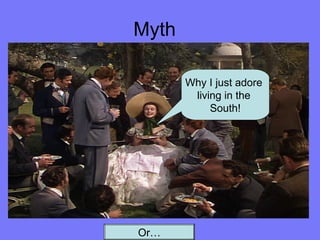
Myth
Why I just adore
living in the
South!
Or…
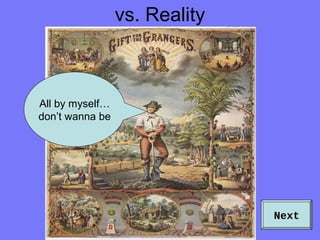
vs. Reality
All by myself…
don’t wanna be
Next
Slave Quarters on a South
Carolina Plantation, 1860
Industry in the South
• Stayed agricultural because farming
was so profitable
• Lack of capital to invest in industry
• Money was invested in land and slaves
• The market in the south was smaller
than that in the North
Next
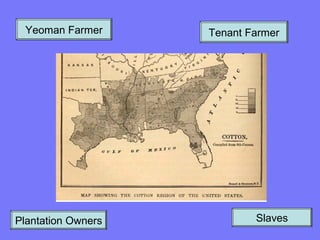
Yeoman Farmer Tenant Farmer
Plantation Owners Slaves
Yeoman Farmers
• Largest group in the South
• Their farms ranged from 50-200 acres
• Grew crops for their own use and to sell
• Lived in one story houses or log cabins
Back
Tenant Farmers
• Rented land or worked on their
landowners estate
BackBack
Plantation Owners
• Small percentage of the population
• Owned more than half of the slaves
• Plantations could be up to several thousand
acres
• Measured wealth by slaves and their
possessions
• Many were kept in debt because they sold
their cotton to agents who kept the product
until it could be sold at a higher price
BackBack
The Enslaved
• Most worked as field hands
• Planted and raised crops from sun up to
sun down
• Domestic slaves worked in the house.
– Cooked, cleaned, served meals, etc.
• Others were trained as blacksmiths or
carpenters
PicturesPictures VideoVideo
NextNext
NextNext
NextNext
NextNext
"Overseer Artayou Carrier whipped me. I was two months in
bed sore from the whipping. My master come after I was
whipped; he discharged the overseer. The very words of
poor Peter, taken as he sat for his picture."
NextNext
Slave Sale in Easton, MD.
BackBack
QuickTime™ and a
decompressor
are needed to see this picture.

Good Ol South2

  • 1.
  • 2.
    Myth Why I justadore living in the South! Or…
  • 3.
    vs. Reality All bymyself… don’t wanna be Next
  • 4.
    Slave Quarters ona South Carolina Plantation, 1860
  • 5.
    Industry in theSouth • Stayed agricultural because farming was so profitable • Lack of capital to invest in industry • Money was invested in land and slaves • The market in the south was smaller than that in the North Next
  • 6.
    Yeoman Farmer TenantFarmer Plantation Owners Slaves
  • 7.
    Yeoman Farmers • Largestgroup in the South • Their farms ranged from 50-200 acres • Grew crops for their own use and to sell • Lived in one story houses or log cabins Back
  • 8.
    Tenant Farmers • Rentedland or worked on their landowners estate BackBack
  • 9.
    Plantation Owners • Smallpercentage of the population • Owned more than half of the slaves • Plantations could be up to several thousand acres • Measured wealth by slaves and their possessions • Many were kept in debt because they sold their cotton to agents who kept the product until it could be sold at a higher price BackBack
  • 10.
    The Enslaved • Mostworked as field hands • Planted and raised crops from sun up to sun down • Domestic slaves worked in the house. – Cooked, cleaned, served meals, etc. • Others were trained as blacksmiths or carpenters PicturesPictures VideoVideo
  • 11.
  • 12.
  • 13.
  • 14.
  • 15.
    "Overseer Artayou Carrierwhipped me. I was two months in bed sore from the whipping. My master come after I was whipped; he discharged the overseer. The very words of poor Peter, taken as he sat for his picture." NextNext
  • 16.
    Slave Sale inEaston, MD. BackBack
  • 17.
    QuickTime™ and a decompressor areneeded to see this picture.