


Company Overview:
SITUATION
▪ Xinjiang Goldwind Science and Technology Inc.
▪ Target of selling 30% of its turbines overseas by 2012
▪ Chairman Wu: Globalization is about more than sales
▪ “It could enhance Goldwind’s human capital and corporate culture, giving a
company of its size the international pedigree it deserved”
▪ Goldwind USA
▪ Sold 18 turbines to small projects across 8 states in the U.S.
▪ 2 years of experience in United States (Founded Goldwind USA in spring 2010)
Company Overview:
COMPLICATIONS
▪ General
▪ GE
▪ Industry Growth Rate Decline
▪ Operational Experience
▪ Technical Difficulties
▪ Grid Parity
▪ Political
▪ Government Subsidies
▪ Tariffs
Company Overview:
ENABLERS
▪ General
▪ Parent Company
▪ World Market Share
▪ Experienced Team
▪ US Sourcing
▪ Technical
▪ R&D Centers
▪ PMDD Technology
▪ Experience Curve
▪ Political
▪ Job Creation
▪ Financial
▪ Strong Cash Position
Company Overview:
CORE QUESTION
How can Goldwind USA capture a
bigger portion of the wind turbine
market in the United States?
1. PESTLE MODEL
2. PORTER’S FIVE
FORCES
PEST MODEL
EXTERNAL ANALYSIS
POLITICAL
1. Reduced Government Subsidies:
▪ The U.S. government
▪ The Chinese government
2. Increased tariffs:
▪ Lobbying from U.S. Wind Tower Trade
Coalition (WTTC)
3. Clean energy adoption by 2035
PEST Model
ECONOMIC
Economic recovery:
▪ Goldwind’s Timeline
▪ Clean Energy Adoption
PEST Model
SOCIAL
▪ Perception of Chinese Goods:
▪ China Quality
▪ Job creation after the recession of 2008:
▪ Creating jobs in the U.S. was the
message that Goldwind USA tries to
convey as a Chinese newcomer to the
American market.
▪ Going Green
▪ Wind power is Renewable Energy
PEST Model
TECHNOLOGICAL
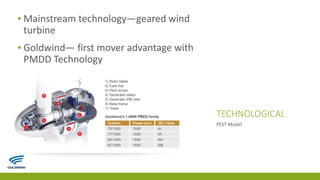
▪ Mainstream technology—geared wind
turbine
▪ Goldwind— first mover advantage with
PMDD Technology
PEST Model
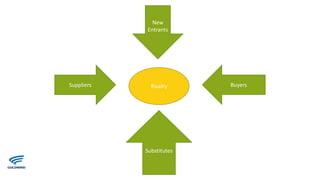
PORTER’S FIVE FORCES
EXTERNAL ANALYSIS
Suppliers
New
Entrants
Rivalry Buyers
Substitutes
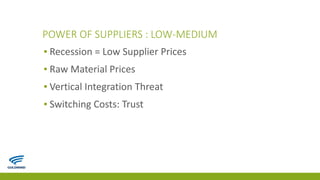
POWER OF SUPPLIERS : LOW-MEDIUM
▪ Recession = Low Supplier Prices
▪ Raw Material Prices
▪ Vertical Integration Threat
▪ Switching Costs: Trust
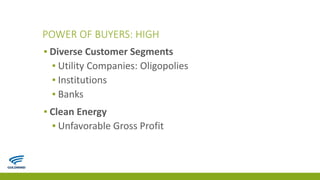
POWER OF BUYERS: HIGH
▪ Diverse Customer Segments
▪ Utility Companies: Oligopolies
▪ Institutions
▪ Banks
▪ Clean Energy
▪ Unfavorable Gross Profit
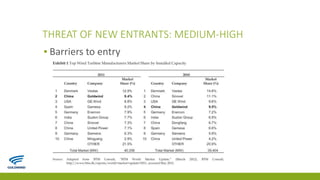
THREAT OF NEW ENTRANTS: MEDIUM-HIGH
▪ Barriers to entry
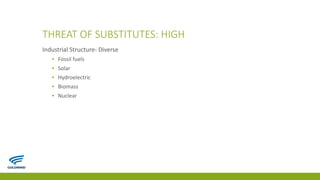
THREAT OF SUBSTITUTES: HIGH
Industrial Structure- Diverse
▪ Fossil fuels
▪ Solar
▪ Hydroelectric
▪ Biomass
▪ Nuclear
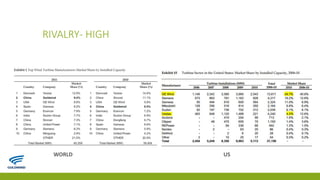
RIVALRY- HIGH
WORLD US
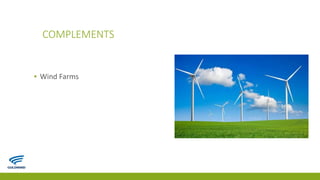
COMPLEMENTS
▪ Wind Farms
RESOURCES,
CAPABILITIES AND
COMPETENCIES
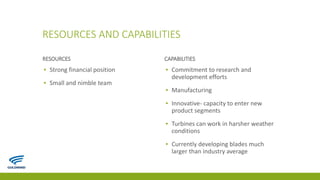
RESOURCES AND CAPABILITIES
RESOURCES
▪ Strong financial position
▪ Small and nimble team
CAPABILITIES
▪ Commitment to research and
development efforts
▪ Manufacturing
▪ Innovative- capacity to enter new
product segments
▪ Turbines can work in harsher weather
conditions
▪ Currently developing blades much
larger than industry average
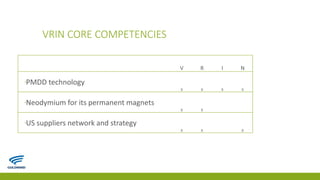
VRIN CORE COMPETENCIES
V R I N
▪PMDD technology
X X X X
▪Neodymium for its permanent magnets
X X
▪US suppliers network and strategy
X X X
1. STRATEGY
DIAMOND
2. SEVEN S
FRAMEWORK
RECOMMENDATIONS
1. Project Initiation
2. Customer value
3. Branding
#1 PROJECT INITIATION
▪ Focus on larger wind farms in a few places
▪ California
▪ Texas
▪ Iowa
▪ Illinois
#2 CUSTOMER VALUE
▪ Wind farm financing, development and management services
▪ Project customization
▪ Product Innovation
#3: BRANDING
▪ Novel advertising campaigns
▪ Human elements v machinery
▪ Quality & Integrity
▪ Continue partnering with established companies
IMPLEMENTATION
▪ Strategy- Increase US market share through initiating projects, enhancing customer
value and branding
▪ Structure- Utilize matrix structure to benefit project implementation growth and
customization.
▪ Systems- Customer satisfaction, CRM, product quality & efficiency, environmental
impact
▪ Style- Leadership style that promotes honesty and integrity, innovation, motivation and
productivity, close team relationships among employees
▪ Skill- Innovative and technological competencies
▪ Staff- Maintain current high standards of recruiting top talent, recruit marketing experts, strong
project managers
▪ Shared Values- Commitment to clean renewable energy in lieu of climate change, steadfast
commitment to innovation
THANK YOU
GLOBALIZATION
▪ Globalization strategy: Adapt operations in USA to maximize effectiveness
▪ CAGE Distance Framework:
▪ Cultural: different languages, ethnicities, and values; lack of connective ethnic or social networks
▪ Administrative: differences in political and governmental systems in terms of the wind industry
▪ Geographic: physical distance between China and the U.S.; no common land border, differences in climates, time-zones, and geographic size and
population
▪ Economic: differences in consumer incomes and economic size, availability of human, financial, and natural resources, infrastructure, distribution
networks, and organizational capabilities
▪ What should Goldwind do now?
▪ Continue to adapt
▪ Emphasize economic arbitrage:
▪ Leverage differences in labor and capital costs, and costs of knowledge inputs
▪ R&D locations are in Germany and China
▪ Leverage resources available in the United States
▪ Higher incomes in U.S. = selling wind solutions at higher prices will not impact consumer interests as much as in China
▪ U.S own supplier network instead of aggregating or adapting China’s supplier network
▪ Emphasize geographic arbitrage:
▪ Leverage differences in climates to enhance performance of wind solutions
▪ Goldwind has exceptional wind capacity wind capabilities with thousands MW under its belt from Chinese operations
▪ Locally sourcing wind product components within the United States
By sticking to our expertise we can establish a better brand image and thus expand to larger wind projects in the United States.
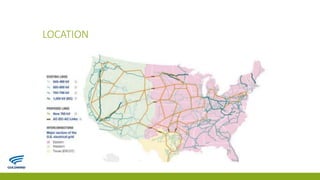
LOCATION
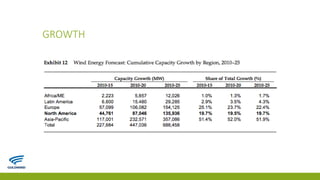
GROWTH

Goldwind ppt presentation final

  • 2.
    Company Overview: SITUATION ▪ XinjiangGoldwind Science and Technology Inc. ▪ Target of selling 30% of its turbines overseas by 2012 ▪ Chairman Wu: Globalization is about more than sales ▪ “It could enhance Goldwind’s human capital and corporate culture, giving a company of its size the international pedigree it deserved” ▪ Goldwind USA ▪ Sold 18 turbines to small projects across 8 states in the U.S. ▪ 2 years of experience in United States (Founded Goldwind USA in spring 2010)
  • 3.
    Company Overview: COMPLICATIONS ▪ General ▪GE ▪ Industry Growth Rate Decline ▪ Operational Experience ▪ Technical Difficulties ▪ Grid Parity ▪ Political ▪ Government Subsidies ▪ Tariffs
  • 4.
    Company Overview: ENABLERS ▪ General ▪Parent Company ▪ World Market Share ▪ Experienced Team ▪ US Sourcing ▪ Technical ▪ R&D Centers ▪ PMDD Technology ▪ Experience Curve ▪ Political ▪ Job Creation ▪ Financial ▪ Strong Cash Position
  • 5.
    Company Overview: CORE QUESTION Howcan Goldwind USA capture a bigger portion of the wind turbine market in the United States?
  • 6.
    1. PESTLE MODEL 2.PORTER’S FIVE FORCES
  • 7.
  • 8.
    POLITICAL 1. Reduced GovernmentSubsidies: ▪ The U.S. government ▪ The Chinese government 2. Increased tariffs: ▪ Lobbying from U.S. Wind Tower Trade Coalition (WTTC) 3. Clean energy adoption by 2035 PEST Model
  • 9.
    ECONOMIC Economic recovery: ▪ Goldwind’sTimeline ▪ Clean Energy Adoption PEST Model
  • 10.
    SOCIAL ▪ Perception ofChinese Goods: ▪ China Quality ▪ Job creation after the recession of 2008: ▪ Creating jobs in the U.S. was the message that Goldwind USA tries to convey as a Chinese newcomer to the American market. ▪ Going Green ▪ Wind power is Renewable Energy PEST Model
  • 11.
    TECHNOLOGICAL ▪ Mainstream technology—gearedwind turbine ▪ Goldwind— first mover advantage with PMDD Technology PEST Model
  • 12.
  • 13.
  • 14.
    POWER OF SUPPLIERS: LOW-MEDIUM ▪ Recession = Low Supplier Prices ▪ Raw Material Prices ▪ Vertical Integration Threat ▪ Switching Costs: Trust
  • 15.
    POWER OF BUYERS:HIGH ▪ Diverse Customer Segments ▪ Utility Companies: Oligopolies ▪ Institutions ▪ Banks ▪ Clean Energy ▪ Unfavorable Gross Profit
  • 16.
    THREAT OF NEWENTRANTS: MEDIUM-HIGH ▪ Barriers to entry
  • 17.
    THREAT OF SUBSTITUTES:HIGH Industrial Structure- Diverse ▪ Fossil fuels ▪ Solar ▪ Hydroelectric ▪ Biomass ▪ Nuclear
  • 18.
  • 19.
  • 20.
  • 21.
    RESOURCES AND CAPABILITIES RESOURCES ▪Strong financial position ▪ Small and nimble team CAPABILITIES ▪ Commitment to research and development efforts ▪ Manufacturing ▪ Innovative- capacity to enter new product segments ▪ Turbines can work in harsher weather conditions ▪ Currently developing blades much larger than industry average
  • 22.
    VRIN CORE COMPETENCIES VR I N ▪PMDD technology X X X X ▪Neodymium for its permanent magnets X X ▪US suppliers network and strategy X X X
  • 23.
  • 24.
    RECOMMENDATIONS 1. Project Initiation 2.Customer value 3. Branding
  • 25.
    #1 PROJECT INITIATION ▪Focus on larger wind farms in a few places ▪ California ▪ Texas ▪ Iowa ▪ Illinois
  • 26.
    #2 CUSTOMER VALUE ▪Wind farm financing, development and management services ▪ Project customization ▪ Product Innovation
  • 27.
    #3: BRANDING ▪ Noveladvertising campaigns ▪ Human elements v machinery ▪ Quality & Integrity ▪ Continue partnering with established companies
  • 28.
    IMPLEMENTATION ▪ Strategy- IncreaseUS market share through initiating projects, enhancing customer value and branding ▪ Structure- Utilize matrix structure to benefit project implementation growth and customization. ▪ Systems- Customer satisfaction, CRM, product quality & efficiency, environmental impact ▪ Style- Leadership style that promotes honesty and integrity, innovation, motivation and productivity, close team relationships among employees ▪ Skill- Innovative and technological competencies ▪ Staff- Maintain current high standards of recruiting top talent, recruit marketing experts, strong project managers ▪ Shared Values- Commitment to clean renewable energy in lieu of climate change, steadfast commitment to innovation
  • 29.
  • 30.
    GLOBALIZATION ▪ Globalization strategy:Adapt operations in USA to maximize effectiveness ▪ CAGE Distance Framework: ▪ Cultural: different languages, ethnicities, and values; lack of connective ethnic or social networks ▪ Administrative: differences in political and governmental systems in terms of the wind industry ▪ Geographic: physical distance between China and the U.S.; no common land border, differences in climates, time-zones, and geographic size and population ▪ Economic: differences in consumer incomes and economic size, availability of human, financial, and natural resources, infrastructure, distribution networks, and organizational capabilities ▪ What should Goldwind do now? ▪ Continue to adapt ▪ Emphasize economic arbitrage: ▪ Leverage differences in labor and capital costs, and costs of knowledge inputs ▪ R&D locations are in Germany and China ▪ Leverage resources available in the United States ▪ Higher incomes in U.S. = selling wind solutions at higher prices will not impact consumer interests as much as in China ▪ U.S own supplier network instead of aggregating or adapting China’s supplier network ▪ Emphasize geographic arbitrage: ▪ Leverage differences in climates to enhance performance of wind solutions ▪ Goldwind has exceptional wind capacity wind capabilities with thousands MW under its belt from Chinese operations ▪ Locally sourcing wind product components within the United States By sticking to our expertise we can establish a better brand image and thus expand to larger wind projects in the United States.
  • 31.
  • 32.

Editor's Notes

  • #3 Finishing up late-stage development of two 10 MW wind farms in Montana Installing small wind farms in Pakistan, Bulgaria, Ethiopia, Australia, and Chile (in partnership with Mainstream) Goldwind USA: continue to win in the Americas
  • #4 General: Competition from non-Chinese incumbents: General Electric Culture changes: selling wind energy in US is not like selling it in China US wind industry’s growth rates is on the decline since 2008 Lack of a first-mover advantage in the United States Goldwind’s operational experience in China is not valid for US customers Technical: Wind power cannot achieve grid parity Government: Reduced overall demand for energy led to lower prices for natural gas and other conventional power generation sources, making it difficult for wind power to compete Lack of long-term government incentive to wind energy producers No stable policy framework for wind sector in the US (uncertain future of wind regulation) Raised tariffs against imports of wind towers from China
  • #5 General: As a subsidiary of a Goldwind parent company: Goldwind is 2nd in world market share for wind power with 9.4% in 2010 Team: people with solid US wind industry experience combined with successful track record of working in a cross-cultural environment Supplier strategy in the United States Expected to complete GL’s 100 turbine operating years standard by the beginning of 2013 to be commercially proven in the United States Technical 3 International R&D centers (2 in China, 1 in Germany) Cutting-edge Permanent Magnet Direct Drive (PMDD) technology Excellent technological and operational capabilities and 2 decades into the experience curve Turbines can work in more extreme weather conditions than found in the USA Financial Strong financial position Government Policies Improved brand image through partnerships with Mainstream and creation of jobs in the U.S. Enablers: As a subsidiary of a Goldwind parent company: 3 International R&D centers (2 in China, 1 in Germany) Goldwind is 2nd in world market share for wind power with 9.4% in 2010 Strong financial position Cutting-edge Permanent Magnet Direct Drive (PMDD) technology Team: people with solid US wind industry experience combined with successful track record of working in a cross-cultural environment Supplier strategy in the United States Improved brand image through partnerships with Mainstream and creation of jobs in the U.S. Excellent technological and operational capabilities and 2 decades into the experience curve Turbines can work in more extreme weather conditions than found in the USA Expected to complete GL’s 100 turbine operating years standard by the beginning of 2013 to be commercially proven in the United States
  • #6 How can Goldwind USA capture a bigger portion of the wind turbine market in the United States?
  • #9 Reduced Government Subsidaries: The U.S. government passed the tax law expiring tax credit for clean energy, meaning less or no government subsidies. “Goldwind had banking relationships in China to backfill lack of debt, but it was much tougher to replace government subsidies.” The Chinese government cut subsidies for its wind sector six months after the US government filed a complaint with the WTO that China had provided illegal grants to Chinese wind companies since 2008. Increased Tariffs: In December 2011, the U.S. Wind Tower Trade Coalition (WTTC) lobbied the U.S. government to raise tariffs against imports of wind towers from China.
  • #10 Goldwind entered the U.S. in 2010. American economy is recovering from the 2008 economic crisis. Clean energy adoption becomes the top priority in the agenda of economy development.
  • #11 Goldwind is a symbol that China is moving towards Green Power as their economy develops. This is not only beneficial to the Chinese citizens but also to China’s image among other nations.
  • #15 Parts of the wind turbines are sourced locally Due to the recession of 2008, the U.S. suppliers were actually offering reduced rates that made them more attractive than the Chinese suppliers. Goldwind USA has well-established relationships with some of the leading wind turbine component suppliers in the U.S. Concentration Switching Costs Is supplier product crucial? Vertical Integration
  • #16 Utility companies are oligopolies in the US. Example: Pacific Gas & Electric, Southern California Edison, Florida Power & Light, etc. Unwilling to adopt clean energy
  • #17 Many other wind turbine companies entered the US market from 2010 to 2011 Barriers= regulations, technological capabilities, financial support
  • #18 In contrast to China, where a handful of vertically integrated regional monopolies dominated the power sector, power generation in the United States was extremely diverse and fragmented. Fossil fuels are wider known among the population. Other renewable energy sources such as biomass or solar.
  • #22 Strong financial and capital capabilities: cash flow Ability to offer secure financing to wind companies in the US Manuf- Cost-efficient manufacturing excellence with focus on quality and reliability
  • #23 PMDD technology (Acquisition of Vensys) Most experience and best of providing direct drive technology versus competitors (Germany’s Enercon and Siemens, through its German subsidiary Vensys) Uses rare earth metal neodymium for its permanent magnets Goldwind continues to innovate in ways that permitted reductions in the neodymium content without sacrificing efficiency to save costs Higher power output compared to metals used by competitors Strong US suppliers network and strategy Most locally sourced turbine company in the United States: positive brand image Reduce skepticism surrounding Chinese quality, improves logistics and reduce lead time overseas and transportation costs, also allows suppliers to visit site for troubleshooting needs. Innovative capabilities and capacity to enter new product segments Turbines can work in harsher weather conditions: Chinese deserts and tundra more extreme than found in Europe and the Americas Go offshore Sites with low wind speed, high altitude, or low temperature conditions Currently developing blades much larger than industry average
  • #25 Globalization strategy: Adapt operations in USA to maximize effectiveness CAGE Distance Framework: Cultural: different languages, ethnicities, and values; lack of connective ethnic or social networks Administrative: differences in political and governmental systems in terms of the wind industry Geographic: physical distance between China and the U.S.; no common land border, differences in climates, time-zones, and geographic size and population Economic: differences in consumer incomes and economic size, availability of human, financial, and natural resources, infrastructure, distribution networks, and organizational capabilities What should Goldwind do now? Continue to adapt Emphasize economic arbitrage: Leverage differences in labor and capital costs, and costs of knowledge inputs R&D locations are in Germany and China Leverage resources available in the United States Higher incomes in U.S. = selling wind solutions at higher prices will not impact consumer interests as much as in China U.S own supplier network instead of aggregating or adapting China’s supplier network Emphasize geographic arbitrage: Leverage differences in climates to enhance performance of wind solutions Goldwind has exceptional wind capacity wind capabilities with thousands MW under its belt from Chinese operations Locally sourcing wind product components within the United States By sticking to our expertise we can establish a better brand image and thus expand to larger wind projects in the United States.
  • #26 Bring exceptional capability for MW capacity in China to U.S. wind projects Expand to more states: highest rankings for installed wind capacity in 2012 California Texas Iowa Illinois Focus on larger wind farms in a few places Easier to manage than small geographically dispersed projects with multiple customers Focus on a small capable team building large projects Differentiate through providing exceptional customer service including after-sales service
  • #27 Differentiate through providing exceptional customer service including after-sales service Wind farm financing and development Wind turbine manufacturing and R&D Wind farm management services Leverage synergies in R&D between China, U.S., and other countries Goldwind is in and leverage financing capabilities by diversifying profits among these wind solutions Look at all points of the wind value-chain: wind-farm developers, wind power distributors, potential buyers or financiers of wind farms, utilities, and even regulators to tailor project-specific solutions that enhance the market potential of Goldwind’s products. Focus on innovation: product specialization Design products for specific challenging weather environments Based on temperatures, altitudes, wind speed, offshore, coastal/intertidal e
  • #28 Keep and emphasize novel advertising campaigns Contrast industry-standard bland images of machinery Demonstrate brand personality that project Goldwind’s human elements, product quality, and company’s integrity Continue partnering with established companies in the wind industry i.e. Mainstream and the Shady Oaks project Work with partners who are willing to take a risk on Goldwind and in turn, get the right compensation for it Get prospective customers to agree that Goldwind is the best option for them relative to established non-Chinese incumbents